



Black blue ombre hair has a way of looking dramatic without feeling costume-y, and that’s exactly why it works so well on long hair. The black keeps the base grounded; the blue gives the ends that cold, glossy finish that catches attention only when the hair moves.
Long lengths give the fade room to breathe. A navy melt can look almost black indoors, then turn inky blue near a window, and the change feels deliberate instead of loud.
And yes, the placement matters more than the dye tube. Blue fades faster than black, so the difference between a stylish fade and a muddy one usually comes down to where the blue starts, how warm the underlying hair is, and how much movement the cut has.
The best versions begin with that decision first. Color comes second.
1. Velvet Black to Navy Melt
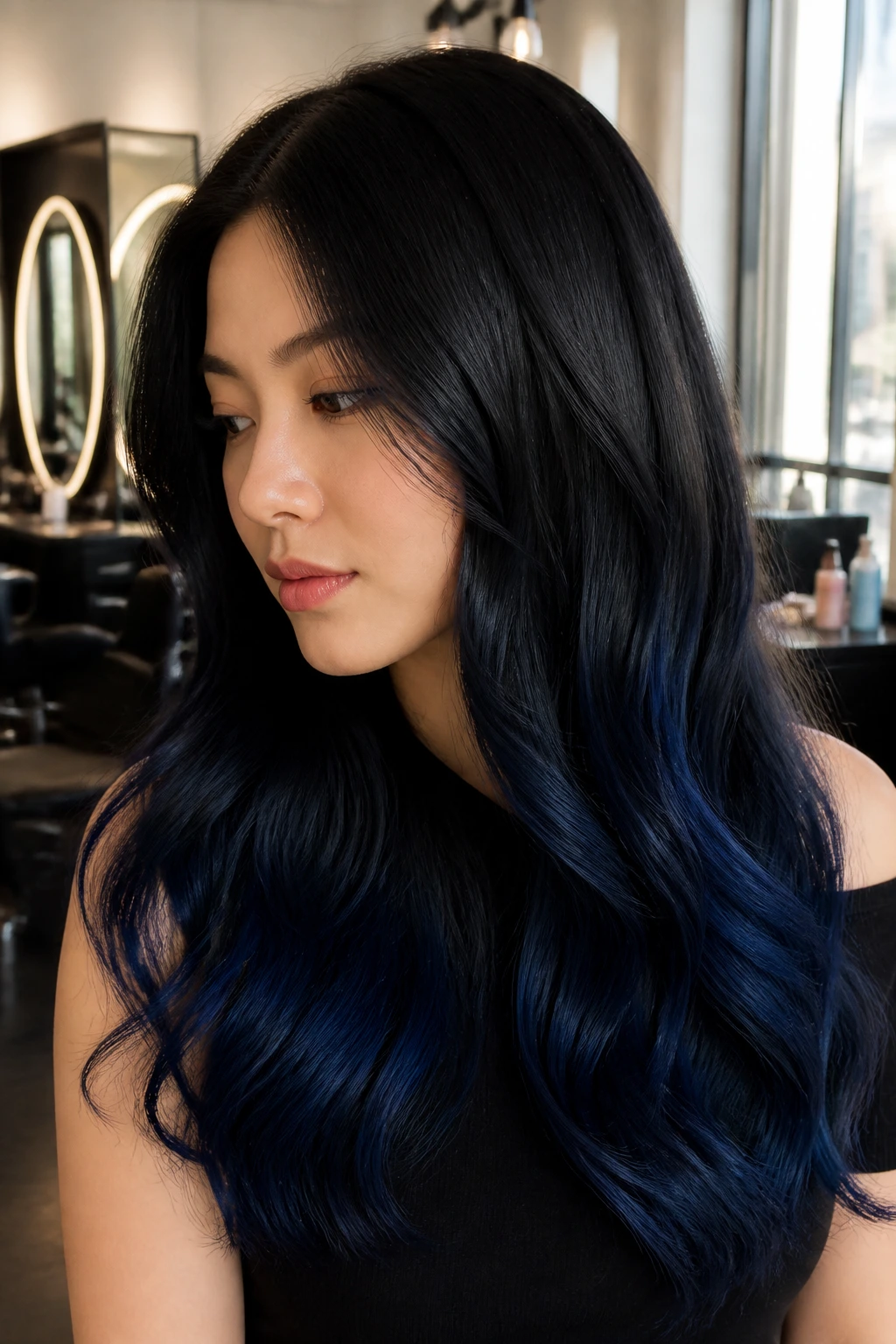
A velvet-to-navy melt is the safest entry point if you want black blue ombre hair that still feels polished on long hair. The roots stay deep black, then the blue appears slowly through the lower third, almost like fabric catching light at the hem.
Why It Works
Long hair gives the fade enough distance to look blended instead of striped. A colorist can keep the transition around the collarbone or lower ribs, then deepen the navy with a gloss so the blue reads cool rather than neon.
How to Ask for It
- Ask for a soft root shadow at level 1 or 2.
- Keep the blue in the last 6 to 8 inches if you want the contrast to stay elegant.
- Request a navy or midnight-blue gloss, not a bright cobalt formula.
Best for: straight, wavy, or gently layered hair that needs a clean finish and low fuss between salon visits.
2. Blue-Black Money Piece Fade
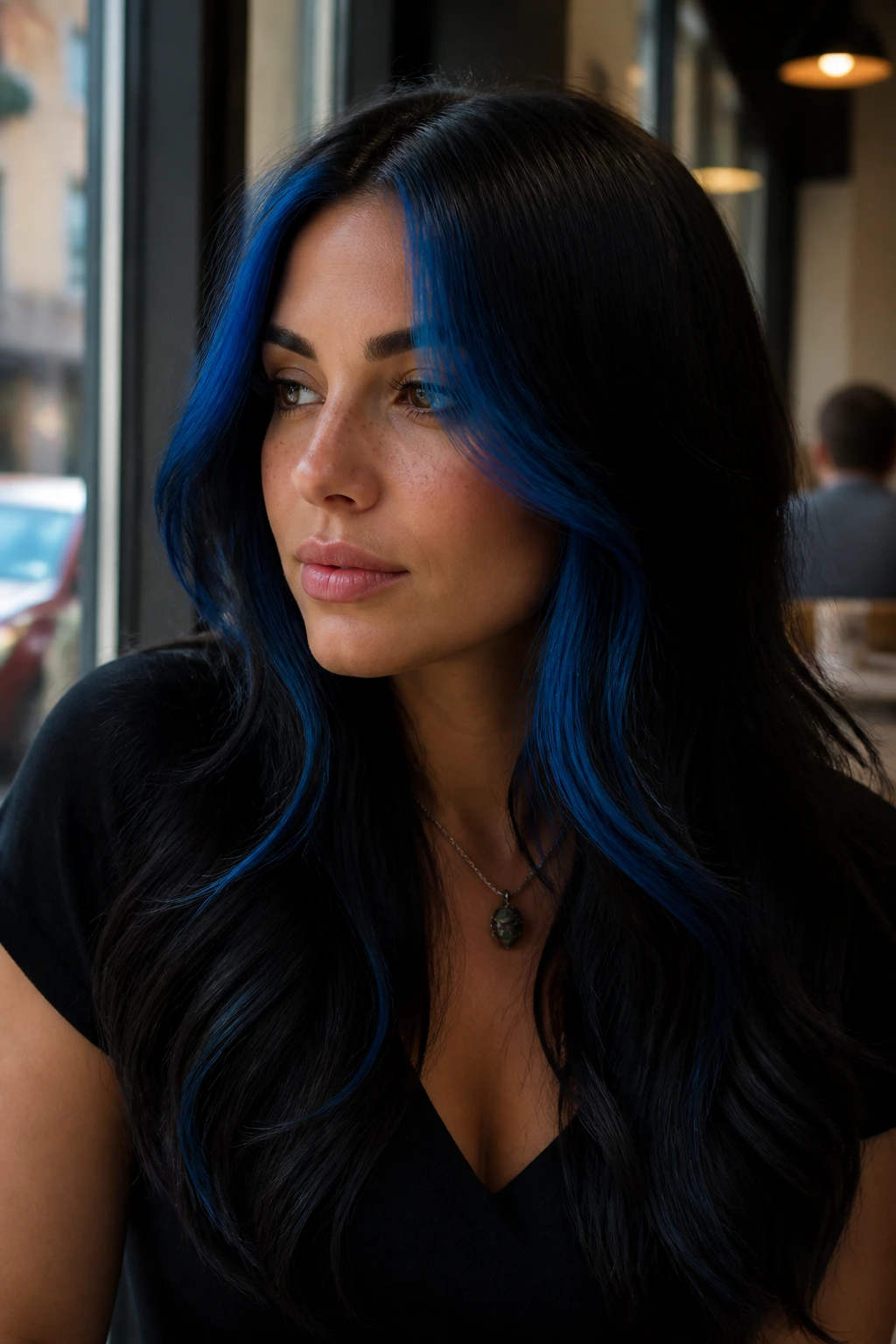
This is the version I’d pick first if you want the blue to frame your face without taking over the whole head. The money-piece placement gives you two bright ribbons near the front, then the color sinks back into black through the rest of the lengths.
On long hair, that front hit of color does a lot of work. It changes the whole mood of the cut when you tuck your hair behind one ear or wear it half up, and you do not need a full head of blue to get that effect.
Keep the blue pieces a few shades deeper than cobalt if your hair is very dark. If they’re too bright, they can look detached from the rest of the ombre. A deeper blue-black blend keeps the front pieces tied to the length, which is the whole point here.
3. Cobalt Ends on Loose Waves
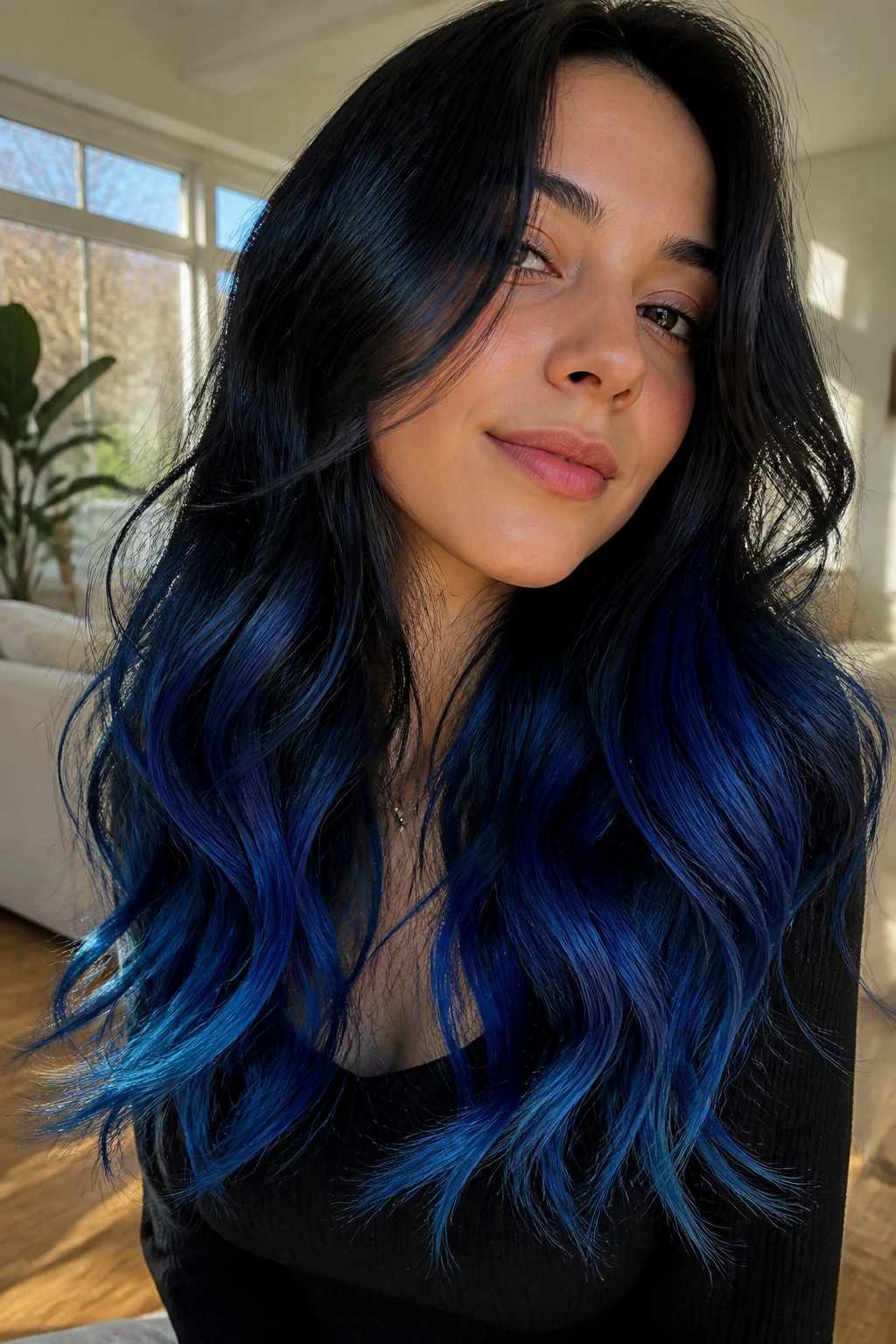
What happens when you push the blue all the way to the ends? You get cobalt tips that look sharp on long hair, especially when the base is black and the waves are loose enough to soften the line.
How to Wear It
- Curl the last 4 to 5 inches away from the face for movement.
- Keep the cobalt a shade darker if your hair is fine, so the ends don’t look wispy.
- Use a shine spray on the black sections; dull roots make the blue look disconnected.
The shape matters here. A soft wave breaks up the color block and gives the ends a little swing. Pin-straight hair can make cobalt tips look harsher, which is great if you want edge, but less forgiving if you want something softer.
Watch for: cobalt can drift greenish if the base underneath is too warm.
4. Smoky Indigo Balayage
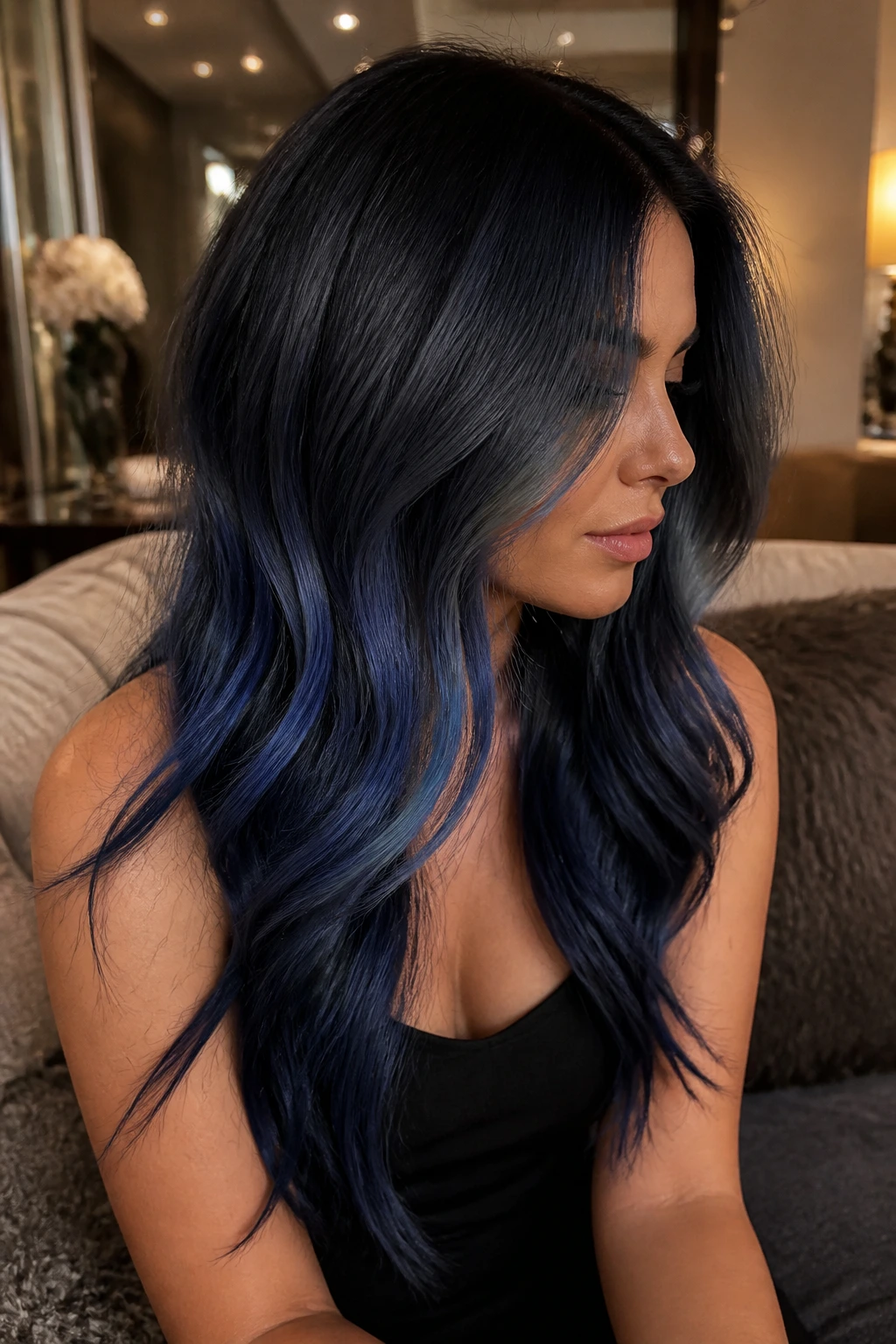
Picture a long braid with smoky indigo ribbons tucked through the middle. That’s the charm of this version. The blue isn’t painted like a flat band; it’s hand-placed so the color moves through the lengths in uneven, expensive-looking strands.
Why It Looks Better on Long Hair
Balayage gives the blue room to live between the black sections, which keeps the hair from looking blocky. On long lengths, those painted pieces can start higher at the back and lower around the front, so the whole style feels softer when the hair falls over your shoulders.
Ask For
- Freehand placement through the mid-lengths and lower thirds
- A smoky indigo tone instead of electric blue
- A softer blend near the face and a denser finish in the back
This is a good choice if you want movement without obvious stripes. It also ages well. The indigo fades into a dusty blue-gray before it gets tired, and that phase still looks intentional.
5. Sapphire Ribbon Highlights
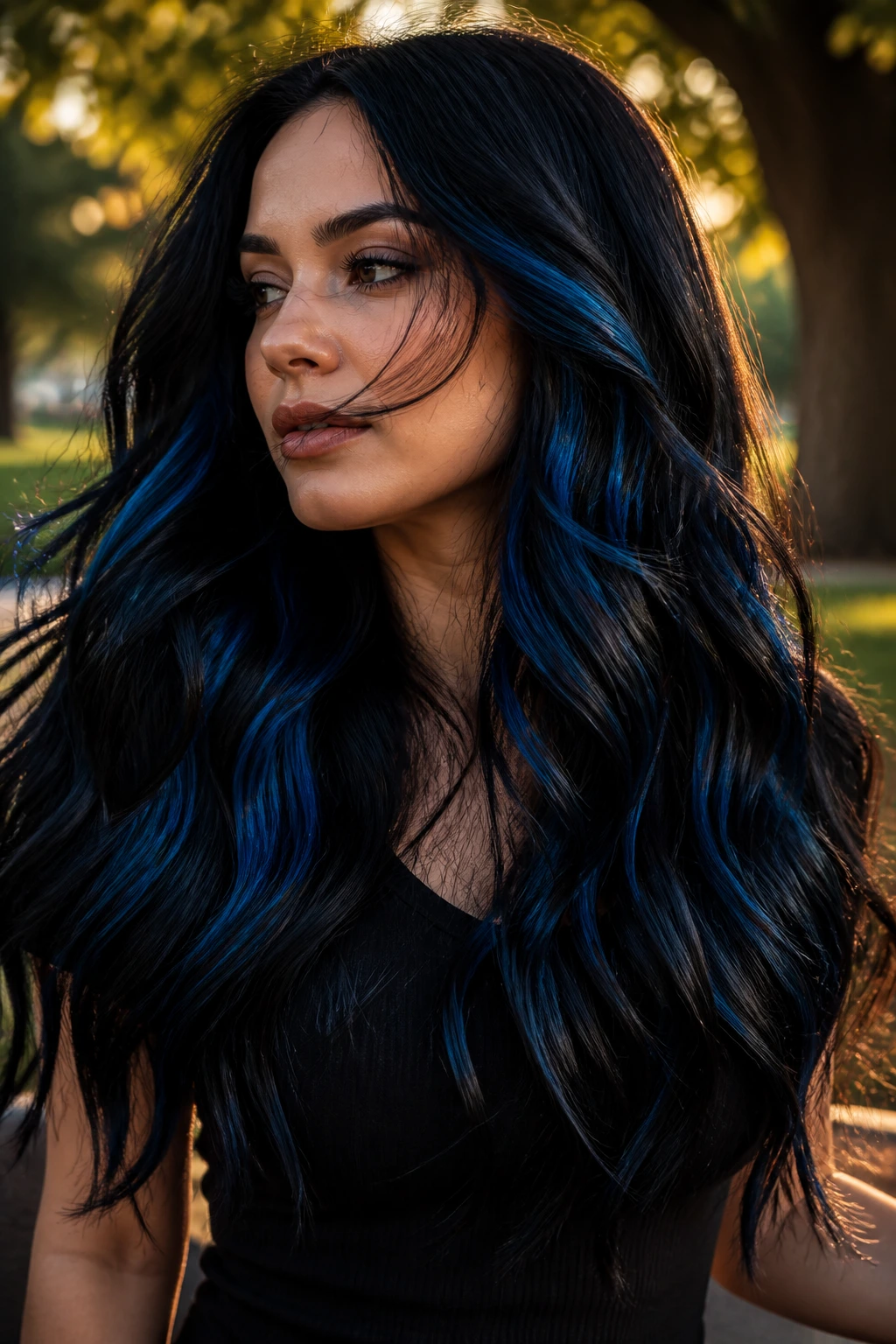
Sapphire ribbons are for people who like motion. The color doesn’t shout from across the room, but it flashes when the hair swings, which is half the fun of long layered hair anyway.
A good sapphire ombre doesn’t sit in one flat band. It should look like a few deep blue threads were woven through black satin, with more color showing at the ends and less at the crown. That balance keeps the style rich instead of busy.
This version works especially well if your hair is thick and has natural wave. The ribbons separate when the hair bends, so the blue shows in little flashes rather than one solid block. If your hair is very fine, keep the ribbons wider but fewer in number. Too many thin streaks can make the whole look feel busy.
6. Hidden Peekaboo Panels
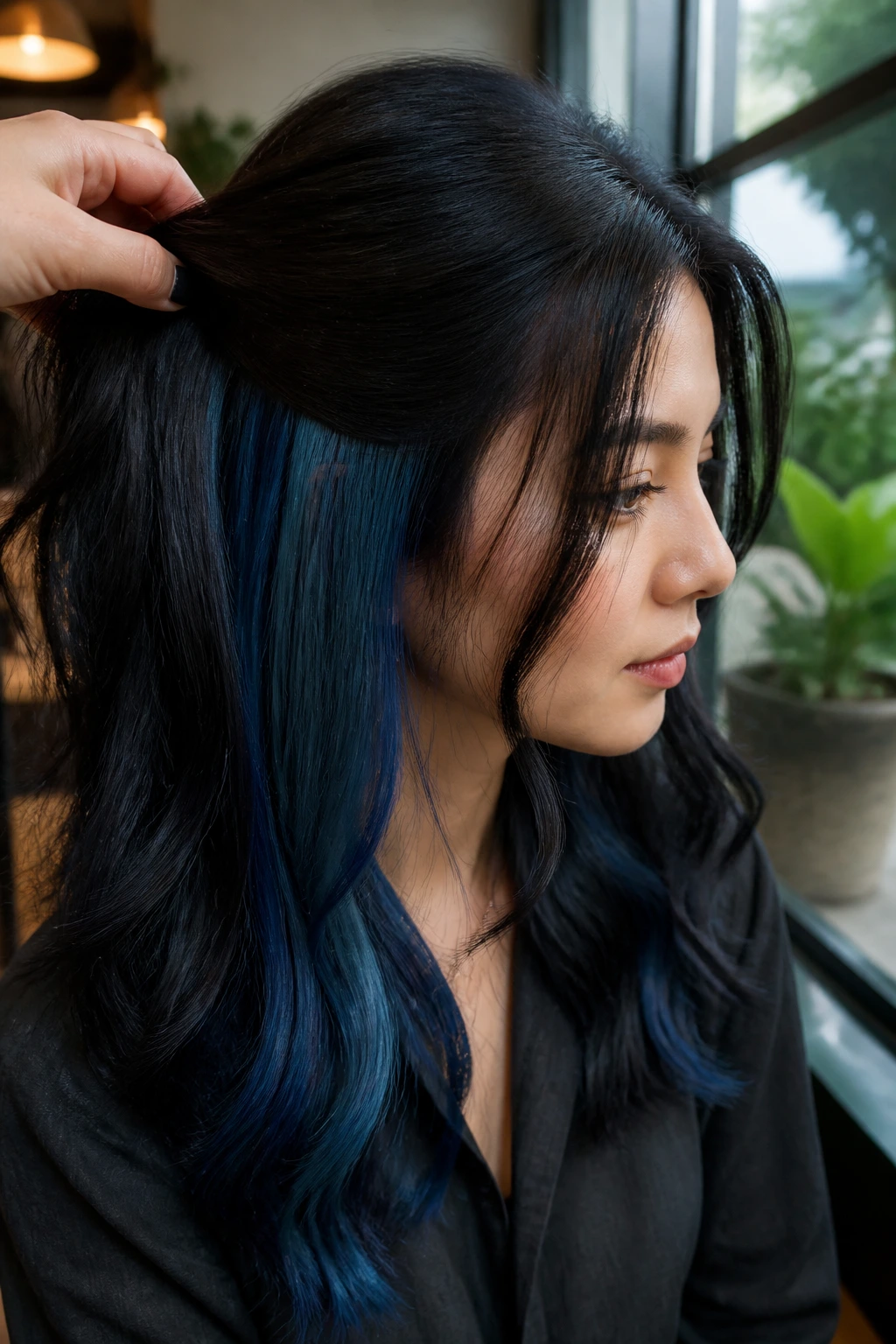
Unlike face-framing blue, hidden peekaboo panels live under the top layer and wait for a ponytail, braid, or windblown moment to show themselves. That makes this one a little mischievous. It also means you can wear a mostly black style and still get a hit of blue every time the hair shifts.
The placement works best when the blue sits under the crown and through the mid-back layers. If the color is too low, it disappears. If it sits too high, it stops being a secret.
Best Ways to Wear It
- Half-up styles that expose the underlayer
- Loose braids with one thick blue panel showing through
- High ponytails where the blue fans out underneath
This is the version I’d choose for someone who wants their hair to feel different, but not loud every day. You get the surprise without the full commitment.
7. Electric Blue Tips
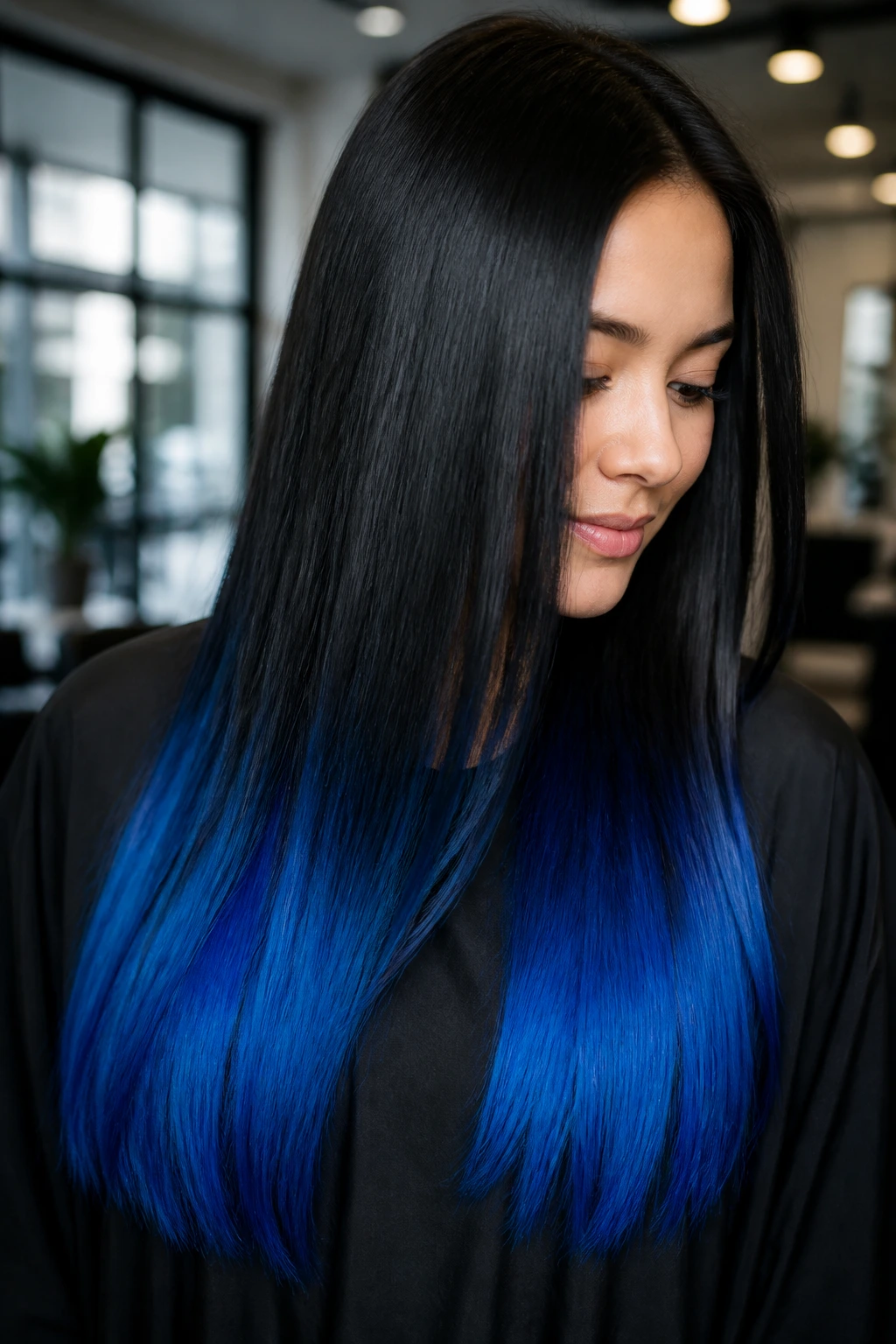
Electric blue tips are blunt, unapologetic, and they look best when the cut has a clean edge. That’s the real trick. If the ends are too shredded or thinned out, the color can look ragged instead of intentional.
On long hair, the effect is stronger than people expect because the bright tips sit far enough from the face to act like an accent rather than a full statement. Wear the hair straight and the color looks graphic. Add curls and it gets softer, almost neon in the best way.
When This Works Best
- Long hair with a straight hemline
- Thick textures that can hold a bold color band
- Dark bases that stay black all the way through the upper lengths
If you want the blue to stay sharp, ask your colorist to keep the transition line clean instead of overly feathered. Too much blur can make electric blue lose the punch that makes it fun.
8. Denim Blue Ombre with a Soft Bend
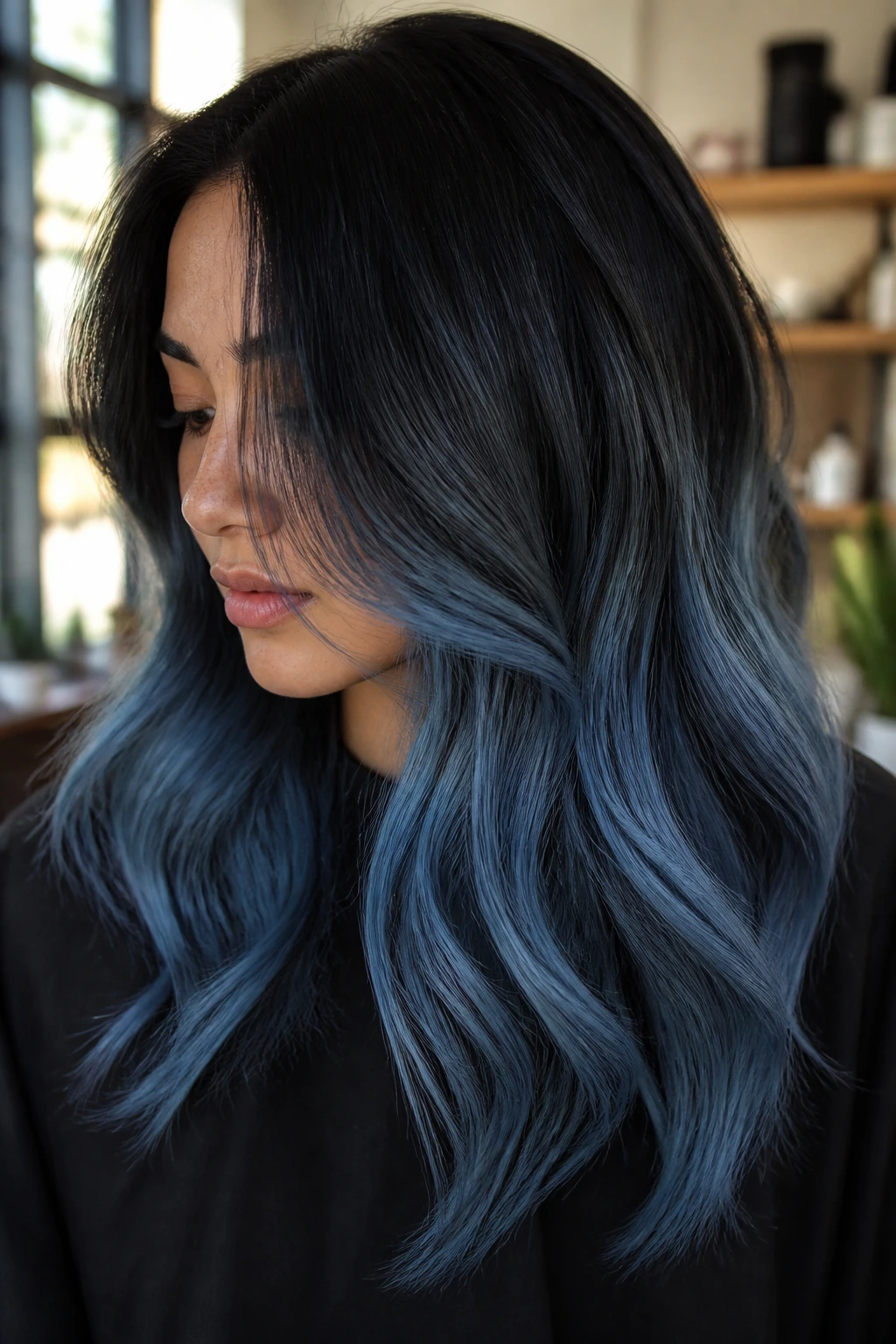
Can blue look worn-in and cool instead of bright? Absolutely. Denim blue is the answer. It has that faded, lived-in quality that sits nicely on long hair, especially when you style it with a soft bend instead of a full curl.
How to Keep It from Going Flat
- Ask for a smoky denim tone rather than royal blue.
- Use a soft bend or loose brush-out wave so the color shows in layers.
- Keep the transition stretched so the ends don’t look dipped.
Denim blue is one of those shades that looks better a little imperfect. The more polished the wave, the more the tone reads like soft fabric rather than paint. That’s what makes it wearable.
A small note: if your hair pulls warm, this shade can turn dull fast. A cool-toned gloss every few weeks keeps the blue from drifting toward muddy gray.
9. Mermaid Blue Underlayer
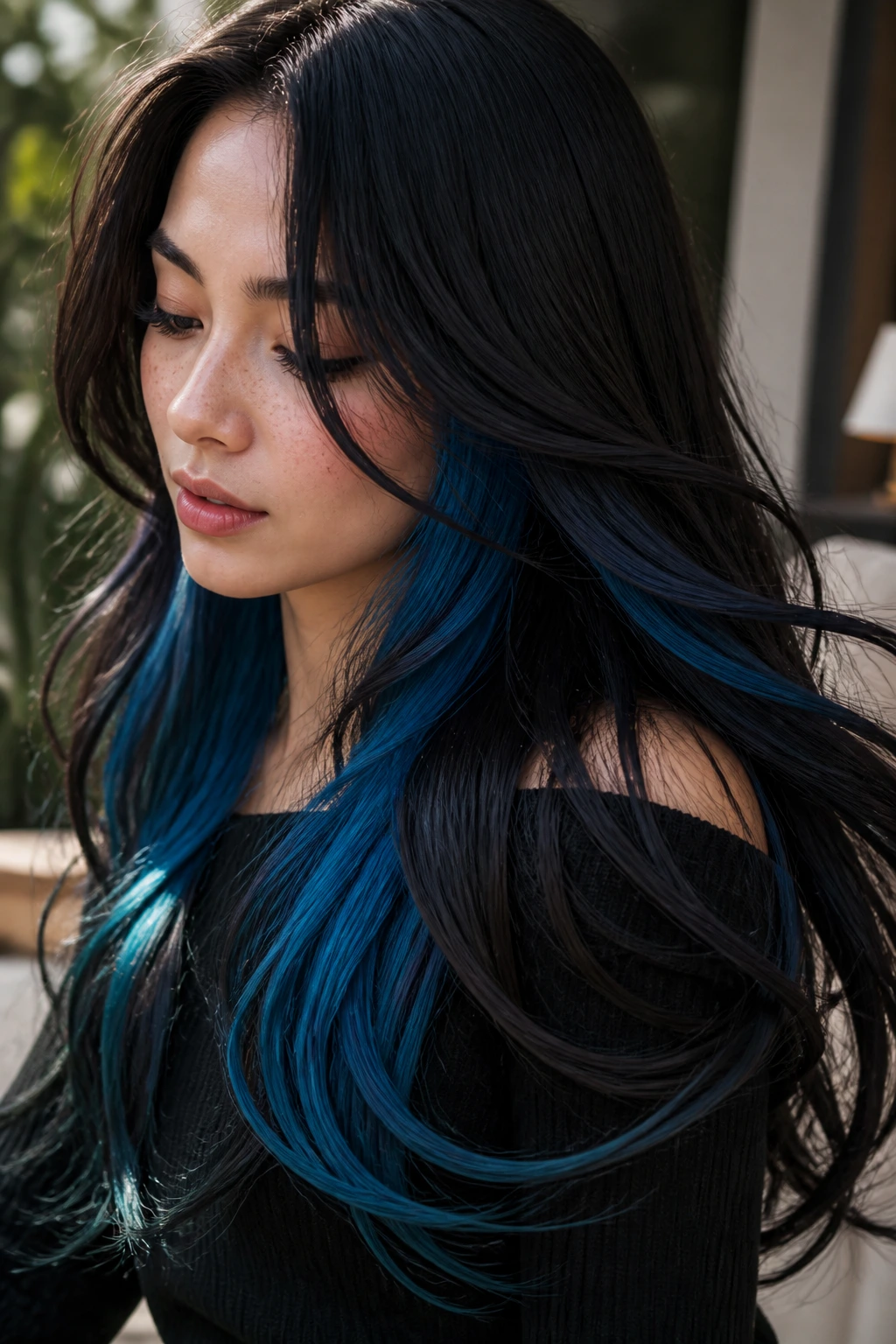
The nicest thing about an underlayer is that it behaves like a secret. The top still reads black, but the blue lives underneath and spills out when you twist the hair, lift it into a clip, or wear a braid over one shoulder.
On long hair, that hidden depth matters. There’s enough length for the underlayer to feel like part of the cut, not a separate panel pasted on top. When the hair swings, the blue flashes through the black in a way that feels a little theatrical without going full fantasy.
When It Shows Up
- High ponytails
- Braids
- Half-up knots
- Hair tucked behind both ears
This style is especially nice if you wear layers, because the shorter pieces keep revealing the color underneath. It’s the sort of look that makes people lean in a little closer.
10. Charcoal to Storm Blue Gradient
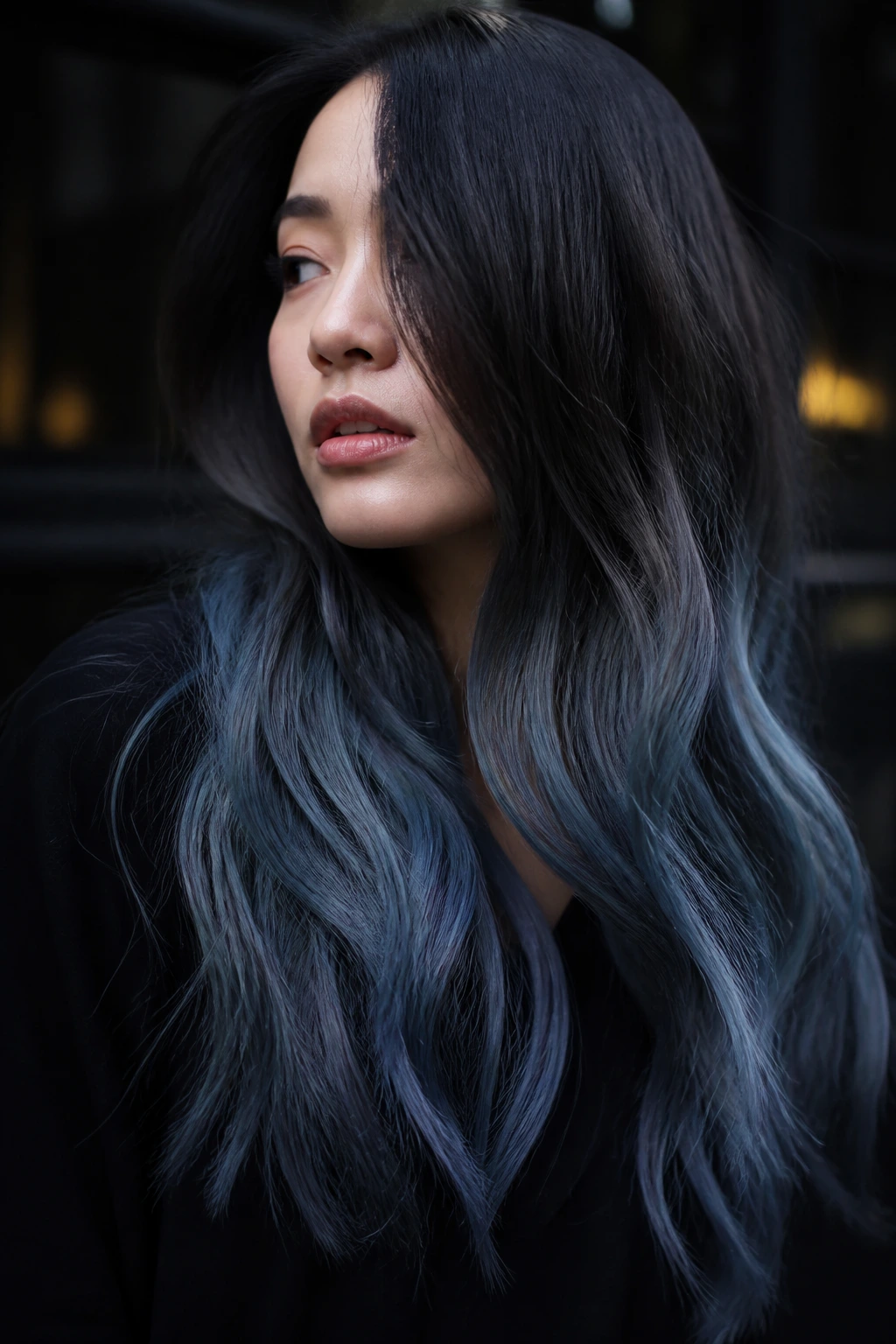
If cobalt feels too bright and navy feels too quiet, charcoal to storm blue sits right between them. The fade starts with a soft charcoal-black and shifts into a steel-blue end that has more gray in it than you’d expect.
That gray cast is what makes it work. It keeps the blue from looking childish and gives the whole ombre a colder, moodier finish. On long hair, especially hair with a center part, the gradient reads clean and expensive-looking because there’s room for the tones to stretch.
This is one of the best options for people who wear black clothing a lot. The hair doesn’t fight the outfit. It sits beside it.
Best Styling Move
A smooth blowout or a large-barrel wave keeps the charcoal and storm-blue tones visible. Too much texture can blur the gradient and turn the color into one dark mass.
11. Ink Blue Gloss on Straight Lengths
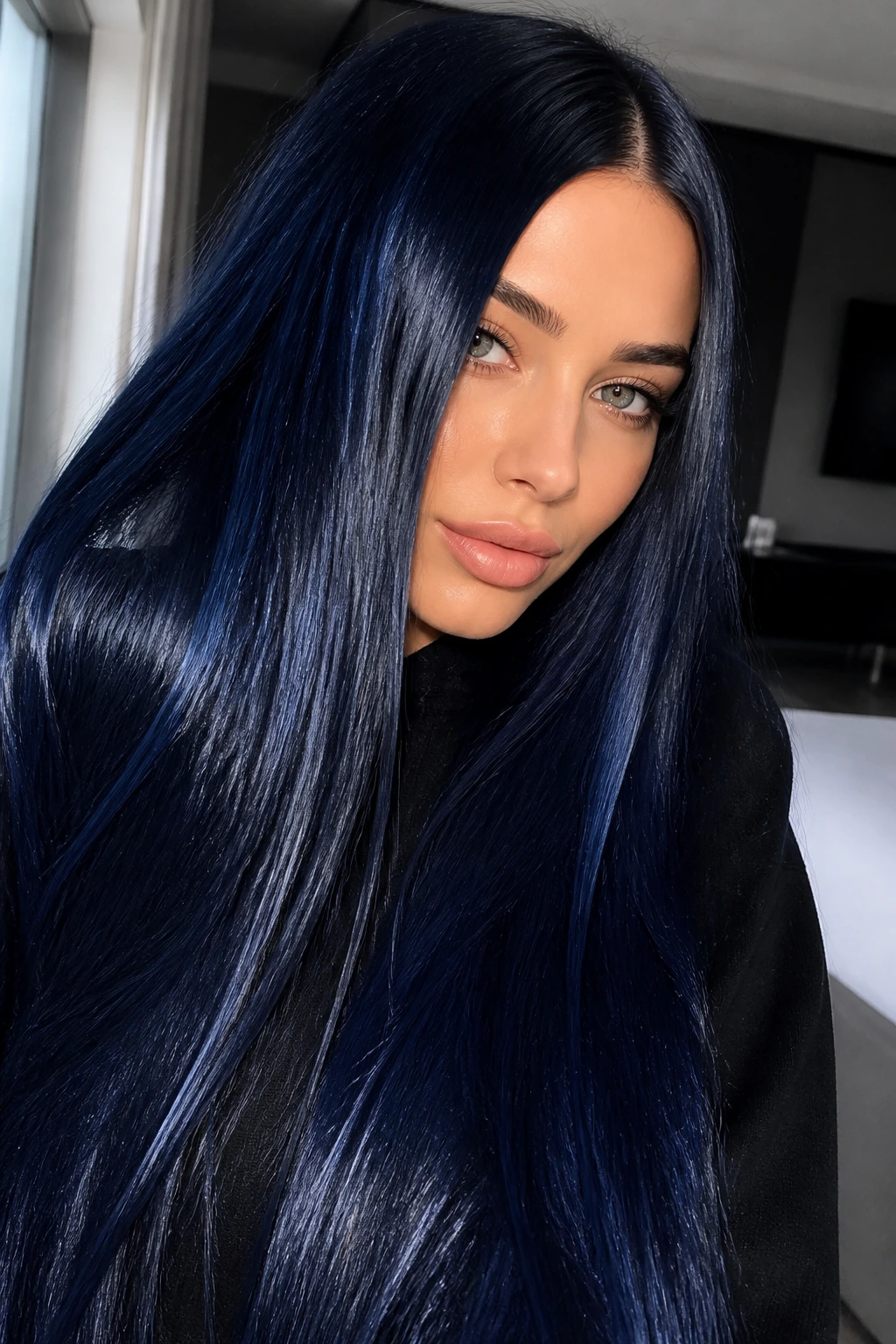
Straight hair and ink blue are a very good pair. Not because the color is loud, but because the shine does the talking. A good ink-blue gloss barely announces itself at first, then turns visible when the light hits it at an angle.
That’s the appeal here. The black base stays deep, while the blue lives in the reflection. On long, straight lengths, the effect is sleek and almost liquid. It’s the version I’d choose for someone who wants color that looks expensive rather than playful.
The ends should feel soft and healthy, because straight styles expose every rough edge. If the hair is dry or split, the gloss can’t save it. A trim before coloring makes the result look a lot cleaner, and yes, that little bit of maintenance matters more than most people want to admit.
12. Curly Navy Halo
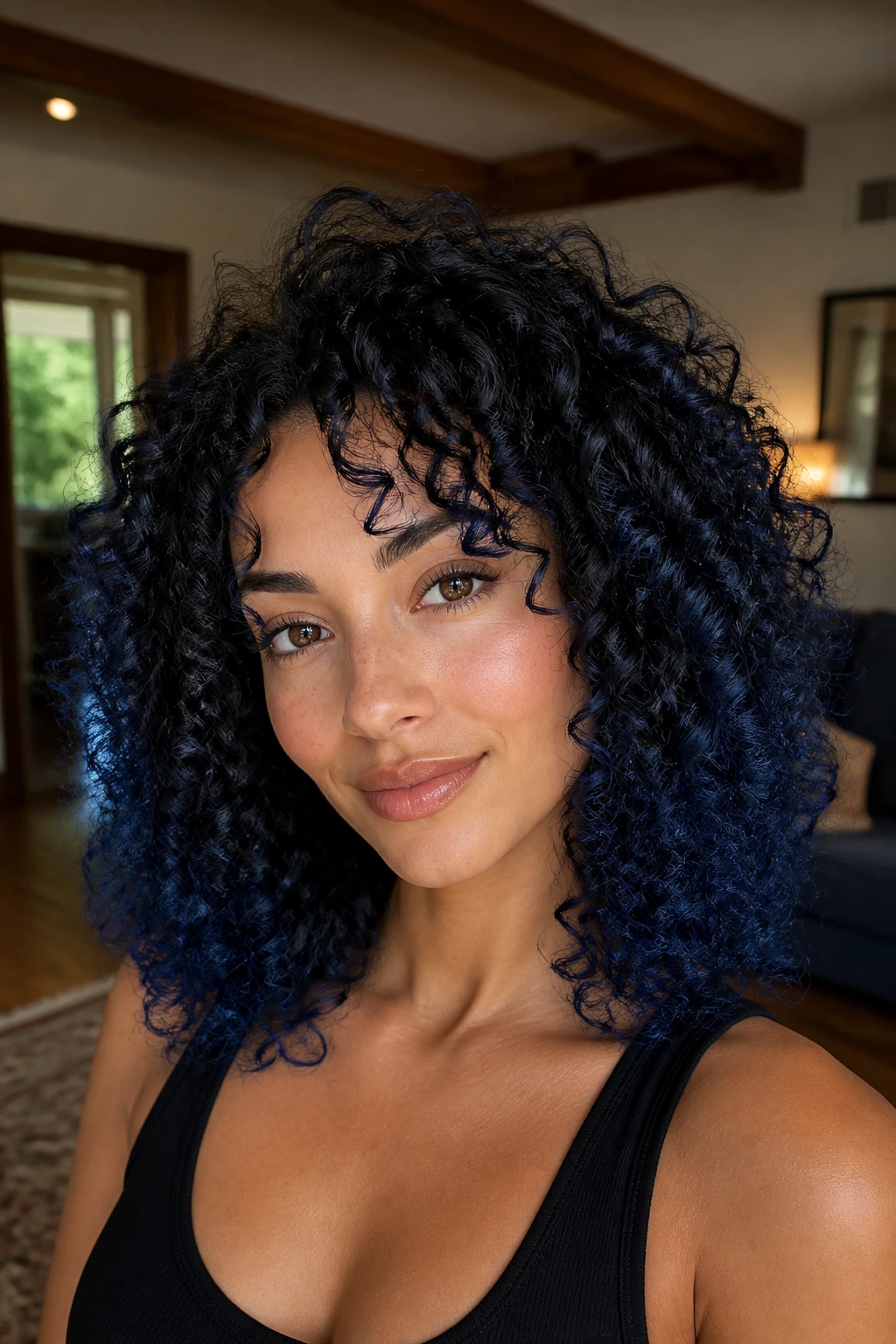
On curls, the outer curve takes the color first. That’s why a navy halo works so well on long curly hair. The darker black base sits underneath, and the navy catches around the surface of the curl pattern, giving the whole head a soft rim of blue.
A halo placement also helps define the shape. Curls need room to breathe, and a gentle blue overlay around the mids and ends can make each coil read more clearly without turning the whole style into a solid block of color.
Good Placement Rules
- Concentrate the blue on the outer layer of curls
- Leave enough black at the root for contrast
- Keep the ends slightly brighter than the mids so the shape doesn’t disappear
This is not the place for a harsh line. Curls like softness. If the transition is too abrupt, the color can fight the texture instead of working with it.
13. Blunt Cut with a Blue Edge
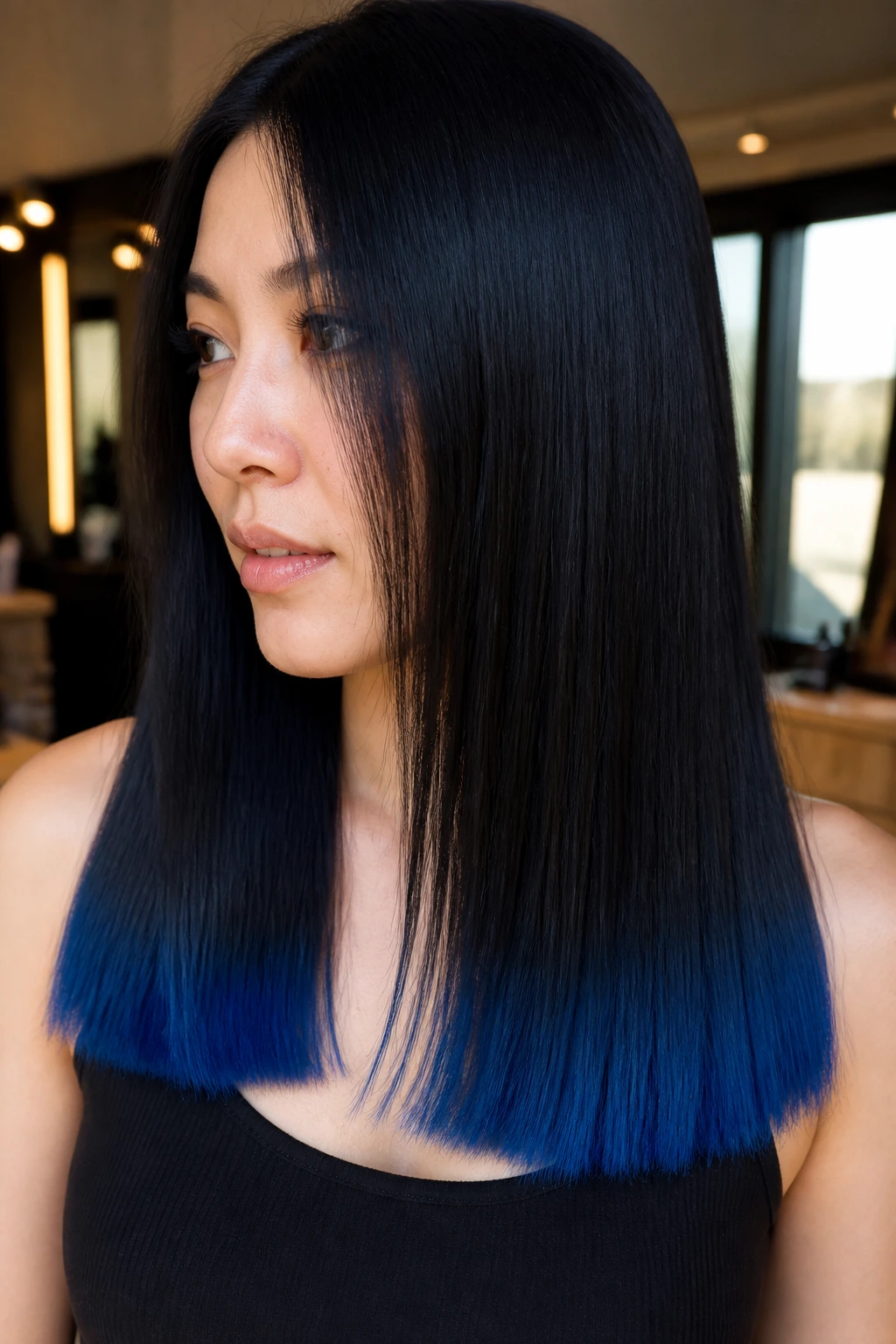
A blunt hemline can make blue look sharper than layers ever will. One clean edge at the bottom of long hair gives the color a place to land, and the blue band reads almost architectural when the cut is straight across.
The reason this works is simple. Layers scatter attention; a blunt cut gathers it. If you want black blue ombre hair to feel sleek and modern, this is the shape that gives the color the clearest outline.
Keep the fade narrow if the cut is heavy. A wide ombre band can make the ends look thinner than they are. A tight blue edge, on the other hand, gives the cut weight and keeps the bottom from disappearing into shadow.
This style suits hair that gets worn down often. If you live in ponytails, the blunt line loses some of its power. Wear it loose, and it looks much stronger.
14. Teal-Leaning Blue for Warm Undertones
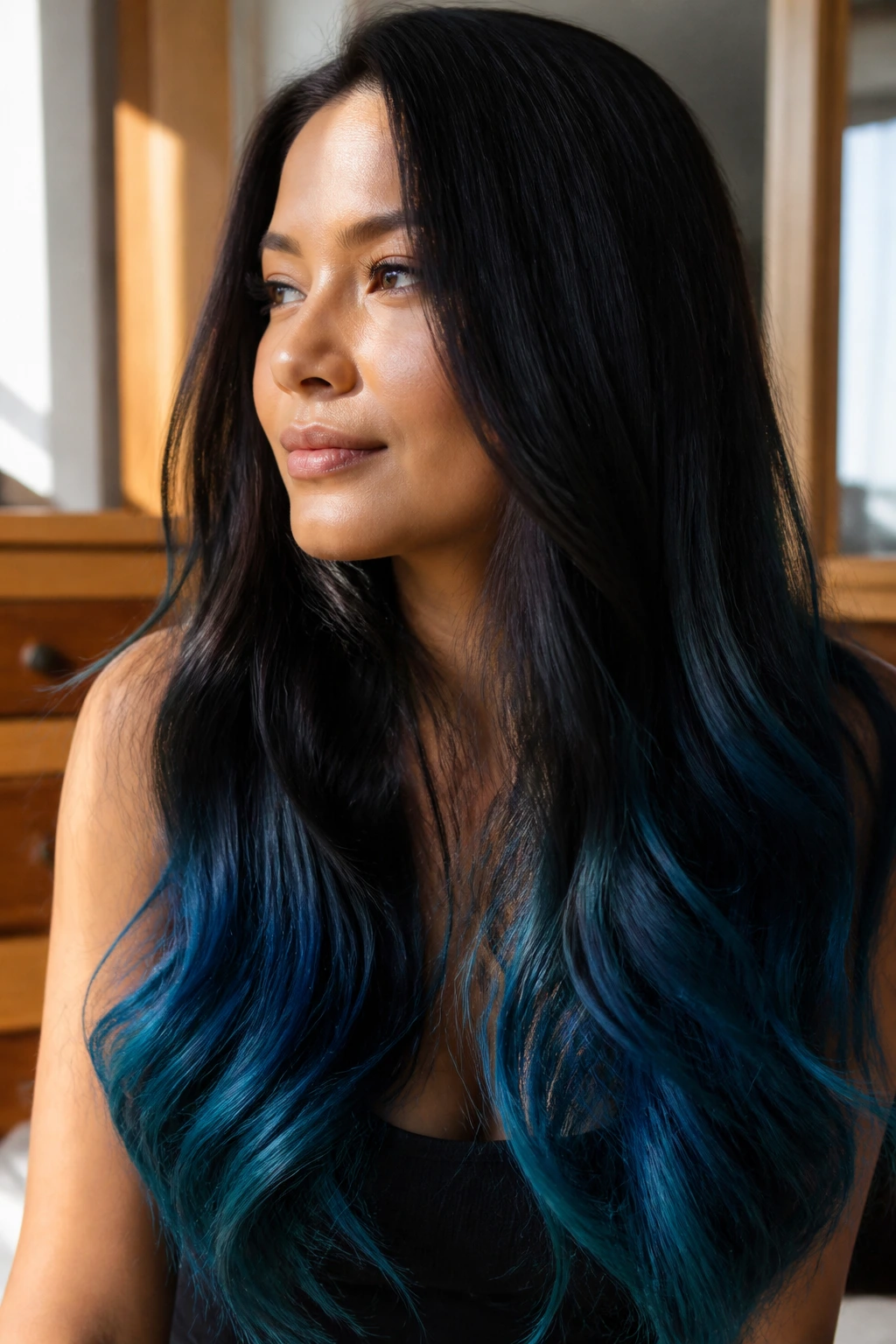
Why lean teal instead of pure blue? Because a little green in the mix can soften the contrast against warm skin, golden brown eyes, or naturally coppery undertones in the hair. A teal-leaning ombre still reads blue, but it doesn’t sit quite as starkly against a warm complexion.
How to Keep It from Reading Green
- Ask for a blue with a touch of teal, not a full turquoise
- Keep the top half of the hair deep black so the color doesn’t get too bright
- Style with smooth waves to keep the tone rich and not flat
This one is useful if true navy feels too cold on you. Teal-blue has a little more life in it, especially on long hair where the fade can stretch over several inches. It also tends to fade into a smoky aqua rather than a harsh mint, which is easier to live with between refreshes.
15. Icy Blue Fade on Jet Black
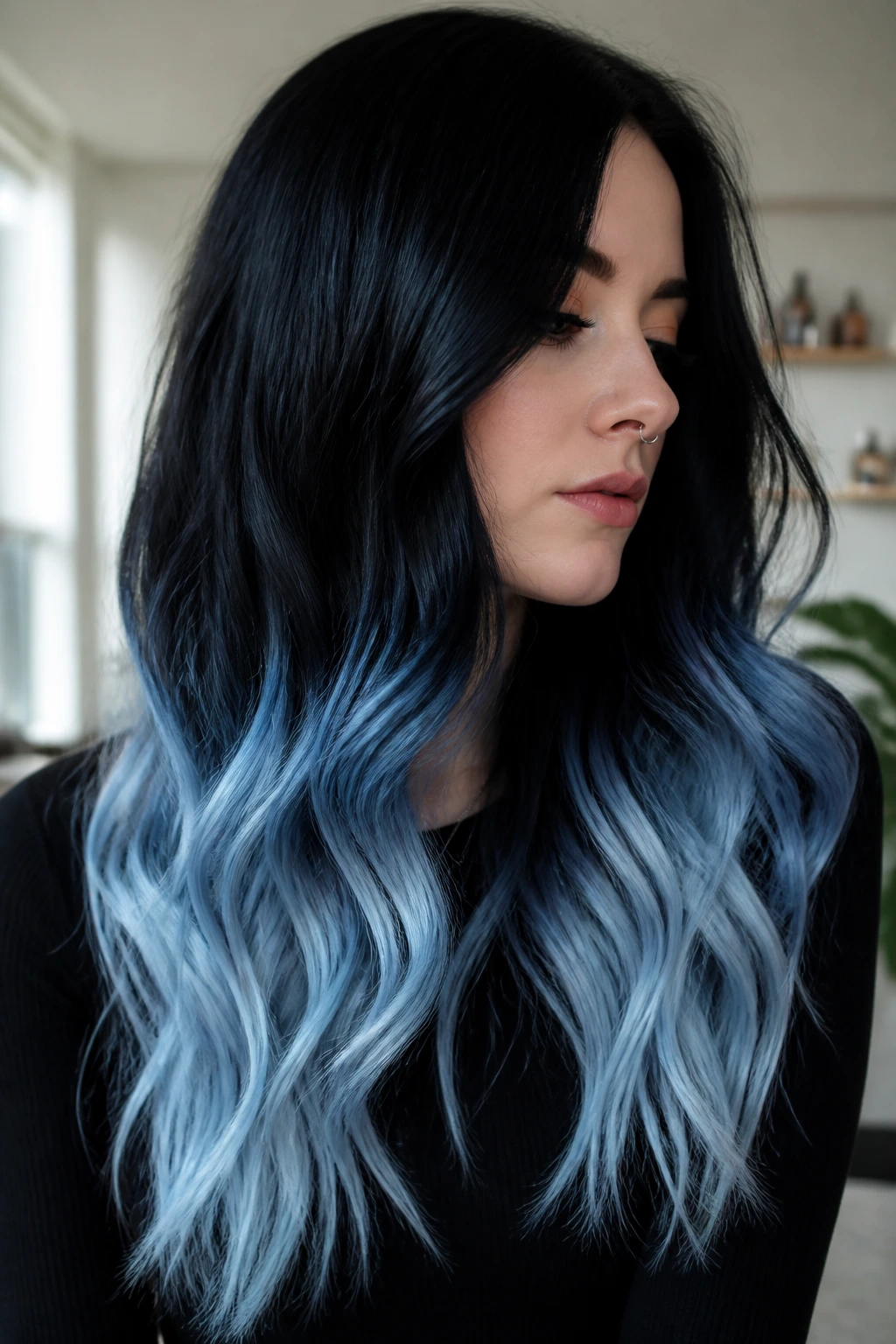
A truly icy blue fade is the most dramatic version on this list, and it needs the cleanest base of all. On jet-black hair, the contrast is sharp, but the blue itself has to stay pale and cool enough to avoid looking dull.
This is the kind of style that makes the ends stand out first. It works best when the lower section has been lifted light enough to carry a frosty blue without turning green or gray. If the hair has a warm undertone underneath, the whole look can go muddy fast. That’s the catch.
Compared with navy or denim, icy blue is less forgiving and more exacting. It looks best on people who like a crisp finish and don’t mind keeping toner or color masks in rotation. If you want a low-maintenance shade, skip this one. If you like that cold, almost frost-bitten edge, it’s hard to beat.
16. Braided Accent Reveal
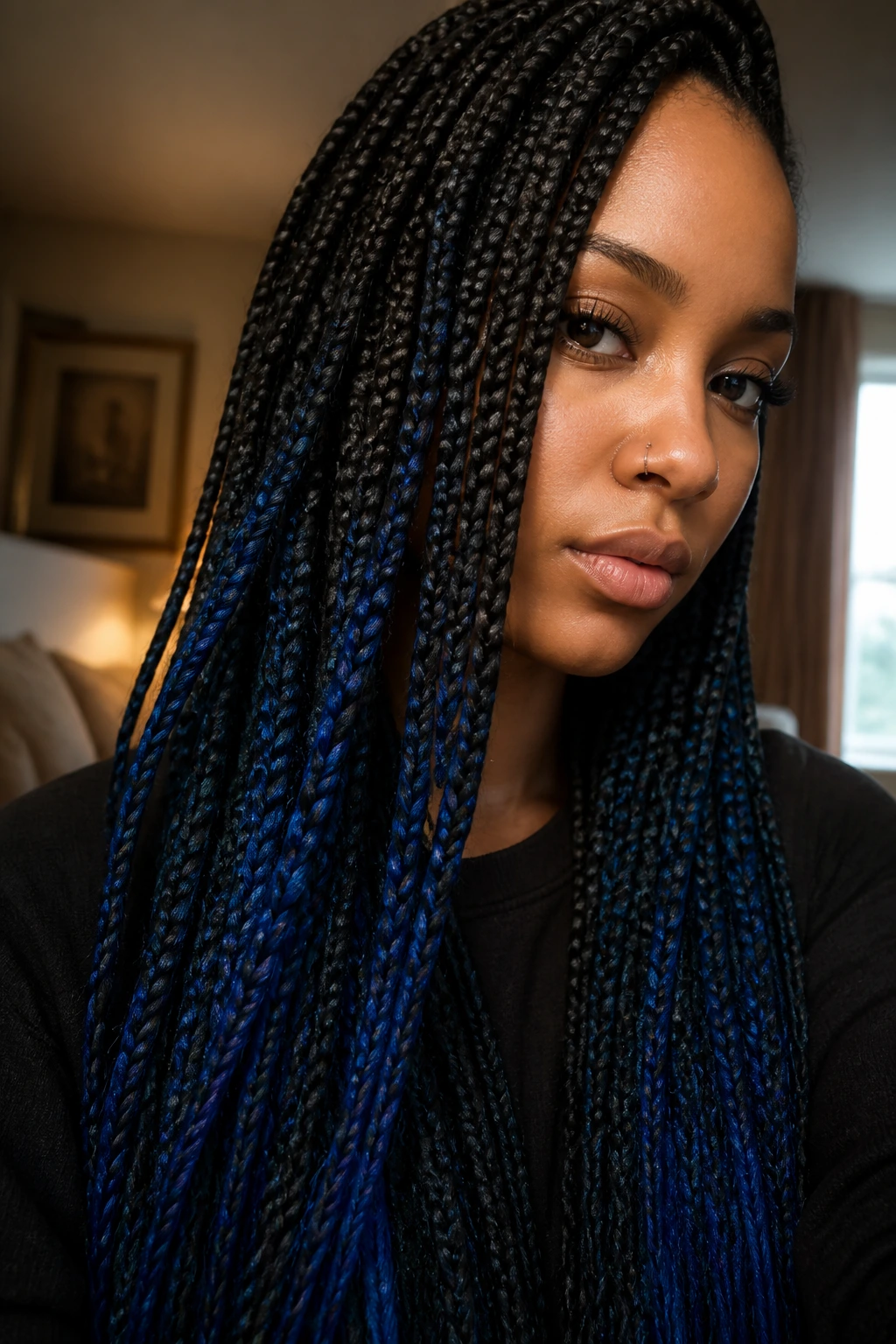
Long braids and black blue ombre hair get along beautifully because the weave shows off the color in thin, shifting lines. Instead of seeing a flat fade, you see the blue thread through the braid each time the sections cross. It’s subtle in a loose plait and much bolder in a tight one.
Where the Color Should Sit
- Place blue through the mid-lengths and ends so the braid picks it up
- Leave a little more black near the root for depth
- Use wider panels if you want the braid to show contrast from across the room
A braided style is a smart choice if you wear your hair up often. The color doesn’t disappear; it changes. That shift is what makes the idea feel fresh rather than repetitive.
And if you like messy braids? Even better. The uneven texture gives the blue more chance to peek through.
17. Rooted Blue-Black with Shadowed Interior
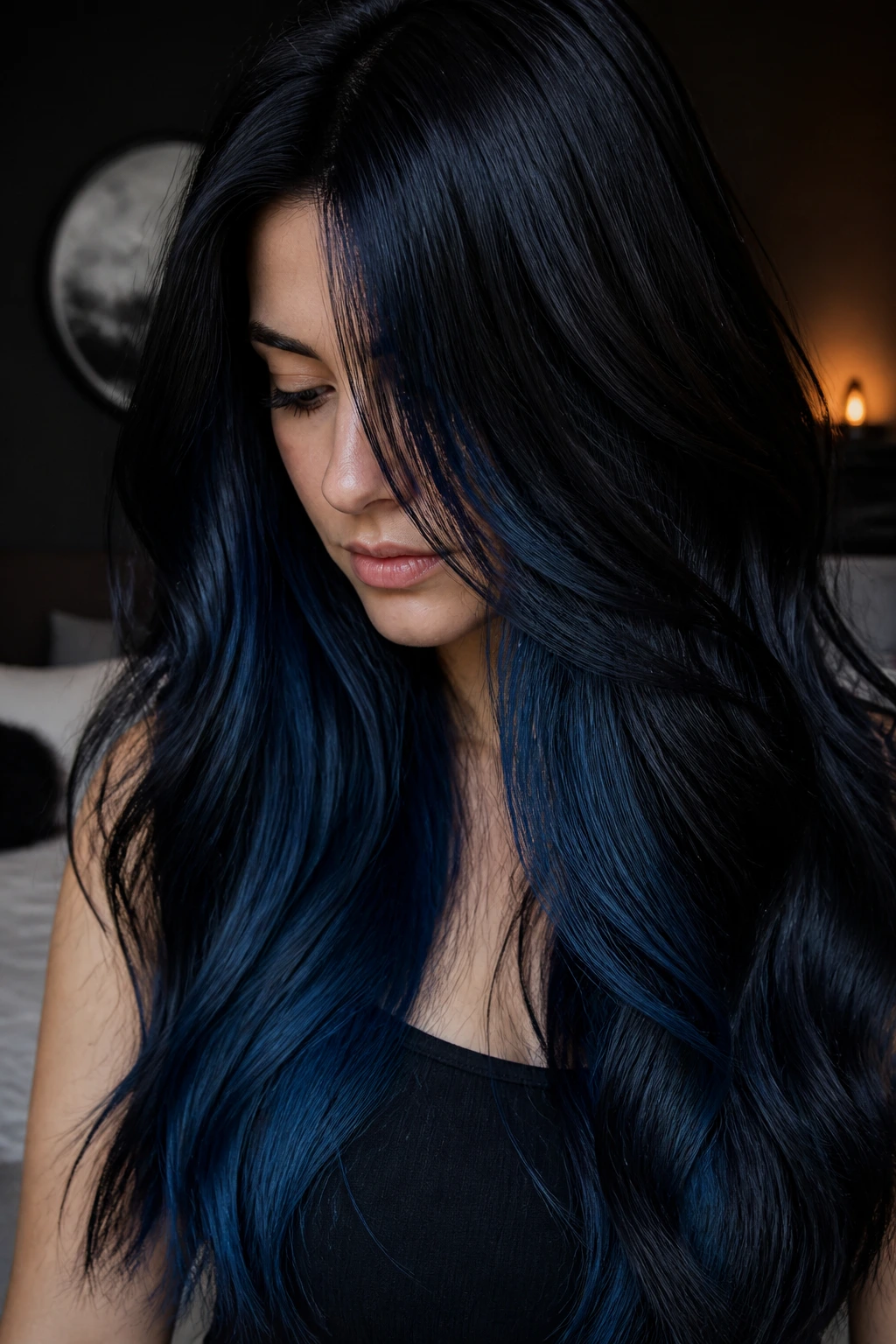
Some of the best color work is the kind people don’t notice right away. Rooted blue-black with a shadowed interior belongs in that category. The outer layer stays almost entirely black, while the inner lengths carry a hidden blue that shows up when the hair moves apart.
The style is strong on long hair because the length gives the inside layers enough room to hide and reveal themselves. You get depth without needing a loud fade, and the dark root shadow keeps everything grounded from the start.
This version is also practical. Dark roots grow out naturally, which means the style can last longer before the line feels obvious. The blue stays tucked in the lower and inner sections, so even when it softens, it still looks deliberate. If you want color that feels moody and layered rather than obvious, this is a good place to land.
18. Low-Contrast Midnight Fade
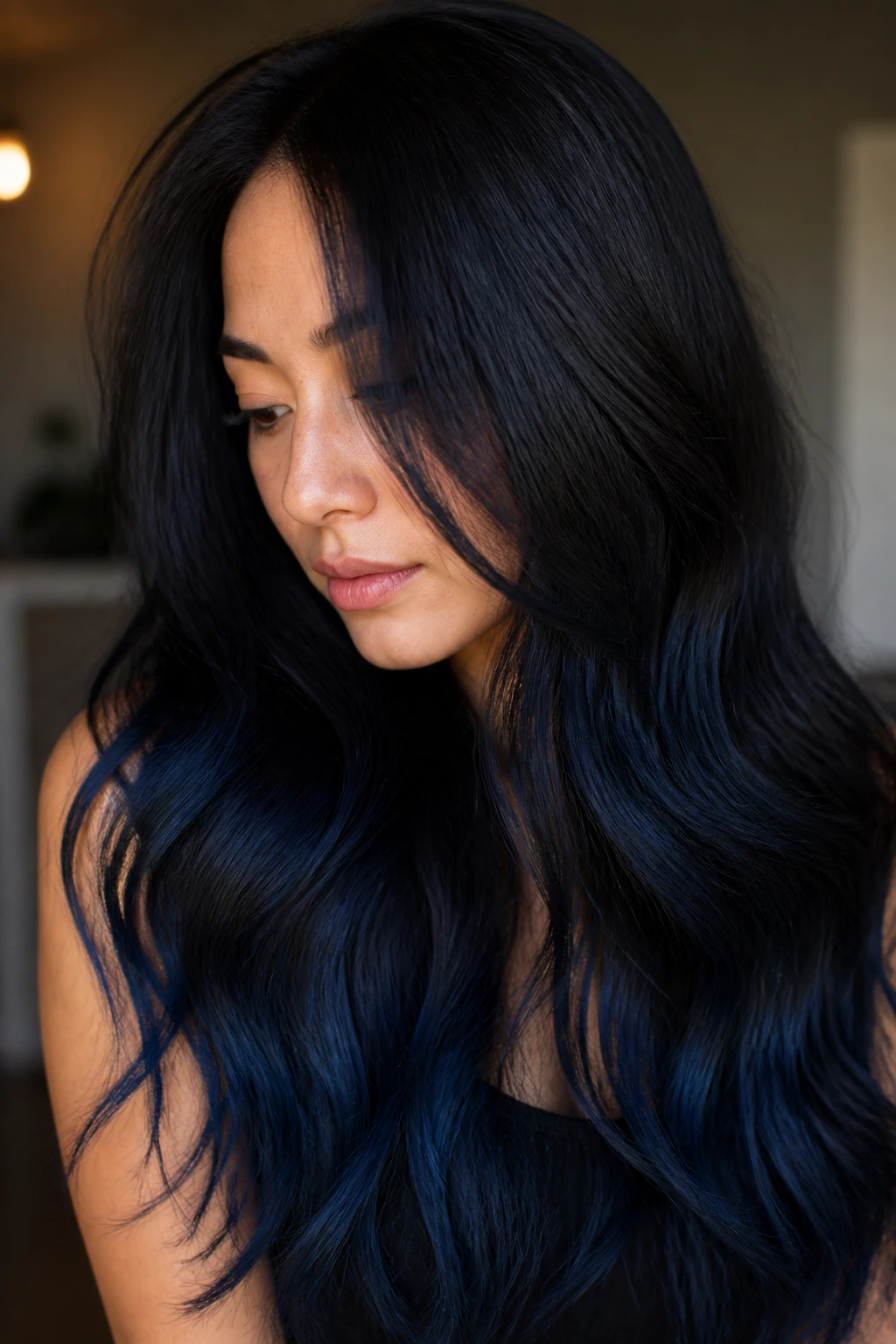
A low-contrast midnight fade is for someone who wants blue only when the light catches it. The black and blue sit close together on the color scale, so the change is gentle, not flashy. Think midnight, not electric.
What Makes It Look Rich
The trick is keeping the transition very stretched. The blue should begin in the lower third and deepen gradually, with no sudden break line. On long hair, that kind of fade looks plush because the eye can travel through the shade instead of stopping at a hard edge.
Best Styling Choice
Soft waves. Always soft waves.
Straight hair can make the low contrast disappear unless the finish is very glossy. Waves and bends give the blue enough texture to separate from the black and keep the whole style from reading like one dark block.
This is the version I’d recommend to someone who likes the idea of blue but doesn’t want to feel committed to a loud color story every time they look in the mirror.
19. Split-Tone Black and Blue Ombre
If you want your hair to feel unapologetic, this is the one. A split-tone black and blue ombre doesn’t fade politely from top to bottom; it uses one side, one panel, or one underlayer to create a clear contrast. The result is edgy, a little graphic, and hard to miss.
Unlike a standard melt, this style depends on movement and parting. A deep side part can reveal more blue on one side, while a center part keeps the look balanced and symmetrical. Long hair makes the idea better because there’s enough length for both tones to show up without crowding each other.
It’s not a shy look. That’s the point.
This works best with a cut that has swing — long layers, a soft V-shape, or even a blunt shape that stays heavy at the ends. If the hair is too wispy, the split can lose its force.
20. Glossed Sapphire Ends with Long Layers
What if you want the blue to move more than it shocks? Glossed sapphire ends are the answer. The color stays concentrated at the bottom, but long layers let the sapphire show in different places as the hair falls, curls, or gets brushed back.
The glossy finish matters here. Sapphire can look flat if it’s not sealed with shine, and long layers need that reflective finish to keep the ends from disappearing into shadow. A smooth blow-dry or a large curling iron pass helps the blue catch light in a few different spots instead of one flat strip.
This is a strong choice for people who wear their hair down most of the time. The layers keep the ends lively, and the sapphire gives the cut a cleaner finish than plain black ever could. If you want one version that feels polished, wearable, and still interesting, this is probably the one I’d put at the top of the list.
Final Thoughts
Black blue ombre hair works best when the color has room to unfold. Long hair gives you that room, which is why the style can look soft, sharp, secretive, or bold depending on where the blue starts and how bright it gets.
The smartest versions respect the cut. A blunt hemline wants a clean edge. Curls want a softer halo. Braids want hidden panels or ribbons that can weave in and out. Once you match the placement to the texture, the color starts to feel like part of the hair instead of a layer sitting on top of it.
And one last thing: blue is a color that rewards shine. Dry ends dull fast, especially on dark bases. Keep the finish glossy, keep the transition intentional, and the whole look holds together much longer than people expect.
