



Long hair gives ombre room to fail gracefully — or look expensive. The best blonde brown ombre hair ideas for long hair don’t stack color in a hard line; they stretch brown through caramel, beige, or vanilla so the ends look softened, not striped.
Undertone does the heavy lifting. A chestnut base wants honey or biscuit more than ash. A cool espresso base can hold mushroom or pearl blonde, but only if the blend stays smoky instead of yellow. That’s the part a lot of inspiration photos skip: the shade names sound simple, yet the finish depends on where the blonde starts, how porous the ends are, and whether the toner is doing its job.
Long hair also changes the maintenance game. You can push the lightness farther down the shaft, keep more depth near the scalp, and still get that airy blonde finish when the hair moves. Good ombre on long hair should look better in motion than standing still. If it only works in one pose, the placement is off.
Some of these ideas lean warm and glossy. Some stay cooler and quieter. A few bring the blonde higher with face-framing pieces, which is a smart move when you want brightness without living in the salon chair. Start with the amount of contrast you can live with, because that decision matters more than the shade name on its own.
1. Soft Chestnut Roots into Vanilla Ends
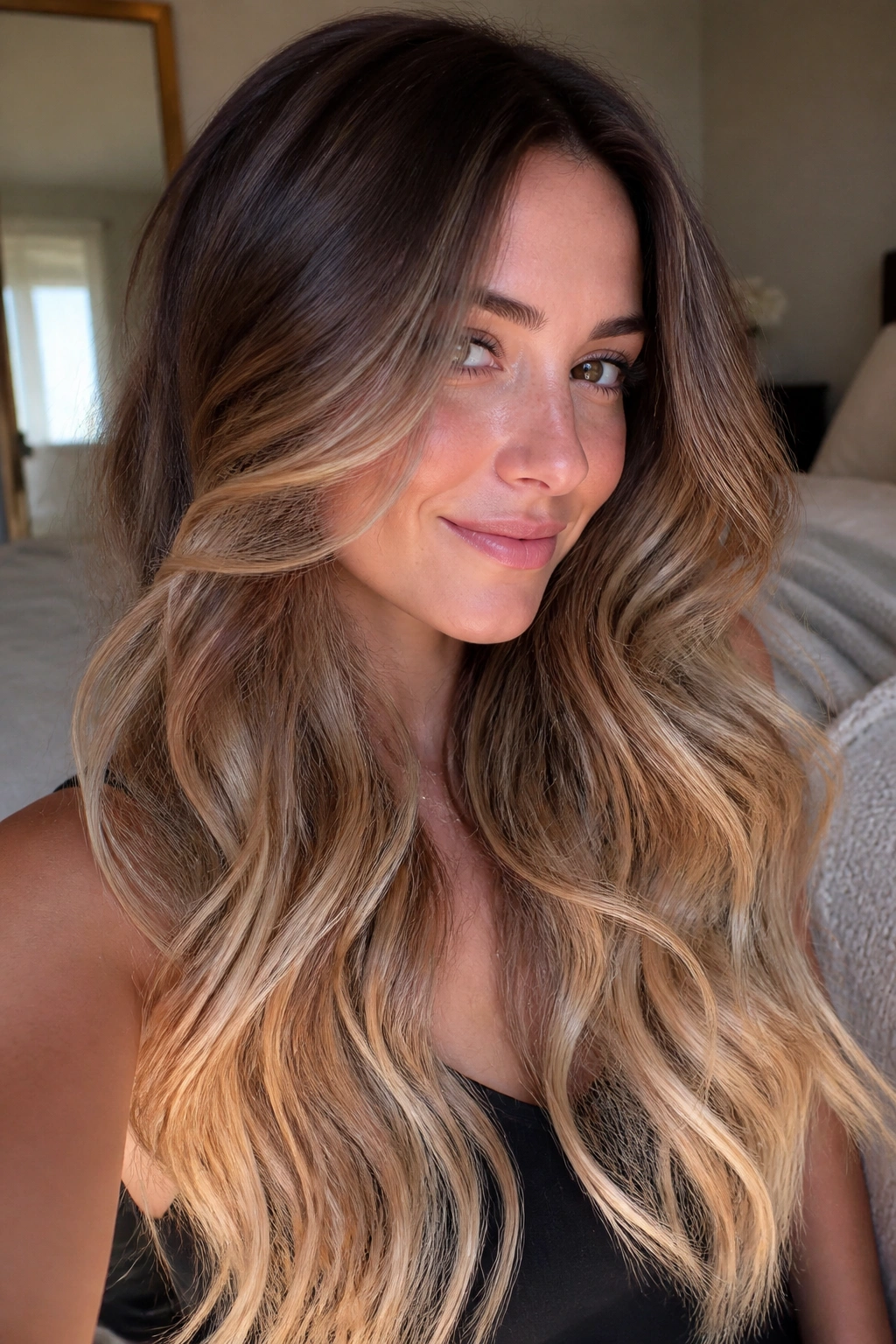
This is the safest kind of blonde-brown ombre for long hair, and I mean that in the best way. Chestnut at the roots keeps the color grounded, while the vanilla ends give you that pale, creamy finish without jumping straight into harsh contrast.
The reason it works so well on longer lengths is simple: there’s room for the fade. On a bob, this can feel abrupt. On hair that falls past the shoulders, the change reads more like a natural shift in tone. Loose waves show it best, especially when the ends bend just enough to catch light without turning frizzy.
If you like a color that looks soft from every angle, ask for the lightest blonde to sit in the bottom third of the hair. That keeps the grow-out line easy and stops the ends from looking over-processed. A quick gloss every so often keeps the vanilla from going flat.
2. Rooted Mushroom Brown into Beige Blonde
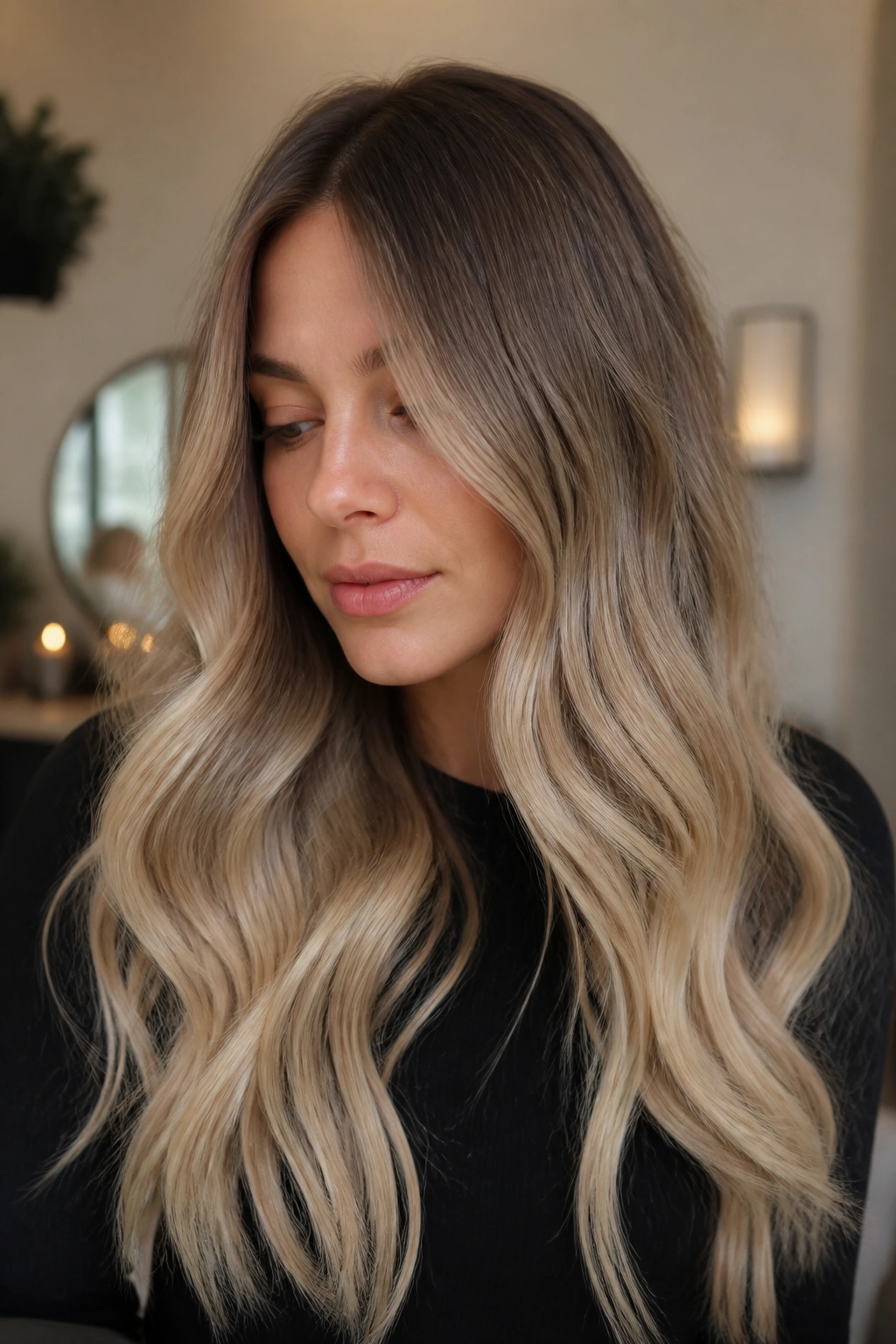
Cool brunettes often get pushed toward warm caramel, and I think that advice gets tired fast. Mushroom brown into beige blonde is the quieter, more polished route, especially on long hair that already has movement.
Why It Flatters Long Hair
A rooted mushroom brown base gives you depth near the scalp, which helps the blonde feel intentional instead of patchy. Beige blonde at the ends softens the look without turning yellow, so the whole style stays calm and expensive-looking.
The color also holds up nicely if your hair is naturally ashy or if warm tones make you look a little tired. You are not fighting your undertone here. That matters.
- Ask for a soft root shadow about one or two levels deeper than the mids.
- Keep the blonde beige, not gold, so the fade stays cool.
- Loose bends or a rough blowout show the dimension better than pin-straight hair.
- A violet shampoo once in a while helps if the beige starts drifting warm.
Pro tip: leave a little darkness near the face if you want the blonde to feel softer on long hair.
3. Caramel Ribbon Ombré on Dark Blonde Lengths
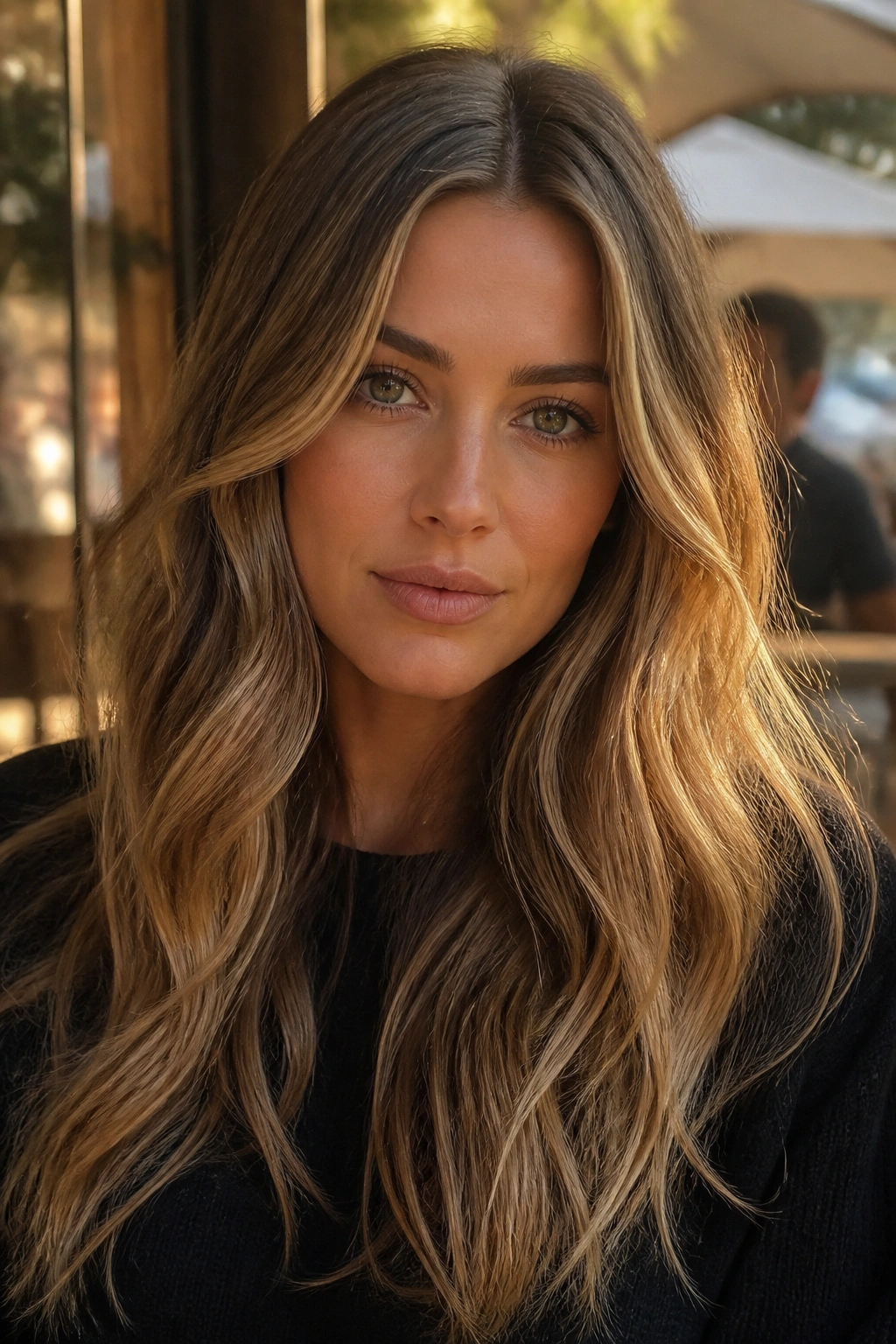
Can ombre look light without going full blonde? Absolutely. Caramel ribbon ombre is one of my favorite answers for long hair that needs warmth, not a dramatic makeover.
Instead of a big dark-to-light jump, the caramel sits in thin ribbons through the mid-lengths and lower lengths. That makes the hair look fuller, which is handy if your ends are fine or slightly wispy. On long hair, those thin stripes move beautifully when the hair sways. They read as shine first, color second.
How to Wear It
- Soft curls show the ribbons best.
- A center part gives the most even fade.
- A brushed-out wave makes the caramel look blended, not striped.
- A shine spray on the ends keeps the lighter pieces from looking dry.
This is a good choice if you want something friendly and low-drama. It still gives you blonde, but it never feels shouty. That’s the appeal.
4. Espresso to Honey Ombré with Face-Framing Pieces
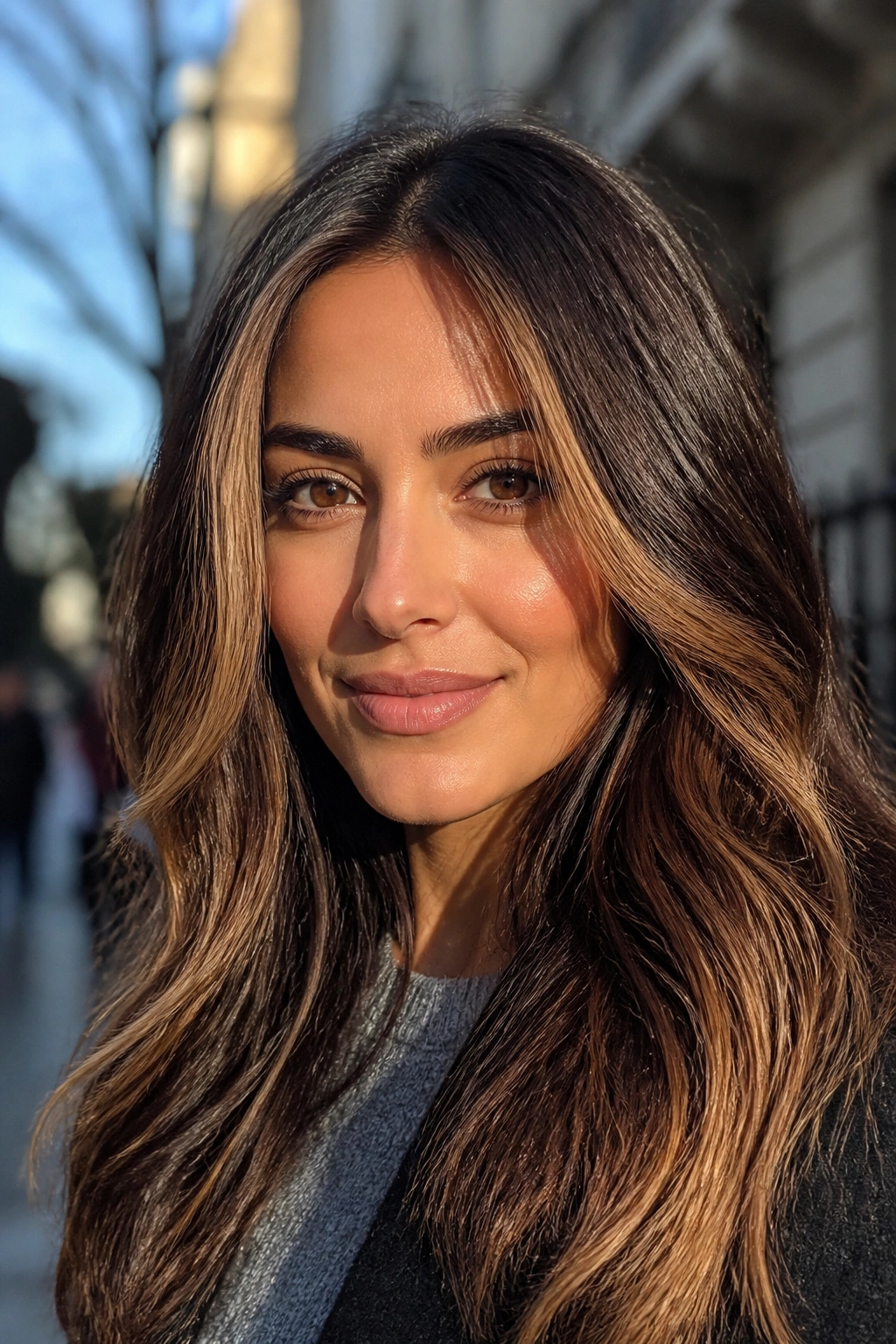
If your hair feels heavy all one color, this kind of ombre wakes it up fast. Honey around the face can change the whole mood of a dark espresso base, especially on long hair that falls past the collarbones.
The face-framing pieces do a lot of work here. They brighten the cheekbone area, soften the front view, and keep the rest of the color deeper so the look doesn’t turn flat. I like this version on long layers because the front pieces can blend into the rest of the blonde instead of stopping abruptly at the jaw.
A good colorist will usually keep the brightest points near the front and let the rest fade more gradually toward the ends. That gives you contrast where you want it and shadow where you need it. If you wear your hair up often, this one still looks nice in a ponytail because the front brightness stays visible.
One warning: honey tones can turn too orange if the toner is too warm. Keep the blonde soft, not coppery.
5. Chocolate Brown to Icy Beige Ends
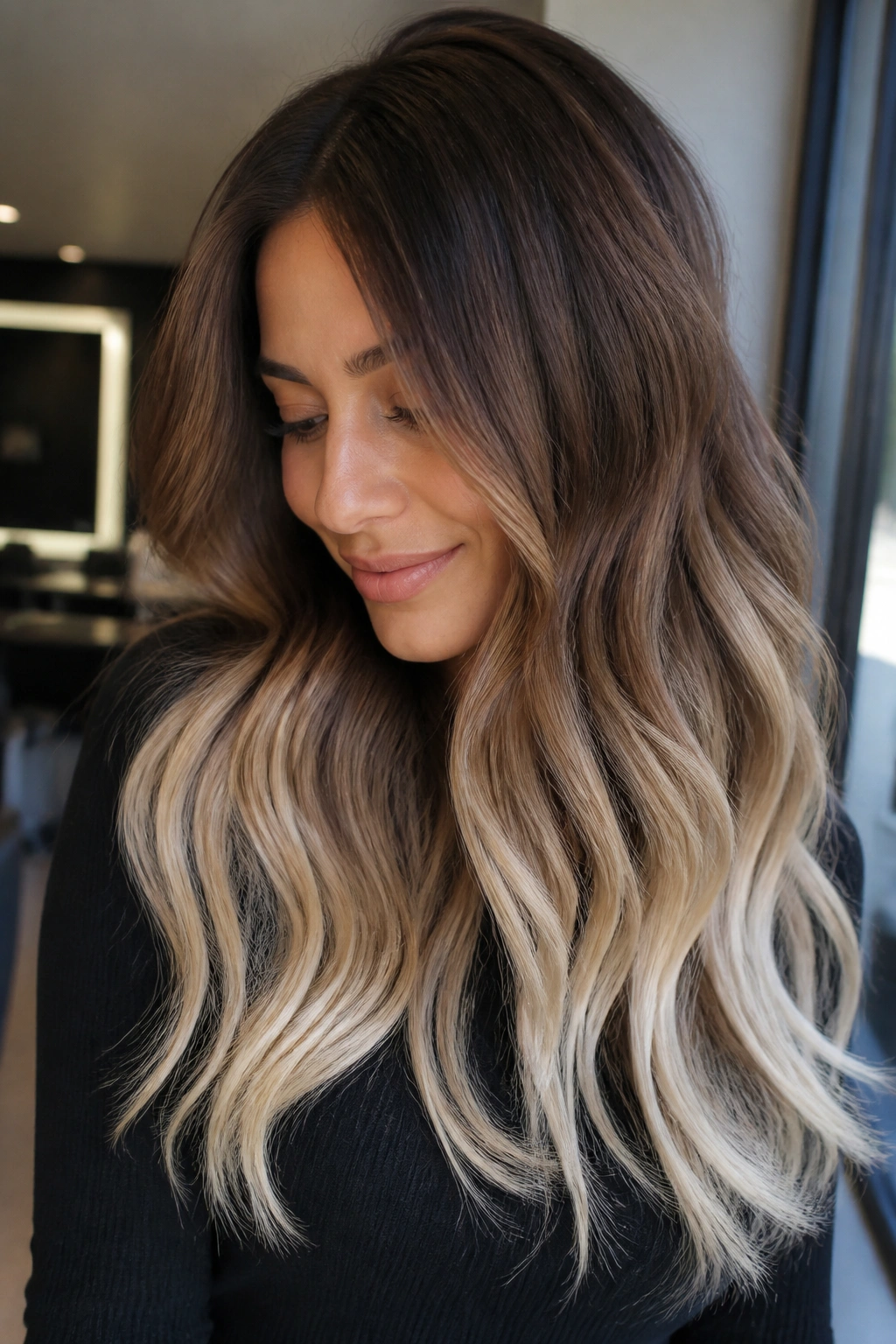
Not every brown-to-blonde blend needs warmth. Chocolate brown into icy beige is for the person who likes a cooler, sharper finish and doesn’t mind a little edge.
The contrast is cleaner than caramel or honey, which means the hair can look sleek even when it’s loose. On long hair, that cool beige at the ends keeps the style from feeling heavy. It’s especially good if your hair is naturally dense and tends to swallow softer blonde shades.
The trick is restraint. You want the ends pale enough to feel blonde, but not so lifted that they look hollow or dry. Long ends that are already porous can take on an odd, ghosty look if the blonde goes too white. A toned beige finish is safer and prettier.
This shade family usually likes a smoothing cream or gloss serum. Not much. Just enough to keep the cuticle lying down so the icy tone looks polished instead of dusty.
6. Toffee Balayage Ombré with a Soft Root Shadow
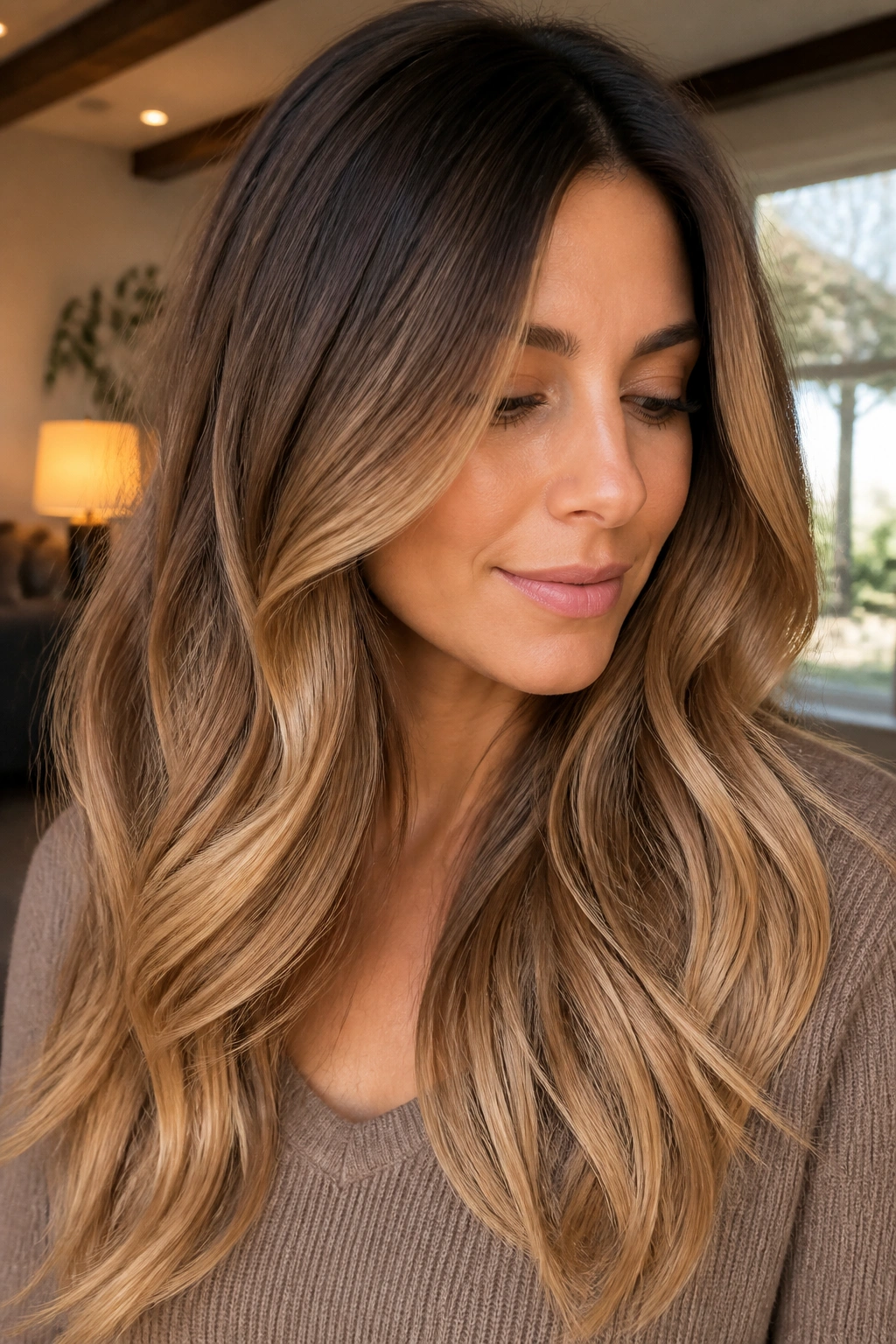
Unlike chunky highlights, toffee balayage ombré fades like sunlight drifting through dark hair. That’s why it works so well on long lengths. There’s no abrupt stripe, just a soft increase in brightness as the hair drops.
What to Ask For at the Chair
- A root shadow that stays close to your natural brown.
- Toffee tones through the mid-lengths, not just the ends.
- A few brighter pieces around the front to keep the face from looking flat.
- A finish that reads warm beige, not orange.
Long layered cuts love this look because the layers give the lighter pieces places to sit. If your hair is all one length, the toffee can bunch toward the bottom and feel a little heavy. With layers, the light spreads out and looks more expensive.
This is also one of the easier ombre ideas to live with if you hate obvious regrowth. The root stays believable, and the tone grows out without shouting for attention.
7. Walnut Brown to Champagne Blonde Waves
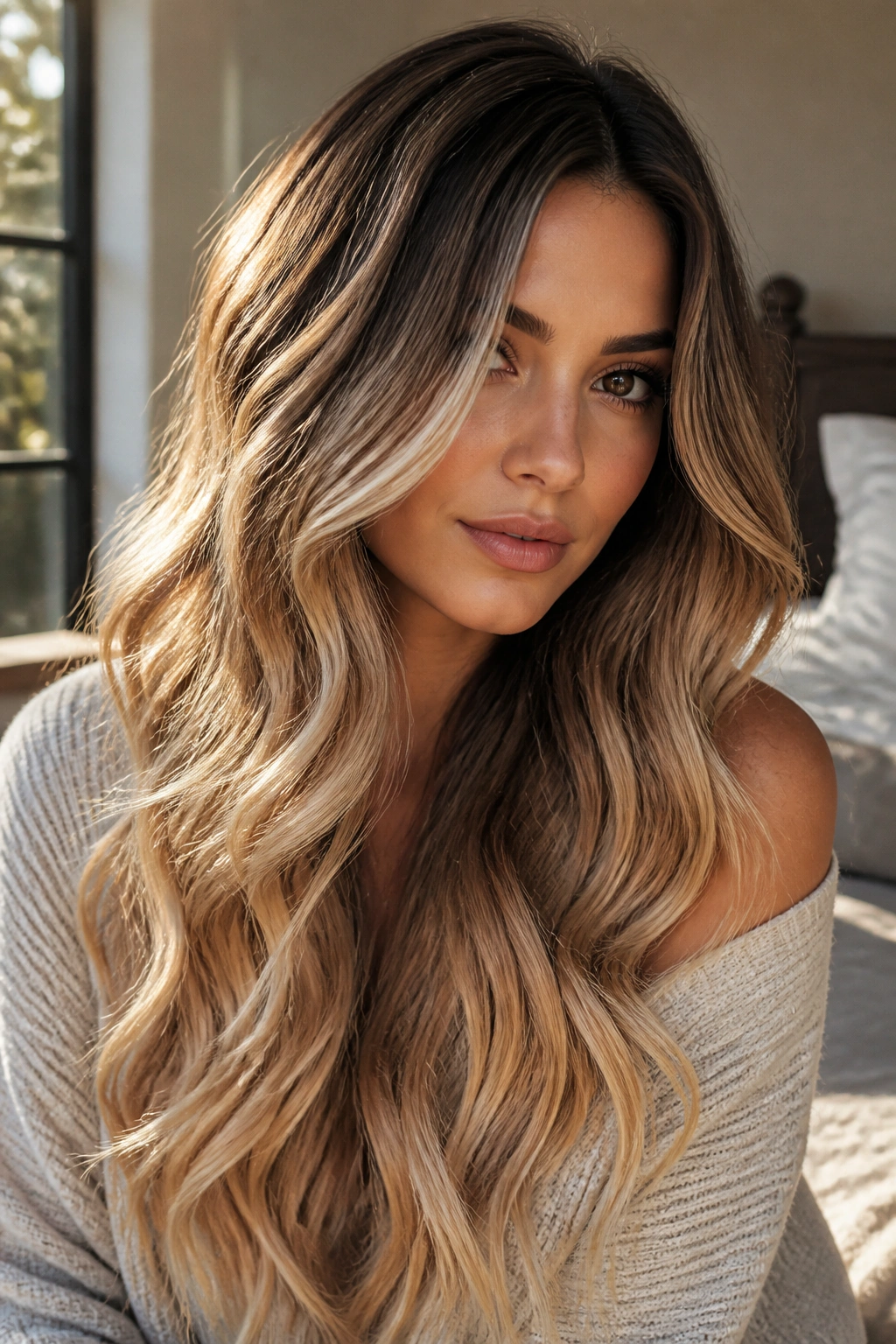
Champagne blonde is a sneaky good shade on long hair. It has enough warmth to stay flattering, enough coolness to avoid brass, and enough softness to blend with a walnut brown root without looking stiff.
The best part is how it behaves in waves. Brushed-out curls make champagne look glossy instead of pale, which is exactly what you want if you like hair that feels finished but not overstyled. On very long hair, champagne ends can also make the length look lighter and more swishy, which matters if your hair tends to hang heavy.
Best Styling Note
A 1.25-inch curling iron or a large round brush gives this color the movement it needs. Tight curls can make the blonde feel a bit busy. Bigger bends keep it smooth.
I’d call this a polished choice rather than a flashy one. If you want people to notice the shine before they notice the color, this is a strong pick.
8. Cinnamon Brown to Sunlit Honey Blonde
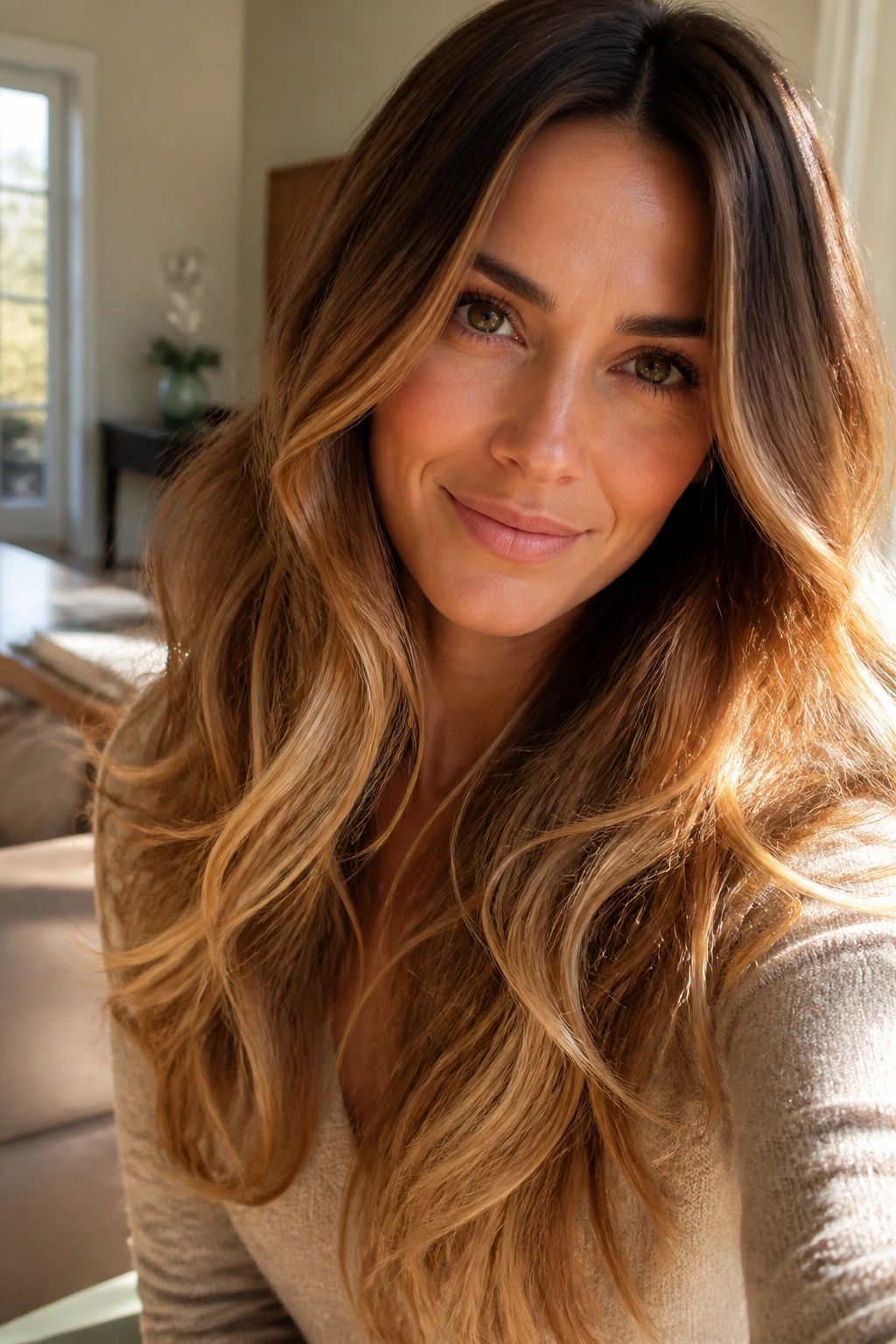
Warm shades like this have a softness that never feels forced. Cinnamon brown into honey blonde works because the tones already belong together; the blonde doesn’t have to fight the base.
The cinnamon side usually carries a little red-gold warmth, which helps the honey ends look rich instead of pale. That matters on long hair, where a flat blonde can drag the whole style down. Honey gives the ends some life. It looks especially nice when the hair is layered or curled away from the face.
This is one of those shades that gets better if you don’t over-tone it. Let a little warmth stay. Too much ash would take away the glow that makes the whole look work.
If your skin leans warm or neutral, this color family can be easy to wear. It also plays nicely with gold jewelry and soft makeup, which sounds like a tiny detail until you see how much it changes the whole effect.
9. Mocha Melt with Cool Mushroom Ends
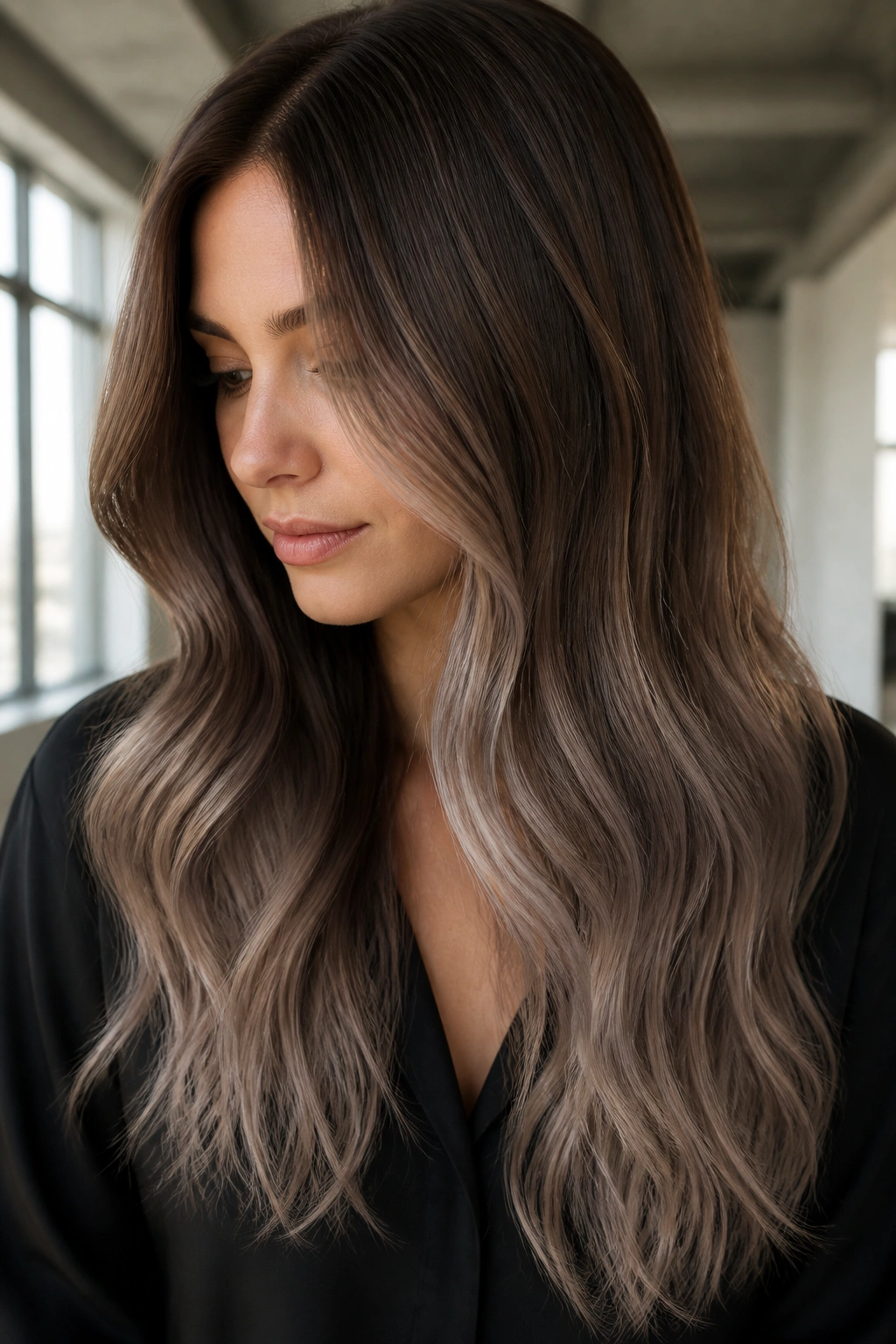
Cool, not flat. That’s the whole idea here.
A mocha melt with mushroom ends gives you brunette depth at the top and a smoky blonde finish at the bottom, which is a smart choice if you want ombre but don’t want sweetness. On long hair, the softer the shift, the richer the color looks. The ends should feel shaded, not bleached.
This version works well on straight hair and loose bends because the transition stays smooth. If the hair is very curly, the cool ends can disappear a bit, so I’d lean into brighter texture at the face or along the outer layers. A gloss every few weeks helps keep the mushroom tone from drifting muddy.
I like this one for people who wear a lot of black, gray, or navy. The cooler blonde feels clean next to those colors. It’s quiet, but it isn’t boring.
10. Dirty Blonde to Sandy Beige Ombré
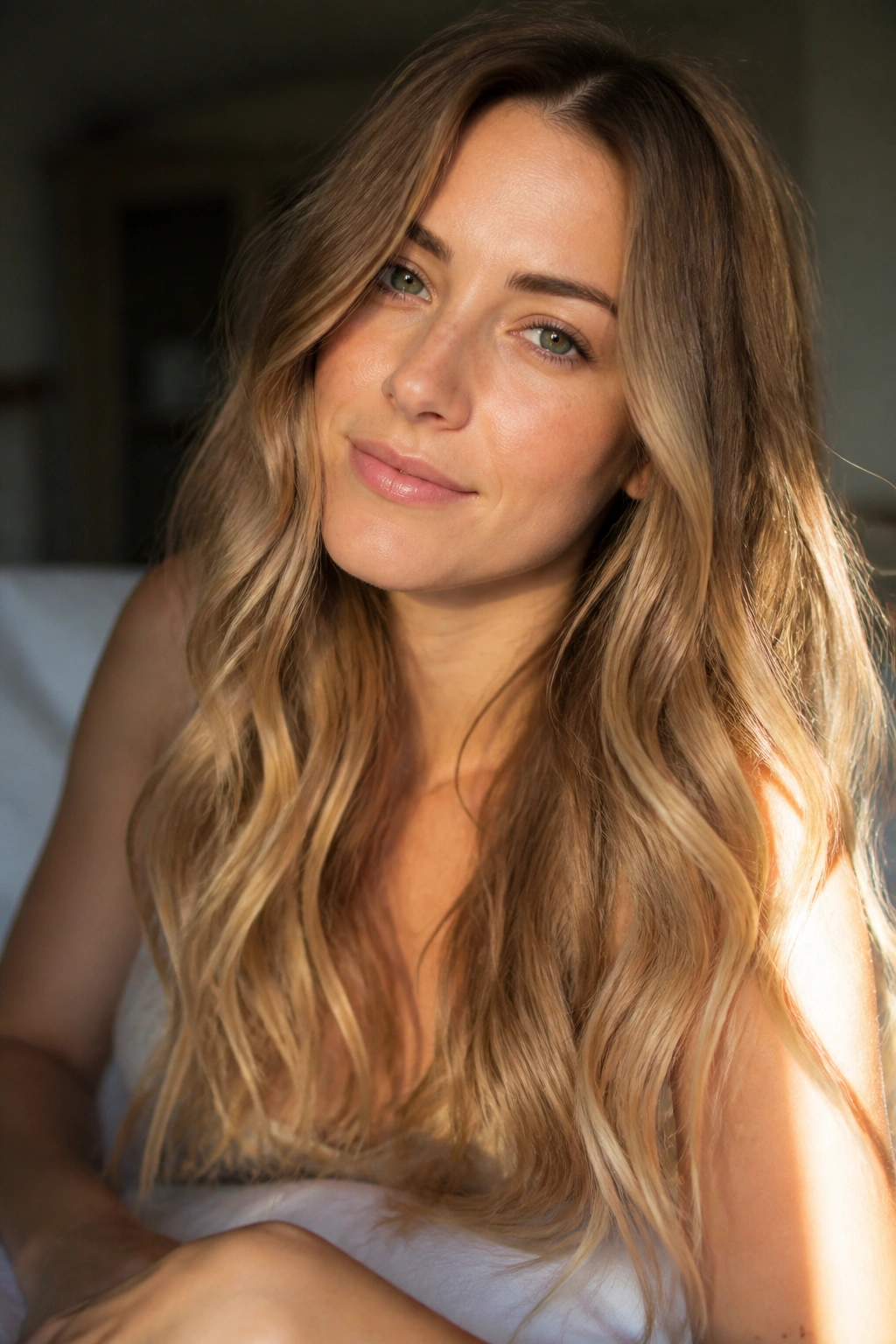
Already have a dirty blonde base? Good news. That means you do not need a dramatic lift to get a flattering ombre.
Why It’s So Easy to Wear
- The base already has softness, so the fade can stay subtle.
- Sandy beige gives you a blonde finish without screaming yellow.
- Long hair lets the darker roots and lighter ends stretch apart naturally.
- Regrowth stays forgiving because the color family is close to your own.
This is a nice route if you want your hair to look brighter without looking dyed to death. Ask for sandy beige at the bottom and keep the transition gentle through the mid-lengths. The result should feel sun-faded, not sectioned off.
On long waves, this shade has a lovely airy quality. On straighter hair, it reads more understated and sleek. Either way, it’s easy to live with, which is not a small thing when you have a lot of length to maintain.
11. Bronde Ombré with Bright Money Pieces
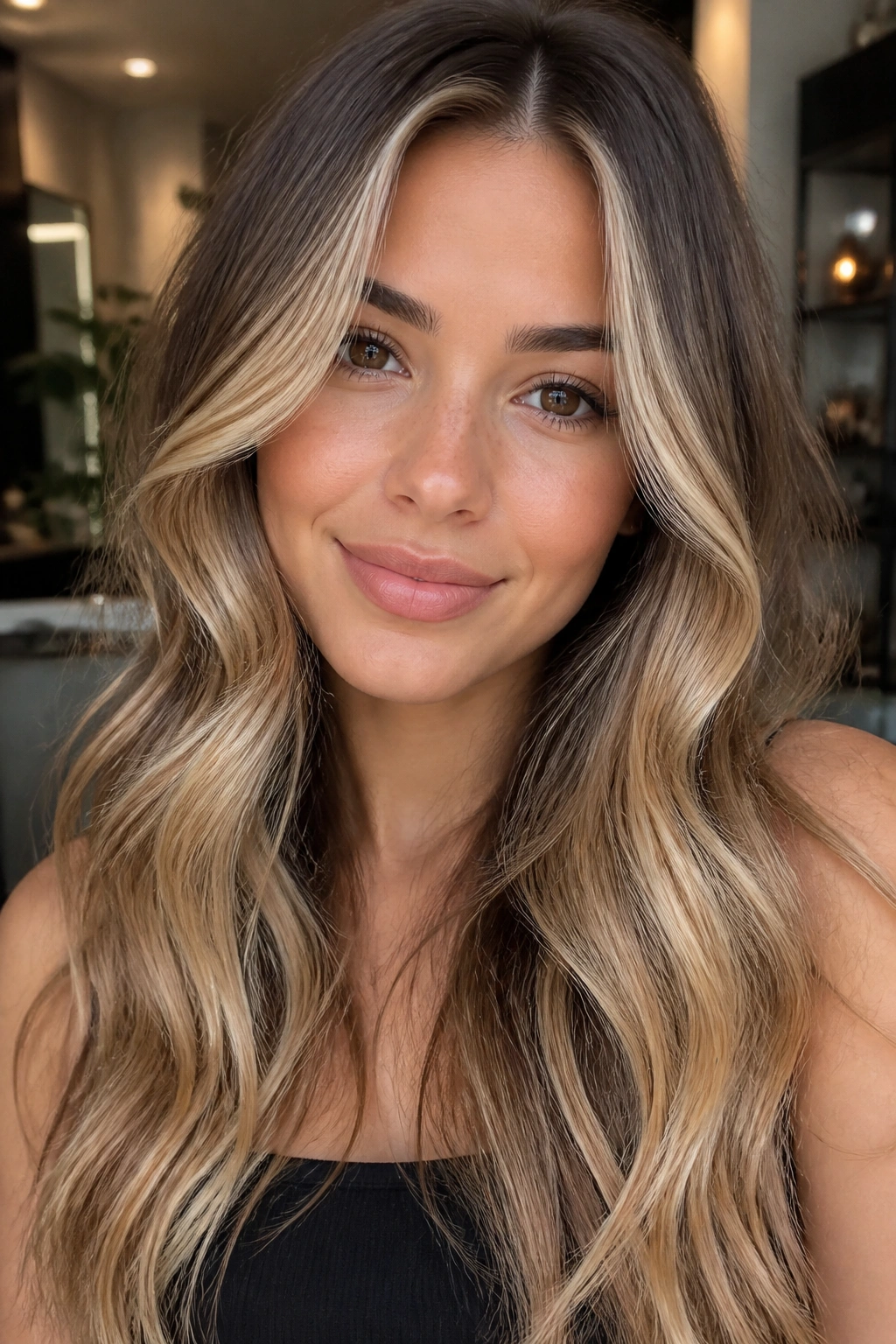
Bronde is what happens when brunette and blonde stop arguing. It gives you lightness without giving up your brown base, and the money pieces make the whole thing feel sharper.
The trick is to keep the front sections brighter than the rest, then let the ends carry a softer beige-blonde. On long hair, that contrast around the face can change the whole shape of the cut. It pulls attention upward and makes the rest of the length feel deliberate instead of just long.
This style is especially good if you wear your hair in half-up looks, low buns, or braids. The bright face frame stays visible, and the deeper lengths keep the color from looking overdone.
Ask for the money pieces to be only one or two levels lighter than the ends if you want a soft finish. Go too pale too fast, and the front can steal the whole show.
12. Dark Cocoa to Buttery Blonde on Layered Hair
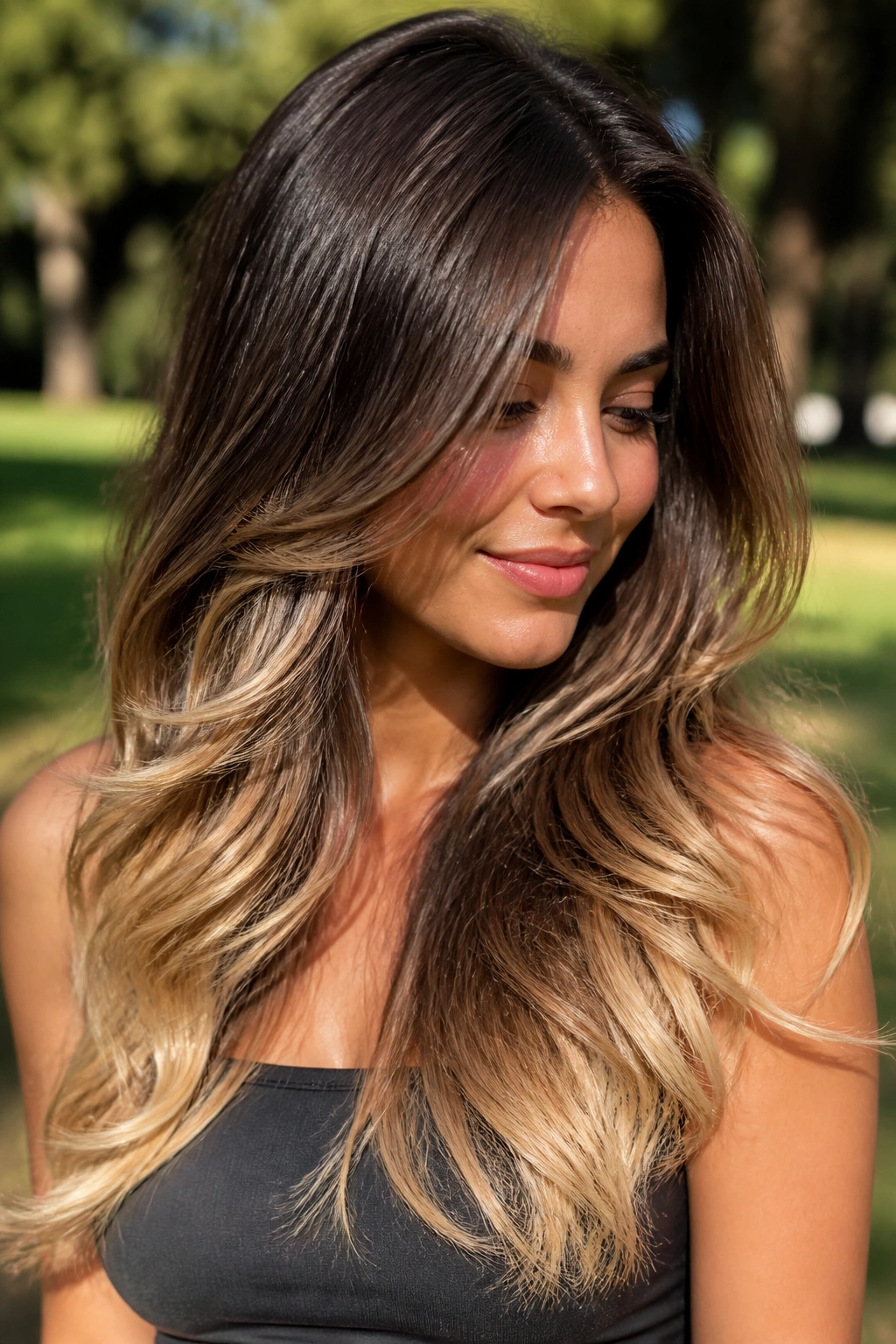
Layers matter more than the dye job here.
Buttery blonde is beautiful, yes, but it can look heavy if it’s packed onto long hair with no shape. A dark cocoa base with buttery ends needs movement underneath it. Long layers break up the weight and let the lighter pieces spread out, which keeps the hair from looking like one thick curtain.
Why the Cut Matters
A layered cut gives the blonde a place to sit. The shortest pieces catch more light around the shoulders, while the longest pieces hold onto the depth. That little difference keeps the ombre from feeling flat or blocky.
Butter yellow is the wrong goal here. You want creamy, soft blonde with enough warmth to look glossy. If the ends go too bright, they can make the whole style feel dry. I’d keep this version smoother and richer than you might expect.
If your hair is thick, this is one of the strongest options on the list. The layers stop the color from sitting in one heavy band.
13. Ash Brown to Pearl Blonde for Cool-Toned Ends
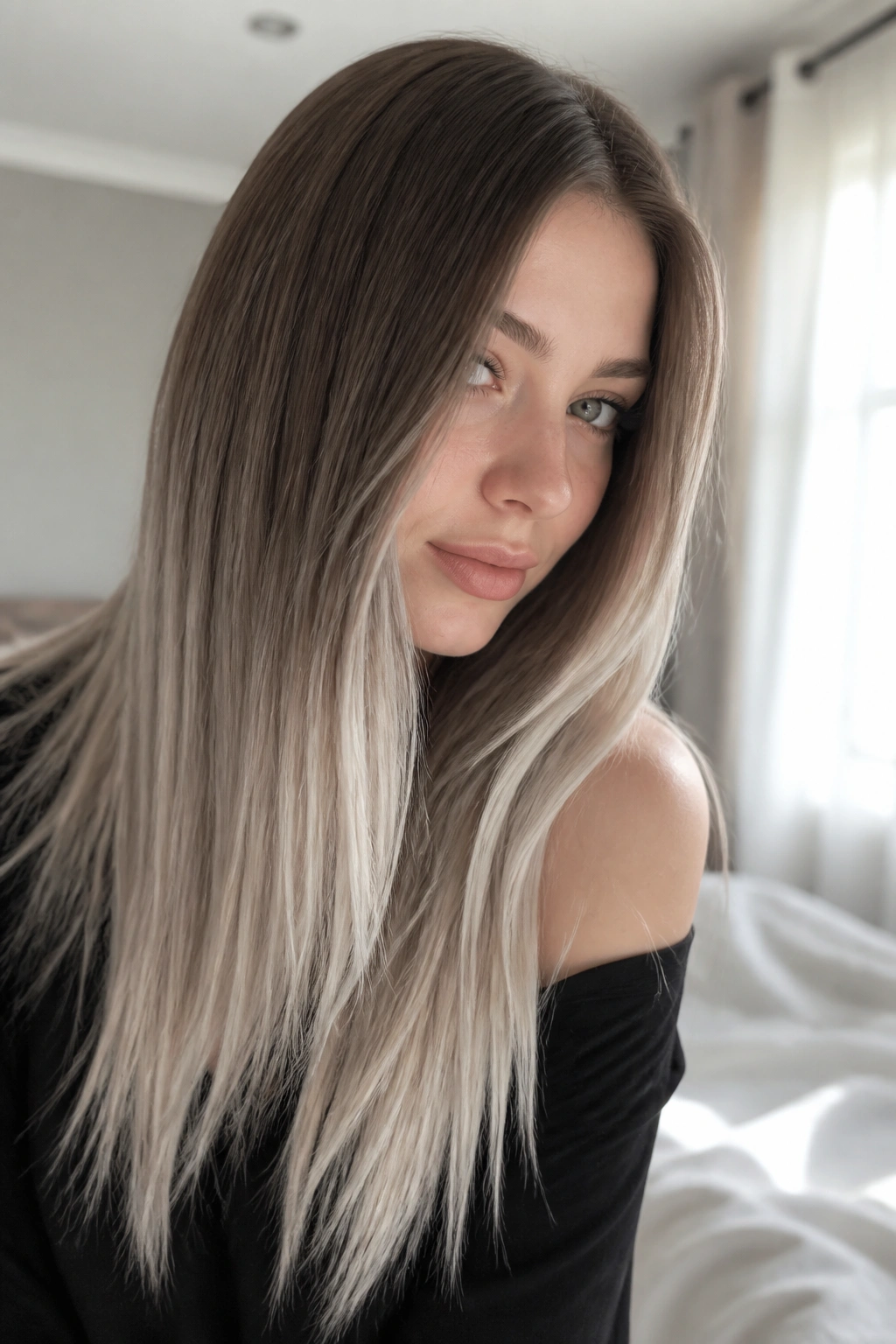
If gold tones make your hair look a bit off, start here. Ash brown into pearl blonde gives you a soft cool gradient that stays light without going brassy.
Pearl blonde is a nice color because it has that faint creamy sheen that changes in different light. It isn’t yellow, and it isn’t stark white. On long hair, that makes the ends look reflective instead of dry. It’s a good choice for straight styles, sleek ponytails, and long waves with a smooth finish.
The only catch is upkeep. Cool blondes can fade warm faster than people expect, especially if you use a lot of heat or wash frequently. A violet or blue-toned shampoo can help, but don’t overdo it or the color can go dull. Small amounts work better than aggressive toning.
This one has a cleaner, sharper feel than honey or caramel. If you like cool silver jewelry, black clothing, and glossy hair, it fits that mood neatly.
14. Chestnut Brown to Biscuit Blonde with Tea-Lowlight Dimension
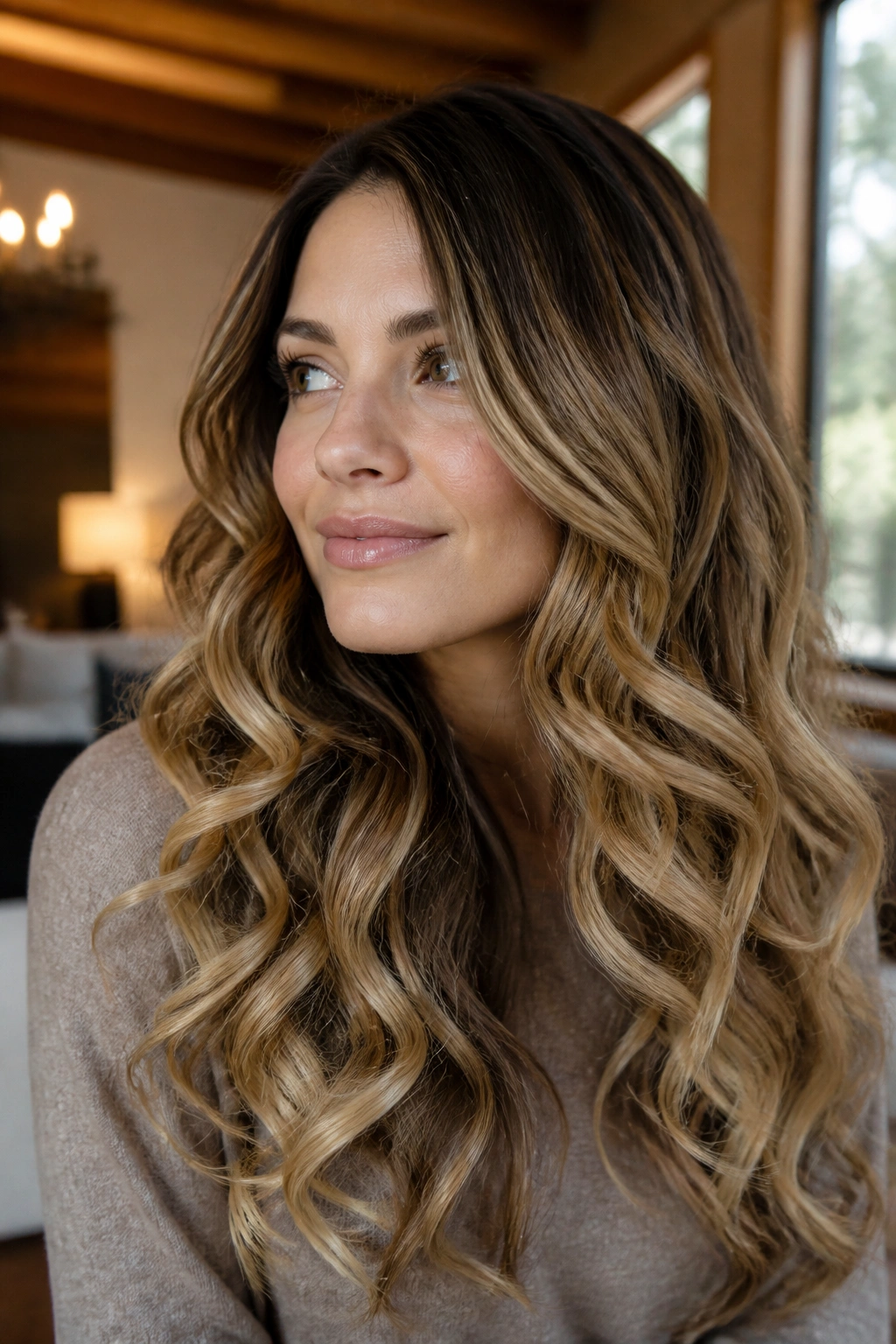
Biscuit blonde sits in a nice middle spot. It’s warmer than beige, calmer than honey, and a little softer than golden blonde, which makes it a smart match for chestnut brown.
The tea-colored lowlights matter more than people think. They stop the blonde from looking like one solid block and give the ombre some depth in the middle. On long hair, that middle zone is where things usually get boring. A few softer ribbons there fix the problem.
This version feels especially good in loose curls, because the curls separate the biscuit tone from the deeper brown and make the whole fade look layered. If your hair has a natural wave, even better. You’ll get more visual texture with less effort.
One thing I like about this shade family: it’s forgiving. It doesn’t need to be perfect to look good, and that’s useful when your hair is long enough to show every mistake.
15. Latte Ombré with an Ultra-Soft Blend
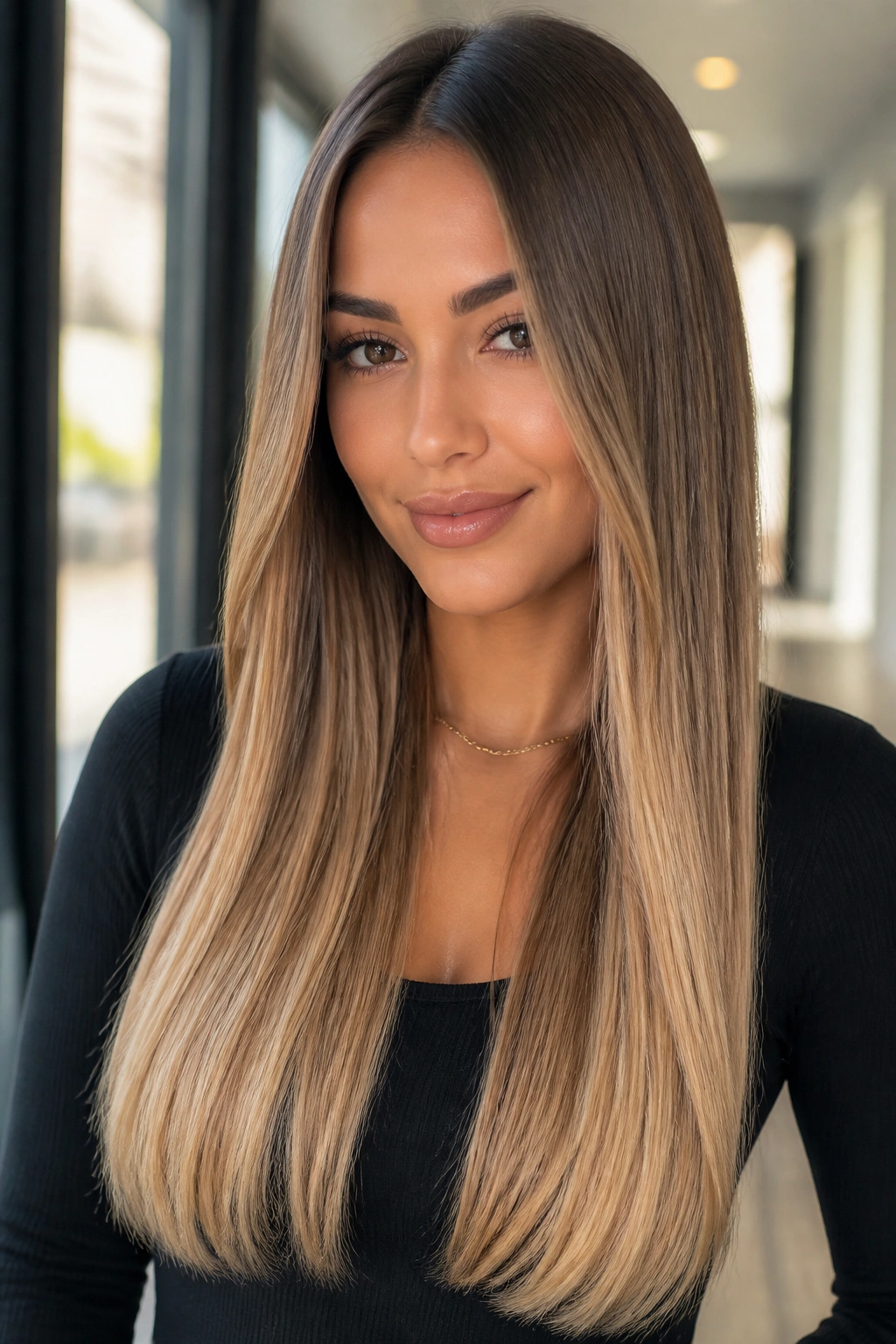
Latte ombré is the answer when you want to lighten your hair without making a big scene about it. The blend is the point — not the contrast.
This works because the brown-to-blonde shift stays close in tone. The root zone holds onto a milky brunette shade, then the mids move into coffee-with-cream territory, and the ends soften into pale latte blonde. On long hair, that gentle fade can look almost brushed on by nature.
It’s especially nice for people who wear straight hair or low-bend blowouts. Strong curls can make the color disappear into itself a little, while smooth hair shows the subtle shift better. If you hate maintenance, this is a kind choice too, because the regrowth is not dramatic.
Latte blondes can go flat if they get over-toned. Keep some warmth in the finish. A little creaminess is what makes the whole look feel alive.
16. Smoky Brunette to Wheat Blonde
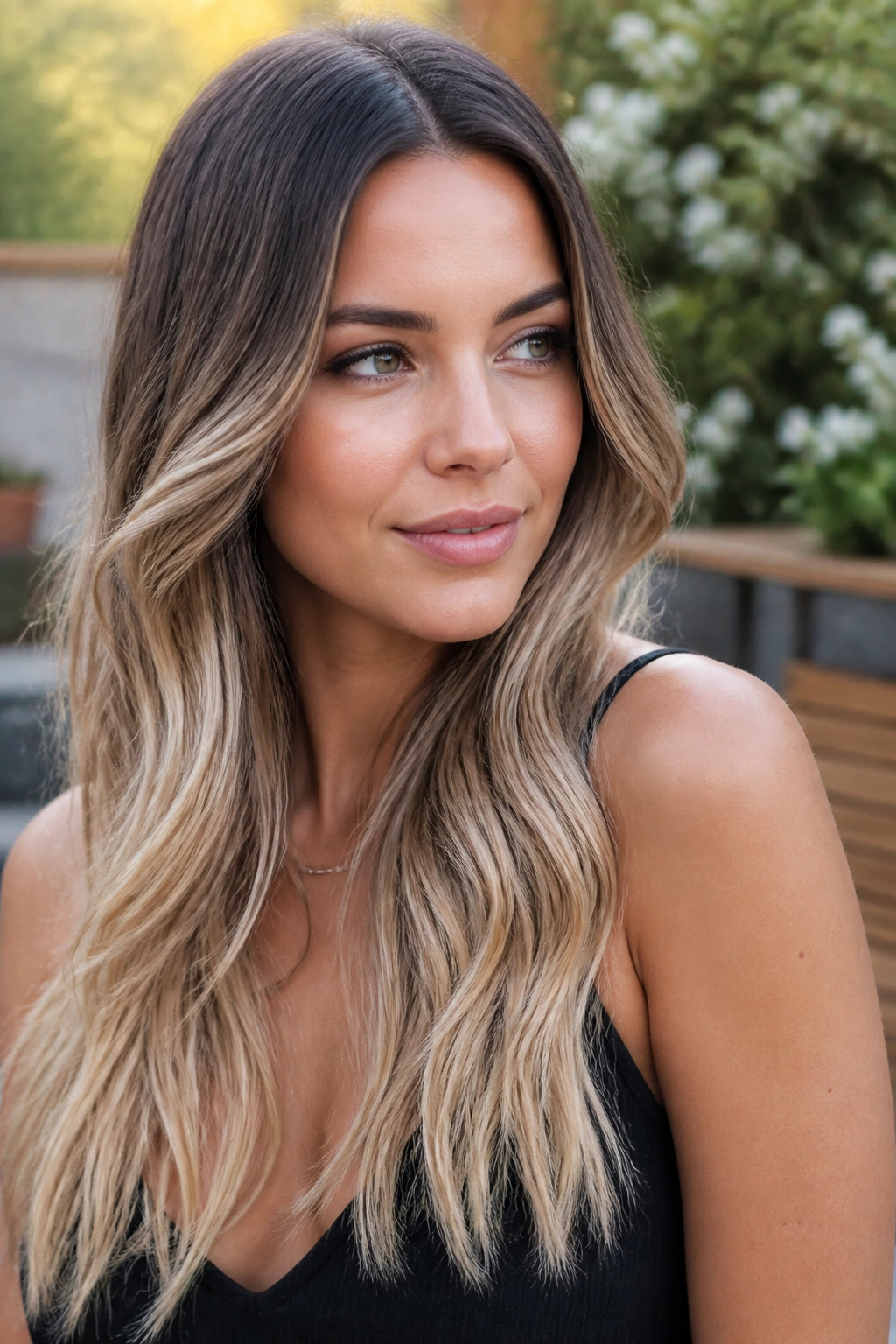
What if you want blonde that still feels earthy? Wheat blonde is the move.
Smoky brunette at the top gives the color depth, while wheat blonde brings in a softer gold-beige finish that doesn’t look flashy. On long hair, that combination feels relaxed and grounded. It’s a good fit for people who want light ends but don’t love anything too icy or too caramel.
This shade works especially well if your hair has natural movement. Wheat blonde catches the bends in a loose wave and gives the ends a soft, dry-grass kind of brightness — not dull, just understated. If your hair is pin-straight, ask for a bit more texture at the ends so the color doesn’t feel too even.
I’d also keep the tone in the middle of the road. Too yellow and it looks brassy. Too beige and it can lose the wheat character that makes it distinct.
17. Hazelnut Root Shadow to Golden Beige
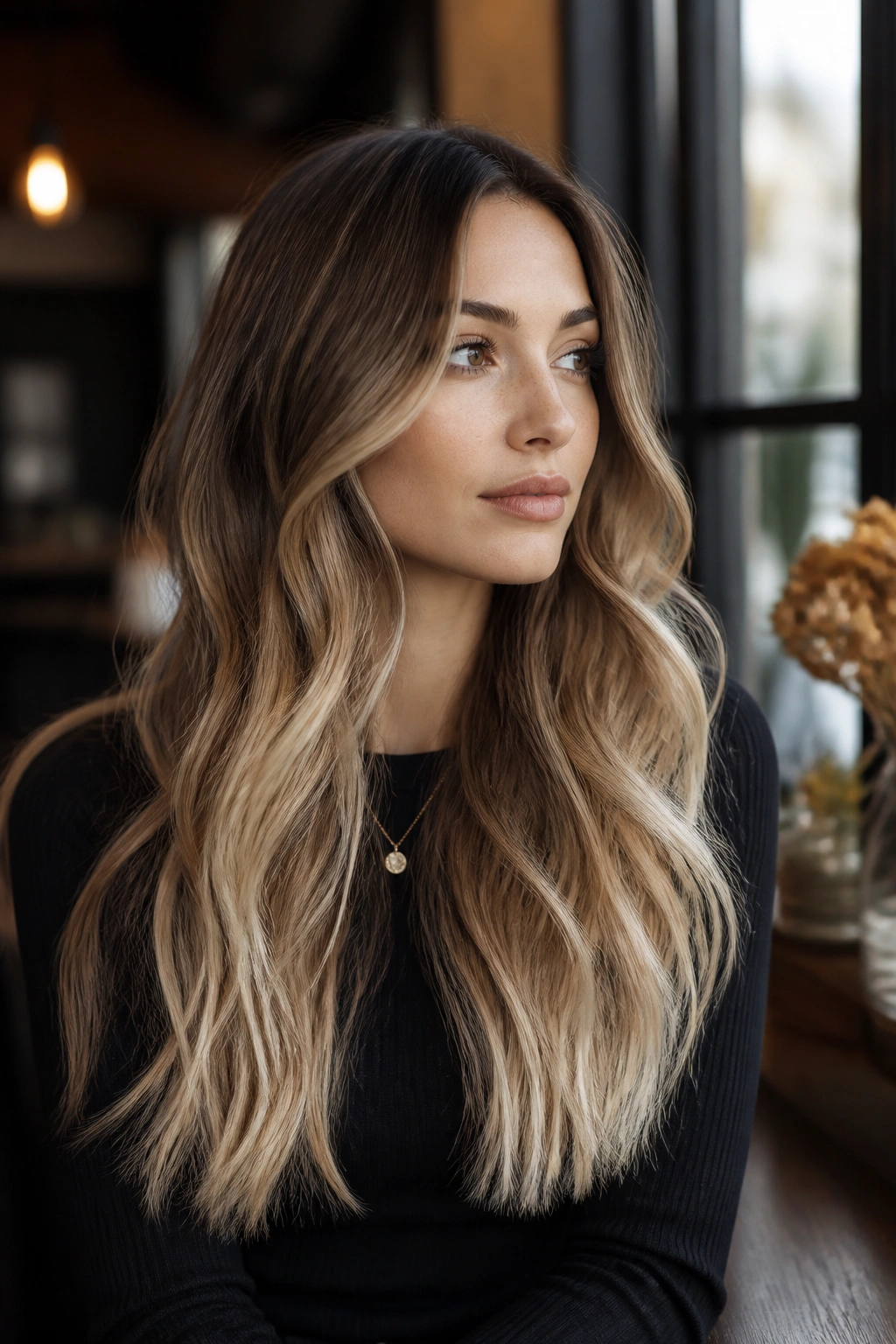
There’s a sweet spot for ombre, and this sits right in it. Hazelnut roots with golden beige ends look rich, gentle, and easy to wear on long hair.
For very long lengths, I’d start the blonde around 4 to 6 inches below the root if you want the color to feel low-maintenance. That keeps the top darker and the fade gradual, which is what makes the style look soft instead of streaky. The root shadow should stay close to your natural brown, not drift too red.
Golden beige ends are nice because they give you lightness without going neon. They read warm in daylight and calmer indoors, which is a good thing if you move between different lighting a lot. The color also looks flattering with curls, since the beige pieces catch on the curve of the hair.
Don’t pull the lightest blonde too high unless you want more upkeep. On long hair, depth near the scalp usually looks better anyway.
18. Soft Balayage Ombré with Lived-In Ends
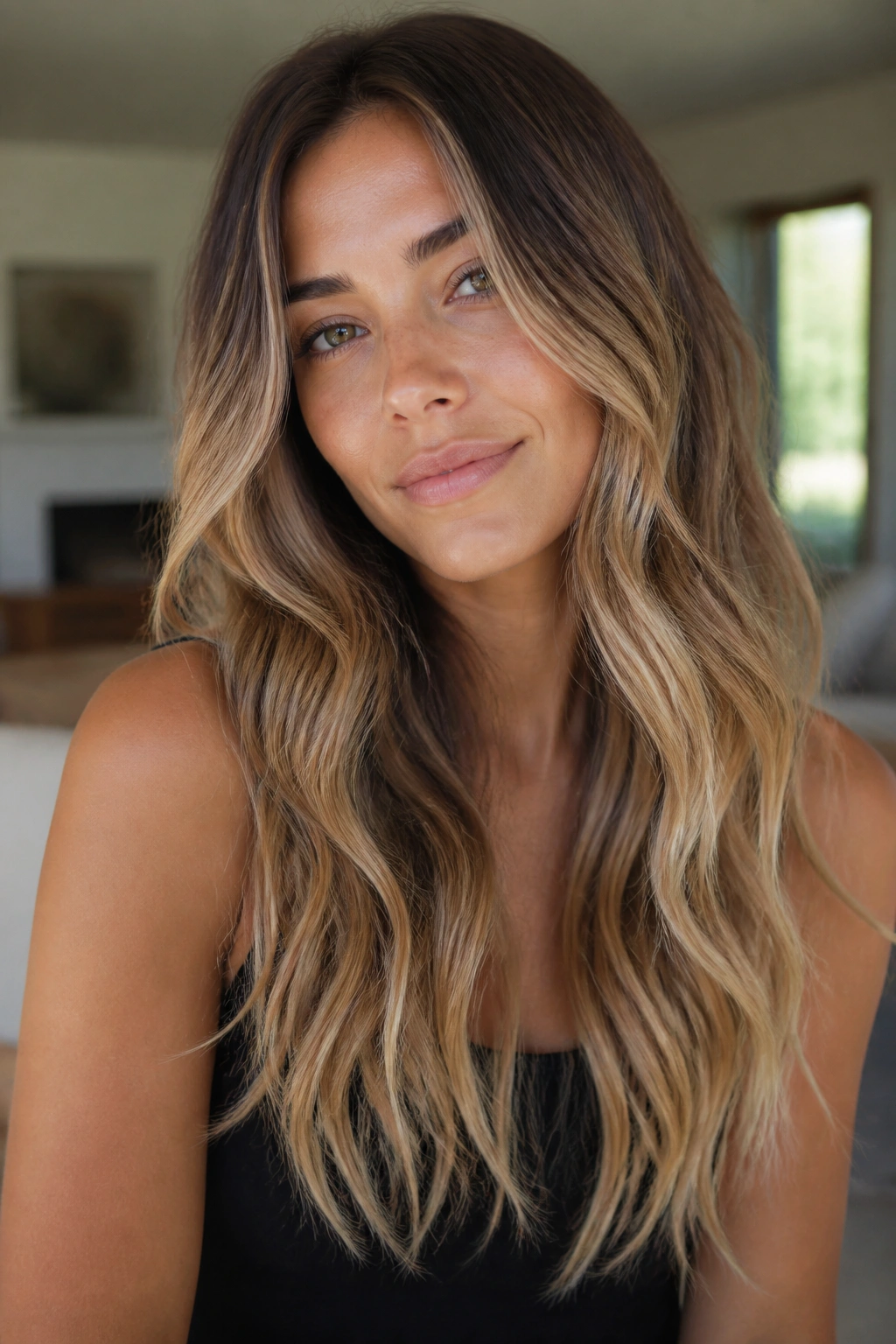
Picture hair that still looks decent after a braid, a clip, and a rough air-dry. That’s the charm here.
A soft balayage ombré with lived-in ends doesn’t chase a perfect line. It lets the color be a little hazy around the mids, then finish brighter at the bottom. On long hair, that lived-in finish makes the length feel easy rather than precious. It works especially well if you don’t spend a lot of time hot-styling.
The lived-in part is important. The ends should be light, yes, but not so pale that every fray shows. I like this when the blonde is muted with beige or soft gold, because it keeps the hair from looking over-bleached. A little texture spray can help, though only a little. Too much and the ends start to look dusty.
This is the kind of ombre that gets better as it settles. It’s less about precision and more about softness. Some people want that exact polish; others want hair that can take a day off. I’m often in the second camp.
19. Brown Butter Ombré with Creamy Mid-Lengths
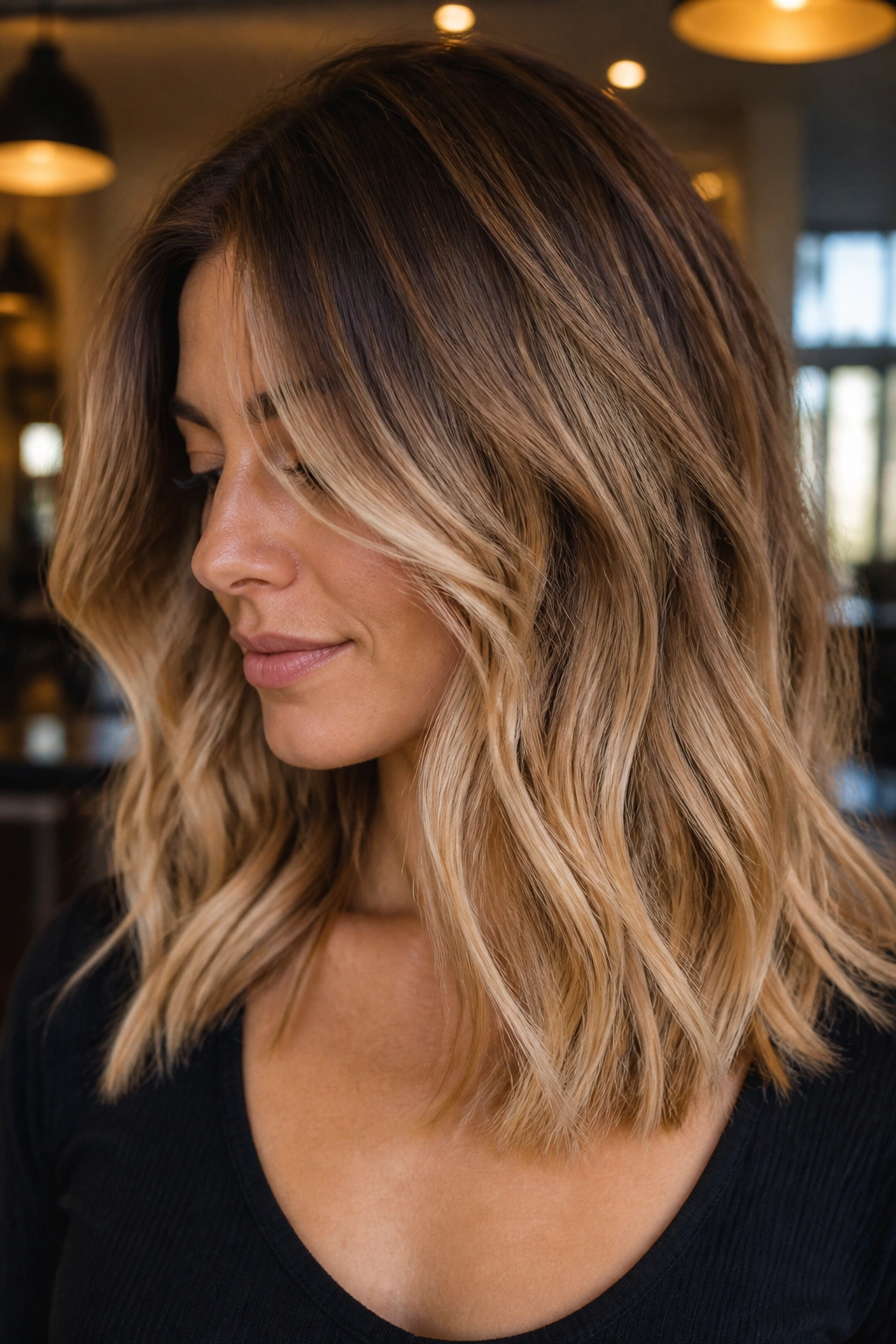
Brown butter is one of those shades that sounds richer than it looks in a photo. The color itself sits between toasted brown and warm blonde, and the creamy mids are what make it interesting.
A Small Checklist That Helps
- Keep the lightness starting around the collarbone area.
- Let the middle sections carry the creamy tone, not only the ends.
- Leave the very bottom a touch deeper if your hair is thick.
- Use a gloss that adds shine, not sparkle.
This is a smart option for long hair that needs dimension without a big contrast jump. The creamy mid-lengths stop the style from feeling bottom-heavy, which happens a lot when all the blonde is pushed to the ends. That little shift upward changes the whole balance.
If you like warm tones but don’t want caramel, this sits in a nicer middle lane. It feels soft, buttery, and a little more elegant than brighter gold.
20. Sandy Brown to Almond Blonde
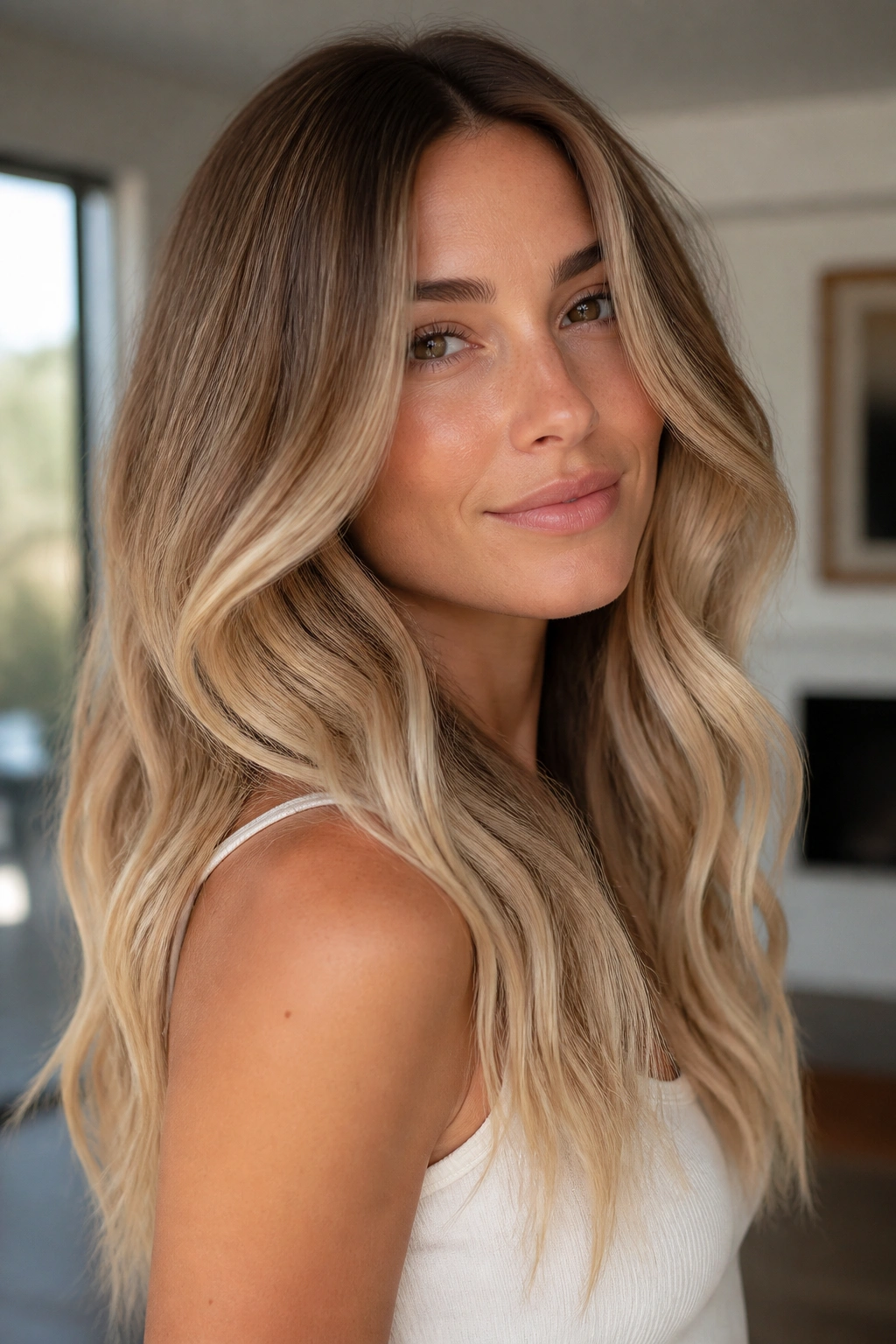
Almond blonde is one of the easiest blondes to wear because it doesn’t fight for attention. That’s exactly why it works so well with sandy brown on long hair.
The shade has a neutral warmth that sits between beige and gold. It looks clean, not brassy, and it’s forgiving when the hair isn’t freshly styled. If you air-dry a lot, this one can look especially good because the ends don’t need perfect curls to make sense.
Long hair gives almond blonde a nice sweep. The darker root keeps the top grounded, while the lighter ends make the length feel lighter in both weight and color. It’s a good choice if you want a blonde result that still feels wearable in daily life.
If you wear minimal makeup, this shade can be a friend. It doesn’t overpower the face. It just softens everything around it.
21. Rich Walnut with Narrow Blonde Ribbons
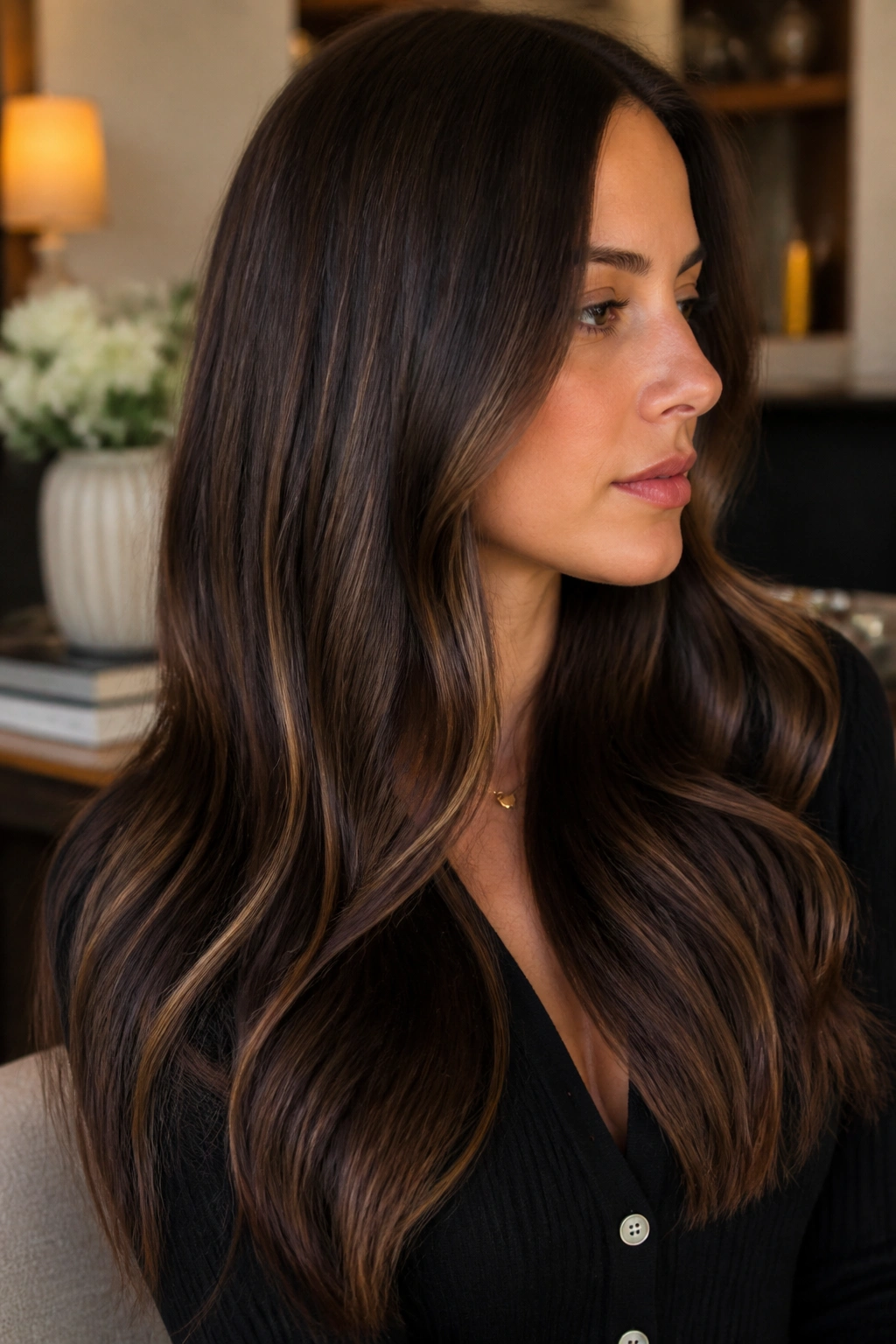
The first thing you notice is the shine. Rich walnut with narrow blonde ribbons has a deep, polished base, and the lighter pieces slip through it like thin threads rather than big stripes.
That narrow-ribbon approach works well on long hair because it follows the length instead of fighting it. You get flashes of blonde when the hair moves, especially near the ends and along the outer layers. It’s a nice option if you want dimension but don’t want the color to dominate the haircut.
I like this best on hair that gets tucked behind the ears, clipped half up, or worn in soft bends. The ribbons peek through in those moments and make the style feel more alive. If the blonde is too thick, the walnut base loses its depth. Keep the light pieces slim and intentional.
This is one of those styles that looks quietly expensive without trying too hard. Not flashy. Just good hair.
22. Brunette Ombré with Bright Underlayer
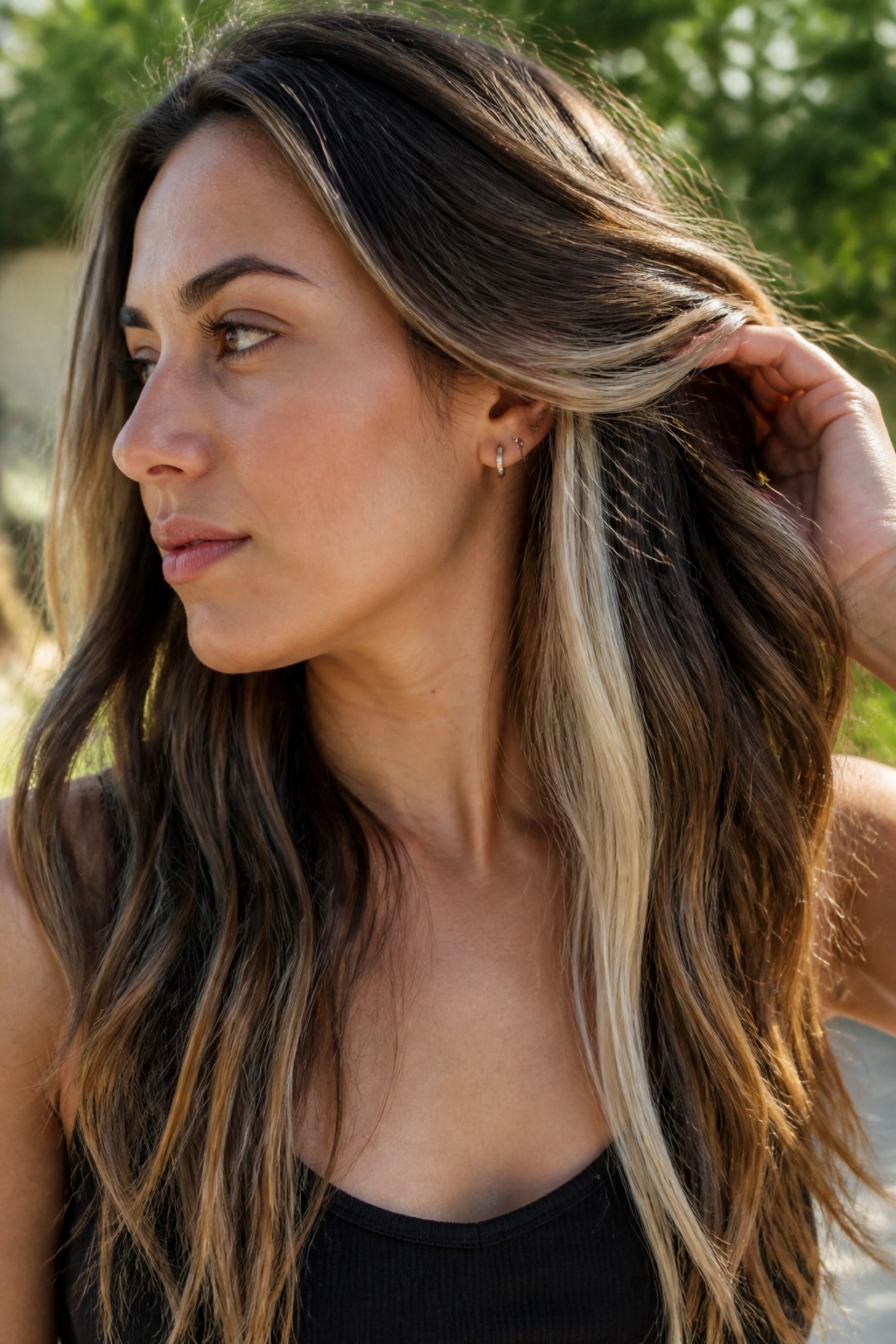
Want something with a little hidden drama? This is it.
A bright underlayer lets the top of the hair stay brunette while the lower sections open up into blonde. On long hair, that means the color changes when the hair swings, moves, or gets tied back. It’s a smart pick if you like subtle things that reveal themselves later.
Where the Brightness Shows
- In braids.
- In low ponytails.
- When you tuck one side behind an ear.
- When the wind catches the ends.
The top layer can stay deep brown or soft chocolate, while the underlayer goes into beige, honey, or vanilla blonde. That contrast gives the style a bit of surprise without making it loud. If you’re the type who gets bored fast, this is more interesting than a standard fade.
It also lets you keep some conservative length for work or formal settings while still having a lighter look underneath. Handy. A little sneaky, too.
23. Chestnut-to-Buttercream S-Curl Ombré
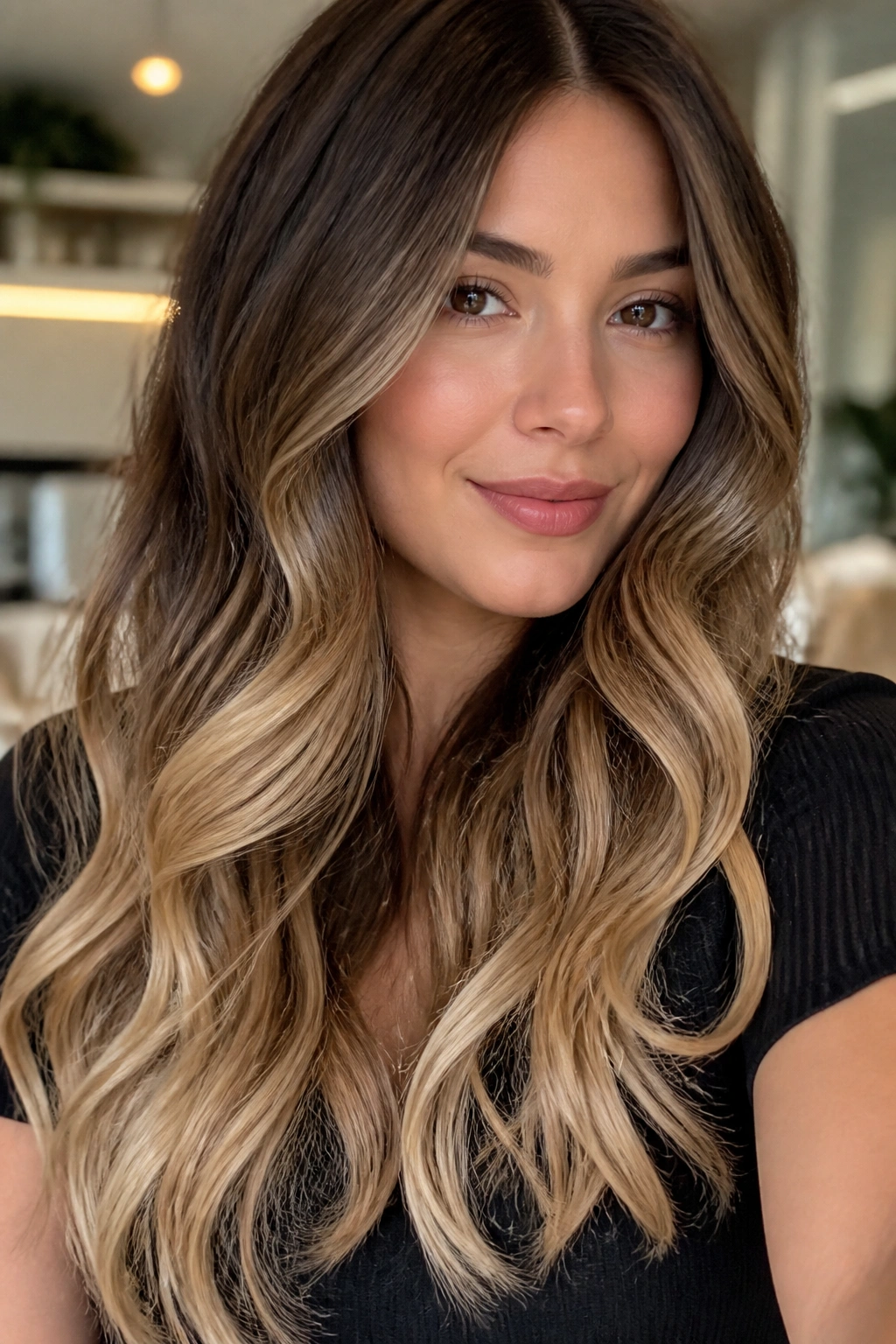
This one lives or dies on texture. S-curls and loose bends are what let the buttercream tone show up properly on long hair.
Straight hair can flatten this color family, because the fade becomes too linear. But once the hair picks up gentle movement, the chestnut base and buttercream ends separate in a really pretty way. The blonde stays creamy and soft, which keeps the whole style from turning sharp.
How to Get the Most From It
- Use a medium barrel, around 1 to 1.25 inches.
- Leave the ends a touch straighter for a lived-in finish.
- Brush the curls out once they cool.
- Keep the blonde creamy, not icy.
I like buttercream on people who want blonde that feels soft and touchable rather than bright. It has a cozy look that pairs well with thick knitwear, denim, and low-effort styling. That sounds like an odd detail, maybe, but hair and clothes do talk to each other.
24. Medium Brown to Vanilla Beige on Thick Hair
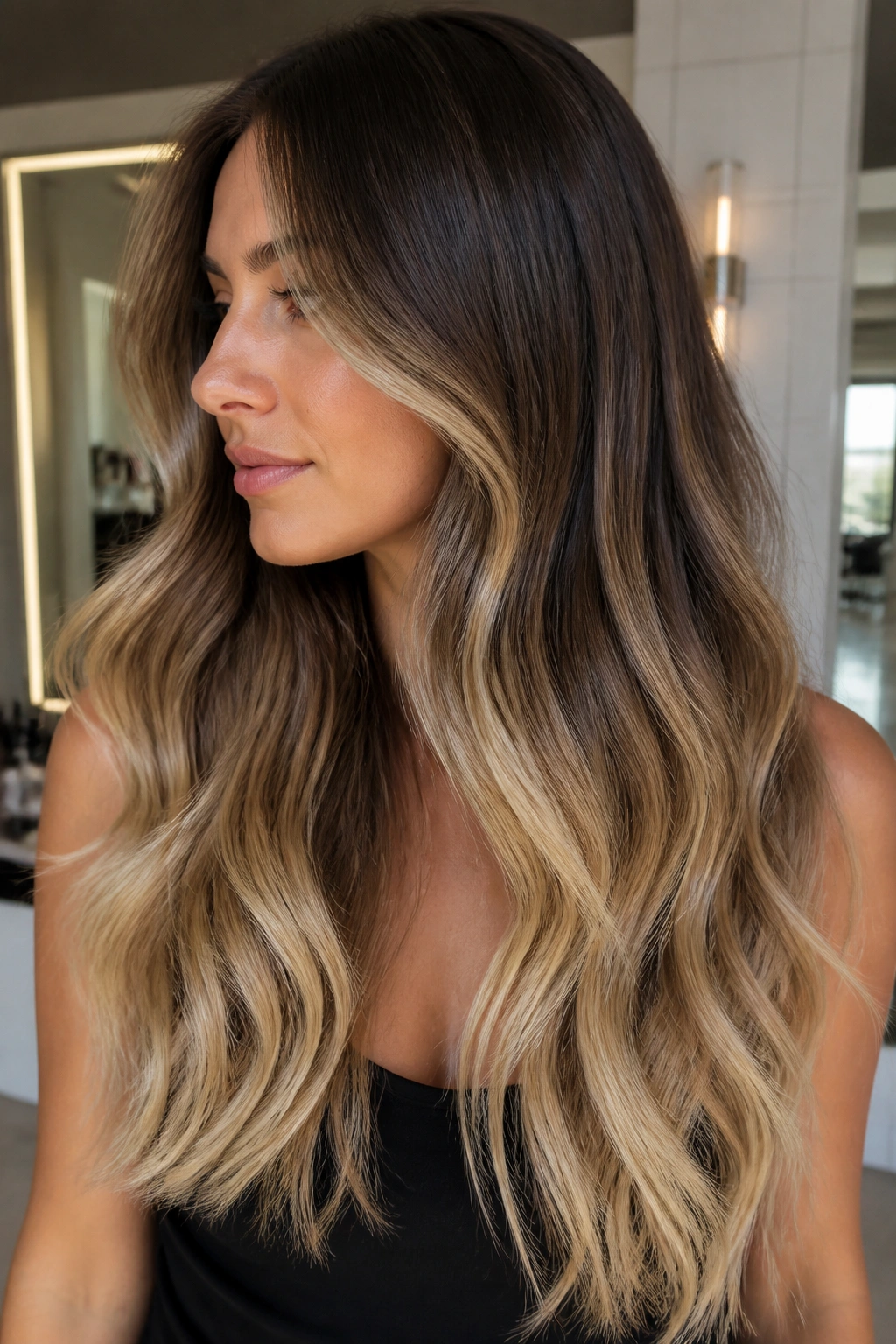
Thick hair needs a different color strategy. More density means more visual weight, so the blonde has to be placed with a little care.
Vanilla beige is a good answer because it lightens the length without turning the bottom half into a bright block. On long thick hair, the fade should feel spread out. You want the lighter pieces to break up the mass, not sit on top of it like a stripe. That usually means more sectioning in the salon and a softer hand with the lightener.
A one-note blonde can look bulky on dense hair. Beige gives the ends enough brightness to feel fresh, but not so much that the cut loses shape. If your hair holds curl well, even better. The movement keeps the ombre visible from root to end.
One more thing: thick hair often needs a little extra moisture after lightening. Not because it’s fragile in the same way fine hair can be, but because the ends can get rough and start looking puffy.
25. Deep Brown to Soft Gold Ombré with Curtain Layers
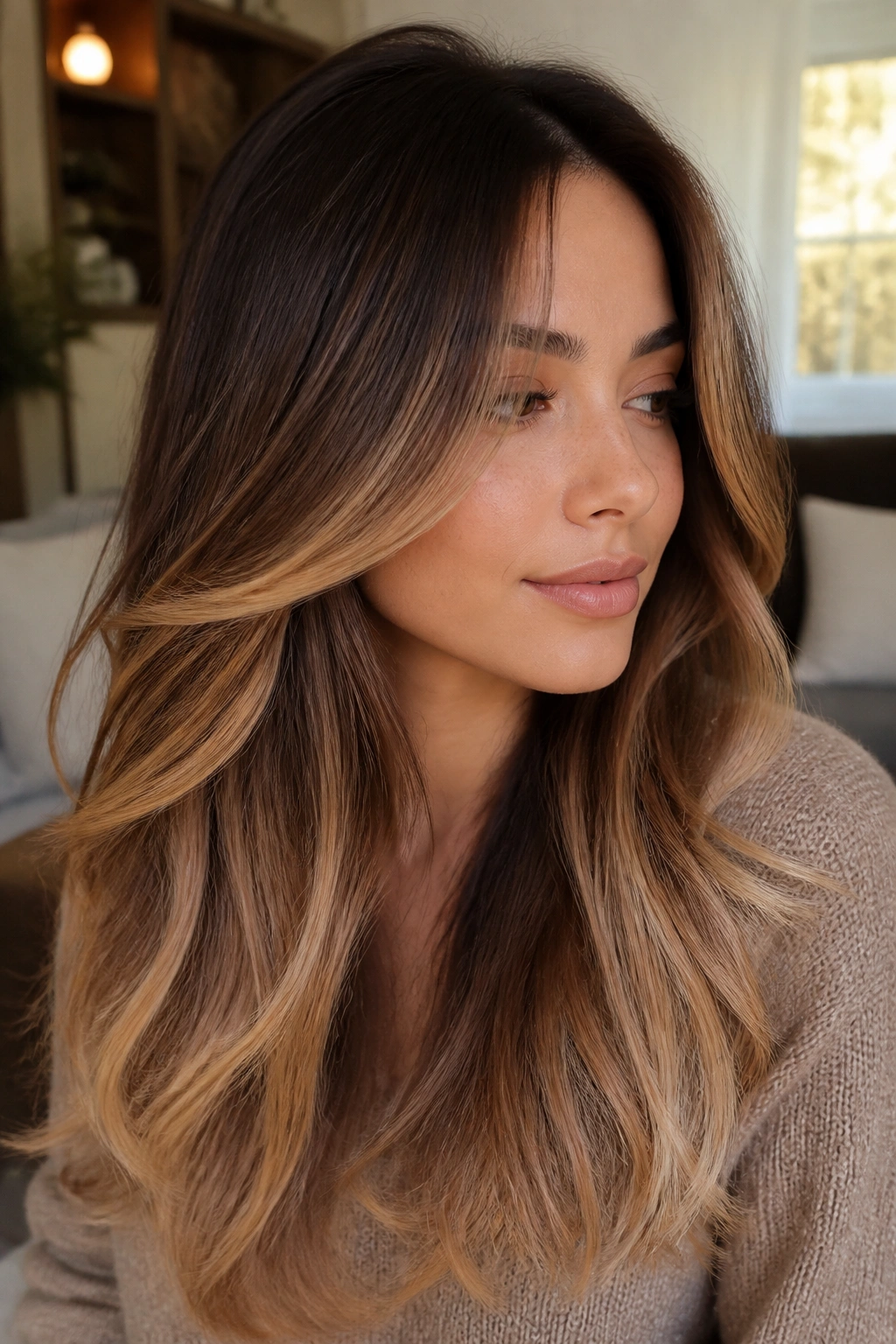
Curtain layers and ombre get along beautifully because the layers pull light toward the face and the length. Deep brown fading into soft gold gives you warmth, movement, and a shape that feels balanced from every angle.
The curtain pieces near the front should be a touch brighter than the rest. Not a lot. Just enough to frame the face and make the long lengths feel lighter. The ends can stay a little richer so the whole look doesn’t go flat. This is one of the best ways to keep long hair from looking like a single heavy sheet of color.
I’d reach for soft gold if you want blonde that feels warm but not orange. It works with blowouts, waves, and even a simple air-dry if the cut is good. The color follows the shape of the layers rather than fighting them, which is what makes it so easy to wear.
Final Thoughts
Long hair is generous to ombre, but it also exposes sloppy placement. The nicest blends respect the length instead of rushing through it. They leave enough brown at the top to keep the color grounded, then bring in blonde where movement can show it off.
If you’re choosing between warm and cool, trust your everyday habits more than the trendiest shade name. Heat styling, wash frequency, and how much shine your hair naturally has will matter more than the label on the color bowl. A creamy beige can look flat on one head and perfect on another.
Bring photos, yes, but bring ones that show the placement as much as the color. That’s the part most people miss. The blend is the whole point.
