



Black silver ombre hair has a particular kind of drama that long hair handles better than almost any other length. The dark roots keep things grounded, while the silver ends catch movement in a way that feels sharp, cool, and deliberate.
On long lengths, the fade has room to breathe. That matters. A two-tone color can look harsh when the hair is short, but on waist-skimming layers or soft curls, the transition can feel smooth, even a little moody, without turning flat.
The best versions are never one-note. Some lean smoky and soft, with gray tones that melt instead of shout. Others go brighter at the ends, almost metallic, and ask for more upkeep—but they repay you in that crisp, glossy look that turns heads from across a room.
The trick is choosing the version that fits your cut, your texture, and your patience for toner appointments. Long hair gives you space to play with contrast, so the real question is not whether black and silver work together. It’s which version of the fade feels right on your hair.
1. Soft Smoke Melt
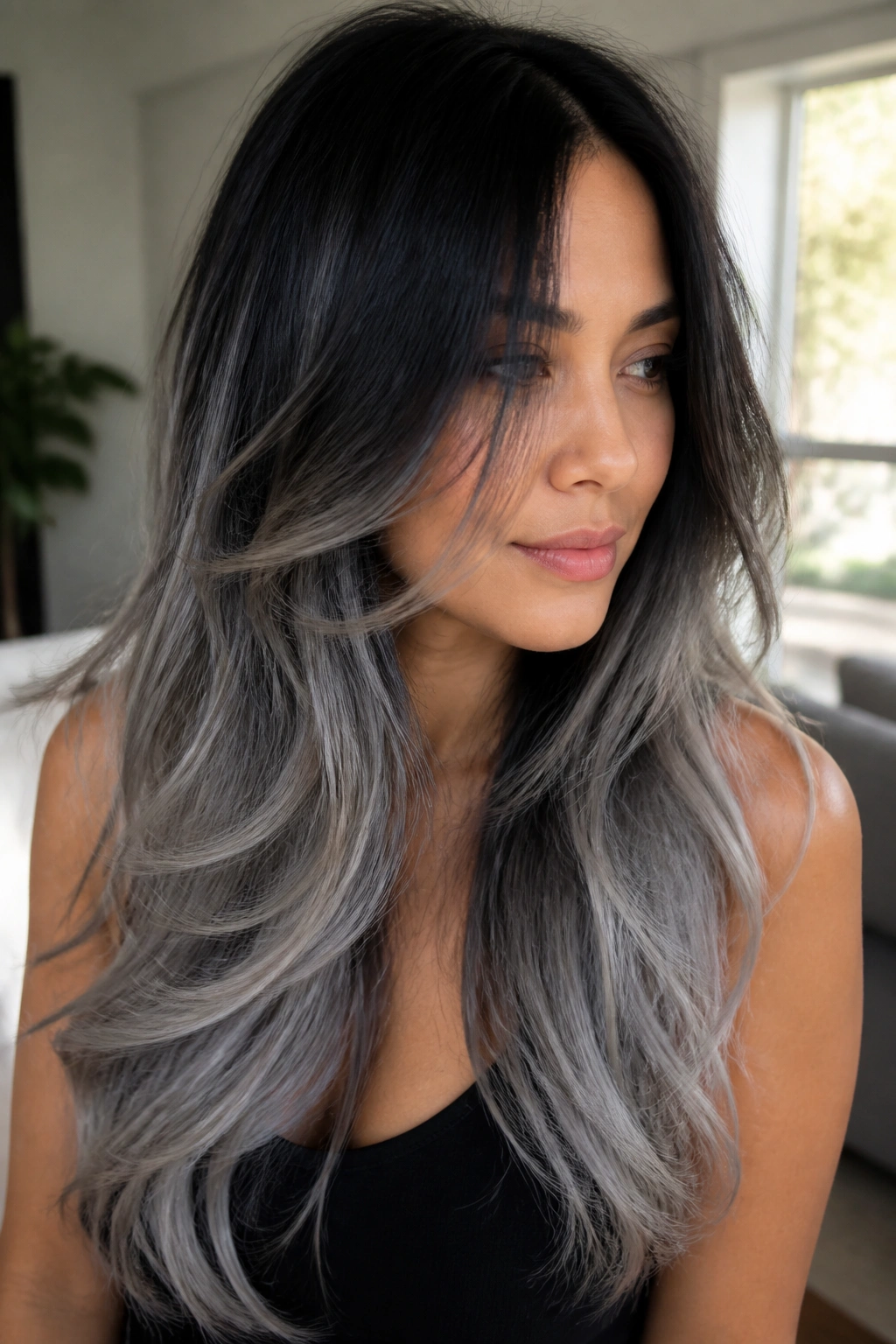
This is the version I reach for when someone wants black silver ombre hair that feels polished but not harsh. The black melts into charcoal, then into a silvery haze at the last few inches, so the line between shades stays blurred.
Why It Works on Long Layers
Long layers give the smoke room to spread. On straight hair, the fade looks sleek; on waves, it turns softer and more dimensional.
- Ask for a deep black root and a smoky middle zone.
- Keep the silver at the ends more muted if you want easier grow-out.
- A loose bend with a 1.25-inch iron makes the transition read better than poker-straight strands.
Pro tip: A cool gloss every few weeks keeps the silver from drifting muddy.
2. High-Contrast Center-Part Fade
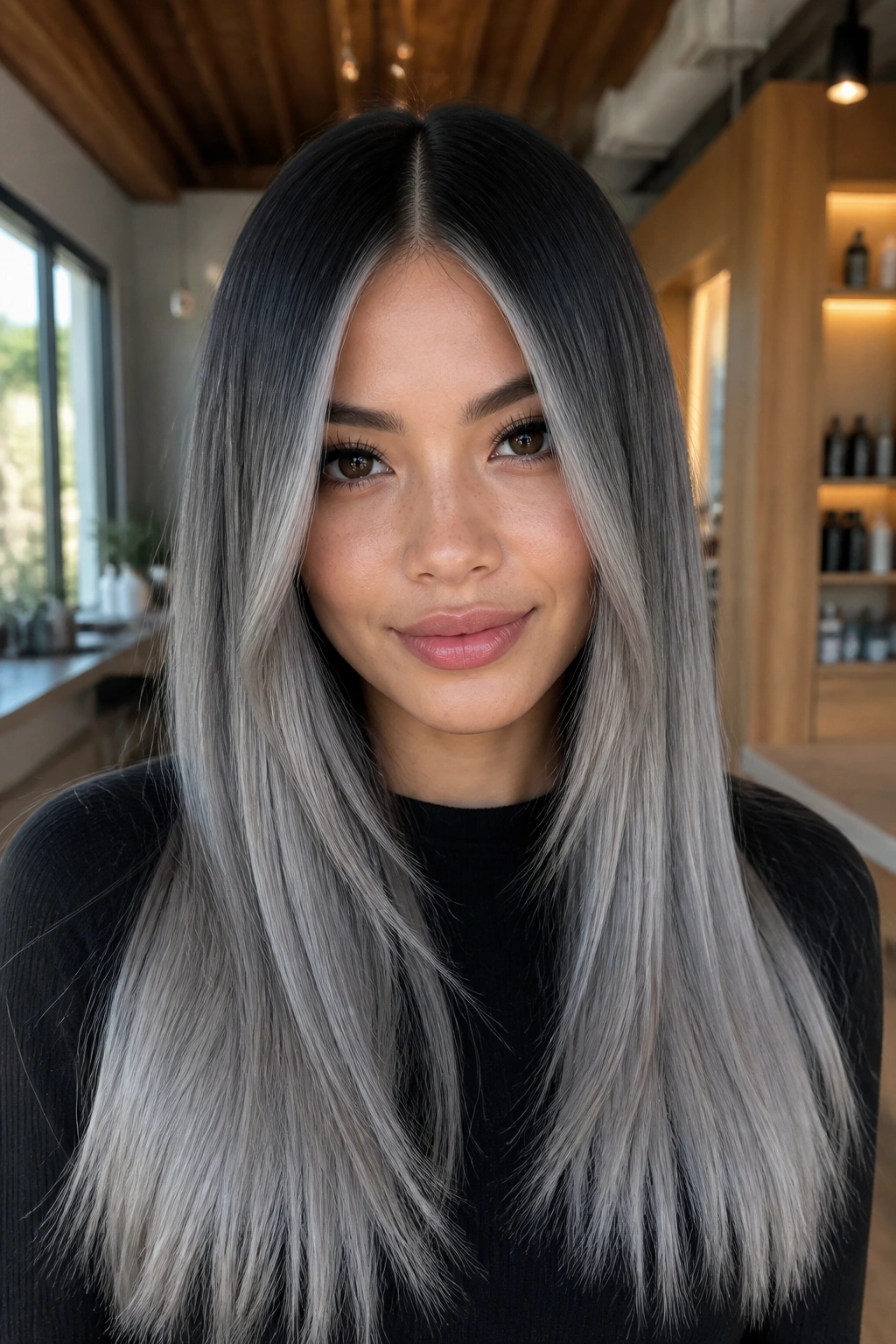
Why does a center part make this color hit harder? Because it splits the hair into two clean curtains, which gives the black root and silver end a sharper line to work against.
That contrast looks especially good on long hair that stays smooth and straight. The middle section can stay charcoal or graphite, then the silver can start lower than you’d expect—usually past the collarbone—so it feels long and expensive-looking rather than dipped in paint.
How to Wear It
A middle part, a round-brush blowout, and a slight curve through the ends are enough. Keep the top glossy and the ends icy.
If your hair is thick, ask for a softer transition through the back so the fade doesn’t turn blocky when you move.
3. Silver Face-Framing Ribbons
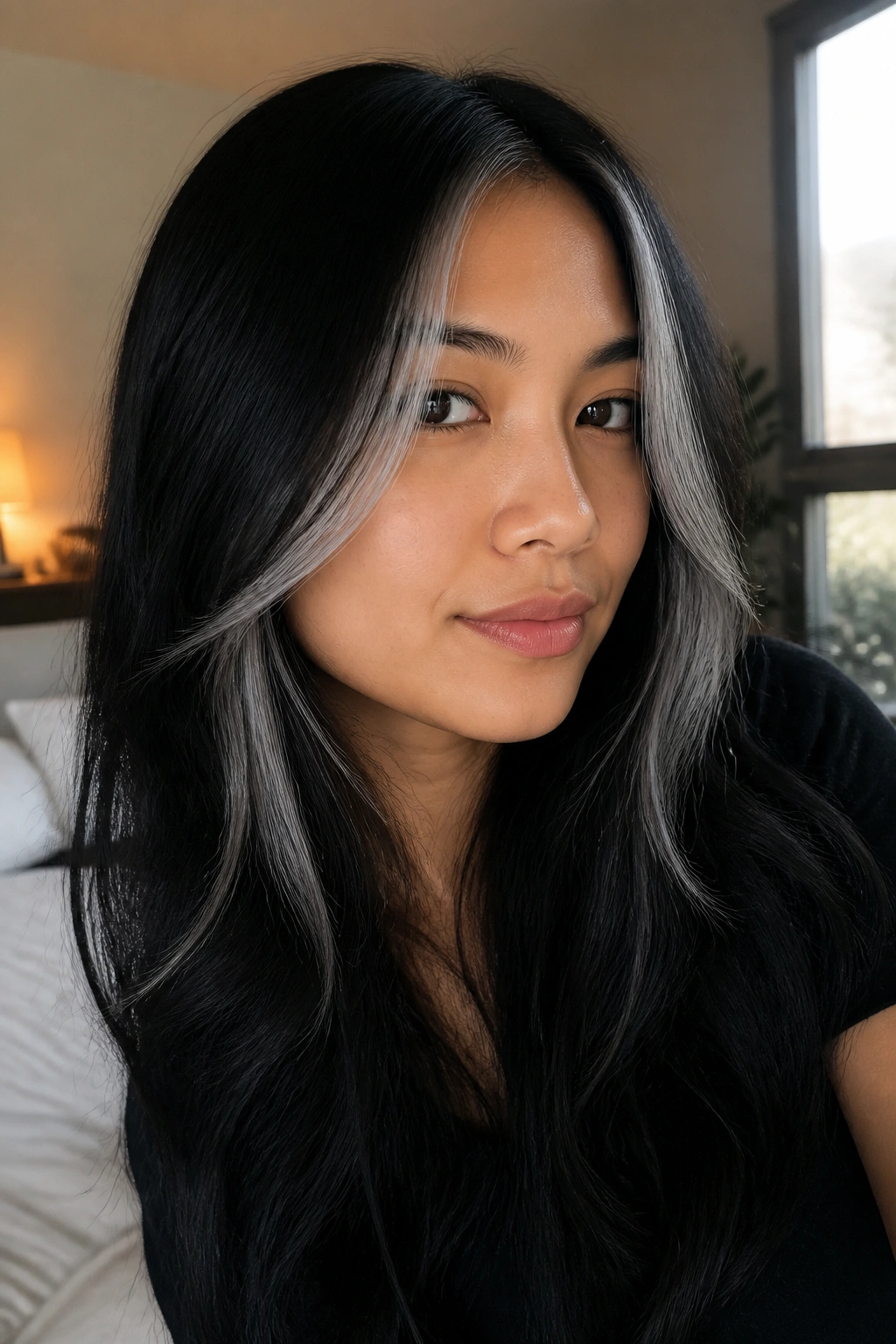
Picture long black lengths with just a few silver ribbons at the front. That’s the whole idea, and it works because the eye goes straight to the face first.
The silver pieces brighten the complexion, while the darker body of the hair keeps the style from looking too light. On long hair, this is a smart compromise if you want the silver trend without bleaching the entire head to death.
- Best when the front sections are painted two to three shades lighter than the rest.
- Works beautifully with loose waves or a soft blowout.
- Keeps the look fresh even when the ends grow out a little.
The rest of the hair can stay nearly black. That contrast is the point.
4. Glossy Charcoal Straight Lengths
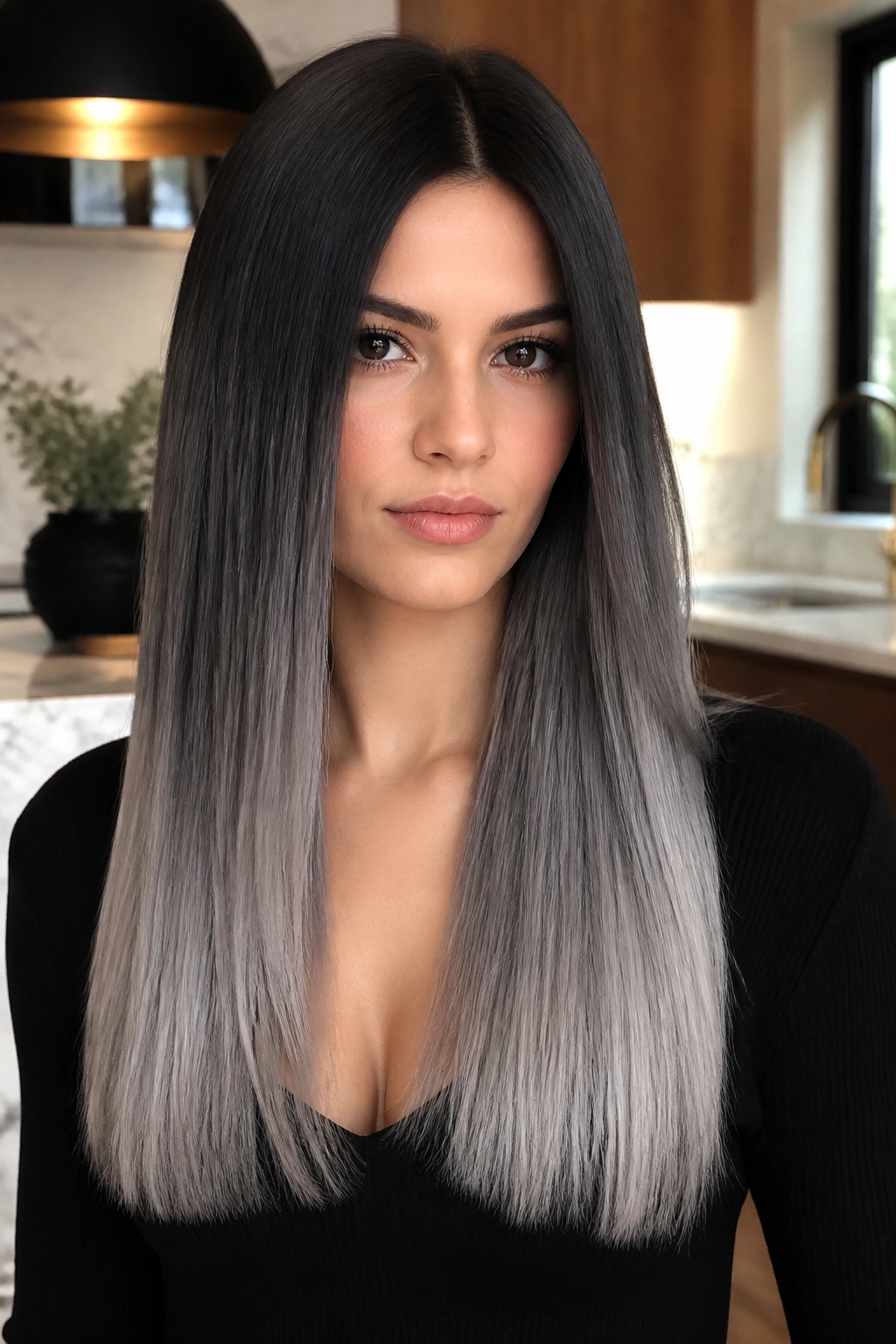
A straight, glossy finish makes silver look colder and more metallic than curls ever will. That’s why this version hits so hard on very long hair.
The fade should move from black at the root into charcoal through the mid-lengths, then into a brighter silver near the bottom quarter. Keep the cut blunt or only lightly layered; too many layers can break up the shine and make the color look busy.
A good smoothing cream and a careful blow-dry matter here. So does a clean trim. Split ends make silver look frayed, and there’s no nice way to dress that up.
5. Curly Moonlight Ombre
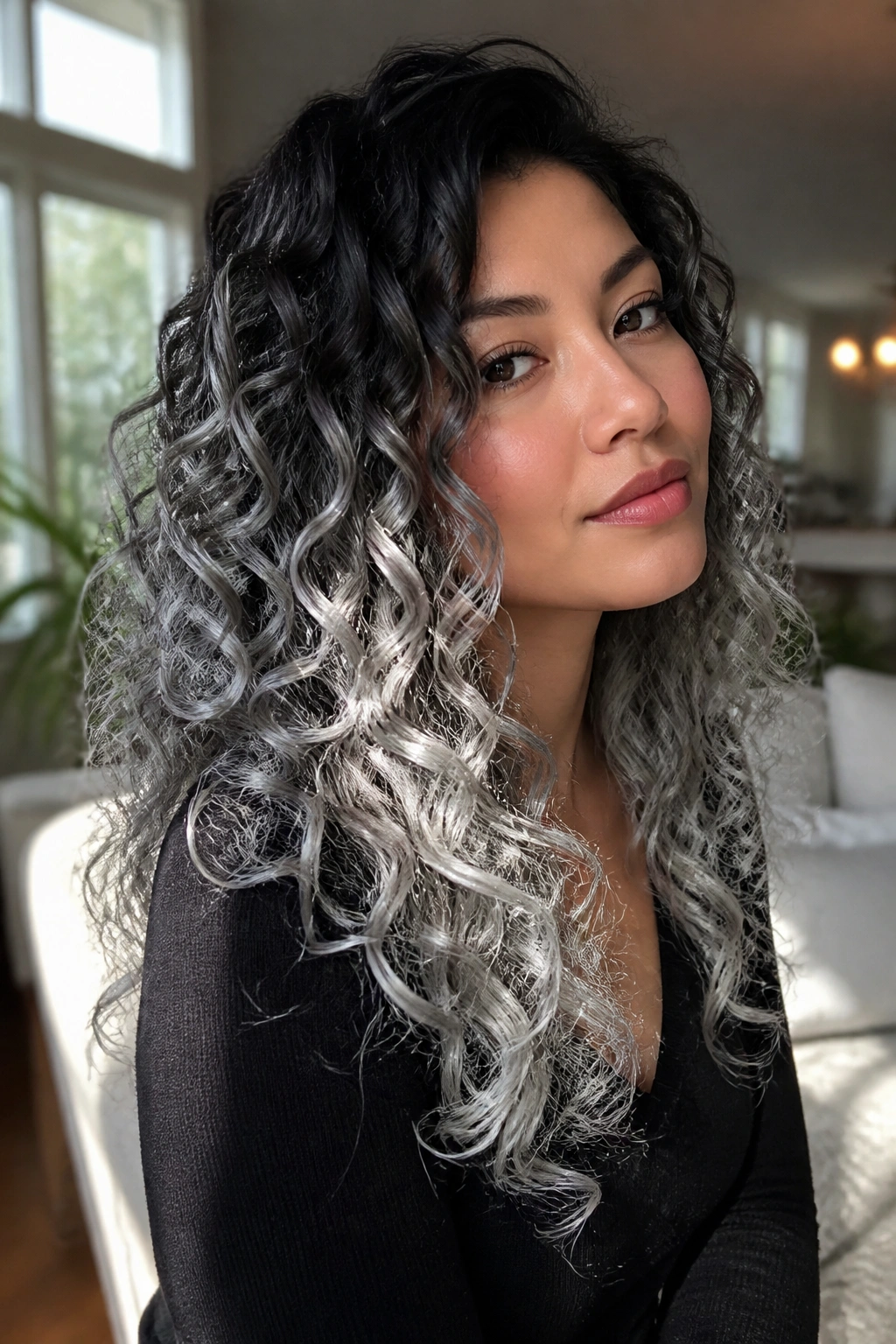
Curly hair does something helpful here: it breaks the silver into tiny flashes instead of one solid strip. The effect feels softer, almost like moonlight scattered across dark water.
On long curls, the black root gives the style structure, and the silver ends make the curl pattern easier to see. That matters if your hair is dense, because the lighter ends help the shape show up instead of disappearing into a dark mass.
Let the curls do the work. A wide-tooth comb, a curl cream, and a diffuser are enough. The silver will look brighter when the curl clumps stay separate and defined.
6. Feathered Layers with Silver Dust
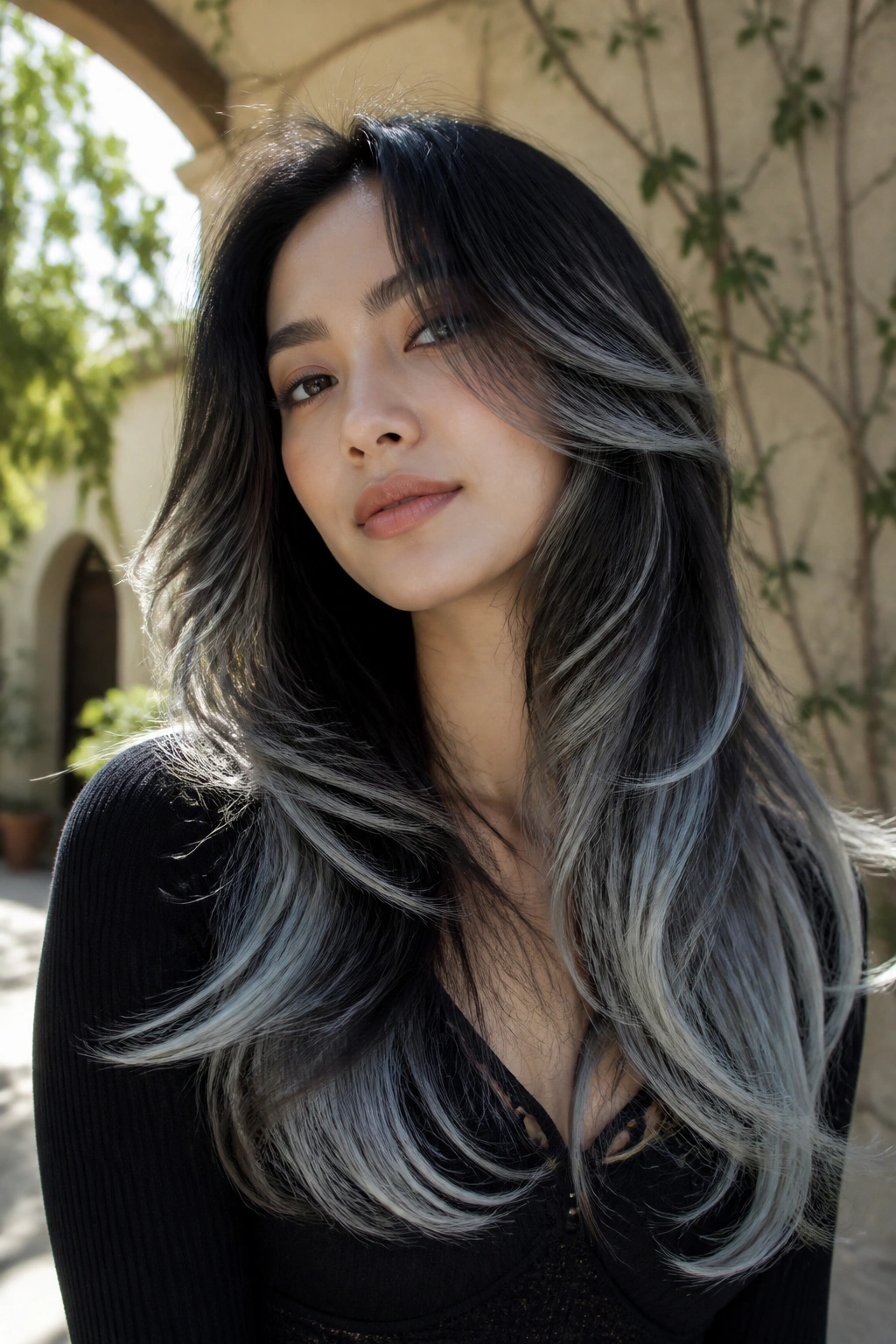
Unlike a heavy ombre, this version is light and airy. Feathered layers let the silver sit on the outer edges of the hair, so the whole style looks brushed, not painted.
It’s a smart choice if your long hair needs movement. The black base stays dominant near the crown and through the inner layers, while the silver is dusted over the top and around the lower sides. That keeps the look soft.
This is the one I’d recommend if you hate the feeling of a hard color block. The fade is there, but it’s whispery. Not loud.
7. Silver Dip-Dye Tips
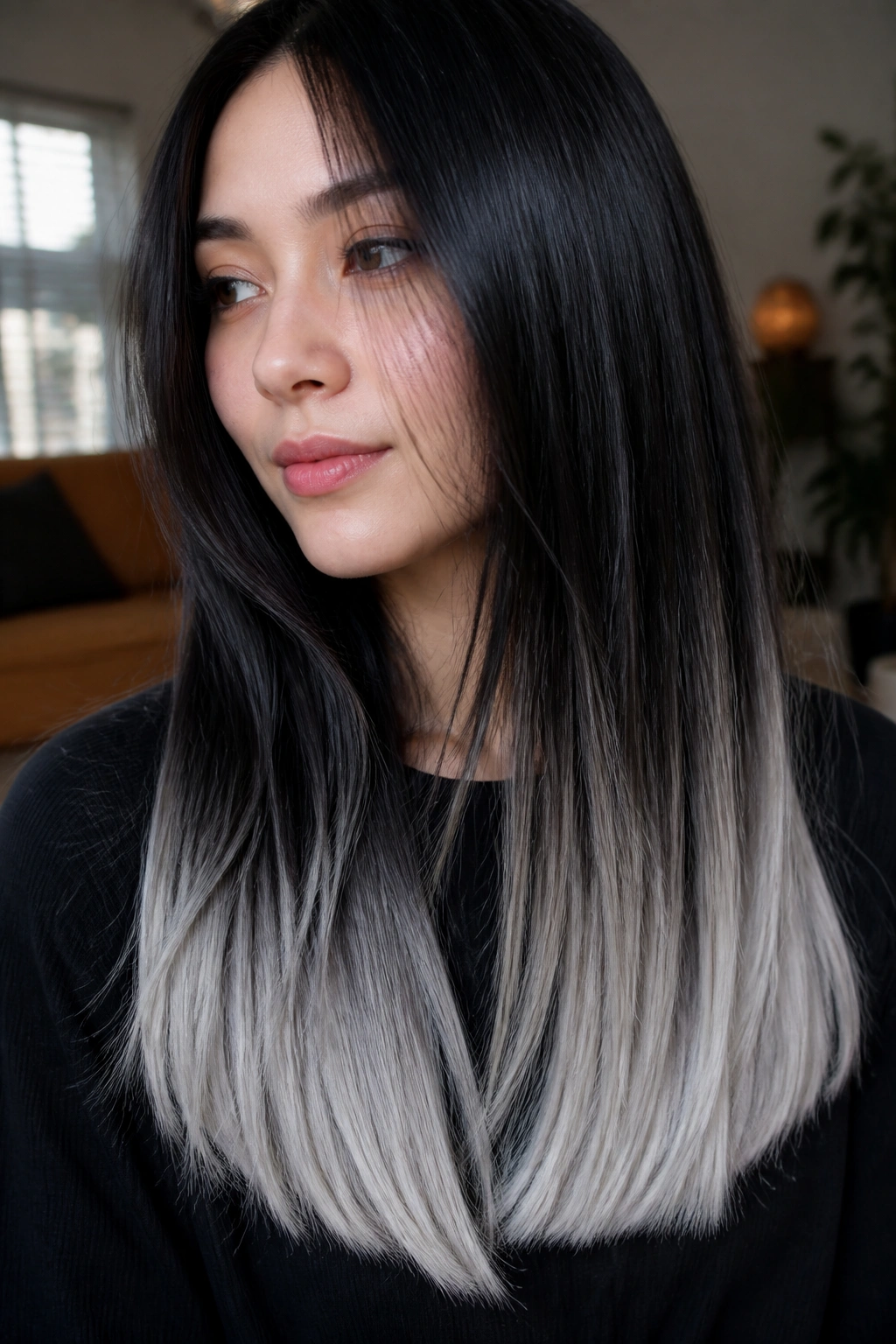
Dip-dye ends are blunt, a little rebellious, and very easy to spot from a distance. The silver starts low and stays concentrated at the last several inches, which makes the black top half feel even richer.
What Makes It Different
The transition is less blended than classic ombre. That’s the point. Long hair can carry that sharper edge without looking choppy.
- Ask for the silver line to stay slightly uneven for a hand-painted look.
- Keep the ends lighter than the mids if you want the dip-dye effect to read clearly.
- Works best on hair with some density, so the color has a full canvas.
One warning: Split ends show faster on this style, so trims need to stay regular.
8. Chunky Money Pieces and Ombre Ends
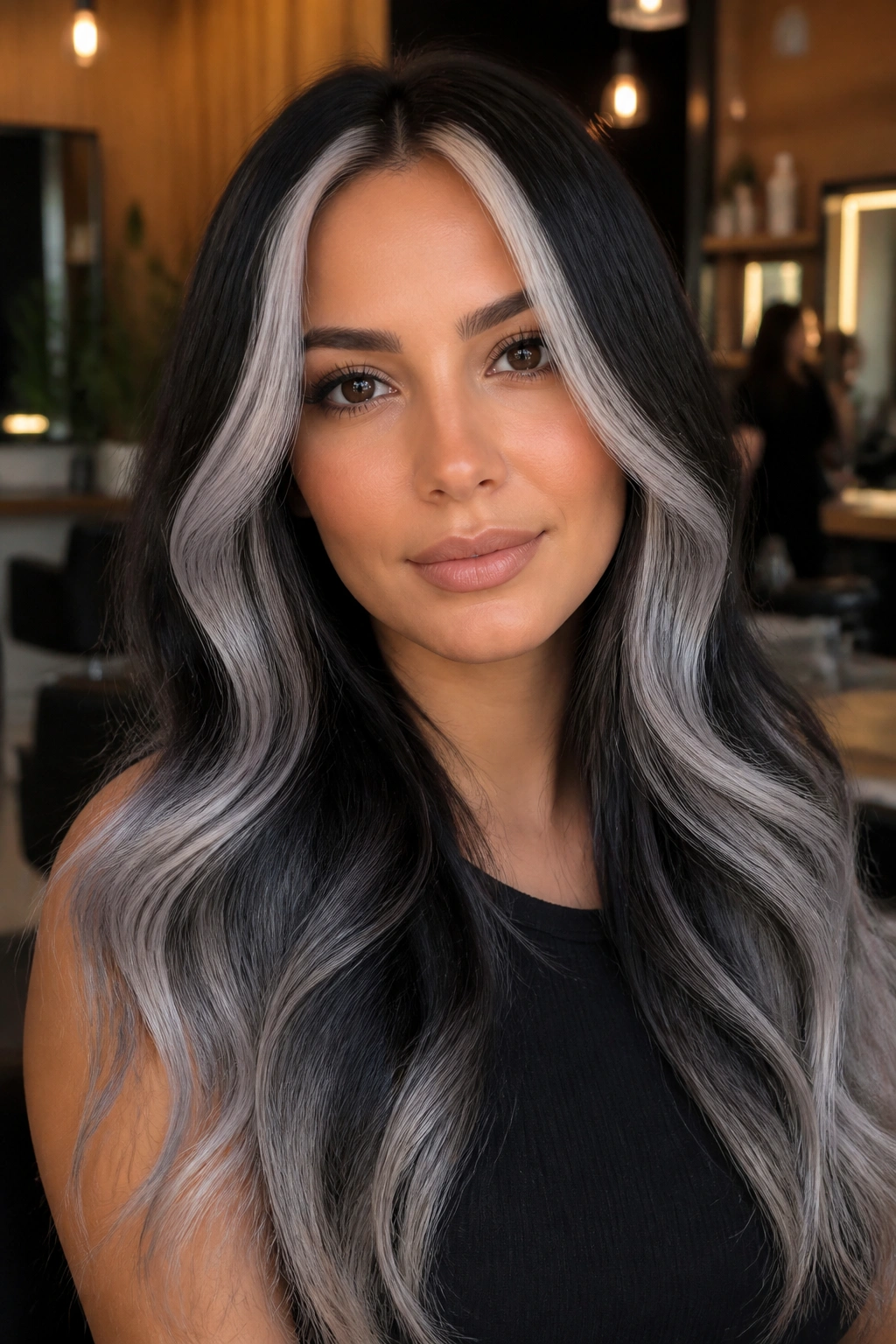
Can you have bold front pieces and a softer fade through the rest? Absolutely, and this is one of the cleanest ways to do it.
The face-framing strands carry the brightest silver, while the rest of the hair fades more gradually. On long hair, that creates two layers of interest: the front catches the face, and the bottom half gives the length its movement.
This version is good when you want edge without losing softness. Ask for wider face pieces if you wear your hair up often. They’ll still show when the rest of the hair is pulled back.
9. U-Cut Pewter Blend
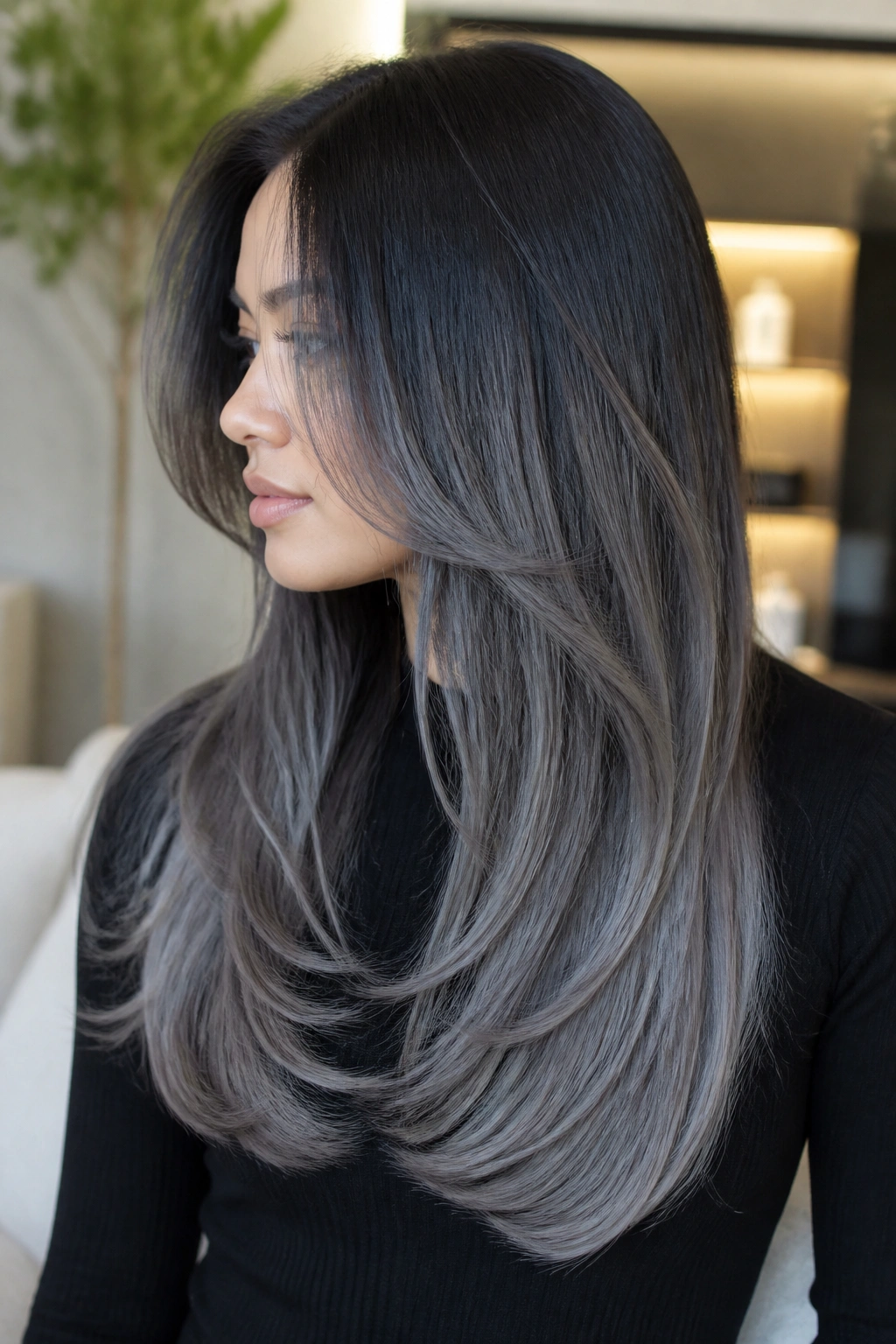
A U-cut gives the silver a graceful curve at the bottom, which sounds small until you see it in motion. The shape lets the lighter ends fall in a rounded line instead of a harsh straight edge.
Pewter is the useful middle shade here. It sits between black and silver without looking muddy, which helps the fade stay believable on long hair. If your hair is thick, this cut also removes bulk so the color doesn’t get swallowed.
This style feels expensive in the quietest way. No sharp jumps. Just a smooth fall from dark into cool metallic softness.
10. Sleek Glass Hair with Metallic Sheen
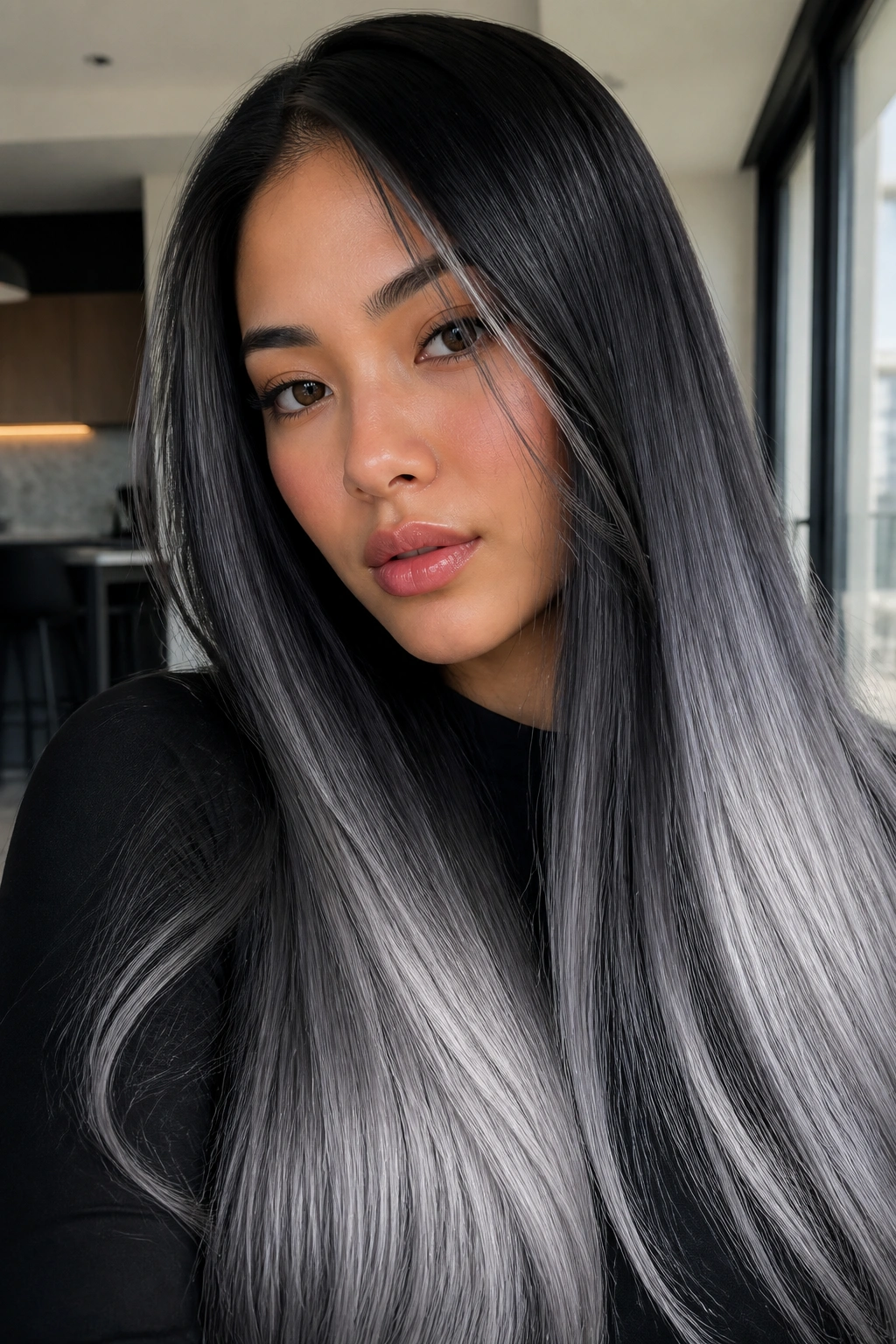
Straight, reflective hair makes silver look almost chrome. That’s why this version depends on shine as much as color.
The root should stay black and clean, the mids should lean charcoal, and the silver should be bright enough to look intentional under indoor light. A flat iron can help, but only if the cut is trimmed neatly; rough ends ruin the effect fast.
Use a lightweight serum, not a heavy oil. Too much product makes silver look greasy instead of glossy. The finish should feel smooth when you run your fingers down it.
11. Shadow-Root Silver Ends
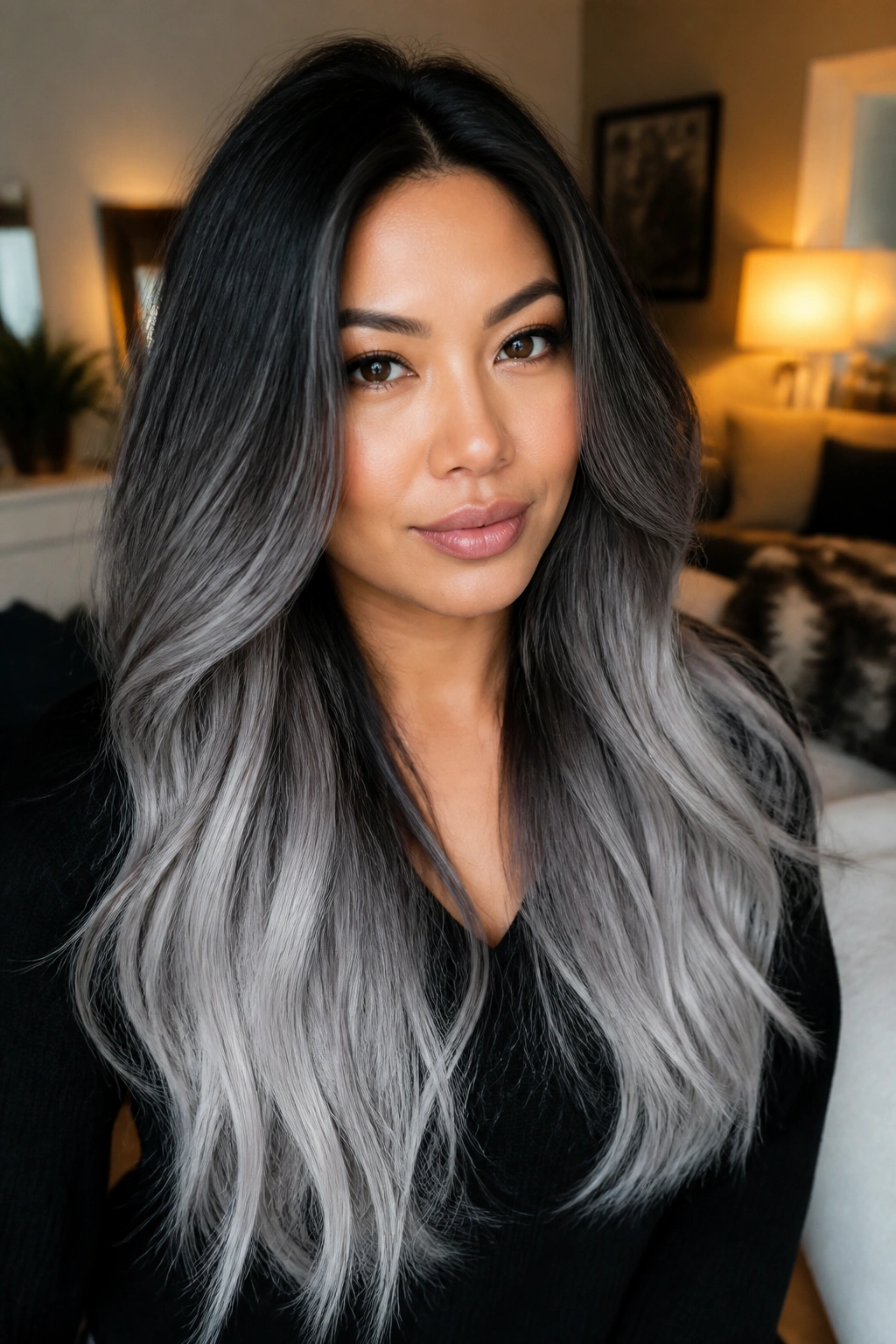
This is the safest version for anyone nervous about grow-out. The shadow root stays soft and dark at the top, then the color opens into silver only after a long midsection.
It works well on long hair that lifts unevenly during lightening, because the darker root hides any slight irregularity. The fade can be smoky, almost misty, and that helps the silver feel more expensive than stark.
If your hair tends to get porous at the ends, this is kinder than a high-contrast look. The top remains strong, while the bottom takes all the brightness.
12. Curtain Bangs with Silver Sweep
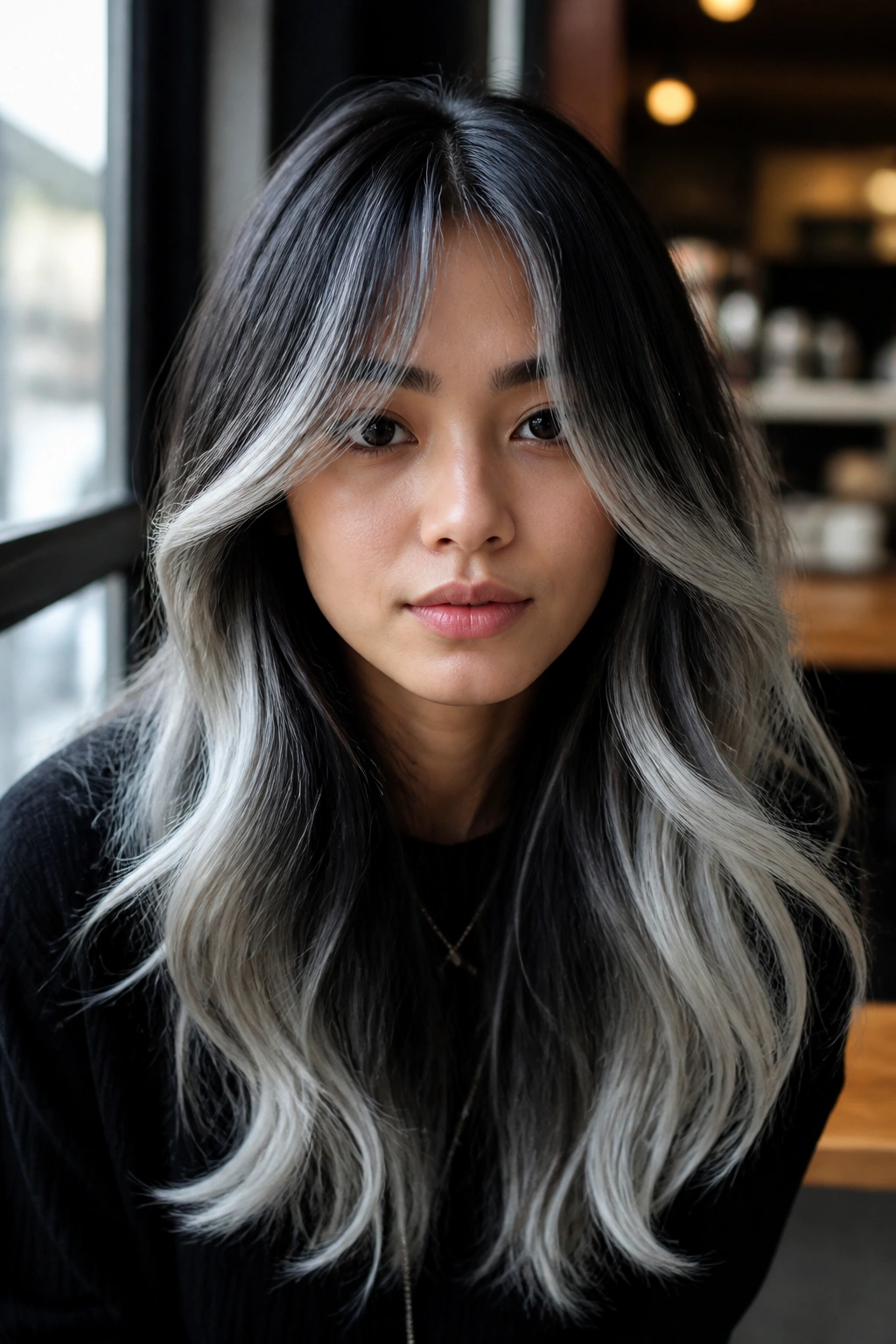
Curtain bangs change everything. They break up the dark-to-light fade and steer the eye toward the cheekbones, which is handy when you want the silver to frame the face without taking over.
The rest of the length can stay black longer, then shift into silver starting below the shoulders. That gives the bangs room to sit in the transition zone without turning into a stripe.
Best for This Look
- Long hair with soft layers around the jaw.
- Wavy or blow-dried texture.
- People who want a lighter front without bleaching every section.
The bangs make the color feel lived-in, not stiff. That’s the appeal.
13. Braided Black-to-Silver Cascade
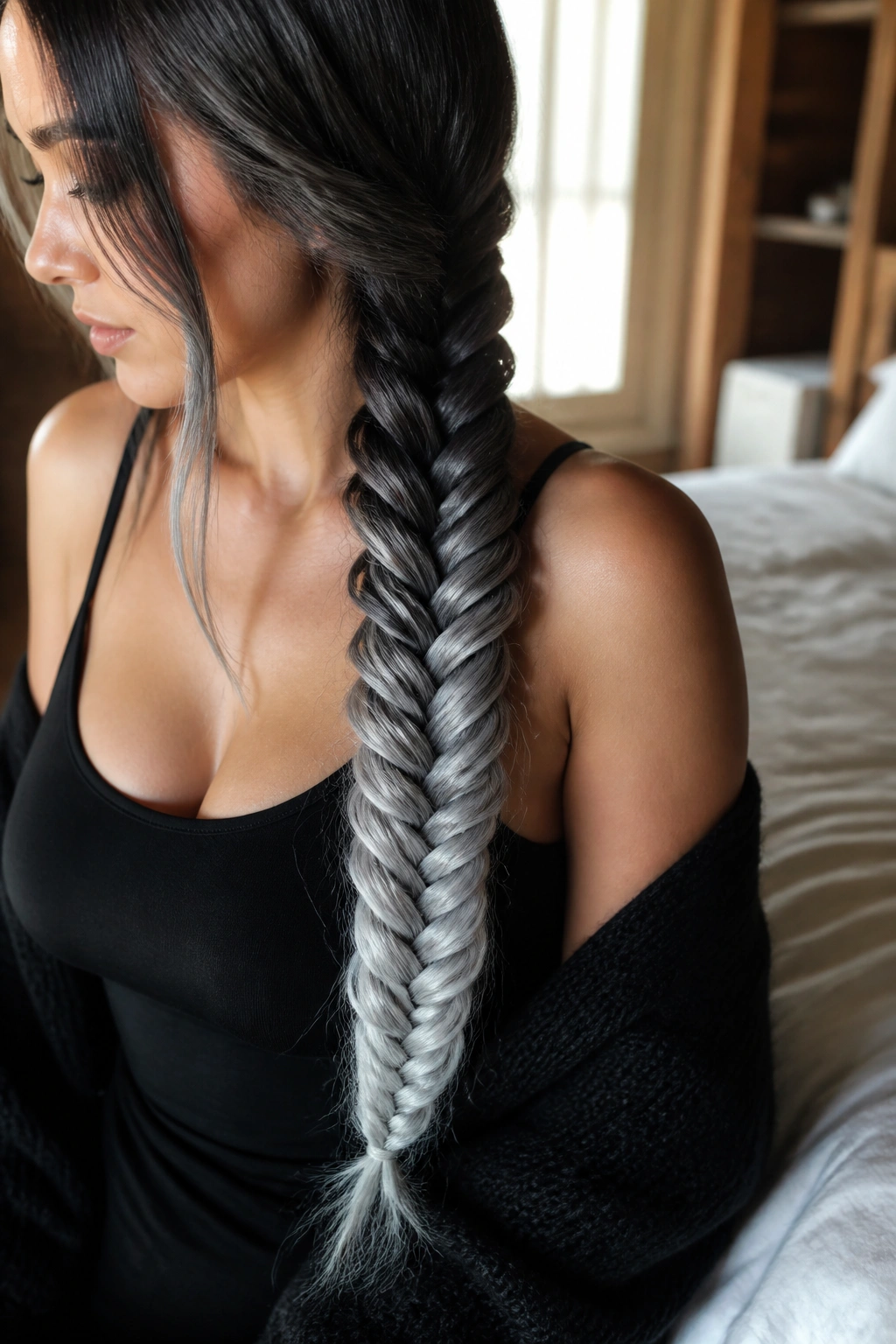
Braids are sneaky. They expose color shifts that loose hair can hide, which is exactly why a black-to-silver ombre looks so good in them.
A fishtail braid or a loose Dutch braid shows the dark root, the charcoal middle, and the silver ends all at once. On very long hair, the braid becomes a moving swatch of color instead of a flat style.
Why It’s Worth Trying
The color pattern looks different every time you braid it. That gives the style more range than a simple straight blowout.
- Silver shows best when it starts mid-shaft or lower.
- Loose braids reveal more fade than tight ones.
- A little texture spray helps the weave hold its shape.
This one is a little showy, in the best way.
14. Midnight to Graphite Gradient
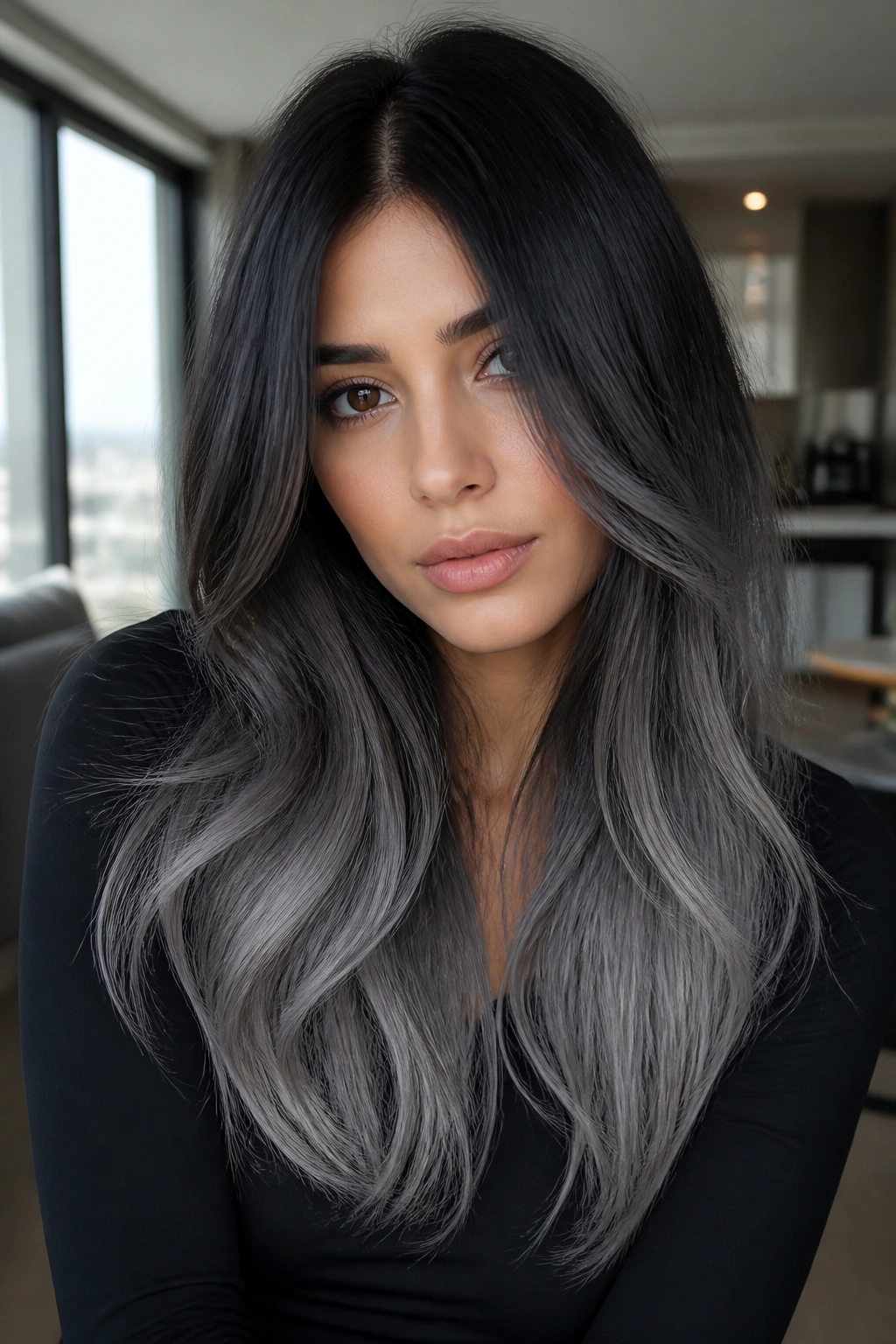
Not every silver ombre needs icy brightness. A graphite finish can look sharper and less flashy, especially on long hair that already has a lot of movement.
The shift here is subtle: black at the root, then a cool graphite middle, then a muted silver or gunmetal end. The color feels denser and less flashy than pure silver, which makes it easier to wear in everyday settings.
I like this version when the haircut itself is doing some of the work. Long layers, soft bends, a center part—those details keep the muted tones from falling flat.
15. Mushroom Ash Silver Blend
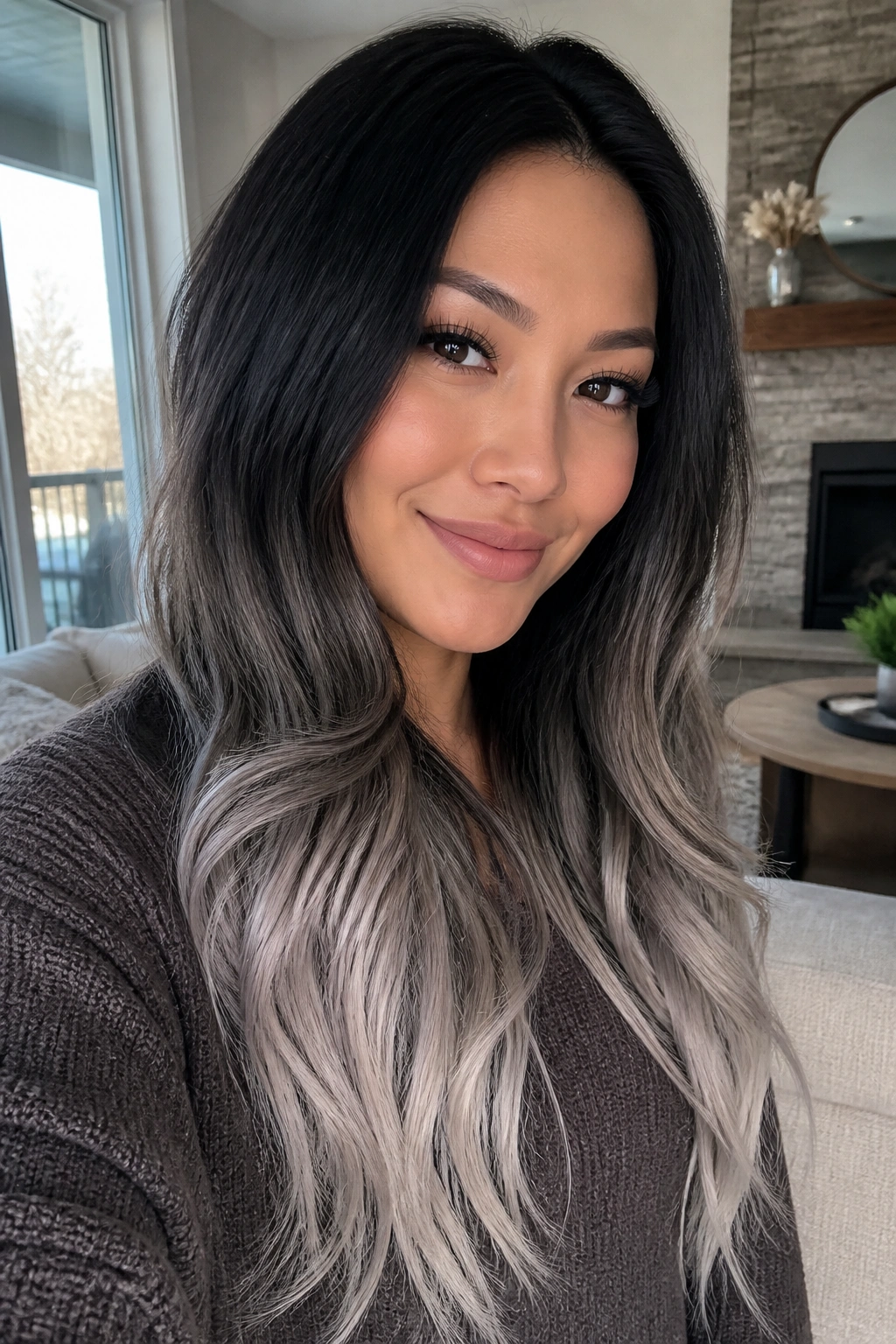
Why do people keep returning to mushroom tones? Because they bridge the gap between dark and light without looking dirty. The middle zone of this style sits in that earthy, smoky range.
On long hair, the ash-gray transition gives the silver something to lean on. Instead of a hard black-to-white shift, you get black, mushroom, then silver. That extra step matters if your natural base is deep and your skin tone leans neutral or cool.
This is the calm version. No bright pops. Just a long, cool gradient that feels grounded.
16. V-Cut with Airbrushed Silver
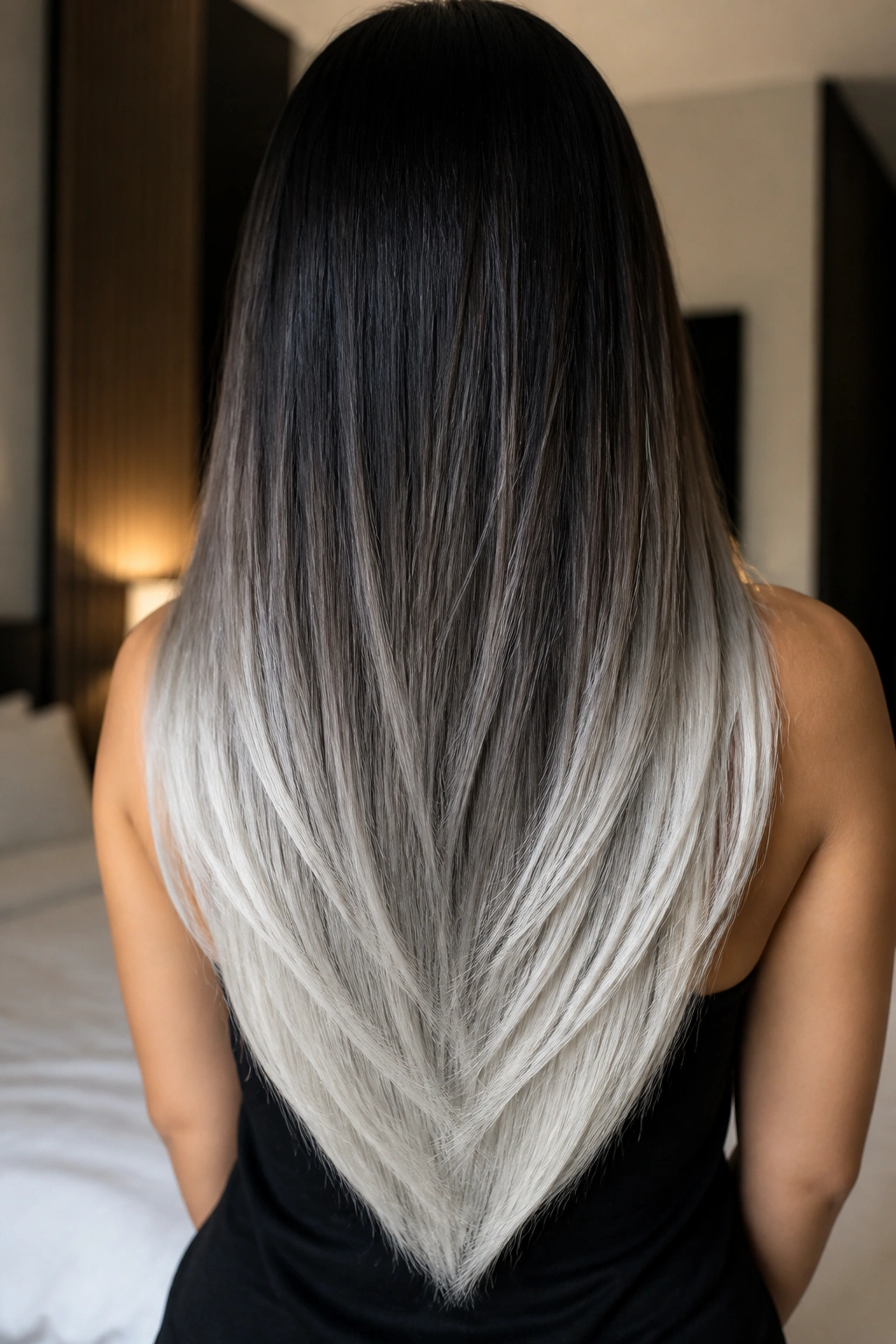
A V-cut points the eye straight to the ends, which is useful when the ends are the brightest part of the color. The shape makes the silver look intentional instead of accidental.
This works especially well on very long hair because the pointed hem keeps the bottom from looking heavy. The color can start as black near the crown, then soften through charcoal and end in a pale silver sweep at the tips.
Ask for an airbrushed transition, not a harsh line. The V-shape already brings drama; the fade should stay smooth.
17. Mermaid Waves with Soft Balayage
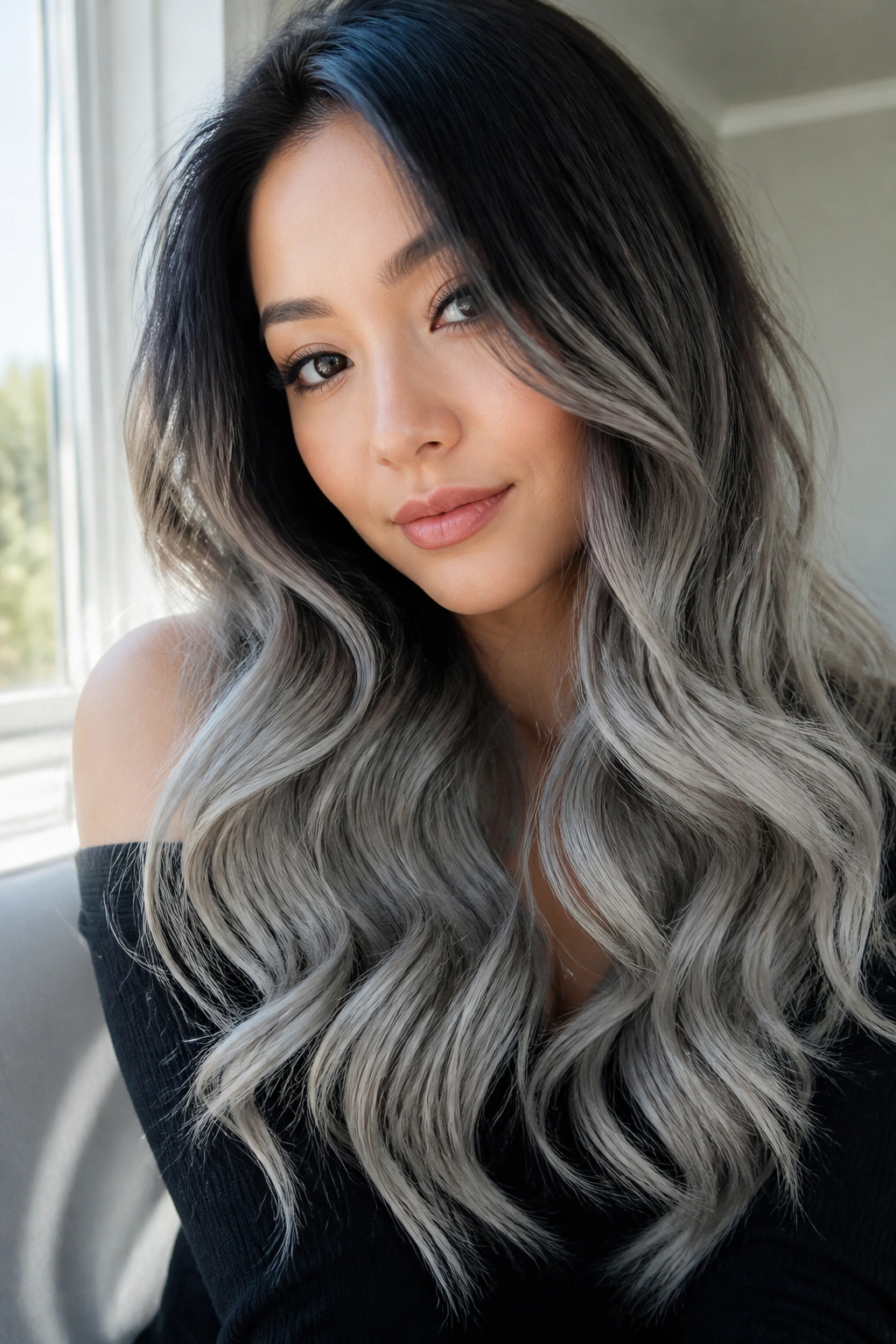
Mermaid waves love silver because the bend in the hair keeps showing new pieces of color. One curl looks dark, the next flashes silver, and the whole style feels alive.
A soft balayage application keeps the fade from looking striped. The color sits in hand-painted sections along the mid-lengths and ends, so the black root remains dominant while the silver comes and goes as the hair moves.
This is the style I’d point to if someone says they want black silver ombre hair but doesn’t want the look to feel too severe. Waves make the whole thing gentler. And a little more romantic, too.
18. Peekaboo Silver Underlayer
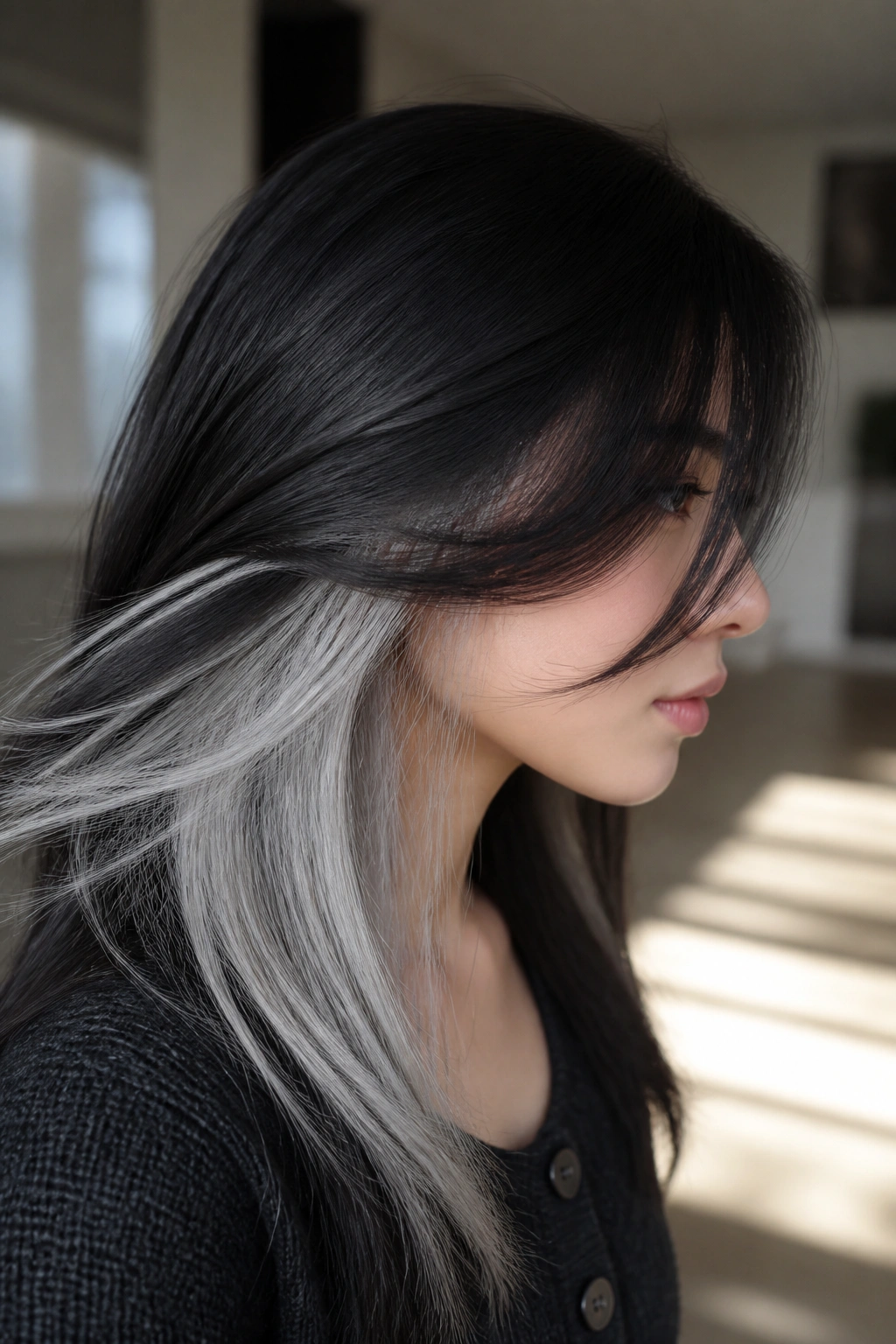
What if you want the silver to stay hidden until the hair shifts? That’s the appeal here.
The top layer stays black or very dark charcoal, while the underlayer carries the silver. When the hair moves, the lighter pieces peek through—especially around the nape, the sides, and the lower back section. It feels private, almost like a secret the haircut keeps for you.
This is better for people who wear their hair down and up. The color changes character depending on how you style it, which is more fun than it sounds.
19. Silver Halo Face Frame
A halo frame puts the brightest silver around the front, temples, and crown area, then lets the rest of the long hair stay darker and softer. It’s one of the easiest ways to make long black hair feel lighter without changing everything.
How It Reads
The eye goes straight to the face, then drops into the darker lengths. That contrast makes the whole shape feel bigger.
- Best when the silver pieces are thin but frequent around the hairline.
- Works with straight hair, waves, and loose curls.
- Looks especially sharp when the part is clean and centered.
A halo frame can feel bold without being messy. That’s rare.
20. Side-Swept Asymmetrical Ombre
A side part changes the color story. One side gets more silver exposure, while the other side keeps the darker weight, and that unevenness creates a little tension in the style.
Long hair is useful here because the length makes the asymmetry feel deliberate. If the silver is heavier on the sweep side, the color almost wraps around the face as you move. Tuck one side behind the ear and the whole thing shifts again.
This one is for people who like a shape with attitude. Not chaos. Just a slight off-center pull.
21. Wet-Look Black and Pewter
Wet-look styling makes pewter read cooler, darker, and more polished. The shine compresses the color, so the silver doesn’t scream; it glows.
This version depends on product control. Use a gel or cream with hold through the top and mids, then keep the ends sleek rather than fluffy. Long hair can take more product than shorter cuts, but there’s a limit. Go too heavy and the silver looks sticky.
I like this look for nights out or sharper outfits. It has a slick edge that soft ombre styles don’t always have.
22. Blunt Ends with Smoky Fade
A blunt hem changes the whole mood. Instead of wispy silver ends, you get a clean line that makes the fade feel more modern and more deliberate.
The black-to-silver shift should stay smoky through the lower mids, then finish in a dense silver at the bottom. Long hair can handle that blunt finish because there’s enough length above it to keep the style from feeling boxy.
Ask for subtle internal layering if your hair is thick. You still want the ends to look full, just not bulky. The line should fall cleanly.
23. Rounded Layers and Foggy Silver
Rounded layers give long hair a softer outline, and foggy silver sits beautifully on that shape. The style feels less severe than a straight, high-contrast ombre.
The black root stays strongest near the crown, then the color loosens through the layers until the silver appears like mist at the bottom. That’s the charm here. Nothing is too sharp, but nothing disappears either.
What Makes It Different
A foggy finish hides small tone shifts better than icy silver. If your hair tends to lift unevenly, this version is more forgiving.
It’s a nice choice for someone who wants cool color without the maintenance drama of pure platinum ends.
24. Deep Black Roots to Bright Ends
This is the bold version, and it doesn’t pretend otherwise. The contrast is the whole point: deep black at the top, bright silver at the bottom, with a cleaner shift than the softer styles above it.
Long hair gives the color room to read from far away. The fade has space to move, so the silver doesn’t feel like a random patch. It feels like a destination.
This works best when the transition zone stays narrow and controlled. Too much gray in the middle can muddy the look. A crisp root and a bright finish keep it sharp.
25. Long Shag with Silver Streaks
A shag makes black silver ombre hair look a little wild, which is a compliment here. The choppy layers break the color into streaks, so the silver doesn’t sit in one neat block.
Why the Cut Matters
The haircut changes how the color moves. Shorter pieces around the crown give the dark base lift, while the longer bottom layers carry the silver.
- Texture spray helps the layers separate.
- A fringe can make the style feel more undone.
- Silver pieces can sit higher if you want more edge.
This is the least polished of the group, and that’s exactly why it works. It has personality.
26. Icy Ribbon Curls
Why do ribbon-like highlights look so good on curls? Because each curl catches light at a different angle, so the silver appears in bands instead of one flat sheet.
The black base should stay rich and deep, while the silver gets painted in thin vertical ribbons along the lower half of the hair. On long curls, that pattern keeps the color from looking puffy. The shape stays defined.
How to Style It
Use mousse on damp hair, scrunch gently, and diffuse until the curl clumps hold their shape. The silver will look cleaner when the curls are separated instead of brushed out.
27. Satin Minimalist Gradient
Less silver can look sharper than more. That’s the appeal of this stripped-back gradient.
The black root stays dominant, the mids drift into a cool graphite, and the silver only arrives in a thin band at the ends. There’s no loud contrast, no thick stripe, no fuss. Just a quiet fade that reads as deliberate.
This is a good choice if you like a refined finish and don’t want the color to run the whole show. Long hair carries that restraint well. Short hair often needs more contrast to say anything.
28. Moonlit Lengths
There’s something satisfying about long black hair that only turns fully silver at the very bottom. It feels a little like the hair changed its mind halfway down.
The effect is strongest on loose waves, where the silver tips catch in pockets instead of all at once. The top stays deep and glossy, which makes the ends look brighter by comparison. If you like a style that feels moody rather than flashy, this one lands in a good place.
A touch of movement helps here—nothing stiff. The more the length sways, the more the silver seems to wake up.
Final Thoughts
Long hair gives black and silver room to do what shorter cuts can’t: stretch, fade, and move without losing the shape of the color. That’s why the same palette can feel smoky, metallic, soft, or sharp depending on where the silver starts and how clean the cut is.
If you want the easiest version to live with, lean into charcoal, graphite, and foggy silver. If you want the most dramatic one, push the contrast higher and keep the finish glossy. Those two directions look nothing alike, and that’s the fun of it.
Bring more than one reference photo if you’re heading to a colorist. A photo with curls, a photo with straight hair, and a photo in daylight can tell the whole story better than one perfect image ever does.
