



Round faces can wear black ombre hair beautifully, but the color has to travel in the right direction. Put the light pieces too high and the face can read wider; let them fall lower and everything looks longer, cleaner, and a little sharper.
That is the whole trick, honestly. Placement matters more than contrast. A soft gradient that starts around the jaw, chin, or collarbone will usually flatter a rounder face better than a fade that begins at the temples, because the eye follows the color downward instead of bouncing straight across the cheeks.
Black hair gives you a lot to work with. Mocha, chestnut, bronze, burgundy, smoky brown, and even muted copper all behave differently against a dark base, and each one changes the mood of the cut. Loose waves blur the blend, straight lengths show the fade with almost graphic clarity, and curls need a longer transition so the color does not stop in one obvious line.
The looks below move from soft and low-contrast to bolder, moodier options. Some are quiet and easy to grow out. Some ask for more maintenance. All of them are chosen with round faces in mind, which means they try to add length, sharpen the eye line, or shift attention below the widest part of the cheeks.
1. Soft Espresso-to-Chocolate Melt
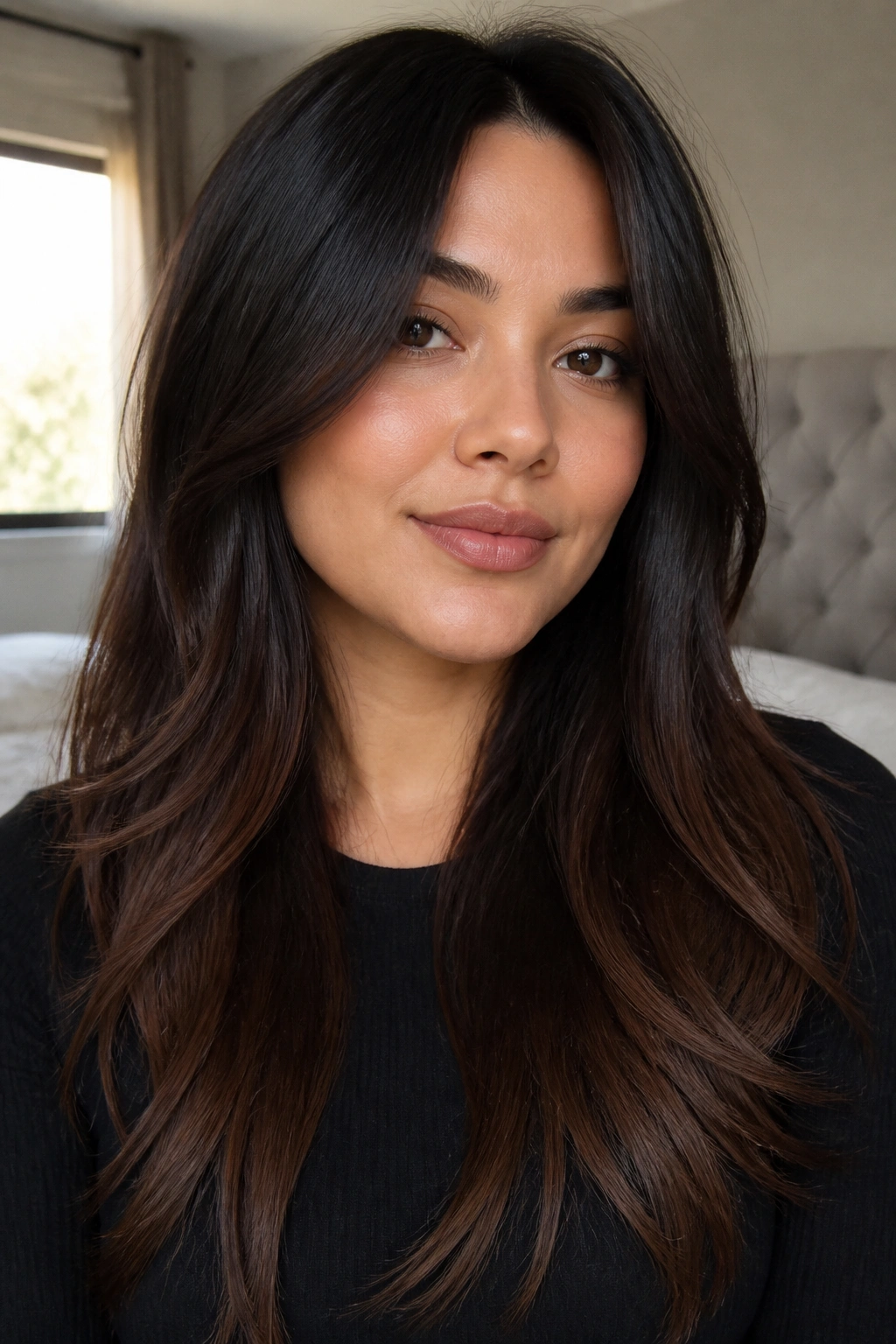
A soft espresso root melting into chocolate ends is one of the easiest black ombre hair ideas to wear on a round face. The change is gentle, so it never chops the face into hard blocks.
The real advantage is where the color begins. Keep the chocolate tone below the chin and let long layers carry it downward. That long, dark-to-warm sweep pulls the eye straight through the length of the hair instead of across the cheeks.
Why It Flatters Round Faces
- The fade starts below the widest part of the face, which helps keep the silhouette slim.
- Chocolate ends add depth without shouting for attention.
- Long layers stop the bottom from looking heavy or square.
Best move: ask for a soft root smudge and a chocolate finish that begins near the collarbone. That one detail does more work than a dramatic color change ever will.
2. Cool Ash Brown with Face-Framing Ends
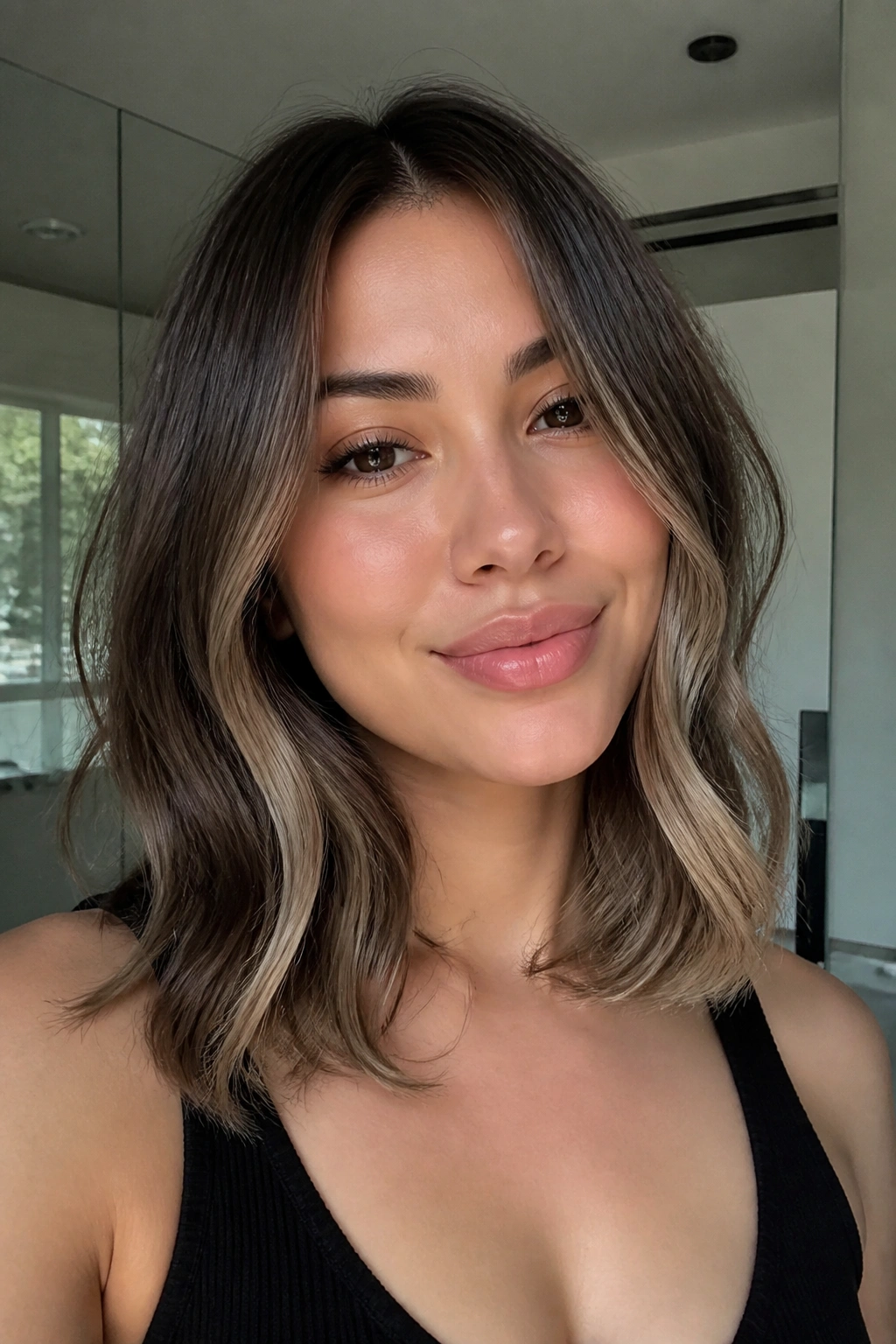
Cool ash brown is one of the cleanest ways to stretch a round face. It has a slightly smoky cast, so the color feels sharper and less sugary than caramel.
That matters more than people think. Warm shades can sometimes widen the face visually if they sit too high, while ash brown tends to sit back a little and let the cut do the shaping. Keep the lightest part at the ends and around the jaw, not up by the cheekbones.
A loose bend through the mid-lengths helps a lot here. Straight hair can feel severe if the ombre is too subtle, but a soft wave gives the gradient a little movement without puffing out the sides. If your natural black hair pulls orange fast, a neutral brown toner keeps the finish from turning muddy.
The style works best with a middle part that is slightly off-center. Dead-center can be fine, but a tiny shift usually makes the face read longer. Small change. Big payoff.
3. Black to Mocha Lob with a Soft Bend
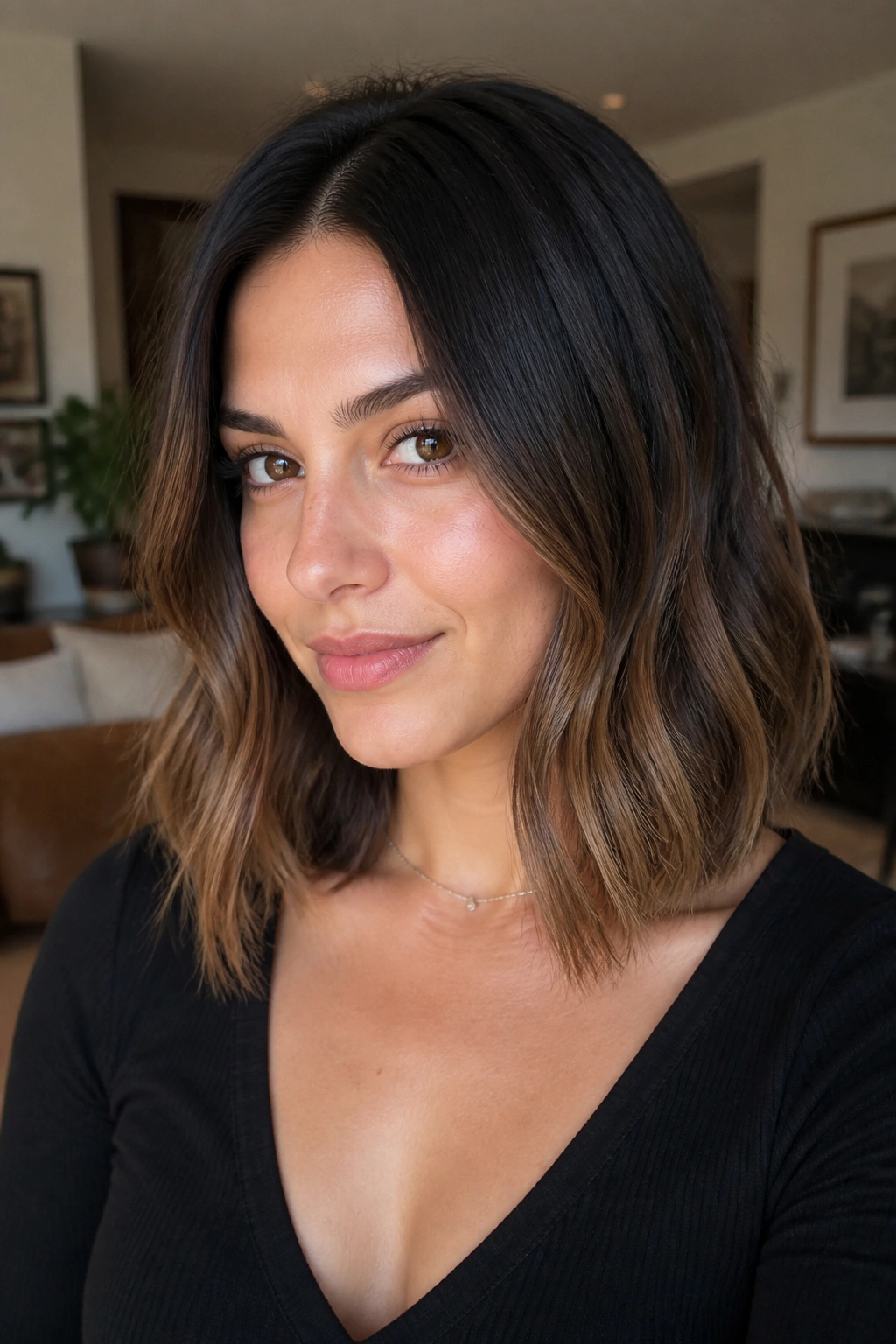
Why does a black-to-mocha lob work so well on a round face? Because collarbone length gives you that extra vertical line most shorter cuts do not. The mocha ends keep the look soft, but the length quietly does the lifting.
A lob also gives the ombre room to breathe. On a shorter bob, the lighter shade can sit too close to the cheeks and widen the face. On a collarbone cut, the fade has space to drop lower, which makes the whole style feel more balanced.
How to Style It
- Curl only the middle section of the hair, not the roots.
- Keep the front pieces a touch longer than the back.
- Use a 1-inch iron for a soft bend, not a tight wave.
- Finish with a light serum on the ends so the mocha looks glossy.
If you want black ombre hair that feels polished instead of fussy, this is a smart place to start. It looks intentional without needing a lot of work.
4. Smoky Mushroom Brown and Curtain Bangs
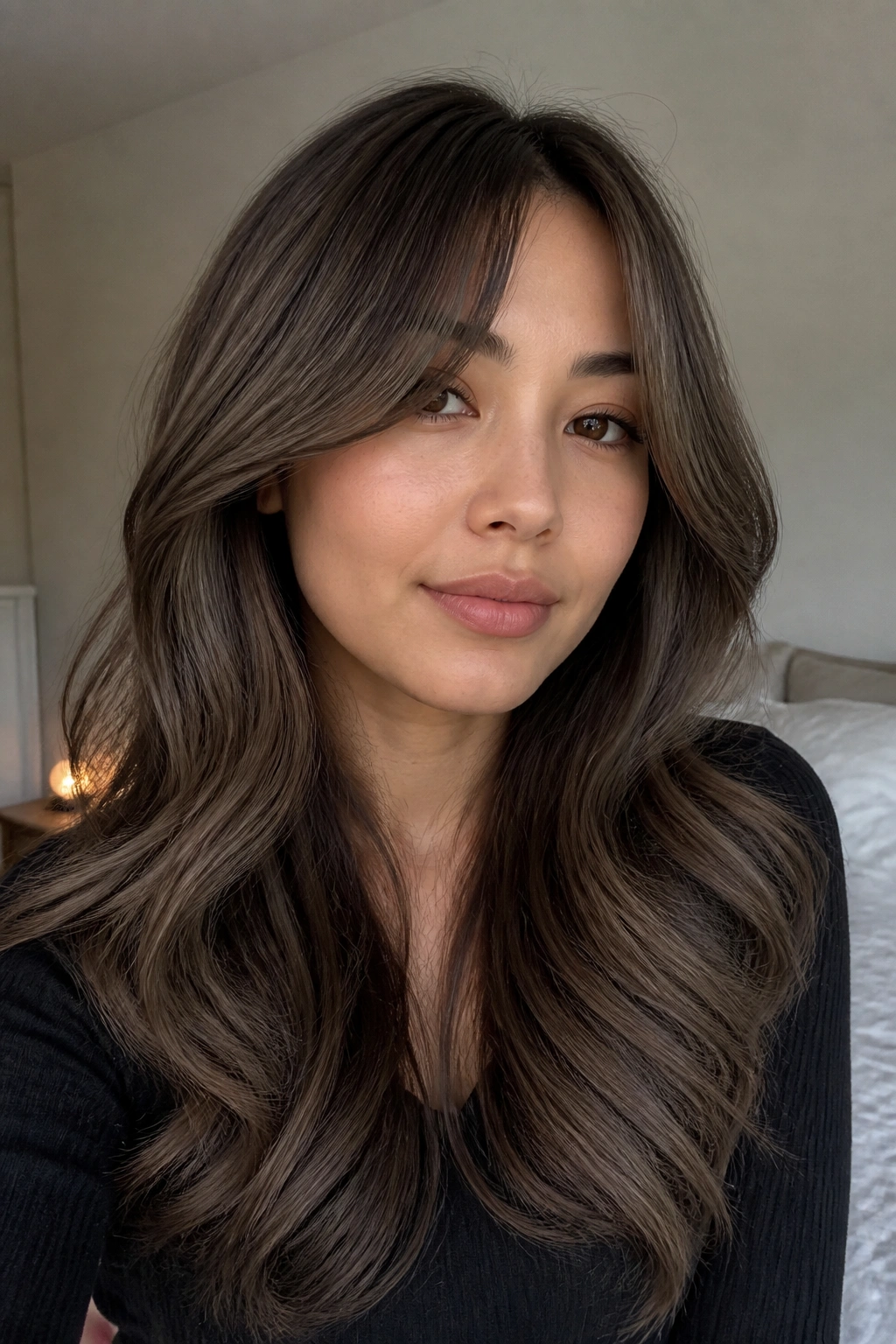
Picture a shoulder-grazing cut, soft curtain bangs, and a smoky brown fade that never gets too warm. That combination can be very kind to a round face.
The curtain bangs matter here. They split the forehead, open the center line, and guide the eye downward along the cheeks. The smoky mushroom tone keeps the color cool and a little muted, so the ends feel soft rather than bright.
What Makes It Work
- Curtain bangs create a vertical break through the upper face.
- The mushroom brown tone keeps the lower half of the hair from looking thick or bulky.
- Shoulder length gives the fade enough room to stretch.
A face like this does not need a harsh contrast. It needs movement. And this cut has it in spades, especially if the bangs are cheekbone-length and the ends are lightly textured. Wear it with a soft wave or a blowout that turns the pieces away from the face.
The one thing I would avoid is short, puffed-out bangs. Too much width at the top cancels out the whole point.
5. Black to Auburn Waves with a Mid-Length Sweep
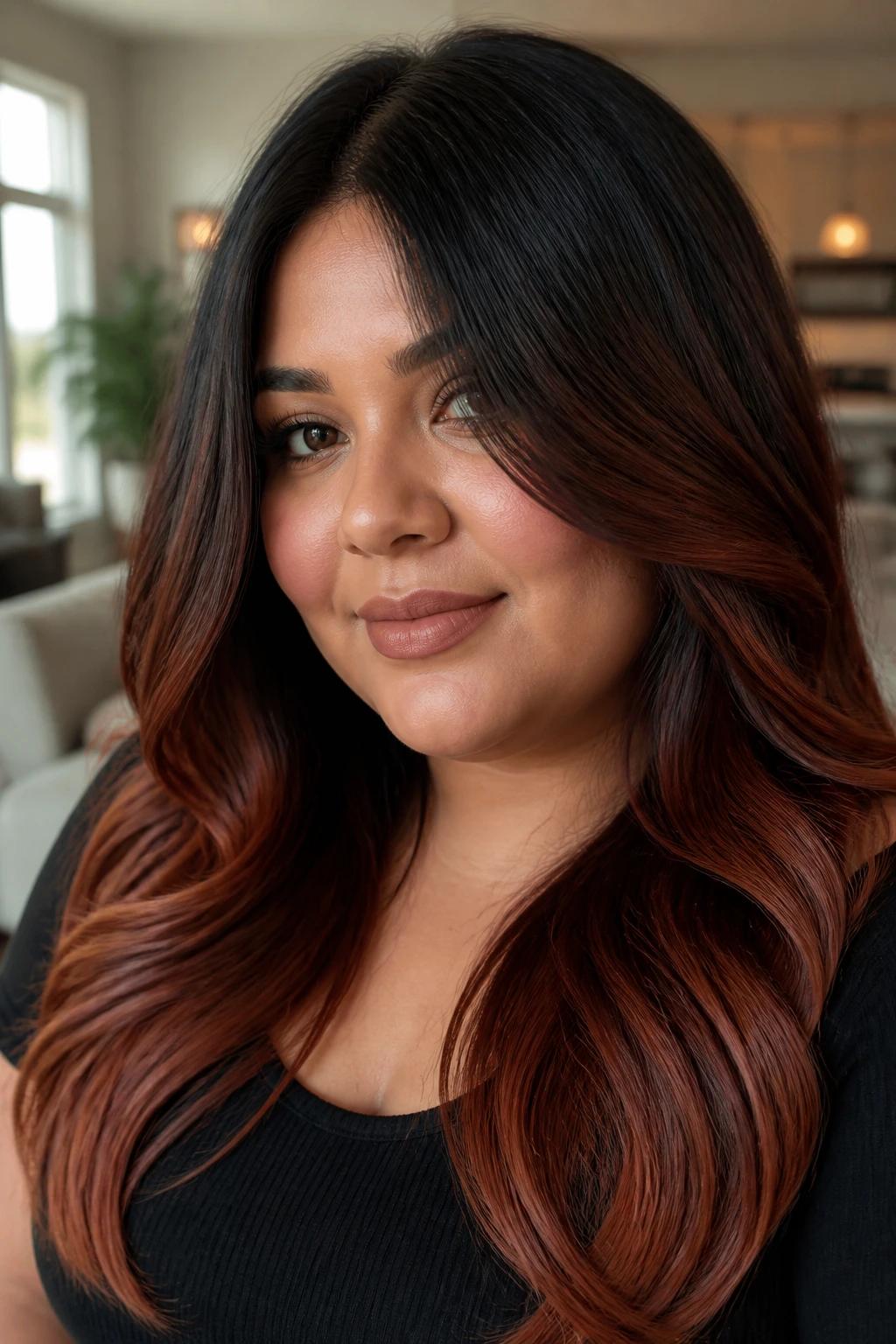
Auburn can be a little tricky, but on black hair it often lands in a rich, grown-up place that feels far better than bright copper. On a round face, that warmth works best when it stays below the cheeks.
The sweep matters as much as the color. Long, brushed-out waves create diagonal lines, and diagonal lines are your friend here. They break up the roundness without making the style stiff or overdone. A middle part with long face-framing pieces can look lovely, but a deep side part gives the auburn even more shape.
What I like about this version is the way it moves. The black roots keep the top tidy and slim. The auburn at the ends catches light when you turn your head, which draws attention downward and away from the width of the face. That shift is subtle, but it changes the whole read.
If your skin runs warm, this is one of the easiest color stories to wear. It has warmth, but not the orange flash that can make some ombres look loud.
6. Black-to-Chestnut Ombré with Face-Framing Pieces
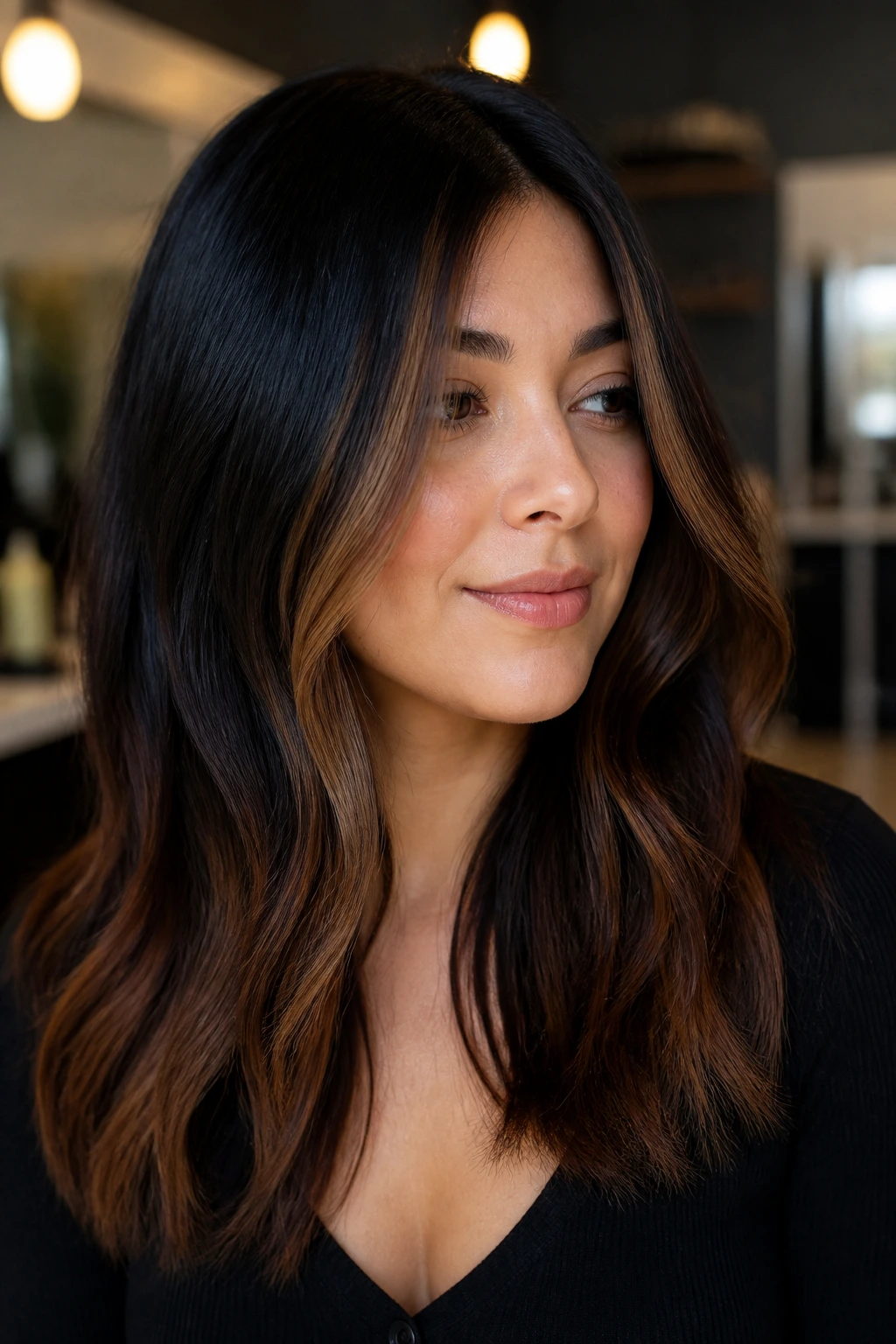
Compared with bright caramel, chestnut keeps the contrast low. That is exactly why it works on round faces that want definition without drama.
Chestnut sits in that sweet spot between brown and red. It has enough depth to show against black hair, but it never screams from across a room. The front pieces can start around the chin and stay a touch lighter than the rest, which gives the face a long outline instead of a wide one.
Who It Suits Best
- People who want a soft grow-out.
- Anyone who wears warm makeup or earthy tones.
- Hair that is naturally straight, softly waved, or lightly curled.
If you like low-maintenance color, this is a smart recommendation. The root stays dark longer, so regrowth does not look harsh. A gloss every few weeks keeps the chestnut from getting flat, and a round brush blowout will make the front pieces bend inward just enough to frame the jaw.
This is one of those styles that looks expensive even when it is deliberately understated. Quiet. But not boring.
7. Bronze-Dipped Curls on a Black Base
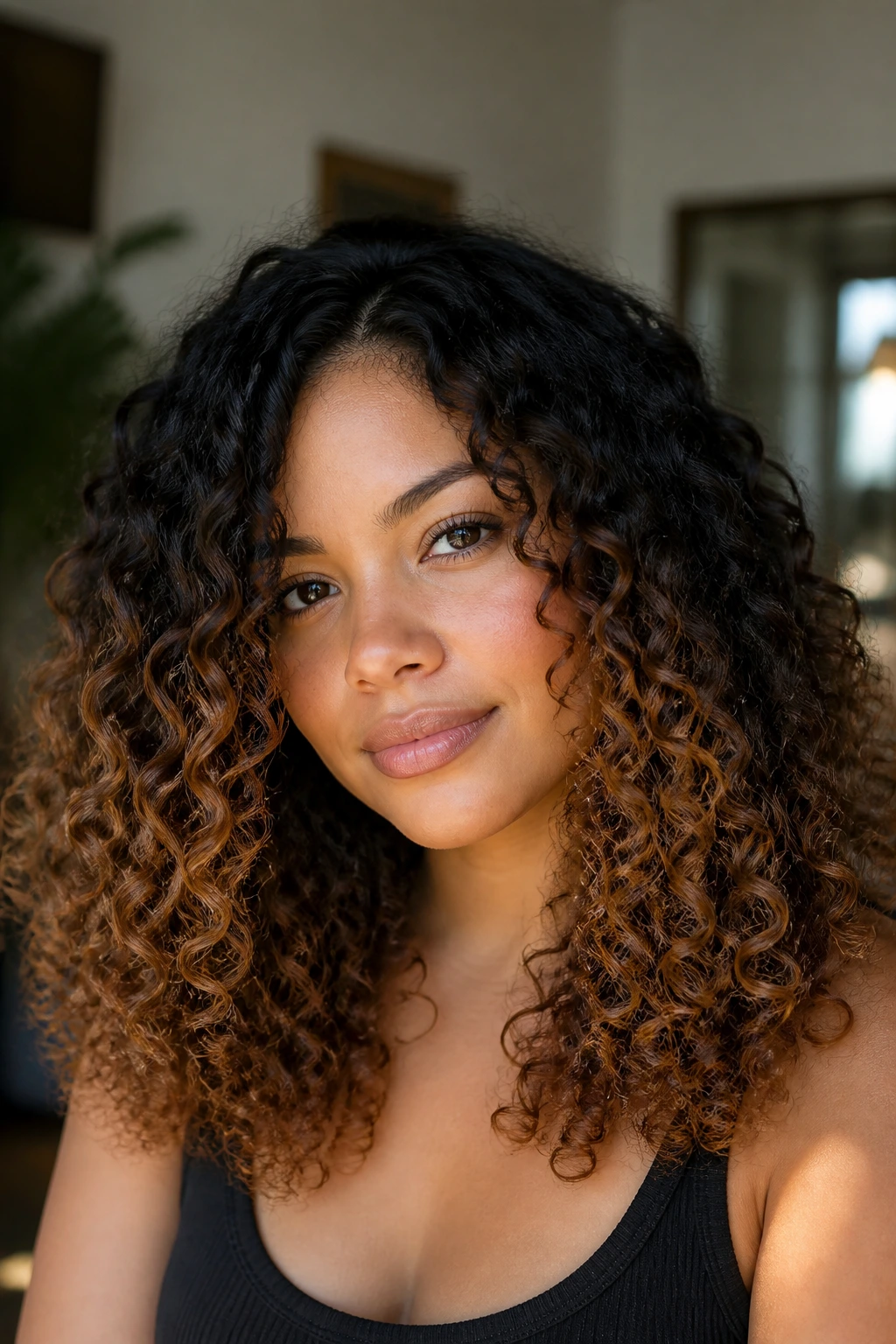
Bronze-dipped curls are made for movement. On a black base, bronze reads as light and warm, but because it sits on the surface of the curls instead of flooding the whole head, it does not widen a round face the way a broad blonde band might.
The best version places the bronze on the outer ring of the curls and the lower third of the length. That keeps the color away from the cheek level, where it can make the face look fuller. The curls themselves do some of the shaping, since they naturally create a vertical line as they fall.
What to Ask For
- A dark root with bronze painted mostly on the ends.
- Softer brightness around the face, not a thick halo.
- Layers long enough to keep the curls from stacking outward.
This style has energy. It is lively, a little sunlit, and a lot more flexible than a full light brown ombre. If your curls tend to shrink, ask your colorist to bring the bronze a little higher on the lengths than you think you need. Otherwise the lighter part can vanish when the hair dries.
A little extra length in the front helps too. Always.
8. Burgundy Melt on Silk-Pressed Hair
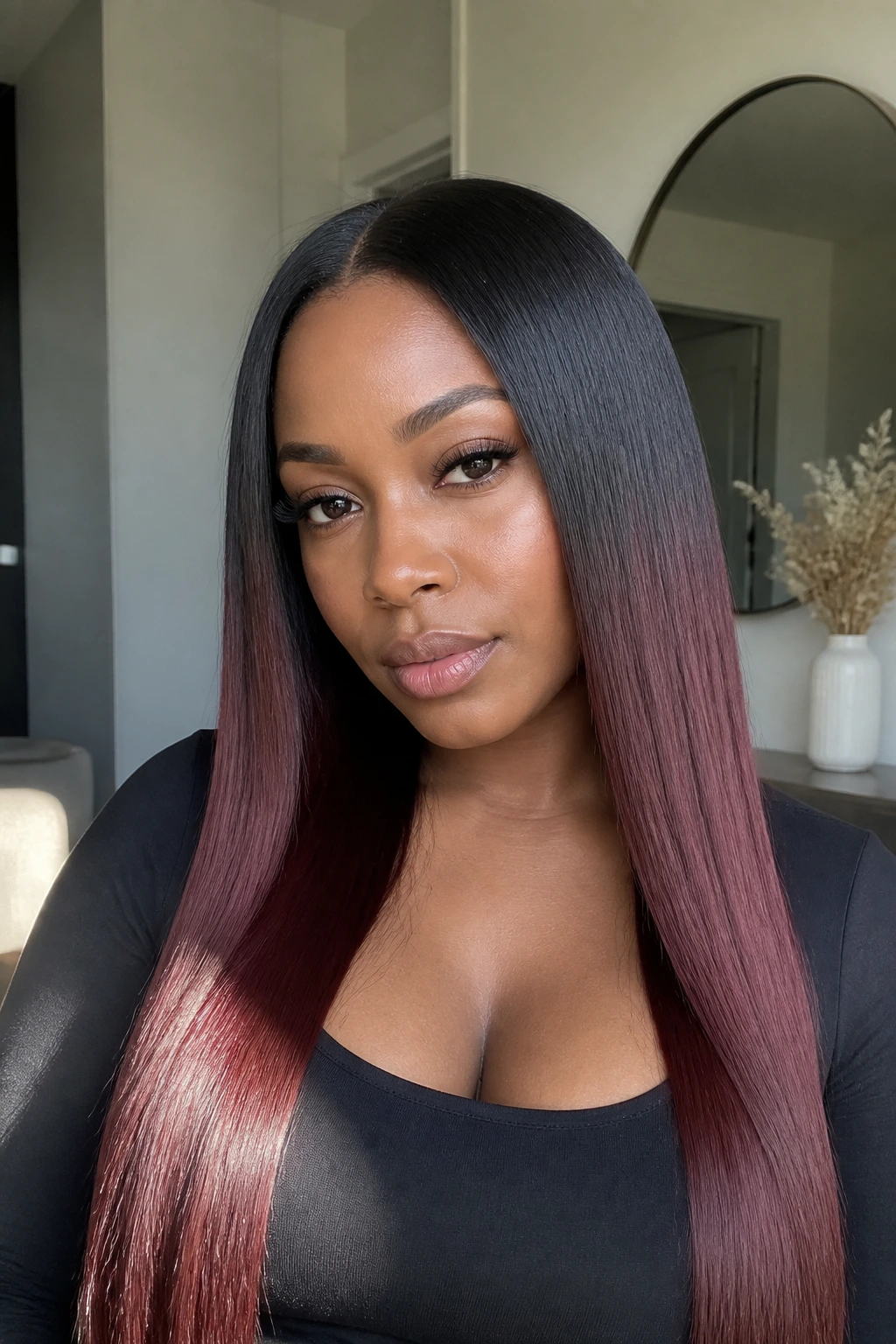
Burgundy on silk-pressed black hair has a glossy, almost liquid feel to it. The color looks rich rather than loud when the transition is low and the top stays deep black.
That low start point is what keeps it flattering on round faces. A burgundy fade that begins at the jawline or lower gives the face space to breathe, while the straightened texture creates a long, neat column. You get color, but you also get shape. Both matter here.
The shade itself should stay wine-dark, not cherry-bright. Cherry can pull attention outward. Burgundy sits deeper, so it behaves more like a shadow with shine. If you like wearing hoops, a clean center part, or a sharp edge in your haircut, this style gives you room to do that without the color fighting for attention.
It is a good pick if you want something bolder than brown but still grown-up. And yes, it looks especially good when the ends curve under just a little. That small bend keeps the silhouette from feeling blunt.
9. Black to Dark Honey with Butterfly Layers
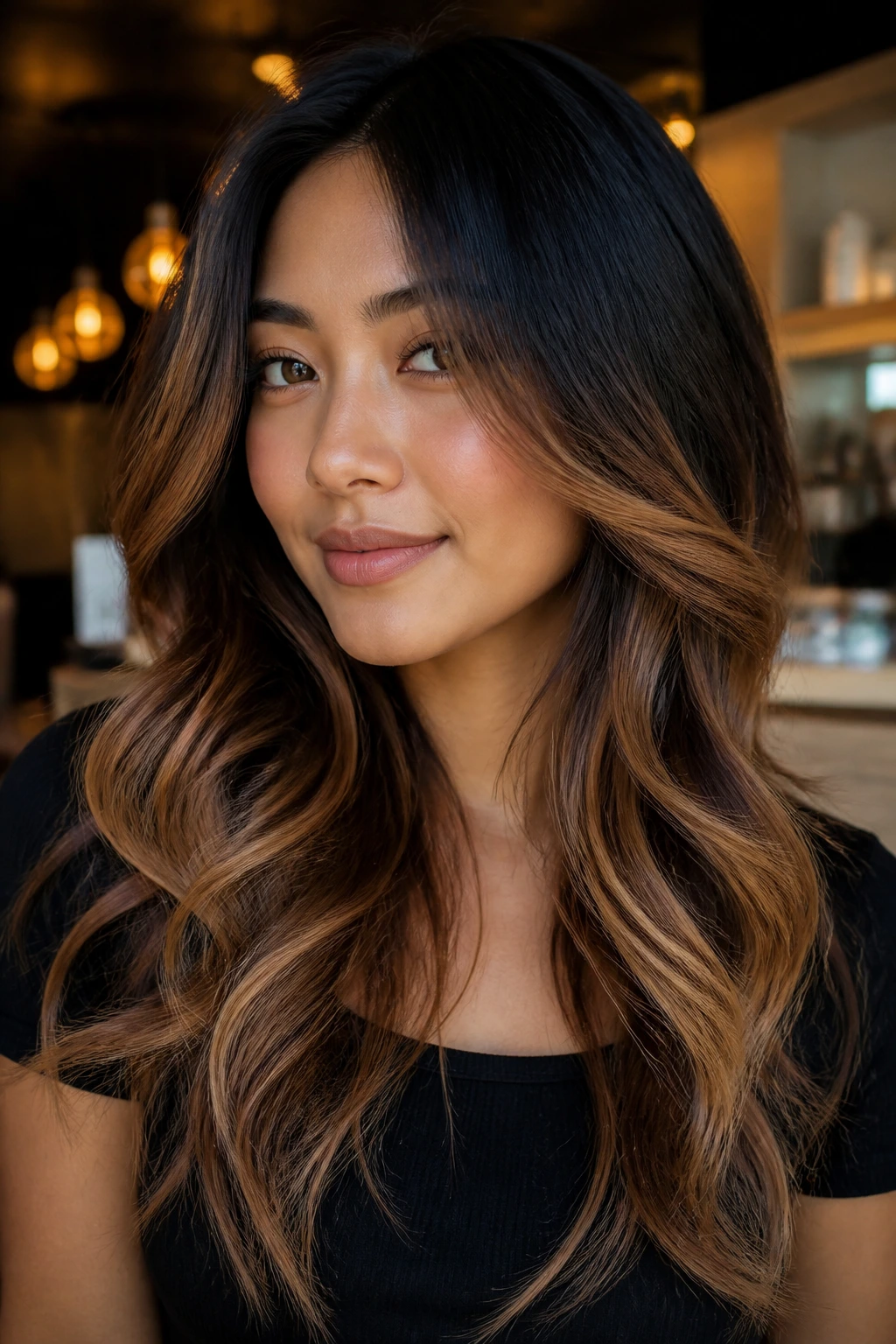
Why does black-to-dark-honey ombre work so well with butterfly layers? Because the layers already create lift at the top and taper at the bottom, and the honey pieces follow that movement instead of fighting it.
The trick is to keep the brightest strands out of the widest part of the face. Let them start below the cheekbones or along the outer lengths. That way the honey acts like a guide, drawing the eye down through the haircut rather than across it.
Where the Brightest Pieces Belong
- On the lower face-framing layers.
- Through the ends of the longest sections.
- Around the collarbone, not at the temples.
Butterfly layers can sometimes feel too airy if they are over-textured, but the dark root helps anchor them. The honey gives warmth. The layers give lift. Together they make the hair look lighter and longer, which is a nice combination for a round face that needs some vertical line.
I would keep the wave soft, not big. Big curls can spread the sides. Soft bends give you all the movement you need.
10. Sable-to-Toffee Shag
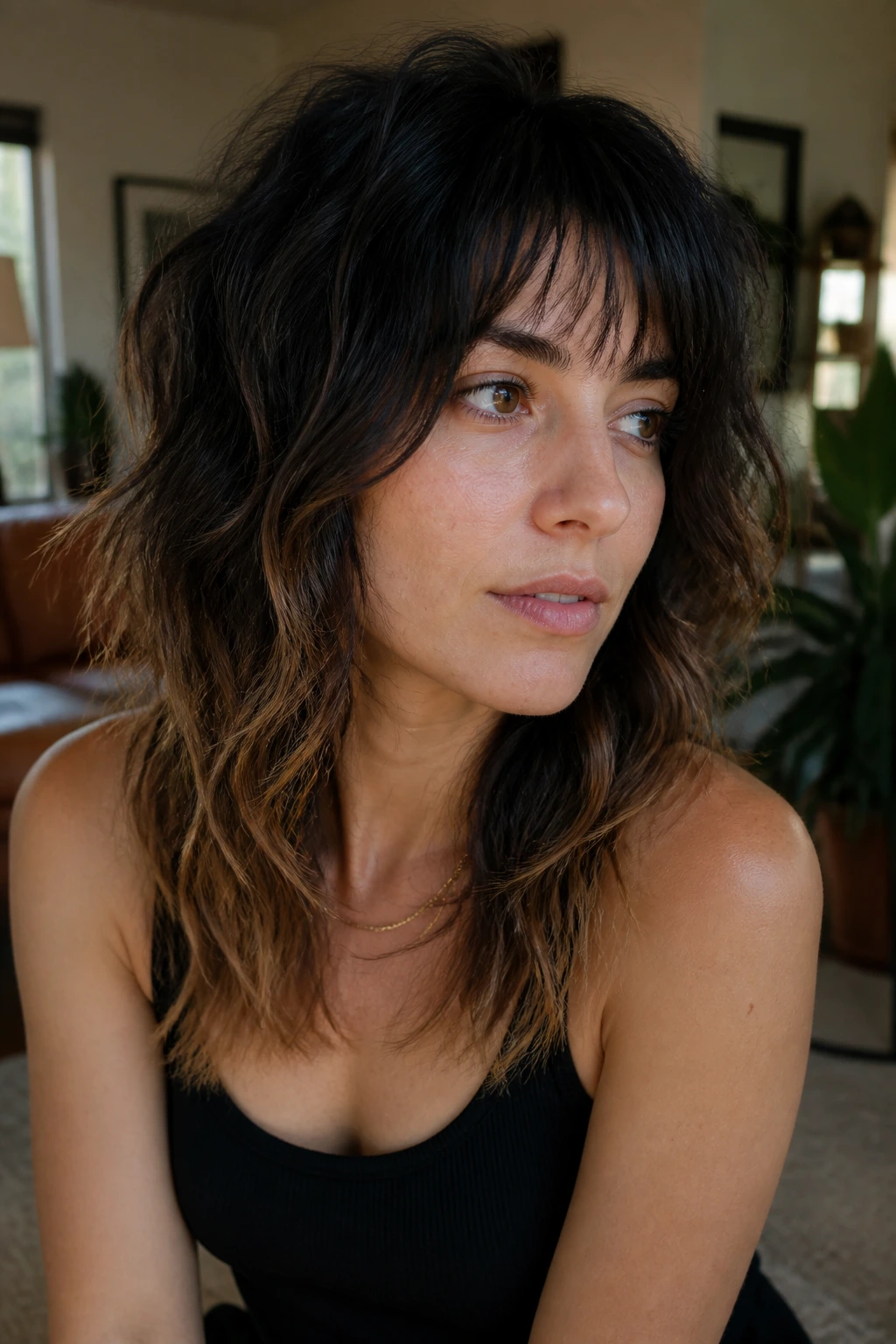
A shag with sable-to-toffee ombre can be excellent on a round face, mainly because the cut already breaks up the outline. The color keeps that energy going.
This is not a polished, one-length look. It should look a little piecey, a little lived-in, and slightly uneven in the best way. The toffee tone belongs on the ends and the longest layers, where it can move around without sitting directly on the cheeks. If the lighter parts stop too high, the shag starts to look wide. That is the one thing to avoid.
Key Details to Keep in Mind
- Ask for shaggy layers that stay longer around the face.
- Keep the toffee tone soft, not yellow.
- Use a matte texture spray at the roots for lift.
- Curl random pieces away from the face to keep the outline broken up.
A shag can be tricky if you like everything neat and smooth. It is not that kind of haircut. But if you want black ombre hair with personality, this one has plenty of it.
The best part is the grow-out. It tends to age better than more rigid cuts because the messiness is part of the design.
11. Cinnamon Brown on Collarbone Length
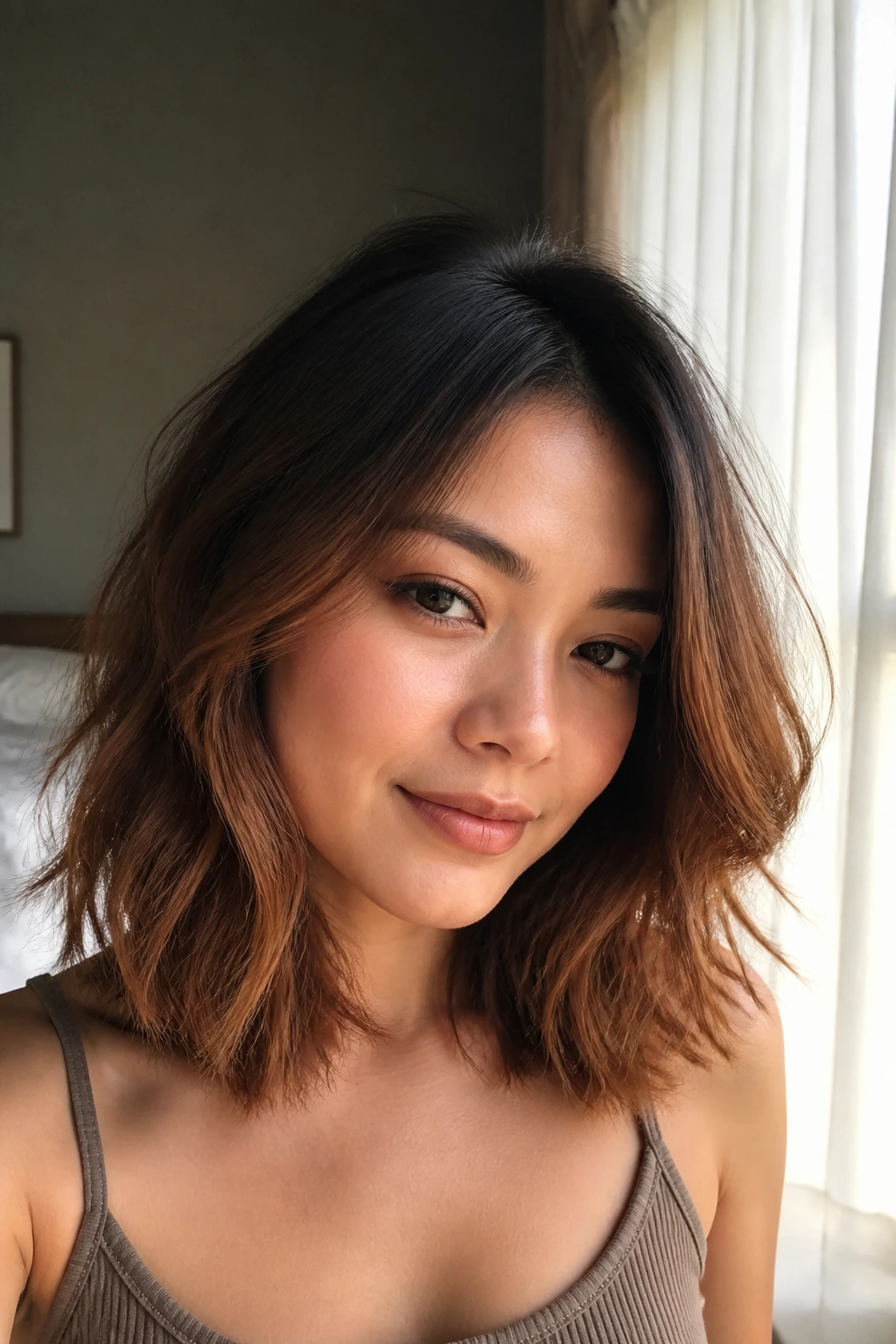
Cinnamon brown brings warmth without pushing into loud copper territory, which is why it works so well for black ombre on round faces. The color feels softer than red and a little spicier than chestnut.
Collarbone length gives that shade room to stretch. A shorter cut can make cinnamon sit too close to the cheeks, but at the collarbone the fade reads more like a vertical wash. The eye follows the line of the hair, then drops toward the shoulders. That movement matters more than people realize.
I also like this shade on thick hair. Thick hair can swallow subtle color fast, and cinnamon has enough presence to stay visible through the ends. Soft waves make it look richer, especially if the wave starts below the ears instead of from the root. Root-to-tip curl volume can widen the face, and there is no reason to invite that.
If you want a color that feels warm, cozy, and not too sweet, this is a strong choice. It has enough depth to sit next to black hair without looking flat.
12. Black to Plum Mahogany
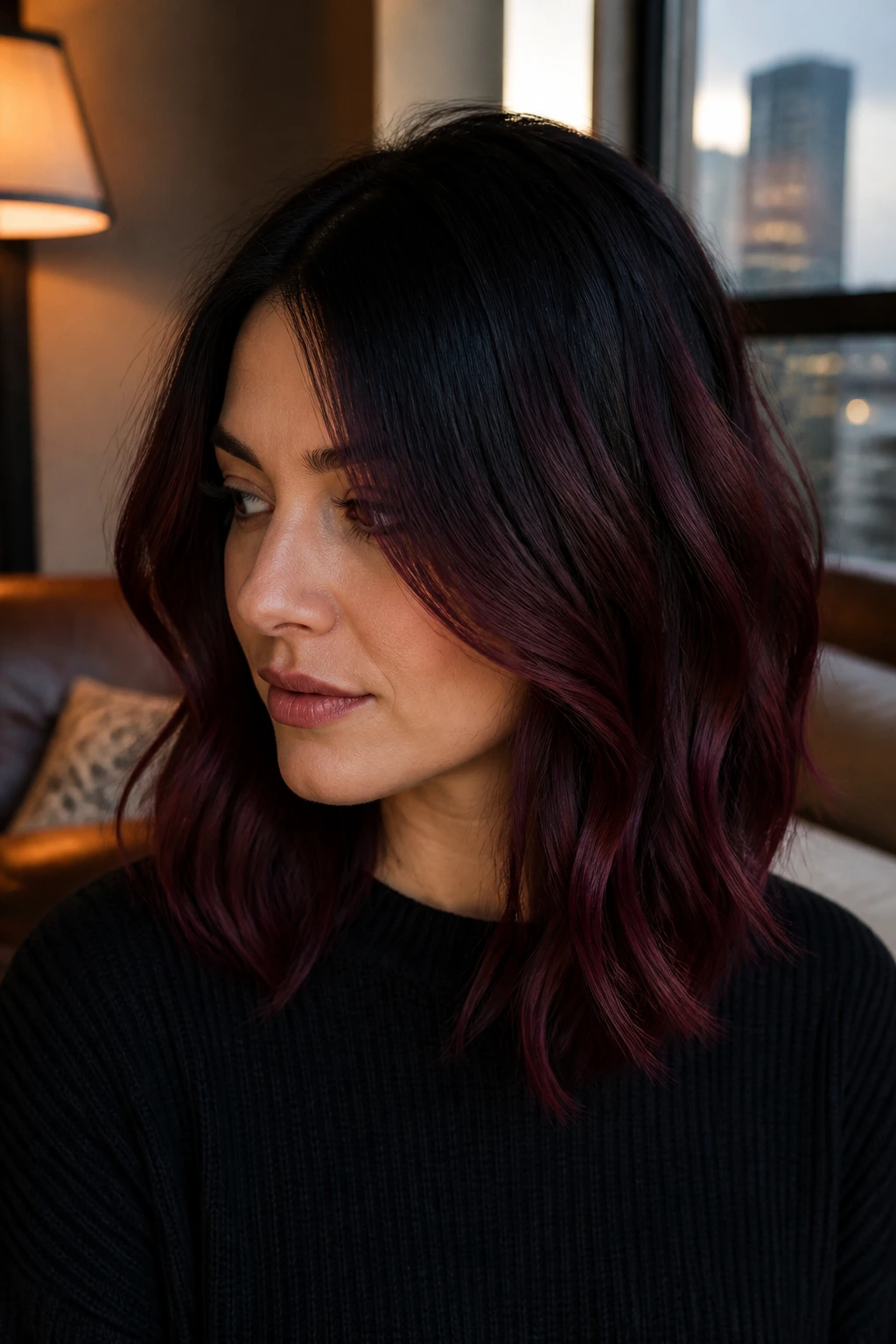
Plum mahogany is the color for someone who wants dark hair with a little edge. Compared with classic red ombre, it feels denser and more moody, which can be a nice fit for a round face that needs definition.
The deeper tone helps because it does not spread light across the face. It stays concentrated in the lengths, where it adds shadow and shine at the same time. On straight hair, the finish looks sleek and almost velvet-like. On waves, the plum tone moves in and out of view, which gives the style depth without adding width.
Why Plum Reads Softer
It is less bright than copper and less loud than cherry red. That means it frames the face without taking over the whole cut.
Who Should Choose It
People with cool or neutral undertones usually wear it best, though a warm skin tone can make it work if the plum leans more mahogany than violet.
I would keep the color lower and avoid heavy face-framing brightness. The goal is drama at the ends, not along the cheeks. A deep side part can make the whole look feel even longer.
13. Black with a Maple Brown Side-Swept Fringe
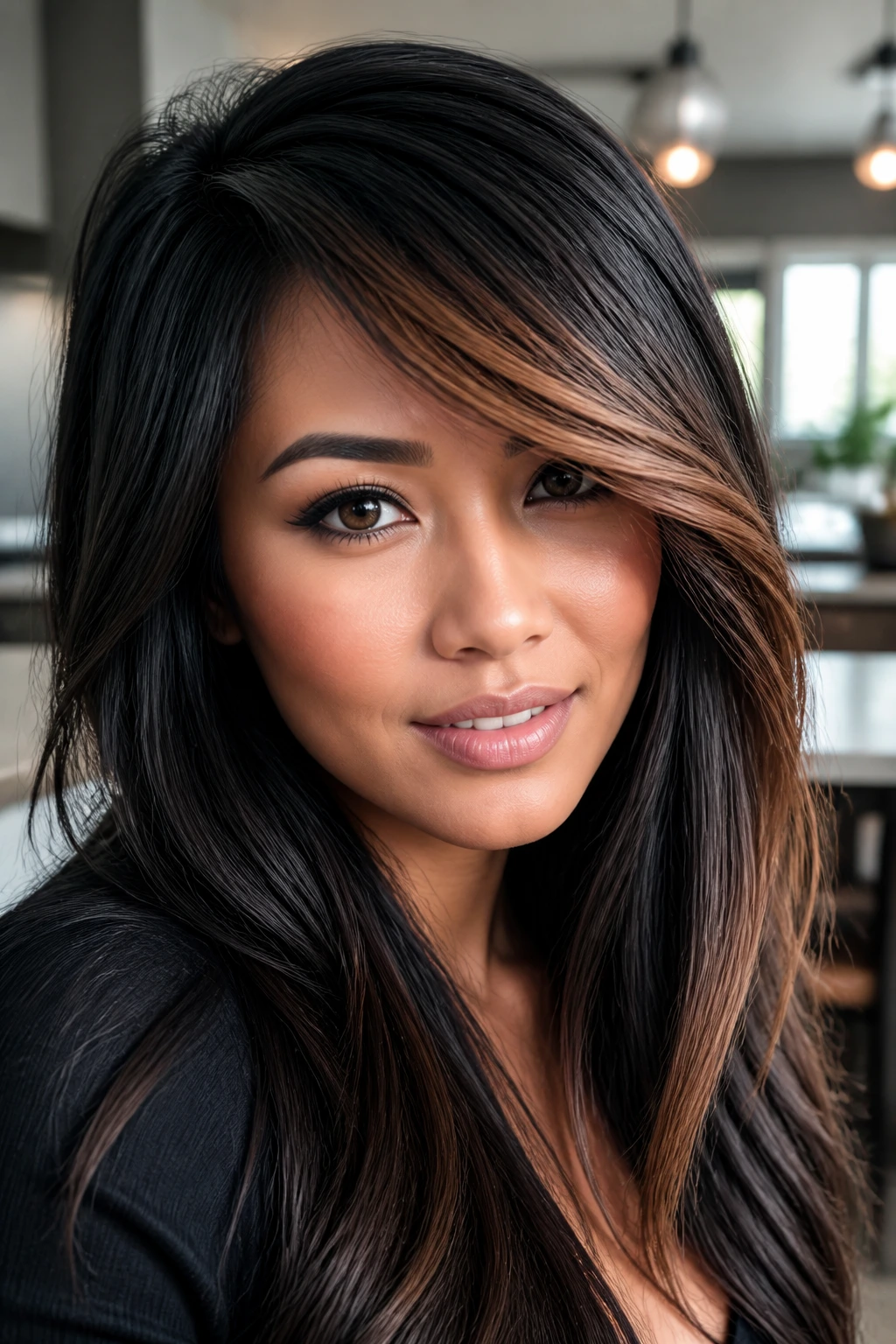
A side-swept fringe changes the geometry of a round face in a way a center part never can. Add maple brown ombre to the lengths, and the whole style starts moving diagonally instead of horizontally.
The fringe should be soft, not helmet-like. It needs to skim the forehead and blend into the longer pieces so the face still looks open. The maple brown can begin around the cheekbone or just below it, then deepen toward the ends. That placement keeps the lighter tone from sitting right on the widest part of the face.
Why It Works
- The fringe breaks up the width across the forehead.
- The diagonal sweep creates a slimmer line through the face.
- Maple brown adds warmth without looking brassy.
This idea is especially good if your hair is medium density and you want something flattering that does not depend on a dramatic cut. The color does a lot of the heavy lifting. Keep the styling smooth at the crown and soft through the ends, and you get a shape that feels longer than it really is.
A tiny change in the part can make this one better. Shift it a quarter inch and watch what happens.
14. Muted Copper on Textured Waves
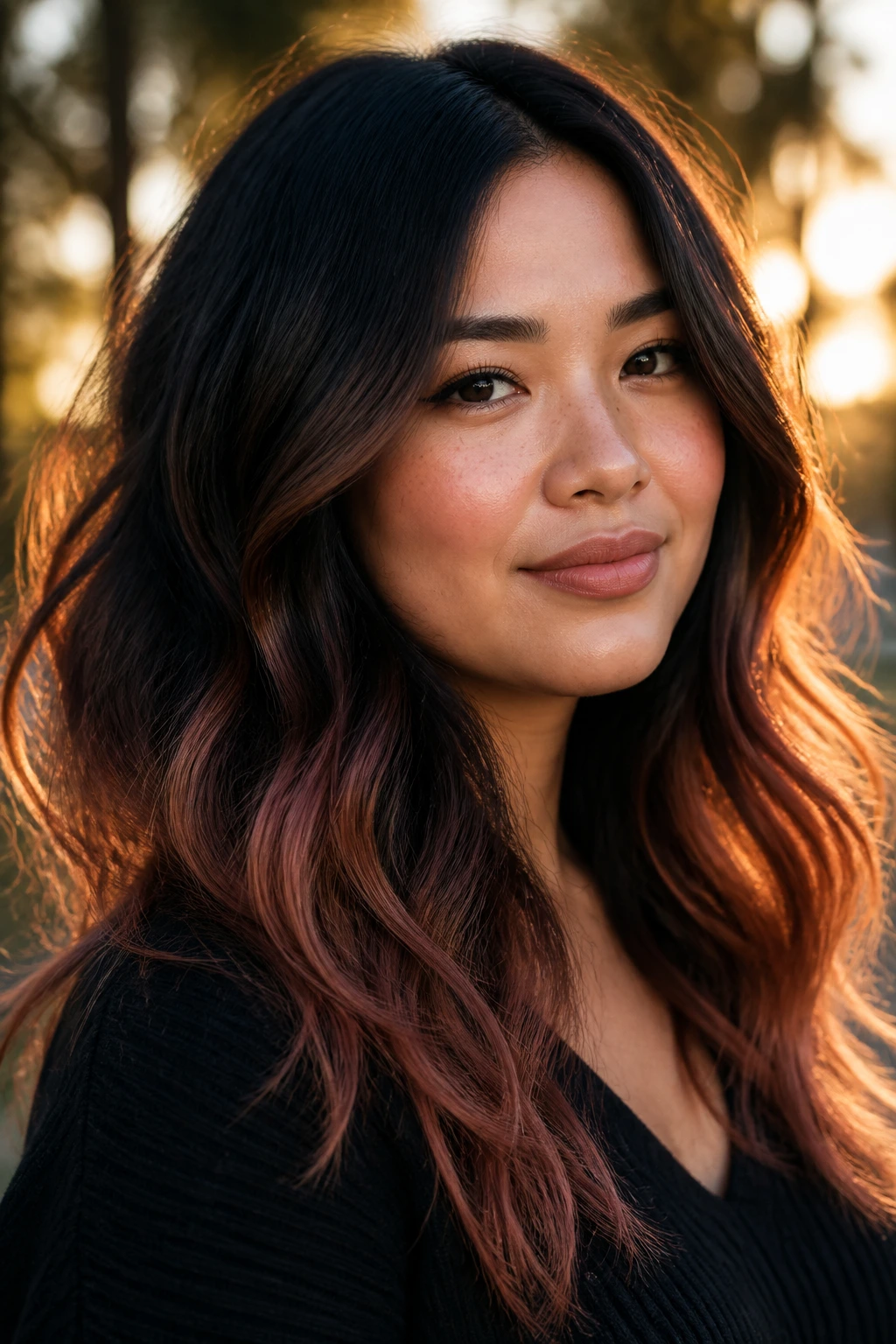
Muted copper on black hair has a certain spark to it. The key is keeping the copper dusty and deep, not bright enough to shout across the room.
On a round face, copper works best when it starts low and stays textured. That texture matters because flat copper can spread across the sides of the face and make the head look wider than it is. Waves with a bit of separation, though, keep the color broken up and moving. The eye follows the shine, then drops to the ends.
It also helps to leave the roots a strong, dark black. That contrast at the top gives the hair a clean frame. The warmer tone belongs in the lower half, where it can act like a finish rather than a spotlight. If you wear your hair layered, the copper will catch on the piecey ends and make the cut look more alive.
This is not the lowest-maintenance choice on the list. Copper fades. Fast enough to matter. But if you like a bit of warmth and do not mind refreshing the tone, it can be one of the prettiest ways to soften black hair without losing shape.
15. Beige Brown Ends with Soft Layers
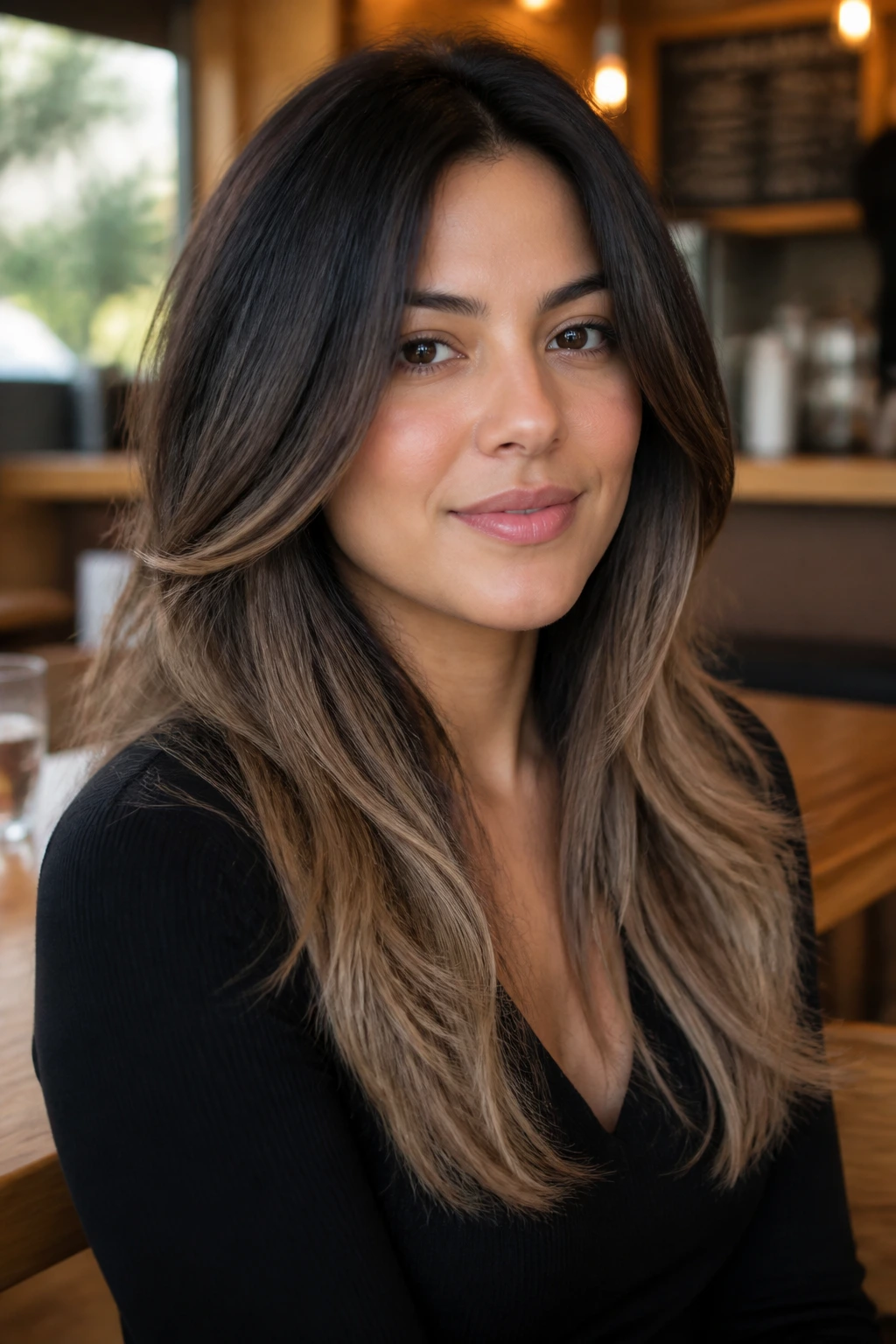
How do you make beige brown work on black hair without it turning flat? You keep the fade soft, the layers long, and the lightest bits away from the cheeks.
Beige brown is one of the quieter ombre choices, which is exactly why some round faces wear it so well. It adds dimension without drawing a thick line across the mid-face. The result is gentle. Not boring, just gentle. On a face that already has strong curves, that softness can be a relief.
How to Ask For the Right Tone
- Request a beige brown that leans neutral, not yellow.
- Start the fade below the cheekbone area.
- Keep the layers long enough to show the gradient.
Soft layers are the secret here. They stop the ends from looking like one heavy block. If you wear your hair straight, the beige will look clean and polished. If you wave it, the color will blur enough to feel softer, which can be even better.
This is the kind of style that works when you want people to notice your hair without exactly knowing why.
16. Sleek Black Lob with a Barely-There Brunette Fade
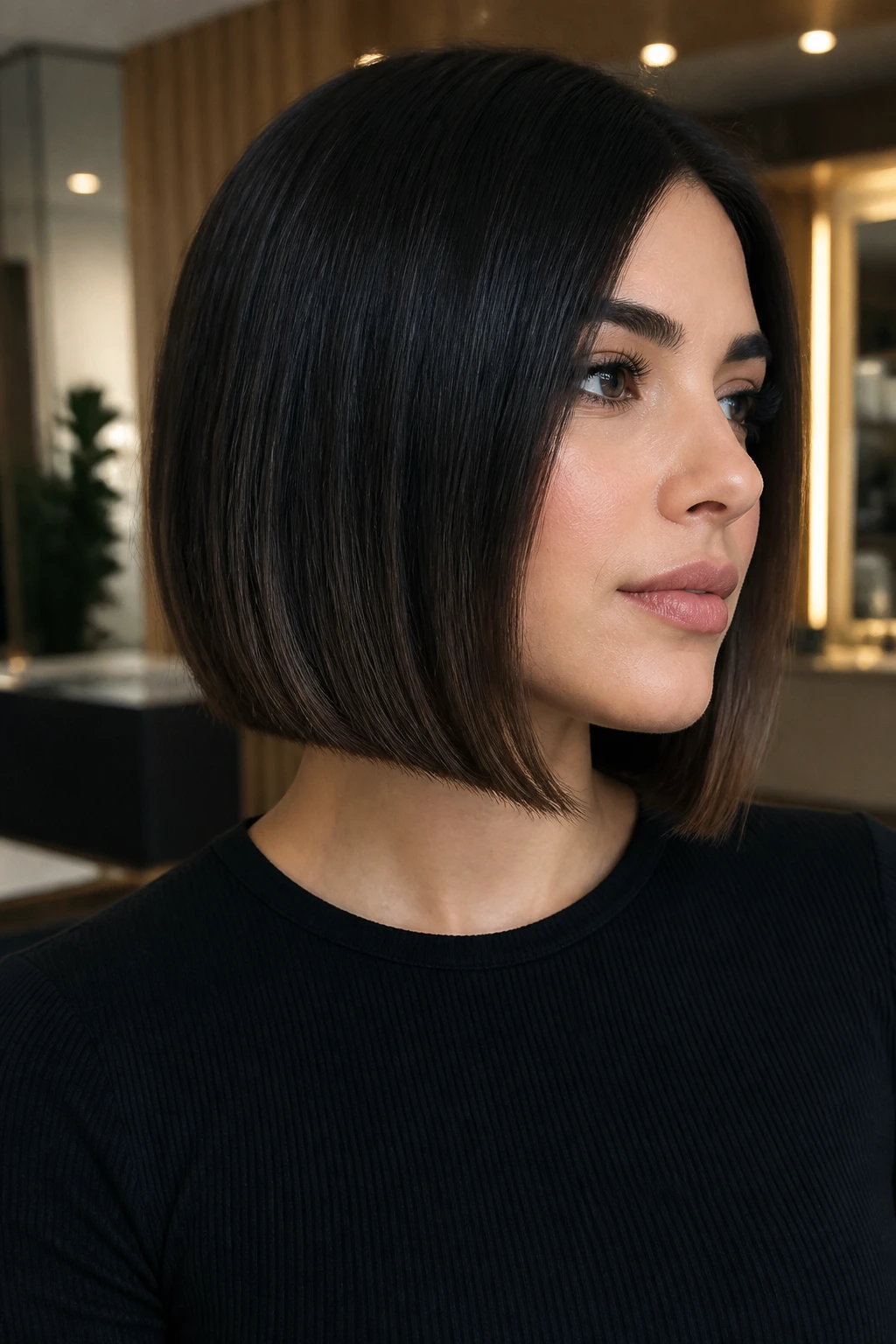
A sleek lob with a barely-there brunette fade is a nice answer for anyone who wants black ombre hair without a big color jump. It feels tailored, almost sharp, and that alone can help a round face look longer.
The important part is restraint. The brunette should be just a shade or two lighter than the black base, so the change reads as gloss and dimension rather than contrast. A blunt edge can work here if the lob sits below the chin; above that, it can feel boxy. Keep the length low enough to skim the jawline, then use the fade to pull the eye downward.
What to Watch For
- Too much width at the sides.
- A fade that starts too high.
- Ends that are too fluffy or too thick.
I like this look on straight hair or a smooth blowout. It has a clean line that can sharpen softer features. If you want something office-friendly and easy to style, this one does the job without asking for much.
It also grows out well. That matters more than people admit.
17. Blue-Black with Indigo Tips
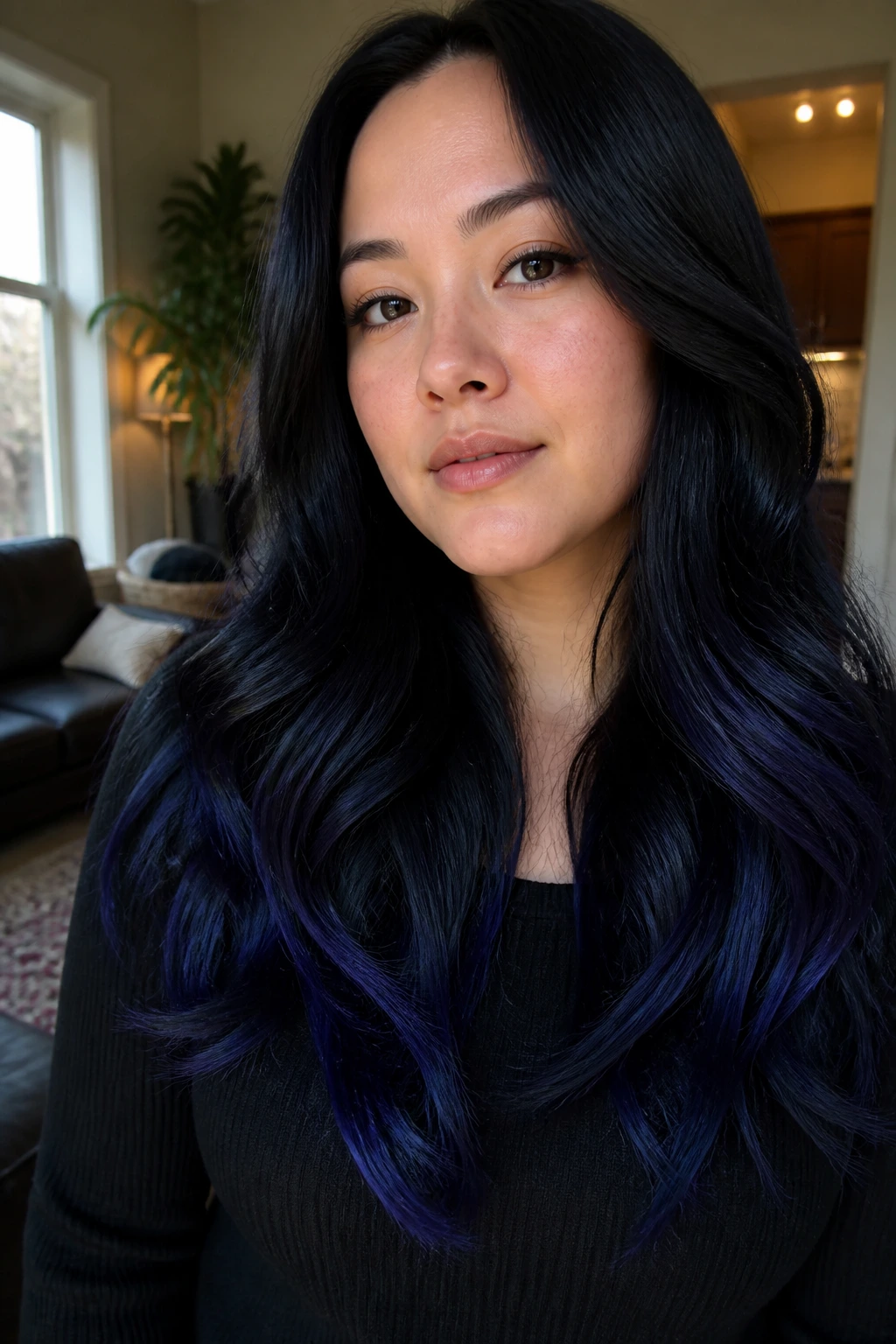
Blue-black with indigo tips is one of the moodier black ombre ideas on this list, and it works best when the shift is glossy rather than obvious. The indigo should feel like a deep underwater shadow, not a costume color.
On a round face, the cool dark base helps narrow the shape, while the indigo tips pull the eye all the way down. That downward pull is the whole point. Keep the color concentrated at the ends of long hair, where it can move freely. Shorter cuts can make bold cool tones feel crowded near the cheeks, and that usually is not flattering.
The best texture for this is smooth hair with a little bend. Flat ironed lengths can show the color clearly, while soft waves make the blue come and go as the hair moves. If you like sleek makeup, dark liner, or silver jewelry, the whole look tends to make sense together.
It is not a quiet style. It does not try to be. But if you want black ombre hair with attitude, this has plenty of it.
18. Rose Brown on Loose Waves
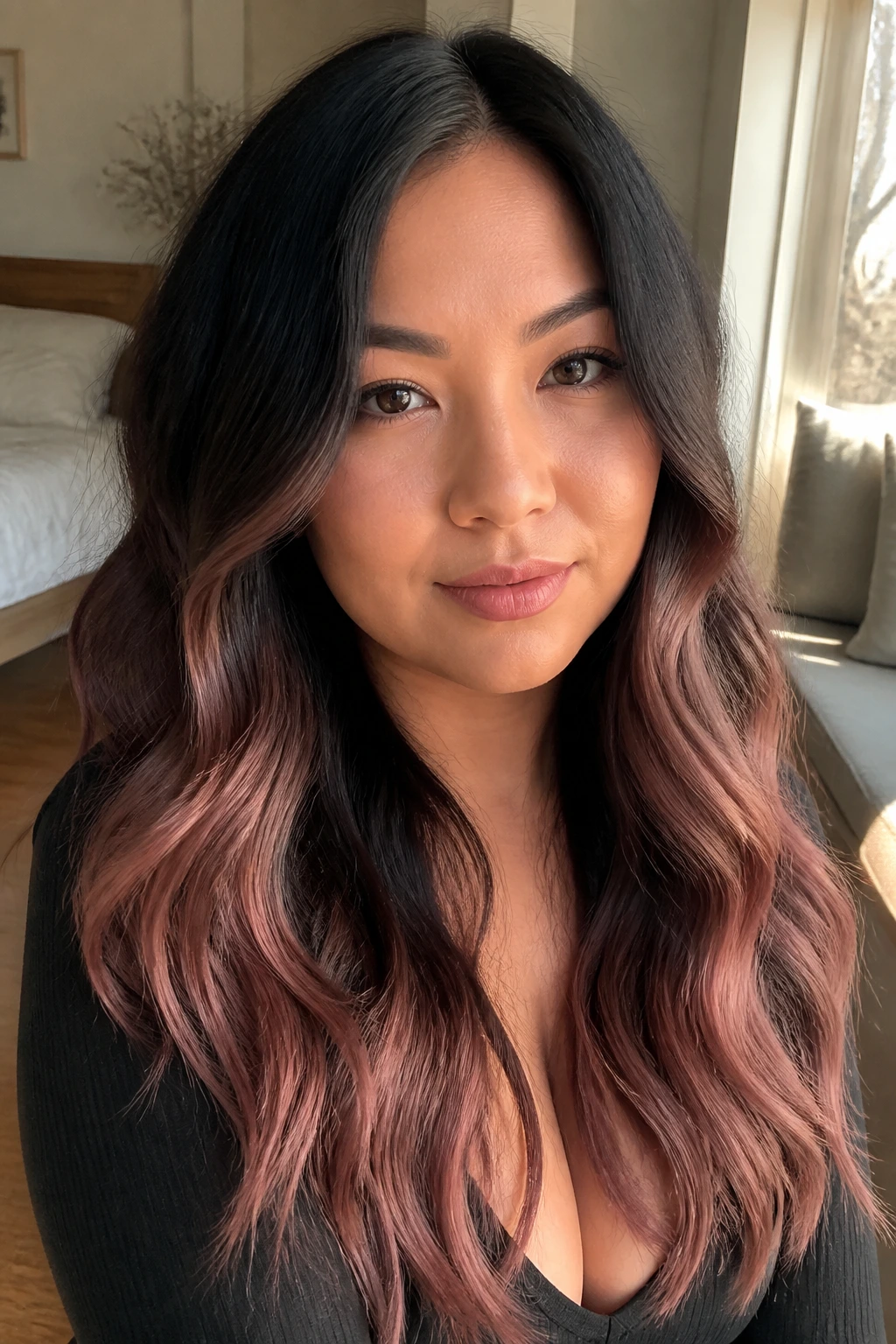
Rose brown sits between soft berry and muted brunette, which gives it a gentler feel than burgundy and a less earthy look than copper. Compared with both, it reads a little softer on round faces.
That softness is the selling point. The rose tone shows enough at the ends to create shape, but it does not throw a strong bright band across the lower face. Loose waves help the color blend into the black base, so the finish feels airy instead of thick.
Why It Feels Different
Rose brown is less dramatic than wine shades and less warm than bronze. It lands in a middle zone that looks romantic without getting sugary.
Best Way to Wear It
Keep the rose tone on the lower half of the hair and use a wide-barrel wave. A small barrel can make the style look too busy, especially around the cheeks.
If your wardrobe leans soft, dusty, or muted, this color can fit in nicely. It is a good choice when you want something pretty but not flashy. That word gets overused. Here it actually fits.
19. Sandy Taupe on Waist-Length Layers
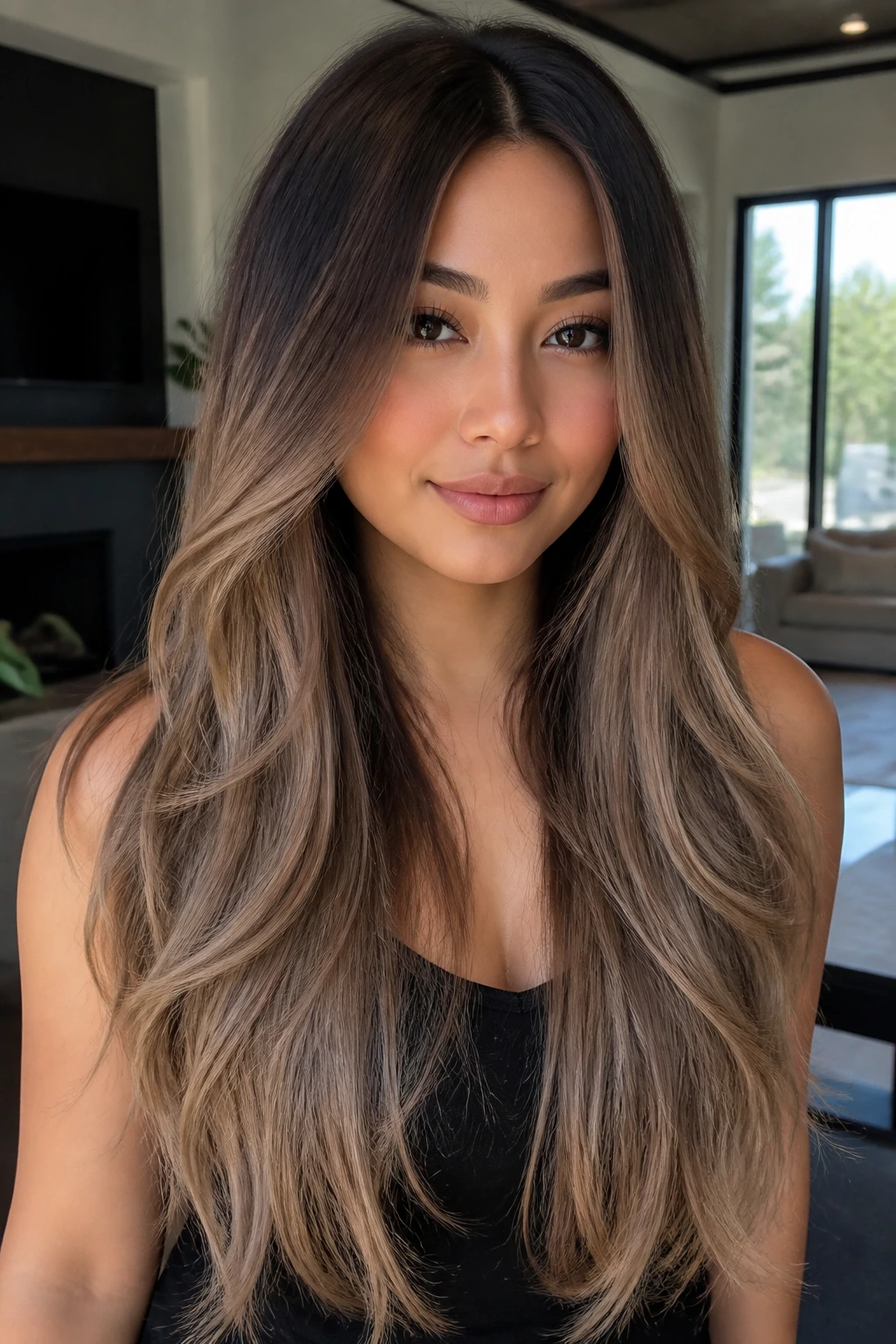
Long layers give sandy taupe room to do its job. On black hair, that pale brown-beige shade creates a long gradient that can make a round face look more vertical almost immediately.
The reason is simple. Waist-length hair has more real estate, so the color can start lower and still feel visible. You do not have to force brightness up around the face. That helps a lot. Sandy taupe near the ends creates a soft dusting of light, and the dark root keeps the top half tidy.
A Few Details That Matter
- Ask for layers that begin below the cheekbone.
- Keep the taupe neutral so it does not turn yellow.
- Style with soft waves from mid-length to ends.
This is a strong option if you like long hair and want the ombre to look expensive rather than loud. It also works well with center parts because the length itself does most of the face-lengthening. No heavy tricks needed.
The only real risk is over-lightening the ends. Too pale, and the contrast can get harsh. Keep it sandy and restrained.
20. Black to Soft Cocoa with Curtain Layers
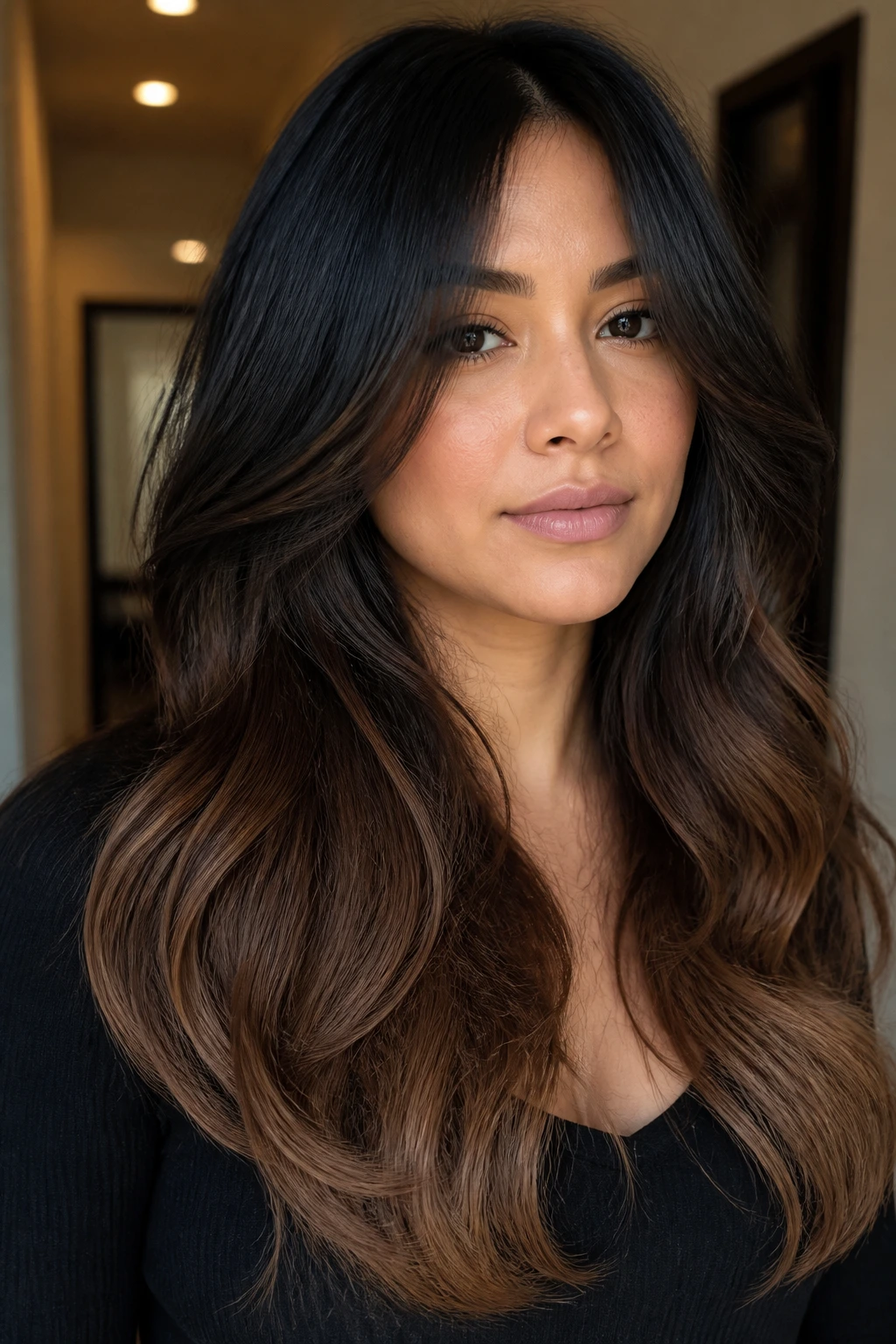
If I had to pick one black ombre style that plays nicely with round faces almost every time, I would start here. Soft cocoa is dark enough to stay elegant, but warm enough to show movement at the ends.
Curtain layers make the whole thing better. They open the face at the center, then fall away along the cheeks, which adds length without making the style feel severe. The cocoa tone should begin low, around the mouth or chin area, and deepen through the ends. That keeps the brightest part below the widest point of the face, where it can do some real shaping.
The beauty of this one is how forgiving it is. Straight hair looks polished. Loose waves make the cocoa blur softly into the black. Even a simple blow-dry with a round brush gives you enough shape to make it work. It is also one of the easiest versions to grow out, since the fade is subtle enough to look intentional for months.
If you want something that feels safe but not dull, this is the cleanest bet in the bunch.
Final Thoughts
Black ombre hair and round faces make a good match when the fade stays low and the haircut gives the color room to travel downward. That is the piece people miss. The shade matters, sure, but placement matters more.
Soft chocolate, chestnut, cocoa, and smoky brown tend to be the easiest starting points. Burgundy, copper, plum, and indigo bring more attitude, but they still work if the lightest pieces stay below the cheeks and the length has enough movement.
If you are sitting in a salon chair, ask one simple question: where will the brightest part of the ombre sit on my face when I’m standing straight? If the answer is “around the jaw or lower,” you are probably on the right track.
