



Ombre hair ideas for wavy hair look better when the color follows the bend of the wave instead of sitting on top of it like a stripe. That sounds small, but it changes everything. A soft gradient that lands in the troughs and peaks of the wave can look expensive and natural; a rough fade placed too high can turn chunky fast.
Wavy hair is forgiving in one way and tricky in another. The movement softens a blend, which is why ombre on wavy hair often looks richer than it does on pin-straight hair. But the same movement can also reveal bad placement, especially if the lightest pieces stop at an awkward point near the cheekbone or the chin.
The sweet spot is usually a color shift that starts where the hair already begins to bend. For some heads of hair, that means the fade begins around the mid-lengths. For others, especially with long layers, the best result starts lower and keeps the ends brighter than the middle. The cut matters. The wave pattern matters. And the exact shade matters more than people think.
Some ombre looks whisper. Some walk in wearing copper and mean it. If you want your waves to do the heavy lifting, the ideas below are the ones worth stealing.
1. Caramel Ribbon Ombre
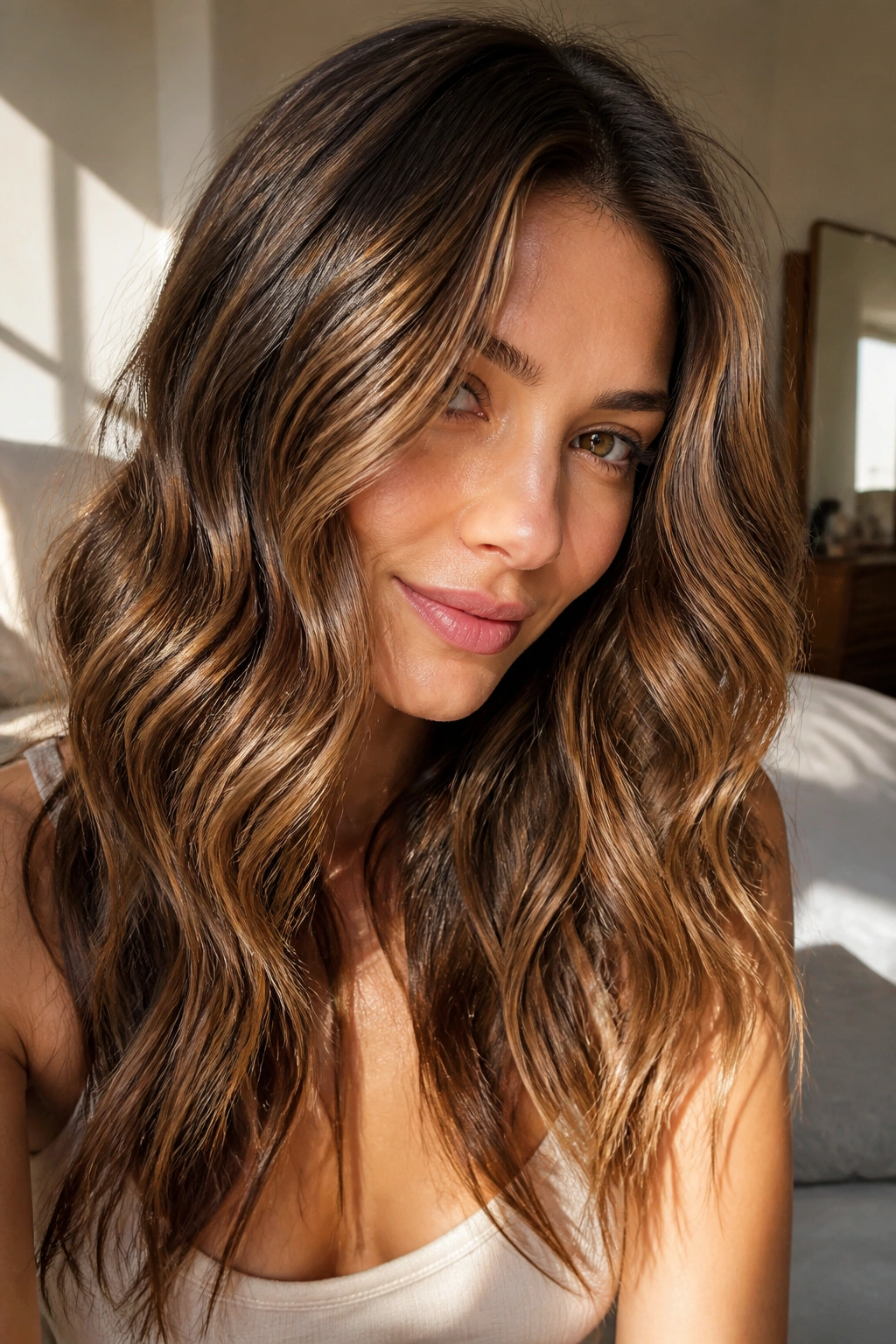
Caramel is the safe bet that rarely feels boring. On wavy hair, it gives you that soft sunlit look without pushing the contrast too hard, which is why it works so well on medium brown bases. The lighter ends move with the wave, so each bend picks up a different note of gold and toffee.
Why it flatters waves
A ribboned caramel fade keeps the transition broken up instead of flat. That matters because waves already create visual texture, and caramel pieces tucked through the mid-lengths can make the whole shape look fuller.
Ask for hand-painted balayage through the lower half of the hair, then a slightly warmer toner on the ends. If your waves are loose, let the fade start a little higher. If your hair is dense and springy, keep the lightness lower so the shape doesn’t turn frizzy-looking at the perimeter.
- Best on brunette bases that sit in the medium to dark range.
- Works well with long layers and collarbone cuts.
- Looks strongest when styled with a 1-inch or 1.25-inch iron and brushed out.
Pro tip: keep the root area a shade or two deeper than the mid-lengths. It makes the caramel look richer, not flat.
2. Ash Brown to Beige Blonde Ombre
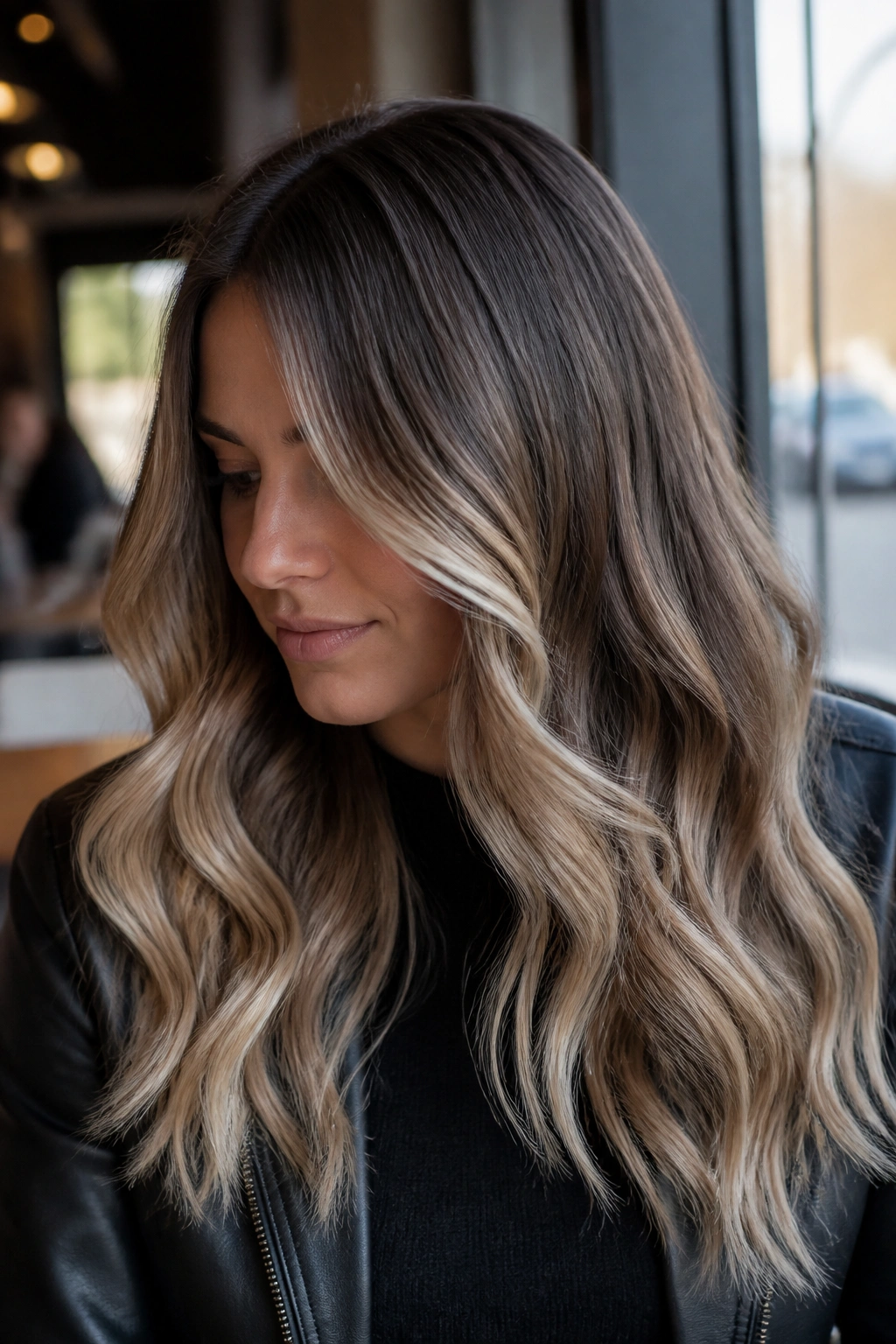
Want something cooler and cleaner around the face? This is the one. Ash brown fading into beige blonde gives wavy hair a smoky, modern feel that avoids brass and still looks soft.
The key is restraint. Too much blonde too early, and the blend can look stripey. Too little contrast, and the whole thing disappears in the wave pattern. The best versions keep the first brighter pieces below the cheekbone, then let the beige finish gather more light toward the ends.
What makes it work
Cool ombre on waves depends on dimension, not brightness alone. The darker brown keeps depth near the scalp, while the beige end color reflects light every time the hair bends. That means even a simple loose wave pattern can look styled.
If you wear your hair parted in the middle, ask for a subtle face frame so the front pieces lighten just enough to open the face. If you wear a side part, the blend can be pushed a bit deeper on the heavier side. Tiny placement changes matter here.
A purple or blue shampoo once in a while helps keep the beige from drifting yellow. Don’t overdo it. Beige should look creamy, not chalky.
3. Copper Glow Ombre
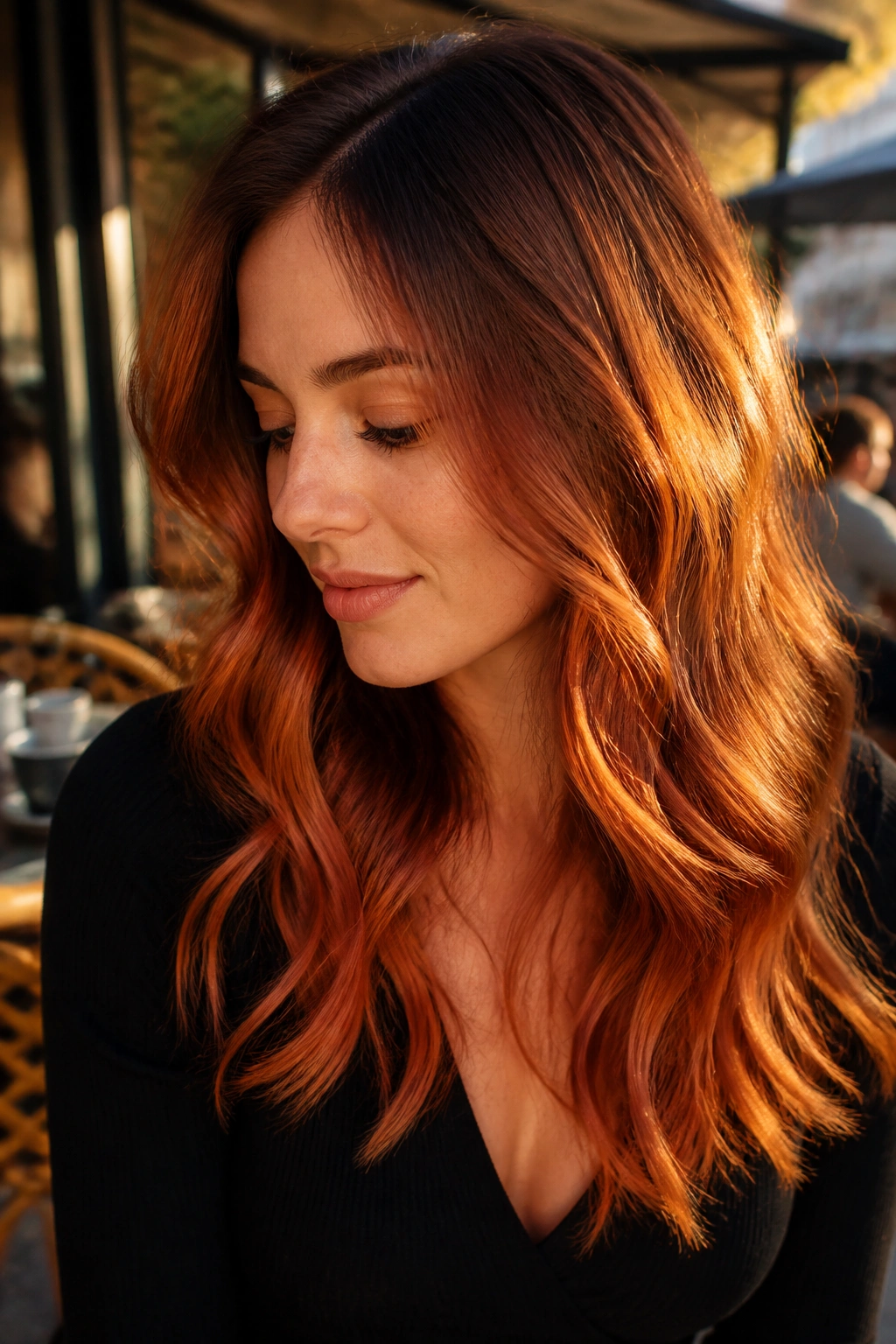
Copper on wavy hair has a flicker to it that straight hair never quite copies. The color moves between cinnamon, amber, and apricot as the waves catch the light, so even a simple style feels alive.
This is a strong choice if you like warmth but don’t want the usual honey-blonde route. It suits medium brunettes, dark blondes, and anyone whose skin likes gold, peach, or olive tones. On a wavy cut, copper is especially nice when the ends are slightly brighter than the mid-lengths, because the wave pattern keeps the color from reading flat.
What to ask for
Ask for a copper melt with a soft root shadow. That keeps the top area grounded and lets the warmer ends do the showing off. A gloss after the color service helps seal the tone and gives copper the shine it needs.
- Use sulfate-free shampoo so the warmth doesn’t wash out too fast.
- Air-dry a little if you can; copper looks especially good when the wave has a natural bend.
- If your hair is porous, plan on a color-refresh gloss between salon visits.
Strong color needs care. No way around it.
4. Chocolate to Honey Ombre
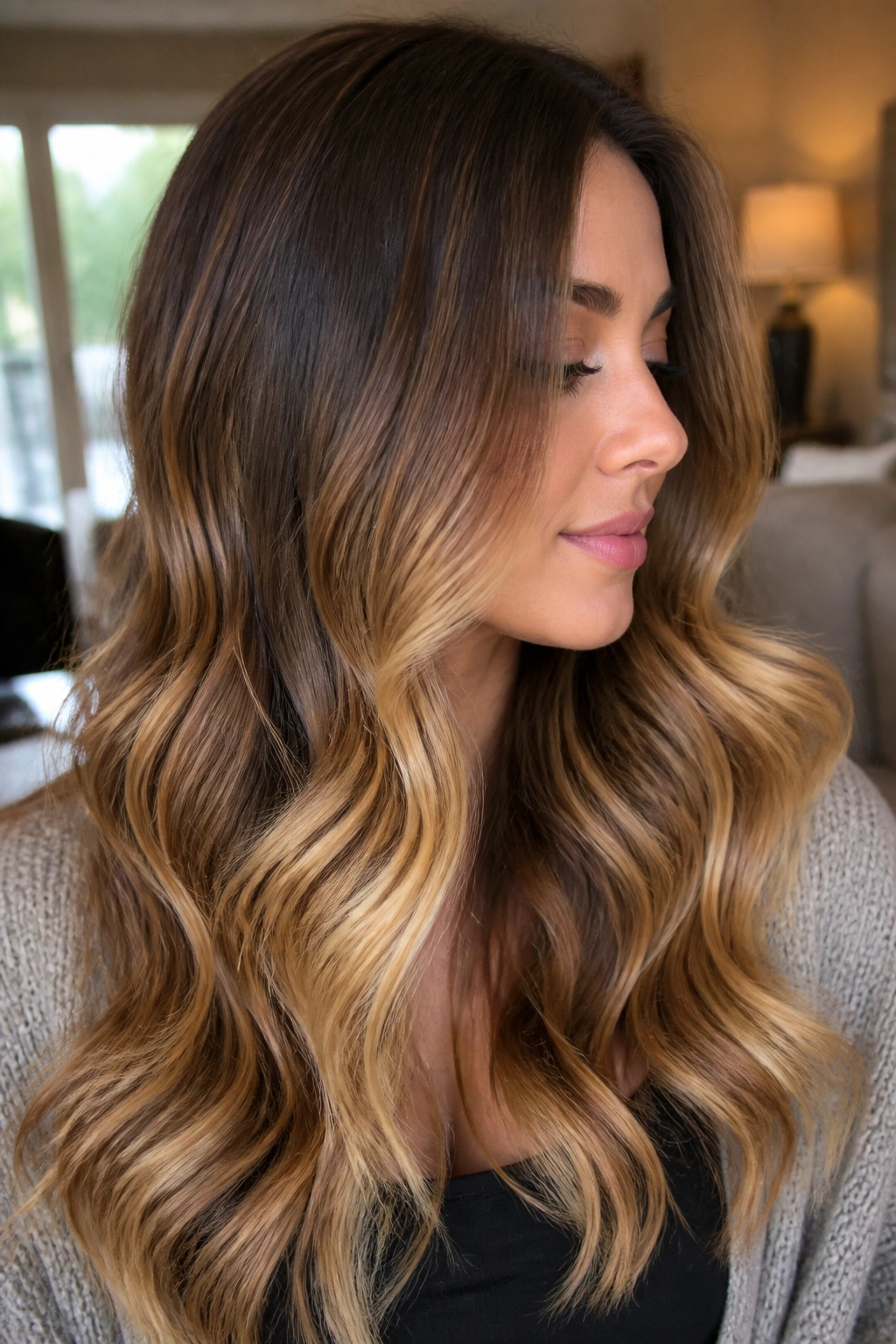
Chocolate brown melting into honey is the classic that keeps earning its place because it simply works. On wavy hair, the mix of deep and light tones gives the strands a thicker, more layered look without needing a dramatic contrast.
This version shines on medium-length cuts with movement in the ends. If the hair is cut blunt and heavy, the honey can sit on top in a way that looks a little too tidy. With waves, though, the lightness breaks apart into soft pieces, and the whole style gets that easy, lived-in finish people tend to chase.
Why it looks richer on waves
Waves bend color. That’s the magic here. The darker chocolate holds the base together, while the honey catches on the outer curve of each wave, especially near the bottom third of the hair.
A good salon note here is “keep the transition diffused, not banded.” That tells the colorist you want a real melt, not a hard color line. Ask for brighter ends around the outer perimeter and a few softer pieces through the mids so the shape doesn’t lose depth.
This one is also forgiving on grow-out. The roots can stay natural longer, and nobody looks at it and thinks you missed a touch-up.
5. Burgundy Fade Ombre
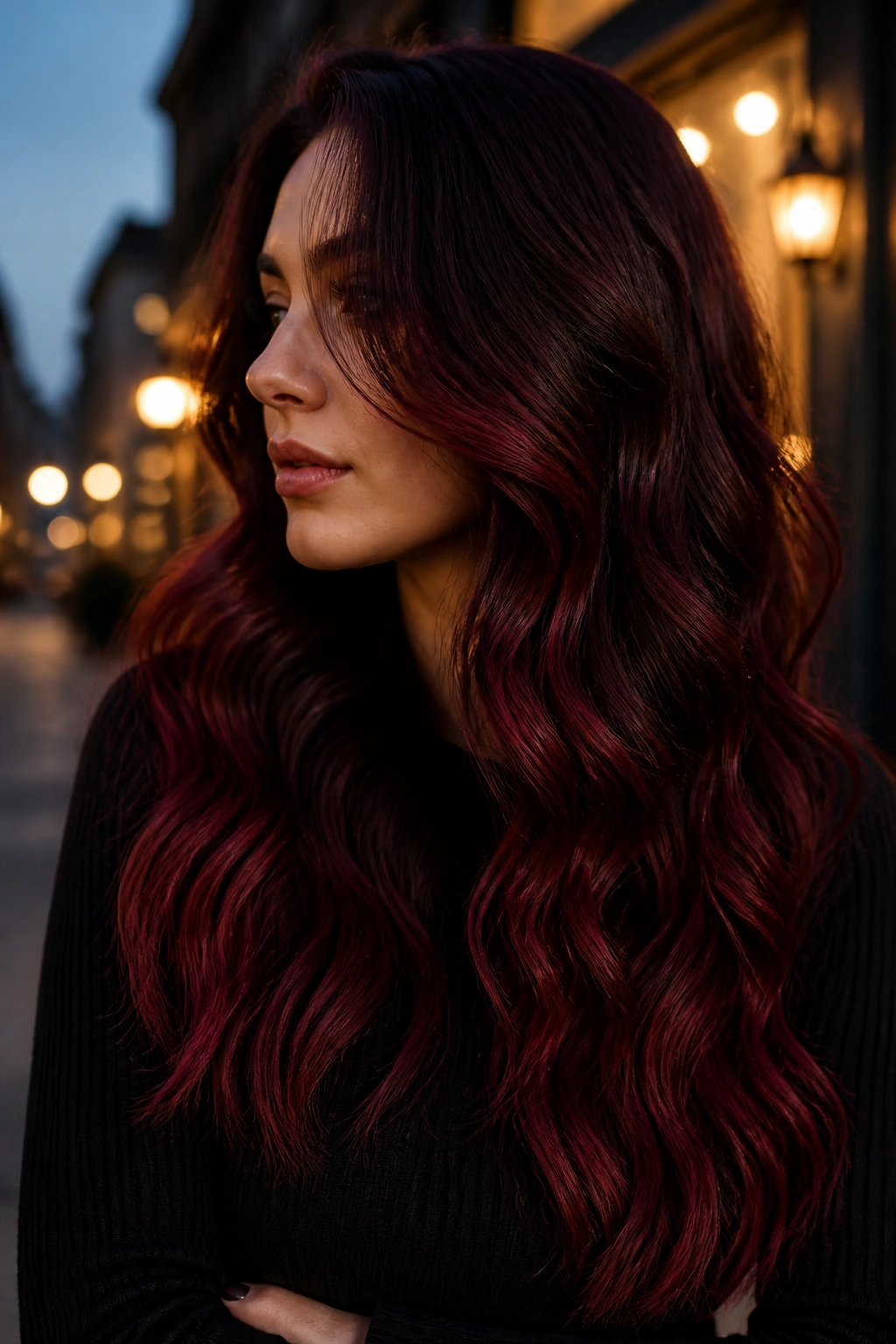
Burgundy on wavy hair has a moody side that straight styles often flatten out. The waves create tiny shifts of red, wine, and plum, so the color looks deeper than it does in a flat photo.
If you want something bold but not neon-bright, burgundy is a smart move. It reads intentional. It also works beautifully on darker brunettes because the red family carries enough depth to hold against a brown base. The blend can stay subtle at the top and richer toward the ends, which keeps the look polished without becoming stiff.
A small detail that matters
Keep the burgundy slightly cooler if your hair already pulls orange. A red-violet finish usually holds its shape better than a warm cherry tone on very wavy textures.
You can wear this look with messy waves, polished curls, or even a half-up style. The color does the talking. And if you want the ends to look even fuller, add a few deeper plum strands underneath the top layer. Those hidden pieces make the outer color look denser.
It’s not a shy color. That’s the point.
6. Espresso to Platinum Ombre
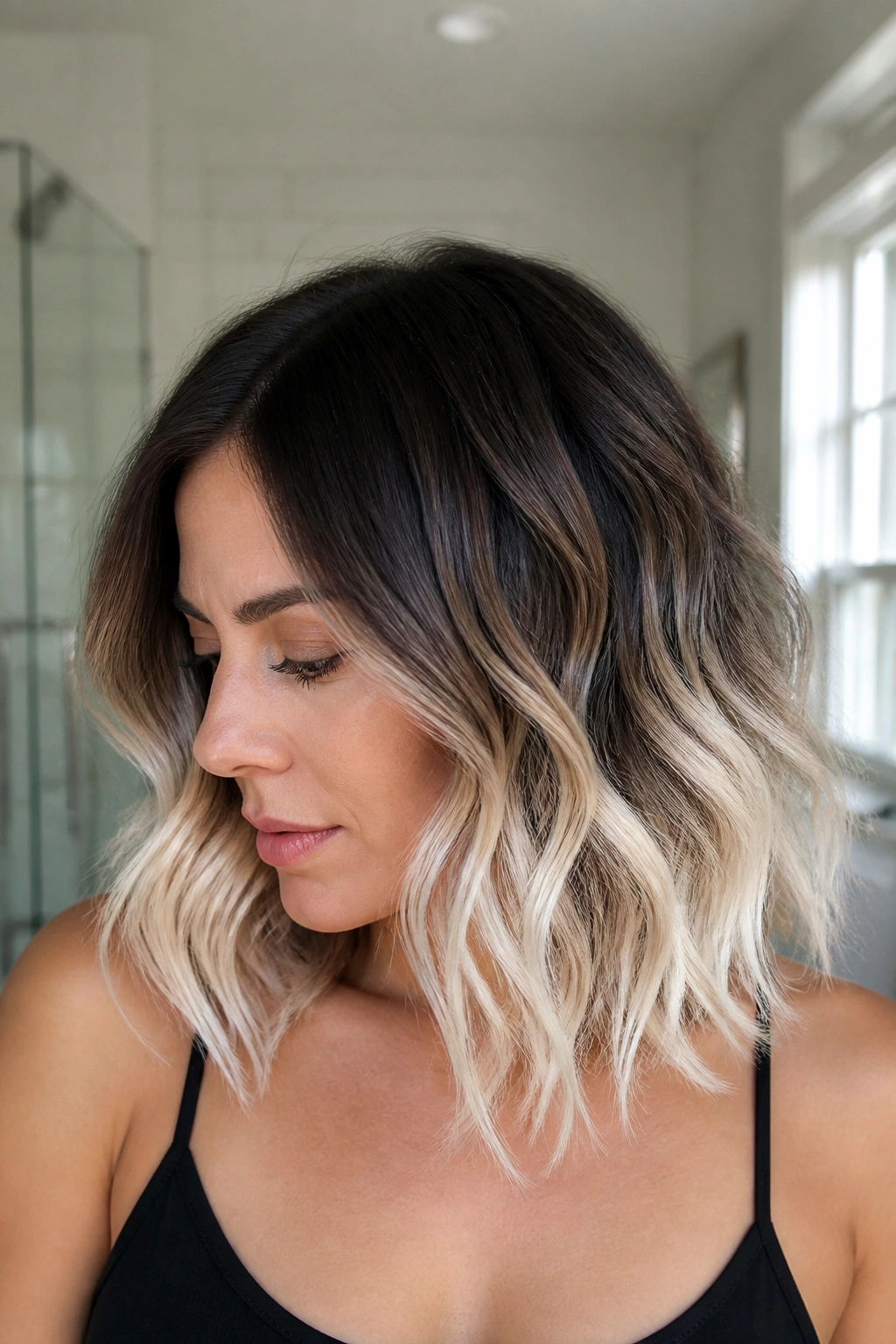
This one is for the person who likes contrast and doesn’t mind a little drama. Espresso roots fading into platinum ends can look stunning on wavy hair because the movement breaks the transition into a softer series of bends.
The trick is keeping the platinum far enough down that it doesn’t fight the root area. If the lightness starts too high, the grow-out line can get messy fast. Long layers help a lot here. So do waves that aren’t too tight, because a looser bend lets the gradient show instead of bunching up.
What to ask for at the salon
Ask for a deep shadow root with a clean, cool platinum finish at the ends. That tells the colorist you want contrast, but not a bright band in the middle.
- Best on shoulder-length hair and longer.
- Works better when the ends are healthy enough to handle lightening.
- Needs heat styling with care, because platinum shows dryness fast.
This style has a practical upside too: the darker root hides regrowth, so the color stays wearable longer. The ends, though, need moisture. A rich mask once a week helps keep them from looking crunchy or hollow.
7. Mushroom Brown Ombre
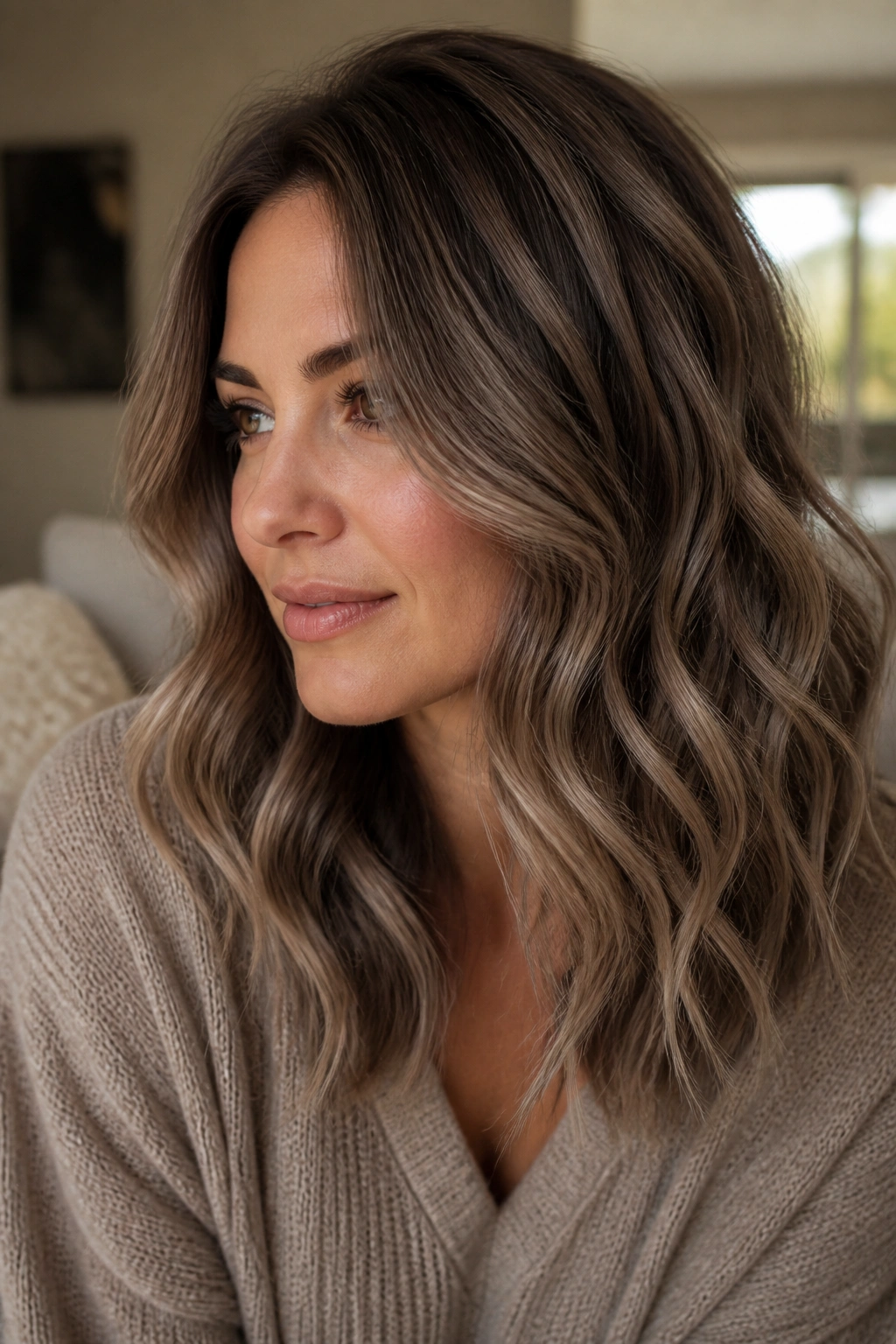
Mushroom brown is one of those shades that looks quiet until you see it in movement. Then it gets interesting. On wavy hair, the taupe, ash, and soft beige tones sit together in a way that feels cool, not flat.
A lot of people ask for “brown to blonde” and end up with something too warm or too stripy. Mushroom brown avoids that. The shift stays earthy. The wave pattern helps the muted tones breathe, especially if the colorist keeps a few darker strands through the underside.
Why I like it on wavy hair
Because it doesn’t fight texture. A mushroom ombre lets the wave pattern stay the star while the color quietly supports it.
A blunt cut can make this look heavy, so a bit of layering helps. Not shaggy, not overdone. Just enough movement for the ash tones to break apart. If your hair has a lot of natural body, this is one of the nicest low-drama options in the whole list.
It’s also a good choice if you hate brass. The palette is cool by nature, so the grow-out tends to stay softer than a golden blonde fade.
8. Rose Gold Melt Ombre
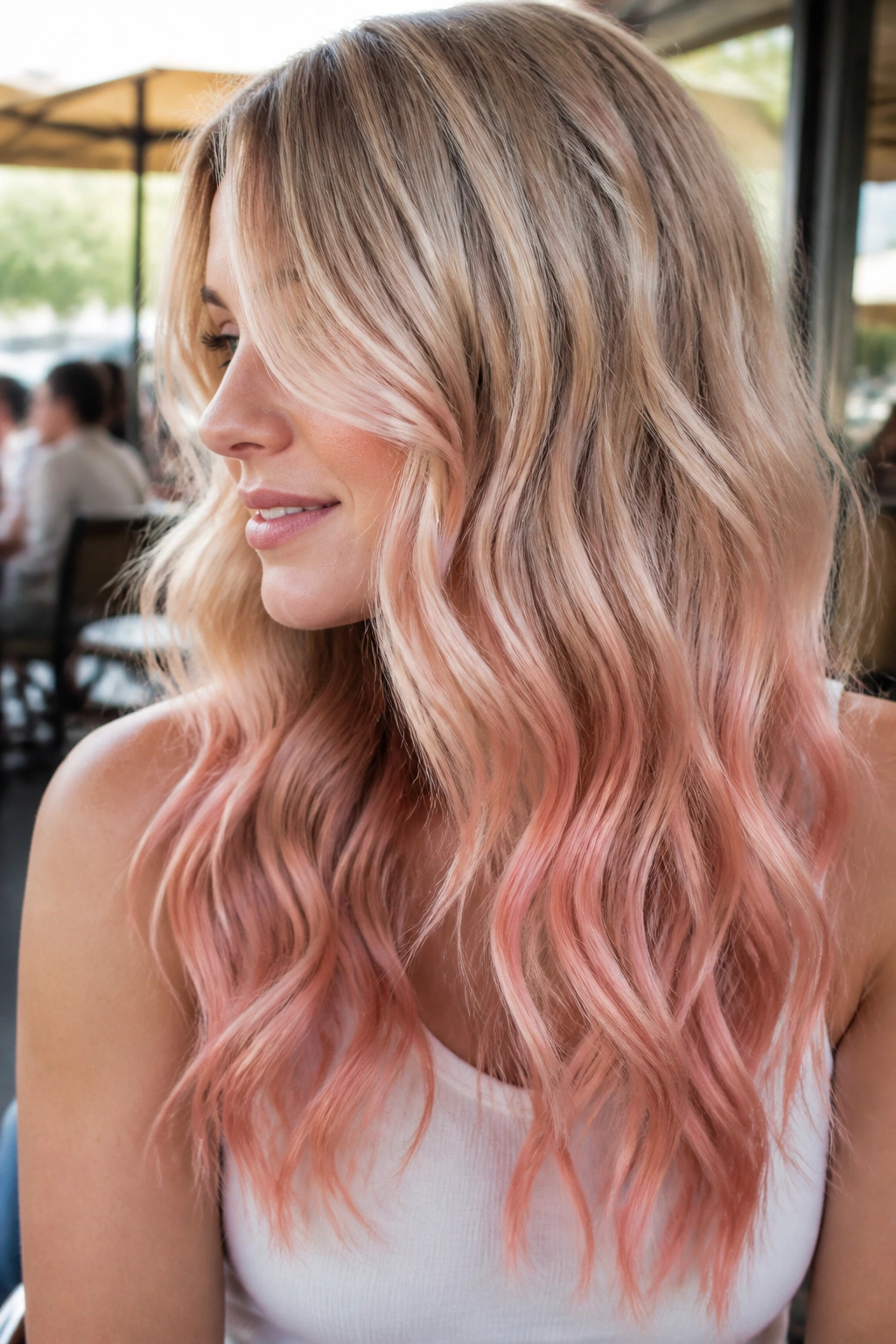
Rose gold on waves can go twee fast if it’s too pink and too even. The better version is soft, dusty, and blended. Think blonde with a faint blush, not bubblegum.
This shade works best when the base is already light or lifted to a warm blonde. The rose-gold tint sits over that and gives the ends a faint shimmer of peach and pink. On wavy hair, it looks especially nice because the lighter pieces at the bend of the wave catch the rosy tone without shouting.
How to keep it wearable
A rose gold melt needs the colorist to keep the pink diluted. You want a tint, not a block of color. A pastel gloss or tinted glaze usually does the job.
If you wear makeup with soft peach or mauve tones, this color can tie your whole look together. If you prefer a cooler wardrobe, keep the pink muted so it doesn’t clash. Simple.
This one fades fast compared with brunette-based ombres, and that’s part of the charm. The color shifts into a softer blush over time rather than turning harsh. If you enjoy a gentler finish, that fade-out is actually a bonus.
9. Sunlit Bronde Ombre
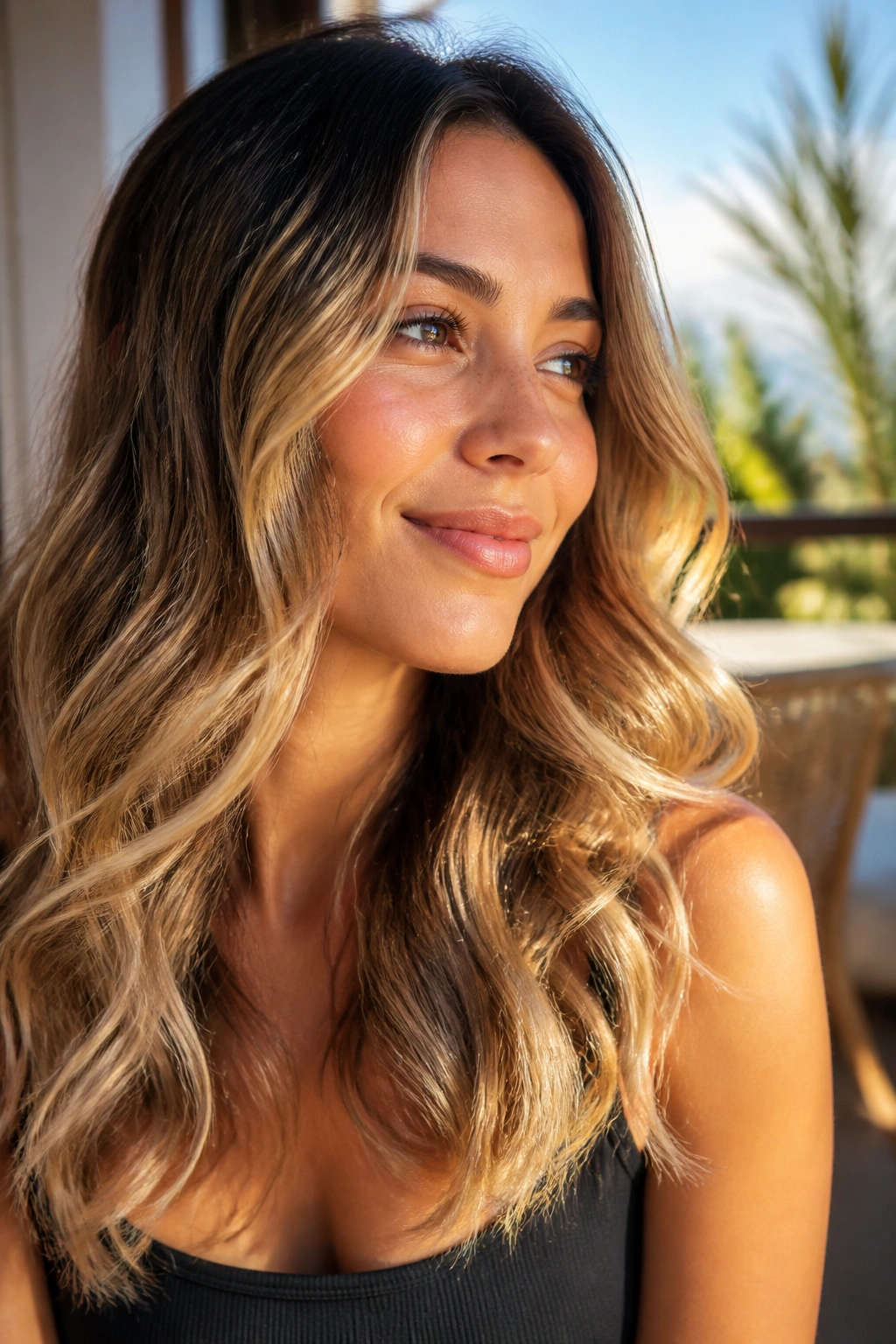
Bronde sits between brown and blonde, and wavy hair is where it really makes sense. The mix of beige, honey, and light brown gives the hair depth at the roots and brightness at the ends without turning into a high-contrast project.
The nicest bronde ombres are the ones that don’t look obviously dyed. You notice the glow before you notice the color work. That’s a good sign. The wave pattern handles the transition by itself, so the finish feels soft even when the color service is detailed.
Best way to wear it
Ask for smoky lowlights near the root area and brighter beige pieces through the lower lengths. That keeps the color from sliding too light too quickly.
- Good for fine waves that need the illusion of thickness.
- Good for thick waves that need movement around the face.
- Nice with tousled styling, but it also holds up in a simple air-dry.
Bronde is easy to wear for a reason. It doesn’t demand perfect styling. A little texture cream, a scrunch, and you’re done. Some colors need a full blowout to look right. This one does not.
10. Reverse Ombre with Smoky Ends
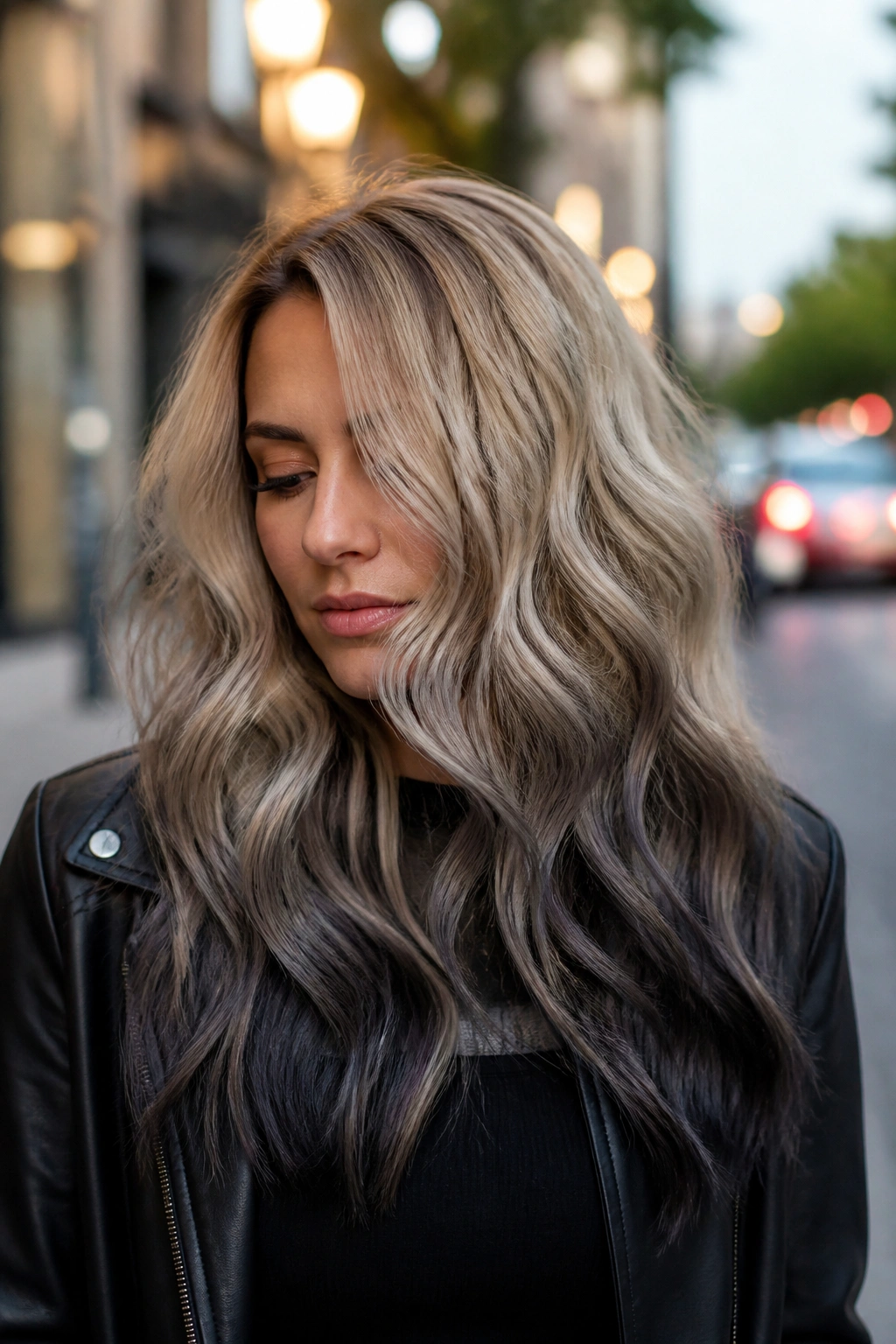
Reverse ombre flips the usual rule: lighter at the top, darker toward the ends. It sounds odd until you see it on wavy hair, where the darker ends can make the whole shape look denser and a little edgier.
The look can be beautiful if it’s done softly. The root area stays sandy, beige, or light brown, then the mid-lengths move into smoke, charcoal brown, or muted espresso. On waves, the darker ends sit in the deeper parts of the pattern, which gives the hair a grounded, slightly sculpted feel.
Who should try it
People who like unusual color but still want something wearable. People with long waves and strong layers. People who are tired of seeing the same blonde-to-brown fade everywhere.
The one warning: if the contrast is too sharp, the ends can look heavy. That’s why the best reverse ombre uses a gradual shadow, not a sudden drop in tone.
This is a good choice for anyone who wants texture to do more than look soft. It can look sharp, cool, and a little directional, which is a nice change if you’ve been living in sunny warm tones for years.
11. Smoky Blue Ombre
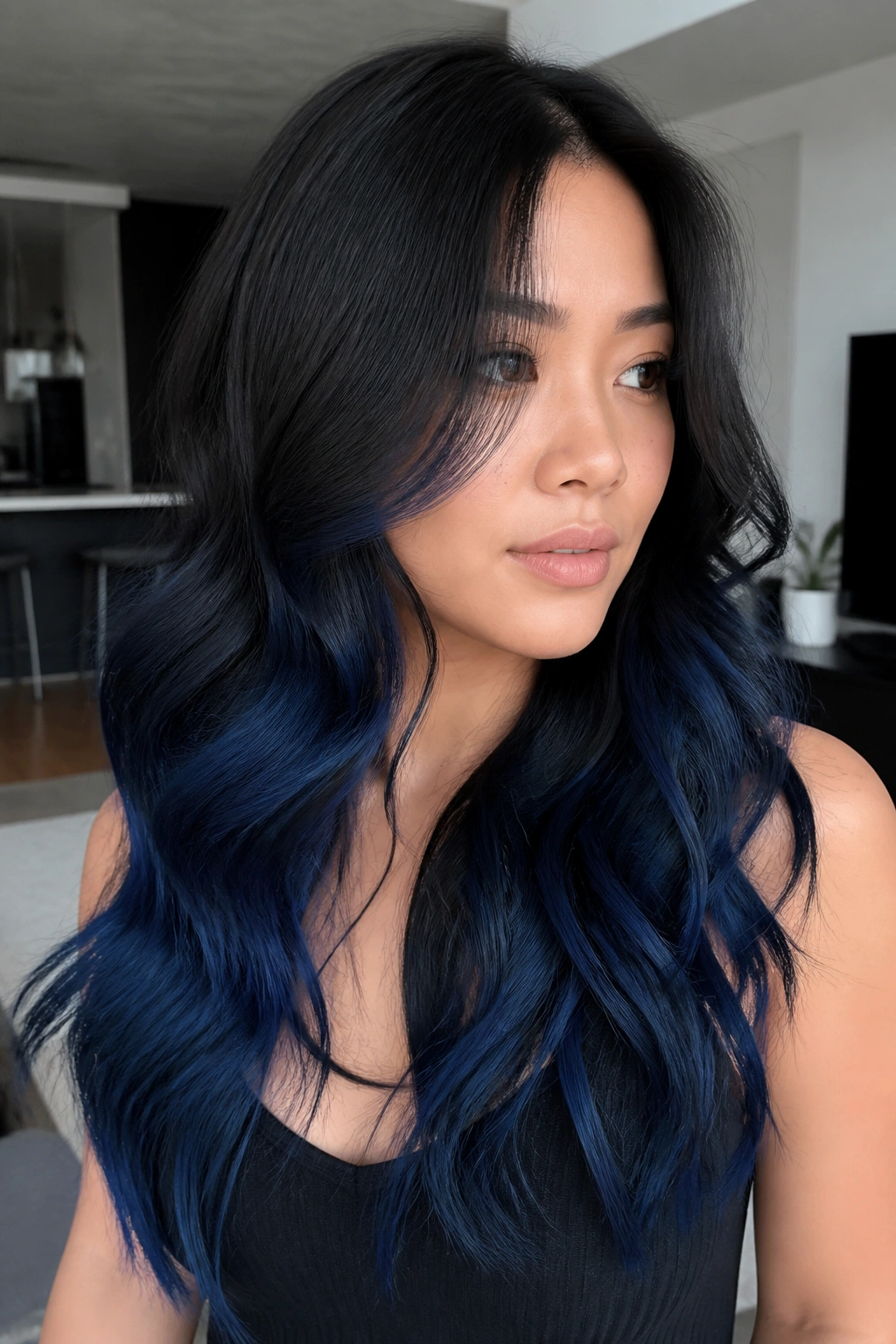
Dark blue on waves has a low, moody sheen that bright blue can’t touch. Smoky blue is especially good if you want color that reads deep navy in dim light and sapphire when the sun hits it.
This works best on dark brown or black bases. The blue sits in the lower half of the hair and shows in narrow bands along the curves of the wave. That makes the color feel alive instead of painted on. A straight style can flatten it a bit; waves break it into motion.
What makes it different
Smoky blue is more wearable than neon blue because it stays dark enough to act like a neutral in many outfits. It also pairs well with silver jewelry, black clothes, and clean, simple makeup.
To keep the blue from fading into green or dull gray, use a gentle shampoo and avoid over-washing. Cool water helps too. Not ice-cold. Just cooler than scorching hot.
It’s a bold choice, but not a loud one. That distinction matters. If you like color that people notice a second later rather than all at once, this is a good lane.
12. Cinnamon Swirl Ombre
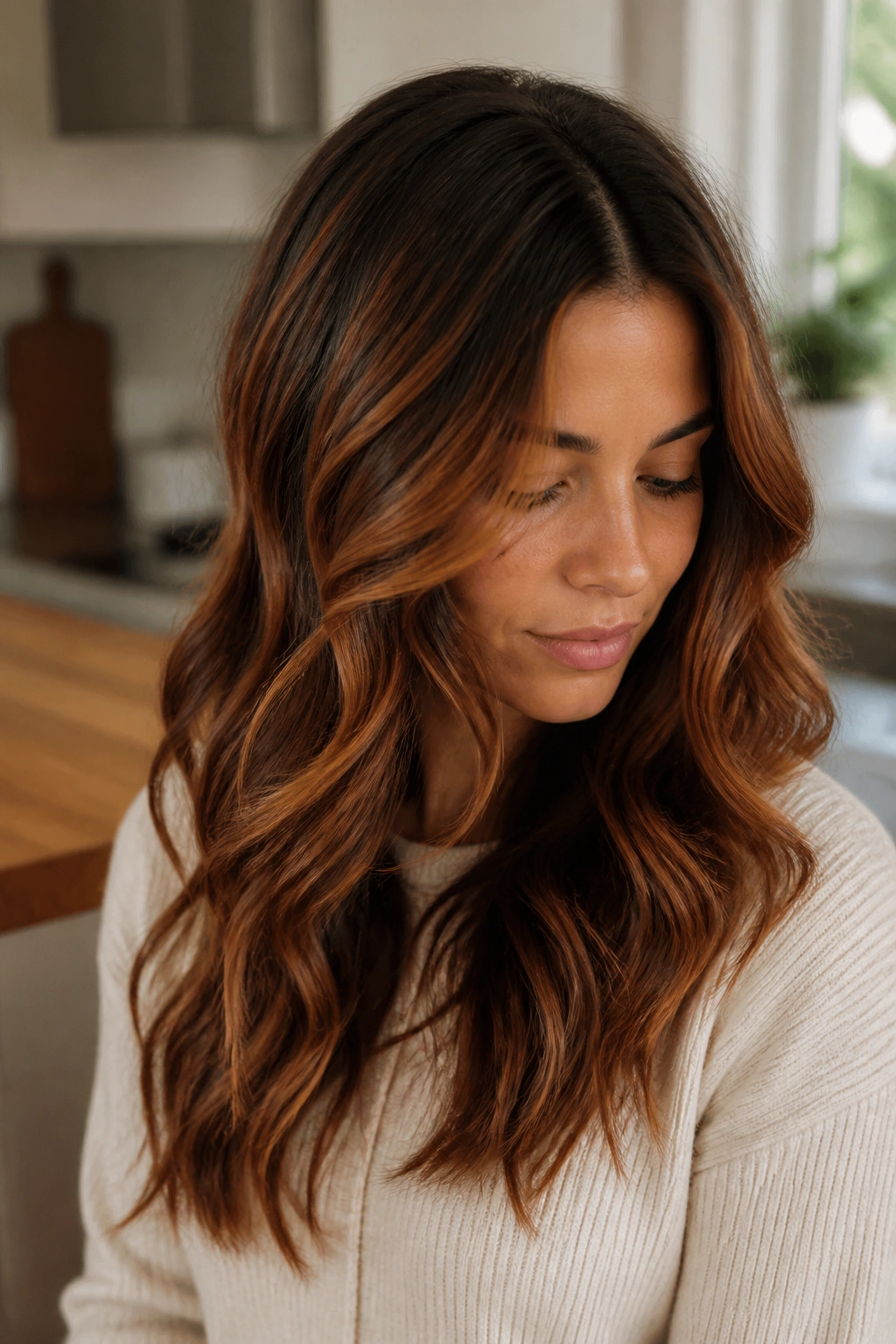
Cinnamon swirl is warm, spicy, and easy to wear on wavy hair because the color mimics the movement of the strands. The blend of brown, copper, and soft auburn gives you a multi-tone finish that looks richer than a single red-brown shade.
This is a nice choice if you want warmth without going full red. It suits medium brunettes especially well. The colorist can paint brighter cinnamon through the outer layers and keep the underside a little deeper, which helps the waves look fuller when they move.
How to keep it from looking flat
The word to remember here is variation. You want a few warm notes, not one solid block of cinnamon. That little shift between the top and the ends keeps the hair from looking painted in one color.
A center part makes this shade look sleek. A side part gives it a little more drama. Either way, the warmth tends to flatter wavy hair because the color catches in the arcs of the wave and gives the whole style a soft glow.
If you like warm brown lip colors, copper earrings, or cream knits, this one fits that same mood without trying too hard.
13. Platinum Face-Framing Ombre
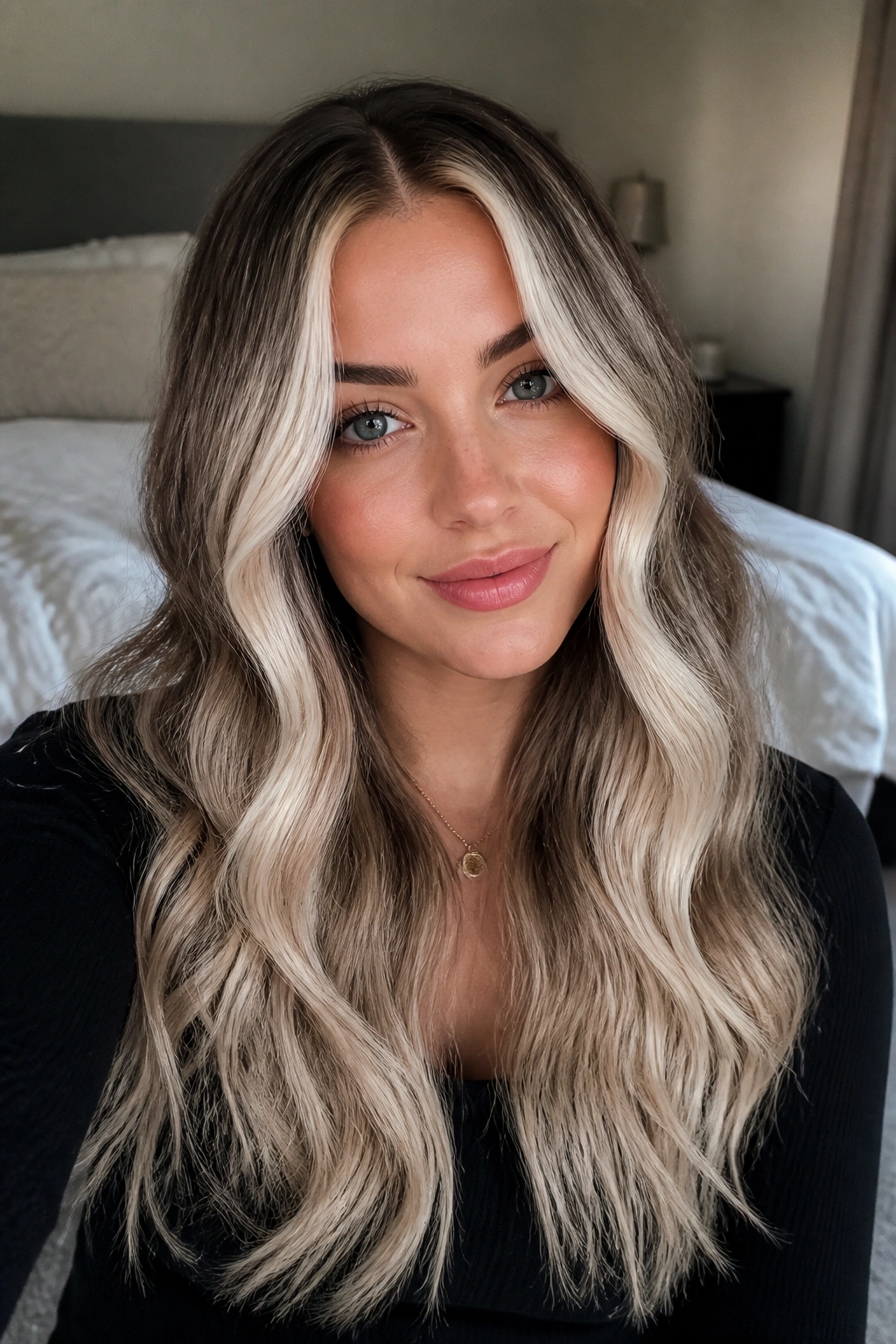
Sometimes the smartest place to go light is not the ends. It’s the pieces around the face. Platinum face-framing ombre gives wavy hair a bright border, then keeps the interior darker so the whole head doesn’t look over-processed.
This style is useful if you want brightness without committing to a full platinum fade. The front pieces can be lifted higher, while the rest of the hair stays in a softer ombre range. On waves, the brighter face frame pops whenever the hair moves away from the cheek.
Why it works so well
The eye goes straight to the front pieces. That means you get impact with less bleach on the whole head, and the ombre stays easier to grow out.
Ask for money-piece brightness with a softened lower fade. That’s salon language worth using. It tells the colorist you want the front to feel lighter and the rest to stay blended.
This look is especially good if your waves tend to sit flatter at the crown. The front brightness creates lift without needing volume spray on every wash day. Nice, simple, useful.
14. Peachy Apricot Ombre
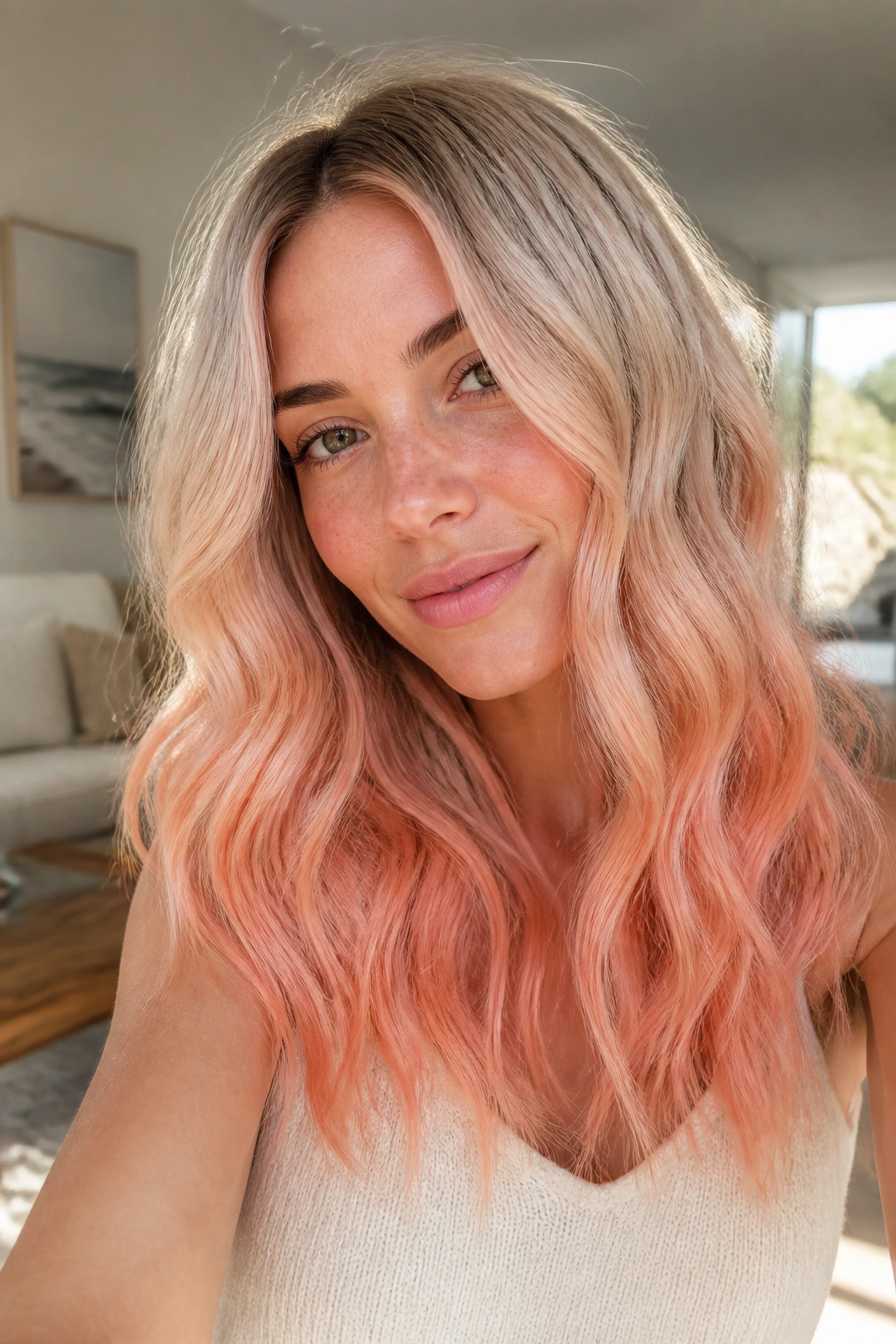
Peachy apricot has a softer voice than copper and a sweeter finish than rose gold. On wavy hair, it can look airy and warm, almost like sunlight with a little blush in it.
This shade works best when the base is light blonde or lightened enough to hold the pastel warmth. The ends carry the peach, while the upper lengths stay creamy and neutral. Waves help keep it from reading childish or overly sweet. They break the color into tiny shifts, which gives it a more grown-up feel.
Best way to style it
Loose, brushed-out waves. Tight curls can make pastel tones look busier than they need to be.
If your skin has golden undertones, peachy apricot is easy to wear. If your skin is cooler, keep the peach more muted and lean into apricot rather than coral. Tiny tone changes matter a lot here.
This color fades gently into a soft blonde-pink hybrid, which is part of its charm. It doesn’t always stay peachy forever, and that gradual softening is often prettier than the original punch.
15. Violet Smoke Ombre
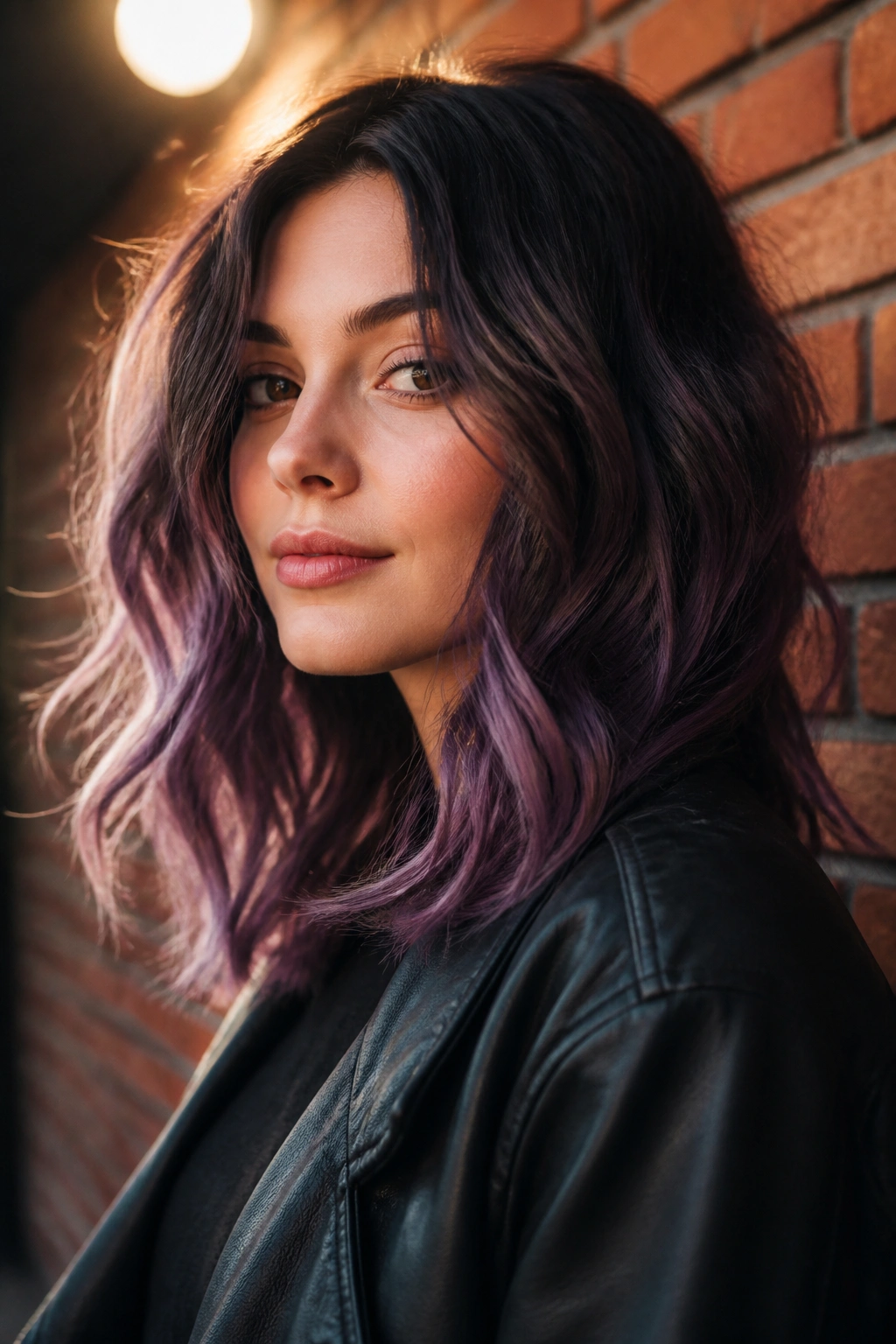
Violet smoke is one of my favorite choices for wavy hair because it feels moody without turning harsh. The shade sits between plum, lavender, and charcoal, so it has depth even when the light hits it hard.
A good violet ombre starts with a darker base and lets the purple live mostly in the mid-lengths and ends. On waves, that gives the color a smoky edge. The bends in the hair show darker and lighter violet at different points, which keeps the style from looking painted in one flat tone.
What to watch for
Purple shades can go muddy if the base is too warm. If your hair leans orange, the colorist may need to neutralize it first. That extra step is worth it.
This one is not for someone who wants subtle. It is, however, a strong option if you like cool clothes, darker lipstick, or anything with a little attitude. The nice thing is that violet smoke still softens a face better than a sharp black-to-purple line ever could.
Wear it with low, brushed waves and let the shine do the work.
16. Soft Silver Mist Ombre
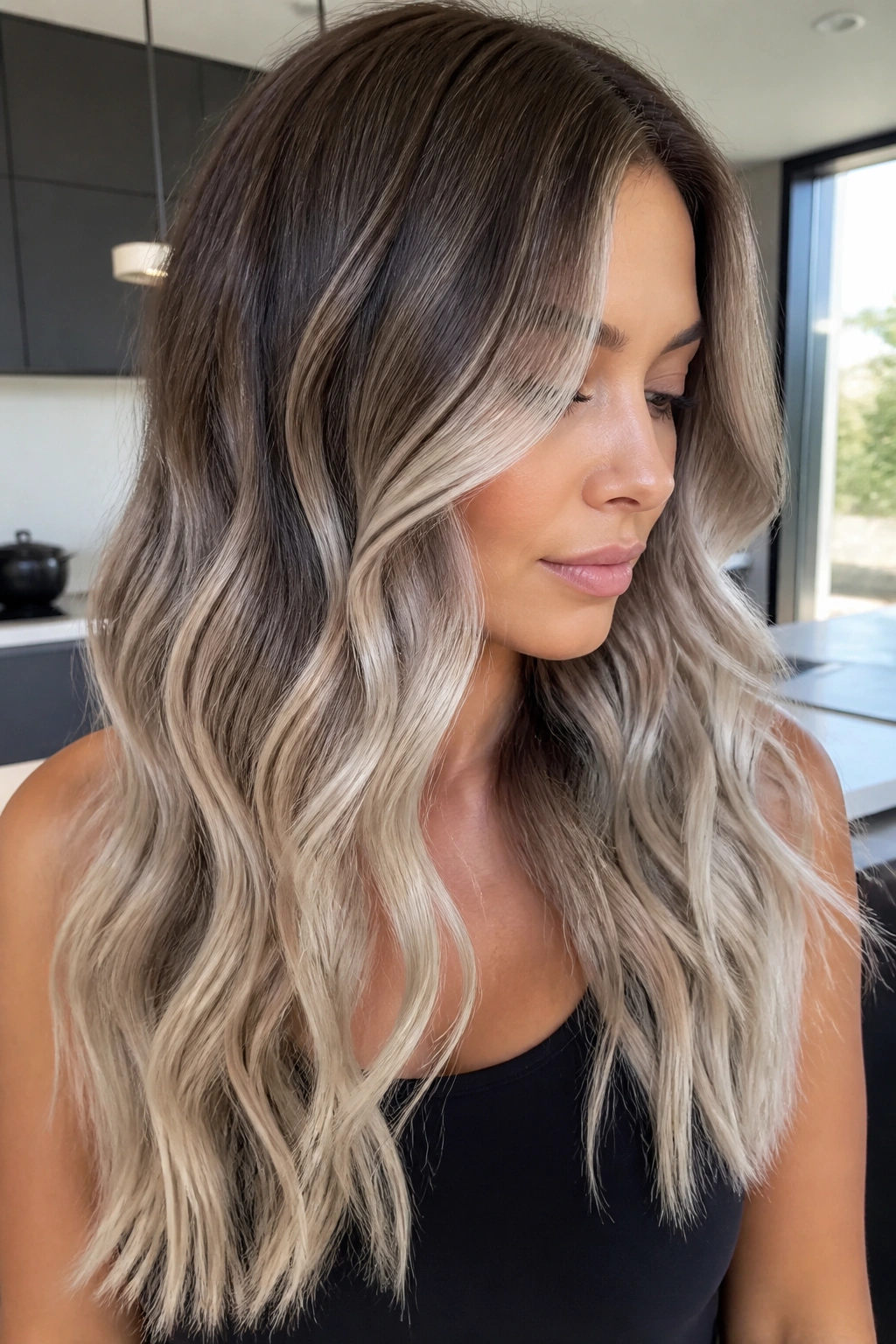
Silver on wavy hair can look brittle if it’s too flat, too icy, or too uniform. Soft silver mist avoids that by keeping the tone airy and blended, almost like fog sitting over a darker base.
This works especially well on medium brunettes who want something cool but not stark. The fade can move from brown roots to pale silver-beige ends, and the waves help the tone shift feel delicate instead of high contrast. The movement matters a lot here. Silver needs motion.
Why the finish matters
A satin, reflective finish keeps silver from looking dry. You want sheen, not glare. A gloss or toner with a soft beige undertone usually looks better than a blue-white finish on most wavy textures.
- Use purple shampoo sparingly.
- Deep-condition the ends.
- Avoid heavy oils that make silver look greasy instead of shiny.
This is one of those colors that rewards careful styling. Scrunched waves, soft bends, and a clean center part all make the tone look more expensive. Messy can work too, but the ends need to look healthy or the whole thing falls apart.
17. Auburn Ember Ombre
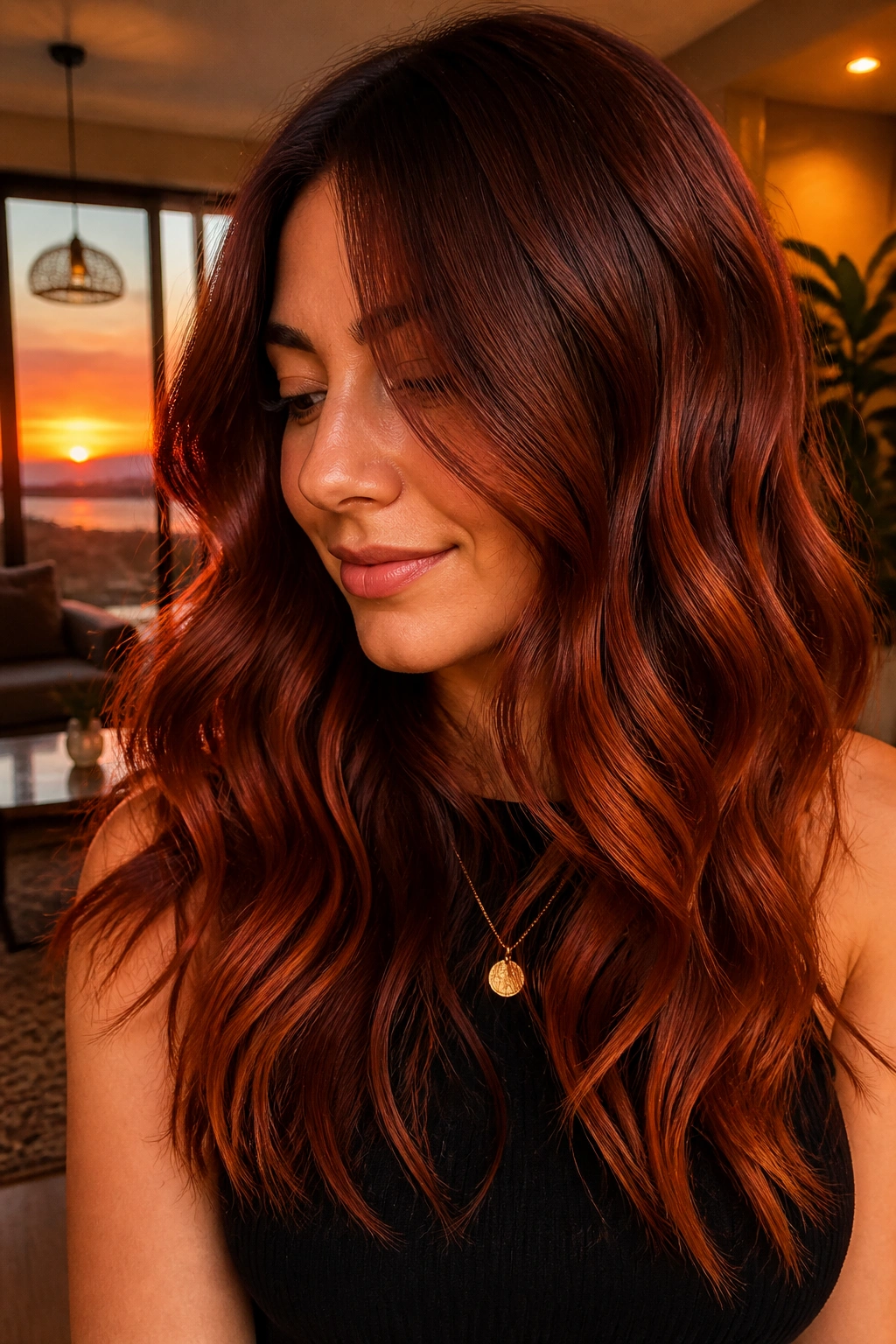
Auburn ember is warm, rich, and a little wild in the best way. On wavy hair, the color reads like a firelit version of red-brown, with brighter ember tones near the ends and deeper auburn near the top.
If you already have red in your natural hair, this shade can look almost effortless. If you start from brown, it gives you warmth without pushing too far into copper. The wave pattern helps the red tones show in thin, separate bands, which keeps the color from becoming one giant block.
How to wear it well
This is a good match for layered cuts and medium-length waves. The movement helps the ember tones flicker instead of sit still.
The color is more forgiving than bright red, but it still needs care. Heat, sun, and frequent washing will pull the red out faster than you want. A color-safe cleanser and a gloss between salon visits help a lot.
It’s a strong choice if you want something flattering in low light and warm in daylight. That’s the sweet spot for auburn.
18. Maple Cream Ombre
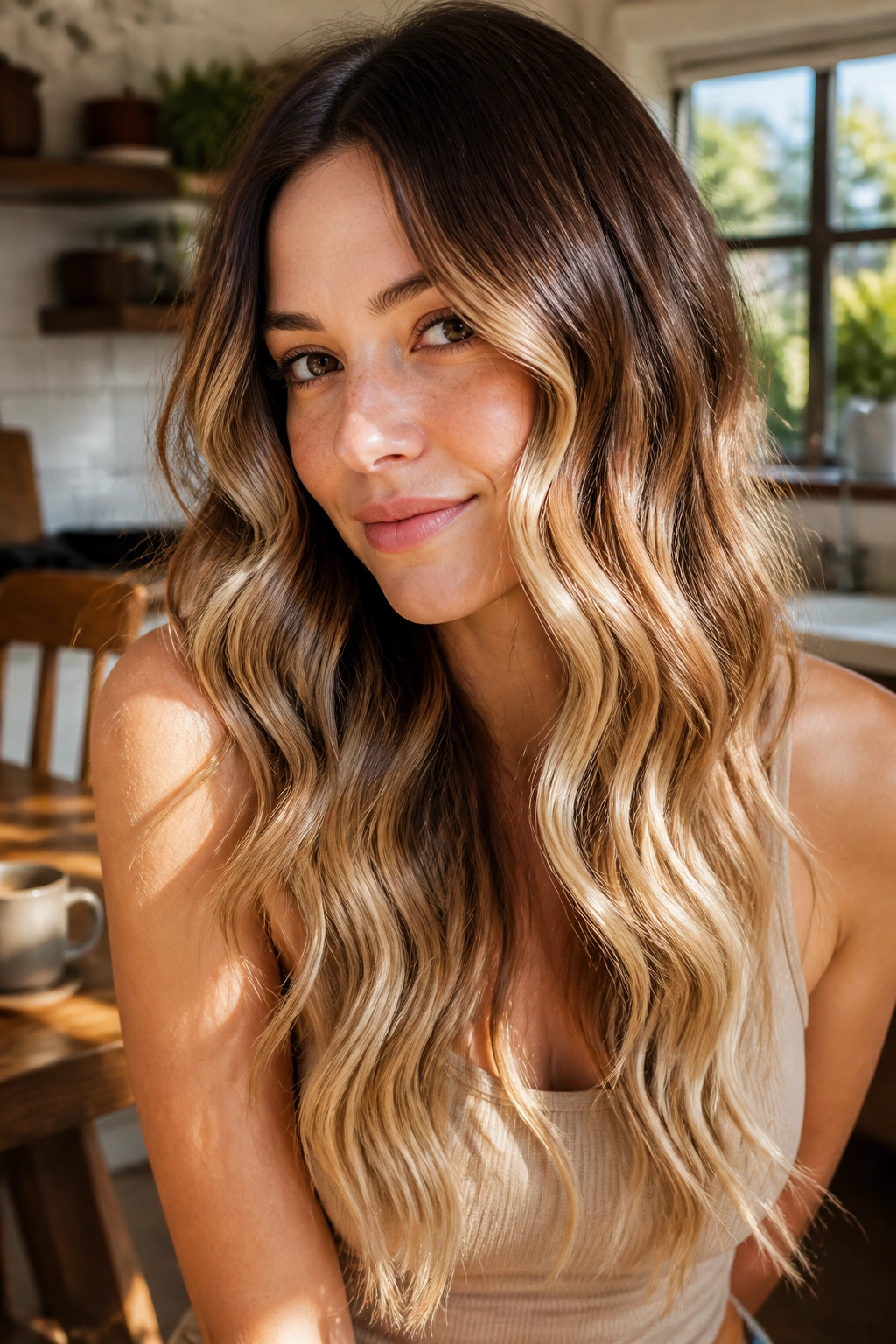
Maple cream gives you golden-brown warmth with a softer, milkier finish than caramel. It’s a nice option if you want your wavy hair to look sweet and dimensional rather than sharply highlighted.
The blend usually starts with a chestnut or medium brown base, then moves into maple-gold mids and creamy ends. On waves, the maple tone sits beautifully along the outer curve of each bend. The creamier end color keeps the result light, but not icy.
A practical note
Maple cream can turn orange if the toner is too warm. Ask for a beige-gold finish rather than a straight gold blonde. That small wording change matters.
This shade is good for people who want shine more than contrast. It doesn’t scream. It glows. And because the tone sits somewhere between blonde and brown, it tends to make wavy hair look thicker at the ends than a very pale ombre might.
If you live in warm neutrals—camel coats, cream tops, gold hoops—this color slides right in.
19. Navy Ink Ombre
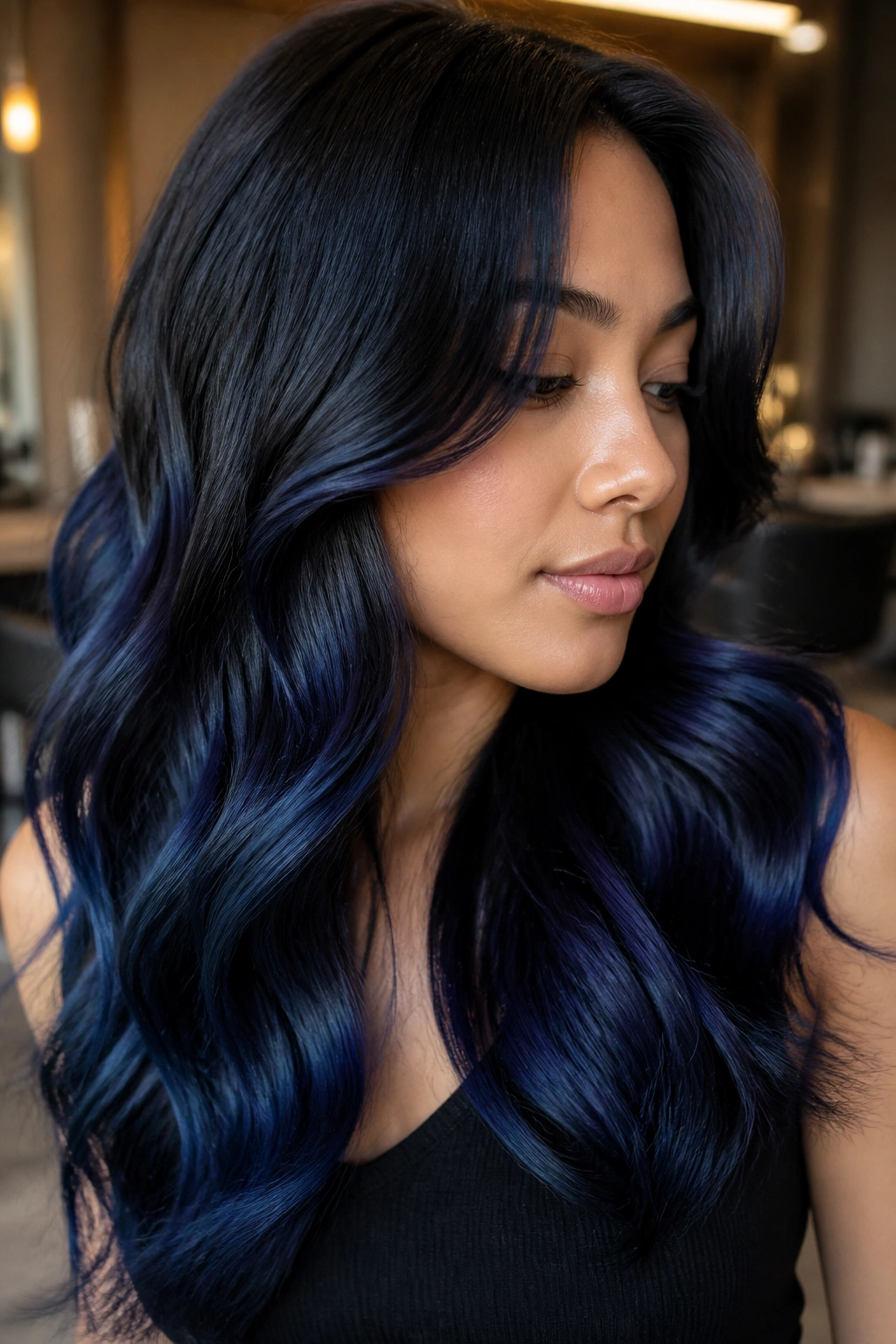
Navy ink is the cool cousin of blue ombre. It has more depth, less flash, and a more grown-up feel on wavy hair. Against a black or espresso base, the navy ends can look almost liquid when the wave catches light.
This color is smart if you want a bold finish without bright primary blue. Navy reads dark in shade and vivid only when it moves, which makes it easier to wear in everyday settings. The waves help the color appear in thin layers rather than one solid block, and that keeps it from looking costume-like.
What to ask for
Ask for a blue-black to navy fade with a glossy finish. Gloss is not optional here. Navy needs shine or it can collapse into flat dark hair.
It’s a strong choice for long waves, layered cuts, and anyone who likes a little edge in their hair without making the whole look neon. Pair it with minimal makeup or a sharp liner and it does the rest on its own.
The maintenance is simple enough: gentle shampoo, less heat, and a glaze if the color starts looking sleepy.
20. Mocha to Cream S-Curve Ombre
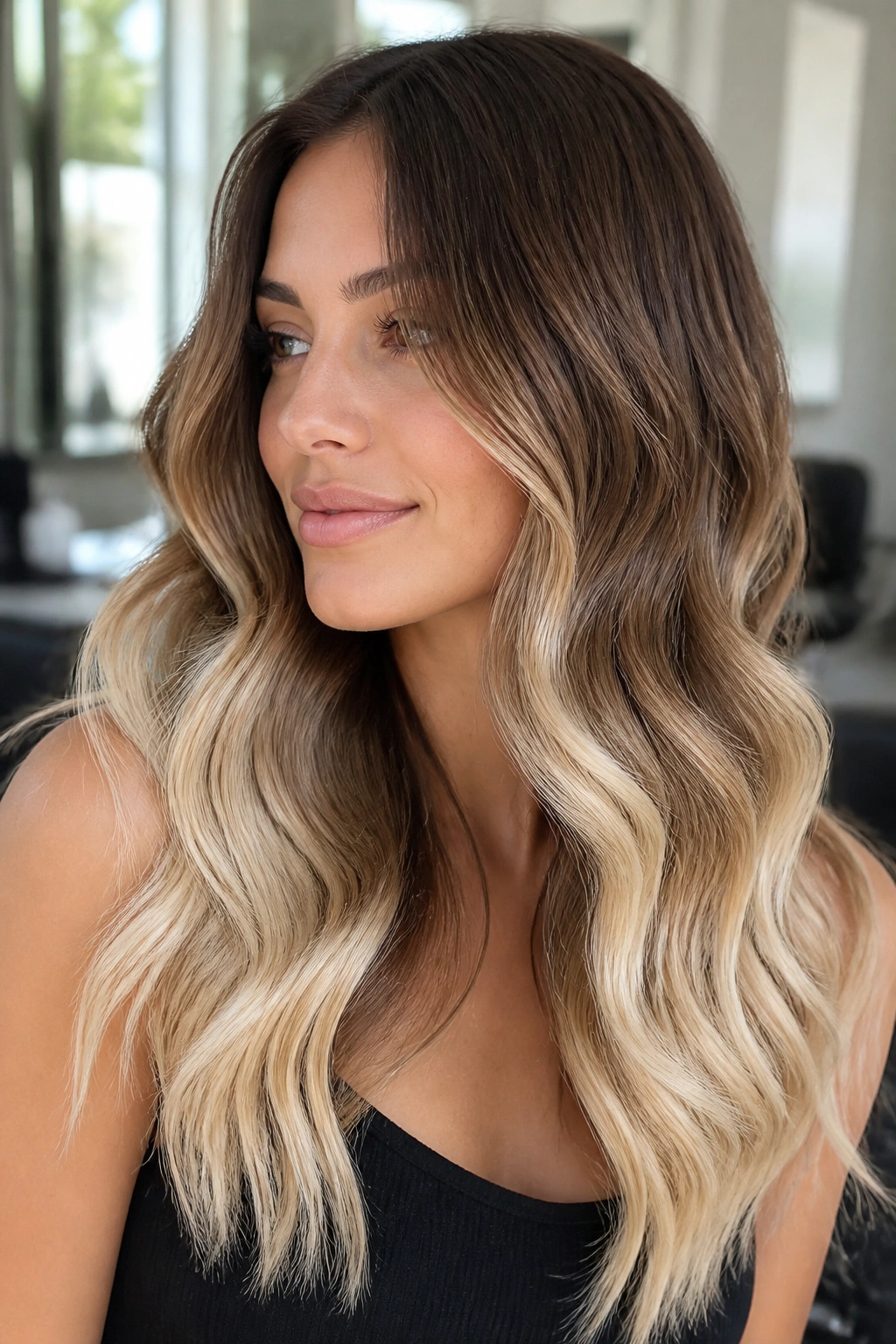
Mocha to cream is the easiest way to end this list because it’s the version that covers a lot of ground without trying too hard. On wavy hair, the S-curve placement makes the fade follow the natural bend, so the color looks built into the shape rather than laid on top.
That placement is the real trick. Instead of a straight horizontal shift, the lightness snakes through the wave pattern, which keeps the cream pieces from bunching up in one area. The result feels softer, cleaner, and more natural than a blunt ombre line.
Why this one earns its spot
It works on thick hair, fine hair, loose waves, and more defined bends. It can be subtle or brighter, depending on how far the cream is pushed. If you want one ombre idea that stays wearable across different cuts, this is the safest lane.
Ask for a melted transition with no hard band at the mids. That phrase saves a lot of trouble in the salon chair. It tells the colorist you want flow, not a stripe.
If you’re unsure where to start, start here. Then adjust warmer, cooler, deeper, or brighter once you see how your waves hold the color. That’s the nice part about ombre: it can be edited without losing the whole idea.
