



Blue white ombre hair ideas for long hair work because the length gives the color room to breathe. A short bob can wear the look, sure, but long hair is where the fade gets to stretch out, soften, and show off every tiny shift from deep blue to icy white. That space matters. A lot.
I’ve always thought this palette lives or dies on placement. Too much yellow left in the hair and the white ends turn muddy. Put the blue too high and the whole thing can look heavy. Put it in the right place, though, and long hair starts doing half the styling for you — the movement, the layers, the wave pattern, all of it helps the ombre feel alive instead of flat.
The nice part is how many directions this can go. Blue can be navy, denim, smoky steel, cobalt, sapphire, teal-leaning, pastel sky, or a near-neon electric hit. White can read pearl, silver, platinum, ivory, glacier, or chalky ice depending on the toner and the base underneath. The best versions are the ones that make sense for your hair texture, your haircut, and how much maintenance you can stomach.
And that’s the real trick with blue-white color on long hair: don’t ask, “Will it look cool?” Ask, “Will it still look good when I wear it in a low ponytail, on day five, and under bad indoor lighting?” The styles below cover the dreamy, the sharp, the moody, the soft, and the unapologetically loud.
1. Midnight Navy Melt Into Pearl White
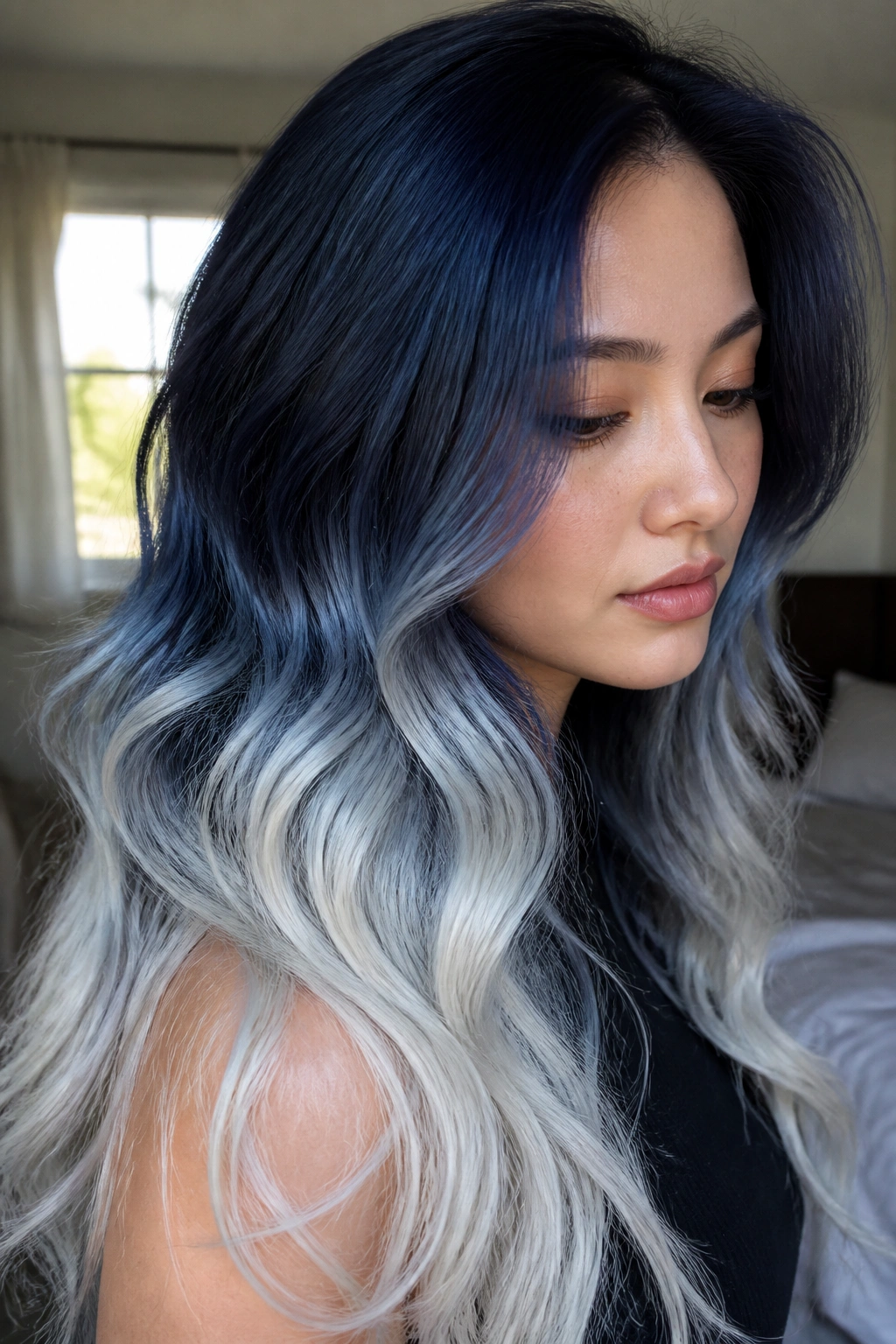
This is the classic people come back to after they’ve tried a few louder versions and realized they want something with more depth. Midnight navy at the top and pearl white through the ends gives long hair a dark-to-light fade that feels expensive without trying too hard. The dark blue keeps the roots grounded, while the white ends stop the whole thing from looking too heavy.
Why It Flatters Long Hair
Long lengths love contrast, but they need a little softness built in. Navy does that job better than pure black because it still reads as color, not just shadow. On hair past the shoulders, that matters a lot. The fade has time to show itself as you move, and the pearl white ends pick up light in a way that makes waves look fuller.
This works especially well on loose curls or a big blowout. Straight hair can handle it too, but the transition is more obvious when the strands bend and the blue peeks through in pieces.
- Best for medium to thick hair
- Looks clean on layered cuts
- Needs a toner plan for the white ends
- Grows out with a softer edge than brighter blue shades
Ask for a shadow root. If the blue starts right at the scalp, the whole color can feel flat. A softer root zone gives the navy somewhere to sit.
2. Denim Blue To Ice White Layers
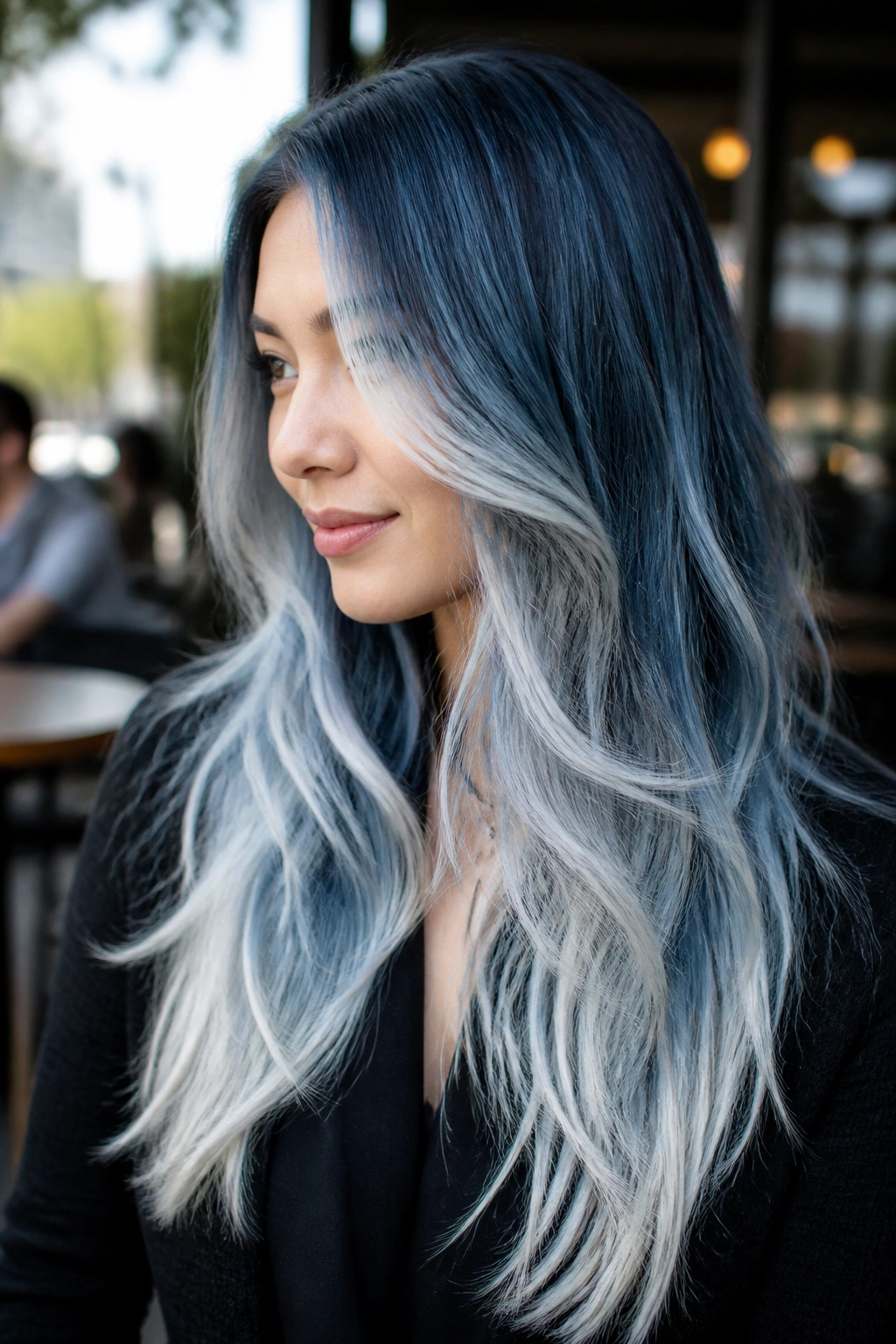
Denim blue is the easiest blue to wear for a lot of people, and I mean that in the best way. It has that washed, lived-in feel that makes the white ends look deliberate instead of harsh. On long layered hair, the whole thing starts reading like a soft ribbon of color rather than a block.
The reason it works is simple: denim blue has enough gray in it to calm the contrast. That means your white ends can stay crisp, but they do not have to fight for attention. On long hair, especially hair with long internal layers, the color shifts as you turn your head. You get little flashes of pale blue near the face and colder white at the bottom.
This is the one I’d pick if you wear a lot of black, white, gray, or faded jeans. It just makes sense with clothes that already lean cool and quiet. The finish is polished, but not stiff.
3. Arctic Sky Fade With Airy Curls
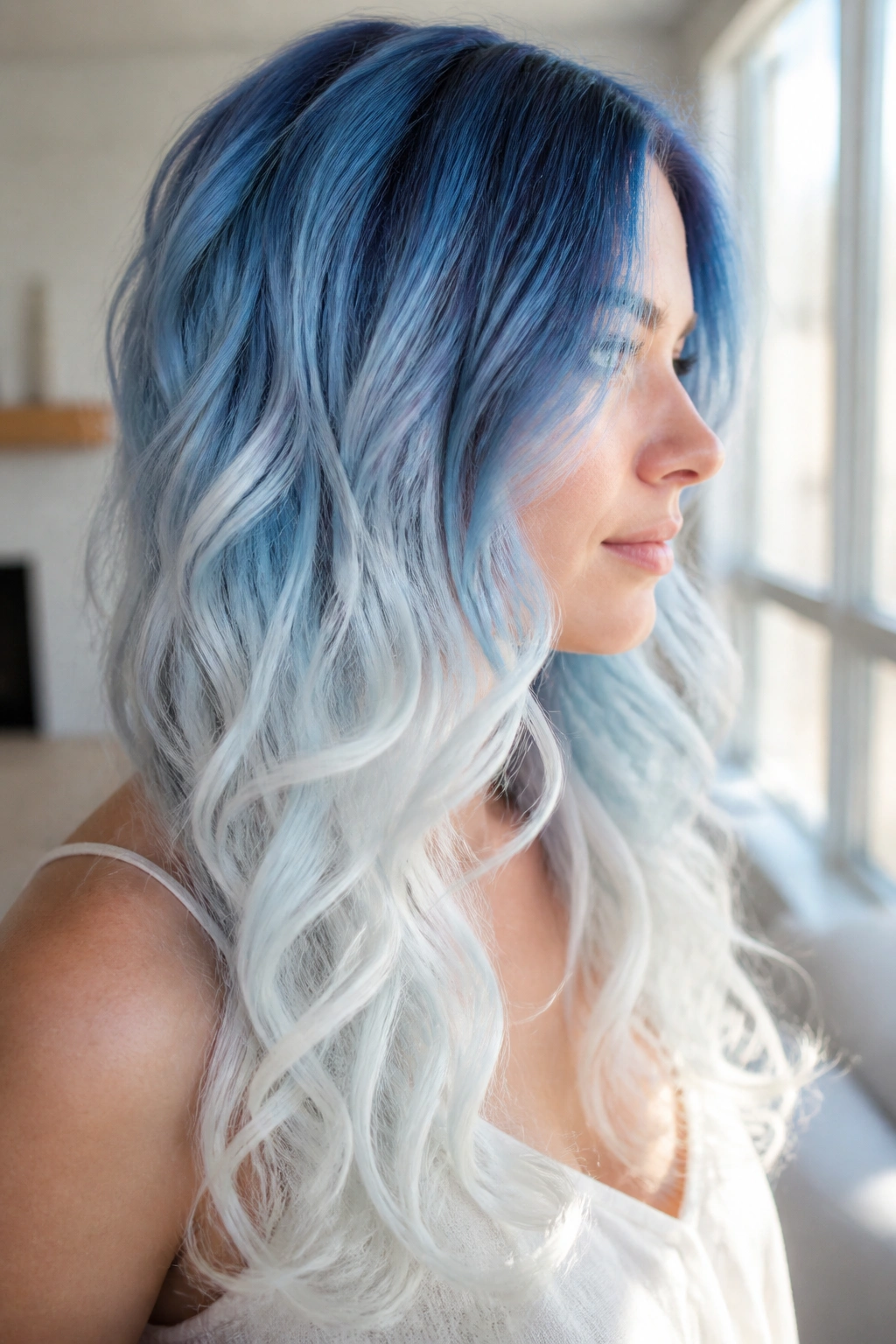
Can blue and white feel soft instead of sharp? Absolutely. Arctic sky blue with white ends gives long hair a bright, airy look that works best when the curls are loose and round. The blue sits in the middle range — not too dark, not too pastel — and the white melts in at the bottom like frost on glass.
How To Wear It
The curl pattern matters here more than people think. A 1.25-inch curling iron or wand gives you that soft bend without making the hair look too done. If the curls are too tight, the blue and white can separate into stripes, and that kills the dreamy effect.
A better move is to curl away from the face, leave the last inch out, and brush the hair out once it cools. That gives the ombre a cloud-like finish. A flexible spray is enough. You do not want shellacked curls. Nobody does.
- Works best on hair with a bit of movement
- Looks strongest on pale blond or pre-lightened bases
- Needs gentle toning to keep the white from drifting yellow
- Really pops in side-swept styles
4. Blue Root Shadow With White Ends
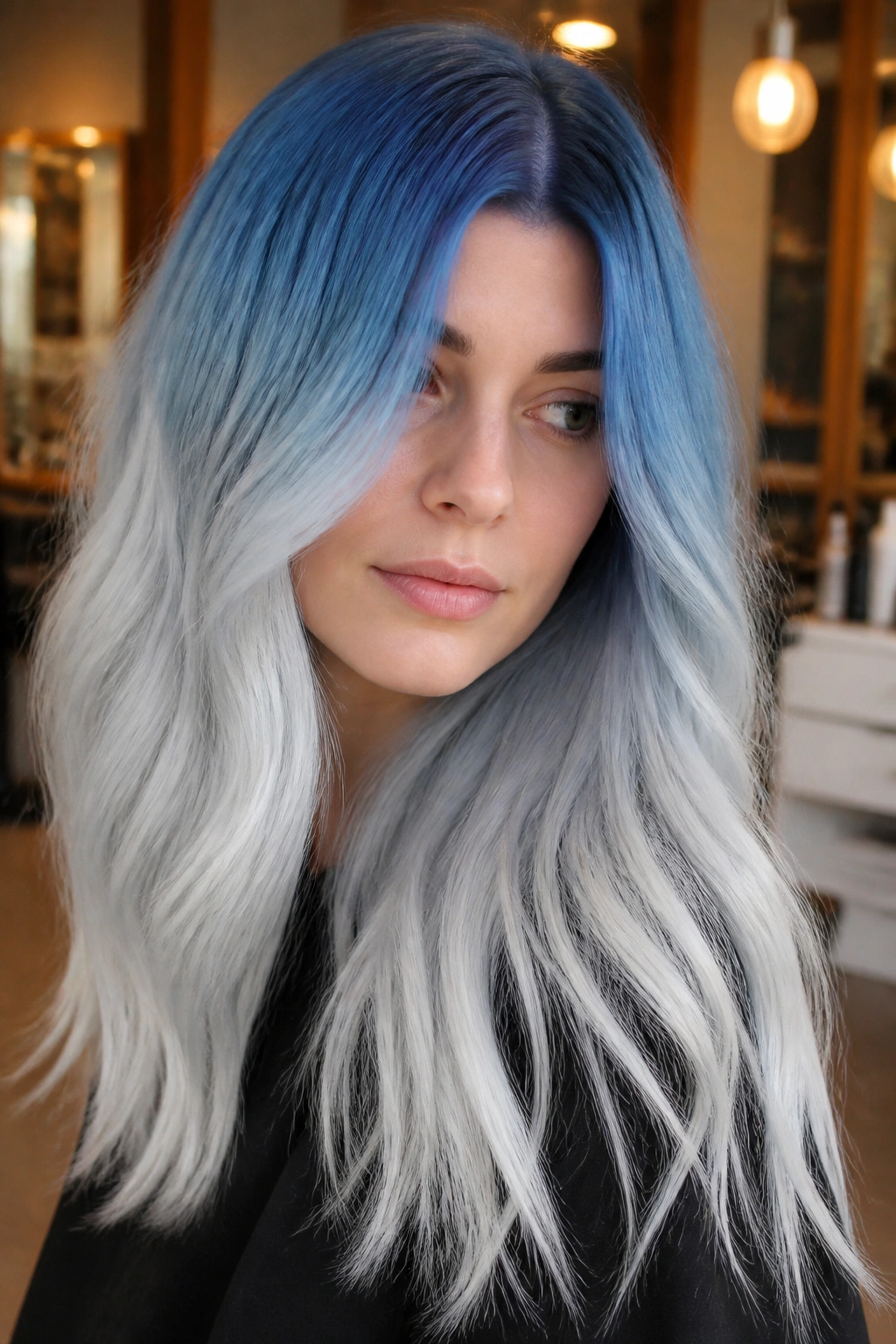
If you hate sitting in a salon chair every few weeks, this is the one to look at first. A blue root shadow with white ends lets the grow-out blend into the design instead of fighting it. The darker blue near the scalp softens regrowth, while the white ends keep the hair bright and open.
That root shadow matters because long hair shows every inch of your color. On shorter cuts, regrowth can hide in the shape. On long hair, it travels downward and gets more obvious fast. A deeper blue root zone buys you time. It also keeps the whole style from looking washed out once the white starts to pick up a little warmth.
This version is good on straight hair, curls, braids, and basically anything that lets the ends move. It’s practical, but it doesn’t feel boring. That’s rare.
The catch: white ends need honest care. If the hair is already fragile, the lighter bottom section will show that damage quickly.
5. Cobalt Ribbon Balayage
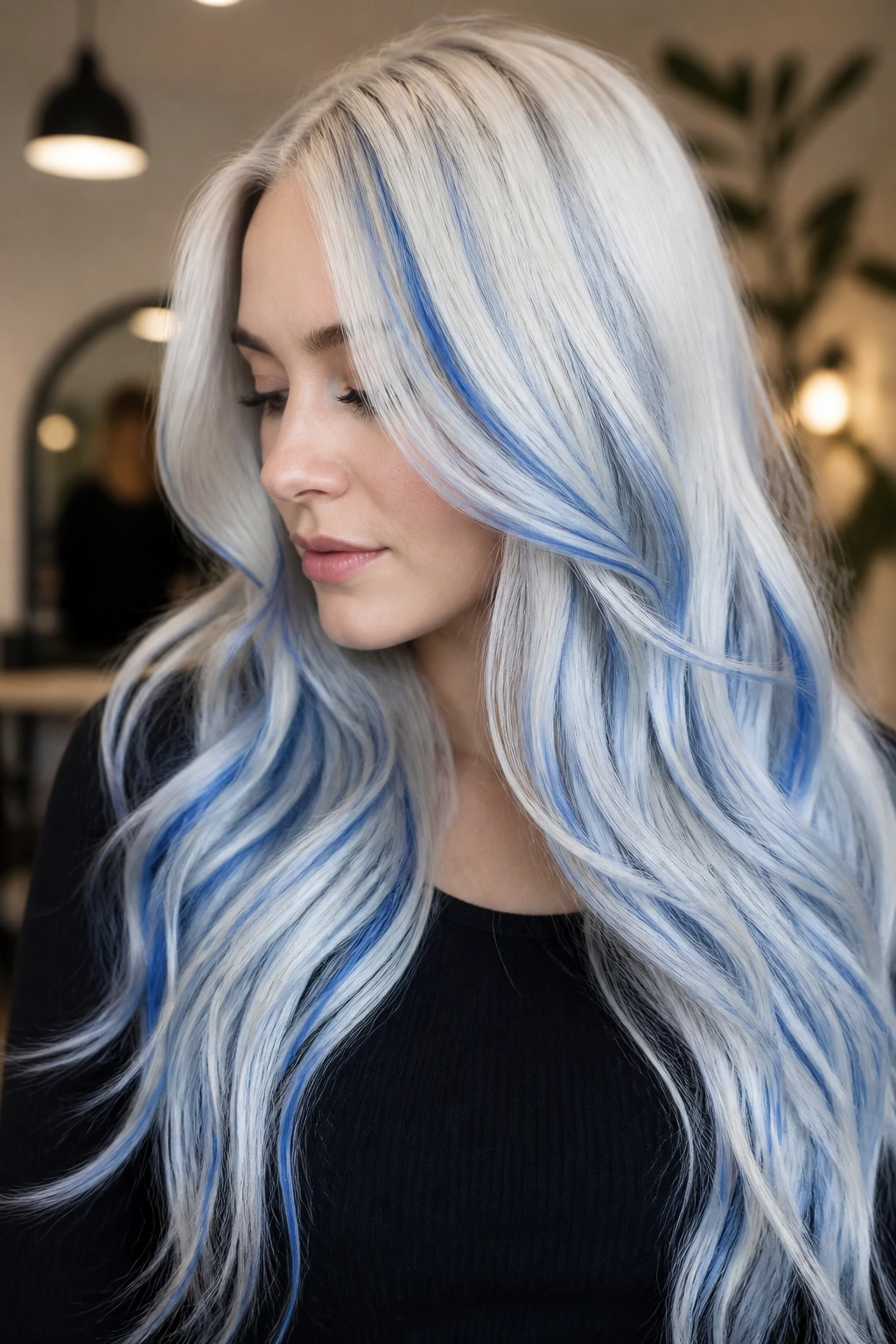
Cobalt ribbon balayage is for the person who wants color, not just tone. The blue is painted in thin, visible ribbons through a white or near-white base, so the hair never lands in one flat block. On long hair, those ribbons stretch and bend in a way that looks more expensive than a full saturated panel.
This style has motion built into it. When the hair swings, the cobalt shows through in slices. When it’s still, the white takes over. That push and pull keeps the look interesting for weeks. It’s also one of the easiest ways to make a lighter style feel less delicate and more editorial.
I like this on layered lengths that hit mid-back or longer. The layers give the blue places to hide and reappear. If the cut is one long sheet, the ribbons can read a little too stripey. With movement, though, they look deliberate.
6. Smoky Steel Gradient
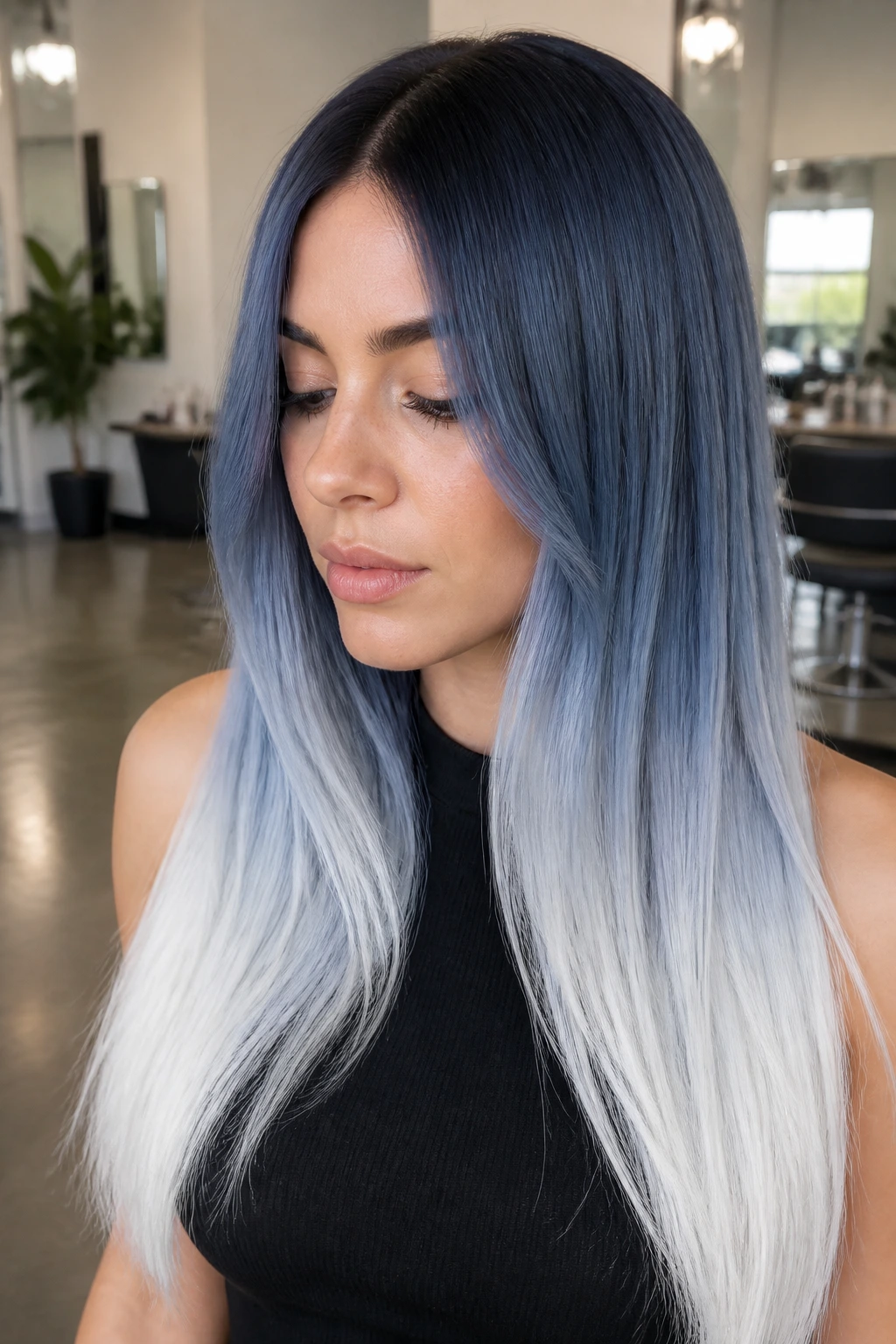
Smoky steel blue is the grown-up version of blue-white ombre. It trades the bright, obvious blue for something darker and softer, almost like metal under cloudy light. Paired with white ends, it creates a gradient that feels calm instead of loud.
Unlike cobalt or electric blue, smoky steel doesn’t scream for attention. It sits in the hair and lets shine do the work. That makes it a smart choice if you wear sleek clothes, silver jewelry, or lots of neutrals. On long hair, especially straight or softly waved lengths, the steel tone keeps the fade readable from root to tip.
Who It Suits Best
This is a good pick if you want blue-white hair but not a costume feel. It flatters people who like cool tones, smoky makeup, and clean silhouettes. It also works well when you want to stretch salon time between refreshes.
You’ll usually get the best result if the white ends stay cool, not creamy. A yellowish white will fight the steel tone and make the whole thing look off.
7. Electric Blue Dip-Dye Ends
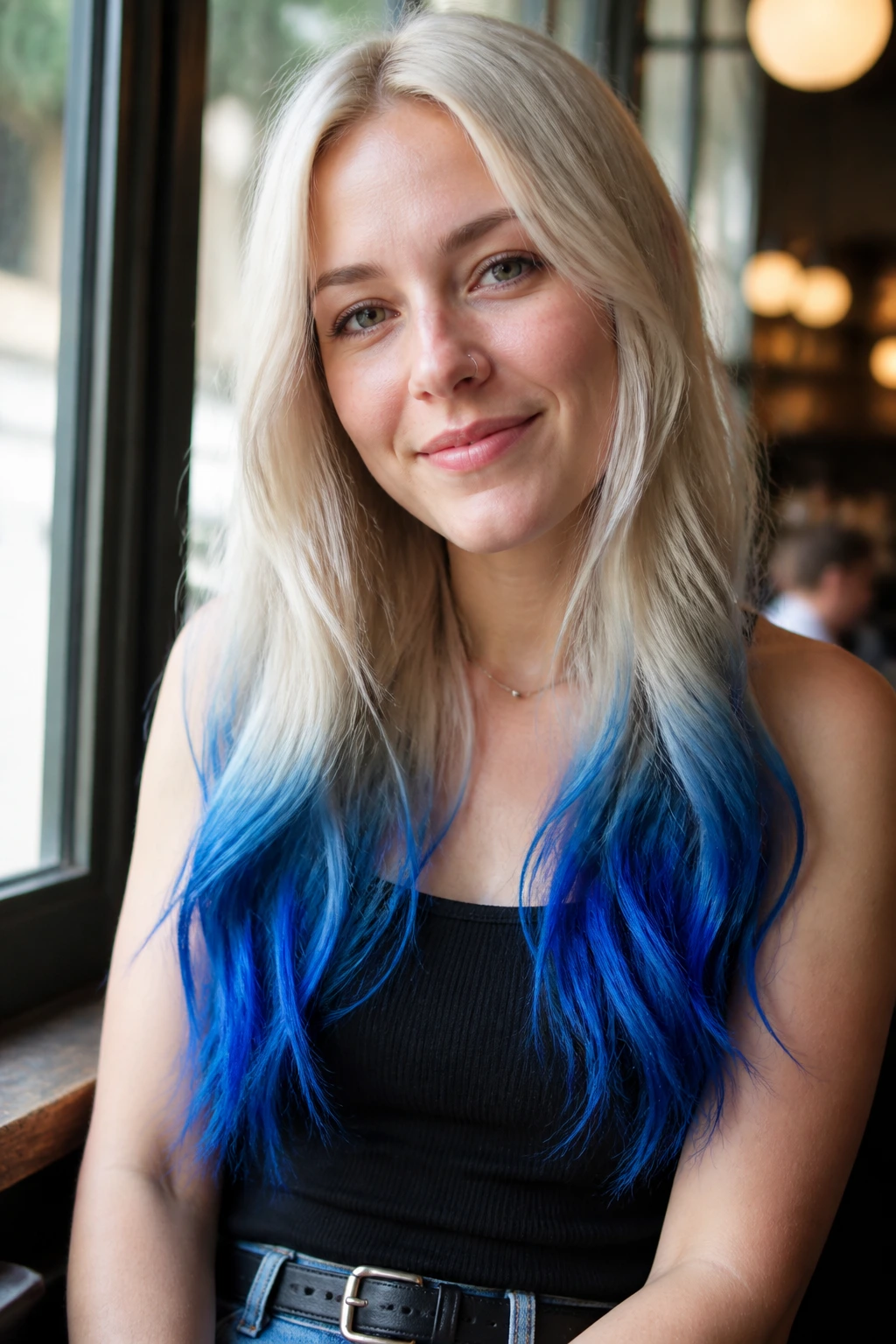
Some looks are about subtlety. This is not one of them. Electric blue dip-dye ends put the color where everyone can see it — right at the bottom, where long hair swings and settles. The top can stay white, silver, or pale blonde, while the last several inches go full blue.
Long hair is what saves this look from feeling too sharp. With enough length, the dip-dye has a clear purpose. It reads as a bold finish, not a random stripe. The strong contrast also makes braids, twists, and ponytails more fun because the blue ends collect together and show off the gradient in one hit.
This is best on blunt ends or only slightly layered hair. Too many short layers can break the dip-dye apart. If you want the color to look especially crisp, keep the ends polished and straight. The line becomes the point.
One sentence advice? Don’t let the blue spread too far upward. The drama comes from restraint.
8. Powder Blue To Milk White
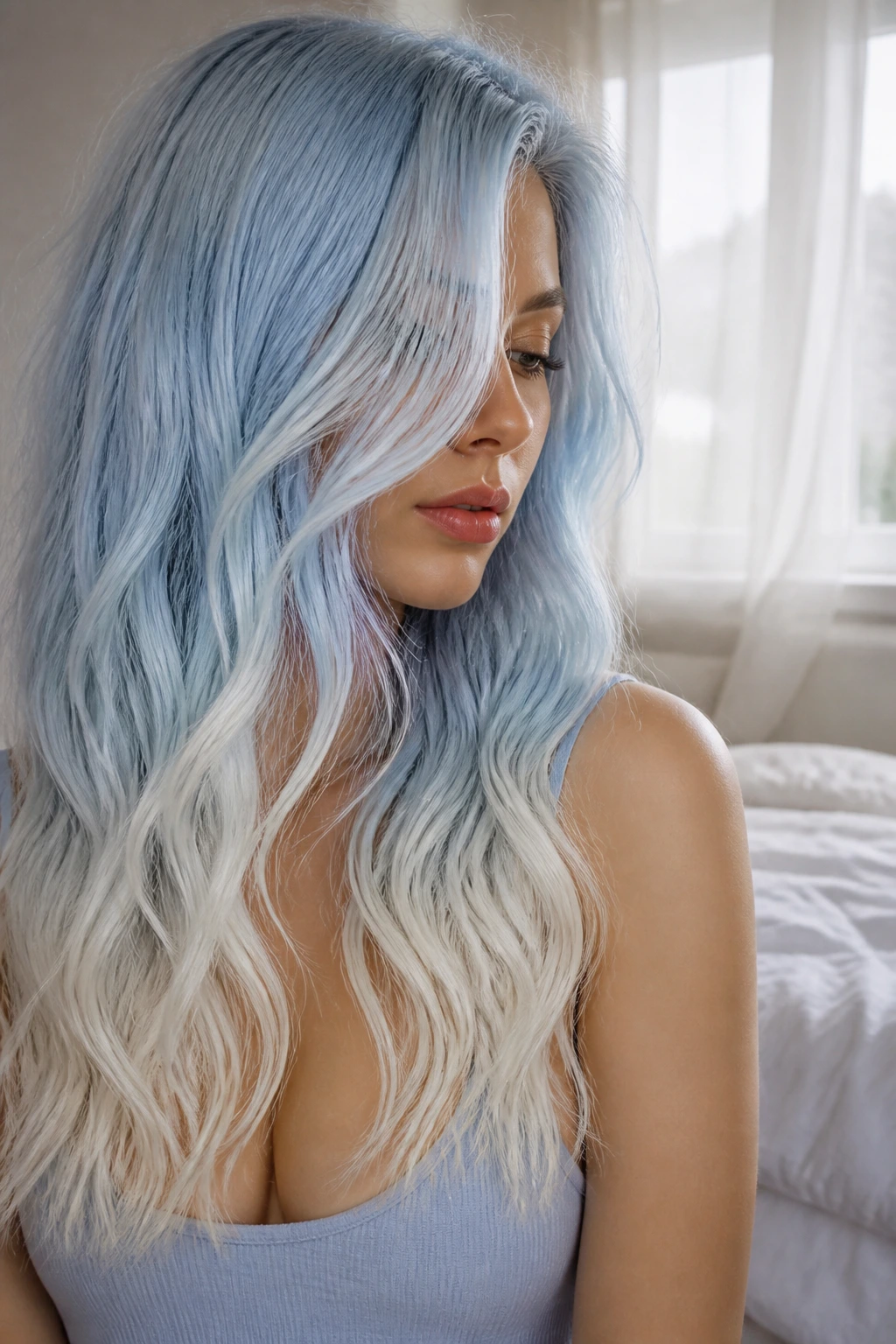
Powder blue is one of those shades that can go wrong fast if it gets too dusty or too green. When it’s done well, though, it’s gorgeous on long hair. The color sits somewhere between icy pastel and soft chalk, then fades into milk white at the ends.
This is the gentlest option in the whole set, and that’s exactly why people love it. It doesn’t fight the hair. It drapes across it. Long waves make the transition feel almost watercolor-like, especially when the white is kept creamy and the blue stays pale rather than bright.
Best Texture For It
Soft bends and loose curls are the sweet spot. They keep the pastel blue from disappearing into the white. Straight hair can wear it too, but it tends to read more delicate and less dimensional.
- Looks best on very light blond bases
- Needs careful toning to avoid greenish cast
- Pairs well with pearl clips or silver pins
- Works nicely with long layers and curtain bangs
If you want a soft result that still looks special, this is a strong place to start.
9. Sapphire Cascade On Loose Waves
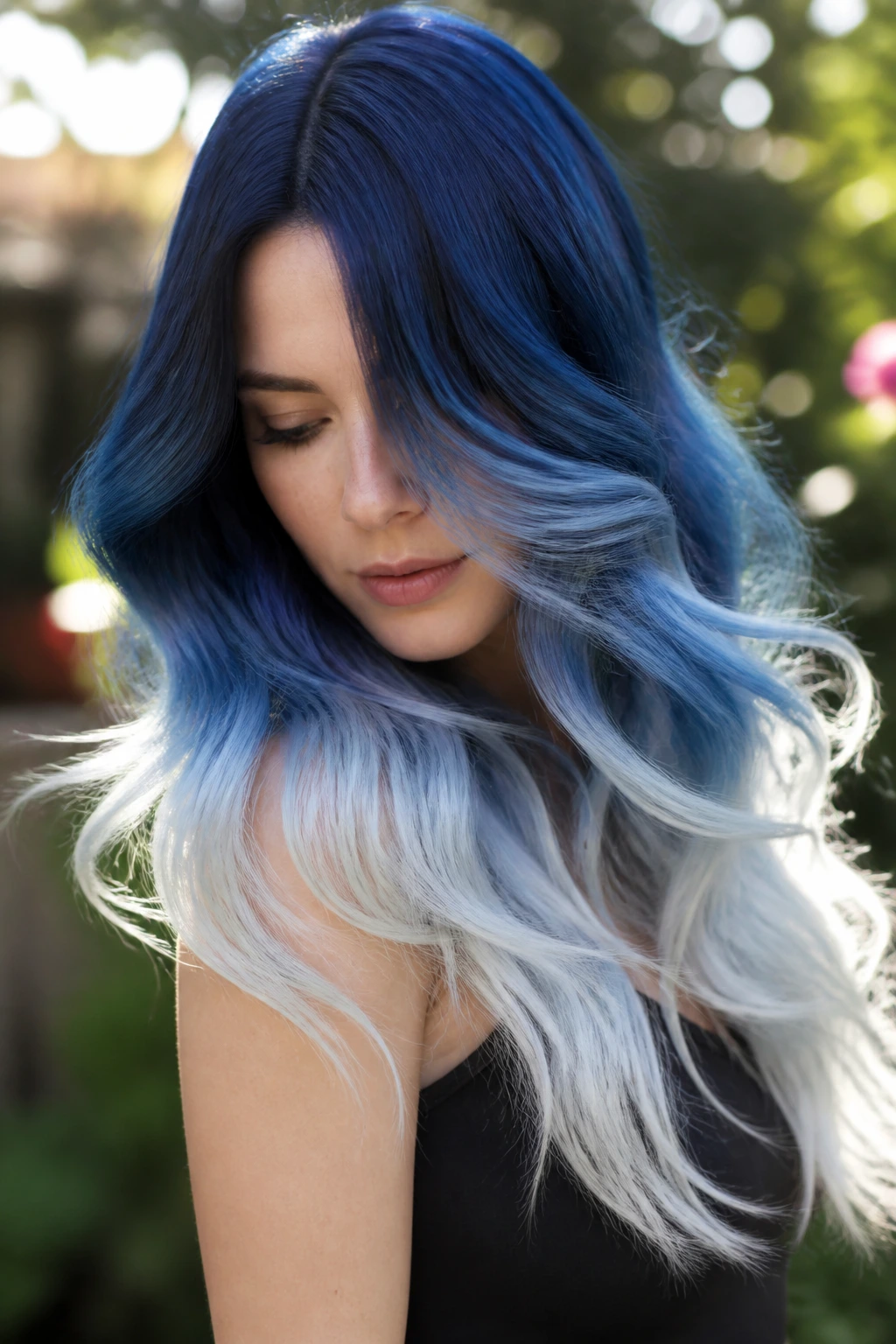
Sapphire is deeper than royal blue, and that depth is what makes it so good on long hair. A sapphire cascade over white ends gives you a richer color story, especially when the hair is waved loosely so the blue and white trade places as the strands move.
The interesting part is how the shade changes in motion. In the valleys of the wave, sapphire looks darker and almost velvety. On the raised sections, it lightens up and starts to glow against the white. That kind of shift is hard to fake with styling alone. You need length for it to work.
This is one of my favorite options for layered hair because the layers help the blue land in different places. It never looks too even, which is the whole point. If every section is the same shade, you lose the cascade effect.
A big-barrel iron and a light gloss spray can make this color look finished without making it stiff. Keep it touchable. That’s where the shine lives.
10. Peekaboo Blue Panels Under White Layers
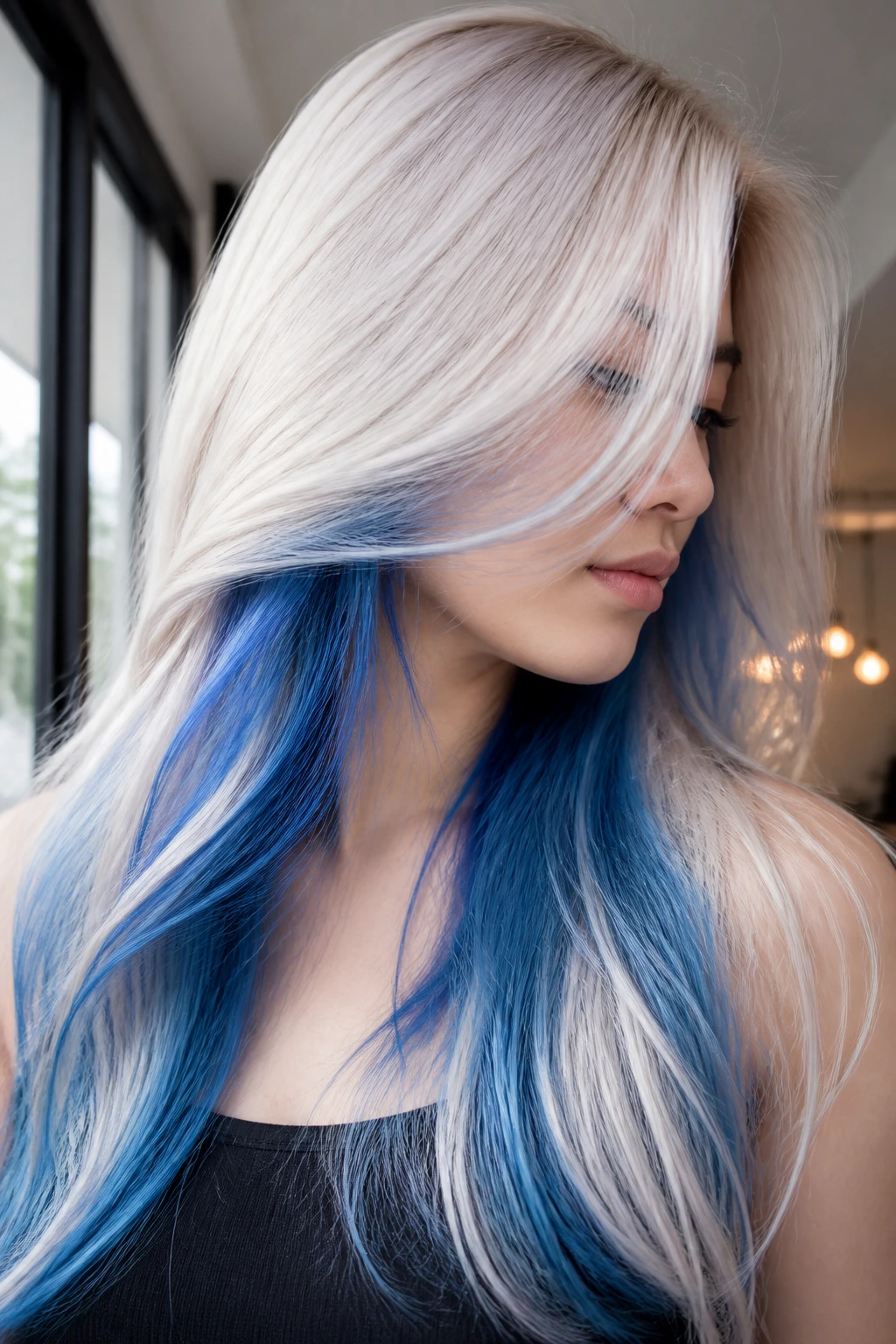
Peekaboo color is underrated, and long hair is where it gets to be most interesting. Blue panels hidden under white top layers let you wear a pale, clean surface with a surprise underneath. When the hair swings or gets tucked behind an ear, the blue flashes through.
This is a smart choice if you want something expressive but not always visible. The top can stay icy white, platinum, or pearl, while the underlayer carries the deeper blue. That means the haircut matters. Layers and movement make the reveal feel intentional. Without them, the color can stay hidden too well.
What To Ask For
- A white or silver top veil
- Blue panels placed beneath the crown and around the nape
- Longer layers so the hidden color shows through
- A plan for styling that includes half-up looks and ponytails
It’s also one of the best options if your life requires some color camouflage. You get the fun part when you want it, and the polished part when you do not.
11. Frosted Face-Framing Ombre
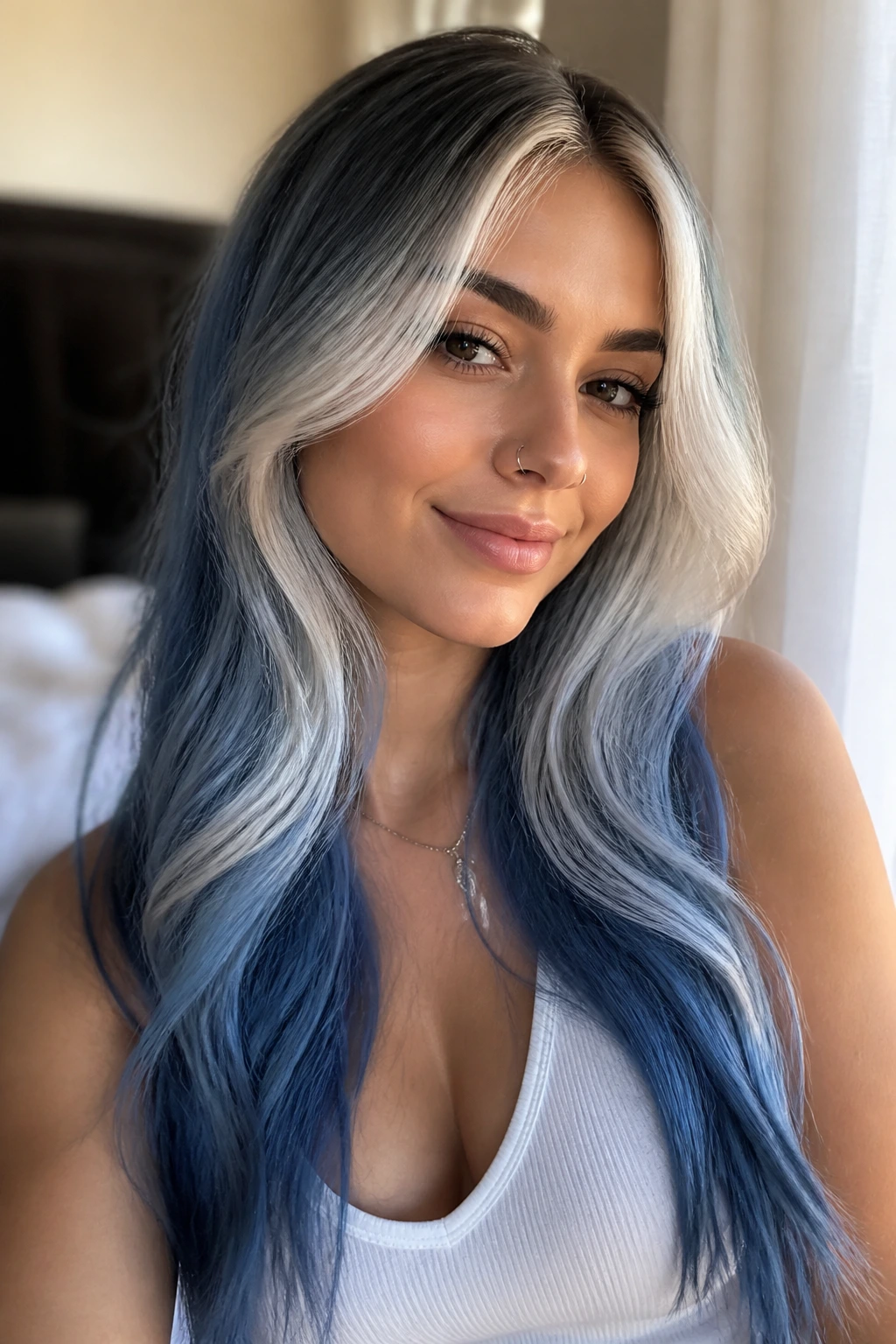
Face-framing color changes the whole mood of long hair. Frosted white pieces around the face with blue melting back through the lengths can brighten the skin instantly without turning the whole head into a block of light color. It’s a smart move if you want the ombre to be noticeable even when the rest of the hair is worn back.
The front pieces catch attention first, which is why this version feels more energetic than a standard mid-length fade. On long hair, the face frame keeps the color from getting lost in all that length. You still get the blue-and-white story in the back, but your eye goes straight to the front.
Curtain bangs make this even better. So do soft layers that fall around the cheekbones. If the front is too heavy, the frost can disappear. If it’s too thin, it may look streaky.
A little root shadow near the part helps the white stay bright instead of harsh. That small detail matters more than people think.
12. Ocean Foam Blend
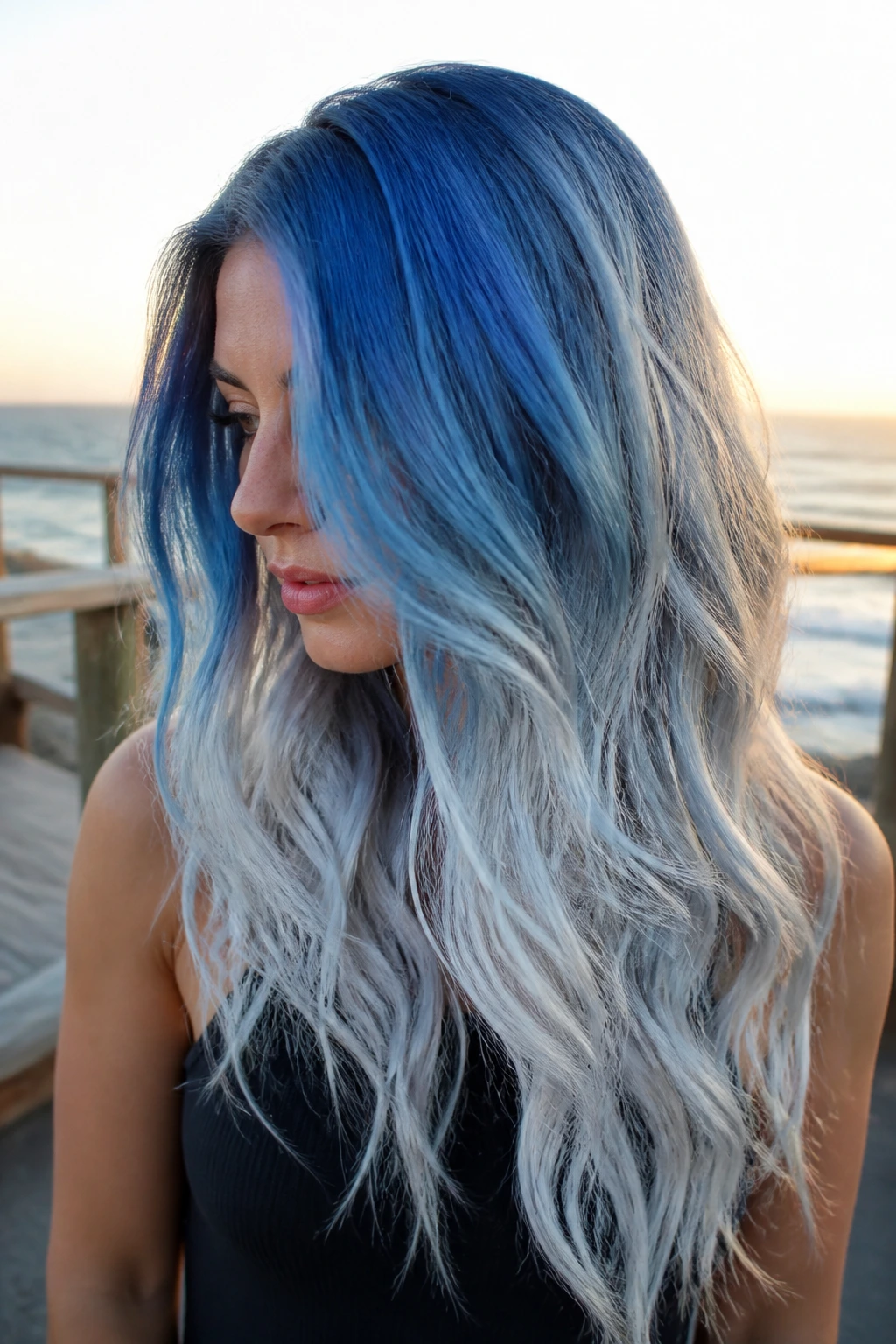
Ocean foam is what happens when blue-white ombre stops being a hard gradient and starts feeling like movement. The blue is broken up with pale gray, soft silver, and white, so the whole finish looks like wave foam over deep water. Long hair gives that blend a lot of room to breathe.
This version is especially good on textured hair, because texture naturally breaks color into pieces. Loose curls, brushed-out waves, and even big mermaid-style braids all make the blend look richer. The more the hair bends, the less the eye looks for a clean line.
Why It Works
The palette keeps the blue from getting too cartoonish. A single shade of blue can feel flat. A foam blend has layers within the color itself, so the hair looks lit from inside rather than painted on top.
It’s a prettier style than a practical one, and I mean that as a compliment. If you want something soft, romantic, and a little bit theatrical, it belongs on your shortlist.
13. Blue-Black To Platinum Smoke
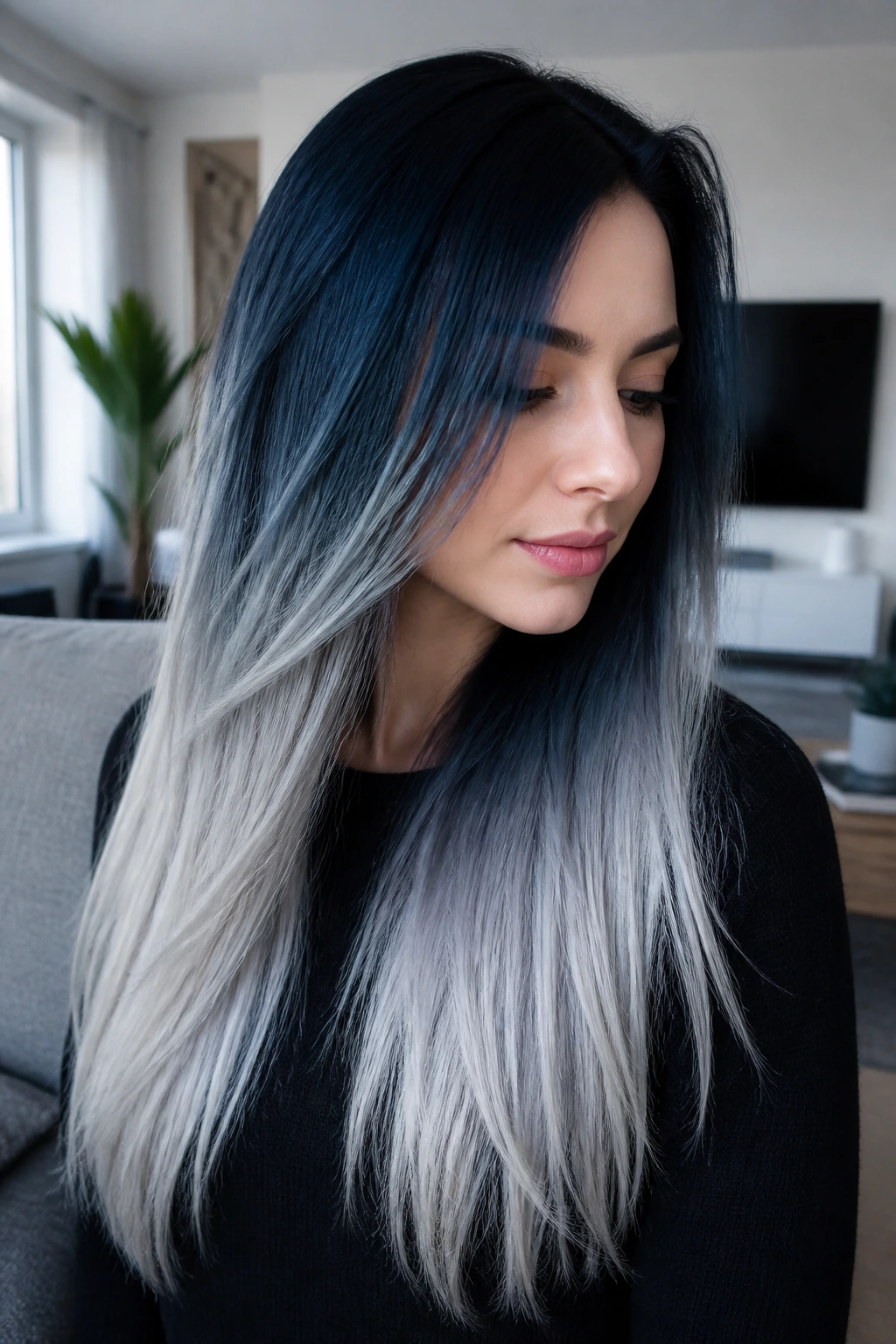
Want contrast without neon? Start with blue-black near the top and fade into platinum smoke at the ends. The dark blue-black keeps the base grounded, while the platinum-white finish gives the whole look a bright edge. On long hair, that contrast can feel sleek instead of harsh.
The trick is the smoke in the platinum. If the ends are too yellow or too chalky, the top and bottom fight each other. A cool, silvery white connects them better. This is one of those styles that depends on good toner work, and bad toner work shows fast.
What Makes It Work
The dark section should not be pure black. Blue-black keeps the color family unified. That makes the grow-out cleaner too.
This is a strong choice for people who wear straight hair a lot. The color block is more readable when the hair hangs smooth. If you wear waves, the transition softens, which can be nice, but you’ll lose some of the drama.
14. Chunky Contour Blocks
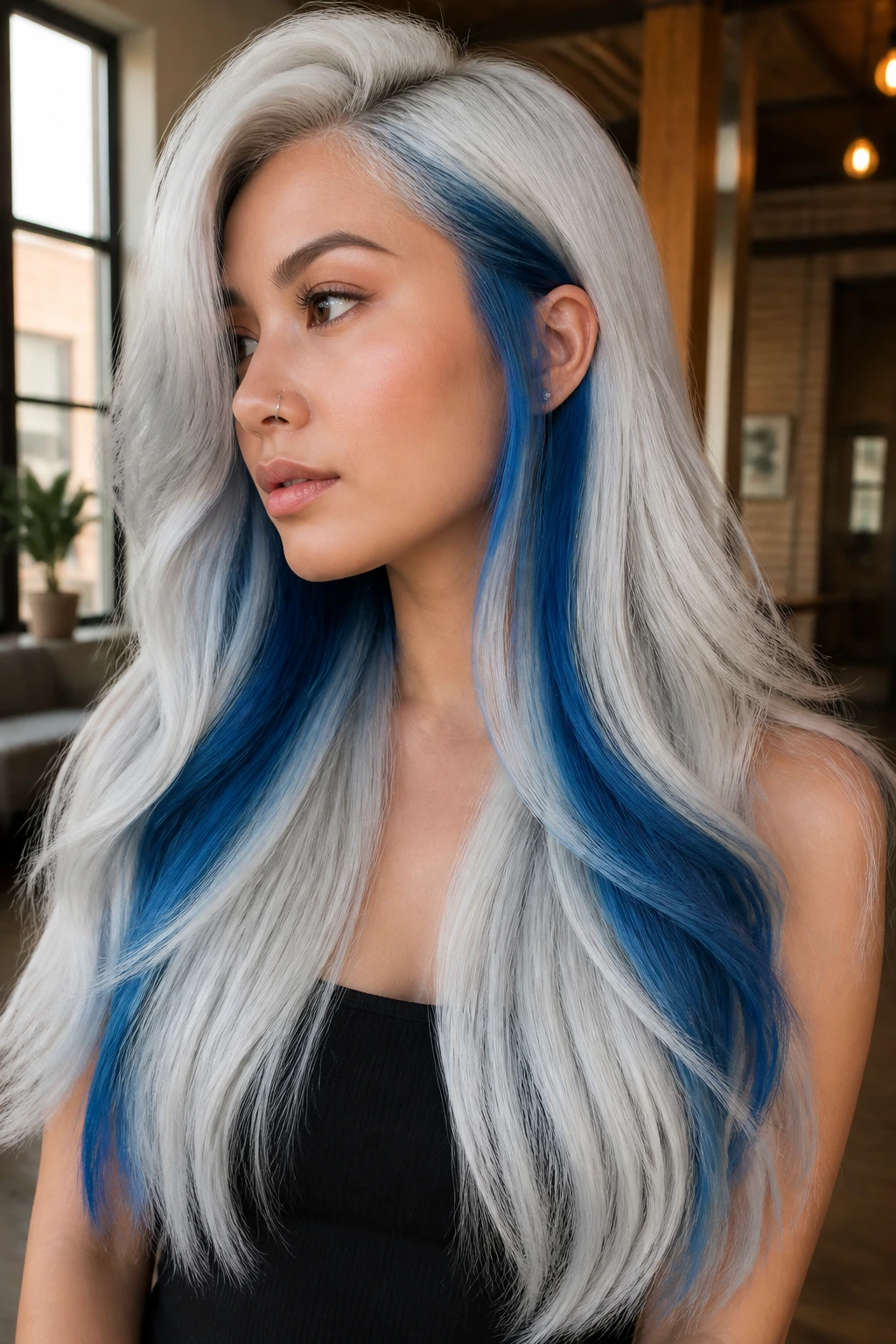
Chunky color sounds risky, but on long hair it can be excellent. Big blue contour blocks placed inside a white ombre create shape, not just shade. It has a little early-2000s energy, but if the placement is clean, it feels fashion-forward instead of messy.
I like this best on thick hair with long layers. The blocks need enough hair around them so they don’t look like random stripes. When the blue sits in strategic panels — along the underlayer, behind the ears, or just under the outer curtain of hair — it adds depth you can actually see from a distance.
A good way to think about it is this: the white tells the story, and the blue edits it. You get hard edges in some places and soft movement in others. That contrast is what keeps the style from feeling too sweet.
If you’re nervous, keep the blocks narrow at first. You can always widen them later.
15. Silver Blue To Ivory Ends
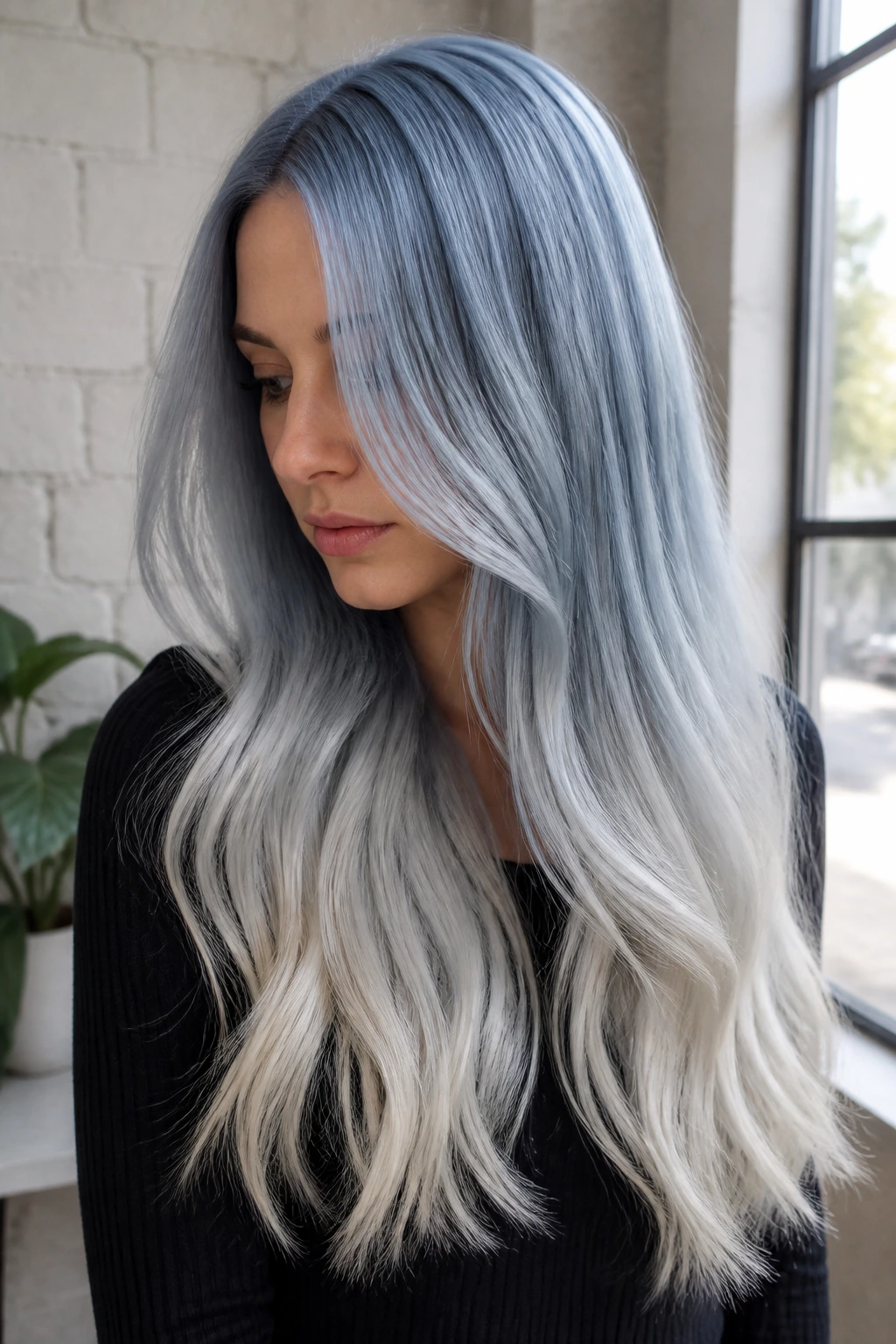
Silver blue is one of the quietest shades in the blue family, and that makes it a nice fit for long hair that already has a lot going on. Paired with ivory ends, it creates a cooler, softer finish than pure white. The look is still pale, but it has more depth and a little warmth at the bottom.
This is a very good option if you want a blue-white ombre that reads polished in daylight and calmer under indoor light. Ivory keeps the ends from looking over-processed, while silver blue adds enough tone to stop the top half from disappearing. The result feels smooth, not stark.
It’s especially pretty on straight hair with a center part. The color flow gets a clean line, and the subtle shift between silver and ivory shows off the length. If the hair is wavy, the style gets gentler. If it’s glassy and straight, it gets sharper.
Honestly, this is the color I’d choose for someone who likes cool tones but doesn’t want to announce it from across the room.
16. Mermaid Teal Into White Surf
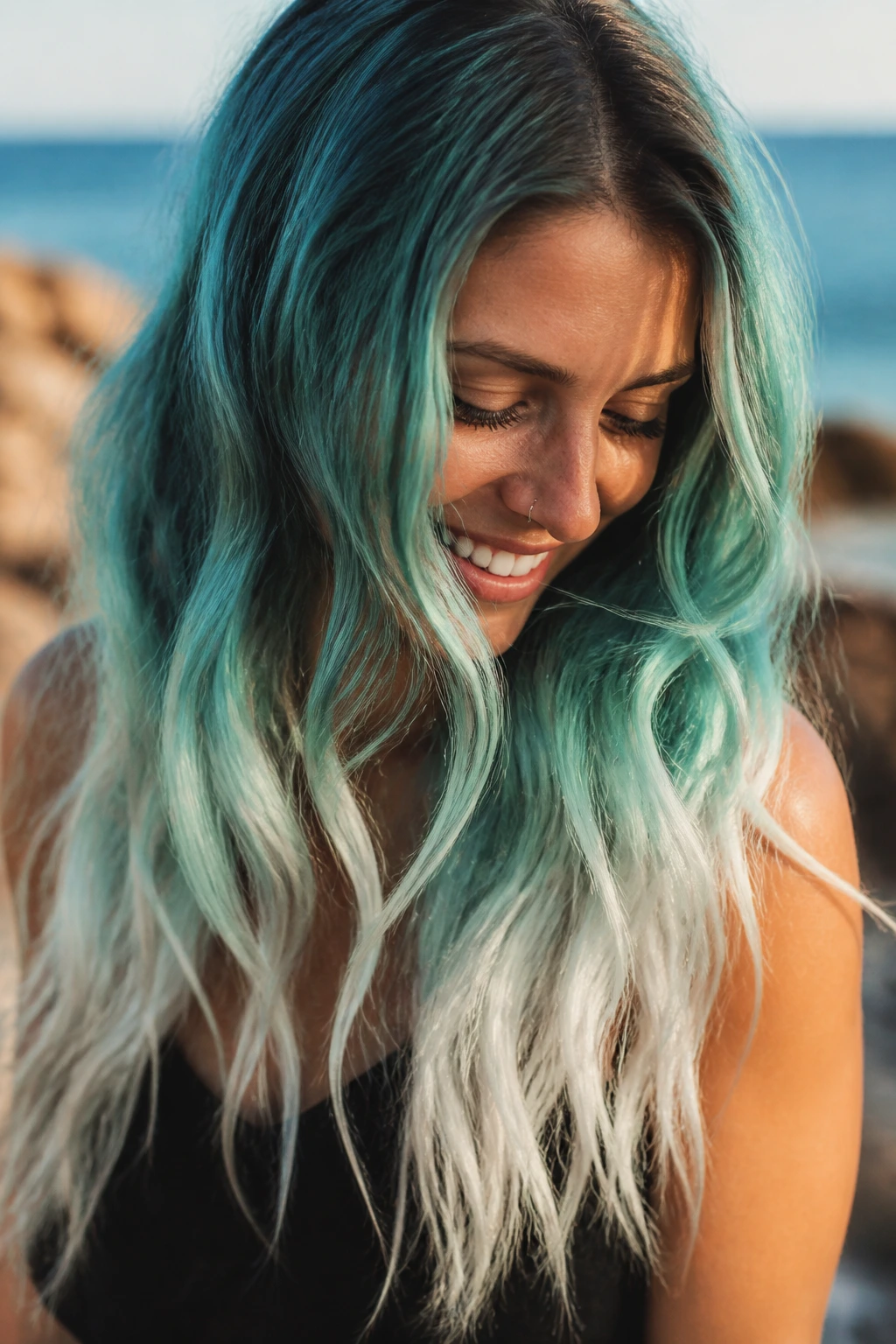
Teal sits close enough to blue that it belongs here, and it brings a little sea-glass energy to the whole fade. Mermaid teal through the mid-lengths and white surf at the ends gives long hair a bright, watery finish that looks especially good in waves and braids.
The reason this one works is that teal has more life in it than a flat blue. It catches green and blue notes together, so the transition into white feels richer. On long hair, that can keep the ends from looking too severe. The color reads playful, but not childish. That balance is hard to hit.
If You Like Color
This is a smart pick if you already wear bold makeup, colorful nails, or jewel-toned clothes. It holds its own. If your wardrobe is mostly neutral, the teal becomes the focus, and the white ends keep it from getting too loud.
A soft wave pattern is the best styling partner here. Straight hair can handle it, but the movement helps the teal show its shifts.
17. Dusty Periwinkle Fade
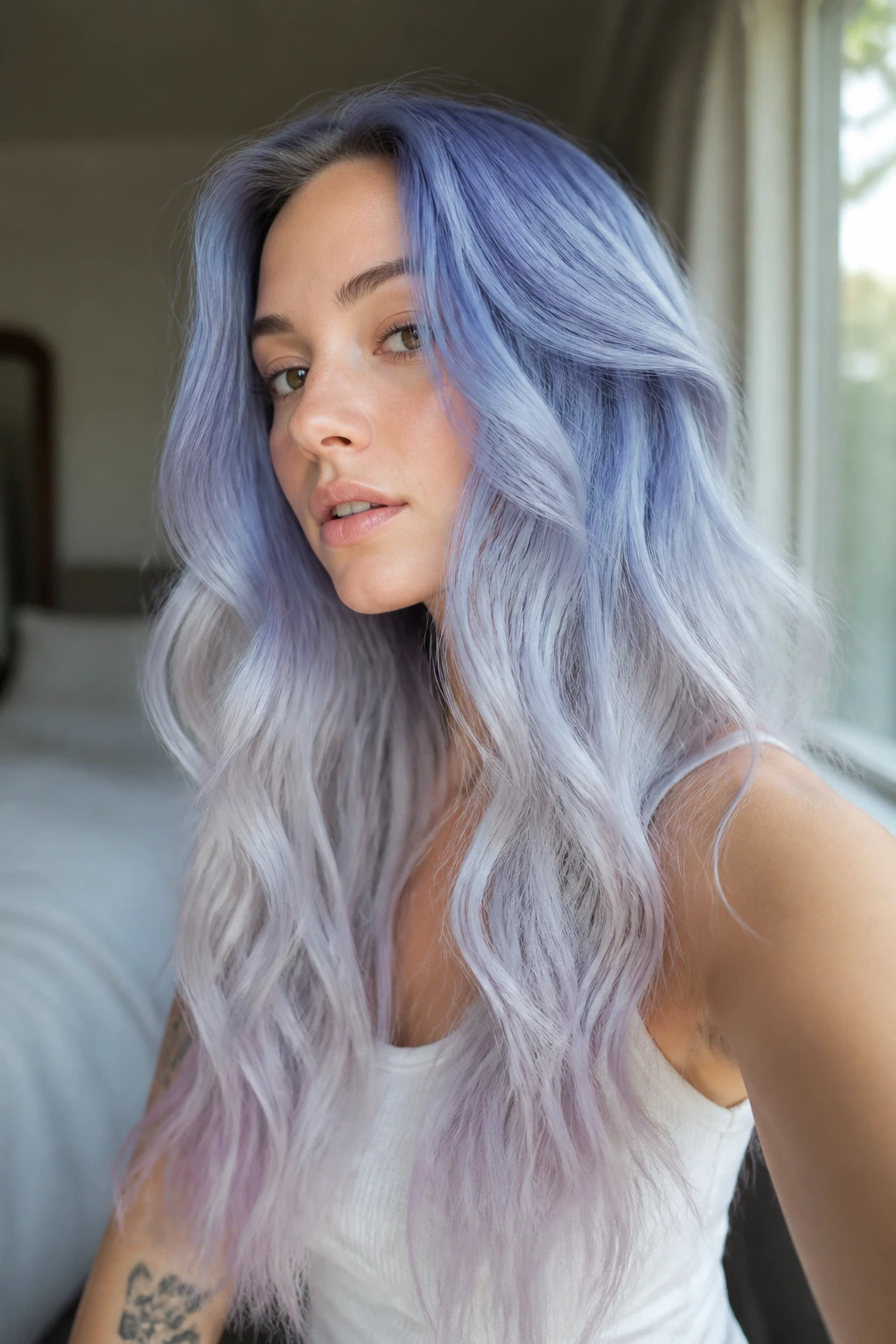
Periwinkle is the shy cousin in the blue family. It carries a little lavender, a little gray, and just enough blue to feel different without turning into a full fantasy color. On long hair, a dusty periwinkle fade into white feels airy and a bit dreamy.
This is the kind of style that looks calm at first glance, then gets more interesting the longer you look at it. The dusty tone keeps it from reading too sweet. White ends sharpen it up. Long hair gives the shade room to show those tiny lavender notes that can disappear on shorter cuts.
It’s a good match for soft layers and loose movement. A messy half-up style, a loose braid, or brushed-out curls all make the periwinkle more visible. On straight hair, it can read almost silver from a distance, which is not a bad thing if you want something subtle.
This is one of the few blue-white looks that feels romantic without drifting into bridesmaid territory. That matters more than it sounds.
18. Ice Queen Money Piece With Blue Ombre
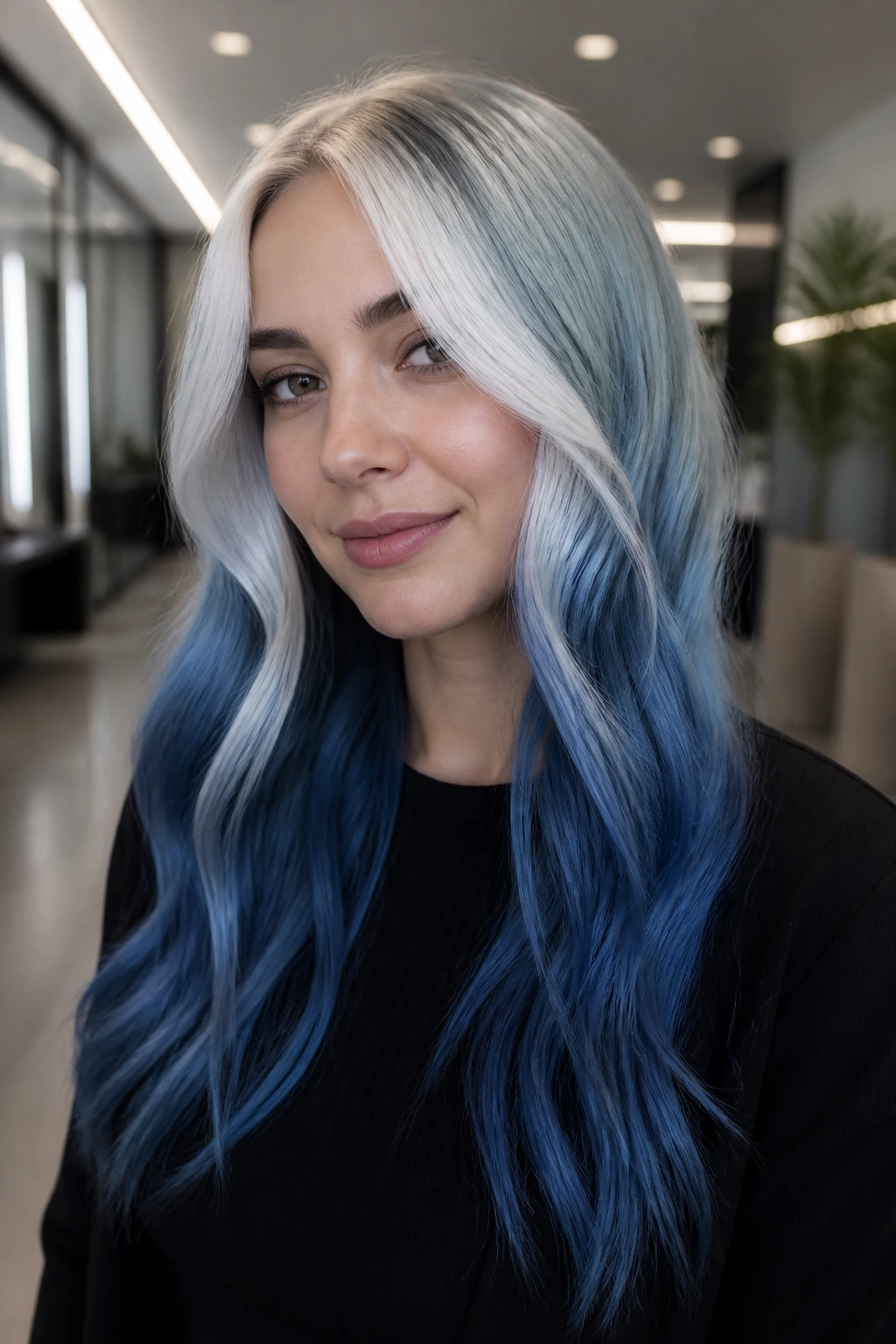
A money piece can change the whole face frame fast. Bright white front streaks with blue ombre through the rest of the length create a sharp, high-contrast look that is easy to spot and easy to style. Long hair helps because the front pieces can stay bright while the blue has plenty of space to melt down the back.
This is a good choice if you like your color to show even when your hair is tied up. The front strips still do their job in a bun, ponytail, or clip. That gives the style more utility than people expect. It’s dramatic, but it earns the drama.
What To Watch For
- Keep the money piece slightly thicker than a strand highlight
- Use a cool toner so the white does not go creamy too fast
- Ask for blue placement that starts below the cheekbone if you want a softer face frame
- Wear it with center parts, curtain bangs, or soft bends for the best effect
If you like your hair to look sharp from the front and rich from the back, this one does both.
19. Braided Blue-White Gradient
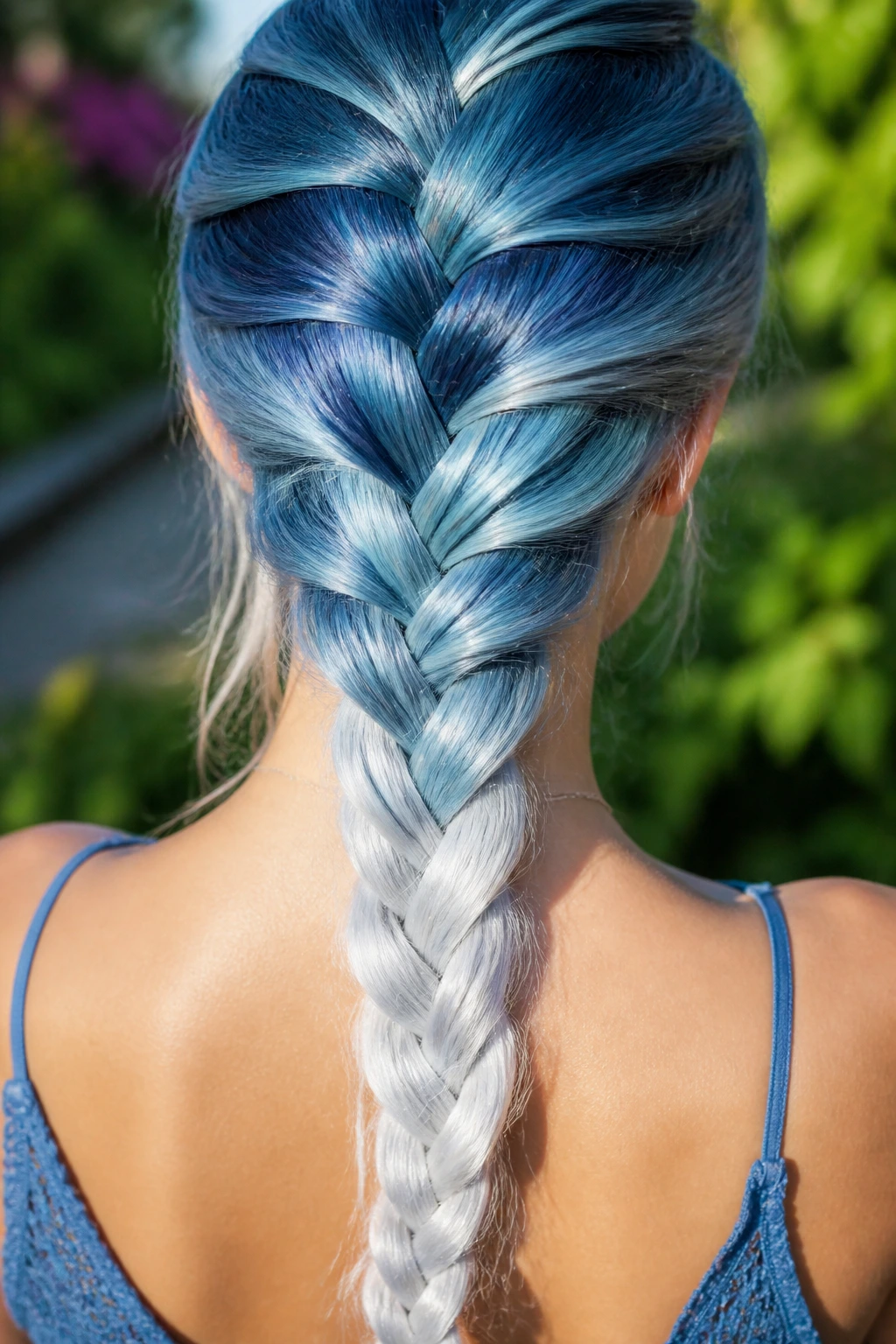
Braids change color in a way loose hair never quite can. A blue-white ombre braided into long plaits compresses the fade so the blue and white show up side by side in each twist. That makes the gradient look more textured and a little more handmade.
French braids, fishtails, Dutch braids, and bubble braids all handle this well, but they show it differently. A fishtail gives you a woven look that blends the tones. A Dutch braid makes the color pop more because the sections sit on top. Long hair gives you enough length for both the braid and the ombre to remain visible.
This is one of those styles that looks better in person than on a flat screen. The texture does the heavy lifting. If you have a layered cut, a few shorter pieces may slip out, and that can actually soften the look in a nice way.
One small thing: braided ombre loves a little shine serum on the ends. Dry ends make the white look rough.
20. Layered Waterfall Ombre
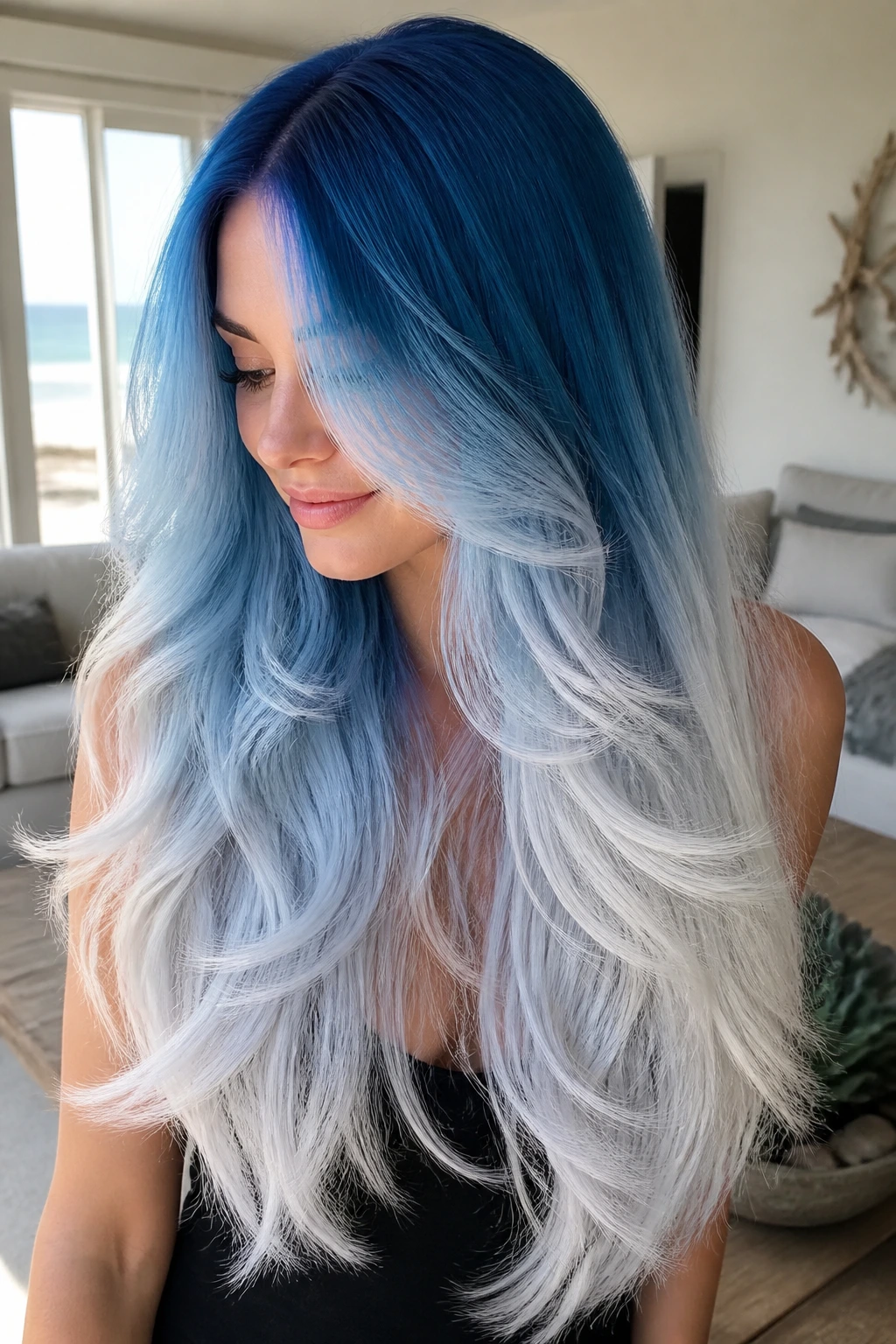
Layers are the secret weapon here. A waterfall ombre with blue melting into white across long layers breaks the color into multiple visible streams instead of one big shift. That makes the hair feel lighter, airier, and less blocky.
The style works because each layer catches the gradient at a different point. One layer may show more blue, the next more white, and the one underneath a muted in-between shade. That variety is what gives the hair depth. It’s also why long layers are better than one solid curtain of length for this look.
If your hair is thick, this is a gift. Thick hair can swallow color when the cut is too blunt. Layers let the blue and white move. They also help the ends avoid that weighed-down look that sometimes happens when lightener is concentrated only at the bottom.
A round brush blowout makes this style look finished fast. The bends show off each color shift without needing much else.
21. Reverse White-To-Blue Ombre
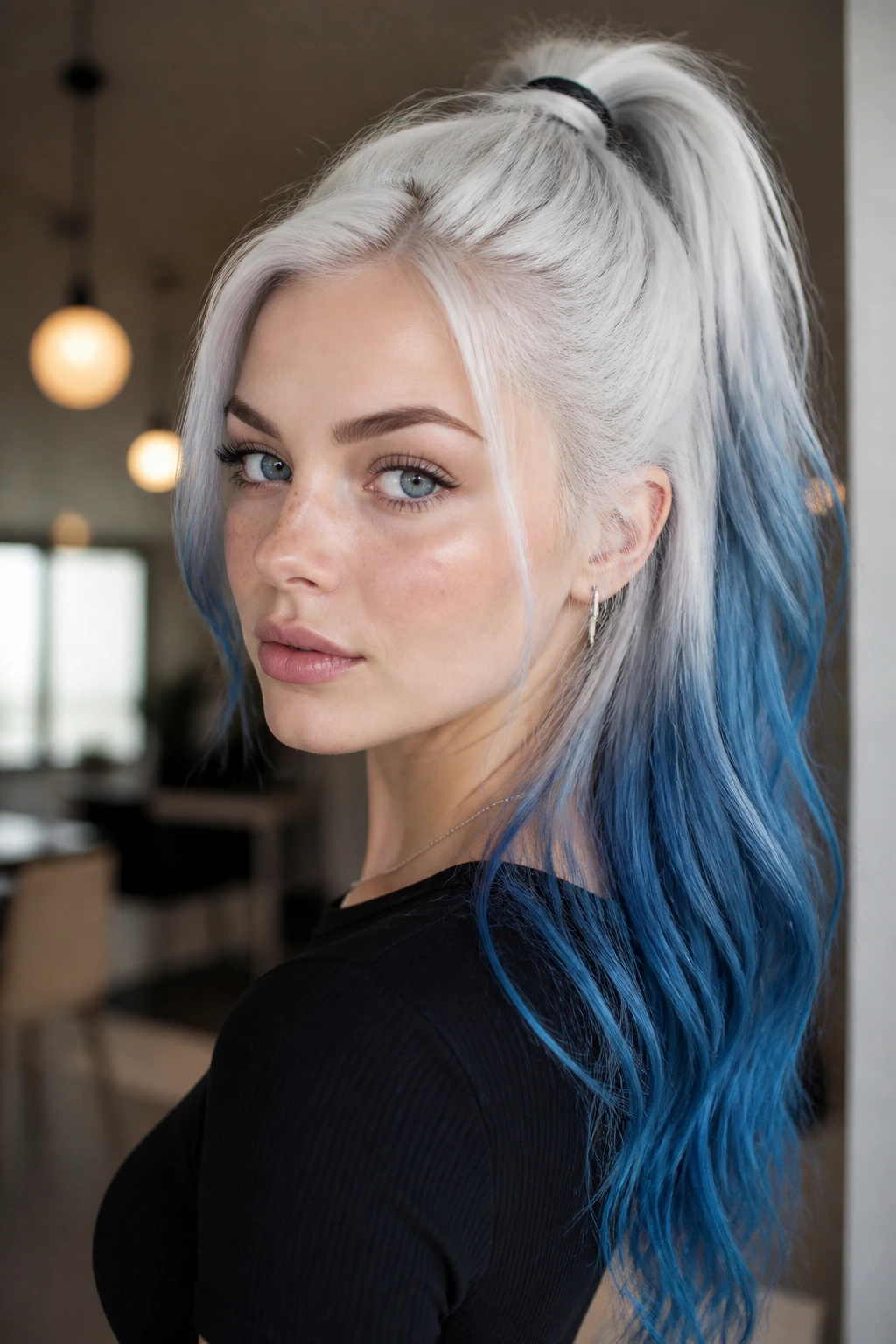
This is the contrarian version, and I’m here for it. White at the crown and blue through the lower lengths flips the usual ombre idea on its head. It’s a little unexpected, a little sharp, and much more interesting than people think at first glance.
The reverse fade works best on long hair because the lower sections have enough room to carry the blue without making it feel top-heavy. The white near the top keeps the scalp area bright and clean, while the blue at the bottom grounds everything. If your hair is already naturally light, this can be a gorgeous way to keep the roots soft without losing the edge of color.
Who It Suits
This is for someone who likes a fashion look and doesn’t mind people asking about it. It’s also useful if you want regrowth to blend into the design instead of standing out.
If you wear your hair in high ponytails or half-up styles, the blue ends stay visible. That’s half the fun. The other half is seeing people realize the color is reversed only after they look twice.
22. Glacier Veil On Straight Hair
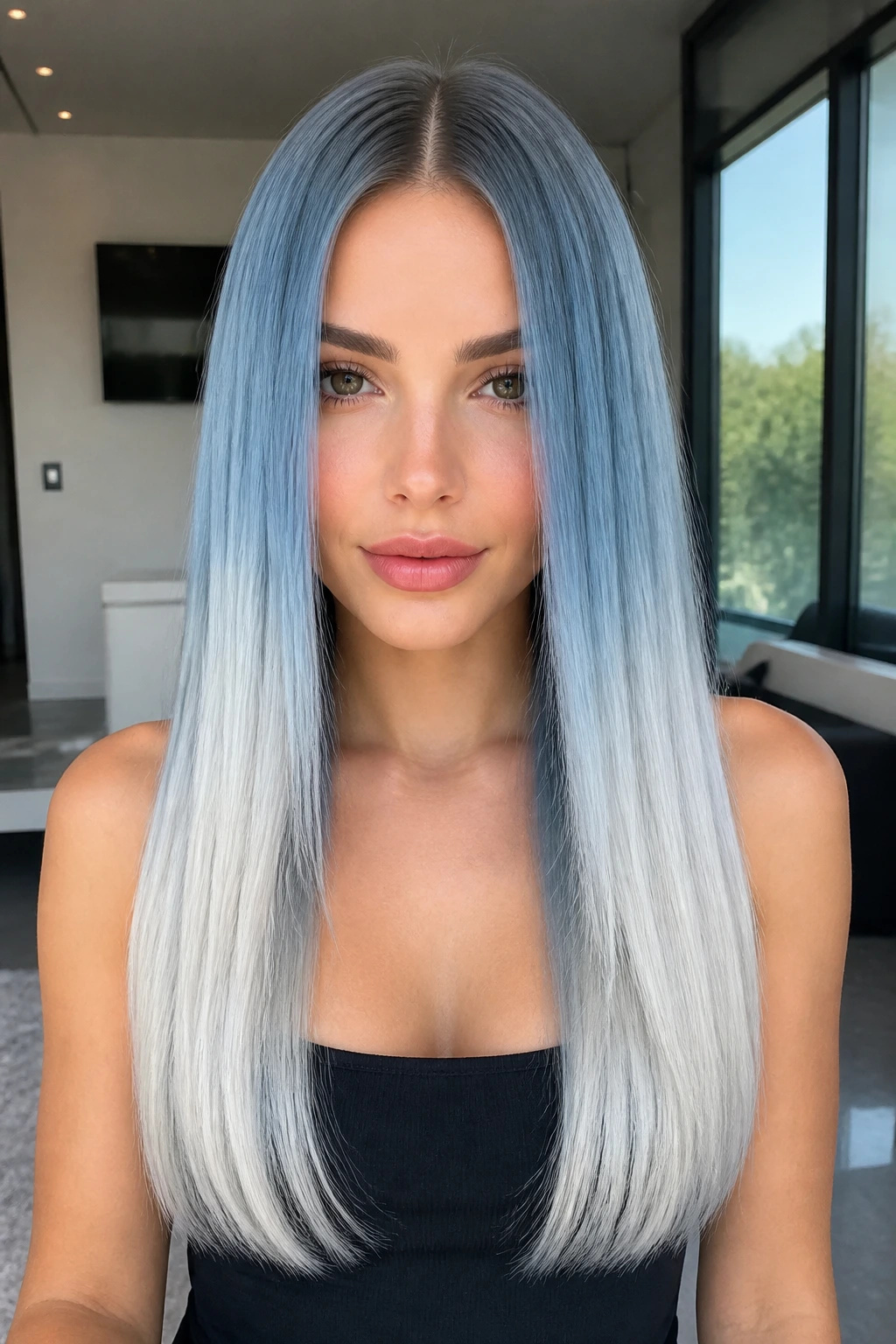
Straight hair can be the best canvas for blue-white ombre if you like sharpness. A glacier veil fade — pale blue through the middle, icy white at the ends — looks clean and almost glassy when the strands hang smooth. There’s nowhere for the color to hide, which is exactly the point.
The part matters here. A center part makes the two-tone shift feel balanced. A deep side part pushes the blue more dramatically to one side, which can be fun if you want a little asymmetry. Long straight hair also lets the light travel down the cuticle, so the white ends seem brighter.
If you’re going for this look, keep the finish sleek. Loose texture softens the contrast, and that can be lovely, but the style really sings when the lines are crisp. A smoothing cream and a flat iron pass can do more than another layer of product ever will.
This is the one that feels cold in a good way. Clean. Sharp. Quietly bold.
23. Sapphire And Snow Balayage
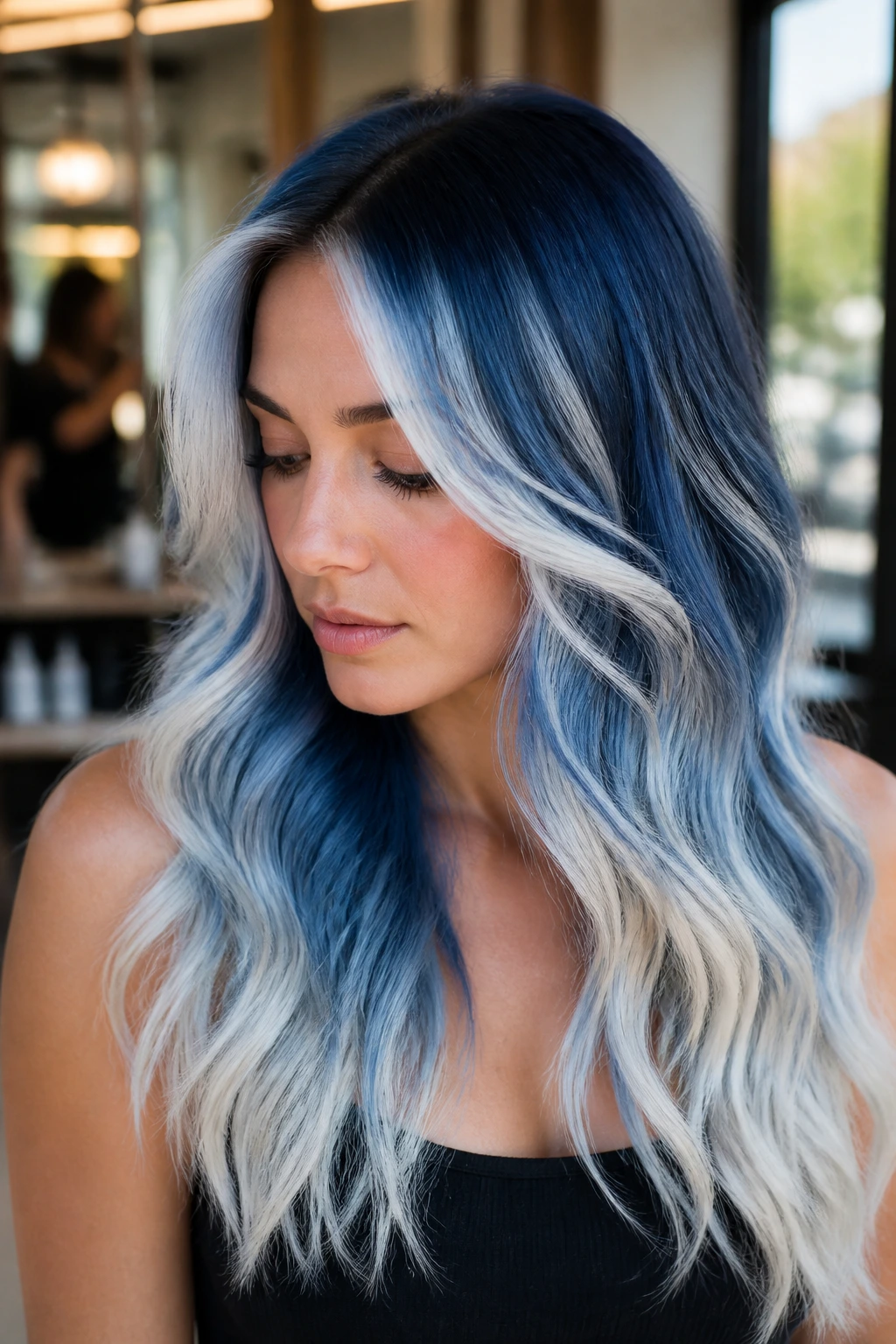
Balayage gives you a hand-painted result, and that is why sapphire and snow works so well on long hair. Instead of one clean ombre line, you get blue pieces and white pieces woven together in a way that feels organic. It’s less of a fade and more of a drift.
The hand-painted approach lets the color follow the hair’s natural movement. Around the face, the sapphire can be lighter. Beneath the top layers, it can get deeper. At the ends, the snow white takes over. On long hair, that variation keeps everything from looking too predictable.
This style is especially good if your haircut already has movement. Long layers, soft face framing, and textured ends all help. If the cut is heavy and blunt, the balayage can feel a little disconnected. That’s easy to fix with shape.
If you like color that looks like it settled there on purpose, this is a strong option. It has a painterly feel without being fussy.
24. Muted Slate Blue Melt
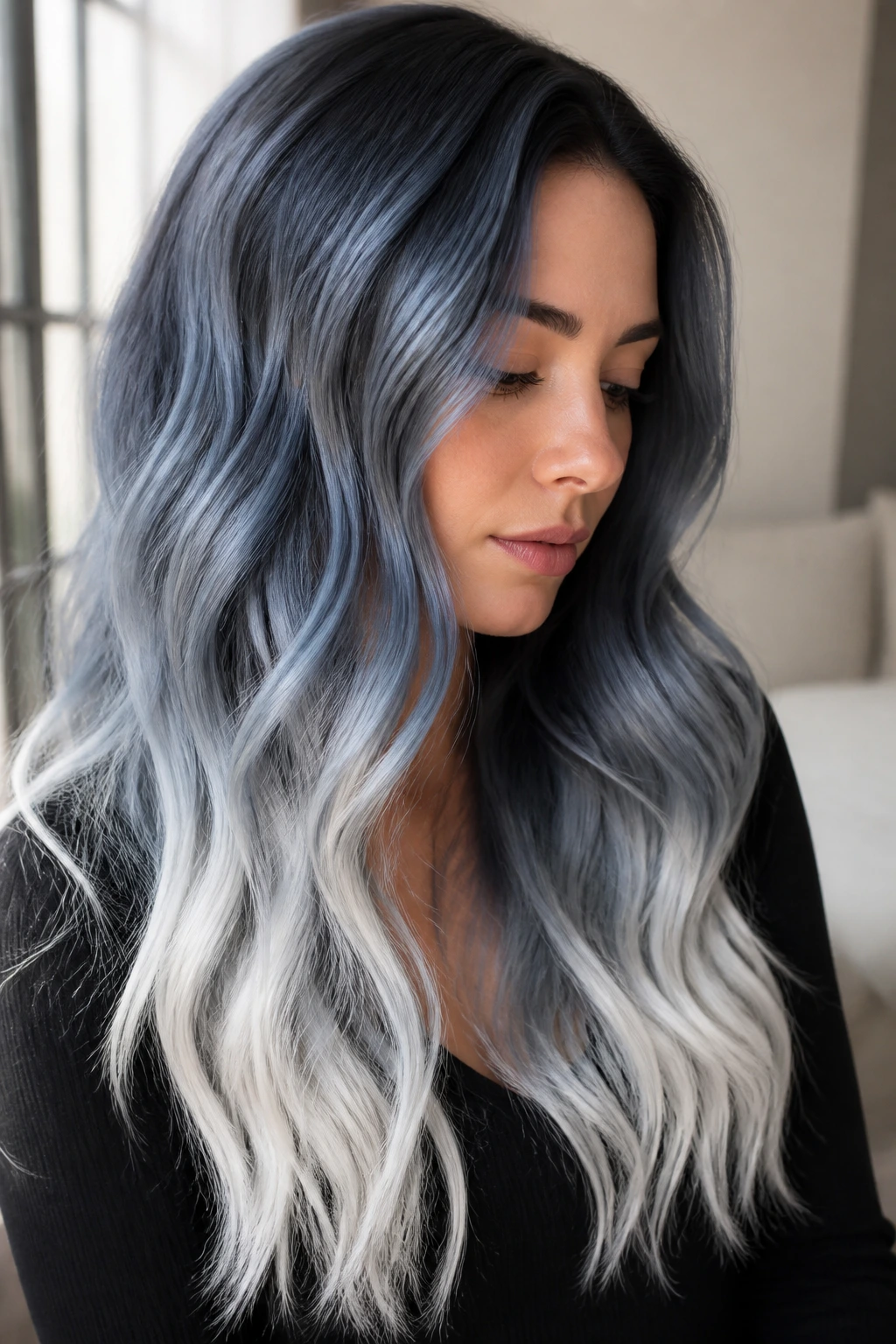
Muted slate blue is one of the smartest choices in the whole group, and people underrate it because it isn’t flashy. Slate blue fading into pale white gives long hair a cooler, softer edge that still feels modern and clean. It’s less vivid than cobalt, less dark than navy, and easier to wear than neon.
The beauty of slate is how it behaves in different light. In daylight, it can look smoky and almost silver-blue. Indoors, it sinks deeper and becomes moodier. That shift keeps long hair interesting without needing a loud contrast.
This is a good style if you want the blue-white palette to feel wearable over time. It works on wavy hair, straight hair, and even finer hair that can get overwhelmed by a stronger shade. The white ends keep it bright. The slate keeps it from looking washed out.
If you like cool tones but want a little restraint, this is the one I’d point you toward first.
25. Neon Electric To Polar White
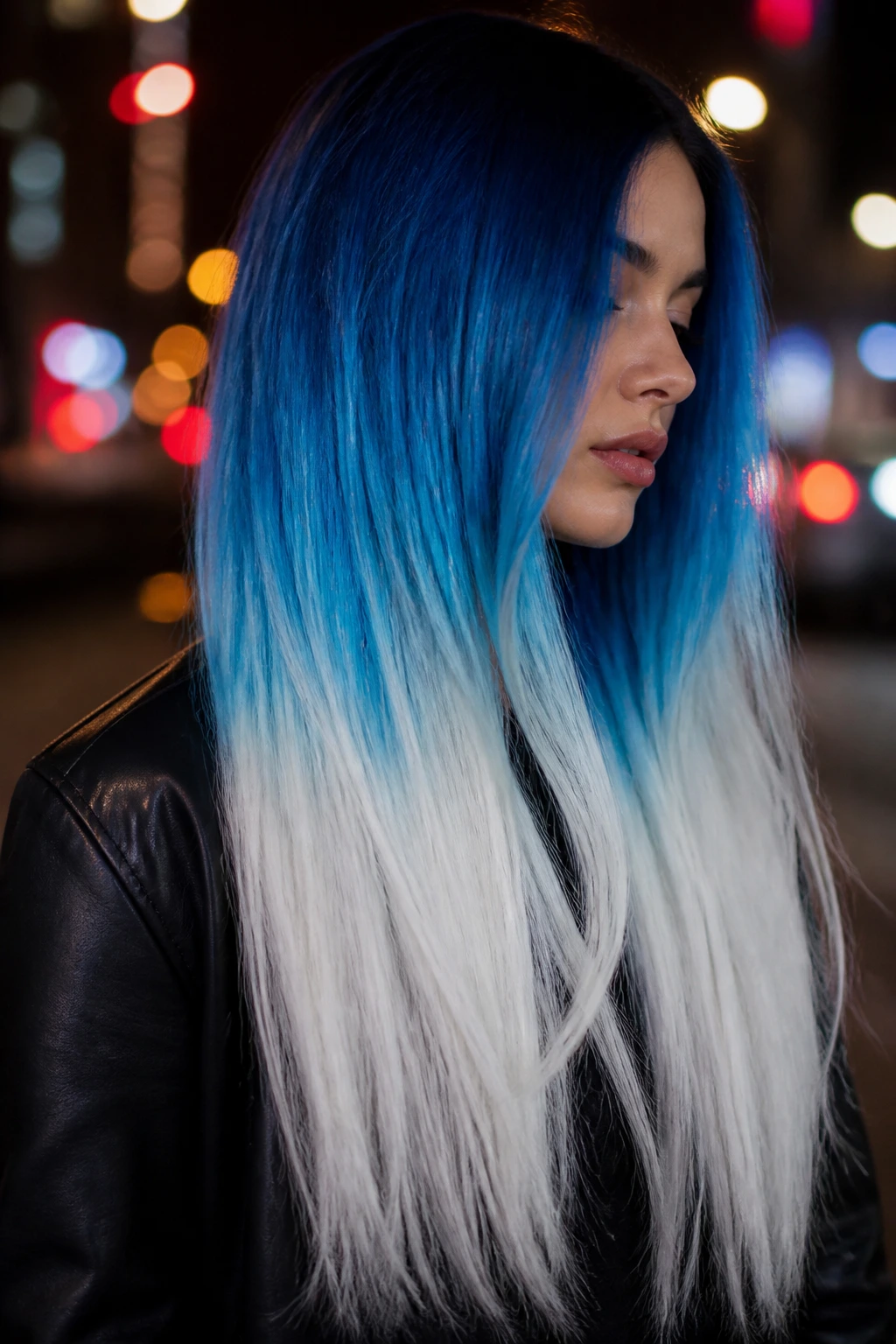
This is the loud ending, and it earns its place. Electric blue through the middle and polar white at the ends gives long hair the highest contrast of the bunch. It’s bright, sharp, and impossible to ignore. If you want your hair to look like you committed, this does the job.
Long hair is what makes this style work. The length gives the eye time to travel from the electric blue into the white, so the whole thing feels intentional rather than random. On shorter hair, the blue can hit too fast. On long hair, it has space to build.
This is best for people who like a little edge in their look — not just in the color, but in the shape too. A blunt cut, strong waves, or a smooth ponytail all make the contrast stronger. If you want softness, skip this one. If you want impact, go here.
You will need upkeep. No sugarcoating that. The payoff is huge, though, and the finish can be spectacular when the toner stays cool and the white stays bright.
Final Thoughts
Blue-white ombre on long hair works best when the shade choice matches the haircut, not the other way around. A smoky slate fade feels calm and wearable. A neon electric version feels sharp and fearless. In between, there’s a whole range of denim, pearl, sapphire, periwinkle, and glacier tones that can make the same basic idea look completely different.
The thing I keep coming back to is this: long hair doesn’t just show color, it shows distance. That distance is what makes a fade feel expensive, soft, dramatic, or clean. If you’re bringing a reference photo to a colorist, bring one from the front, one from the side, and one from the back. The back view matters more than people admit, especially when the ombre lives below the shoulders and gets swallowed by layers or curls.
And one practical tip before you book anything: decide how you want the color to look on day one and on day twenty-one. That’s where the real choice lives.
