



Rose gold on long hair has a sneaky advantage: the extra length gives the color room to melt instead of landing in one blunt stripe. If you’re sorting through rose gold ombre hair ideas for long hair, the smartest place to start is with the base color, the amount of lift your hair can handle, and how soft or bright you want the pink to feel.
On long lengths, rose gold can read soft and polished or bold and candy-like, and the difference usually comes down to undertone. A brunette base with a muted blush glaze behaves nothing like a level 10 blonde wearing a champagne-pink veil. Same color family. Different mood.
The technical part matters, too. Dark hair often needs more than one lightening session before rose gold will sit cleanly, and uneven lift shows fast on long hair because there’s so much surface area. That’s why strand tests, root shadows, and a finishing gloss are not boring salon extras. They’re the pieces that keep the whole thing from looking patchy.
I keep coming back to the softer versions first. They age better, they’re easier to live with, and they still give you that warm pink-metal shine when the light hits the ends. The first idea below is the one I’d put on a brunette with long layers who wants glamour without a maintenance headache.
1. Soft Rose Gold Ombre for Long Brunette Hair
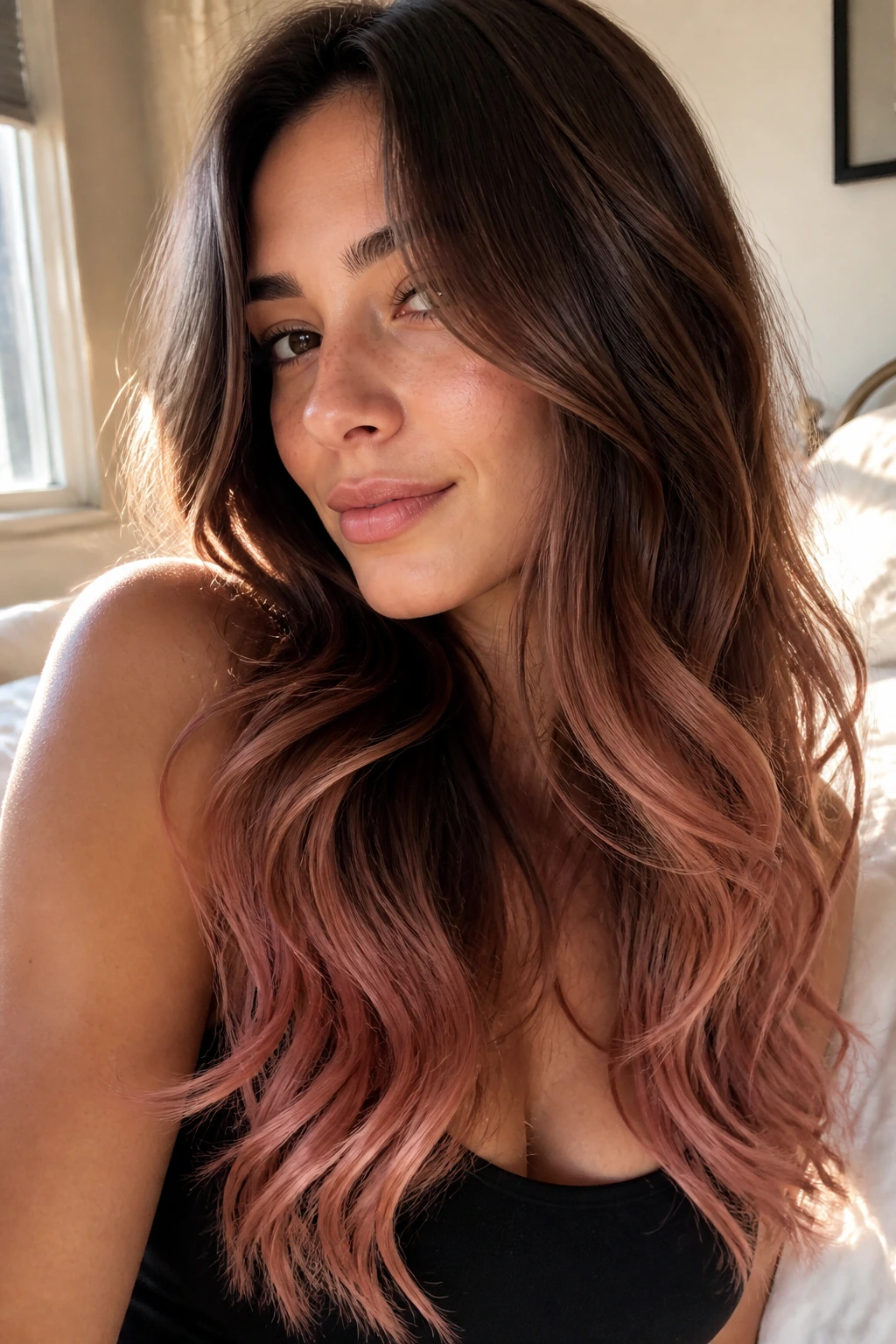
This is the version I reach for when someone wants rose gold without looking like they committed to a full fantasy color. The roots stay brunette, the mids warm up, and the ends drift into a blush-copper finish that looks richest on long, layered hair.
Why It Works
Depth at the root makes the rose gold feel expensive. A level 4 or 5 brunette base gives the pink enough contrast to show up, but not so much that it screams. On long hair, that soft fade looks especially nice when the layers move.
A few details make this style sing:
- Keep the root area shadowed for about 2 to 4 inches.
- Ask for the rose tone to land mostly from the mid-lengths down.
- Add loose waves if you want the pink to read from across the room.
- Use a beige or neutral gloss if your skin tone runs cool.
The best part is the grow-out. Because the color is concentrated lower down, you do not get that hard line that makes some ombré work look dated fast.
2. Chestnut Brown with Peach-Rose Ends
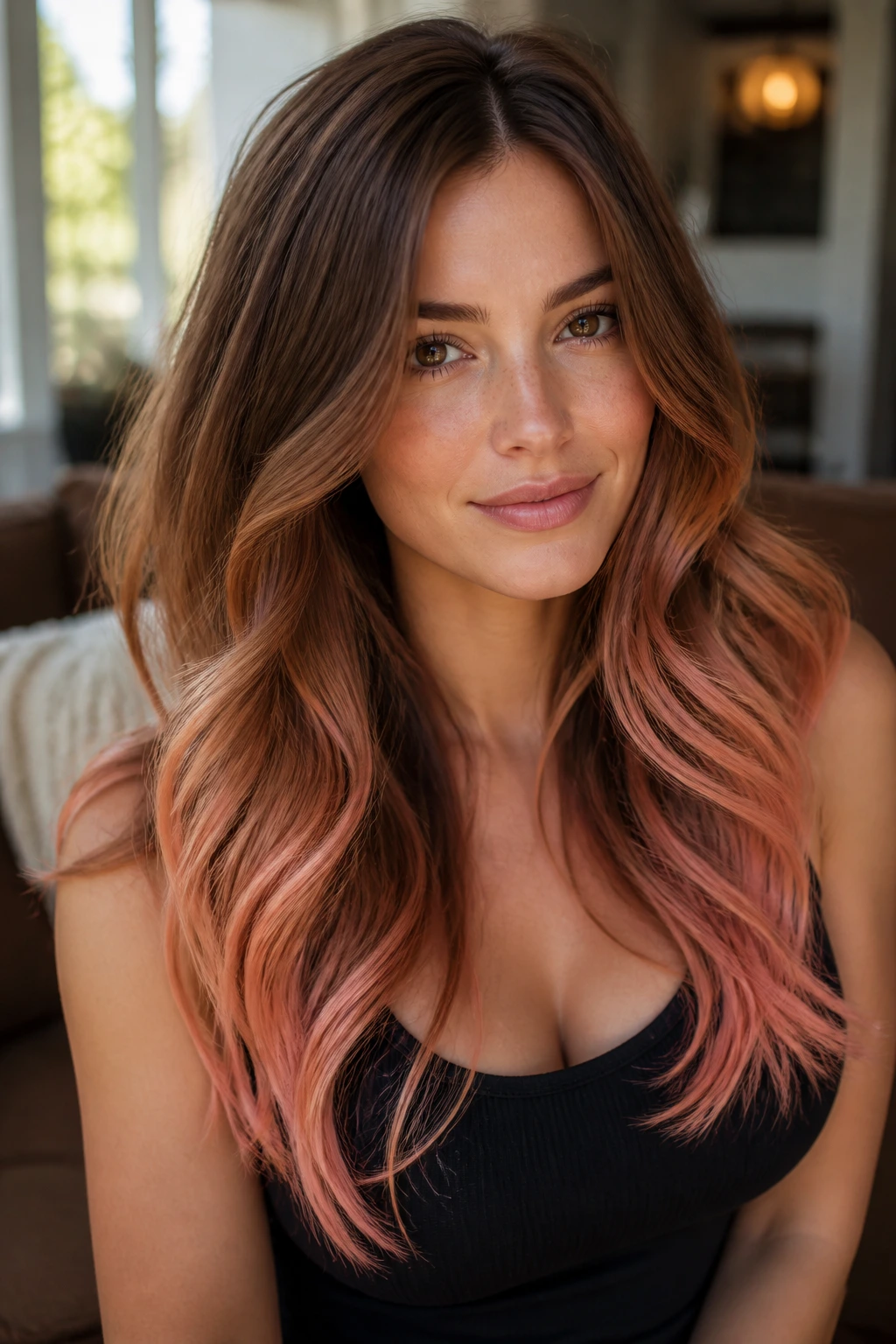
Chestnut brown is a sweet spot for rose gold. It already carries warmth, so the peachy side of the rose gold spectrum feels natural instead of forced. That matters a lot on long hair, where a cold pink can sometimes look disconnected from the base.
What I like here is the way the fade behaves in motion. Straight hair shows a smooth color drift, while big bends in the hair make the peach ends look brighter and more playful. The result feels a little softer than a classic copper ombré, which is a nice thing if you want warmth without red overload.
This version also plays well with medium-thick hair because chestnut depth helps the ends look fuller. If your hair is very fine, keep the peach at the tips only. Too much lightening through the lower half can make the ends look thin. A rose-toned glaze every few weeks keeps the color from turning dull and brownish.
3. Black Hair with Smoky Root Shadow and Rose Gold Lengths
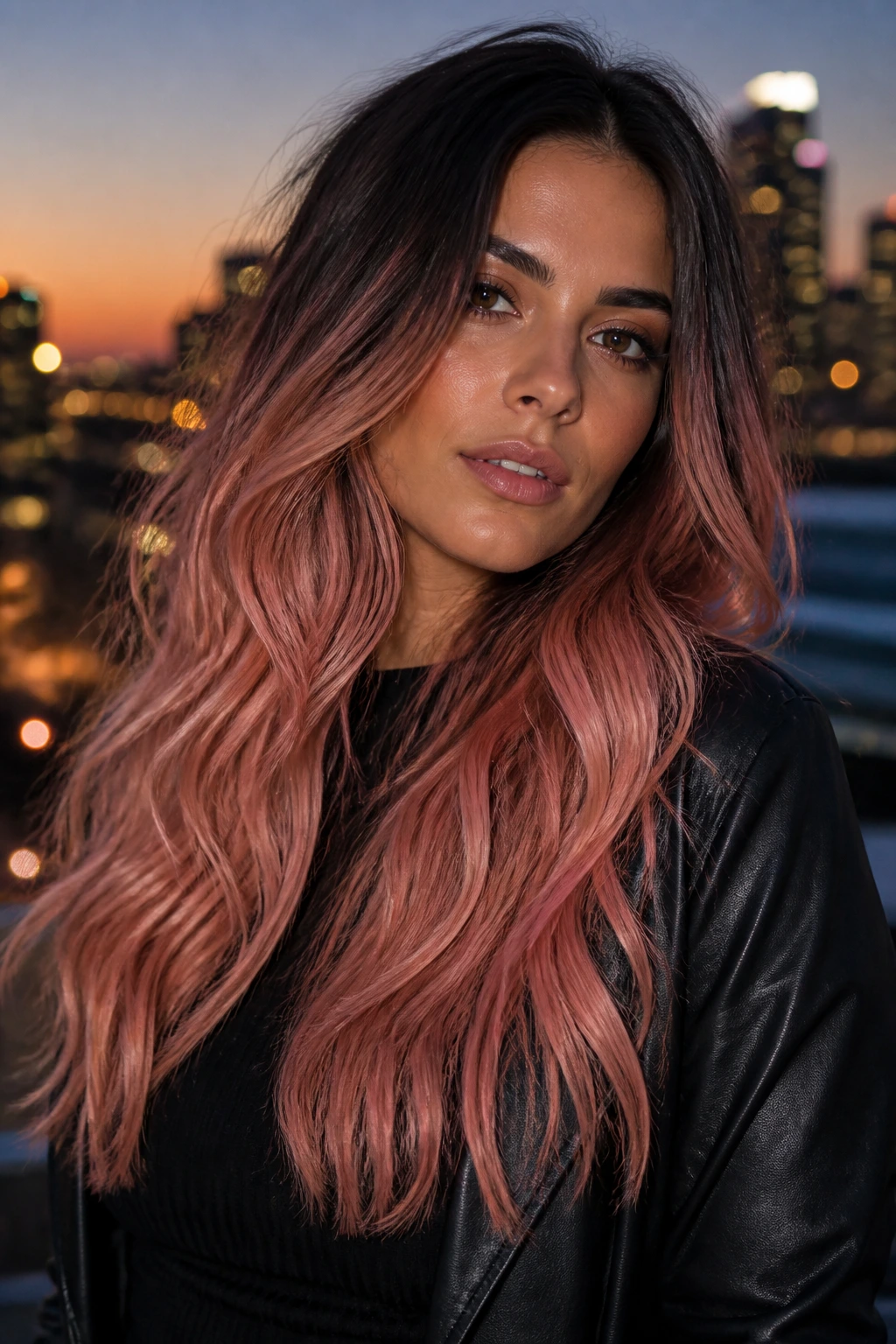
Why does rose gold over black hair look so rich when it’s done well? Because the contrast gives the color a proper stage. The trick is not to leap straight from black to pink. That usually looks harsh and stripy. You want a smoky root shadow, a controlled lift through the mids, and then the rose gold to bloom on the lower lengths.
How to Ask for It
Ask your colorist for softly blended lightening panels, not a flat block of blonde. On long hair, that blend matters more than people think.
The best versions usually have:
- A root shadow that stays close to the natural base
- Mid-lengths lifted to a warm gold
- Rose gold concentrated below the shoulders
- Soft waves to break up any hard line
This is not the lowest-maintenance choice on the list. It is a look for someone who wants drama, and is okay with a few salon visits to keep the lift healthy. But when it’s done right, the result has a deep, jewel-like shine that plain blonde ombré never quite gives you.
4. Honey Blonde with Champagne Rose Ribbons
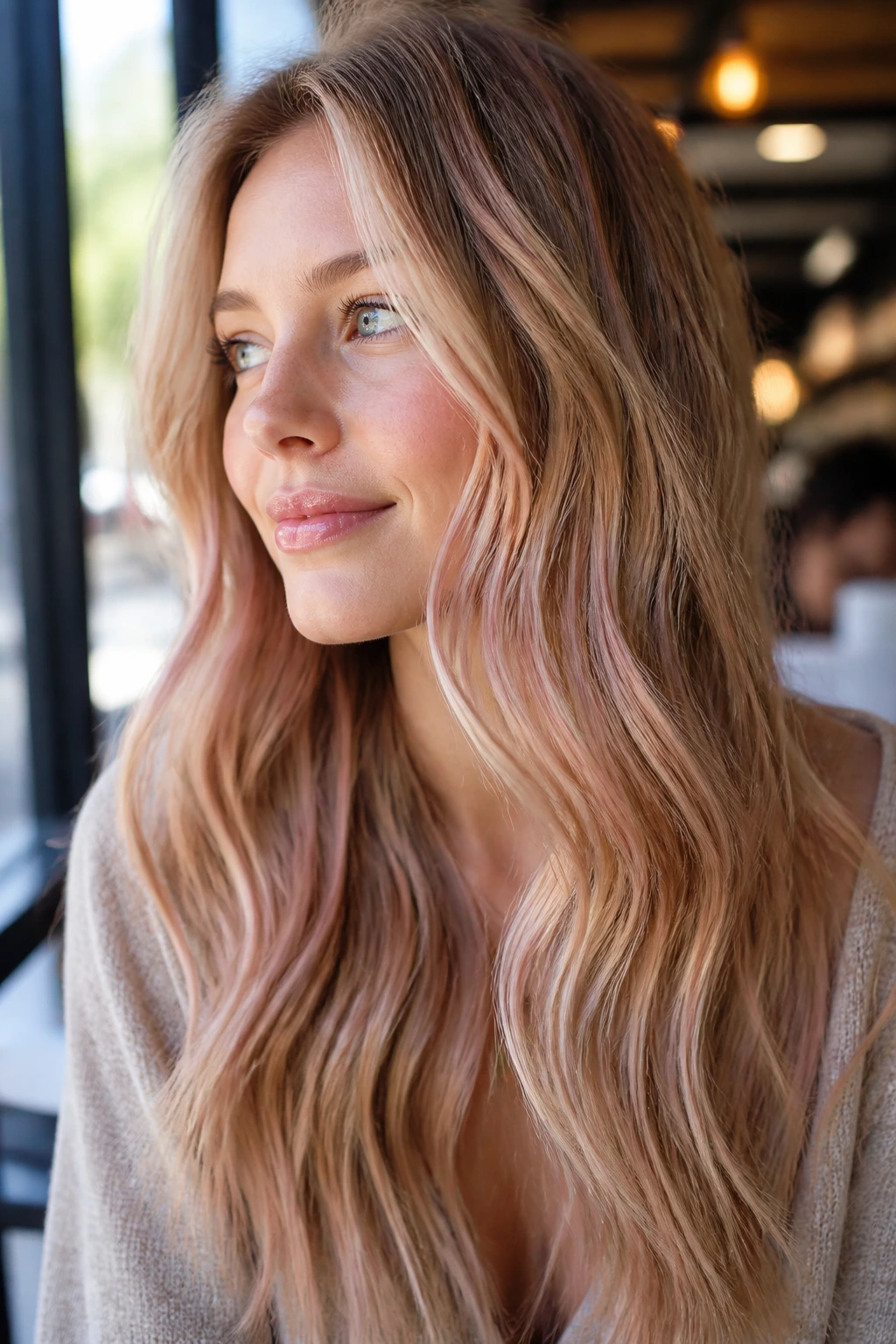
A honey blonde base can carry rose gold in a way that feels almost effortless. The tone is already sun-warmed, so adding champagne-pink ribbons through long hair gives you dimension instead of a full color shift.
I like this on layered cuts because the rose ribbons sit differently depending on the angle of the hair. You catch a pink flash here, a gold flash there, and the whole style looks more expensive than it really is. That’s the magic of keeping the ribbons fine instead of chunky.
What to Watch For
If the rose tone is too saturated, it can fight the honey blonde and turn the whole look peachy-orange. Ask for a sheer glaze, not a heavy deposit. A little goes a long way on lighter hair.
This is a good pick if you want color that still looks believable at brunch, in an office, or pulled into a half-up knot. It has personality, but it doesn’t shout.
5. Rosy Balayage Over Layered Waves
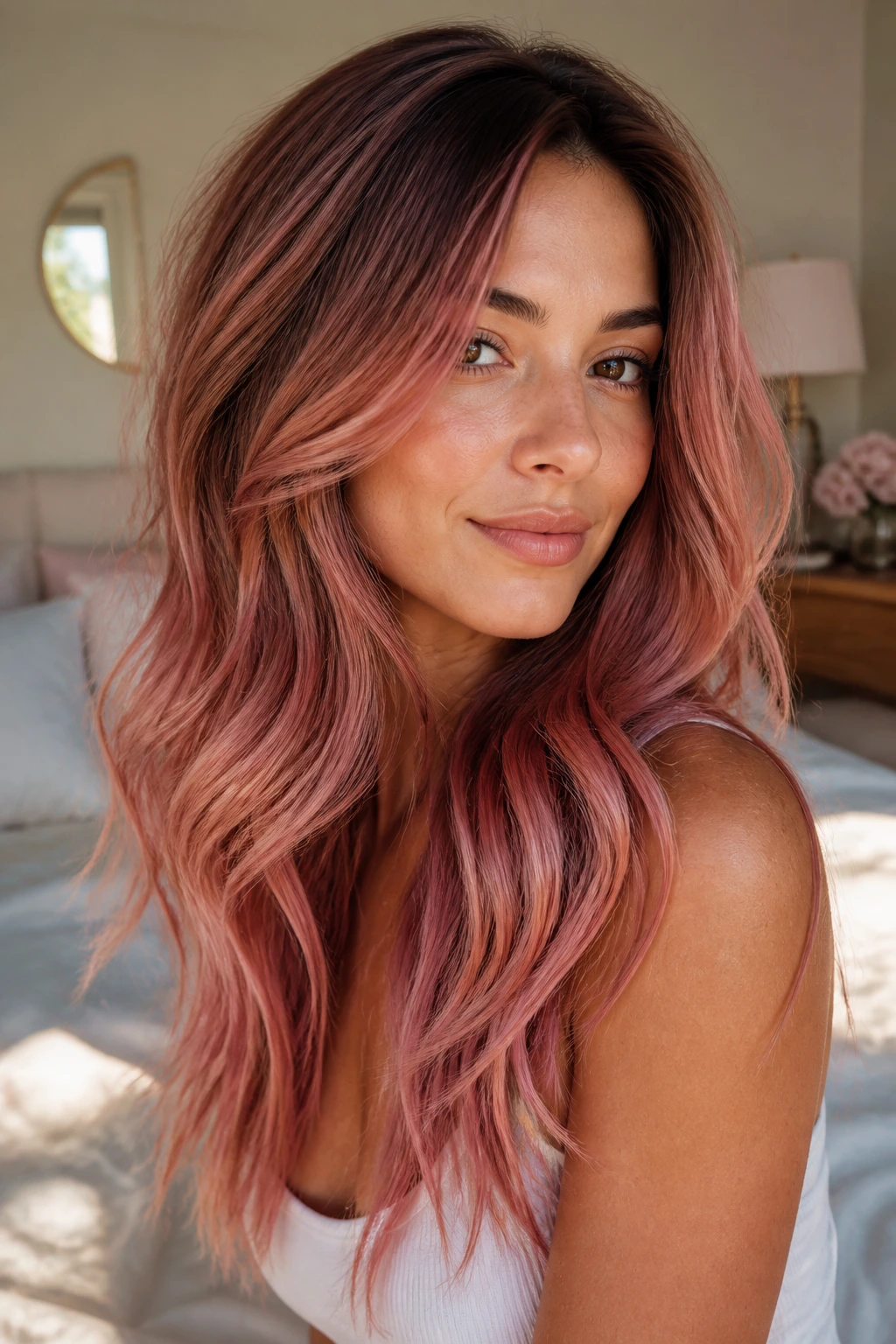
Rosy balayage is the closest thing to rose gold ombre’s laid-back cousin. The color is painted in a softer, more scattered way, so the long layers carry little hits of pink instead of one obvious fade. On wavy hair, that scattered placement looks especially alive.
I prefer this version when the haircut already has movement. Heavy one-length hair can swallow balayage if the layers are too blunt. Give it texture and the rose tones start to flicker through the lengths instead of sitting there like paint.
The maintenance is kinder than a full blonding job, which matters if your hair is already long and fragile at the ends. A gloss every so often keeps the tone fresh. Skip heavy purple shampoo unless your stylist tells you otherwise; it can dull the warm blush too quickly. This one is all about softness, not correction.
6. Copper Brunette Fading into Metallic Rose
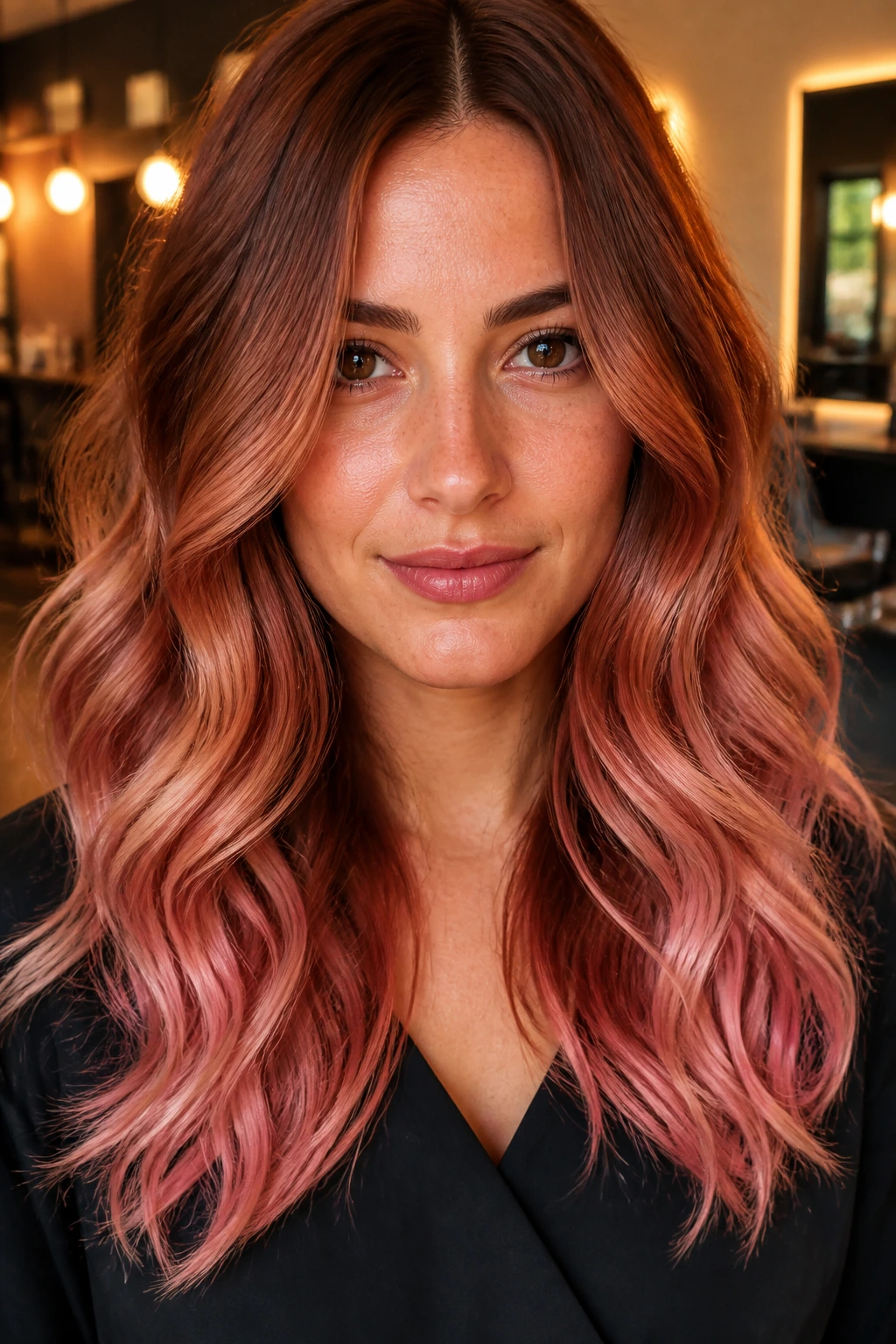
There’s a real difference between copper and rose gold, and this style sits right on the border. The brunette base carries a copper warmth, then the ends shift into a metallic rose finish that looks a little richer than pastel pink and a little cooler than auburn.
That balance makes it a strong choice for warmer skin tones, though I’ve seen it work beautifully on neutral complexions too. The reason is simple. The copper gives the eye something familiar, and the rose adds that polished edge people notice.
Unlike softer blush ombrés, this one looks better when the waves are a bit more defined. You want the metallic finish to show off the bend in the hair. A large barrel iron, around 1¼ to 1½ inches, works well here. Leave the ends slightly loose so the rose tone stays visible rather than curling into itself.
7. Dusty Rose Fade on Mushroom Brown Hair
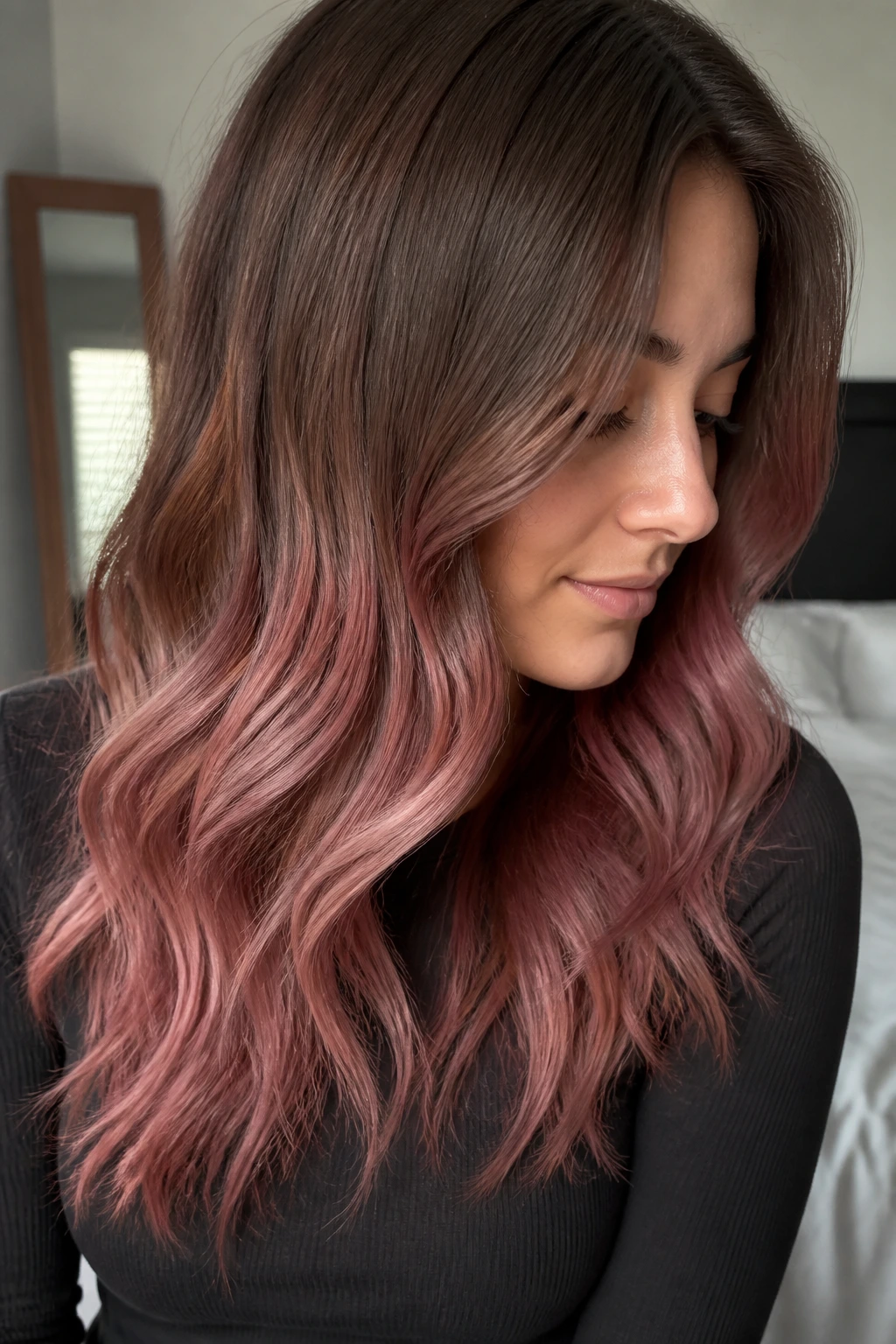
Muted hair color people, this one is for you. Mushroom brown is earthy, smoky, and a little cool, which makes it a smart base for dusty rose. The whole look stays soft, even when the rose is obvious.
What Makes It Different
Dusty rose is not the bright pink you see in salon swatches with too much light. It leans mauve, which lets it sit next to mushroom brown without screaming for attention. On long hair, that means the fade looks intentional from root to tip instead of looking like two different colors fighting each other.
A few details keep it on track:
- Keep the pink muted, not bubblegum.
- Ask for beige or taupe lowlights if the hair needs more depth.
- Style with soft bends rather than tight curls.
- Refresh with a rose beige gloss, not a vivid pink toner.
This is the version I’d choose for someone who says “I want pink, but I don’t want pink.” Which, honestly, is most people.
8. Platinum Blonde with a Sheer Rose Gold Wash
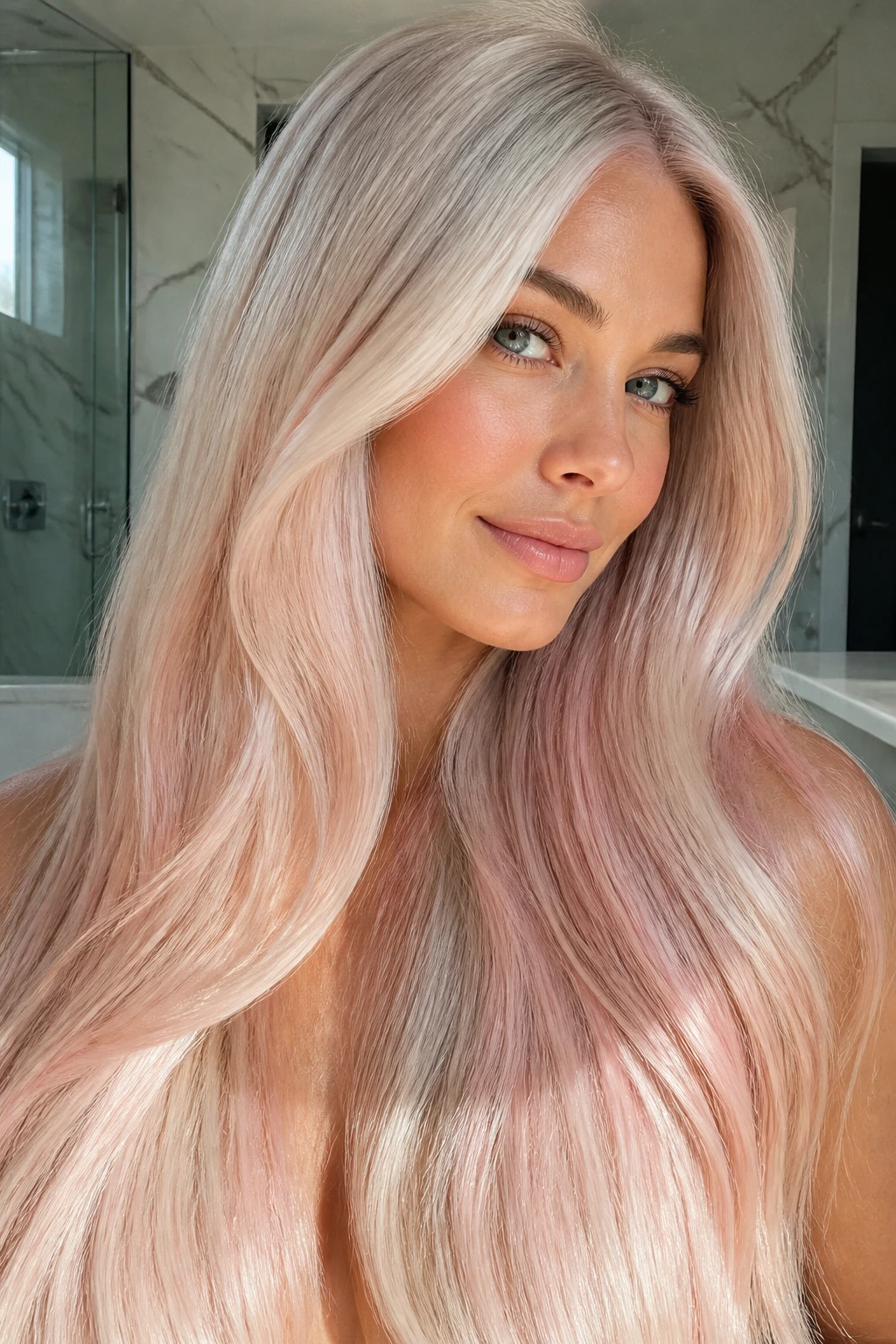
Platinum makes rose gold look almost airy. The base is already pale, so you don’t need much pigment to get that blush-metal sheen. A sheer wash is the key phrase here. Not a heavy dye job. Not a flat pink coat. Just a light tint that softens the blonde and gives it warmth.
Because the canvas is so light, the rose gold shows up best on long, straight sections or smooth waves. Too much texture can make the tint look uneven. That’s not a problem if you want a lived-in look, but if the goal is a glossy finish, keep the styling clean.
This version fades faster than the darker ones. Blonde hair grabs color, then lets it go. Sun, heat styling, and hard water all pull the pink out faster than people expect, so a color-safe shampoo and cool water rinses help. It’s pretty. It’s also a little needy.
9. Face-Framing Rose Gold Ombre for Long Hair
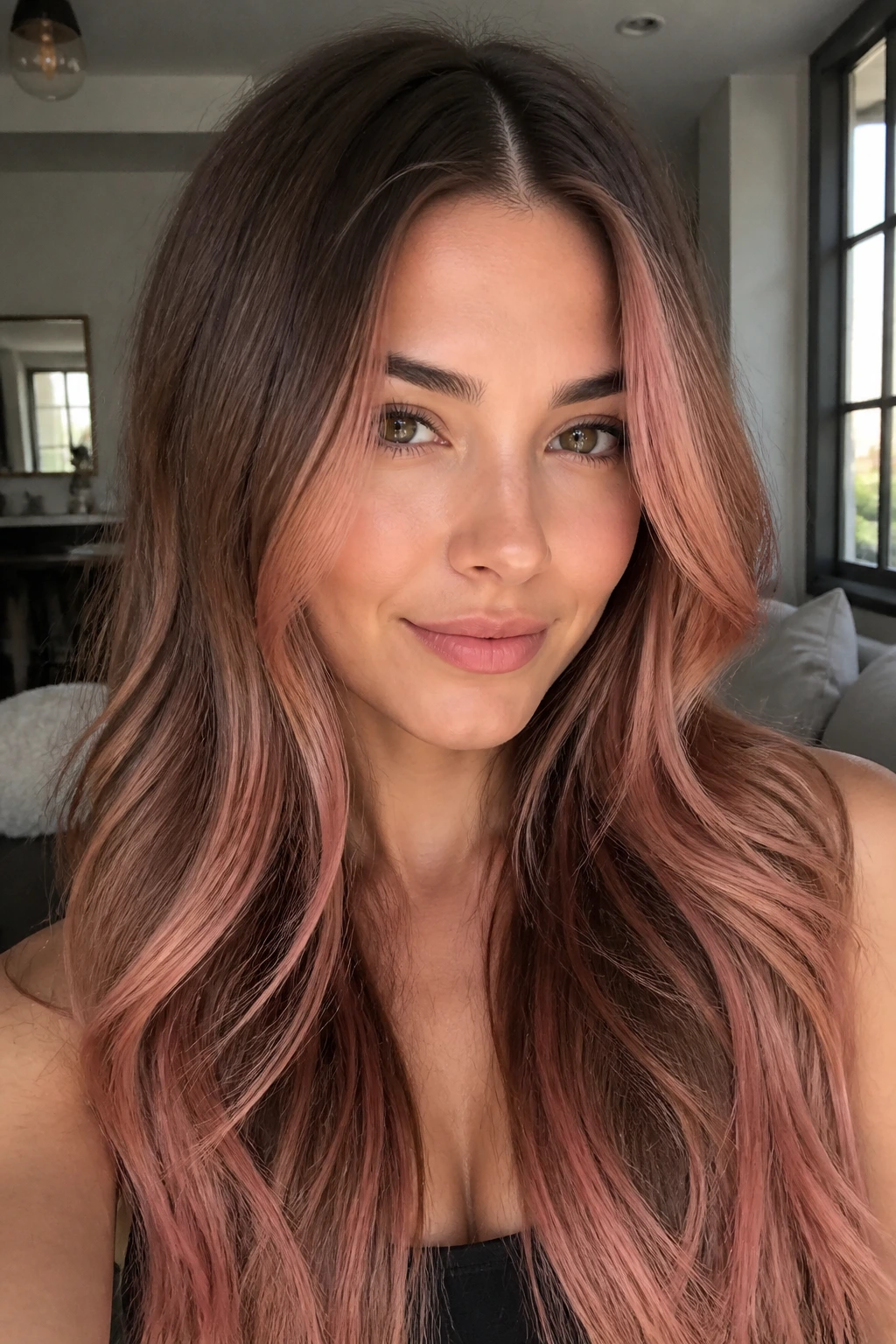
Why commit to a full-length pink fade if what you really want is brightness around the face? A face-framing rose gold ombre gives you that lift at the front while keeping most of the length quieter. On long hair, that can be a smart compromise.
The front pieces carry the most warmth, which makes the skin look brighter and the eyes a little sharper. The rest of the hair can stay brunette, blonde, or caramel underneath. I like this when someone wants a change that shows up in selfies and still looks calm when the hair is pulled back.
How to Wear It
Wear it with a center part if you want the face frame to feel symmetrical. A deep side part makes the rose pieces feel more dramatic and a little softer at the same time.
If your hair is layered, ask for the front fade to start a touch higher than the rest. That keeps the color from disappearing once the hair is tucked behind the ears. Small detail. Big difference.
10. Rose Gold Money Piece with Long Ombre Lengths
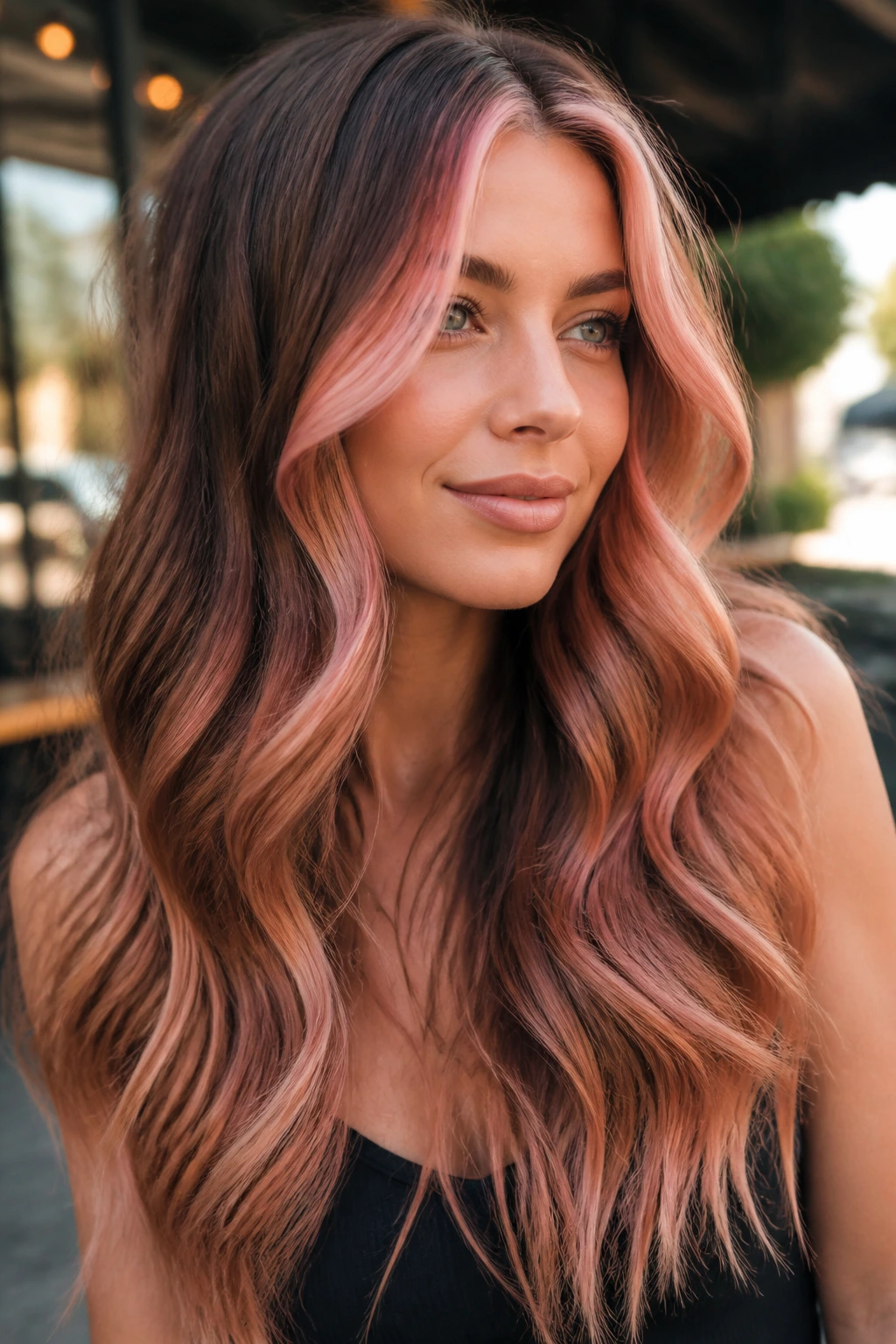
This look is for the person who wants the color to announce itself at the hairline and then soften as it falls. A bold rose gold money piece gives you the flash near the face, while the long ombré lengths keep the whole look grounded.
I like this better than a full-head bright pink on most people. It feels fresher, and it gives you more control over how loud the color gets. The money piece can be brighter, almost glowing, while the mid-lengths and ends stay softer and more wearable.
The placement matters. Too wide, and the face frame starts to look chunky. Too narrow, and you lose the point of it. A colorist who knows how to blend the first two sections around the hairline can make this look rich instead of streaky. Pair it with loose bends and the rose tone will sit beautifully against the rest of the hair.
11. Strawberry Blonde Sliding into Rose Gold
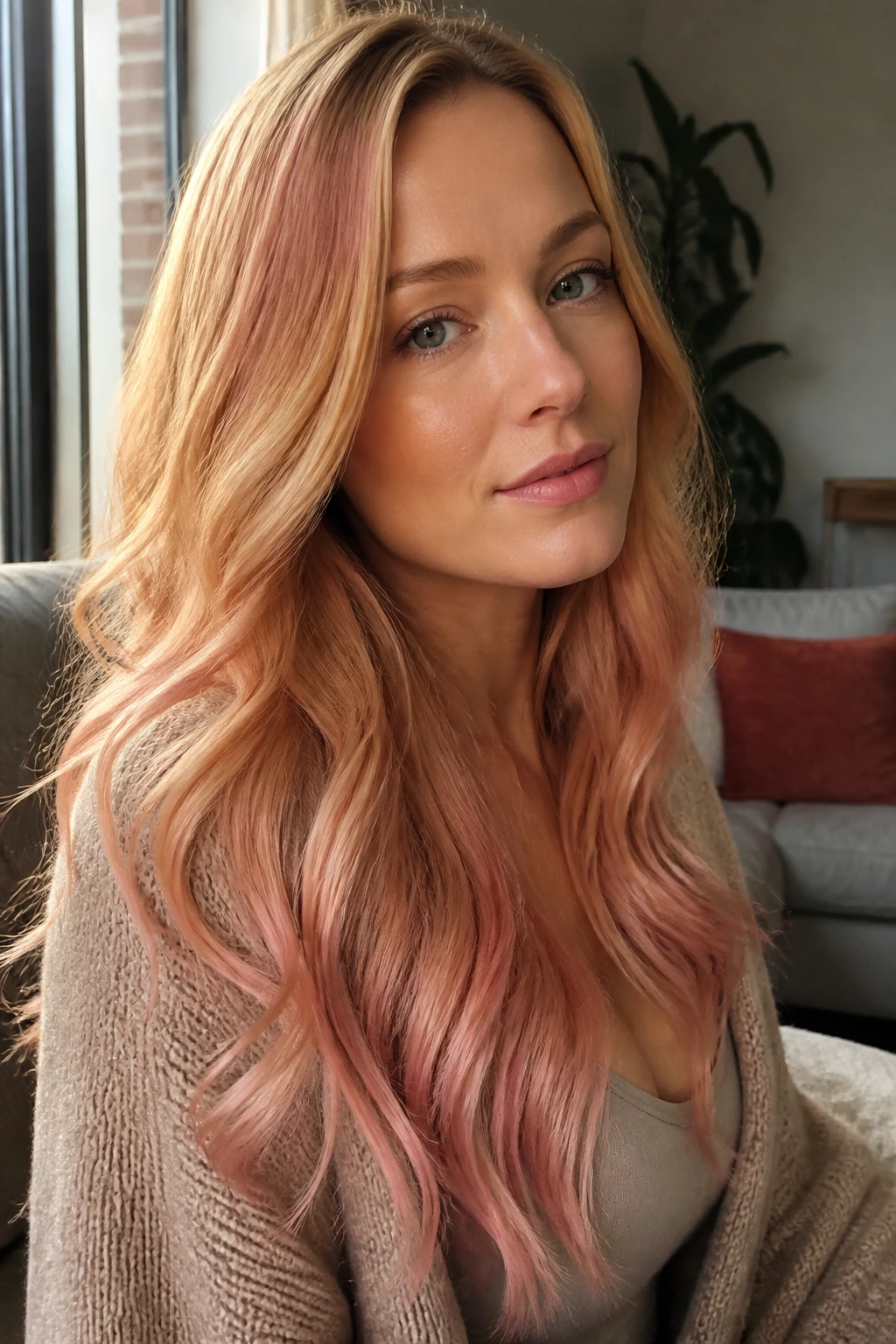
Strawberry blonde is one of the easiest places to land if you want rose gold without fighting your natural warmth. The red-gold base already carries a pinkish note, so the ombre feels like a shade shift rather than a total reinvention.
This works especially well on long hair with soft layers or curtain pieces because the color transition can stay subtle. The roots remain lighter and warm, the mids get a little brighter, and the ends lean into a rose finish that feels soft rather than sugary.
The danger here is going too red. Once the rose starts leaning copper-heavy, you lose the delicate part that makes this look pretty. Ask for a blush-based toner if your colorist tends to go warm. That keeps the finish closer to rose gold and farther from rust.
12. Beige Blonde with Apricot-Rose Ends
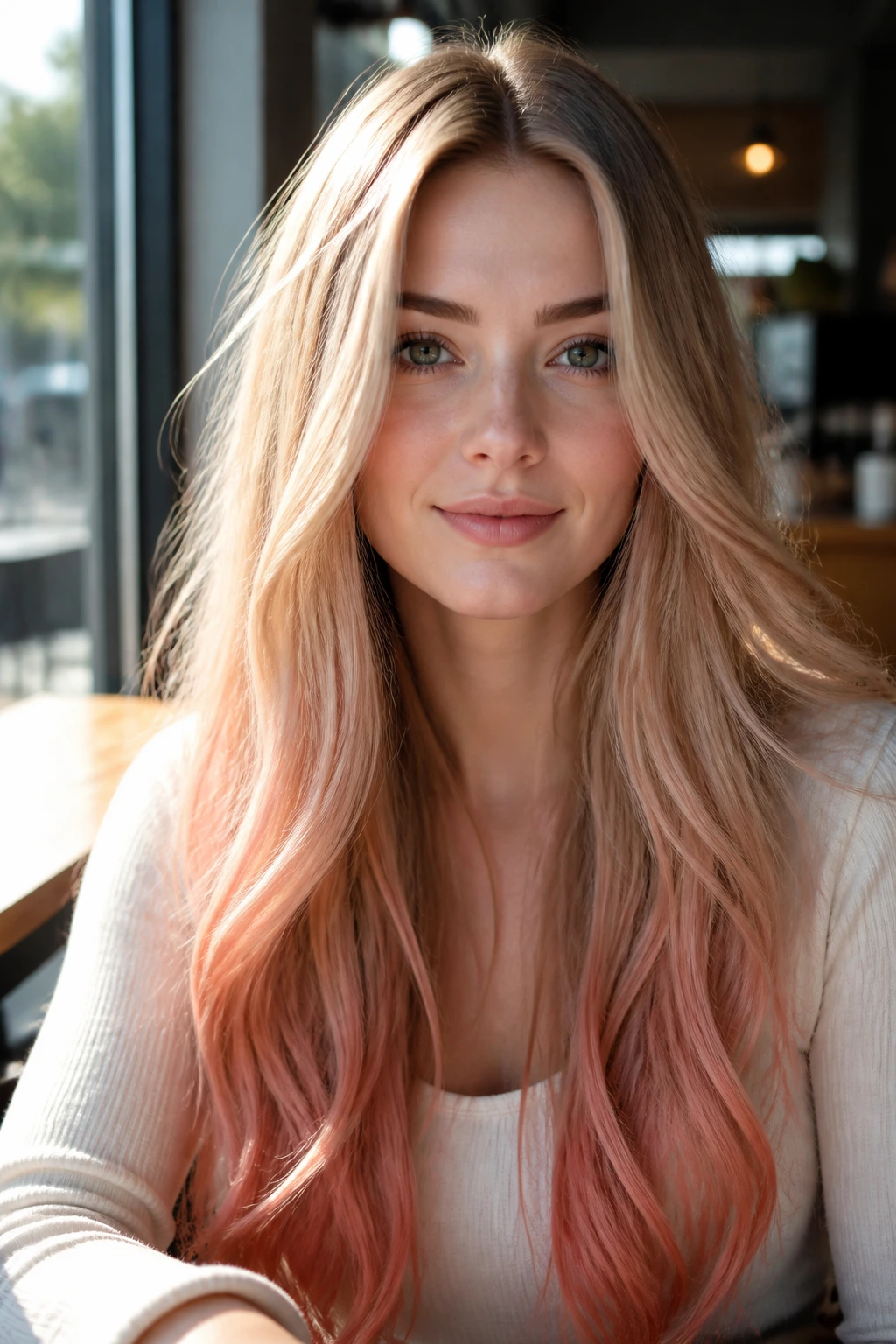
Beige blonde and apricot-rose are a lovely pair because neither one is trying to dominate. The beige keeps things calm, and the apricot-rose ends bring in just enough color to stop the hair from looking flat.
Compared with a brighter rose gold ombré, this version has a softer edge. It suits people who like warm tones but don’t want the result to skew orange. On long hair, that restraint helps the fade look smooth all the way through.
What Makes It Different
The apricot note is what changes the mood. It’s warmer than dusty rose, lighter than copper, and easier to wear than a hot pink glaze.
Best for:
- Medium to light bases that already lean warm
- Long cuts with movement
- Anyone who wants color that still looks polished in daylight
- People who prefer a softer grow-out line
If your wardrobe leans cream, camel, tan, and soft white, this one fits in fast.
13. Mahogany Brunette with Deep Rose Metallic Tips
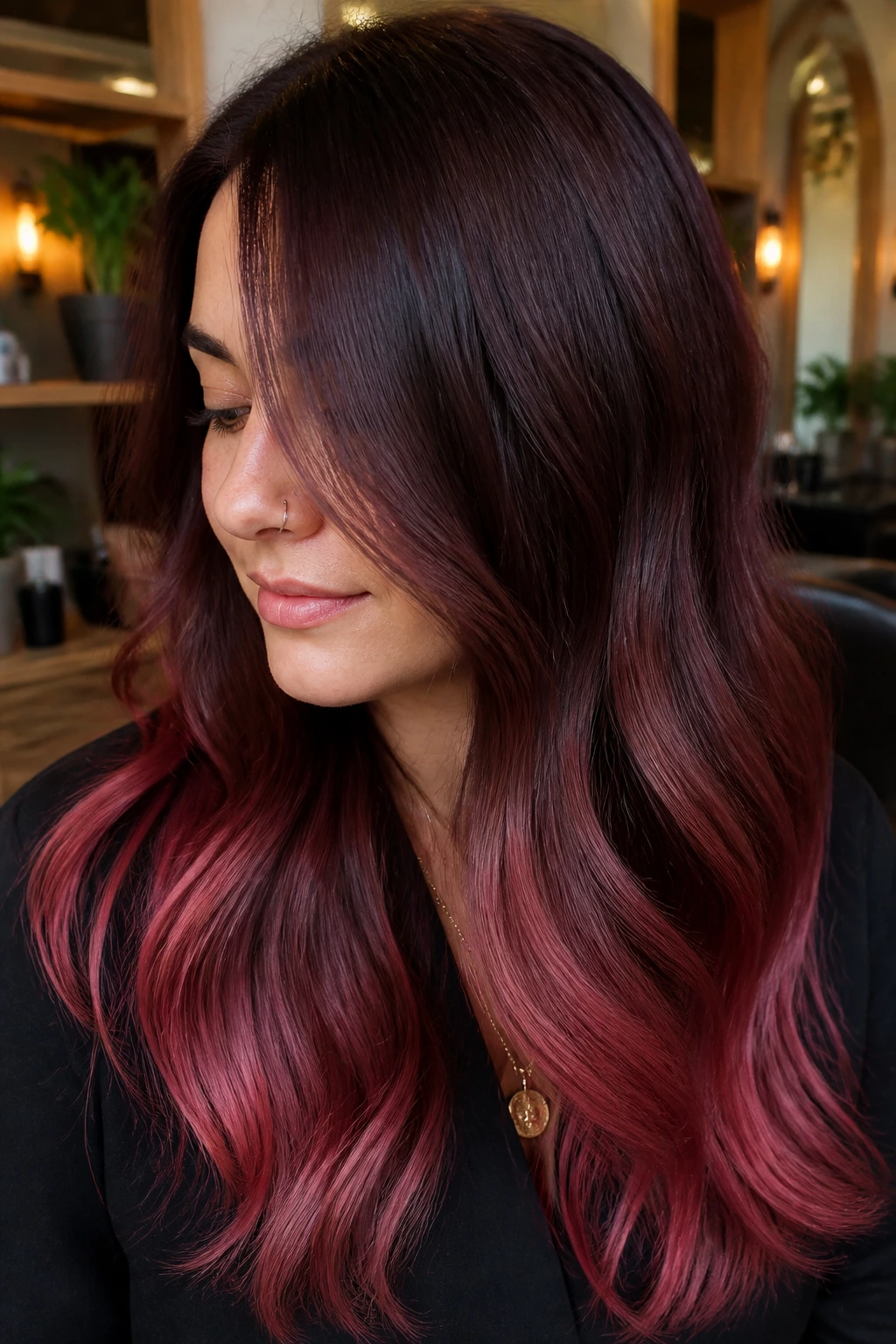
This is the darker, moodier cousin in the group. Mahogany brunette already has red in it, so the move into deep rose metallic ends feels smooth and rich instead of abrupt. The finish is less blush, more jewel-tone.
I like this when the goal is depth. The color looks especially good on long hair that’s thick enough to hold a clean fade. Fine hair can wear it too, but the contrast should be softer so the ends do not look wispy.
Why It Holds Up
A deep rose metallic tone tends to keep its shape better than pale pastel rose. It doesn’t wash out as fast, and the darker base helps disguise the grow-out.
Ask for a gloss finish with enough shine to catch the light, not a matte rose. Matte tends to flatten this style, and it loses the whole point. The best versions look almost liquid at the ends.
14. Curly Long Hair with Diffused Rose Gold Fade
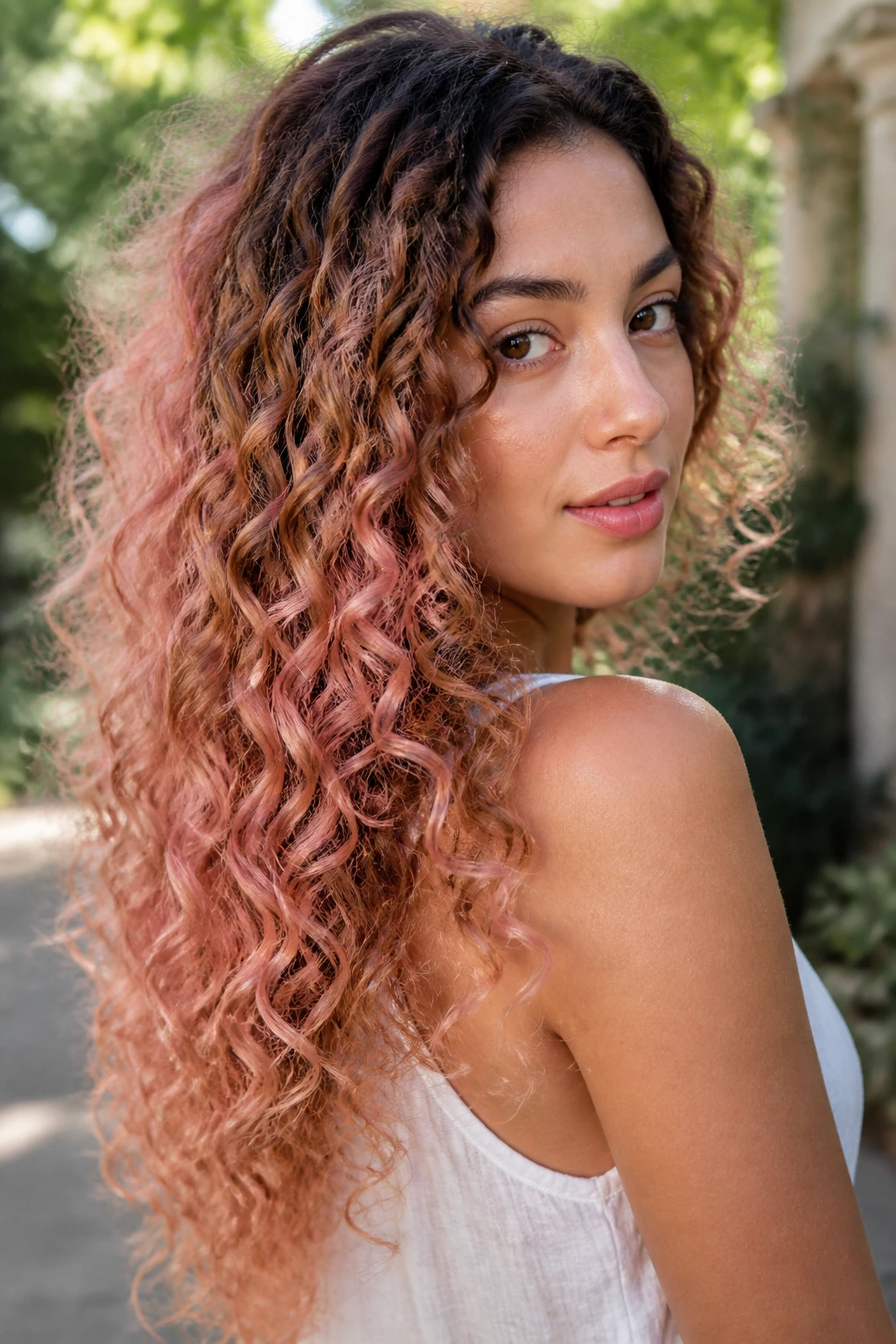
Curls change everything. Instead of showing a straight line of ombré, they scatter the rose gold across each bend, which softens the whole thing and makes the color feel airy. On long curly hair, that diffusion is half the appeal.
A lot of people assume curls need louder color to show dimension. I don’t think that’s true. Rose gold often looks richer in curls because the highs and lows catch the pigment differently. You get pink, copper, and blonde all in one coil.
The one thing I would avoid is placing the lightest rose only on the outer layer. That can make the surface look done while the inside feels ignored. Better to weave the color through enough sections that the curl pattern carries it naturally. Moisture matters here, too. Dry curls can make even the nicest rose tone look frizzy.
15. Glass-Straight Hair with Mirrored Rose Panels
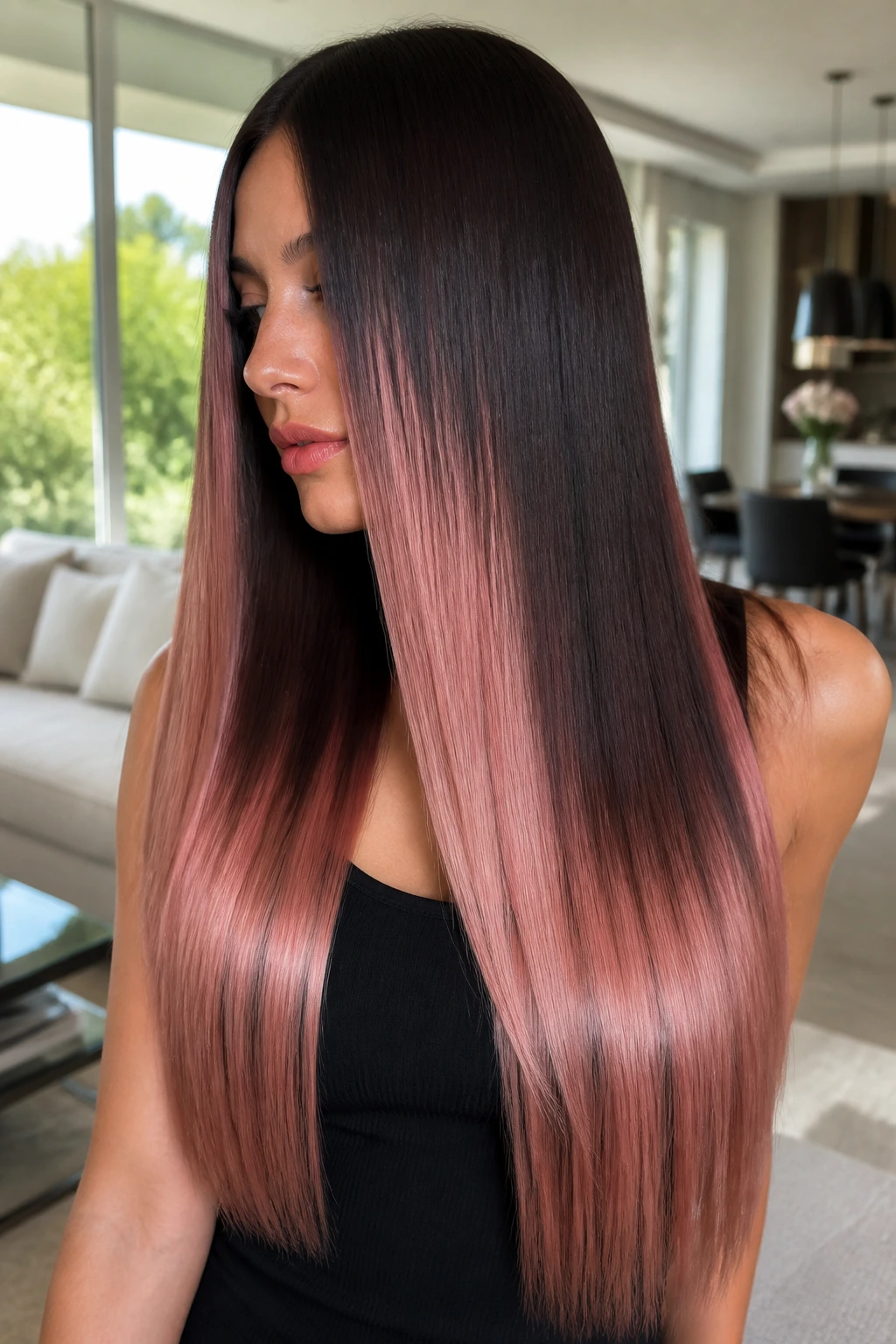
Straight hair is unforgiving. Which is exactly why this style works so well when it’s done right. A glassy finish makes the rose panels look clean and deliberate, and the long length gives the color room to stretch without getting muddy.
How to Get the Most From It
Ask for long, soft panels instead of a single flat fade. That gives the hair a reflective quality when it’s ironed straight or blown smooth. The rose gold reads almost like brushed metal.
This version is best for someone who likes polished styling. Air-dried texture can blur the panel placement, which is not always a bad thing, but it changes the whole mood. If you wear your hair straight most of the time, this is one of the strongest looks on the list.
A heat protectant is non-negotiable. Not because the style police said so. Because glass-straight hair shows every bit of dryness along the ends.
16. V-Cut Layers with a Soft Pink-Copper Melt
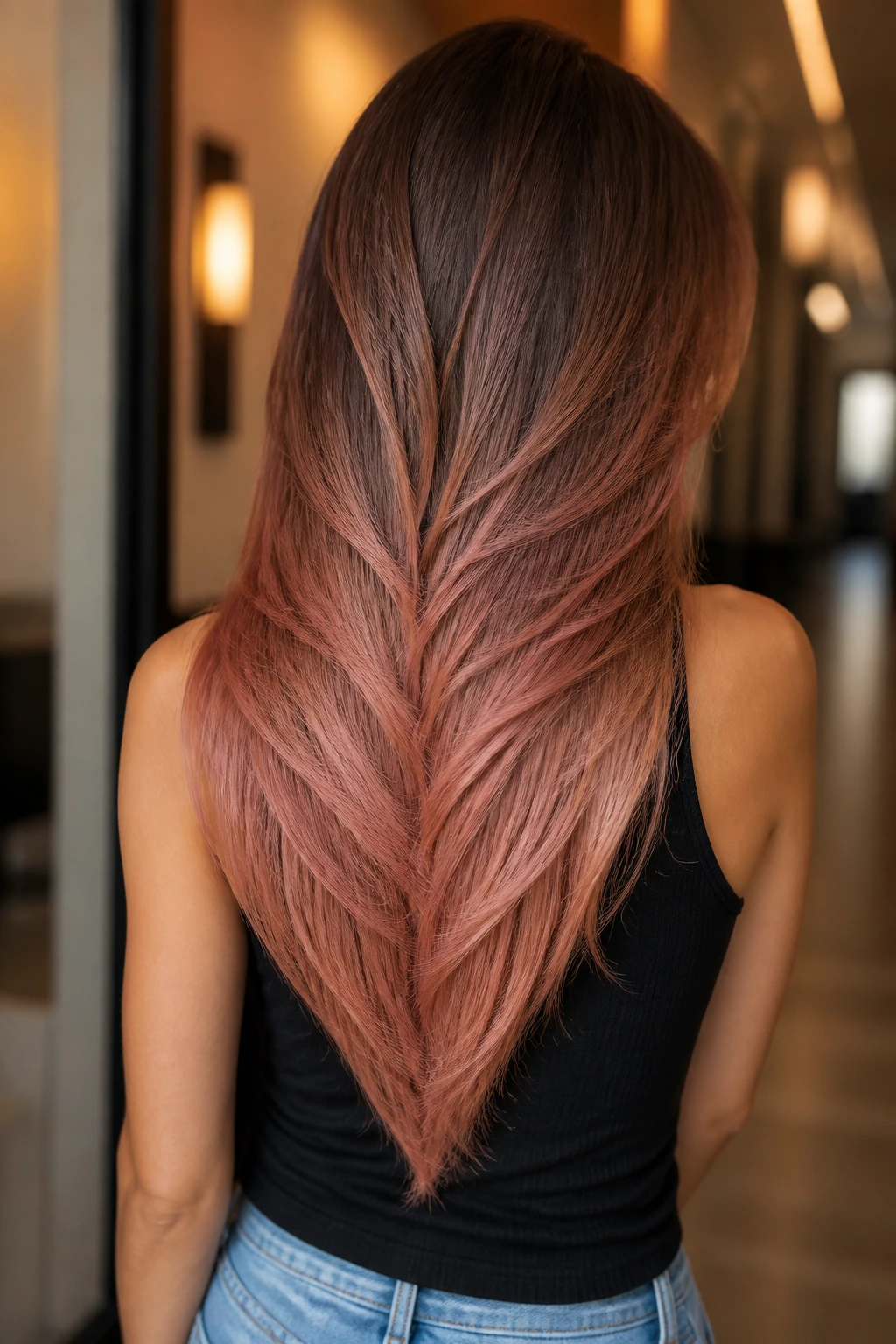
A V-cut gives long hair a pointed shape at the back, and that shape makes ombré color look longer and leaner. Add a soft pink-copper melt and the silhouette gets even more striking. The eye follows the taper first, then the color shift.
This is a nice choice if you already have thick hair and want the length to feel lighter visually. The V-shape keeps the bottom from looking too blocky, and the rose gold fade stops the layers from disappearing into a flat curtain.
Key Details
- The color should start around the mid-back or lower, depending on length.
- Keep the pink-copper soft enough to show depth in the layers.
- Loose curls show off the V-cut better than tight ones.
- A shine spray on the ends can keep the taper crisp.
The whole style lives or dies on movement. If the hair is pinned flat all the time, you lose the best part.
17. Dimensional Brunette Balayage with Rose Gold Gloss
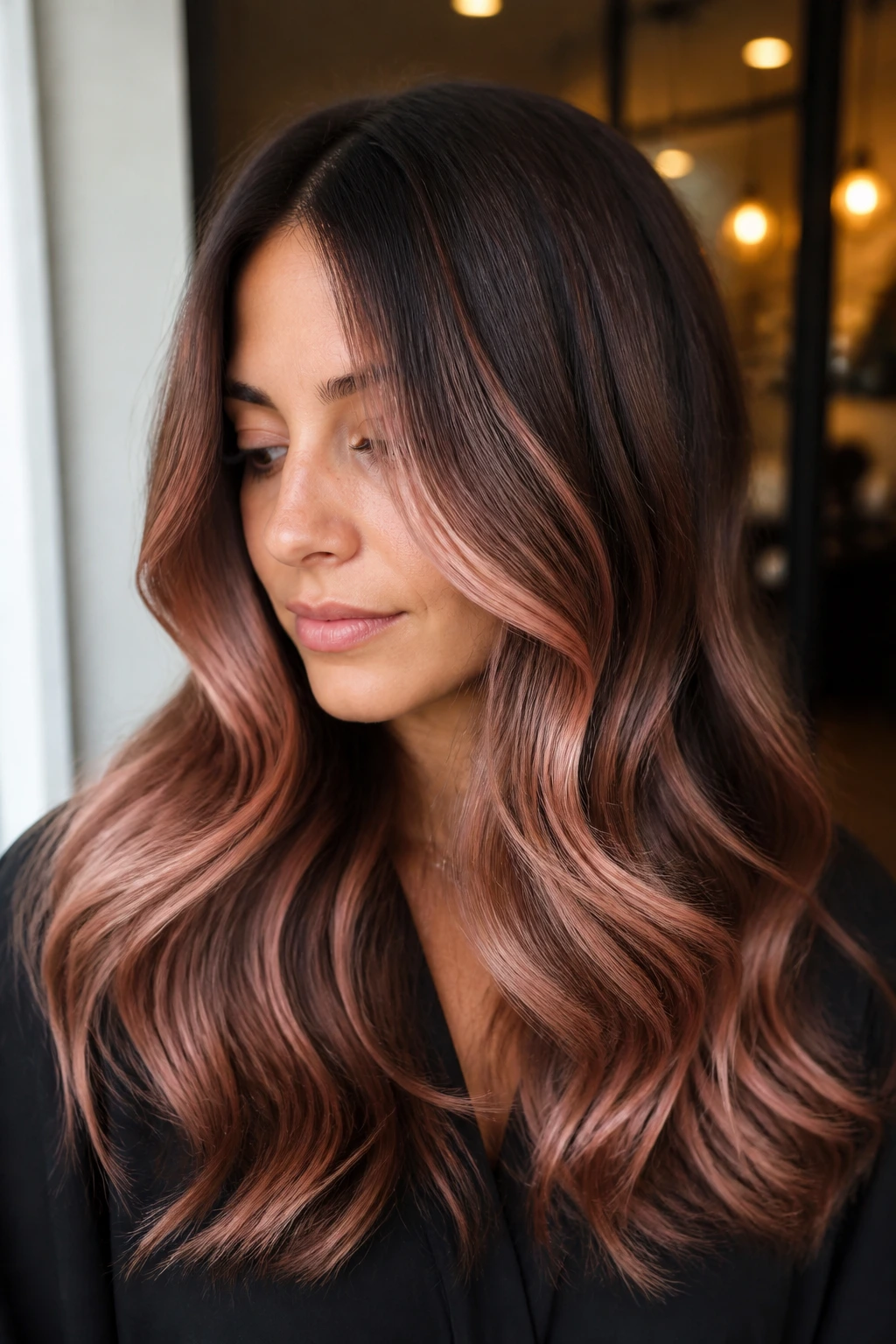
This is the most “I woke up like this” version here, even though it usually takes the most thoughtful placement. Dimensional brunette balayage gives the hair a natural base of light and dark pieces, then a rose gold gloss ties everything together.
I love this on long hair because the gloss does the heavy lifting. Instead of changing the base dramatically, it softens what’s already there. That means the color looks believable from every angle, not just from the front.
The trick is restraint. Too much rose and you erase the dimension. Too little and the hair just looks warm brown. A good gloss should leave you with a faint blush cast in daylight and a richer copper-pink edge in indoor light. That shifting effect is what keeps the style interesting over time.
18. Caramel Ombre with a Rose Gold Veil
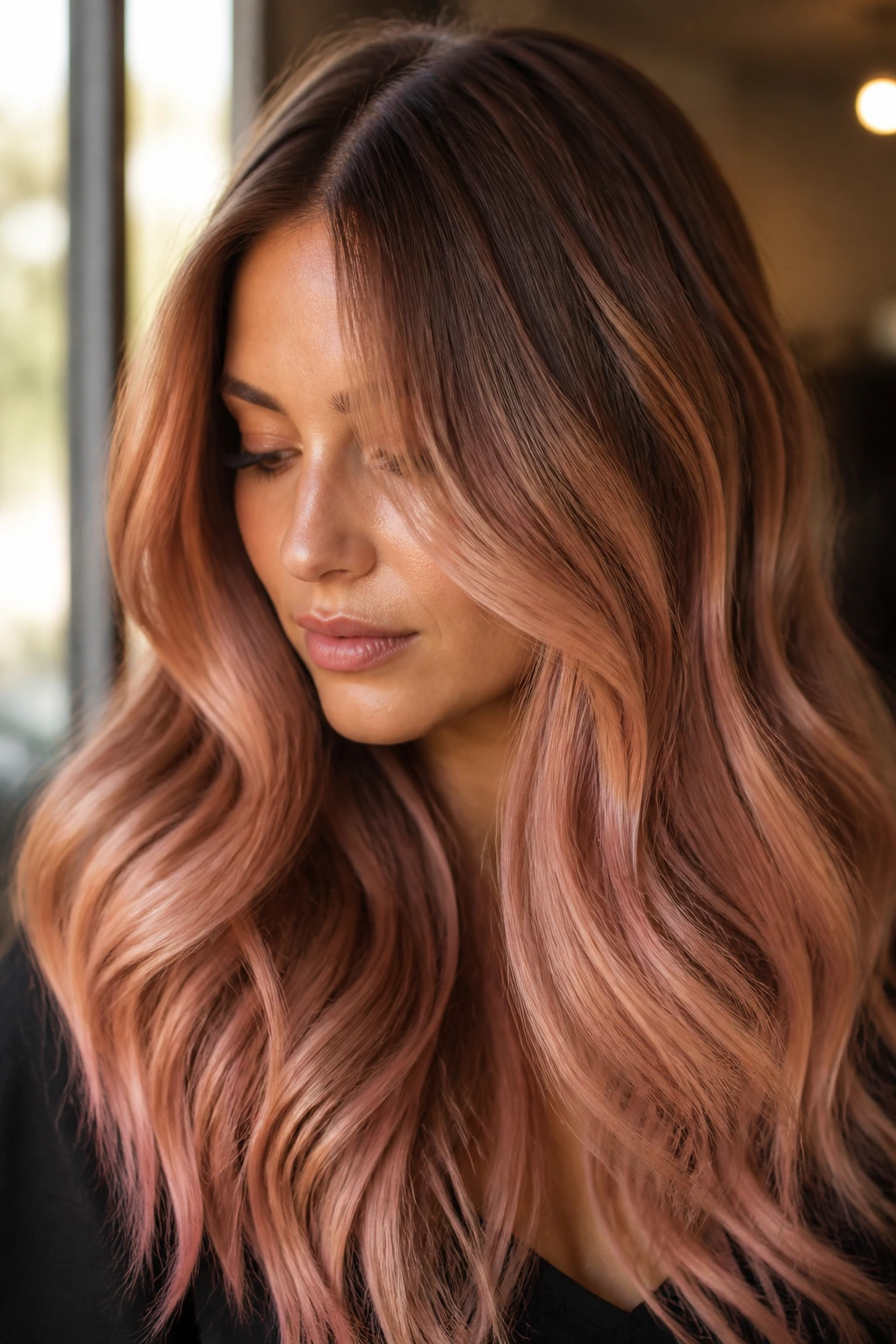
Caramel and rose gold get along better than people expect. The caramel gives you that golden sweetness, while the rose veil cools it down just enough to stop the result from looking too yellow. On long hair, the combination can feel plush and soft.
Compared with brighter pink ombré styles, this one is easier to wear with warm neutrals, denim, and everyday makeup. It doesn’t demand a whole new wardrobe. It just adds a warmer glow around the ends.
The rose veil should stay thin. That’s the whole point. You want the caramel to show through, not get buried under color. If you curl the hair with a medium iron and brush it out, the finish turns hazy and pretty in a way that straight styles never quite match.
19. Chunky Retro Rose Gold Streaks on Long Layers
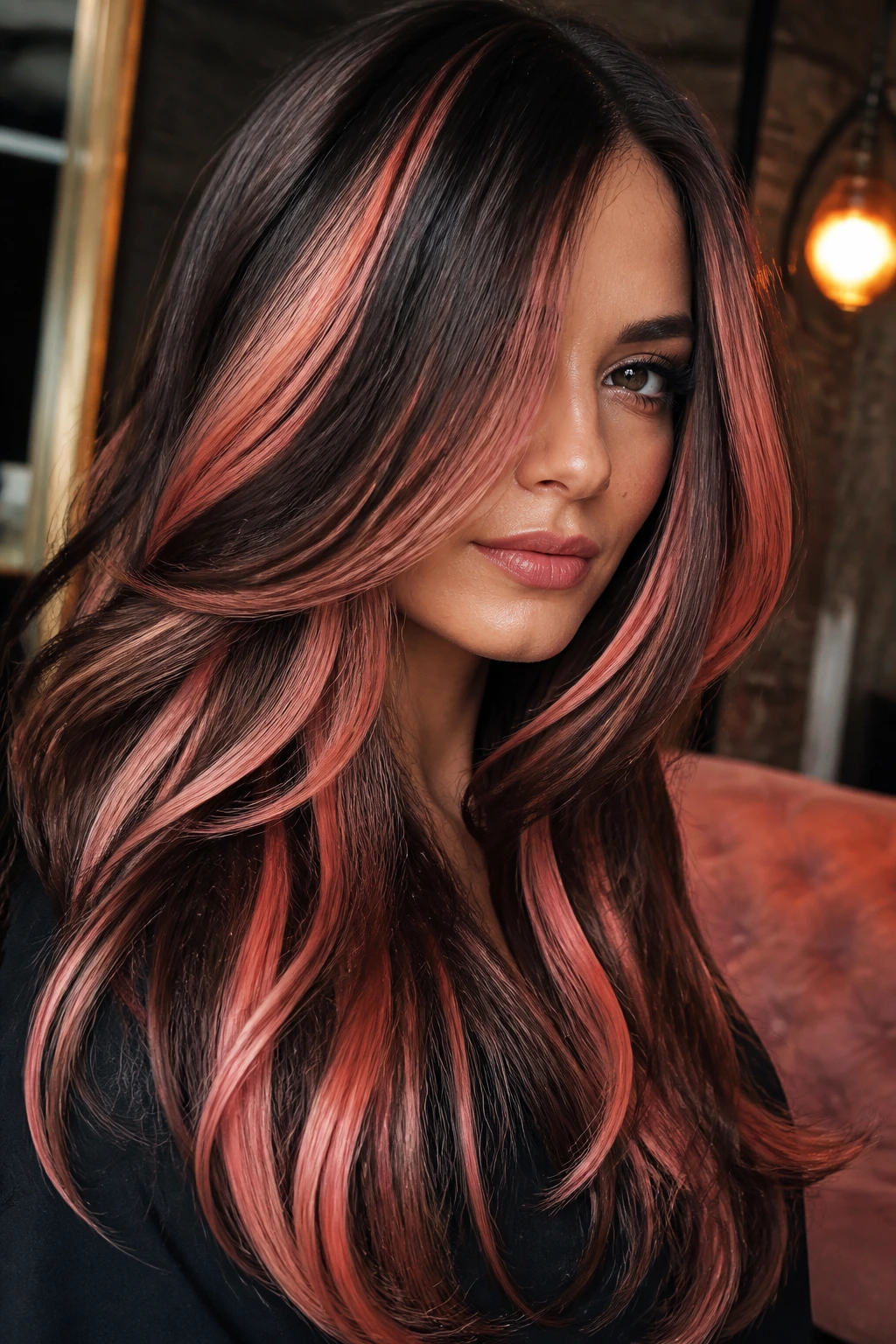
This one is not shy. Chunkier rose gold streaks bring a little retro energy back into long hair, and on layered cuts they can look graphic in the best way. I’d choose this for someone who wants the color to be seen, not guessed at.
What Makes It Work
The streaks need space. Long layers help break up the blocks so they feel intentional instead of stripey. The rose gold can be brighter here, closer to pink-champagne than soft blush.
A few practical details keep it from feeling dated:
- Keep the streaks uneven in width.
- Place more color through the front and top layers.
- Leave some darker pieces between the lighter ones.
- Style with soft bends so the streaks move.
This is the kind of look that thrives on personality. If you wear simple clothes and like one loud detail, it works. If you want subtlety, skip it. No shame in that.
20. Easy Rose Gold Ombre for Long Hair That Grows Out Gracefully
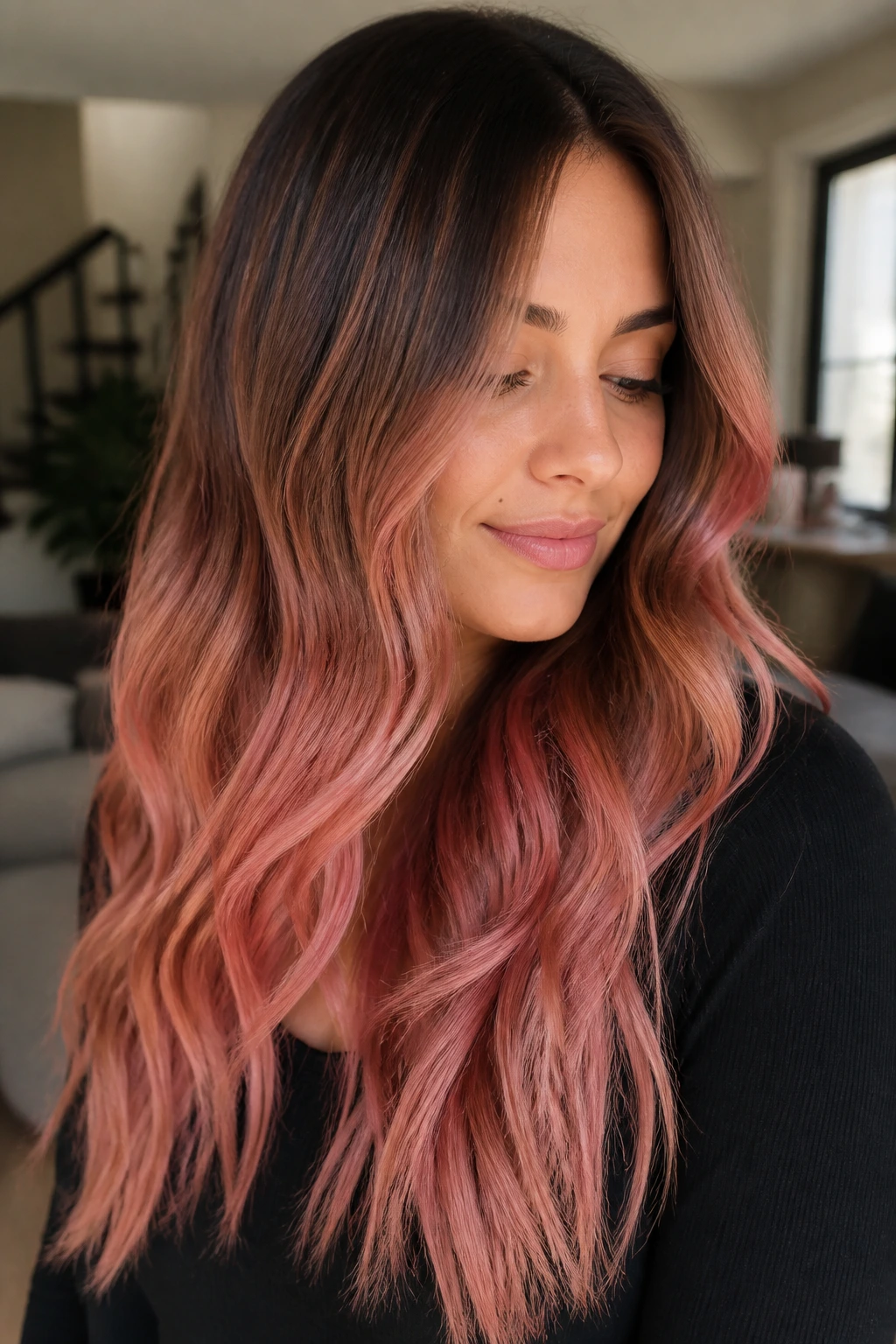
If there’s one version I’d hand to someone who wants color without babysitting it, this is the one. Keep the root shadow soft, blur the transition through the mids, and let the rose gold live mostly in the bottom third of the length. That gives you a finish that still looks designed after the grow-out starts.
The idea is not to chase the brightest possible pink. It’s to build a fade that still makes sense six, eight, even ten weeks later. Long hair is forgiving here because the color has room to stretch. A loose wave, a subtle gloss, and a neutral root make the whole thing look calm rather than fussy.
I also like this version because it works across a wide range of bases. Brunettes can wear a deeper blush. Blondes can go softer and airier. Redheads can use it as a warm gloss rather than a dramatic shift. If you want one rose gold ombré that doesn’t turn into a maintenance chore, this is the one I’d keep on the top of the pile.
