



Chocolate brown ombre hair works best on long lengths because the color has room to breathe. On a short cut, the fade can look abrupt if the contrast is too strong. On waist-length waves or even a deep, mid-back cut, the same color shift turns soft and expensive-looking without trying too hard.
Long hair also gives you more control over where the brightness starts. You can keep the roots rich and dark, let the mid-lengths carry the brown, and then open things up near the ends with caramel, hazelnut, mocha, or a muted beige-brown. That little shift matters. It keeps the style from looking flat in low light and keeps it from drifting into brassy blond territory.
The nicest part? Chocolate brown ombre hair is easier to wear than a lot of dramatic color work. The grow-out is gentler, the root line is softer, and you can dial the contrast up or down depending on how much you want people to notice. Some versions feel barely-there and glossy. Others have more edge and a bit of warmth at the ends. Long hair can carry both.
1. Espresso Roots to Milk Chocolate Ends
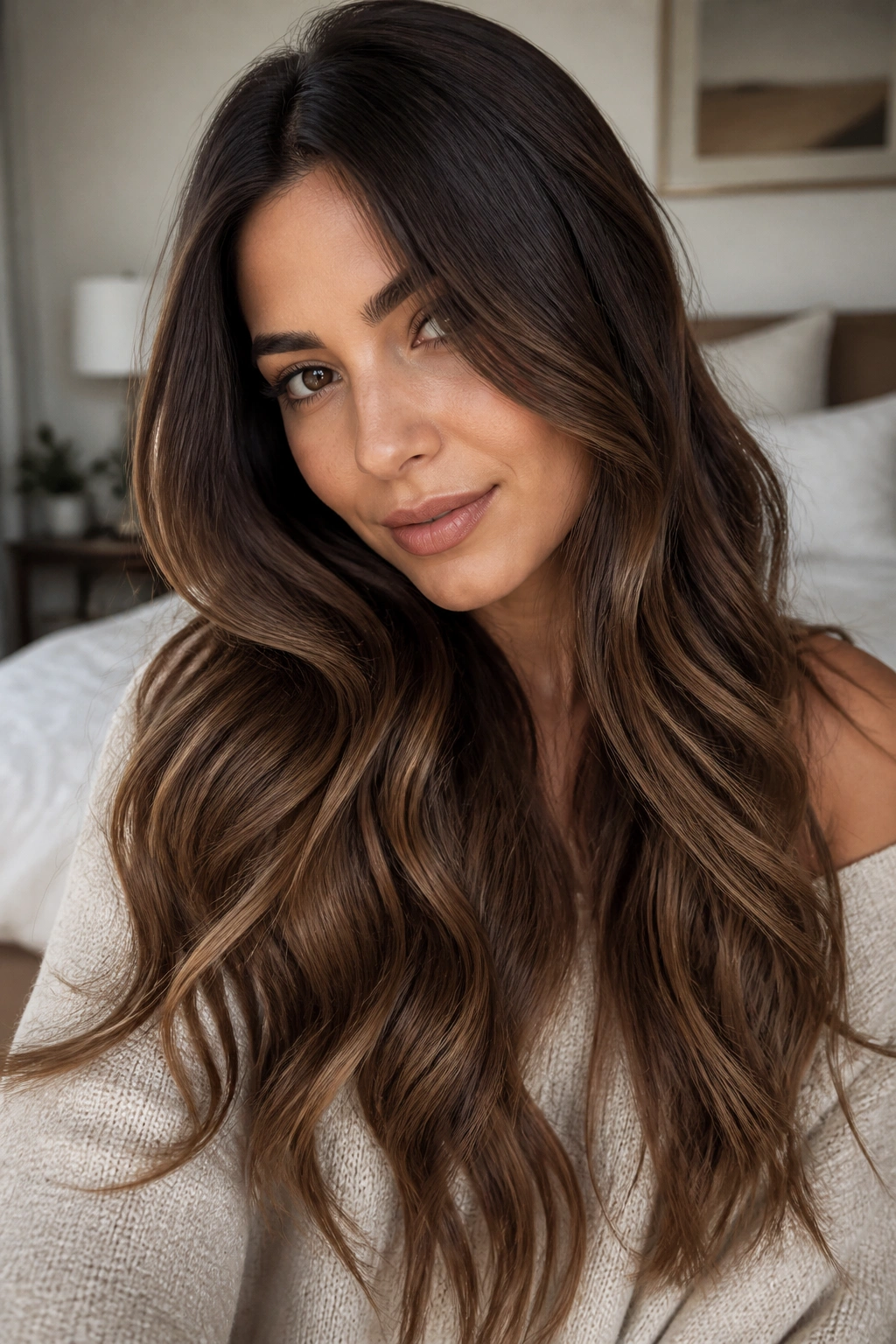
This is the safe bet, and I mean that in the best way. Deep espresso at the roots fading into milk chocolate through the mids and ends gives long hair a clean, soft gradient that never looks harsh.
Ask for a shadow root with the lightest tone starting below the cheekbones, not at the scalp. That keeps the grow-out smooth and gives the ends enough brightness to move when you curl the hair. It’s one of those styles that looks good on waves, blowouts, and even a loose braid.
Why It Works
The color shift stays in the brown family, so the whole look feels connected. You get dimension without the drama of blonde ends, and that matters if you want something you can live with for months.
A large-barrel curl or a round-brush blowout shows it off best. The darker top section keeps the style grounded, while the milk-chocolate ends pick up light with every turn of the head.
2. Dark Chocolate with a Caramel Veil
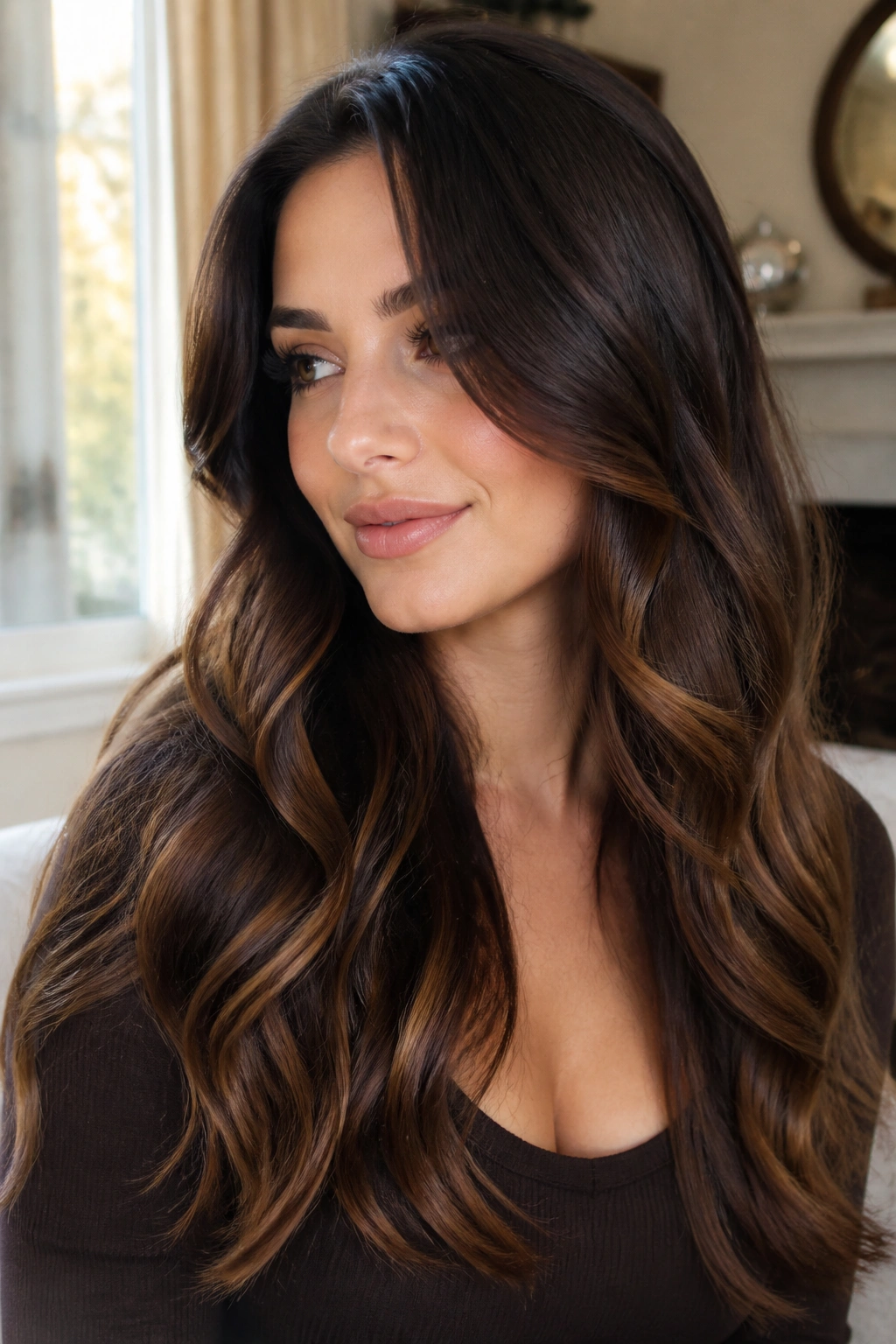
Want a little warmth without going full golden? This is the one. The base stays dark chocolate, then a thin caramel veil gets painted through the lower half so the color feels kissed by light rather than dipped in it.
The key is restraint. Too much caramel and the whole thing turns streaky. Too little and you lose the point. A good colorist will blend the lighter pieces into the ends and leave the perimeter soft, which is especially flattering on long layers.
What to Ask For
- A dark chocolate base with soft hand-painted caramel pieces
- The brightest tone kept below the chin
- No chunky face-framing stripes
- A gloss finish to keep the caramel smooth, not brassy
This version looks especially nice with messy waves. The caramel catches movement, but the dark base keeps the style from feeling loud.
3. Mocha Melt with Face-Framing Pieces
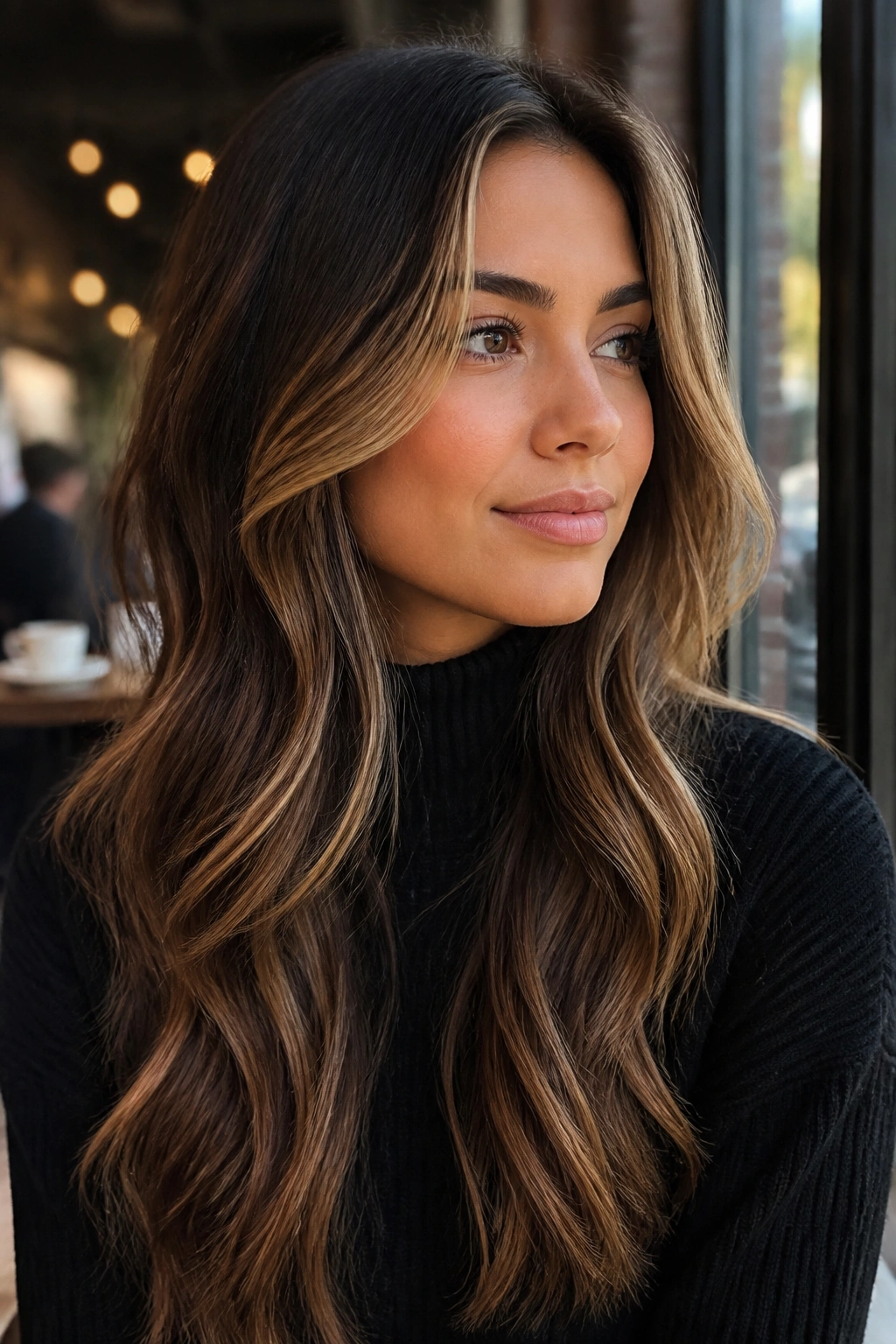
Face-framing pieces change everything. Seriously. A mocha melt becomes much more flattering on long hair when the front sections are lifted just a touch lighter than the rest, because your eyes go straight to that soft brightness near the cheekbones.
Keep the money-piece effect subtle. You do not want blonde streaks here; you want mocha turning into warm light brown around the face, then melting back into deeper chocolate through the lengths. That tiny shift softens long hair and keeps the overall look fresh.
How to Style It
- Curl the front pieces away from the face with a 1.25-inch iron
- Leave the ends slightly straighter for a lived-in feel
- Use a lightweight shine spray, not a heavy oil
- Tuck one side behind the ear for an easy, flattering line
This is a strong choice if you wear your hair down most of the time. The front pieces do a lot of the work.
4. Chestnut-Tipped Waves
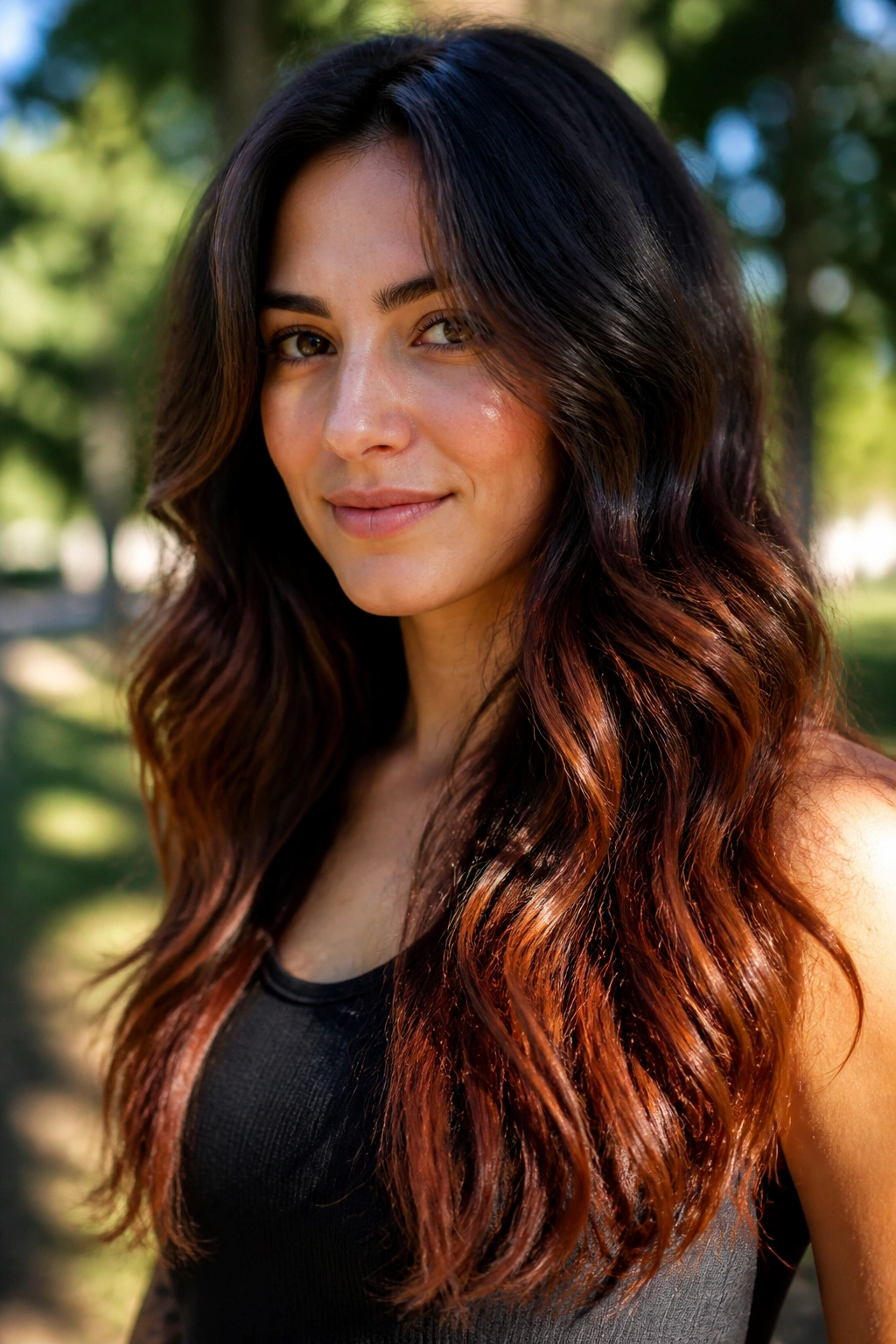
Chestnut brings a reddish warmth that makes chocolate brown ombre hair feel richer and a little more romantic. The color shift does not have to be dramatic. In fact, it often looks better when the chestnut is concentrated on the last third of the hair and softened with waves.
The reddish note shows up most clearly in sunlight or warm indoor lighting. That can be a good thing if your natural brown tends to look dull. Chestnut wakes it up without pushing the style toward copper.
Long hair loves this treatment because the tips have enough length to show off the tone change. On straight hair, it reads more subtle. On curls, it looks deeper and more dimensional.
5. Glossy Cocoa-to-Hazelnut Gradient
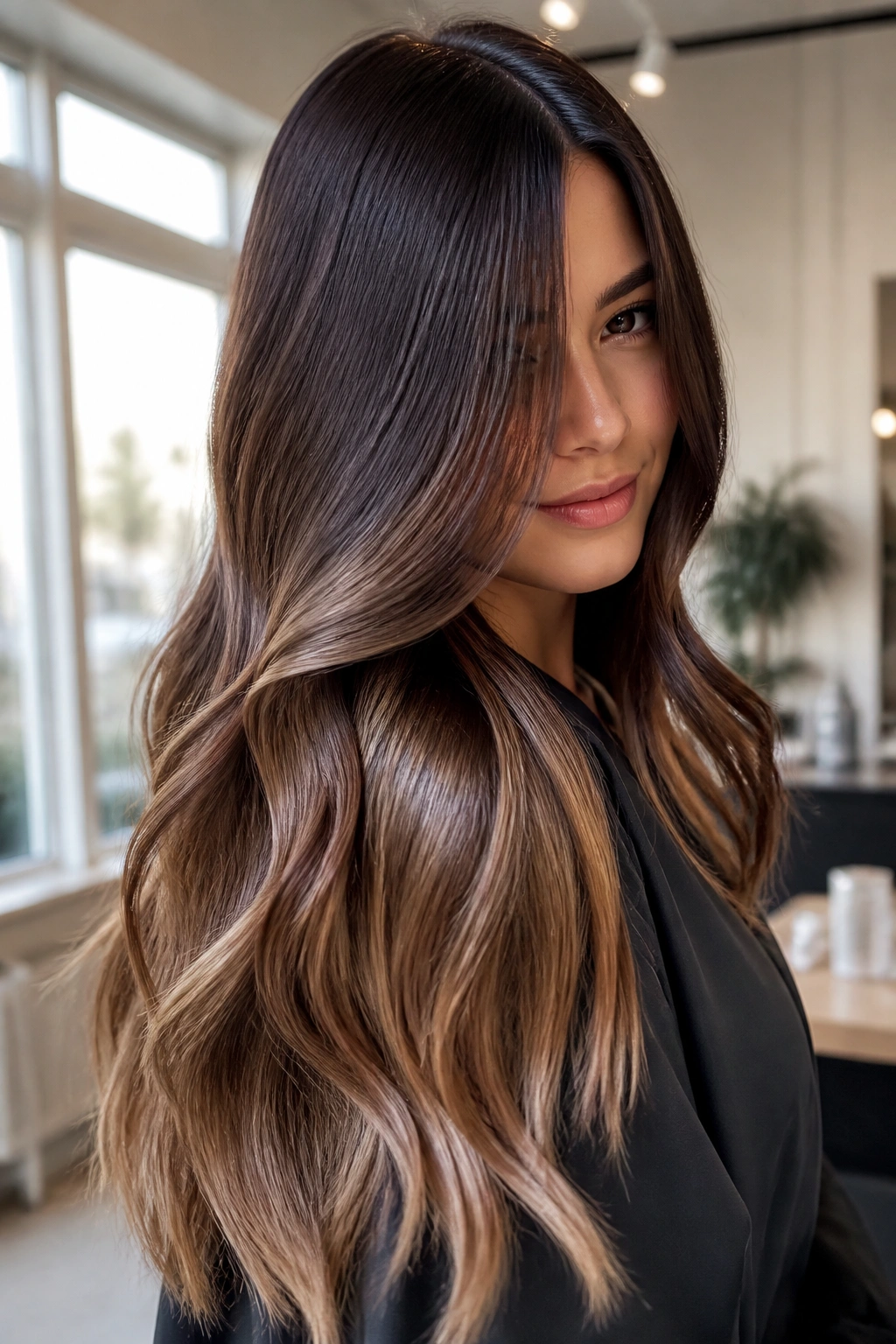
The name sounds dessert-like, and the finish should feel that way too: smooth, shiny, and softly layered. Cocoa roots fading into hazelnut ends create a warm, polished ombre that suits long, thick hair especially well.
What makes this version stand out is the shine. If the hair is porous or dry, the hazelnut can look muddy. A clear gloss or demi-permanent toner helps keep the transition creamy and reflective instead of matte.
Shine Matters Here
A silk press, soft blowout, or big Velcro roller set shows this color off beautifully. The gradient is gentle, so movement matters. The more the hair swings, the more the hazelnut appears and disappears through the lengths.
If you like color that looks expensive but not flashy, this is a smart pick.
6. Ash Chocolate Ombre
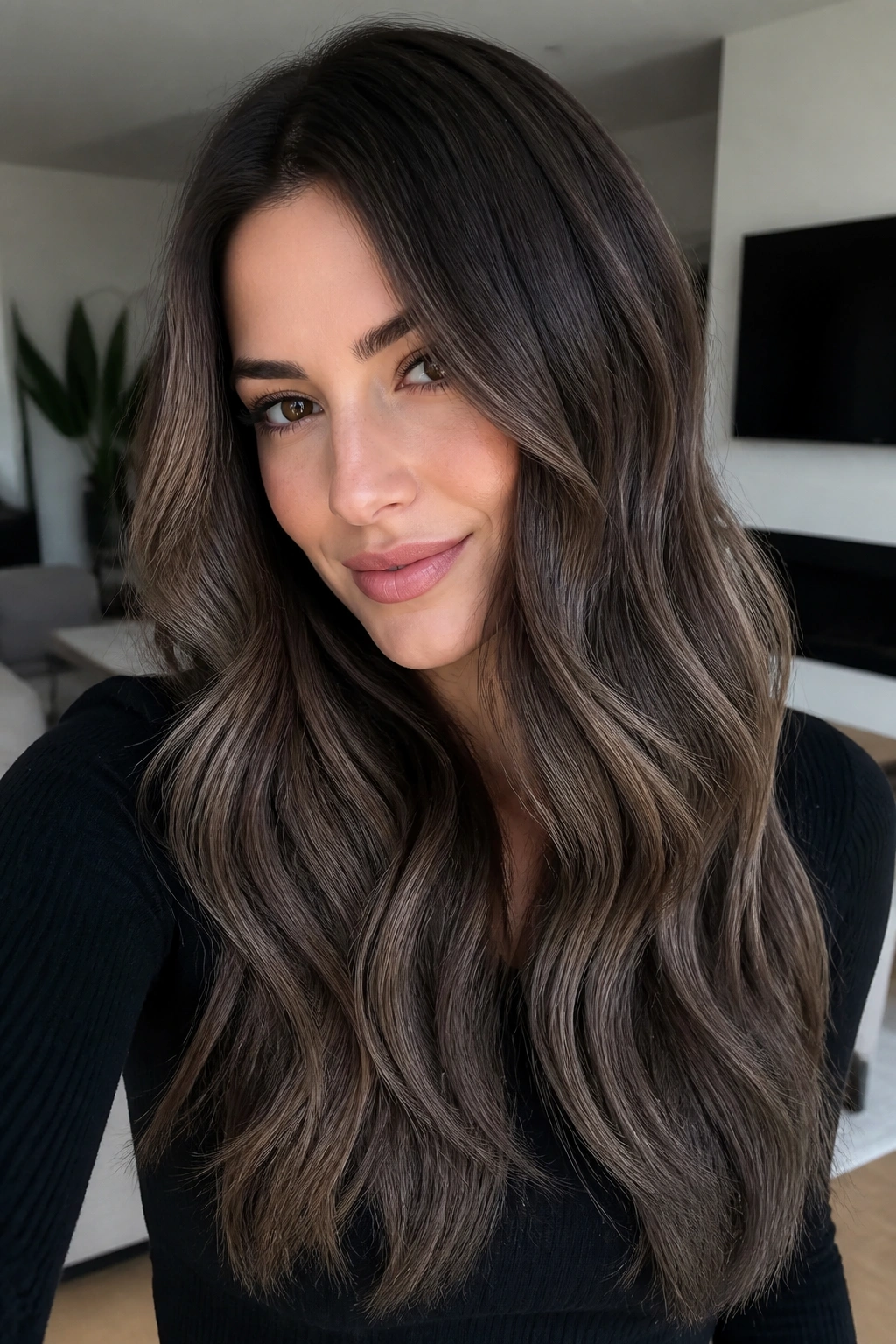
Cool-toned brown can be tricky, but when it works, it looks sharp. Ash chocolate ombre takes the warmth out of the ends and replaces it with a smoky brown that feels clean and modern on long hair.
This version is a good match for cooler skin tones, silver jewelry, and anyone who hates orange in their color. The trick is keeping the contrast soft enough that the ends still look brown, not gray. You want smoke, not dust.
How to Keep the Tone Cool
- Use a blue shampoo if the lighter pieces start pulling orange
- Ask for a neutral or cool beige toner, not a golden one
- Avoid too much sun exposure without color-safe protection
- Refresh the gloss every 6 to 8 weeks if the ends fade fast
It’s a quiet color, but not a boring one. Long hair gives the ash tone a chance to stretch out and look expensive instead of flat.
7. Chocolate Cherry Ends
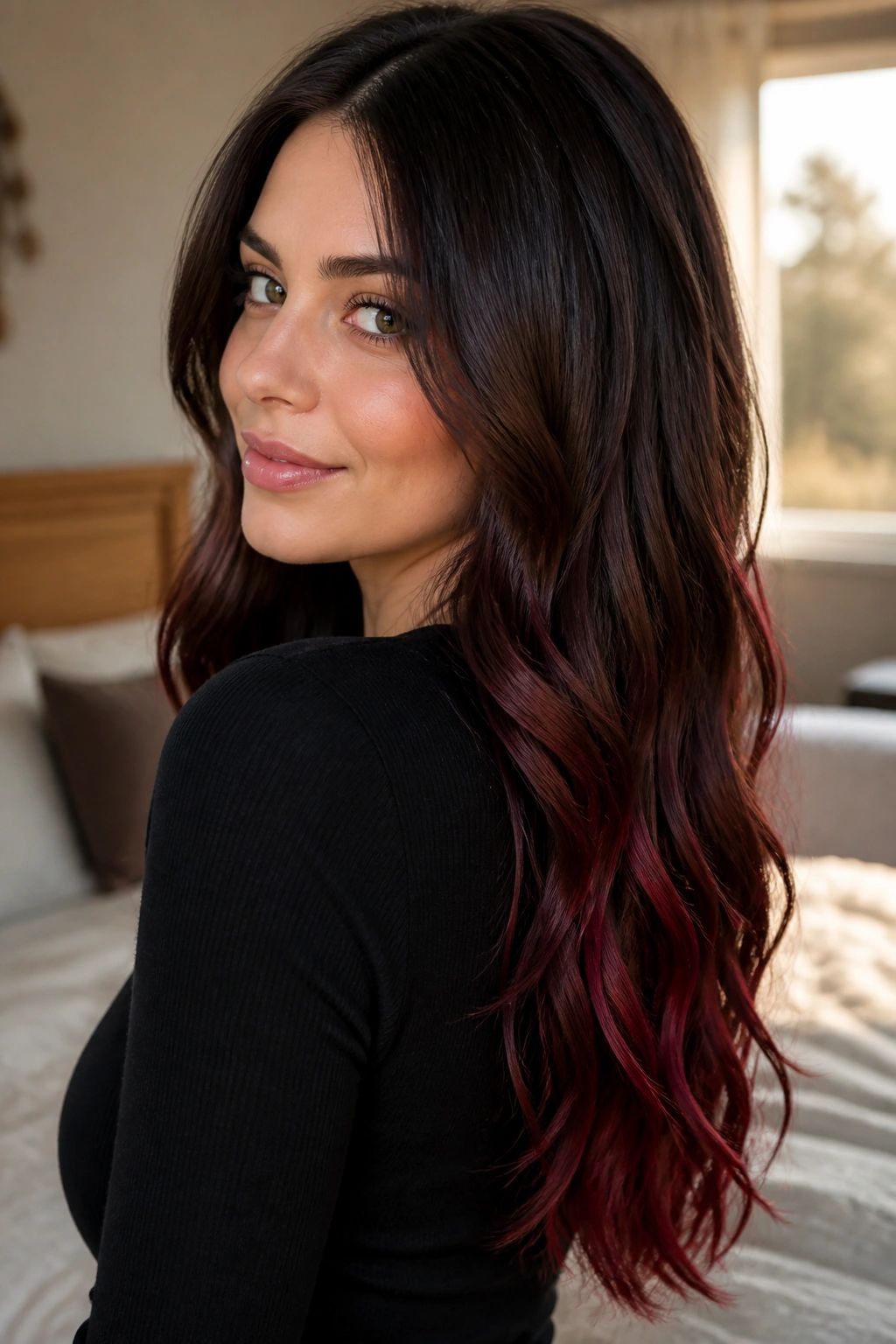
A little red goes a long way. Chocolate cherry ombre adds a wine-dark hint to the ends, so the hair still reads brunette first and color second. That’s the appeal.
In daylight, the ends can look like deep cocoa with a soft berry edge. Under warm indoor light, the red note comes forward and gives the whole style a moodier feel. It’s a smart option if you want something playful without stepping into bright fashion color.
This one is especially good on curled or waved long hair, because the ends swirl enough for the red-brown tone to show from different angles. Keep the top section rich and dark, then let the cherry live only on the lower half so it doesn’t overpower the look.
8. Cinnamon-Sugar Brown Ombre
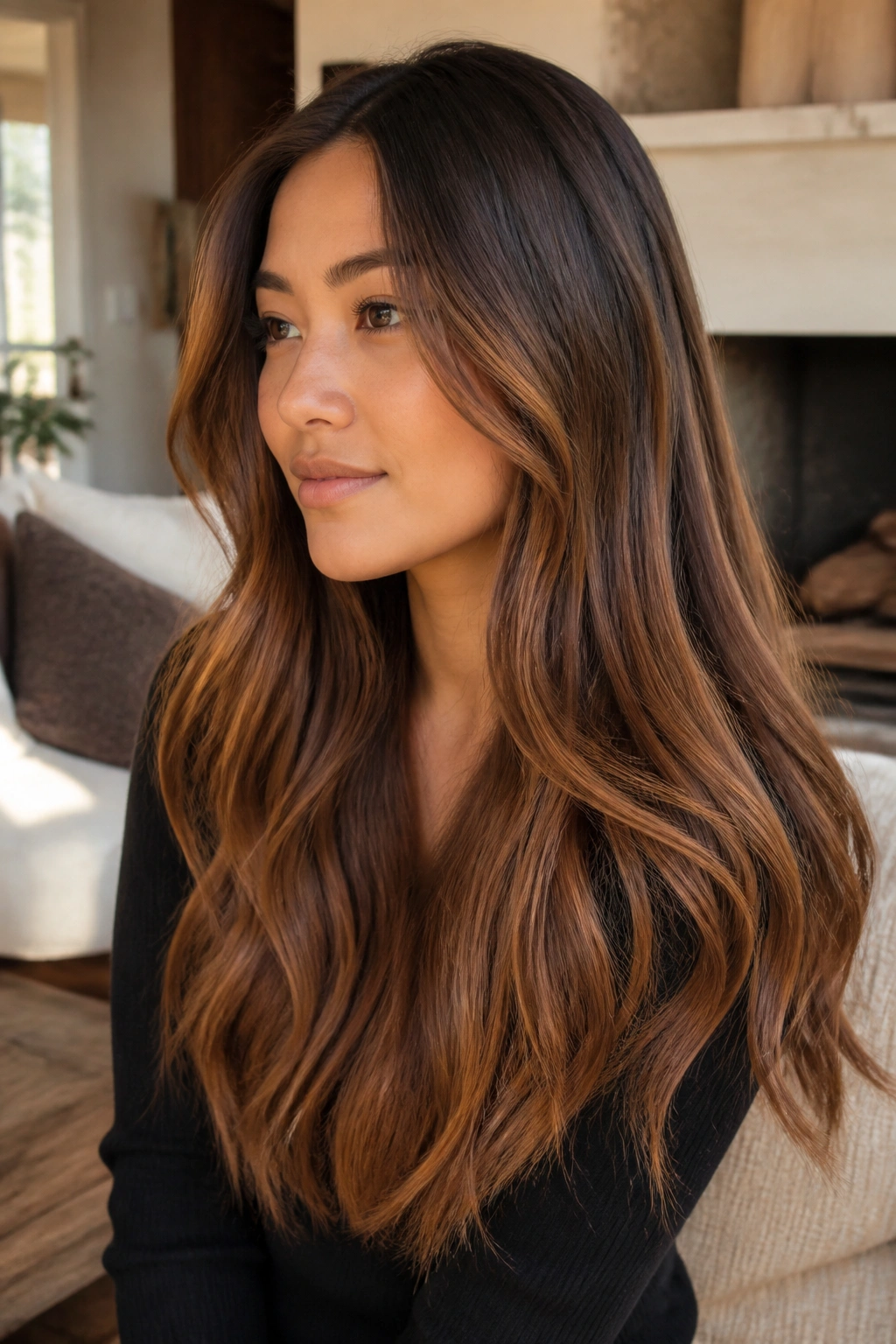
Picture long hair with a warm, spiced finish — not orange, not red, just enough glow to make the brown feel alive. That’s cinnamon-sugar brown ombre. It sits in a sweet spot between chocolate and copper.
It tends to flatter golden and olive undertones, especially when the lighter pieces are woven in softly rather than placed in obvious bands. The texture matters here. Loose bends help the cinnamon tones show up in thin ribbons instead of one heavy block.
Best Pairings
- Layered cuts with movement around the ends
- Soft waves made with a curling wand
- Warm makeup tones, like terracotta or peach blush
- A shine serum that does not weigh the hair down
This shade has a cozy feel without tying itself to any particular season. It just looks good.
9. Toffee-Dipped Layers
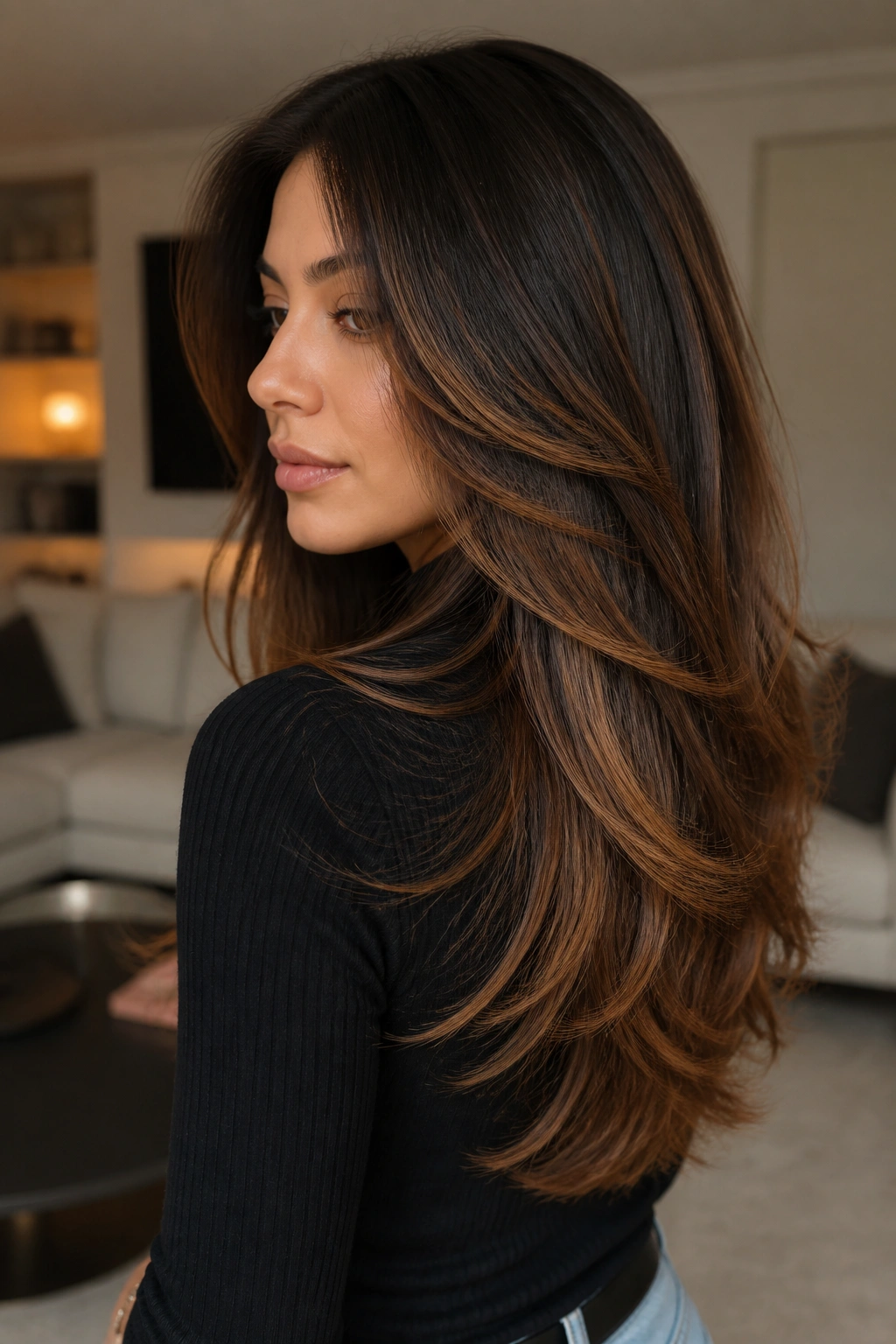
Toffee-dipped layers are made for movement. If your long hair has face-framing pieces, long shags, or a U-shaped cut, the toffee on the lower lengths can make each layer look deliberate instead of heavy.
The brighter pieces should follow the shape of the haircut. That way, when the hair moves, the lighter tone shows up on the bends and the ends rather than sitting in one obvious stripe. It’s a better look for layered hair than a flat, even fade.
A medium-barrel iron or a big blowout brush helps here. You want the ends to curve, not curl too tight. Tight curls hide the toffee. Loose movement shows it off.
10. Mahogany Chocolate Blend
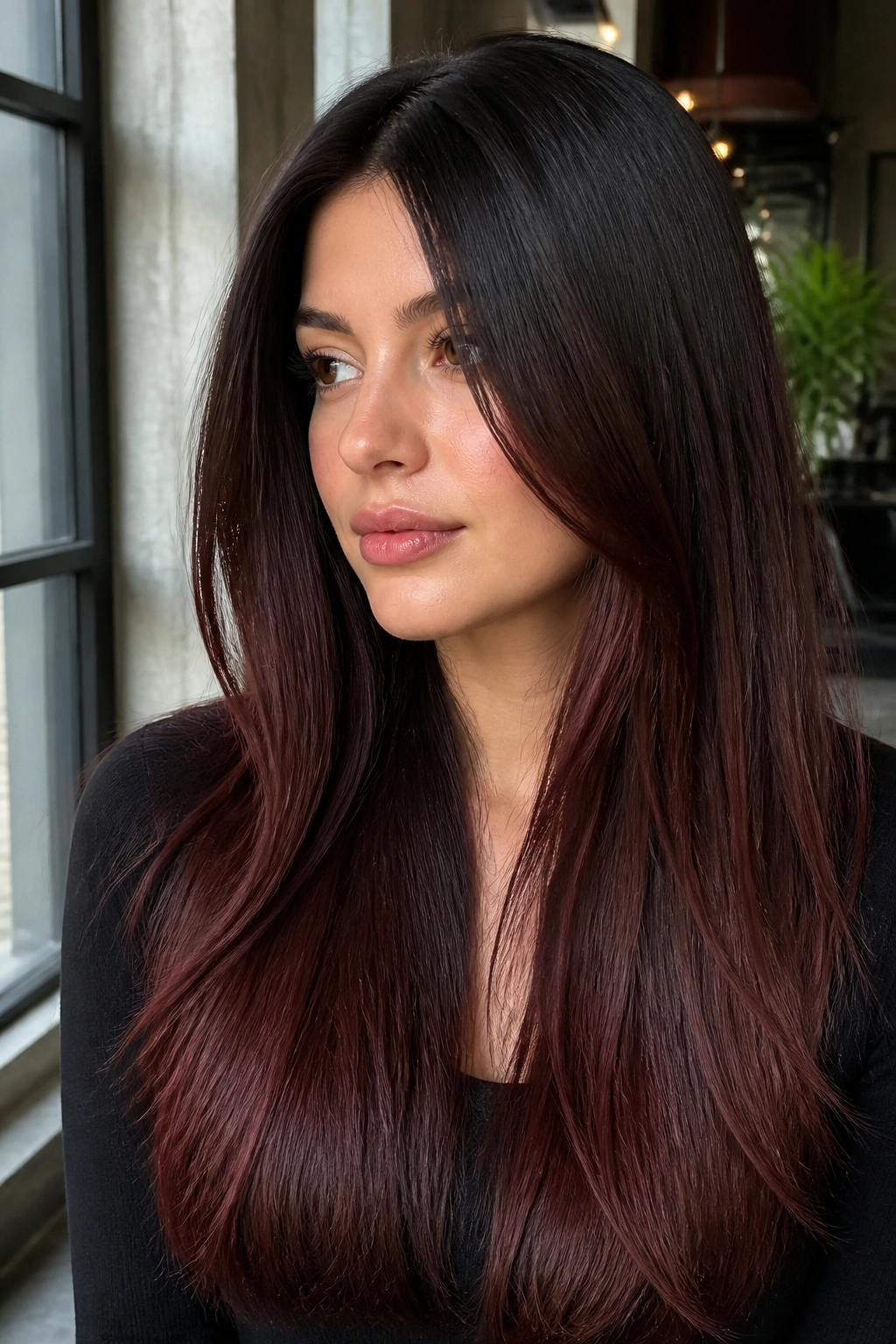
Mahogany gives chocolate brown ombre hair a deeper, red-brown richness that feels polished on long, straight styles. It’s one of the most flattering options if you like your brunette tones to look warm but not coppery.
The best version keeps the mahogany mostly in the mids and ends. If the whole head turns mahogany, you lose the ombre effect. But when the color starts low and melts upward into dark cocoa, the result feels dimensional and smooth.
This shade is especially good when the hair is glossy and healthy. Split ends can make red-brown shades look dull faster than neutral browns, so a trim matters. Clean lines, deep color, and soft shine — that’s the formula here.
11. Mushroom Brown Ombre
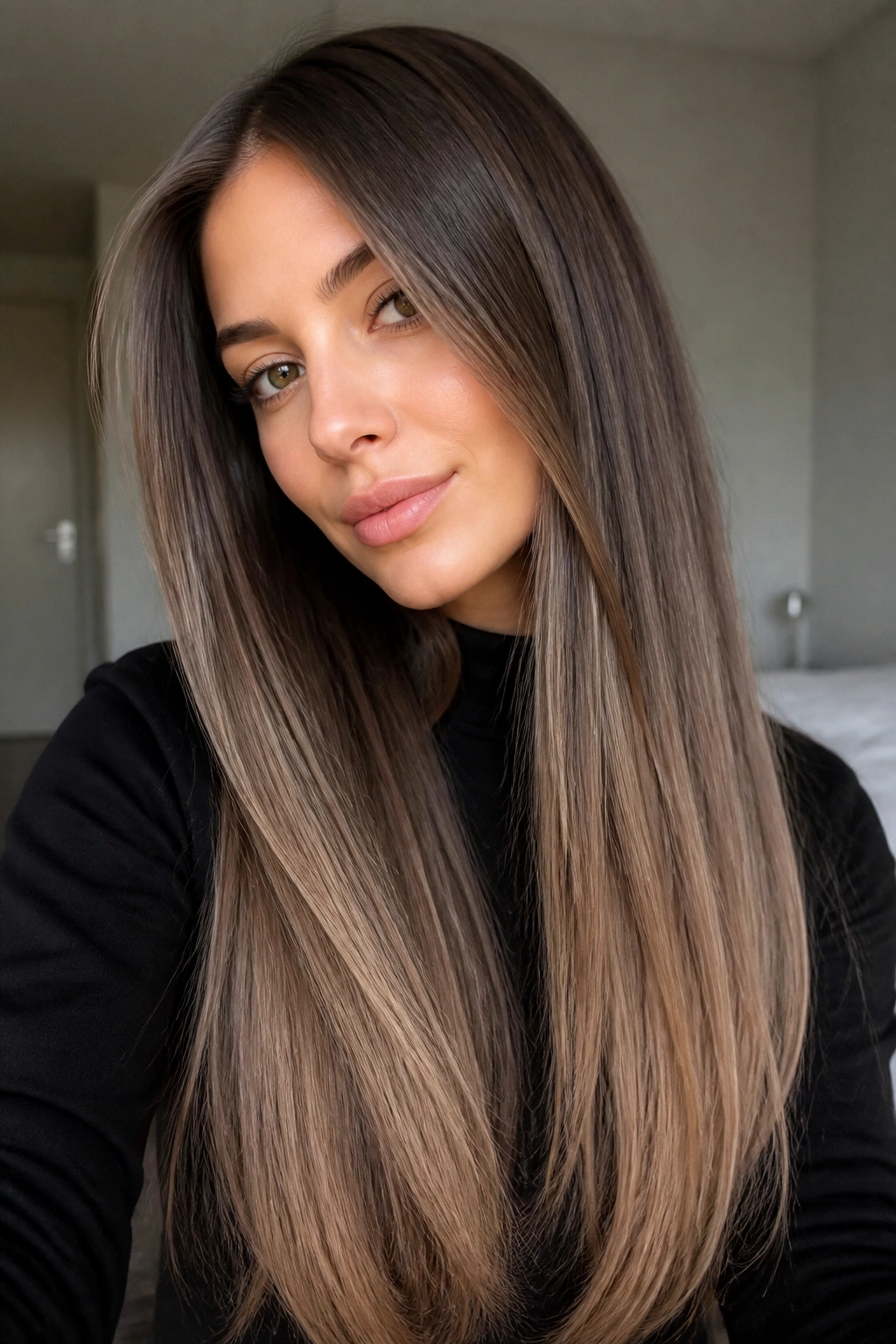
Do you hate warm tones? Then mushroom brown is worth a close look. It pulls the chocolate brown ombre family toward taupe, beige, and smoky brown instead of gold or red.
The look is understated, but it has a nice depth on long hair because the color changes slowly. You are not chasing brightness here. You are building a cool, soft fade that feels earthy and calm. On straight hair, it looks sleek. On waves, it gets that muted, smoky texture people love.
What Makes It Different
Mushroom brown works best when the lighter ends still look brown in dim light. If the toner is too pale, the contrast can feel washed out. A neutral gloss keeps the ends grounded and helps the whole style stay wearable.
It’s one of the easiest shades to pair with minimal makeup and cool-toned outfits.
12. Chocolate to Almond Beige Contrast
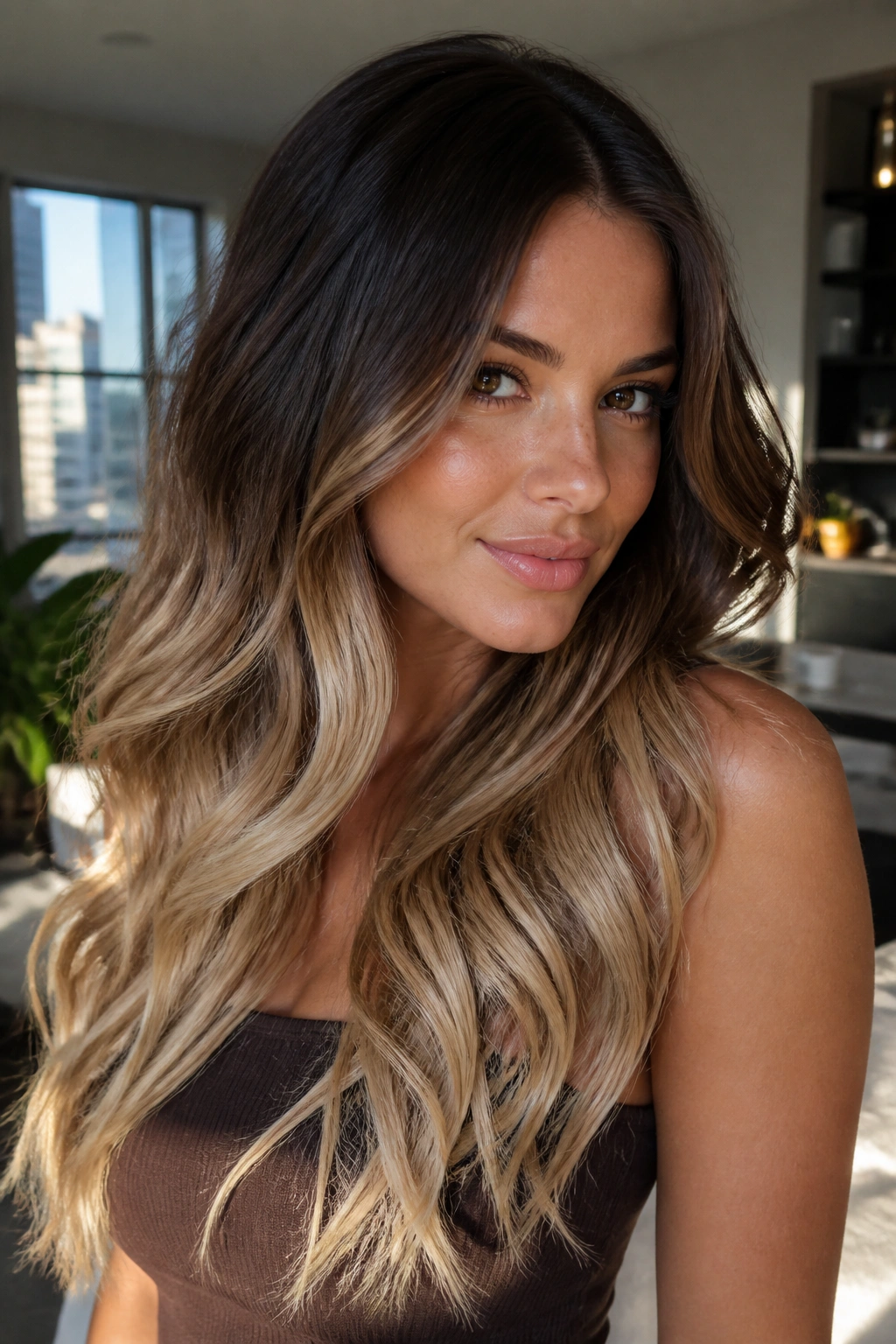
Almond beige adds a little more lift than milk chocolate or hazelnut, so this version gives you a stronger ombre line without going blonde. It’s a good pick if you want people to notice the color change from across the room.
The trick is keeping the roots and mids rich enough that the beige ends don’t float away from the rest of the hair. Long waves help anchor the contrast. They break up the transition and keep the look from turning blocky.
Ask your colorist to blend the beige through the final 6 to 8 inches, then feather it upward through the framing pieces. That makes the fade feel intentional instead of painted on. The result is brighter, yes, but still squarely in brunette territory.
13. Honey-Kissed Chocolate Balayage
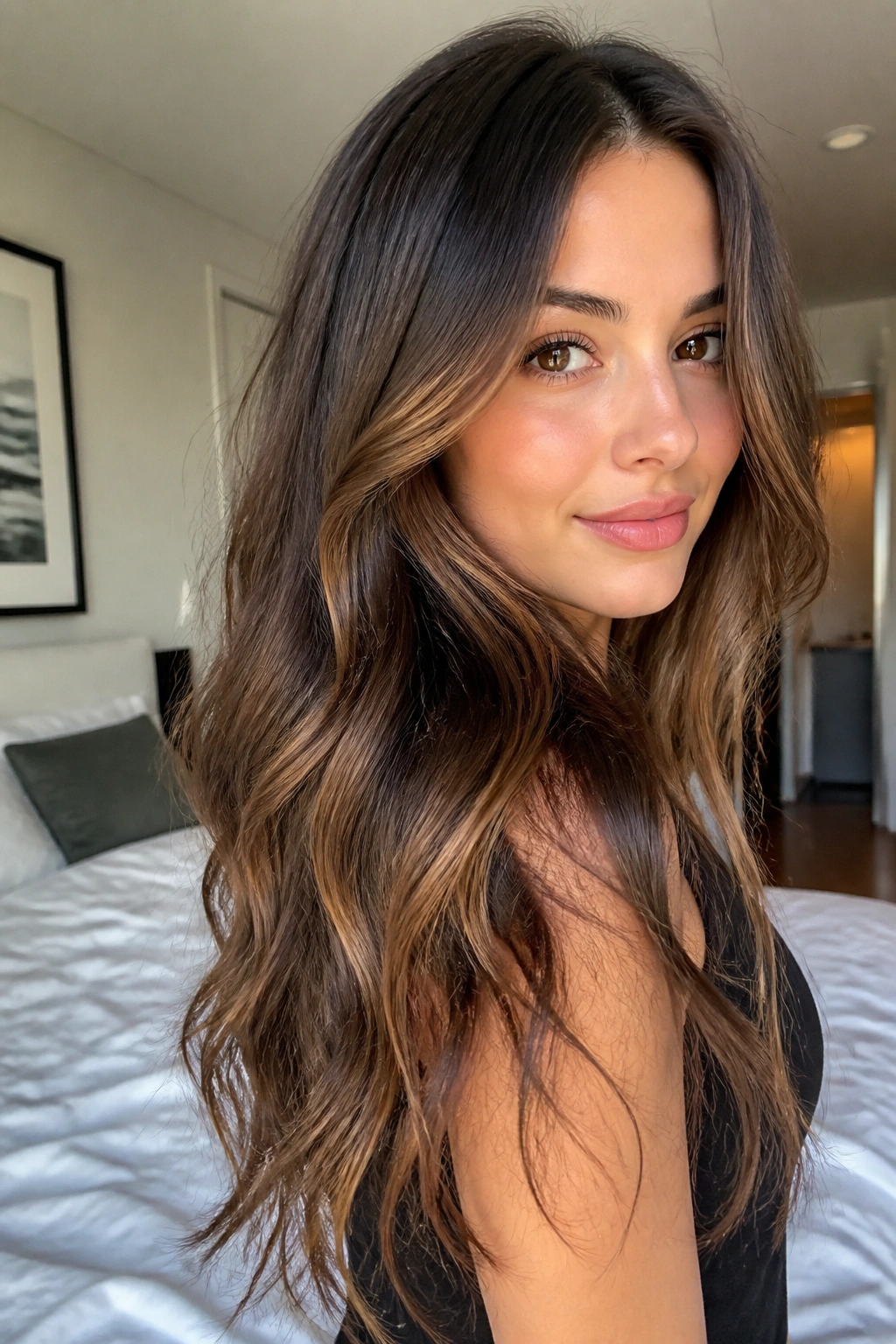
Fine hair loves soft warmth. Heavy contrast can make it look thinner than it is, but honey-kissed chocolate balayage adds depth without looking striped or overworked.
The honey should be more like a glow than a blonde lift. Think of it as tiny streaks of warmth woven into the chocolate base and carried through the bottom half of the length. On long hair, that keeps the style airy and dimensional.
The Fine-Hair Advantage
- Soft highlights create the illusion of more movement
- A low-contrast fade keeps the ends from looking sparse
- Loose styling makes the color look fuller
- A lightweight mousse helps the waves hold shape without stiffness
This is one of those color ideas that looks expensive because it’s quiet. The effect is strongest when the hair is healthy and ends are trimmed clean.
14. Espresso Root Smudge with Sand Ends
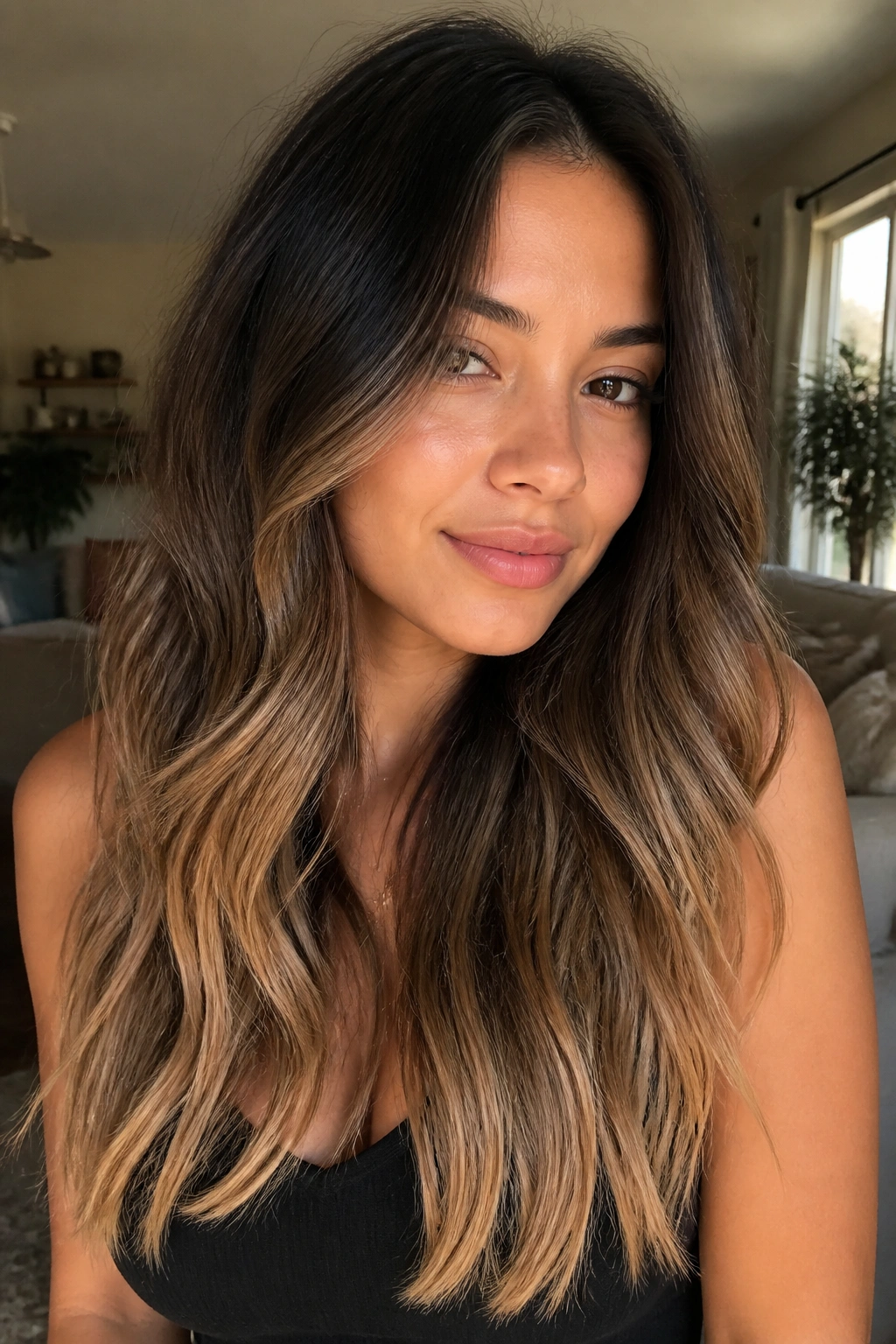
A root smudge can save you from that obvious stripe people used to get with older ombre work. Here, the espresso root is gently blurred into sandy brown ends, so the fade looks soft from the scalp all the way down.
The sandy tone keeps the style light, but not blond. That’s important. Long hair can handle more contrast, but it still looks better when the transition makes sense visually. This version feels sun-touched without feeling beachy in a cliché way.
It suits loose curls and long layers best. The movement gives the sandy ends something to cling to, and the darker root keeps the whole style from drifting too bright. If you want a lower-maintenance ombre with a bit of lift, this is a strong choice.
15. Taupe-Brown Ombre
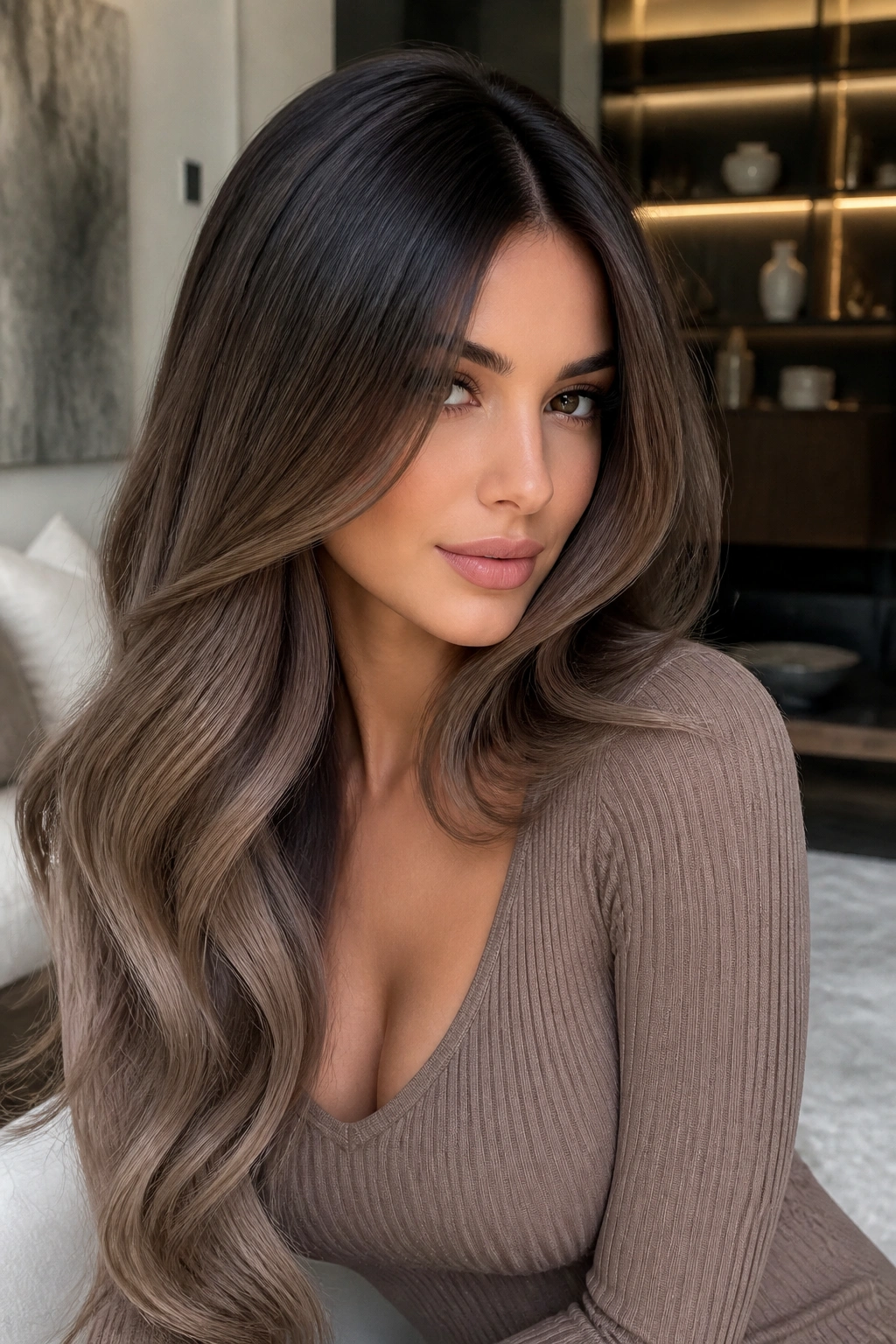
Taupe brown is the shade for people who like their color calm. It sits between brown and gray-beige, which makes it soft, muted, and easy to wear with almost anything.
On long hair, taupe ombre can be incredibly pretty because the length gives the neutral tone time to unfold. There’s no rush to get to the lighter ends. The fade can stay slow and smooth, which helps the color look expensive in a quiet way.
It works especially well with sleek styling, soft bends, or a blunt U-shaped cut. If you wear a lot of black, charcoal, cream, or silver, taupe brown ties the whole look together without fighting your clothes. That kind of harmony matters more than people admit.
16. Mocha Melt with Curtain Bangs
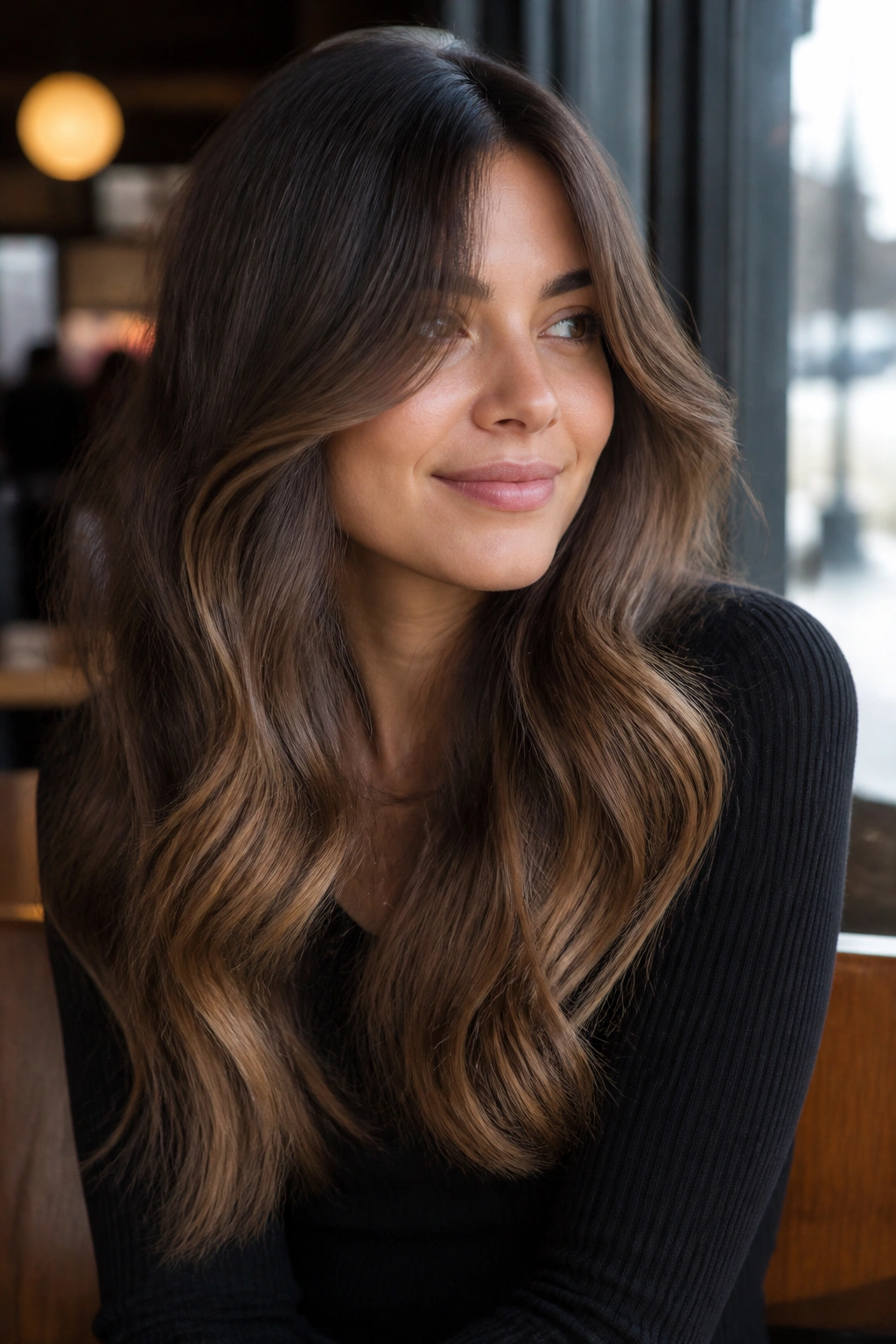
Curtain bangs are unforgiving with color. If the blend is off, the front of the hair can look disconnected from the rest. A mocha melt solves that by carrying the ombre upward just enough to connect the bangs to the mids.
The bang area should usually sit one step lighter than the root, but not as light as the ends. That keeps the face open without creating a harsh band. Long hair gives you enough length to make this gradient feel natural.
How to Get the Most From It
Curtain bangs like movement, so round-brush them away from the face and keep the longest layers soft. A little lift at the root helps the color sit cleanly. If the bangs are too dark, they can swallow the face. If they are too light, the whole front section starts competing with the ombre. You want the middle ground.
17. Chocolate to Copper Glaze
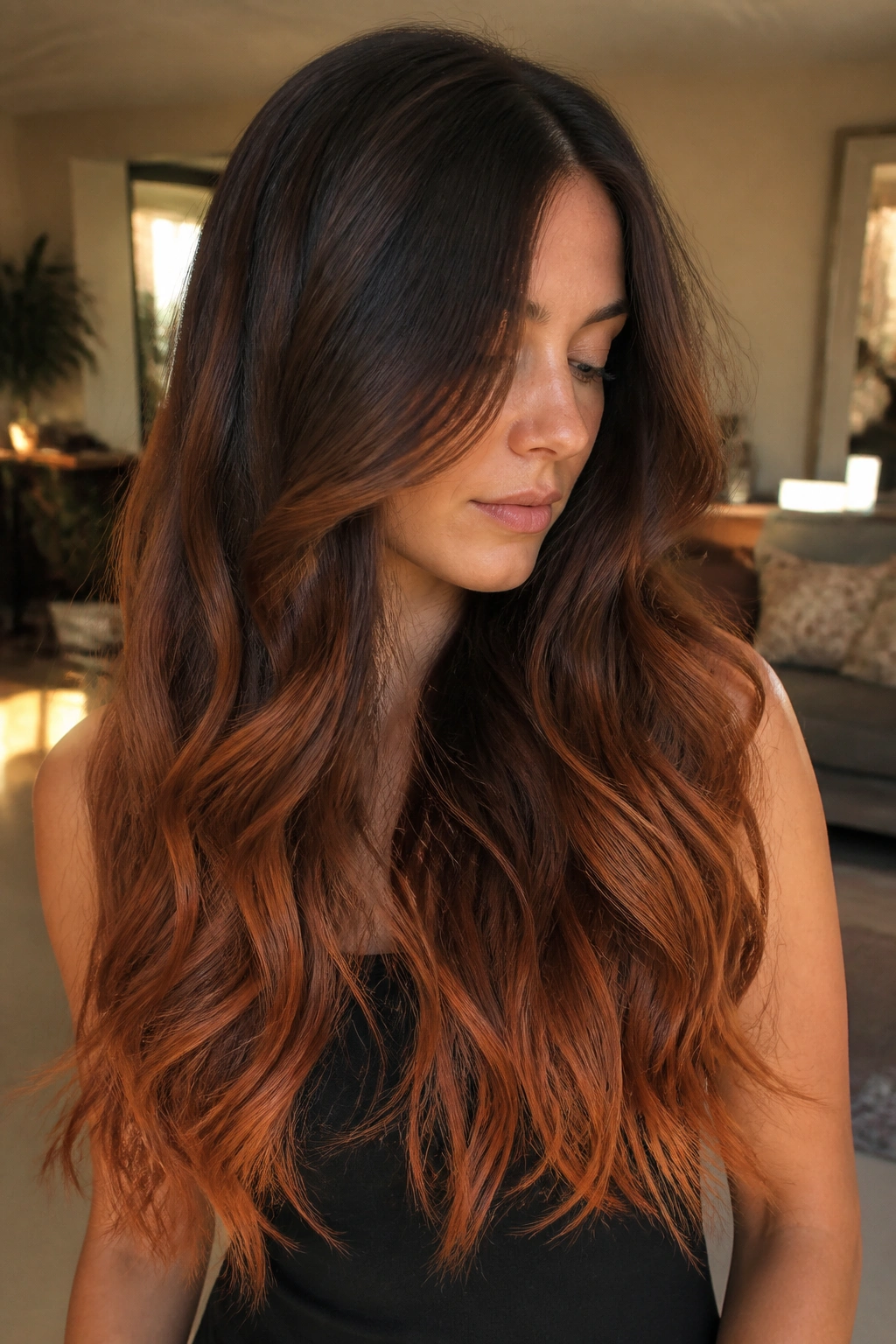
Copper on brown hair reads bright in the best way. When the ends of long chocolate brown ombre hair pick up a copper glaze, the whole style feels warmer, richer, and a little more alive.
This is a stronger color statement than caramel or honey, but it still stays in the brunette lane. The copper should be glazed over the ends rather than painted in heavy chunks. That gives you reflectiveness, not flat orange. Curls and waves make the color pop; straight styles make it look smoother and more elegant.
If your skin tends to look washed out in cool browns, copper can fix that fast. It adds warmth near the face and turns the lengths into something more dimensional. Just keep the maintenance honest, because copper fades faster than neutral brown.
18. Cocoa Brunette with Hidden Underlayers
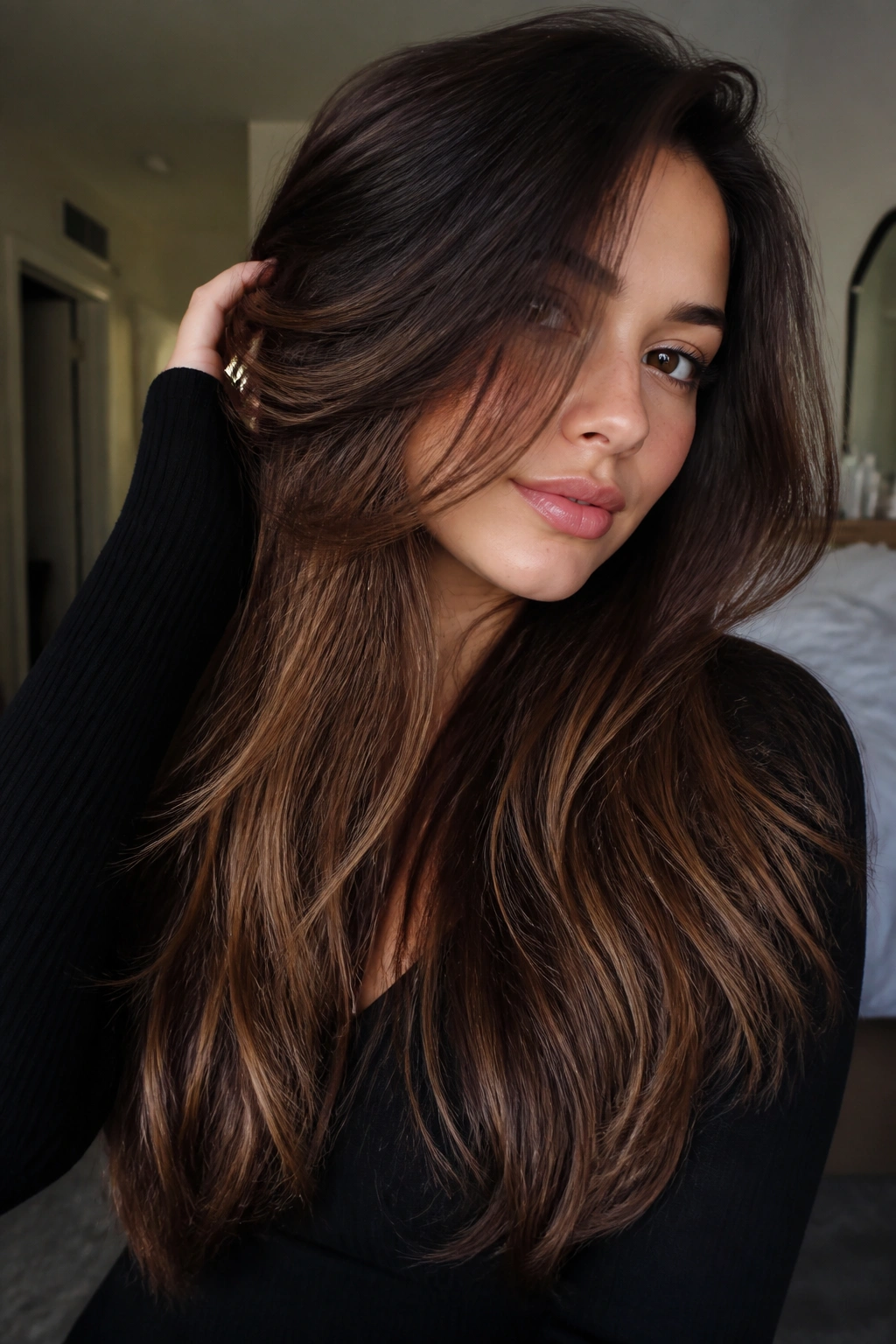
Underlayers are underrated. A cocoa brunette ombre with lighter pieces hidden underneath the top surface gives you a color that feels more private, which is sometimes the nicest thing about long hair.
From the top, the hair can look mostly deep chocolate. Then you move, braid it, or tuck it behind one ear, and the lighter brown underneath shows through. That makes the style feel richer without screaming for attention.
Best Moments to Show It Off
- Half-up styles
- Loose braids
- Twists pinned at the back
- Soft waves that separate naturally
This kind of color placement is smart if you want flexibility. The hair looks polished when it’s worn down, but the contrast becomes more visible when you style it up. That gives you two looks from one color job.
19. Milk Chocolate Face-Framing Glow
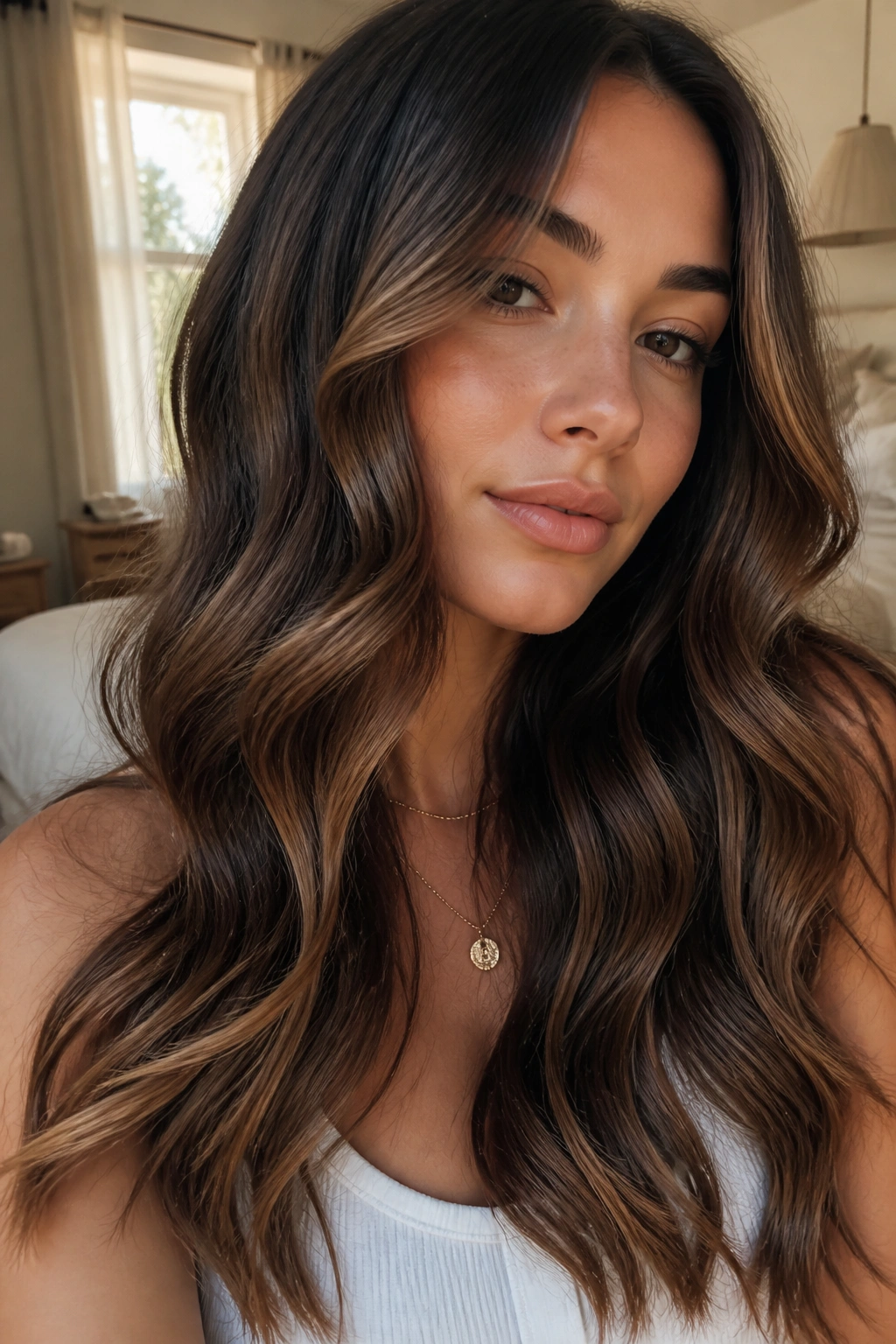
Face-framing brightness is the fastest way to wake up long hair. A milk chocolate glow around the front sections lightens the look without taking away the depth that makes brunette hair feel rich.
The front pieces should be soft enough to blend into the rest of the ombre. You want the lighter tone to sit near the cheeks and collarbones, then disappear gradually into a deeper chocolate down the length. That little glow helps long hair avoid the heavy curtain effect that dark colors sometimes create.
It’s a good pick if you wear your hair down a lot and want your features to look a little brighter without a full color overhaul. A soft bend with a flat iron or wand keeps the front pieces from sitting too rigidly. Movement is the whole point here.
20. Auburn Chocolate Ombre
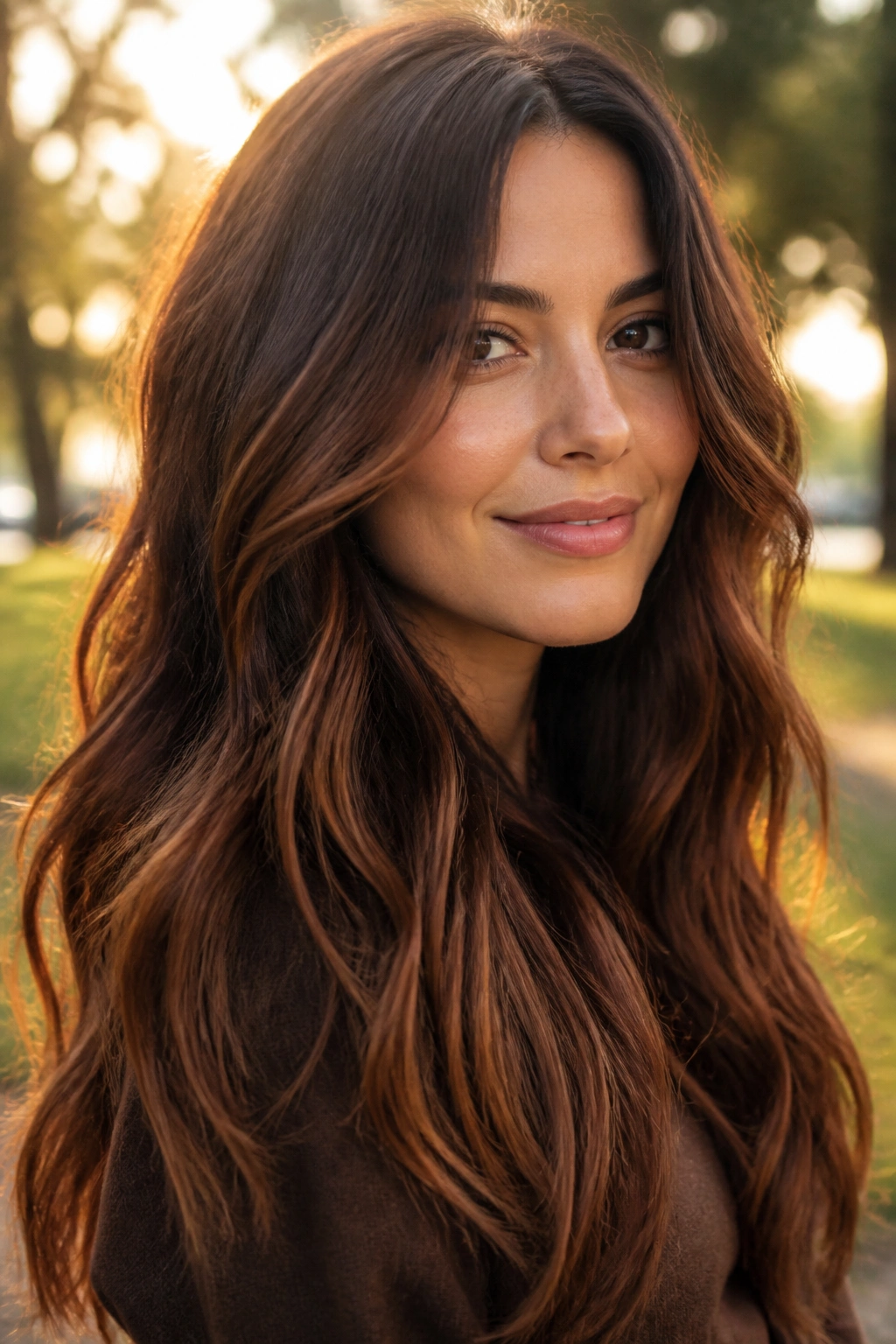
Auburn and chocolate sit closer together than people think. The result is a brown ombre with a red-brown lean that feels fuller and deeper than a standard caramel fade.
This look works especially well on long hair that has a bit of natural wave. The auburn tones catch the light in a way that makes the hair look thicker and more layered. On straight hair, it still works, but the red note is more subtle.
Best Styling Match
A glossy blowout is probably the nicest pairing. The red-brown tones shine more when the hair has a smooth surface, and the long lengths give the color room to read as a gradient instead of a block. If you want warm brunette hair with a little extra personality, this is an easy one to love.
21. Brunette to Bronde Long Layers
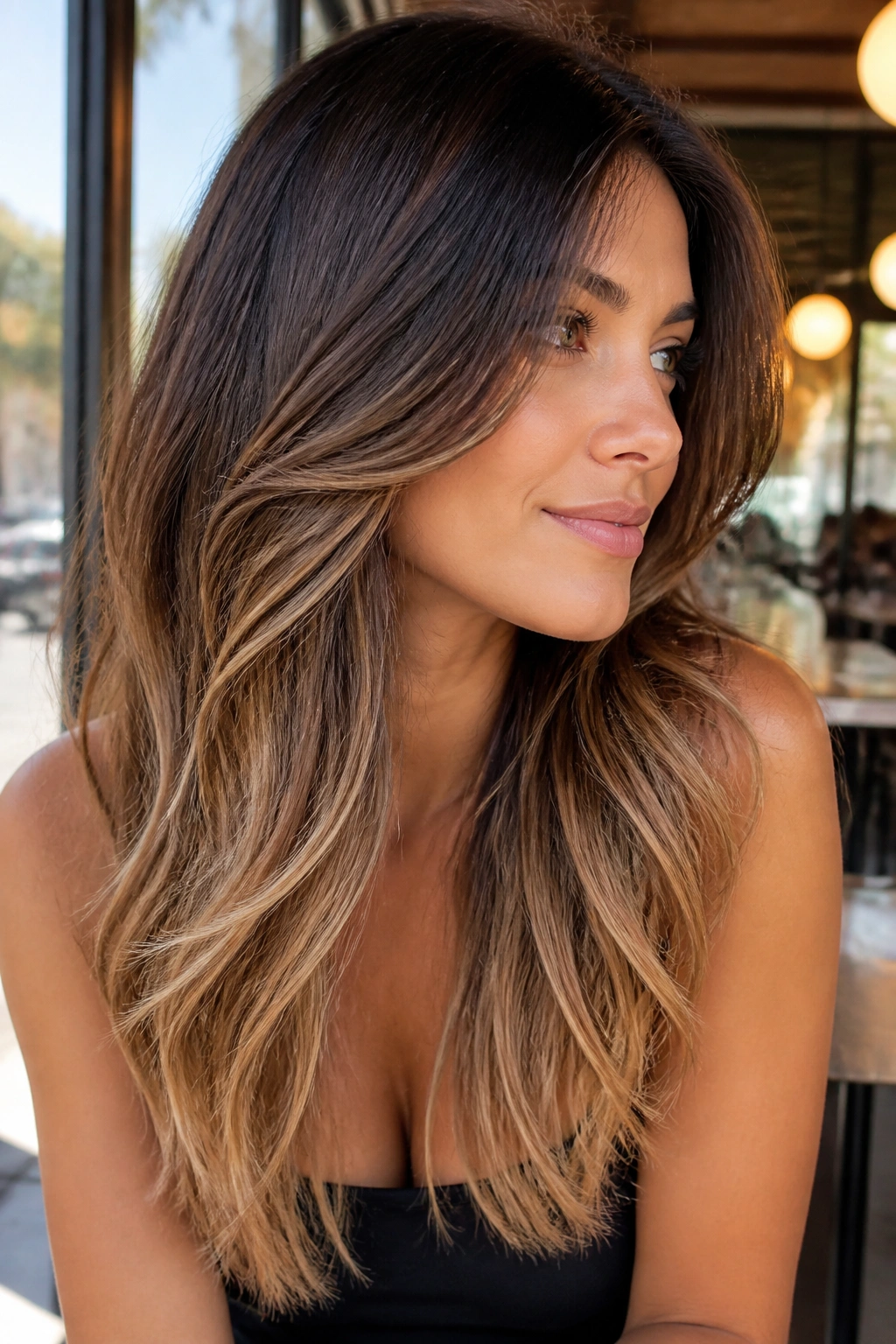
Bronde can look muddy if the brunette base is too flat, so long layers matter here. The best brunette-to-bronde ombre keeps the base chocolate-rich and lets the ends move into a soft beige-brown rather than a true blonde.
That middle zone is the reason the color works. You are not trying to turn dark hair into light hair. You are building a bridge between the two. On long layers, the shift feels airy and bright without losing the brunette identity.
This idea is good for anyone who wants something a little lighter but still hates obvious blonde streaks. If you wear it with big waves, the bronde pieces live in the bends and ends, which makes the whole style look smoother.
22. Deep Cocoa with Gold-Dust Ends
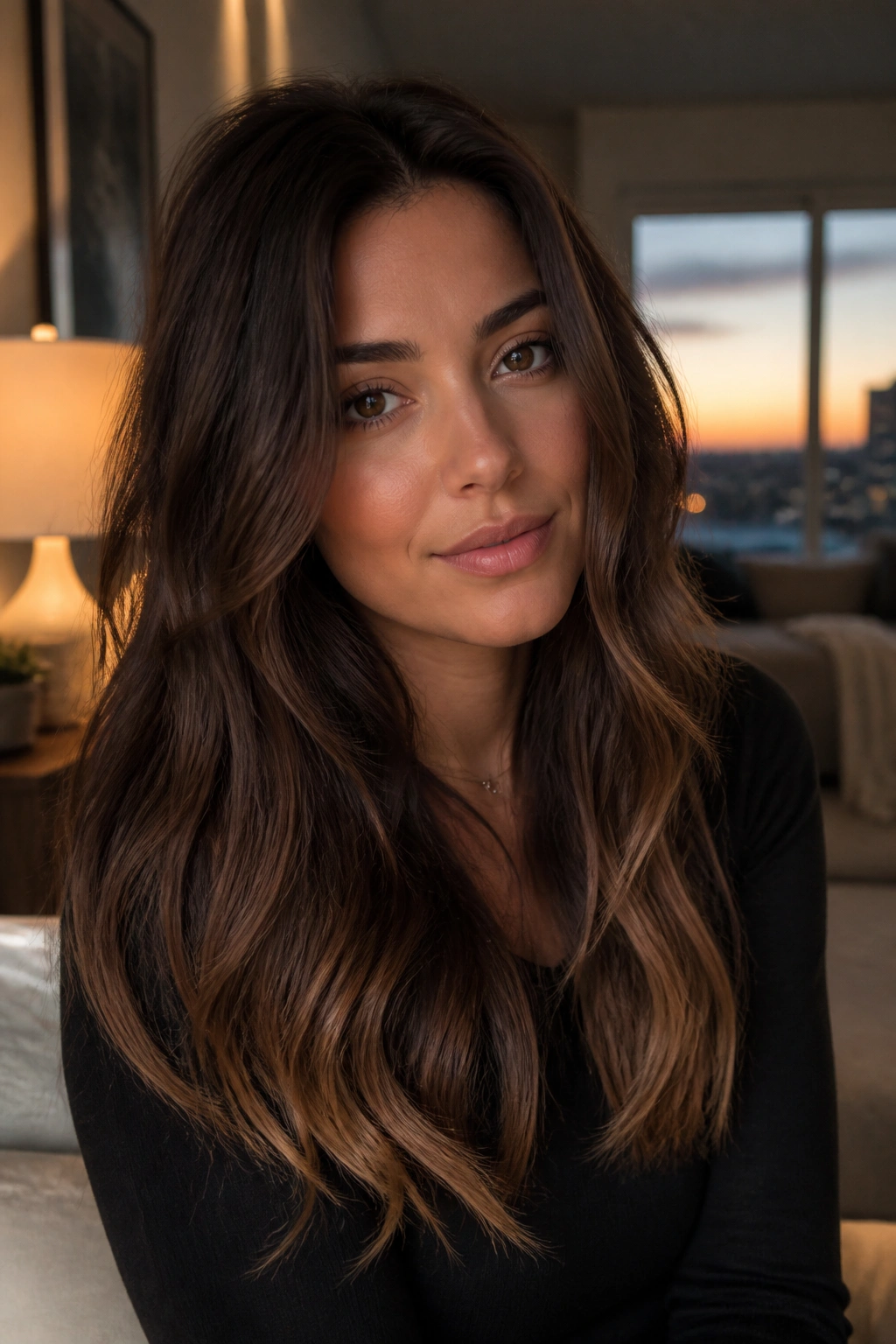
Gold-dust ends are the answer when you want barely-there lightness. The idea is simple: keep the top and mid-lengths deep cocoa, then add a small amount of golden brown to the last few inches so the hair glows instead of flashes.
That tiny amount of brightness is enough on long hair. You do not need a huge contrast when the length itself already gives you movement. In fact, too much gold can make the color look busy. A restrained hand is better here.
Who Should Try This
- People who want a soft ombre, not a bold one
- Anyone who prefers warm brown tones over ash
- Long-haired clients who wear polished curls or blowouts
- Readers who want easy grow-out and lower upkeep
It’s subtle, which is exactly why it works. The ends catch light without stealing the show.
23. Walnut Chocolate Ombre
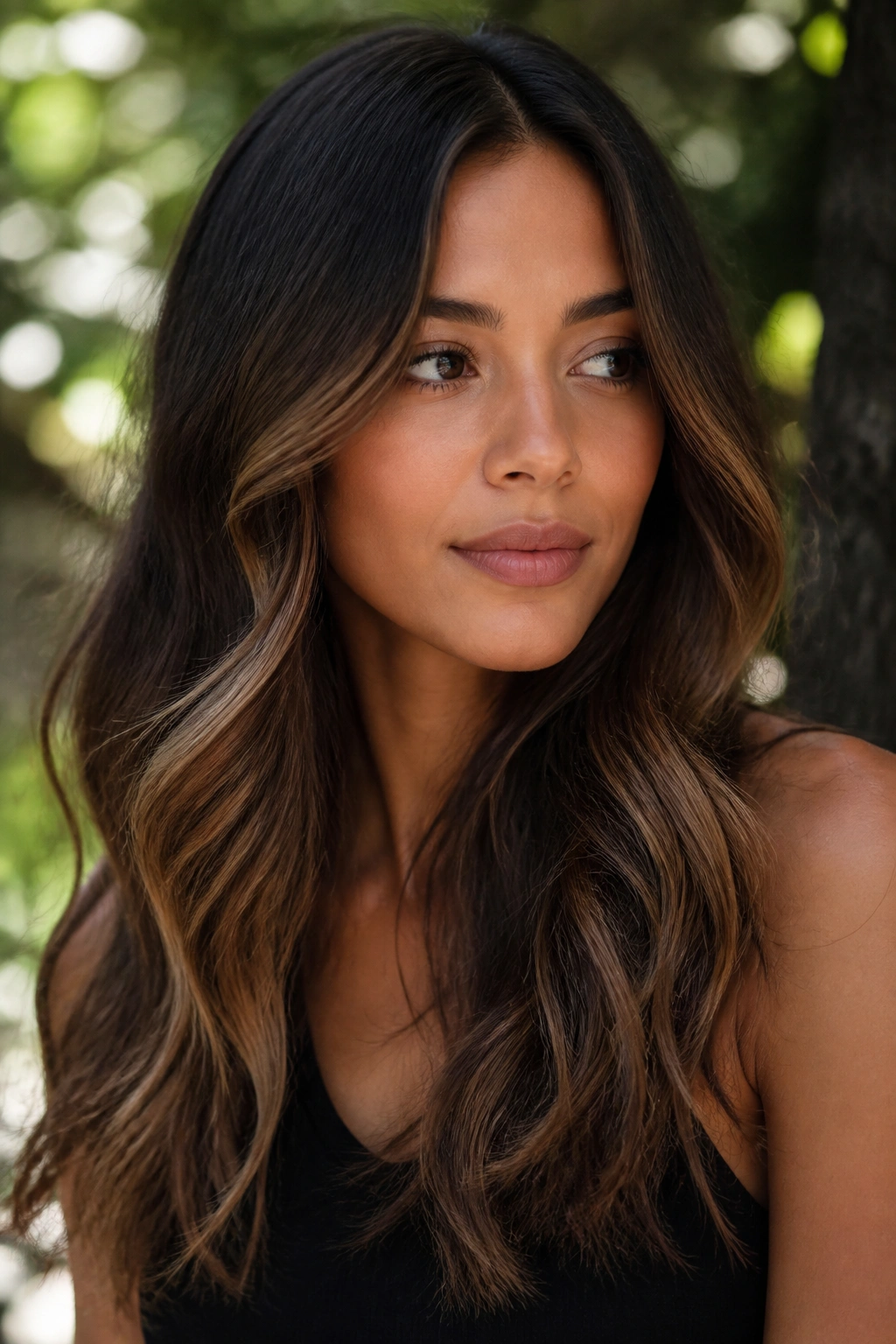
Walnut brown feels like the natural cousin of chocolate. It has enough warmth to keep the color alive, but not so much that it turns reddish or golden. On long hair, that balance can look incredibly flattering.
The transition from chocolate roots to walnut ends should stay smooth and gradual. No hard line. The point is to keep the hair looking full and organic, as if the lighter tone just surfaced from within the darker base.
Walnut is a smart choice if you want a brunette ombre that feels easy to wear every day. It pairs well with textured ends, soft waves, and layered cuts. If you have thick hair, this shade can lighten the visual weight a little without removing the richness.
24. Smoked Chocolate with Violet Sheen
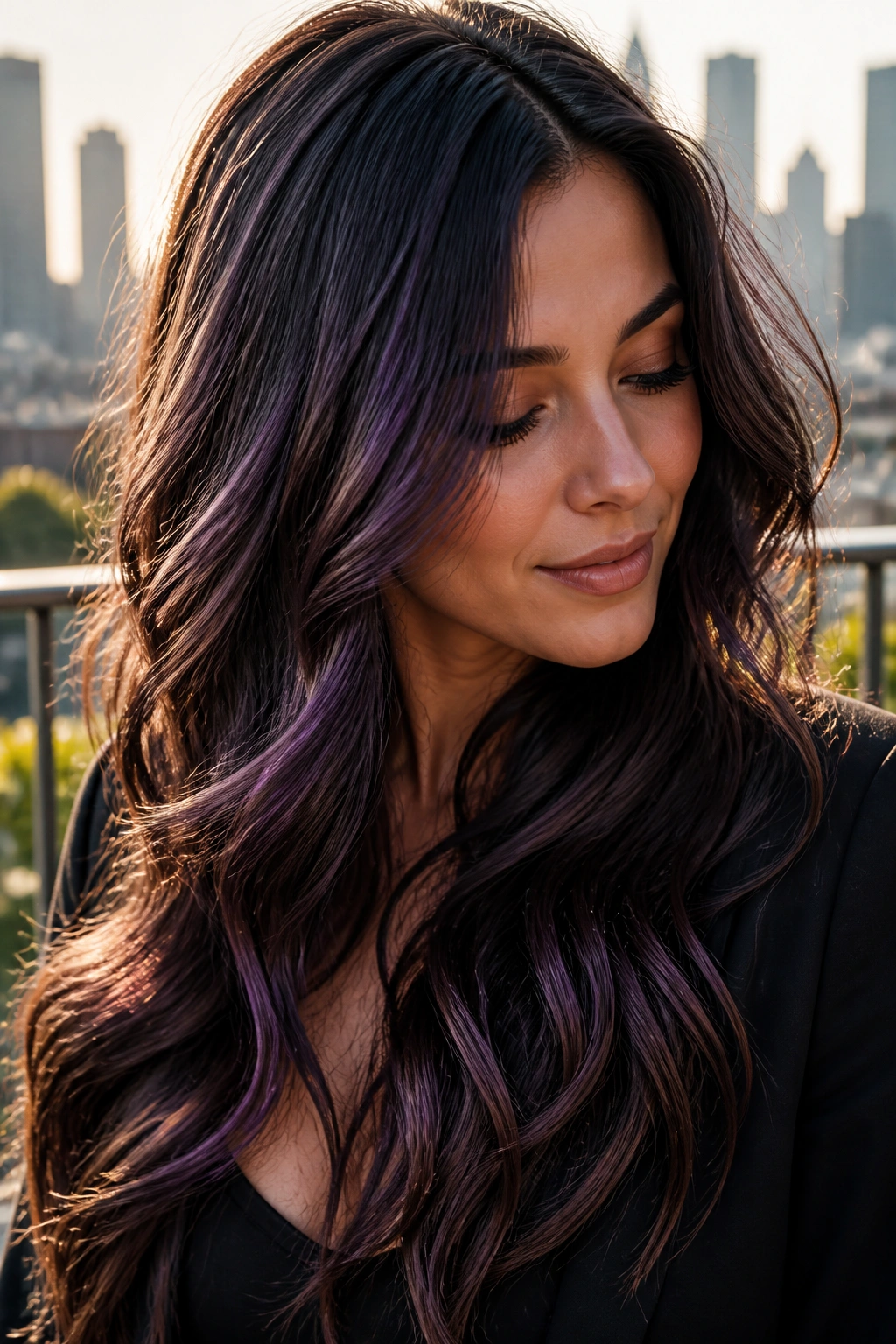
Violet sheen changes brown more than most people expect. A smoked chocolate ombre with a faint violet gloss can make long hair look cooler, deeper, and a little more fashion-forward without tipping into obvious purple.
The trick is keeping the violet subtle. You are not dyeing the ends purple. You are correcting warmth and adding a cool reflective cast that shows up in certain light. On dark chocolate hair, that can look striking. On long curls, even more so.
Watch the Lighting
In daylight, it may read as a clean smoky brown. Indoors, the violet note can flicker through the ends and make the color feel richer. That makes this option a little more interesting than a standard ash ombre, especially if you like brunette shades that look different from room to room.
25. Seamless Chocolate Brown Ombre with a Glass-Hair Finish
The glass-hair version is about restraint. The base stays deep chocolate, the fade stays soft, and the whole thing depends on shine more than contrast.
Long hair is the perfect canvas for this because healthy lengths can reflect light in a way shorter cuts sometimes cannot. Ask for a gentle melt through the mids and ends, then finish with a clear gloss so the hair looks smooth from root to tip. No chunky highlights. No rough edges. Just a clean brown fade with a reflective surface.
The Salon Finish
A trim matters here. Split ends steal the shine, and once the ends look dry, the whole illusion falls apart. After styling, a pea-sized amount of serum on the mid-lengths and ends is usually enough. Too much and the hair looks greasy. Too little and you miss the point.
This is the version I’d pick if you want the color to feel polished every time you wear it down. It’s quiet, but not plain.
Final Thoughts
Long hair gives chocolate brown ombre room to do what it does best: stretch out, soften, and show off a real gradient instead of a quick color switch. That is why these ideas work better on longer lengths than they do on a bob or lob. The fade has space. The shine has space. Even the grow-out looks better.
If you’re booking the appointment, bring photos that match your base shade, your hair texture, and the amount of contrast you actually want. Those three things matter more than the name of the shade. A good colorist can adjust the melt so it suits your haircut instead of forcing a trend onto it.
One small tip before you sit in the chair: ask how the color will look in low light and in daylight. Brown tones can change a lot between the two, and that’s usually where the best version of the look reveals itself.
