



Silver ombre hair ideas for long hair work best when the fade has room to breathe. On short hair, silver can feel abrupt if the transition is too tight. On long lengths, it can move from smoky at the top to icy at the ends in a way that looks deliberate, even a little dramatic, without feeling loud.
Long hair also gives you more control over tone. A silver fade can lean pearl, steel, charcoal, lavender, or nearly white, and the base color can be soft brown, deep black, or something in between. That range is the real appeal. You are not locked into one version of silver. You get to choose how cool, how bright, and how high-contrast you want the whole thing to feel.
The catch is that silver is honest. It shows tone, damage, and patchy lifting faster than warmer shades do, which is exactly why the placement matters so much. A good ombre respects the hair you already have, especially on longer lengths where the ends are usually a little older and thirstier than the roots.
So the smartest looks are the ones that use that length instead of fighting it. Some are soft and wearable. Some are moody and graphic. A few are straight-up glamorous. And all 18 of these silver ombre ideas for long hair give you a different way to wear the same cool-toned family without ending up with a copy-and-paste result.
1. Smoky Brunette Melting Into Silver Ends
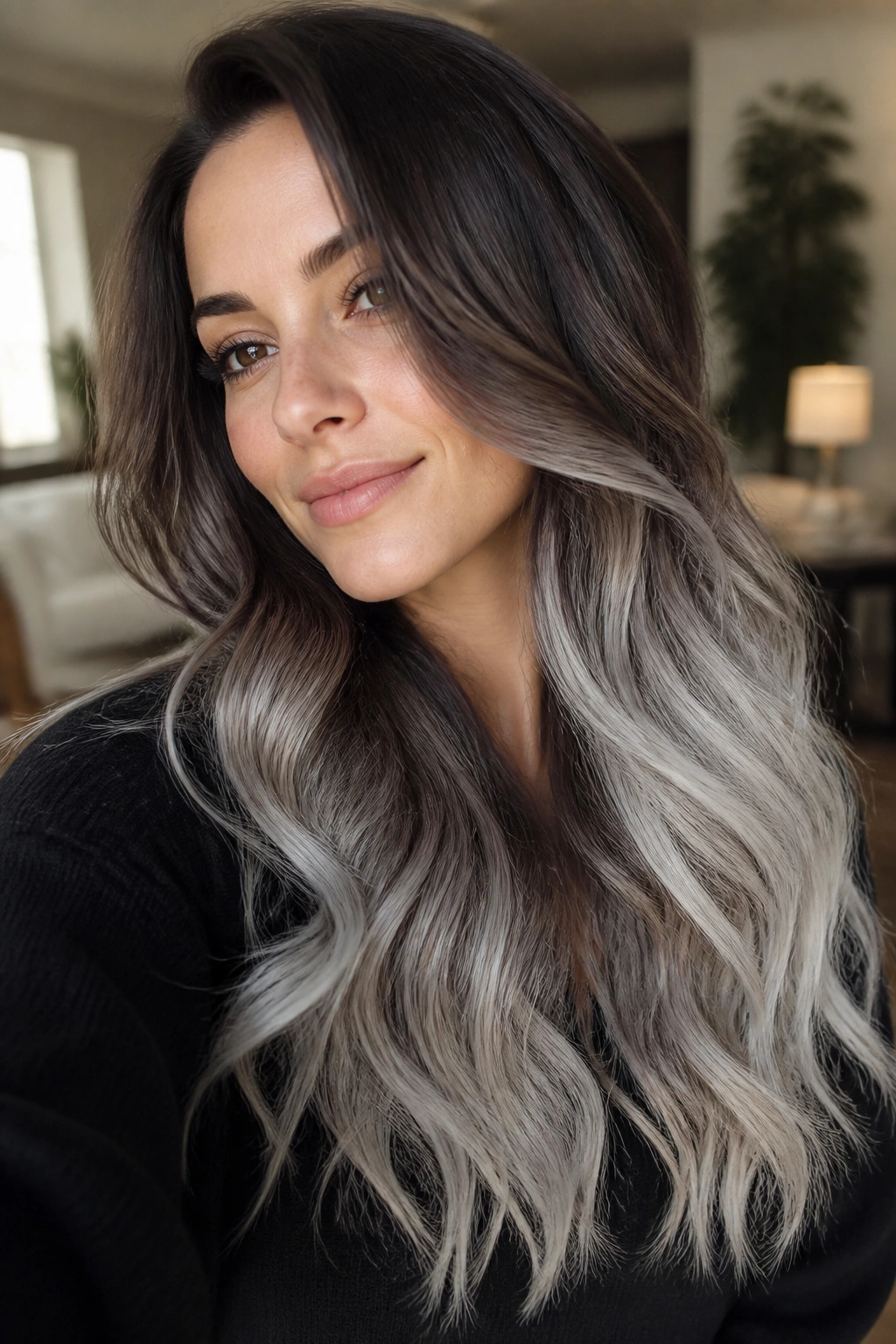
This is the easiest silver ombre to wear if you want contrast without a hard line. The base stays in brunette territory — think level 4 to 6, depending on how dark your natural color is — and the silver gets stronger as it drops toward the ends. On long hair, that melt has room to feel soft instead of stripey.
Why It Works
The transition looks expensive because it follows the hair’s natural fall. Waves make it even better. The darker crown keeps the color grounded, while the silver ends catch movement each time the hair swings over your shoulder.
Ask for a root shadow and a hand-painted fade, not a blunt dip-dye line. The ends should look like they were lightened in stages, then toned down until the brass disappears. A cool beige silver reads softer than a pure icy white, and it tends to grow out with less drama.
- Best on layered cuts that show movement.
- Looks especially good with loose bends from a 1.25-inch iron.
- Keeps the grow-out line easy to live with.
- Gives thick hair a lighter finish without bleaching every inch.
Pro tip: If your hair is naturally warm, keep the midlengths a shade darker than the ends. That tiny difference makes the silver read cleaner.
2. Black Hair with Steel Silver Tips
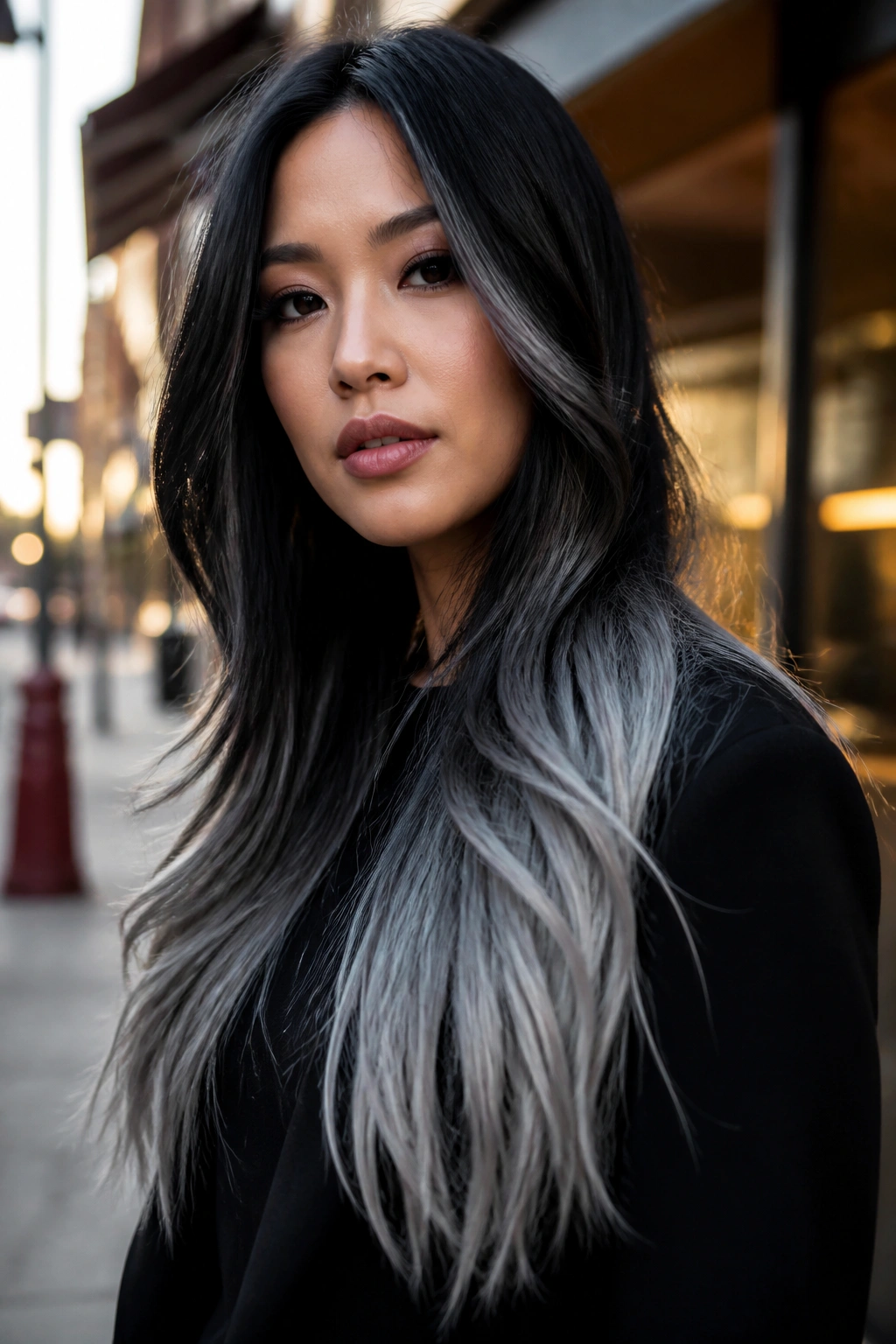
Black-to-silver ombre has attitude. Not cartoonish, not costume-like — just bold in the way a sharp blazer is bold. The contrast is the point here, and long hair gives it enough runway to look intentional instead of harsh.
The best version usually starts with a blue-black or soft black base and fades into steel silver, not stark white. Steel silver has a faint graphite edge, which keeps the ends from looking flat. On straight hair, the effect is sleek and graphic. On long waves, it gets a little smoky and edgy.
One thing people miss: the silver does not have to start at the jawline. Sometimes the prettiest placement begins lower, around the ribs or even past the waist, so the top half stays rich and dark while the lower half goes almost metallic. That keeps the look from swallowing the face.
Soft makeup pairs well here, but you do not need to dress the look up. It already has enough drama. A center part and glassy blowout make the color feel precise.
3. Pearl Blonde Sliding Into Frosted Silver
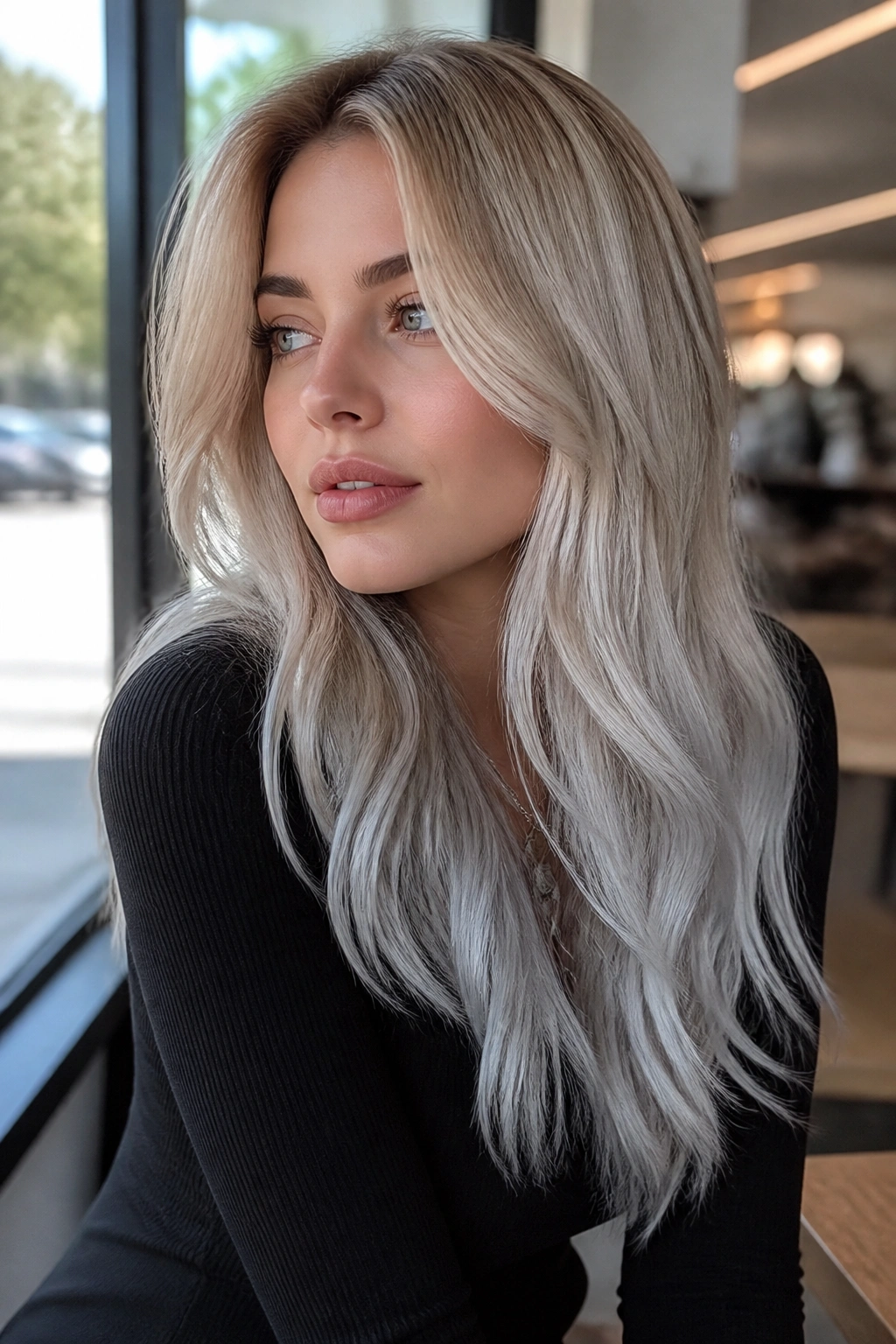
Can silver feel soft? Absolutely, if the blonde underneath has a pearly base instead of a flat white one. This version is for people who want cool tones without the bite of a dark-root contrast. The fade starts lighter and stays airy all the way down.
Pearl blonde into frosted silver works especially well on hair that has already been lifted high. You are not fighting yellow, and you are not trying to force the color into an unnatural gray. The result is more like winter light than metal. It is crisp, but not severe.
How to Wear It
Long layers help the tones separate just enough to show the gradient. If your hair is one-length and very dense, the silver can blur together too much. Soft internal layers or long face-framing pieces fix that.
A violet or lavender-based toner keeps the blonde clean while the silver ends stay cool. If you have a yellow cast left in the midlengths, the ombre can drift beige in a way that feels accidental. Better to keep the middle quiet and let the silver happen at the bottom.
This one looks especially pretty with a smooth blowout. The shine does half the work.
4. Silver Money Piece With Dark Lengths
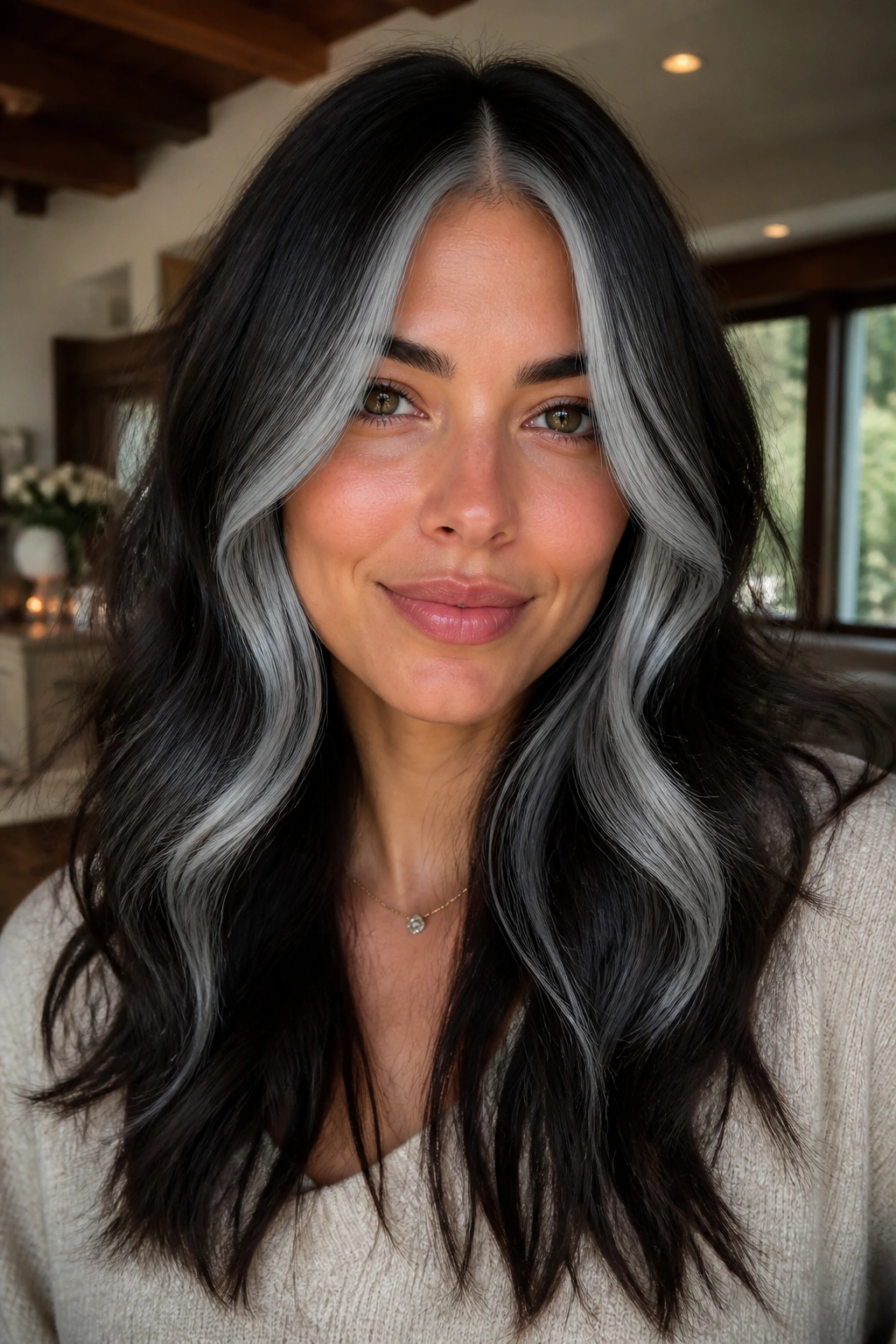
A full-head silver ombre is not the only way to get the effect. Sometimes the smartest move is a bright silver money piece that frames the face, then lets the rest of the long hair stay darker and richer. It gives you the silver hit without signing up for lightened ends all over.
I keep coming back to this look because it solves a real problem: some people want silver, but they also want their length to look healthy and full. A face-framing silver section does that. It lifts the eyes, brightens the front, and makes ponytails look more interesting from every angle.
What Makes It Pop
- Place the brightest silver near the cheekbones and jawline.
- Keep the longest back sections one to two shades deeper.
- Blend the face frame into the ombre instead of stopping it abruptly.
- Let the silver peek through braided styles and half-up knots.
Long hair gives this placement room to breathe. If the rest of the hair is chocolate, espresso, or ash brown, the silver at the front becomes a feature instead of a side note. It is also easier to maintain than a full silver fade, which matters more than people admit.
5. Reverse Silver Ombre With Dark Ends
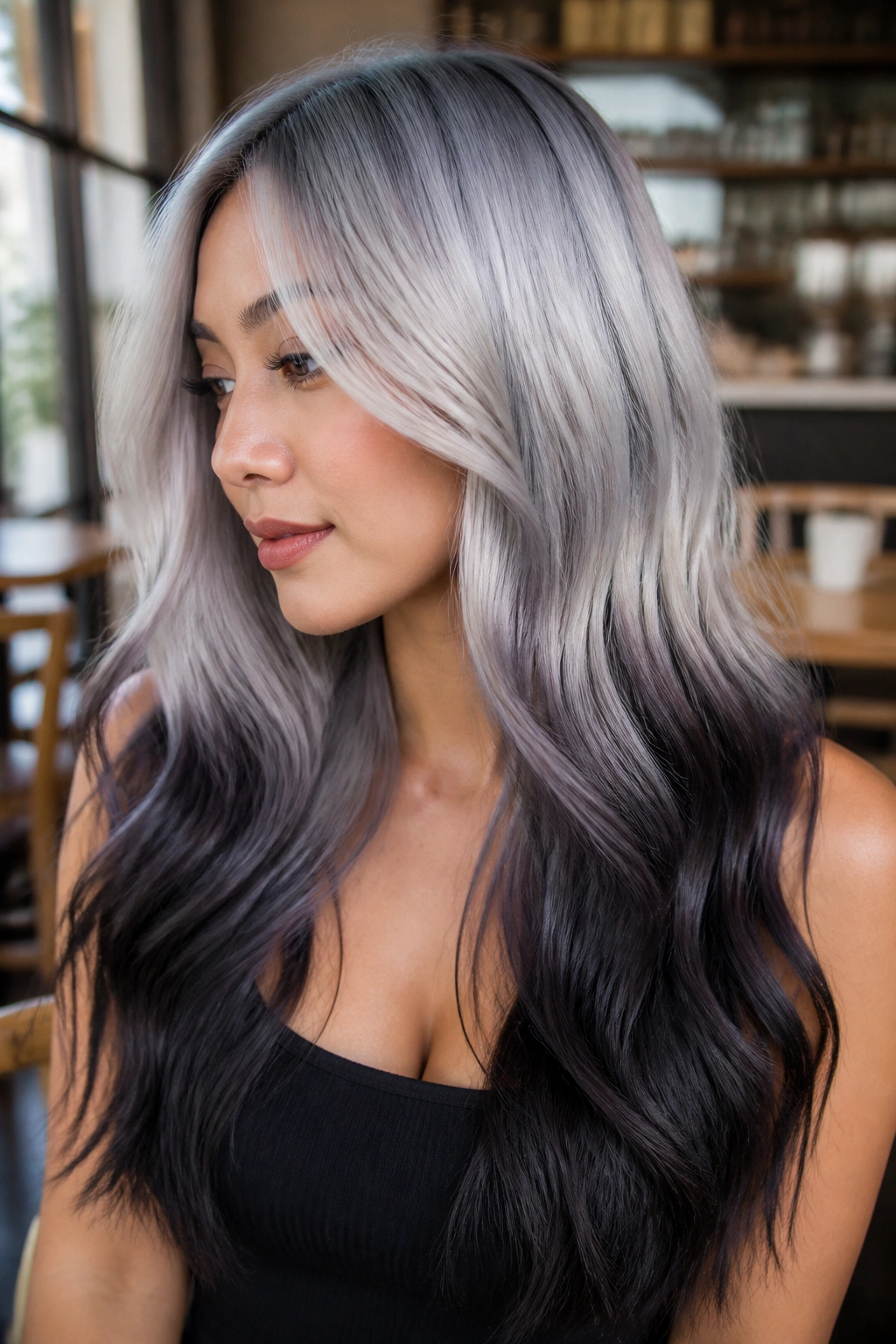
Reverse ombre gets overlooked because people assume the lightest color has to live at the tips. It does not. Silver at the top, sinking into charcoal or espresso at the ends, creates a moody, fashion-forward look that feels especially striking on long hair.
The trick is keeping the silver soft enough to blend into the darker finish. A pale silver root that shifts into smoky taupe, then into a deeper brown-black at the bottom, looks more polished than a hard split. Long lengths make that gradient believable. Short hair can struggle with it. Long hair gives the fade somewhere to go.
This is a good choice if you like the idea of silver but want your ends to look heavier and fuller. Darker tips can make fine or medium hair appear denser, especially when the hair is worn straight. On curls or waves, the shadowed ends create depth that changes as the light moves.
If you want something different without tipping into fantasy-color territory, this is the one I would keep on the shortlist.
6. Ash Brown With Frosted Tips
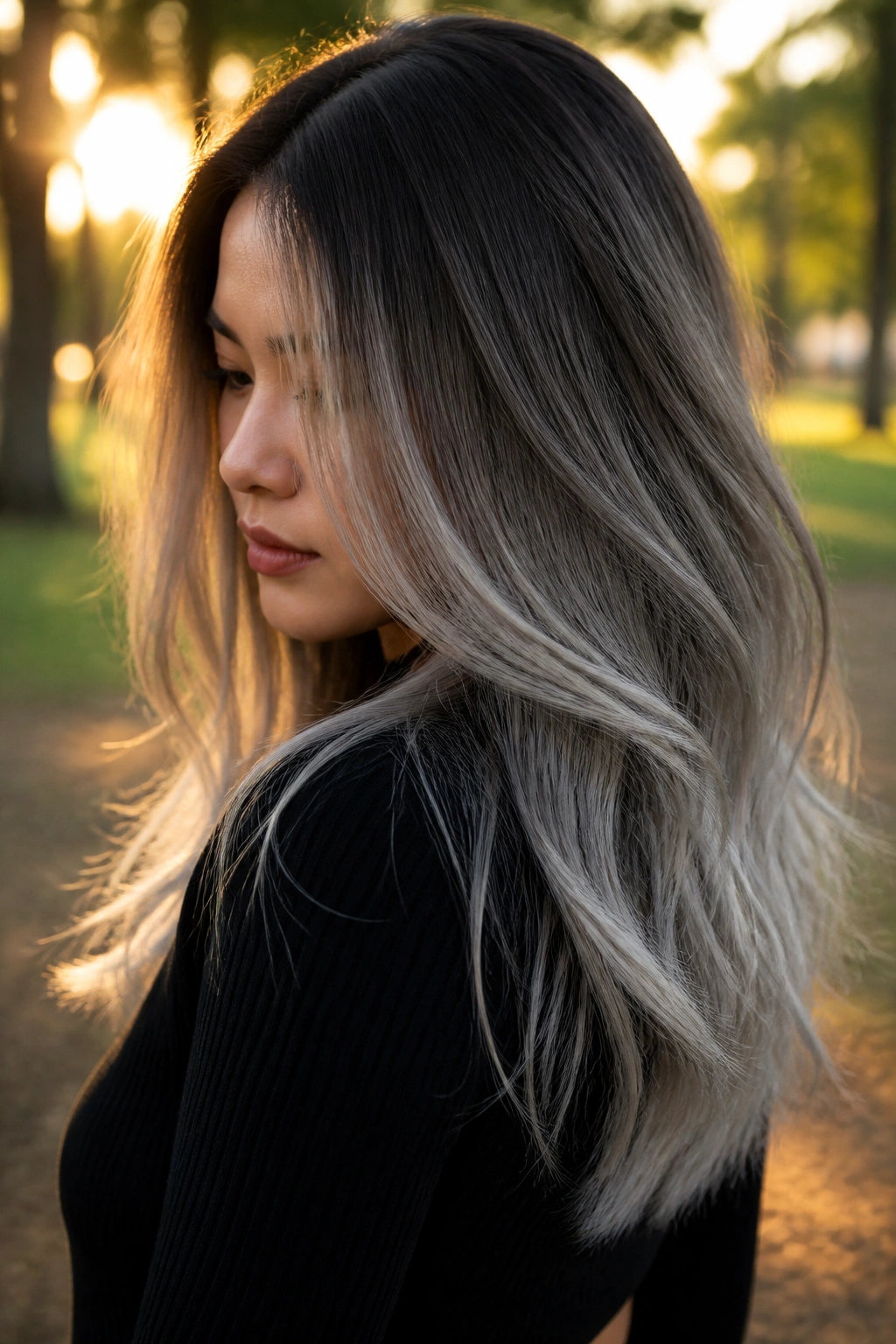
Ash brown into frosted silver is the quiet one in the group, and I mean that in a good way. It does not shout from across the room. It reads clean, cool, and expensive in a low-key sort of way — the kind of color people notice twice, not once.
Unlike high-contrast black-to-silver looks, this version keeps the jump much softer. The brown stays muted and smoky, then the ends turn a pale silver frost. On long hair, that subtle shift looks especially good with layered cuts because the lighter tips catch the ends of each section without making the whole head feel too light.
This is the one I recommend to anyone who wants silver but still needs the color to feel believable at work or in a conservative setting. The frosted ends are enough to give the haircut a little edge, and the ash brown keeps the overall look grounded.
It also grows out nicely. The trick is to keep the brown truly cool, not golden. Warm brown ruins the effect fast.
7. Silver With a Lavender Veil
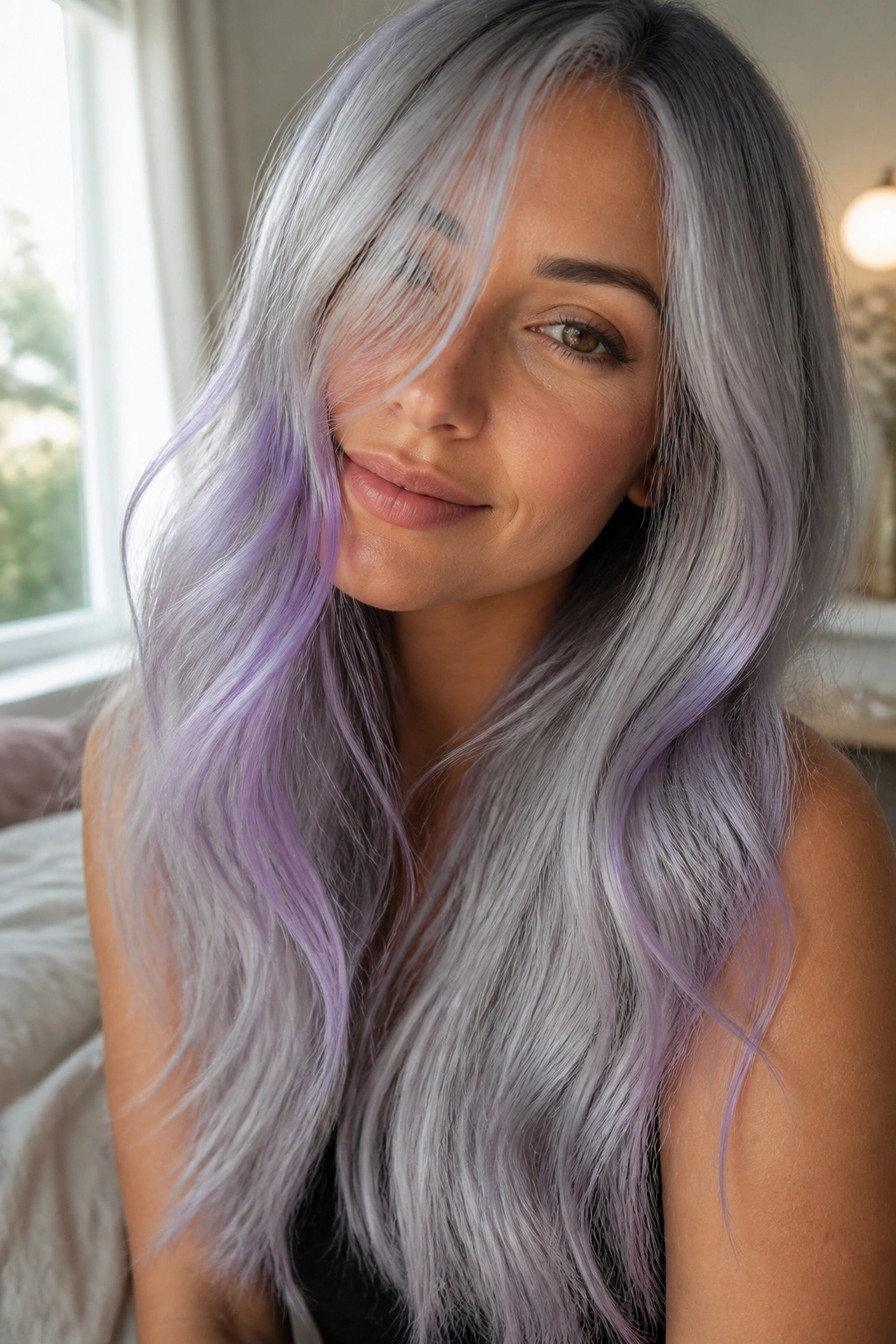
Silver and lavender is one of those combinations that sounds delicate and ends up looking stronger than expected. The lavender should be sheer, almost like a tint in a clear gloss, so the silver still carries the look. On long hair, that whisper of color moves through the lengths like a haze.
This works well if you find pure silver a little too sharp on your skin or wardrobe. Lavender softens the edges. It also flatters pale silver ends that might otherwise read flat in daylight. The color sits somewhere between icy and romantic, which gives the hair a nice tension.
What to Ask For
Ask for a silver toner with a translucent violet finish, not a saturated pastel. You want a hint, not purple ends that look like they belong in a comic book. If your stylist is hand-painting the ombre, the lavender can be concentrated in the lower third so the top stays cooler and more neutral.
This one is lovely on loose waves and even better on long hair with soft layers around the front. The movement keeps the lavender from looking muddy. It just glides.
8. Midnight Blue Fading Into Silver
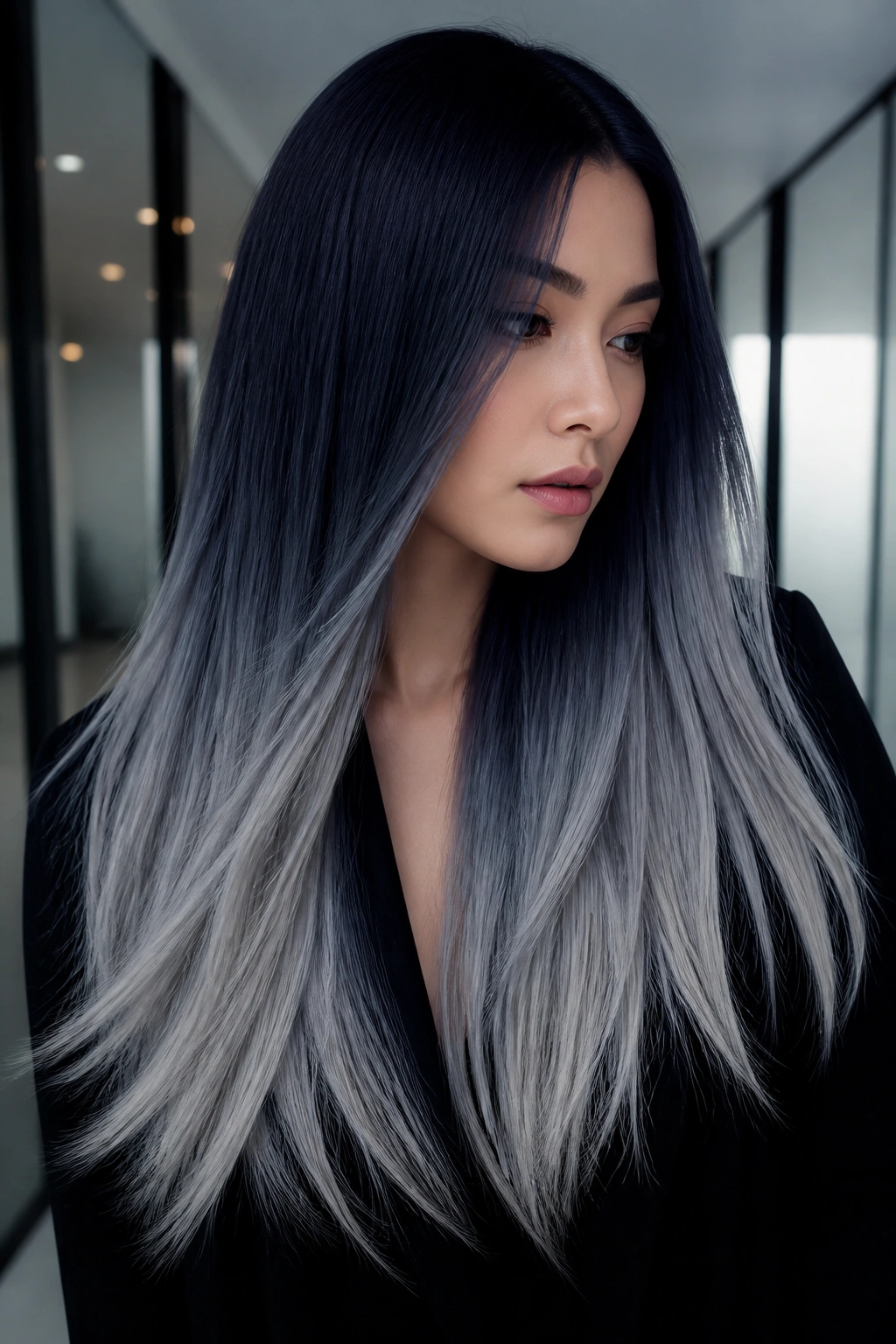
Midnight blue into silver is for someone who wants the ombre to have depth, not just brightness. The blue-black base is rich and inky, and the silver ends keep it from feeling too heavy. Together, they make a cool-toned gradient that looks dramatic without needing a neon shade anywhere in the mix.
A lot of people think blue hair has to be loud. It does not. Midnight blue can be almost black in low light, then reveal its blue cast only when the hair moves. Add silver at the ends and the whole look gets sharper. On long hair, especially straight lengths, the color change can feel very clean and almost editorial.
This is a smart choice if you wear darker clothes or like cool-toned makeup. The hair and wardrobe tend to echo each other nicely. It also works well when the silver starts lower, around the last third of the length, so the blue stays dominant.
A smooth, glossy finish matters here. Dry ends make the silver lose its shine fast. Keep the texture sleek if you want the color to do its job.
9. Mushroom Brown Softening Into Silver
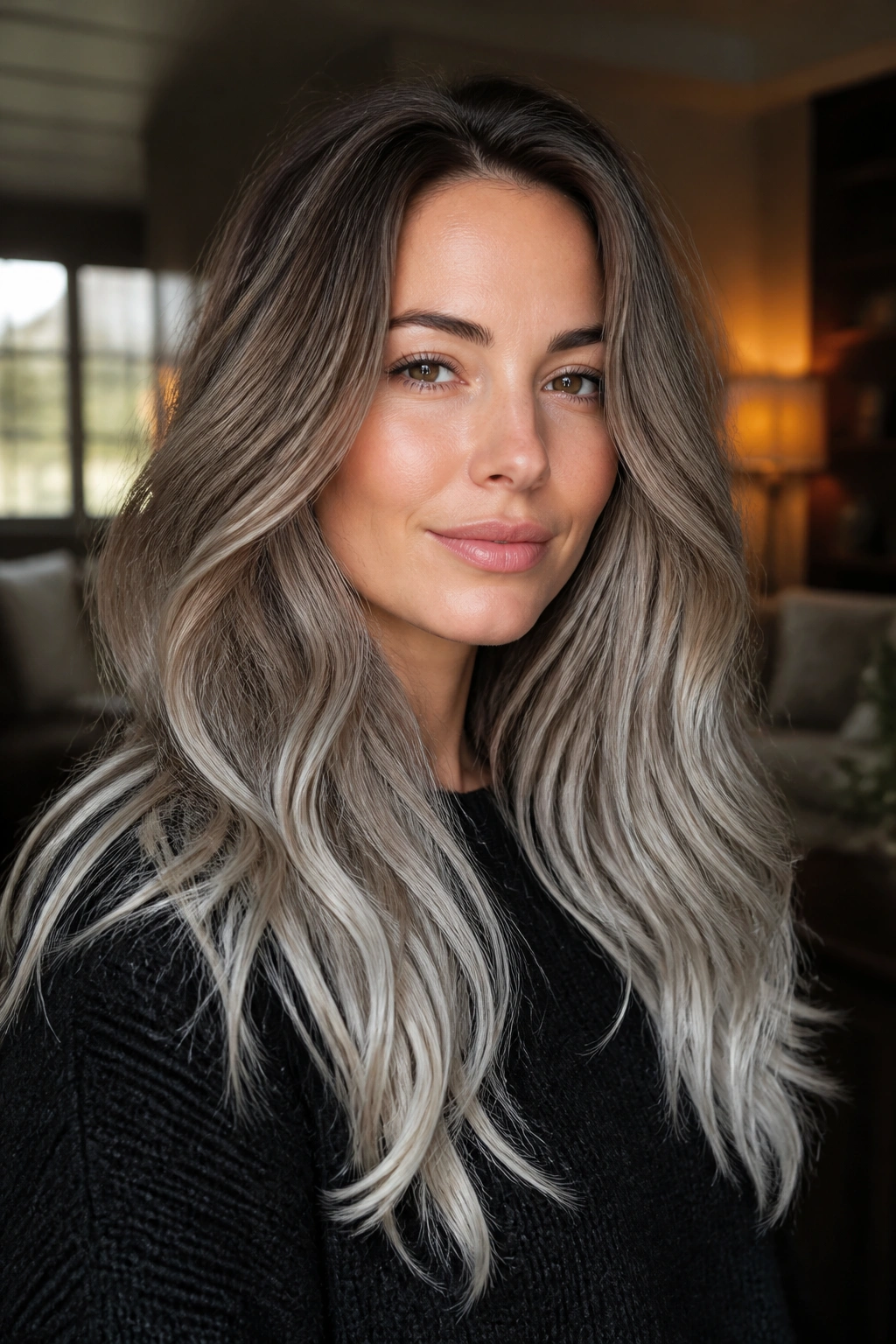
Mushroom brown is one of the best bases for silver ombre because it already lives in that cool, earthy space between brown and gray. The fade into silver feels natural, almost like the color was always meant to end there. Long hair lets the brown, taupe, and silver layers separate just enough to show off the blend.
This is a good pick if you hate harsh contrast. The change from root to tip can be subtle at first glance, then more obvious when the light hits the lengths. That makes it easy to wear in everyday life. You get silver without the full-on icy shock.
The prettiest version usually has a soft beige-brown root, a muted mushroom midsection, and silver ends that are not too white. If the silver goes too bright, it can break the calm feel of the whole look. Keep it smoky.
It looks especially good on long shag cuts and loose layers. The movement keeps the shades from sitting in one flat block, which is where cooler browns can sometimes go dull.
10. Platinum Roots Into Silver Ends
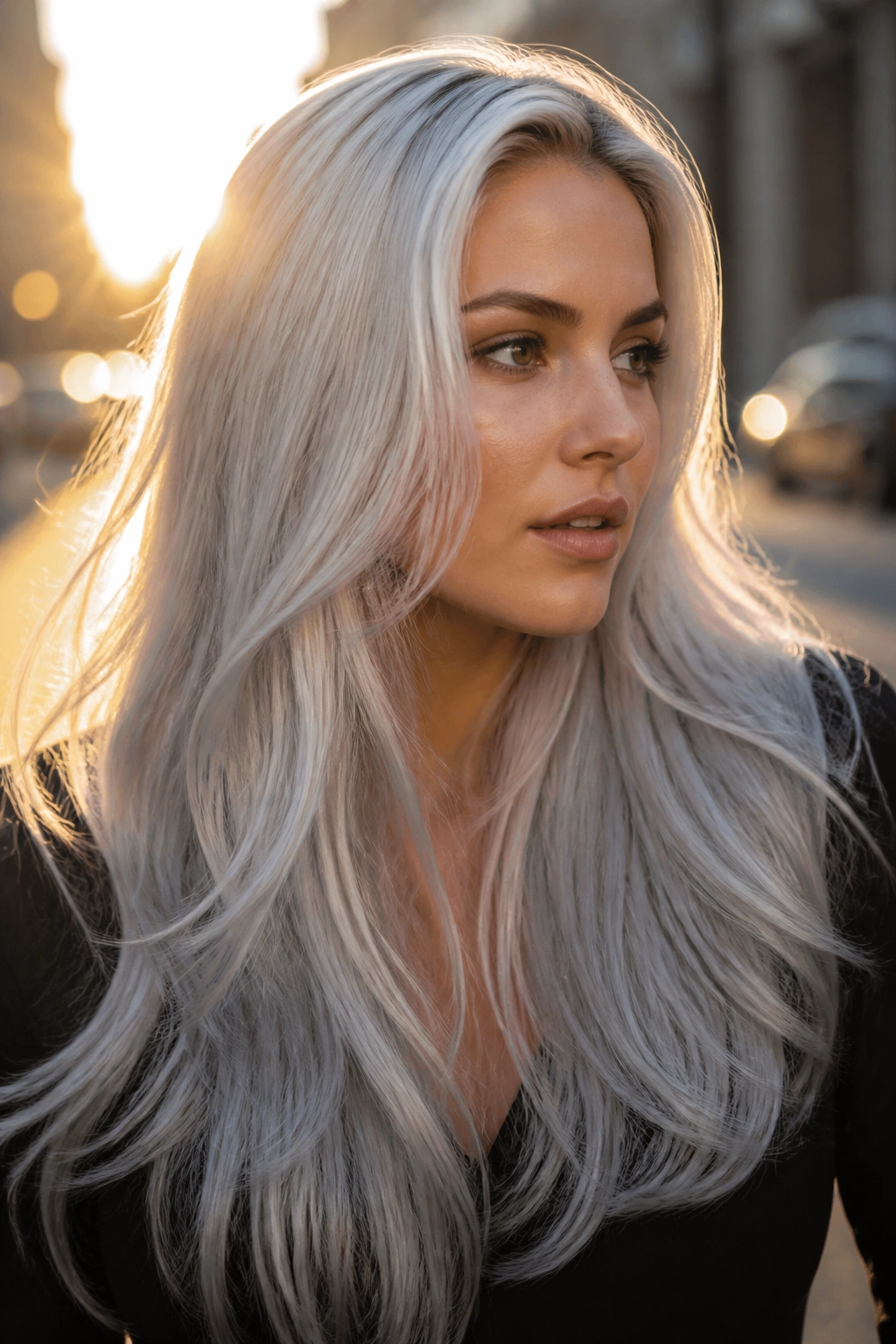
This one sounds backward until you see it on long hair. Platinum roots with silver ends create a light, airy look that almost floats, especially when the hair is worn in a smooth middle part. The crown stays bright, while the ends pick up a slightly deeper silver tone that gives the whole style shape.
Compared with a solid platinum blonde, this version has more depth. The silver tips keep the ends from disappearing into one pale blur. That matters on long hair, where too much uniform lightness can make the shape look heavy and one-note. A root shadow is still useful here, but it should be subtle — just enough to keep the platinum from looking flat.
This kind of ombre suits someone who likes a high-lift look and does not mind regular toning. The maintenance is real. Silver and platinum both ask for care. Dry shampoo can help the scalp area stay clean longer, and a good purple mask keeps the pale sections from turning yellow.
If you want light hair that still has a sense of structure, this is one of the smartest options.
11. Silver Ribbon Balayage Through Long Layers
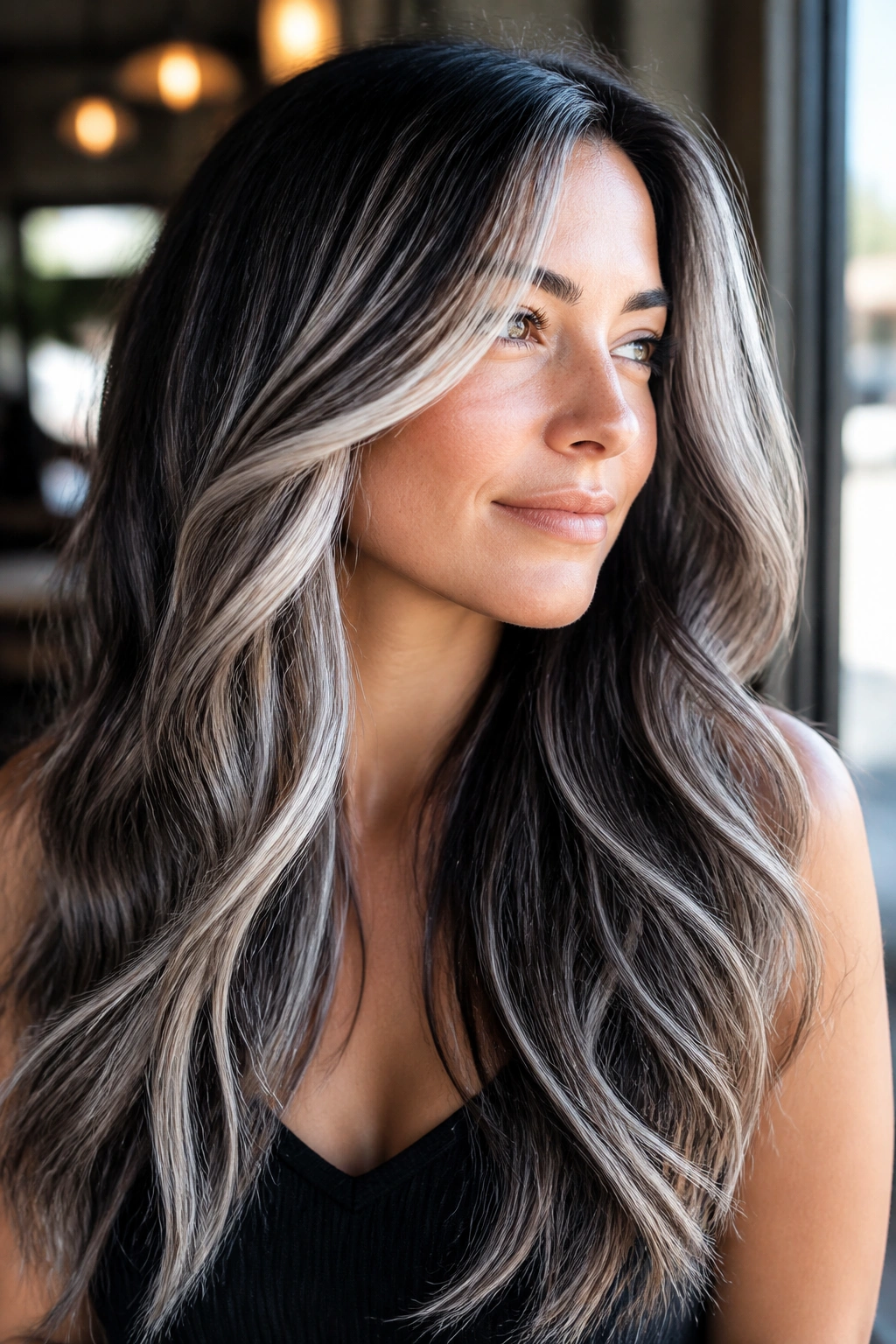
Why keep silver only at the ends when you can thread it through the whole length? Silver ribbon balayage spreads cool strands through long hair in a way that looks far more dimensional than a single fade line. The color sits in ribbons, not blocks, so the movement matters.
This is especially useful if your hair is very long and layered. The silver catches on the curves of the cut, making each layer look separate when the hair moves. A few lighter ribbons around the face and through the midlengths stop the ends from carrying all the visual weight.
How to Get the Most From It
A stylist will usually place the lighter pieces with a balayage or teasylight technique so the silver does not stripe through the hair. That soft placement matters. Hard lines make long hair look busy, and silver should feel clean.
This look also plays well with braids and half-up styles because the silver pieces weave through the darker strands. It gives a little flicker of brightness instead of one big block of color.
If you like dimension more than drama, this one has a lot to offer.
12. Curly Hair With Silver Ombre Ends
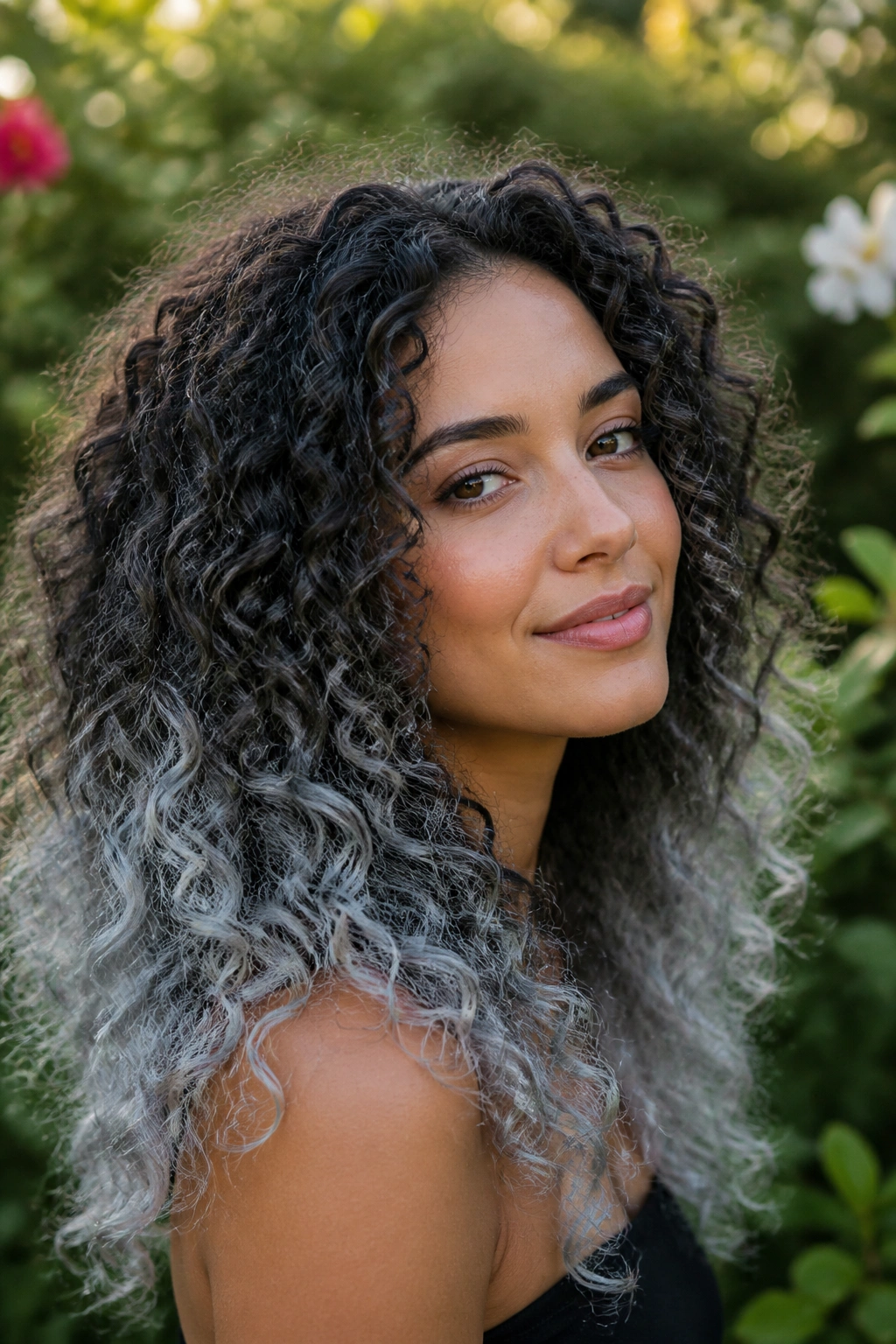
Curly hair changes silver in a good way. The bends soften the gradient, so the fade can look more natural than it does on straight hair. On long curls, silver ombre at the ends creates a halo effect when the hair expands, and the darker roots keep the shape from looking too washed out.
The biggest mistake here is leaving the curls too dry. Silver and curl texture both show roughness fast. If the ends feel brittle, the color will look frayed. That is why this style works best when the cut is healthy and the curls are hydrated enough to hold a clean shape.
It can be a loose wave, a spiral curl, or a tighter pattern. The placement matters more than the curl type. Keep the silver concentrated on the lower half so the ombre shows through the curl clumps rather than disappearing into the mass of the hair.
A cream styler and a light oil on the very ends help the silver reflect more cleanly. Not greasy. Just sealed.
13. Braided Silver Gradient on Long Hair
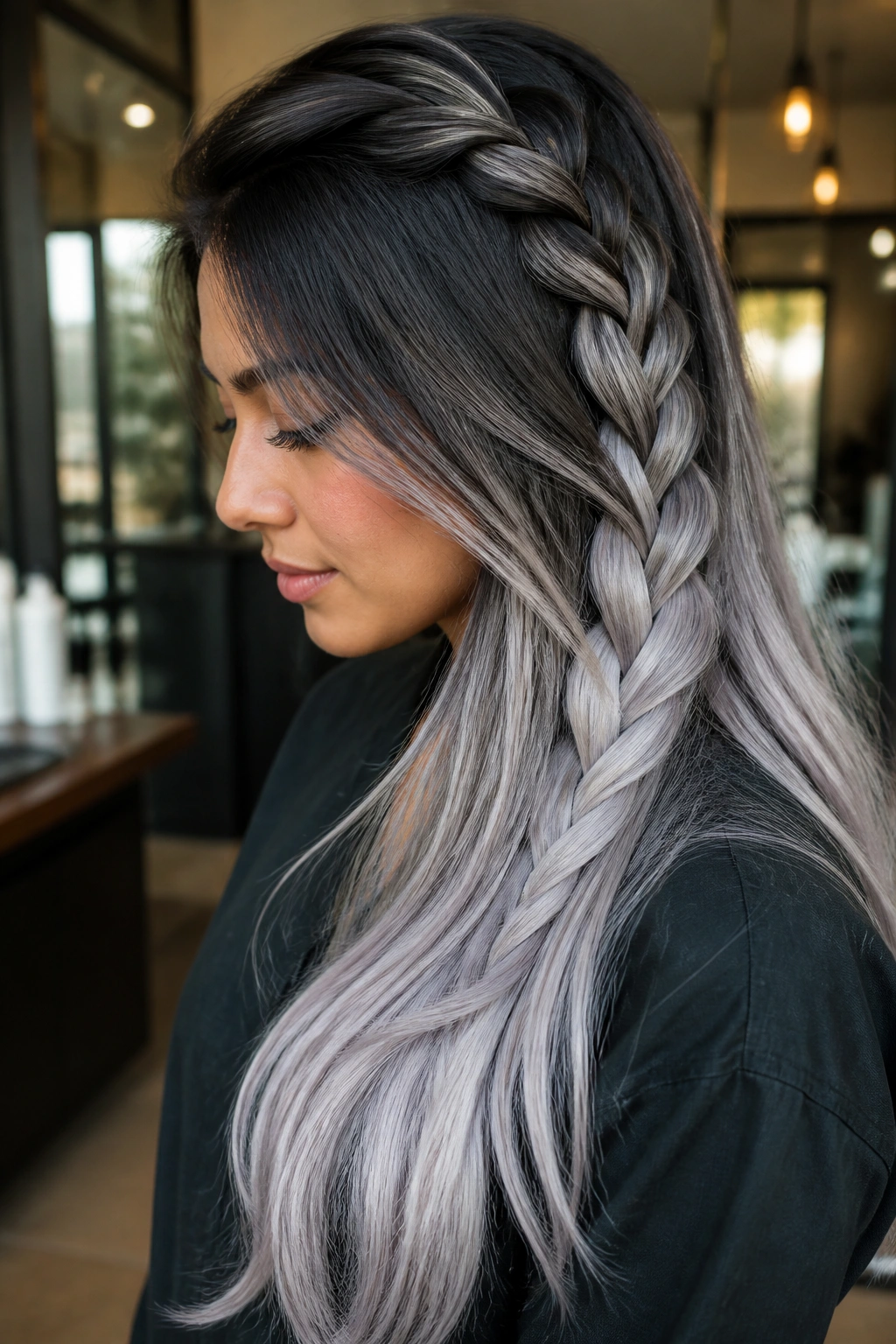
Braids change the whole story. A silver ombre that looks soft and blended when the hair hangs loose can suddenly look intricate once it is braided. Long hair gives the braid enough length to show the color shifts all the way down, which is why this idea works so well.
French braids, fishtails, and bubble braids all show the gradient differently. French braids reveal the transition early, near the crown. Fishtails make the silver look woven in and narrow. Bubble braids spread the fade into rounded sections, which is surprisingly pretty if the silver sits in the lower half.
- Best for long layered hair that can hold a braid.
- Shows off multi-tone silver more clearly than one-length cuts.
- Makes lighter ends look fuller when pulled into a plait.
- Works for events, but also for everyday wear when you want the color to look different.
This is one of those styles that rewards a good cut. If the layers are too short, the braid frays and the ombre gets lost. Keep the length, keep the polish, and the silver does the rest.
14. Rose-Tinted Silver Ombre
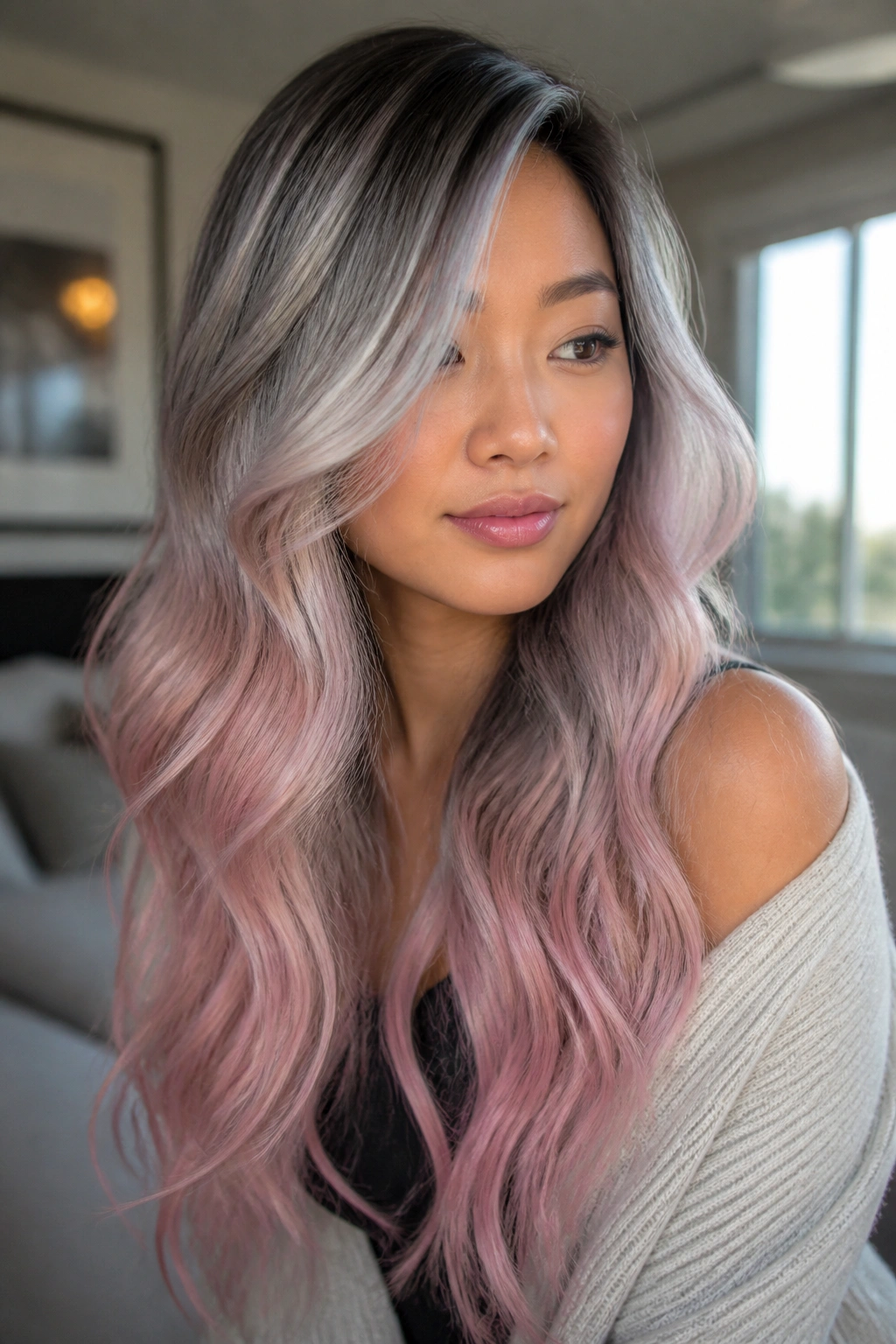
Silver does not have to stay icy. A rose-tinted silver ombre brings a warm blush into the ends without turning the whole head pink. The trick is keeping the rose translucent, almost like a soft veil over the silver. On long hair, the color reads romantic first and metallic second.
This is a strong choice if cool tones sometimes wash you out. The rose softens the look and gives the silver a little warmth back. It is especially flattering on skin that needs a bit of color near the face. The hair ends can lean dusty pink, rose-gold, or just faintly blush, depending on how much silver you want to keep visible.
The key is restraint. Too much pink and the ombre stops being silver. Too little and the tone disappears. A gloss that fades out gradually is usually the nicest route because it lets the look settle into a softer silver over time.
Long waves make this one shine. Each curve catches a slightly different tone, which keeps the color from feeling flat or too sweet.
15. Salt-and-Pepper Silver Blend
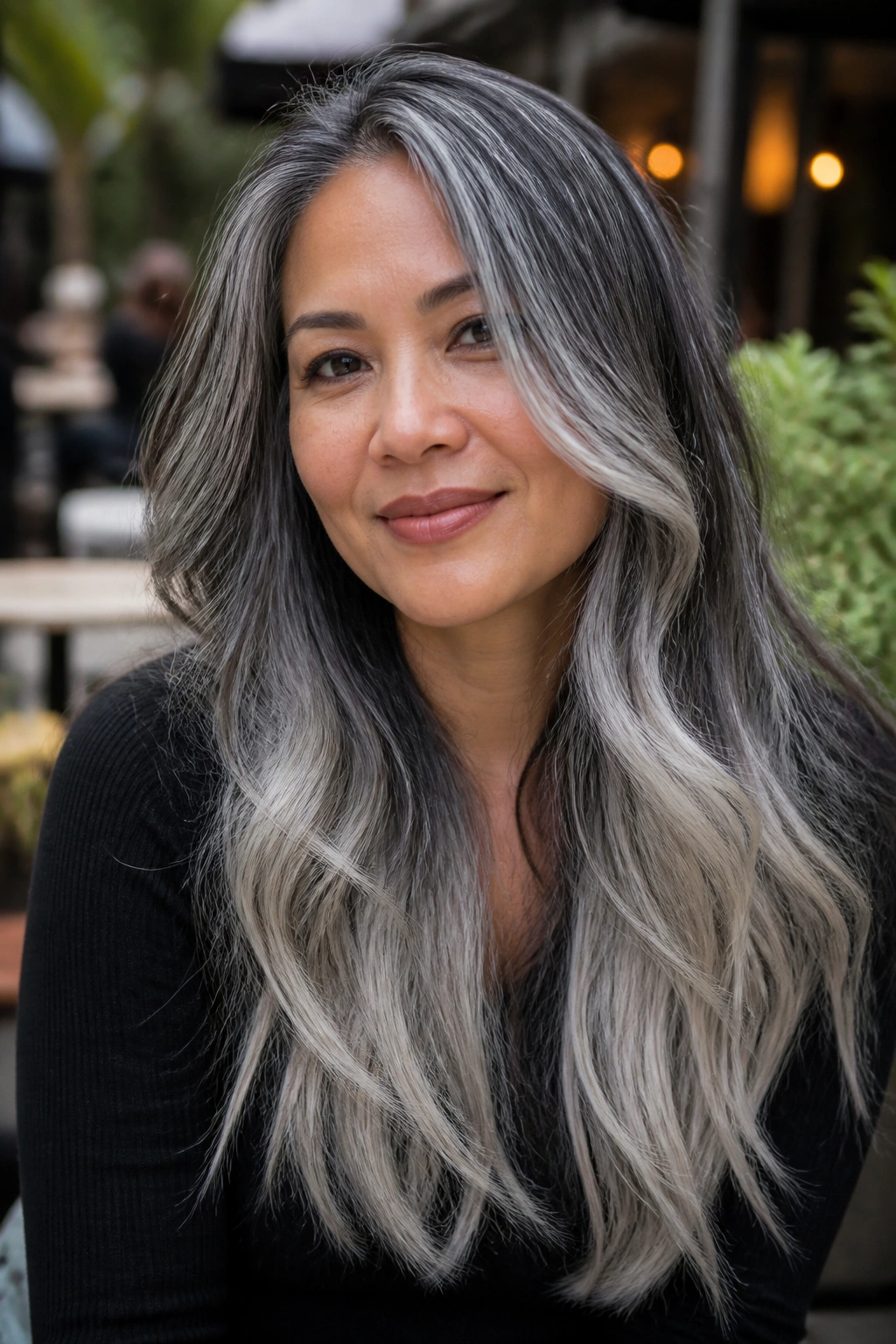
If you are working with natural grays, or you just like the idea of a more realistic silver, salt-and-pepper ombre is worth a close look. Instead of pushing the hair toward full platinum, it blends gray, silver, and darker strands so the finish feels closer to real hair than fantasy hair. Long lengths make that blend look rich rather than patchy.
This is one of the most forgiving silver ideas because it does not demand a perfectly uniform tone. A mix of charcoal, pewter, and silver can actually be the point. The result looks textured, almost like the color lives in layers. On long hair, that texture matters a lot.
It is also a smart choice for people who want to blend incoming gray without erasing it. The ombre can move from darker roots into a soft salt-and-pepper midsection, then into brighter silver ends. That keeps the grow-out line from shouting at you every few weeks.
Wear this with loose waves or a low ponytail. Straight hair can look too flat if the tones are very close together.
16. Silver Ombre With Curtain Bangs
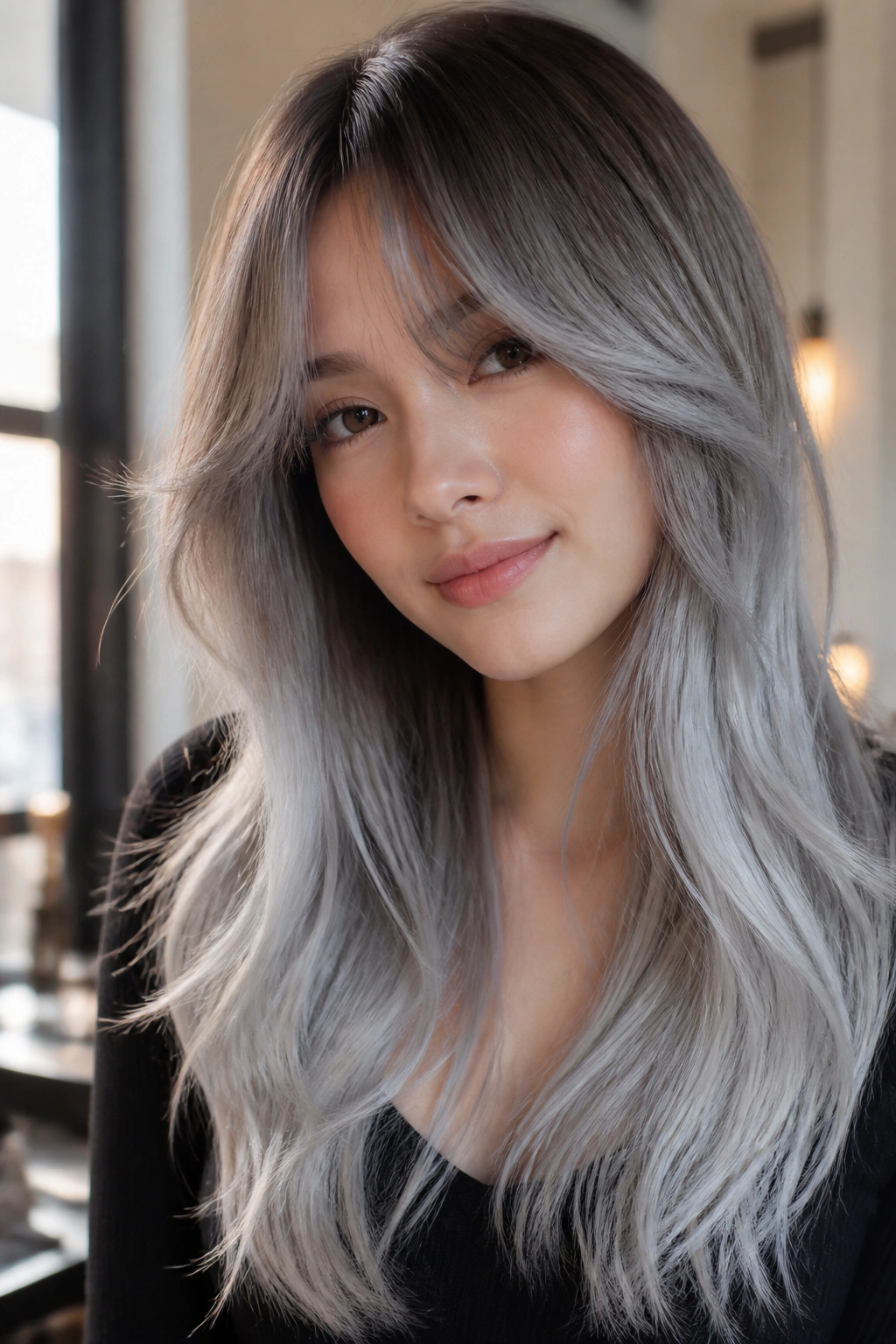
Curtain bangs change the way silver ombre reads because they pull the cool tone forward. Instead of the gradient living only in the back and ends, the fringe gives you a frame around the face that can carry a lighter silver note into the rest of the length.
What to Keep in Mind
- Keep the bangs one shade softer than the brightest ends.
- Blend the fringe into the side layers so the color does not stop at a blunt line.
- Use a round brush or a large Velcro roller to shape the front.
- Let the longer pieces around the face stay slightly darker if you want more depth.
This look works well when the bangs are long enough to split at the middle and fall into the cheekbones. Very short curtain bangs can make the silver feel disconnected from the rest of the hair. Longer ones solve that problem.
The style is pretty practical, too. You get a face-framing lift without bleaching every strand near the front. And because the bangs move around so much, the silver catches light in a way that changes throughout the day.
17. Silver Peekaboo Ombre Under Dark Top Layers
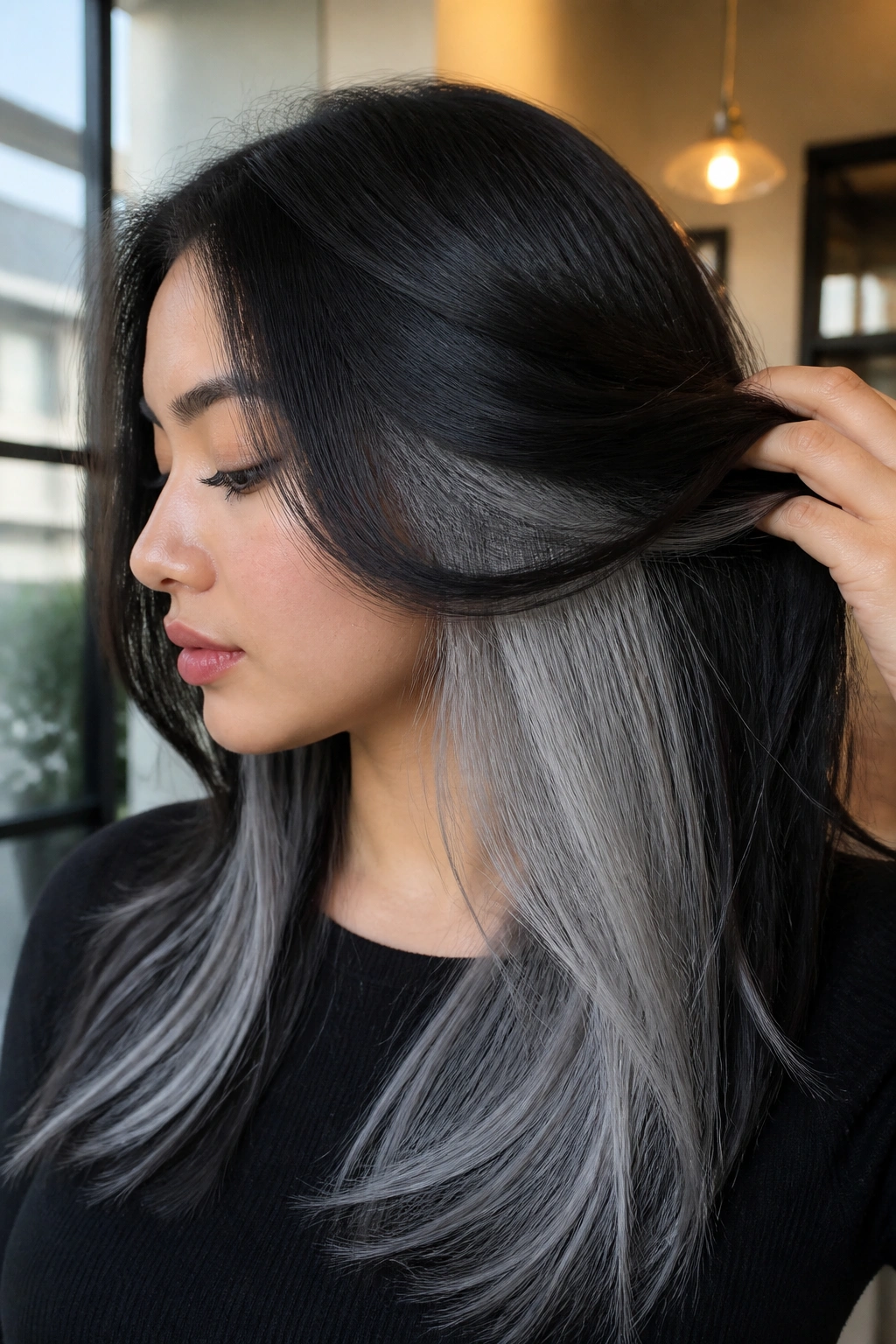
Some of the best silver ombre ideas are hidden for half the day. Peekaboo silver places the lightest color under the top layers, so you only see it when the hair moves, gets tucked behind the ear, or goes up into a half ponytail. On long hair, that hidden placement feels playful without being obvious.
It is a smart choice if you want silver but do not want the whole room to know about it from the front. The darker top layers keep the look grounded, while the silver underneath flashes through in motion. That little reveal is what makes it fun.
This also solves a practical issue for people who need a calmer look at work or school. You can keep the visible surface more natural and still have the silver you want underneath. The contrast looks especially good with long layered cuts because the shorter top sections can cover the brighter pieces more cleanly.
If you go this route, ask for precise placement under the crown and around the lower back sections. Sloppy placement ruins the surprise.
18. Mirror-Sheen Silver Tips on Extra-Long Hair
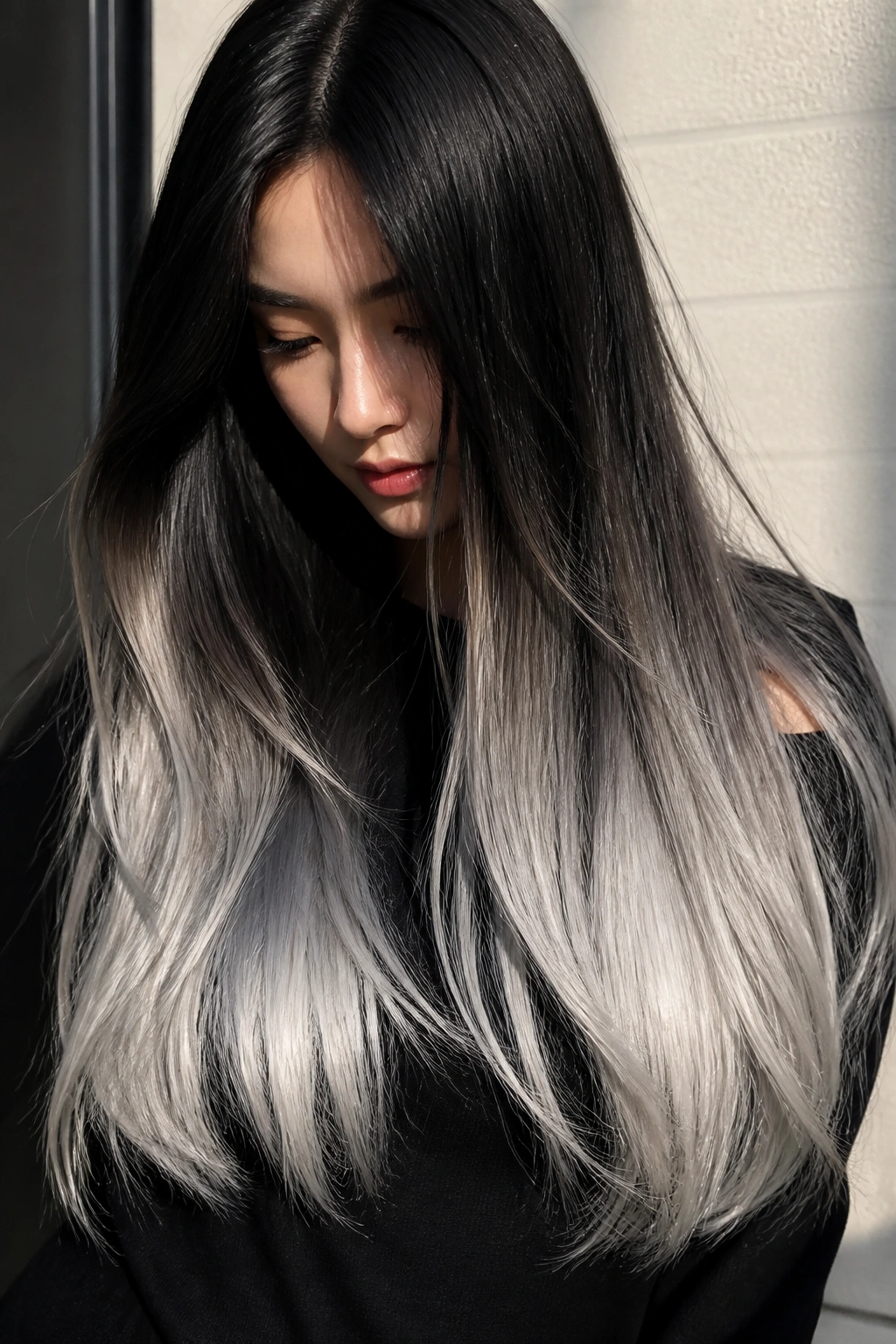
This is the sharpest, glossiest version in the whole group. Mirror-sheen silver tips keep the upper lengths dark or neutral, then push the ends toward a polished metallic finish that almost looks reflective. On extra-long hair, that tiny bright zone at the bottom can look incredibly clean.
The appeal is in the restraint. You do not need silver through the whole head. You need it where the length is longest and most visible. When the ends are smooth and well-cut, the silver becomes a crisp finishing line instead of a loud color block. It works best on hair that already has some heft and shine.
A blunt hemline gives the tips a strong shape. Soft layers can work too, but the ends need to be healthy enough to hold the metallic tone without looking fuzzy. That matters more here than anywhere else on the list.
Straight styling shows the mirror finish best. Gentle S-waves work too, but keep the bend loose so the silver stays readable. If the hair is over-textured, the shine gets lost.
Final Thoughts
Silver ombre on long hair works because long lengths can carry contrast without making the color feel cramped. You can go smoky, icy, moody, pastel, or almost metallic, and the same basic idea still feels different from one version to the next. That is the part I love most about it.
The smartest choice is the one that respects your starting shade. Dark hair usually looks strongest with smoky or steel tones. Lighter bases can handle pearl, frosted, or lavender-silver blends. If your hair is very long, keep an eye on the ends — they need to stay soft and healthy enough to hold the silver instead of turning dry and dull.
Bring a photo of the tone you want, but also bring a photo of the base. That second picture matters more than people think. It tells the colorist how much lift the hair can handle, and it keeps the silver from turning into something that looks good on paper but not in real life.
