



Purple ombre on long hair can look expensive or messy, and the split usually comes down to where the color starts. Put the transition too high and the whole style can feel heavy. Push it too low and it looks like someone dipped the ends in dye and called it a day.
If you’re hunting for purple ombre hair ideas for long hair, the long canvas is a gift, not a problem. Waist-length waves, layered cuts, and even blunt ends all give purple room to breathe. That extra length lets the shade move from dark to light in a way short hair never quite can.
Purple is also a tricky color in a good way. It can read smoky, berry-toned, icy, blue-violet, or almost pastel lavender depending on what sits underneath it. On long hair, that range matters even more because every inch of fade changes how the color catches the eye. A little too much warmth in the base and the purple leans plum. A paler canvas and it starts looking lilac-fast, almost glassy.
The styles below cover soft fades, rich jewel tones, and a few bolder takes for people who want their hair to say something without shouting. Some are low-maintenance. Some are not. That honesty matters, because a purple ombre that looks dreamy on Pinterest can turn into a brass-fighting project if the base color and upkeep don’t match your life.
1. Midnight Plum Fade
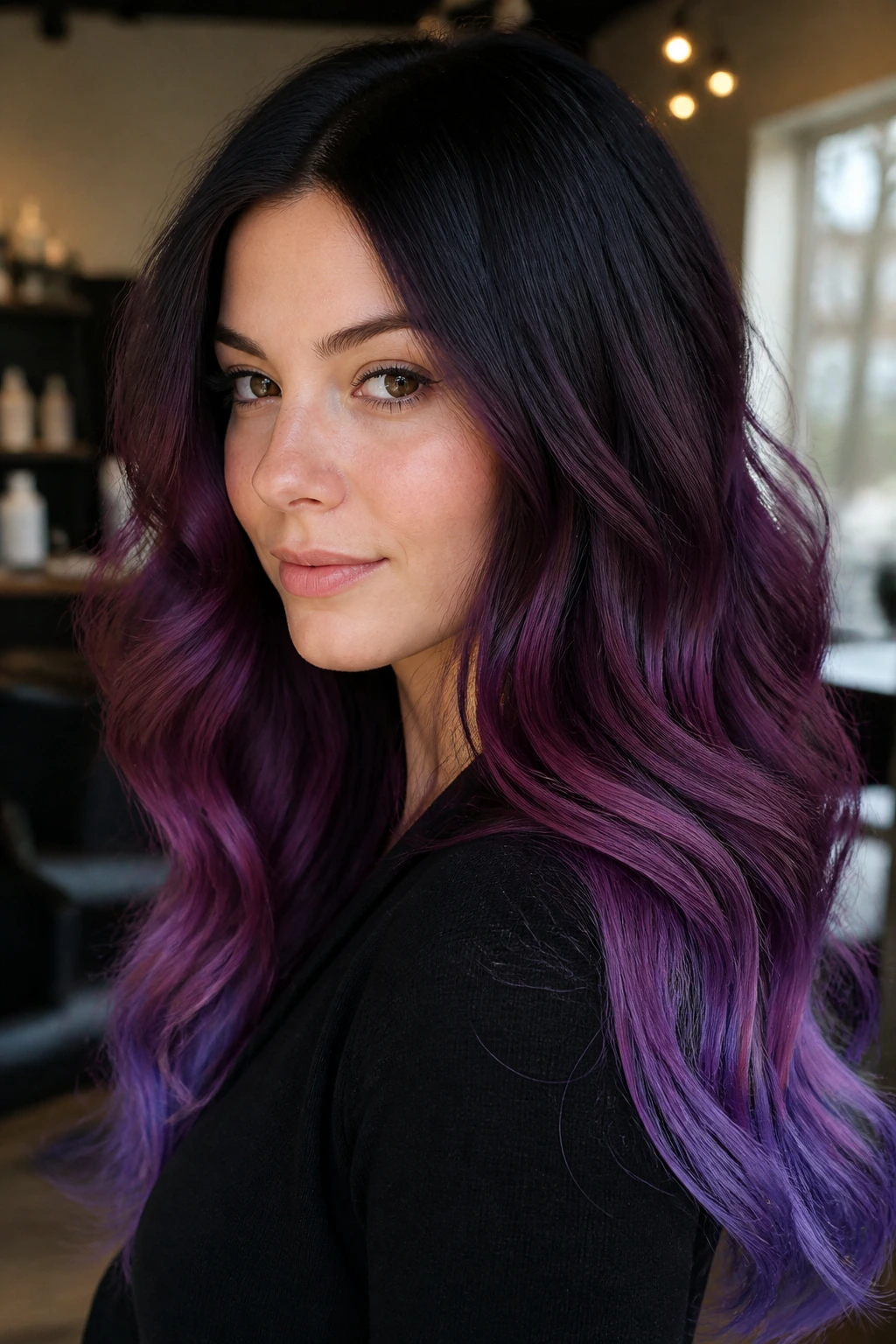
This is the one I reach for when someone wants purple hair without crossing into costume territory. The roots stay deep and dark, then melt into plum through the mid-lengths before softening into a slightly brighter violet at the ends. On long hair, that gradual change looks polished in motion, especially with loose waves or a layered blowout.
Why It Works
The trick is keeping the root area close to your natural depth. A shadow root of about 2 to 3 inches gives the color somewhere to live without making the fade look abrupt. From there, the plum tone does the heavy lifting. It adds color, but it still feels grounded.
Long hair helps this style a lot. Shorter cuts can make plum look chunky if the transition isn’t perfect. Here, you have room for the eye to travel, and that’s what makes the finish look expensive instead of loud.
- Best on dark brown to black bases
- Feels softer when the ends are curled away from the face
- Works well with glossy, layered cuts
- Needs a purple-safe shampoo once a week, not every wash
Best move: ask for the brightest violet only on the last 4 to 6 inches so the fade stays smooth.
2. Black-to-Aubergine Melt
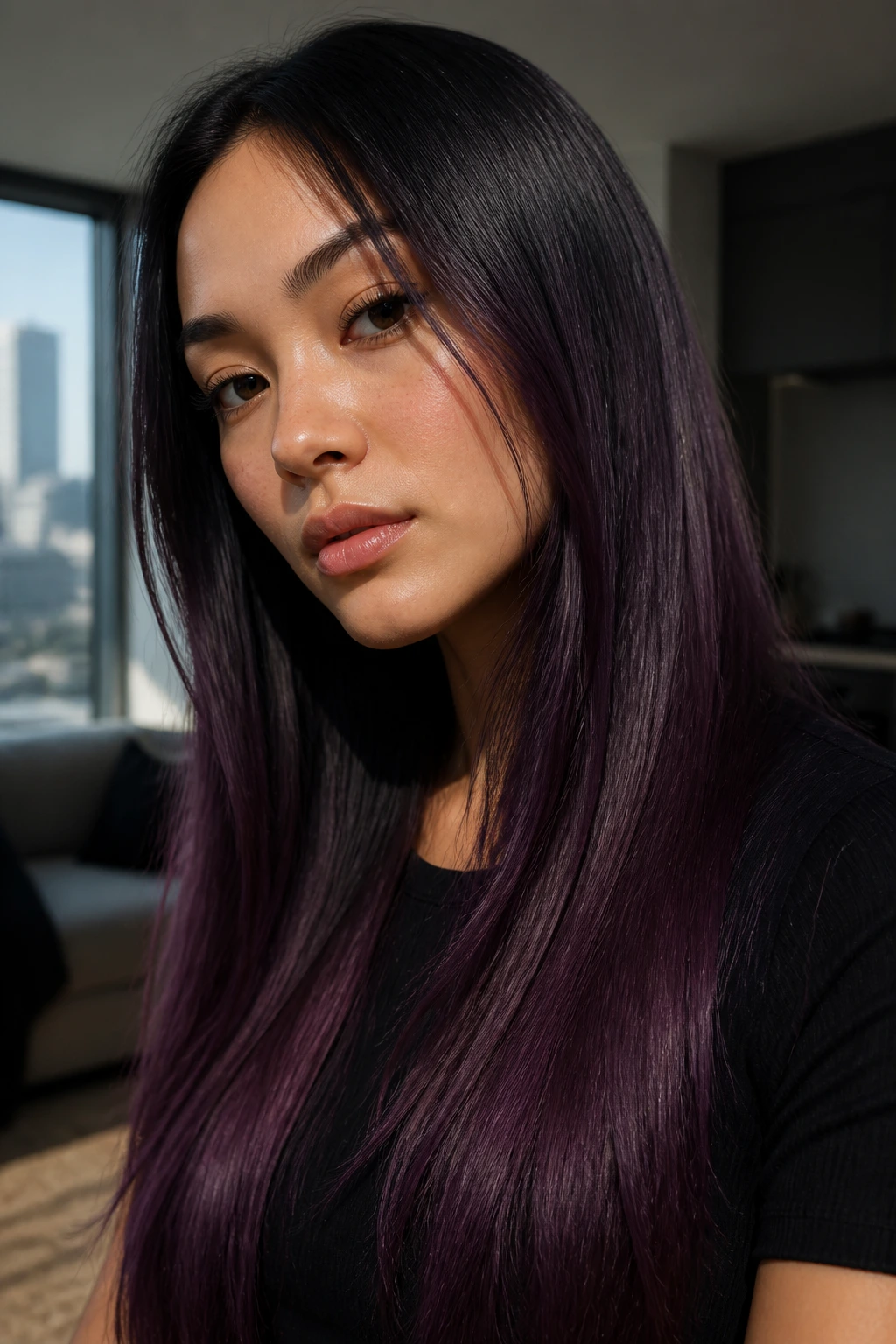
A black-to-aubergine melt is sleek, moody, and honestly a little addictive to look at. The base stays almost inky, then the purple arrives like a quiet surprise rather than a hard switch. It’s one of those styles that looks especially good on long, straight hair because the color shift shows up cleanly from root to tip.
What I like here is the restraint. Aubergine has enough red in it to feel rich, but it still reads purple at a glance. That makes it friendlier than brighter violet shades if you want something grown-up and low drama. The ends can sit just a shade lighter than the mid-lengths, which keeps the whole thing from going flat.
The catch? Don’t let the purple start too high. If the aubergine lands at the crown, the style loses the melt and turns into a block. Keep the transition below the cheekbone line, and let the lower half do the talking.
3. Smoky Lilac Ends
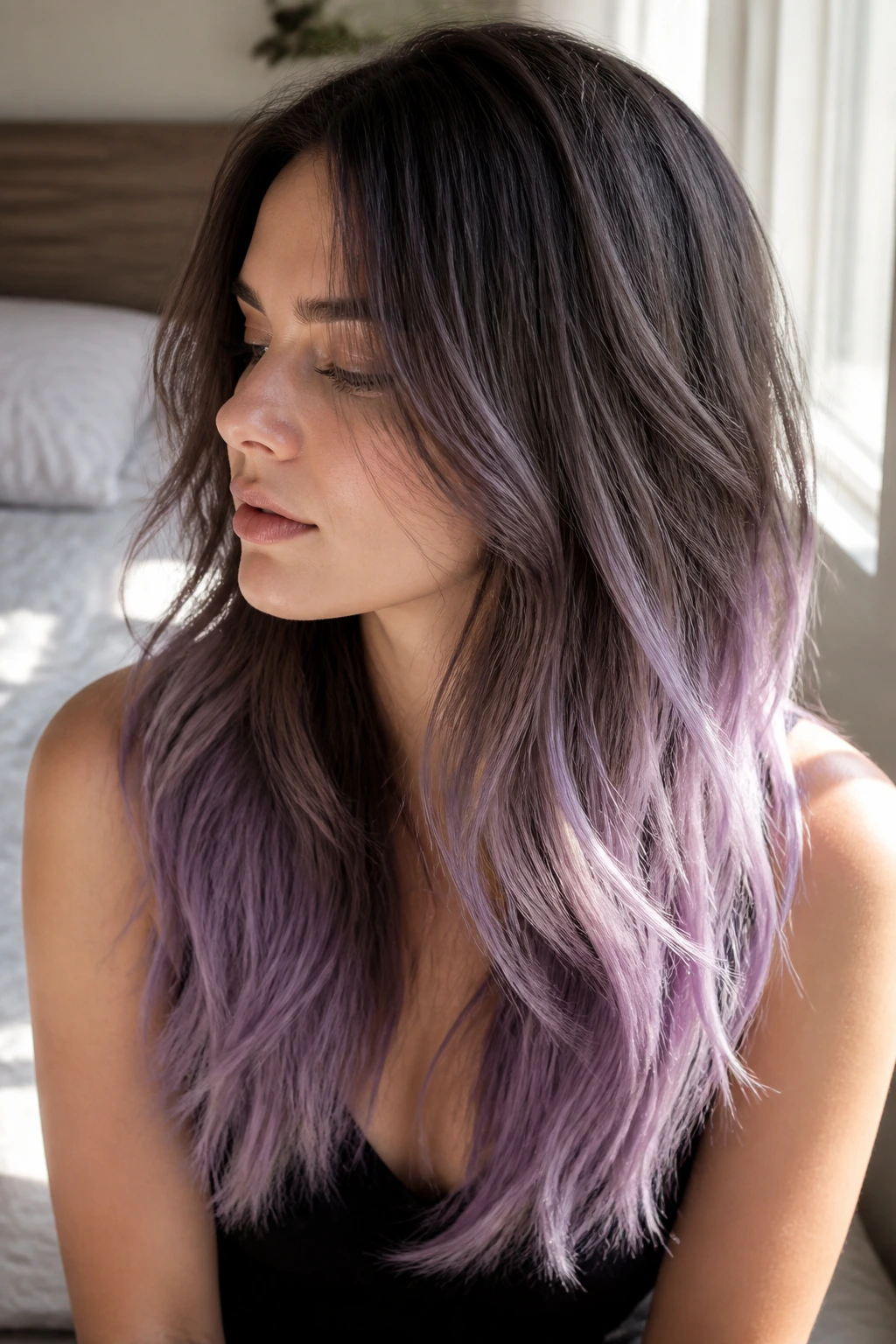
Smoky lilac is the sort of purple ombre that looks soft until light hits it, then it wakes up. The roots and mid-lengths stay muted, sometimes almost taupe-violet, while the ends turn pale lilac with a veil of gray. Long hair makes that softness feel deliberate instead of washed out.
What Keeps It from Looking Chalky
The pastel end has to sit on a clean enough base. Level 9 or 10 lightening is usually where lilac starts behaving, and that matters because smoky lilac needs room for the gray tones to show. Too yellow, and the shade turns muddy. Too dark, and the lilac disappears.
This is also a style that loves movement. Loose curls show off the fading purple-to-lilac shift better than pin-straight hair. If your hair is very thick, ask for feathered ends so the pastel pieces don’t bunch together at the bottom.
How to Wear It
- Pair it with soft bends, not stiff curls
- Ask for a cooler toner at the ends
- Keep sulfate-heavy shampoo away from it
- Trim every 8 to 10 weeks so the pastel doesn’t get stringy
One honest note: smoky lilac is pretty unforgiving on damaged ends. If the last few inches are fried, the color will show it.
4. Silver to Violet Gradient
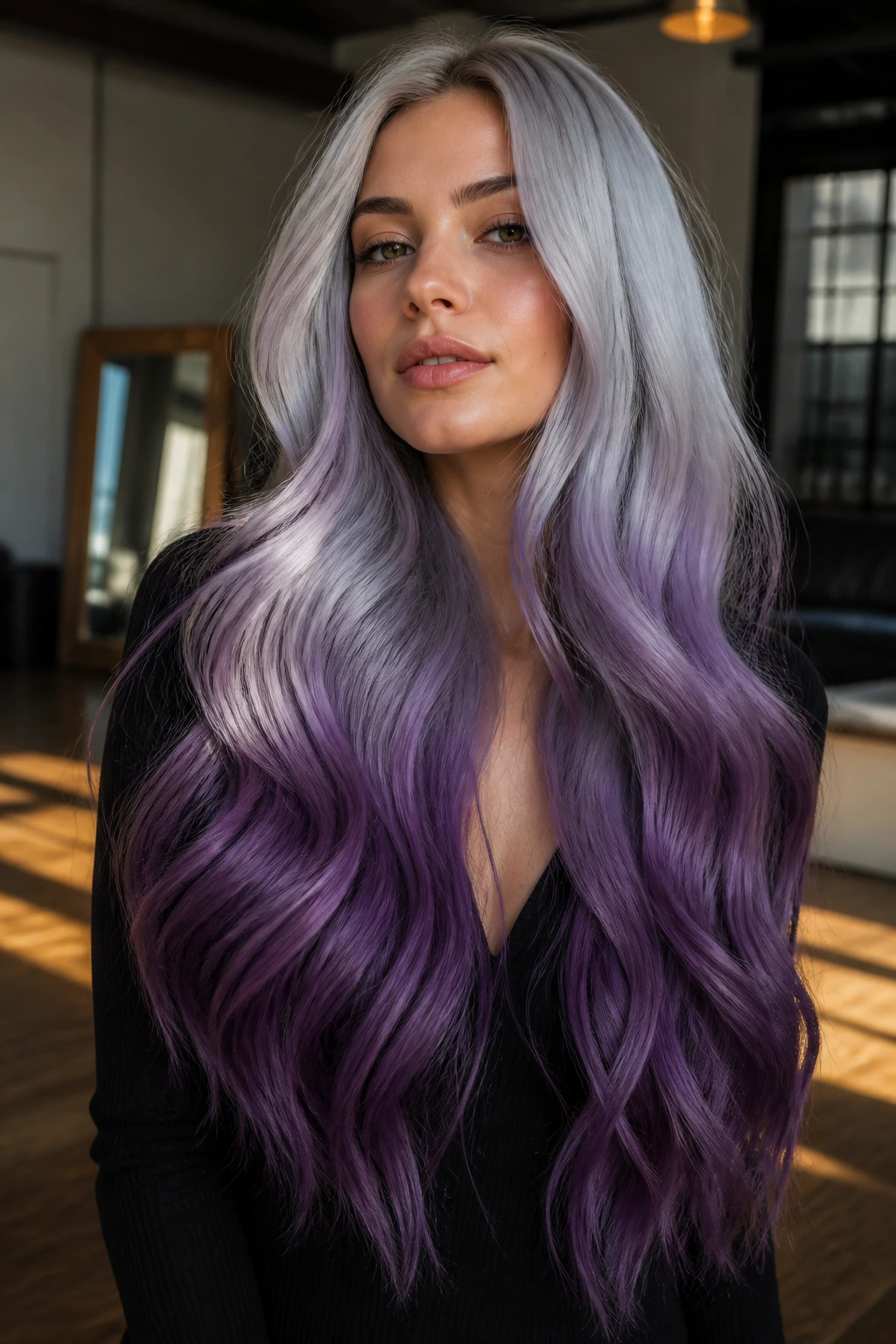
This is the dramatic one. Silver at the top, violet below, and then a deeper purple at the very ends. It feels cool, crisp, and a little editorial, which is probably why it looks so good on long hair that can hold a polished wave.
Picture this on a long V-cut. The silver catches the light near the crown, then the violet starts building around the shoulders, and the ends land in that deep purple zone that keeps the whole thing from going too icy. On straight hair, it reads clean. On curls, it turns almost liquid.
The important part is tone control. Silver is not forgiving. If the root area picks up yellow or gold, the whole effect slips. That’s why this style usually works better after a careful lift and a cool toner rather than an overly aggressive bleach session.
- Best for cool undertones
- Looks sharp on long layered cuts
- Needs toning more often than deeper purples
- Pairs well with center parts and tucked-behind-ear styles
5. Lavender Balayage on Dark Brown Hair
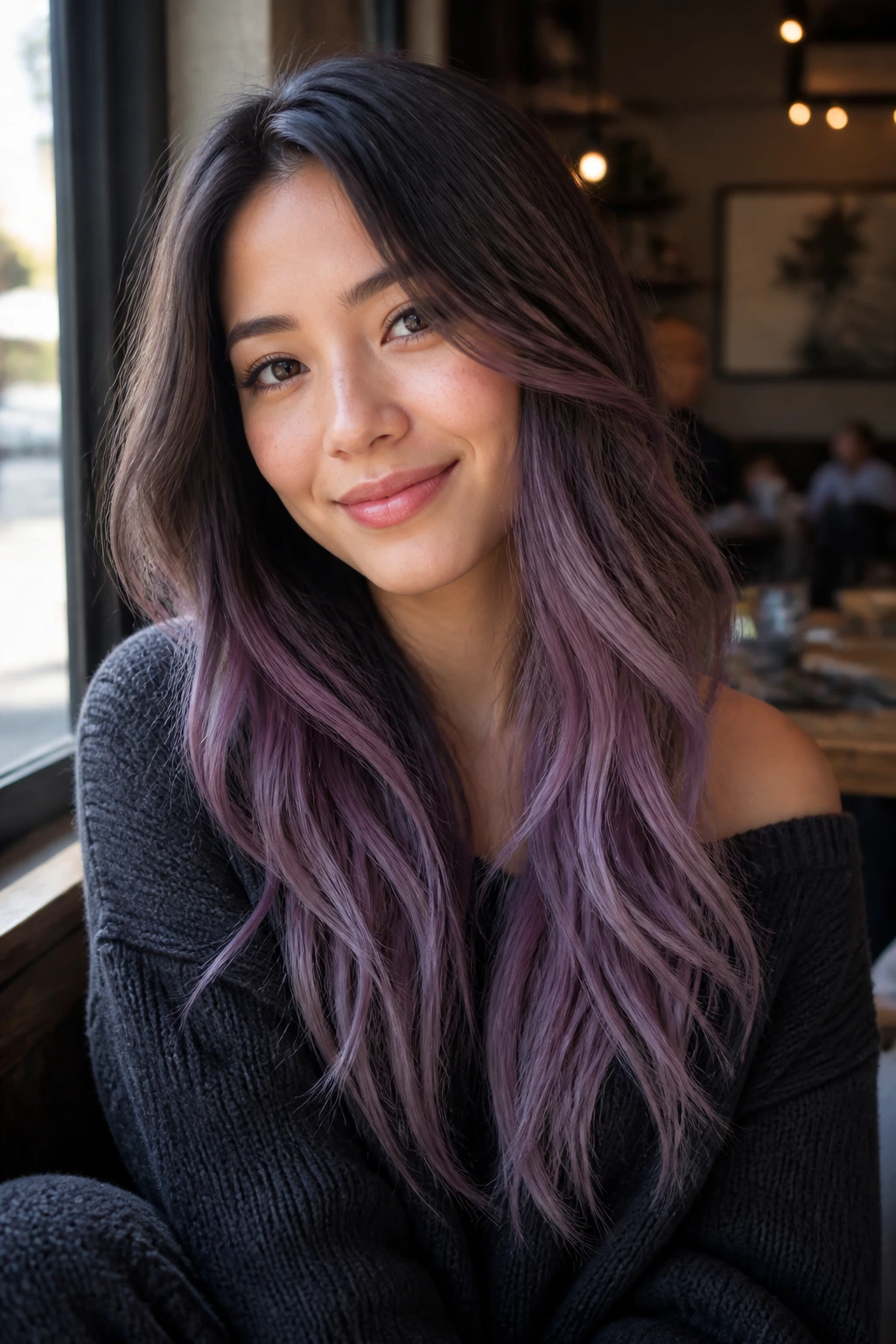
Lavender balayage is the softer cousin of a full purple ombre. Instead of flooding the ends with heavy color, the purple is painted in ribbons through the lower half and around the face, then blurred so it fades naturally into the dark brown base. On long hair, that hand-painted look gives movement without making the style feel busy.
I prefer this when someone wants purple but still needs the hair to read brown first. The balance matters. You still get the lavender payoff, but the dark base stays in charge, which keeps upkeep friendlier and lets the grow-out look intentional.
Balayage also gives you more control over where the eye goes. If your hair is heavily layered, the lavender can sit on the surface layers and pick up more light. If your hair is one length, the color reads softer and more blended. Either way, it’s less obvious than a hard ombre line.
This is the style I’d pick for someone who wants color they can wear to work without feeling like they’re hiding anything.
6. Raspberry Orchid Ombre
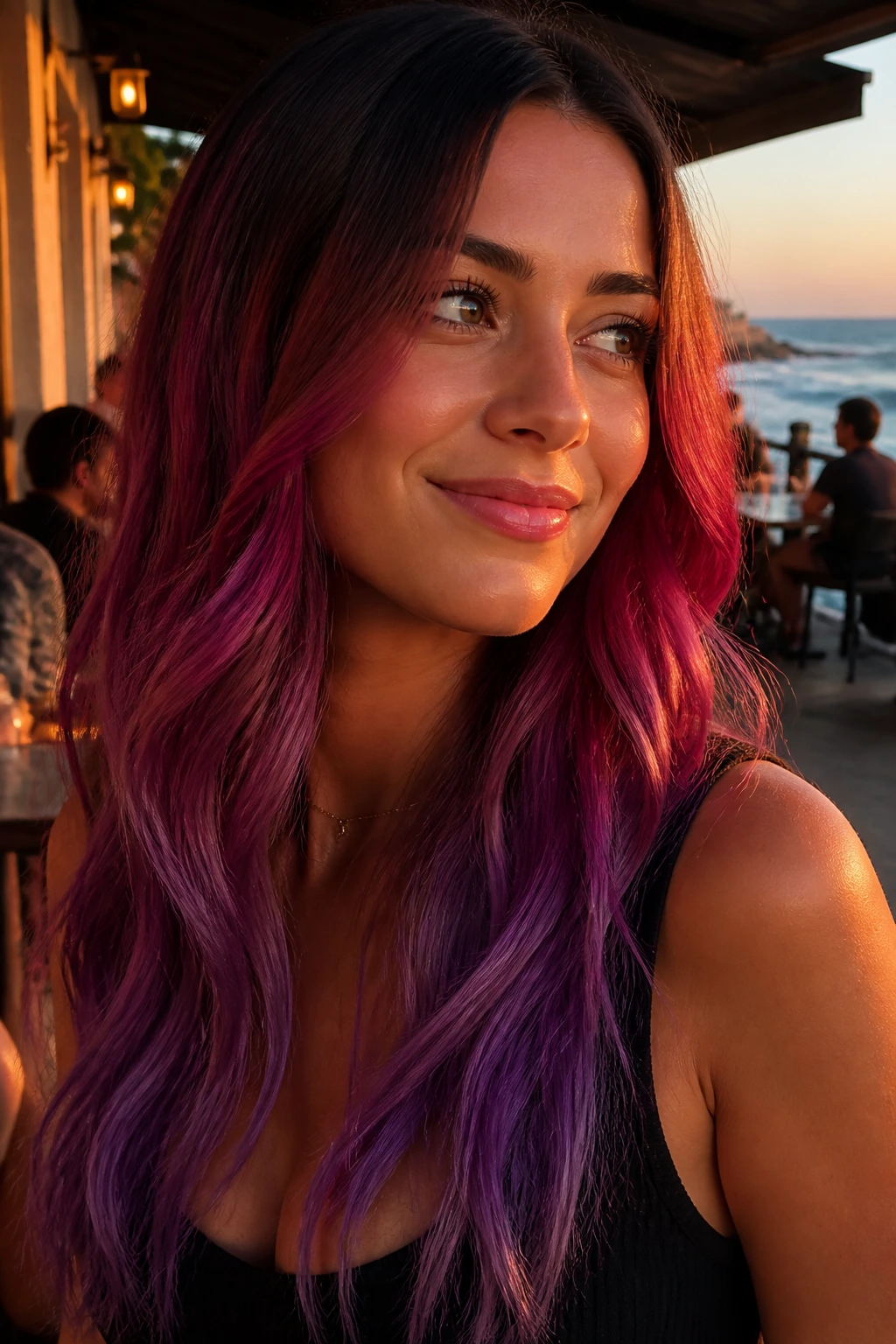
Raspberry orchid sits in that lovely middle ground between berry and violet, and on long hair it has a depth that flat purple shades often miss. The red in the mix makes it warmer. The purple keeps it interesting. Together, they give the hair a richer finish that looks especially good on waves and curls.
What makes this one stand out is how well it plays with skin tone. Warm or neutral complexions often like the raspberry side, while cooler tones still get the violet shadow underneath. That combination stops the color from looking one-note. On very long hair, the fade can begin near the jaw and deepen toward the ends so the whole style feels layered even when the haircut is simple.
I’d avoid making the root area too bright here. Let the purple start as a whisper and become more saturated lower down. That keeps the style from drifting into magenta territory.
Soft waves are the move. Straight hair can work, but waves let the raspberry and orchid tones separate just enough to show off the gradient.
7. Deep Eggplant with Soft Ribbon Ends
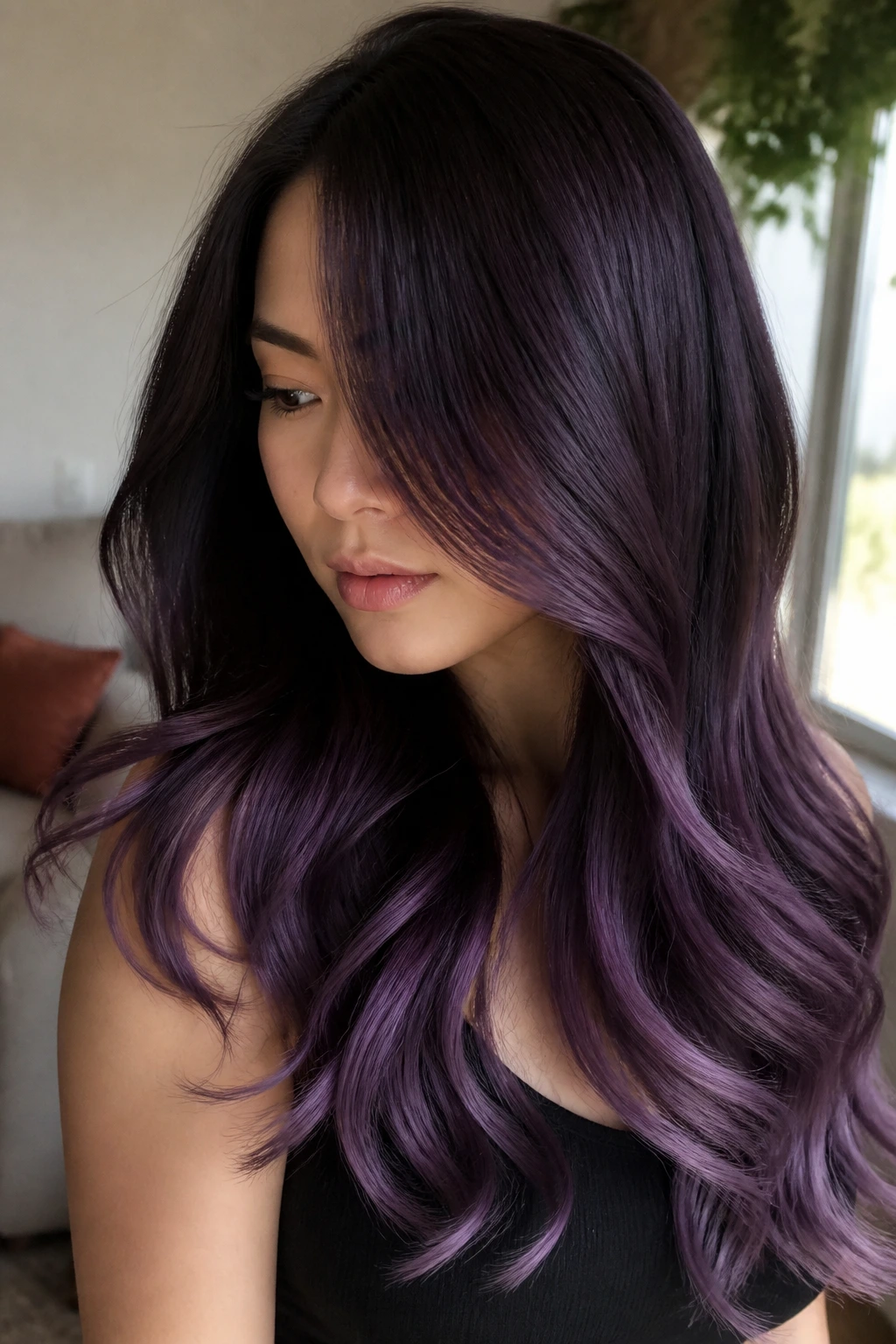
Deep eggplant is for people who want purple to feel luxurious, not sugary. The base is dark and saturated, almost wine-like, and then the ends carry lighter violet ribbons that show up when the hair moves. Long hair is the reason this style works at all. There’s enough length to let the dark and light tones breathe.
Where the Color Should Sit
Keep the eggplant heavy through the top two-thirds of the hair. The lighter ribboning should live mostly in the last third, where it can peek through when the hair bends or falls over a shoulder. If you spread the lighter purple too evenly, the whole look loses its depth.
What to Ask For
- A dark violet base with a blue-red undertone
- Fine, soft ribbons instead of chunky streaks
- Ends lifted only a few levels lighter than the mid-lengths
- A gloss finish to keep the shade shiny, not flat
Why I Like It
It’s one of the few purple ombre looks that doesn’t need perfect styling to work. Even a loose braid will show the ribboned ends. And when you wear it down, the dark base does a nice job of making the lighter purple feel richer than it really is.
8. Amethyst Money Piece with Purple Ends
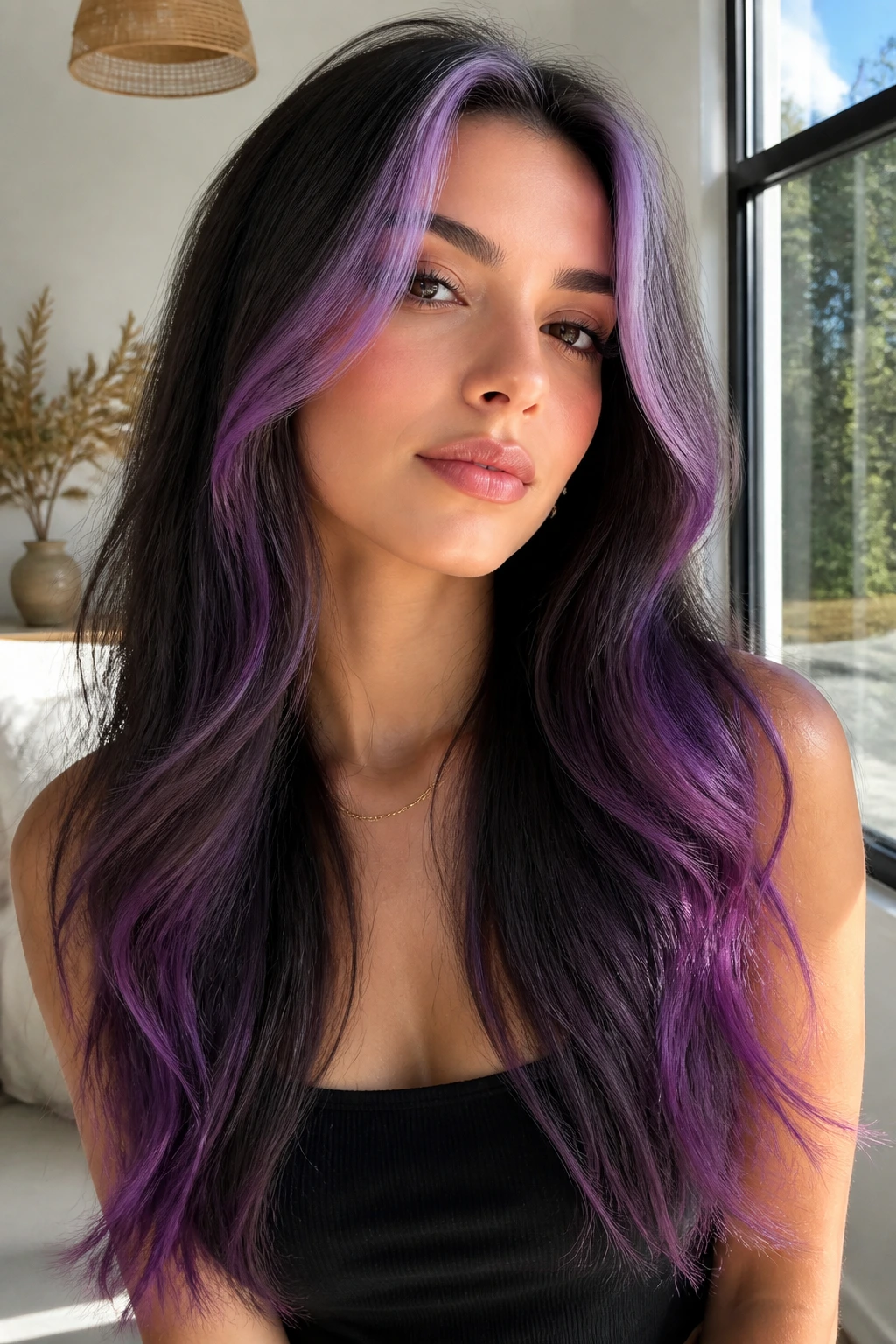
This is a smart choice if you want the purple to show up near your face without turning the whole head into a neon statement. The front pieces brighten first, then the color deepens as it moves through the lengths and into the ends. On long hair, that framing effect can be gorgeous.
The money piece changes everything. It gives the face a little lift, and because the purple is concentrated around the front, the style feels more playful than a standard ombre. The rest of the hair can stay a touch darker, which keeps the finish from getting washed out. Two face-framing sections about 1 to 2 inches wide is usually enough.
This style looks especially good in half-up ponytails, high buns, and big curls. Why? Because the front pieces stay visible while the rest of the purple fades down the back. That little contrast keeps the color from disappearing when the hair is tied up.
If you want color with some edge but not a full commitment, this is a good place to start.
9. Dusty Mauve Ombre
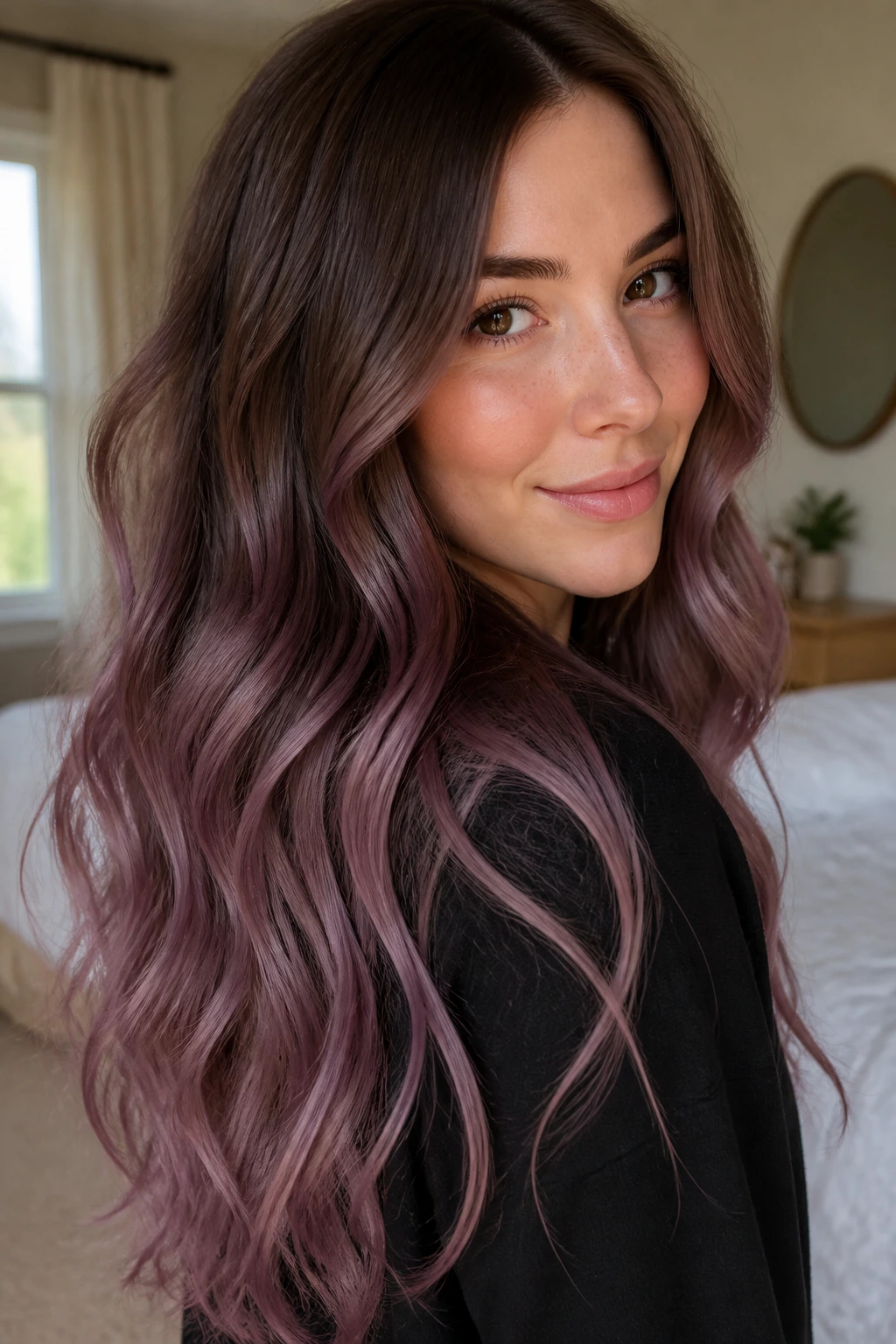
Dusty mauve is the quietest purple on this list, and that is why I like it. It doesn’t shout. It leans soft, muted, and slightly smoky, which makes it perfect for long hair that needs color without a ton of contrast. The fade often starts with a brown or beige-brunette root and eases into mauve through the lower half.
What to Ask For at the Salon
Tell your colorist you want a muted violet with gray-brown softness, not a bright lilac or pink-purple. That detail matters. If the mauve is too clean, it can look trendy in a way that ages quickly. If it has a little shadow in it, the style lasts visually longer.
Best Pairings
- Works well with loose braids
- Looks calm on layered, collarbone-to-waist lengths
- Matches matte styling products better than glossy ones
- Can be done with softer toner refreshes
Dusty mauve is the sort of purple you notice twice. Once because it’s pretty. Then again because it does not try too hard. That balance is rare.
10. Galaxy Purple Ombre
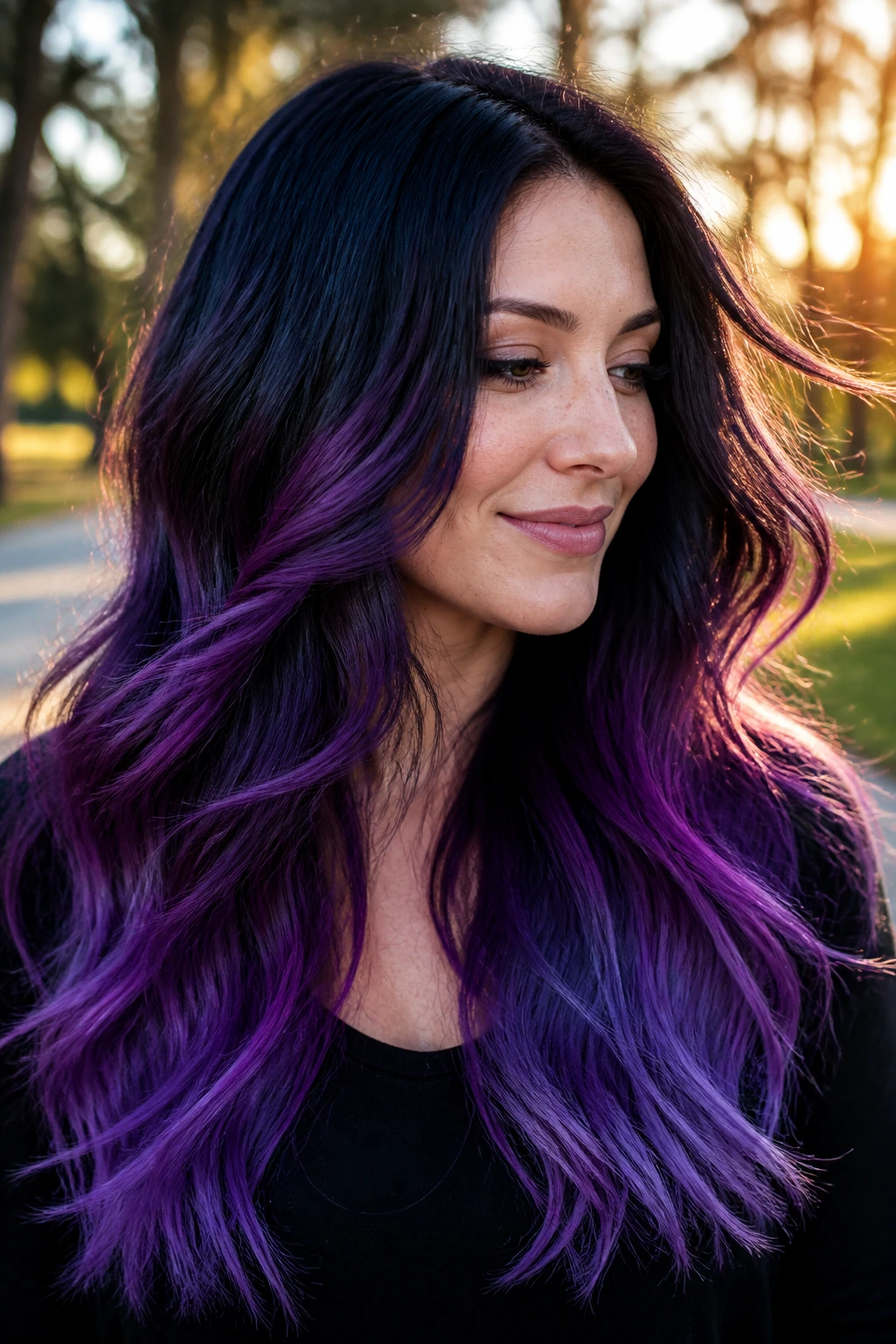
Galaxy purple is for long hair with attitude. You get deep navy at the crown, plum through the middle, and bright violet or lilac woven through the ends so the whole thing feels like moving color rather than one flat shade. It needs length to work. Short hair can’t carry this much contrast without looking busy.
The best version of galaxy purple isn’t random. It’s layered on purpose, with the darker tones anchoring the top and the lighter tones catching at the bottom. Think ribbons, not paint buckets. That’s the difference between a cool cosmic look and a mess of competing shades.
It’s especially strong on thick hair, where the different tones can hide and reappear as the hair swings. Curls make it even better. A braid at the crown or a twisted half-up style will show off the darker and lighter pieces in a way straight hair sometimes can’t.
- Best on hair with enough density to hold dimension
- Needs tone refreshes to keep the blue notes clean
- Looks strongest under soft indoor light and daylight alike
- Works with both center and off-center parts
If you like hair that feels a little dramatic, this one delivers.
11. Velvet Grape Waves
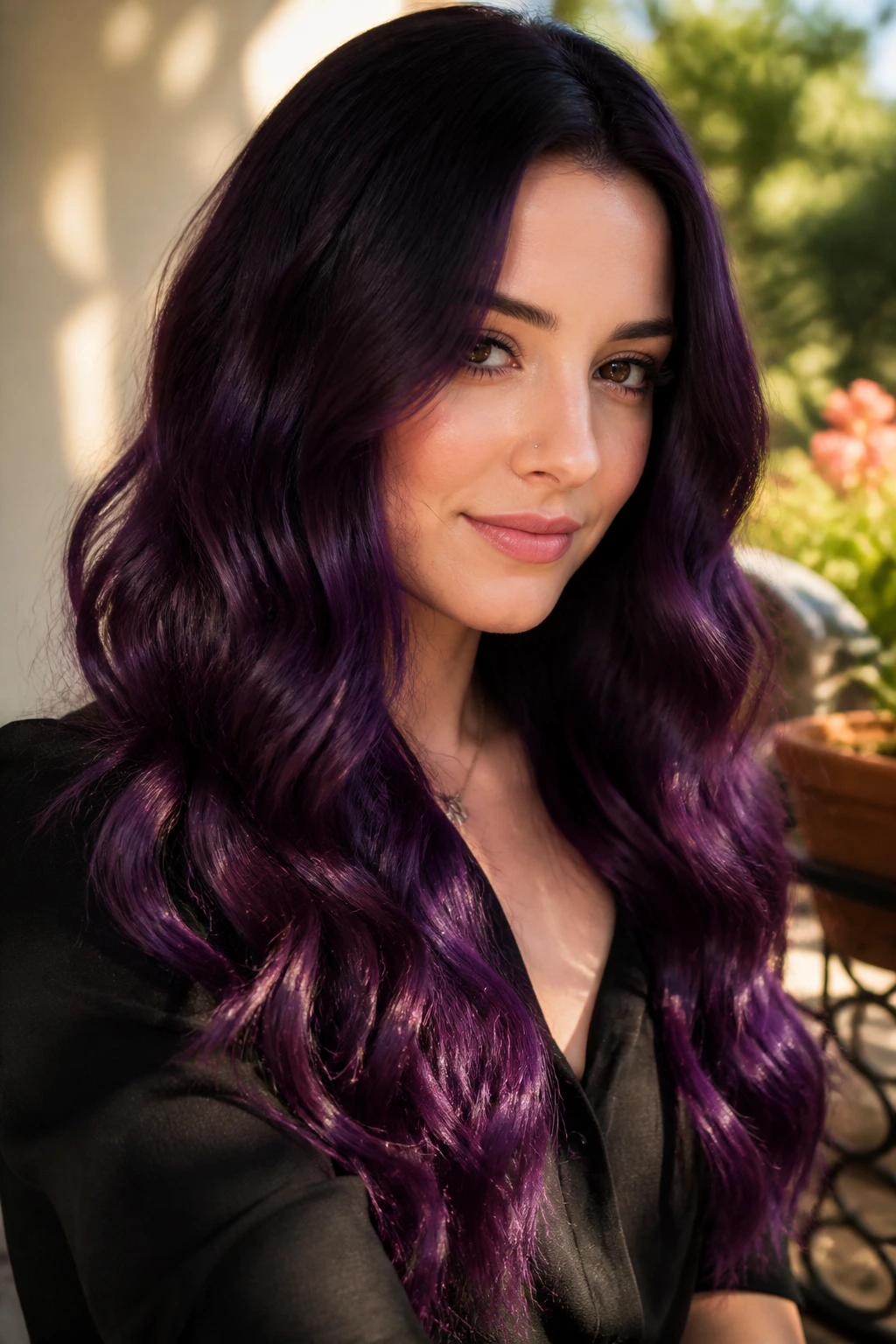
Velvet grape is richer than lavender and less red than plum. It has that deep, plush purple look that feels almost fabric-like when the hair moves. On long hair, especially in loose waves, the color takes on a soft sheen that makes the gradient look thicker than it really is.
What separates grape from the other purples is the saturation. It sits in the middle of the spectrum, which means it can read luxurious without turning overly dark. That’s handy if your natural base is medium brown or dark blonde and you want a more noticeable fade. The ends can be bright grape while the roots stay shadowed, and the whole thing still feels controlled.
This is a good style for people who wear their hair down most of the time. A top knot can hide the pretty part. A wave pattern, on the other hand, lets the color shift show through the bends. Keep the styling soft and the shine high.
I’d skip heavy texture sprays here. They flatten the depth.
12. Charcoal to Iris Fade
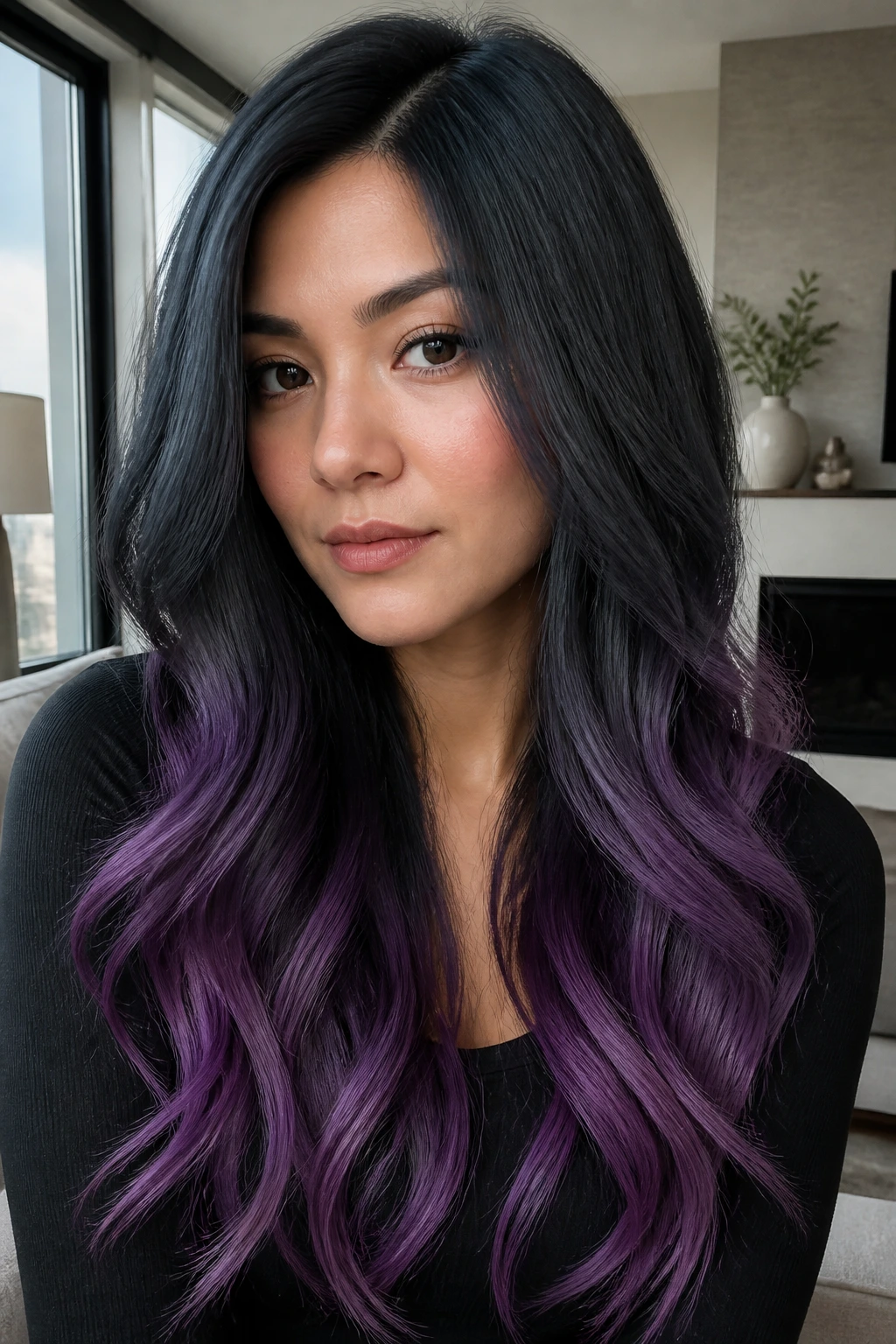
Charcoal to iris is moody in the best way. The top stays gray-black, almost smoky, then the iris purple starts to surface lower down, bringing a cooler and slightly brighter finish to the ends. On long hair, the fade looks elegant because the color change feels gradual rather than staged.
The charm of this look is its restraint. It is not trying to be candy-colored. It reads more like a dark floral tone, with the purple barely surfacing until the last few inches. That makes it a strong choice if you want purple hair that still looks sleek in a straight style or tucked into a low ponytail.
The iris tone also handles shine well. If your hair is healthy and the cuticle lies smooth, this color catches light in a pretty clean way. If the hair is porous, the charcoal can look dull fast, so the finish matters more than people think.
One small thing: use a hydrating mask before color refreshes. Dry ends make charcoal shades look tired.
13. Platinum to Purple Dip Dye
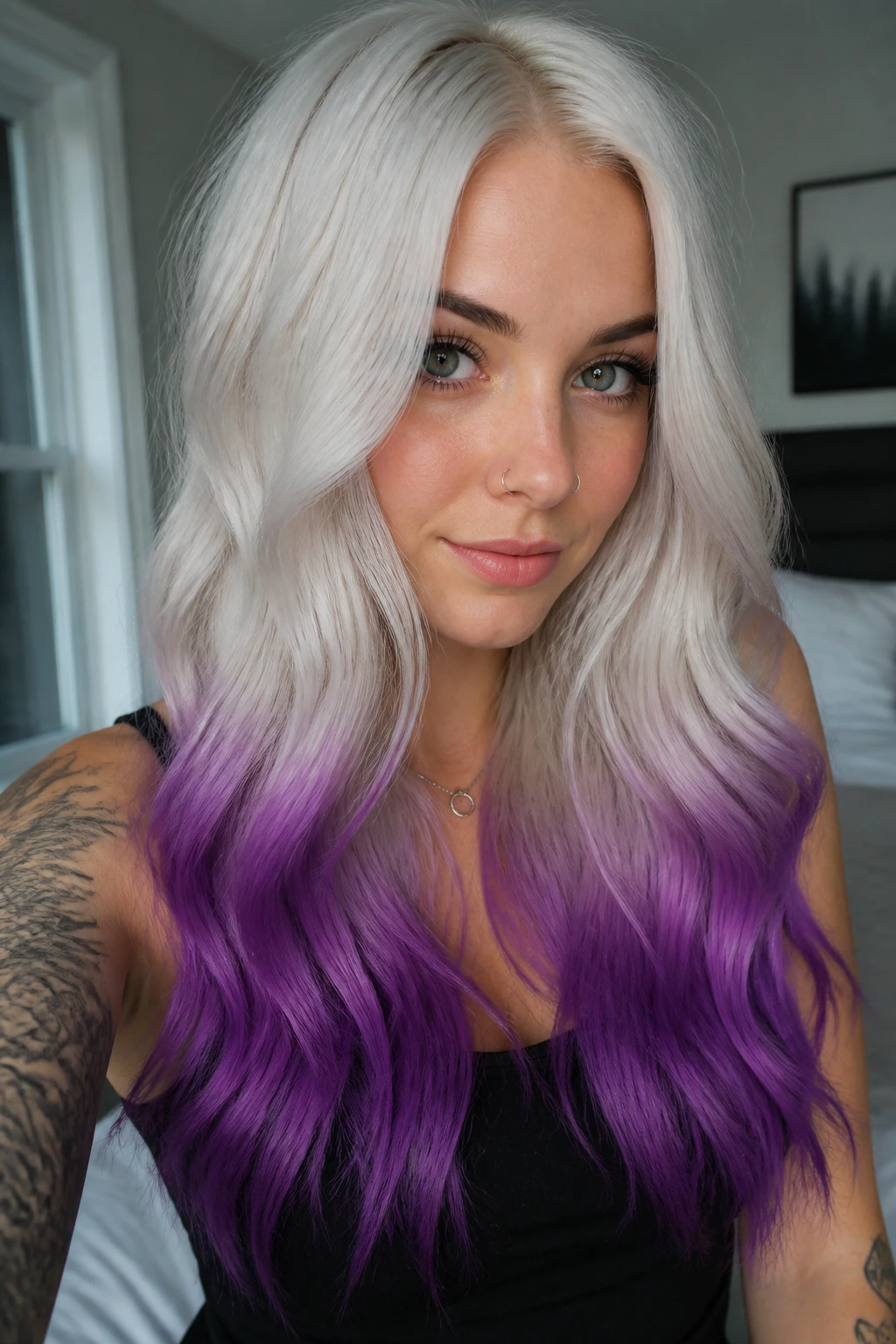
Platinum to purple dip dye is bold, plain and simple. The roots and mid-lengths stay icy blonde, then the ends turn into a saturated violet or lavender-purple block. Because the contrast is sharp, it works best when the hair is long enough for the dip to feel intentional rather than accidental.
I like this on long blunt cuts and sharp layers because the crisp edge gives the color a frame. If the cut is too shaggy, the dip dye can feel fragmented. A strong line at the last 4 to 8 inches keeps the look from wobbling visually.
This is a style for people who want the color to be obvious from across the room. Not subtle. Not shy. Still, it can look polished if the blonde is clean and the purple is glossy. The dip should look rich at the bottom, not patchy.
- Best on very light blonde hair
- Needs careful toning at the top
- Looks sharp with straight styling
- Can be softened with loose Hollywood waves
If your hair is long and you like contrast, this one has real presence.
14. Burgundy-to-Purple Blend
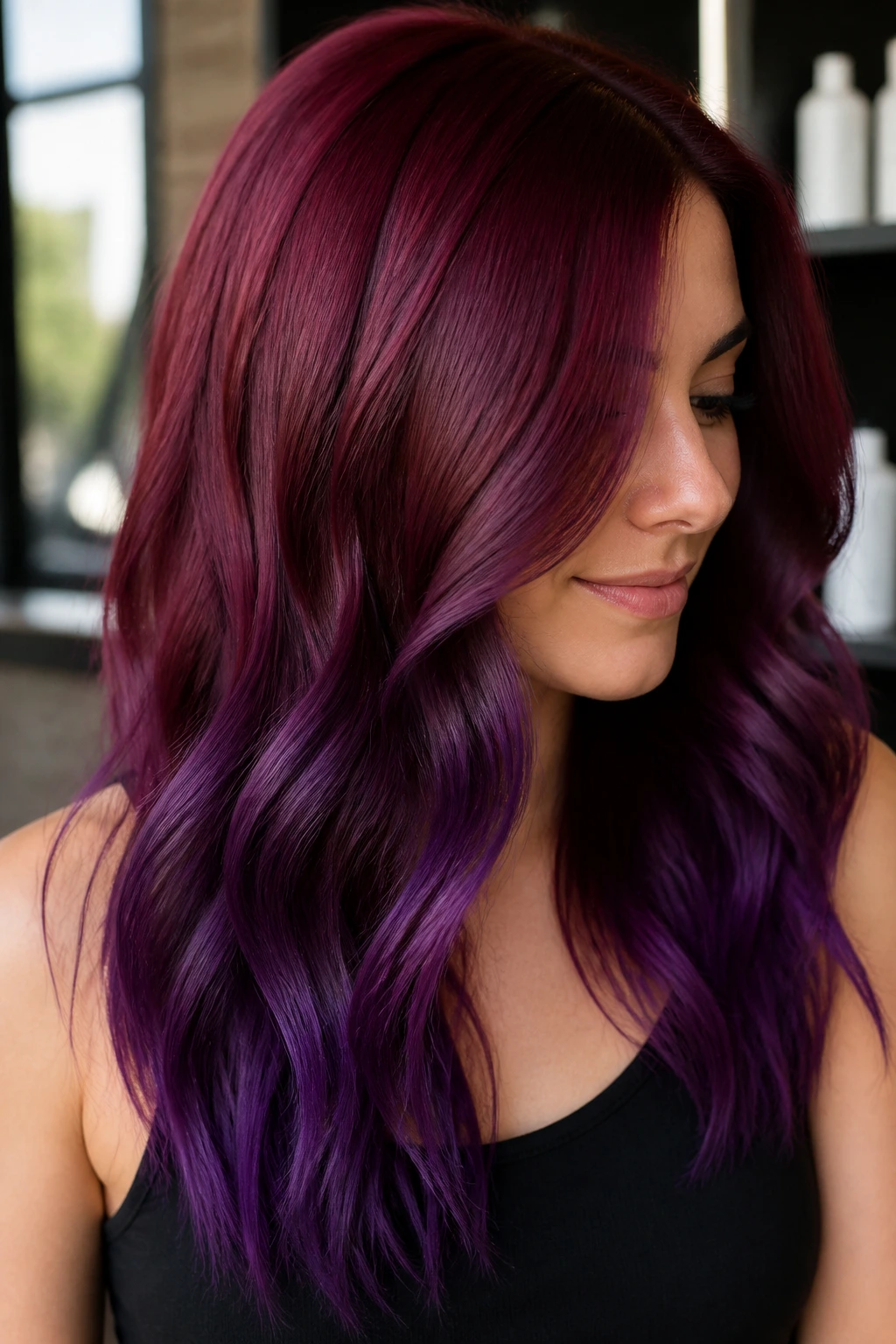
Burgundy to purple has a warmer, almost wine-shop feel that plenty of cooler purples never get. The red-violet base gives way to deeper purple ends, and the whole thing looks especially nice on long hair with movement because the red and violet tones keep switching places under the light.
Why It Reads Warmer
The burgundy side brings in red pigment, which makes the style feel richer and less icy. That matters if you find blue-purple shades too harsh against your skin or too stark against a dark base. This blend keeps the purple family intact while softening the edge.
How to Wear It
- Ask for a red-violet melt, not a cherry red
- Keep the brightest purple lower on the hair
- Choose curls over pin-straight styling if you want the blend to show
- Refresh with a color-depositing conditioner in a violet-red tone
Long hair gives this look room to shift between burgundy and purple instead of locking into one shade. That little movement is the whole point. Without it, the color can feel heavy. With it, the style looks layered and expensive.
15. Pastel Purple on Warm Brunette
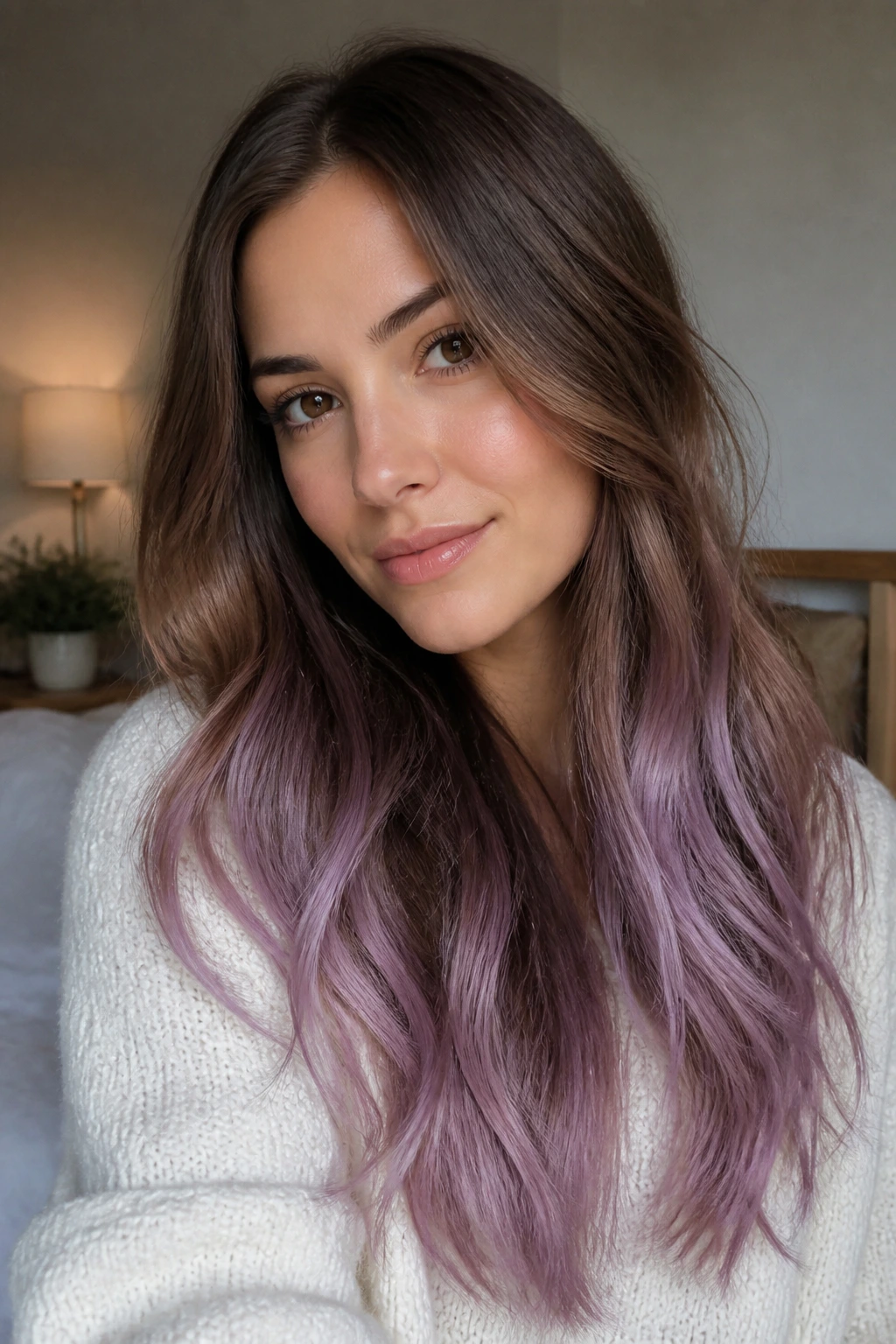
Pastel purple over warm brunette is a sneaky-good option when you want softness rather than shock value. The brunette base stays visible, and the purple only opens up near the mid-lengths and ends, usually after a careful lift and a warm-to-cool toner correction. Long hair gives you space to make that fade feel airy instead of patchy.
The key is not forcing the pastel too early. Warm brunette can make pale purple look muddy if the lift isn’t clean enough, so the transition should happen lower than you think. Let the brown stay brown for most of the root area. That contrast is what makes the pastel sing later.
A Few Things That Help
- Soft curls show the pastel better than flat ironing
- A root shadow keeps grow-out less obvious
- Purple masks or conditioners work best on pre-lightened ends
- Satin pillowcases help the ends stay smooth between washes
This is the style I’d choose for someone who likes romance in their hair but hates a stiff look. It has movement. It has softness. It still feels like purple, not a filter.
16. Peekaboo Purple Ombre Underlayers
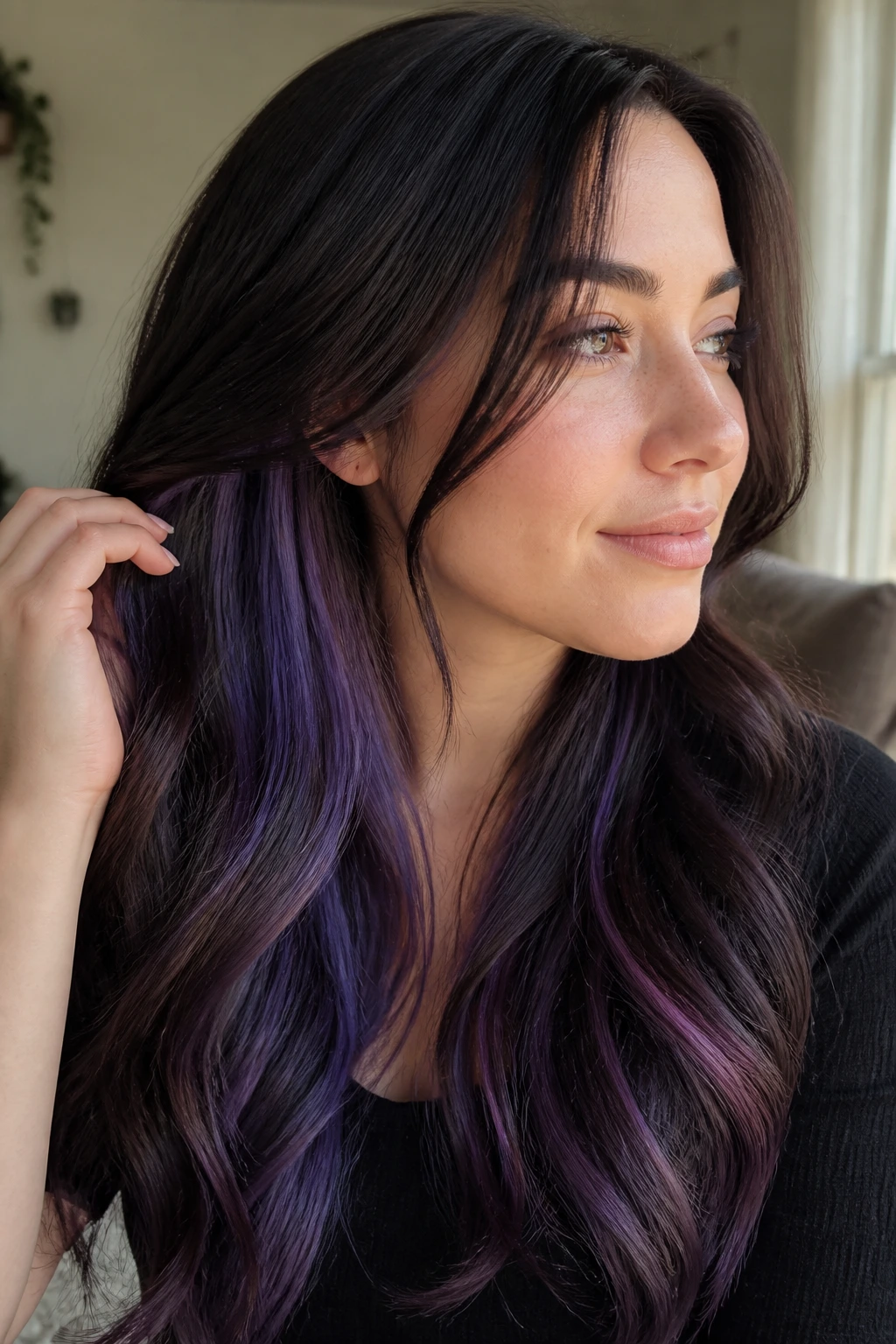
Peekaboo purple ombre is for the person who wants color with a little secrecy built in. The top layer stays natural or close to it, while the underlayers carry the purple fade from darker roots into brighter ends. Long hair is ideal here because it creates enough curtain-like movement for the hidden color to appear when you walk, flip your hair, or put it up.
There’s a reason this style works so well. The contrast is controlled by movement, not by the whole head. That means the color can be bold without dominating every angle. In a half-up style, the purple peeks through. In a braid, it becomes obvious fast. Under a loose wave, it feels almost sly.
I’d call this the most flexible purple ombre on the list. It suits people who need a conservative top layer at work but still want something more fun underneath. It also grows out gracefully because the visible surface stays calmer.
The best placement is beneath the crown and around the back panels, not too high around the temples. That keeps the reveal intentional instead of accidental.
17. Rooted Lilac on Long Blonde Hair
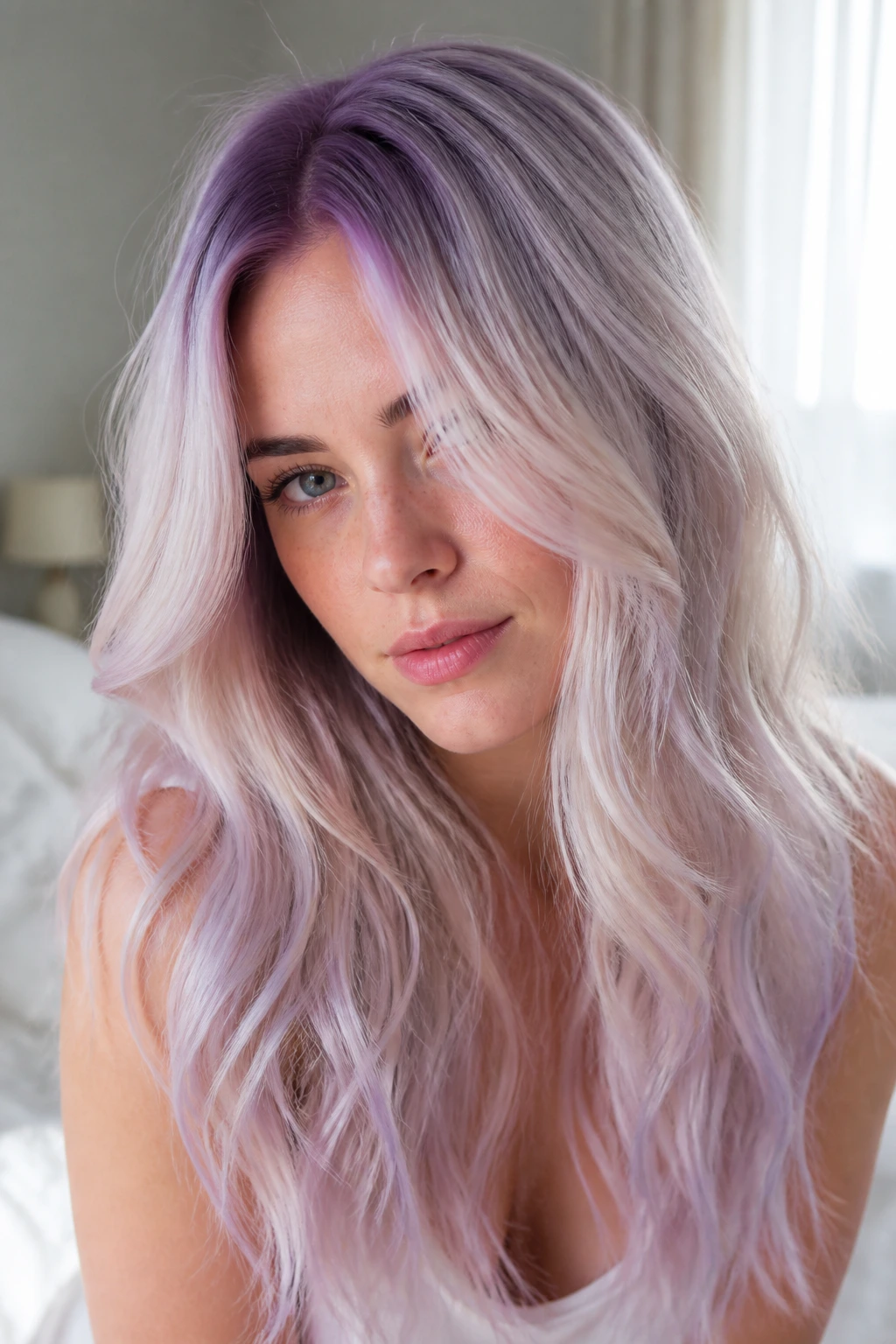
Rooted lilac is the softest way to wear purple on a blonde base. The roots get a slightly deeper lavender shadow, then the color blooms into paler lilac through the lengths and ends. On long blonde hair, it looks airy and clean, almost like watercolor.
What I like most is how little it asks for visually. The root depth gives the style enough structure to avoid looking washed out, while the lilac ends keep it light. If the blonde underneath is too yellow, though, the lilac will turn off-key fast. That’s why the toner step matters more here than in darker purple fades.
This style shines on long, layered blondes that need a little edge without losing their brightness. A loose braid is pretty, but soft waves are where it really comes alive. The layers catch the color in different spots, so the fade never looks flat.
If you already live in the blonde family and want to move toward purple without a hard break, this is a very sensible place to land.
18. Reverse Purple Ombre with Light Ends
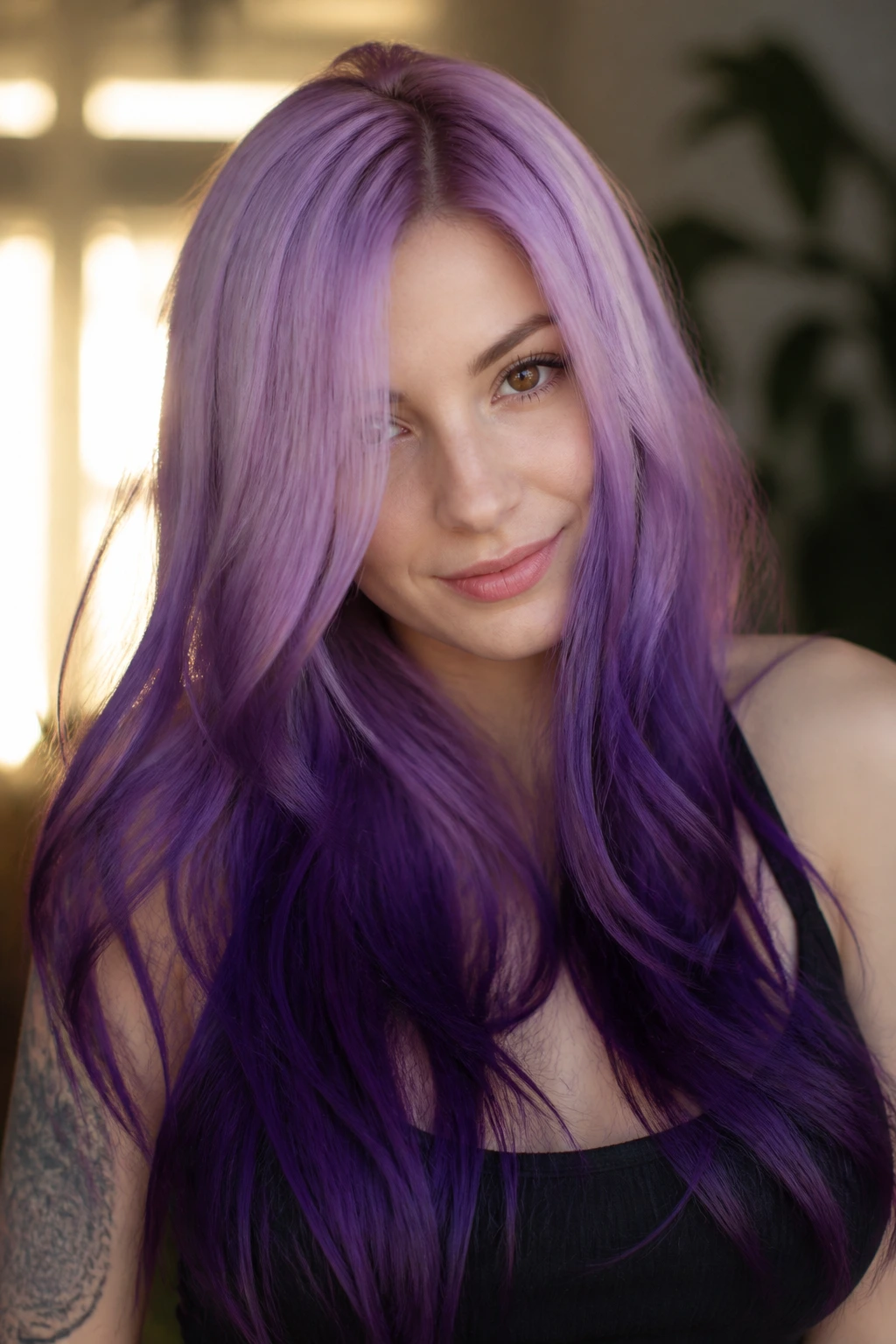
Reverse ombre flips the usual mood on its head. Instead of dark roots and lighter ends, the purple can begin as a softer violet near the top and deepen as it falls, or it can start with a light lilac crown and build into a more saturated purple toward the bottom. On long hair, that inversion feels a little unexpected, and that’s the fun of it.
This style works best when the hair has enough length for the change to read as deliberate. Waist-length hair, long layers, and big loose curls all help. A reverse fade can look especially good if you like wearing your hair half-up, because the lighter top shows first and the darker lengths slide out underneath. It feels fashion-forward without needing wild contrast.
The important part is keeping the tones from fighting each other. Let the top shade stay airy and the lower shade deeper, or do the opposite if you want a darker crown and paler ends. Either way, make the transition soft. Hard lines are the enemy here.
If you’re choosing between several purple ombre hair ideas for long hair, this one is the wild card. It has enough edge to stand out, but it still depends on the same thing the best purple styles always need: a clean fade, healthy ends, and a colorist who knows when to stop.
A good purple ombre on long hair should move when you move. That’s the whole point. If the shade looks prettier in a loose braid than it does hanging straight, you’re probably in the right zone.
