



The struggle to find the perfect hairstyle when you have a round face is something many of us know intimately. You want volume, but not too much width; you want color, but you fear that the wrong placement will just make your cheeks look fuller. It is a balancing act. The right color choice, however, does more than just look pretty—it can actually reshape your appearance. This is where the magic of a well-executed ombre comes into play. By drawing the eye downward and concentrating the lightness toward the ends of your hair, you create an optical illusion of length that helps to slenderize and define your features.
Forget the idea that dark hair doesn’t offer enough variety. When you start with a deep, obsidian black base, you have a canvas that makes every other color pop with incredible intensity. The key is in the transition. For a round face, you want a gradual fade rather than a harsh, horizontal block of color. A smooth, vertical gradient is your best friend. It guides the viewer’s gaze from the crown down to the tips, effectively elongating the silhouette of your head. Whether you are craving something subtle and professional or bold and expressive, there is a way to wear it that respects your face shape.
Precision is everything here. You are not just picking a color; you are picking a trajectory for your style. We are talking about light reflecting off the right angles and shadows falling exactly where they need to be to add depth to your jawline. Let’s look at how to pull this off effectively.
1. Classic Black to Ash Gray
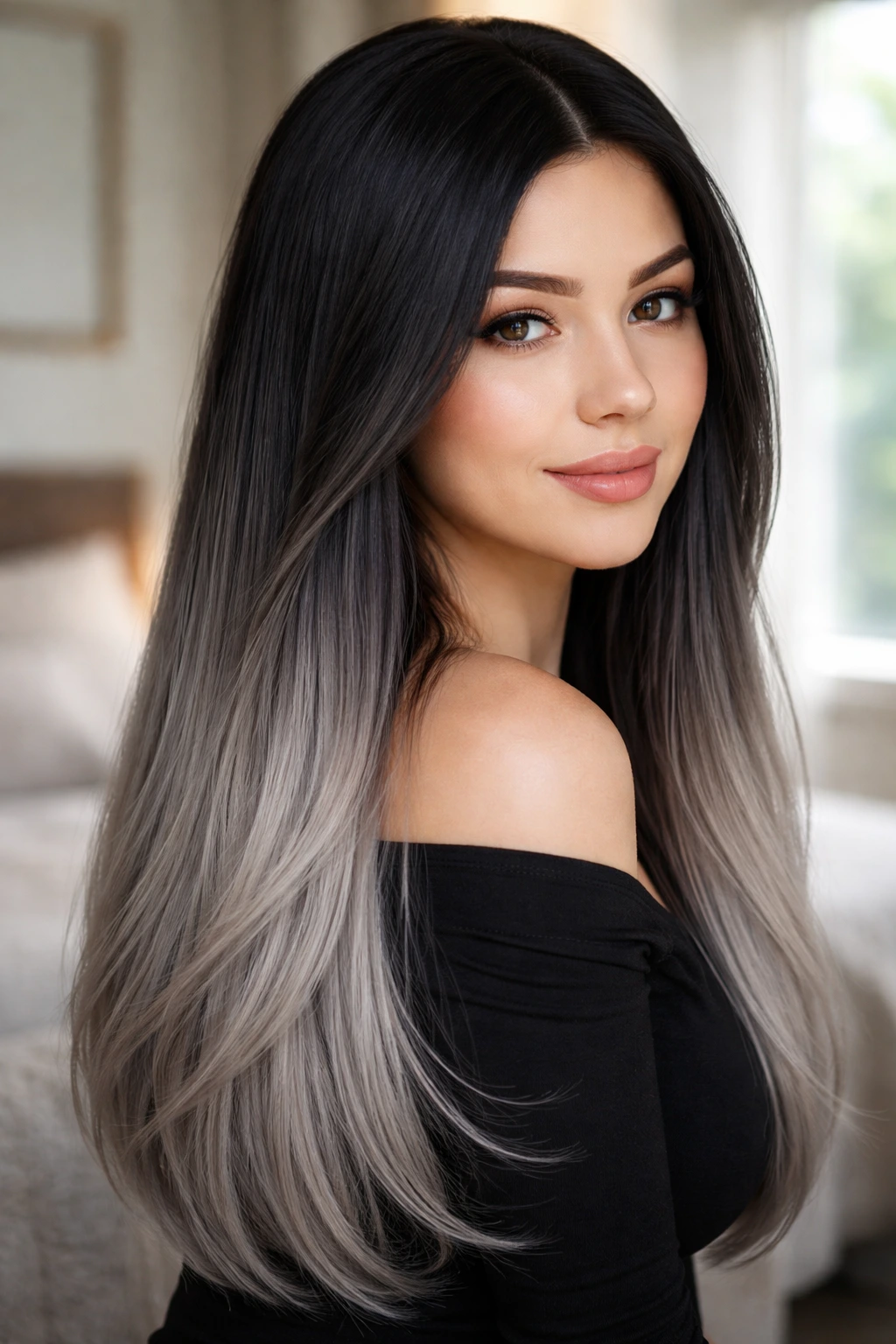
This is the ultimate cool-toned look for those who want a modern, edgy vibe without abandoning their natural black roots. The ash gray transition is particularly effective for round faces because the cool, metallic undertones tend to recede visually, creating a more angular appearance around the chin.
Why It Works for Round Faces
The lack of warmth in ash gray prevents the hair from looking too heavy around your cheeks. By keeping the top section dark and letting the ash gray dominate the lower half, you are shifting the visual weight of your hair away from your face and down toward your shoulders.
What to Keep in Mind
- You will need a heavy lifting process to get black hair light enough for ash tones.
- Toner is not optional; it is the only thing standing between you and a brassy, yellow-orange mess.
- Regular use of purple shampoo is mandatory to keep the gray from turning muddy.
Pro tip: Ask your stylist to start the fade at the jawline rather than the temples to ensure the brightness doesn’t draw too much attention to the widest part of your face.
2. Subtle Black to Caramel Mocha
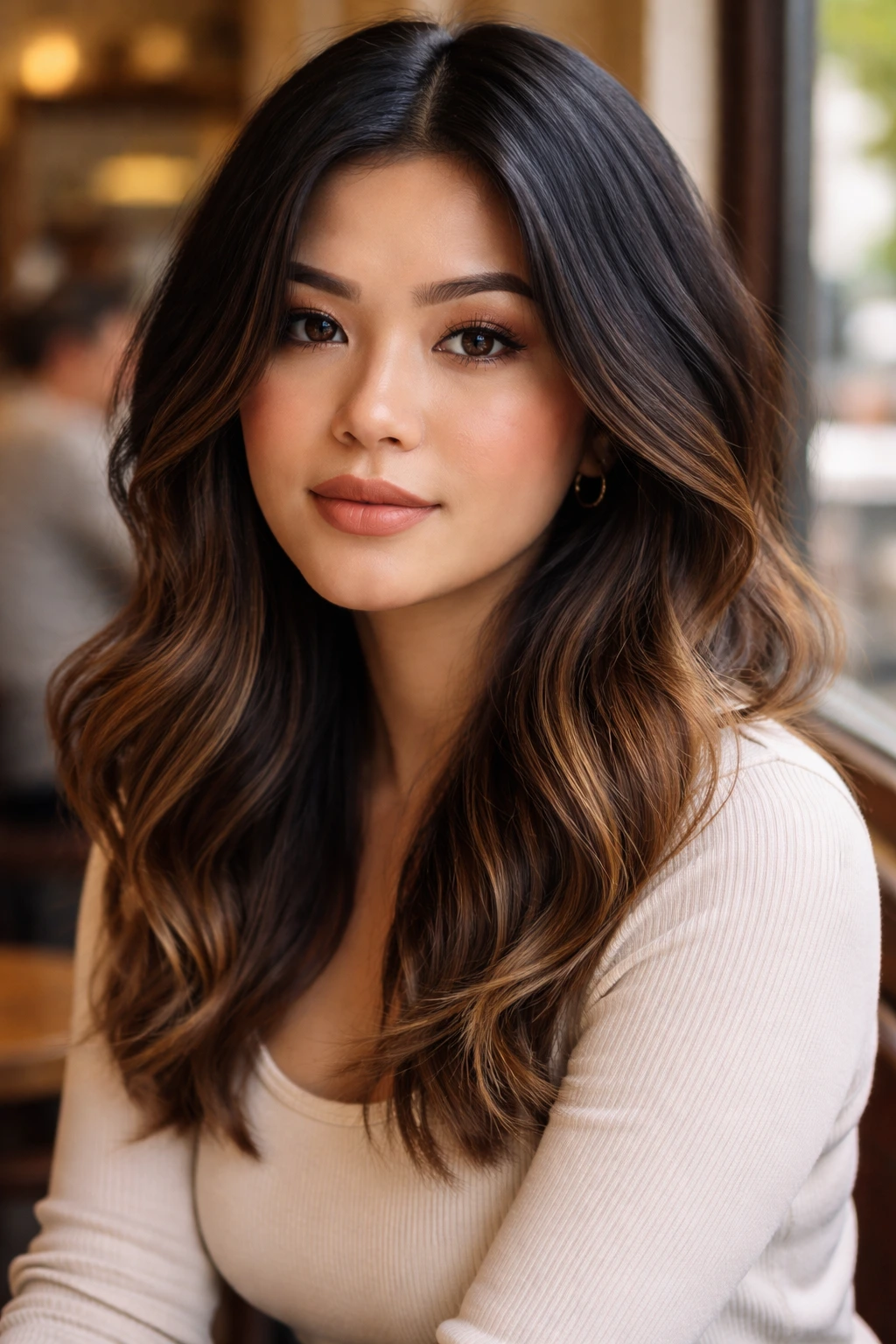
Sometimes, you just want to add a touch of warmth and dimension without going for a full color overhaul. This look is perfect if you are new to lightening your hair and are nervous about the maintenance. It provides a soft, sun-kissed finish that feels incredibly natural.
The caramel mocha transition is basically the “no-makeup” makeup look of the hair world. It adds a gentle shimmer that catches the light right at the ends, which is precisely where you want the focus to be. Because the caramel tones are relatively close to a deep brown, they don’t create an abrupt horizontal line. Instead, they melt into the black hair, creating a seamless, expensive-looking blend. This is one of the most low-maintenance ways to brighten up a round face.
3. Dramatic Black to Fire Engine Red
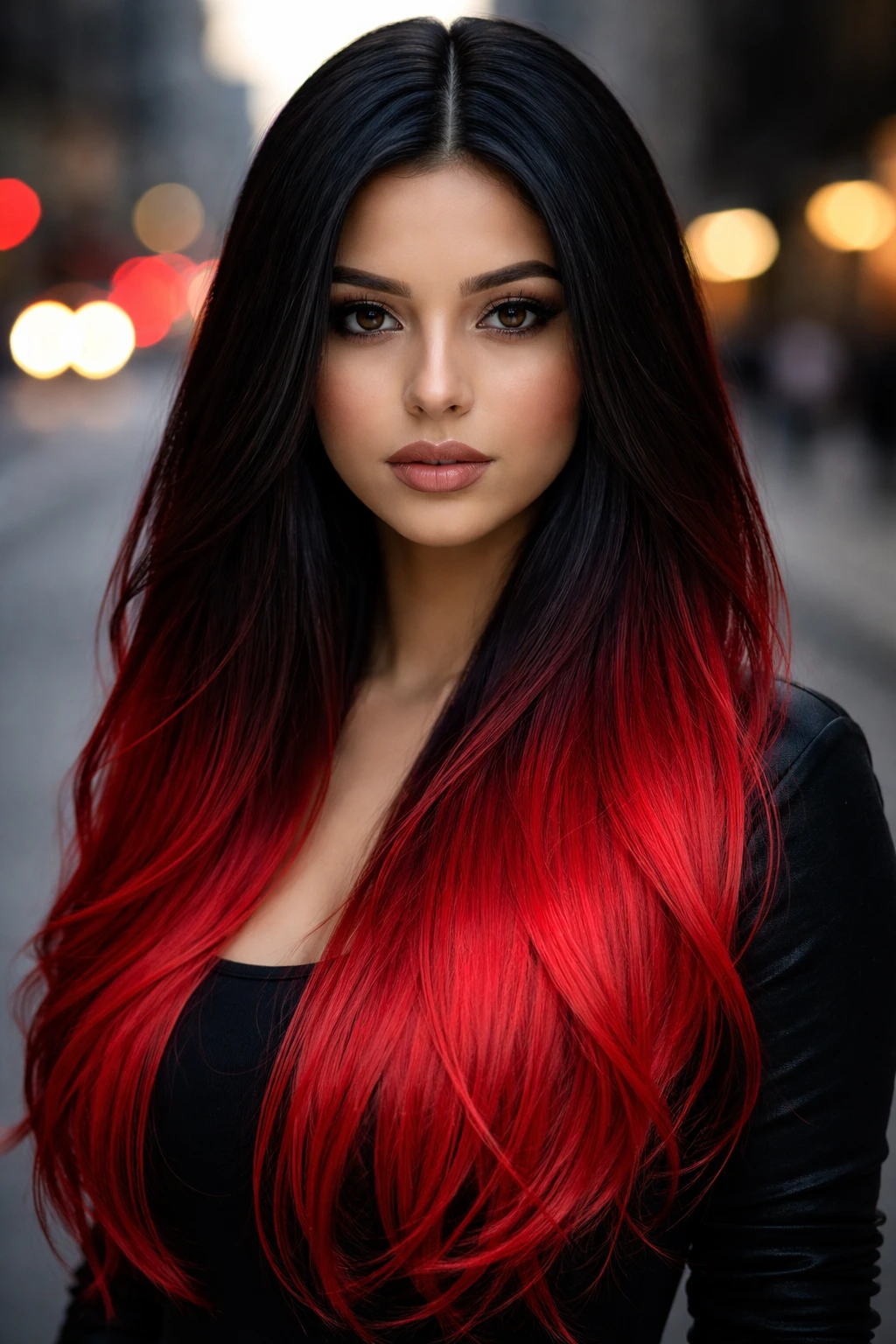
Are you ready to turn heads? A bold red ombre is not for the faint of heart, but it is one of the most effective ways to command attention. Because the color is so vibrant, it creates a vertical column of high-impact pigment that demands the eye follow the length of your hair.
How to Get the Best Results
- Start with a solid, healthy black base to ensure the red has a rich foundation.
- Use a high-lift color or a lightener to lift the lower half of your hair to at least a level seven or eight.
- Apply a vibrant, semi-permanent red dye. Do not use permanent color for the red portion unless you want massive damage.
- Ask for a “smudged” root to ensure the red doesn’t start too abruptly.
Is This Right for You?
If your skin has cool or neutral undertones, look for a blue-based red. If your skin is warmer, go for a copper-based red. This ensures the color complements your complexion rather than washing you out.
4. Soft Black to Chocolate Brown
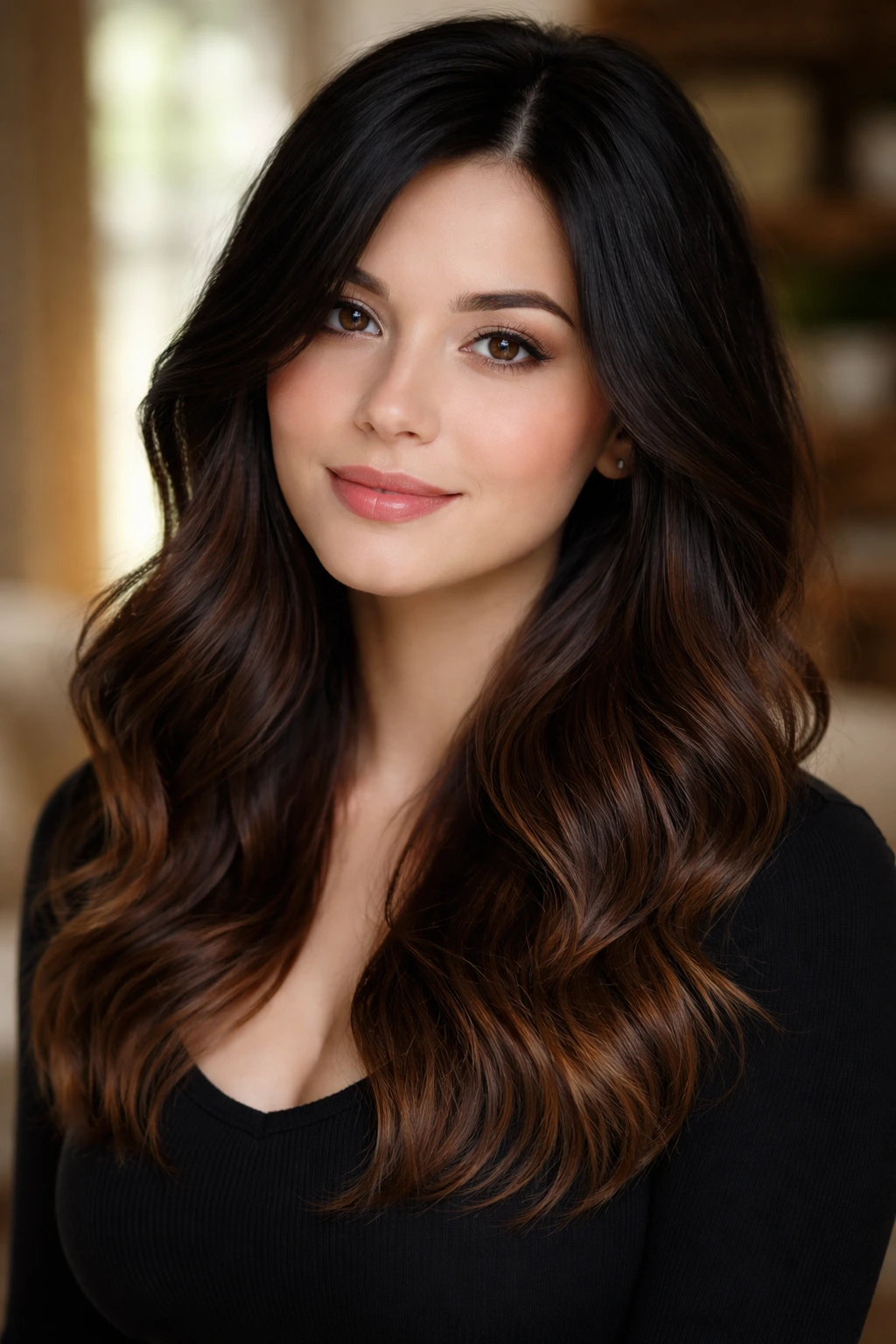
This is the understated, professional version of ombre that works in any office environment. It provides just enough light to break up the solidity of black hair without screaming for attention. The chocolate tones are warm and inviting, bringing a healthy glow to your skin.
Unlike cooler tones, chocolate brown adds a richness that can make your hair look thicker and fuller. For those with round faces, this is a great way to add “movement” to a bob or long layers without the harsh contrast of blonde or gray. It is soft, approachable, and classic.
5. Edgy Black to Electric Blue
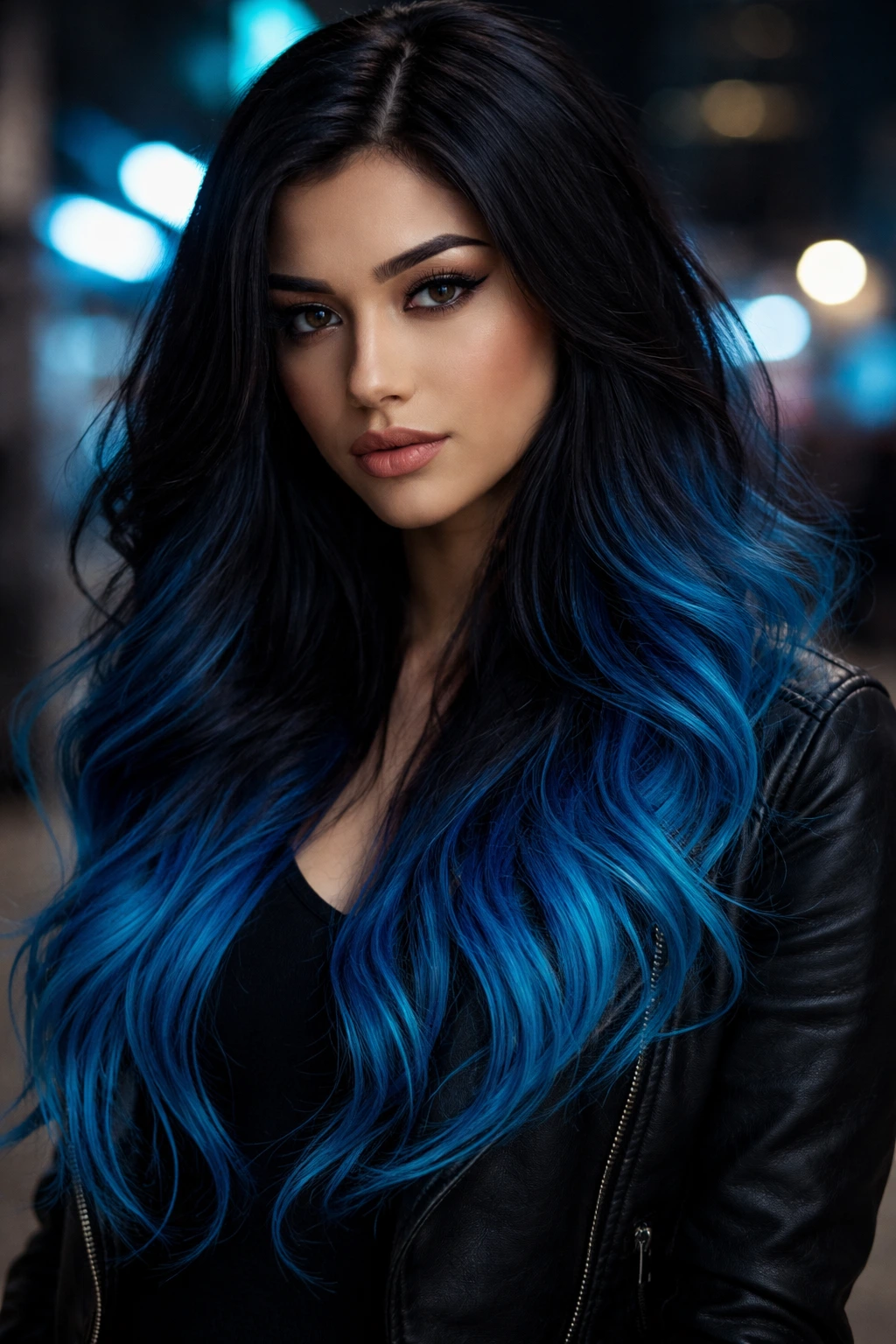
If you have a creative side or just like to live a little louder, electric blue is a fantastic choice. The deep, cool nature of blue makes it a surprisingly flattering color for many skin tones. When paired with black, it creates a midnight-sky aesthetic that feels both mysterious and intentional.
Why It Works
Blue is a “cool” color, meaning it doesn’t add width to your face the way warmer, brighter colors might. It feels like an extension of the darkness rather than a break from it.
Style Considerations
- This looks best on long, wavy hair where the blue can really catch the light.
- Avoid neon blues if you have pink undertones in your skin; stick to deeper, navy-leaning blues.
- Expect this color to fade fast—wash with cold water only.
Pro tip: If you are nervous about committing to blue, try a darker, teal-tinted blue first. It is less shocking than electric blue but still packs that vibrant punch.
6. Sophisticated Black to Honey Blonde
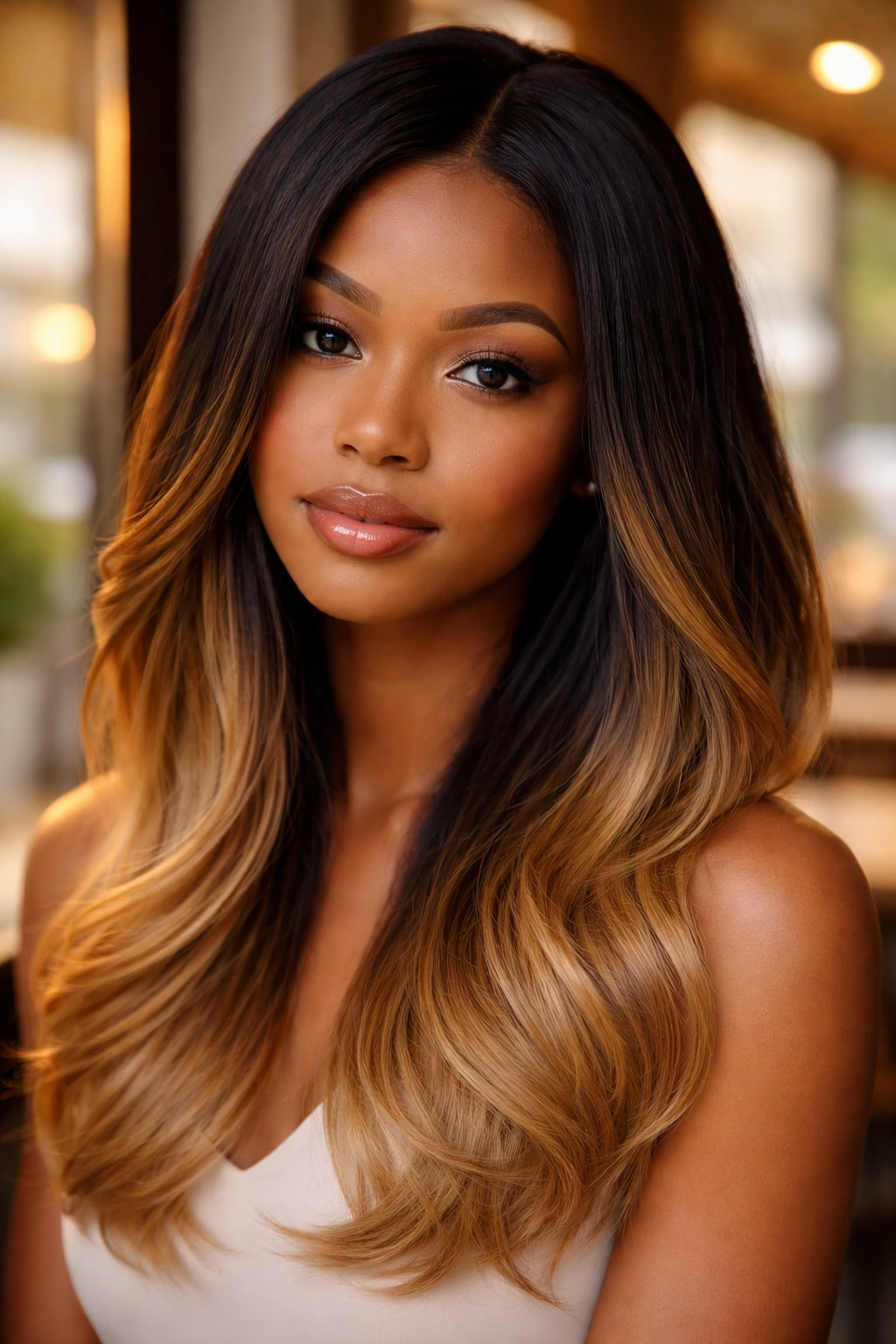
Honey blonde is the secret weapon for anyone who wants to look like they spent a month at the beach. It is a warm, golden color that adds a beautiful, radiant shine to the ends of your hair. For a round face, this warmth can actually help lift a dull complexion and bring a “freshness” to your overall look.
The trick with honey blonde is avoiding the “zebra” look. You want the black to fade into a dark honey, which then transitions into a brighter golden blonde at the very tips. This gradual transition is what prevents the hair from looking chopped in half, keeping the focus vertical and slimming.
7. Mysterious Black to Deep Plum
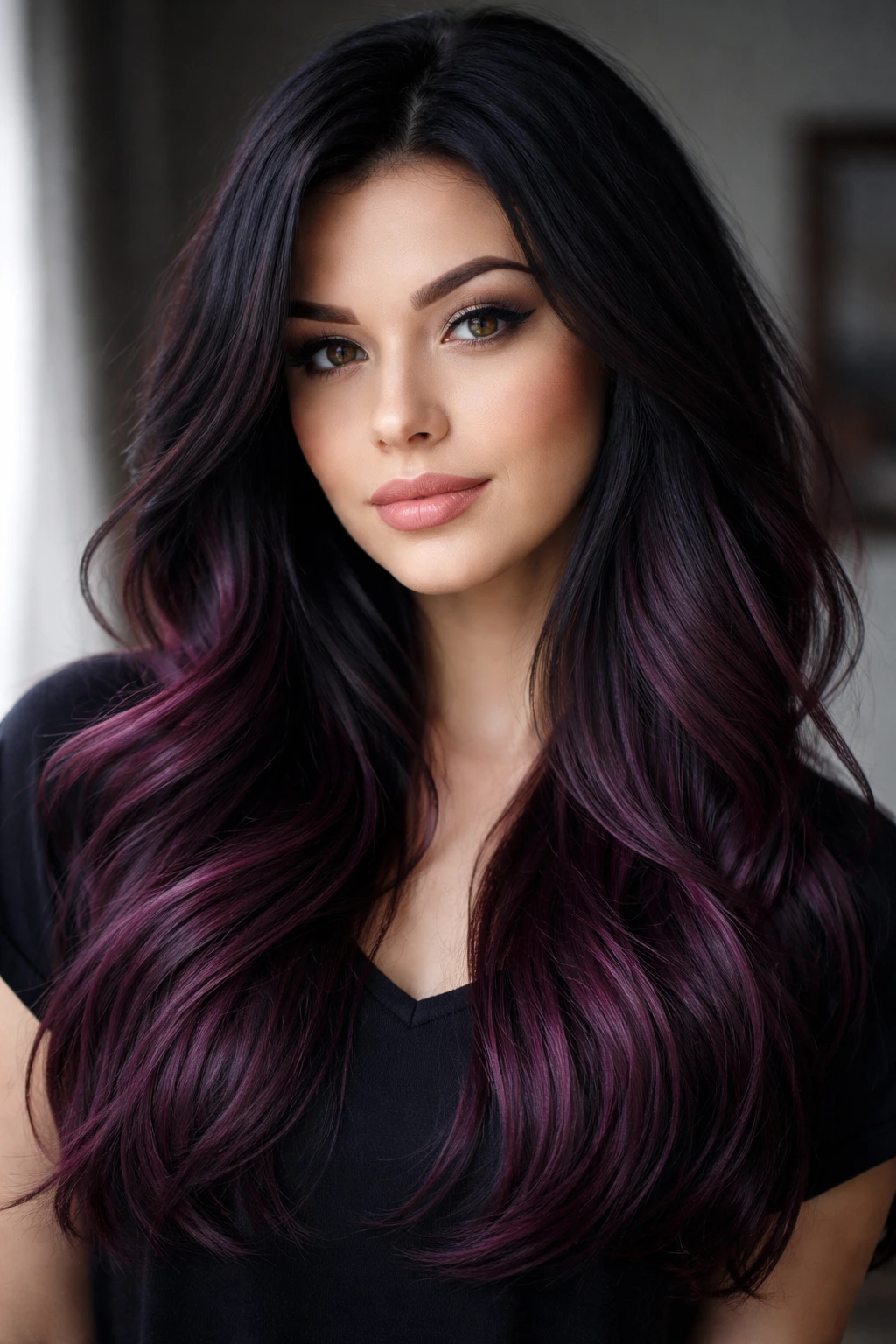
Plum is the perfect middle ground between natural and unnatural. It is dark enough to blend beautifully with black hair but vibrant enough to show up when the sun hits it. This is a sophisticated, moody look that pairs incredibly well with dark eyes and cool skin tones.
The Mechanism of Plum
Because plum contains both red and blue pigments, it is highly versatile. It adds depth to your hair, making it look incredibly dense and healthy. Since it sits on the darker end of the color spectrum, it doesn’t create a “light” block that might make your face look wider. Instead, it adds dimension, which is great for round faces that need a little more structure.
How to Style It
Wear this with sleek, straight hair to let the plum tones peek through, or go for loose, textured waves to allow the different hues to dance together. It is a very forgiving color that grows out gracefully, as the contrast between black and plum is much softer than black and blonde.
8. Sharp Black to Silver White
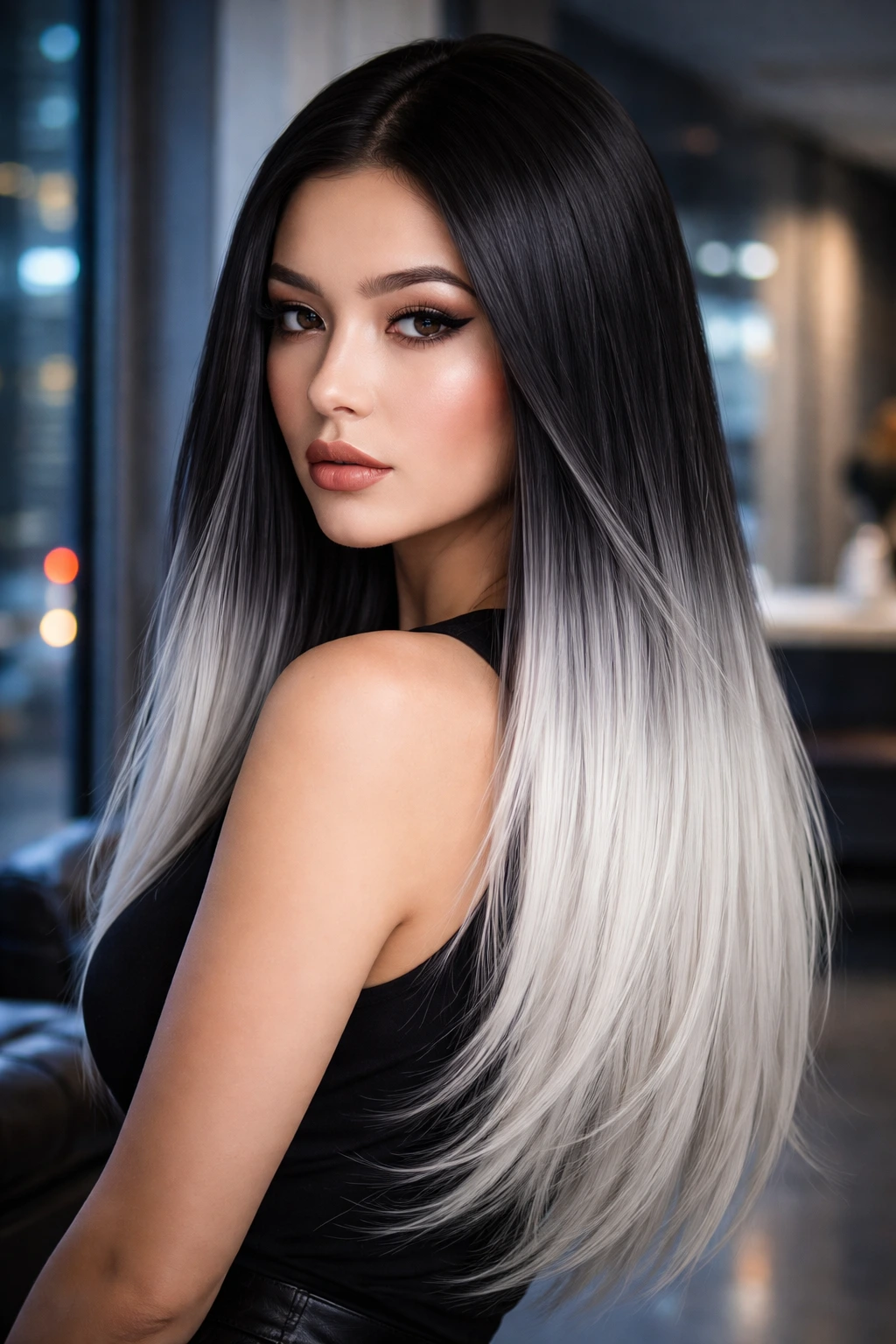
This is a high-contrast, high-maintenance look that screams confidence. The sharpness of white-silver against jet-black hair creates a graphic, modern effect. It is not for everyone, but if you have the patience to maintain it, it is undeniably striking.
Who It Suits
If you have a cool complexion and high-contrast features (like very dark eyes), this look is made for you. It frames the face in a way that feels almost architectural.
The Maintenance Reality
- You will need to see your colorist every four to six weeks to touch up your roots and refresh the silver tone.
- Your hair must be in excellent condition before attempting this; white-silver requires near-total bleaching.
- Do not attempt this at home. The risk of melting your hair is far too high.
9. Warm Black to Rose Gold
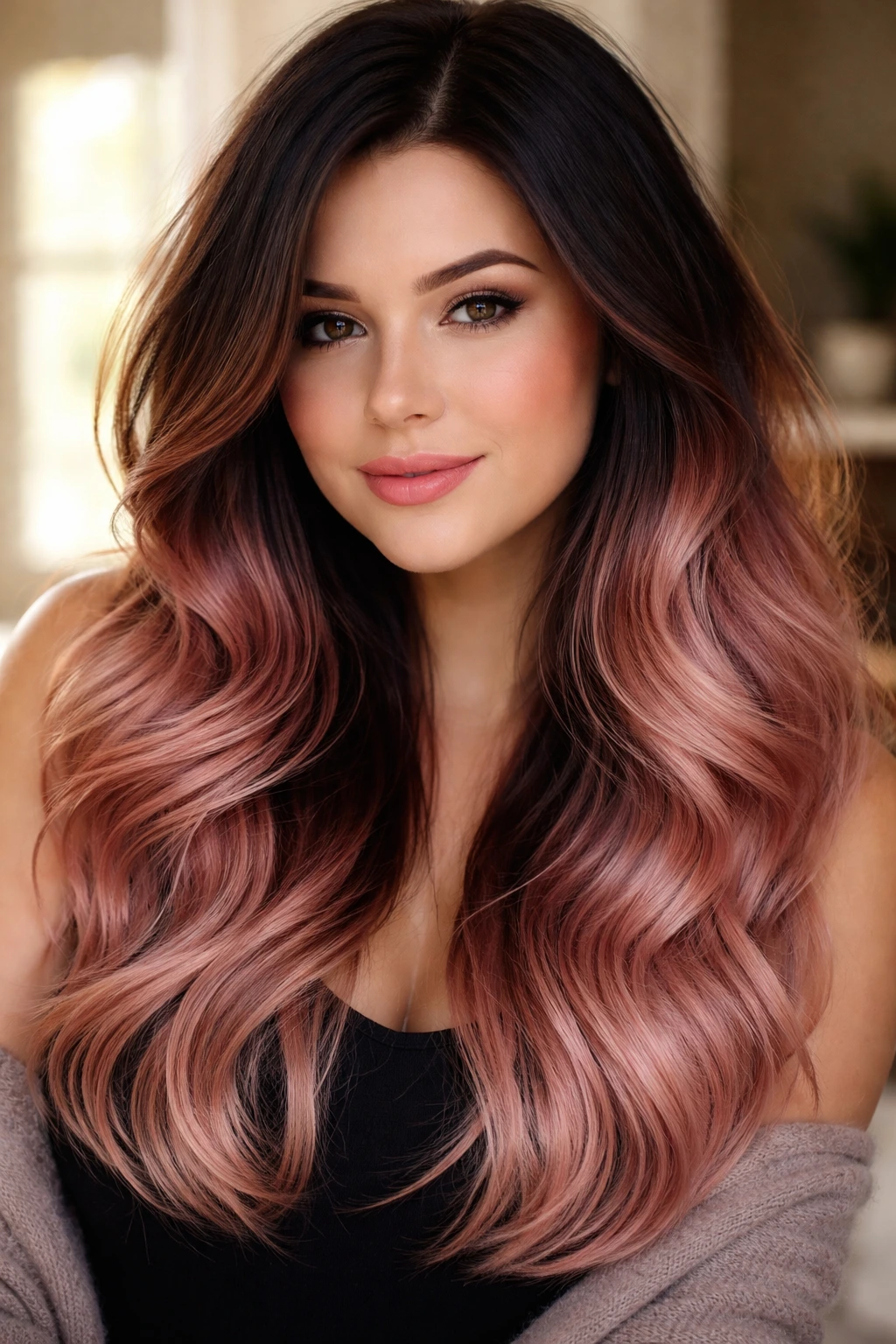
Rose gold is not going anywhere, and there is a reason for that: it is universally flattering. While traditional rose gold is often seen on lighter bases, it looks absolutely stunning as an ombre on black hair. The contrast between the intense, dark roots and the soft, pink-gold ends is incredibly feminine and soft.
For round faces, the softness of the pink tones acts almost like a blush for your hair. It diffuses the harsh lines of a haircut, creating a dreamy, blurred effect that softens the edges of your face. It is a great way to experiment with pink without looking like a cartoon character.
10. Rooted Black to Sandy Beige
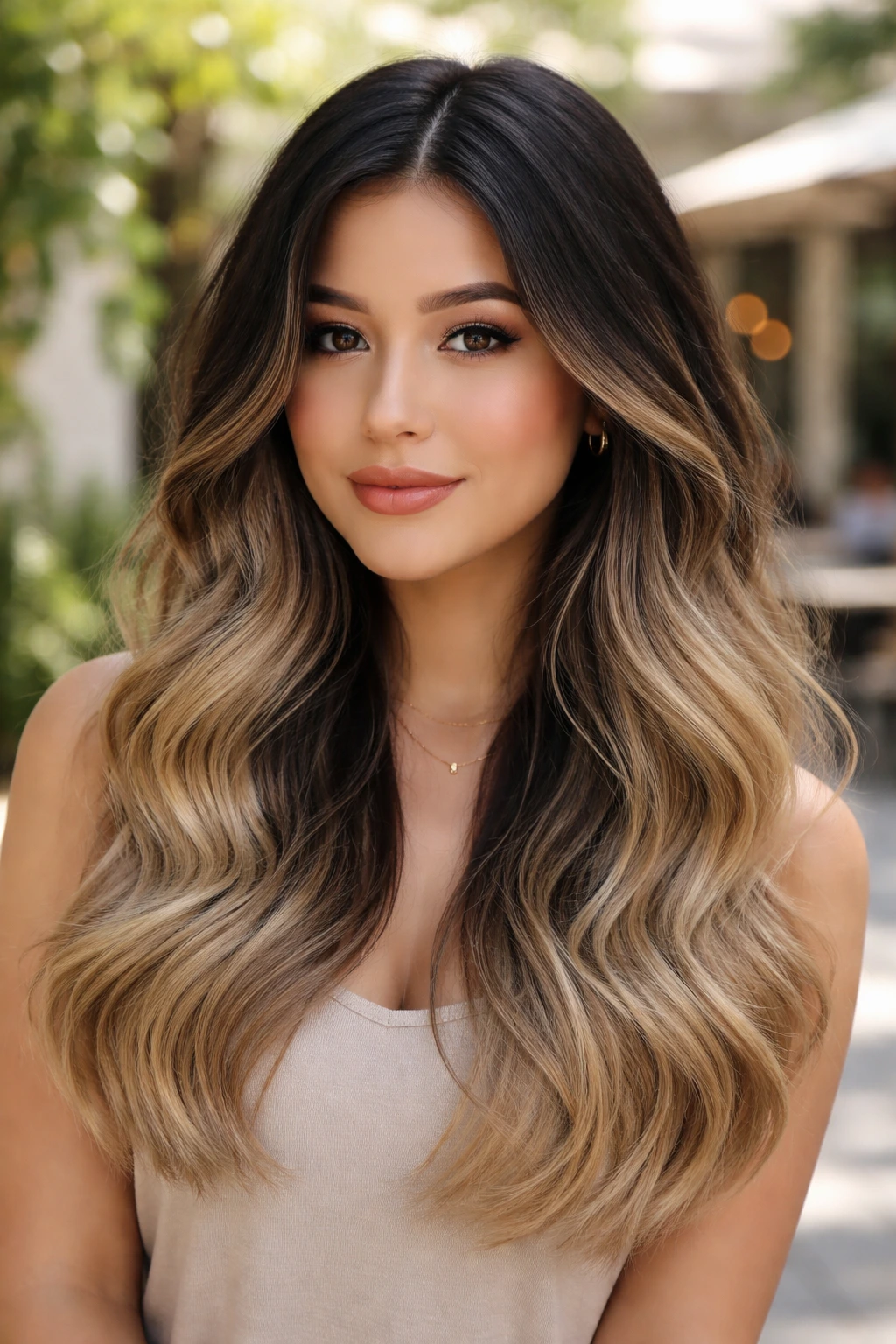
Sandy beige is the ultimate “California cool” ombre. It moves away from the warmth of honey or caramel and leans into a more neutral, earthy tone. This makes it a great transition for anyone who feels that warmer blonde tones turn orange on them.
Why It’s Great for Face Framing
Because beige is a neutral, it doesn’t compete with the colors in your skin. It stays in the background, letting your face be the main attraction. For a round face, this is a massive benefit. You aren’t adding bright, distracting color that can visually broaden your features; you are simply adding light and texture to the bottom half of your hair.
How to Maintain the Neutrality
- Use a dedicated “anti-brass” or neutralizing shampoo that isn’t just purple; look for blue-violet mixtures.
- Keep heat styling to a minimum, as heat will turn beige brassy faster than any other color.
11. Black to Emerald Green
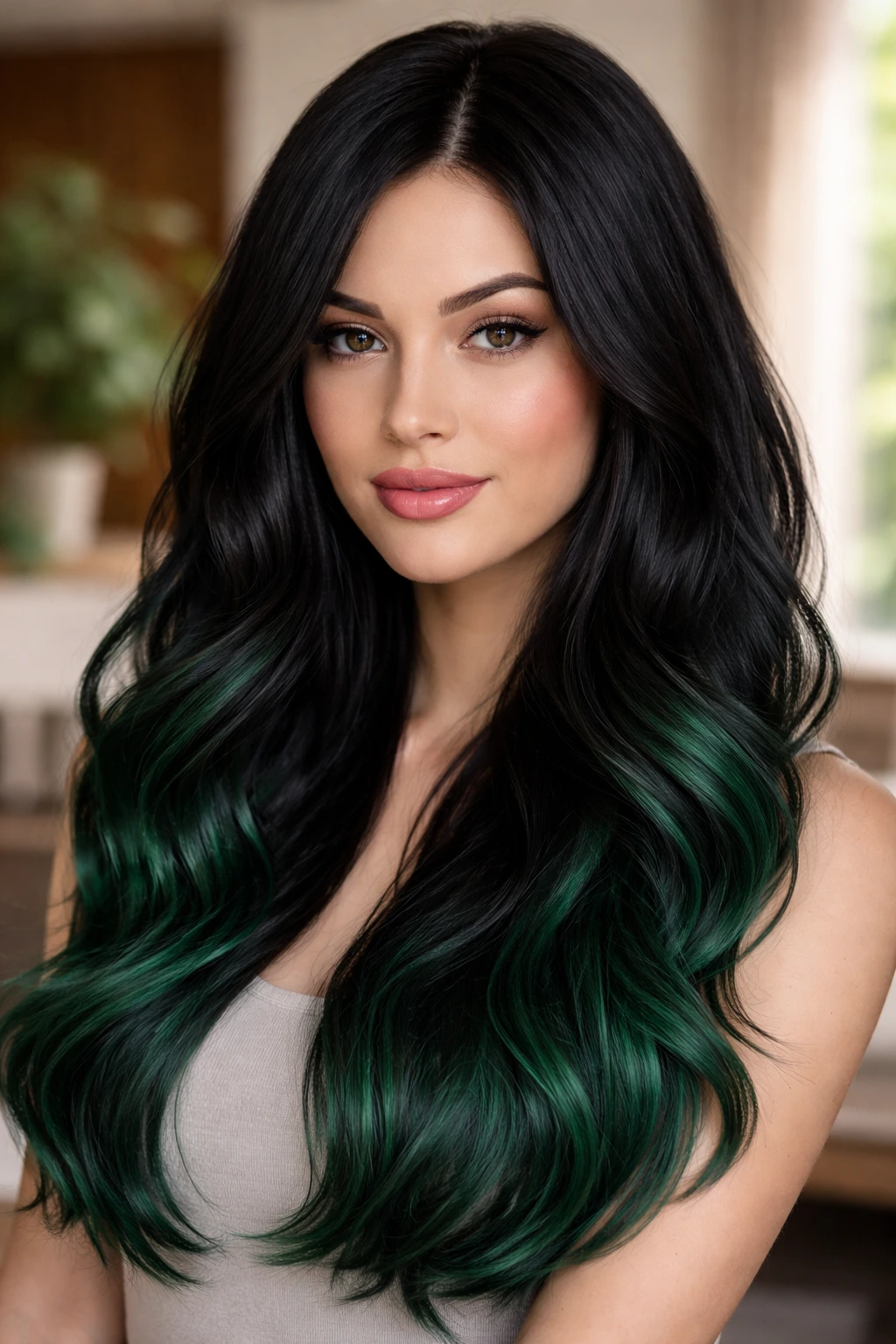
Emerald green is a luxurious, jewel-toned choice that looks incredibly sophisticated. It is a departure from the typical browns and blondes, offering a deep, earthy intensity that mimics the richness of black hair. It is a fantastic option if you want to experiment with fantasy colors but want to keep it grounded.
Why This Works for Round Faces
Green is a neutral color in the context of hair—it doesn’t have the “expanding” property of light blonde or the “shrinking” property of deep black. It adds interest and depth. By placing the emerald color at the ends, you keep the drama away from your face, which is perfect for maintaining the flattering, elongated look you want.
12. Black to Lavender Haze
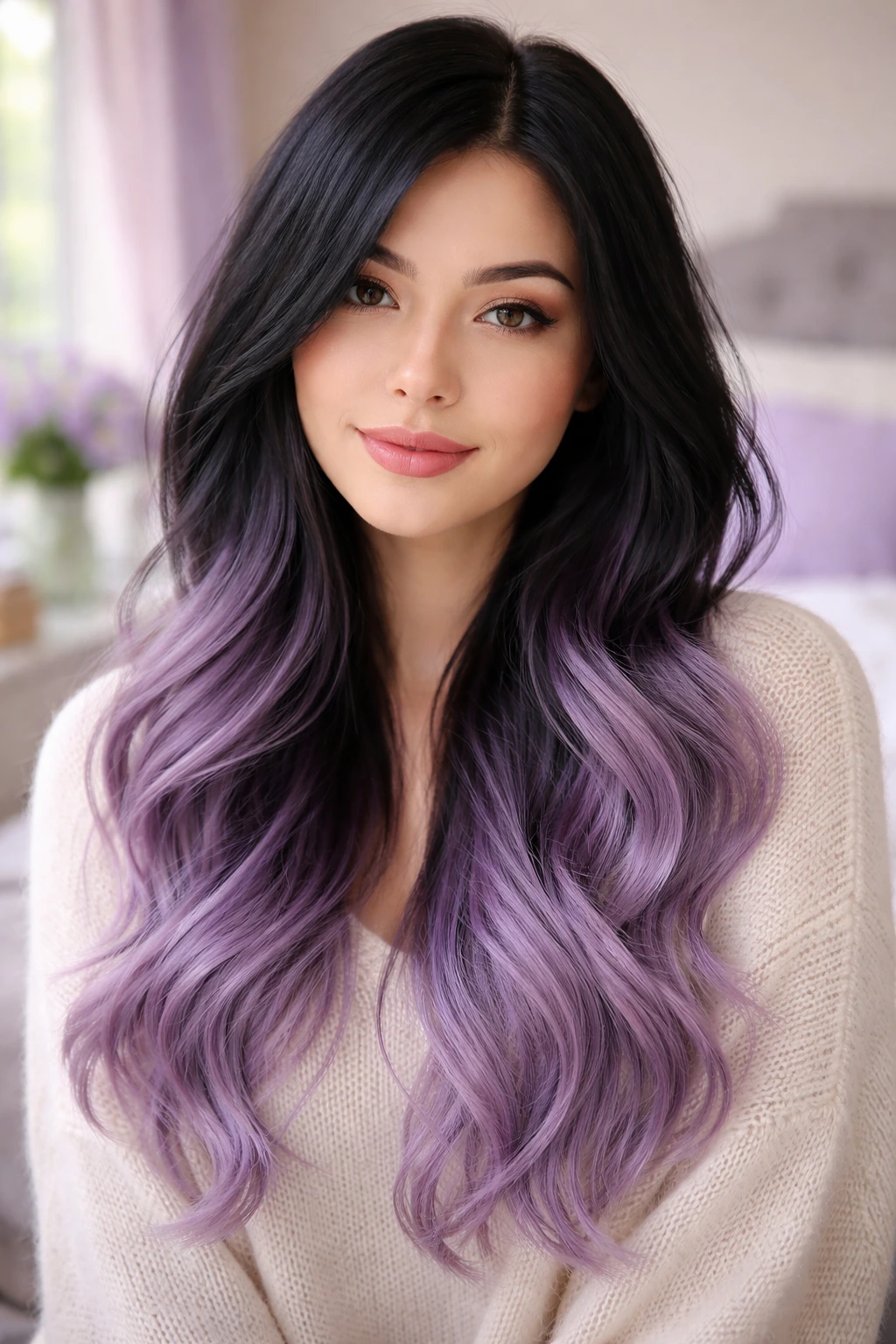
Lavender is soft, romantic, and ethereal. When you ombre your black hair into a lavender haze, you get a look that is both edgy and incredibly pretty. It is the perfect choice for someone who wants a fantasy color that feels light and airy.
Balancing the Lightness
Lavender is very light, which can sometimes make a round face look wider if the color starts too high. To counteract this, ask for a deep, smoky purple at the transition point, melting into a lighter, pastel lavender at the very ends. This gives you the best of both worlds: the softness of the pastel and the slimming, dark transition that keeps the face framed beautifully.
13. Black to Copper Sunset
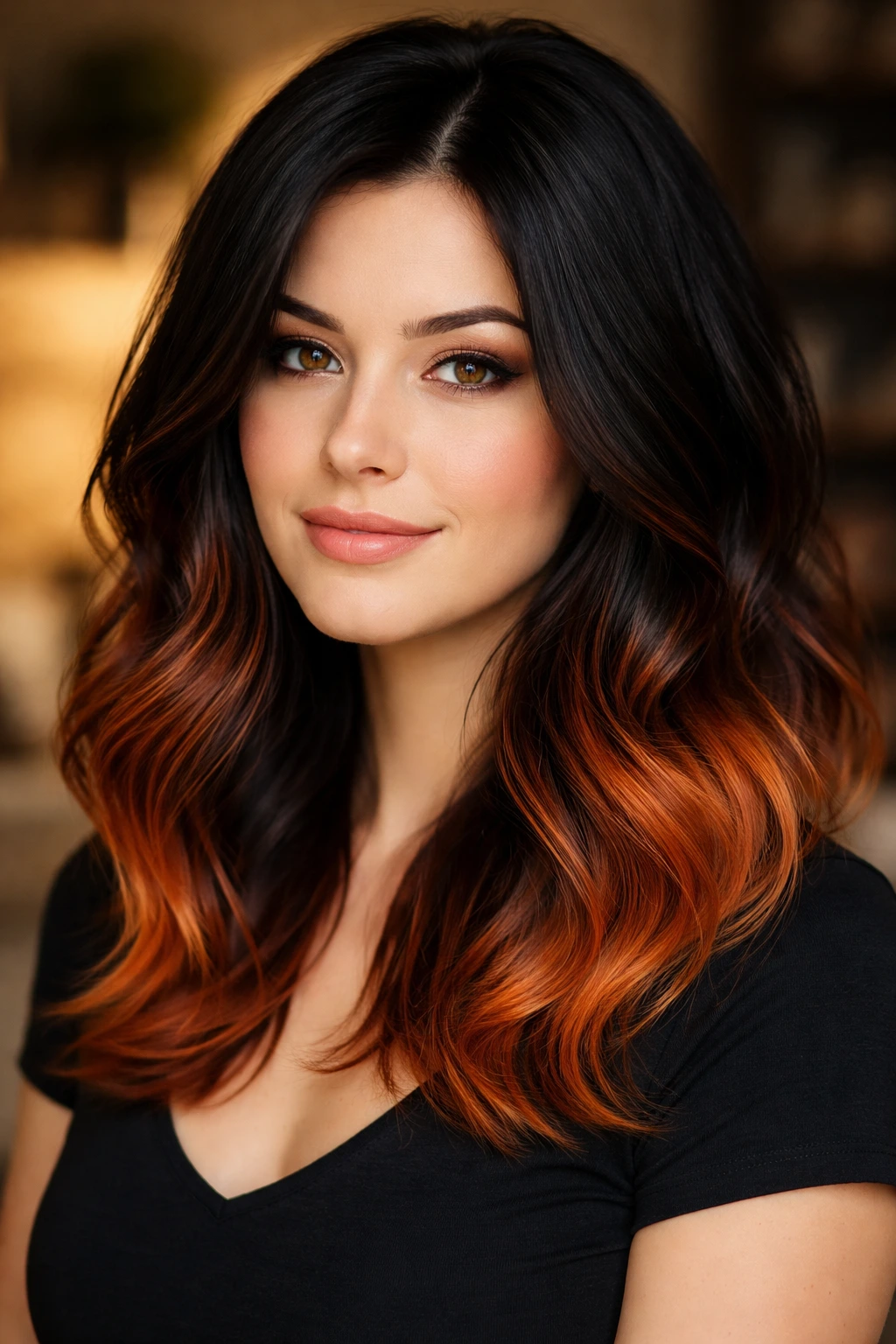
Copper is one of the most vibrant colors you can choose, and it looks incredible against black. It feels fiery and energetic. If you have a warm skin tone, this is likely to be your best friend. It brings out the gold and olive in your skin, making you look radiant.
Making It Work
The trick here is the fade. You want a “sunset” melt, starting with deep auburn at the transition and moving to a bright, coppery orange at the tips. This creates a multi-dimensional effect that is visually stunning. For a round face, ensure the lighter copper pieces are concentrated near the ends of your hair, not the cheekbones, to keep the elongation effect intact.
14. Subtle Black to Espresso
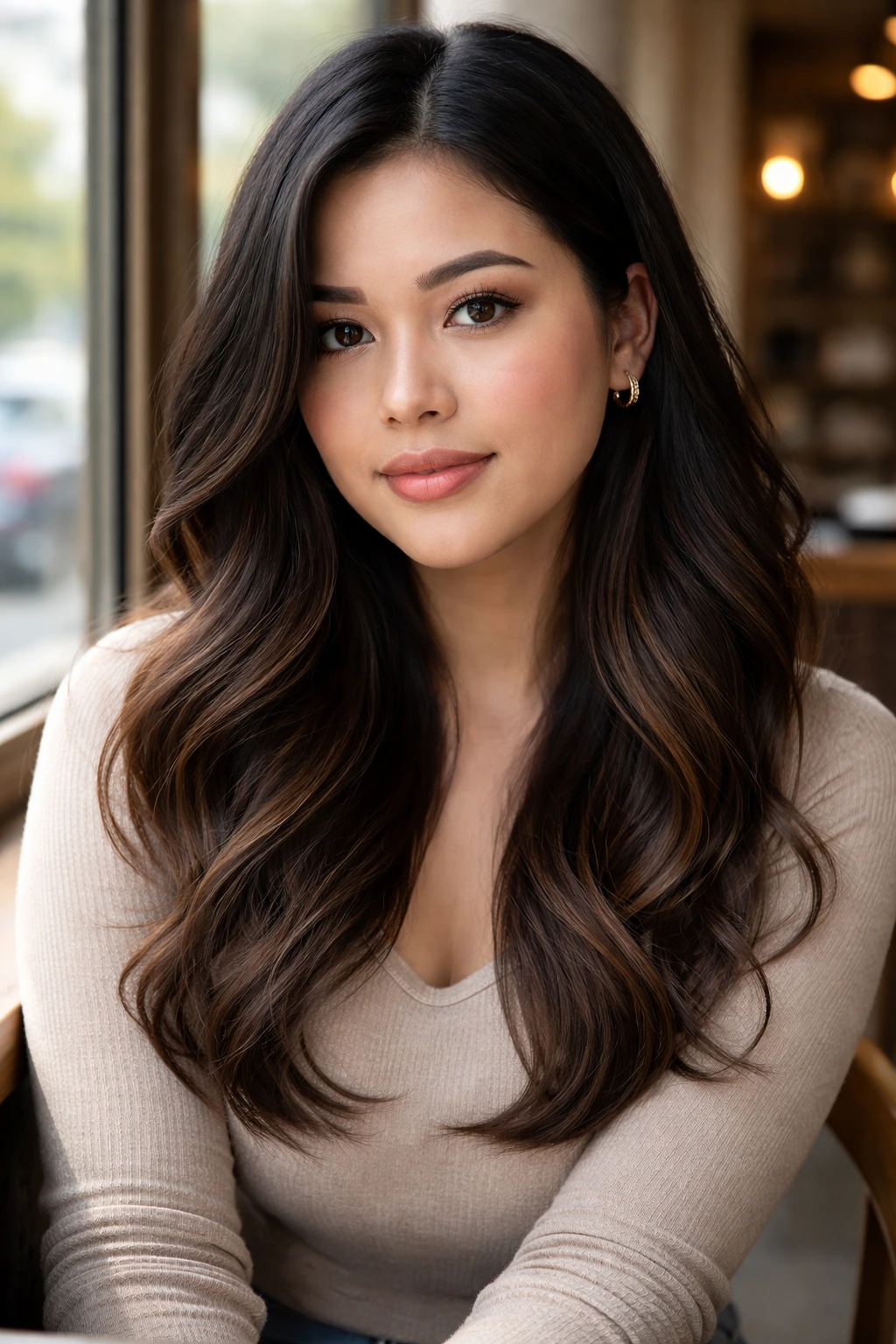
Sometimes, the best change is the smallest one. Espresso is just a few shades lighter than pure black, creating a natural, sun-drenched look. It is almost invisible in low light, but it comes alive when you step into the sun.
This is the ultimate low-commitment ombre. If you are worried about the “line of demarcation” that happens when your roots grow out, espresso is the safest bet. It grows out seamlessly, making it a perfect choice for anyone who doesn’t want to be in the salon chair every two months.
15. Black to Burgundy Melt
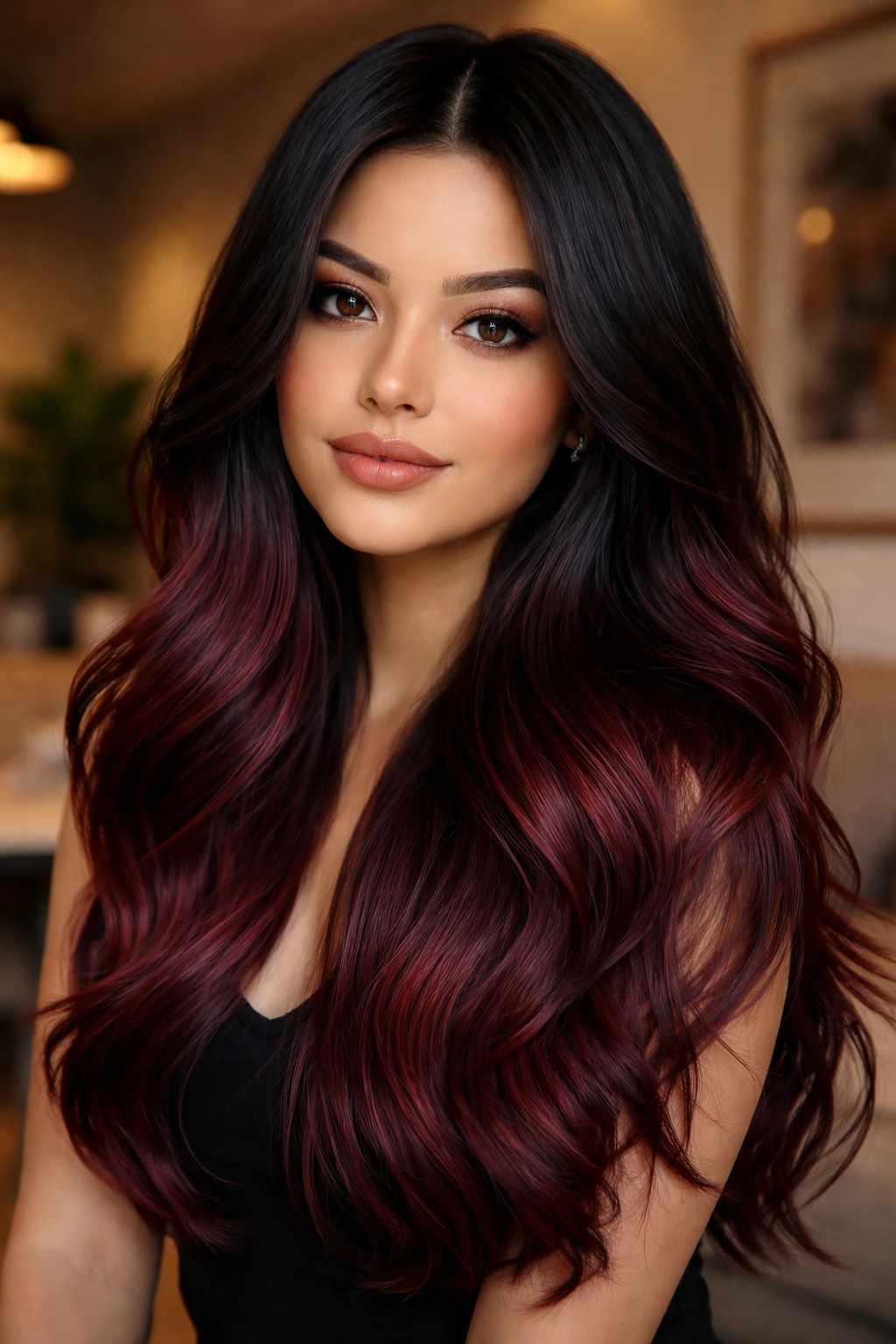
Burgundy is the classic fall color, but it works perfectly year-round. It is deep, rich, and wine-colored. When melted into black hair, it creates a seamless transition that feels very expensive. Burgundy is particularly good at adding life to flat, dark hair.
The Advantage of Burgundy
Burgundy has a way of making hair look incredibly shiny. It reflects light in a way that black sometimes doesn’t. For a round face, this shine is an asset—it adds a healthy “glow” to your overall appearance. Ask your colorist for a deep cherry-burgundy to get the most impact without it looking like you used box dye from the drugstore.
16. Sleek Black to Platinum Ends
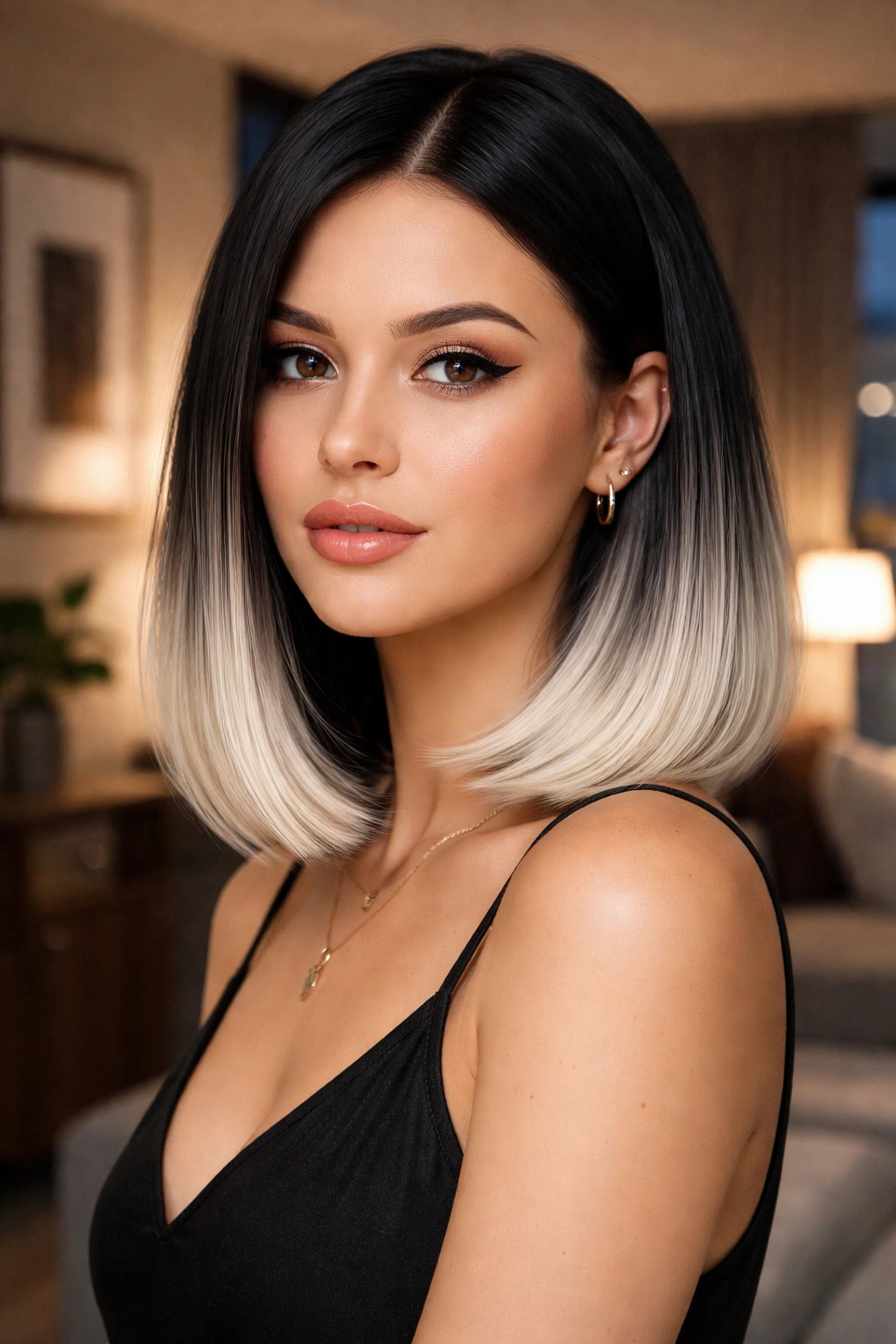
This is the high-fashion version of ombre. It is crisp, clean, and very deliberate. The contrast is extreme, which makes it a bold statement. If you have a sleek, blunt-cut bob or a long, straight style, this can look incredibly chic.
A Warning on This Style
Because platinum is so light, it is the most revealing color you can choose. If your hair is dry or damaged, platinum will show it instantly. Only go for this if you are willing to invest in regular deep-conditioning treatments and quality bonding products. It requires a lot of care, but the payoff is a look that is nothing short of striking.
17. Black to Smoky Teal
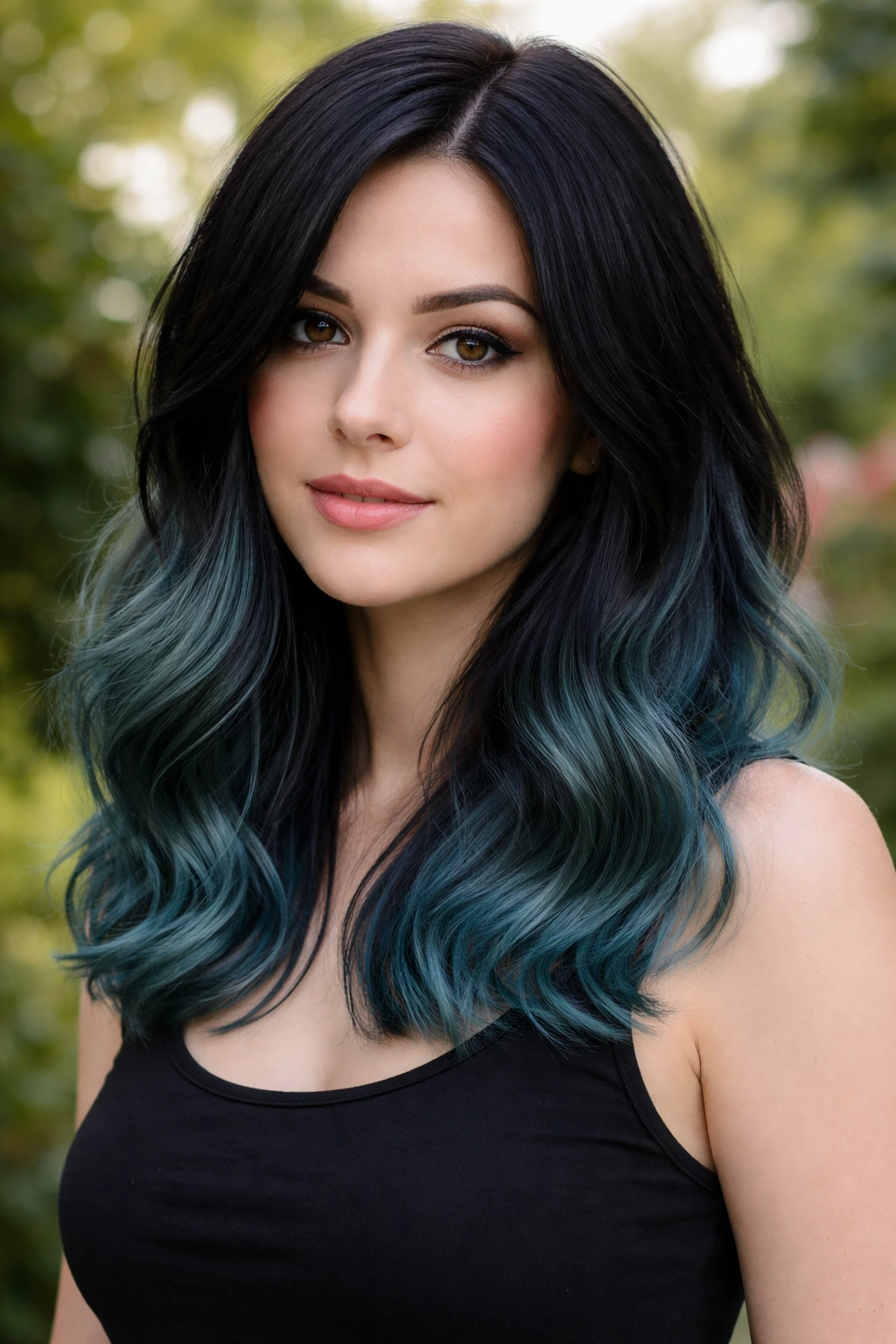
Teal is a complex color. It is blue-green, and it changes depending on the light. Smoky teal, specifically, has a muted quality that makes it feel slightly more wearable than a bright, punchy teal. It is an adventurous color that stays within the “cool” family, keeping it flattering for most skin tones.
How to Style It
Because smoky teal is quite dark, you don’t need a massive bleach job to get there. A light-brown base is often enough to hold the pigment. This is a great choice if you have had bad luck with bleaching your hair in the past and want to minimize damage while still getting a fun, colorful result.
18. Black to Cinnamon Swirl
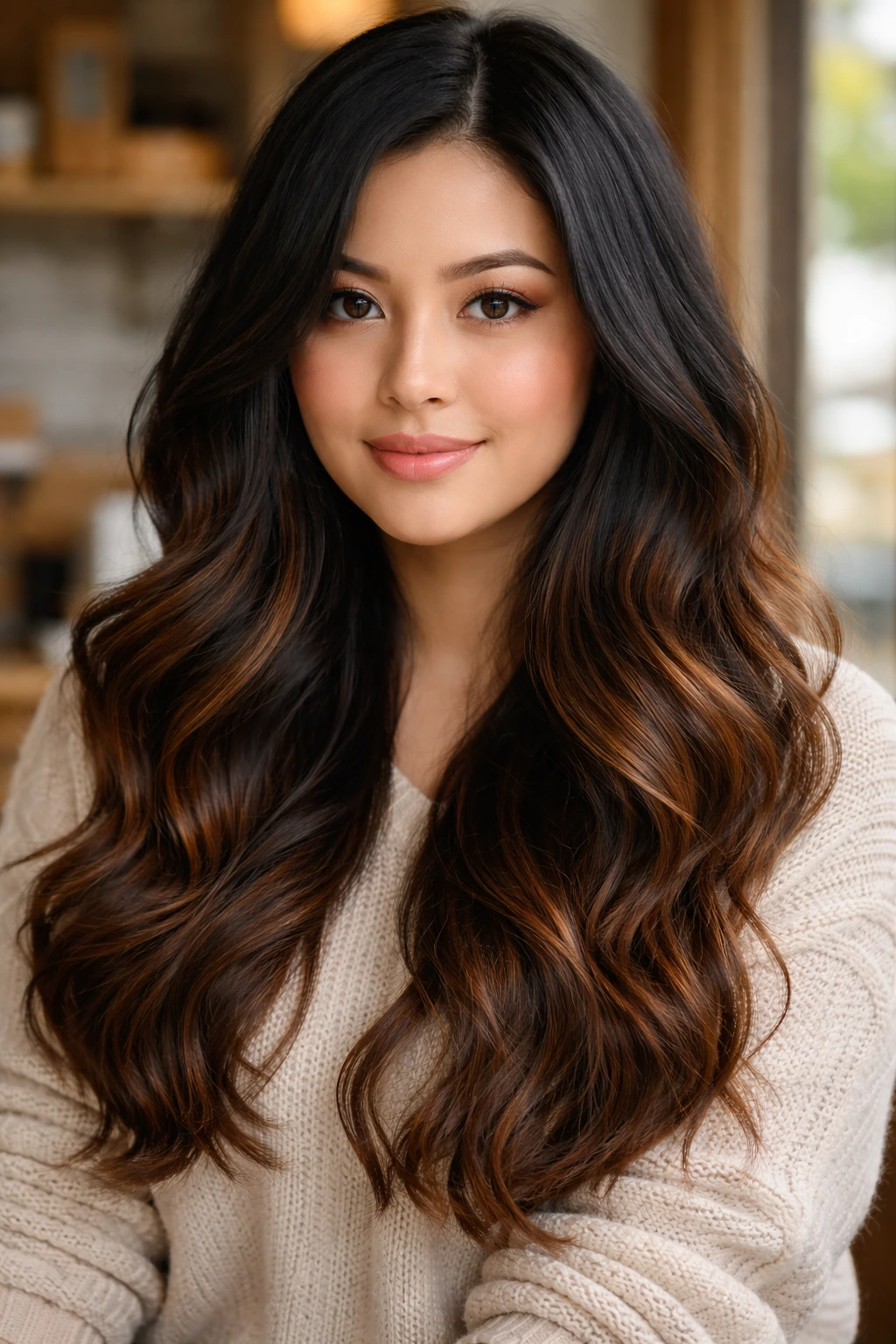
Cinnamon is a warm, spicy brown that sits right between chocolate and copper. It is incredibly cozy and looks wonderful on anyone with a warmer complexion. When ombre’d into black hair, it creates a subtle, delicious-looking blend that is perfect for any time of year.
The cinnamon swirl technique involves painting thin, light pieces of color throughout the ends, mimicking the look of a highlight without the commitment. This adds tons of texture and movement to your hair, which is fantastic for round faces that need to break up the “solid” look of dark, one-dimensional hair.
19. Black to Champagne Blonde
Champagne blonde is an elevated, expensive-looking shade. It is a mix of gold and silver, creating a neutral-yet-bright blonde that looks great on almost everyone. It is less brassy than honey but less harsh than platinum.
Why It’s a Top Tier Choice
Champagne is sophisticated. It is the color you choose when you want to look polished. For a round face, the brightness of champagne blonde helps to frame the face in a way that feels intentional and styled. Keep the roots dark and shadow-rooted for the best result.
20. Deep Black to Soft Peach
Peach is a wild card. It is unexpected, fun, and very trendy. When done as a soft ombre, it creates a sunset-like effect that feels very youthful. This is not a color that fades into a neutral brown; it is a color that commands attention.
Balancing the Peach
Because peach is very light, you need to ensure the transition from black is long and gradual. If the peach starts too high, it will clash with the roots and look messy. Aim for a long, slow melt that starts below the chin. This keeps the brightness away from your face and lets the peach serve as a fun accent rather than the main event.
21. Black to Turquoise Dip-Dye
This is technically a “dip-dye” ombre, where the color is concentrated at the ends rather than melted up toward the mid-lengths. It is a fun, playful look that allows you to experiment with bright color without putting chemicals near your scalp.
Why This Style Rocks
It is low-commitment. If you hate it, you can just cut off the ends. It is also perfect for round faces because it keeps the color strictly at the bottom. The eyes are drawn down, down, down—exactly what you want for a slimming effect. It is bold, it is fun, and it is incredibly easy to manage.
22. Black to Warm Mahogany
Mahogany is a reddish-brown that feels very natural. If you are looking for a red-toned ombre that doesn’t look like a cartoon character, mahogany is the answer. It is deep, it is rich, and it pairs beautifully with dark skin tones.
The key to mahogany is the shine. You want your hair to look like polished wood. Use a high-quality gloss treatment after your color service to lock in that depth. It adds a sophisticated, expensive finish that is perfect for any age.
23. Black to Icy Mint
Icy mint is a cool, pastel green that looks almost white. It is very high-contrast and very “cool girl.” It is not for everyone, but if you have a cool, pale complexion, it can look absolutely ethereal against black hair.
The Maintenance Factor
This is another high-maintenance color. Icy tones fade fast, and mint can turn into a muddy sage if you don’t keep it toned properly. Only go for this if you are a fan of high-maintenance beauty routines and have a colorist you trust implicitly. It is a stunning, unique look, but it demands your time and attention.
24. Black to Caramel Highlights Blend
Instead of a solid color block at the ends, consider a caramel highlights blend. This technique uses balayage (hand-painting) to create an ombre effect that is much more textured and natural than a traditional dip-dye.
This is the ultimate “I woke up like this” look. The highlights start higher up, framing your face, but are concentrated more heavily at the ends. This helps to break up the mass of the black hair, creating a lighter, airier look that is perfect for round faces. It adds volume, it adds shine, and it adds an effortless, lived-in feel that is hard to beat.
25. Black to Bold Magenta
Magenta is the more vibrant, pink-leaning cousin of burgundy. It is bright, unapologetic, and incredibly fun. If you want a bold color that feels feminine and strong, magenta is the way to go.
Tips for Success
- Use a color-depositing conditioner to keep the magenta vibrant.
- Avoid washing with hot water, as it will strip the color almost instantly.
- Embrace the fade—magenta fades into a lovely, soft pink that is often just as pretty as the original color.
Final Thoughts Choosing an ombre for a round face is really all about controlling where the eye lands. By keeping the deep black at your roots and guiding the color down into lighter or more vibrant shades at the tips, you are essentially drawing a vertical line that helps your face appear balanced and elongated. Remember that the “fade” is just as important as the color itself; a long, slow transition is almost always more flattering than a harsh, sudden shift.
Your hair is a tool you can use to express yourself and define your features. Don’t be afraid to try something bold, but ensure your colorist knows that your goal is verticality and framing. With the right technique, you can absolutely rock a dramatic ombre without compromising the shape you want. Take your time picking the shade that makes you feel most like yourself, and enjoy the transformation.
