



Thick hair is a blessing, right until you try to put it into a ponytail. If you have dense, heavy locks, you already know the specific struggle: the constant sliding, the inevitable headache that sets in after an hour, and the way a standard elastic just seems to give up on you before lunchtime. A messy ponytail isn’t just a stylistic choice for us; it’s a structural necessity. When you have this much volume, forcing it into a tight, perfect loop rarely lasts and usually ends up being uncomfortable.
Embracing the messy aesthetic means leaning into the natural weight and texture of your hair rather than trying to tame it into submission. It’s about creating support systems so that your hair stays put without needing enough hairspray to withstand a hurricane. Over the years, I’ve found that the best ponytails for thick hair rely on technique—how you section, how you anchor, and how you distribute weight—rather than just sheer force.
We’re going to look at eighteen different ways to style a messy ponytail, each tailored to handle high volume and keep your head comfortable throughout the day. These aren’t just looks for Instagram; they are functional styles that use gravity and tension to your advantage. Whether you’re heading to the office or just trying to get your hair off your neck, these techniques will change how you approach your daily routine.
1. The Voluminous High Pony
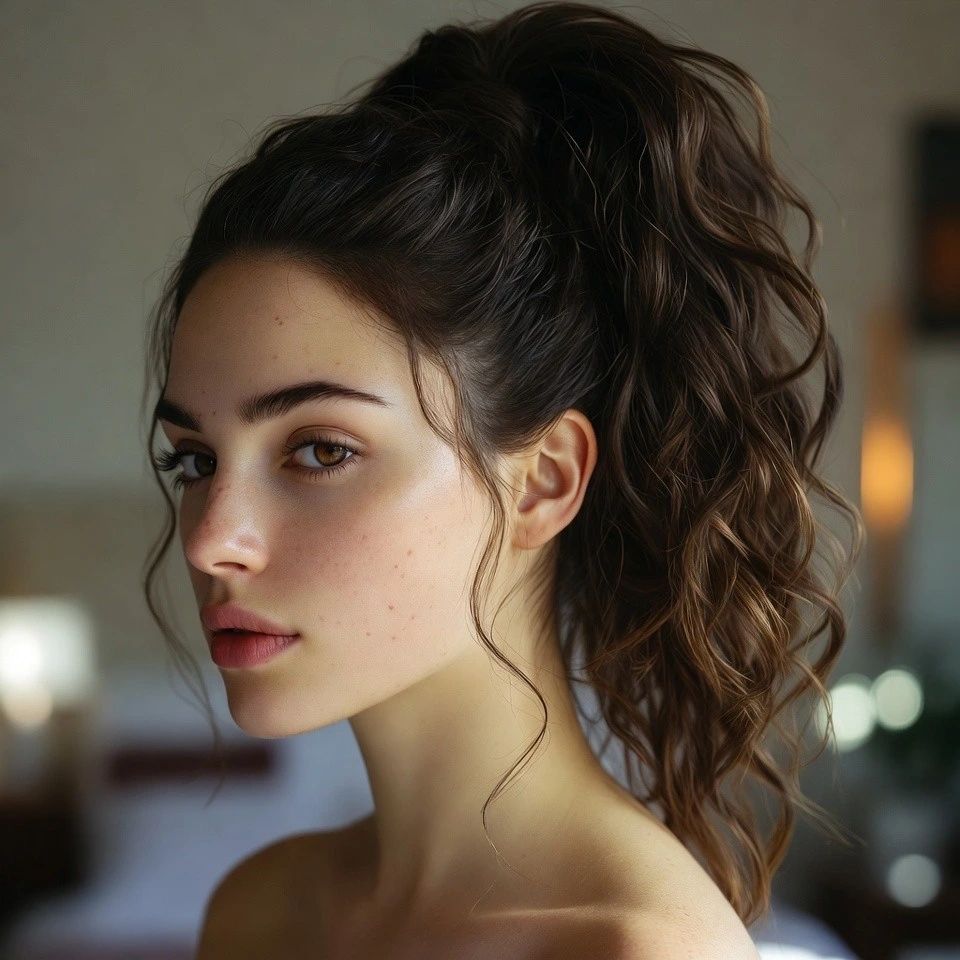
High ponytails on thick hair are notoriously difficult because they tend to sag under their own weight. The secret here isn’t the elastic; it’s how you position the base. You want to create a two-tiered foundation rather than one singular pull.
How to Build the Foundation
Start by pulling the top third of your hair up and securing it with a small elastic. Don’t worry about it being neat. Then, take the remaining two-thirds—the heavier bulk of your hair—and secure it into a second ponytail directly underneath the first. Once you have both, gently pull and fluff the hair so the two sections merge into one seamless, massive ponytail. The weight is now distributed across two anchor points, preventing that annoying sag.
Pro tip: Use a texture spray on your roots before you start. It provides the grip your hair needs to stay put without you having to crank the elastic so tight it causes pain.
2. The Low-Slung Textured Wrap
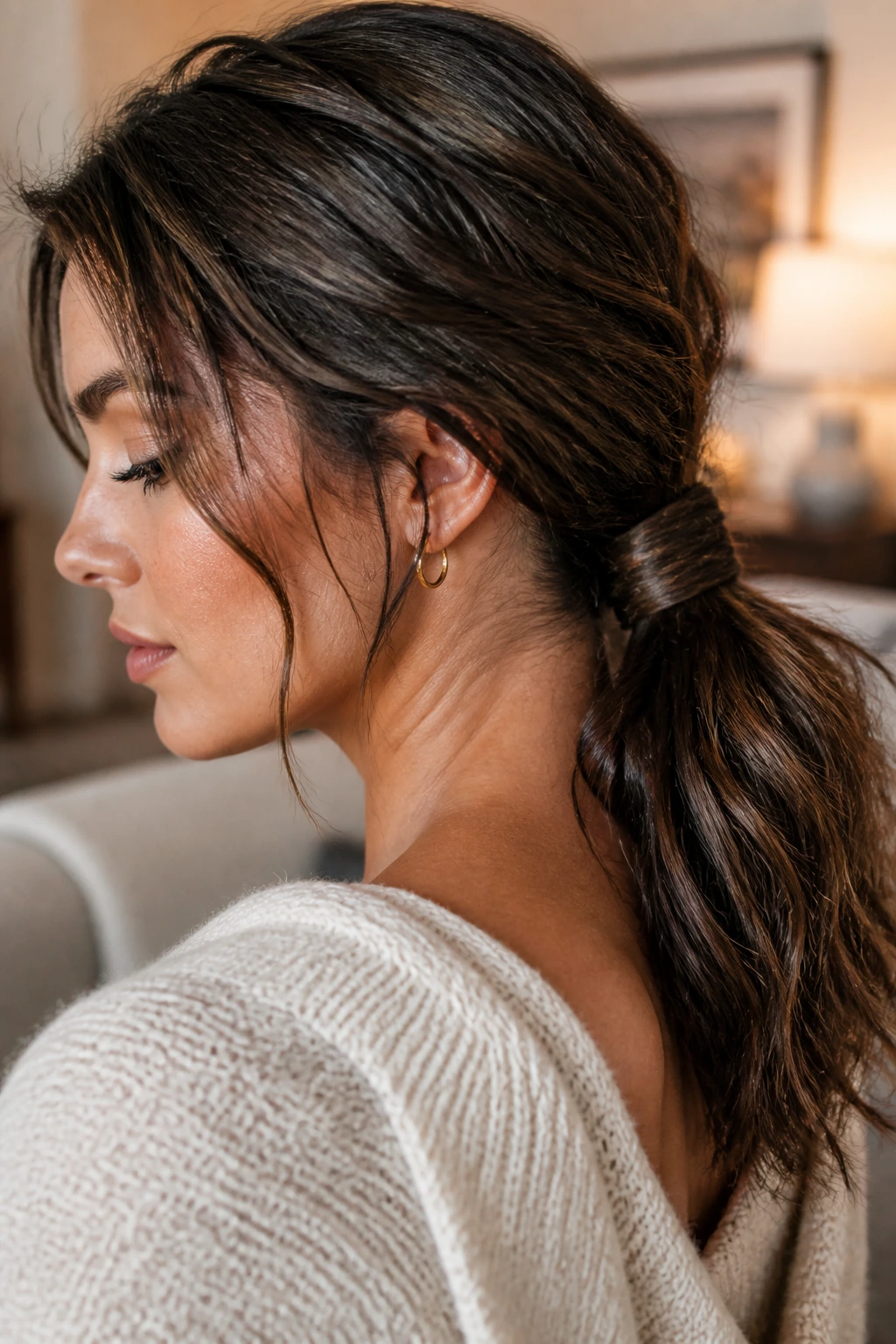
If you have thick hair, a low pony can feel like a heavy weight hanging off the back of your neck. To make this work, you have to prioritize texture. A perfectly straight, sleek ponytail just highlights how much hair you actually have, whereas a textured one looks deliberate and intentional.
Creating the Texture
Before you even reach for a hair tie, rough up your hair. Use a dry texturizing spray or even a bit of sea salt spray if your hair is naturally wavy. Once you gather your hair at the nape of your neck, secure it with a fabric-covered elastic—the thicker the better.
The Wrap Technique
Take a small section of hair from the underside of the ponytail and wrap it tightly around the base to hide the elastic. Secure this end with a bobby pin pushed upward into the ponytail base, not downward. This keeps the pin hidden and provides an extra layer of structural support for that heavy section of hair.
3. The Loose Braided Ponytail
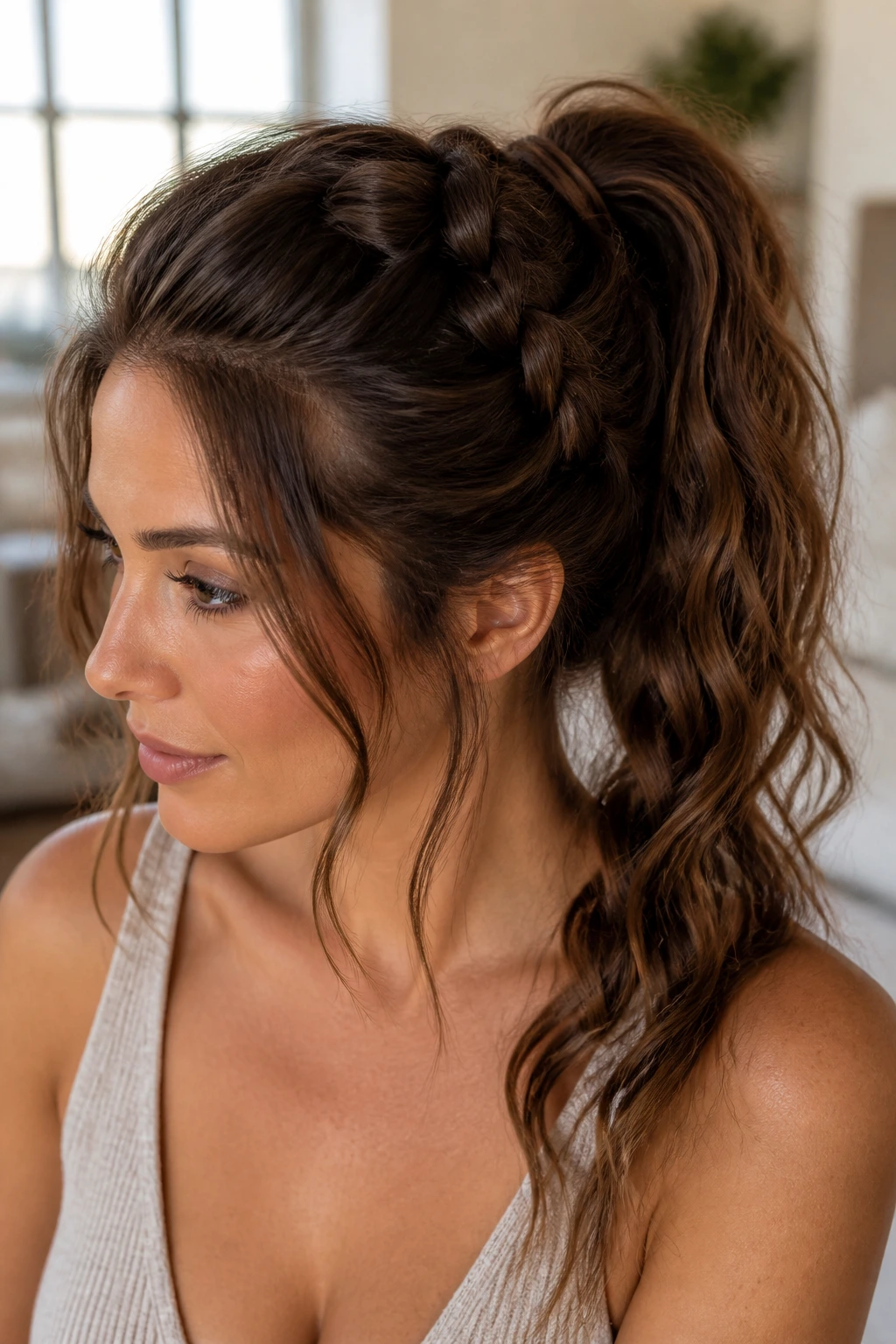
Braids are a lifesaver for thick hair because they consolidate volume into a controlled shape. The key to keeping it “messy” is to braid it loosely and then pull it apart once you’ve secured the ends.
Why It Works for Heavy Hair
When your hair is braided, the strands are woven through each other, which reduces the total circumference of the ponytail. It effectively “shrinks” the mass of your hair while still showing off your volume. After you secure the end, use your fingers to tug at the loops of the braid, making it look undone and lived-in. This movement adds softness to the face and prevents the hair from looking like a tight, severe rope.
Don’t forget: If your hair is prone to frizz, apply a tiny amount of hair oil to your palms before pulling at the braid. It keeps the flyaways tamed while you create that intentional messiness.
4. The Half-Up Messy Knot
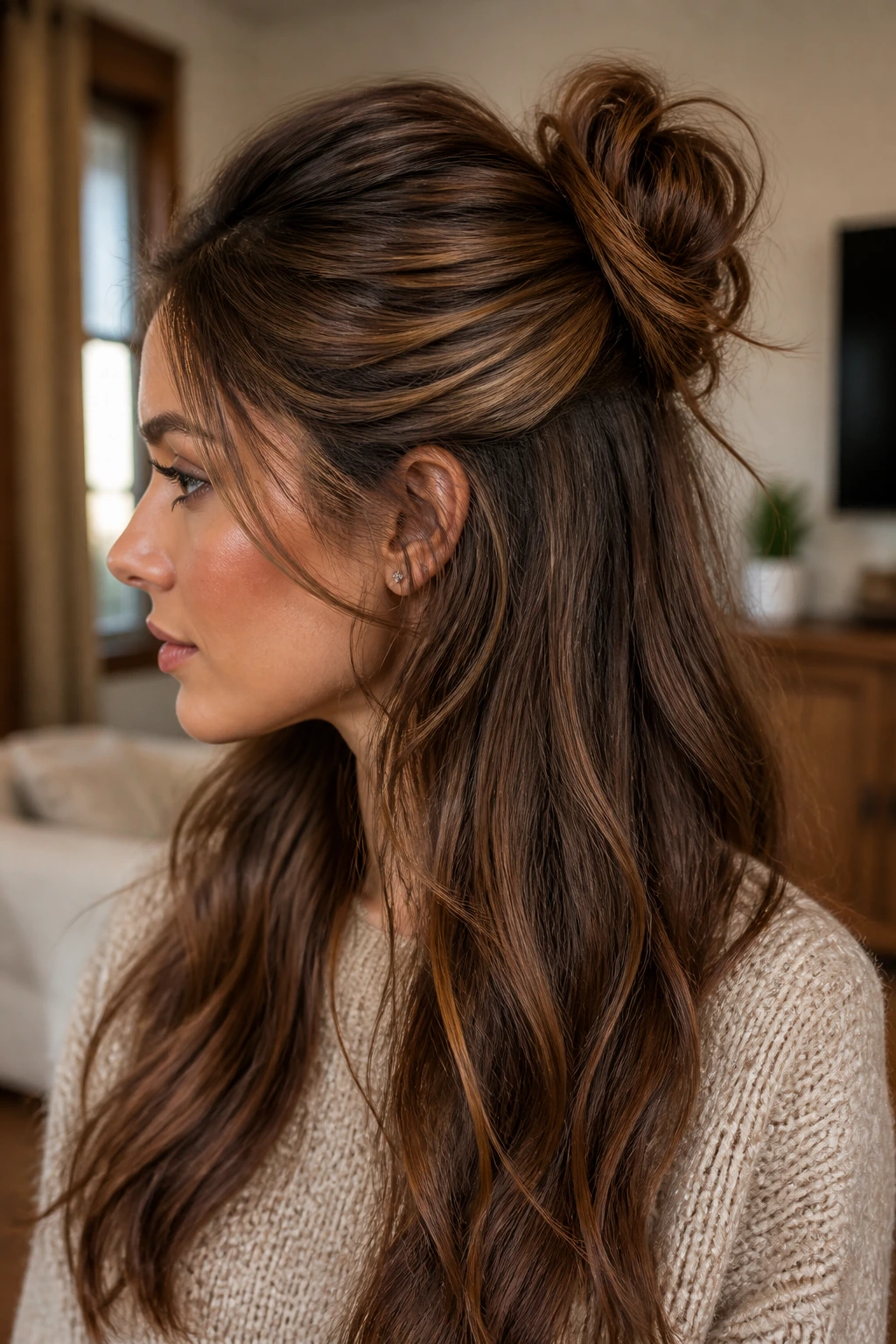
This is the ultimate relief style. When your hair is too thick and heavy to keep up all day, a half-up style lets you showcase your length while getting the weight off your temples and neck.
The Technique
Section off the top half of your hair, from your temples back to the crown. Twist this section and wrap it into a loose, messy bun or knot at the back of your head. Secure it with a larger clip or a sturdy elastic. Because you aren’t pulling back the entire density of your head of hair, you avoid that pulling sensation at the hairline that causes tension headaches. Let the bottom half of your hair fall naturally; the contrast between the knotted top and the loose bottom creates a balanced, boho look that feels very effortless.
5. The Twisted Side Pony
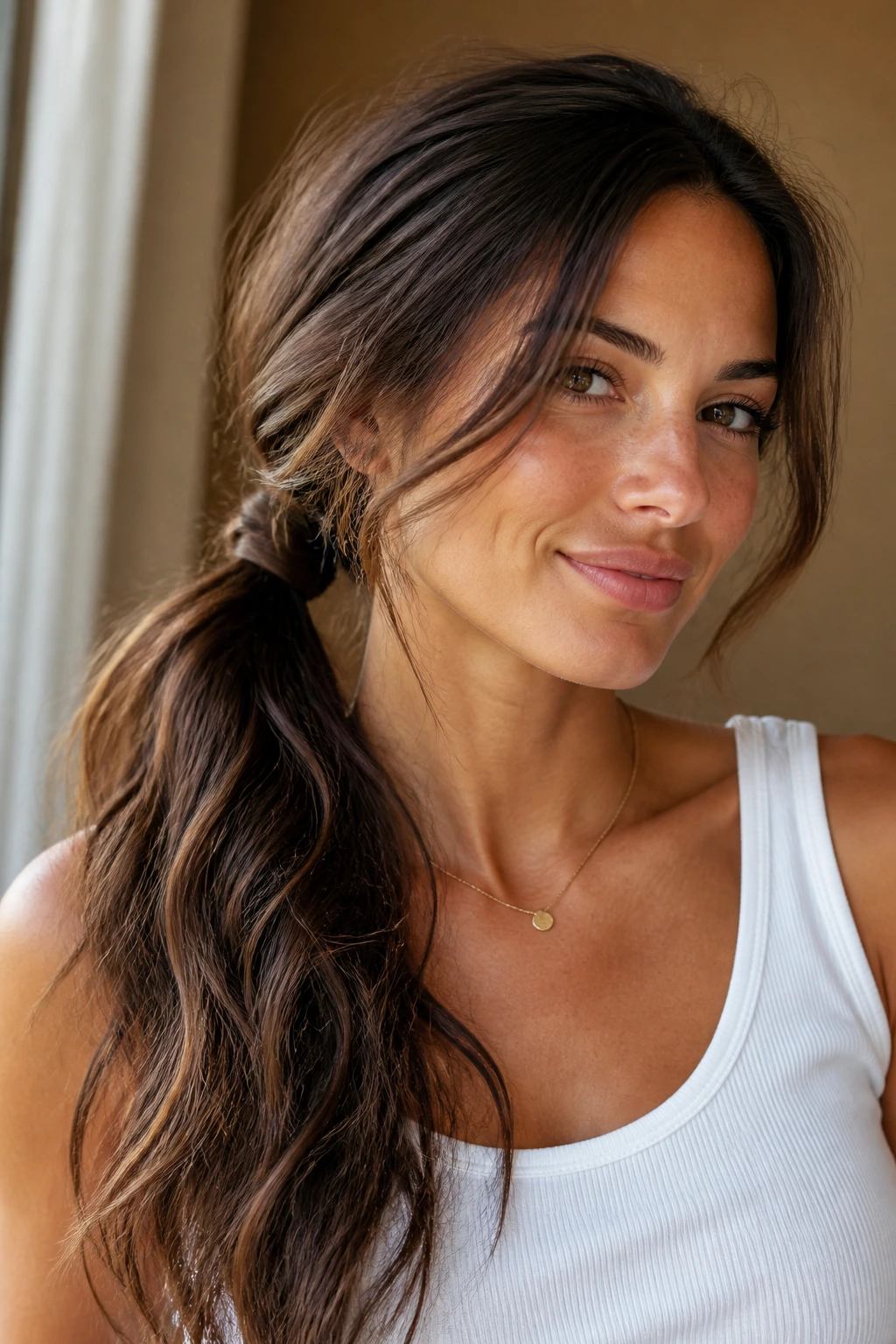
Side ponytails can look a bit juvenile if you aren’t careful, but adding a twist at the base makes it look sophisticated and purposeful. This style works exceptionally well for thick hair because the twist acts as a natural anchor.
Step-by-Step
Gather your hair to one side, but before you secure it, take a two-inch section from the front and twist it back toward the base of your ponytail. Pin this twist just above where you intend to place your elastic. Repeat this on the other side. Now, gather the rest of your hair and the ends of those twists into your elastic. This creates a soft, layered effect around the face and makes the ponytail itself feel much more secure against your head.
6. The Double-Elastic Secure Pony
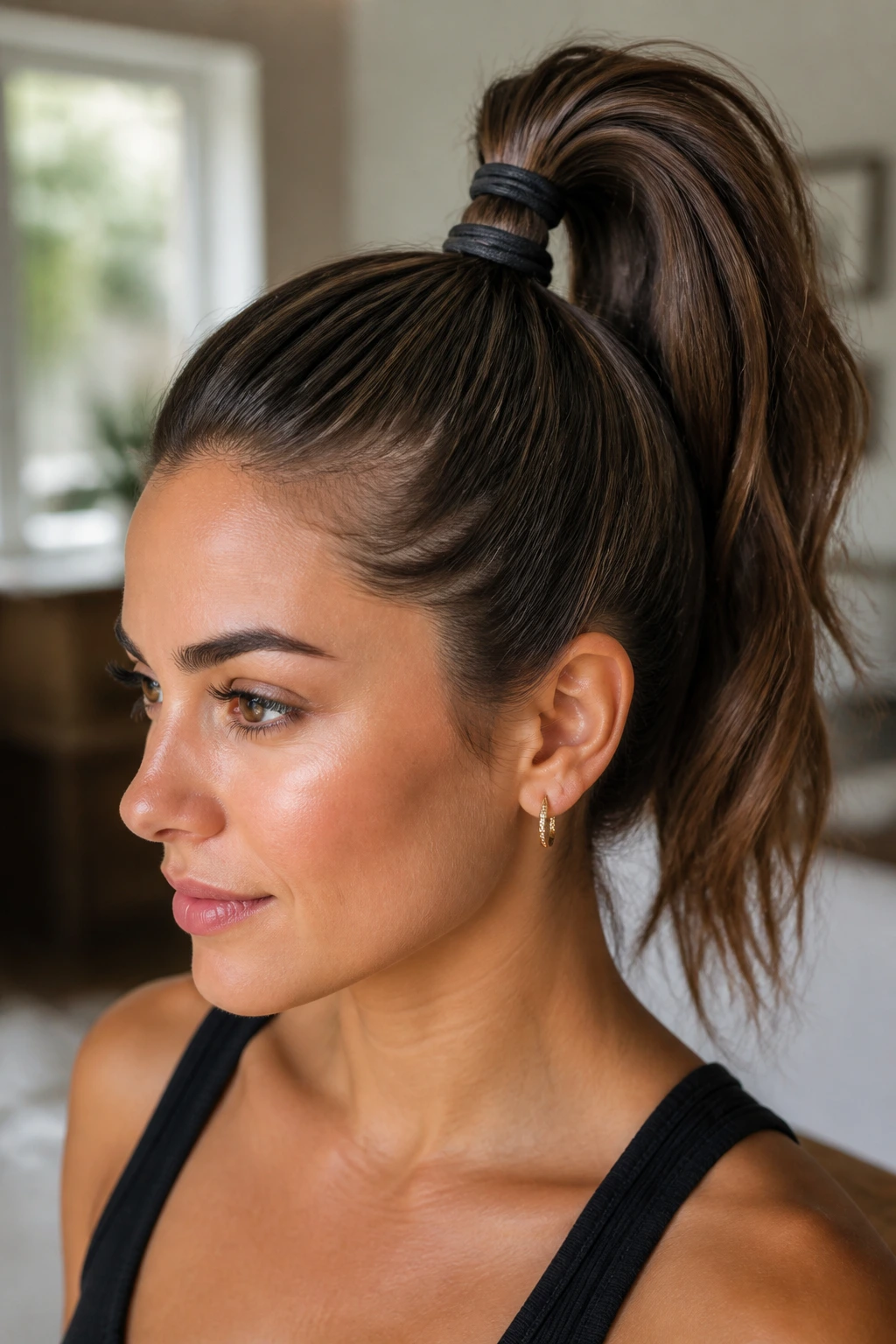
If you feel like your ponytail is always “drooping” by noon, you need this technique. It’s not about how tight the elastic is; it’s about dividing the weight.
The Anatomy of the Style
Start by gathering your hair into a ponytail about two inches higher than you actually want it to sit. Secure it with an elastic. Now, take a second elastic and place it about an inch down the length of the ponytail itself. Take the hair between the two elastics and split it in half, then flip the end of your ponytail up and through that gap. Pull the end tight. This action lifts the base of your ponytail and creates a natural “pop” of volume at the top. It’s a trick used by stylists for years to get lift without backcombing.
7. The Bubble Pony with Texture
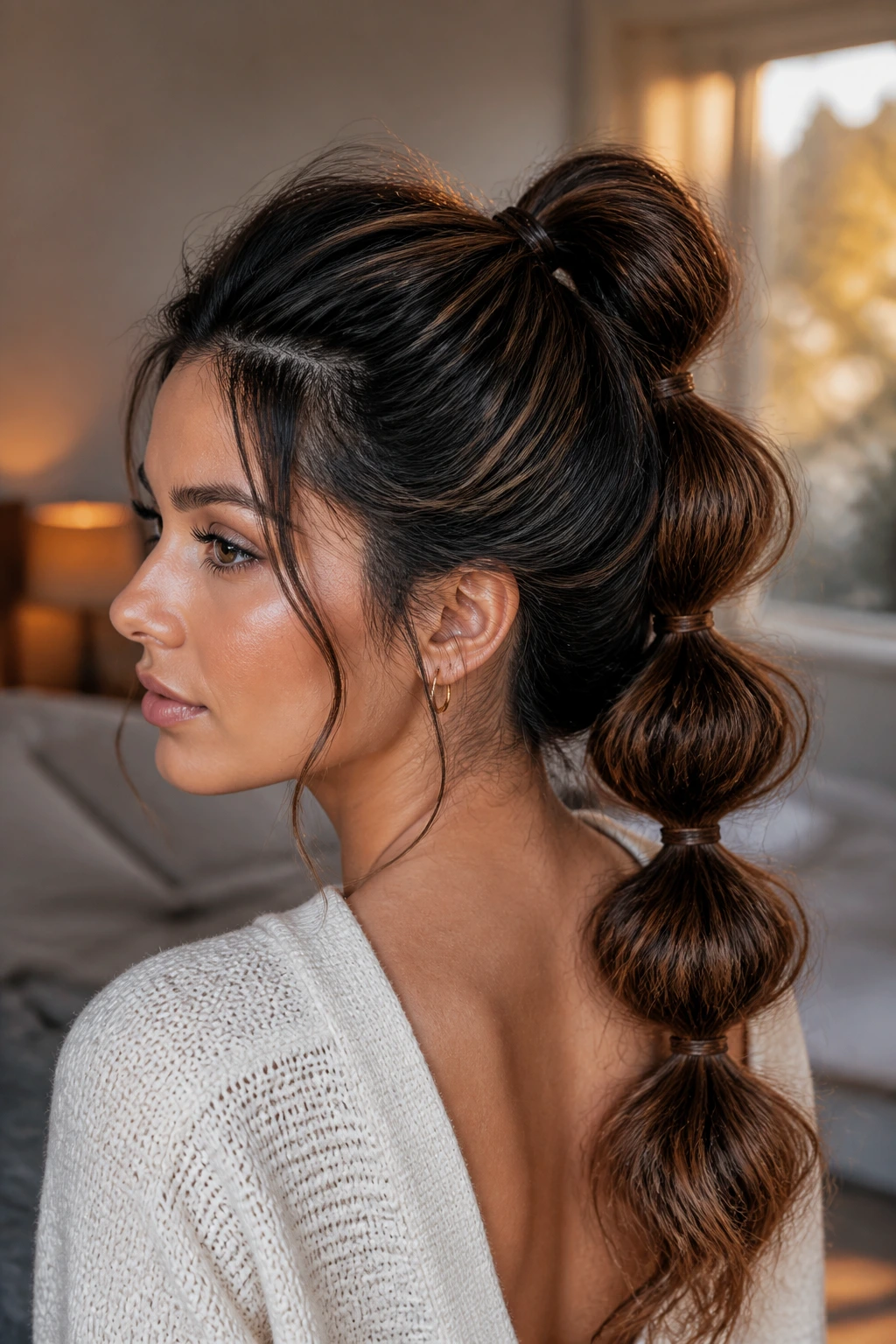
Bubble ponytails have a reputation for looking a bit perfect or stiff, but with thick hair, you want the opposite. The goal is “undone” bubbles that feel soft and bohemian.
How to Get the Look
Secure your hair in a standard high or mid-height ponytail. Now, place another elastic about two to three inches down the length. Gently pull at the hair between the elastics to puff it out—the thicker your hair, the bigger and messier these bubbles will look. Repeat this all the way down. The secret for thick hair is to keep the sections between the elastics slightly shorter. If the sections are too long, the weight of your heavy hair will cause the “bubbles” to sag into sad, flat ovals instead of rounded, voluminous shapes.
8. The Messy Scrunchie Style
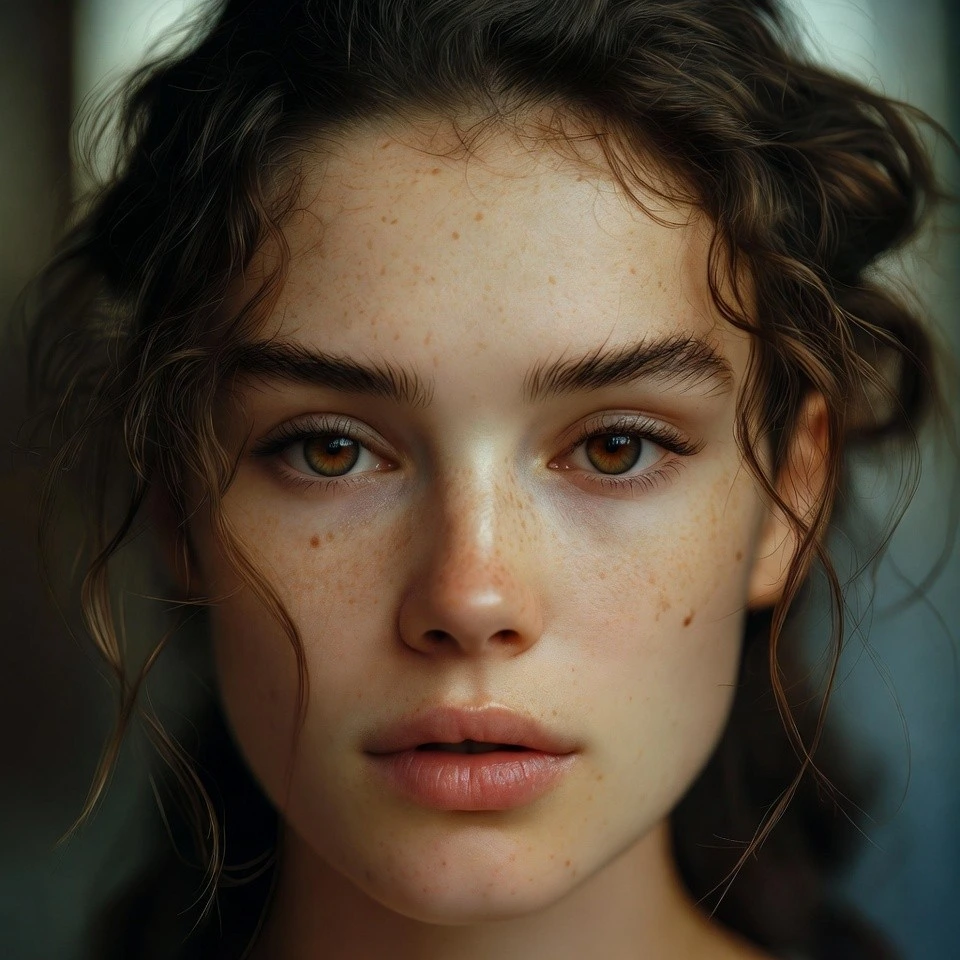
Sometimes, the best solution for thick hair is to stop fighting the mechanics and just use a larger accessory. Fabric scrunchies have made a comeback, and they are genuinely excellent for thick hair because they provide more surface area.
Why Scrunchies Beat Thin Elastics
A thin plastic elastic has to be wrapped three or four times to hold thick hair, which puts immense stress on that single point. A scrunchie allows you to loop your hair twice comfortably while distributing the tension across the width of the fabric. To keep it messy, gather your hair into a loose loop, put the scrunchie on, and then tug at random strands around the base. The fabric adds a bit of visual bulk that complements the density of your hair, making the ponytail look like it belongs there.
9. The Claw Clip Hybrid
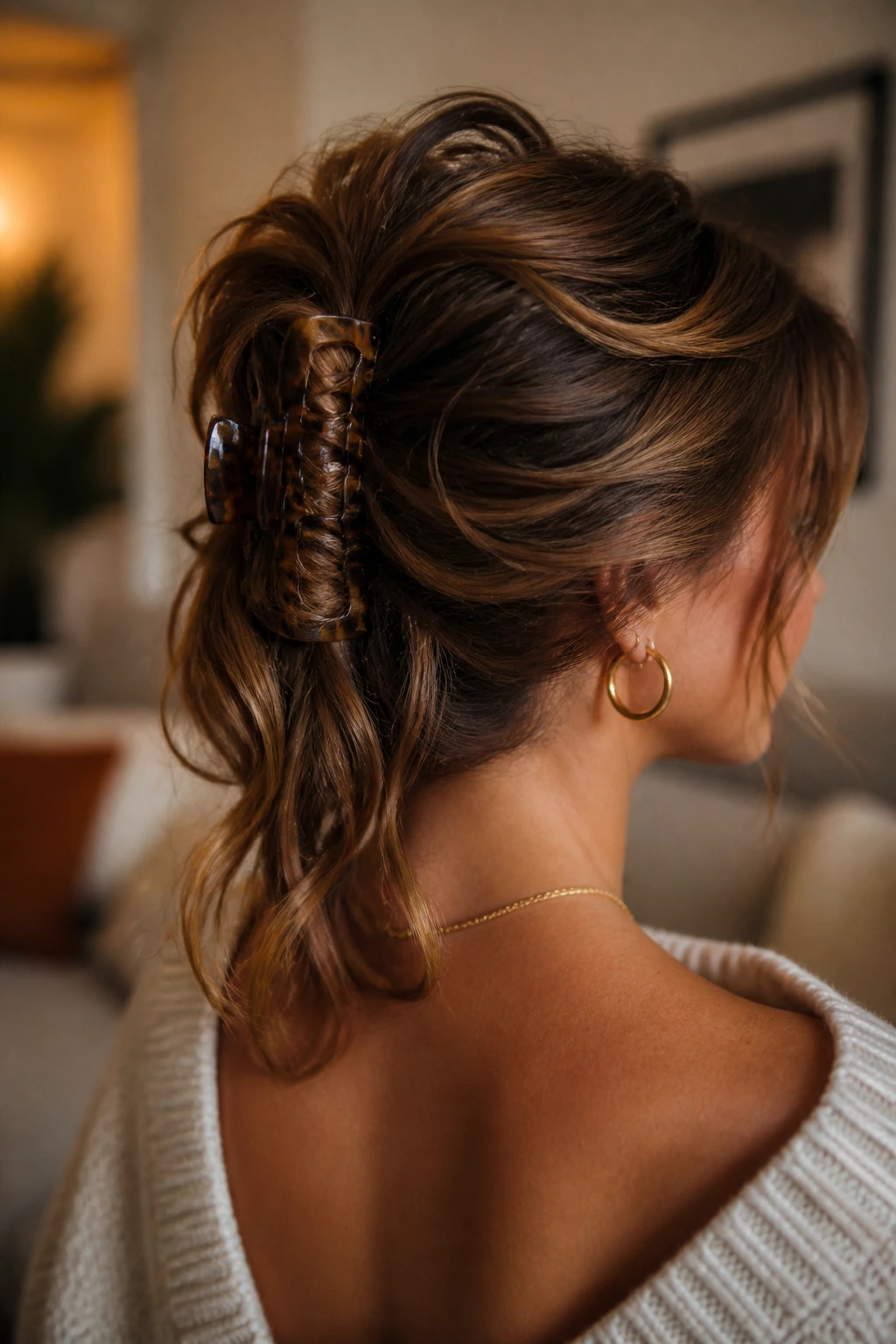
If you struggle with the “ponytail headache,” you need to stop using elastics entirely. The claw clip is the answer. It doesn’t constrict your hair; it grips it.
The Hybrid Technique
Gather your hair as if you are going to put it into a ponytail. Instead of using a hair tie, hold the hair at the base with one hand. Twist the entire length of the ponytail upward, lay it against the back of your head, and then secure it with a large claw clip. The bottom of the ponytail will fall over the top of the clip, creating a messy, waterfall effect. It’s secure, it doesn’t pull on your roots, and it handles the density of thick hair better than almost anything else.
10. The Wrapped Rope Braid Pony
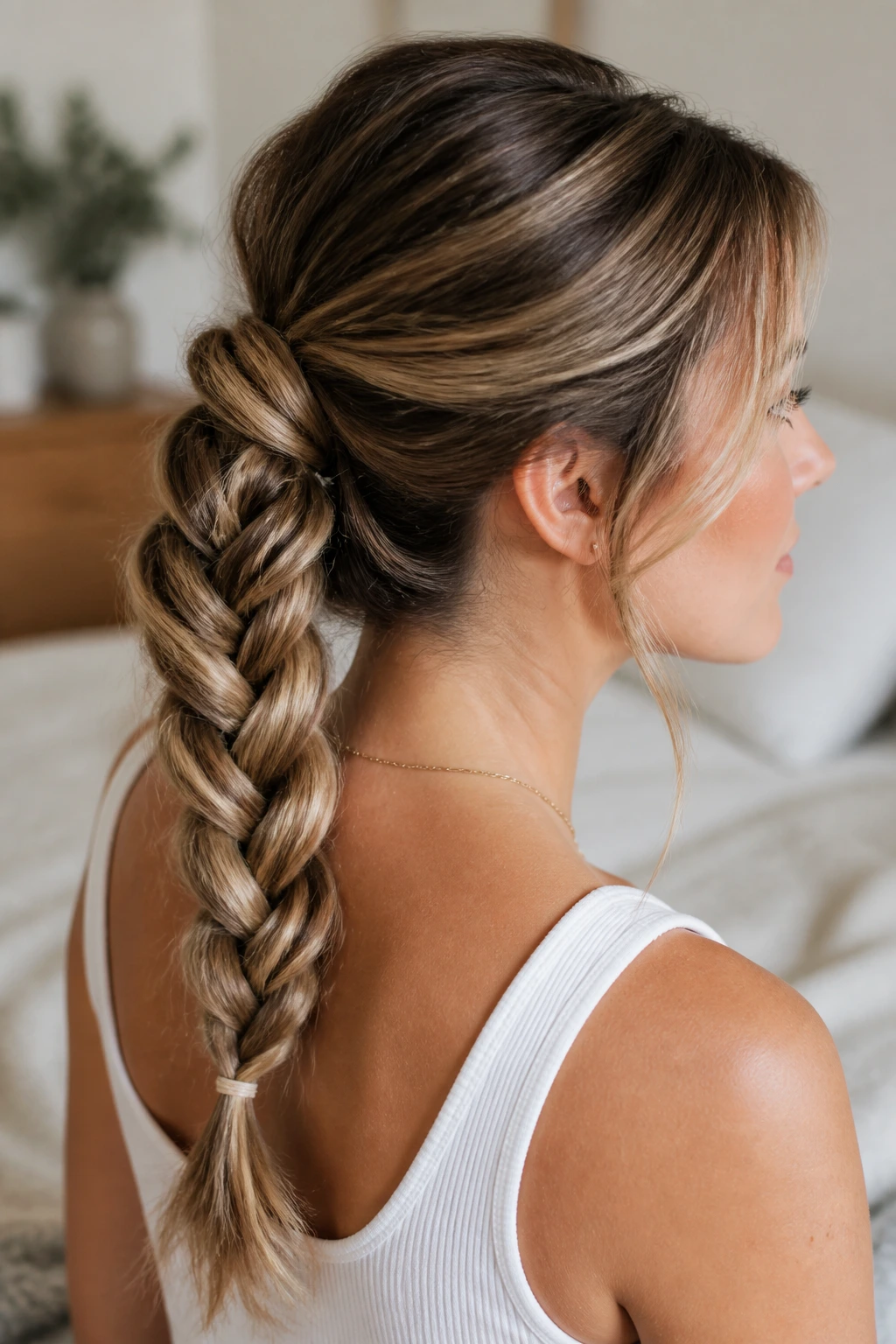
This is a fantastic way to keep your hair out of your face while looking like you spent more than thirty seconds on it. It’s essentially two twists that you combine into one, which is much easier to manage than a traditional three-strand braid.
Mastering the Rope
Split your ponytail into two equal sections. Twist each section individually to the right. Then, cross the two sections over each other to the left. Continue this all the way down and secure with a clear, snag-free elastic. Once it’s secured, go back and pull at the twists to loosen them. Because you are twisting, you naturally accommodate the volume of your hair, and the tension is distributed evenly throughout the entire length, not just at the base.
11. The Soft Face-Framing Pony
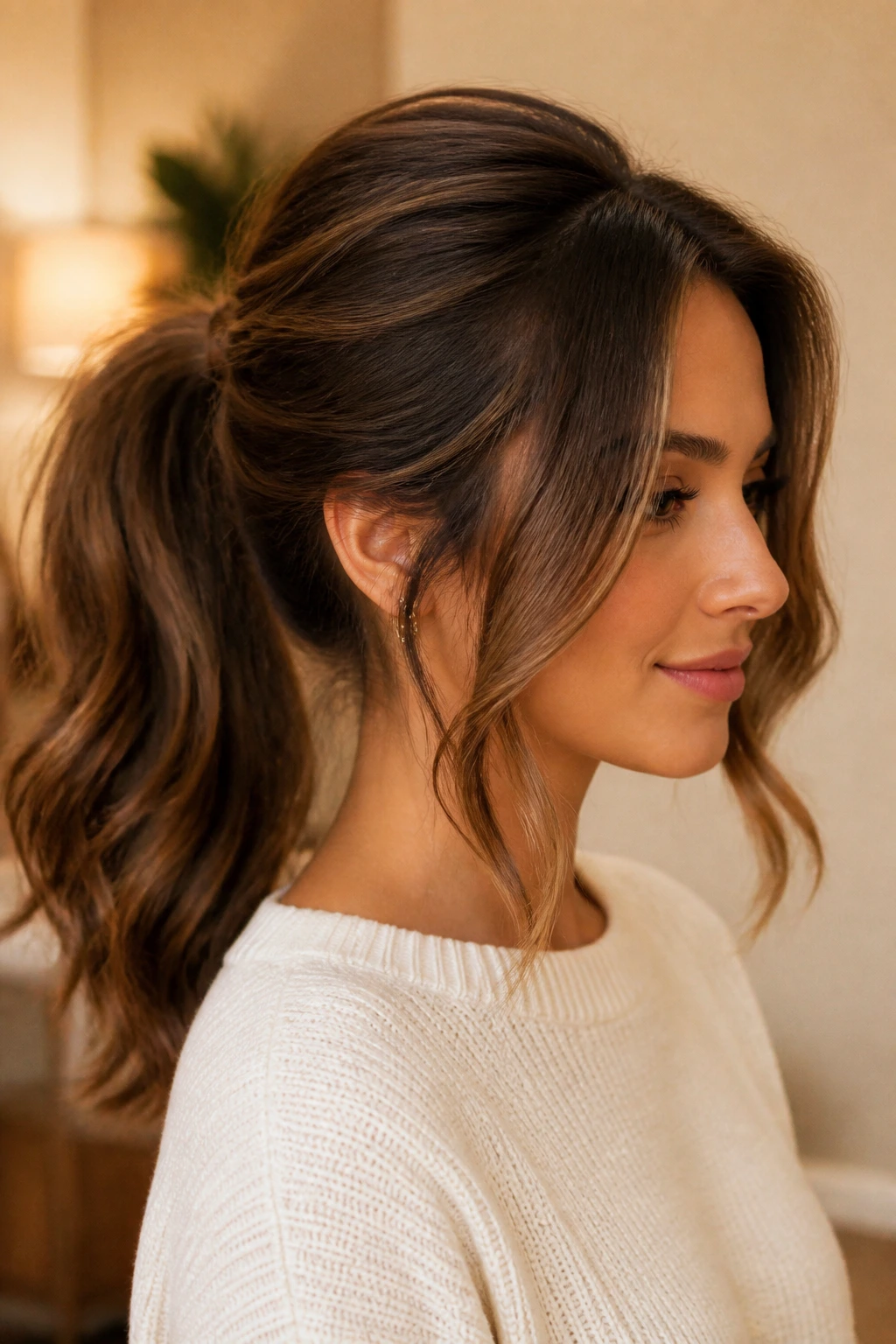
The main issue people with thick hair face when pulling it back is the “slicked-back” look, which can feel harsh or reveal too much of the scalp. The solution is leaving out deliberate pieces around the face.
Framing Technique
Before you gather your hair, section off a one-inch piece on either side of your part. Leave these out. Gather the rest of your hair into a loose, messy ponytail. Once secured, go back and lightly curl those front pieces away from your face with a large-barrel iron. This softens your facial features and breaks up the monotony of having all that thick hair pulled straight back. It makes the ponytail look intentional, not just a way to hide unwashed hair.
12. The Teased Crown Pony
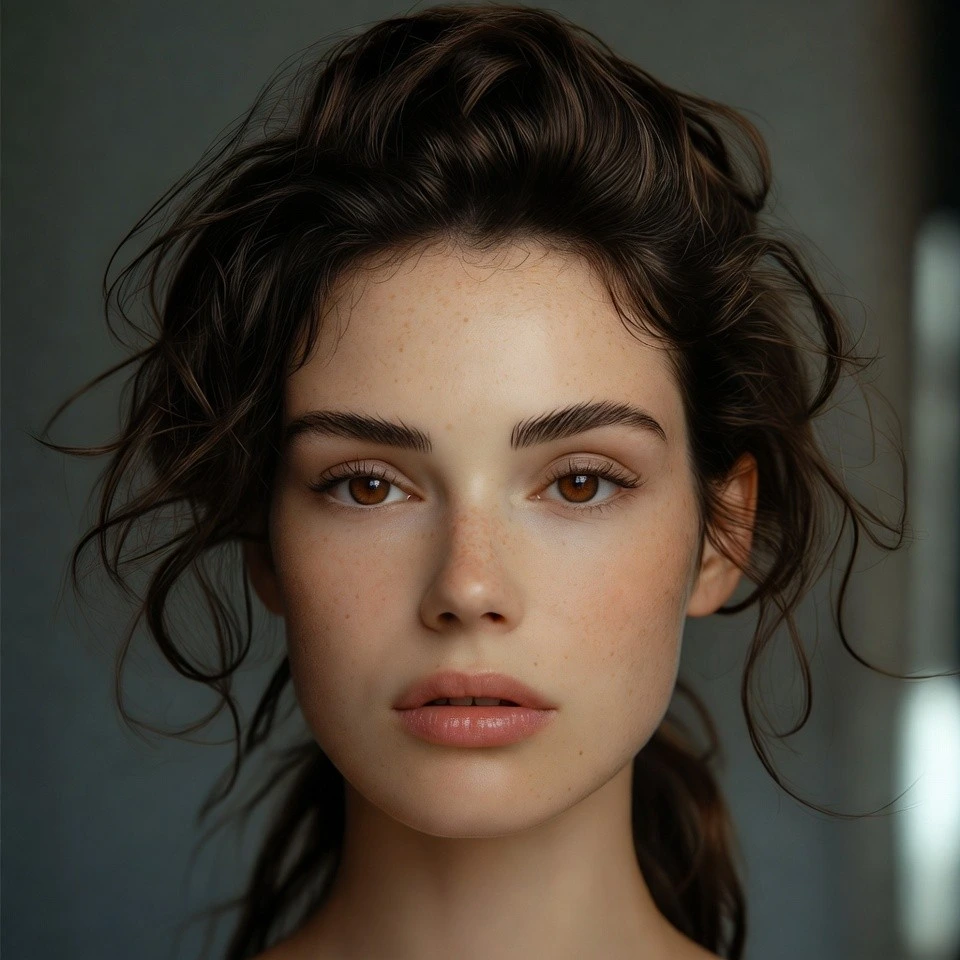
If you find that your ponytail sits too flat against your head, you need to address the crown. Thick hair is heavy, and gravity will always win if you don’t build structure at the roots.
Creating Lift
Take the hair at your crown—the section from your hairline to the back of your head—and gently tease the underside. Just a few passes with a comb will create the cushion you need. Smooth the top layer over the teased section so it looks neat, then gather everything into your ponytail. This creates a soft, rounded silhouette that prevents your hair from looking like a heavy, singular block. The “messiness” comes from the slight bump of volume at the top, which balances out the weight of the pony itself.
13. The Undone Side Braid-Pony
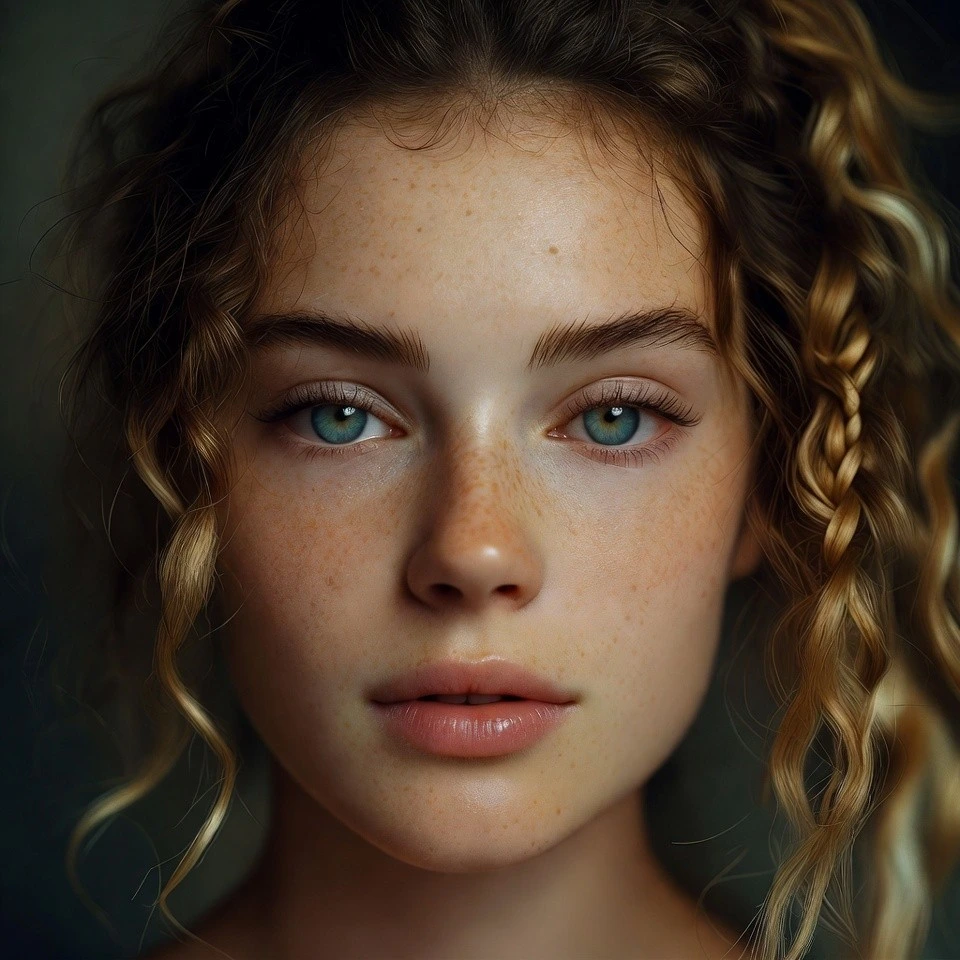
This style is perfect for days when your hair has a bit of second-day grit, which actually helps with hold. It’s a combination of a side braid that transitions into a messy ponytail.
The Flow
Start a loose French braid at your hairline, but only braid it to the nape of your neck. Instead of continuing the braid, gather the remaining hair and the end of the braid into a low ponytail. Because you’ve already braided a portion of the hair, you’ve removed a lot of the volume at the top, which makes the ponytail feel significantly lighter. This is a very secure style because the braid acts as a harness, holding the hair in place even if you are moving around.
14. The Scarf-Integrated Pony
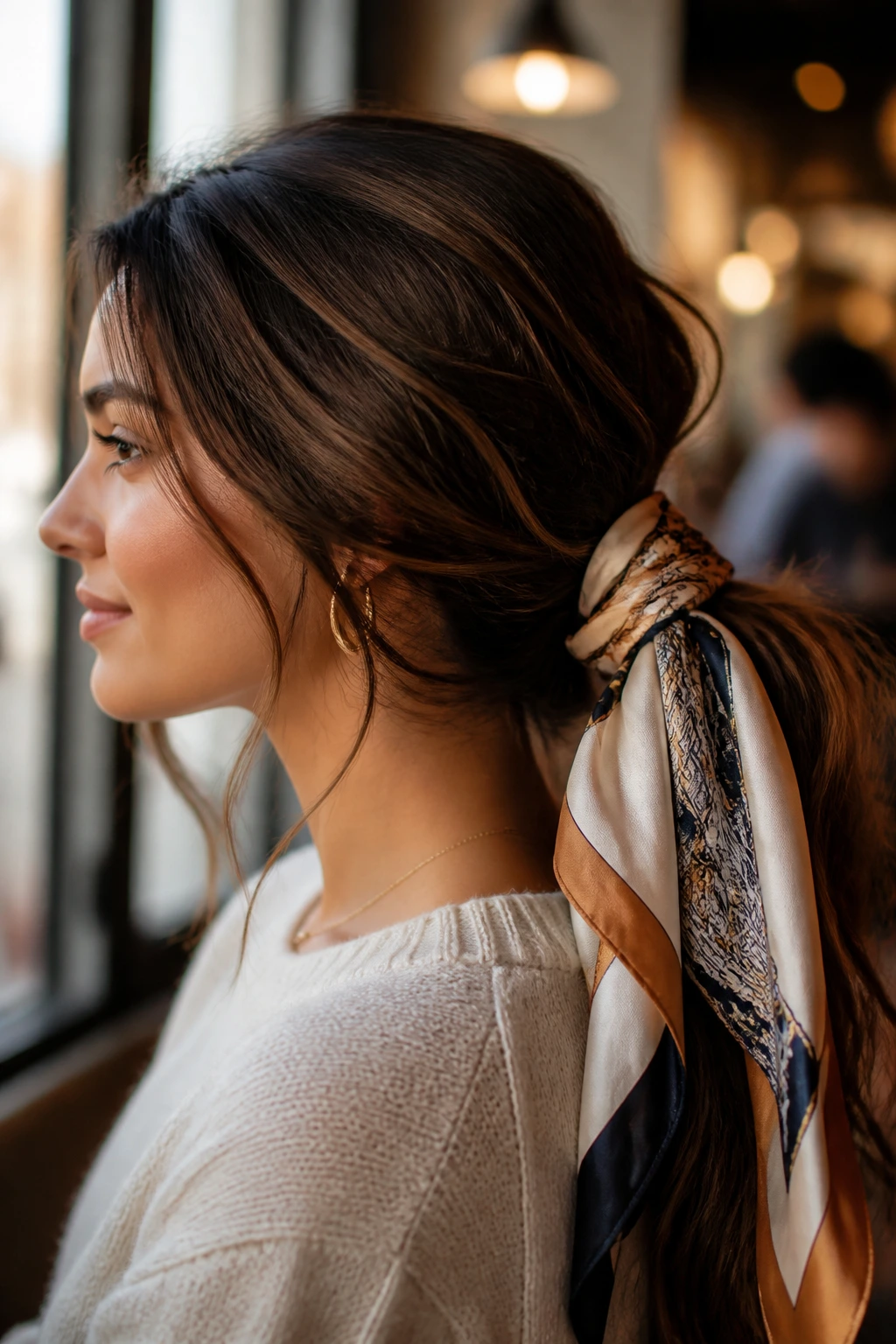
Using a silk or cotton scarf in your hair is a genius way to add volume where you might be lacking it and hide the mechanics of your ponytail.
How to Style It
Put your hair into a low, loose ponytail first. Take a lightweight scarf and tie it around the base of the ponytail, letting the ends hang down with the rest of your hair. You can even braid the ends of the scarf into the hair itself. The scarf adds visual interest, distracts from the density of the hair, and provides a gentle, non-damaging hold that doesn’t put stress on your strands. It’s the ultimate “messy chic” look for when you want to appear put-together with almost zero effort.
15. The Flipped Messy Pony
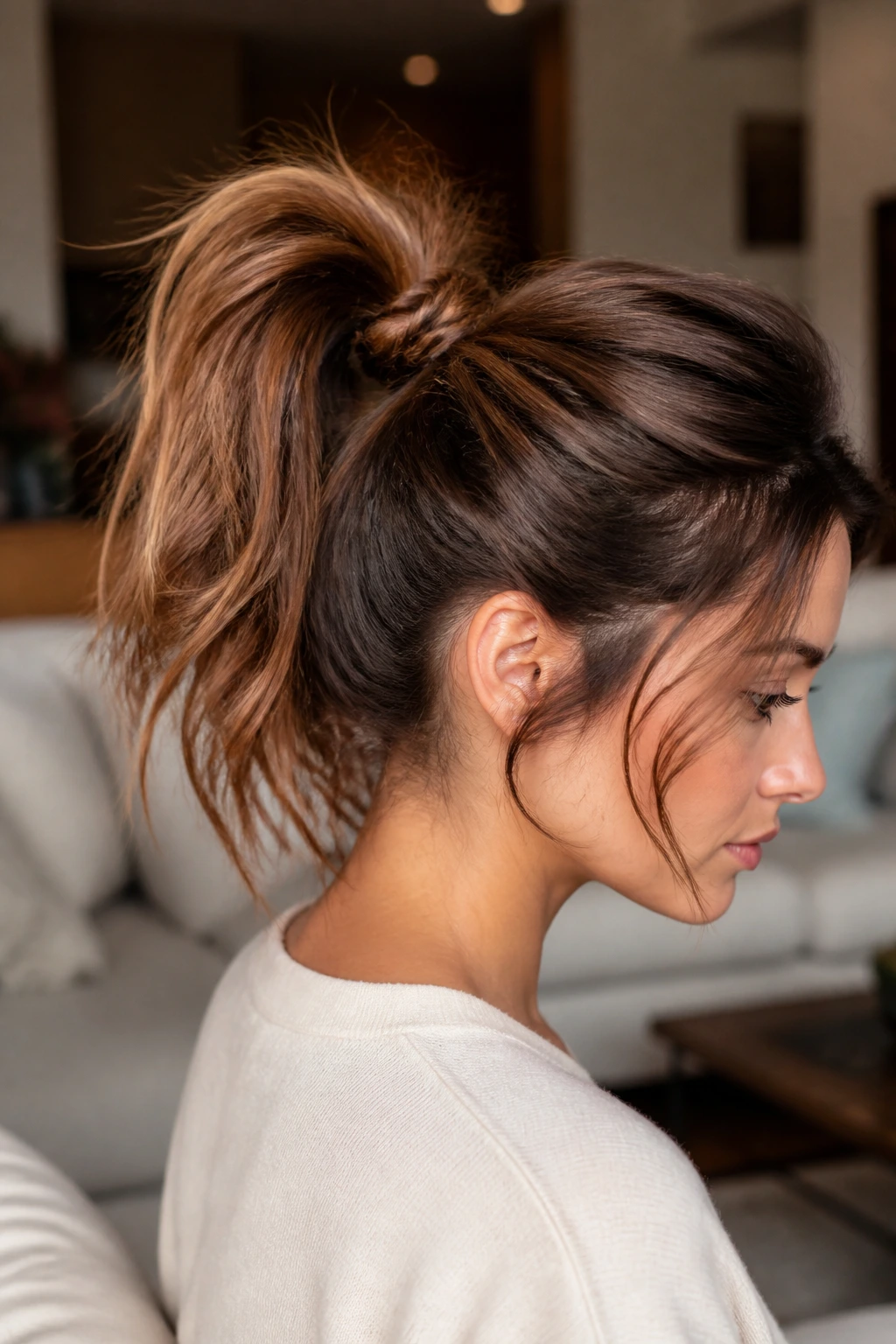
This is the “topsy-tail” technique, but refined for thick hair. It’s a great way to hide a basic elastic and get a little extra lift at the roots.
The Simple Process
Gather your hair into a mid-height ponytail and secure it. Create a small gap right above the elastic, between your scalp and the hair tie. Take the tail of your ponytail and tuck it up through that hole. Pull it all the way through. This twist at the base naturally hides the elastic and cinches the hair, which makes the ponytail look smaller and more controlled without losing the volume in the length. It’s a two-second hack that makes a massive difference in how the base of your pony looks.
16. The Sleek-to-Messy Transition
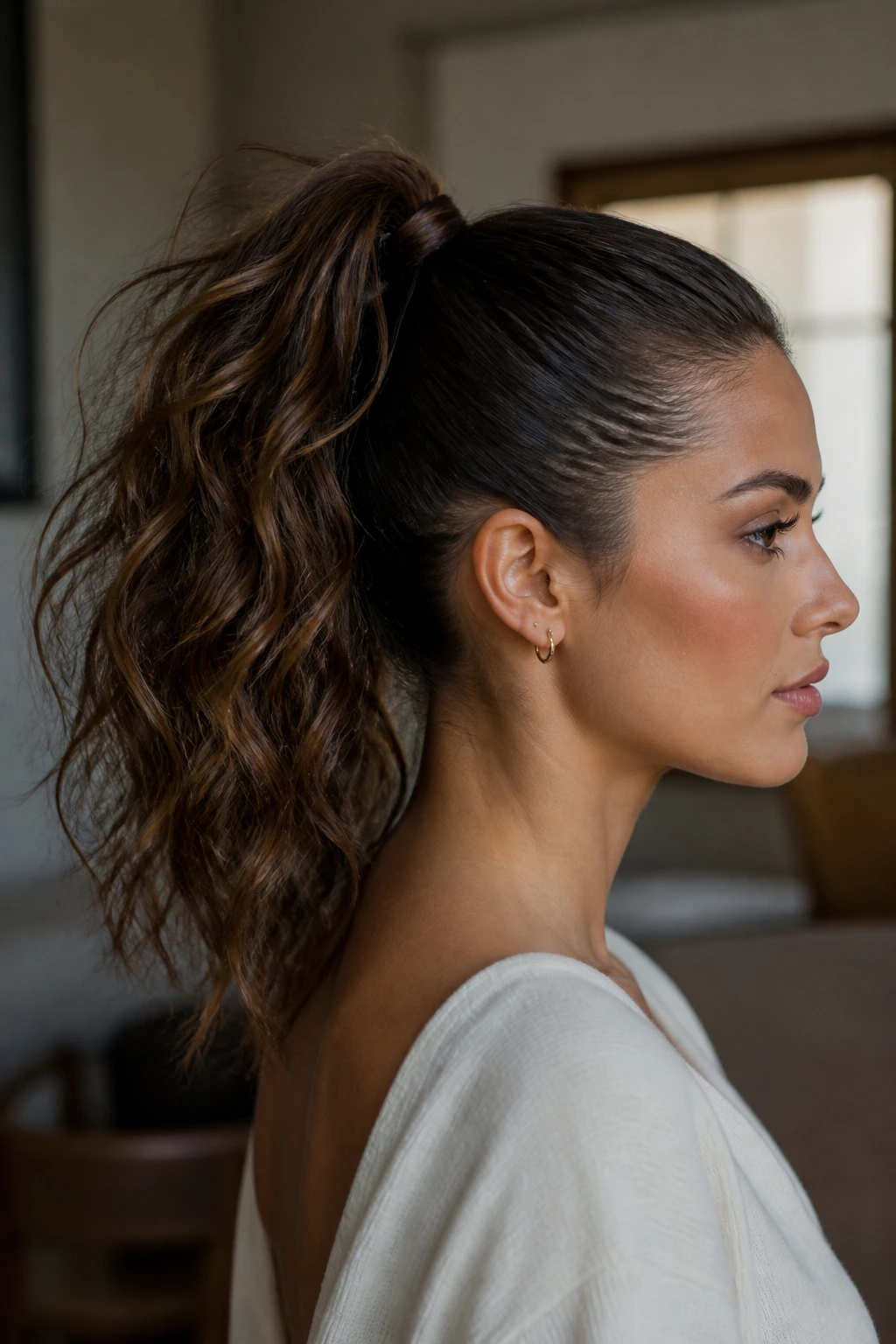
This style works by creating a stark contrast between a smooth, controlled root and a wild, textured length. It looks sophisticated enough for an evening out but holds up well to daily activity.
The Methodology
Use a small amount of pomade or styling cream on your palms to smooth the top and sides of your hair back into a high, tight ponytail. Keep the base very secure. Once the ponytail is set, apply a dry texturizing spray to the length. Now, take a curling wand and add a few loose, irregular bends to the hair. Do not aim for perfect curls. The contrast between the smooth scalp and the messy, wavy length makes the thickness of your hair look intentional and styled, rather than just chaotic.
17. The Boho Knot Pony
If you have very long, thick hair, a simple ponytail can get in the way. A knotted pony is a way to shorten the length slightly while creating a decorative element.
Achieving the Knot
Gather your hair into a low side ponytail. Take the entire ponytail and create a loose loop, pulling the end through the loop to create a large, singular knot. Do not pull it tight. You want the knot to be loose and sculptural. Secure it with a small clear elastic just below the knot. This style is surprisingly secure because the knot itself prevents the hair from sliding out, and it looks beautiful with wavy or curly hair textures.
18. The “Barely There” Messy Pony
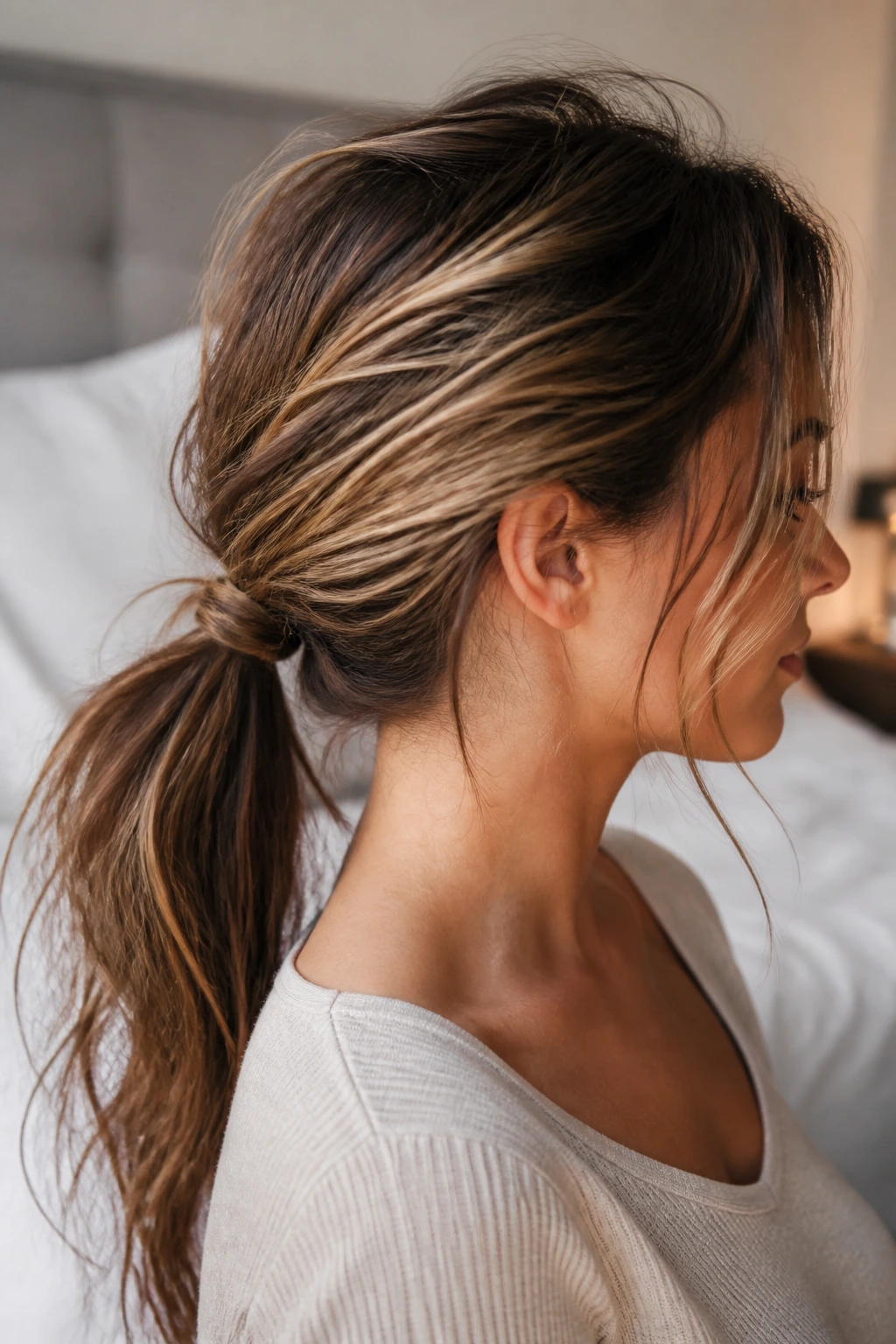
Sometimes, the best ponytail is the one that looks like it’s about to fall out—but is actually held in place by a hidden trick. This is the definition of “undone” style.
The Secret Anchor
Gather your hair into a low pony, but instead of using an elastic, use a small, clear, snag-free band to secure a tiny section underneath. Then, take a large, heavy-duty bobby pin and secure it from the underside, hooking it into your hair and catching the base of the pony. This creates a hold that is completely invisible from the top. It looks like your hair is just magically staying in that low-slung, messy position. It’s the most natural, relaxed look you can achieve with thick hair.
Final Thoughts
The real secret to mastering the messy ponytail when you have thick hair isn’t about finding the perfect hair tie; it’s about understanding how your hair wants to behave. Thick hair has a mind of its own, and the more you fight it, the more it rebels. When you stop aiming for a pristine, smooth, tight ponytail, you actually open up a world of styles that are more comfortable, more secure, and frankly, look better.
Don’t be afraid to use multiple elastics, hidden bobby pins, or claw clips to build the foundation. Your hair is heavy, and it needs support. If a style doesn’t feel right, take it out and redo it. That’s the beauty of the “messy” aesthetic—if it’s not perfect the first time, it’s not a mistake; it’s just part of the look. Keep experimenting with these techniques, and you’ll find that your thick hair becomes your greatest asset rather than a styling challenge.
