



Long hair has a way of behaving beautifully right up until it starts sliding into your lipstick, your collar, and your coffee. A half-up ponytail solves that without hiding the length you grew it for.
The best half-up ponytails for long hair keep the crown clean, but they do not flatten the rest of the style. The top section gives lift; the loose length keeps the look soft. Get that balance wrong and the style either slumps in twenty minutes or turns into a tiny pony floating above a curtain of hair.
The details matter more than most people think. Where you place the elastic, how much hair you pull into the top section, and whether you add braid, twist, ribbon, or texture all change the final shape. Long hair can carry a style. It can also bury it.
The 22 looks below range from sleek and polished to undone and easy, with notes on what each one does well and the small move that keeps it from falling flat. Start with the cleanest version if you want control, or jump straight to the messier ones if your hair behaves better with a little freedom.
1. Sleek Half-Up Ponytail for Long Hair
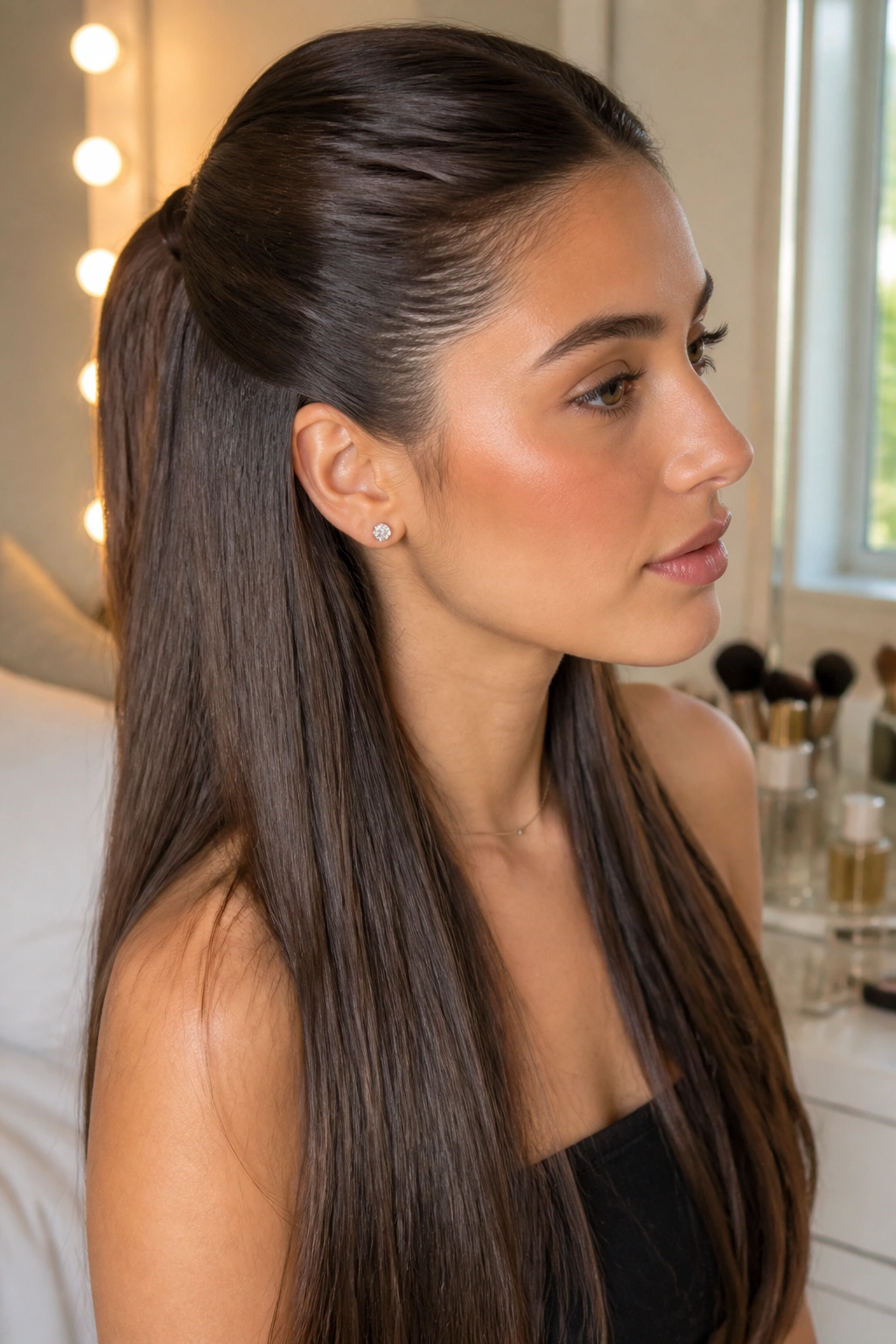
A sleek half-up ponytail is the version that makes long hair look intentional, not crowded. It clears the face, shows off the length, and gives you a clean line through the crown that feels sharp without looking severe.
Why it works
Long hair can look heavy at the top if you pull too much of it back at once. The sleek version fixes that by using just the top section from temple to temple, then smoothing everything else so it lies close to the head. The result is neat, but not tiny.
Start with a light mist of smoothing spray, then brush the top layer straight back with a boar-bristle brush or a fine comb. Keep the pony at the midpoint between your crown and the back of your head. Too high and it starts to look playful in a way you may not want; too low and the style loses its lift.
The small detail that makes it look expensive
Wrap a thin strand of hair around the elastic and pin it underneath. That tiny move changes the whole mood. It hides the band, yes, but more than that, it makes the top look deliberate.
Best tip: keep the loose lengths soft at the ends. A sleek crown with dry, frizzy ends throws the whole style off balance fast.
2. Bubble Half-Up Ponytail with Sculpted Sections
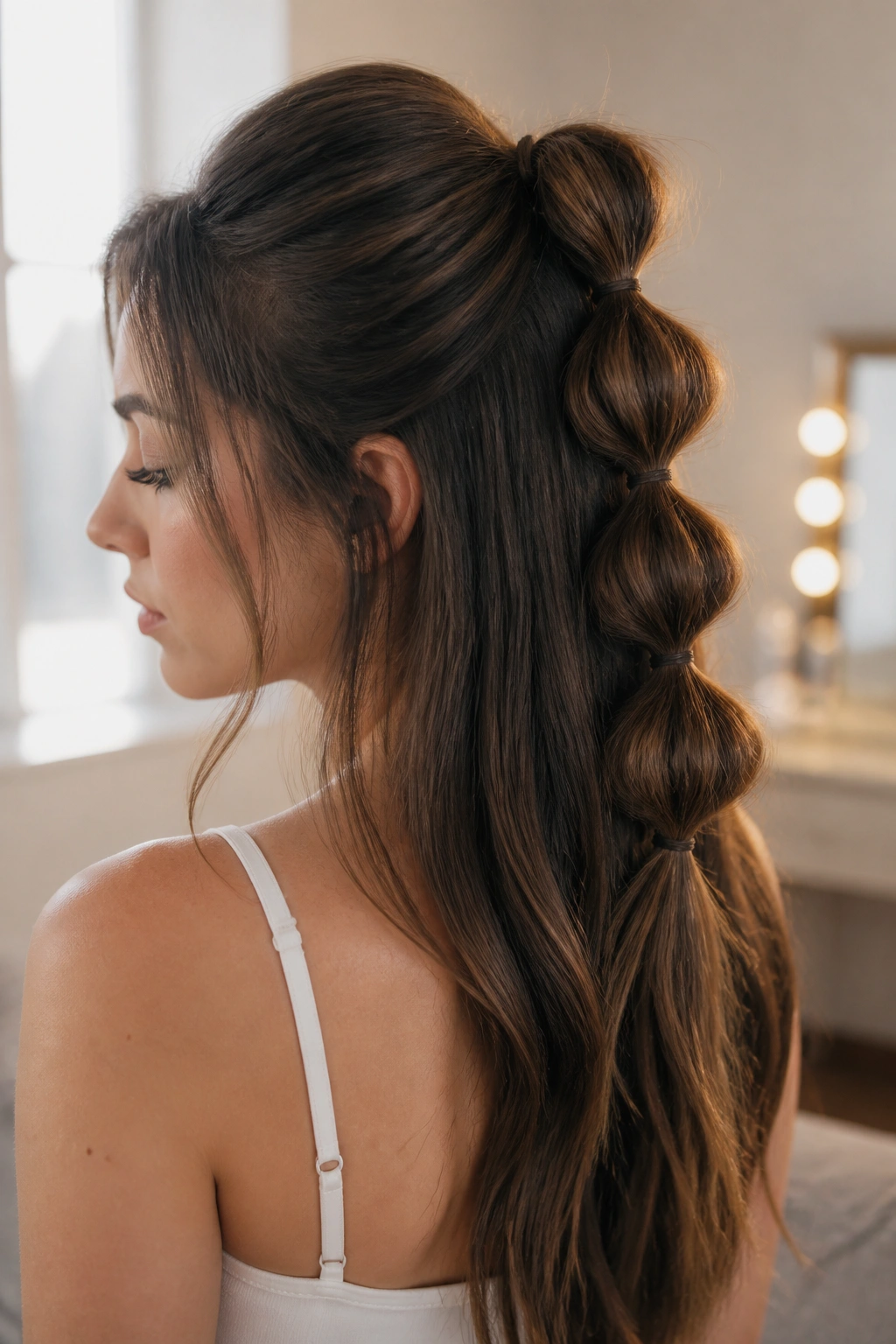
Bubble ponytails look even better on long hair than on shorter lengths. The extra length gives each section room to puff out in a way that feels rounded instead of cramped.
The trick is spacing. Use a small clear elastic every 1.5 to 2 inches down the half-up tail, then tug each section outward with your fingertips until it looks full but still neat. If you pull too hard, the bubbles collapse into lopsided blobs. If you barely touch them, the style reads flat. There’s a middle ground, and it’s worth finding.
I like this look when the rest of the hair is straight or softly waved. On very smooth hair, a little dry texture spray helps the bubbles hold their shape. On hair with natural bend, you may not need much at all.
Keep the first bubble close to the base. That part does the heavy lifting. If the root area is flat, the whole style feels sleepy.
3. Braided Crown Half-Up Ponytail
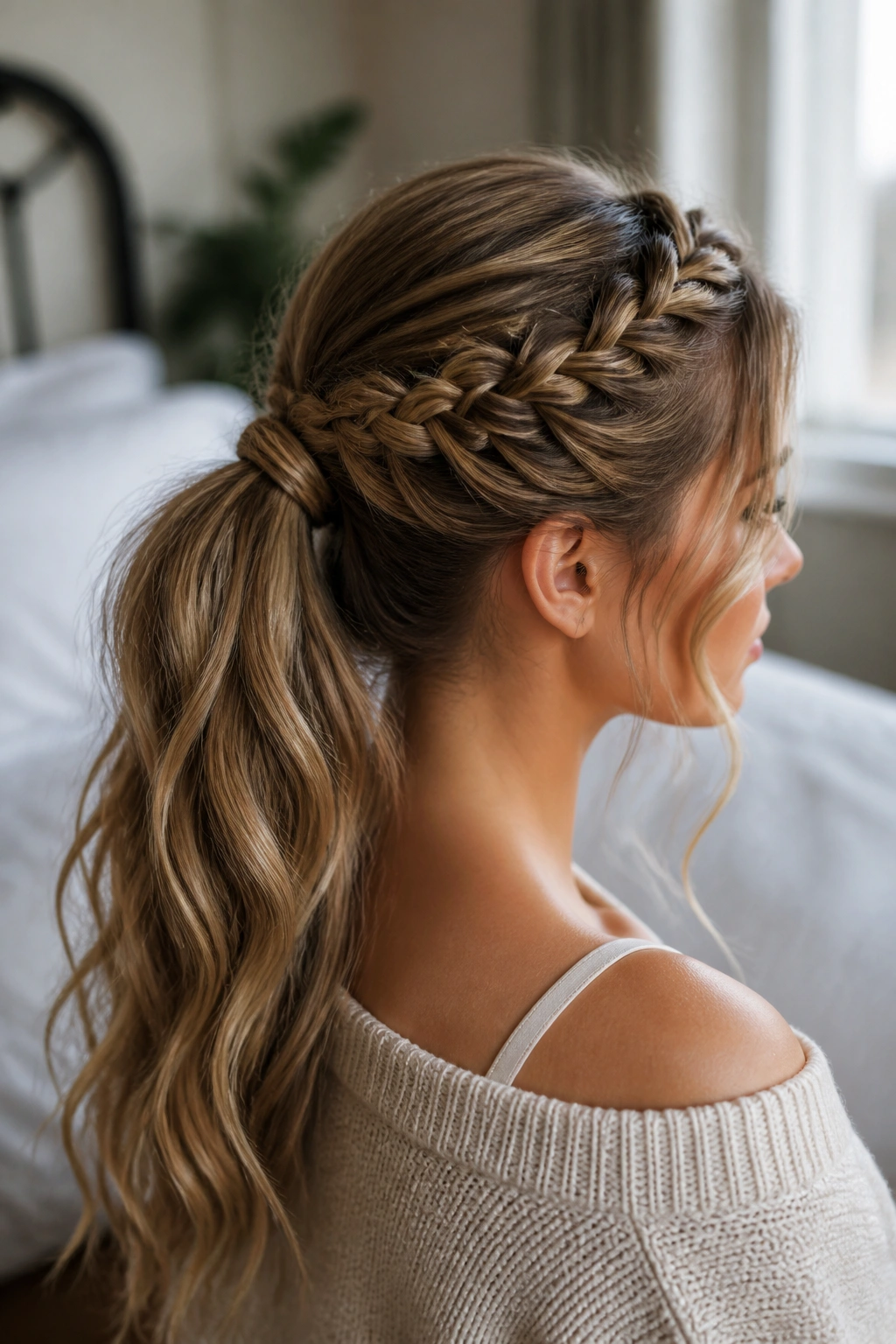
Want the top half to look dressed up without turning it into a formal updo? A braided crown half-up ponytail does that job cleanly.
The style starts with two small braids taken from each temple or one braid traced along the hairline, then gathered into a pony at the back. Long hair helps here because the braid has room to lay flat and still show detail. On shorter hair, the braid can feel crowded. On long hair, it gets to breathe.
How to keep the braid from looking skinny
After you braid, gently tug the outer edges of each plait. People call this “pancaking,” and the name is silly, but the effect matters. A slightly wider braid looks softer and fuller, which suits long hair much better than a tight little rope.
A light texturizing spray before braiding gives the strands grip. Clean, slippery hair tends to fight this style. If your ends are layered, leave the very bottom lengths loose and smooth them later with a flat brush. That keeps the pony part from stealing all the attention.
A tiny detail makes a big difference here. Let two face-framing pieces drop free, even if they are short. It keeps the style from looking overdone.
4. Twisted Half-Up Ponytail with Soft Face Pieces
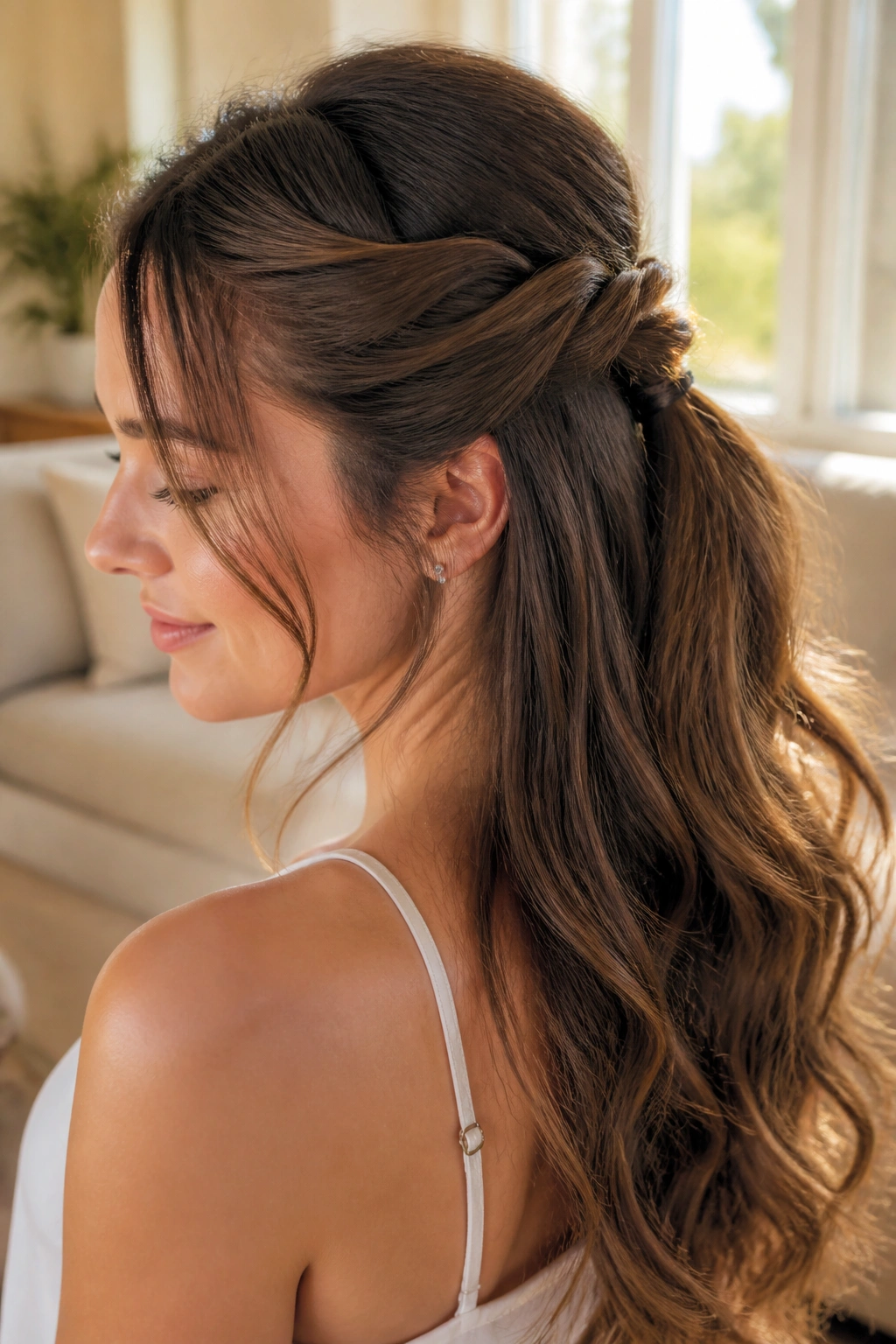
This is the style I pull out when the front layers are doing that awkward grow-out thing. Twists hide a lot of sins, which is why they keep showing up in half-up ponytails for long hair.
Instead of braiding, twist a section from each temple back toward the center, then join them into a pony or clip them together before securing the full half-up section. Twists are faster than braids and a little less formal. They also flatten less at the scalp, which helps if your hair is fine or if you hate the feeling of too much tension.
Best parts of this style
- It works when your layers won’t stay tucked.
- It gives shape without needing perfect parting.
- It looks softer than a braid and cleaner than a messy knot.
- It’s friendly to hair that has a little wave or bend.
Leave a few face pieces loose, especially if the front layers are chin-length or longer. If the twists feel too neat, pull them apart a little with your fingers before pinning. The whole point is gentle structure, not stiff symmetry.
5. Voluminous Half-Up Ponytail with Crown Lift
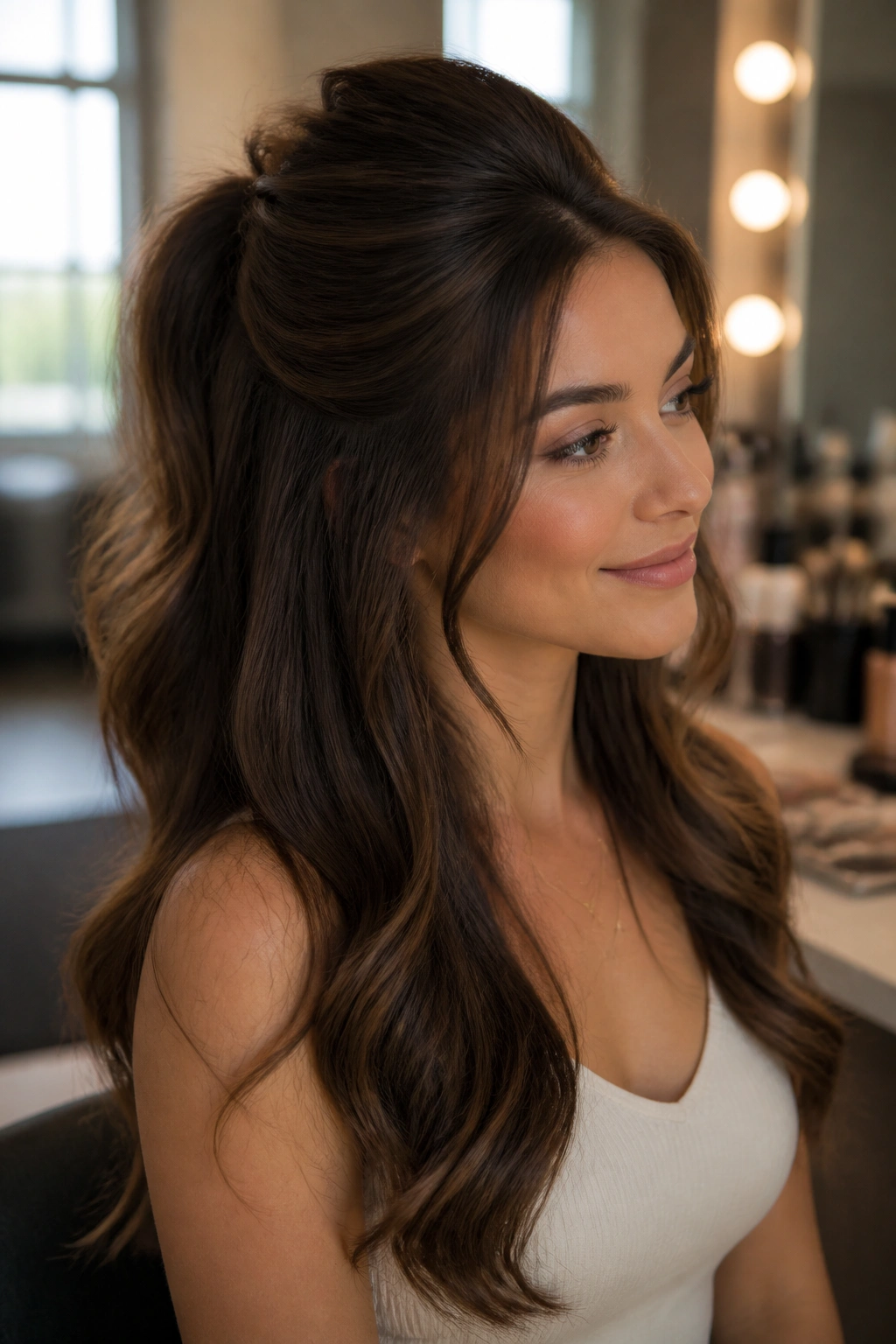
Long hair can flatten a crown fast. That’s the annoyance. It’s also the reason a little volume at the top makes such a difference.
Tease a narrow strip at the crown with a fine-tooth comb, just enough to create a cushion under the smooth top layer. You do not need a giant bump. A small lift, about the width of two fingers, usually gives enough shape to keep the style from sinking. Smooth the outer layer over the tease so it still looks clean from the outside.
Small bump. Big difference.
The best version of this style uses light root spray or texture powder at the base, then a soft brush-over so the crown doesn’t look rough. If your hair is very silky, the root area may need a little more grip than you think. If it is already textured, go easy. Overdoing the teasing makes the top frizzy and tired-looking by the end of the day.
The loose hair below should stay full and fluid. That contrast is what makes the style work. Slick crown, moving ends. That’s the sweet spot.
6. Ribbon-Tied Half-Up Ponytail
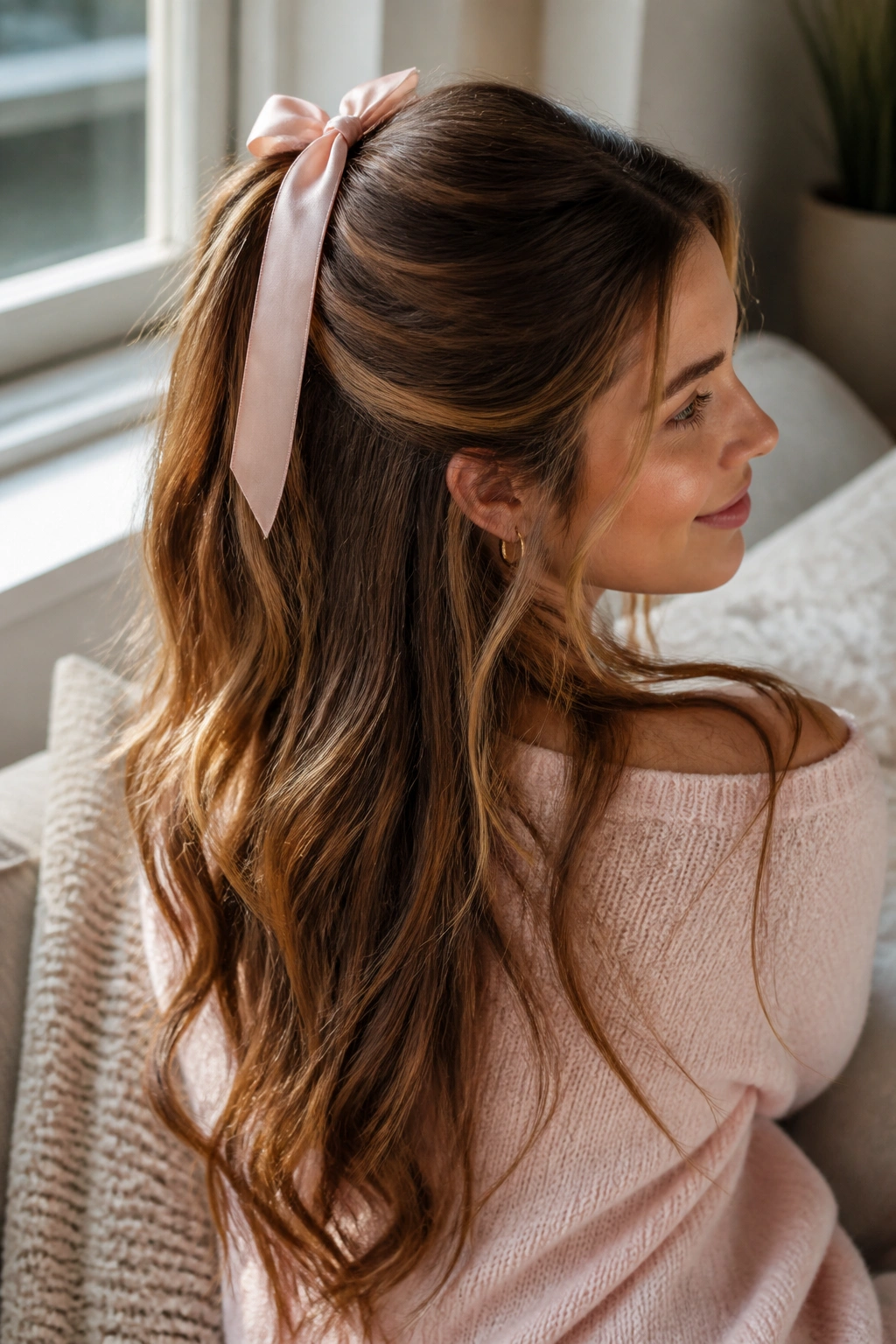
A ribbon changes the whole mood without changing the structure. Unlike a plain elastic, it softens the finish and gives the style a touch of color or shine with almost no effort.
This works especially well when the half-up pony is low or centered at the back of the head. Tie a ribbon over the elastic, or thread it through the base and knot it underneath. Satin ribbon looks smooth and dressy, but it can slide on very fine hair. Grosgrain grips better and gives a slightly more casual feel.
The width matters more than people think. A 1/2-inch ribbon stays neat on long hair without swallowing the pony. A wider ribbon can look lovely, but it can also take over the whole style if the hair itself is already thick or heavily layered.
I prefer this look when the rest of the hair is left straight or in soft bends. It feels unfussy. If you want the ribbon to stay visible, leave the tails long enough to hang past the elastic by 4 to 6 inches. Short tails can look accidental.
7. Half-Up Ponytail with Curtain Bangs
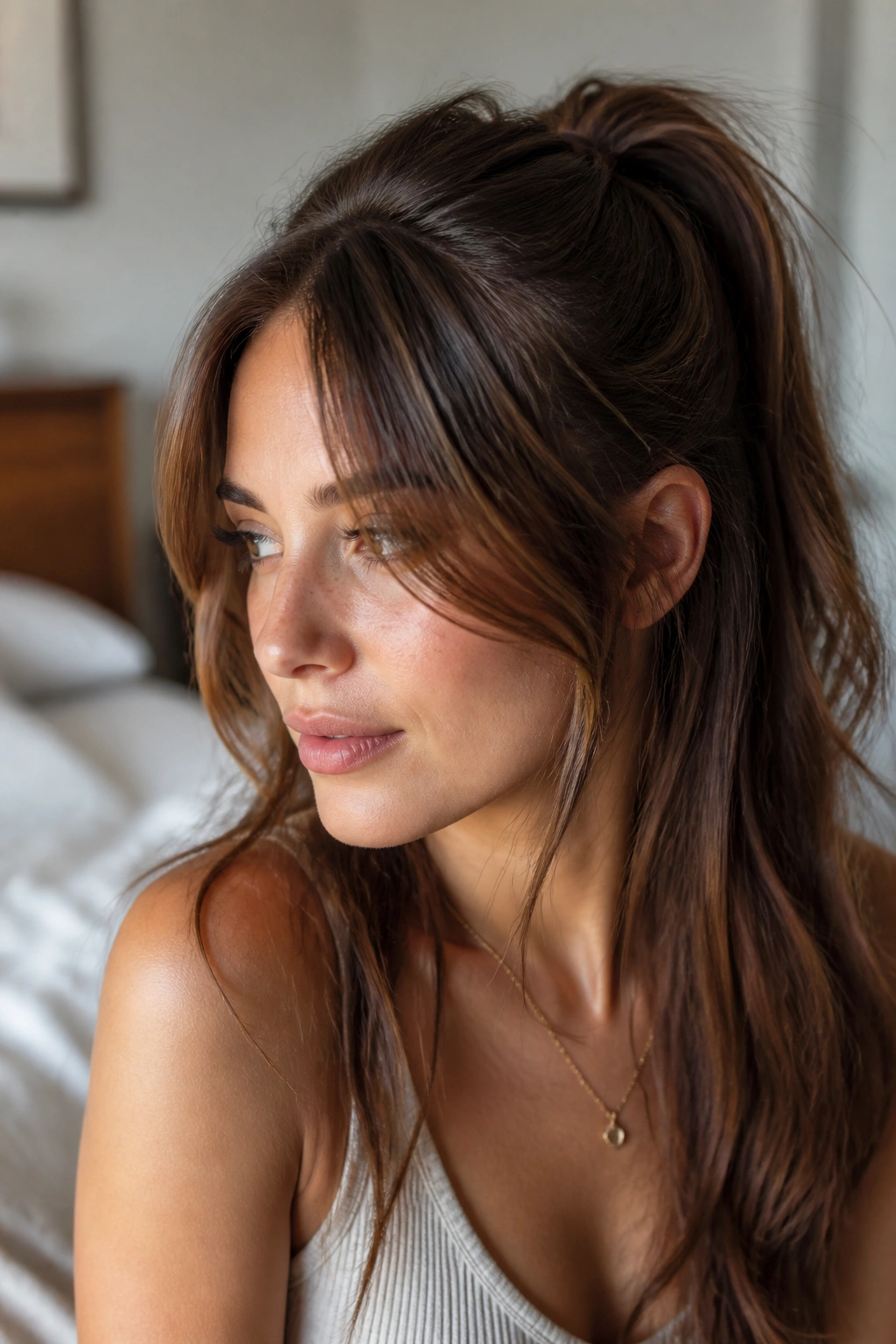
Curtain bangs and half-up ponytails get along because the style leaves enough hair loose to frame the face. That matters more than people expect.
Where to place the elastic
Keep the half-up section a little lower than you would with a sleek top knot. If the elastic sits too high, the bangs lose their shape and start fighting the style. A spot just above the crown usually works well because it gives lift without dragging the front pieces back too hard.
Curtain bangs like movement. They don’t need much help, but they do need space. Blow-dry them away from the face with a round brush or wrap them around a large Velcro roller for a few minutes while you do the rest of your hair. That gives them a soft bend instead of a flat fold.
- Leave the bangs out completely.
- Pull only the topmost section back.
- Use a tiny elastic that won’t snag the fringe.
- Finish with a dab of serum on the ends, not the roots.
If your bangs separate too much, mist them lightly with water and re-shape them with your fingers. Don’t chase every strand. Curtain bangs look better when they move a little.
8. Loose-Wave Half-Up Ponytail
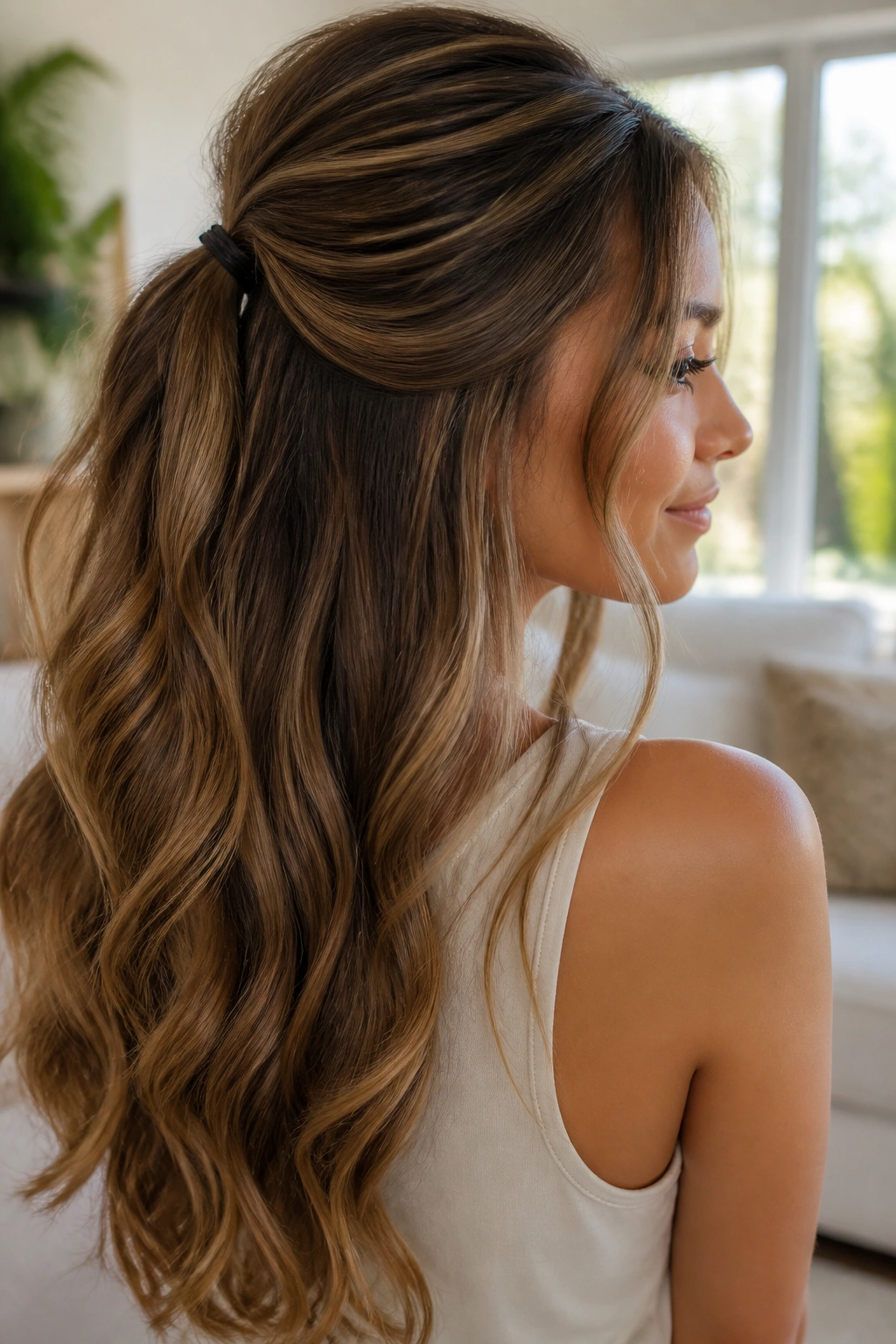
Loose waves make long hair look thicker fast. They also keep a half-up ponytail from reading too stiff, which is half the battle.
Start by waving the lengths with a 1.25-inch curling iron or by braiding damp hair into loose plaits and letting it dry. Once the hair has a bend, brush through it once so the waves soften into broad curves instead of tight curls. That softer texture makes the half-up section blend into the rest of the hair instead of sitting on top of it like a separate piece.
Resist the comb.
That matters more than it sounds. Over-brushing turns the waves fluffy at the ends and flat at the crown, which is not the effect you want. Use your fingers to gather the top half, then secure it with a discreet elastic or clip. If the hair is extra long, leave the pony a little looser so the tail keeps its swing.
This style works for days when you want your hair to look finished without looking overly fixed. It’s probably the easiest one on the list to wear with casual clothes and still feel pulled together.
9. Bubble Braid Half-Up Ponytail
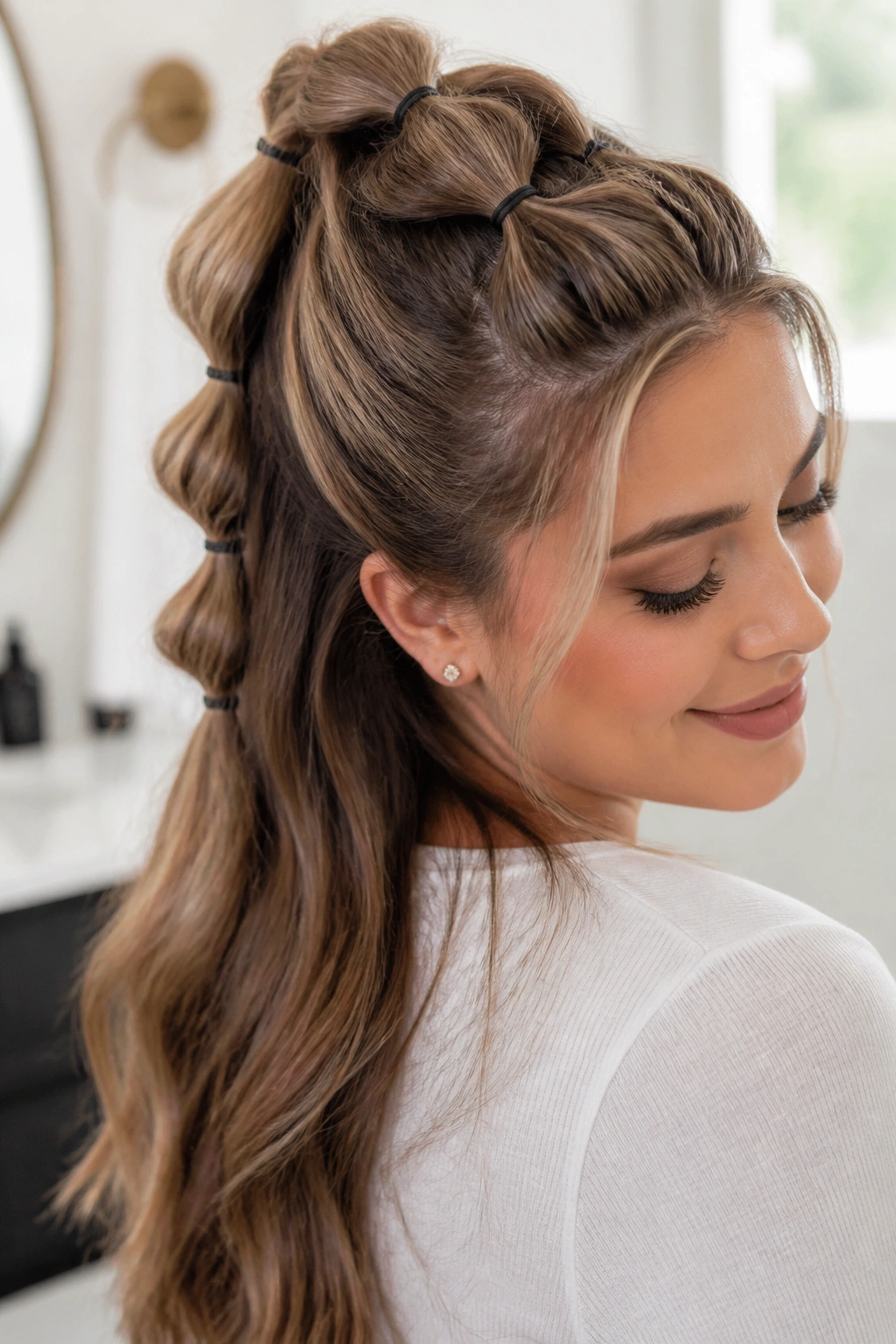
What happens when a braid and a bubble ponytail meet in the middle? You get a style that feels playful but still structured.
The bubble braid starts with a small half-up pony, then uses clear elastics spaced down the length of the tail. Instead of pulling the whole section full and round like a classic bubble pony, you keep the inside of each segment a little tighter and tug only the outer edges. That gives the look a rope-like shape with softer edges.
How to use it
- Start with a secure base elastic.
- Add 4 to 6 small elastics, depending on hair length.
- Pull each segment outward only a little.
- Stop before the very ends collapse into a skinny tail.
Long hair gives this style room to show detail, which is why it looks better when there’s a decent amount of length below the bubble chain. Layers can poke out a little, and that’s fine. A light mist of spray at the base keeps the sections from sliding.
It feels a bit more interesting than a standard bubble pony, and not nearly as formal as a full braid. That’s a nice middle ground.
10. Claw Clip Half-Up Ponytail
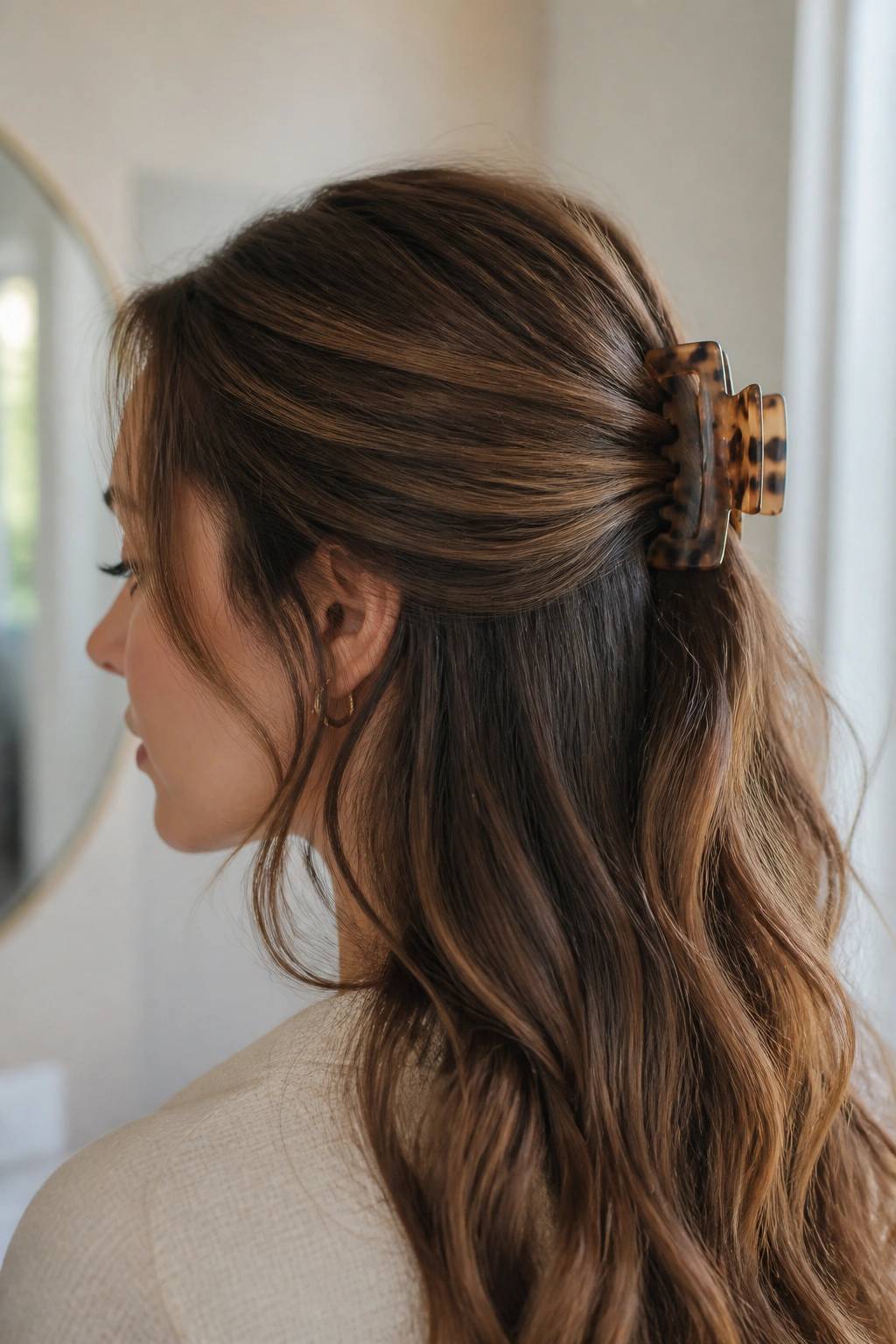
Some days you want your hair up, but you do not want another elastic line in the back of your head. That’s where the claw clip half-up ponytail earns its keep.
Choose a clip that actually matches your hair density. A 3-inch clip is fine for a smaller top section, but dense long hair usually needs something closer to 4 or 4.5 inches so the teeth can grip without snapping shut around too much bulk. Place it at the back of the crown, not too high, and let the ends spill freely.
What to watch for
- If the clip slides, the section is too heavy.
- If the top looks puffy, smooth the roots before clipping.
- If the clip feels painful, lower it slightly and reduce the section.
- If the style looks bland, leave one front piece out on each side.
I like this style on second-day hair because the clip grabs texture better than slippery freshly washed hair. A small amount of dry shampoo at the roots gives the teeth something to hold onto. The whole thing feels relaxed, and that is the point. It’s the half-up ponytail version of not trying too hard.
11. Mini High Pony on Smooth Lengths
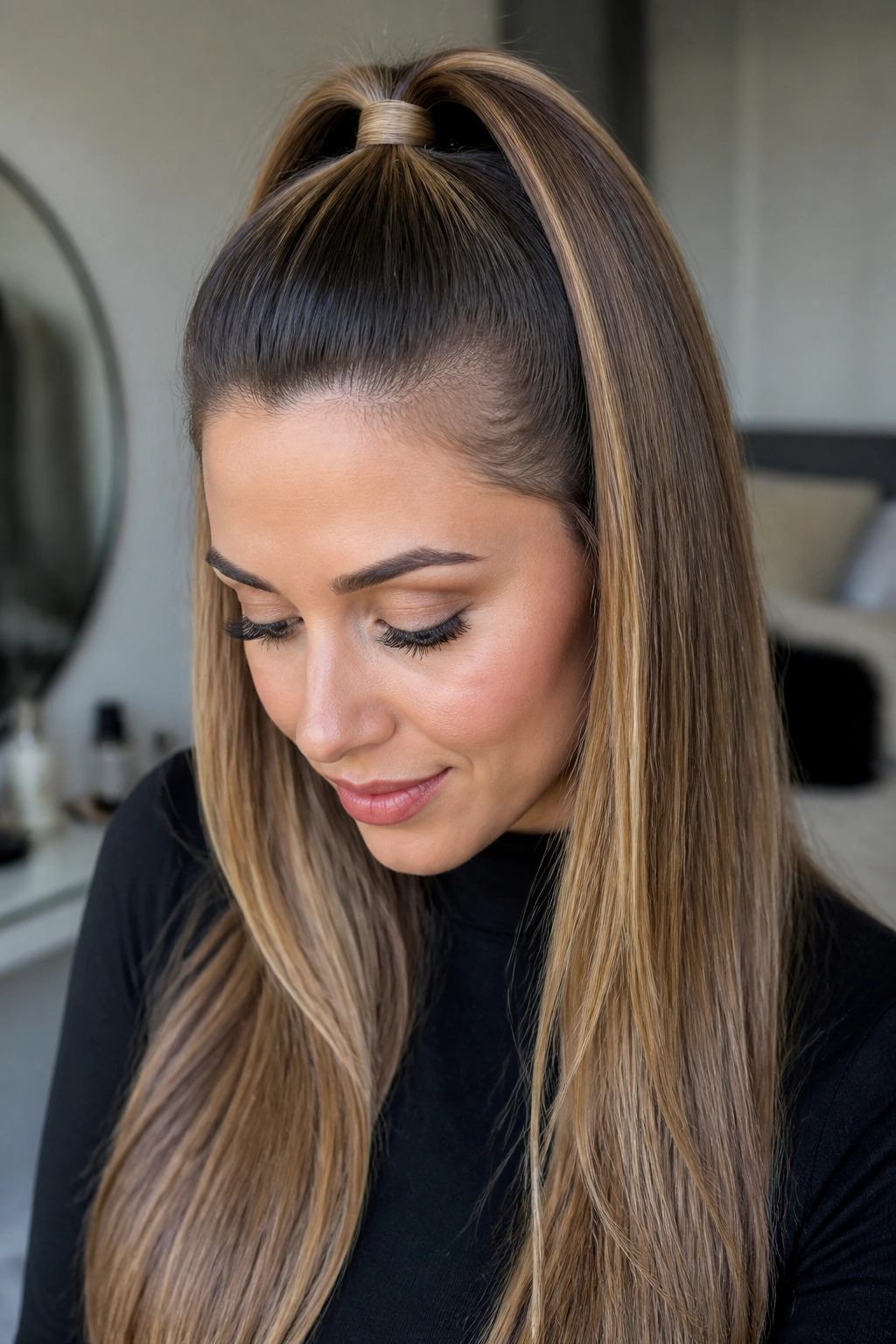
A mini high half-up pony is one of those styles that sounds simple and still gets attention because of how clean it looks. The top section is small, the placement is high, and the long loose hair below does the dramatic work.
The important part is restraint. Don’t gather half your hair. Gather a smaller section, about temple to temple, and secure it high on the crown. That keeps the silhouette sharp and prevents the top from looking overloaded. If the pony is too thick, it can drag the whole style backward and flatten the front.
I reach for this on days when I want the face open and the ends left alone. It works with straight hair, but it also looks good with soft bends because the contrast between the smooth top and the moving lengths feels deliberate. A little shine serum on the free hair helps a lot here. Not too much. Just enough to keep the ends from looking dusty.
Tiny top section. Long tail. Clean result. That’s the whole appeal.
12. Dutch-Braided Half-Up Ponytail
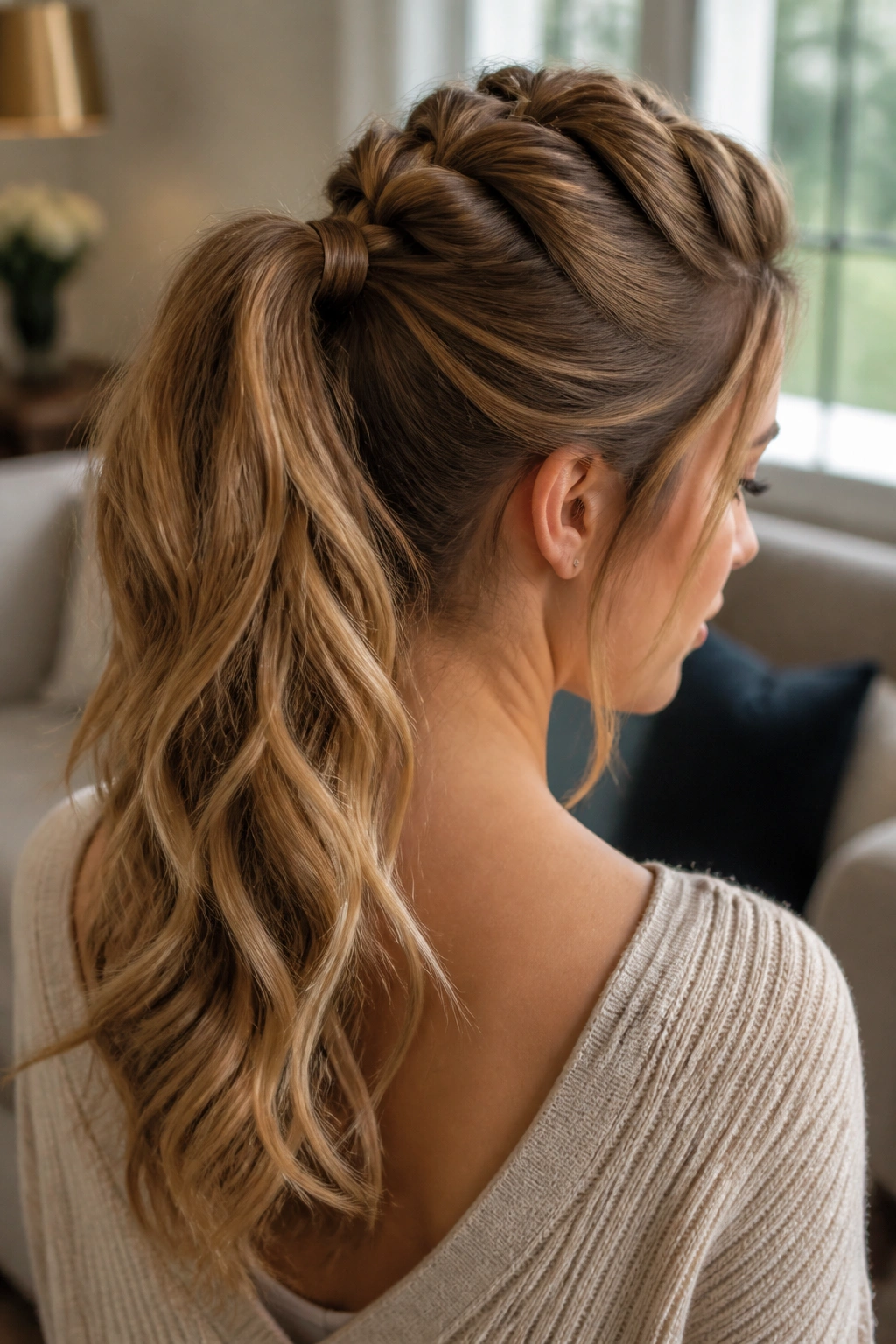
A Dutch braid sits on top of the hair instead of disappearing into it. That’s why it gives more visible texture than a French braid and tends to hold its shape better on long hair.
In this half-up version, the braid starts at the front hairline or near one temple and crosses under as it moves back. Because the strands go under instead of over, the braid rises off the scalp a little and reads as fuller. On dense hair, that extra lift is useful. On thinner hair, it makes the style look richer than it is.
This look is especially good for active days or for hair that tends to slip out of braids. Long hair can weigh a regular braid down, but a Dutch braid has enough structure to stay put. If the braid feels too tight, loosen the outer loops gently after you secure it. That softens the line without loosening the base.
For the best finish, keep the loose lengths either straight and polished or loosely waved. Too much frizz below a crisp braid can make the style feel unfinished.
13. Pearl-Accented Half-Up Ponytail
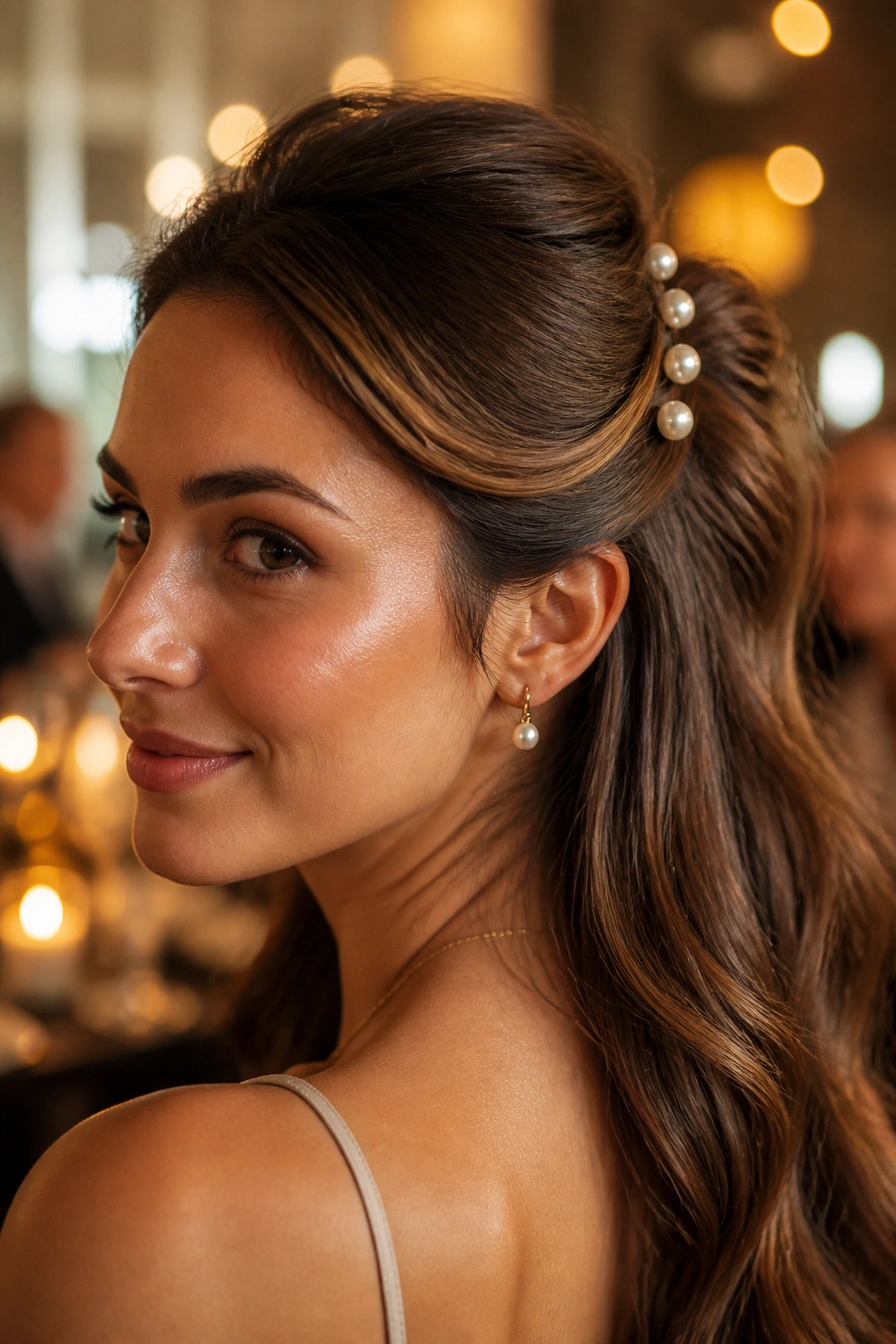
Pearls have a way of making even a plain half-up ponytail look intentional. Not flashy. Just finished.
The key is placement. Don’t scatter tiny pearl pins everywhere and hope it works. Use three to five accents, and keep them close to the elastic or along one braided side. That gives the eye a clear line to follow. If you bury the pearls in too much hair, they disappear. If you cluster them neatly, the style reads polished.
Where to place the pearls
- One pearl pin at the base of the pony.
- Two smaller pins along a twist or braid.
- One larger clip off to the side if you want a stronger focal point.
- Keep the rest of the hair simple so the accents can do their job.
Pearl accents work best on smooth hair or soft waves. Very textured hair can absolutely wear them, but the pins need to be anchored into a firmer base so they don’t slide. I like this for dinners, showers, and any event where you want the hair to look dressed without getting stiff about it.
The best pearl styles look arranged, not sprinkled.
14. Side-Swept Half-Up Ponytail
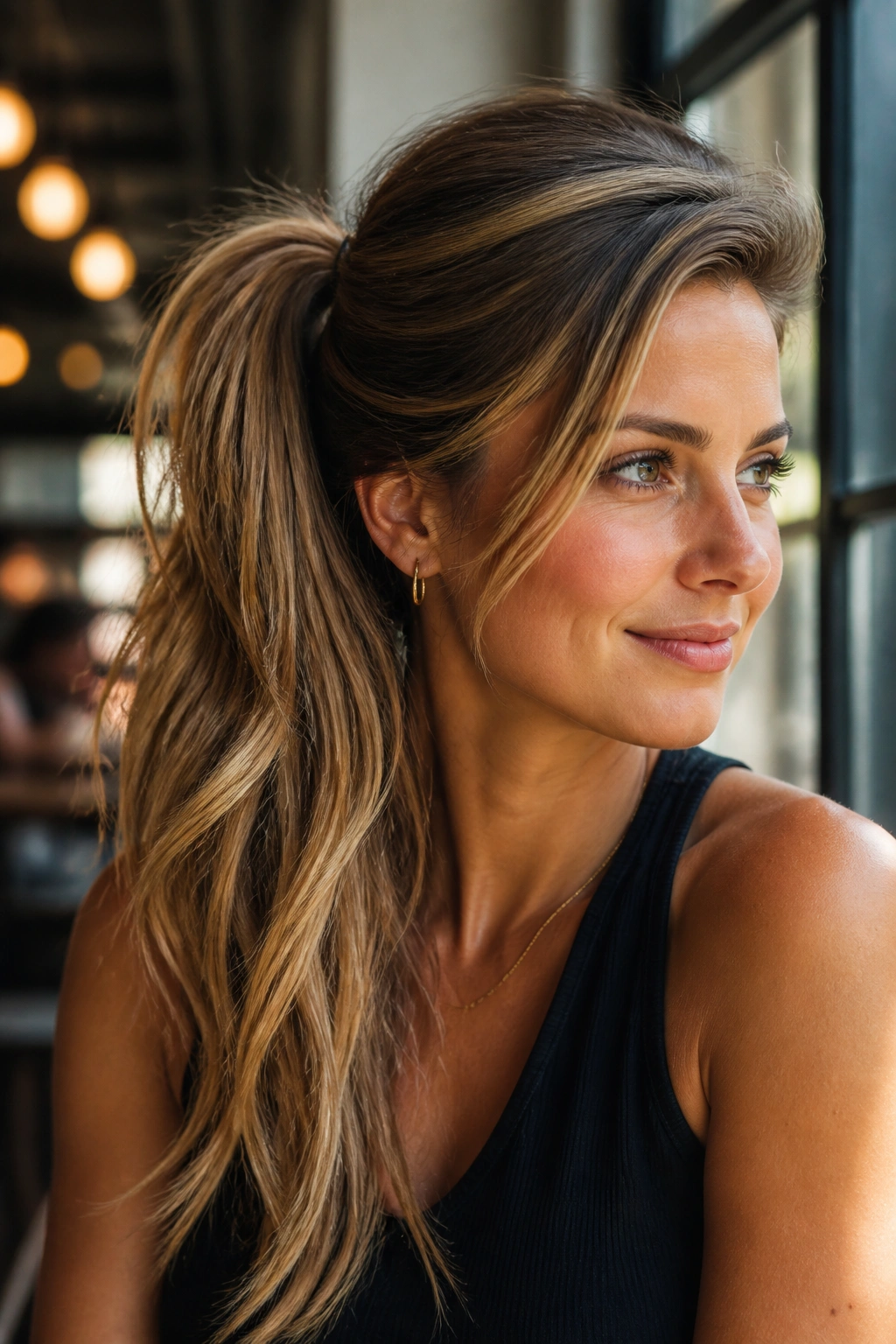
A side-swept half-up ponytail changes the whole face shape. It softens one side, opens the other, and gives long hair a little motion without asking for a lot of styling time.
Start with a deep side part, then gather the top section toward the heavier side rather than pulling it straight back. That small shift changes how the style sits. It can make layers fall more gracefully, and it often flatters long faces because the asymmetry breaks up the length of the face a bit.
I like this version when one side of the hair naturally wants to fall flatter than the other. Instead of fighting that, use it. Let the heavier side sweep back a little farther and leave the lighter side looser. The result feels less staged.
If you want more polish, tuck the loose side behind one ear and leave the other side soft. If you want more movement, leave both sides free and keep the elastic slightly off-center. That off-center placement is the whole point. It’s subtle, but it changes the mood fast.
15. Messy Undone Half-Up Ponytail
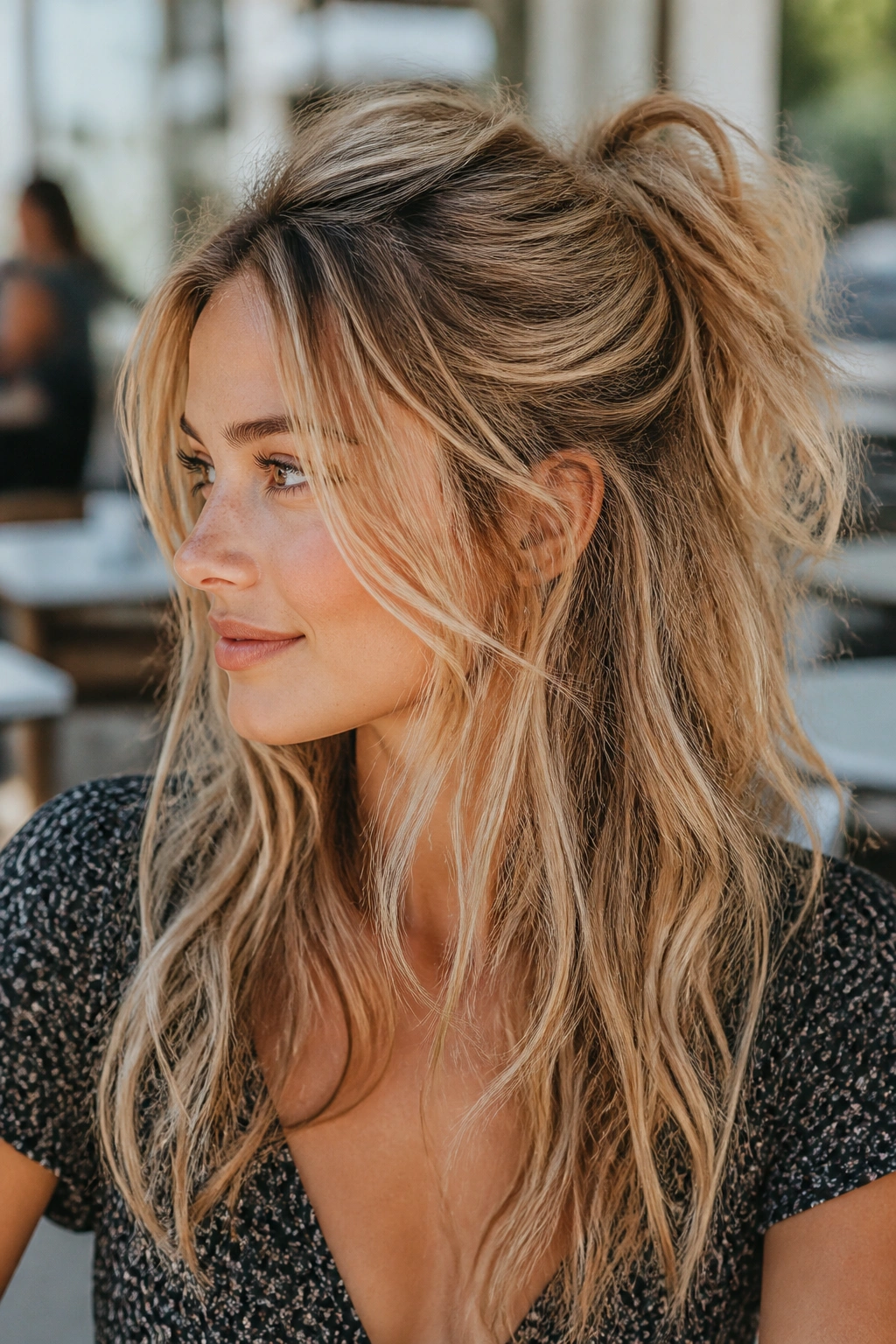
Do you want the easiest half-up ponytail on the list? This is it. The messy undone version works because it looks better when it is a little imperfect.
What to leave loose
- Two face-framing pieces, one on each side.
- A few short layers around the temples.
- Some texture at the crown instead of a flat top.
- A tail that moves, not one that sits in a stiff line.
Use your fingers instead of a brush to gather the top section. A soft texture spray or dry shampoo at the roots helps, especially if the hair is freshly washed and slippery. That bit matters. Clean hair can be too cooperative, and then the style slides.
You do not need symmetry. In fact, too much symmetry makes this style worse. Let one side sit a little higher if that is how the hair naturally falls. Pull a few strands loose after you secure the elastic. That gives the pony a lived-in feel instead of a fake mess.
This is the version I’d choose for second-day hair, a casual brunch, or any morning when the mirror is not getting your best work.
16. Low Half-Up Ponytail with Sleek Finish
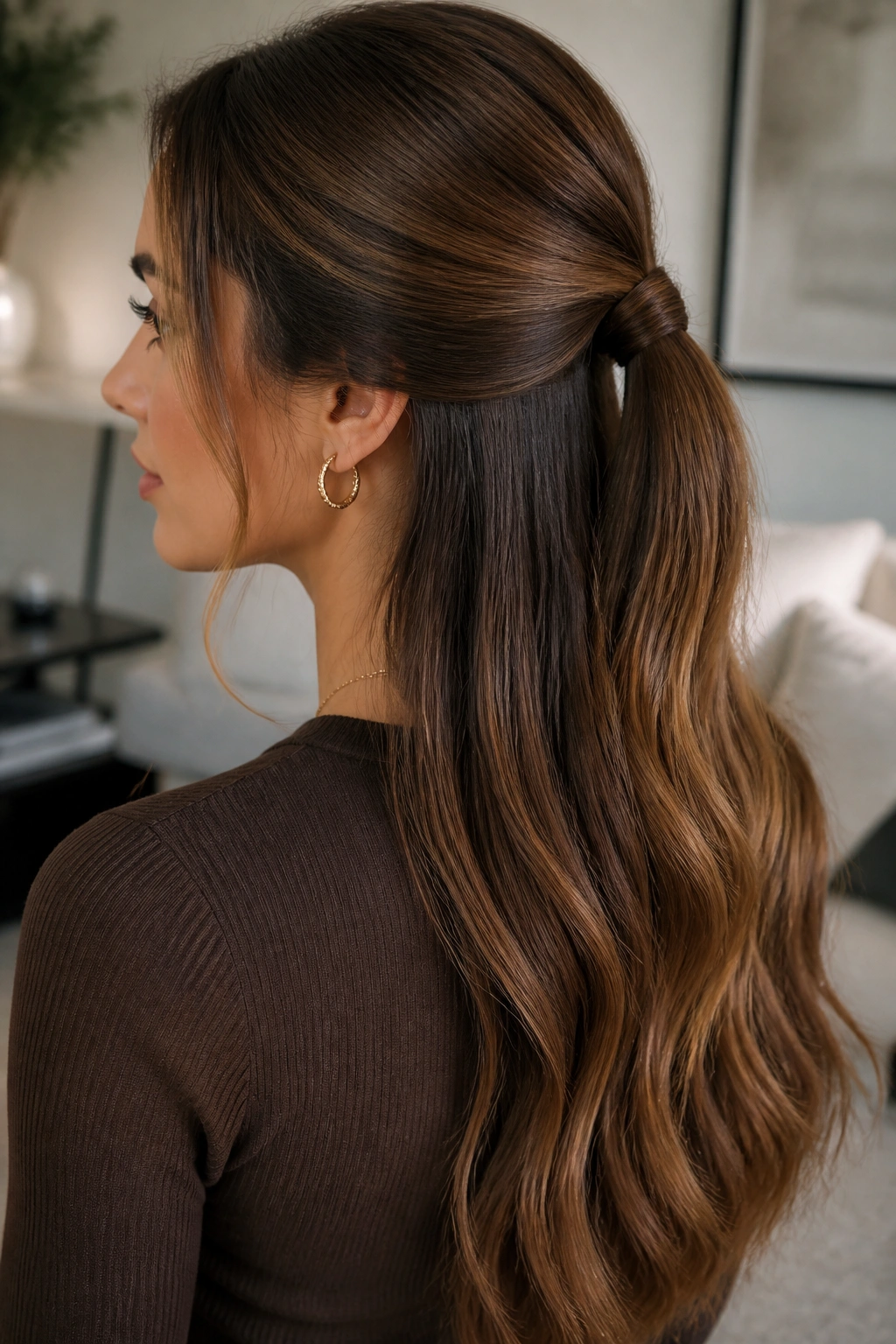
A low half-up ponytail has a quieter look than a high one, and that is exactly why it works. It keeps the hair controlled without stealing all the attention from the length below.
The section sits lower on the head, just above the nape area, which means the loose hair still gets to swing naturally. That makes the style feel long and fluid instead of stacked. If your hair is straight, this version is especially clean. If it’s wavy, the low placement keeps the shape from getting puffy at the crown.
A smoothing cream on the top section helps here, but keep it light. Too much product can make the roots look greasy against the rest of the hair. Wrap a small piece of hair around the elastic if you want a neat finish, or leave the band visible if the style is meant to feel relaxed.
Best uses
- Work events.
- Dinner plans.
- Days when you want hair off the face but not fully up.
- Long layered hair that needs a calmer shape.
It’s a calm style. That sounds plain, but plain can be useful.
17. Braided Base-Wrap Half-Up Ponytail
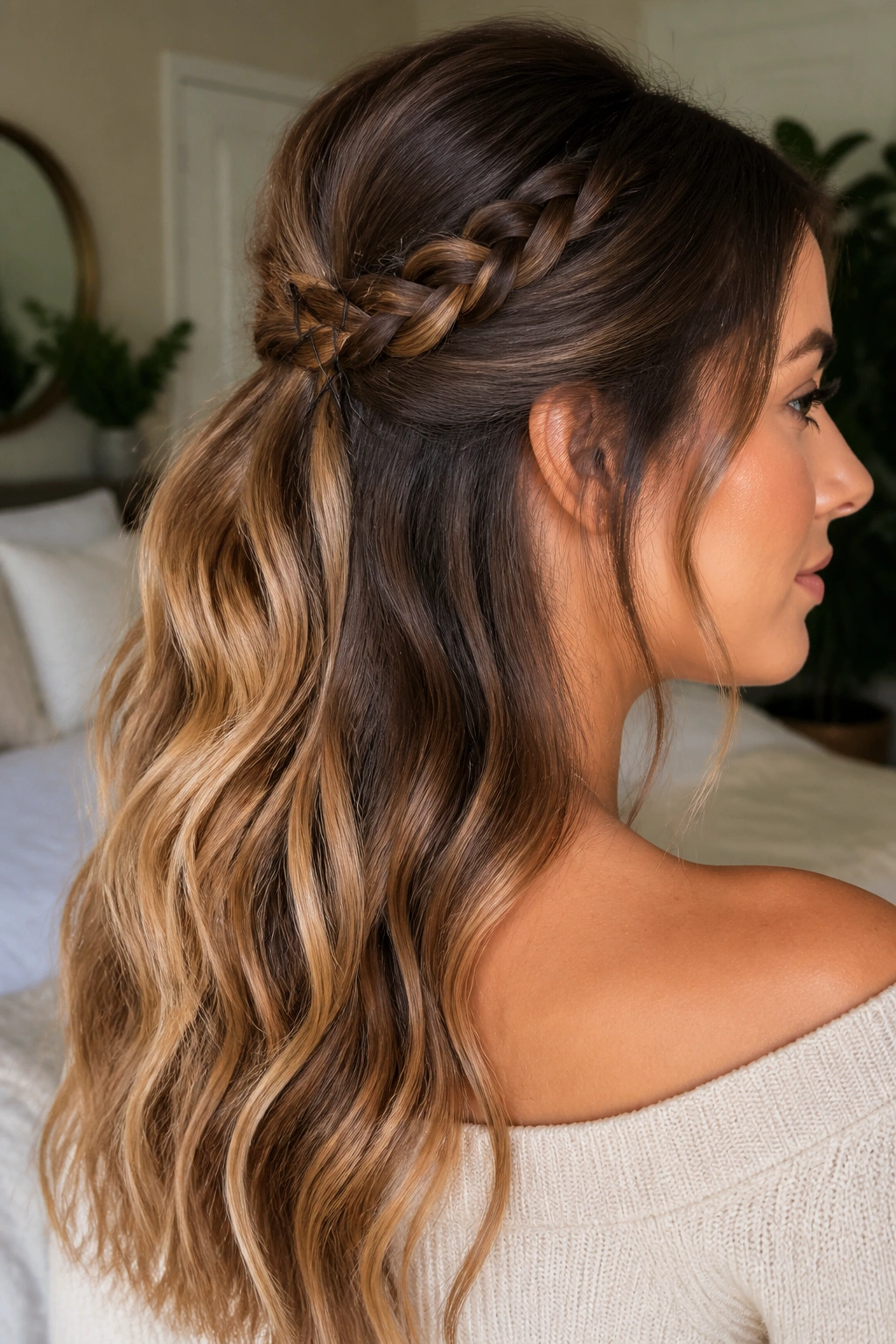
A wrapped base makes a basic half-up ponytail look finished even when the rest stays simple. It’s one of those small changes that pays off more than you’d expect.
Braid a thin section of hair from just behind the pony, then wrap it around the elastic until the band disappears. Pin the end underneath with two bobby pins crossed in an X. That X shape matters because a single pin can loosen faster on long, slippery hair. If you don’t want a braid, a tight rope twist works too.
The best part is how little you need to do elsewhere. Once the base is wrapped, the loose lengths can stay straight, softly waved, or even air-dried. Long hair helps because there’s enough tail left to balance the detail at the top. Without that length, the wrap can look fussy. With it, the style feels balanced.
If the wrap looks bulky, use a narrower section of hair. A tiny wrap is usually prettier than a thick one. Cleaner, too.
18. Crisscross Half-Up Ponytail
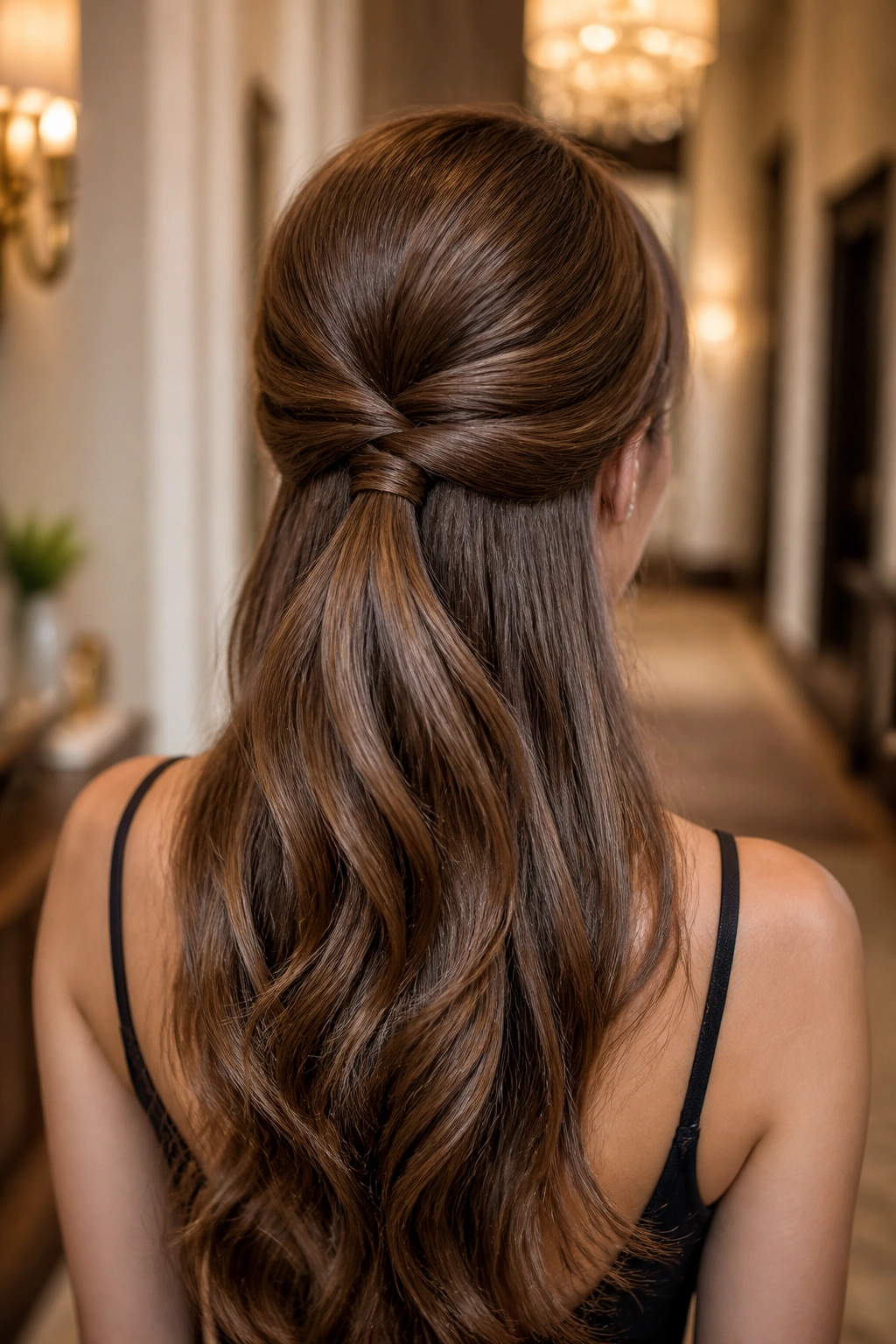
Crisscross sections change the architecture of the style. Instead of gathering everything straight back, you bring pieces from each side across the head and pin them so they form a neat X or layered overlap at the back.
This works well on long hair because the length gives the crossed sections enough room to lie flat. Shorter hair can fight the shape, but long hair tends to settle into it. The style is especially good if you want something a little more interesting than a simple pony without committing to a braid.
Take two side sections, cross the left over the right or vice versa, then secure them beneath the gathered half-up pony. Hidden pins hold the cross in place. Keep the tension even, or one side will sag and the shape will tilt.
I like this on layered cuts because the crisscross design helps control the shorter pieces at the temples. It also works with straight or softly waved hair, which makes it more useful than it sounds. There’s a neatness to it, but not the hard kind.
19. Thick-Hair Half-Up Ponytail with Sectioned Anchors
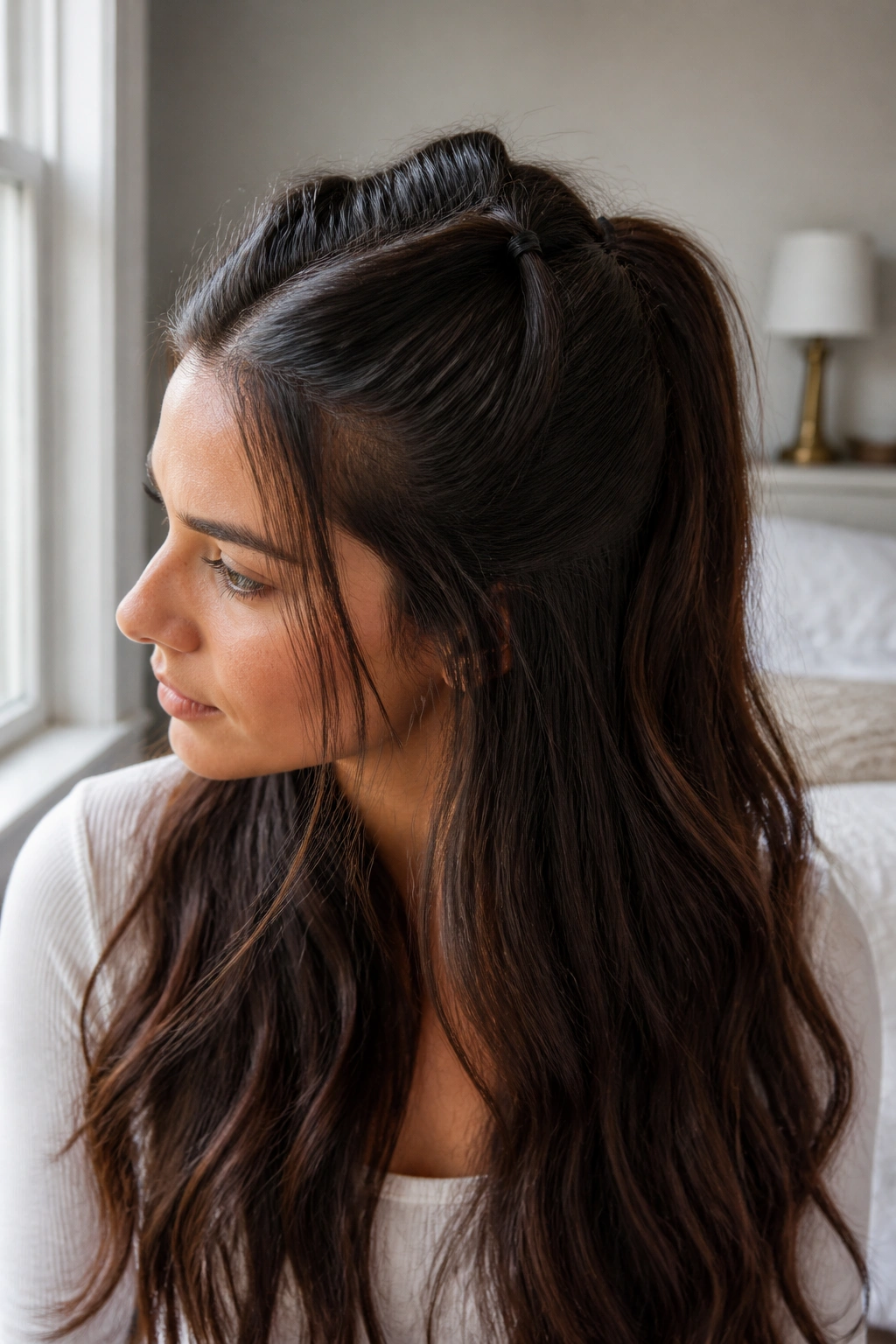
Thick hair changes the rules. If you try to grab too much at once, the top section gets heavy fast and starts pulling the whole style backward.
How to stop the top from sliding
- Split the top half into two smaller sections.
- Secure the first section with a small elastic.
- Add the second section over it or just behind it.
- Anchor the base with two bobby pins, not one.
That layered approach spreads the weight out. It also keeps the pony from feeling like it is dragging on the scalp, which is the fastest way to make thick hair look tired. A little smoothing cream near the top helps the surface stay neat, but don’t load the roots with product. Thick hair already has enough body.
This style is less about decoration and more about control. Once the top is anchored properly, the long loose lengths can stay full and dramatic without making the crown feel bulky. If you have a lot of density, this version tends to hold longer than a single-elastic half-up ponytail.
It is not fancy. It is practical. Sometimes that is the better look.
20. Fine-Hair Half-Up Ponytail with Teasing
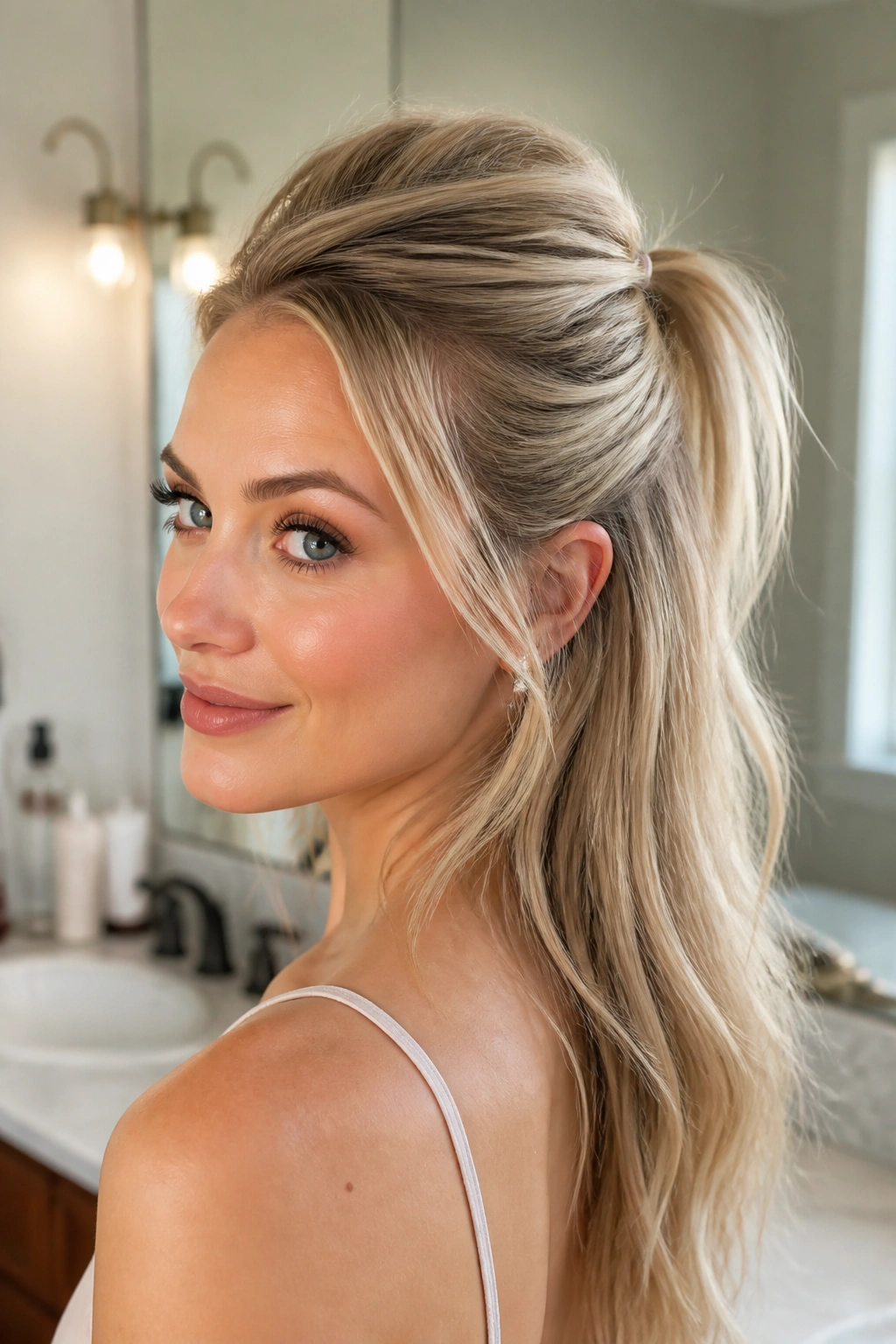
Fine hair needs shape more than it needs more hair products. That is the whole trick, and it’s why a gentle tease at the crown helps so much.
Start with a root-lift spray or a light mousse at the top section, then backcomb only the underside of the crown area with a fine comb. You are building a small cushion, not a nest. Smooth the top layer over it and secure the half-up section with a tiny elastic or a clip that will not drag the hair down.
Keep the section smaller than you would on thick hair. Fine strands look better when they are not overloaded. If you gather too much hair, the pony becomes stringy and the root lift disappears under the weight. A little powder at the roots can help, especially if the hair is freshly washed and too silky.
Avoid heavy oils near the crown. They flatten the lift fast. Put shine products only on the loose lengths and ends if they need it. That keeps the top airy and the bottom soft, which is usually the balance you want.
21. Sporty Half-Up Ponytail with Elastic Wrap
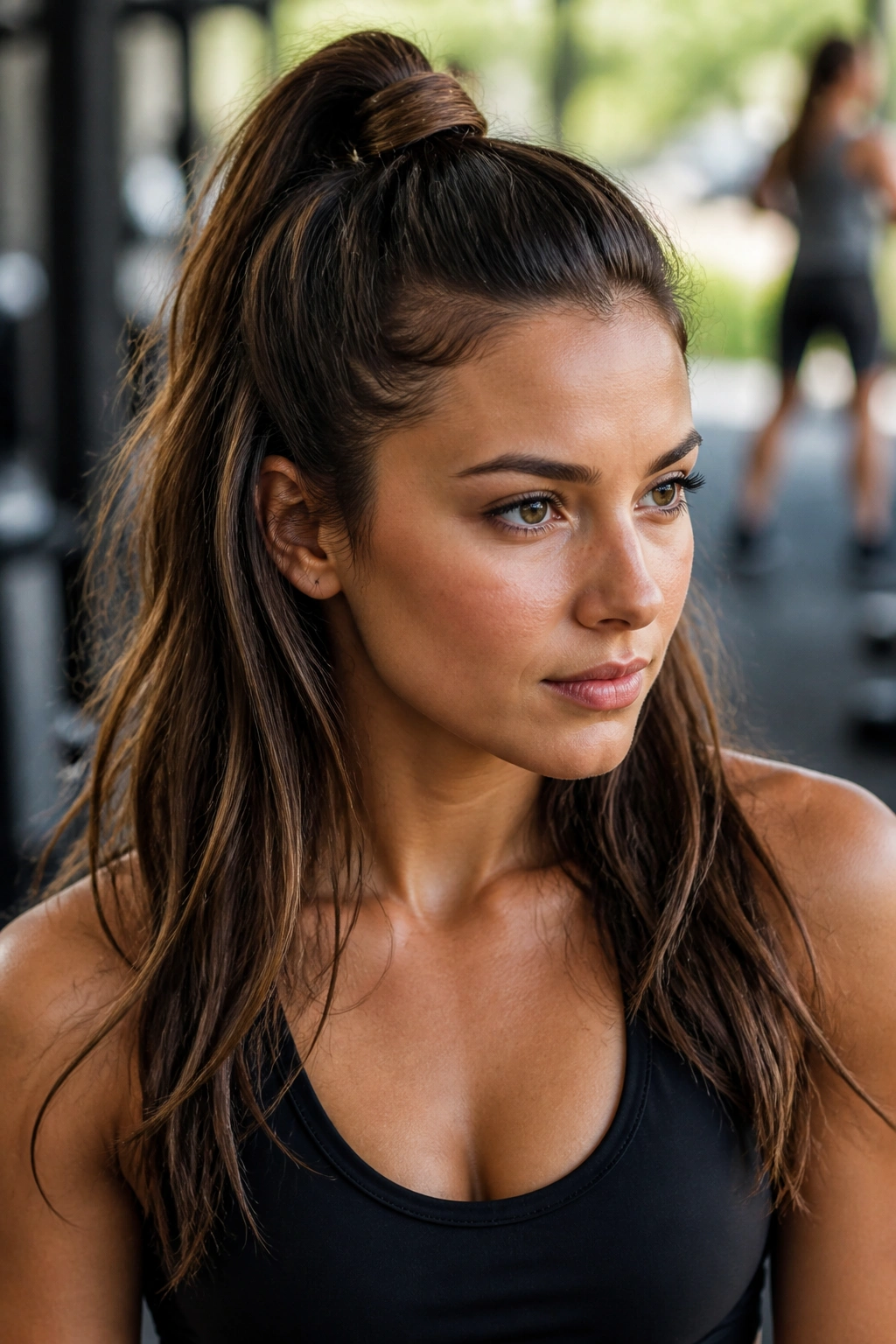
A sporty half-up ponytail is what you wear when you need the hair out of your face and you need it to stay there. No drama. No fuss.
Use a snag-free elastic and pull the top half firmly enough that it won’t slip, but not so hard that the scalp feels tight after an hour. If the hairline is prone to flyaways, smooth it with a dab of gel or cream on your fingertips. The idea is control, not shine.
Best features of this version
- Holds up well during movement.
- Keeps long hair from sticking to the neck.
- Works with straight, wavy, or lightly textured hair.
- Takes under five minutes once you get used to it.
If the length below is very long, you can braid the free section or leave it straight. Either way works. The important part is that the top section stays compact and secure. A wrapped elastic helps here too, especially if you want the style to look cleaner after a workout or a walk.
It’s the kind of style that proves practical hair can still look intentional.
22. Evening Half-Up Ponytail with Glossy Ends
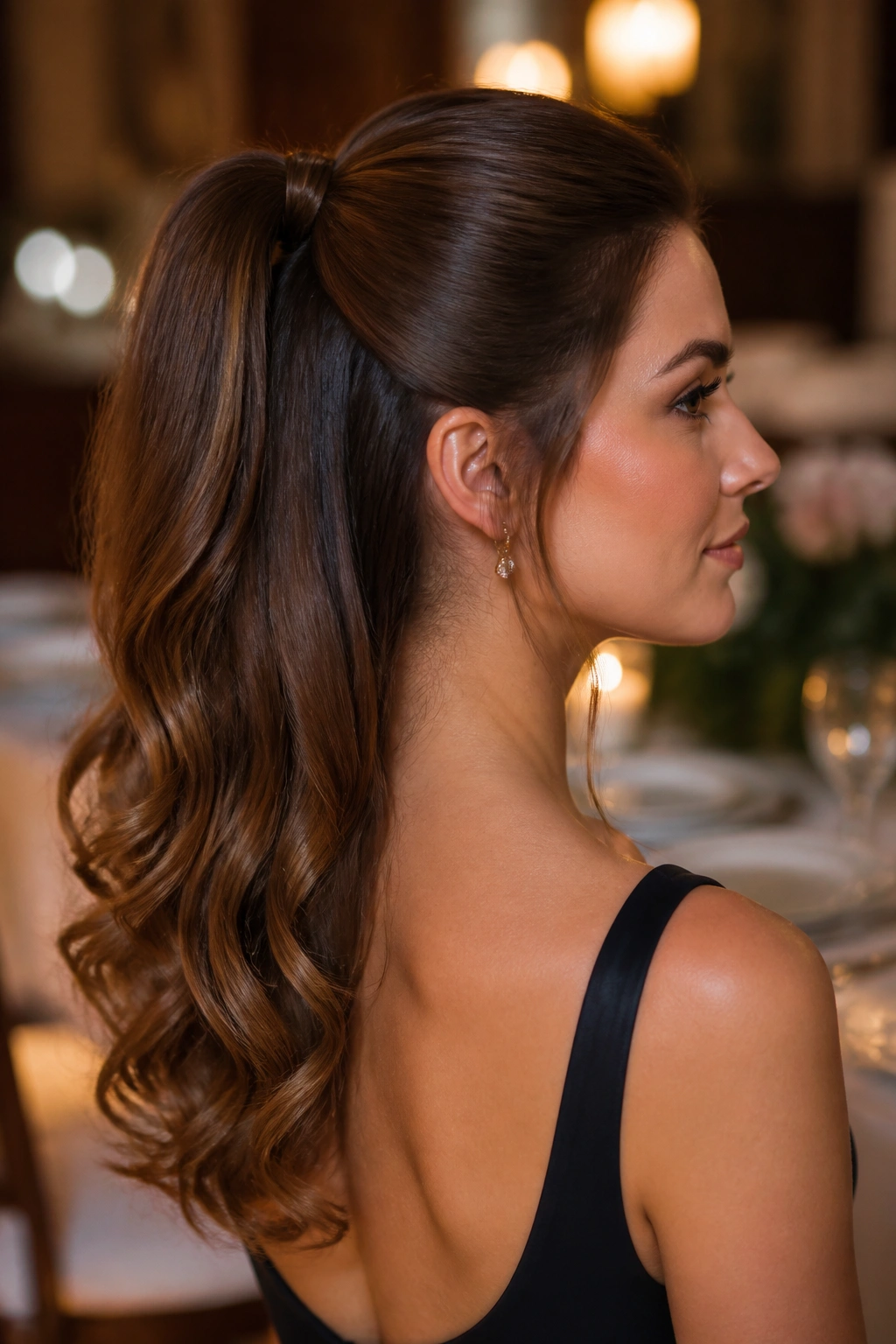
For evening, I like a half-up style that looks deliberate from the front and soft from behind. The glossy-ended version does that without trying too hard.
Start with a smooth crown and a polished half-up base, then curl or bend the loose lengths so the ends have movement. The contrast matters. If the top is too soft and the bottom too flat, the whole style loses shape. A small wrapped section around the elastic, a tucked pin, or a slim barrette can give the back enough finish to feel dressed.
I usually leave one or two face-framing pieces out, especially if the hair is layered. That keeps the style from looking boxed in. A little shine serum on the ends helps the loose lengths look healthy under indoor light, which can be unforgiving if the hair is dry.
The nice thing about this kind of half-up ponytail is that it works with gowns, dinner clothes, or anything that needs a bit of polish without turning into a full updo. Long hair still gets to move. That is the part I never get tired of.
And if the ends are still shifting a little when you walk, even better.
