



Short ponytails for round faces can be tricky in the nicest possible way. A ponytail that sits too low, too tight, or too wide across the cheeks can make the face look broader than it is. Move the elastic a few inches, leave a few strands loose, and the whole shape changes.
That is why the right short ponytail is less about length and more about line. Round faces usually look strongest with a little height at the crown, a part that isn’t dead center every single time, and movement near the jaw instead of a hard, blunt edge right at cheek level. None of that requires long hair. A chin-length bob, a lob, or shoulder-grazing layers can still pull off plenty.
Texture matters too. Fine hair needs lift and grit so it does not collapse by lunch. Thick hair needs control so the shape does not balloon out at the temples. And if your layers keep slipping free, that is not a failure. It usually means the elastic is in the wrong place or the base needs a smarter grip.
These 18 looks stay close to the head, work with shorter lengths, and keep the eye moving in the right direction. Some are sleek, some are loose, and a few lean messy on purpose. That mix is the point.
1. Sleek High Ponytail That Adds Height at the Crown
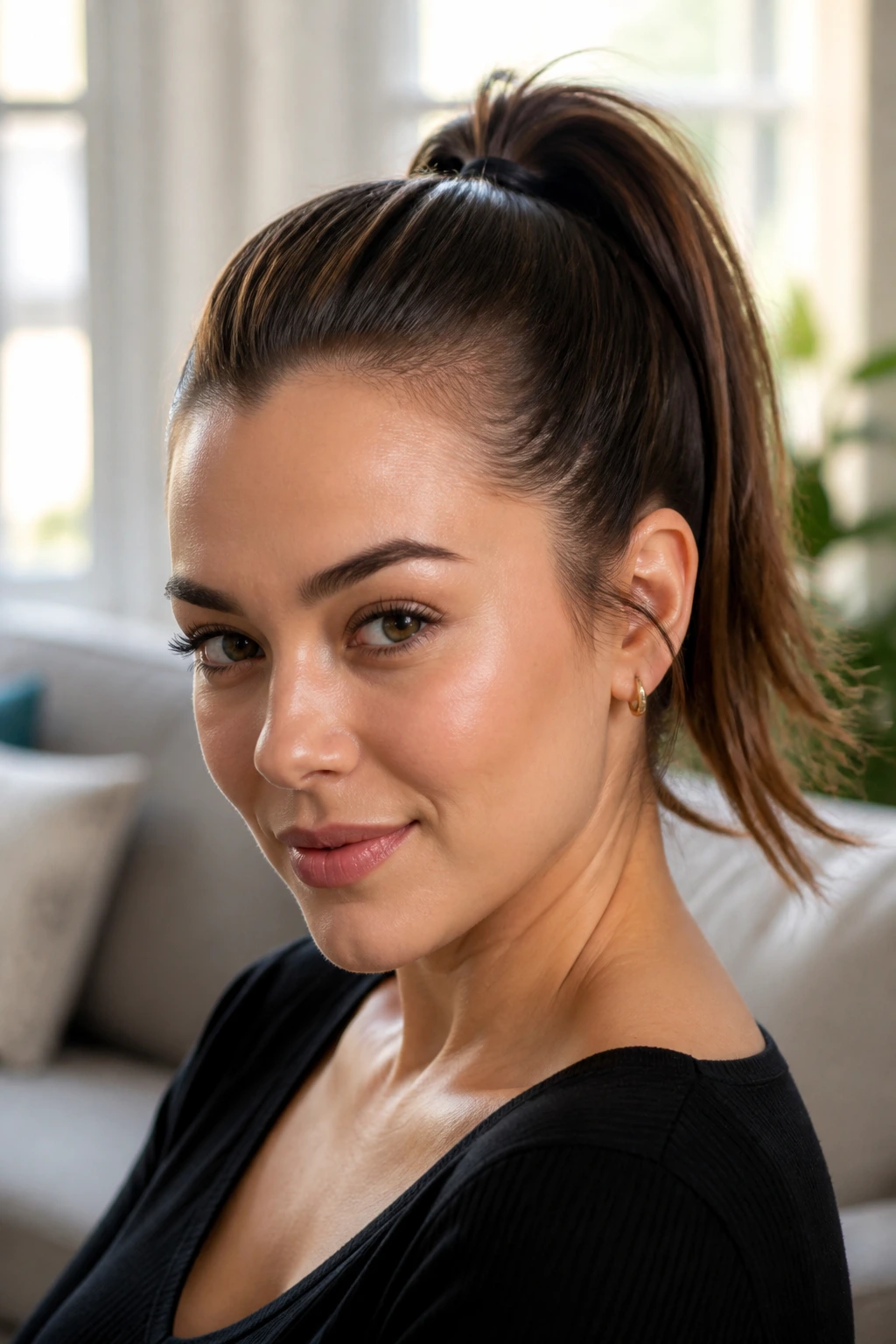
Height changes everything. A high ponytail pulls the eye upward, which is exactly why it works so well on round faces. The trick with short hair is to place the elastic at the highest point you can manage without stretching the sides flat.
A lot of people make the pony too tight at the temples. I would skip that. Keep the top smooth, yes, but leave a sliver of softness around the hairline so the head does not read as one hard circle. A little lift at the crown gives the face more length than a perfectly plastered finish ever will.
Keep the crown soft
- Backcomb the crown in two small sections with a fine-tooth comb.
- Smooth only the top layer, not every millimeter of hair.
- Place the elastic 1 to 2 inches above where you would normally tie a low ponytail.
- Wrap a thin strand around the base to hide the elastic and make the style look cleaner.
- Use a light mist of hairspray, not a helmet.
My favorite detail: leave the ends a little airy. Short ponytails look more modern when they move.
2. Deep-Side Low Ponytail That Skims the Jaw

Can a low ponytail flatter a round face? Absolutely, if the part does the heavy lifting. A deep side part creates a diagonal line, and diagonal lines are your friend when you want the face to feel a touch longer.
Keep the ponytail low, right at the nape or just above it. The side part does most of the visual work here, while the low placement keeps the style calm instead of bulky. If your hair is short enough that the tail is tiny, that is fine. A small, neat pony can still look deliberate.
Why the diagonal matters
A center-heavy shape tends to echo the roundness of the face. A side part breaks that up. It gives one side more openness and the other side a little sweep, which changes how the whole silhouette reads.
I like this style on hair that has a bit of bend at the ends. A 1-inch curling iron, used only on the last 2 to 3 inches, gives the ponytail a gentle curve instead of a stiff line. That tiny bend keeps the style from looking severe.
It feels quiet. That’s the appeal.
3. Half-Up Ponytail with Soft Ends
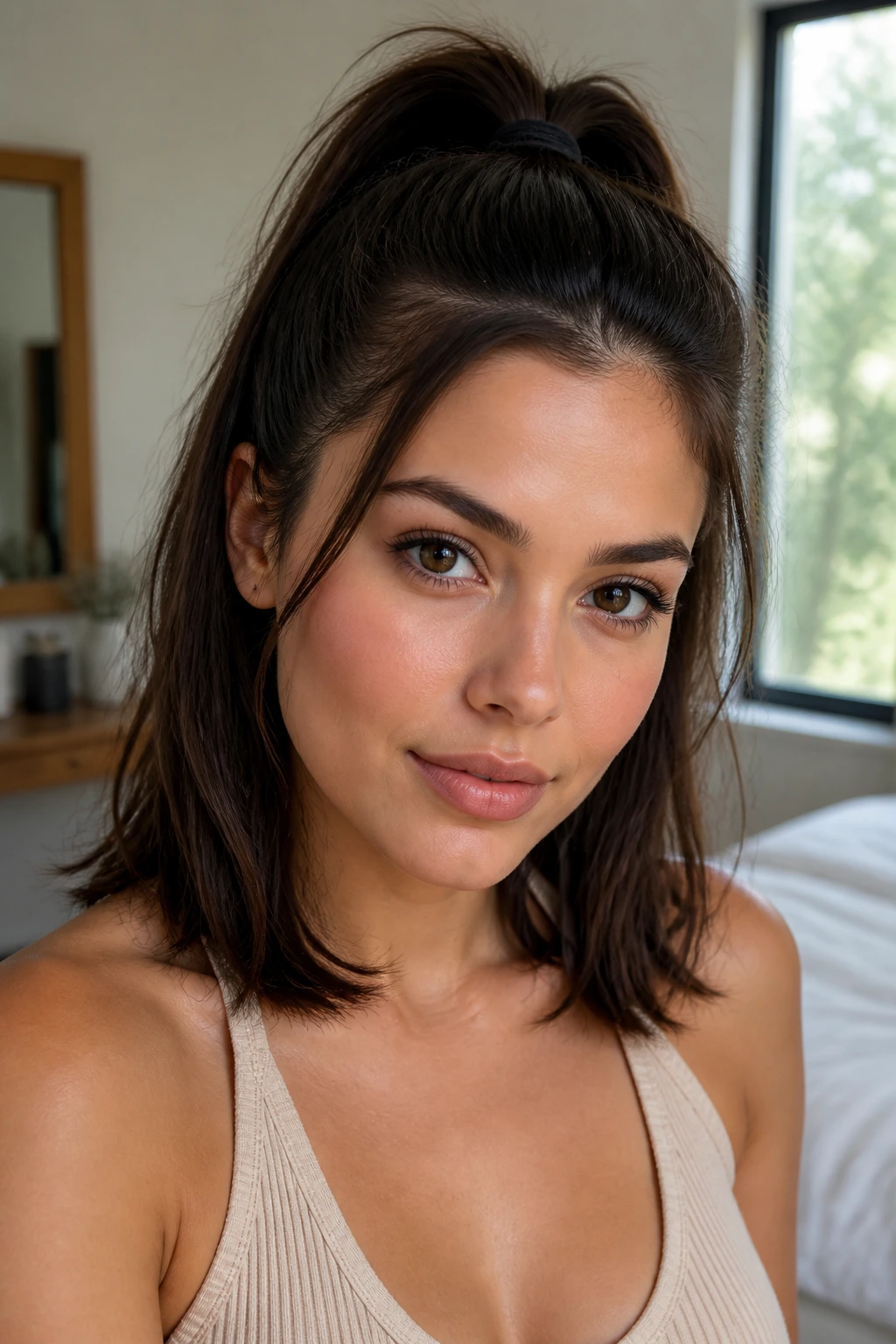
If your hair barely reaches your shoulders, a full ponytail can feel cramped. A half-up ponytail is a smarter move because it lifts the top section while letting the rest keep its length. On a round face, that extra top lift matters more than you might think.
The top section should be small enough to keep the style light. Too much hair pulled into the crown can make the head look wide instead of lifted. Keep the tie above the widest part of the cheeks, and let the lower hair fall loose and soft.
- Gather hair from temple to temple.
- Secure it with a small elastic about 1 to 2 inches above the crown.
- Leave two thin face pieces loose if you want a softer edge.
- Curl the ends under slightly, or leave them straight if your cut is blunt.
This one works because it keeps the face open while still giving you that ponytail feeling. The loose ends keep the shape from turning boxy.
4. Bubble Ponytail for Shoulder-Grazing Hair
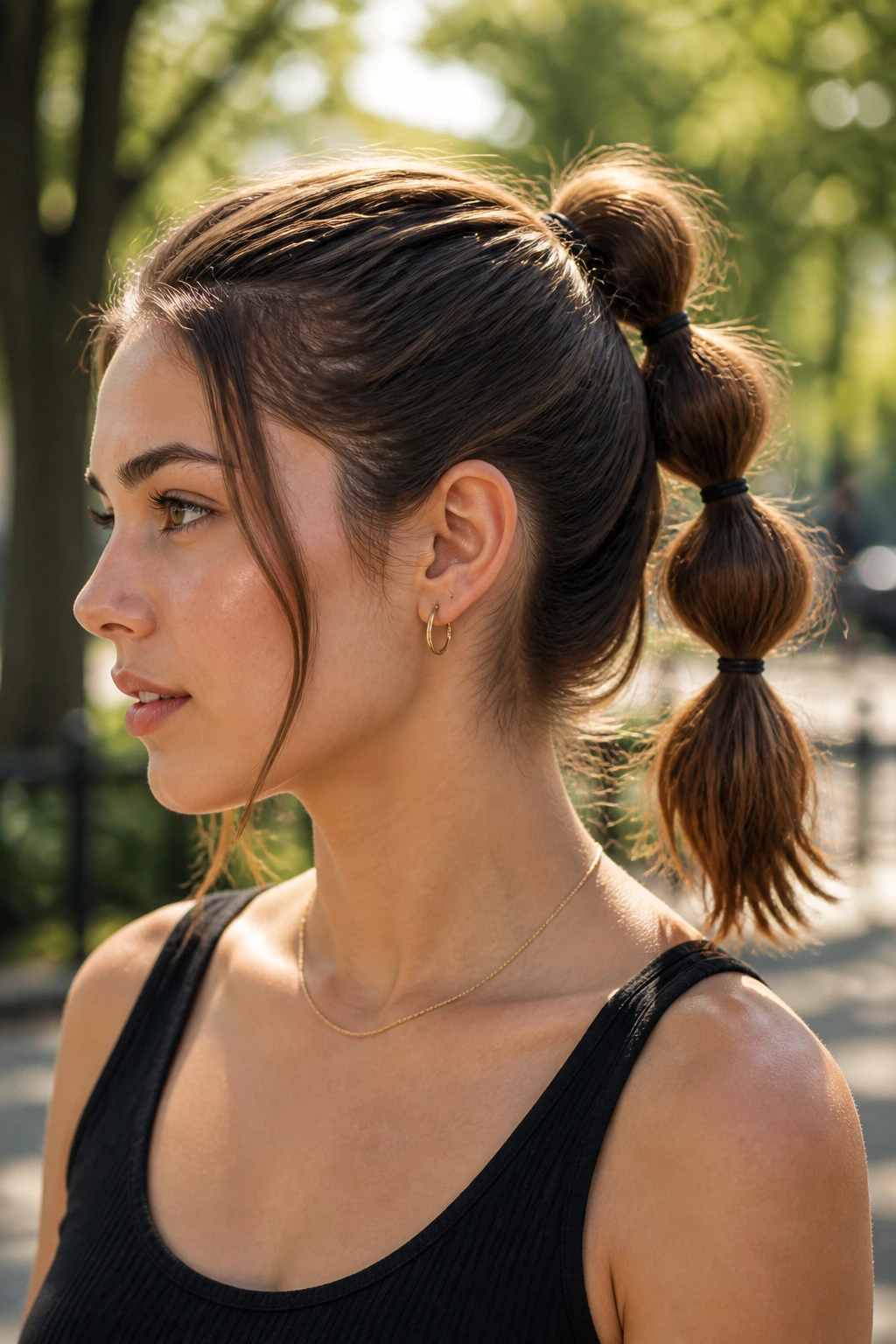
Short hair can do bubbles, and it does not have to look childish. The spacing just has to be tight and controlled. A bubble ponytail gives the hair a vertical rhythm, which helps a round face look longer without needing much extra length.
Start with a small ponytail at the back of the head. Then add clear elastics every 1.5 to 2 inches down the tail, puffing each section gently with your fingers. If your hair is especially short, two bubbles may be enough. Three is usually the limit before it starts to feel crowded.
What to watch for
- Keep the bubbles narrower at the sides than at the center.
- Don’t over-pull each section; you want shape, not puff.
- Use a little texture spray so the elastics stay put.
- If the hair is layered, pinch the ends into the bubbles instead of trying to force them smooth.
The reason this works on round faces is simple: the eye follows the breaks down the tail. That vertical movement helps, especially when the face itself has soft curves. Too many wide bubbles can widen the head shape, though, so keep it restrained.
5. Face-Framing Ponytail with Curtain Pieces
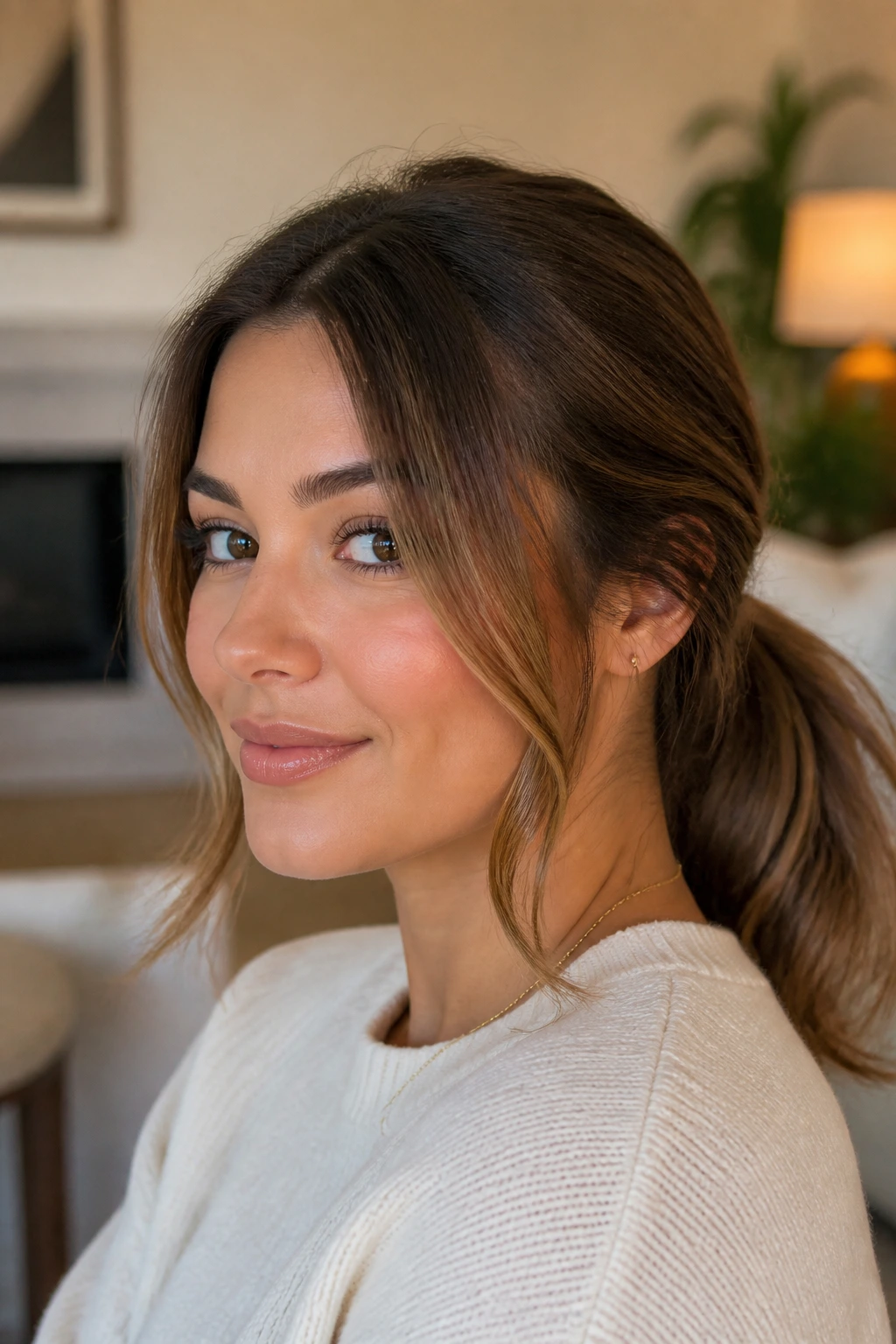
The first thing you notice is the movement around the cheeks. That is what makes this ponytail so useful on a round face. Instead of dragging everything back, you leave a pair of curtain pieces or soft front layers to shape the sides of the face.
Those pieces should start higher than the cheekbone and curve away from the jaw. If they sit too low and too thick, they can land right on the widest part of the face, which is not the goal. Thin pieces work better here than heavy chunks. They feel lighter, and they keep the style from looking weighed down.
I like this one when the ponytail itself is short and the front needs some softness. A 1-inch curling iron or even a round brush and blow-dryer can bend the face pieces away from the cheek. That little curve is doing more work than most people realize.
This style also looks good with a middle part or a slight off-center part. Both work, but the pieces need a gentle curve, not a hard curl. Sharp ringlets near the cheeks can make the face look busier than it needs to be.
6. Twisted Side Ponytail for a Softer Angle
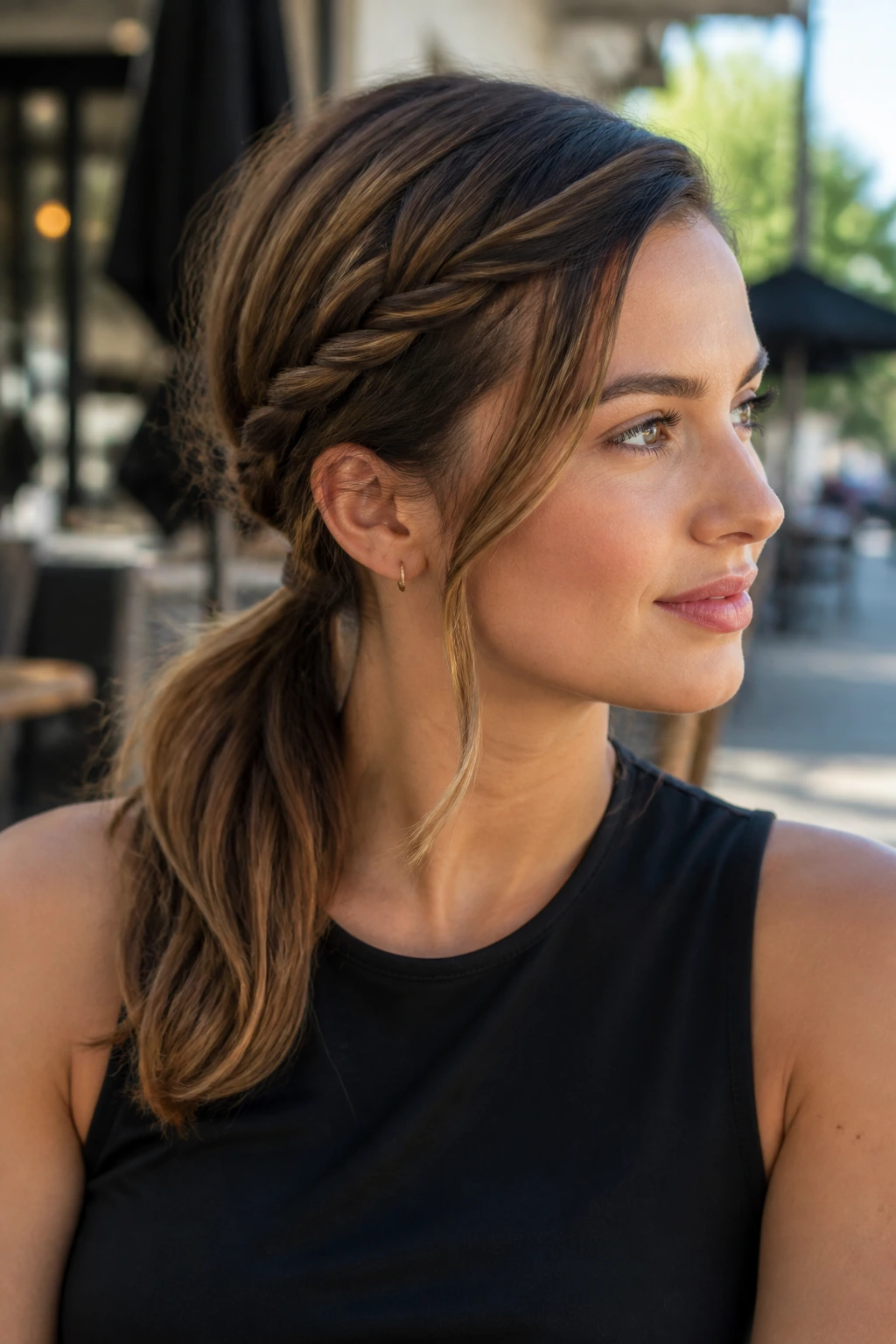
A side twist does more than a standard ponytail ever could. It pulls the eye diagonally, which is exactly the kind of line that helps a round face feel less wide. The style is also forgiving when your hair is layered and not every strand wants to cooperate.
Take one front section from the temple, twist it back along the hairline, and pin it behind the ear before gathering the rest into a side ponytail. If your hair is short, you can twist both sides and meet them at one point. It still works. The whole look feels softer than a straight-back ponytail, and softer is often smarter here.
How to keep the twist in place
Use a little styling cream or paste on your fingertips before twisting. That gives the short pieces more grip without making them greasy. Then secure the twist with two crossed bobby pins instead of one lonely pin, because one pin tends to slide.
If you want a bit more polish, curl just the tail ends under with a flat iron. The twist, the angle, and the tucked ear line all work together. It’s a small shift, but it changes the shape fast.
7. Textured Ponytail with Loose Waves
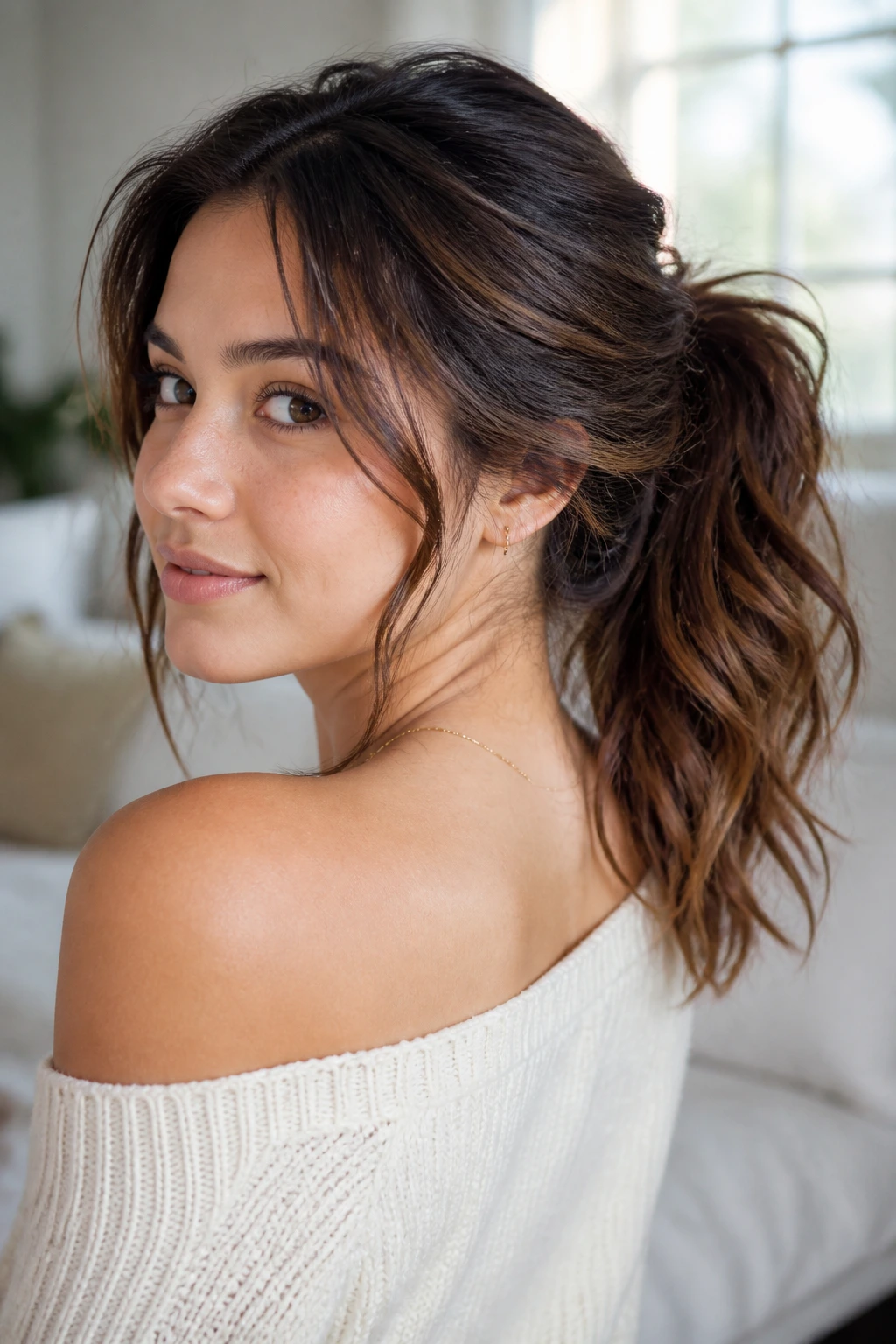
Why does texture help so much on a round face? Because a smooth, single shape can echo the face’s curves, while loose texture breaks that outline apart. You get movement, and movement keeps the style from sitting like a perfect circle at the back of the head.
This ponytail works especially well on fine hair. A little mousse at the roots, a rough dry, and a few bends with a curling iron give the hair enough body to hold the style. Thick hair can wear it too, but the waves need to be separated with fingers so they do not clump into one heavy mass.
- Use a 1-inch iron for soft bends.
- Mist texture spray from 6 to 8 inches away.
- Shake out the waves before tying the ponytail.
- Stop brushing once the hair is in place; fingers are enough.
I like this look because it feels casual without turning sloppy. The waves make the ponytail wider in a useful way, then the placement keeps the face shape open. If your hair is cut in layers, this is one of the easiest ways to make the shorter pieces look intentional.
8. Wrapped-Base Ponytail with a Hidden Elastic
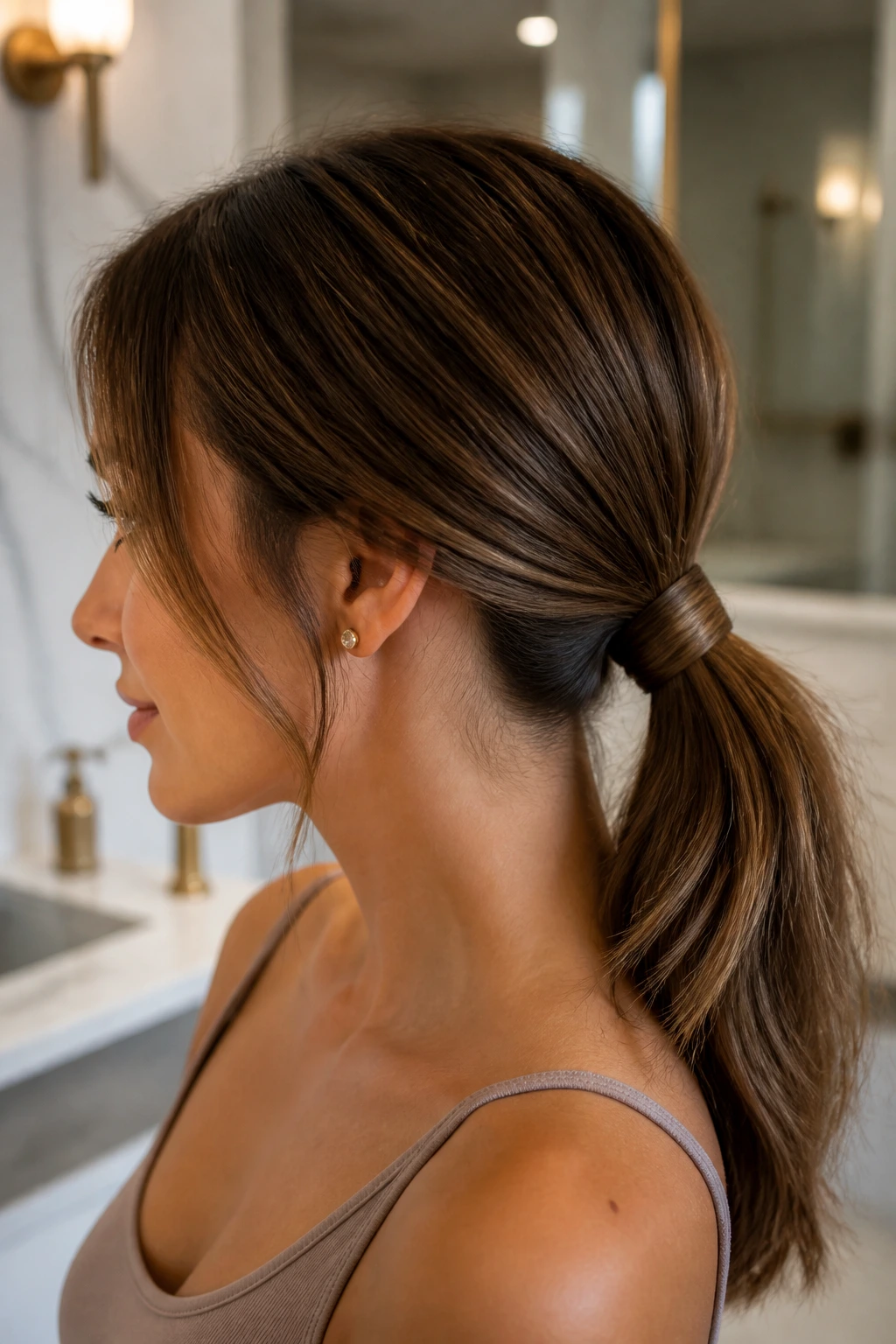
You have a short ponytail that looks fine from the front but a little rough at the base. A wrap fixes that. It makes the whole style look longer, smoother, and more finished, which matters when you are working with less hair.
Pull a thin strand from underneath the ponytail, wrap it once or twice around the elastic, and pin the end underneath with a bobby pin. If your hair is too short to wrap cleanly, use a small piece from the underside and pin it in place before the final wrap. The goal is not perfection. The goal is a cleaner base.
When the wrap is worth the extra minute
It is worth doing for work, dinners, photos, or any day when a ponytail needs to look deliberate. It also helps short layers disappear a little better, since the eye stays on the polished base instead of every short piece around it.
A tiny wrap does a lot. It makes the ponytail feel denser, and on a round face that extra length at the base gives the style a more vertical read. Small detail, big effect.
9. Low Ponytail with a Side Part and Tucked Front
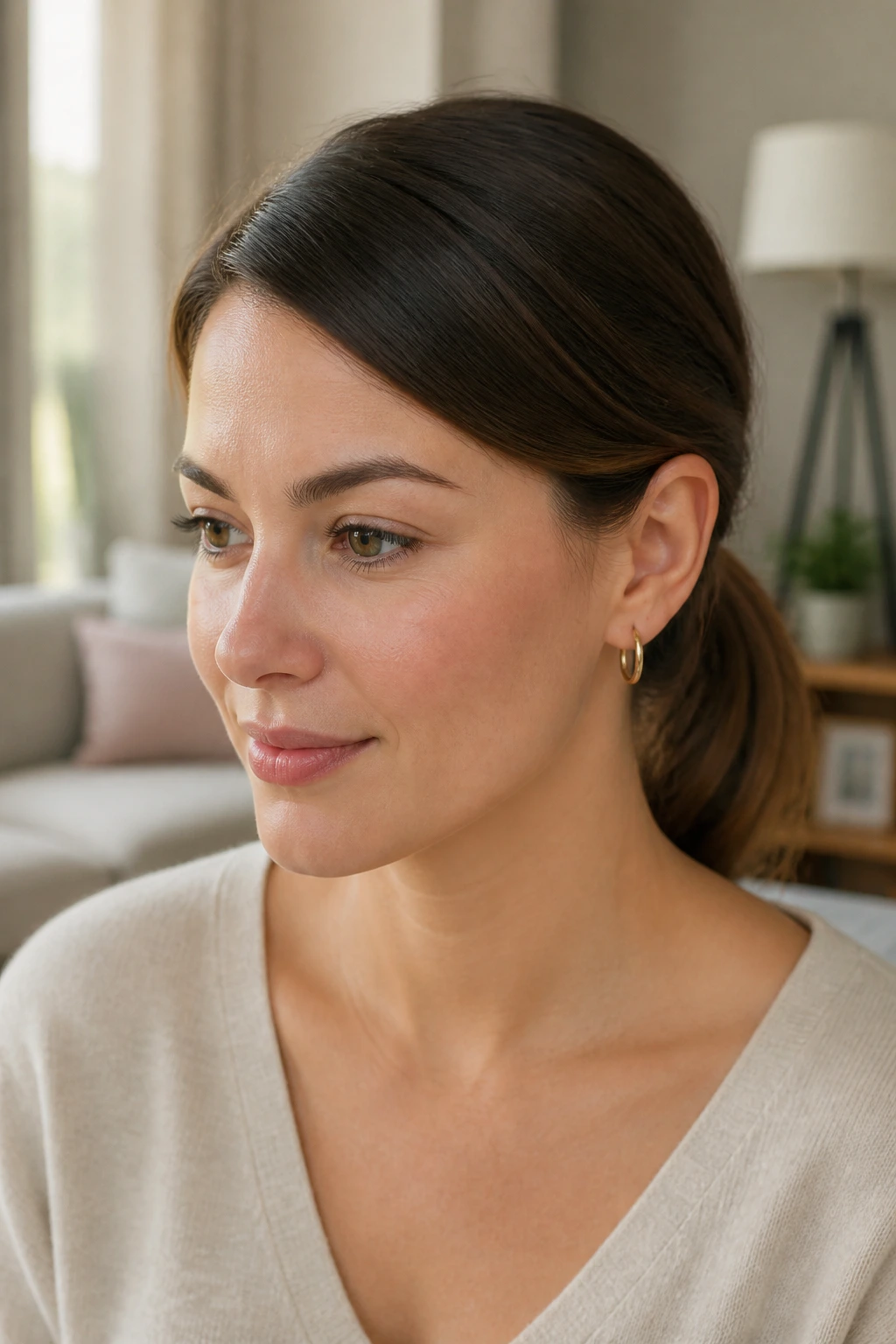
Not every round face needs height. A low ponytail with a side part and one side tucked behind the ear can be just as flattering, sometimes more so. It depends on the hair, but I reach for this shape when I want something calm and structured.
The side part gives the face asymmetry. The tucked front opens up one cheek and jawline, which helps the face feel less wide in the middle. Keep the pony at the nape or just below it, and avoid pulling every front layer tight. A little softness around the face keeps the style from looking severe.
This is a nice choice if your hair is thick or has a lot of natural bend. It lets the hair fall in a controlled way without making the silhouette too big. I also like it for short layered cuts because the tucked side helps the shorter pieces behave.
The clean finish matters here. Use a light serum only on the ends, not the roots, so the crown stays airy. Flat, shiny roots can make the style look heavier than it is.
10. Mini Ponytail for Chin-Length Hair
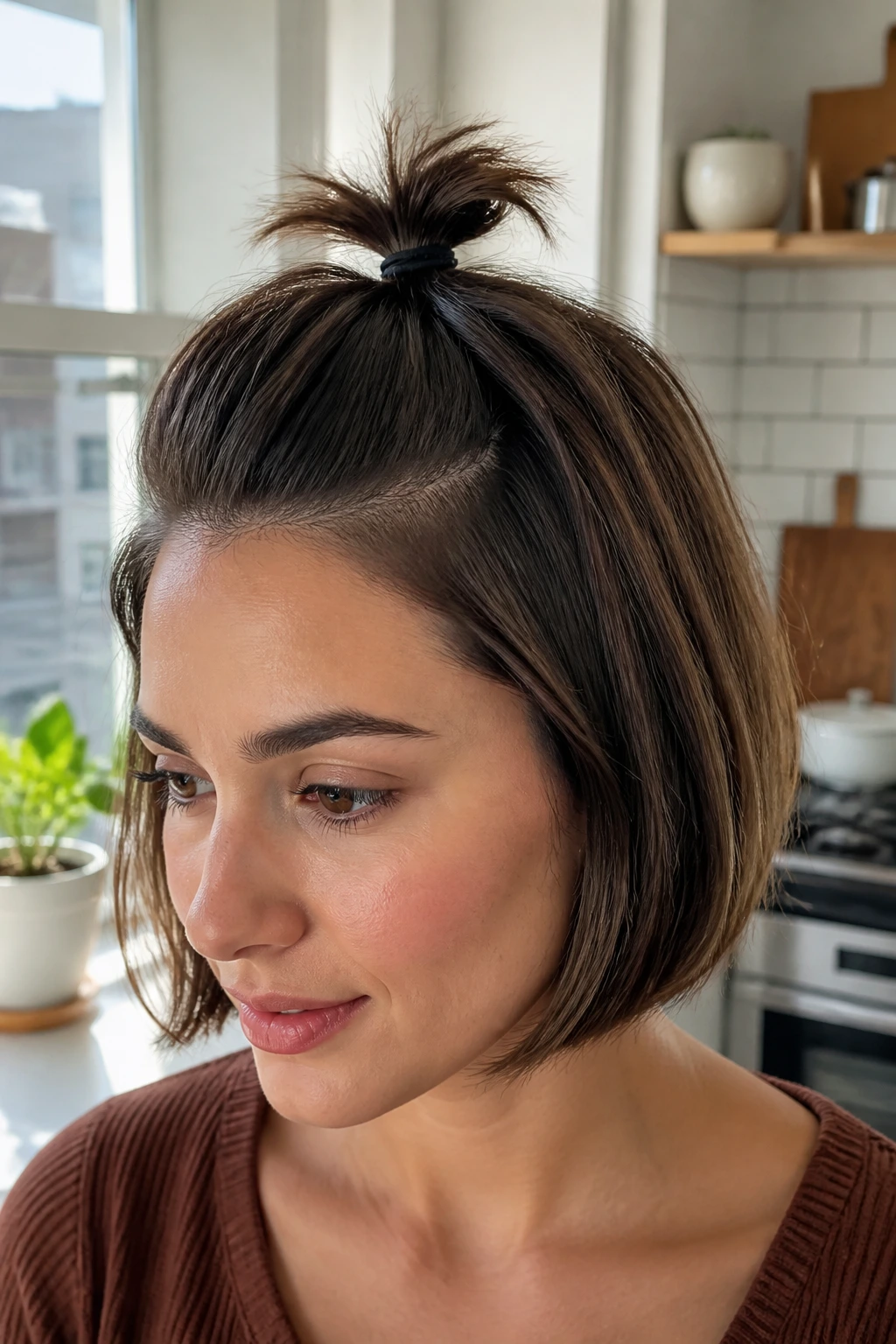
A tiny ponytail can still change the shape of a short cut. If your hair barely reaches the nape, or only your top layers can make it into a tie, that is still enough. The point is to lift the hair away from the face and create a little vertical line.
I prefer this style when the ponytail sits close to the head. A big, loose tail on chin-length hair can look awkward, but a compact mini ponytail reads as clean and deliberate. Use a small elastic, smooth the top section, and stop before the style gets overworked.
If your hair barely reaches the nape
- Gather only the top third to half of the hair.
- Tease the crown once or twice for lift.
- Secure with a mini elastic that grips tightly.
- Leave the ends slightly messy instead of forcing them flat.
This one is especially good on round faces because the crown lift adds length where it matters most. The tiny pony keeps the focus up top, while the loose pieces near the neck stop the style from feeling too rigid.
11. Ponytail with Wispy Bangs and Bent Ends
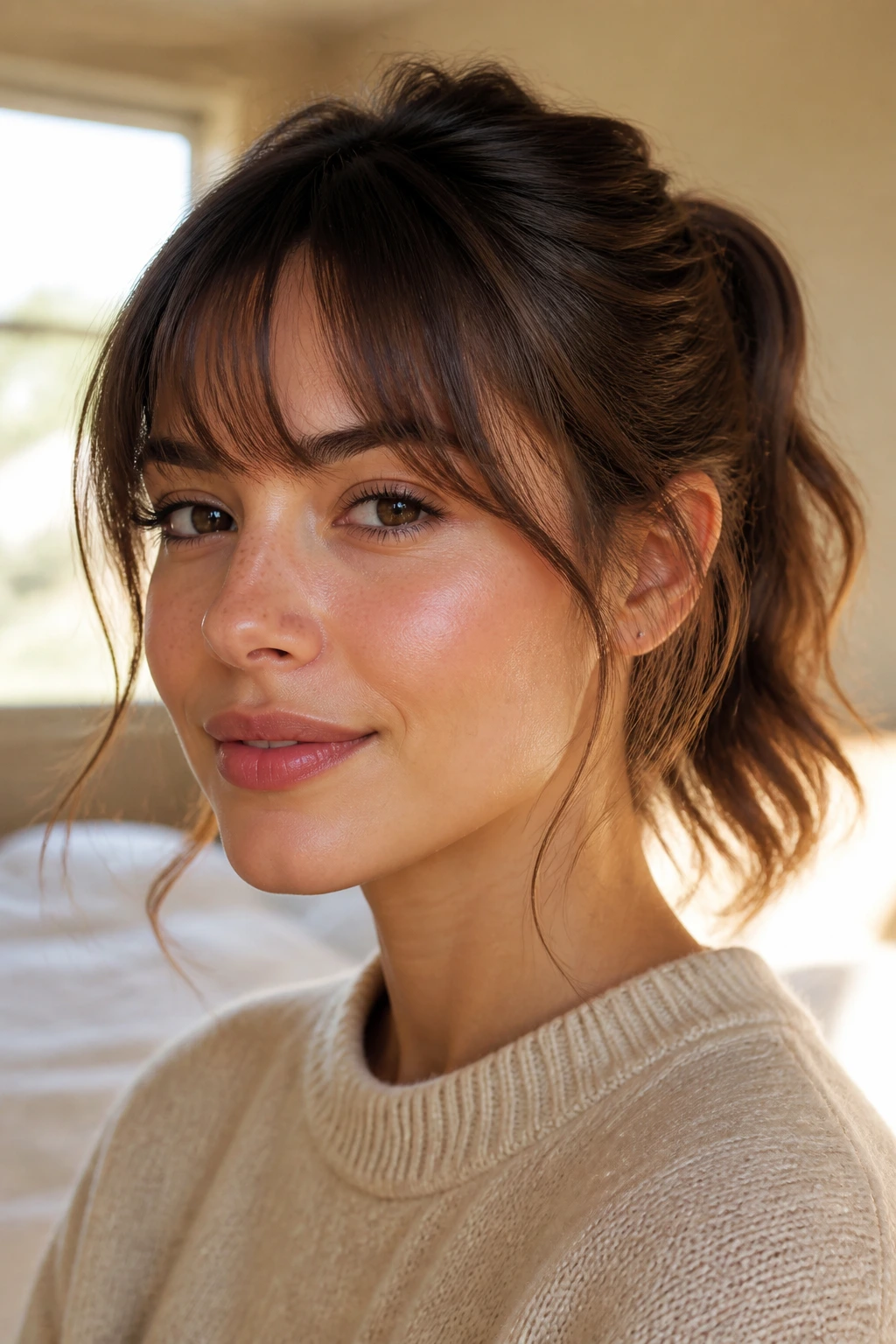
A few airy bangs can change the whole ponytail. Wispy bangs soften the forehead area, and on a round face that can make the whole style feel lighter. The key word is wispy. A heavy blunt fringe can chop the face in an odd way, while soft pieces break it up gently.
The ponytail itself should stay small or medium in size, usually low or mid-height. Let the bangs stay loose, and bend the tail ends slightly with a flat iron or curling iron. Straight, stiff ends can make the cut feel boxy. Soft ends feel easier.
This style is especially good if your bangs are growing out. Instead of fighting them, let them do a job. Sweep them forward, give them a little curve, and tie the rest back. It’s one of those looks that seems simple but actually saves you from wrestling every short piece into the elastic.
I like it on fine hair because the wispy bangs keep the front from looking too bare. The face still shows, but the hair has enough softness to make the shape feel deliberate.
12. Braided-Base Ponytail for Short Layers
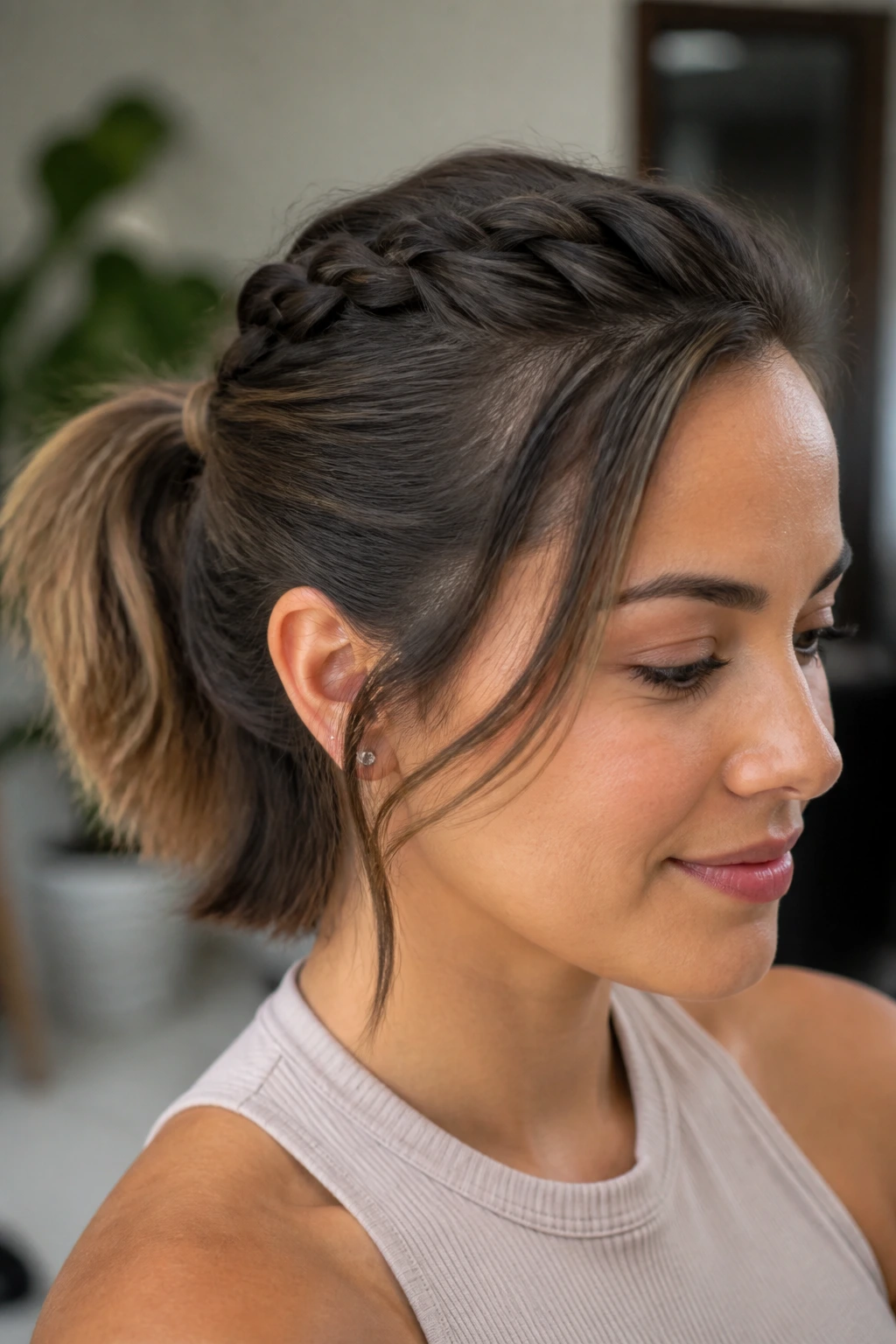
What do you do when short layers keep slipping out of the elastic? Braid the base first. A small braid across the crown or along one side gives the shorter pieces something to latch onto, and it adds a line that helps a round face look a bit longer.
A simple three-strand braid is enough. Start near the hairline, braid for 2 to 3 inches, and then gather the rest into a ponytail. If your hair is very layered, the braid can run from temple to ear before joining the tail. That little bit of structure keeps flyaways from turning messy in the wrong way.
The braid does the heavy lifting
The braid gives the ponytail a built-in shape, which helps the whole style feel tighter and more defined. It also keeps the top flatter without making the sides too slick. That balance matters on round faces.
Use a small amount of styling cream before braiding so the sections stay smooth. If the braid is too tight, it can pull the face backward and look harsh. If it’s too loose, the short layers escape. You want the middle ground.
13. Flipped-End Ponytail with a Clean Finish
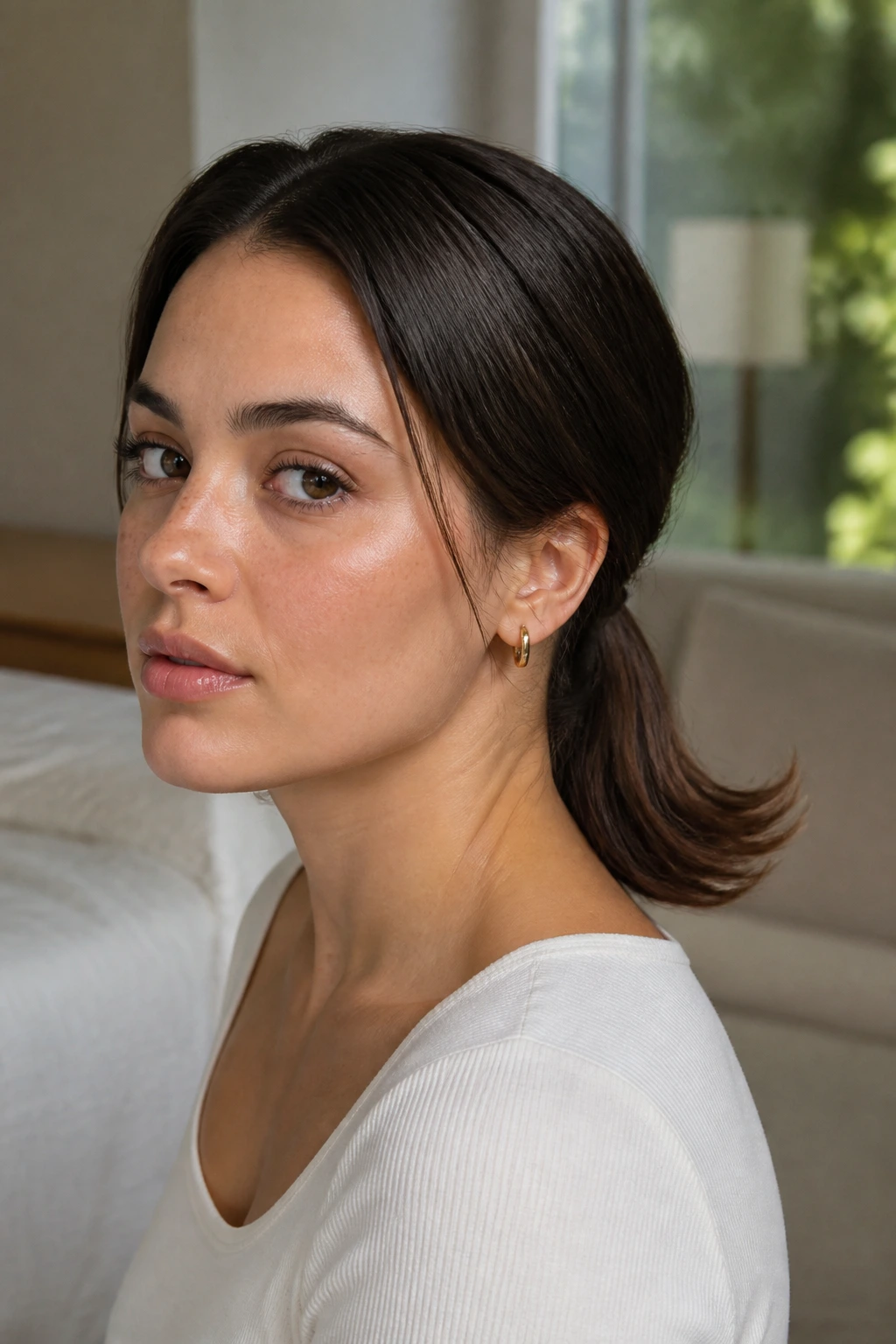
The ends kick out instead of hanging straight. That is the whole charm here. A flipped-end ponytail gives short hair a little motion, and motion keeps the style from turning into a flat block right beside the jaw.
Use a flat iron or round brush to flip the last inch or two of the tail either outward or slightly under, depending on the shape of your cut. Outward flips feel a little more playful. Under flips feel cleaner. Both can work on round faces because they keep the eye moving downward instead of stopping at a blunt edge.
This style shines on straight hair, especially if the cut has a blunt baseline. The flip softens that line. On layered hair, it makes the ends look more intentional and less chopped.
A heat protectant matters here. Short hair shows damage faster because the ends sit so close to the face. Keep the heat on the last section only, and stop once the bend looks clear. Over-styling the tail makes it feel stiff, and stiff is rarely the goal.
14. Messy Crown Ponytail with Loose Tendrils
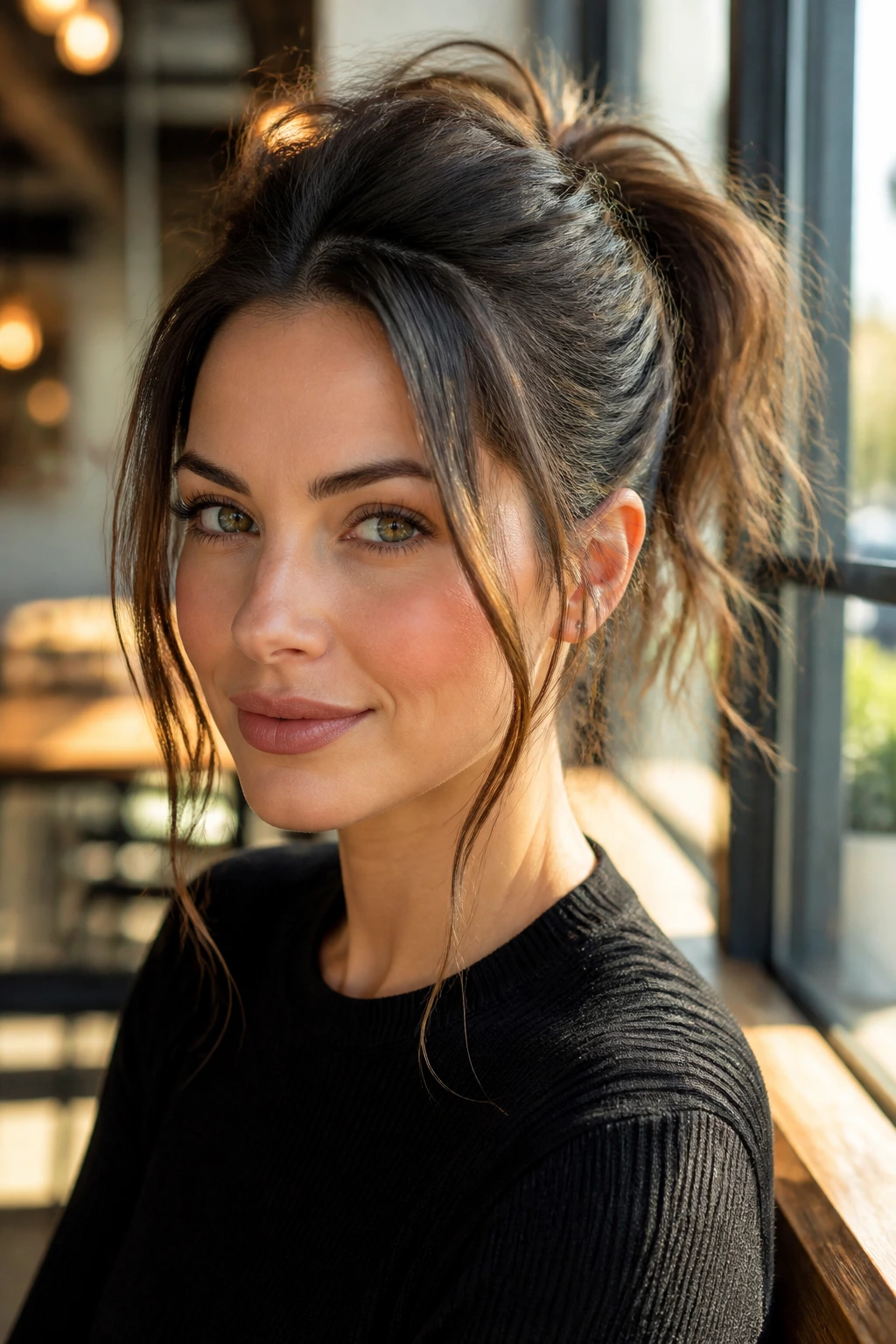
A little mess at the crown can be the right kind of softness. For a round face, that looseness adds lift without forcing the hair into a harsh shape. The trick is to make the mess look chosen, not accidental.
Tease the crown lightly, then smooth the outer layer just enough to keep the lift from looking fuzzy. Pull out two or three thin tendrils around the temples and maybe one near the ear. Those pieces should be narrow, not chunky. Thick tendrils can drag the face wider.
Random flyaways are not the goal.
I like this style on second-day hair because the texture is already there. A little dry shampoo at the roots gives the crown a lift, and the rest of the hair can stay loose enough to move. If your hair is short, the messy crown helps disguise the fact that the ponytail itself is not long.
This look works best when the pony sits mid-height. Too high and it can feel too playful. Too low and the lift disappears. Mid-height keeps it easy and flattering.
15. Claw-Clip Lifted Ponytail for Lob Length
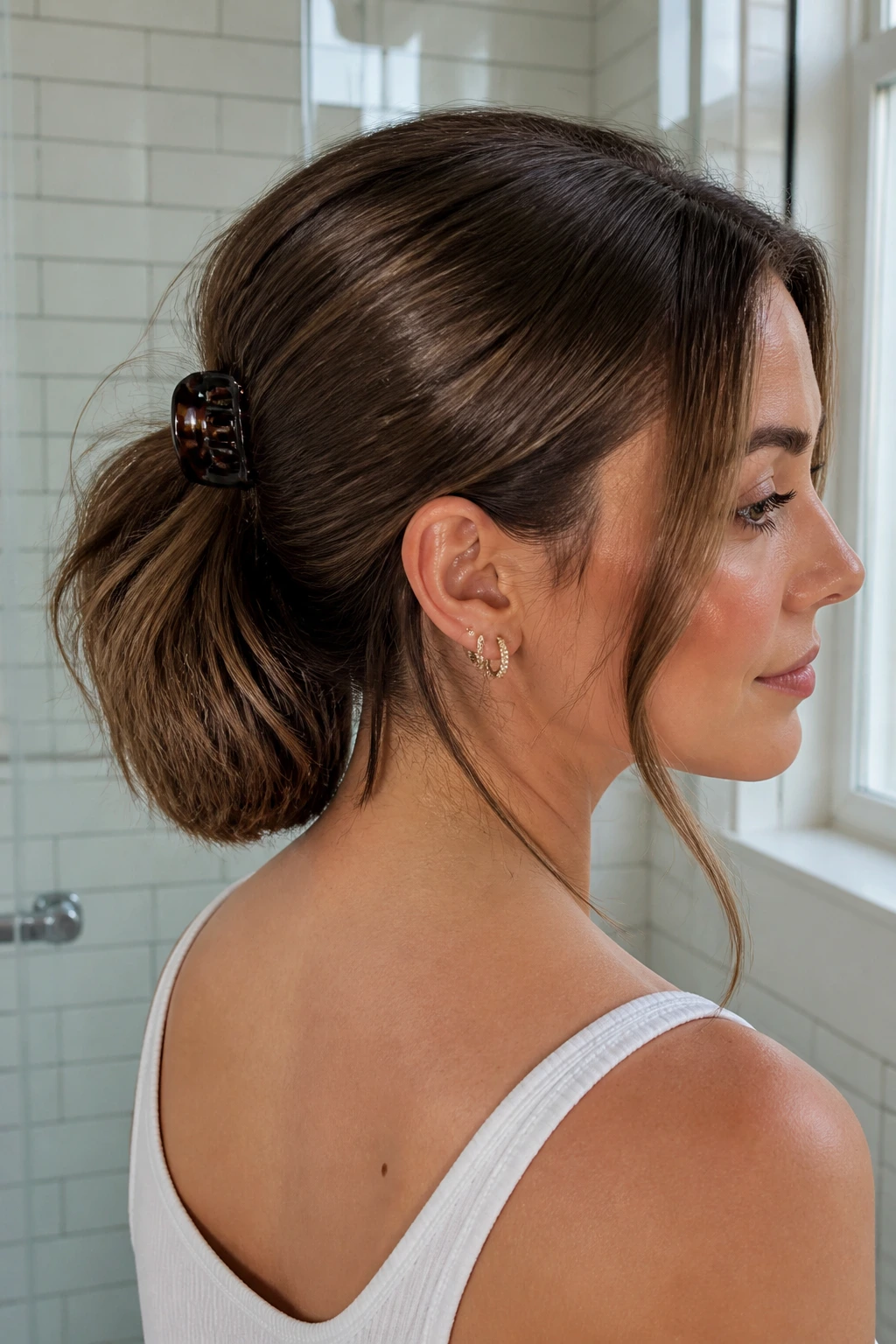
If your lob keeps falling out of a regular ponytail, use a clip as backup. A small claw clip can lift the top of the ponytail and hold those short layers that would otherwise slide down. It also gives the style a little height at the back of the head, which is useful for round faces.
Gather the hair into a low or mid ponytail first. Then place a small claw clip over the base or just above the elastic, catching the top section so it sits slightly lifted. The pony still reads as a ponytail, but the clip adds support and shape. I like this most on hair that brushes the shoulders and wants to flop.
How to fake a fuller tail
- Use a small clip, not a giant one that swallows the head.
- Tease the underside of the pony once before clipping.
- Leave the front soft so the lift stays subtle.
- Choose a clip in a matte finish if your hair is fine; shiny plastic can look cheap fast.
This is one of those styles that saves time on busy days. It’s practical, but it still flatters the face because the lifted base keeps the eye up instead of straight across.
16. Sleek Middle-Part Ponytail with Cheekbone Pieces
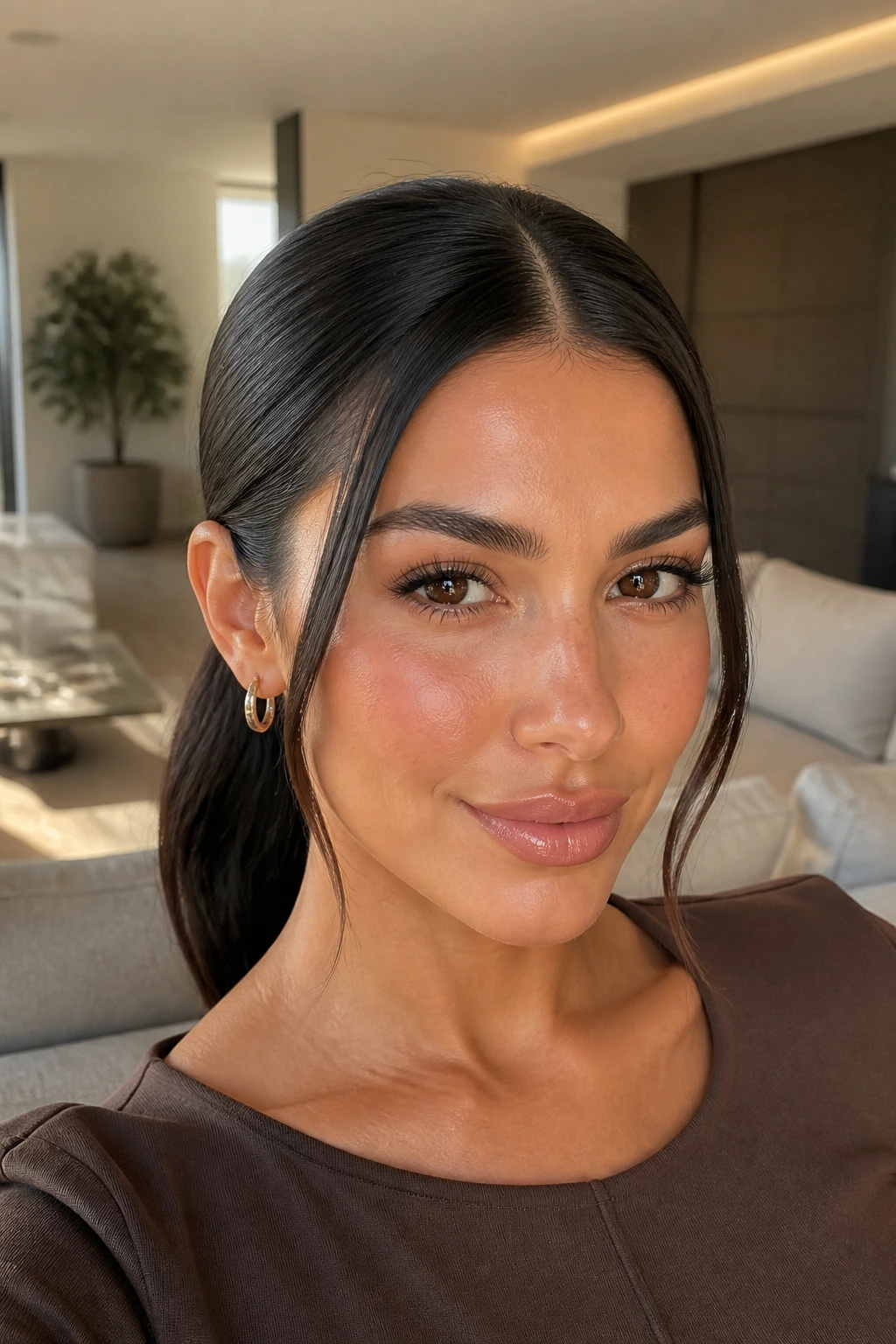
A middle part is not off-limits for round faces. It only becomes a problem when everything gets pulled flat and the front pieces disappear. If you keep a pair of slim cheekbone pieces in front, the style can look clean and balanced instead of wide.
Start with a precise center part. Then leave out two thin pieces from the front hairline and bend them away from the cheeks with a curling iron or round brush. The ponytail can sit low or mid-height, depending on your cut. I prefer this look when the hair is glossy and the finish is neat, because the middle part calls attention to the shape right away.
The front pieces should not cling to the jaw. That is the mistake I see most often. Let them skim outward, not inward. It makes a big difference.
A little shine spray on the ponytail itself can help the style look deliberate. Keep it off the roots if your hair is fine. Too much shine near the scalp can flatten the whole look and make the face feel broader than it is.
17. Sporty High Ponytail with a Small Puff
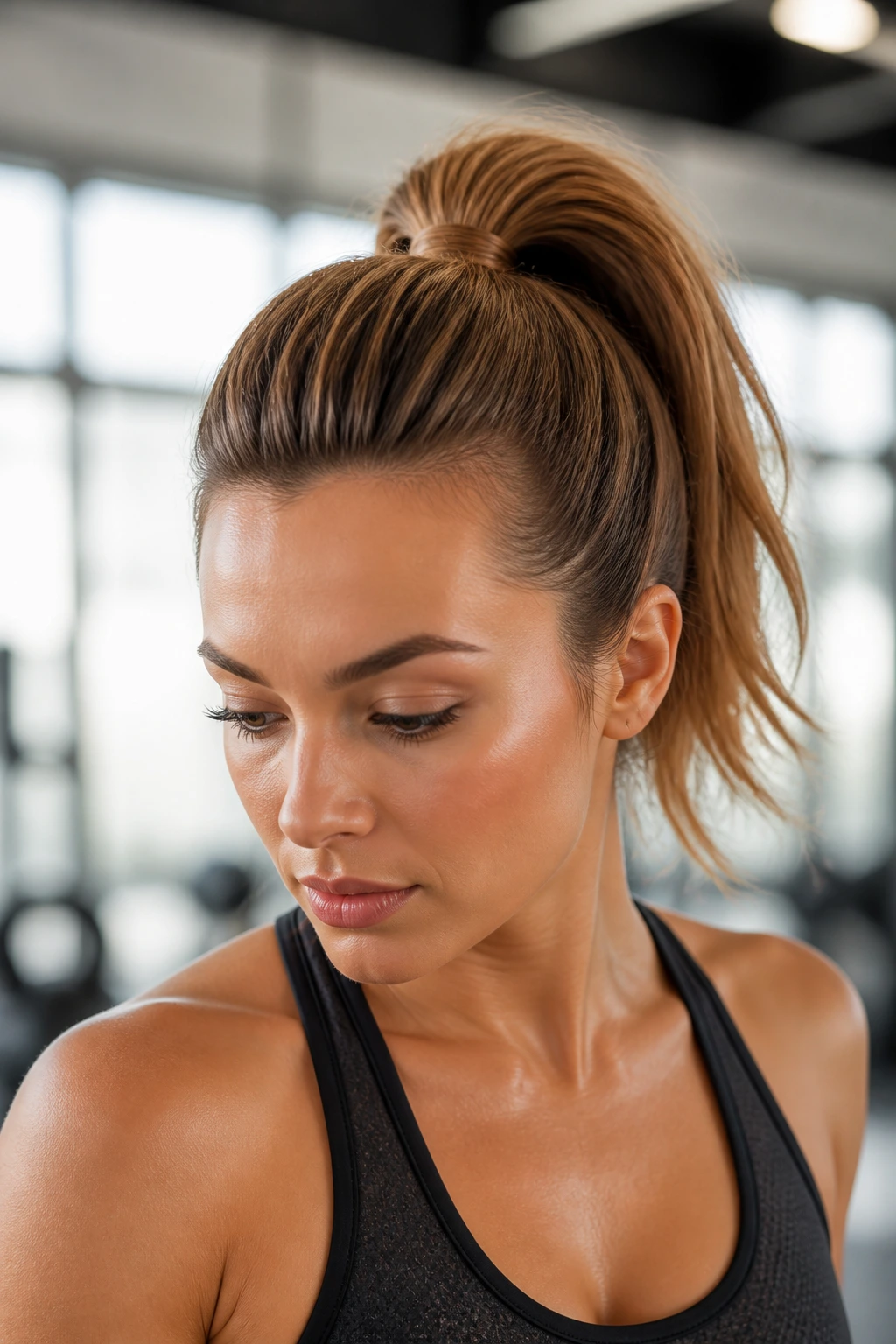
How do you make a sporty ponytail read as shape, not just function? Give the crown a small puff. That bit of lift turns a gym-style ponytail into something that still flatters a round face, because the eye goes up before it goes out.
Backcomb the crown once or twice, smooth the outer layer, and gather the hair high. Keep the puff small. I’m not talking about a big retro bump. Just enough lift to raise the profile and keep the style from sitting too flat against the skull. A soft scrunchie can help if your hair slips a lot.
Best way to keep it from collapsing
Use dry shampoo at the roots before you start. It gives the hair a little grip, especially if the cut is layered or freshly washed. Then pull the ponytail through the elastic once, maybe twice, and stop before the hair gets over-tight.
This style works well on active days because it stays put, but it also has a bit of shape. That matters. A high pony with some crown lift looks sharper on a round face than one that sits smooth and heavy.
18. Faux-Long Ponytail for Short Hair
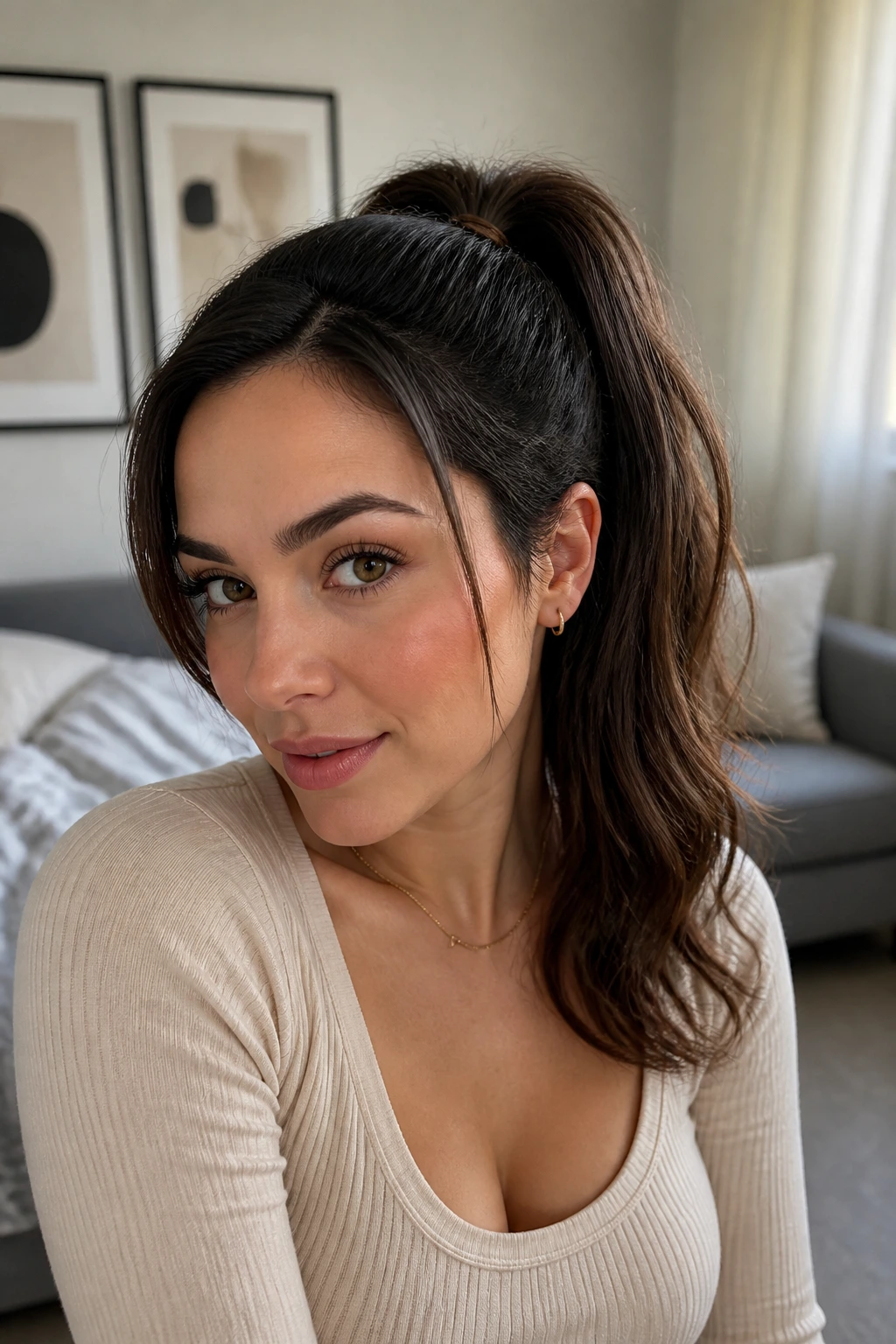
Short hair can borrow length. A wrap-around ponytail extension or a clip-in ponytail piece gives you that longer line without waiting for your own hair to grow out. On a round face, that extra length can be useful because it draws the eye downward and keeps the shape from stopping too soon at the jaw.
The match matters here. Choose a ponytail piece that matches your texture first, then your color. If your hair is wavy, a dead-straight extension will look fake from ten feet away. If your hair is fine, pick a piece that is not too dense or heavy, because thick extensions can overwhelm short hair and flatten the crown.
Placement matters too. Keep your own hair soft around the face and use the extension to create the longer tail. If the attachment sits too low, it can sag. Too high, and the base looks obvious. The sweet spot is usually just above the nape for low styles or at the crown for a higher version.
For me, this is the style to use when you want the most change with the least waiting. Keep your front pieces loose, secure the base well with bobby pins, and let the length fall cleanly. That combination does more for a round face than trying to force a short ponytail into something it is not.
