



Thick hair can do things a fine ponytail only dreams about. It holds shape, swings with weight, and gives you that full, expensive-looking silhouette with almost no effort. It also has opinions. A lot of them.
The wrong ponytail on dense hair pulls at the scalp, balloons at the crown, or collapses into a tired-looking knot by lunchtime. The right one works with the volume instead of trying to flatten it into submission. That’s the whole trick with ponytails for thick hair: you want structure, not force.
A good elastic, a clean part, and a little bit of tension control matter more here than in most hairstyles. Sometimes the smallest move makes the biggest difference — stacking two elastics, wrapping a strand around the base, or shifting the ponytail an inch lower so the weight sits where it should.
Some of these styles are polished. Some are loose on purpose. A few are the sort you throw on when you need your hair out of your face in under two minutes. All of them are built for thick hair that has too much body to behave like a magazine photo.
1. Sleek High Ponytail for Thick Hair
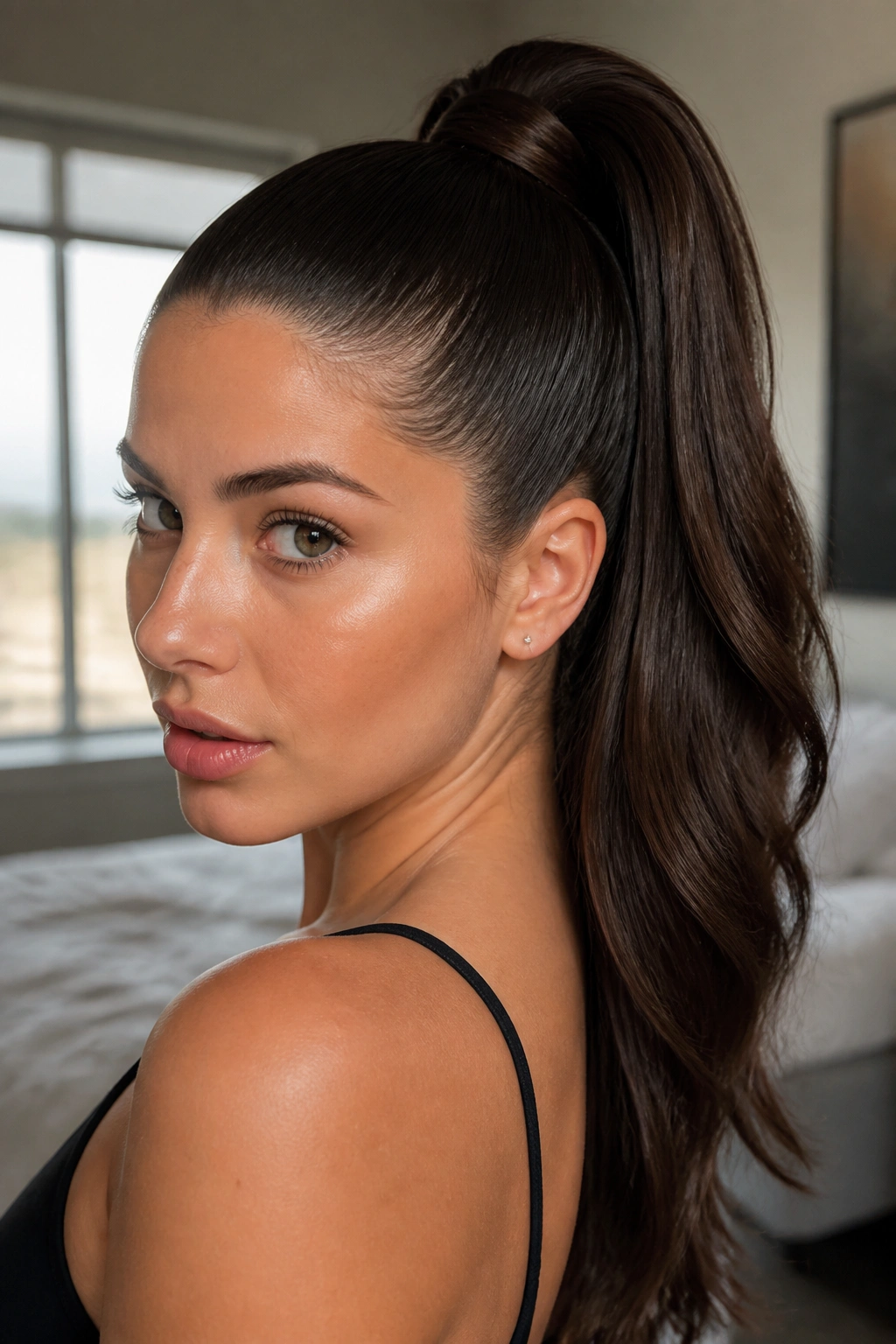
A sleek high ponytail on thick hair looks sharp because it turns volume into shape. The mistake most people make is trying to gather everything in one fast sweep and hoping the elastic can handle it. It can’t. Dense hair needs a base built in stages, or the crown lifts, the sides puff, and the whole style starts looking rushed.
Why It Works on Dense Hair
The height gives thick hair somewhere to go. Instead of dragging downward, the weight is lifted up and back, which makes the tail feel cleaner and more intentional. If your hair is straight or softly wavy, this style can look almost sculpted. If it’s coarse, it still works — you just need more smoothing at the front.
A paddle brush helps, but the real difference comes from how you gather the hair. Pull the sides first, then the crown, then the back. Don’t yank the elastic on the first try. Get the hair into place, tighten, check the shape, and tighten again if you need to.
- Use dry hair, not damp.
- Smooth the top with a light gel or cream.
- Stack a second elastic under the first if the ponytail feels heavy.
- Wrap a thin strand around the base and pin it underneath.
Tip: Hold the ponytail with one hand while tightening with the other. That tiny move keeps the base from slipping before you finish.
2. Low Wrapped Ponytail
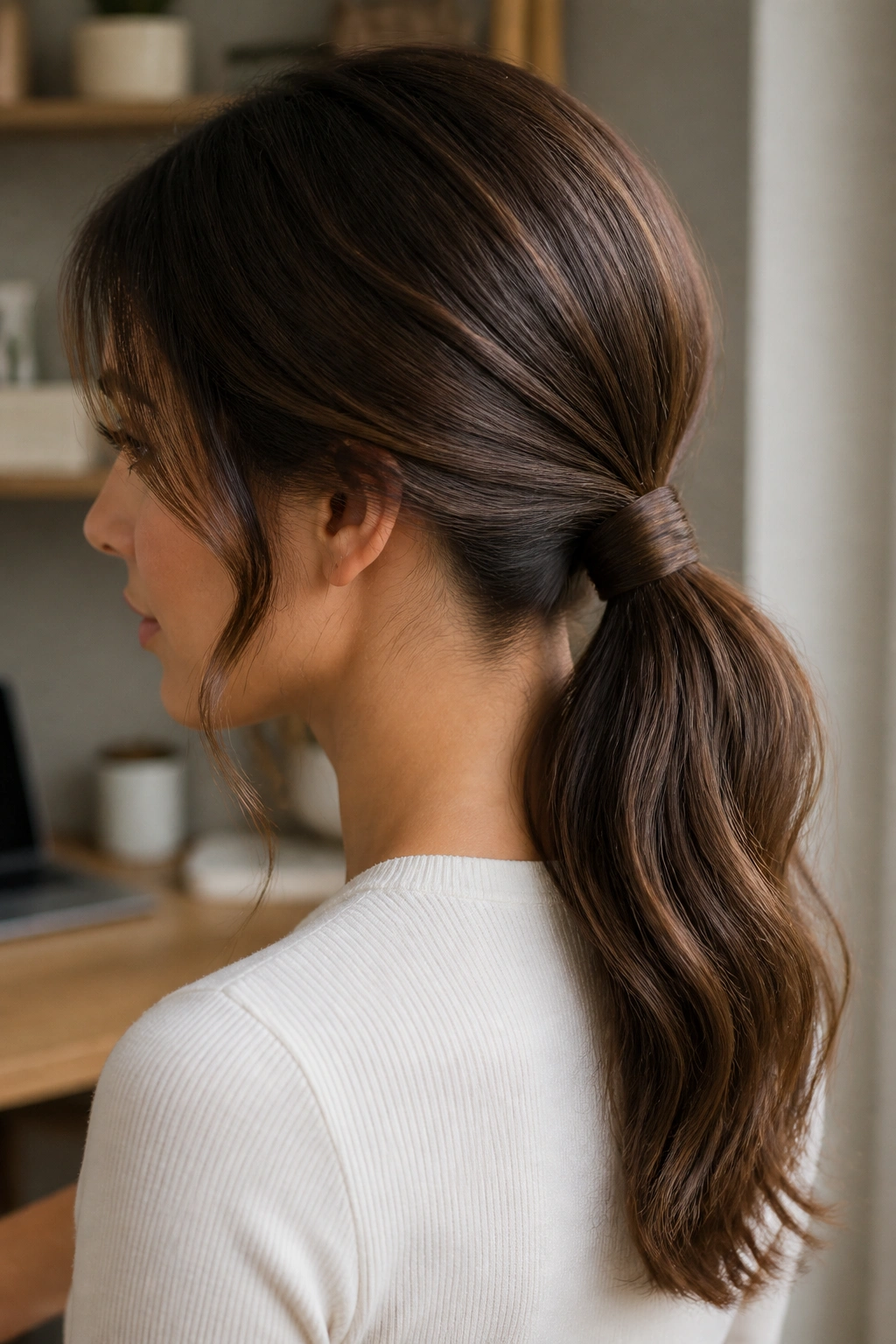
The low wrapped ponytail is the style I reach for when thick hair needs to look expensive fast. It sits at the nape, which means the weight has a place to rest instead of swinging around your head like a mood. Thick hair actually helps here, because the tail looks full and glossy rather than thin or stringy.
The base should sit just above the curve of the neck. Lower than that and the ponytail can feel droopy; higher than that and you lose the easy polish that makes the style work. I like a center part with this one, but a slight off-center part can soften the look if your face feels overwhelmed by a strict line.
After you secure the ponytail, take a 1-inch section from underneath and wrap it around the elastic. Pin it flat beneath the tail. That wrap is doing more than hiding the band — it also helps the ponytail feel finished, which matters when your hair is dense enough to show every shortcut.
This is the style I’d pick for work, dinner, or any day you want your hair to sit quietly and look expensive without trying very hard.
3. Bubble Ponytail for Thick Hair
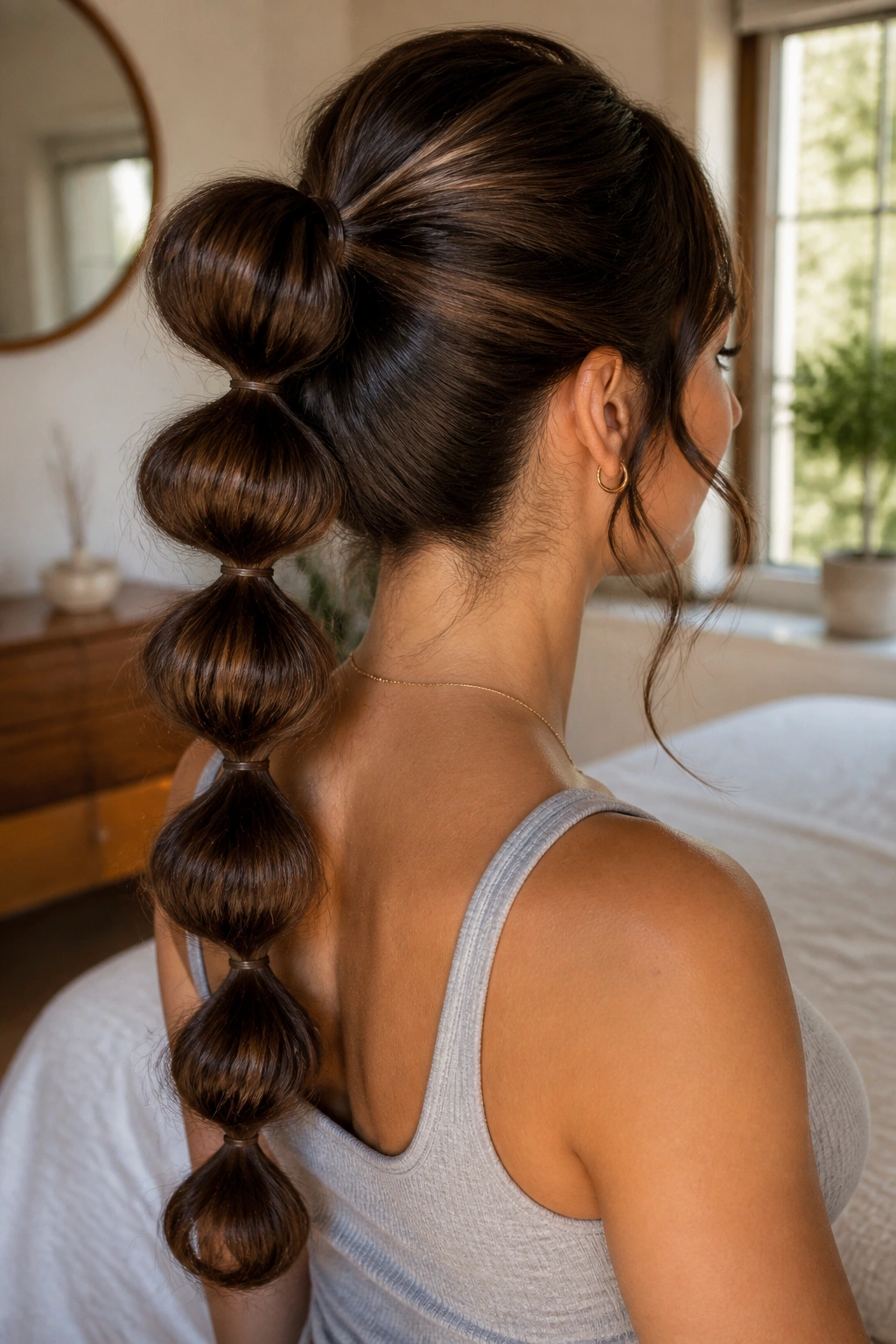
Why does the bubble ponytail work so well on dense hair? Because the hair supplies its own fullness. You do not need filler, teasing, or a ton of product. Thick strands puff out each section naturally, so every bubble looks round instead of sad and deflated.
How to Space the Bubbles
Start with a high, mid, or low ponytail — all three work. Secure the tail, then add small elastics every 2 to 3 inches down the length. If your hair is extra long, you may need five or six sections. Gently tug each section outward until it forms a soft bubble. Pull from the middle of the section, not the elastic, or the style can get lopsided fast.
This one handles thick hair better than most because it turns bulk into shape. Layers can poke out a little, and that’s fine. In fact, the tiny imperfections are part of why the style looks good. It’s not supposed to be glassy and rigid.
Use a light mist of flexible-hold spray before tugging each section if your hair is slippery. That gives the bubbles more grip without making the tail stiff. If you wear a lot of scarves, hoop earrings, or bold collars, this ponytail plays nicely with all of them.
4. Braided Ponytail
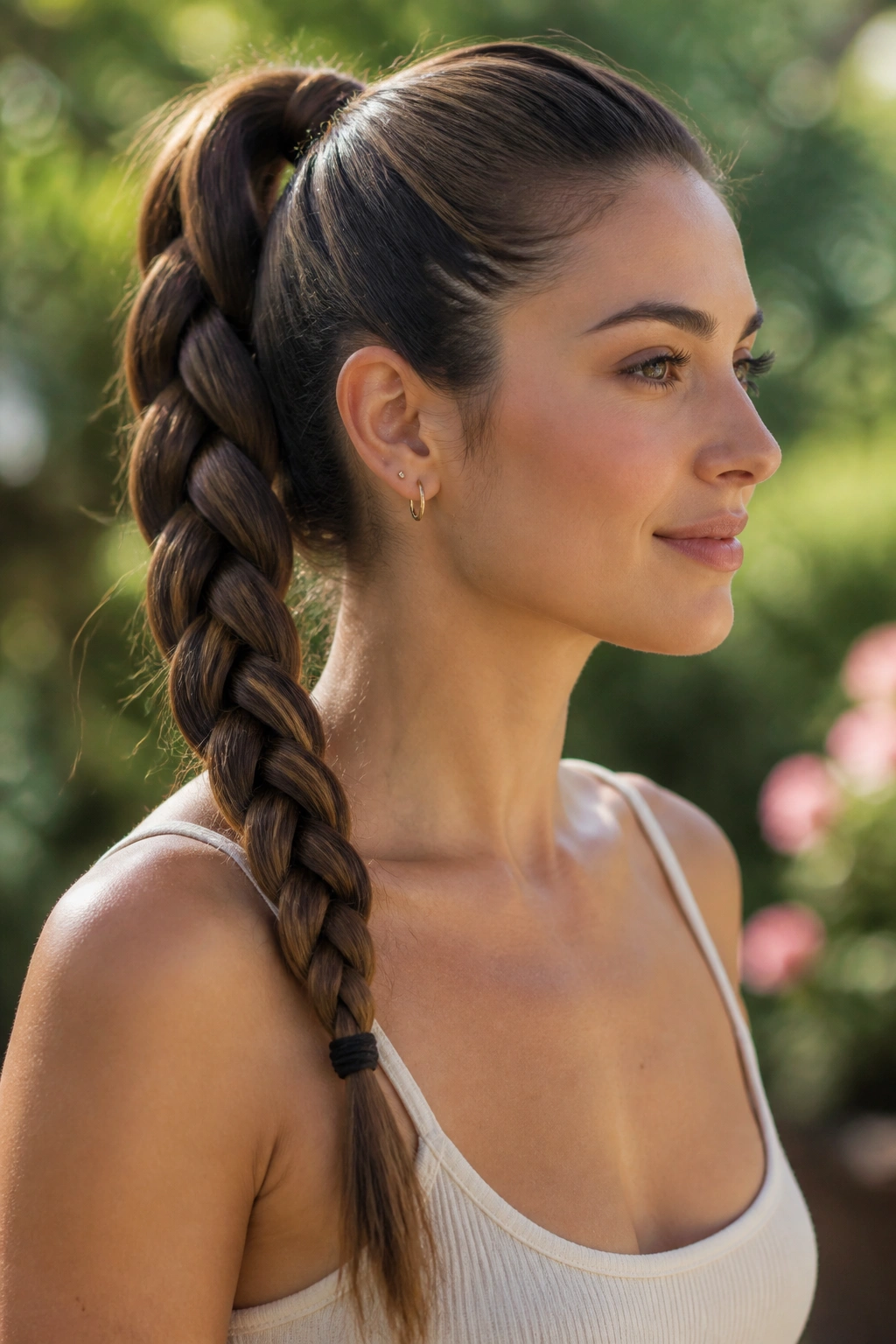
If you have ever tied your hair up, walked out the door, and felt the tail swing like a rope, this is the fix. A braided ponytail keeps thick hair from whipping around, tangling at the ends, or getting in your way when you’re moving all day.
The braid can start right at the elastic or a few inches down the length, depending on how much texture you want. A classic three-strand braid is enough. You do not need a fancy pattern. Thick hair already brings the drama; the braid just puts it in order.
- Best for gym days, errands, and travel.
- Works well when the hair has slight texture or grit.
- Looks cleaner if you braid while the tail is held tight at the base.
- Finish with a small clear elastic so the ends stay neat.
That last elastic matters. Thick ends can unravel a braid faster than you’d expect, especially if the hair is smooth. Keep the braid snug, then gently pancake it if you want it a little wider. Not flat. Wider.
5. Side Ponytail with Soft Volume

A side ponytail can be surprisingly good on thick hair because it lets the weight fall over one shoulder instead of sitting directly down the back of your neck. That changes the whole feel of the style. It looks softer, a little more relaxed, and less severe than a straight-back ponytail.
The trick is not to shove everything to one side and call it done. Build a slight lift at the crown, then move the ponytail to the spot that feels balanced against your face. A low side ponytail gives a graceful line. A mid-height side ponytail feels more playful. Both work, but the hair should still look controlled at the front.
I like a side ponytail when the ends are strong and full. Thick hair gives this style a rich shape that thinner hair has to fake with teasing. If you’ve got long layers, leave the shortest ones loose near the cheekbone. They soften the whole thing.
A little shine cream on the top layer helps, but don’t coat the ends. Heavy product on thick hair can make the ponytail go limp at the exact point where you want movement.
6. Half-Up Ponytail
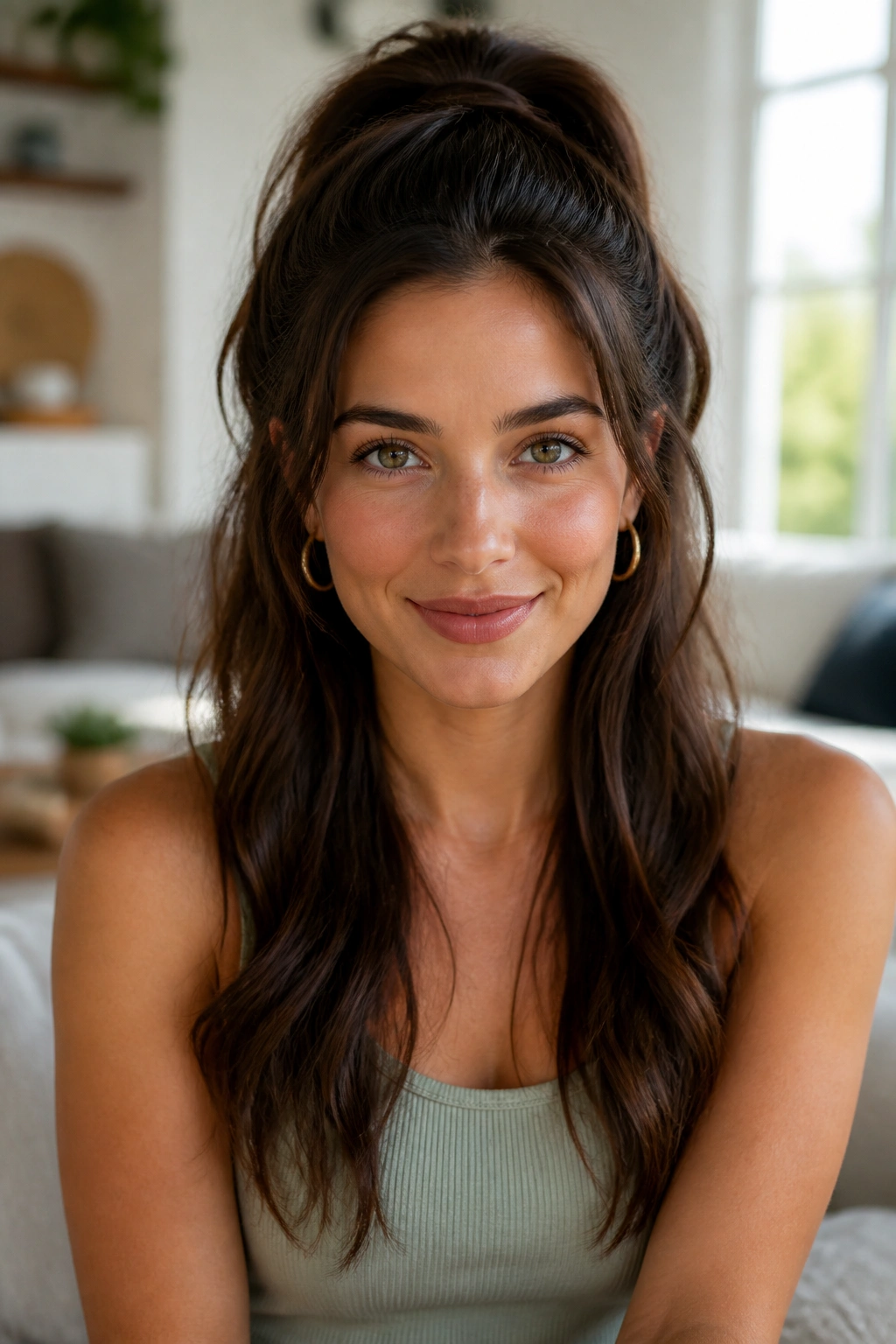
The half-up ponytail is the answer when your hair feels too heavy for a full updo but you still want it off your face. Unlike a full ponytail, it leaves some length down, so the style feels lighter and less severe. Thick hair benefits from that split, because not all the weight is pulled into one place.
Where the Line Should Sit
Place the half-up section from just above the ears to the crown. If you grab too much from the sides, the top can puff out and the shape gets bulky in an awkward way. If you grab too little, the style won’t hold. Thick hair gives you a lot to work with, so even a small mistake shows.
I like this style when the rest of the hair is left straight, softly waved, or curled only at the ends. The contrast between the pulled-up top and the loose bottom layers keeps the hair from looking like one giant mass. That matters more than people think.
Use a strong elastic and, if the hair is especially heavy, anchor it with a second one underneath. Half-up ponytails fail when the top section is too loose, not when the style is too simple.
7. Rope-Braid Ponytail
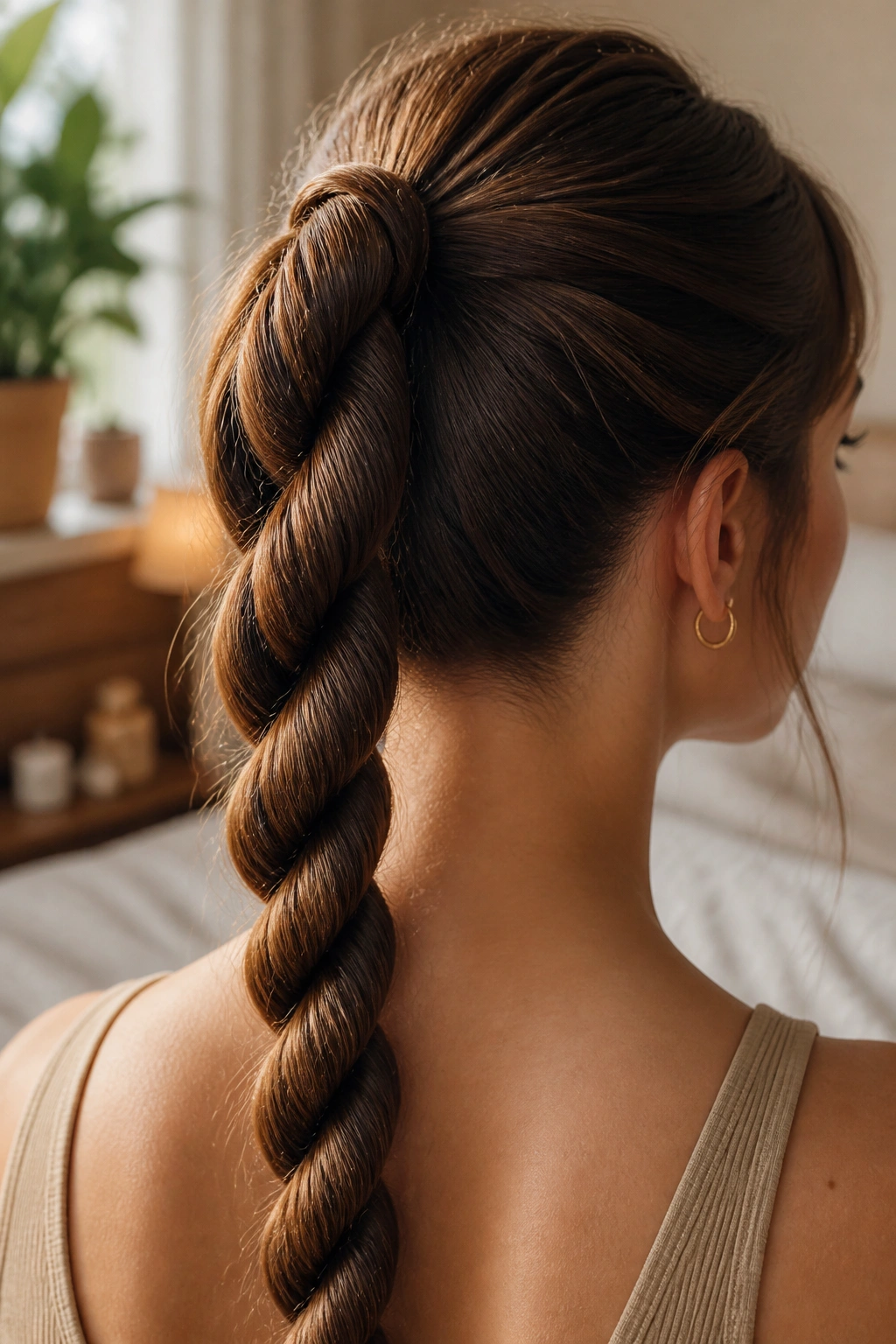
Want a ponytail that stays neat without looking stiff? A rope braid does the job. It’s one of those styles that sounds more complicated than it is, and thick hair makes it look especially good because the twist shows up clearly.
Split the ponytail into two sections. Twist both sections in the same direction, then wrap them around each other in the opposite direction. That opposite motion is what makes the rope braid hold. If you twist everything the same way, it unwinds. Fast.
What Makes It Different
A rope braid gives you a smooth, spiral look instead of the woven pattern of a classic braid. On thick hair, that matters because the shape stays visible even from a distance. It also handles long lengths well, which is handy if your hair feels dense enough to have its own weather system.
Use a tiny elastic at the end. A rope braid can loosen at the bottom faster than a three-strand braid if the hair is slippery. If your strands are coarse, you’ll probably get away with less product. If they’re silky, a little texturizing spray before you start helps.
8. Curly Ponytail with Defined Ends
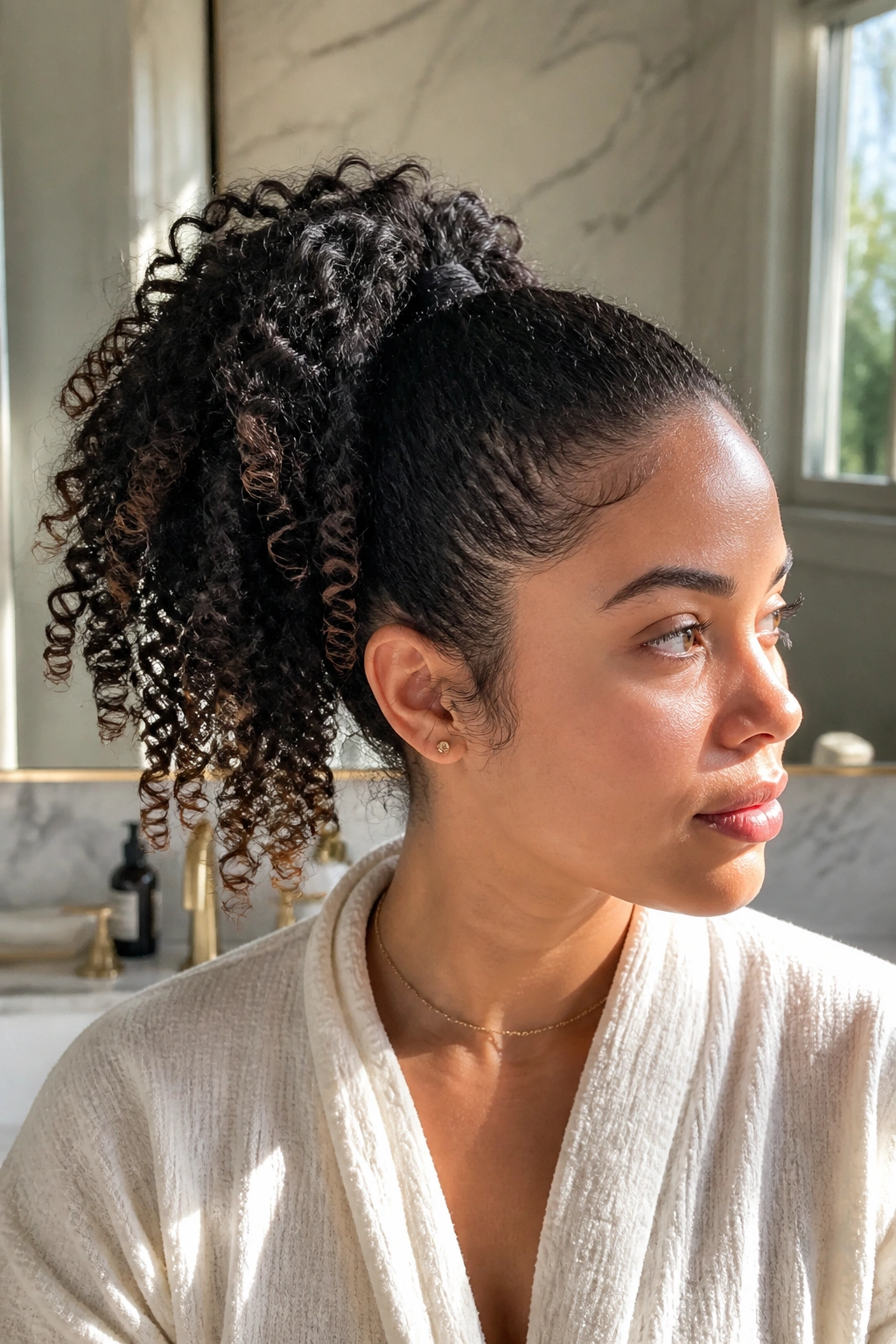
Thick curls do not need to be brushed into obedience. That usually makes them frizzy, puffy, and annoyed. A curly ponytail works best when you let the texture stay itself and only shape the outline.
Gather the hair with your fingers or a wide-tooth comb, then secure it at the height that keeps the curls looking springy. High can feel lively. Low can feel lush. Either way, the point is to keep the curl pattern intact. Use a leave-in cream or a small amount of gel on the surface only, not through the whole length.
A curly ponytail on thick hair can look almost absurdly full in a good way. The tail has body, the roots stay controlled, and the ends show off the curl pattern instead of disappearing into a blur. That balance is what makes it work.
If you wear your curls regularly, this is one of the least fussy ponytail choices. It respects the texture and still gets the hair off your face. No fight. No flattening.
9. Messy High Ponytail with Texture
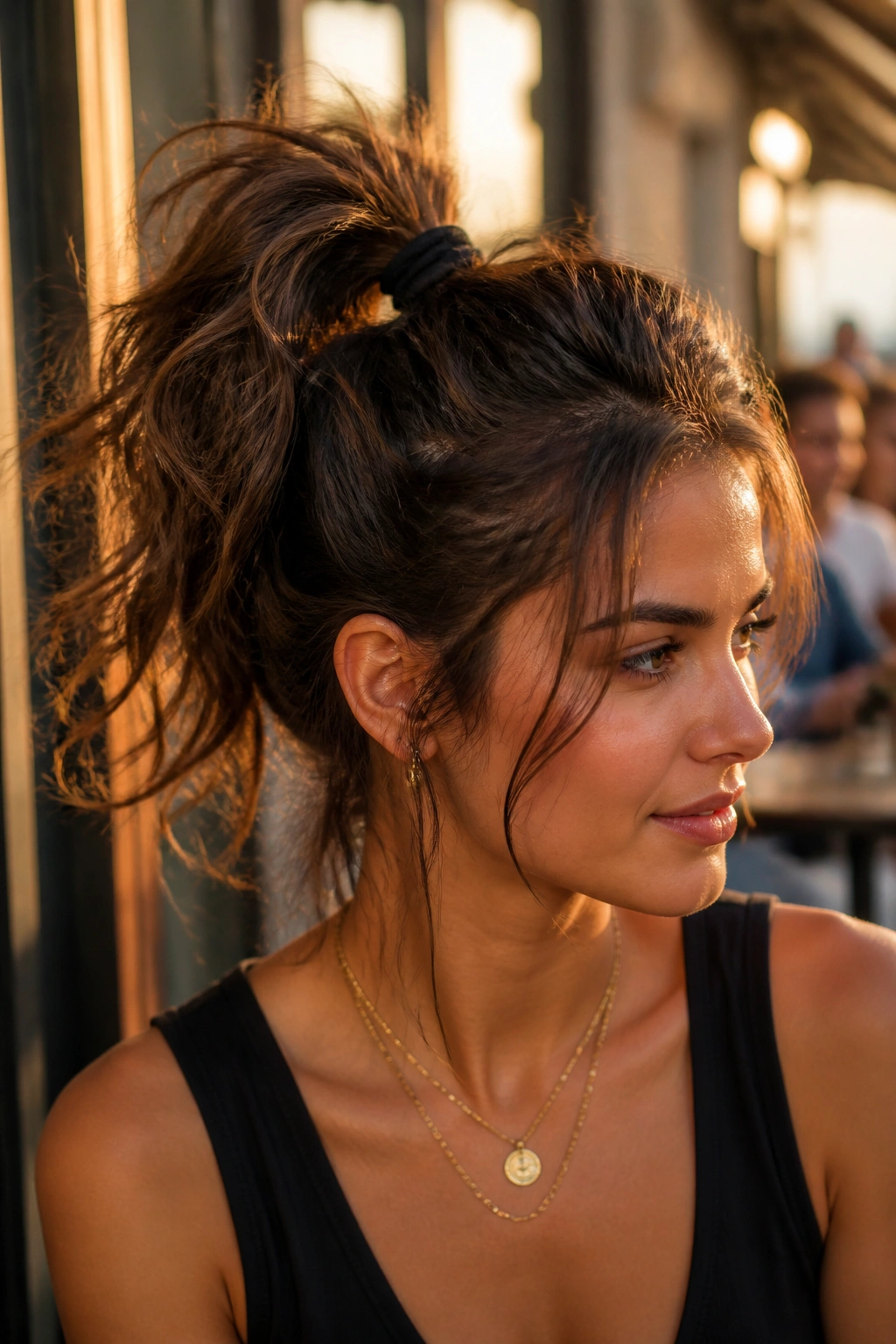
A messy high ponytail is one of the few styles where thick hair can look better when it is not perfectly smooth. The bulk gives it shape, and the texture keeps it from reading as plain. Done right, it feels easy. Done badly, it just looks like you gave up halfway.
Second-day hair helps. So does a little dry shampoo at the roots, especially if your hair tends to slide flat at the crown. Pull the hair up with your fingers instead of a brush, then leave a few soft pieces around the temples or the ears. That loose framing keeps the style from becoming too severe.
- Tease the crown lightly, not aggressively.
- Use a strong elastic, because messy does not mean loose.
- Pull the top section up a touch after securing it.
- Leave the ends natural or add a soft bend with a curling iron.
The line between “messy” and “messy in the wrong way” is pretty thin. A secure base fixes most of it.
10. Center-Part Low Ponytail
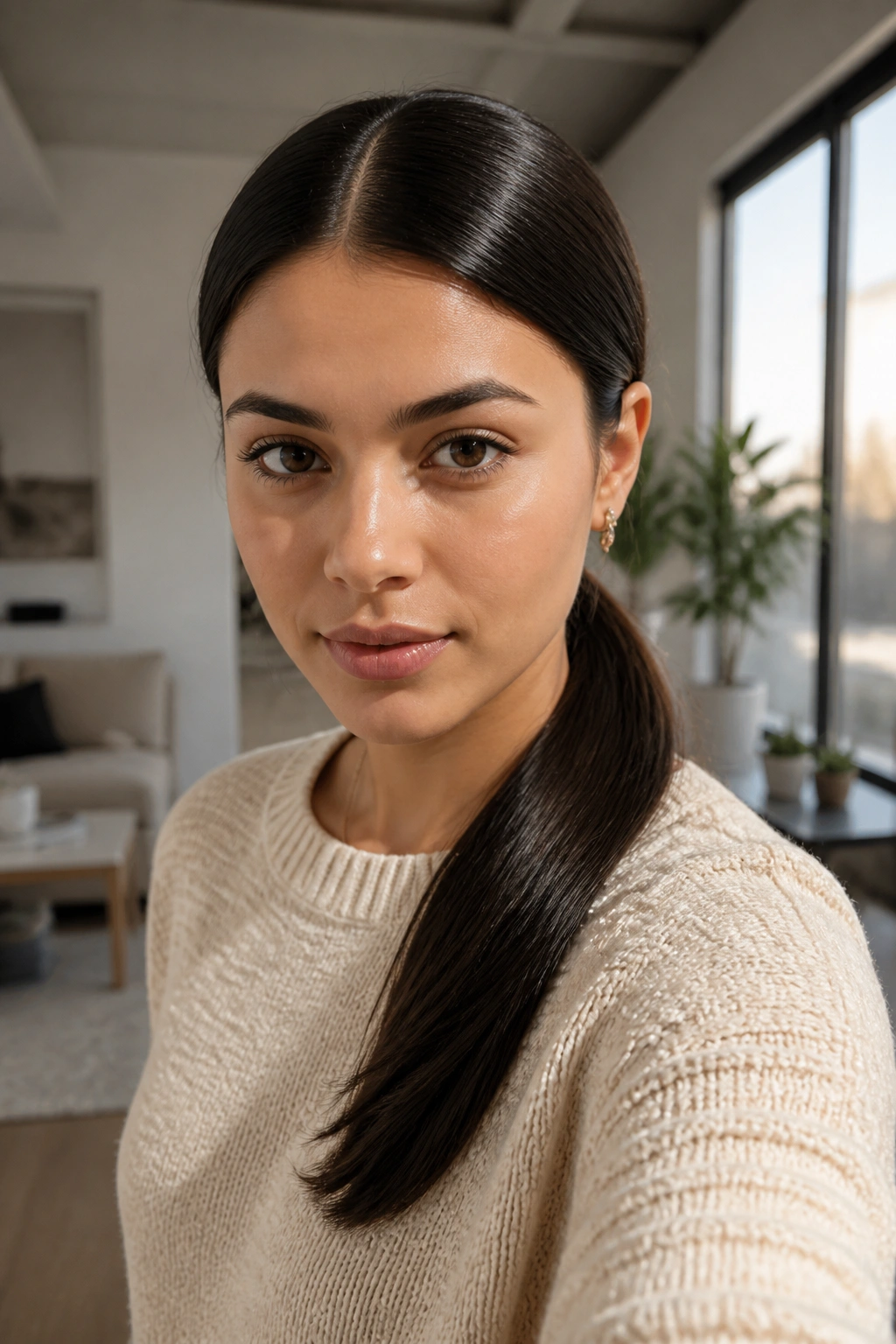
A center-part low ponytail looks calm in a way thick hair doesn’t always get credit for. The middle part gives the front a clean line, and the low placement lets the weight settle at the nape instead of ballooning at the crown. It’s one of the simplest ponytails for thick hair, which is exactly why I like it.
The part should be neat, but not overworked. Use a tail comb if you’ve got one. Smooth each side back with the flat of your hand or a brush, then gather the ponytail low and centered. If your hair is very dense, secure it once, pause, and then tighten again. That second pull keeps the base from sagging later.
This style works especially well when the ends are glossy and controlled. You can wear them straight, softly curled, or bent under with a flat iron. Avoid too much product at the top. Thick hair already has body, and overloading it with serum can make the roots look greasy before the rest of the hair even moves.
It’s a clean style. No drama. Sometimes that’s the point.
11. Double-Elastic Ponytail
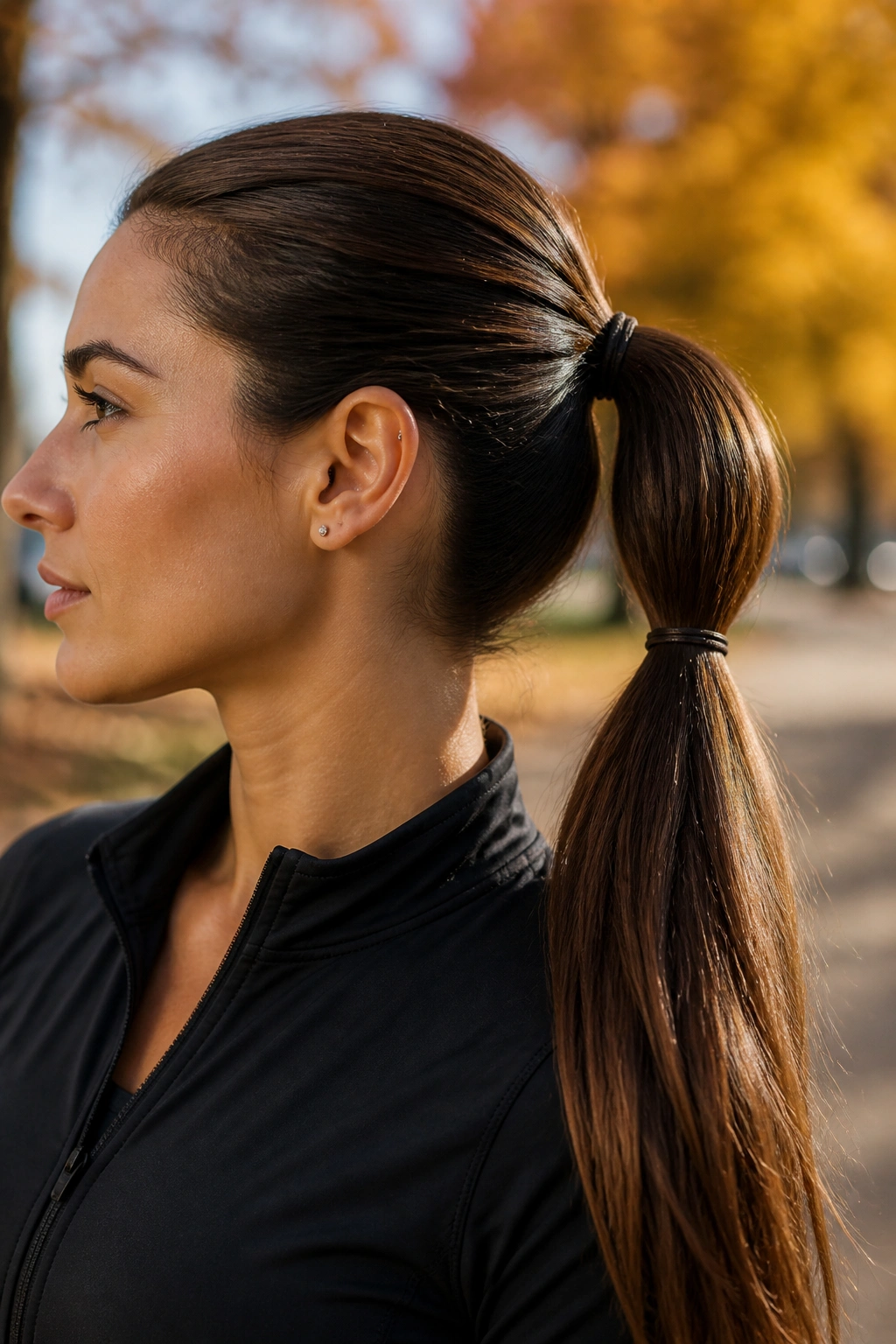
One elastic often isn’t enough for thick hair. It stretches. It slides. It gives up. A double-elastic ponytail solves that in a way that feels almost too obvious once you’ve tried it. The idea is simple: one elastic gathers the hair, and a second one supports the weight.
Why Two Elastics Beat One
Put the first elastic around the full ponytail. Then place the second one about 1 inch below it, or stack it right on top if the hair is extremely dense. The extra support spreads the tension and keeps the ponytail from dropping by midday. If you’ve got very long hair, this is one of the most practical tricks in the whole article.
A lot of people assume a heavier elastic is enough. Sometimes it is. Sometimes it just slides down the shaft of the hair and makes the base feel bulky. Two smaller elastics often hold better because they grip in different spots.
Use this method for high, mid, or low ponytails. It’s not about the height. It’s about stoping the sag before it starts.
12. Fishtail Ponytail
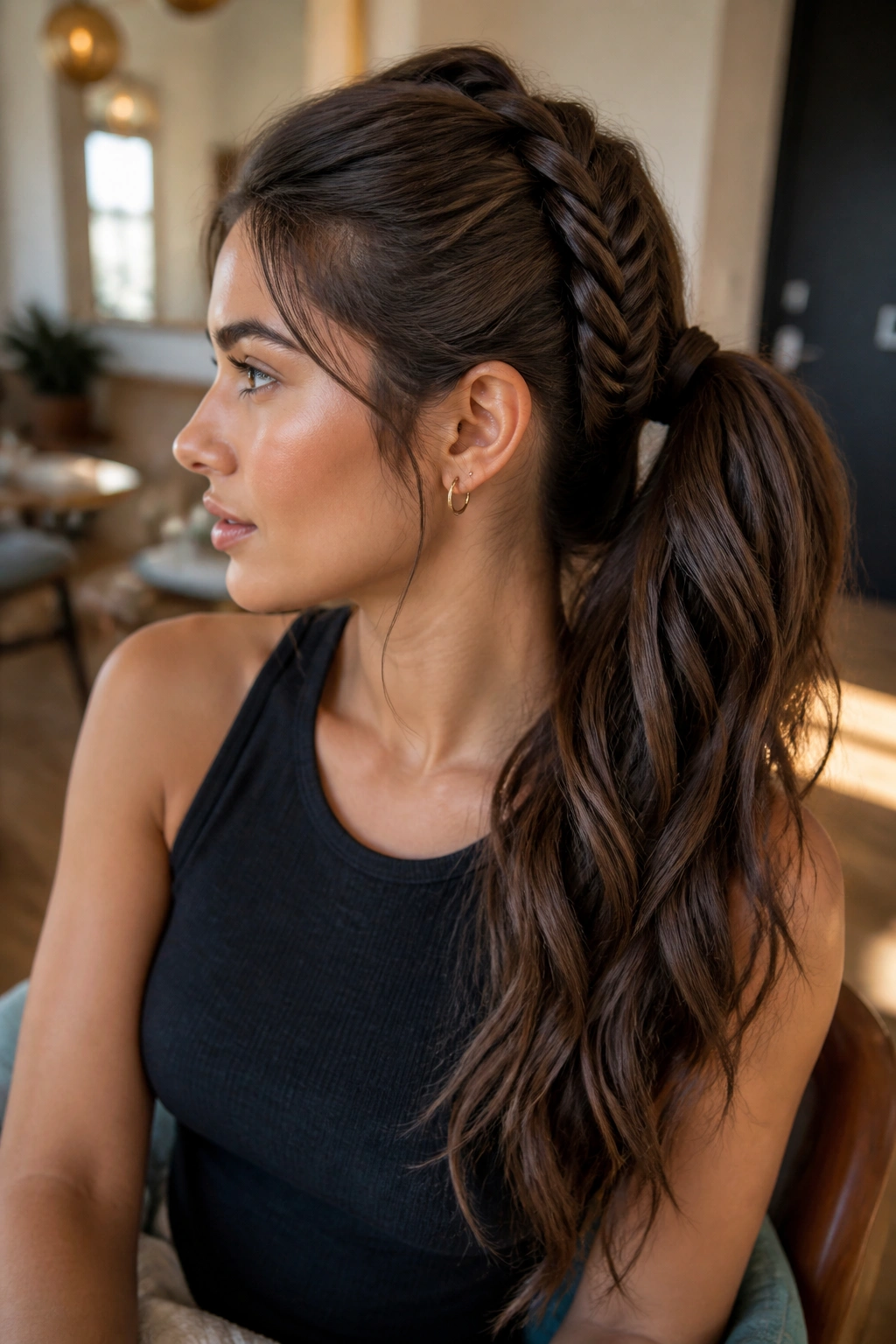
Compared with a classic braid, the fishtail ponytail feels finer and a little more detailed. Thick hair is one of the few hair types that can pull it off without looking skimpy, because each tiny section still has enough body to show up.
Start with a secured ponytail, then split it into two large sections. Take a small piece from the outside of one section and cross it into the other. Repeat, alternating sides. Keep the pieces small. Pencil-width works well. If you grab too much hair at once, the braid turns chunky and loses the crisp pattern that makes it interesting.
This style rewards patience. It’s slower than a three-strand braid, but the finish is worth it when you want something a little more dressed up. The fishtail reads as textured and deliberate, not soft and accidental.
A tiny elastic at the end keeps the braid from unraveling. That detail matters more with long, thick hair, because the weight at the bottom can loosen the weave faster than you’d expect.
13. Scarf-Tied Ponytail
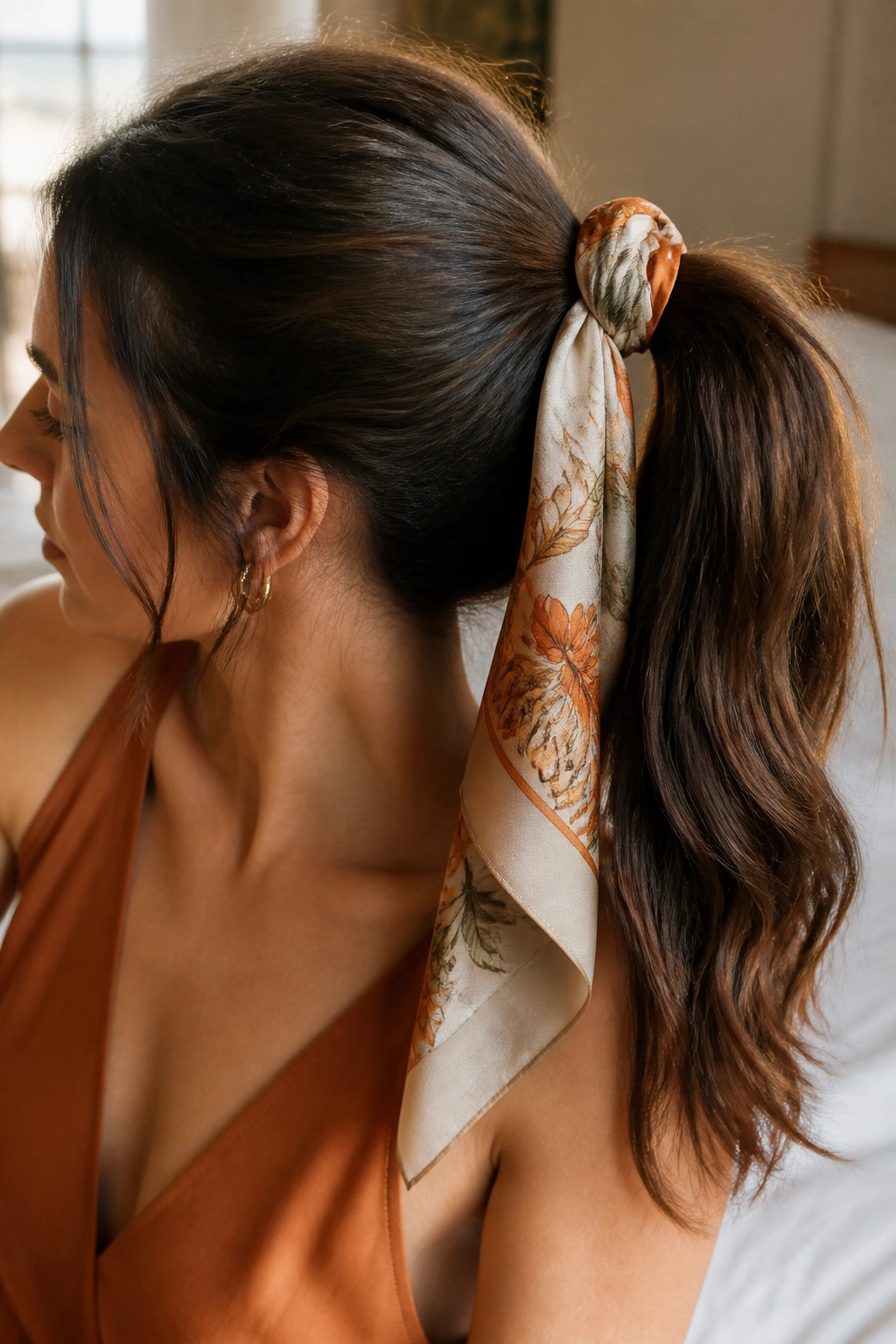
What if the tie itself became the statement? That’s the whole point of a scarf-tied ponytail. Thick hair gives you enough fullness already, so the scarf doesn’t have to do heavy lifting. It just adds color, texture, and a little personality around the base.
A silk scarf slides more easily and gives a softer finish. Cotton grips better and feels more casual. Either way, fold it into a strip that’s about 1 to 2 inches wide, then tie it over a secure elastic. Let the ends drape or knot them neatly underneath the ponytail, depending on how neat you want the look.
Picking the Right Scarf
A larger scarf works better on thick hair because there’s more base to cover. Tiny scarves can look lost. If the fabric is too stiff, the knot gets bulky. If it’s too flimsy, it can shift around all day.
This style is especially good when you want a simple ponytail to feel more finished without adding more hair. It also works well with a low or mid ponytail, where the scarf has room to sit cleanly instead of fighting the crown.
14. Twisted Crown Ponytail
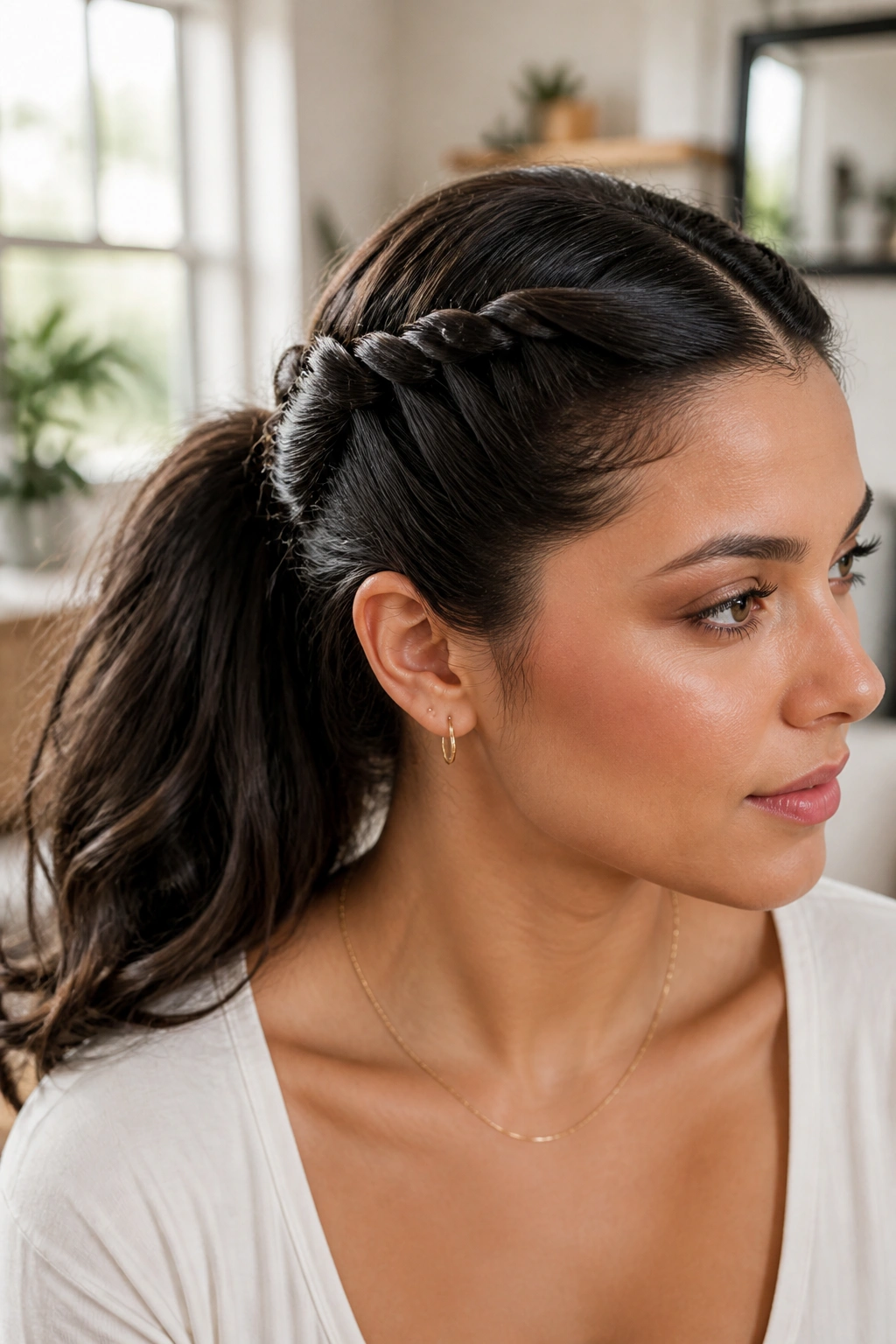
Twisted crown ponytails are useful when the front pieces of thick hair refuse to stay put. You twist sections from the temples back toward the ponytail, pin them in place, and let the rest of the hair fall into the tail. It looks like a little bit of effort, which is exactly why it works.
The twist should lie flat against the head. That means taking slightly smaller sections than you think you need, especially near the front hairline. If the twist is too thick, it sticks out instead of blending. Thick hair can handle a lot, but it still likes clean lines near the face.
- Start on dry hair.
- Twist each side back toward the center.
- Pin each twist just behind the ears.
- Gather the rest into a ponytail at mid or low height.
The style holds up well on windy days. That alone makes it worth knowing. The front stays controlled, and the ponytail keeps its shape without needing constant fixing.
15. Sporty Mid Ponytail for Thick Hair
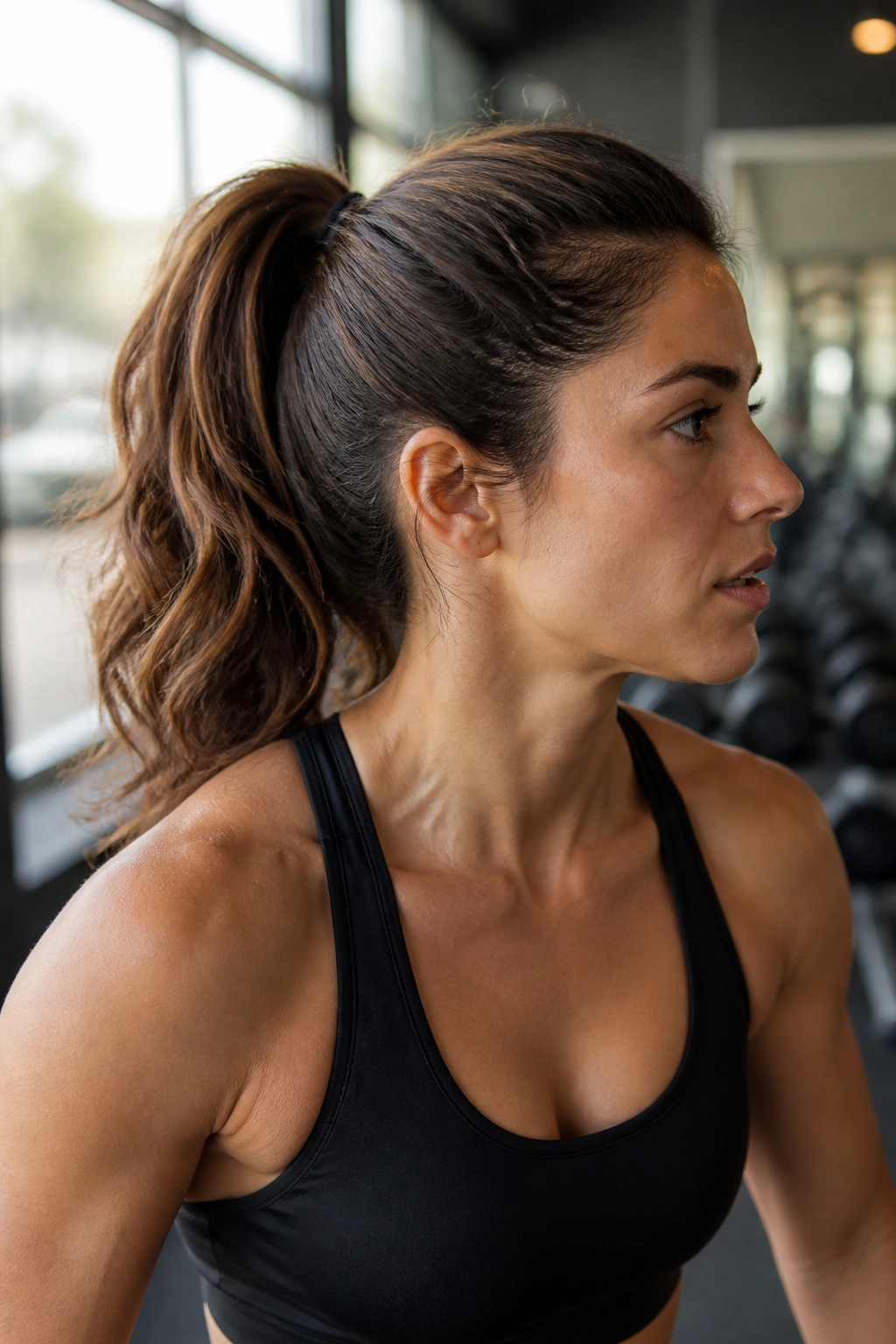
A mid ponytail is the workhorse of thick hair. It sits in the sweet spot between too high and too low, which means less pull on the scalp and less swinging weight at the neck. That makes a difference when you’re moving, commuting, lifting, or just trying to get through a full day without adjusting your hair every hour.
The middle placement also helps distribute fullness in a way that feels balanced. High ponytails can look dramatic, but they can drag hard at the crown. Low ponytails can feel elegant, but they sometimes slump if the hair is very dense. Mid-height avoids both problems more often than not.
Use a strong elastic and keep the base snug. Do not place it too high just because the hair is thick. That’s a common mistake. Thick hair already gives the style plenty of volume, and a slightly lower placement usually looks cleaner.
If you want extra hold, smooth only the outer layer with a light cream and leave the interior mostly untouched. That keeps the ponytail from turning flat and lifeless.
16. Face-Framing Ponytail
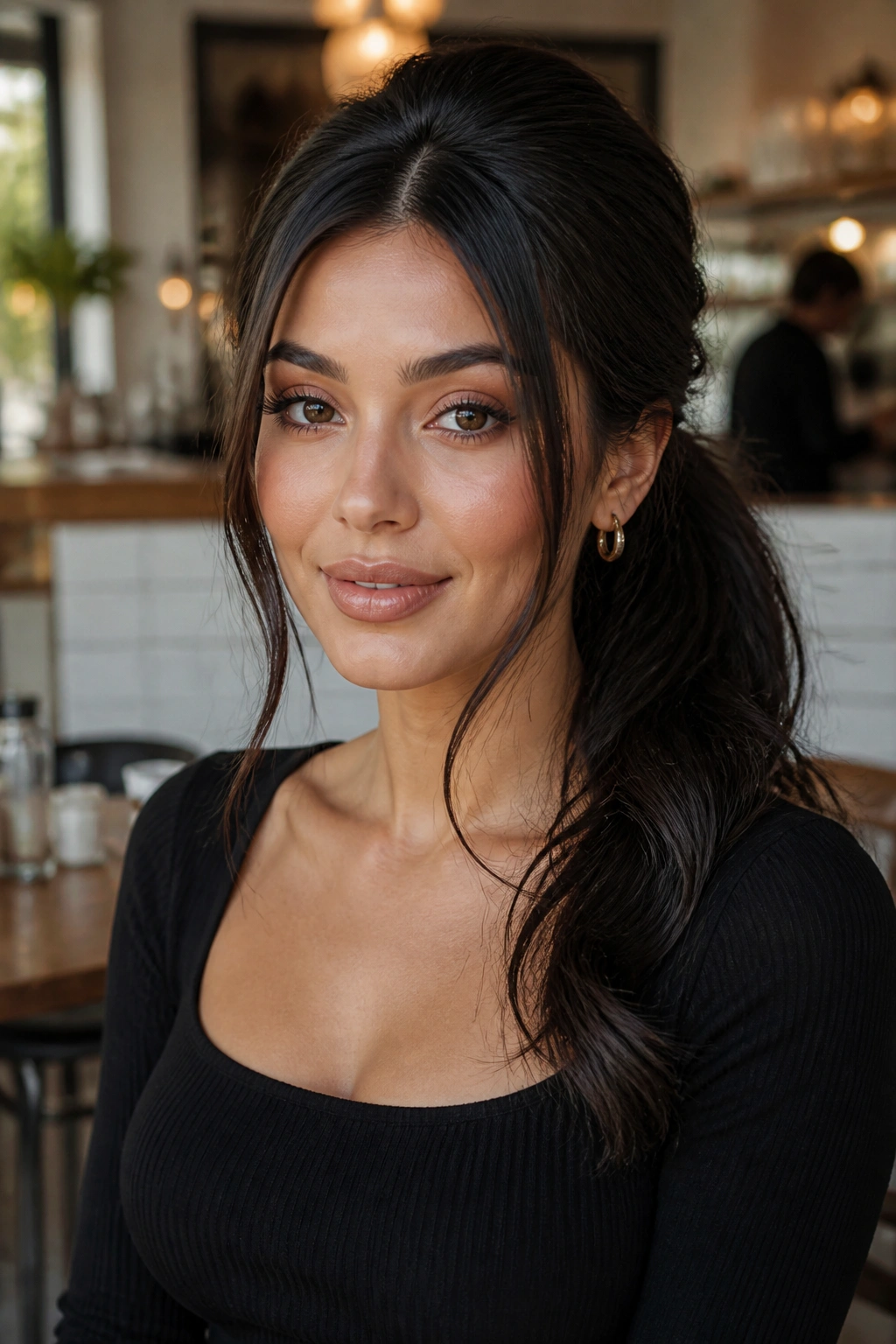
A face-framing ponytail softens thick hair instead of wrestling it into a single block. Leaving out two slim sections at the front changes the whole mood. The face gets shape, the ponytail still feels controlled, and the hair stops overwhelming your features.
Keep the front pieces about 1 inch wide, maybe a touch less if your hair is especially dense. Curl them away from the face if you want a gentle finish. Straight pieces can work too, but a soft bend usually looks better when the rest of the hair is full and heavy.
This style is useful when you want the ponytail to feel less severe. It’s still a ponytail. It just gives the eye somewhere to land before it reaches the tail. That matters with thick hair, which can look big even when it’s perfectly polished.
Place the ponytail low for a softer look or mid-height if you want more lift. Either way, the framing pieces should stay light and loose. If they’re too thick, the style loses the effect.
17. Loop-Through Ponytail
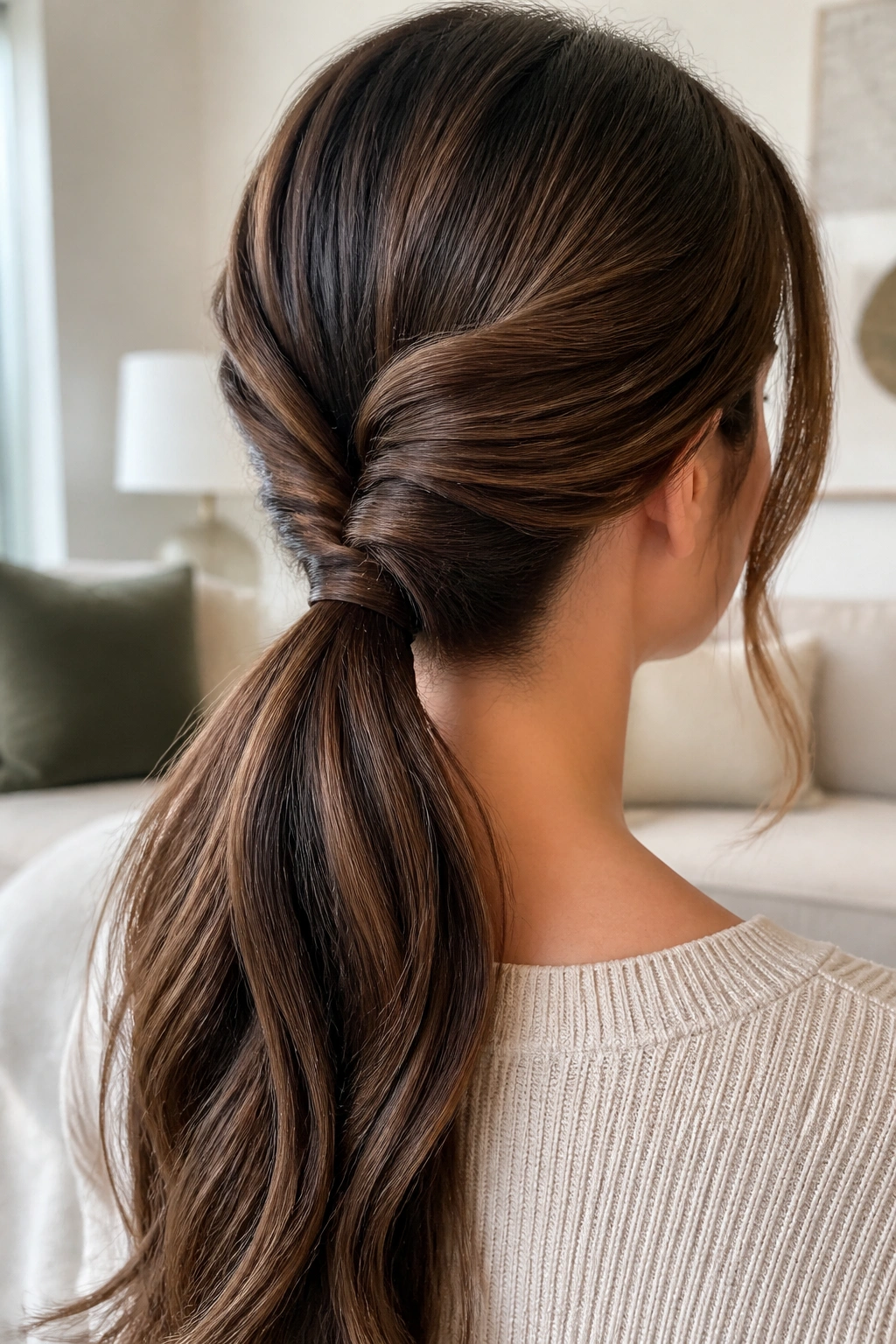
A loop-through ponytail has that neat little twist people notice without quite knowing why. It’s basically a topsy-tail, and thick hair makes it look smoother because the twist has more substance. Thin hair can disappear in it. Thick hair gives it shape.
How to Get the Most From It
Tie the hair into a low or mid ponytail first. Then make a small gap above the elastic, split the hair just enough to pass the tail through, and flip the length downward. Keep the opening tidy. If you pull too hard, the twist gets bulky and awkward. If you pull too loosely, it looks unfinished.
This style is a nice middle ground between polished and relaxed. It reads as intentional, but it does not take the kind of effort a braid or fishtail does. That makes it a good pick for thick hair on days when you want structure without a lot of handwork.
Use a second small elastic under the first if the ponytail feels heavy. Thick hair can pry the twist open a little over time, and the extra support helps the shape stay put.
18. Braided-Wrap Ponytail
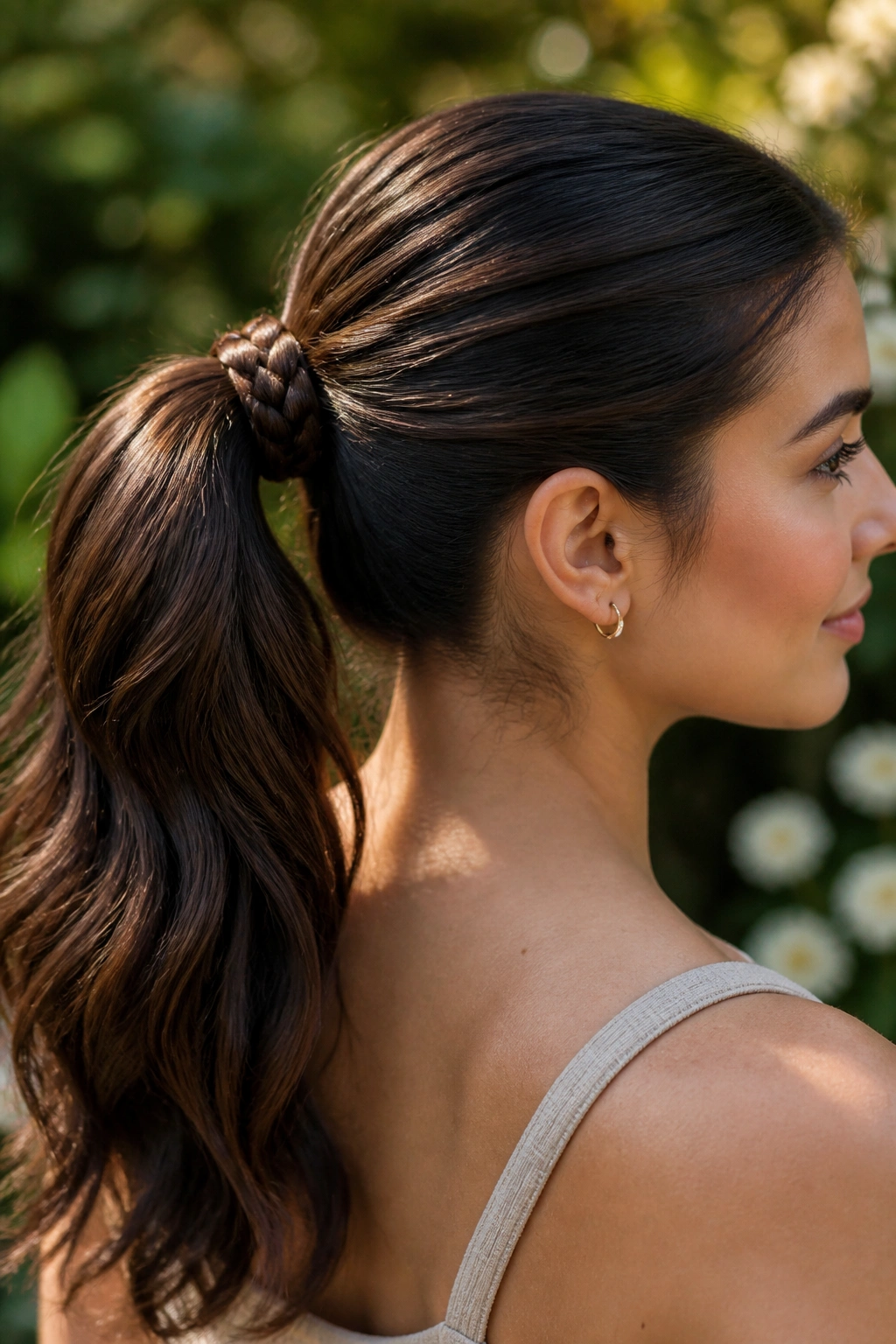
A braided-wrap ponytail hides the elastic with a small three-strand braid instead of a simple strand wrap. That tiny change makes the style feel sturdier and more finished. Thick hair gives you enough leftover section to do it without thinning out the tail.
Unlike a regular wrap, the braid has texture. It grips better, especially if your hair is smooth or layered. I like this more than a plain wrapped base when the ponytail itself is full enough to deserve something a little sharper. The braid sits at the base like a little belt, which is an odd comparison, but it fits.
Use a 1-inch section from underneath the ponytail, braid it tightly, and pin the end under the elastic. If you want to keep the look sleek, braid snug and flat. If you want a softer finish, gently tug the braid wider before pinning it.
It’s a small detail, but it changes the whole silhouette. Thick hair already brings the volume. The braid just tells it where to stay.
19. Crown-Pouf Ponytail
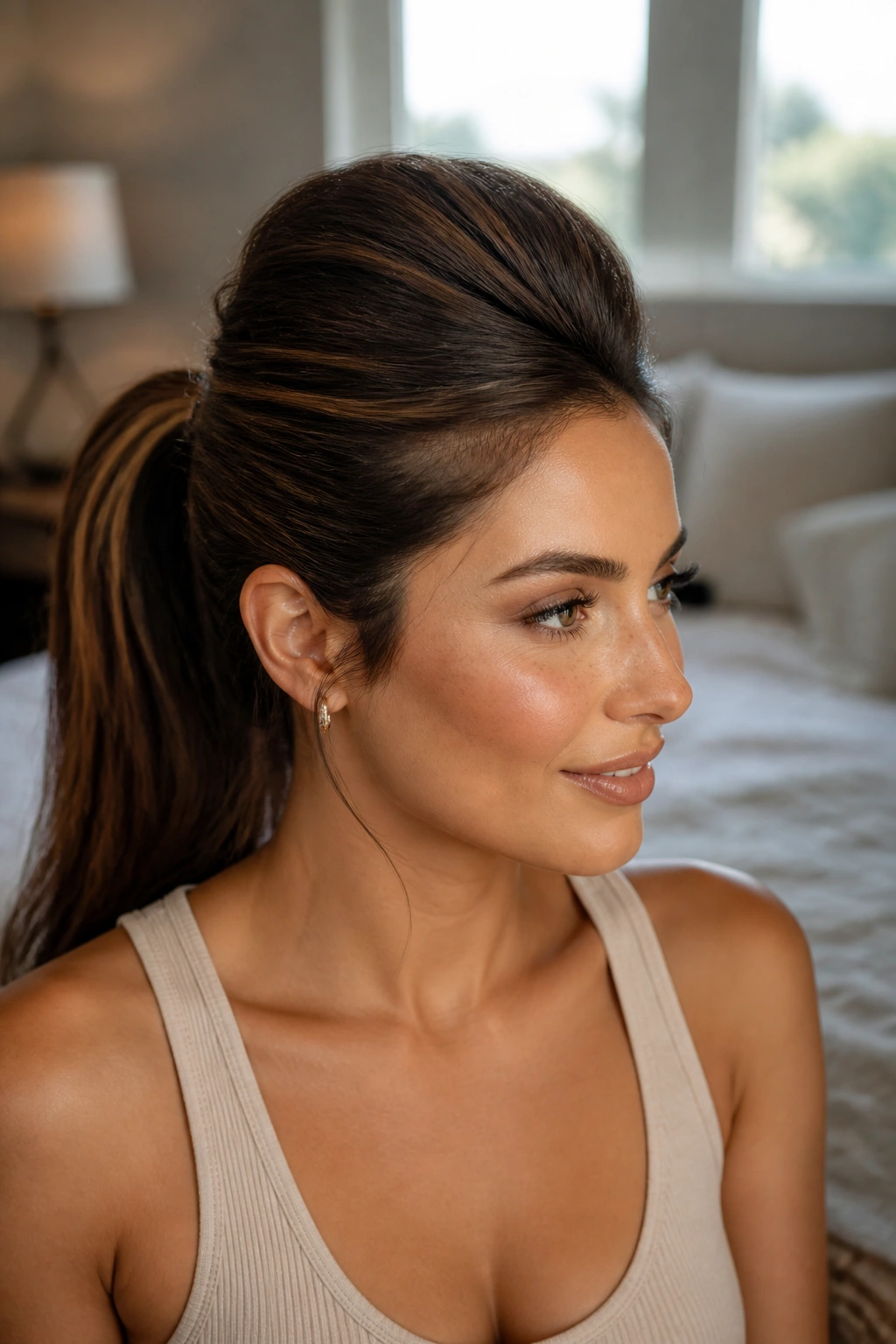
A crown pouf gives thick hair a little lift at the front so the ponytail doesn’t drag the whole look downward. It’s especially useful when the hair is so dense that a flat crown makes the rest of it feel heavy. A small bit of height balances that out fast.
How to Get the Lift Without Crunching the Hair
Take a small section at the crown, lightly backcomb the underside with a fine-tooth comb, then smooth the top layer over it. You do not need to tease the whole head. Just enough for structure. Gather the rest into a ponytail, and pin the lifted section lightly if it wants to collapse.
The crown pouf works best when the rest of the hair is controlled. Sleek sides, a clean base, and a smooth tail keep the volume at the top from looking random. Thick hair can get lumpy if you overdo this, so keep the lift shallow and deliberate.
This style gives a bit of retro shape without going full costume. It’s the kind of ponytail that reads as styled even if the rest of your outfit is simple.
20. Low Tucked Knot Ponytail
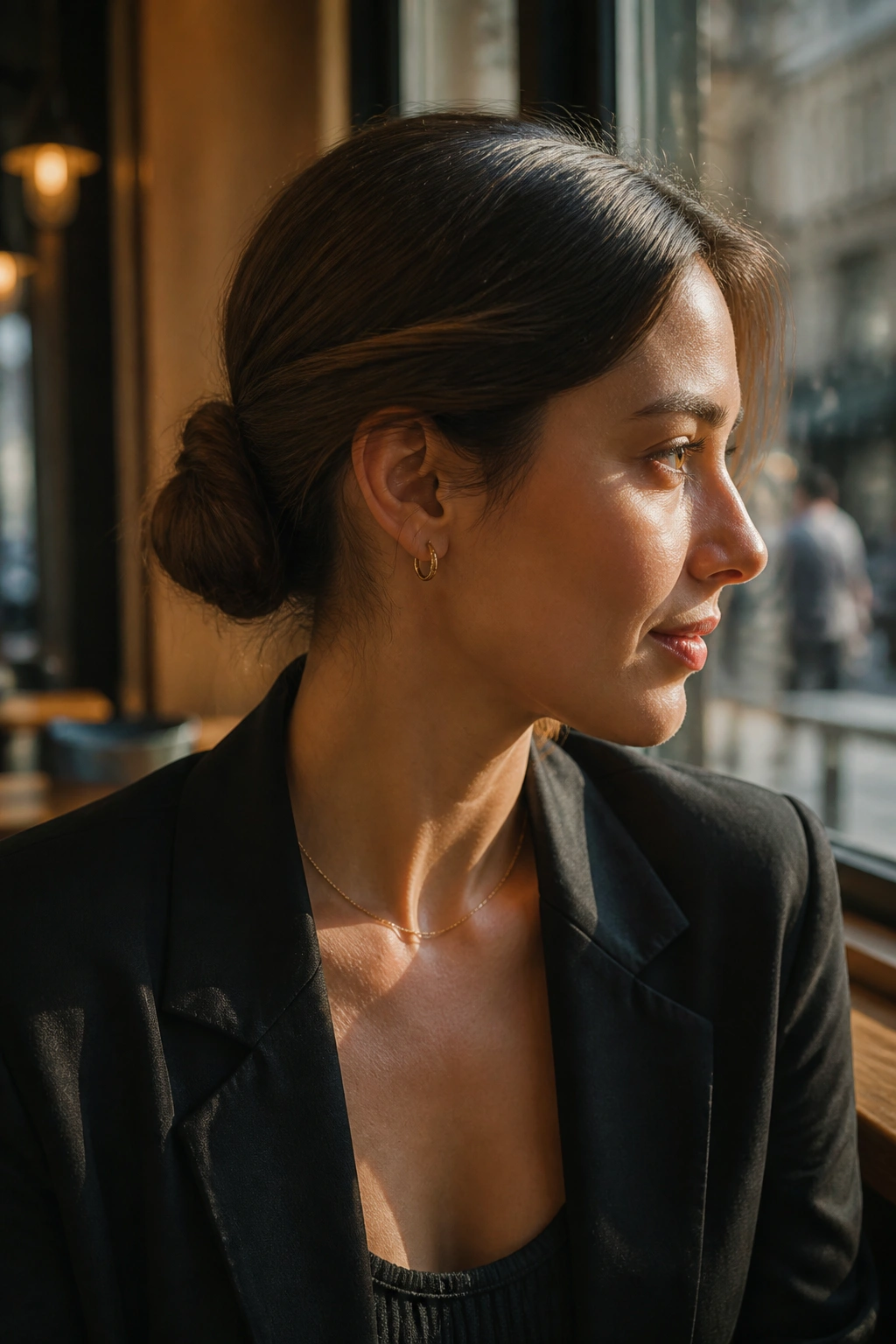
The low tucked knot ponytail is a good ending for this list because it takes everything thick hair does well — fullness, weight, texture — and gives it a clean frame. The tail is gathered low, looped partway through the elastic, and tucked under itself so the ends sit neatly inside the shape.
It sounds fussy, but it isn’t. You secure a low ponytail, pull the length halfway through on the final loop, then tuck the ends in and pin them if needed. Thick hair fills the knot out on its own, so the style looks deliberate without needing a lot of extra work. That is the charm of it.
This is the ponytail I’d choose when I want polished hair and no loose ends swinging around my shoulders. It works for dinners, office days, and any time you want thick hair to look contained instead of heavy. Simple, tidy, and a little more interesting than a plain low ponytail.
