



Thick hair does not politely tuck itself into a ponytail and stay there. It pushes back, slides loose, swells at the crown, and sometimes turns a style that looked neat in the mirror into a heavy little cape by lunchtime. That is exactly why messy ponytails for thick hair work so well: they stop trying to force the hair into a tiny, obedient shape and let the bulk do some of the styling for you.
Controlled looseness beats stiff perfection every time.
A good messy ponytail on dense hair should feel secure at the base, soft around the face, and full through the length without looking like you spent half an hour trying to hide the elastic. The sweet spot is not “undone” in a lazy way. It is undone on purpose, with enough structure that the style still holds when you turn your head, lift your bag, or pull on a sweater.
And thick hair gives you something most ponytails never get: built-in shape. The weight can look gorgeous when it is handled well, but it can also flatten a style in a hurry if the tie is too tiny or the crown is pulled too tight. A few smart shifts — a twist here, a braid there, a lifted root, a scarf, a clip — make the whole thing behave better.
1. The Low Messy Ponytail with Soft Face Pieces
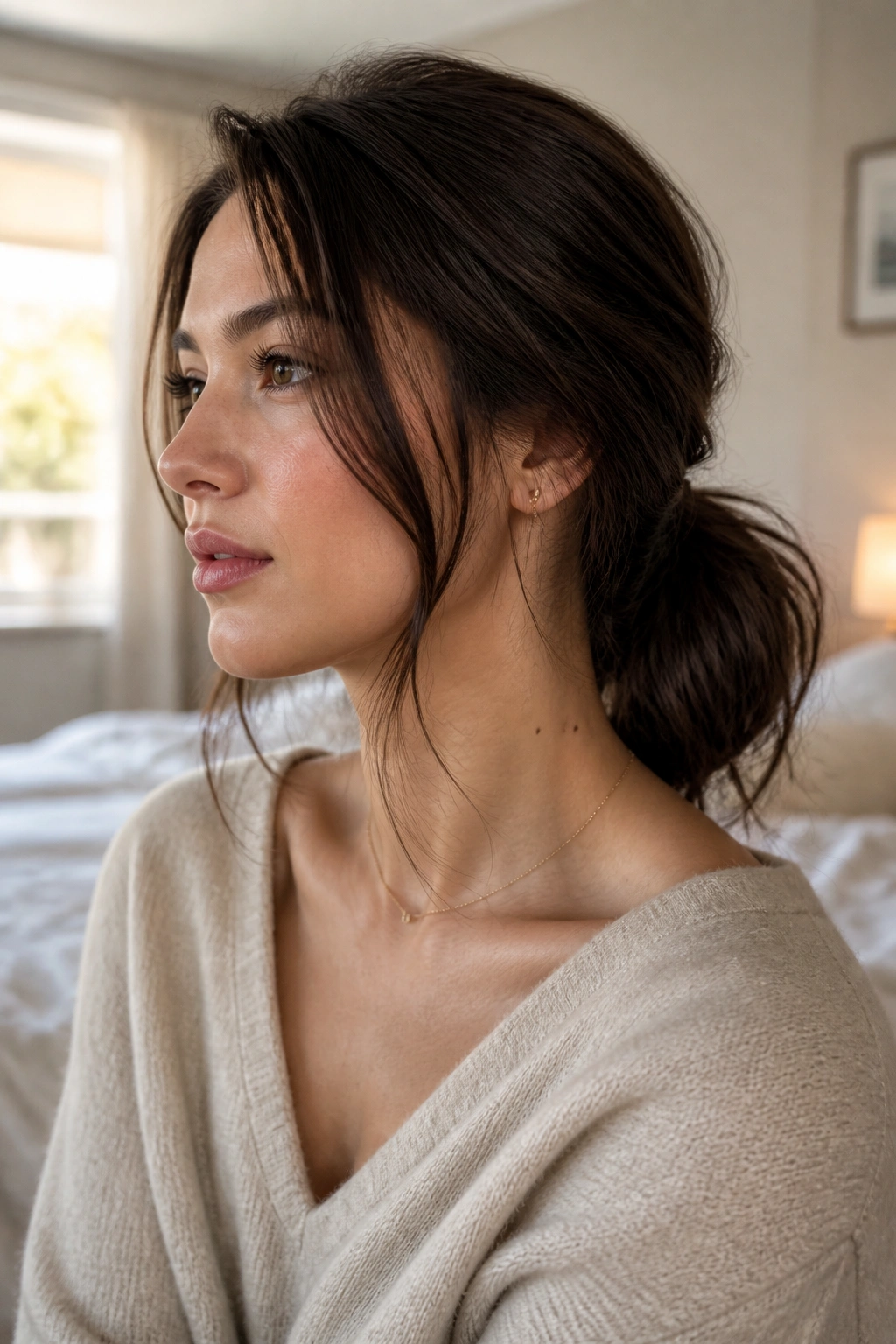
This is the easiest place to start, and honestly, one of the prettiest. A low ponytail sits where thick hair already wants to fall, so you are not fighting gravity from the first second.
Why it works on thick hair
The nape is the most natural resting point for dense hair. You get less pulling at the scalp, fewer little bumps at the crown, and a cleaner line across the back of the head. If your hair is layered, the shorter pieces near the front can fall loose on their own, which makes the style look softer without extra work.
- Gather the hair with your hands first.
- Smooth only the top layer if you need to.
- Secure the ponytail at the nape with a strong elastic.
- Leave about half an inch of slack at the roots before you tighten.
- Pull out two slim pieces near the temples and let them bend around your cheeks.
Best move: tug the crown a little, not the whole ponytail. That keeps the base secure and the shape relaxed.
If your hair is very straight, give the face pieces a quick bend with a 1-inch curling iron for about 8 seconds per side. The goal is not curls. It is just enough curve to stop the pieces from sticking out like antennae.
2. The High Messy Ponytail for Thick Hair
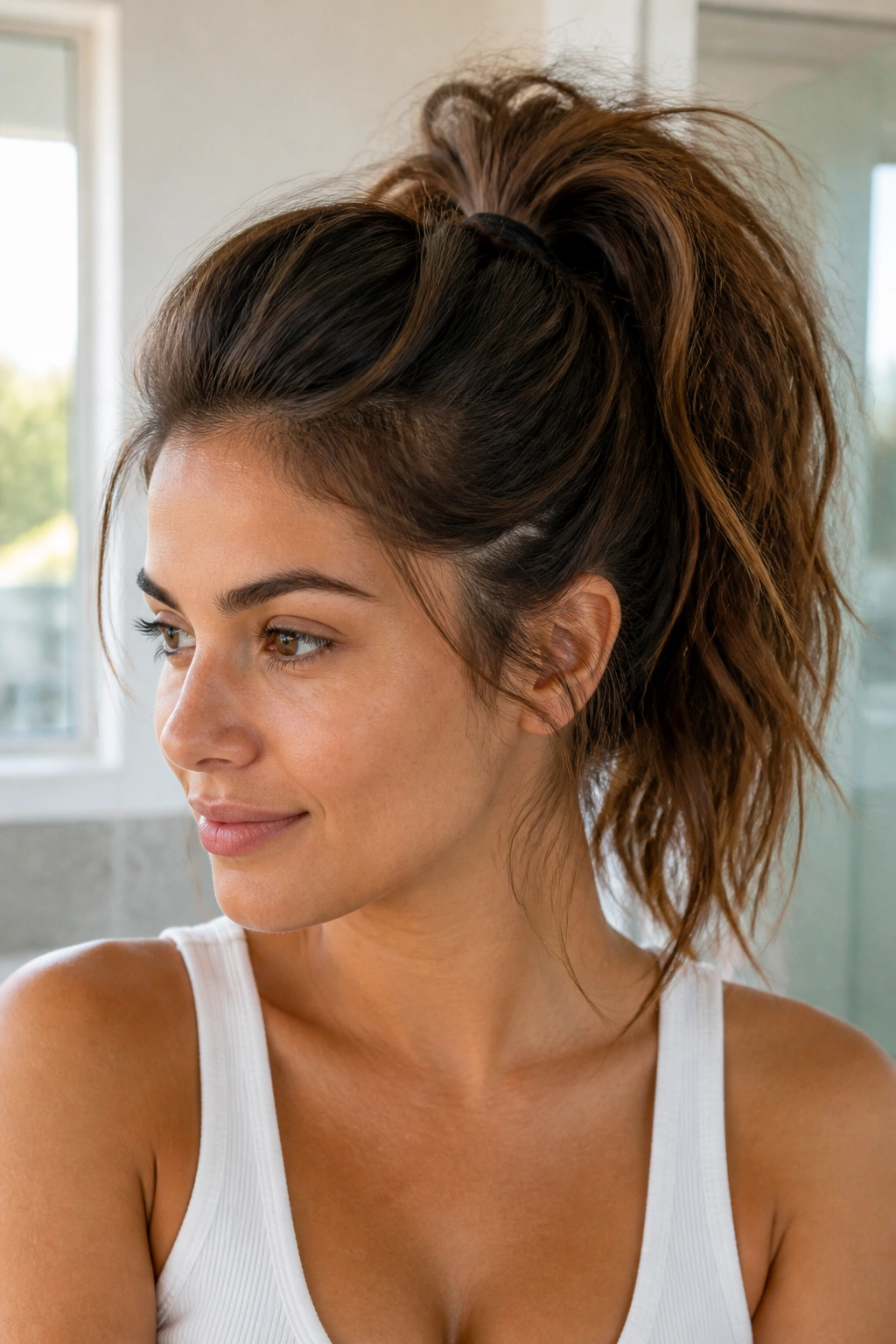
A high ponytail on thick hair can look sharp, but only if you give the crown some room first. Pull everything straight back too tightly and the whole thing starts to look harsh, especially around the temples. Give it lift first, and the style suddenly feels lighter.
Gravity always wins. So give it a fight.
I like to split the top section from ear to ear, lift it with my fingers, and mist the roots with a little texture spray before I gather the hair. That tiny bit of grit helps the ponytail sit where you want it instead of sliding down after ten minutes. Then I tie it slightly higher than the final resting point, pinch the crown loose, and let the length fall where it wants.
The trick is not more force. It is spacing. Thick hair needs the crown to stay soft while the base stays firm, or the style ends up looking either too tight or too droopy. A high messy ponytail works because it turns volume into shape instead of trying to flatten it out.
3. The Bubble Messy Ponytail with Loose Pulls
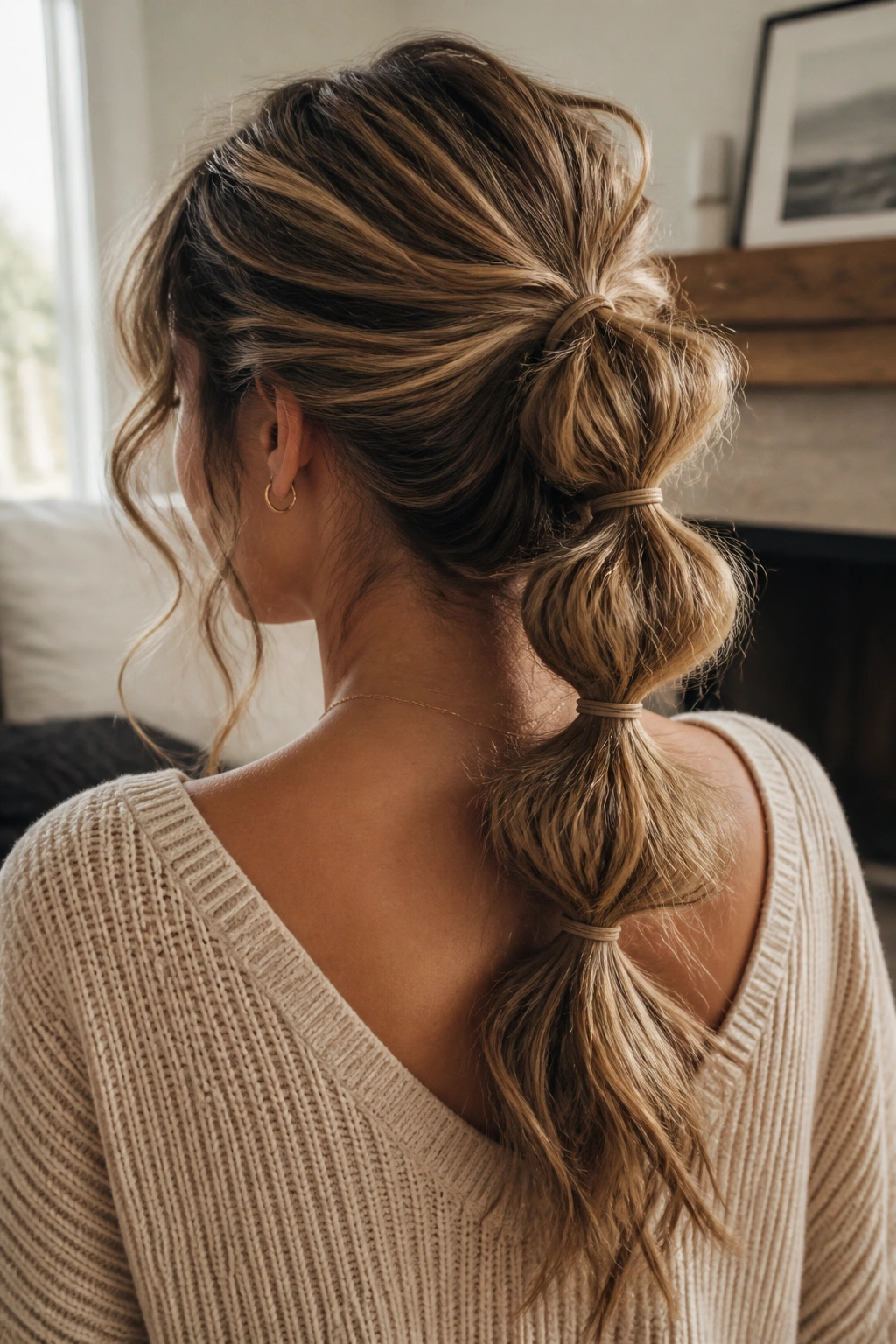
Why does a bubble ponytail look so good on thick hair? Because it breaks one heavy tail into smaller sections that feel lighter to the eye. You still get all the fullness, but the style reads as deliberate instead of bulky.
How to keep the bubbles round
Start with a mid or high ponytail, then add small elastics every 2 to 3 inches down the length. After each tie, pull the section between the elastics outward with your fingers until it forms a soft puff. Do not make every bubble identical. Slight differences make the style look more natural.
- Use clear elastics or slim ties that disappear into the hair.
- Leave the first bubble a little bigger than the rest.
- Tug the sides of each section rather than the center.
- Stop about 2 inches before the ends so the tail can stay loose.
A bubble ponytail is one of those styles that looks like it took real planning, even when you did it in five minutes. The loosened pulls at the crown and the slightly uneven bubbles keep it from looking too neat, which is exactly the point here.
4. The Braided-Base Messy Ponytail
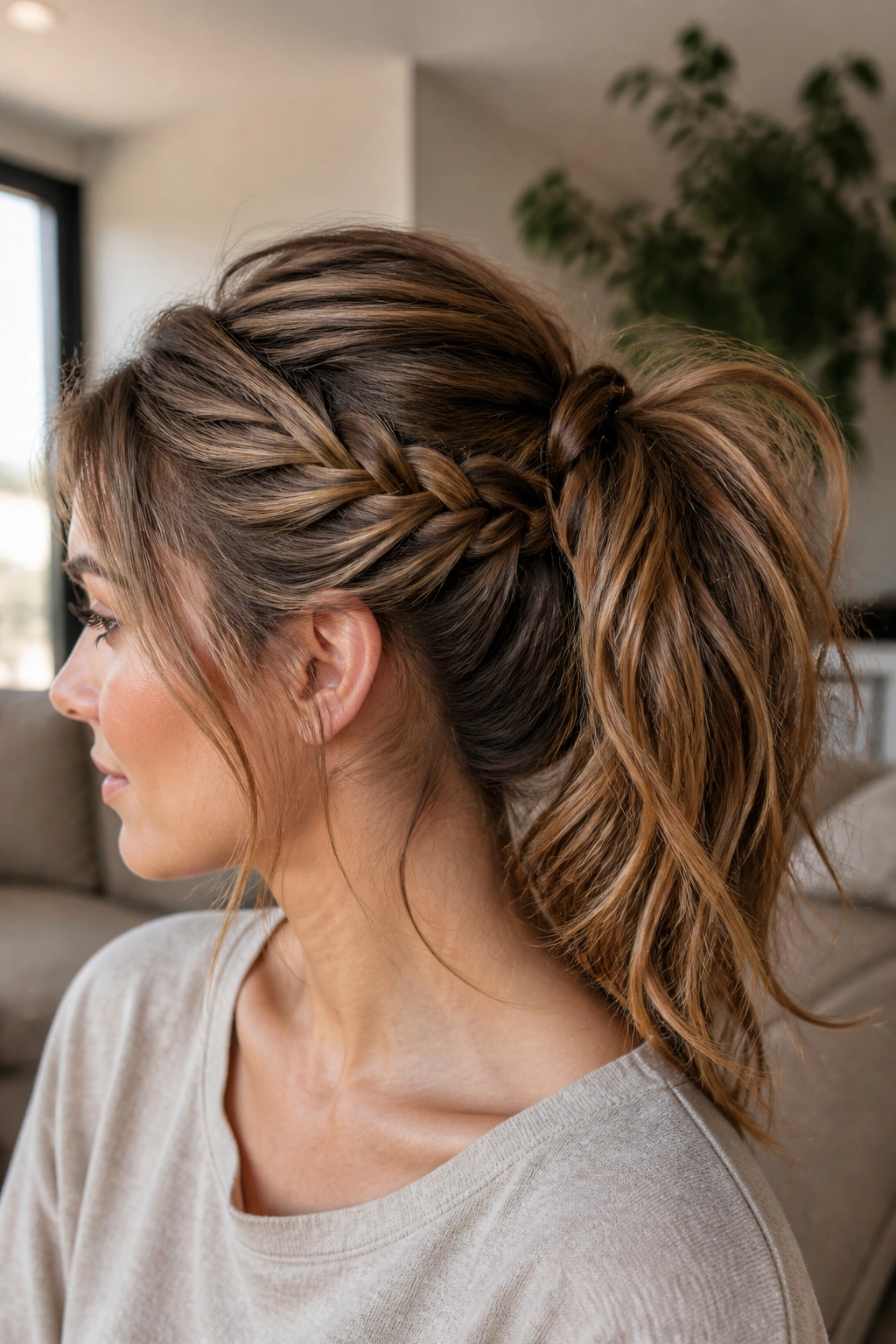
If your ponytail slips, this is the fix I reach for. A loose braid at the base gives thick hair something to grip onto, and that grip matters more than people think.
Picture this: your hair looks fine for an hour, then the elastic starts sliding lower and the whole ponytail loses shape. A braid at the top changes that. It anchors the front section, gives the crown a little texture, and makes the ponytail feel like it belongs there.
Where the braid should start
Take the top third of your hair and make a loose three-strand braid from the hairline back to the elastic point. Keep it soft. You are not trying to create a tight schoolgirl braid. You want a bit of texture and a little structure.
- Start the braid about 1 inch back from the hairline.
- Braid only until you reach the tie point.
- Pancake the outer edges lightly if you want more width.
- Leave the tail of the ponytail loose and full.
Small warning: do not braid so tightly that the front gets flat. The whole style should still feel airy at the top, not pressed down.
5. The Side-Swept Messy Ponytail
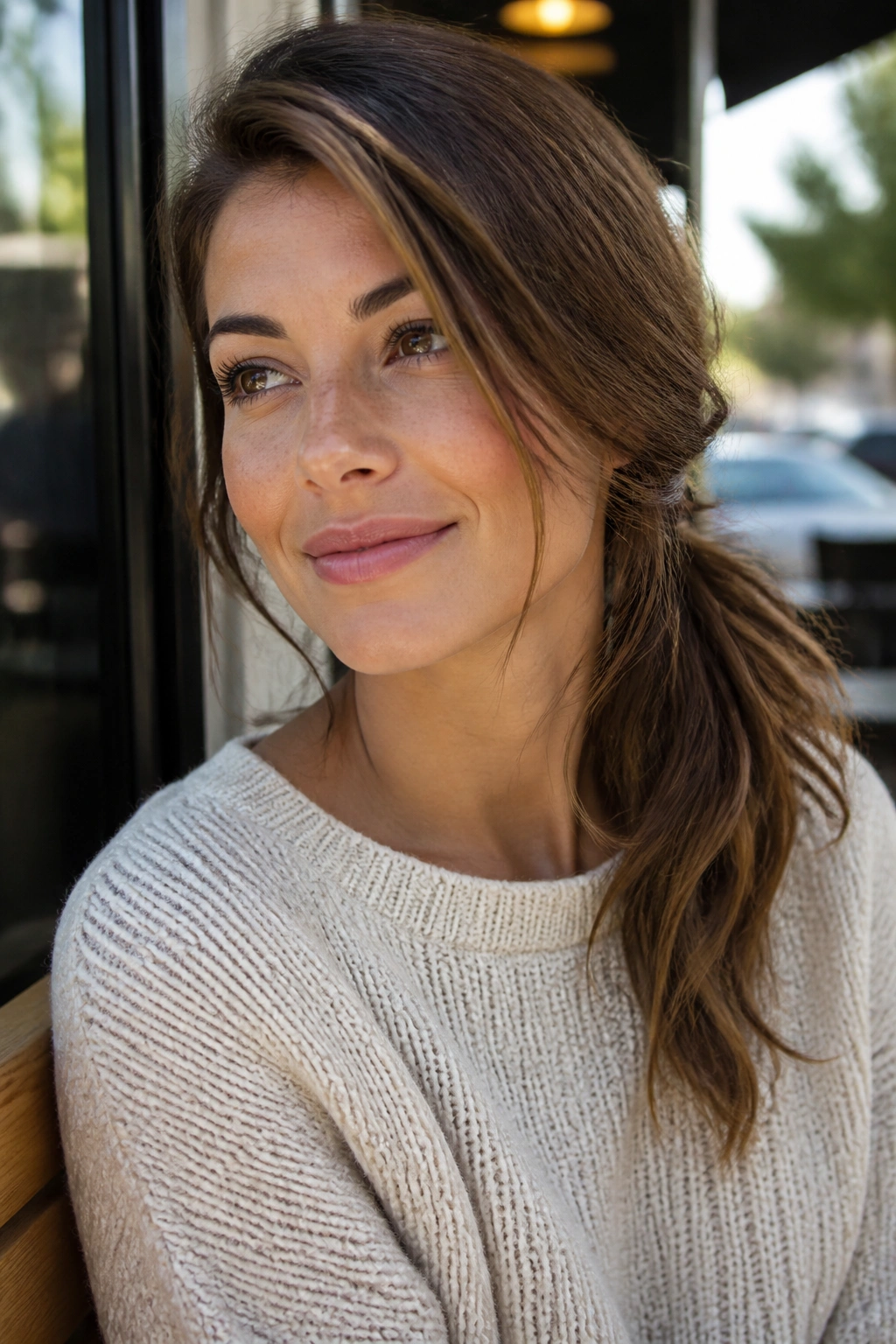
A side-swept ponytail is one of the few styles that can make thick hair feel lighter without cutting a single inch off the length. The weight shifts over one shoulder, which softens the outline of the hair and gives the style some movement.
There is also a practical upside. If one side of your hair is bulkier than the other, a side part can hide that imbalance fast. The eye follows the sweep, not the heaviness.
I like this style with a deep side part and a low-to-mid tie set just behind the ear on the heavier side. A few loose pieces around the front help the ponytail blend into the rest of the hair, and the slightly off-center shape keeps it from feeling stiff. Thick hair can look formal in a side ponytail if you smooth everything too much. Leave a little bend in the ends and the whole thing gets friendlier.
One-sentence styles are rare for thick hair. This is one of them.
6. The Wrapped Messy Low Ponytail
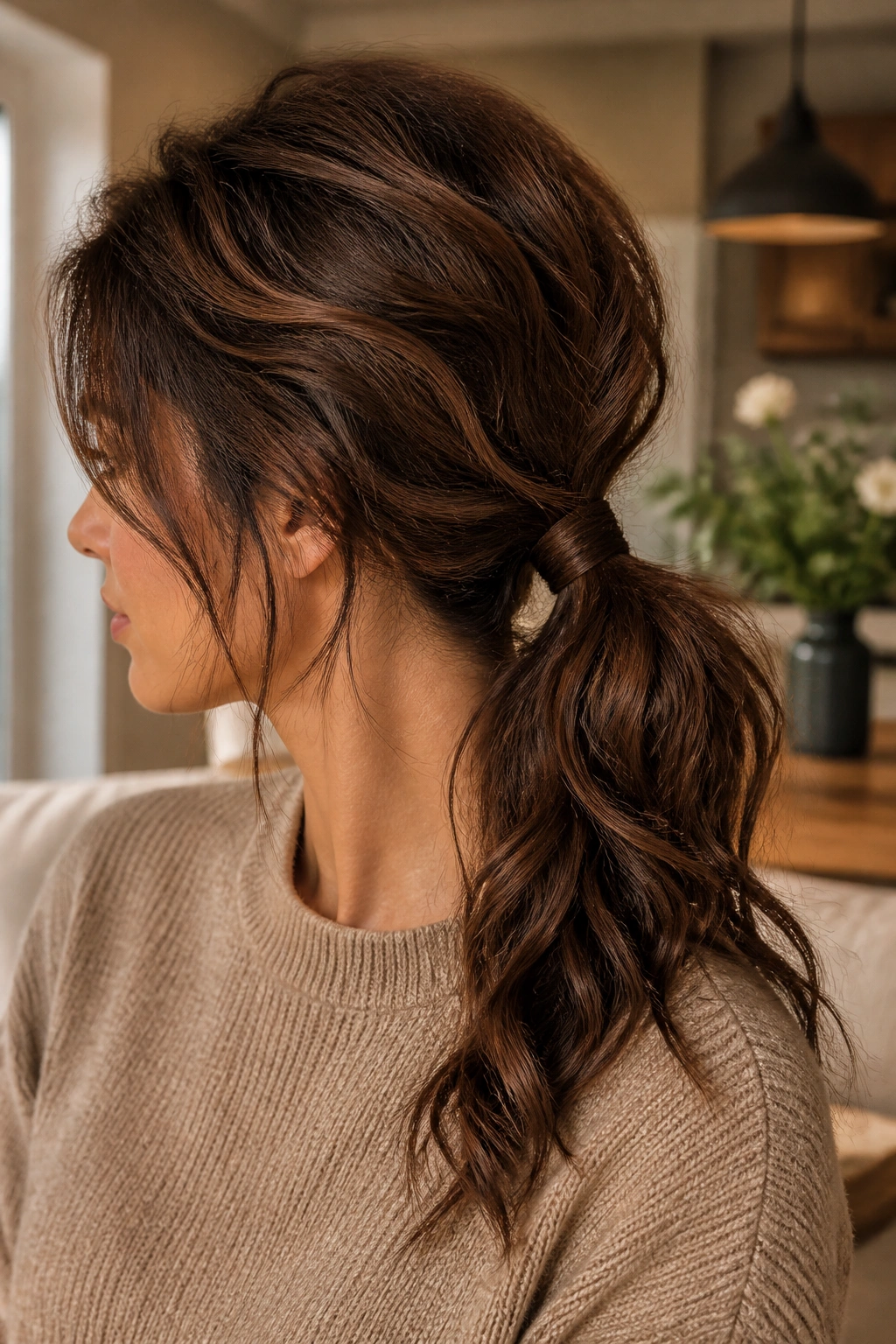
Unlike a polished office ponytail, this one does not try to hide every bump. The wrap around the elastic gives it a finished look, but the rest of the style stays loose and lived-in, which is the part I like most.
Use a section about 2 inches wide from underneath the ponytail, wrap it once or twice around the elastic, and pin it from below with a bobby pin. If your hair is coarse or very silky, mist that wrapping strand with a little texture spray first so it does not slide out. The wrap should look casual, not engineered.
A lot of people make this style too tight. Don’t. A wrapped ponytail on thick hair looks best when the crown has a touch of lift and the tail still has room to move. If the base is pulled flat, the wrap starts to look fake. If the base is slightly soft, the wrapped section feels like a nice detail instead of a cover-up.
7. The Half-Up Messy Ponytail for Thick Hair
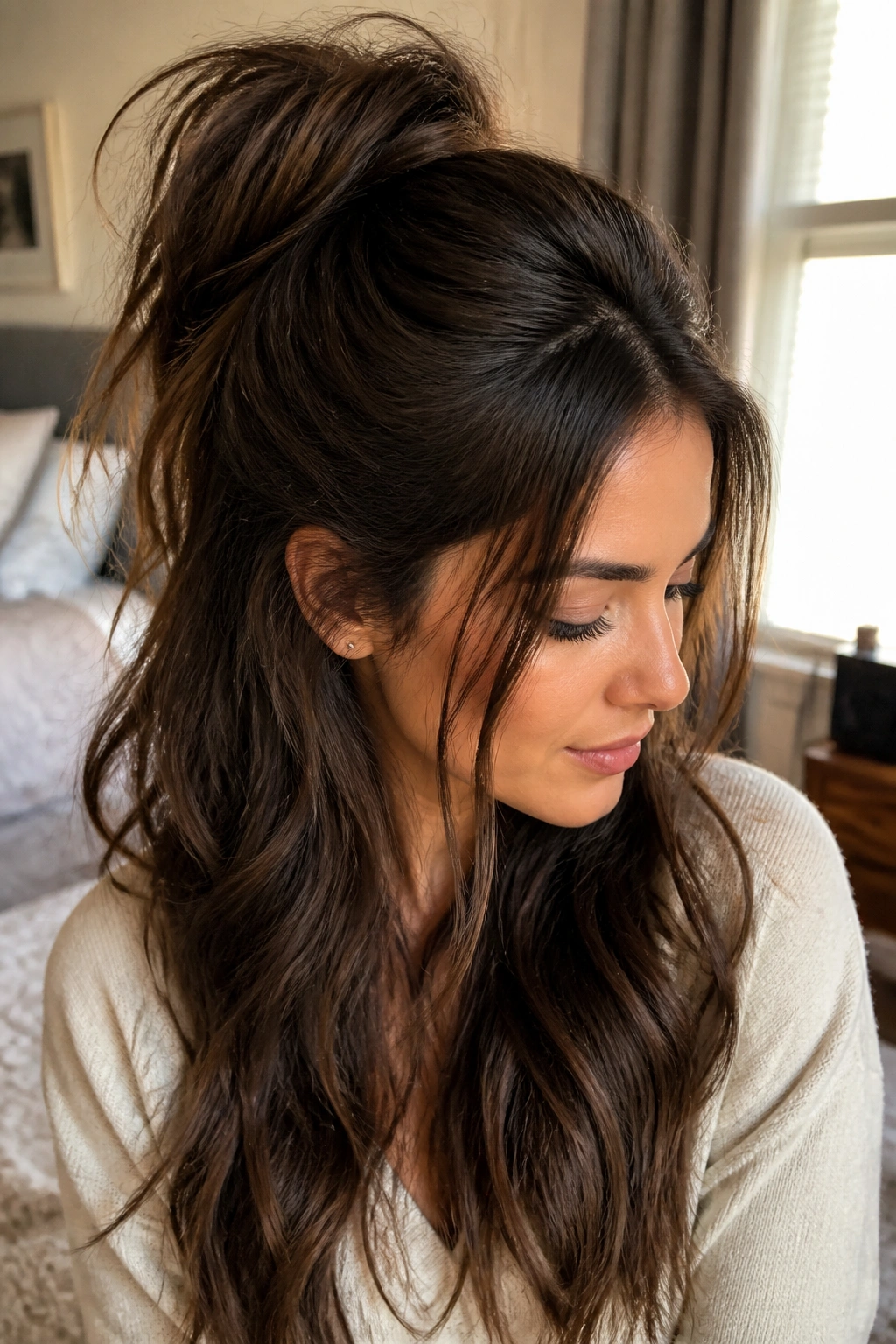
This is a smart choice when you want the face lifted but you do not want all that heavy length tugging at your scalp. Half of the hair goes up, half stays down, and the result has enough ease to feel casual without looking unfinished.
Take the top section from temple to temple, gather it at the crown or just below it, and secure it with a small elastic. Then pinch the top layer loose with your fingers so the crown gets a little height. The bottom hair stays free, which means the style has movement even if the upper section is thick.
- Keep the parting line soft, not ruler-straight.
- Leave a few face pieces out before tying.
- Curl just the ends of those pieces if they stick out.
- Lift the crown after the tie, not before it.
This one is especially nice when your thick hair feels too heavy for a full ponytail but still needs to be off your face.
8. The Twisted Crown Messy Ponytail
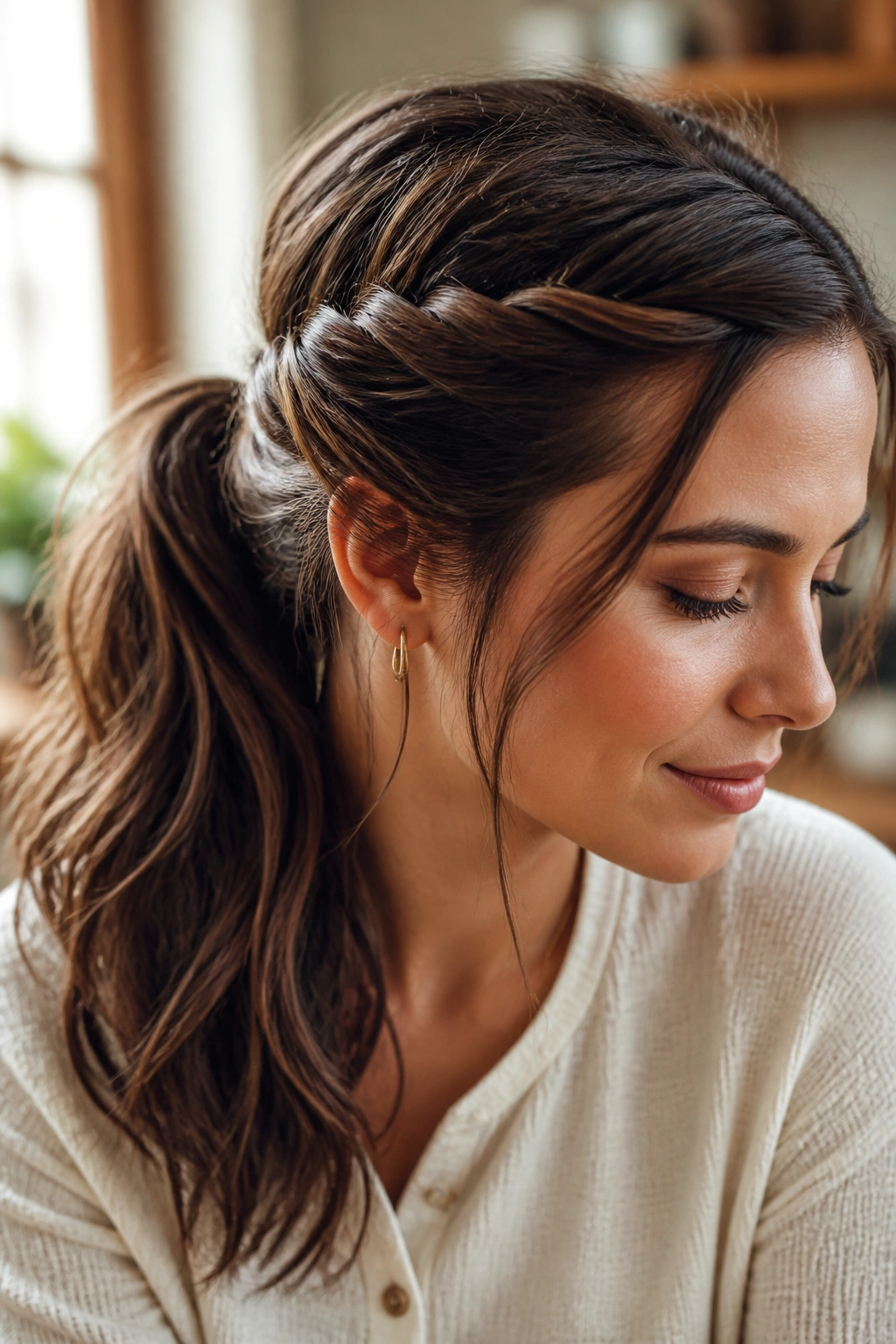
The front of thick hair is often the hardest part to deal with. Too much smoothing makes it flat. Too little and the whole thing fluffs out in the wrong places. Twists fix that.
Start by taking a section from each temple, twist each one back toward the crown, and pin them together just before they meet the ponytail. Then gather the rest into a low or mid ponytail. The twist keeps the front controlled while still letting the style look soft and a little undone.
Where to start the twists
Use sections about 1 to 1½ inches wide on each side. Twist them away from the face so they sit cleanly along the hairline, then secure them with crossed bobby pins for extra hold. If you have shorter layers, let them fall loose around the temples instead of forcing them into the twist.
This style works because it solves two problems at once. It clears the face and gives the crown a bit of interest, but it does not pile all your hair into one heavy knot on top of the head.
9. The Scarf-Tied Messy Ponytail
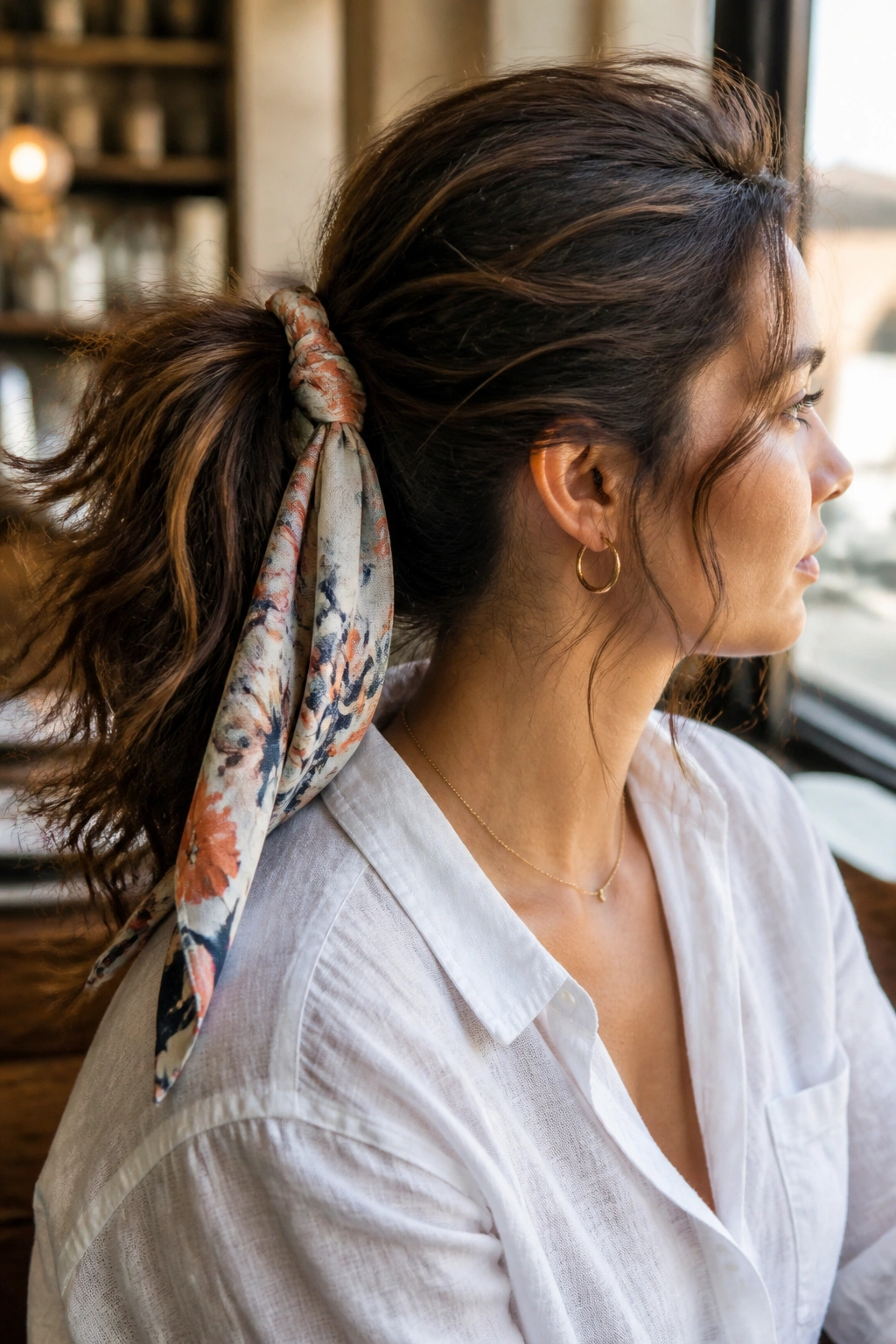
What does a scarf do here? More than decoration, frankly. It breaks up the solid block of thick hair, covers a plain elastic, and adds a little visual pause so the ponytail does not feel too heavy.
A cotton or linen scarf tends to stay put better than a silky one, especially if your hair is fine at the roots and coarse through the ends. Tie the scarf under the elastic, let the ends trail with the ponytail, and keep the knot slightly off-center if you want the style to feel less formal.
If you are worried about slippage, tie the ponytail first, then knot the scarf around the base, not around the hair itself. That keeps the fabric from dragging through the whole style. A scarf also gives you an easy color choice. Neutral if you want the hair to do the talking. Patterned if the outfit needs a little life.
A scarf-tied ponytail feels playful without becoming childish. That balance is harder to get than it sounds.
10. The Claw-Clip Messy Ponytail
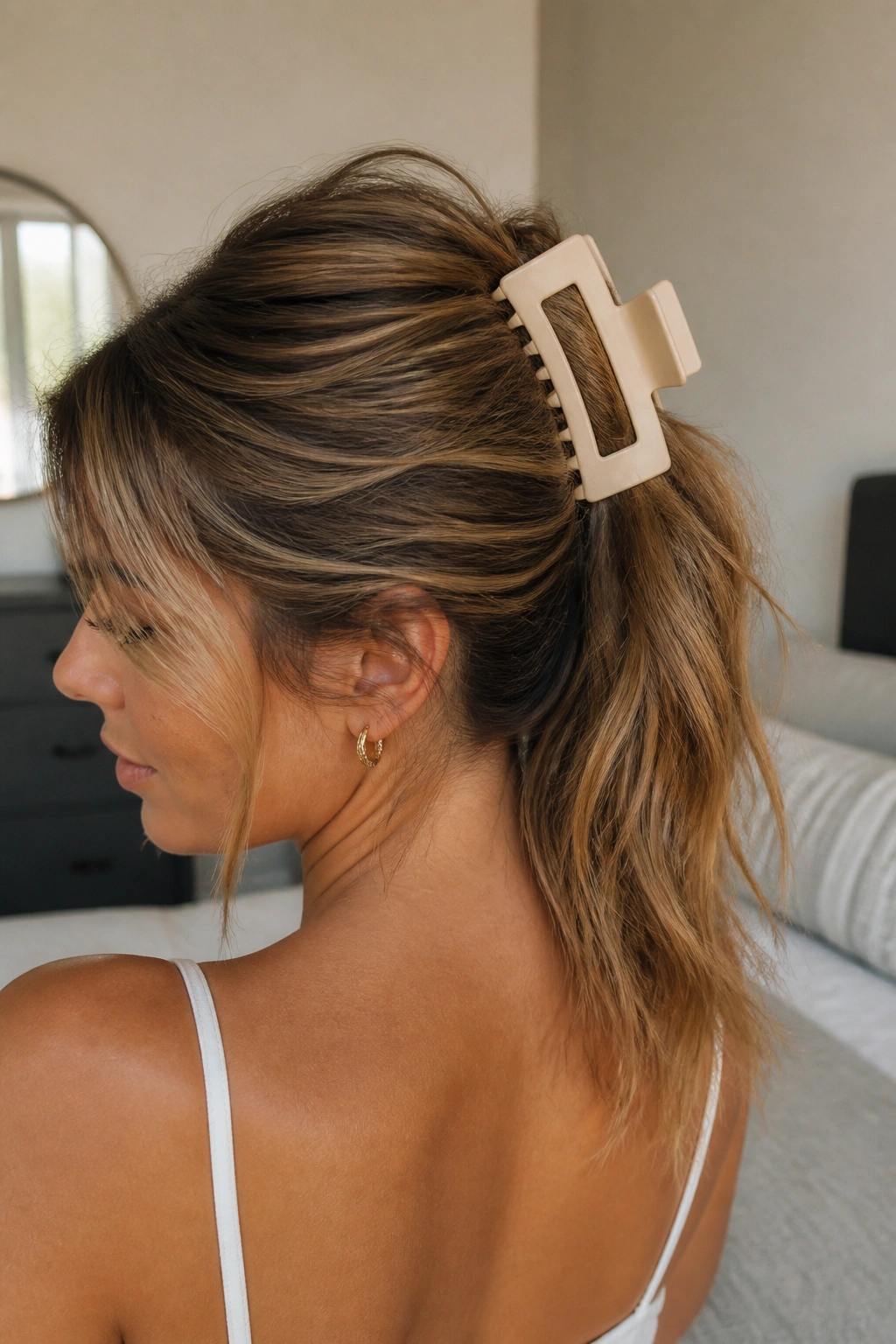
Some mornings call for speed, and a claw clip can save you from a full wrestling match with your hair. On thick hair, though, the clip works best when it supports a ponytail rather than pretending to be the whole hairstyle.
Tie a low ponytail first, then lift the base slightly and clamp a large claw clip over the elastic. Leave the ends of the ponytail out so they spill naturally below the clip. The clip should hold the top section while the tail stays loose and soft.
Choose a clip with teeth, not a flat shell
A clip with teeth about 3 to 4 inches long grips thick hair better than a smooth, decorative one. If the clip feels stretched to its limit, it will slide. That is the part people ignore, and then they spend the day pushing it back into place.
- Gather the hair with one hand before clipping.
- Secure a small elastic first if your hair is extra heavy.
- Leave the ends soft and uneven.
- Tilt the clip slightly upward for more lift.
This style is not trying to look perfect. It is trying to look like you knew exactly what you were doing when you were running late.
11. The Curly Messy Ponytail with a Broken-In Finish
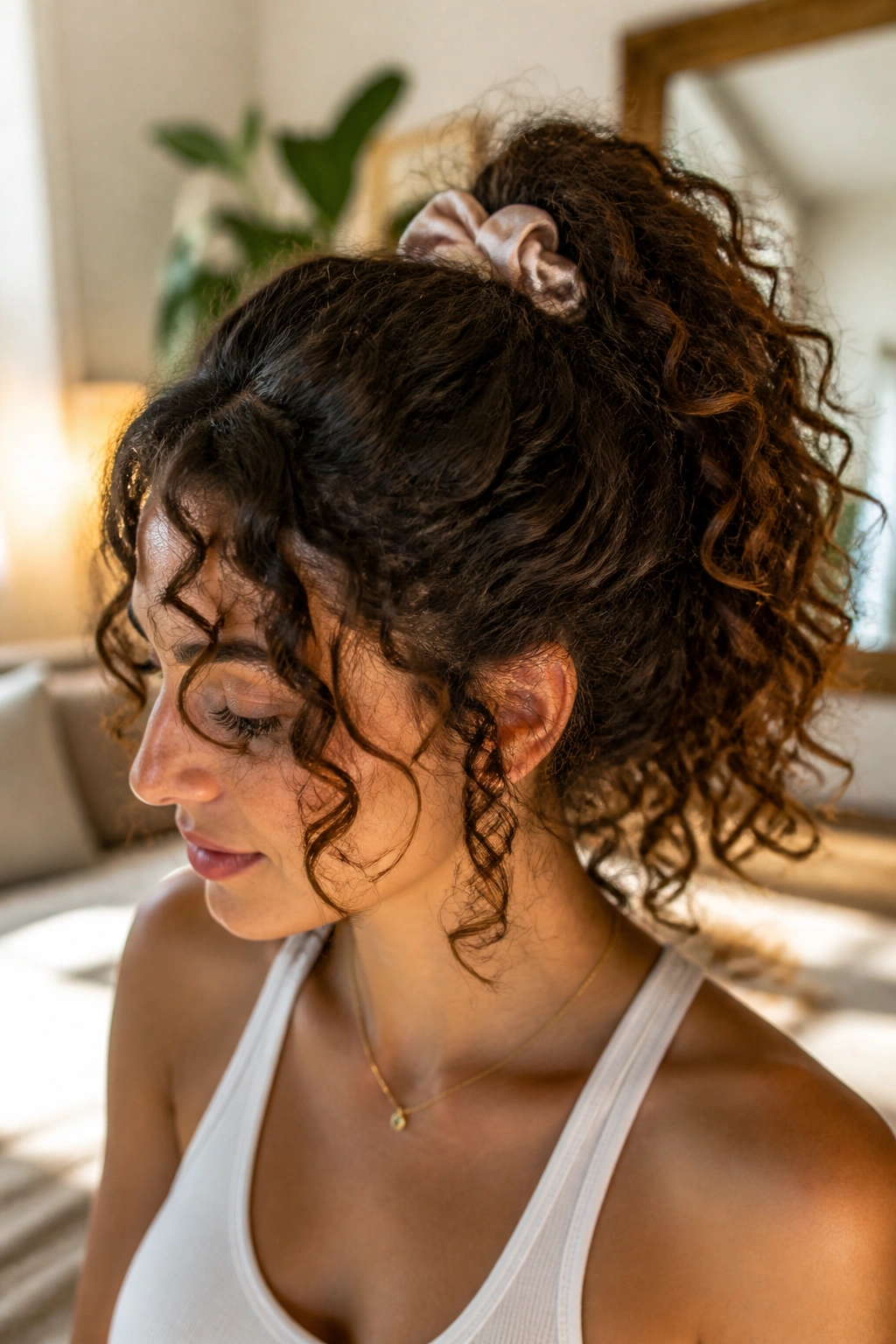
Curly and thick hair makes this style feel almost unfair, in a good way. The texture already gives you movement, so the ponytail can stay loose without losing shape.
Curly hair does not need to be tamed into a smooth rope.
Gather the hair gently with your fingers instead of brushing it flat. A wide-tooth comb can help at the roots, but I would leave the lengths alone unless they are badly tangled. Secure the ponytail with a satin scrunchie or a coil tie that will not leave a hard dent in the curls. Then let a few spirals fall around the face and at the neck. That broken-in edge is what makes the whole style look relaxed.
If your curls are a little frizzy, smooth only the hairline with a tiny bit of leave-in conditioner or water on your fingertips. Do not coat the whole head. Thick curls can get weighed down fast, and once they lose bounce, the ponytail starts to look tired. Keep the root fresh, keep the tail loose, and leave the texture alone. It already does half the work.
12. The Rope-Braid Messy Ponytail
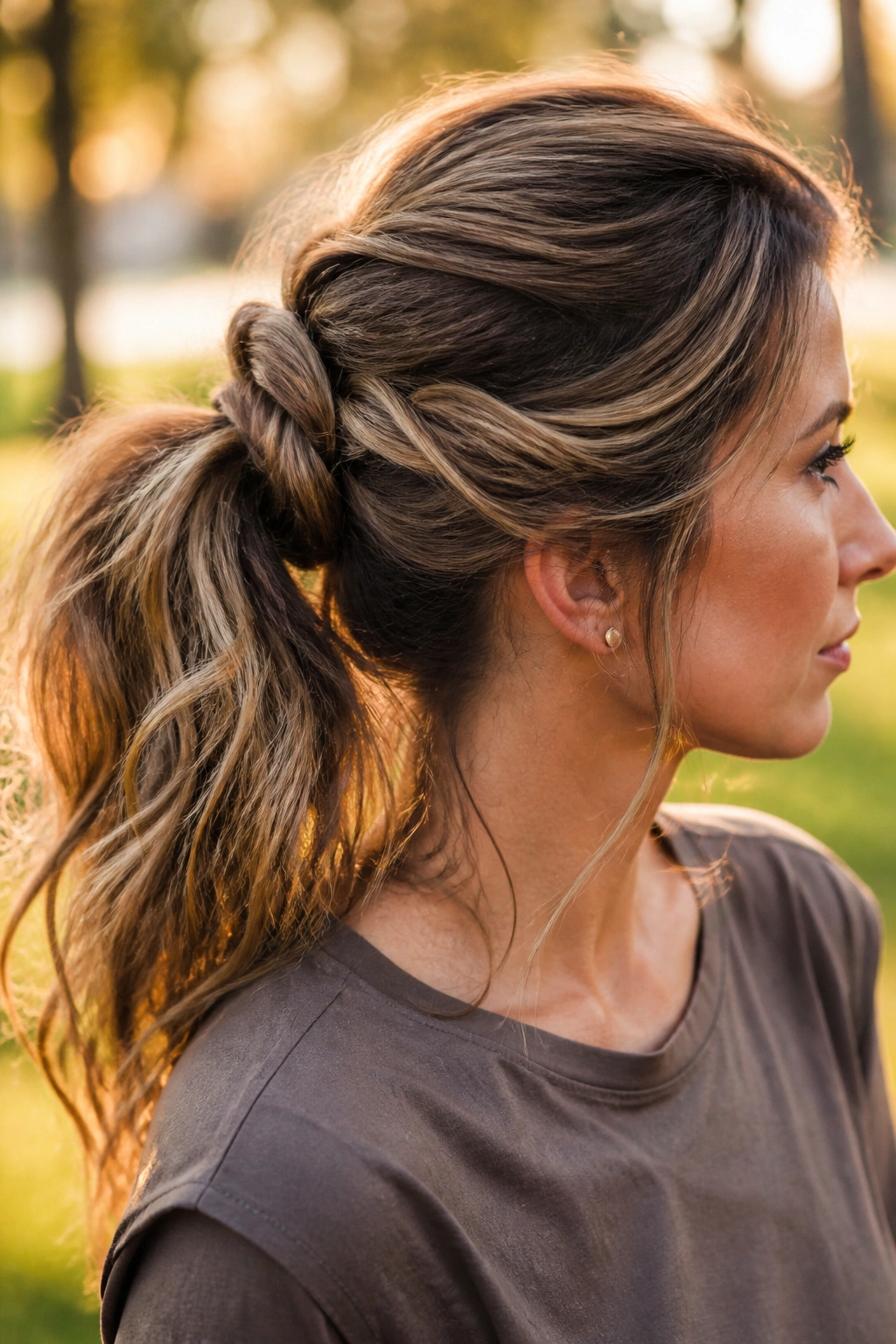
Unlike a regular braid, a rope braid needs only two sections, which makes it faster and less fussy on thick hair. It also has a slightly rougher look that suits messy ponytails better than a neat, woven braid sometimes does.
Split the ponytail into two equal sections, twist both sections in the same direction, then wrap them around each other in the opposite direction. That opposite motion is what keeps the rope braid from unraveling. When you reach the ends, secure it with a small elastic and pull a few spots apart so it looks fuller.
- Keep each section about 2 to 3 inches wide if the ponytail is very thick.
- Twist tightly at the top and looser near the ends for softness.
- Stop the braid about 2 inches before the tail runs out.
- Tug the outside edges lightly to widen it.
This is a great style when your thick hair gets puffy at the ends. The rope braid keeps that bulk compact while still leaving the finish a little undone.
13. The Double-Elastic Messy Ponytail
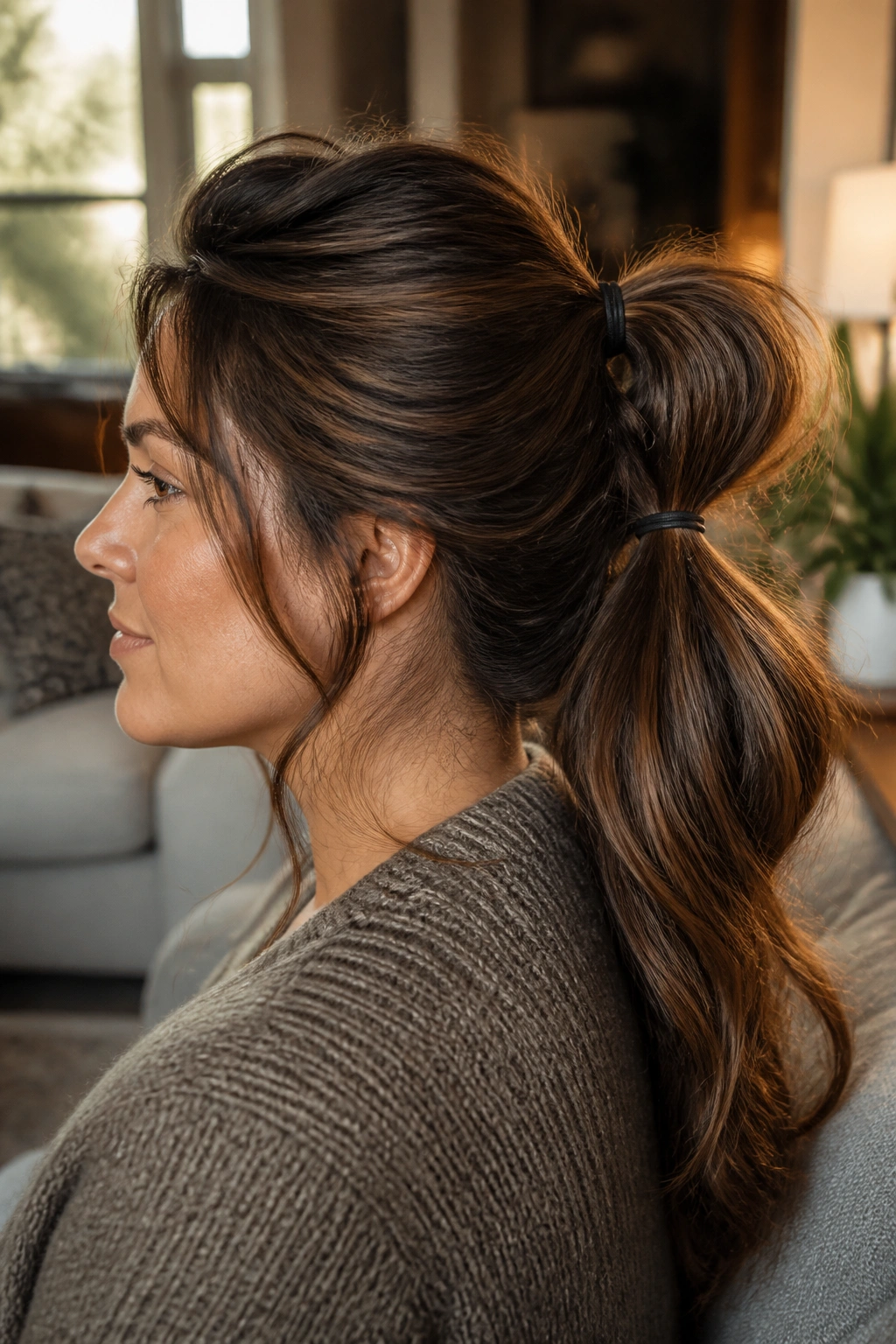
One elastic is often not enough for thick hair. The weight drags the ponytail down, and the whole style starts to sag before the day is over. Two elastics spread the load.
Tie the first elastic where you want the ponytail to sit. Then add a second one about 2 to 3 inches lower on the tail. Gently pull the hair between the two ties to create a little puff, but stop before it looks like a bubble ponytail. This version is softer and more grown-up.
That second tie makes a big difference on dense hair because it stops the length from tugging all the weight from one point. The ponytail keeps its height, the crown stays lighter, and the overall shape reads as intentional. If you want, wrap a small piece of hair around the top elastic only. I would skip the second wrap. Too much polish kills the easy feel.
Simple. Strong. It holds.
14. The Slick-Front, Soft-Length Messy Ponytail
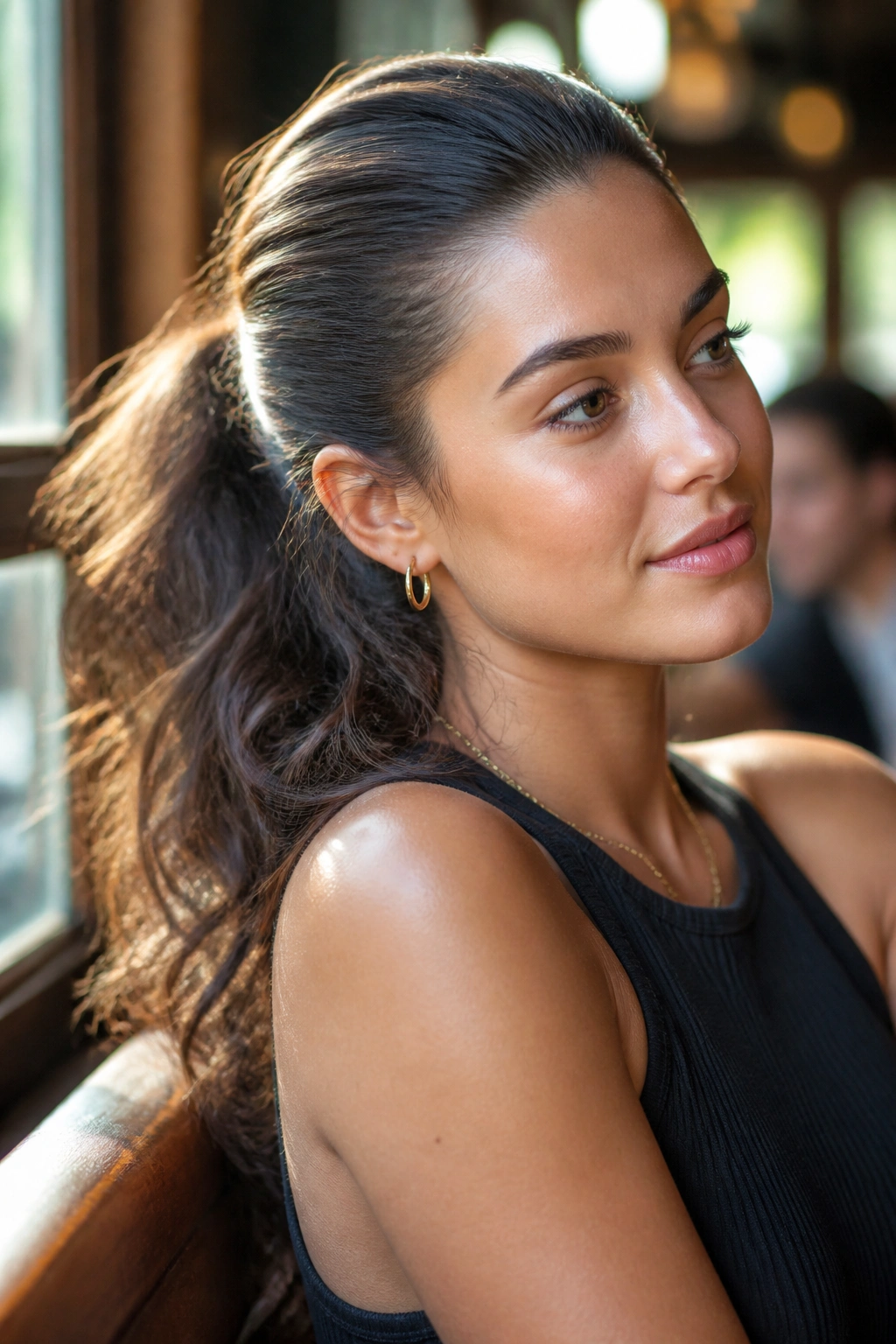
How do you keep thick hair off your face without making the whole ponytail stiff? Give the front a smooth start and let the rest stay loose.
Where to stop the product
Use gel, pomade, or a little smoothing cream only on the first 1 to 2 inches from the hairline. Brush that section back with a boar bristle brush or even the back of a toothbrush if you are working near the temples. Then leave the lengths alone. That contrast is what makes the style work.
- Smooth the front, not the tail.
- Tie the ponytail low or mid-height.
- Keep the ends rough, bent, or softly waved.
- Pull a few wisps loose near the ears after the tie.
This ponytail has a neat front and a loose body, which is a nice balance when thick hair wants to do too much on its own. It also works well if you need the hair out of your face but still want the ponytail to feel casual instead of strict.
15. The Day-Old Messy Ponytail

Fresh-washed thick hair often fights this style. It can be too slippery at the roots, too soft to hold shape, and too determined to slide out of the tie. Day-old hair usually gives you the better base.
Start with dry shampoo at the roots if they need a little grip, then flip the head over and gather the hair with your hands rather than a brush. That hand-gathered shape keeps the crown from looking overworked. Tie the ponytail mid-height or low, then pinch the top loose and let the ends fall where they want. If the tail is straight, bend the bottom few inches with a flat iron so the finish does not look too severe.
I keep coming back to this one because it asks for less. No strict parting. No perfect smoothing. No fussing with every layer. Thick hair can handle a little disorder better than most textures, and on a day when you want speed, this style makes that weight work for you instead of against you.
