



Ponytails for thick hair are a different animal. The hair gives you body and swing for free, but it also drags a weak elastic down the back of your head and turns a cute style into a headache by lunch.
The fix is not more spray. It’s better structure. Thick hair usually needs a tighter base, a smarter part, or a little hidden support — sometimes two elastics, sometimes a braid, sometimes a wrapped strand that hides the hardware and keeps the tail from sagging.
I like ponytails that make dense hair look intentional instead of heavy. That means styles that respect weight, leave the scalp comfortable, and still show off the fullness that fine-hair people spend half a shelf trying to fake.
A basic scrunchie can only do so much. Start with the high wrapped version if you want lift, then work through the others depending on whether you want polish, softness, or a style that can survive a long, busy day.
1. High Wrapped Ponytail
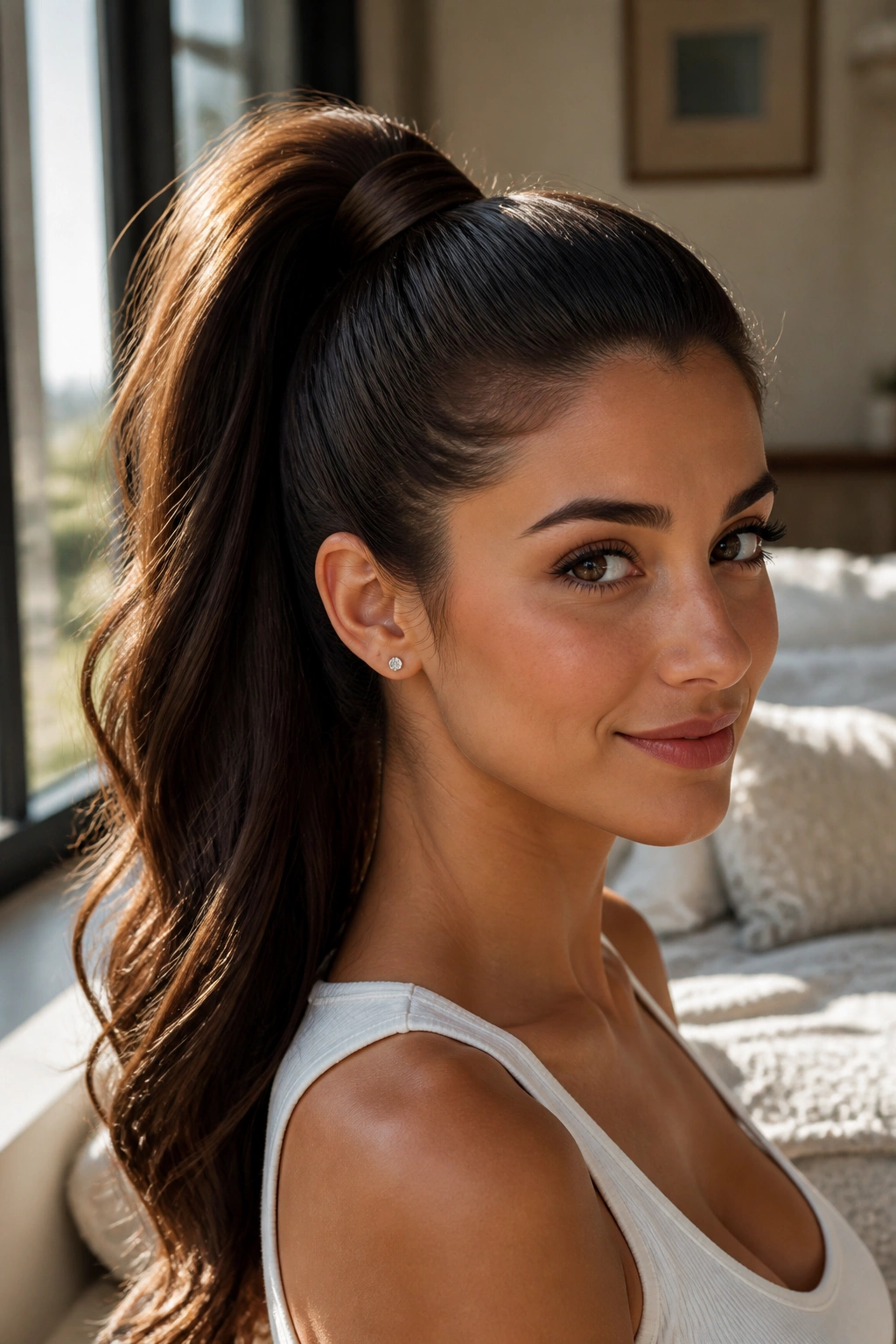
A high wrapped ponytail is the one style that can make thick hair look sharp without making it look aggressive. The lift at the crown gives you shape, and the wrapped piece at the base hides the elastic so the whole thing reads cleaner.
Why it works on thick hair
Thick hair holds its own weight better when the ponytail starts a little higher than you think. If you place the anchor right at the crown, the tail sits up instead of collapsing backward. That matters more than people realize.
Use a brush with firm bristles, then smooth only the outer layer. Do not overload the roots with cream or oil; that is how you get a ponytail that looks glossy for ten minutes and then slips.
A good wrapped ponytail also buys you a little disguise. One ½-inch strand from underneath the tail is enough to hide the elastic and make the style look finished, not rushed.
- Place the first elastic about 1 inch above where you’d normally tie the ponytail.
- Smooth the top section first, then gather the rest with your free hand.
- Wrap a ½-inch strand around the base and pin the end underneath with a small bobby pin.
- If your hair is especially dense, use a second elastic 1 inch below the first one for extra hold.
Pro tip: Pull the crown up slightly before you secure the base. That tiny lift keeps thick hair from looking flat at the top and bulky everywhere else.
2. Low Sleek Ponytail for Thick Hair
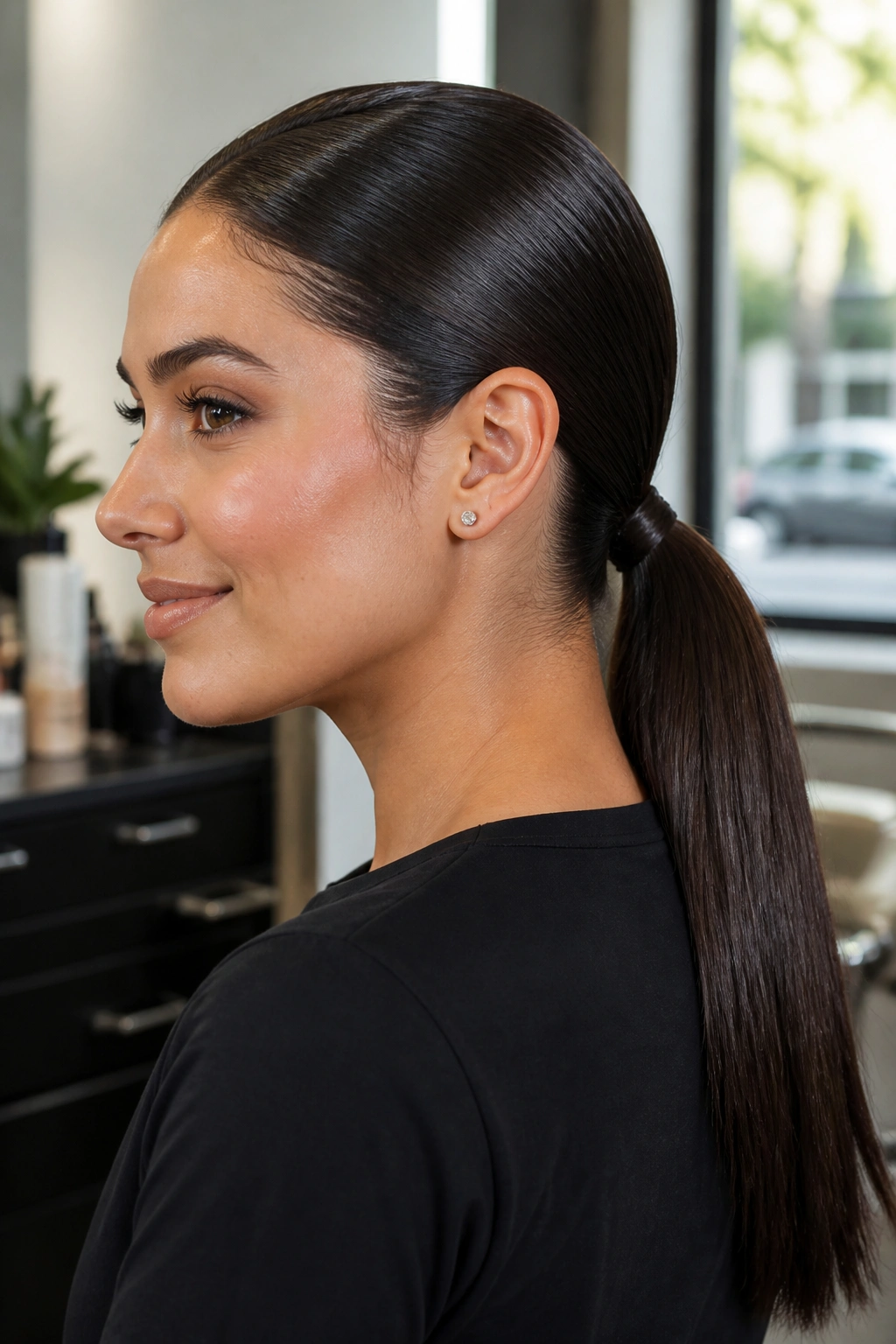
The low sleek ponytail is the easiest way to make thick hair look polished without making it look smaller. That’s the part people miss. You do not need to fight the volume; you need to place it where it works for you.
The weight sits at the nape, so the style stays put longer and the head feels less pulled at the temples. A deep side part makes the front softer, which helps if your hair has a lot of natural bulk around the hairline.
Start with a fine-tooth comb and a dab of gel or styling cream on the top 2 inches only. Brush the sides back, then gather the hair low and tight. You want the surface smooth, not shellacked.
A low ponytail is also the cleanest choice when your ends are thick and blunt. It looks sleek without forcing the tail to be skinny. That is a nice trade, and honestly, a rare one.
Finish by spraying a little hairspray on the brush, then swiping the flyaways down instead of misting the whole head. The control feels neater, and the style keeps its shine instead of going stiff.
3. Bubble Ponytail
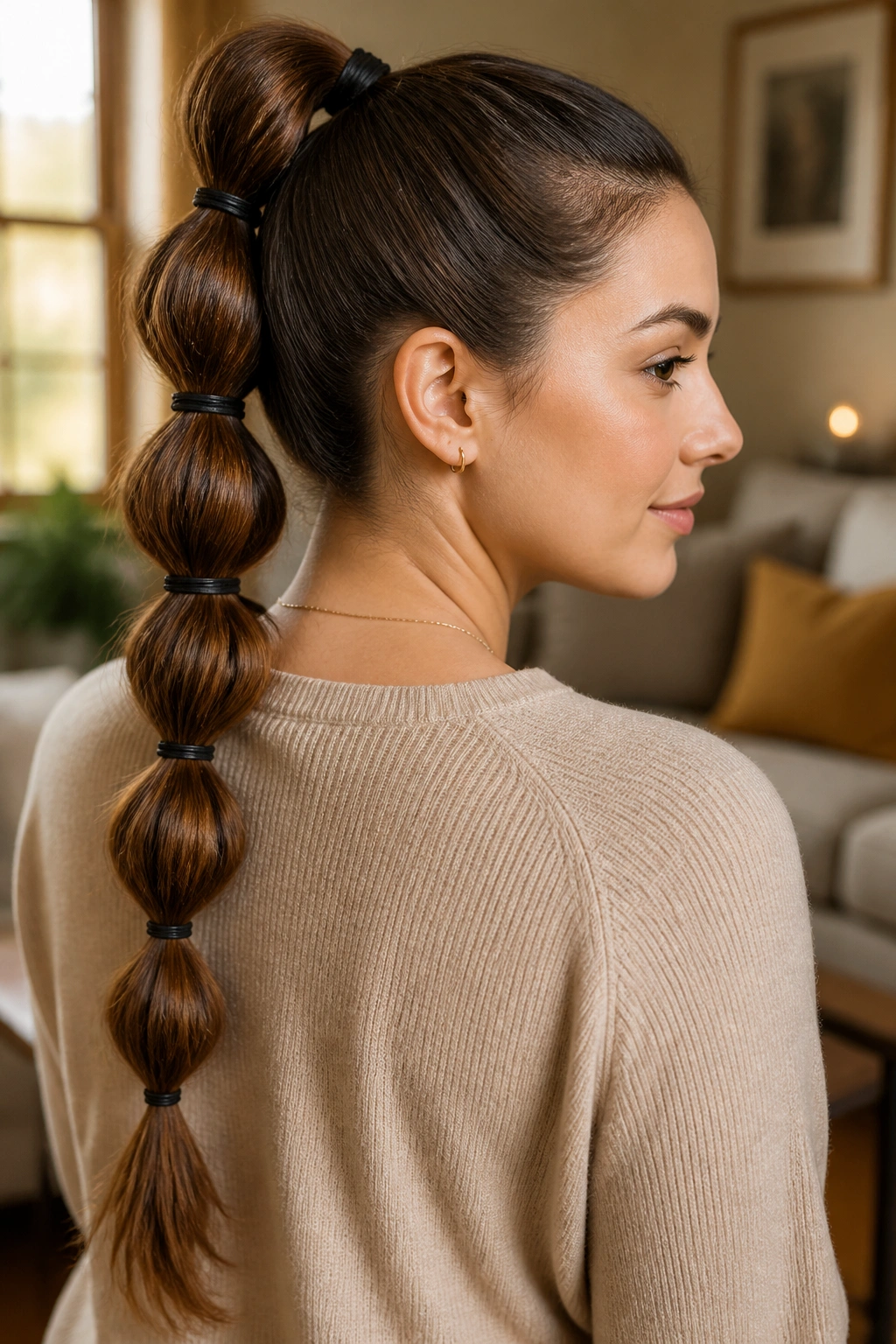
Why does a bubble ponytail hold up so well on thick hair? Because each section becomes its own little anchor. The density that causes trouble in a loose ponytail suddenly becomes the thing that gives the style shape.
The trick is spacing. Use clear elastics or small fabric ties every 2 to 3 inches, depending on your length, then gently pull each section outward until it rounds into a puff. Leave it tight enough to stay, loose enough to look soft.
How to use it
- Start with a regular ponytail at mid-height or low at the nape.
- Add a second elastic 2 to 3 inches down the tail.
- Tug the hair between the two elastics with your fingertips until it looks rounded.
- Repeat the spacing down the length, keeping each bubble roughly the same size.
- If your hair is layered, mist the ends lightly so the shorter pieces do not fray out.
A bubble ponytail is one of those styles that looks much more complicated than it is. It also works on very long thick hair because the sections prevent the tail from feeling like one giant lump.
Keep the bubbles a little imperfect. Perfectly even bubbles can look stiff; slightly uneven ones look more relaxed and somehow more expensive, if that makes sense.
4. Braided-Base Ponytail
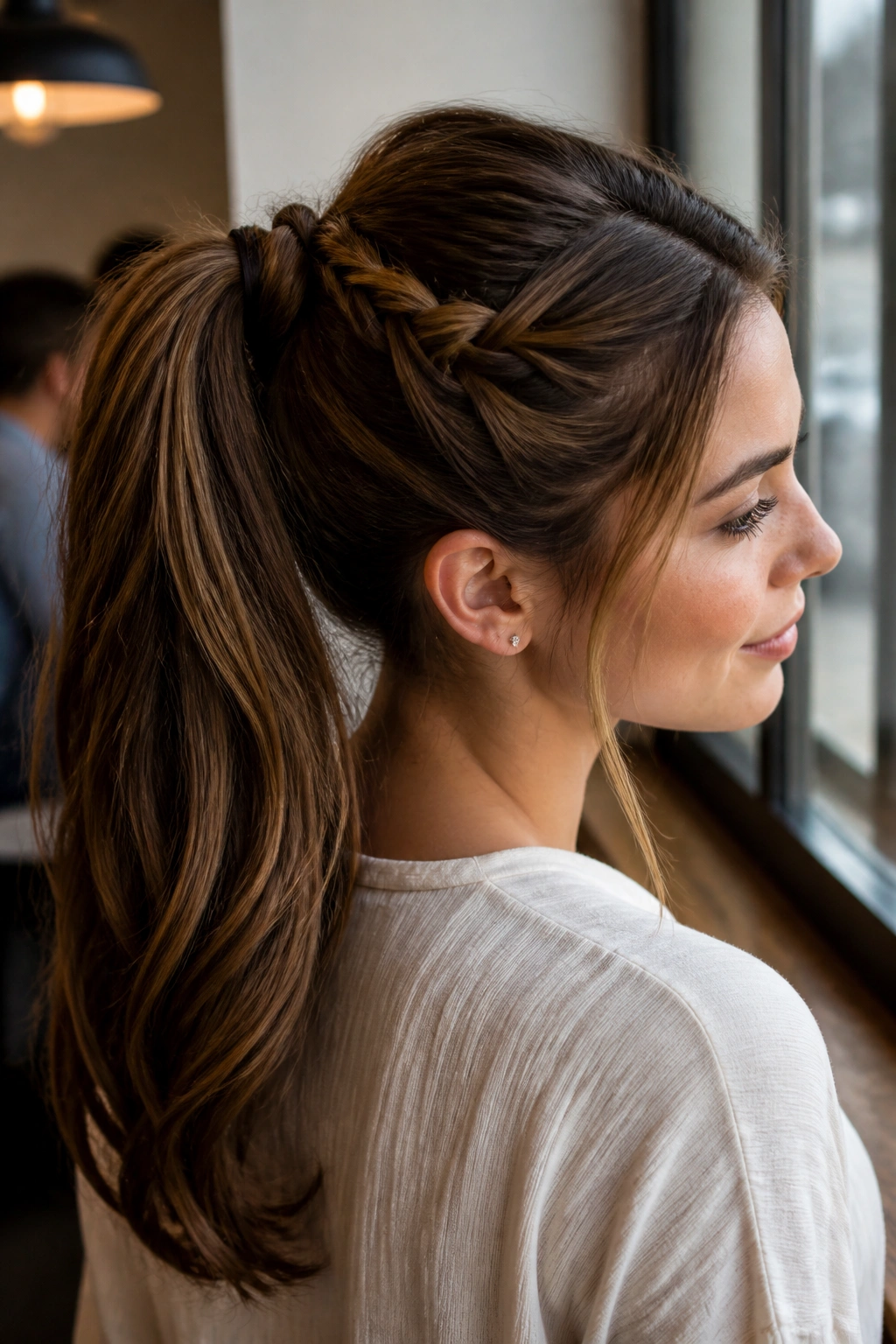
When thick hair keeps slipping at the crown, braid the first 2 or 3 inches before you gather the rest. That tiny bit of weaving gives the ponytail a grip it cannot get from a smooth part alone.
The braid does the boring part — it holds tension where the hair wants to slide — and the ponytail gets to stay full and simple. You can do a French braid, a Dutch braid, or even a tight three-strand braid if that’s faster for you.
- Braid straight back from the hairline for a cleaner, sporty look.
- Braid only the top section, then stop around the middle of the head.
- Gather the rest into a ponytail and secure with a strong elastic.
- Hide the transition by wrapping a small piece of hair around the join.
This style is especially useful for silky thick hair that refuses to stay in place. It also plays nicely with second-day texture, which gives the braid a little more bite.
A braided base is one of the few ponytails that can look deliberate even when the rest of your morning was chaos. That matters. Some styles look good only when everything else in your life is calm. This one does not ask for that.
5. Double Ponytail Stack
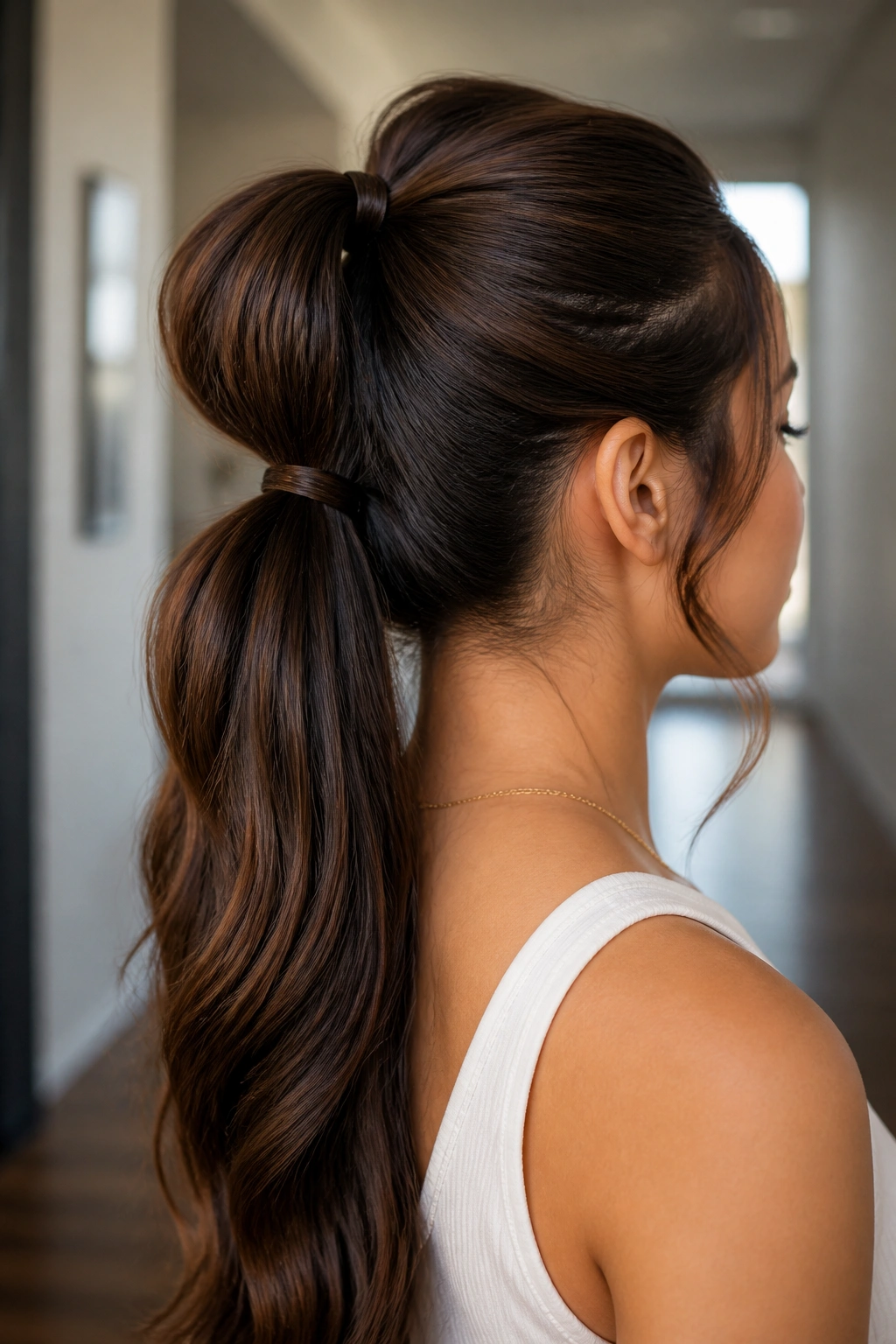
Thick, long hair can make a single ponytail drag itself down. The double ponytail stack fixes that by splitting the weight across two anchors while still reading as one long tail from the front.
Put the first ponytail high on the crown and the second one about 2 to 3 inches below it. The top tail hides the split, and the lower tail carries the extra length so the whole style sits more evenly.
It sounds fussy. It isn’t.
The best part is how natural it looks once the hair settles. From the side, you get lift at the crown and fullness through the length. From behind, you avoid that blunt, sagging shelf shape that thick hair sometimes creates when everything is tied in one place.
This style works well when your hair is long enough that a single ponytail feels heavy by noon. It also helps if your layers are thick but not all the same length, because the upper section can smooth over the rough spots underneath.
Use matching elastics and keep the second tie hidden under the top section as much as possible. If the split shows, the illusion breaks a little. When it is done cleanly, though, it is one of the smartest tricks in the whole ponytail family.
6. Rope-Twist Ponytail
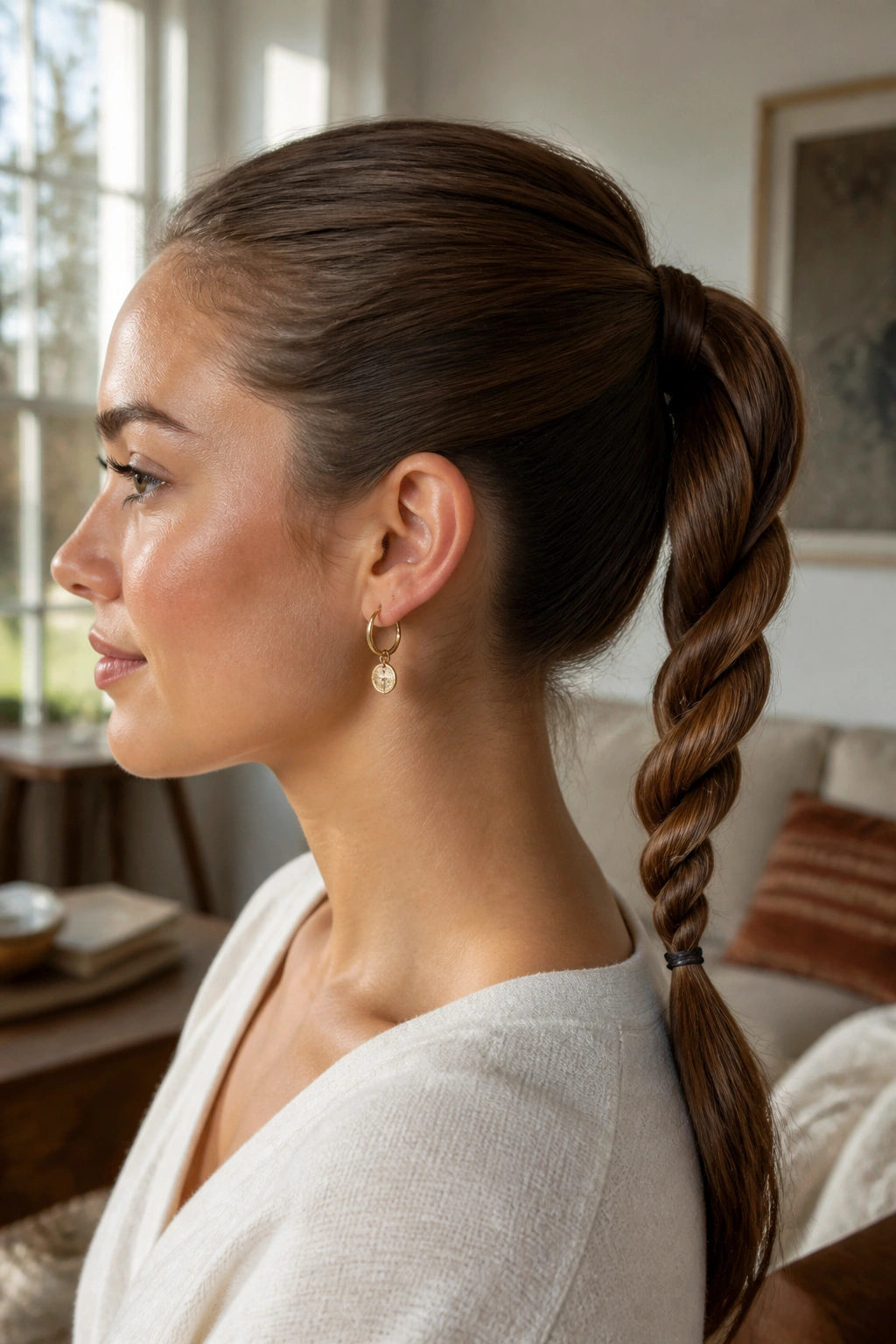
Unlike a regular ponytail, the rope twist keeps the surface neat even when the hair is heavy. It has a cleaner line, less frizz at the sides, and a slightly more structured look without turning stiff.
Split the tail into two sections, twist each section in the same direction, then wrap them around each other in the opposite direction. That reversal is what helps the twist lock together. If you twist both sides the same way and wrap carelessly, the whole thing loosens fast.
This is the style I reach for when the hair is straight, dense, and a little slippery. It gives you texture without teasing the entire head. And if you’ve ever dealt with a thick ponytail that looks flat on top but bulky at the ends, you know why that matters.
A small clear elastic at the end keeps the rope from unraveling. Add a tiny dab of pomade to your palms before you twist, not after. That keeps the surface smooth without making the hair greasy at the root.
It’s one of those styles that looks more polished than the effort it takes. Which, honestly, is the sweet spot.
7. Curly Ponytail for Thick Hair
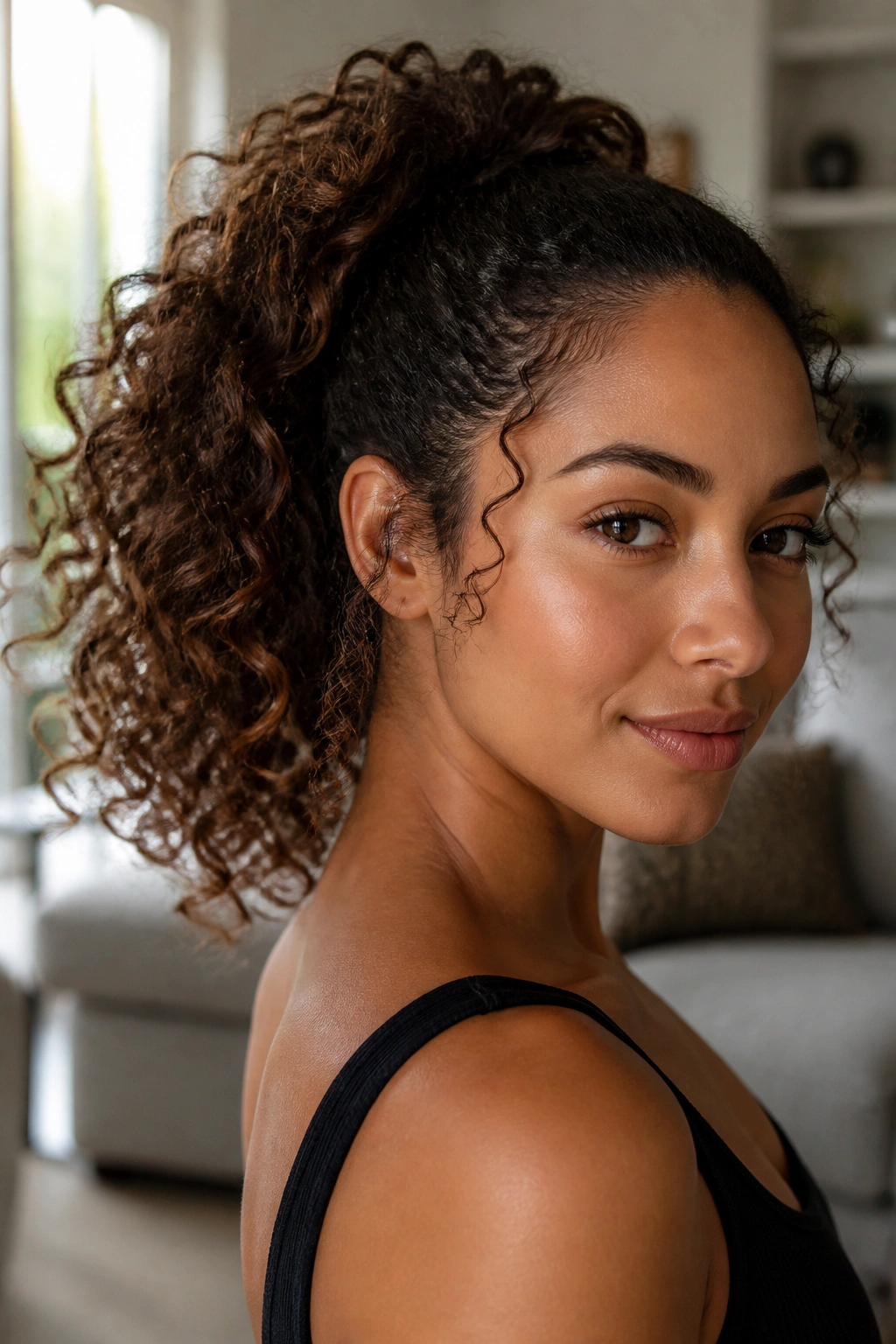
Do you need to flatten curls to make a ponytail work? No. That is the mistake. Thick curls already bring shape, and a ponytail that respects that texture usually looks better than one that tries to erase it.
Keep the crown a little lifted and smooth only the sides enough to gather them. If you pull every curl flat, the style loses life fast. A ponytail should hold the hair, not squeeze it into a helmet.
How to keep the top from collapsing
- Finger-comb the roots instead of brushing the entire head.
- Leave about 1 inch of lift at the crown before securing the elastic.
- Smooth curl cream or leave-in conditioner through the tail, not the scalp.
- Use a silk scrunchie or a coated elastic so the curls do not snag.
- Pin a few curls around the base if you want the style to look softer.
A curly ponytail works especially well when the hair is thick enough to create a full shape without teasing. The tail stays wide, the curls keep their pattern, and the overall look feels balanced instead of weighed down.
If the front feels too bare, leave a small curl or two out near the temples. That little detail keeps the face from looking boxed in.
8. Side Ponytail with Face-Framing Pieces
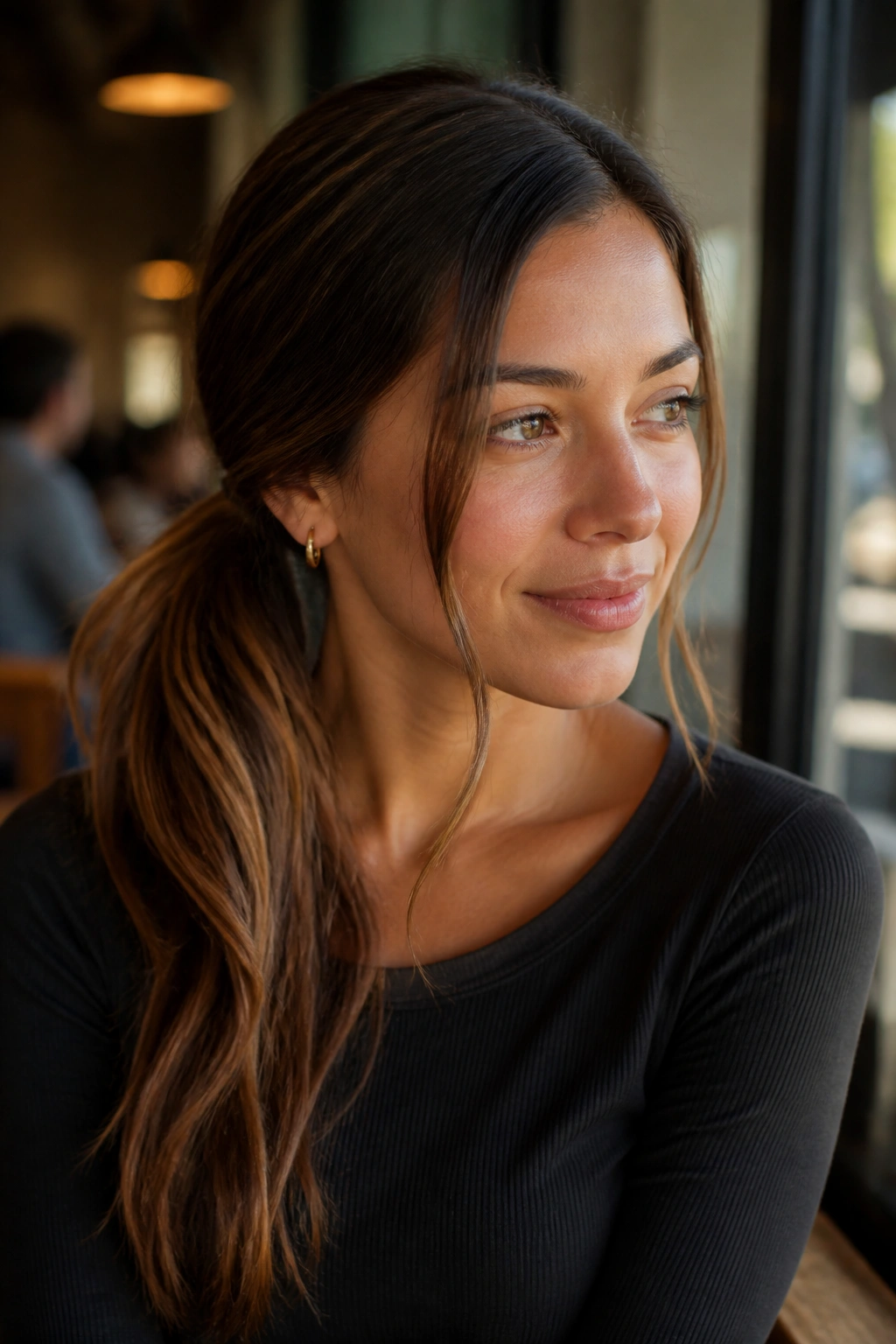
Some thick-haired days call for a side ponytail because the weight feels easier when it is not hanging straight down the middle. The shift off-center changes the whole mood of the style. Softer. Less severe. A little more relaxed.
A deep side part gives the front shape, then the ponytail sits low behind one ear or just below it. Leave two face-framing pieces loose, about ½ inch wide each, so the style does not feel too packed up.
The nice thing about a side ponytail is that it lets the bulk become part of the design. Thick hair gets to spill over one shoulder instead of forming one heavy column down the back. That small change makes the whole style feel lighter to wear.
Use a small elastic and then cover it with a ribbon, barrette, or a narrow strip of hair if you want the finish cleaner. If your hair is very thick, angle the ponytail slightly upward before you secure it so the base does not sag toward the shoulder.
This is a good one for long errands, dinners, or any day when you want your hair controlled but not severe. It has a soft edge that straight-back ponytails sometimes lose.
9. Fishtail Crown Ponytail
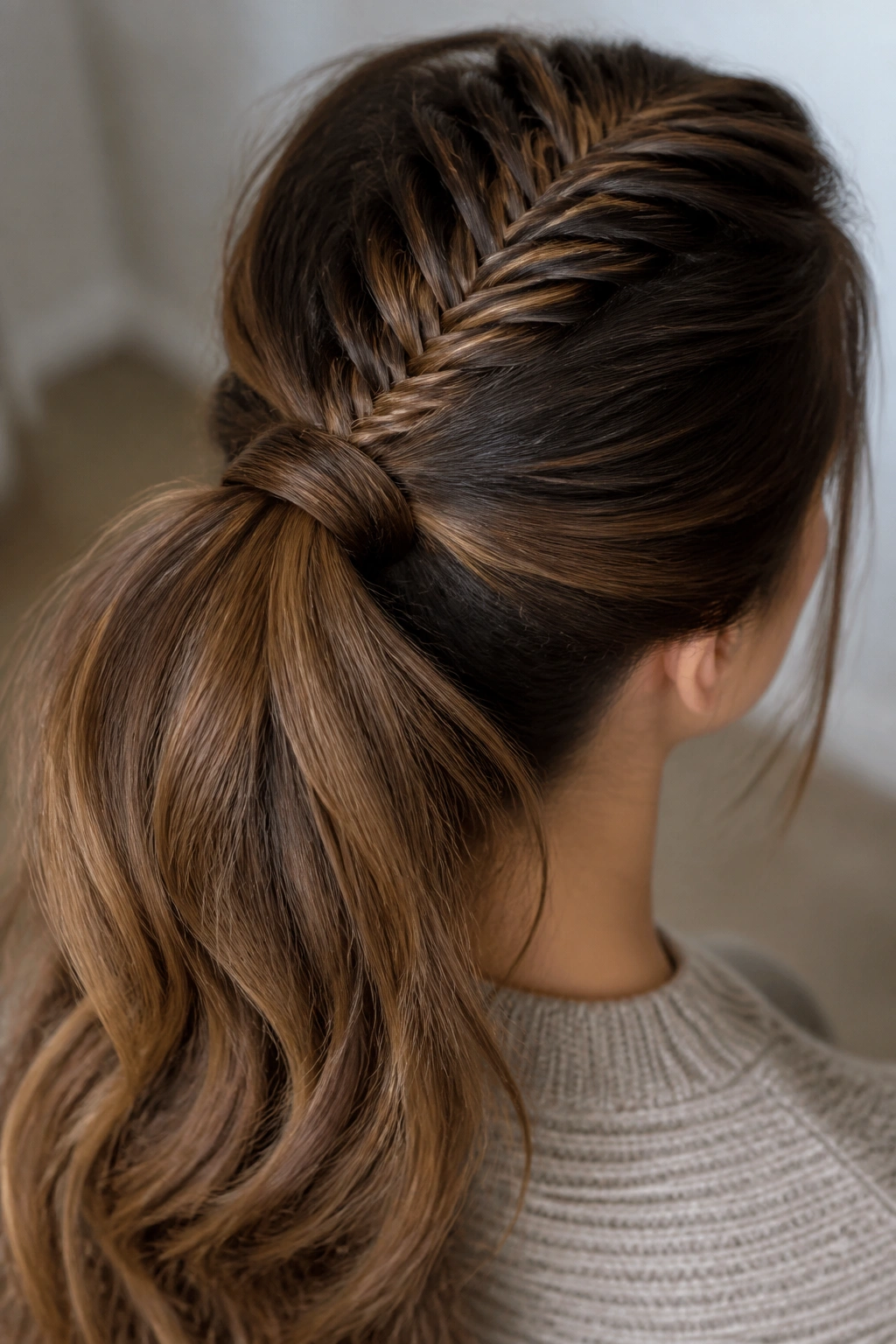
A fishtail braid does not have to take over the whole style. On thick hair, it can work as a front section that feeds into a ponytail, which gives you both texture and a full tail without too much fuss.
Start the fishtail at the crown or just behind the hairline, braid it for 3 to 4 inches, then stop and gather the rest into a ponytail. That keeps the braid visible where it matters most and leaves the length loose enough to move.
How to keep it from turning fussy
A thick head of hair can make a fishtail look heavy if you overcomplicate it. Keep the braid snug at the top, then let the ponytail stay softer below. The contrast is what makes it work.
- Use small sections at the braid start so the weave stays crisp.
- Stop the braid before it reaches the mid-head; any longer and the style can feel busy.
- Secure the braid with a clear elastic before adding the ponytail.
- Gently widen the braid only after it is tied off.
This style suits long thick hair best because the braid gets a fuller texture than it would on fine hair. It looks detailed without being precious, which is hard to pull off and worth keeping.
10. Crisscross Wrapped Ponytail
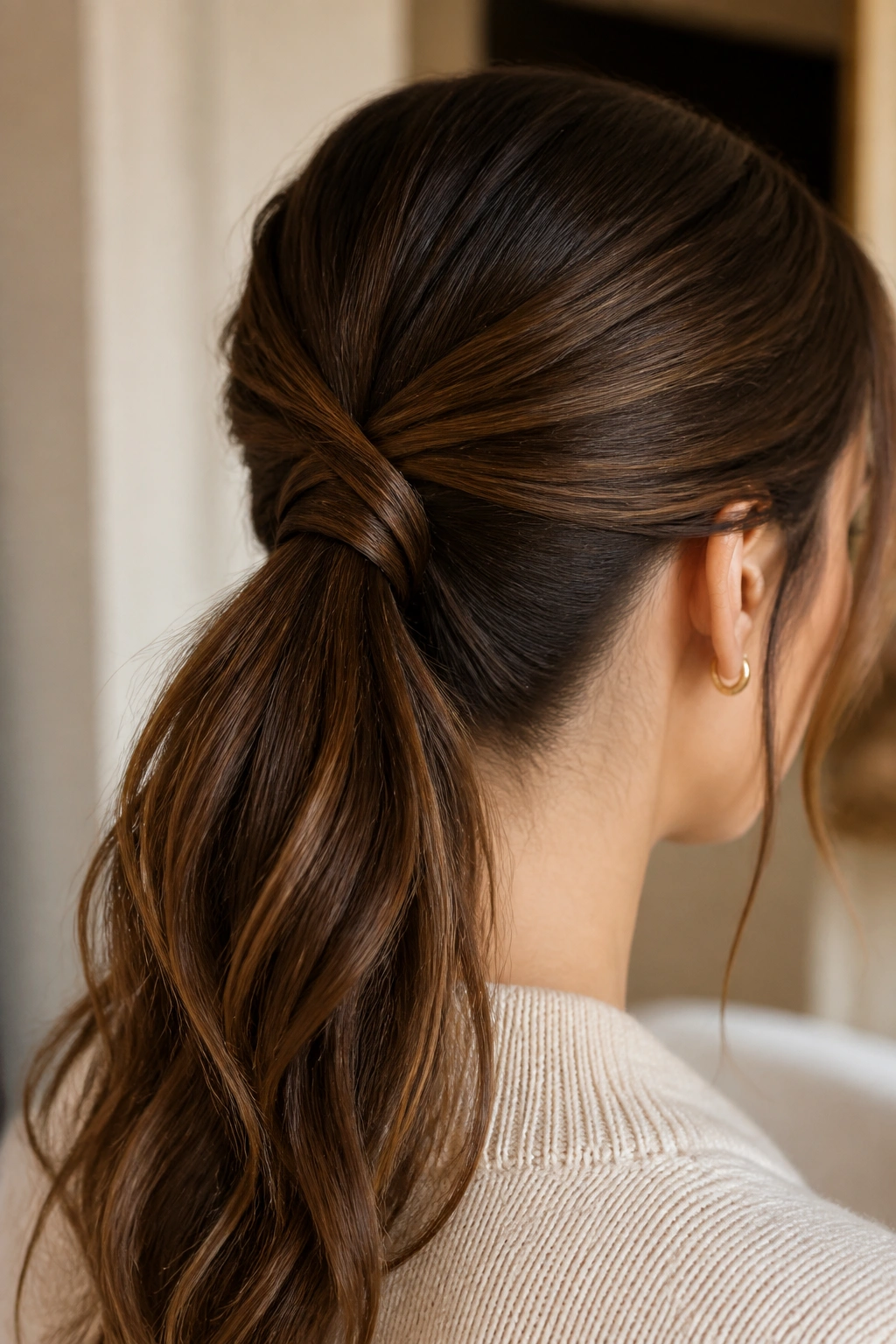
The crisscross wrapped ponytail is what you choose when the elastic needs to disappear and the base needs to look finished. A single wrap is fine, but the crossed version holds tighter and looks more deliberate on thick hair.
Take two thin sections from each side of the head, cross them over the ponytail base, then tuck or pin them underneath the tail. The crossing gives you a neat little frame at the base, and thick hair gives the pins something to grip.
The style works best when the ponytail itself is at mid-height or low. Too high, and the crossing can feel crowded. Too low, and the shape loses a bit of interest.
I like this one because it does not rely on accessories to do all the work. The hair itself creates the decoration. That matters if you prefer a cleaner finish or if your wardrobe already has enough going on.
A couple of hidden bobby pins placed in an X under the tail keep the crisscross from slipping. Thick hair can hide them easily, which is half the appeal. The other half is that the base looks tidy even when the rest of the style stays soft.
11. Knotted Ponytail
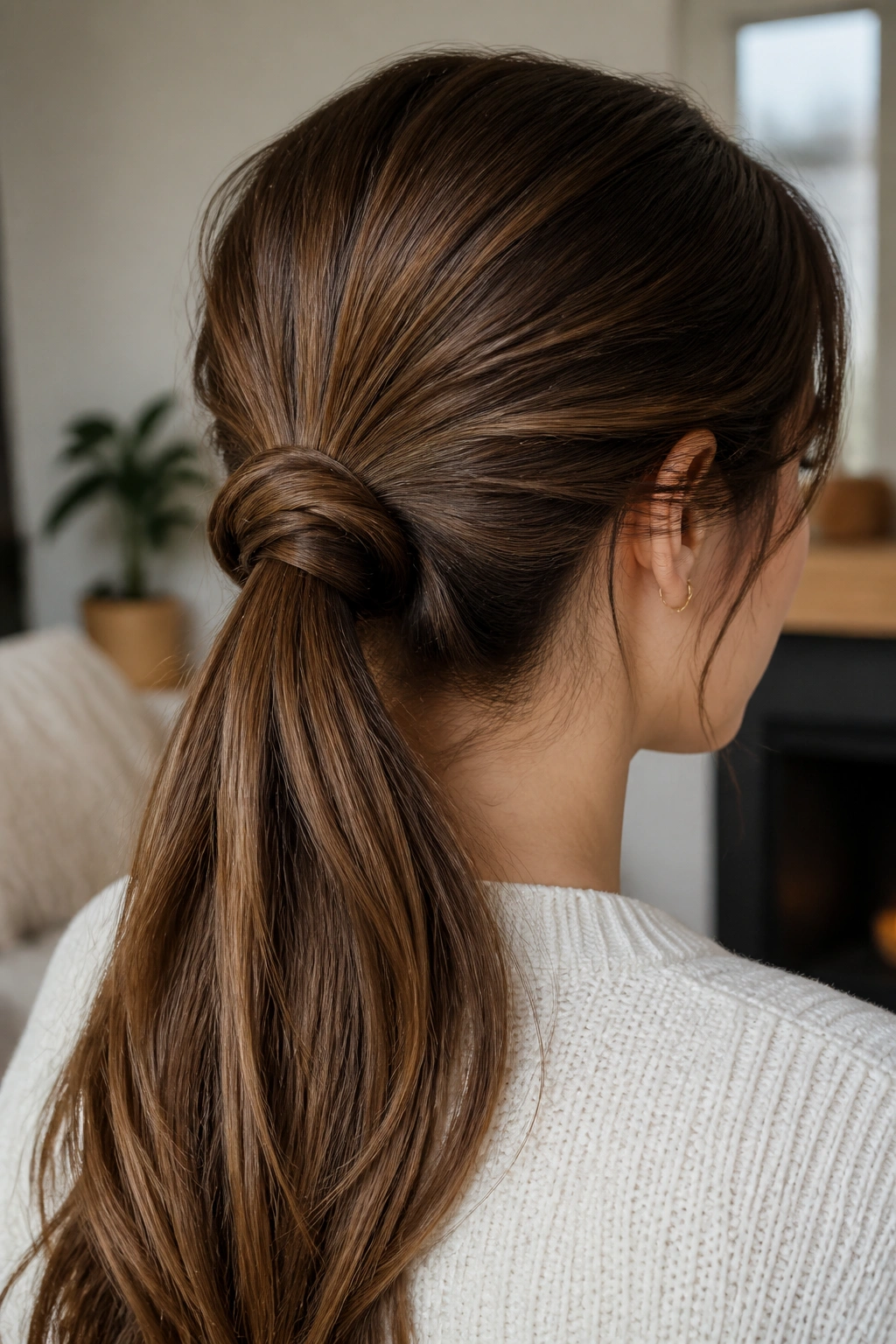
A knotted ponytail sounds fancier than it is. On thick hair, though, the knot reads clean and sculpted instead of fussy, which is why I keep coming back to it.
You can make it by splitting the tail into two sections and tying a single overhand knot, then securing the end underneath with a small clear elastic or pin. The dense length gives the knot enough body to hold its shape without looking like it is trying too hard.
A little slack is fine.
That line matters more here than almost anywhere else. If you pull the knot too tight, it can look strained and lose the soft fold that makes the style interesting. Keep the knot snug, not knuckled down.
This one is especially good for long hair with fewer short layers, because the ends need enough length to tuck in cleanly. If the layers are very choppy, the knot can start to look ragged at the edges.
It works for casual days, but it also has a strange talent for looking polished with almost no accessories. Sometimes thick hair does all the styling for you. This is one of those times.
12. Scarf-Wrapped Low Ponytail for Thick Hair
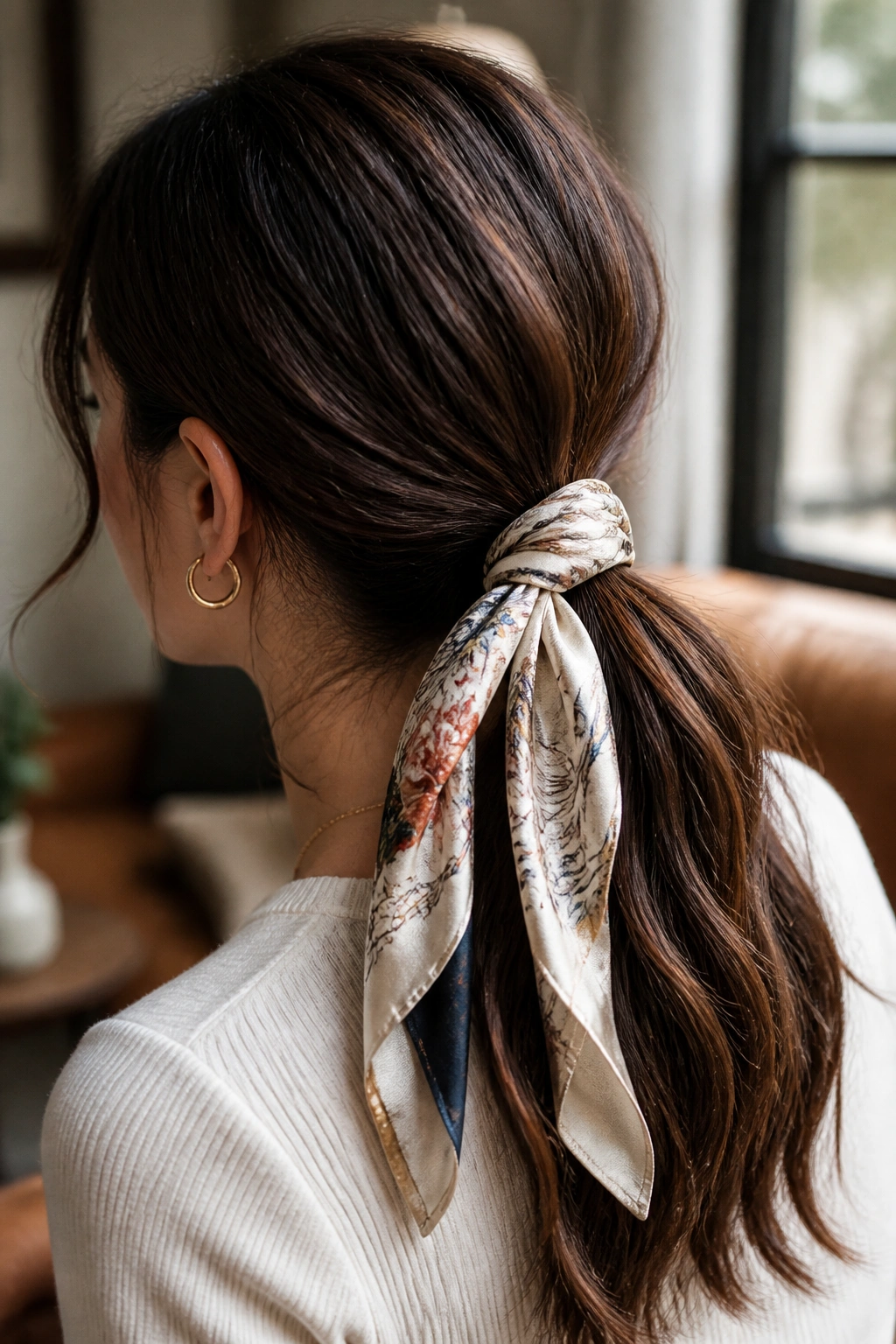
Unlike a bare elastic, a scarf-wrapped low ponytail softens the whole shape and keeps thick hair from looking heavy at the neck. The scarf breaks up the bulk visually, and the low placement gives the style a calmer line.
Fold a silk scarf or narrow ribbon into a strip about 1.5 to 2 inches wide, then tie it around the base of a low ponytail after the elastic is in place. Let the ends hang, or tuck them under if you want the finish more compact.
This style is especially nice when your hair is thick enough that a simple elastic looks like it is working too hard. The scarf gives the eye something lighter to land on. It also helps the base feel less bare, which matters when the ponytail sits low and close to the neck.
Choose a scarf with a smooth feel if your hair tangles easily, because rough fabric can catch on the outer layer. If the ends of your hair are dry, a scarf also helps hide that unevenness better than a plain tie.
Thick hair looks best when the shape is supported, not squeezed. That is the whole trick.
The strongest ponytails for dense hair are the ones that respect weight instead of pretending it isn’t there. Start with a solid base, keep the crown honest, and let the tail stay full on purpose.
