



Long hair gives pink ombre room to breathe. A fade that would look choppy on a bob can feel soft and expensive-looking on waist-length layers, because the color has space to travel from darker roots to brighter ends. That extra length is the difference between a stripe and a blend.
The trick is choosing the right pink. A blush that sits nicely on level 9 blonde can turn muddy on medium brown hair, while a strong magenta can look flat if the base is too even. The best pink ombre hair ideas for long hair pay attention to the starting shade, the haircut, and how much upkeep you actually want to live with.
Some versions whisper. Some do not. Soft rose quartz, cotton candy, berry, mauve, neon, peachy pink — all of them use the same long gradient, but they send a different message the second the hair moves, braids, or gets pulled into a half-up knot.
That’s the fun part. Long hair is not just extra length; it’s extra room for the color to behave.
1. Soft Rose-Quartz Melt
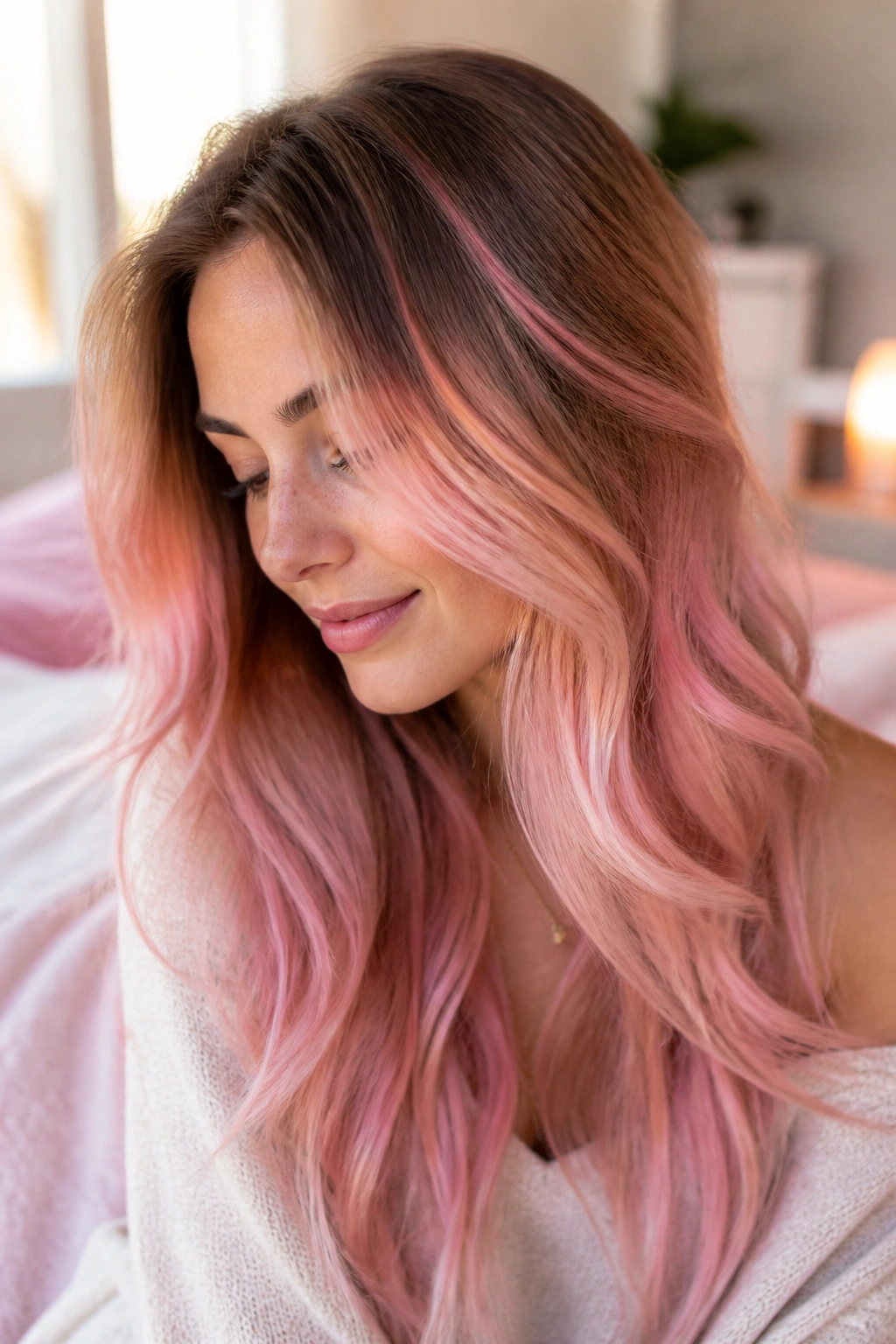
This is the shade I reach for when someone wants pink without tipping into candy territory. Soft rose-quartz starts as a barely-there blush through the mid-lengths and deepens a touch at the last few inches, which keeps long hair from looking washed out.
Why it flatters long layers
On hair that’s already light blonde, the effect can read almost like a tinted gloss. On light brown hair, it needs more lift first, but the payoff is worth it because the long canvas lets the color melt instead of stop suddenly.
Ask for a root shadow that’s one or two levels deeper than the mids. That tiny shift keeps the pink from floating on top like frosting. It also helps the grow-out look calmer, which matters when the hair hangs past the shoulders and every line shows.
2. Cotton Candy Ends
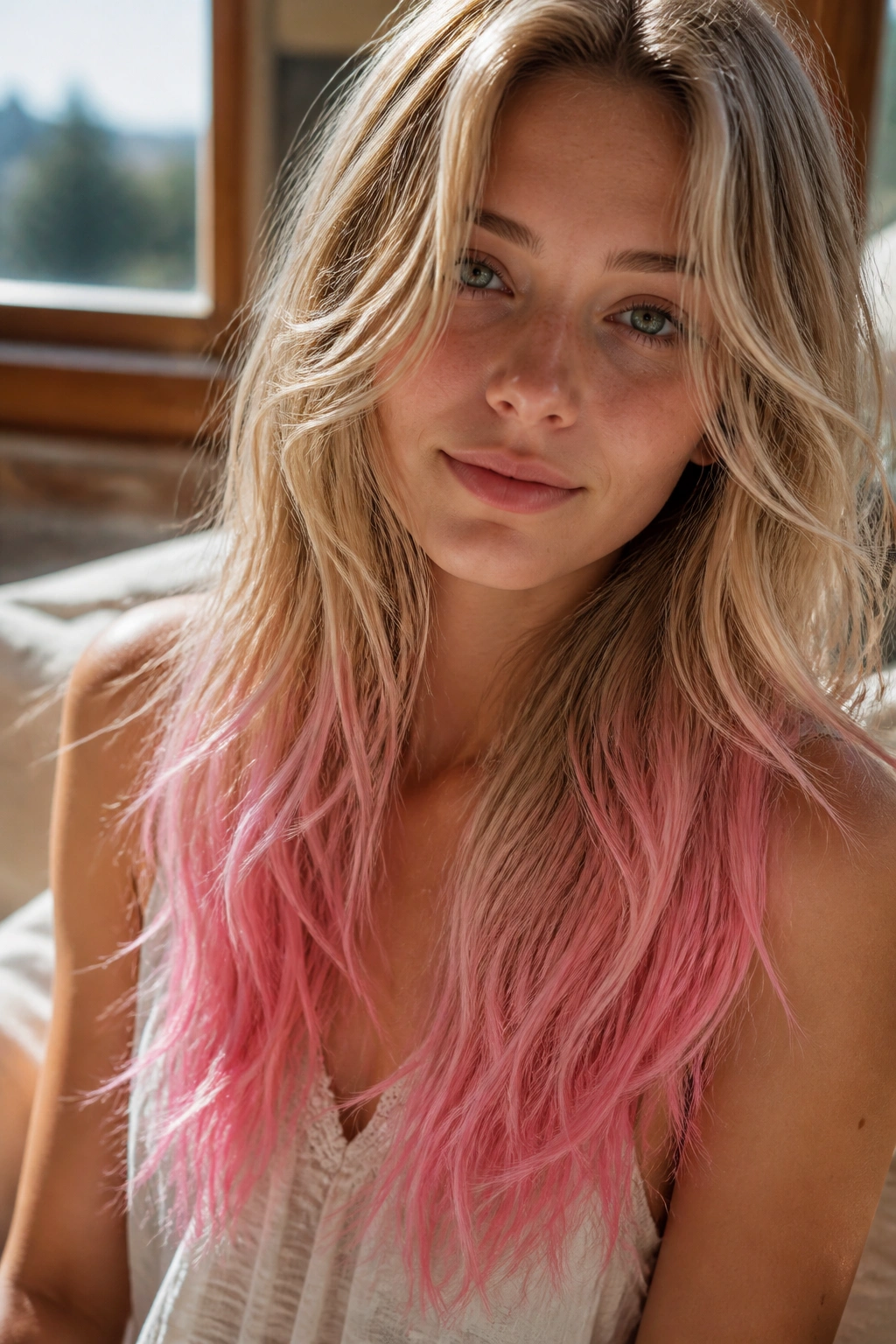
Want the pink to read soft from a distance but playful up close? Cotton candy ends do that well. The pink stays light and airy, with the strongest color sitting in the last 6 to 10 inches, so long hair keeps its movement and doesn’t get weighed down by color.
Loose curls make this one sing. A 1.25-inch iron gives the ends enough bend to show the fade, and a quick brush-through softens the ringlets so the ombre looks feathered rather than stiff.
If your hair is naturally yellow at the ends, tone it first. Pink over a brassy base turns peach-sherbet fast, and not in a cute way. A clean blonde canvas keeps the pastel honest.
3. Dusty Rose Balayage
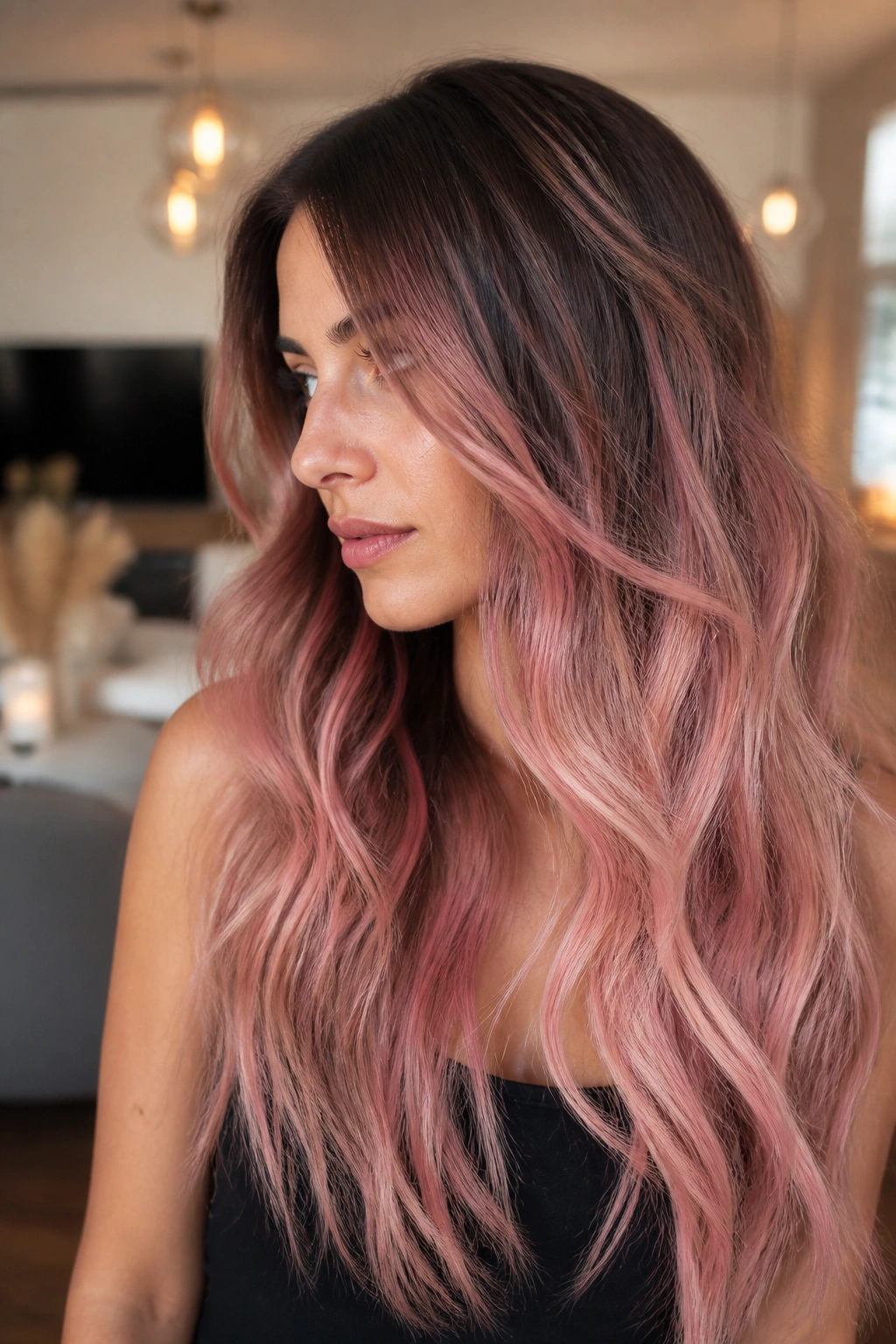
Dusty rose feels calmer than bubblegum and more grown-up than bright blush. The color is hand-painted in ribbons through the mid-lengths and ends, so the pink shows in waves of light instead of one solid block.
That matters on long hair. When the color lands in scattered pieces, straight styles still look dimensional, and waves get that soft, lived-in movement people keep trying to fake with too much heat styling.
A cool beige toner keeps this shade from drifting orange. If your hair is a little porous, ask for a slightly deeper pink on the ends because the faded portions will grab faster than you expect. That extra depth saves the look from turning sheer after one wash.
4. Bubblegum Face Frame
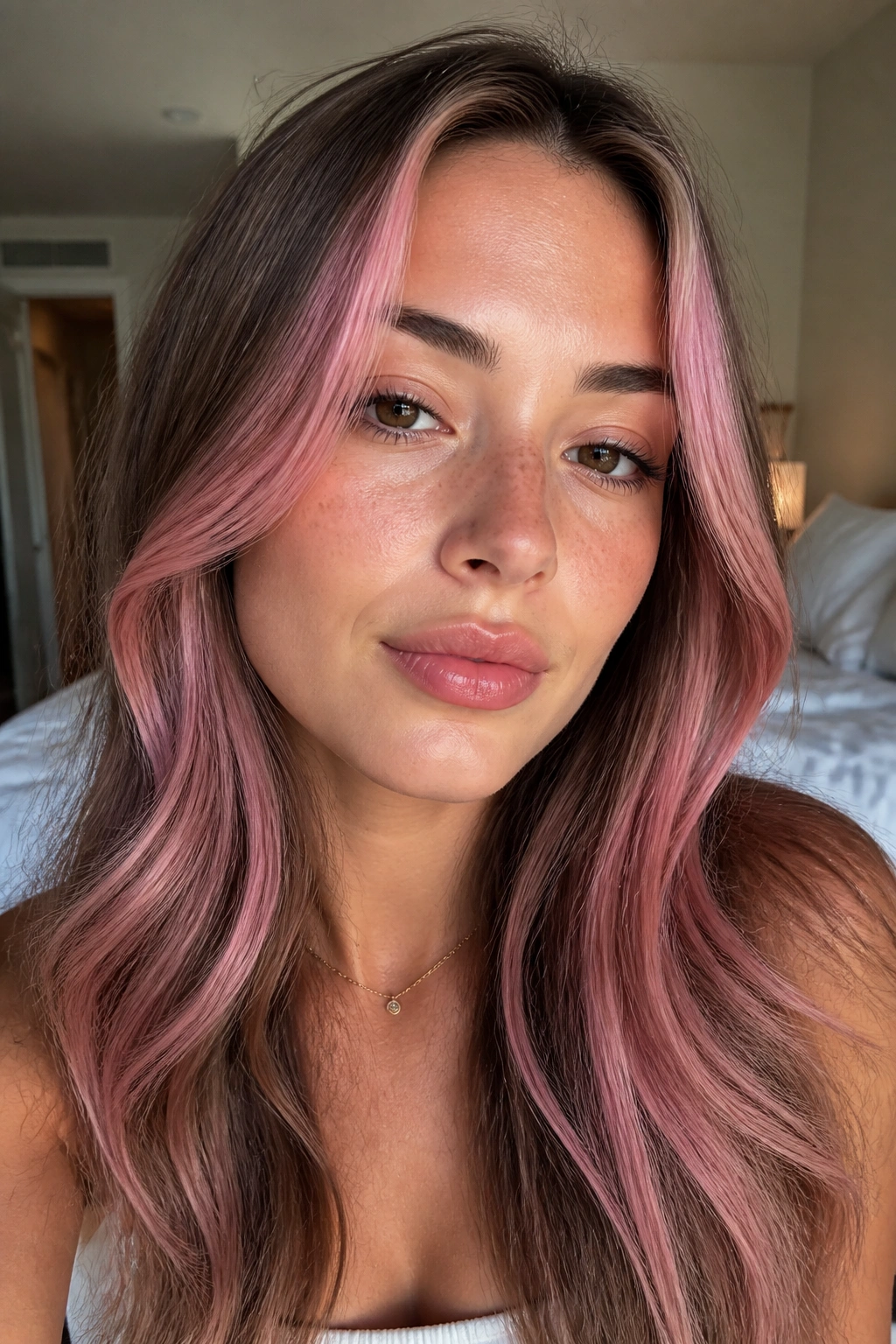
This one is for anyone who wants the pink to hit first around the face. The front pieces start at cheekbone level, then melt into softer pink through the rest of the length, which gives long hair a lively frame without coloring the whole head loudly.
What keeps it from looking too sweet
- Keep the roots neutral or slightly shadowed so the front pieces do not look pasted on.
- Ask for thin money pieces rather than thick panels if your hair is fine.
- Pair it with curtain bangs or a center part when you want the fade to feel softer.
On long hair, face-framing pink works because the eye gets a clear starting point. The rest of the ombre can stay quieter, which is a nice trade if you love color but still want room to wear the hair down, up, or half-tucked.
5. Platinum to Blush Pink
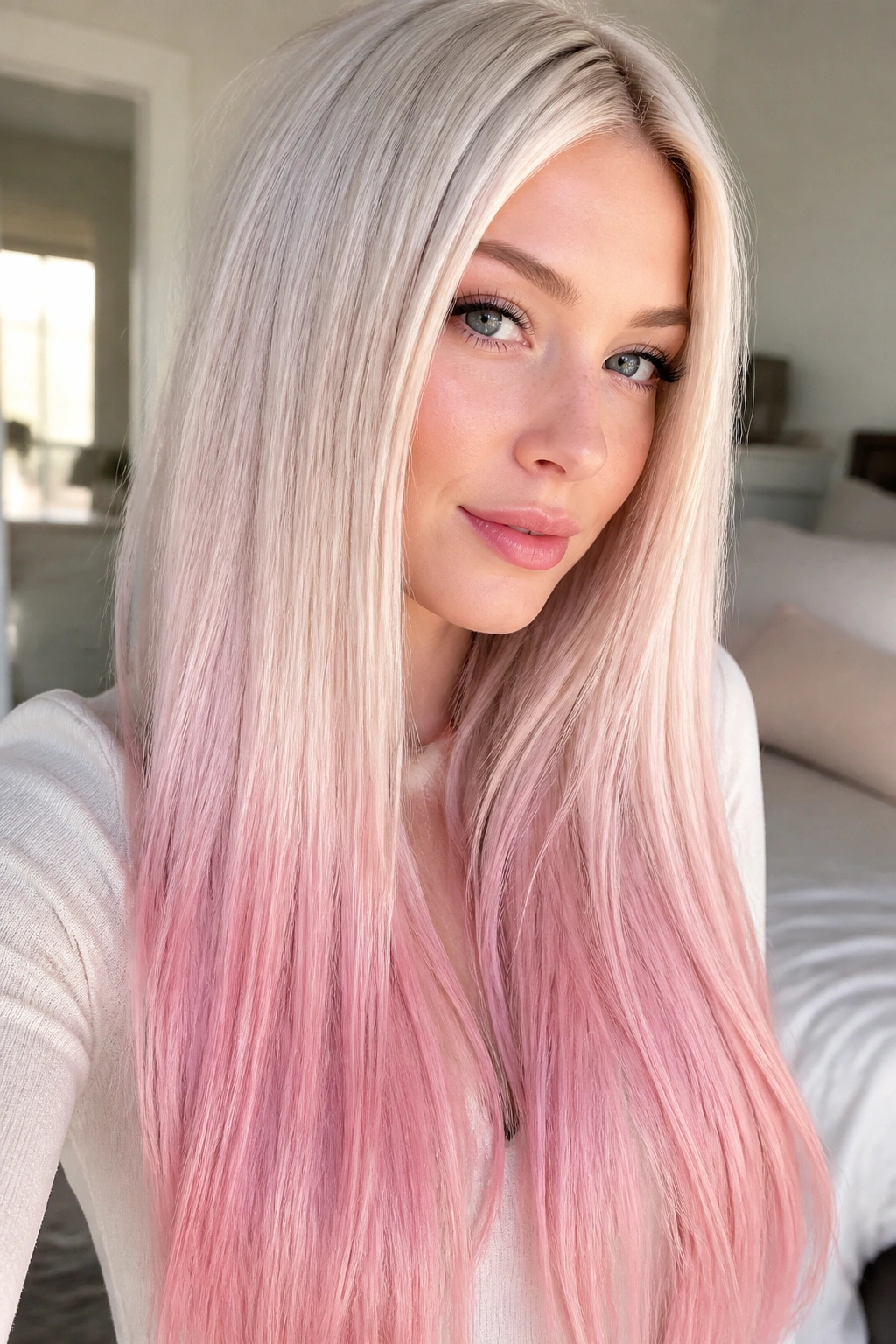
Platinum to blush is the cleanest pink ombre if you want brightness. Unlike warmer pinks, this one depends on a pale base, so the ends can take on a soft blush tone instead of going muddy or beige.
Long hair gives you room to stretch that transition. The color can begin around the ears, then move into the palest pink on the final few inches, which keeps the look sleek rather than blocky.
Straight blowouts show this version best because the shine travels along the length. Just be careful with heavy purple shampoo. Too much can cool the blonde down so far that the pink turns dull. A sheer glaze every few weeks is easier on the shade.
6. Hot Pink Dip-Dye Ends
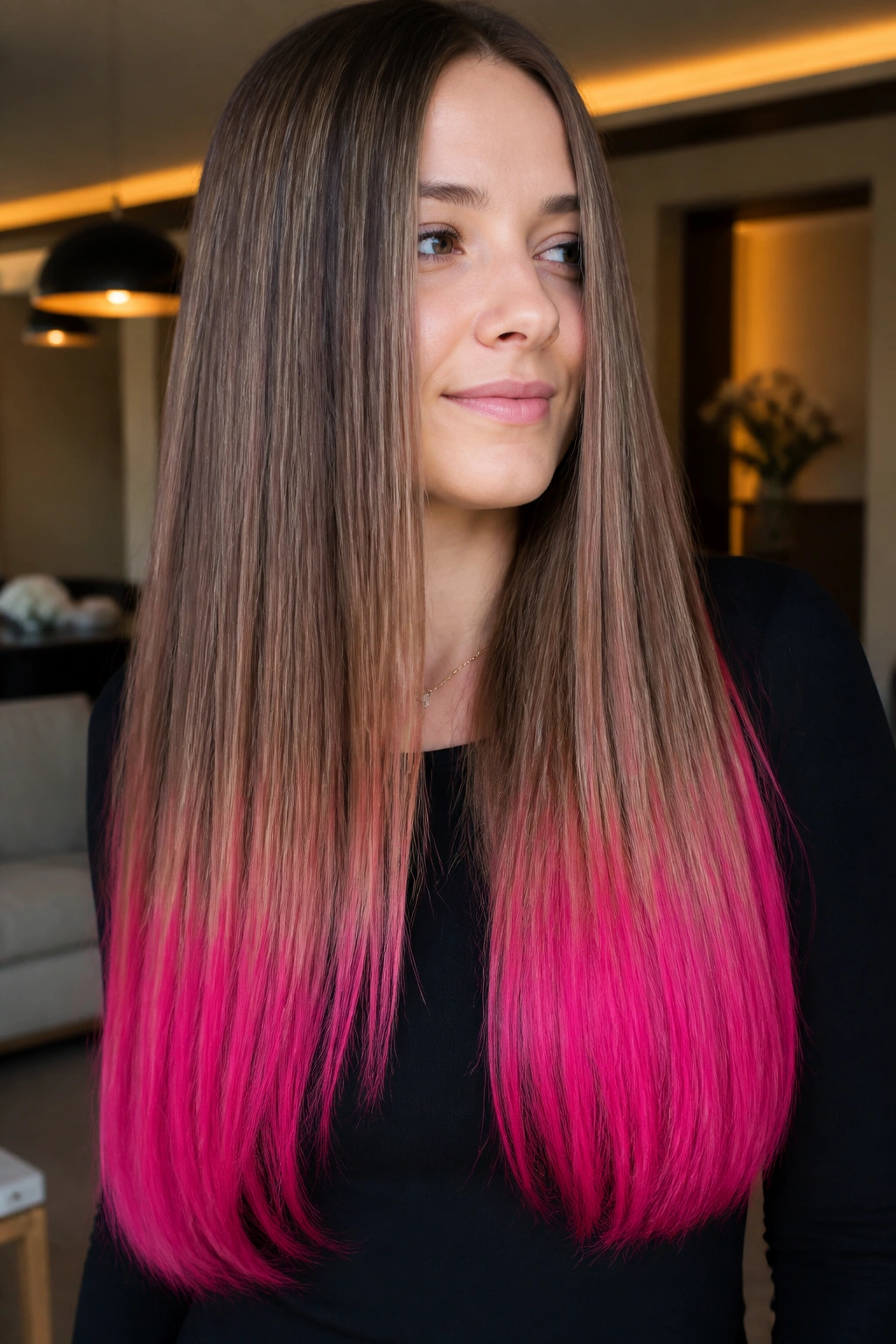
This one has attitude. Hot pink dip-dye ends keep the roots and most of the length natural, then slam color into the last 4 to 6 inches so the ombre feels sharp on purpose.
Long hair makes that bold ending look deliberate. Shorter hair can make dip-dye feel abrupt, but a long length gives the color space to sit there and announce itself, especially in a braid or low ponytail.
The practical upside is easy grow-out. You can trim a little off over time and still keep the look. If you wear your hair in waves, the hotter pink flashes through the bends; if you keep it straight, the cut line reads cleaner and a little punkier.
7. Mushroom Brown to Mauve Pink
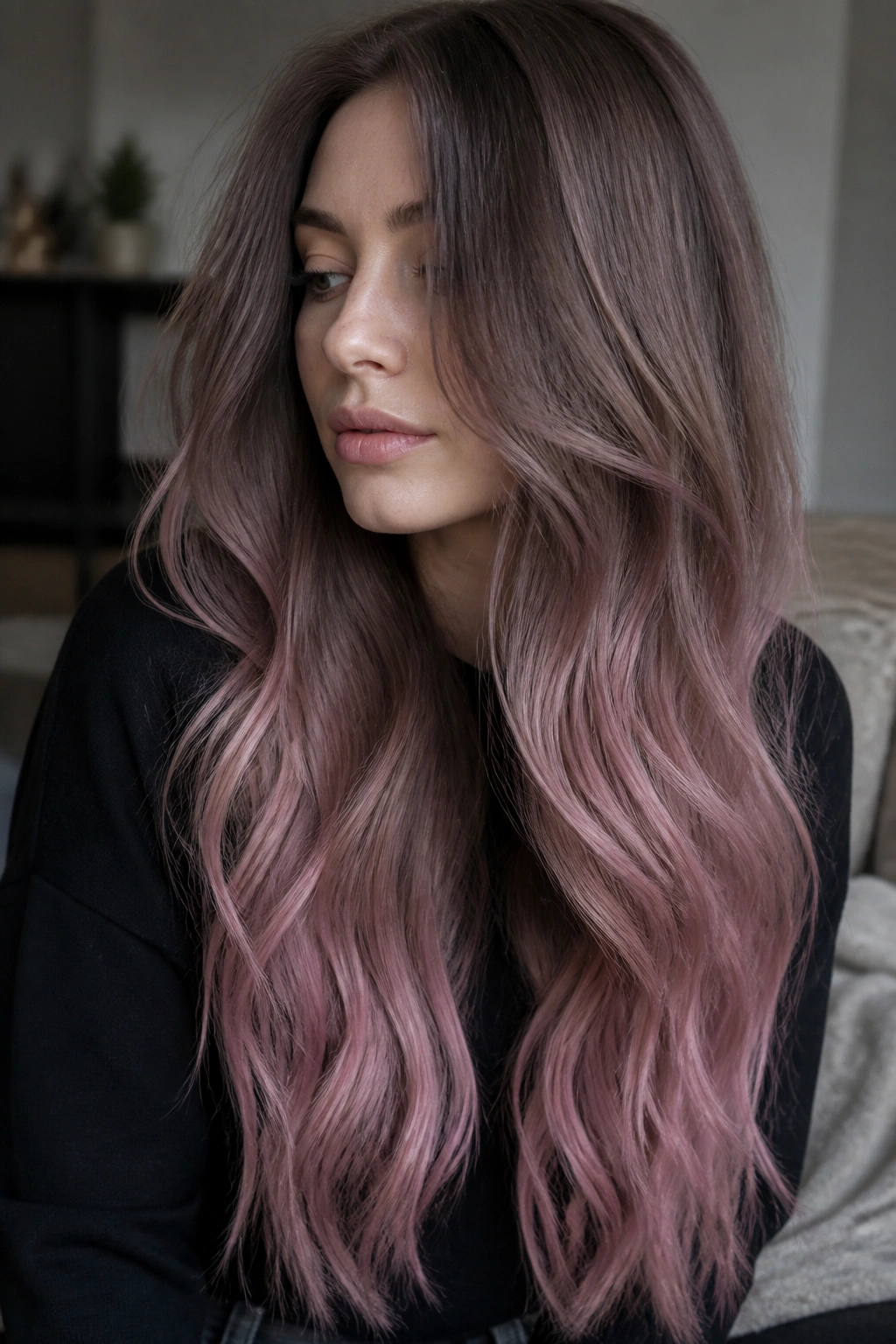
The smoky base matters here. Mushroom brown cools down the whole look, so the mauve pink at the ends does not drift into peach or coral, and long hair keeps the transition soft instead of obvious.
The shade notes that matter
- Choose ash brown or taupe brown roots, not a warm chestnut.
- Ask for mauve rather than bubblegum if you want the pink to look muted.
- Keep the brightest saturation in the lower third of the hair.
This is one of my favorite options for someone who wants pink but hates sweetness. On long hair, the muted root-to-end change looks polished in a low bun and a little moody in loose waves. That’s a useful range.
8. Strawberry Blonde to Pink Honey
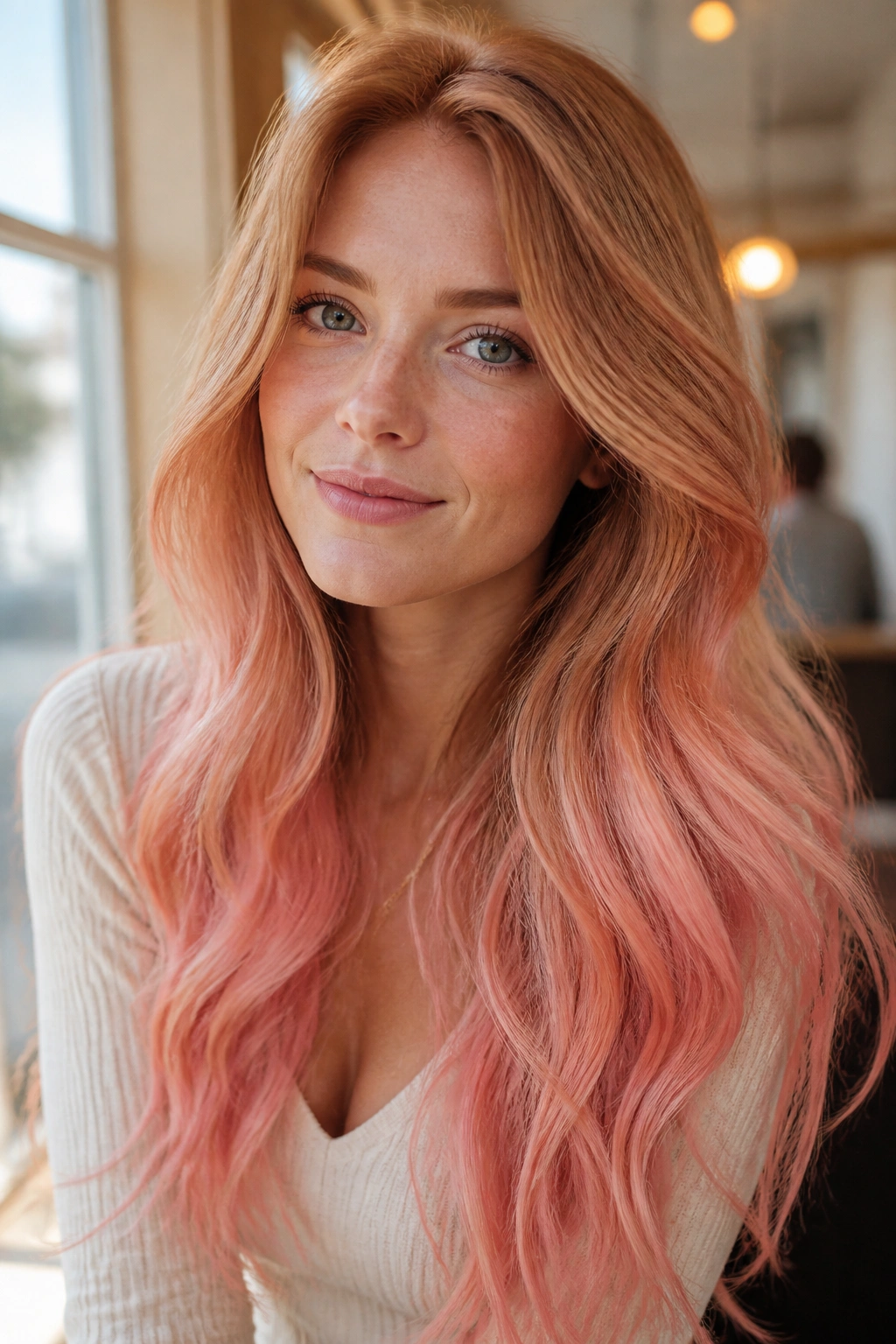
Strawberry blonde and pink honey sit in the warm family, and that warmth is the whole point. The blend reads sunlit instead of sugary, with soft coppery notes near the mids and a pink finish that feels more like a tint than a loud dye job.
Long hair helps because the warm tones can stretch out and develop. You get a gentle shift rather than a sudden color stop, which is what keeps the style from looking busy.
This one flatters waves in a big way. The bends catch the strawberry tones at the top and the pink honey at the bottom, and the whole thing looks softer when the hair moves. If you dislike icy tones on your skin, this is the pink lane to stay in.
9. Neon Pink Underlayer
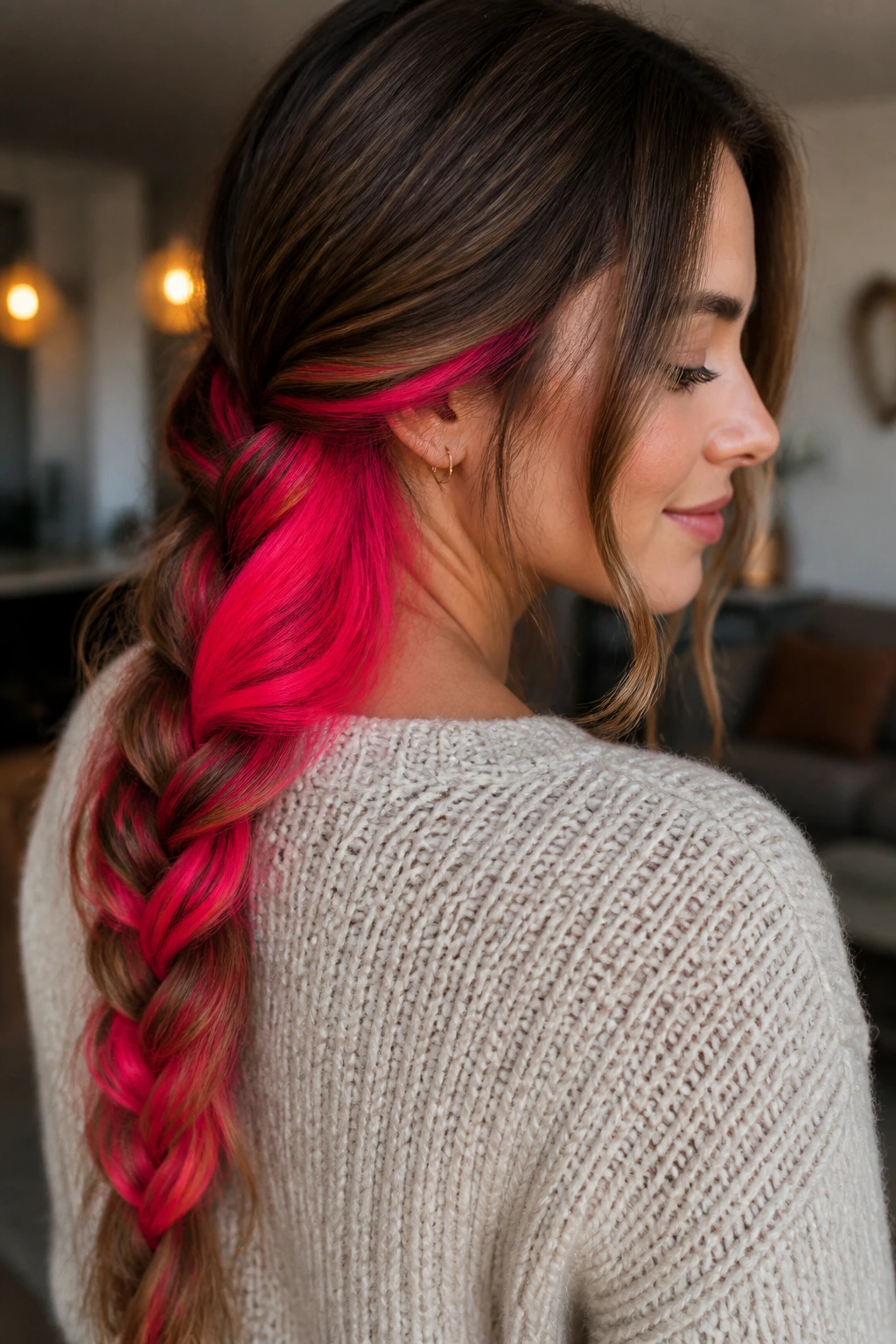
Hide the loudest color underneath and the style gets better, not smaller. A neon pink underlayer leaves the top section natural or softly tinted, then reveals the bright pink only when the hair moves, lifts, or gets braided.
Long hair is perfect for this because the lower panels have enough length to show off the color without making the whole head look neon all the time. Half-up styles become more interesting, and braids pick up flashes of pink along the weave.
Best way to wear it
- Keep the top layer close to your natural shade or a soft brown.
- Use a direct dye on pre-lightened underlayers for the brightest payoff.
- Style with twists, braids, or half-ups when you want the hidden color to show.
It’s a smart choice if you like surprise color. You get the fun part without a full-time loud look.
10. Rose Gold With Peach Undertones
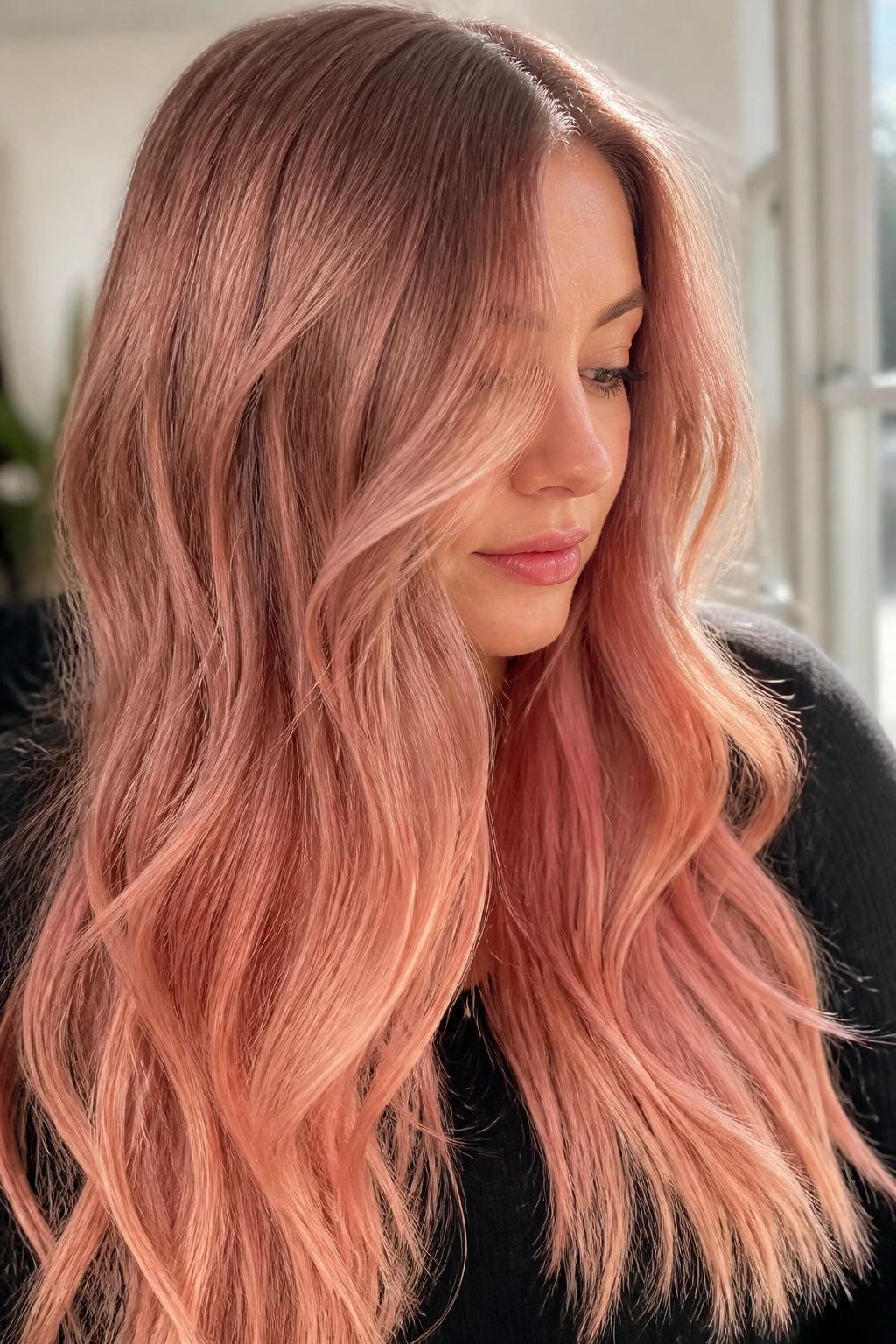
Rose gold works because it has two jobs at once. The pink gives it personality, and the peach keeps it warm enough to avoid that flat baby-doll look that can happen on pale blonde hair.
Why it reads polished on long hair
- The golden base keeps the pink from going chalky.
- The peach adds warmth to the ends without turning them orange.
- A shine spray or gloss makes the long lengths look smoother, not greasy.
On long hair, the color can shift from soft gold near the mids to a pinker peach at the tips. That gradient feels richer when there are layers, because the pieces catch light at different points. It is one of the easiest shades to wear if you want something pretty but not loud.
11. Berry Jam Ombre
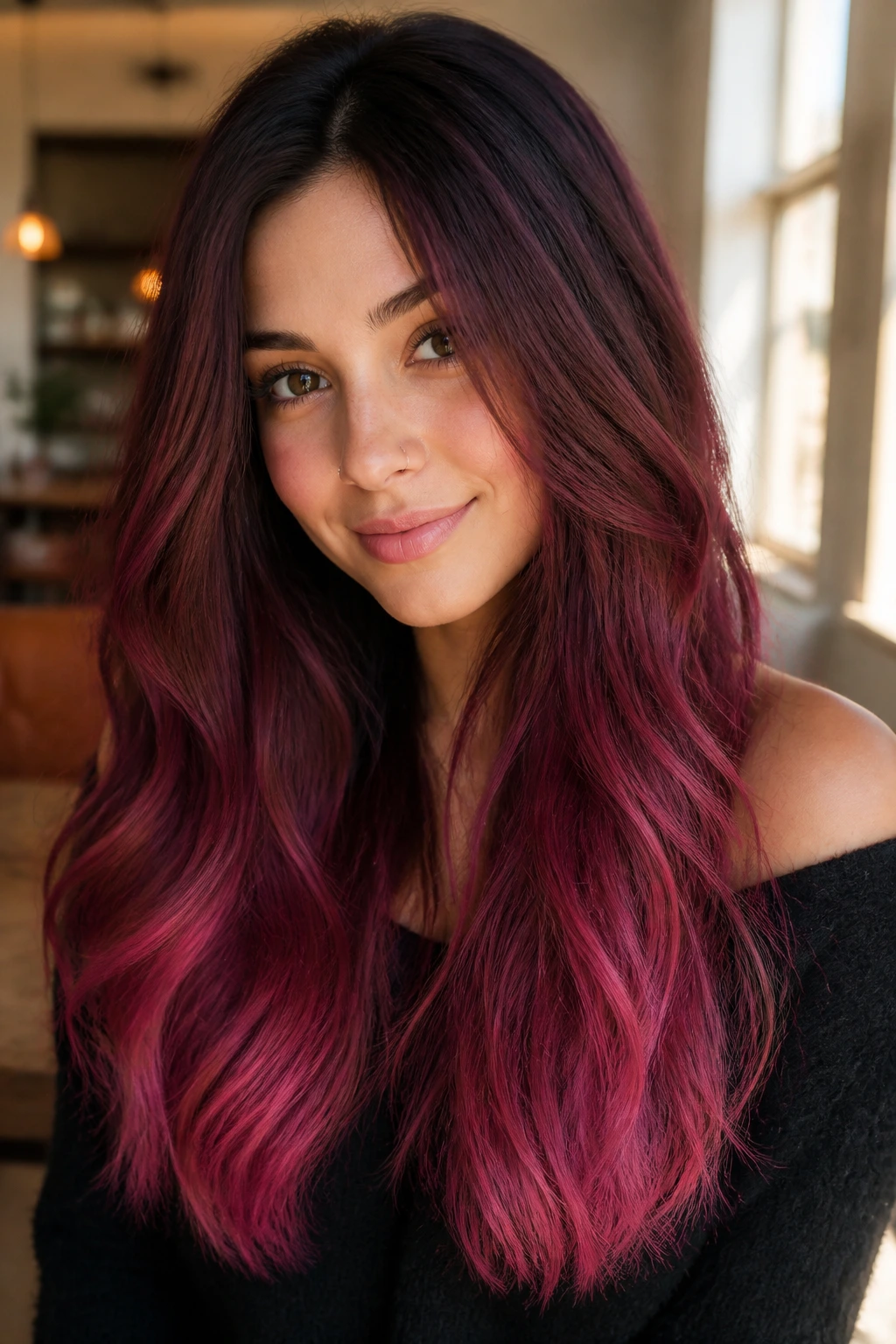
Berry jam is deeper than most pinks, and that depth is the charm. The shade leans into raspberry, blackberry, and wine tones, so it works especially well if your hair is naturally dark and you want the pink to feel plush rather than airy.
Long hair gives berry color a lot of room to stack up. The root area can stay dark, the mid-lengths can hold a richer pink-violet, and the ends can move toward a softer raspberry. That layered depth keeps thick hair from looking like one flat sheet.
A looser wave makes the color look more dimensional. If the hair is pin-straight, the darker top and bright ends create a stronger line, which can be gorgeous but less forgiving. Berry is not shy. It knows what it is.
12. Silver Lilac to Pink Frost
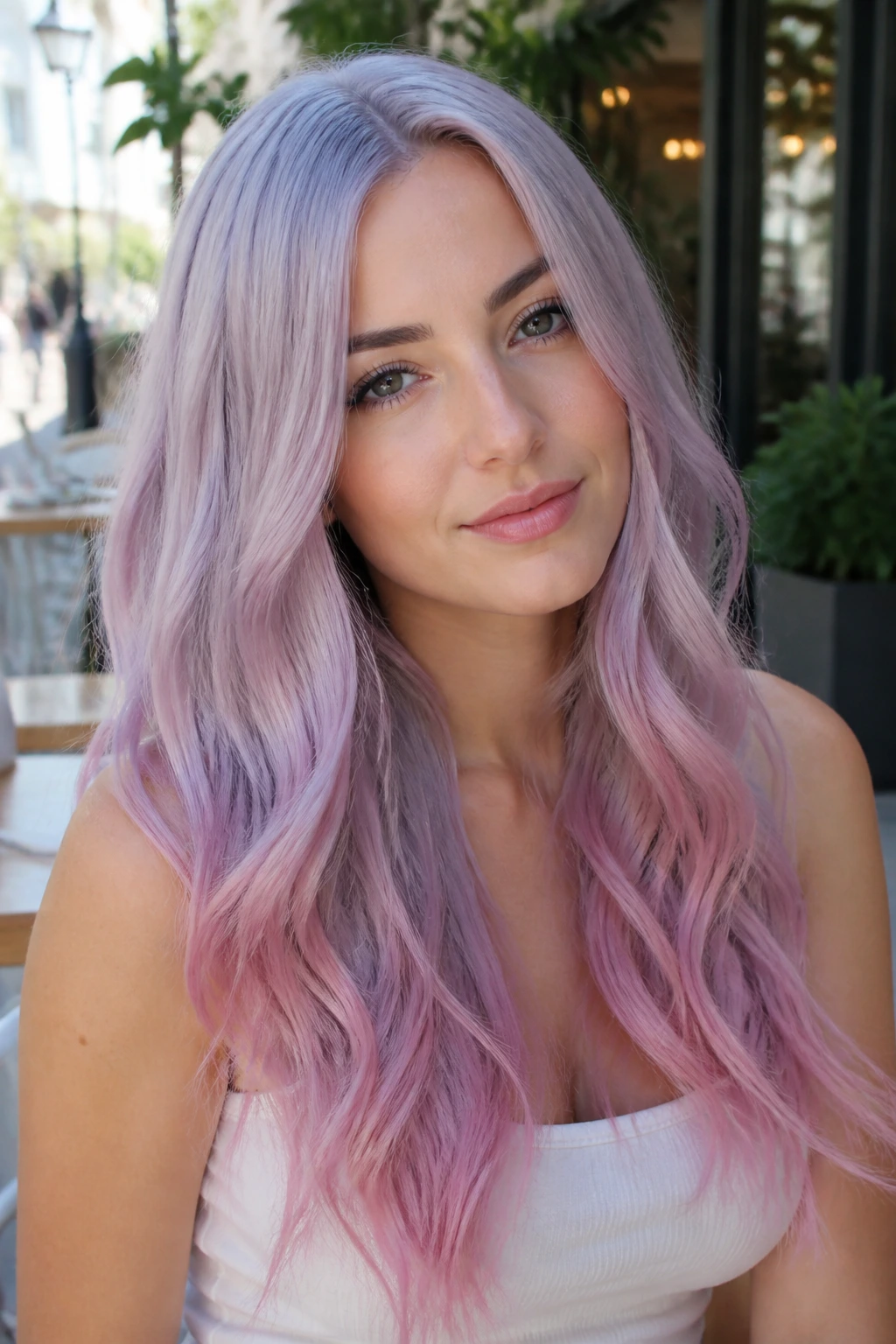
Want cool pink that doesn’t fall flat? Silver lilac to pink frost gives you that icy little hit without pushing the hair into blunt, cartoon territory. It starts pale and cool, then slips into a pink frost at the bottom.
The base has to be light. Very light. If the blonde is too yellow, the lilac goes muddy fast, and the pink ends up looking dusty instead of crisp. On long hair, though, the gradient has room to stay clean, which is what makes the whole thing look expensive rather than overprocessed.
A toner refresh keeps this shade alive. Use a soft pastel mask or a pink deposit conditioner every few washes, not every time you shampoo. The goal is a whisper of color, not a dense coat.
13. Blended Magenta Melt
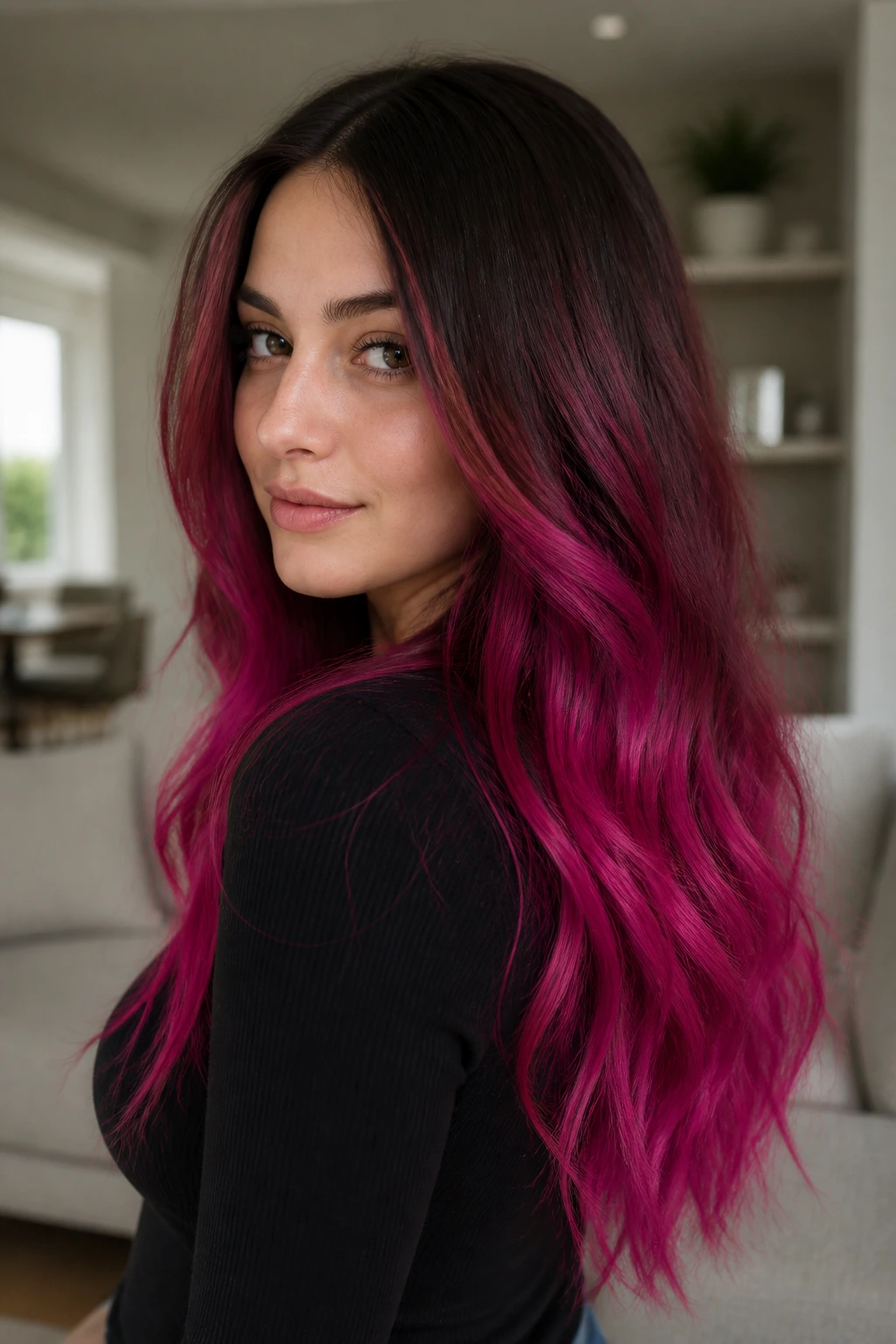
Magenta is the bold middle ground between pink and purple, and it’s a good choice if you want color that still looks finished. On long hair, a magenta melt lets the shade flow through the mids and ends without turning into a hard band.
What makes it work
The saturation should be strongest at the lower half of the hair. That way, the top remains wearable, while the bottom carries the punch. If the magenta starts too high, long hair can look heavy around the face.
Loose curls and a smooth blowout both work here. Curls make the magenta feel softer and more dimensional; straight styles make it look sharper and cleaner. Pick the finish based on how much drama you want that day.
14. Coral Pink Sunset
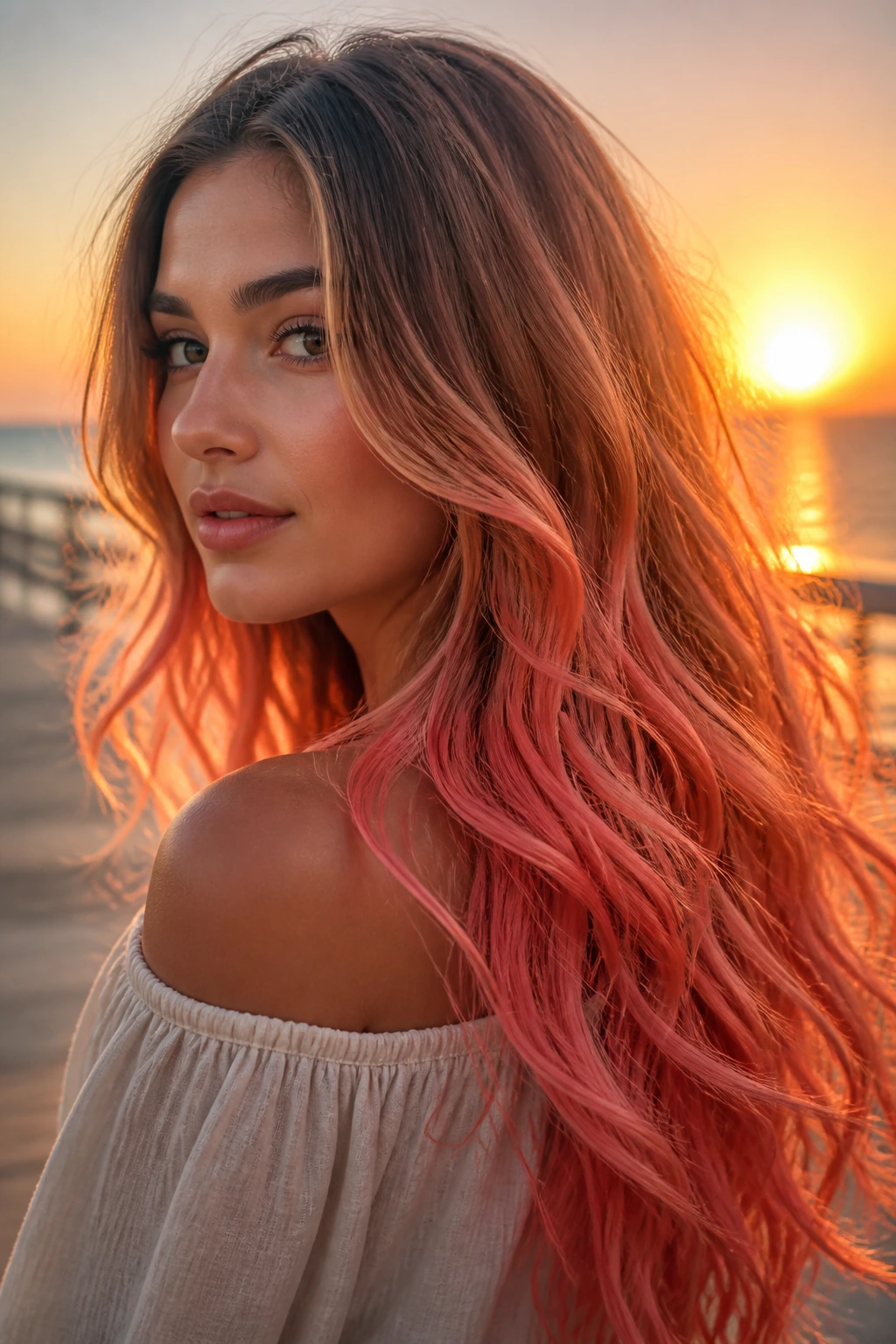
Coral pink lives in that sweet spot where warm pink starts to edge into peach. On long hair, it can look like sunset light moving down the length, especially if the ends are lighter and the mids still hold a little warmth.
This is a good option if you already have golden blonde or soft copper tones. The coral sits better on a warm base than a cool one, and long layers help the shade look airy instead of dense.
I like this one on textured hair. The wave pattern breaks up the color so the coral appears in flashes rather than one solid block. It is cheerful without being childlike, which is harder to pull off than people think.
15. Burgundy to Rose Wine
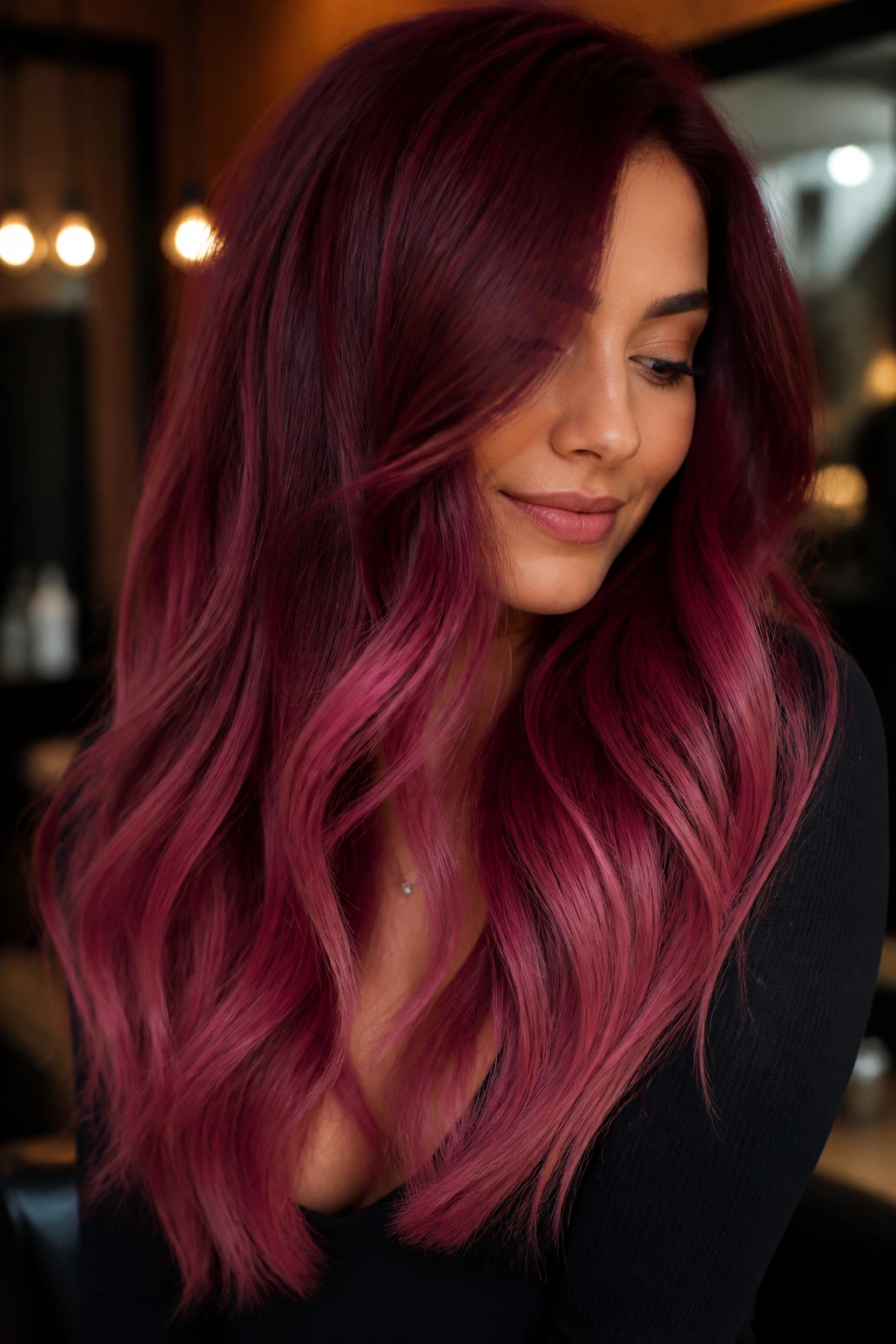
Burgundy to rose wine feels richer than bright pink ombre, and that richness is exactly why long hair wears it so well. The darker top gives the hair a grounded base, while the rose wine ends keep the look from disappearing into brown.
Unlike bubblegum or cotton candy shades, this one leans deep and velvety. That makes it a smart pick for dark brunettes who want color but do not want the constant brightness of pastel pink. The transition can be soft or sharp, depending on how bold you want the finish.
Big curls help, but even a simple blowout shows off the contrast. The darker root area and wine-toned ends create a plush look that feels fuller, especially on thick hair.
16. Candyfloss Curls
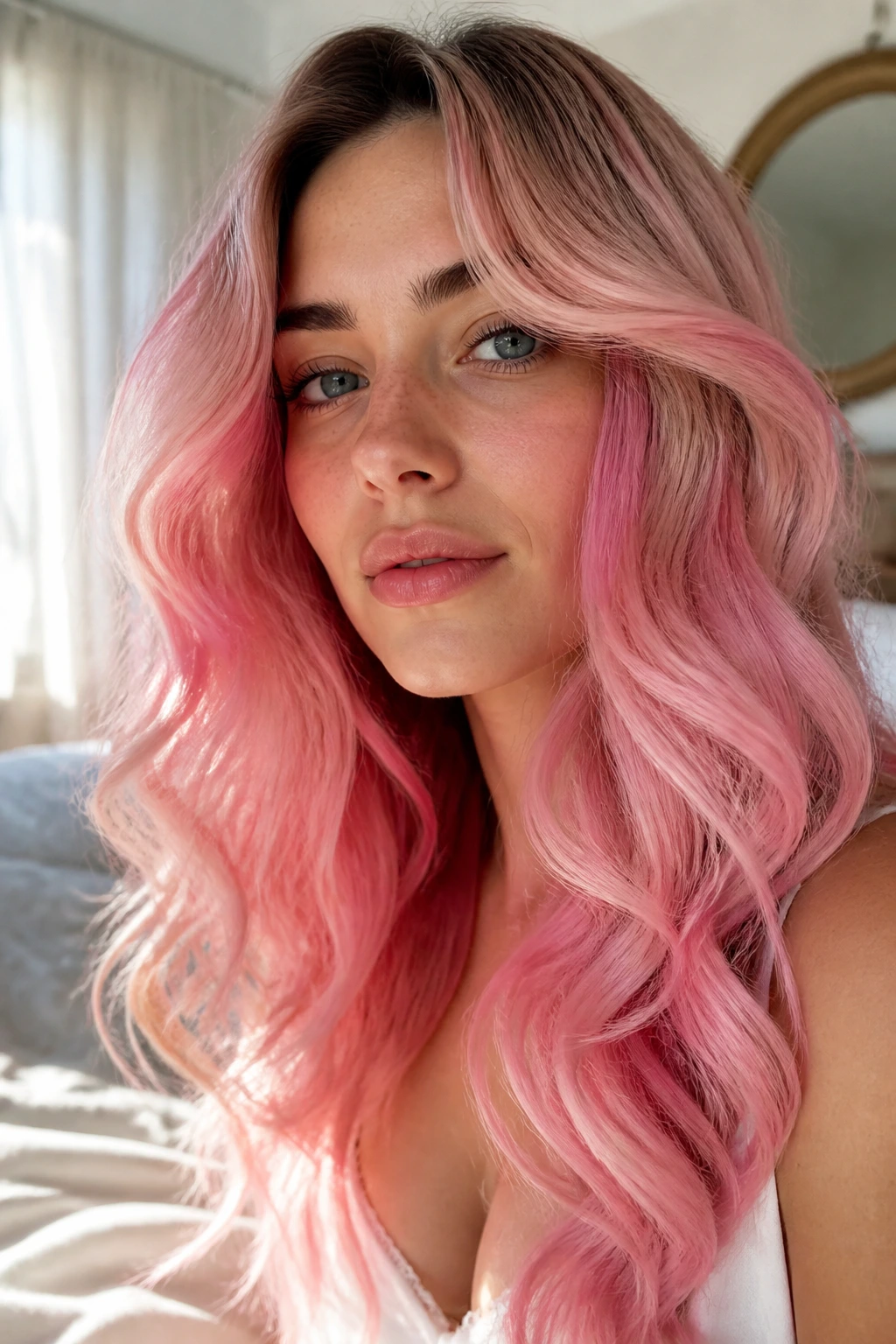
Candyfloss pink and curls are a natural pair. The texture softens the fade, so the color looks airy instead of linear, and long hair gives the pastel enough space to spread through every bend.
Why curls change the whole look
- Looser curls show the color more evenly than tight ringlets.
- A diffuser on low heat keeps the shape from getting frizzy.
- Scrunching out the cast after styling helps the pink read softer.
This works best when the pink is light and translucent rather than saturated. If the dye is too heavy, curly hair can start to look blocky. Candyfloss wants movement, not a solid coat, and long layers are the easiest way to give it that.
17. Smoky Mauve on Dark Brunettes
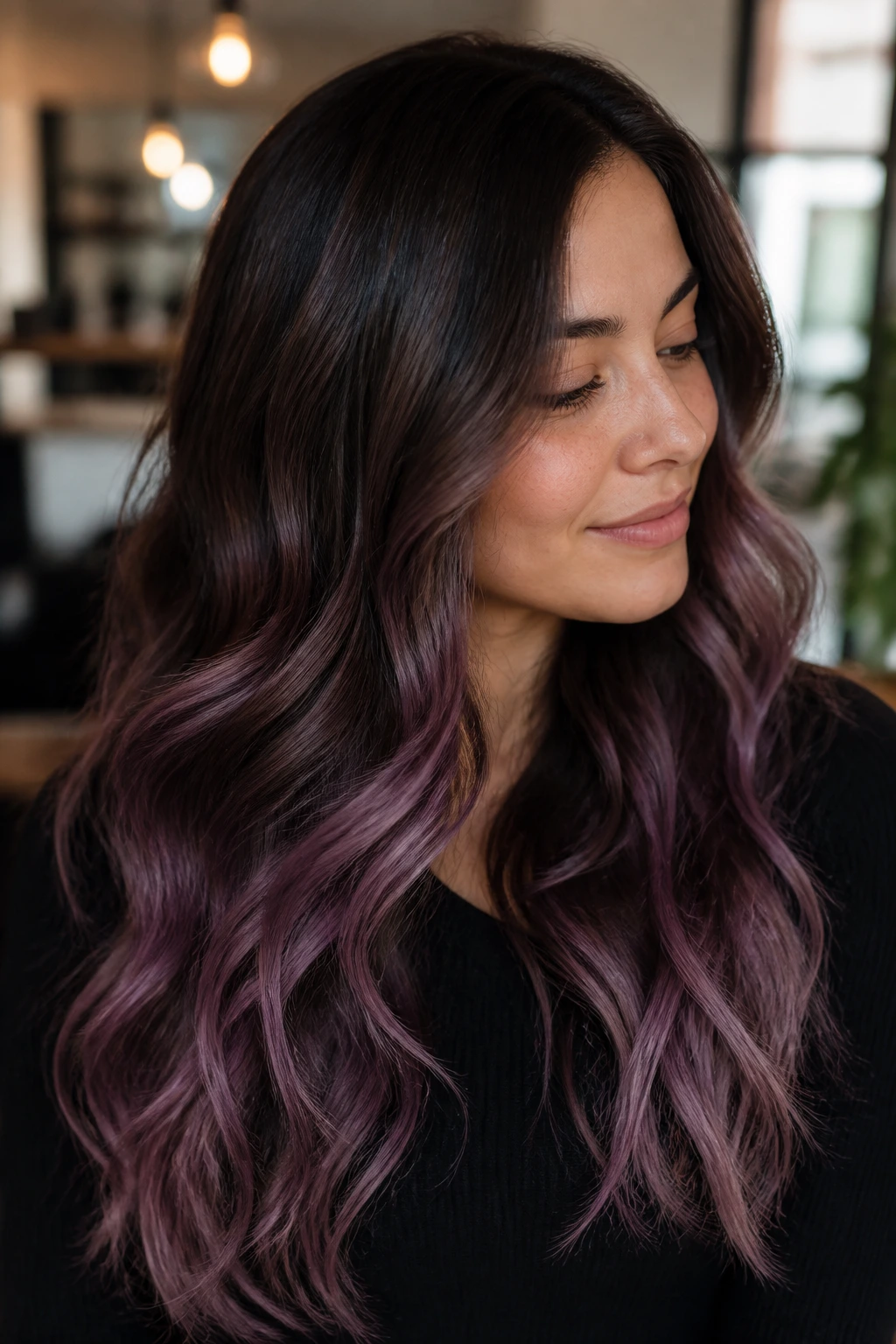
If you are not ready for a full bleach session, this is the calmer path. Smoky mauve on dark brunettes can be done with partial lightening on the ends and a muted pink-violet glaze, which keeps the hair looking dimensional instead of stark.
Long hair helps hide the transition. The upper half stays rich and dark, and the color shift sits in the lower half where it reads as intentional from every angle. That matters when the root grows in, because the whole look still feels built, not abandoned.
This is one of the easiest shades to live with if you want pink that won’t shout every time you walk into a room. It is quiet, but not boring.
18. Soft Blush Money Piece Ombre
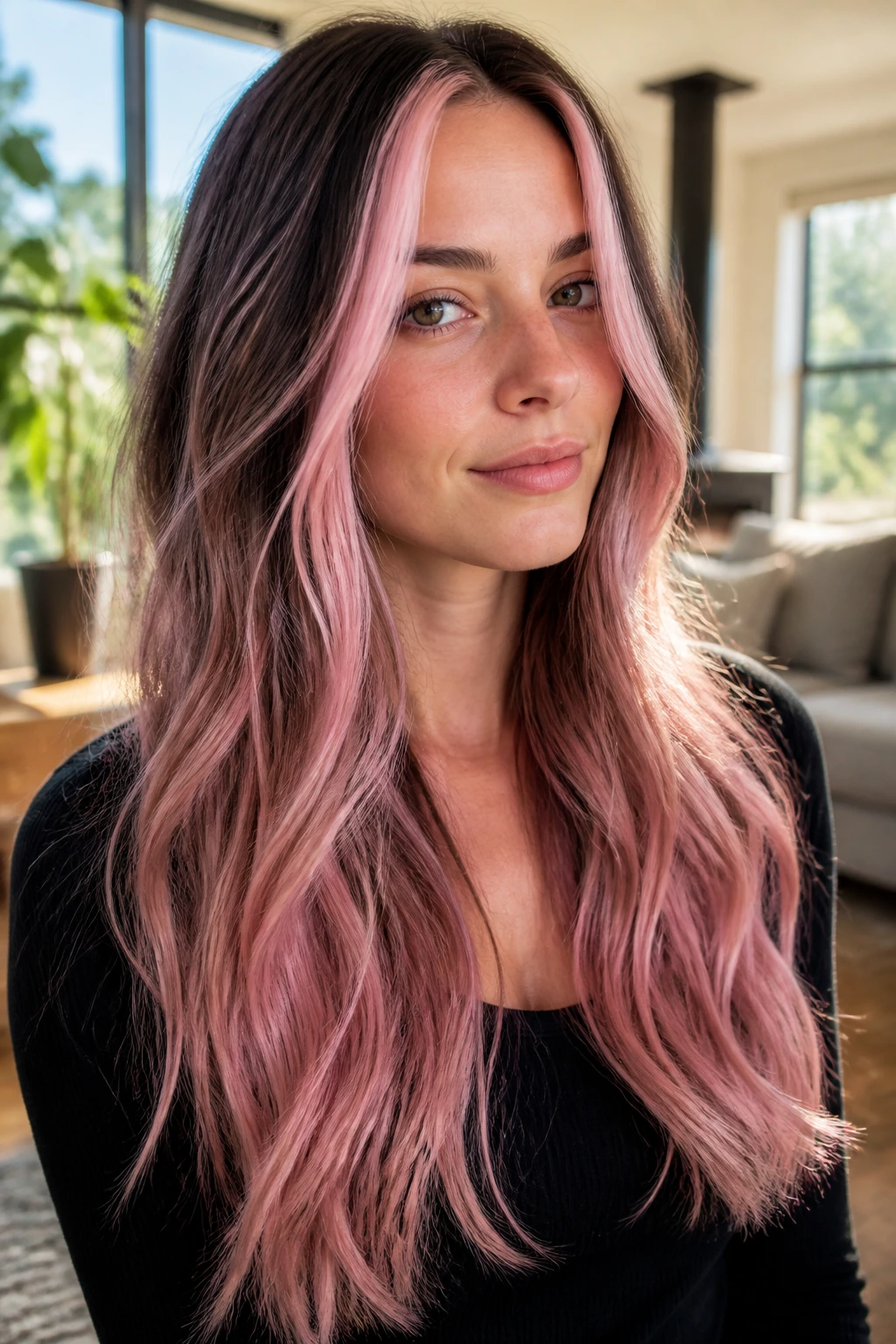
A blush money piece can change the whole feel of long hair fast. The lighter front sections draw attention to the face, then the rest of the length slides into a soft pink fade, so the style feels balanced instead of overloaded.
The trick is keeping the money piece thin enough to frame, not dominate. A wide front strip can look harsh, while a narrow section starting around the temple or cheekbone gives you just enough brightness to show the pink idea without taking over the whole haircut.
Center parts and curtain bangs both work here. If the hair is layered, the ends can stay softer and more translucent. That gives you a clean face-framing effect and a quieter finish through the rest of the length.
19. Pink Champagne Gloss
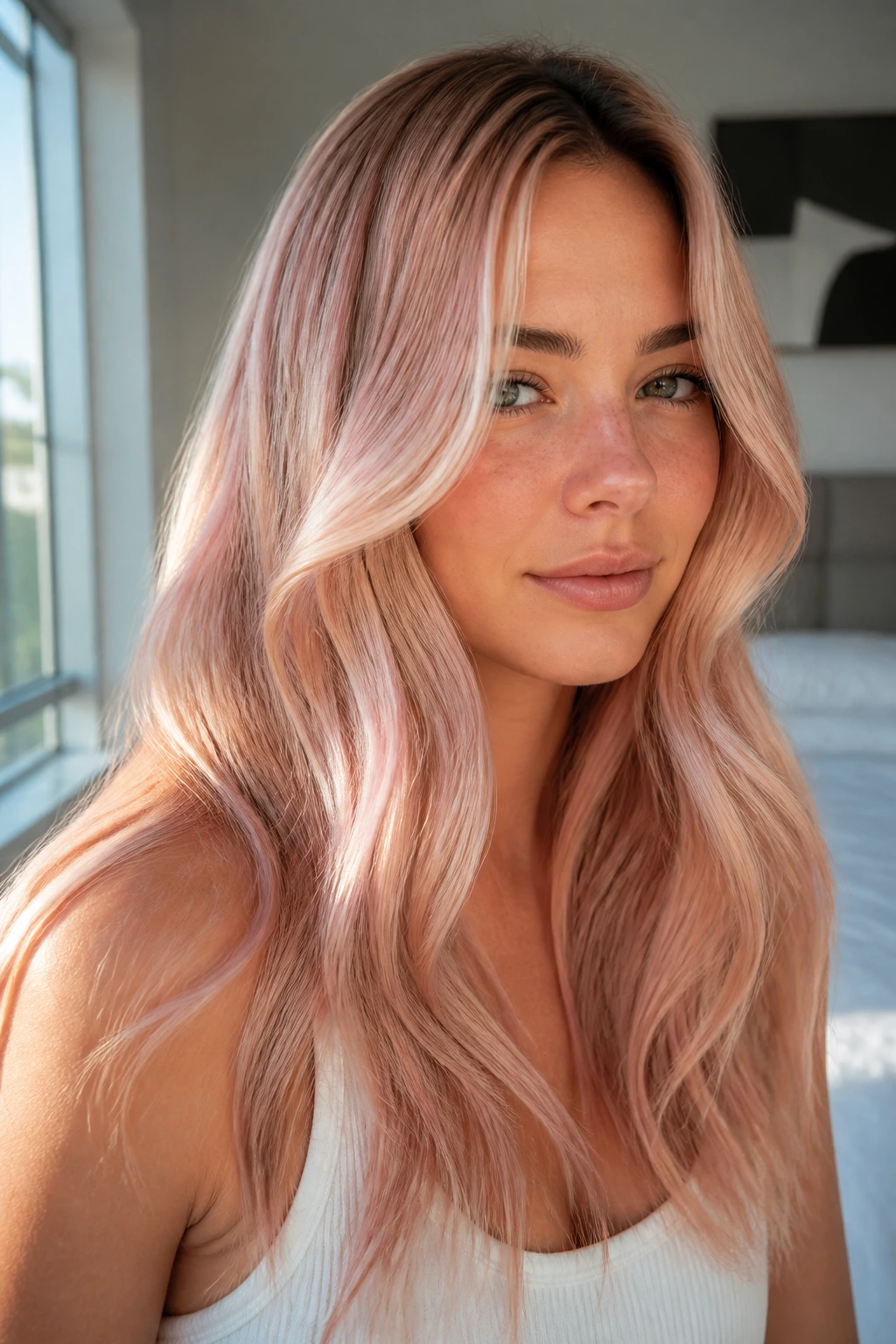
Pink champagne is not a loud color; it is a sheen. The shade sits over beige blonde and adds just enough pink to make the hair look softer, shinier, and a little more dressed up without turning it into obvious fashion color.
What to ask for
- A beige or neutral blonde base instead of a bright yellow one.
- A sheer pink gloss, not a dense direct dye.
- A refresh every few washes if your hair grabs cool tones fast.
On long hair, shine matters. A glossy pink champagne fade moves with the light in a way flat color does not, and that’s why it can look so clean on straight blowouts or soft bends. It is a quiet choice, but not a bland one.
20. Reverse Pink Ombre
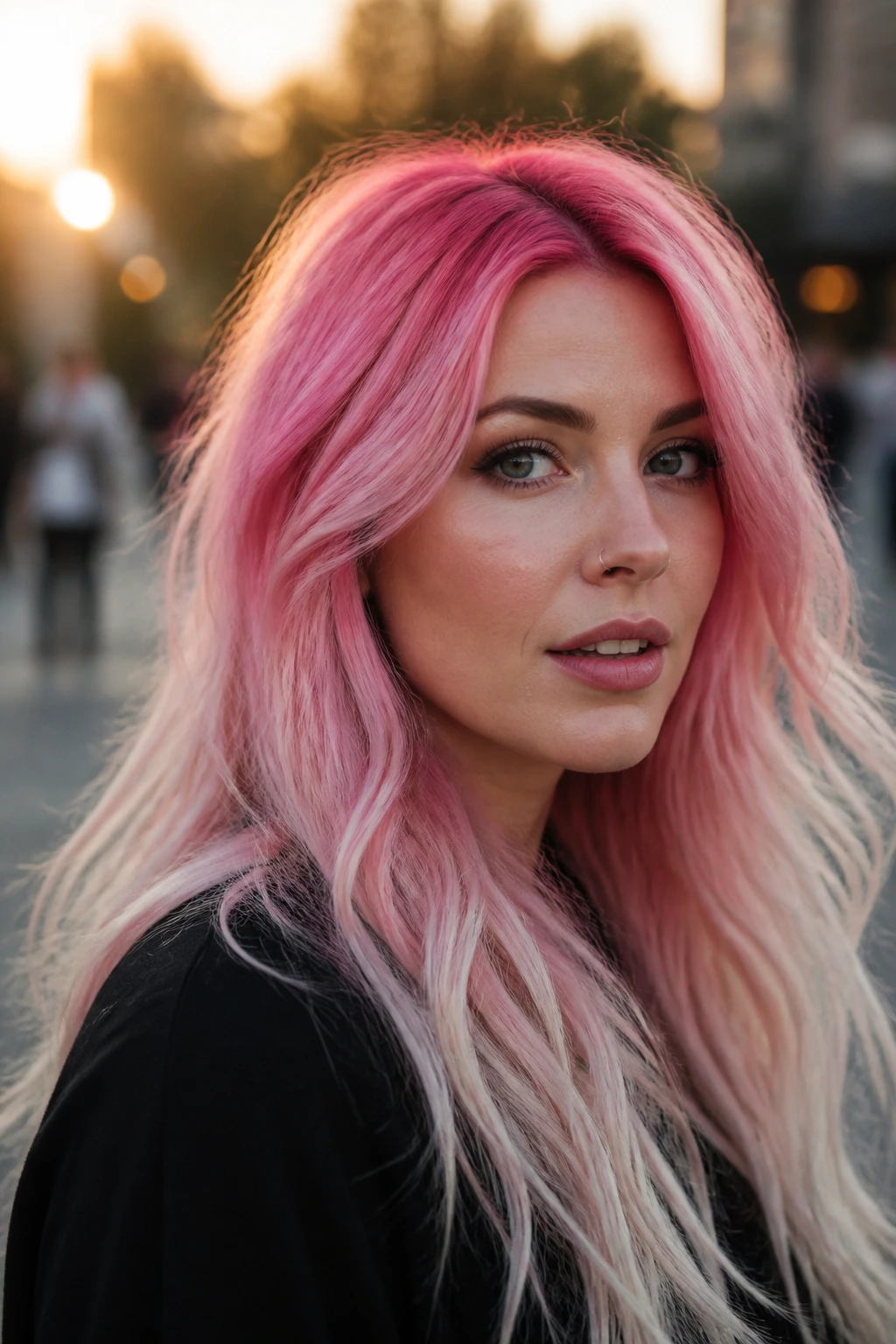
Reverse pink ombre flips the usual idea around. Instead of starting dark and finishing pink, it brings the pink higher near the roots and lets the ends fade lighter or softer, which makes the style feel a little rebellious.
It is not subtle. That is the point. Long hair can carry the look because there is enough length for the root color, mid tone, and light ends to all exist without fighting each other. On shorter hair, it can look abrupt. On longer hair, it looks designed.
If you like sleek styles, this one has edge. If you wear waves, the top pink softens a bit and the lower fade gets more movement. Either way, it is the most playful choice in the whole group.
21. Raspberry Tips on Espresso Brown
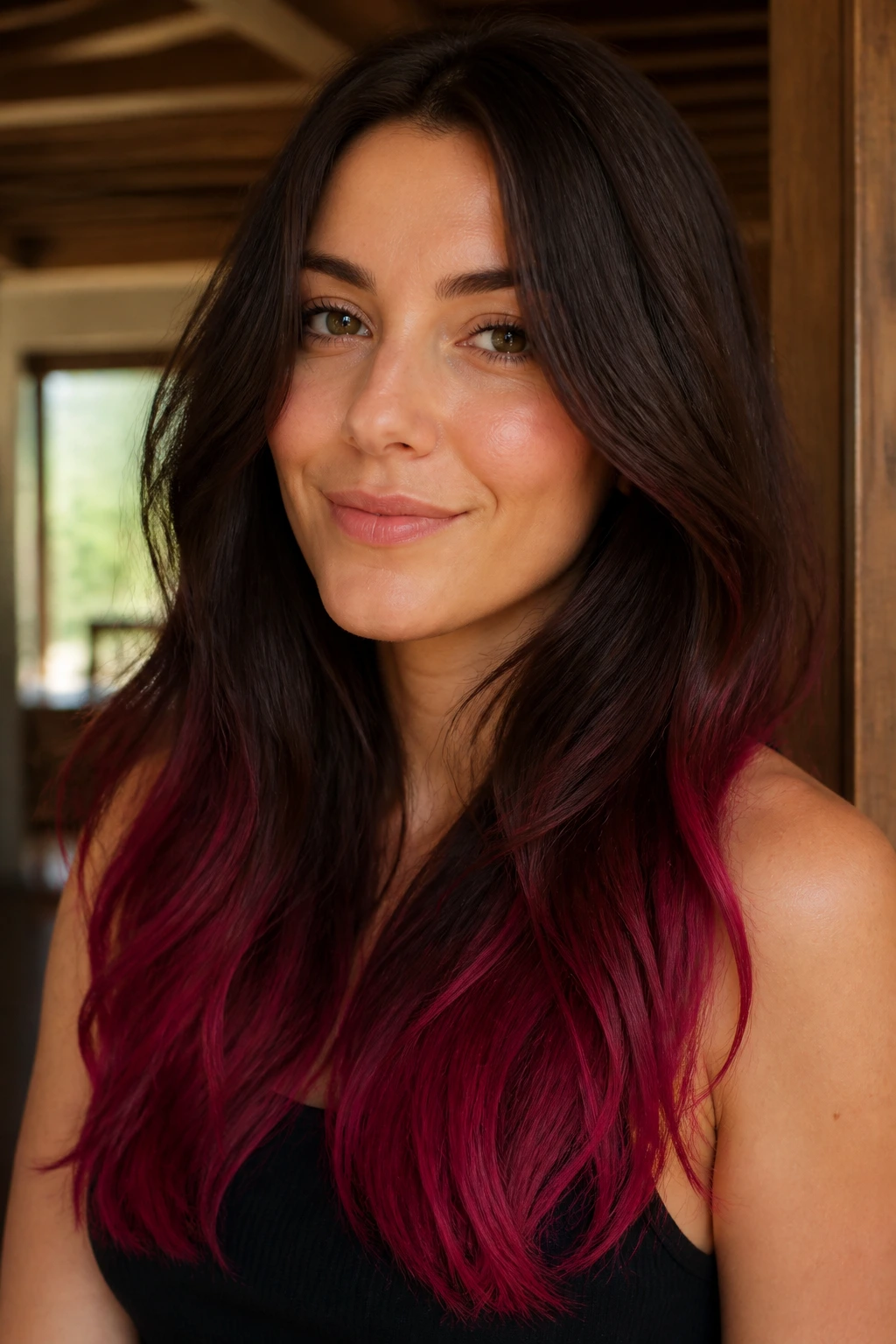
Raspberry tips on espresso brown are for people who want contrast, not a full pink takeover. The dark base stays intact, and the last few inches go into a juicy raspberry that gives long hair a thicker, more defined finish.
That contrast works because the dark length holds the eye until it reaches the bright ends. On thick hair, the effect can make the bottom look denser. On finer hair, it gives the ends a sharper outline, which is useful if you like the hair to look deliberate.
Straight hair shows the color break more clearly. Wavy hair softens it and makes the raspberry feel more integrated. Either route works, and both feel cleaner than trying to force a pale pastel onto a dark base.
22. Pastel Pink Balayage With Long Layers
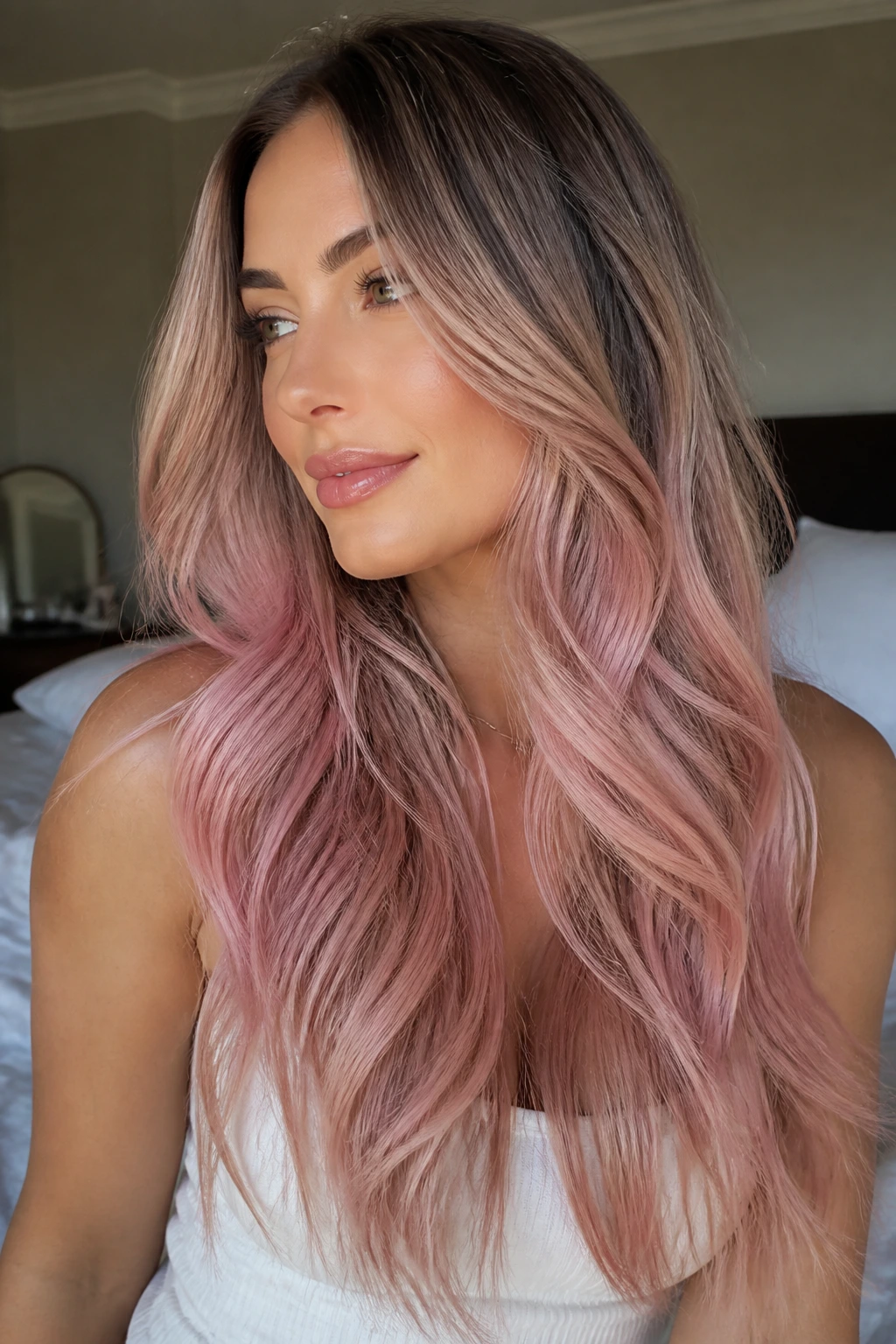
Layers and pastel pink are a very good match. Long layers break the hair into moving pieces, so the pink balayage never turns into one flat sheet, and the color can sit in ribbons instead of a heavy blanket.
Why layers matter here
- Thin ribbons of pink keep the pastel looking soft.
- The top third can stay lighter to avoid a heavy crown.
- Loose bends show the color changes better than pin-straight hair.
This is a smart pick for finer hair, too. The balayage pieces add interest without demanding a thick, saturated dye job. Pastel shades can vanish on very dense hair unless they’re placed carefully, and long layers give you the spacing you need.
23. Fuchsia Peekaboo Ombre
Peekaboo color is the most fun when the hair is long enough to hide and reveal it. Fuchsia tucked under the top layer flashes through when you move, twist, braid, or toss the hair behind your shoulder, which gives the style a little secret.
A half-up knot makes it especially obvious. The bright panels show through the lower sections, and the contrast against the outer hair keeps the fuchsia from feeling like a full-time commitment. That is the appeal: you get drama on your terms.
It also grows out gracefully because the top layer covers so much of the root area. If you want a bold pink that can still be tucked away on quieter days, this is a strong choice.
24. Peachy Rose to Pink Orchid
Peachy rose into pink orchid is one of those gradients that feels carefully mixed rather than sprayed on. The warmth starts near the mids, then the ends cool down into orchid pink, which gives long hair a smooth color story from warm to cool.
That shift matters. On very long hair, a single-tone pink can go a little flat near the bottom, but a peach-to-orchid fade keeps the eye moving. It also gives the hair a more custom feel because the tones change in a way that looks considered, not random.
Waves make the blend soft. Straight styles make the temperature shift more obvious. Pick your finish based on whether you want the color to whisper or show its hand.
25. Dimensional Pink Ombre With Shadow Root
This is the one I’d choose if someone wanted pink ombre that could survive real life. A shadow root keeps the top a shade deeper, the mids get pink ribbons, and the ends go lighter, so long hair has depth from top to bottom instead of one flat wash.
Why the shadow root saves the look
- It softens grow-out by hiding the regrowth line.
- It keeps the crown from looking too light or puffy.
- It lets the pink sit in layers instead of one solid block.
If you want the style to last, ask for three levels of pink, not one. A deeper tone near the root, a medium pink through the middle, and a lighter finish at the ends gives the hair room to breathe. On long hair, that spacing is what keeps the look from falling flat after the first shampoo.
Final Thoughts
Long hair is forgiving in a way shorter cuts are not. It gives pink room to fade, darken, or flash depending on how you wear it, which is why ombre works so well here.
If you are stuck between two shades, choose the one that looks richer at the roots and softer at the ends. That tiny bit of contrast usually keeps the whole style from going dull, and it makes the grow-out easier to live with, too.
Bring photos to the salon, but bring the right ones. Show the root depth you want, the level of pink you can actually wear, and the finish you like on the ends — glossy, matte, pastel, or bold. That saves everyone a lot of guessing.
