



Long hair gives brown red ombre hair ideas for long hair room to breathe. On waist-length strands, the color can start quietly at the roots, then turn richer and deeper as it drops through the mid-lengths and ends. That extra length matters. It lets the red unfold instead of landing all at once.
Long hair also shows mistakes faster. A harsh line looks chunky. A muddy red looks dull. A good ombre keeps the brown root believable, lets the red show up in waves and braids, and still looks polished when the hair is pinned back or tucked behind one ear.
What makes this color family interesting is the range inside it. Chestnut and copper feel sunlit. Espresso and cherry cola lean darker and moodier. Auburn, merlot, rust, and garnet each hit a different note, and the undertone of your brown base changes everything once the red starts blending through. The ideas below lean into that range, with shades that work with long hair instead of fighting it.
1. Chestnut Brown to Copper Red Ombre Melt
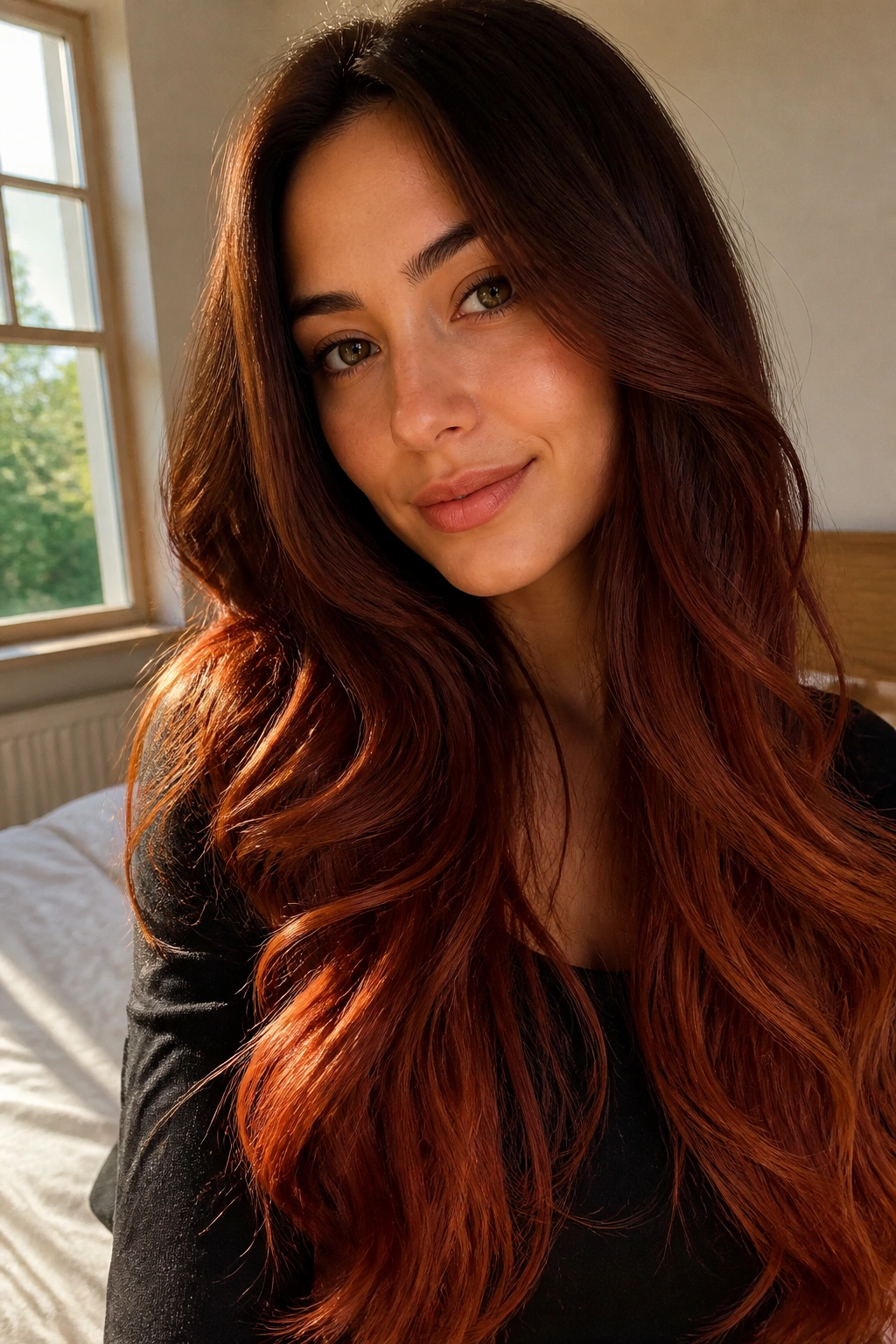
Chestnut brown to copper red is the safest place to start, and I mean that in the best way. Chestnut keeps the roots believable, while copper warms up the ends with enough shine to catch the eye when the hair moves. On long hair, the fade can start around the lower ribs or even a little higher, which gives the color room to soften instead of dropping into a hard stripe.
Loose waves make this one sing. Straight hair shows the gradient too, but a bend in the mid-lengths brings out the red notes that sit under the brown. If you want the ends to read as red instead of orange, ask for the copper to stay brighter in the bottom 4 to 6 inches.
This is the version I’d hand to someone who wants color that feels fresh without looking fussy. It’s warm, easy to wear, and long hair gives it a nice sweep.
2. Mocha Brown With Cinnamon Ribbons
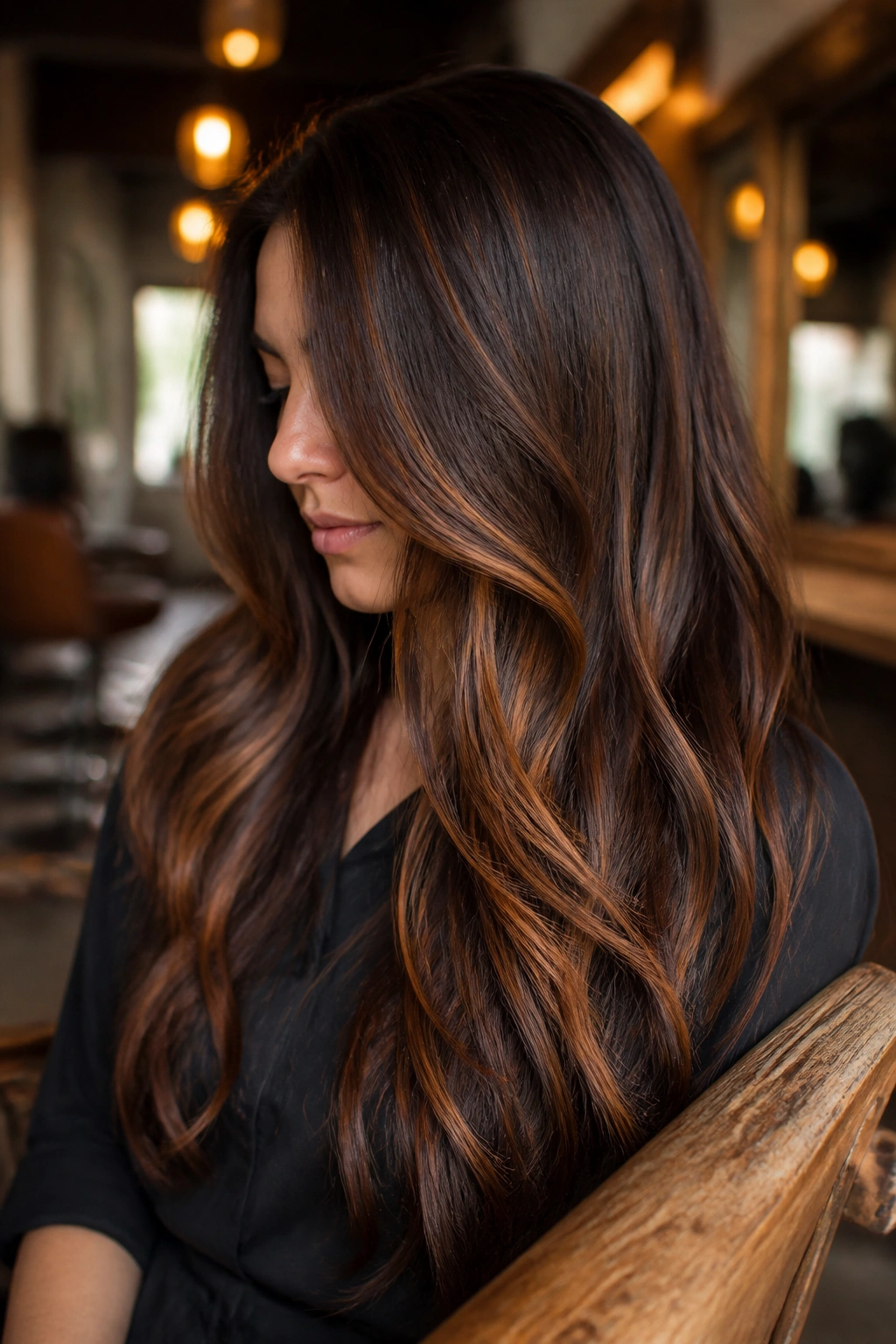
Mocha brown with cinnamon ribbons is for people who want movement more than a full color story. The red sits inside the brown instead of shouting from the ends, so long hair ends up looking thicker and a little more textured. I like this on layered cuts because the ribbons can peek through at different lengths.
Why the ribbons matter
Those thin cinnamon pieces stop the color from reading flat. They also soften a heavy curtain of hair, which matters when you have long strands that can swallow a single shade whole.
- Ask for cinnamon ribbons through the mid-lengths and lower third.
- Keep the root area mocha, not chocolate, so the warmth stays soft.
- Curl the hair away from the face to show the red strands.
- Refresh with a warm gloss when the cinnamon starts looking dull.
Pro tip: If your hair is naturally dark, keep the ribbon placement a little higher around the front so the color doesn’t disappear in the back.
3. Espresso to Cherry Cola Ends
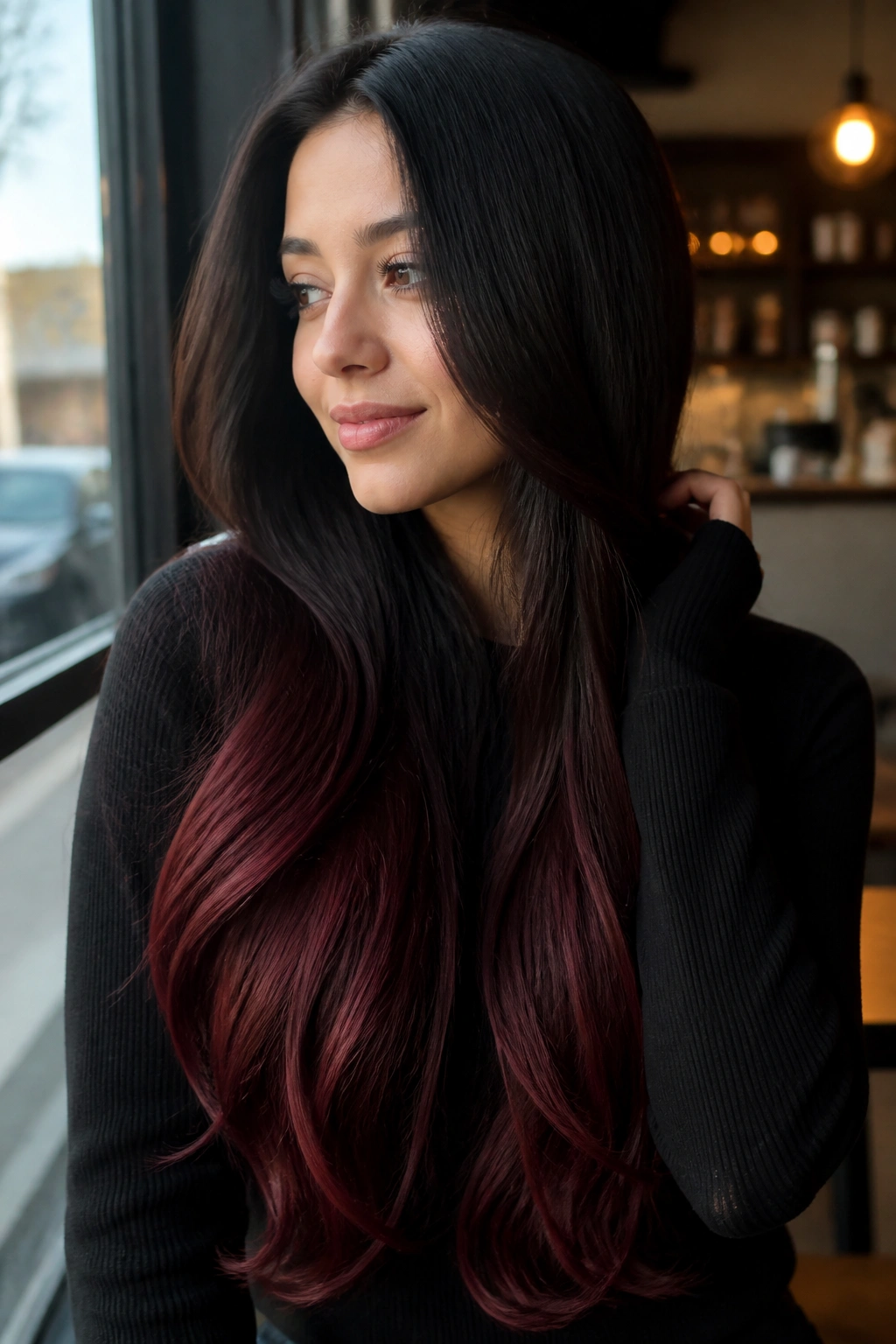
Want drama that still reads polished? Espresso to cherry cola is one of the cleanest ways to get it. The base stays deep and cool, while the ends pick up that wine-red, slightly cherry tone that looks richer than straight copper. It’s a good choice if you like darker makeup, black clothes, or anything with a little edge.
Cherry cola works especially well on long straight hair because the color shift is easy to see. On waves, it gets softer and more dimensional. That’s the nice part. The darker brown keeps the red from looking too bright, and the red keeps the brown from feeling heavy.
If you’ve ever wanted red hair but worried about orange, this is a safer lane. The color has depth, a little shine, and enough contrast to feel intentional.
4. Walnut Brown With Auburn Layers
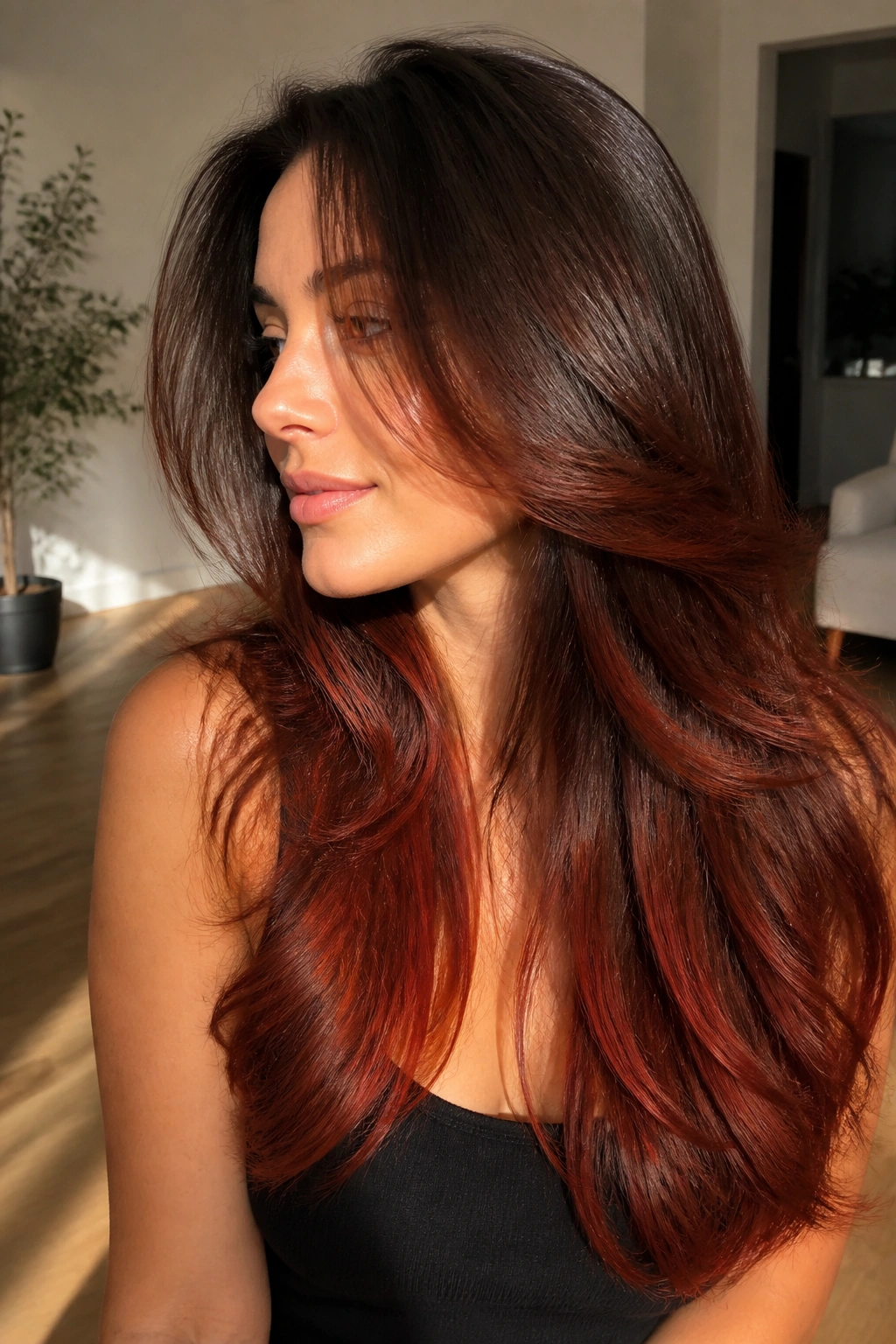
Picture a long layered cut that swings when you turn your head. Walnut brown with auburn layers is made for that. The brown stays grounded near the roots, but the auburn gets tucked into the layers so the color moves instead of sitting like a block.
A good colorist will place the warmer red mostly through the lower half of the hair and along the face-framing pieces. That way, the auburn shows up when the layers separate, which is half the charm. It’s subtle until the hair moves. Then it wakes up.
This is one of those shades that feels a little more natural than copper and a little more alive than plain brunette. If you want red that doesn’t dominate the whole head, auburn layers do the job without making the hair look loud.
5. Mushroom Brown to Merlot Fade
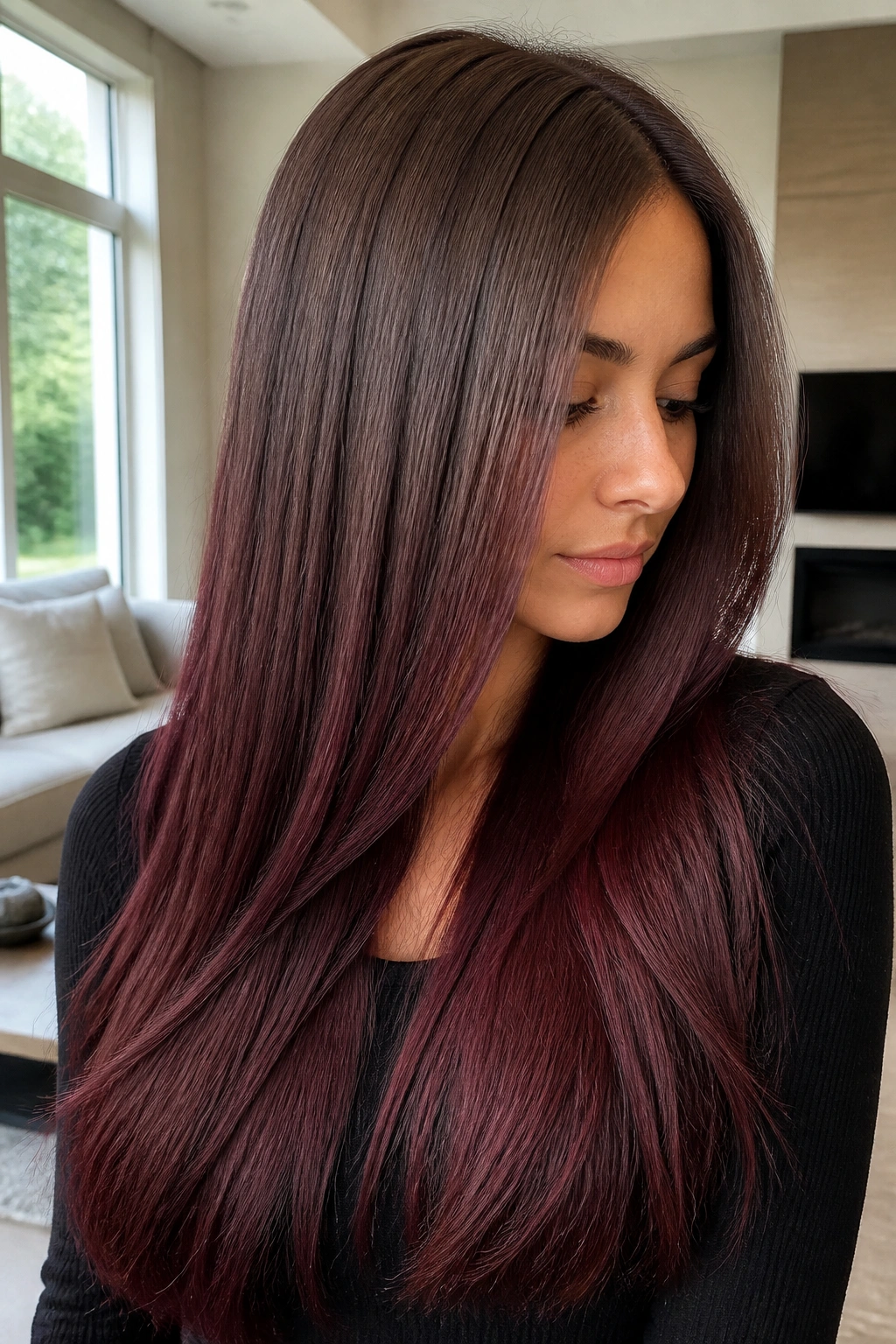
Cool-toned brunettes can wear red, and they do not have to fake warmth to do it. Mushroom brown to merlot is the proof. Mushroom brown has that soft gray-brown cast, and merlot brings in a deep red with a wine note that stays inside the cooler family. The result feels rich, not orange.
Long hair gives this shade room to stretch. The fade can start subtle at the middle of the back, then get darker and redder toward the hem. That shape keeps the color from going muddy, which is the main risk with cooler reds on brown bases. You want the red to look deliberate, not accidentally brown again.
This one leans especially well with straight styles, glossy waves, and center parts. It has a quiet confidence to it, which sounds cheesy until you see it in person.
6. Caramel Brown to Brick Red
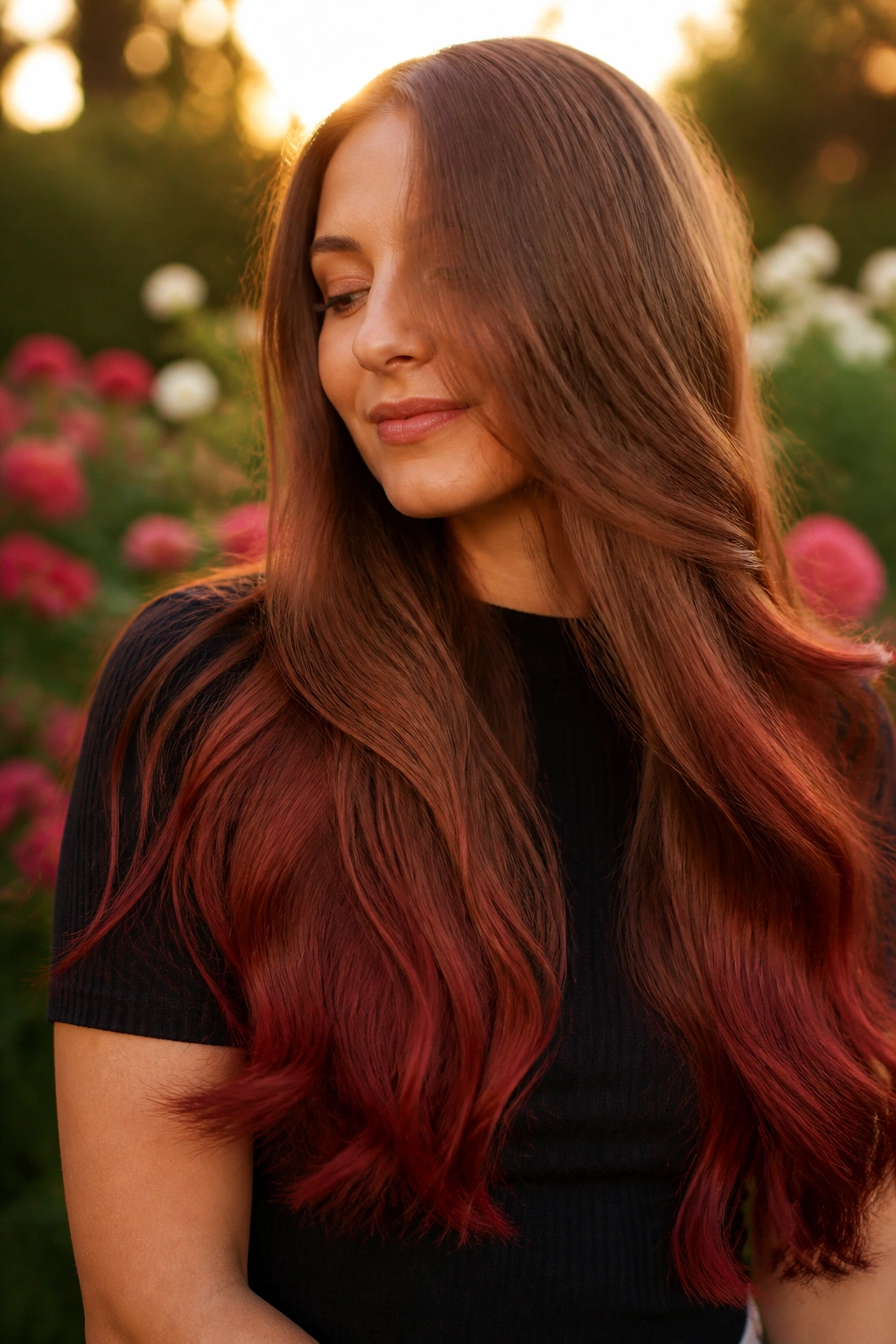
Caramel brown to brick red is earthier than copper and less glossy than cherry. Brick red sits lower and heavier, almost like clay or paprika, which makes it a smart choice for long hair that needs color with some weight. The caramel root keeps the whole thing from turning dark.
Unlike brighter reds, brick red doesn’t need to be the star of every strand. It looks good when it pools toward the ends and picks up a little variation in the middle lengths. On thick hair, that richness helps the color hold its shape. On finer hair, it’s better to keep the brick red concentrated lower down so the top doesn’t get crowded.
This is a good pick if you like warm tones but don’t want anything flashy. It wears more like a deep rusted sunset than a neon flame.
7. Cool Brown to Cranberry Dip-Dye
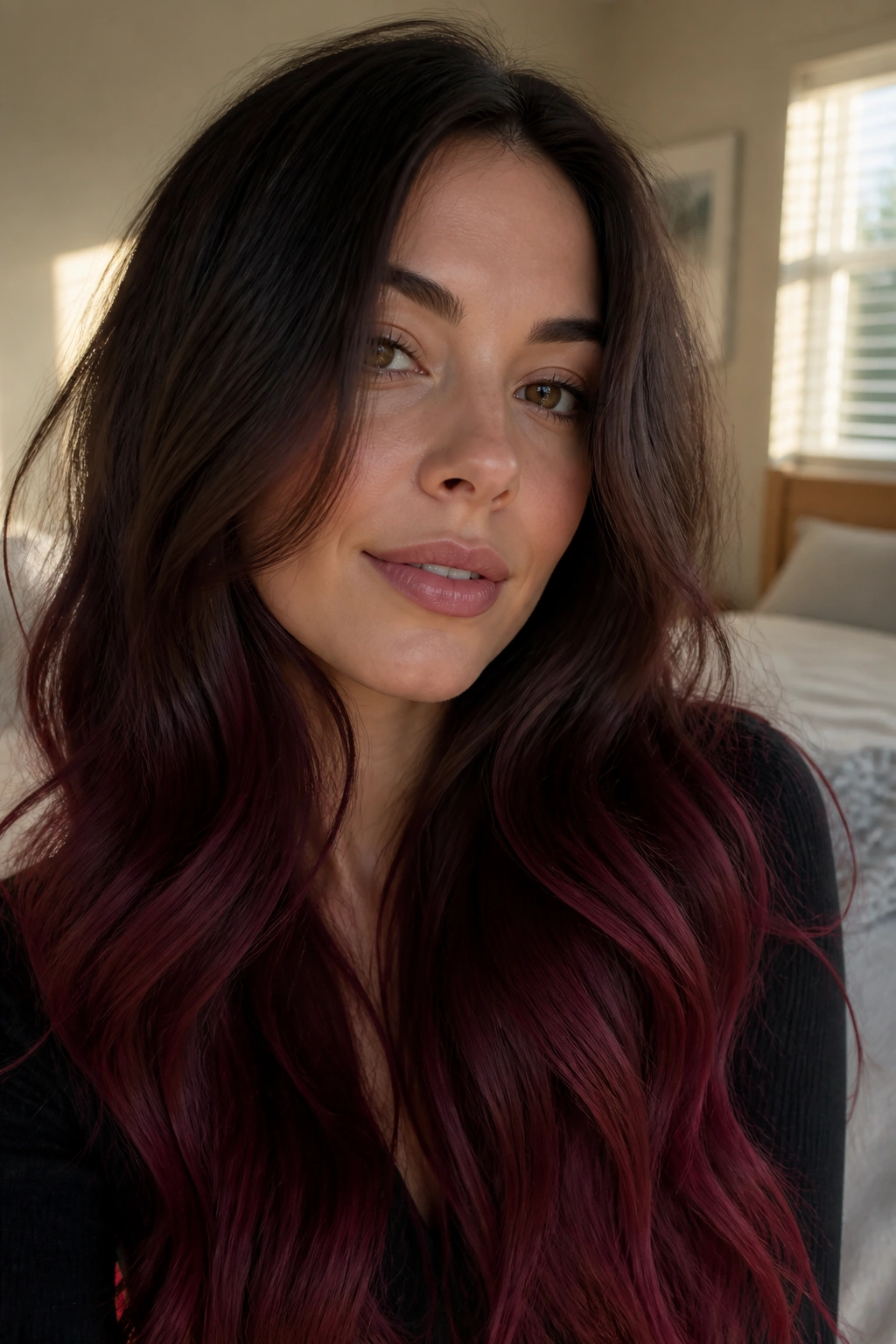
If you want the red to look sharper, cranberry is the cleanest choice. It has that jewel-like edge that reads crisp against a cool brown base, especially when the dip-dye starts low and the cut is long enough to give the color real room. On short hair, cranberry can feel abrupt. On long hair, it gets to stretch.
This shade works best when the red stays concentrated at the bottom 5 to 8 inches. You can blur the line with soft waves, but I’d keep the transition visible enough to show the contrast. That’s the point. Cranberry has a lot of personality, and it doesn’t need help.
It’s a strong match for people who like berry lipstick, silver jewelry, or darker clothes. If copper feels too warm and merlot feels too soft, cranberry sits right in the middle with a little more bite.
8. Hazelnut Brown to Burnt Sienna
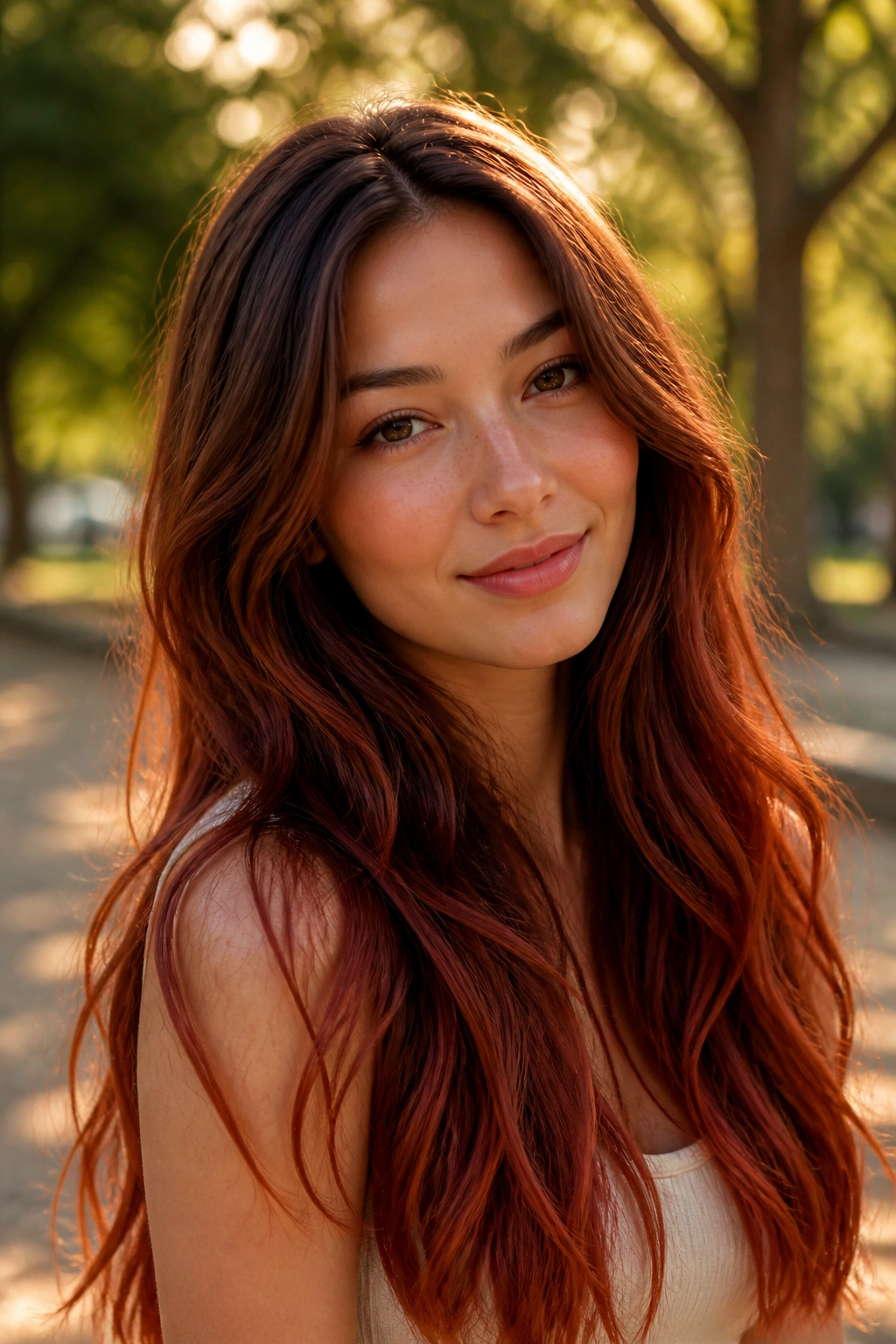
Hazelnut brown to burnt sienna has a sun-baked feel that suits long hair with movement. The brown is light enough to let the red breathe, and the sienna gives you that rusty, reddish-brown finish that doesn’t scream for attention. It’s one of the easier red-brown blends to wear if you like warmth but want to keep things grounded.
How to ask for it
Ask for the hazelnut tone to stay near the roots and through the upper mid-lengths. Then let the burnt sienna build slowly through the lower half, with the strongest saturation at the ends.
- Keep the top 3 to 4 inches soft.
- Let the red deepen below the shoulders.
- Add face-framing pieces if you want more lift around the front.
- Style with a 1.25-inch curling iron for a softer finish.
This one looks especially good on layered blowouts. The color catches the bend in the hair and gives it a warm, lived-in feel.
9. Toffee Brown With Blood Orange Ends
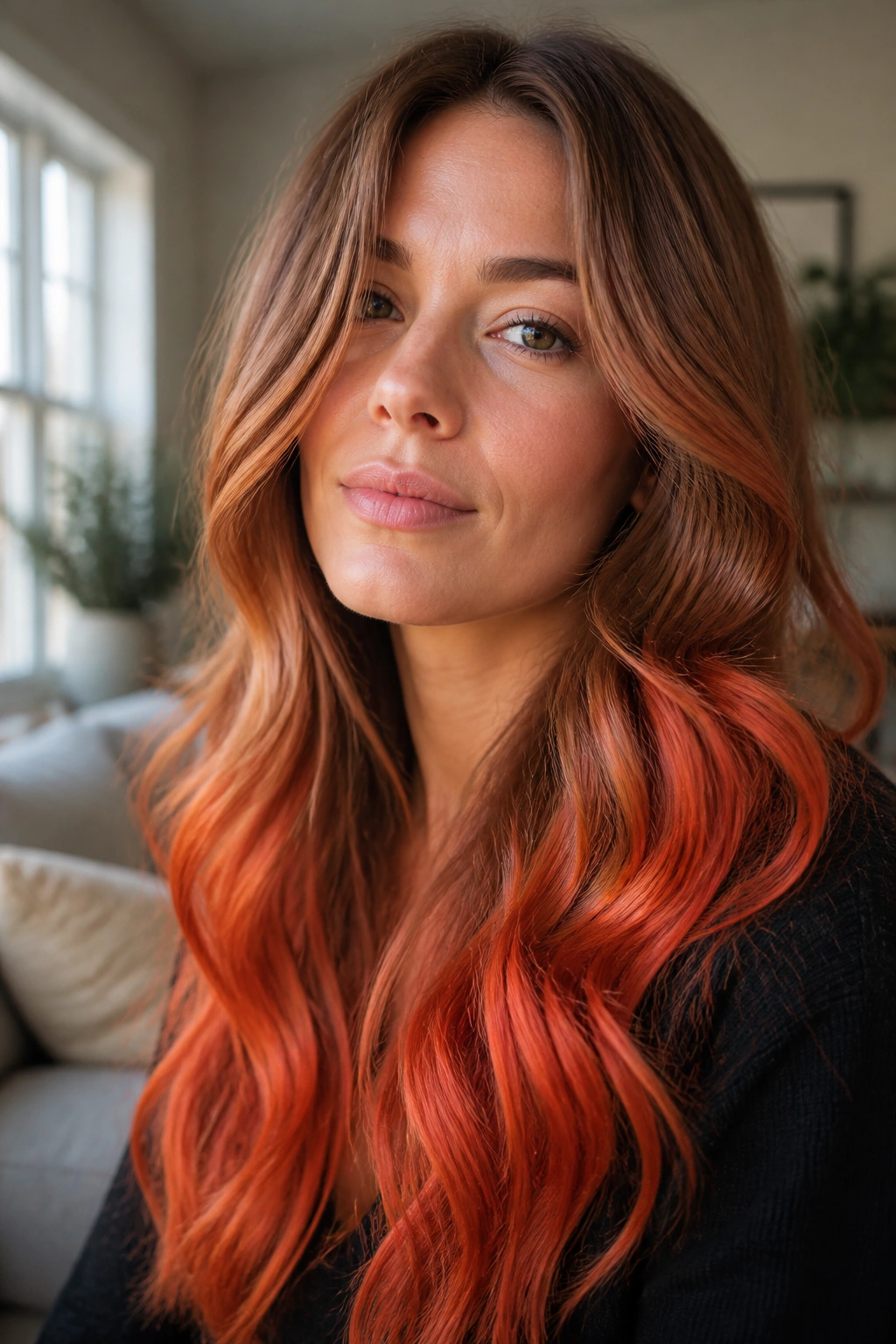
I like this one on long hair that gets worn in big waves. Toffee brown keeps the root area soft and creamy, while blood orange gives the ends a brighter, more electric finish. The contrast is stronger than copper, but the brown base keeps it from feeling wild.
The trick is placement. Blood orange works best when it starts below the mid-lengths and gets stronger toward the bottom. If the orange climbs too high, the whole look can tilt into costume territory fast. Keep the base toffee-rich and the transition soft, and it stays wearable.
This shade suits people who want warmth with a little attitude. It also looks good when the hair is gathered into a low ponytail, because the orange ends show from the back in a really clean way.
10. Smoky Brown to Burgundy Veil
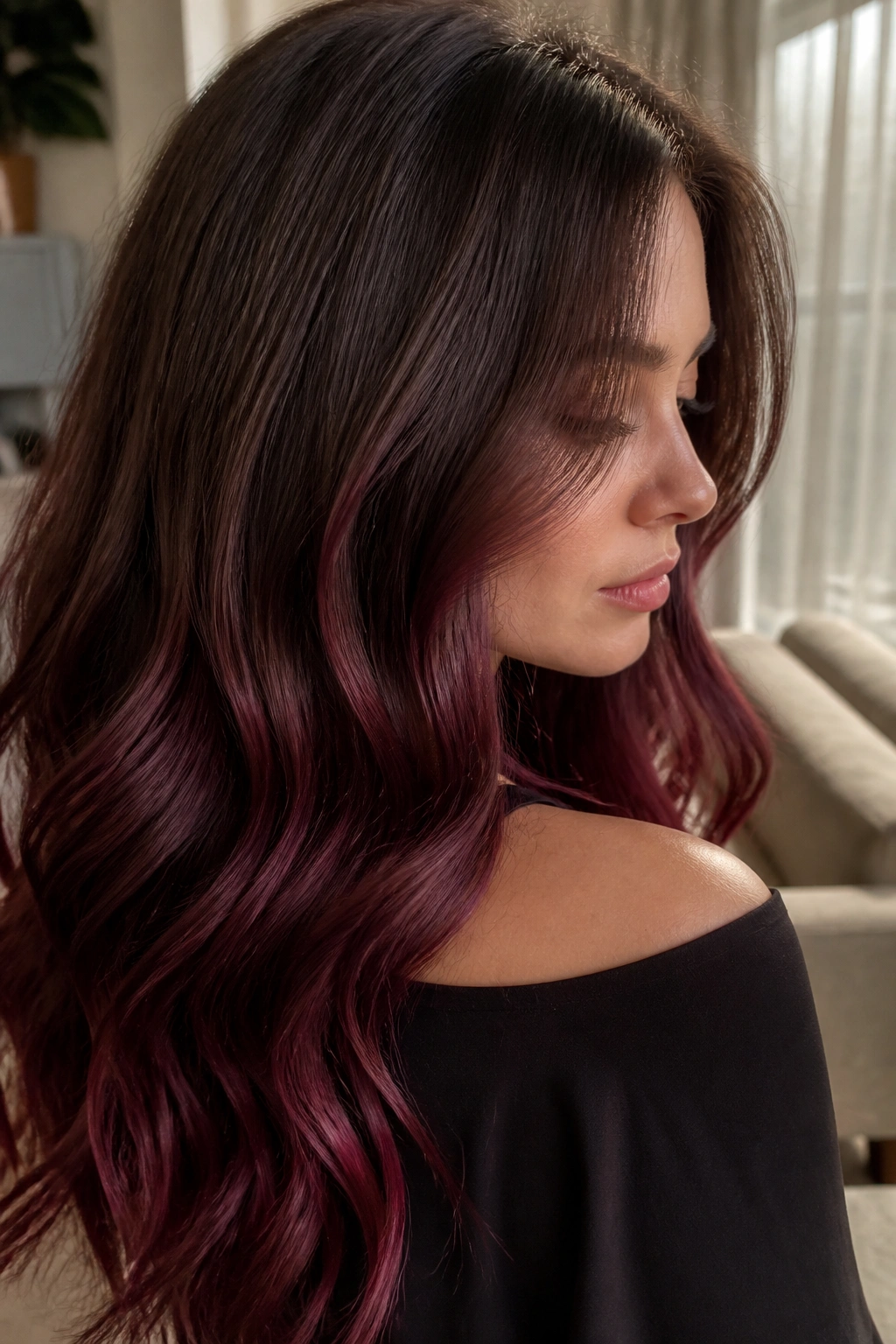
Smoky brown to burgundy veil is a good choice when you want red that doesn’t look obvious in every light. The smoky brown root has a muted, slightly cool base, and the burgundy sits over it like a soft layer instead of a hard block. Indoors, it can look dark and rich. Outside, the red comes forward.
Why it flatters long hair
Long hair gives burgundy room to move through the lengths without getting lost. That matters, because burgundy can go flat if it’s packed into a short cut with no space to shift.
- Best on medium to thick hair.
- Looks strongest in loose curls or brushed waves.
- Benefits from a shine serum on the ends.
- Needs a gloss touch-up when the red starts turning brown.
If you want red that feels a little moody and a little polished, this one sits in a nice middle ground.
11. Cocoa Brown to Mulled Wine Balayage
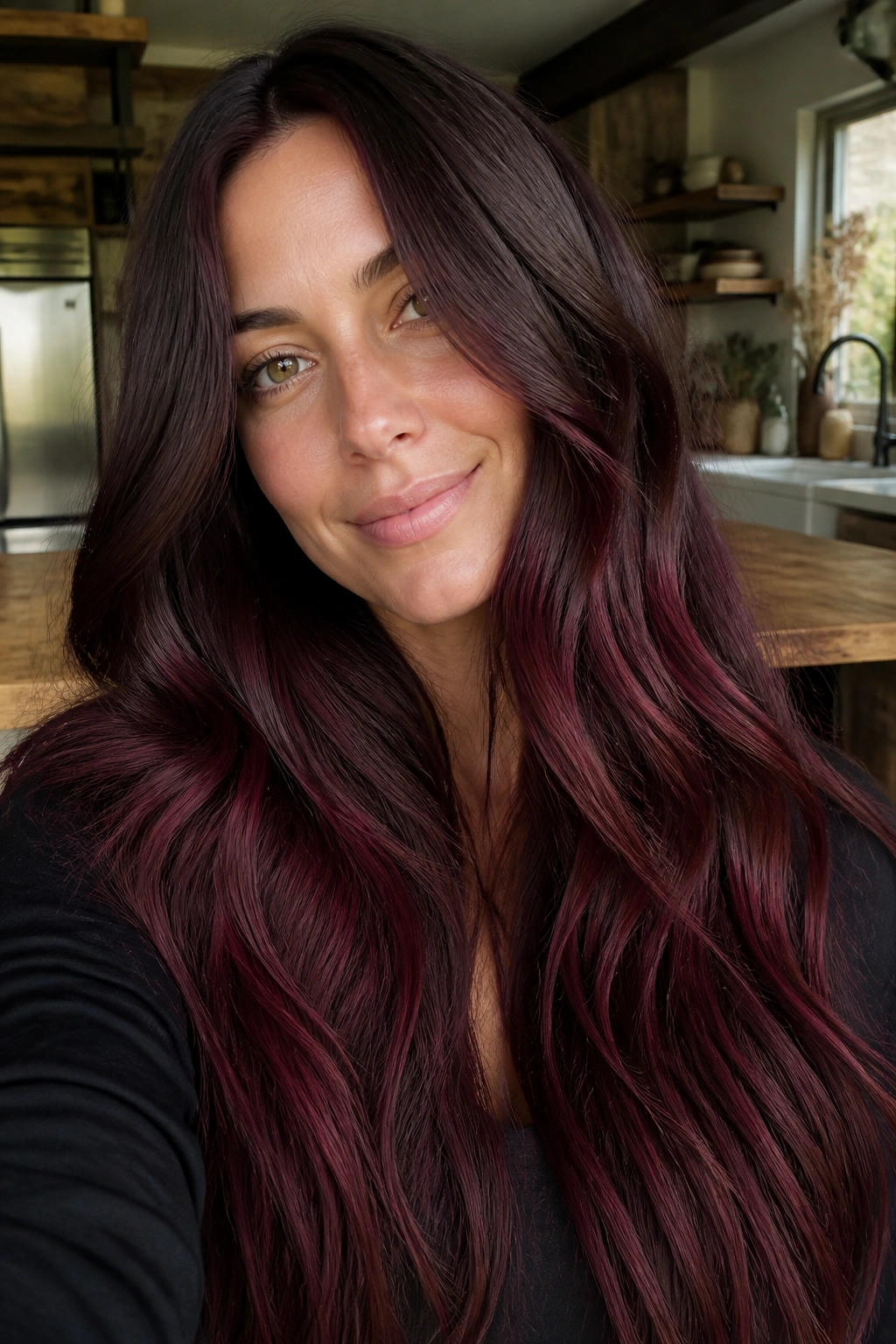
Cocoa brown to mulled wine balayage is softer than a strict ombre and more interesting than a one-shade red. The cocoa base keeps the head of hair grounded, while the mulled wine pieces are painted through the lower half in scattered ribbons. That gives long hair a sense of depth, especially when the layers separate.
The color feels layered in the best way. Not busy. Just full. You’ll see wine-red flashes in the movement, then darker patches that pull the eye back to the brown. That mix keeps the hair from going one-note, which is a common problem with long lengths.
This shade is a smart choice if you don’t want a harsh dip-dye line. It fades softly too, which helps if you’d rather let the color settle down over time instead of chasing it every few weeks.
12. Sandy Brown to Terracotta
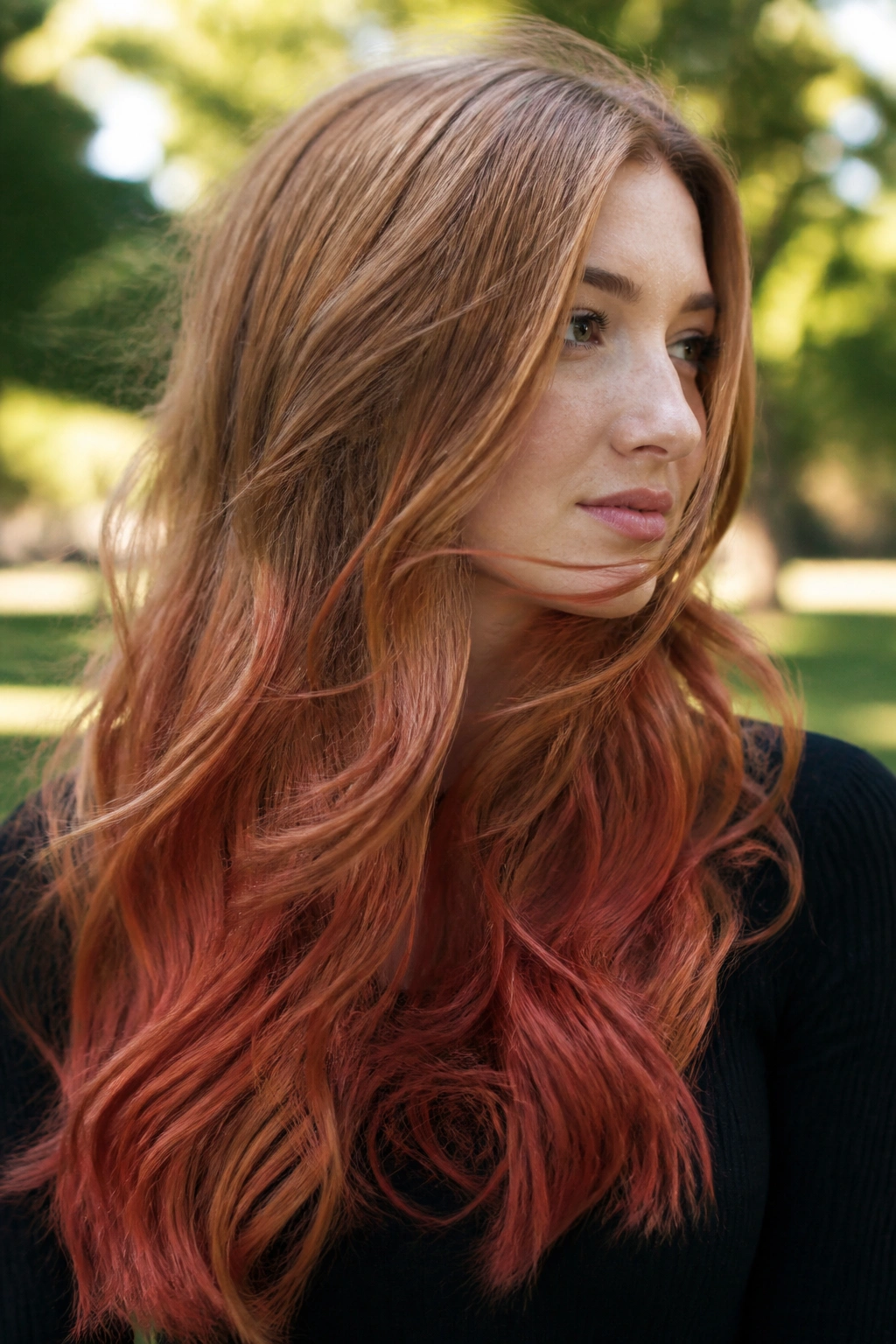
Sandy brown to terracotta is lighter, dustier, and a little more relaxed than most red-brown blends. The sandy base has enough beige in it to keep the color airy, while terracotta brings in that earthy red-orange tone that looks good on long, wavy hair. It feels warm without being sticky about it.
This is the shade I’d pick for someone who likes boho texture, braids, or air-dried hair. Terracotta shows nicely in loose plaits and half-up styles because the warmth breaks up the braid pattern in a subtle way. It also holds up well when the hair starts to soften after washing.
If you want a red-brown that leans natural instead of dramatic, terracotta does that job. It’s softer than brick, less bright than copper, and easier to wear than people expect.
13. Near-Black Brown to Chili Pepper Red
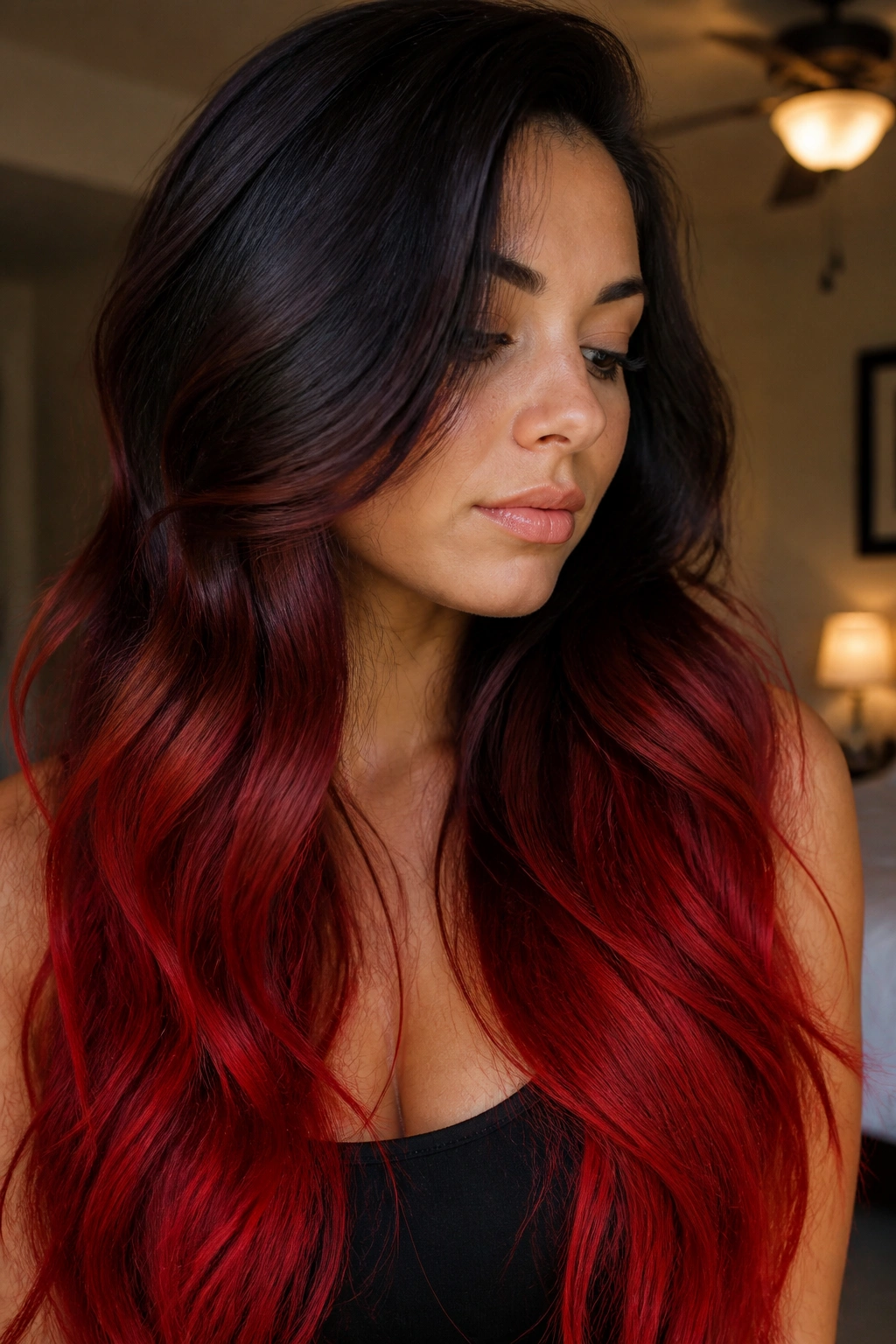
This is the loudest look in the group, and long hair earns it. Near-black brown at the top creates a deep frame, then chili pepper red pushes out through the ends with a sharper, hotter finish. The contrast is big, but long hair has enough length to make it feel deliberate instead of abrupt.
Chili pepper red isn’t the same as copper. It’s spicier, a little more saturated, and less orange. That makes it a strong match for people who want their hair to read from across the room. It also works well on thick hair because the darker root helps anchor the brightness.
There is a catch. This shade needs more upkeep than a soft auburn or rust blend, because the brighter red can fade fast. Still, if you like strong color and don’t mind a bit of maintenance, it’s a standout choice.
14. Almond Brown to Garnet
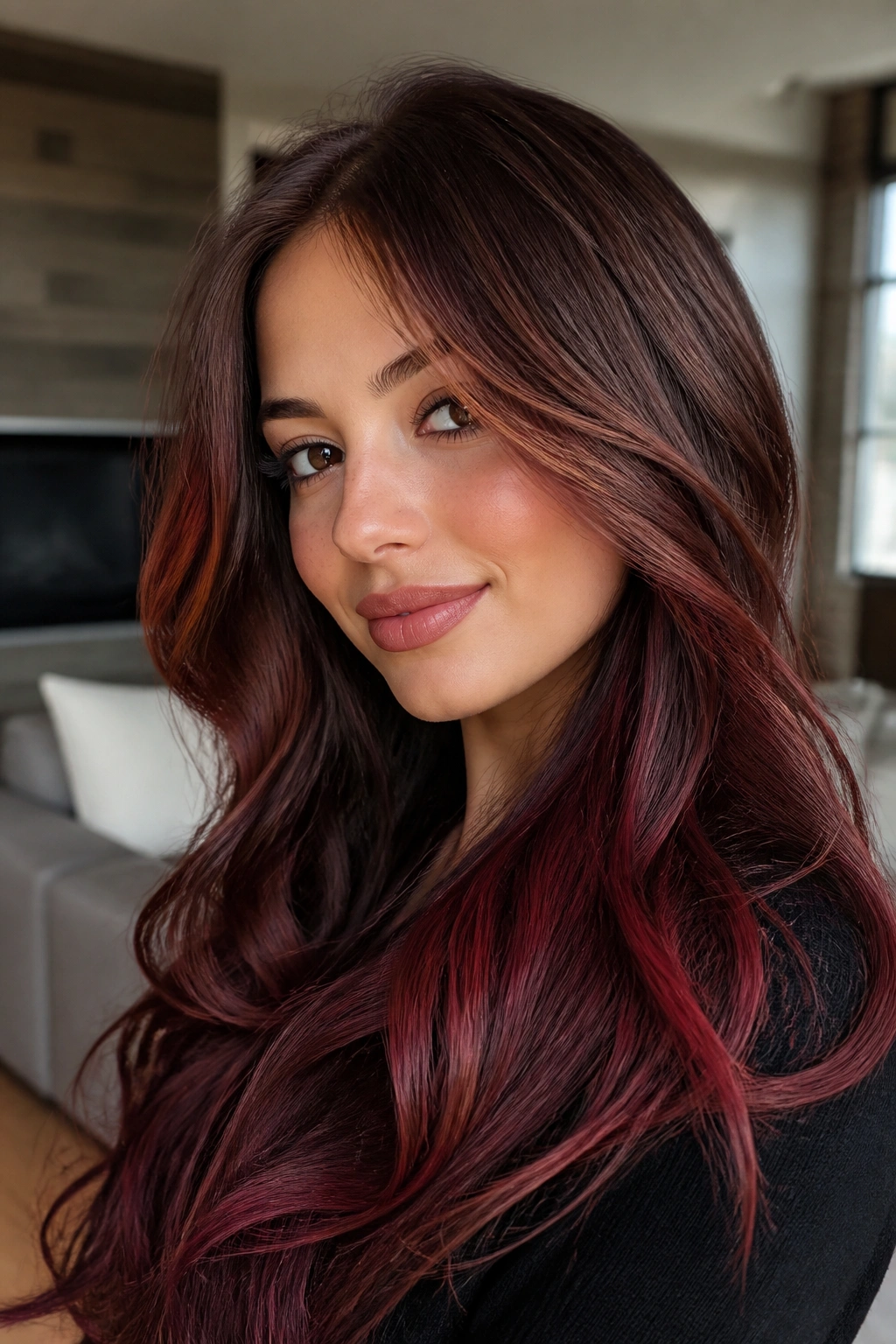
Almond brown to garnet has a smooth, expensive-feeling depth without trying too hard. Almond brown is soft and neutral, almost creamy in the right light, and garnet brings in a deep red with a little jewel-tone shine. The result looks clean on long hair, especially if the cut has movement near the ends.
What makes garnet different
Garnet sits somewhere between red, burgundy, and a dark ruby. It doesn’t flirt with orange, and it doesn’t go purple in the same way merlot can. That makes it useful when you want red but still want the hair to feel grounded.
- Ask for garnet to start below the chin on long layers.
- Keep the face-framing pieces slightly lighter.
- Add loose bends to show the red depth.
- Choose a center part if you want the color to read sleek.
This one is strong with a blowout, but it also looks good tucked behind the ears. The color holds its shape.
15. Golden Brown to Copper Penny
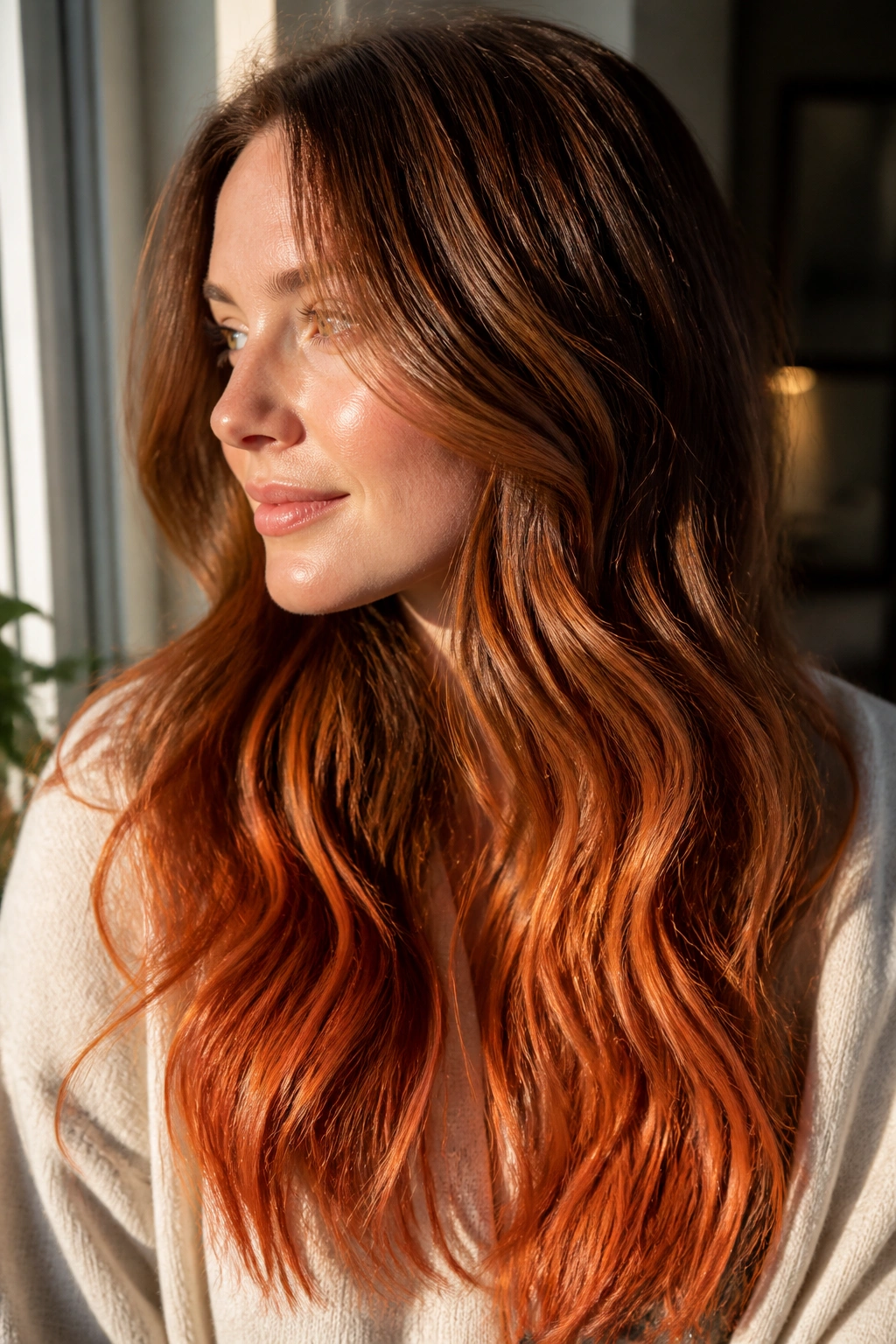
Sun hits this one in the nicest way. Golden brown to copper penny makes long waves look full because the warm base and warm ends stay in the same color family, but not the same shade. Copper penny has that shiny, freshly minted red-orange note that feels brighter than auburn and softer than blood orange.
If your natural hair already carries warmth, this blend tends to settle in more smoothly. The transition doesn’t need to be drastic. It can just roll from golden brown near the top into a richer penny tone at the bottom 6 inches or so. That’s enough.
This is a good choice for someone who likes hair that still looks finished when it’s thrown into a low ponytail. The color does some of the work for you.
16. Deep Brown With Scarlet Face-Framing Ends
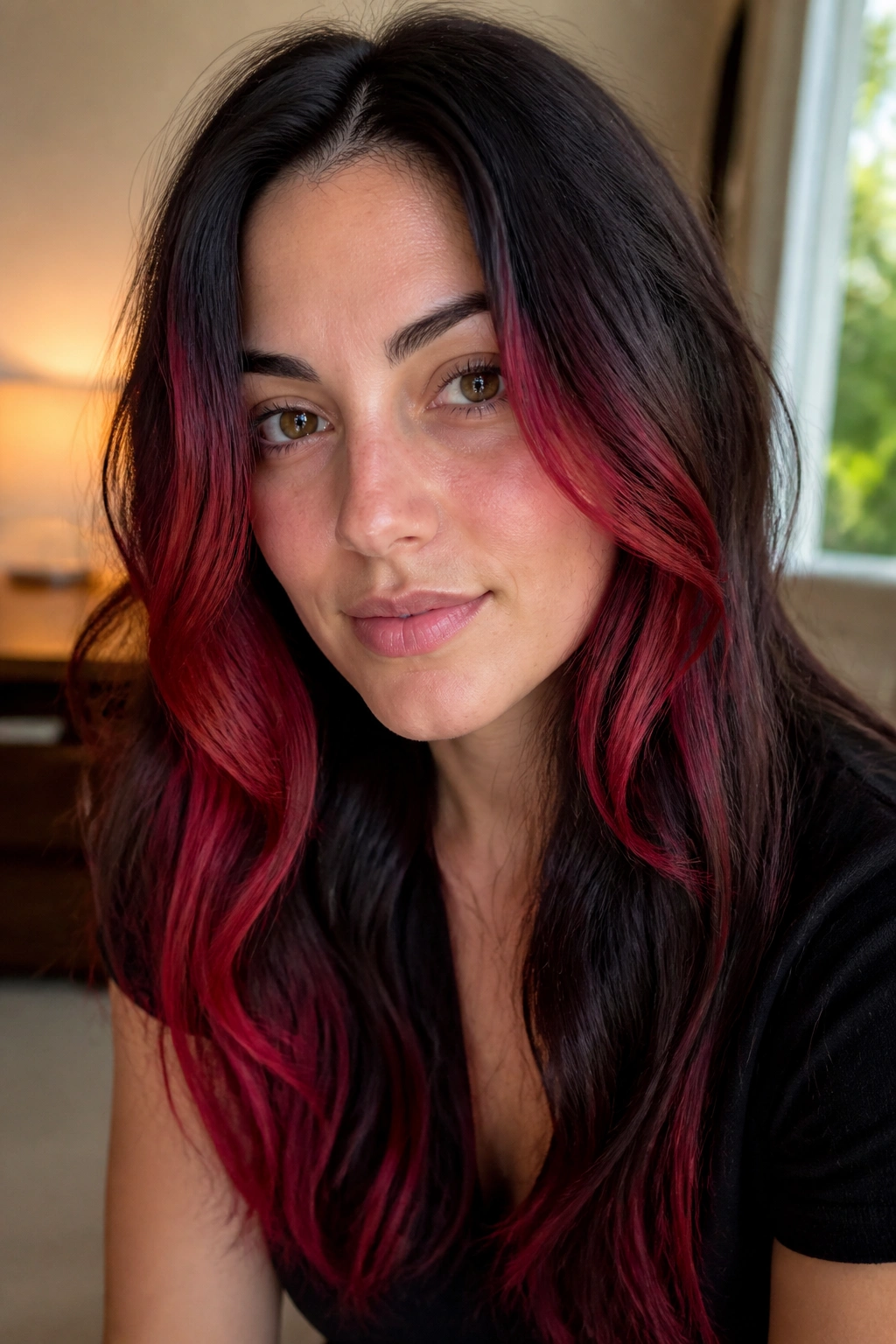
Deep brown with scarlet face-framing ends is more focused than a full ombre, and that’s what makes it interesting. The brown stays dominant through most of the head, while the scarlet is reserved for the front pieces and the lower ends. On long hair, that placement gives the face a quick hit of color without flooding everything else.
The scarlet should feel a little softer near the cheekbones and stronger once it drops below the shoulders. That keeps the front from looking too harsh. When the hair moves, the red flashes first around the face, then again at the ends. It’s a clean visual rhythm.
This is one of the easiest ways to test red if you’re not ready for a full head of it. You get the impact without handing the whole canvas over to scarlet.
17. Dark Latte to Mahogany
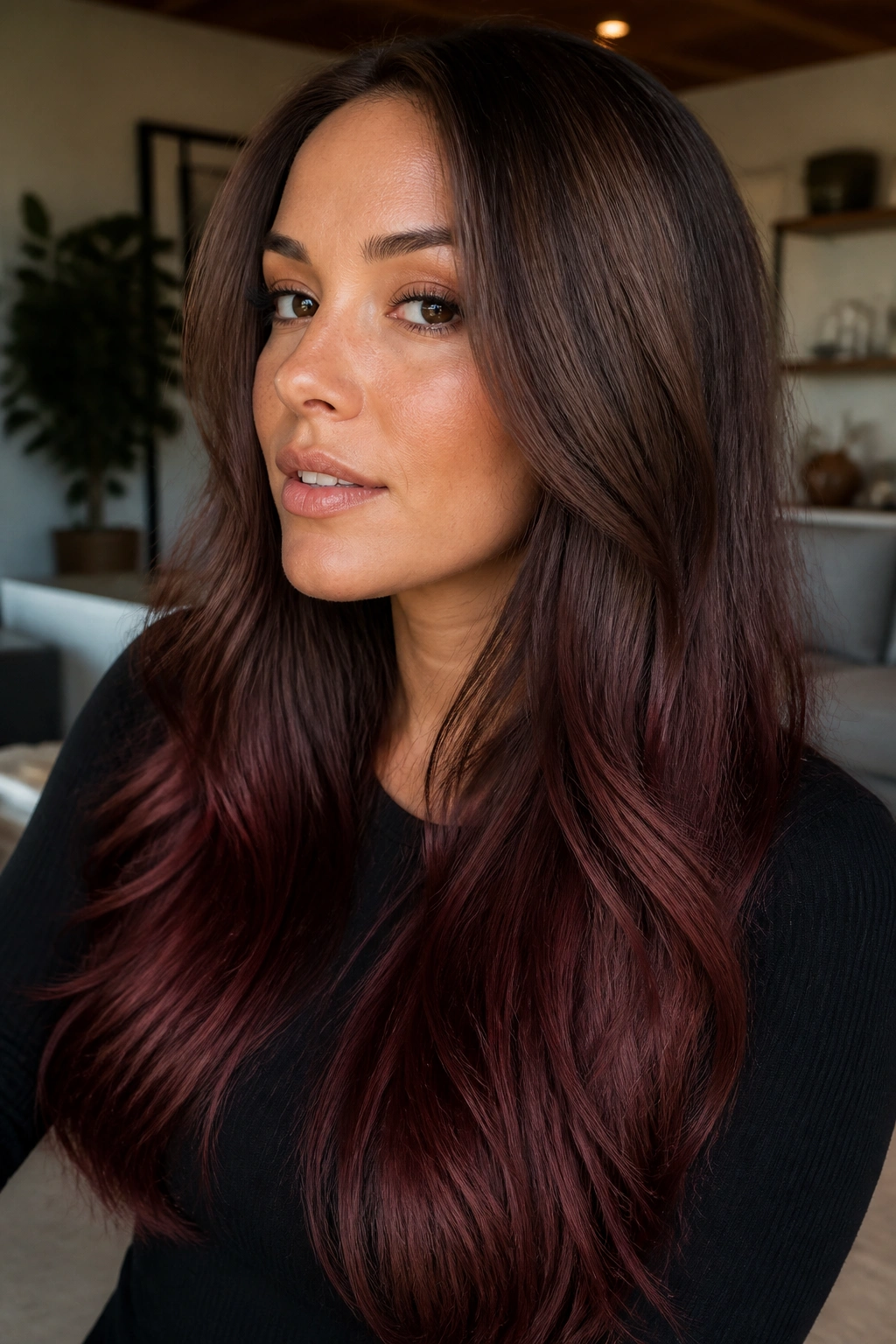
Dark latte to mahogany is the grown-up version of red-brown hair, and that sounds bland until you see how much depth it actually has. Dark latte is neutral and soft, while mahogany brings in a brown-red that stays polished rather than fiery. It’s one of the easiest shades to wear with straight hair because the color change stays smooth.
Why it looks so clean on long hair
Long lengths give mahogany room to settle into the bottom half of the hair without looking choppy. The color picks up shine as it moves, and the brown root keeps it from drifting too far into red.
If you like side parts, sleek blowouts, or loose curls, this shade holds up well. It does not ask for much. A little gloss, a decent blow-dry, and the color does the rest.
Mahogany is also forgiving when it fades. It softens toward a richer brown instead of dropping off a cliff.
18. Brown to Red Plum Shadow Melt
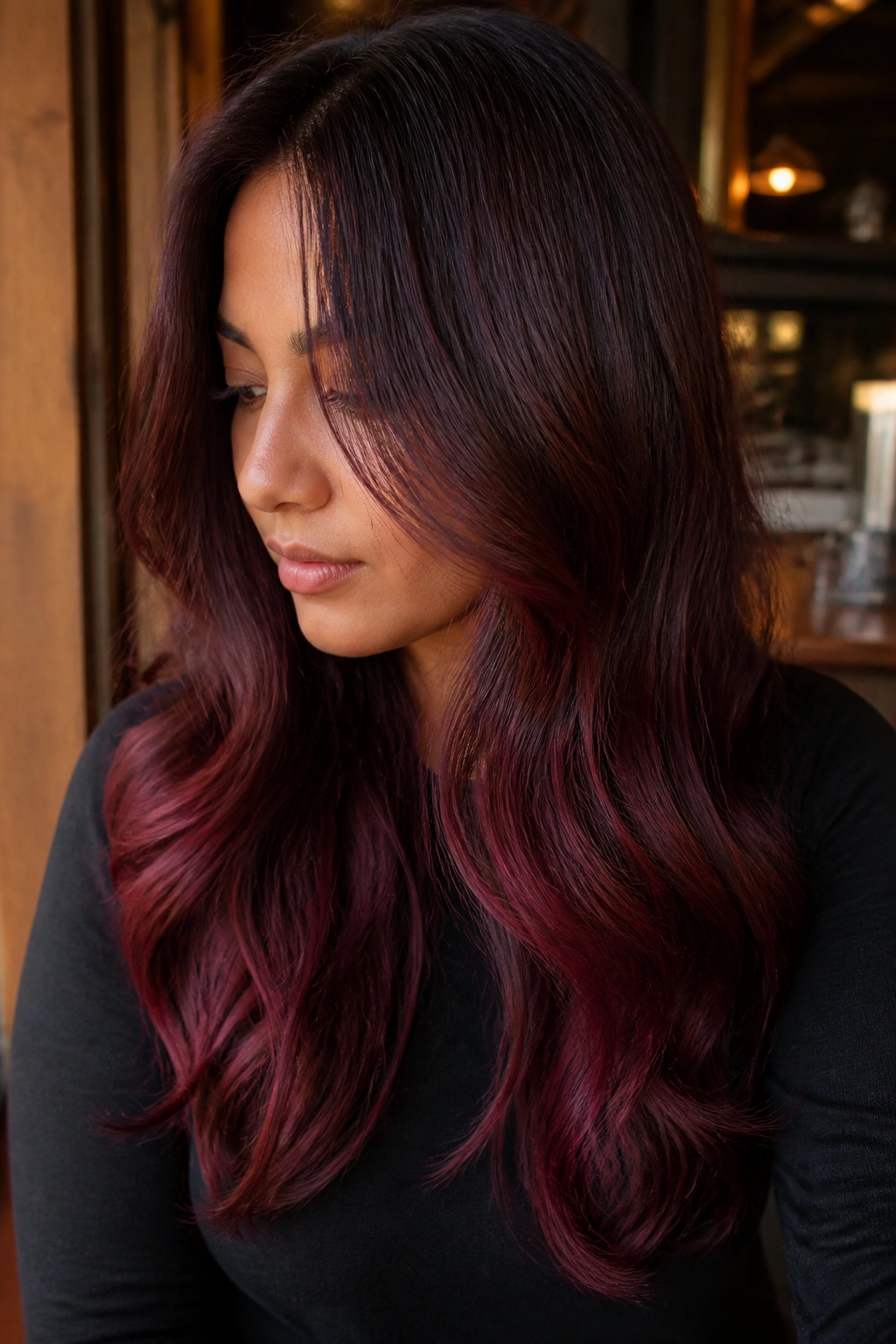
Want red that leans cool without looking blue? Brown to red plum shadow melt is the answer. The plum note gives the red a deeper, softer finish, and the shadow root keeps the top of the hair anchored. On long hair, that combination lets the color melt instead of stepping from one shade to the next.
How to keep it from looking flat
Plum can go dull if the tone is too even, so the ends need a little brightness mixed in. A touch of berry, a hint of red-violet, or even a lighter red ribbon through the face-framing sections keeps the color alive.
- Keep the root shadow soft and natural.
- Let the plum deepen through the lower half.
- Style with loose curls to show the color shift.
- Use a shine spray on dry ends, not the roots.
This shade is for someone who likes berry lipstick, dark denim, and a little mystery in the color.
19. Rooty Brown to Rust Ombre With Waves
Rooty brown to rust is one of the easiest long-hair colors to live with, and that matters. The root stays intentionally dark and grounded, while the rust ends bring in a warm, earthy red that looks good even after the color softens. The grow-out is kinder than a sharper copper or cranberry blend.
Waves are the whole point here. Rust likes motion. It looks especially good when the mid-lengths bend away from the face and the ends turn a little uneven, because that keeps the red from reading like one flat sheet. If your hair is thick, the color gets even better as the layers separate.
What to watch for
Rust can dull down faster than people expect, so a warm gloss helps. The root can stay natural-looking for longer, which is the nice tradeoff.
This is the kind of shade that feels relaxed, not precious. It wears in.
20. Neutral Brown With Auburn Money Pieces
Neutral brown with auburn money pieces is not a full ombre, and that is exactly why it works. The front sections carry most of the red, which frames the face and gives long hair a quick hit of warmth. The rest of the hair stays softer and more neutral, so the color never feels crowded.
This is a smart choice if you want to test red before committing to a whole head of it. The auburn around the face changes the mood fast. It makes long hair look brighter even when the back stays mostly brown. If you wear your hair half up, the contrast gets even better.
You also get a lot of flexibility here. Keep the money pieces bold and let the ends stay subtle, or push the auburn farther down if you want a deeper transition. Either way, the front does the heavy lifting.
21. Soft Brown to Wine Red on V-Cut Layers
A hard line isn’t always the problem. Sometimes the color is fine and the cut needs more shape. Soft brown to wine red on V-cut layers proves that point. The V-shape gives the red a pointed finish at the back, which makes the ombre look intentional and sleek on long hair.
Wine red sits a little deeper than burgundy and a little softer than true cherry. It has a jam-like richness that looks especially good on layered lengths because the color can move from one tier to the next. Straight hair makes the shape obvious. Curled hair makes the red feel denser.
If your hair is all one length, this style can feel too heavy. With layers, it turns into a cascade. That’s the better version by a mile.
22. Warm Brown to Smoked Red Ends
Warm brown to smoked red ends is for anyone who wants red without a loud finish. The brown stays friendly and wearable, while the smoked red has a muted, slightly dusty quality that keeps the ends from shouting. On long hair, that muted finish looks especially good because the color can fade softly and still hold its shape.
Who this suits best
This shade works well if you like warmth but don’t want copper, and if you want red that still looks believable in casual light. It’s also a nice fit for long cuts with layers, because the ends can show different depths of red without turning busy.
- Better on medium to thick hair.
- Strong with loose waves or a soft blowout.
- Easier to grow out than brighter red shades.
- Looks richer when the ends are kept glossy.
If I had to hand someone one low-drama red-brown choice for long hair, this would be near the top of the pile.
Final Thoughts
Long hair is generous to red. It gives the color room to fade, stretch, and change a little as it moves. That’s why brown red ombre hair ideas for long hair can look so good when the shades are chosen with care — the brown keeps things grounded, and the red does the interesting part.
If you want the softest route, stay near chestnut, mocha, terracotta, or warm brown. If you want more edge, move toward cherry cola, merlot, garnet, or chili pepper red. The smartest choice is the one that fits how you wear your hair most often, because long color only looks good when it still makes sense in a ponytail, a braid, or two-day-old waves.
