



Violet ombre hair on long hair can look lush and expensive, or it can slide into muddy territory fast. The difference usually comes down to where the purple starts, how softly the root is shadowed, and whether the fade has enough room to stretch.
Long lengths are a blessing here. A blunt dip-dye can survive on a bob, but waist-length hair shows every step in the gradient, so plum, lilac, orchid, and smoky amethyst need a softer hand. That extra space is also what makes violet so satisfying on long layers and waves; the color moves when the hair moves.
My favorite versions borrow from several purple moods instead of one flat shade. Deep eggplant reads rich, lavender looks airy, and blackberry-purple has that glossy, inky finish that turns heads without screaming for attention. Start with the darker ideas if you want low drama and easy grow-out. Save the pale fades for hair that can handle lightening, toning, and a little patience.
1. Midnight Violet Melt
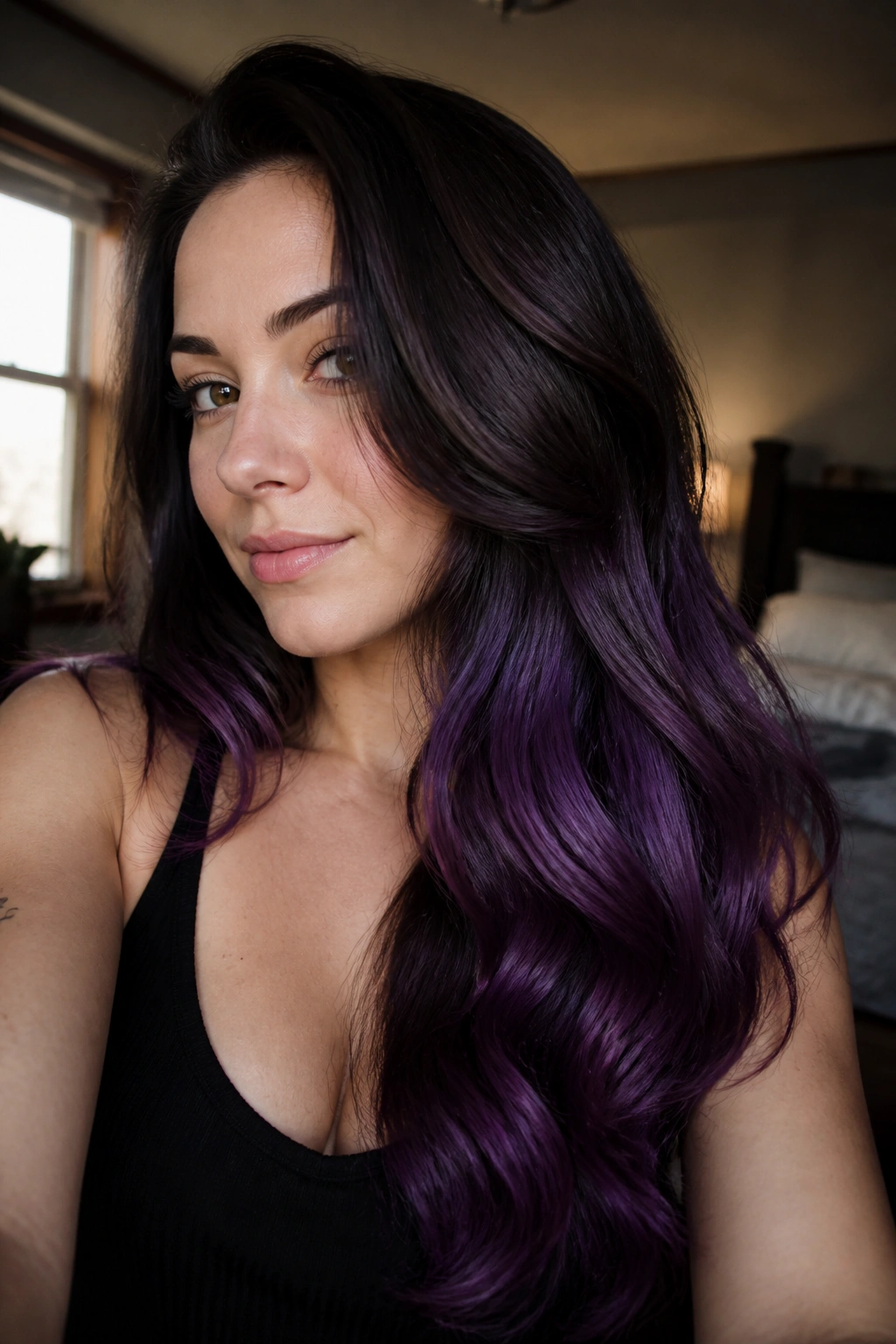
This is the one I reach for when someone wants violet ombre hair that feels deep, smooth, and expensive without turning loud. The roots stay dark brown or black, then the purple slips into the ends like ink bleeding through silk. On long hair, that slow change looks far better than a hard line.
Why it flatters long lengths
Long layers make the melt feel deliberate instead of heavy. Loose waves help even more, because the violet catches on the bends and the darker root keeps the whole thing grounded.
- Best on medium to dark brunettes
- Ask for a soft root shadow, not a blunt color block
- Ends should hold the richest violet tone
- Curling the last third shows the fade best
Keep the root deeper than the ends; that contrast is what makes the melt read clean. A gloss every few weeks helps the purple stay glossy instead of dusty.
2. Brunette to Plum Balayage
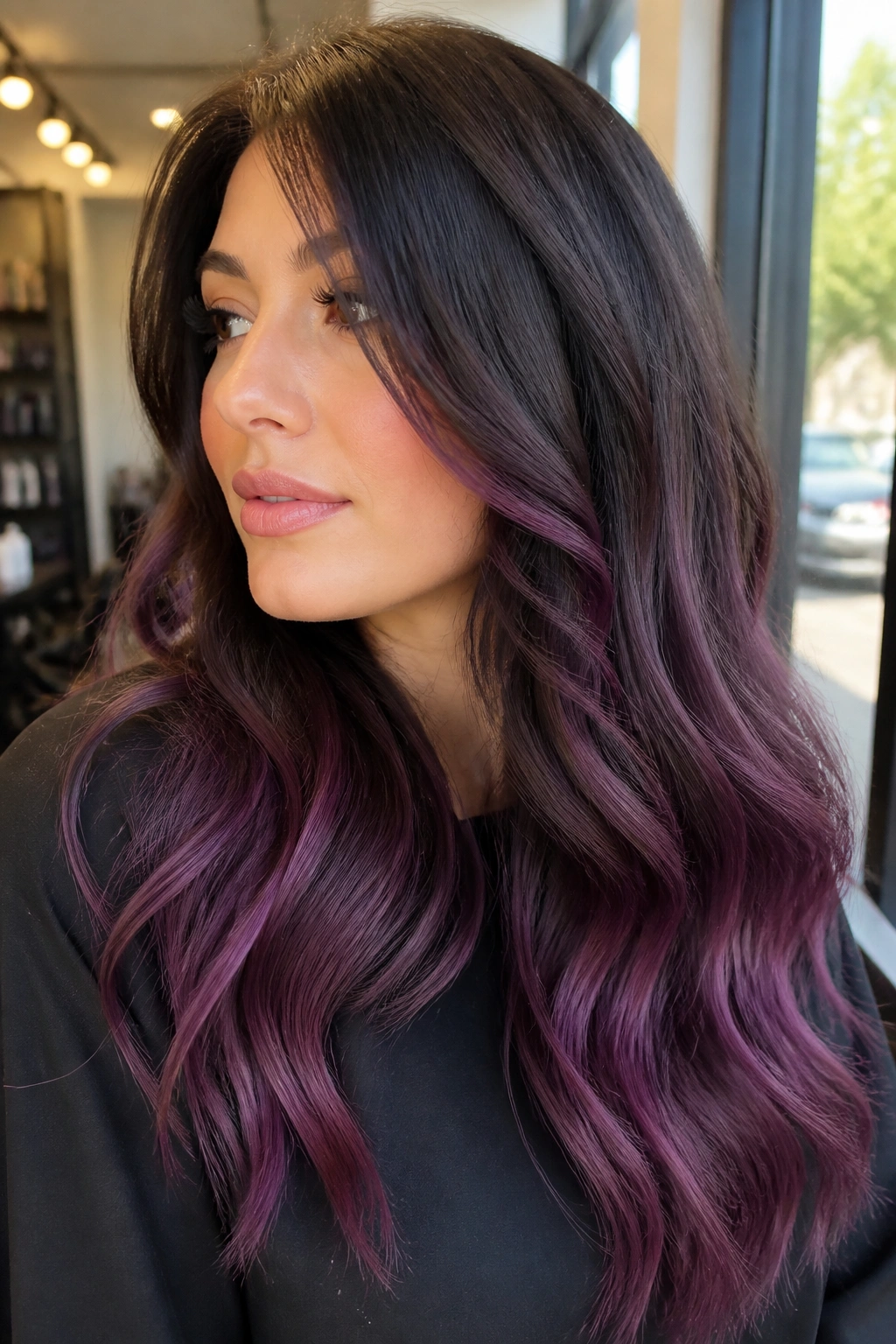
Plum is the shade that behaves. It sits between brown and purple, which means it looks grown-up even when the hair is long, thick, and full of movement.
A brunette-to-plum balayage is one of the easiest ways to wear purple without the obvious “I just colored my hair” look. The plum ribbons can start around the collarbone or lower, then soften toward the bottom eight to ten inches. That gives the color a long runway, and long hair really likes that.
If your hair already has warmth, plum often looks more flattering than a cooler violet. It plays nicely with chestnut, cocoa, and espresso bases. You get dimension first, color second. That order matters.
3. Cherry-Violet Dip Dye
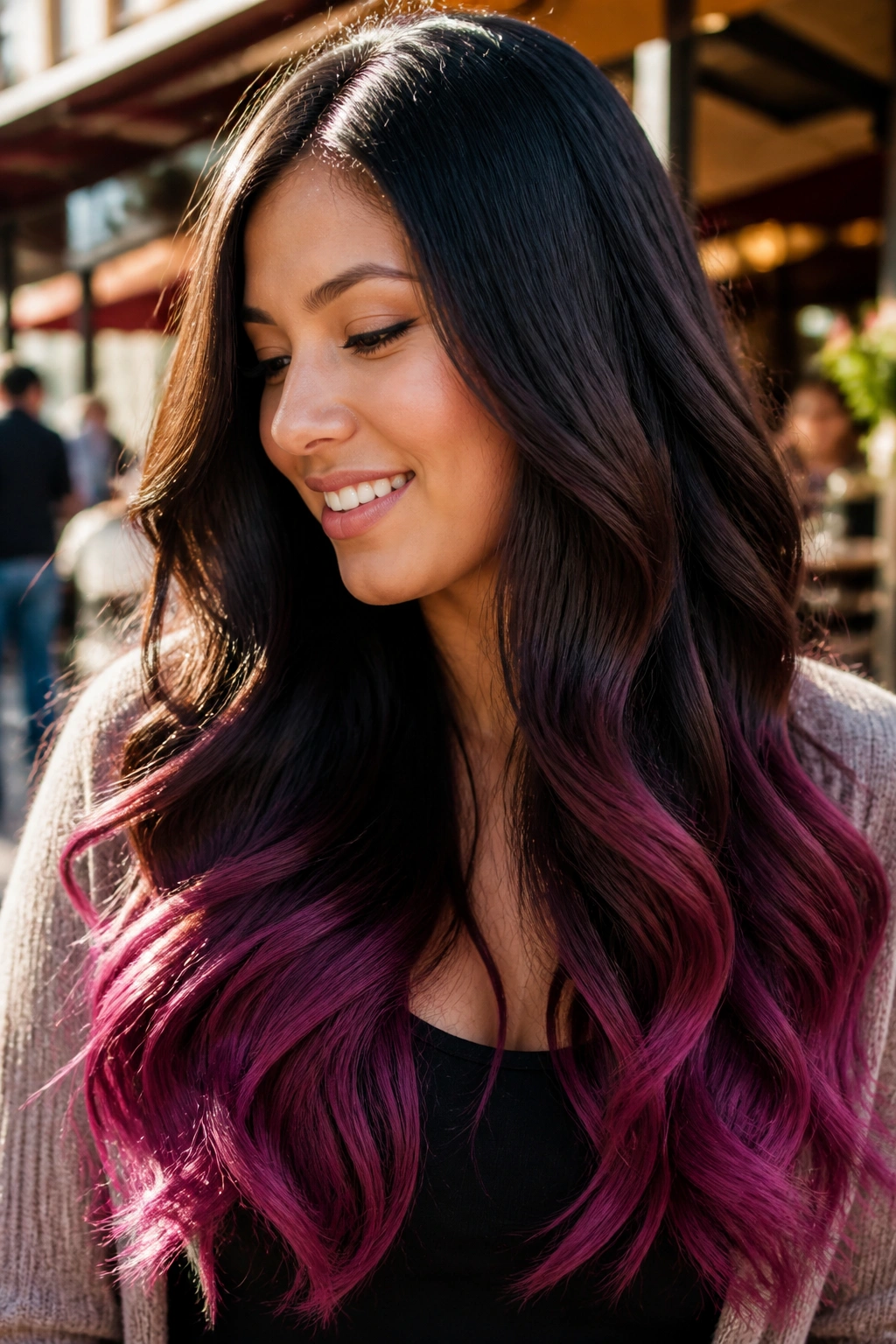
Why does a dip dye still work on very long hair when it can look dated on shorter cuts? Because the extra length gives the end color space to breathe. A violet dip dye on long hair can feel deliberate, especially when the last six to ten inches are saturated and the top stays untouched.
How to style it
Loose curls make the dip dye look richer. Straight hair shows the color line more clearly, which can be good if you want a sharper finish, but waves usually soften the transition in a better way.
This version works best when the ends are brighter than the mid-lengths by a clear shade or two. If the difference is tiny, the dip dye just disappears. If the contrast is too harsh, it starts to look flat. The sweet spot is right in the middle.
4. Smoky Lavender Fade
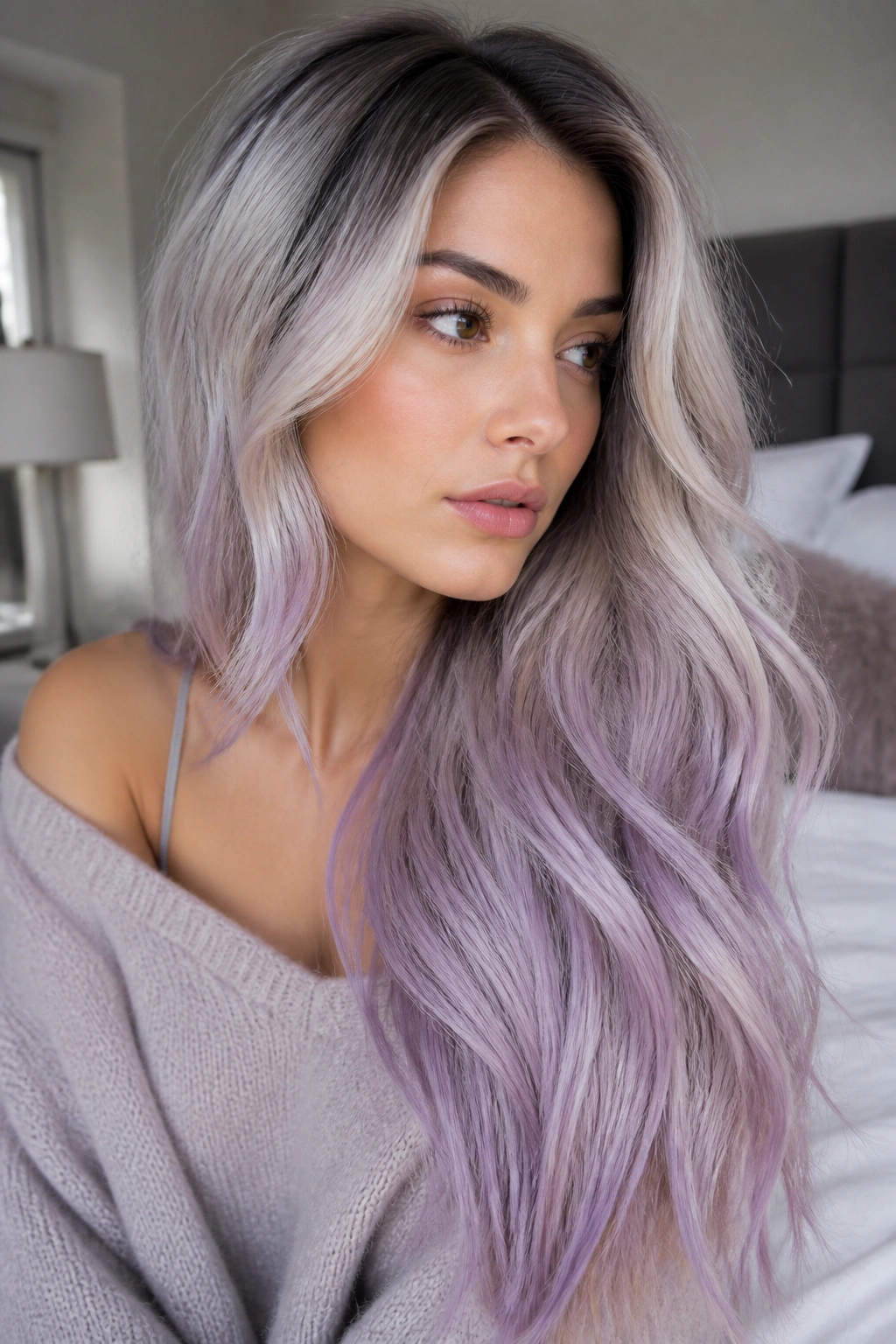
Picture pale blonde hair with a charcoal root shadow and a lavender finish that looks soft rather than sugary. That’s the charm here. Smoky lavender on long hair has a kind of floating quality, especially when the cut has long layers that break up the shape.
A friend once described this shade as “dusty in a good way,” and that stuck with me. It’s airy, but not flimsy. The smoky base keeps the lavender from turning chalky, which is a real risk if the tone is too pale or the hair is over-lightened.
- Best on pre-lightened hair that has been toned well
- Needs a cool or neutral root shadow
- Reads best on soft bends, not tight ringlets
- Can fade to silver-lavender if you wash often
A satin pillowcase helps, and so does being careful with purple shampoo. Too much of it can push the tone gray.
5. Orchid Blonde Gradient
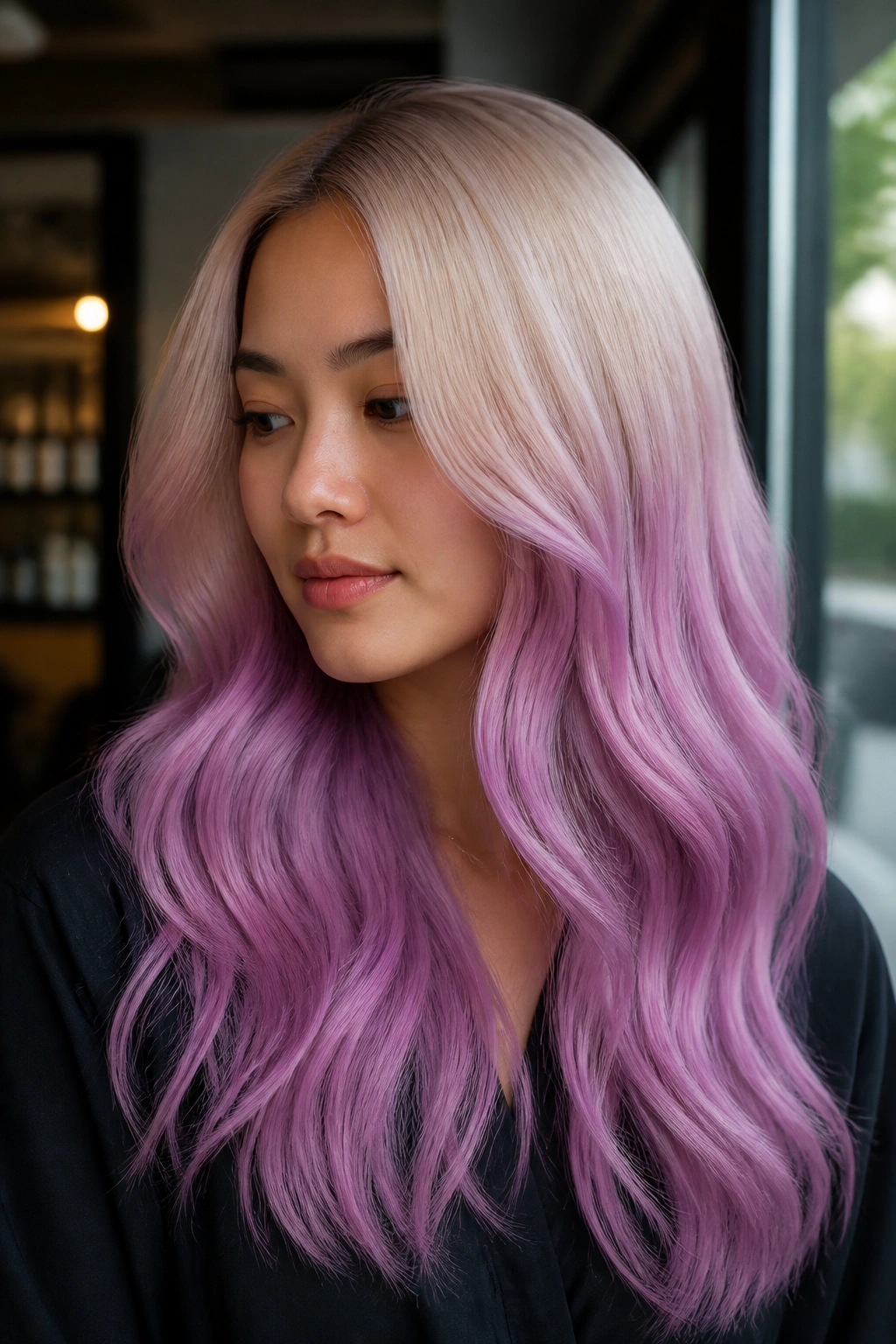
Orchid violet on pale blonde can look like silk, candy, or a ruined toner job. The difference is in the blend. When the fade is right, the color moves from creamy blonde into a soft orchid shade that still has life in it, not that flat, dead pastel look people sometimes get after too much lightening.
Long hair is the perfect canvas for it because the fade can start high enough to matter and low enough to stay elegant. On blunt cuts, orchid can feel abrupt. On waist-length layers, it becomes more like a color mist. That’s the part I like.
Ask for a creamy violet at the mid-lengths and a paler lilac through the last few inches. Thick hair handles this better than fine hair, simply because there’s more surface area for the color to sit on. A braid or half-up style shows the gradient in a way loose hair sometimes hides.
6. Reverse Violet Ombre
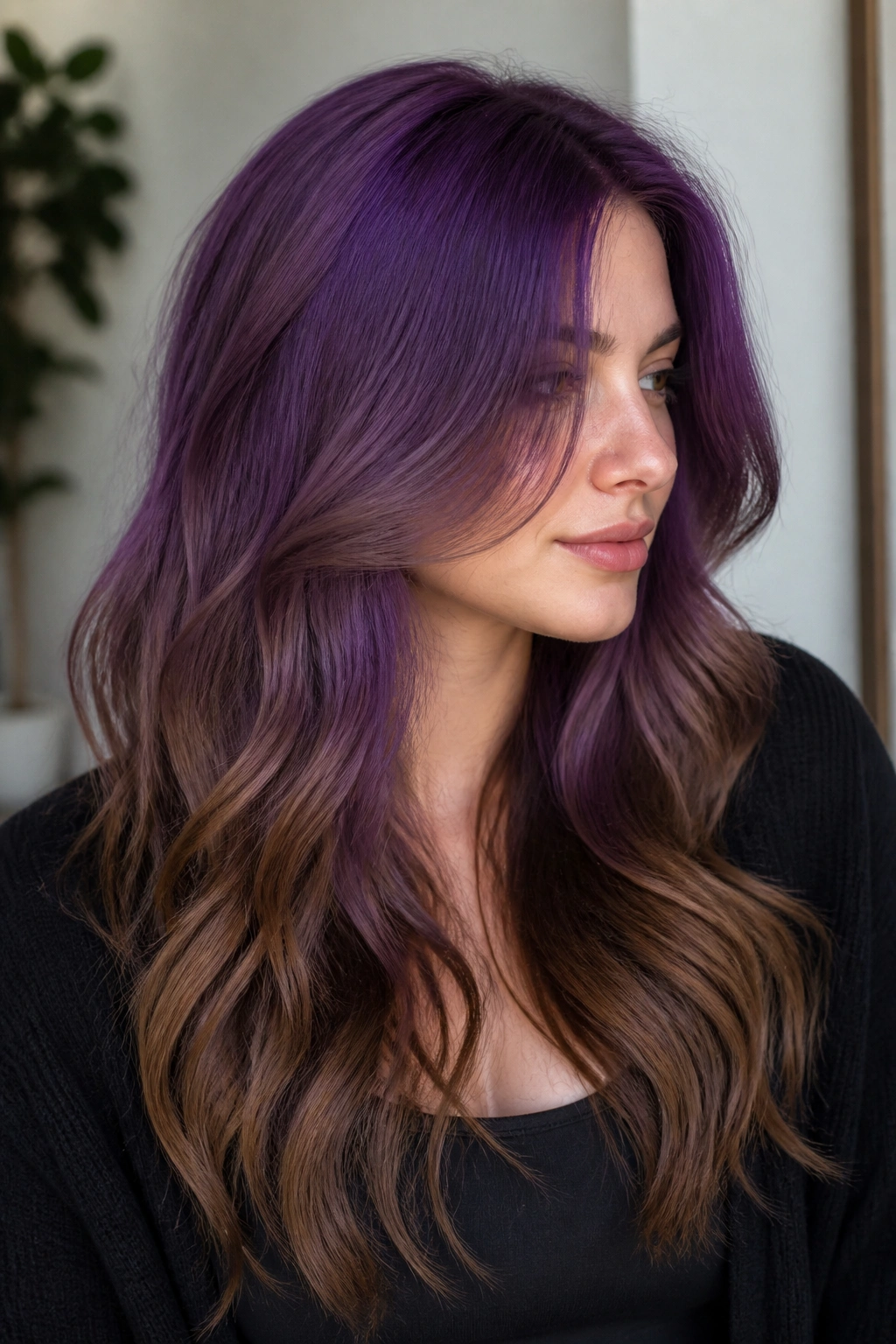
Unlike the usual dark-to-light ombre, this one starts with violet at the crown and softens into brunette ends. It’s a bolder choice, but long hair gives it enough room to work without feeling gimmicky.
The appeal is the surprise. From the front, the violet can look almost like a shadow. Then the hair moves, and the lighter ends show through. That shift is what makes it interesting, especially on people who wear their hair in high ponytails, buns, or long pony braids.
This version suits anyone who likes visible color but hates the usual dipped-tip look. I’d keep the transition soft around the cheekbones and more obvious below the shoulders. Too high, and the whole thing can feel busy. Too low, and you lose the point.
7. Mulberry Money Piece
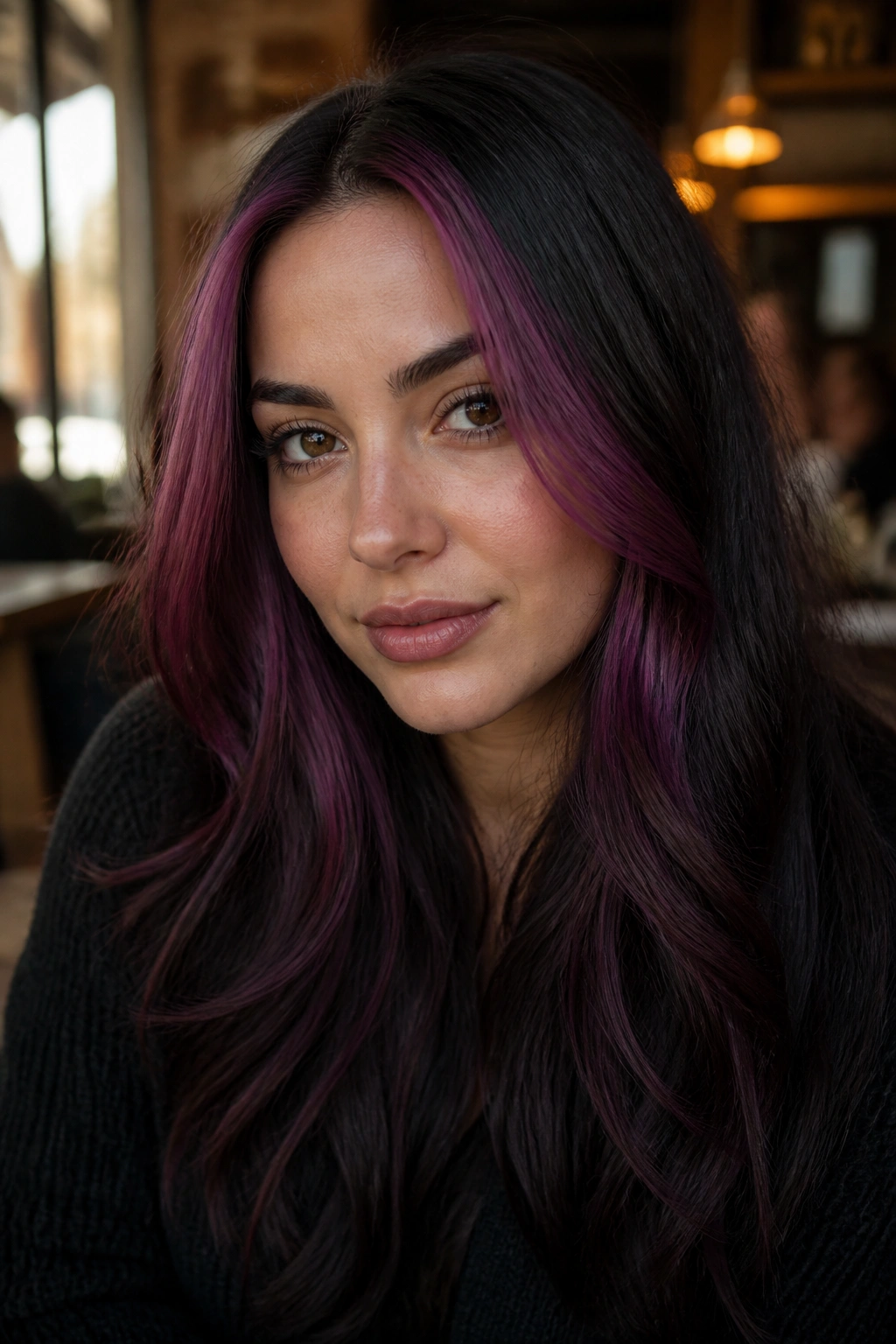
The easiest way to make violet feel brighter without coloring every inch is to put the strongest shade at the front. A mulberry money piece does exactly that. It frames the face, grabs light fast, and gives the rest of the long hair something to orbit around.
Why the front matters
On long hair, the front sections are the parts people notice first. If those pieces are a richer mulberry-purple, the whole style looks more finished, even if the lengths stay darker and softer.
- Ask for 1- to 2-inch face-framing panels
- Keep the violet a shade brighter than the ends
- Works well with curtain bangs or long layers
- Looks sharp pulled half-back
If you wear glasses, this is a strong move. The color sits right where the frames land, so the contrast feels intentional instead of accidental.
8. Blackberry Silk Waves
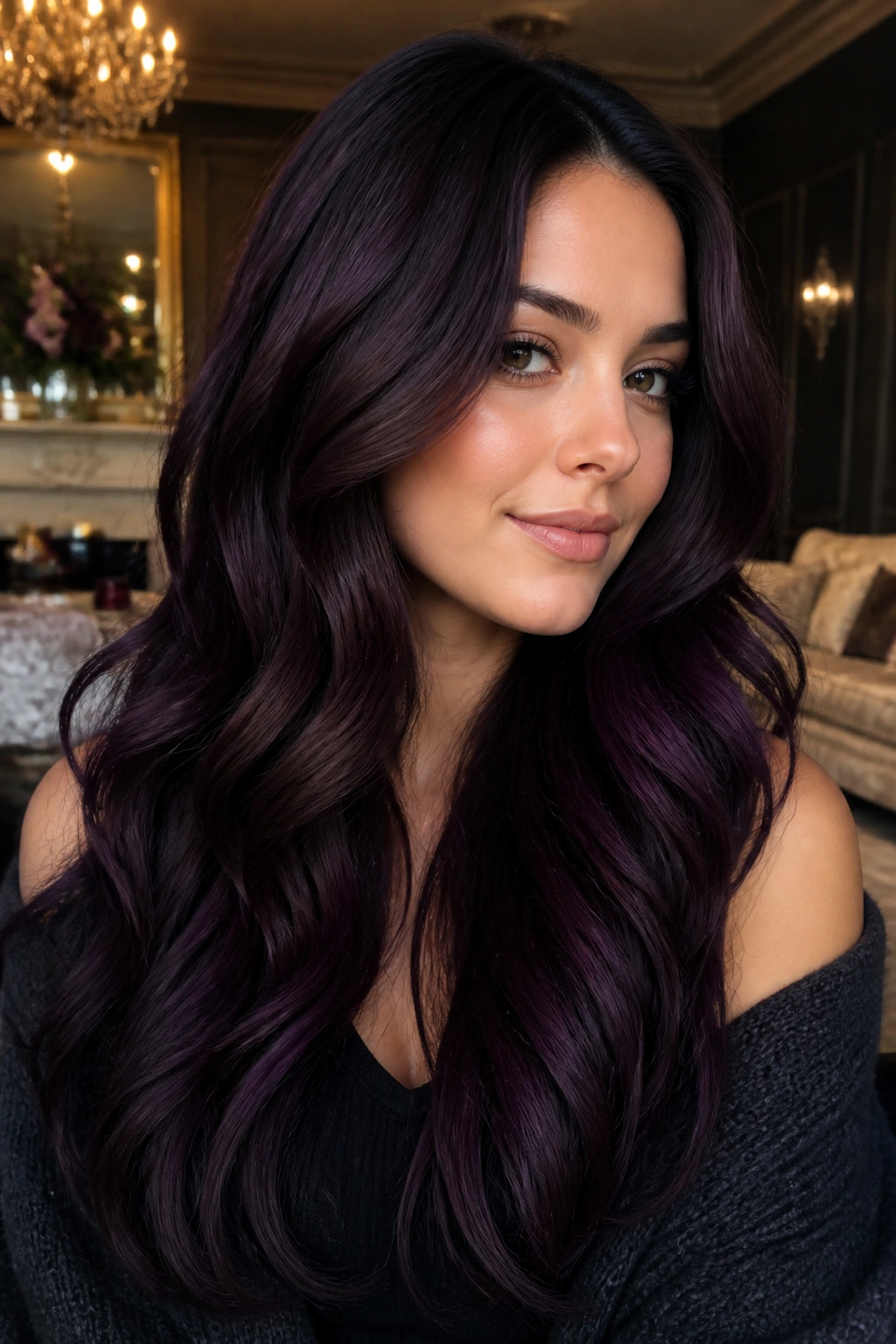
The prettiest dark violet ombre often looks almost black indoors. That’s the point. Blackberry silk waves give you that rich, inky finish with just enough purple to show up when the hair turns in light.
This is a smart choice if you like color but do not want to live in a neon mood. The violet lives inside the black-brown base instead of sitting on top of it. On long hair, that makes the style feel plush and heavy in a good way, almost like velvet.
A little shine serum goes a long way here. You want the hair to reflect light in thin ribbons, not look greasy. Large waves are the best friend of this shade because they keep the purple from disappearing into a single dark sheet.
9. Lilac Frost on Long Layers
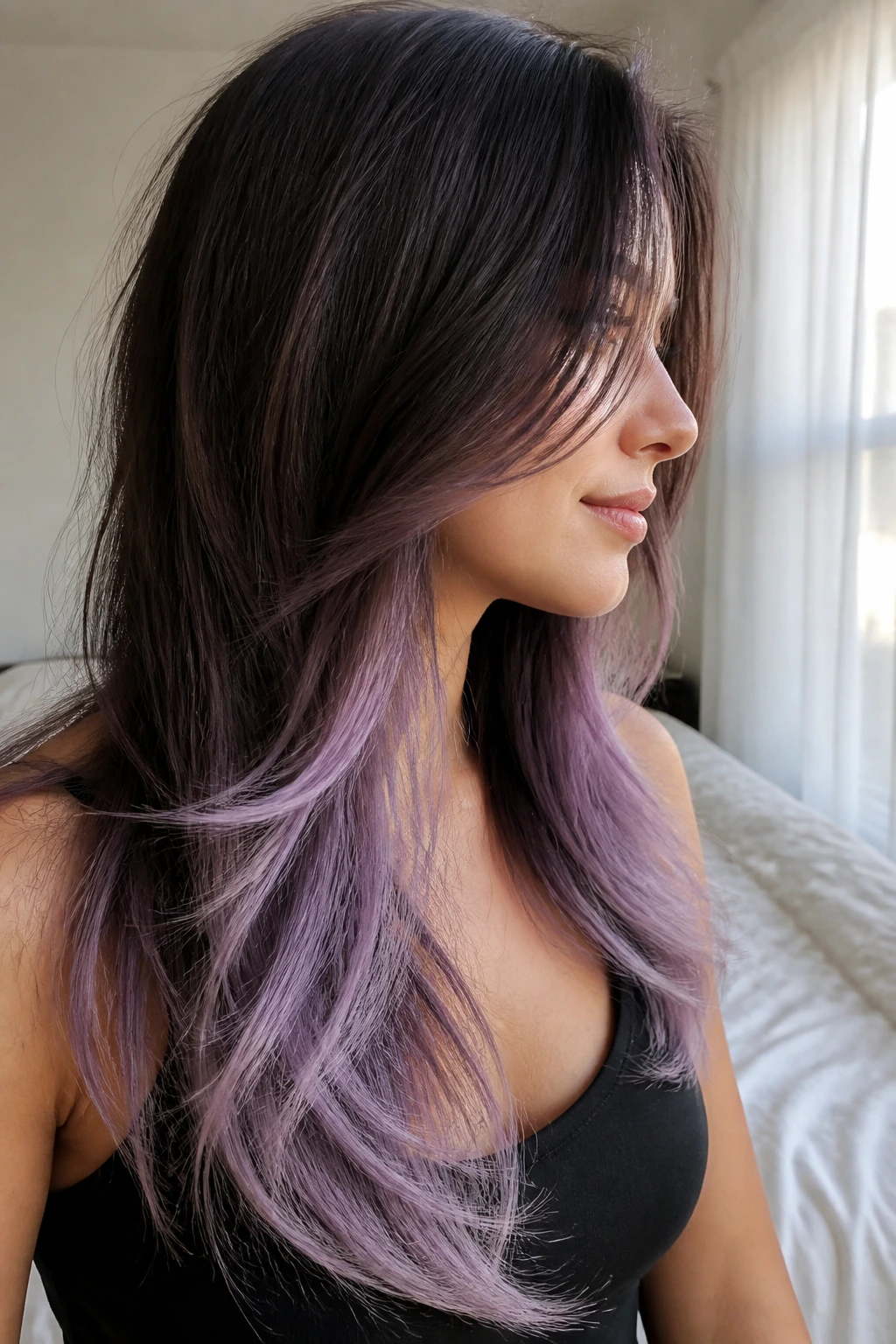
Why do lilac tips look sweeter on layered hair than on one-length hair? Because layers give the pale color little ledges to sit on. Without that movement, lilac can look like it was painted on and forgotten.
How to wear it
Long layers let lilac break apart in soft pieces, which keeps the color airy. If the hair is straight, the tips will feel cleaner and cooler. If it’s waved, the frost looks softer and more romantic.
This idea works best when the lightest color stays on the final few inches rather than climbing too high. Keep the top section deeper, then let the lilac drift downward. You’ll get more depth that way, and the hair won’t lose its shape.
A half-up knot or loose braid shows the color shift from top to bottom. It’s simple. And it works.
10. Royal Purple Curl Sweep
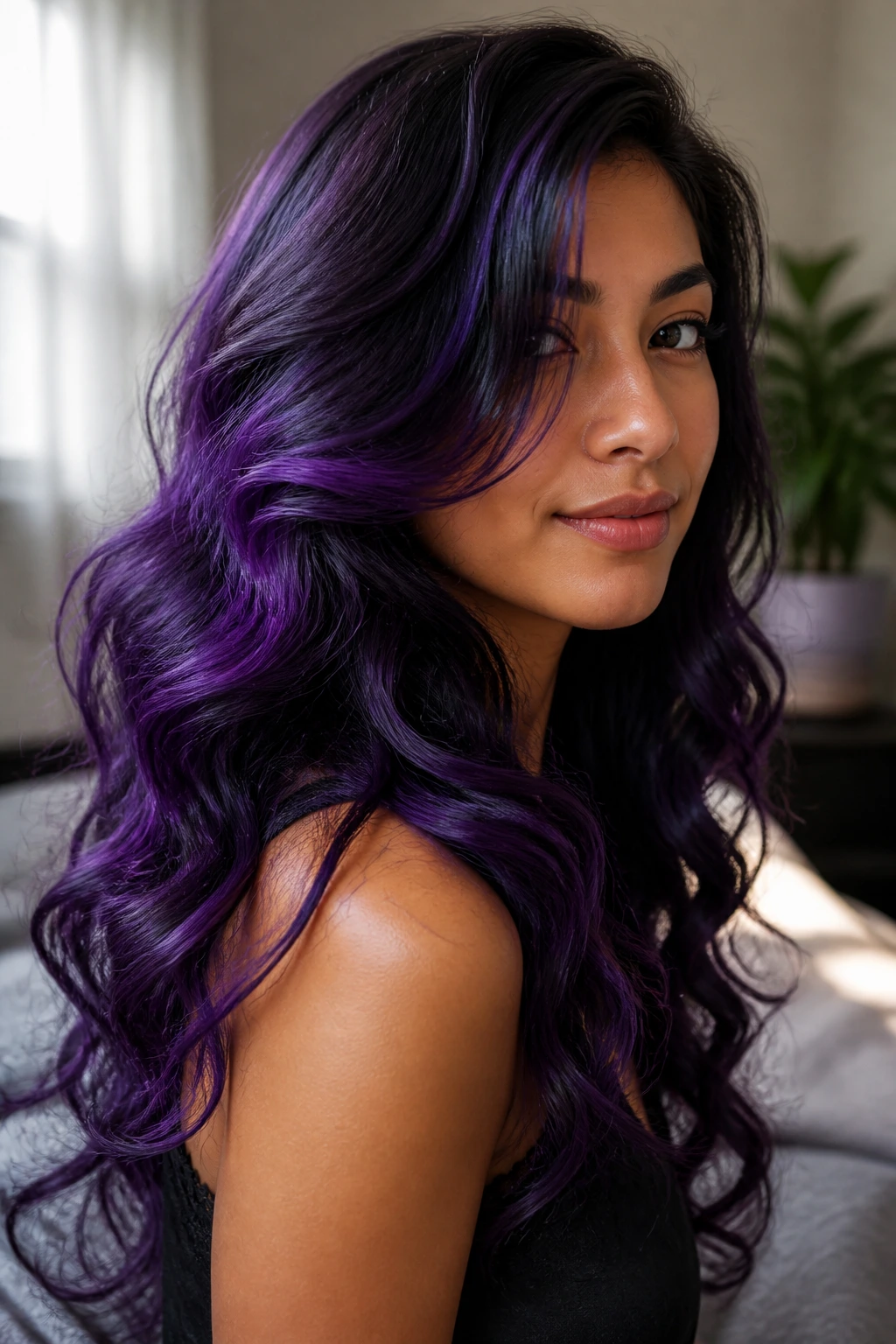
Royal purple and long curls have a natural chemistry. The curl pattern catches color on the outer curve, then hides some of it inside the spiral, so the shade feels richer than it does on flat hair.
Imagine a cascade of dark roots melting into jewel-toned purple lengths. On a good curl day, it looks like the color is moving even when you are standing still. That’s why this is one of the strongest violet ombre looks for people with naturally curly or heavily styled long hair.
- Best with curls around 1 to 1.25 inches
- Strongest violet should sit on the outer curl surface
- A curl cream or leave-in keeps the shape from frizzing
- Shine matters more than extra product
A satin bonnet or pillowcase is worth the trouble here. Curls flatten fast, and flattened curls hide the gradient.
11. Velvet Eggplant Ombre
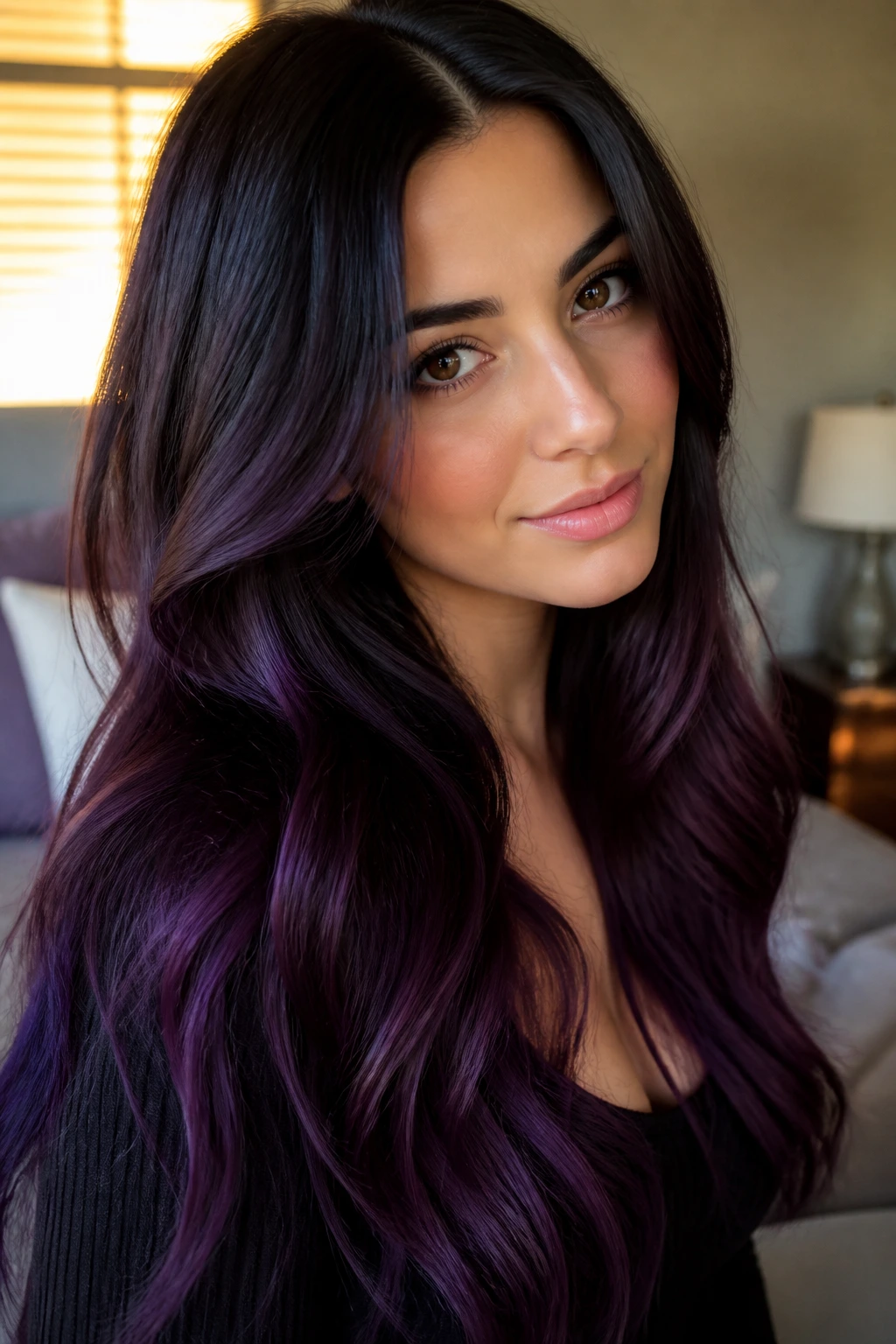
Velvet eggplant is the dark, moody side of violet ombre hair, and honestly, I think it gets overlooked because it is not flashy enough for some people. That’s a mistake. On long hair, it looks rich in a way brighter purples cannot fake.
The shade usually sits somewhere between plum and near-black purple. In shade, it can look almost neutral. In sunlight, the violet comes alive. That shift is part of the appeal. It means the color works in a loose knot, a sleek blowout, or big brushed-out waves.
Thick hair loves this look because the deep tone gives the ends weight. Fine hair can wear it too, but the finish has to be glossy. Dry eggplant is unforgiving. A smooth blow-dry with a round brush usually brings out the best of it.
12. Amethyst Half-and-Half Fade
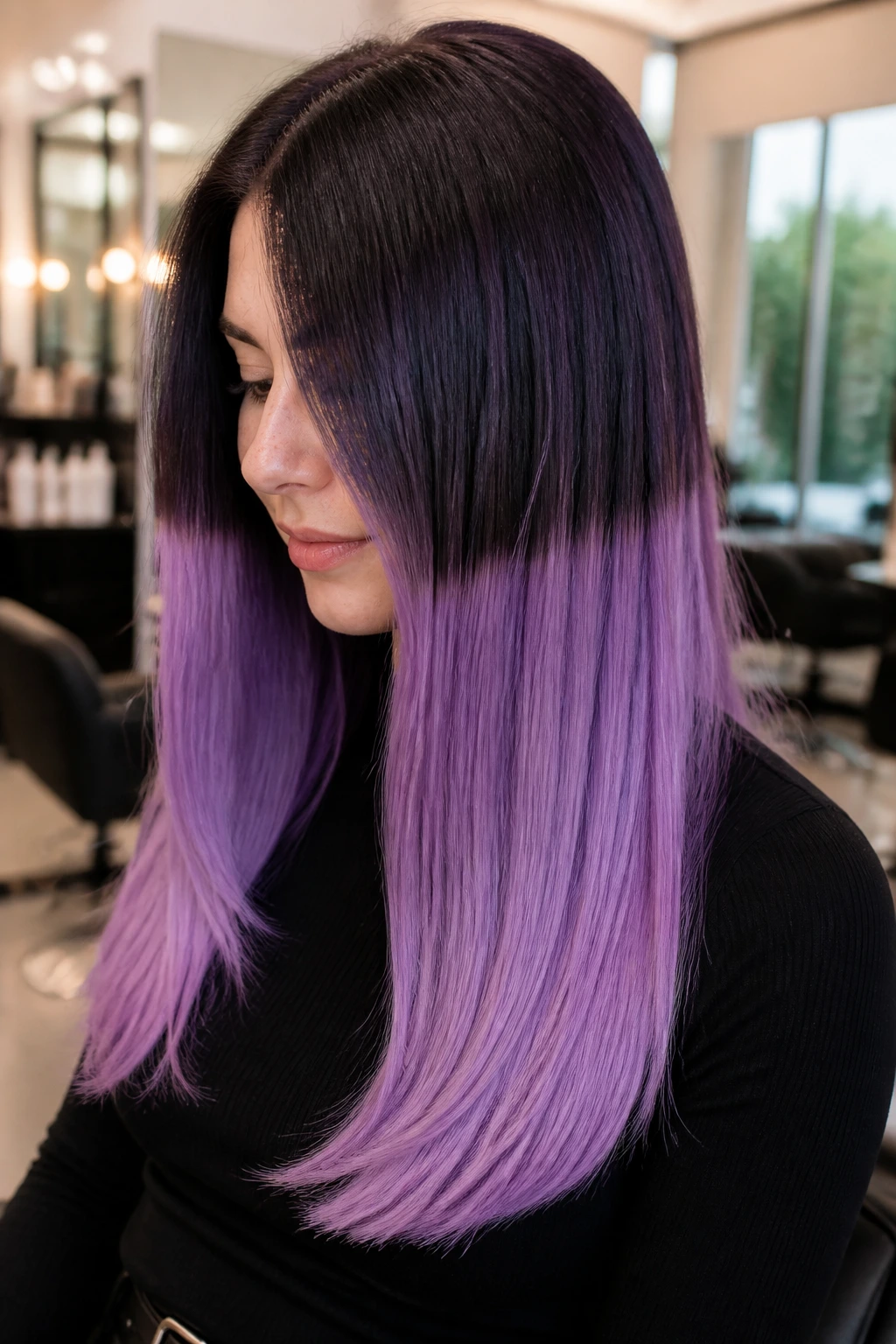
What if you want the fade to look cleaner and a little more graphic? Amethyst half-and-half does that job. It keeps a clearer difference between the darker upper section and the lighter purple lower half, which can be stunning on long, straight hair.
The trick is to keep the transition low enough that the color has room to settle. If the shift starts too close to the chin, the whole thing can look abrupt. Below the collarbone is safer, and it lets the lower half carry the bright amethyst tone without crowding the face.
This style suits people who like definition more than softness. A straight finish shows the divide best, while soft bends blur it a little. If your hair is layered heavily, ask for the fade to sit below the longest face-framing pieces. That keeps the cut from fighting the color.
13. Violet Underlayer Peekaboo
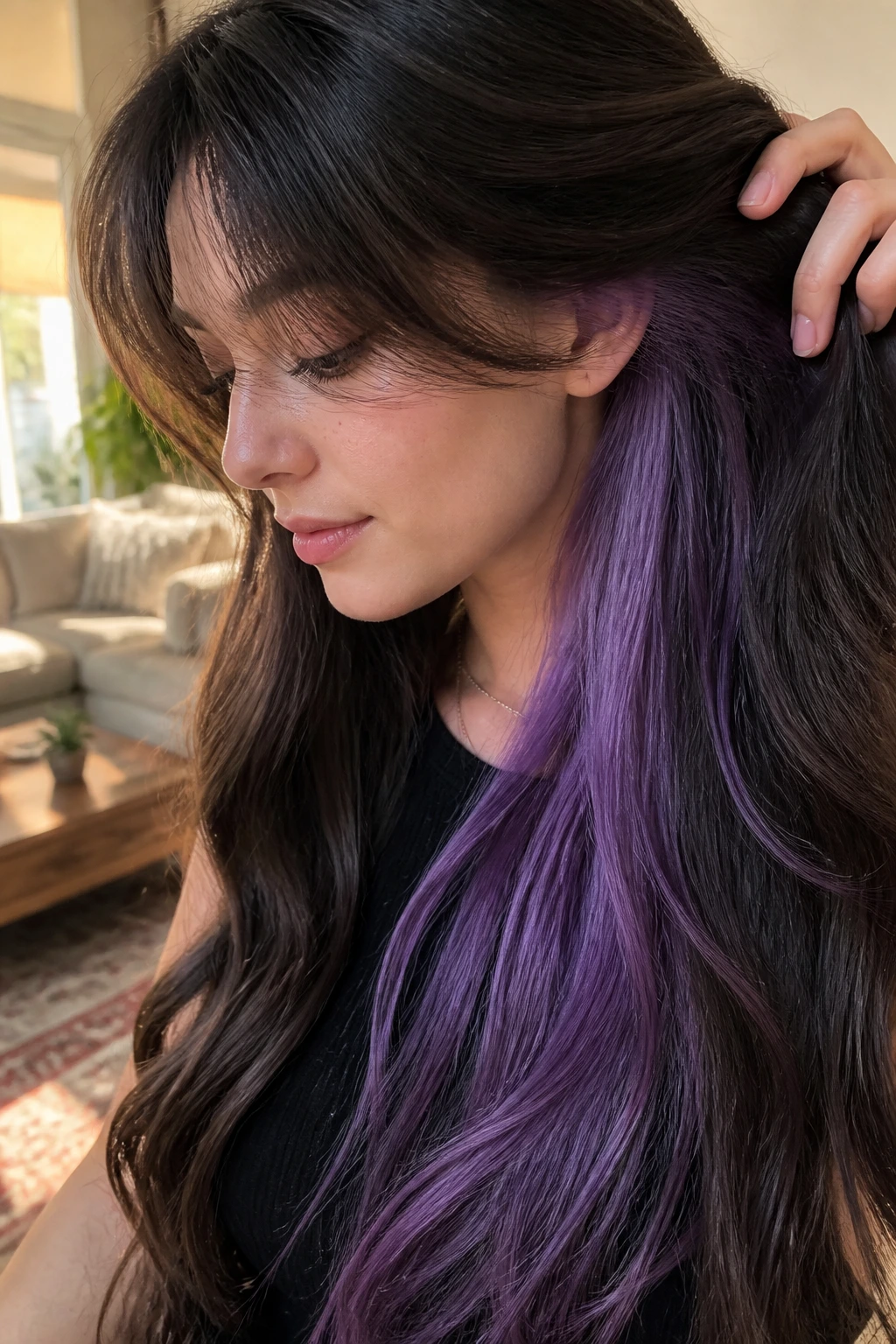
The underlayer peekaboo version is for people who want violet without making it the first thing everyone sees. Long hair is perfect for this because the top layer can stay natural while the hidden section below flashes purple when the hair lifts, swings, or gets tied back.
Why long hair helps
There’s enough length to hide the color and enough movement to reveal it. That balance is the whole point. A short cut can show peekaboo color too fast. Long hair lets it stay secret until you want it to show.
- Best for ponytails, braids, and half-up styles
- Easy to keep subtle in professional settings
- Works with bright violet or smoky plum
- Grows out softly because the top covers it
A little tip: keep the underlayer one shade richer than you think you need. Hidden color fades faster because it gets less direct light.
14. Rose-Violet Gradient
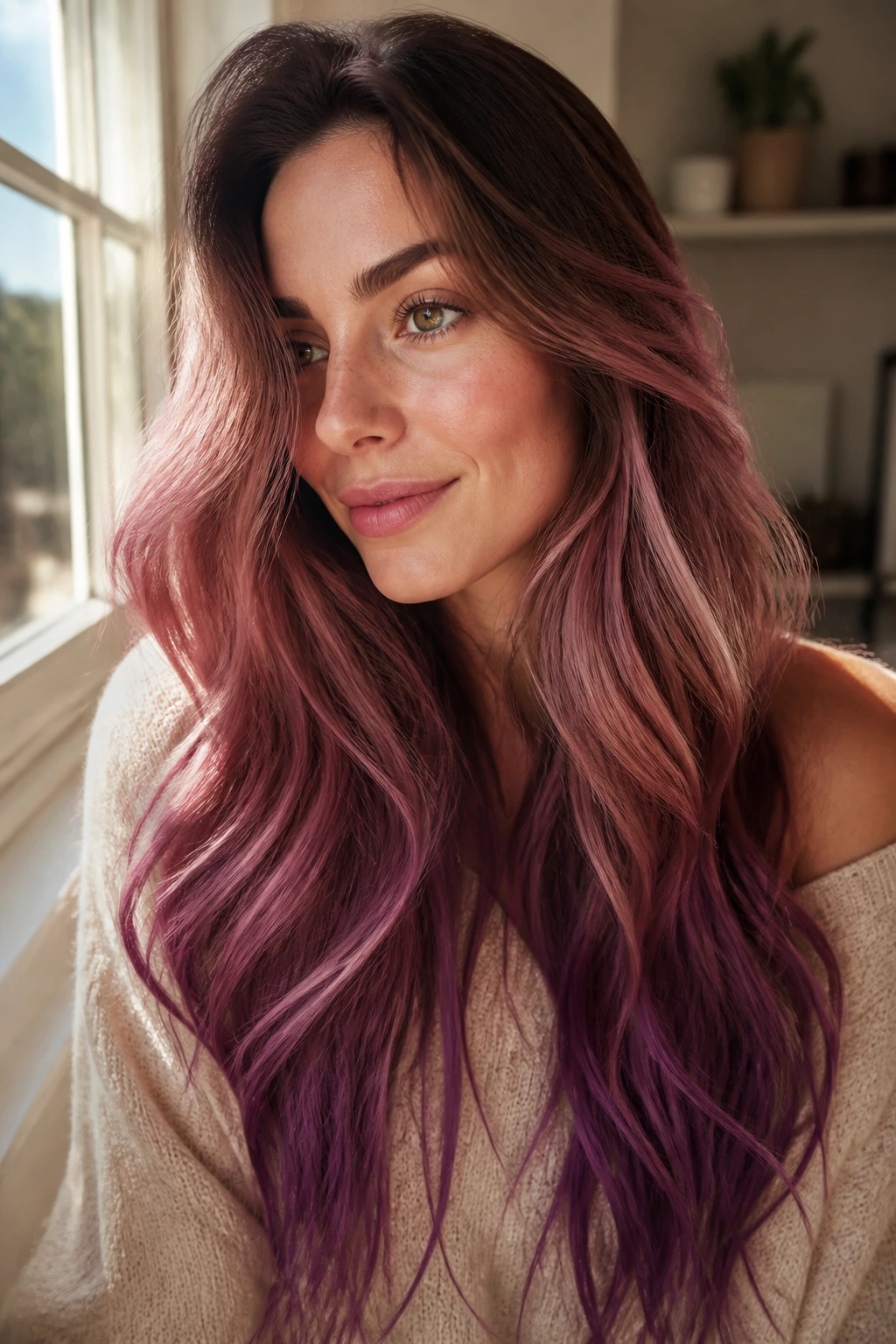
Rose-violet is the shade that keeps purple from feeling cold. It has that pinkish warmth that softens the whole ombre and makes it feel romantic instead of severe.
On long hair, the gradient can move from muted rose at the mid-lengths into a clearer violet at the ends. That shift is lovely when the hair is loose and brushed out, because the colors blur together in a way that feels gentle. It also flatters warmer skin tones better than a blue-based purple sometimes does.
If you like soft makeup, gold jewelry, or creamy clothing colors, this hue tends to fit your wardrobe without a fight. It is not the loudest purple on the list. It is one of the prettiest.
15. Plum to Silver Lilac
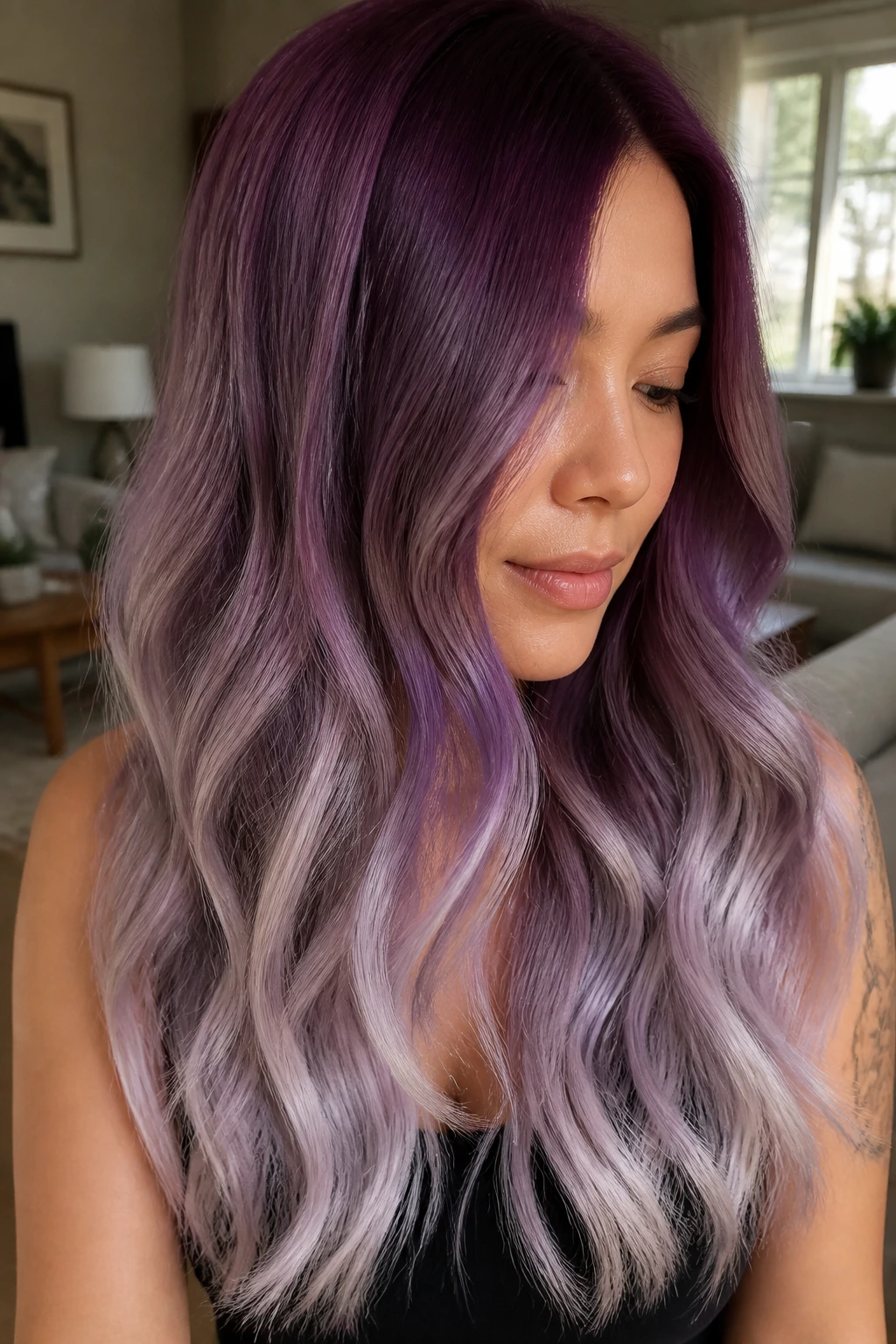
Can one ombre carry both depth and lightness without looking messy? Yes, if the plum is used as an anchor and the silver lilac is kept to the ends. That contrast gives long hair a slow climb from dark to airy, which is exactly what makes the style feel balanced.
How to style it
Loose waves are the easiest way to wear this one. The plum stays deep near the top, while the silver lilac catches on the ends and around the bends. A braid does the same thing, but in a more textured way.
This look needs more toning care than the darker ideas. Silver lilac can slip into yellow or gray if the hair is porous. A gentle sulfate-free wash and occasional gloss keep the finish cleaner. It is worth the effort if you love that frosted edge.
16. Galaxy Violet Ombre
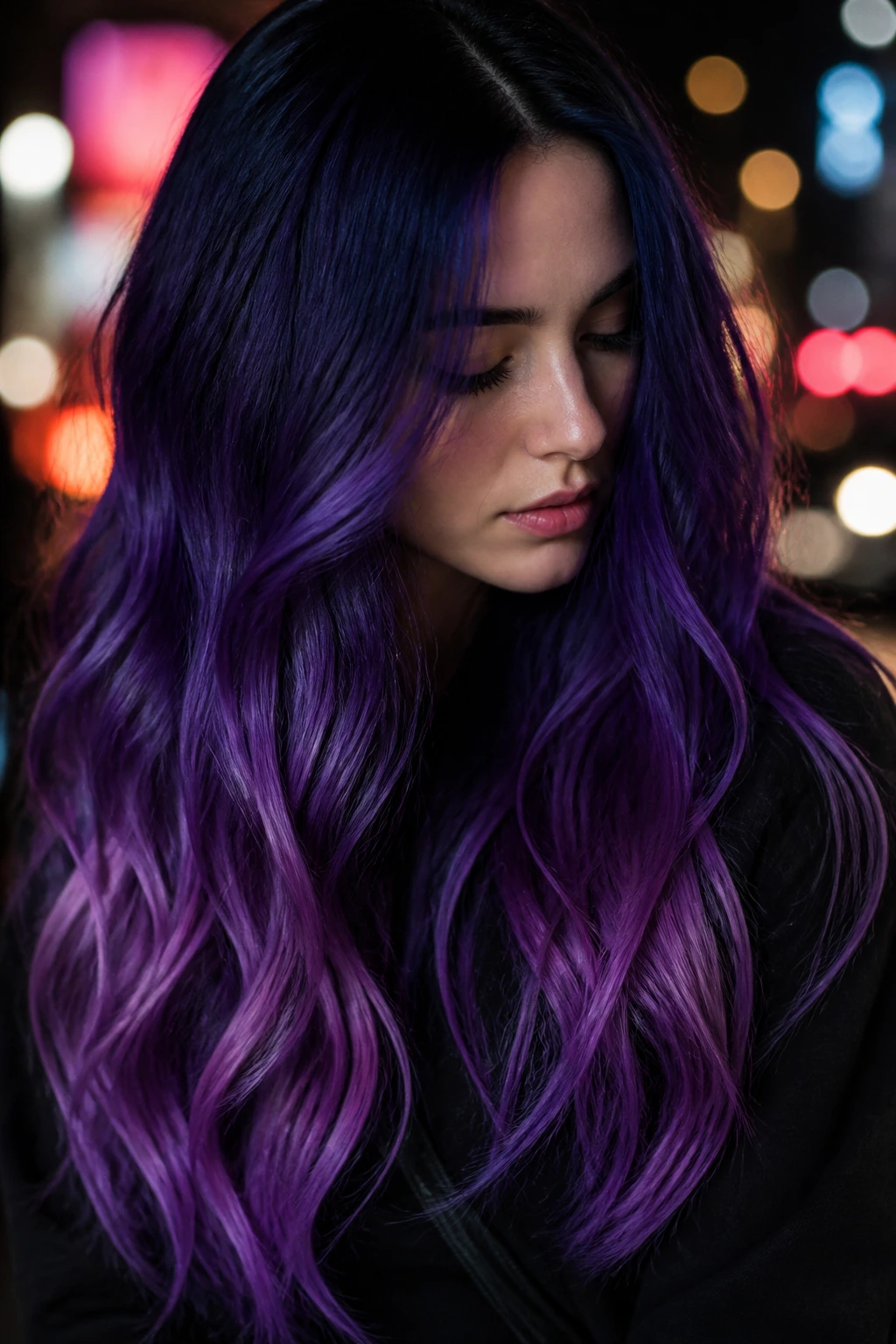
Galaxy violet ombre is what happens when indigo, navy, and violet stop arguing and start working together. On long hair, the blend can look almost space-like, especially if the darker tones live near the roots and the violet shows up in the lengths like reflected light.
- Ask for a dark root with indigo or blue-black depth
- Keep violet strongest through the mid-lengths
- Leave a few brighter streaks near the ends
- Works best on loose waves or fishtail braids
This is a heavier, moodier look than lilac or orchid. That’s why it suits long hair so well; the length keeps the layers of color from feeling crowded. If you like dark clothes, metallic makeup, or sharper clothing shapes, this color lands in the right place.
17. Cool Brunette Violet Veil
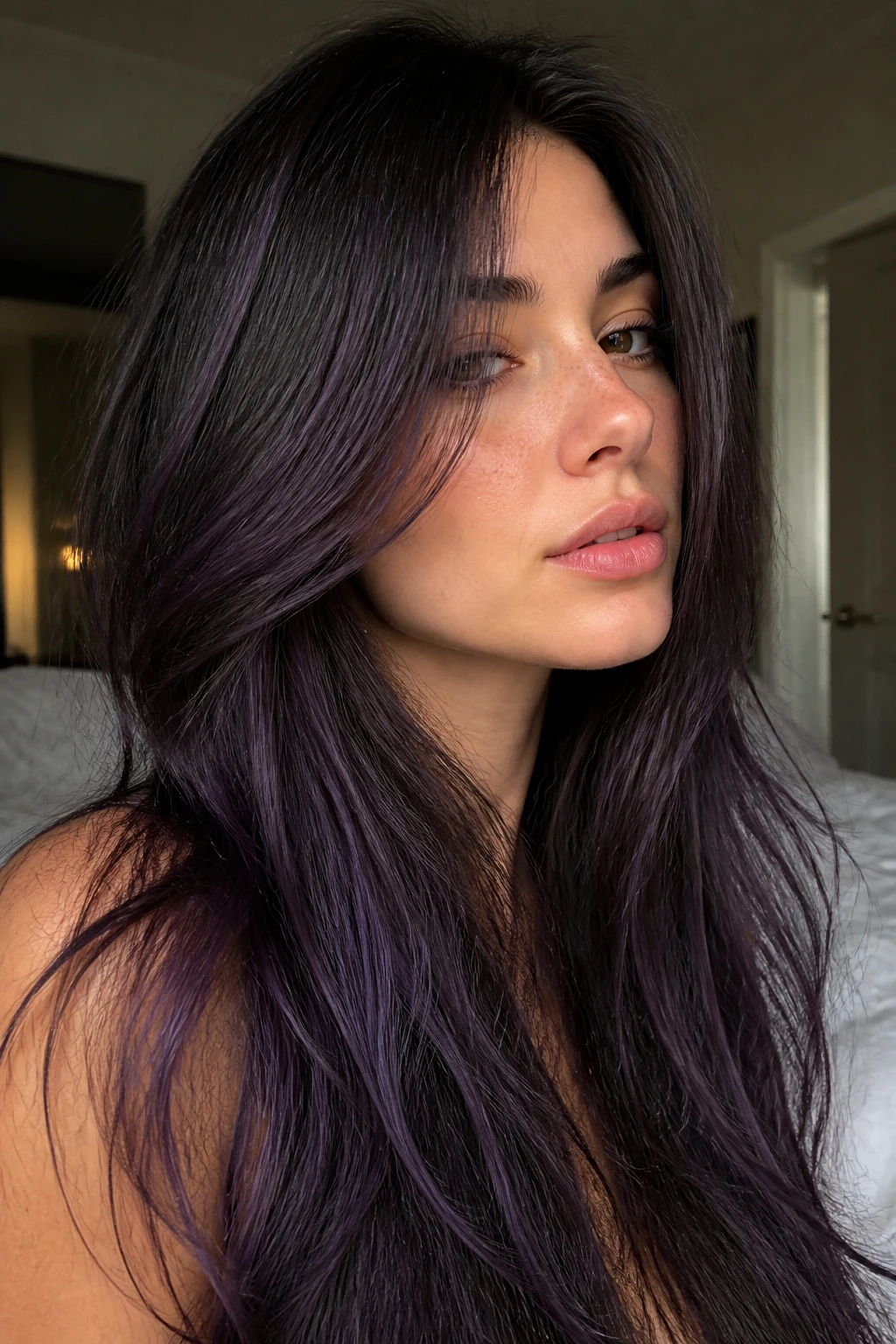
A cool brunette violet veil is the sort of color you notice twice. The first glance says brown. The second says, wait, there’s purple in there.
That subtlety is what makes it useful. If you need long hair to stay polished in daily life but still want a visible color shift, this is one of the smarter choices. The violet sits like a veil over the brown rather than replacing it, so the grow-out stays softer and the hair keeps its depth.
This version looks especially good on long layers that move around the shoulders. When the hair swings, the violet flashes at the ends and in the inner bends of the wave. Straight hair works too, but it reads more restrained. Either way, a gloss finish matters. Dull brown-purple is not the goal.
18. Pastel Violet Ribbon Highlights
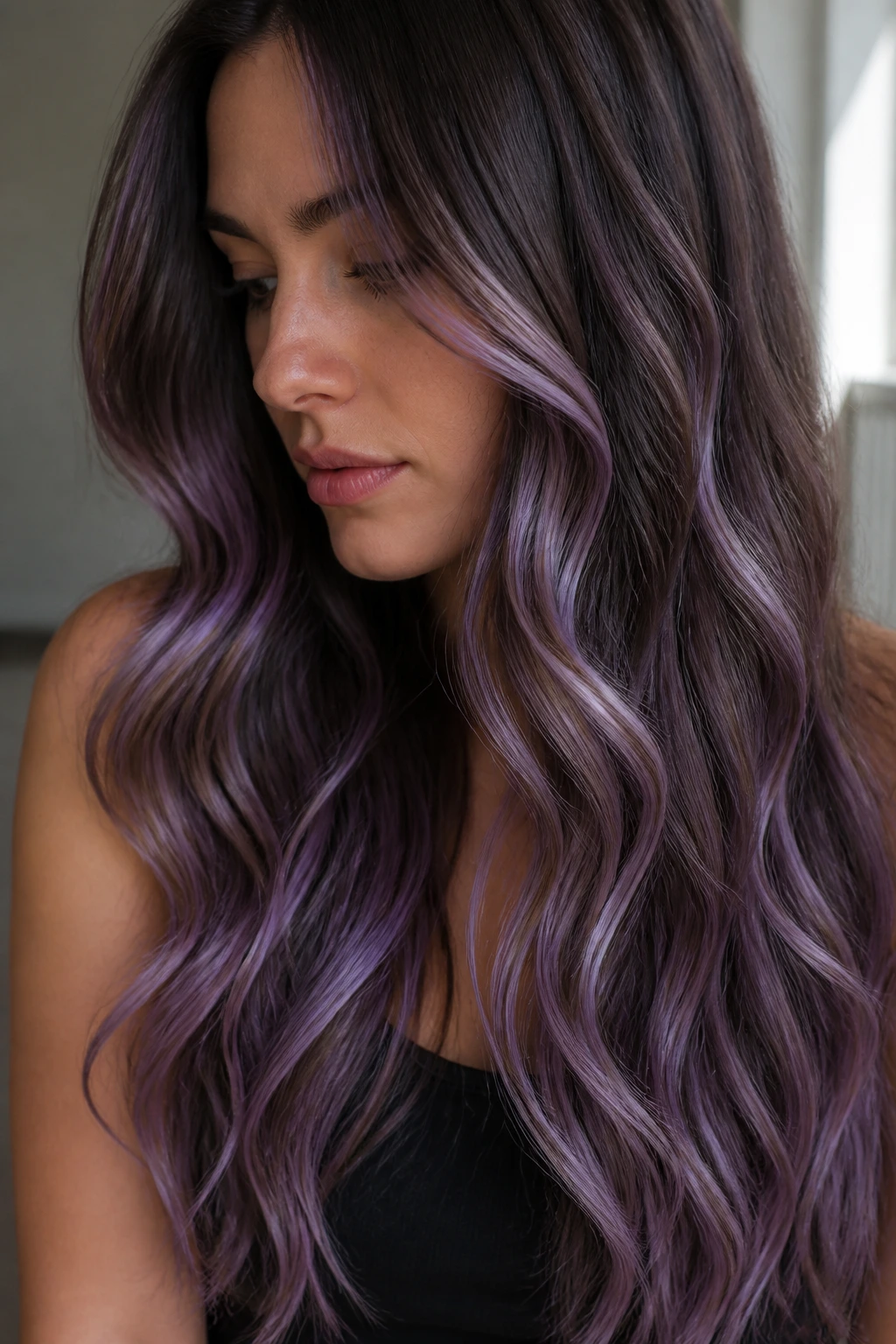
Unlike chunky streaks, ribbon highlights thread through the hair in thin, moving lines. That makes this idea a stronger fit for long hair, where the eye can follow the ribbons from mid-length to tip without getting stuck on one bold panel.
The violet stays soft, almost like dyed silk woven into the base. On long waves, it creates a floating effect that looks prettier than it sounds. The point is motion, not drama. Every bend in the hair catches a slightly different piece of the color.
What makes it different
Ask for very fine weaving, not wide sections. That keeps the highlights from reading stripy. The violet should be pale enough to feel airy but not so pale that it disappears against the base. A neutral or cool brunette base usually gives the cleanest result.
19. Black Cherry Violet Ends
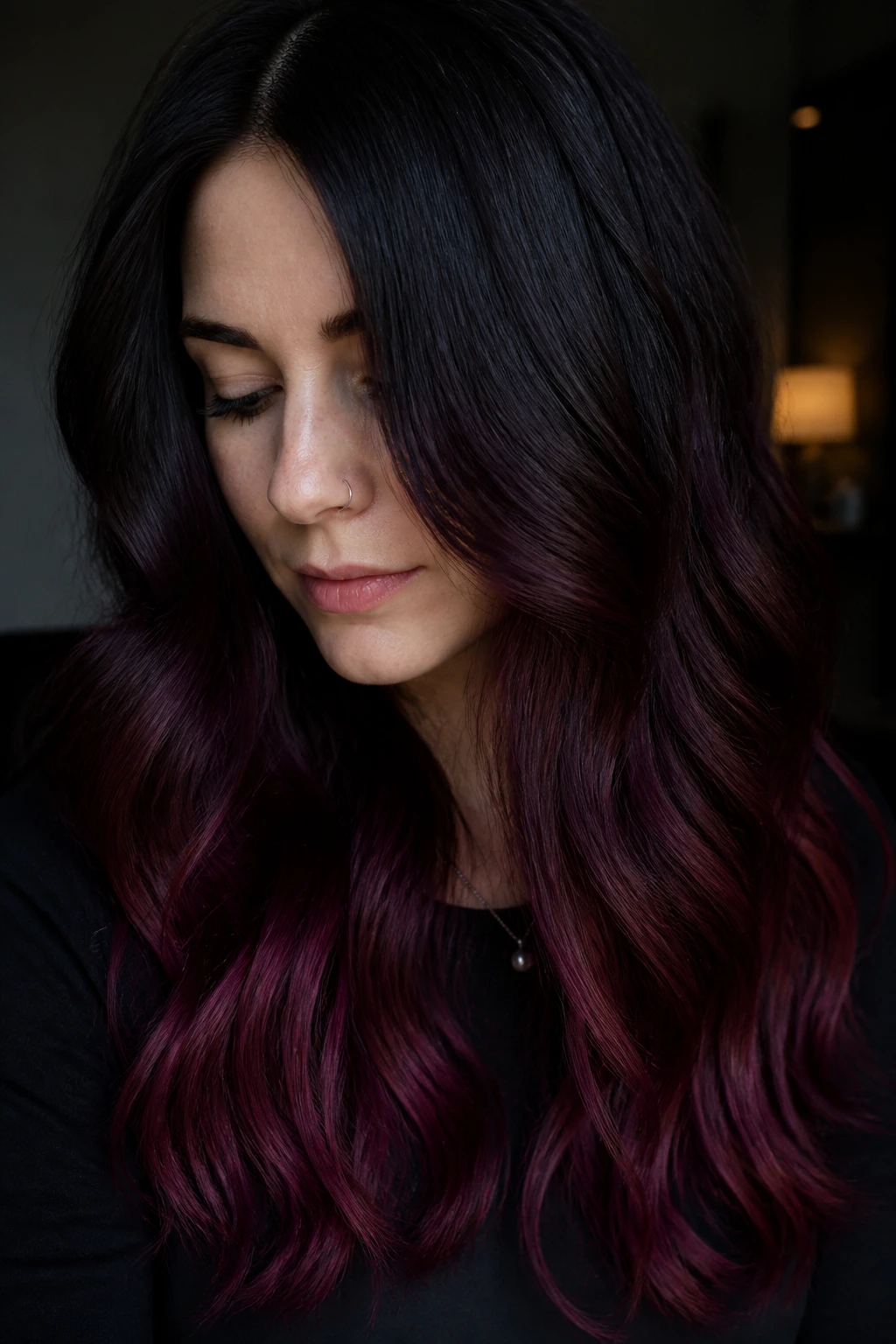
If you like color that feels moody and a little dangerous, black cherry violet ends do the job. The base stays dark and glossy, then the lower lengths shift into a cherry-violet that has red in it, which makes the purple look richer.
That red note matters. Pure violet on dark hair can sometimes flatten out, especially if the lighting is low. Black cherry gives the ends more depth, so the color stays visible even when the room is dim. Long hair gives you enough surface for that richness to show.
Waves are the best styling partner here. Straight hair can make it look cleaner and sharper, which is fine, but brushed-out curls make the cherry tones warm up. It ends up reading less like a novelty shade and more like a real color choice.
20. Cotton Candy Violet Fade
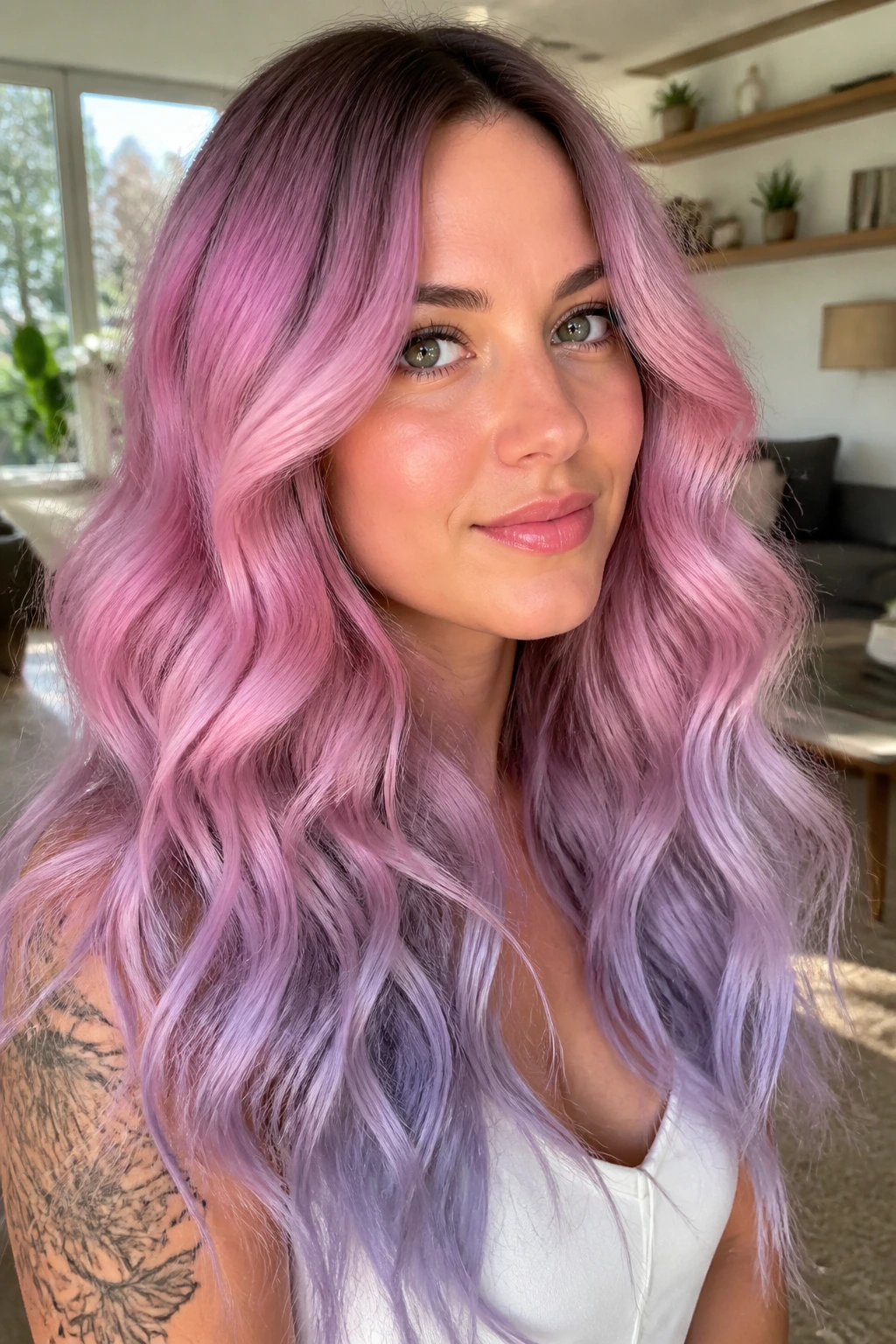
Why does cotton candy violet read prettier on long curls than on pin-straight hair? Because curls loosen the edges between pink, lavender, and violet, and that blur keeps the pastel from looking flat. Long hair gives the fade a lot more room to soften, which is half the battle.
How to style it
Big curls are the move. The color should start with a blushy pink-violet near the mid-lengths, then drift into a cooler lavender at the bottom. If the fade is too neat, it loses the candy-like softness that makes this one fun.
Pastel purple is high maintenance. There’s no polite way around that. It fades faster than dark plum, and hard water can be a pain. Use cooler water when you wash, skip heavy clarifying shampoos, and expect the tone to soften after a few washes. That’s normal, not a failure.
21. Cobalt-Violet Twist
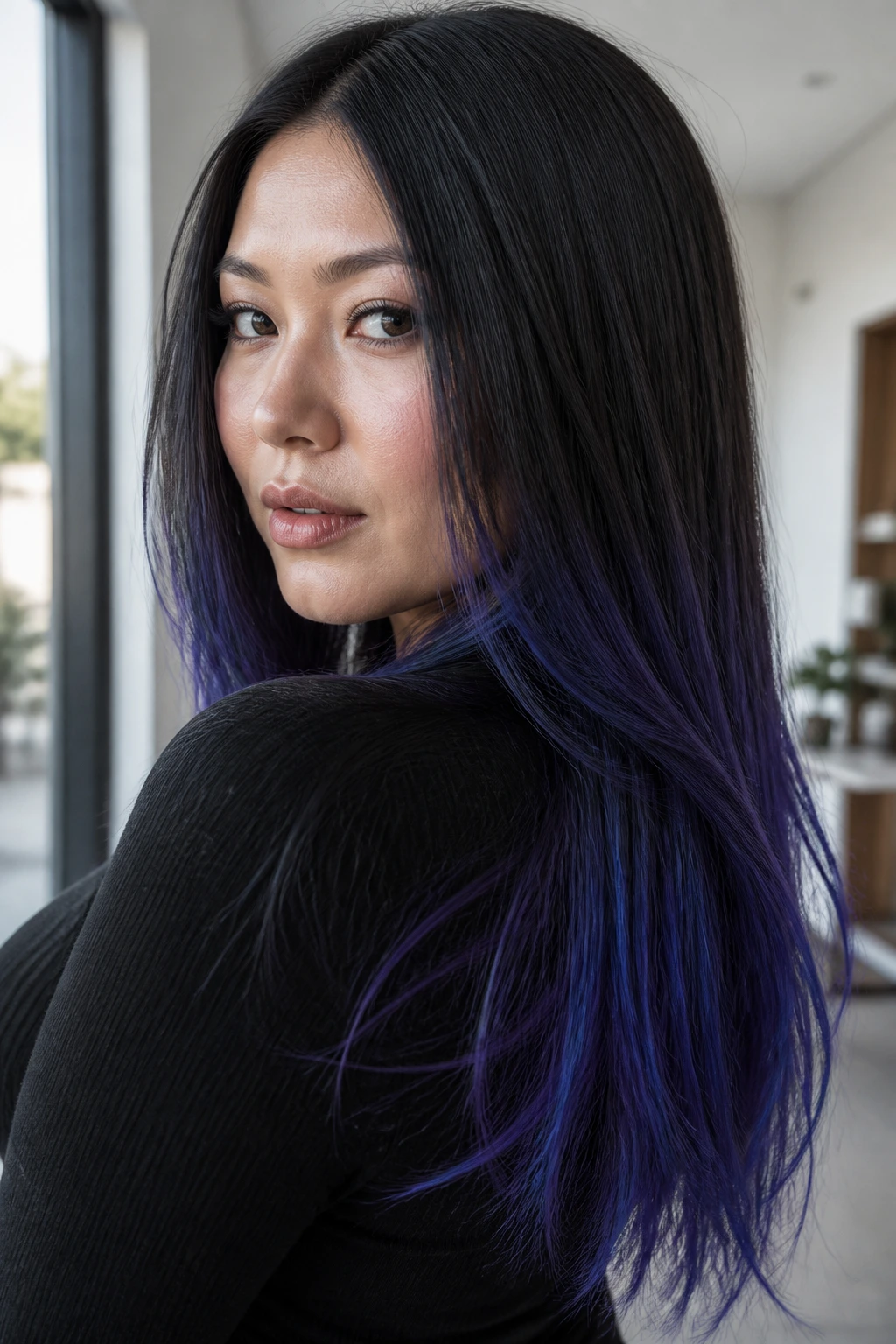
A blue-violet ombre feels sharper than a red-violet one. The cobalt note pulls the purple cooler, which gives long hair a sleek, almost electric edge without going neon.
- Works best on ash brown or black bases
- Needs careful toning so the blue does not overpower the violet
- Looks strongest on layered hair with some movement
- Great with straight styles and sharp center parts
This is a good choice if you want people to notice the color from across the room. It is not subtle, and that is part of the fun. On long hair, the blue-violet twist can start near the shoulder blades and deepen toward the ends, which keeps the crown from feeling too busy.
22. Mocha to Purple Smoke
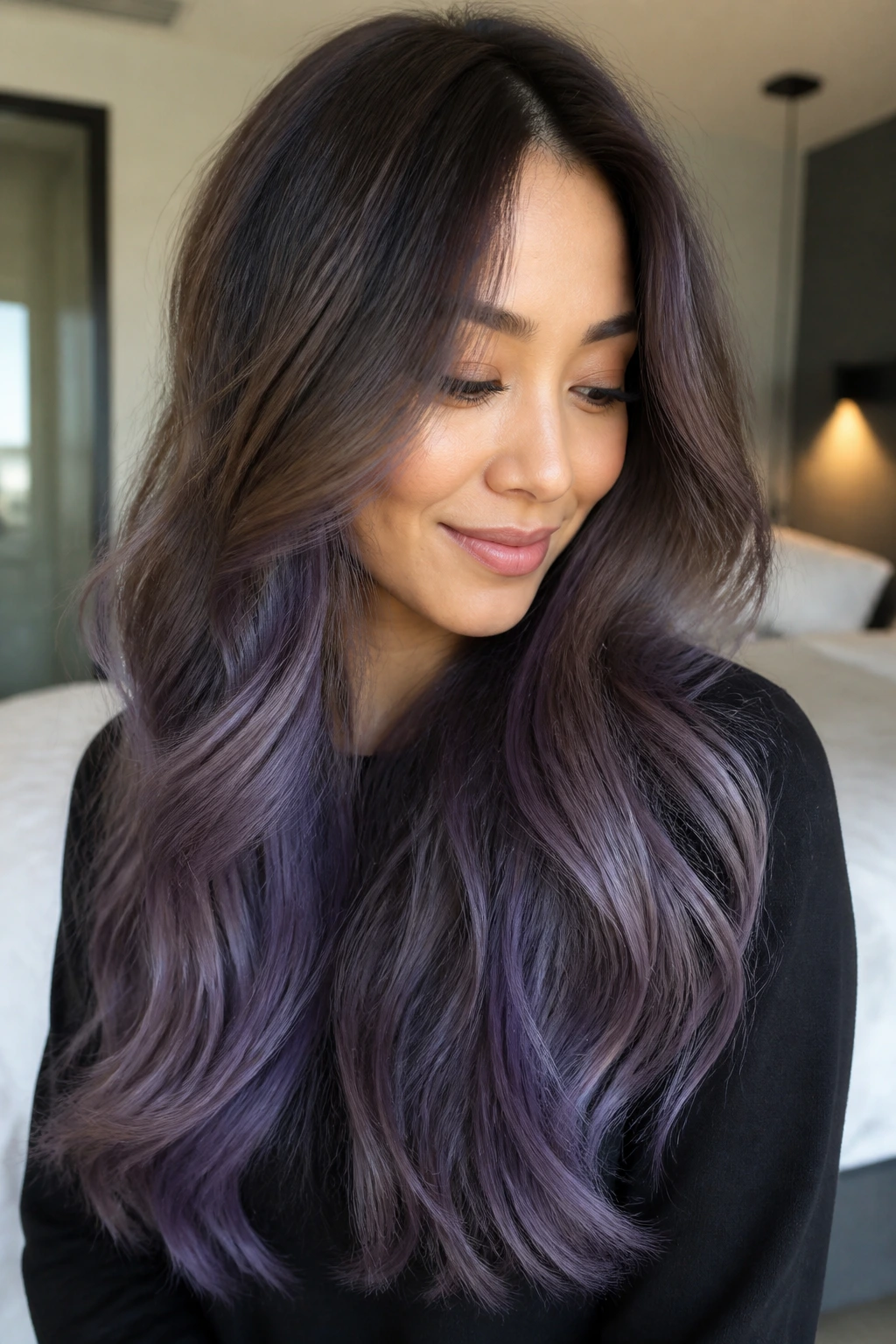
Mocha roots are the reason this color doesn’t shout. They keep the ombre grounded, so the purple smoke that appears through the lengths feels soft and grown-up rather than loud.
The best part is the finish. Purple smoke usually sits in that gray-violet middle ground that looks a little hazy in shade and more vivid in light. On long hair, the effect is lovely because the darker mocha at the top gives the smoke room to breathe. If the whole head were lightened, the shade would lose that contrast.
A loose blowout or soft bend is the right styling move. Too much curl makes the smoky effect busier than it needs to be. This is one of those colors that benefits from a calm shape.
23. Bold Violet Block Ombre
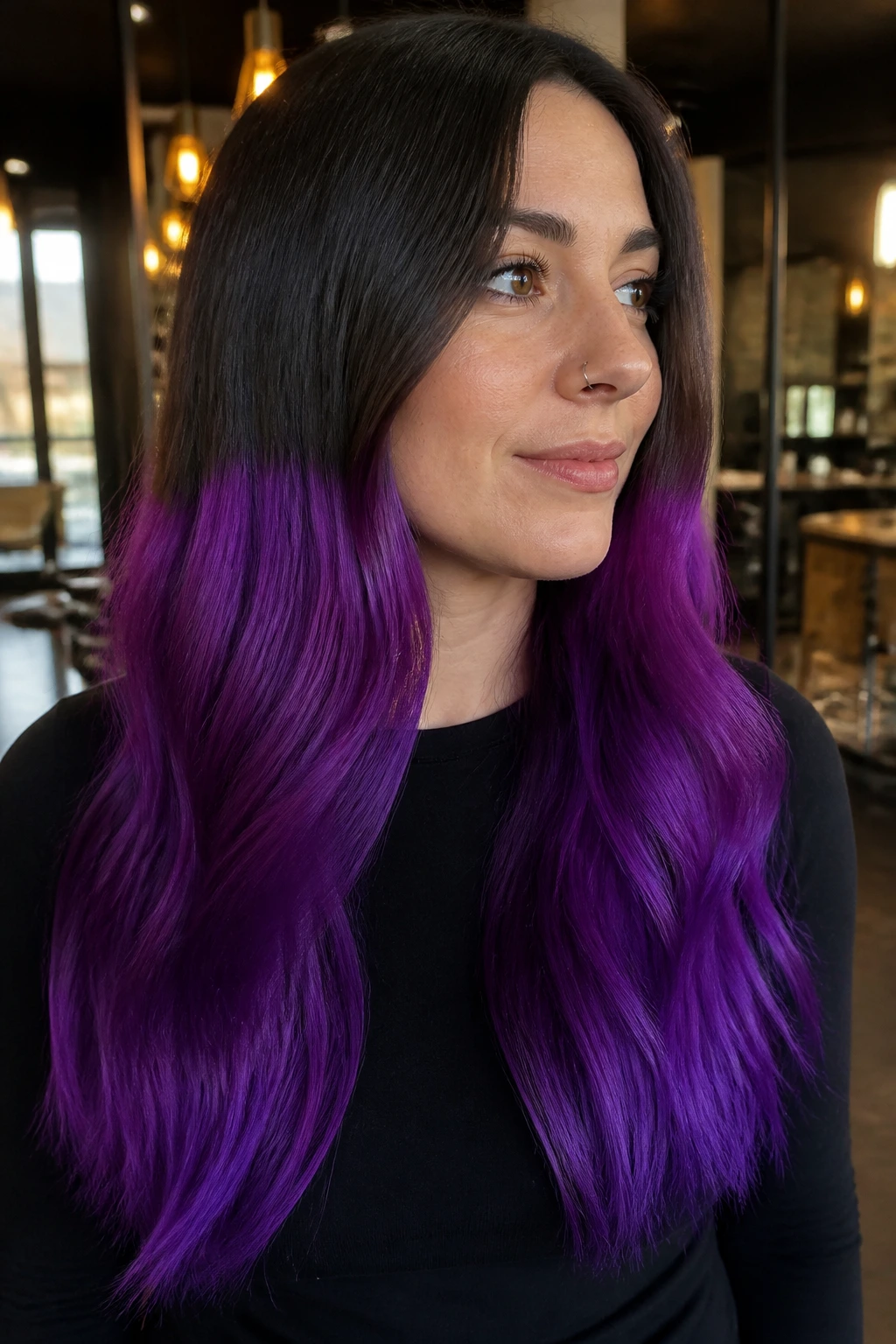
What if you want the violet to look deliberate instead of whisper-soft? Then a bold block ombre is the one to save. The transition is still blended, but the change from base to purple is stronger and more visible, which can look fantastic on very long hair.
The appeal is graphic contrast. Long hair has enough length to carry the block without making it feel abrupt, especially if the fade starts below the jaw and the ends hold a saturated violet. This is not the style for someone who wants a hidden color story.
How to keep it clean
Ask for a smooth transition at the midpoint, not a smeared blur. The top should stay clearly darker, and the lower section should read clearly violet. That clean break is what makes the style feel intentional. Sleek styling shows it best, but big waves can soften it when you want a little less edge.
24. Feathered Violet S-Curls
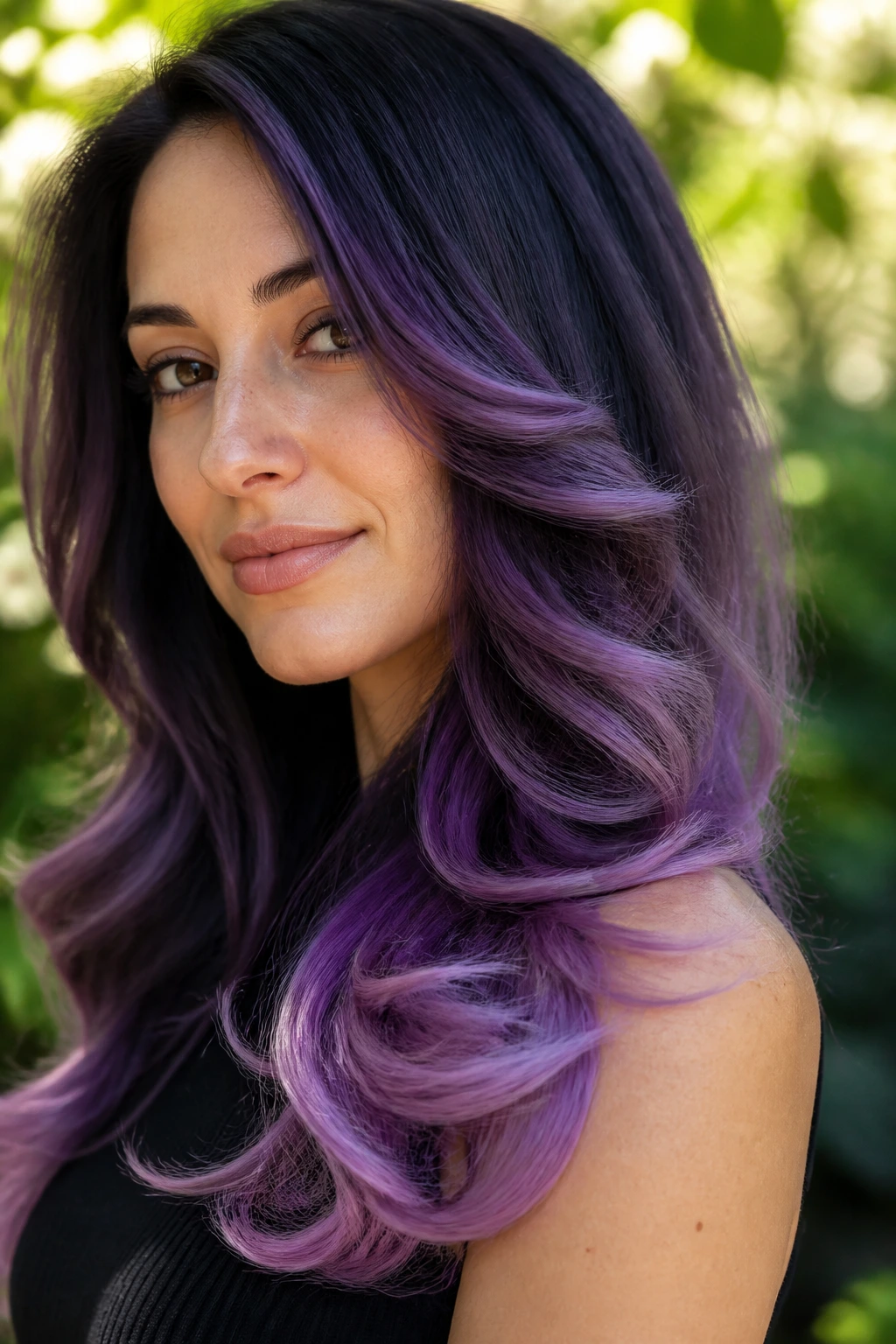
Feathered S-curls are one of my favorite ways to wear violet ombre on long hair because they let the color skim across the surface instead of sitting in one heavy block. The result feels soft, lifted, and a little airy.
The feathering matters. Fine layers around the ends let the violet appear in tiny strokes, so the eye keeps moving. That makes the color look lighter than it really is, which is useful if you want purple without the weight of a solid dye job. On long hair, this is especially flattering around the back, where the movement shows best.
- Use a 1-inch wand or a soft round brush blowout
- Keep the curls loose and brushed out
- Place the brightest violet on the outer ends
- Works well with side parts and long face-framing pieces
It is a quiet look, but not a dull one.
25. Platinum to Purple Ice
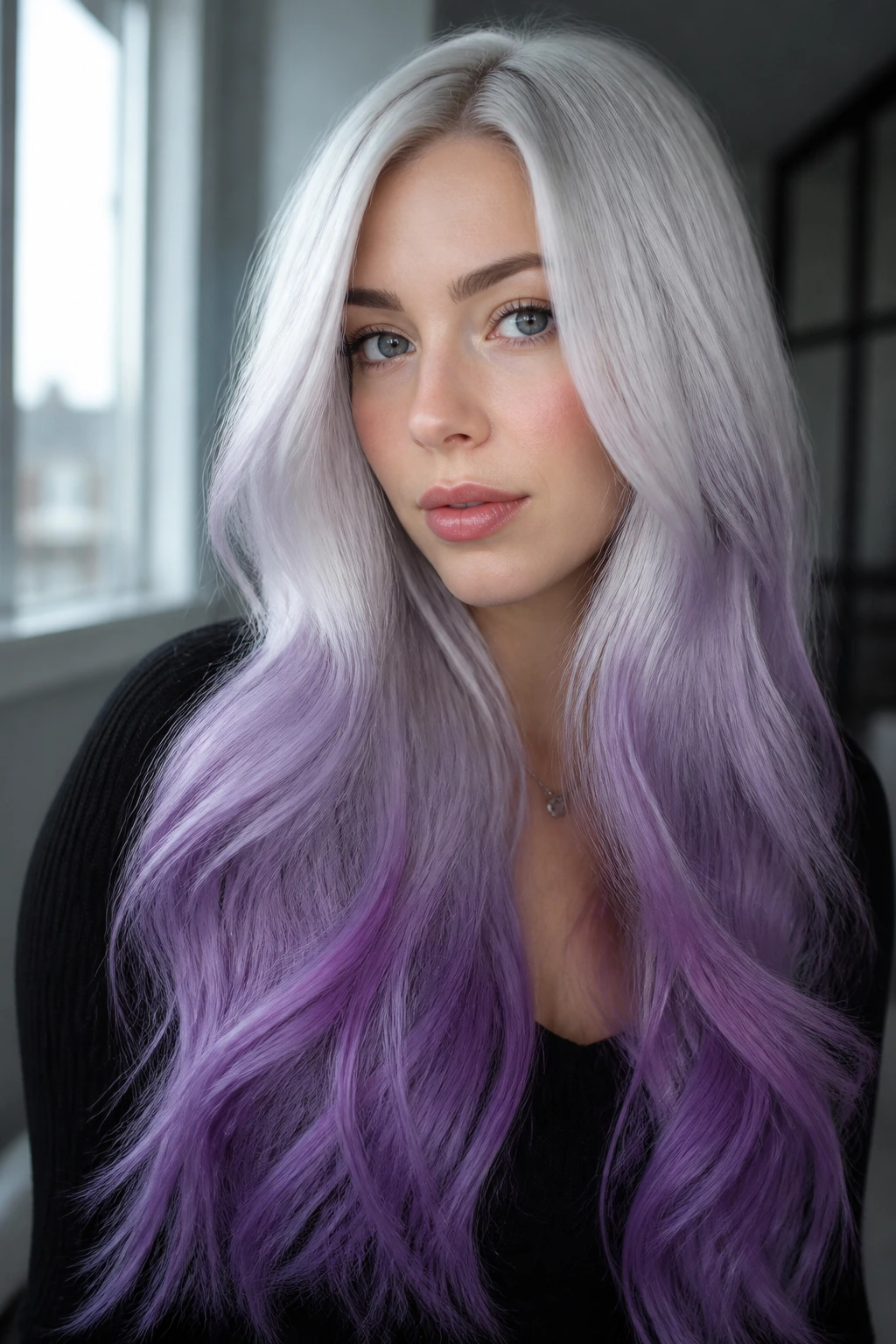
Platinum to purple ice is for people who like a sharp, cool finish and do not mind maintenance. The base is nearly white, then the violet turns icy and pale through the ends, which can look almost frosted when the hair is long and smooth.
The reason this style works so well on long hair is simple: the length gives the pale color room to spread. On short hair, purple ice can feel abrupt or fuzzy. On long hair, it becomes a clean wash of color that still shows movement. The shine has to be there, though. Dry platinum is a bad canvas for anything.
This look asks a lot from the hair. It needs strong conditioning, careful heat use, and a toner that stays in the cool lane. If the base slips yellow, the whole effect changes fast. That is the tradeoff.
26. Burgundy to Violet Melt
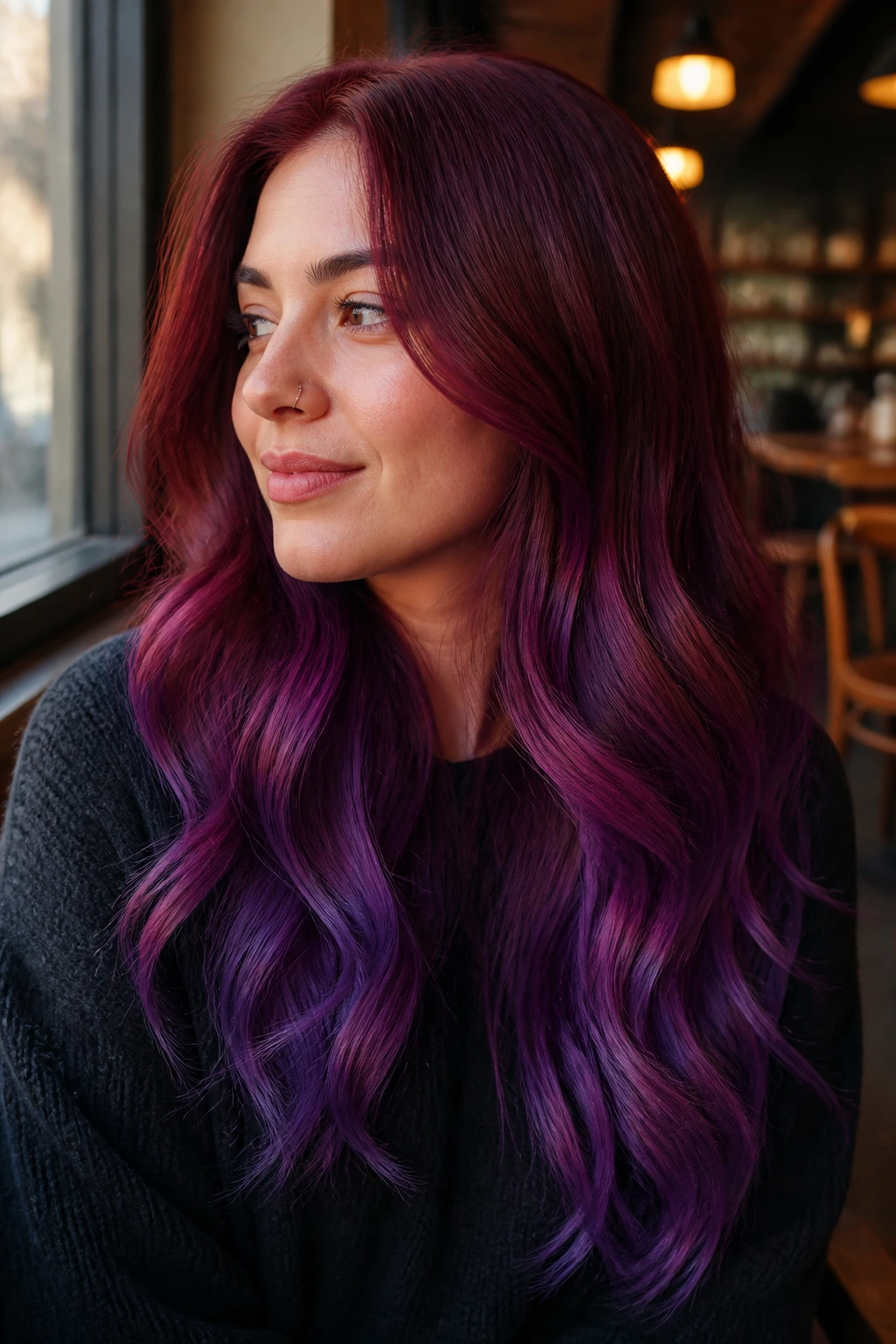
Unlike red-to-purple blends that can turn muddy, burgundy gives the violet a better starting point. The red depth keeps the transition rich, so the ends still feel purple instead of brownish.
Long hair gives this melt enough room to show off both temperatures. The burgundy can live near the top half, then soften into violet-plum as it moves downward. That shift works especially well on thicker hair, where the strands can hold more pigment and the color looks fuller.
If your skin runs warm, this is one of the friendliest violet ideas on the list. It also looks strong in braids, where the red-purple depth hides in the weave and then flashes out when the braid loosens. That little reveal is half the fun.
27. Violet Face Frame with Ombre Lengths
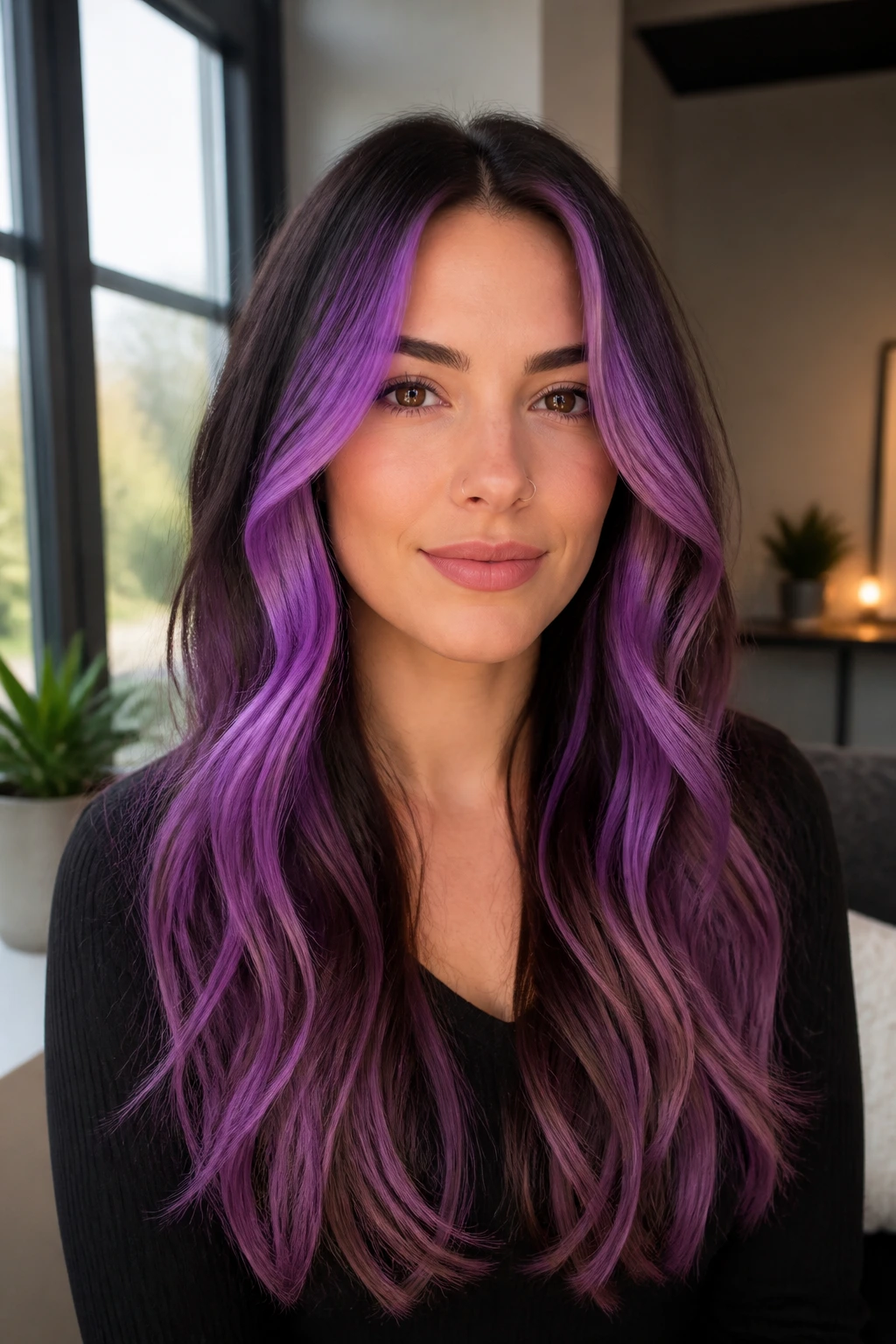
A violet face frame is a smart way to brighten long hair without turning the entire head into a color project. The front pieces carry the strongest shade, while the lengths keep a softer ombre fade that starts lower and stays more blended.
Why the front matters
Those two front pieces do a lot of work. They sit next to the eyes, the cheekbones, and the part line, so they make the purple feel intentional even when the rest of the hair is restrained.
- Good for ponytails, half-up styles, and loose waves
- Ask for a brighter violet around the face than through the ends
- Works on dark or medium brunettes
- Keep the back lengths softer so the look does not crowd the face
This is the easiest way to test a bold violet before going all in. If you like the front pieces, you can always deepen the ends later.
28. Mushroom Brown to Plum Ash
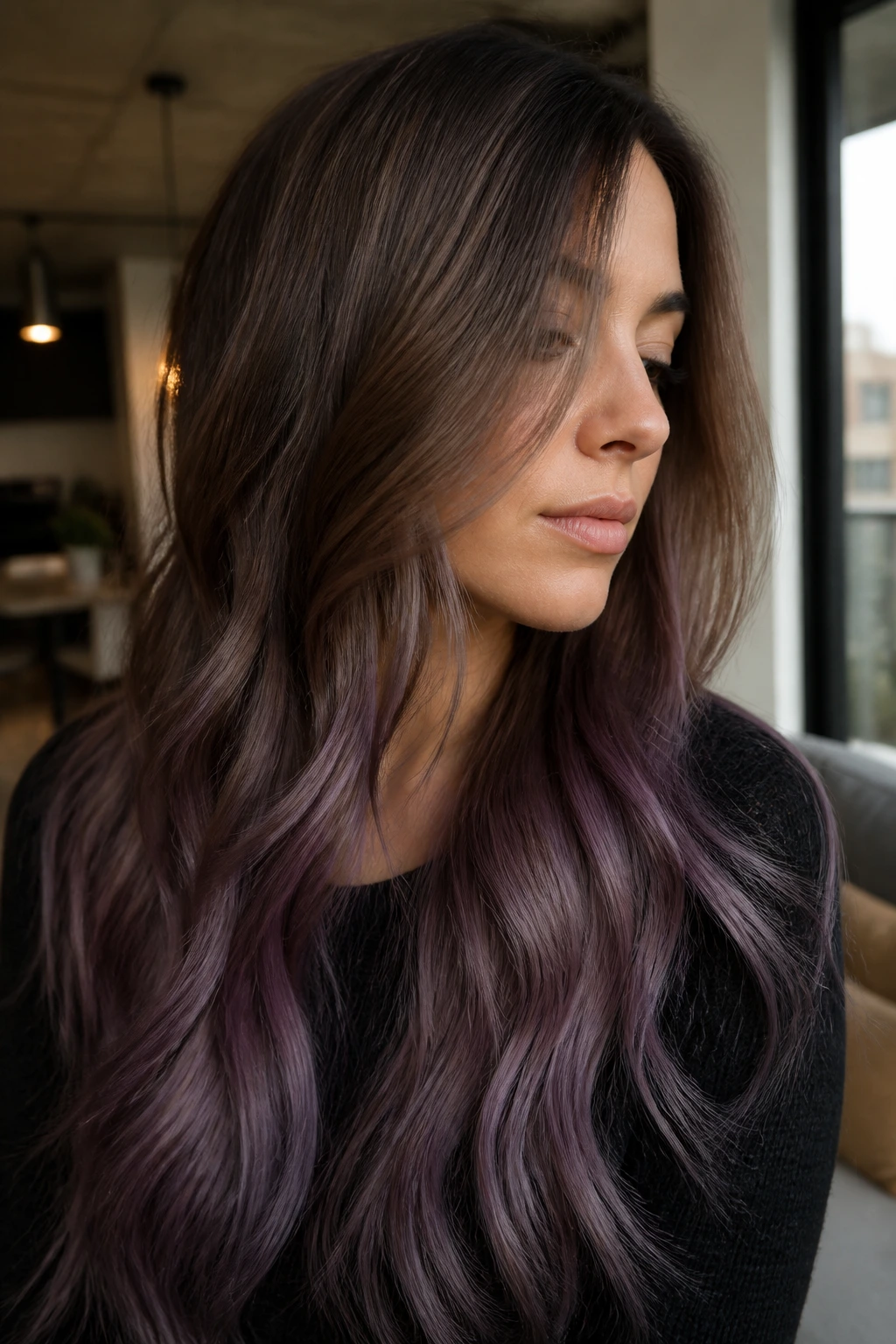
If you like quiet color that still reads expensive, mushroom brown into plum ash is a sleeper hit. It is cool, muted, and a little smoky, which makes it a nice fit for long hair that you want to look polished rather than playful.
The beauty of this shade is that it does not rely on obvious contrast. The mushroom brown base already has that soft, earthy depth, so the plum ash can sit on top of it without shouting. On long layers, the shift becomes visible through movement rather than from a straight-on stare.
This is a strong pick if you wear muted clothes, dark denim, or soft neutrals. The color has enough purple to matter, but not so much that it fights the rest of your look. It is one of those shades people tend to ask about twice, which is usually a good sign.
29. Long Braids with Violet Ombre
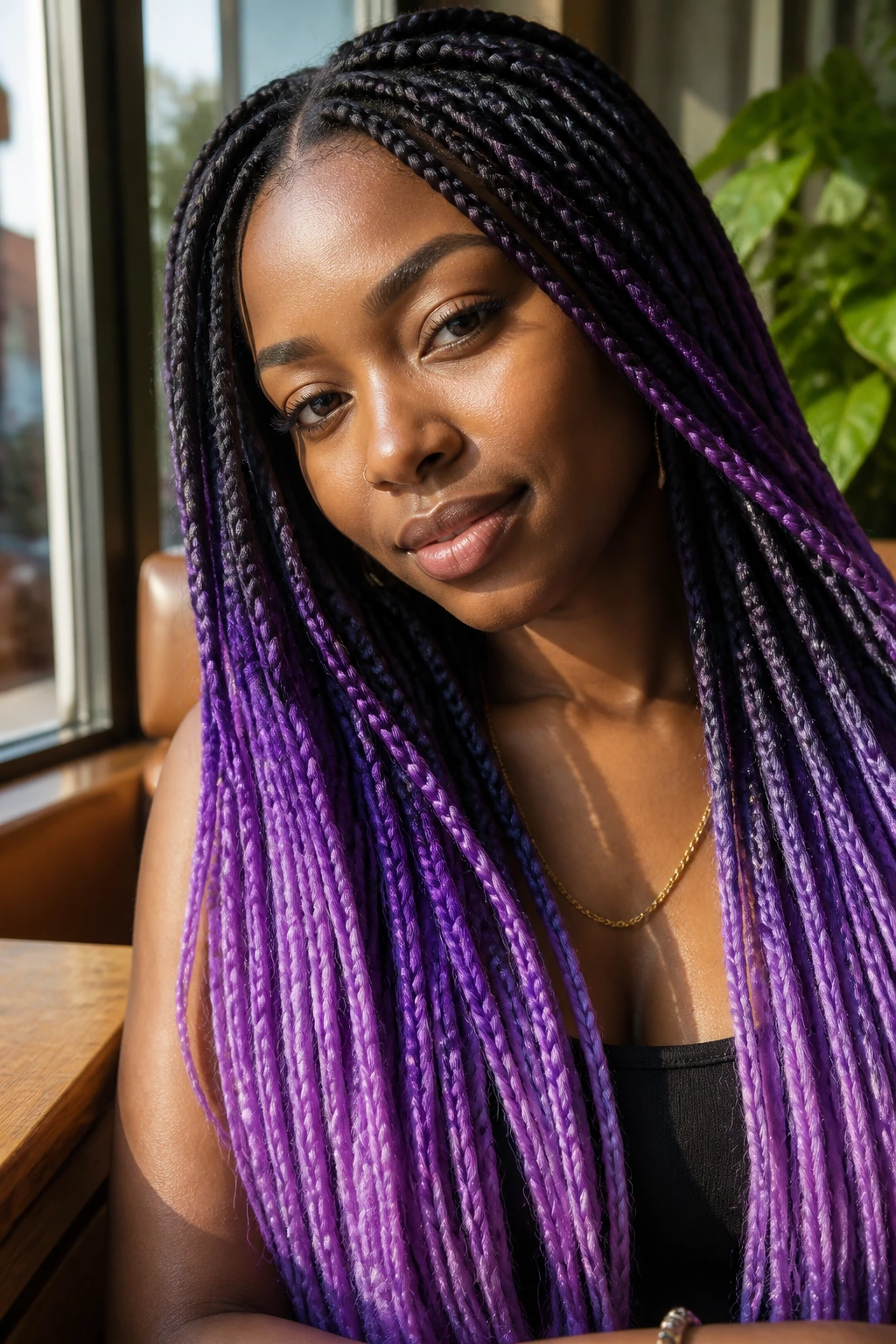
Why do braids show violet ombre so well? Because the braid turns the gradient into a pattern. Instead of looking at one sheet of hair, your eye catches the change in every twist, and long hair gives the braid enough length to really show it off.
How to make it pop
A violet ombre braid looks best when the darkest color stays near the scalp and the brightest tone lands toward the lower half of the braid. That keeps the pattern visible even after the braid is pulled apart a little.
- Works with Dutch braids, fishtails, box braids, and loose three-strand styles
- Highlight the ends slightly more than the mid-lengths
- Keep the braid a little loose for better color visibility
- Pair with shine spray, not heavy oil
This is a good option if you want color that changes shape with your styling. Braids never show the same way twice, and that keeps the ombre interesting.
30. Soft Amethyst Curtain Ombre
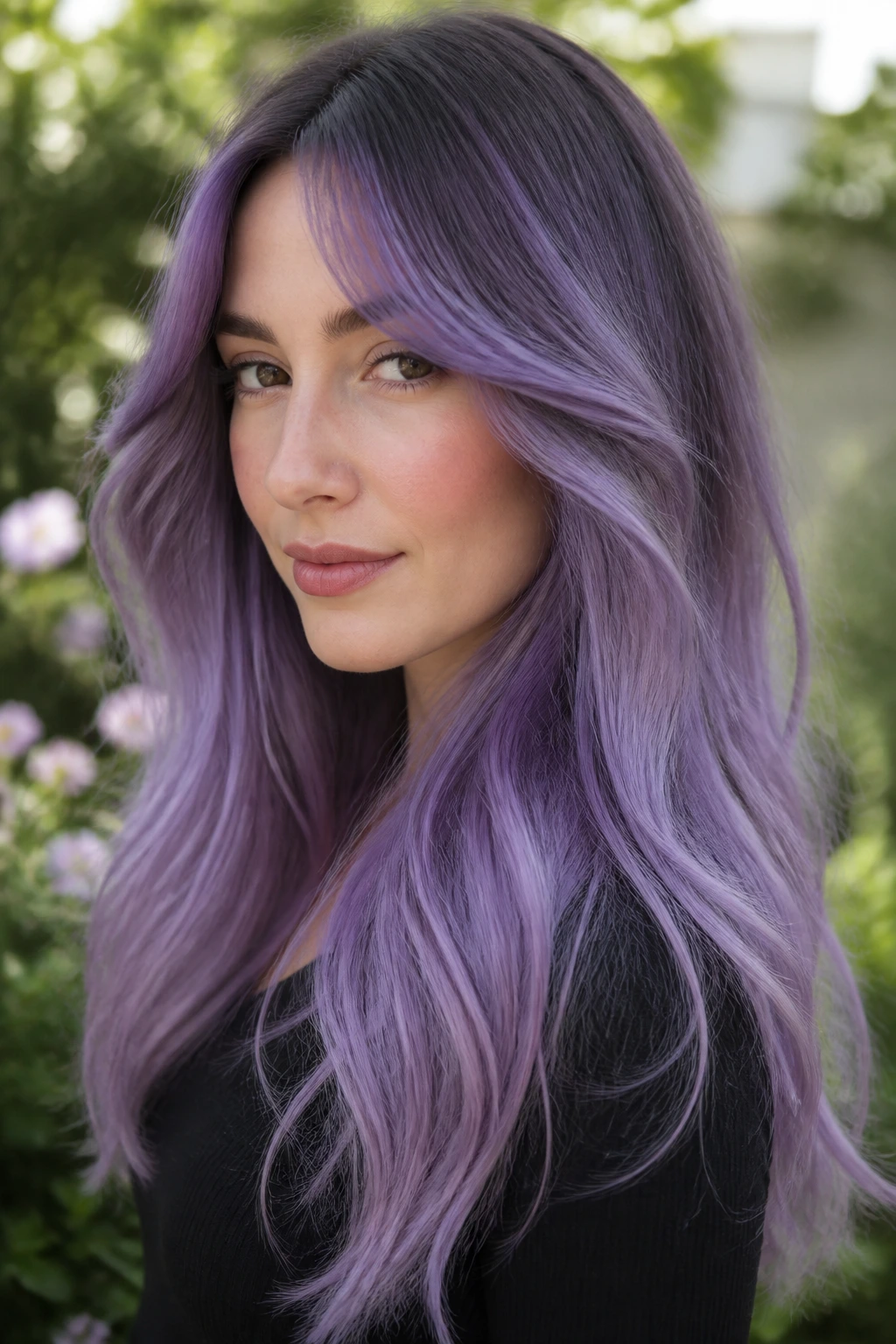
Soft amethyst curtain ombre is the version I’d choose for someone who wants violet that still feels gentle. The curtain layers around the face pull the eye forward, while the longer lengths carry a misty amethyst fade that stays light and wearable.
The color works because it lets the haircut do part of the job. Curtain layers open and close around the face, so the violet appears in little flashes instead of one hard sheet. On long hair, that movement matters a lot. It makes the shade feel less like a dye job and more like part of the cut.
If you wear your hair loose most of the time, this one is easy to love. If you wear it up a lot, the face-framing pieces keep the color alive even in a bun or clip. That’s the real advantage here: the shade stays visible in motion, and long hair gives it plenty of motion to work with.
