



A round face doesn’t need a drastic haircut to look sharper. It needs the right haircut shape, and that difference matters more than people think. Short undercut styles for round faces work best when they pull the eye upward, keep the sides close, and avoid extra bulk right at the temples.
That’s the whole trick. Not magic. Shape.
The wrong cut can make a round face look wider than it really is, especially if the top sits flat or the fringe lands in a straight line across the forehead. The better cuts add height, angle, or a bit of asymmetry so the face reads longer and leaner. A good barber will think about the crown, the temples, and the hairline together instead of treating the sides like an afterthought.
And yes, short can still mean stylish. You do not need a giant pompadour or a sky-high quiff to get the effect. A few inches on top, a clean fade or disconnected undercut at the sides, and the right styling product can change the whole balance of the cut. The details are small. The result is not.
1. High Fade Textured Crop Undercut
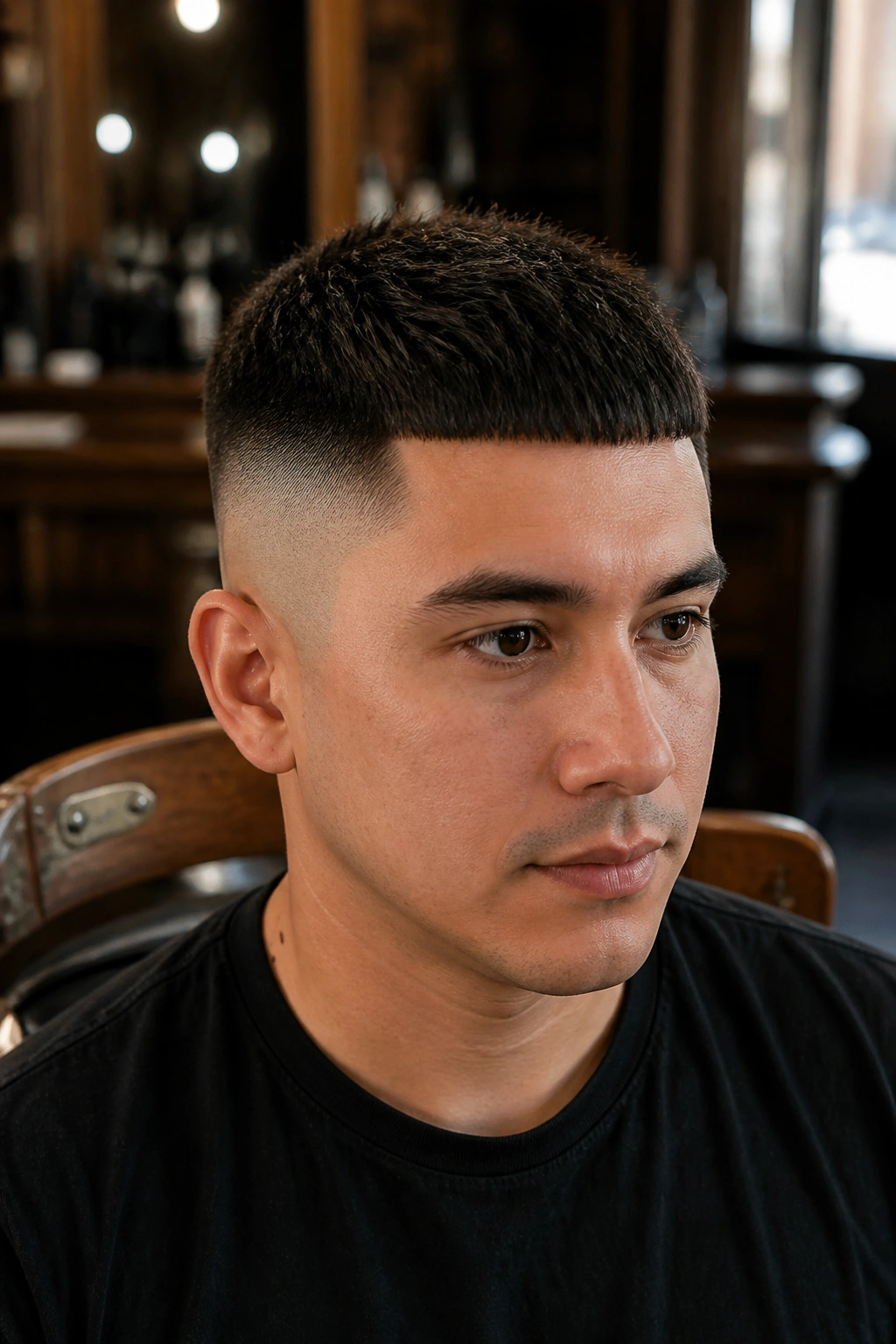
A textured crop is one of the smartest choices for a round face because it keeps the shape compact without making the head look wider. The high fade removes bulk around the temples, and the chopped-up top adds a little vertical line where you want it most.
Why It Flatters a Round Face
The reason this cut works is simple: height beats width. A round face already has soft curves, so the haircut should add edges and lift, not more fullness at cheek level. A textured crop does that well, especially if the top is kept around 2 to 3 inches and point-cut into short, uneven pieces.
Ask for a high fade or skin fade on the sides and keep the top light, not heavy. A blunt, blocky crop can look boxy if it’s too dense, so the texture matters. A barber can use scissors over comb or choppy point cutting to break up the top, which helps the hair sit forward without collapsing into one flat slab.
- Top length: 2 to 3 inches
- Side length: skin fade to #1 guard
- Best product: matte clay or texture paste
- Best for: straight, thick, or slightly wavy hair
Pro tip: blow-dry the front up and slightly forward for 30 to 60 seconds before adding product. That tiny bit of lift makes the face look longer.
2. Side-Swept Undercut with Volume
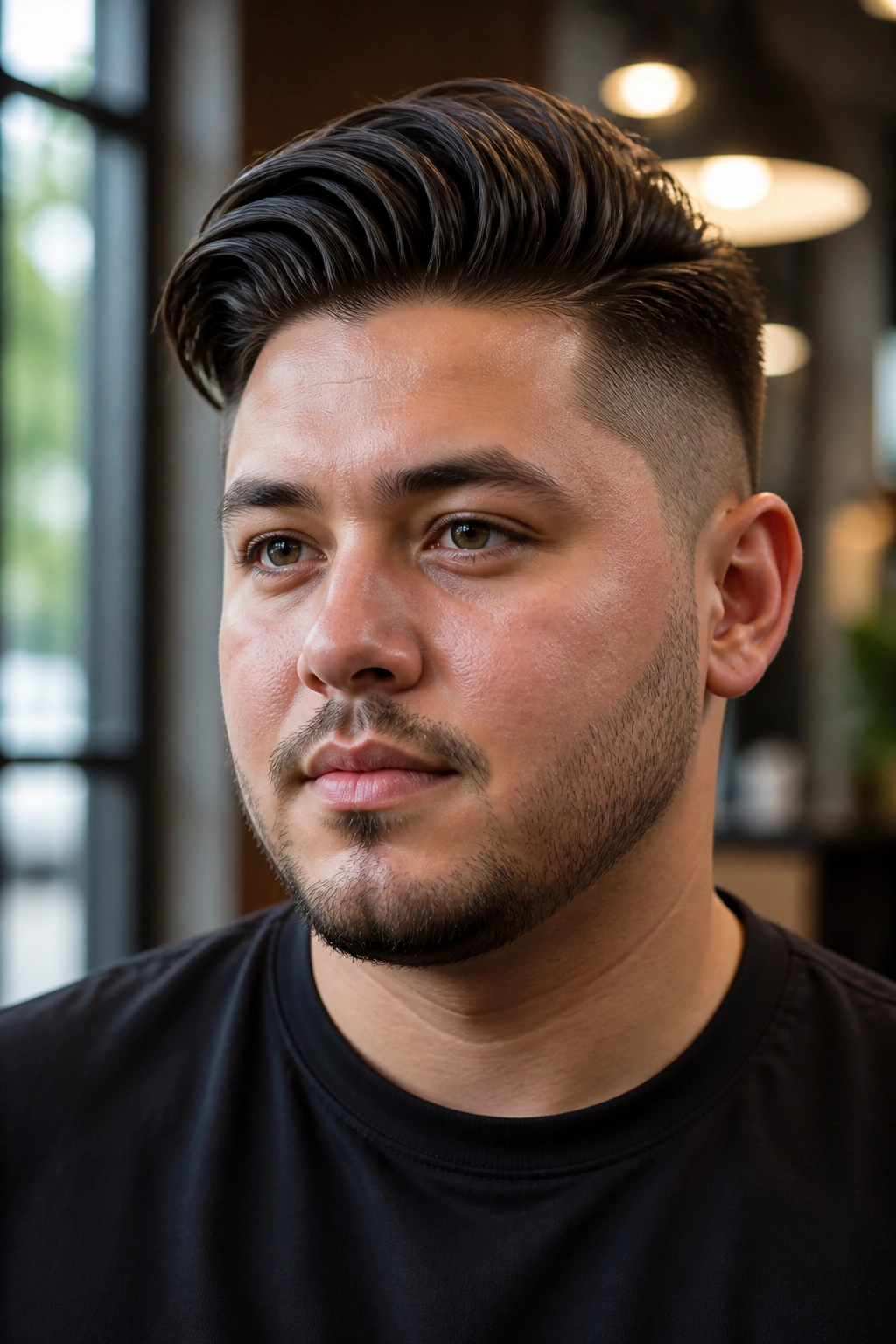
This is the cut I’d hand to someone who wants a clean look without looking too severe. The side-swept shape gives a round face a diagonal line, and diagonal lines do a lot of quiet work. They break up softness fast.
The top should be long enough to sweep over from one side to the other, usually about 3 inches, sometimes a touch more if the hair is thick. Keep the sides tight. If the undercut gets fluffy around the ear or temple, the whole illusion falls apart. That’s the part people miss. They keep the top nice and styled, then leave too much width underneath.
What Makes It Work
A side-swept undercut does not need dramatic volume. It needs a clean bend. Think of the front as a low ridge that angles across the forehead instead of sitting straight on it. A mild lift at the roots is enough.
This style is especially good if your hair naturally falls to one side. Fighting your growth pattern is a headache. Working with it is easier, and the result looks more natural because the parting has a little movement.
If you want to style it fast, use a light mousse or cream on damp hair, then blow-dry the front in the direction you want it to fall. Finish with a pea-sized amount of matte paste. Too much shine makes the top look flat, and flat is not your friend here.
3. Slicked-Back Undercut with Lift
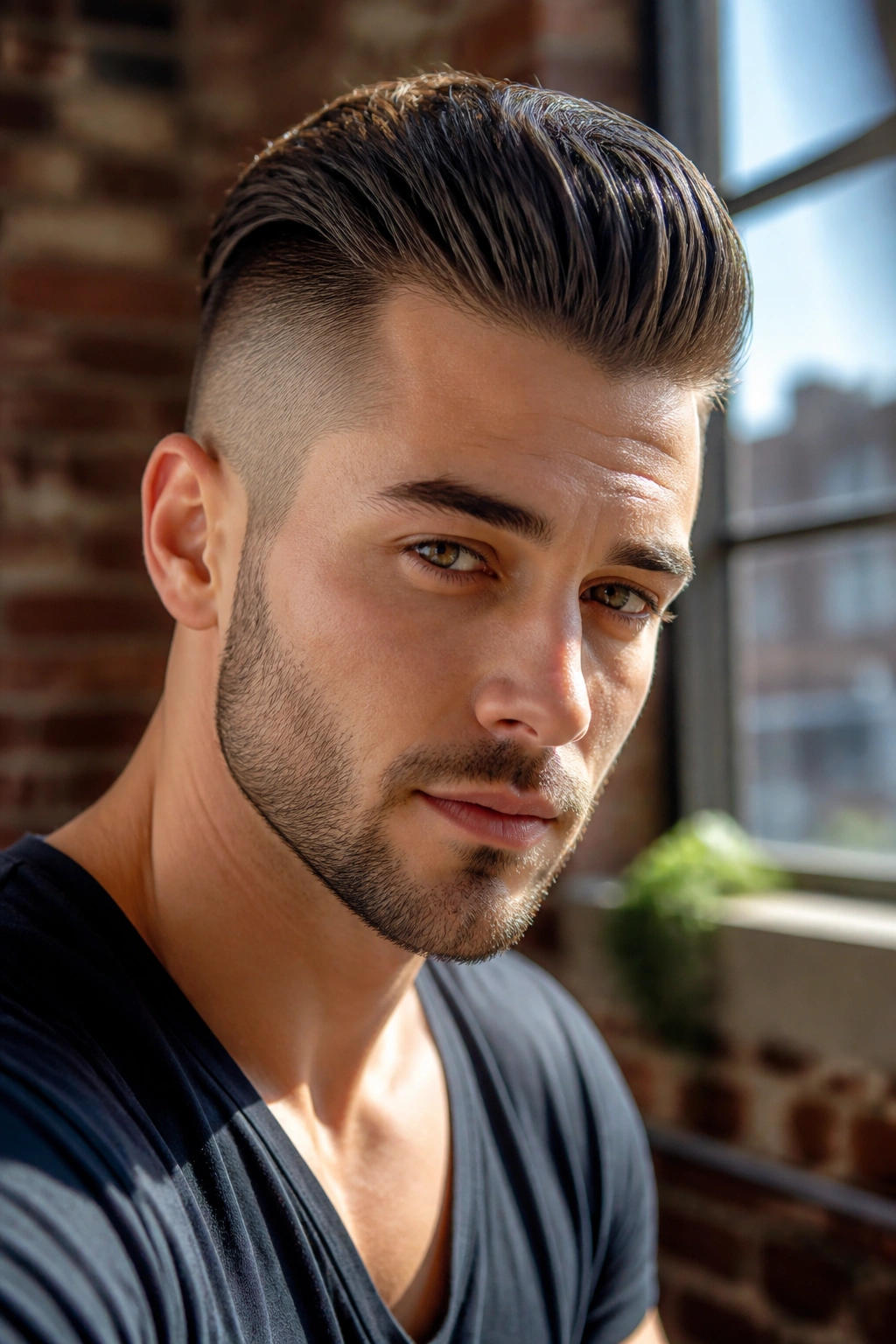
A slicked-back undercut can work on a round face, but only when it keeps some height at the front. If the hair is combed dead flat against the scalp, the face can look shorter. That is the mistake. Not the style itself.
Used well, this cut looks sharp and clean. The sides stay tight, the top stays short enough to control, and the front is pushed back with a little lift at the roots. You do not want helmet hair. You want direction.
Ask Your Barber For This
- Top length: 3 to 4 inches
- Sides: disconnected undercut or tight fade
- Texture: lightly layered, not blunt
- Finish: keep the front from lying flat
The best version has some air in it. Even a small lift at the hairline changes the face shape. A round face needs that extra length cue. The slicked-back direction also draws attention to the eyes and cheekbones instead of the widest part of the face.
For styling, use a medium-hold pomade or cream on damp hair. Comb it back with your fingers first, then refine it with a comb if you want a cleaner finish. A blow-dryer helps a lot here. Aim the airflow up and back for 20 to 30 seconds at the front before smoothing everything down.
If your hair is very fine, keep the product light. Heavy pomade can make the top collapse by midday.
4. Messy Fringe Undercut
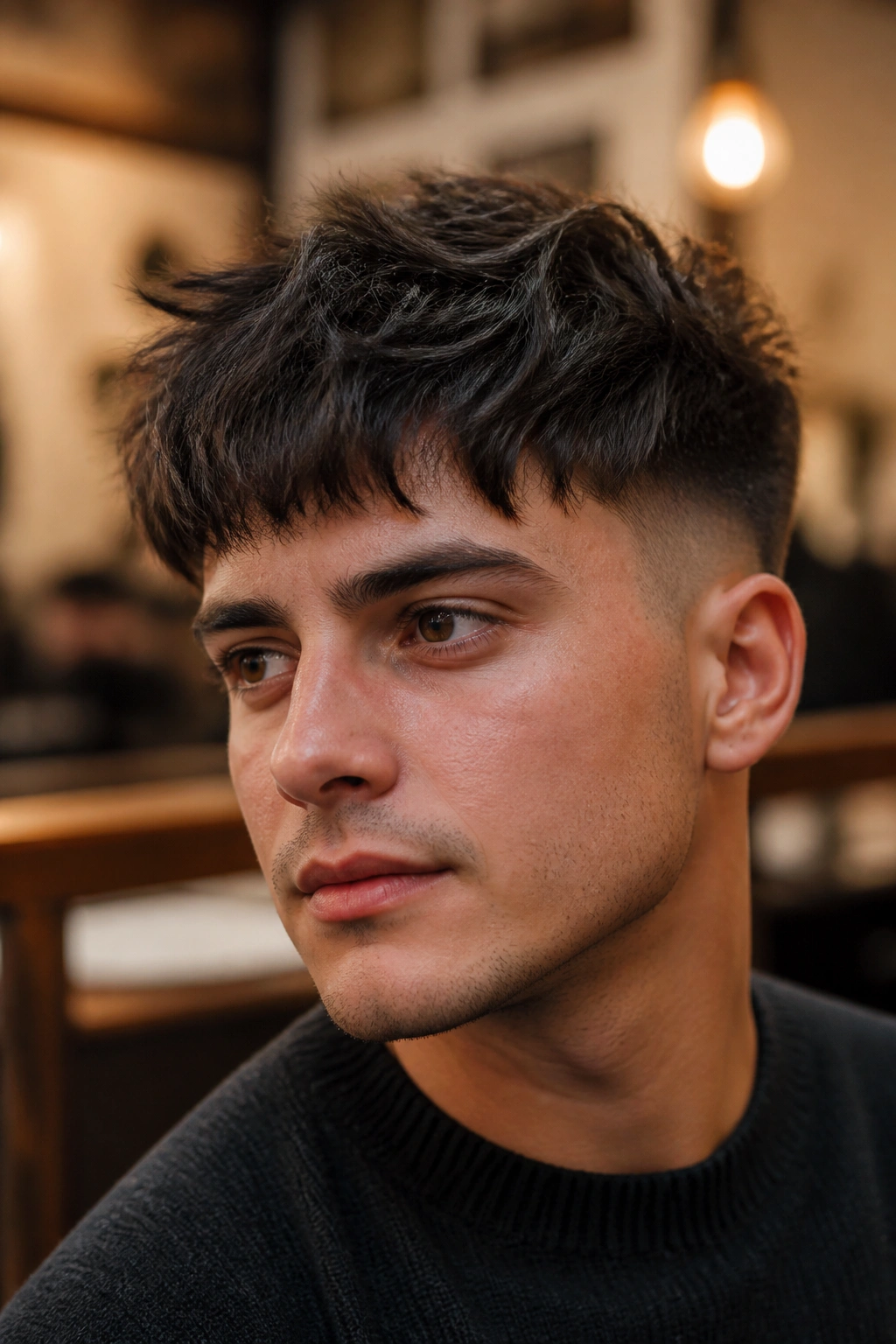
A messy fringe can be better than a neat one on a round face. That sounds backward until you see it in a mirror. A blunt fringe chops the face horizontally. A broken, uneven fringe cuts across the forehead in pieces, which feels softer and more flattering.
The key is to keep the fringe short and jagged, not heavy. The top should still have a bit of lift behind the fringe, so the haircut doesn’t turn into a bowl shape. That’s the danger zone. A lot of guys ask for fringe and accidentally end up with a curtain that makes the face look wider. No thanks.
Why This Version Works Better
The messy version adds texture at the front without boxing in the face. It works especially well if your hair has a little wave, because the natural bends help keep the fringe from looking too stiff. Straight hair can do it too, but it needs more product control.
Use a matte paste or dry wax and pinch the fringe into small sections. Don’t comb it into one uniform line. Let a few pieces fall a bit differently from the rest. That unevenness is the whole point.
This cut also grows out fairly well. When the fringe starts getting longer, it usually softens instead of turning ugly overnight. That makes it a good choice if you don’t want to visit the barber constantly.
5. Curly Top Undercut
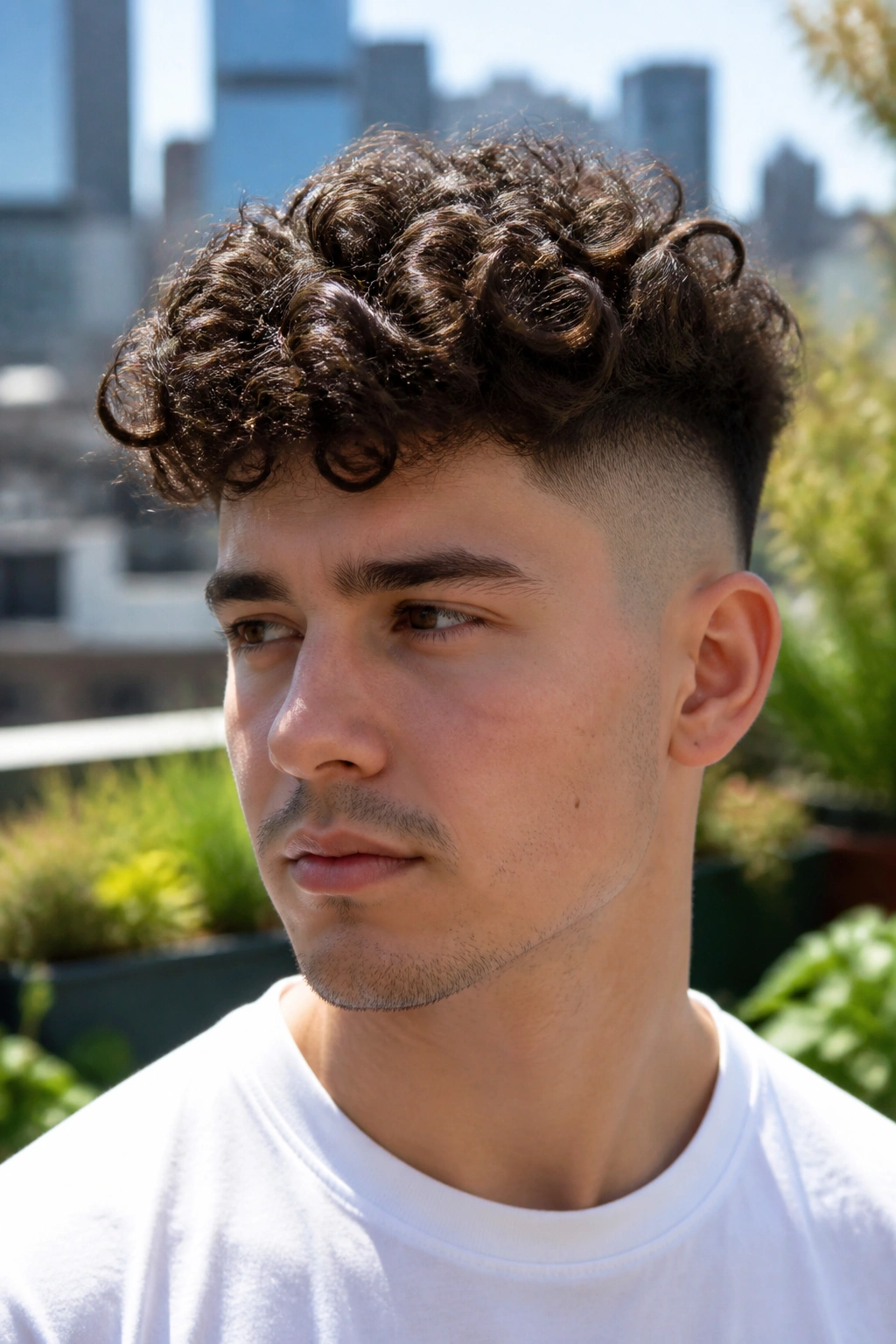
Curly hair and round faces often work beautifully together when the sides are tight and the curls stay up, not out. A curly top undercut gives you a nice vertical shape, and the curl pattern adds natural movement that straight hair has to fake.
The mistake here is trying to flatten the curls into submission. Bad move. Curly hair usually looks best when it has room to breathe on top and almost no bulk at the sides. A close fade or disconnected undercut lets the top do the talking.
What to Ask For
- Keep the curls longer on top, around 2 to 4 inches depending on curl size
- Fade the sides tight, especially around the temples
- Remove weight from the crown if the hair puffs out
- Leave enough length for the curls to spring upward
Curly hair can widen at the sides if it gets too long near the ears, so the cut needs regular cleanups. That’s not a flaw. It’s just how curls sit.
Styling is refreshingly simple. Work a curl cream or light leave-in through damp hair, scrunch the top, and let it air-dry or diffuse on low heat. Do not rake through the curls with a heavy comb after they dry. That breaks the shape and creates frizz in all the wrong places.
The best version of this cut looks soft, but not round. There’s a difference.
6. Faux Hawk Undercut
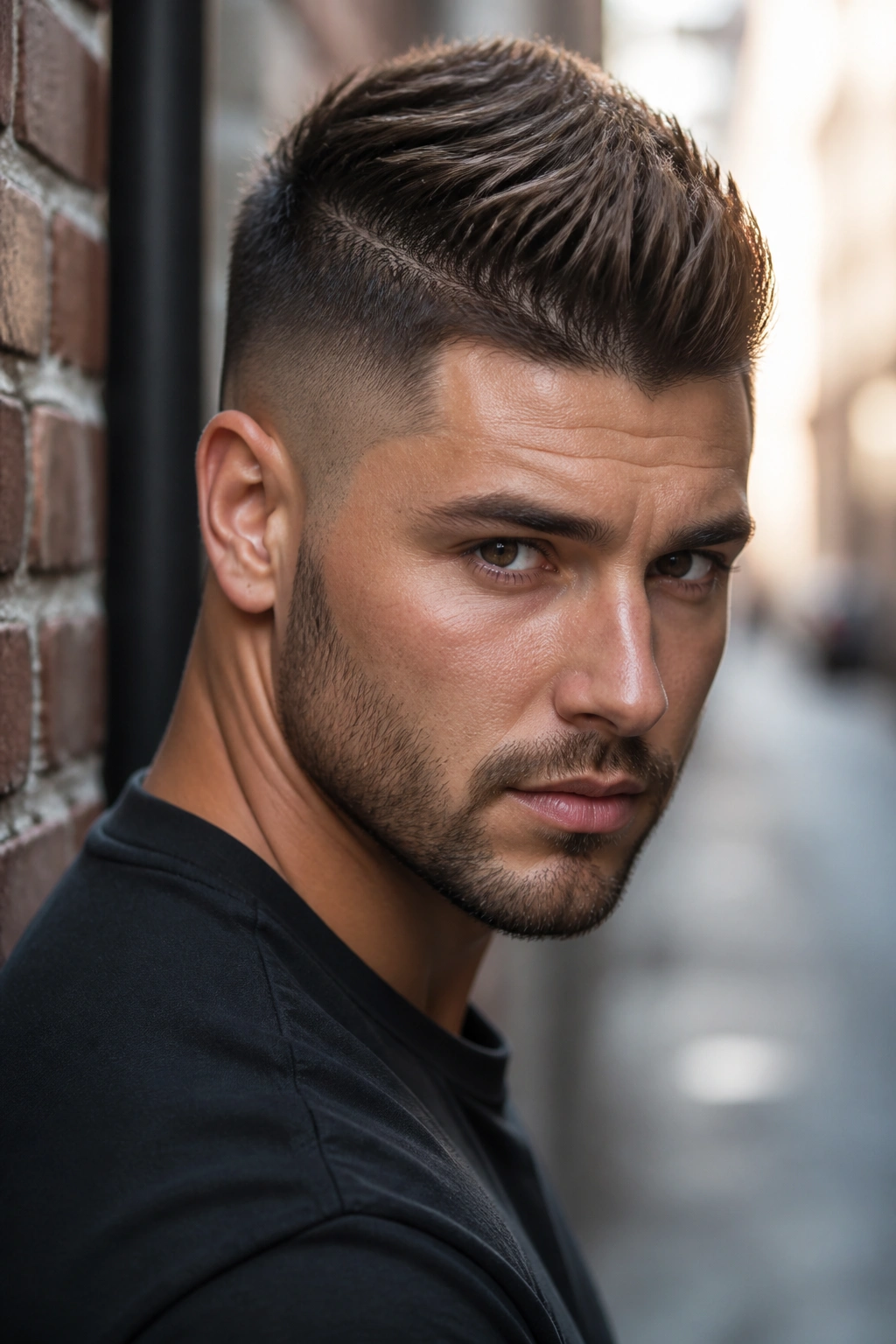
Want the most obvious face-lengthening move? A faux hawk gets right to it. The center ridge pulls the eye upward in a way few short styles can match, and the clipped sides keep the silhouette narrow.
Why It’s So Effective
A faux hawk works on a round face because it creates a middle path from the forehead back toward the crown. That line adds length. It also keeps the sides from competing with the top, which is where shorter cuts often go wrong.
The trick is to keep it wearable. If the ridge is too tall or too sharp, it can look dated or costume-like. Shorter, softer spikes usually look better. Think controlled texture, not a punk crest.
Use a strong matte product and push the hair slightly toward the center while blow-drying. You only need enough lift to make the middle section stand up a bit. If the sides are faded tight and the top has some separation, the face appears slimmer without looking overstyled.
This one is good for thick hair that wants to stand up on its own. Fine hair can do it too, but you may need a bit of root spray or a pre-styler to keep the shape from falling flat. And yes, it does need maintenance. Once the sides grow out, the point of the cut gets lost fast.
7. Short Pompadour Undercut
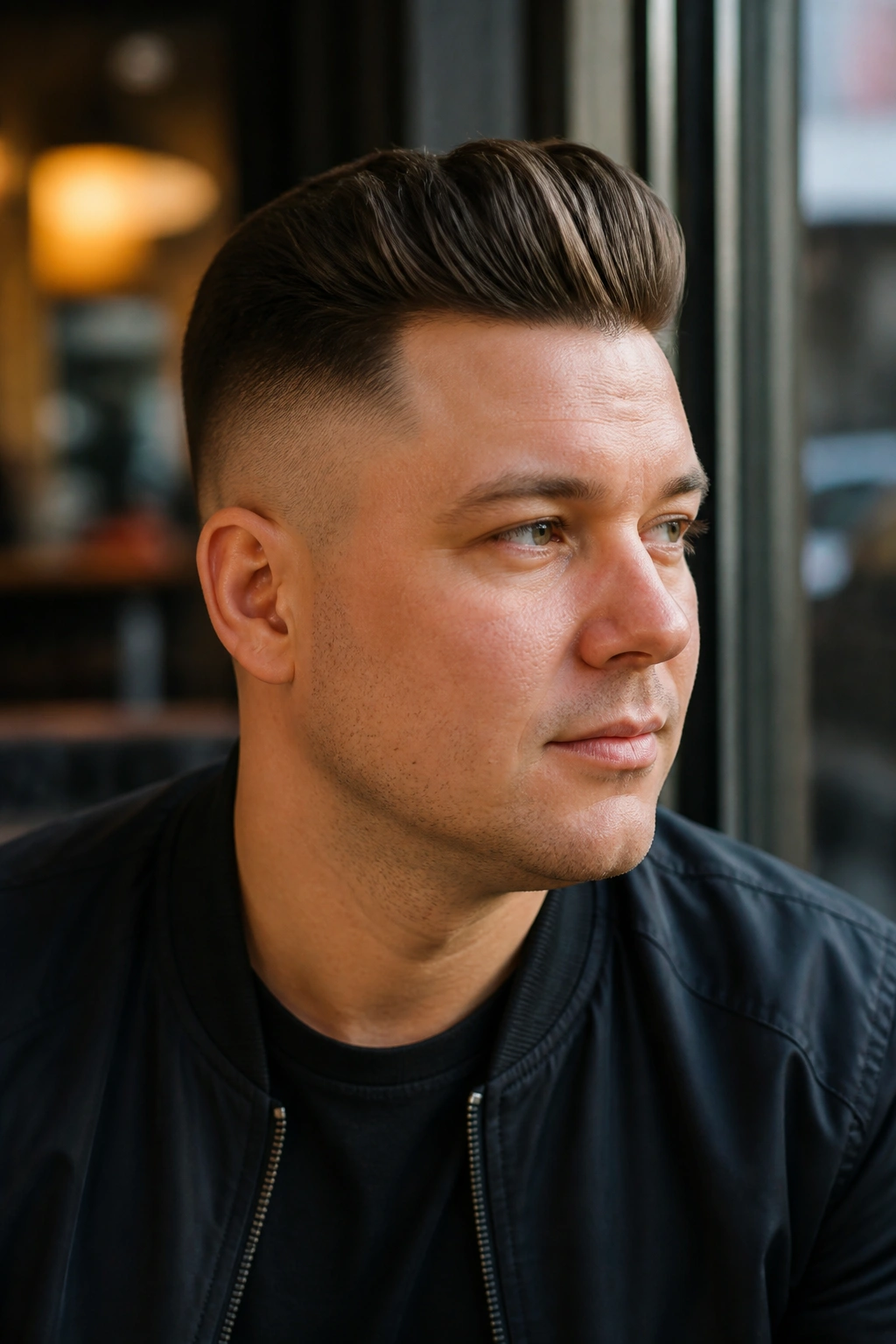
A short pompadour is one of those cuts that sounds louder than it really is. People hear “pompadour” and picture a huge roll of hair. That’s not what works best here. A shorter version, with a little lift in the front and tight sides, is much better for a round face.
The front should rise, then sweep back softly. Not hard. Not glued. The shape matters more than the height. You want the forehead to look a little taller, which changes the whole face ratio in a good way.
Where It Shines
This style is especially strong on straight or thick hair because those textures hold volume easily. If the hair has some natural bend, even better. You’ll spend less time forcing it into shape.
A round face usually benefits from any cut that creates a clear vertical line at the front, and the short pompadour does that without needing too much length. Keep the top around 3 inches, maybe 4 if the hair is dense. The sides should stay tight enough that the volume up top stands out.
For styling, start with a blow-dryer and a round brush or vent brush. Lift the front upward first, then sweep it back. Finish with a light pomade or cream. Too much product kills the shape fast.
It’s polished, but it still feels relaxed if you keep the finish slightly textured.
8. French Crop with Disconnected Sides
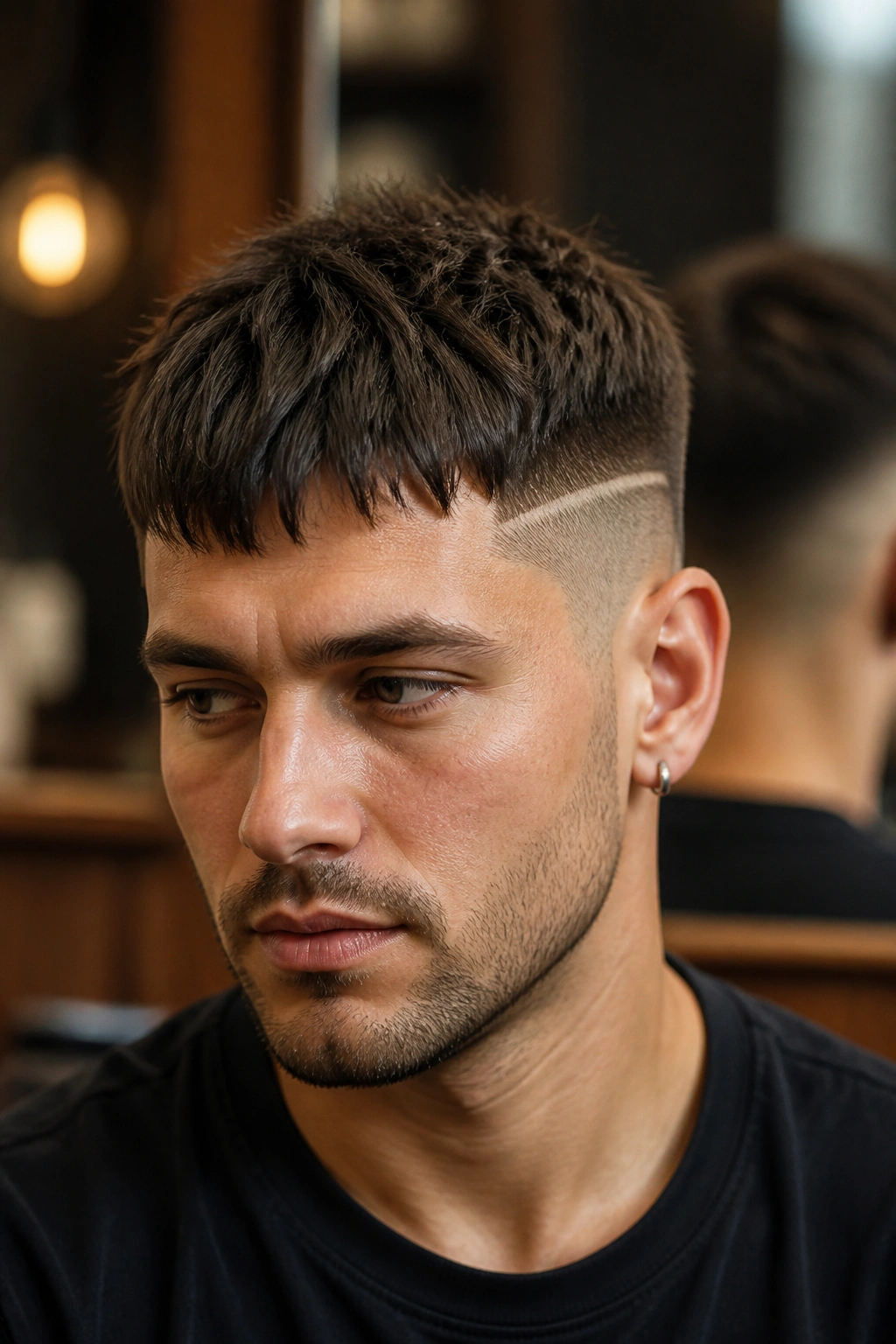
A French crop can work on a round face, but the fringe has to stay choppy. A heavy, straight fringe is a problem. It shortens the forehead and can make the face look even fuller. A broken crop does the opposite.
The disconnected sides are what make this version more flattering than the classic form. The contrast between the short sides and the textured top creates a stronger frame. That frame matters.
The Fringe Is the Whole Game
Keep the fringe short enough that it doesn’t sit on the eyebrows like a shelf. Around 1 to 2 inches in front is usually enough. The top can be slightly longer behind it, so the haircut keeps a bit of shape instead of falling straight down.
This cut works nicely for fine hair because the crop doesn’t need a huge amount of thickness to look good. A dry texture spray or a little matte paste can give it grip without making it stiff. If the hair wants to lie flat, a quick blow-dry forward and up first helps a lot.
Ask your barber for piecey texture and a narrow silhouette at the sides. That is the part that protects the face shape. If the crop gets wide, the whole thing loses its edge.
It’s low-effort, which is probably why so many people end up wearing it. The good version looks sharp in the morning and still looks fine by late afternoon.
9. Hard Part Comb-Over Undercut
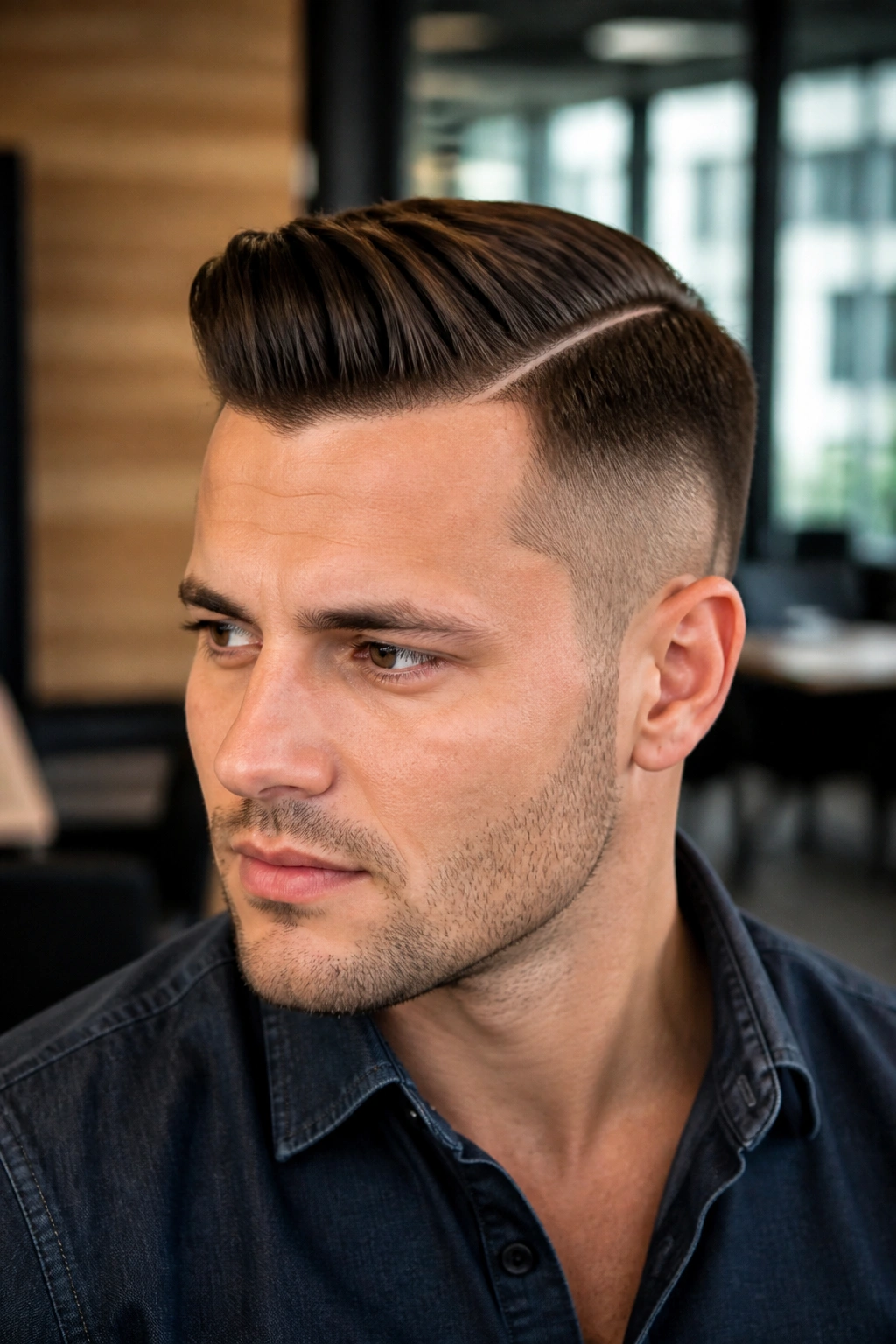
A hard part comb-over undercut is a clean, controlled style that gives a round face a strong diagonal line. That line is doing real work. It breaks up symmetry and makes the face read longer from forehead to jaw.
Unlike a soft side part, the hard part adds a sharper visual edge. That can be a good thing if your features are soft and you want a bit more structure. It’s tidy, but not boring. Well, not when it’s cut right.
What To Watch For
The biggest risk is going too flat on top. A comb-over that hugs the scalp can drag the face shape back into a circle. Keep a little lift near the roots, especially around the front third of the top.
- Part line: clean and visible, but not carved too wide
- Top length: about 3 inches
- Sides: undercut or high fade
- Product: light pomade for shine, matte cream for a softer look
This style is a strong office-friendly option because it looks deliberate without needing a lot of daily fuss. It also pairs well with glasses, since the angled top and the frame of the glasses often work together instead of fighting for attention.
If your hair grows fast, the hard part can blur in 10 to 14 days. That’s normal. It just means the shape needs regular cleanup.
10. Buzzed Undercut with Skin Fade
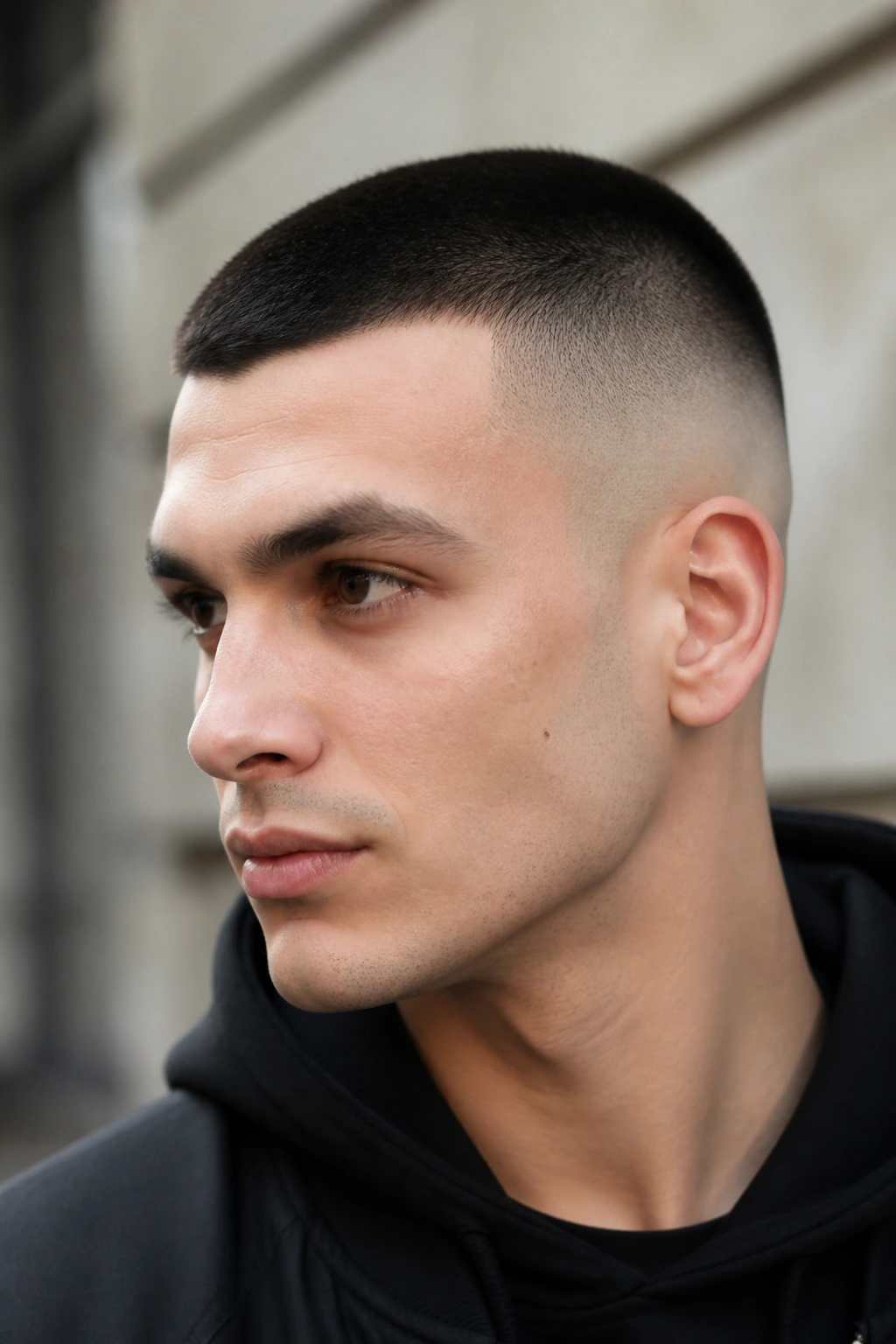
If you hate fussing with your hair, this is the bluntest answer in the list. A buzzed undercut with a skin fade can still flatter a round face, but only if the top isn’t taken down so far that the whole head becomes one smooth shape.
That’s the catch. Too short everywhere can erase the structure you’re trying to create. A little more length on the crown, even half an inch, helps keep the top from looking like a helmet cap.
Best Version of the Cut
The sweet spot is a short buzz on top with a fade that stays tight at the sides and nape. A skin fade gives the haircut a clean edge, while the slightly longer crown adds just enough shape. If your barber blends the crown into the fade too aggressively, ask them to leave a touch more length up top.
This cut is especially good if your hairline is strong and your head shape is balanced. It’s also useful for very thick hair that gets hot or bulky. The maintenance is simple: clip the top every couple of weeks and keep the fade fresh.
No styling product needed. That is the whole appeal.
It’s not the most dramatic choice, and that’s fine. For some people, the cleanest haircut is also the most flattering one.
11. Spiky Short Undercut
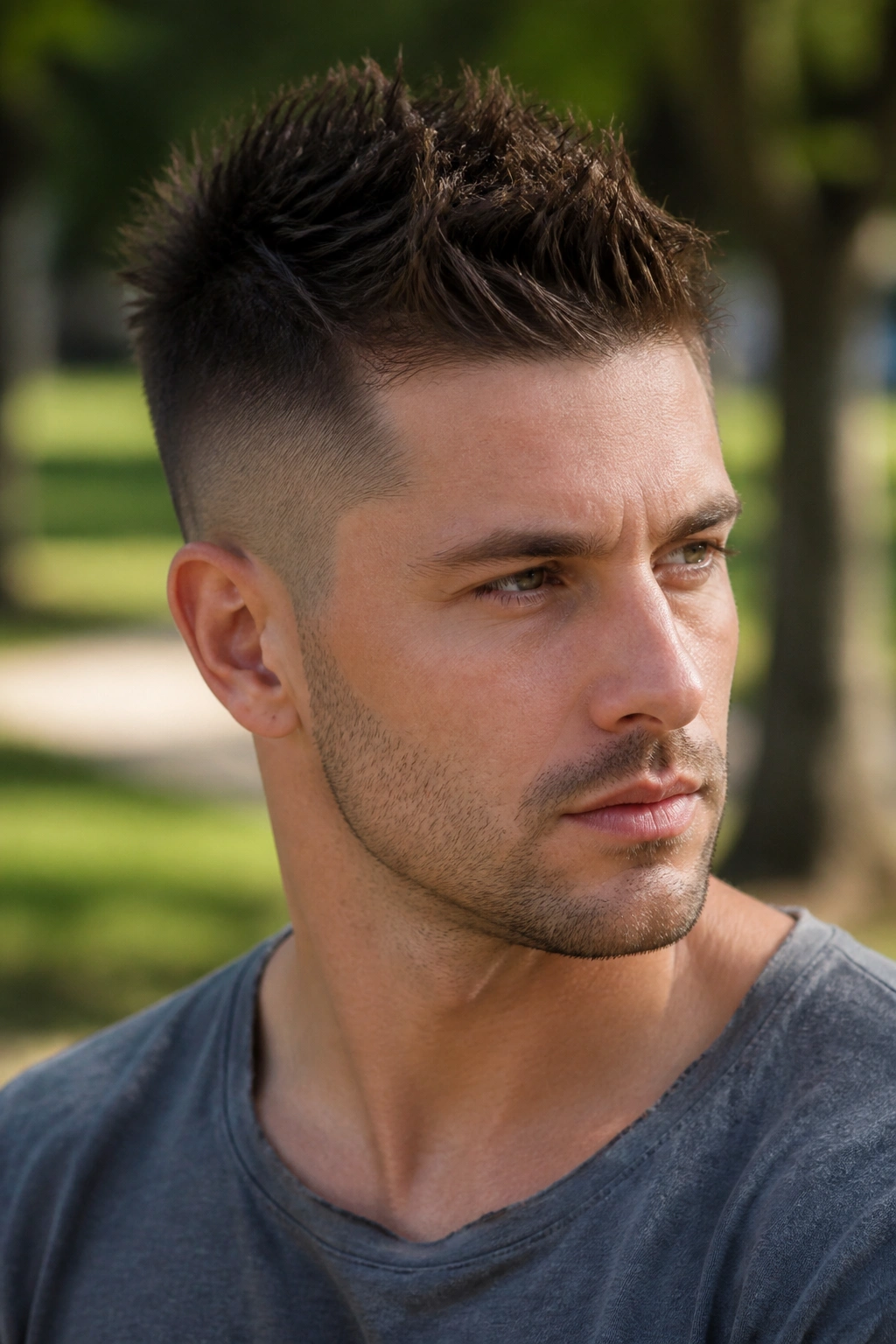
Short spikes are underrated on round faces because they create tiny vertical points without turning the haircut into a full-on faux hawk. The effect is subtle, but it works. The hair stands up in small sections, which makes the top look taller and a bit more angular.
The spikes should be short and broken up, not stiff and shiny. Think textured, separated, and slightly uneven. A round face does not need a single neat ridge. It needs movement.
How To Keep It From Looking Dated
The wrong version of spiky hair is easy to spot. It’s too tall, too wet, and too uniform. Skip that. Use a matte paste or fiber cream and work it through dry or nearly dry hair with your fingertips. Pinch sections upward instead of combing them into place.
This cut works best on hair with some natural lift. If your hair is fine, you may need a quick blow-dry at the roots first. If it’s thick, you can usually shape it with your hands and a small amount of product.
The sides should stay short, either faded or clipped close. That keeps the vertical spikes from competing with bulk around the ears. If the sides puff out, the whole shape loses the point.
A lot of people overlook this style because they remember bad spiky hair from years ago. Fair enough. Those versions were rough. The modern one is cleaner, shorter, and much more useful.
12. Tapered Crew Cut Undercut
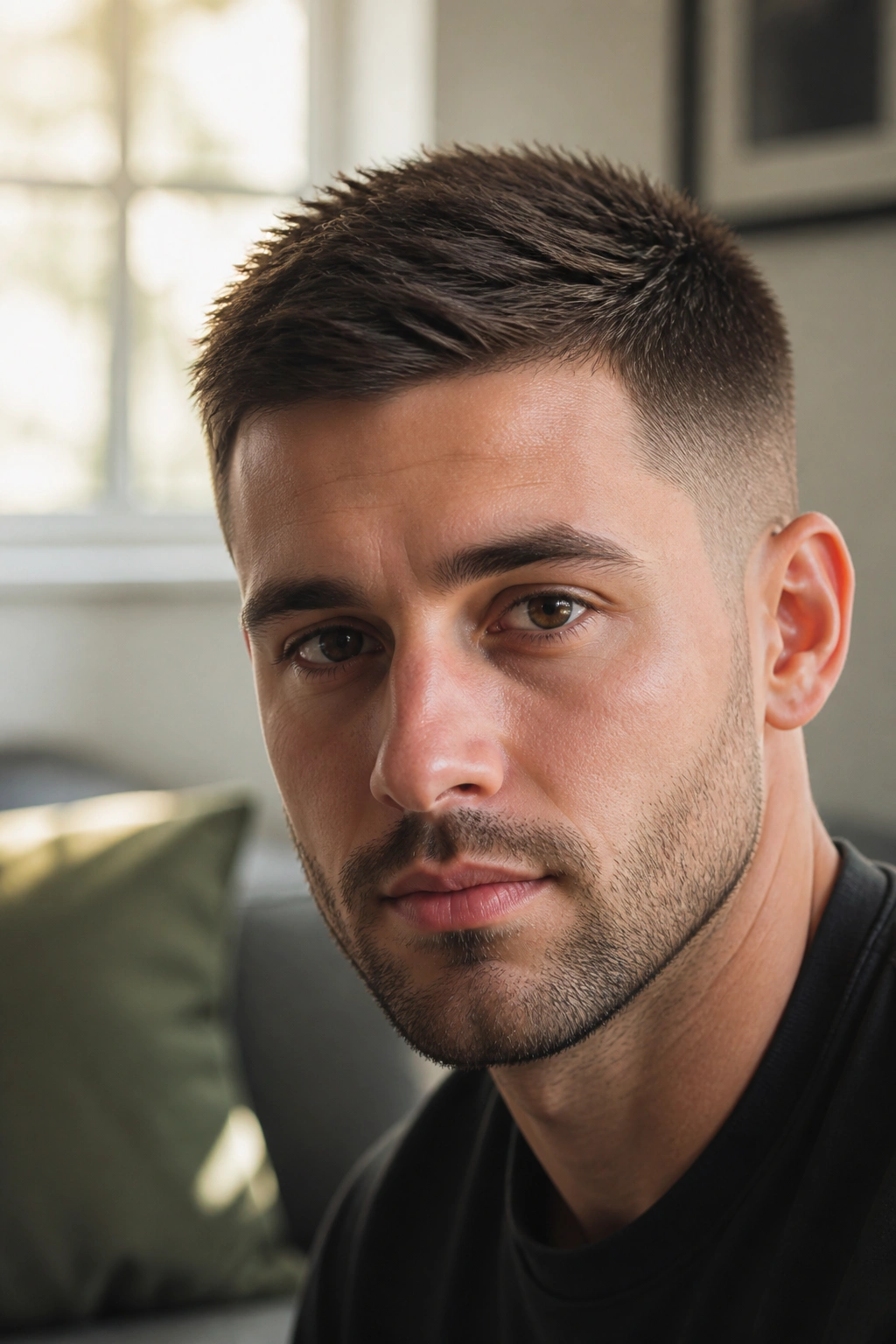
A tapered crew cut undercut is the calmest haircut in this group, and that may be exactly why it works. It gives a round face a cleaner outline without making the styling routine annoying. There’s short hair on top, a bit of length through the front, and a taper or undercut at the sides that keeps the silhouette neat.
What makes it flattering is the shape of the front. A crew cut with slightly more length at the hairline lifts the face a touch, while the taper prevents the sides from ballooning outward. It’s neat, masculine, and easy to wear.
Why It’s Worth Considering
This is the cut for someone who wants something clean that still looks intentional. The top is short enough to be low-maintenance, but not so short that it loses all shape. If your face is round and your hairline sits well, the crew cut undercut can make the jawline look a little stronger simply by reducing width at the sides.
Ask for a soft taper into the ears and neckline rather than a blocky finish. A blunt crew cut can look heavy if the top and sides are too even. The tapered version is lighter and more flattering.
It works on straight, wavy, and even slightly curly hair. Styling is almost nothing: a dab of matte cream or no product at all. That’s the appeal. You can wash it, towel-dry it, and go.
If you want the shortest possible haircut that still has shape, this is probably the safest place to land.
Round faces do best with haircuts that create angle, not bulk. That idea runs through every style above, whether the top is textured, swept, curled, or buzzed close. The good news is that you do not need to chase the most dramatic look in the room. You just need the cut to pull the eye where you want it.
And if you’re sitting in the barber chair trying to choose, the simplest test is this: does the style add height, narrow the sides, and leave the front with some movement? If the answer is yes, you’re in good shape.
