



Short undercut styles for women have a funny habit of looking softer from the front than they do from the side. That’s part of the appeal. You get clean lines, less bulk, and a cut that can go from polished to punk in about two minutes, depending on how you style the top.
The tricky part is that “undercut” is not one haircut. A shaved nape, a hidden panel under a bob, and a side-swept pixie with a tight temple line all behave differently once hair starts growing out. The placement changes everything — how often you need a cleanup, how much weight the cut removes, and whether the whole look feels subtle or loud.
That’s why women keep coming back to these cuts. Thick hair sits better. Fine hair can gain shape. Curls stop ballooning at the sides. And if you like a little edge without losing femininity, there’s a lot more range here than people expect.
The good versions look intentional. The bad ones just look like someone took a clippers-and-regret approach. So the details matter: where the undercut sits, how much length stays on top, and whether the silhouette fits your face, your texture, and your tolerance for trims.
1. Side-Shaved Pixie for Short Undercut Styles for Women
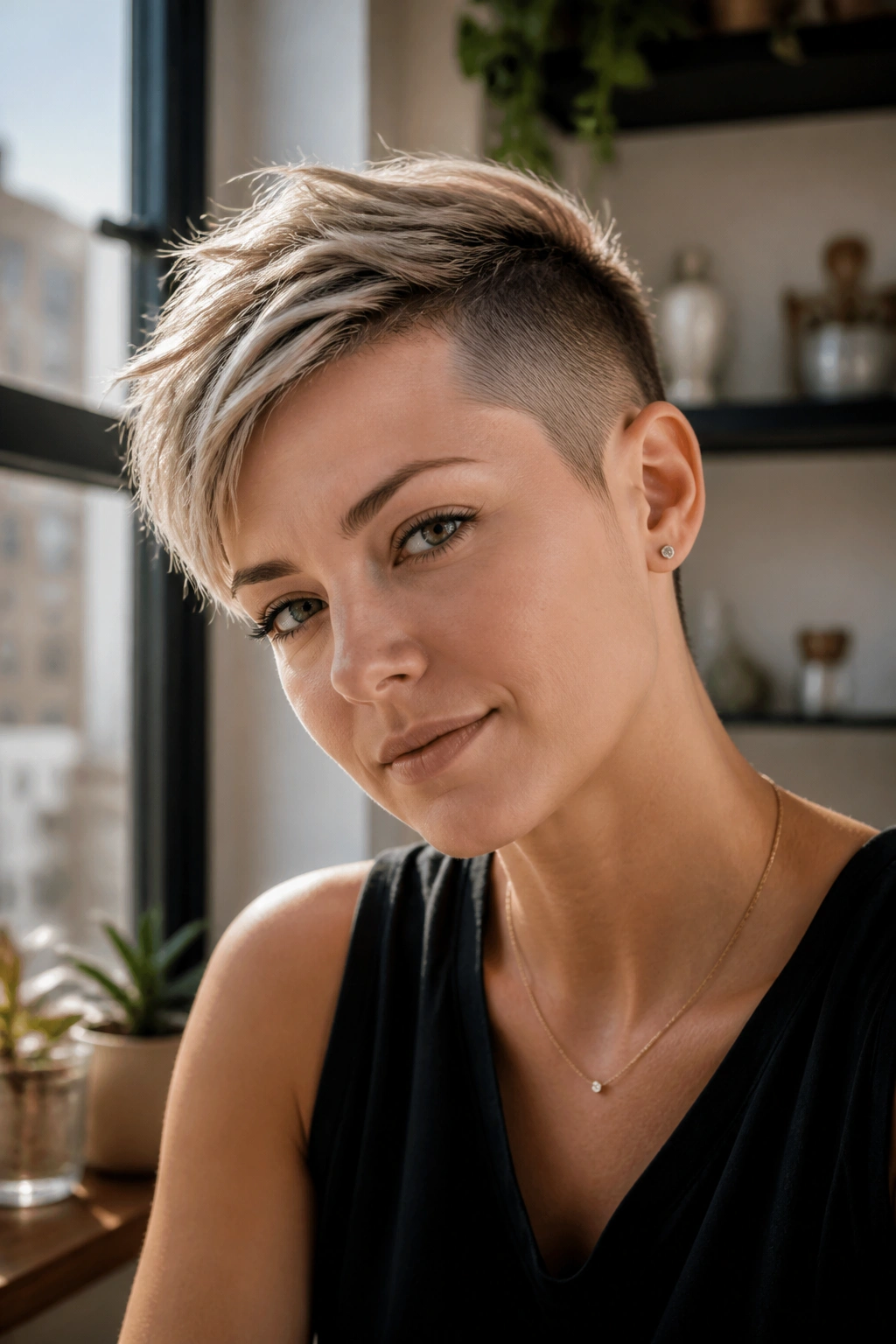
A side-shaved pixie is the cut that makes people do a double take, then pretend they weren’t doing it. One side stays close to the head — usually with a 0.5 or 1 guard — while the top keeps enough length, often 2 to 3 inches, to sweep, spike, or fall forward. The contrast is the whole point.
What works so well here is the balance. The shave gives the cut attitude, but the longer top keeps it wearable. You can tuck one side behind the ear and let the other side stay messy, which gives the haircut movement without making it fussy. It’s also one of the smarter short undercut styles for women with dense hair, because the removed side takes some of the puff out of the shape fast.
A clean temple line matters more than people think. If the shave starts too high, the cut can feel harsh. If it sits too low, it can disappear under the top and lose the point. The sweet spot is usually just above the sideburn area, where the profile still reads clearly.
Best for: strong cheekbones, thick hair, and anyone who wants a cut that looks sharp even on a lazy day.
Style it with: a pea-size amount of matte paste, fingers only, no hard comb lines unless you want them.
Maintenance: every 3 to 4 weeks if you want the sides to stay crisp.
One sentence says it all: this cut needs shape, not volume.
2. Hidden Nape Undercut Bob
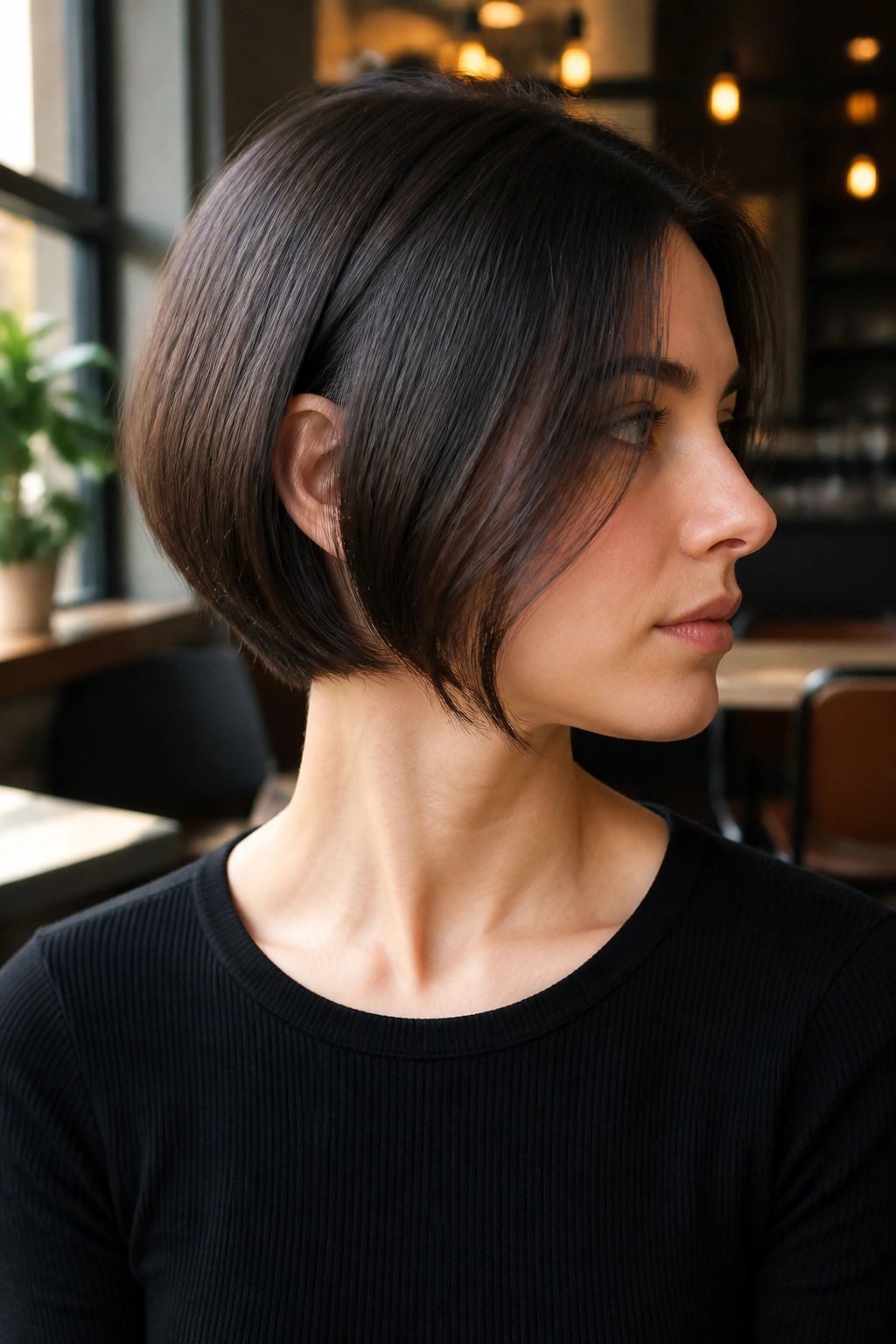
Why do so many people end up loving a hidden nape undercut? Because it gives you the lightness of a shaved section without shouting about it from across the room. On a bob, that matters. The outer shape still looks clean and professional, but underneath, the hair is clipped short at the nape so the bulk stops stacking up at the back of the neck.
This is one of the smartest short undercut styles for women with thick or coarse hair. A chin-length bob can turn into a triangle if the neck area gets too heavy. Removing that hidden panel lets the top layer fall flatter, which means less blow-drying and fewer awkward flips at the collar. You feel the difference the second the hair is dry.
Ask for a hidden panel at the nape, about 2 to 3 inches wide, with the top layer left long enough to cover it when worn down. If you wear your hair up a lot, tell the stylist exactly where the line should sit so it stays hidden when the ponytail goes in.
What to ask for at the chair
- Keep the undercut low and narrow if you want it covered most of the time.
- Leave enough top length to brush over the shaved area when the hair is down.
- Ask for a soft blend at the edges if you hate seeing a hard line.
- If your hair grows fast, keep the panel a little smaller so the grow-out stays polite.
This is the cut for people who like a little secret under the surface. Honestly, that’s half the fun.
3. Curly Crop with a Low Undercut
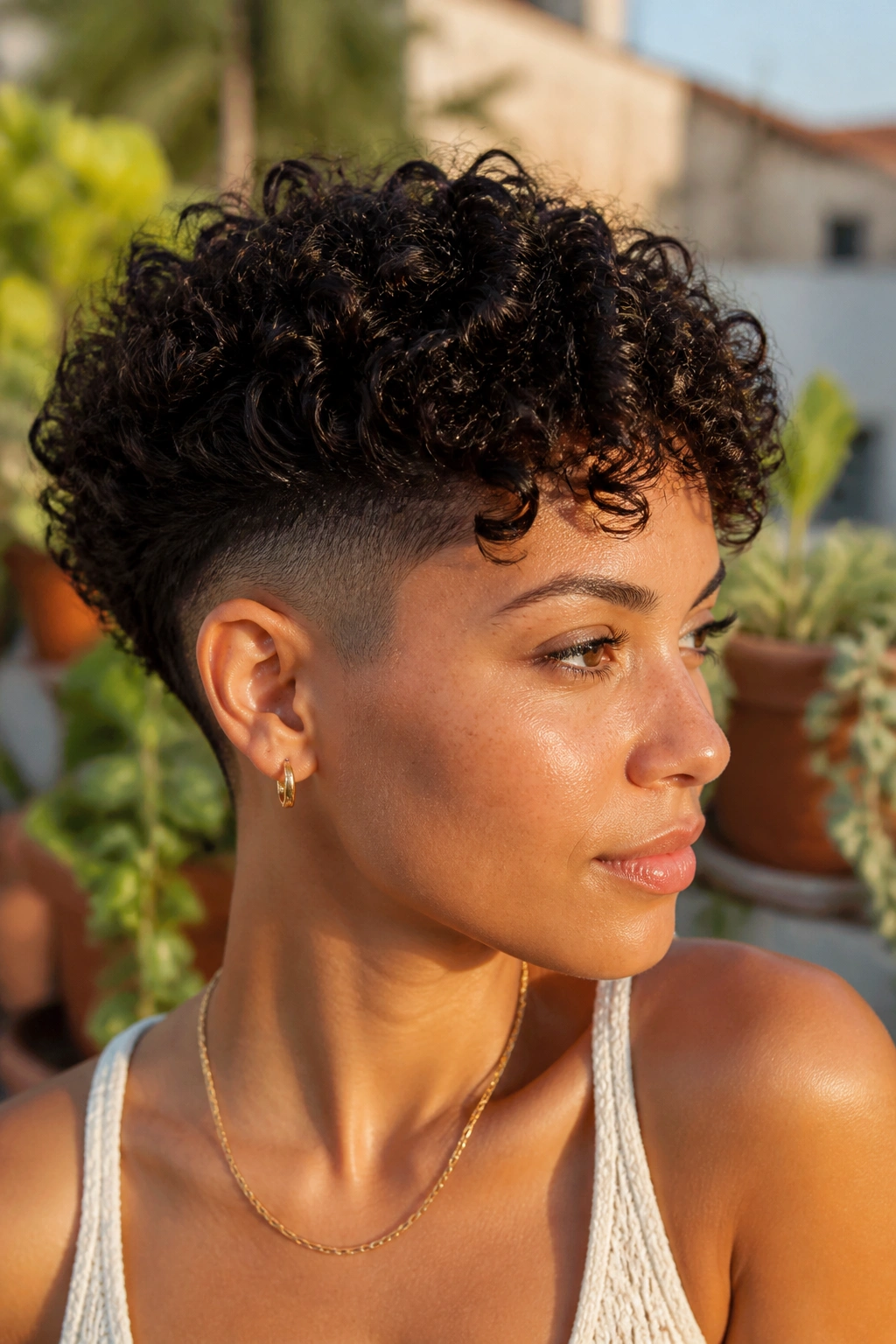
Curly hair and undercuts get along better than people assume. The reason is simple: curls need room on top, but they do not need extra bulk at the sides. If your curls puff out around the ears or at the nape, a low undercut can make the whole shape sit closer to the head without flattening the curl pattern you actually like.
Picture a crop with 3 to 4 inches of curl on top and a short undercut underneath the crown line. The curls bounce where they should, and the bottom stops fighting the top. That balance is everything. Too much trimming in the wrong place and you lose shape. Too little, and the cut mushrooms out by lunchtime.
This cut works best when the stylist respects the curl pattern instead of cutting it like straight hair. Curl shrinkage is real. A strand that looks long when wet may spring up by an inch or more once it dries. If you want the fringe to skim the brow or sit just above it, say so before the scissors come out.
A good styling routine here is straightforward: leave-in conditioner on damp hair, a light curl cream, then a gel or mousse if you want more hold. Diffuse on low heat, or air-dry if you have the patience. Do not rake through a half-dried curl crop with a brush unless frizz is the goal.
The best part? The cut looks lived-in almost immediately. No wrestling. No rigid finish. Just shape.
4. Asymmetrical Crop with One Tight Side
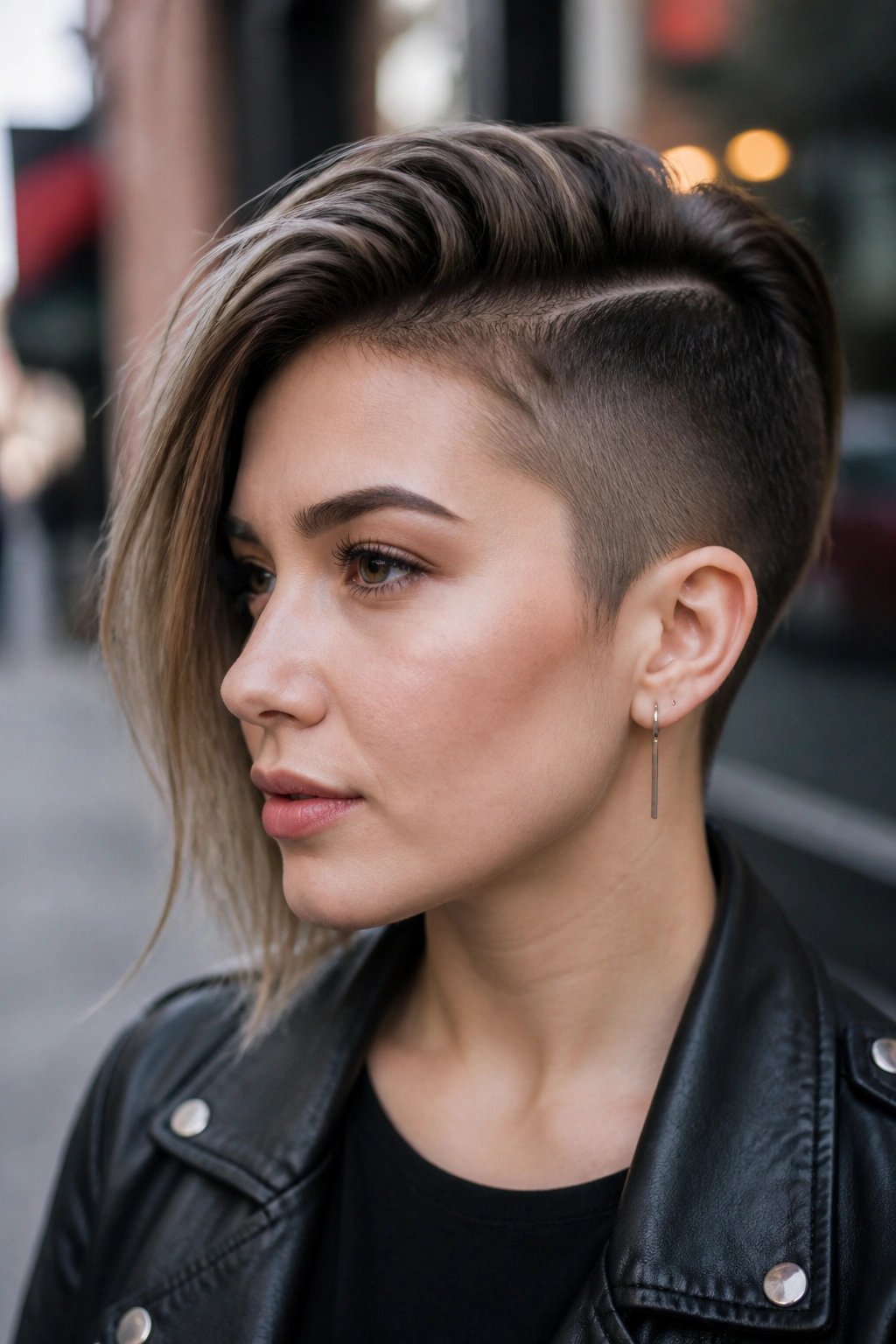
A little lopsidedness can be the whole point. An asymmetrical crop lets one side stay longer and softer while the other side gets a tighter undercut panel, often clipped close enough that the ear shows cleanly. The result feels deliberate, not messy — and that difference matters.
This shape is useful if you want something with tension in it. The long side can graze the cheekbone or jaw, which softens the face, while the shaved side keeps the cut from looking too sweet. That push and pull gives the haircut energy even when you barely style it. A side part makes the asymmetry louder. A center-ish part makes it quieter.
Why the angle works
The shorter side removes bulk where hair tends to stick out. The longer side gives the eye somewhere to land. If your jawline is strong, this cut can frame it without boxing it in. If your face is round, the diagonal line helps stretch the shape a bit.
What to watch for
- Keep the longer side at least 1 to 2 inches longer than the shaved side so the contrast reads clearly.
- Ask for the longest point to be left near the cheek, not the chin, if you want lift.
- Avoid a heavy blunt edge on top; it can make the whole cut feel stiff.
- If you wear glasses, test where the temple arm sits before the stylist closes the sides too tightly.
It’s a bold cut, yes. But it’s also surprisingly practical once you learn where the hair wants to fall.
5. Faux Hawk Pixie for Short Undercut Styles for Women Who Want Height
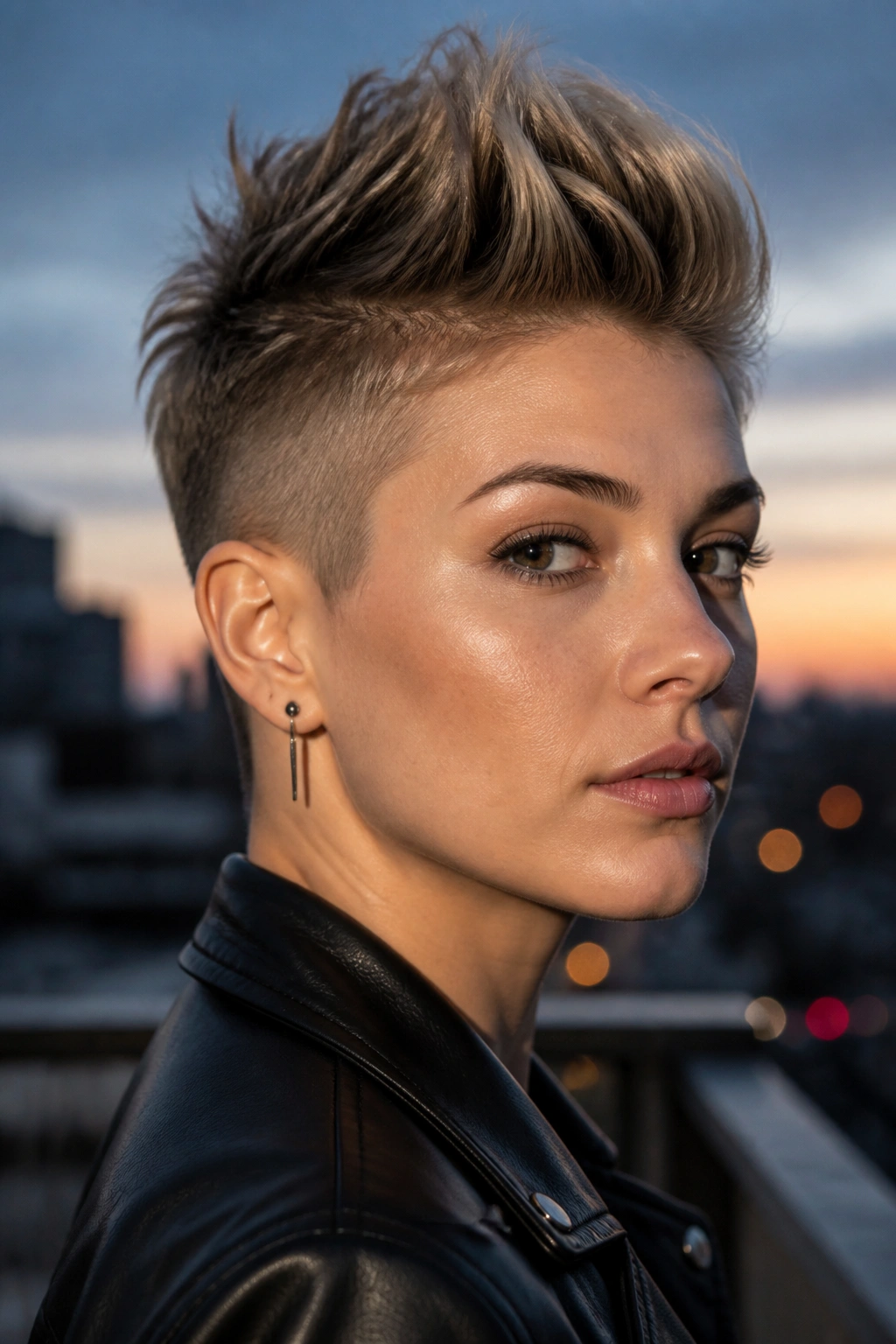
This is the easiest way to borrow mohawk energy without committing to a full mohawk. The sides are clipped short, usually under 1 inch, while the center strip stays longer — often 3 to 4 inches — so you can push it upward, forward, or slightly messy. It gives you lift at the crown, which is where a lot of short cuts either shine or fall flat.
The shape is especially good if your hair is fine and tends to collapse at the top. The undercut removes side bulk, and the center section gets to do the visual work. A bit of root lift spray, a blow-dryer, and a small brush can make a huge difference here. You do not need a mountain of product. Too much paste makes the top look greasy instead of tall.
Quick styling facts
- Dry the top in the opposite direction of your part first.
- Use a dime-size amount of matte paste, then add more only if needed.
- Pinch the ends upward with your fingertips for a rougher finish.
- Keep the sides tidy with trims every 3 to 5 weeks.
The faux hawk pixie is not shy. That’s fine. Some days call for a haircut that has a little swagger built in, and this one delivers that without turning into a costume.
Pro tip: keep the front piece slightly longer than the crown if you want the look to feel less costume-y and more modern.
6. Slicked-Back Undercut Crop
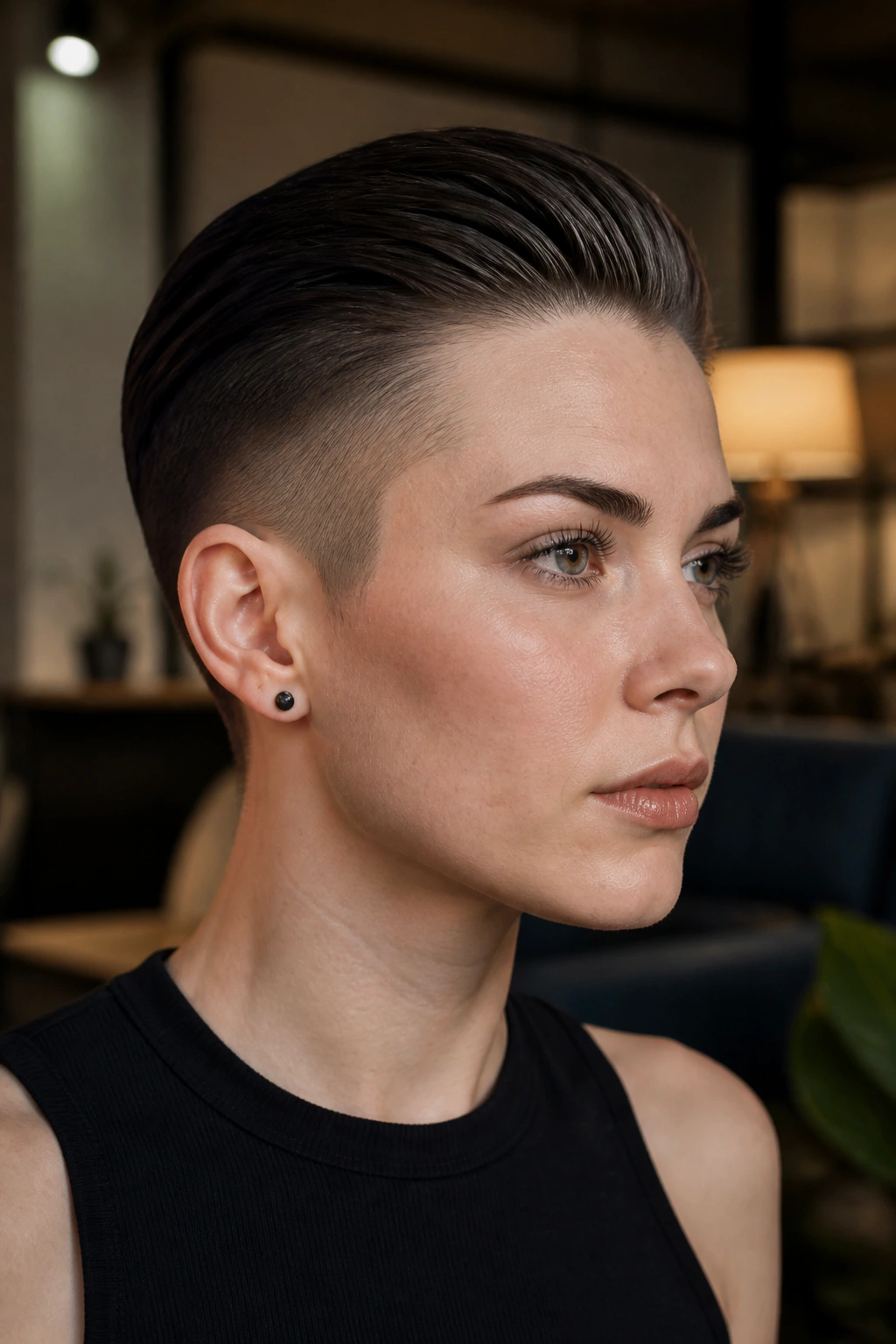
I keep coming back to this one because it’s clean in a way that never feels lazy. A slicked-back undercut crop uses the undercut almost like a base layer: the sides and back are tight, the top stays long enough to brush back smoothly, and the whole head takes on a sleek, controlled shape. It looks especially good when the hair is just past damp and has a bit of natural shine.
The trick is not to drown the hair in product. Start with a small amount of gel or pomade, spread it through your palms, and work it from the front hairline back toward the crown. If the top is too wet when you start, the style can collapse. If it’s too dry, the product sits in clumps. That in-between stage is the sweet spot.
This cut reads dressier than a lot of short undercut styles for women, which is why it works for nights out, formal events, or any day when you want your hair to look like you meant business. It also hides second-day texture well. A little mist of water, a comb, and a touch more product can bring it back fast.
No volume at the sides. That’s the whole point. The clean profile gives your face room, and earrings suddenly matter more. So do collar lines. So does makeup, if you wear it.
A slicked-back crop is not soft. It is sharp, and that’s why it keeps showing up in real life instead of just in salon photos.
7. Bowl Cut with a Hidden Undercut
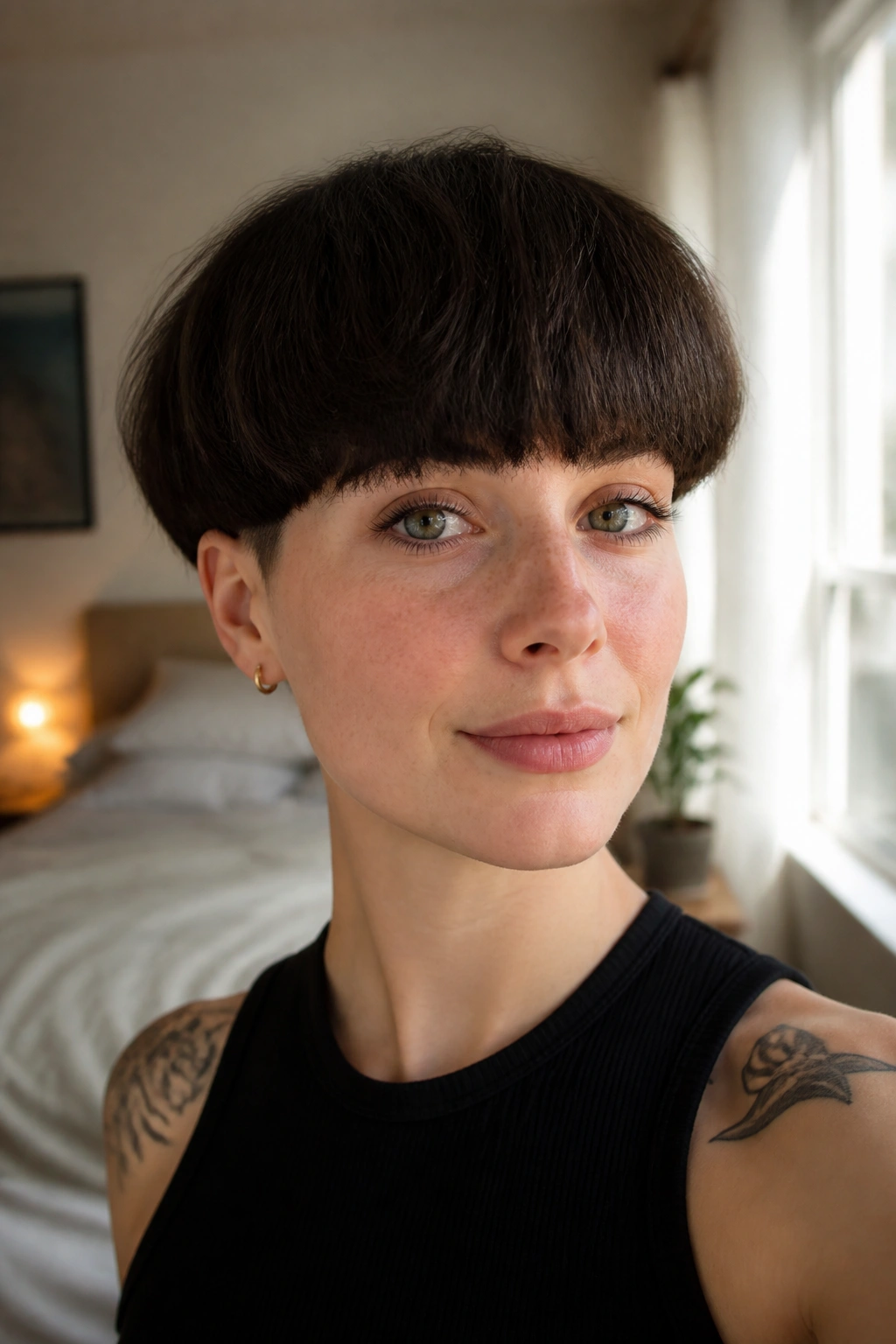
The bowl cut got a bad reputation for years, and honestly, most of that came from bad execution. When it’s modern, the curve sits cleaner, the fringe is lighter, and the hidden undercut underneath keeps the shape from turning into a helmet. The hair falls with intention instead of ballooning out around the ears.
The hidden undercut changes everything. It removes the dense inner layer that usually makes bowl shapes feel heavy, especially on thick hair. The outer line can stay blunt and fashion-forward while the underside does the boring work of making the cut wearable. That’s a trade I’ll take any day.
Why it works
A blunt perimeter can look strong when the bulk underneath is controlled. Straight hair shows the shape most clearly, but loose waves can work too if the top is left a little longer. The cut lands best when the fringe is cut with a little softness at the edges, not sliced into a hard shelf.
Ask for this if:
- You want the silhouette to stay round, not puffy.
- Your hair gets bulky at the nape and behind the ears.
- You like a sharp shape but want the undercut mostly hidden.
- You’re willing to style the fringe forward with a round brush or flat brush.
This one is not for everyone. Good. Haircuts should have opinions. If you like a precise shape with a secret underlayer, though, this is one of the more interesting short undercut styles for women.
8. Textured French Crop with Choppy Fringe
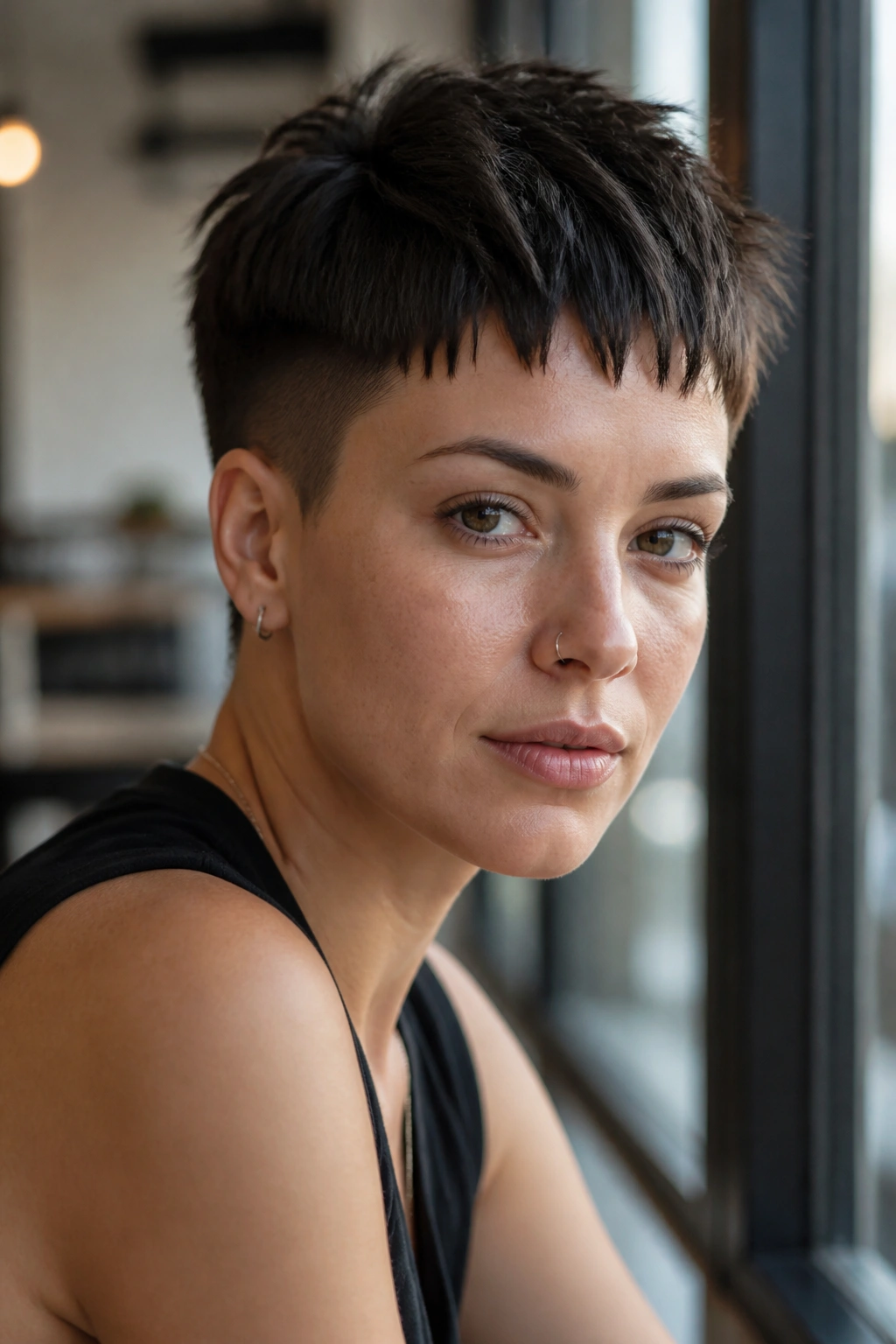
The French crop feels cool because it refuses to try too hard. Add an undercut, and the whole thing gets cleaner around the ears and neck while keeping the front piece chunky and short. The fringe usually sits just above the brows or skims them, and the top gets cut in little broken pieces so it moves instead of lying like a sheet.
This is one of those cuts that gets better when you stop fussing with it. A dab of matte cream through towel-dried hair is usually enough. If you have thick hair, the undercut stops the sides from swelling outward. If your hair is finer, the choppy top can make it look fuller than it is. That little bit of texture is doing more work than people give it credit for.
What makes it different
Unlike a pixie, the French crop keeps a heavier front line. Unlike a bowl cut, it does not insist on a perfect curve. The result feels more relaxed, even though the outline is controlled. It’s also kind to women who do not want to spend ten minutes shaping their hair every morning.
Watch for this
- Keep the fringe short enough that it does not collapse into the eyes.
- Ask for point-cutting through the top so the texture is built in.
- Use a wide-tooth comb if you want separation; skip the fine comb if you want it to look lived-in.
- Trim the undercut before it starts sticking out at the edges.
The look is small, neat, and a little gritty. I like that.
9. Tapered Bob with an Undercut Panel
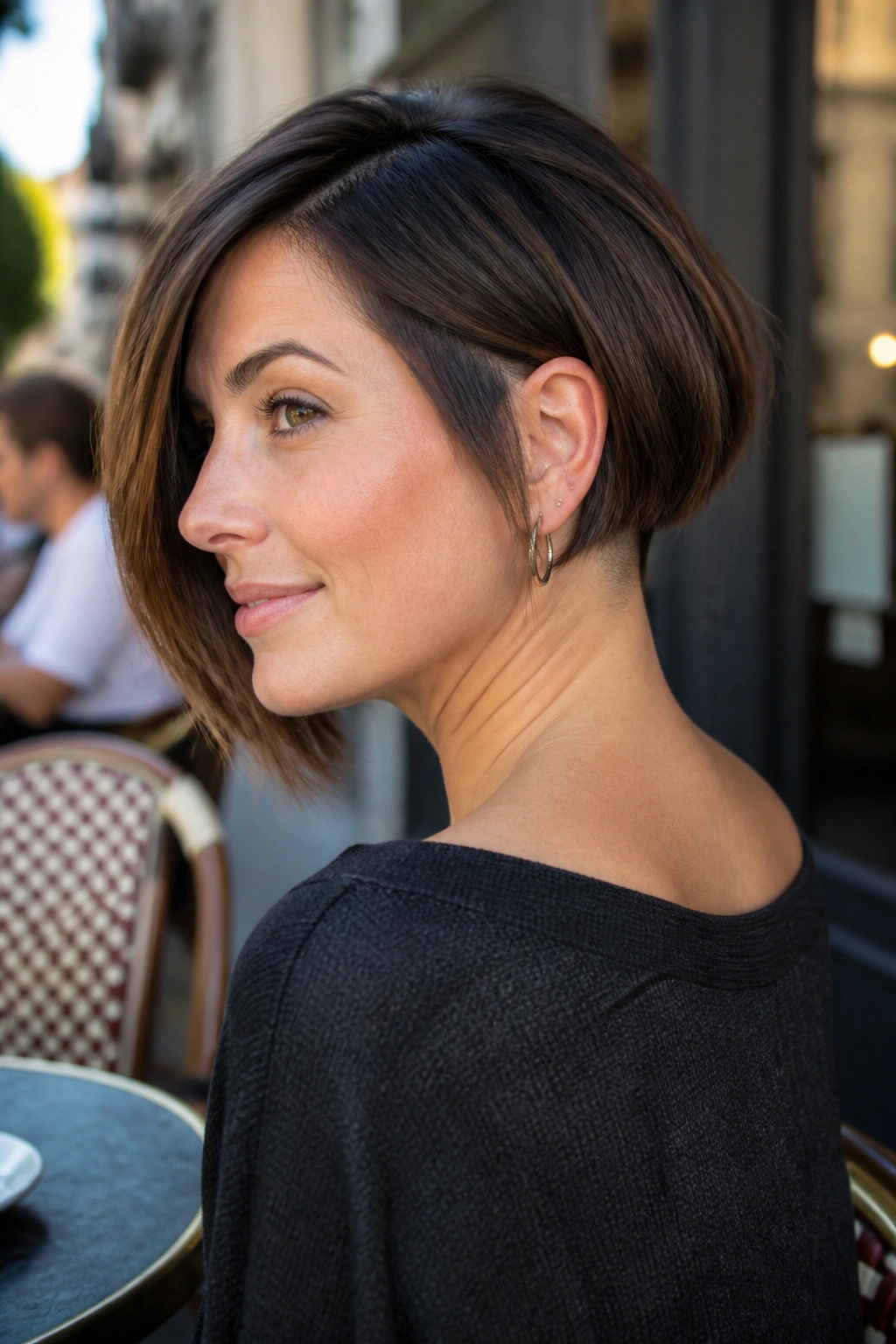
A tapered bob with an undercut panel is what happens when you want the shape of a bob but not the weight that usually comes with it. The top layer keeps the bob line — often jaw-length or just below it — while the hidden panel at the back removes the thickness that makes bobs sit out like a box.
Compared with a stacked bob, this version feels softer. The taper through the back creates a cleaner drape at the neck, and the undercut panel stops the bulk from building where hair tends to hang on itself. Thick, coarse hair especially benefits from this. It dries faster, sits flatter under scarves and collars, and needs less round-brush fighting.
A stylist can place the panel either directly at the nape or a little higher if the hair has a lot of density in the lower back section. That placement choice matters. Too high, and the undercut may peek through when you wear the hair down. Too low, and you lose the weight reduction you were after.
Grow-out note
This cut usually grows out more gracefully than a fully shaved side because the top layer hides the panel. That said, if you tuck the hair behind your ears often, the undercut can show faster than you expect. A quick trim every 5 to 6 weeks keeps the shape from getting fuzzy.
It’s polished without being stiff. That’s a useful line to live on.
10. Buzzed Pixie with a Long Fringe
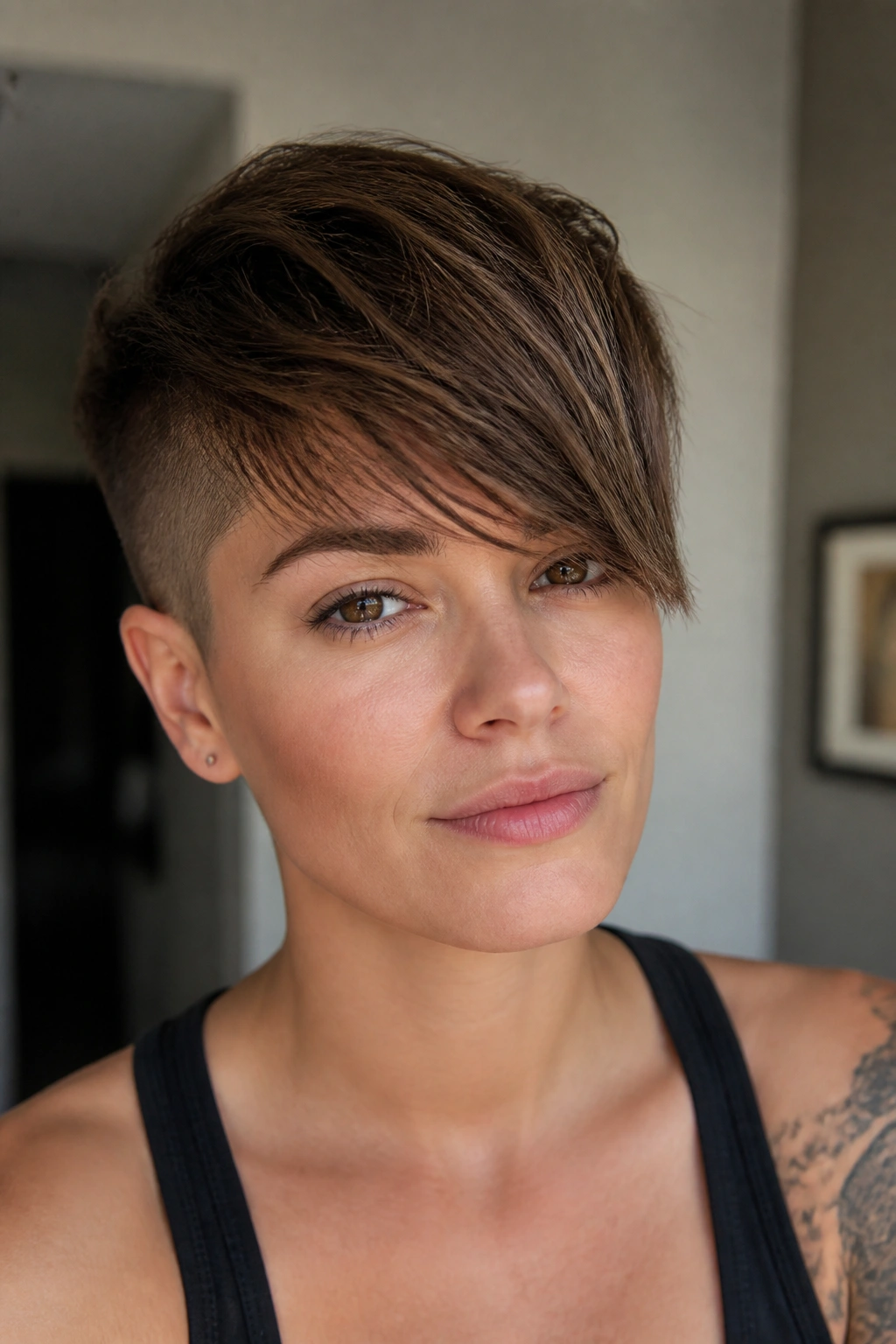
A buzzed pixie with a long fringe has a bit of drama baked into it, and I mean that in the best way. The sides and back sit close to the head — sometimes a 1/4-inch buzz, sometimes slightly longer — while the front stays much longer, often 4 to 5 inches, so it can sweep across the forehead or fall into one eye.
That contrast is what gives the haircut its punch. The short sides make the face look more open, and the long fringe adds softness right where you want it. It’s a strong shape for women who like short hair but still want a bit of movement in front. The fringe can be side-swept, pinned back, or styled into a loose bend with a flat iron.
This is also one of the better choices if you like statement earrings or sharper necklines, because the cut clears the face and the jaw. It puts the focus on bone structure, brows, and expression. Some people love that. Others need a few days to get used to seeing that much face, which is fair.
- Best with a strong brow or a fringe you’re happy to commit to.
- Needs trims every 3 to 4 weeks if you want the buzzed sections crisp.
- Works well with matte paste, light wax, or a small bend from a flat iron.
- Looks clean with a tucked side and a soft front sweep.
The long fringe keeps the cut from feeling too severe. Without it, the buzz can read flat. With it, the shape has tension and softness at the same time.
11. Undercut Shag Crop with Messy Layers
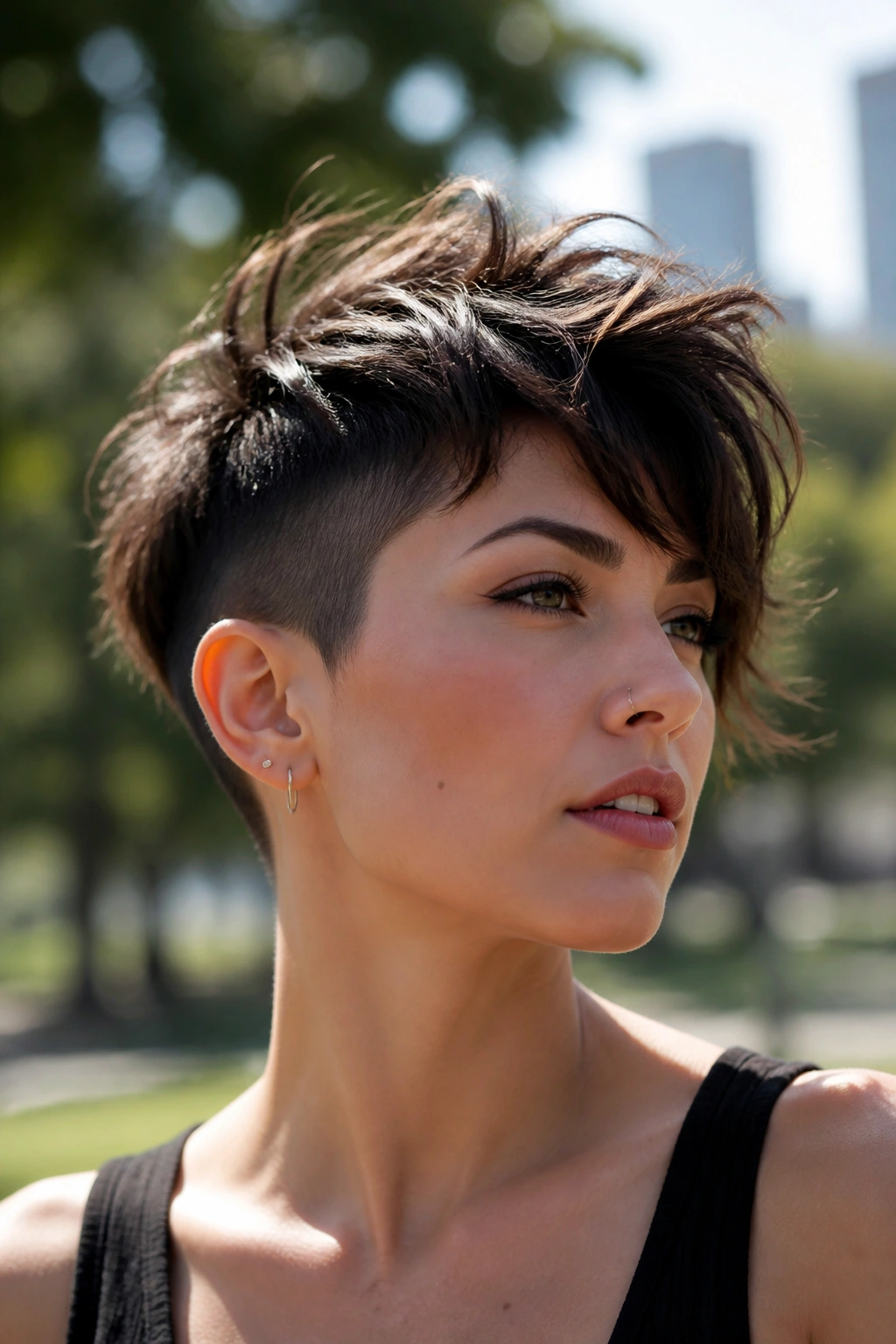
Messy is the point here. A shag crop with an undercut leans into irregular layers, broken ends, and that slightly undone shape that makes hair look like it has a bit of movement even when you barely touched it. The undercut clears out the bulk underneath, so the top layers can stay light and piecey instead of poofing out in all the wrong places.
This cut loves wavy hair. It also treats thick hair well, because the undercut takes the pressure off the lower half of the head. If your hair tends to expand at the sides, the shag crop pulls it back toward the head and keeps the shape from getting too wide. You can leave the top around 2 to 4 inches, depending on how much fringe you want to keep in play.
A little sea salt spray at the roots can help, but don’t confuse “messy” with “unstyled.” The best versions still have a clear perimeter around the ears and nape. That edge is what keeps the look from drifting into grown-out territory too soon. A diffuser works nicely here, though air-drying can be even better if your wave pattern is strong enough.
One sentence, because it matters: this cut gets better when you stop trying to make every piece behave.
If you like a haircut with movement and a little edge, this one delivers a lot without asking for a strict routine.
12. Patterned Undercut Pixie for Short Undercut Styles for Women with a Hidden Edge
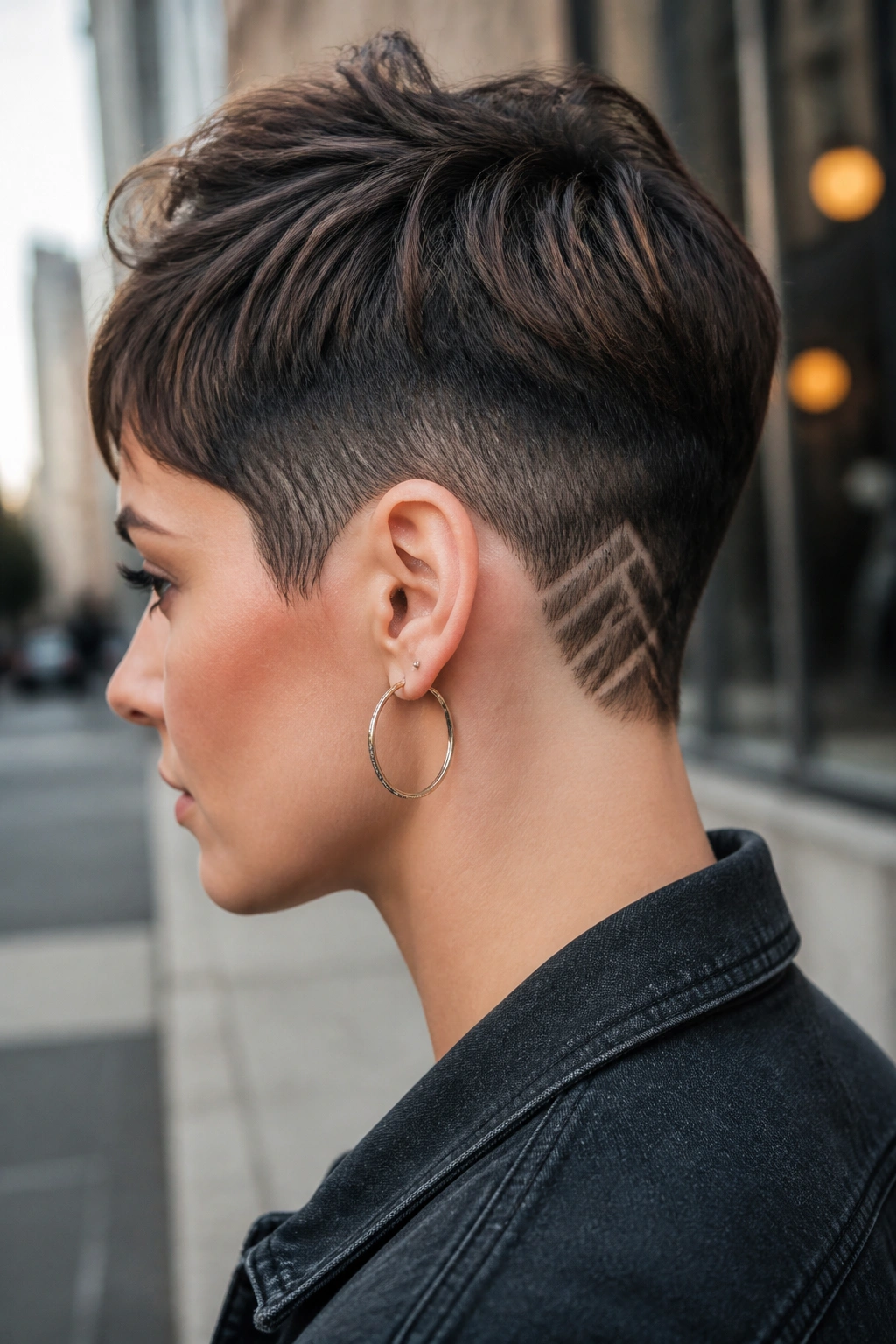
A patterned undercut only works when the top stays soft enough to balance it. That’s the part people miss. The design — a line, a curve, a small geometric shape, maybe a simple diagonal — sits in the shaved area, usually at the nape or behind one ear, while the rest of the cut keeps enough length to reveal it only when the hair moves.
This is not the place for a giant tattoo-like haircut unless you want a lot of attention. A small design often reads better. It looks sharper in motion, especially when the top is tucked behind one side or clipped up. If you like the idea of a hidden detail that shows up only on purpose, this is a strong choice.
Best placement
The nape is the safest spot if you want the design to stay under the radar most of the time. Behind the ear gives more visibility when the hair is tucked. Higher side panels show faster but also grow out faster, so be honest about how often you’ll want it cleaned up.
When to skip the pattern
- If your hair grows fast and you hate frequent trims.
- If you need the cut to stay low-key in conservative settings.
- If you do not want to explain your haircut to strangers every day.
- If your top layer is too short to frame the design.
A patterned undercut is a good reminder that short hair can hold a secret. Not a loud one. Just enough to make the back of the head interesting when someone catches it from the side.
Final Thoughts
The best short undercut styles for women are the ones that match your hair’s real behavior, not the version you wish it had. Thick hair, curly hair, fine hair, straight hair — they all handle undercuts differently, and the placement of the shave matters as much as the shape on top.
That detail changes the whole haircut. A low nape panel grows out quietly. A temple shave shows faster. A hidden undercut stays polite longer, while a faux hawk or patterned cut makes the edges part of the look.
Bring photos, yes, but bring one from the side too. That’s the angle that tells the truth.
