



A round face and a short undercut can work together better than most people expect. The trick is not to shave the sides and hope for the best. You need shape: height on top, tightness at the temples, and a top section that doesn’t balloon out across the cheeks.
That’s why some undercuts make a face look sharper while others do the opposite. A blunt fringe that sits low on the forehead can make the face read wider. A heavy, boxy top can do the same thing. But the right cut — especially one with texture, diagonal movement, or a bit of lift — pulls the eye upward and trims down the visual width.
Hair type matters too. Straight hair shows line and structure fast. Wavy hair needs enough length to move, but not so much that it turns fluffy. Curly hair needs control at the sides and enough room on top to keep the shape from collapsing. The good news is that a short undercut gives you options in all three cases.
So let’s get specific. These 22 short undercut styles for round faces are the ones that keep the sides lean, make the top do the talking, and avoid that soft, same-width-all-the-way-around look that can happen when a cut is too even.
1. Textured Crop with Low Fade
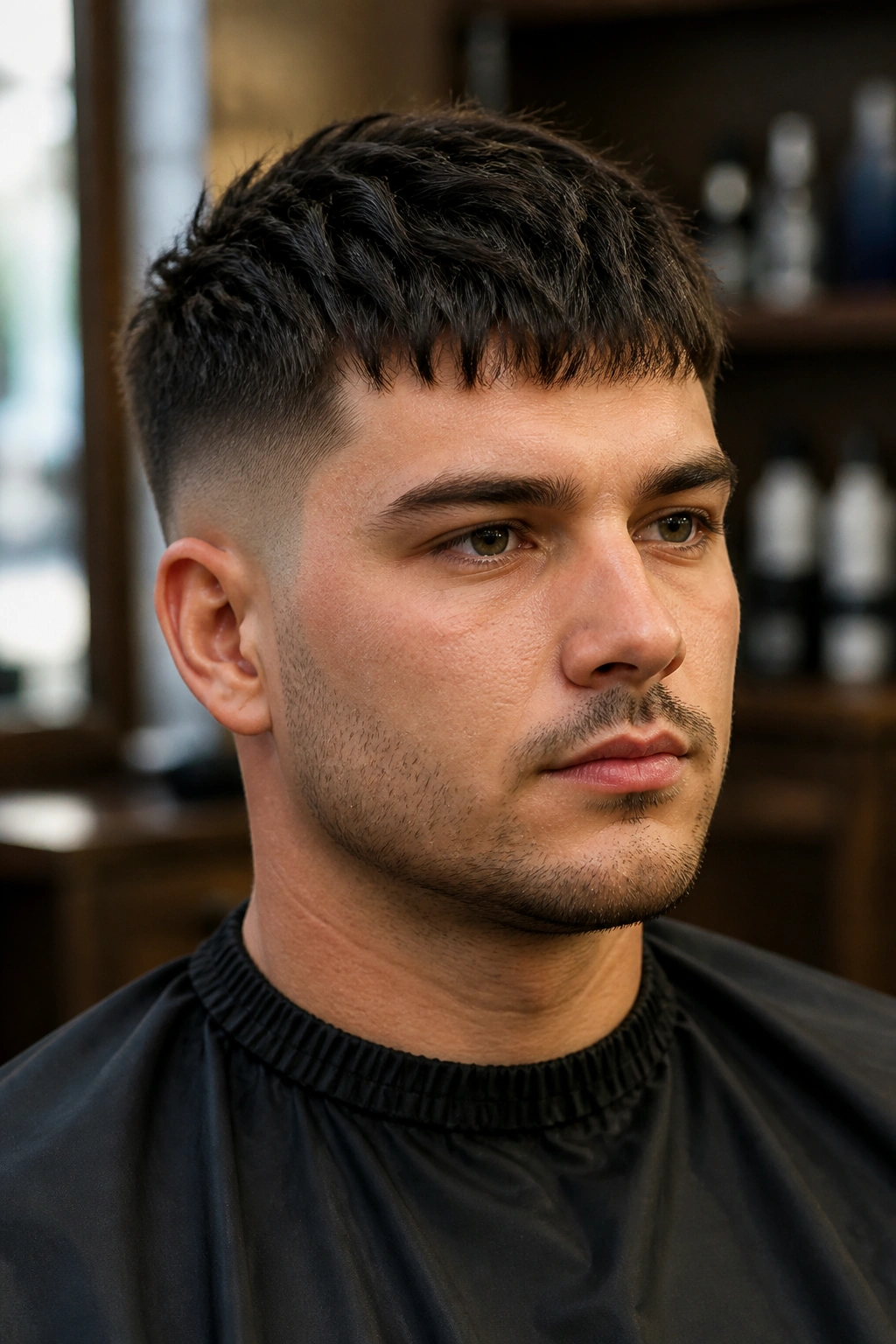
This is one of the safest bets for a round face, and I mean that in the best way. A textured crop keeps the top short enough to stay neat, while the low fade narrows the head near the ears without making the whole haircut look severe.
Why It Works
The choppy top breaks up the shape of the face. Instead of one smooth, wide line, you get little points of texture that draw the eye upward. That matters more than people think.
Ask your barber for 2 to 3 inches on top, cut in uneven layers, with the fringe kept short and jagged rather than flat. If the front is too blunt, it starts to act like a horizontal bar. Not ideal.
- Keep the fade low or mid-low.
- Use a matte clay, not a shiny pomade.
- Push the top forward with your fingers, then pinch pieces up for texture.
Best move: blow-dry the top for 30 seconds before adding product. It gives the crop more lift and stops it from lying flat against the forehead.
2. Side-Swept Undercut
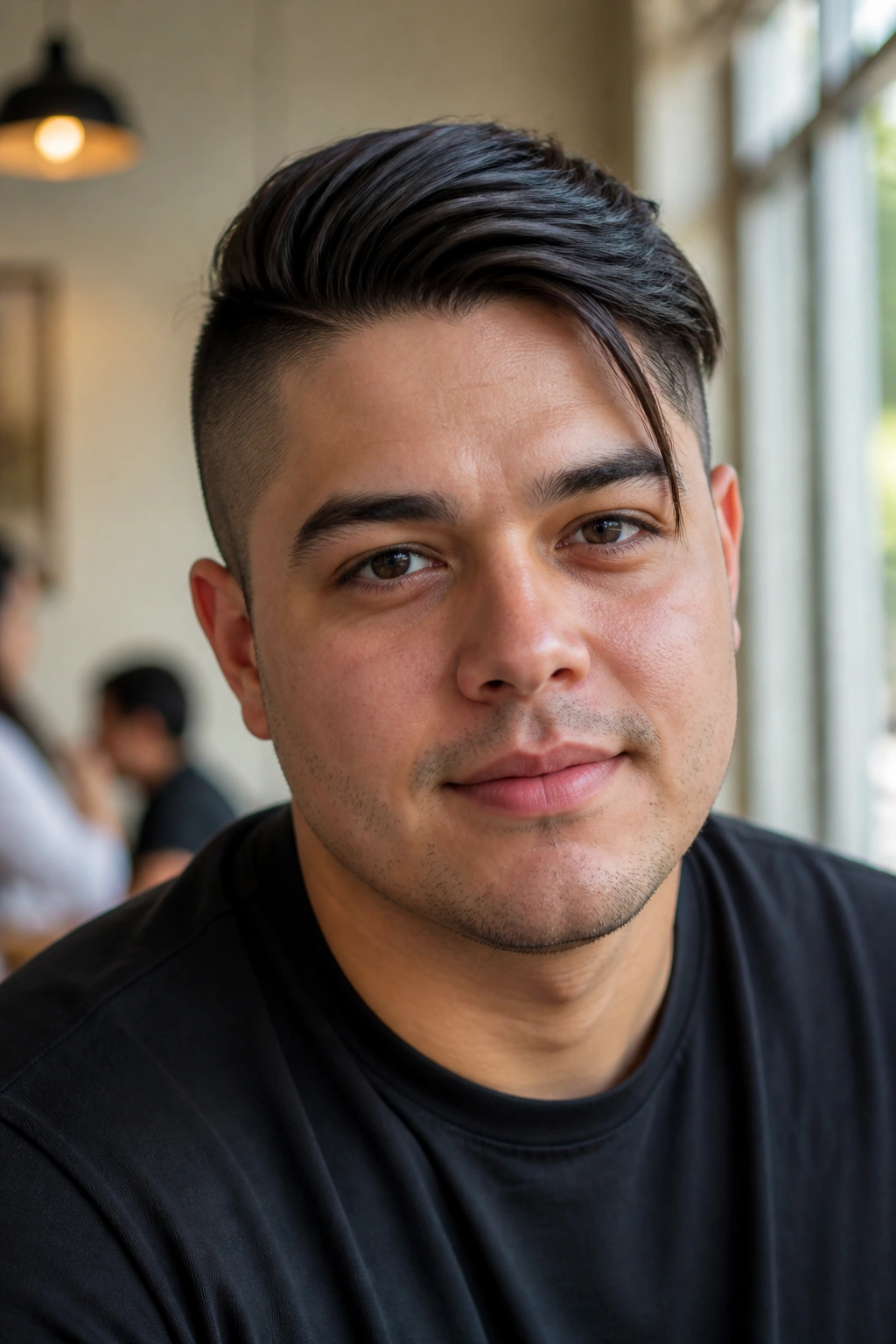
If you want a round face to look longer fast, a side-swept undercut does a lot of the work for you. The diagonal direction is the point. Straight across reads wide; angled movement reads slimmer.
The top should have enough length to sweep from one side to the other without drooping. Think 3 to 4 inches, depending on hair density. The undercut on the sides should stay clean so the sweep has room to stand out.
A lot of men go too neat here and accidentally make the style stiff. Don’t slick it into place like a board. Let it fall a little, especially near the front. That loose bend keeps it from looking helmet-like.
This cut suits straight or slightly wavy hair best. If your hair is thick, remove some bulk from the top so the sweep doesn’t puff out at the temple line. If it’s fine, use a light mousse before blow-drying to give it grip.
3. Quiff with Skin Fade
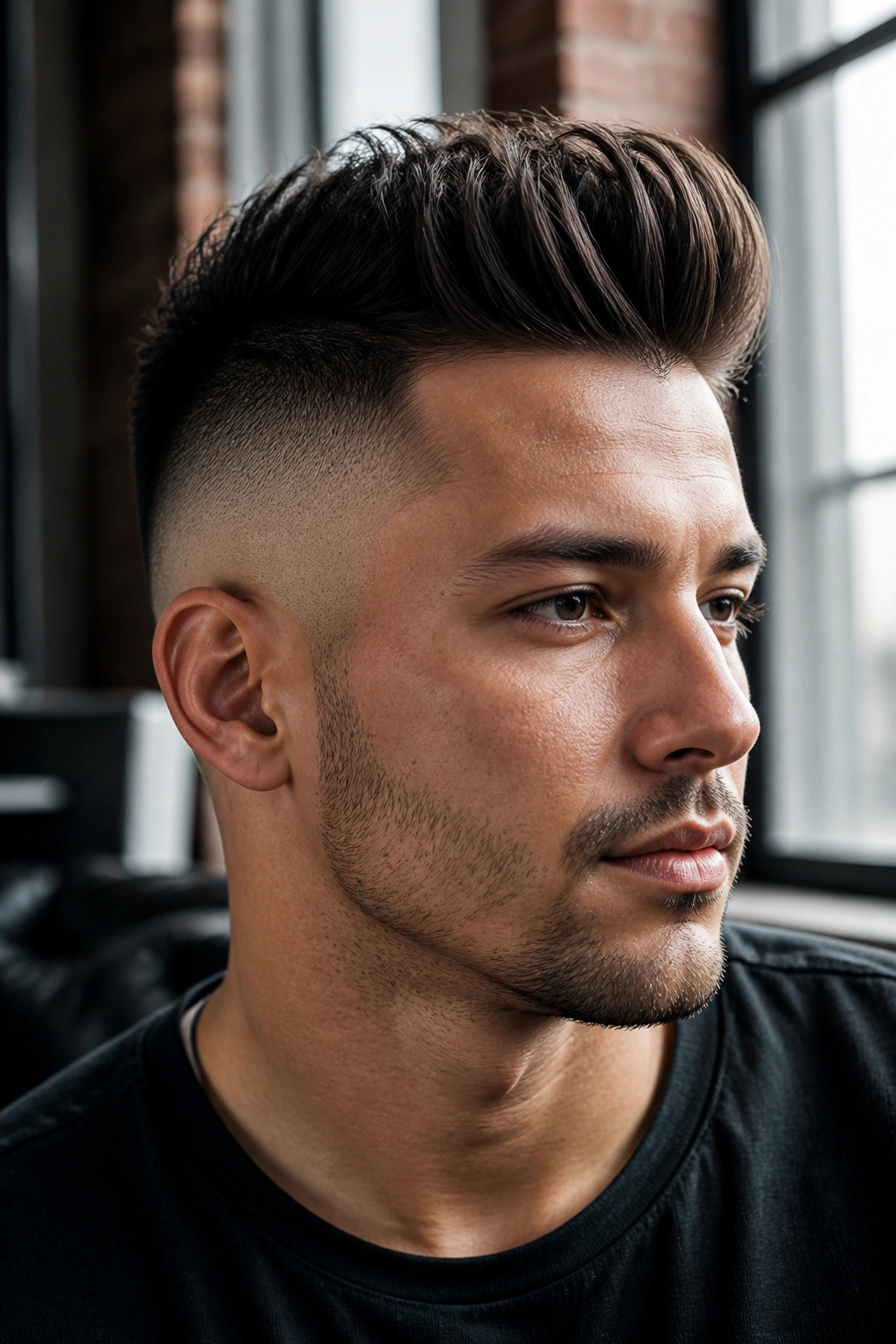
Why does the quiff keep showing up in round-face style lists? Because height helps. A short quiff adds vertical lift at the front, and that’s exactly where a round face benefits most.
What Makes It Different
Unlike a pompadour, a short quiff doesn’t need a huge wave of hair. You want the front raised and pushed slightly back, with the sides tight enough that the head shape looks cleaner. A skin fade works well here because it strips away bulk right where the face is widest.
The danger is overbuilding it. Too much height and too much width at once can make the cut feel top-heavy. Keep the sides narrow and the quiff compact. That balance matters more than volume alone.
How to Style It
- Start with damp hair.
- Blow-dry the front upward using a round brush or your fingers.
- Finish with a matte paste or clay for hold.
- Keep the front piece soft, not frozen.
If you have a strong cowlick, tell the barber before they cut. Otherwise the front can split and ruin the shape.
4. Slicked Back Undercut
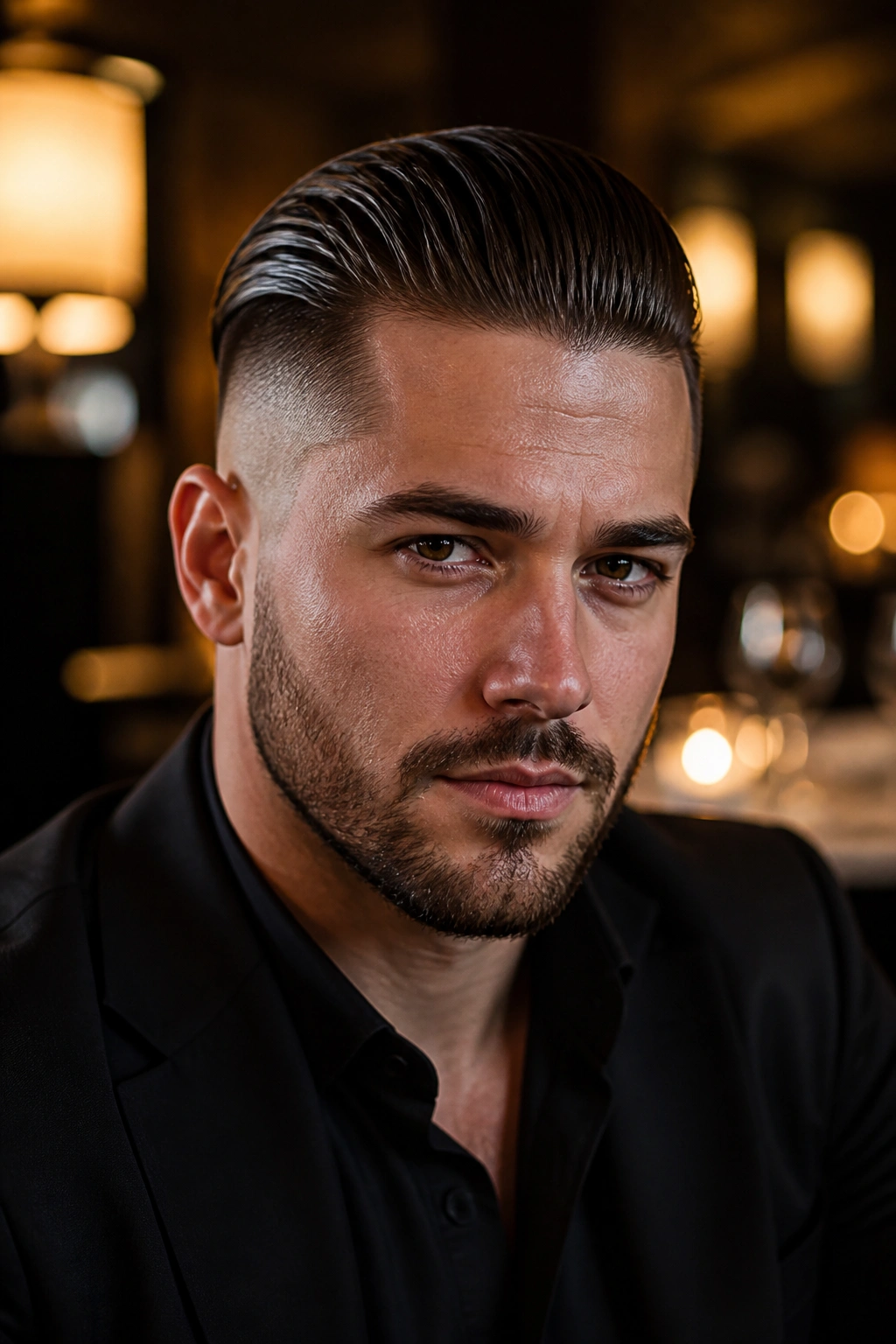
A slicked back undercut is one of those cuts that looks confident the second it’s done right. For round faces, the key is keeping the sides tight and the top controlled, not greasy or over-combed.
Picture a clean dinner jacket for your hair. That’s the feel. The top should be long enough to move straight back — usually 3 to 5 inches — but not so long that it collapses into the sides. The undercut removes width, and the slicked-back direction creates length.
- Use a medium-hold pomade if you want shine.
- Use a matte cream if you want less gloss and more texture.
- Comb straight back only after the product is evenly spread.
The face-shaping benefit is simple: less side bulk, more vertical line. Just be careful with a high hairline. A slicked-back style can expose more forehead than some people like, so it’s better when the top is dense enough to cover without looking thin.
5. Messy Fringe Undercut
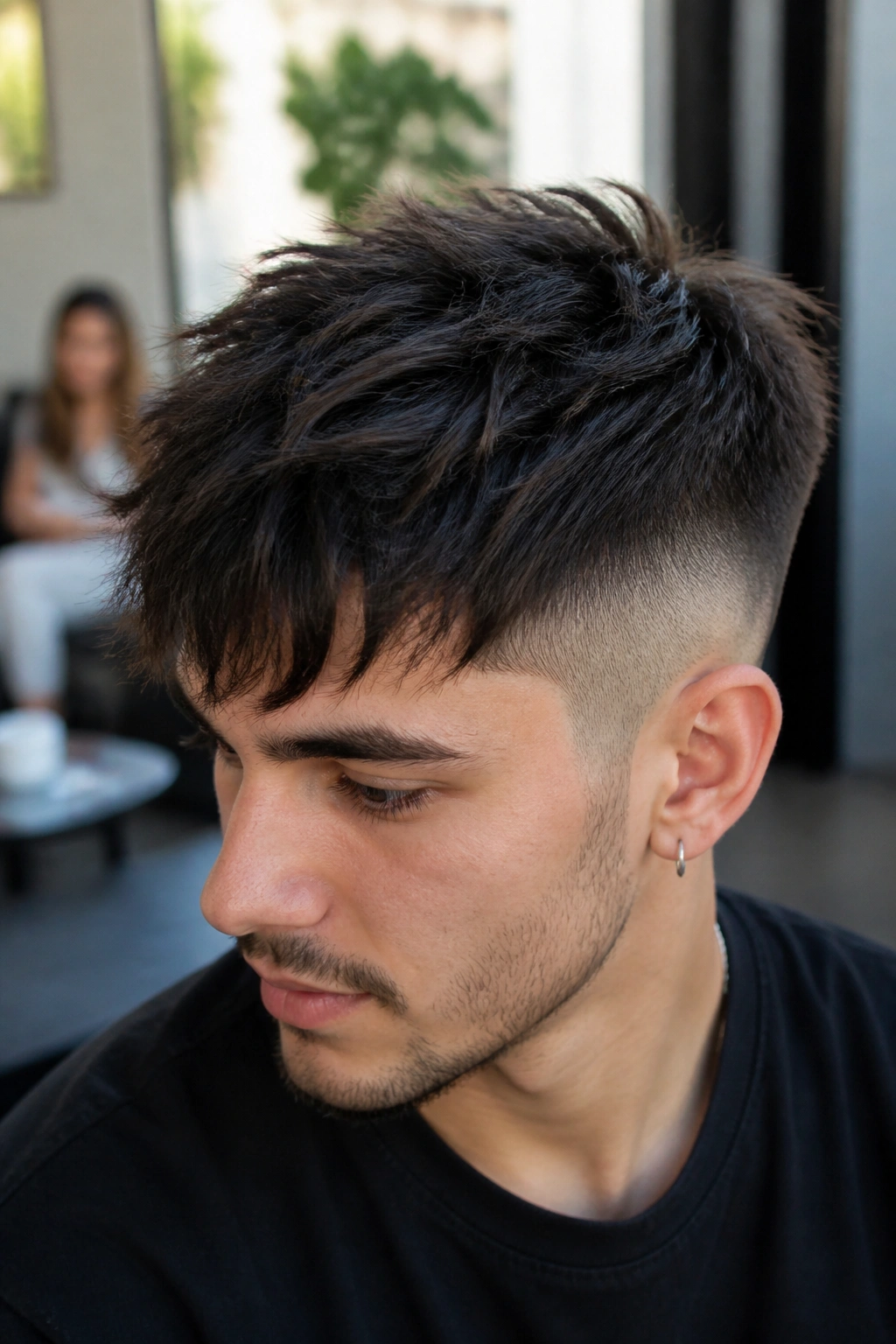
A messy fringe undercut can be excellent on a round face, but only when the fringe is broken up. A heavy, blunt fringe is the wrong move. It chops the face in half and makes width feel stronger.
Used the right way, though, this style softens the forehead and keeps the haircut casual. The trick is to keep the fringe piecey, uneven, and lightly forward. You want movement, not a curtain.
The top can be short — around 2 to 3 inches — as long as it has some texture cut into it. This works especially well for men with straight hair that tends to sit flat. A small amount of paste at the roots helps the fringe separate instead of clumping.
I like this style for guys who want a little edge without looking too polished. It’s less formal than a quiff, less rigid than a comb over, and easier to wear on a busy morning. It also grows out in a forgiving way, which is worth something.
6. Curly Top Undercut
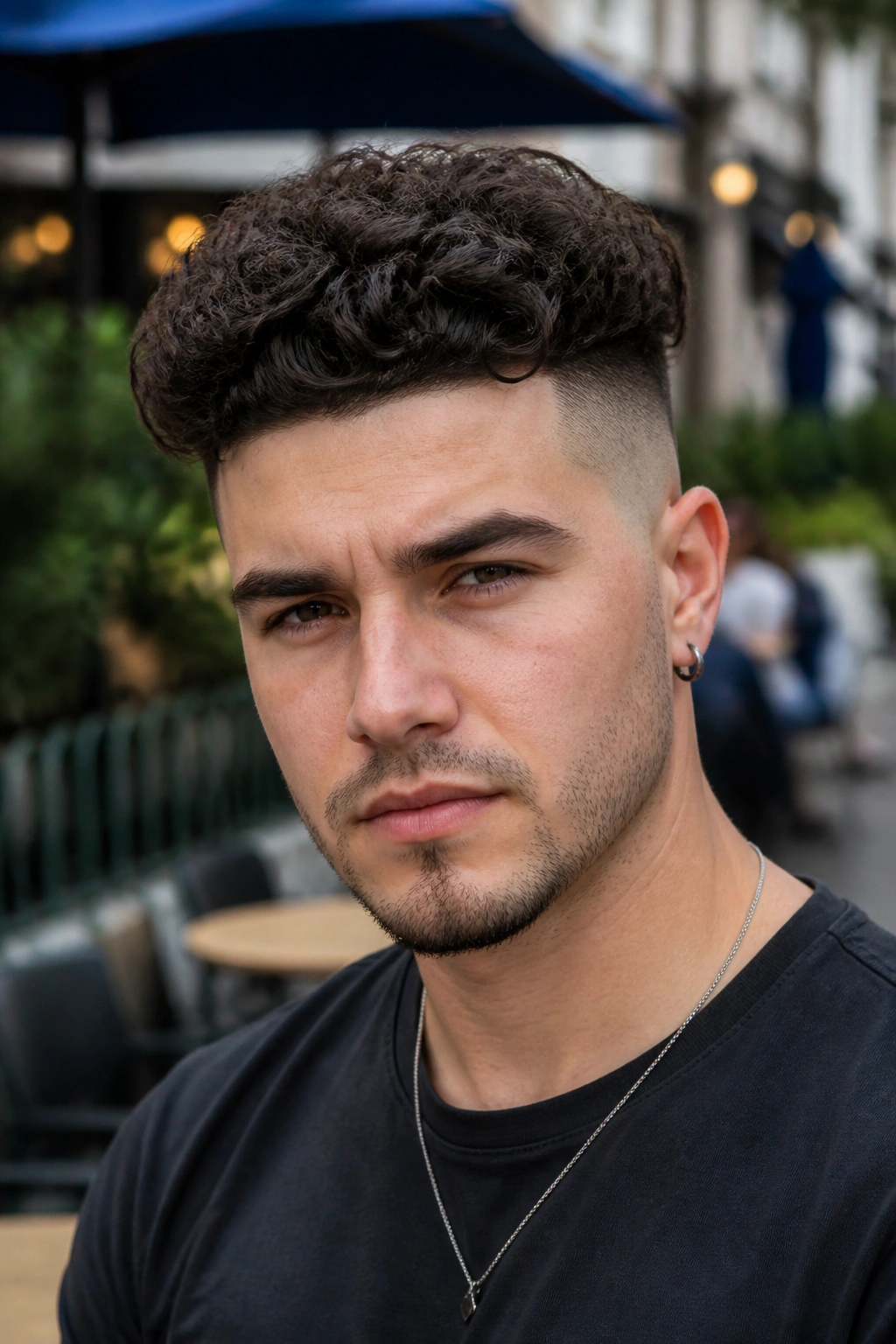
Curly hair can be a gift on a round face, provided the sides stay lean. The shape you want is a clean base with a controlled puff on top — not a mushroom, not a triangle.
What Makes It Different
Compared with straight hair, curls already give you built-in texture and lift. That means you do not need to chase height with product and heat all day. You need shape, separation, and a good fade to keep the sides from widening the face.
The barber should leave enough length on top for the curls to form naturally, then taper or undercut the sides tightly. If the curls are dense, some internal debulking on top helps the haircut sit higher instead of spreading outward.
A curl cream or light mousse is usually enough. Heavy gels make curls stiff, and stiff curls look bigger than they are.
Who It Suits Best
- Tight curls that spring upward.
- Loose curls that need control at the temples.
- Thick hair that tends to puff around the ears.
This one looks especially good when the top is allowed to sit a little messy. The clean sides make the curls look intentional instead of uncontrolled.
7. Hard Part Undercut
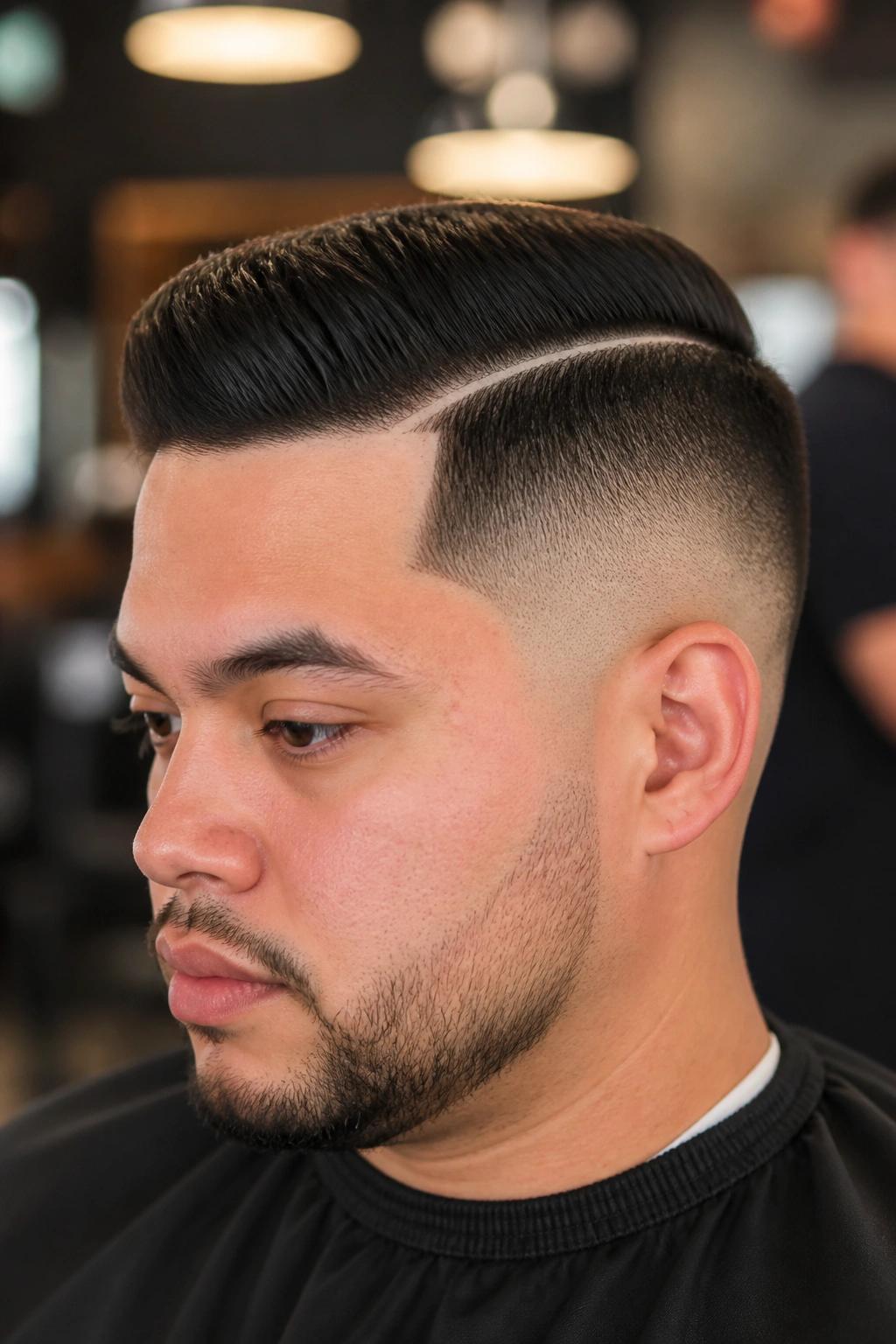
A hard part is one of the easiest ways to add structure to a round face. The shaved line doesn’t just separate the hair; it creates a strong visual break that makes the style look sharper.
Why It Helps
Round faces benefit from angles, and a hard part gives you one instantly. It also helps the haircut avoid the “same everywhere” problem. That little line near the crown or temple pulls attention away from the width of the cheeks.
Ask your barber to place the part where your natural growth already wants to split. A forced part can fight your hair and look awkward by midafternoon. Keep the top short on one side and a little fuller on the other so the line has contrast.
- Works well with a comb over or side sweep.
- Looks cleaner with a mid fade.
- Needs a touch-up every couple of weeks if you want the line crisp.
A hard part is not subtle. That’s the point. It gives short hair a bit of attitude without needing extra length.
8. Pompadour Undercut
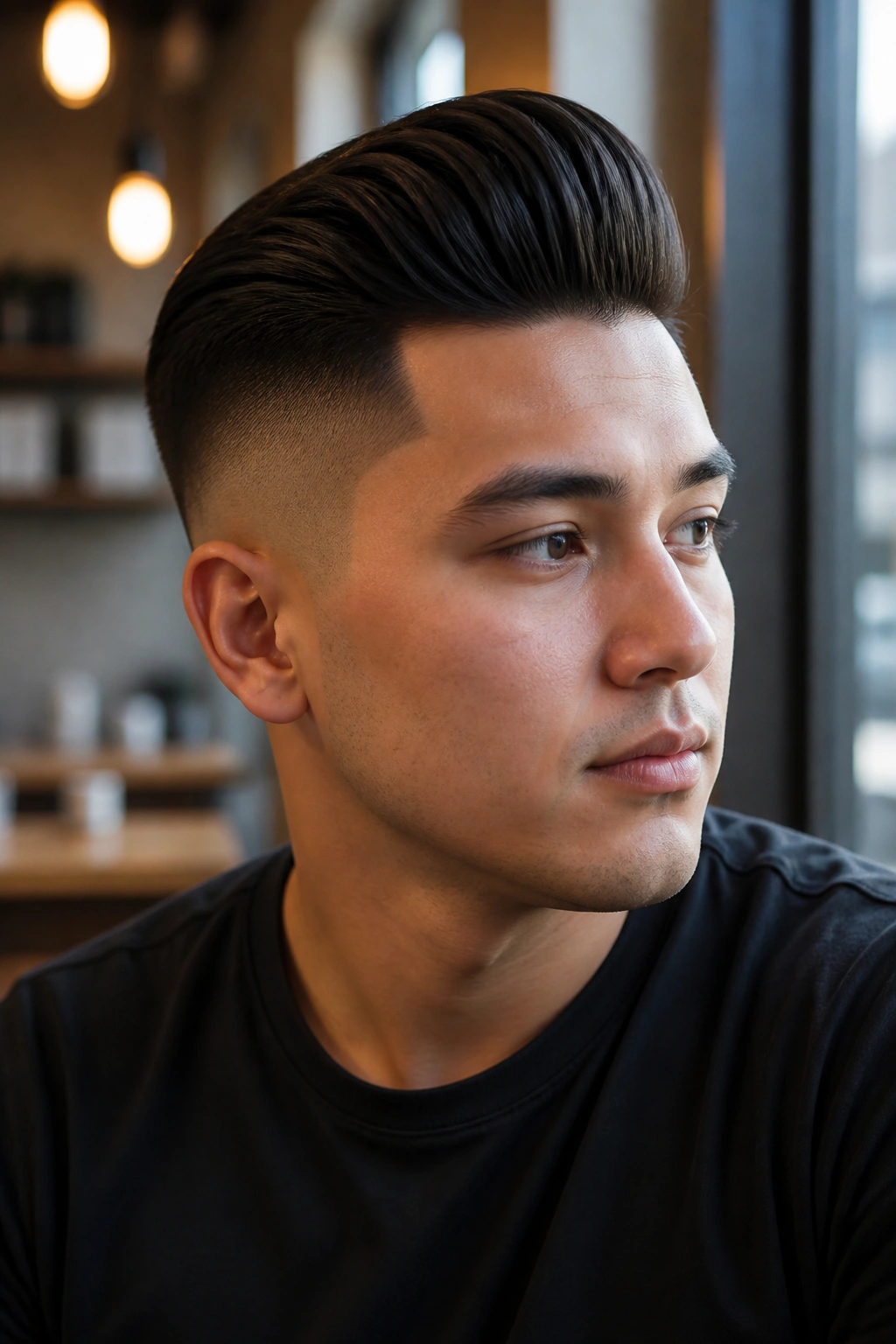
A short pompadour is one of the better choices if you want height without going full retro spectacle. The lifted front stretches the face vertically, which helps a round shape look leaner.
The secret is to keep the pompadour compact. Too much roll at the front can make the hair sit like a shelf. You want a soft rise that begins near the hairline and flows back with some control. A low or mid undercut keeps the focus on the top, not the sides.
This style usually needs blow-drying. Product alone won’t do the job. Lift the front with a vent brush, direct the airflow upward, then back. After that, use a medium-hold clay or pomade depending on whether you want texture or shine.
It’s a strong look for thicker hair. Fine hair can still wear it, but the front needs a little pre-styling spray or mousse so it doesn’t collapse by lunchtime. Clean sides matter here more than almost anywhere else. If the sides get bulky, the whole shape loses its edge.
9. Faux Hawk Undercut
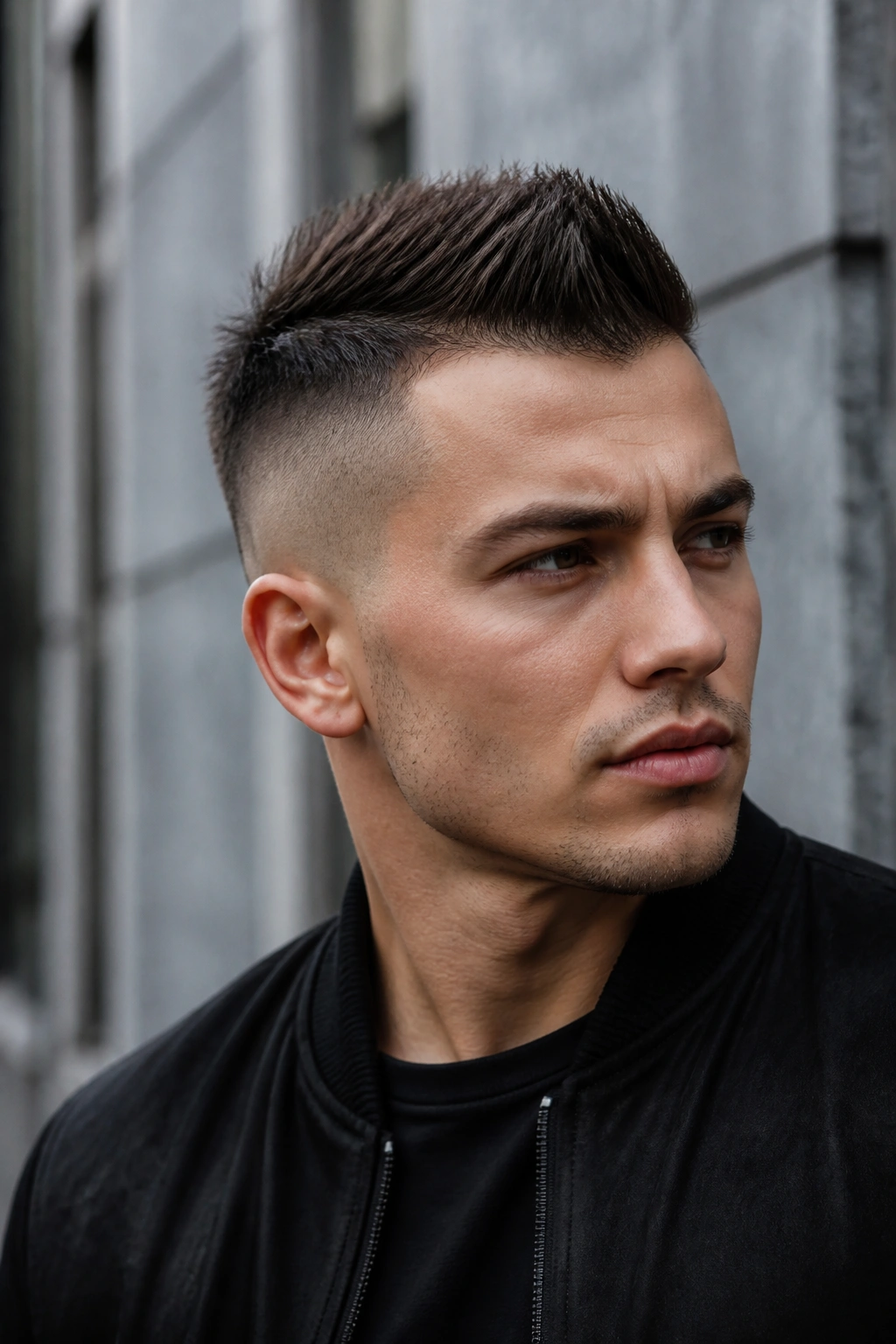
A faux hawk is almost made for round faces because it creates a narrow center strip of height. That central lift visually lengthens the head and keeps the eye away from the cheeks.
The Shape to Ask For
Tell the barber you want the sides tight but not disconnected to the point of looking severe. The top should rise through the middle and narrow toward the temples. If the top flares too wide, you lose the slimming effect.
The styling is refreshingly simple. Work a matte product through damp hair, then push the center section upward with your fingers. Do not over-comb it. The charm of a faux hawk is the slight roughness.
This is a good cut if you like something bolder than a quiff but less formal than a pompadour. It can look sharp with a skin fade, or a little softer with a taper. Either way, the central ridge is doing the heavy lifting.
10. Caesar Undercut
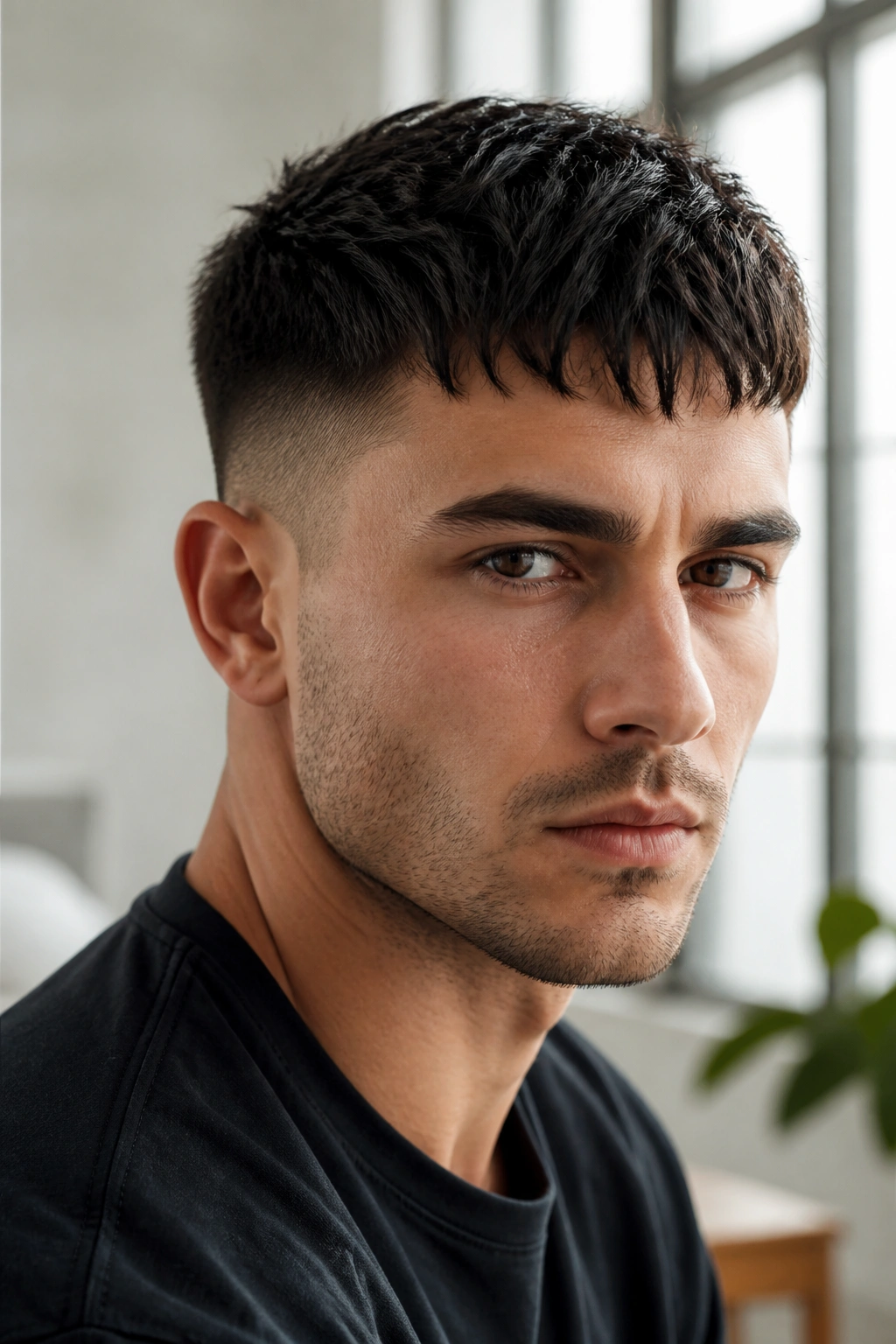
A Caesar cut sounds strange for a round face at first, because the classic version sits forward and straight. The modern version is a different animal. Short, textured, and slightly uneven, it can work well when the fringe stays light.
The old-school blunt Caesar is the one to avoid. It can make the face look shorter and wider. But when the top is cut in jagged layers and the fringe sits a little broken, the style becomes more angular and easier to wear.
This cut is especially useful if you want low-maintenance hair. The top stays short, the sides stay tight, and styling takes a minute or two. A matte paste is usually enough. Just work it through with your fingertips and lift the front slightly rather than pressing it flat.
I’d call this a smart choice for men who want something tidy without a lot of obvious styling. It’s not flashy. It just works.
11. Ivy League Undercut
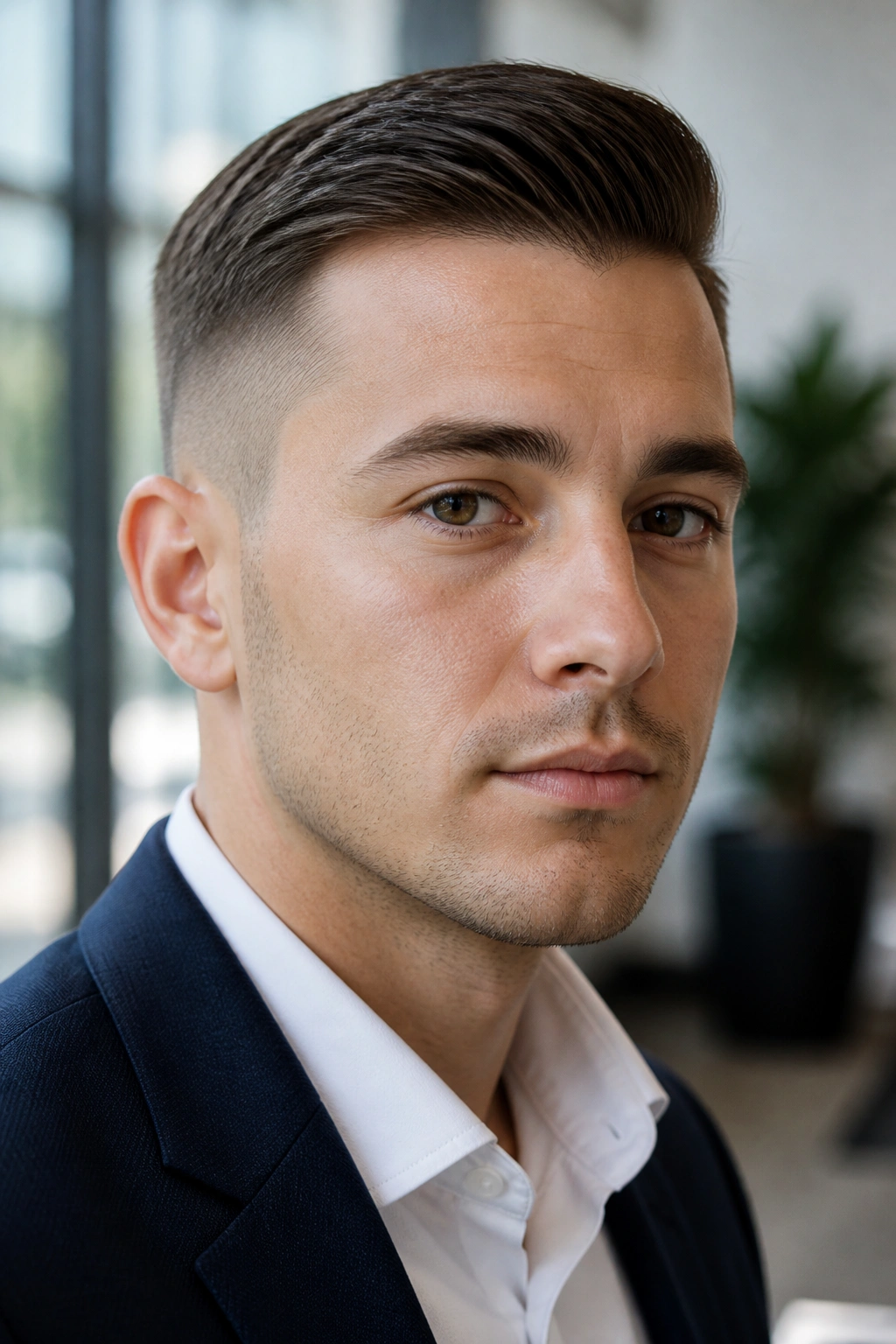
The Ivy League undercut is what happens when a clean haircut gets a bit more shape on top. It’s neat, controlled, and one of the most office-friendly options in this group.
A round face looks better when the hair is brushed in a diagonal direction rather than left to sit evenly. The Ivy League gives you that subtle angle, plus enough length on top to create a little height near the front. The sides stay tight, which matters.
This style sits in a useful middle ground. It looks smarter than a textured crop, but it is less stiff than a full side part. If you want something that can go from work to weekend without a change, this is a strong pick.
Barber Notes
- Keep the top around 2 to 3 inches.
- Ask for a low or mid taper around the ears.
- Leave enough length to sweep, not enough to flop.
A touch of cream or light pomade gives the hair enough direction without turning it shiny.
12. Comb Over Undercut
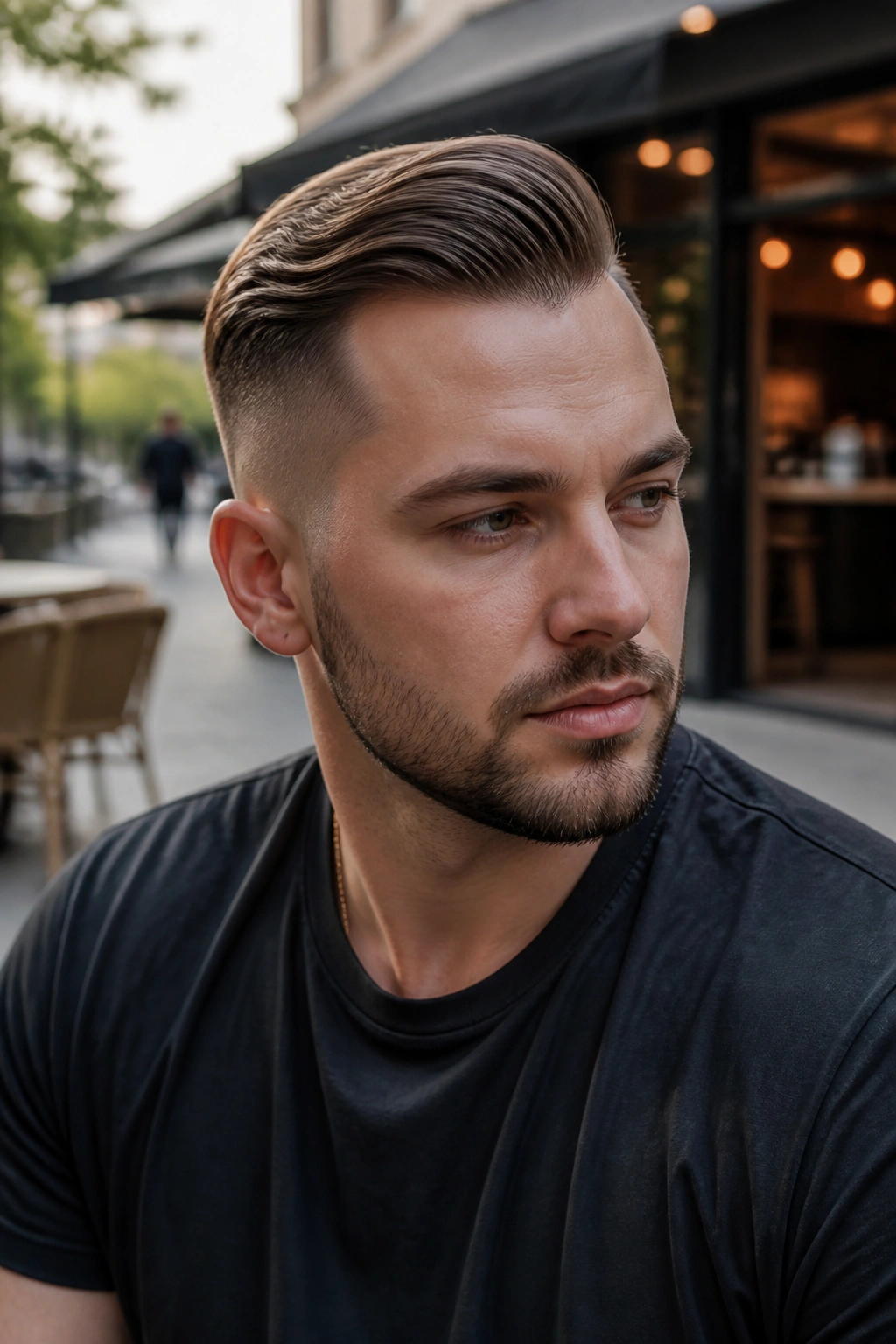
A comb over undercut works because the hair moves diagonally across the head instead of sitting flat and wide. That diagonal line is the whole trick. It slices the round shape visually and makes the face appear longer.
Unlike the version your uncle might have worn twenty years ago, the modern comb over should not look stiff or overly neat. Leave some texture in the top. Leave a little air in the front. The hair should look intentional, not lacquered down.
This cut is a good choice if your hair has medium density. Fine hair can do it too, but the parting needs to be clean and the top should not be overworked. Thick hair looks especially good here because the movement is obvious.
A strong comb over relies on the barber leaving enough contrast between the top and the sides. If the sides are too heavy, the sweep loses its shape. If the top is too long, it starts to droop. Right in the middle is usually where it lands best.
13. Spiky Top Undercut
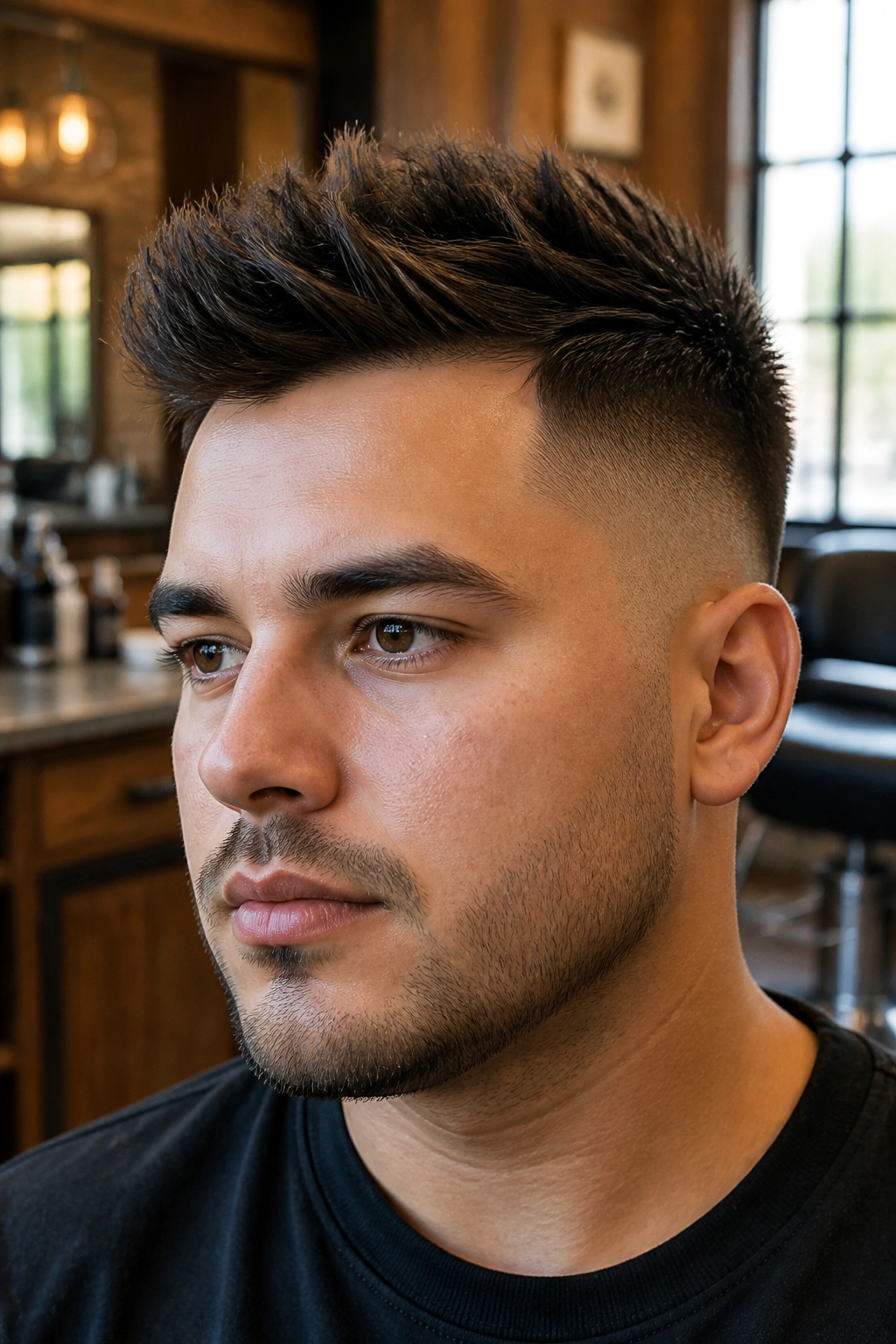
Short spikes are underrated. They are fast, practical, and they add vertical texture without needing a big amount of length. For round faces, that upward motion can make a real difference.
Why It Works
Spikes break the outline of the head into smaller, sharper pieces. That keeps the haircut from reading as one wide block. If the sides are trimmed tight, the top becomes the visual focus, which is exactly what you want.
The best version is not the crunchy, frozen style from old gel commercials. Keep the spikes soft and separated. A matte wax or clay gives grip without that stiff, wet finish. Work the product in with dry hands, then pinch the top upward in small sections.
This cut is also easy to live with. You can wear it tidy or messy depending on how much time you have. It grows out well, too, because the texture hides a little unevenness.
If your hair is straight and a little coarse, this might be one of the easiest short undercuts to maintain.
14. Wavy Fringe Undercut
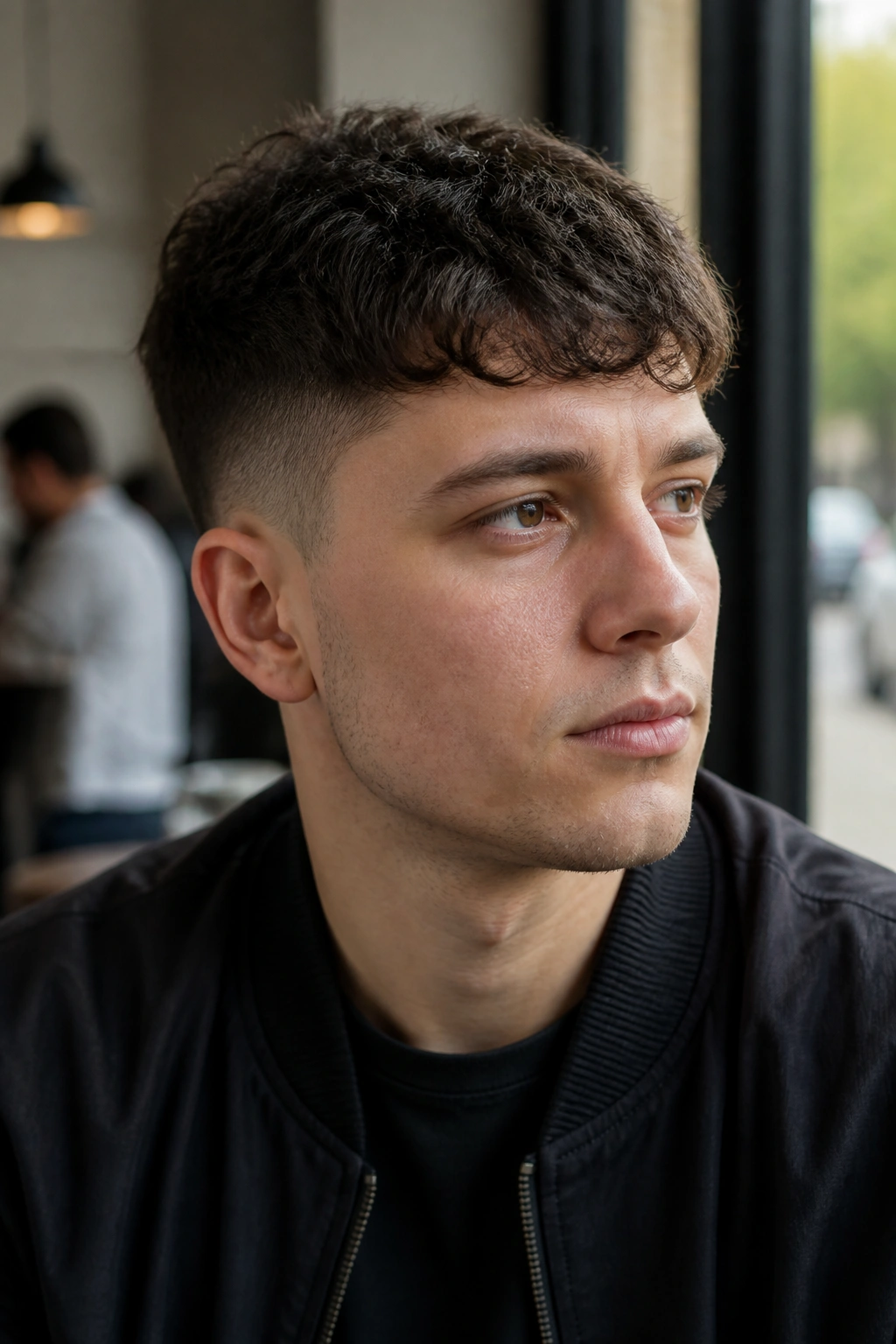
Wavy hair can be tricky on a round face because it has a habit of spreading out if it gets too long. The answer is not to fight the wave. It’s to control it.
A wavy fringe undercut works when the front is kept short enough to bend, not hang. That gives you movement at the forehead without creating a wide curtain over the face. The sides stay tight, so the wave becomes the soft part of the style instead of the bulky part.
This look has a relaxed, slightly undone feel that suits men who do not want a polished finish. A little sea salt spray before drying helps the waves separate. After that, use a light cream or paste and leave the fringe piecey.
It’s a better choice than a blunt straight fringe on a round face. The wave breaks the line. That small detail changes the whole haircut.
15. Drop Fade Undercut
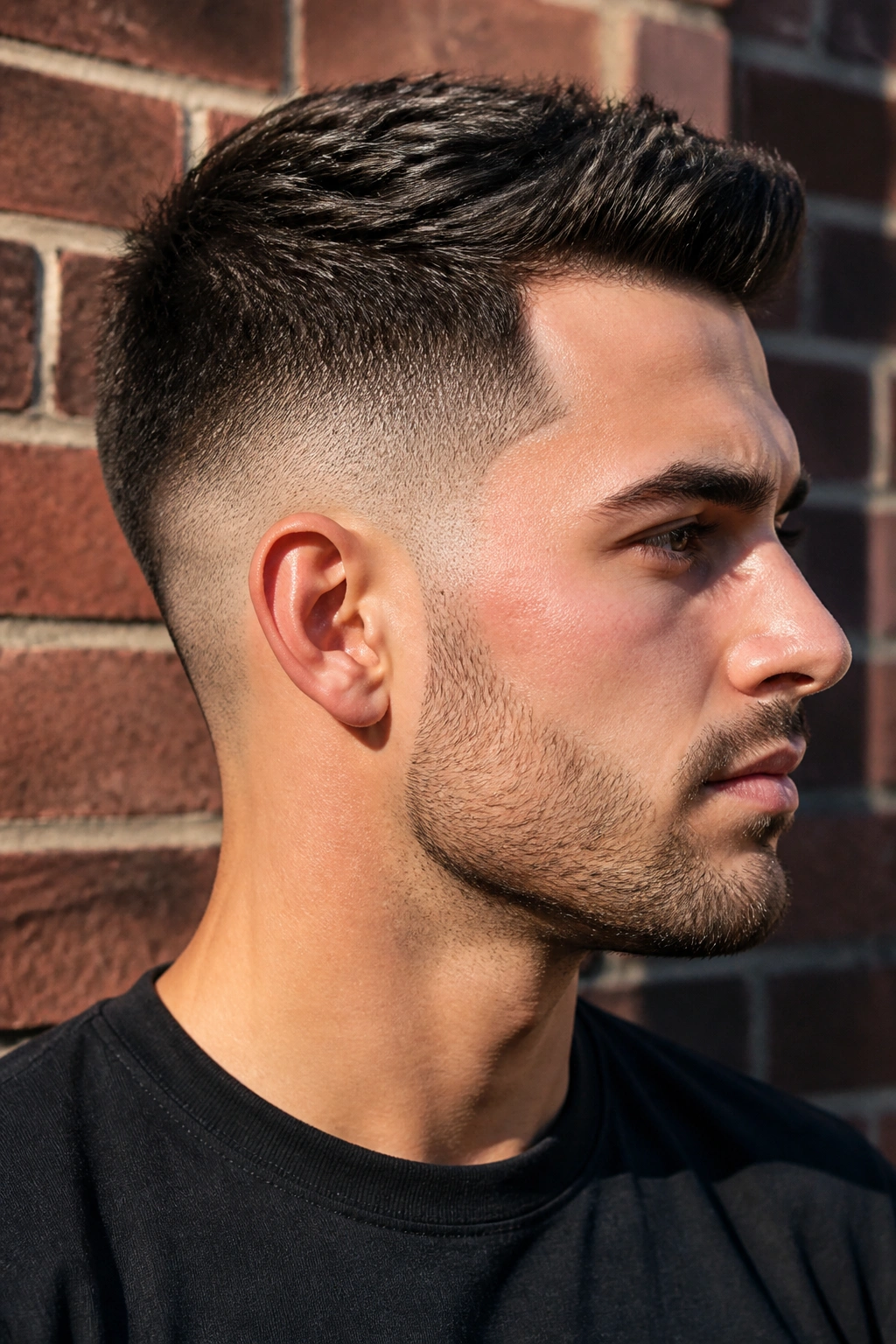
A drop fade is one of those barber details people notice without always knowing why. The fade curves down behind the ear, which shapes the haircut in a way that flat fades often do not.
Why It Helps Round Faces
The curve lowers visual weight near the sides of the face. That gives the top more room to stand out, and it sharpens the line around the jaw and temple. If your face is round, those shifts help a lot.
The drop fade pairs well with nearly any short top: crop, quiff, textured fringe, even a small pompadour. The fade itself brings the structure, so the top can stay simple.
A good drop fade should blend smoothly with no hard shelf near the top of the fade. If there’s a visible step, the cut starts to look choppy in the wrong way. A clean finish around the ears matters more here than on some other styles.
This is a barber’s haircut. You can maintain it at home, sure, but the fade needs a steady hand.
16. Burst Fade Undercut
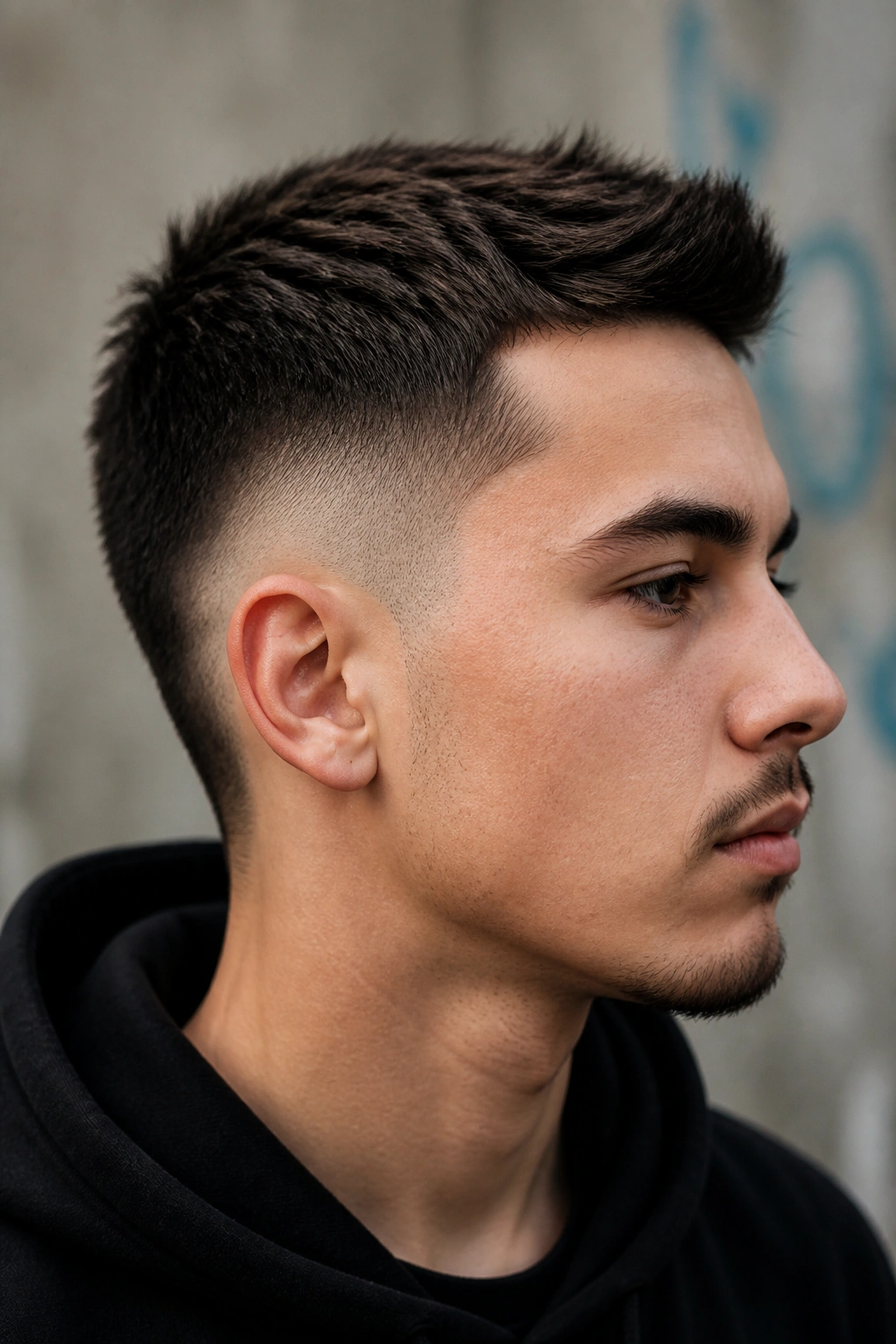
A burst fade hugs the ear in a rounded shape, which sounds counterintuitive for a round face until you see it in action. The tight curve around the ear creates contrast, and contrast is what makes the top feel taller.
This style is especially good with a mohawk-inspired top, a curly top, or a short textured crest. The center section stays longer, the sides burst away from the ear, and the whole haircut has more movement than a standard fade.
It’s a slightly louder look, no question. If you want subtle, skip it. If you want something short, sharp, and a little more expressive, it earns its keep.
The best version keeps the top compact so the burst fade remains the star. Too much bulk on top can make the shape feel heavy. Too little and you lose the point of the cut. As with most round-face styles, the balance is the thing.
17. Tapered Undercut with Beard
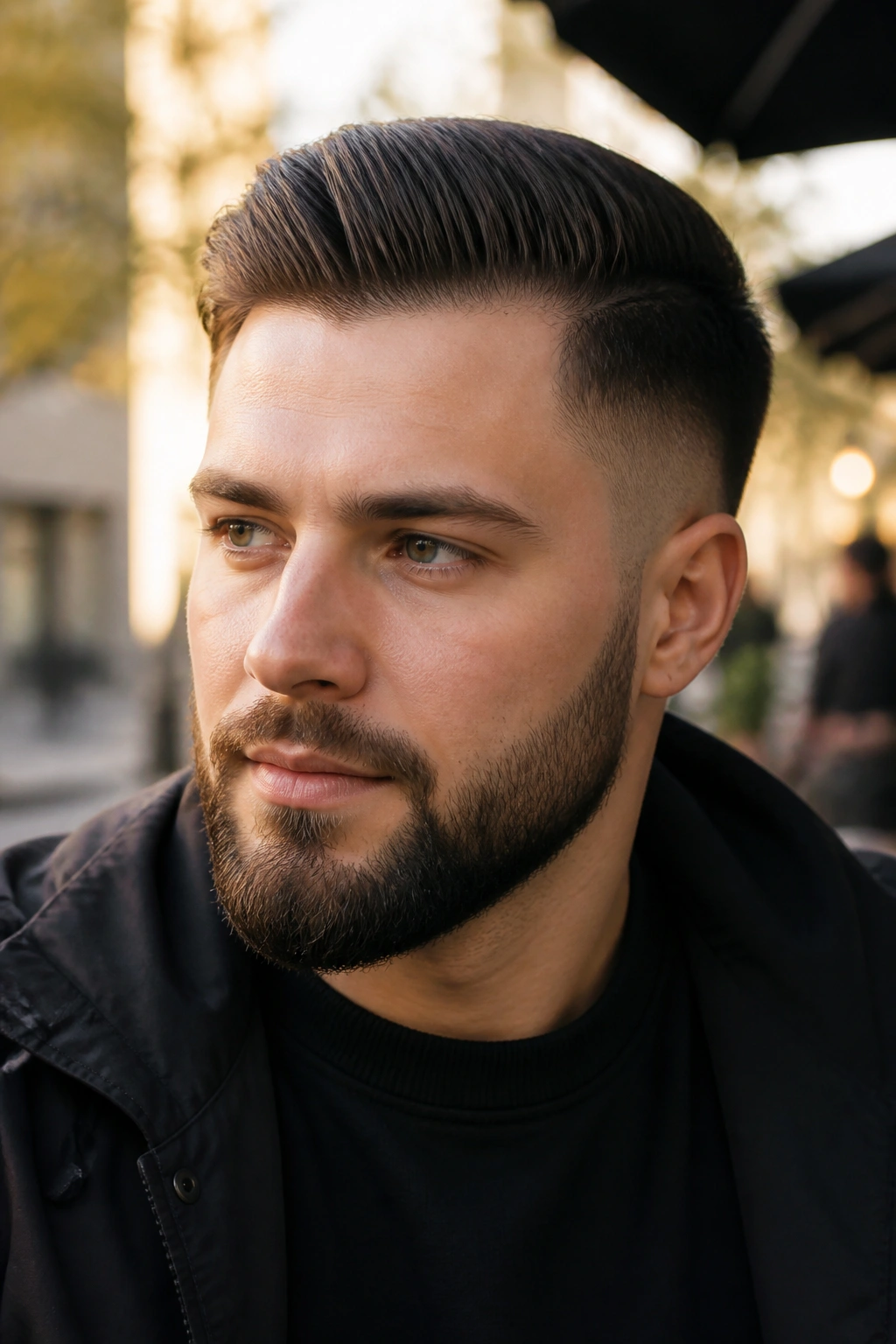
A beard can be a cheat code for round faces, if it’s shaped with intent. Pairing a short undercut with a tapered beard adds vertical length to the lower half of the face, which helps offset fuller cheeks.
The haircut should stay tight around the sides and temples. The beard should not explode outward at the jawline. Keep the sides of the beard slightly shorter and let the chin area carry more length. That creates a longer face shape without looking forced.
- Short fade on the haircut.
- Tapered beard on the jaw.
- A little extra length at the chin.
- Clean neckline, always.
This combination is one of my favorites because it fixes more than one problem at once. The hair adds height. The beard adds structure below. Together, they make the face look longer and more defined.
If you grow facial hair unevenly, keep the beard shorter and neater. A patchy, wide beard can make a round face look wider, which defeats the purpose.
18. Mini Mullet Undercut
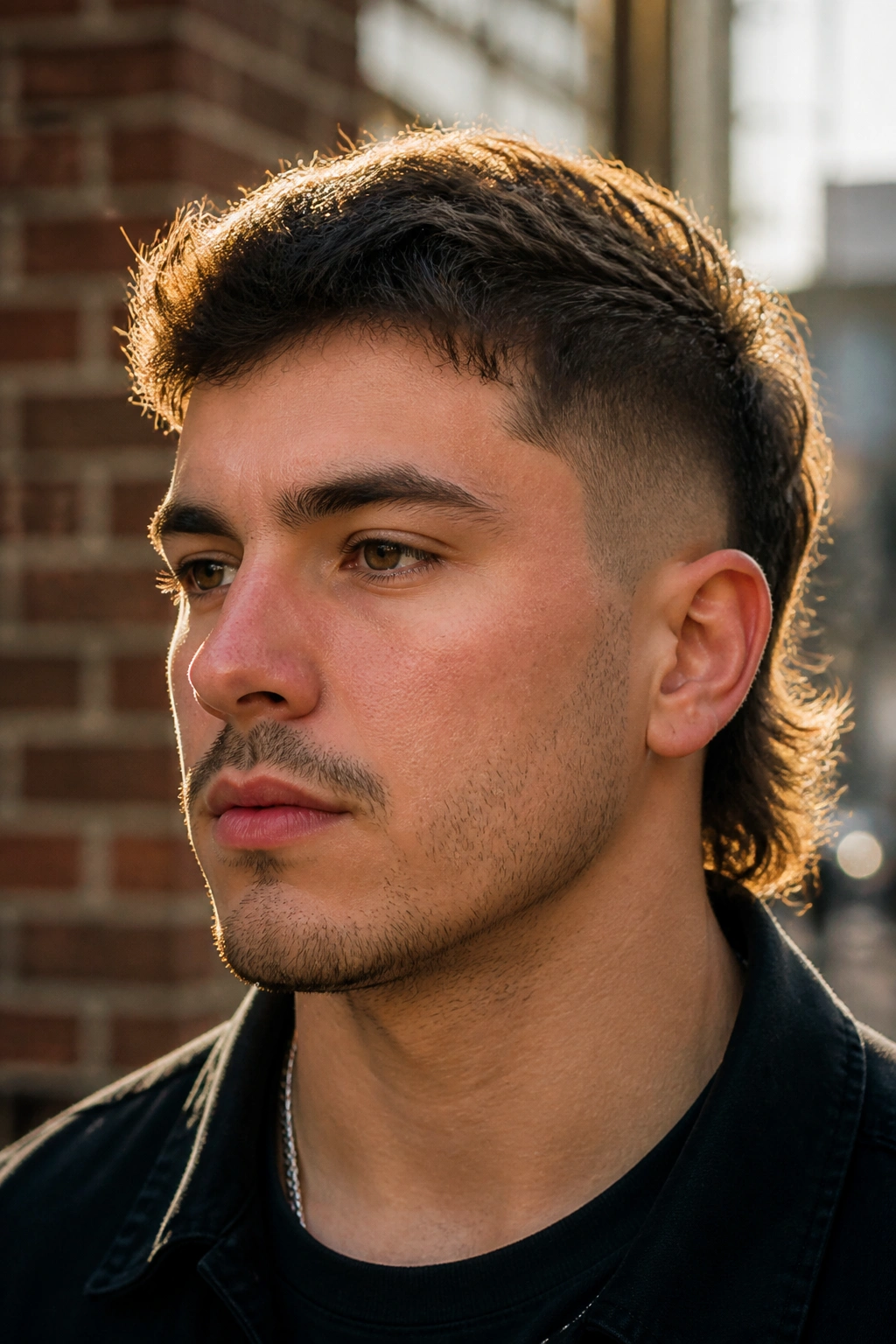
A mini mullet is not for everyone. Let’s get that out of the way. But if you like short hair with a little attitude, it can work on a round face surprisingly well.
The reason is shape. A bit of length at the back draws the eye downward and away from the cheeks. The top stays short and textured, the sides stay tight, and the back has just enough tail to make the cut feel directional.
This is not the full retro mullet with lots of drama. Keep it restrained. A short back, a controlled top, and a neat fade at the sides keep it modern and wearable. If the back gets too long too fast, it starts to look less deliberate.
I’d reserve this one for men who already know they like a bolder look. It has personality. It also needs confidence, because people will notice it.
19. Bro Flow Undercut
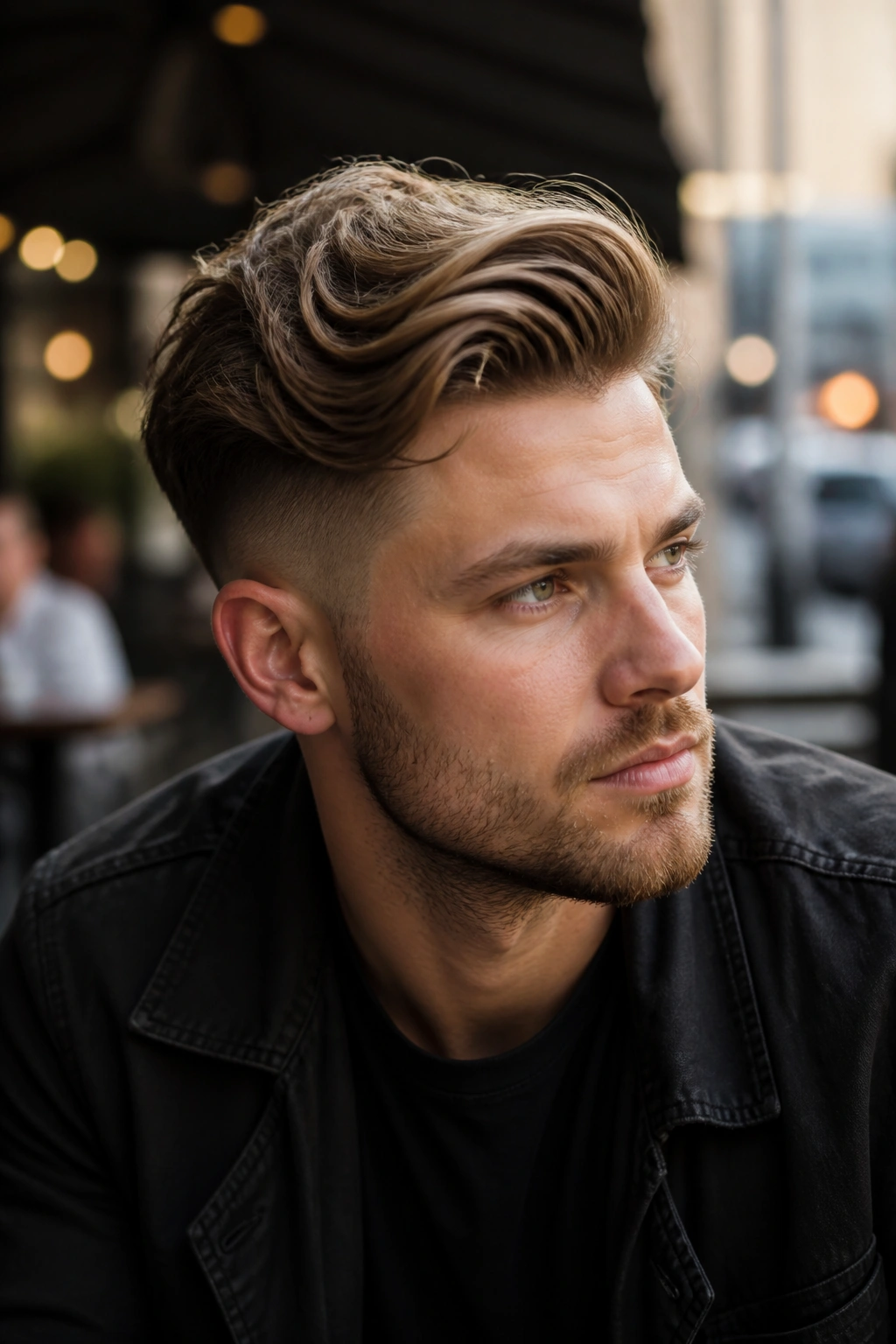
The bro flow undercut sits in a useful middle zone between short and medium. It has enough movement to feel relaxed, but the undercut keeps the sides from puffing out around a round face.
What Makes It Different
Unlike a slick back or pompadour, bro flow doesn’t rely on strict control. The hair moves back naturally, often with a little wave or bend, and that loose direction can soften the face without widening it.
The top should be long enough to brush back with the fingers, usually around 4 inches or a touch more, while the sides stay tight enough to keep the silhouette clean. If your hair is thick, texturizing the ends helps it fall better. If it’s fine, a light mousse gives it shape without stiffness.
This is one of the better choices if you do not want a haircut that looks overly styled. It feels a little laid-back, but the undercut keeps it from turning sloppy.
It suits active guys well, too. The style tolerates movement and doesn’t need constant fixing.
20. Angular Fringe Undercut
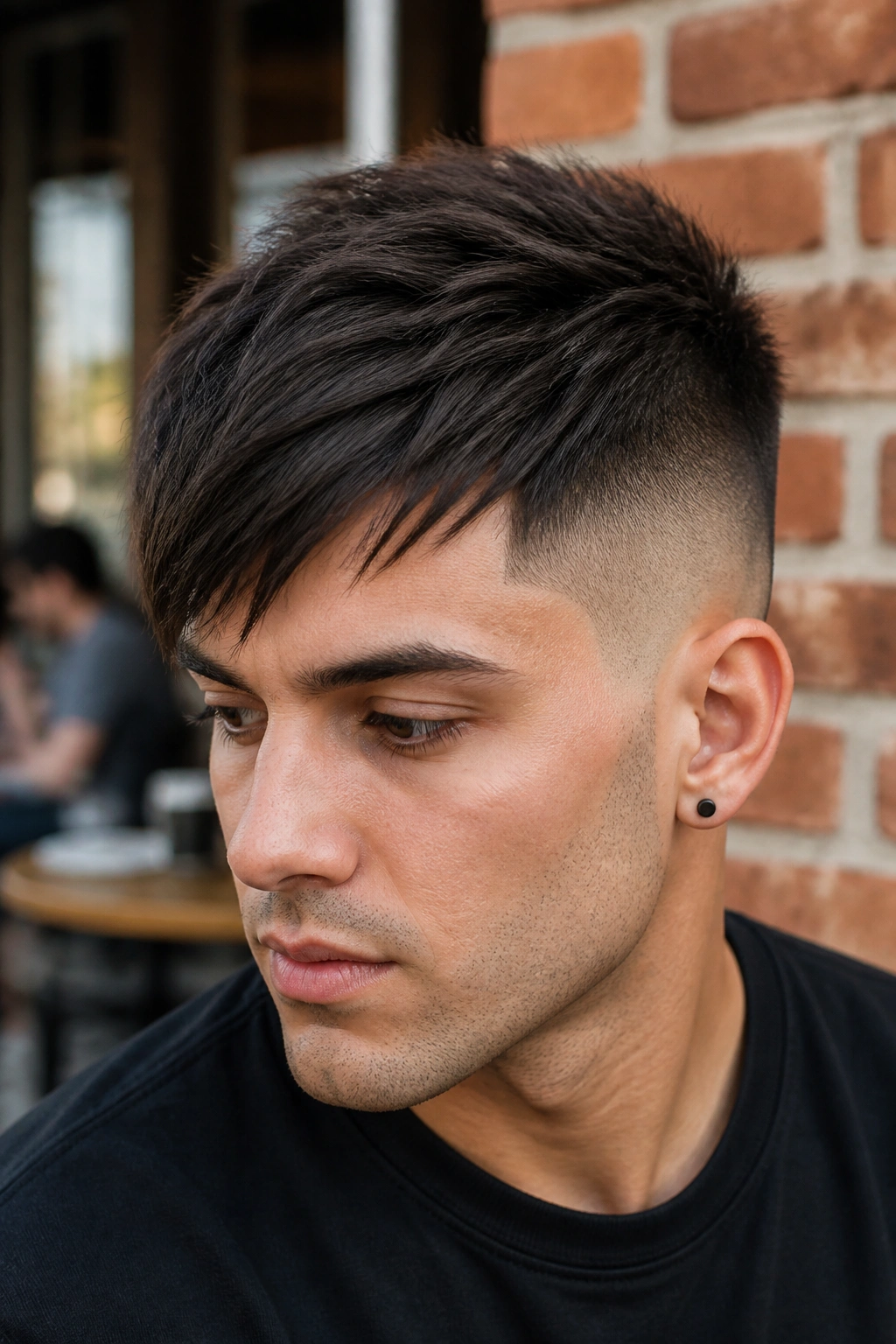
If I had to pick one fringe style that usually flatters a round face, this would be near the top of the pile. An angular fringe cuts across the forehead at a slant, which instantly breaks up facial width.
The cut works because the line is off-center. A straight fringe can flatten the face. An angled one creates direction. That small shift is enough to change how the whole haircut reads.
Ask for the fringe to be textured, not blunt, and keep the sides very clean. The top can be short, but it should have some unevenness so the fringe doesn’t look like a hard slab. A matte product is the safest choice.
This style suits straight hair and mild waves. Very curly hair can do it too, but the barber has to work with the curl pattern, not against it. If the angle is too aggressive, the haircut can start to feel choppy. But when it lands right, it looks sharp in a very natural way.
21. Messy Brush-Up Undercut
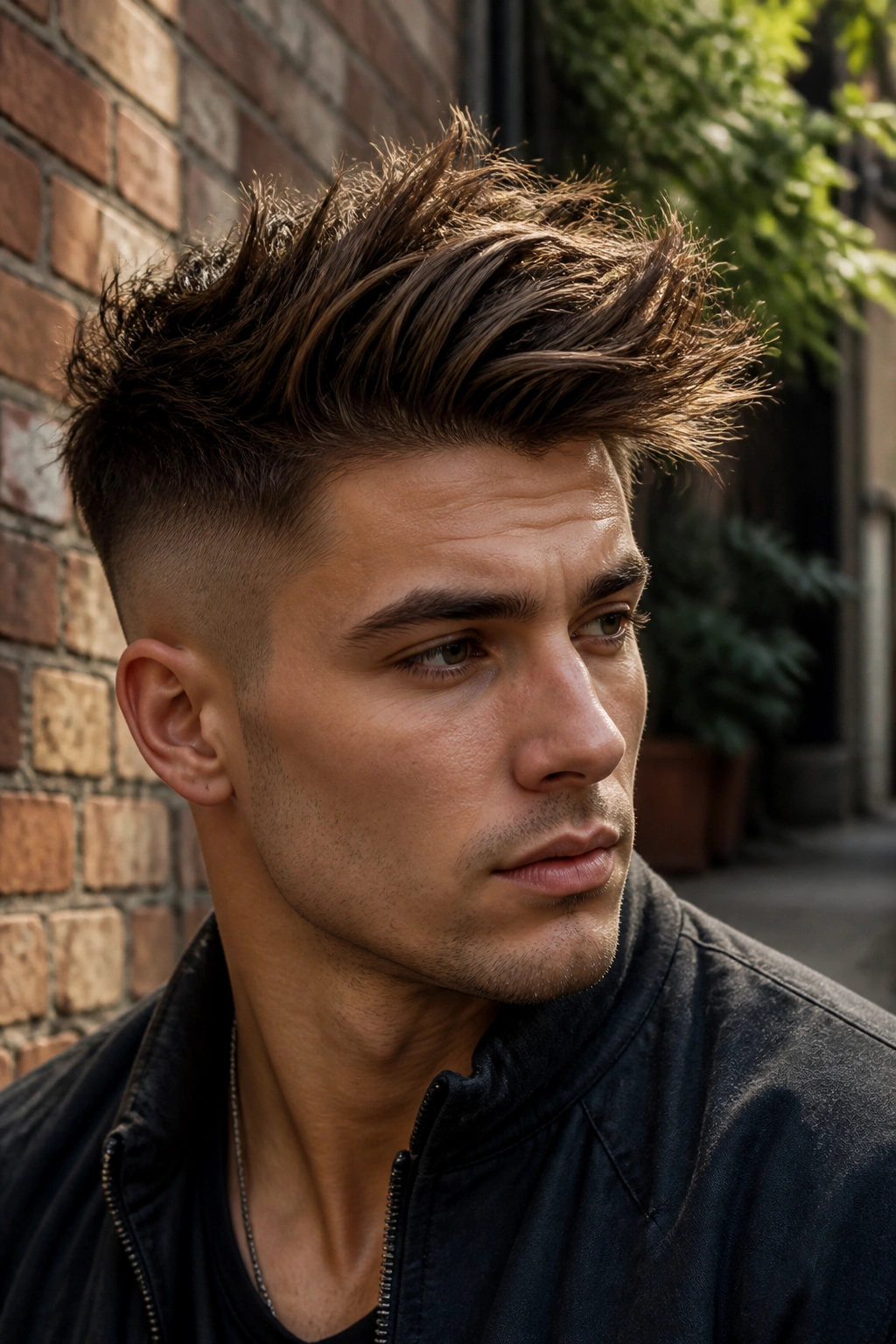
A messy brush-up gives you height without the stiffness of a formal quiff. The hair is lifted upward and slightly back, but the finish stays loose, separated, and a little imperfect.
That looseness matters. A round face tends to benefit from anything that pulls the eye vertical, and this cut does that without becoming fussy. The brush-up also works well with short hair because it doesn’t need major length to show shape.
How to Get It Right
Use a blow dryer first. Fingers second. Product last.
- Start with towel-dried hair.
- Work in a small amount of volumizing spray or mousse.
- Blow-dry upward from the roots.
- Finish with a dry matte paste, then mess up the front slightly.
The result should look lived-in, not like you spent twenty minutes building a sculpture. If the top gets too neat, the style loses the easy movement that makes it work.
22. Clean Buzzed Undercut
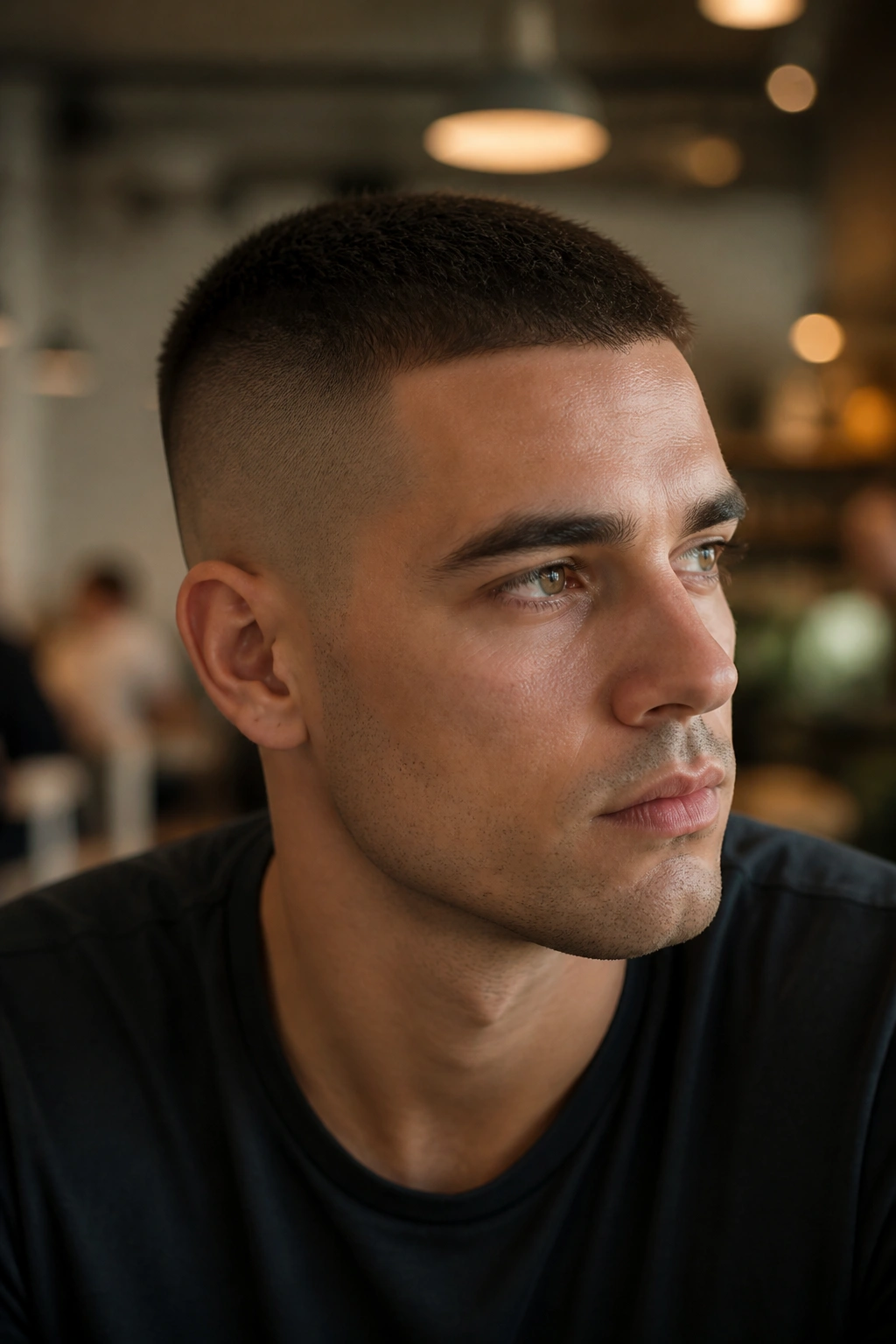
A buzzed undercut can absolutely work on a round face, but the proportions need care. If everything is clipped too uniformly short, the face can look wider. The point is to keep a little difference between the top and the sides.
A slightly longer top — think #2 to #4 guard range — with tighter sides creates enough shape to keep the haircut from going flat. That small variation gives the head a stronger outline and avoids the heavy, boxy look that a single-length buzz can produce.
This is the shortest option on the list, and that’s useful if you want almost no styling time. It’s neat, direct, and honest. No pomade. No blow-dryer. Just maintenance every couple of weeks if you want the contrast to stay clean.
It’s also one of the most forgiving cuts for men who live active lives or hate hair products. Not glamorous. Just practical.
Final Thoughts
Round faces do best with height, angles, and tight sides. That combination pulls the eye upward and keeps the haircut from spreading across the cheeks. The short undercut styles above all use that idea in slightly different ways, which is why some lean polished, some lean rugged, and some sit somewhere in between.
The biggest mistake is asking for a cut that is short everywhere and hoping shape will appear on its own. It won’t. A barber can build shape into the top, taper the sides, and adjust the fringe or beard line so the face looks longer and cleaner.
If you’re unsure where to start, choose the style that matches your hair texture first, then narrow it down by how much daily styling you can tolerate. That rule saves a lot of regret in the chair.
