



Undercut styles have a way of making a haircut look deliberate fast. One clean break below the top changes the whole shape.
The wrong version looks accidental. The right one looks like you meant every inch of it.
That is the part people underestimate. An undercut is not only about shaving the sides; it’s about where the weight stops, how much length you leave up top, and whether the cut feels sharp or just grown out. A good undercut frames the face and gives the top somewhere to go. A sloppy one makes hair sit like a lid.
Bring a photo, yes, but bring some honesty too. If you hate styling cream, say so. If your hair puffs up the second it dries, say that too. The sharpest undercut is the one that still works when you are late, half-awake, and not in the mood to fight a comb.
1. Classic Side-Swept Undercut
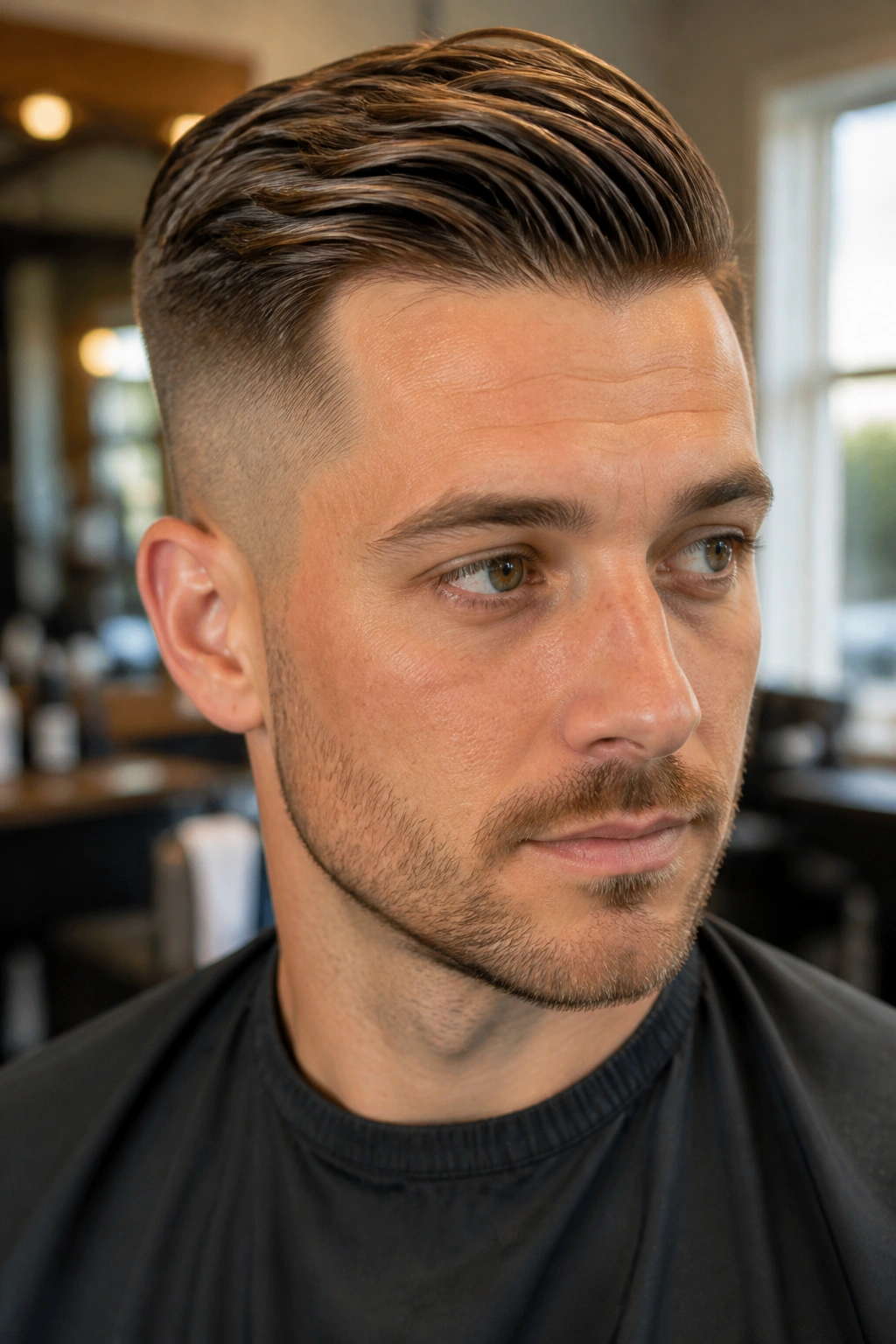
This is the version that made a lot of people pay attention to undercuts in the first place. The sides stay tight, the top keeps enough length to sweep over, and the whole cut lands somewhere between polished and relaxed. It works especially well when you want structure without looking like you tried too hard.
Why It Stays a Favorite
The side sweep softens the hard line of the undercut, which matters if your face is round, square, or just a little broad at the temples. I like this cut on straight or slightly wavy hair because the movement shows up without a battle. Ask for 4 to 6 inches on top and a #1 or #2 on the sides, then keep the disconnect clean around the parietal ridge.
A light cream or matte paste is usually enough. Push the top across while it’s damp, then finish with a blow-dryer if you want the sweep to hold shape through the day.
- Best for: straight, wavy, medium-density hair
- Styling time: 3 to 5 minutes
- Barber note: keep the side part loose, not carved too low
- Product: light cream for softness, matte paste for grip
Tip: If the top starts collapsing flat, the cut is probably too long for your hair texture.
2. Slick Back Undercut
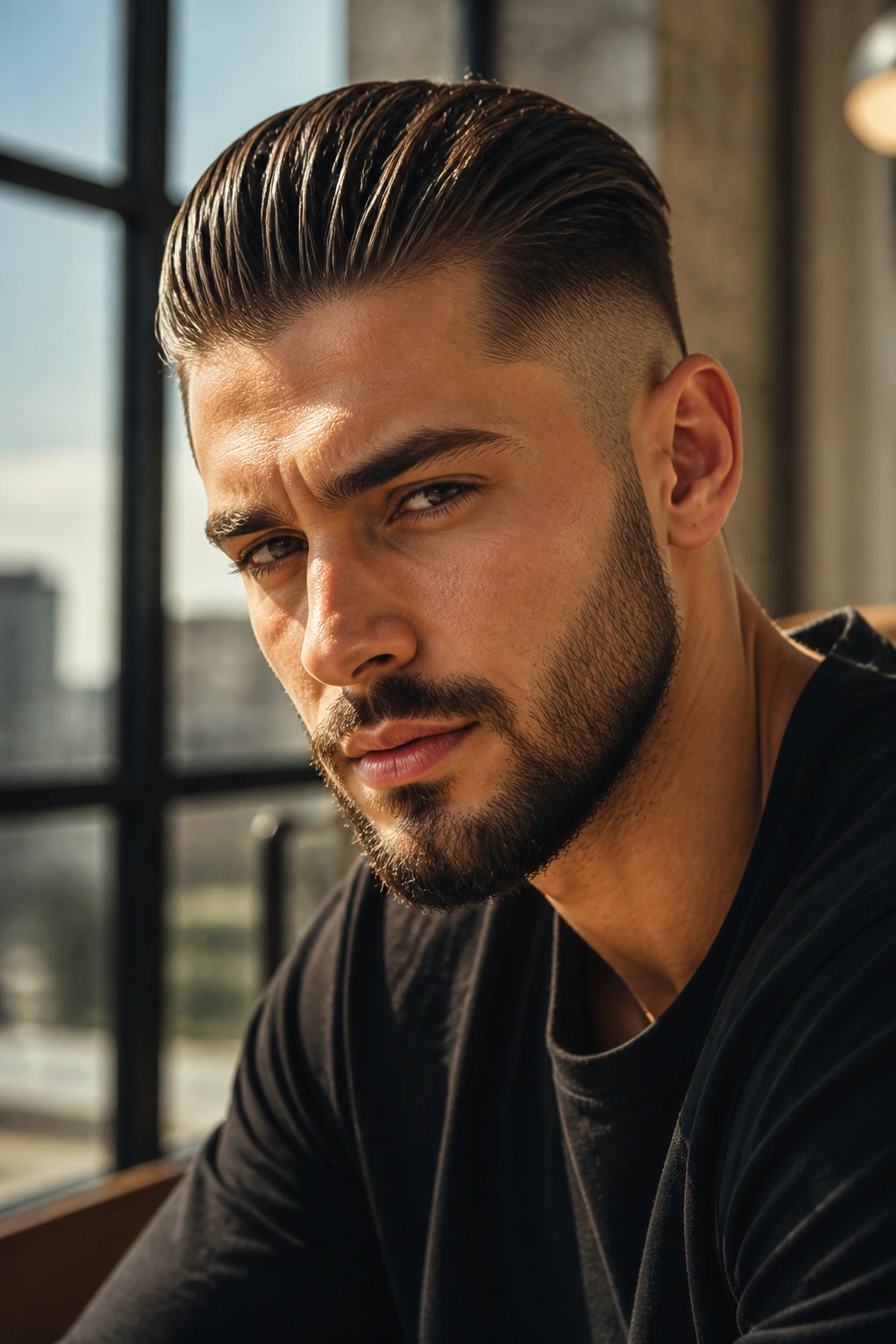
If you want a haircut that looks clean in five minutes, this is the one. The slick back undercut has a crisp shape, a controlled finish, and a little old-school swagger that never really goes out of place.
It works because the short sides remove bulk before styling even starts. That means the top can be brushed back without looking puffy at the temples. I’d keep the top around 5 to 7 inches if you want enough length to comb through neatly, and I’d use a medium- or high-shine pomade only if your hair is thick enough to hold it. Fine hair can go flat fast.
A small amount is enough. Warm the product between your palms, run it through damp hair, then comb backward from the front hairline while leaving a touch of height at the crown. That little lift keeps the shape from looking helmet-like.
The slick back undercut does ask for maintenance. Sides usually need a clean-up every 2 to 3 weeks if you want the cut to stay crisp.
3. Textured Crop Undercut
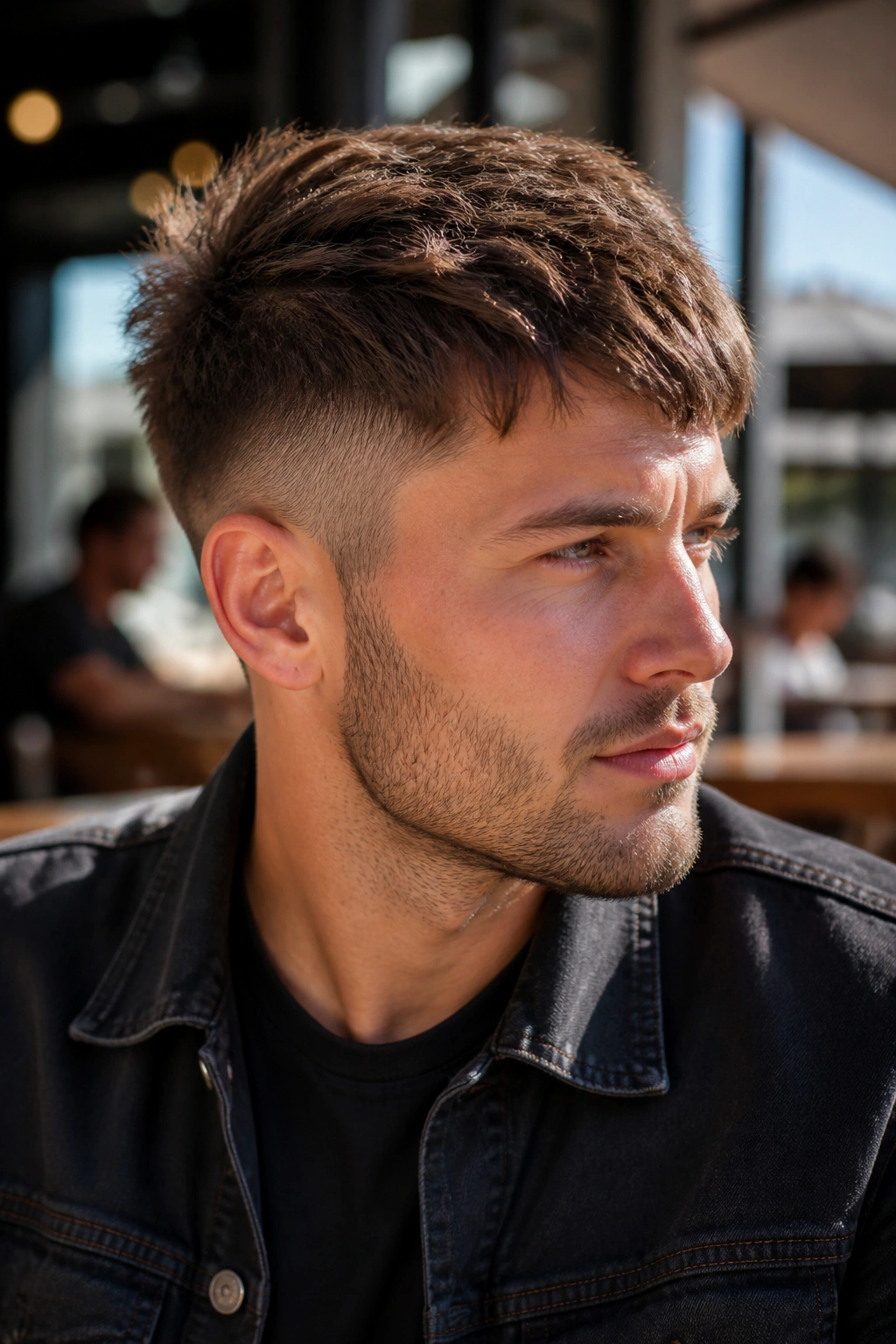
Why does this one look so good even when it is a little messy? Because the style is built on purpose. The crop keeps the top short, choppy, and broken up, while the undercut underneath gives the whole shape a harder edge.
How to Style It
Ask for 2 to 4 inches on top with texture cut into the ends. The sides can go down to a #1 or #2, depending on how sharp you want the contrast. This cut is a favorite for thick hair that tends to balloon when it gets longer, because the cropped top takes weight off fast.
Styling is almost laughably simple. Rough-dry the hair with your fingers, mist in a little sea salt spray, then pinch in a matte clay or fiber paste. You want separation, not gloss. If the front falls forward, leave it. That slightly undone look is part of the point.
- Works well on straight, wavy, and loose curls
- Needs little product; too much makes it heavy
- Good when you want a low-maintenance shape with edge
- Ask your barber for choppy cutting, not blunt ends
Tip: A crop that is too neat starts looking boxy. Leave some irregularity in the top.
4. Curly Top Undercut
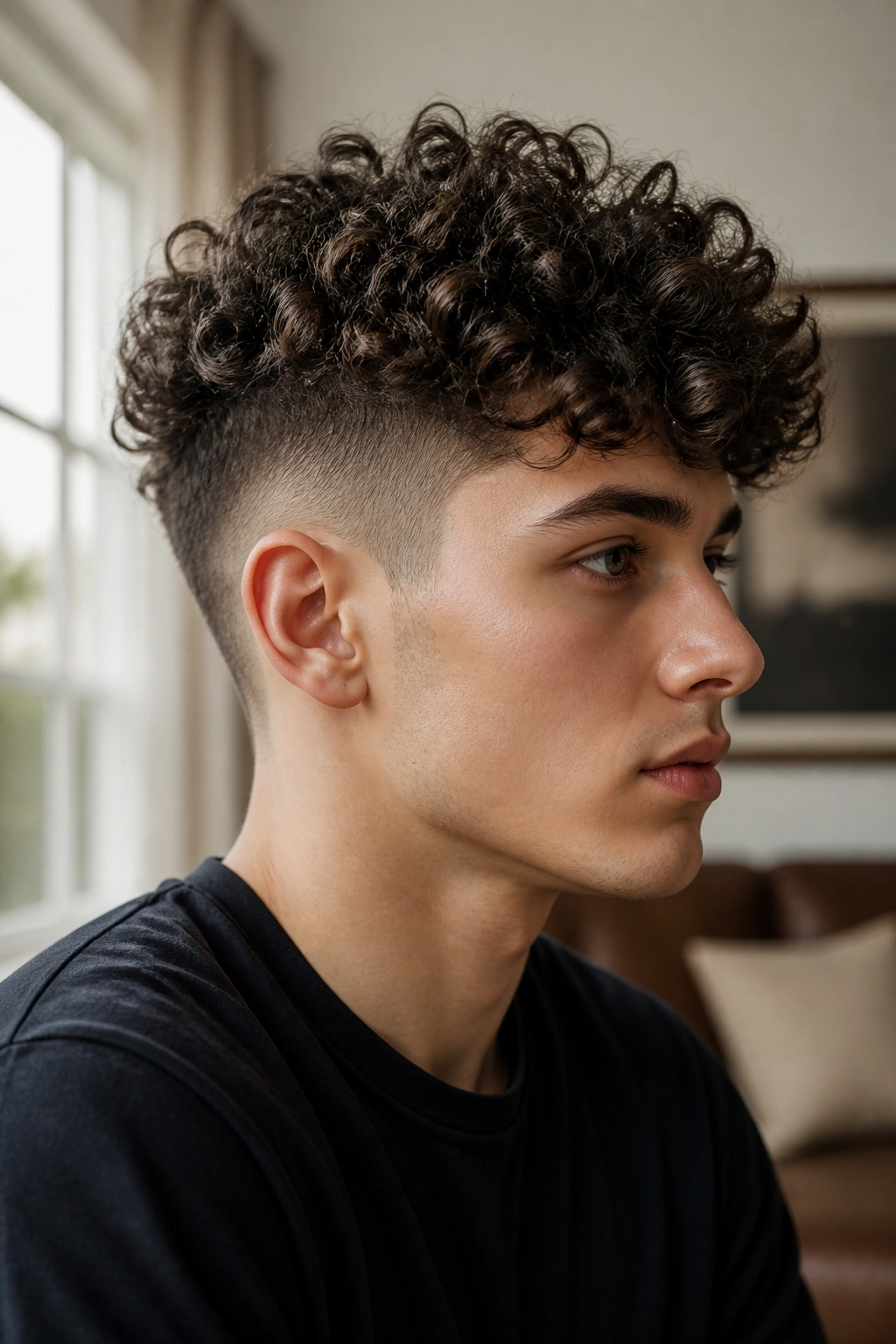
Curls need room. That’s the whole story, really.
With a curly top undercut, the sides are cut down tight enough to clear the bulk, while the curls on top stay long enough to spring and move. The result feels alive, not stiff. It can look soft or dramatic depending on how much curl you leave, and that range is what makes it one of the better undercut styles for people with natural texture.
The trick is not fighting shrinkage. If your curls are tight, the top may need more length than you think, because a 4-inch curl pattern can shrink to half that once it dries. I like a leave-in conditioner plus curl cream here, followed by air-drying or a diffuser on low heat. High heat tends to rough up the curl and make the top lose shape.
Keep the sides clean, but don’t shave them so high that the head starts looking narrow. A low or mid undercut gives the curls a better frame.
Simple cut. Big payoff.
5. Pompadour Undercut
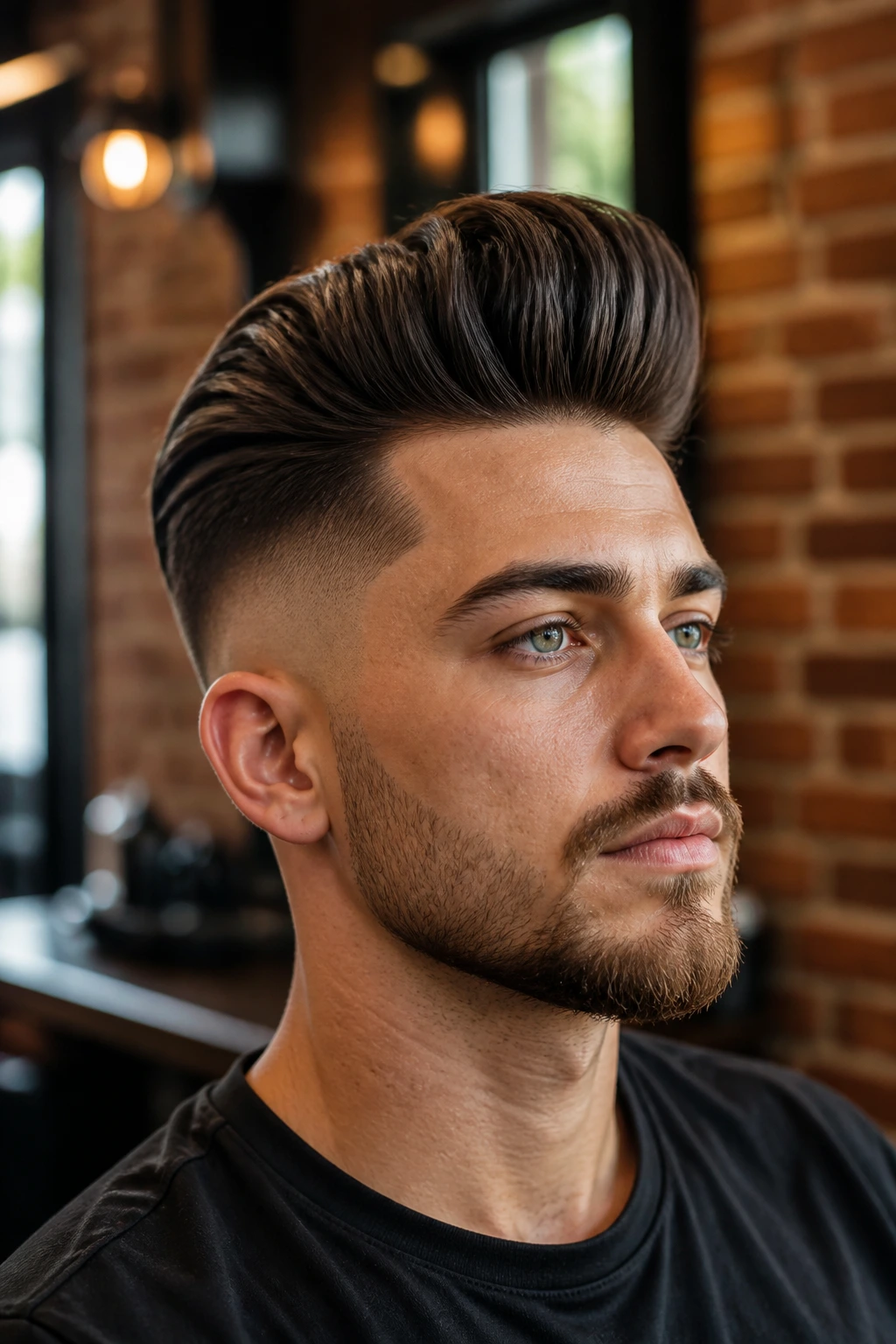
A pompadour does not have to feel stiff or dated. In undercut form, it gets sharper, lighter, and a lot easier to wear than the classic version.
The difference from the slick back is height. A pompadour lifts the front and rolls it backward, which gives the face a longer line and makes the top feel more dramatic. That makes it a smart pick for rounder faces or for anyone who wants a little extra presence without going full retro. Medium to thick hair does best here, since the style needs some body to hold the shape.
What Makes It Different
The sides stay tight, but not bare, so the top has a clear stage. Blow-dry the front upward first, then sweep it back with a round brush or your fingers. A medium-hold product works better than heavy pomade because you want the front to stay airy, not stuck down.
I’d keep this cut away from very fine hair unless you like using a blow-dryer every morning. Flat top, flat mood. The pompadour undercut is happiest when the hair has enough density to stand up on its own.
6. Man Bun Undercut
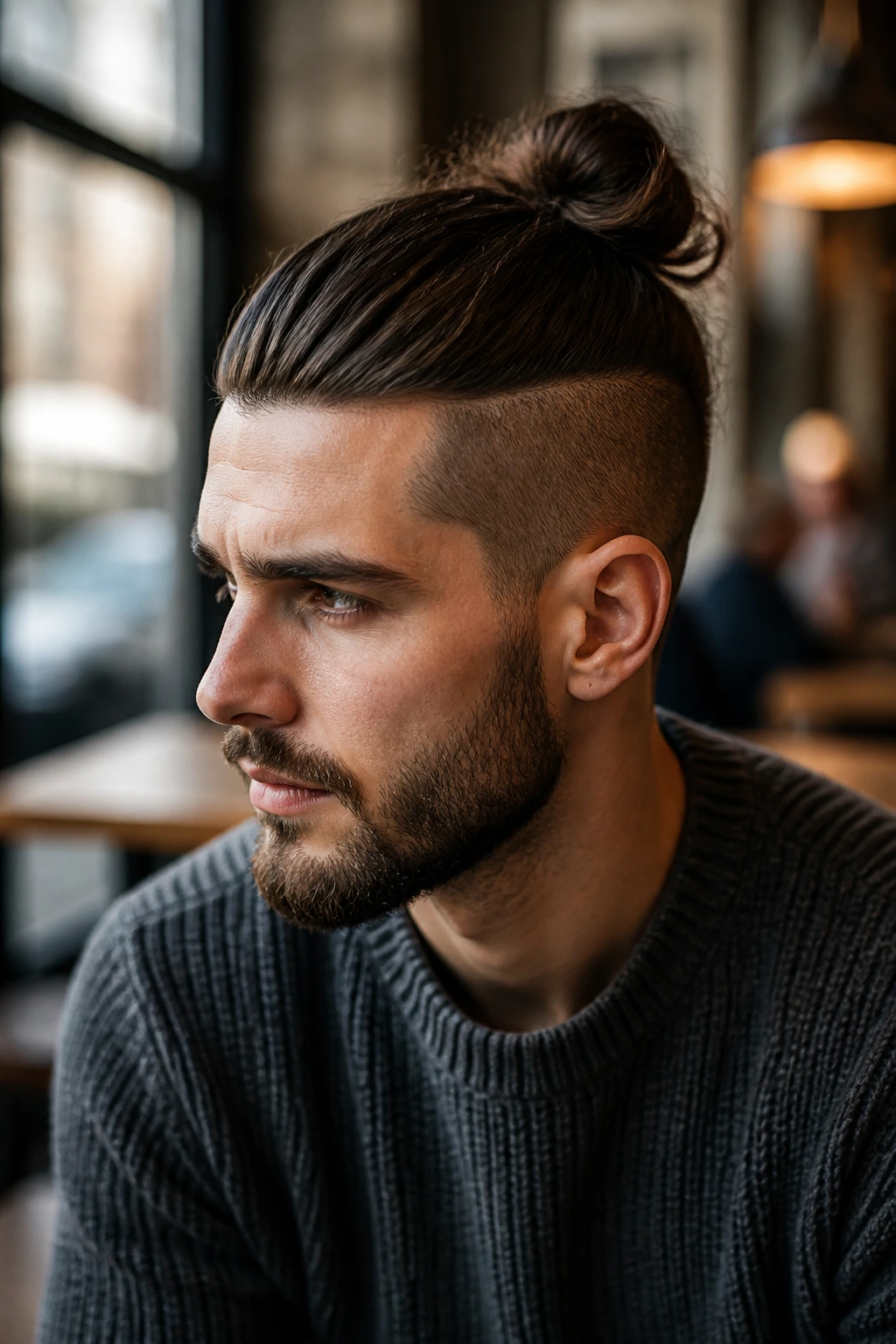
This is the cut for the in-between stage. The top is long enough to tie, the sides are short enough to feel intentional, and the whole shape still looks clean while you grow your hair out.
It is also one of the few long-hair looks that keeps some order around the ears and neckline. That matters more than people think. Without the undercut, a bun can slide into “I have been growing this out forever” territory. With it, the shape stays neat even on a tired morning.
What to Ask Your Barber
- Leave at least 7 to 10 inches on top if you want a proper bun
- Keep the sides at a low clip or tight taper so the transition feels clean
- Clean up the neckline without pushing the fade too high
- Remove bulk at the crown if your hair is thick or heavy
Tip: If the bun looks tiny, the top is probably too short to justify the style yet.
The man bun undercut looks best when the bun sits at the crown or just below it. Too low and it can sag. Too tight and it starts looking severe.
7. Braided Undercut
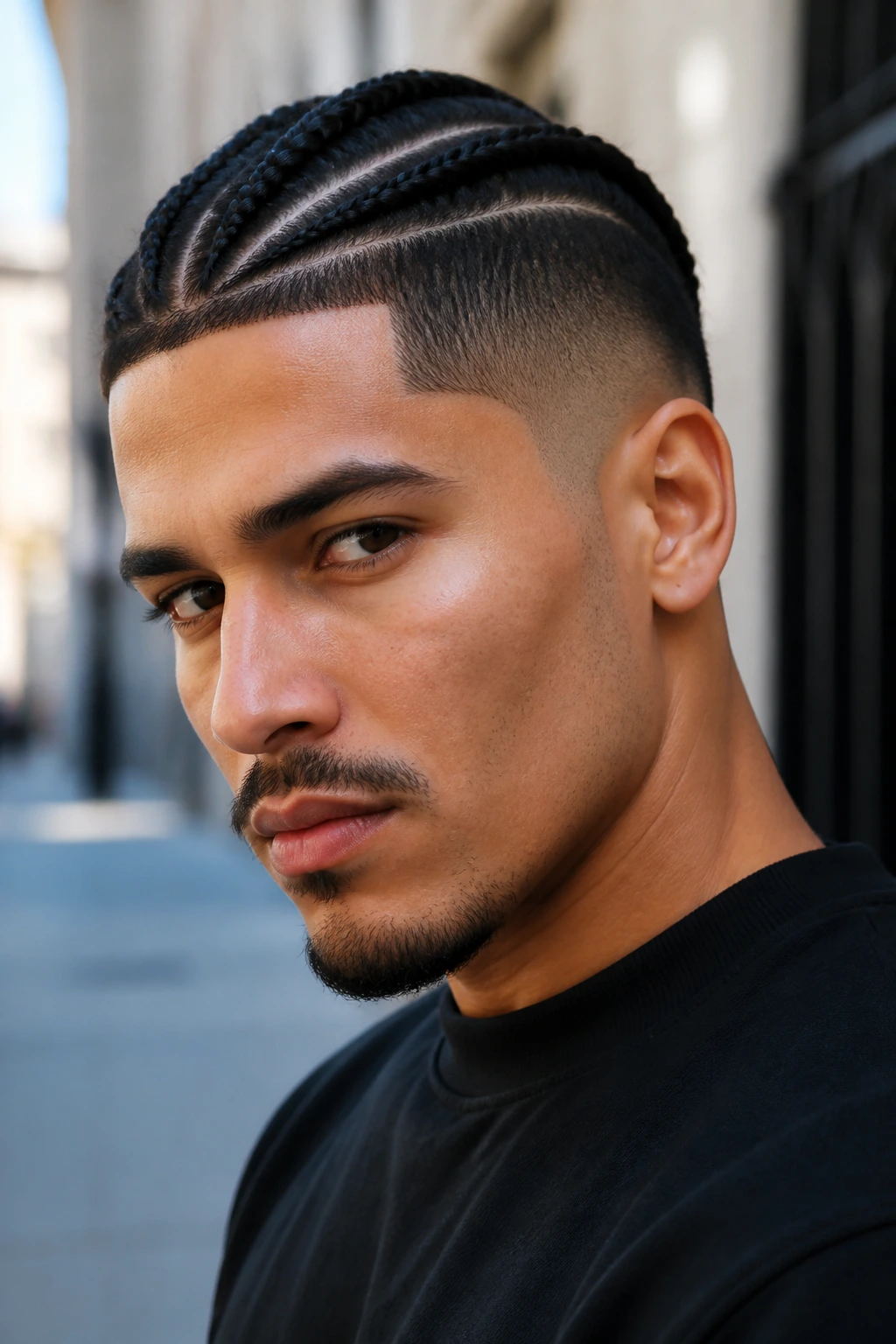
One braid changes the shape. Three braids can change the whole attitude of the cut.
Braids and undercuts work well together because the short sides clear away visual clutter. That leaves the braids, cornrows, or plaits to stand out instead of competing with bulky hair around the temples. The style feels especially strong when the braids are clean and the undercut is lined up neatly at the edges.
Styling Notes
- Keep the scalp moisturized, especially if the sides are clipped close
- Ask for a crisp line-up if you want the braid pattern to stand out
- Protect the braids at night with a satin scarf or bonnet
- Avoid pulling the braids too tight at the hairline; tension shows fast
The look works on coily and curly hair in particular, but long straight hair can wear a braided top too if the braids are tight and even. I would not overcomplicate the pattern. Clean rows or one thick braid often look stronger than trying to pack in too much design.
The undercut gives the braids room to breathe. That is the whole trick.
8. Undercut Bob
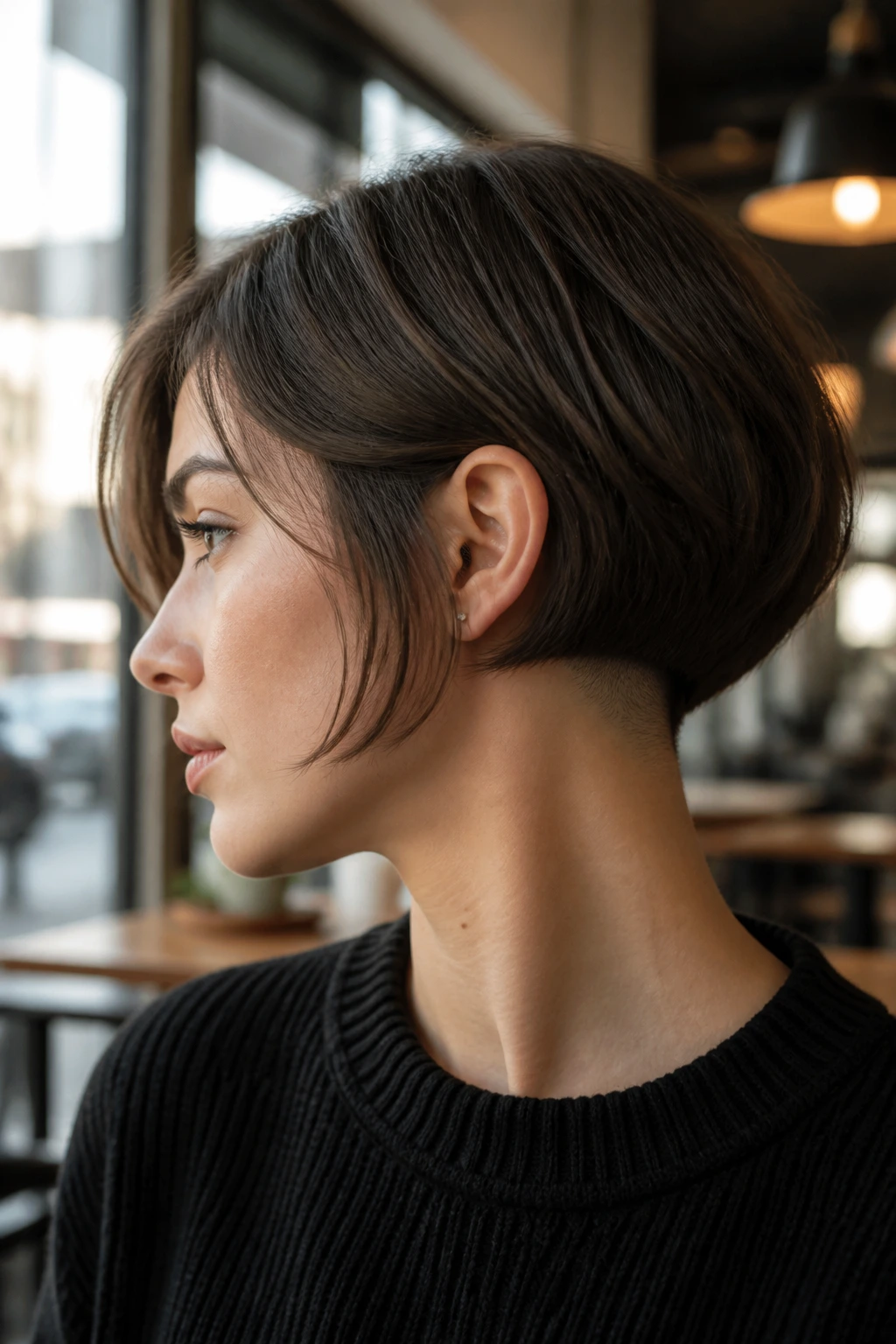
The undercut bob is the cut that proves short hair can still have movement. It keeps the silhouette of a bob, but the hidden removal underneath cuts down the bulk so the ends fall smoother and the shape does not puff out at the jaw.
That makes it a smart pick for thick hair, especially if you have ever had a bob grow into a triangle by lunchtime. A subtle undercut under the back section changes the way the entire haircut hangs. The visible line stays soft and wearable, while the hidden part does the boring but important work.
I like this version when the goal is a clean neck and a lighter feel without losing the bob’s outline. It is not the place for extreme shaving. Too much removal and the bob loses its swing. Too little and you do not get the payoff.
A round brush, a blow-dryer, and a smoothing cream are usually enough to finish it. No drama. Just shape.
9. Asymmetrical Undercut
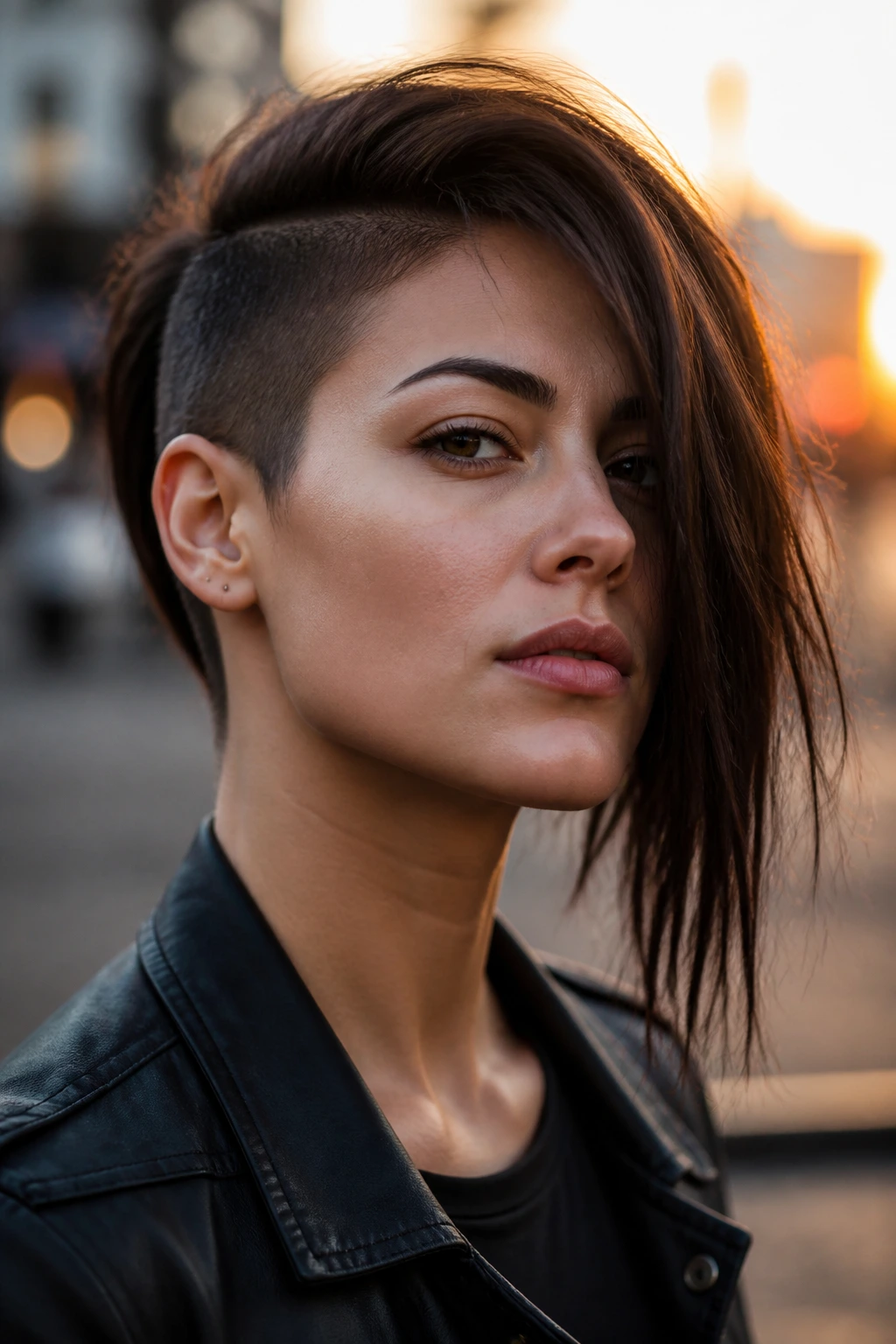
Can an undercut be softer and still feel bold? Absolutely. The asymmetrical version leans into imbalance on purpose, which makes the whole cut feel modern without needing a harsh edge.
You can keep one side longer, let the top fall across one eye, or deepen the undercut on only one side for a stronger contrast. The point is not symmetry. The point is tension. That slight mismatch gives the haircut a little movement before you even style it.
Best Ways to Wear It
- Sweep the longer side across the forehead for a clean diagonal line
- Tuck the shorter side behind the ear to show the disconnect
- Keep the undercut side clipped close, usually around a #1 or #2
- Ask for soft texture at the ends so the top does not look blocky
This cut works well if you want something expressive but not wild. It is a good middle ground for people who like clean lines yet do not want a haircut that feels too orderly. The asymmetry does the talking.
10. Skin Fade Undercut
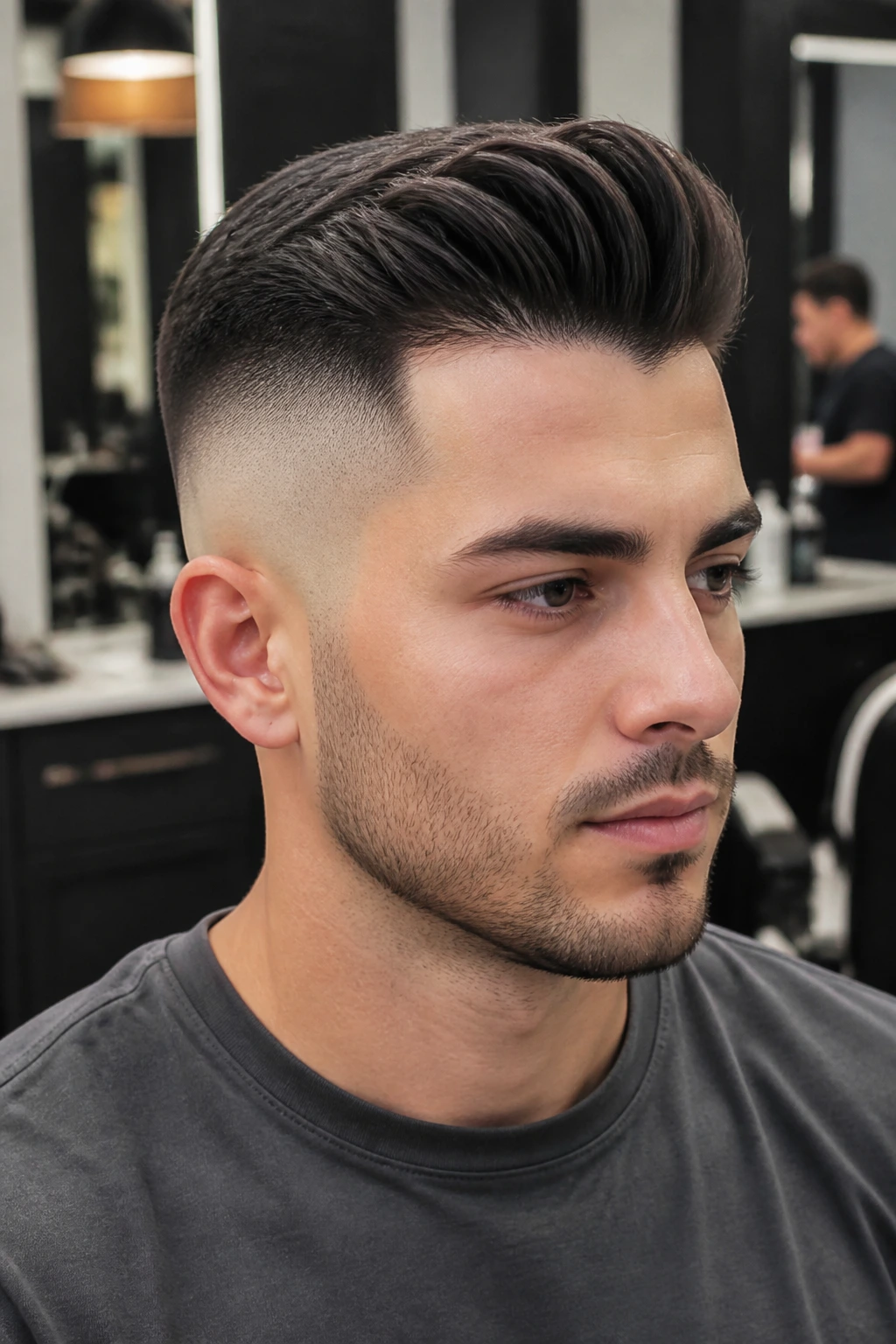
A skin fade undercut is the loudest version in this group, and I mean that in a good way. The sides disappear right down to the skin, which makes the top pop hard even if the top itself is fairly simple.
No free lunch here.
This cut needs upkeep. As the fade grows out, the contrast softens fast, and the style loses some of its bite. That is not a flaw so much as the price of the look. If you want the sharpest version, plan on regular touch-ups and be honest about whether you actually enjoy sitting in the barber chair that often.
It looks especially good with textured crops, slick backs, and short pompadours because the bare fade gives the top a clean launch point. I would avoid going too long on top unless you want a very dramatic contrast. The whole haircut works because the eye sees a hard line between skin and length.
If you like crisp edges and do not mind the maintenance, this one delivers. If you want something forgiving, it is probably too sharp.
11. Hard Part Undercut
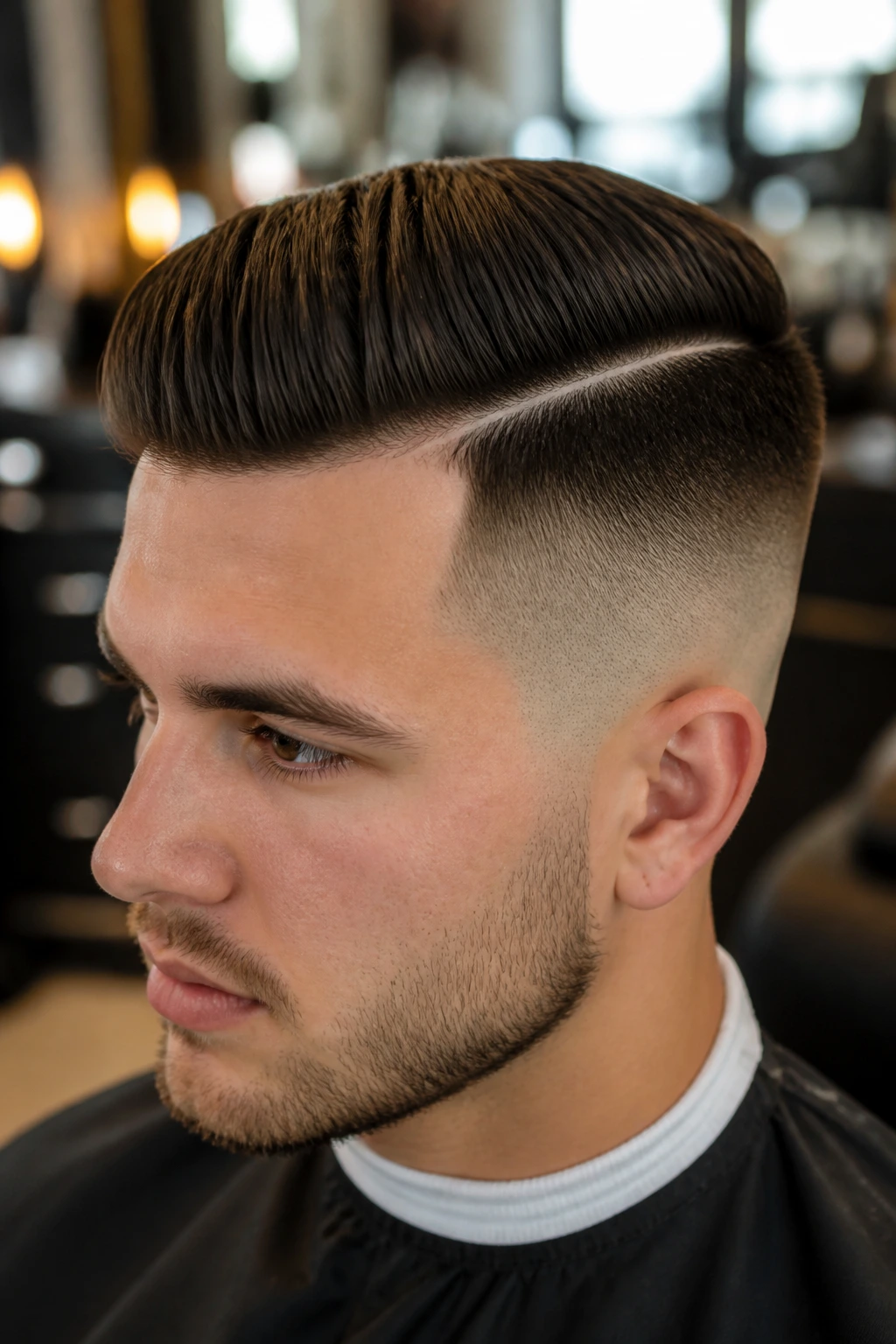
A hard part is a shaved line, and you feel it before you even see it. That is what makes it different from a natural side part. The line gives the haircut a fixed direction, which adds structure and a little precision that can be hard to get from styling alone.
This style works well with straight or thick hair that tends to fall into a part naturally anyway. The hard line makes the separation clear, so the top can be slicked, brushed, or combed to one side without looking vague. If you want a clean office-friendly shape with a bit more attitude, this is a strong option.
What to Watch For
The hard part is less forgiving when hair grows out. A few weeks in, the line starts softening and the cut can look fuzzy if the rest of the style is not maintained. It also tends to look sharper on people who already have some contrast between the top and sides.
I would pair it with a low or mid undercut rather than a skin fade if you want the line to be the main event. Too much going on at once and the haircut starts yelling.
12. Faux Hawk Undercut
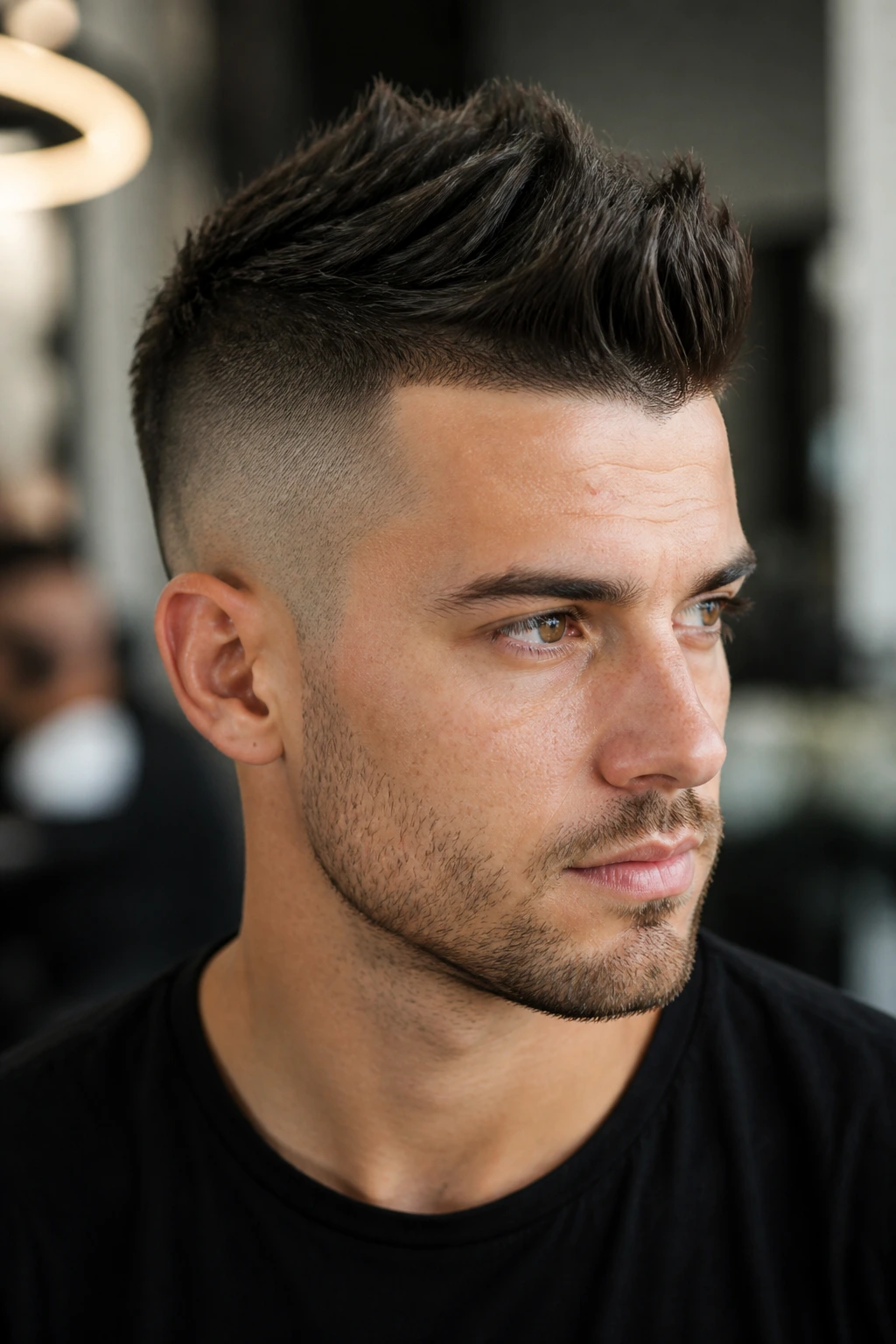
If your hair pushes forward no matter what you do, the faux hawk gives it a job. The center strip rises a little higher, the sides stay short, and the shape reads edgy without needing a full mohawk commitment.
This is one of those cuts that can look loud or subtle depending on how you style it. Push the center up with matte paste and it turns sharper. Leave it a little softer and it becomes more wearable. That range is why it hangs around in barber chairs so often.
How to Keep It from Looking Costume-Y
- Keep the top narrow, but not razor thin
- Leave enough length in the center to build a ridge
- Use a matte product with grip, not shiny gel
- Fade the sides short, but keep some blend near the temple if you want a softer finish
The faux hawk undercut is a good choice if you want shape without total commitment. It suits straight, thick, and slightly wavy hair best because those textures can hold the center line without collapsing into fluff.
13. Shaved Design Undercut
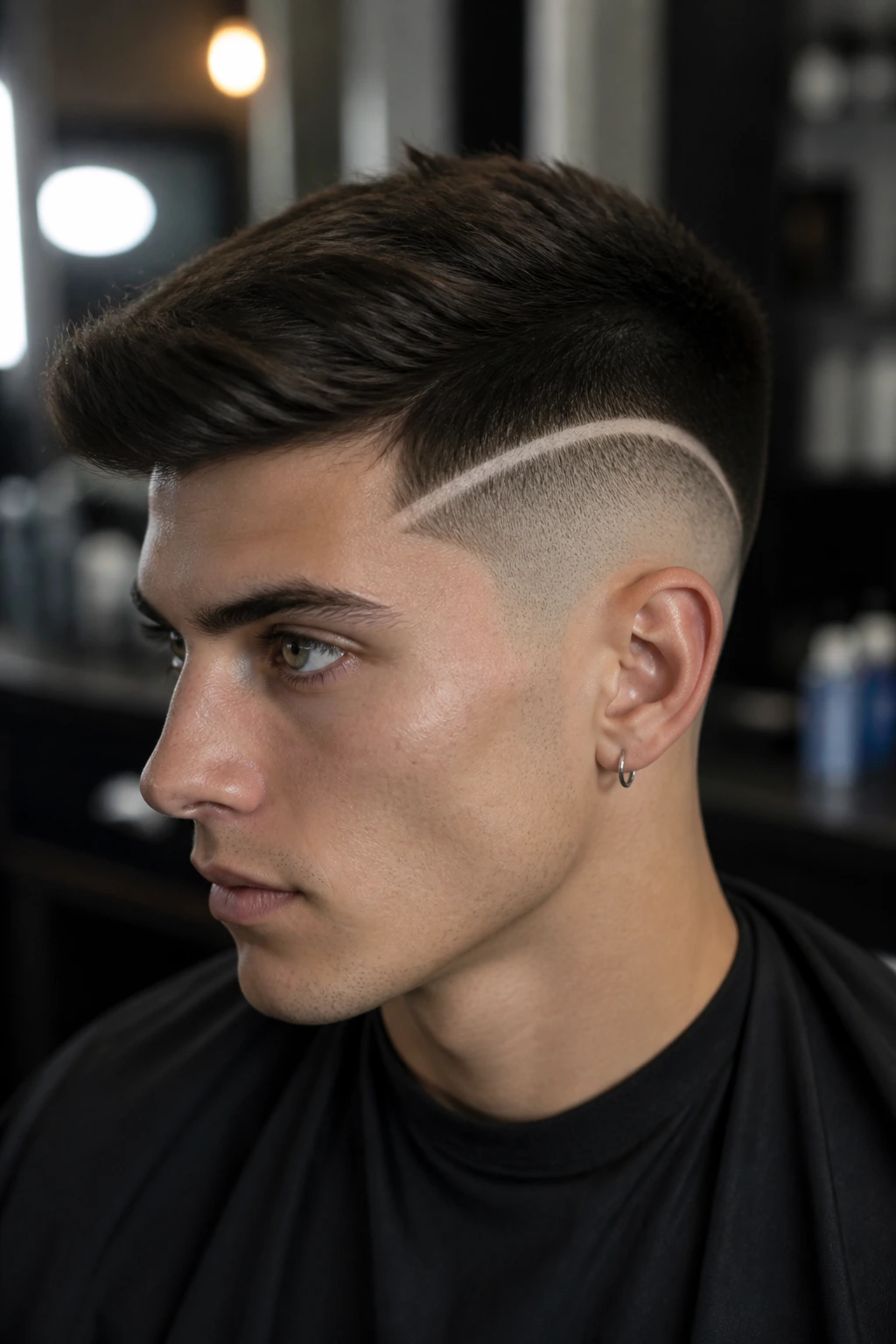
Shaved designs are where an undercut stops whispering and starts talking.
A line, a curve, a zigzag, or a simple geometric panel can change the whole mood of the haircut. The clean sides become a canvas, and the design gives the style a point of view. That said, the best designs are usually the simplest ones. A single stripe or a clean arc ages better than a busy pattern that turns fuzzy after a week.
What Makes a Good Design
- The line should be thick enough to stay readable as it grows out
- The placement should follow the natural head shape, not fight it
- Simple shapes usually hold up better than intricate artwork
- Ask the barber how the design will look at the two-week grow-out mark
A shaved design works well if you enjoy maintenance and you want the haircut to feel personal. It is not the quiet choice. It does, however, give you room to make a plain undercut feel custom without changing the whole silhouette.
Tip: Start with one clean line if you are unsure. You can always add more later.
14. Long Layered Undercut
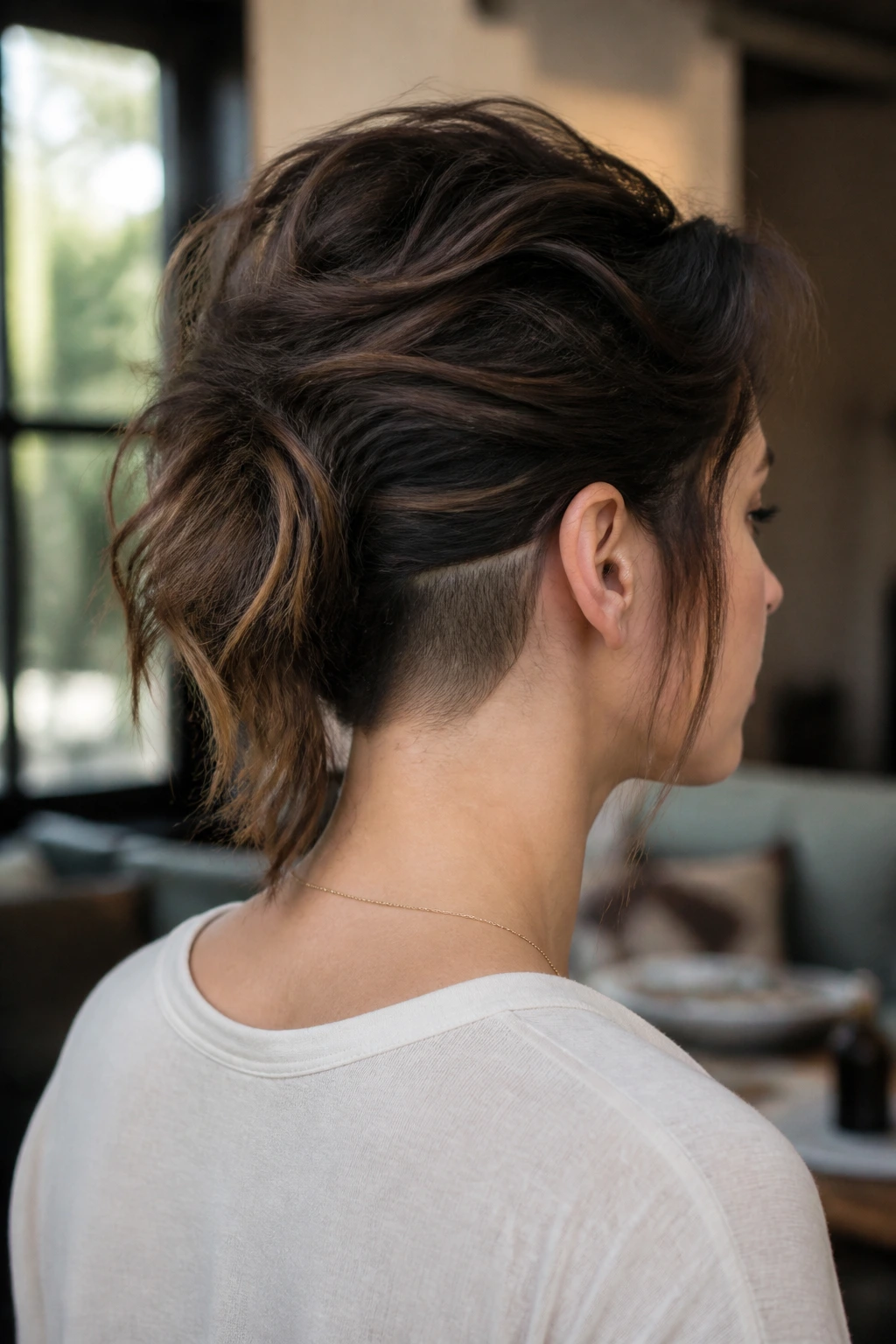
Long hair gets lighter, not shorter, when the undercut is done right.
That is the appeal here. You keep the visible length, but remove the hidden bulk underneath so the layers fall better and the hair stops feeling heavy around the neck and crown. It is especially useful for thick or wavy hair that wants to sit like a curtain. A hidden undercut can change the way the whole shape moves when you turn your head.
The best versions are subtle. Nobody needs to see a giant shaved patch unless that is the point. A narrow undercut section under the back or sides is often enough to clean up the silhouette and make long hair easier to wear up or down.
This is one of the undercut styles I like most for people who want long hair but do not want the maintenance nightmare that sometimes comes with it. The cut keeps the drama of the length while stripping out the dull weight that makes long hair lie flat.
Bulk is the real enemy.
15. Fringe Undercut
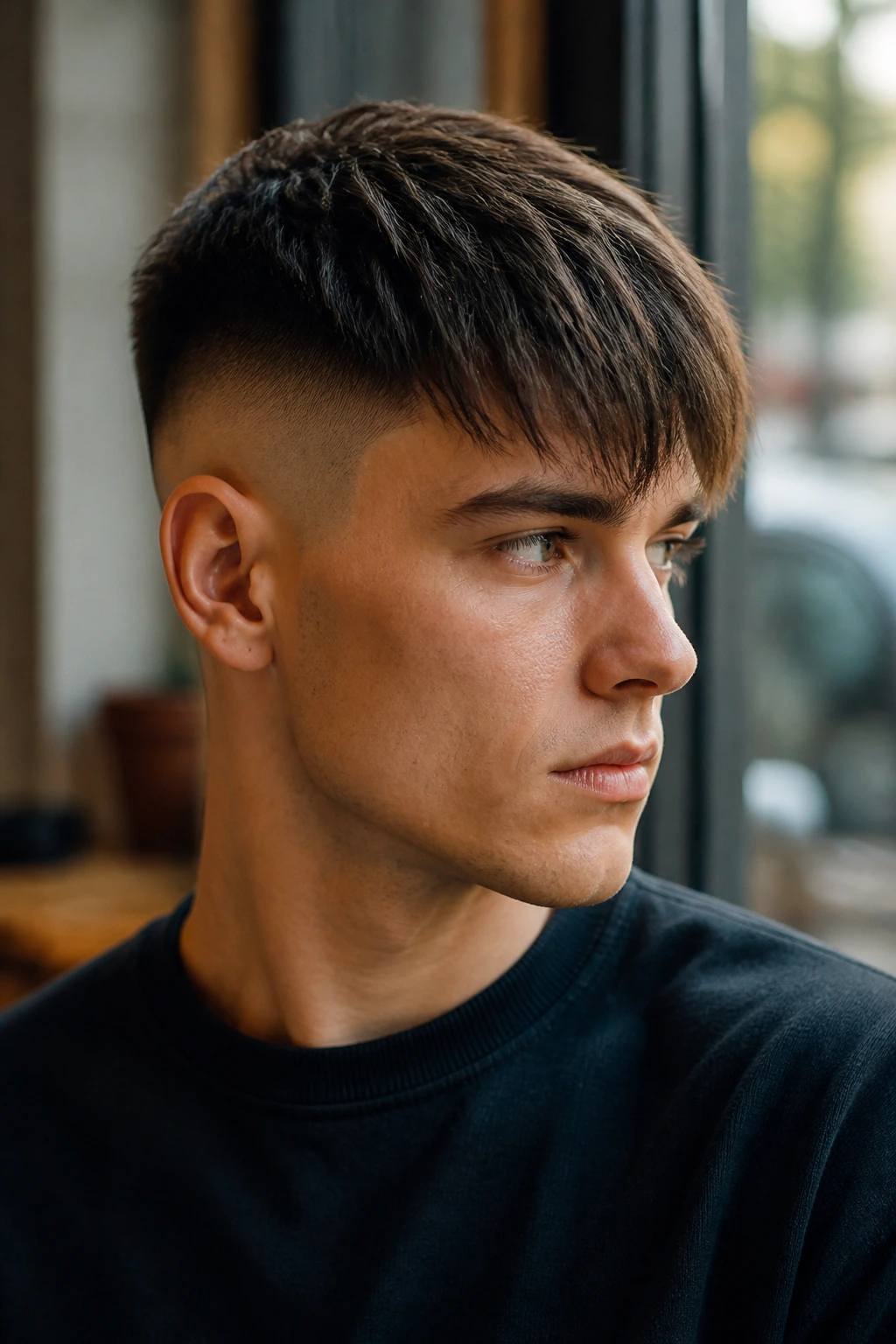
If your forehead is the first thing you notice in the mirror, a fringe undercut can shift the balance fast. The fringe comes forward, the sides stay short, and the haircut gains a softer frame around the face.
The fringe can be blunt, choppy, or feathered depending on the mood you want. A blunt fringe reads sharper. A textured fringe feels looser. Either way, the undercut underneath keeps the top from getting too heavy, which matters when the front has extra length.
Things to Ask For
- Leave enough fringe length to sit just above or across the brows
- Ask for texture at the ends so it does not hang like a curtain
- Keep the sides tight enough to make the fringe stand out
- Make sure the barber checks how it falls when dry, not only when wet
This cut suits straight and wavy hair particularly well. Curly hair can wear it too, but the fringe needs more planning because shrinkage changes the final line. If you want a haircut that makes the eyes and cheekbones the focus, this one does that job fast.
16. Pixie Undercut
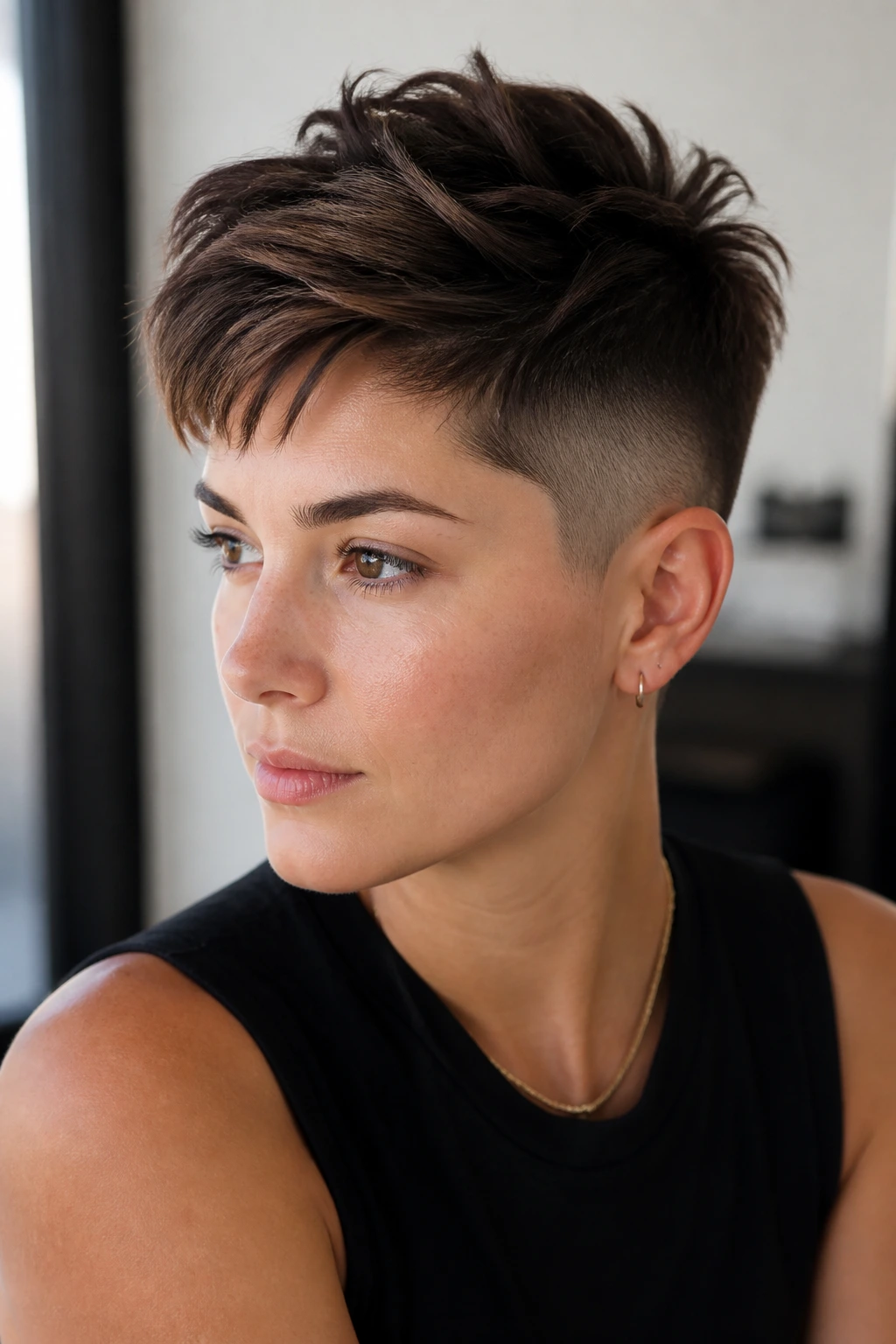
A pixie with an undercut can look sharp, not sweet. That is why I like it.
The short sides clean up the outline of the head, while the top keeps enough length to move, spike, sweep, or brush forward. The shape feels confident without needing much styling time, which is a big part of its appeal. A little paste or cream can be enough to finish it, and finger-drying usually gives a better result than fussing with a round brush.
The cut shines when the top has texture. If the layers are too uniform, the pixie can go flat. If they are too choppy, it starts looking messy in a way that is hard to control. The sweet spot sits somewhere in the middle, with the top around 2 to 4 inches depending on hair density.
Maintenance matters here more than people expect. Short hair grows fast in proportion to the cut, so the shape can blur after a few weeks. Keep the neckline and sides tidy, or the whole thing loses its clean edge.
Small cut. Strong outline.
17. Mullet Undercut
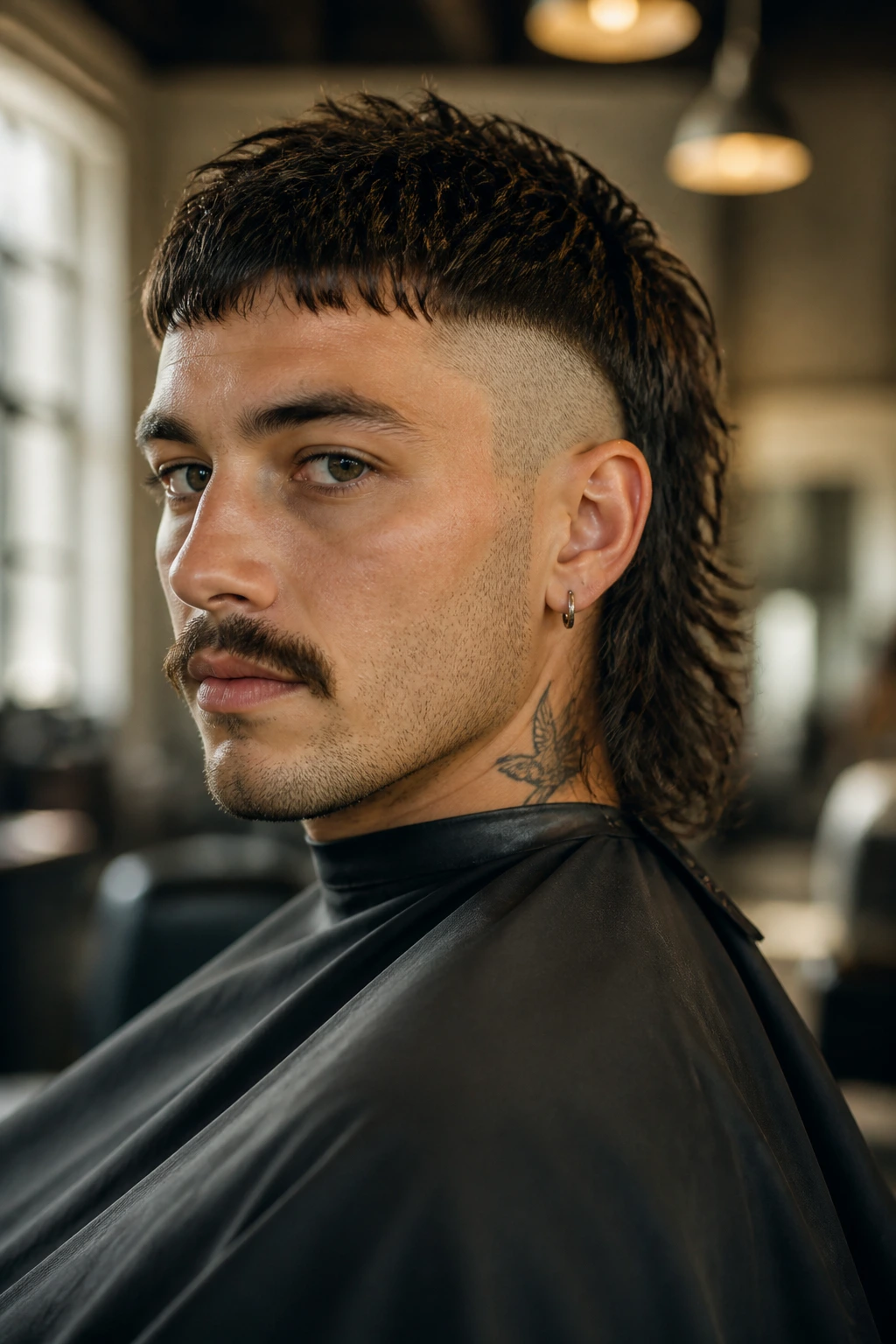
A mullet undercut is not a joke when the cut is balanced. It is a shape choice, and when it is done well, it looks intentional rather than thrown together.
The front and crown stay short enough to control, the back keeps more length, and the undercut on the sides makes the contrast read as a style instead of just growth. The result is bold, a little rebellious, and much more wearable than people expect when the proportions are right.
How to Keep It Wearable
- Keep the sides tight so the top and back stay the focus
- Avoid making the back too thin; you want movement, not scraps
- Use texture spray or a light cream so the crown does not sit flat
- Trim the nape before it starts turning into a shaggy tail
This style works best when the hair has some wave or bend, but straight hair can wear it too if the ends are texturized. I would not go too extreme on the length gap unless you want the haircut to feel very loud. The cleaner version often lands harder anyway.
18. Colored Undercut
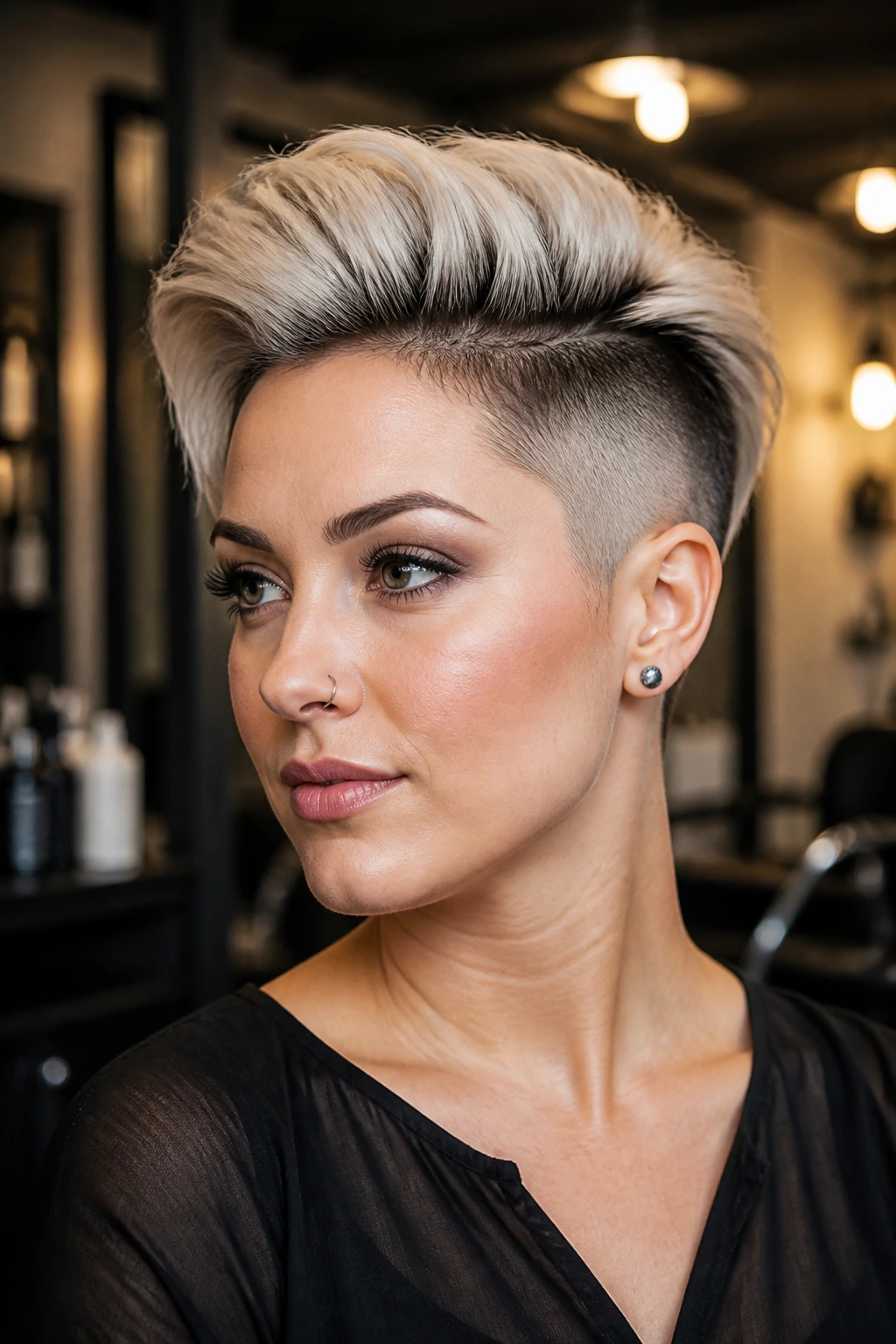
The fastest way to make an undercut feel custom is color. Dark roots with a lighter top, platinum over a tight fade, copper against brown hair, even a hidden panel underneath the top layer — all of it changes the look fast.
Color Ideas That Stay Wearable
- Platinum with dark roots for high contrast and easy grow-out
- Copper or auburn for warmth on darker hair
- Pastel panels on the top layer if you want something playful
- Peekaboo color under longer sections for a flash that appears when the hair moves
Color and undercutting work well together because the short sides make the color placement more visible. A bright top does not have to fight as much bulk, and a hidden color panel can stay tucked away until the hair shifts. That makes this one flexible. You can be loud or discreet without changing the haircut itself.
The catch is upkeep. Bleach, toner, and color-safe shampoo are not optional if you want the shade to last and the hair to stay healthy. Color is commitment. If you like changing your look often, that is a plus. If you want a wash-and-go routine, temporary color wax or spray makes more sense.
Undercuts already bring shape. Color brings attitude.
A good undercut does not ask you to become a different person. It just gives your hair a sharper outline, which is often enough. The real decision is not whether the cut looks bold — it does — but whether the version you choose fits how you live on a Tuesday morning.
Bring the photo, bring the product habit, and bring a little patience for the grow-out. That last part matters more than people admit. The cut that looks coolest on day one is not always the one you can keep the longest, and the one that survives a messy week usually ends up being the one you like most.
