



Short undercut styles for men can look razor-clean or awkwardly blunt, and the difference usually comes down to the top length, the fade line, and how much texture the hair has. That’s the part people miss. They ask for “an undercut,” leave the chair, and then wonder why it looks great for 20 minutes and weird the rest of the week.
A short undercut isn’t one haircut. It’s a whole family of cuts built around short sides, a clearly separated top, and enough length up top to give you shape without turning into a mop. The sweet spot usually sits somewhere between 1 and 3 inches on top, though curly and coiled hair can play by its own rules. If the sides are too soft, the cut loses that edge. If the top is too long, it stops looking short and starts looking like an accidental grow-out.
That balance is what makes the style so useful. It can look office-ready, weekend-casual, or sharp enough to wear with a jacket and still feel relaxed. It also works with a lot of hair types — straight, wavy, curly, thick, fine — but not every version fits every head shape or routine. A barber who understands clipper guards, crown growth, and how your hair falls forward can make the difference between a good haircut and one you keep fighting in the mirror.
And yes, maintenance matters. Some versions need a clean-up every 2 to 3 weeks. Others can stretch longer if you’re fine with a softer outline. The styles below cover the versions I’d actually point men toward when they want the undercut look without committing to a high-maintenance ordeal.
1. Classic Disconnected Undercut
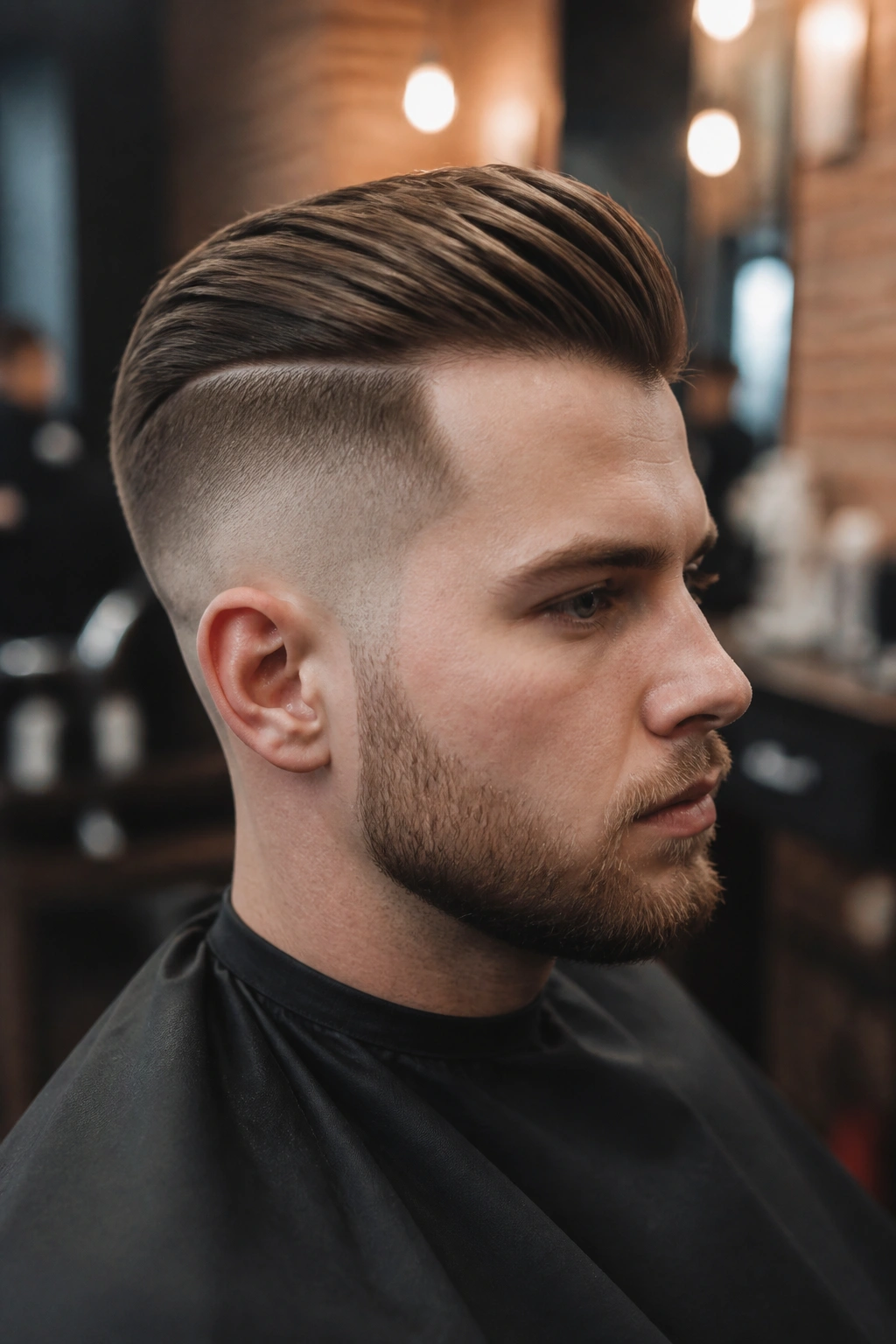
The classic disconnected undercut is the haircut people picture when they hear the word “undercut.” Short sides, clear separation, and a top that sits a little longer so it can be pushed back, to the side, or left with some natural bend. It’s blunt in the best way. No guessing.
Why It Still Works
The clean break between the sides and top gives this cut its edge. That line of contrast makes even short hair look intentional, which is useful if your hair grows fast or gets puffy at the temples.
Ask for the sides to be taken down with a #1, #2, or skin fade if you want more contrast. Keep the top around 1.5 to 2.5 inches. That length is short enough to stay neat, but long enough to move.
A matte clay or paste keeps the finish from looking shiny and stiff.
A little goes a long way. Use a pea-sized amount first, then add more only if the hair still feels too loose.
If you like a haircut that looks good even when you barely style it, this is the one to start with.
2. Low Fade Undercut
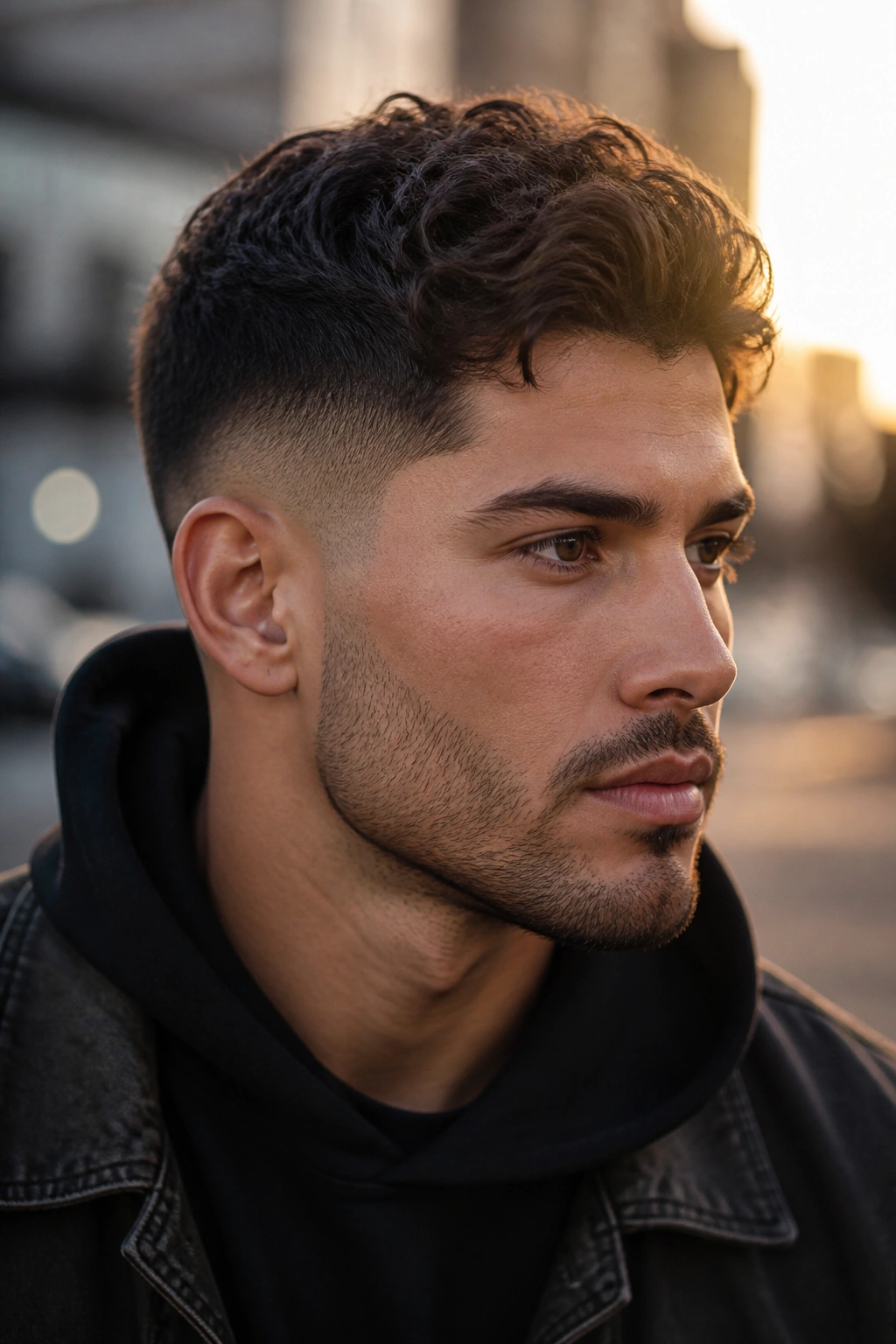
What happens when you want the undercut look without the harsh drop-off? You get the low fade version. The fade starts near the ears and neckline, so the transition feels softer than a skin-tight disconnect, but the top still reads as clearly separate.
That softness is the whole appeal. A low fade undercut suits men who want clean sides without making the haircut look severe. It’s a smart choice if your face is narrow or if you wear glasses, since the lower fade keeps the sides tidy without crowding the temples.
Who It Flatters
- Men who want a neat cut that grows out gracefully
- Guys with thick hair that bulks up at the sides
- Anyone who wants a short style for work but not a sharp military look
The top can stay short and textured, about 1 to 2 inches, and that’s enough. You don’t need a huge amount of height here. A sea salt spray before blow-drying gives the top a bit of grip, then a light matte paste finishes it off.
The low fade is easy to live with. That’s why it gets worn so much.
3. Mid Fade Undercut
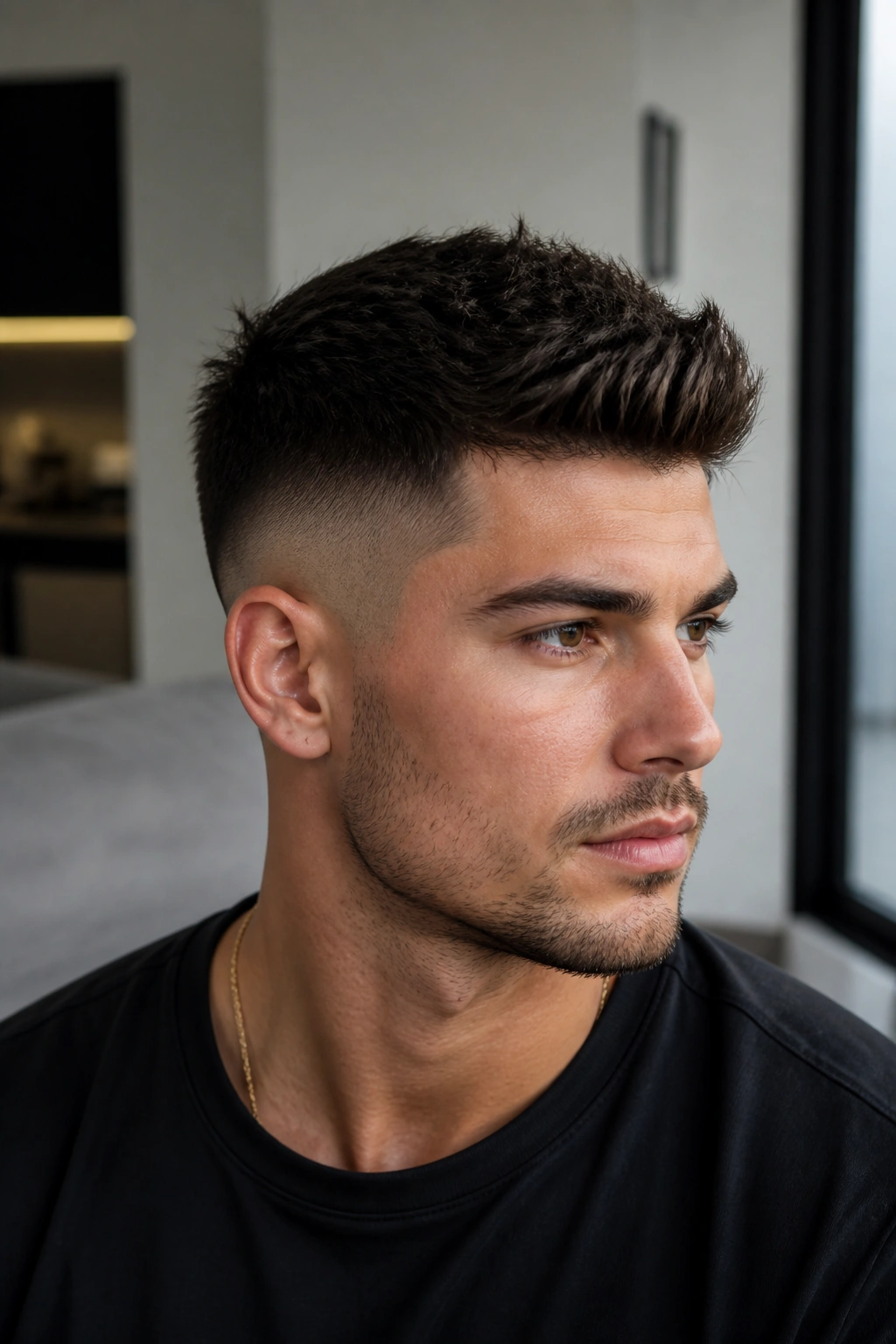
A mid fade sits right in that middle zone where the haircut looks deliberate from every angle. It’s sharper than a low fade, less extreme than a skin fade, and that middle ground makes it one of the easiest short undercut styles for men to wear day after day.
The best part is how balanced it looks. The fade starts high enough to clean up the sides, but not so high that it swallows the top. If your hair is thick, this version helps control bulk. If your hair is fine, the contrast can make the top look a little fuller without trying too hard.
What to Tell Your Barber
- Ask for a mid fade beginning around the temple area
- Keep the top short, about 1.5 to 2 inches
- Leave enough length in front for texture or a slight push-back
- Ask for the transition to stay tight around the ears
This cut plays well with a matte cream or light clay, especially if you want the top to sit up a little without sticking together. It’s a tidy haircut, but it doesn’t feel stiff. That matters more than people think.
4. Side-Part Undercut
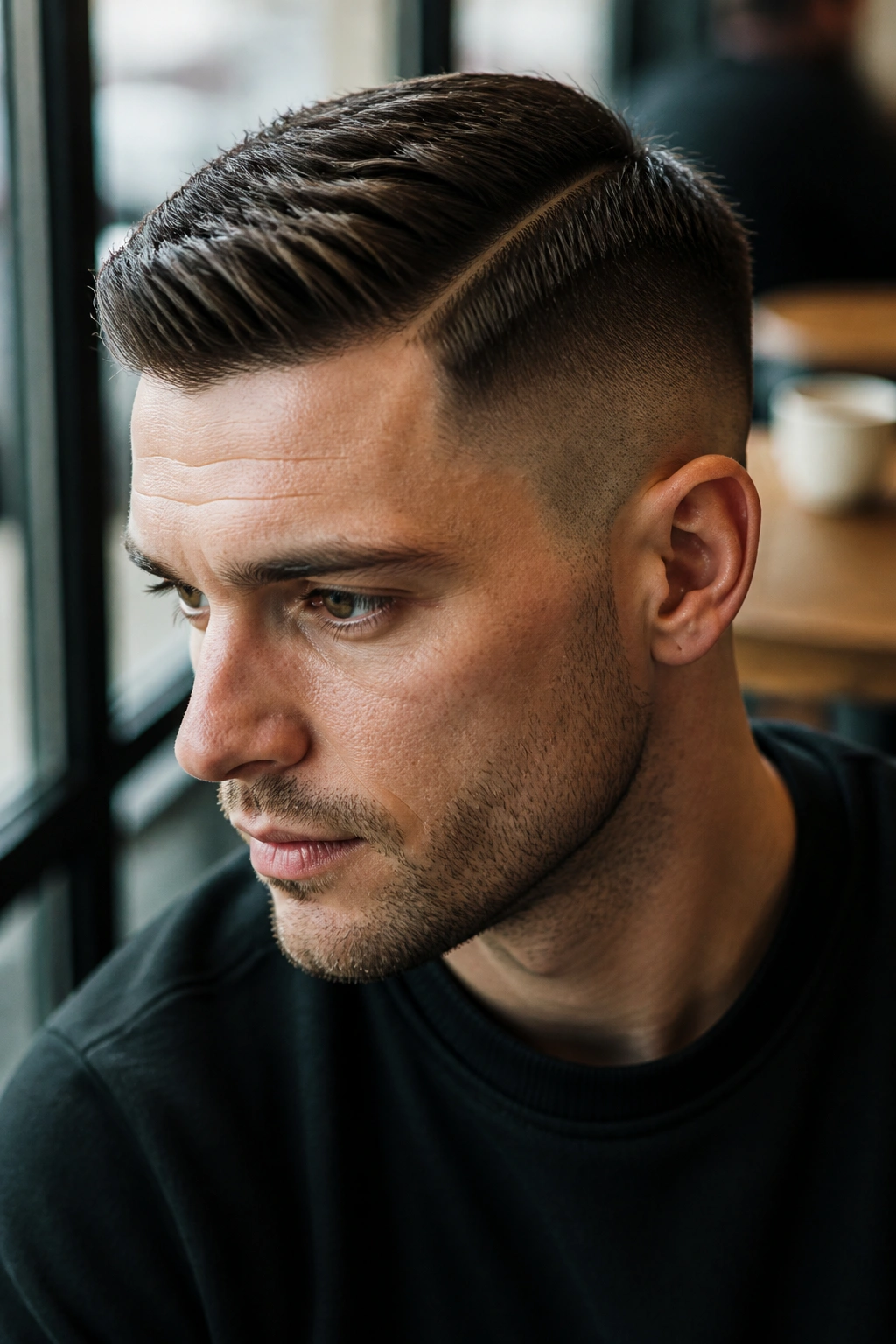
The side-part undercut is one of those cuts that can lean polished or relaxed depending on how you style it. Same haircut. Different mood. A clean part gives you structure, while a softer side sweep makes it feel less formal.
There’s a reason this style keeps showing up. It works with short hair that still needs direction. If your hair falls forward naturally, the side part helps it sit where you want. If it grows outward and puffs up, the part gives it a lane to follow.
A barber can build this with either a disconnected side part or a softer taper through the sides. The first one looks bolder. The second one feels easier to wear if you don’t want people staring at your haircut before they notice your face.
My preference? A part that’s visible but not carved to death. Hard lines can look slick on the right guy, but they age faster than a softer break. If you want this cut to feel modern and not frozen in a photo, keep the top short and textured rather than overly glossy.
5. Textured Crop Undercut
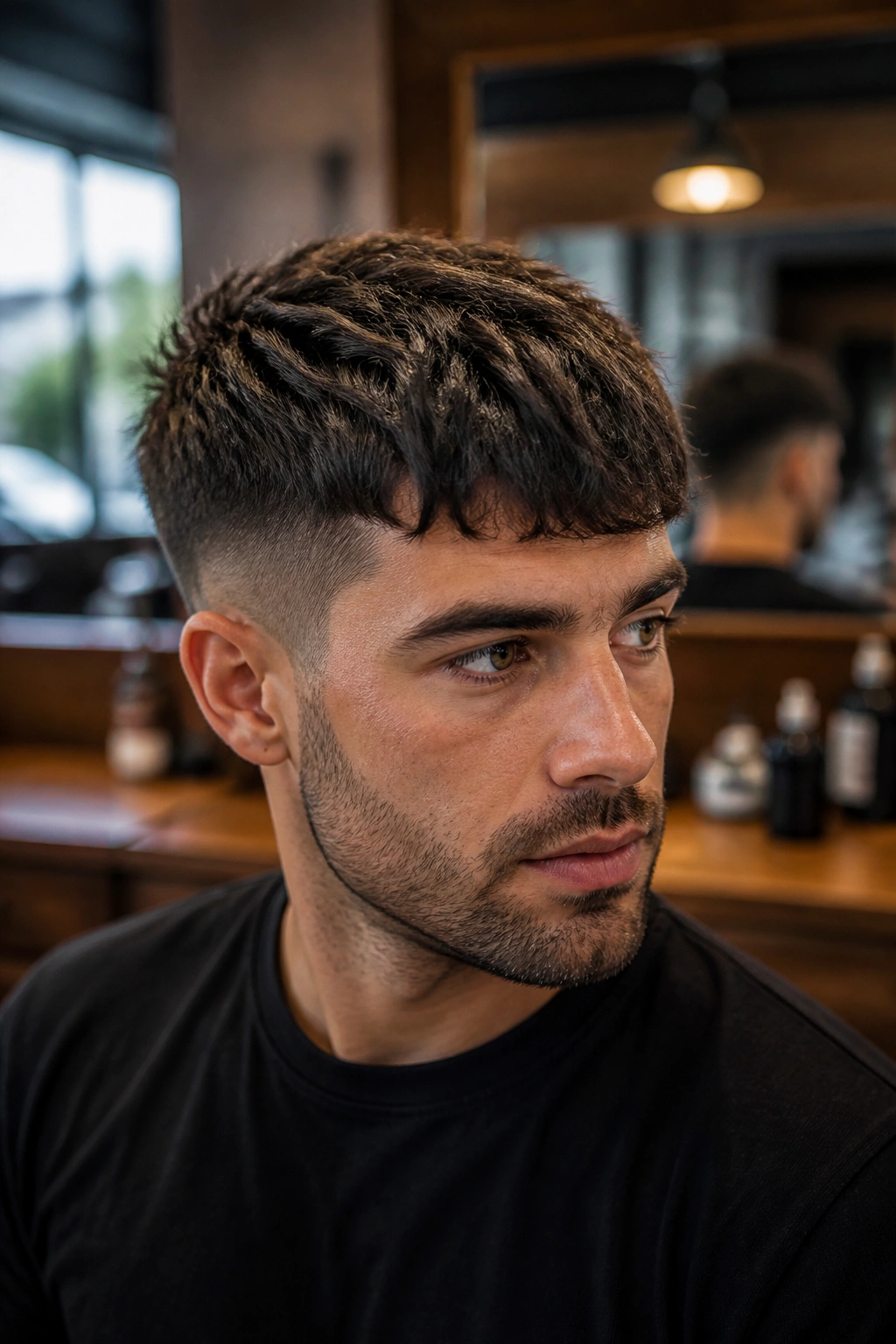
The textured crop undercut is for men who want short hair that still has shape. The top is cut with choppy layers, usually brushed forward or slightly down, and the sides stay short enough to keep the whole thing crisp. It’s casual, but not sloppy.
Why It Works on Real Hair
This version hides a lot of problems. Cowlick at the front? The crop can work with it. Flat hair? Texture gives it some life. Thick hair that fights back? Short layers help the bulk settle down.
The key is the finish. You do not want this cut looking wet or greasy. A matte styling paste, worked into damp hair, gives that rough, separated look without making the strands stick together in clumps. If the top starts to look helmet-like, you’ve used too much product. Back off.
This style is especially good if you don’t want to spend five minutes sculpting your hair every morning. Finger-style it forward, pinch a few pieces at the front, and let the haircut do the heavy lifting.
A Good Barber Ask
Tell the barber you want:
- Short sides with a clean undercut feel
- Choppy texture on top
- The front left a touch longer than the crown
- Enough length for movement, not a fringe that falls into your eyes
That last part matters. Too much length and it stops being a crop.
6. Slicked-Back Undercut
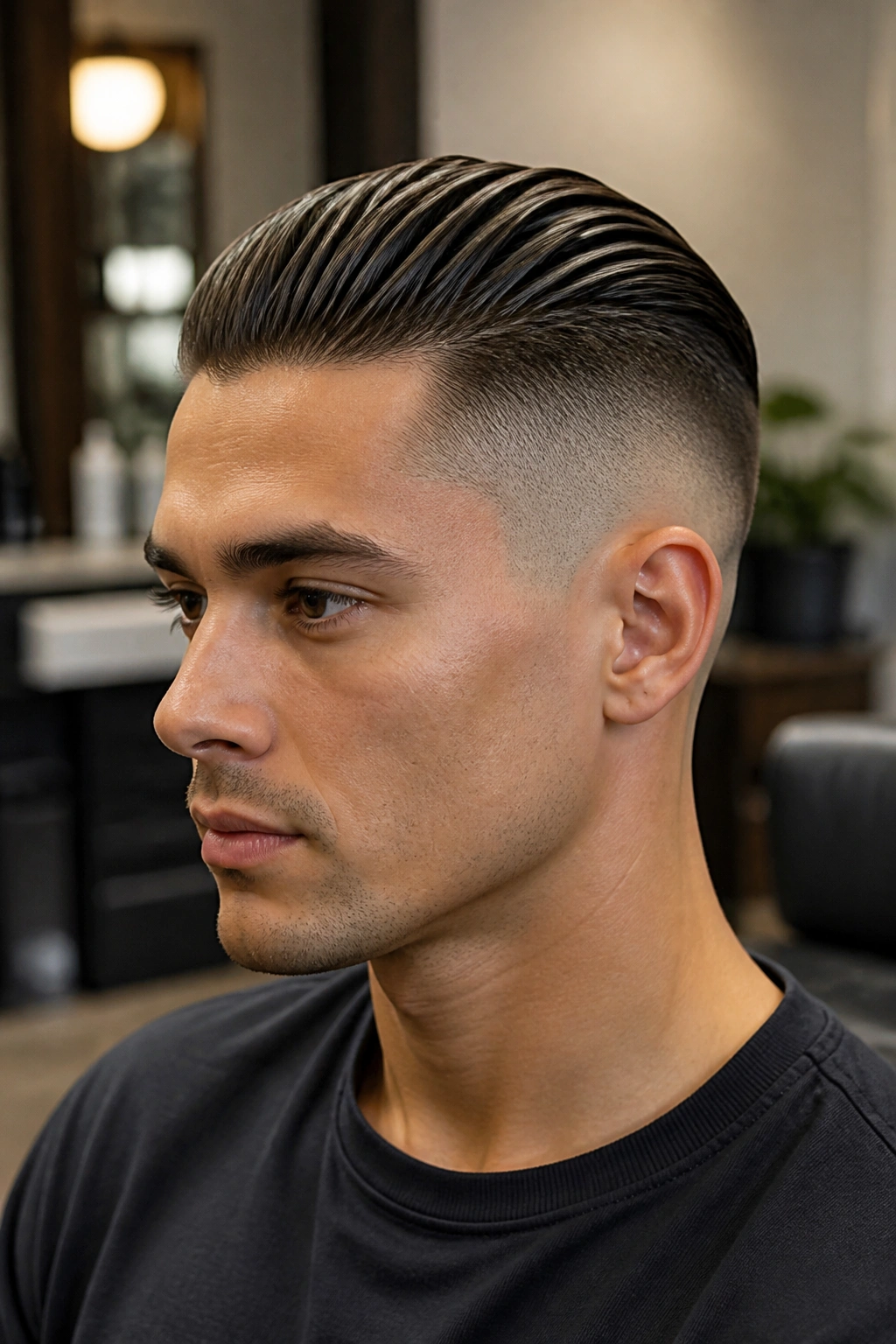
Can short hair be slicked back without looking old-fashioned? Absolutely. The trick is keeping the top short enough to stay controlled and using a product that gives hold without making the hair shiny and heavy.
This version works best when the top is around 2 inches or a touch longer in front. That gives you enough length to comb back smoothly, but not so much that the hair collapses after an hour. Men with straight or slightly wavy hair usually get the cleanest result, though thicker hair can hold it well too.
Use a medium-hold pomade if you want a smoother finish, or a cream-pomade hybrid if you want less shine. Start with damp hair, not dripping wet hair. Comb it back once, let it settle, then use your fingers to break the perfect-school-photo look.
One warning: don’t overdo the height at the front. Slicked-back hair looks better when it’s controlled, not piled up.
This style has a neat advantage. It’s one of the few short undercuts that can move from day to night without needing a full restyle.
7. Short Quiff Undercut
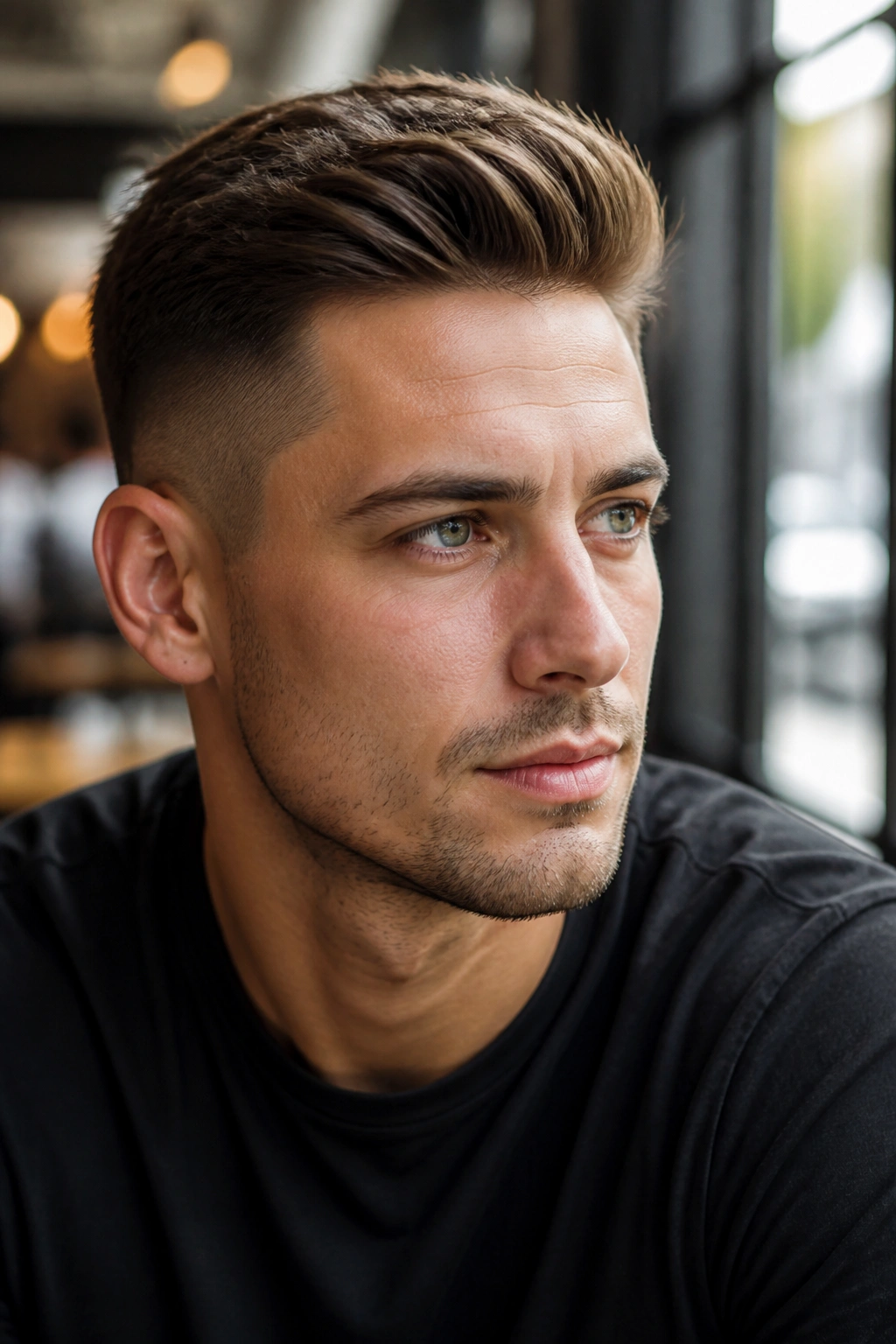
The short quiff undercut brings the front up without making the haircut look big. That’s the whole point. You get lift, but you still keep the cut compact and wearable.
A quiff can go wrong fast if the front is too long or the sides are too soft. Then it starts to look like you’re trying to create volume where you don’t need it. Keep the front modest — about 1.5 to 2 inches — and let the height come from blow-drying, not from extra length.
How to Style It
- Work a heat protectant or light pre-styler into towel-dried hair
- Blow-dry the front upward and slightly back with your fingers or a vent brush
- Use a matte clay for hold, not shine
- Push the front up, then loosen the shape a little with your hands
That little looseness is what makes the cut feel modern. A quiff that’s too polished can look frozen. A quiff with some movement feels more natural, especially if your hair has a bit of wave.
This is a strong choice if your face is round or soft, since the lift can add a bit of vertical line. Not magic. Just shape. And shape changes the whole haircut.
8. Mini Pompadour Undercut
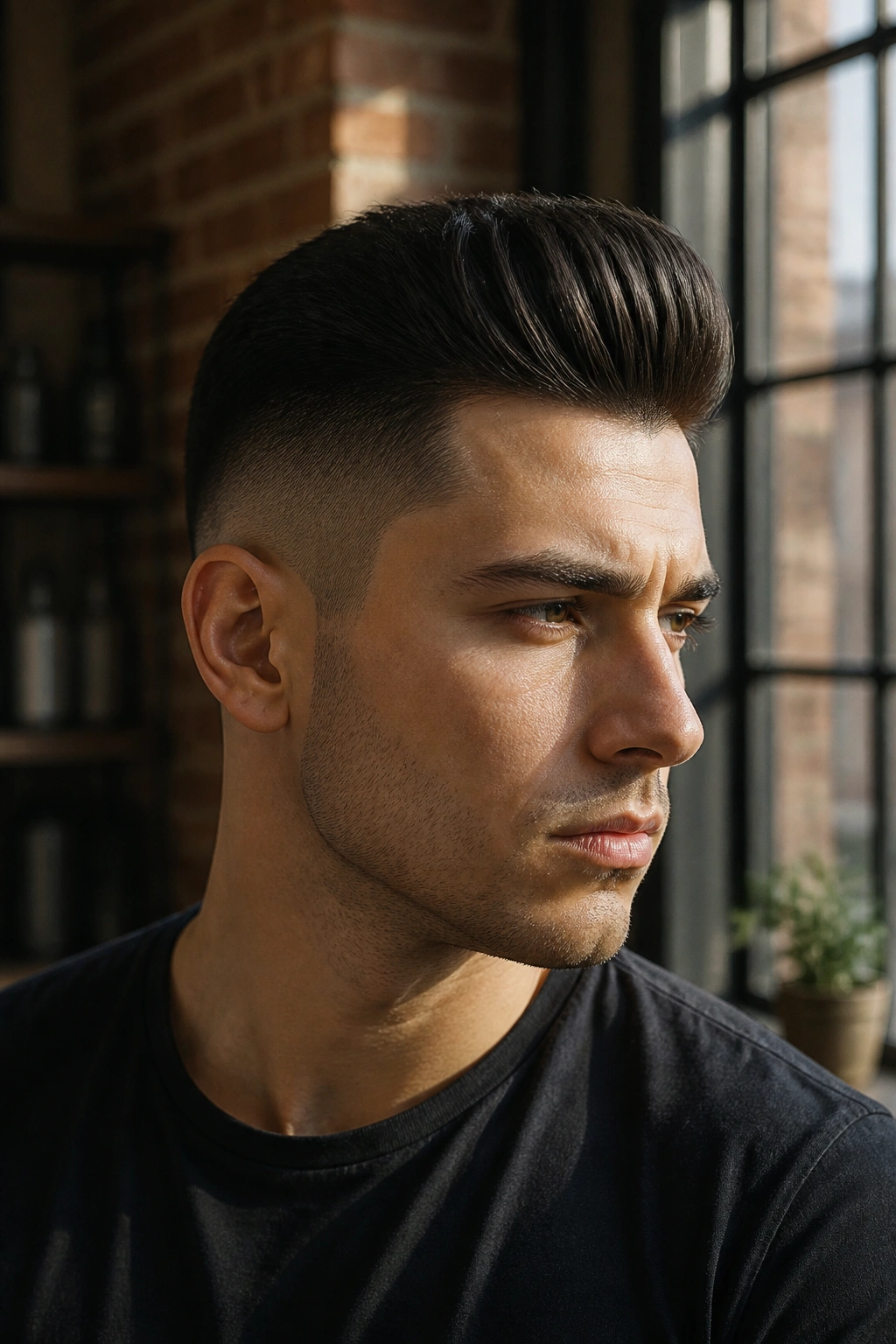
A mini pompadour undercut is basically the cleaner cousin of the quiff. The front is brushed up and back, but the profile stays tighter and a little more refined. It gives you height without the full vintage sweep that a big pompadour brings.
That smaller scale is why it works so well as a short style. You get the lift that makes the haircut stand out, but the overall silhouette stays neat. If you wear tailored clothes, leather jackets, or even just a plain T-shirt and good shoes, this cut has enough shape to look finished.
The barber part is straightforward: shorter sides, a top that keeps a touch more length in the front than at the crown, and a smooth transition that doesn’t leave hard steps unless you want them. A side profile matters here. The top should rise, then curve back gently. Not spike. Not flop.
Pomade with a flexible hold works best if your hair is naturally smooth. If it’s thick or stubborn, a blow-dryer and pre-styler matter more than the product itself. That’s the part people skip, then complain the style won’t stay up. It will. You just have to give it a shape first.
9. Curly Top Undercut
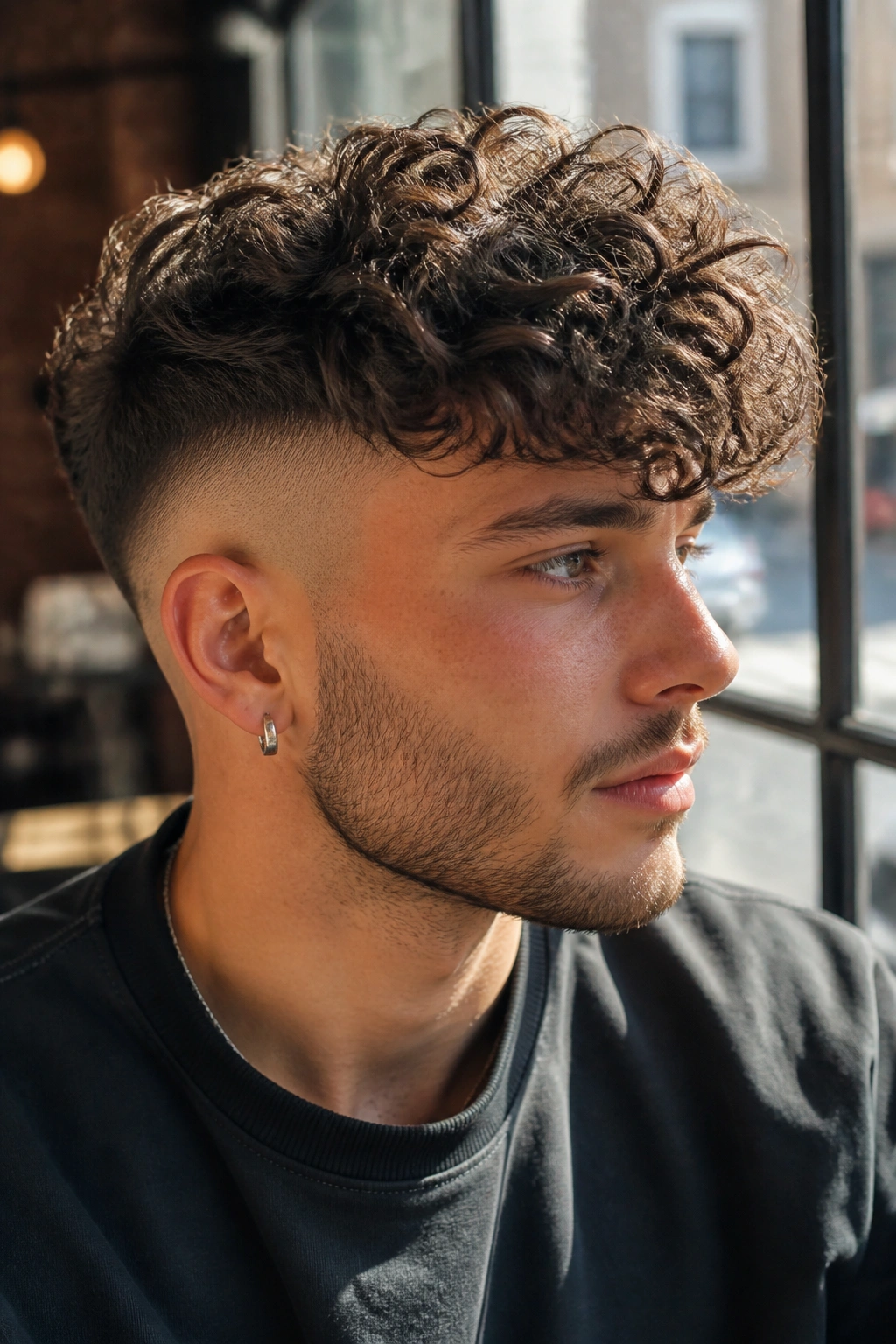
Curly hair and an undercut can be a really clean match. The short sides keep the bulk under control, and the curls on top give the haircut texture without needing much help. If you’ve got curls, this style can look sharp in a way straight hair sometimes can’t fake.
The important thing is not cutting the top too short. Curls shrink. A lot. What looks like 2 inches wet can turn into barely an inch once it dries. A barber who knows curly hair will usually leave a little more length than you expect, then shape it dry or near-dry so the curl pattern sits naturally.
What Makes This One Different
The sides do most of the visual work, while the top provides movement. You’re not styling curls into a perfect shape every morning. You’re giving them enough room to behave.
A curl cream or light leave-in conditioner keeps the top from looking dry and frizzy. Skip heavy waxes. They weigh curls down and make the ends look clumped.
If your curls get wider at the sides, ask for a tighter fade or a more aggressive disconnect. That keeps the outline clean. Otherwise, the haircut can mushroom outward, which is rarely the goal.
This one has attitude, but it still reads polished. That combination is hard to beat.
10. Hard Part Undercut
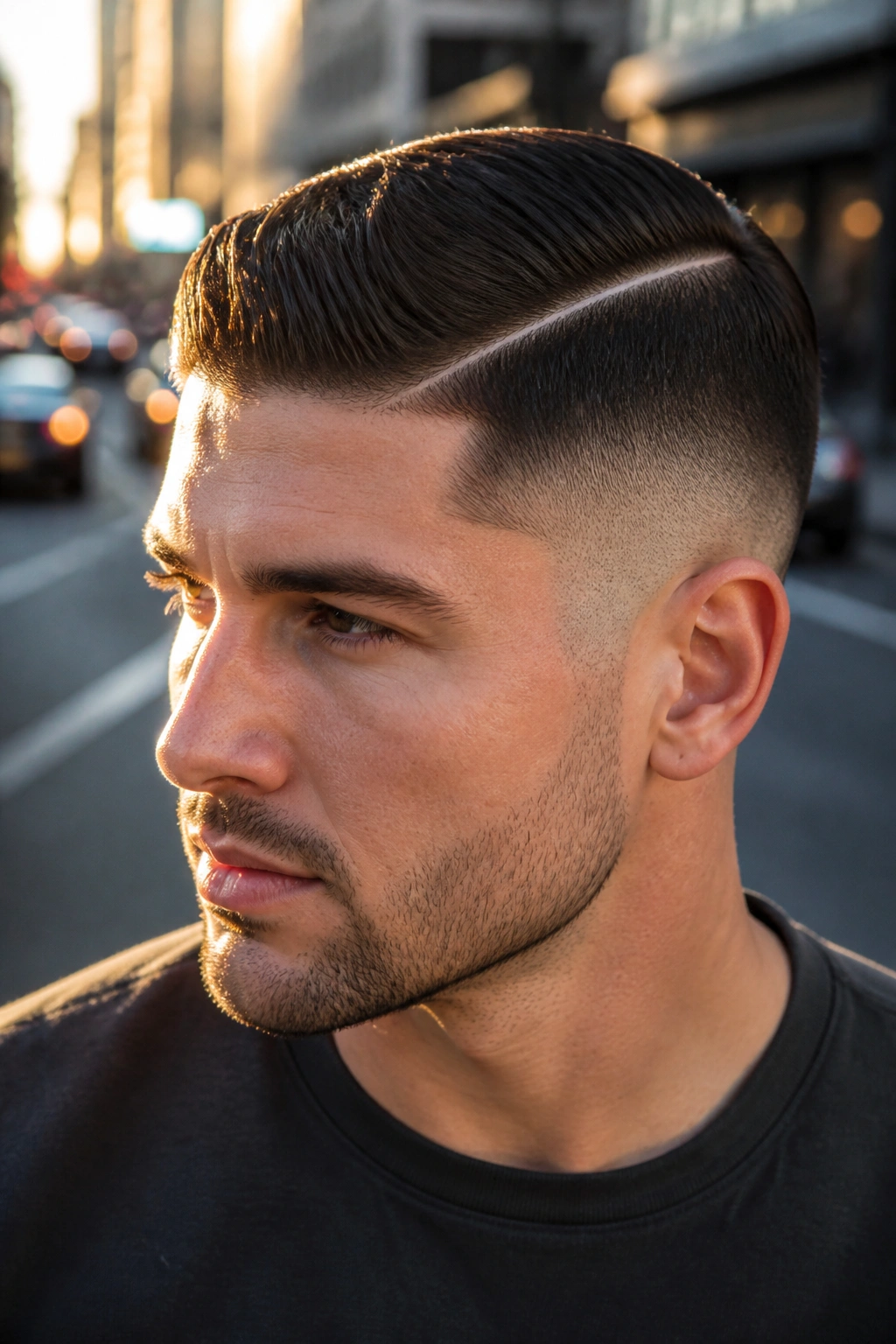
A hard part undercut is for men who like structure. The shaved part line adds a clear break on top, and that line gives the whole haircut a little extra definition without needing more length.
This style leans clean and precise. It’s a good match if your hair naturally wants to sweep one way, because the part line gives it a place to settle. It also helps shorter styles look more finished, especially if the top is only 1.5 inches or so and you don’t want to rely on volume.
Things to Keep in Mind
- The part line needs upkeep every couple of weeks
- It looks strongest when the sides are tight
- A matte or low-shine product keeps the cut from looking greasy
- It suits straight and slightly wavy hair more easily than very curly hair
There’s a small catch. Hard parts can make the haircut feel more rigid than a softer side part, and not every face shape loves that. If your features are already angular, it can sharpen the look even more. If your face is softer, the line can add useful structure.
I’d call this a good “clean haircut with edge” option. It’s not loud. It just has a point of view.
11. Fringe-Forward Undercut
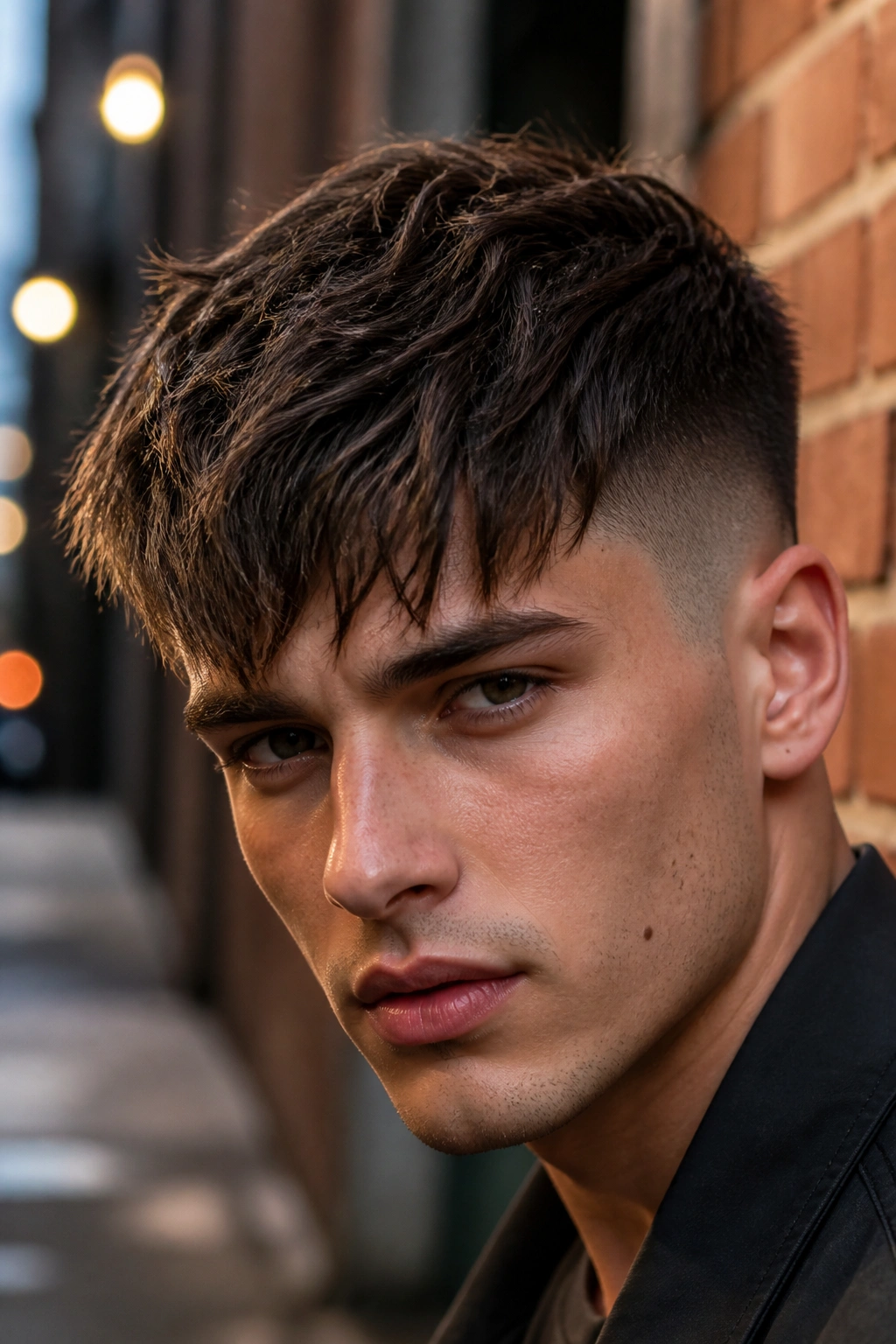
A fringe-forward undercut pushes the top toward the forehead instead of away from it. That sounds simple, and it is, but the effect changes the whole mood of the haircut. It feels younger, a little more relaxed, and often easier to wear when you don’t want height.
This style is useful if your hairline has a cowlick, if your forehead is high, or if you simply prefer not to fight your hair into a back-swept shape every day. The fringe can be short and choppy, or a little smoother depending on how blunt you want the front to read.
Best On Hair That Does This
- Straight hair with natural fall
- Wavy hair that sits forward without puffing up
- Thick hair that needs weight removed through the top
- Fine hair that benefits from a more compact outline
The trick is to keep the fringe textured, not heavy. A blunt block across the forehead can look harsh unless your face shape really wants that line. A barber can soften the corners so the fringe lands with more movement.
Use a small amount of cream or matte paste and pinch the front forward with your fingers. That’s enough. Too much product turns the fringe sticky, and sticky fringe is a miserable look.
12. Ivy League Undercut
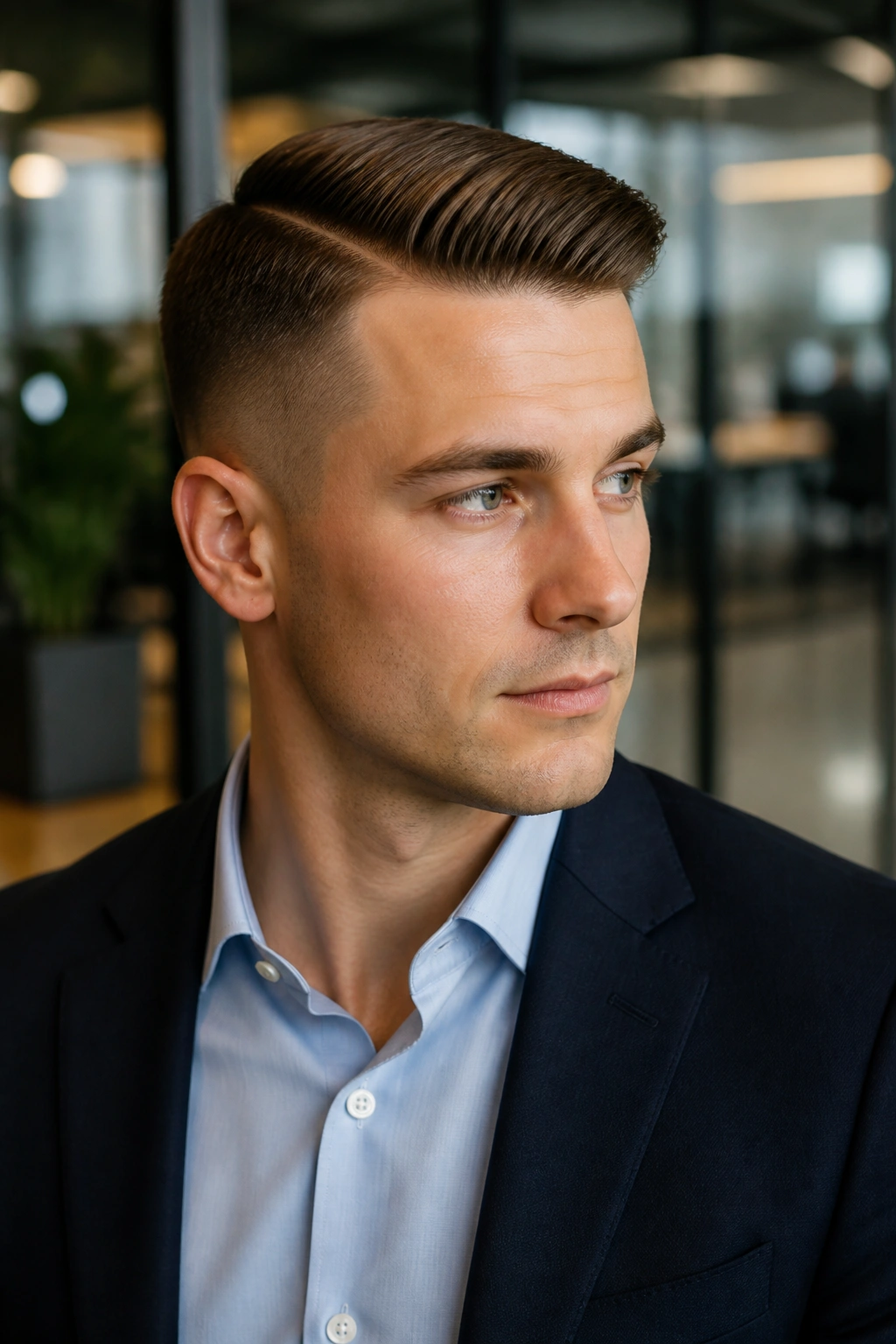
Is the Ivy League still an undercut? In this short version, yes. Barely, sometimes. But that slight tension is what makes it interesting. You get the tidy side-parted shape of an Ivy League cut, plus the shorter sides and stronger contrast that give it an undercut edge.
This one is excellent for men who want to look put together without broadcasting that they spent a long time on their hair. The top stays short, usually around 1 to 2 inches, and it’s styled with a side sweep or a soft brush-up rather than a dramatic lift.
A lot of guys like this because it behaves. It grows out politely. It doesn’t get messy in a dramatic way. It works with blazers and button-downs, but it doesn’t look too formal with a plain sweatshirt either.
If your barber blends the sides too much, the haircut starts losing its character. You want separation. Just not a harsh disconnect. That middle ground is the whole reason this cut keeps showing up in real life instead of only in photos.
13. Caesar Undercut
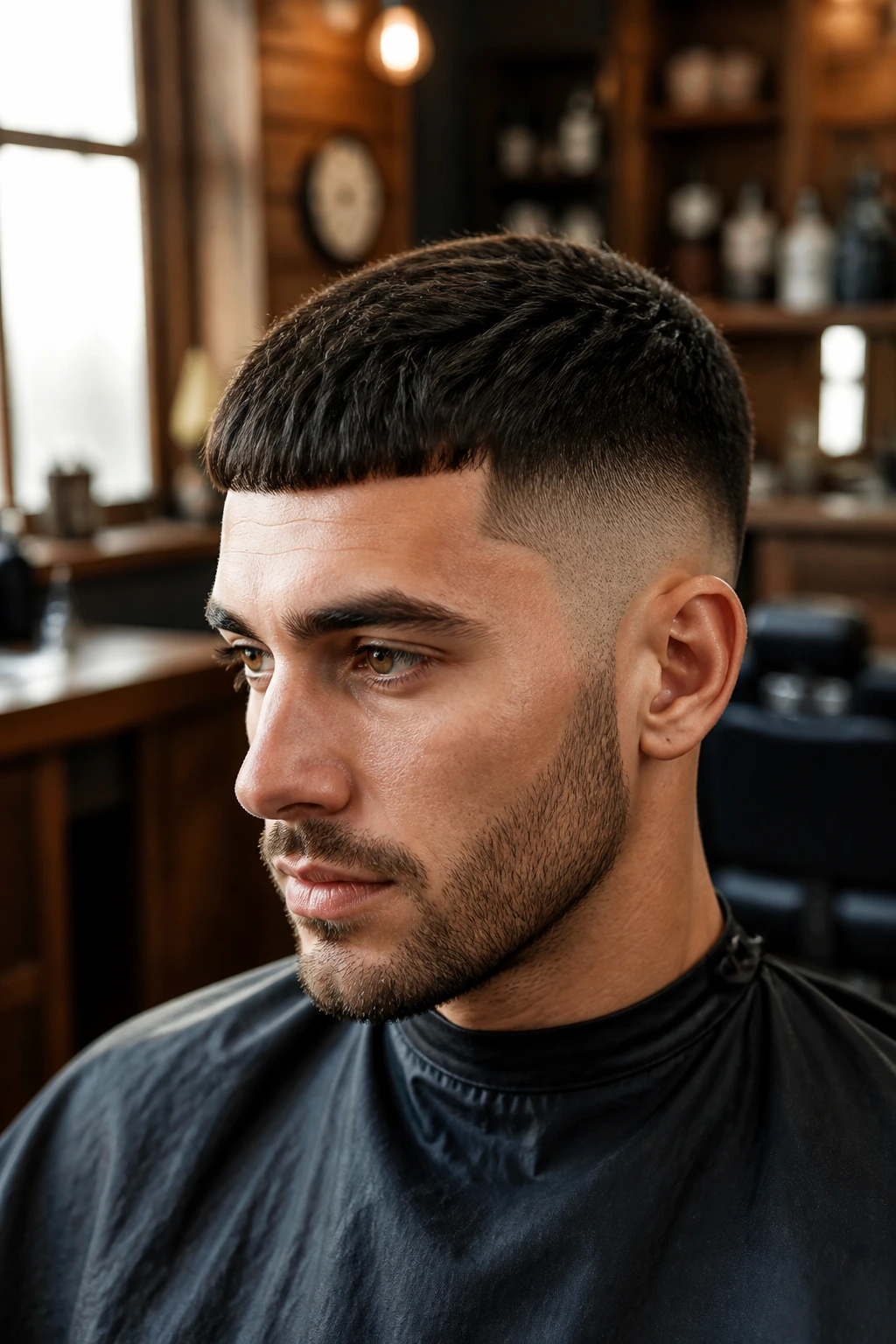
The Caesar undercut is short, blunt, and practical. The hair on top is kept short and brushed forward, often with a little fringe across the front, which makes it one of the easiest styles to live with if you want low fuss.
The strength of this cut is how little it asks of you. You’re not chasing volume. You’re not trying to build height at the front. The shape is already there. If you’ve got straight or slightly wavy hair, it can look neat after a quick towel dry and a touch of matte product.
Why People Keep Coming Back to It
Because it works with real mornings.
You can wake up, run your hands through it, add a bit of cream, and go. That’s the appeal. It also helps if your hairline is receding a little or if you want to keep the forehead covered without making the haircut feel heavy.
A Caesar undercut looks best when the fringe is cut cleanly but not boxed in too hard. The line should feel neat, not helmet-like. If the barber leaves a slight texture in the fringe, the whole thing lands better.
This is a quiet haircut. Not boring. Quiet. And sometimes that’s exactly what you want.
14. Afro Undercut
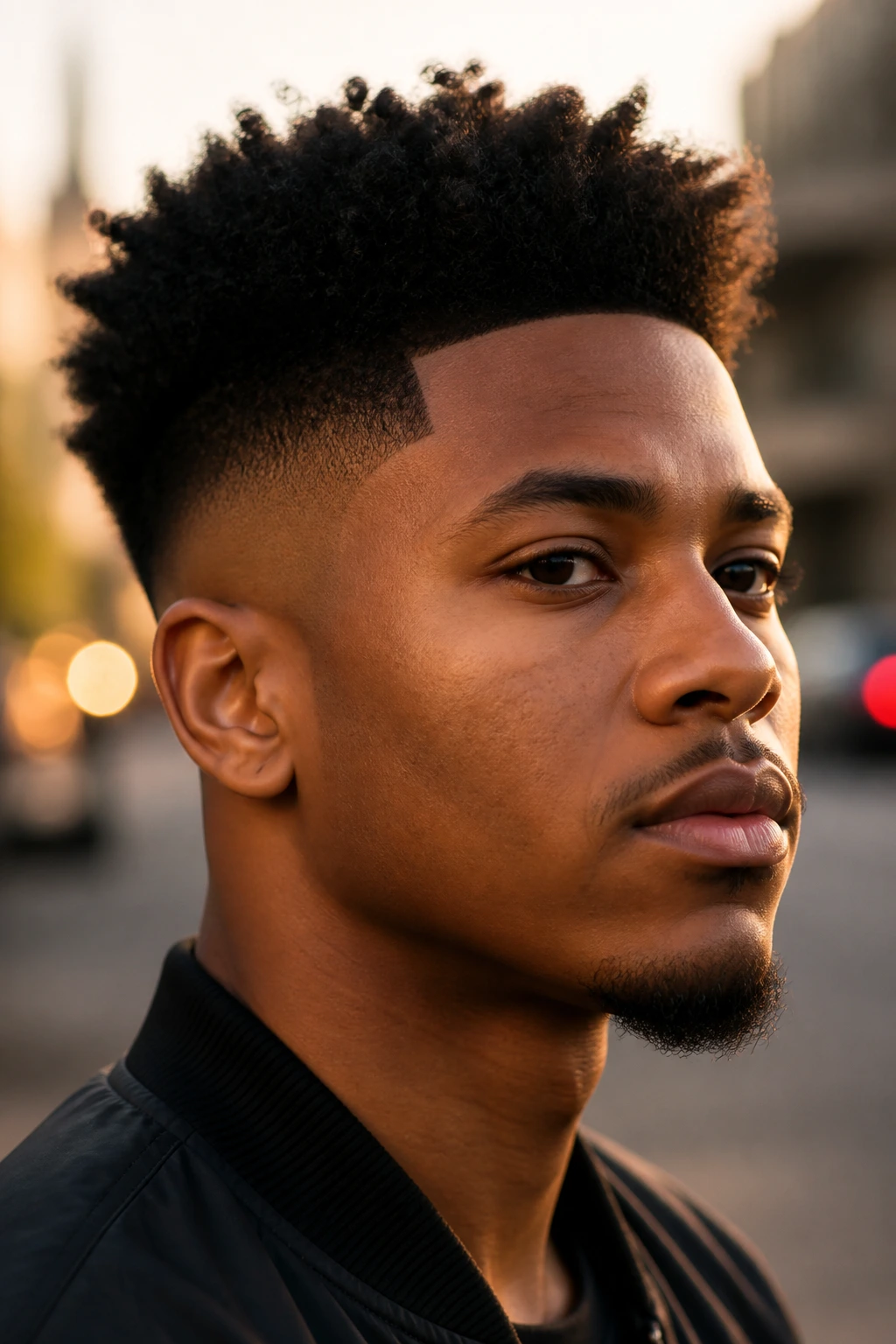
The afro undercut brings shape and control to coiled hair without flattening the natural texture. Short sides make the outline cleaner, while the top keeps enough length for the coils or curls to stand on their own.
A good version depends on balance. The top should be shaped with the natural head curve in mind, not forced into a square just because that’s what the clipper can do. A strong line-up around the forehead and temples can sharpen the look, but it needs to match the softness or tightness of the curl pattern.
Why Tapering Matters
If the sides are cut too abruptly, the top can look disconnected in a bad way. A taper or low fade around the ears usually gives the cut a cleaner base, especially when the hair is dense.
Moisturizing matters more here than it does with many short styles. A curl cream or light moisturizer keeps the hair from drying out and making the shape look fuzzy. That fuzz can erase the clean undercut line fast.
This style is good for men who want structure without giving up texture. It’s also one of the few cuts that can look sharp even when the top isn’t perfectly arranged. That’s a nice relief, honestly.
15. Spiky Top Undercut
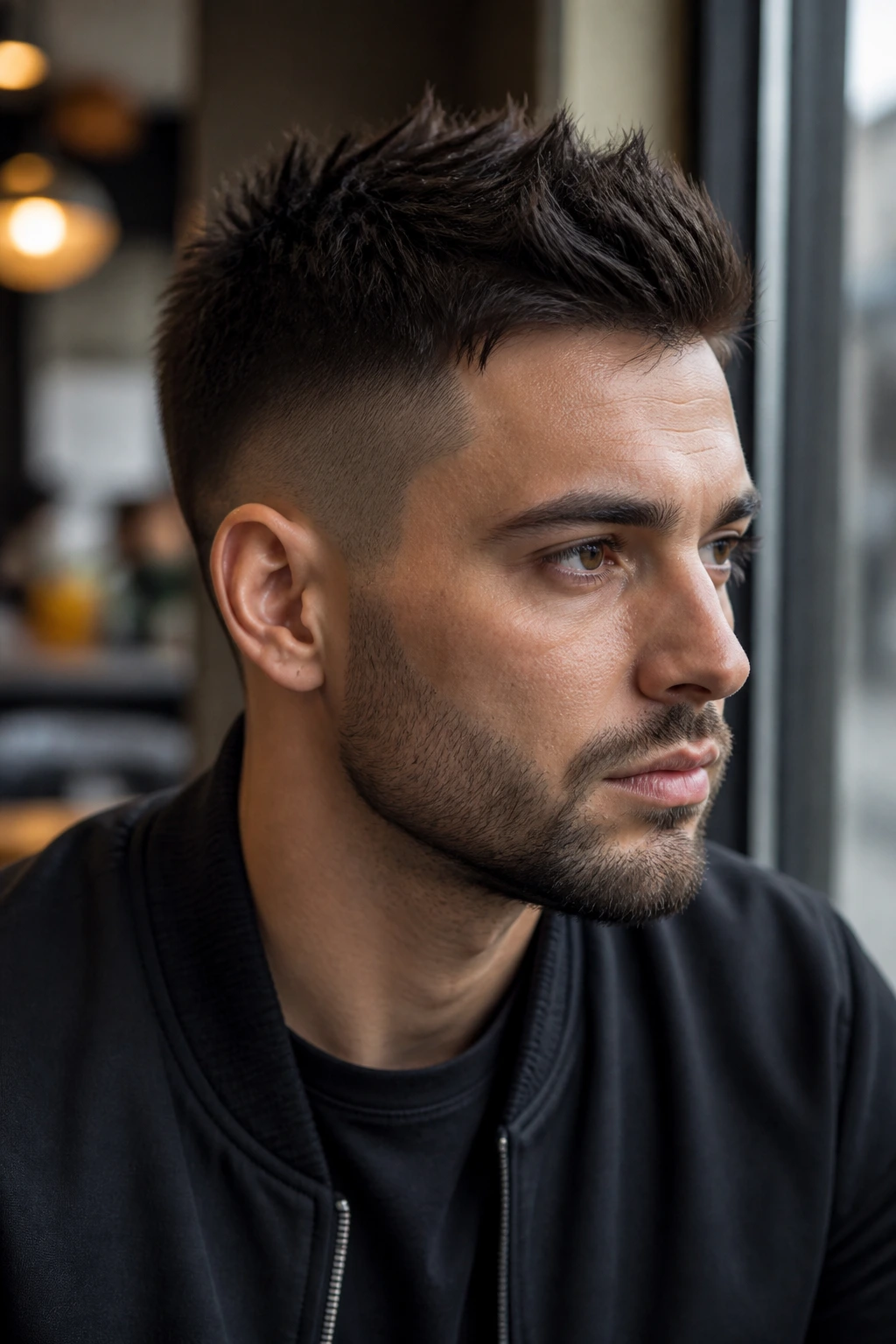
Spiky hair gets a bad reputation because people remember the stiff, gel-heavy versions. A short spiky undercut can look much better than that if you keep the spikes low, uneven, and matte.
The main idea is simple: short sides, short top, and enough separation up top to create a little lift. You’re not building a hedgehog. You’re adding texture and direction. That difference matters. A lot.
Use a light clay or fiber product on dry or slightly damp hair, then pinch sections upward with your fingertips. The spikes should look irregular, not identical. If every piece stands at the same height, the cut starts looking fake.
How to Keep It Clean
- Keep the top around 1 to 1.5 inches
- Use a dry finish product, not a wet gel
- Blow-dry against the grain if your hair lies flat
- Leave the sides tight so the top has room to stand out
This style works especially well on thick hair that resists lying down. It also gives fine hair a little extra body, though you’ll want to avoid overloading it with product. Too much and the spikes collapse into one sticky clump.
It’s a straightforward cut. Punchy. Fast. And easier to wear than the old-school spiky looks people still remember.
Final Thoughts
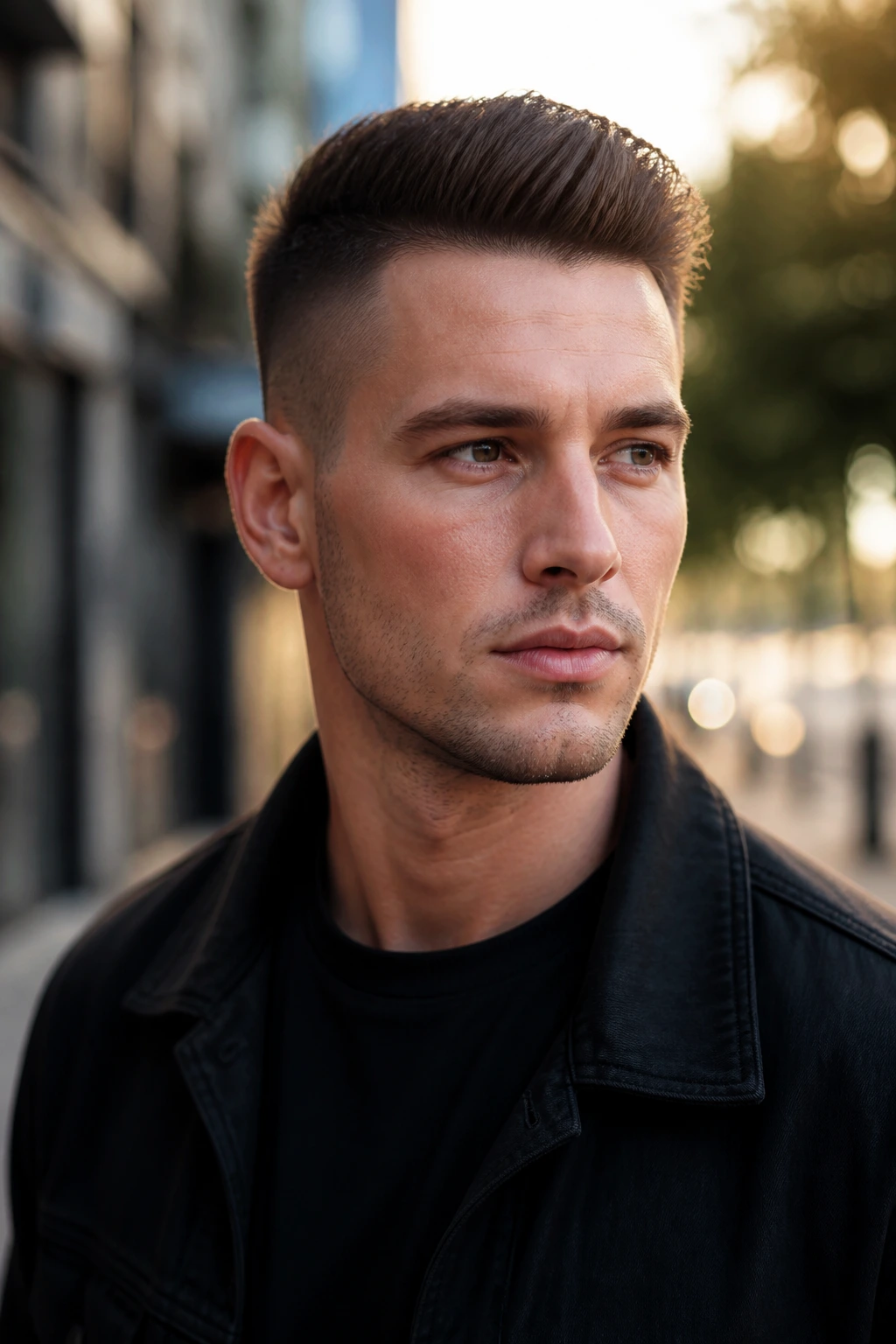
A short undercut only looks right when the top length and side contrast make sense together. That part is non-negotiable. Get the balance right, and the haircut looks clean even on a busy morning.
The safest move is to start with a version that matches your hair texture instead of chasing a photo. Thick hair usually handles more structure. Fine hair usually looks better with shorter, lighter styling. Curly hair needs room. Straight hair likes precision.
And if you’re unsure, keep the first version simple. A clean fade, 1.5 to 2 inches on top, and a matte product will tell you more about what your hair wants than any trendier variation ever will.
