



Round faces do not need to be hidden. They need angles.
That is the whole appeal of long undercut styles for round faces: the cut pulls weight away from the sides, gives you room to build height on top, and creates a shape that feels longer and leaner without turning stiff or overdone. When the sides are too full, the face can read wider than it is. When the top is too flat, the haircut loses the one thing that makes this family of styles work.
The details matter more than people think. A long top with an undercut is not one haircut with fifteen clones. A slicked-back shape, a curly crown, a side-swept fringe, and a man bun all change the face in different ways, and the wrong one can make a round face look broader at the cheeks or shorter through the chin.
Hair type changes the equation, too. Thick straight hair needs bulk removed in the right places. Curls need enough length to spring instead of puffing outward. Fine hair needs support from the cut line and the product, not a heavy hand with pomade. The styles below are built around those differences, so you can match the shape to the hair you already have.
1. Slicked-Back Long Undercut for Round Faces
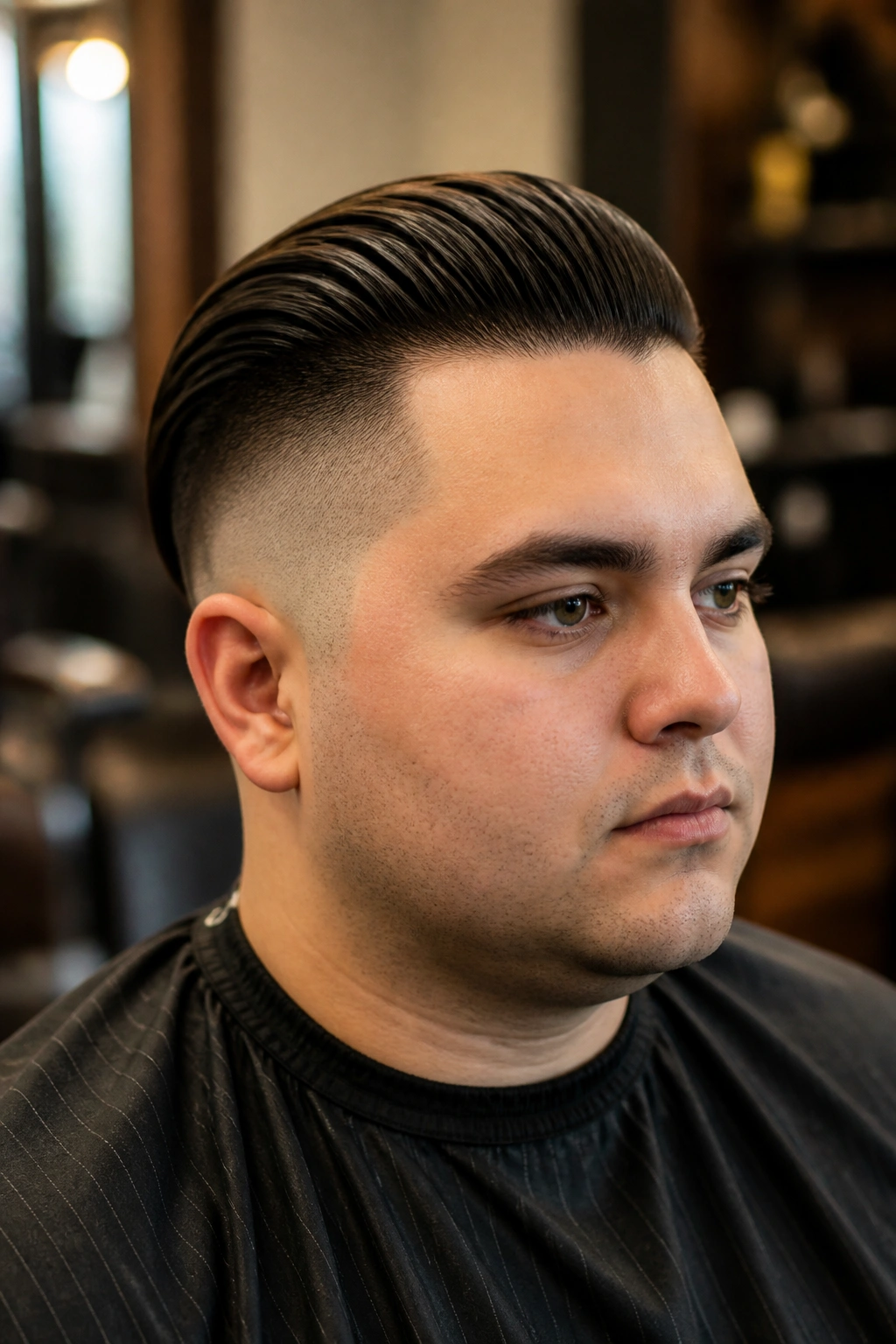
A slicked-back top is one of the cleanest ways to stretch a round face. The hair moves straight back from the hairline, so the eye goes up and back instead of hanging around the cheeks.
Why It Works
The undercut keeps the sides tight and the crown in control. That means the haircut can add height without adding width, which is the whole game with a round face. If your hair is thick, this cut also keeps the sides from puffing out by lunchtime.
Ask your barber for 6 to 8 inches on top and a close fade or disconnected undercut on the sides. A low-shine pomade gives you hold without making the style look greasy. If your hair is wavy, a blow-dryer and a vent brush will help the top sit flat in the right direction instead of flipping out at the ends.
- Best with straight to wavy hair
- Works well with a short beard
- Needs regular side clean-up every 2 to 3 weeks
- Looks strongest when the front has a little lift, not a glued-down finish
Tip: leave the very front slightly loose. A soft rise at the hairline looks sharper than a helmet-flat slick-back.
2. Side-Swept Fringe with a Sharp Part
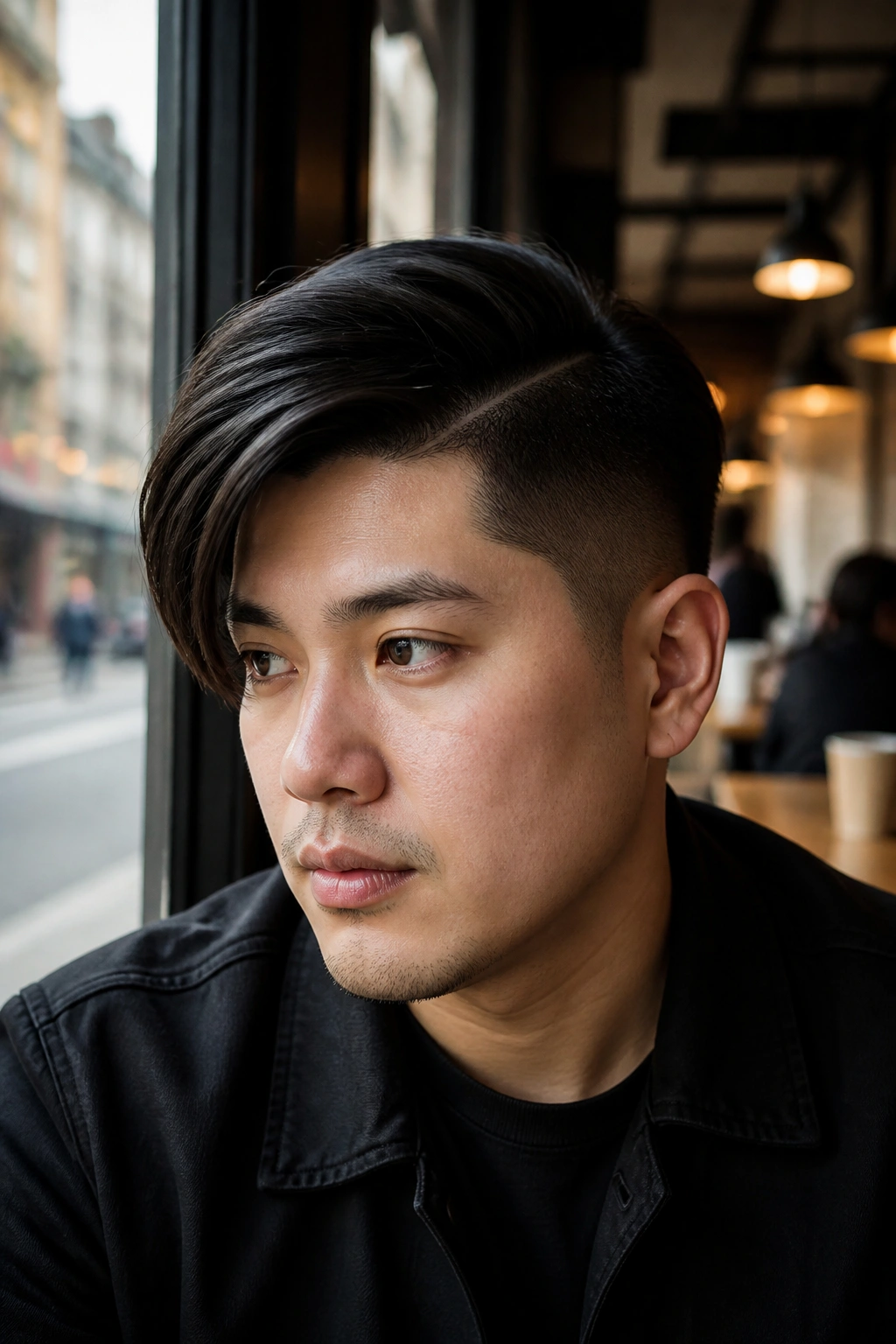
If you want a style that softens the face without widening it, this is a strong bet. A side-swept fringe breaks the round outline with a diagonal line, and that diagonal matters more than people realize.
The key is where the fringe lands. You want it to move across the forehead and toward the opposite brow, not hang straight across the widest part of the cheeks. A deep side part helps, and a hard part can add definition if your hair is thick enough to hold it.
This style is especially useful for finer hair, because the fringe gives the front a bit of body without needing heavy product. A light matte cream or texture spray is usually enough. Keep the undercut neat and the top around 4 to 7 inches, depending on how much sweep you want.
A lot of barbers will call this a safer choice for clients with rounder faces, and I get why. It gives shape without screaming for attention. Nice bonus: it plays well with glasses.
3. Textured Pompadour with Tapered Sides
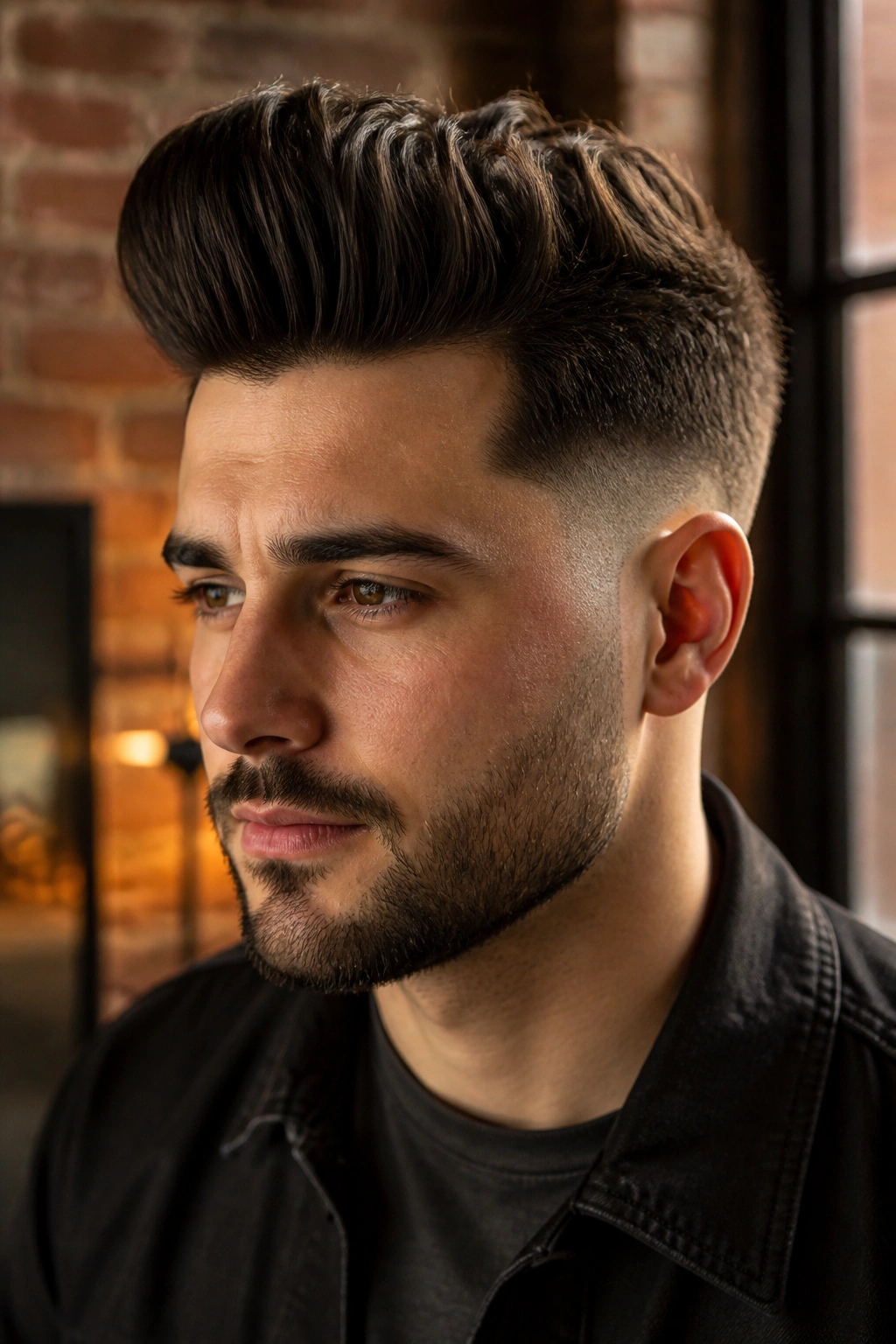
Why does a pompadour keep showing up in face-shape conversations? Because it does one thing extremely well: it pushes the eye upward.
A round face usually looks best when the haircut adds vertical space. The textured pompadour does that without forcing the top into a shiny, stiff shell. You want lift at the front, texture through the middle, and sides that stay tight enough to keep the face from feeling broad.
How to Wear It
Start with 5 to 7 inches on top. That length gives you enough room to build shape with a blow-dryer and round brush. A matte clay or paste works better than a wet pomade here, since the goal is height with some separation, not a slick block of hair.
A small point that matters: keep the sides more compressed than the top is wide. If the pompadour spreads outward at the temples, it can work against a round face. The good versions stay narrow at the base and fuller through the center line.
This cut suits straight or slightly wavy hair best. It can work on curls, but the finish changes a lot. Either way, the lift should start at the roots, not halfway up the strand.
4. Curly Long Undercut for Round Faces
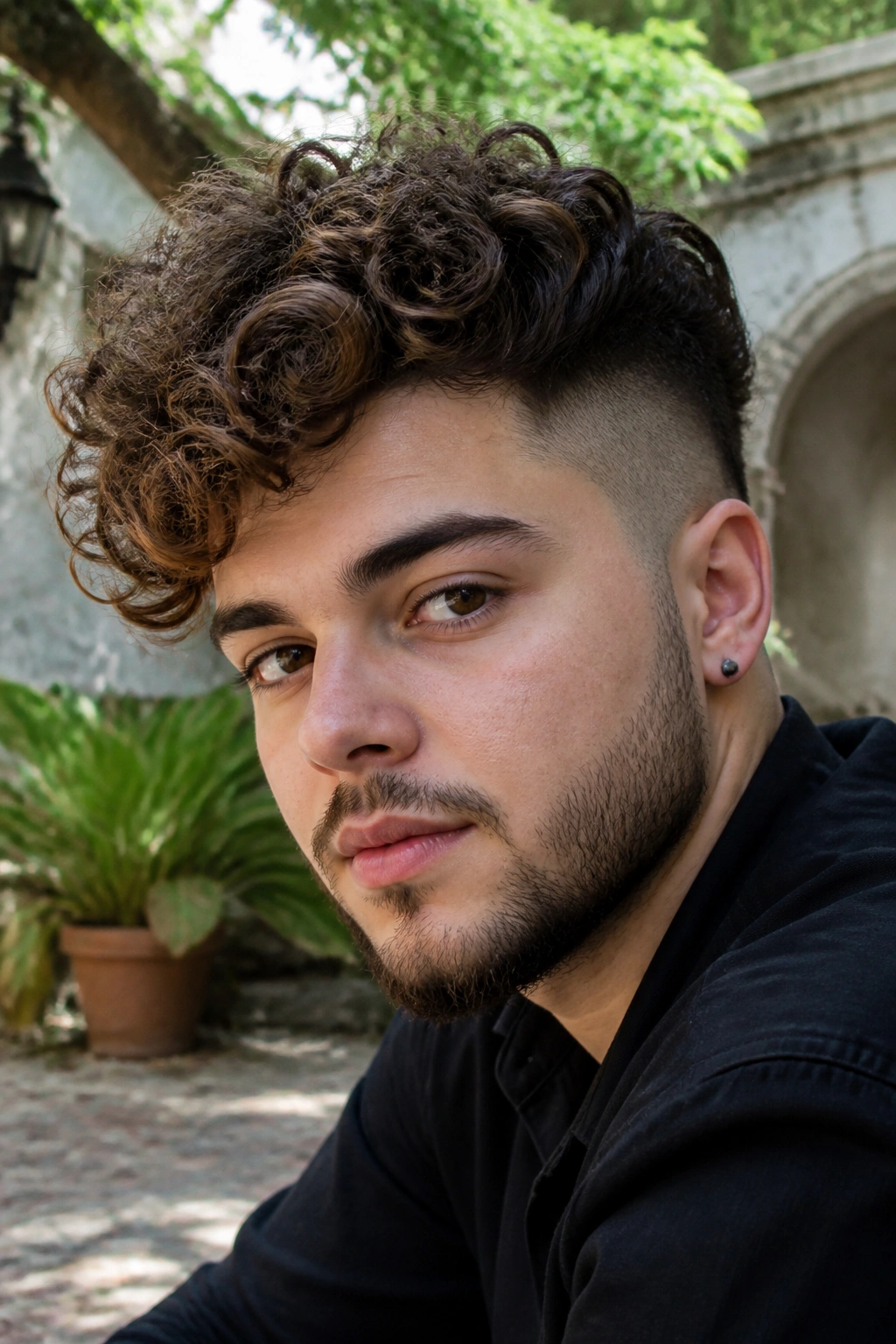
Curly hair can make round features look softer in a good way, but it can also add width fast. The trick is not to fight the curl. It is to keep the sides lean and let the curl climb upward.
With this style, the undercut removes the bulk that usually balloons around the temples and ears. The top stays long enough—usually 4 to 6 inches—for the curls to stack instead of puff outward. That stacked shape gives height, and height helps a round face read longer.
Use a curl cream or a light gel while the hair is damp, then diffuse on low heat. Scrunching too hard can widen the silhouette at the sides, so keep your hands light. If you like a looser finish, a little leave-in conditioner is enough on days when the curls already have shape.
- Best for medium to tight curls
- Ask for a clean undercut around the ears and nape
- Avoid over-thinning the top, or the curl pattern can break apart
- Let the top dry with some upward direction, not straight outward
One warning: if your barber leaves too much volume at cheek level, the whole cut loses its shape. Curls are generous. That is the problem and the charm.
5. Deep Side-Part Comb Over
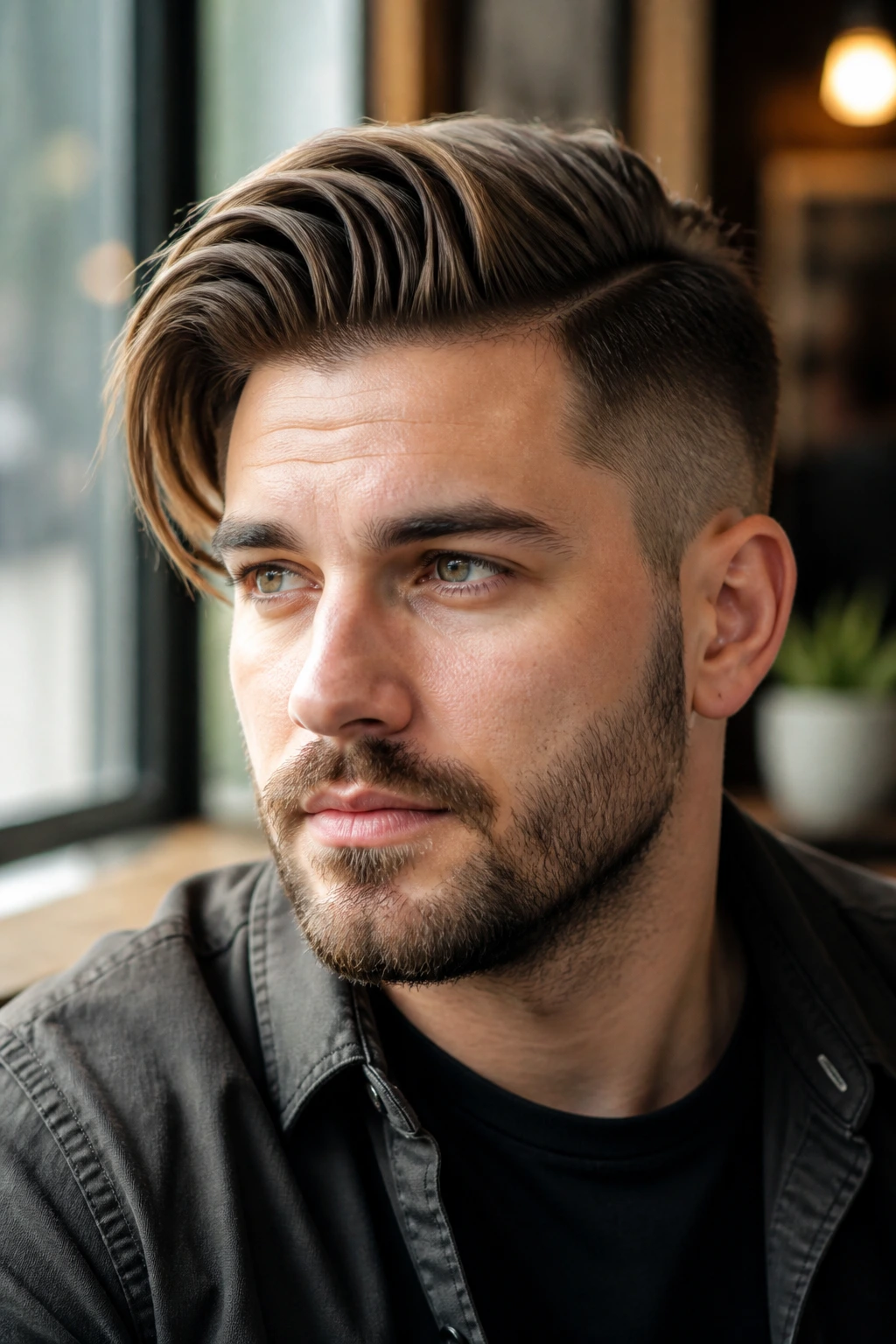
A comb over gets a bad reputation because people picture a flat, over-polished office haircut. That is not what this is.
A deep side-part comb over works on round faces because it creates a long diagonal sweep across the head. That line interrupts the circular shape of the face, and the part gives structure that you can shape with a brush or a comb. It also helps if one side of your hair naturally sits flatter than the other.
Keep the top around 5 to 8 inches so you have enough length to move the hair without making it collapse. The undercut or tight taper on the sides should stay clean, but not so severe that the top looks pasted on. A little texture on the ends keeps it modern. A soft cream or light pomade is usually enough.
This is one of those cuts that looks especially good when it is slightly imperfect. A hard, glossy comb over can feel stiff. A comb over with a bit of movement feels lived-in and sharp at the same time. Good stuff, honestly.
6. High Man Bun with a Disconnected Undercut
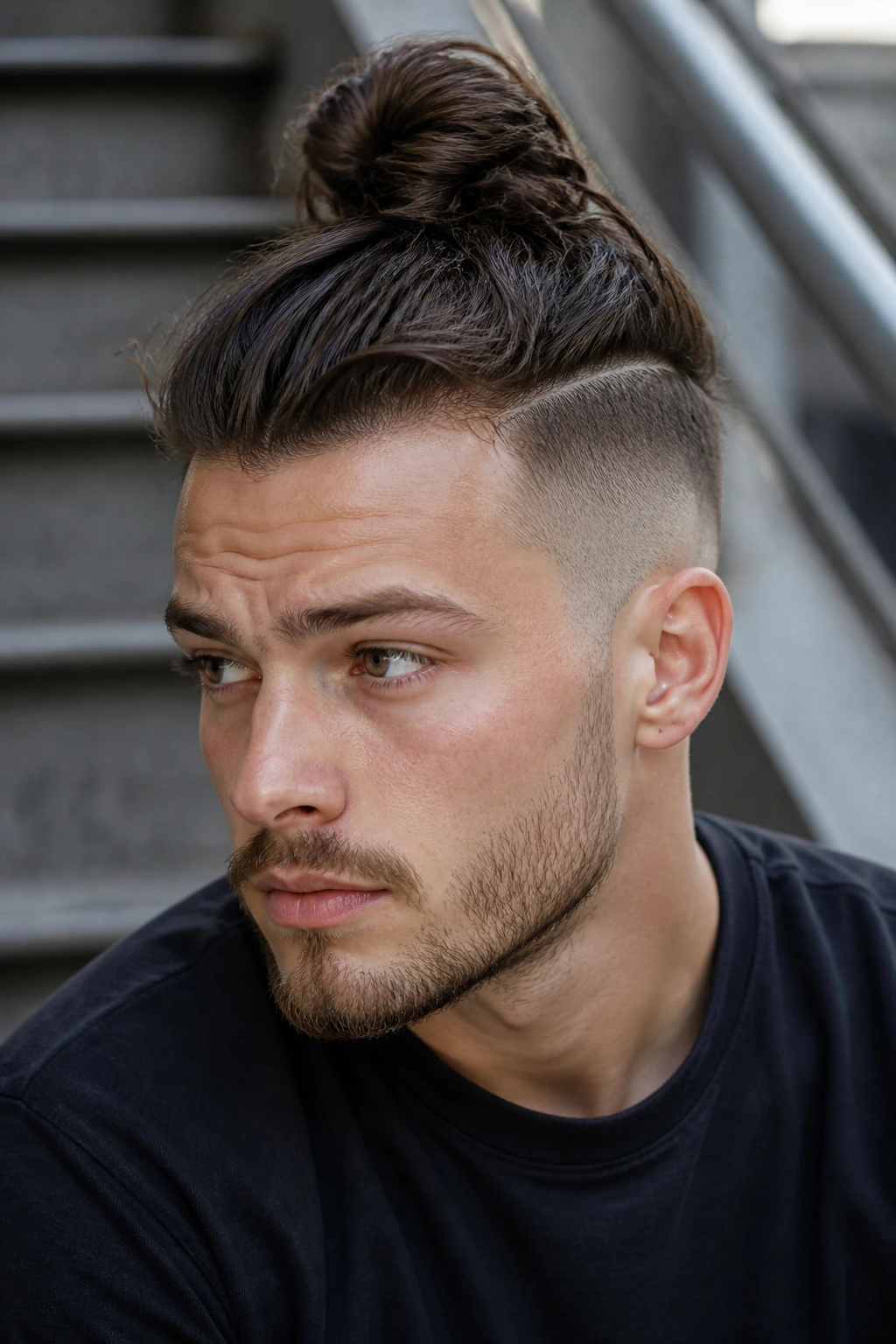
A man bun can work on a round face, but only when it sits high enough. A low knot can make the face feel shorter. A bun or top knot placed near the crown does the opposite.
That crown placement lifts the visual line and leaves the jaw and cheeks open. The undercut clears the sides, which stops the whole style from turning bulky around the ears. If your hair is dense, this is one of the easiest ways to keep the shape neat without losing length.
The hair you pull into the bun should still have some texture, not look scraped bare. A slightly loose tie works better than a tight one. If the bun is tiny and pulled back hard, the cut can read severe in a way that feels less flattering on round features.
This style works best when the top has at least 8 to 10 inches of length. If you wear facial hair, keep the edges tidy so the haircut and beard do not compete for space. The face needs clean lines somewhere.
7. Wavy Bro Flow with a Tight Undercut
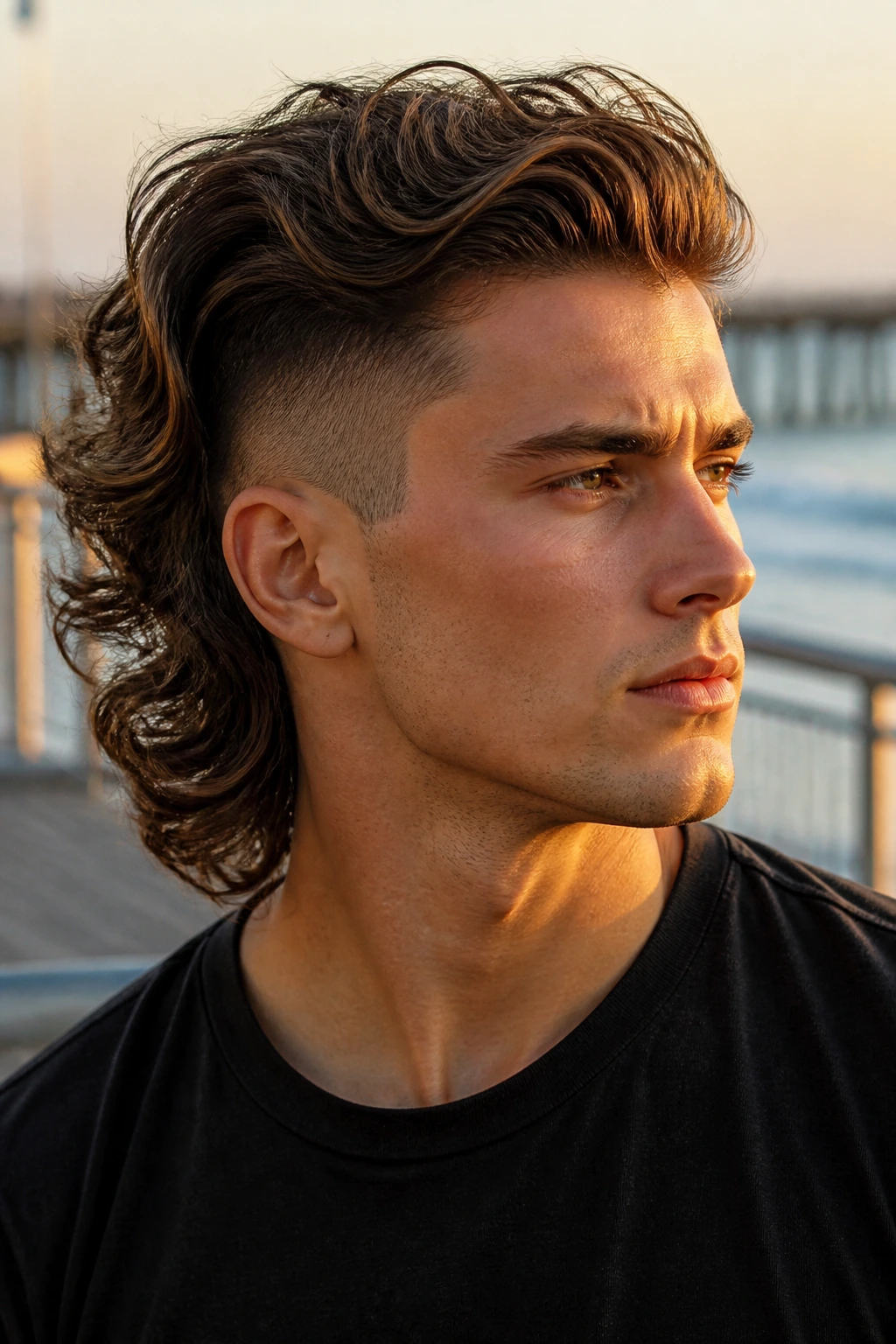
Some hair wants movement, not control. If yours leans that way, a bro flow with a tighter undercut can be the easiest long style to live with.
The idea is simple: keep the length on top and through the back, but trim the sides short enough that the hair falls in a cleaner line. That length helps a round face by dropping vertical lines past the cheek area. It also keeps the style from puffing out into a helmet, which is the main thing you want to avoid.
What to Ask For at the Chair
- Layers through the top and crown, so the hair moves instead of sitting like a sheet
- A short undercut or tight taper on the sides
- A neckline that stays natural rather than squared off too hard
- Enough length in front to push back or part slightly off-center
A leave-in conditioner and a light sea-salt spray are usually enough for styling. Air-drying can work fine if your hair already has wave. If it does not, a quick blow-dry with your fingers lifted at the roots will help.
This cut has a relaxed look, but it still does the face-shaping work. That is the nice part.
8. Curtain Layers with an Off-Center Part
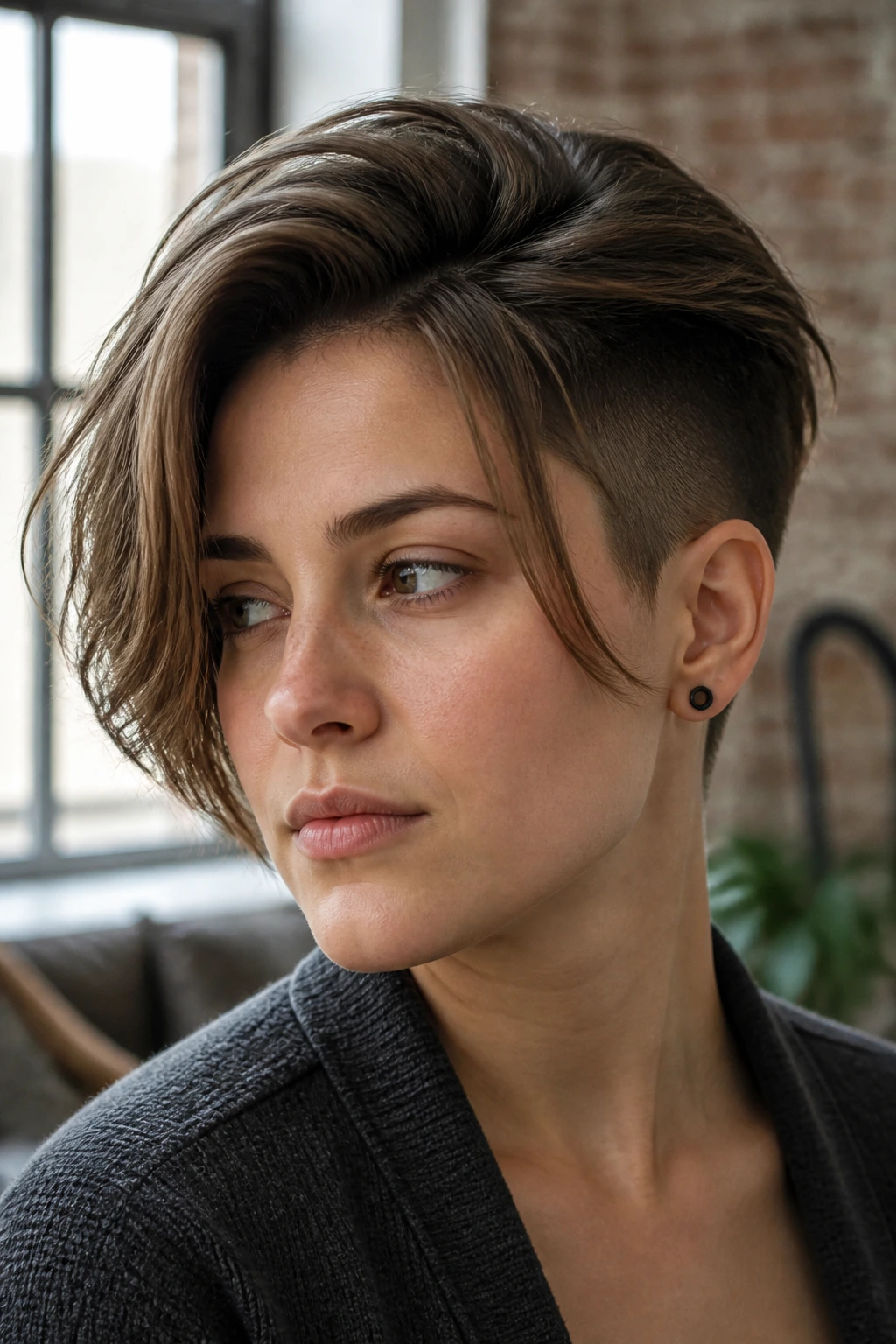
A curtain style can be tricky on a round face if it is cut too short or split right down the middle. But when the layers are longer and the part shifts off center, the effect changes a lot.
Think of it this way: the hair frames the forehead without boxing in the face. That soft vertical drape helps stretch the outline, especially if the curtain pieces graze the brow instead of stopping at the cheek. The undercut underneath keeps the sides from exploding outward when the hair moves.
This style needs enough length to fall with weight, usually 6 to 9 inches at the front. Blow-dry the front away from the face first, then let it fall naturally into place. A texture spray gives the curtain edges some grip, which keeps the style from looking flat and stringy.
It suits straight and slightly wavy hair best. If your hair is thick, the undercut matters even more, because it removes the bulk that would otherwise sit at the sides of the face. The result feels softer than a slick-back but cleaner than a shag. Not bad at all.
9. Faux Hawk with a High Fade
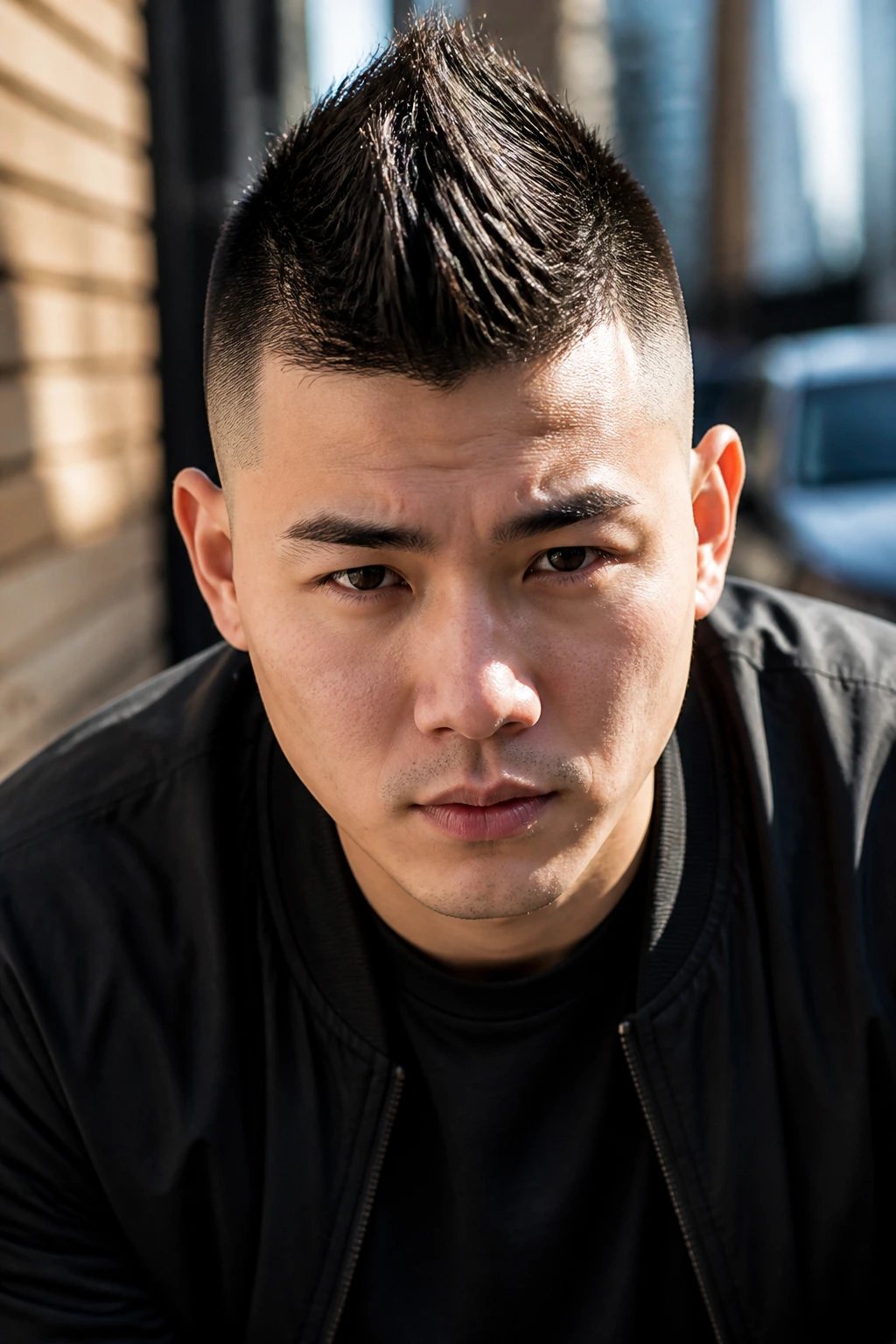
A faux hawk sounds louder than it usually wears. On a round face, that can be a good thing, because the center strip of hair creates a strong vertical line.
The sides stay tight with a high fade or undercut, and the middle section is left longer so you can push it up and slightly forward. That shape narrows the silhouette without making the haircut look severe. It also gives you room to use texture, which matters if you do not want the style to look too neat.
Ask for 4 to 6 inches through the center, with the sides short enough that they do not compete with the top. Matte paste is the usual product here. Use it on dry hair and pinch the front pieces into shape rather than combing everything into one flat ridge.
This is a good fit for straight or wavy hair that needs a bit of attitude. If your hair grows outward more than upward, the fade has to do extra work. The payoff is that the eye stays centered, which suits a round face better than a wider, side-heavy cut.
10. Shoulder-Length Waves with a Hidden Undercut
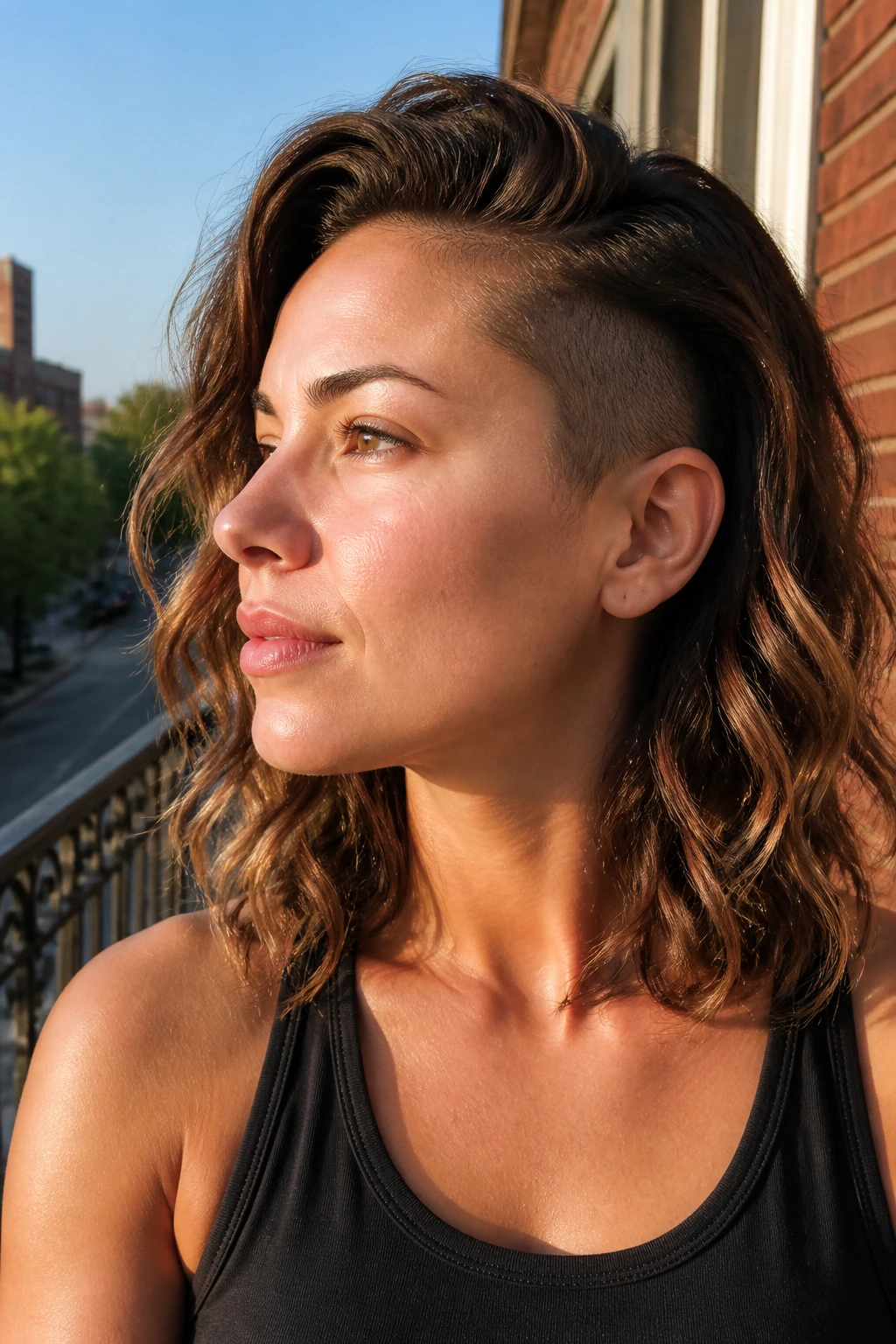
A long cut can still work on a round face if the weight is controlled underneath.
That is where the hidden undercut comes in. The visible top stays shoulder length, but the lower layers around the sides and back are shortened so the hair falls closer to the head. The result is movement without the bulk that can make the face look fuller.
This style is especially good for wavy hair, because the wave already gives you a vertical line through the length. You do not need to force much. A little leave-in cream and a touch of sea salt spray are enough on many days. If the hair dries too wide at the temples, the underlayer probably needs a cleaner cut.
What makes this different from a typical long style is the shape control. You still get the soft, grown-out feel, but the haircut avoids the mushroom effect that long hair can create around a round face. That one detail changes everything. Seriously.
11. Braided Top with Shaved Sides
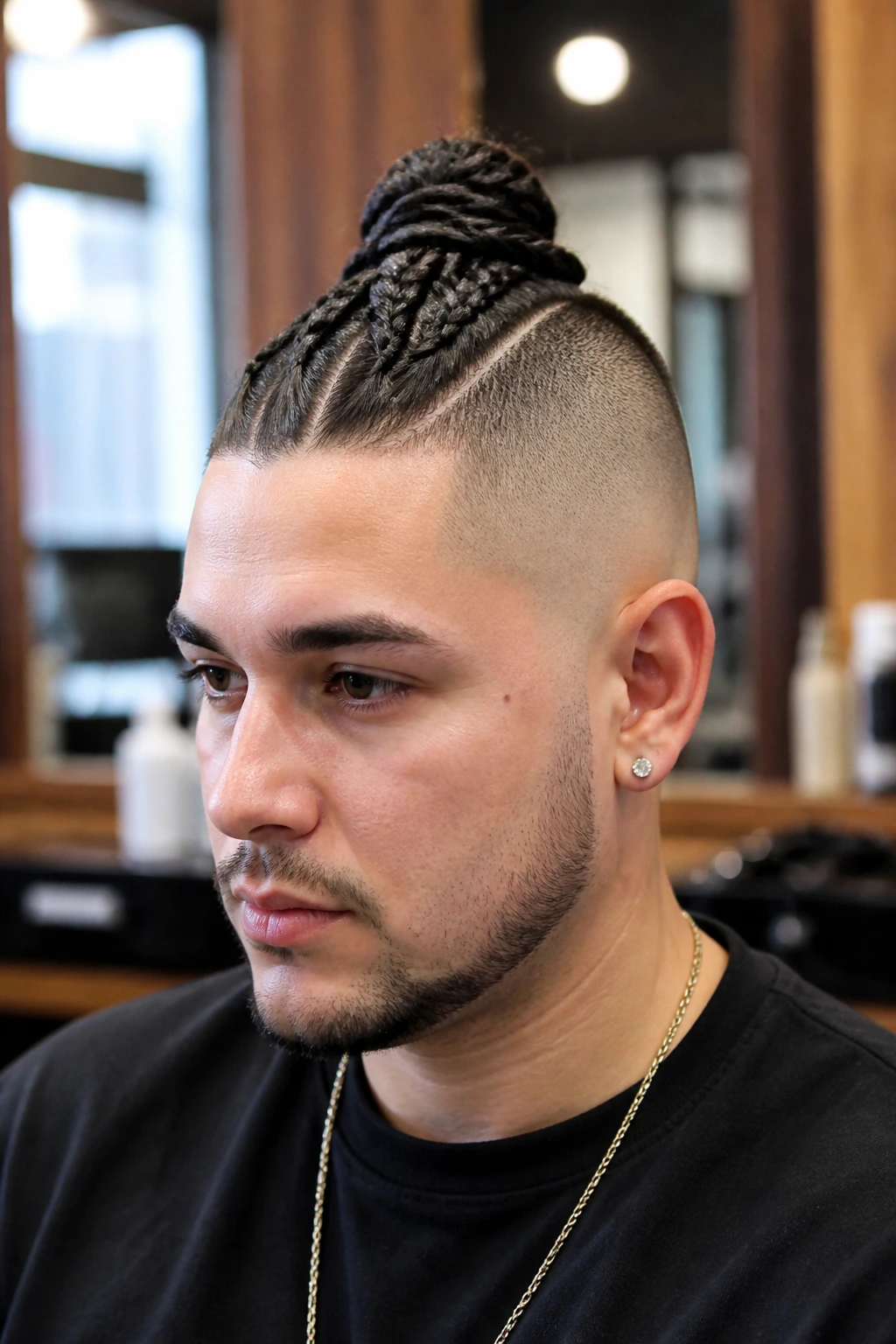
Braids pull the eye along a line, and that line is useful if your face shape is round. The shaved sides keep the shape tight, while the braid itself becomes the strong vertical or diagonal feature.
This works well with box braids, a single centered braid, or even two narrow braids pulled back from the hairline. The exact style depends on hair type and length, but the logic stays the same: keep the sides clean and the top organized. That gives the face more length and less width.
What Makes It Different
Braids create structure without depending on daily styling. That is a huge plus if you do not want to spend ten minutes with a blow-dryer every morning. They also sit well with a fade, because the contrast between the tight sides and the braided top is easy to read.
A few practical details matter:
- The braid should start high enough to lift the eye
- The shaved sides should stay crisp so the shape does not blur
- Corners around the temples should be neat, not rounded off into a fuzzy edge
- The braid should not sit low at the crown if you want the face to look longer
If you like low-maintenance hair with strong lines, this is one of the sharper options on the list.
12. Half-Up Knot with Long Back Length
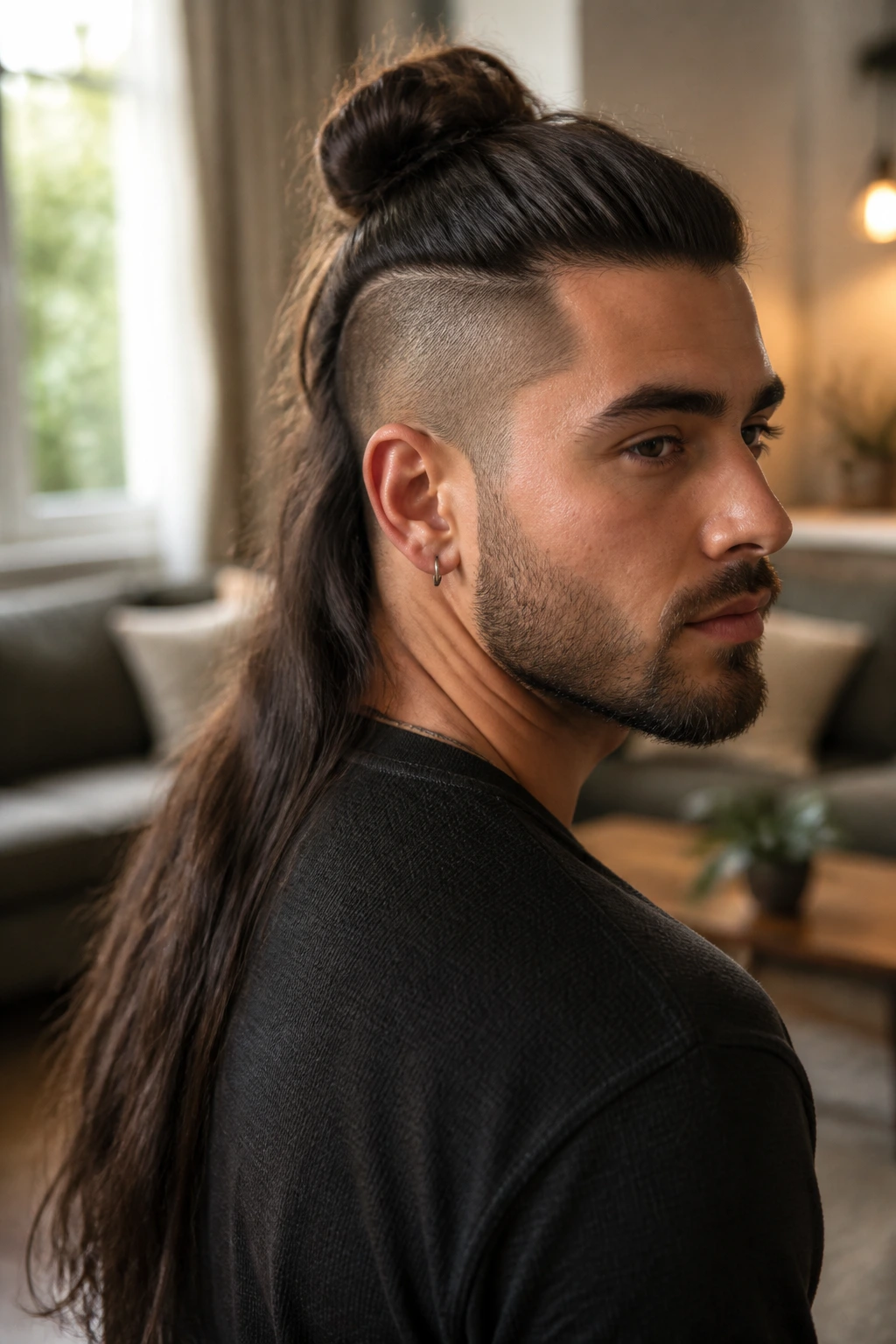
A half-up knot is one of the easier ways to add height without giving up length. That is why it works so well on round faces.
The top section goes up into a knot or small bun, and the rest of the hair hangs down. That split does two jobs at once: it lifts the focus above the face and leaves long lines in the back to elongate the silhouette. A disconnected undercut on the sides keeps the width under control.
This style looks best when the knot sits on the upper crown rather than the back of the head. A low half-up knot can drag the face shape downward, which is the opposite of what you want. Keep the knot compact and the sides neat. If the bottom length is thick, a little anti-frizz cream helps the finish stay smooth.
It suits hair that is already long enough to gather cleanly, usually 8 inches or more at the top. You can wear it polished or loose. Either way, the shape needs that upward pull.
13. Feathered Quiff with a Drop Fade
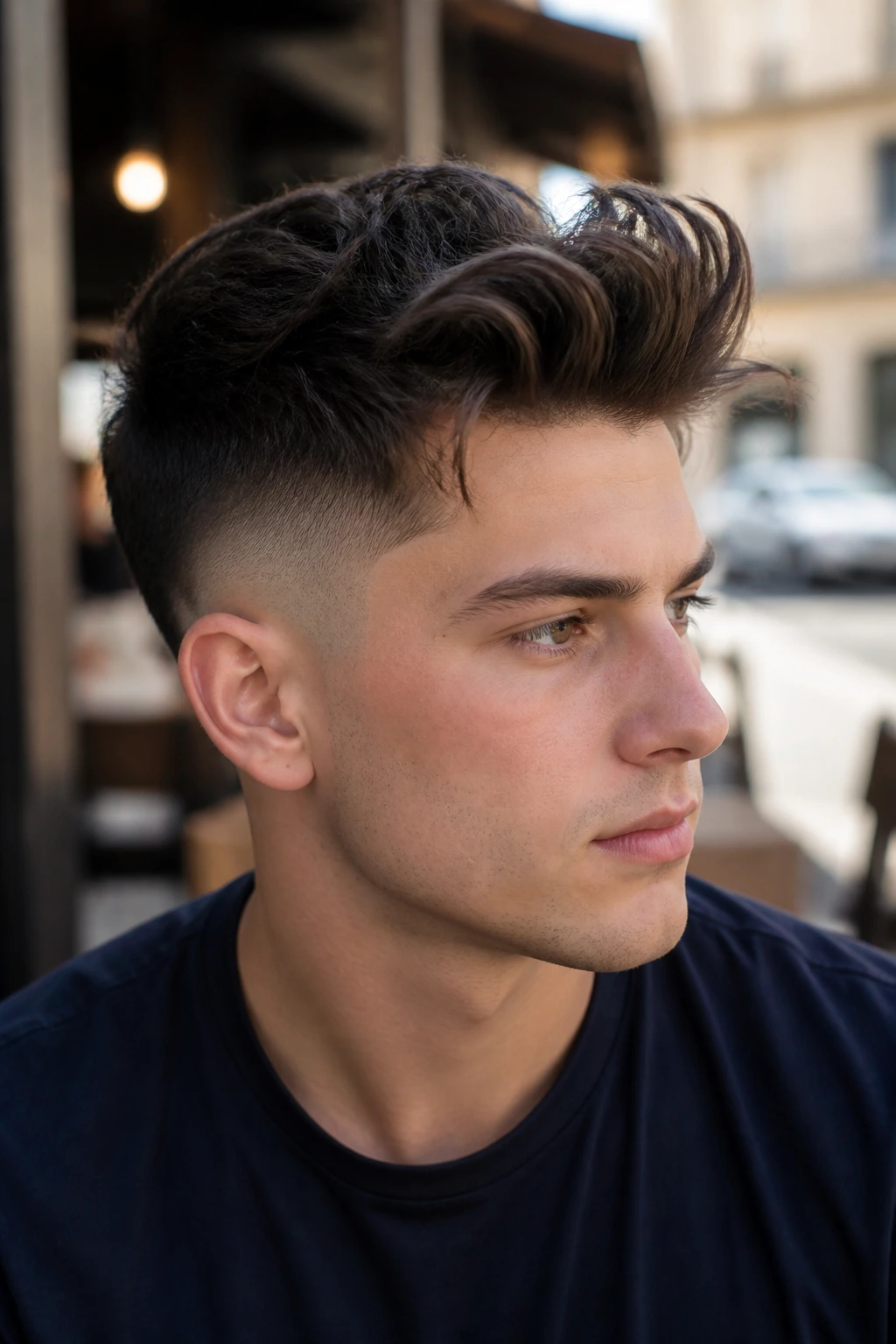
A feathered quiff is the polished cousin of the pompadour. It still adds height, but the front is softer and the edges are less rigid.
That softness helps a round face because the haircut does not add another hard curve around the temples. Instead, the hair rises at the front, then breaks into light, separated pieces. The drop fade follows the shape of the head and dips a little lower behind the ear, which keeps the silhouette narrow where it counts.
How to Style It
Blow-dry the front up and slightly back with a round brush. A pea-sized amount of matte paste or light cream is enough for most hair types. Work it through the front first, then pinch a few ends apart so the quiff does not turn into one solid block.
This style is a smart choice if you want something more dressed-up than a messy crop but less hard-edged than a slick-back. It also works with sideburns and light facial hair, as long as the beard line stays tidy.
Round faces often look better when the top has movement and the sides stay close. This cut does both without making a big show of it.
14. Mullet-Inspired Long Undercut
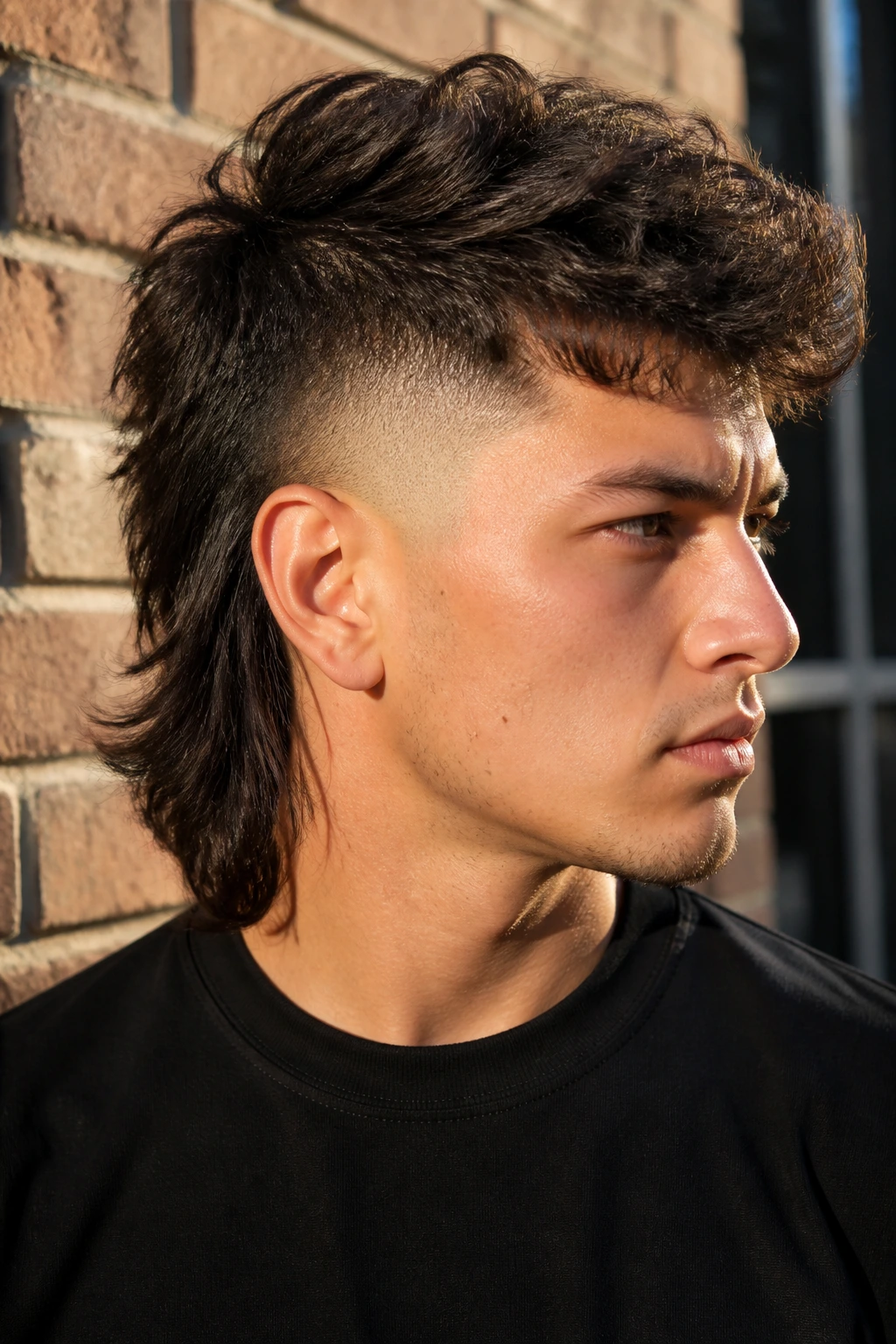
A mullet-inspired cut is not subtle, and that is the point. The back stays longer, the top has lift, and the sides are trimmed tight enough to keep the face from feeling wide.
For a round face, the back length helps create a vertical trail behind the jawline. The short sides remove the extra volume that usually builds around the temples. If the front has texture or a bit of fringe, the haircut can look modern instead of costume-like.
This style works best when the transition is controlled. You do not want an awkward shelf between the top and the back. Ask for blended layers through the crown, a tight undercut or fade at the sides, and enough length at the back to move when you walk. A matte product helps the top keep shape without flattening the texture.
It is a bolder cut, sure, but it can be a good one if you like contrast and do not mind some upkeep. The face stays open, the profile gets longer, and the cut has enough personality to carry itself.
15. Wet-Look Back Sweep with a Minimal Undercut
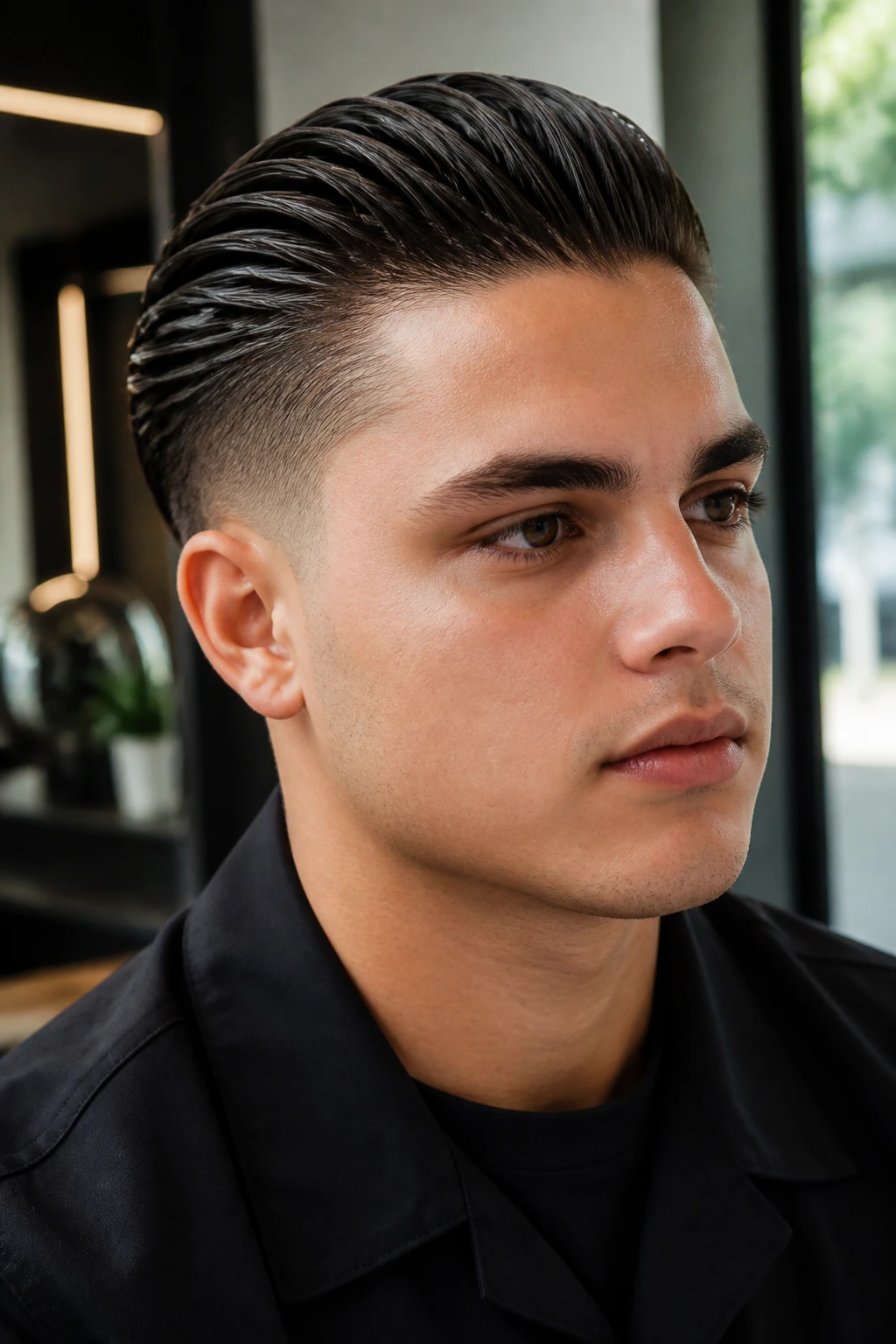
A wet-look back sweep can feel severe if it is done badly. Done right, it is sleek, controlled, and excellent for a round face.
The reason it works is simple: the hair moves straight back, the undercut stays minimal but clean, and the shine makes the top read as one long line instead of a wide cloud. That line extends the face and keeps the focus near the center. If your hair is thick, this is a sharp way to keep it disciplined without shaving everything down.
Use a light gel or a glossy cream on damp hair, then comb it back with a wide-tooth comb or a brush, depending on how smooth you want the finish. A small lift at the front helps. Flat can look harsh; slightly raised looks deliberate.
This style suits formal settings, but it also works if you like a cleaner everyday look and do not want a lot of texture. Keep the sides tidy, keep the top long enough to sweep, and do not let the back grow sloppy around the collar. That little bit of discipline is what makes the whole thing land.
