



Short undercut styles do not whisper. They cut the head into two jobs: the sides stay tight, and the top gets to make the statement.
That split is why the cut keeps showing up in barbershops. It can look sleek, rough, polished, or downright sharp depending on how much length you leave on top and how hard you push the contrast at the sides. A #1 guard gives a very different mood from a scissor-cut top worked with matte clay, and that tiny change matters more than most people think.
The nice part is that you do not need a ton of hair to pull it off. A two-inch top, a clean disconnect, and the right finish can already do a lot. The wrong version is easy to spot too — too much product, too much height, or a fade that fights the shape of your head instead of following it.
These are the short undercut styles I keep coming back to when someone wants something bold without drifting into costume territory. The first one is the cleanest place to start.
1. Classic Disconnected Short Undercut
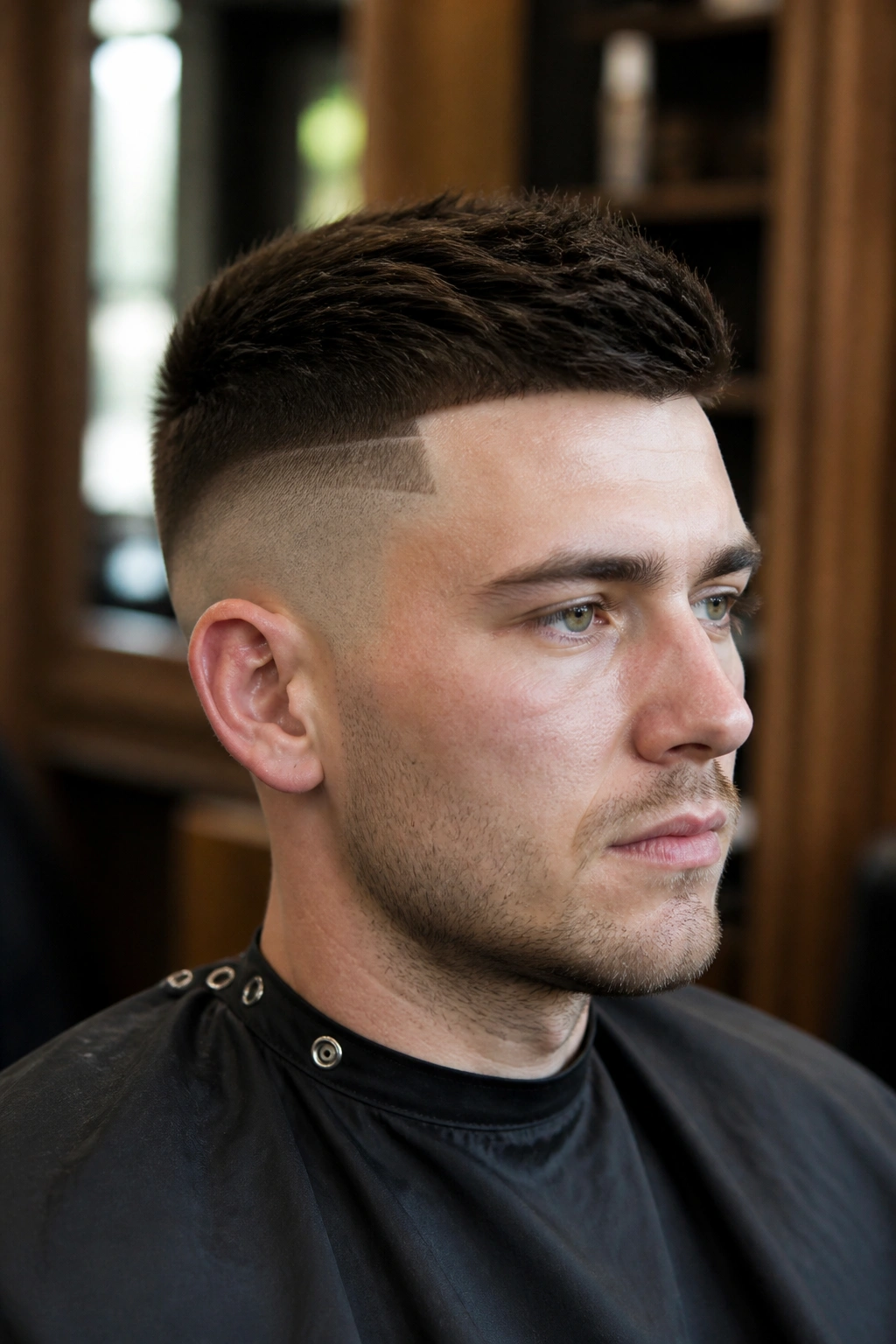
The classic disconnected undercut is the haircut equivalent of a black T-shirt that actually fits. Plain? Not even close. The contrast between the tight sides and the longer top gives it a hard edge that reads fast, even when the styling is minimal.
What makes the disconnect work
The real trick is the hard break between the top and the sides. There is no gentle blur, no soft taper trying to smooth things out. That sharp change is what makes this one feel so deliberate, and it’s why it still looks good when you don’t spend fifteen minutes fixing it in the mirror.
I like this cut on thick hair, especially straight or slightly wavy hair that tends to puff out on the sides. Keep the top around 2 to 4 inches if you want it short and easy, then ask for the sides to stay in the #1 to #2 guard range. If your barber starts fading too high, the shape loses some of its punch.
What to ask for at the chair
- Top: 2 to 4 inches, with a little extra length in front if you want to push it back.
- Sides: clipper cut with a clean disconnect, usually #1 or #2.
- Edges: tidied around the temple and neckline, but not softened into a full fade.
- Finish: matte paste for texture, light pomade if you want a cleaner surface.
Best tip: keep the parting simple. Overcomplicating this cut makes it look fussy, and the whole point is that it should look sharp without looking overworked.
2. Skin-Fade Undercut
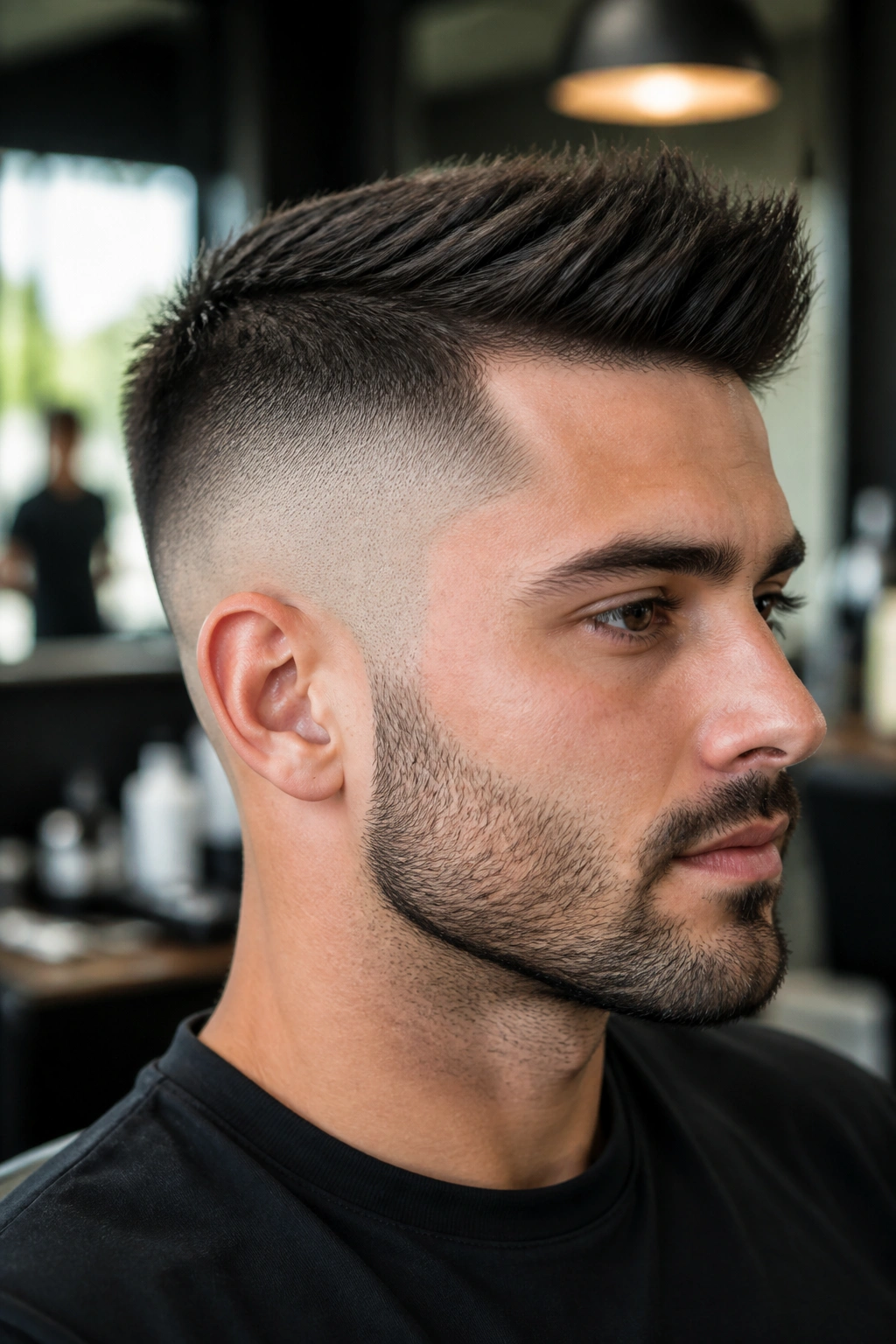
If you want the loudest contrast in the room, the skin-fade undercut wins. The sides disappear all the way down to bare skin near the ears and neckline, and that makes even a short top feel more dramatic than it really is.
There’s a catch. This haircut looks its best when the fade stays crisp, which means it asks for regular cleanup. If your hair grows fast around the temples, you’ll notice the blur sooner than you expect. That is not a flaw; it’s just the price of the look.
I tend to think of this one as a strong choice for people who like structure. It suits strong jawlines, sure, but more than that it suits anyone who wants the top to carry the whole conversation. A short textured top, a brushed-back crop, or a neat quiff all sit well on a skin fade because the sides are doing the heavy visual lifting.
One thing I would not do: leave the top too flat. Bare sides and a flat top can make the whole style feel unfinished. Give the top a little lift, even if it is only half an inch of bend and separation. That small bit of movement keeps the haircut from looking like a helmet.
3. Textured Crop Undercut
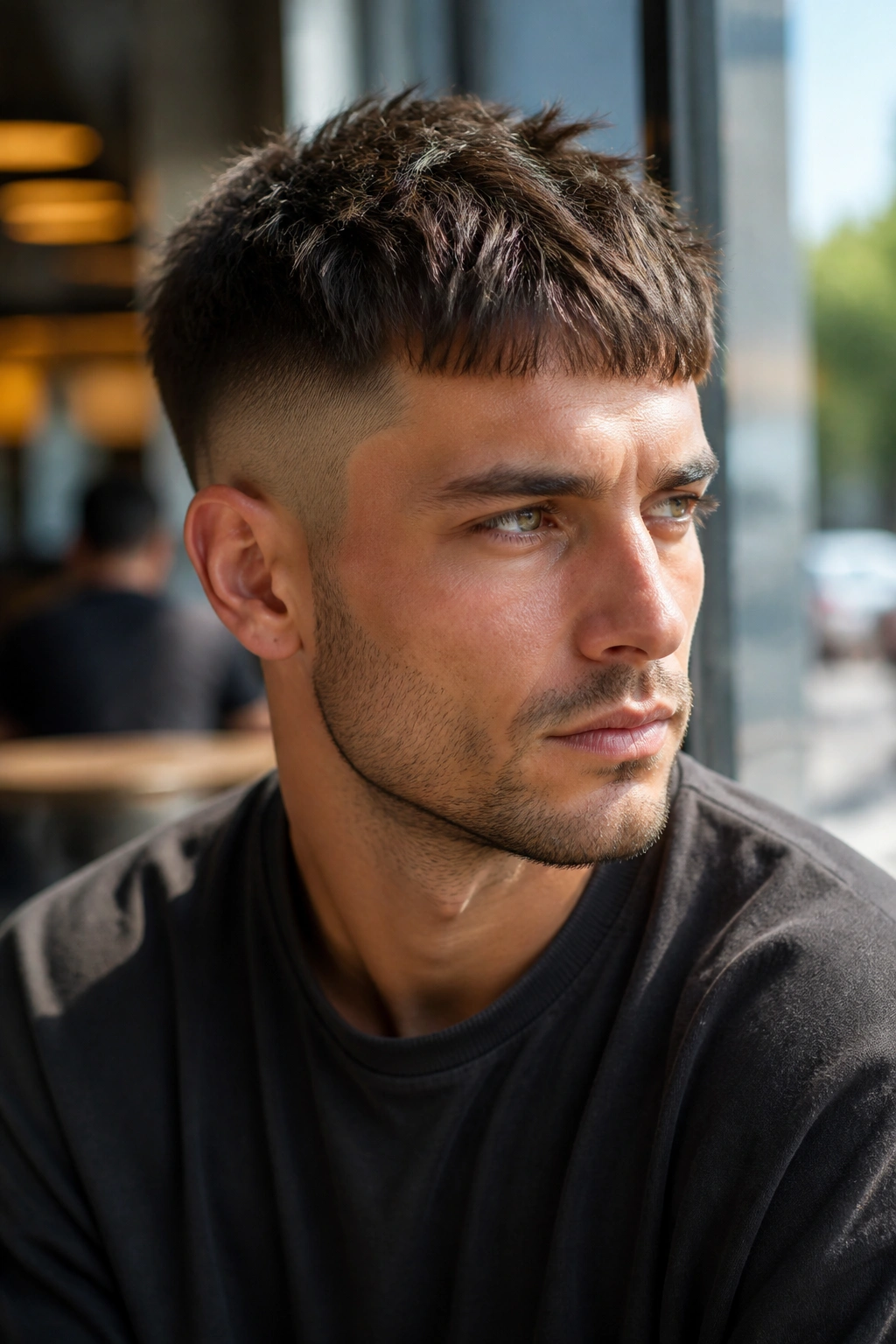
Picture thick hair falling into your forehead by noon, then picture that same hair turned into a choppy crop that looks on purpose. That is the appeal here. The textured crop undercut takes the weight out of the top and turns it into something blunt, short, and easy to live with.
Why it works on busy mornings
It is one of the least fussy bold cuts you can wear. You can scrunch in a little matte clay, run your fingers through the front, and be out the door. No comb. No perfect part. No long mirror session.
I like this style when someone wants a short haircut with a bit of attitude but does not want the sides screaming for attention. Ask for a short layered top around 1.5 to 2.5 inches, with the fringe kept slightly uneven so it sits forward instead of being pushed back. The sides can stay tight with a low undercut or a soft fade if you want the cut to feel a little less severe.
How to wear it
- Use matte clay or paste on dry hair.
- Push the front forward, then break up the ends with your fingertips.
- Keep the fringe just above the eyebrows or grazing them lightly.
- Skip shiny products unless you want the top to look heavier than it is.
The mistake here is making the crop too neat. A textured crop needs a little roughness. If every strand is lined up, the whole thing starts looking stiff, and that kills the point.
4. Slicked-Back Short Undercut
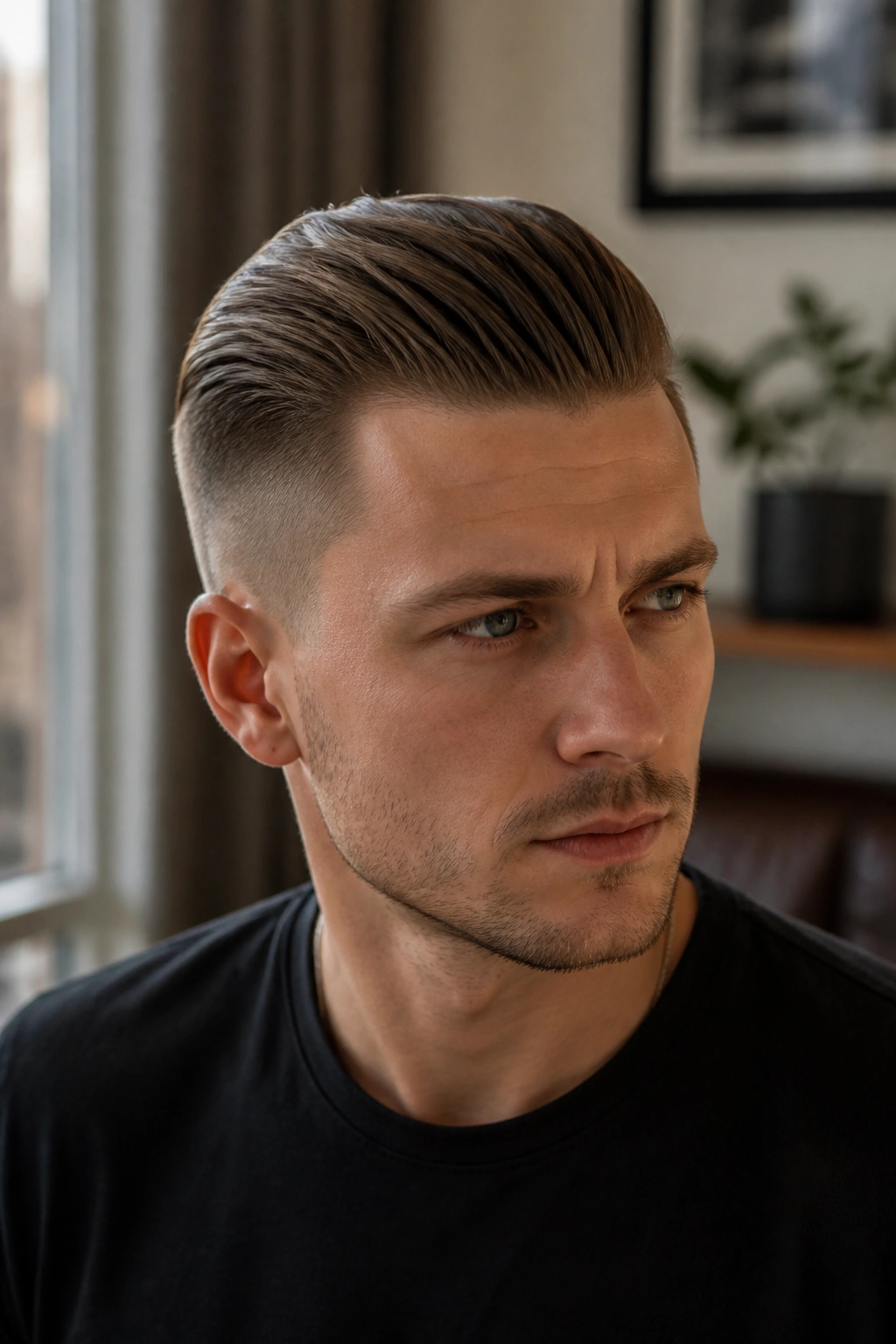
Can a slicked-back undercut stay short and still look sharp? Absolutely — if you keep the top compact and the finish controlled.
This version works because the contrast is older-school, but the shape is pared down. You are not chasing a big, glossy wall of hair here. You are keeping the sides tight, leaving enough length on top to sweep backward, and making sure the hair sits close to the head instead of ballooning out.
I prefer this with 3 to 5 inches on top, depending on how straight your hair is. Straight hair slicks back with less effort. Wavy hair can do it too, but it usually needs a stronger product and a blow-dry first. If your hair is very coarse, ask your barber to thin the top a little at the ends, not the roots. That keeps the shape from getting bulky.
The product matters
- Water-based pomade gives hold and washes out easily.
- Medium-hold gel works if you want a firmer finish, though it can look crunchy fast.
- Blow-drying backward before product helps the hair stay in place longer.
- A fine-tooth comb creates a cleaner line; fingers leave it looser.
A slicked-back short undercut looks best when it is not trying too hard. A wet, greasy finish can make the haircut look older than you want. I usually like a controlled sheen — enough shine to show the direction, not enough to look slick in the bad way.
5. Side-Part Undercut
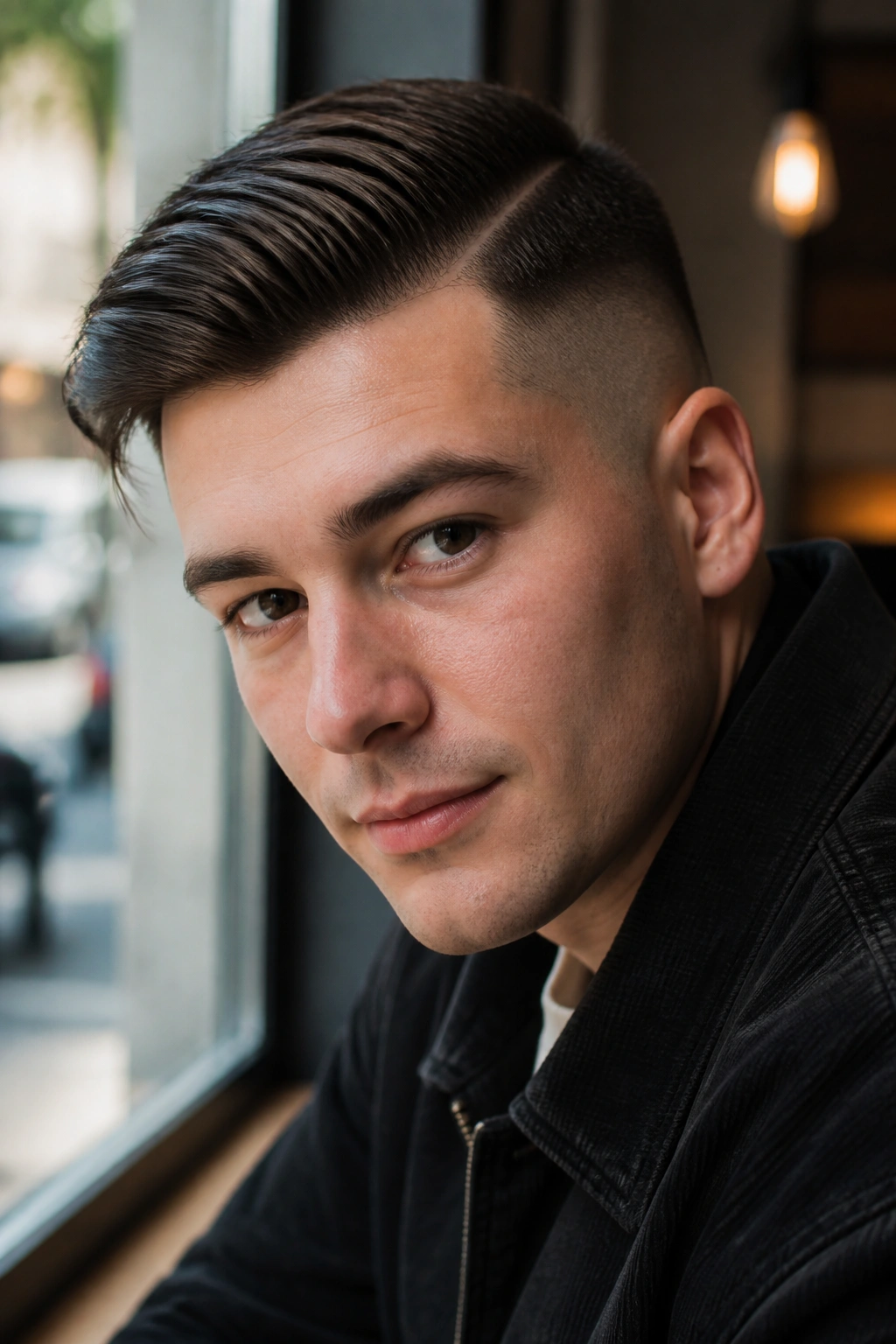
A side-part undercut is calmer than the skin-fade version, but don’t mistake calm for boring. The part gives the haircut a built-in map, and once the top is combed into place, the whole style feels organized in a way that a messy crop never will.
This one sits in a nice middle ground. It can read formal with a jacket and still look a little rebellious with a T-shirt. That is because the undercut keeps the sides sharp while the part adds structure on top. You get a clean line without losing all the personality.
I like this style on finer hair more than people expect. A side part gives thin or flat hair a place to go, and the undercut stops the sides from puffing out. If your hair is thick, keep the top modest — around 2 to 3 inches — so it doesn’t spread too wide once you comb it over.
The best version has a gentle part, not a carved line. A natural part moves with the hair. A hard line makes the style more forceful, which is fine, but that belongs in the next section. Here, I’d keep the edges tidy and the top smooth enough to show direction without looking helmeted.
6. Curly Top Undercut
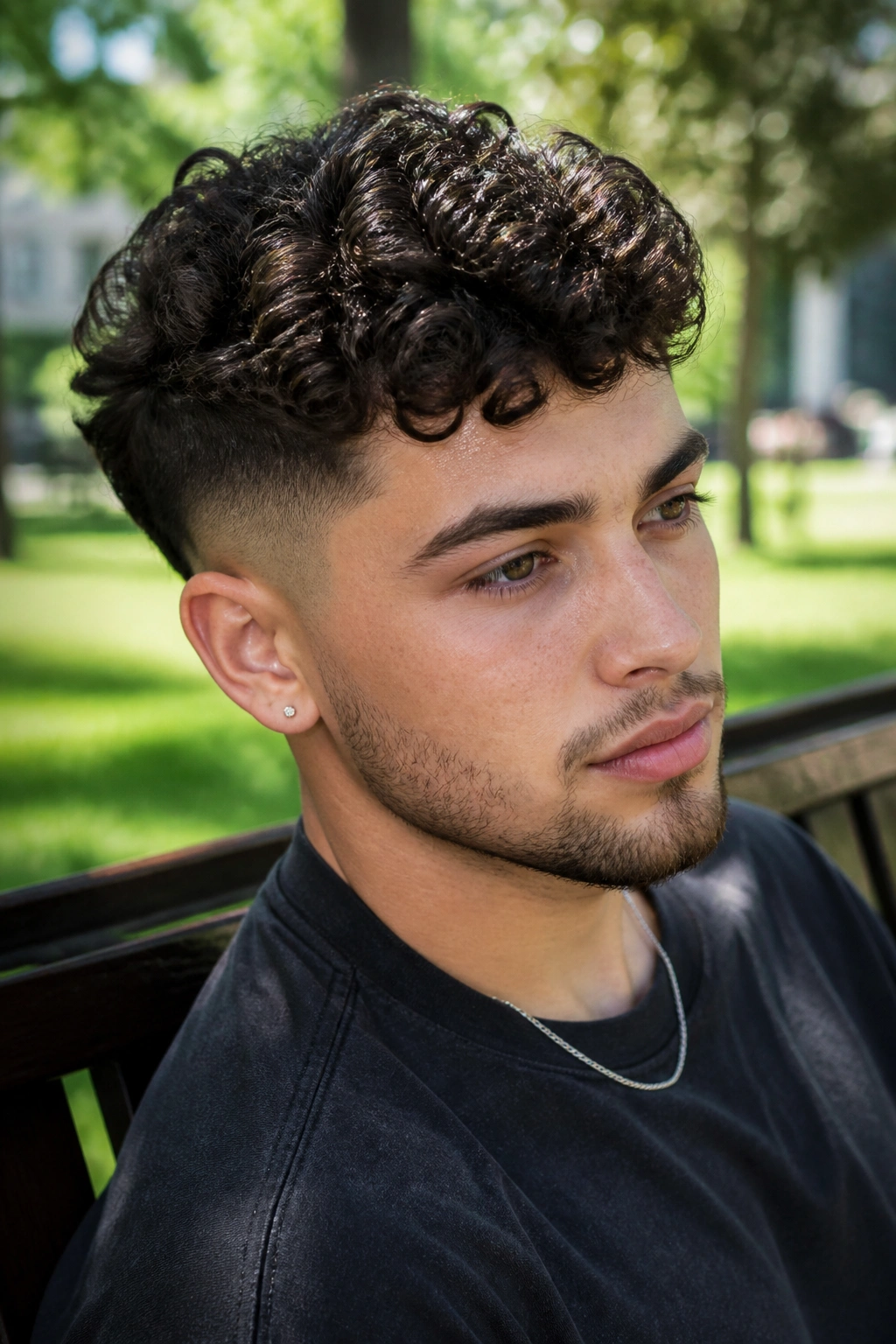
Curls make an undercut easier to read. The sides are short, the top has shape, and the texture does the work for you. That is a gift, honestly, because curly hair can carry a bold look without a ton of product or heat.
The main mistake is cutting the curls too short on top. Curls shrink, and they shrink harder when the hair dries. If you take too much off, the cut turns fuzzy instead of shaped. Leave enough length to let the curl pattern do its thing — usually 2 to 4 inches, depending on tightness.
Keep the curl alive
- Use curl cream or a light leave-in on damp hair.
- Dry with a diffuser on low heat instead of blasting it.
- Scrunch, then stop touching it.
- Ask for the sides to be tight, but not pushed so high that the curls look like they’re floating.
I think this is one of the easiest ways to make short curly hair look intentional. It has energy without looking busy. And if your curls are loose, the undercut sharpens them up. If they’re tight, the cut keeps them from spreading into a round puff.
One more thing: a curly top undercut looks best when the neckline is cleaned often. Curls can make a tidy shape up top, then drag the whole style down if the back gets shaggy.
7. Faux Hawk Undercut
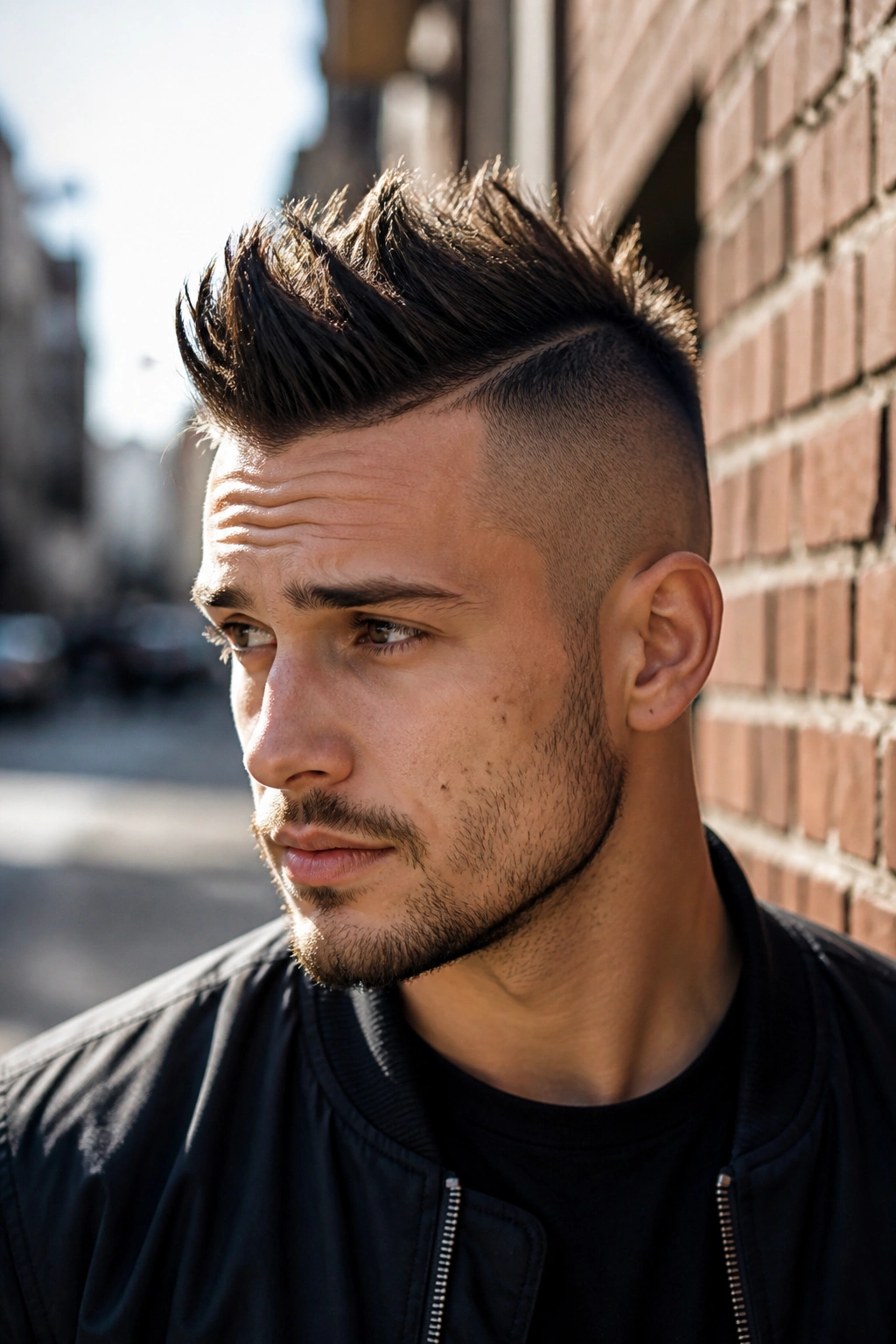
Unlike a full mohawk, the faux hawk undercut keeps enough width to wear without feeling theatrical. That’s the whole advantage. You get the center ridge, the attitude, and the lift — but you still look like a person who walks into normal rooms.
The center strip should stay a little longer than the sides, yet not so tall that it starts leaning into old music-video territory. I usually think 1.5 to 3 inches in the middle is the sweet spot for a short version. The sides can be clipped close, or faded down if you want the ridge to stand out more.
Where it lands best
- Straight hair gives the cleanest ridge.
- Wavy hair adds movement and keeps it from looking too stiff.
- Coarse hair holds the shape well, but needs lighter product than you think.
- Fine hair benefits from a blow-dry and a bit of root lift.
This cut is especially good if you want a bold look that still moves. A little fiber paste or molding cream through the center can push it upward without freezing it in place. And that matters. A faux hawk should look like it can shift a little when you run a hand through it, not like it was set in plaster.
8. Short Quiff Undercut
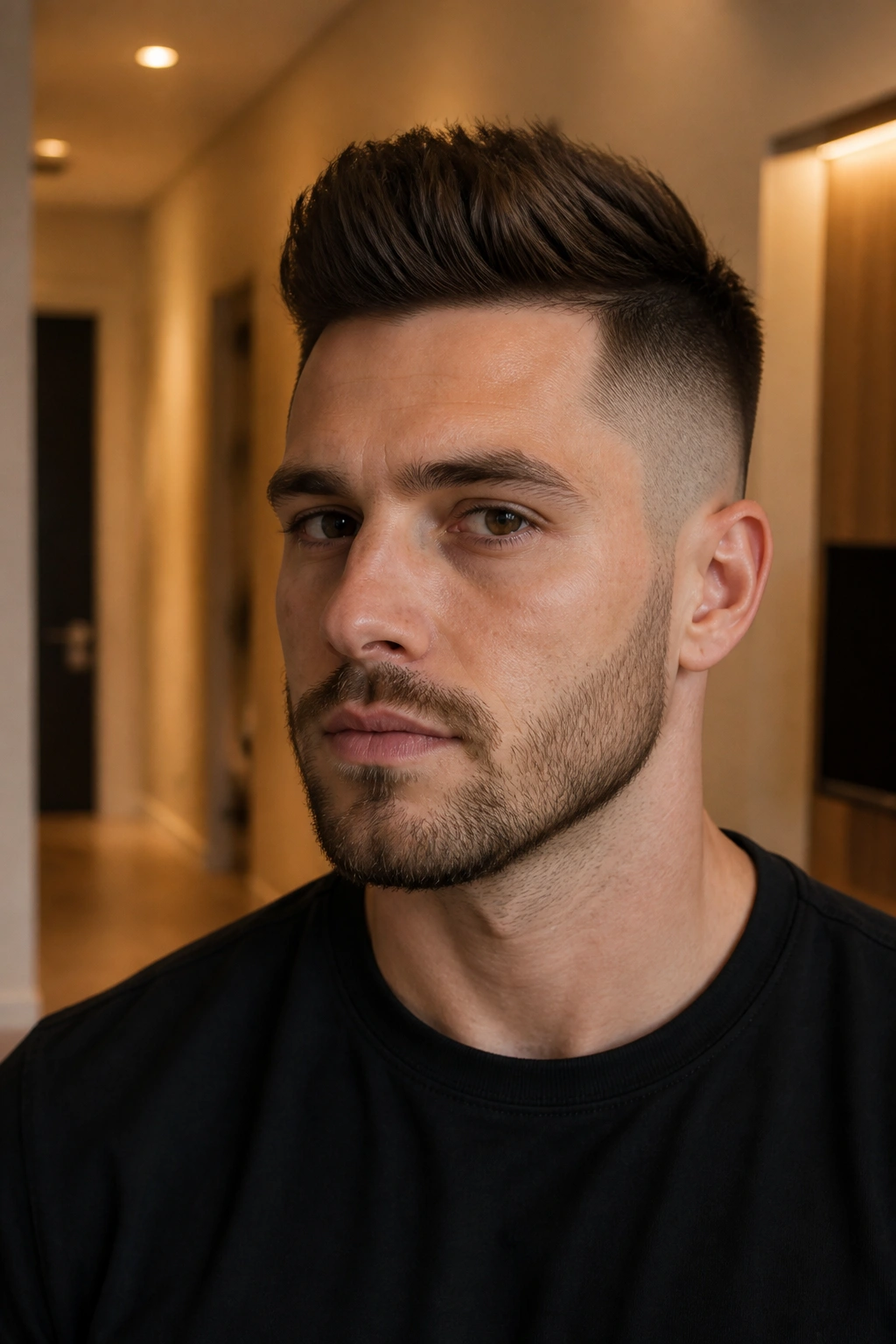
A flat crown can make even good hair look tired. The short quiff undercut fixes that fast by putting the height in the front, where the eye lands first.
This is one of my favorite short undercut styles because it feels energetic without needing long hair. The front lifts up and back, the sides stay tight, and the shape tells people you bothered to make a choice. That sounds small, but a good haircut often comes down to that exact thing.
The quiff works best when the front is a little longer than the rest of the top. You do not need a dramatic pompadour. Just leave enough length at the hairline to build a little curve. Three inches at the front is often enough if the hair is cooperative.
Blow-dry method
- Blow-dry the front up and back with a nozzle.
- Aim the airflow from the roots, not the tips.
- Use a round brush or your fingers to push the hair into a soft arc.
- Finish with a matte paste or low-shine cream so the lift stays light.
If you skip the blow-dryer, the quiff often falls flat by lunch. That is the honest version. It is a better cut for someone willing to spend two minutes styling than for someone who wants wash-and-go simplicity. Still, those two minutes are worth it. The lift makes the whole haircut feel alive.
9. Forward Fringe Undercut
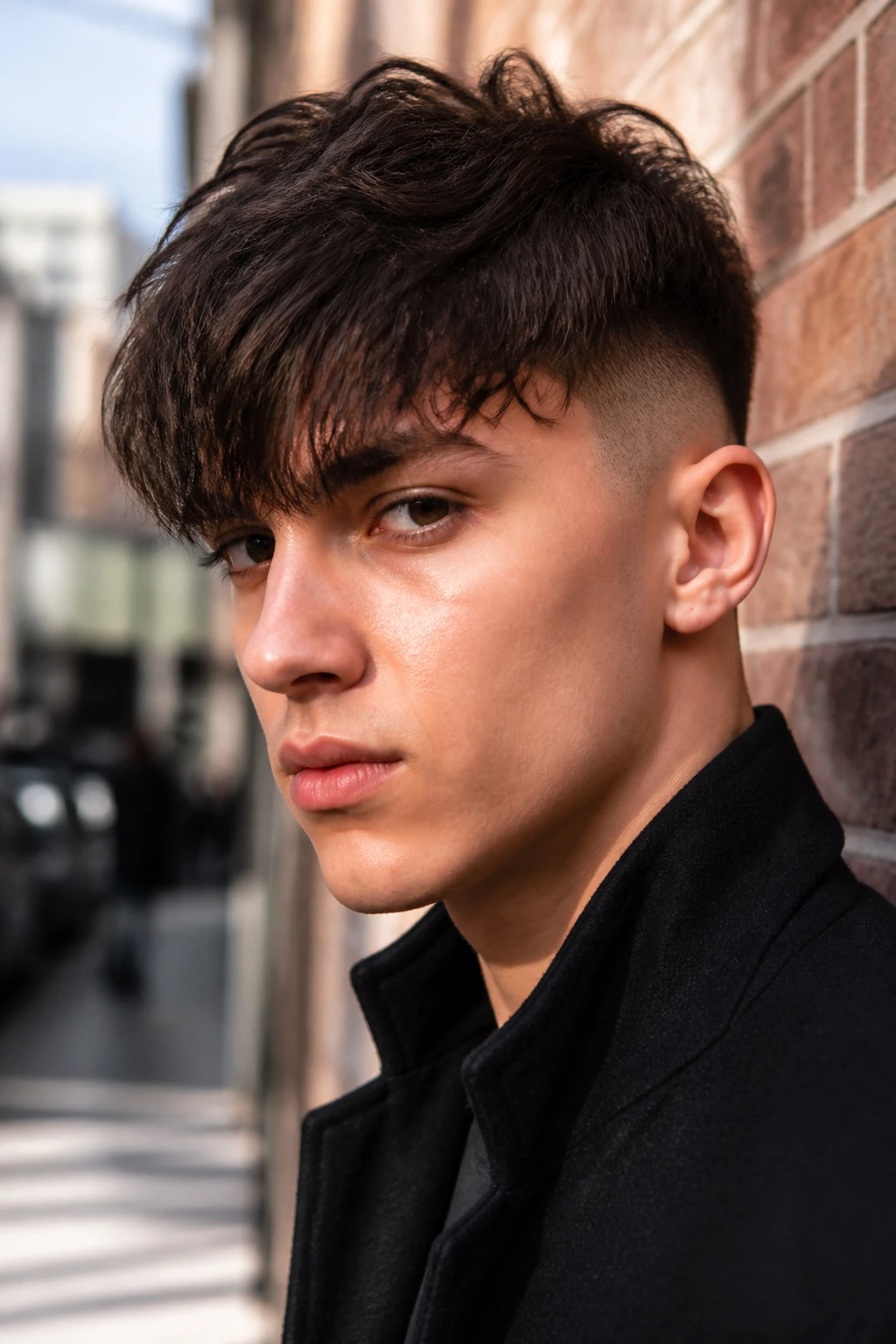
Want the top to fall forward instead of away from your face? The forward fringe undercut does that with a lot more edge than a regular crop.
The fringe is what makes it interesting. It sits toward the forehead, sometimes brushing the eyebrows, and that little drop changes the mood of the whole haircut. You can make it blunt and heavy, or choppy and feathered. I lean toward choppy, because a harsh fringe can look like a block if the hair is thick.
This style works especially well if you have a strong hairline you want to soften, or if your face runs long and you do not want extra height. It can also help with wavy hair that naturally wants to fall forward. You are not fighting the hair — you are using where it wants to go.
A good cut here keeps the fringe visible but not baggy. If the front drops too low and covers the eyes, the style starts feeling accidental. Keep the length around eyebrow level when dry, then let the texture break it up a bit. That keeps the undercut bold without making the top look like a curtain.
10. Short Pompadour Undercut
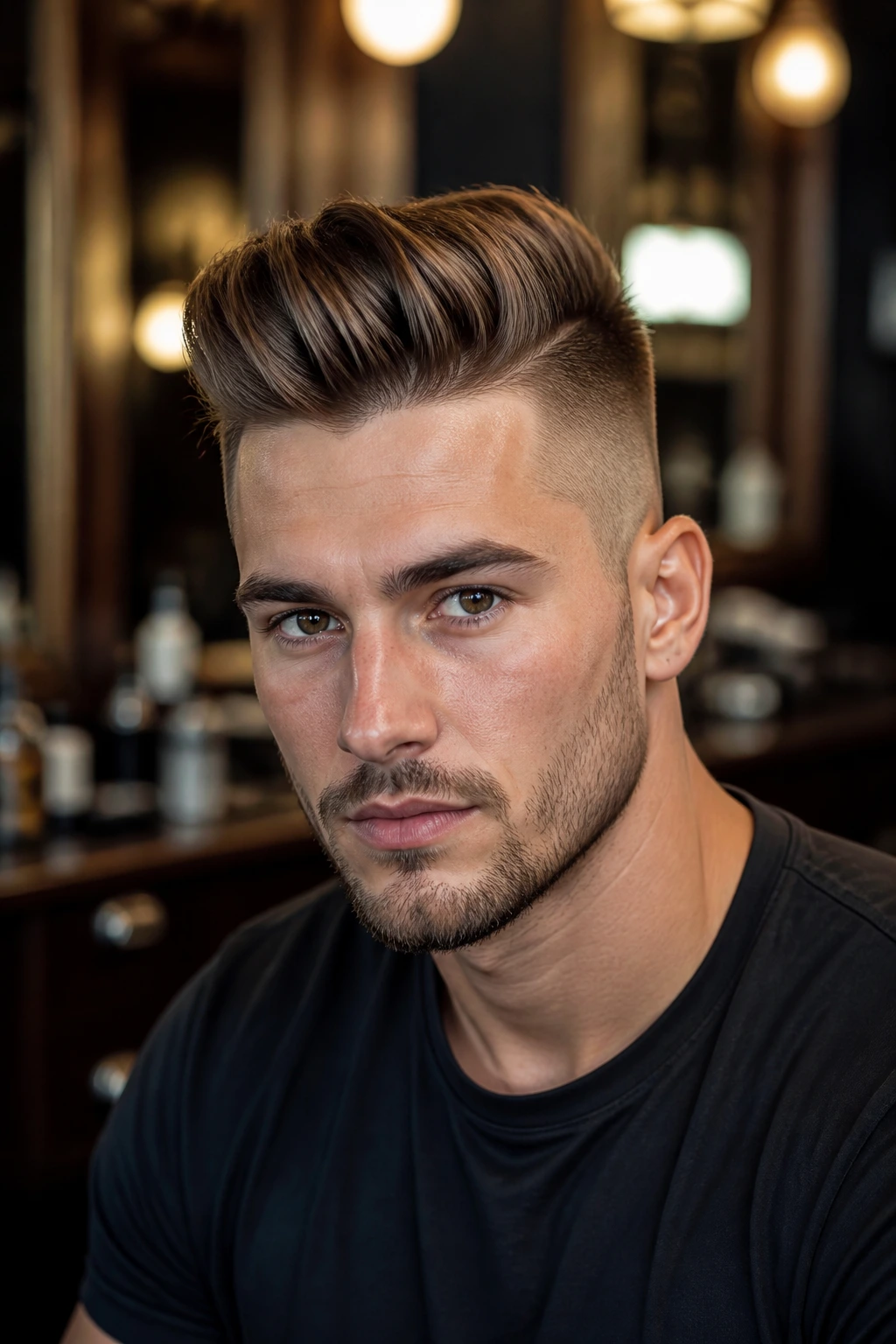
The short pompadour is the most dramatic version that still feels dressed. It gives you height in the front, shape through the crown, and enough polish to look deliberate without becoming stiff.
This is not a giant retro pompadour with a high wall of hair. It is tighter, lower, and easier to live with. Think of it as a compact version of the idea. The front lifts, the top rolls back, and the undercut keeps the sides from crowding the shape. That contrast is what makes the style work.
I like this one best on medium-thick hair that has some natural body. If your hair is too fine, you can still wear it, but you’ll need a blow-dryer and a product with hold. Leave 3 to 5 inches on top, with the front being the longest part. The back can stay shorter so the shape does not get heavy.
A short pompadour looks best with a clean finish — a little shine, not a wet shell. Use a blow-dryer, then work in a small amount of pomade from back to front. If you use too much, the hair collapses. If you use too little, the front never stands up. That balance is the whole game here, and once you get it, the cut has a lot of presence.
11. Spiky Short Undercut
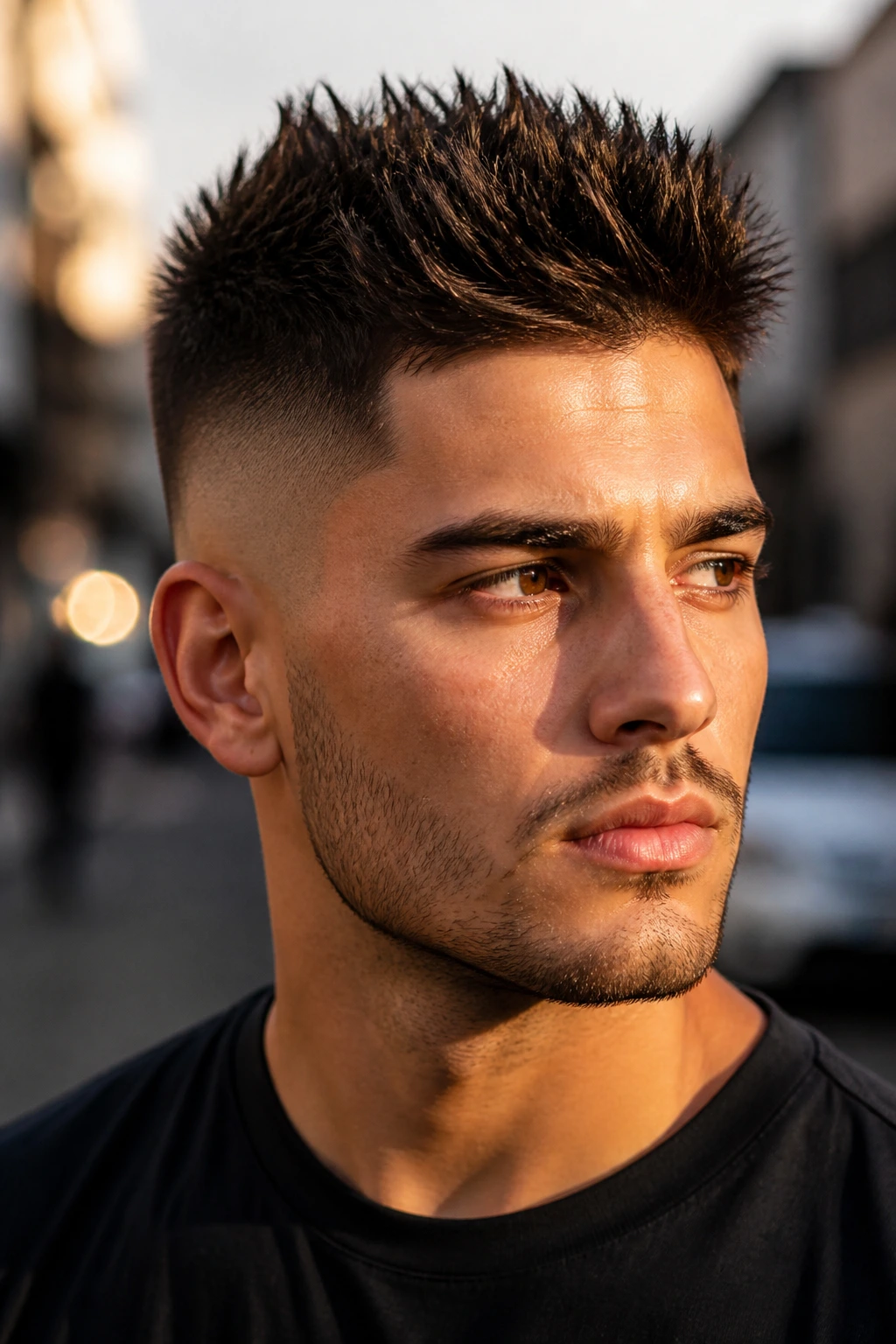
Spikes work when they look broken, not glued. That is the difference between a sharp short undercut and something that feels stuck in the early 2000s.
The top on this cut should stay short enough to stand up on its own — usually 1.5 to 2.5 inches. Any longer, and the spikes start falling over into clumps. Any shorter, and you lose the texture that makes the style interesting in the first place. The sides should stay tight enough to keep the focus on the top, but not so severe that the haircut becomes all contrast and no shape.
How to keep spikes modern
- Use a fiber paste or matte styling cream, not glossy gel.
- Work product into dry hair in small amounts.
- Pinch sections between your fingertips instead of combing them flat.
- Vary the direction a little so the top has movement.
I like this cut for coarse hair because coarse hair holds a spike without much drama. Fine hair can wear it too, but it needs a blow-dry at the roots. The key is making the spikes feel separated, not helmeted. If they all point in exactly the same direction, the style loses energy fast.
It is a punchy cut. Not subtle. That’s the point.
12. Hard-Part Undercut
Natural side parts leave room to move. A hard-part undercut takes that room away and draws a line where the hair is supposed to split. The result is sharper, more graphic, and a little less forgiving.
This is one of the cleaner ways to make a short undercut look unmistakably styled. The shaved part line gives the eye a path, so even simple combing looks intentional. You do not need a lot of height on top to make it work either. In fact, too much top can make the line feel lost.
What to ask for at the chair
- Decide which side the part should sit on before the cut starts.
- Ask for the part line to be carved with a trimmer or straight razor.
- Keep the top around 2 to 4 inches depending on your hair density.
- Request a tight fade or clipped sides so the line does not disappear into bulk.
The hard part does need upkeep. Hair grows, and the line softens faster than most people expect. If you want the part to stay clean, you’ll probably need a refresh every couple of weeks. That is not me being dramatic. It just grows out faster than the rest of the cut.
I also think this style looks best when the top has a little direction, not a frozen shape. Comb it over, push it back slightly, or let it bend with a touch of texture. A hard part plus a stiff top can look overly exact, and exact is not always flattering.
13. Drop-Fade Undercut
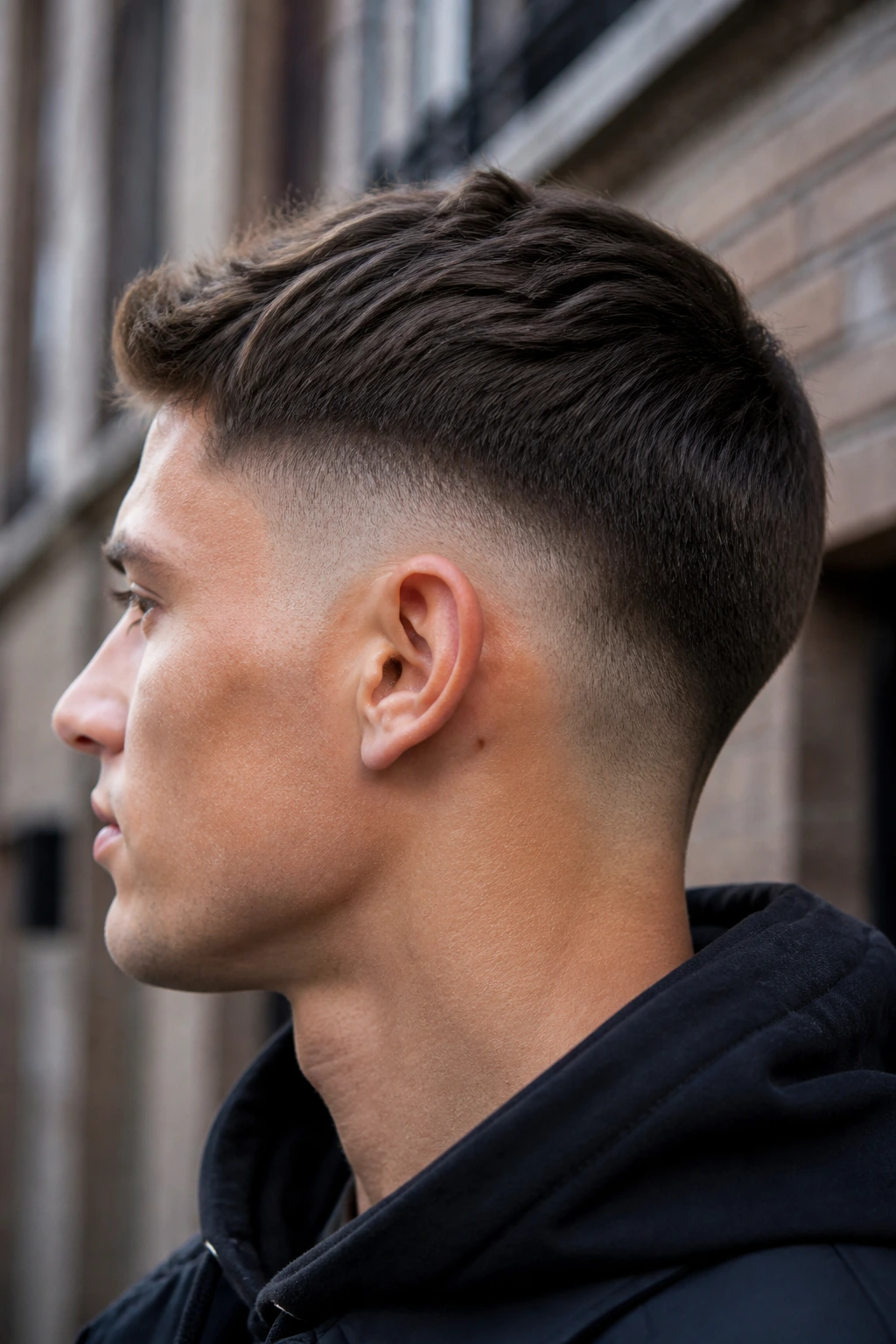
A drop fade changes the outline of the head, not just the length. The fade curves downward behind the ear, which makes the whole haircut feel more shaped and less boxy.
That curve matters more than people realize. A straight fade line can make some heads look wider or flatter. A drop fade adds a little contour, especially when paired with a short undercut top that stays compact. The result feels cleaner around the ears and a little more sculpted at the back.
I like this version on haircuts where the top already has enough personality. A textured crop, a short quiff, or a swept-back look all sit nicely on it. The fade becomes the frame. You don’t have to think about it too hard, which is one reason barbers use it so often with bold cuts.
The best drop fades are smooth, not overdone. You want the taper to bend naturally with the head, not make a dramatic cliff. If the fade drops too much, the shape can look lopsided. If it barely drops at all, you may as well have gone with a standard fade. The sweet spot is in the curve.
14. Shaved-Design Undercut
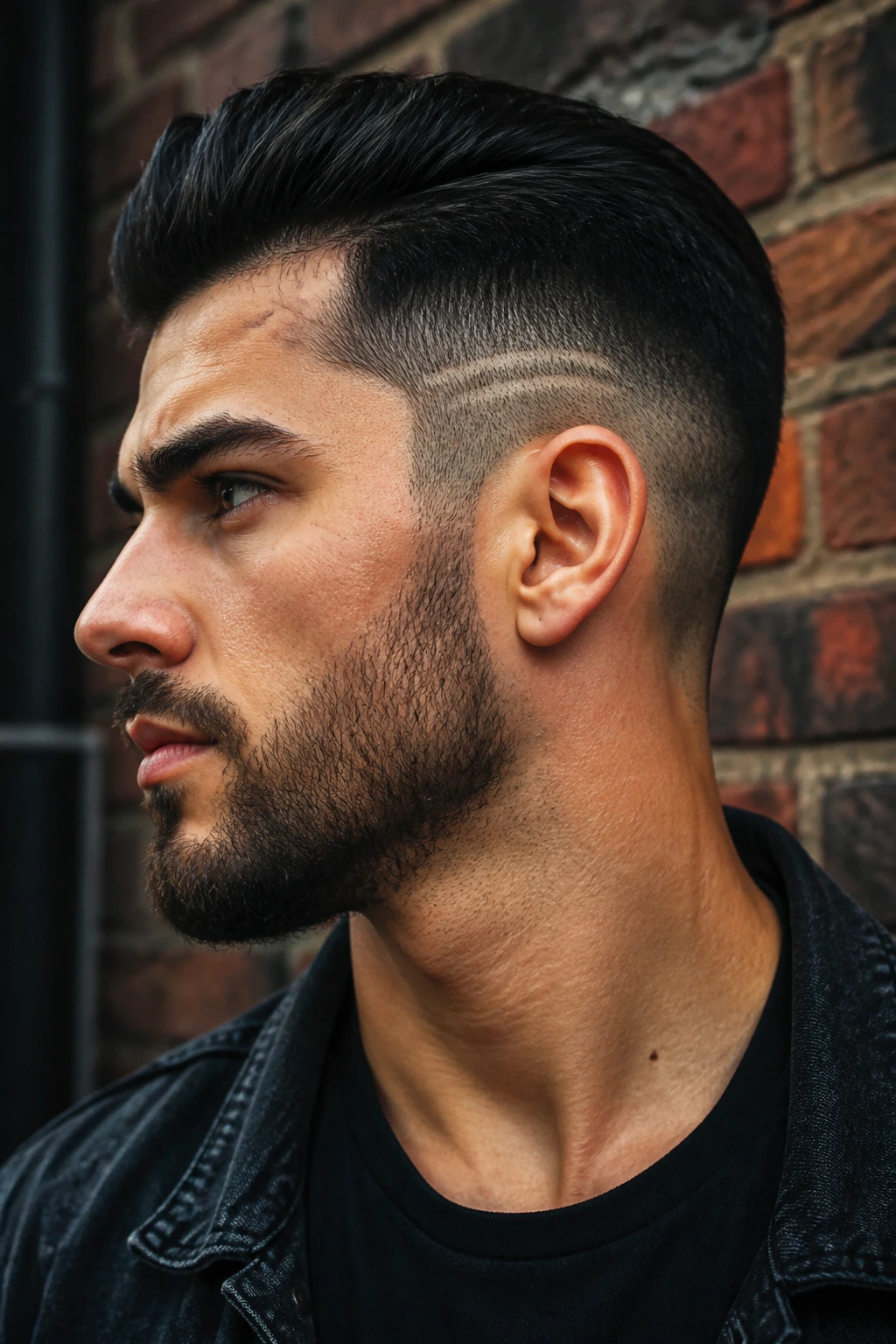
The first time you see a clean line etched into a tight undercut, it looks almost too exact. That is the charm. Shaved designs turn the haircut into something personal, and on short hair, even a small design can change the whole read.
I would keep the artwork simple unless the top is very short. A tiny canvas can get crowded fast. A single line, a double slash, a zigzag at the temple, or a geometric curve behind the ear usually lands better than a busy pattern. The tighter the sides, the cleaner the design looks.
Keep the art small
- Simple lines stay readable longer than detailed shapes.
- Designs behind the ear grow out faster than designs on the temple.
- If you want the lines crisp, plan on a cleanup every 1 to 2 weeks.
- Use a plain top shape so the design has room to stand out.
This style is not subtle, and that is why people either love it or skip it. I think it works best when the rest of the haircut stays restrained. A short crop or buzzed top gives the design more space. A tall, busy top can make the whole thing feel overloaded.
One practical note: shaved art looks best right after the cut, then starts to soften as the hair grows. That softening is part of the look. If you want it razor-sharp all the time, you need to book maintenance and stick to it.
15. Buzzed-Top Short Undercut
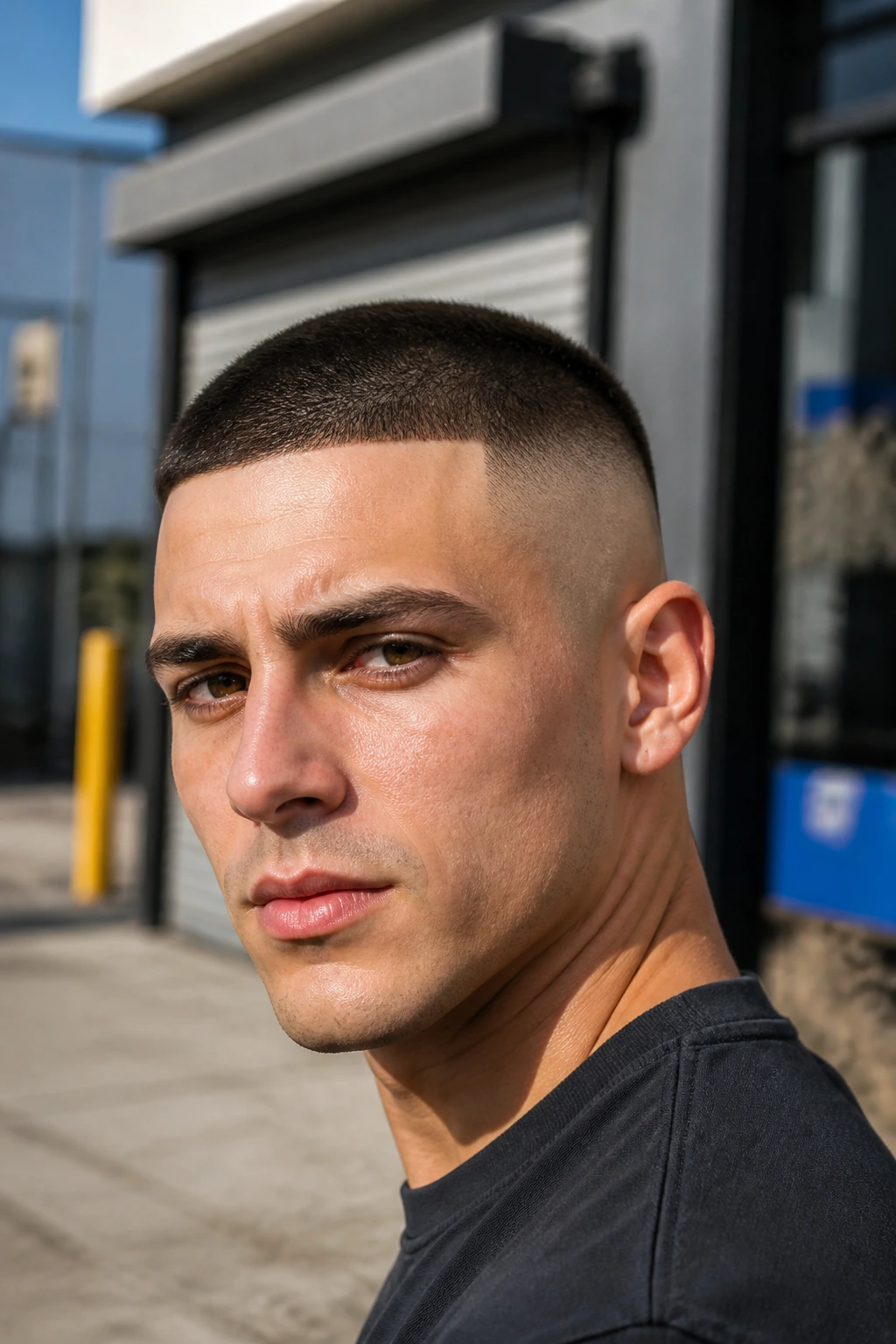
A buzzed top is the most stripped-down bold move on the list. There is nowhere for a bad fade to hide, and there is nowhere for the top to pretend it is doing more work than it is. That honesty is why it looks good.
This version usually pairs a very short top — think #2 to #4 guard — with sides that are even tighter, often a skin fade or close clipper work. The contrast is what makes it feel like a style instead of just a shortcut. And because the top is so short, the haircut stays neat with almost no effort.
I like this one for people who hate fussing with hair in the morning. You can wash it, towel-dry it, and walk out the door. If you want a bit more edge, keep the front line crisp and the temples clean. If you want a slightly softer look, leave the top a touch longer and let the fade do the dramatic work.
The buzzed top undercut also holds up well in bad weather, which sounds boring until you live with longer hair. Wind, humidity, helmets, hats — none of it matters much here. It is simple. It is strong. And when the shape is right, that simplicity looks deliberate rather than lazy.
Final Thoughts
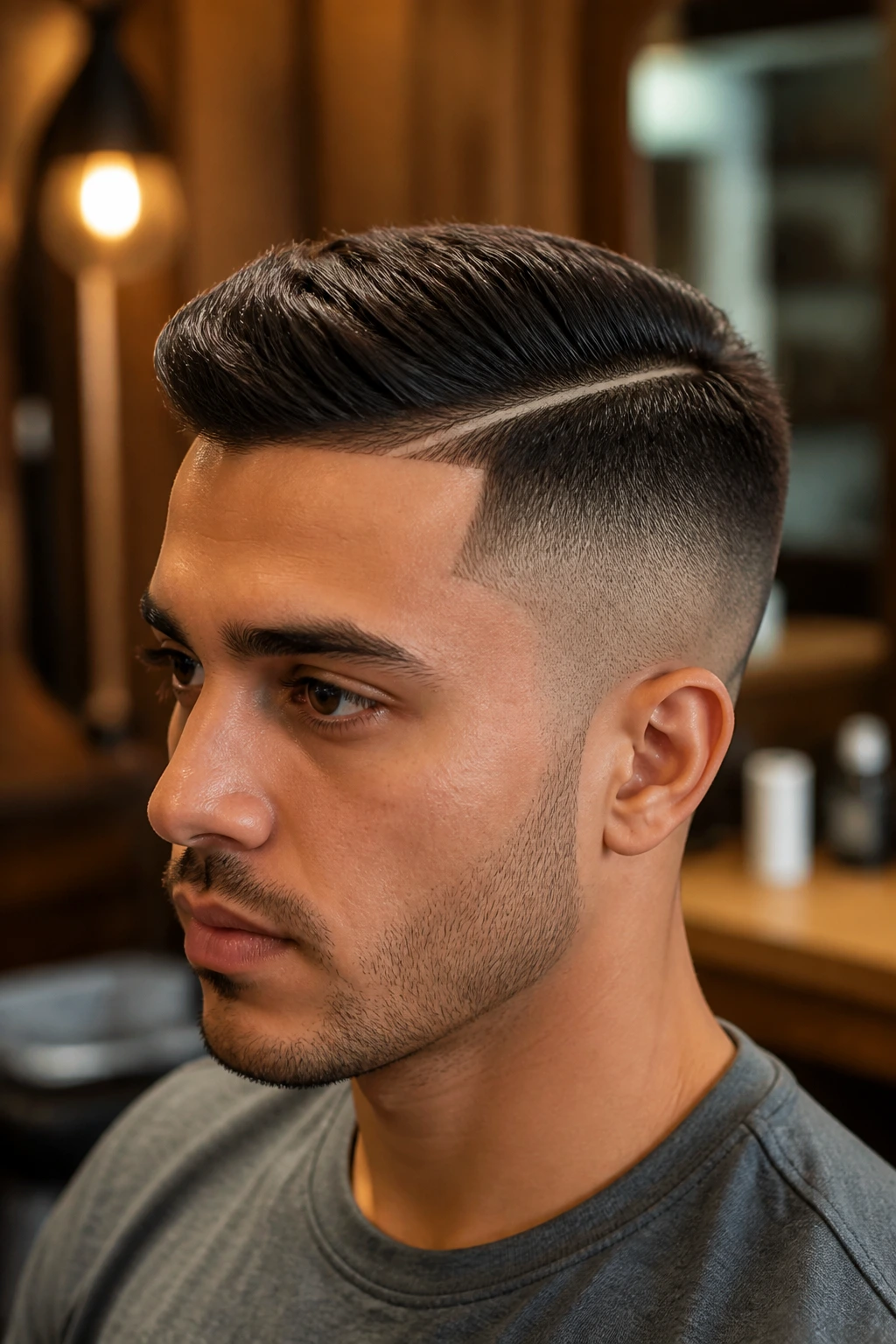
A short undercut works because it makes shape do the talking. You can push it clean, messy, glossy, matte, or brutally minimal, but the real decision is how much contrast you want to live with every day.
If you want the easiest bold option, start with the classic disconnect or the buzzed top. If you want more movement, go textured, curly, or quiffed. And if you like a haircut that looks edited from every angle, the skin fade, hard part, or shaved design will give you that sharper edge.
The best move is to match the style to how much time you actually want to spend on your hair. Five minutes in front of a mirror is one thing. Thirty seconds is another. Pick the version that fits the life you lead, not the one that looks good only in barbershop lighting.
