



An undercut can change a haircut faster than almost anything else. Take the sides down tight, keep the top long, and the whole shape turns sharper, louder, and a little more dangerous.
The best undercut styles do not all say the same thing. A slicked-back version reads polished, a curly one feels looser, and a shaved temple with a hard line has a different kind of bite altogether. That contrast is the appeal. It gives you a haircut with a built-in attitude switch.
What catches people out is maintenance. Some styles look clean for weeks; others need a neck cleanup every couple of weeks or they start to lose the shape that made them work in the first place. Hair type matters too, and so does the way your barber connects the top to the sides. A disconnected cut and a soft undercut are not the same animal.
That split between sharp and lived-in is where these styles get interesting, and the twenty looks below cover both ends of that spectrum.
1. Disconnected Undercut With a Clean Hard Line
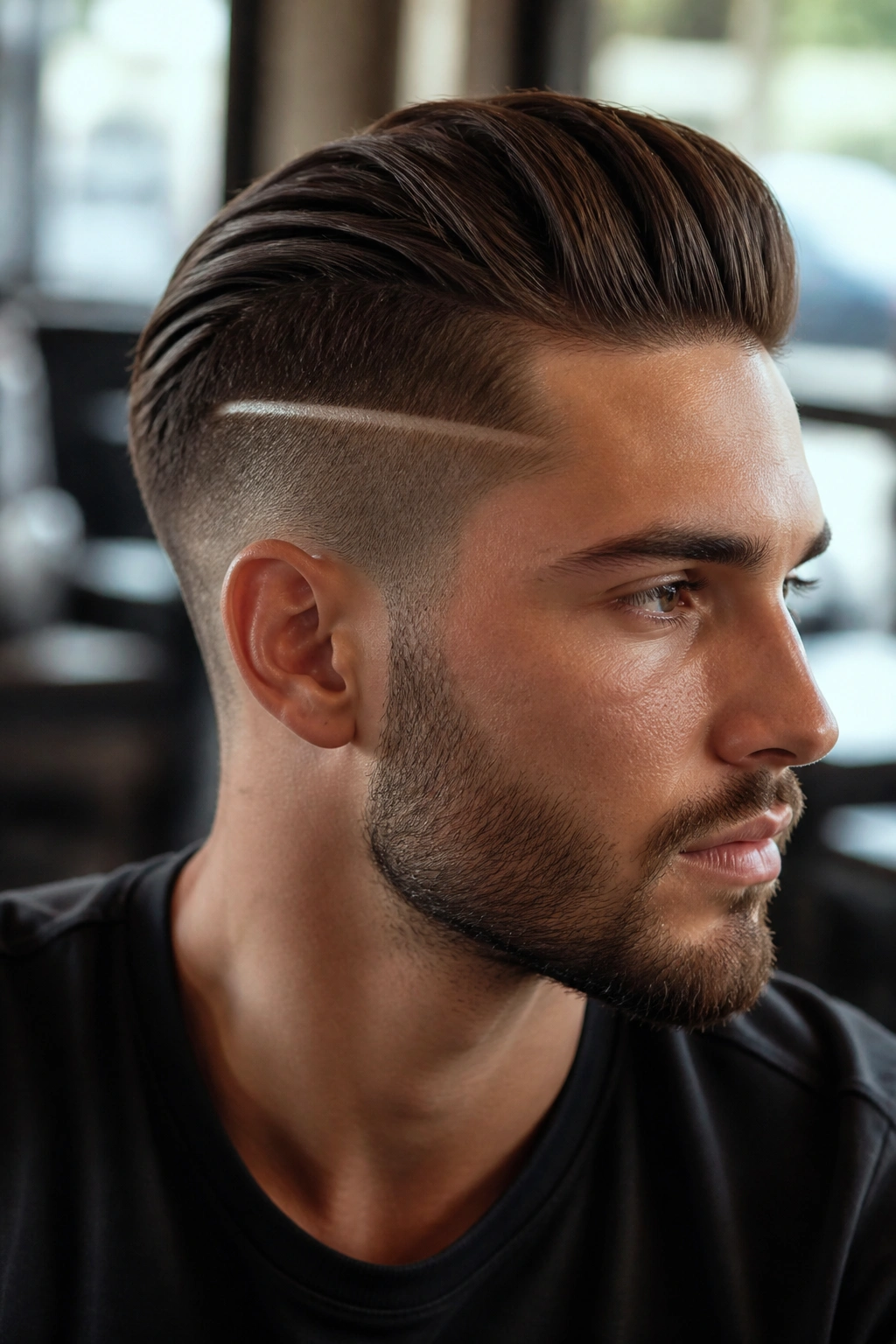
A hard line is loud. That is the point.
The disconnected undercut is the one people notice from across the room because the top and sides do not melt into each other. There’s a visible break, often made with a #0.5, #1, or skin-close clipper on the sides, and that break gives the haircut its attitude. If you like clean edges and a shape that looks deliberate, this is the style that does the heavy lifting for you.
The top can be anything from a swept-back length to a textured crop, but the contrast needs enough room to breathe. Four to six inches on top is a sweet spot for most people because it gives lift without turning into a helmet. Straight hair shows the line the hardest. Wavy hair softens it a little, which can be useful if you want the style to feel less severe.
This cut looks strongest when the neckline and sideburns are kept tidy. Leave them fuzzy, and the whole thing loses its bite. Keep it clean, and the haircut reads as sharp even on a lazy day.
A good way to wear it is with a matte paste or light clay worked through dry hair. Not wet. Wet product blurs the edge you paid for.
2. Asymmetrical Undercut
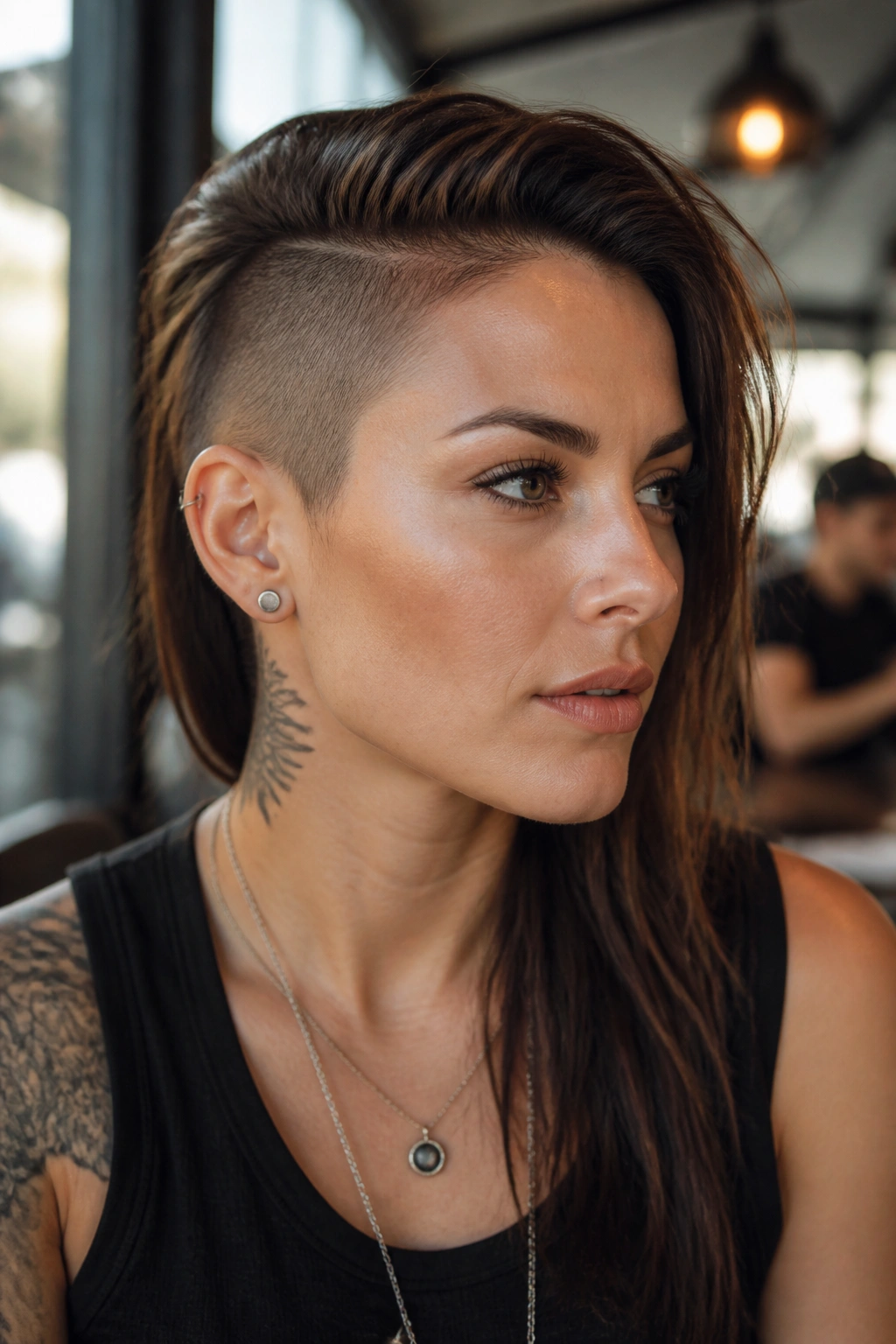
Why does an asymmetrical undercut feel more daring than a regular one? Because it bends the eye a little.
One side stays longer, one side gets cut tighter, and the imbalance is what makes it interesting. It is especially good if you want something edgy without shaving both sides down to the skin. The shape feels modern, but not in a try-hard way. It looks planned.
How to Wear It
The longer side usually works best when it’s tucked behind the ear or swept across the forehead. That gives the haircut a bit of movement instead of making it look like two separate ideas fighting each other. If your hair is straight, keep the longer side smooth and let the shorter side stay crisp. If your hair bends or waves, let the texture show. That slight mismatch helps the cut look alive.
- Ask for one side at #1 or #2 length and the other side left longer for softness.
- Keep the top layered if you want it to fall naturally instead of sticking out.
- Use a light cream or matte paste, not a heavy wax that drags the shape down.
- Best on round or square faces when you want the haircut to lengthen the look.
Tip: If the shorter side is too bare for your taste, ask for a subtle taper instead of a full skin shave.
3. Curly Undercut With a Tapered Edge
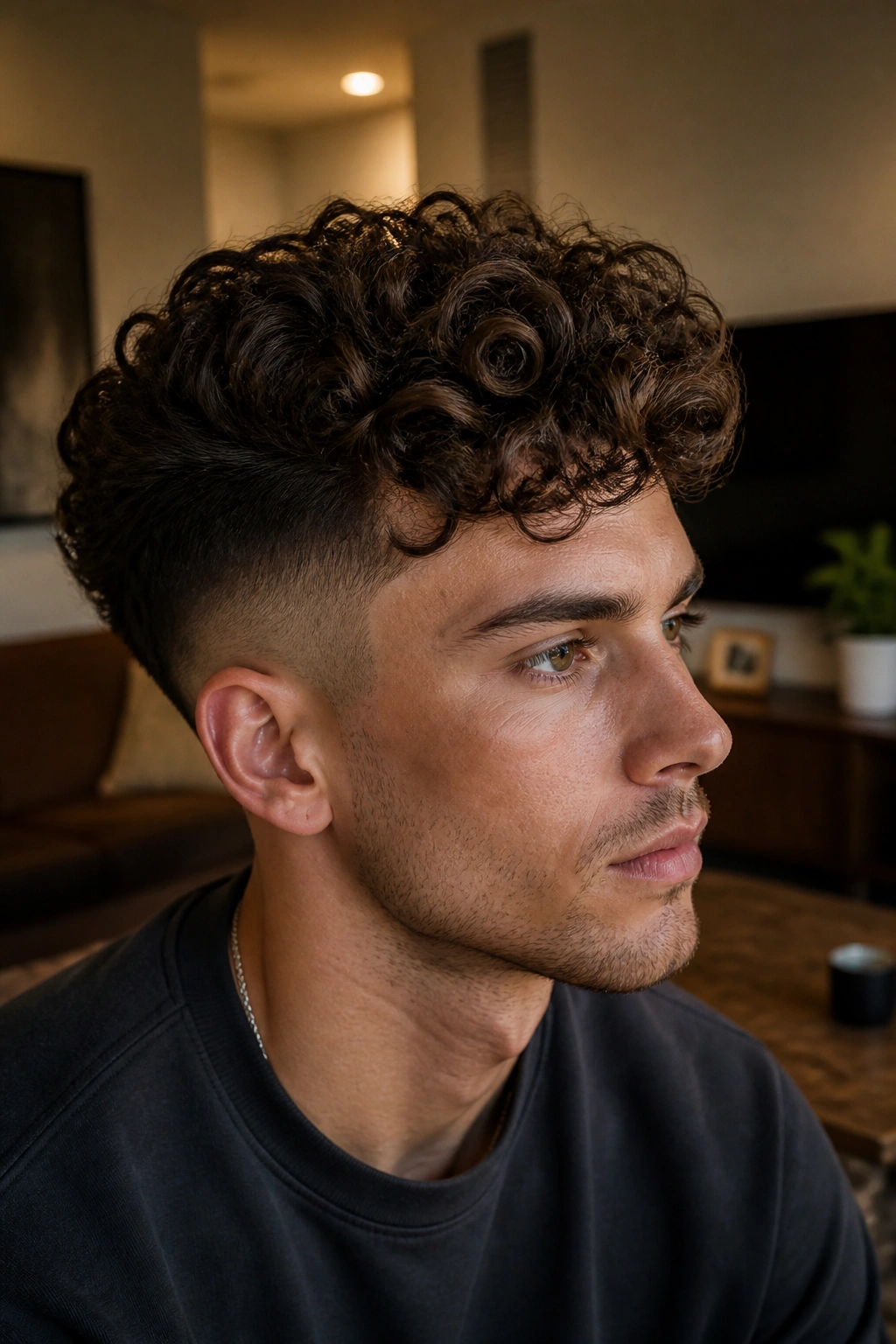
If your curls puff out at the temples, this cut fixes the problem without flattening the good part.
The trick is simple: keep the sides and back short, then let the curls live on top where they have room to spring. A tapered edge around the ears and nape keeps the outline neat, which matters more than people think. Curly hair can look messy fast when the base of the haircut is left bulky. Clean edges change everything.
- Top length: usually 3 to 5 inches works for loose curls; tighter curls may need a little more to show shape.
- Best styling move: scrunch in curl cream on damp hair, then diffuse on low heat.
- Skip: heavy gels that create stiff, shiny clumps unless that is the look you want.
- Maintenance: a trim every 4 to 6 weeks helps keep the undercut from swelling out at the sides.
The best part is the balance. You get all the motion and texture on top, but the haircut still looks controlled from the front and side. That contrast is what makes it feel edgy instead of merely practical.
4. Slicked-Back Undercut
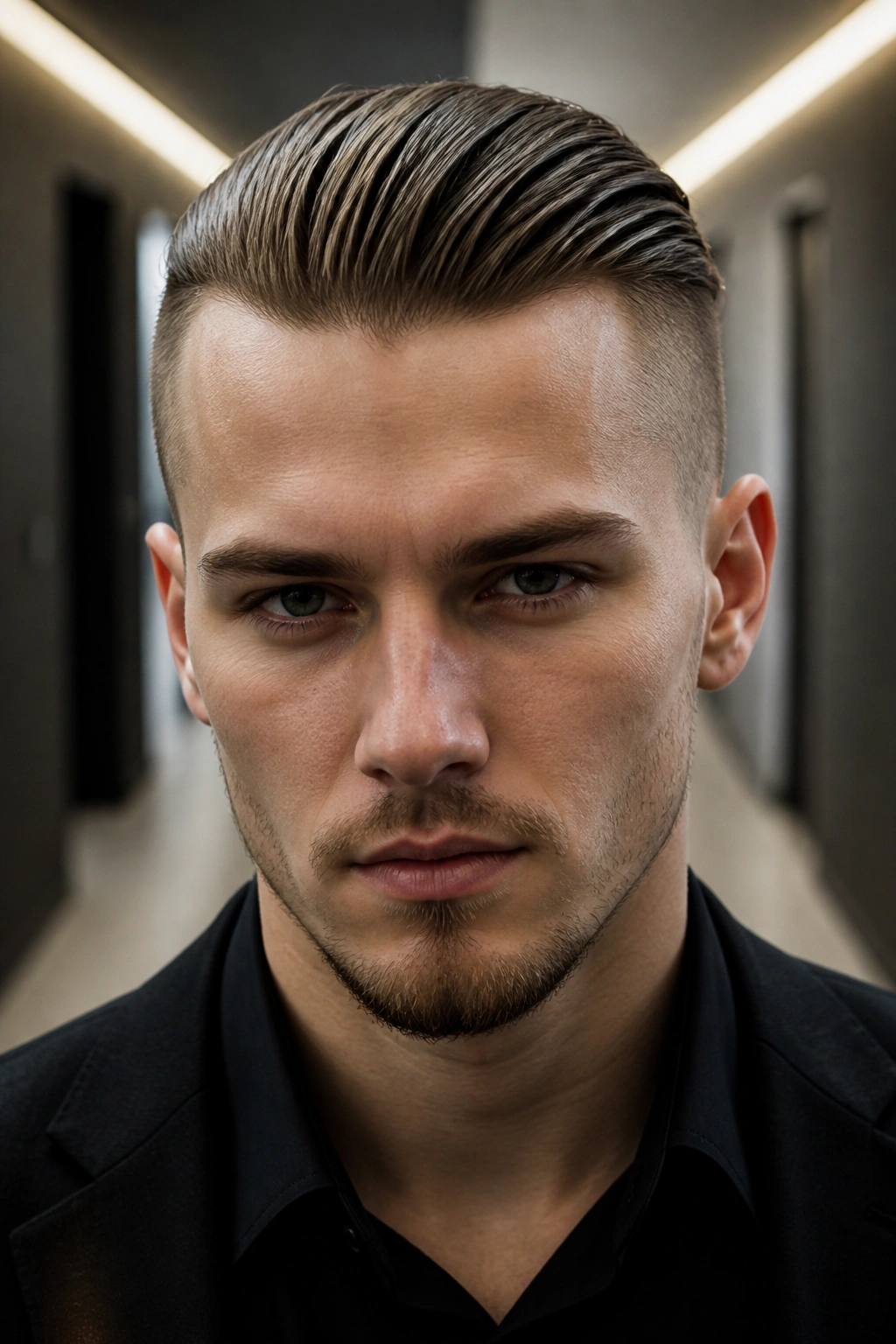
Unlike a pompadour, this style keeps the front flatter and the silhouette slicker.
That sounds subtle, but the effect is huge. A slicked-back undercut has a more controlled, almost sharp-edged feel because the hair flows straight back from the hairline instead of rising into a high front wave. It is a strong choice if you want a neat shape that still has some teeth. Thick straight hair loves this cut. So does dense wavy hair, once it’s blow-dried in the right direction.
The product matters more here than in most styles. Use a medium-hold pomade for shine, or a cream pomade if you want less glare. Spread it through dry or nearly dry hair, then comb the top back in one clean motion. If you pile on product too early, the hair separates in odd places and the whole shape goes greasy.
This is also one of the easier undercut looks to dress up. Jacket, collar, boots, and suddenly the haircut reads much tougher. But it can also look clean and minimal with a plain tee. The cut does not need much help.
5. Textured Crop Undercut
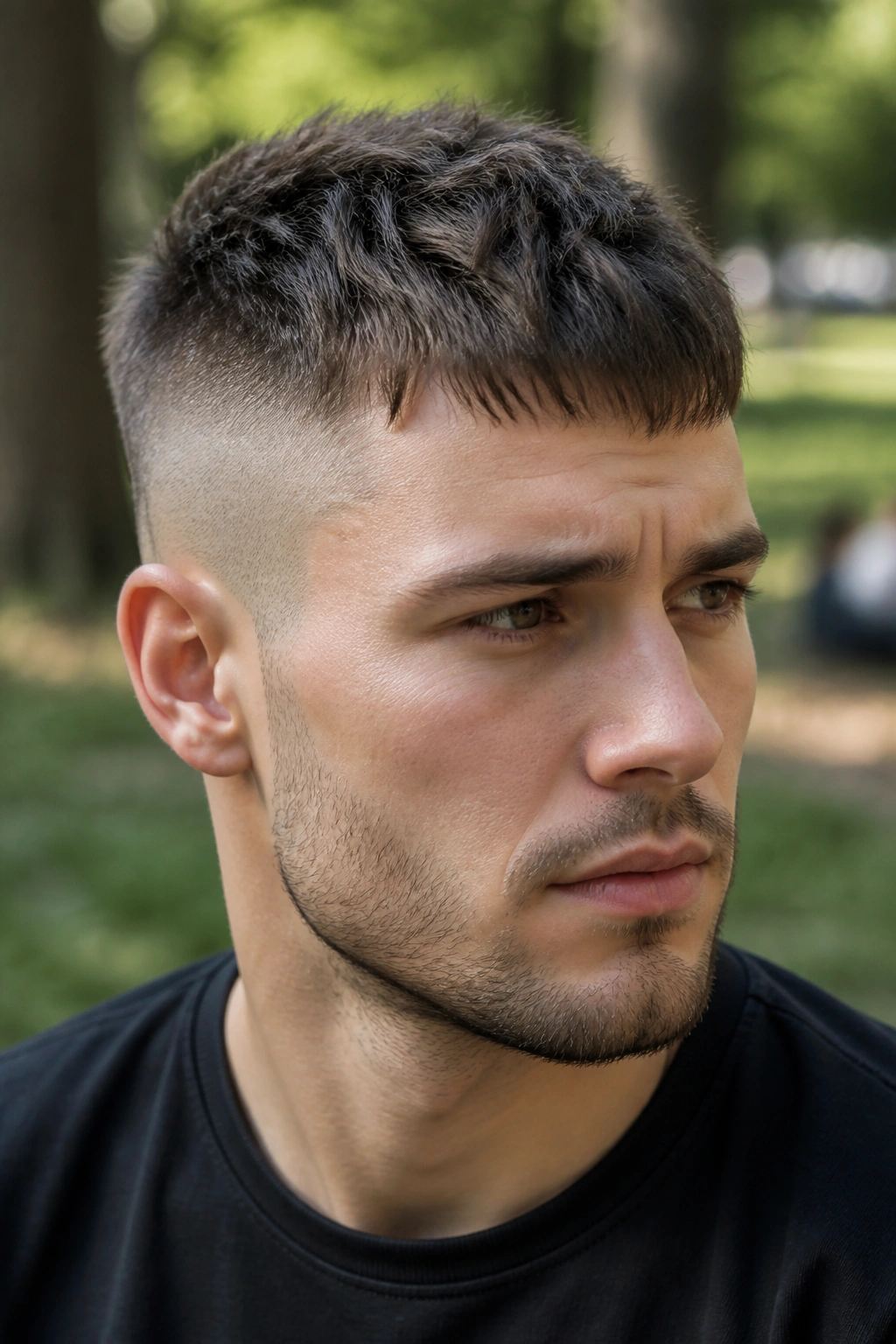
A textured crop undercut is the version I’d point to for anyone who wants edge without a lot of morning drama.
The top stays short and broken up, usually with choppy layers and a blunt or slightly irregular fringe. The sides are taken tight, which gives the haircut its undercut feel, but the top does not try to stand tall or sweep back. It sits forward, piecey, and a little rough around the edges. That roughness is the style.
This cut works especially well on fine hair because texture makes hair look fuller. It also behaves nicely on straight hair that refuses to hold big shapes. A dab of matte clay rubbed between the palms and pressed into the top is usually enough. If the hair starts to look stiff, there is too much product. Simple as that.
The best versions keep the fringe short enough to stay useful. If it grows past the brows, the cut starts to lose its clean snap. A crop like this is a good one for people who like their hair to look intentional without looking polished to death. That distinction matters.
6. Side-Swept Fringe Undercut
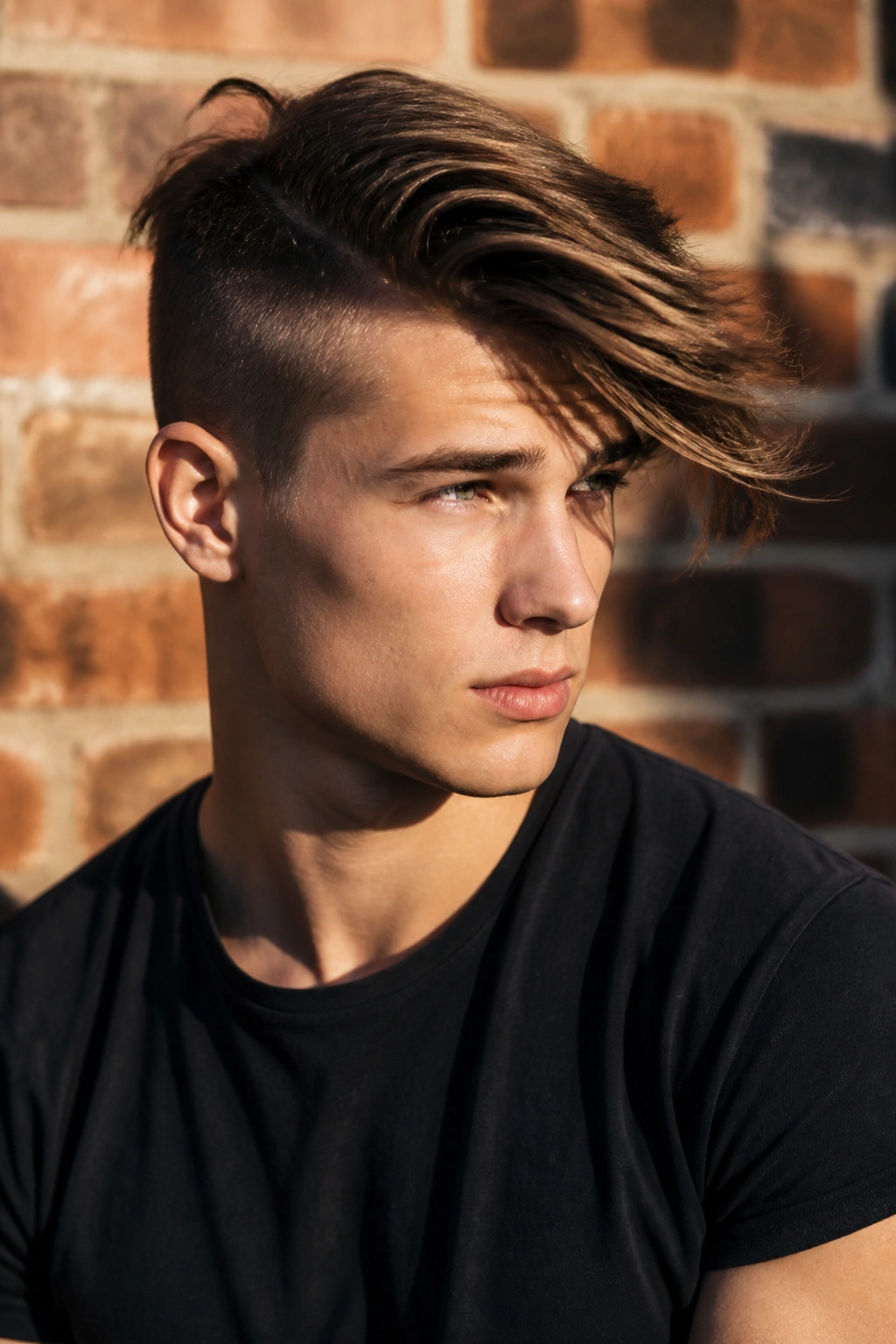
Some cuts shout from the sides. This one talks through the front.
Why the Fringe Matters
A side-swept fringe undercut shifts the weight of the haircut forward, which softens the sharpness of the shaved or clipped sides. That makes it a smart choice if you want edge but do not want your forehead fully exposed. The longer fringe also gives the barber more room to shape the face, especially if you want to balance a long face or soften a strong jaw.
The fringe usually sits somewhere around 4 to 7 inches, depending on how heavy you want it to fall. Keep it light enough to move. If it gets too thick, it starts blocking the eye line and becomes annoying instead of stylish.
Quick Styling Notes
- Blow-dry the fringe from the crown toward the side so it keeps direction.
- Use a small amount of cream or paste; too much weight makes it collapse.
- Ask for the undercut to be tight around the ears so the fringe stays the focus.
- Works well with slightly wavy hair because the bend gives the front more shape.
Best tip: Ask your barber to leave the fringe a touch longer than you think you need. It is easier to trim down later than to wait for a too-short front to grow out.
7. Pompadour Undercut
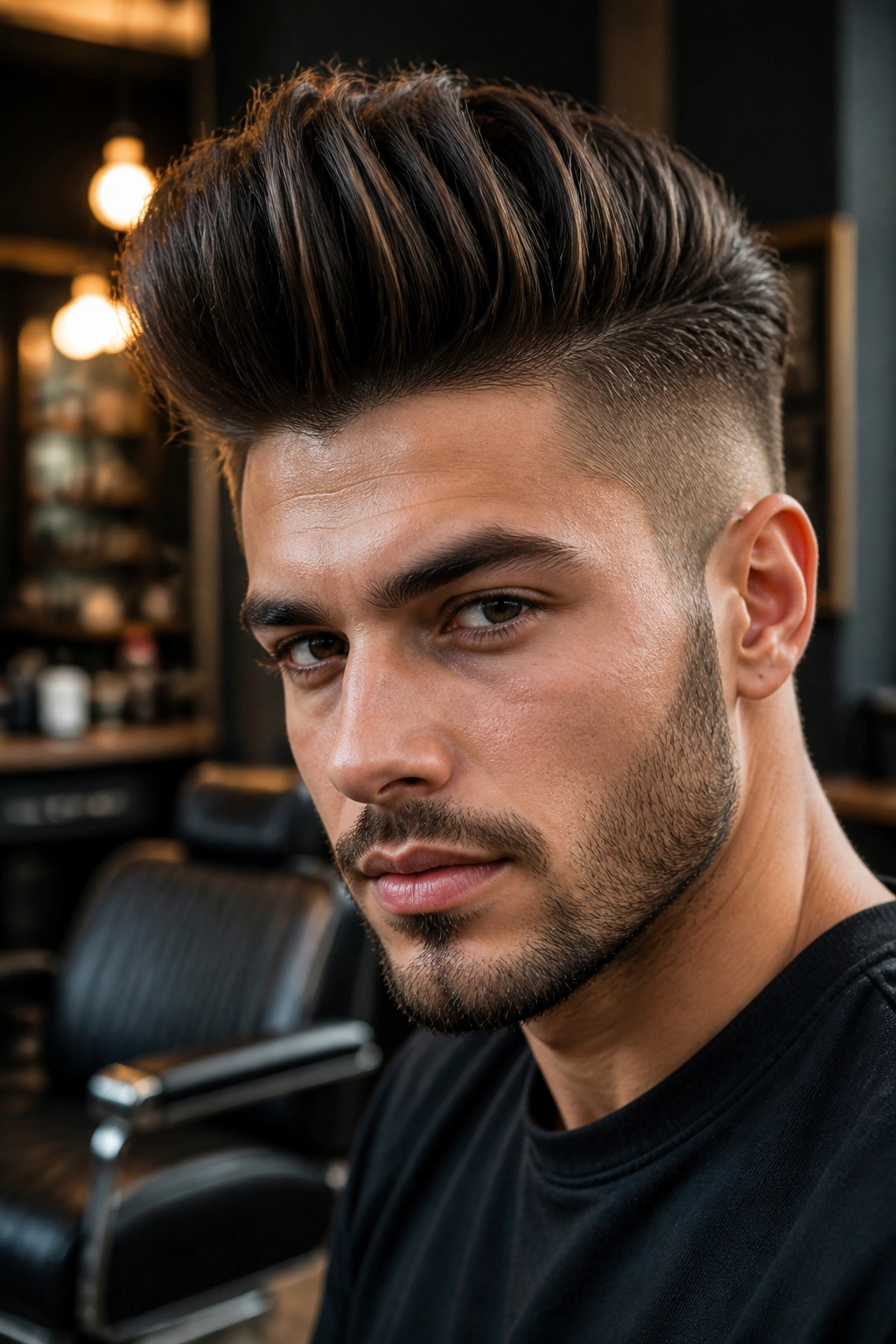
A pompadour undercut has presence. Big presence.
The whole haircut is built around lift at the front, with the sides cut short enough to make that height look even bigger. If the slicked-back undercut is about control, the pompadour is about volume. It feels theatrical in a good way. Dense hair helps, but it is not mandatory. You just need enough length on top to push up and back without the front folding over.
The styling routine is part of the appeal. Blow-dry the roots upward first, then shape the front with a round brush or your fingers. A pre-styler or heat protectant can help the hair hold its bend, but the main job is airflow and direction. After that, a strong-hold product keeps the height in place. Use less at the roots than you think. Too much product at the base kills lift.
This cut suits people who like a haircut that reads from a distance. It is confident, a little old-school, and very easy to make more dramatic with a clean fade or hard part. If you want the front of your hair to do some talking, this is a solid bet.
8. Faux Hawk Undercut
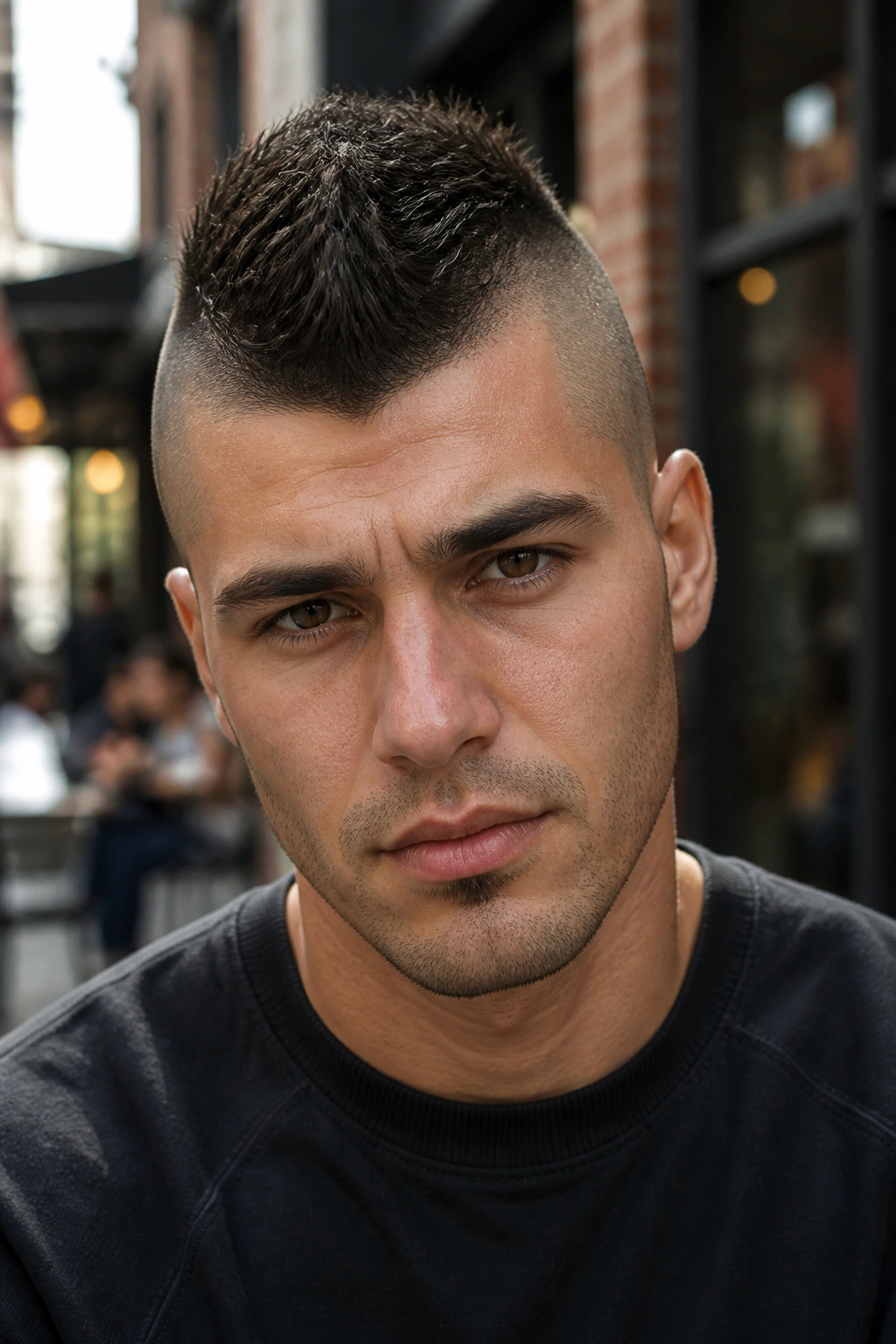
Can a faux hawk still feel fresh? Yes, if the shape is tight enough.
The difference between a good faux hawk undercut and a cheesy one is restraint. You want a clear ridge through the center, not a spiky strip that looks like it escaped a school dance photo. Keep the sides short and the middle visibly higher, but leave enough movement in the top that the style can shift with your hands. That’s what keeps it wearable.
How to Get the Lift
The best faux hawk undercut starts with direction, not product. Blow-dry the top from the temples toward the center, using your fingers to pinch the hair upward as it dries. After that, work in a matte clay or fiber. You want grip, not shine. If the product is too glossy, the cut loses its roughness.
- Keep the center ridge about 1 to 2 inches taller than the sides of the top.
- Ask for the sides to be tight but not bald if you want a softer edge.
- Let the front stay slightly longer so the shape can lean forward when you want it to.
- Best on thick or medium-density hair.
The nice part is flexibility. You can wear it aggressive on a night out and calmer during the day without changing the cut.
9. Mohawk Undercut
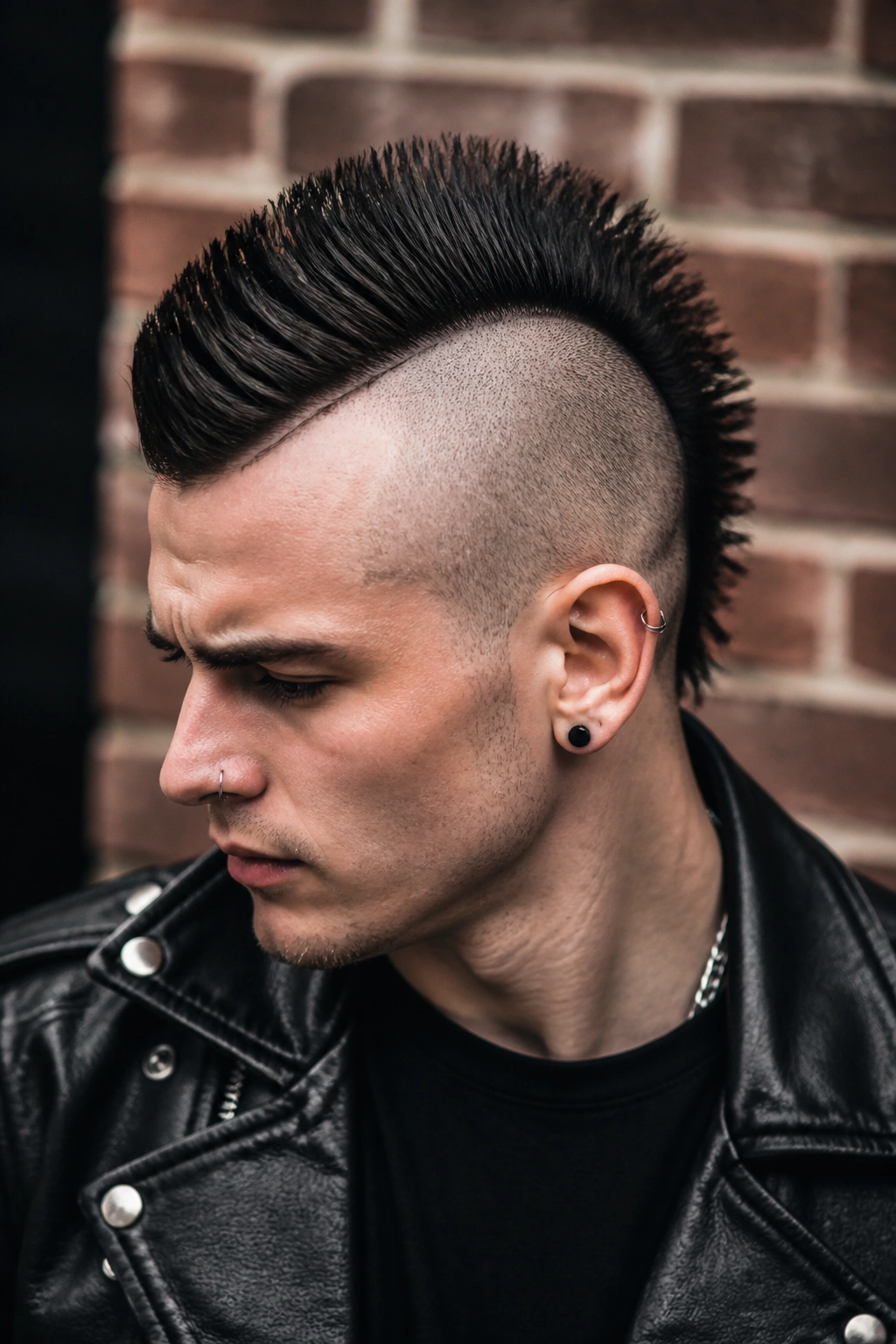
A mohawk undercut is louder than a faux hawk. No mystery there.
The sides are pushed much farther into the background, which makes the middle strip feel bolder and more defiant. That strip can be narrow or fairly wide, depending on how much drama you want. Shorter versions are easier to manage, while longer mohawk tops need more commitment and a little more daily shaping. The cut works especially well when the hair has either coarse texture or enough density to stand up without falling flat.
The best mohawk undercuts do not rely on product alone. The shape should come from the cut itself. Ask for the top to keep enough weight in the middle so it doesn’t collapse. Then style with a matte paste or strong-hold cream and push the hair upward from the sides toward the center.
- Sides are often taken to skin, #0.5, or #1 for the strongest contrast.
- The center strip can stay 2 to 5 inches long, depending on how dramatic you want it.
- Clean edges around the ears and nape matter a lot here.
- A line-up or sharp neckline makes the style look intentional, not unfinished.
It is not a shy haircut. That is fine. Some cuts are supposed to cause a reaction.
10. Hard Part Undercut
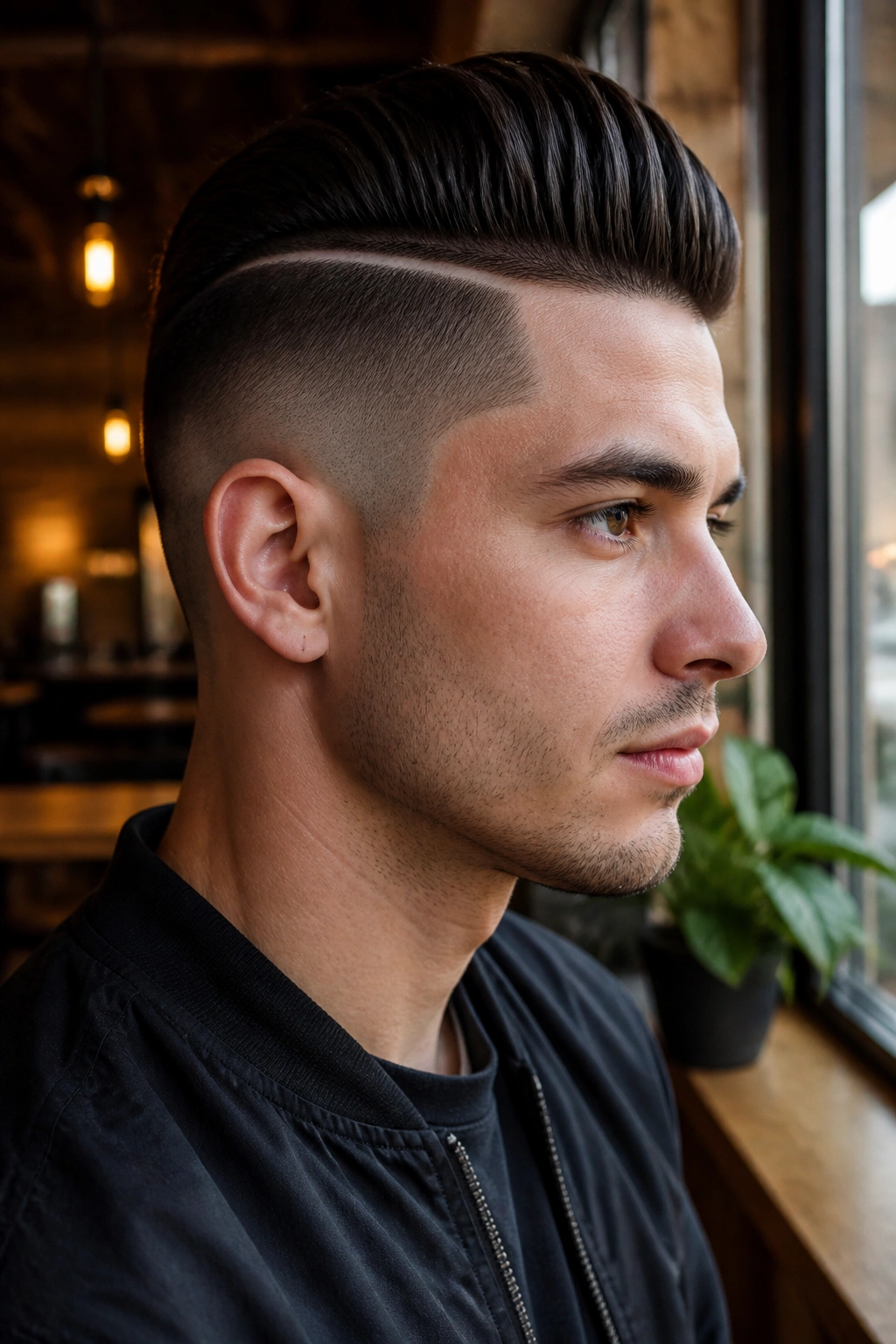
A hard part changes the whole mood of an undercut without adding length.
Unlike a natural part, which can shift and soften, a hard part is carved in with a trimmer or razor so the line stays visible. That line gives the haircut a more exact, almost graphic feel. It works well with comb-overs, slick-backs, and tighter side sweeps because the part acts like a visual anchor. Once the line is there, the hair around it reads cleaner.
What Makes It Sharp
The hard part only works if the surrounding hair is cut with enough contrast. If the top and sides are too similar in length, the line gets lost. Most barbers will keep the sides at a #1 to #3 guard and leave enough length on top for combing. Thick hair makes the part bold. Fine hair can still do it, but the line needs a bit more care.
- Ask for the part on the side that matches your natural growth if you want less daily fight.
- Keep in mind that the line may need a refresh every 2 to 3 weeks.
- Use a comb for a smoother look; use fingers if you want a looser finish.
- Best for hair that lies mostly flat and doesn’t fight every direction at once.
If you like clear edges, this cut delivers. If you hate upkeep, it may test your patience.
11. Undercut Bob
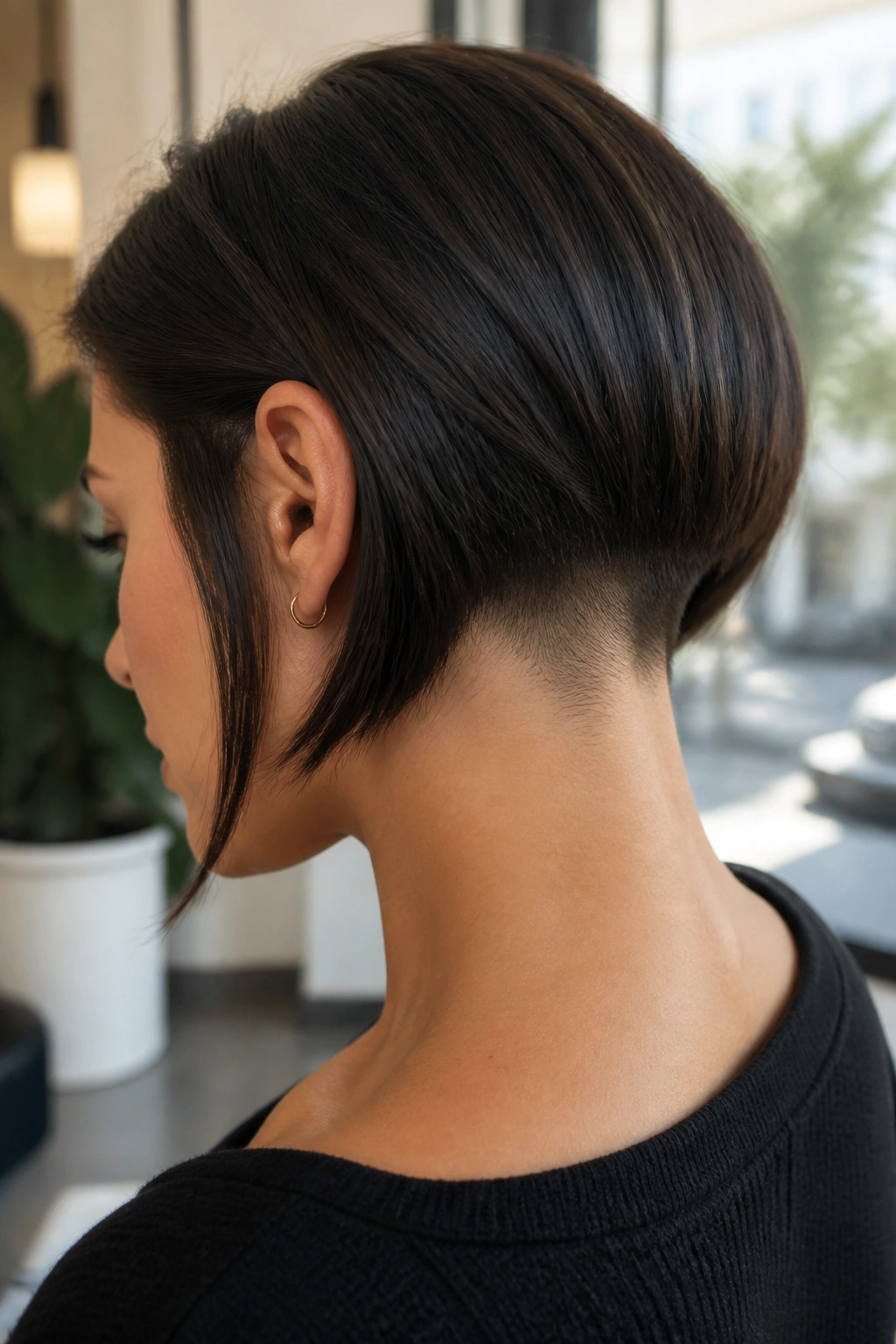
A bob gets sharper when the nape goes short.
That’s the whole game with an undercut bob. The visible shape still looks like a bob from the front or side, but the hidden or partial shave underneath stops the bulk from turning mushroom-shaped. It keeps the profile tidy and gives the cut a little surprise when the hair moves. You can wear it sleek, flipped, tucked, or slightly messy, and the undercut does a lot of the support work in the background.
This version is especially good for thick hair, which can get heavy fast in a blunt bob. Removing weight underneath helps the top sit better and reduces that wide triangle effect that makes some bobs feel boxy. Straight hair shows the line crisply. Wavy hair makes the bob look softer while still keeping the edge.
A center part makes the cut feel modern and severe. A side part makes it feel a bit more relaxed. Either way, the shape looks more deliberate than a plain one-length bob because the hidden undercut changes how the hair falls. It is one of those cuts that looks expensive without trying to be flashy. Quietly sharp. That’s the vibe.
12. Pixie Undercut
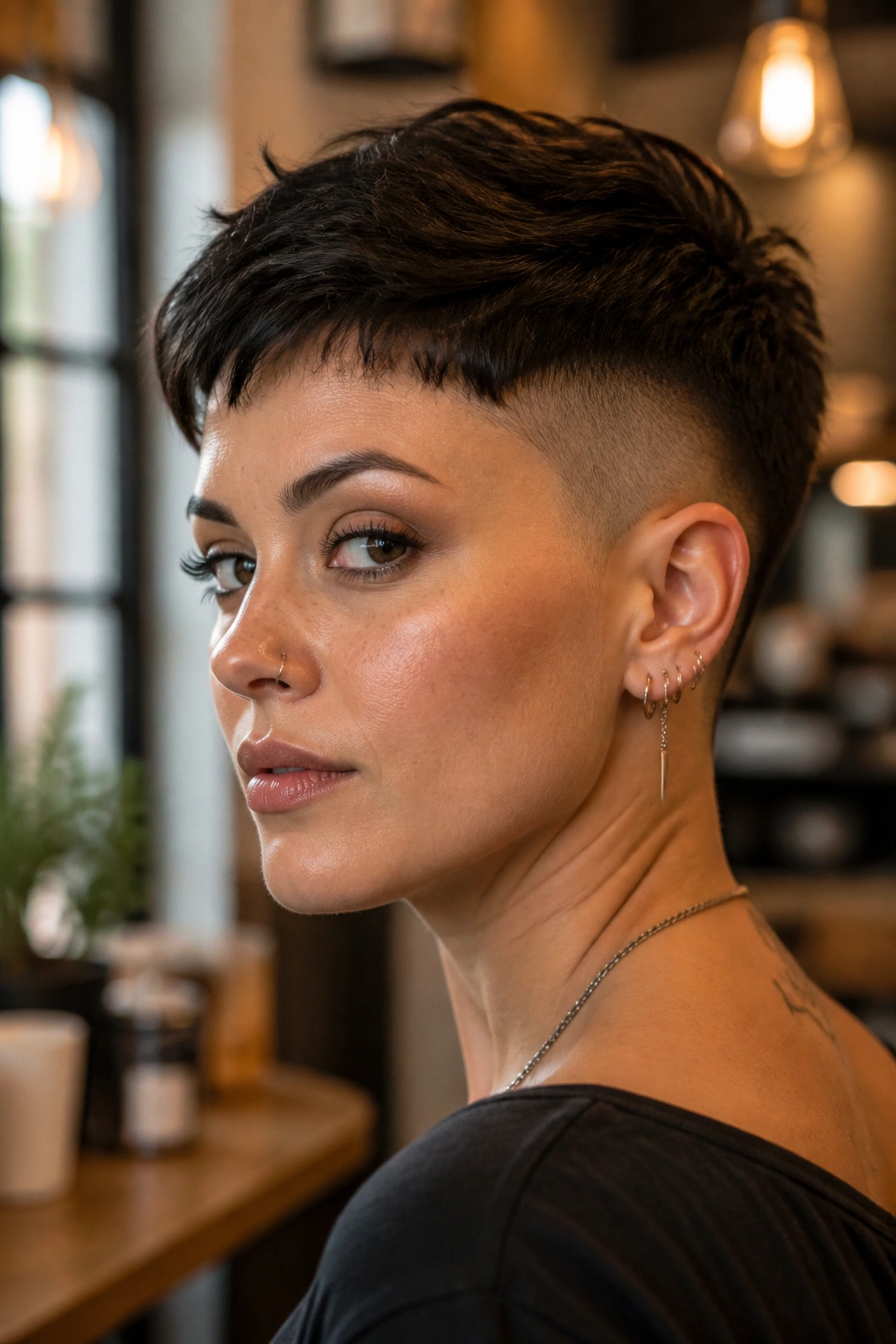
A pixie undercut is tiny hair with a big attitude.
Why It Works So Well
The short top keeps the style light and easy to move, while the undercut removes bulk from the sides and back. That means the shape can sit close to the head without puffing out. If you’ve ever watched a pixie turn boxy because the edges were too heavy, this cut solves that problem fast. It also shows off earrings, jawline, and cheekbones in a way that feels clean rather than fussy.
The top can stay soft and feathered or sharp and choppy. Either version works. A bit of styling paste, worked in with the fingertips, is usually enough to keep the pieces separated. You do not need much product here. Overloading a pixie is a quick way to make it look greasy and weighed down.
Quick Facts
- Top length often sits around 1.5 to 3 inches.
- Sides are usually clipped tight, sometimes with a faded edge.
- Works well on fine hair because it creates the illusion of density.
- Needs regular trims to keep the outline from blurring.
Best move: Leave the front a little longer if you want room to push it forward, side-sweep it, or spike it up on a dull morning.
13. Mullet Undercut
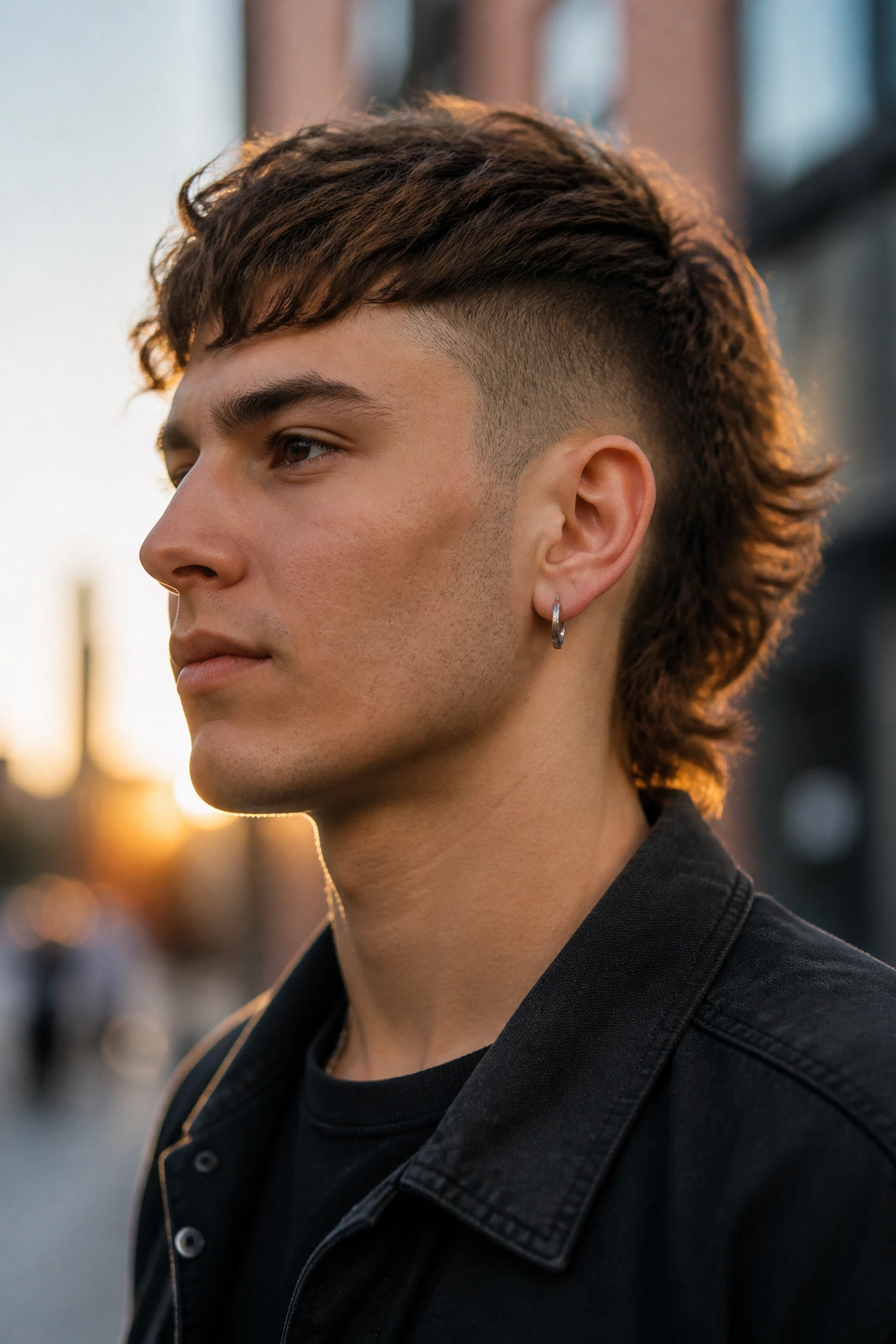
The mullet gets far sharper when the sides are clipped into an undercut.
That change keeps the style from drifting into costume territory. Short sides create space around the head, which makes the longer back feel more intentional. A modern mullet undercut can look sleek, shaggy, punk, or a little country-rough depending on how the top is cut. The key is keeping the transition clear. If the layers are mushy, the haircut loses its shape fast.
The back usually needs more texture than length alone. If it is left too blunt, it can hang like a heavy curtain. A few internal layers help the tail move and keep the silhouette from getting blocky. The top can stay choppy, spiked, or brushed forward. There’s room to play here, and that is part of the appeal.
This is a good cut for people who want something recognizable but not boring. It works best when you’re willing to own the silhouette. Half-hearted mullets look awkward. A committed one looks cooler than it has any right to.
14. Braided Undercut
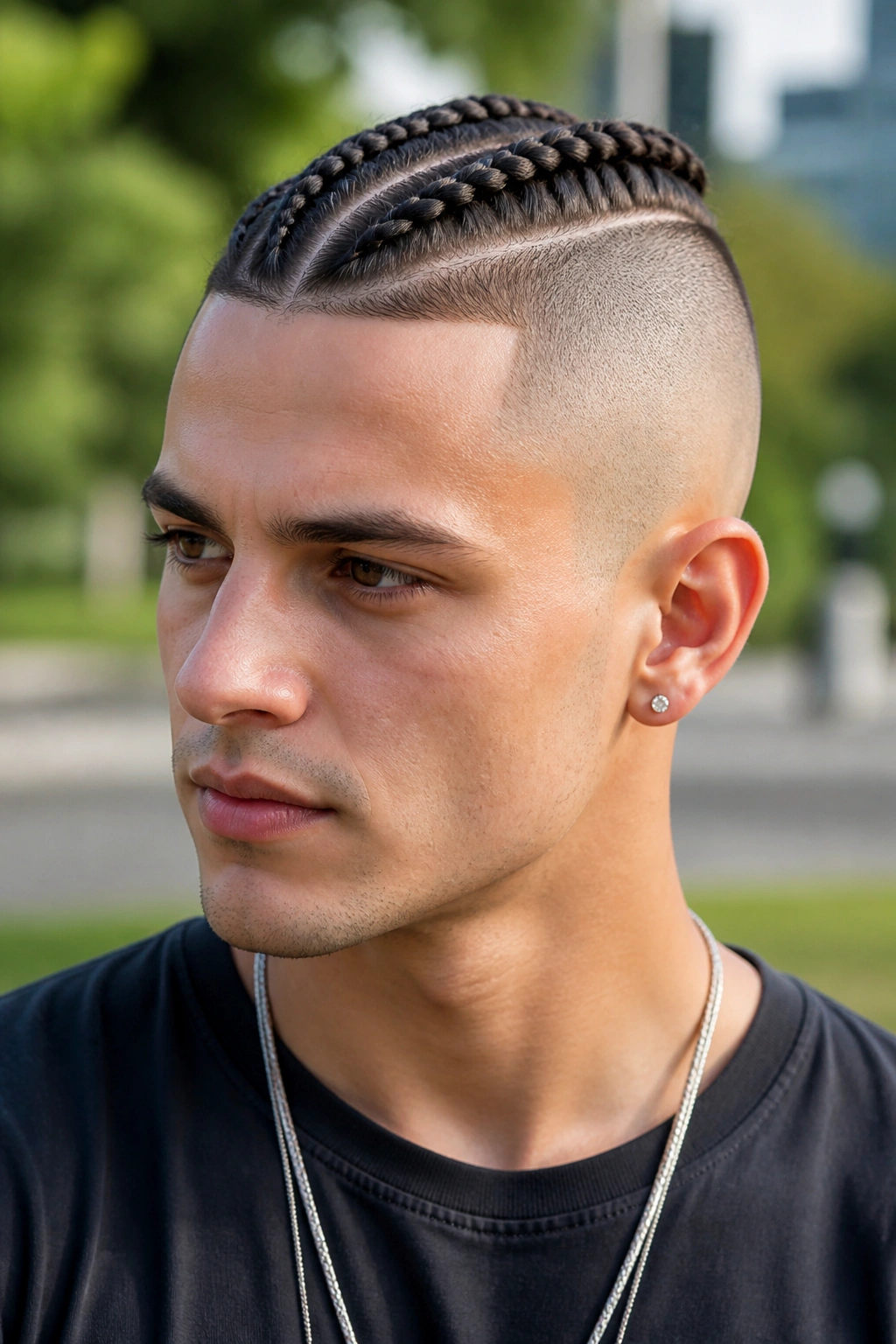
Can braids make an undercut feel tougher? Absolutely.
The contrast does most of the work. Short or shaved sides keep the base clean, while the braids add pattern, tension, and detail on top. That can mean a single braid down the middle, two tight braids from the hairline, or a more complex cornrow setup if the hair is long enough. The undercut keeps the braids from looking bulky, which is one reason the combo works so well.
Braids That Pair Well
Some braid styles sit better with an undercut than others.
- Single center braid: good if you want a clean line down the scalp.
- Two Dutch braids: adds more texture and a sportier feel.
- Cornrows into a bun: useful when you want the hair off the neck.
- Side braid with shaved temple: gives a lopsided, sharper look.
The scalp itself becomes part of the design, so the parting matters. If the sections are crooked, the style looks accidental. A neat part makes the braid pattern pop.
This style is also practical. Braids hold hair in place, and the shaved sides cut down on heat and bulk. That is not the flashiest reason to wear it, but it matters on real days, not just photo days.
15. Shaved Temple Undercut
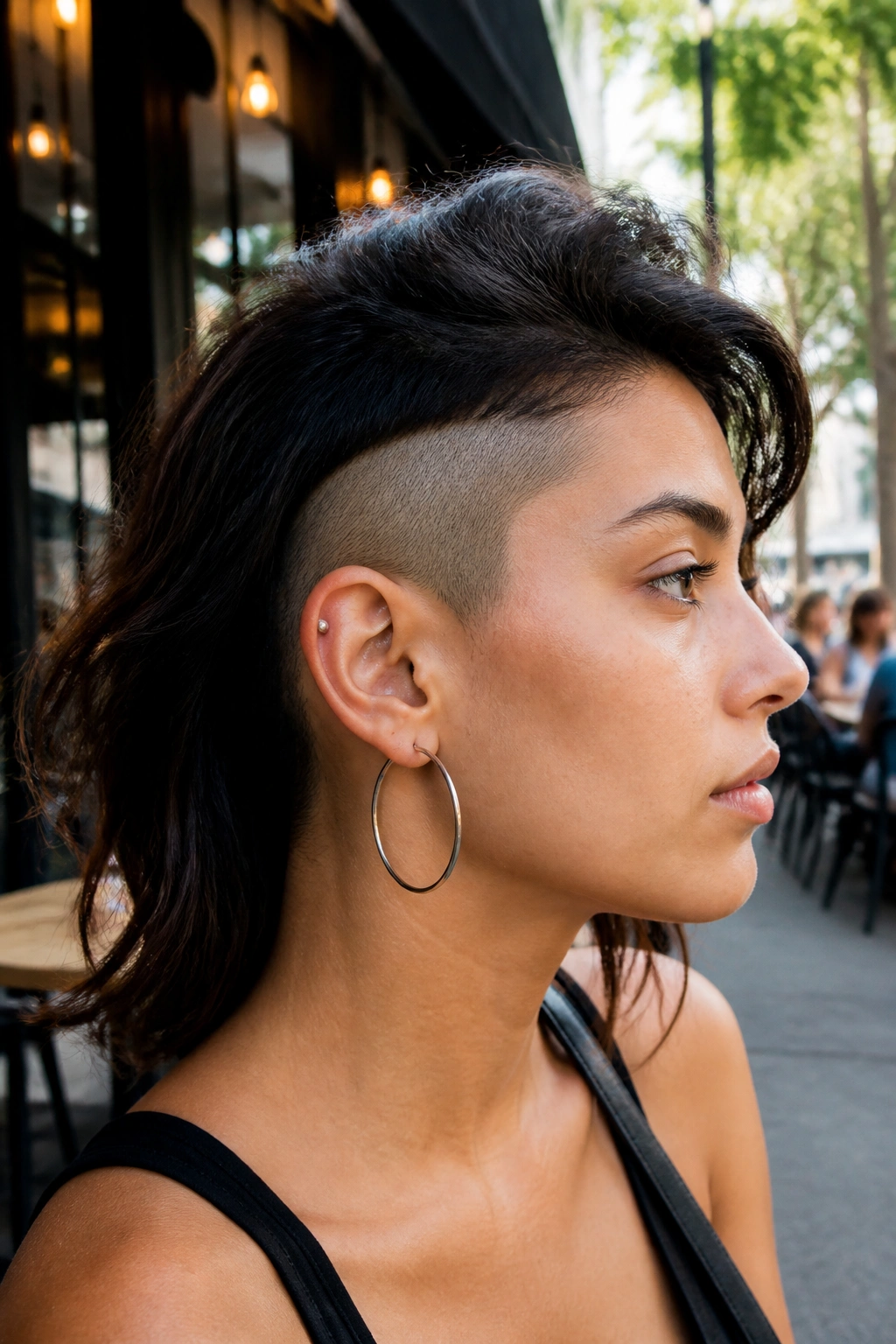
A shaved temple undercut is the subtle version for people who want edge without a full reset.
Instead of removing hair all around the sides, the barber takes just the temple area down short, usually above and around the ear, while the rest of the cut stays longer. That tiny change has a big effect on the face shape. It can open up the cheekbones, sharpen the side profile, and make a bun, bob, or loose wave look less plain. The haircut reads cleaner because the temple is where a lot of visual bulk collects.
This cut works well with curls, straight hair, and braids because it keeps the perimeter light without wiping out length everywhere. It also grows out more gracefully than a full undercut. If you’re nervous about shaving too much, this is a safer place to start. The style can be hidden under longer hair one day and shown off the next when you tuck one side back.
- Ask for a temple shave that connects lightly into the sideburn area.
- Keep the line soft if you want it to blend as it grows.
- Works nicely with top knots, half-up styles, and loose waves.
- Needs less upkeep than a full undercut, which is a real advantage.
It is not loud. It is smarter than that.
16. Quiff Undercut
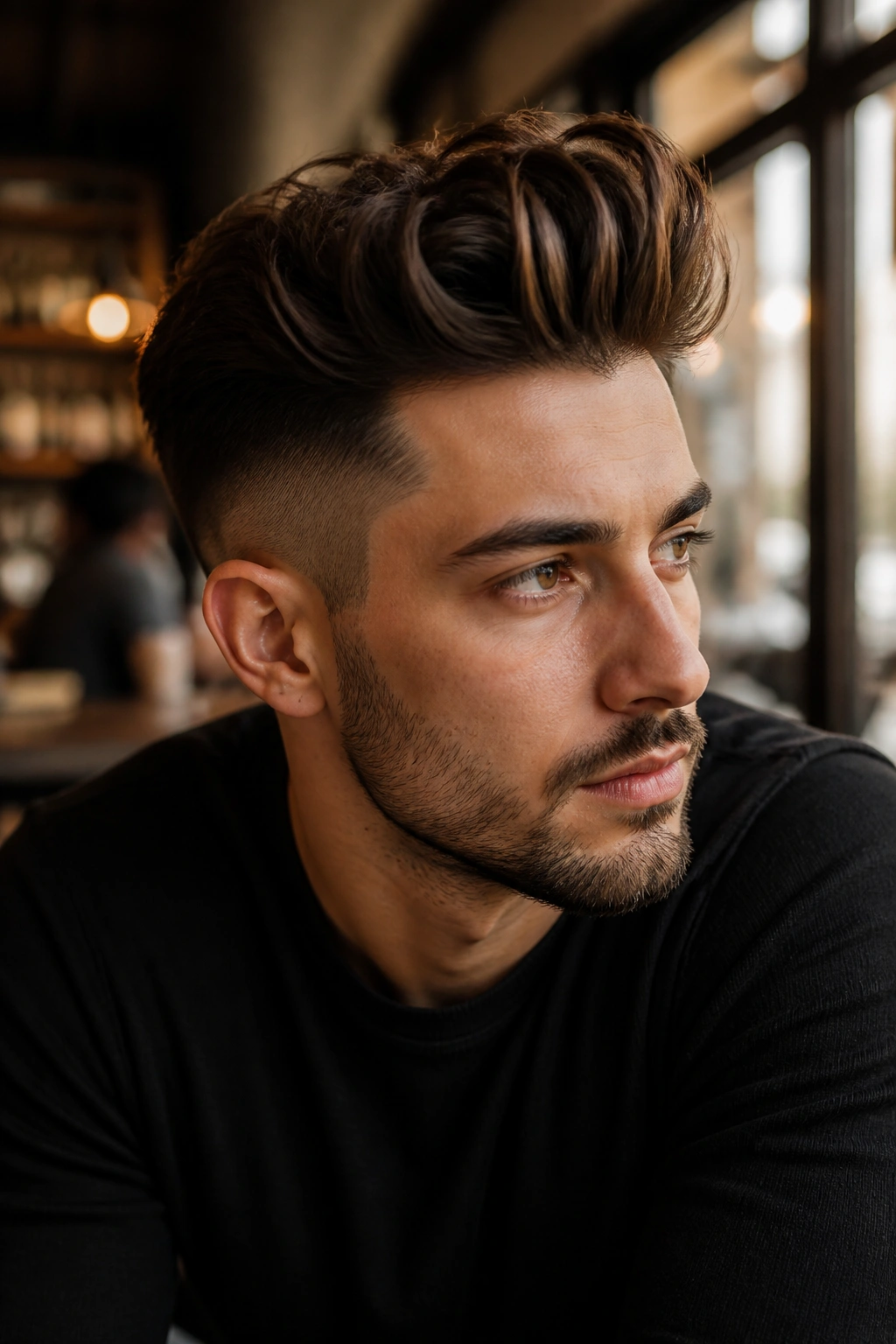
A quiff undercut is the better choice if you want lift with a little looseness.
Unlike a pompadour, the quiff pushes up and slightly forward instead of building a tall polished front. That gives it more motion and a less formal feel. It is a strong fit for thick straight hair, wavy hair, or any texture that can hold a shape without turning stiff. The undercut below keeps the sides tight, so the front can stay the star.
How to Build the Shape
Start with damp hair and blow-dry the front section up from the roots. Use your fingers or a vent brush to guide the front back and a little upward. The goal is height with movement, not a frozen shell. Once the hair is dry, use a matte paste or medium-hold clay and push the quiff into place.
A quiff can be worn neat or messy. That flexibility is part of why it hangs around. A cleaner version works with button-downs and jackets. A rougher version looks better when you want the haircut to feel a little less polished. Both are valid.
The sides should stay tight enough that the top clearly wins the visual battle. If the sides are too soft, the whole shape loses tension. That tension is the point.
17. Spiky Undercut
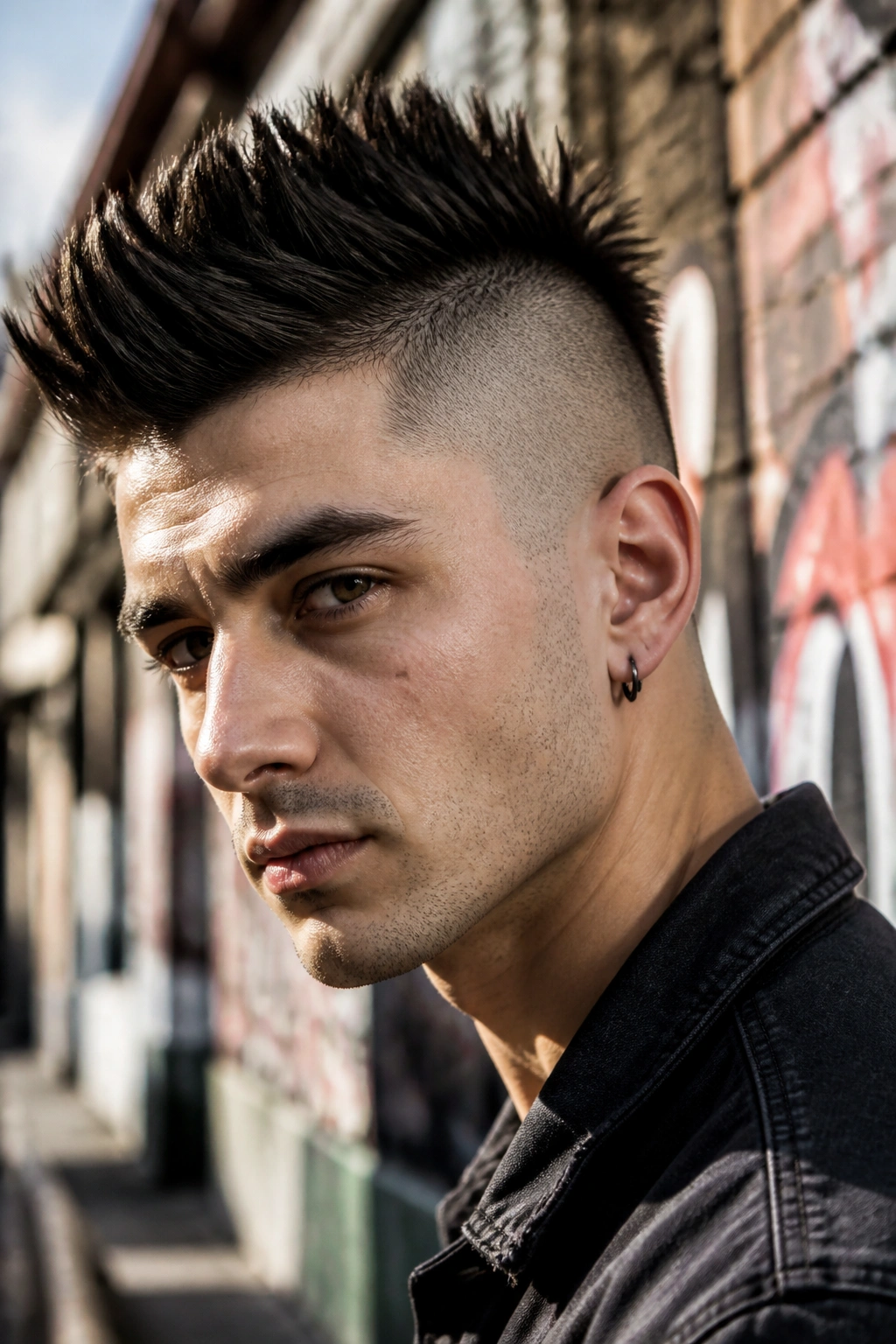
Spiky hair can look juvenile when it’s overworked. With an undercut, it gets sharper and more grown-up.
The short sides create a frame, so the spikes on top read as a shape rather than a leftover style from the past. Keep the top short enough to stand with a bit of product, usually around 2 to 4 inches depending on how thick the hair is. Too long and the spikes collapse. Too short and you lose the texture.
Matte products are your friend here. Fiber, clay, or a dry paste gives the hair grip without gloss. Work a small amount through dry hair, then pinch sections upward with your fingertips. If the spikes look too uniform, break them apart. Imperfect spikes look better than hard little needles.
This cut works especially well on thick hair because the strands can hold their shape without feeling brittle. Fine hair can still do it, but it often needs a bit of pre-dry volume first, maybe with a sea salt spray or light mousse. The result is not sleek. Good. It should not be.
The whole style feels blunt, direct, and a little mischievous. That is exactly why it keeps coming back.
18. Shaggy Undercut
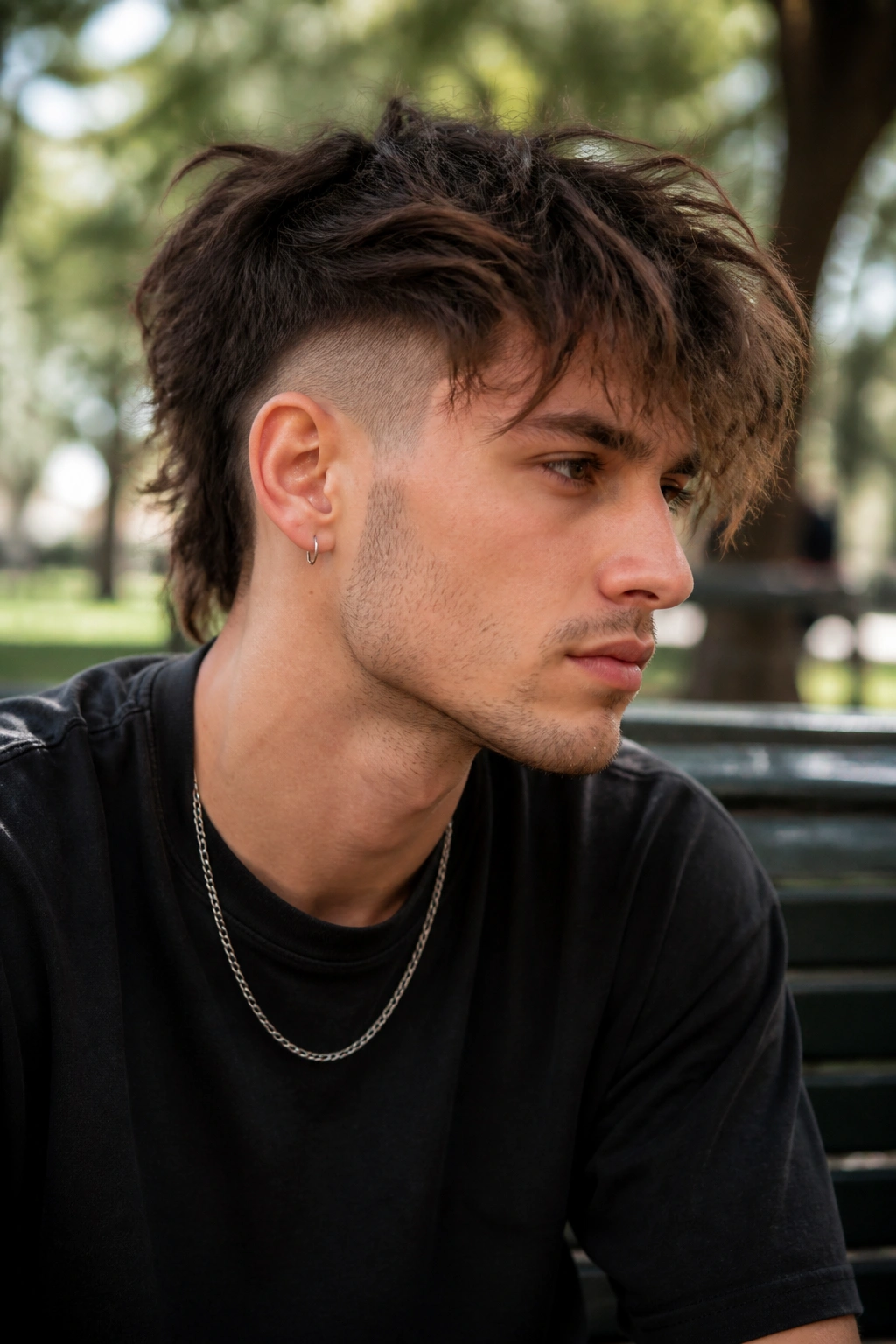
A shaggy undercut is what happens when you let texture take the lead.
Why the Messy Version Works
The undercut below removes enough weight to stop the top from turning puffy, while the shag layers on top keep everything loose and broken up. That combination gives the haircut movement without bulk. It feels more rock-and-roll than polished, which is the point. If you want hair that looks good a little undone, this is one of the easiest ways to get there.
The top should not be cut into neat, even rows. Choppy layers, face-framing pieces, and irregular ends are what give the style its swing. Wavy and straight hair both work here, though wavy hair tends to wear the cut with less effort. A texturizing spray or a tiny bit of cream can help the layers separate without making them stiff.
What to Ask For
- Short, clean undercut around the sides and nape.
- Longer, shattered layers on top.
- A soft fringe if you want the front to fall toward the eyes.
- Enough length for movement, not so much that the shape goes flat.
Best tip: Do not overcomb it. A shaggy undercut looks better when your fingers do most of the work.
19. Geometric Pattern Undercut
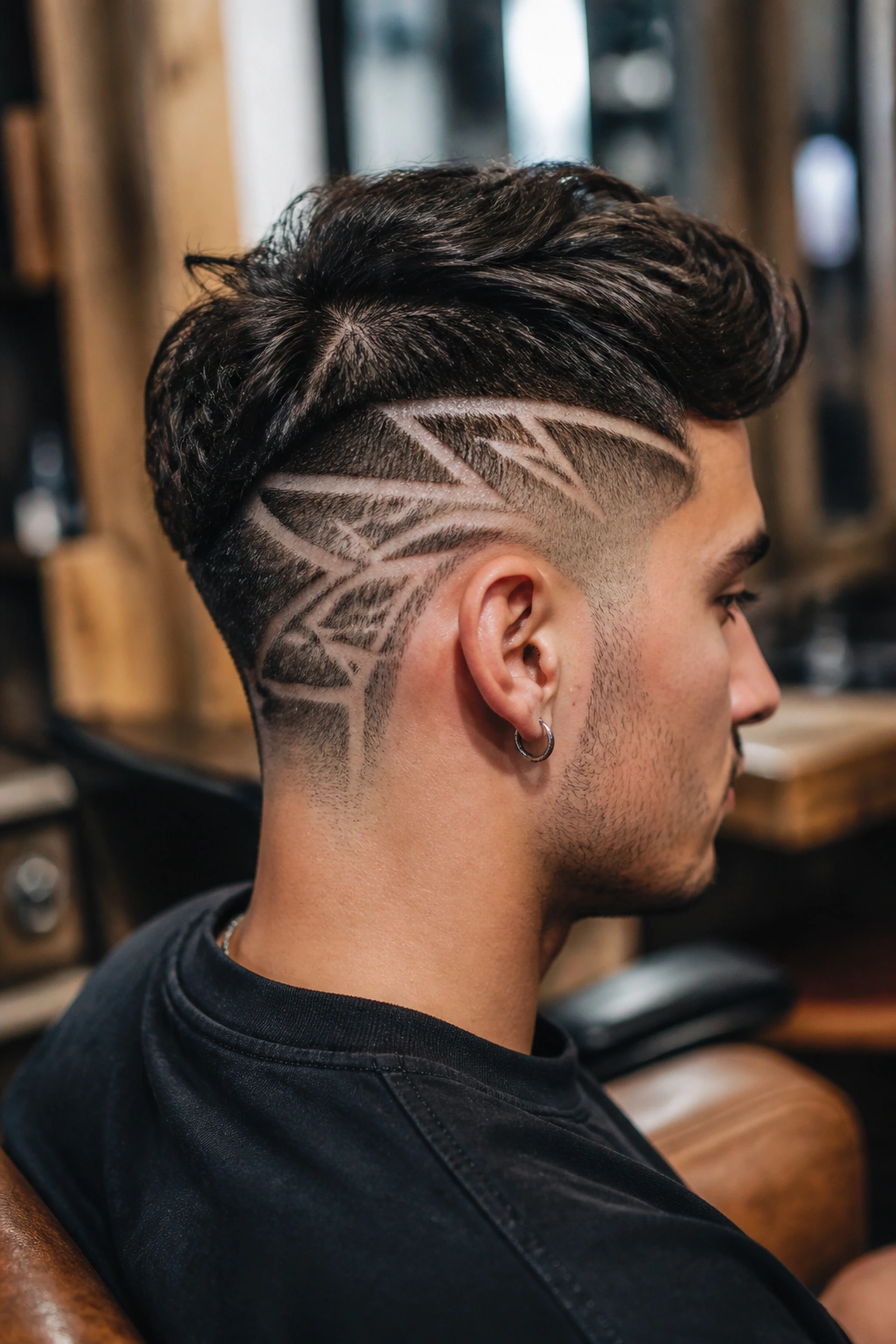
A geometric pattern undercut says, very plainly, that you want the haircut to be seen.
The style starts with a tight undercut base, then adds shaved lines, zigzags, angles, or repeated shapes into the side or back. That design can be subtle—two clean parallel lines—or loud enough to turn heads immediately. It works best when the barber has a steady hand and a good eye for balance. Sloppy geometry is worse than no design at all.
This is the kind of cut that needs upkeep because the lines blur as the hair grows. Even a crisp pattern starts softening once the stubble comes back. That is fine if you like a more lived-in look, but if you want the shape to stay sharp, you will need cleanups fairly often. The design also shows more clearly on dark, dense hair, though lighter hair can still carry it well if the contrast is strong enough.
- Thin double lines feel cleaner than a crowded pattern.
- A single zigzag can be bolder than a busy back panel.
- Works well with fades, but a disconnected base makes the design stand out harder.
- Best when the rest of the haircut is kept simple.
Sometimes the best move is restraint. One strong line beats five weak ones.
20. Long Top Bun Undercut
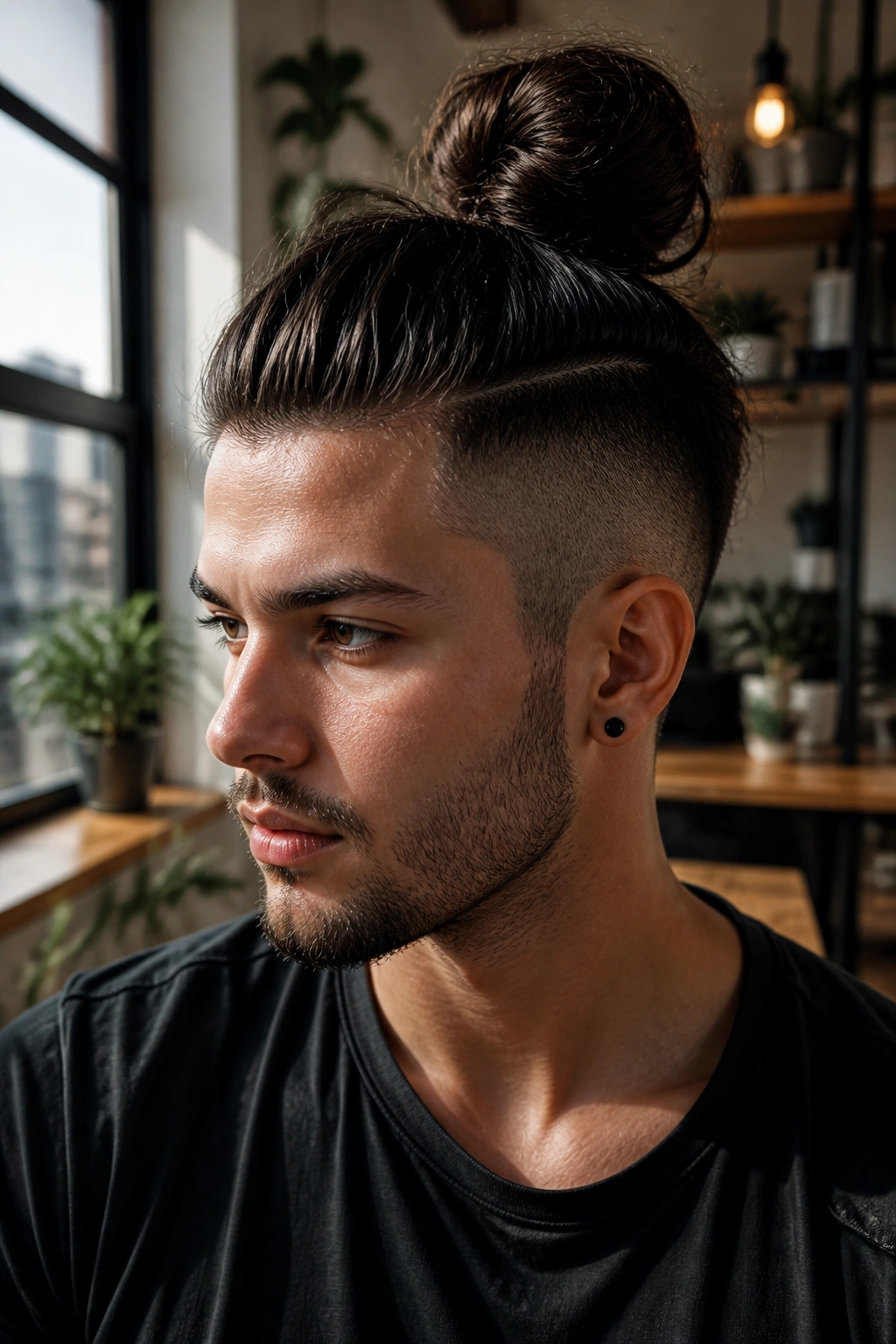
Why does a long top bun undercut keep showing up? Because it solves three problems at once.
You get the freedom of longer hair, the neatness of shaved or clipped sides, and the option to wear the top off the neck when you want less heat. That is a practical haircut dressed up as a statement. The top usually needs enough length to tie back comfortably—often 6 inches or more, depending on how tight your hair sits when it’s gathered. The undercut makes the bun look cleaner by removing the bulk around the ears and nape.
This style can be worn high, low, tight, or slightly loose. A low bun feels calmer and usually pulls less. A high knot looks sharper and a bit more severe. If your hairline sits unevenly, a softer undercut around the temples helps the shape grow out without turning patchy.
How to Keep It Comfortable
- Avoid tying the bun too tight; scalp tension gets old fast.
- Use a hair tie without metal so it does not snag.
- Keep the undercut refreshed so stray growth does not puff out under the bun.
- Let the top dry fully before tying it back if you want less frizz.
It is a strong look because it mixes restraint with length. That combination rarely gets boring.
Final Thoughts
Undercuts work because the shape does half the styling for you. Once the sides are tight, even a simple top—slicked, curled, braided, or left messy—reads with more intention.
The biggest mistake is choosing a dramatic version without thinking about the grow-out. A cut that feels fierce on day one can start to wobble once the edges soften, especially if the top is too thin or the sides are shaved too high. A good barber will talk through that part, not just the first-day photo.
Bring a reference photo, sure. Bring two if you can. One for the fresh cut, one for the way you want it to look after a couple of weeks. That second picture says more about the haircut you actually want.
