



Brown ombre on long hair can look expensive in the best possible way.
Only when the blend is careful, though. If the roots are too light, the ends lose their job. If the fade is too sharp, the whole thing starts to look striped instead of soft.
Long lengths give you room to work. That room matters because brown can disappear on hair that falls past the shoulders unless the color shifts with enough intention to show movement in braids, curls, and straight blowouts alike.
That is why brown ombre hair ideas for long hair deserve more attention than they usually get. The right version can make thick hair feel lighter, make fine hair look fuller, and keep grow-out far less annoying than a full all-over dye job.
1. Espresso Root Melt into Milk Chocolate Ends
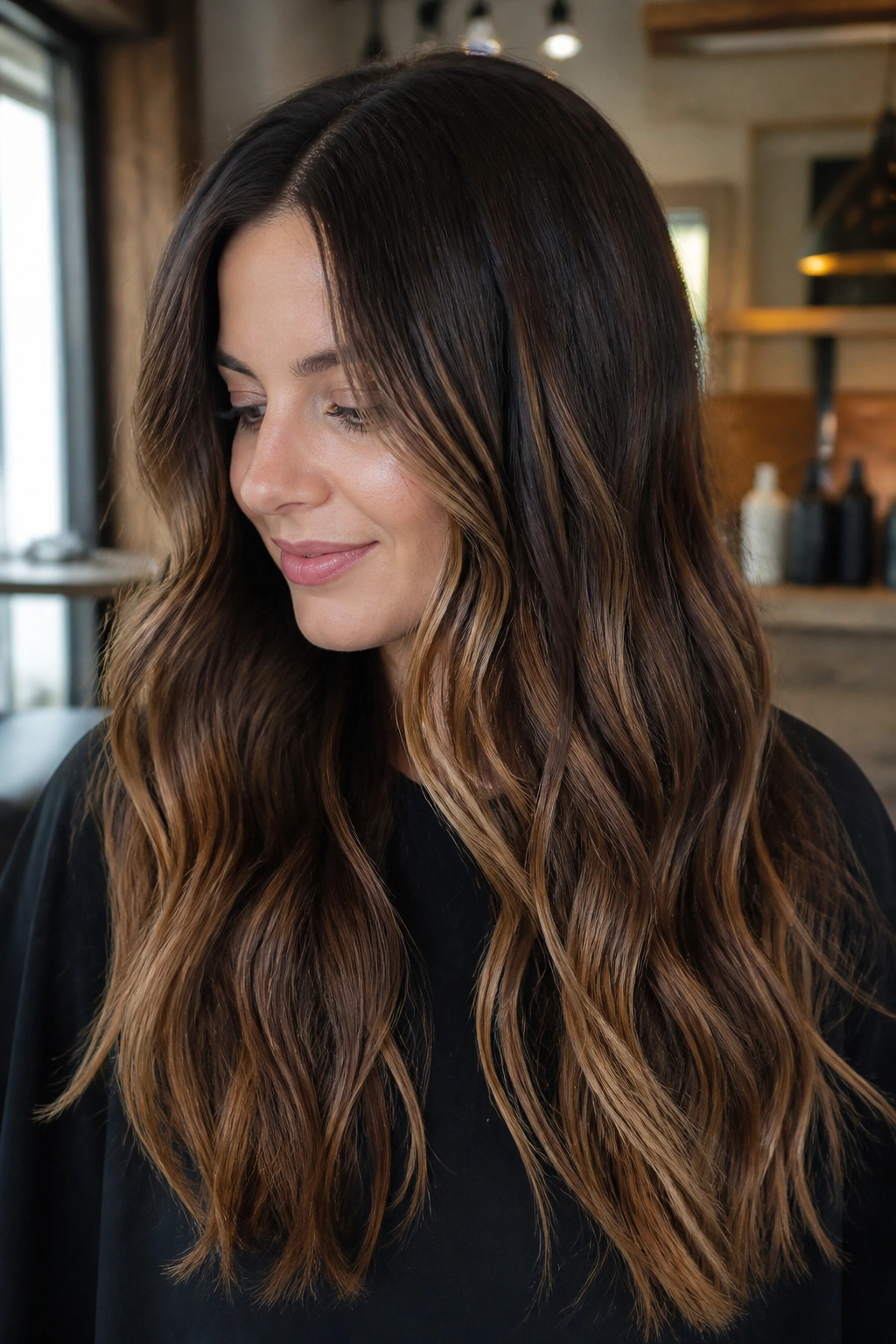
This is the brown ombre I reach for when the goal is depth first and drama second. The roots stay a deep espresso, then the color loosens into milk chocolate through the mid-lengths and settles softly at the ends.
The appeal is restraint. On long hair, a dramatic blonde fade can sometimes pull the eye too hard to the bottom, while this version keeps the whole shape rich and grounded. It also plays nicely with hair that has a little natural wave, because the lighter ends catch the bends without shouting.
It never fights the cut.
If you wear your hair in loose curls, the transition looks even better because each turn of the curl shows a different brown tone. Ask for the lightest point to stay inside the brown family, not drift into caramel. That single choice keeps the look polished, not brassy.
2. Dark Brown to Caramel Ribbon Ombre
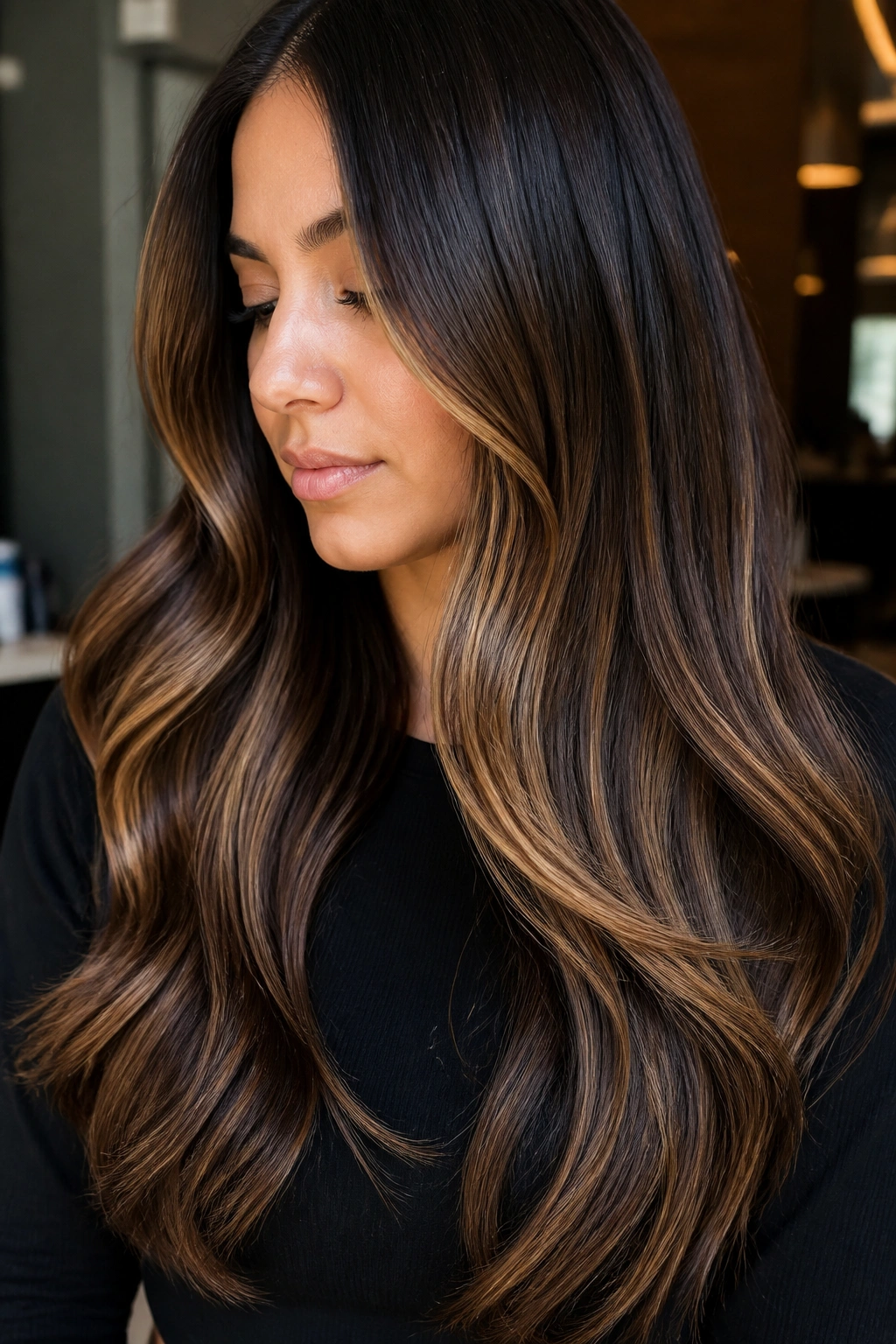
Caramel ribbons can rescue dark brown hair that feels heavy at the bottom. The trick is placement: you want thin, curved ribbons that sit through the lower lengths instead of a block of color at the ends.
Where the Caramel Should Sit
The best version starts around the collarbone and gets a little brighter as it drops. That keeps the face open without turning the whole head into a highlight project.
- Keep the front pieces a touch lighter than the back.
- Ask for ribbons that bend with the hair, not straight horizontal streaks.
- Let the ends stay darker than the mid-lengths if you want a softer finish.
- Use waves or a round brush blowout to show the contrast.
A lot of people overdo caramel and end up with orange. That happens when the toner is too warm or the lightener sits too long. A cleaner caramel reads like polished sugar, not brass. That difference is the whole look.
3. Chestnut Brown with Sunlit Ends
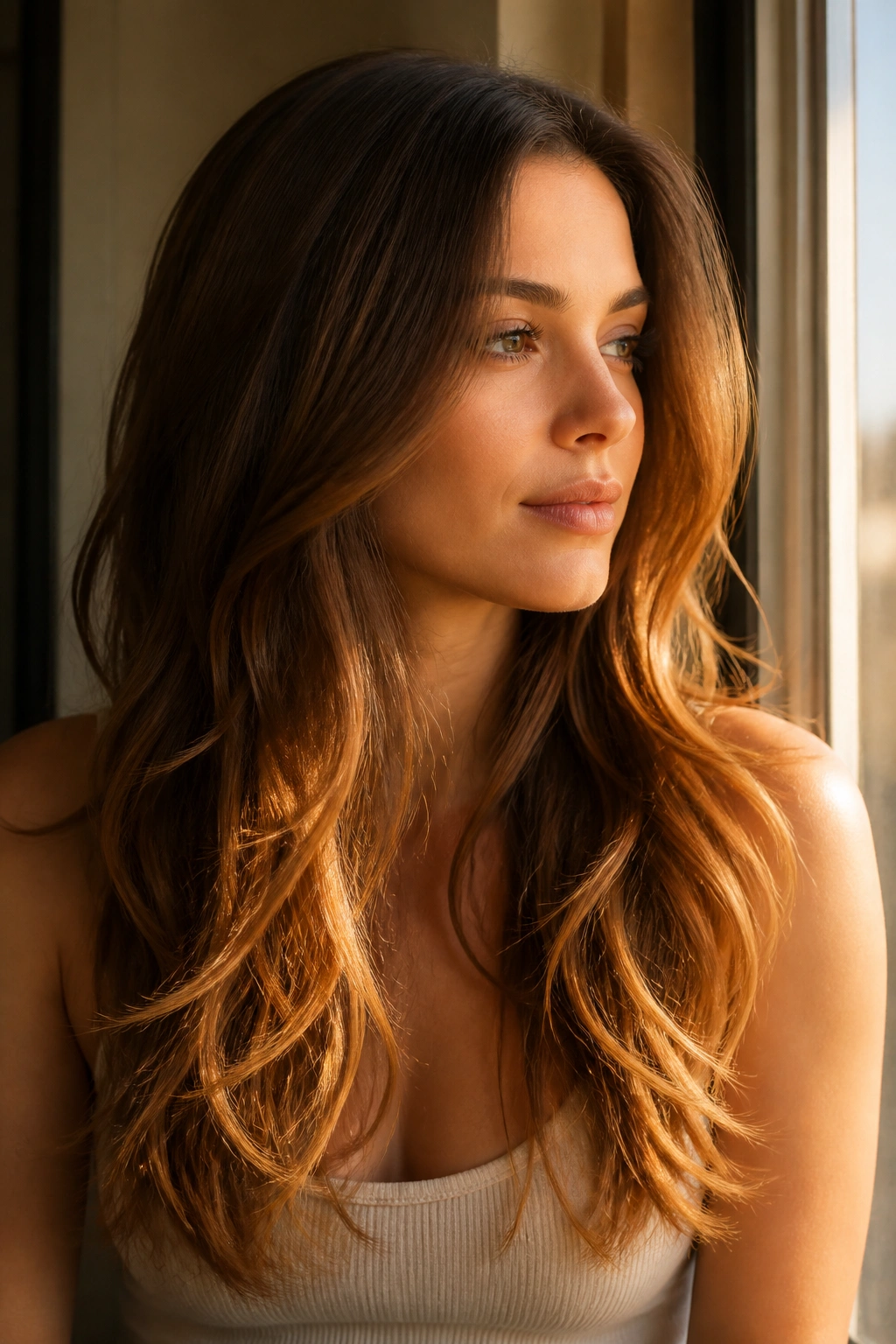
Why does chestnut brown feel softer than a straight caramel fade? Because chestnut carries a red-gold warmth that sits inside brown instead of sitting on top of it. On long hair, that matters. The color shift feels like a warm afternoon instead of a spotlight.
Why It Works So Well
Chestnut keeps the ombre gentle while still giving the ends enough movement to show off. If your hair is naturally deep brown, this shade can wake up the length without making the grow-out obvious. It’s one of those shades that looks tidy even when you’ve only done a quick brush-through.
How to Wear It
- Best on layered cuts, especially long layers that move at the shoulder.
- Lovely with a center part and soft bends away from the face.
- Easy to keep looking fresh with a gloss that leans warm, not copper.
- A good fit if you want dimension without a sharp contrast line.
The ends should feel kissed by light, not bleached. That’s the sweet spot.
4. Mocha Brown with Face-Framing Bronde
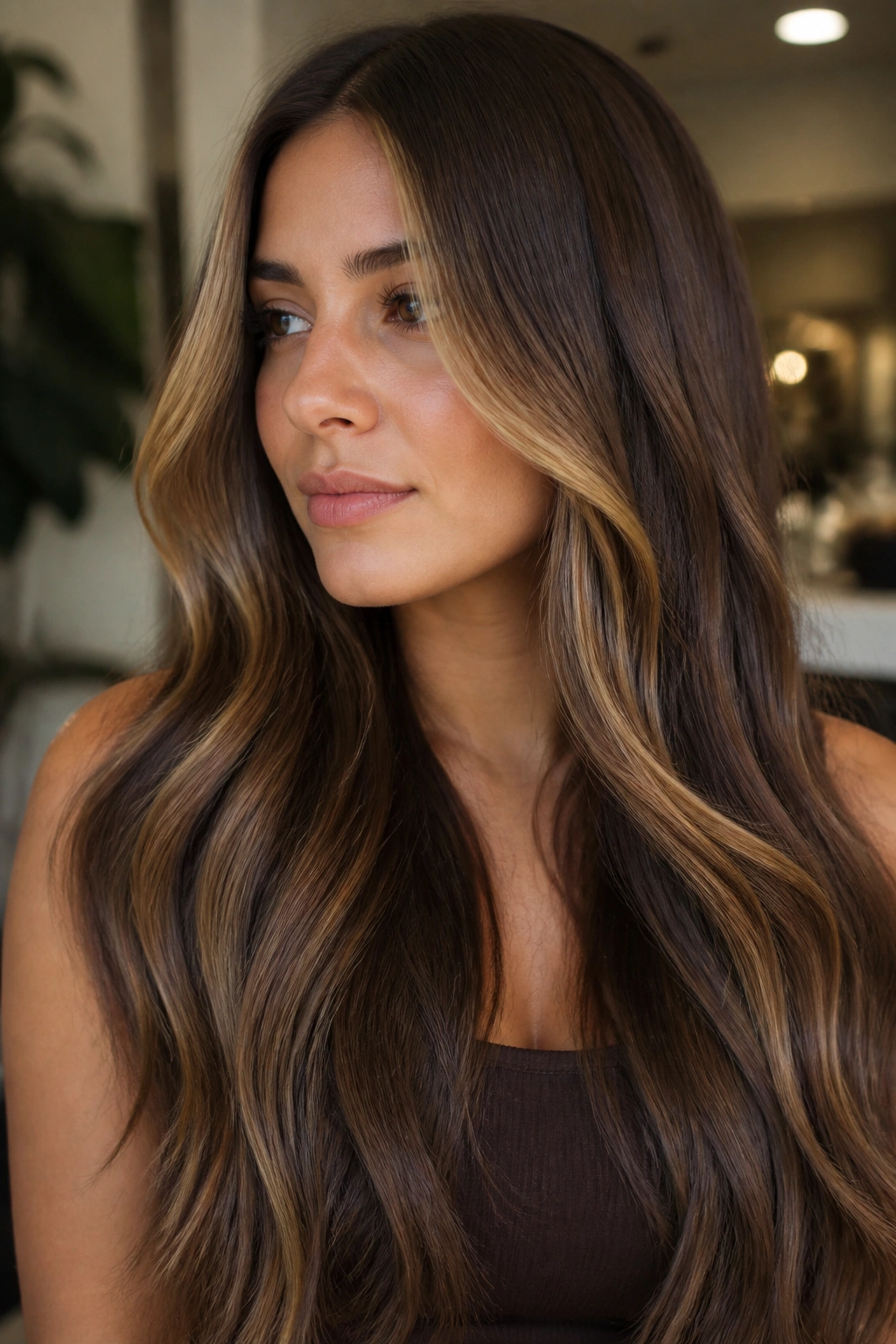
Face-framing bronde is the fastest way to wake up mocha brown hair. It pulls brightness to the front without messing with the rich mocha depth that makes the rest of the length look full and glossy.
The smartest version keeps the bronde pieces narrow. Two thicker panels can start to look chunky, especially on straight long hair. Thin face-framing sections, blended down into mocha mids and ends, read much cleaner and flatter the face without stealing the show from the rest of the color.
I like this one on hair that’s worn down a lot.
The front pieces can start around the cheekbone or jaw, then melt into the darker body of the hair. That gives you the lift where people look first and keeps the lower lengths from turning muddy. It also makes a simple blow-dry look deliberate, which is useful if you do not want to curl your hair every time you leave the house.
5. Ash Brown Ombre with Cool Beige Ends
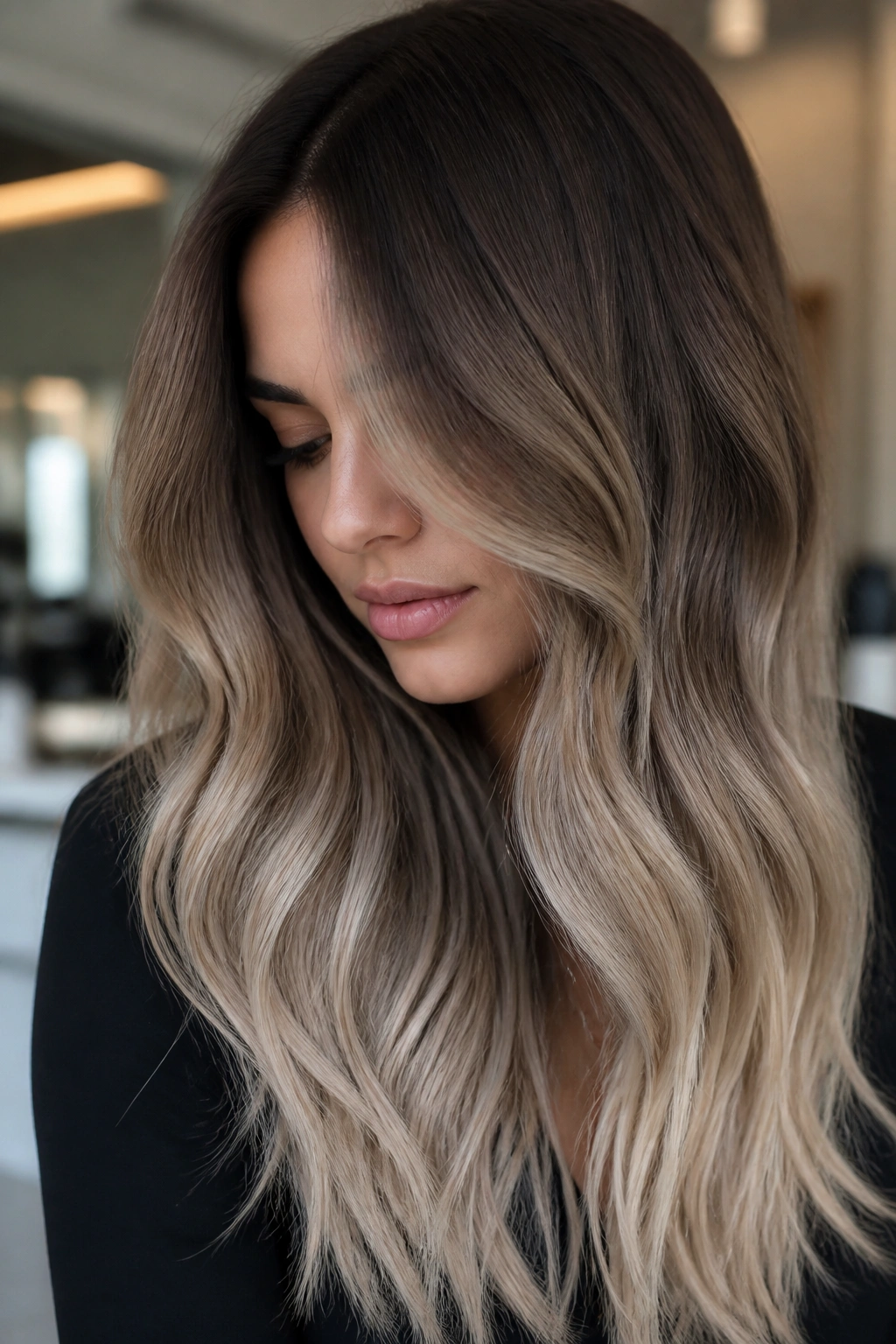
Ash brown ombre is for the person who loves a cooler finish and hates orange. On long hair, the transition from smoky brown roots to beige ends can look sleek, especially when the cut is straight or only softly waved.
The key is balance. If the ends go too pale, the whole thing stops reading as brown. If they stay too dark, you lose the point of the fade. The middle ground is a beige-brown tone that feels cool without turning gray or flat.
Shine matters here.
A cool brown ombre can look muddy when the hair is dry, so a clear gloss or a light smoothing serum helps the tones stay visible. This is also one of the better choices for very long hair that gets worn in low buns or simple ponytails, because the color still shows even when the style is plain.
6. Cinnamon Brown Ombre on Wavy Lengths
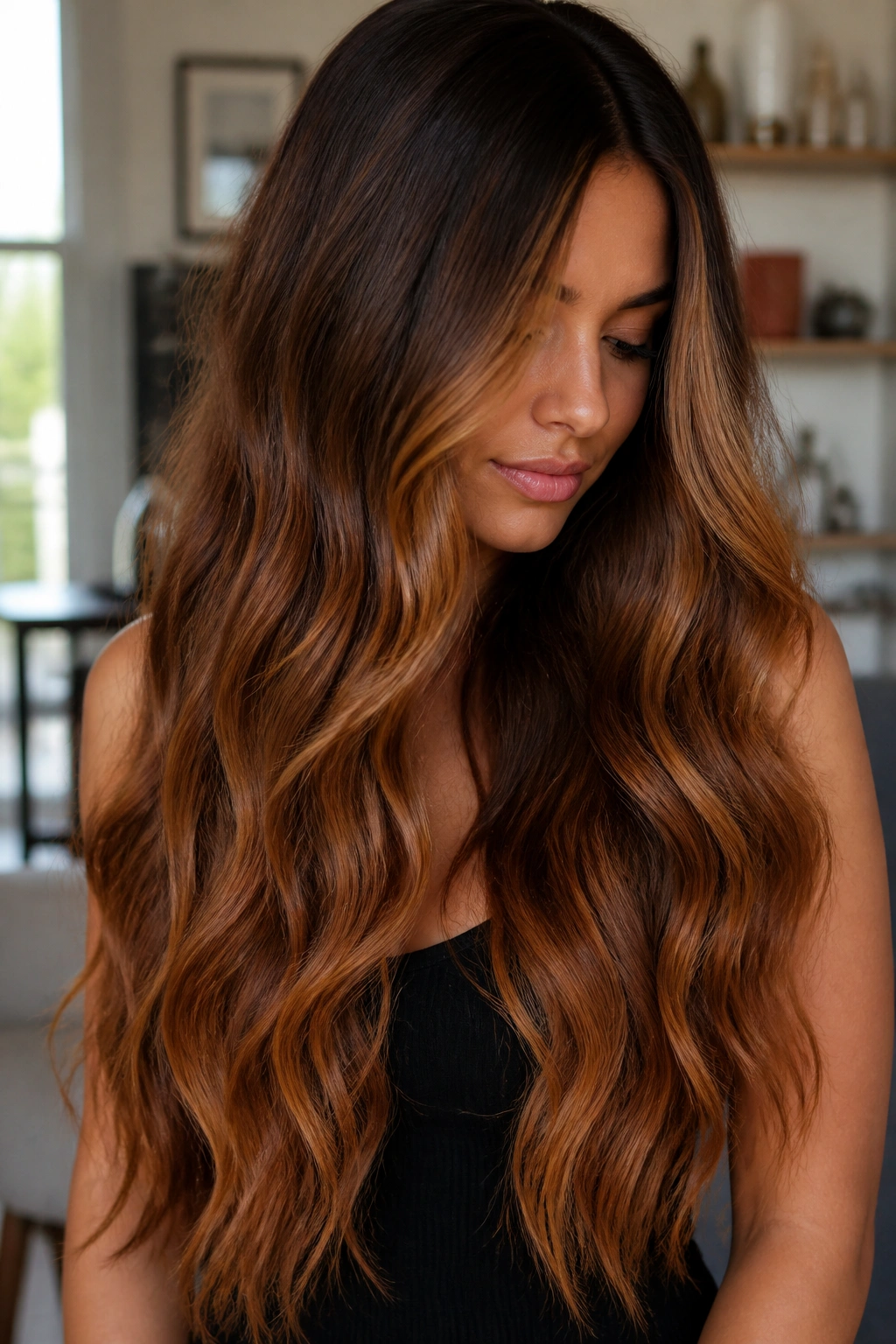
Picture waist-length waves that look like they picked up cinnamon sugar on the bottom half. That is the feel of this one. The roots stay medium or deep brown, then the warmer cinnamon tone picks up through the mid-lengths and ends.
What Makes It Work
Cinnamon adds warmth without becoming red-red. It sits in that middle zone where the hair looks rich in daylight and cozy indoors. On long waves, the color breaks up beautifully because every curve shows a slightly different tone.
Good Reasons to Choose It
- Works especially well on hair with natural movement.
- Pairs with layered cuts that need a little warmth.
- Looks fuller when the ends are loosely curled.
- Gives dark hair more life without going light.
A little caution: cinnamon can turn loud fast if the colorist pushes it too far. Keep the warmth controlled, and it stays elegant. Too much red is where this style loses its grip.
7. Toffee Melt on Layered Long Hair
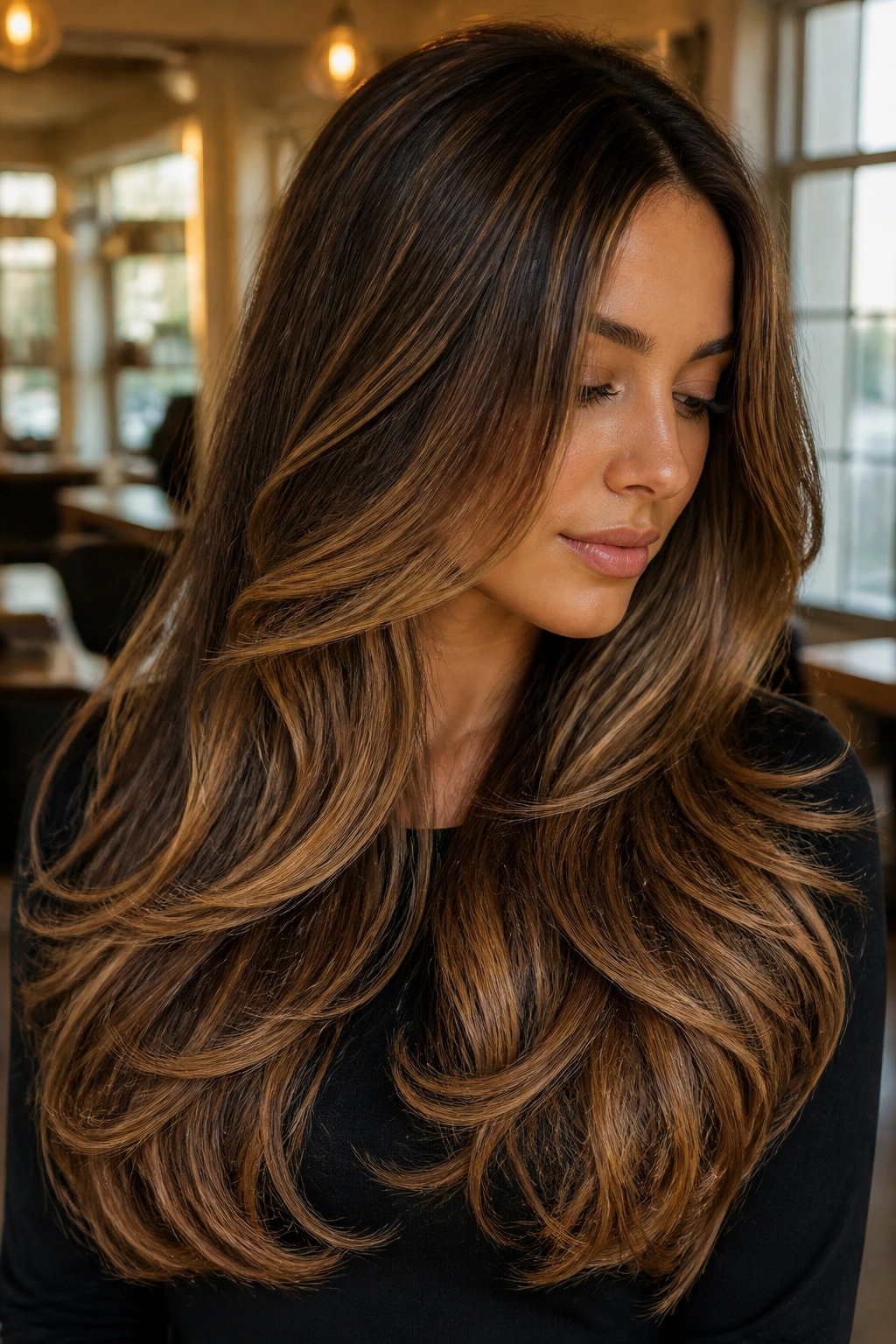
Unlike a hard ombre, a toffee melt behaves like one long color story. There isn’t a blunt jump from dark to light; the shade just opens gradually until the ends feel soft and sweet instead of sharply highlighted.
Layered long hair is where this idea really pays off. Layers break the line of the cut, so the toffee has places to land. A heavy one-length style can sometimes swallow the movement, while layers let each section show a slightly different level of warmth.
This is one of the easiest brown ombre ideas for long hair if you want something wearable every day. It looks good in a braid, a low ponytail, or loose waves. Ask for the lightest toffee at the lowest layers only, then keep the upper lengths a shade darker so the fade feels gentle rather than painted on.
8. Mushroom Brown Ombre with Soft Contrast
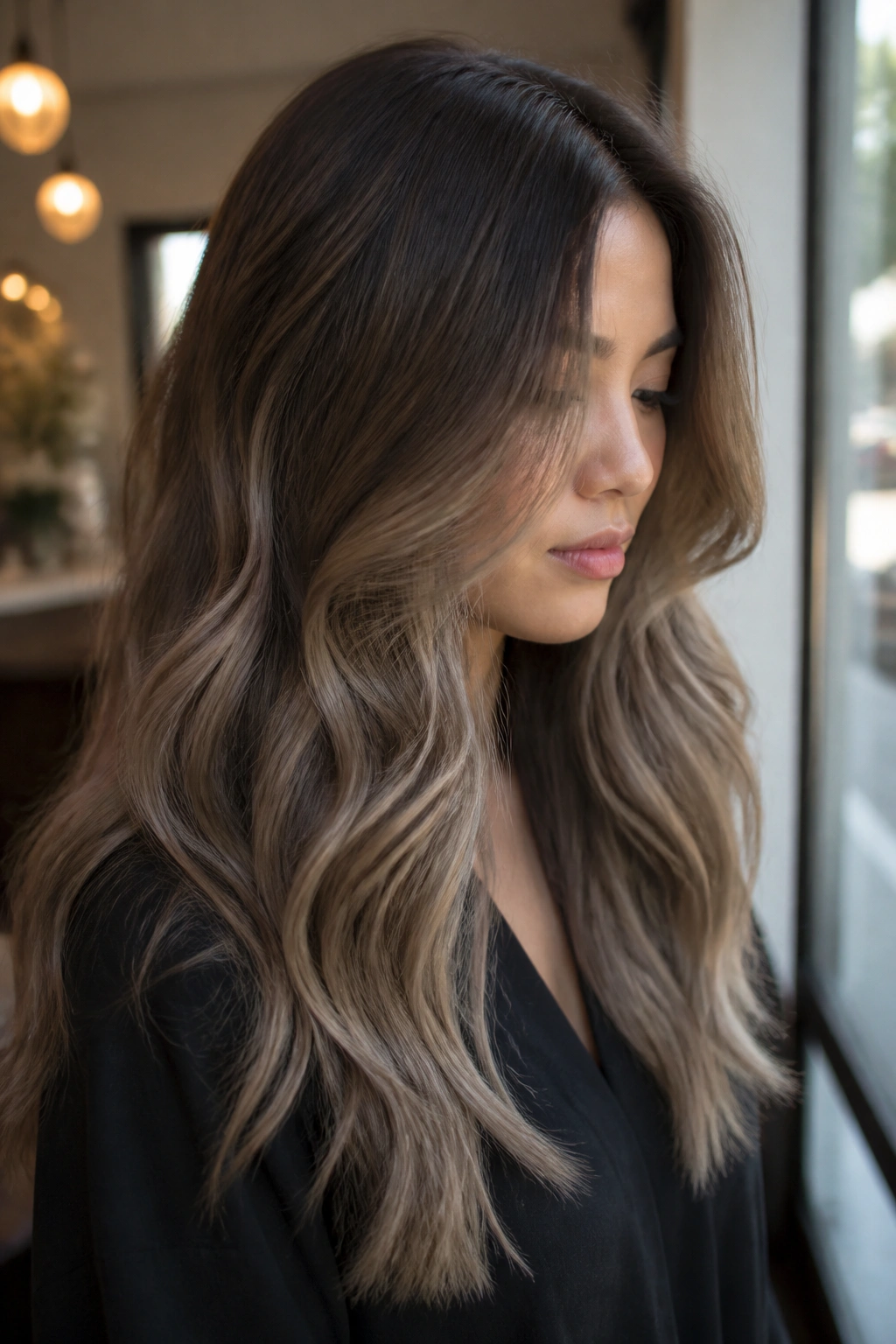
Can mushroom brown still count as ombre if the contrast is soft? Absolutely. In fact, the softer shift is what makes it feel so modern on long hair. You get cool, earthy roots and a muted brown fade that never turns orange or too gold.
How to Keep It from Going Muddy
Mushroom brown has a narrow lane. Stay too warm and it loses the ash tone; go too gray and it starts to look flat. The better route is a beige-brown finish with just enough cool pigment to keep the ends clean.
- Ask for a root shadow that is close to your natural depth.
- Keep the mid-lengths smoke-toned, not silver.
- Let the lightest pieces stay soft beige, especially near the hemline.
- Wear it with loose S-waves so the tone shift shows.
This is a quiet color. That’s the point. It suits people who want dimension without an obvious stripy fade.
9. Auburn-Brown Ombre for Warm Depth
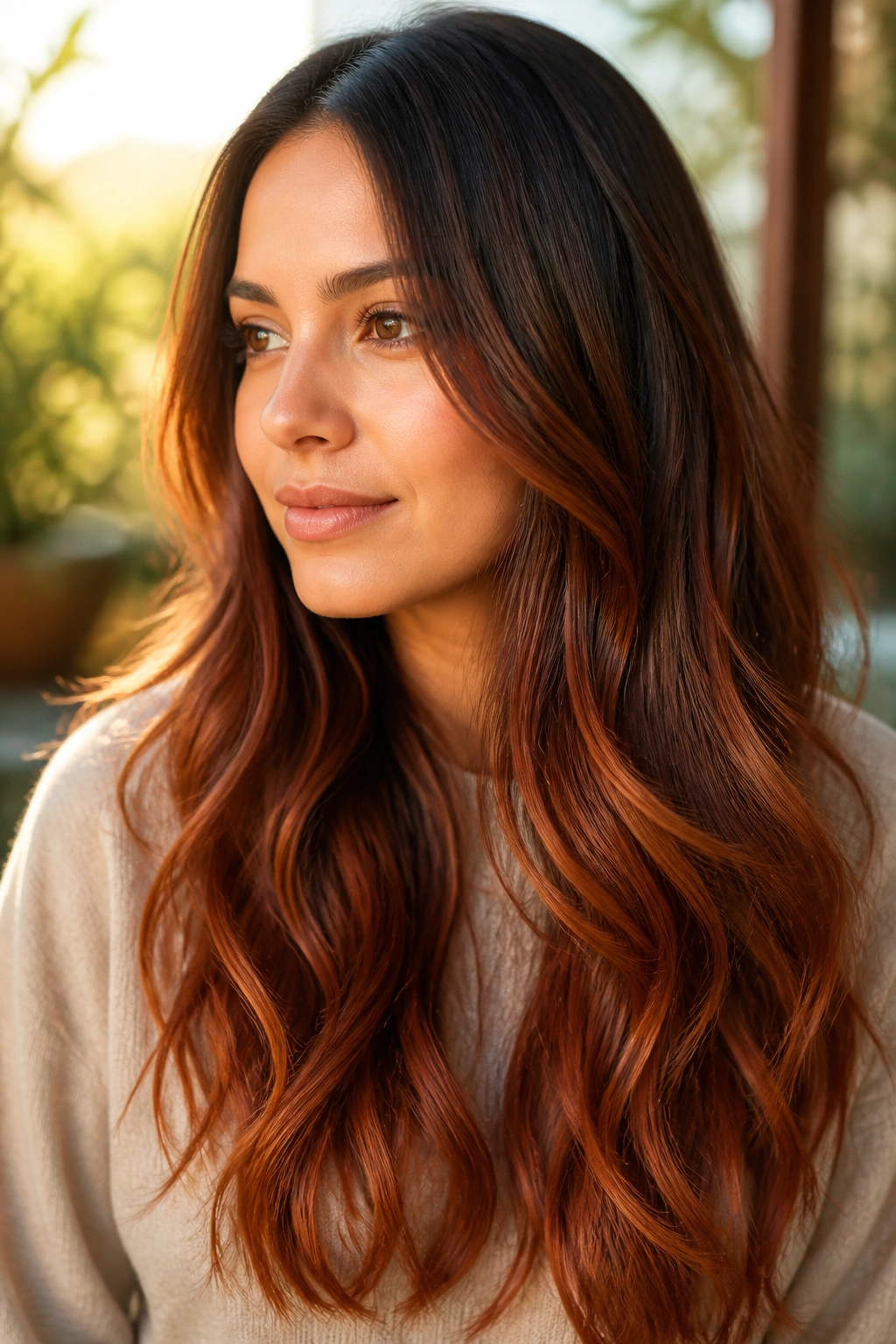
Auburn-brown ends bring more life to warm skin than pale blonde tips ever will. They make the face look awake without pushing the hair into copper territory. On long hair, that warm sweep at the bottom can feel rich and almost velvety.
The smartest auburn-brown ombre stays brown first and red second. That balance keeps the color from reading like a bright red dye job. It should look like the hair caught warm light, not like it changed personality halfway down.
This one shines when the hair is curled under or waved with a larger barrel. The movement helps the red-brown tones shift in and out of view, which gives the fade some depth. If your wardrobe leans earthy, this is a very easy color to live with.
10. Hazelnut Brown Ombre with a Glossy Finish
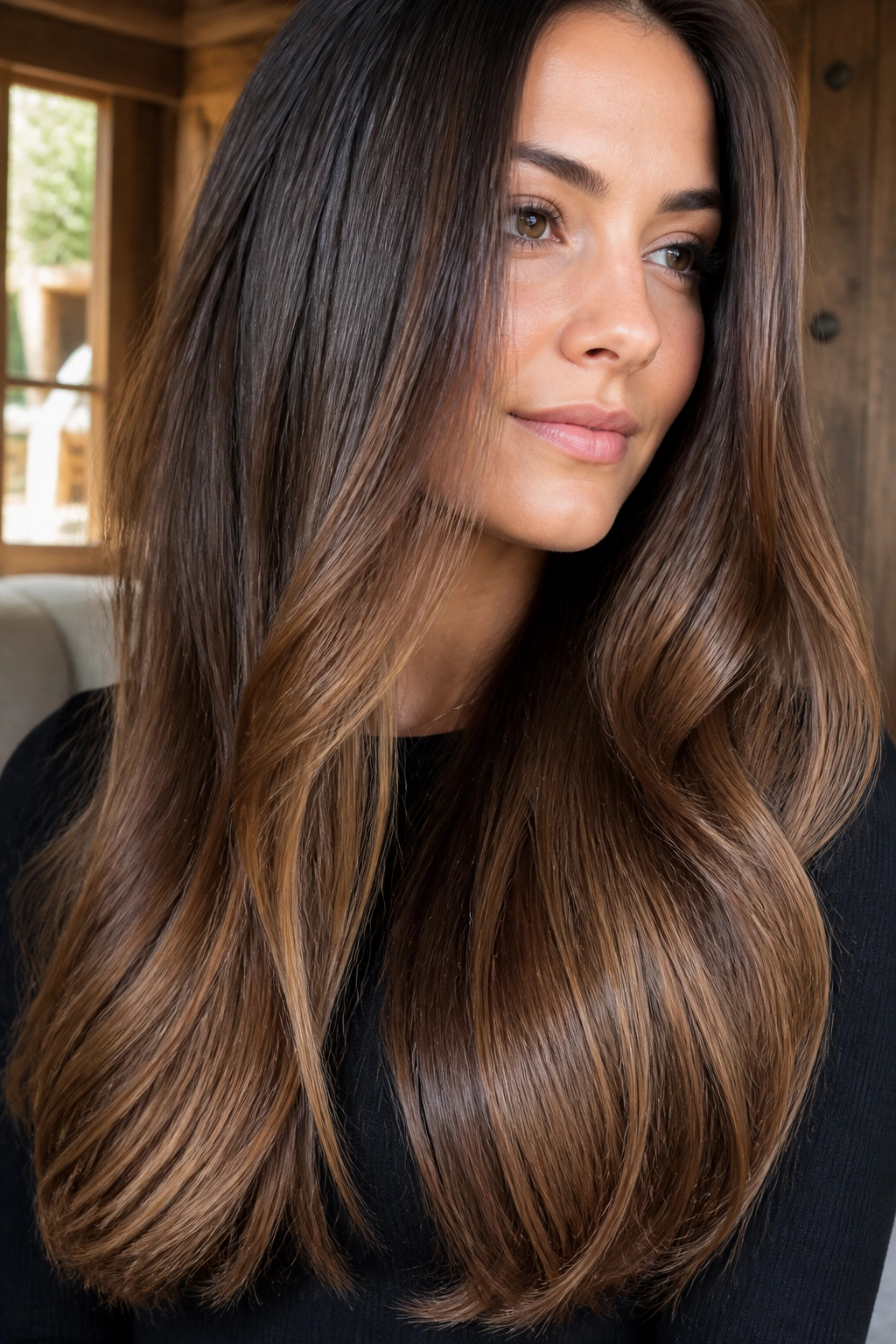
Hazelnut brown is one of those shades that looks especially good when the hair has a smooth surface. The color sits in the middle of the brown family — warm, nutty, slightly golden — so a glossy finish helps the tone read clearly from root to end.
The ombre part should be soft enough that the hair still looks like one piece from a distance. Up close, though, you want to see a clear shift from deep brown at the top to hazelnut through the lengths. That balance is what keeps it from looking dull.
A round brush blowout does a lot for this color. So does a small amount of lightweight oil on the ends only. Skip heavy serums near the root. They can flatten the crown and make the whole style look heavier than it is.
11. Walnut Brown Ombre with a Soft Money Piece
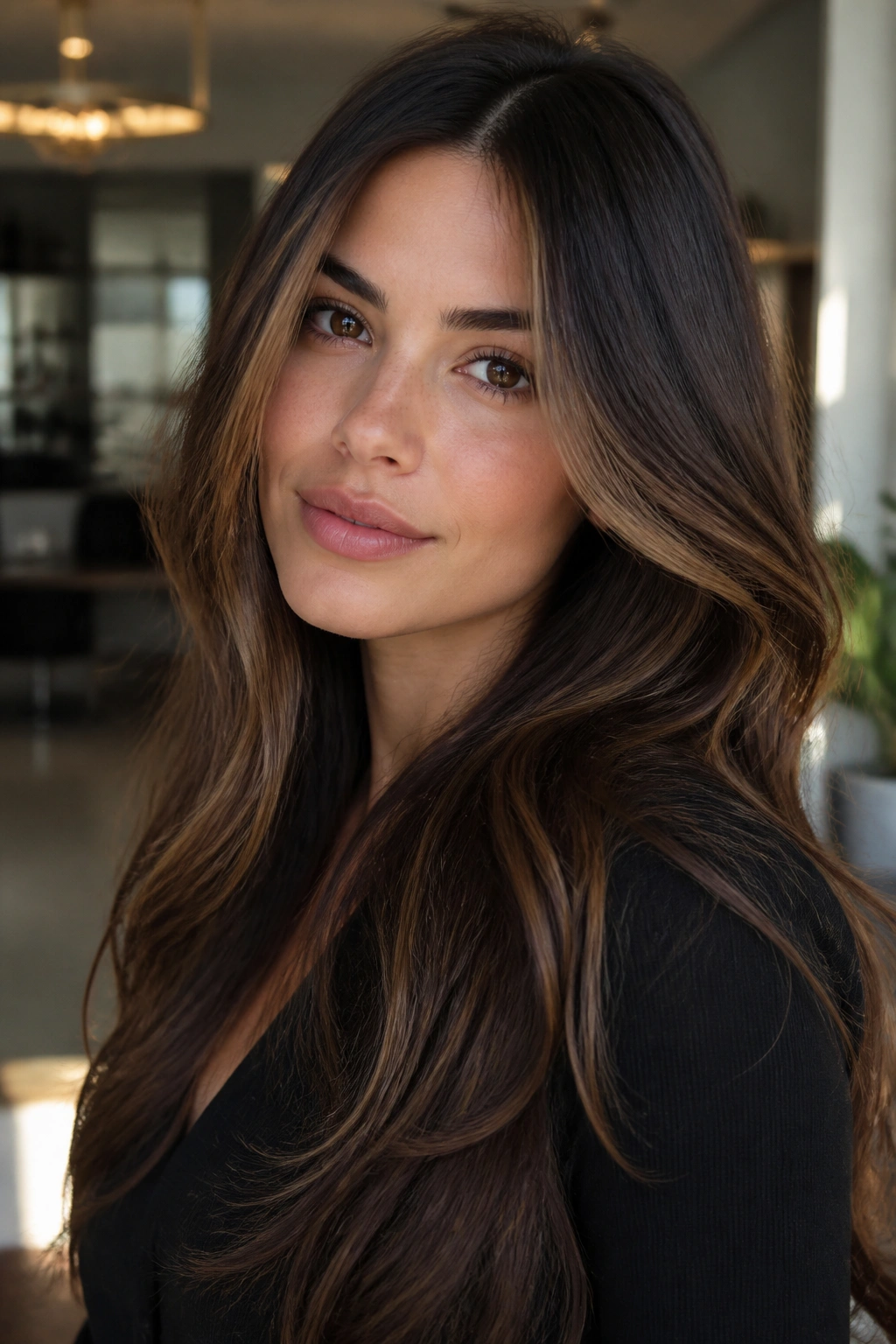
Imagine a low ponytail with the front pieces just a touch lighter than the rest. That is the charm of walnut brown with a money piece. The main body stays deep and cool, while the face-framing strands get a faint lift that keeps the style from feeling closed in.
The money piece should be soft, not bright. A narrow section around the hairline is enough. Wider panels can look harsh on long hair, especially if the rest of the ombre is low-contrast and elegant.
- Ask for the front pieces to start no higher than the cheekbone.
- Keep the bottom lengths walnut, not caramel.
- Use a center part if you want the color to feel symmetrical.
- Try loose waves if you want the money piece to blend better.
This is a good pick if you like brown hair that has a bit of attitude without going dramatic.
12. Coffee Bean to Sable Brown Fade
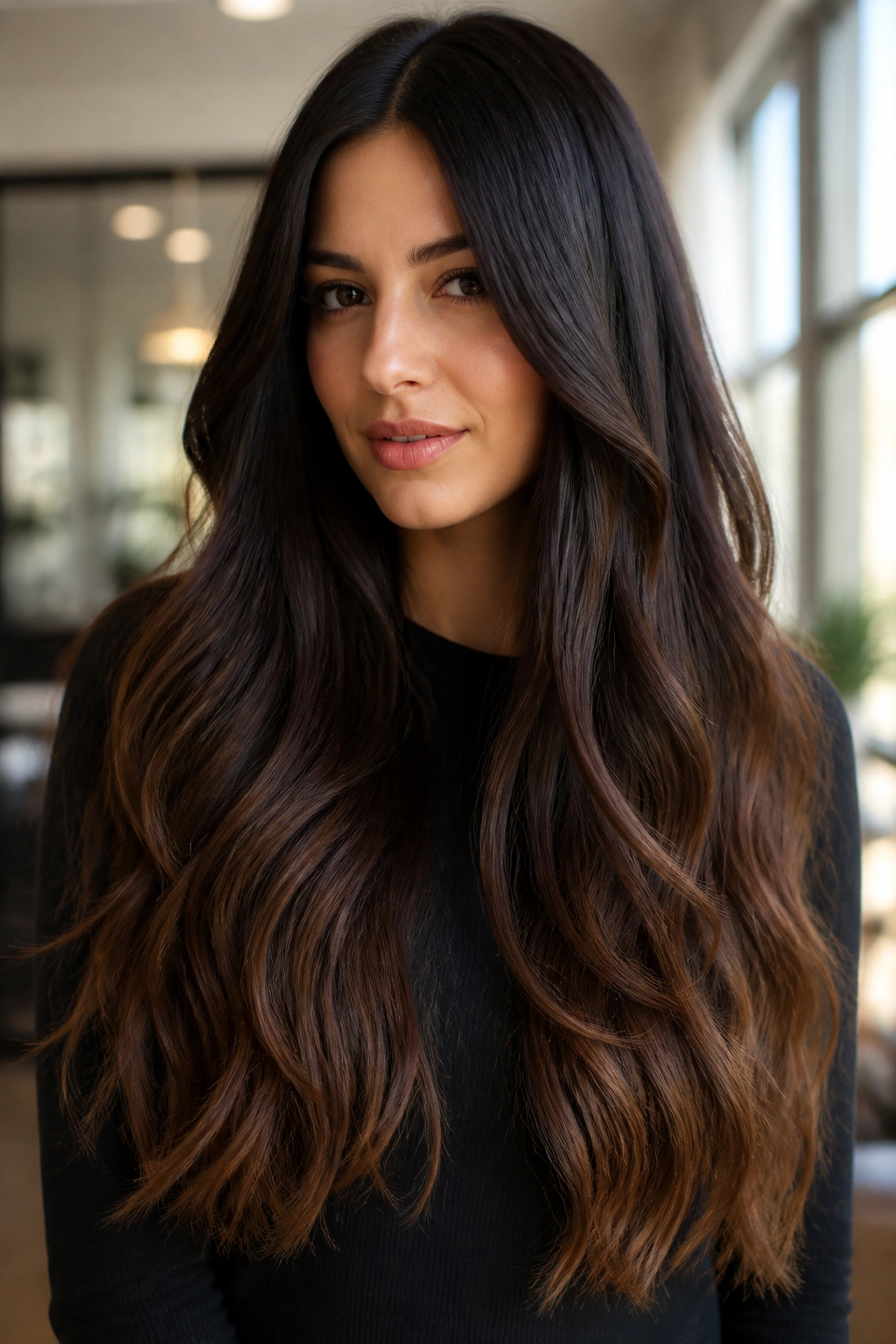
Not every ombre needs caramel ends. Some of the best long brown looks stay deep all the way through and only open slightly into sable at the bottom. The result feels darker, sleeker, and a little more expensive in a quiet way.
This style is for people who love dimension but do not want obvious highlights. It works especially well on very long hair, because the length itself gives the fade room to breathe. On shorter hair, the shift can disappear. On long hair, it has time to register.
I’d pick this if your hair already has shine and you wear it straight or in soft bends. The subtle contrast makes the length look thicker from root to tip. It also grows out cleanly because the change is small enough to stay smooth between salon visits.
13. Brunette Balayage with Honeyed Tips
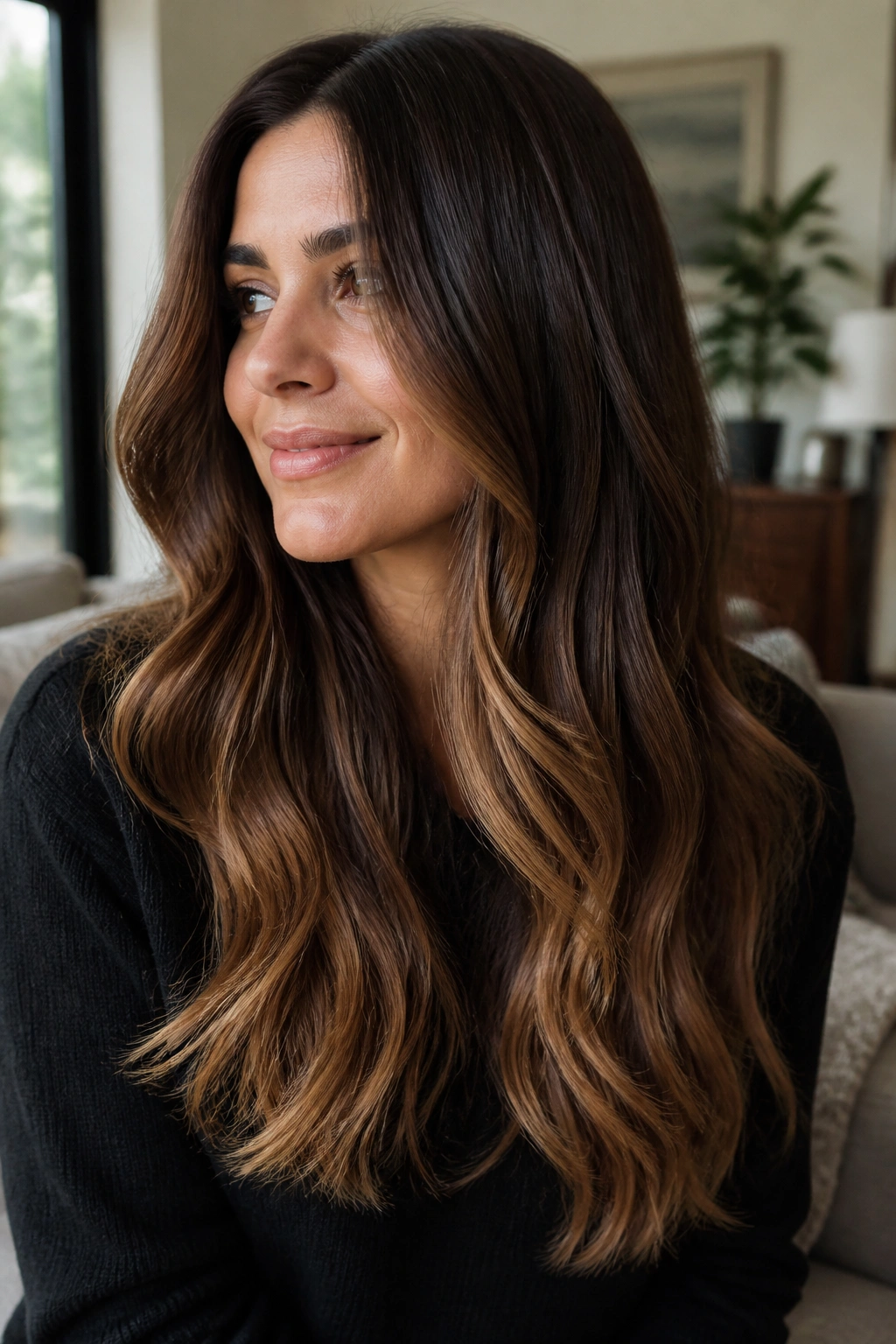
Honey tips are a gentler answer to bright ombre. Instead of a strong end color, you get a warm lift that sits just below blonde and well above orange. On brunette long hair, that gives the lengths a soft glow without turning the whole style high-contrast.
What Makes Honey Different
Honey has more light in it than caramel, but it still feels rounded. That makes it a good bridge color for brunettes who want their ends to look sun-touched rather than dyed. The best version keeps the honey concentrated near the bottom third of the hair.
How to Wear It Well
- Let the balayage start low so the root stays rich.
- Keep the honey diffused through the ends, not packed in.
- Works well with beach waves and big barrel curls.
- Looks clean with warm-toned makeup and gold jewelry.
The upside here is softness. The downside is that too much honey can drift yellow if the toner is off. A beige-leaning honey keeps the whole thing calmer and more natural-looking.
14. Cocoa Brown Ombre with Ultra-Long Waves
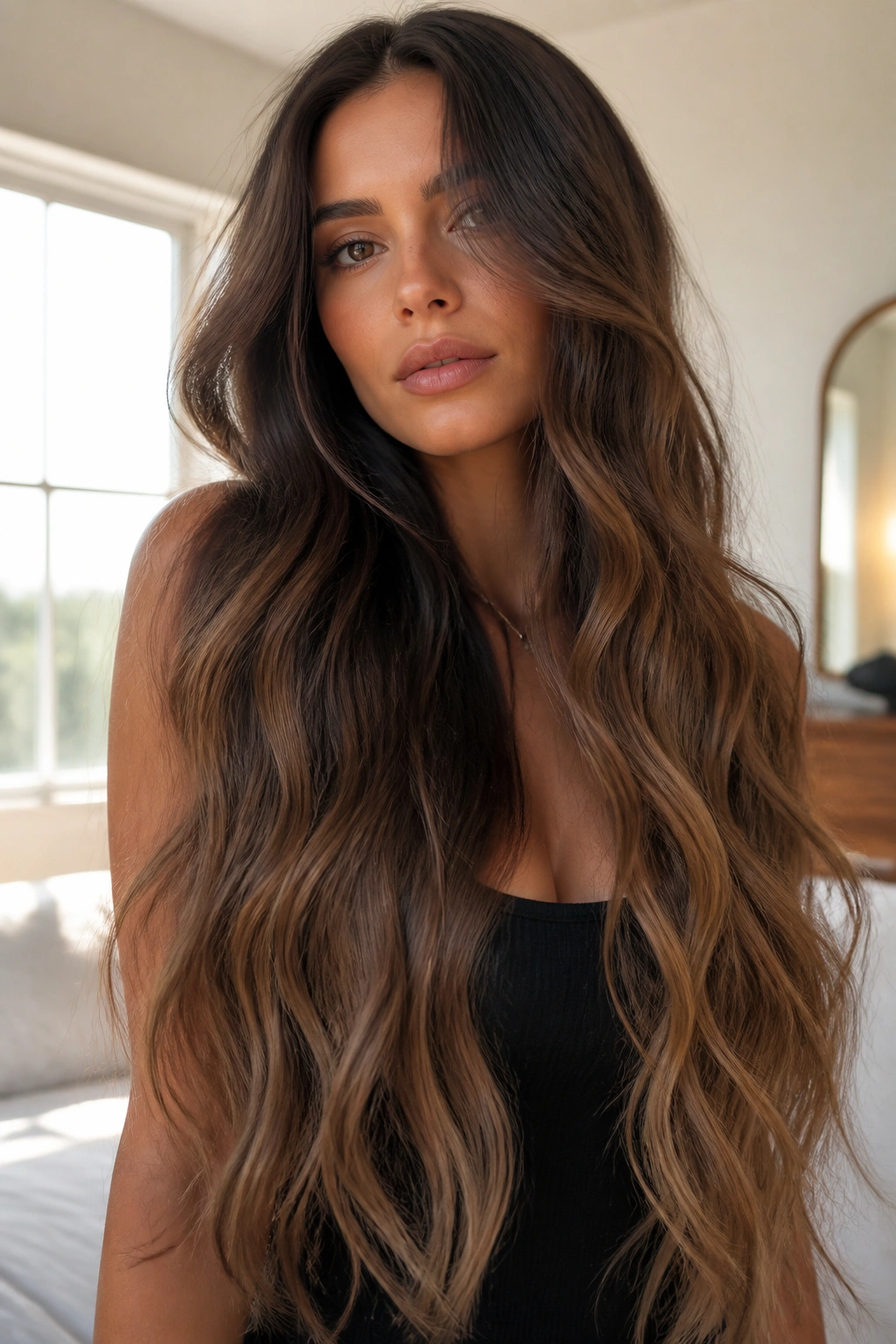
Cocoa brown on ultra-long waves reads best when the color shifts slowly enough that you almost miss it. That is what gives it charm. The roots feel like dark cocoa, the mids lighten a touch, and the ends take on a milkier brown tone that shows up when the hair moves.
The look is especially nice on hair that falls past the bust, because the extra length gives the fade time to unfold. On shorter hair, this shade can seem too subtle. On very long hair, it looks layered and full, even when the cut itself is simple.
A 1.5-inch curling iron works well here because it makes a bend that is broad enough to show the tone changes. Smaller curls can make the fade look busy. Bigger waves keep it smooth. That is the trick with cocoa brown: let the hair move, but do not overwork it.
15. Warm Brown Ombre with Copper Kisses
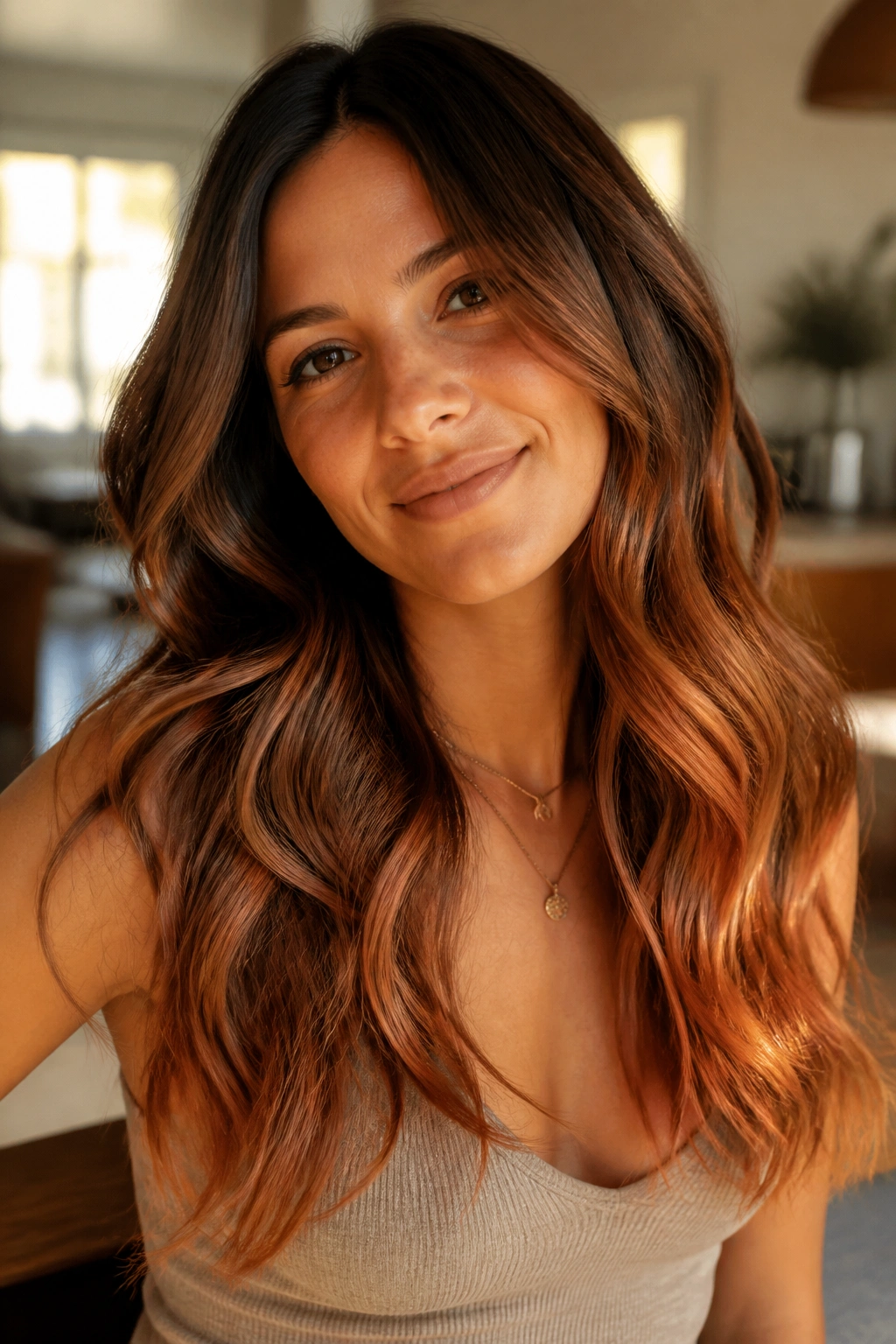
Where should copper sit if you want warmth without turning the whole head orange? Near the ends and underlayers, mostly. Small copper kisses can add life to long brown hair without taking over the base shade.
The Sweet Spot for Copper
Copper works best when it is treated like seasoning. A little goes a long way. If the whole length gets too coppery, the look leaves brown ombre behind and turns into something else entirely.
A few placement rules help:
- Keep copper strongest at the very bottom.
- Let the underlayers carry more warmth than the top.
- Leave the crown deep brown so the style still has contrast.
- Pair it with waves so the copper flashes in motion.
This idea is good for people whose hair tends to look flat in winter light. Copper brings back some energy. It also softens the line between dark roots and lighter ends, which can be handy if your natural color is already warm.
16. Smoky Brown Ombre for Straight Hair
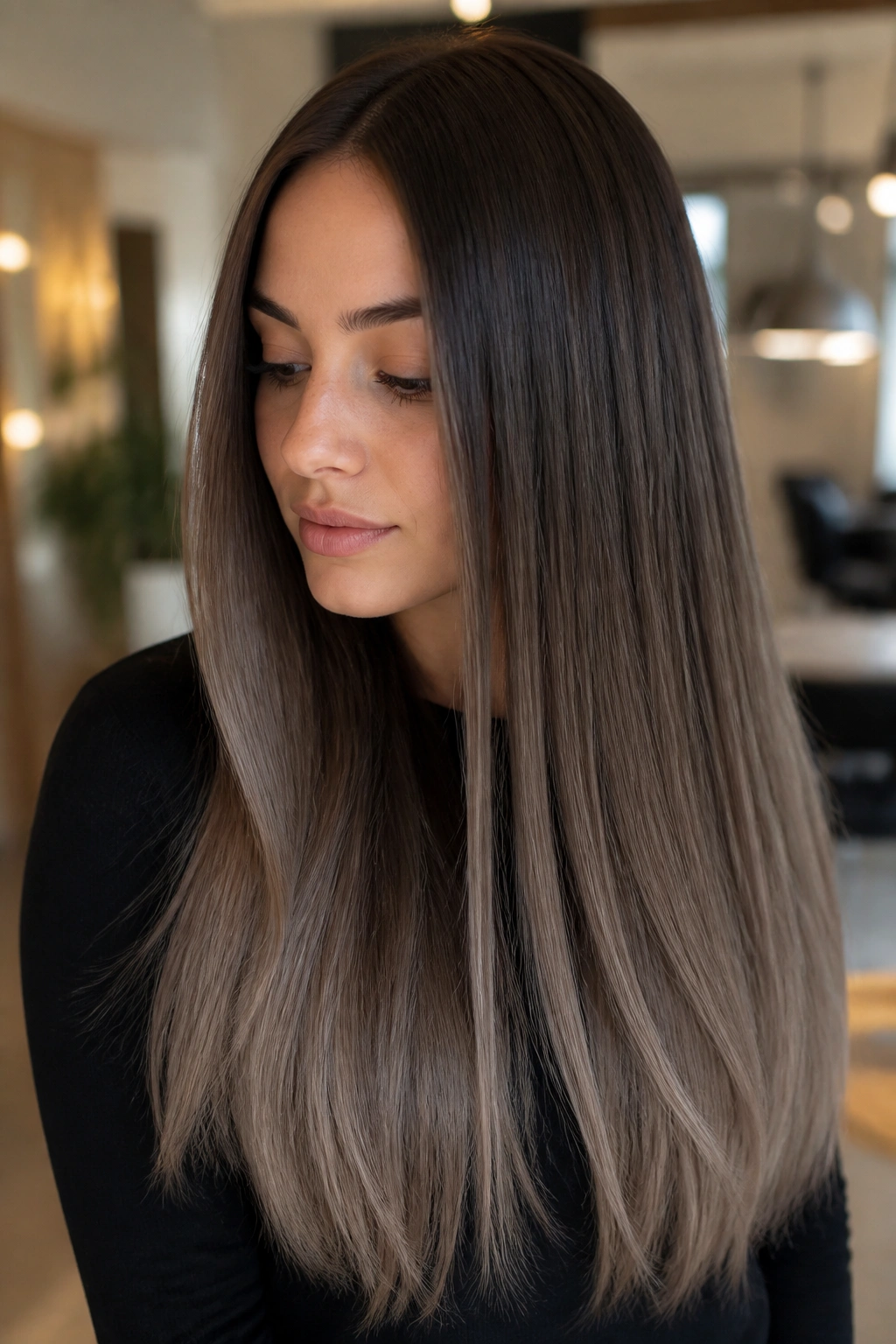
Straight hair shows every line, so smoky brown ombre has to be cleaner than wavy versions. That is not a bad thing. It just means the fade needs to be smoother and the tone cooler, so each section reads as part of the same story.
Unlike curled ombre, this one depends on precision. A shadow root and a soft mid-tone are more useful than chunky contrast. The ends can stay smoky brown or lean a little beige, but they should not look patchy. On straight long hair, patchy color is impossible to hide.
This shade is a smart pick if you wear sleek blowouts, silk presses, or flat-ironed lengths. It makes the hair look polished without needing huge brightness. I’d ask for fine hand-painted sections and a finish that stays close to your natural depth. The result feels controlled, which is exactly what straight hair wants.
17. Bronze-Brown Ombre with a Shine Spray Finish
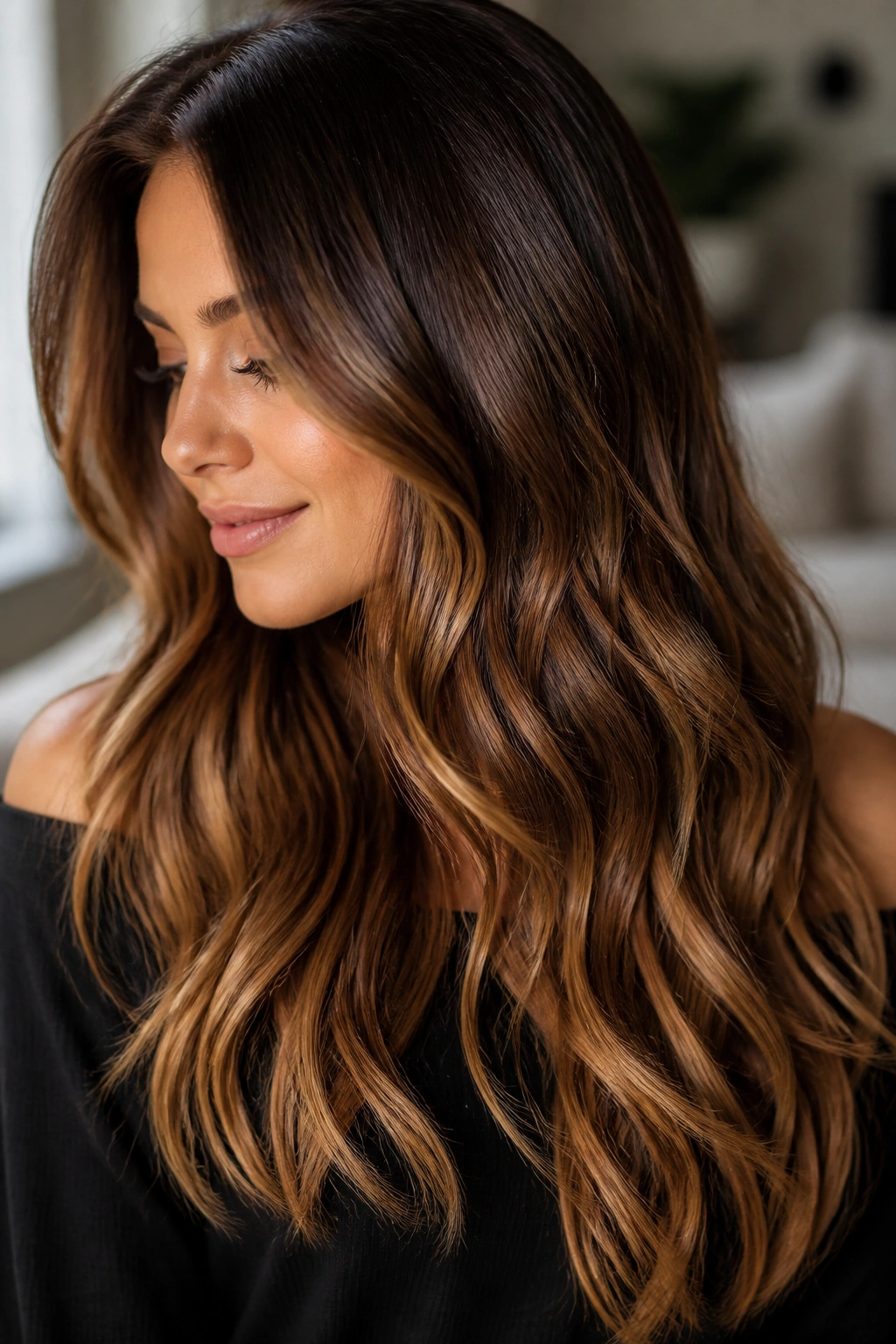
You brush this out and the hair throws back the light in thin, coppery flashes. Bronze-brown ombre does that when it is done right. The color sits between brown and gold, so the ends look reflective instead of pale.
This shade likes shine. A lot. A light mist of shine spray on mid-lengths and ends helps the bronze read clearly, especially on a smooth blowout. Too much oil will drag the hair down, though, and bronze loses its edge when the strands clump together.
Good Places to Use It
- On long layered cuts that need movement.
- Around the face if you want warmth near the skin.
- On darker brunettes who want brightness without blonde.
- On hair that holds a curl for more than a few hours.
Bronze-brown can look fussy if the color is too yellow. Keep it muted, and it stays rich.
18. Lived-In Brown Ombre with a Shadow Root
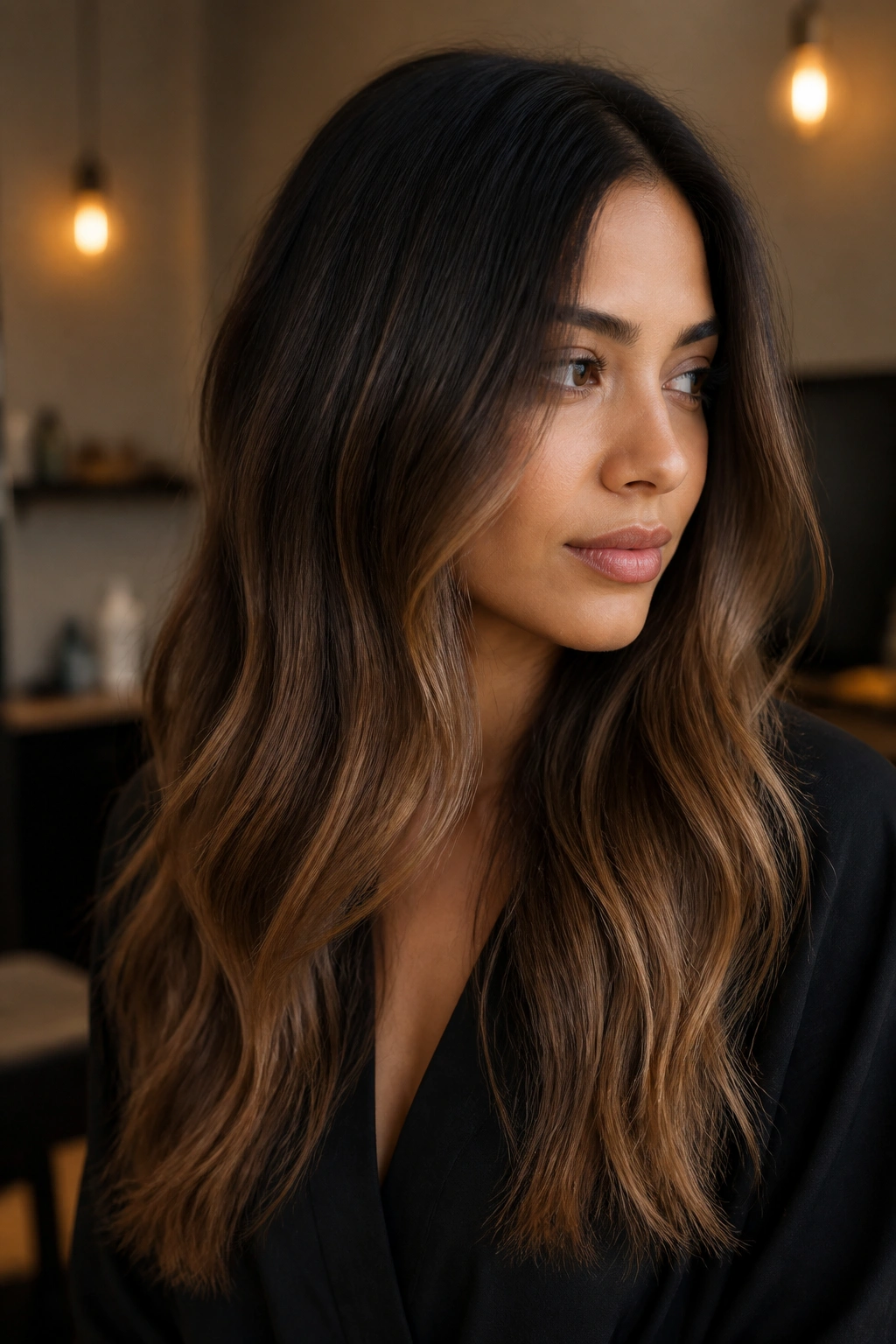
A shadow root is what keeps brown ombre from looking like two separate dye jobs. It softens the join, so the root and the lighter lengths melt into each other instead of sitting in two obvious zones.
That makes this one a favorite for people who do not want a high-maintenance color. The root can stay close to your natural shade, while the mids and ends shift lighter in a way that grows out quietly. On long hair, that matters more than people think. The more length you have, the more obvious a hard line becomes.
The best version uses a root melt that is only one or two shades deeper than the lengths. If the jump is too large, the hair starts to look striped when it moves. Keep the blend invisible when dry, and the color will hold up in braids, buns, and simple air-dried styles.
19. Chestnut-to-Butter Toffee Ombre
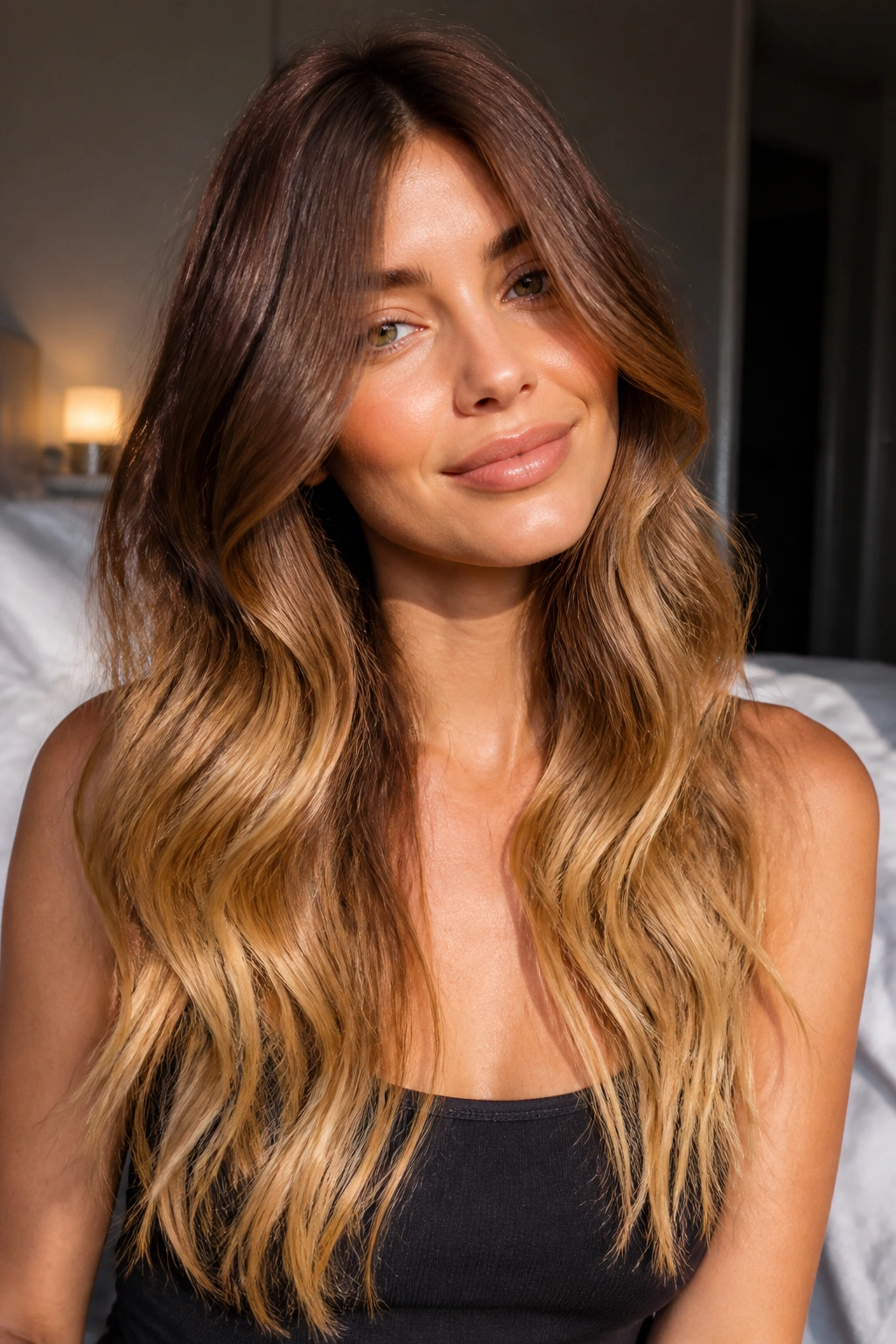
Why does chestnut-to-butter toffee feel richer than plain caramel? Because it layers warmth instead of relying on one bright tone. The chestnut starts grounded, then the toffee builds into a soft buttery finish that still lives in the brown family.
Best Cut for This Blend
Long layers make this color easier to read. The shorter pieces around the face can show the chestnut, while the lower lengths carry the toffee. That split gives the whole style movement even when the hair is worn down and straight.
This one looks especially nice in loose curls because the lighter ends tuck in and out of view. It also flatters thicker hair, which can handle a little more contrast without seeming busy. If your hair is fine, keep the toffee light but not pale. The color should read creamy, not blonde.
I like this shade for people who want warmth with a little polish. It feels soft, but not sleepy.
20. Deep Brown Ombré with Curled Ends
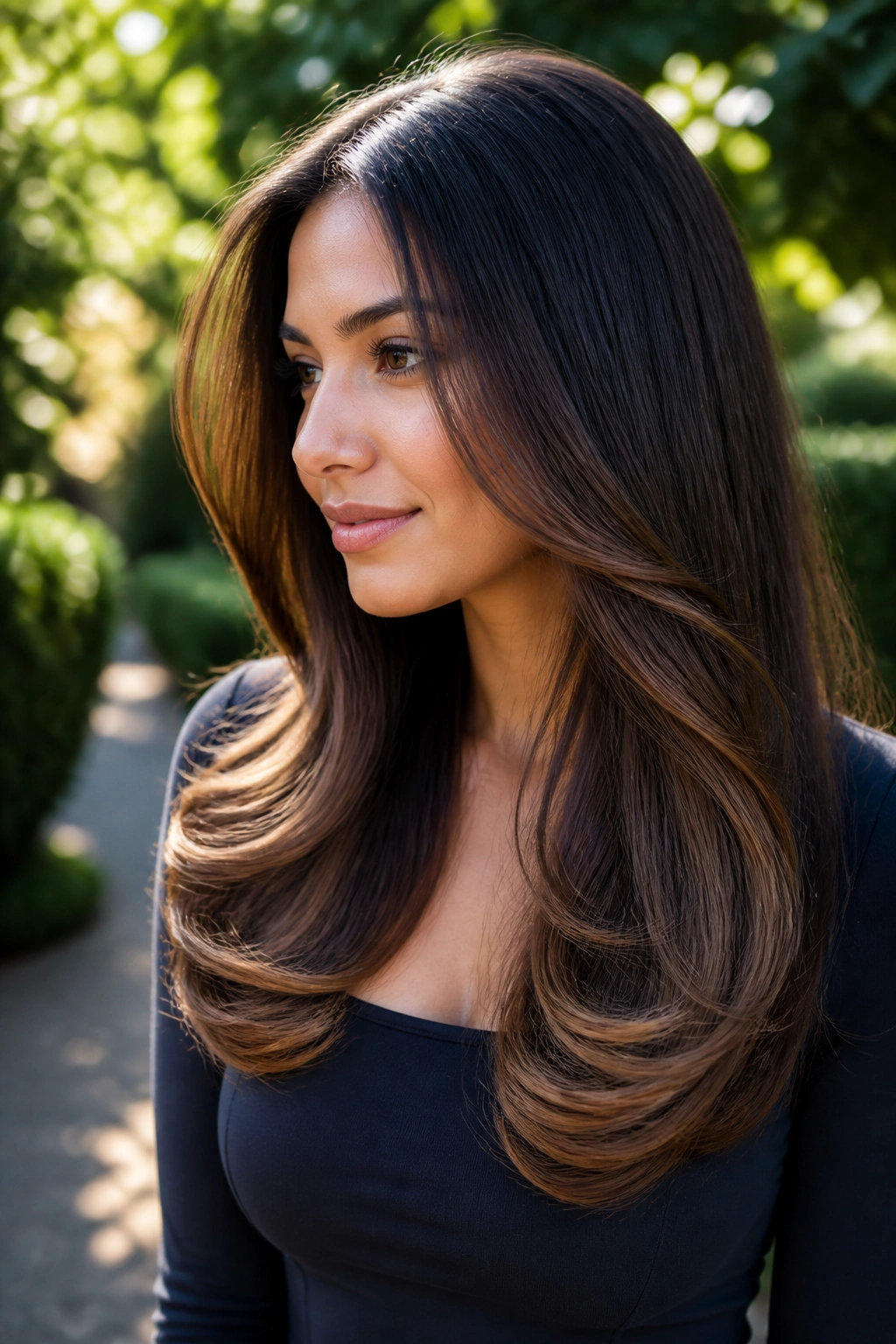
Deep brown ombré with curled ends is one of the most useful long-hair looks on this list. The top stays dark and anchored, while the ends open just enough to show a shift when the hair bends.
The first time this style really works is when the length falls in one clean sheet and the last few inches curl under. Then the fade appears almost by accident, which is the nice part. The color does not need to be dramatic to look deliberate.
I prefer this on long hair that has healthy ends, because frayed ends can make dark-to-light fades look rough. Keep the color changes smooth and the curl pattern loose. A 1-inch iron can work, but a softer barrel often looks better because it keeps the finish relaxed. You want the ends to look touched, not crimped.
21. Soft Brown Ombré with Dimensional Lowlights
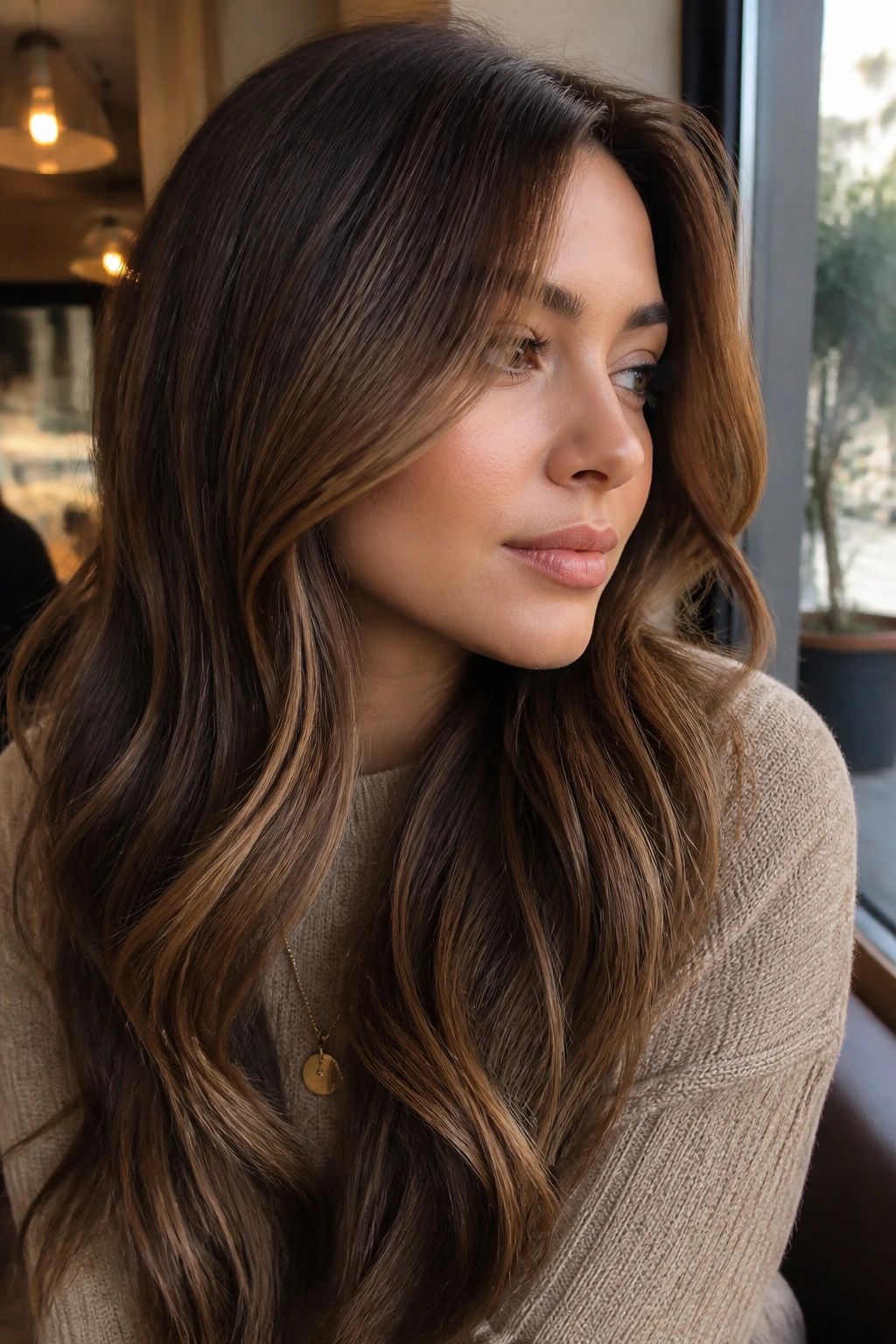
If your hair is fine, why pile on bright ends when lowlights can do more? A soft brown ombré with dimensional lowlights adds depth first, then brightness second. That gives the hair a thicker look without pushing it into obvious contrast.
Where the Depth Comes From
The lowlights should sit a shade or two deeper than the base, mostly through the mid-lengths and inner layers. That keeps the surface from looking flat and helps the lighter ends feel earned rather than pasted on.
- Place darker strands under the top layer for extra body.
- Keep the ends soft, not streaky.
- Use waves or bends to reveal the tonal changes.
- Works well if your hair is long, fine, and a little slippery.
This is one of the smarter options for people who want their hair to look fuller without leaning on bright color. The effect is subtle, but the shape it gives is hard to miss.
22. Long Mocha Ombre with a Seamless Finish
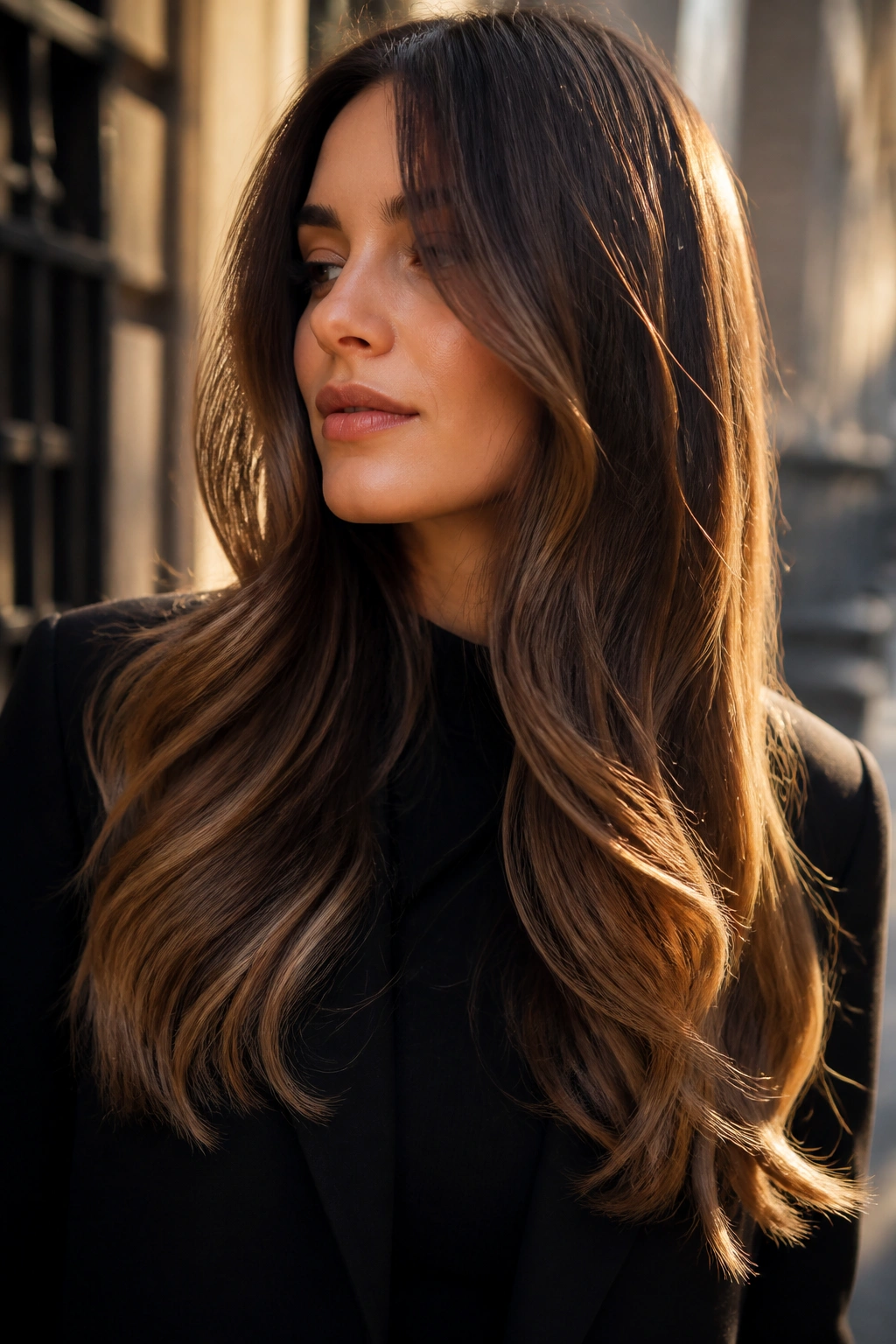
If you only want one brown ombre idea for long hair, this is the safest bet. Long mocha ombre with a seamless finish sits right in the middle of warm and cool, soft and rich, dark and light. It does not chase a trend. It just works.
The beauty of this version is that it gives long hair room to breathe. The mocha root keeps the top glossy and deep, while the lower lengths open gradually enough that the blend still looks natural when the hair is pulled back. That is useful if you wear your hair in a half-up knot one day and loose waves the next.
Ask for the transition to start below the shortest face-framing layer. That small detail keeps the color from looking striped around the face. Then let the ends stay one or two shades lighter than the body, no more. On long hair, the most convincing ombre is usually the one that doesn’t try too hard.
