



Long hair gives black ombre room to breathe. A fade that feels cramped on a shoulder-length cut can look rich and deliberate when it has 18 inches or more to travel, and that extra space changes everything.
The best black ombre hair ideas for long hair do not scream for attention. Some lean smoky and soft, some go high-contrast and glossy, and some tip into jewel-tone color that only shows when the light hits from the right angle. All of them depend on where the fade begins, how much warmth sits in the middle, and whether the ends are meant to whisper or show off.
That part matters more than people think. Start the lighter shade too high and the crown loses its depth; start it too low and the color can look like a last-minute add-on. Long hair gives you room to place the transition with intent, and that’s why black ombre can look so much cleaner on a long cut than on a short one.
Some of the ideas below are easy to live with. Some ask for more salon time, more toner, and a bit more honesty about upkeep. A few are bold enough that you’ll get compliments from across a room, which, depending on your mood, is either the point or a nuisance.
1. Jet-Black Roots with Smoky Brown Ends
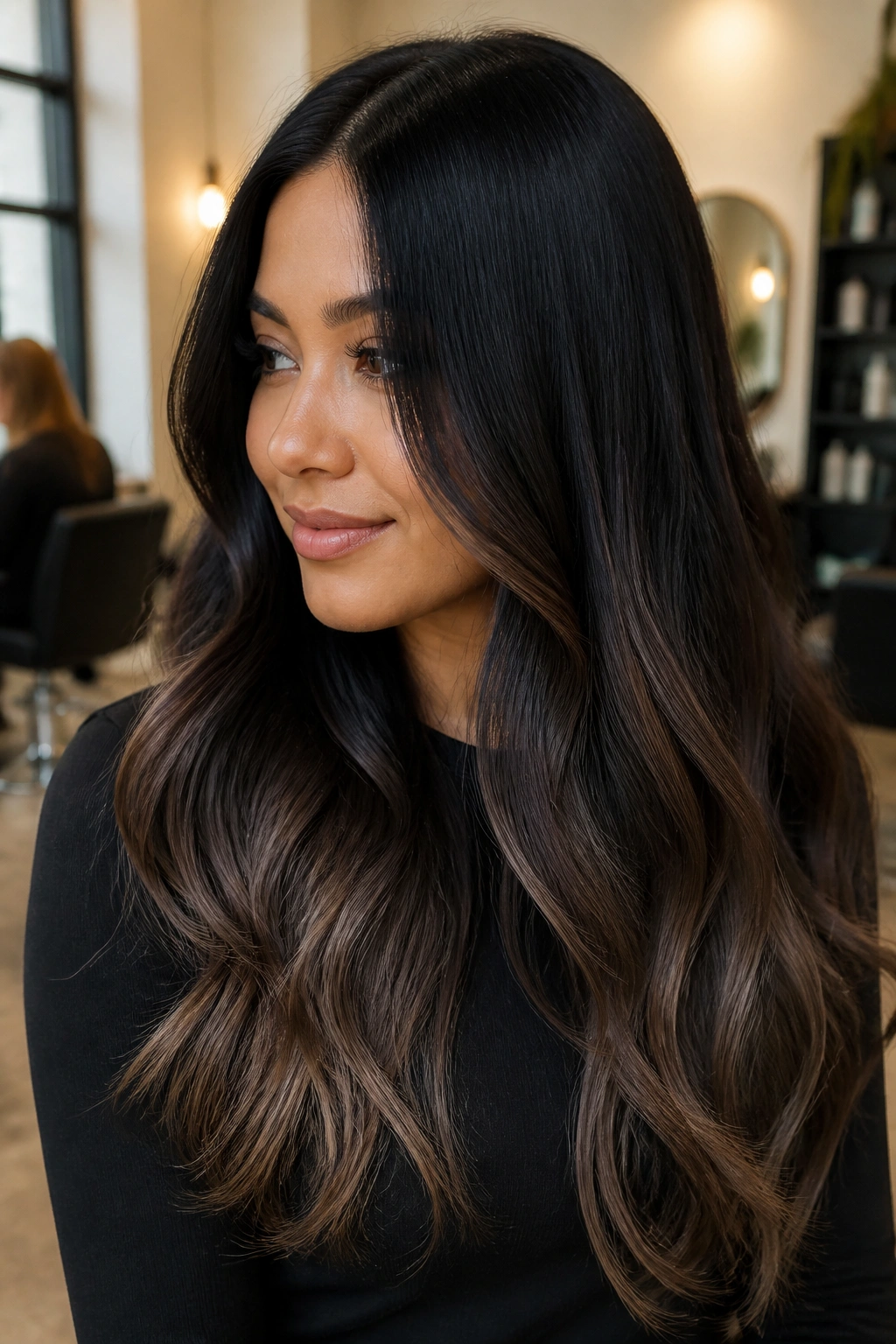
Jet-black roots fading into smoky brown ends are the safest kind of black ombre, and I mean that as a compliment. The look keeps the drama of dark hair at the top, then softens into a low-key brown that reads expensive without trying too hard.
Why It Works on Long Hair
Long hair gives this shade room to slide instead of snap. On a long length, the fade can start around the collarbone or a few inches below the ear and still feel balanced, while shorter hair often needs a harsher shift.
The smoky brown should stay cool, not orange. That’s the whole trick. If the ends pick up too much warmth, the look turns coppery fast and loses the moody edge that makes black ombre hair so good in the first place.
- Best on straight hair, loose waves, and layered cuts
- Ask for a cool brown gloss on the lower third
- Keep the transition soft with hand-painted pieces, not a block of color
- Works well when you want something polished for work and still a little dark and dramatic
My one real tip: ask your colorist to keep a few deeper strands inside the mid-lengths. It stops the ends from looking flat when you wear your hair down.
2. Black to Mocha Melt
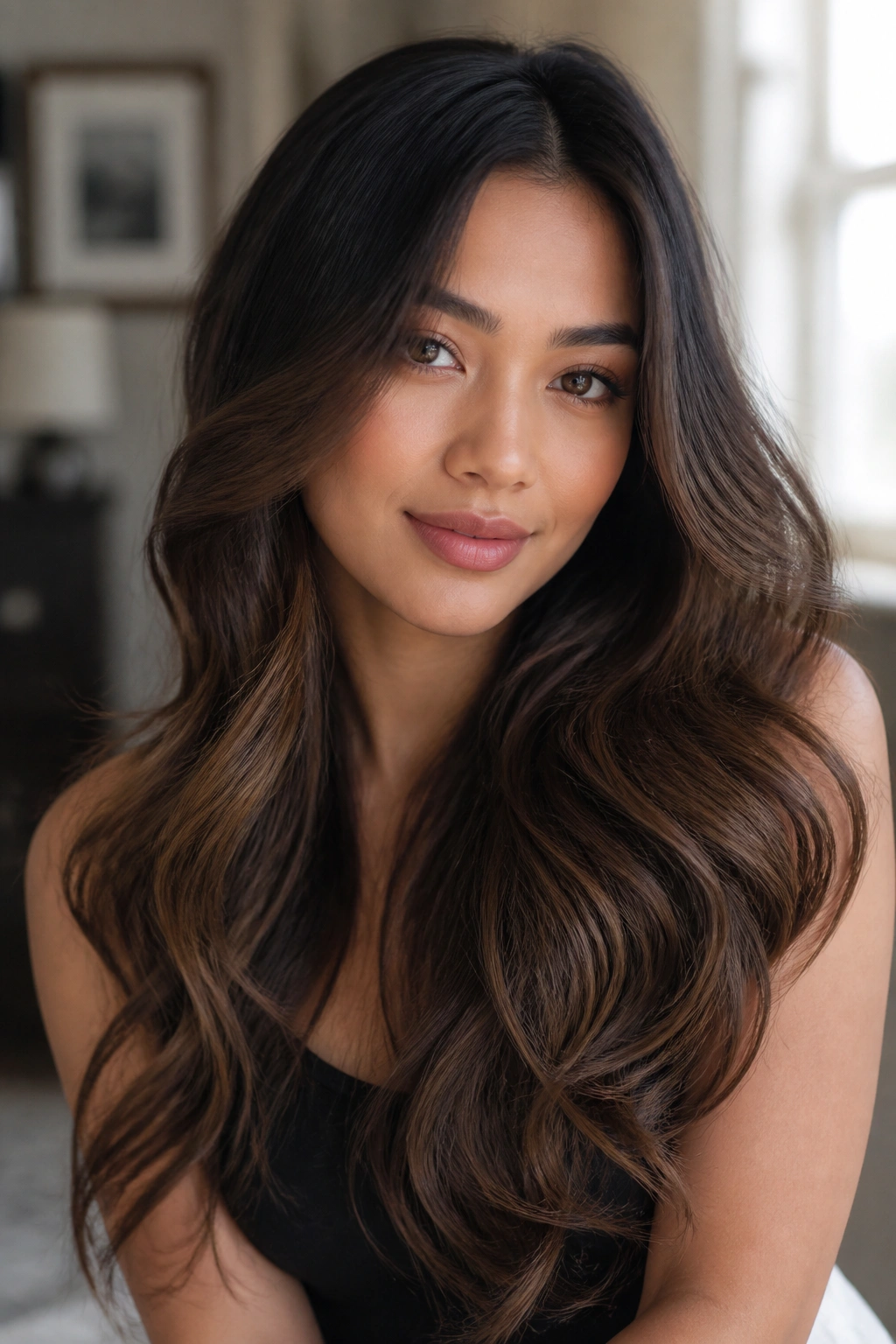
Mocha is the middle ground people usually wish they had tried first. It sits between black and light brown with a creamy depth that feels smooth rather than stark, and on long hair that softness matters.
The best mocha melt doesn’t look like two colors fighting each other. It feels blended all the way through, almost like the shade has been stirred instead of painted. That’s why it works so well on longer lengths: the extra hair gives the color room to blur, especially if you wear soft curls or a blowout with a bend at the ends.
This one is a good choice if you want black ombre hair ideas for long hair that won’t shout across the room. Under indoor light it can look nearly uniform; outside, the lower half opens up and shows more brown. That little shift is the charm.
It’s also one of the easier versions to maintain. A gloss every 6 to 8 weeks usually keeps the brown from drifting too warm, and a sulfate-free shampoo helps the lower half hold onto that cooler mocha tone a bit longer.
3. Black to Caramel Face-Framing Fade
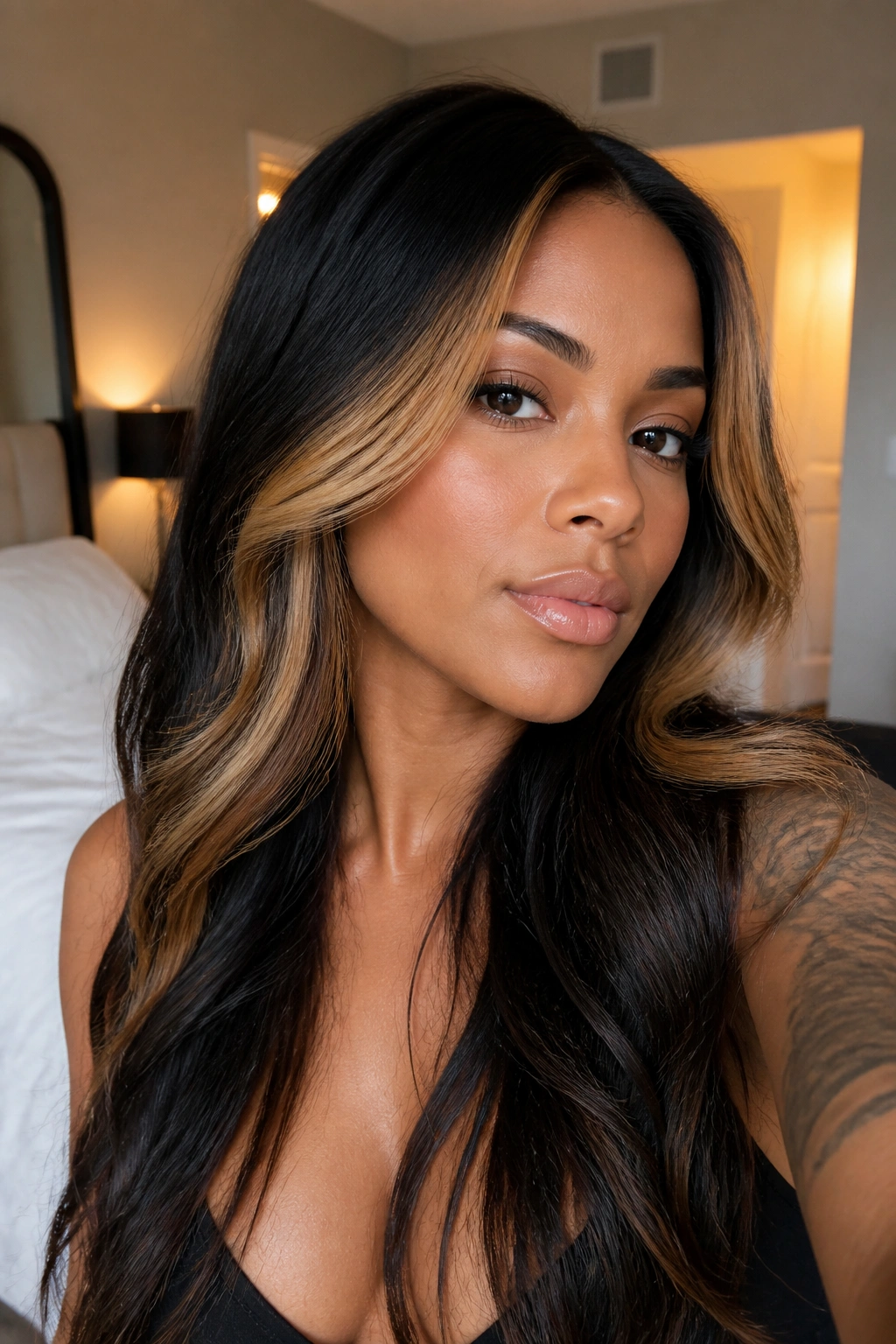
Want the front pieces to light up first? Start there. A black-to-caramel ombre with face-framing brightness keeps the deeper color in the back while the first visible sections around the cheeks turn soft gold.
How to Keep It from Looking Stripey
The trick is to avoid a hard line near the face. The caramel should begin as scattered ribbons around the temples and jawline, then get denser as it moves into the lower lengths. That creates a gradual brightening rather than a thick, obvious band.
Long hair helps a lot here because the caramel can keep traveling after it leaves the face. You get the drama of brightness where it matters most, but the ends still carry the full ombre effect. On waves, this can look almost sunlit. On straight hair, it reads sharper, which I actually like better if the cut has blunt edges.
- Ask for money-piece placement around the face
- Keep the caramel in the golden-beige range, not orange
- Works best if your haircut has layers or curtain bangs
- Looks especially good with a center part because both sides mirror each other
Small warning: if your hair is very dark and very coarse, the lighter pieces near the face can need more than one salon session to lift cleanly. Don’t rush that part.
4. Black to Burgundy Wine Ends
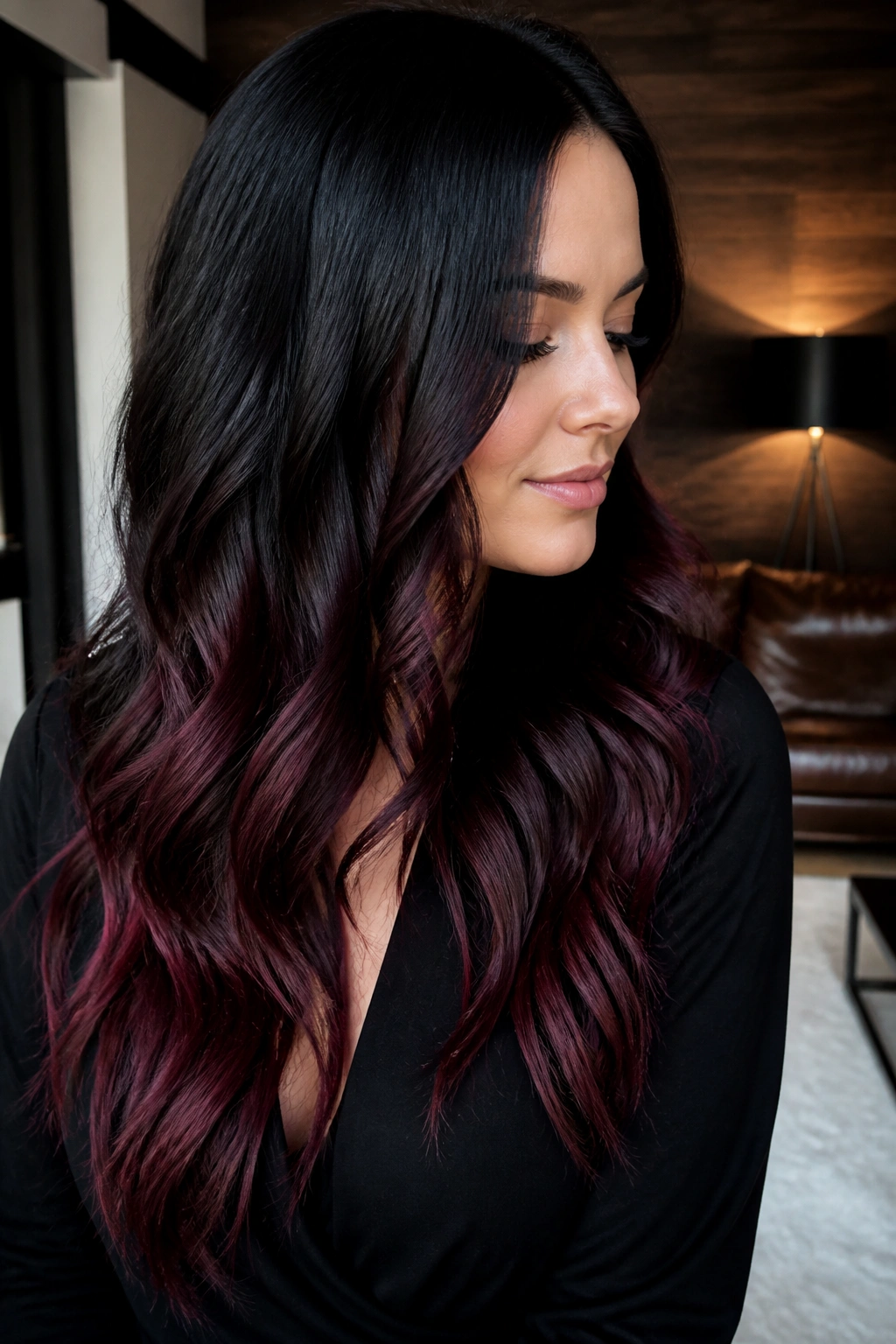
There’s something a little theatrical about burgundy ends under black hair, and that’s the appeal. It looks rich, a touch moody, and far more dimensional than plain red because the black base keeps the whole thing grounded.
Picture a long braid with the lower half turning wine-dark as it moves. That’s where this color earns its keep. Burgundy doesn’t need bright sunlight to show up; it catches light in a deep, velvet way that feels clear even indoors.
The best version stays in the red-violet lane rather than drifting orange. If the ends look too warm, the whole effect turns brassy, and then the black root starts to feel disconnected from the rest. A deep burgundy gloss helps hold the line.
Best Details to Ask For
- A fade that begins below the shoulders so the red has room to show
- Wine, merlot, or oxblood tones instead of bright cherry
- Loose waves if you want the color to read in ribbons
- A cool red shampoo or color-depositing conditioner when the tone starts to flatten
This is one of those styles that looks even better after a few washes. The first day can feel intense. A week later, it settles into something nicer.
5. Black to Plum and Eggplant
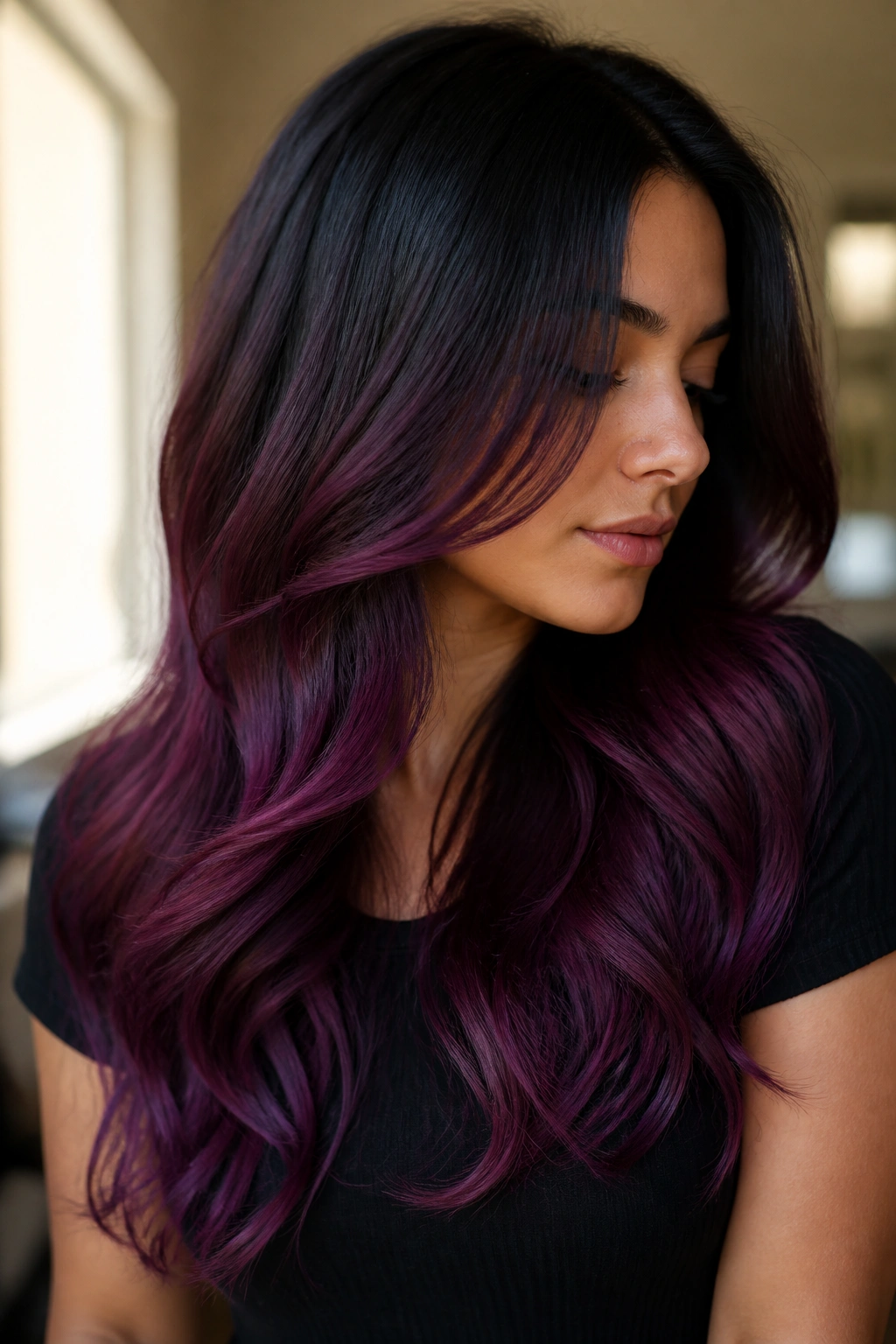
Plum and eggplant are for people who like color but don’t want it to look playful. The shades sit deep in the purple family, which means they keep the ombre mysterious instead of sweet.
Under regular indoor lighting, the ends can read almost black. Then you step into daylight and the purple opens up in a way that feels expensive and slightly unexpected. That shift is what makes the style worth considering on long hair. There’s enough length for the purple to appear in layers, not just at the tips.
I like this one on long, thick hair in particular. The density gives the darker purple something to cling to, and the movement in a blowout or curl pattern helps the violet reflect without screaming for attention. If your hair is very fine, you may need a little more contrast at the ends so the shade does not disappear completely.
Use a deep plum gloss if you want a softer finish. Go eggplant if you want the tone to feel more saturated and cool. Either way, the result sits somewhere between elegant and slightly witchy, which is a better combination than it sounds.
6. Black with Chocolate Ribbon Balayage
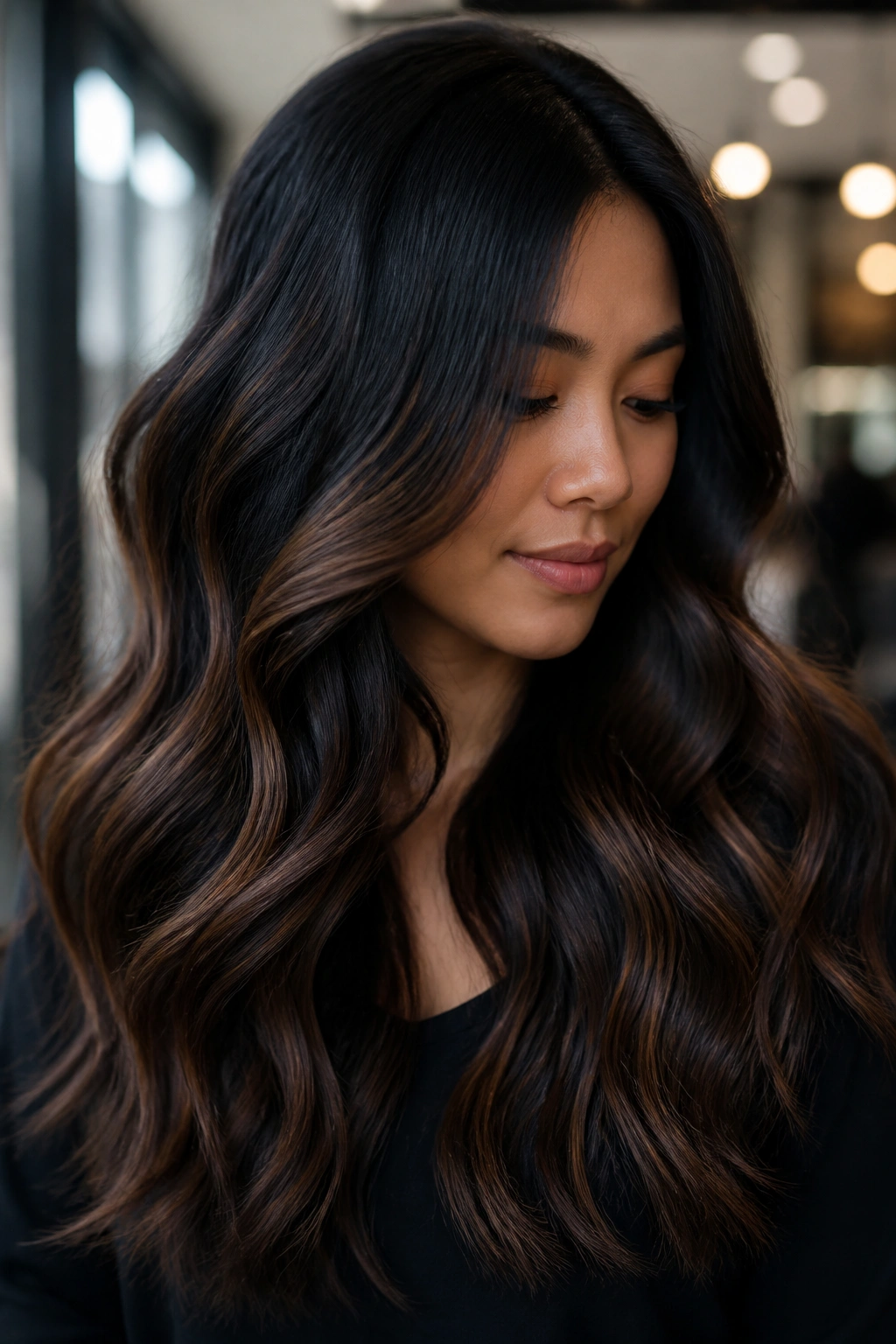
Unlike a hard ombre, chocolate ribbon balayage gives you texture first and color second. The black base stays in charge, and the chocolate pieces move through the lower half like loose ribbons instead of a full color block.
That difference matters. On long hair, ribbon placement makes the color feel expensive because the strands don’t all change at once. A few hand-painted pieces around the sides, a few in the back, and the occasional lighter strand through the ends create depth without breaking the dark look you started with.
It’s a smart pick if your hair has layers, because the ribbons fall into the shape of the cut. Straight hair shows the lines cleanly. Waves make the ribbons flick in and out of view, which is probably why this one photographs so well without needing a loud contrast.
Best for:
- Thick hair that can handle visible dimension
- Long layers that need more movement
- People who want brown warmth without going caramel or blonde
- A softer grow-out between salon visits
If you’re showing this to a colorist, ask for 3 to 5 warm chocolate ribbons per side and keep them concentrated from the mid-lengths down. That keeps the root dark and the finish elegant.
7. Blue-Black Roots with Indigo Ends
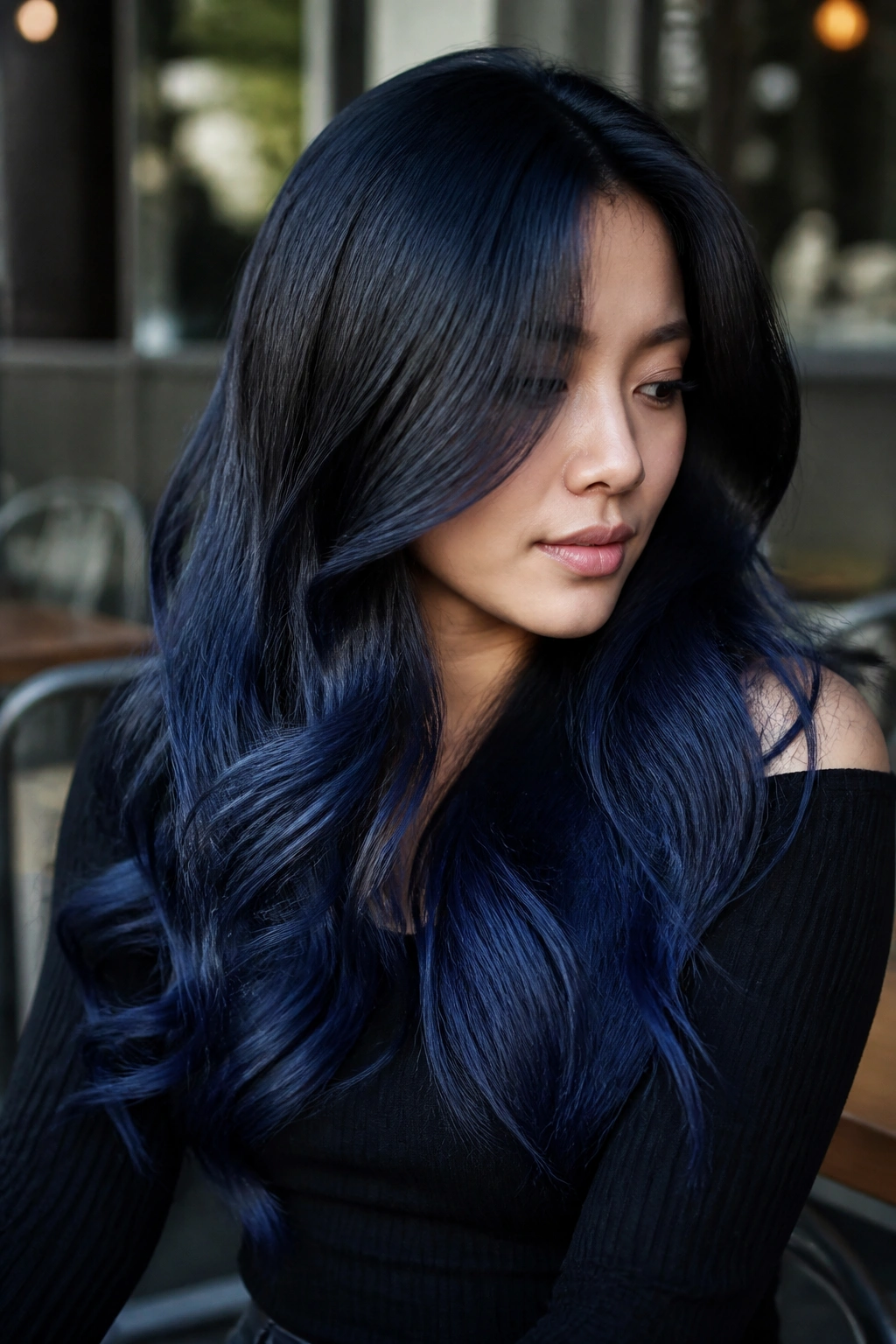
Blue-black to indigo is one of the strongest black ombre hair ideas for long hair if you like cool tones and a little attitude. It reads dark at first glance, then flashes blue when light catches the ends.
What to Ask For
Tell your colorist you want the black to stay blue-based, not flat. That tiny shift in tone matters. Then ask for the indigo to begin in the lower third of the hair, where it can deepen rather than crowd the crown.
Long hair makes this color easier to enjoy because the blue has enough runway. On a bob, indigo can look abrupt. On waist-length hair, the color has space to ripple, especially if the cut is layered or curled under with a round brush.
The nice part is that indigo usually fades in a graceful way. It doesn’t vanish overnight. It turns softer, more muted, and almost denim-like before it loses its punch, which buys you time between refreshes.
- Works best on cool skin tones or anyone who likes icy makeup shades
- Looks sharp with sleek straight styling
- Needs a color-safe shampoo to protect the blue cast
- Pair with a gloss every 6 to 8 weeks if you want the indigo to stay deep
This one has edge, but not in a loud way. It’s more like a low voice in a quiet room.
8. Black to Smoky Silver
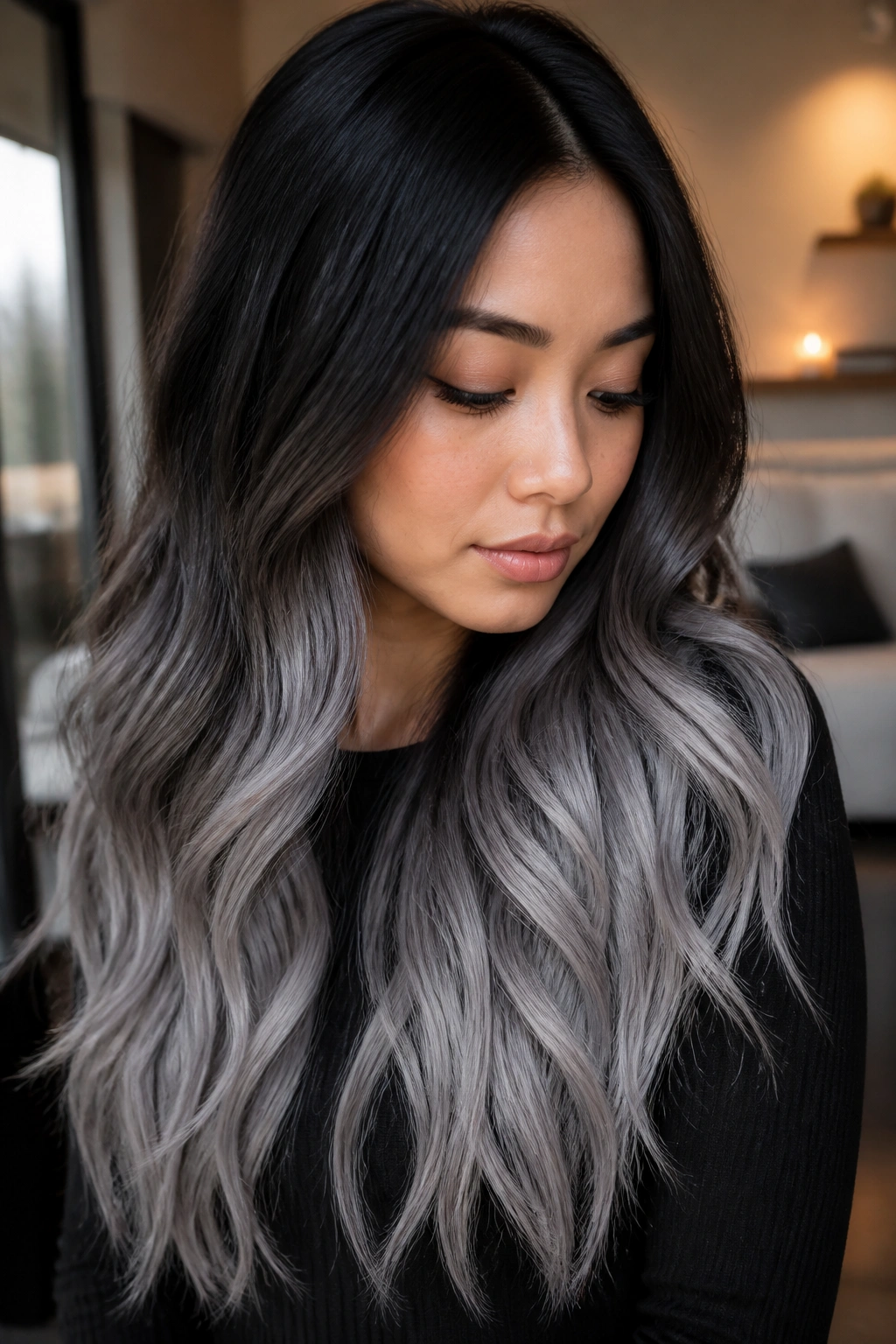
Can black and silver live on the same head without looking harsh? Yes, if the transition is handled with patience and the silver stays smoky instead of white.
The best black-to-silver ombre starts with a dark base and a middle zone that softens through charcoal, ash brown, or pewter before the silver shows up. That middle step saves the style. Skip it and the ends can look disconnected, especially on very long hair where the eye has more distance to travel.
This is also one of the more technical options on the list. Silver ends usually need strong lightening first, and that means the health of the hair matters more than the photo. If the mid-lengths are fried, the silver turns dull fast and the black root only makes the damage more obvious.
What Makes It Work
- A soft charcoal bridge between black and silver
- Wavy styling so the tone shifts show up in movement
- Regular purple or blue shampoo if the silver starts yellowing
- A trim schedule that protects the ends, because brittle silver looks messy fast
Long hair gives the silver a dramatic sweep, which is exactly why people love it. Just know it asks for more care than mocha or brown. There’s no polite way around that.
9. Black to Copper Ember Ends
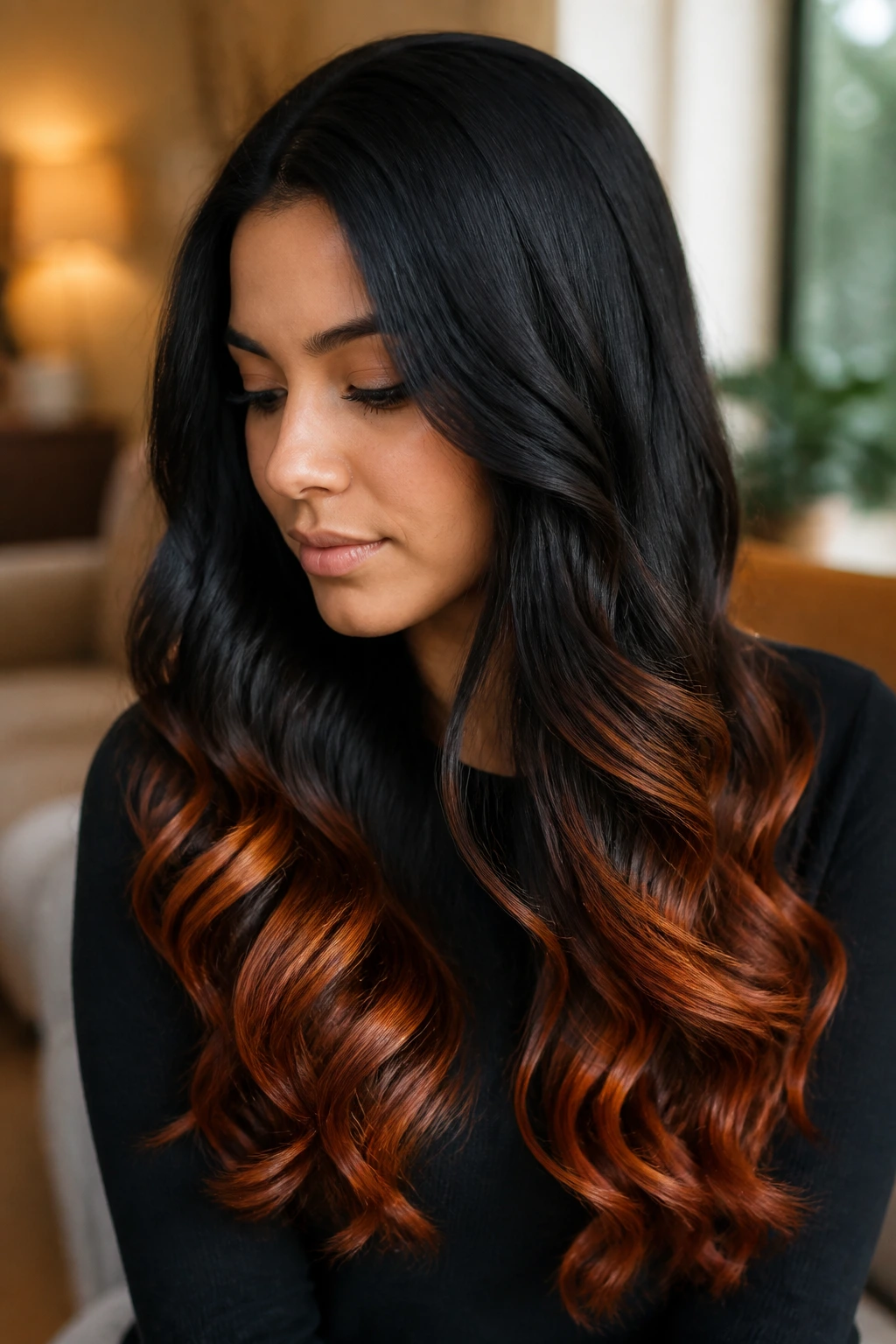
Copper ember ends bring warmth to black hair without turning the whole head into a bright red statement. The effect feels like glowing coals under ash, especially when the ends are curled.
A long black base makes copper look richer than it does on lighter hair. The contrast pulls the eye downward, and the warm tone at the ends catches movement in a way that feels alive. Straight hair shows the color as a clean gradient. Curls make it flare.
This is a good choice if your natural coloring already leans warm. It also suits thick hair because copper can sometimes look thin on very fine strands unless the color is packed in densely enough near the bottom.
- Ask for ember, cinnamon-copper, or burnt orange-brown rather than neon copper
- Start the fade around mid-back for a dramatic but wearable effect
- Use a heat protectant every time you style it, because warm tones fade fast with too much heat
- A curl pattern will make the color look deeper and more layered
The best part? It looks better when the ends aren’t perfect. A little movement makes the copper feel like it belongs there.
10. Black to Cherry Cola Ombre
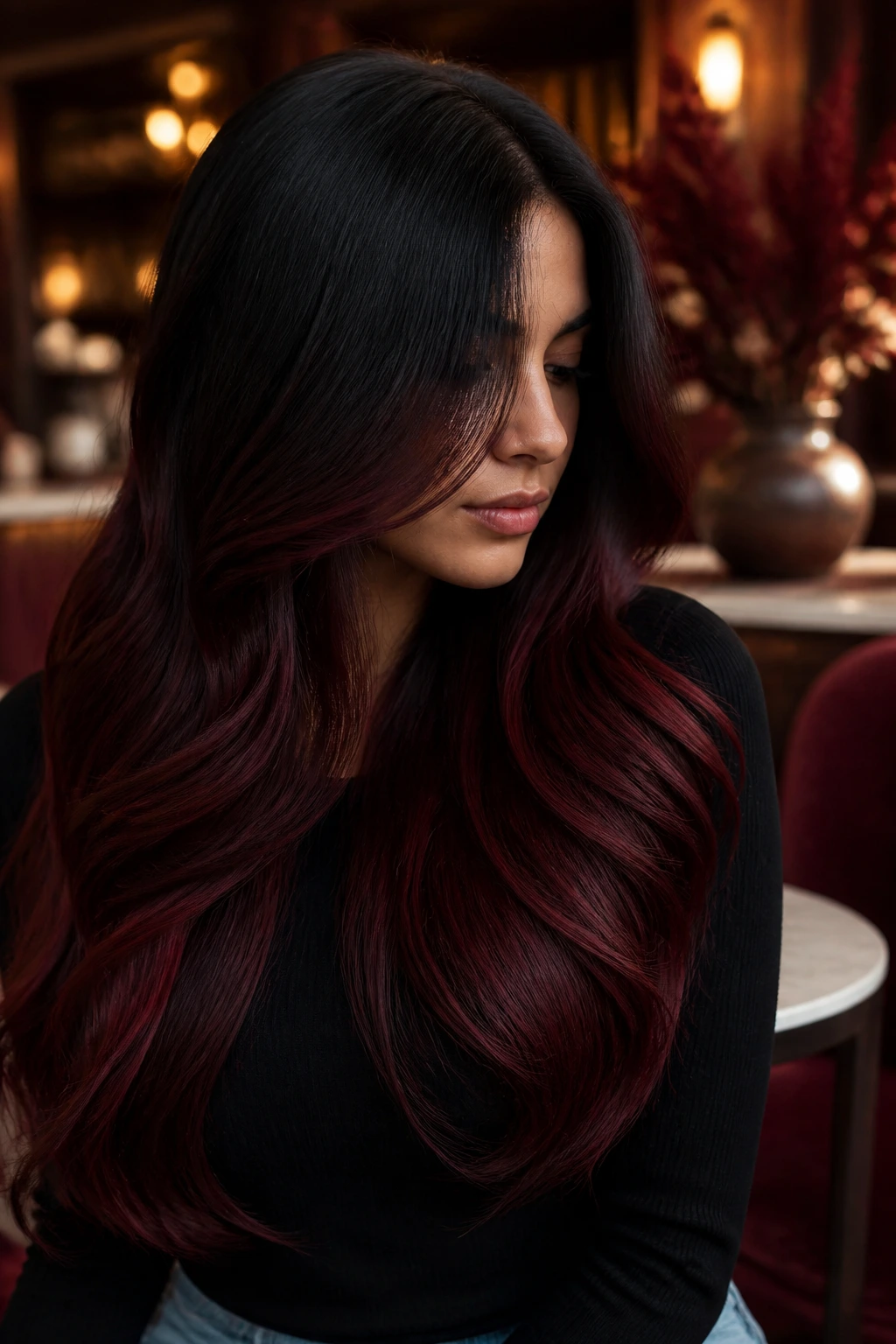
Cherry cola sits right between red-brown and deep burgundy, which makes it easier to wear than brighter red shades. It has enough color to show, but it still feels grounded under black.
Unlike a full burgundy fade, cherry cola leans a touch browner and a little less wine-like. That gives it a glossy, soft-focus effect, especially on long hair that’s been blown out with a round brush. The color seems to shift between red, brown, and almost black depending on the light.
It’s a smart pick if you want something that looks dressed up but not fussy. The shade reads polished in a ponytail, and even a low bun still lets the lower lengths show a hint of red when they move.
If you want it done well, ask for a fade with deep maroon lowlights through the mid-lengths and a richer cherry glaze toward the ends. That keeps the color from looking flat. Long hair has room for those small shifts, and that’s exactly why this shade lands so well on it.
11. Black to Ash Blonde Gradient
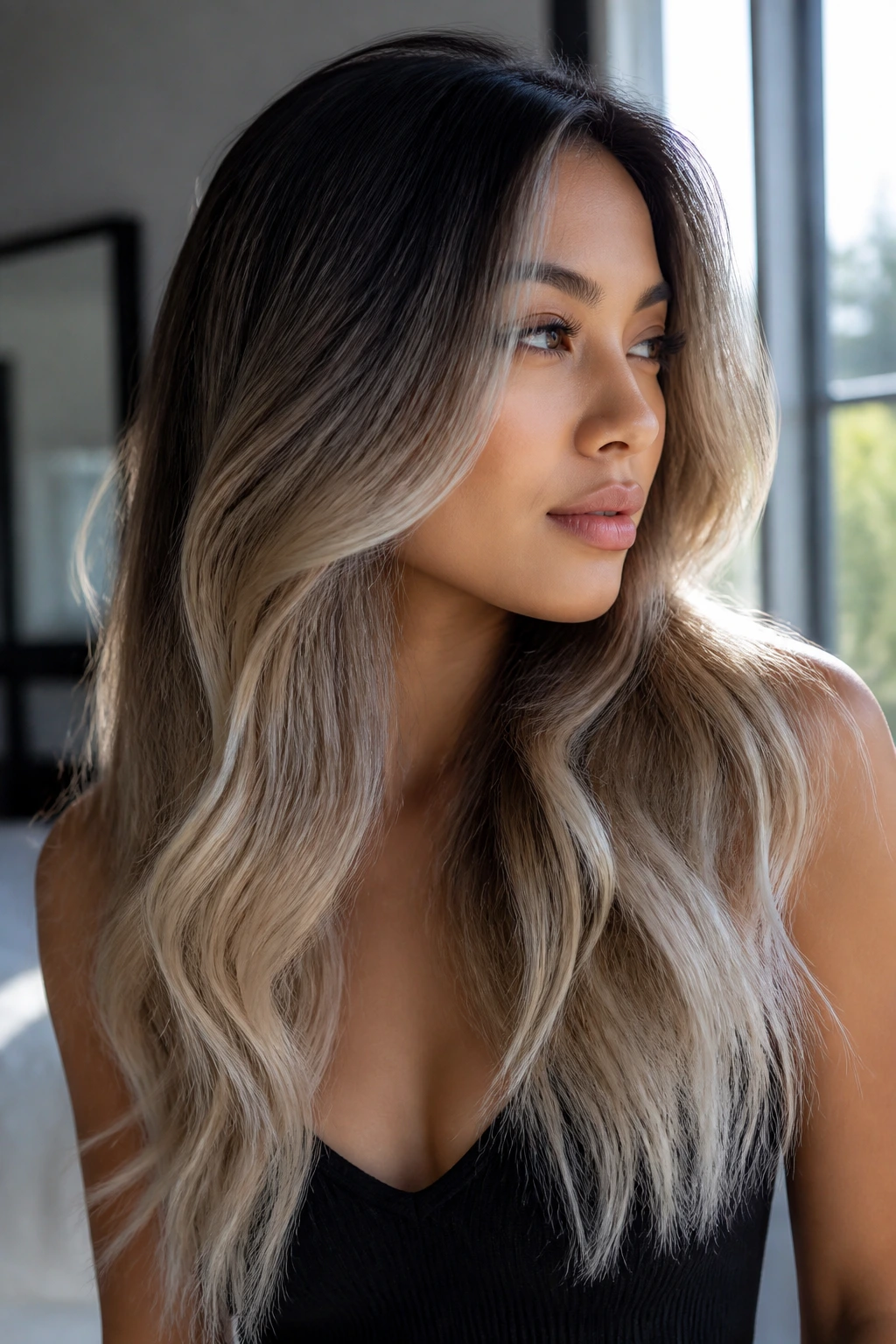
Ash blonde at the ends is the hardest-working high-contrast option here, and I mean that in the practical sense. It gives you a clean, striking line between dark roots and pale ends, but the ash tone keeps it from going yellow or brassy.
The gradient should not jump from black to pale blonde in one sudden move. A dark brown or taupe bridge helps a lot. On long hair, that bridge can live in the middle third and soften the visual break, which is what makes the style look expensive instead of extreme.
This is the kind of black ombre that changes the whole mood of the haircut. Waves make it feel beachy. Straight hair turns it graphic. A big layered cut can make the blonde ends flare out in a way that looks almost airy, which is a funny thing to say about black hair, but there it is.
You will need more upkeep here than with brown or burgundy. Toner matters. So does the condition of the ends. If the blonde starts to feel rough, the whole look gets tired fast, and no amount of styling hides that.
12. Black to Mushroom Brown Fade
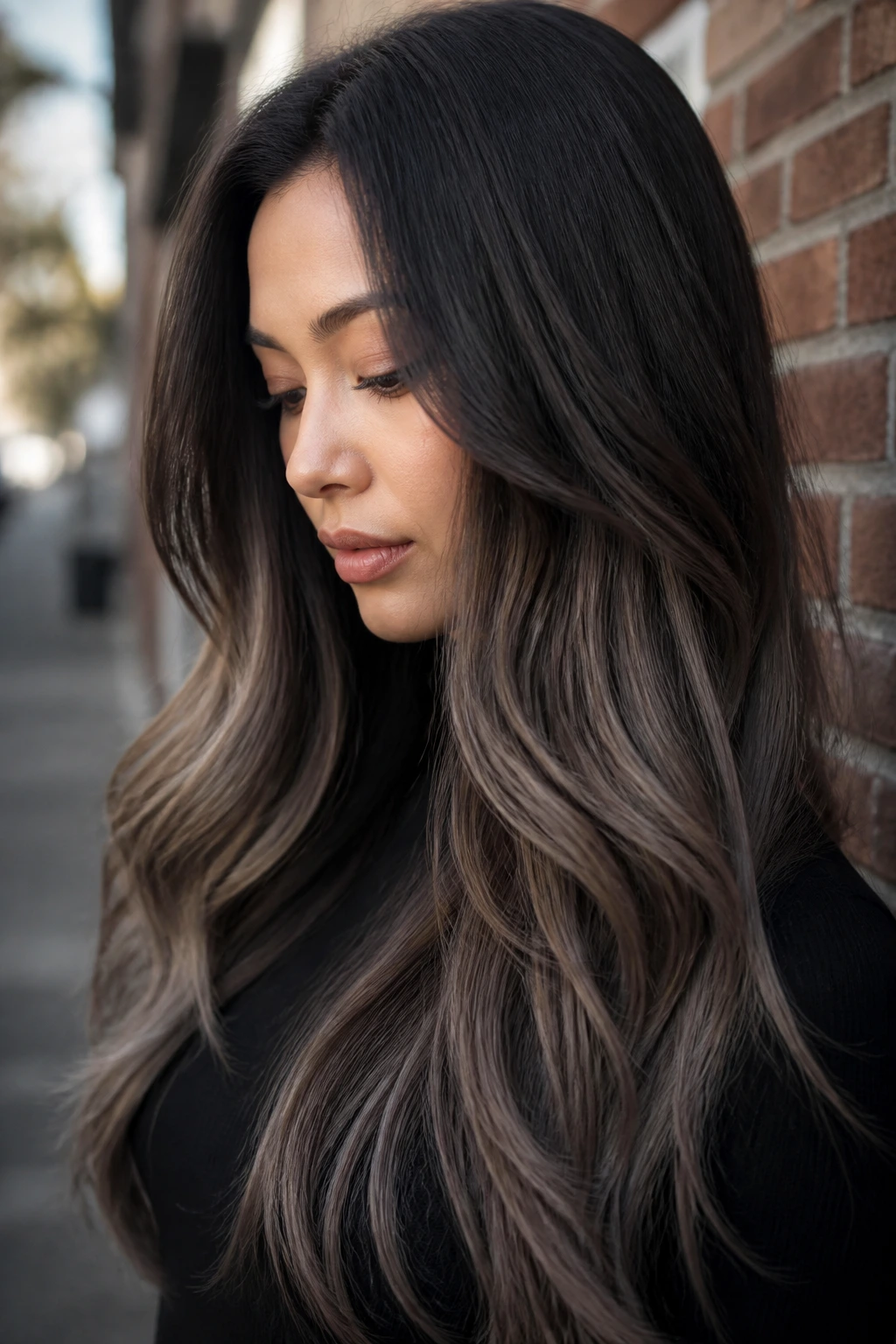
Mushroom brown is the quiet one in the room, and that’s why I like it. The tone sits in that cool taupe zone between brown and gray, so the fade from black feels smooth rather than warm.
This shade is a good match for long hair that you wear a lot in loose waves or a sleek middle part. It has enough depth to keep the ombre from looking washed out, but it doesn’t demand attention the way caramel or copper does. If your wardrobe leans neutral, this is probably the easiest color on the list to live with.
The color also behaves well when the hair grows. Roots don’t fight the ends, because the mushroom tone stays subdued instead of flashy. That means fewer moments where the color looks uneven on day-to-day wear.
One thing I like about it: the shade looks expensive even when the styling is plain. A low ponytail, center part, and a little shine serum can be enough. No drama required. Sometimes that’s the whole point.
13. Black with Toffee and Honey Waves
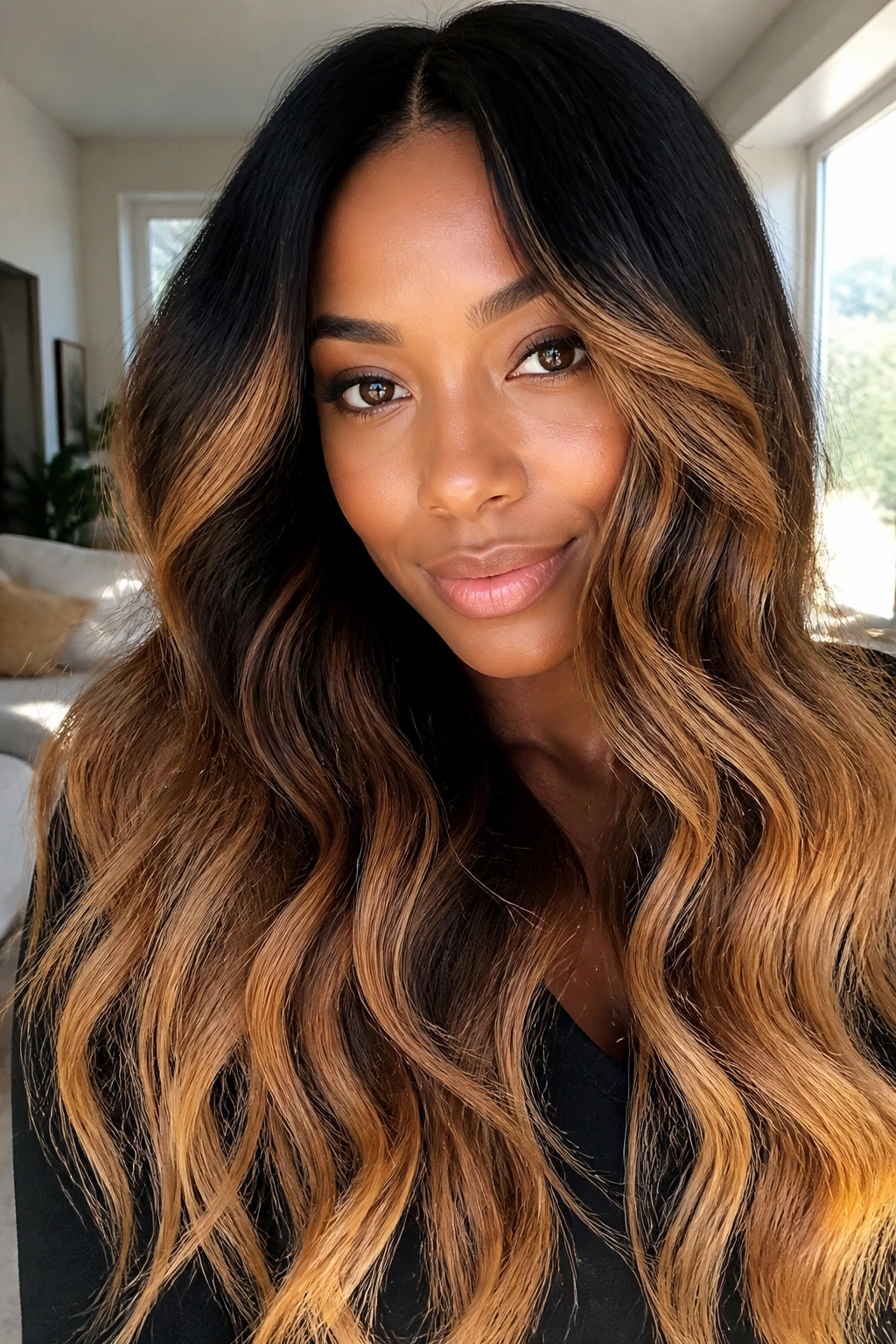
Toffee and honey bring warmth to black ombre hair without making it look coppery or orange. The shades are softer, sweeter, and a little more sunlit than caramel.
Why Waves Matter
On long hair, these tones look best when the ends have a bend. Loose waves break up the light, so the toffee and honey pieces show in flashes instead of one heavy block. That keeps the color from looking flat, which is a real risk with warm blondes at the bottom of dark hair.
If your hair is layered, even better. The lighter pieces can sit on top of the darker ones, and the whole thing ends up looking fuller. That matters a lot on long hair because length alone can weigh the style down if the color is too even.
- Ask for beige-honey, soft toffee, or golden beige at the ends
- Keep the first bright pieces below the chin
- Works especially well with loose curls and soft blowouts
- A shine spray helps the lighter ends look intentional, not dry
This is a friendly color. It feels softer than ash blonde and less serious than mushroom brown. Easy on the eyes.
14. Black to Midnight Teal Ends
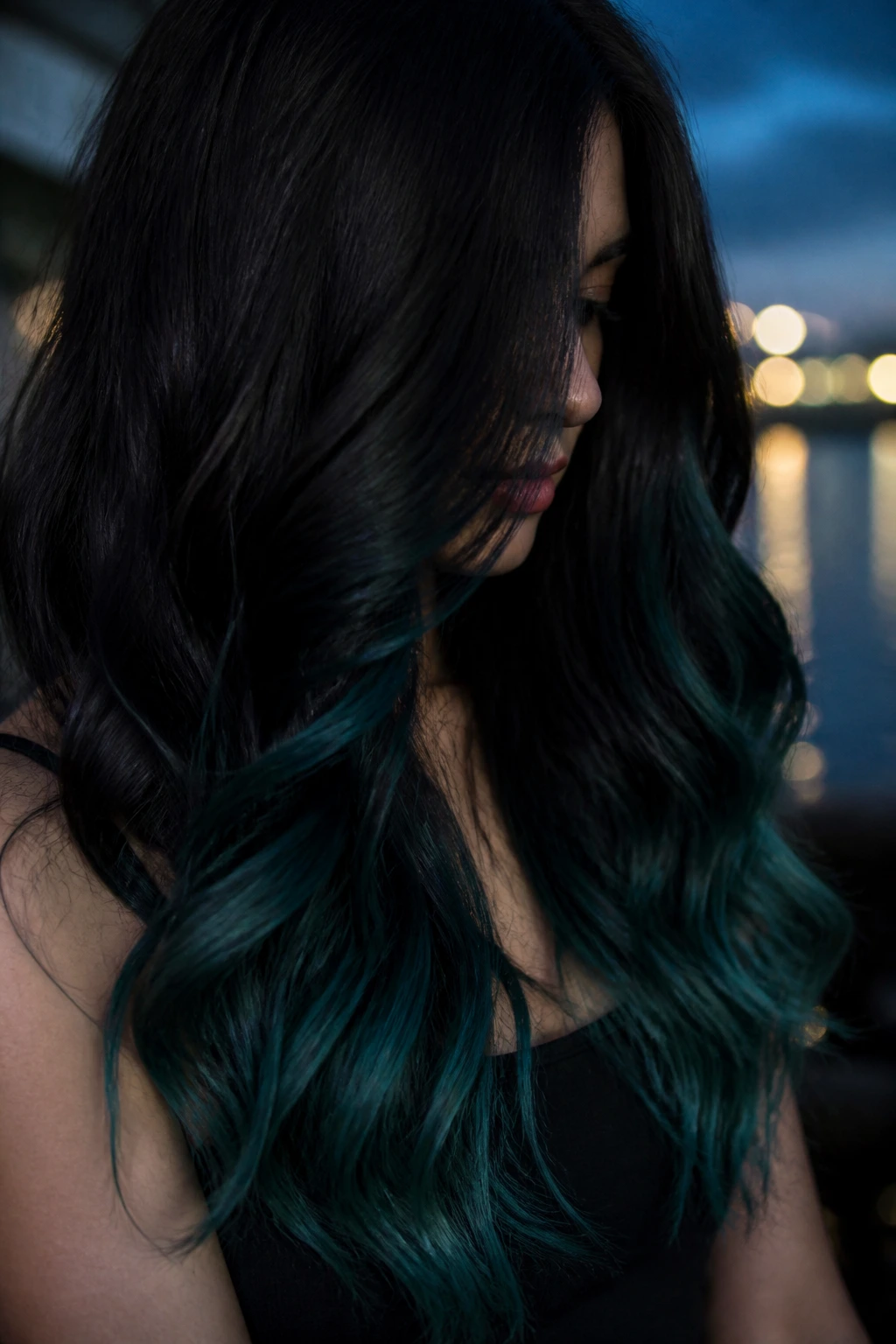
Want a fantasy color that still feels wearable? Midnight teal is the move. It has enough blue in it to stay cool, enough green to feel unusual, and enough depth to sit comfortably under black roots.
Because teal can get bright fast, the best version for long hair stays dark and layered. You don’t want a neon strip under black hair. You want a shadowy teal that peeks through in waves and braids, almost like peacock feathers tucked into the ends.
This works especially well if you like your hair up sometimes. A fishtail braid or half-up twist will show the teal in broken lines, which is much prettier than a solid block. On straight hair, the color reads sleeker and more dramatic.
What to Tell Your Stylist
- Keep the teal in the midnight, blue-green range
- Place it mostly on the lower 6 to 10 inches
- Use a cool gloss if the shade starts leaning mossy
- Pair it with layered cuts so the color can move
It’s bold. Still, it doesn’t feel childish when the tone stays deep enough.
15. Black to Red Velvet Ombre
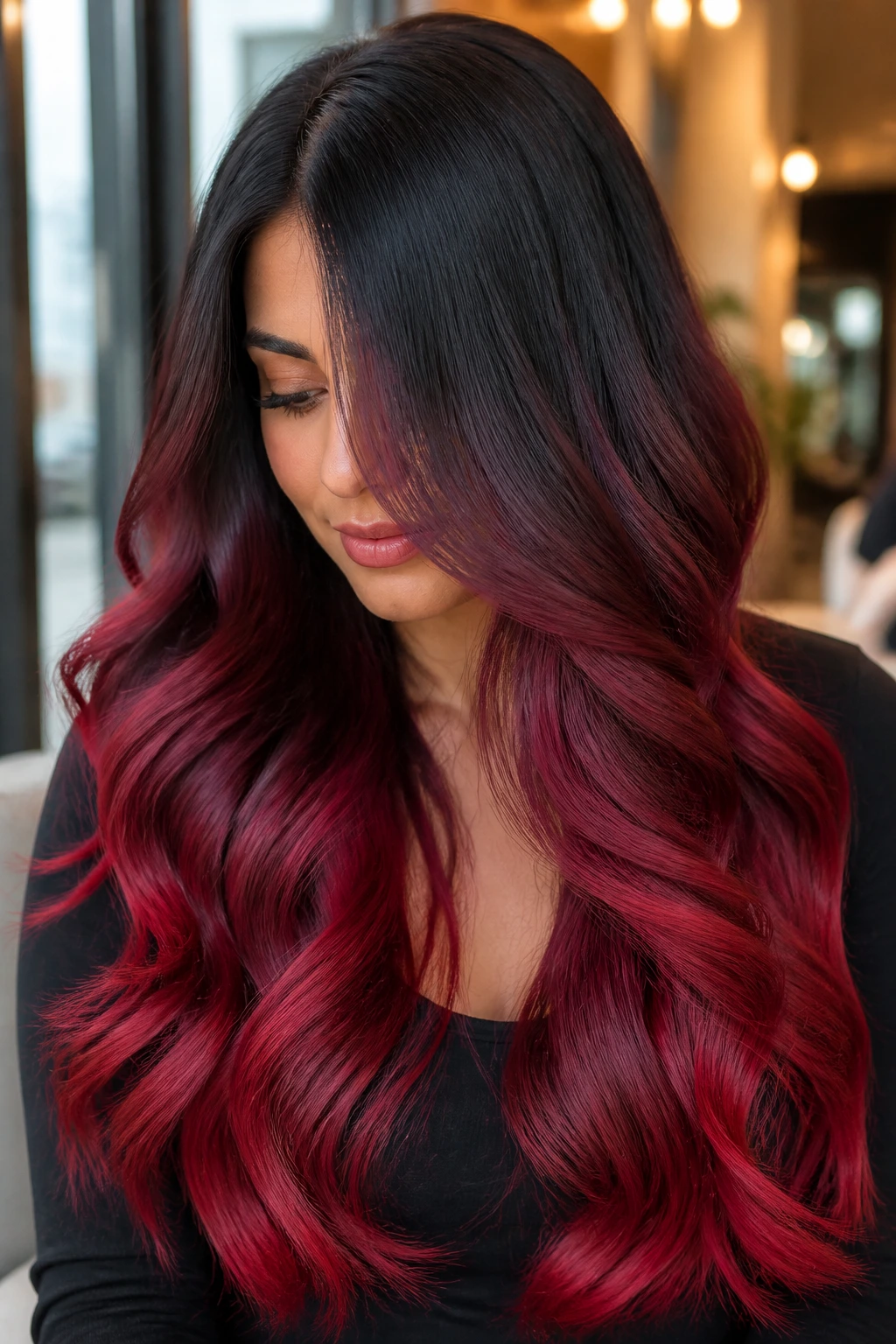
Red velvet is richer and more saturated than cherry cola, and that difference shows. The color sits deeper in the crimson family, so it reads more theatrical and less brown.
Unlike softer red fades, red velvet wants to be seen. On long hair, that can be a gift. The length gives the color enough room to spread out, and big curls make the ends look plush instead of flat. It’s the kind of shade that makes a simple black top look more finished.
The most flattering version starts with a black root and moves into a true red-violet midsection before landing in velvet red at the bottom. That middle layer is what keeps it from looking like a dipped dye job. Without it, the whole thing can feel abrupt.
If you wear your hair straight often, ask for a few deeper red ribbons through the lower half so the ends don’t look like a solid block. If you curl your hair, go richer and denser at the tips. The texture does a lot of the work for you.
16. Black to Lavender Smoke Ends
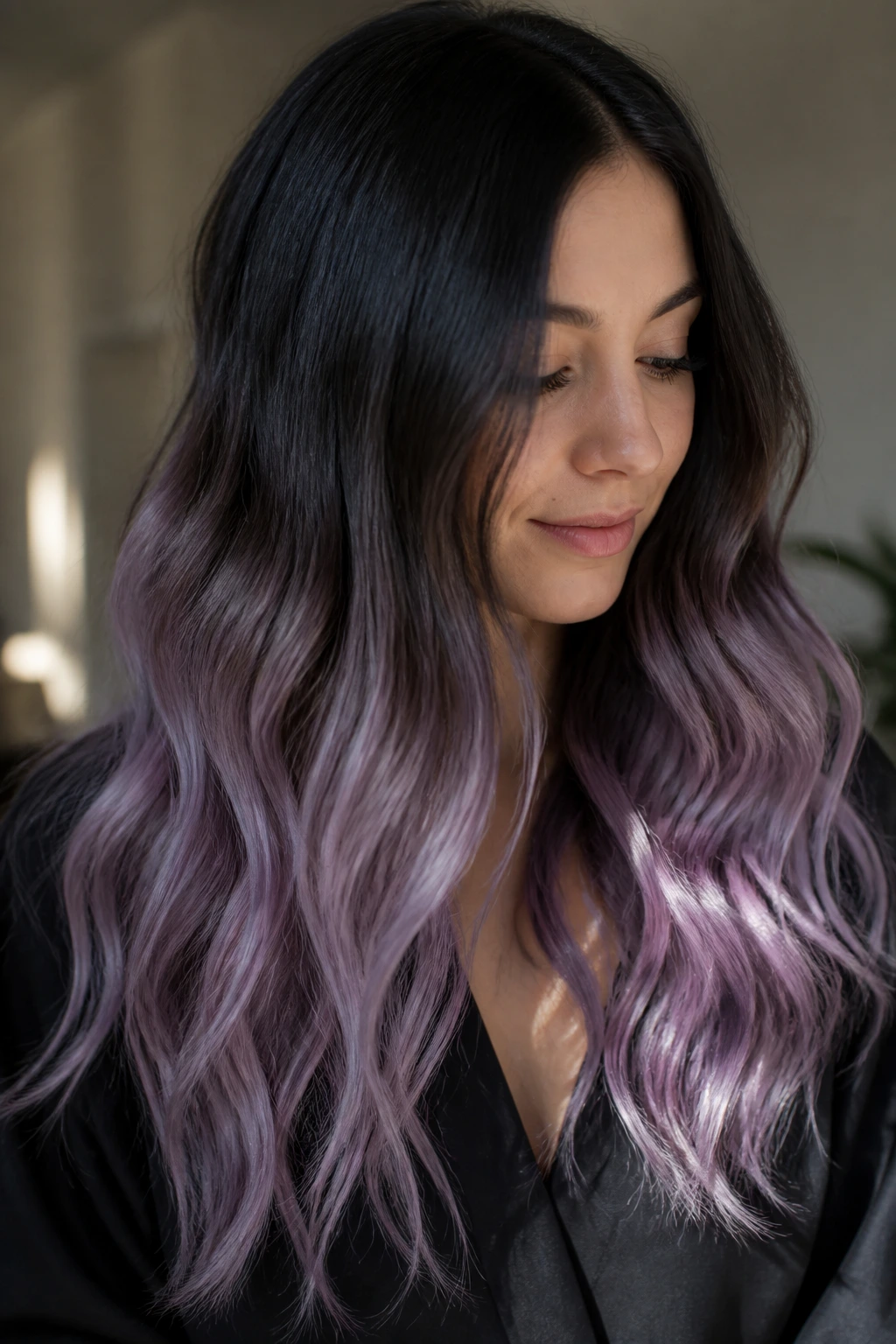
Lavender smoke is the softest fantasy option on this list. It has the dreamy feeling of pastel hair, but the muted tone keeps it from looking sugary.
The key is restraint. Lavender on black hair needs pale enough ends to show, yet the final color should still feel smoky, not lilac candy. That’s why long hair helps. There’s room for the transition to happen gradually, and the style can afford a few shadowy middle tones before the lavender arrives.
I like this shade best on long hair that gets braided or worn in half-up styles. The color peeks out in movement, which is more interesting than seeing every inch at once. On a braid, the lavender threads through the darker sections and looks almost fabric-like.
- Keep the shade in the dusty lilac or smoke-lavender family
- Ask for soft root shadowing so the black doesn’t look pasted on
- Use cool-toned conditioner to protect the lavender cast
- Expect more salon maintenance than brown, because pastels fade fast
It’s delicate, but not fussy if the tone is kept muted. That’s the difference.
17. Black to Espresso Bronze Melt
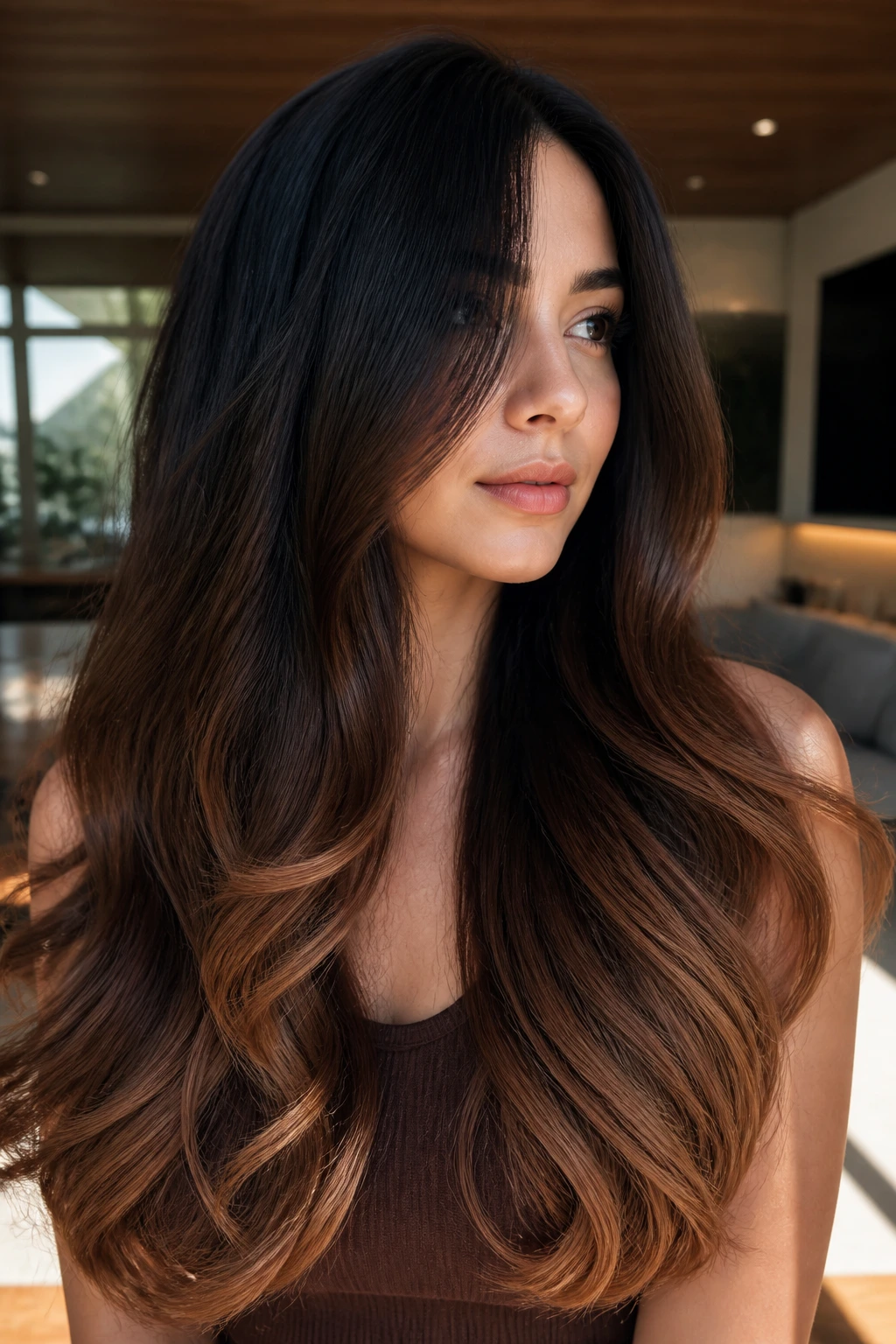
Espresso bronze is one of those shades that does a lot of work without looking like it’s trying. The base stays deep and almost black, while the lower half picks up a bronze-brown sheen that feels warm and polished.
This is a strong option for long hair because it gives you movement without loud contrast. The bronze shifts under light instead of announcing itself from across the room. On a silky blowout, it looks smooth and expensive. On soft waves, it turns into little bands of warmth that catch the eye only when the hair moves.
The tone sits somewhere between brown and gold, which makes it easier to wear than pale blonde but brighter than mocha. If you want a style that can live at a desk, on a date, and in a messy bun without looking out of place, this is a good bet.
It also grows out nicely. The fade is subtle enough that a few new inches at the roots don’t ruin the look. That matters more than people admit when they choose ombre. A hair color that still looks tidy after six weeks is worth more than one that looks good for a single weekend.
18. Black to Soft Beige Blonde Tips
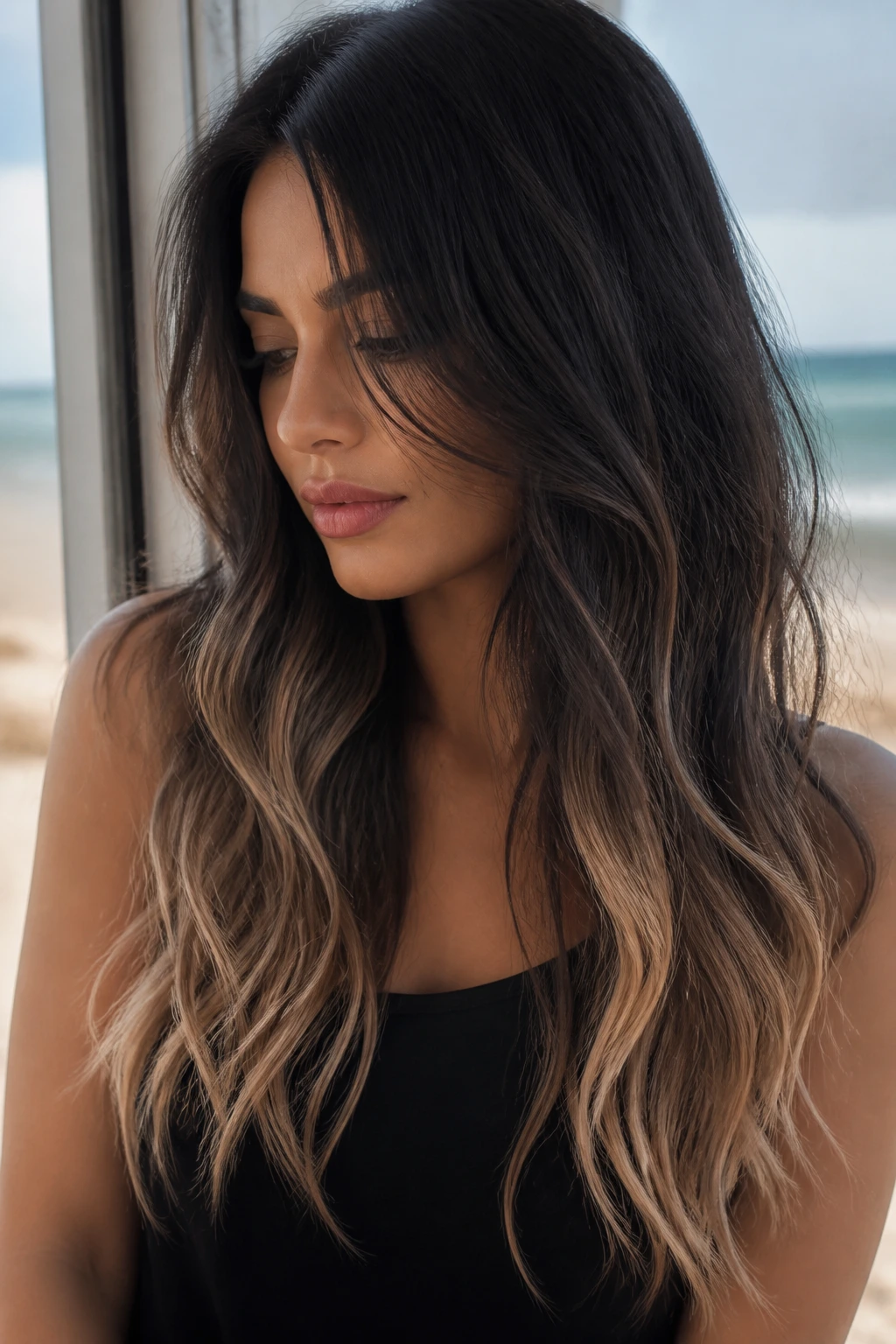
Soft beige blonde tips are for people who want lightness without the brass. Beige sits cooler than honey and warmer than ash, which gives the ombre a balanced, airy finish.
The trick is to keep the beige soft, not bright. On very long hair, the lightest color should live mostly in the final inches, with a smoother blonde haze in the lower third. That way the eye sees a fade rather than a sudden jump from black to blonde. The difference is subtle in theory and obvious in the mirror.
This shade looks especially good with beach waves or a rough-dried bend. The texture keeps the blonde tips from feeling too neat, and the softness works with the long length instead of fighting it. If your hair is pin-straight and heavy, the ends can look a little disconnected unless the layers are doing enough work.
You will need toner here. Beige blonde goes yellow if ignored. That’s not a flaw of the color; it’s just the reality of lightening dark hair. If you’re willing to keep the tone clean, the result is one of the prettiest light-on-dark ombres you can wear.
19. Black to Multi-Tonal Cinnamon Fade
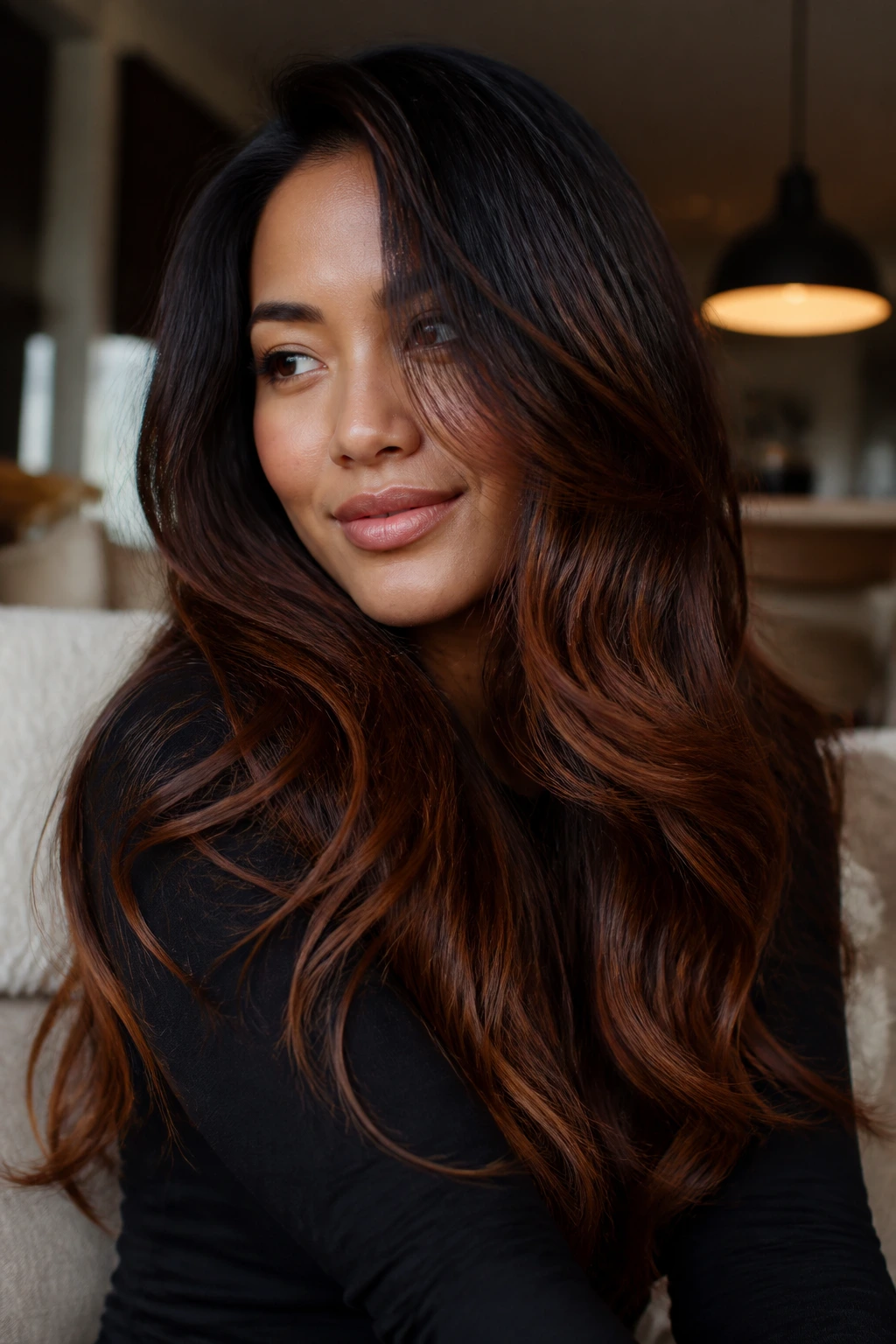
Cinnamon is the shade that makes black ombre feel layered without becoming flashy. It blends auburn, brown, and a touch of warm red, so the ends never look flat.
What Makes It Different
Instead of one fixed tone, cinnamon moves. A few strands look auburn, others read brown, and some catch a warm red only when the light slides across them. On long hair, that mix is a gift. It gives the lower half depth without needing a huge amount of contrast.
This is a good style if you have layers, because the color can fall into the cut and show slightly different tones at different lengths. On curls, it looks rich and soft. On straight hair, it feels cleaner and a bit more graphic.
- Ask for auburn-brown and warm red-brown panels in the lower half
- Keep the brightest pieces below the shoulders
- Works well if you want warmth without going full copper
- A gloss can keep the cinnamon from turning flat after a few washes
The nicest thing about this one is that it wears well in plain clothes. Black shirt, denim, cinnamon ends. That’s enough.
20. Black to Deep Forest Green Ends
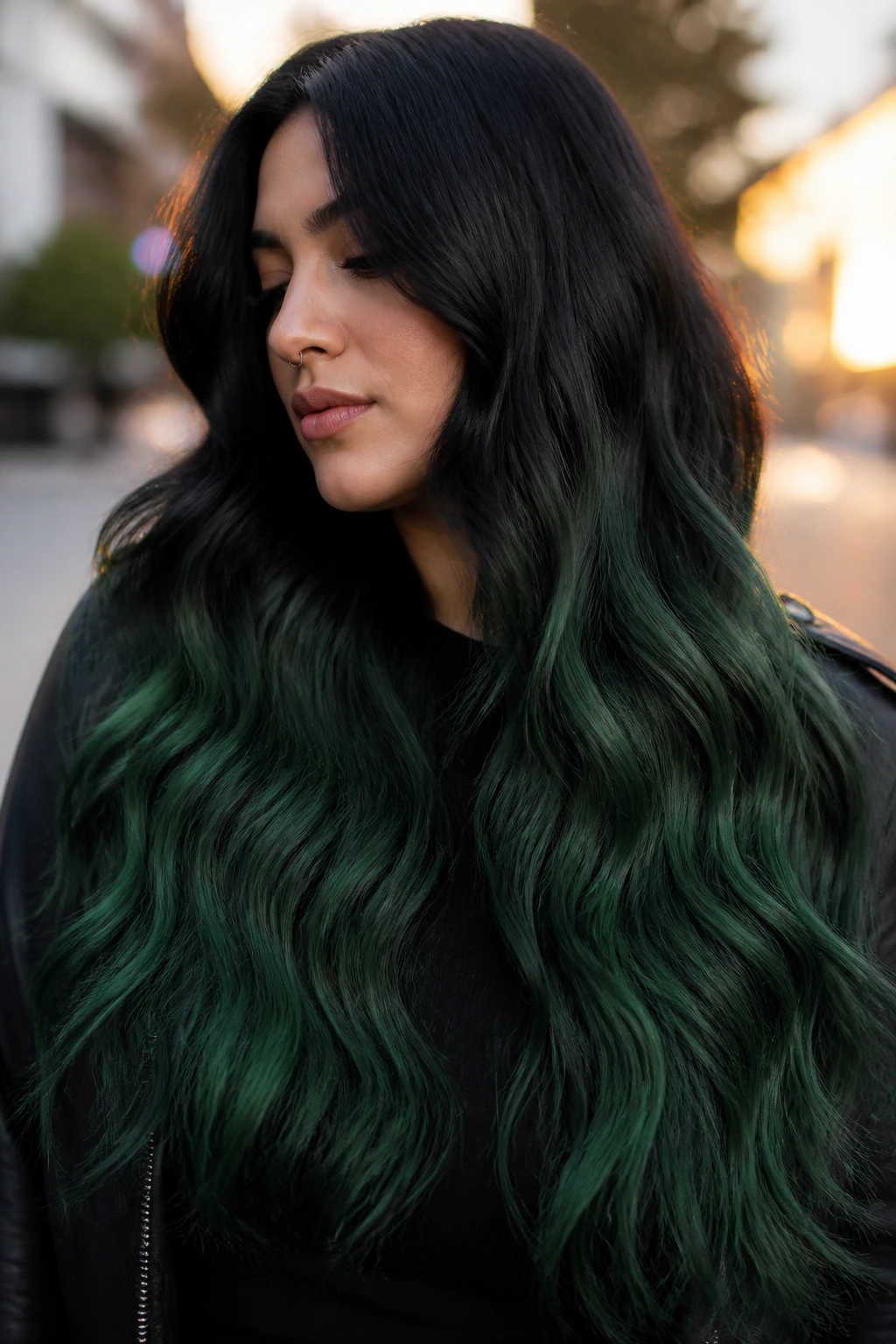
Deep forest green is the bold finish that still feels grounded. It’s darker than teal, less bright than emerald, and far less loud than neon green, which is why it works better than people expect with black hair.
Unlike cooler jewel tones that flash blue, forest green feels earthy. On long hair, that matters because the color can live in the ends without breaking the mood of the black root. The result is strong but not cartoonish. In braids, the green shows in little dark bands. In waves, it looks like velvet moving through shadow.
This style is a smart choice if you want something memorable but still wearable with black denim, leather jackets, or plain white tees. It also suits thicker hair, because the depth of the color needs enough body underneath it. Fine hair can wear it too, but the tone should stay rich and dark rather than bright.
If you’re choosing one of the more playful black ombre hair ideas for long hair, this is the one I’d put near the top of the pile. It has enough edge to feel special and enough restraint to last beyond the first week of compliments.
