



Long hair is where red brown ombre hair earns its keep. The extra length gives the color room to move, so a brown root can slide into copper, auburn, mahogany, or cherry without looking chopped off at the middle.
The trick is not picking a red and a brown at random. It’s choosing the kind of fade that works with your haircut, your skin tone, and how much upkeep you can live with after a few washes. On long layers, a soft melt looks rich; on one-length hair, deeper contrast keeps the ends from disappearing into the rest of the style.
A lot of ombre photos fail in the same boring way: the red is too bright, the brown is too flat, and the transition is slapped in at cheek level. Better versions keep the darkest shade near the roots and let warmth build slowly, which gives long hair movement even when it’s straight.
What follows are 28 red brown ombre hair ideas for long hair, from quiet cinnamon blends to bolder wine-tinted fades. Some are easy to wear every day. Others ask for more glossing, more toning, and a little nerve. The good ones all do the same thing: make long hair look like it has depth instead of just length.
1. Copper Melt for Red Brown Ombre Hair
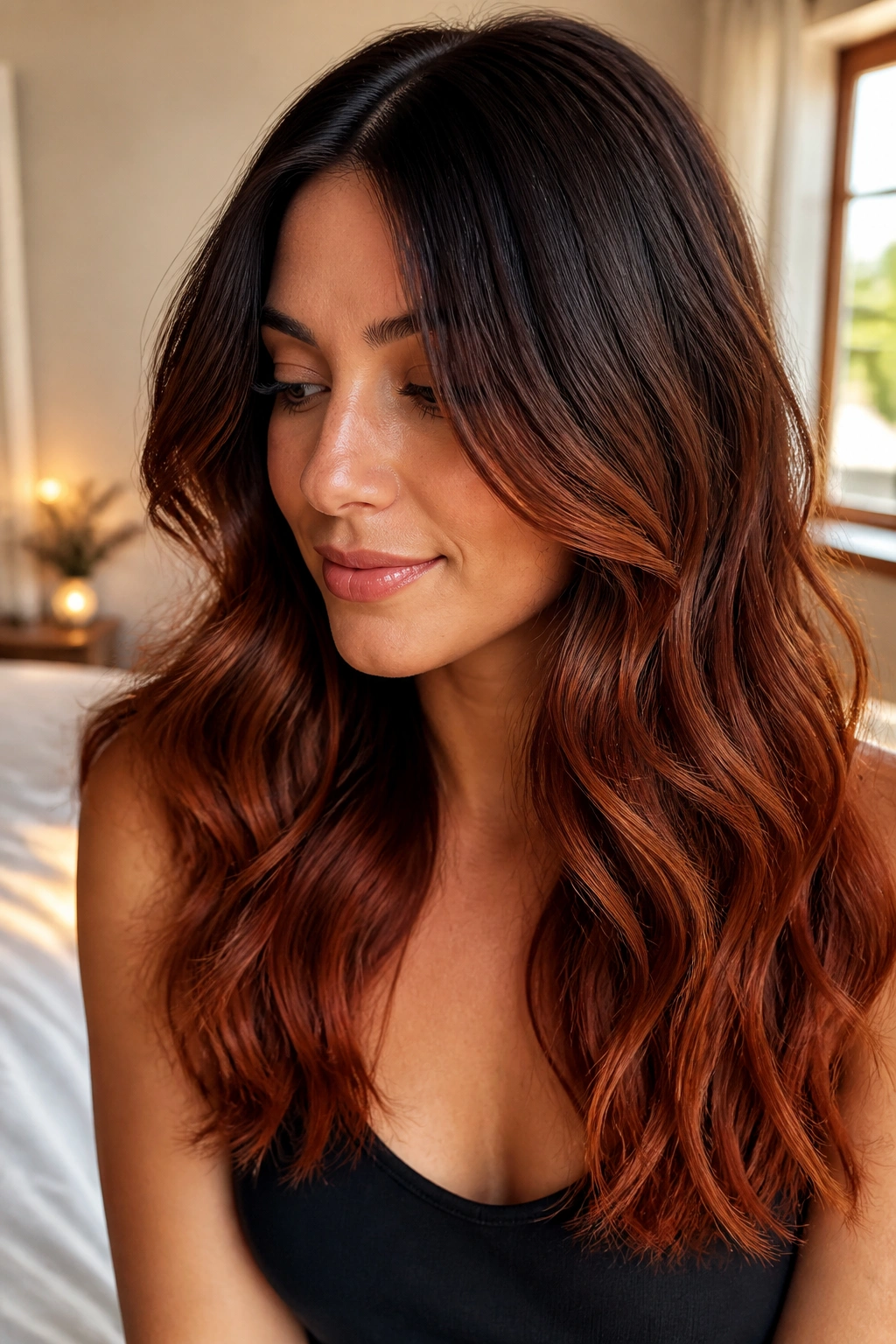
Copper and dark chocolate is the pairing I reach for when someone wants red brown ombre hair that feels rich instead of loud. The brown keeps the copper from drifting into pumpkin territory, and the copper keeps the brown from going flat.
Ask for a deep brown root shadow, then let the copper start around the lower ribs and intensify through the last 6 to 8 inches. On loose waves, the color reads like ribbons. On straight hair, the contrast is cleaner and a little sharper.
- Works well on medium-brown bases that already have warmth.
- Looks best when the transition stays soft, not striped.
- Loves layered cuts because the ends catch more light.
- A clear gloss at the end keeps the copper from looking dusty.
Tip: keep the copper warmer than orange. That tiny difference matters a lot.
2. Auburn Ribbon Fade
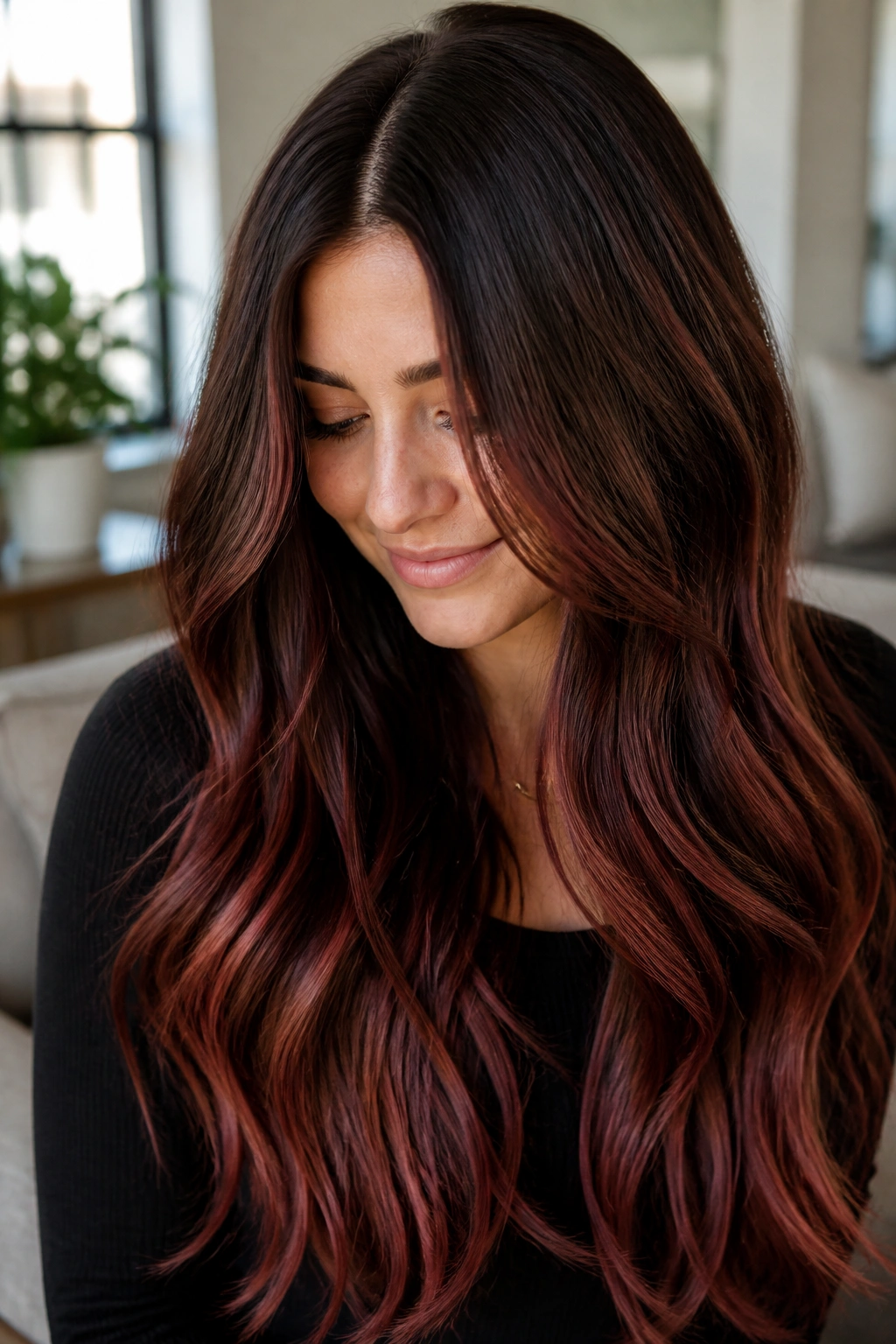
Want something red-brown that looks polished under indoor light and sunlight? Auburn ribboning does that job with very little drama. Instead of one big color change, the red is woven in thin strands through chestnut lengths, so the eye keeps finding new pieces as the hair moves.
That’s the part I like most. It doesn’t shout.
On long hair, ask for auburn ribbons that begin around the mid-lengths and get denser toward the bottom third. If the brown base is medium or dark, the auburn can sit on top like a glaze rather than a hard block of color. A center part and soft bend in the hair show it best.
If your hair is thick, keep the ribbons fine. Bigger chunks can make the fade look heavy. Thin placement gives you that expensive, layered look without much extra styling.
3. Cherry Cola Ends
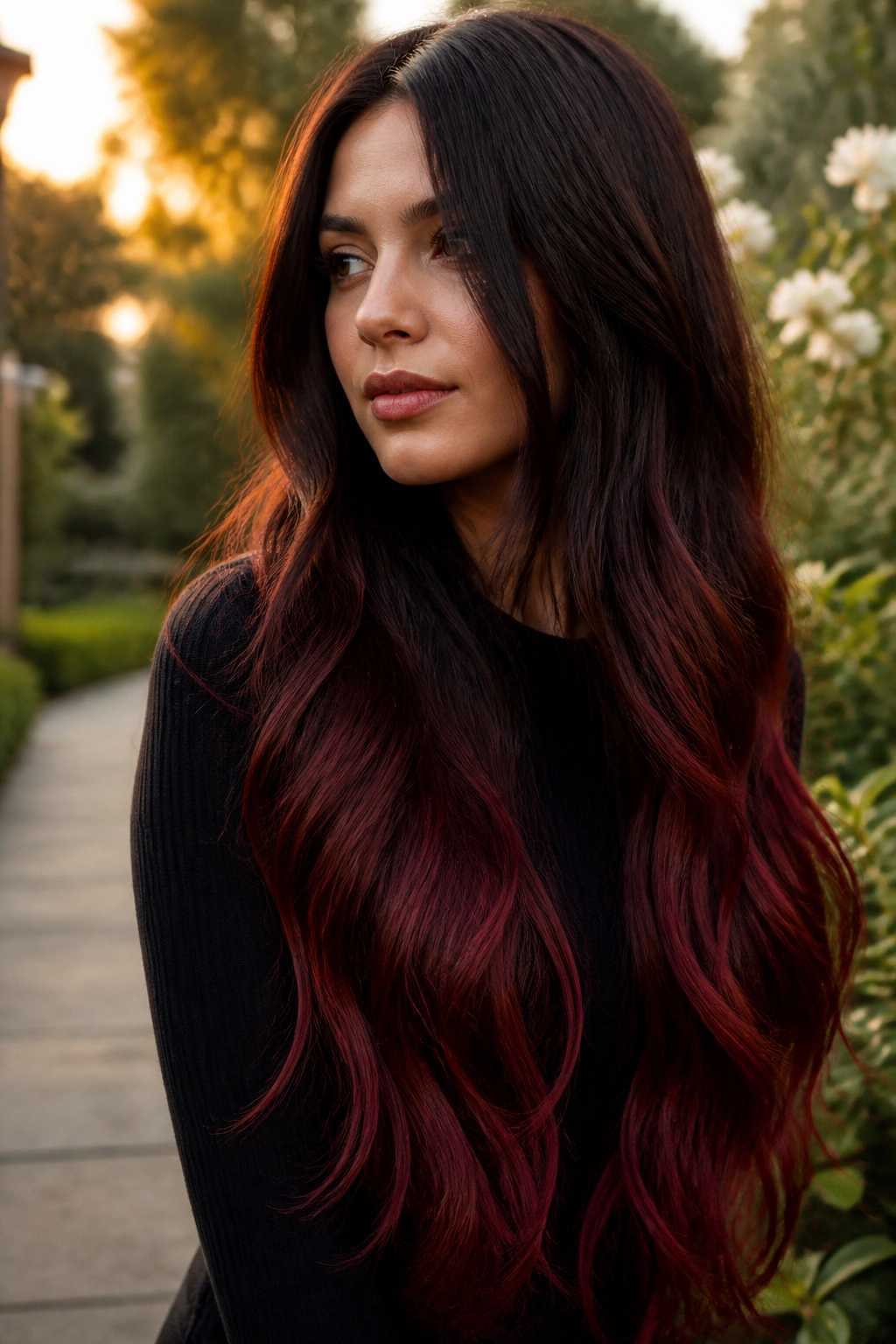
Picture waist-length waves with espresso at the crown and cherry cola at the tips. That’s the mood here. It’s darker than bright cherry, more sultry than true red, and it gives long hair a deep drink-toned finish that feels easy to wear.
Why it works
The brown base does a lot of the heavy lifting. Cherry cola has enough red to show movement, but it doesn’t sit on top of the hair like paint. On long hair, that means the ends can feel rich instead of washed out.
What to ask for
- A soft brown root shadow
- Red-violet and burgundy blended into the last third
- Face-framing pieces that stay a touch lighter
- Loose curls or waves to show the color shift
Pro tip: if your hair is porous, keep the red more wine-toned than fire-red. Porous ends grab pigment fast.
4. Mahogany and Espresso Sweep
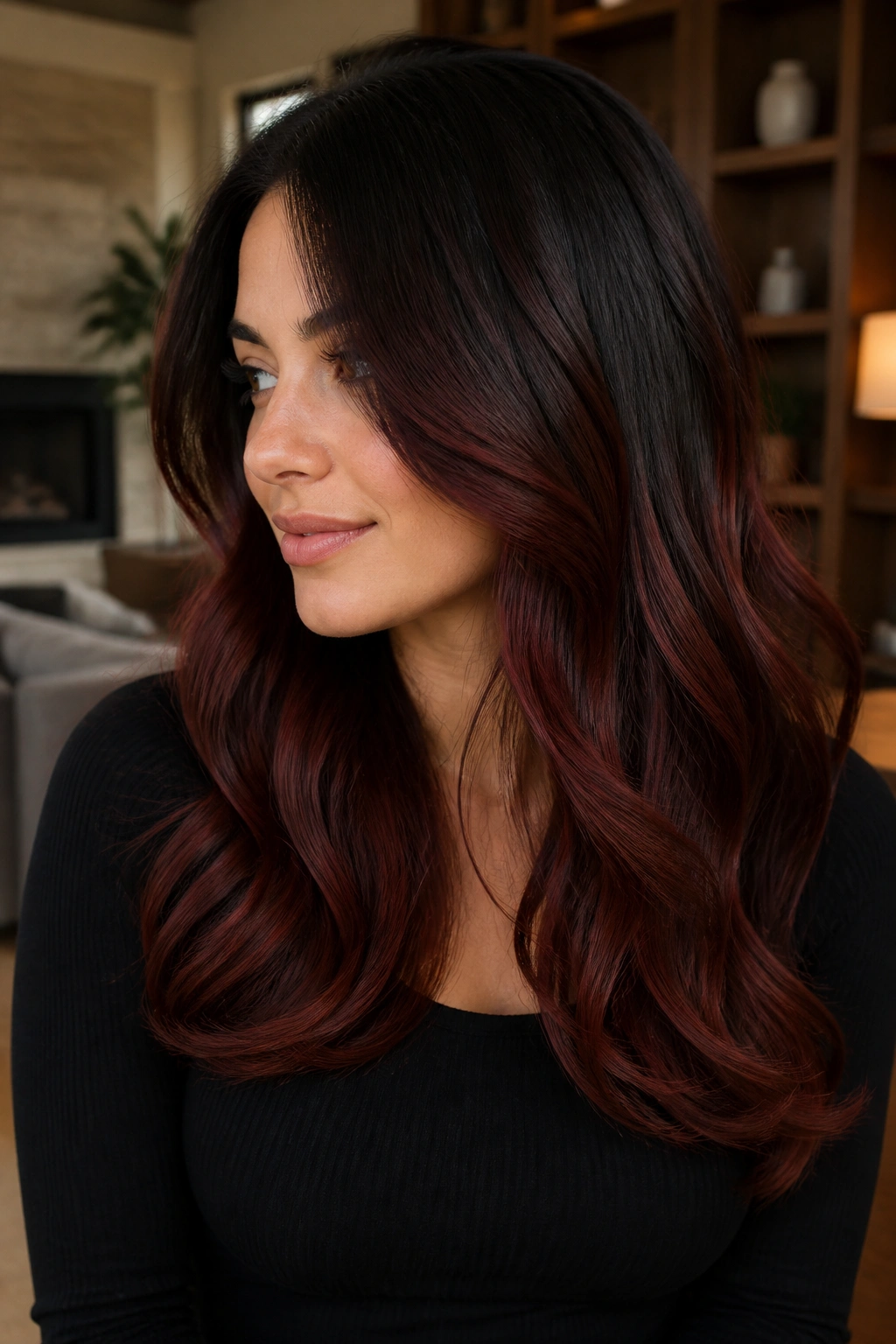
Unlike a bright copper ombre, mahogany and espresso stays quiet until the hair moves. That’s why I like it for long hair with blunt ends or a U-shaped cut. The color has depth, but it doesn’t rely on flash to look good.
This version is a smart pick if you need something that still behaves in a professional setting. The mahogany can start low, around the collarbone or lower, so the top half stays grounded in brown. Then the red warms up only near the bottom, where long hair has enough length to show it properly.
It also works beautifully on hair that’s naturally dark. You don’t have to push the red too hard. A mahogany glaze over espresso gives enough change to matter, while the finish still reads soft and wearable.
5. Cinnamon Brown Wash
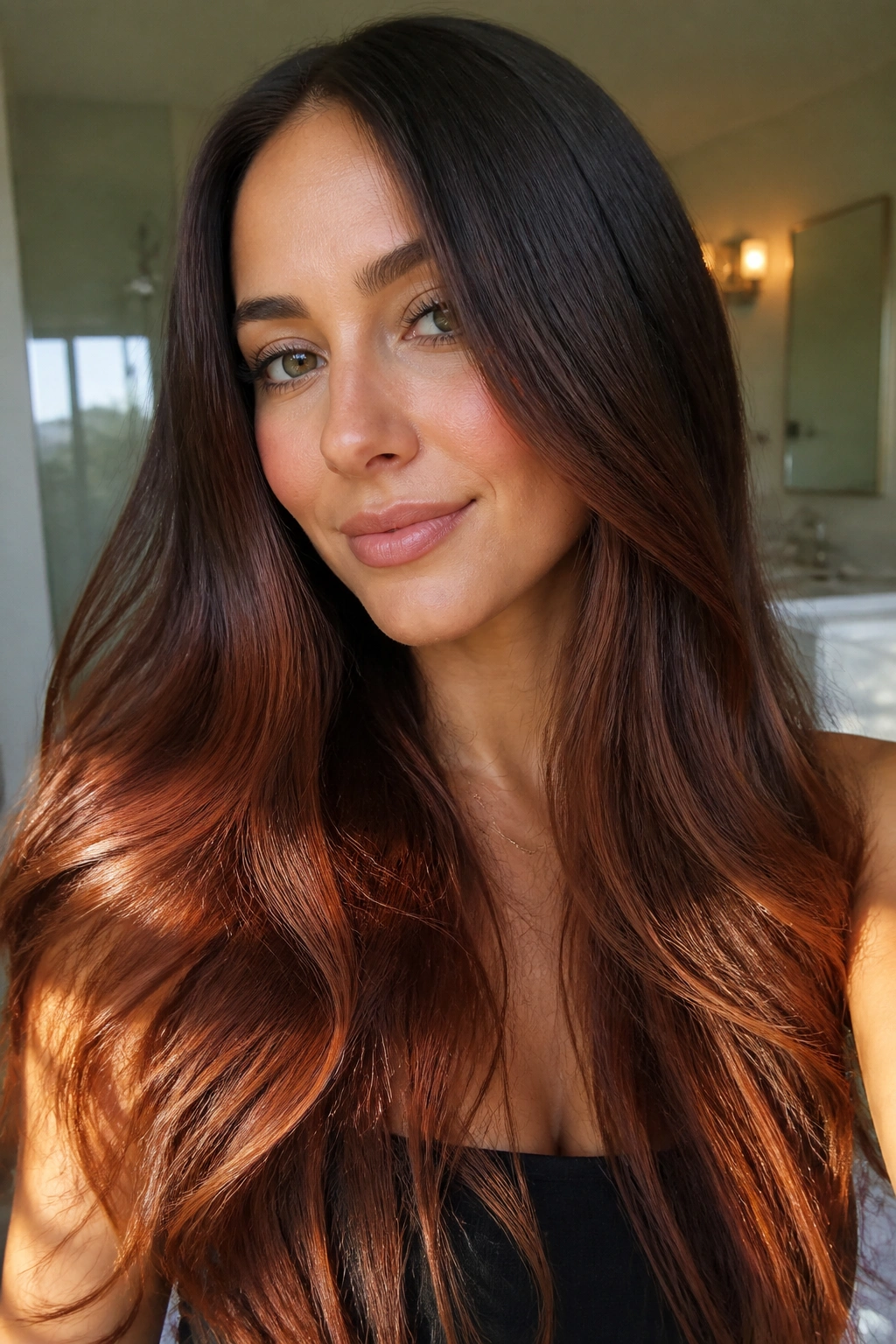
Cinnamon brown is one of those shades that looks even better when the hair is long, because the length lets the color unfold instead of announcing itself all at once. The red here is muted and warm, more spice than scarlet, which keeps the ombre from feeling precious.
What I like about this look is how forgiving it is. If your base is medium brown, you can keep the top close to natural and let the cinnamon start slowly through the mid-lengths. If your hair is very dark, a cinnamon gloss over lighter ends gives the same effect without a harsh line.
The finish matters. A smooth blowout makes the fade look refined. Loose braids make the warmer strands peek through in a softer way. Either route works.
It’s one of the easiest red-brown ombres to wear for months without getting tired of it.
6. Burgundy Veil with Curtain Bangs
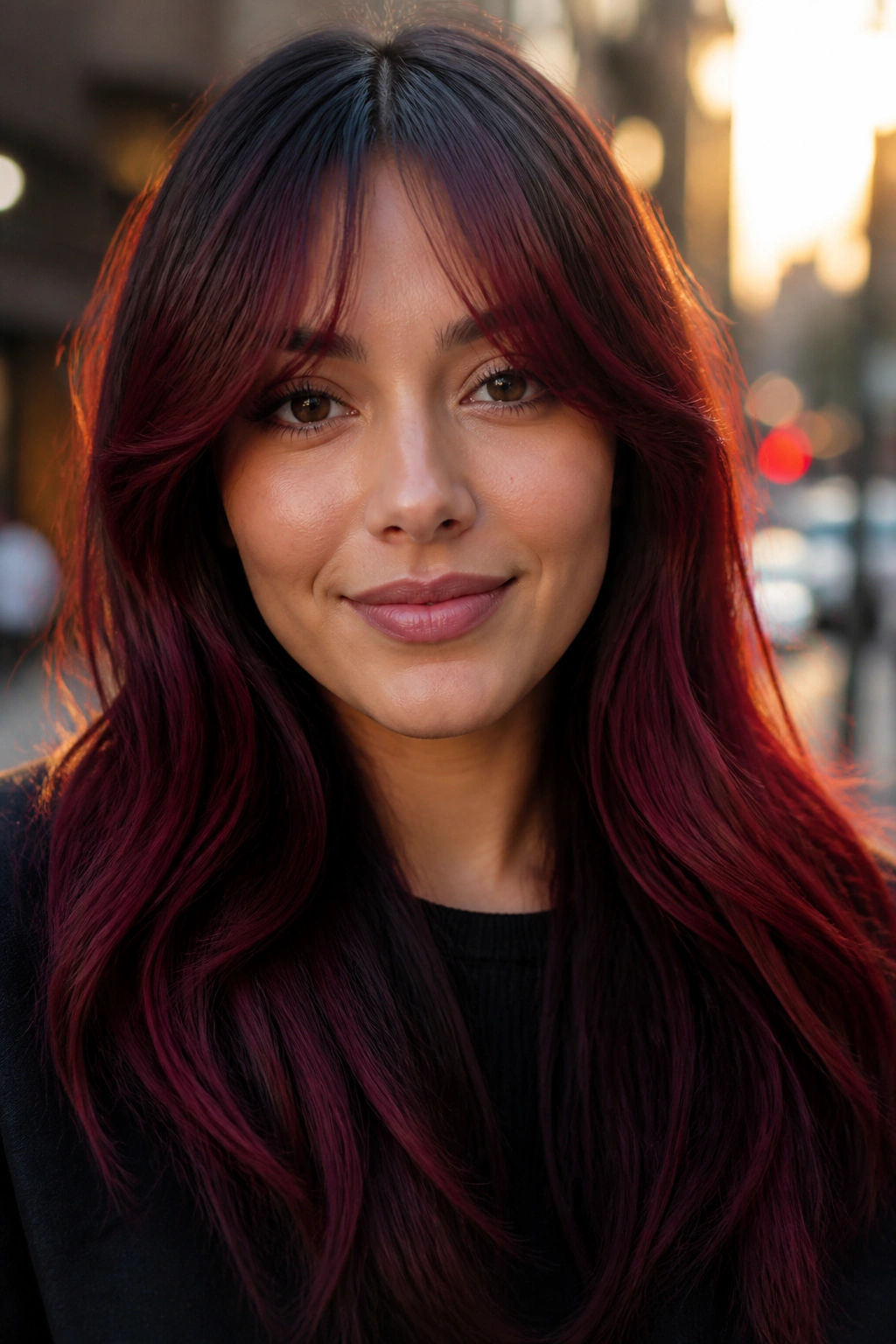
Curtain bangs change the whole conversation here. They bring the red forward, so the color does not just live on the ends; it frames the face and gives the ombre a little extra attitude.
Why the bangs matter
A burgundy veil works because it starts with a brown base that feels grounded, then slides into wine tones through the bangs and front layers. On long hair, that front section is what people notice first, so the color reads faster and looks fuller.
How to ask for it
Tell the colorist you want burgundy concentrated around the face-framing pieces and softer through the back. That keeps the fade from looking heavy on straight hair. If your bangs are shorter, keep the burgundy slightly deeper than the lengths. Short pieces fade faster and can go pink if they’re overlightened.
What to watch for
- Curtain bangs need regular glossing.
- Burgundy is happiest on cool or neutral skin tones.
- A middle part shows the veil most clearly.
7. Rusted Copper Red Brown Ombre
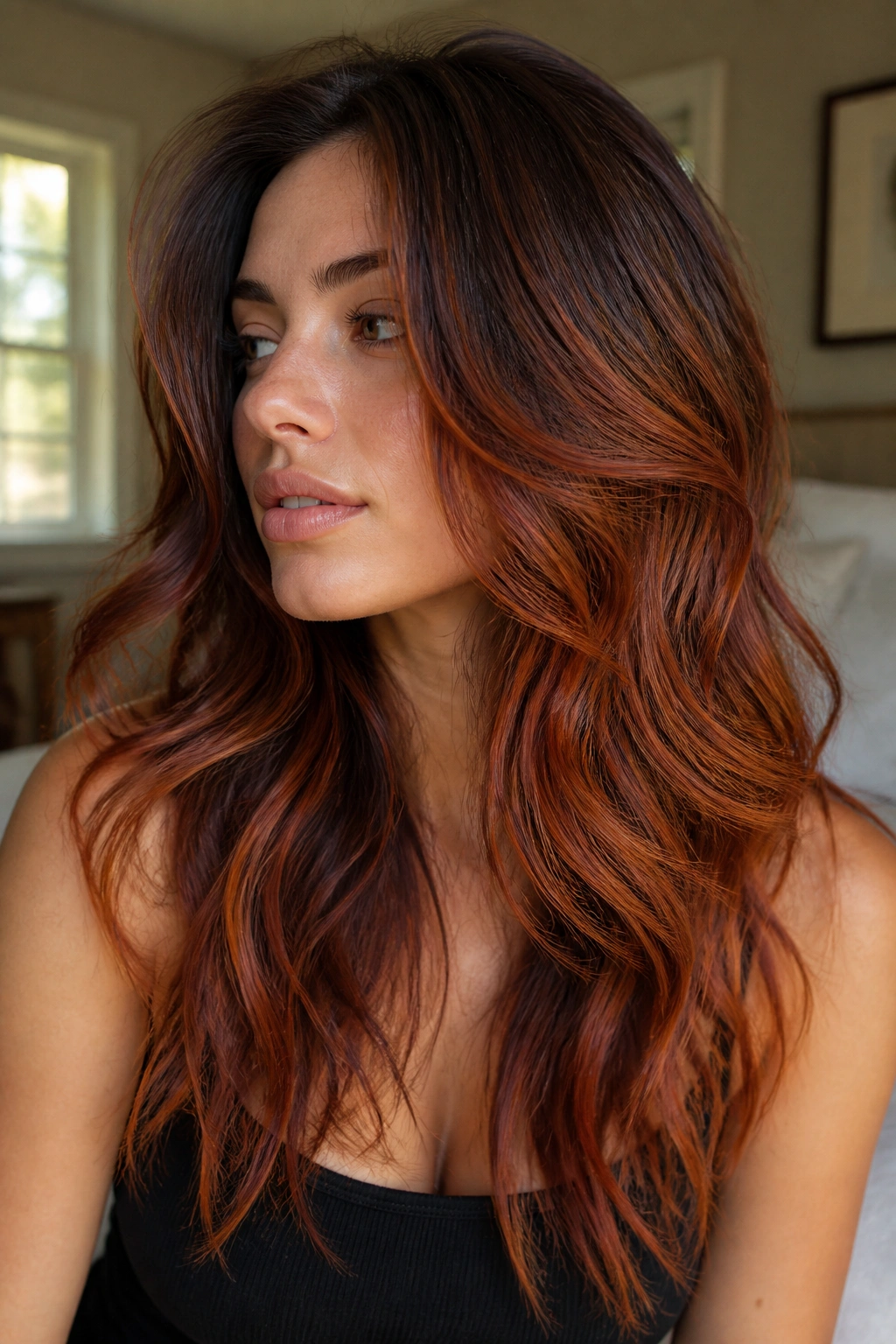
Rusty copper is the bolder cousin in the red brown ombre family. It’s warm, earthy, and a little more fiery than cinnamon, which makes it a good choice if you want people to notice the color but not mistake it for orange hair.
The best version starts with a brown root that stays close to the natural shade, then opens into rust through the bottom half. On long layers, the movement keeps the copper from looking flat. On one-length hair, the color can feel stronger and more graphic, which is not a bad thing if you like a sharper look.
This shade loves hair with some texture. A bit of wave or a round-brush blowout gives it life. If your hair is pin-straight, the ombre can still work, but the finish should stay glossy or it can read dry fast.
One small thing: keep the copper slightly muted. That’s what makes it look expensive instead of loud.
8. Brick Red Balayage Under Brown
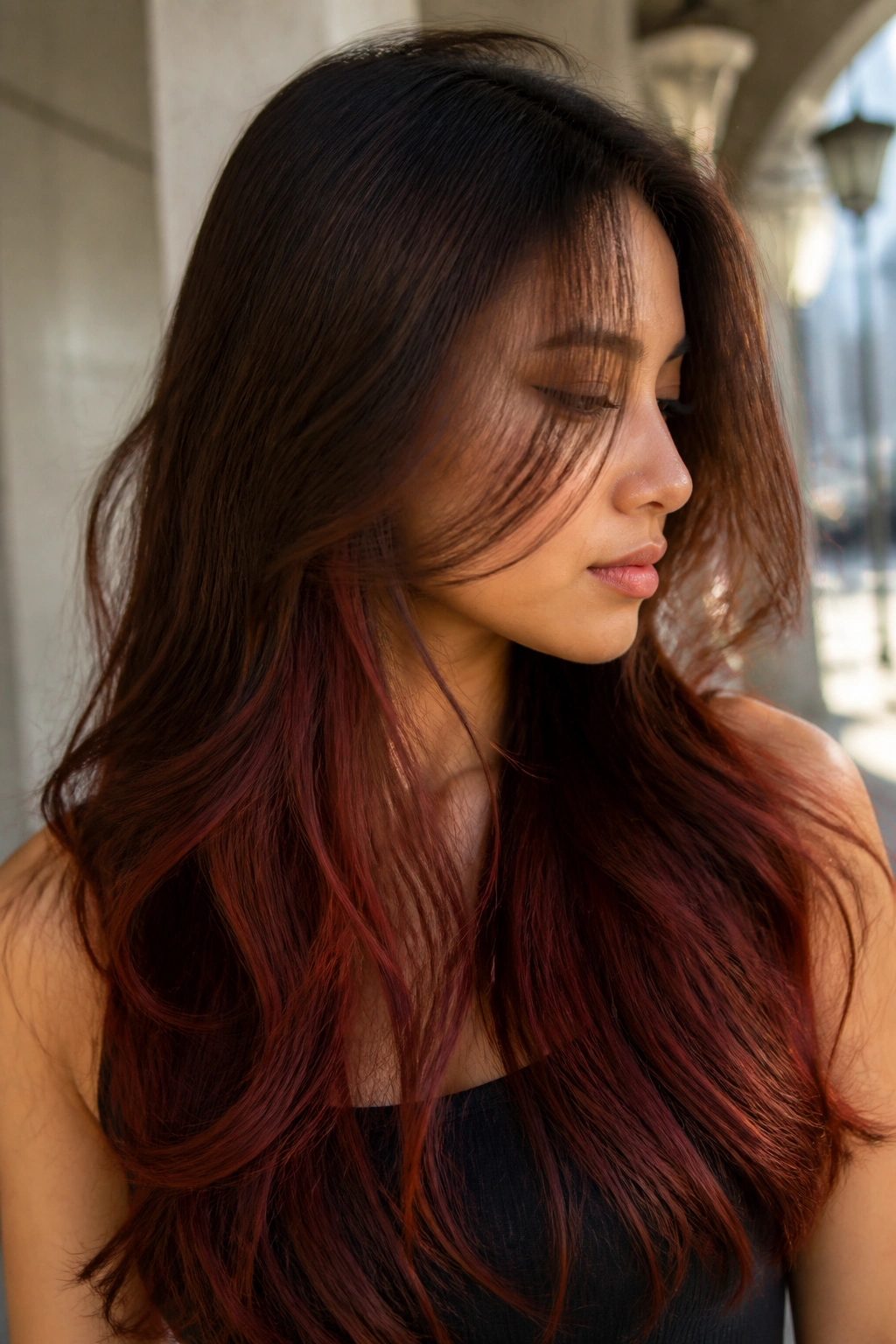
Brick red balayage is a clever move for long hair because the color sits under the top layer and shows itself when the hair swings. You get red-brown dimension without the whole head feeling bright from every angle.
Best for thick hair
Thick hair can handle this kind of placement well. The color peeks through instead of sitting on top of every strand, which means the contrast feels dimensional rather than heavy.
How to ask for it
- Brown at the crown and surface layer
- Brick red painted into the mid-lengths and underlayers
- Heavier placement around the lower third
- Soft blending, not a sharp line
Styling note
A low ponytail, braid, or half-up twist makes this color more interesting because the red flashes underneath. That’s the whole point. It’s the kind of shade that rewards movement, and long hair gives it plenty.
Small warning: if your hair is fine, keep the brick red more sheer. Too much depth in too small a section can look like a block.
9. Merlot-to-Mocha Ombre
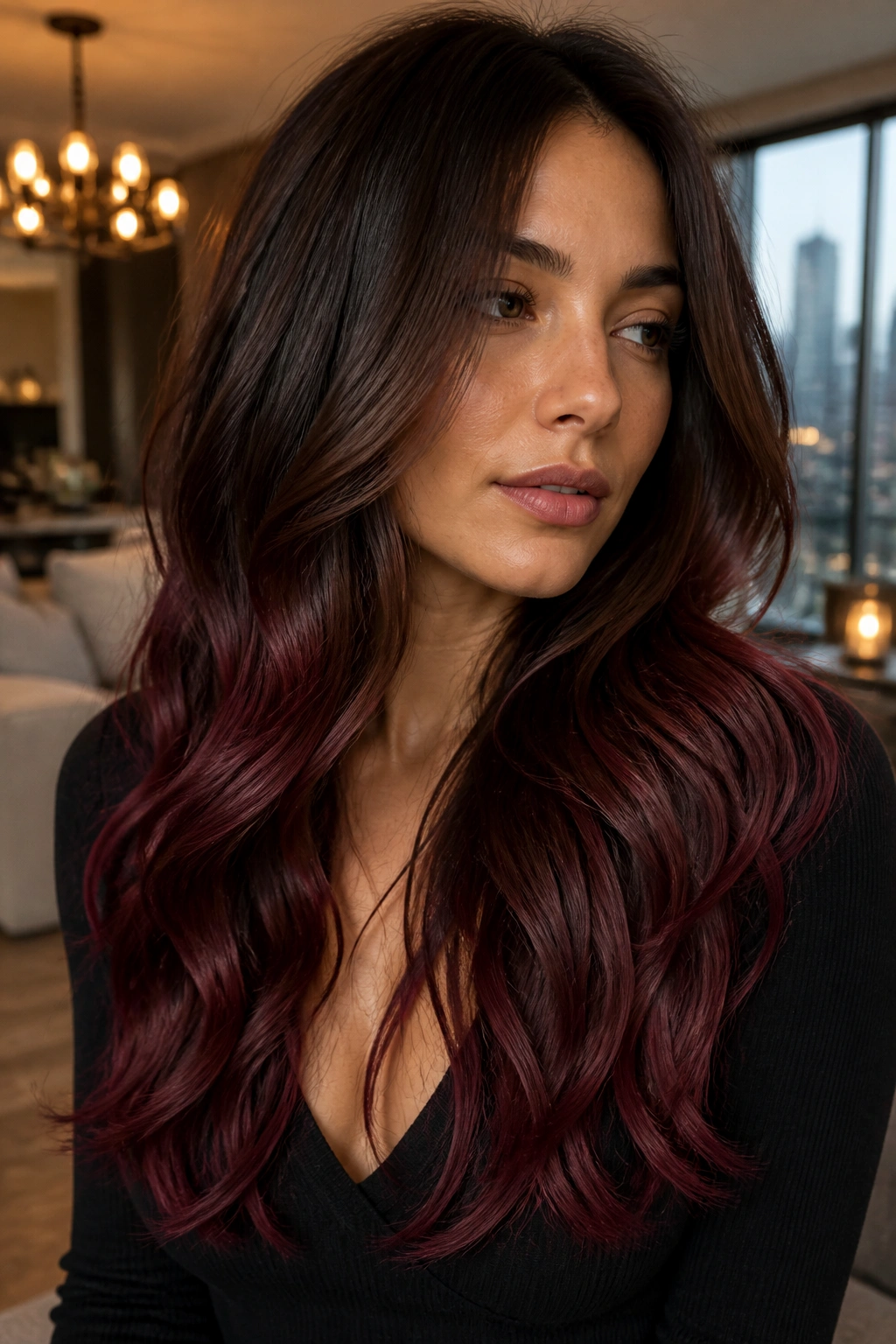
Merlot-to-mocha is for someone who wants red brown ombre hair that feels deep and slightly moody. Compared with cherry or copper, merlot leans richer and darker, which makes it a cleaner match for espresso roots and long, dark lengths.
It works especially well when the red starts below the shoulders. That gives the mocha top enough room to anchor the look, and the merlot shows up where hair naturally catches light. On long waves, the transition looks plush. On straight hair, the red reads more elegant and less playful.
If your wardrobe is full of black, camel, denim, or olive, this shade slides in easily. It doesn’t fight your clothes. It just sits there looking expensive without trying too hard.
A gloss every few weeks helps keep the red from turning flat. Merlot needs shine. Without it, the whole thing can get a little sleepy.
10. Gingered Mahogany Melt
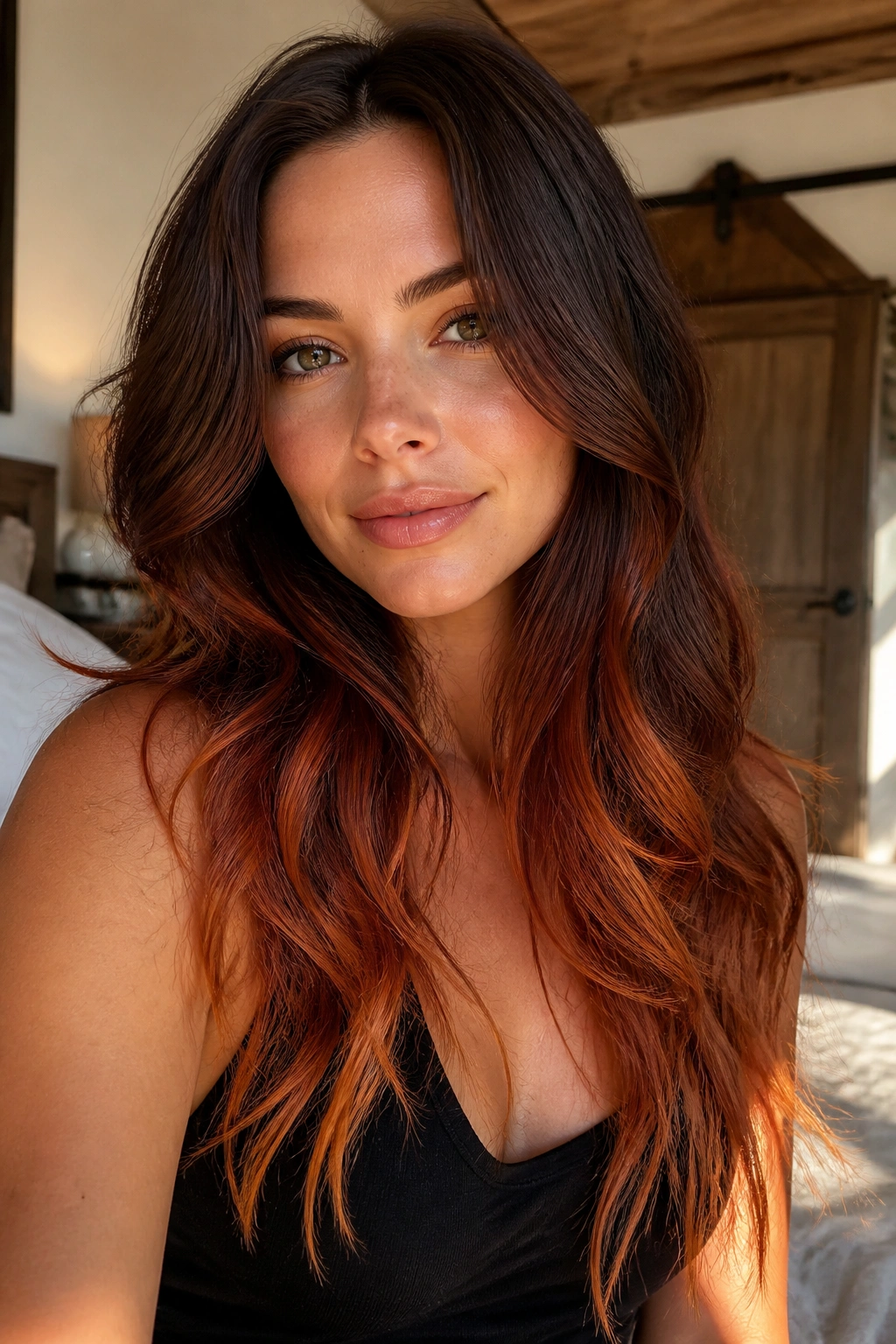
Can ginger work on long hair without looking patchy? Yes, if it’s handled like a melt rather than a stripe. Gingered mahogany keeps the warmth, but the mahogany stops it from turning brassy.
The trick
Ask for the ginger to stay inside the lower half of the hair, with mahogany feathered into the transition zone. That gives the color a long runway. On hair past the shoulders, the fade has room to stretch, so it looks intentional instead of hurried.
Best match
- Medium to dark brown bases
- Long layered cuts
- Hair that already has some warmth
- People who like soft shine over high contrast
The look is especially good on hair that moves a lot. Every wave shows a different amount of ginger, which keeps the color from feeling static. If the ends are dry, a clear gloss or color-safe oil is worth using. Dry ginger loses its charm fast.
11. Rosewood Fade on One-Length Hair
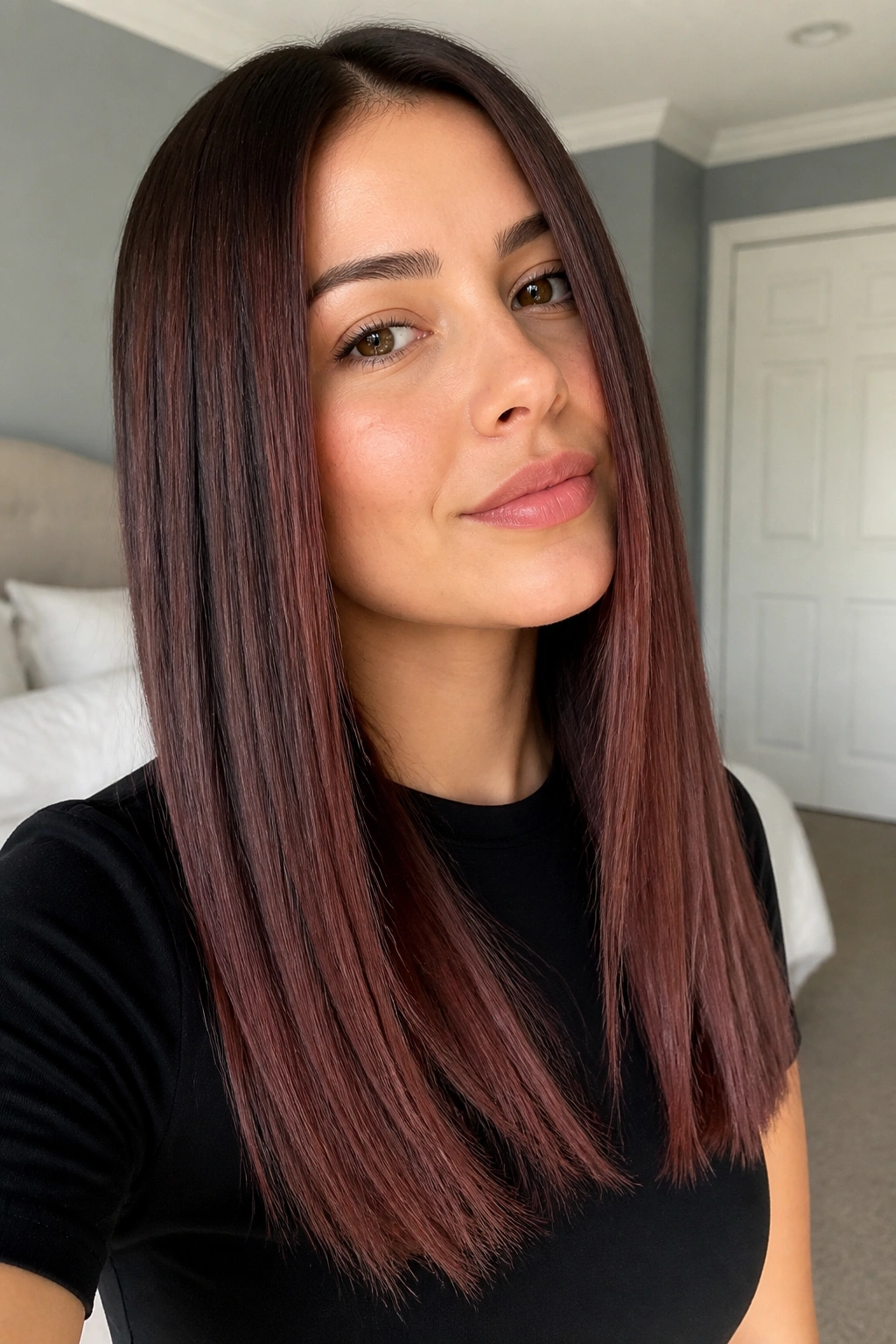
One-length hair can be tricky for ombre because there isn’t much cut texture to help the color move. Rosewood solves that problem by staying soft and woodsy rather than bright. The red sits inside the brown instead of sitting on top of it.
That gives long, blunt hair a more expensive finish. The transition can start around mid-back and deepen toward the ends, so the last few inches carry the most color. On straight hair, the rosewood looks smooth and clean. On waves, it gets a little more romantic, but not in a fussy way.
I also like this shade for people who wear their hair down more than up. Braids and buns can hide some of the work, while long, straight lengths show the subtlety. It’s an understated choice, but not a boring one.
If your skin tone runs cool, keep the rosewood more berry than copper. That keeps the whole look balanced.
12. Terracotta Layers with Face Framing
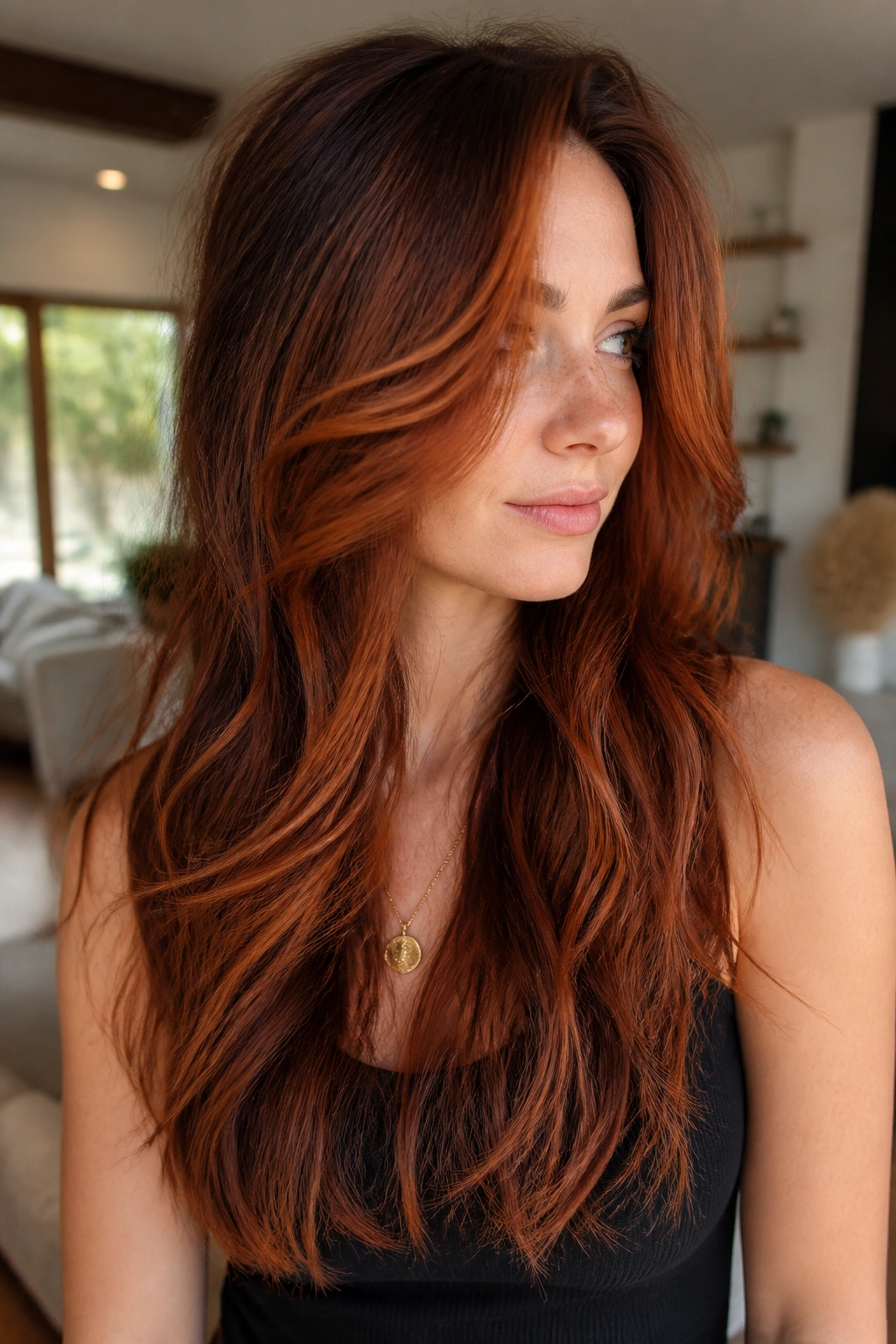
Terracotta works because it has enough red to read warm, but enough brown to stay grounded. On long hair, face-framing pieces can take the color right up to the cheekbones, which gives the ombre a fast little lift without flooding the whole head with warmth.
Why face-framing pieces help
They pull the eye upward. That matters when the rest of the color is living lower on the hair. Without them, long ombre can sometimes feel heavy at the ends.
What to ask for
Tell your colorist you want brighter terracotta around the front sections and a softer, browner fade in the back. Keep the front pieces thin if your hair is fine; chunkier money-piece sections can overpower the rest of the blend. On thick hair, you can go a little bolder and still stay balanced.
Best styling match
Soft waves show the terracotta best. A clean blowout works too, especially if you like the color to look polished instead of beachy.
13. Cranberry Cocoa Ombre
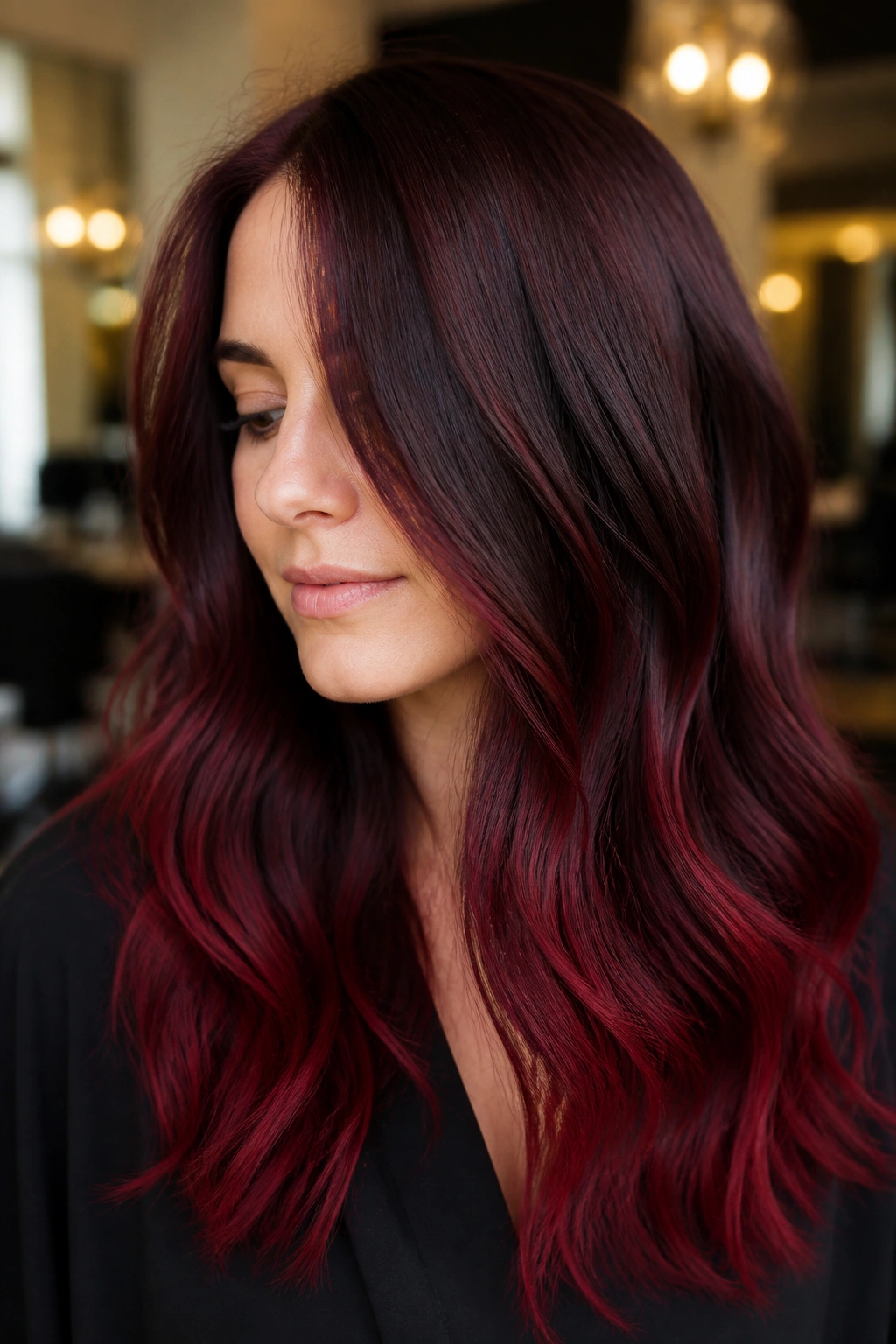
Cranberry cocoa is not shy. It gives you a deep brown base with a sharp, juicy red running through the lower lengths, and the contrast is what makes it work on long hair. Because the hair is long, the cranberry has enough space to read as color rather than a mistake.
This is one of the stronger ideas on the list, and I mean that in a good way. It suits people who want their hair to look richer from across the room. The best version keeps the top cocoa shade dark and cool enough that the cranberry pops only where it should.
A side part can make the fade look even more dramatic. So can big curls. If you want the color to feel softer, keep the waves loose and let the red sit mostly on the underside and ends.
14. Maple Auburn Ends
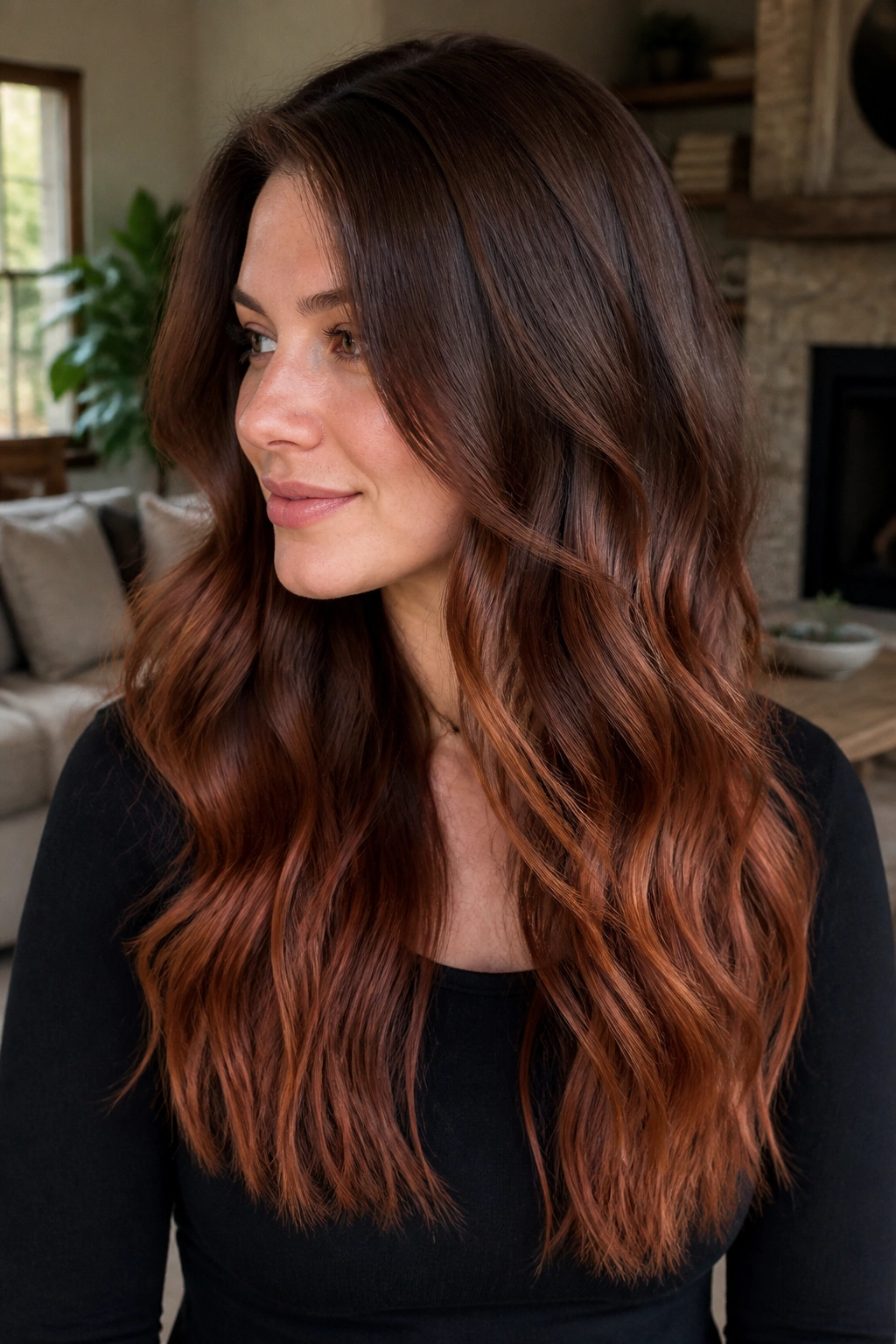
Maple auburn is a gentler red brown ombre for long hair, especially if you want warmth without heavy contrast. The brown at the roots stays natural, then the ends take on a maple-red tone that feels soft and warm rather than vivid.
A good fit for lighter brunettes
This shade works best when the base already has some warmth. You do not need to chase a dramatic lift. A subtle auburn shift on the ends is enough, and long hair gives that shift room to show.
Good styling choices
- Soft bends instead of tight curls
- Long layers to break up the fade
- A glossy finish to keep the red warm
- A root shadow one shade deeper than your natural color
What it feels like
The color moves quietly. That’s the charm. It’s the kind of ombre you notice more on the second look, which is often exactly what people want when they’re nervous about red.
15. Sangria Brown Blend
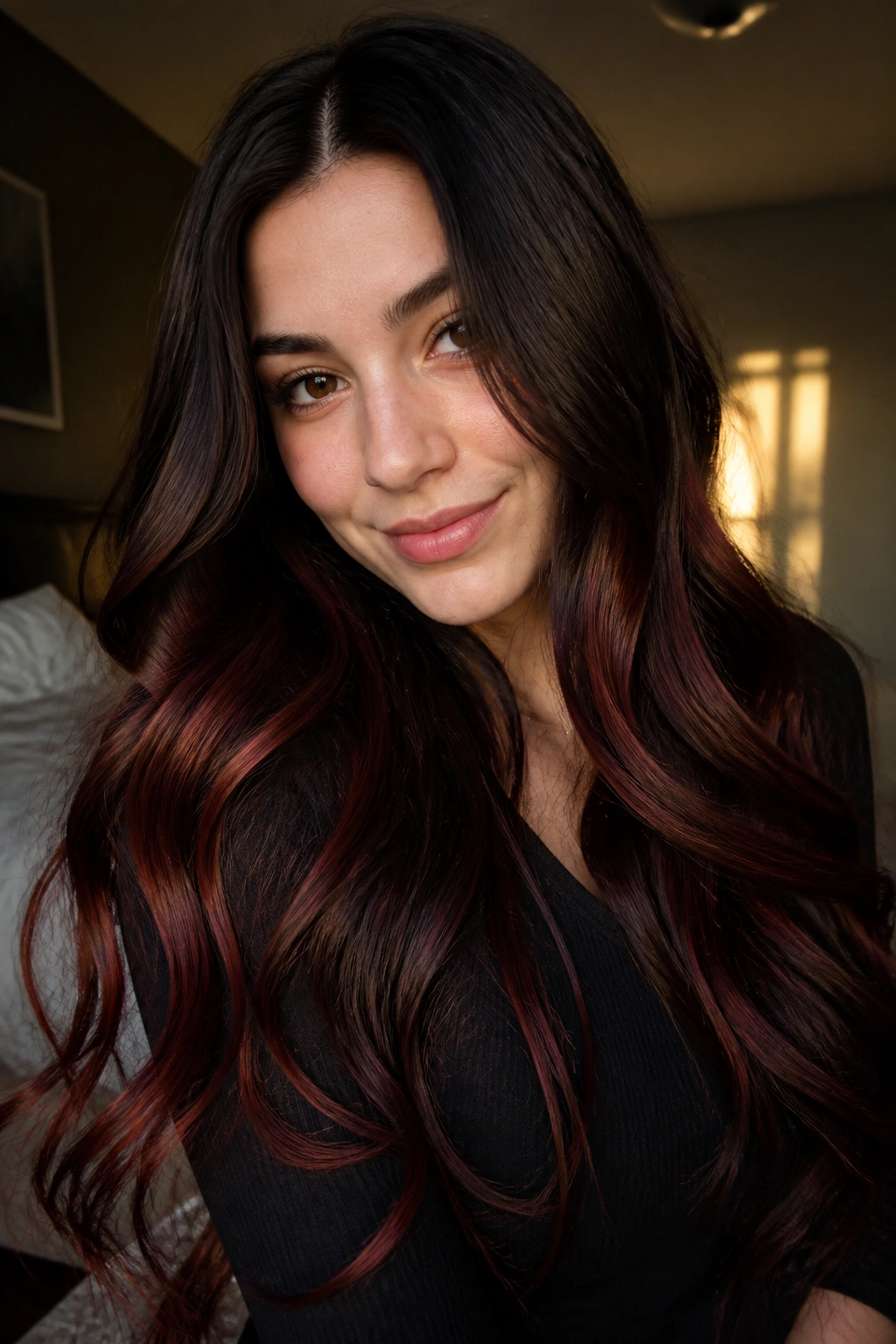
Compared with cherry cola, sangria brown leans deeper and a little more mature. The red is still there, but it sits under a darker brown veil, which makes the fade feel lush instead of bright.
That depth is why it’s so good on long hair. The extra length lets the color deepen gradually, and curls can pull out tiny flashes of red without exposing everything at once. On very thick hair, sangria keeps the ends from looking chunky. On finer hair, you may want to keep the red restrained so the length doesn’t get visually busy.
It’s also a smart choice if you wear darker makeup or gold jewelry. The warm red tones echo both without looking matched to death. I prefer it with a clean center part and loose, brushed-out curls. The shape gives the color somewhere to go.
16. Burnt Sienna with Long Shag Layers
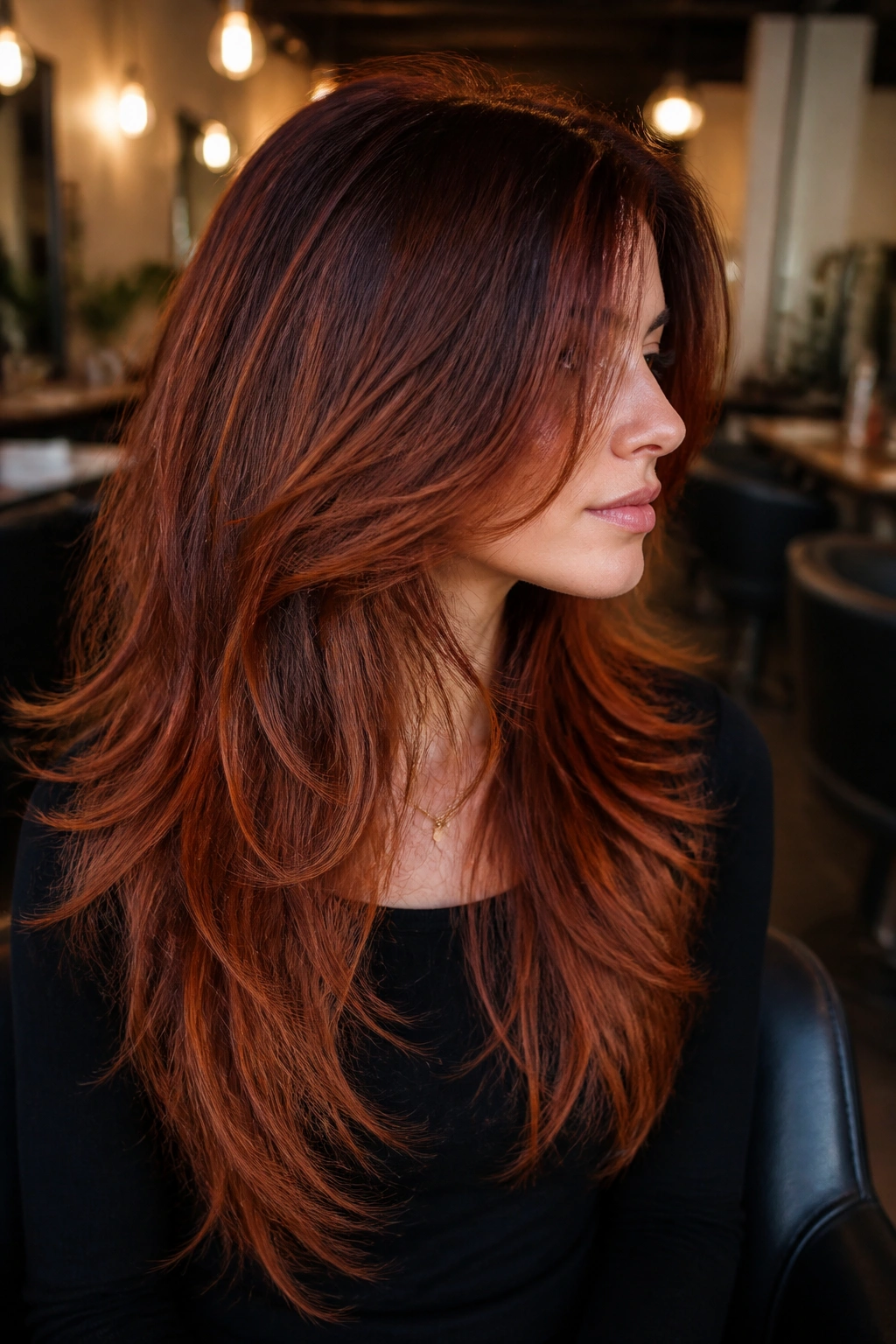
Does burnt sienna look better on long shag layers than on blunt hair? Usually, yes. The shag breaks the color into pieces, so the red-brown fade doesn’t pool into one heavy block at the bottom.
Why shag layers help
The choppy layers create movement, and movement is where sienna shines. Each layer catches a slightly different part of the fade, which keeps the color alive even when the hair is worn straight.
How to keep the ends from looking muddy
Ask for the darkest brown to stay near the crown and the sienna to build through the lower layers. If the red is pushed too high, shag cuts can start to look overcolored fast. A cleaner melt from ear level downward works better.
Best finish
A rough-dry blowout or soft bend with a flat iron gives this shade the lived-in look it wants. It does not need perfect curls. In fact, perfection can flatten it.
17. Foxfire Red Brown Gradient
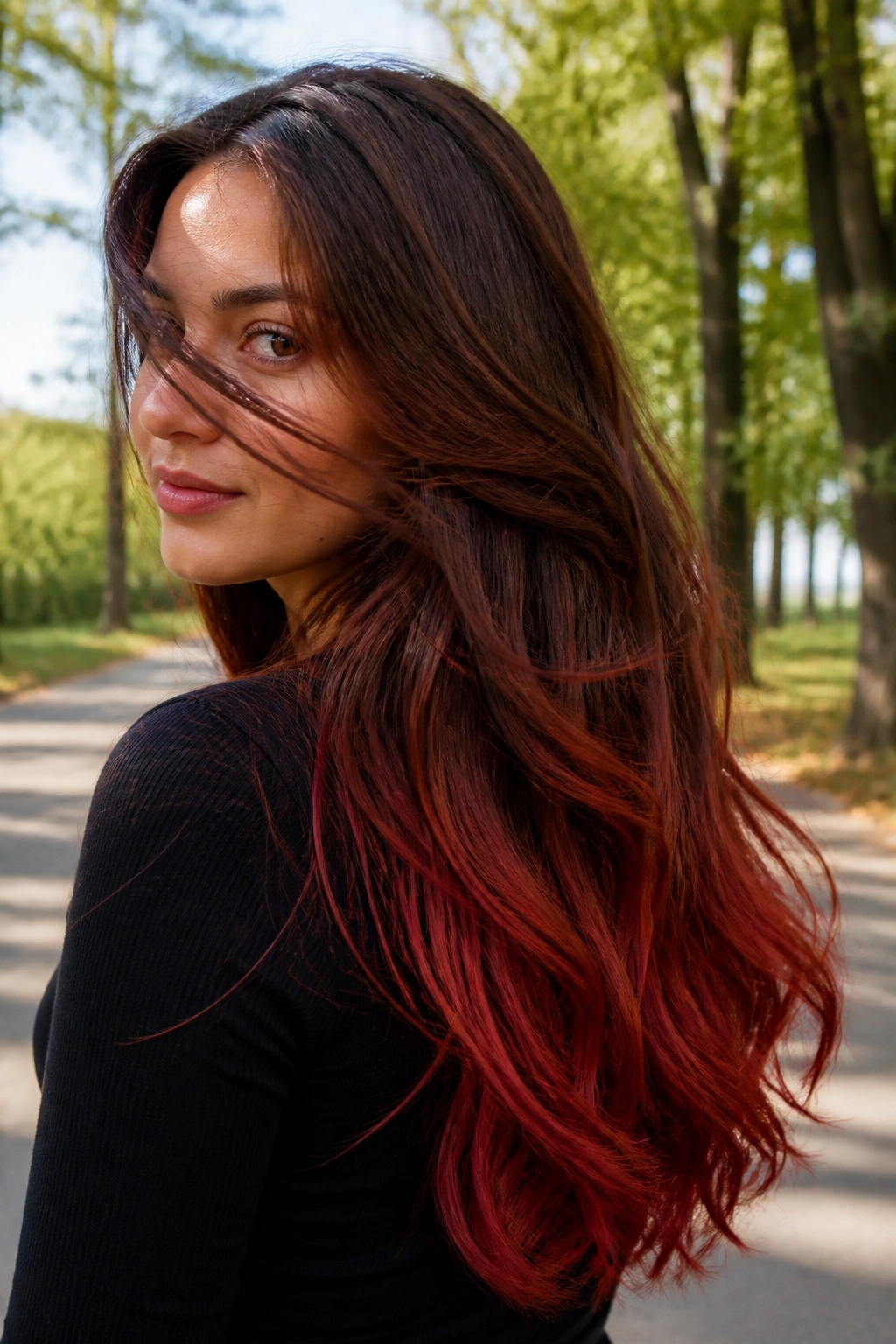
Foxfire red brown is for people who want a little heat in the hair without sliding into full copper. The gradient starts in brown and ends in a glowing red that looks alive when the hair swings.
Long hair gives this shade the runway it needs. A braid exposes different slices of color. A half-up knot makes the ends look brighter. Even a simple low ponytail can show off the change from brown to red in a clean, readable way.
The best approach is to keep the red concentrated in the last third, then let a few softer ribbons rise higher through the mid-lengths. That way the color doesn’t feel like it was dropped in from above. It builds.
If you like color that looks better when you move, this one is hard to beat.
18. Clove-Chestnut Ombre
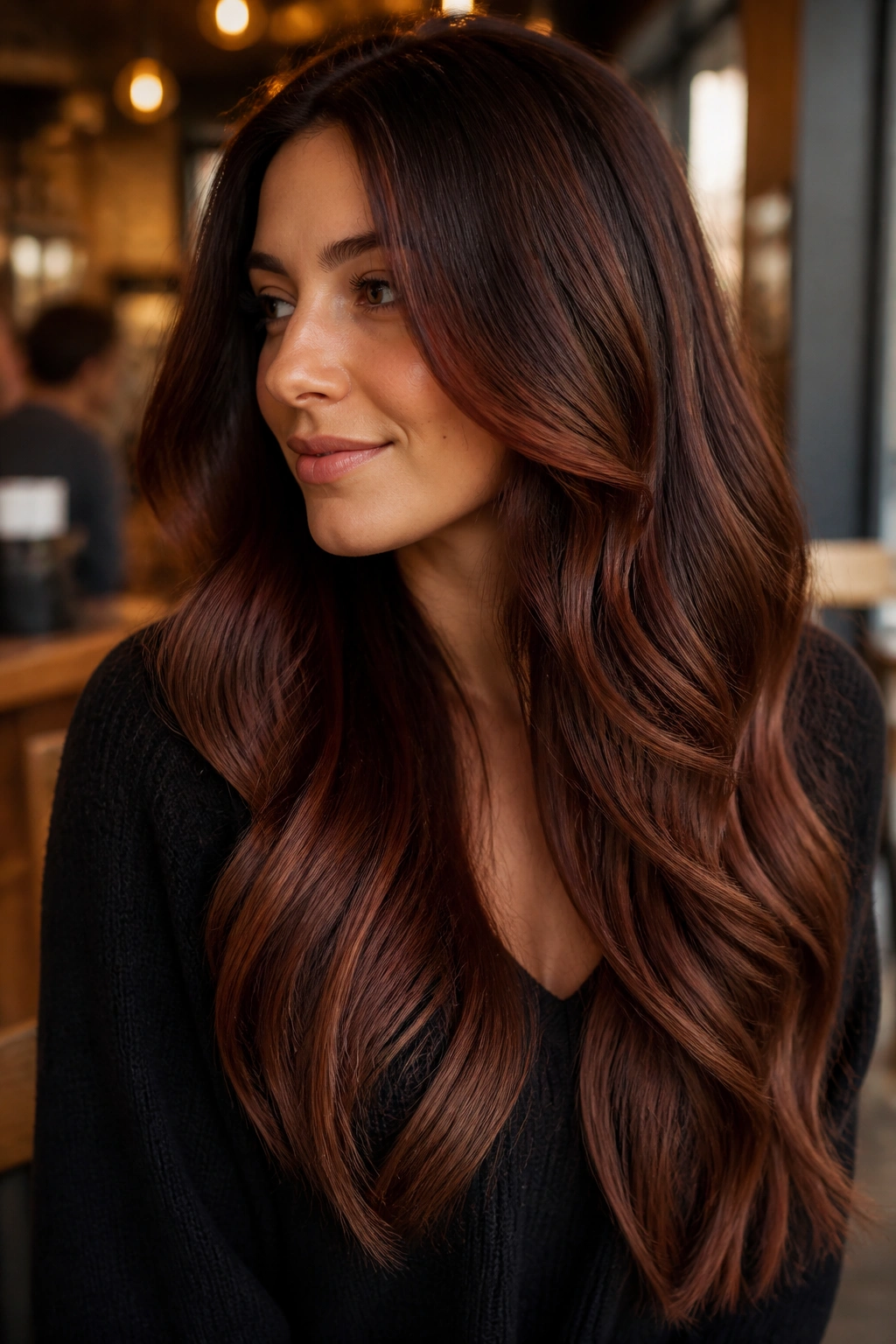
Clove-chestnut is one of my favorite quiet red-brown combos because it feels warm without turning orange. The red is there, but it sits underneath the chestnut like spice under a sauce. That kind of depth flatters long hair, especially when the lengths are glossy and well cut.
It also works nicely on olive and neutral skin tones. The warmth doesn’t fight the complexion; it sits beside it. On very long hair, ask for the clove tone to start below the shoulders and deepen near the ends. That gives the fade enough breathing room.
This is the kind of color that looks expensive in a braid. The strands twist together and let the chestnut and clove alternate in tiny flashes. Straight hair looks good too, but braids show the dimension better.
19. Redwood Tips on Soft Waves
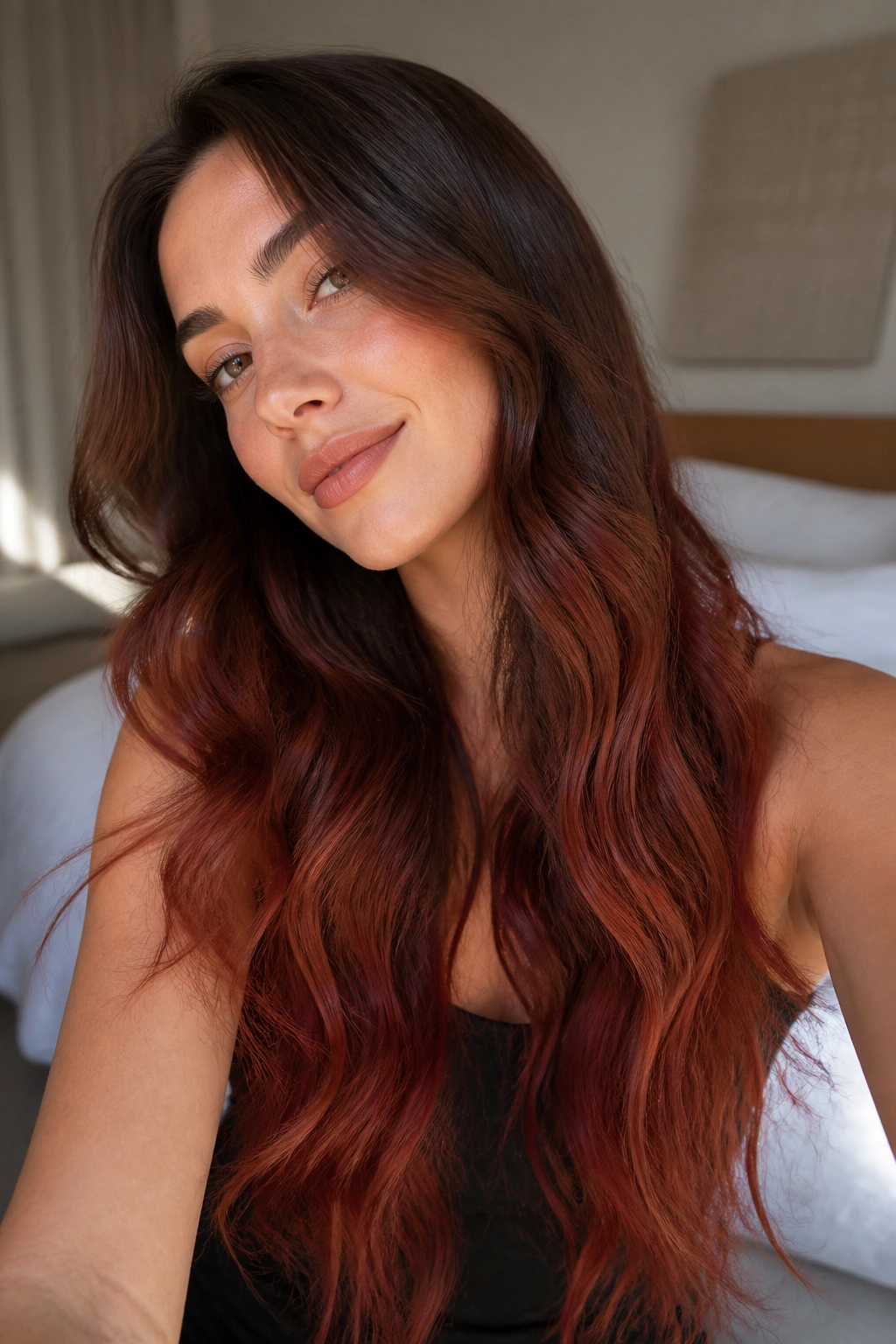
Redwood tips are a straightforward idea with a lot of payoff. Keep the crown brown, let the red build slowly, then finish with a deeper redwood tone just at the ends. Long waves make the shift feel natural instead of abrupt.
Good things to ask for
- A shadow root that stays close to your natural brown
- A soft redwood melt through the mid-lengths
- Ends that are richer than the middle, not lighter
- Wave styling to show the color gradient
Who it suits
If your hair is long enough to sit below the chest, the shade has room to breathe. It also works well for people who wear braids a lot, because the tips peek out at the bottom and keep the look from disappearing.
There is a nice honesty to this color. It doesn’t pretend to be anything else. Brown on top, red on the bottom, and enough movement in between to keep it interesting.
20. Plum-Mahogany Ribbons
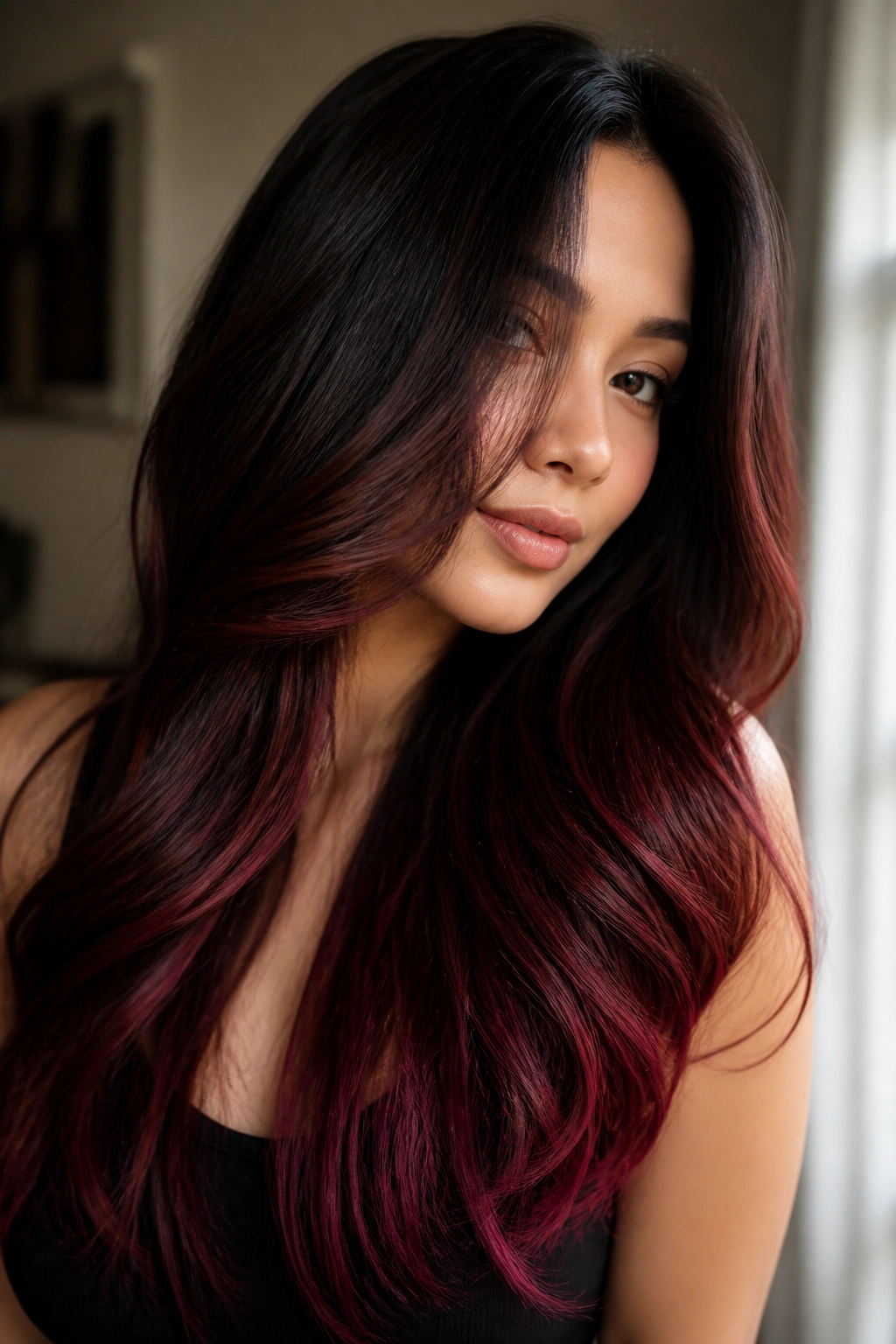
Plum-mahogany ribbons are a good answer for someone who wants red brown ombre hair with a cooler edge. The plum keeps the shade from getting too orange, while mahogany gives it depth and keeps long hair from losing shape.
The color story
Think of this as a shadowed red, not a bright one. The ribbons should look woven through the lower half of the hair, not painted in obvious bands.
Where to place the ribbons
- Around the face for a bit of lift
- Through the lower layers for movement
- Lightly on the ends so the fade stays soft
- Sparingly on the top layer if your base is already dark
What makes it work
A polished finish matters here. Glossed hair makes the plum read deep and the mahogany read rich. On matte hair, the whole thing can get dull fast.
It’s a strong choice for long hair that needs dimension more than brightness.
21. Walnut to Wine Fade
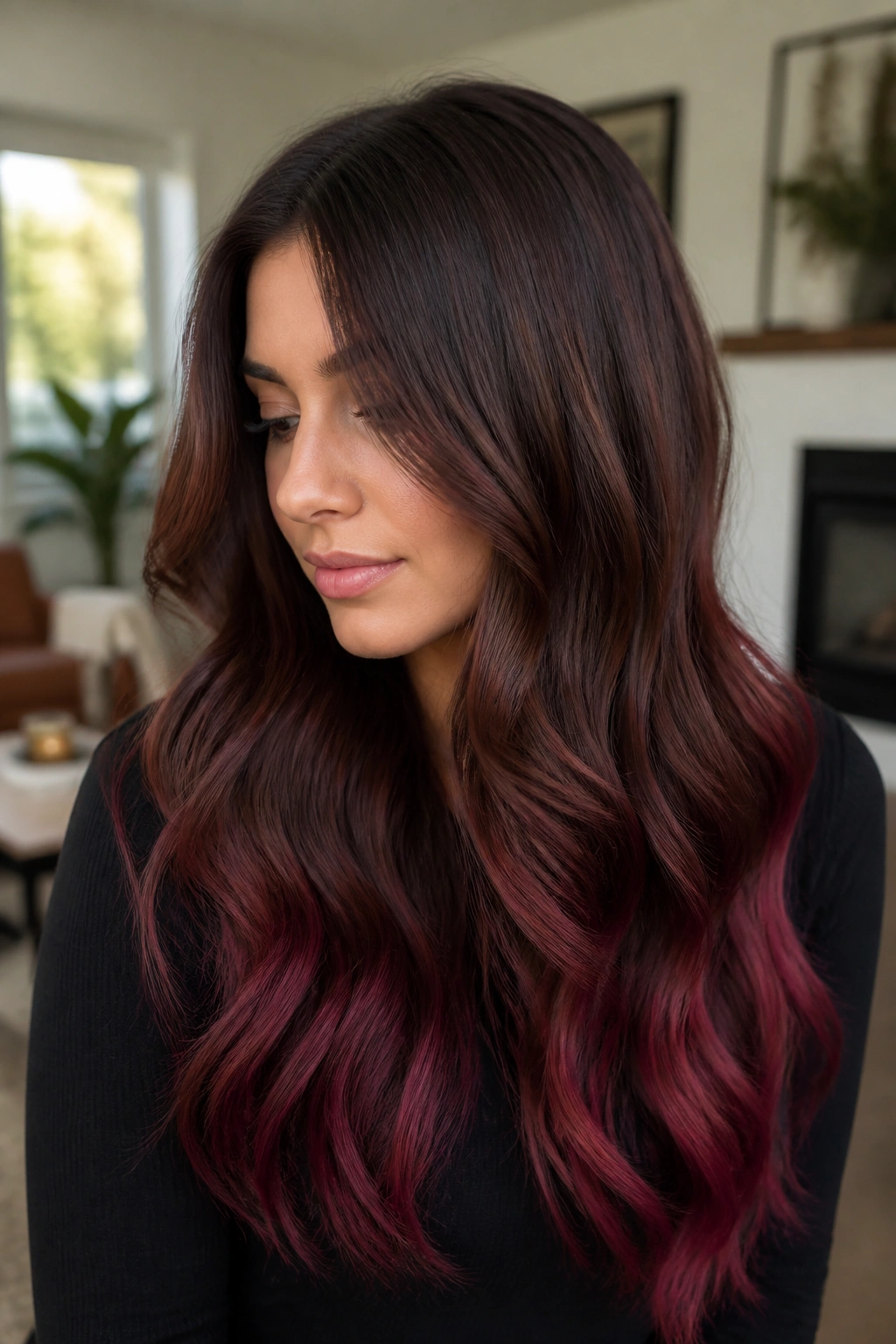
Walnut to wine is the version I’d hand to someone who wants depth first and color second. Unlike an all-over burgundy, the walnut root keeps the look grounded, which makes the wine ends feel earned instead of pasted on.
That contrast does a lot on long hair. The top half stays quiet, the bottom half picks up the drama, and the length gives both shades space to show. If your hair is naturally dark, you may not need much lift at all. A soft brown-to-wine melt can be enough.
This shade is especially good for air-dried hair because the texture helps the red show up in little flashes. A scrunched wave, a loose bun, even a simple twist can reveal the wine tone. If you like hair color that changes with the lighting, this one delivers.
22. Copper Penny Face Frame
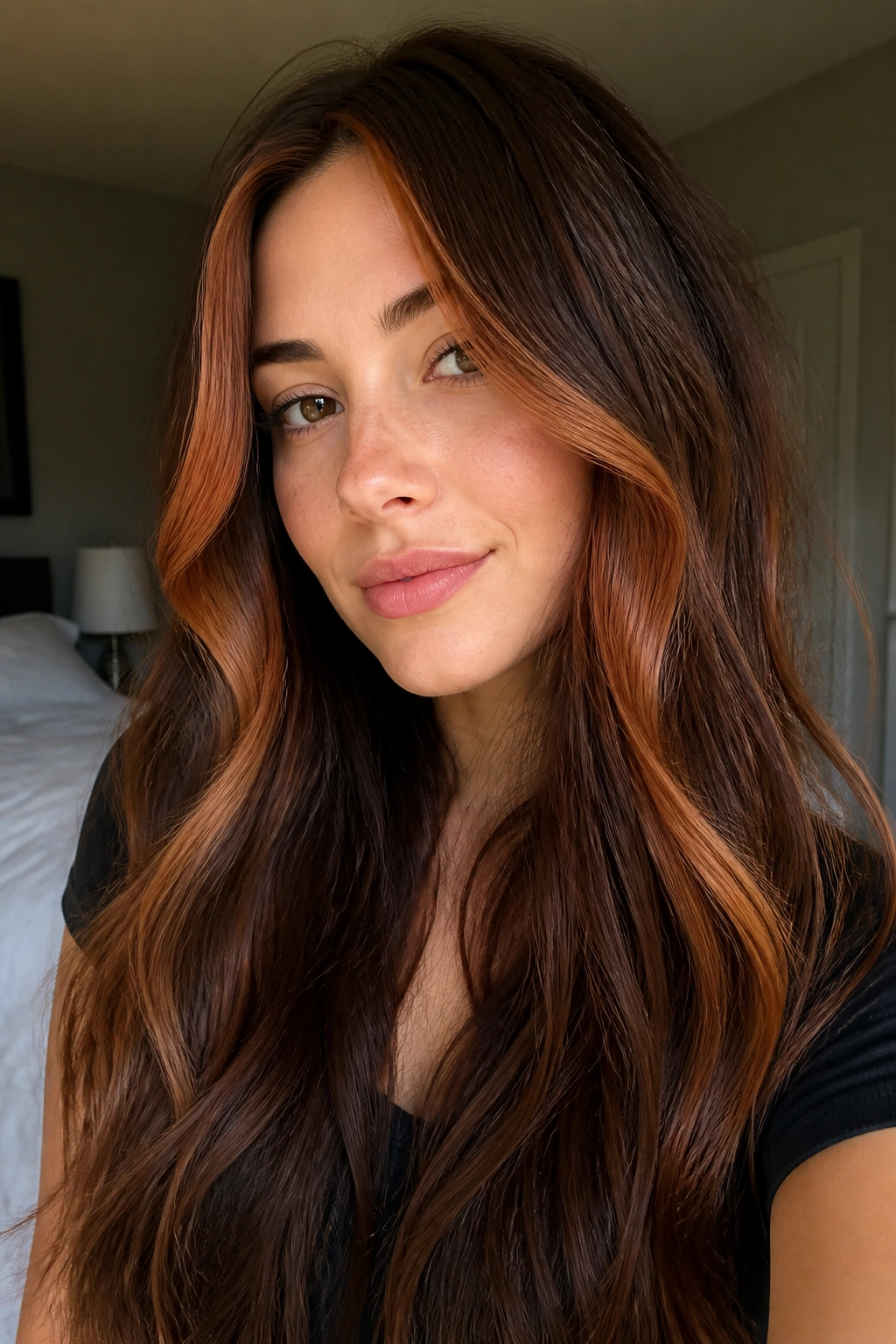
Copper penny framing is the move when you want red brown ombre hair to show up fast around the face, but not take over the whole head. The face-framing pieces are brighter, while the rest of the length stays anchored in brown.
What makes it work
The contrast is strongest near the cheekbones and jaw, which gives long hair a lifted look. Since the color starts higher at the front and softer at the back, it feels lively without being loud.
Best ask at the salon
Tell the colorist you want two brighter copper pieces on each side of the face, then a softer melt into the rest of the lengths. If your hair is very long, the front pieces should stop the eye before it drifts all the way to the ends. That creates balance.
A middle part shows the copper penny effect most clearly, though a side part can make it feel softer. Either way, it’s a smart choice if you want a change without a full color overhaul.
23. Auburn Smoke Melt
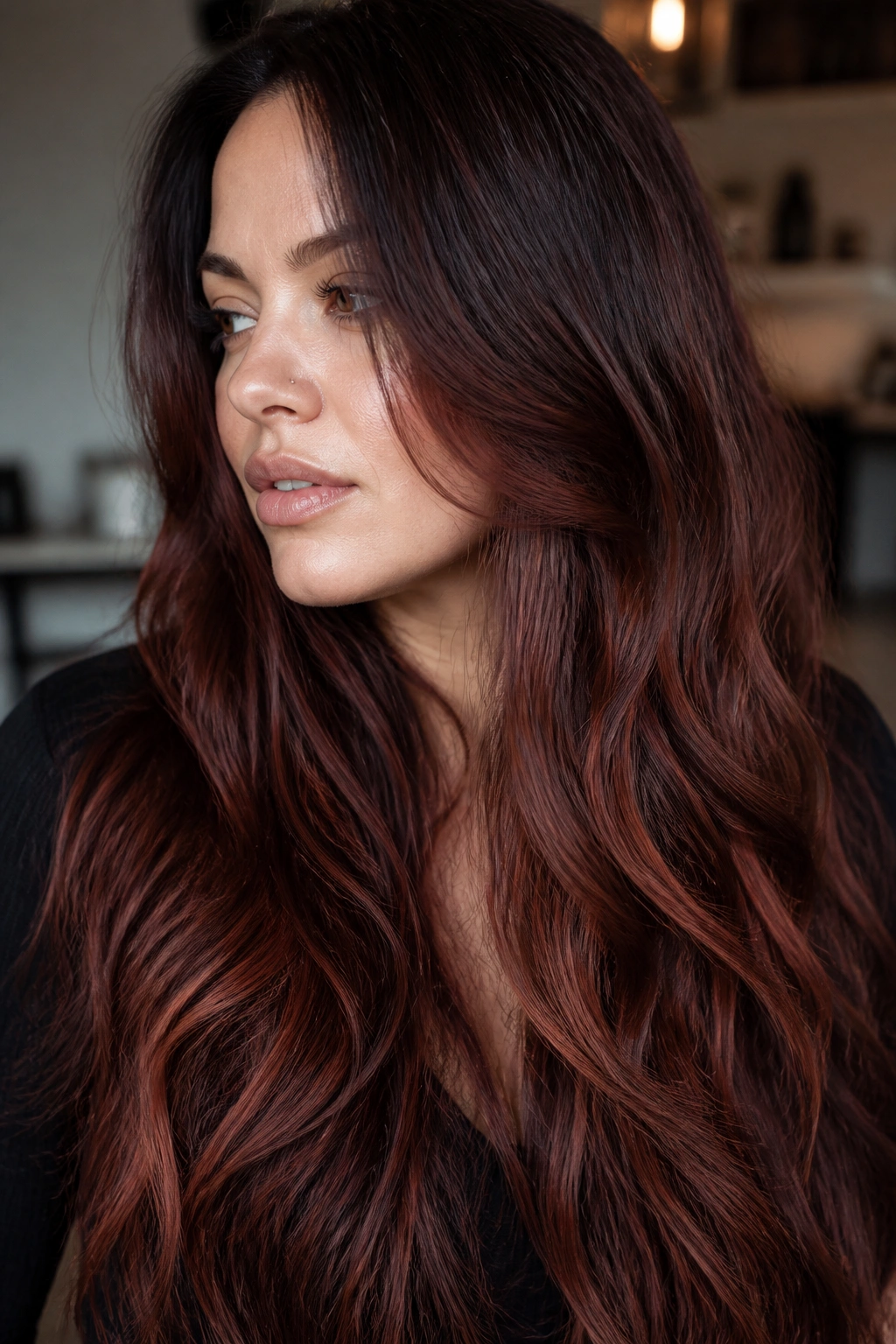
Auburn smoke is what happens when red brown ombre stops trying to be shiny and bright and starts looking smoky, soft, and a little mysterious. The red is muted, the brown is layered, and the whole effect sits quietly until the hair moves.
Long hair is good for this because the fade can stretch. A smoky auburn that starts low and deepens at the ends feels much more believable when there are enough inches for the shift. On straight hair, it can look sleek and controlled. On waves, the color gets a little more relaxed.
I like this shade for people who are nervous about red. It gives warmth without the commitment of bright copper. If you are testing the waters, this is a sensible place to start.
A clear gloss helps, but not a shiny one that flattens the dimension. You want the color to look soft, not lacquered.
24. Brick Cherry Underlayer
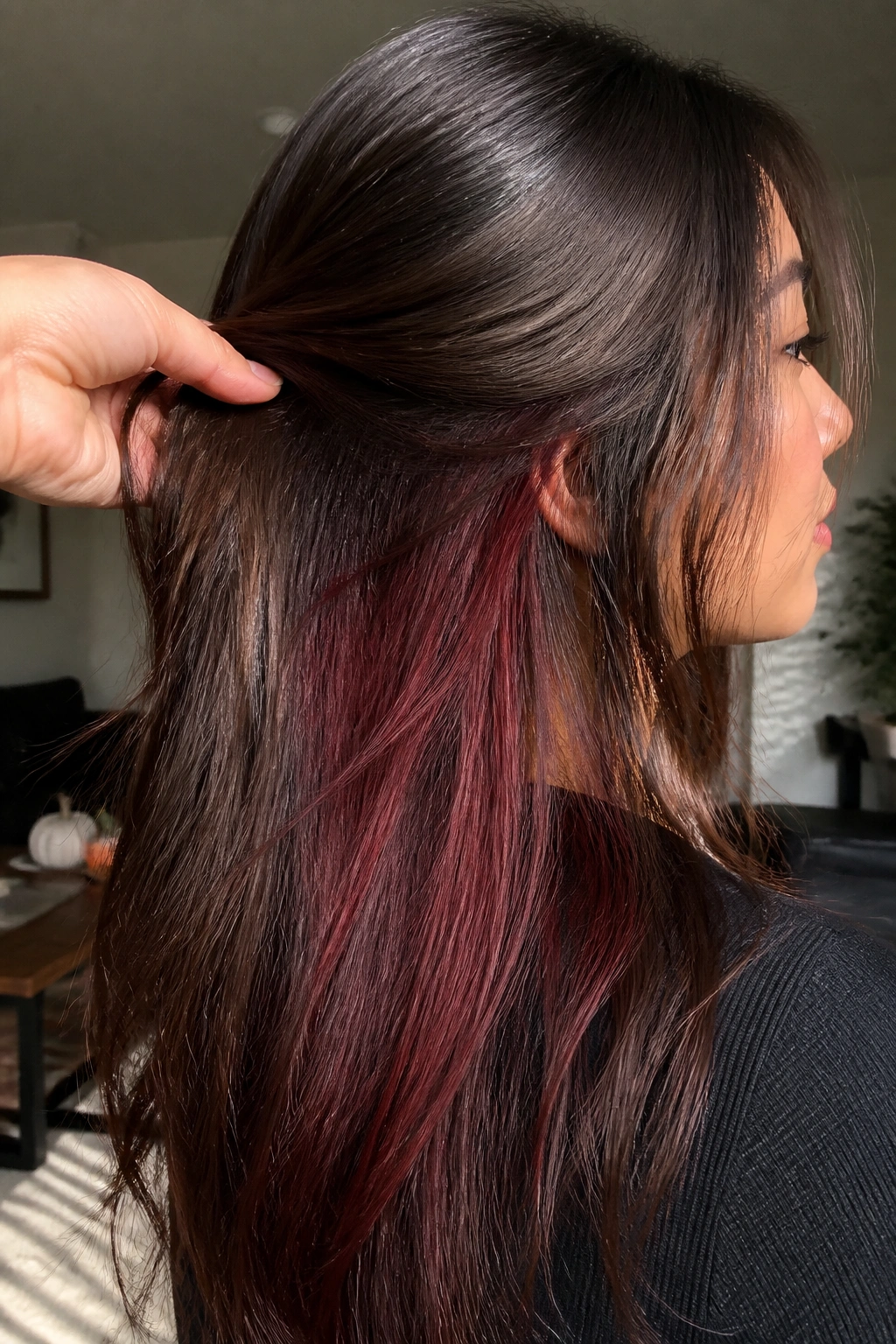
Brick cherry underlayer color is sneaky in the best way. The top stays brown, the hidden lengths carry the red, and long hair makes the surprise even better because there is so much room for the color to peek out in braids, ponytails, and half-up styles.
Why hidden color works
It gives you the freedom to keep things professional or quiet when the hair is down. Then one twist, one braid, one messy bun, and the cherry shows itself.
Where it should live
- Under the crown and top surface layer
- Through the lower back sections
- Around the nape for extra movement
- In a few face-frame pieces if you want more visibility
Styling note
This kind of placement looks best when the hair has some swing. Straight, one-length hair can hide too much of it unless you purposely part and clip the top sections. Soft waves make the hidden red easier to see.
It’s fun without being costume-like. That matters.
25. Cocoa to Burgundy Ribboning
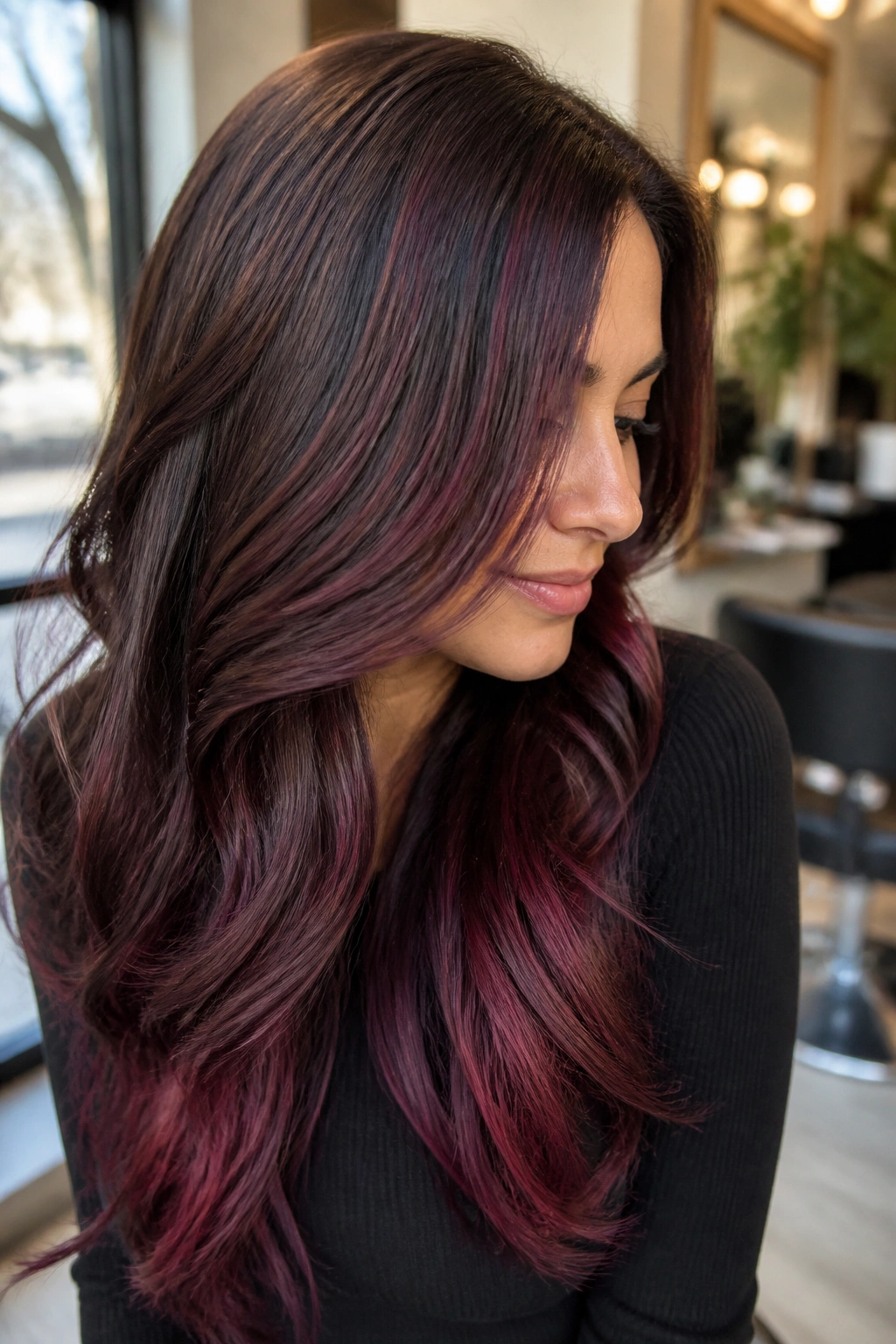
Cocoa to burgundy ribboning is a cleaner, more refined version of red brown ombre. Compared with a solid burgundy fade, the ribboning keeps the brunette base visible, which gives long hair more air and more shape.
That’s the difference. A solid color can swallow long lengths. Ribboning keeps the hair from looking like one dark sheet. The red stays in slim pieces through the bottom half, so you still get movement when the hair is tucked behind the ear or pulled over one shoulder.
This idea suits layered cuts especially well. Long layers create natural openings for the burgundy to show through, and the cocoa base prevents the color from tipping too far into purple. If your hair is already dark brown, the ribboning can be subtle. If it’s medium brown, the contrast gets richer.
26. Ember Brown Balayage
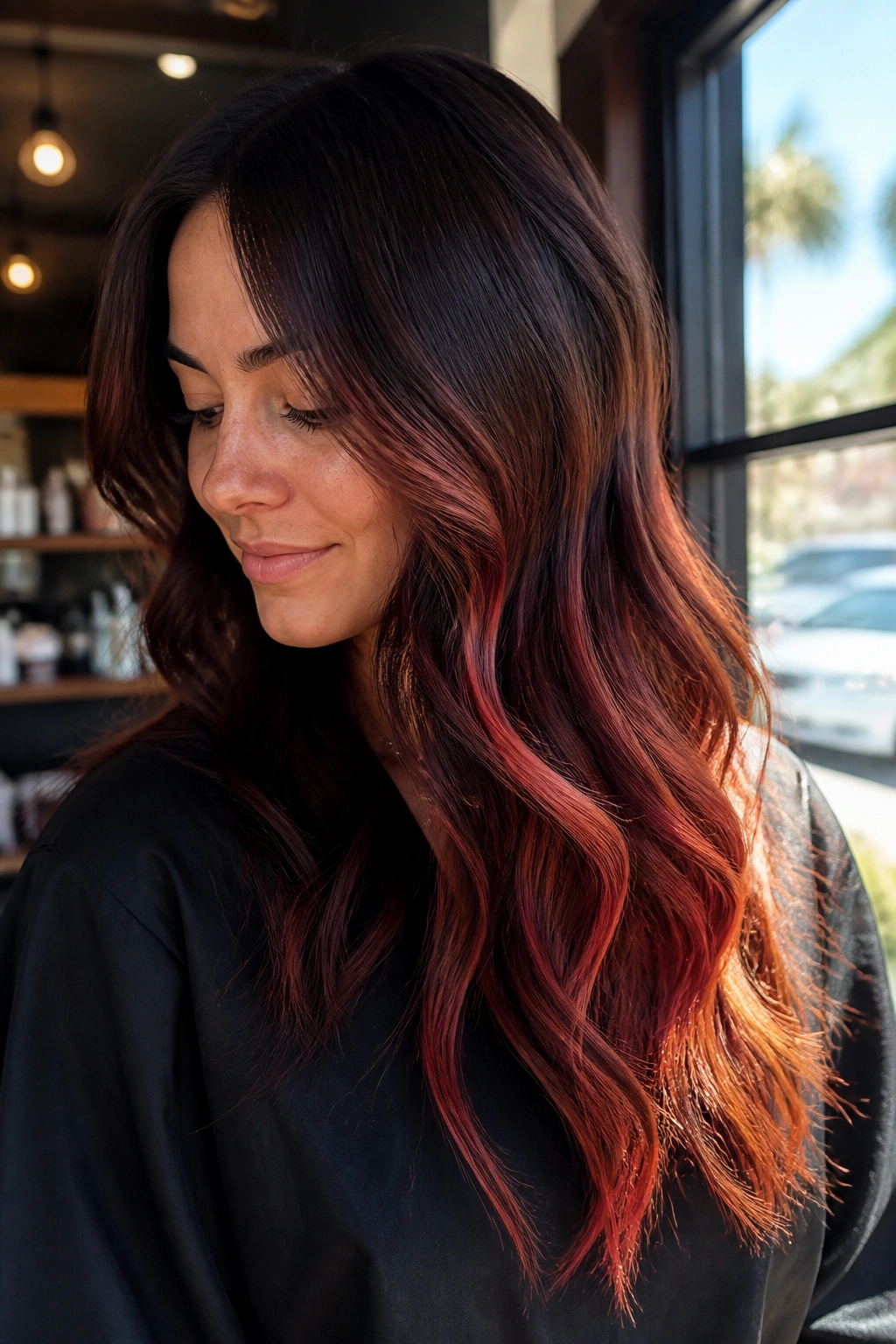
Ember brown balayage has a little heat in it, but it’s controlled heat. The brown at the top is usually deeper and softer, while the ember pieces get painted through the mid-lengths and ends in uneven, natural-looking strokes.
What ember means here
Think glowing coals, not neon red. The color should feel warm and alive, with a hint of red-orange that shows up where the light hits.
How to keep it from looking brassy
Ask for the ember tones to stay grounded in brown, especially near the transition area. Too much lift and the color can drift into orange in a hurry. A cooler glaze at the end can help keep it in check.
Best cut pairings
- Long layers
- Soft V-cuts
- Face-framing bends
- Big curls or loose waves
On long hair, ember balayage has room to move, which is half the fun. It looks even better when the hair is tucked behind the shoulders and then falls forward again.
27. Cinnamon Cherry Shine
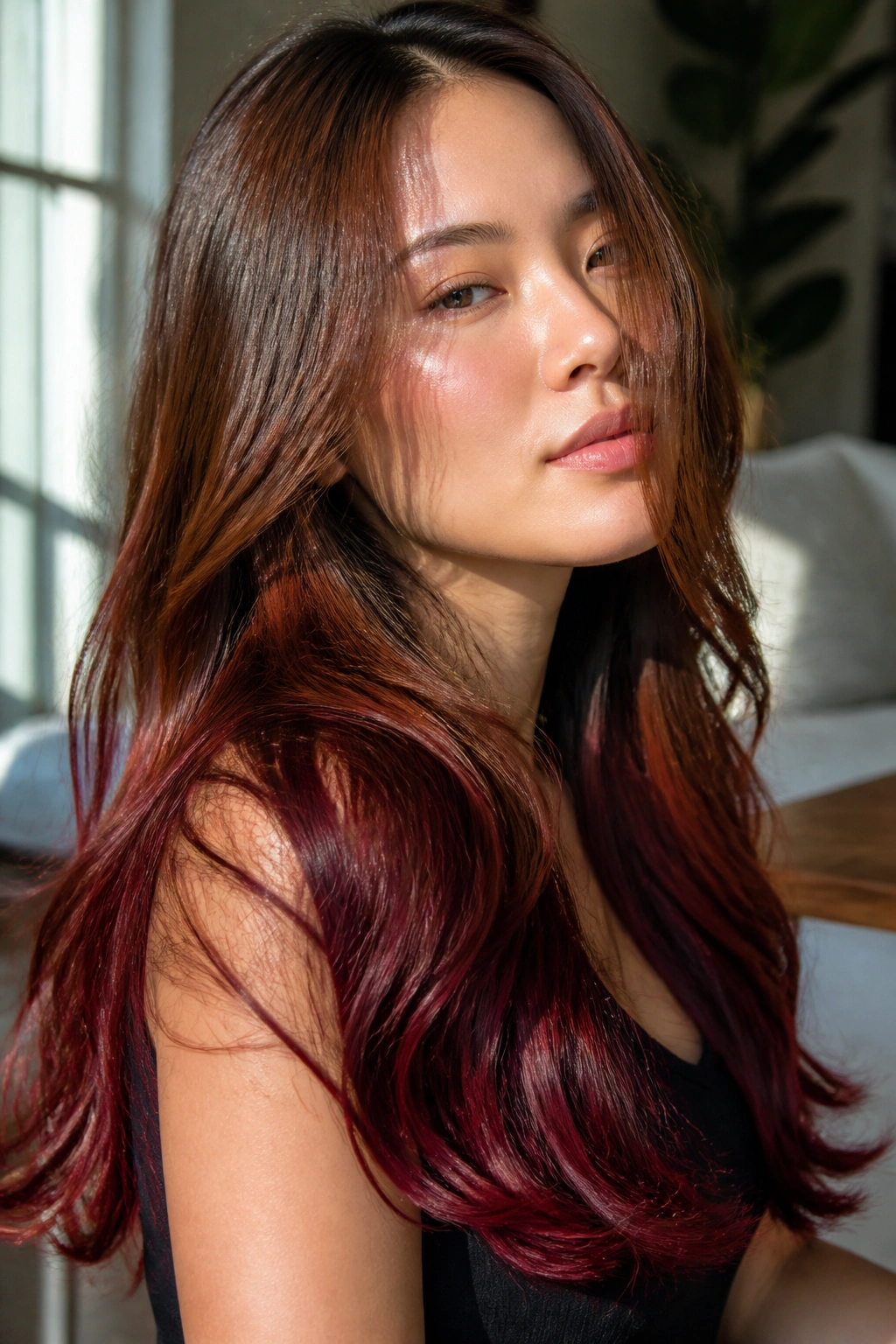
Cinnamon cherry shine is one of those shades that looks better when the finish is healthy. The color itself is warm and red-brown, but the shine is what makes it sing. Without shine, cinnamon can look flat. With it, the whole ombre feels polished and alive.
This is a smart pick if your hair already has some warmth in it. The cinnamon tone can sit over a brown base, while the cherry keeps the ends from disappearing. On long hair, ask for the red to start gradually around the mid-lengths and intensify only near the bottom. That prevents the color from feeling crowded.
A gloss service or a color-depositing conditioner can help keep the red fresh between salon visits. I would not skip that part. The shape of this color depends on sheen, and dry ends ruin the effect fast.
28. Espresso Red Melt for Waist-Length Hair
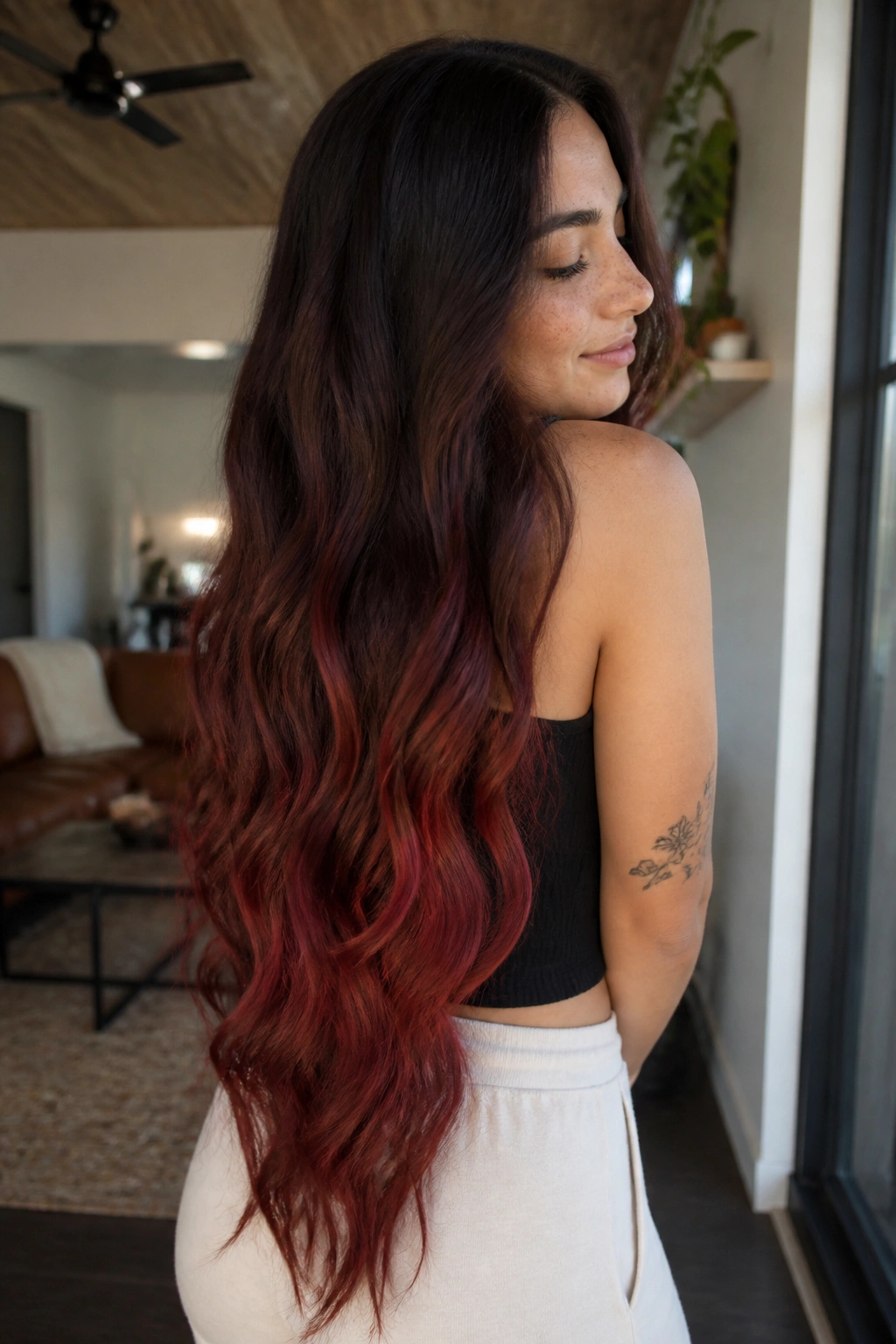
Waist-length hair gives red brown ombre room to behave properly. That’s why an espresso red melt works so well here. The top stays deep and dark, almost brooding, and the red slowly surfaces through the long middle before landing in a richer tone at the ends.
This shade has a clean, grown-up feel. It does not need bright copper or loud burgundy to make a point. The length does the work, and the color simply follows it. On hair this long, I like a softer transition than a high-contrast one, because the eye has a lot of distance to travel. A smooth fade keeps that travel pleasant.
If the hair is layered, even better. The layers stop the ends from looking too heavy and let the red show through in motion. If the hair is one-length, keep the finish glossy and the transition very soft. That’s the whole trick.
A final note: the best red brown ombre on long hair is the one that still looks good when the curls fall out. If the shade only works in perfect styling, it’s too fussy. If it looks rich in a braid, a ponytail, and a loose blowout, you’ve got the right one.
