



Long hair gives a brown-to-blonde fade room to breathe. That is why brown blonde ombre hair ideas for long hair make more sense here than on a blunt bob: the darker base can stay anchored while the lighter ends stretch out and do their job.
I’m picky about ombre on long hair. A harsh band between brown and blonde can look stripy fast, and ends that are lifted too high can make the whole length look dry instead of glossy. The best versions keep the root believable, let the middle section do some quiet work, and stop the blonde where the hair still looks full.
A good colorist will usually think in layers, not just shades. Root depth, midlength softness, toner tone, and the shape of the cut all matter more than the swatch names do. On very long hair, a fade that starts below the cheekbones can look calmer and more expensive than a high blonde sweep that reaches the crown too soon.
That’s the sweet spot: enough contrast to wake up the hair, enough brown left behind to keep it rich. Start there, then decide how warm, cool, or bright you want the blonde to feel.
1. Brown Blonde Ombre with Champagne Ends
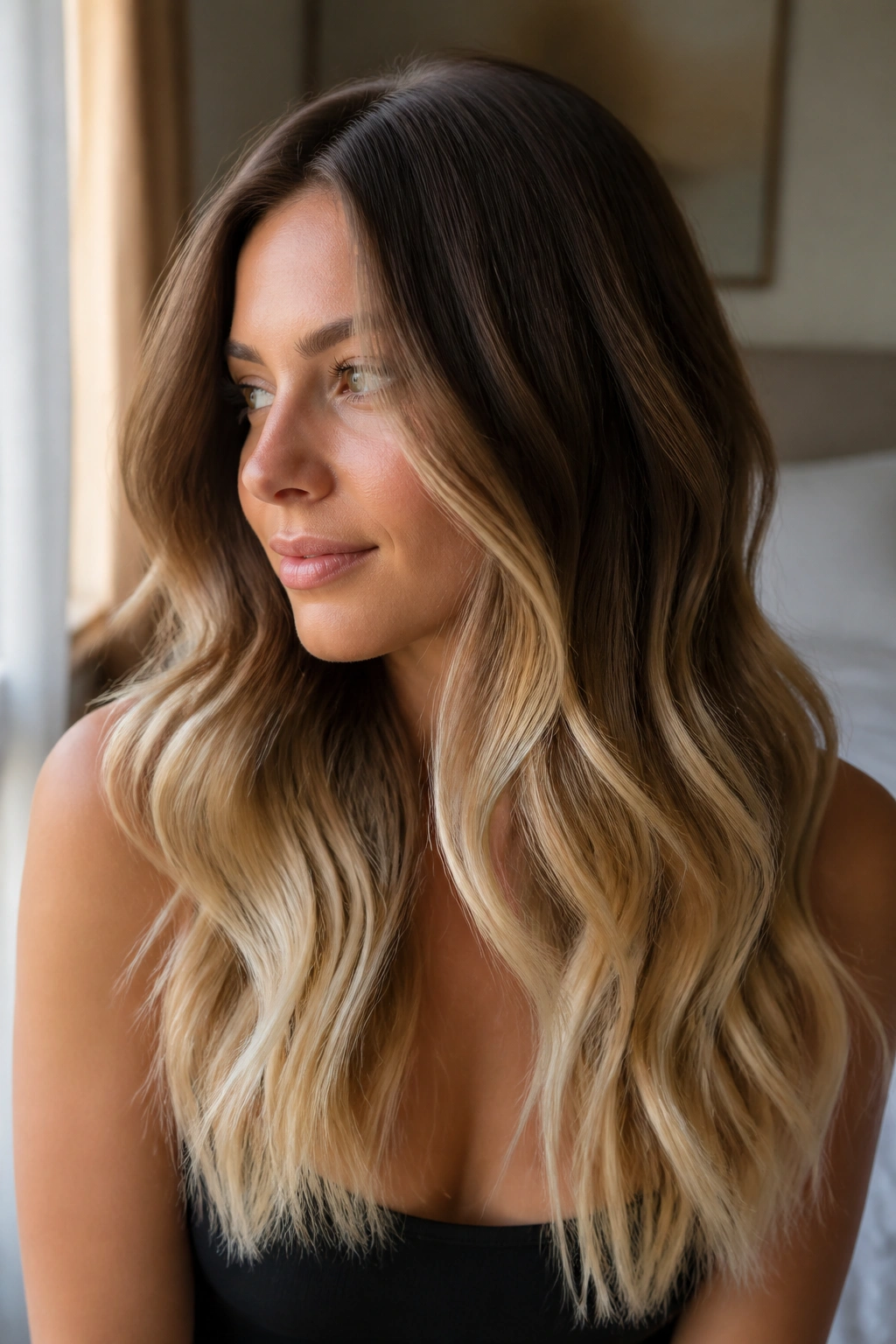
Champagne blonde is the easiest way to make a brown base feel lighter without tipping into harsh contrast. It has that soft, pale glow that sits between beige and pearl, so the blonde reads bright but not icy.
For long hair, I like this best when the fade starts around the lower cheekbone or just below the collarbone. That keeps the root shadow in place and gives the lighter ends a long runway. If your base is a medium brown, ask for the blonde to stop at a level 9 or soft level 10, not a yellow level that looks flat in daylight.
The nice part is how forgiving it is. Champagne ends still look polished if your waves drop a little, and they do not scream for attention the way a high-contrast platinum fade can.
Pair it with loose curls or a smooth blowout. Both show the shift better than a tight curl pattern. On straight long hair, the ends can almost look like satin at the hemline.
2. Mocha Balayage with Soft Blonde Ribbons
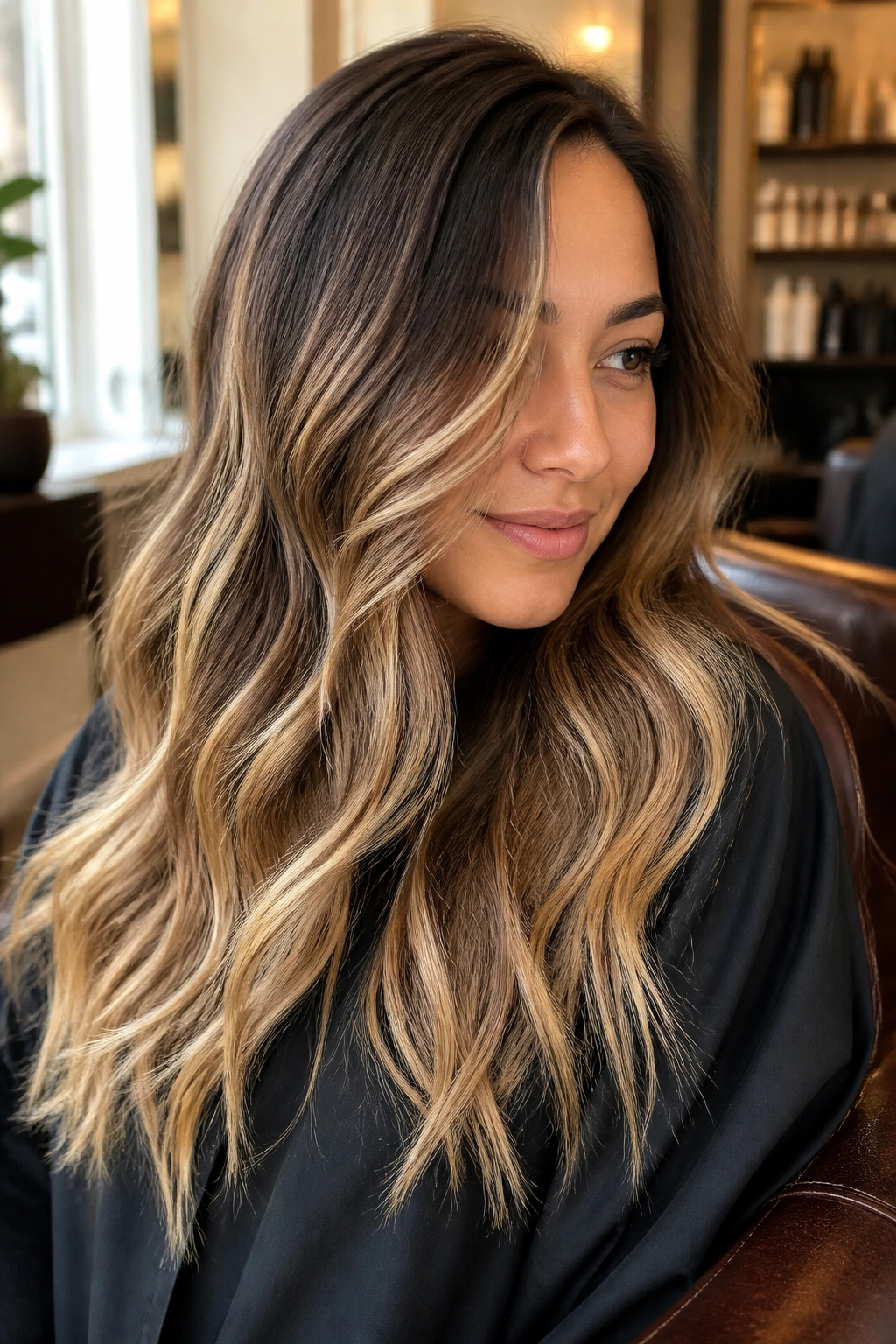
Want blonde that shows only when your hair moves? This is the one I’d point to first.
How to Wear It
The trick is to keep the blonde in thin, hand-painted ribbons instead of flooding the whole lower half with light color. On long hair, those narrow pieces break up the mocha base and make the fade feel softer from root to tip. It works especially well on thick hair, where chunky lightening can look heavy fast.
Ask for a mocha root with ribbons that begin mid-length and become a little denser toward the last third of the hair. That gives you a brown blonde ombre effect without a sharp line. If you wear your hair wavy most of the time, the ribbons show through in motion and make the color look more expensive than a flat block of blonde.
- Best on thick or medium-density hair
- Looks strongest with loose bends, not tight curls
- Keep the ribbons one to two shades lighter than the base at first
- Finish with a clear gloss every 6 to 8 weeks for shine
Don’t over-lighten the ribbons near the top. The whole point is softness.
3. Ash Brown to Beige Blonde Fade
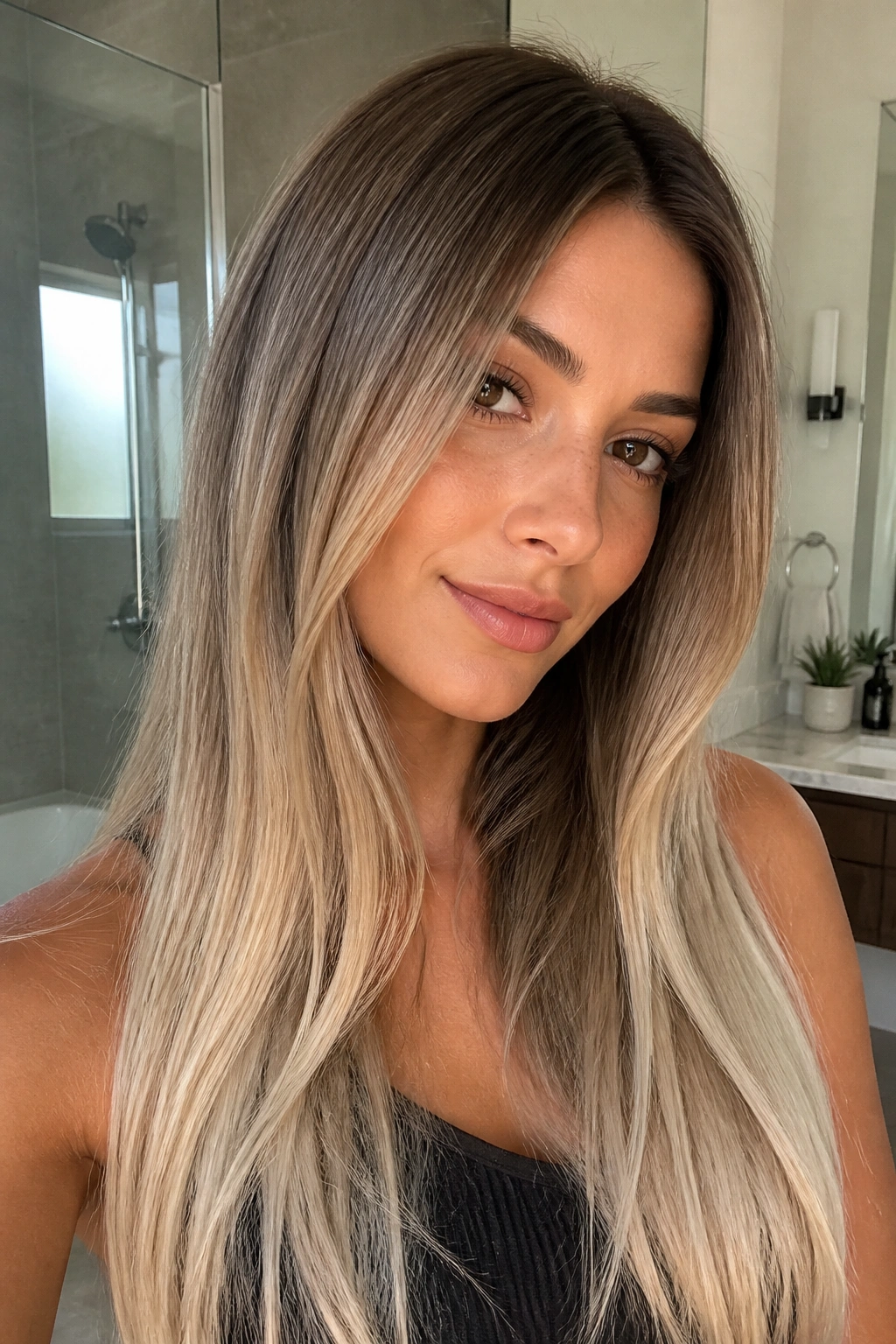
If brass makes you twitch, this is the calmest lane to stay in. Ash brown keeps the root cool and grounded, while beige blonde softens the ends without turning them yellow.
The look works because the two tones meet in the middle instead of fighting each other. Long hair gives the fade enough length to show the shift, so you do not need a dramatic jump to make an impact. A level 5 or level 6 ash brown root can move into a level 8 beige blonde and still look clean.
What to Ask For
- An ash-brown root shadow that stays close to your natural base
- Beige blonde ends, not bright gold
- A soft melt through the midlengths instead of a hard line
- A toner plan that keeps warmth under control every few weeks
This is the ombre I like on straight long hair when the goal is clean and chic, not beachy. It also saves you from the orange stage that can creep in if your blonde is too warm from the start.
Skip heavy purple shampoo unless the blonde starts to yellow. Too much of it can make beige ends look dull.
4. Chestnut Ombre with Face-Framing Brightness
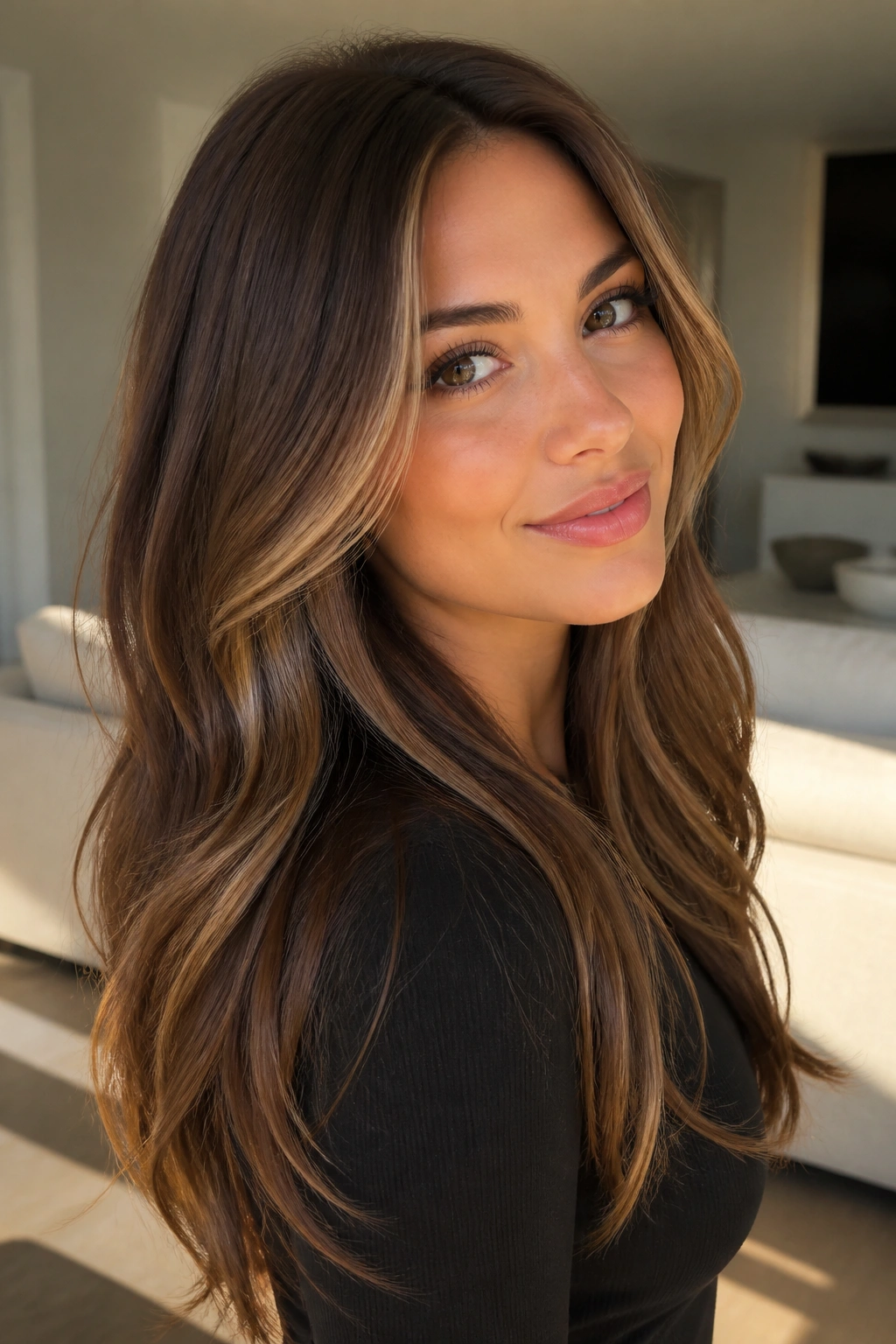
Chestnut is one of those shades that looks richer once a few lighter strands sit around the face. The rest of the hair can stay deep and glossy, and that front brightness does all the heavy lifting.
Where the Brightness Should Sit
The lighter pieces should land around the cheekbones, jawline, and a little through the top of the collarbone area. That keeps the glow near the face where it matters most, while the lower lengths stay more chestnut and grounded. On long layers, this placement keeps the style from feeling weighed down.
A strong version of this look uses face-framing pieces that are only a shade or two lighter than the ends. You get movement without turning the whole head blonde. It also makes ponytails and half-up styles look more finished, which matters more than people admit.
- Best for layered long hair
- Works well with side parts or curtain parts
- Ask for soft brightness around the front, not a wide strip
- Keep the ends in the chestnut family so the blend stays rich
My rule here is simple: brighten the face, not the whole room.
5. Cocoa Waves with Honey Blonde Tips
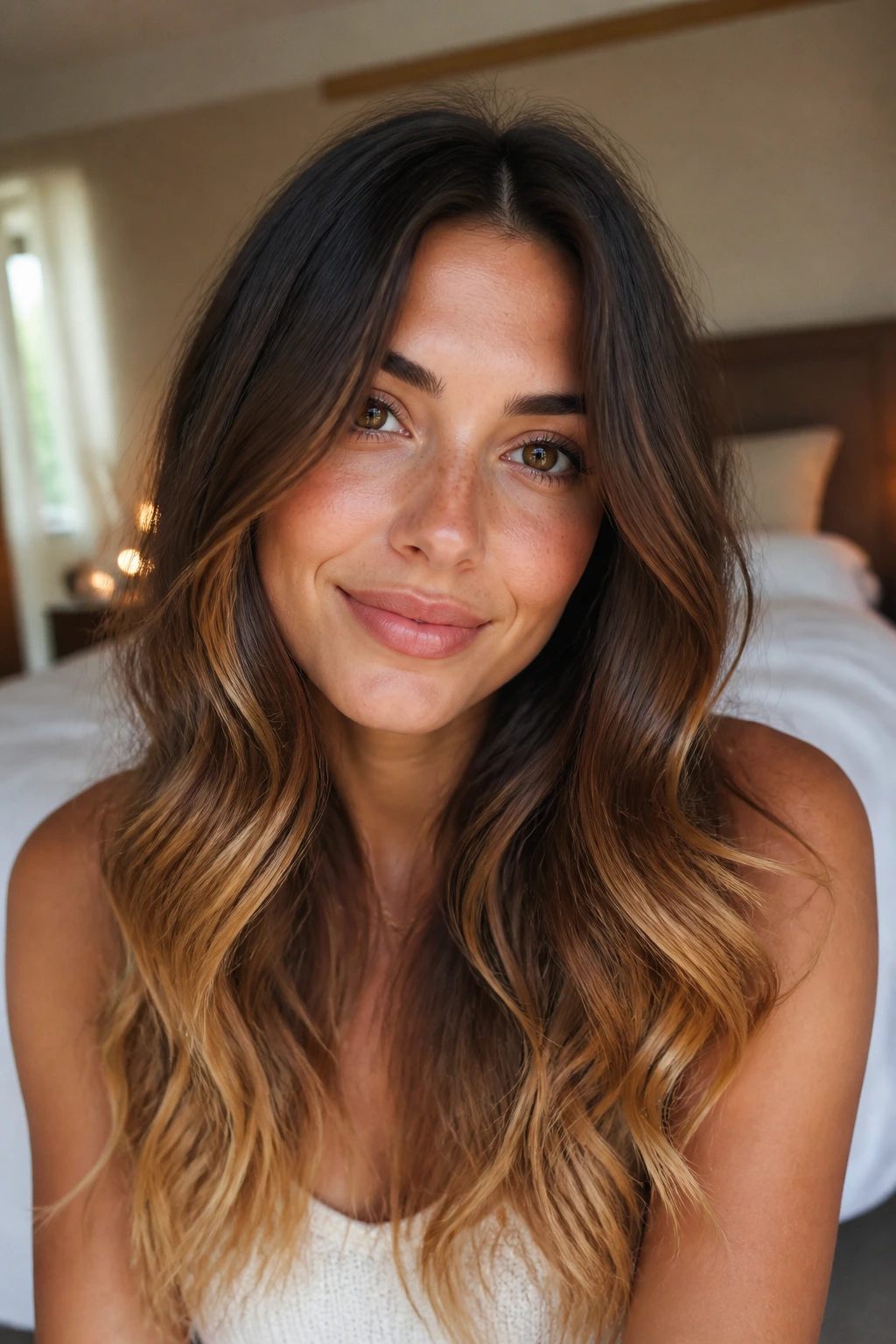
Honey blonde tips are a different animal from icy ends. They bring warmth forward, which makes cocoa brown hair look softer and fuller instead of over-processed.
Unlike a high-contrast blonde fade, this version keeps the shift relaxed. The brown stays noticeable all the way through the midlengths, and the honey appears mostly where the waves bend and gather at the bottom. That makes it a good choice if you like your hair to look touched by light rather than painted in sections.
This one suits long hair that already has some movement built into it. If your cut has long layers, the honey tips show through more naturally. On one-length hair, the effect is smoother and more dramatic, which can be nice if you want a cleaner line.
I’d recommend a 1.25-inch curling iron and a light brush-through after the curls cool. The honey catches the curve of the wave much better than tight ringlets do. Keep the ends hydrated, though. Warm blonde can look a little frayed if the hair is dry.
6. Dark Brunette to Cream Blonde on Long Layers
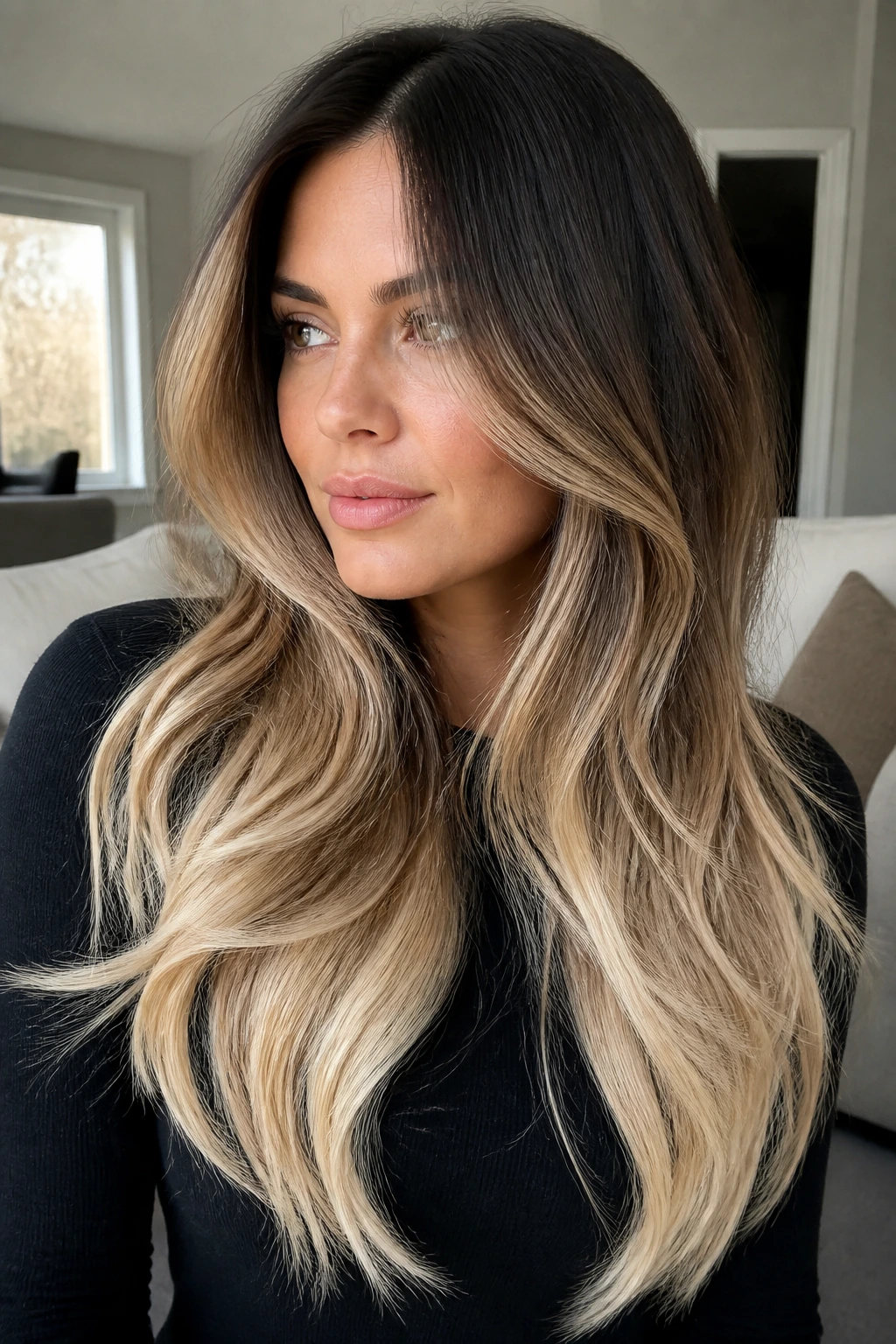
Cream blonde at the ends of dark brunette hair has a soft, whipped look that never feels too sharp. The reason it works is the layers. Without them, that much lift can sit heavy at the bottom and look like a block.
Long layers give the eye somewhere to move. The darker root fades into a lighter midlength, and the cream blonde takes over only where the hair starts to feather out. The result is smoother than a dramatic dip-dye, but brighter than a subtle brunette gloss.
I like this version when the hair is thick enough to hold shape after lightening. Creamy ends need body. If the ends are too fine or too thinned out, they can start looking wispy. A good cut fixes a lot of that before color even starts.
Blow-dry with a round brush if you want the fade to read clearly. Soft bends show the transition best, especially when the blonde sits at the very bottom third of the length. And yes, keep a repairing mask in rotation. Cream blonde shows dryness fast if you skip care.
7. Mushroom Brown Ombre with Pearl Ends
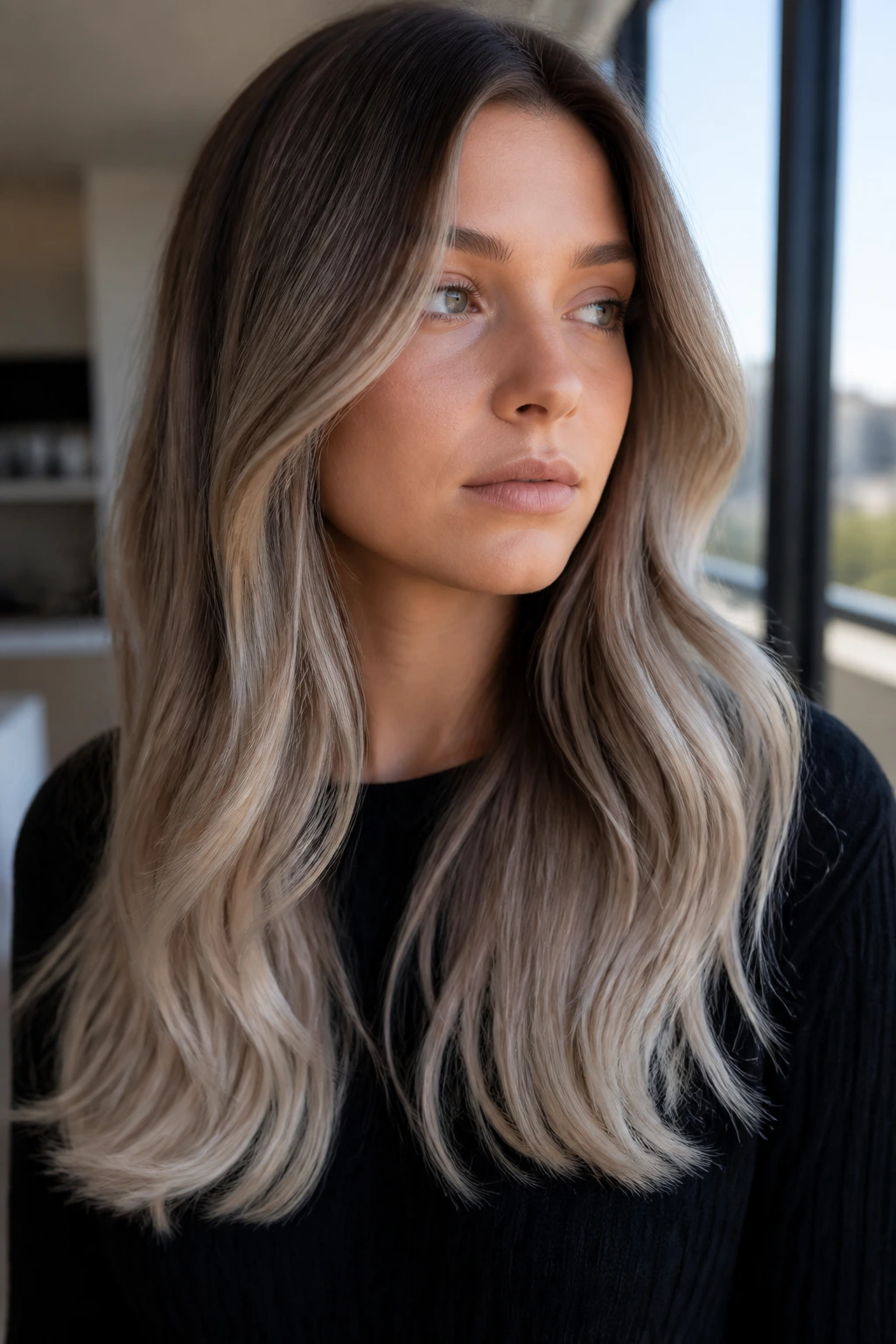
Mushroom brown does its best work when the blonde stays pearl-toned. That cool, taupe-heavy brown makes the light ends feel deliberate instead of sunny.
This is a smart pick if you like cooler hair colors but still want the softness that ombre gives long hair. Pearl ends tend to look clean against the muted brown base, especially when the hair is worn straight or in soft waves. The color story stays calm from top to bottom.
The part I like most is how modern it feels without trying too hard. There’s no loud gold, no stripy contrast, no muddy red creeping into the root. Just a cool brown base and a pale finish that looks controlled.
Pearl blonde is not the place to skip toner. It needs upkeep, because even a little warmth can change the whole feel. If you’re the kind of person who hates orange undertones, this is a strong lane—but only if you’re willing to maintain the cool edge.
8. Cinnamon Brown to Buttery Blonde
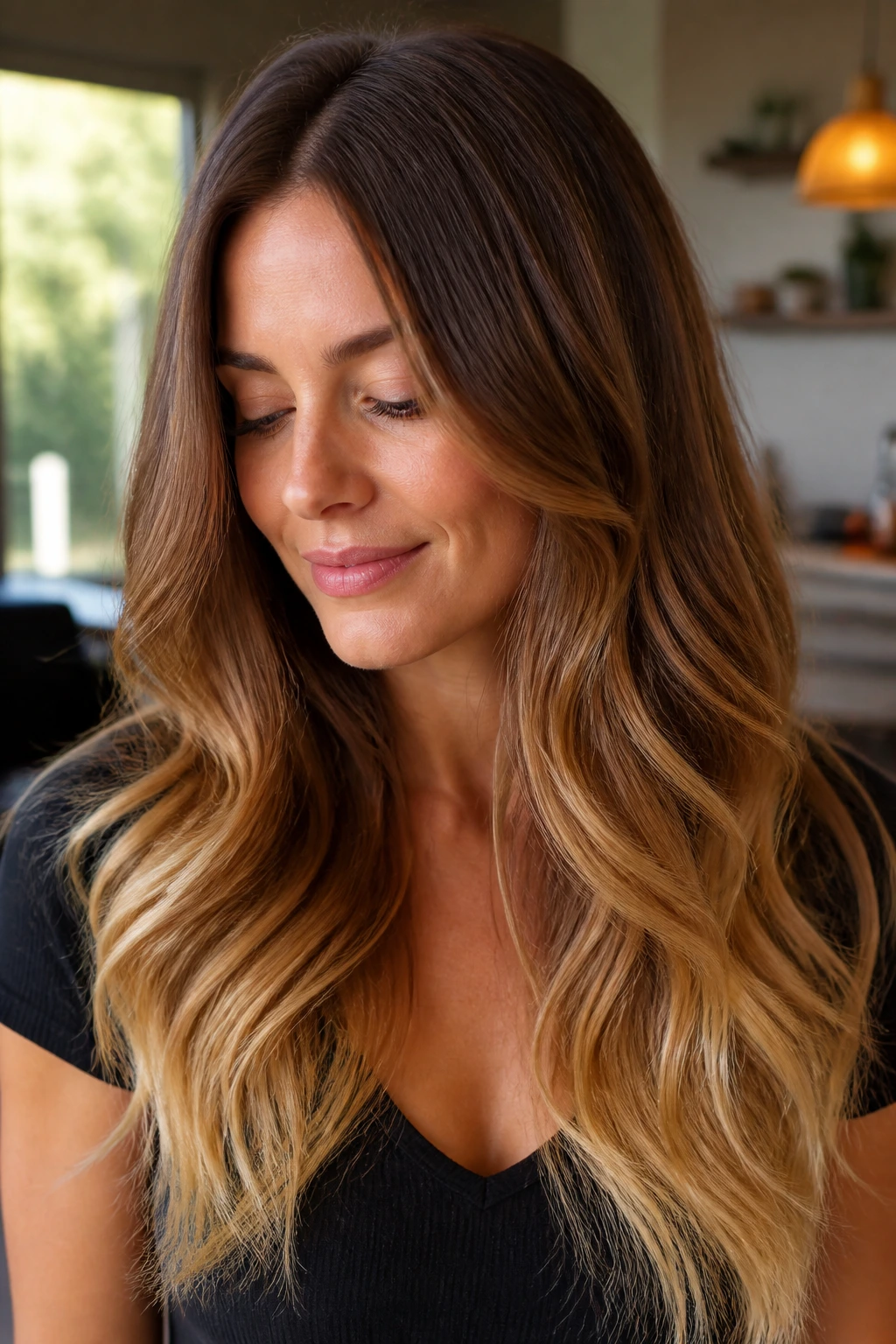
Do you want warmth without orange? Cinnamon and buttery blonde solve that problem nicely.
What to Ask For
Start with a cinnamon brown root that still has depth. Then ask for buttery blonde through the lower half, keeping the blonde soft and creamy rather than yellow. On long hair, that transition needs space, so a slow fade looks better than a quick jump.
The shade pairing is flattering because the warmth stays in the same family. Nothing looks pasted on. The brown has a little spice, the blonde has a little cream, and the whole thing feels easy to wear with everyday makeup and casual clothes.
- Best on naturally warm brunettes
- Looks good with waves, braids, and blowouts
- Avoid a bright lemon tone; it fights the cinnamon base
- Keep the fade lower if you want the root to look thicker
This is one of those colors that can look expensive in a ponytail. That sounds odd, maybe, but it’s true.
9. Brunette Root Shadow with High-Contrast Ends
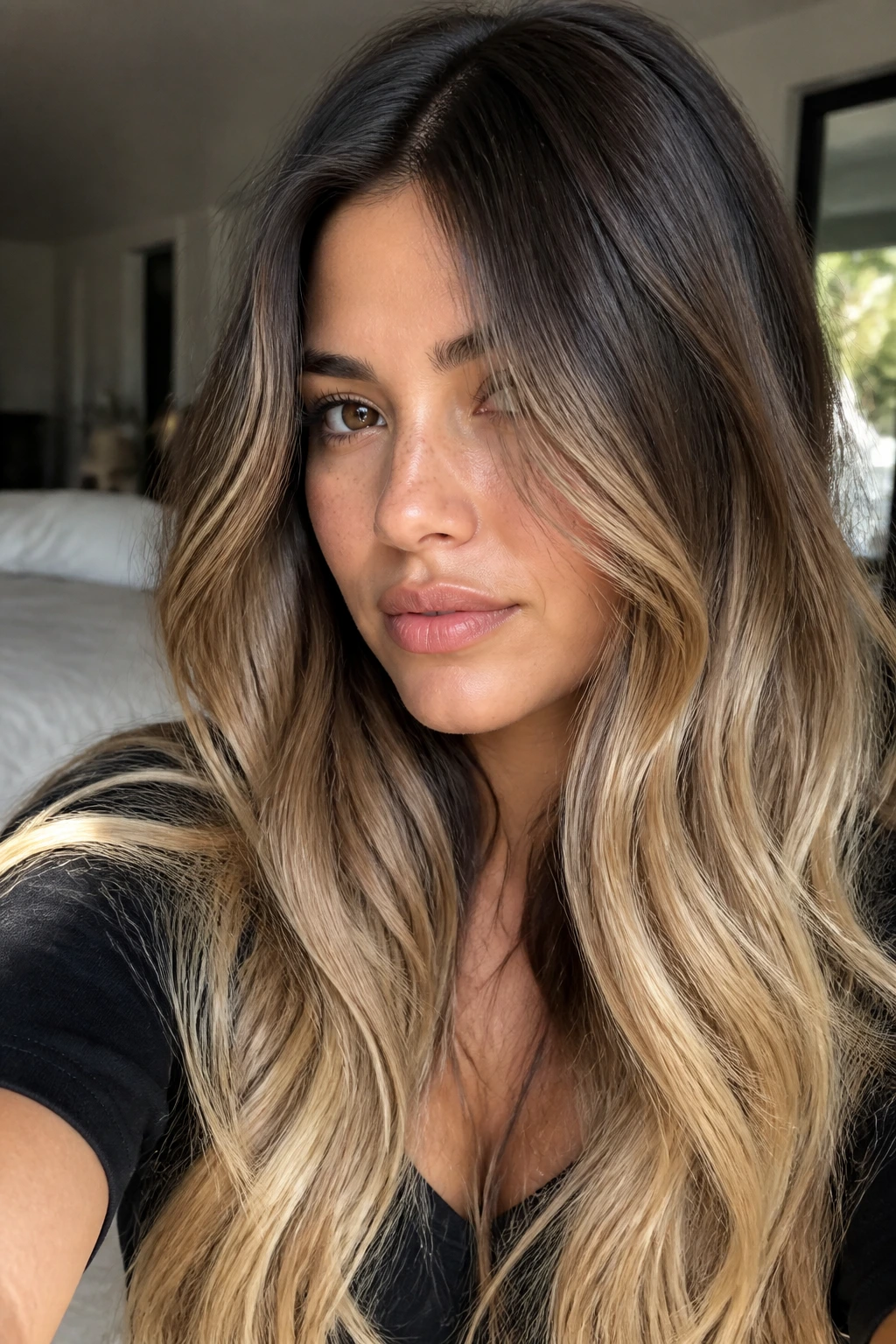
A high-contrast ombre looks sharp when the hair is long enough to carry it. Short cuts can make it feel abrupt. Long lengths give the eye a full path to follow.
The root shadow should stay visible for at least a few inches, then the color can drop into lighter ends that are clearly blonde, not just light brown. I like this on thick hair and on cuts with real movement, because the contrast needs shape to sit well. If the hair is pin-straight and one length, the effect can feel harsher than intended.
- Keep the root shadow deep and believable
- Let the blonde start lower, around the midlengths
- Use larger waves so the contrast reads in sections
- Trim the ends regularly, or the blonde can look stringy
This style shows up well on camera and in indoor light. It is not subtle. That is the point.
If you want a dramatic ombre without going full fantasy color, this is the lane. Just be ready for more visible grow-out than you’d get with a low-contrast melt.
10. Brown Blonde Ombre with Bright Money Pieces
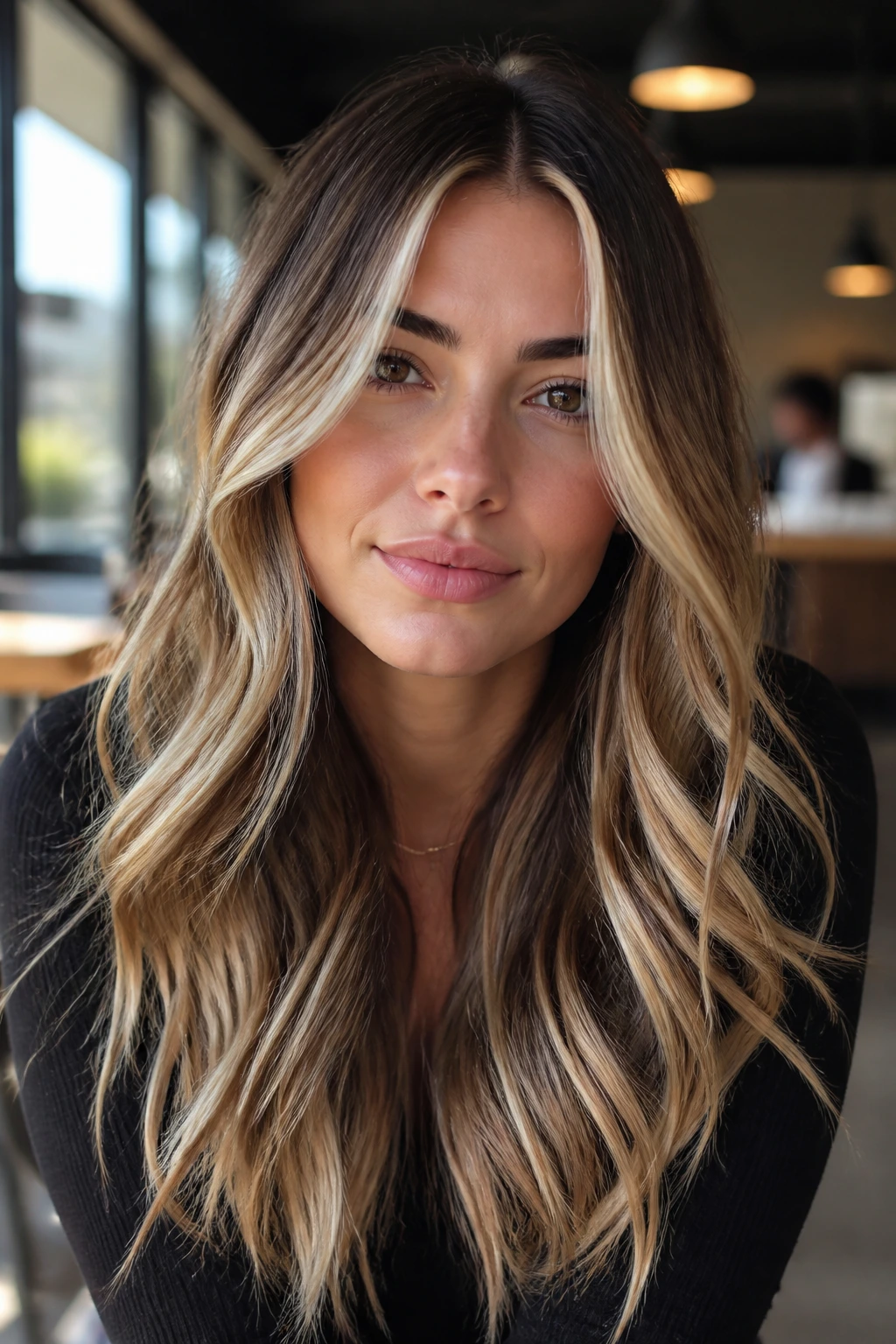
This is the one people choose when they want the front to do a little more work than the back.
Why the Front Matters
The money pieces sit right where the eye lands first—around the temples, cheekbones, and the front curve of the hairline. Keeping those sections brighter than the rest of the ombre makes long hair look instantly more lifted, even if the back stays soft brown to blonde.
The trick is restraint. The front pieces should be bright, but not so wide that they look like stripes. I usually like them about an inch wide, sometimes a little less if the hair is fine. Then the rest of the ombre can flow more quietly through the lengths.
- Great with center parts and face-framing layers
- Works well for ponytails because the bright front pieces still show
- Ask for the lightest lift near the face, not at the crown
- Keep the back a shade deeper so the hair still has depth
If you only brighten one area, brighten the front. It gives the biggest payoff for the least chaos.
11. Walnut Brown to Wheat Blonde on Curly Hair
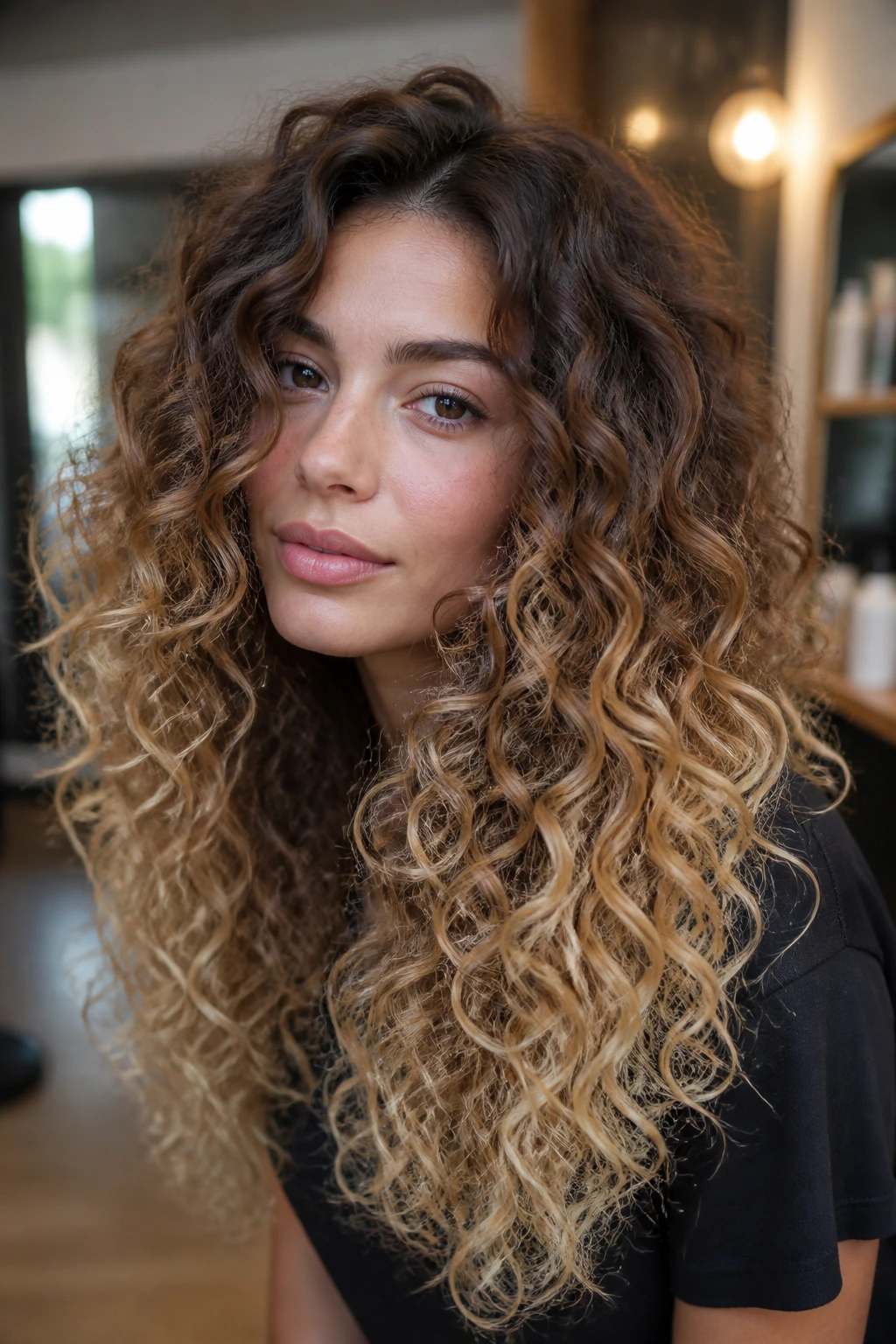
Curly hair changes the whole feel of ombre, and that is a good thing. The curl pattern breaks up the color, so walnut brown and wheat blonde can look softer together than they would on straight lengths.
I like this combination because wheat blonde is warm enough to keep the curls from looking flat, but light enough to pop against a deep walnut base. The fade does not need to be as obvious on curly hair. In fact, too much contrast can make the curls look choppy in the wrong way.
Long curls need room for color to move through the pattern. If the blonde is concentrated only at the very ends, it can look heavy at the bottom. A better approach is to feather the blonde through the lower midlengths, then let the brightest tips show on the outer curls.
A diffuser helps here. So does a curl cream that does not leave a greasy film. The color looks best when the curl shape stays open and springy, not stretched out and frizzy. That’s the whole game.
12. Cool Brown Shadow Root with Icy Beige Ends
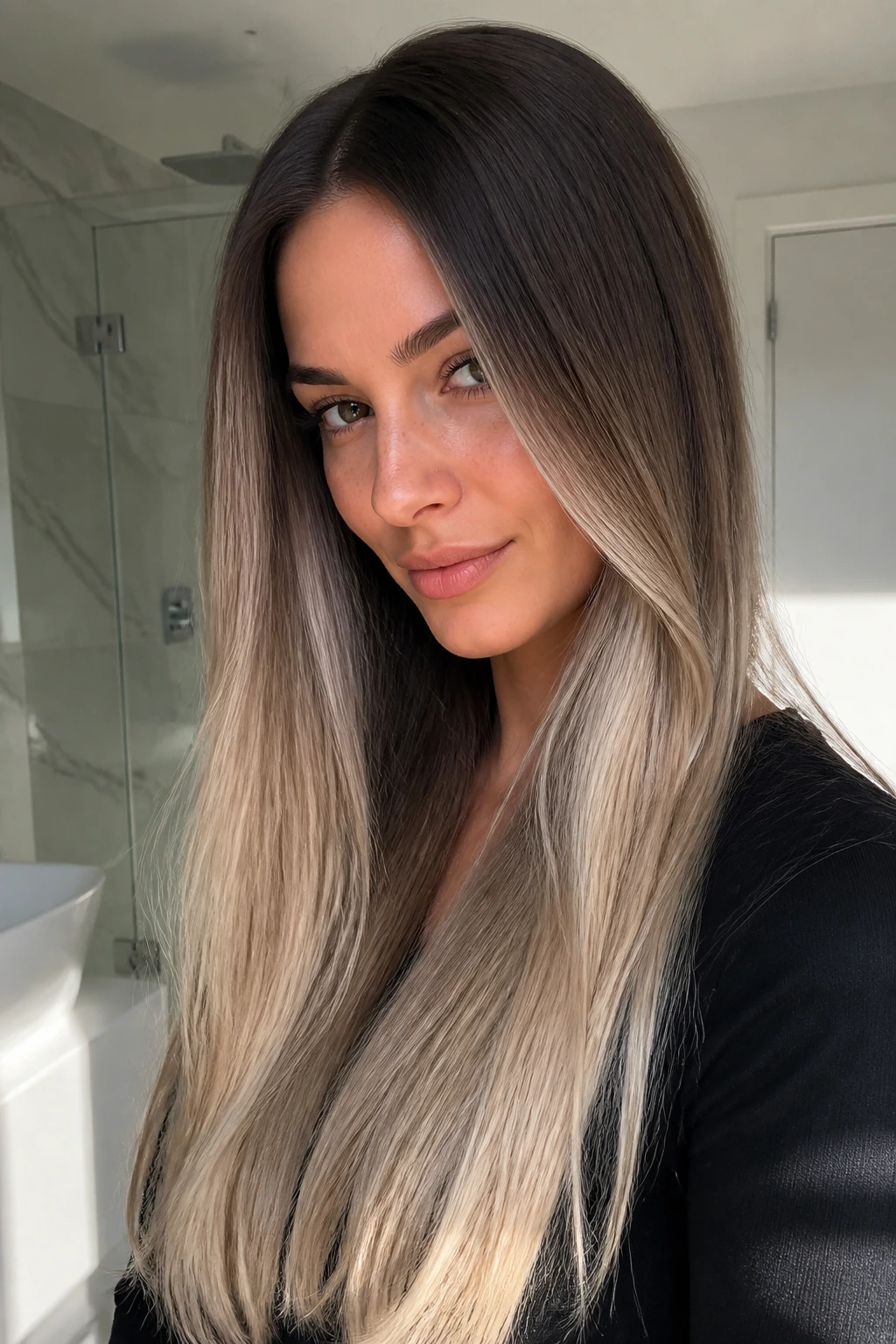
Icy beige ends are for people who like their blonde a touch cooler and a touch more polished. Not frosty. Just clean.
Compared with honey or caramel ombre, this version feels quieter. The cool brown root shadow gives the length a strong base, and the icy beige finish keeps the blonde from drifting into gold. On very long hair, that cooler ending can make the whole color look controlled, especially when the hair is worn smooth.
This style is a nice match for straight hair, blunt-ish layers, or a glassy blowout. The sheen matters. When the strands lie flat and reflect light, the beige tone reads as pale and refined instead of muddy. If the hair is rough or overly dry, the shade can lose that effect fast.
A silver shampoo can help, but use it carefully. One wash too many and the blonde can go flat or gray in a bad way. I’d rather see a clear beige toner refreshed at the salon than a bottle of violet shampoo doing too much.
13. Caramel Brown Ombre with Wide Waves
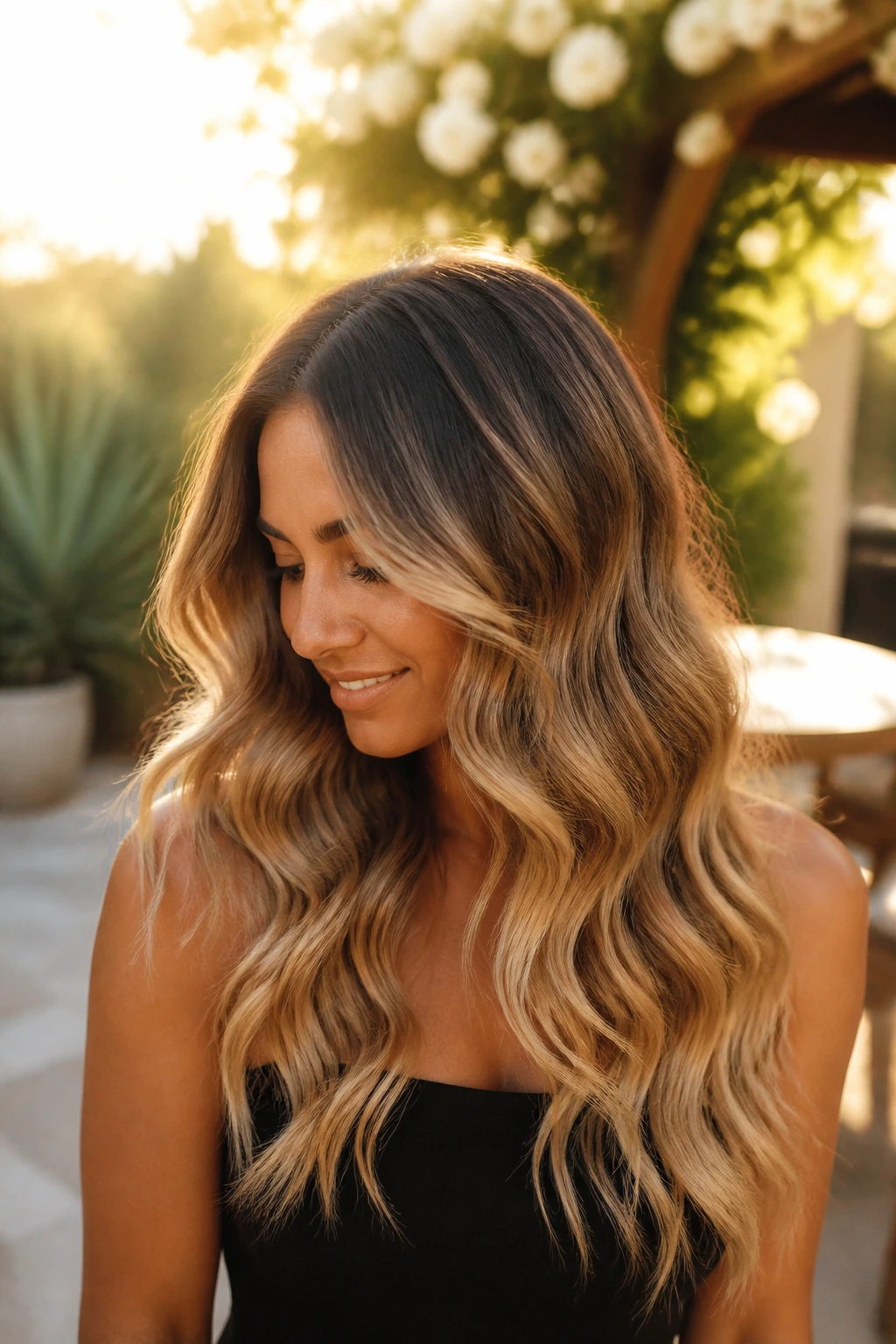
Caramel brown ombre looks best when the waves are broad enough to show off the color shift. Tight curls can hide the blend. Wide waves let the caramel sit on top of the brown and blonde in a way that feels full and loose.
The color itself is warm, but not sticky-sweet. The brown root stays rich, the midlengths soften into caramel, and the ends can turn golden blonde without looking overly light. On long hair, that gradient gives the style a lot of movement. It’s one of the few ombre looks that can feel casual and dressed up at the same time.
Styling Note
Use a 1.5-inch curling iron if your hair holds curl well. Clip the curls, let them cool, then brush them out with your fingers or a wide paddle brush. The caramel pieces show more clearly once the wave opens up.
This is a strong pick for anyone who likes warm makeup shades, tan neutrals, or gold jewelry. It has an easy, lived-in feel. Not lazy. Just easy.
14. Medium Brown to Vanilla Blonde Melt
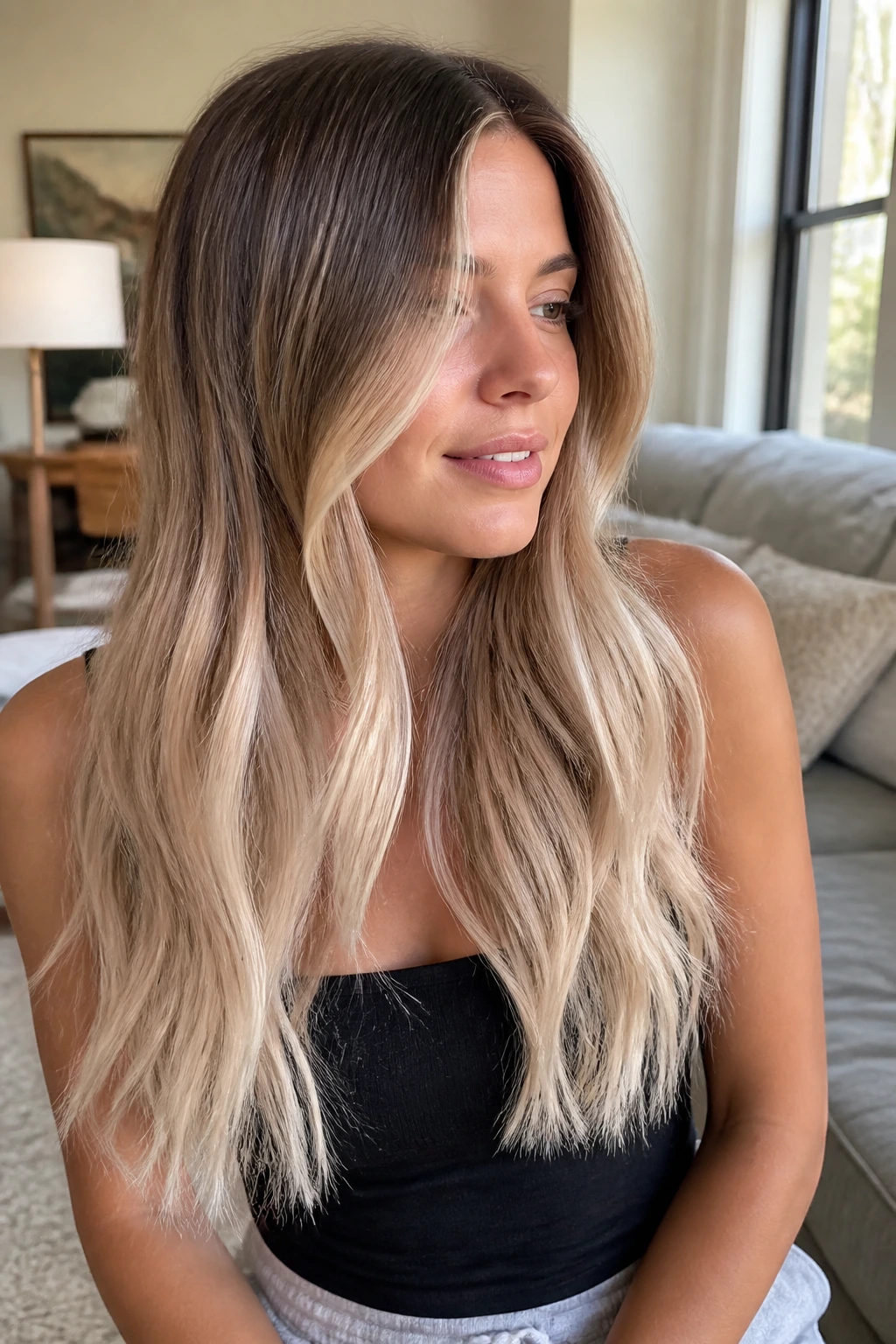
Do you want the blonde to feel soft enough that nobody can point to where it starts? A vanilla melt does that job well.
How to Keep It Soft
The transition matters more than the shade names here. A medium brown root can move into vanilla blonde if the middle section is feathered properly and the ends are lifted in small pieces, not large blocks. On long hair, I like the fade to stretch longer than people expect. The slower the melt, the cleaner it looks.
Vanilla blonde sits in that sweet middle ground between warm and neutral. It’s lighter than beige, softer than platinum, and less gold than honey. That makes it a good fit if you want bright ends without a loud finish.
- Good for long layers and soft face-framing pieces
- Ask for a blurred transition, not a clear line
- Keep the ends trimmed so the vanilla stays clean
- Use heat sparingly; the shade can turn brassy if overworked
This is a nice choice when you want the hair to look fresh in a simple braid or half-up knot. The color does the talking on its own.
15. Coffee Brown Ombre with Sunlit Fringe
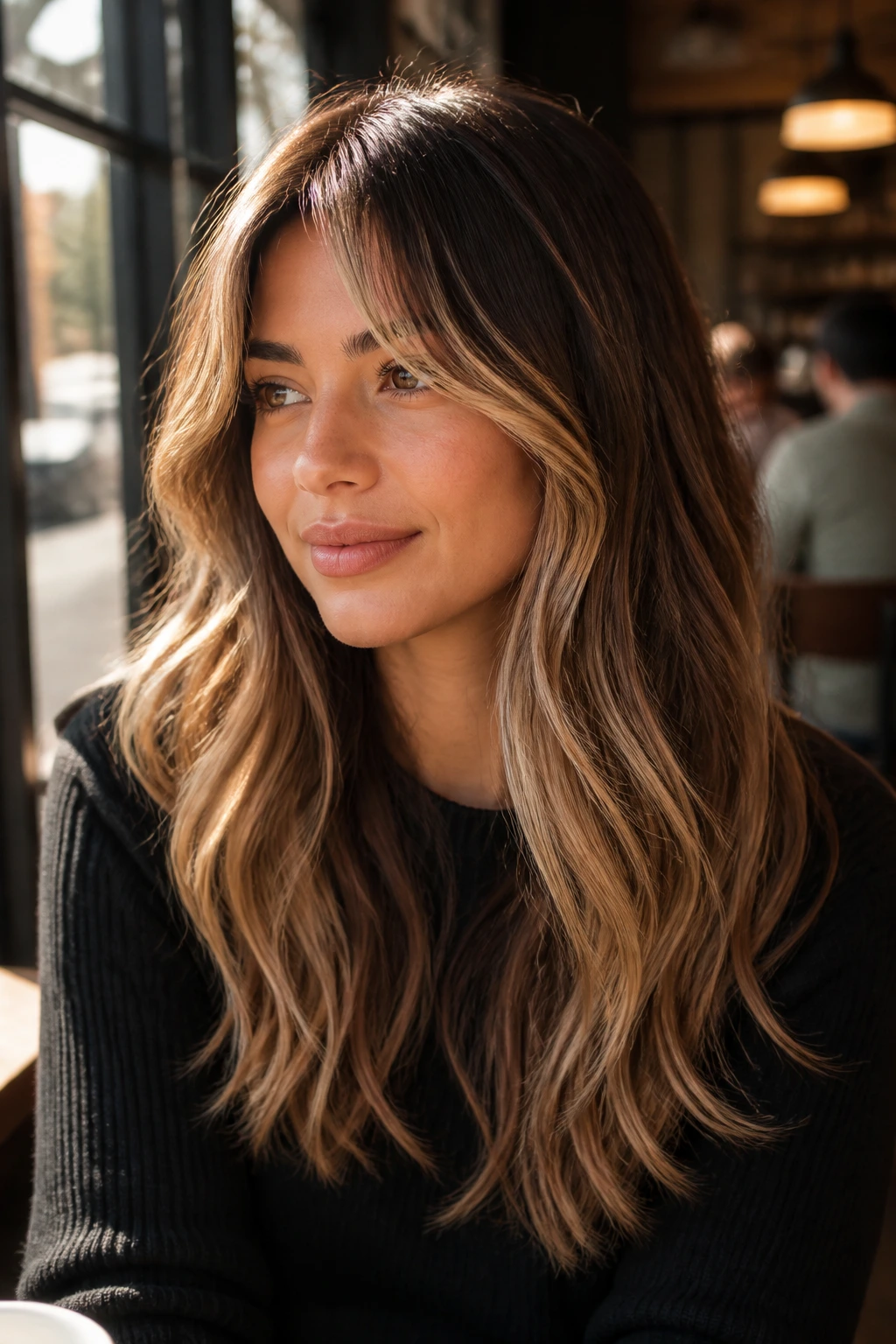
A sunlit fringe changes the whole mood of a long ombre. You do not need to brighten the whole head when the bangs or front fringe carry enough light on their own.
Coffee brown gives the base real depth. Then the fringe—whether it’s curtain bangs, a long sweepy bang, or a face-framing fringe—gets a lighter touch so it sits closer to the face. That small shift can make the rest of the hair feel lighter without forcing the lengths to go blonde too fast.
This works especially well if you wear your hair up often. A bright fringe still shows under a clip, a bun, or a loose tie-back, which makes the color feel useful. Not just pretty. Useful.
- Best for long fringe or curtain bangs
- Keep the lighter pieces soft, not stripey
- Match the fringe tone to the ends or one shade lighter
- Blow-dry the fringe forward first so the color sits evenly
If your forehead area tends to get oily or flattened, this style needs a little more styling time. Worth it, though.
16. Chestnut Balayage to Golden Blonde Ends
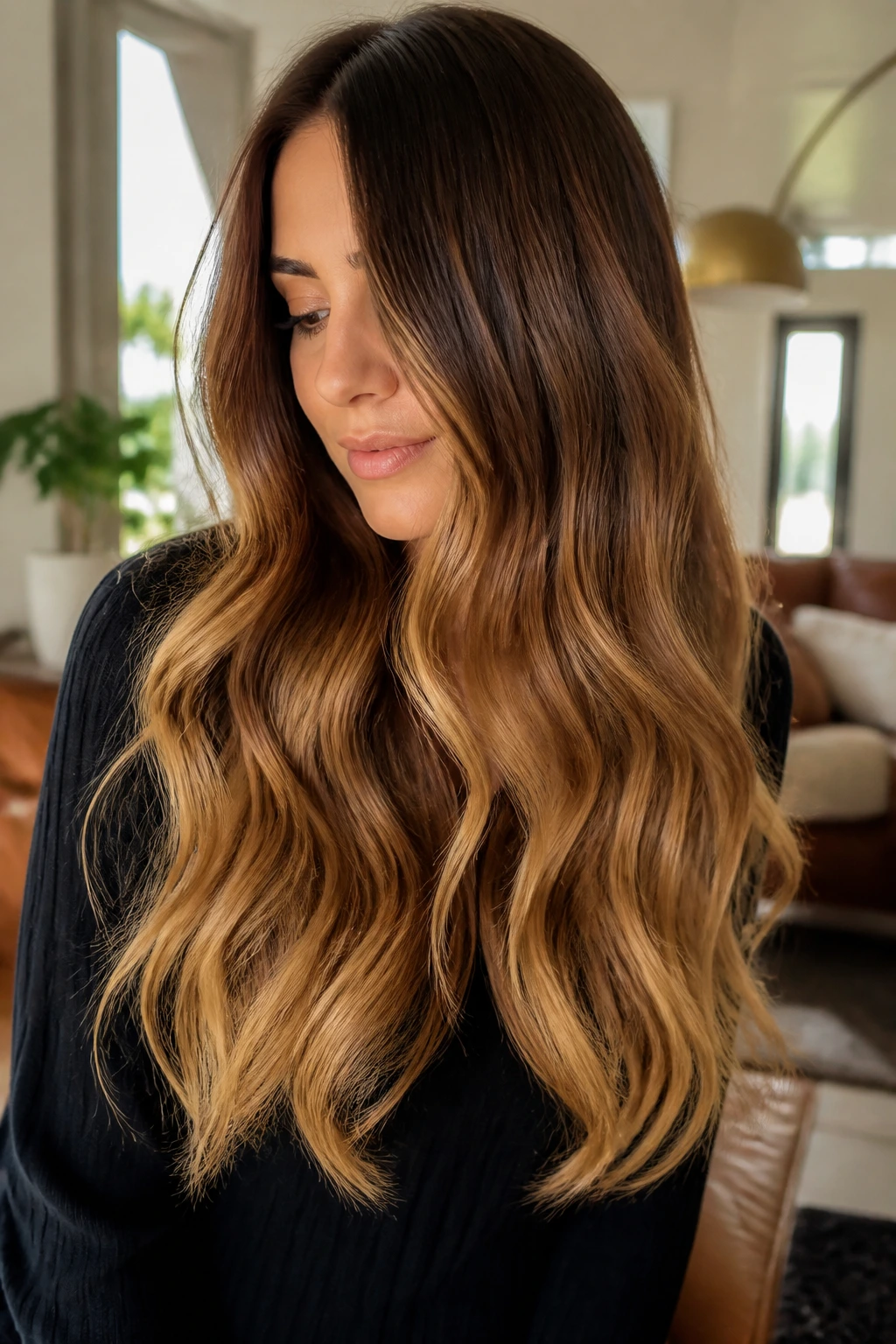
Chestnut and gold are old friends for a reason. The warmth in both shades keeps long hair from looking flat, especially when the cut has movement.
What Makes It Different
Balayage gives this look its softness. The golden blonde is painted where the sun would naturally hit, while the chestnut base stays present through the top and middle. On long hair, that balance keeps the ends bright without making the whole style feel over-lifted.
The nice part is how wearable it is for everyday life. The gold reads warm indoors and outdoors, and chestnut keeps the root from looking too dark or too harsh. If you like warm lipstick, bronzy makeup, or gold frames, this color family fits easily.
- Good for layered long hair
- Works with both waves and straight styles
- Ask for golden blonde, not orange-gold
- Keep the chestnut rich with a gloss instead of re-lightening the roots too often
This is the warmest look on the list, and it knows it. No apology needed.
17. Taupe Brown to Soft Pearl Blonde
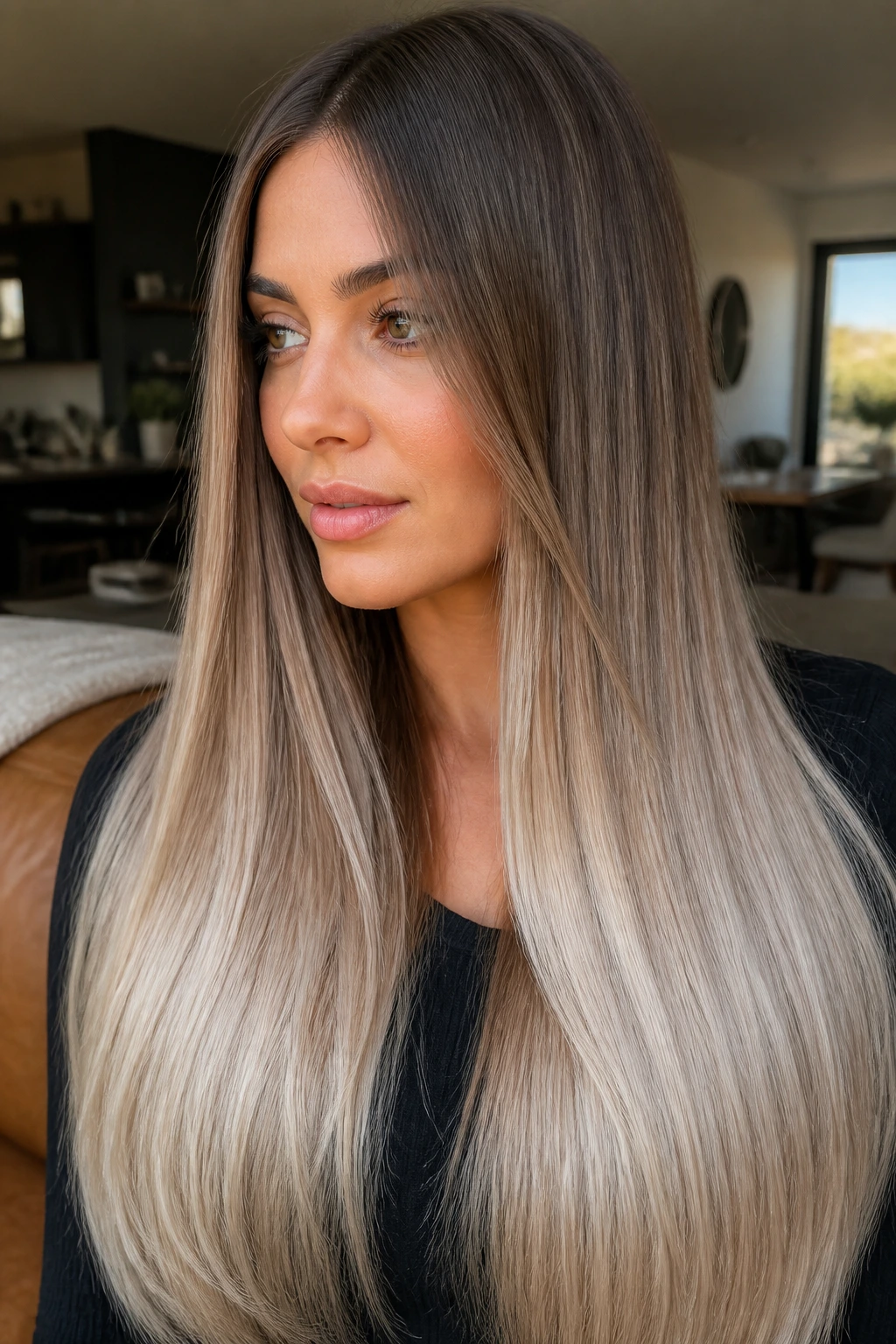
Taupe brown is one of the most useful shades for a cool ombre because it sits between brown and ash without looking muddy. Add soft pearl blonde at the ends, and long hair starts to look light but still grounded.
I like this best on straight hair or hair that gets a smooth bend at the ends. The color shift is subtle enough that the line between shades almost disappears in motion. That can be a good thing. You get the feeling of blonde without losing the richness at the top.
Pearl blonde needs clean toning. If it pulls yellow, the whole look changes. If it pulls gray, the hair can feel flat. That narrow middle is what makes this version worth the upkeep.
A light gloss every few weeks helps keep the taupe fresh and the ends soft. And if your hair tends to snag at the bottom, cut back on heavy oils. They can make the pearl finish look coated instead of airy.
18. Brunette-to-Blonde Face-Framing Ombre
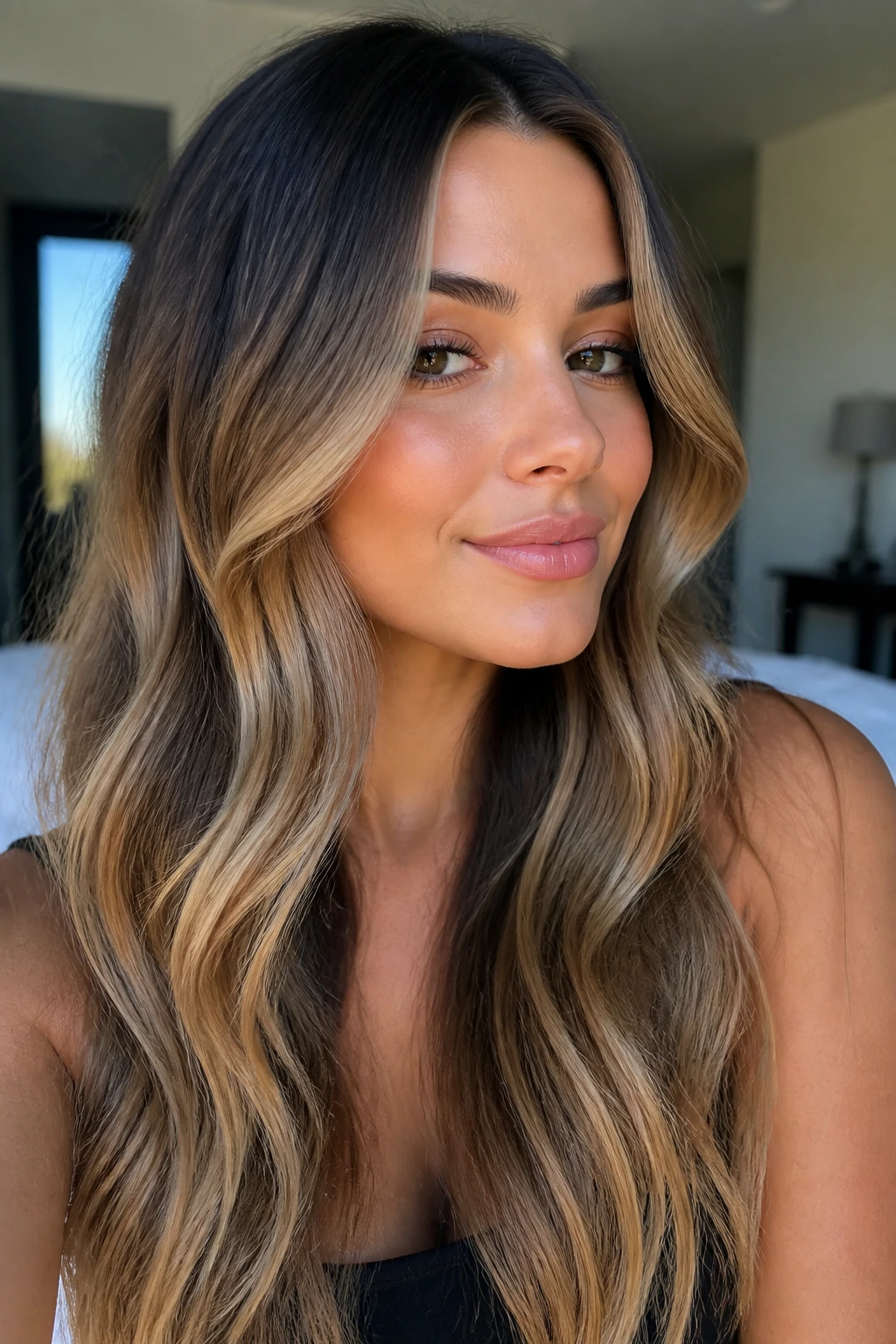
Why spend all your lightening budget on the back when the front does most of the visual work? That’s the question this style answers.
The brunette base stays deep through most of the head, while the blonde is concentrated around the face and gradually carried down the lengths. Long hair gives you room to make that front brightness feel generous without bleaching the entire head. It’s a smart choice if you wear your hair in ponytails, half-up styles, or loose claw-clip twists.
Compared with a full ombre, this version feels lighter to maintain. The darker base stays dominant, so grow-out is easier to live with. The blonde still reads as ombre, but the emphasis stays on the frame around your face.
I’d recommend this if you want dimension without committing to a heavy lightening schedule. It is especially good when your cut has layers that can catch the brighter pieces near the cheekbones. The color does a lot with a little.
19. Deep Mocha to Honey Blonde Gradient
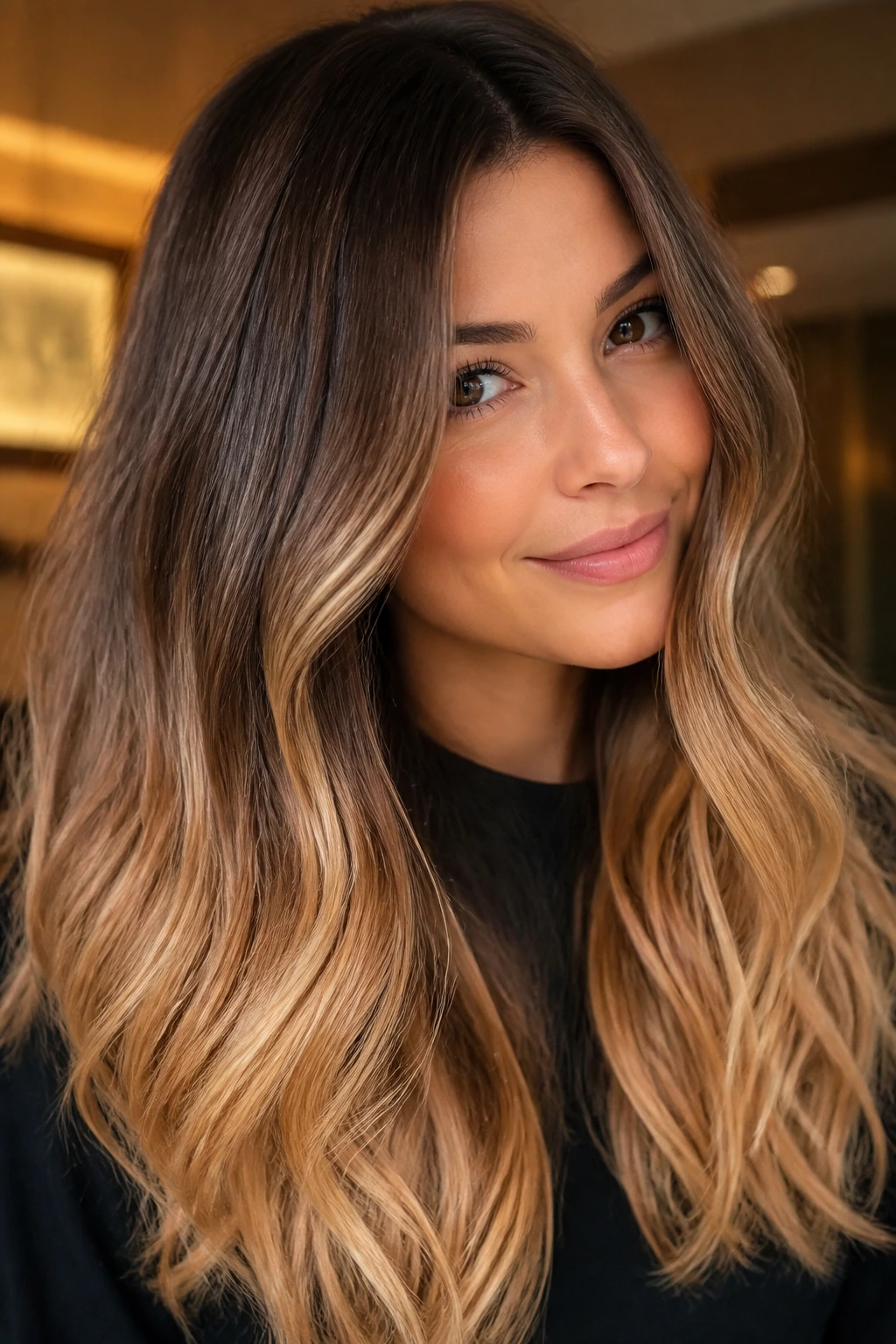
A deep mocha root paired with honey blonde ends is the kind of color that looks friendly in every light. It feels warm, soft, and easy to wear, which is probably why people keep coming back to it.
The gradient matters here. You do not want the blonde to jump too high too soon. Let the mocha hold the top, then shift into honey through the midlengths and finish lighter at the bottom. That slow move makes long hair look fuller because the darker base still has room to show.
This shade family works well if your skin leans golden or olive, but it can also suit neutral complexions that need a little warmth near the face. The honey tone softens the whole look. It does not fight with the base the way bright blonde sometimes does.
A smooth blowout makes this color shine. So does a soft wave set with a large iron. The whole point is warmth that feels lived-in, not loud.
20. Low-Contrast Brown Blonde Ombre for Long Hair
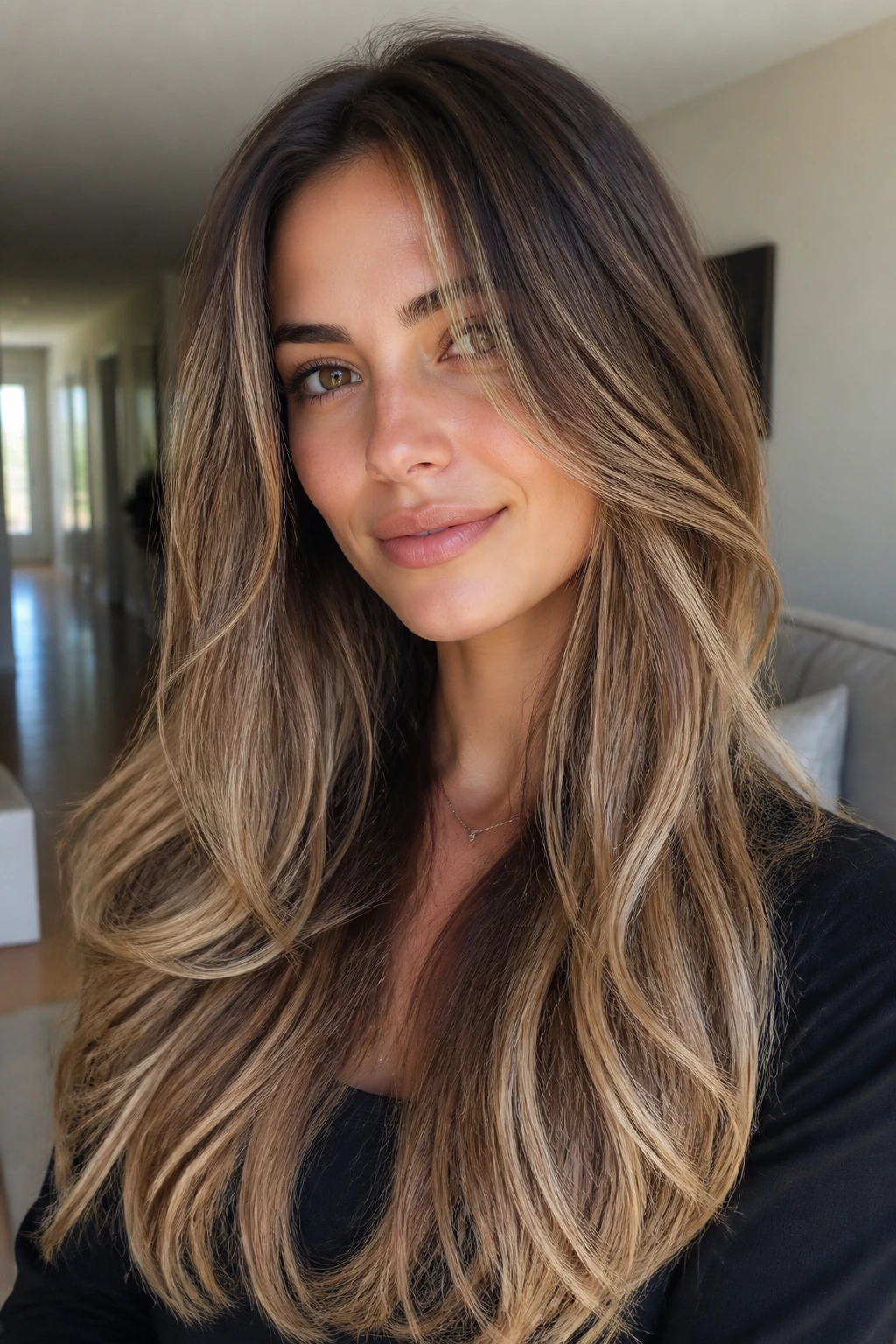
Do you want the easiest grow-out and the least visual drama? Low-contrast brown blonde ombre for long hair is probably the one to start with.
Why It Wins on Length
The best long-hair ombre does not need to shout. A difference of three or four shade levels between the root and the ends can be enough when the hair falls past the shoulders, because the eye gets more distance to read the color. That means the fade can stay soft, the ends can stay healthy-looking, and the whole style grows out without a sharp line.
This is the look I’d suggest to someone who likes color but does not want their hair screaming for constant upkeep. Keep the brown rich, let the blonde live mostly in the lower half, and avoid the urge to lift everything near the crown. The result is calm, glossy, and easy to wear in a braid, a wave, or a simple center-part blowout.
If you’re torn between warm and cool, stay neutral. Neutral beige ends age the best on long lengths, and they leave more room to tweak the tone later with a gloss. That flexibility matters more than people think. Long hair gives you options, so use them.
