



Brown purple ombre hair ideas for long hair work best when the fade has room to breathe. On shorter cuts, purple can feel cramped fast. On long hair, though, the color can move from cocoa at the crown to plum, violet, or lilac at the ends and still read as one clean, deliberate look.
Brown is the anchor. Purple is the pulse. That mix matters because brunette bases give you a softer grow-out, while purple brings the part people notice first — especially when the ends are curled, braided, or tossed over one shoulder. Deep eggplant, mulberry, and blackberry usually hold up better than pale lilac, which fades faster and can look washed out if the hair isn’t lifted enough.
The other thing long hair gives you is range. A waist-length cut can handle a very slow melt. A layered cut can carry ribbons of violet through the middle without looking striped. Straight hair shows every inch of the transition. Waves blur it. Curls make it feel richer than it sounds on paper. The right choice depends on how bold you want to go, how much upkeep you’ll tolerate, and whether you want the purple to whisper or walk in first.
1. Espresso Brown to Amethyst Ends
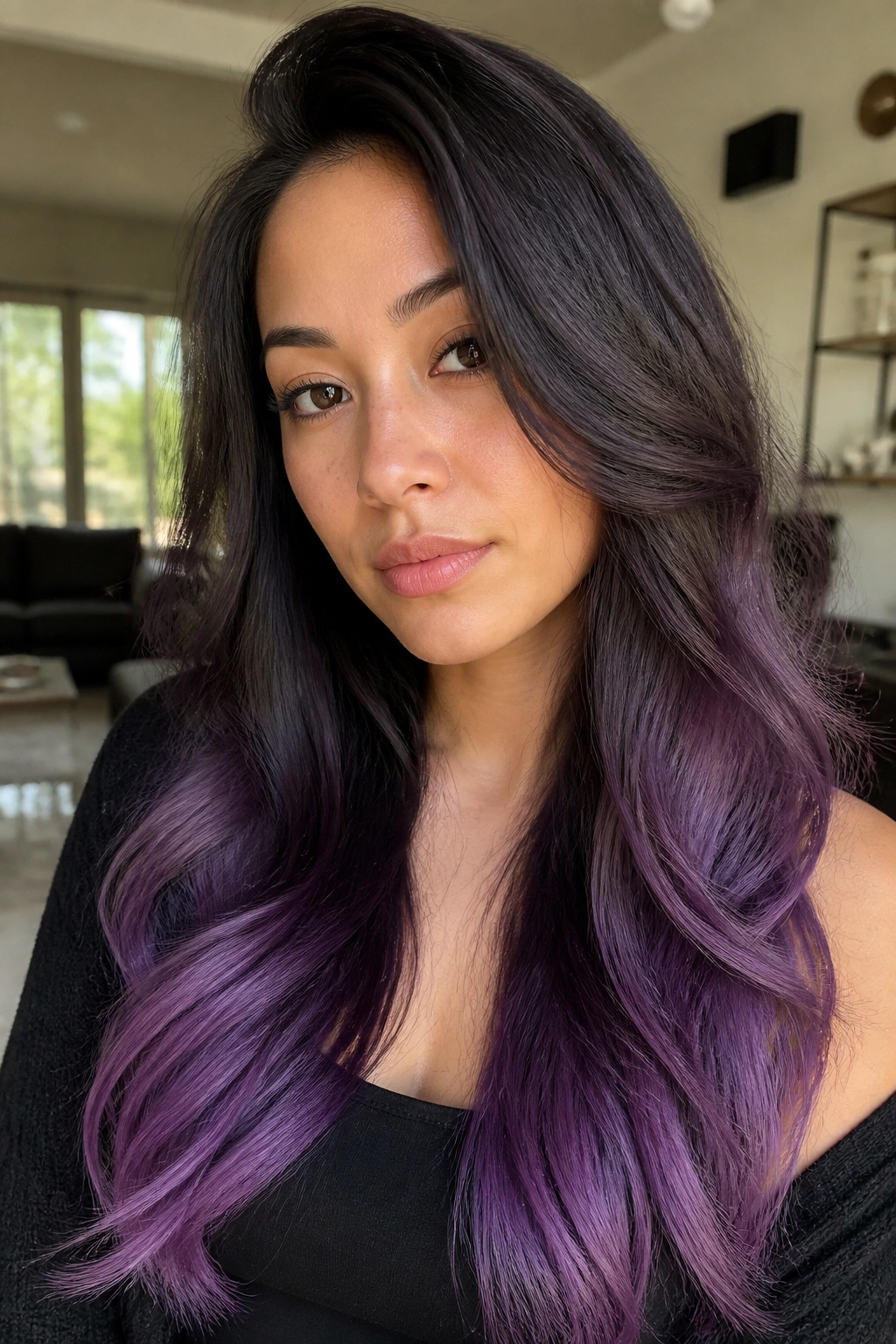
Espresso brown to amethyst ends is one of the cleanest ways to do brown purple ombre hair on long hair without losing that deep brunette base people love.
The strength of this look is contrast. Espresso at the roots keeps the crown grounded and glossy, while amethyst at the bottom adds a jewel-tone finish that shows up even when the hair is worn loose. On long layers, the fade has enough space to look soft instead of streaky. That’s the part a lot of people miss. Purple needs room.
Why It Works on Long Hair
Amethyst has enough blue in it to look rich rather than sugary, which makes it easier to wear on darker brown hair. If your ends are lightened to a warm level 7 or 8, the shade comes through as a true violet. If they stay a touch darker, the result leans moody and smoky.
- Best on: long, layered brunette hair with a healthy shine
- Color placement: start the amethyst around mid-length, then saturate the last 4 to 6 inches
- Finish: a gloss or clear glaze helps the purple look smoother
- Styling note: loose curls show the fade best
Pro tip: keep the purple slightly deeper than you think you want. On long hair, the color gets lighter in motion.
2. Chocolate Brown to Plum Melt
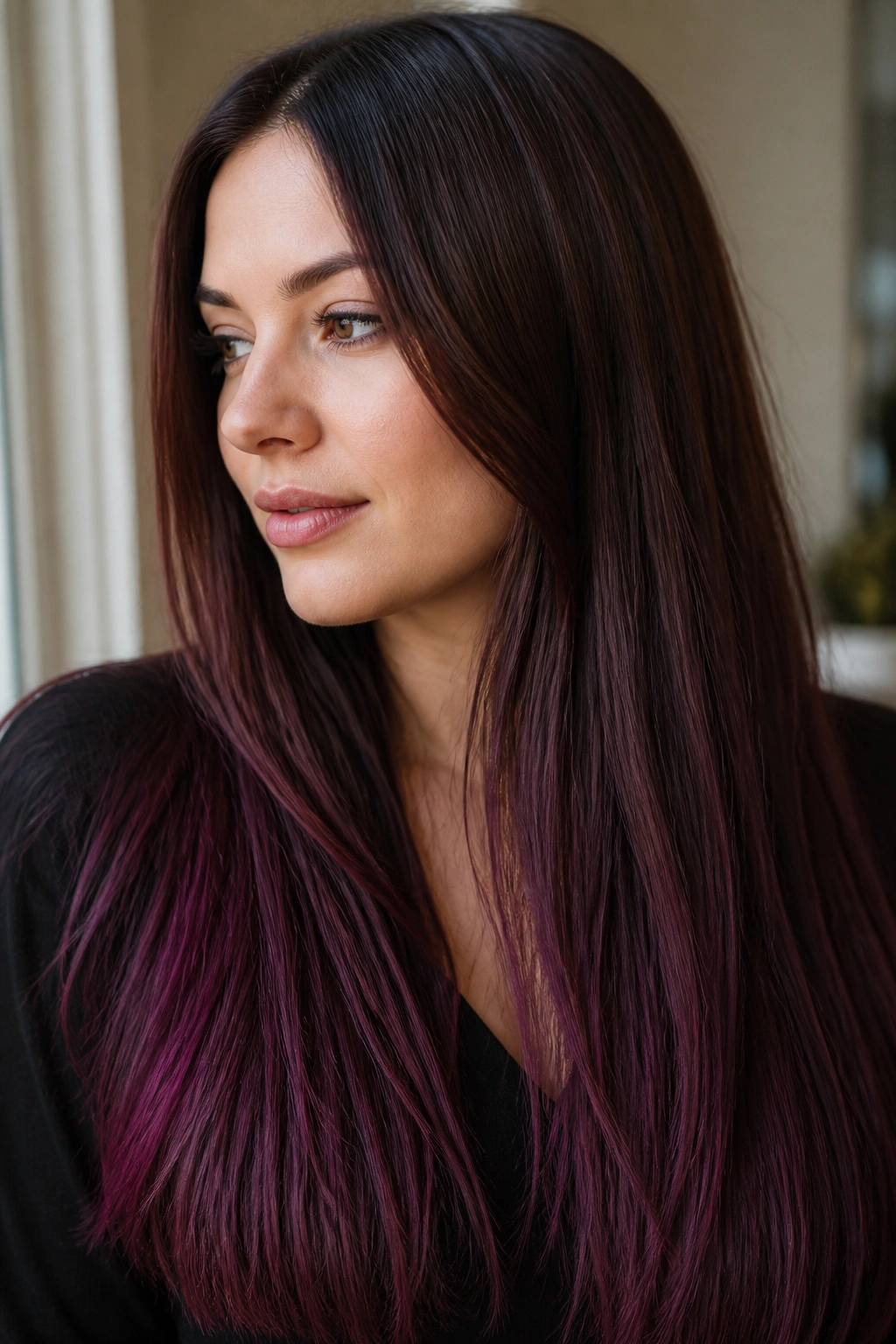
If you want purple to feel rich instead of loud, plum is the shade to reach for. It sits closer to wine and berry than to violet, which makes the whole ombre read luxe and grounded.
Chocolate brown carries a little warmth, and that warmth gives plum somewhere to land. The transition can start just below the collarbone and disappear into a deep berry tone near the ends. On long hair, especially straight styles, this kind of melt looks polished because there isn’t a hard line fighting for attention. The color shift is slow. That’s the charm.
This is also one of the easier brown and purple blends to wear to work or anywhere you don’t want your hair doing all the talking. It still feels colored, but it doesn’t shout. If you like your hair to look dark in low light and purple in sunlight, plum does the job better than most brighter violets.
3. Chestnut Brown to Mulberry Fade
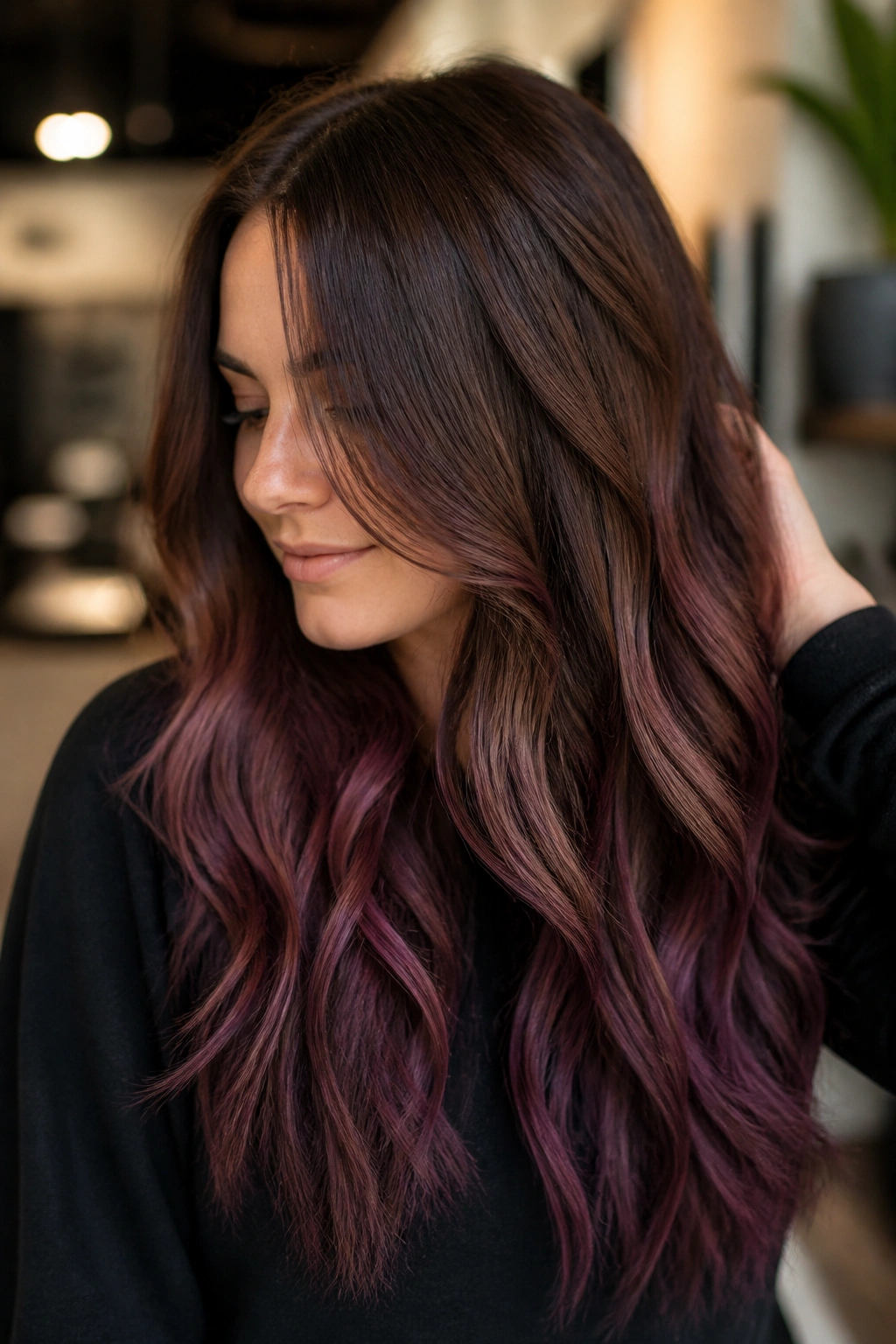
Why does chestnut brown to mulberry work so well on long hair? Because chestnut has enough warmth to keep the purple from looking icy, while mulberry brings in that deep red-violet edge that flatters a lot of skin tones.
Mulberry sits in a sweet spot. It is purple, but it carries a wine note that softens the contrast against brown hair. That makes it a smart choice if you want a color that still looks dimensional when the hair is braided or pinned back. On long hair, the fade can start around the shoulders and deepen toward the ends, which keeps the whole look airy instead of blocky.
How to Wear It
- Ask for chestnut at the crown and upper lengths
- Keep the mulberry concentrated on the lower half
- Let a few face-framing strands carry a lighter plum tone
- Style with a medium barrel iron so the color bends and shifts
The nicest part is movement. Mulberry catches it without needing a bright lift, and that makes long brunette hair look thicker.
4. Cinnamon Brown with Violet Ribbons
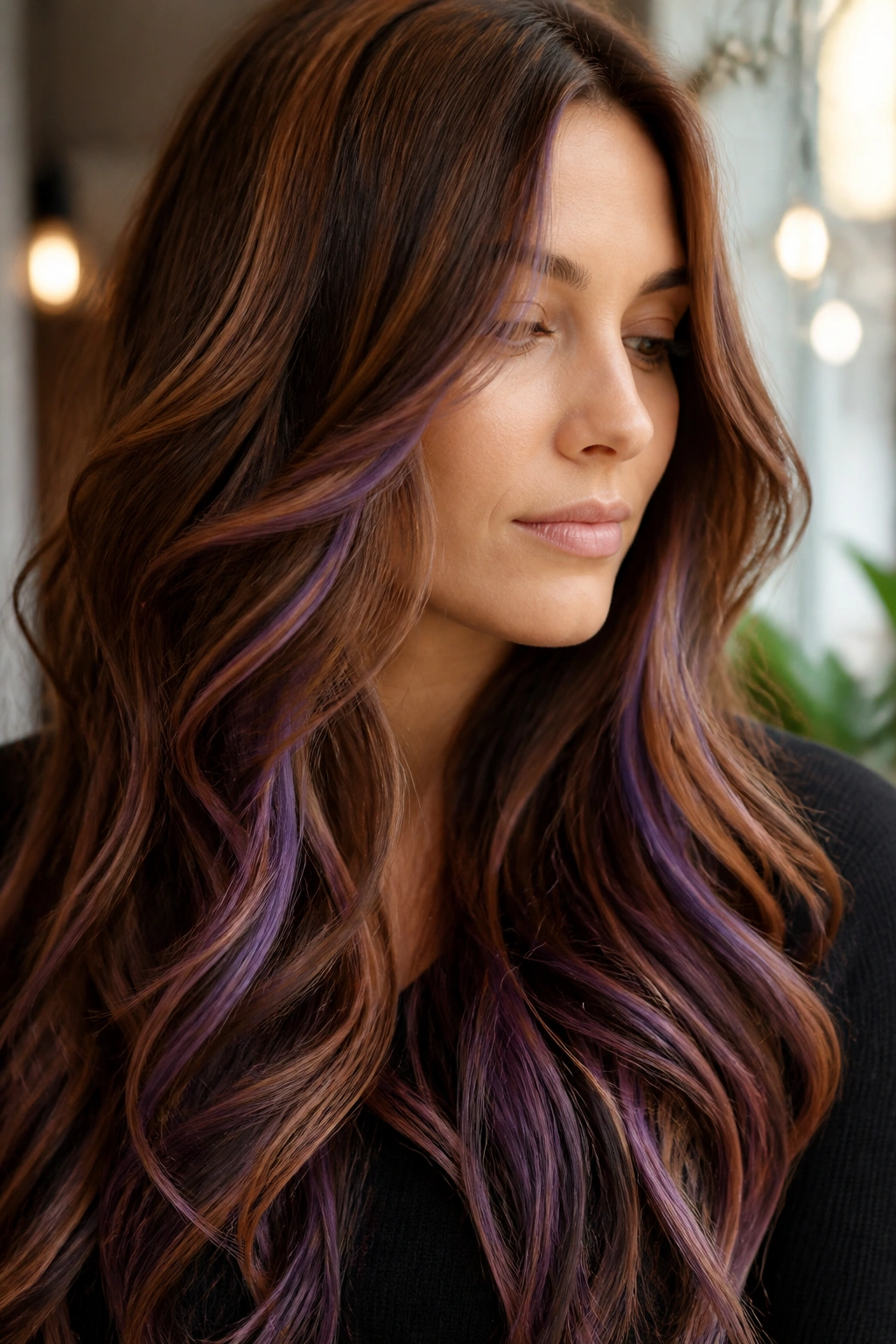
Picture cinnamon waves with thin violet ribbons running through the lower half. That’s the energy here. It feels less like a full color overhaul and more like the hair picked up a little attitude on the way out the door.
The ribbon effect works because it breaks up the purple. Instead of a single flat block at the ends, you get threads of violet woven into the brown, especially on layered cuts. This is a strong pick if you like softness near the roots but still want the purple to show when you twist your hair into a half-up style. A braid makes it even better. The hidden pieces show up in little flashes.
- Good for: wavy or layered long hair
- Placement: thin painted pieces through the mid-lengths and ends
- Color family: violet, not lavender
- Styling payoff: the ribbons show up most in curls and braids
One thing to avoid: too many ribbons. A few placed well look intentional. Too many can turn the fade busy.
5. Mocha Brown to Eggplant Ombre
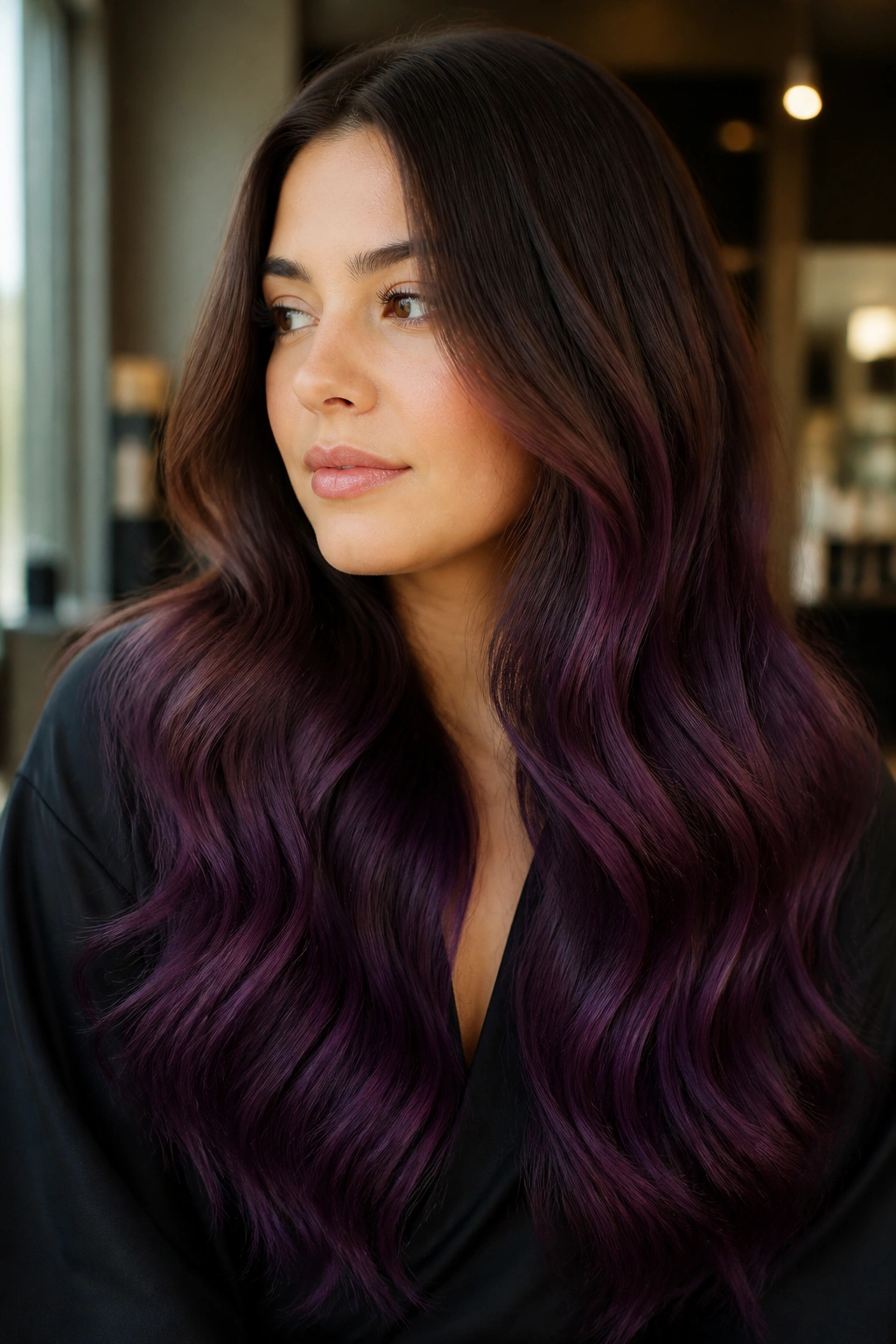
Mocha brown fading into eggplant is the moody sister in the group, and I mean that in the best way. It has depth, weight, and a little drama tucked into the ends.
Eggplant works because it is almost black in low light, then purple when the hair moves. That makes it a smart choice for long hair that’s worn straight a lot. The transition stays smooth, and the purple doesn’t need to be neon to make a point. In fact, the darker finish is what makes it feel expensive. Not flashy. Just strong.
The other advantage is maintenance. Deeper purple shades usually fade more slowly than pale ones, so eggplant can buy you a longer stretch between salon visits. If your hair is thick, this shade gives the length some visual weight. If your hair is fine, keep the ombre starting lower, closer to the last third of the hair, so the ends don’t look see-through.
It’s a good color for people who like dark lipstick, black denim, and hair that looks even better on day two.
6. Dark Brown to Blackberry Gradient
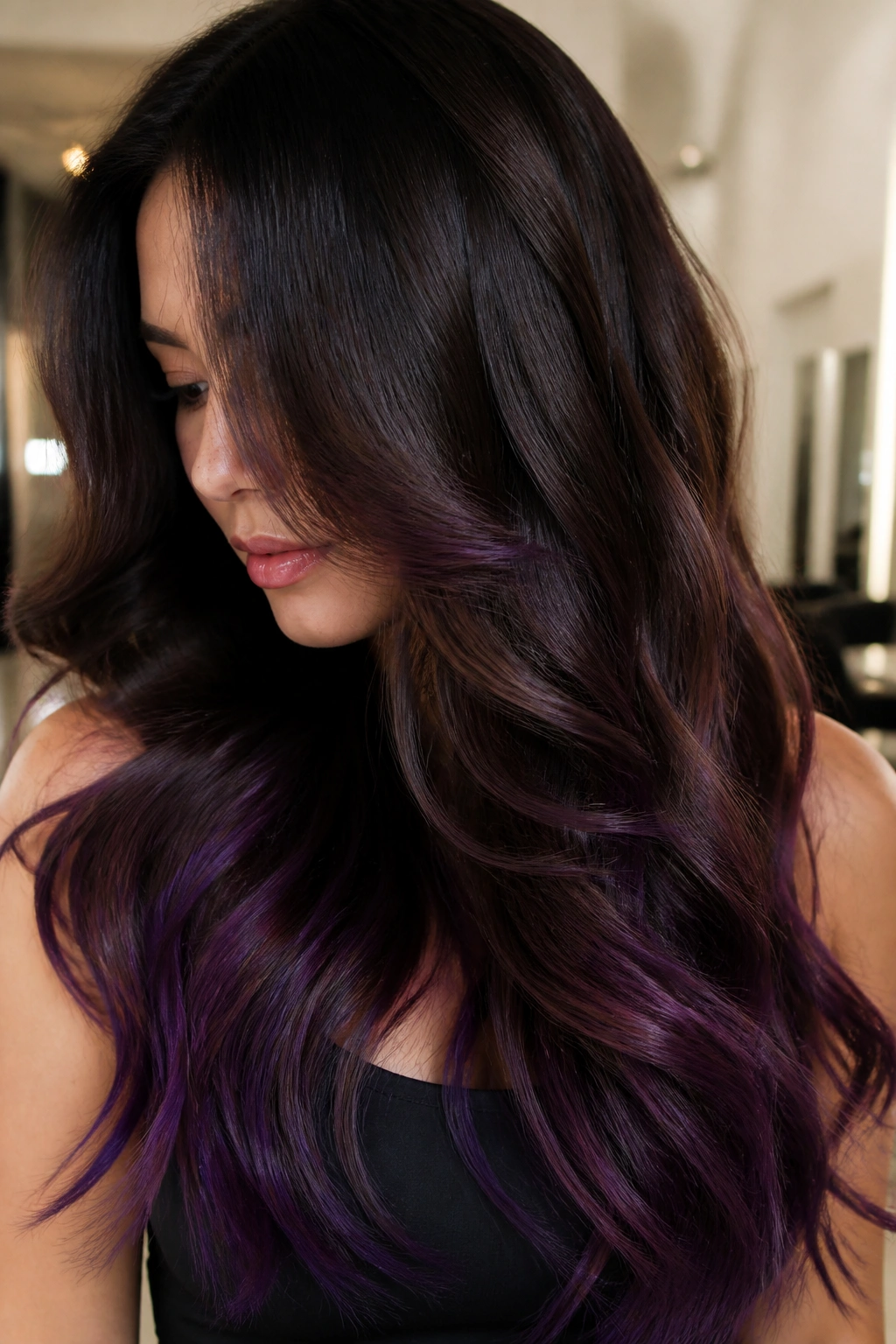
Unlike cherry-toned purple blends, blackberry keeps the red lower and the purple deeper. That gives the hair a darker, cooler finish that still feels rich.
Blackberry is a sneaky shade. Up close, you see plum and violet. From across the room, it can read almost like a soft black with color tucked inside it. On long hair, especially with layers, that creates a lot of movement without forcing the ends to go bright. If you want something dramatic but not screaming for attention, this is a strong answer.
It also works beautifully with darker brows and neutral makeup. The hair does not need to be the loudest thing in the room. Sometimes that is a relief.
Who it suits best? People with naturally deep brown hair, cool or neutral undertones, and a taste for color that leans luxe instead of playful. A glossy blowout helps, but a textured wave is even better if you want the purple to show in soft flashes.
7. Ash Brown to Smoky Orchid
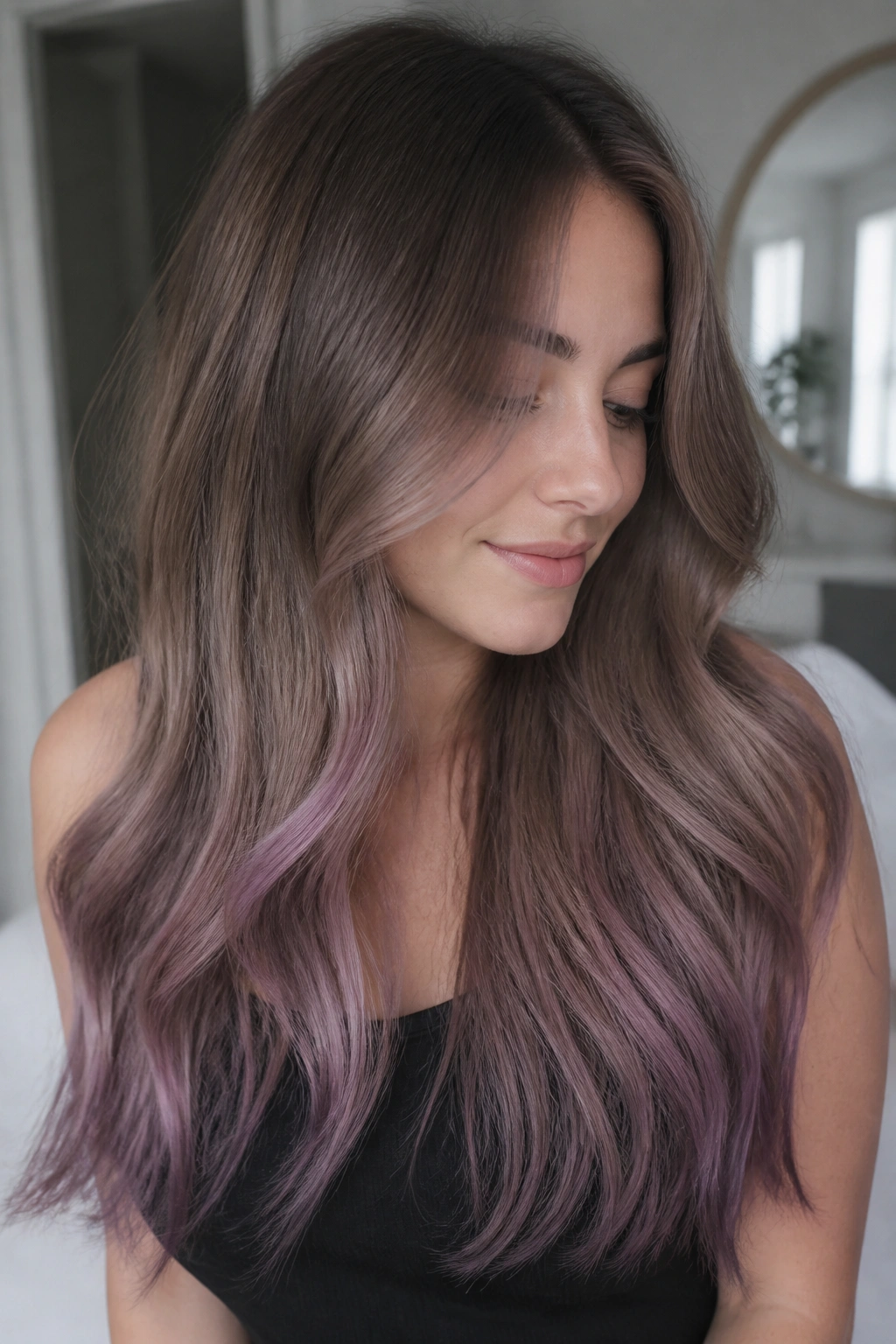
Ash brown and smoky orchid is the cooler side of the brown purple ombre hair ideas for long hair family, and it has a very specific kind of edge.
The ash base takes down warmth, so the orchid doesn’t fight brassiness. That matters. Purple shades can go muddy fast if the brown base is too orange. Smoky orchid sits between lavender and gray-purple, which keeps the look soft but not chalky. It is a pretty choice, but not a sweet one.
What Makes It Different
This color works best when the transition is done as a soft balayage rather than a hard dip dye. The brown stays visible through the mid-lengths, then the orchid comes in at the bottom with a slightly muted finish. The result feels cool and polished, especially on straight hair or sleek waves.
- Best base: medium ash brown or cool chestnut
- Best finish: satin gloss, not ultra-shiny
- Best style: blunt ends or soft bends
- Salon note: ask for a muted violet toner at the end
Tiny warning: if your brown hair pulls warm, this shade can turn muddy unless the ends are lifted cleanly first.
8. Caramel Brown to Lilac Ends
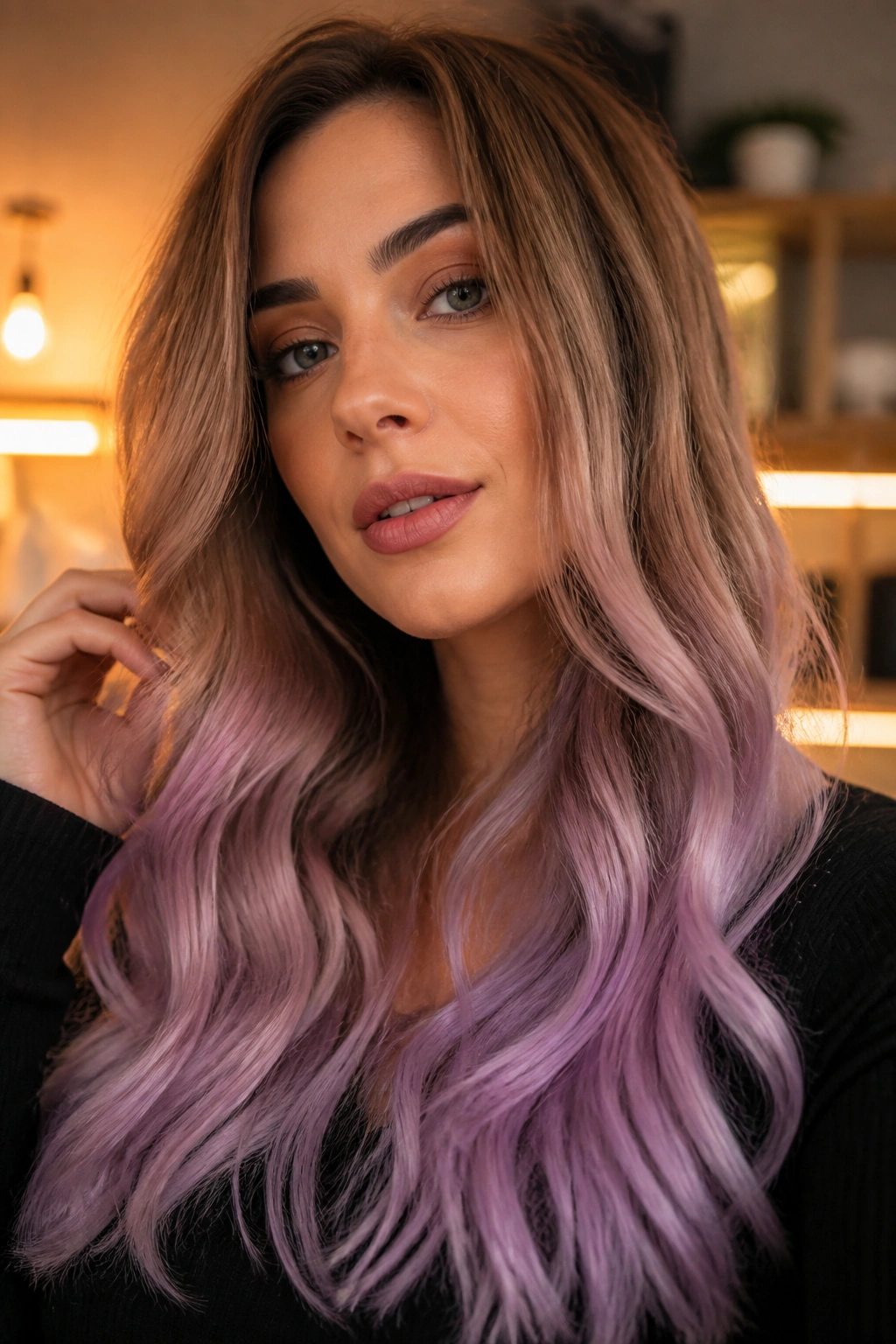
Caramel brown into lilac ends is one of the lightest-feeling purple ombre looks you can put on long hair.
The reason it works is the contrast in mood. Caramel is warm and soft, while lilac is cool and airy. Together they keep the hair from feeling heavy, even when the length runs down past the chest. On very long hair, that matters. A dark base plus a light purple finish can sometimes look dense. Caramel keeps some brightness in the middle so the transition doesn’t feel like a cliff.
Lilac is trickier than plum because it needs enough lift to look clean, not gray. That means this look is best for hair that can take lightening on the lower lengths. The ends should look pale enough to hold the pastel tone, but not so pale that they feel stripped.
If you like soft curls, this color is charming. If you like sleek straight hair, it still works — the ends just need a polished finish so the lilac doesn’t go fuzzy.
9. Mushroom Brown to Dusty Plum
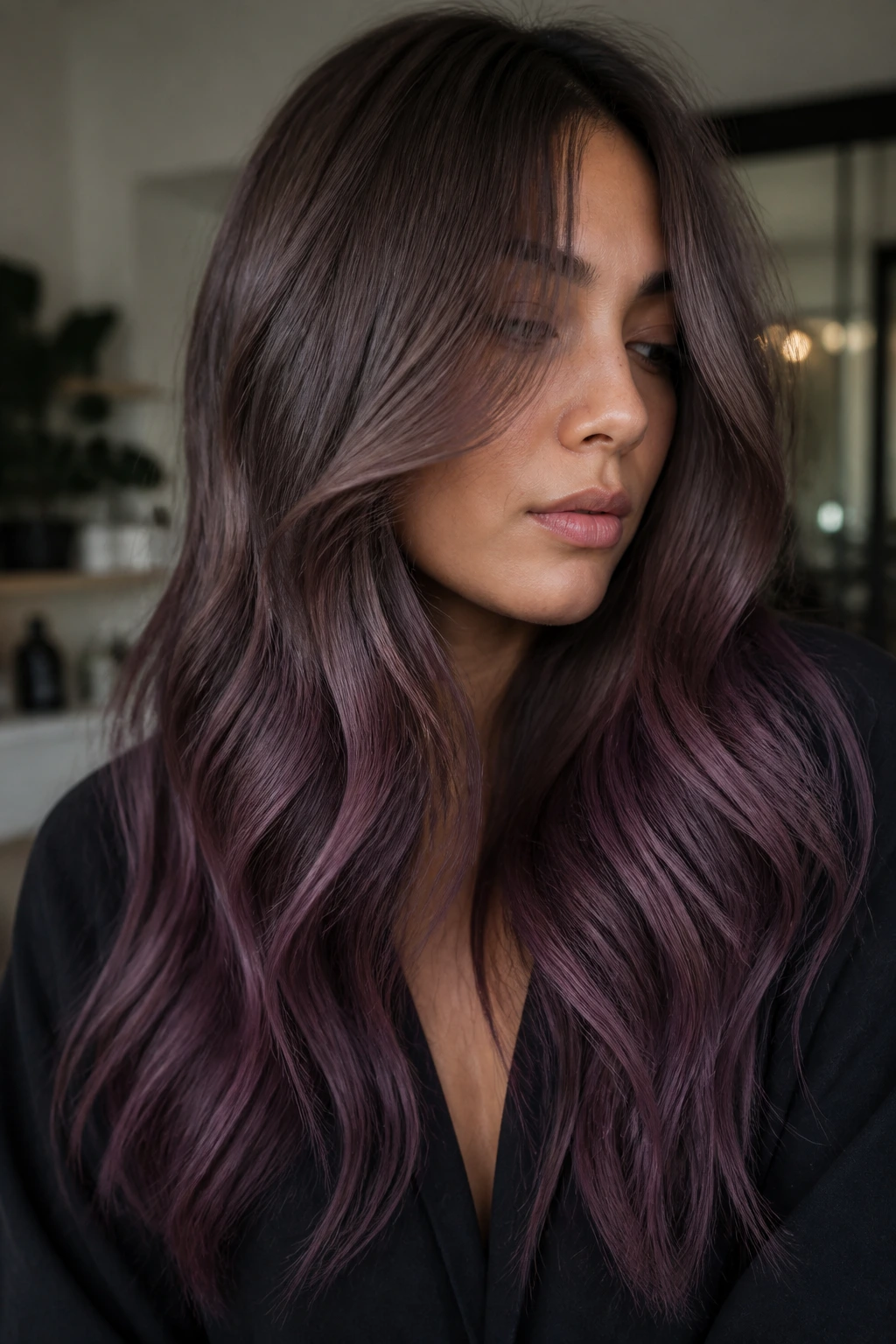
Why does mushroom brown to dusty plum feel so wearable? Because both shades stay muted. Neither one is trying to be the loudest color in the room.
Mushroom brown has that gray-beige softness people love in cool brunette shades, and dusty plum brings in purple without tipping into candy color. On long hair, that quiet palette can look expensive in a way bright purple sometimes doesn’t. The fade is subtle, but it is not boring. There’s a difference.
How to Ask for It
- Ask for a cool beige-brown root
- Keep the plum muted and slightly smoky
- Start the purple below the shoulders
- Finish with a sheer toner instead of a vivid gloss
Dusty plum is a nice choice if your wardrobe leans neutral, black, olive, or cream. It also suits people who want a purple look that ages well between appointments because the fade tends to soften gracefully.
The whole thing feels calm. That may sound small, but calm hair has its own appeal.
10. Warm Brunette to Wine Purple
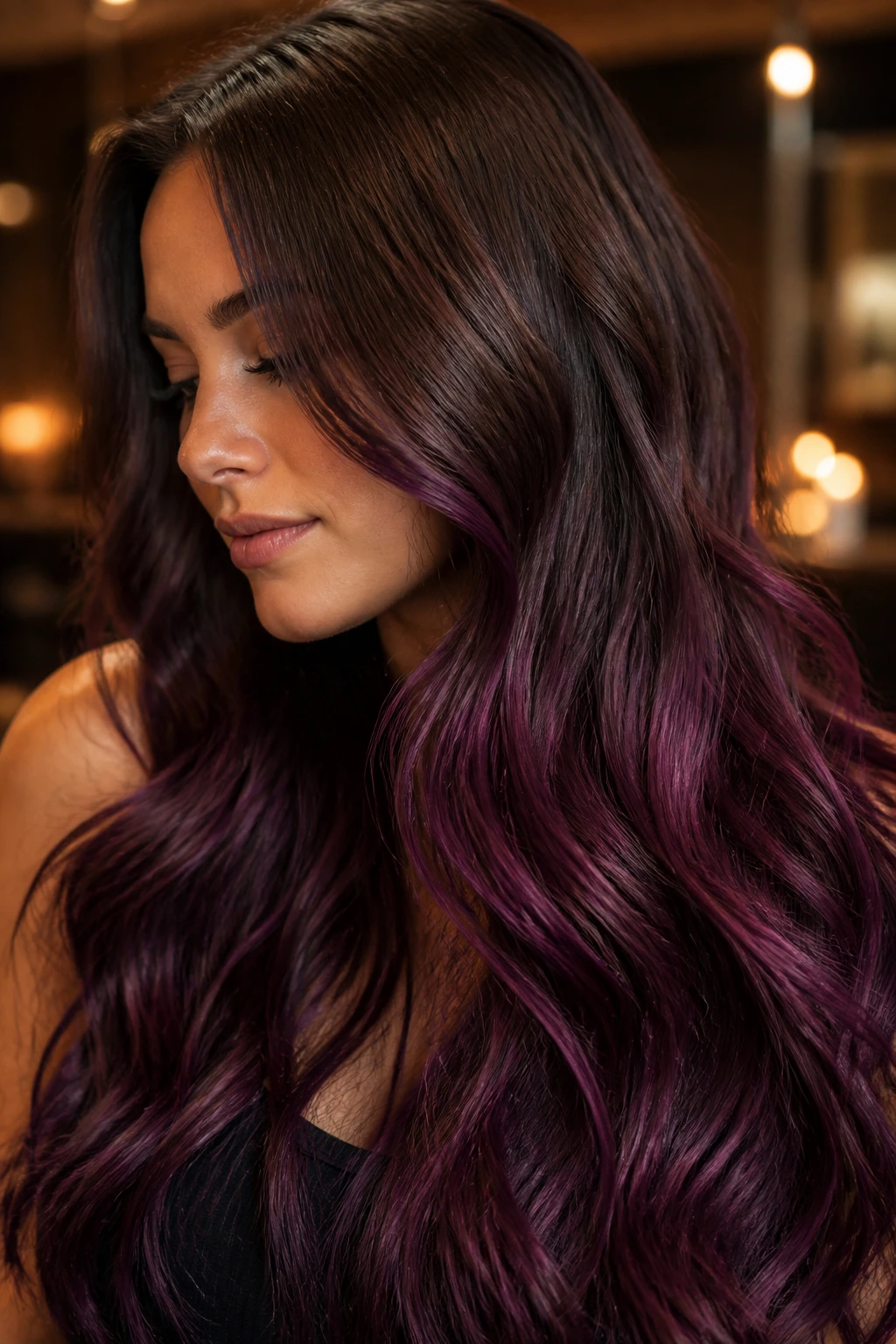
A warm brunette melting into wine purple has a little old-school glam in it. Think candlelight, deep lipstick, and hair that gets better once it starts moving.
Wine purple is a smart bridge shade because it carries red and violet together. That helps the color sit naturally on brown hair with some warmth already in it. Long hair makes the shift even easier to wear because the fade can begin high and still feel soft by the time it reaches the ends. On a blunt cut, it can look sleek. On layers, it gets more depth.
Key Details at a Glance
- Best for: thick, long hair with some wave
- Tone: red-purple, not blue-purple
- Placement: start the wine shade at mid-length for a softer blend
- Finish: glossy and deep, not matte
This is one of those colors that looks different under different light. Indoors, it reads brunette with a twist. Outside, the purple wakes up. That shift is half the appeal.
11. Coffee Brown with Peekaboo Purple Underlayer
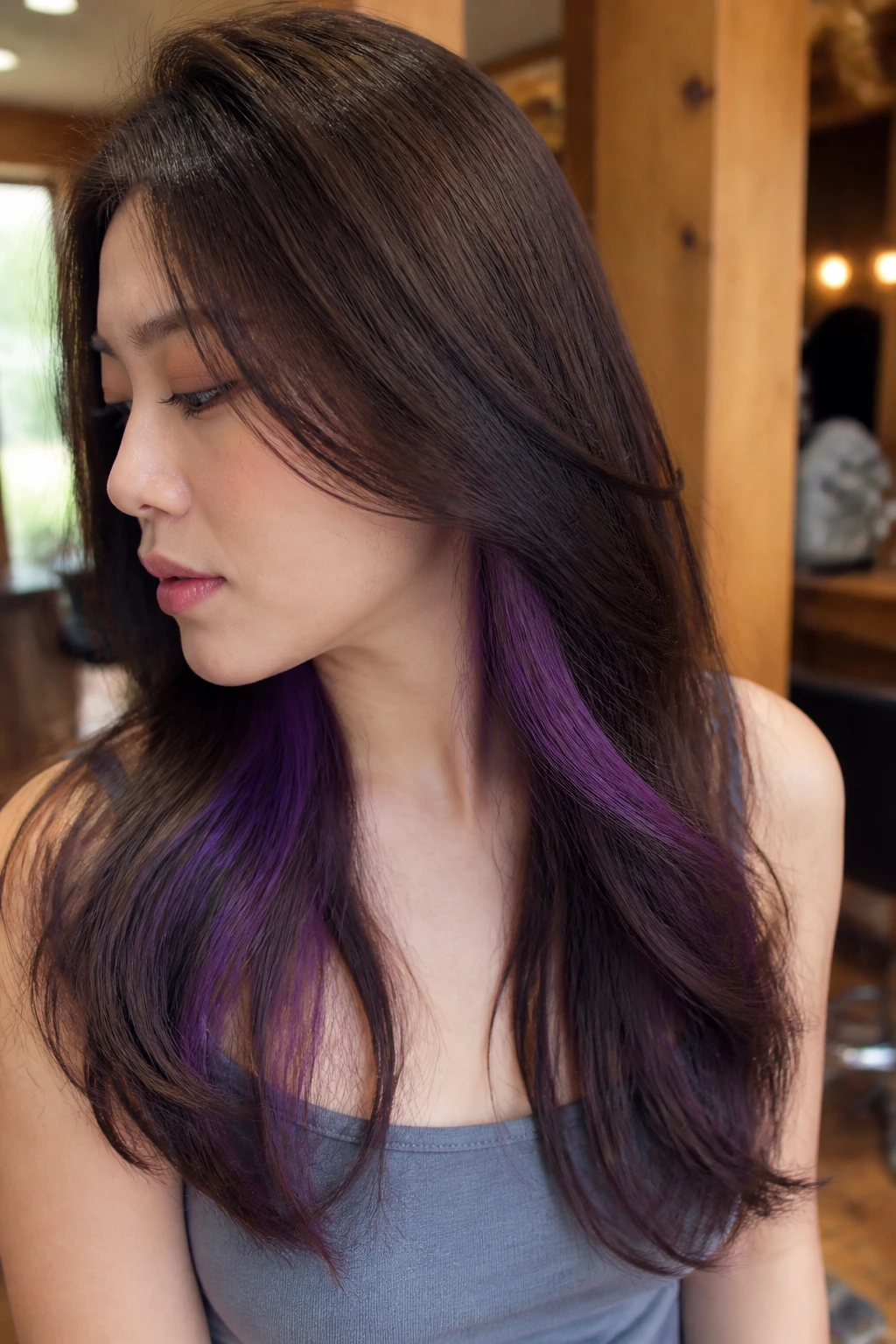
Coffee brown with a peekaboo purple underlayer is for the person who likes a secret. The surface stays brunette. The surprise lives underneath.
The beauty of this look is that long hair gives the hidden purple enough room to show when you want it to. A half-up style reveals the color. A braid flashes it. A low ponytail can turn into a whole different look once the underlayer peeks through. That means the hair can feel professional one day and playful the next without another salon visit.
The best part is how little the top layer has to change. If you want to keep your natural brown mostly intact, this is one of the easiest ways in. The purple can sit on the lower interior panels, especially around the nape and the bottom half of the hair.
The reveal is half the fun. Honestly, that’s the point.
If you want color that doesn’t announce itself all day, this one earns a look.
12. Brown Balayage with Violet Face-Framing Pieces
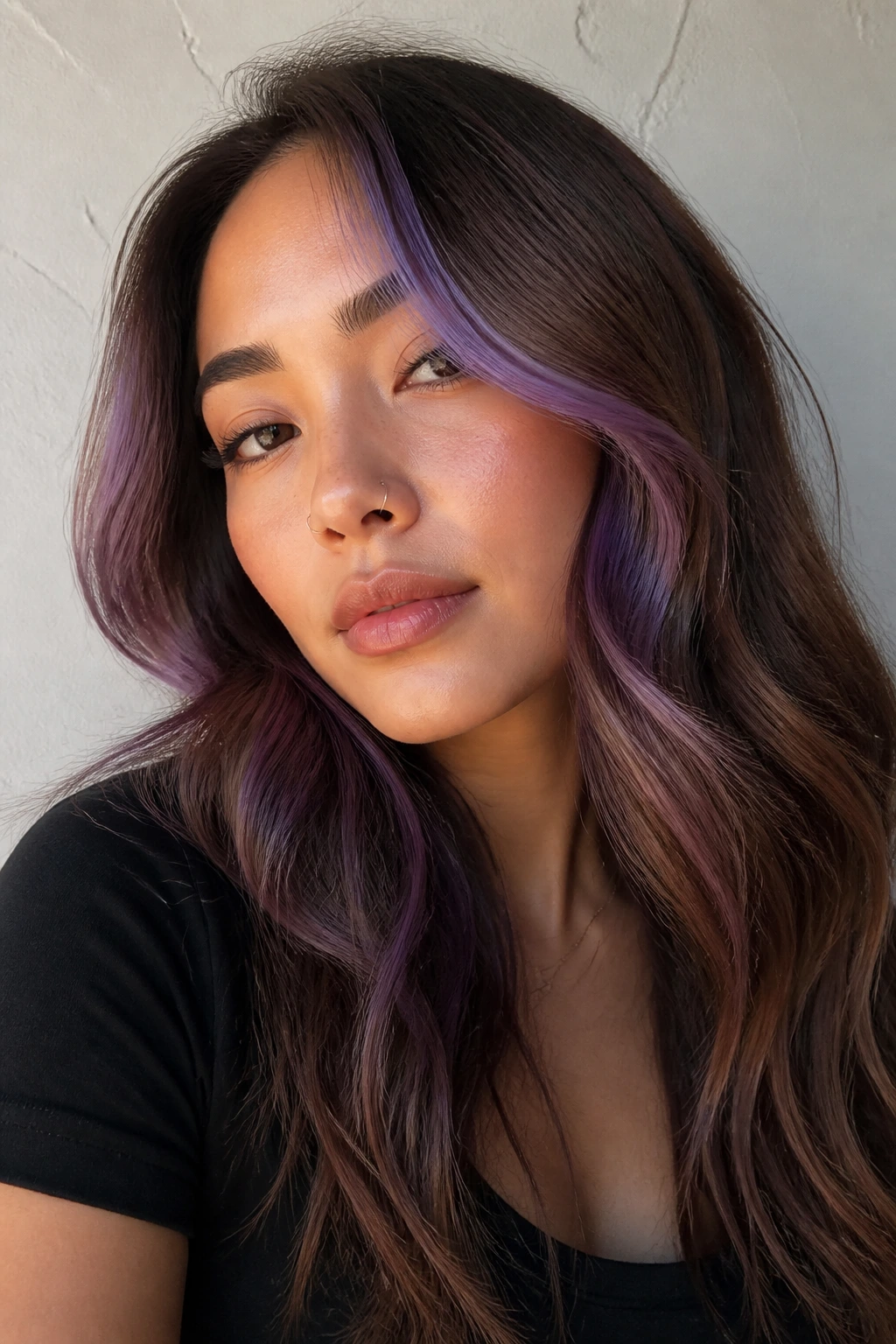
This is not the same as a full ombre, and that’s why it works. The brightest violet sits around the face, while the rest of the long brown hair carries a softer gradient.
Face-framing pieces pull light upward. That makes the color feel fresh even when the ends stay darker. On long hair, this approach is useful if you want a purple look but don’t want to commit to every inch of the length. It also flatters layers around the cheekbones and jaw because the violet pieces move when you move.
The rest of the hair can stay brown with just a whisper of plum toward the ends. That gives the style some restraint. Too often, people put all the color at the bottom and forget that the face is where most of the attention goes. This version fixes that.
Best for anyone who wears curtain bangs, side parts, or loose waves. The front pieces do the talking, and the long hair behind them keeps the whole thing balanced.
13. Toffee Brown to Deep Grape
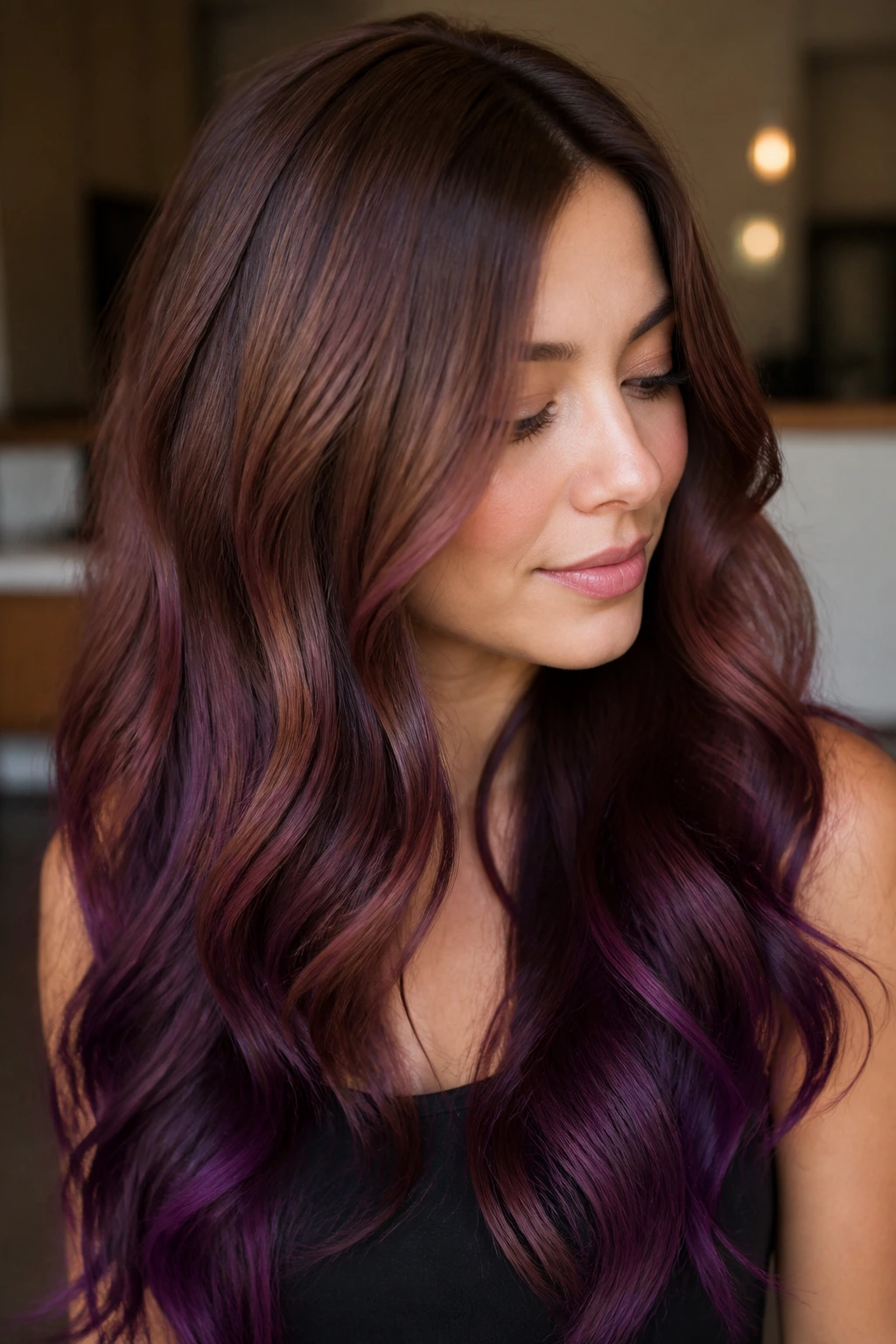
Toffee brown into deep grape has a very satisfying kind of contrast. The brown is warm, golden, and soft. The purple goes dark, saturated, and slightly regal.
That mix is strong on long hair because the lighter brown mid-lengths stop the color from feeling too heavy. Then the grape at the ends brings in enough depth to make the transition feel intentional. On curls, the purple gathers in the bends and looks even richer. On straight hair, it reads cleaner and more graphic. Both work.
What to Keep in Mind
- Toffee roots should stay warm, not orange
- Deep grape needs enough saturation to avoid looking flat
- Layered ends help the color move
- A shine spray helps the purple look fuller in dry light
If you want a color that sits between playful and polished, this is a very good place to land. It has enough warmth to stay friendly and enough depth to keep the purple from going sweet.
14. Brunette to Lavender Fade with Gloss Finish
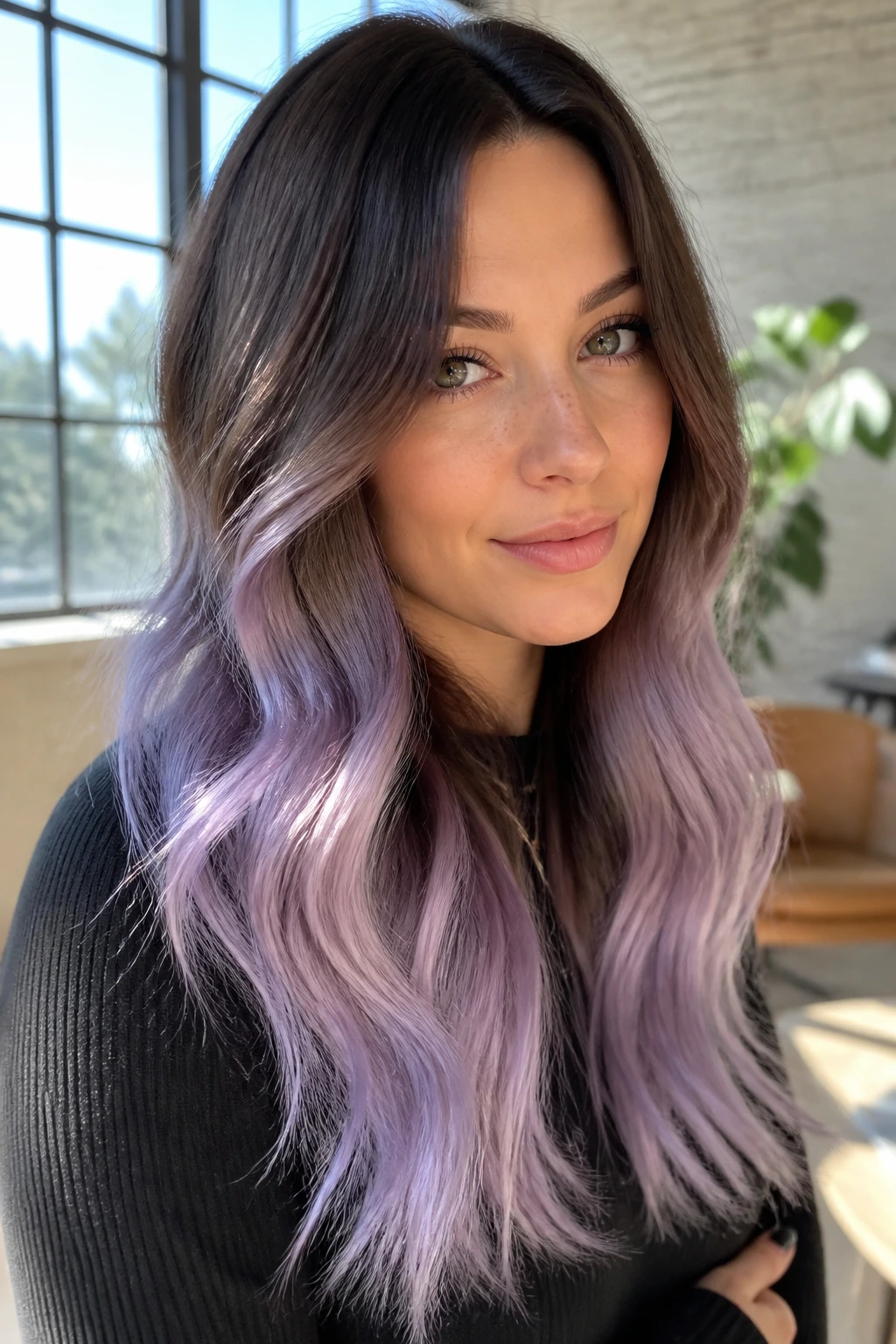
Lavender on long brown hair only works if the finish is clean. A gloss is what keeps it from looking chalky or tired.
Lavender is the lightest purple in this group, so the ends need to be lifted enough to hold it. That means the fade often starts higher and softer, with the palest color at the last 3 to 5 inches. Long hair helps because the transition can stretch. You get brown at the top, a soft beige-brown middle, and a pale lavender finish that feels airy.
A gloss finish matters here more than on darker purple looks. Lavender can go dull fast if the hair is dry or porous. A clear or violet-based gloss keeps the tone smooth and gives the ends a more even look. It also helps the hair reflect light instead of absorbing it.
This one suits people who like soft color, clean styling, and a little lightness near the bottom. It’s delicate, but not flimsy. That’s the difference.
15. Soft Brown to Burgundy-Purple Ombre
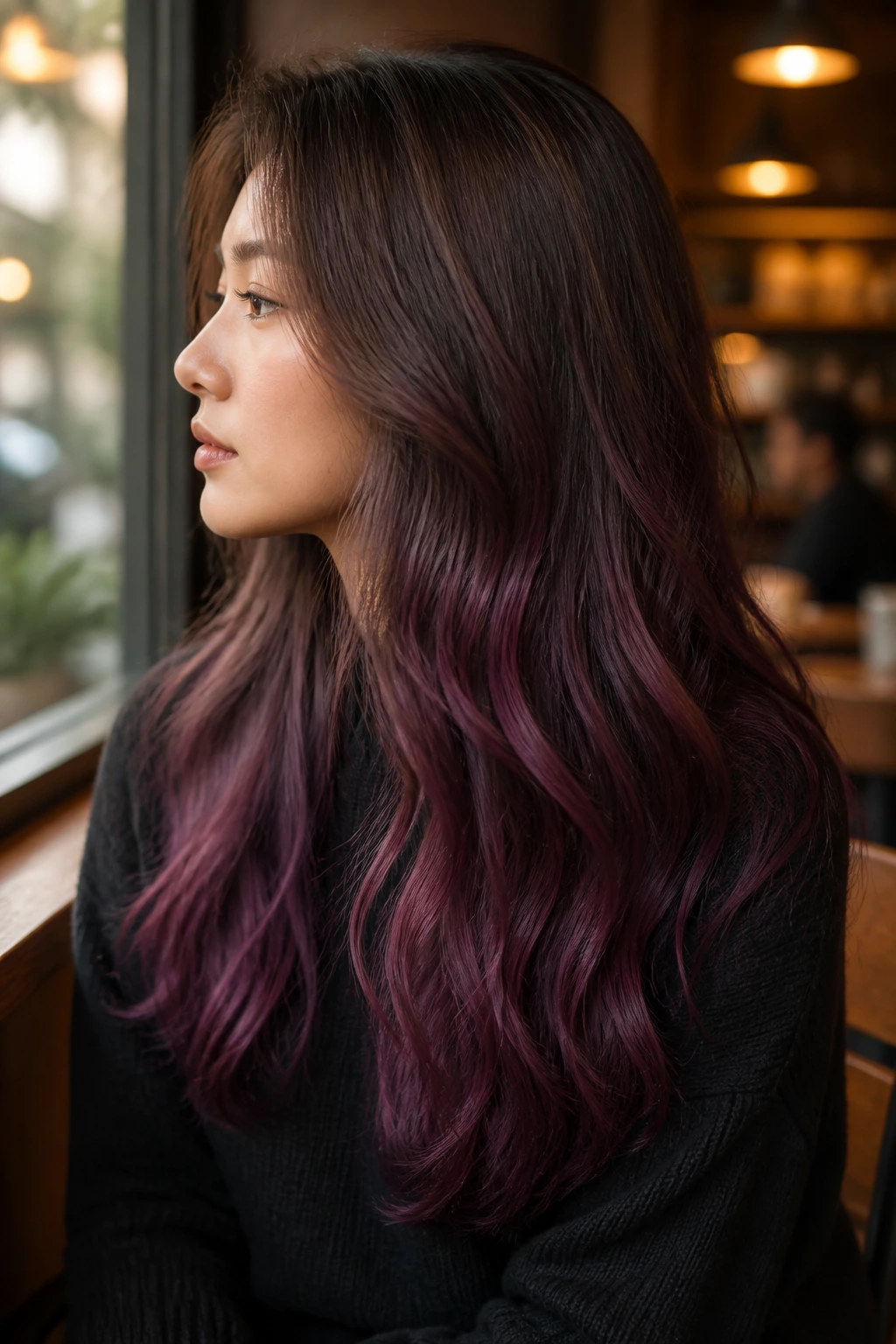
Why does burgundy-purple work on so many brunettes? Because it sits between red wine and plum, so it can borrow warmth or coolness depending on the base.
Soft brown gives the top of the hair a gentle, lived-in feel. Burgundy-purple at the ends adds depth without going full violet. On long hair, that means the fade can stay low-key for a while and then show a richer shade as the hair moves. If your skin tone likes red-based color, this one often feels easy. If your undertones are neutral, it usually still behaves well.
When It Looks Best
- On long, wavy hair with loose bends
- With layers that let the color shift between sections
- When the purple is kept darker than a classic violet
- With a warm gloss at the end to keep the red-purple tone alive
This shade is also a solid pick if you do not want to baby your color every week. Burgundy-purple tends to fade into a softer berry, which can still look good for a while.
16. Layered Brown Hair with Purple Money Pieces
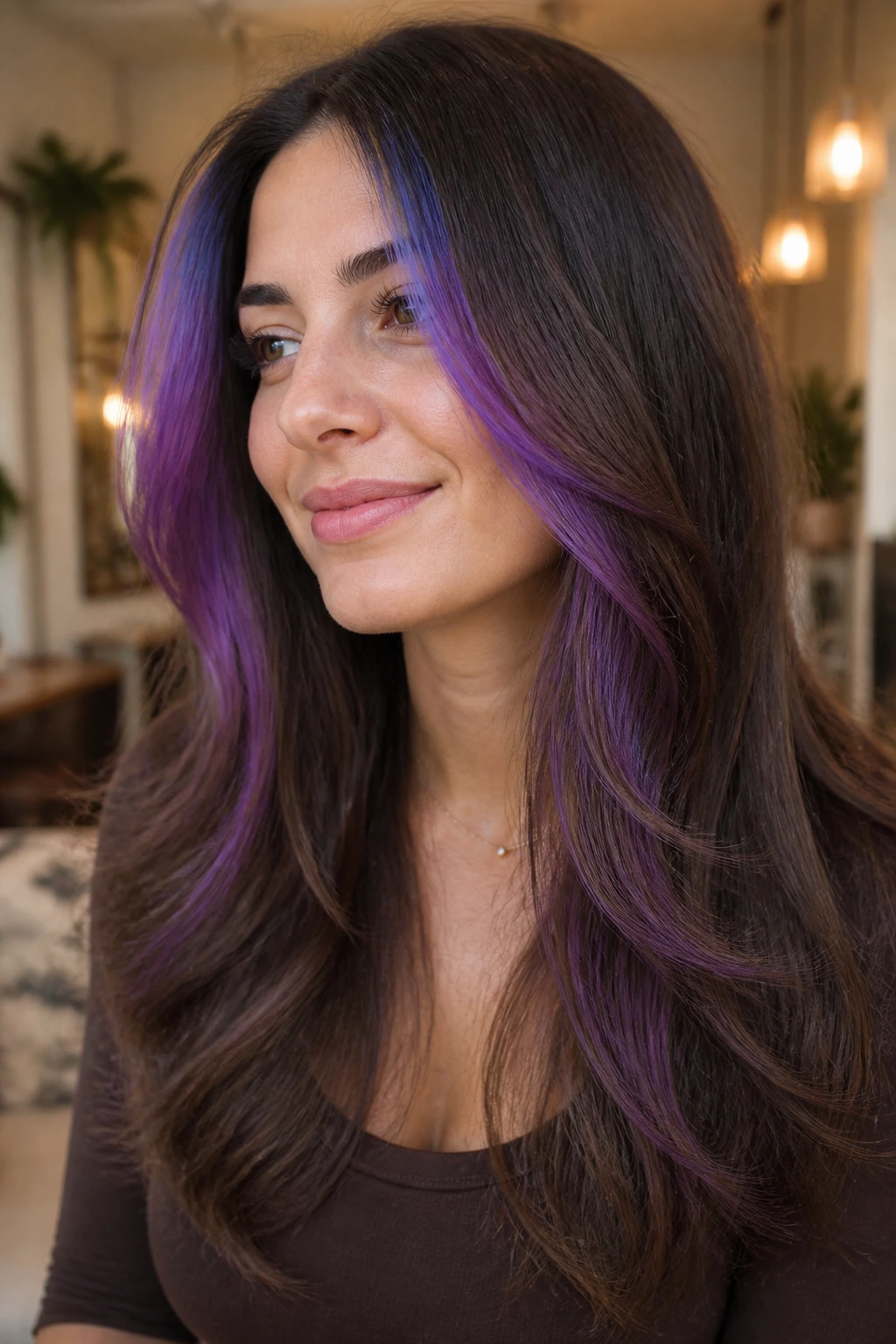
A layered brown cut with purple money pieces feels modern in a way a standard ombre sometimes doesn’t. The color isn’t only at the bottom. It steps forward at the front.
Money pieces are those brighter face-framing sections, and on long hair they can change the whole mood of the cut. Purple around the face draws attention upward, while the brown-to-purple fade through the lengths keeps the look connected. This is a good option if you want movement and brightness but don’t want to flood the whole head with color.
The layering matters here because it stops the front pieces from hanging flat. When the hair flips or moves, the purple appears in strips and then disappears again. That little bit of motion makes the color feel fresh.
- Best cut: long layers or a soft shag
- Best placement: front sections and lower ends
- Best purple shades: violet, mulberry, or plum
- Best styling: a round brush blowout or soft wave
This is a smart color choice for anyone who likes change but still wants the back of the hair to stay grounded in brown.
17. Curly Brown to Purple Ombre
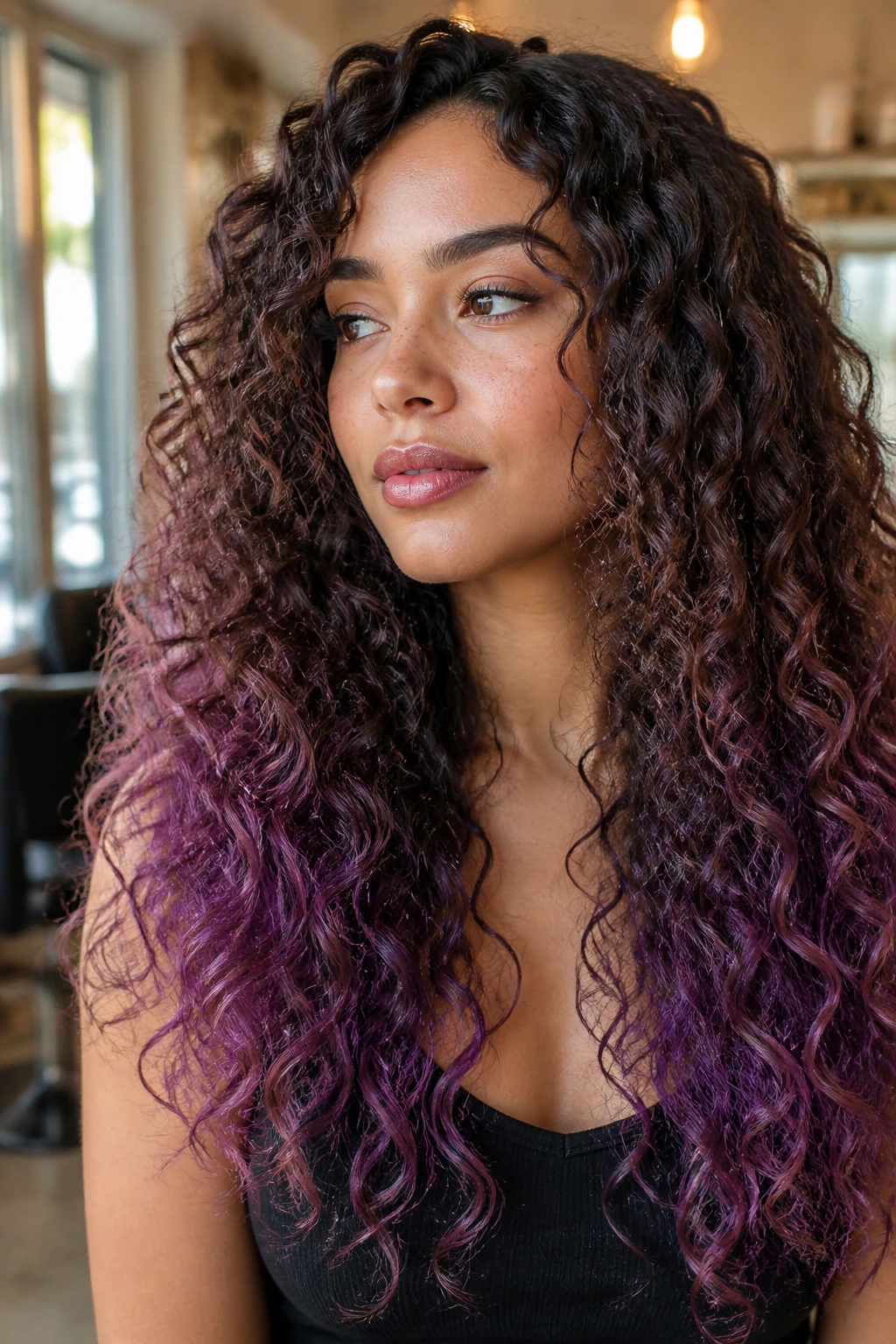
Curly hair changes the whole story. The color sits on top of the curl pattern, then folds into itself, so a brown purple ombre on long curls can look deeper and more textured than the same shade on straight hair.
The main thing to remember is shrinkage. Long curls may look shorter once dry, which means the purple ends need to be placed high enough to show. If the ombre starts too low, the color can vanish into the curl pile. A colorist who paints curls section by section — not just by length — usually gets a better result.
Curly textures also hold multiple tones well. A plum-purple fade can look like three shades at once when the curls separate. That is part of the fun. The color does not need to be perfectly uniform. It just needs enough depth to move through the coils.
This look works best when the curls are moisturized and shaped, because dry ends can swallow shine. A leave-in conditioner and a curl cream make a real difference here. Not glamorous advice. Necessary advice.
18. Straight Glass-Hair Brown to Royal Purple
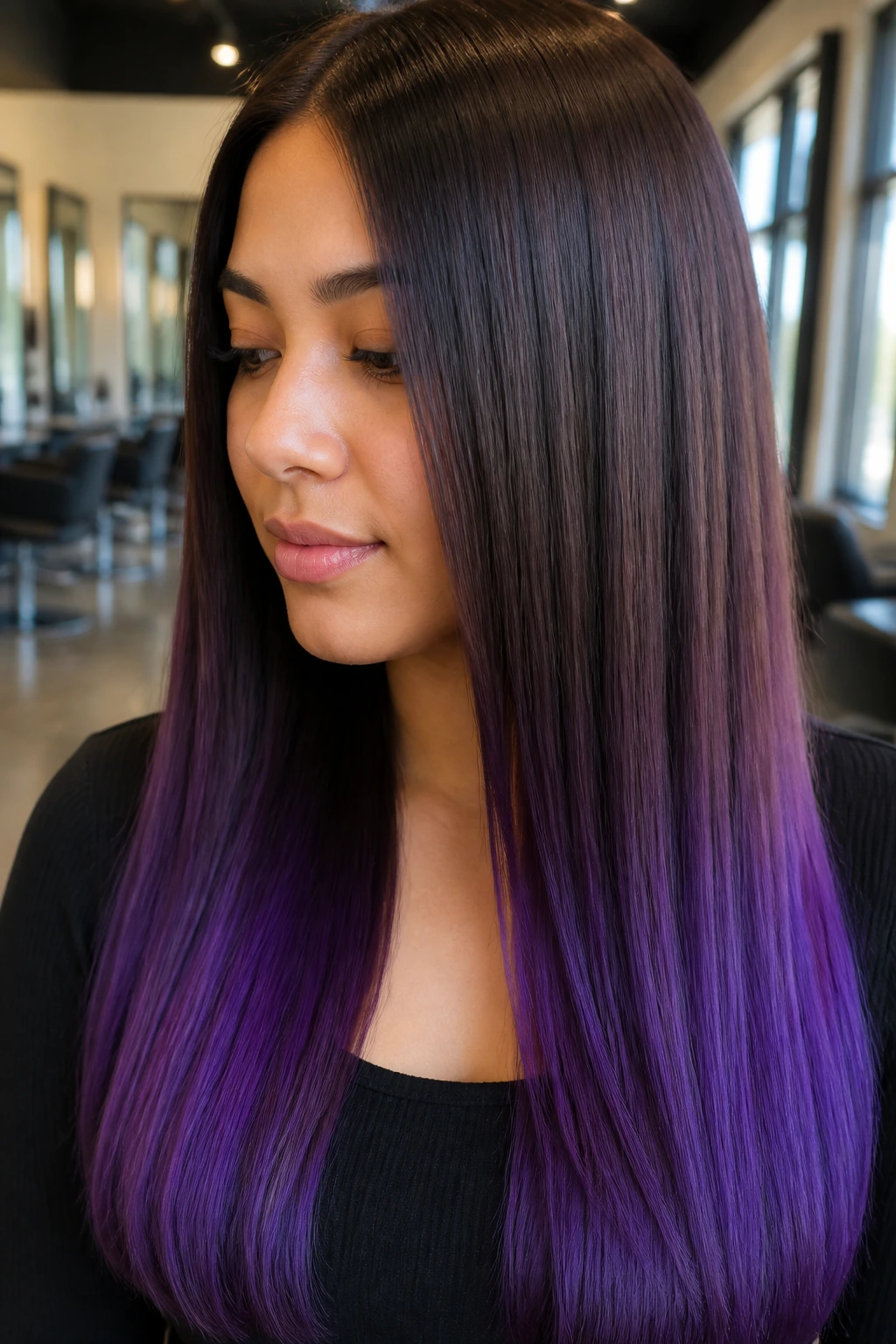
Straight, glossy hair shows every inch of the fade, so royal purple has to be clean. There is nowhere for uneven color to hide.
That makes this one best for long, straight styles or hair that gets blown smooth often. Royal purple is brighter and more saturated than plum or eggplant, which means the transition from brown needs to be intentional. The brown crown should stay rich and even, while the purple at the ends looks solid and reflective. A rough fade will show fast on straight hair. A smooth fade looks sharp in the good way.
This is not the easiest version of brown purple ombre, but it is one of the most striking when done well. Long hair gives the purple room to stretch, and the straight finish turns the whole thing into a clean line of color. If you like sleek boots, neat parts, and high-shine hair, you’ll probably like this.
It also holds up nicely with center parts, because the symmetry makes the gradient feel even.
19. Natural Brown with Vivid Violet Tips
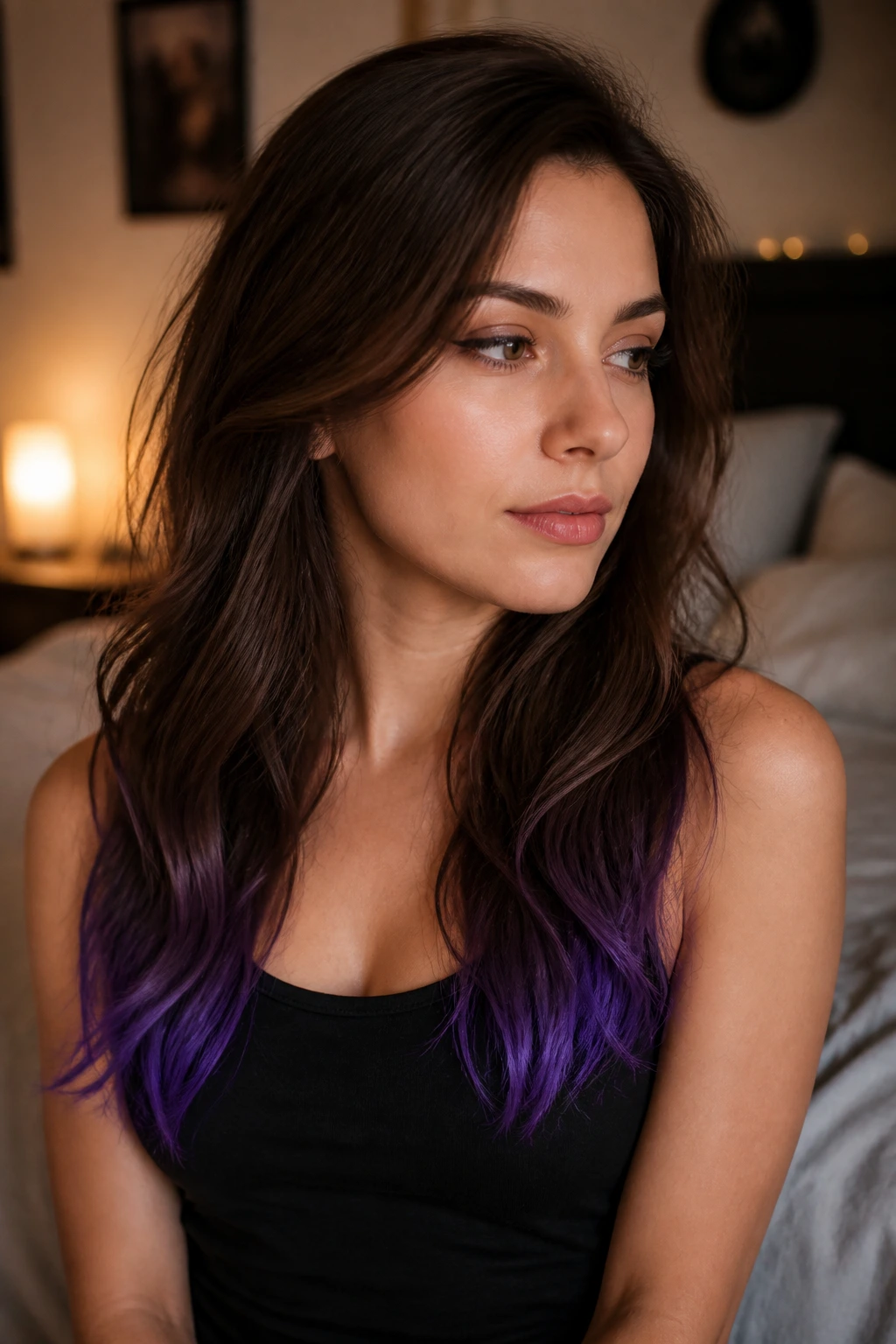
Natural brown with vivid violet tips is the boldest low-commitment option in the bunch. You keep most of the hair close to its natural base and put the strongest color just on the last few inches.
That makes sense on long hair because the length gives you room for a brighter finish without taking over the whole head. The purple tips can be clipped, curled, or worn straight, and they still read clearly. If you eventually want to trim the color off, you can. That flexibility is part of the appeal.
What to Ask Your Colorist
- Keep the brown close to your natural base
- Lighten only the last 3 to 5 inches
- Use a vivid violet or blue-violet tone
- Seal the ends with a conditioning gloss
This look works especially well if you like a little contrast at the bottom but don’t want a long grow-out. It’s fun, direct, and easy to change later if you get bored.
20. Dimensional Brunette with Multi-Tone Purple
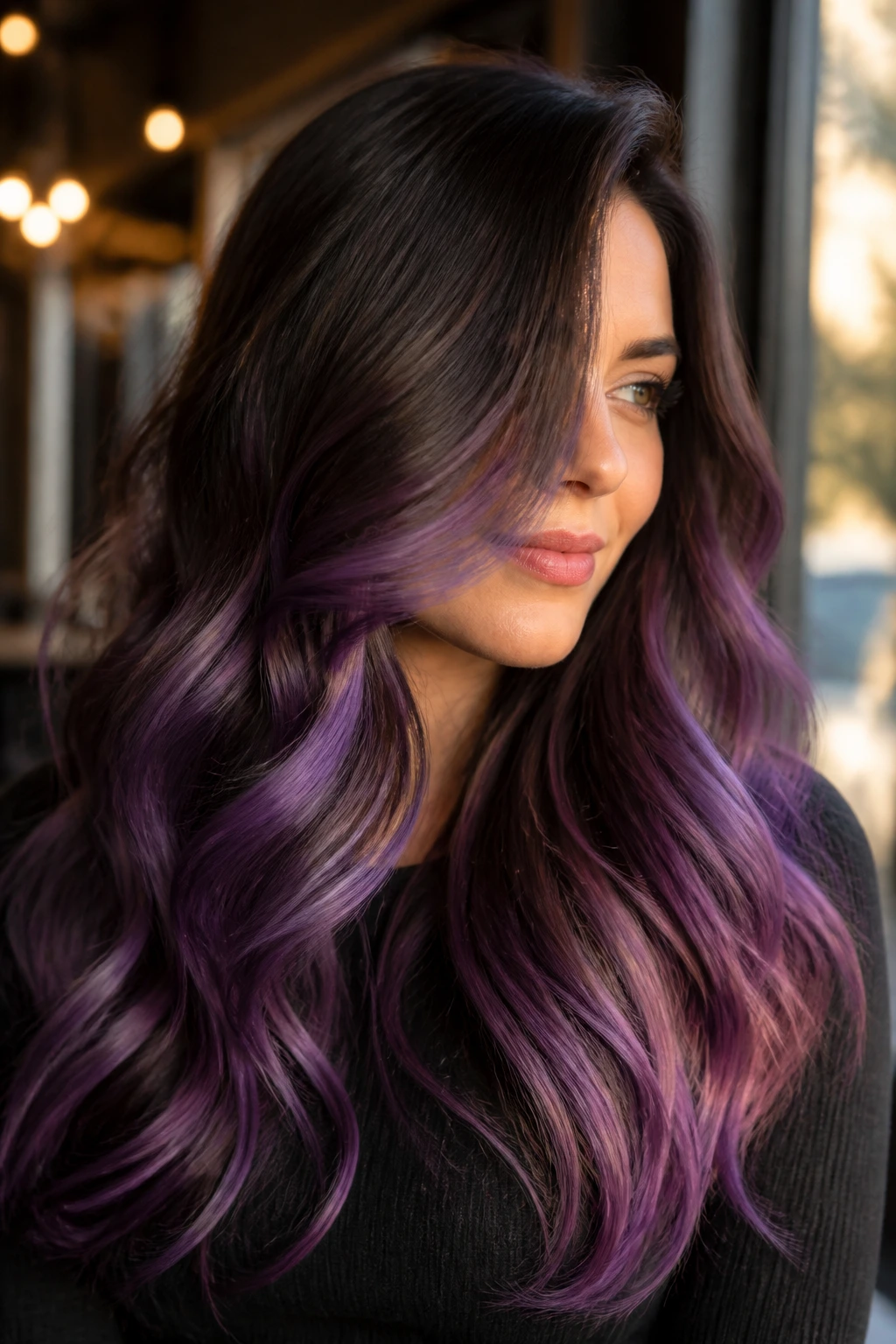
The most interesting brown-purple ombre hair idea for long hair is often the one that uses more than one purple. A single shade can flatten out fast. Three shades can give the length real movement.
Think plum at the start of the fade, violet through the mid-lengths, and a touch of orchid or aubergine near the ends. That range keeps the hair from looking like a painted stripe. Long hair is the right canvas for it because the extra length lets each tone sit where it belongs. On curls, the colors fold into each other. On waves, they separate just enough to show the differences.
This works especially well if your brown base already has dimension from balayage or subtle highlights. The purple doesn’t have to do all the work. It can build on what is already there.
If you like hair that looks a little different every time you turn your head, this is the one to keep in mind. It feels layered, but not busy. That balance is harder to hit than people think.
Final Thoughts
The best brown purple ombre hair ideas for long hair are the ones that match your base color, your texture, and your patience for maintenance. Darker purple tones like plum, eggplant, and blackberry tend to fade more gracefully. Lighter shades like lilac and lavender need cleaner lightening and a little more care.
Long hair gives the purple room to work. That is really the whole advantage. You can keep the roots rich, let the fade unfold slowly, and decide whether the color should peek out softly or take over the ends in a louder way. Either way, the length does half the job for you.
If you are torn between two shades, pick the one that feels a little too dark rather than a little too pale. Purple always changes more than you expect once it hits real light.
