



Black silver ombre hair ideas for long hair work because the length gives the color room to breathe. On shorter cuts, the fade can get chopped into a hard line. On long hair, black has space to stay rich at the top while silver drifts through the ends like smoke.
That space matters more than most people realize. Silver is a picky shade. If the lifted pieces are too yellow, the whole look can go muddy or beige. If the fade starts too high, the crown loses depth and the hair can look flat instead of dimensional. Long hair solves part of that problem by giving the gradient a real runway.
One thing I always notice with this color combo: it looks best when the cut and the placement are working together. Loose layers, a soft wave, a V-cut, even a deep side part can change the whole mood. The styles below move from soft to bold, and the differences are bigger than they sound on paper.
1. Black Silver Ombre with a Soft Melt
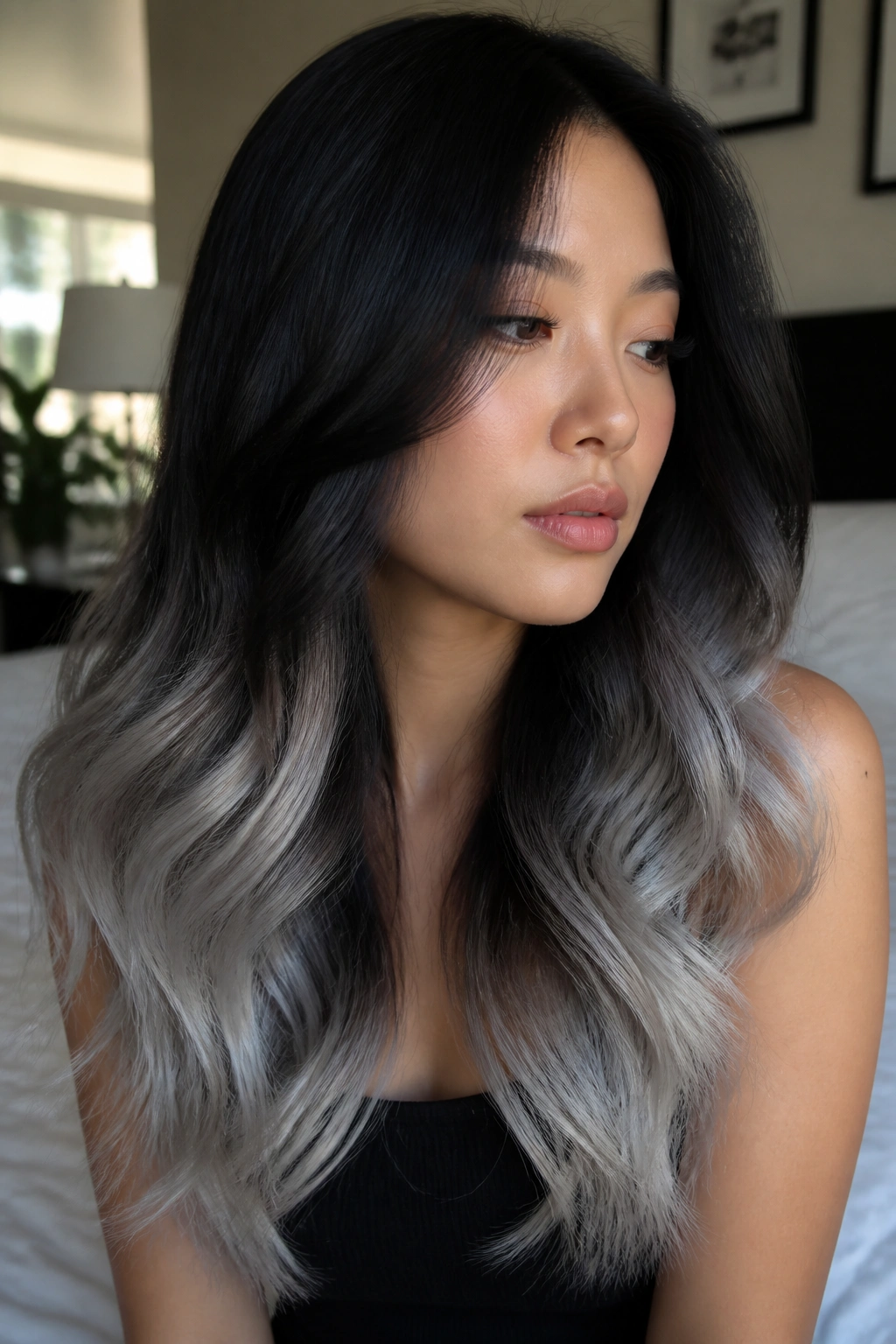
A soft melt is the safest place to start if you want the black-to-silver transition to feel smooth rather than striped. The black stays deepest at the crown and upper lengths, then fades into smoky gray before the silver arrives at the last stretch of hair. On long hair, that gradual shift looks expensive without trying too hard.
Why It Works on Long Hair
Long hair gives the blend time to unfurl. A soft melt needs that extra space or it can look like a color block instead of a gradient. The best versions usually keep the silver a little brighter around the mid-lengths and softer at the very tips.
- Ask for a root shadow that stays close to your natural black or soft blue-black.
- Keep the lightest silver focused on the bottom 6 to 10 inches.
- Loose waves make the fade read better than poker-straight hair.
Best tip: leave a touch more black around the face. It keeps the silver from washing everything out.
2. Shadow-Root Silver Cascade
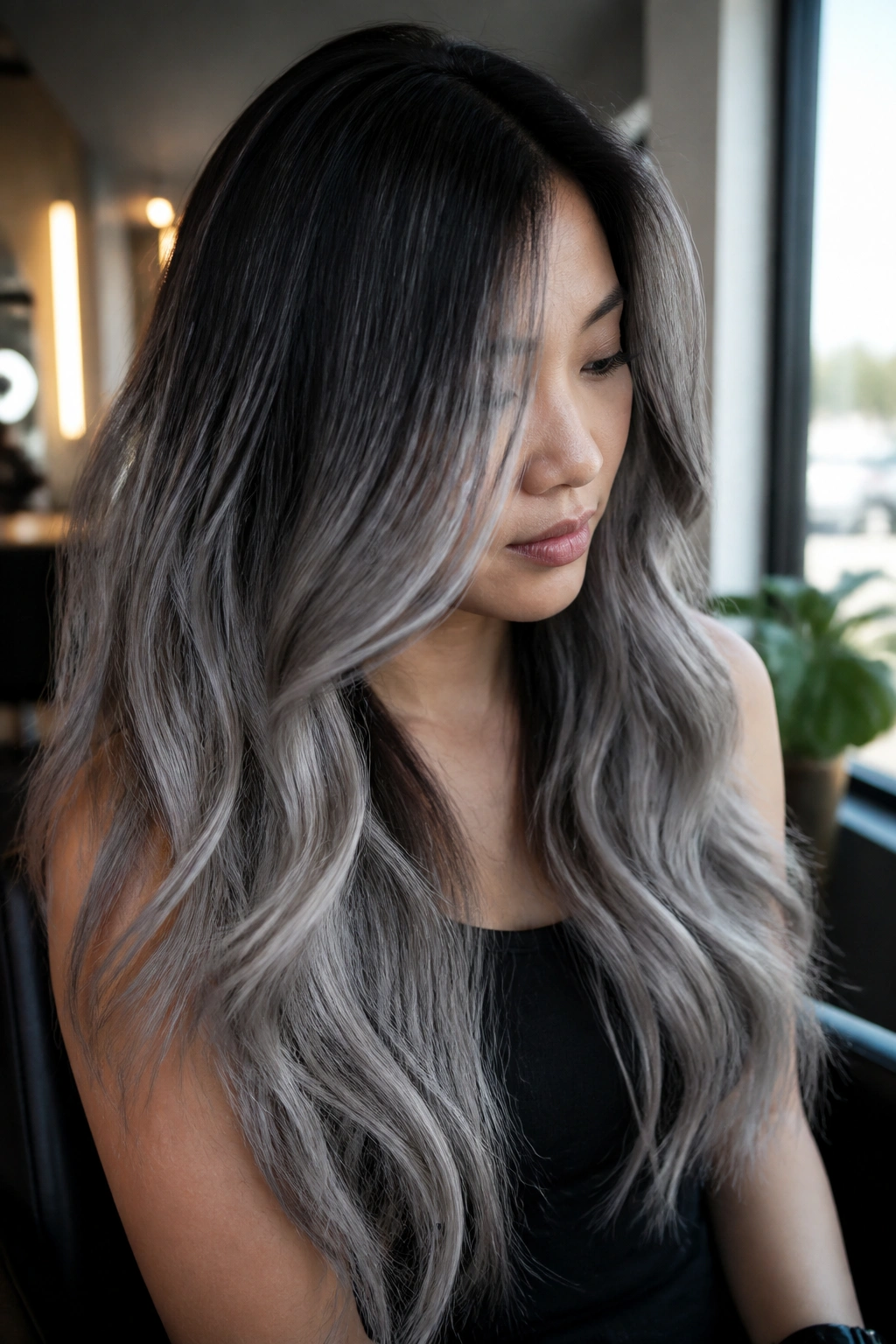
A shadow root is the easiest answer if you hate obvious regrowth. The top stays dark on purpose, which makes the silver feel intentional instead of high-maintenance. That dark cap also gives long hair more depth, especially if your strands are fine and need a little visual weight.
The key is placement. You want the silver to begin low enough that the transition feels graceful, but not so low that the ends look thin and disconnected. A good colorist will usually keep the root area richer for a few inches, then thread in cool silver through the lengths and finish with a brighter tip.
This version suits people who wear their hair down more often than up. It also works well if you like clean middle parts, because the dark root helps the silver fall on both sides without looking harsh. If you want a color that grows out with less drama, this is the one I’d put near the top of the list.
3. Face-Framing Silver Money Piece
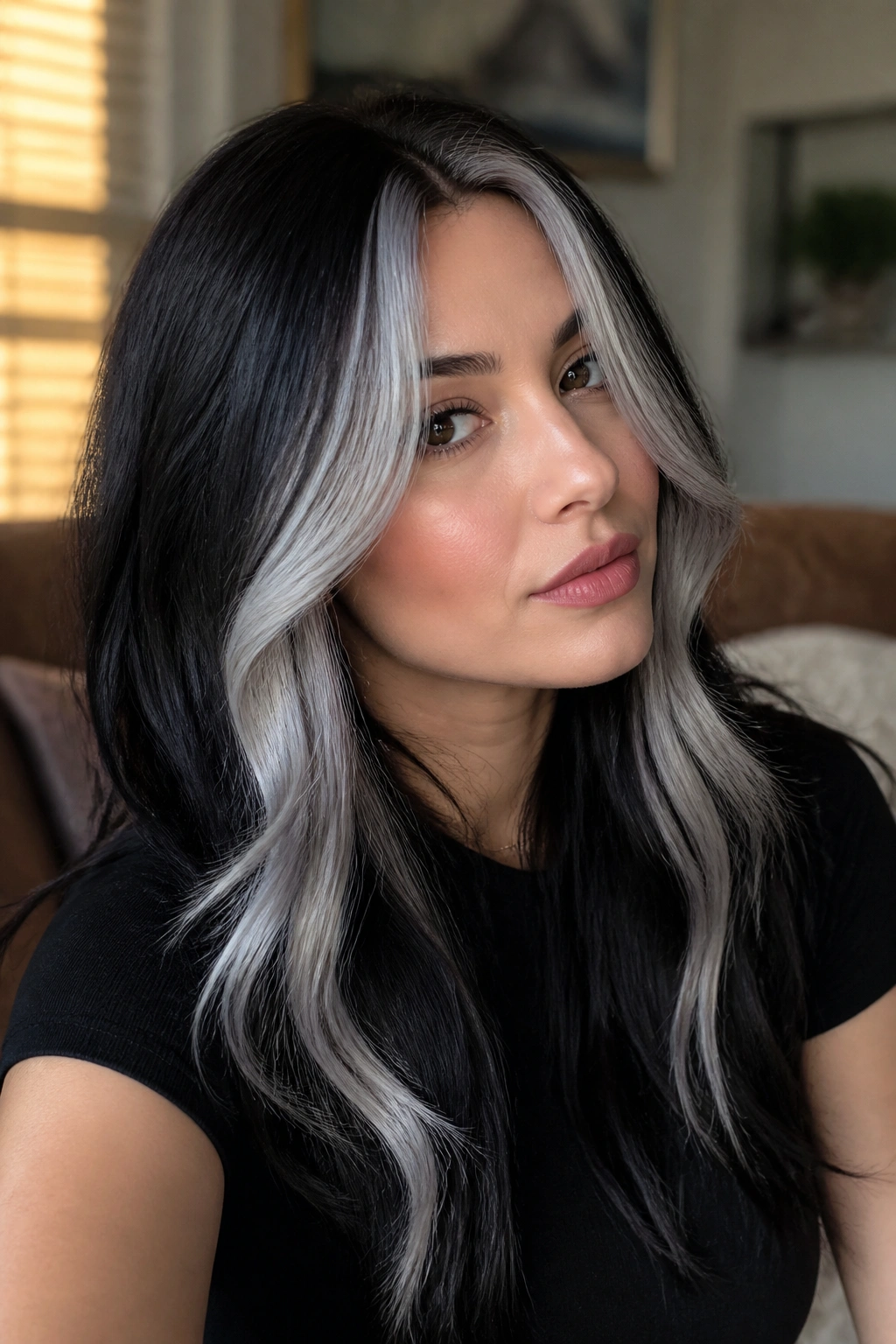
Want the silver without flooding the whole head? Put it near your face. A money piece gives you that hit of brightness right at the cheekbones and temples, then lets the black lengths stay dramatic behind it. On long hair, that contrast can be gorgeous because the front pieces move, swing, and catch the eye first.
How to Ask for It
Ask for bright silver ribbons around the face, with the rest of the ombre kept softer and darker. If your hair is very dark, the front pieces may need to be lifted a little more than the back so they don’t disappear.
- Best on oval, heart, and round faces because it opens the front nicely.
- Works well with middle parts or soft curtain bangs.
- Keep the silver narrow if your hair is fine; wider pieces can look harsh.
The money piece is the kind of detail that looks small in the chair and big in real life. That’s the appeal.
4. Smoky Balayage Veil
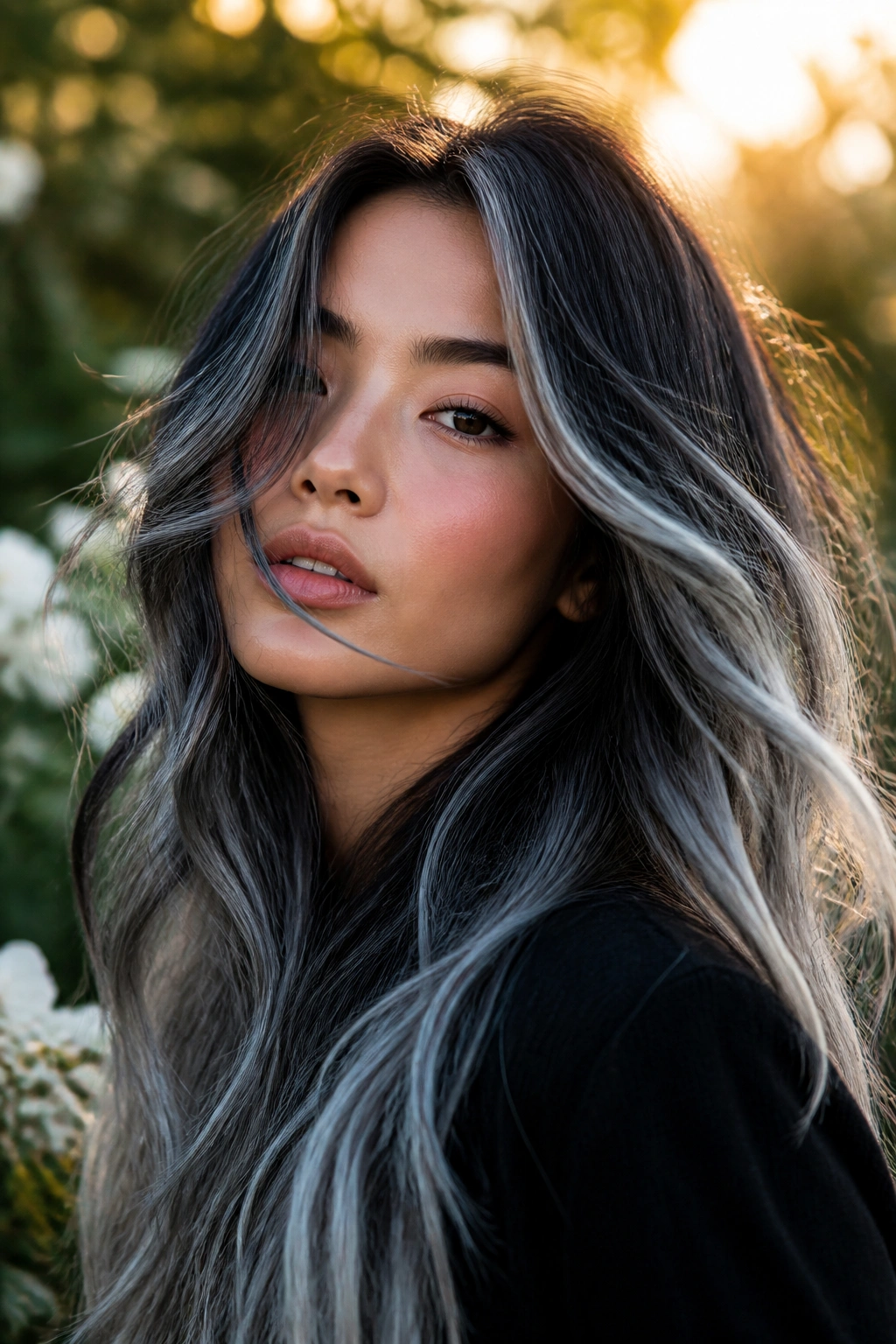
If you usually wear your hair in loose bends, a smoky balayage veil is a smart choice. The silver doesn’t sit in one heavy block. Instead, it gets painted in soft, hand-finished pieces that sit over the black like a thin veil. The result feels airy, not loud.
What I like about this version is the movement. Every turn of the head reveals a slightly different amount of silver. Some pieces stay dark. Some go ash. Some flash a brighter metallic tone for a second and then disappear again. That makes the color feel alive instead of fixed.
It’s a good fit for long layers, especially if the ends have a little texture. Very blunt cuts can make a veil look more like a stripe. Keep the styling loose, and let the color do the talking. No need to overcomplicate it.
5. Peekaboo Silver Underlayers
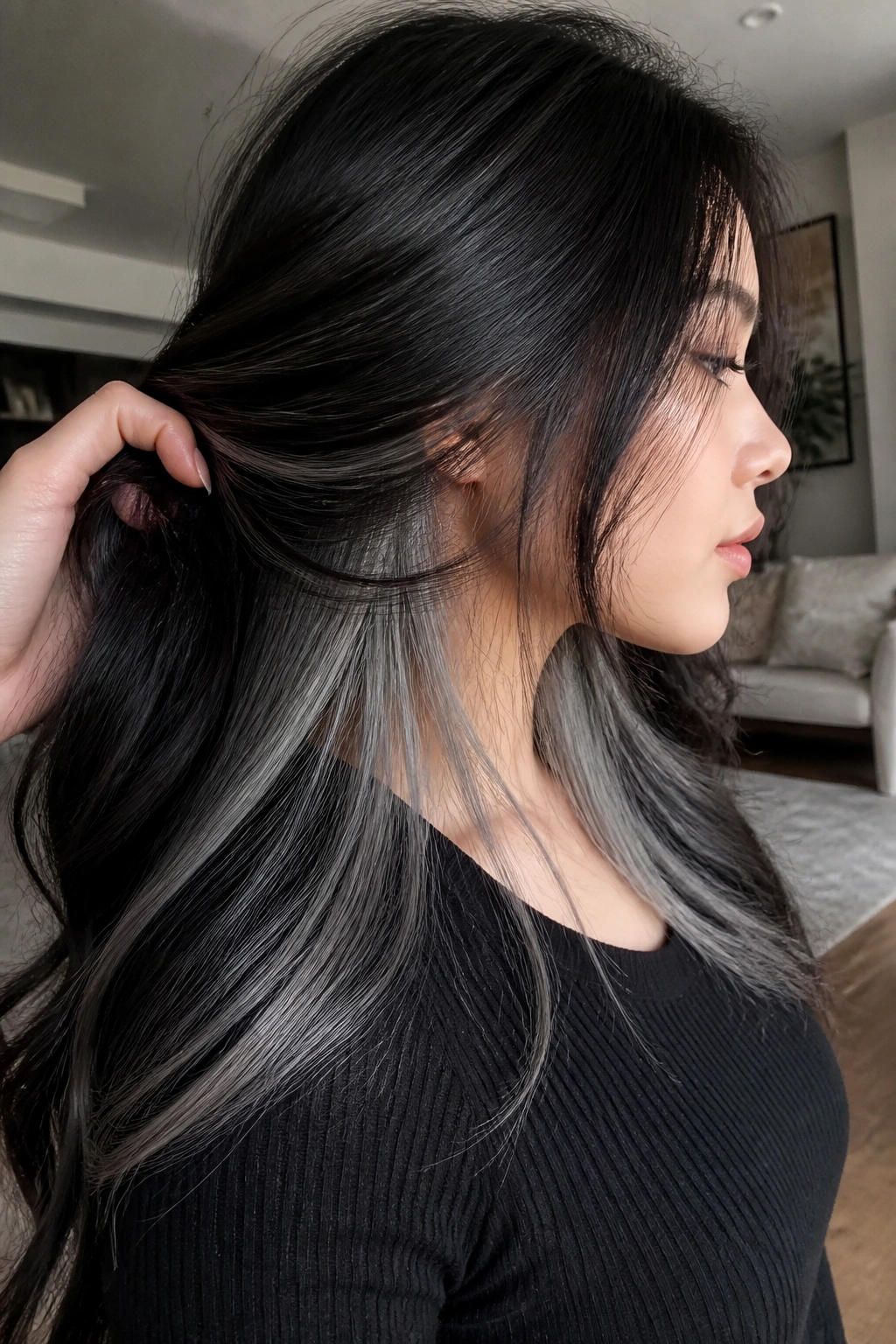
Peekaboo silver is for anyone who likes a surprise. The top layer stays black, rich, and mostly untouched. The silver lives underneath, so you only see it when the hair shifts, gets tucked behind the ear, or moves in a ponytail. It’s one of those colors that feels a bit private, which I like.
The underlayer placement matters a lot here. Ask for the silver to sit through the nape and lower panels, not all the way to the top. That way, the contrast comes and goes instead of shouting from every angle. On long hair, the effect is especially good because there’s enough length to hide and reveal the color naturally.
Best for: people who want drama without a full-time bright look.
Also good for: braids, twists, and half-up styles.
Watch for: if the top layer is too thick, the silver may barely show. Thin the veil a little near the sides so the color has a chance to peek through.
6. Chunky Ribbon Lights
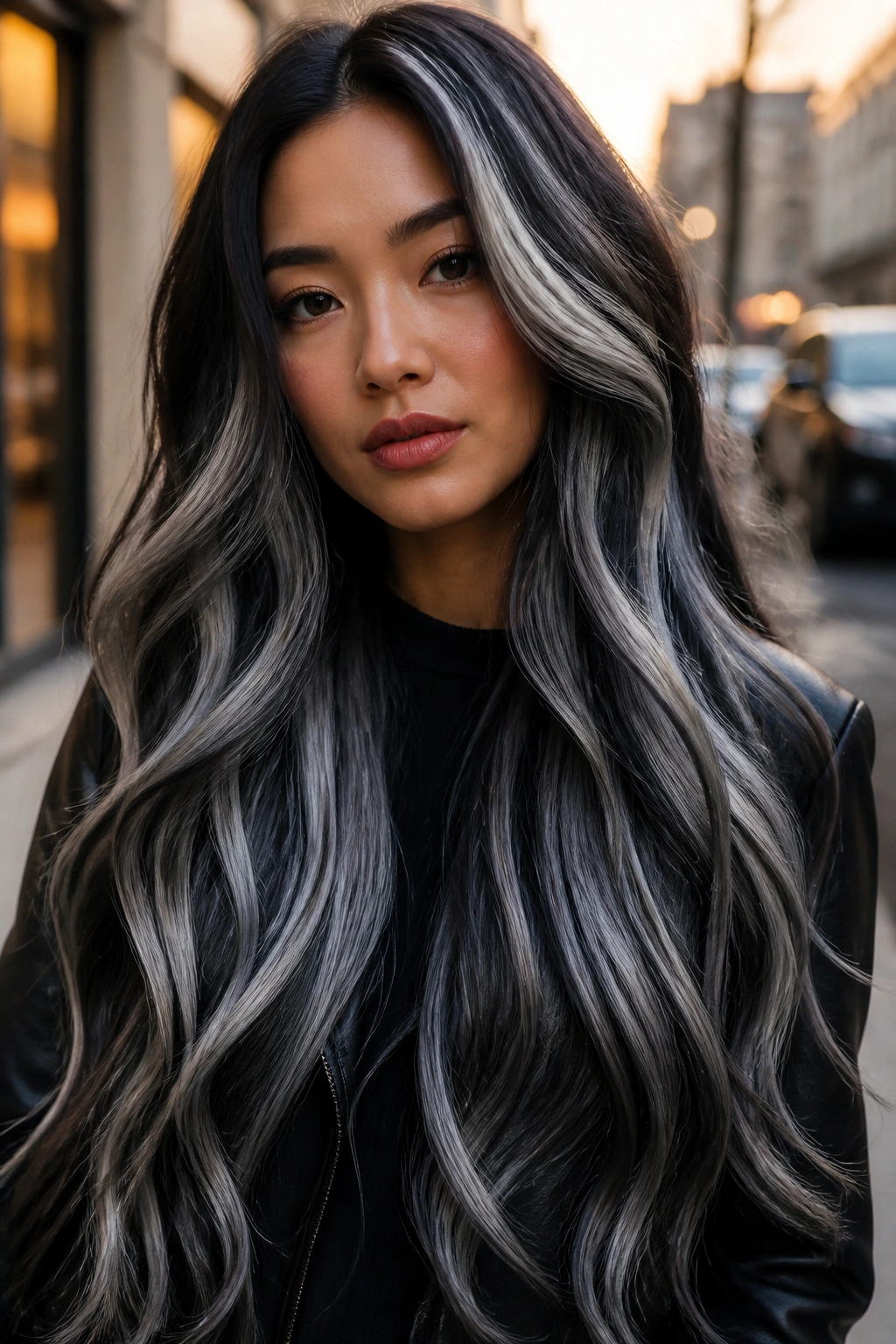
Chunky ribbons are the bold version of black and silver ombre, and they don’t apologize for it. Instead of a soft fade, you get wider silver sections running through the lengths like thick brushstrokes. On long hair, that kind of placement can look very strong, especially in waves or curls.
What Makes It Different
Unlike a soft melt, chunky ribbons keep the contrast visible from a distance. That can be a blessing if your hair is dense or if you want the silver to stand up against black instead of getting swallowed by it. The trick is keeping the silver pieces clean and cool, not yellow or beige.
A ribboned look works best when the lighter sections are painted with a clear plan. You want some pieces to start higher, some lower, and a few that wrap around the face. That breaks up the darkness without turning the whole head into noise.
If you like a graphic, salon-fresh finish, this is a strong pick. If you prefer subtlety, it’s probably too blunt.
7. Charcoal-to-Silver Three-Step Gradient
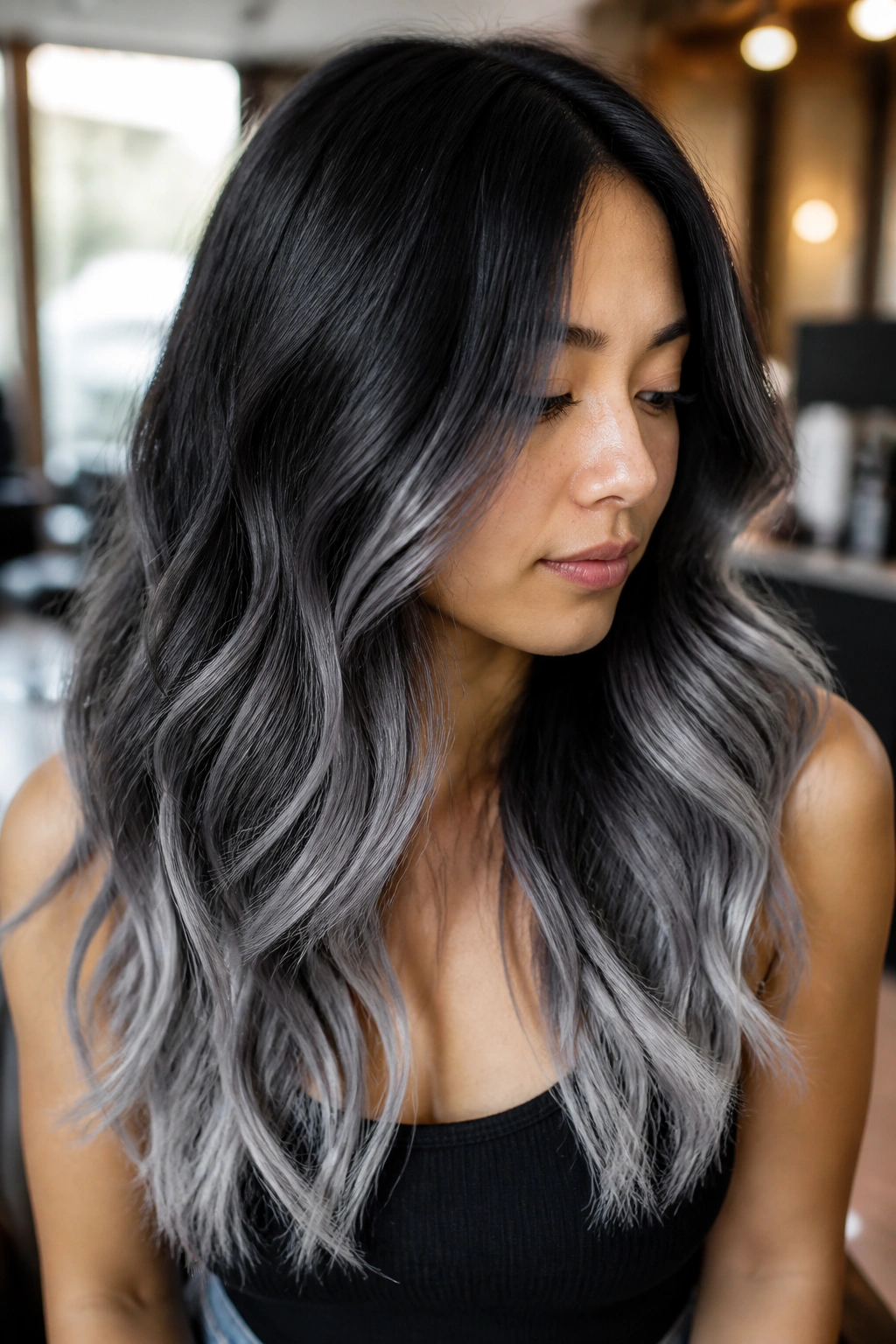
Three tones keep this look from turning flat. You start with black at the roots, shift into charcoal through the middle, and finish with silver at the ends. That extra middle step matters on long hair because it creates a real bridge between dark and light instead of a jump.
The charcoal zone also helps if your hair tends to grab warmth. A pale silver straight over black can look odd if the lift isn’t clean enough. Charcoal acts like a buffer. It smooths the line and gives the ends a cooler, smokier feel.
This is the version I’d choose for very long hair that needs movement but not too much contrast. It looks especially good with layered cuts, because every layer catches a slightly different tone. Straight hair shows the shift clearly, while waves soften it.
It’s a smart choice if you want the color to feel polished without looking painted on.
8. Glass-Hair Straight Ombre
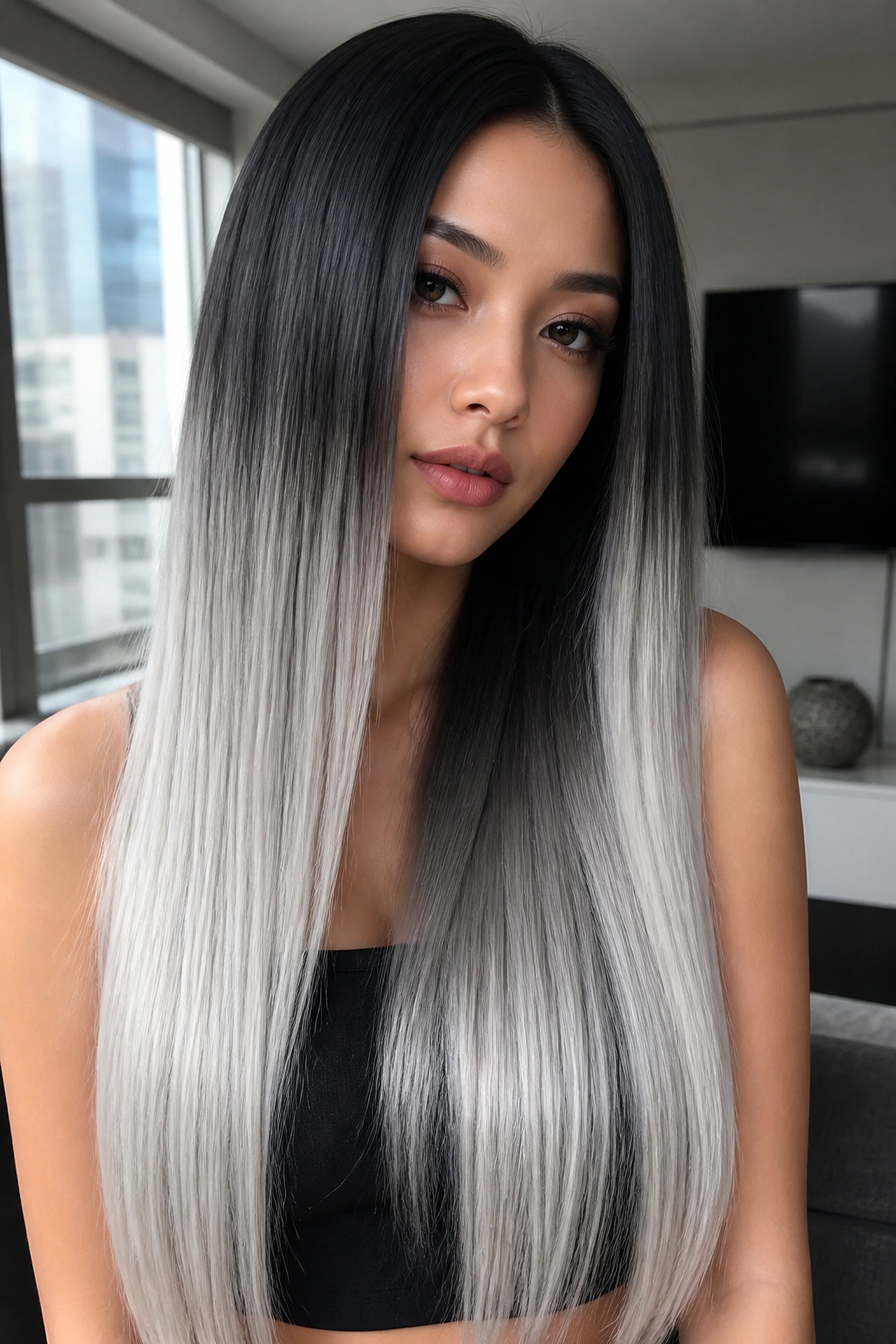
Straight hair is ruthless. Every line shows. That is exactly why this version works when the placement is clean.
A glass-hair ombre uses a super smooth fade from black to silver, with the ends styled sleek and shiny so the color reads like metal. There’s no hiding behind curls here. The transition has to be even, and the tone has to stay cool all the way through. If the silver is patchy, you’ll see it right away.
This style shines on very long lengths because the straight finish stretches the gradient out. The black root stays deep, the middle turns smoky, and the silver ends look sharp against the rest. A single pass of a flat iron, plus a heat protectant that leaves no heavy film, usually gives the best result.
If you like crisp lines and a center part, this is a strong, modern pick. If you want softness, keep moving.
9. Mermaid Wave Silver Sweep
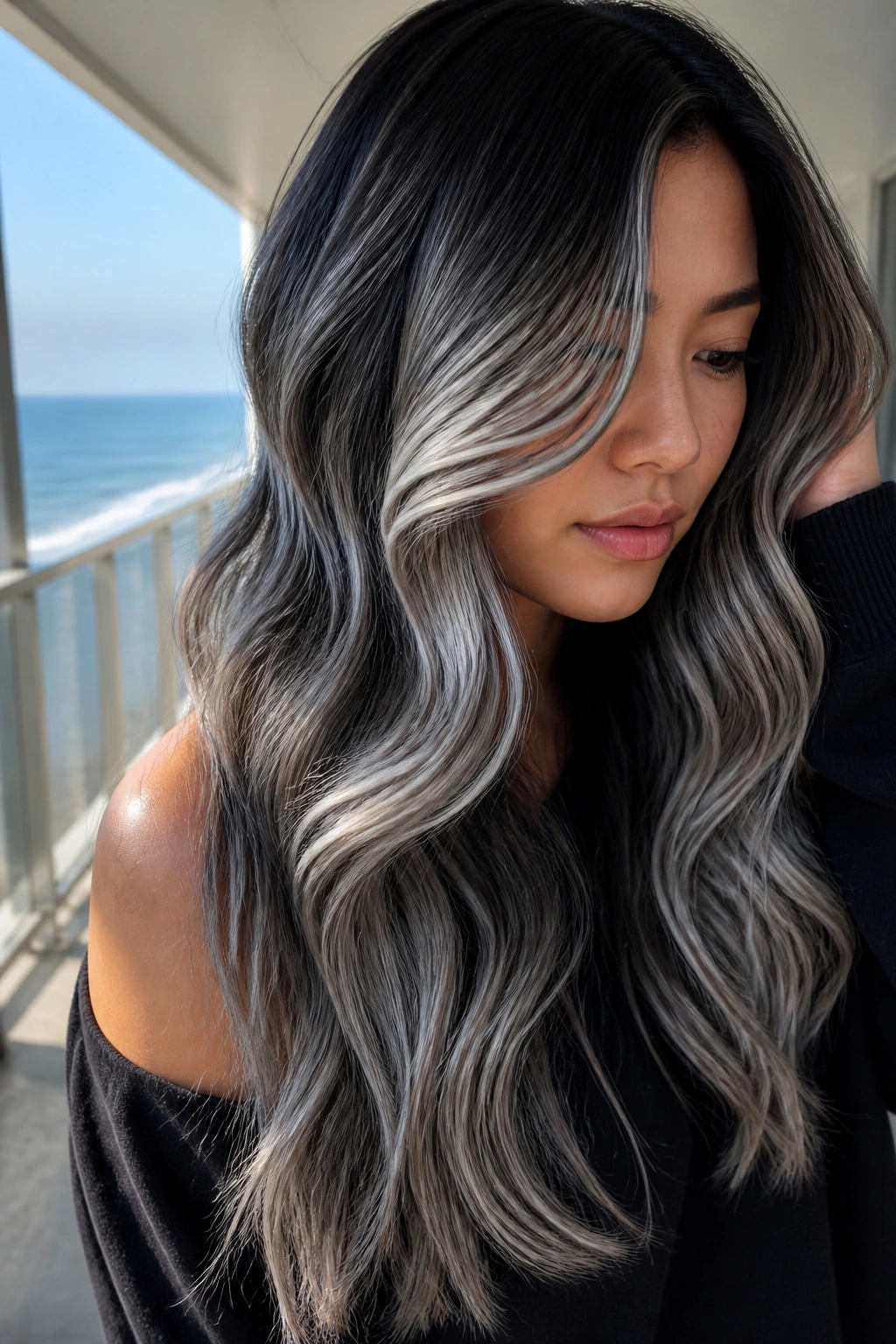
Why do waves make black and silver look richer than they do on flat hair? Because the bends create tiny pockets of shadow and light. The silver rides the top of the wave, the black drops into the curve, and the whole thing looks deeper than it does in a straight sheet.
Best Wave Pattern
A 1.25-inch curling iron or a large-wave wand usually gives the right bend for long hair. You want loose S-waves, not tight curls. Tight curls can break the gradient apart and make the silver look scattered.
- Leave the ends out for the last half-turn if you want a softer finish.
- Brush the waves out once they cool.
- Put the darkest pieces underneath so the silver keeps popping on top.
This style has a bit of movement to it even when you’re standing still, which is half the appeal. The color looks like it’s doing something.
10. Frosted Wolf Cut Ends
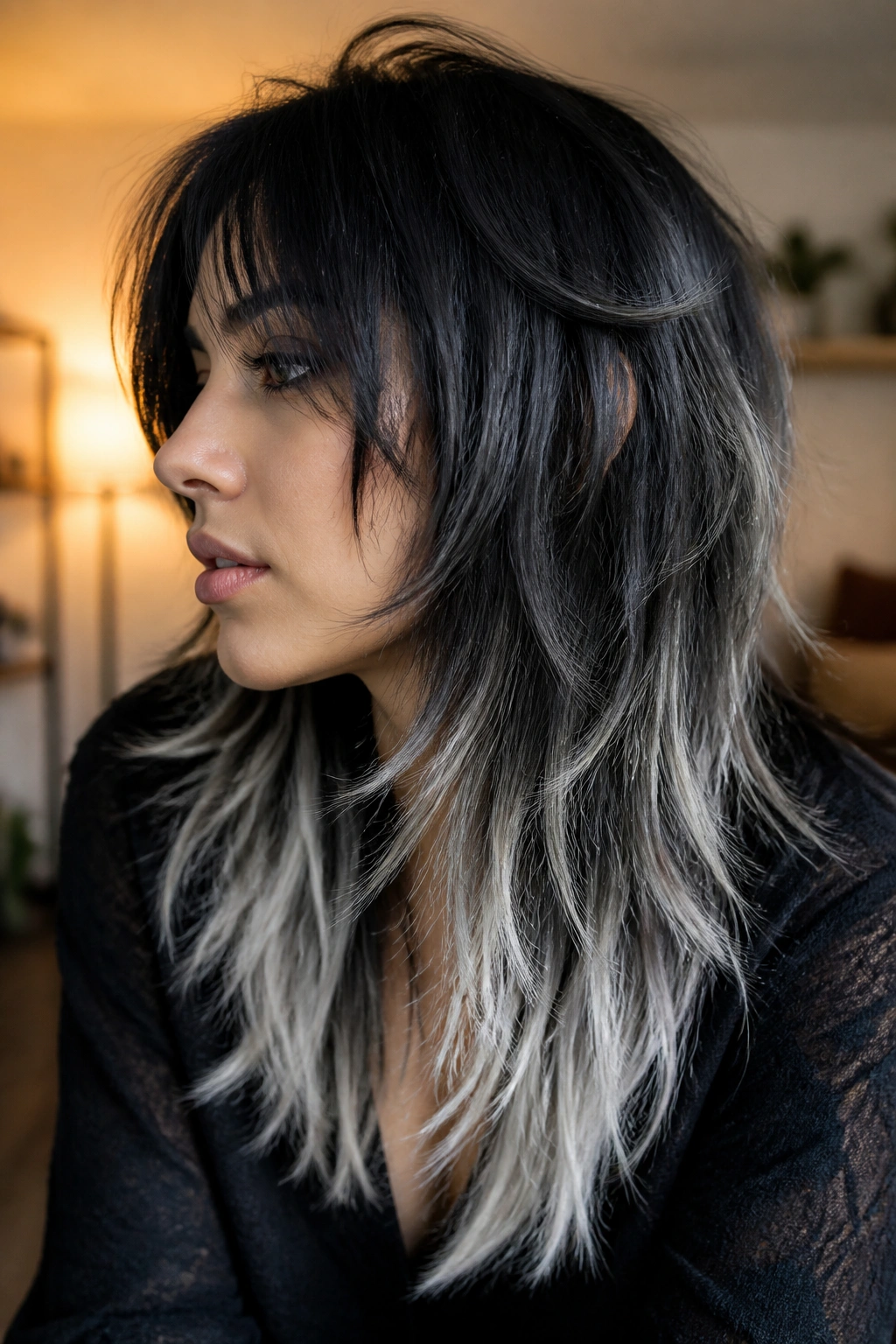
A wolf cut gives the silver somewhere to live. The choppy layers, feathered crown, and shaggy ends keep the fade from feeling heavy, which is useful if your hair is thick or naturally flat at the top. Frosted ends make the whole cut feel sharper.
The silver usually looks best when it lands on the shaggier lower pieces, not just on the longest perimeter. That keeps the ends airy and stops the color from reading like a straight dip-dye. On long hair, the wolf cut can still keep its length while giving you that rougher shape around the face.
It’s a good match if you like hair that looks better a little messy. A clean blowout can flatten the attitude out of it. Air-drying or using a diffuser keeps the movement alive, and the silver stays broken up instead of too neat.
If sleek and tidy is your thing, pass. If you like edges, this one has them.
11. Side-Part Silver Swoop
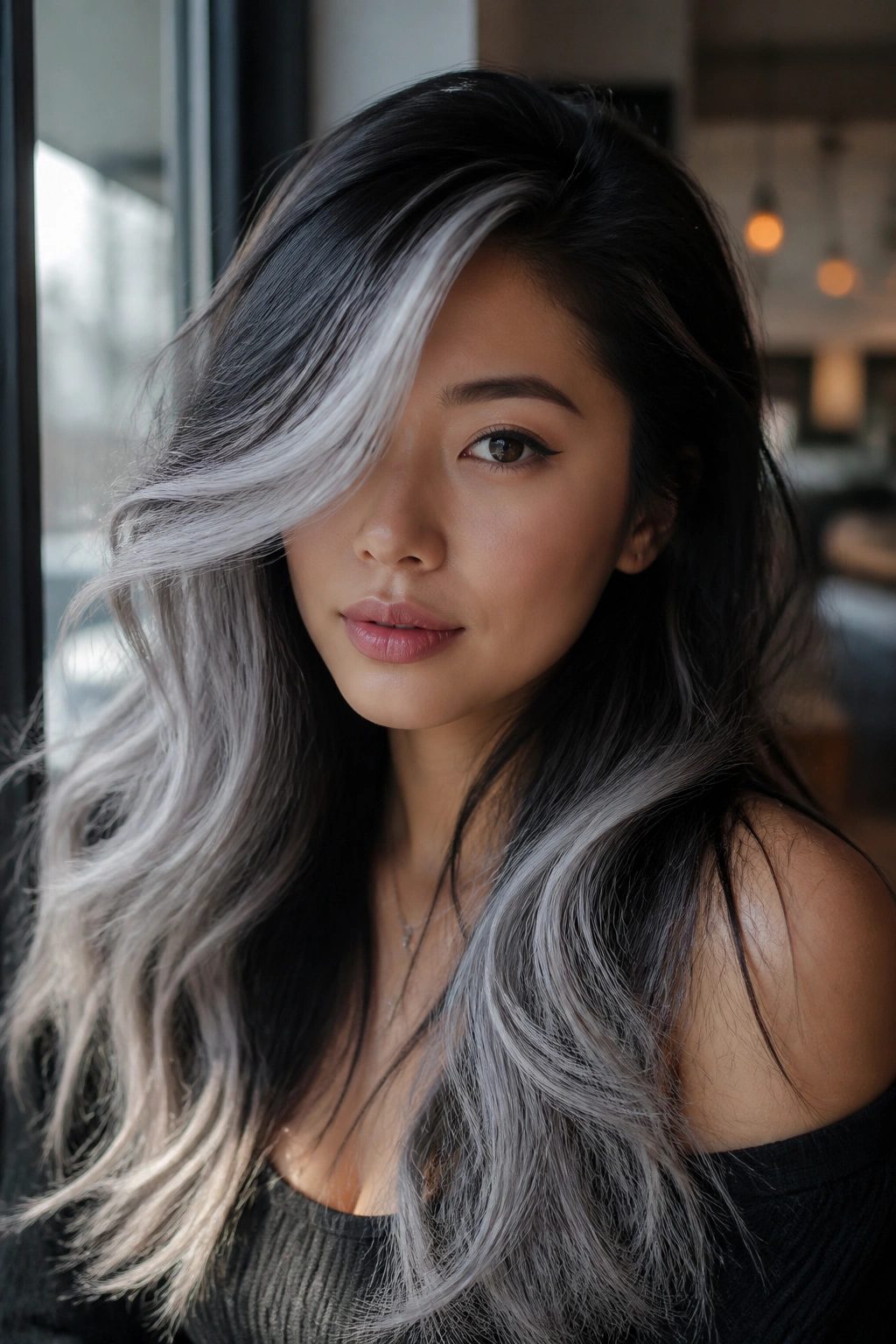
A side part changes the whole mood. The dark side feels heavier, the silver side feels brighter, and long hair suddenly has a bit of swing built into it. This is a strong choice if you want the ombre to feel dramatic without needing a radical cut.
The silver should sweep across the front and fall into the lengths on the heavier side of the part. That gives the color a diagonal line, which is more flattering than a strict vertical fade on many face shapes. On long layers, the silver can spill over one shoulder and really show off its tone.
I like this version because it’s easy to wear with soft waves or a polished blowout. It also works when the hair is clipped back on one side. The contrast does the work for you.
If your usual middle part feels a little too safe, this is a simple way to wake the look up.
12. Braided Dimension Ombre
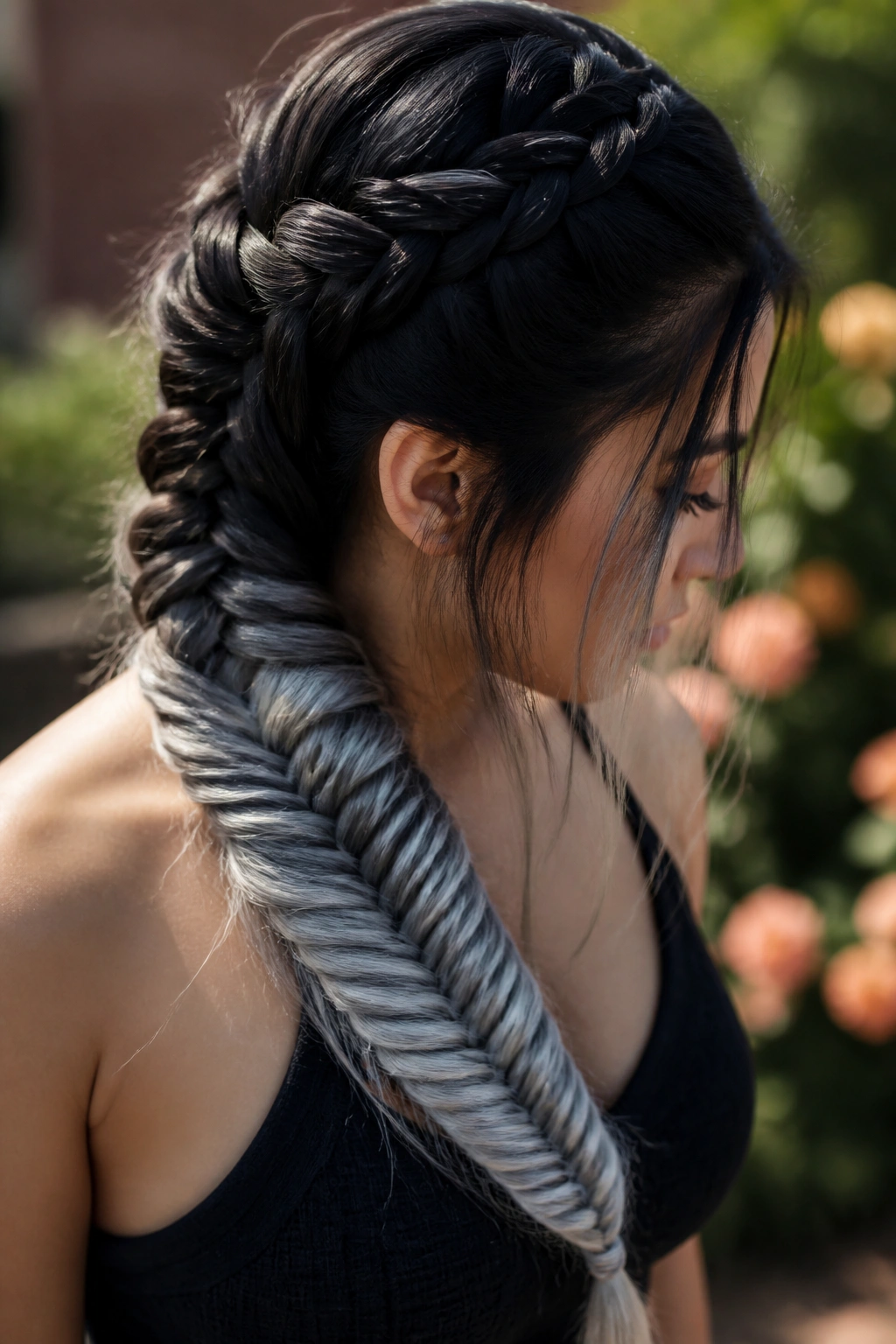
Braids are where this color gets sneaky. A black and silver ombre can look fairly soft when the hair hangs loose, then turn much more textured once it’s woven into plaits. Every crossing shows a new strip of tone, which gives long hair a lot of life.
Fishtails, Dutch braids, and loose three-strand braids all show the color in different ways. Fishtails make the silver look finer and more detailed. Dutch braids show off contrast faster because the pieces sit on top. Loose braids are easiest if you want a lived-in look.
This is a good style if you wear your hair up often. A simple braid can show the gradient better than a ponytail, and the ends still keep that silver finish. If you’re trying to decide whether the color will be visible in daily life, a braid test tells you a lot.
Braid it once, and you’ll know if the placement is right.
13. Silver Dust on Natural Curls
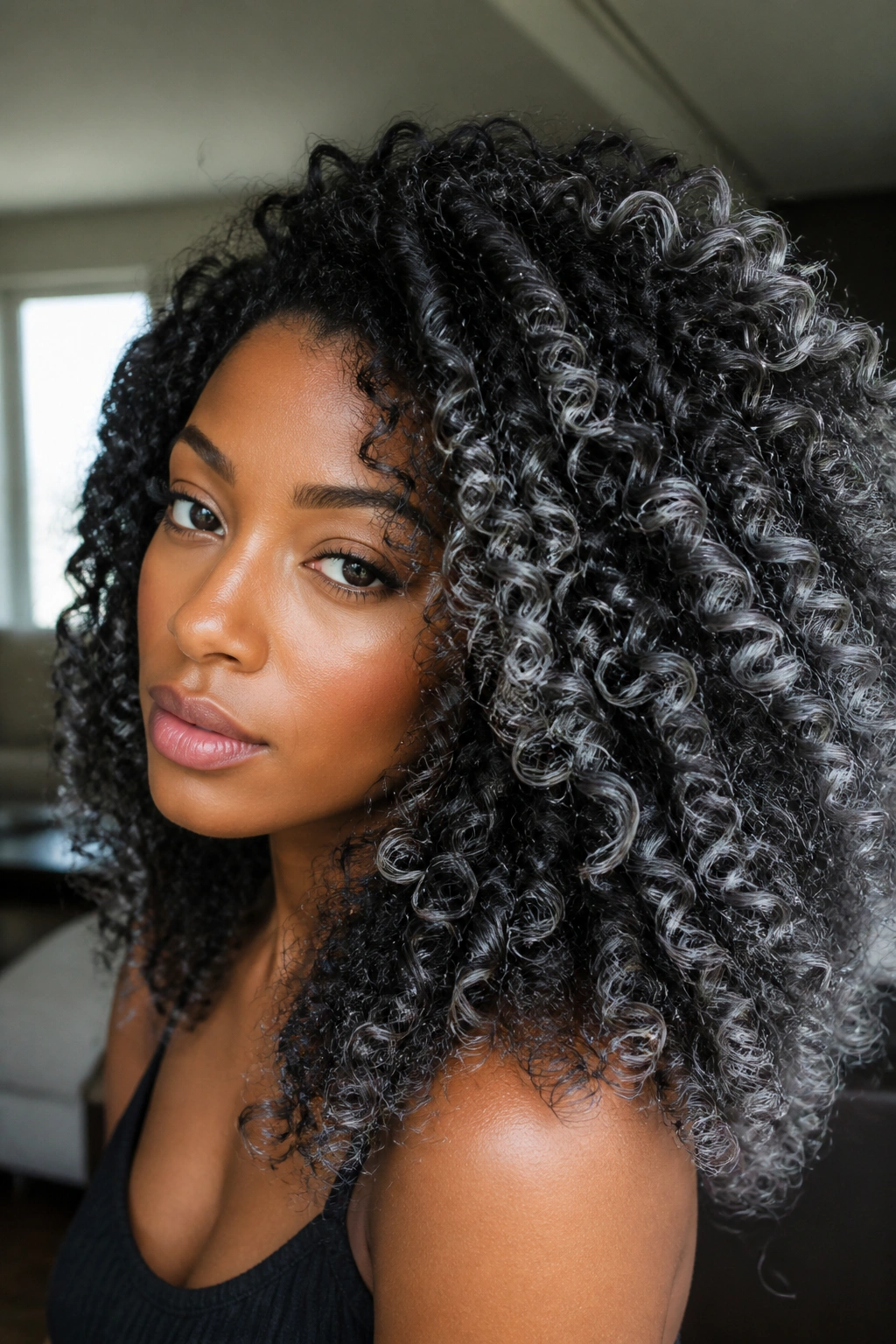
Silver on curls behaves differently. Curly hair doesn’t lay flat, so the ombre reads like a soft dusting across the curl pattern instead of one smooth fade. That can be beautiful on long hair, because each spiral picks up a different amount of light.
What to Ask For
Ask for silver to be painted on the outer curve of the curl, not all the way through every strand. That keeps the color dimensional and helps the shape stay defined. If the silver goes too deep into every curl, the look can lose contrast and feel busy.
- Best with big curls, loose ringlets, or stretched coils.
- A curly cut with layers helps the silver show instead of hiding in the bulk.
- Use a curl cream with a light finish; heavy oils can mute the metallic tone.
The nicest thing about this version is the movement. Silver catches on the high points, black sits in the deeper folds, and the hair looks fuller without trying.
14. Mushroom-Smoke Hybrid
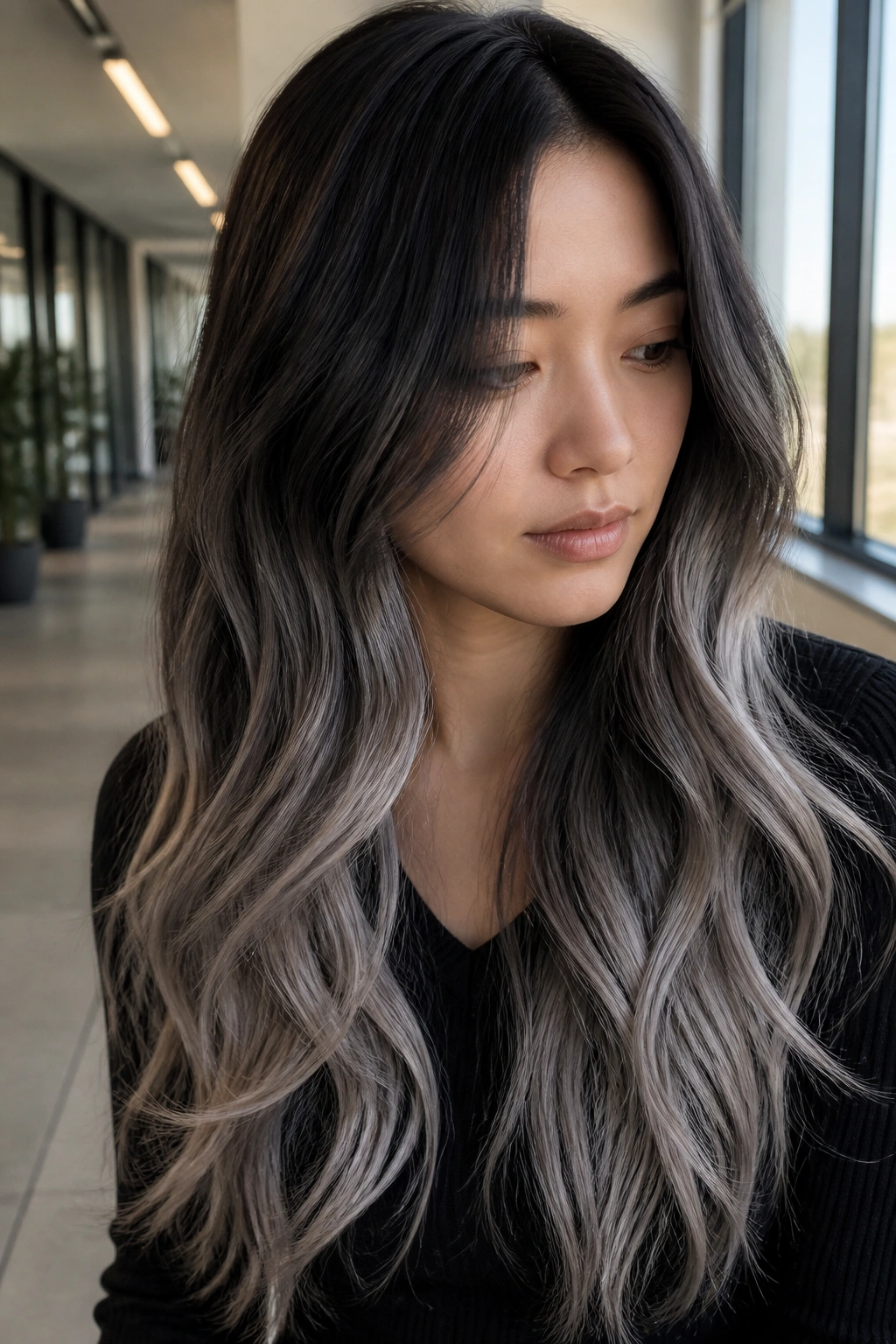
A mushroom-smoke hybrid sits between black, brown, and silver, which makes it softer than a stark black-to-platinum fade. I like this version for people who want cool tones but don’t want the silver to jump at the room. It feels muted in a good way.
Unlike brighter silver ombre, this version keeps more depth through the middle. That helps thick hair, especially if the lengths have a lot of volume. The transition can start as a deep charcoal-brown at the midshaft, then drift into a soft silver at the ends. It reads calm, not icy.
This is the pick for someone who wears natural makeup, office clothes, or easy waves and still wants the hair to have interest. It also works on long hair that’s been color-treated before, because the softer silver usually asks for less lift than a high-platinum finish.
If you like cool color without the harsh shine, this one is easy to live with.
15. V-Cut Ribbon Lengths
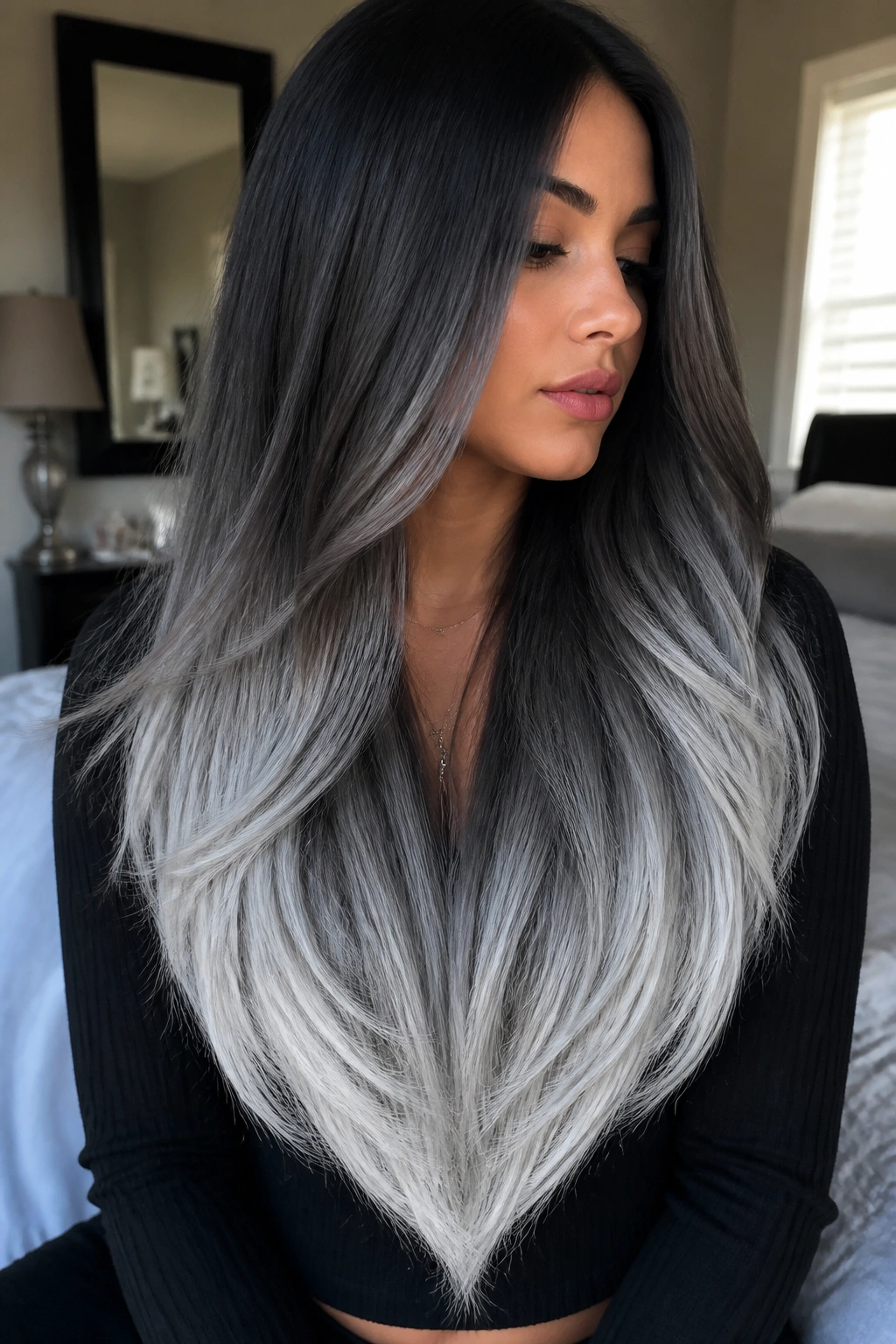
A V-cut helps silver taper cleanly. The shape narrows toward the bottom, so the lighter ends feel intentional instead of blunt. On very long hair, that matters a lot. A straight hem can make silver look heavy at the bottom edge; a V shape lets it feather out.
This style works especially well when the silver is threaded through long ribbons that follow the cut line. You end up with dark panels at the top, smoky lengths through the middle, and the brightest silver sitting right where the V tapers. It looks neat from the back and fluid when the hair moves.
I’d choose this if your hair is thick, dense, or naturally a little shapeless at the ends. The cut gives the ombre structure without needing tons of layers. It also looks clean in a half-up style, which is useful if you wear your hair that way a lot.
Sometimes the haircut is doing half the color work.
16. Curtain Bangs Silver Frame
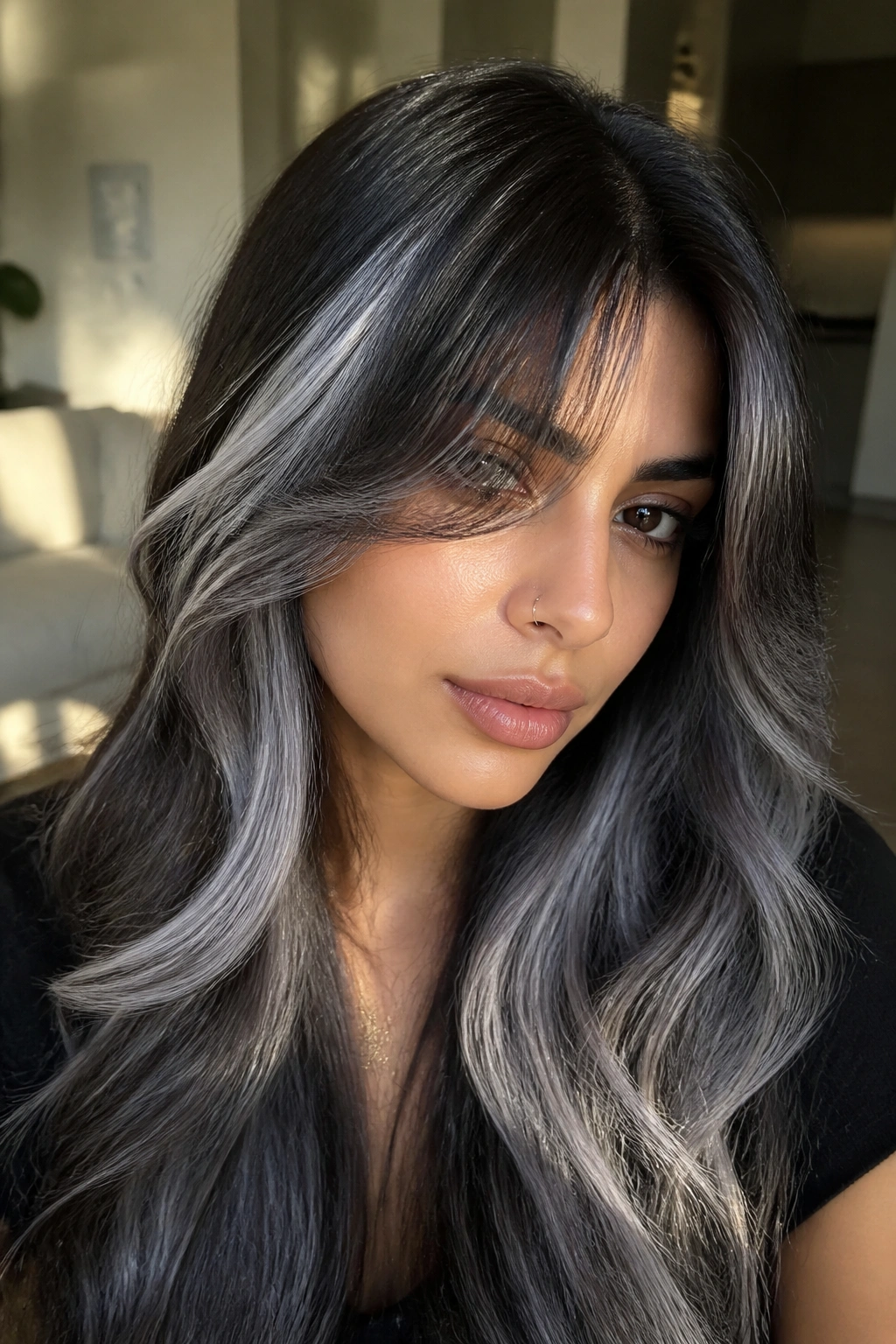
Curtain bangs can make black and silver ombre feel softer around the face. Instead of a full silver money piece, you get a frame that opens at the cheekbones and blends into the longer lengths. That keeps the front light without turning the bangs into a stripe.
Where the Brightest Pieces Go
The brightest silver should sit just outside the bang area, around the temples and first layers. The bangs themselves can stay a touch darker and smokier so they don’t look disconnected from the rest of the hair. Long hair gives you room to balance both.
A center part helps here, because the bangs fall naturally into the fade. But a slight off-center part can be prettier if you want the silver to sweep across one eye a little. Either way, keep the placement soft. Hard lines near the face can make the whole look feel too rigid.
This is one of those styles that looks polished without being fussy. The bangs do the softening. The ombre does the rest.
17. Low-Maintenance Diffused Grow-Out
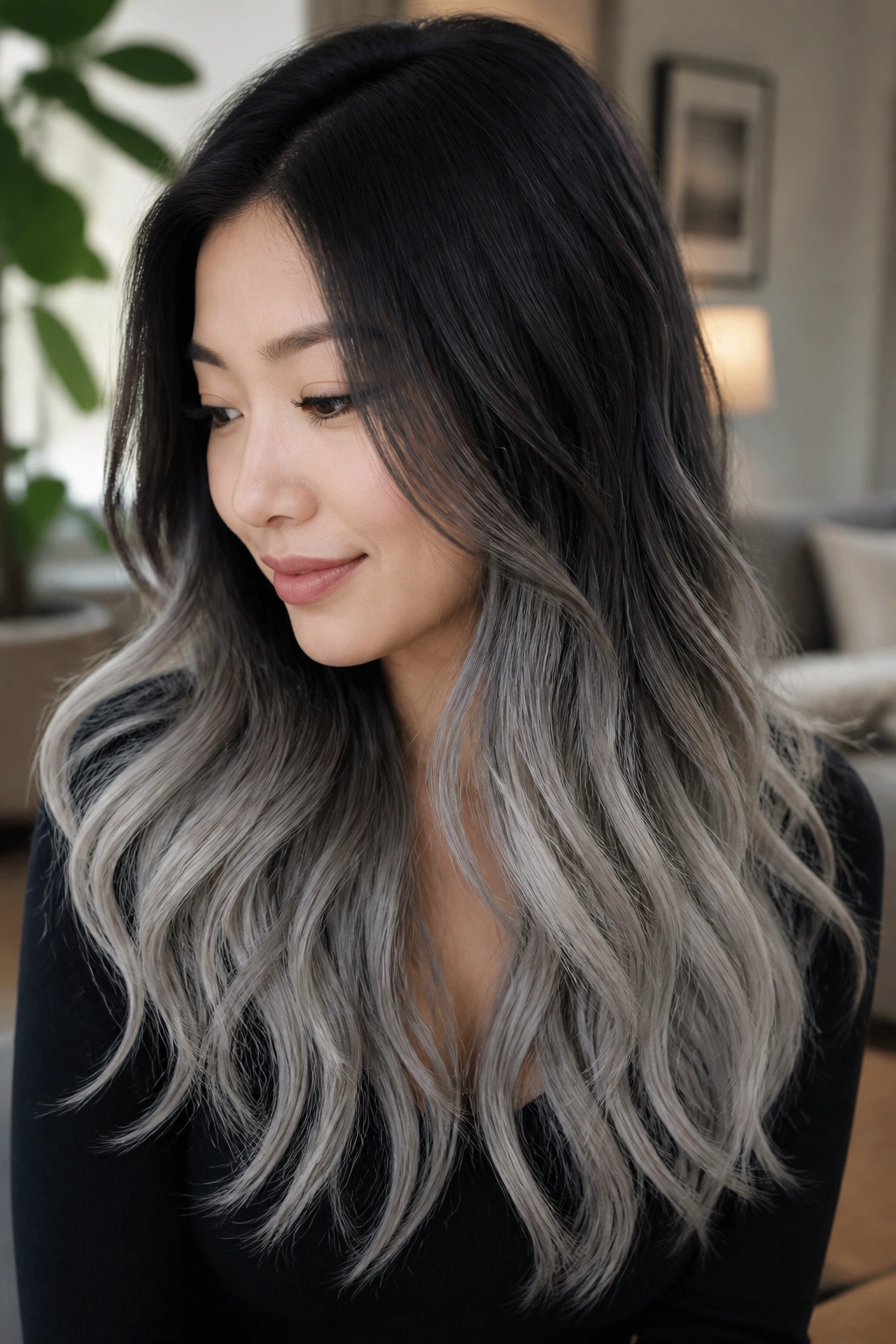
If you know you won’t babysit your color every few weeks, go diffused. A low-maintenance black-to-silver ombre keeps the dark root area wide and lets the silver begin lower, which makes new growth less obvious. On long hair, that gives you breathing room.
The fade should be soft enough that the join between black and silver never feels like a fixed line. Think mist, not stripe. The lighter pieces can sit mostly on the outer layers and ends, where they’ll still show when the hair is down or pinned back. That keeps the look visible without turning it into a constant upkeep project.
This version is honest about what long hair can do. It doesn’t need the silver to shout. It just needs enough lightness at the tips to catch movement. If your life is full of ponytails, clips, and quick buns, this is one of the smartest picks in the bunch.
Less maintenance. Still pretty.
18. Dip-Dyed Silver Ends
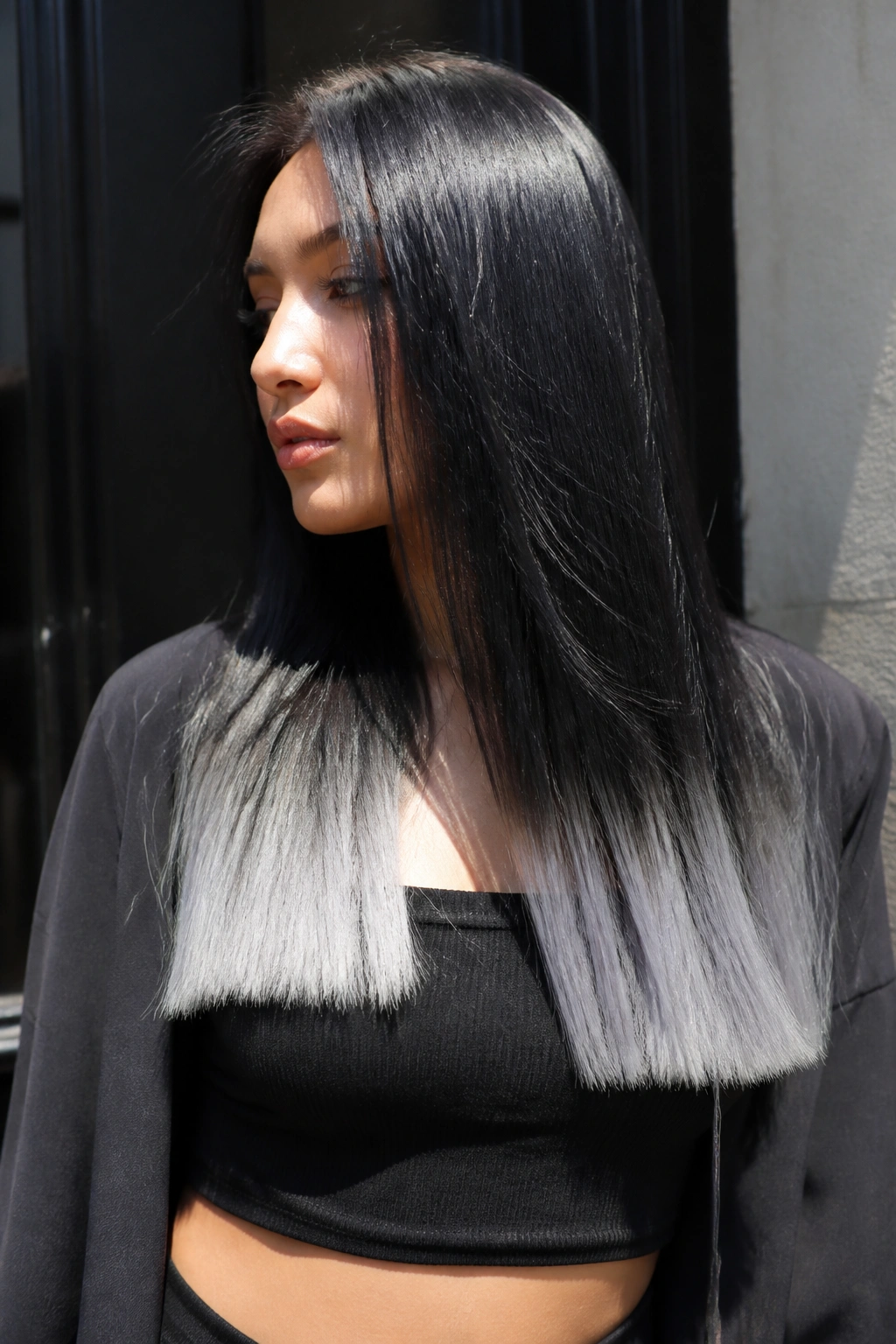
Dip-dyed ends are not subtle, and that’s the point. The black stays solid for most of the length, then the silver begins sharply around the last few inches. On very long hair, the contrast can look cool and graphic instead of harsh because there’s enough canvas for it.
This works best when the ends are healthy and trimmed cleanly. Split ends make the silver look frayed, which kills the effect. A blunt or slightly textured hem gives the dip-dye a cleaner edge. I’d also keep the silver slightly smoky rather than pure white unless you want maximum contrast.
The style feels strongest on straight hair, but it can work on waves too if the ends stay visible. If you like a bold finish and don’t mind everyone noticing where the color stops, this is an easy choice. It also makes braids and twists look sharper than they would with a softer fade.
Sometimes a hard line is the whole point.
19. Hidden Nape Silver
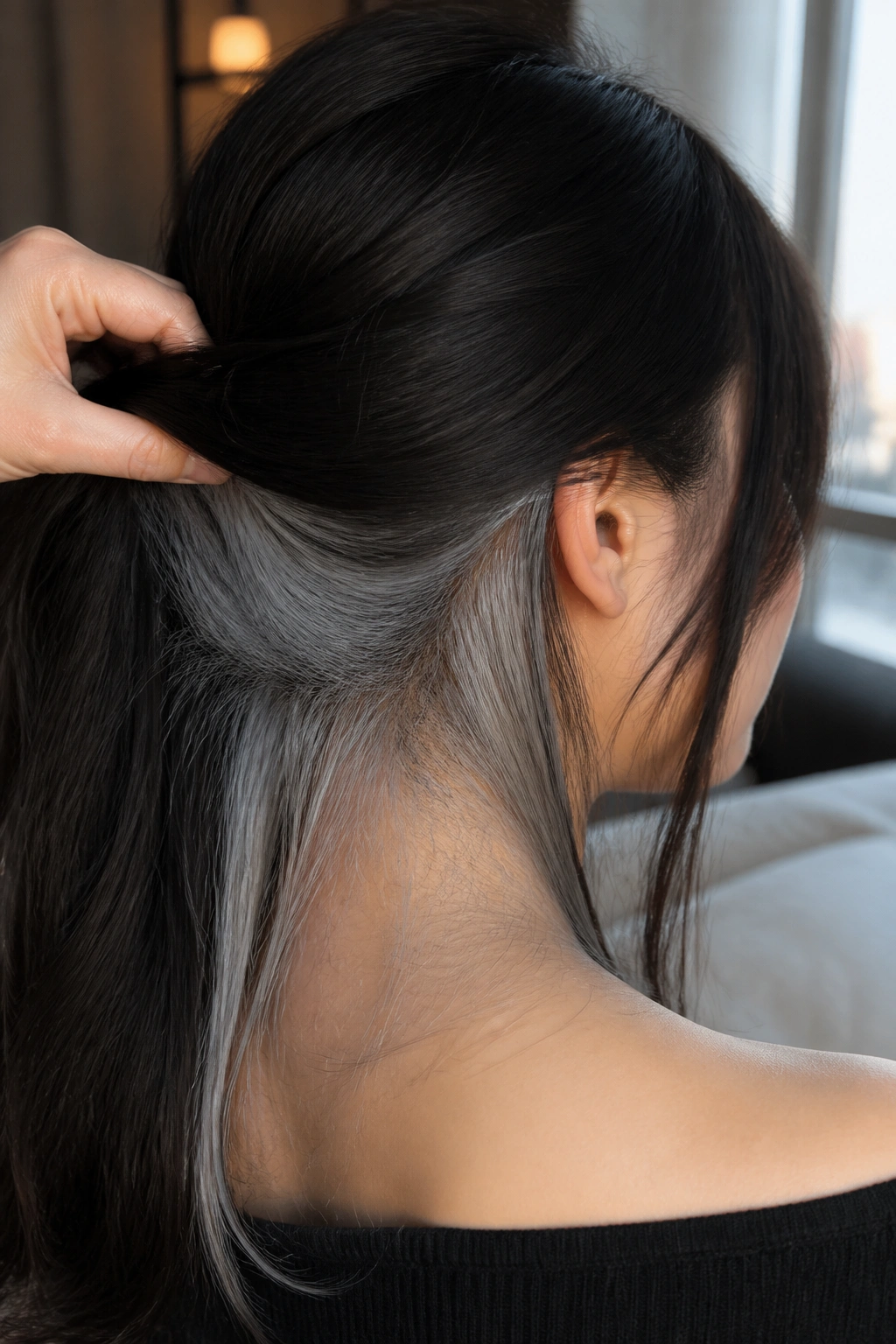
The nape is the best hiding place for a dramatic color. Keep the top section black and rich, then tuck the silver into the lower back panels and around the nape. When the hair is down, the look stays mostly dark. When it’s lifted, the silver shows like a secret.
That makes this version fun for long hair because long lengths can hide a lot of placement. A half-up bun reveals the undercolor. A braid shows flashes of it. Even a low ponytail can catch enough silver to change the mood. It’s especially good if you want something cool but not too exposed at work or in conservative spaces.
The trick is making sure the silver isn’t too narrow. If it’s buried too deep, it disappears. If it spreads too far up the head, the secret’s gone. The sweet spot is right at the lower layers, where movement can reveal it without announcing it all day.
Quiet on purpose. Loud when you want it.
20. Platinum Frost on Black Waves
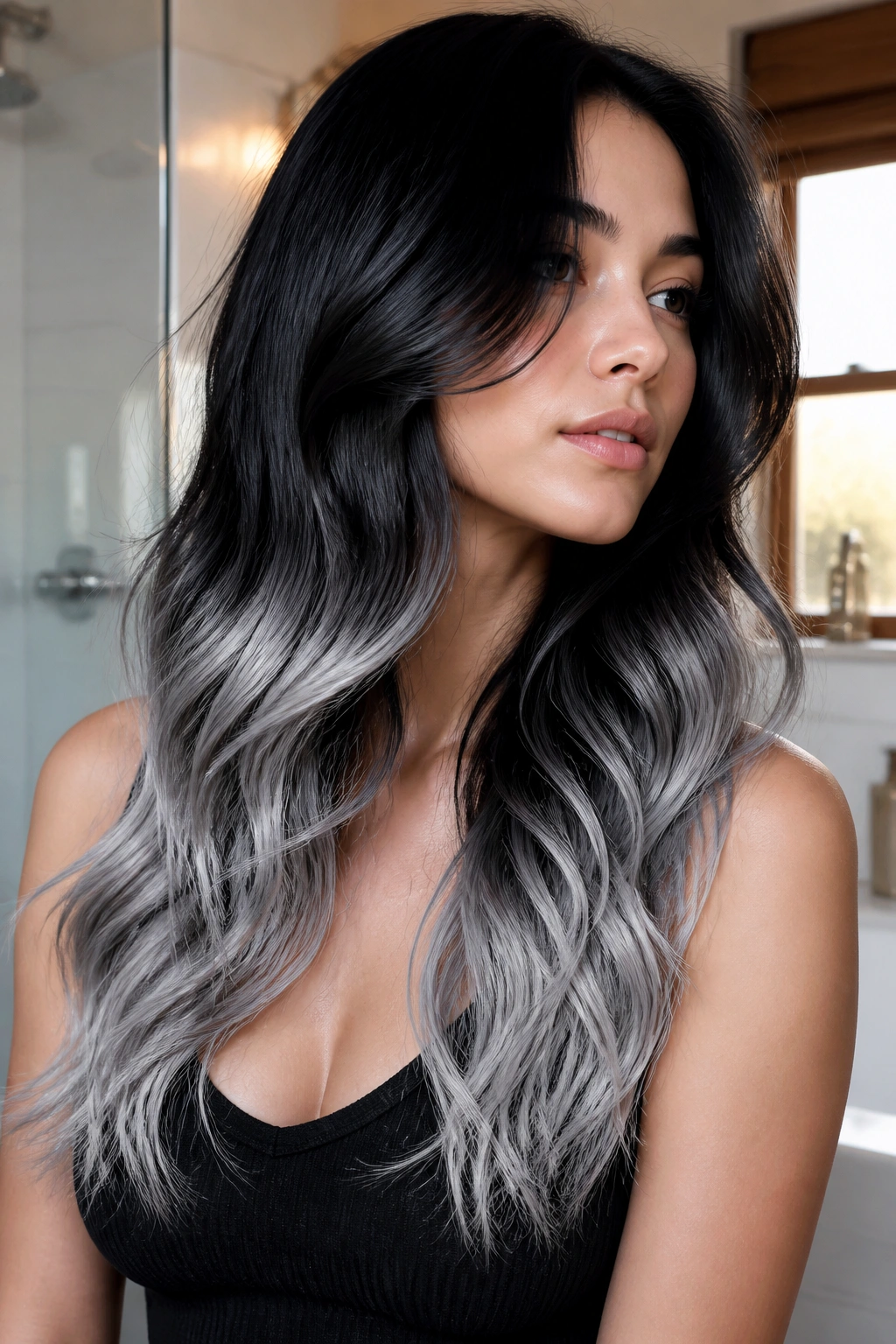
This is the loudest version here. The silver is pushed toward platinum, almost white in the brightest pieces, which creates a hard, icy contrast against black waves. It looks sharp, cool, and a little bit fierce.
Because the ends need to be lifted so light, this style asks for more care than the softer versions. If the hair lifts unevenly or keeps yellow tones, the finish can look off. A violet or blue-violet toner helps keep the frost clean, and a bond-building mask helps the hair stay soft enough to wave nicely afterward.
Waves matter a lot here. On straight hair, the contrast can feel severe. On loose waves, the platinum breaks up a little and the black underneath adds depth. That gives the style more dimension and less stiffness.
If you like hair that has presence the second you walk in, this is the one that does it.
21. Sleek Ponytail Ombre
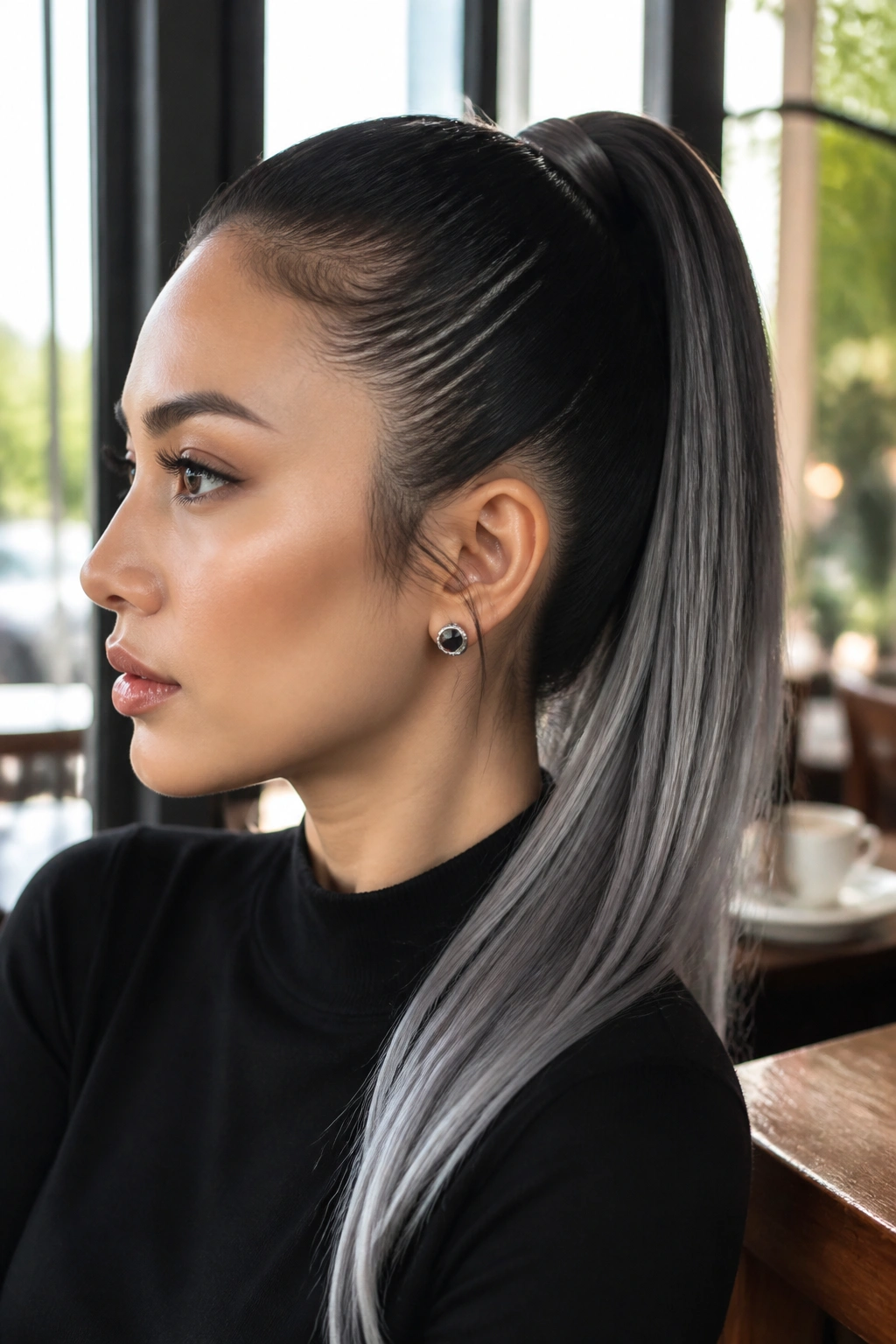
What happens when the whole style has to work in a ponytail? Then the color placement has to be smarter. A sleek ponytail ombre keeps enough silver through the top lengths that the color still shows when the hair is pulled back, not only when it’s loose.
How to Ask for It
Ask your colorist to place silver through the mid-lengths and outer layers, not just the ends. That way, the ponytail reads from the top, the sides, and the swing of the tail itself.
- Best with a high ponytail if you want a sporty look.
- Best with a low ponytail if you want the silver to feel smoother.
- A wrapped base keeps the finish clean.
This is a practical choice for long hair because long ponytails can hide a lot of color. If the silver only lives at the very bottom, nobody sees it once the hair is tied up. Place it higher, and the style stays visible all day.
22. Textured Shag Smoke Swirl
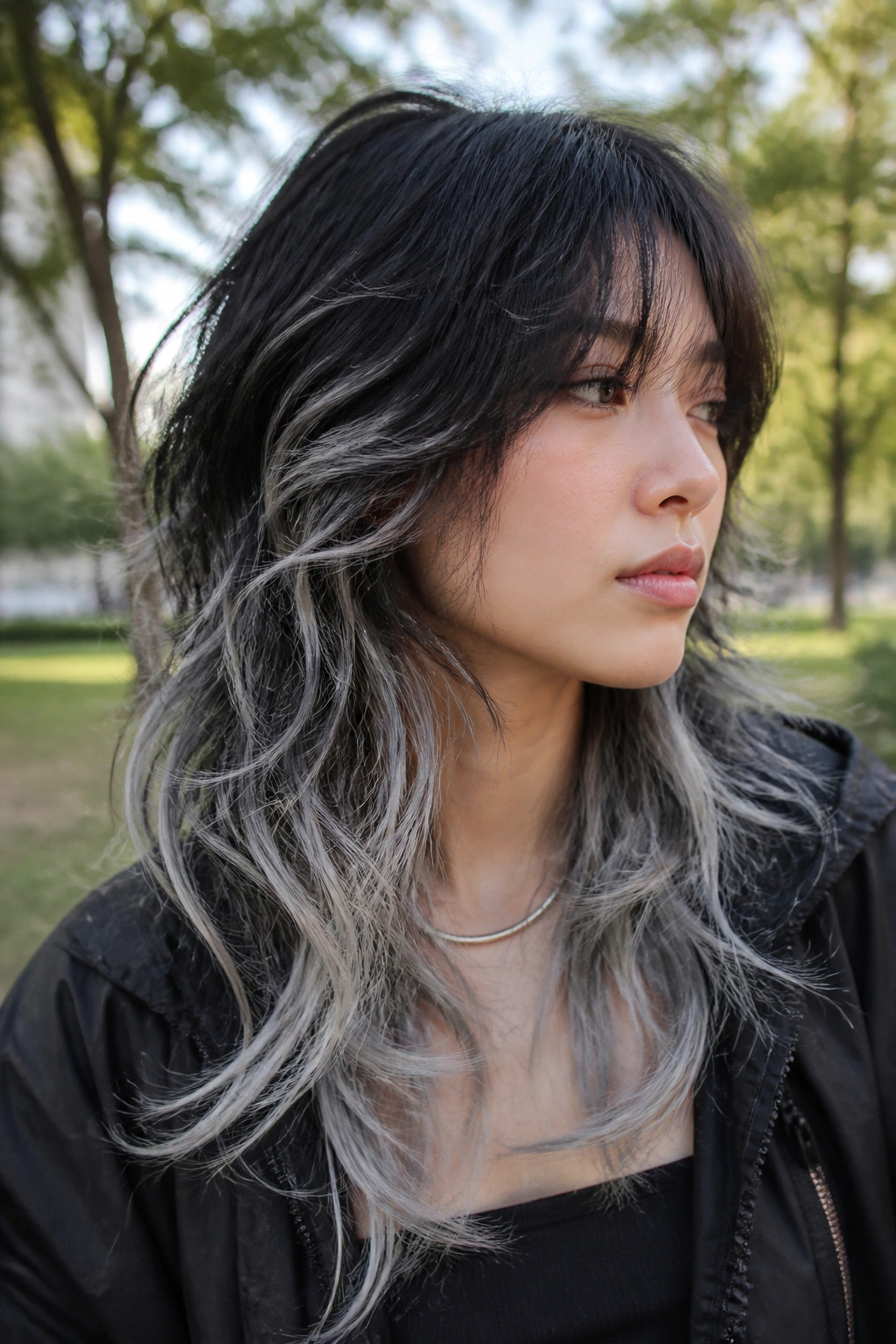
A textured shag gives the ombre a rougher, cooler edge. The layers break up the black, the silver lands in little swirls at the ends, and the whole thing feels less polished and more lived-in. If your style leans casual, this one makes sense.
The best part is how forgiving it is. Because the cut already has movement, the silver doesn’t need to be placed in perfect ribbons. It can appear in broken pieces across the lower layers and still look intentional. That makes it a good option for hair that refuses to behave neatly anyway.
I’d keep the finish matte or lightly glossy rather than ultra-shiny. A soft texture spray can help the layers separate, which makes the silver show better. If the hair is too sleek, the shag can lose its edge and the color can feel flat.
This is not the neat version. That’s exactly why it works.
23. Ultra-Long Tapered Fade
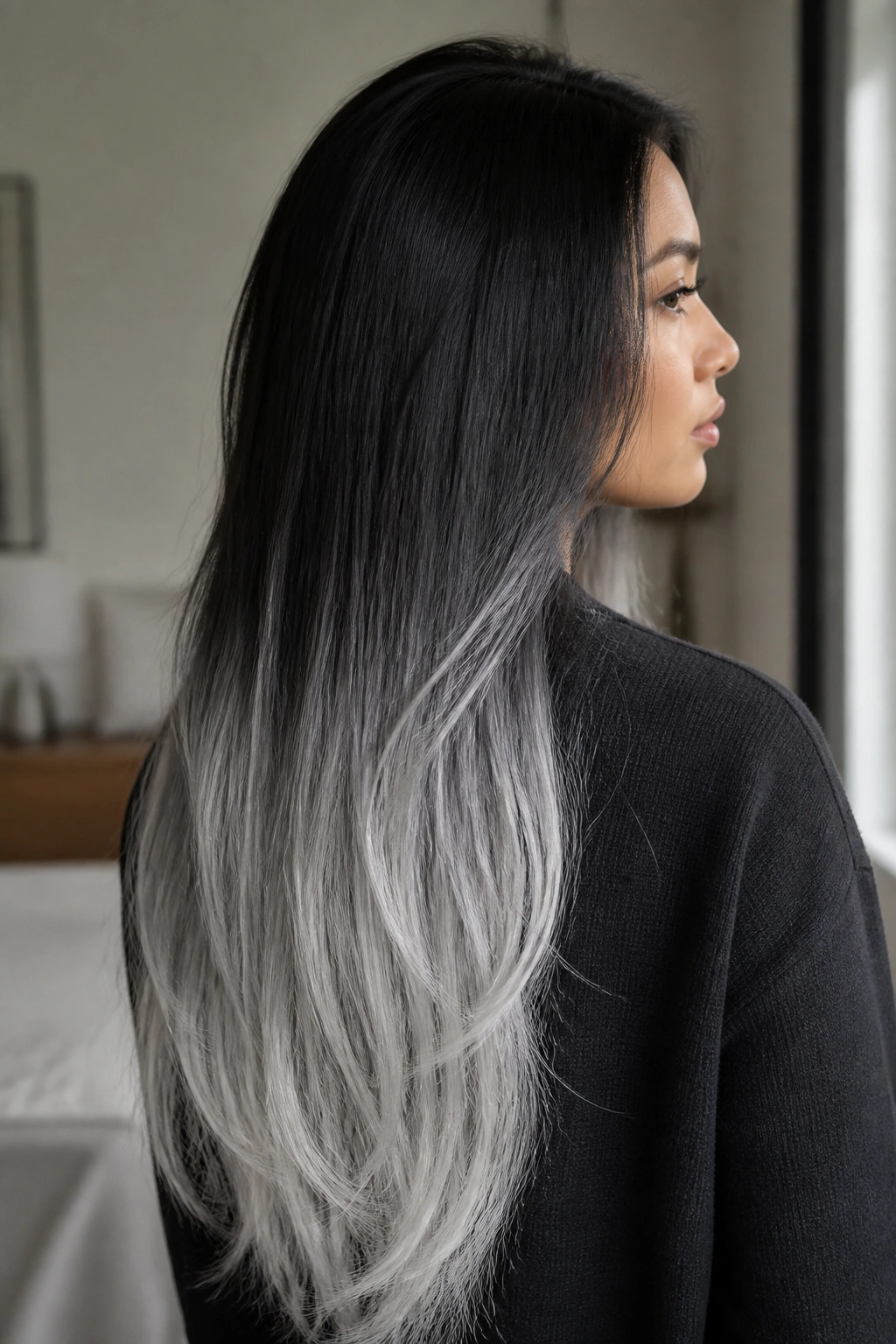
Very long hair can handle a slower fade than almost any other length. An ultra-long tapered fade starts black at the top, drifts through charcoal much lower than people expect, and only lands in silver near the last stretch. The result feels graceful instead of rushed.
That long taper is useful because extra length can swallow detail. If the silver starts too high on hip-length hair, the effect gets lost in the mass. If it starts too low, the color disappears. A tapered fade gives the eye a path to follow from dark to light, which is what makes the style feel elegant.
This version also benefits from a slight taper in the cut itself. Even a small amount of layering near the bottom helps the silver catch the light. Without that, the ends can look heavy and the fade can stall before it reaches its prettiest point.
Long hair wants room. This style gives it that.
24. Cool Charcoal Melt for Thick Hair
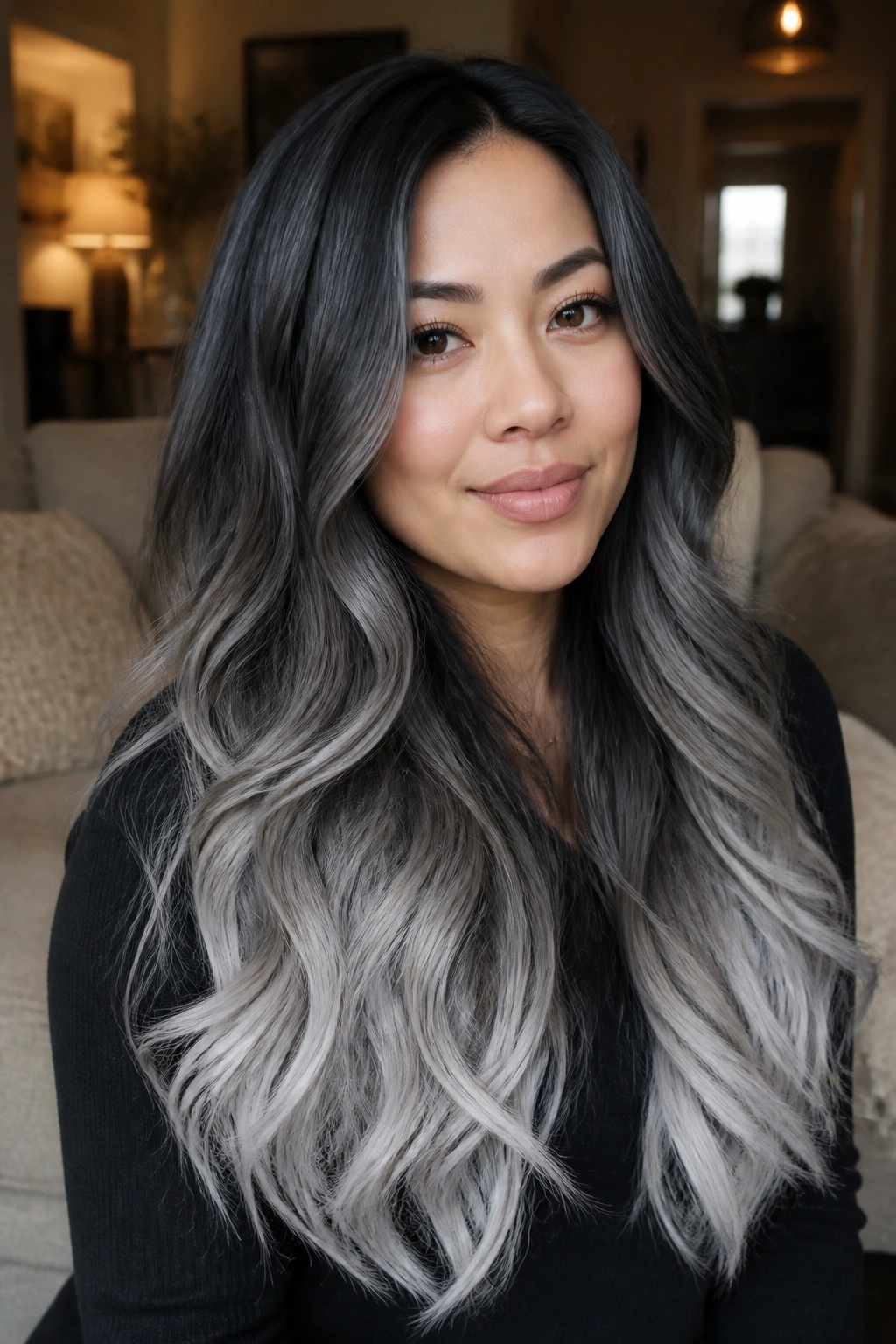
Thick hair can take more color before it looks thin, which is why a charcoal melt works so well here. Instead of jumping straight from black to silver, the middle stays cool and smoky for a while. That keeps the hair looking full through the lengths.
Unlike a brighter silver finish, this version doesn’t demand razor-clean lightness everywhere. It lets the darker tones do some of the heavy lifting, which is useful when you have a lot of hair and don’t want the ends to look stringy. The silver can sit in wider panels at the bottom third, while charcoal covers the middle in a soft haze.
It’s one of the most wearable black-silver ideas for long, dense hair. The color reads dimensional from far away and even better up close. If your hair tends to puff or spread, the darker middle zone keeps the shape grounded.
For thick hair, softness is not a downgrade. It’s a strategy.
25. Black Silver Ombre with Mirror Ends
This version is all about shine. The black stays deep and glossy, the silver ends are polished enough to reflect light, and the whole look feels smoother than the rougher smoked-out versions. If you want the finish to look clean from every angle, this is the one to save.
Why It Feels Sharp
Mirror ends work best when the haircut is tidy and the surface is smooth. A small bend at the bottom keeps the ombre from looking stiff, but too much wave can blur the reflective effect. You want the silver to look deliberate and sleek.
- Use a lightweight shine serum on the last few inches only.
- Keep the ends trimmed so the silver edge stays crisp.
- A middle part makes the contrast feel balanced.
This is a strong finish for long hair because the length gives the shine plenty of room to show. It looks especially good when the hair is freshly blown out and worn loose over the shoulders.
Final Thoughts
The best black and silver ombre styles are not the loudest ones. They’re the ones that fit the cut, the texture, and the way you actually wear your hair. A soft melt on waist-length layers says something different from chunkier ribbons on a wolf cut, and that difference matters more than trend language ever will.
If you want the color to feel expensive-looking, start by choosing the placement, not the shade name. Silver that sits in the wrong place can look harsh fast. Silver that follows the shape of the hair looks like it belongs there.
Long hair gives you options. Use that. Pick the version that matches your daily life, then let the black do its job and let the silver appear where it has the most room to move.
