



A short mohawk can do more for a round face than a longer, wider cut ever will. Keep the sides tight, keep the ridge narrow, and the eye climbs instead of spreading sideways.
That is the whole trick.
Short mohawk hairstyles for round faces work when they add height near the center and leave the temples clean. A cut with bulk at the cheek line does the opposite. It makes the face look fuller, which is fine if that’s the look you want, but most people asking for a mohawk are trying to sharpen things up a bit.
The nice part is that “mohawk” does not have to mean loud, spiky, or hard to live with. A one-inch ridge, a soft curl top, or a choppy, wolf-cut-ish texture can all read as a mohawk if the sides are controlled and the top carries the shape. The difference is in the details: where the fade starts, how high the ridge sits, and whether the front is pushed up, forward, or left a little messy.
Some cuts are cleaner. Some are softer. A few are bold enough for a night out and still normal enough for Monday morning. That range is what makes this haircut worth paying attention to.
1. Skin-Fade Mohawk for Round Faces
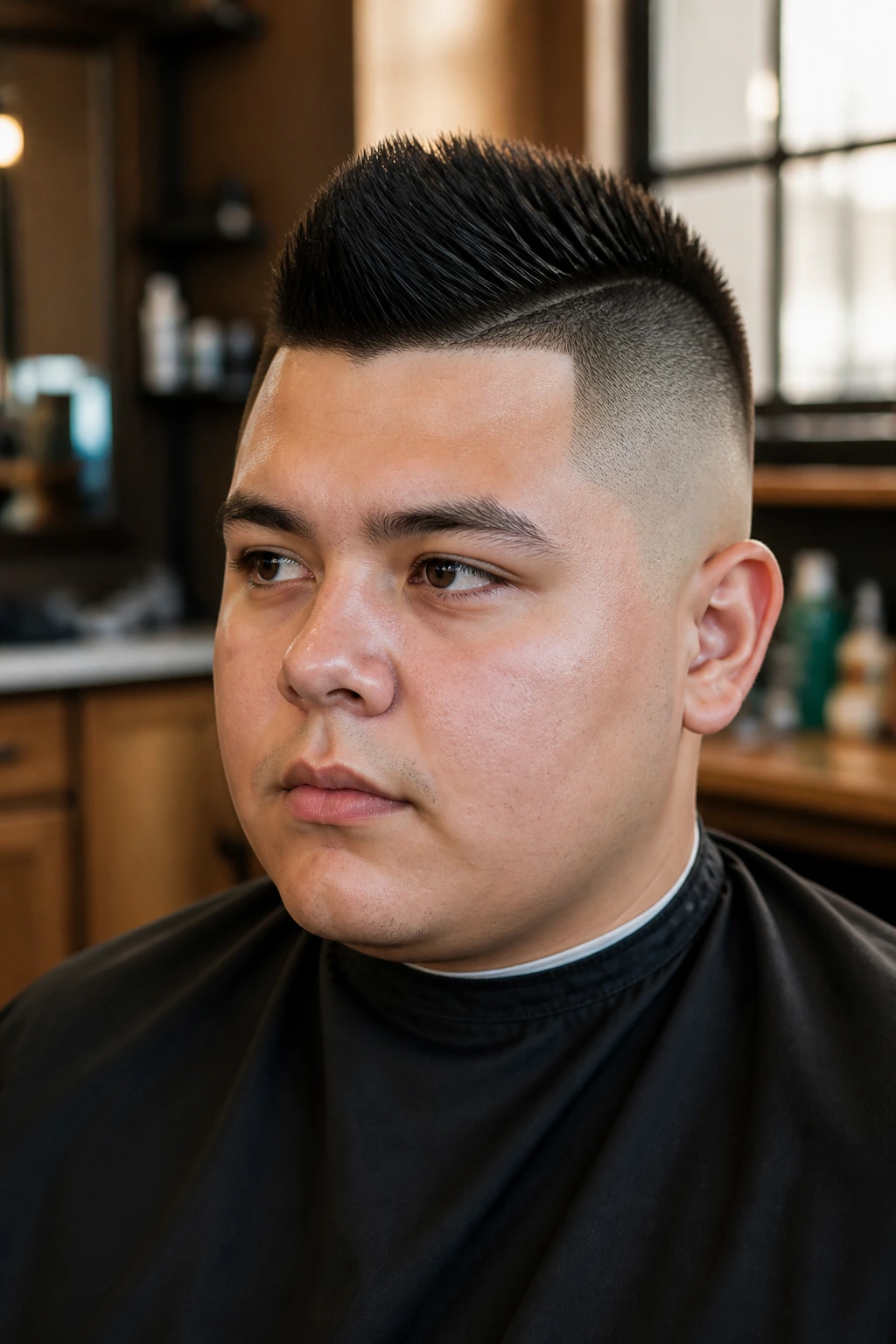
If you want the cleanest face-shaping version, start here. A skin-fade mohawk cuts away the width around the sides so the top can do the talking. On a round face, that matters more than people think.
Keep the sides at a skin fade or a very low #0.5-to-#1 fade, then let the ridge stay narrow through the center. The top only needs about 1.5 to 2 inches to read as a mohawk. More length can work, but once the top gets too wide, the silhouette starts to balloon. That is the part to watch.
Why the skin fade works
The fade pulls the eye down and back up again. That little visual move makes the face feel longer. It also keeps the haircut from sitting on the cheeks, which is where round faces usually need the most help.
What to ask your barber
- Keep the widest point of the cut above the temples, not at the cheek line.
- Leave the center ridge narrow, roughly 2 to 3 fingers wide.
- Blend the fade high enough that the sides look clean from every angle.
- Use a matte paste or clay so the top stays lifted instead of shiny and flat.
Best for: straight, thick, or slightly wavy hair that holds shape without much effort.
2. Curly Short Mohawk With a Lifted Crown
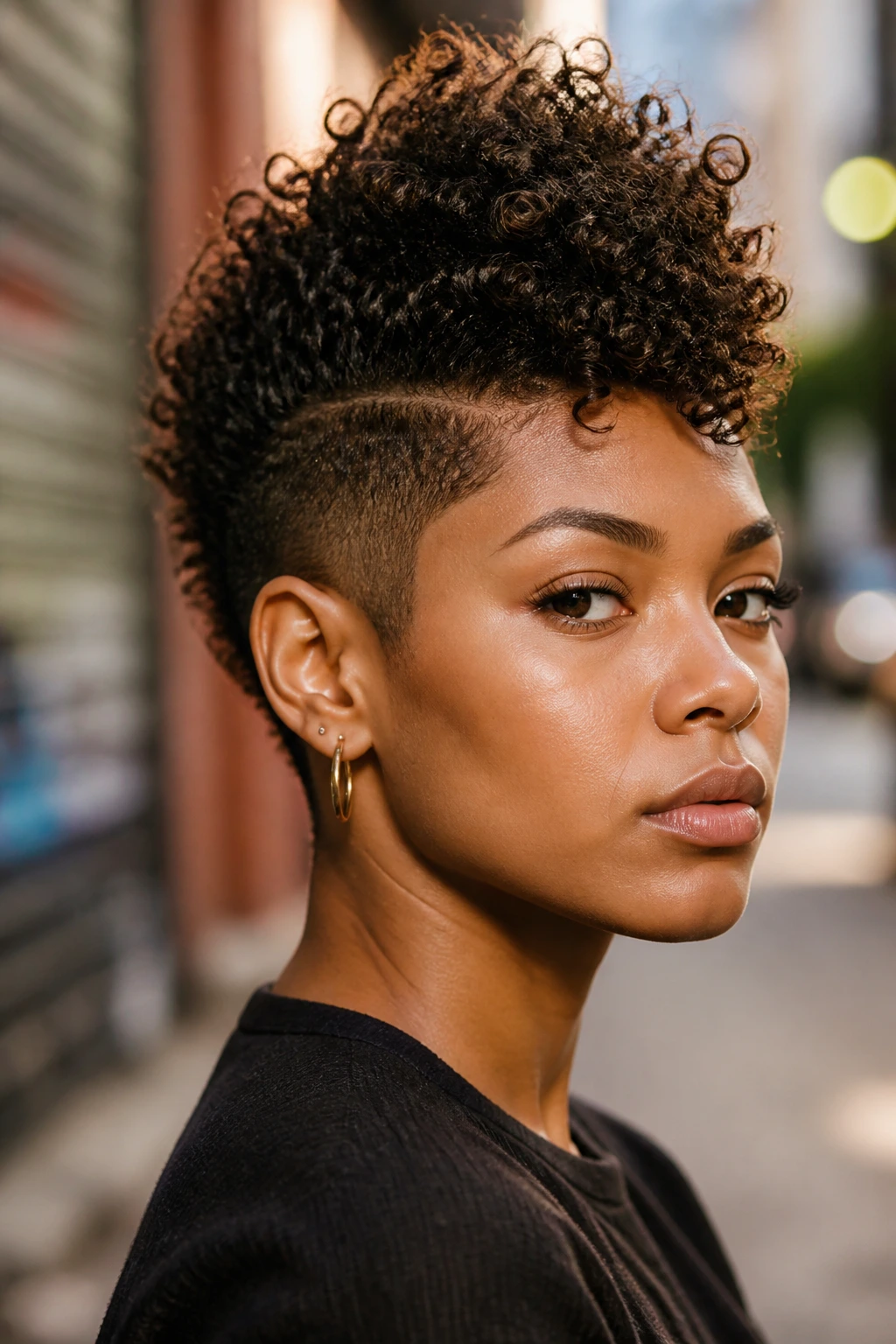
Got curls and a round face? Good. That’s not a problem hair type; it’s a shape advantage.
A curly mohawk adds height without looking stiff, which is one reason it works so well here. The curls build a soft vertical line right through the middle of the head, and that helps the face feel less wide. Keep the sides tapered low and let the crown sit a little taller than the front. Not huge. Just lifted.
The curl shape matters
The mistake people make is flattening curls with too much cream or brushing them hard into place. You do not want that. You want defined curls that stack up a little, almost like a small ridge of texture from front to crown. If the curls sit flat, the whole point gets lost.
How to style it
Use a curl cream on damp hair, then scrunch from the ends up toward the roots. A diffuser on low heat helps set the shape, but don’t hover on one spot too long or the curls get frizzy and puffy. Finish by lifting the roots with fingers or a pick, not a comb.
If your curls are looser, ask for a little more length on top — around 2 to 3 inches — so the shape shows. Tighter curls can stay shorter and still look full.
Best for: curly and coily hair that naturally wants volume up top.
3. Tapered Faux Hawk With Soft Sides
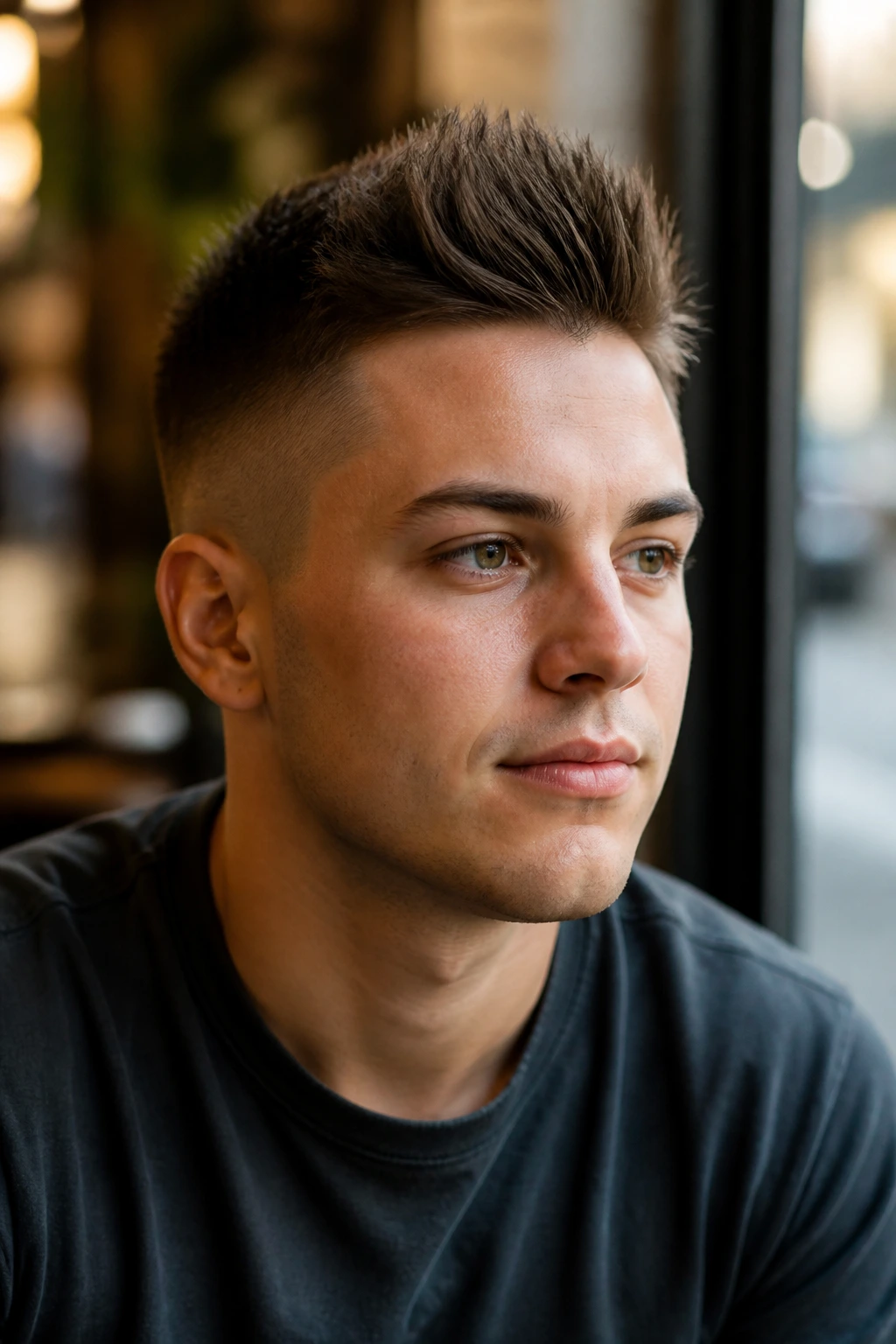
This is the one for people who want the mohawk shape without the full-on edge. A tapered faux hawk keeps the profile neat, so it works well if you need a haircut that can move between casual and polished.
The sides should taper gradually, not vanish all at once. That softer fall keeps the cut from looking boxy around the temples. On a round face, boxy side volume is the enemy. A faux hawk avoids that trap by keeping the ridge subtle and the transition smooth.
The top usually sits around 1 to 2 inches, with the front a touch longer than the crown. That tiny difference helps the eye travel upward, then forward. It sounds small. It isn’t. Shape lives in those small differences.
Good reasons to choose this cut
- It grows out more gracefully than a hard mohawk.
- It’s easier to style with a quick blow-dry and a pea-sized bit of matte clay.
- It looks sharp without screaming for attention.
- It works in hair that is straight, fine, or medium-thick.
If your job or daily routine makes a high-contrast cut awkward, this is the safer choice. Still mohawk territory. Just quieter.
4. Burst-Fade Mohawk for Round Faces
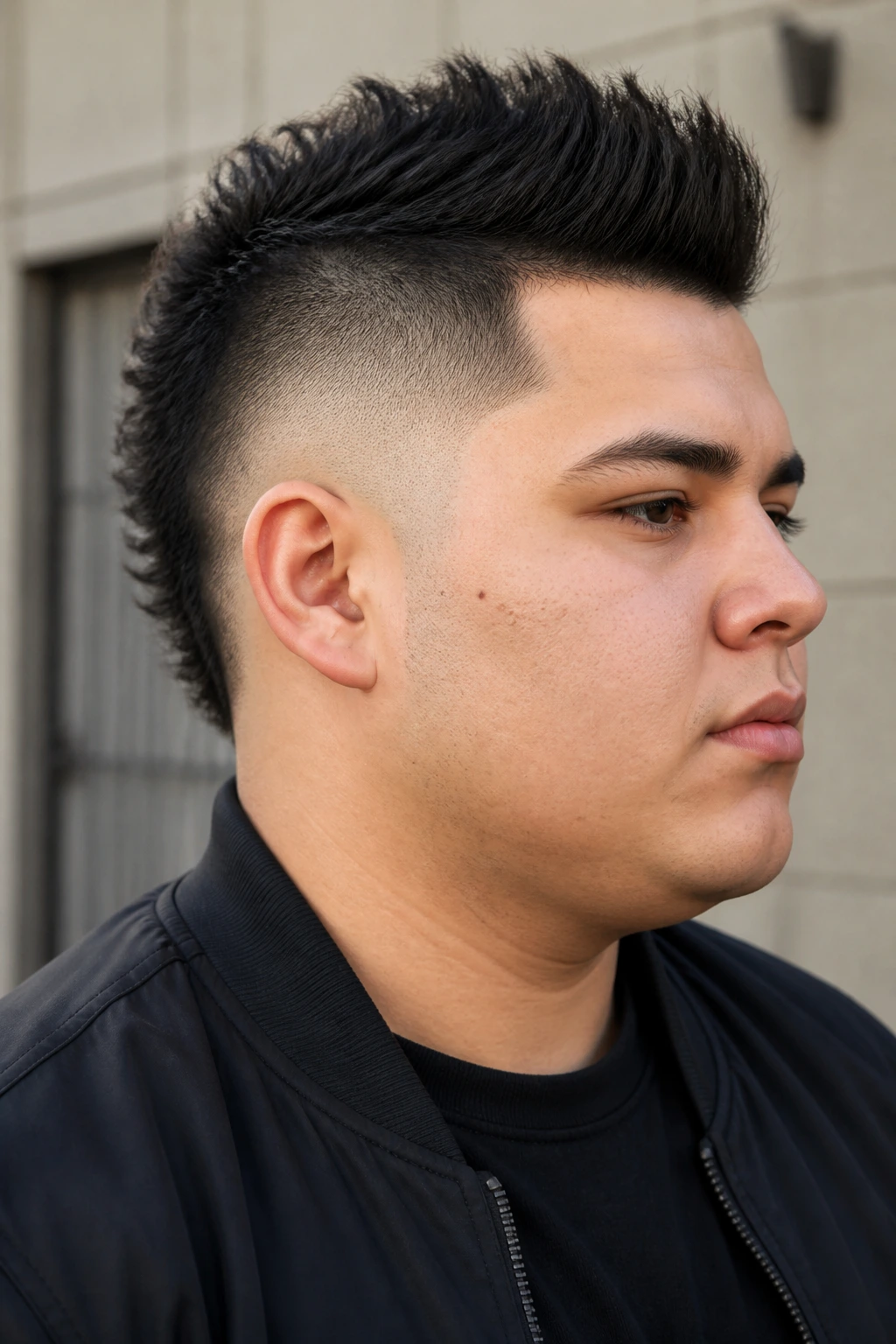
A burst fade sounds dramatic, but on a round face it can be one of the smartest moves. The fade curves around the ear in a tight arc, which keeps the sides neat while leaving the center strip of hair to stand up and lead the eye.
What I like about this shape is that it feels deliberate. Not fussy. The curve around the ear creates a little negative space, and that breaks up the wide middle of a round face better than a flat side panel ever could. Ask for the burst to stay high enough to sit above the cheekbone area. If it sits too low, the face looks wider. That’s the catch.
The top can stay short — around 1 to 2 inches — but it should be textured, not slicked. A soft matte finish keeps the ridge from looking helmet-like. A bit of sea-salt spray before blow-drying gives the hair some grit, which helps it stand instead of slumping.
This is a good cut if you want a mohawk that still looks sculpted when you’re not standing in front of a mirror. It has shape without stiffness. That matters more than people admit.
5. Textured Spiky Mohawk With a Low Profile
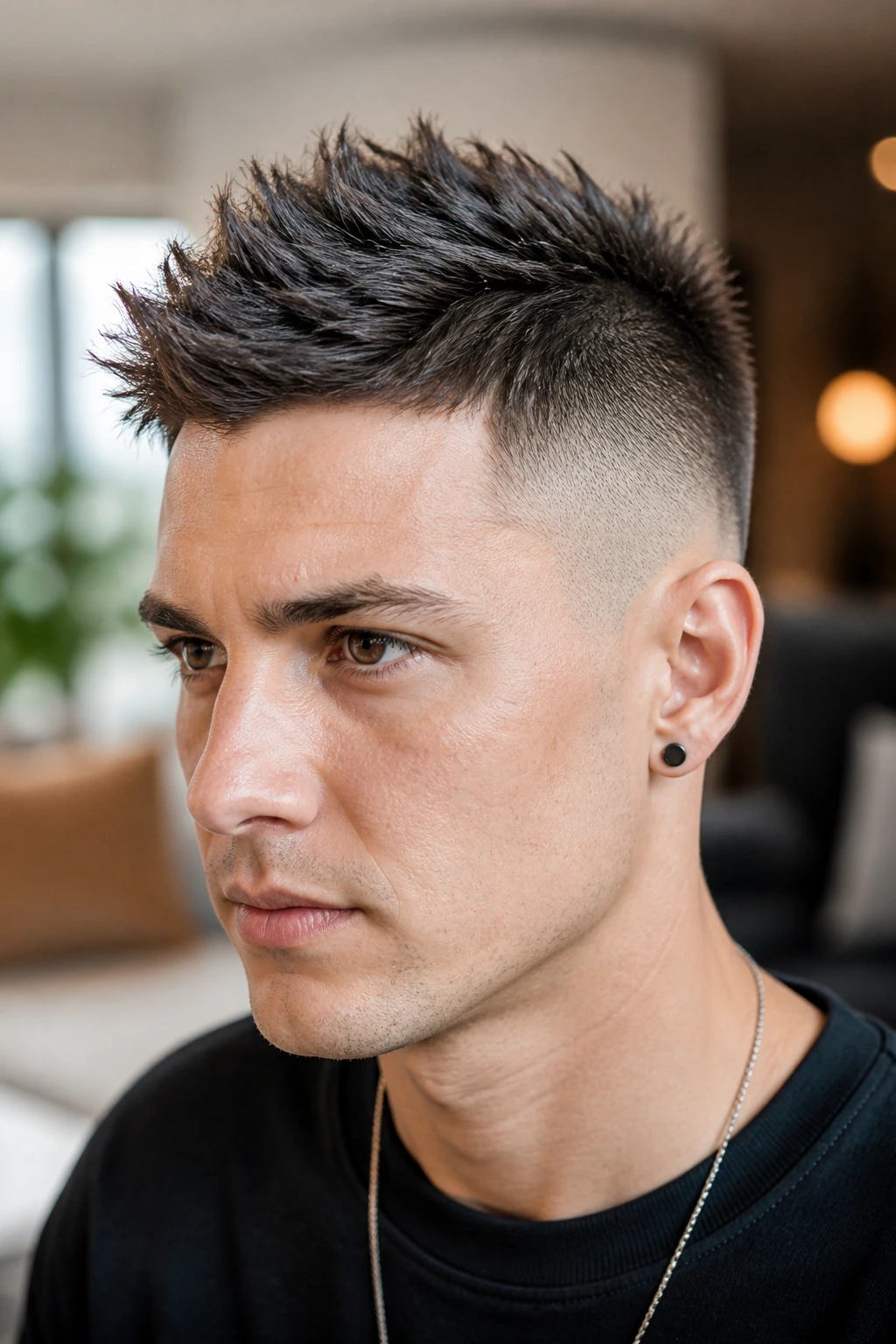
This is the mohawk I’d point to if you like the choppy feel of a wolf cut but want shorter sides. The texture does the heavy lifting here. The ridge does not need to be tall; it needs to look broken up and alive.
Ask for the top to be cut into short, uneven pieces, usually around 1 to 1.5 inches, with the front kept slightly longer. That gives you little points and shadows instead of one solid block of hair. On a round face, that kind of messiness is useful. It stops the head shape from looking too soft.
A tiny amount of styling paste goes a long way. Warm it in your palms, press it into the top, then push sections upward with your fingers. Do not rake through the hair too much. That kills the texture and makes the cut lie down.
What makes it different
- It looks sharper than a plain crop.
- It needs less length than a classic mohawk.
- It grows out into a textured, lived-in shape instead of a weird gap.
- It works especially well with thick straight hair that wants to stick out anyway.
Pro tip: keep the sides tight every 2 to 3 weeks, or the shape starts to blur fast.
6. Frohawk With a Tight Taper
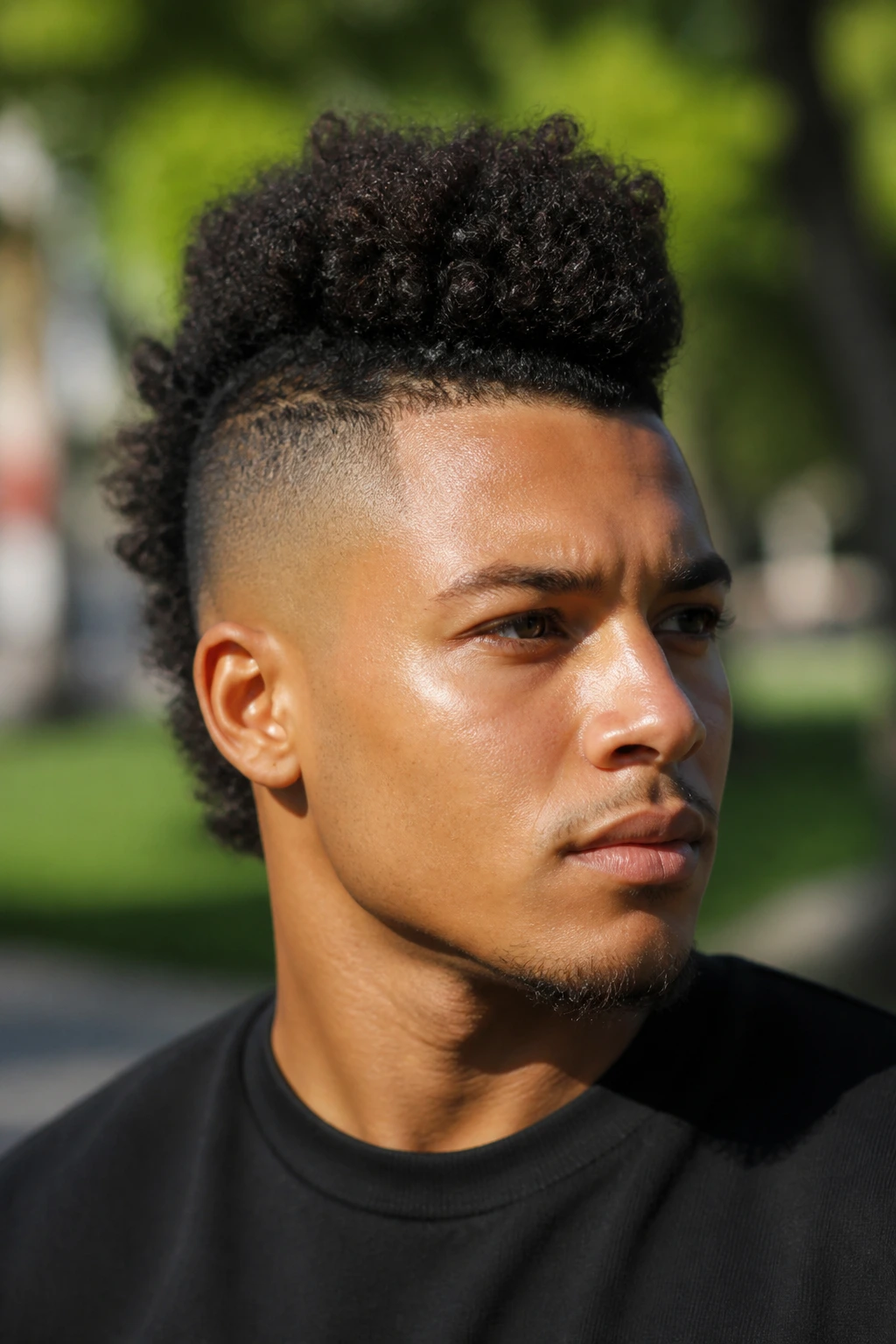
What if your hair already has height? Then you do not need to fight it. A frohawk uses natural texture to build a mohawk shape that flatters a round face without looking forced.
The sides should be tapered close, but not shaved to the bone unless you like a stronger contrast. On the top, the goal is shape and moisture. Dry coils can puff out in the wrong places, so the first job is keeping them soft enough to hold a clean outline. A leave-in conditioner, a curl cream, and a light twist or sponge routine can do a lot here.
Moisture comes first
Coily hair looks best when it still has spring. If you dry it out with heavy gels, the shape turns stiff and brittle-looking. Use enough product to define the curl pattern, then stop. More is not better.
Shape comes second
Ask your barber to leave the center ridge a little taller through the crown. That pushes the silhouette upward, which helps balance the face. If the sides are too full near the temples, the roundness comes back fast.
For daily styling, a twist sponge or finger coils on short hair can add just enough direction. Ten minutes is often enough. Seriously.
This is one of those cuts that looks better when it is not overworked.
7. Disconnected Mohawk With Razor Lines
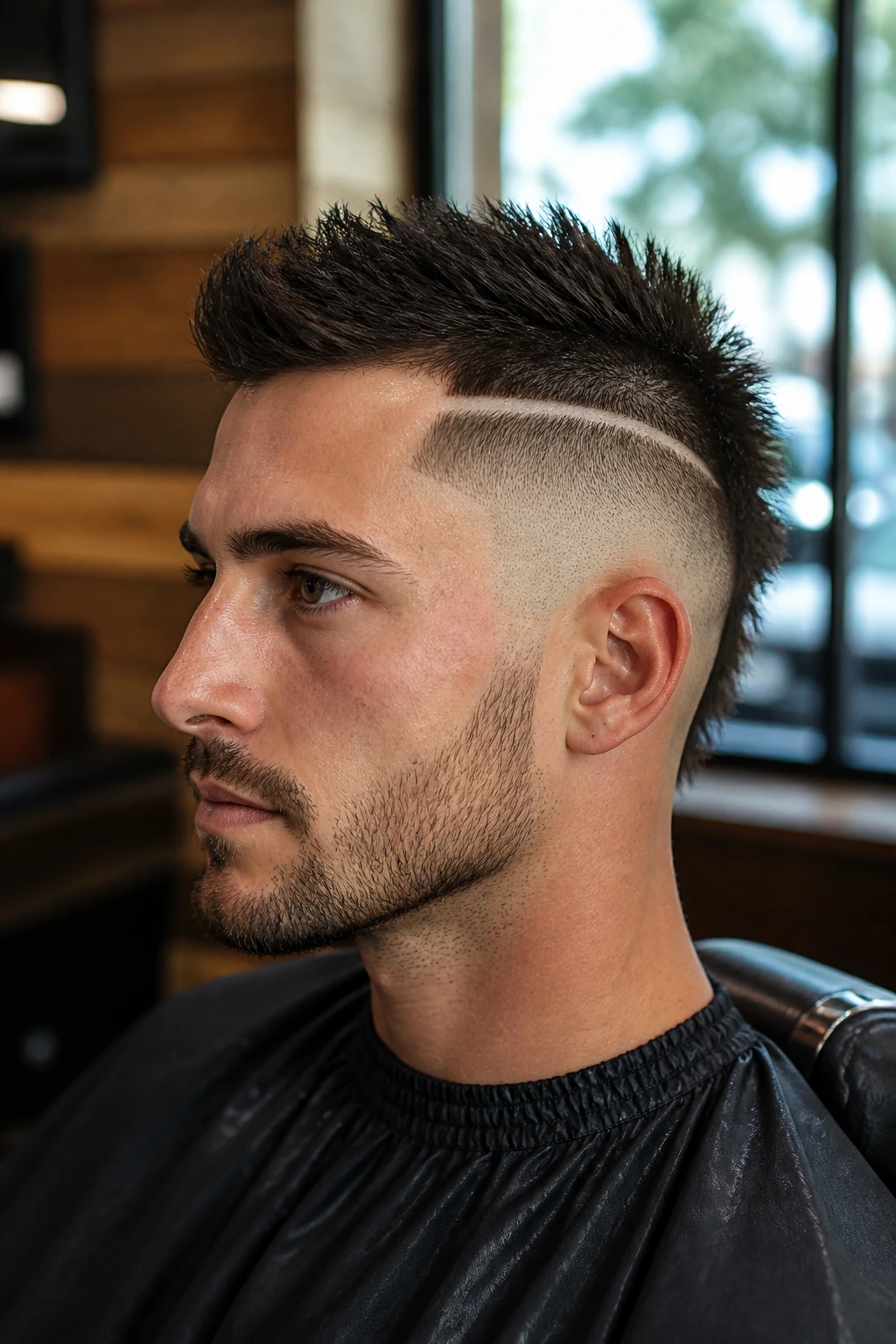
A hard line running above the temples can look bold in the chair and clean in real life. On a round face, a disconnected mohawk works because it creates a sharp boundary between the top and the sides, and that boundary makes the face feel narrower.
The key is placement. Put the disconnection too low and you widen the face. Put it higher, and the eye moves up where you want it. The top can stay short, around 2 inches or less, but it needs enough structure to stand apart from the shaved or tightly faded sides.
Razor lines or clipper designs can make the cut look even more deliberate, though I would keep the artwork minimal if the face is already soft and full. A heavy design pattern can crowd the shape. One clean line is usually enough.
This cut asks for more maintenance than a taper or faux hawk. The contrast gets fuzzy fast as the sides grow out. If you like crisp edges and you don’t mind a regular barber visit, it pays off. If you prefer a haircut that can drift for a few weeks, skip it.
Best for: thick hair, strong hairlines, and people who want the mohawk to look unmistakable from every angle.
8. Twist-Out Mohawk for Coily Hair
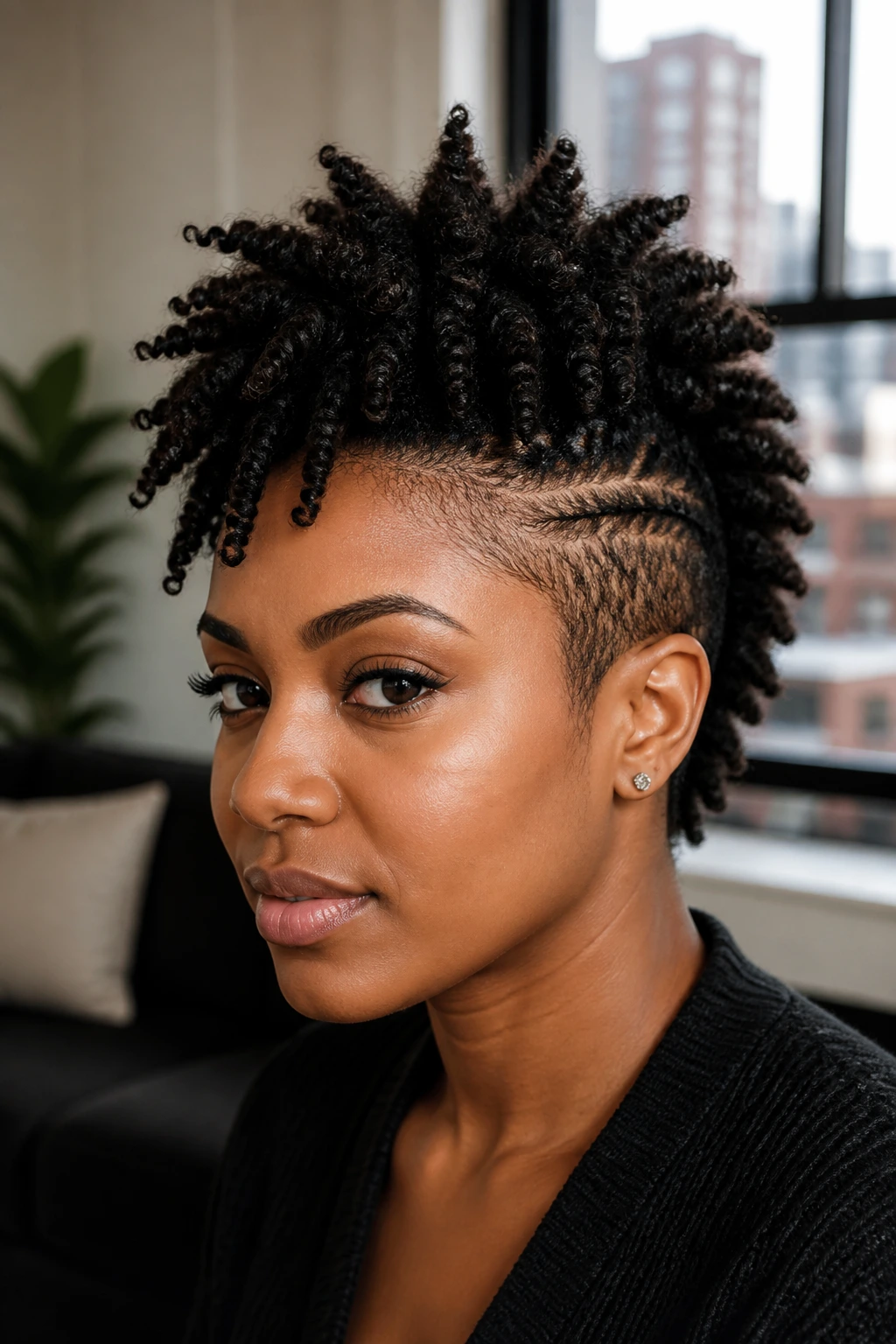
Unlike a spiky mohawk, this one gets its shape from definition, not height alone. A twist-out mohawk uses short twists or a twist-out pattern on top, then keeps the sides low and clean. The result feels textured and controlled, which is exactly what a round face can use.
Start with damp hair and a twisting cream or butter that gives hold without turning sticky. Make small two-strand twists across the top section, leave them in until fully dry, then separate them gently. Don’t rush the drying stage. If you take the twists out too early, the hair frizzes and collapses.
How to use it
- Keep the twists on the top only; don’t overcrowd the sides.
- Let the crown carry the most height.
- Separate each twist with oiled fingers, not dry hands.
- Finish with a light edge gel only if you want a cleaner hairline.
This style suits coils that need definition more than lift. It also hides a lot of grow-out, which is useful if you don’t visit the barber every couple of weeks. The top stays interesting even when the sides are a little shaggy.
It’s a good middle ground: textured, shaped, and not trying too hard.
9. Low-Profile Mohawk With a Longer Front
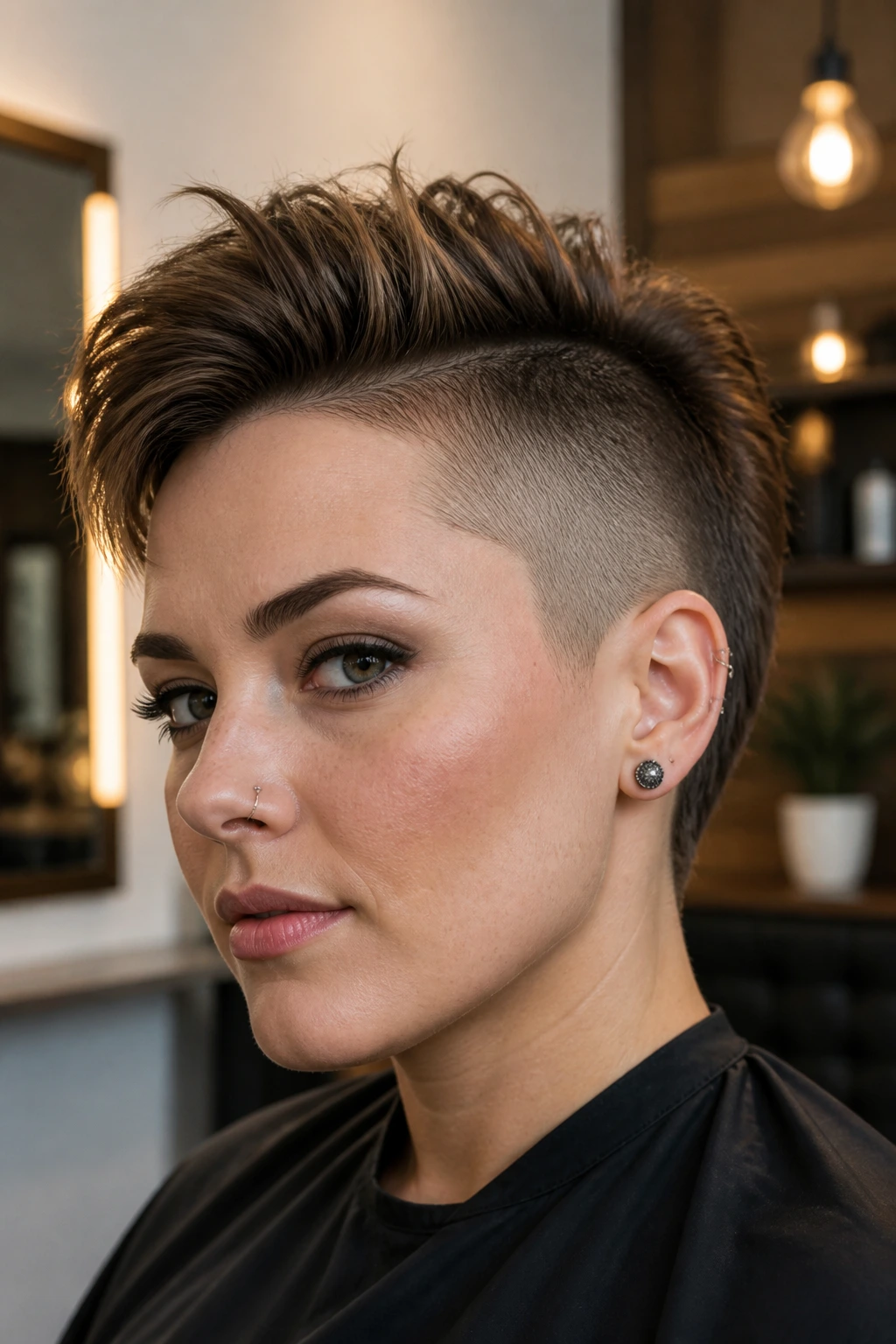
A longer front can make a short mohawk feel less aggressive. That matters on a round face, because you often want direction more than drama.
The trick is to keep the crown and middle ridge controlled while letting the front fall a little longer, almost like a short fringe that’s been pushed upward. That slight forward sweep narrows the upper face and gives the haircut some movement. It also makes the cut easier to wear if you do not like a super upright finish.
This style works especially well on straight or wavy hair with a bit of natural bend. Blow-dry the front up and slightly back using a vent brush, then pinch the ends with a matte paste. The ends should look separated, not frozen. If the front becomes too stiff, the shape turns into a block.
A lot of people overlook this version because it sounds tame. It isn’t. It just uses shape more quietly. That can be better, especially if your face is round and you do not want the haircut to fight your features every morning.
Use this if: you want mohawk energy without the hard punk edge.
10. Temple-Fade Mohawk for Round Faces
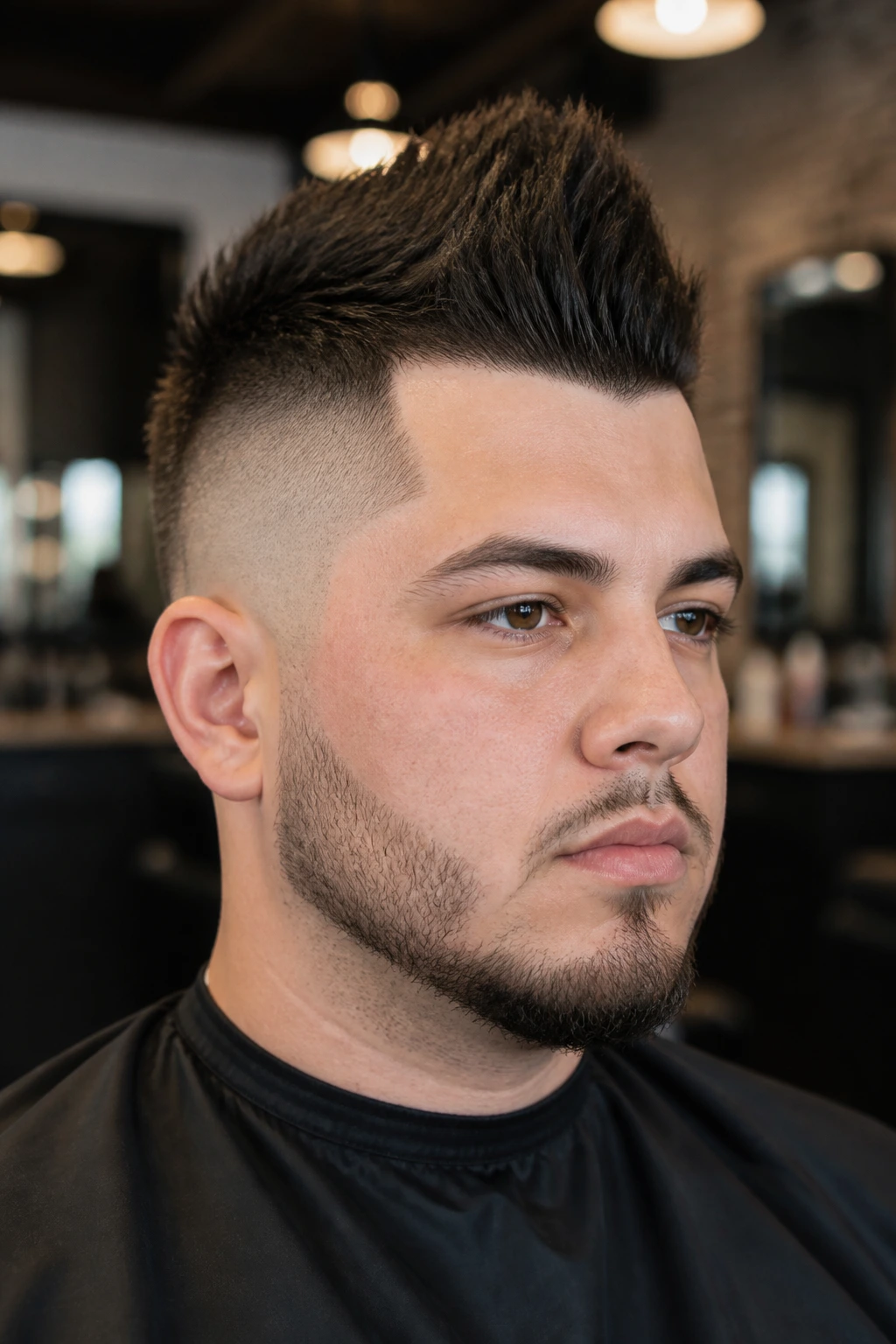
A temple fade is one of the cleanest tricks for balancing a fuller face. By fading the hair tight around the temples and keeping the ridge centered, you get a slimmer outline where it matters most.
What the barber should keep high
The fade should sit high enough to take away side bulk, but not so high that the top looks detached. I usually think in terms of guard numbers: a #0.5 or #1 at the bottom, blending into a #2 or #3, depending on hair density. Thick hair can hold a heavier blend. Fine hair usually looks better with a softer fade.
Where the top should sit
Keep the top around 1.5 to 2.5 inches, with the highest point over the middle of the head, not the sides. That placement draws the eye straight up. If the front is too long and the crown is flat, the cut loses its shape fast.
This version is good for people who want a barbered, tidy look that still says mohawk. It’s not fragile, but it does need edging every couple of weeks if you like the temples sharp. Use a light styling powder or matte paste, then push the hair upward with your fingers. No need to overthink it.
Sharp temples. Narrow ridge. Done.
11. Wavy Mohawk With a Choppy Fringe
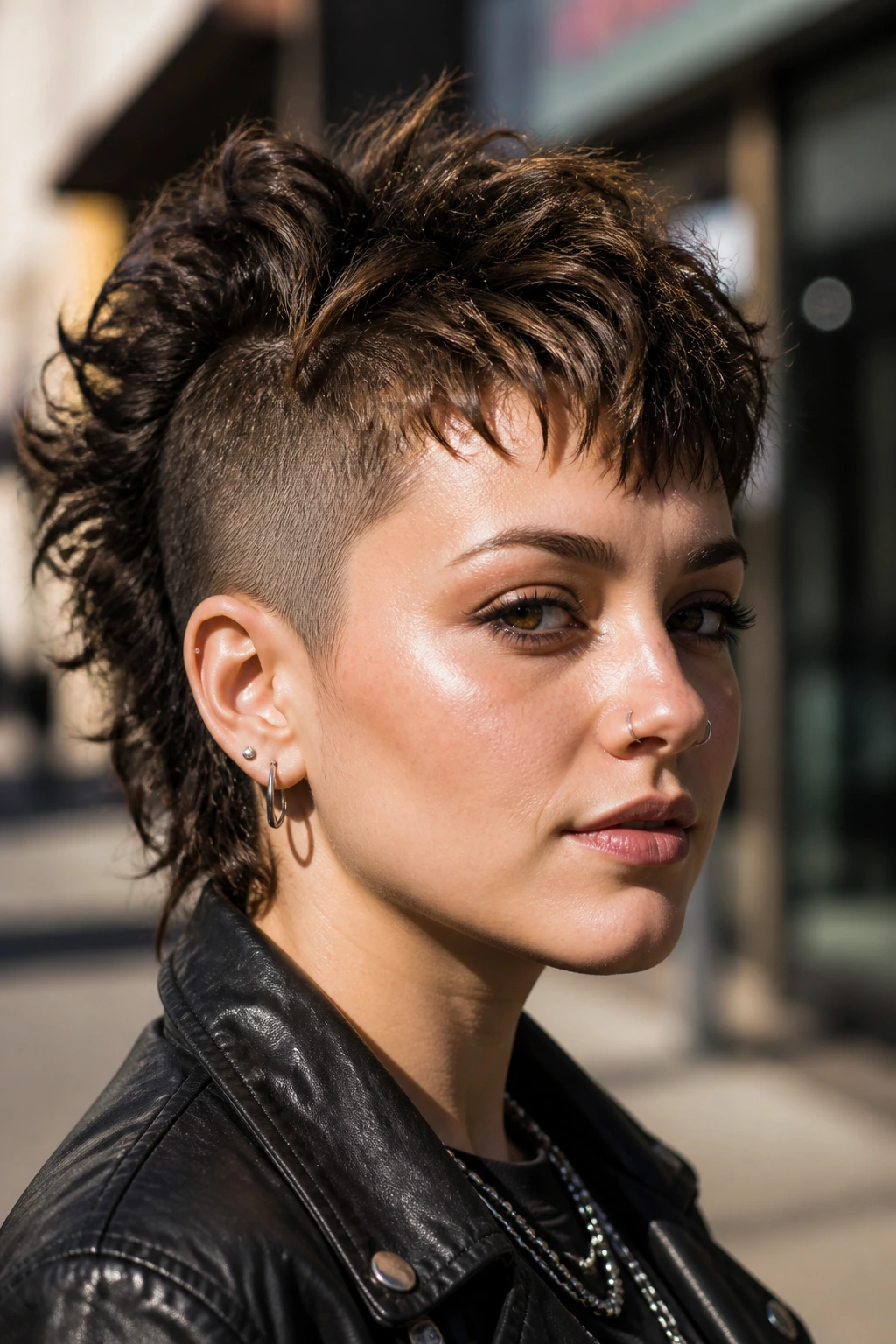
Waves are a gift here. They break up the line of a round face without making the cut look severe, and a choppy fringe keeps the front from looking too neat.
The style works best when the top is left irregular. Think short sections with some lift, not a smooth crest. A wavy mohawk benefits from a little bend and a little mess. If the waves are brushed too flat, the whole thing turns sleepy. If they’re pushed too hard, you get a puffy mess. Right in the middle is where the good stuff happens.
A sea-salt spray on damp hair gives the waves a bit of bite. Then use a diffuser or air-dry until the hair is almost set, and finish with a tiny amount of matte cream. The fringe should look broken up at the ends so it does not widen the forehead.
Best features of this cut
- It softens the face without hiding the jawline.
- It grows out into a textured shape instead of a blunt one.
- It suits hair that has some bend but not full curls.
- It works with a low fade, taper, or burst fade.
If you like movement more than structure, this is one of the strongest choices in the bunch.
12. Brushed-Up Mohawk With a Soft Finish for Round Faces
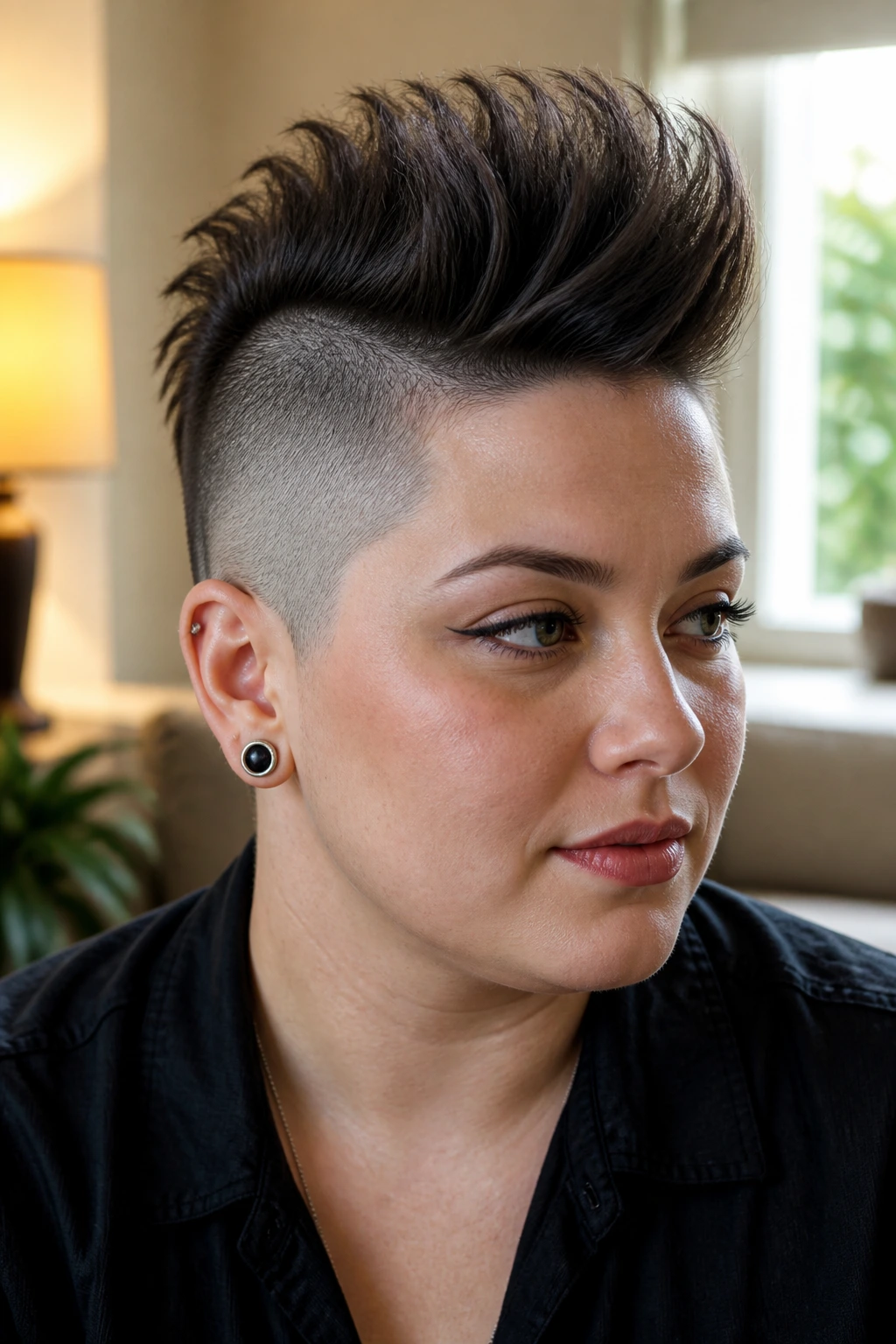
The version I keep coming back to is the one that looks touched, not stiff. A brushed-up mohawk with a soft finish gives you height on top, short sides, and enough movement to keep the face from looking boxed in.
Ask for the sides to stay tight and the top to hold a narrow ridge, then leave enough length for a light brush-up — usually around 2 inches on top. A blow-dryer with a nozzle helps here. Aim the air upward at the roots while lifting with a vent brush or your fingers. Once the hair is dry, work in a small amount of matte cream or styling powder. The finish should feel airy, not crunchy.
This cut is flexible, which is why I like it so much. It can look polished with a neat front, or a little rough if you rake it apart after drying. It also suits straight, wavy, and lightly curly hair without asking too much of any one texture.
One honest note: if your face is very round and your hair is dense on the sides, you will need regular cleanup to keep the silhouette narrow. Let the sides grow too long and the shape disappears. That happens fast. Keep the edges fresh, keep the top narrow, and the haircut keeps doing its job.
