



A round face does not need to be hidden. It needs a haircut that keeps moving.
That is why short asymmetrical bob haircuts for round faces work so well when they’re cut with a little nerve. The length shifts, the front pieces pull the eye downward, and the shape stops sitting like a flat helmet around the widest part of the cheeks. A blunt line that ends right at the jaw can make the face feel broader. A slanted line, even a subtle one, changes the whole picture.
The trick is not just “short” or “bob.” It’s where the weight sits, how the part falls, and whether the front pieces skim the cheekbone, the chin, or the collarbone. A good asymmetrical bob can make fine hair look fuller, thick hair feel lighter, and curls behave instead of ballooning out at the sides. Small differences matter here. An inch can change the whole cut.
Some styles below are sharp and polished. Others are soft, messy, or built for natural texture. All 25 are chosen to flatter a round face by stretching the silhouette, breaking up width, or adding angles where the eye wants them most.
1. Chin-Length Asymmetrical Bob with a Deep Side Part
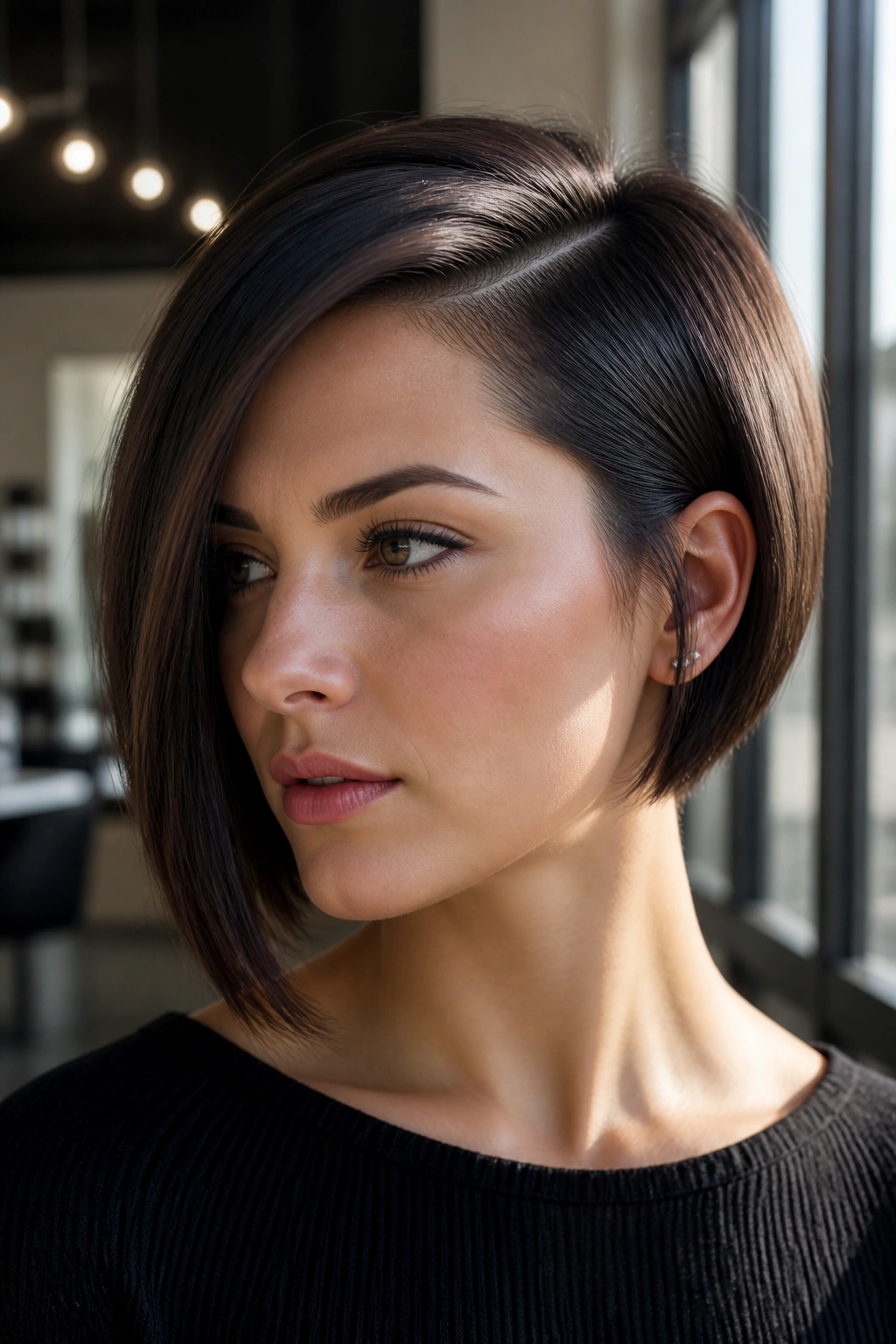
A chin-length asymmetrical bob with a deep side part is one of the easiest ways to pull a round face into a longer shape. The shorter side stays neat and close, while the longer side drops past the chin and gives the eye a line to follow.
Why It Works
The deep side part lifts the roots on one side and creates instant height. That matters more than people think. Height at the crown keeps the face from feeling too wide, and the longer front section adds a clean diagonal.
- Keep the shorter side just above the jaw.
- Let the longer side fall 1 to 2 inches below the chin.
- Use a round brush to bend the ends slightly inward.
- Finish with a light spray, not a crunchy one.
Best for: fine to medium hair that needs shape without a lot of layering.
A cut like this looks especially good when the ends are smooth and the part is committed. Half-hearted side parts tend to drift back to the middle, and that ruins the line.
2. Sleek A-Line Asymmetrical Bob
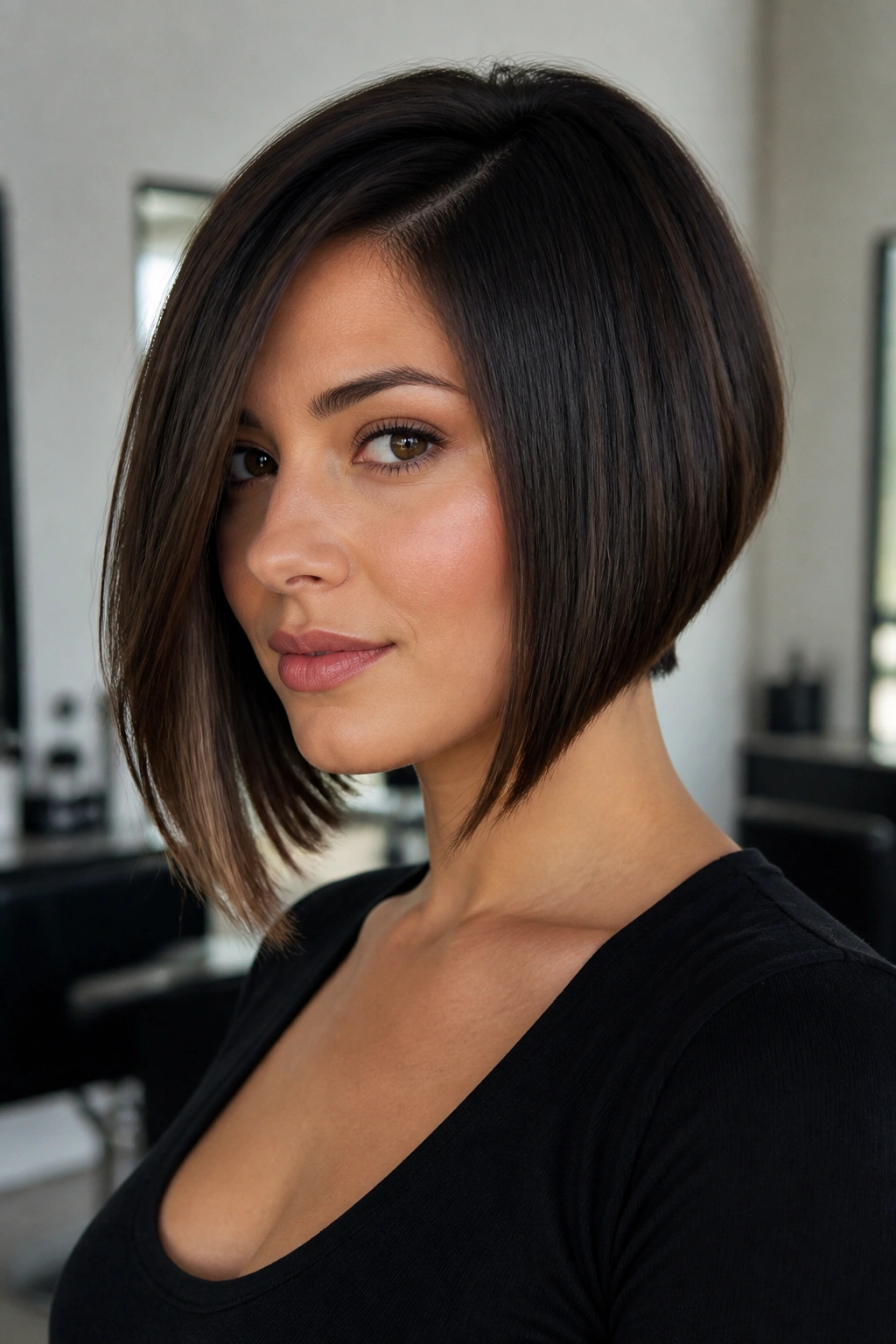
This one is a straight shooter. The back sits shorter, the front slides forward in a clean A-line, and the whole shape quietly narrows the face without shouting about it.
The reason it flatters round faces is simple: your eye reads the slant before it reads the width. That diagonal is doing heavy lifting.
The best version lands just under the chin in front and hugs the nape closely in back. If your hair is thick, ask for weight removal through the interior, not too many visible layers. You want the line to stay crisp. If it gets too broken up, the cut loses its edge and starts puffing out at the sides.
This style loves a flat iron pass and a tiny bit of serum on the ends. Not much. Just enough to keep the silhouette sharp and the front pieces from flipping outward like old movie-star bangs.
3. Wavy Asymmetrical Bob with Long Front Pieces
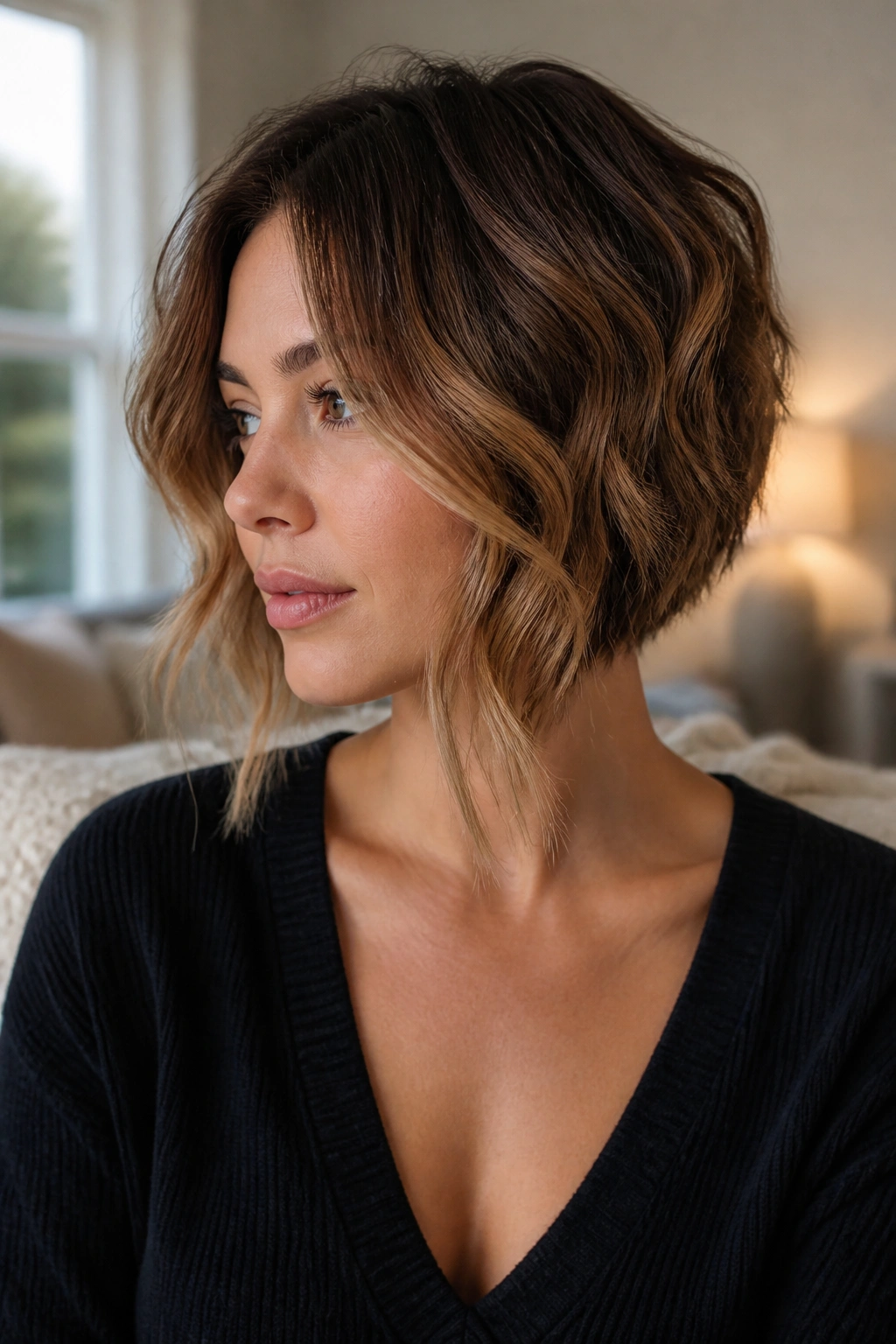
What makes this cut so good on a round face is the balance between softness and length. The waves keep it from looking severe, and the longer front pieces stretch the profile in a way a one-length bob never can.
Styling Notes
Think loose, not beachy-to-the-point-of-frizz. A 1-inch curling wand, wrapped away from the face, gives the cleanest bend. Leave the last inch out on the ends so the shape does not balloon.
If your hair is naturally wavy, don’t fight it into a perfect oval. Work with the bend and use a cream that keeps the ends from separating too much. The asymmetry gives the style a little tension, which keeps it from reading too sweet or too round.
A lot of people with fuller cheeks worry that waves will add width. They can, if the waves start right at the cheek. Keep the wave pattern lower and longer, and the cut will do the flattering instead of the wrong kind of widening.
4. Stacked Asymmetrical Bob with Crown Lift
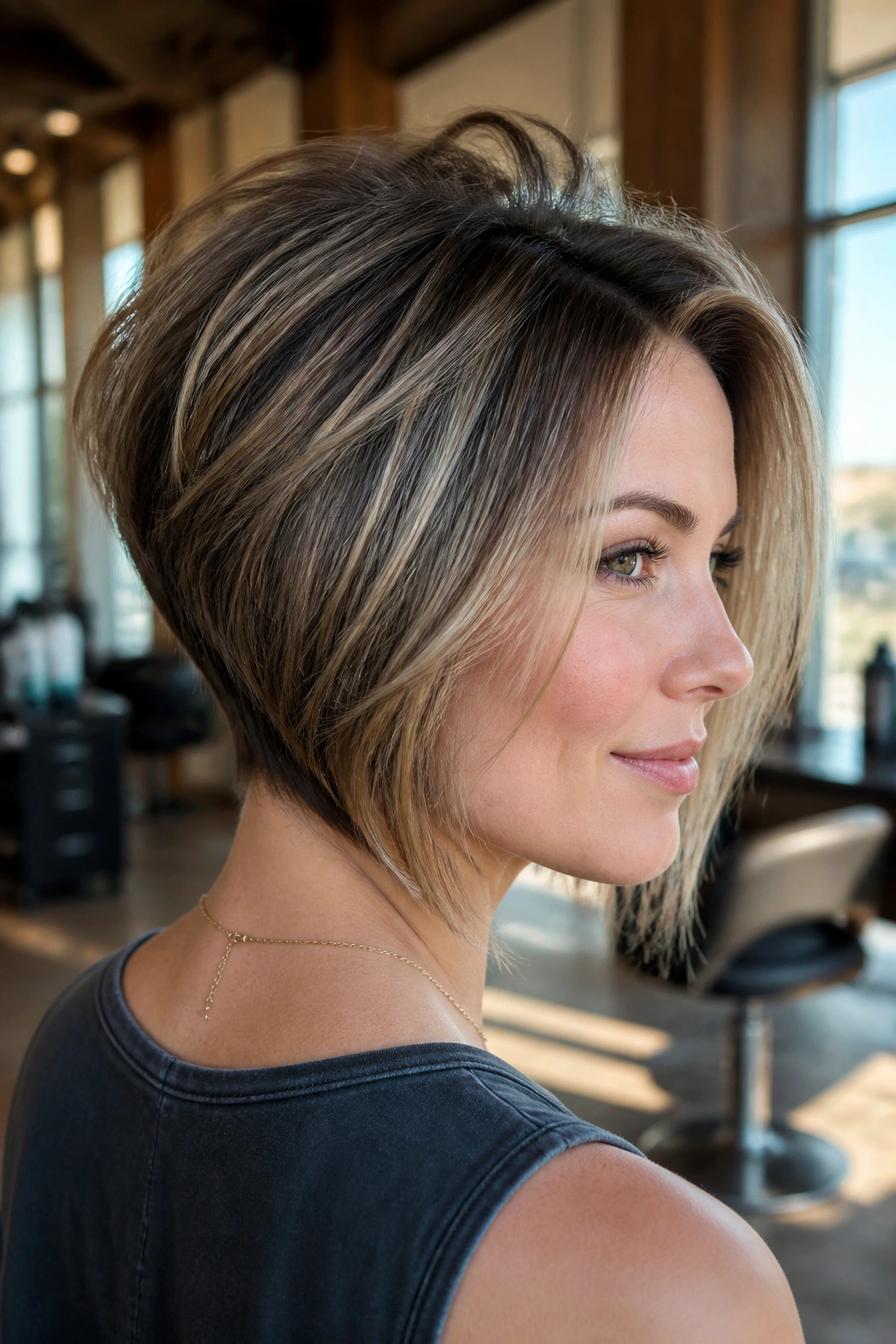
A stacked bob is a smart choice when your hair needs body fast. The back is cut with short, graduated layers that build height, and the longer front keeps the whole look from feeling boxy.
The crown lift is the part that matters. On a round face, flat roots make the face feel wider. Lift at the top changes the line from circular to vertical. That’s the whole game.
This version works especially well for fine hair because the stacked back creates the sense of density without needing a lot of length. Thick hair can wear it too, but the interior has to be thinned carefully or the back will mushroom.
A small warning: if you let the stack get too tall, the cut can look dated fast. Keep the graduation soft and the front pieces long enough to slide past the cheekbone.
5. Side-Swept Bob with a Heavy Fringe
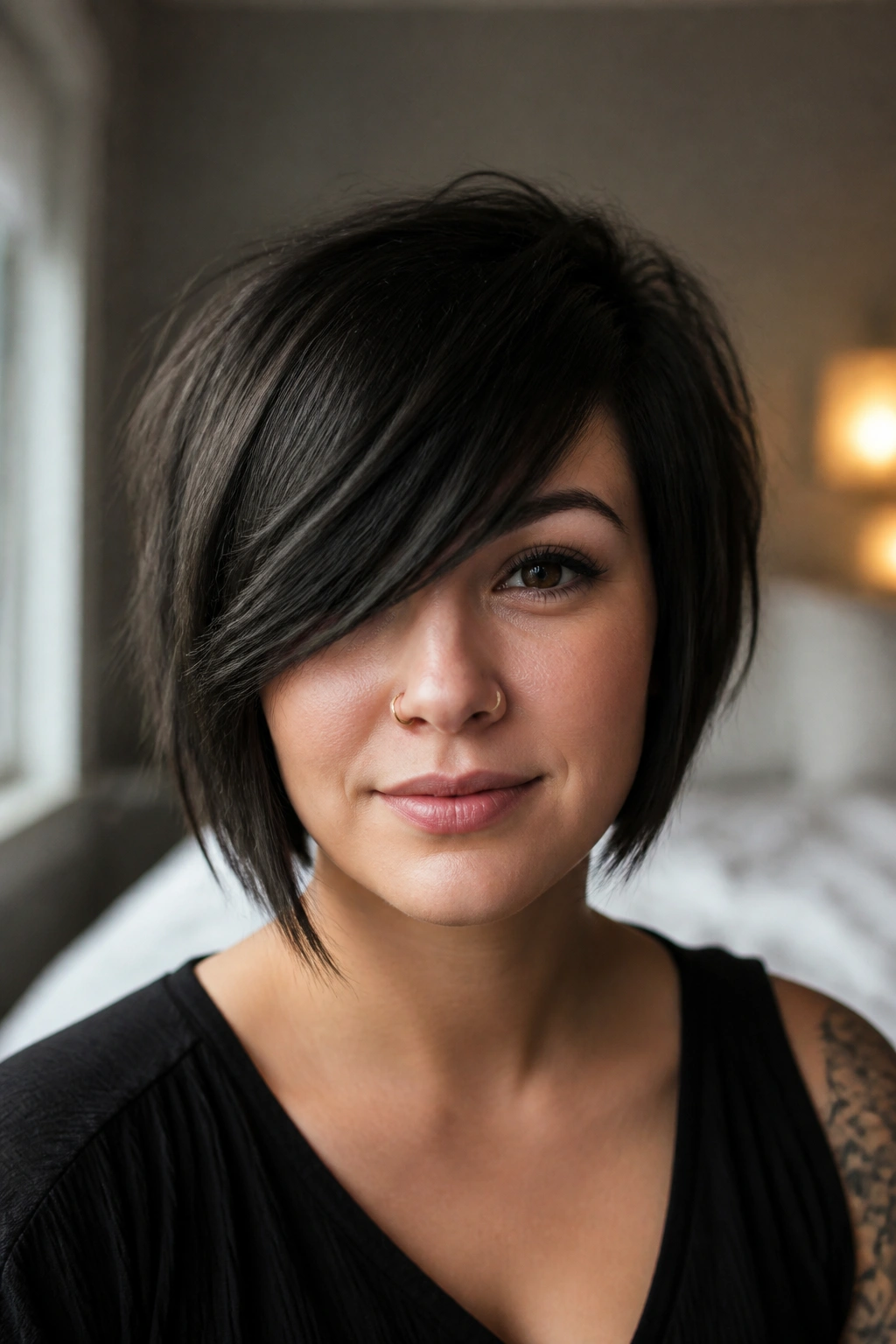
A heavy side-swept fringe can be a lifesaver on a round face, especially if your forehead and cheeks feel like they’re competing for space. The fringe draws the eye diagonally, which is much kinder than a blunt straight-across line.
The cut itself should stay soft around the jaw and a touch longer on one side. The fringe does the redirecting; the bob does the balancing.
What to Ask For
- Fringe that starts near the brow and sweeps past one eye.
- Front length that clears the jawline.
- Light texturing at the ends so the fringe does not sit like a slab.
- A side part that matches the direction of the sweep.
This style is not the best choice if you hate hair in your eyes. It is a strong pick if you want to break up roundness without adding a lot of layers all over the head.
6. Soft Razor-Cut French Bob

This cut feels airy instead of heavy. The razor work softens the edge, the shape sits close to the head, and the length usually lands around the cheekbone to the jaw.
That softness helps round faces because hard, blunt lines can look too dense at the sides. A razor-cut finish breaks the edge just enough to keep the bob from feeling boxy. It also works nicely on hair that has a little wave or natural movement.
The French-bob vibe can go wrong if the cut is too even. Then it becomes more about the style than the face shape, and that’s not what you want here. Keep the asymmetry obvious enough to matter, even if it’s subtle.
I like this cut for people who want low fuss and a bit of attitude. It doesn’t need perfect blow-drying. It needs shape.
7. Blunt Asymmetrical Bob with a Clean Edge
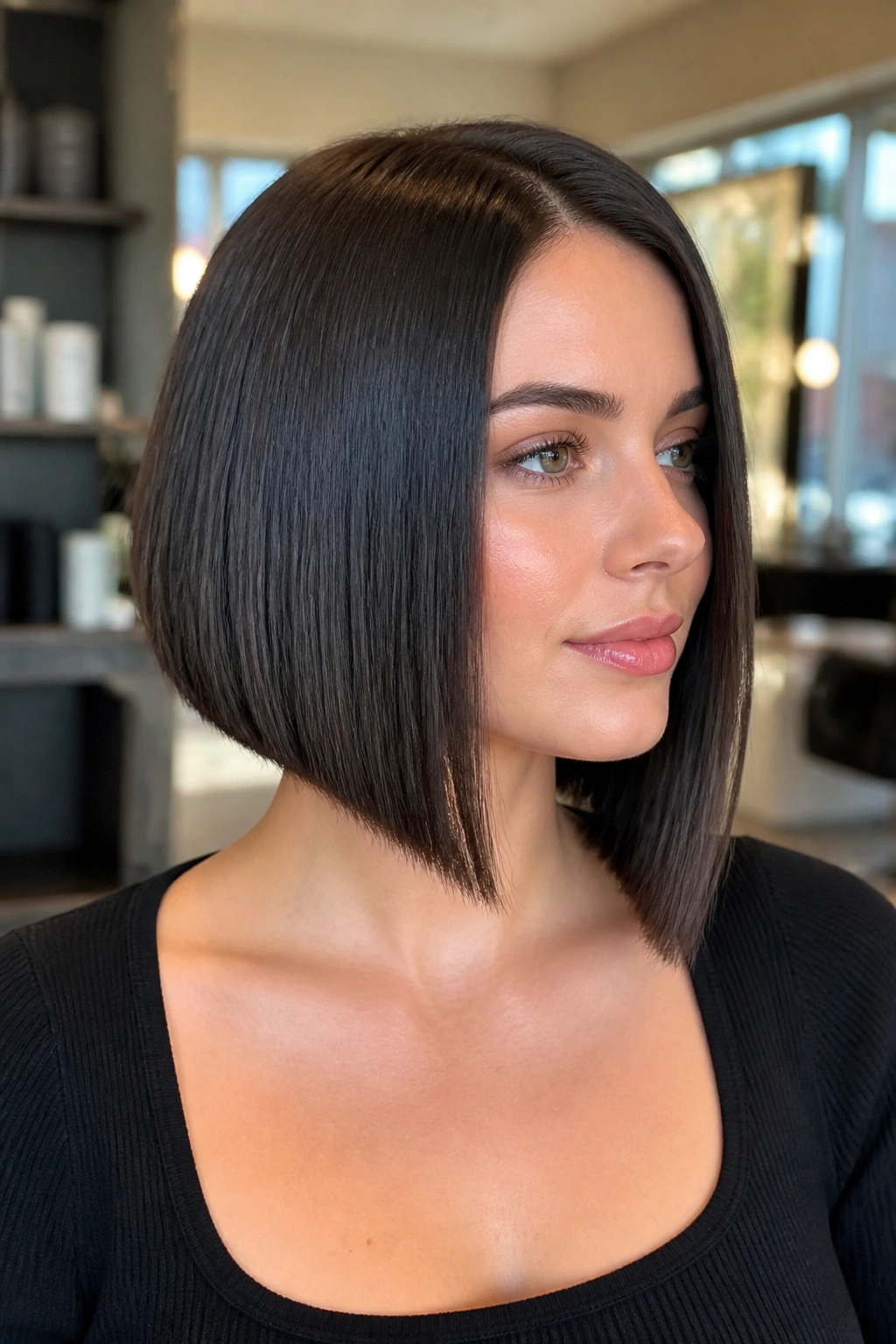
Blunt does not have to mean boring. In fact, on a round face, a blunt asymmetrical bob can look sharper than a heavily layered one because it gives the face a strong frame.
The key is keeping the asymmetry clear. One side can sit right at the chin while the other drops a little lower, but the ends should stay dense and tidy. That density keeps the style from looking wispy or unfinished.
Best For
- Straight hair that holds a line.
- Fine hair that needs the look of thickness.
- Anyone who likes a polished finish with almost no visible texture.
This cut needs maintenance. If you let the ends fray, the whole point gets lost. A trim every 5 to 7 weeks keeps the edge crisp, and a center or deep side part can change the mood without changing the cut.
8. Airy Razor Bob with Feathered Ends
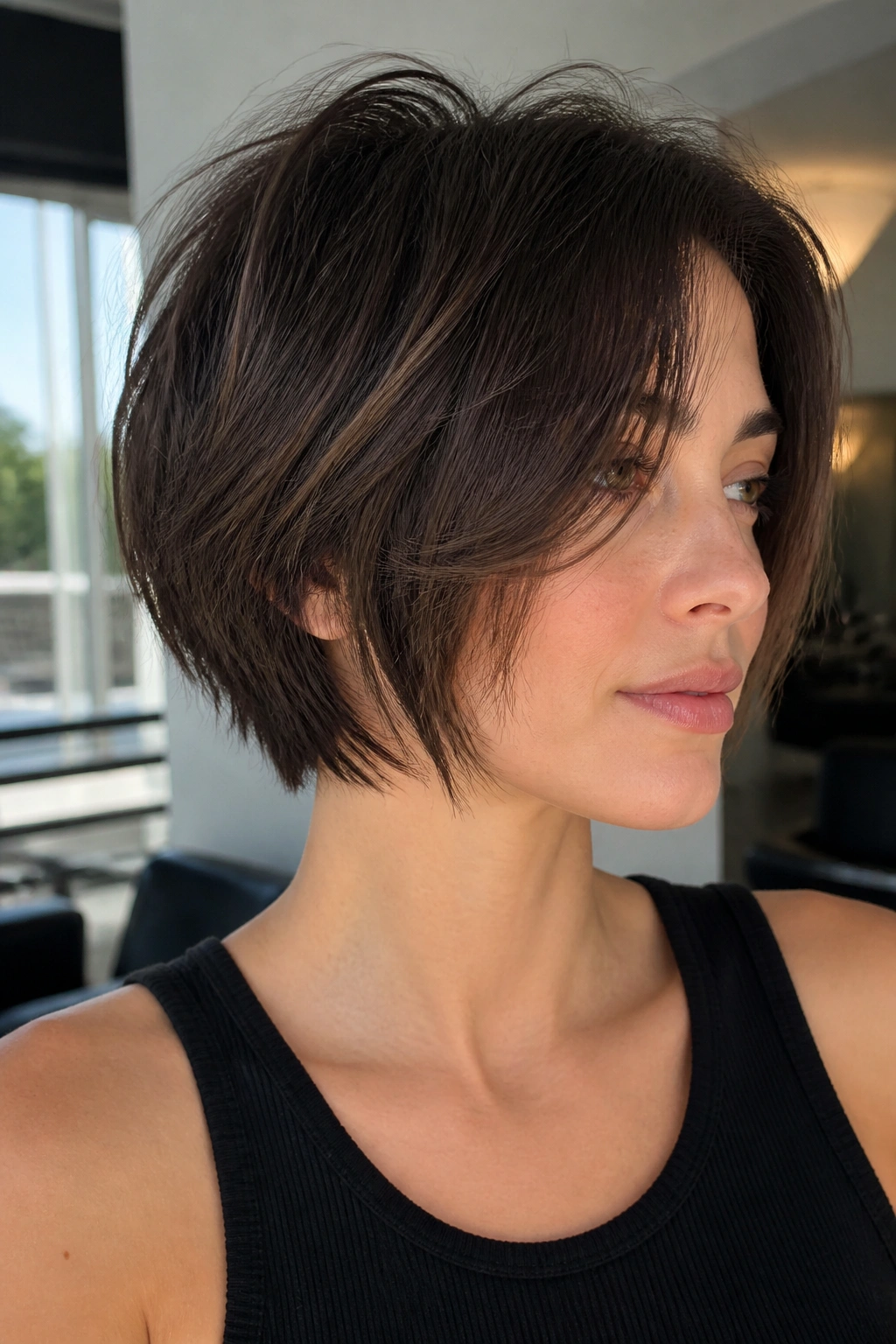
If your hair feels heavy, this is the one to look at. The razor work removes bulk, the feathered ends keep movement at the bottom, and the asymmetry keeps the face from looking too even.
The shape is especially useful for thick hair that tends to puff out at the sides. A one-length bob can make that kind of hair sit like a box. Feathering the ends breaks up that mass and gives the face more room.
Don’t overdo the layers. That’s the trap. Too many short pieces around the cheeks can make the face look wider, not slimmer. Ask for long, soft point-cutting instead of choppy slices near the face.
This style is easy to wear with a tucked side or a loose bend. It looks best when the movement feels accidental. Not messy. Just not overly planned.
9. Inverted Bob with a Tapered Nape
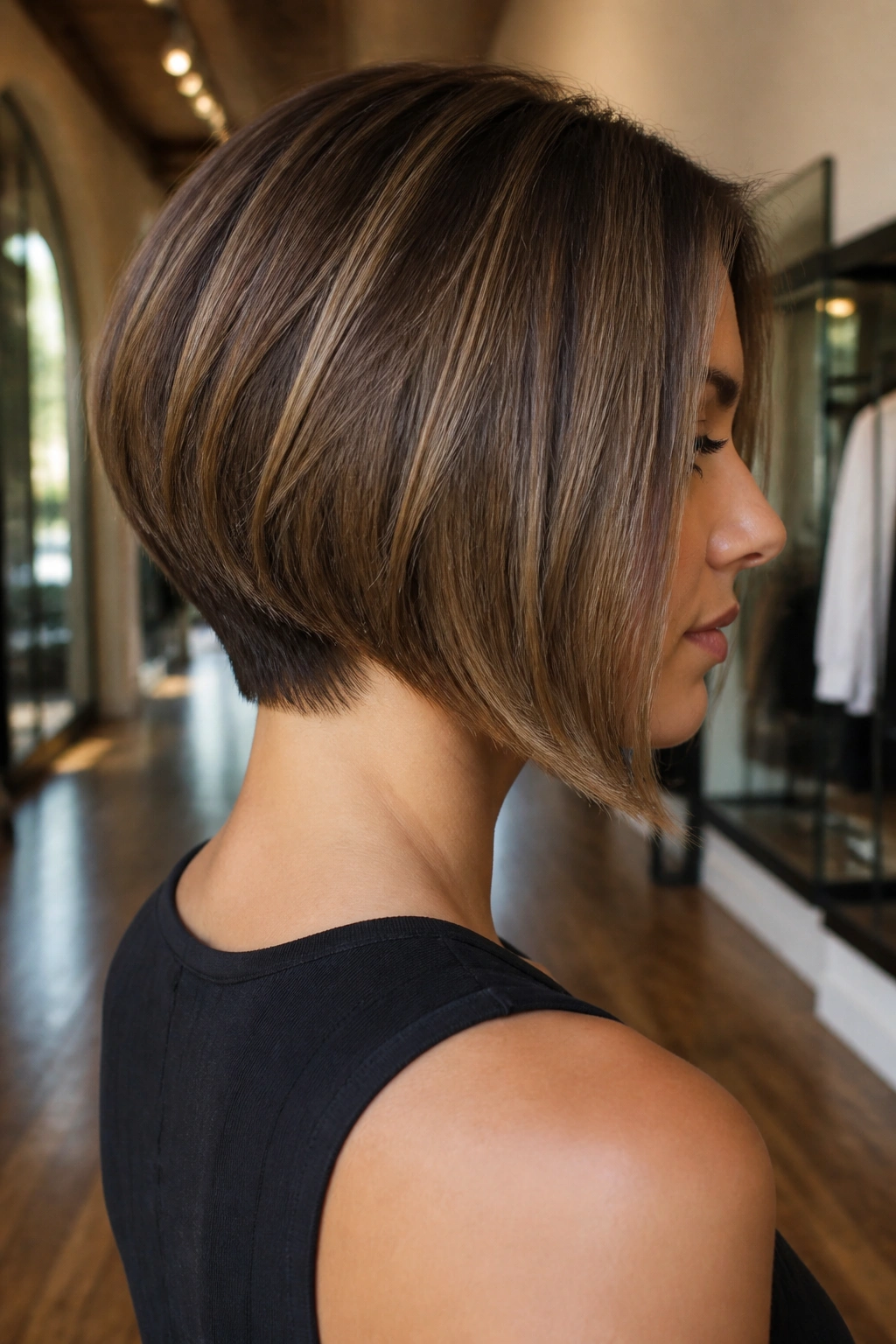
An inverted bob gives you the classic shorter-back-longer-front shape, and that angle is useful on round faces because it keeps the eye moving down and forward.
The tapered nape lifts the back off the neck, which makes the jawline look cleaner. At the front, the longer pieces should graze the chin or go a little below it. If they stop too high, the face can look wider than you want.
This cut loves a round brush and a quick blowout. You want the ends tucked under slightly, not flipped out in a retro way unless that is the whole mood. The back should hug the head neatly so the volume stays controlled.
It is a strong choice for people who like structure. If you want a bob that looks put together the minute you wake up, this shape has a lot going for it.
10. Layered Bob with Curtain Bangs

Curtain bangs can be a smart move on a round face because they open the center of the forehead and fall away from the cheeks instead of stopping right on top of them.
The bob underneath should stay light through the ends, with layers that move but do not fray. If the layers get too short, the whole cut becomes fluffy and loses the lengthening effect.
How to Style It
Start with damp hair and lift the roots with a small amount of mousse. Blow-dry the bangs forward first, then split them and direct each side away from the face with a round brush. That bit of direction matters more than people expect.
A layered bob with curtain bangs works well if you want softness without a heavy fringe. It’s also forgiving when the hair is not perfectly styled. The bangs help hide the transition, and the asymmetry keeps the outline from becoming too symmetrical and round.
11. Curly Asymmetrical Bob with a Longer Front Side
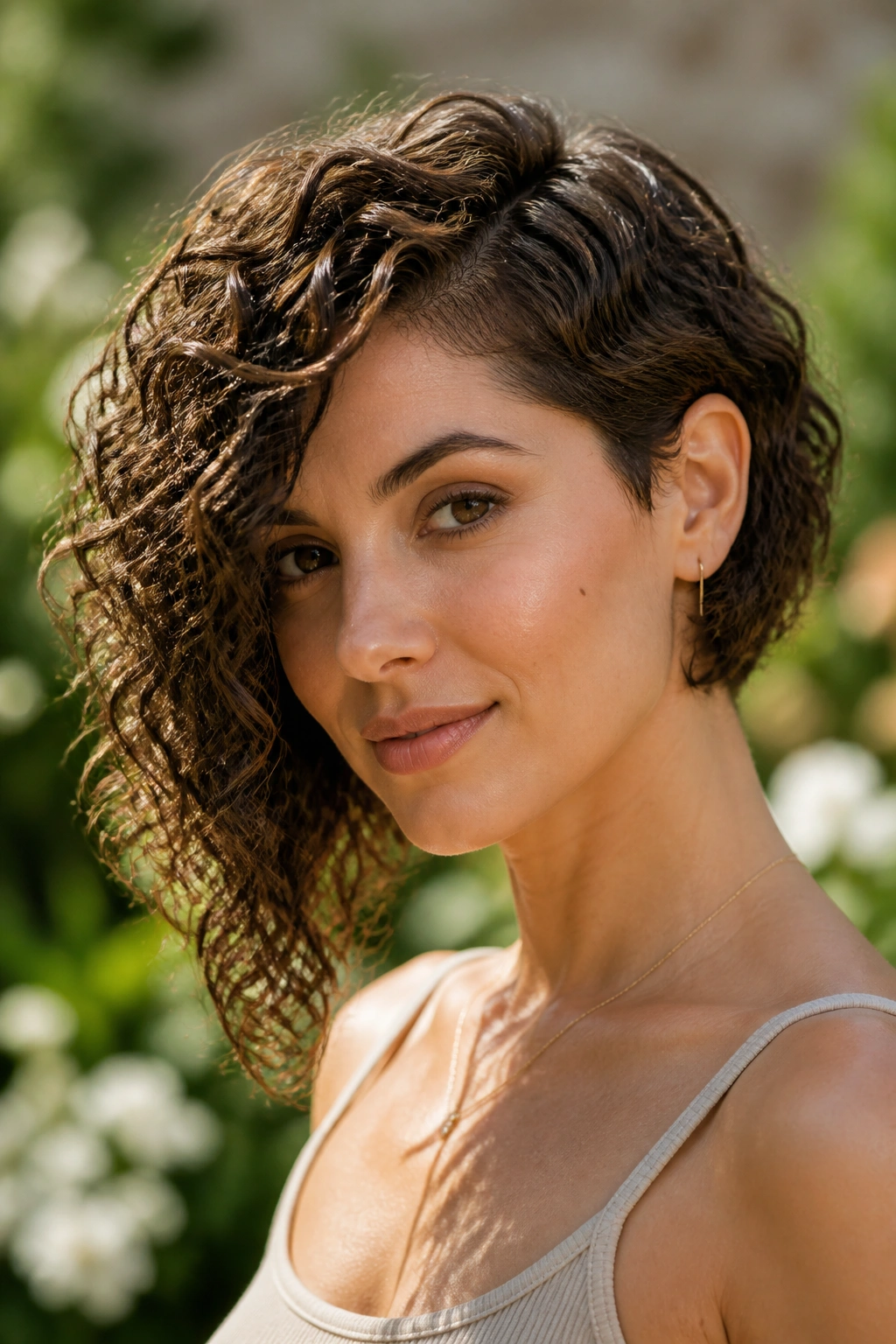
Curly hair and round faces can be a tricky pair only if the cut ignores shrinkage. A curly asymmetrical bob fixes that by giving one side extra length and keeping the front pieces long enough to pull the eye downward.
The mistake people make is cutting curls too evenly. Then the silhouette balloons. A longer front side helps the curls stack in a more vertical line, which is much kinder to a round face.
This style works best when cut dry or nearly dry, because curls show their real shape that way. Ask for the longest piece to land below the chin, and make sure the shorter side does not stop at the cheek. That one detail can make a big difference.
It’s a lively cut. Not stiff, not fussy. And curls usually look happier when they have room to move.
12. Asymmetrical Bob with an Undercut
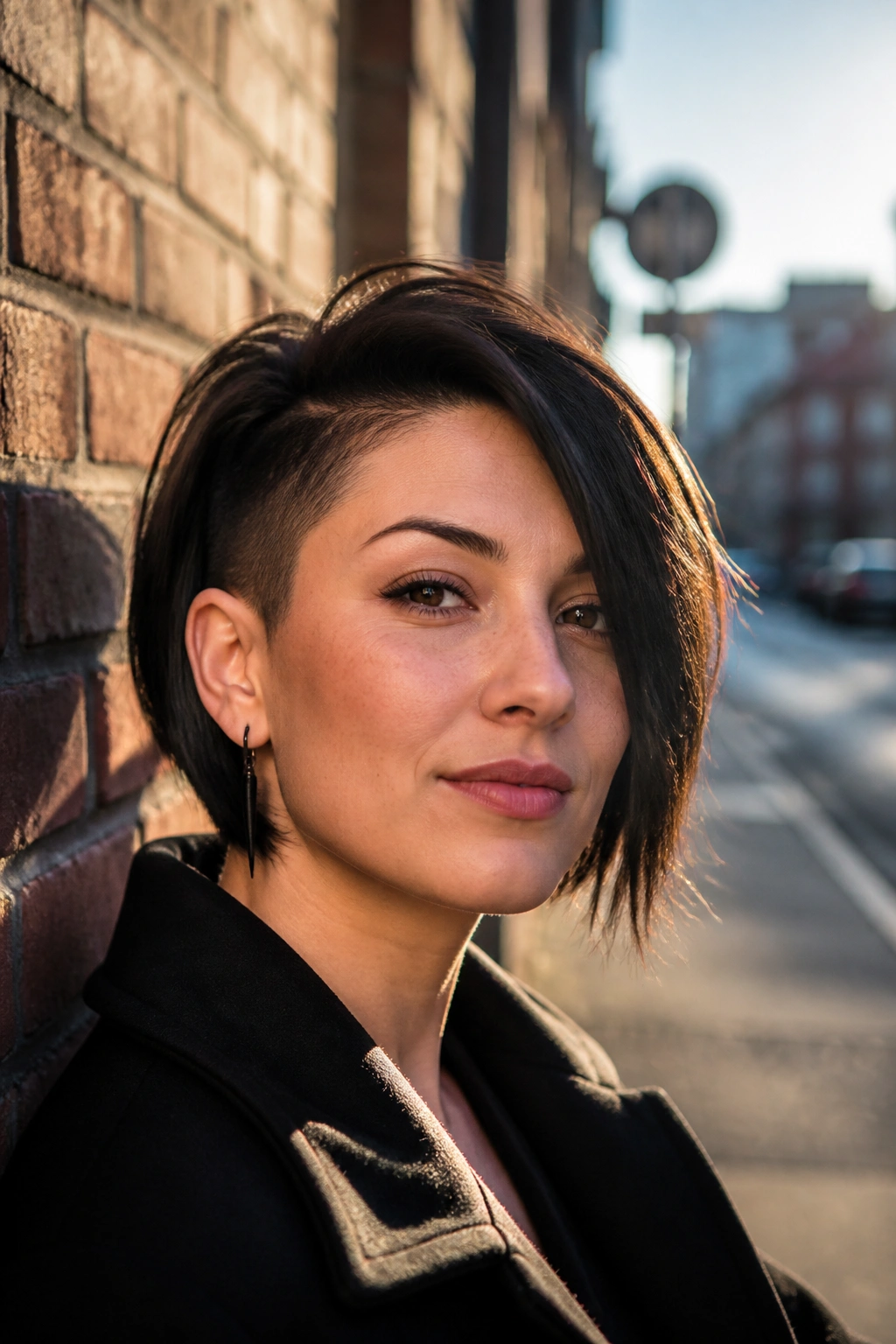
An undercut sounds bold, and it is, but it also solves a practical problem: too much bulk. Thick hair on a round face can spread outward near the cheeks, and an undercut removes weight where you do not want it.
The top layer can still fall into a clean asymmetrical bob, but the hidden removal underneath keeps the shape close to the head. That gives you a smoother line and less puff at the sides.
Good Reasons to Choose It
- You have thick, coarse, or dense hair.
- You want less drying time.
- You like a stronger shape with some edge.
- You don’t want the bob to feel heavy at the nape.
The maintenance is the tradeoff. The undercut grows out, and you’ll feel that in the bulk before you see it in the mirror. If you’re fine with regular trims, though, this cut stays neat and easy to manage.
13. Graduated Bob with Face-Framing Slices
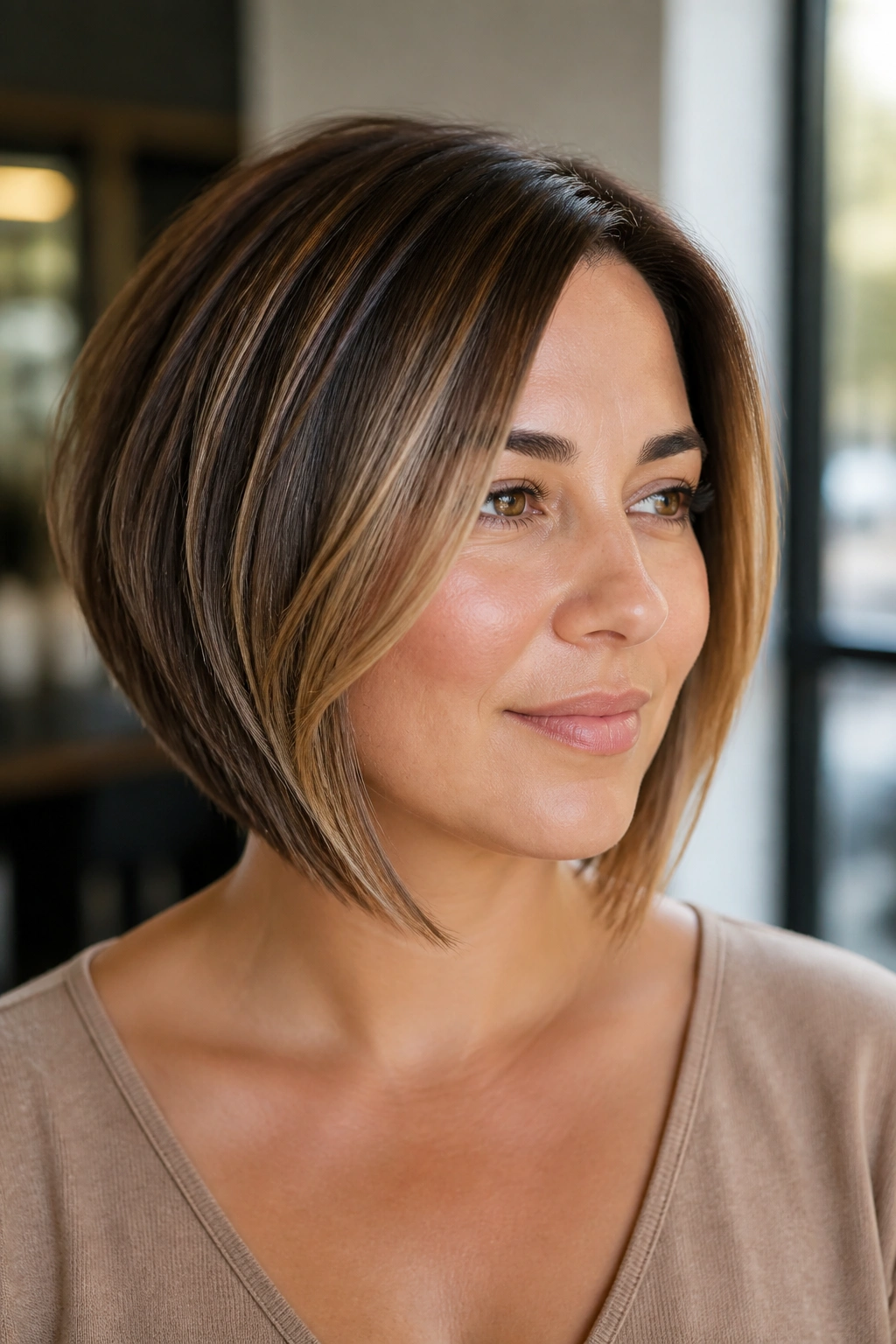
This is the haircut for someone who wants the bob to do some of the contouring work. The graduation in the back builds support, while the front slices land along the cheeks and jaw in a way that softens width.
Unlike a blunt bob, this shape has more movement in the interior. Unlike a shag, it keeps the outline tidy. That middle ground is why it suits round faces so well.
The face-framing pieces should start lower than you think. If they begin right at the cheek’s fullest point, they can make the face look wider. A better starting point is just below the cheekbone or near the lip line, where the eye can travel down instead of out.
This cut looks especially good on someone who wants a salon shape that still feels polished at work. Clean. Controlled. Not boring.
14. Messy Textured Bob with Piecey Ends
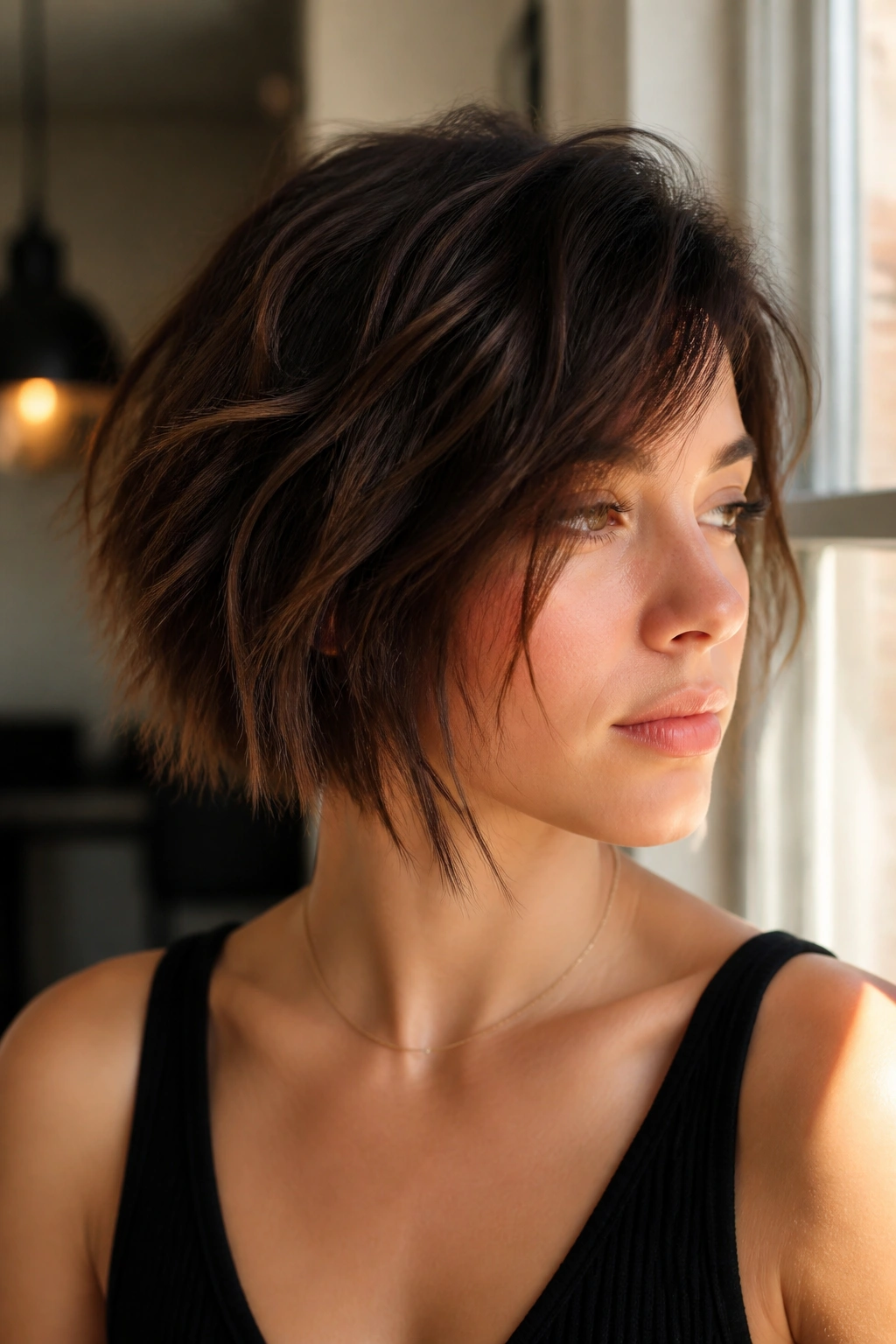
A messy bob can flatter a round face when the texture is broken up on purpose. The point is not to look lazy. The point is to keep the ends from forming a neat circle around the face.
Piecey ends create small gaps in the line, and those gaps stop the style from feeling too solid. That makes the face look a little longer and a little slimmer without needing major length.
A salt spray or light texture spray helps, but don’t drench the hair. Too much product makes the ends sticky and heavy, which is the opposite of what this cut needs. Air-dry it halfway, scrunch a little, and leave some bend in the front pieces.
This is a good choice if you prefer hair that looks better with a little attitude. A tidy bob has its place. So does one that looks like it has somewhere to be.
15. Micro-Angled Bob for Fine Hair
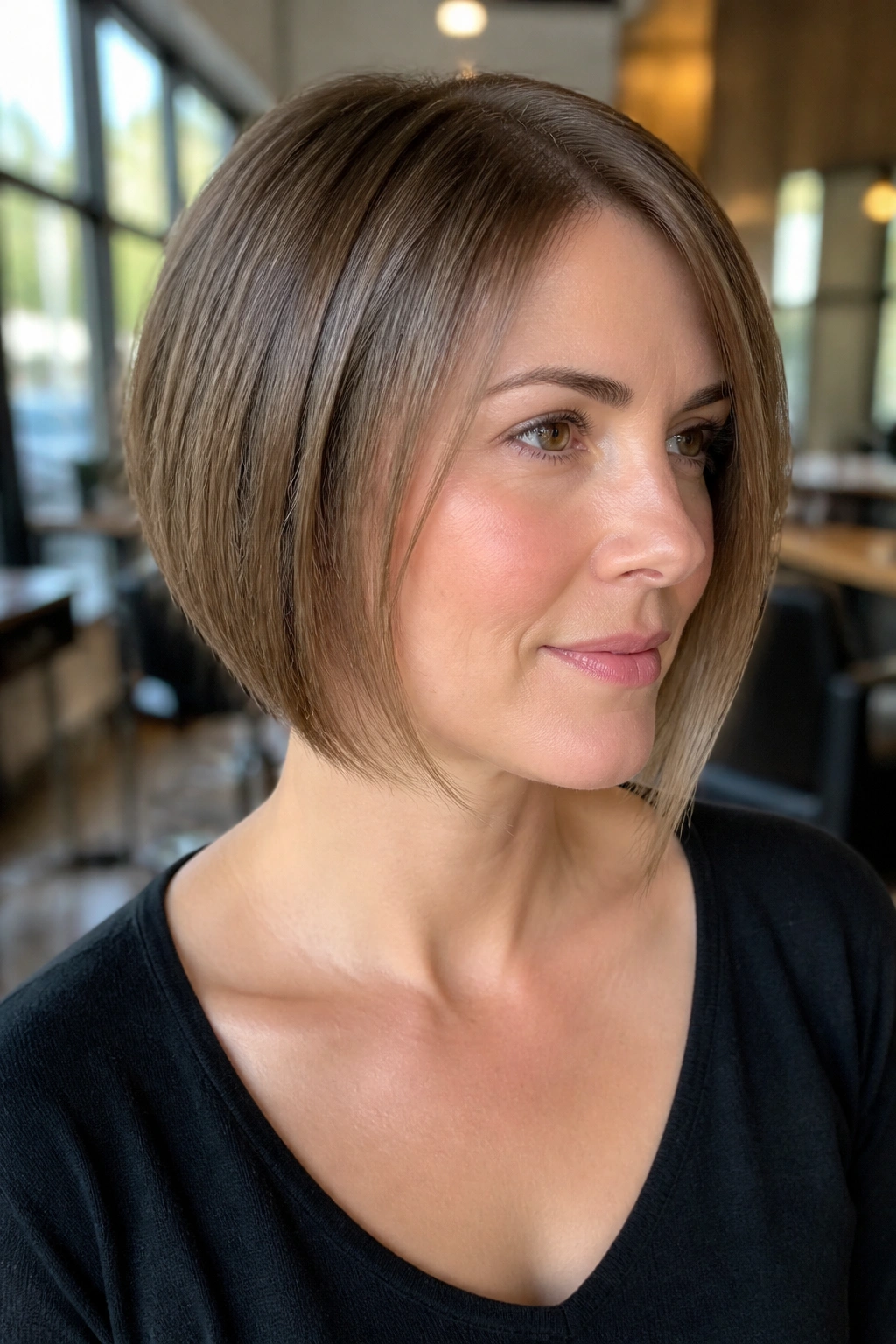
A micro-angled bob is a subtle version of the asymmetrical shape, and that subtlety can be a blessing for fine hair. The front is just a touch longer than the back, enough to create a visual line without making the haircut feel dramatic.
The small angle gives the illusion of movement and depth. Fine hair can go flat fast, and a tiny slope keeps it from sitting like one flat sheet. On a round face, that little angle matters because it prevents the line from stopping squarely at the cheeks.
Styling Basics
- Blow-dry with a mousse at the roots.
- Use a small round brush to lift the crown.
- Keep the ends smooth, not curled under too tightly.
- Trim often so the angle stays visible.
This is the cut for someone who wants polish without a big statement. It is quiet, but it still changes the face shape in a useful way.
16. Glossy Straight Bob with Razor-Stight Ends
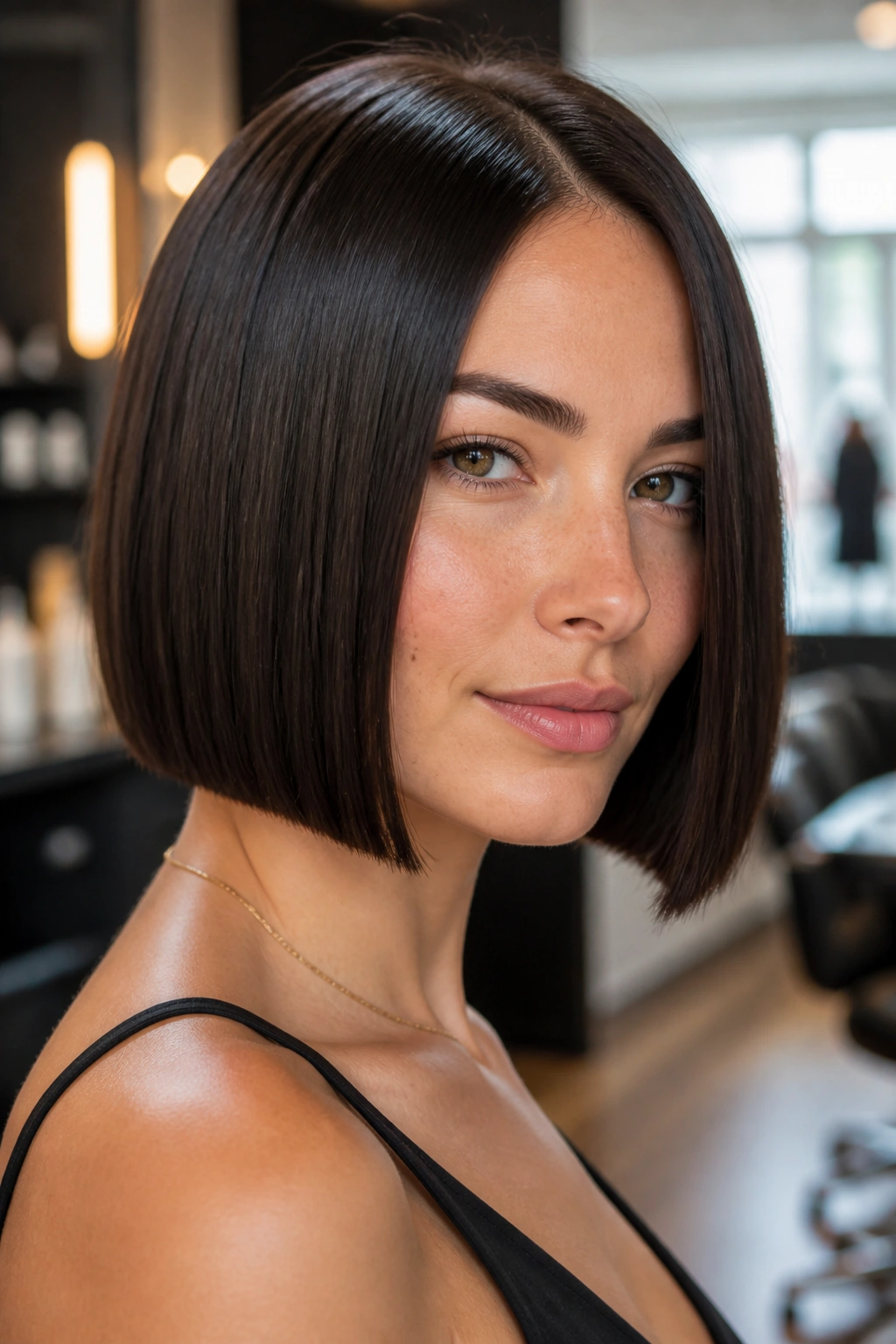
A glossy straight bob can look almost architectural, and that clean shape is exactly what helps a round face feel less wide. The asymmetry should be obvious enough to read in profile, but smooth enough that the cut feels intentional, not choppy.
Razor-straight ends work best when the hair is naturally straight or easy to smooth with a flat iron. A little bend at the chin can be nice, but the main point is the line. Clean lines create structure. Structure helps round faces.
This style is a strong match for anyone who likes shine and minimal texture. Add heat protectant, keep the iron moving, and finish with a light serum on the mid-lengths only. Too much product at the ends will make the cut look limp.
It’s a sharp cut. That’s the appeal. If you want softness, look elsewhere. If you want a bob that feels deliberate, this one delivers.
17. Shaggy Bob with Choppy Layers
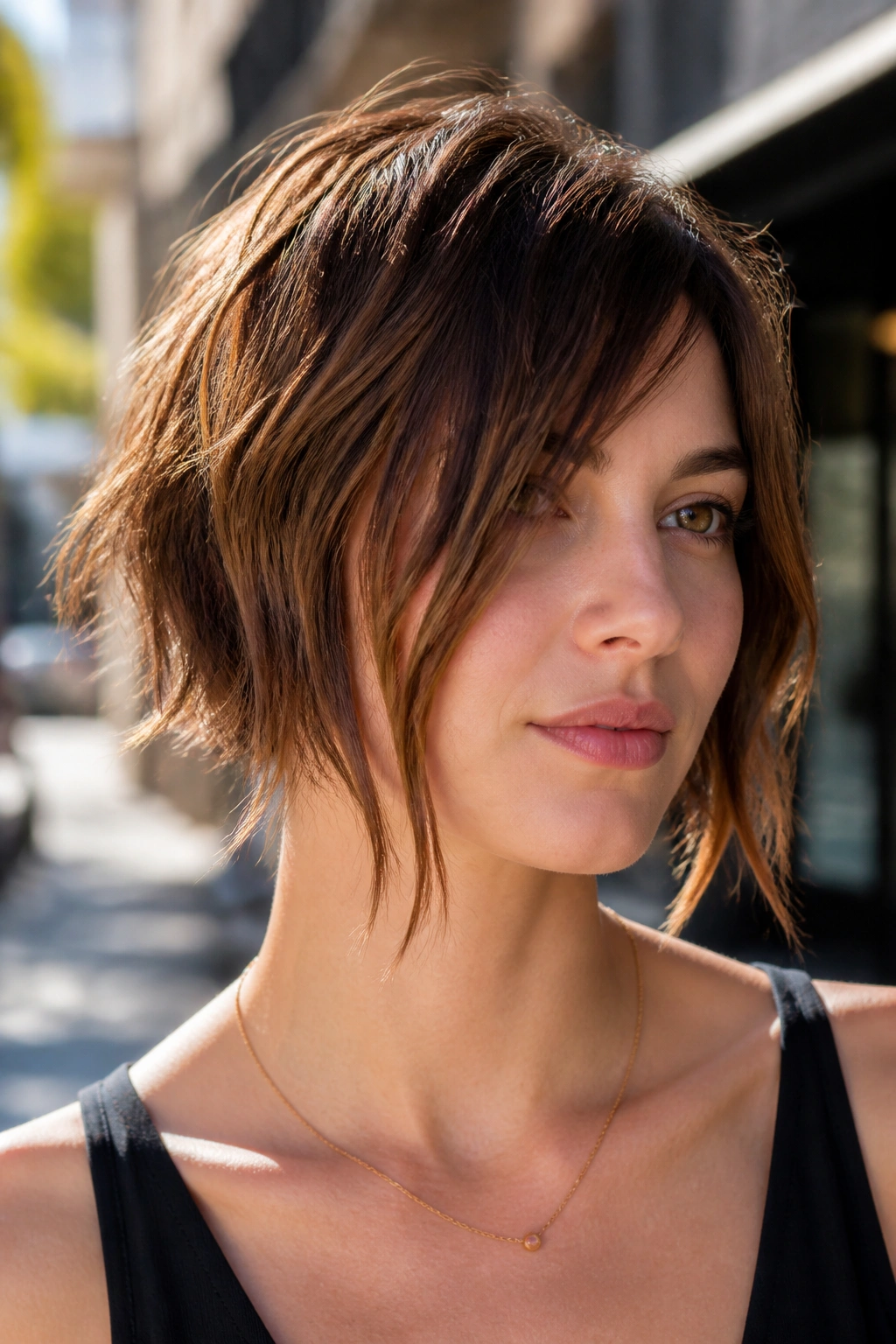
A shaggy bob can work on a round face if the layers are placed with care. You want movement, not a puffball. The asymmetry helps by keeping one side longer and giving the eye somewhere to go.
Choppy layers break up the outline and stop the cut from sitting in one tidy circle. That can be flattering, especially if your hair has wave or a bit of natural bend.
The danger here is over-layering the sides. Too many short pieces around the cheeks can widen the face. Keep the choppy texture mostly through the lower half and the back, and let the longer front pieces stay in charge.
This cut suits someone who likes a little mess in the morning. Not chaos. Just enough looseness that you don’t feel over-styled.
18. Side-Part Bob with Long Internal Layers

Long internal layers are the quiet hero of this cut. You do not see them at first glance, but you feel them in the way the hair falls. The shape stays smooth on the outside while the inside moves.
A deep side part strengthens the asymmetry and gives the top some lift. On a round face, that lift helps more than a lot of people expect. It keeps the face from reading as one rounded shape from hairline to chin.
The best part of this bob is that it does not scream for attention. It just works. Hair falls better, the face looks a little longer, and the ends stay neat without appearing heavy.
If you dislike a lot of visible layers but still want movement, this is a smart compromise. Hidden structure. Clean result.
19. Neck-Length Bob with One Side Tucked Behind the Ear
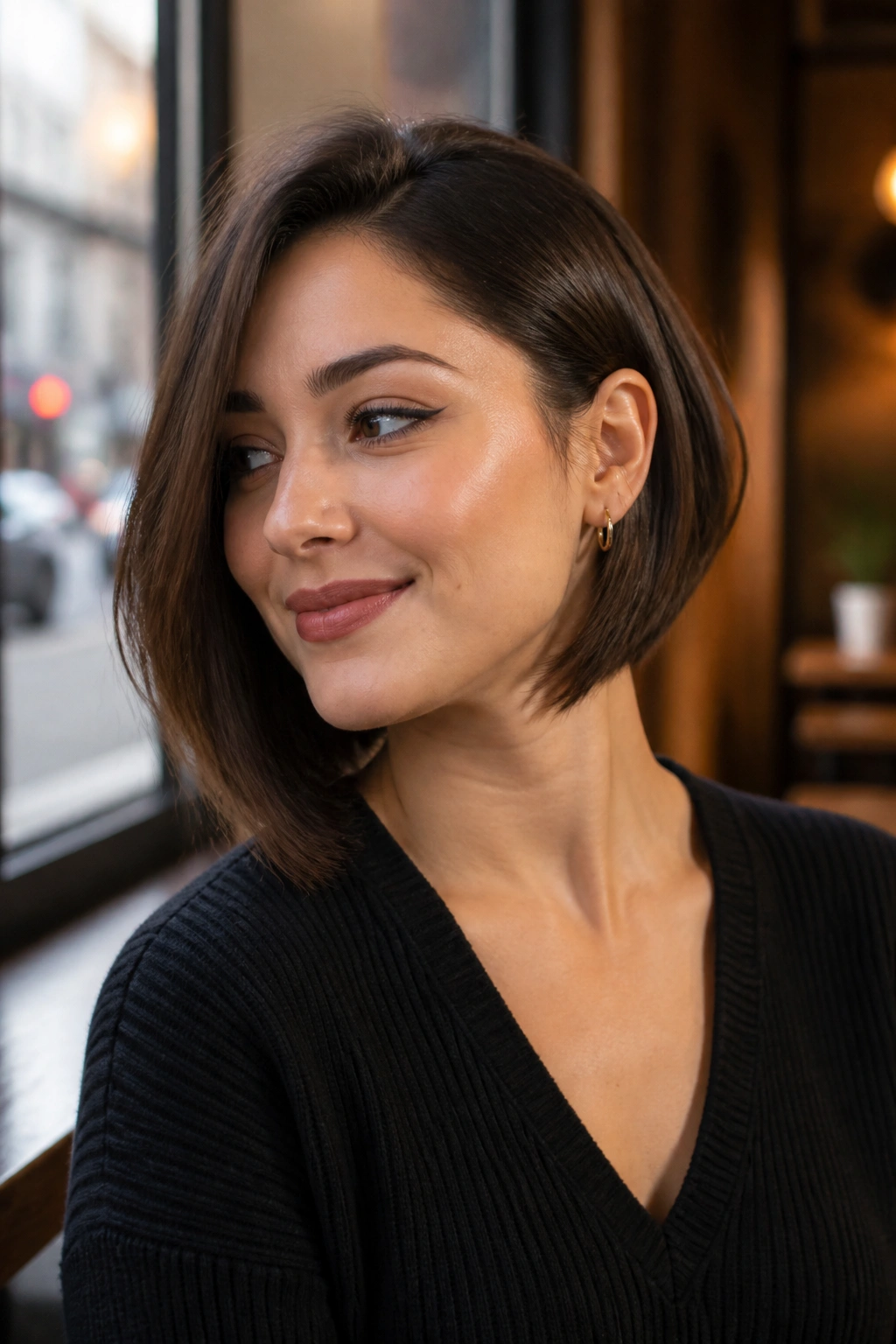
This is less about the cut alone and more about the styling trick that changes it. A neck-length bob already keeps things light, but tucking one side behind the ear creates an instant asymmetry that helps a round face feel less centered.
The exposed side shows off the jawline and the ear. The tucked side creates a neat line. Together, they make the face look a bit narrower and longer.
What to Watch
- Keep the untucked side slightly longer.
- Leave enough length to tuck without the hair popping back out.
- Use a light cream to control frizz near the ear.
- Add an earring if you want the tucked side to feel intentional.
This is a good option if you want flexibility. Wear it tucked for sharpness, wear it loose for softness. Same cut. Different mood.
20. Wispy-Banged Asymmetrical Bob
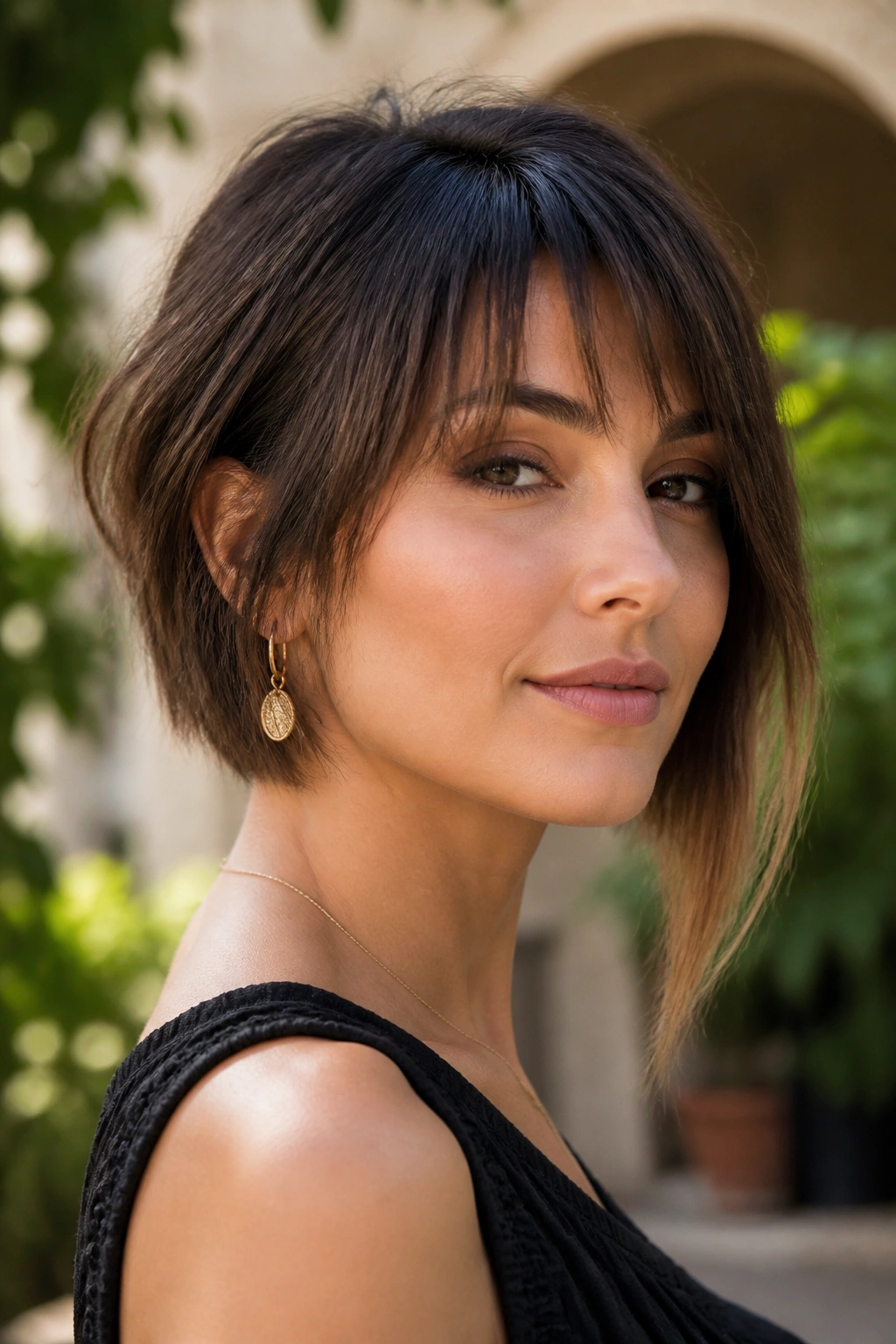
Wispy bangs can soften a round face without flattening the top of the haircut. They are lighter than curtain bangs and less severe than a blunt fringe, which makes them easier to live with.
The asymmetrical bob underneath should stay a little longer in front so the bangs do not become the whole story. If the fringe is too heavy, the face can close in. Wispy pieces let skin show through, which keeps the look airy.
This cut works nicely if you want forehead coverage but hate the feeling of a thick fringe sitting on your lashes. It also grows out with less drama than a dense bang. That matters. A lot of people love bangs for two weeks and then regret the maintenance.
A light blow-dry and a tiny round brush are enough. Keep the fringe separated, not clumped.
21. Under-Curved Bob That Hugs the Jaw
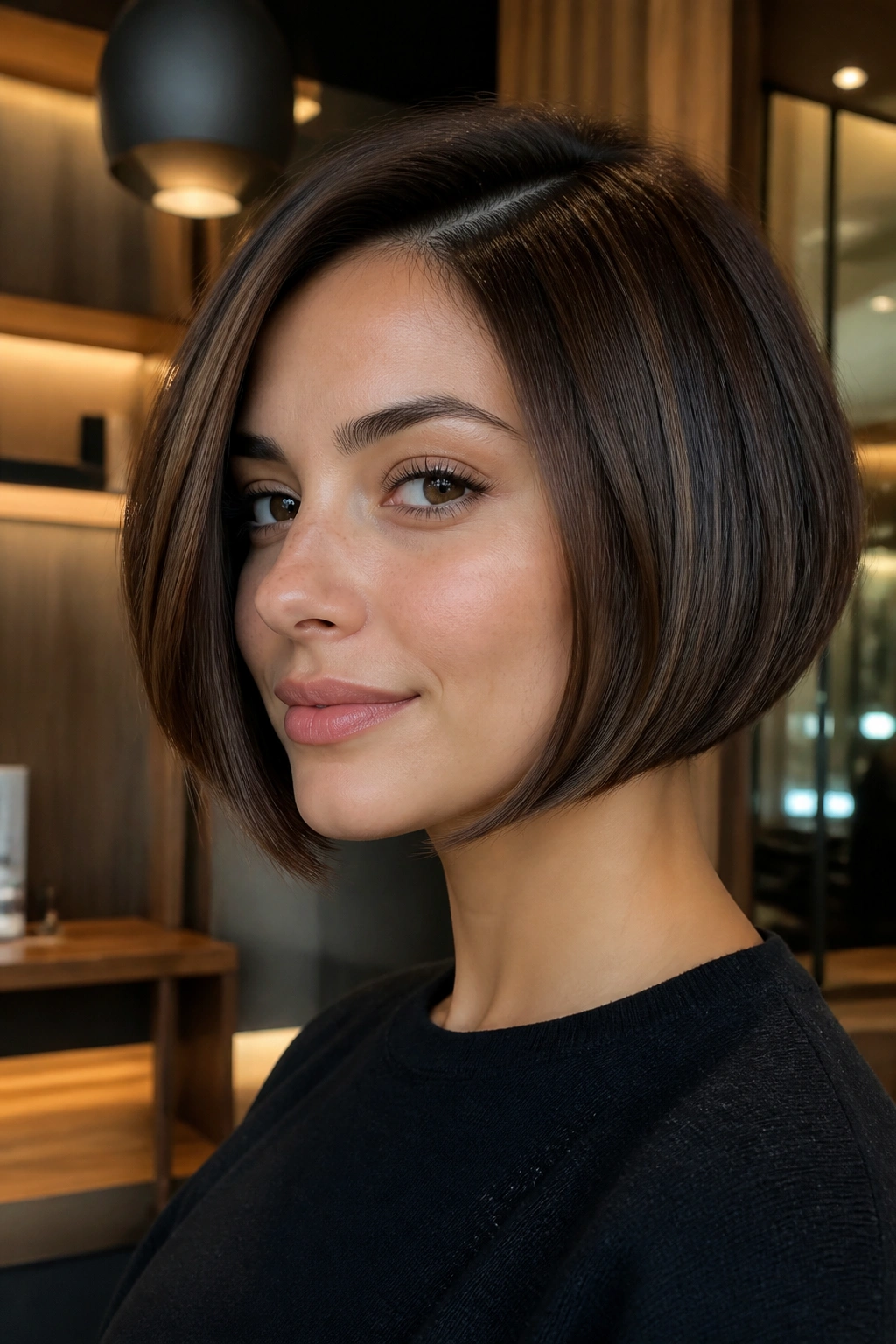
An under-curved bob tucks inward at the ends, and that bend can be flattering on a round face when it’s cut with enough asymmetry. The curve follows the jaw instead of sitting on top of the cheeks.
That difference matters. A bob that ends right at the broadest point of the face can make the whole shape feel wider. A bob that hugs under the jaw can make the face look more tapered.
This style likes a careful blowout. Use a round brush, guide the ends under, and keep the front a touch longer so the curve does not become too uniform. You want a soft line, not a helmet.
It’s a tidy, polished choice. Not flashy. But if you like hair that looks finished without a lot of effort, it earns its keep.
22. Choppy Asymmetrical Bob with Disconnected Layers
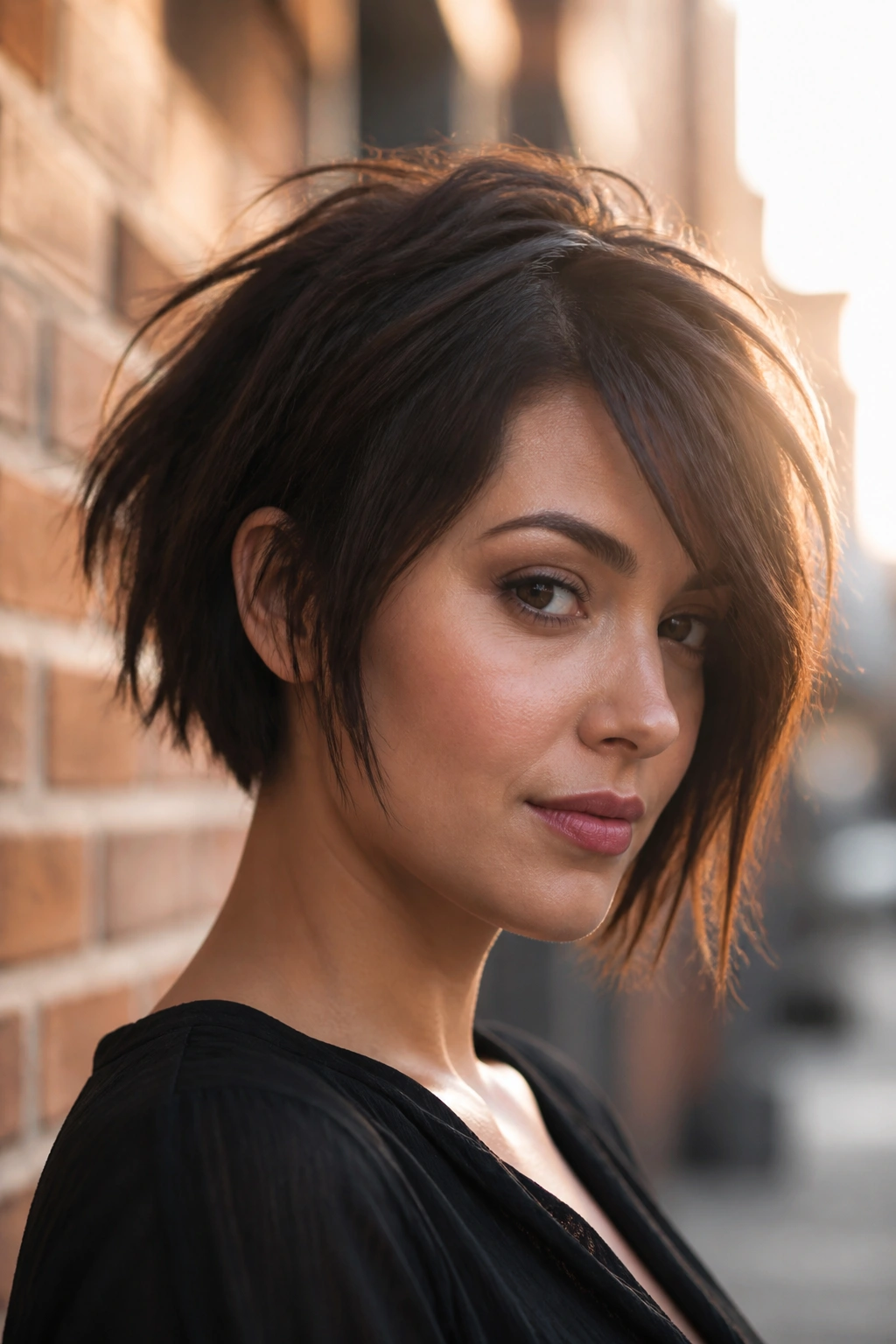
Disconnected layers give this cut a sharper, more modern feel. The lengths do not blend smoothly from one section to the next, which creates little shifts in the shape and keeps the bob from looking too round.
That irregularity can be useful on a round face because it breaks up the symmetry. The eye keeps moving. It doesn’t settle in one broad curve.
This style looks strongest when the pieces are deliberate. The choppiness should look designed, not hacked apart. Ask for a cut that keeps weight at the bottom while still leaving a few stronger interior pieces to show through.
If your hair is thick or straight, this can be a fun haircut. It has edge. It also has enough structure to avoid looking like a casual grow-out.
23. Sleek Bob with a Long Side Sweep
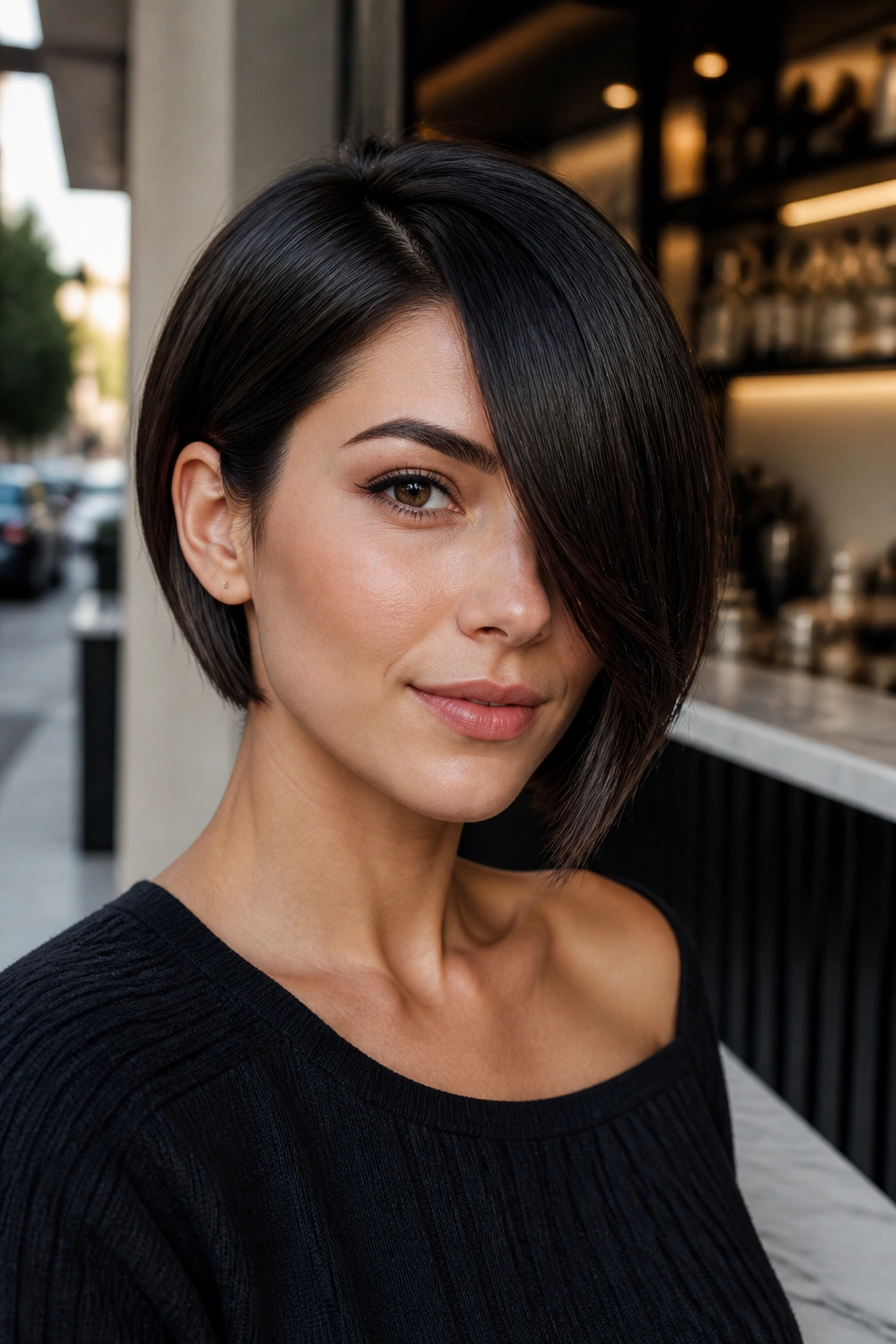
A long side sweep gives you drama without needing a lot of length. One side falls across the forehead or cheekbone, and that diagonal pulls the face downward in a clean line.
The bob itself should stay sleek through the back and sides. If the shape gets puffy, the sweep loses its effect. The whole point is contrast: smooth base, strong front movement.
Best Styling Move
Use a heat protectant, then direct the front section over with a round brush while the hair is still warm. Clip it in place for a few minutes if your hair resists direction. That extra step helps the sweep hold shape longer.
This is a good choice for evening wear, workwear, or anyone who wants the haircut to feel a little more dramatic than a standard bob. It still flatters the face. It just does it with more attitude.
24. Air-Dried Natural Texture Bob

If you live in your natural texture, this cut can be one of the most forgiving options. The asymmetry keeps the shape from becoming too even, and the natural bend keeps the haircut from looking stiff or overworked.
The important part is the cut underneath. It needs to be shaped so the hair falls longer on one side even when it air-dries. That usually means a careful angle through the front and enough removal in the back to stop the silhouette from puffing out.
A leave-in conditioner and a small amount of cream are usually enough. Scrunch lightly, then leave it alone. The more you touch it while it dries, the more frizz you invite.
This is the style for someone who wants to wash, air-dry, and get on with the day. No heroics. Just a cut that understands your hair.
25. Dramatic Asymmetrical Bob with an Extra-Long Front Panel
If you want the most obvious version of the shape, this is it. The shorter side keeps the back and one cheek area compact, while the extra-long front panel creates a strong diagonal that pulls the eye down and forward.
On a round face, that long front panel should start high enough to lift the eye line, but not so high that it feels cut off. A piece that falls below the chin or toward the collarbone usually gives the best effect.
What to Ask Your Stylist
- Keep the shorter side above the jaw.
- Let the longer side sit 2 to 4 inches longer.
- Preserve weight at the ends so the line stays visible.
- Use a side part to make the asymmetry read clearly.
This is not a timid haircut. It’s for someone who wants the angle to show. If you like a bob with a little bite, this is the one that earns the glance.
Final Thoughts
The best short asymmetrical bob for a round face is the one that changes the silhouette without making the haircut feel forced. A strong side part, a longer front piece, or a clean slope can do more than a pile of layers ever will.
I’d pay the most attention to where the front ends land. Near the chin or a touch below it usually works better than stopping right at the cheeks. That one detail decides whether the cut frames the face or crowds it.
And if you’re taking a photo to the salon, circle the part, the front length, and the nape. Those three points tell the story fast. The rest is styling.
