



A long asymmetrical bob can do more for a round face than most people expect. The longer front pieces pull the eye downward, the side part breaks the curve of the cheeks, and the angled shape keeps the whole cut from sitting like a neat little helmet around the jaw.
That is why long asymmetrical bob haircuts for round faces keep ending up on the shortlist when someone wants shape without giving up length. The cut is doing a few jobs at once: slimming the face, adding movement, and giving hair enough swing that it does not feel chopped off at the chin. One inch matters here. Two inches matter too. A cut that stops right at the widest part of the face can make everything look fuller than it is.
Some versions are sleek and polished. Others are shaggy, wavy, or slightly messy in a way that feels far more relaxed than a strict bob. The trick is choosing the kind of asymmetry that works with your hair texture, your styling habits, and the amount of volume you actually want around the cheeks. That is where the good stuff lives.
1. Long Asymmetrical Bob With a Deep Side Part
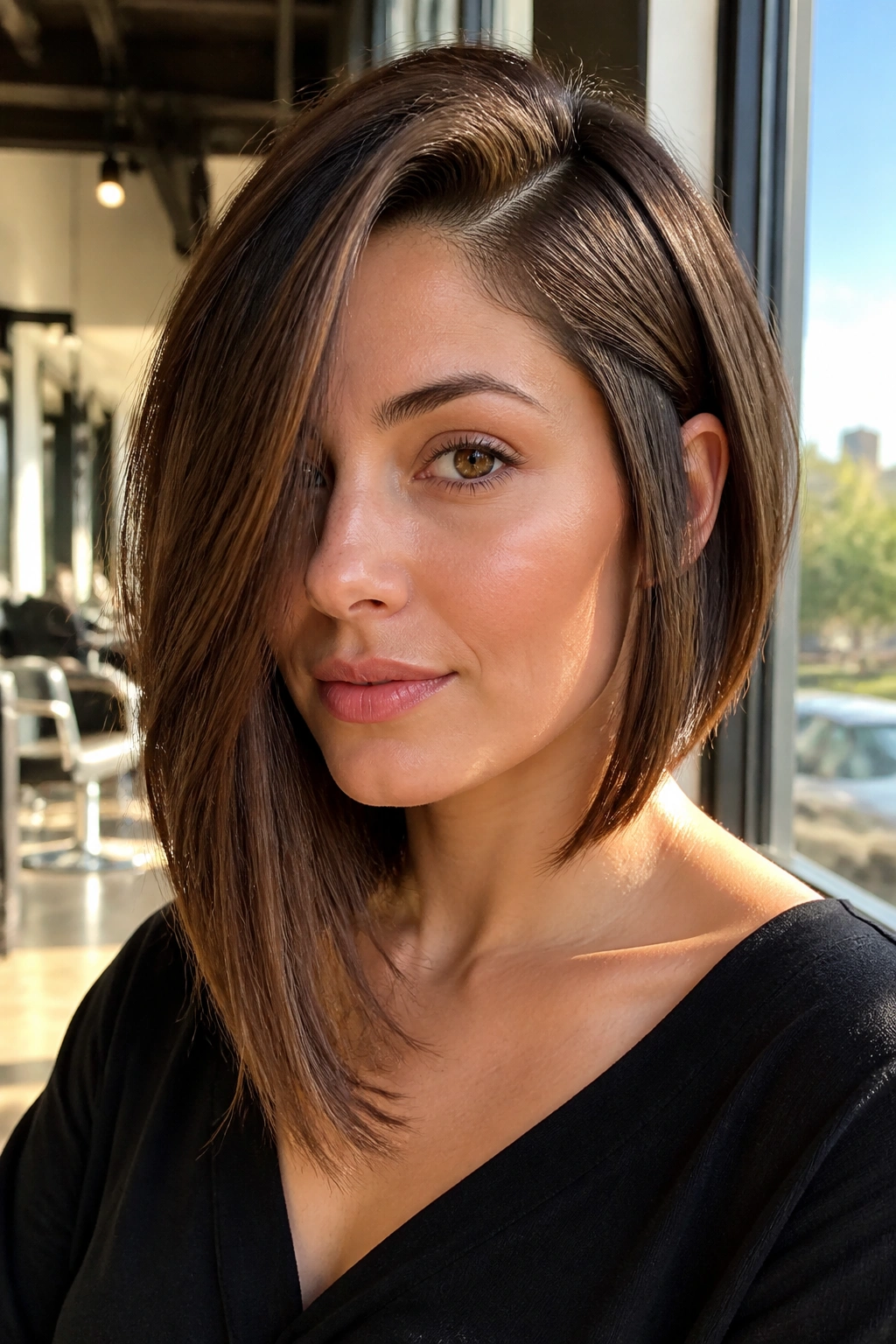
A deep side part is the fastest way to stretch the look of a round face. One side falls lower, the other side lifts a little at the root, and the eye stops reading the face as a perfect circle.
Why It Flatters a Round Face
The real magic is the diagonal line. It cuts across the widest part of the face instead of sitting straight across it, which is exactly what you want if your cheeks carry most of the width.
- Keep the longer side grazing the collarbone or landing just below it.
- Let the shorter side clear the jawline by at least 1 inch.
- Ask for soft internal layers, not chunky ones.
- Use a round brush only at the roots if you want lift without puffiness.
Keep the shorter side light around the cheekbone, not bulky. That one choice makes the cut feel sharper and less boxy.
2. Collarbone-Length Angled Bob With a Clean Edge
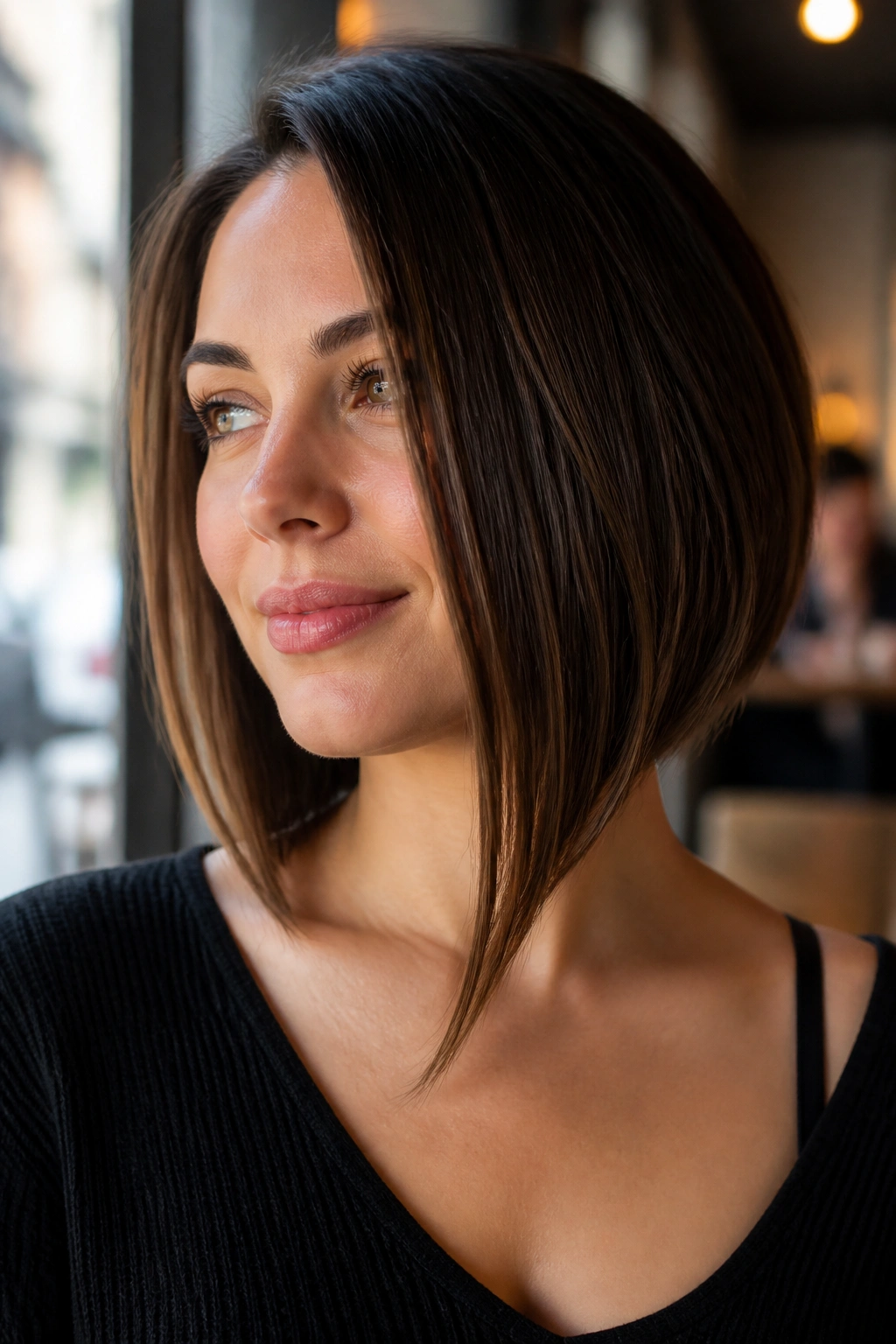
A collarbone-length angle gives you room to move and still keeps the face open. It is one of those cuts that looks easy even when it is doing a lot of quiet work in the background.
The front should sit noticeably longer than the back, but not so dramatic that the whole shape starts to tip forward. I like this version on thicker hair because the extra length takes weight off the sides, which helps the face look narrower. On finer hair, the same angle can look airy and neat if the ends are kept blunt.
If your hair flips out at the shoulders, ask for a slightly beveled edge instead of a razor-soft finish. That keeps the line tidy. And yes, a middle-of-the-road blowout works here, but a quick bend with a flat iron can be even better when you want the front to swing forward and down.
3. Soft Blunt Bob With Curtain Bangs
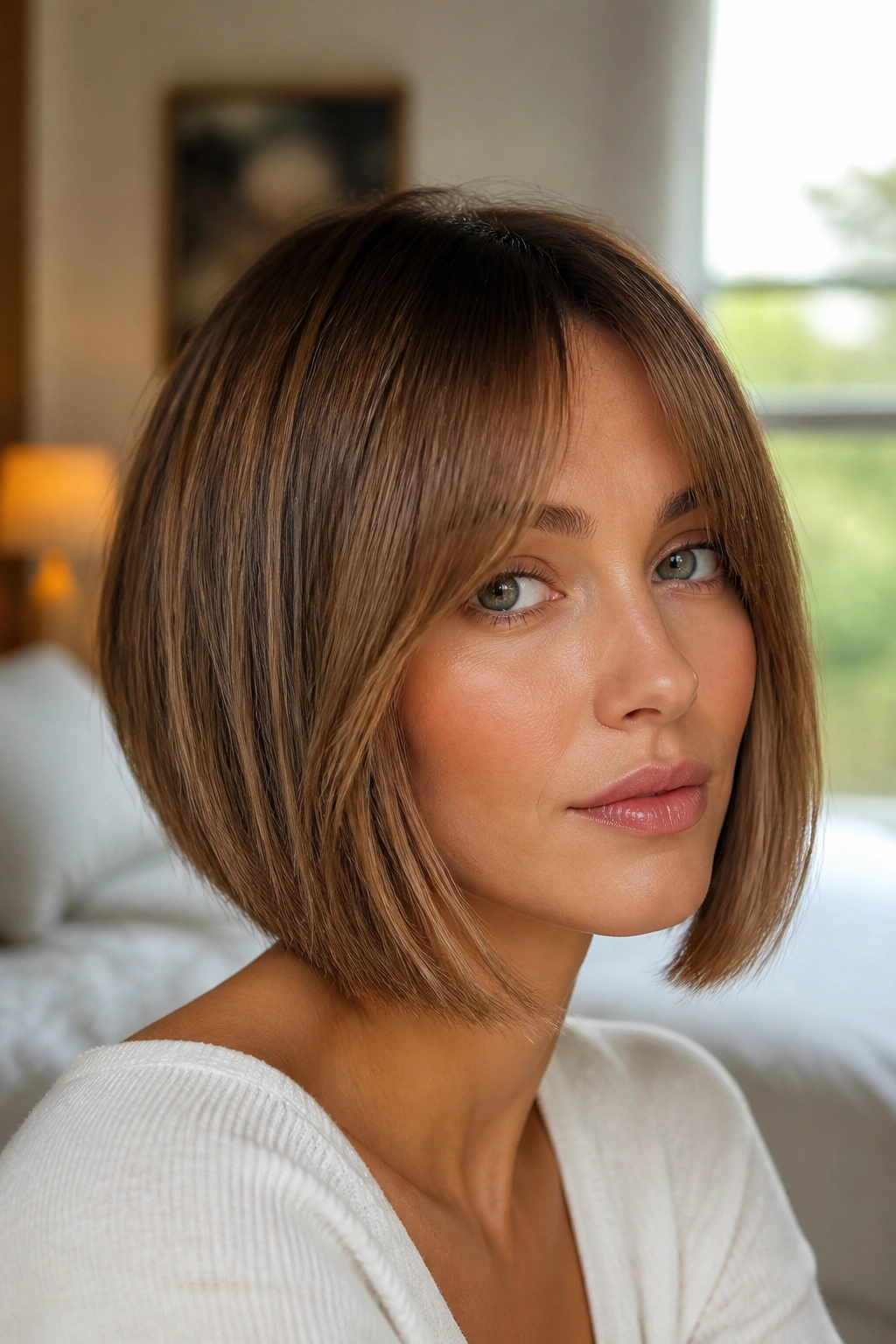
Can blunt ends work on a round face? They can, if the line sits low enough and the bangs split in the middle.
Curtain bangs do a very specific job here. They open up the center of the face, then drop toward the cheekbones in a way that draws attention down and out rather than across. That soft split is useful when you want a bob that feels polished but not severe.
What to Ask For
Tell your stylist you want a blunt perimeter below the chin with curtain bangs that start around the eyebrow or slightly lower. The front should still be longer than the back, even if the difference is subtle. Too much evenness makes the cut feel wide.
A quick round-brush blow-dry gives the bangs that soft fold. Keep the ends of the bob smooth, not flipped under too hard. That little restraint keeps the face from looking shorter than it is.
4. Razor-Cut Lob With Airy Ends
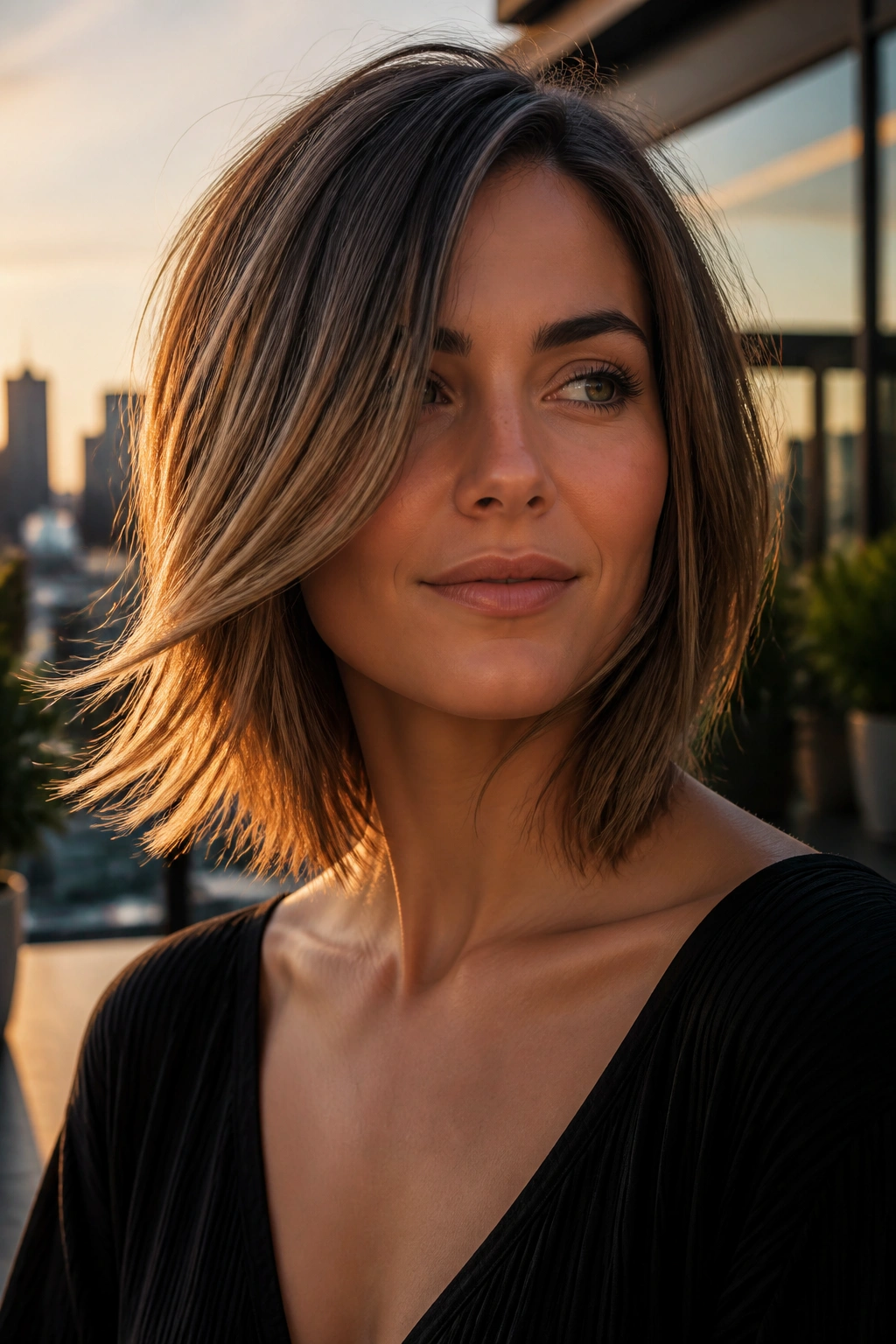
Picture hair that falls neatly until the last two inches, where the ends break into soft pieces. That little bit of air matters.
A razor cut can stop thick hair from looking heavy at the bottom, which is a common problem with long bobs on round faces. When the edge is too solid, the shape can sit like a shelf. Razor-soft ends move instead of sitting there, and movement keeps the face from feeling boxed in.
- Best on medium to thick hair
- Works well with a side part or off-center part
- Needs a light styling cream, not a heavy balm
- Skips the mushroom look that blunt fullness can create
If your hair is already fine, ask for a gentle razor finish rather than a full shred. Too much can leave the ends wispy and tired. The goal is feathered movement, not frayed tips.
5. Inverted Bob With a Smooth Nape
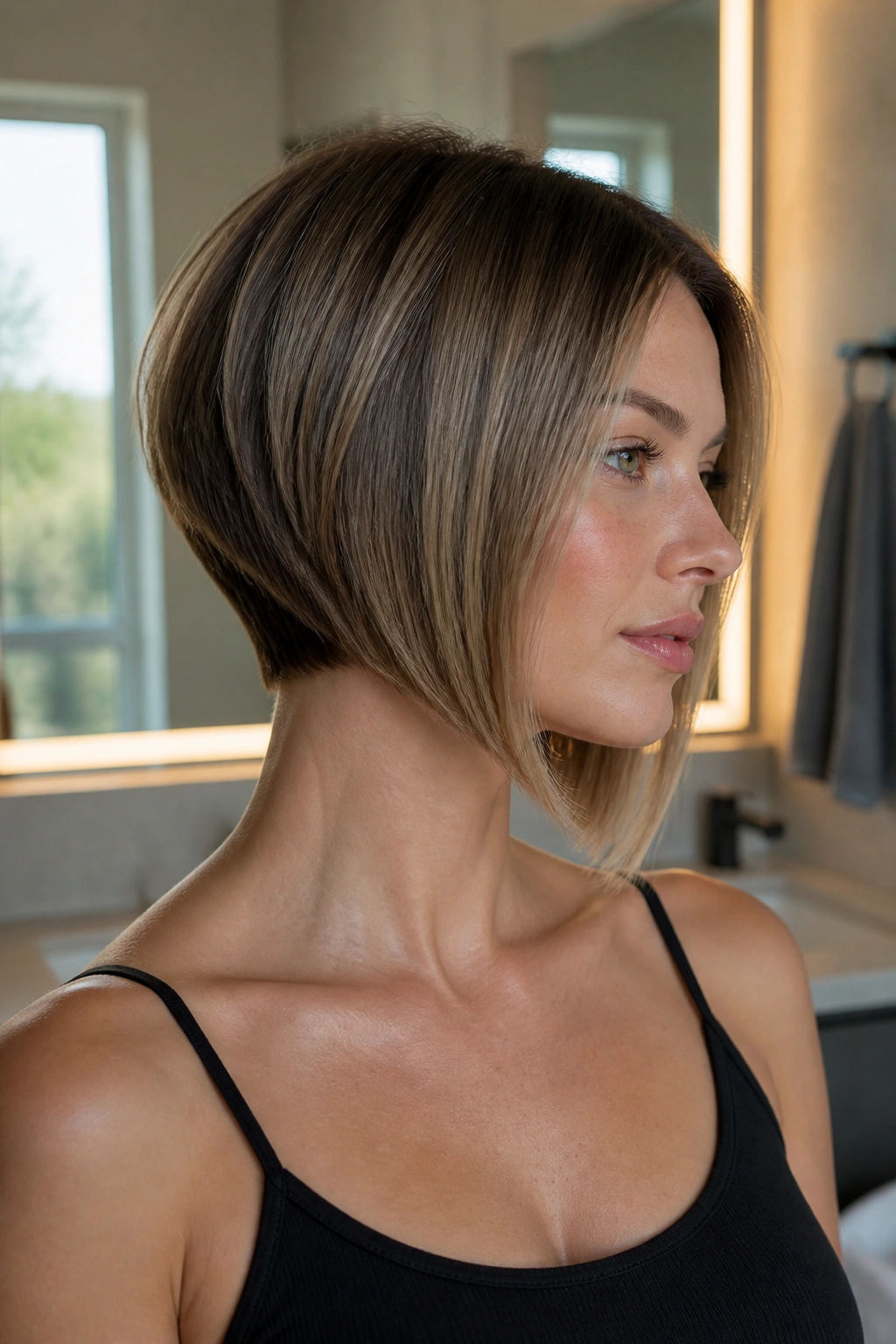
The back of this cut is shorter and tucked in close, while the front stays longer and swings toward the collarbone. That contrast is the whole point.
A smooth nape gives the cut a tidy base, which helps the longer front pieces feel even more deliberate. On a round face, that longer front line acts like a frame that pulls attention downward. On the other hand, if the back is piled up too high, the crown can start to look too tall and the face too soft.
Too much stack is a trap.
I prefer this shape when someone wants a bob that feels controlled. It works especially well if your hair falls flat at the back of the head and needs a bit of architecture. A paddle brush and a quick pass with a blow dryer can keep the nape sleek, while a small round brush at the front adds just enough bend to let the angle show.
6. Wavy Asymmetrical Bob With a Loose Bend
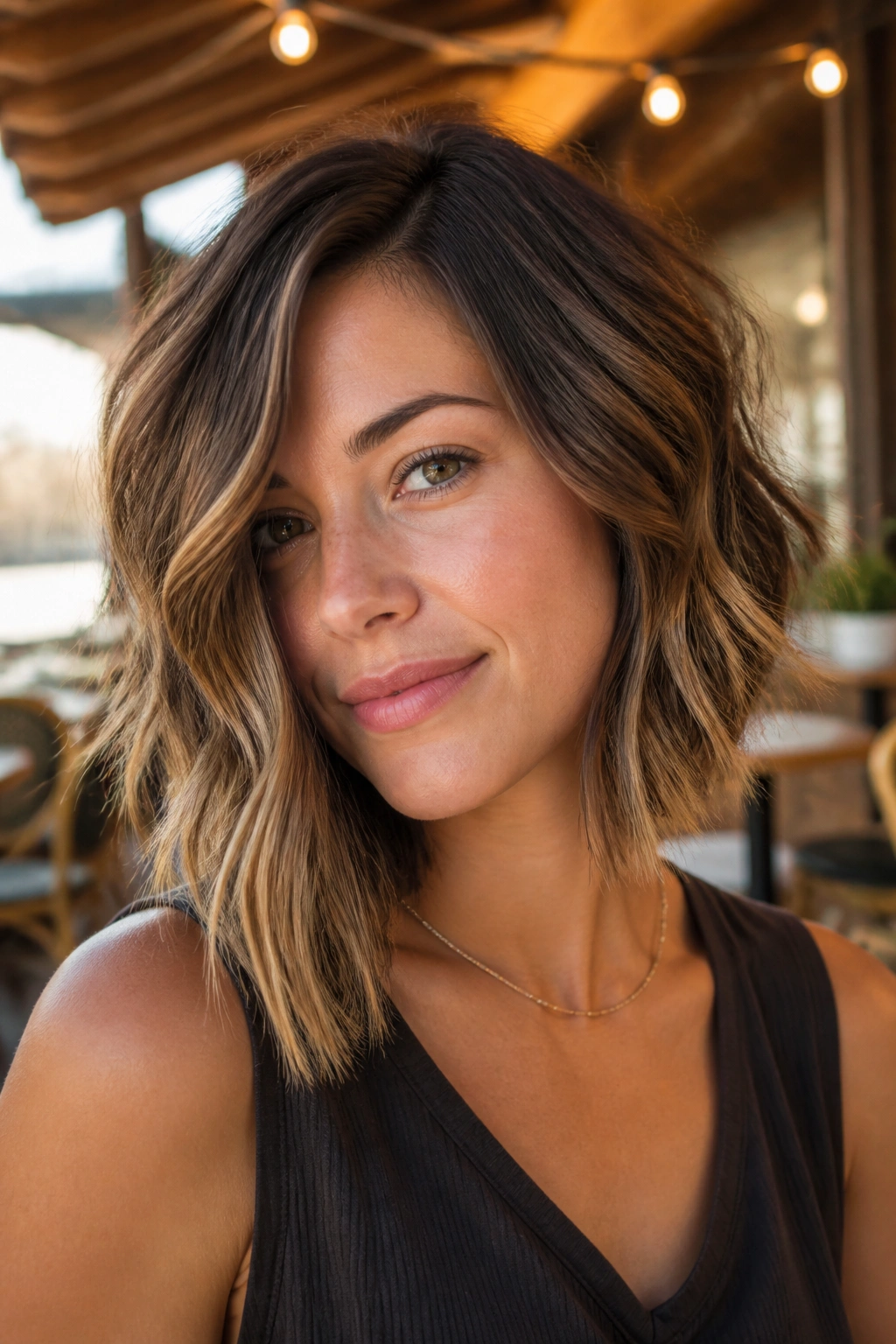
Unlike pin-straight versions, this one depends on movement. The waves break up the width of the cheeks and keep the cut from looking too exact.
A loose bend is especially useful if your face looks fuller when your hair is flat. Soft waves create vertical lines and soft diagonals at the same time, which sounds fussy but works fast in practice. The front pieces should still be longer on one side, but the wave keeps the shape from becoming too serious.
Best Styling Move
Wrap 1-inch sections around a curling iron, leave the last inch out, and let the curls cool before touching them. Then shake them apart with your fingers. That last part matters more than people think. Brushed-out waves can turn puffy if you do not let them settle first.
If your hair is naturally wavy, this cut is one of the easiest to live with. It does not need perfect symmetry to look finished.
7. Long Asymmetrical Bob With Stacked Back Volume
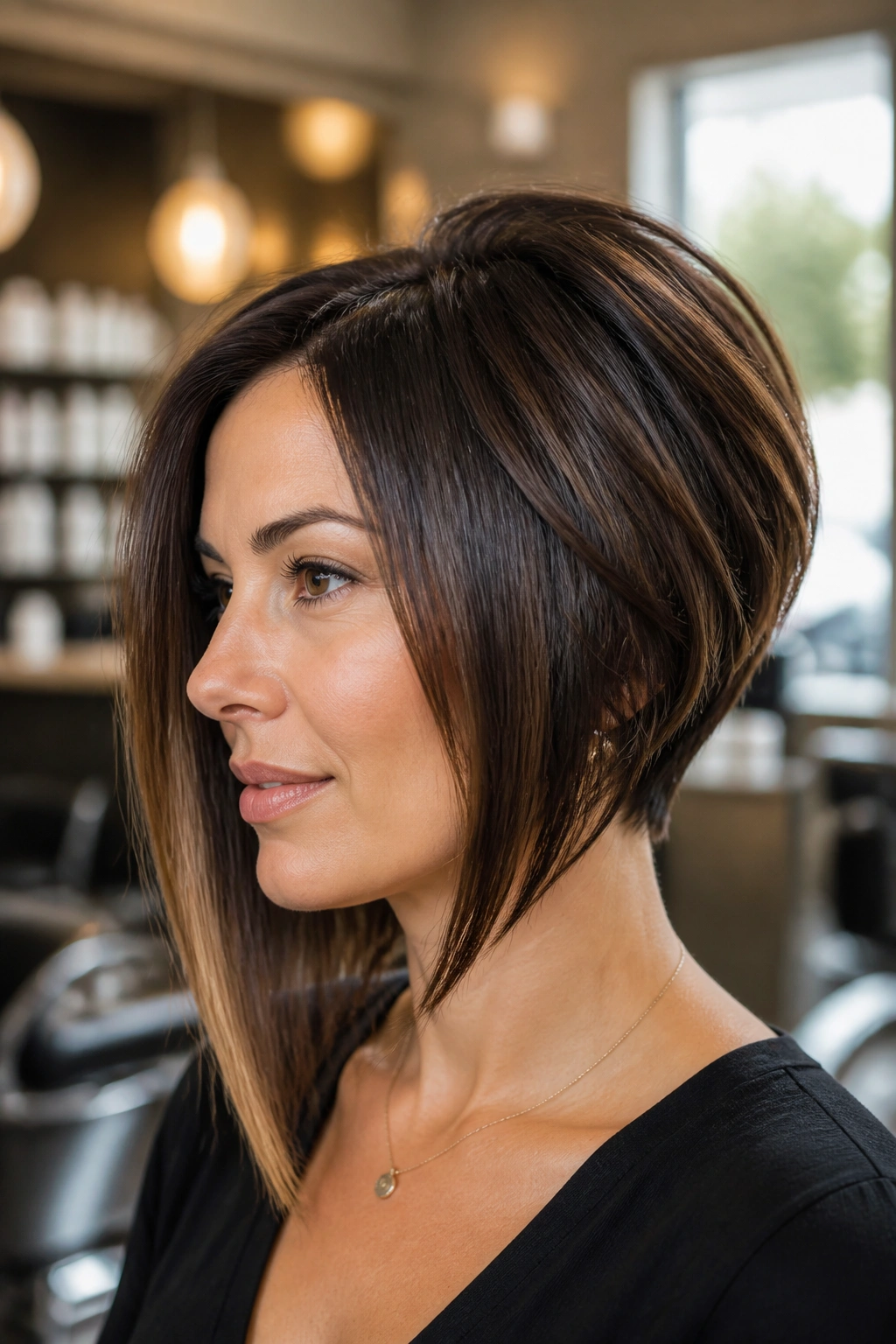
Stacked volume in the back can be a friend to a round face when it is handled with restraint. The lift belongs high at the crown and snug through the nape, not puffed out at the sides.
Why It Works
The back gives the silhouette structure, while the front stays long enough to create those lengthening lines near the jaw. That balance keeps the cut from feeling bottom-heavy, which is where a lot of bob shapes go wrong on fuller faces.
- Ask for light graduation at the nape.
- Keep the front pieces at least chin length, though collarbone length is safer.
- Use a root-lifting spray only at the crown.
- Avoid bulky side volume near the ears.
This is one of those styles that looks much better with a quick blowout than with air-drying alone. The stack needs direction. If you like a cleaner, more sculpted shape, this is a strong pick.
8. Tucked-Side Sleek Lob
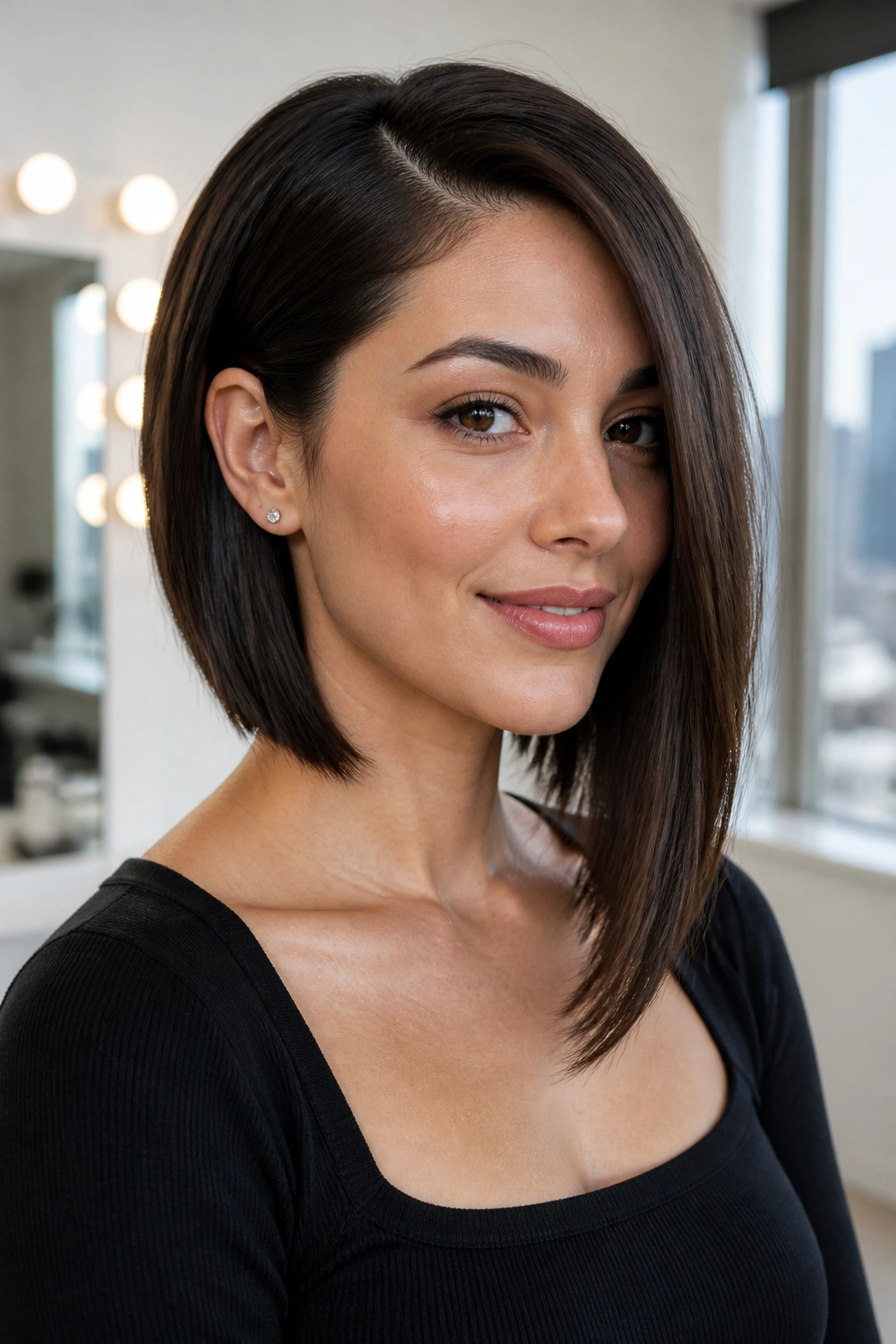
A sleek tucked side changes the whole mood of the haircut. One side is worn behind the ear, the other side hangs longer, and the asymmetry becomes obvious without shouting about it.
That tucked side opens up the face and shows a little cheekbone, which helps keep a round face from feeling surrounded by hair. The longer side acts like a soft curtain. Together, they make a neat line from temple to collarbone.
I would ask for minimal layering on this one. The cut should glide, not frizz out into pieces. A smoothing cream, a paddle brush, and a flat iron set on medium heat are usually enough. Keep the iron moving. Pausing too long at the front makes the ends kick in odd ways, and that ruins the clean shape fast.
9. Side-Swept Fringe Bob
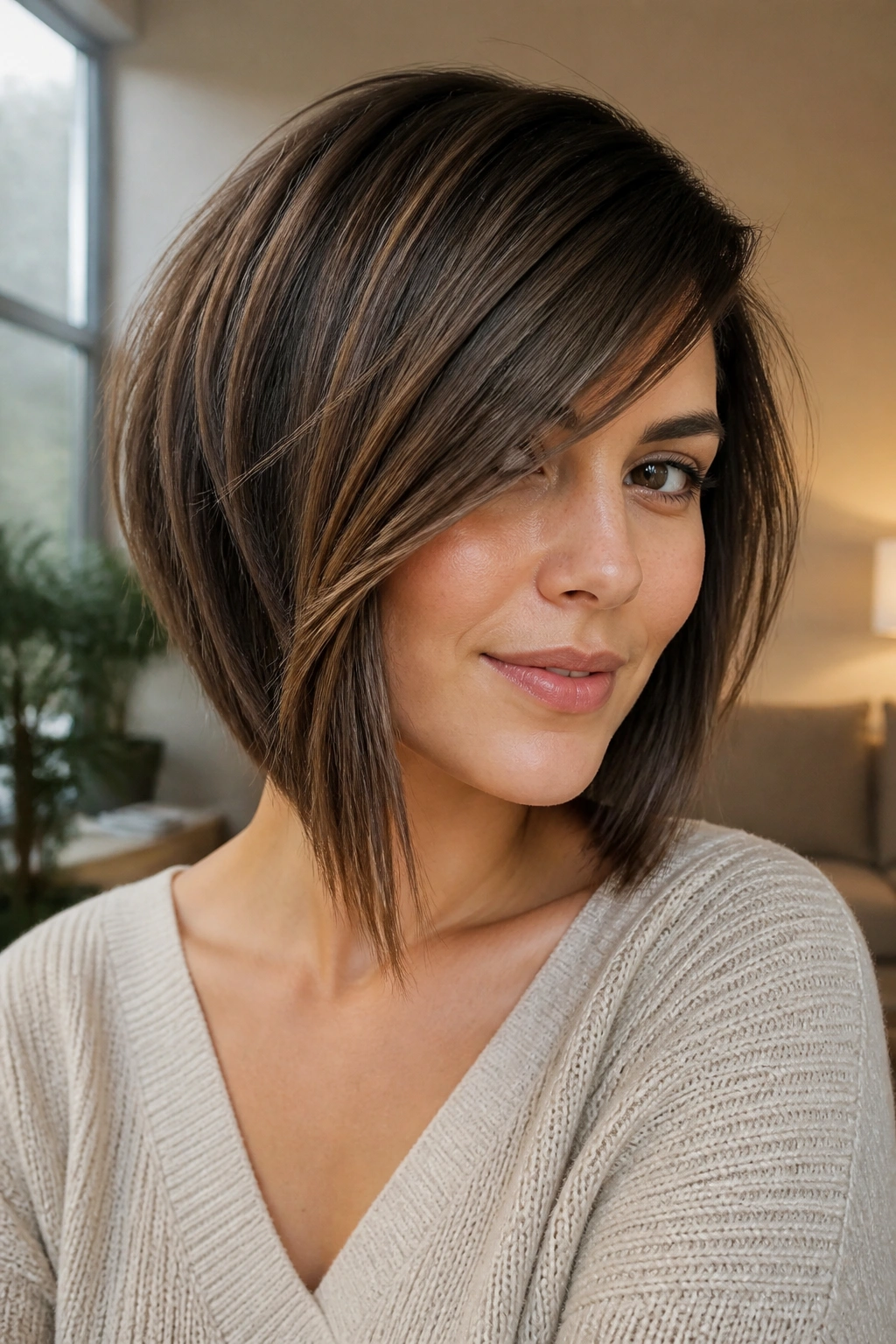
Can a fringe help a round face? Absolutely, if it sweeps instead of sitting straight across.
A side-swept fringe creates a diagonal from forehead to cheek, which is useful because straight-across bangs can shorten the face and bring more focus to the widest area. The longer bob underneath keeps things balanced, so the fringe does not swallow the whole cut.
How to Ask for It
Tell your stylist you want a long side fringe that blends into the front layers, not a separate chunk of hair. The shortest point should hit somewhere between the brow and cheekbone, depending on how much forehead you want to show.
The rest of the bob should stay angled, with the front side just long enough to brush the collarbone. If the fringe is too dense, it can feel heavy. Lightness is better here. A side-swept fringe should move when you turn your head, not sit there like a piece of paper.
10. Choppy Lob With Piecey Ends
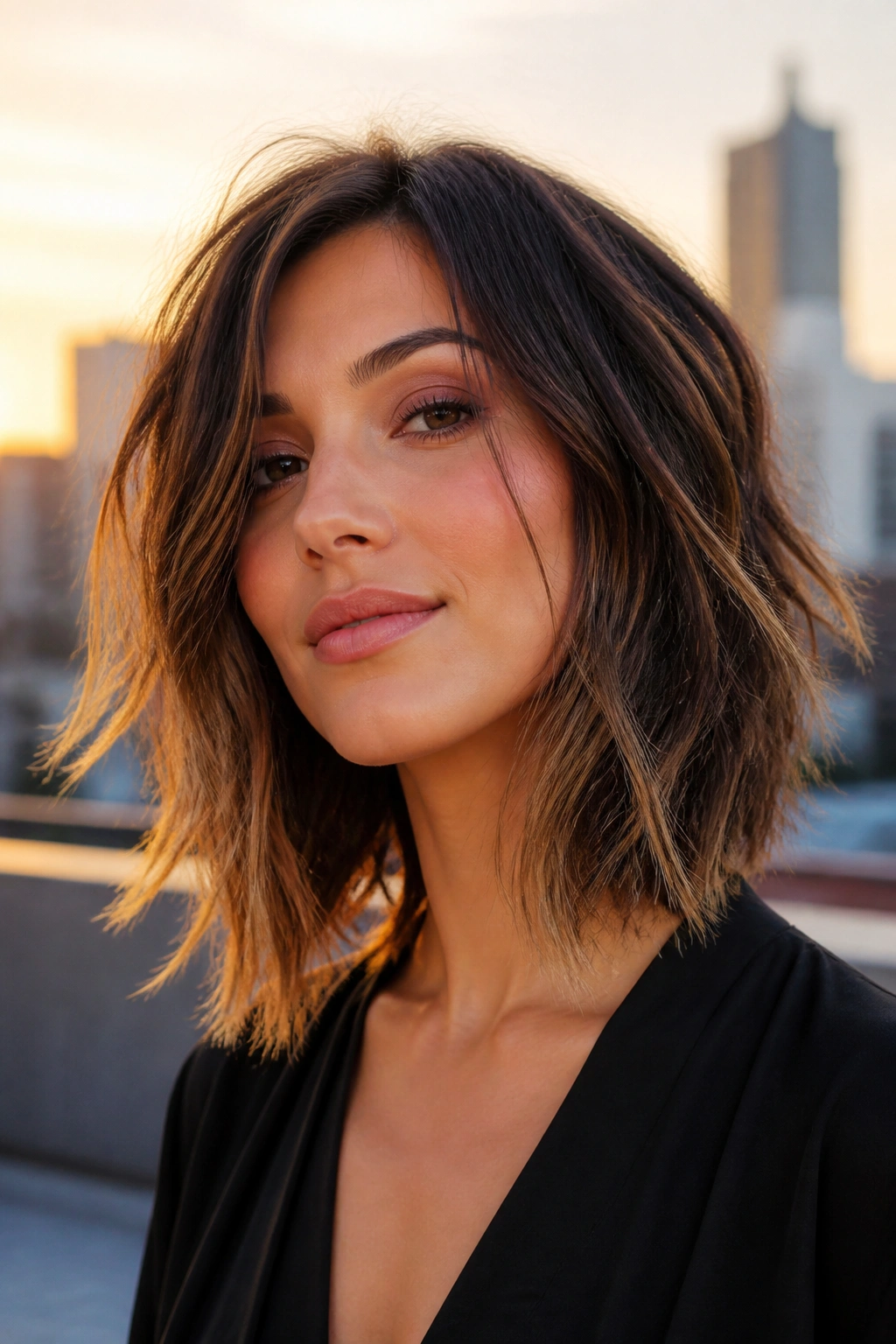
Imagine a bob that looks slightly broken up at the bottom in the best possible way. That is the choppy lob.
The piecey ends keep the cut from feeling round and solid, which helps a round face look a little longer. This cut is especially good if your hair has some natural texture and does not like being forced into a smooth shape every morning. The asymmetry can be subtle or obvious, but the choppiness is what gives it energy.
- Best when the ends are cut with point-cutting or light razor work
- Works on straight or wavy hair
- Needs a texturizing spray at the mid-lengths, not the roots
- Looks best when the front is left a little longer than shoulder grazing
One warning: too many short layers near the cheeks can puff the face back out. Keep the texture lower and outward, not wide at cheek level. That keeps the shape lean.
11. Curly Asymmetrical Bob With Shape Control
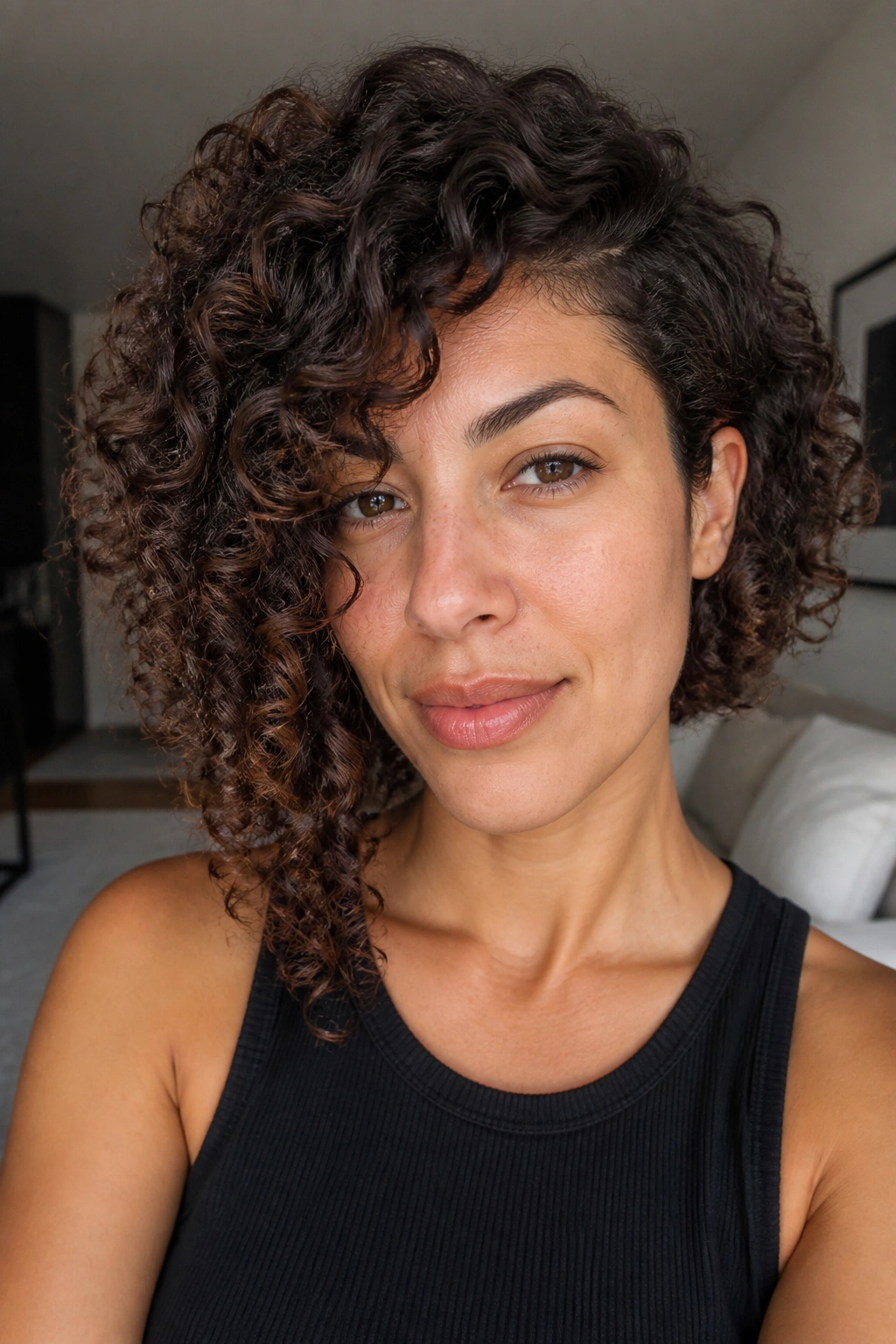
Curls need room. A round face needs length. This cut gives both if the shape is handled carefully.
The best curly asymmetrical bob is not a pile of layers. It is a controlled outline with one side left slightly longer so the curls can fall downward instead of spreading outward. That matters because curls have a habit of building width in the exact places you do not want it.
A dry cut often helps here. Curly hair shrinks, and shrinkage can turn a flattering lob into a chin-length puff if nobody plans for it. The front pieces should still stretch below the jaw, even after the curls spring up. That length is the buffer. Without it, the face can look shorter.
A little cream and a diffuser are usually enough. Skip heavy brushing once the hair is dry. It breaks the curl pattern and adds volume in the wrong spots.
12. Subtle Undercut Lob
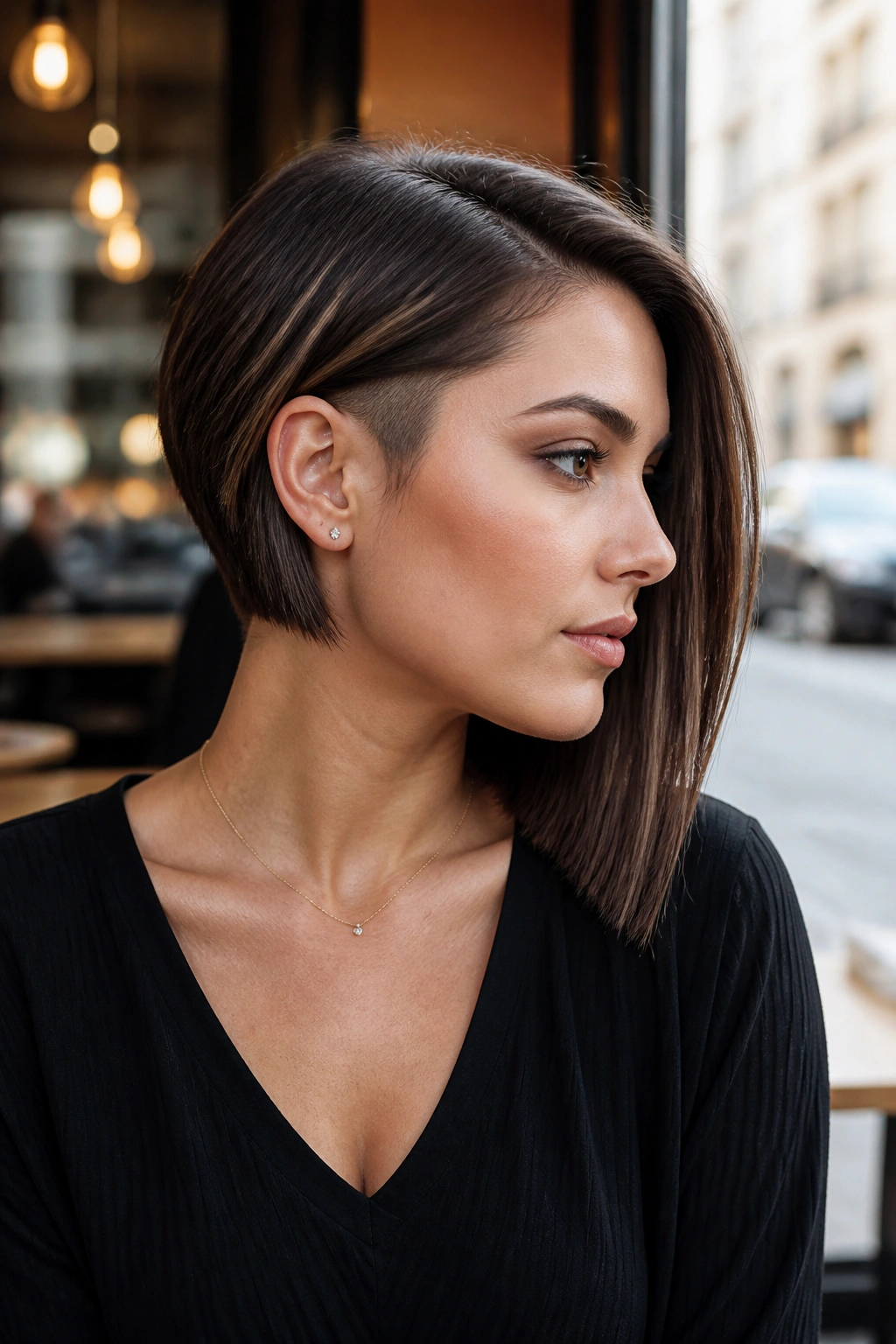
Unlike a heavy one-length bob, this version removes bulk where the hair stacks up most, usually at the nape or lower back of the head. That hidden reduction helps the front fall longer and cleaner.
It is a smart choice for dense hair that keeps bulking out at the neckline. On a round face, less bulk at the back means more visual length in front. The haircut still reads like a bob, but it behaves more like a lighter shape. That is the appeal.
If you like your hair tucked behind the ear on one side, this cut can be a nice fit. The hidden undercut keeps the silhouette from feeling too thick when the hair is moved around. Ask for a soft transition, though. A sharp shave line is a different look entirely, and it can fight the softness you probably want from a long asymmetrical bob.
13. Feathered Bob With Soft Layers
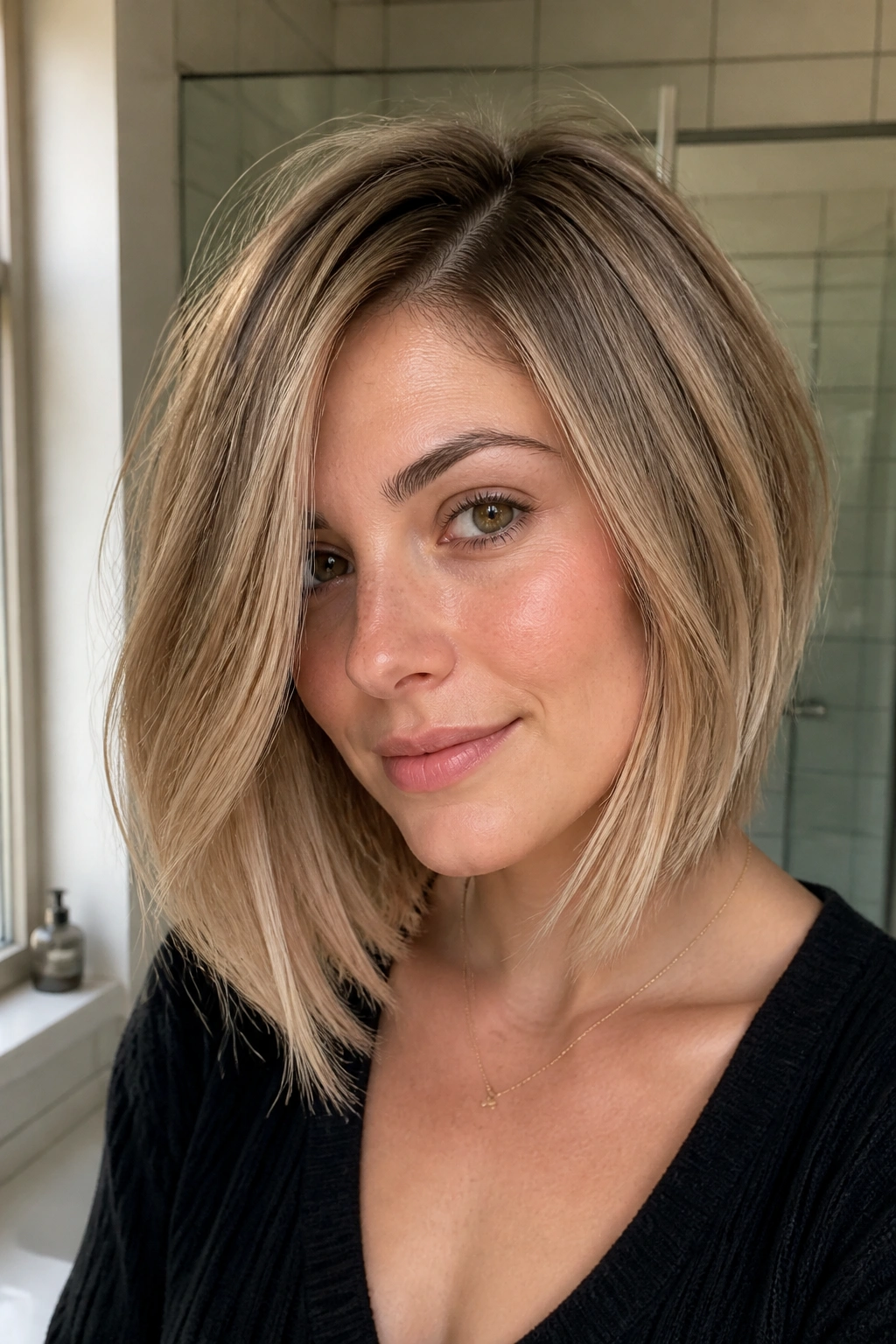
Feathering is one of those old-school ideas that still earns its place when the haircut needs movement without bulk. The ends slip instead of sitting in one hard line.
What Makes It Different
A feathered finish is lighter than a blunt edge and less broken up than a choppy lob. That middle ground is handy on round faces because it lets the hair bend away from the cheeks without adding too much width.
The front should still be longer on one side, but the layers can be soft and blended. If your hair is medium texture, this version gives a nice swing when you turn your head. If it is thick, the feathering keeps the lower half from feeling heavy.
A small round brush is enough. You do not need a complicated blowout. Aim the dryer downward through the ends, then curve the front pieces just enough to show the angle. Too much curl turns the whole thing into a helmet. A little curve is all it needs.
14. Long Asymmetrical Bob With a Deep Side Sweep
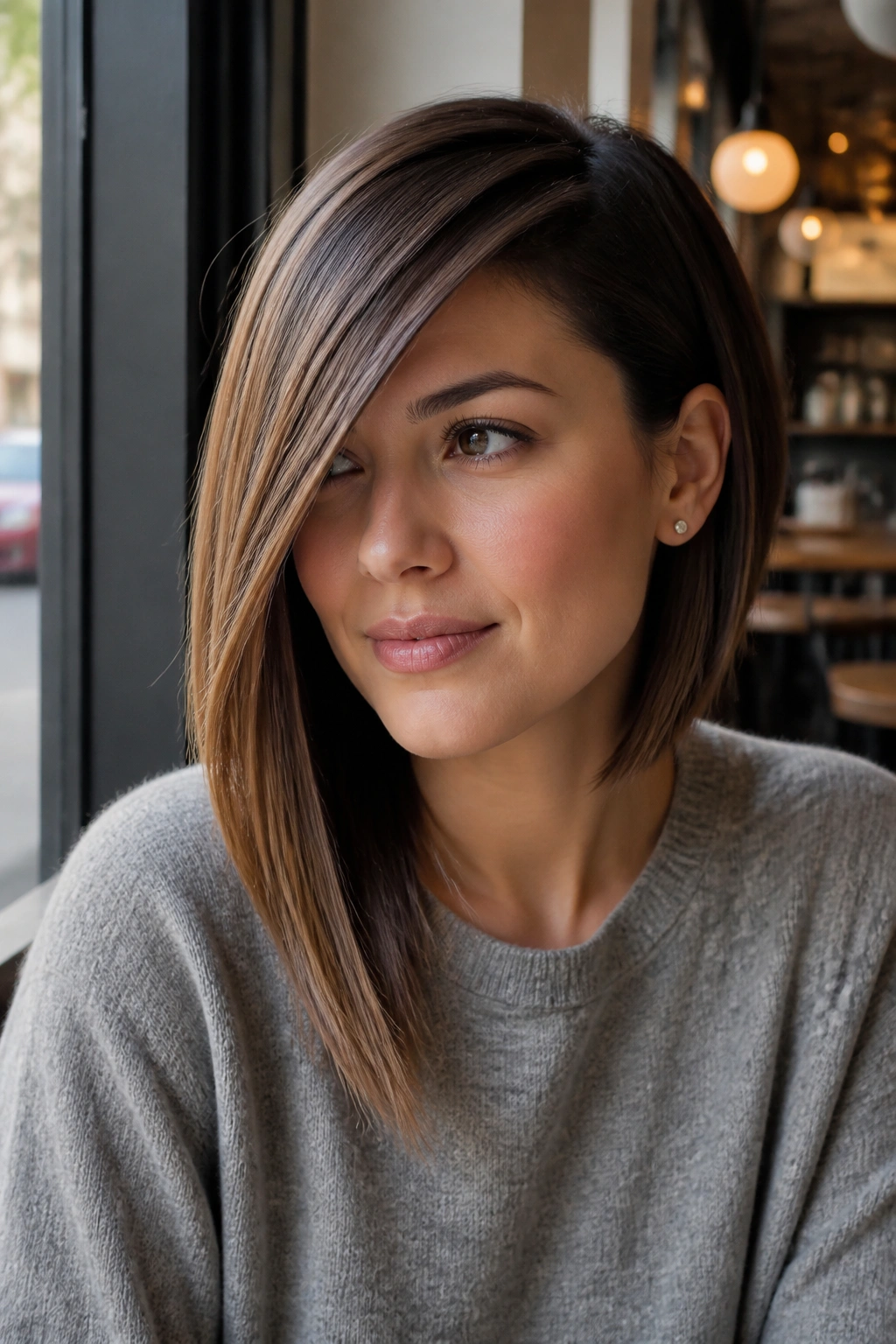
A deep side sweep gives you the same face-lengthening effect as a strong part, but with more softness through the front. The hair falls across the forehead and then slides toward the longer side, which helps break up the width of a round face.
This cut has a smooth, almost cinematic look when the front is kept glossy and the ends are blunt enough to hold their line. It is a good choice if you want something polished without looking stiff. The short side should still be visible. If it disappears completely, the asymmetry loses its point.
A flat iron works well here, but use it lightly. Bend the front sections just once, then leave them alone. Overworking the pieces makes the cut look too styled. The best version has movement near the cheek and a clean fall near the collarbone.
15. Angular Bob With a Strong Front Point
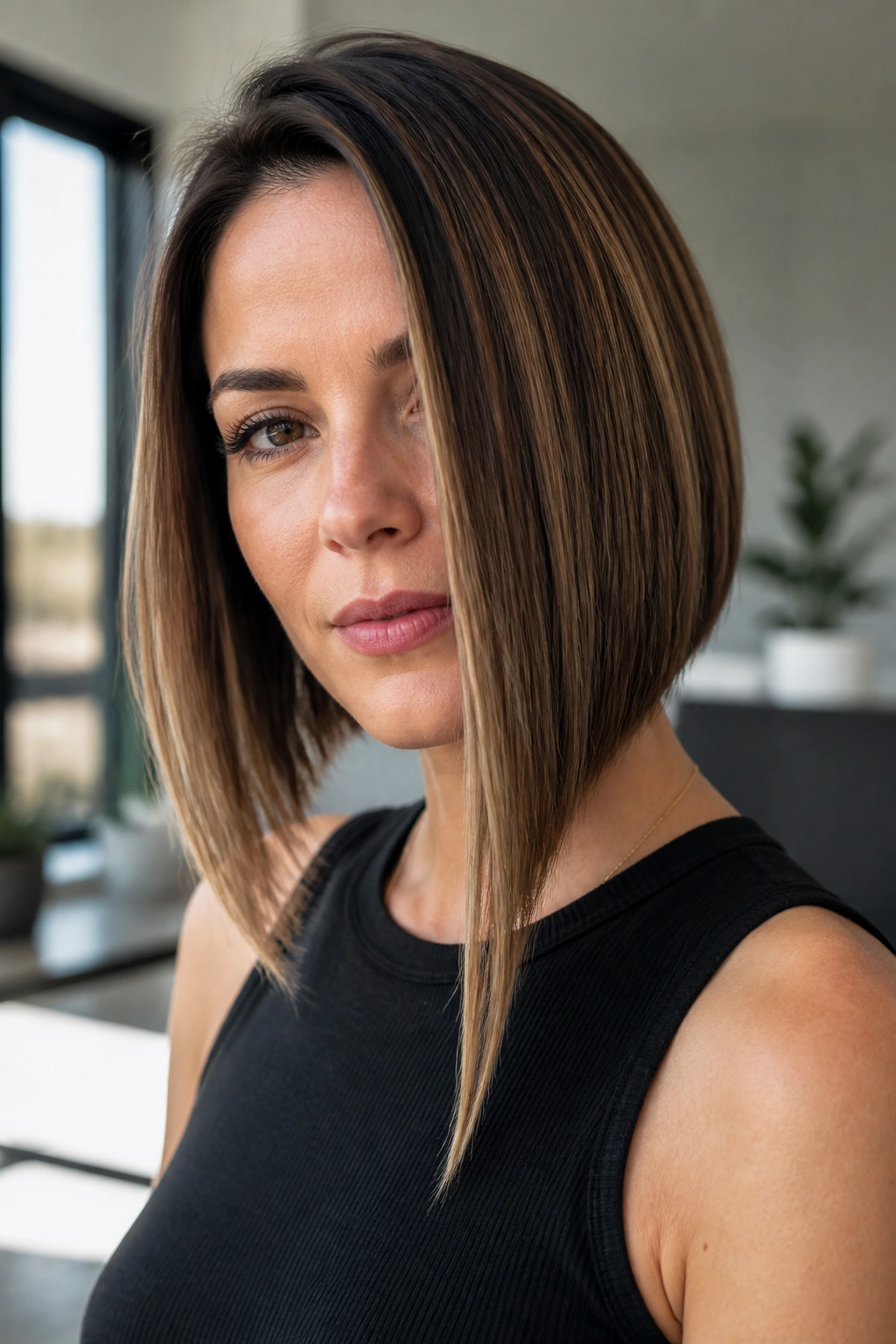
What happens when the front gets noticeably longer than the back? You get a sharper angle, and that can be a gift for round faces.
The strong front point creates a line that leads the eye down and away from the cheeks. It gives the face a slimmer read without needing a lot of layering or texture. This is one of the more graphic choices on the list, which means it suits someone who likes structure. Not everyone does. Fair enough.
Ask Your Stylist For
Ask for a dramatic but still wearable angle, with the shortest back sitting at the nape and the front reaching the collarbone or just past it. The perimeter should stay clean. If the edge gets too shredded, the whole shape loses impact.
This cut works best when the styling is neat. A smooth finish shows the angle. Loose waves can soften it later if you want, but the cut itself should be crisp.
16. Air-Dried Shaggy Lob
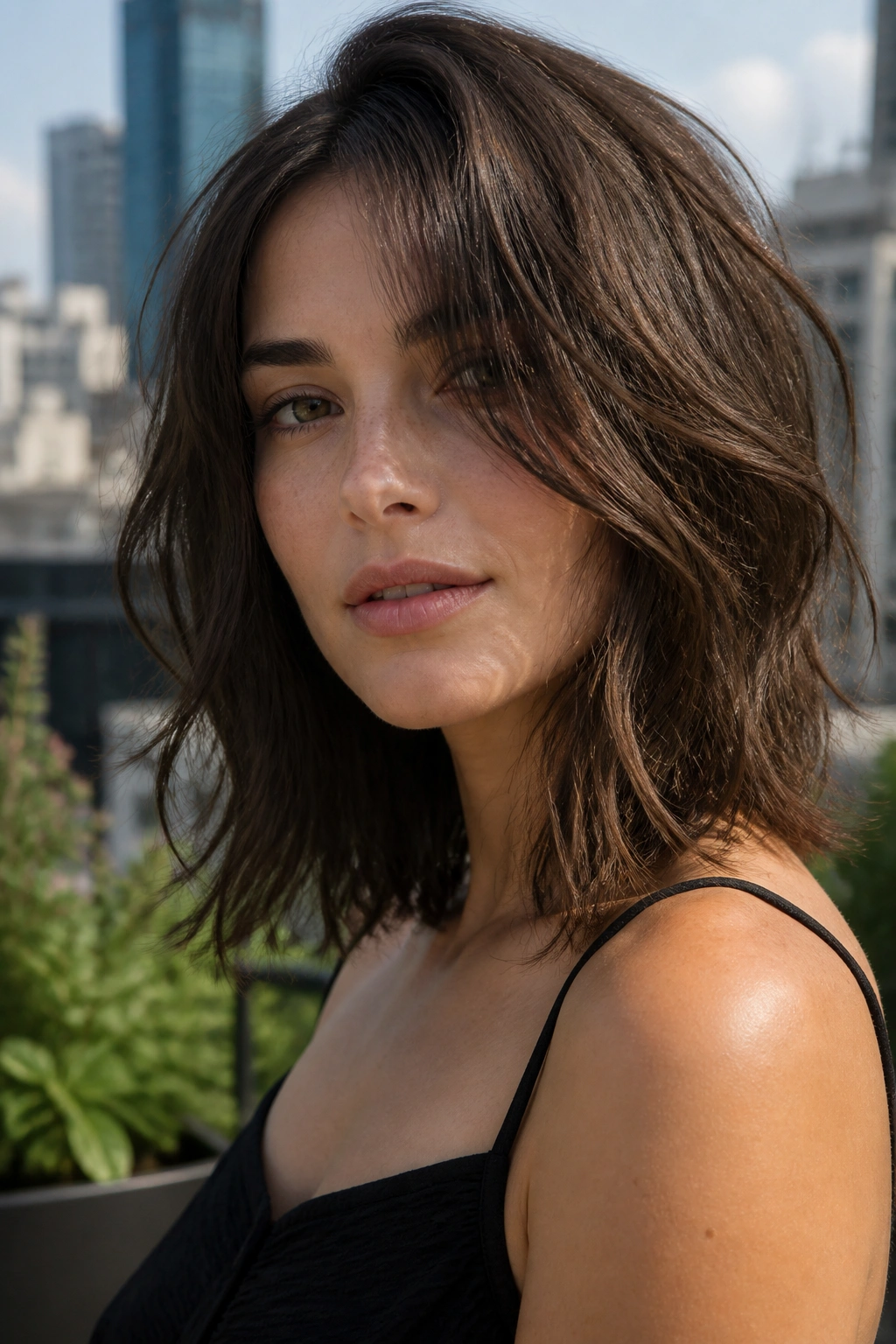
A shaggy lob is the opposite of fussy. It works with texture, not against it.
Picture a cut with long layers, soft movement, and a slightly undone edge that keeps the face from feeling boxed in. On a round face, the extra length in front and the broken-up texture near the ends both help stretch the outline. It is an easy cut to live with if you do not want to blow-dry every day.
- Best for naturally wavy hair
- Nice with a light mousse or curl cream
- Needs layers that start below the cheekbone
- Works with an off-center part or loose side part
If your hair is very straight, this cut can still work, but you will need a little bend with a diffuser or wave spray. Otherwise it may fall flat and lose the shape. A shaggy lob should feel relaxed, not limp.
17. Polished Blowout Bob With Face-Framing Layers
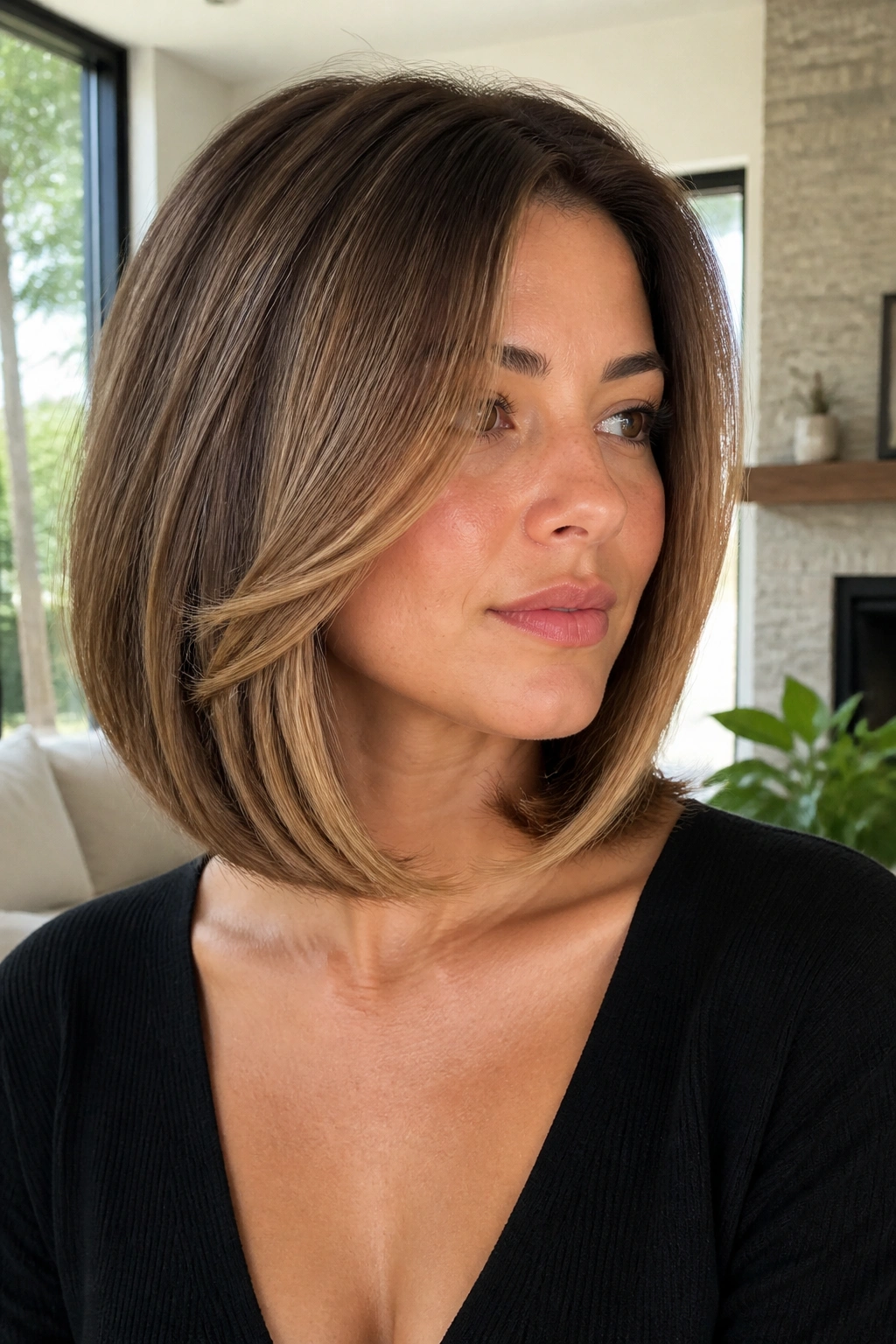
A polished blowout changes the whole attitude of an asymmetrical bob. The shape becomes softer, smoother, and a little more lifted at the crown.
Volume belongs at the crown.
That is the line I would keep in mind here, because once the fullness starts sitting at the sides, a round face can look wider. The face-framing layers should begin lower, near the jaw or just below it, then taper toward the longer front. That keeps the silhouette long and tidy.
A medium round brush, a heat protectant, and a few careful passes are usually enough. Roll the front away from the face so the ends curve outward in a controlled way. The point is not big hair. The point is hair with shape that still falls neatly.
18. Collarbone Lob With Minimal Graduation
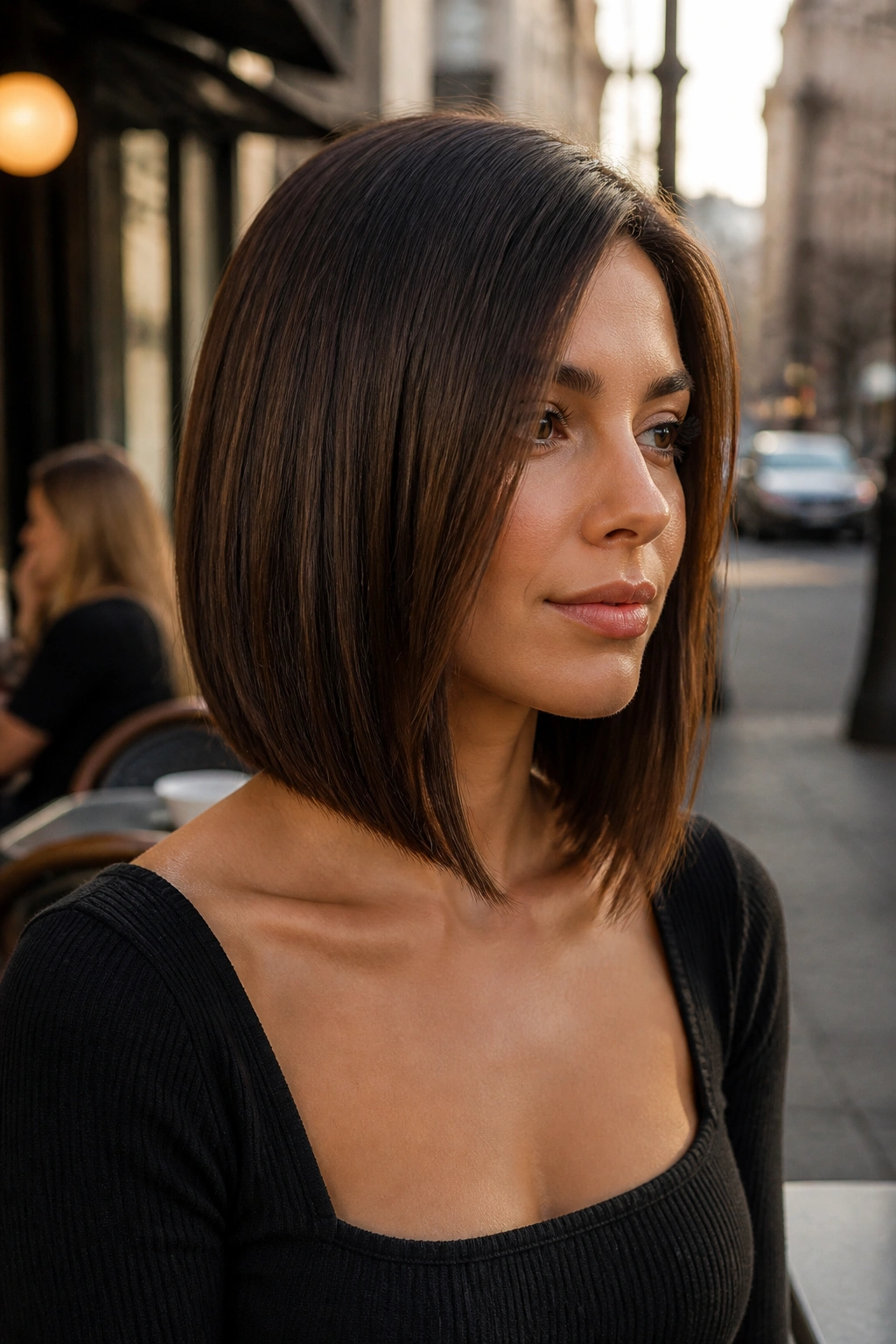
This one is for people who want a cleaner line and do not want a lot of obvious stacking or choppy texture. The graduation is there, but quietly.
Compared with more dramatic asymmetrical cuts, this version keeps the back only slightly shorter and lets the front do the talking. That makes it good for round faces that need length but not too much height. The cut feels calm. Uncomplicated. Easy to dress up or leave plain.
If your hair is straight or only slightly wavy, this is a strong everyday option. It grows out well, which matters more than people admit. A haircut that still looks decent at 8 weeks is worth more than a perfect cut that goes odd in 3.
Ask for a subtle angle and a blunt-ish finish at the ends. That keeps the line from puffing out at the sides.
19. Off-Center Bob With a Hidden Short Side
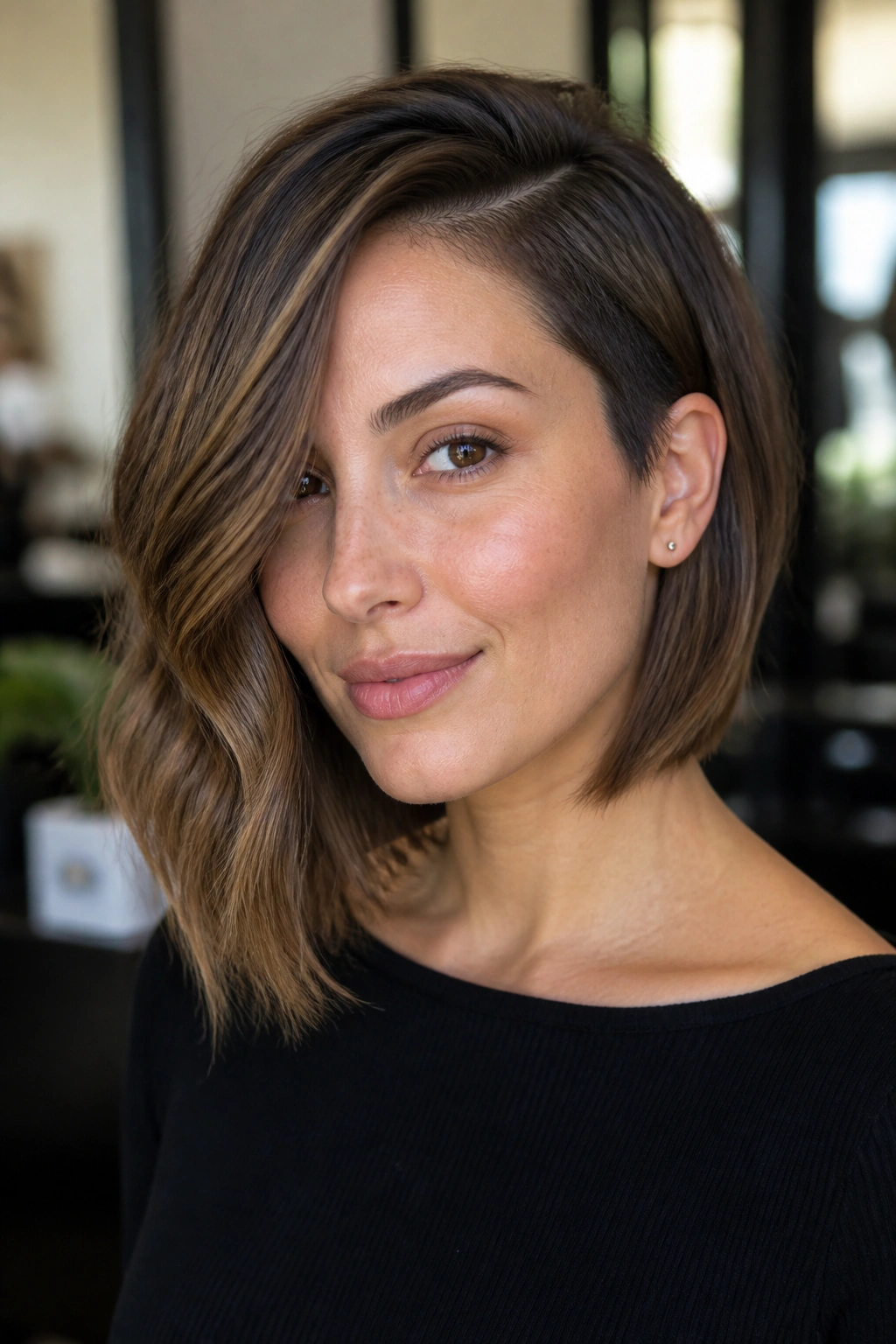
A slight shift in the part can do more than a loud haircut. Move the part a little off center, keep one side shorter, and the face instantly reads less symmetrical.
Why It Works So Well
Round faces usually benefit from any line that creates movement away from the cheeks. An off-center bob does that without looking extreme. The hidden short side gives the cut its shape, while the longer side hangs down and quietly lengthens the face.
- The part should sit about 1 inch off center, not way over.
- The long side should touch the collarbone or the top of it.
- The short side can tuck neatly behind the ear.
- Light waves help, but straight styling works too.
I like this on people who want asymmetry without a dramatic front angle. It is subtle enough for daily wear, which is why it stays in rotation.
20. Long Asymmetrical Bob With Soft Ends and a Clean Finish
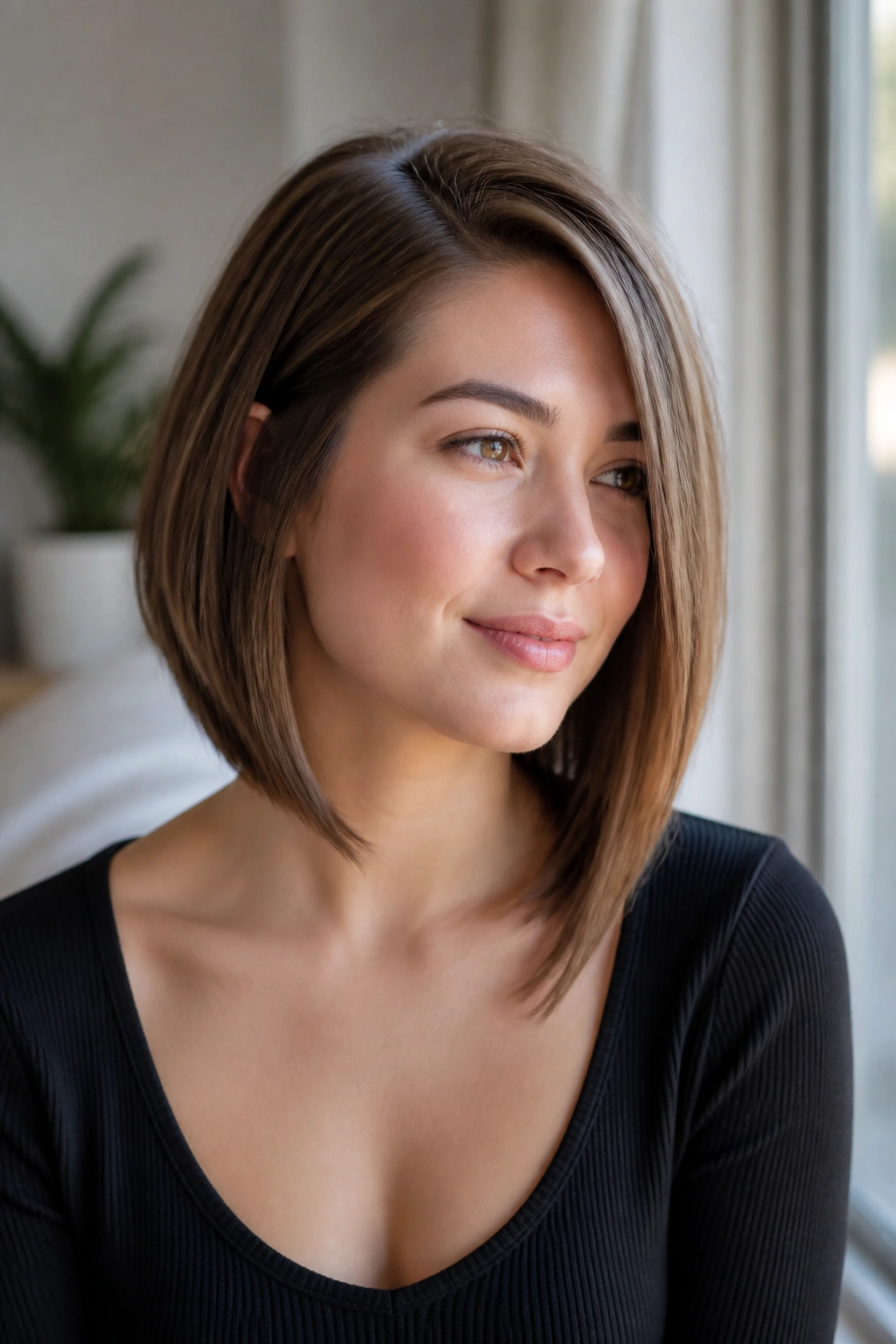
This is the most forgiving version on the list, and I mean that in a good way. It keeps the front long, the shape clean, and the ends soft enough that you do not have to baby it every morning.
If you want a haircut that flatters a round face without demanding a big styling routine, start here. The length below the jaw helps the face look longer. The asymmetry gives the eye a direction to follow. The soft ends keep the whole thing from feeling stiff or too sharp.
A center-ish part can work here if the front is long enough, but a slight side part usually gives better shape. Ask for enough front length to brush the collarbone, and keep the back tidy so it does not puff out. That is the whole balance. Simple. Clean. Hard to mess up if the cut is done well.
