



Embracing silver hair is a significant transition. You might have noticed your hair texture changing right alongside the color. For many, grey hair feels coarser, drier, or simply harder to tame, while simultaneously losing the density it had in earlier years. That’s why the bob remains the ultimate silhouette for silver-haired women with fine hair. It’s structural, it’s intentional, and it stops the hair from looking wispy at the ends.
When you work with fine hair, length is often your enemy. The longer the hair, the more the weight pulls it flat against the scalp, exposing the skin underneath. A bob solves this immediately by creating a clean, crisp perimeter that creates the illusion of fullness. By choosing the right shape, you can manipulate how light hits your hair, maximizing the silver tones and hiding the areas where density might be lacking. Let’s look at the best cuts to get you there.
1. The Classic Precision Blunt Bob
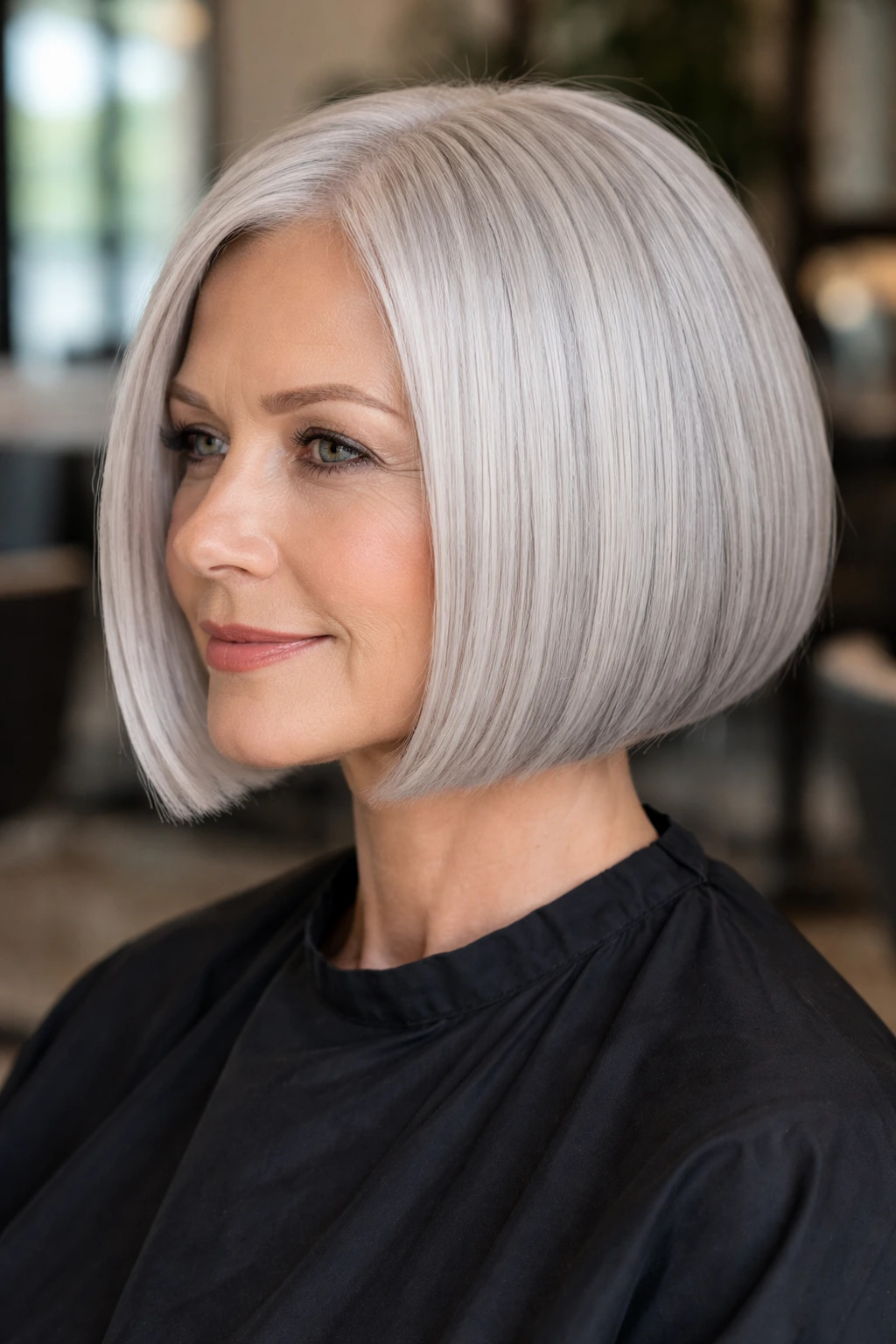
This is the gold standard for fine hair. By cutting the ends perfectly straight across—usually around the jawline—you force the hair to look as thick as possible at the bottom. There is no thinning out, no feathering, and no layering to remove weight.
Why It Works for Fine Strands
When your hair is fine, the tips are often the most fragile part. A blunt cut removes those wispy, see-through ends instantly. It creates a solid line that gives your eye a place to focus, making the hair look denser.
Styling for Maximum Impact
- The Technique: Use a paddle brush and a blow dryer to pull the hair taut and straight.
- Product: A light smoothing cream or a shine serum is essential here to keep the silver strands looking polished, not frizzy.
- Maintenance: Expect a trim every six to eight weeks. Because this cut is so geometric, it loses its shape quickly once it grows out.
Pro tip: Avoid using heavy oils. They will cause your fine hair to separate into clumps, which ruins that solid, blunt perimeter you just paid for.
2. The Stacked Layered Bob
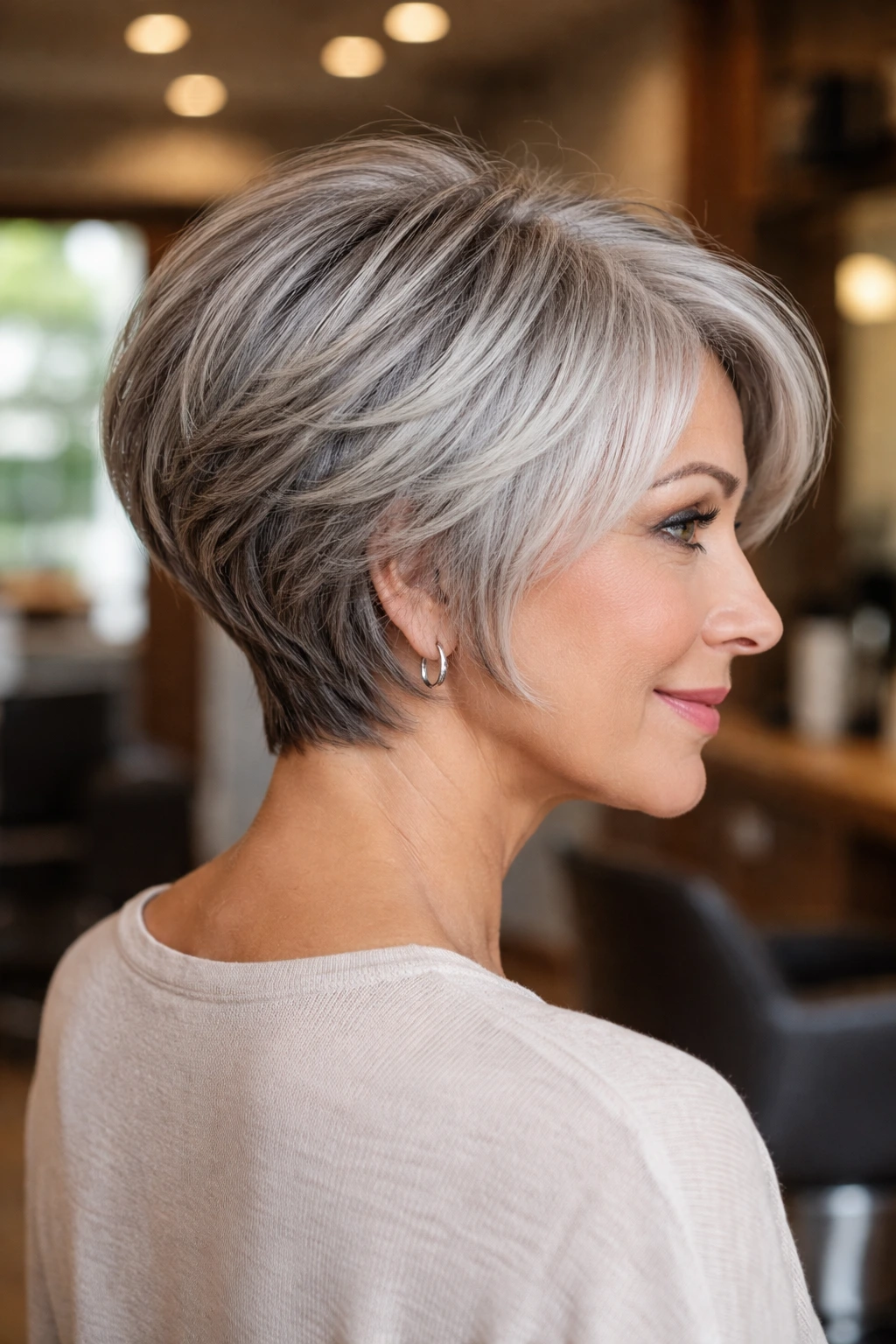
If your fine hair tends to collapse at the back of your head, the stacked bob is your best friend. This cut features shorter, graduated layers at the nape of the neck that build up weight and height, while the front remains longer and framing the face.
The beauty of this cut lies in the transition. You aren’t just getting a haircut; you are getting a structural support system. By building that bulk in the back, the cut does the heavy lifting for you, so you don’t need a mountain of mousse to achieve volume.
The Secret to the Stack
The internal layers act like a scaffold. When the hair is cut in this graduated manner, each strand supports the one below it. This is particularly effective for grey hair, which can sometimes have a mind of its own. The stack forces the hair to follow a curve, creating a soft, rounded shape that looks intentional and stylish.
3. The Textured Wavy Bob
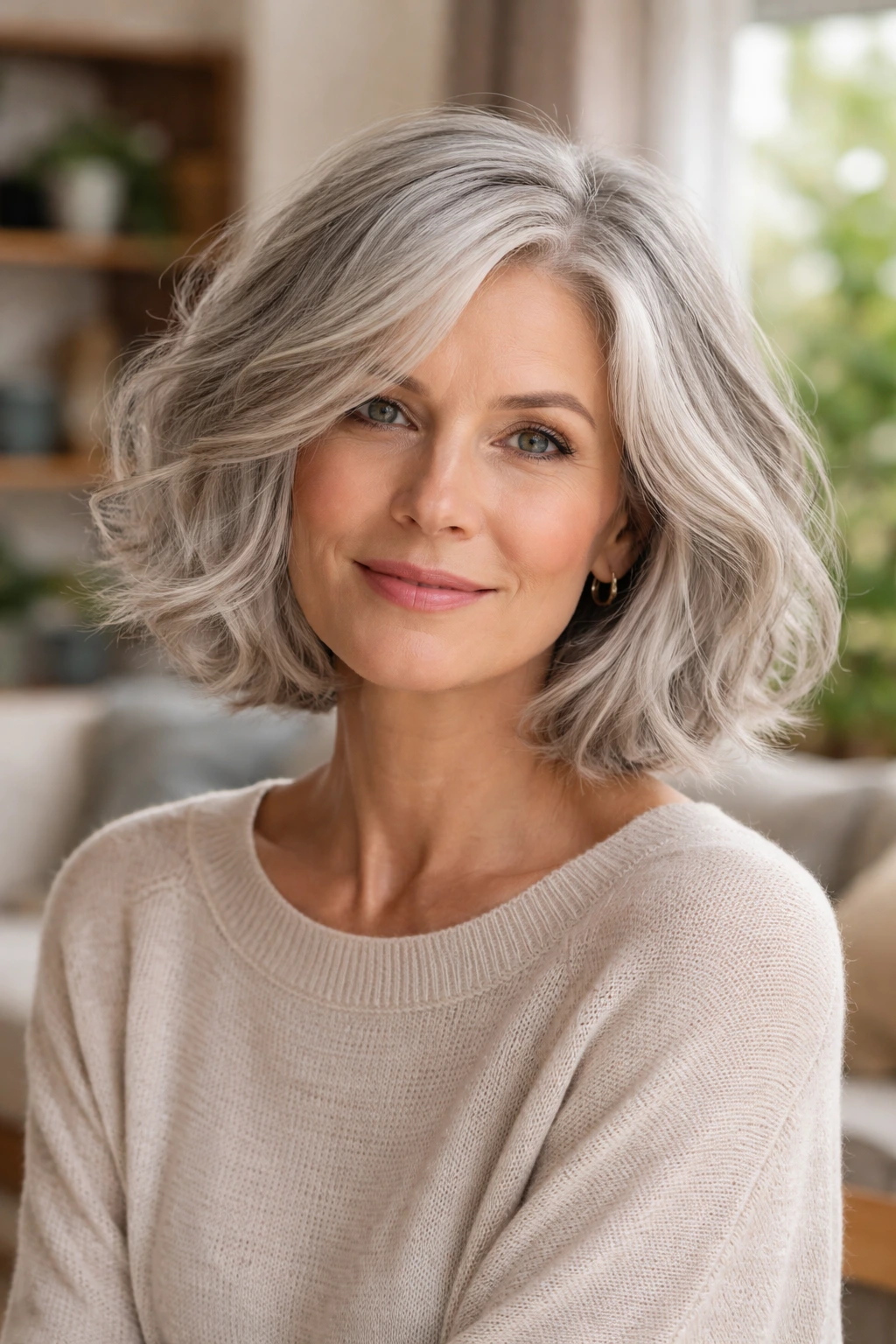
Not every bob needs to be sleek. If you have a slight natural wave—or if you aren’t afraid of using a curling iron—a textured bob is a fantastic way to disguise a lack of density. The waves create chaos, and in this case, chaos equals volume.
How to Get the Look
Ask your stylist for “invisible layers” or point-cutting at the ends. This isn’t about removing bulk; it’s about breaking up the uniformity so the hair can bend and move. When your hair is silver, the dimension provided by these waves catches the light beautifully, making your color look multi-faceted and expensive.
Quick Styling Routine
- Apply a sea salt spray or a light texturizing mousse to damp hair.
- Scrunch the hair with your hands while blow-drying on a low heat setting.
- Finish with a dry texture spray to hold the lift.
Don’t over-style. The goal is an effortless, lived-in look. If you spend too much time perfecting each wave, it will look dated. Let it be a little messy.
4. The Feathered Pixie-Bob
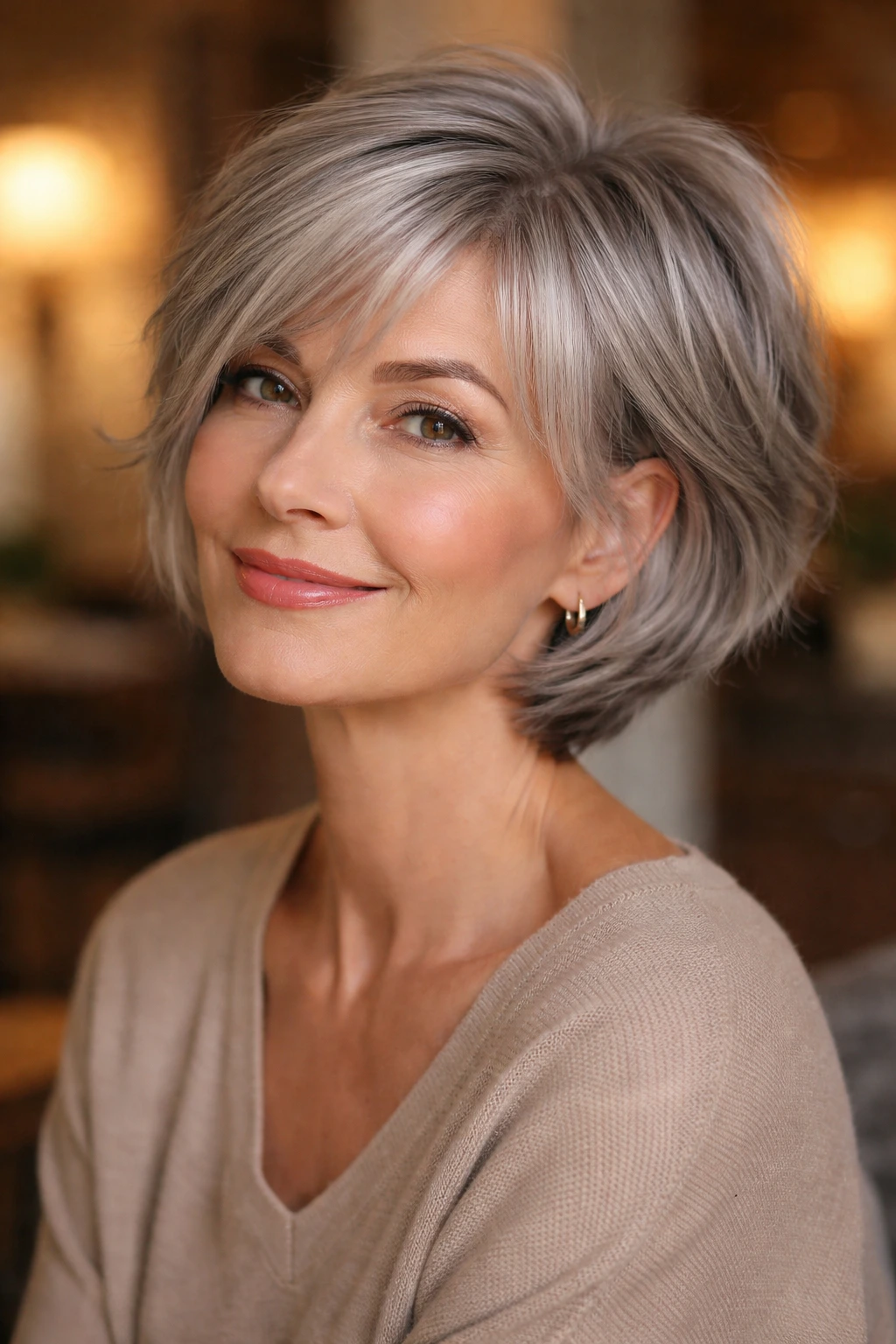
For those who want to commit to a shorter style but aren’t quite ready for a full pixie, the feathered hybrid bob is the perfect bridge. It’s essentially a very short bob that sits just above the jaw, cut with soft, wispy layers that create a feathery effect around the temples and neck.
This cut is incredibly forgiving. If your hair is fine, the feathered texture creates a soft “halo” effect around the face, which is very flattering for aging skin. It’s light, breezy, and requires very little effort to style in the morning. Just a bit of pomade to piece out the ends, and you’re ready to walk out the door.
5. The Inverted A-Line Bob
An A-line bob is longer in the front and shorter in the back. For fine, grey hair, this shape is strategic. It pulls the attention forward toward your face, framing your features, while the shorter back keeps the hair from lying flat against your neck.
Why It Works for Fine Hair
The elongation in the front creates the illusion of more hair volume because the hair is cascading down. You have more “weight” visible around your jawline, which balances out any thinness you might feel at the crown.
Styling Advice
- The Part: A deep side part works wonders here. It creates a sweep of hair across your forehead, which adds height and volume immediately.
- The Finish: Use a round brush to tuck the front pieces under slightly. It makes the style look finished and sophisticated.
6. The Wispy Bangs with Mid-Length Bob
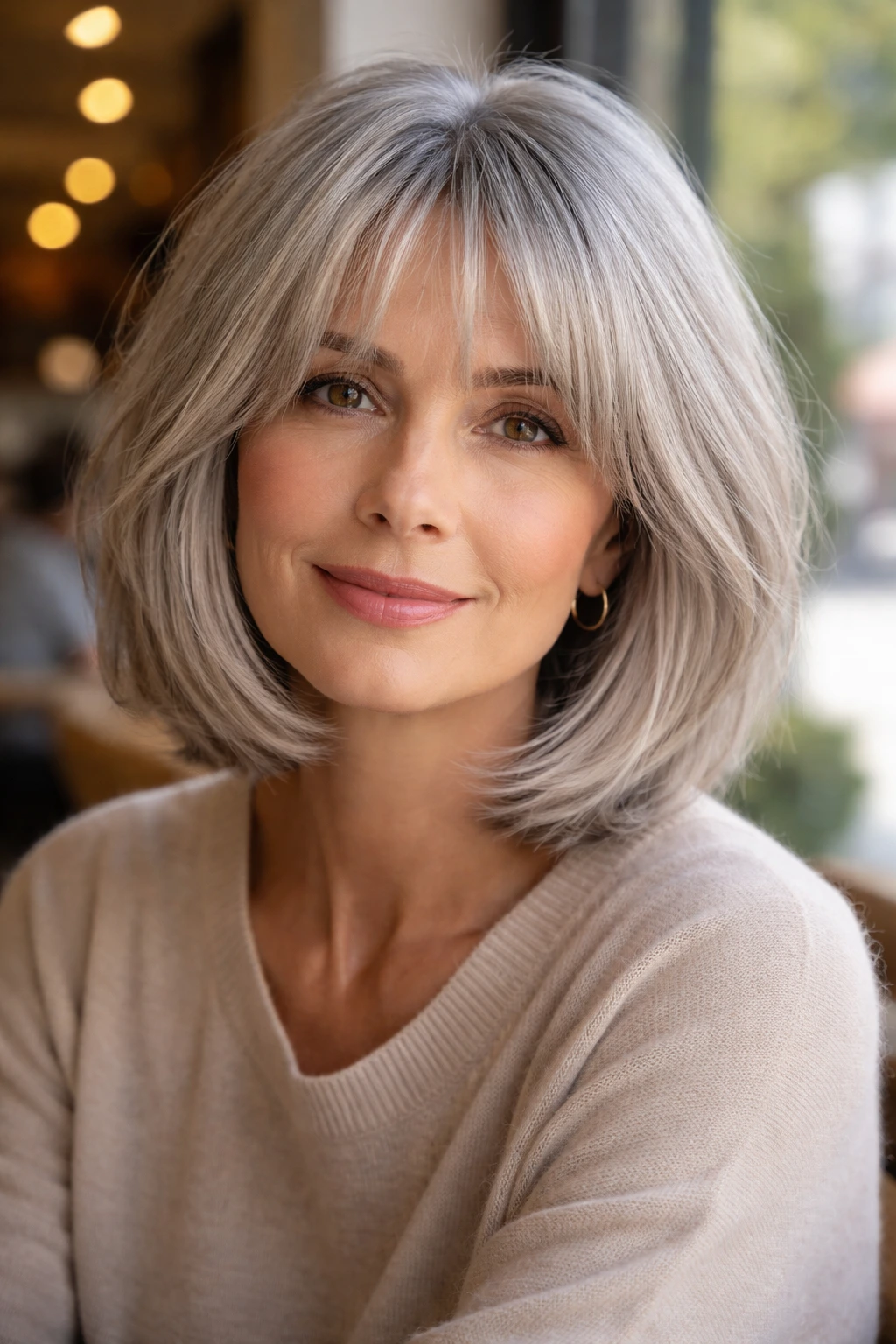
Bang-shy? Don’t be. Wispy, curtain-style bangs can be a total game-changer for fine, grey hair. They add a layer of interest to the front, breaking up the face and adding a youthful, softer vibe to the overall style.
The trick is the weight of the bangs. You don’t want thick, heavy, blocky bangs that look like a helmet. You want “see-through” bangs that you can easily push to the side or tuck behind your ears. This keeps the look light and airy. It also draws attention to the eyes, distracting from any thinning that might be happening at the hairline.
7. The Modern Lob (Long Bob)
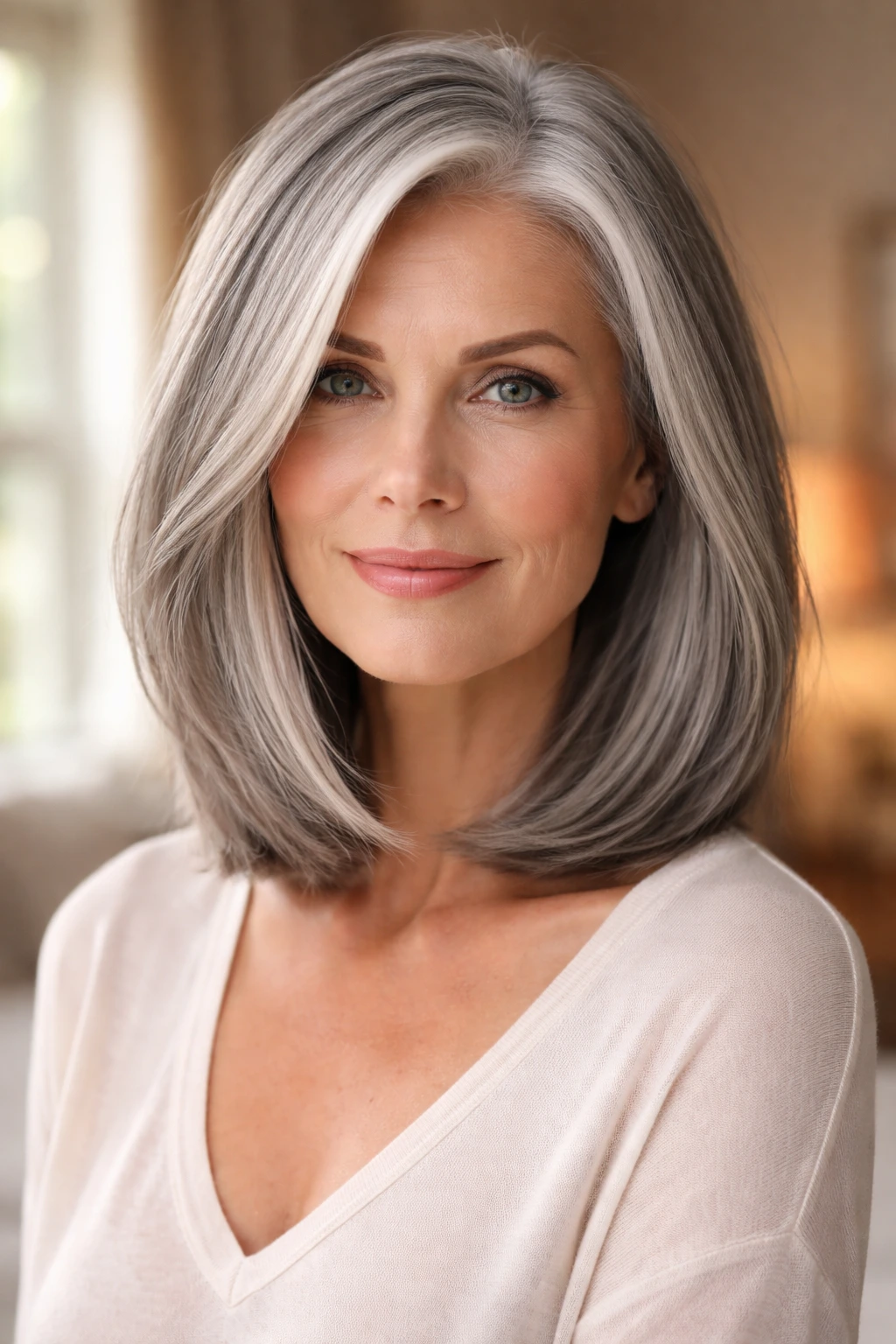
If you just can’t bring yourself to go short, the lob is your compromise. It’s the bob’s more mature, relaxed cousin. It typically hits right at the collarbone, giving you enough length to pull your hair back into a ponytail if you really need to, but keeping the ends healthy and blunt.
Managing the Length
The danger with a lob on fine hair is that it can start to look stringy if the ends get too long and thin. Keep the length at the collarbone—no lower. You want to maintain the “weight” of the cut.
Why It’s Great for Silver Hair
Longer grey hair can sometimes look dull if not cared for properly. With a lob, you have less length to worry about maintaining, meaning you can keep the ends looking crisp and hydrated without as much effort.
8. The Shaggy Choppy Bob
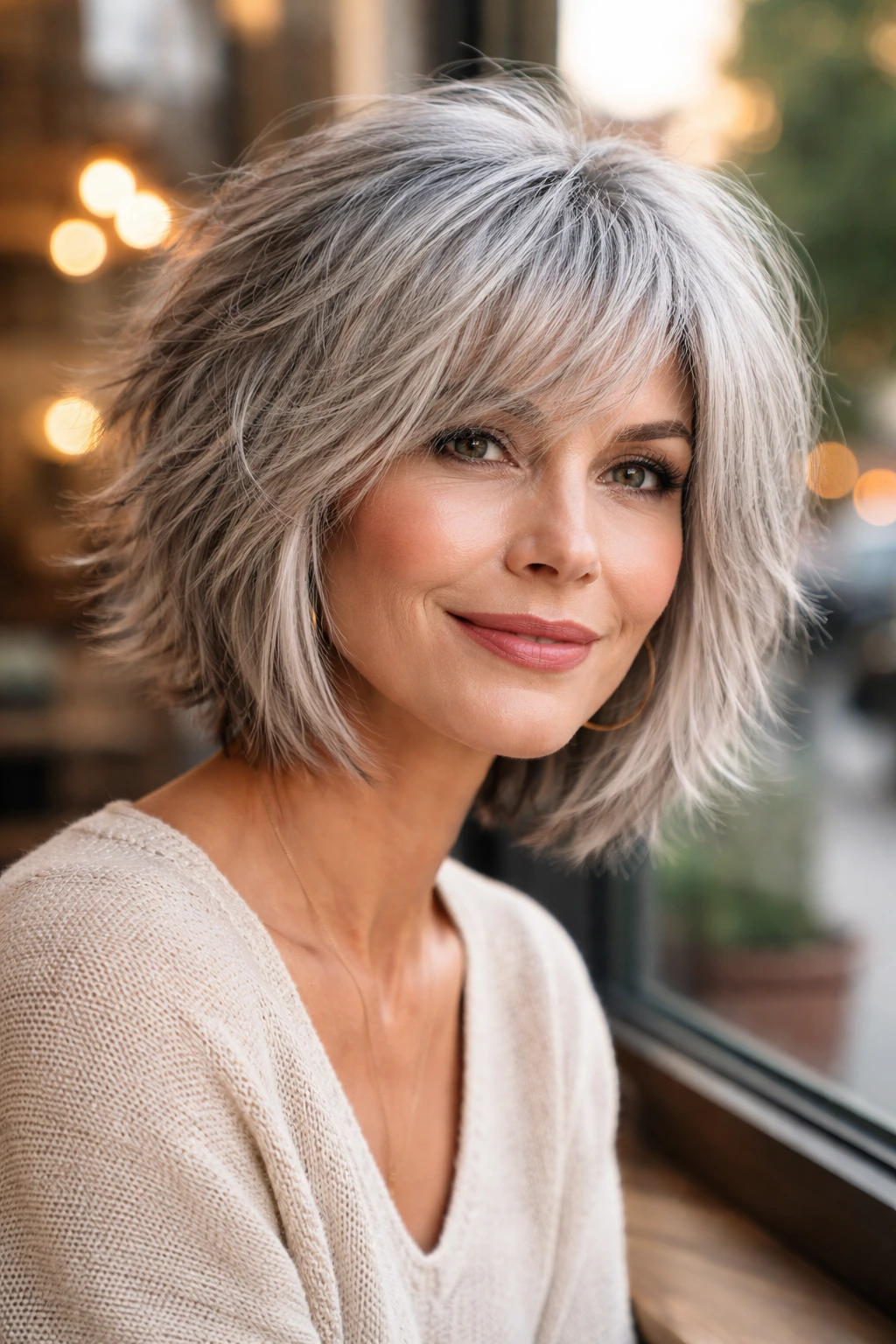
Shag cuts have made a massive comeback, and they are surprisingly effective for fine hair. This cut relies on layers—lots of them—but the key is the choppiness. It’s not about smooth, blended layers; it’s about creating jagged edges that overlap.
The overlapping layers provide a literal foundation for your hair to sit on, creating volume that doesn’t fall flat. For silver hair, this cut looks edgy and modern. It shakes off the “granny” stigma and replaces it with a stylish, artistic vibe. It’s bold, it’s fun, and it makes fine hair look thick simply by the way the layers intersect.
9. The Graduated Cut with Tapered Neck
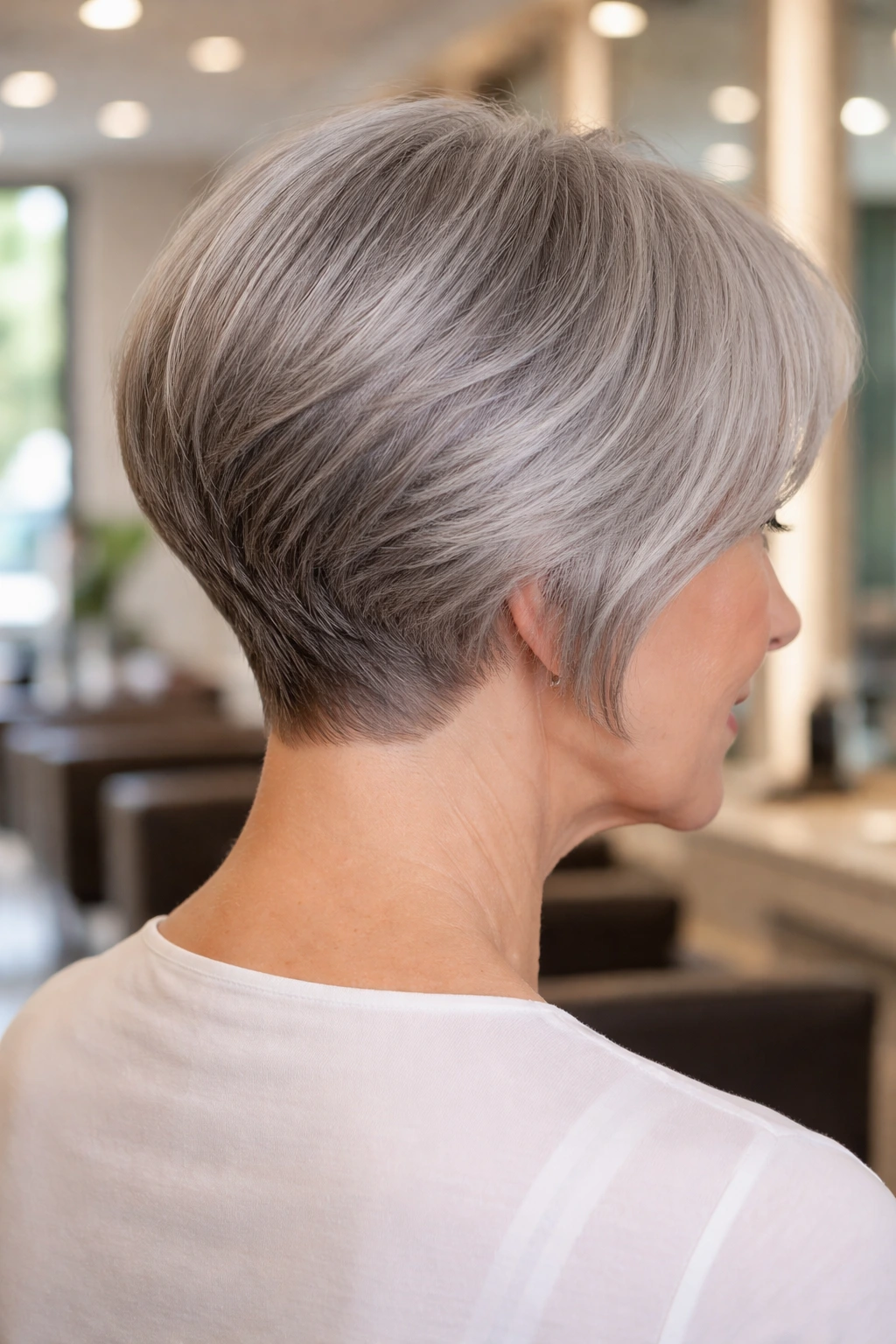
This is a technical cut that looks incredibly clean. The back is cut very close to the neck, tapering upward, while the sides lengthen as they move toward the front. It’s sharp, sophisticated, and perfect for the woman who wants to look like she just stepped out of an upscale salon.
Technical Details
Because the back is tapered, you eliminate the “tail” that fine hair often develops at the nape of the neck. That little wispiness can make hair look thinner than it is. Removing it makes the entire haircut look more robust. It shows off the neck, which is often a very elegant feature, and balances out the face shape effectively.
10. The Side-Swept Asymmetrical Bob
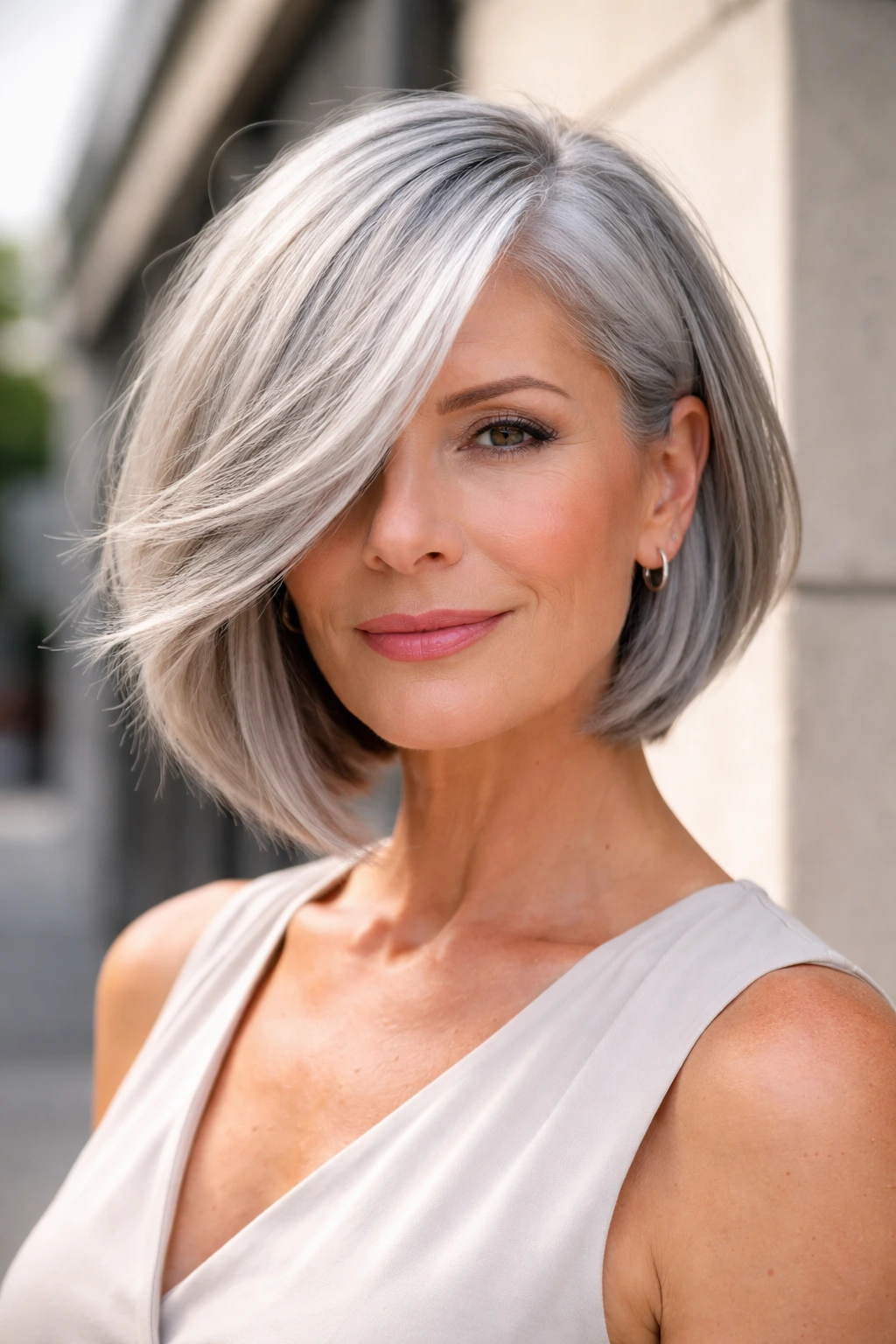
If you want to add some drama without changing your length, go asymmetrical. A side-swept bob is cut at a distinct angle—one side is noticeably longer than the other. This isn’t just about fashion; it’s a brilliant way to create a focal point.
When one side of your hair is longer and sweeping across your face, you are creating a “v” shape that directs the eye. It creates movement. For fine hair, which can sometimes just hang there, this cut encourages a natural swoop that looks intentional and styled, even when you’ve done nothing to it.
11. The Natural Curly Bob
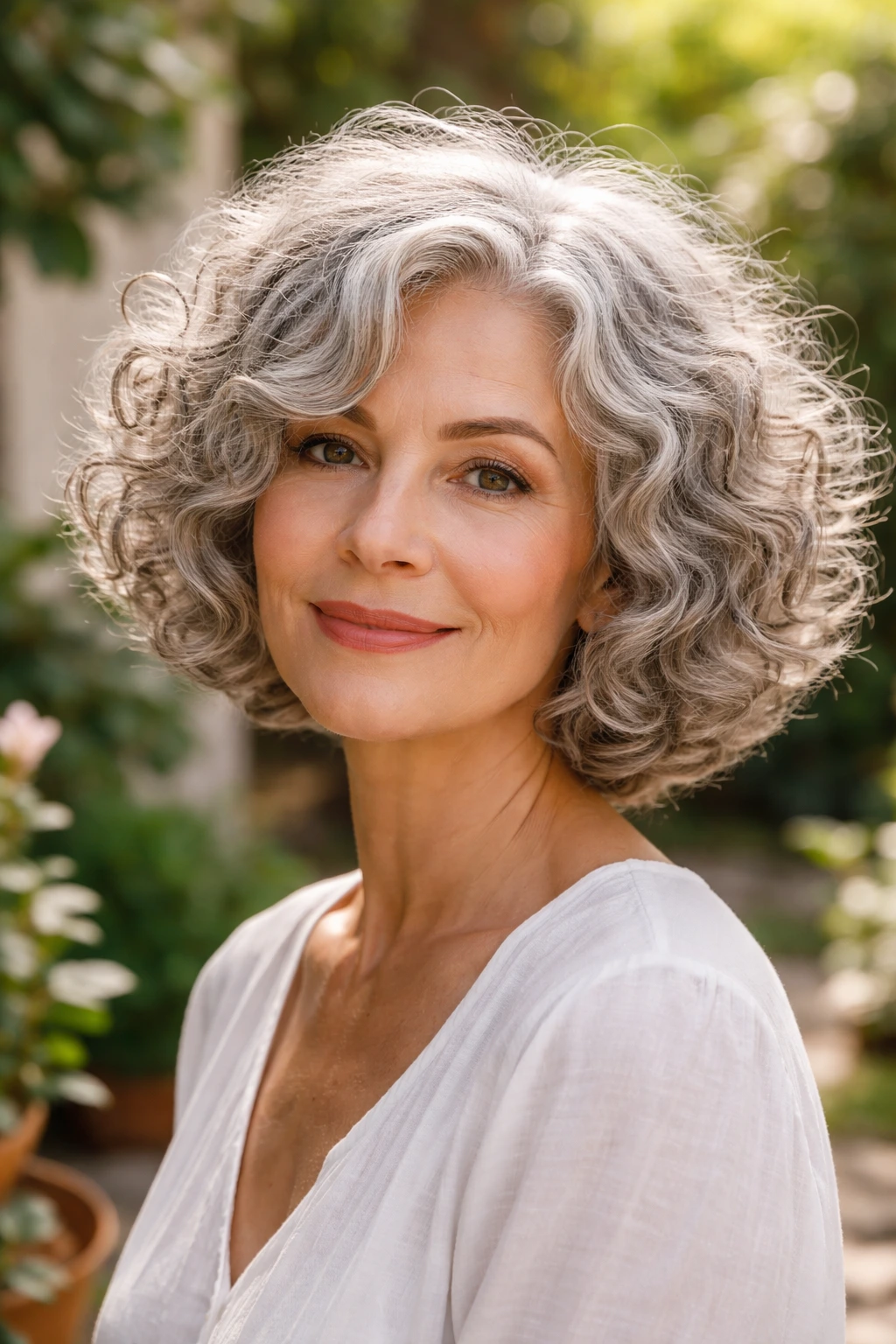
Many women find that as their hair turns grey, their natural texture changes. If you’ve spent years trying to straighten a slight wave, stop. Embrace the curl. A bob cut specifically for curly hair (usually done on dry hair) allows the stylist to see how each curl pattern springs up.
The Volume Benefit
Curly hair has built-in volume. You don’t need to do much to make it look thick. The main challenge is hydration. Grey hair tends to be thirsty, and curls are naturally drier. Use a heavy, moisture-rich leave-in conditioner and a diffuser to gently dry your hair. The result is a bouncy, voluminous look that makes thinness impossible to spot.
12. Blunt-Cut Bob with Curtain Bangs
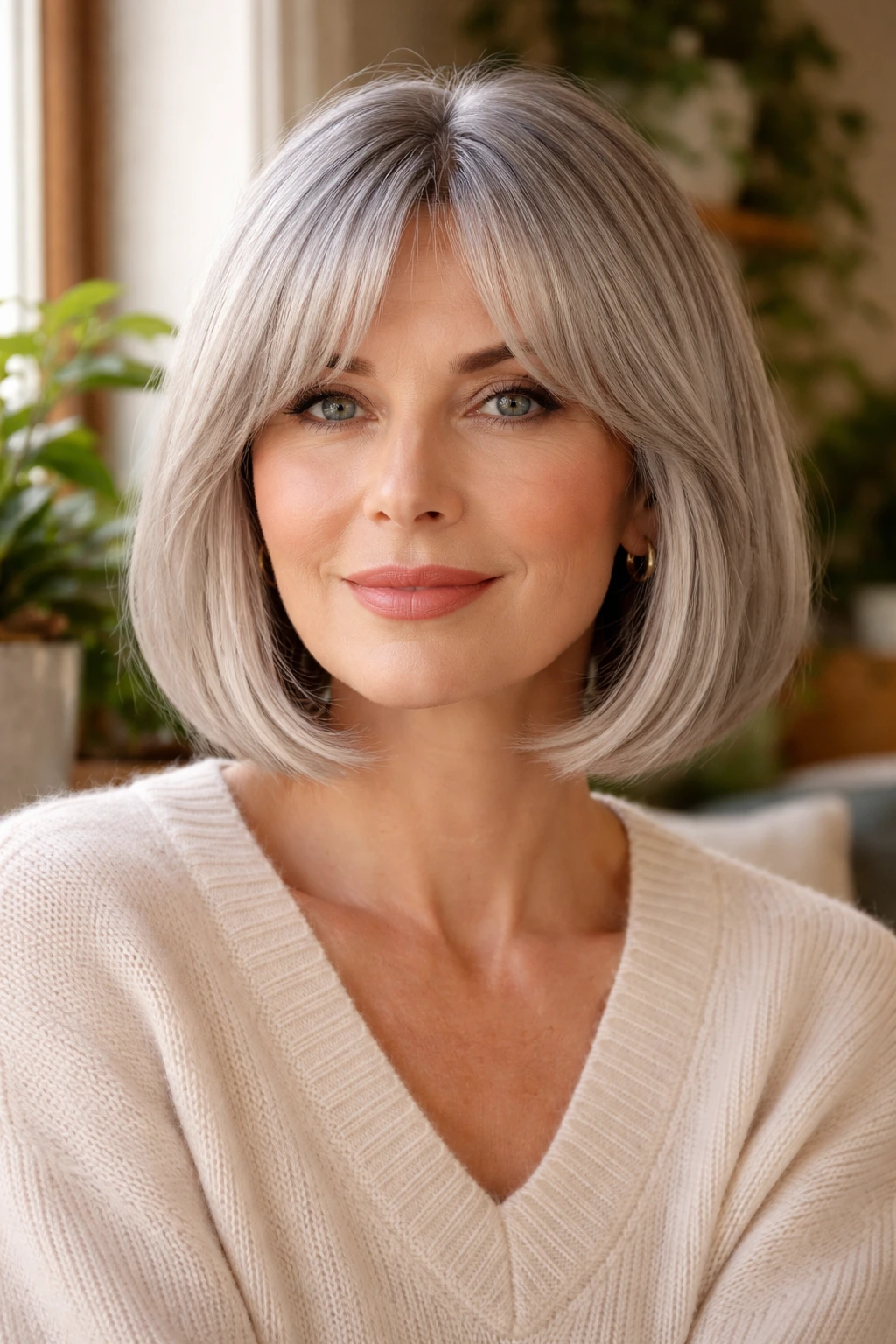
This is a specific variation on the blunt bob. You keep the blunt, straight-across line at the bottom, but you add soft, face-framing fringe that creates a curtain effect. This is the “French girl” look, and it is universally flattering.
The curtain bangs bridge the gap between the short sides and the longer back. They prevent the face from looking too exposed. If you’re self-conscious about your forehead or thinning at the hairline, these bangs cover just enough to make you feel comfortable while still keeping the style feeling modern and open.
13. The Undercut Bob
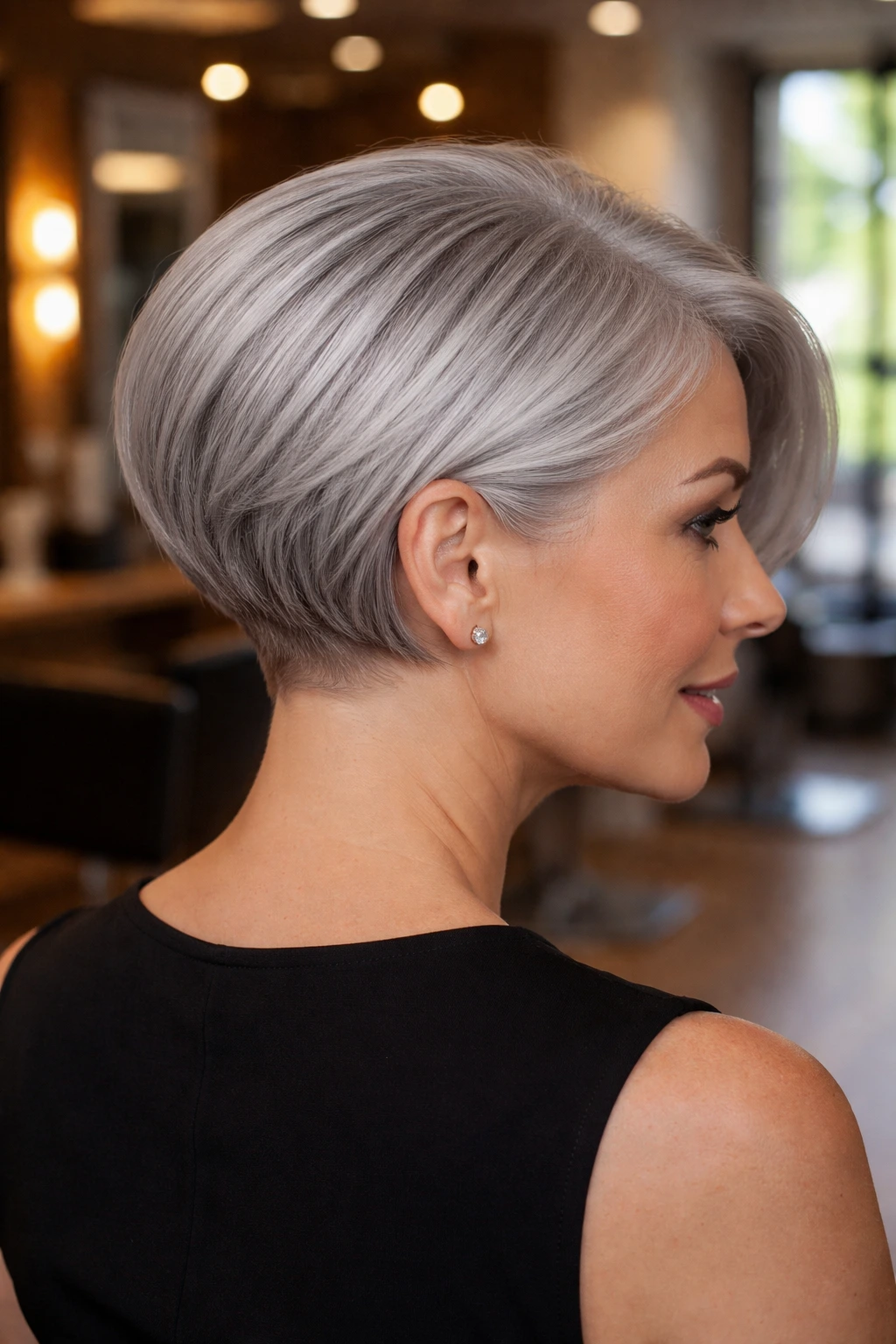
Hear me out: an undercut might sound intimidating, but it is a secret weapon for fine hair that has a lot of growth at the neck. By shaving or tapering the very bottom layer of hair at the nape, you remove the “bulk” that creates that flat, triangle shape.
The Result
With that lower layer removed, the hair above it falls over the undercut, creating a beautiful, rounded shape. It takes the “triangle” out of the equation and gives you a sleeker, more controlled bob that actually looks thicker because it has a better shape. It’s for the bold, but it works.
14. The Messy Bedhead Bob
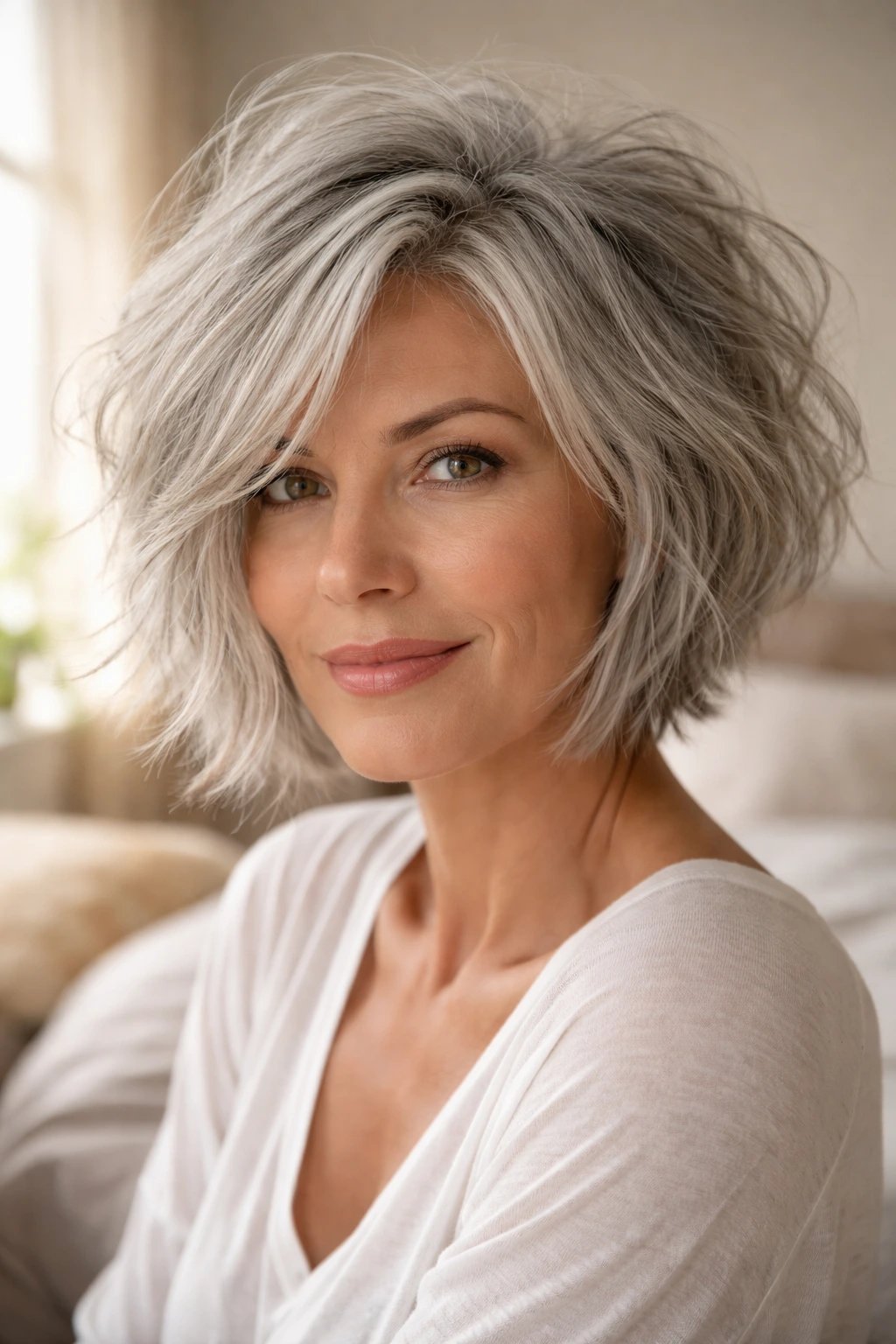
Sometimes, “done” looks “thin.” If your hair is fine, obsessing over perfect, smooth, parted hair can highlight the scalp. The messy bedhead bob flips that on its head. This cut is all about texture sprays, sea salt, and finger-styling.
You want a cut with long, invisible layers that allow you to flip your hair from side to side. When your hair is silver, this messy look gives off a confident, “I don’t care” vibe that is incredibly attractive. It creates height at the roots, covers the scalp, and adds a sense of density that a super-slick style just can’t match.
15. The Sleek Side-Parted Bob
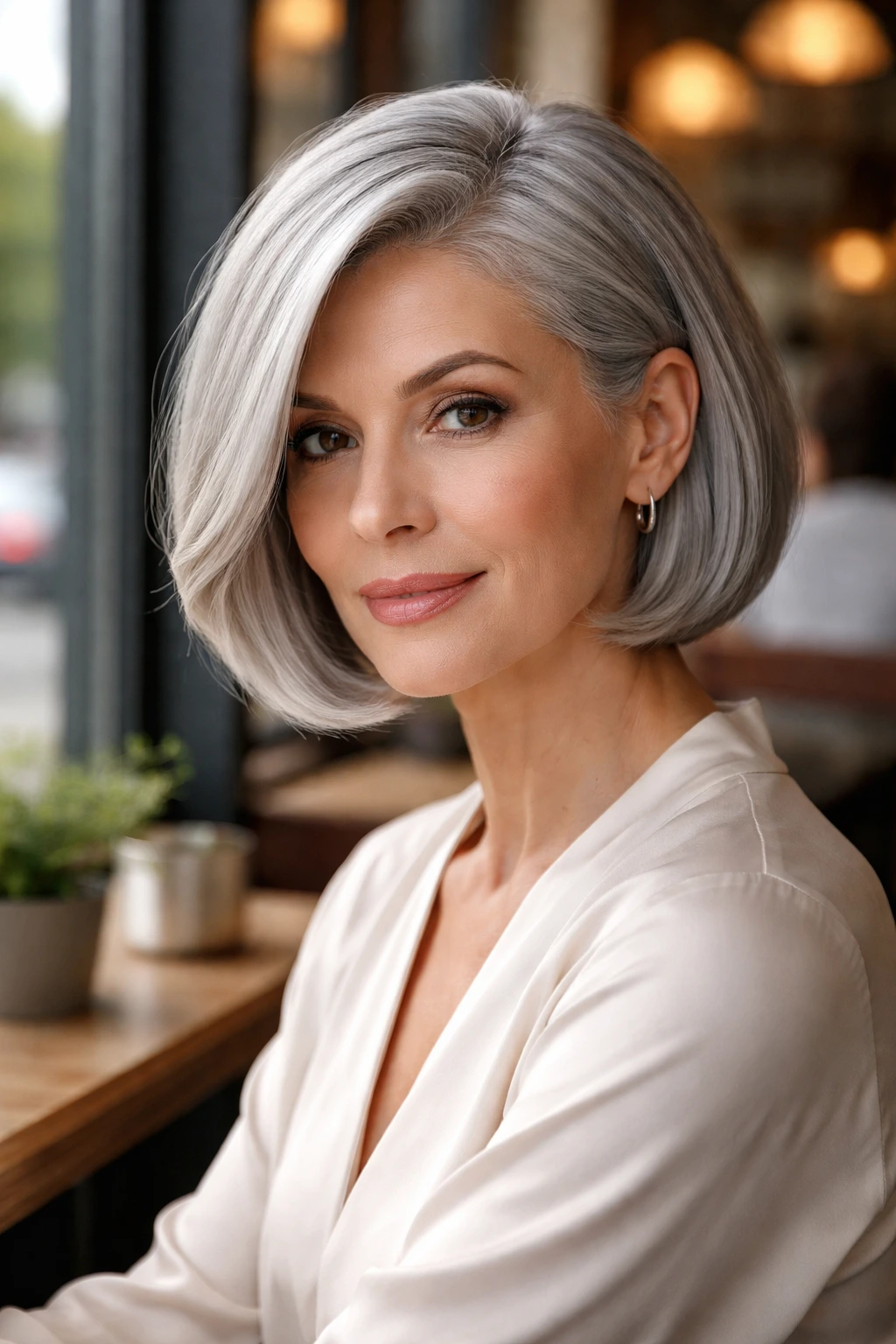
There is something undeniably chic about a deep side-part. It is the quickest way to create instant volume. By flipping a significant portion of your hair to one side, you create a bump of hair right at the crown that adds inches of apparent height.
Maintenance
This style works best on a blunt bob or a very subtle A-line. Use a fine-tooth comb to get a razor-sharp part. Then, use a small amount of pomade to smooth down any flyaways on the side that’s tucked behind your ear. The contrast between the volume on top and the smooth, tucked side is the epitome of sophisticated grey-hair styling.
16. The Permed or Body-Wave Bob
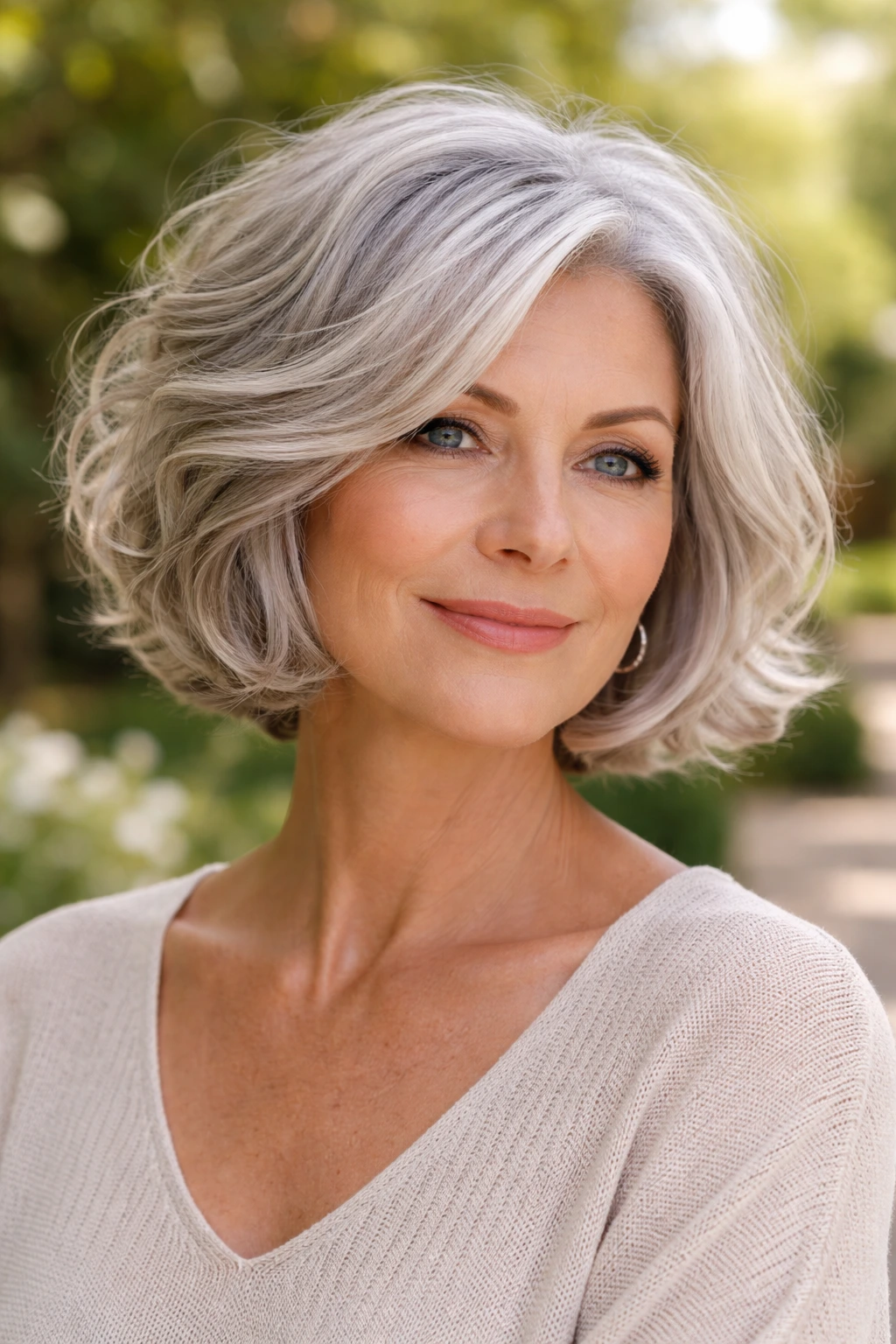
If you are struggling with flat, lifeless fine hair, a body wave or a modern perm might be the “set it and forget it” solution you need. We aren’t talking about the tight, frizzy perms of the 80s. Modern chemical treatments are much softer and focus on giving the hair a C-curve or a gentle wave.
The Impact
Adding this kind of permanent texture makes the hair physically take up more space. Each strand is “bent,” which means they aren’t all laying perfectly flat against one another. This separation creates a fluffy, full-bodied look that lasts for months. Just be aware that you need a stylist who specializes in perming silver hair, as the chemical makeup of grey hair is different and requires a gentler approach.
17. The Rounded Parisian Bob
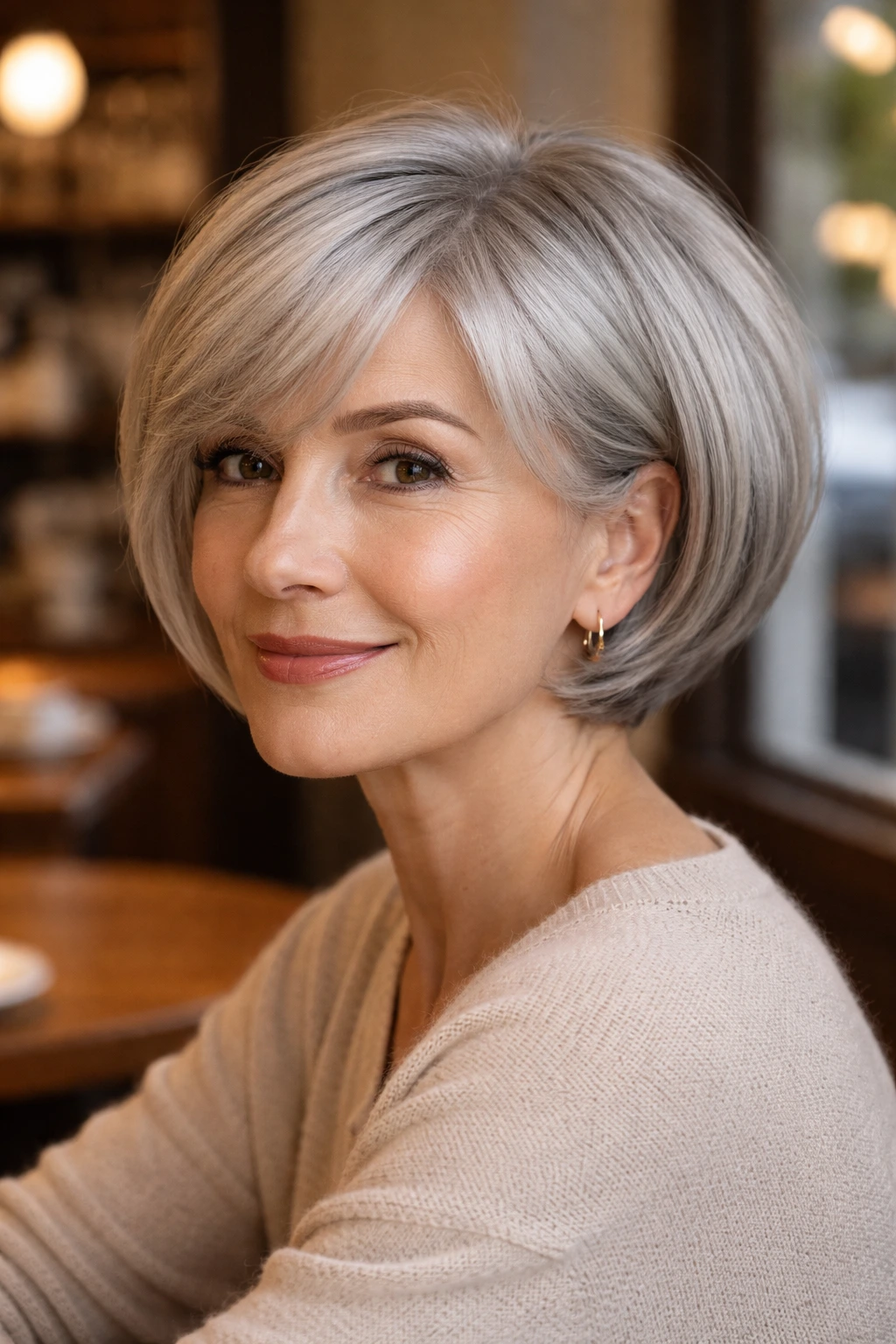
Think of this as the “Amélie” cut. It’s short, it’s rounded, and it’s meant to hug the head. This is fantastic for fine hair because it creates a circular silhouette that looks full from every angle.
It doesn’t rely on length; it relies on shape. The hair is cut to follow the curve of the skull, which makes the hair look like a solid mass rather than individual strands. If you have a round or oval face, this is one of the most flattering cuts you can choose. It highlights the cheekbones and keeps the focus on your smile.
18. Choppy Layers with Highlights
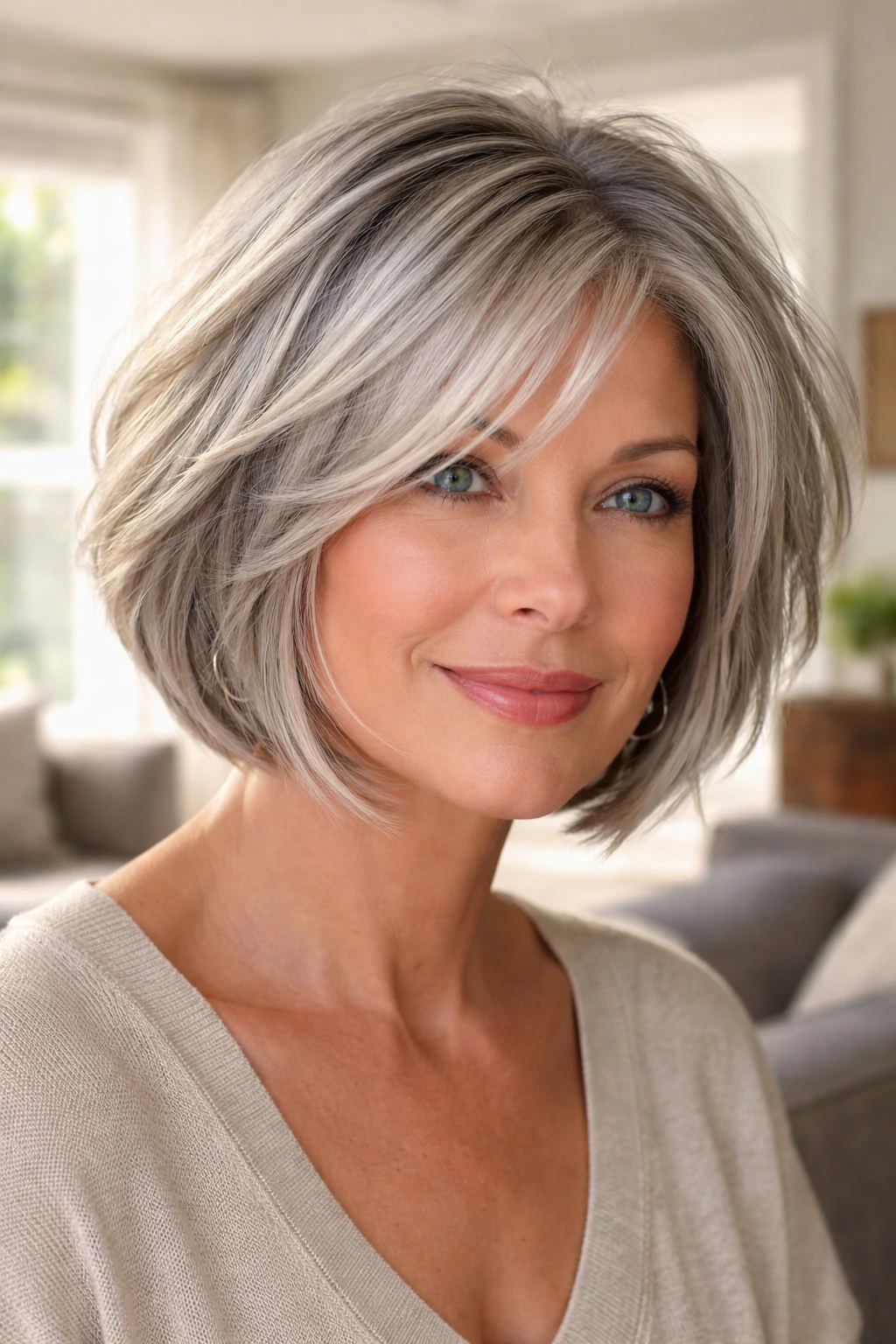
Sometimes, the issue isn’t the cut; it’s the lack of contrast. If your grey is monochromatic—all one flat shade—it can look thin. By adding choppy layers, you create movement. By adding a few lowlights or “low-contrast” highlights (maybe a soft charcoal or a darker silver), you create the illusion of depth.
Why It Works
Fine hair needs shadows to look thick. When the hair is all one color, the light hits it evenly, showing every gap. When you have layers and dimension, the eye gets confused. It sees the different depths of color and assumes that the hair is thicker than it is. This is a classic stylist trick for thinning hair.
19. Angled Bob with Deep Side Part
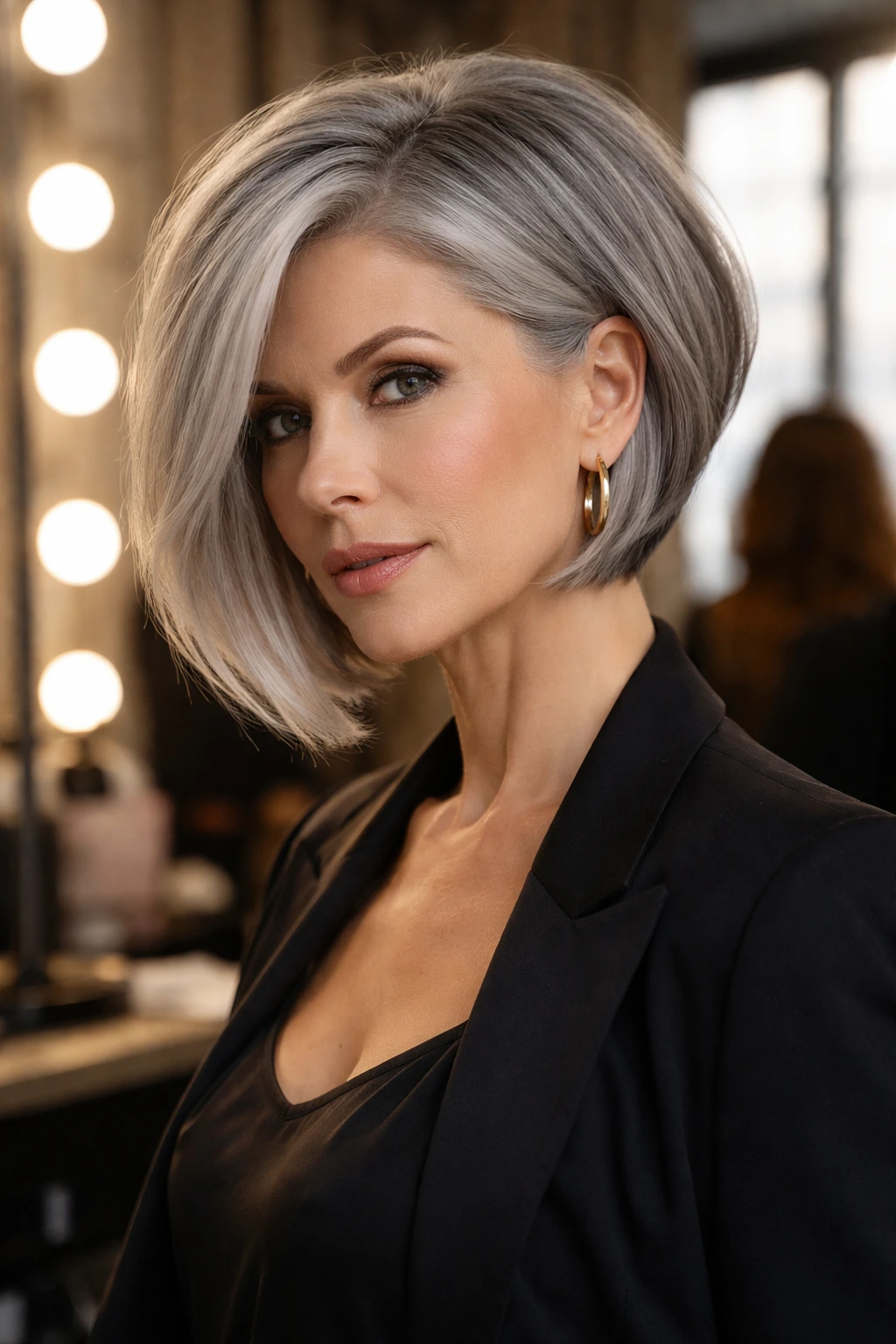
Similar to the inverted A-line, this version is more about the extreme angle and the deep part. The back is very short, almost cropped, and the front pieces hit the collarbone. It’s a drastic change, but it’s a high-fashion look.
The deep side part creates an asymmetrical balance that is very modern. For fine, grey hair, this allows you to pile the hair up and over, creating a massive amount of volume at the roots that would be impossible with a center part. It’s a power move.
20. The Ear-Length Crop
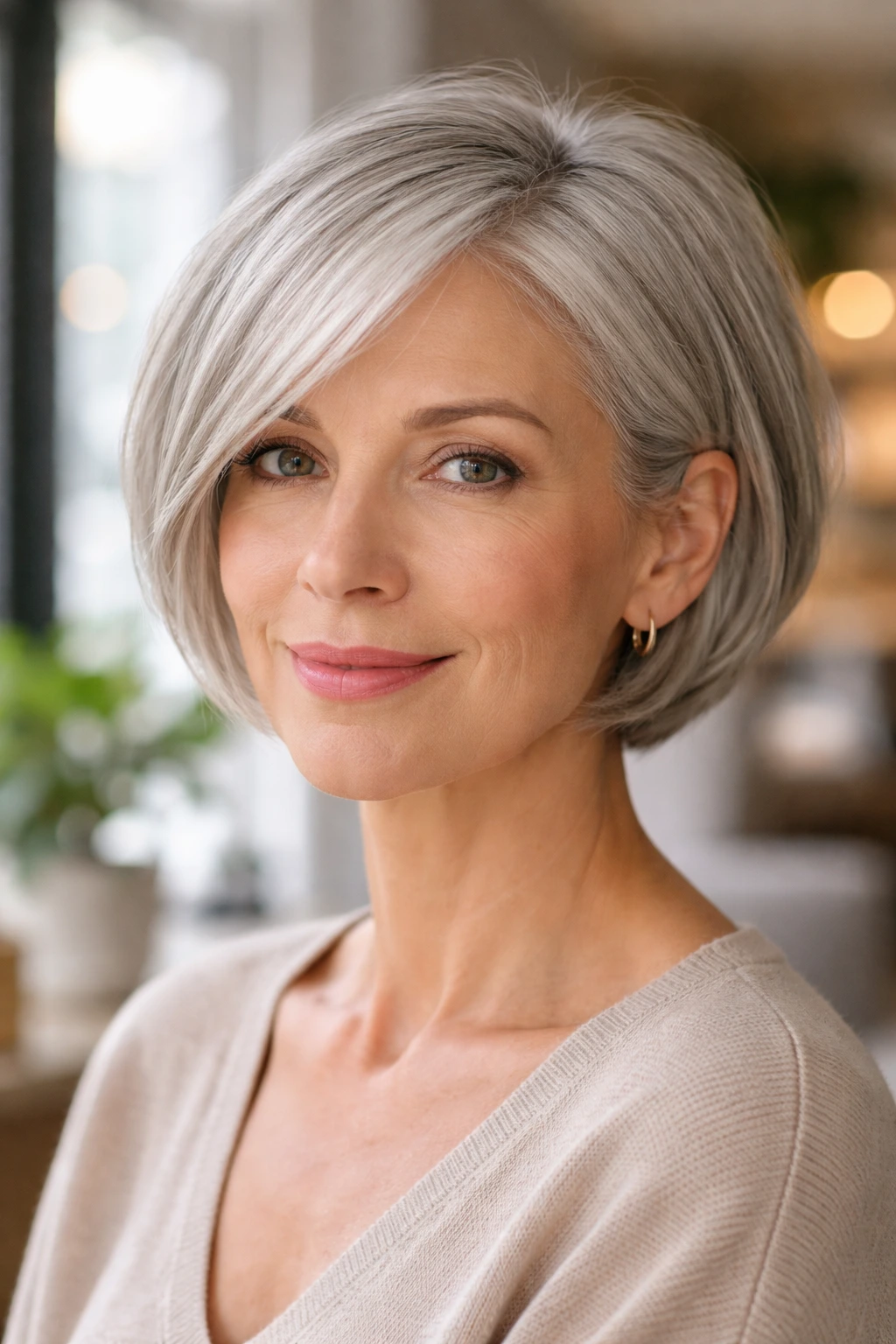
If you have very fine hair, sometimes the best solution is to just go shorter. An ear-length bob (almost a pixie) removes all the weight. When you have no length to pull the hair down, the hair naturally lifts at the root.
It’s bold. It’s liberating. And it’s incredibly low-maintenance. You wash it, maybe ruffle it with a bit of texturizing paste, and you’re done. Because it’s so short, it’s also the healthiest your hair has ever been, as you are constantly cutting off the ends before they can split.
21. Soft A-Line with Tapered Ends
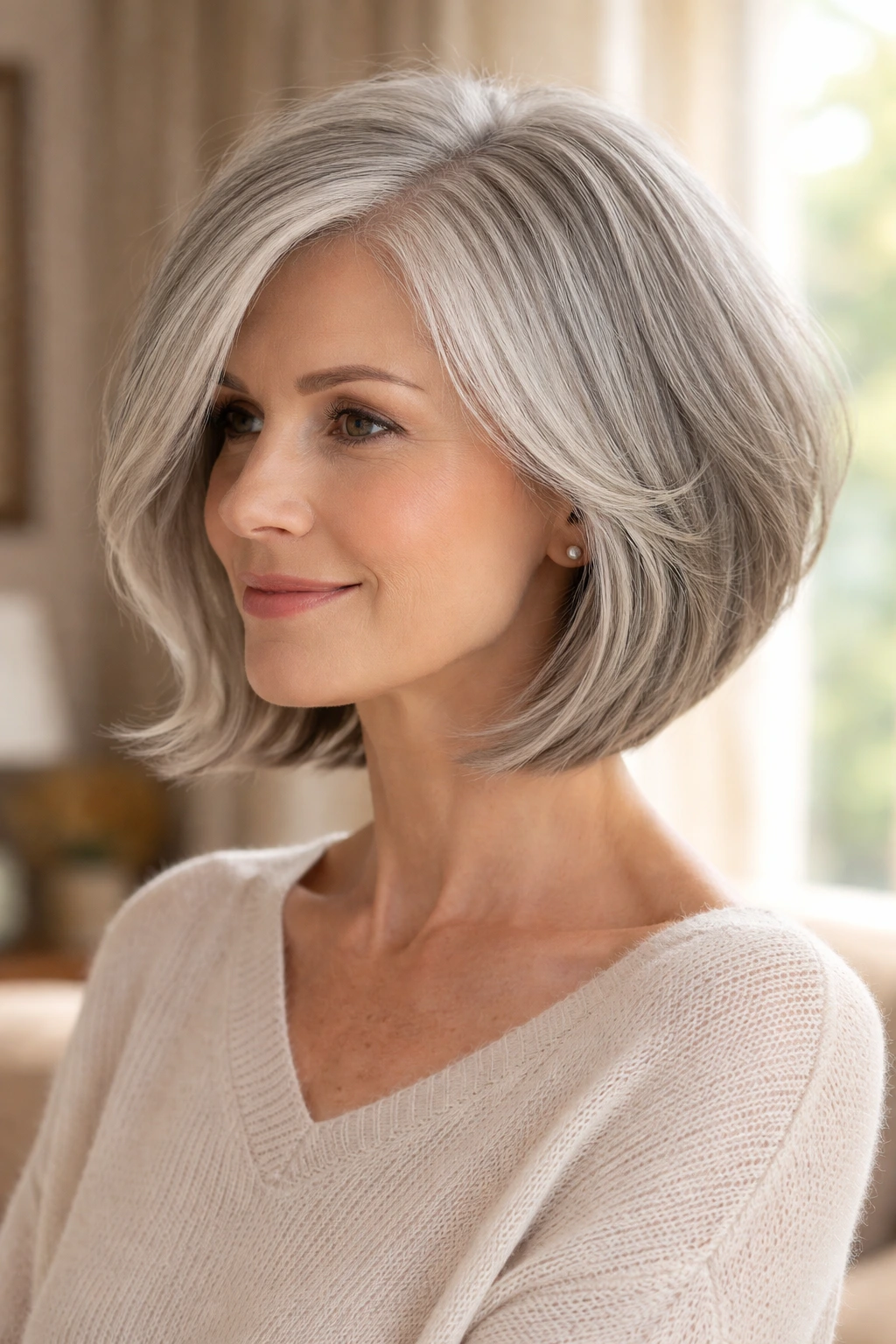
This is a softer take on the A-line bob. Instead of a severe, sharp angle, the stylist uses thinning shears or a razor to taper the ends into the neck. It blends the hair into the silhouette of your body.
It’s less “structural” and more “flowy.” If you prefer a romantic, soft look rather than a sharp, geometric one, this is the way to go. It still gives you the volume in the back and the framing in the front, but the edges feel like they are melting into your silhouette rather than cutting across it.
22. Blunt-Cut Lob with Center Part
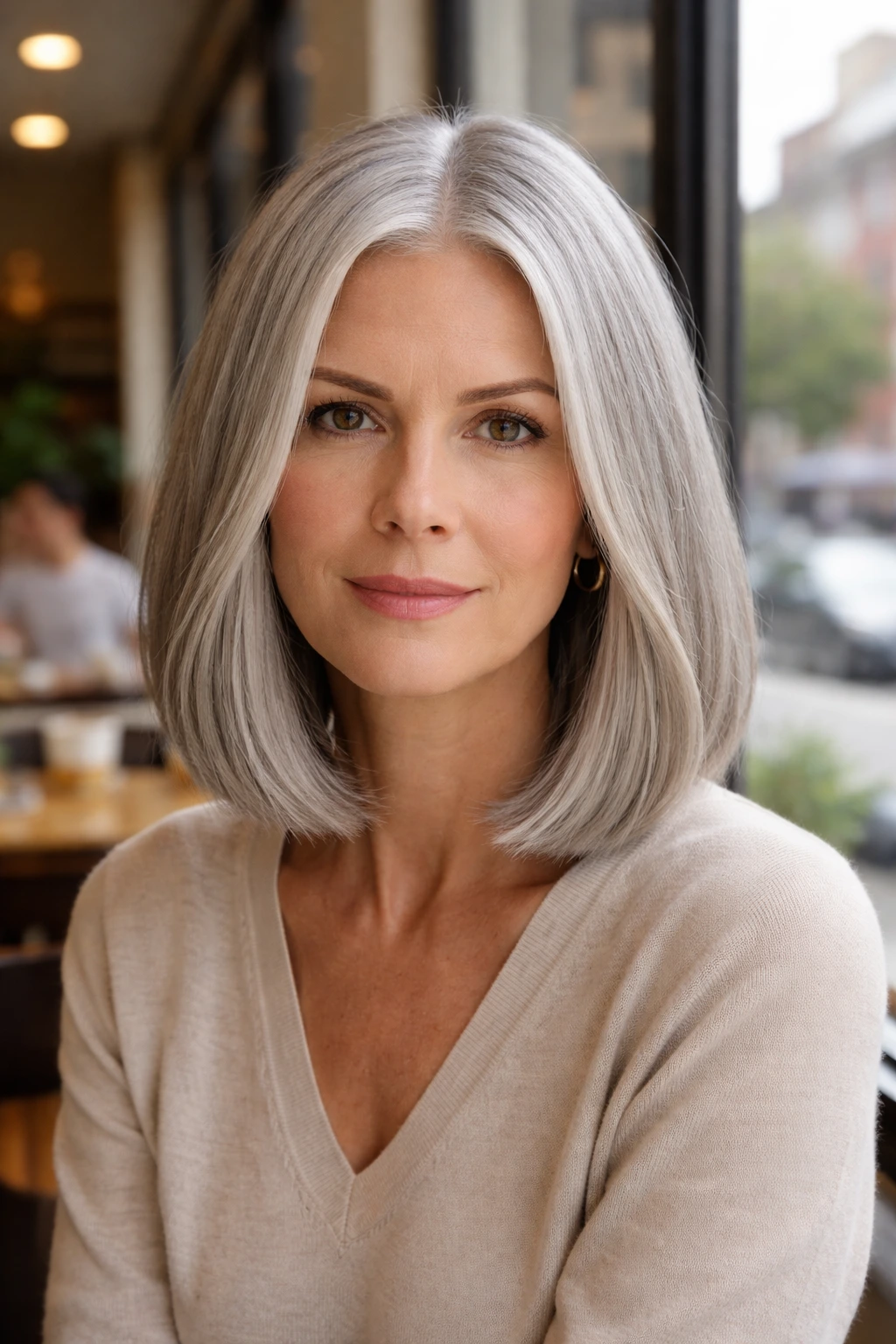
The center part is risky for fine hair because it can highlight the scalp, but if you have a blunt-cut lob, it works in a very specific way. The blunt ends create a heavy, weighted line that sits on the shoulders, which forces the hair to lay flat.
Who Is This For?
This is for the woman with fine hair that is relatively dense at the scalp but tapers off at the ends. By cutting it all to one length at the shoulder, you sacrifice some volume at the root to gain a massive amount of volume at the bottom. It’s a very clean, very modern, “done” look.
Final Thoughts
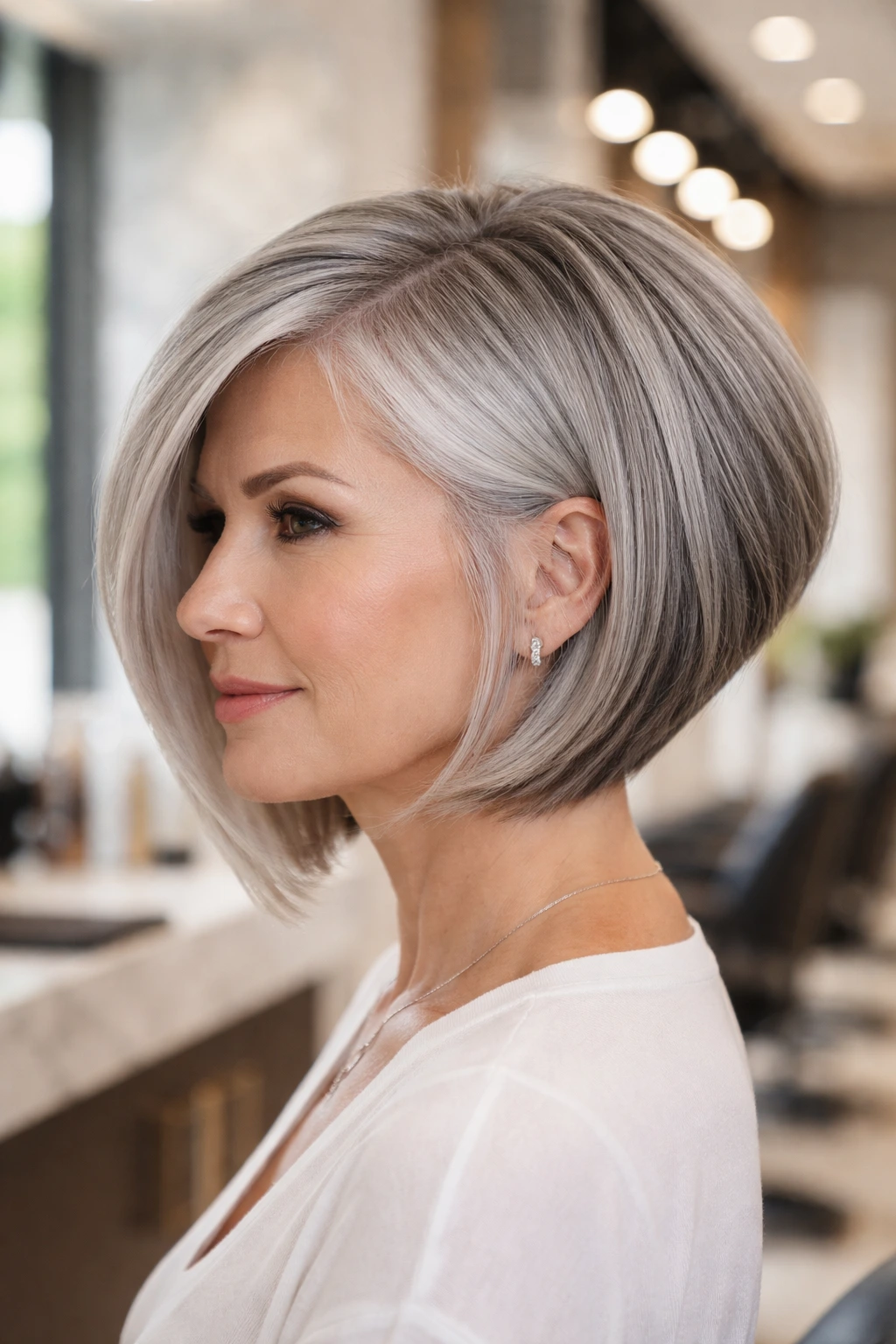
The key to navigating the transition to a bob with fine, grey hair is accepting that you have to work with your hair’s nature, not against it. If your hair is fine, trying to force it into a style that requires massive back-combing and heavy hairspray will only leave you frustrated. The right bob should feel easy. It should be a cut that, once styled, maintains its shape throughout the day.
Look at your face shape and your daily routine honestly. If you hate blow-drying, don’t get a precision blunt bob that requires a round brush and 20 minutes of focus. If you love variety, a lob will give you more options than a jaw-length crop. Your hair is an accessory—choose the cut that makes you feel the most like yourself, not just the one that follows the trends. Grey hair is vibrant and beautiful when it’s treated with the right silhouette. Pick the one that works for you, and own it.
