



Fine hair has a reputation for being difficult, but the truth is that it just has different physics than coarse or curly hair. It is more susceptible to gravity, it tangles with a look of intense seriousness, and it tends to fall flat by midday. The bob, however, is the great equalizer. When you cut fine hair shorter, you remove the dead weight that pulls the hair down, instantly creating the illusion of thickness and volume.
The secret to a successful bob on fine hair is structure. You are not looking for wild, unmanageable layers that leave the ends wispy and thin. You are looking for blunt lines, internal texture, and deliberate angles that make the hair appear fuller than it actually is. Whether you want something low-maintenance that air-dries into a shape or a style that requires a quick round brush session, the right cut changes everything.
1. The Classic One-Length Blunt Bob
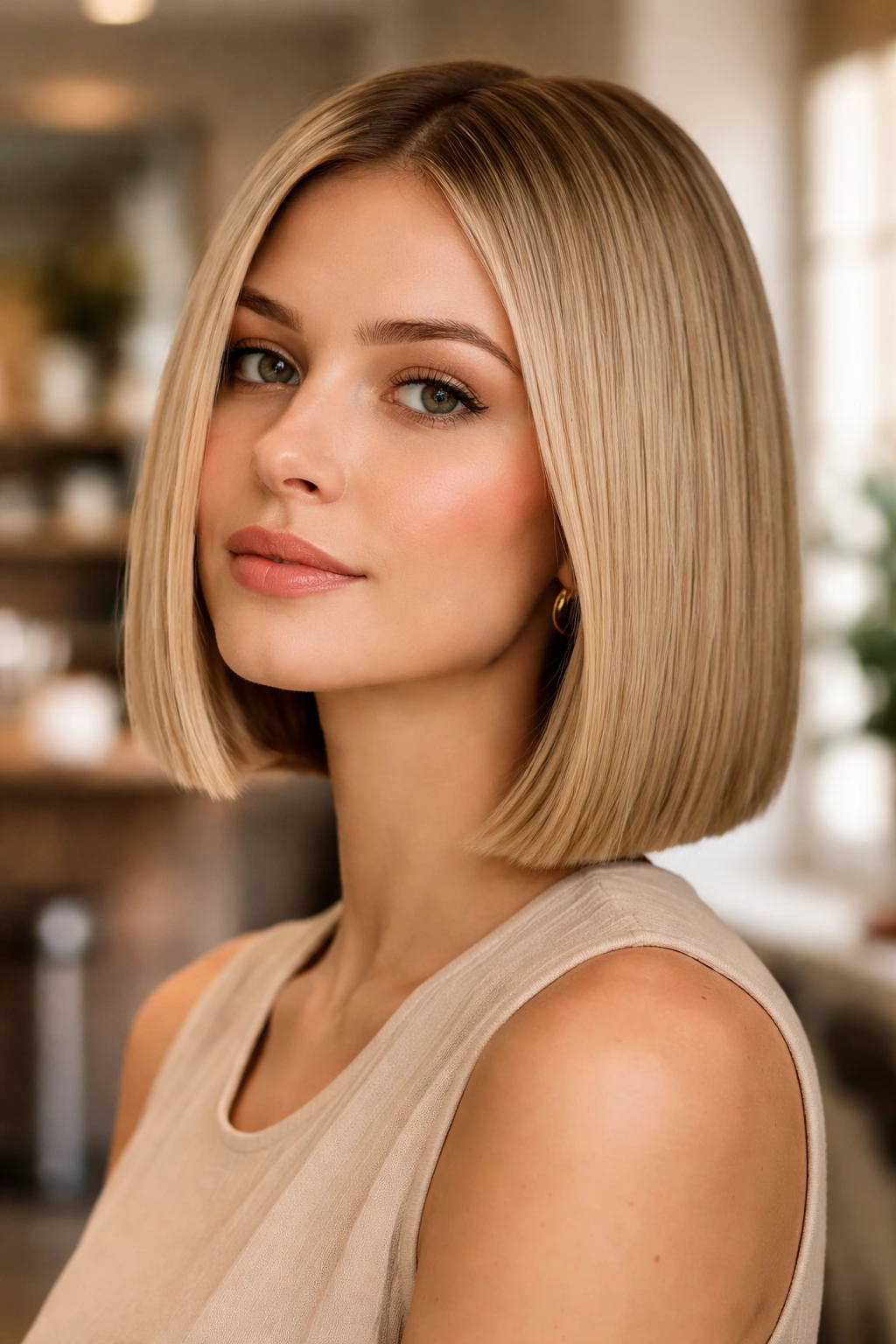
This is the holy grail for fine hair. By keeping all the hair at the exact same length, you prevent the bottom from looking see-through. It creates a solid, heavy-looking edge that reads as thick, even if your individual strands are fine.
Why It Works for Fine Texture
The blunt line is about density. When hair is cut at an angle or heavily layered, the ends taper off, which can make fine hair look stringy. A blunt cut stops that tapering entirely. It creates a compact, clean perimeter.
Styling for Maximum Impact
Use a lightweight volumizing spray on damp hair, then dry with a paddle brush. Do not use a round brush if you want that sharp, sleek effect—the paddle brush keeps the hair flat and smooth, emphasizing the bluntness of the ends. Add a drop of oil only to the very bottom to keep it shiny without dragging the rest of the hair down.
2. The Softly Textured Chin-Length Cut
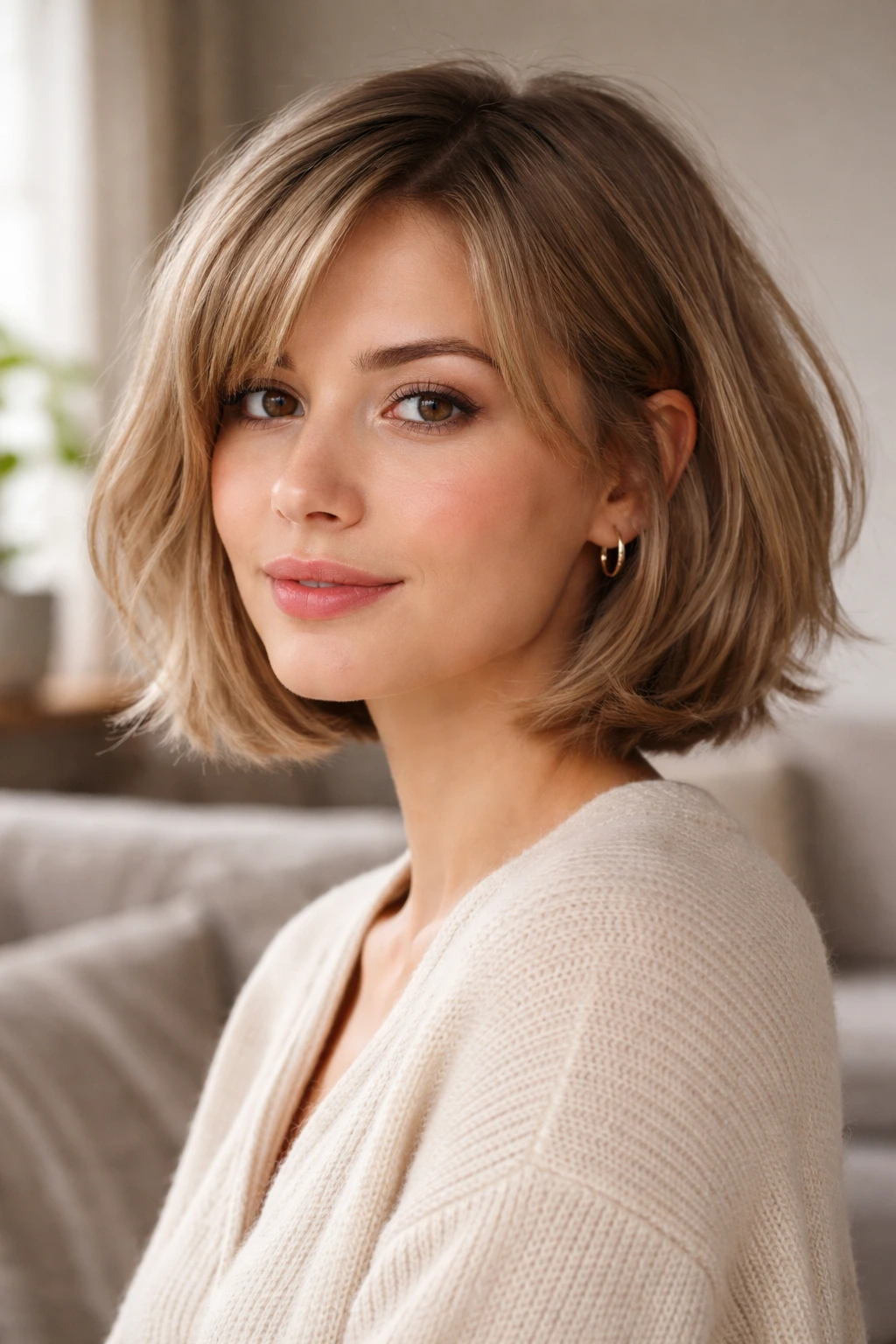
If a severe blunt bob feels too harsh, a textured chin-length cut adds movement. It still follows the general silhouette of a blunt bob, but the stylist uses point-cutting on the ends. This removes the “blanket” effect without compromising the overall fullness.
The Technique
Point-cutting involves holding the shears vertically and snipping into the ends of the hair rather than cutting straight across. This breaks up the line just enough to make it look soft and natural. It prevents the hair from looking like a helmet while still maintaining a dense perimeter.
Daily Routine
Work a sea salt spray or a light texturizing cream through the mid-lengths and ends. Let it air dry to enhance the natural movement. This style relies on the hair looking lived-in rather than perfectly polished.
3. The Inverted Angled Bob
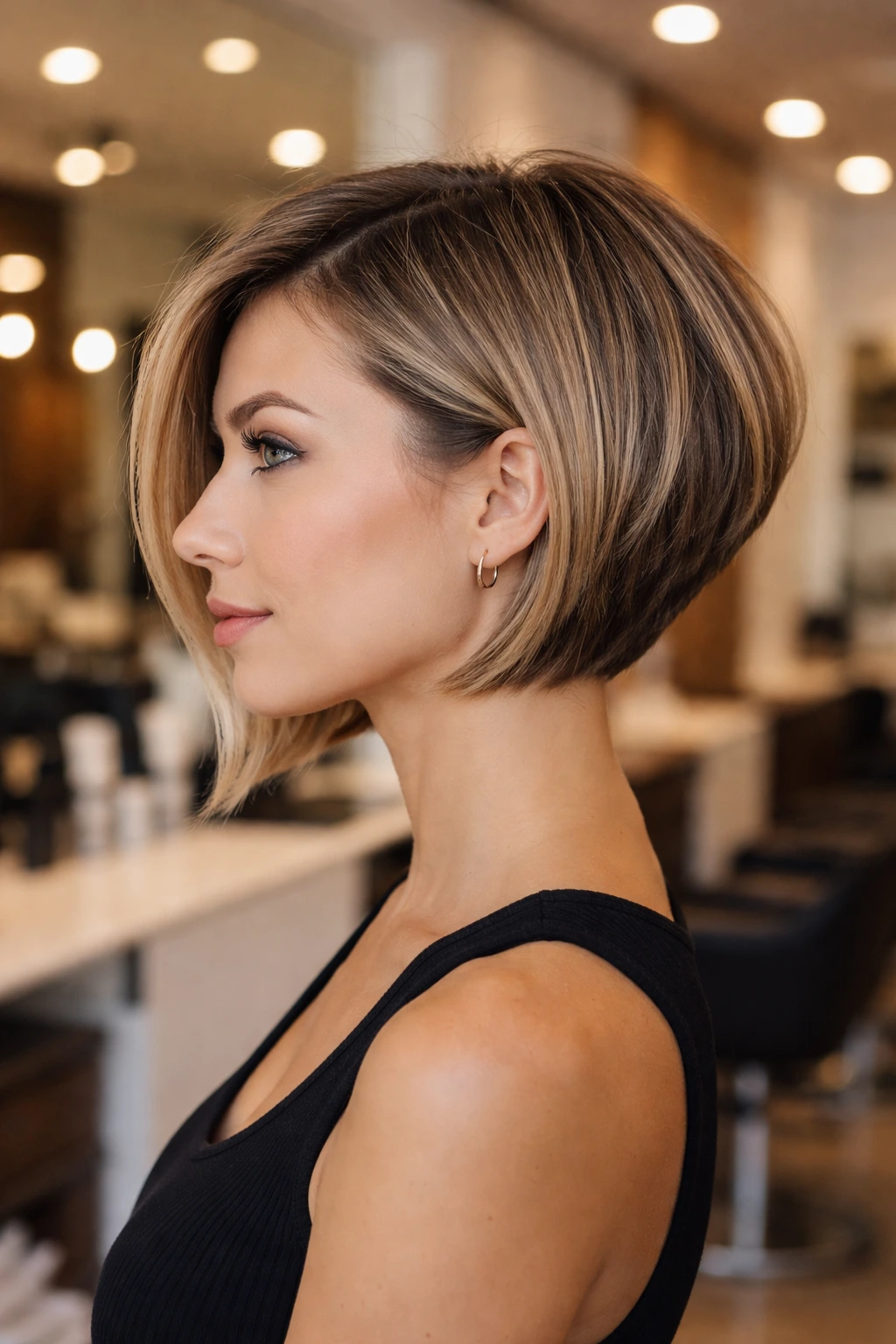
The inverted bob is shorter in the back and longer in the front. For fine hair, this is a strategic move. By cutting the back shorter, you remove weight, which allows the hair at the crown to lift more easily.
Visual Architecture
The angle brings the length forward, which frames the face and creates the appearance of more hair volume around your jawline. The back should be stacked slightly, but keep the layers subtle to avoid creating a “shelf” effect.
Maintaining the Angle
You will need to visit the salon more frequently for this cut—every six weeks is standard to keep the sharp graduation of the angle looking clean. If it grows out too much, the inverted shape loses its purpose and can start to look like an overgrown mess.
4. The Sleek Jawline-Skimming Bob
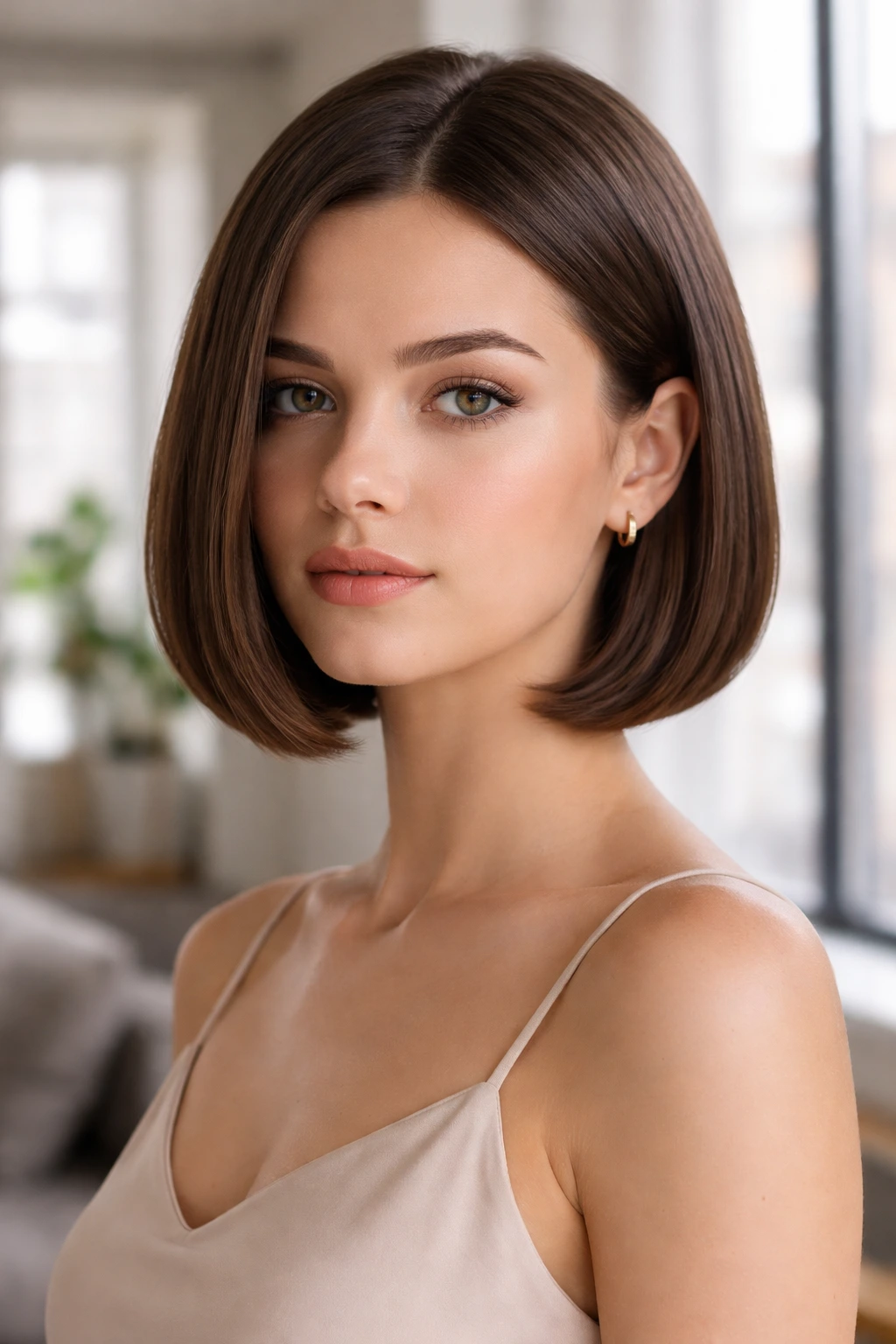
Precision is everything here. This cut grazes the jawline, which is a flattering point for almost every face shape. Because it is short, it avoids the limpness that happens with longer fine hair.
Creating the Illusion of Thickness
Because the hair is cut precisely at the jaw, it sits against the neck rather than hanging off the shoulders. This minimizes the appearance of thinness. It forces the hair to sit in a stack, creating a denser look.
Finishing Touches
Use a flat iron to give the hair a slight bend at the ends, or keep it pin-straight. Use a finishing spray to add a bit of shine, but avoid anything heavy like pomade or wax, which will cause fine hair to stick together and look oily.
5. The Wispy Layered Bob
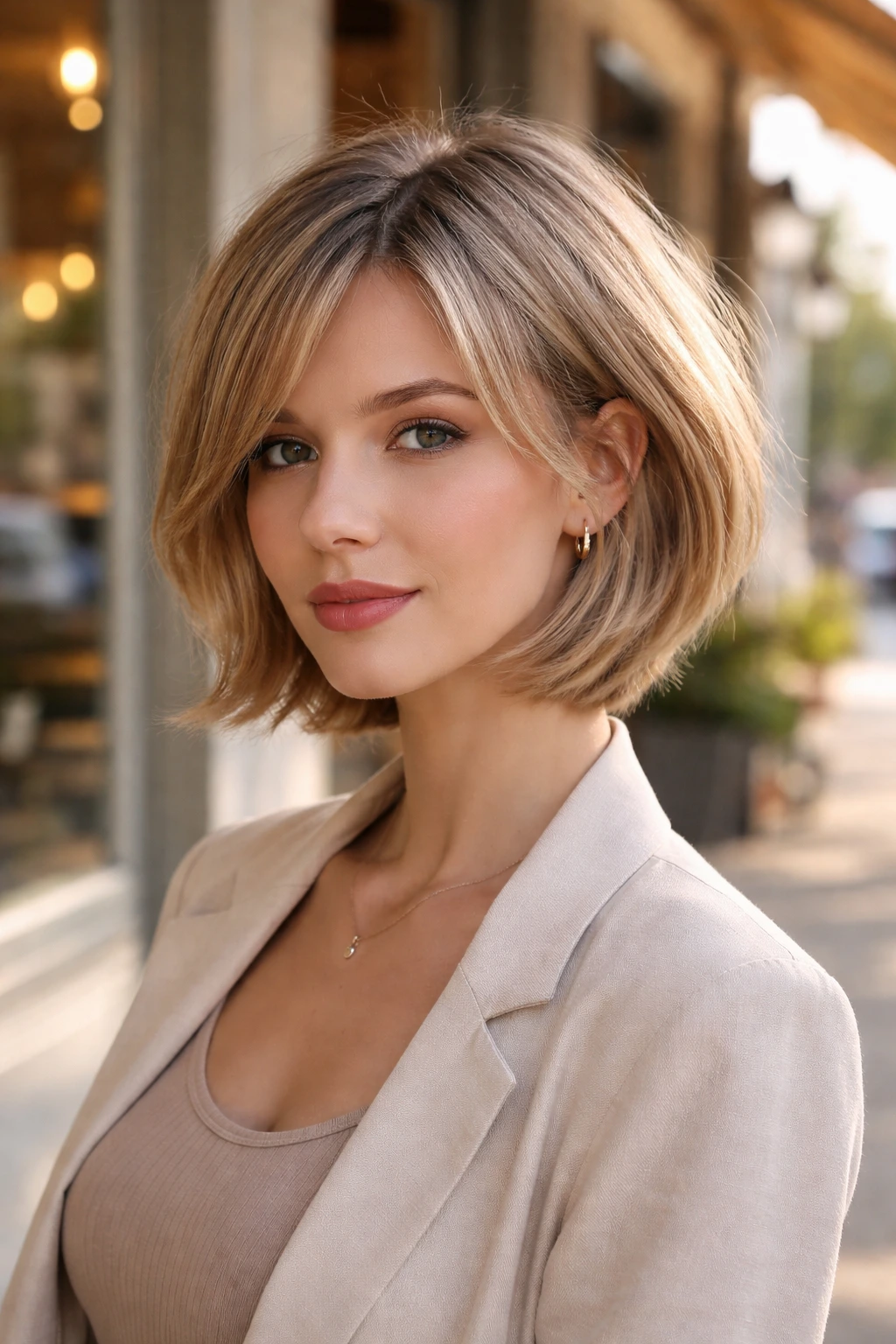
Layers are generally risky for fine hair, but “wispy” layers are different from heavy, choppy layers. Here, the goal is to remove just enough weight to allow the hair to swing without stripping away the volume.
Understanding Internal Layers
These layers are hidden. They are cut into the interior of the hair, not the surface. This allows the top layer of hair to lay smooth and sleek while the hair underneath provides a hidden support structure.
Who This Suits Best
This is perfect for someone who wants a bit of bounce. If your hair is poker-straight and falls flat, the hidden support of wispy internal layers gives you that necessary “lift” without looking messy.
6. The Face-Framing Graduated Bob
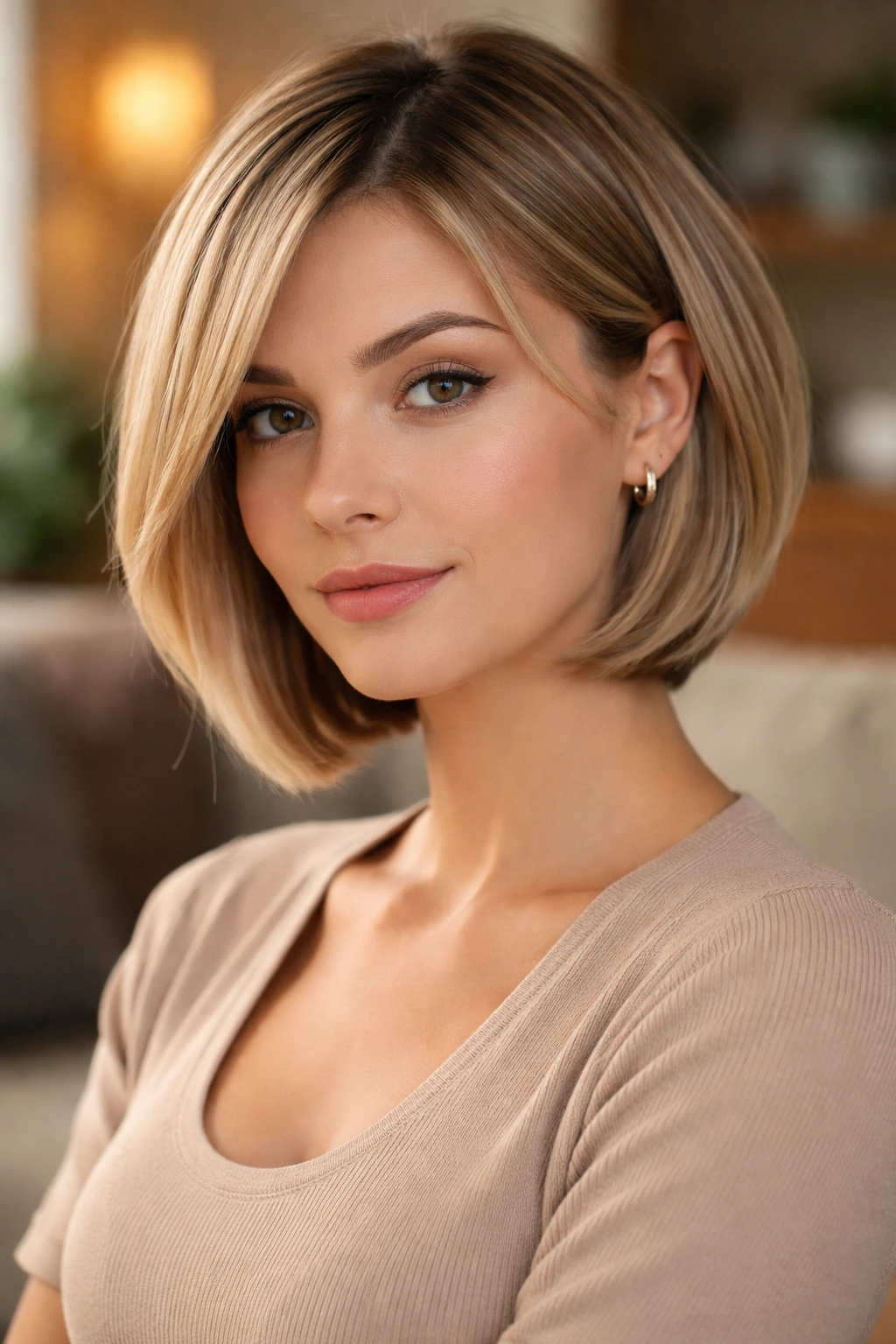
Graduation simply means there is a transition of length. In a face-framing version, the hair gets progressively longer as it moves toward the front, with the back remaining short and tight.
Why Graduation Matters
The graduation removes bulk from the nape. When you have fine hair, the back of the head can often look flat if the hair is all one length. A graduated cut forces the hair to round out, creating a naturally fuller shape.
Keeping It Fresh
Because the front is longer, this cut is incredibly versatile. You can tuck it behind your ears for a sharper look or let it drape forward to frame your face. Avoid round-brushing the front inward; keep it straight to emphasize the length.
7. The Piecey Shaggy Bob
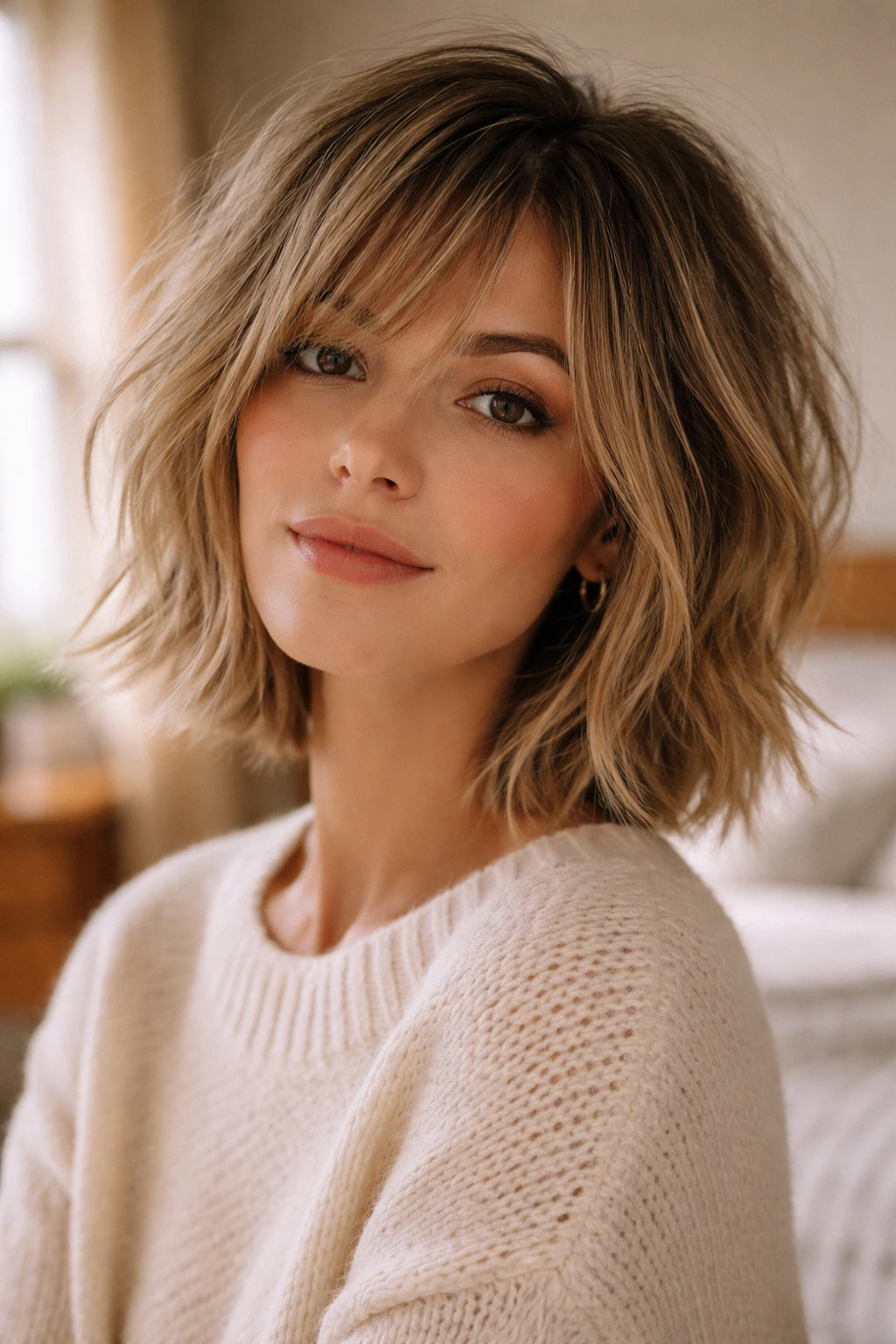
The shaggy bob is all about intentional messiness. It uses texture to make the hair look wild and abundant. For fine hair, this relies on a great texturizing product to hold the shape.
The Art of the Shag
It involves a mix of shorter, face-framing layers and longer, disconnected pieces. The goal is to look like you just woke up, but in a very controlled way. It works because fine hair, when properly textured, tends to clump together into “pieces” rather than looking like one thin sheet.
Styling Tip
Skip the conditioner on the roots. Apply a volumizing foam at the base and a texture spray on the ends. Use your fingers to ruffle the hair while it dries—do not touch a comb to this cut after you finish styling.
8. The Deep Side-Parted Bob
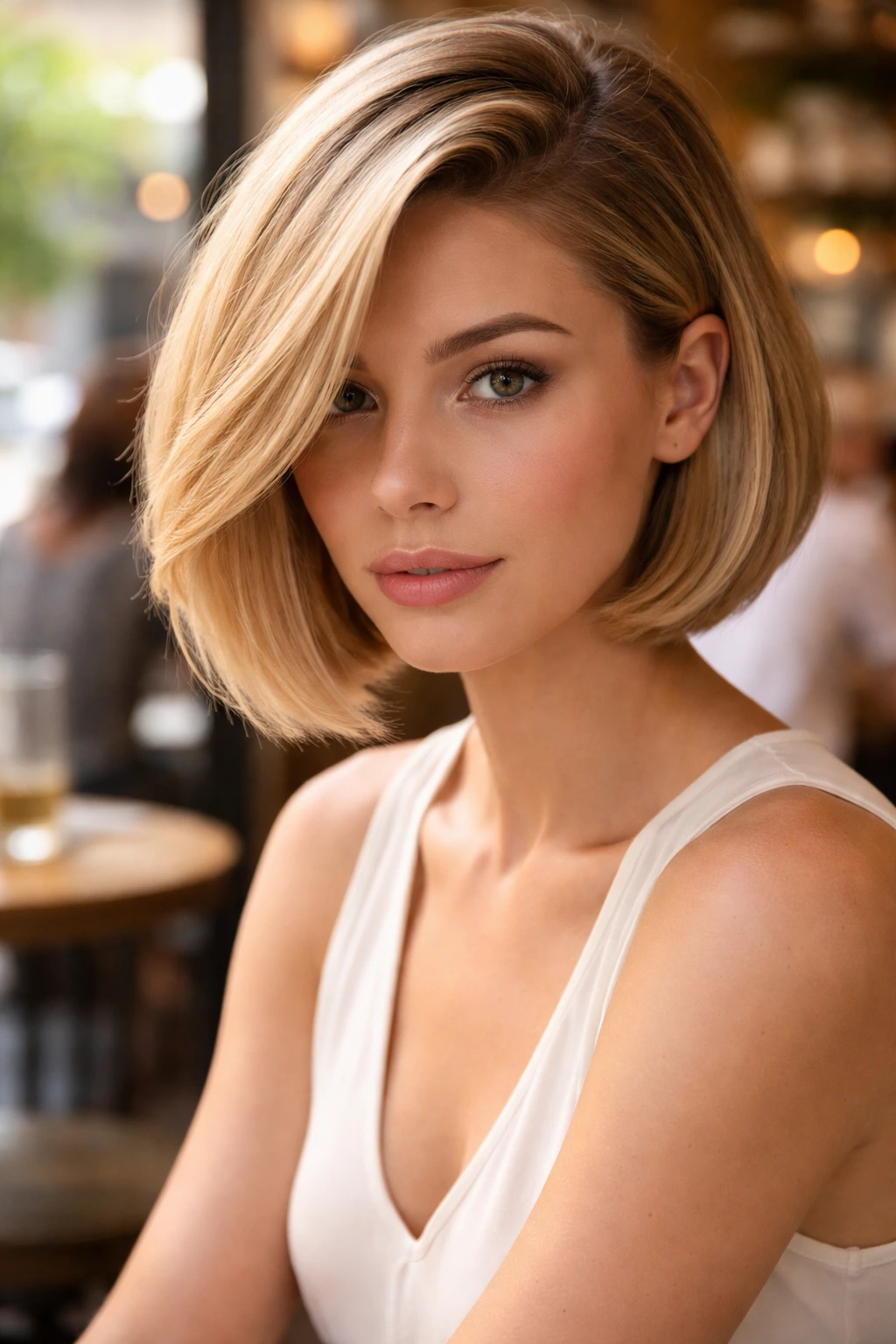
Sometimes the cut itself is secondary to how you wear it. A deep side part is an instant volume hack for fine hair. It pushes all the hair to one side, creating a massive, sweeping wave of volume over the crown.
Why It Changes Everything
A center part exposes the roots and can emphasize flatness. A deep side part creates a height illusion. It makes the side with more hair look instantly twice as thick as it actually is.
Combining with the Cut
Pair this with a blunt bob. The contrast between the severe, sharp end-line and the soft, deep sweep of the side part is visually sophisticated. It is a look that screams effort but takes two minutes to style.
9. The Blunt Bob with Curtain Bangs
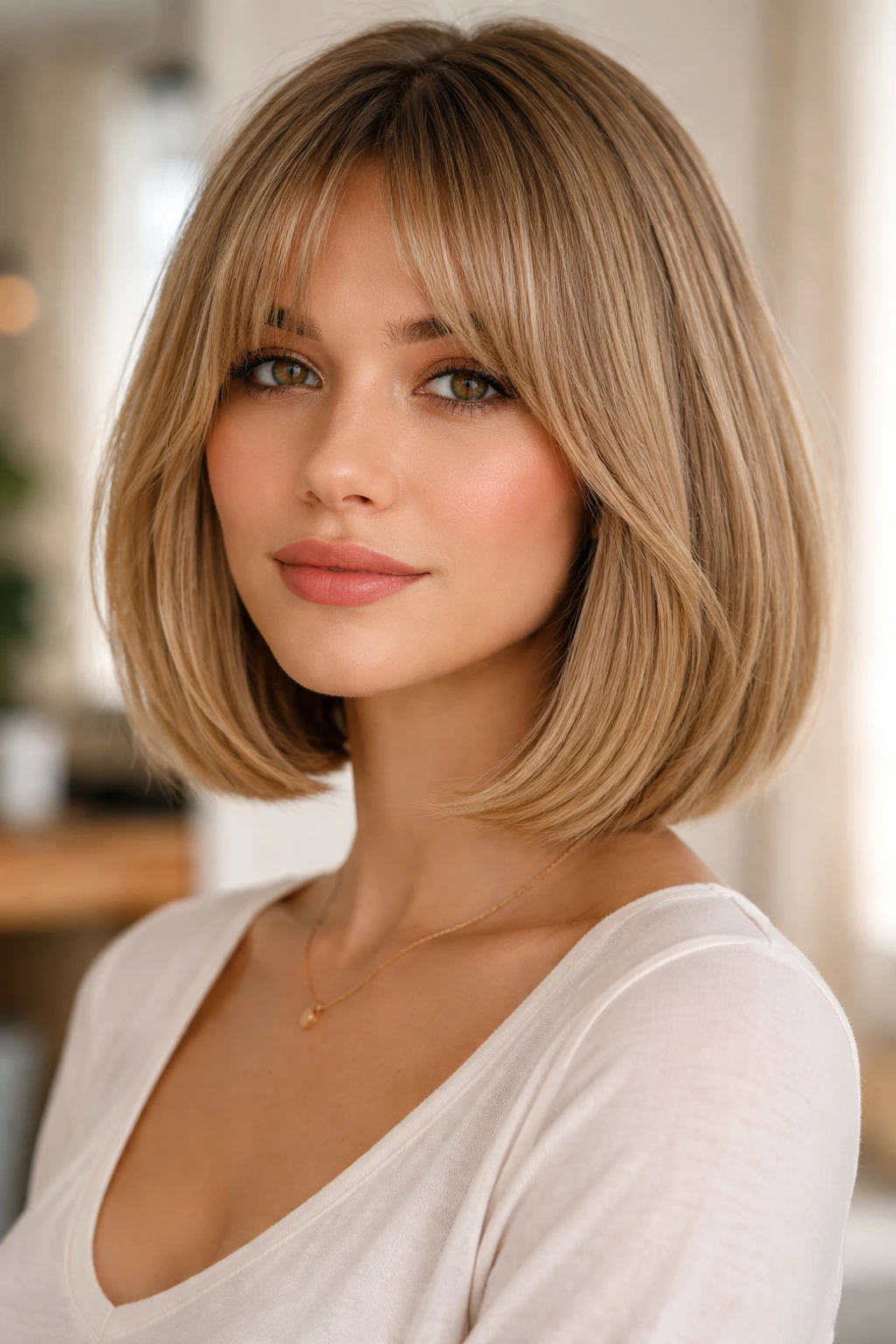
Curtain bangs are universally flattering, but on fine hair, they need to be treated with care. They should be cut slightly wider to incorporate more hair, preventing them from looking sparse.
Integrating the Bangs
The bangs should blend seamlessly into the rest of the bob. Avoid cutting a huge chunk of hair for the bangs, or you will lose too much density in the back. A small, soft section is all you need.
Daily Upkeep
You have to style these bangs every single day. If you don’t, they will fall flat and look greasy. Use a small round brush to pull them up and away from your face to give them that characteristic curtain-like sweep.
10. The Asymmetrical Deep-Angled Bob
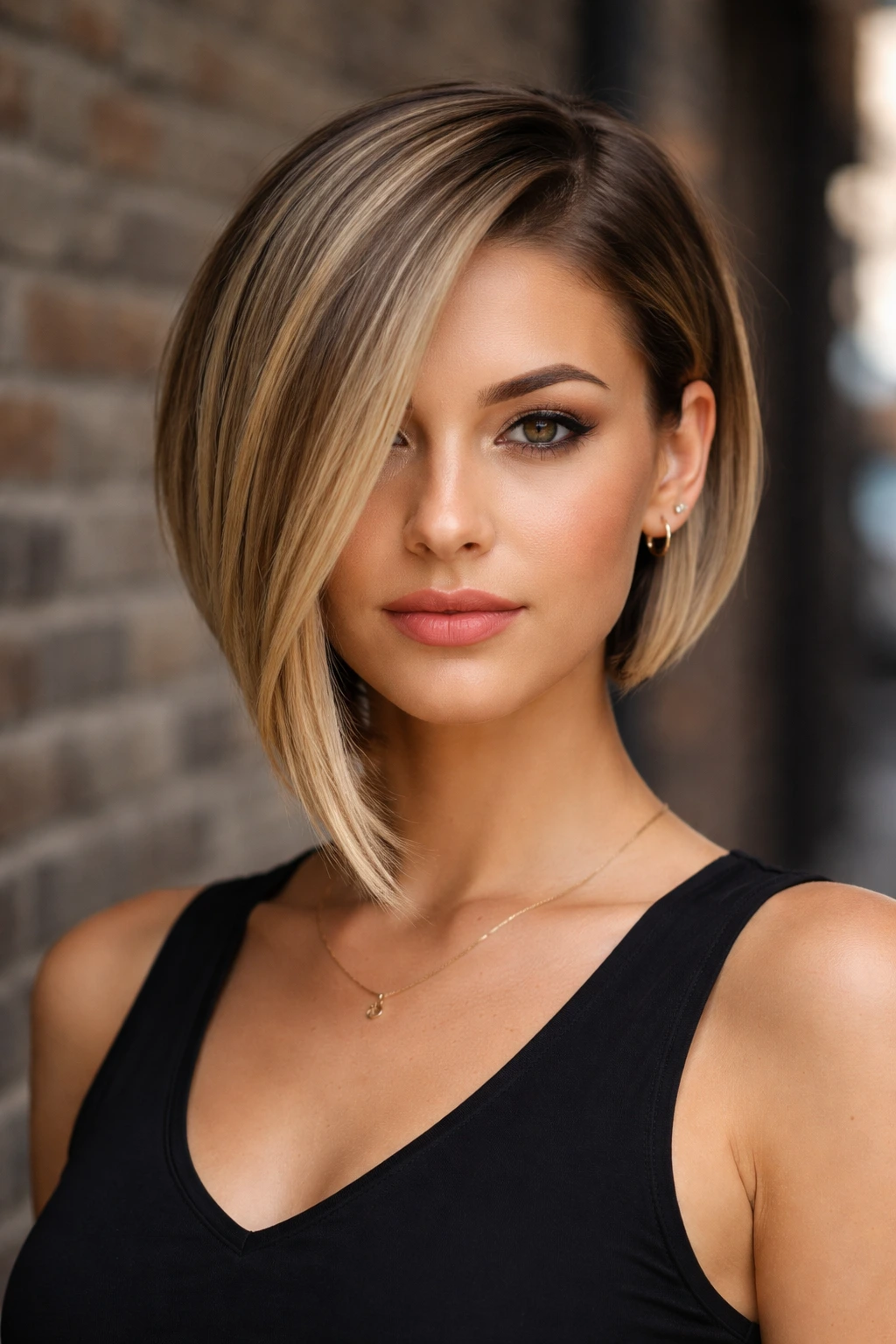
This is the bolder cousin of the inverted bob. One side is significantly longer than the other, creating a dramatic, edgy silhouette that draws attention to the style rather than the hair density.
The Benefit of Asymmetry
Asymmetry creates visual interest. People look at the cut’s shape rather than analyzing the thickness of your ponytail. It is a classic stylist trick for making thin hair feel like a deliberate fashion choice rather than a struggle.
Managing the Sides
The shorter side is a breeze to style. The longer side requires a little more attention. Use a bit of smoothing cream to ensure the ends don’t get frizzy, as frizz makes fine hair look even thinner and less healthy.
11. The French-Girl Bob with Fringe
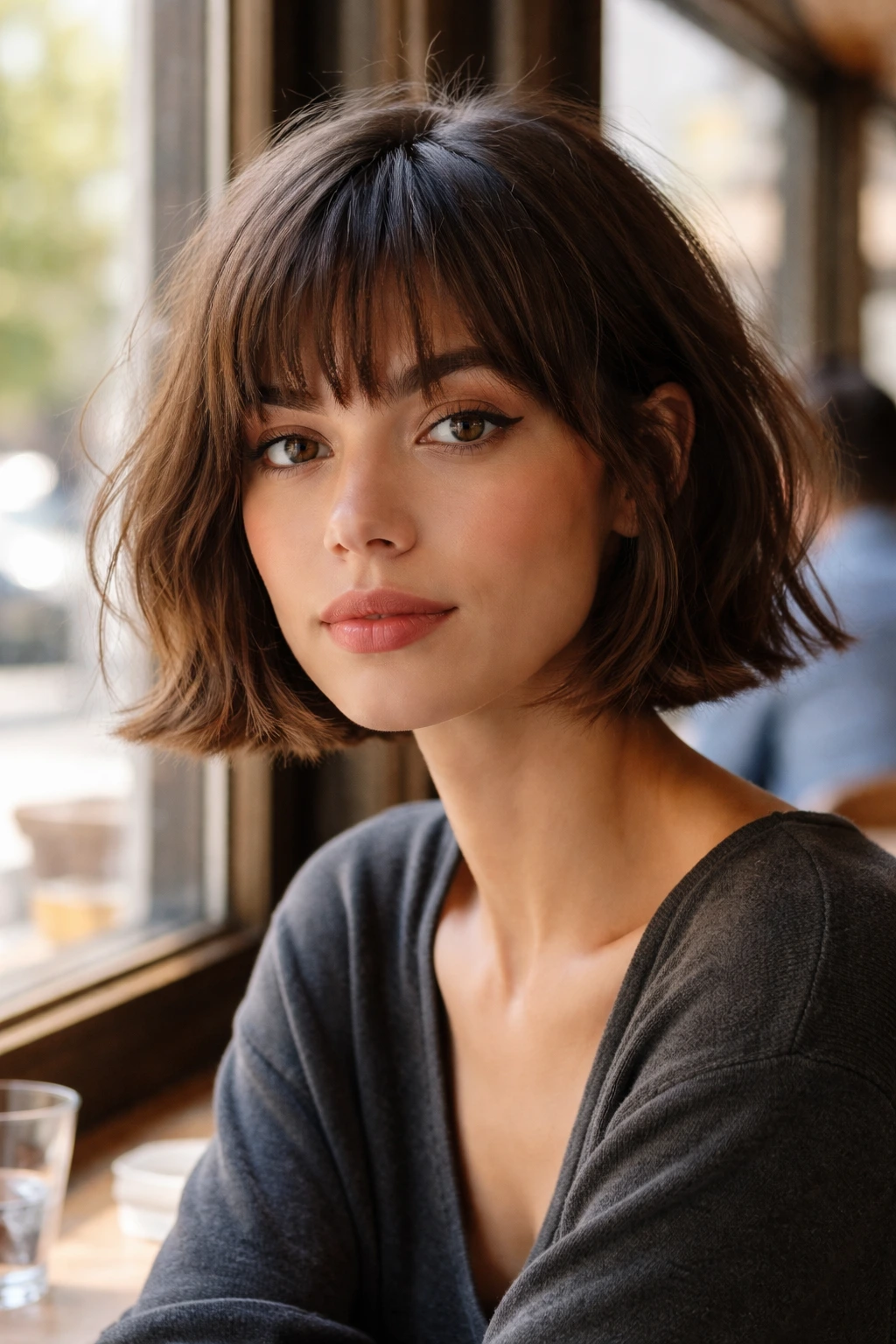
Think of this as the “undone” bob. It usually hits right at the cheekbones or the chin, often paired with short, slightly choppy bangs. It’s meant to look air-dried and natural.
Why This Works
The length is crucial. By keeping it short, you maximize the natural bend of your hair. If you have any wave at all, this cut will bring it out. The bangs add density to the front, which is often where fine hair struggles the most.
Product Requirements
This is a low-product style. A little bit of texture cream or a matte paste is all you need. Do not try to make it perfect. The charm of this cut is in the slight imperfection.
12. The Collarbone-Length Lob
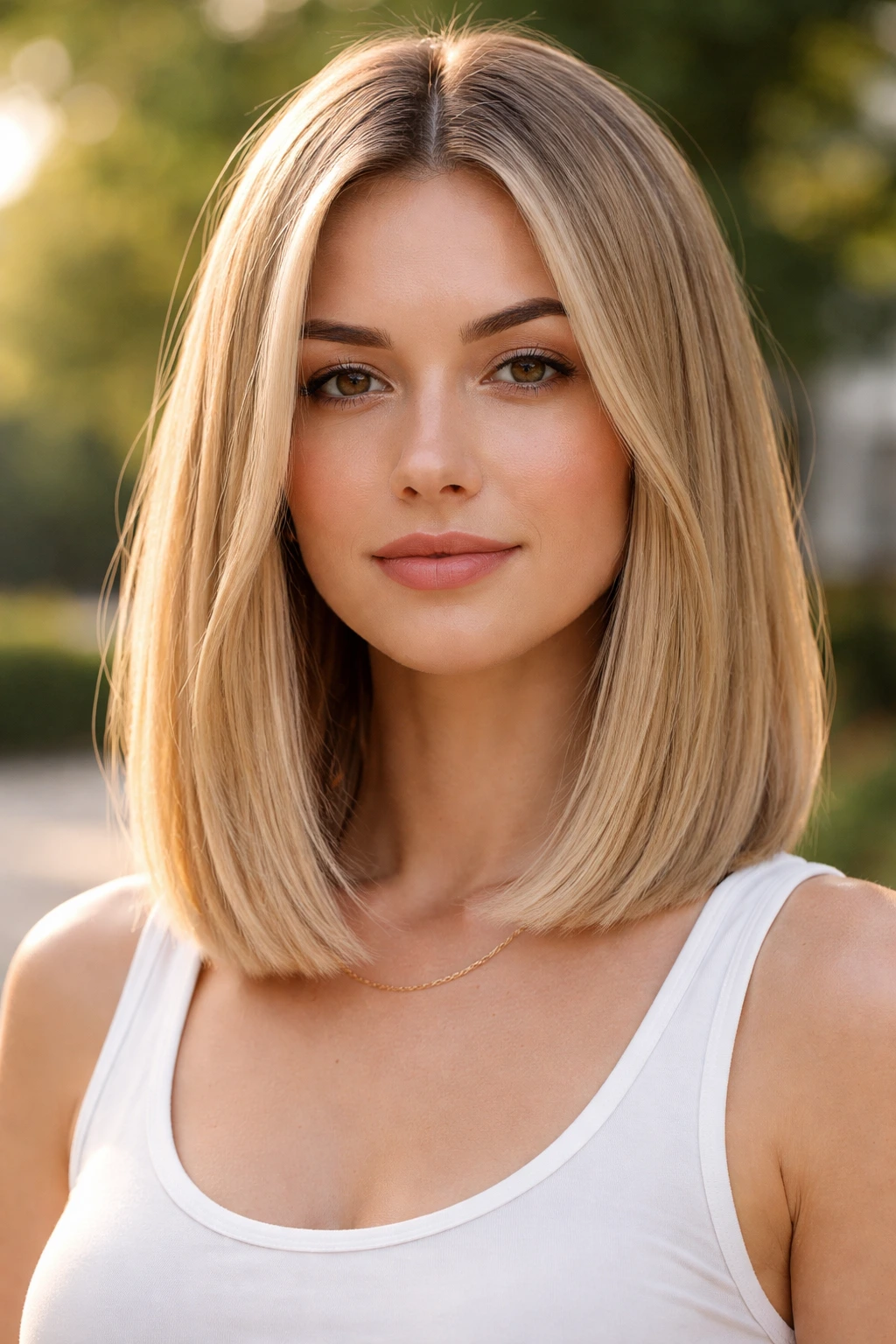
If you are terrified of going too short, the lob (long bob) is your safety net. It hits at the collarbone, which is long enough to pull back but short enough to keep the ends healthy.
Avoiding the “Thin Ends” Trap
The longer you grow fine hair, the more it risks looking thin at the bottom. To combat this, you need the “blunt” version of the lob. Do not get layered. Keep the perimeter clean and solid so it looks like you have a high volume of hair from root to tip.
Maintenance Note
Dusting the ends is essential. Get a quarter-inch trimmed every eight weeks. Since the hair is hitting your shoulders, it will rub against your clothes, which causes breakage. You must stay on top of the trims to keep the ends blunt and healthy.
13. The Undercut Nape Bob
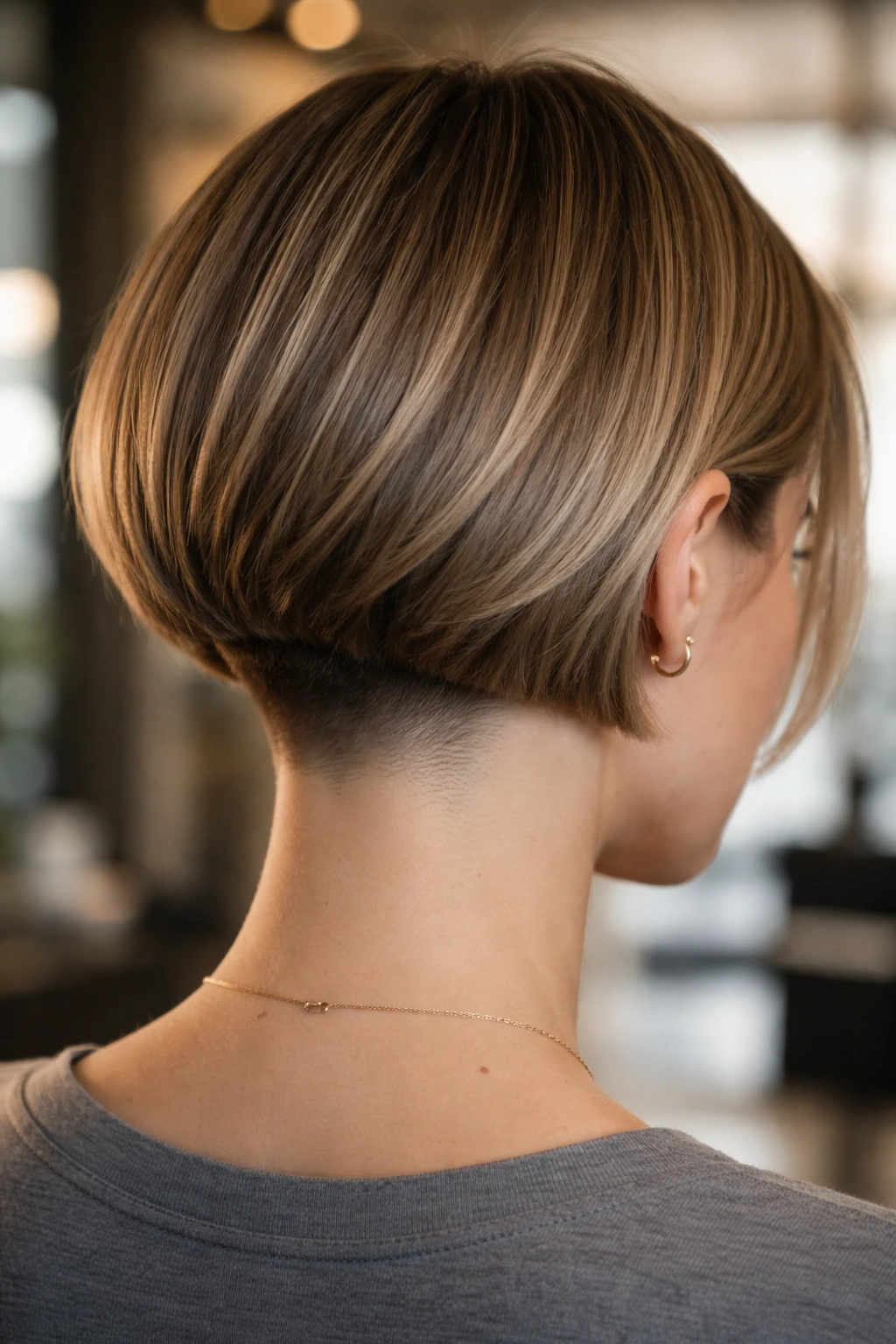
This is a specific technique where the very bottom section of hair at the nape of the neck is cut extremely short or even shaved. It’s a hidden gem for fine-haired people who struggle with a bulky or messy neckline.
The Physics of the Cut
By removing the hair at the very bottom that tends to stick to your neck or flip out, you force the rest of the hair to lay smoother. It also creates a “shelf” for the hair above to rest on, which can actually increase volume at the back of the head.
Aesthetic Appeal
It is edgy, modern, and keeps the neck cool in warmer weather. It looks best with a blunt bob where the contrast between the long hair and the short nape is clear.
14. The Blunt Bob with Shadow Roots
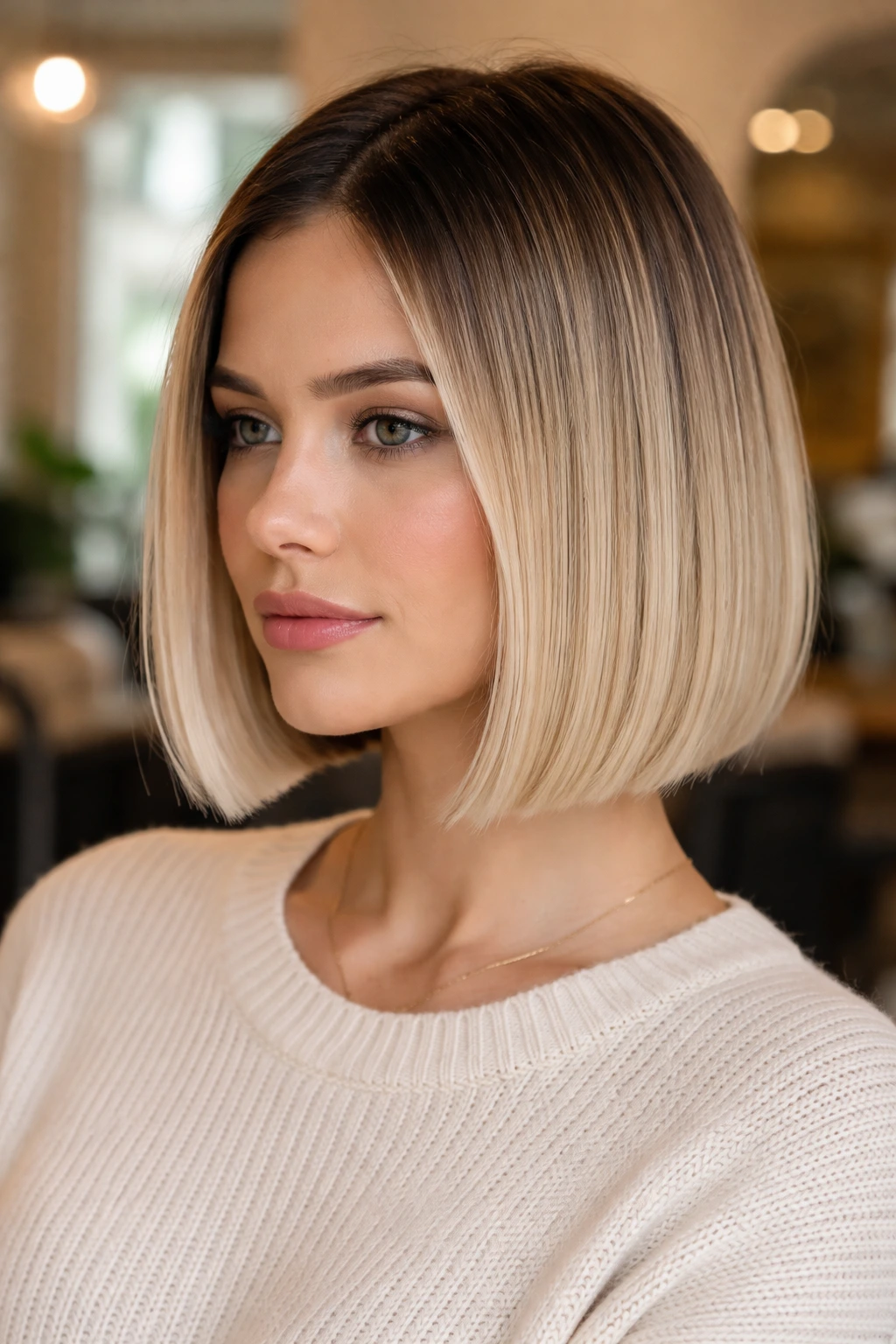
Sometimes the cut needs a color partner. A shadow root—where the roots are left darker than the ends—gives the illusion of depth at the scalp. When paired with a blunt bob, the result is a massive increase in perceived density.
Why Color Matters
When your roots are light, the scalp is visible. When your roots are darker, that contrast disappears, and your hair looks thicker at the base. It’s an optical illusion that is incredibly effective.
Longevity
This is a low-maintenance color technique. Because you aren’t doing root-to-tip highlights, you don’t have to worry about a harsh grow-out line. It grows out naturally and softly, saving you money at the salon.
15. The Voluminous A-Line Bob
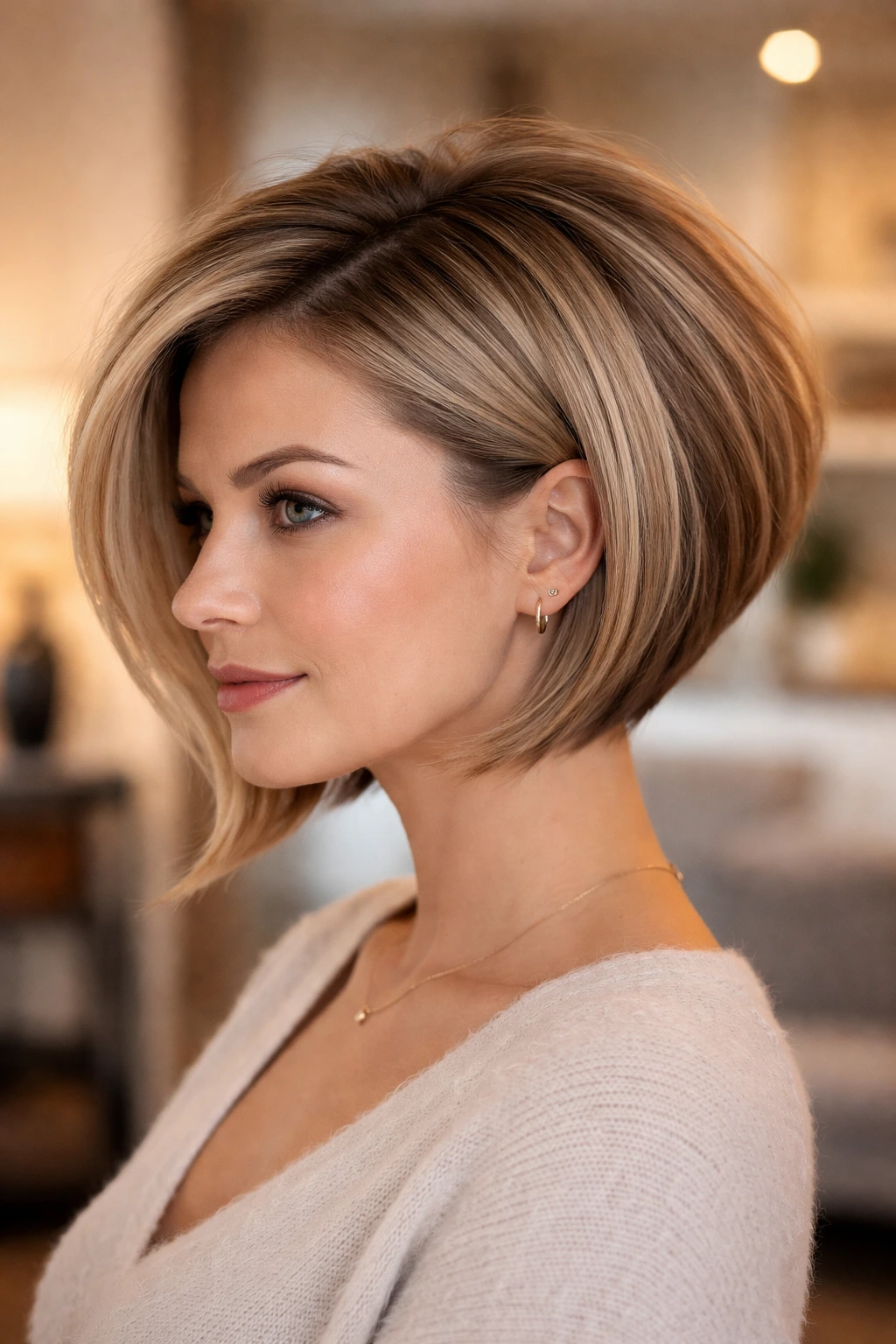
An A-line bob is similar to an inverted bob but usually features a more pronounced graduation. The hair is much shorter in the back and sweeps forward in a strong, clean line.
The Shape of Volume
This cut forces the hair to build up on itself in the back. By stacking the layers (in a very soft, internal way), you create a rounded shape at the crown. This prevents the “flat back of the head” syndrome that plagues many with fine hair.
Styling for Fullness
Flip your head upside down while drying to build root volume. Once it is mostly dry, flip back and use a round brush to smooth the front sections. The contrast between the short back and long front is the standout feature.
16. The Softly Tapered Bob
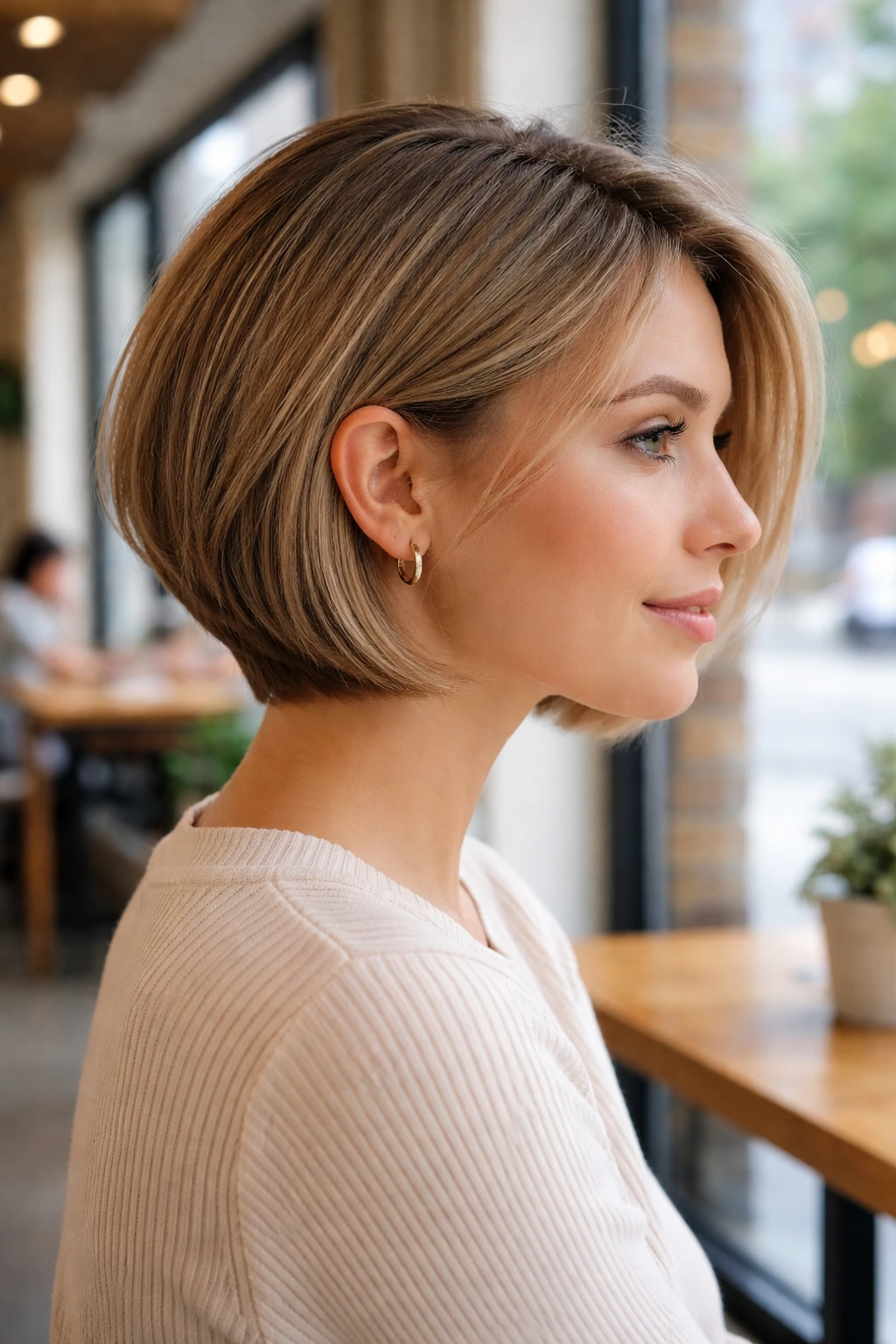
A tapered bob is essentially a blend between a bob and a pixie. The back is cut close to the neckline, and the length gradually increases as you move toward the front, but the taper is much softer and more blended than a stacked bob.
The Vibe
This is a chic, sophisticated look. It’s less “edgy” than the inverted bob and more “polished.” It’s perfect for a professional environment where you want a clean, tidy style that doesn’t look like you’re trying too hard.
Who Should Avoid This
If your hair is extremely fine and tends to cowlick at the nape, be careful. The taper can sometimes cause those cowlicks to stick out aggressively. Discuss this with your stylist before taking the plunge.
17. The Blunt Bob with Dimensional Color
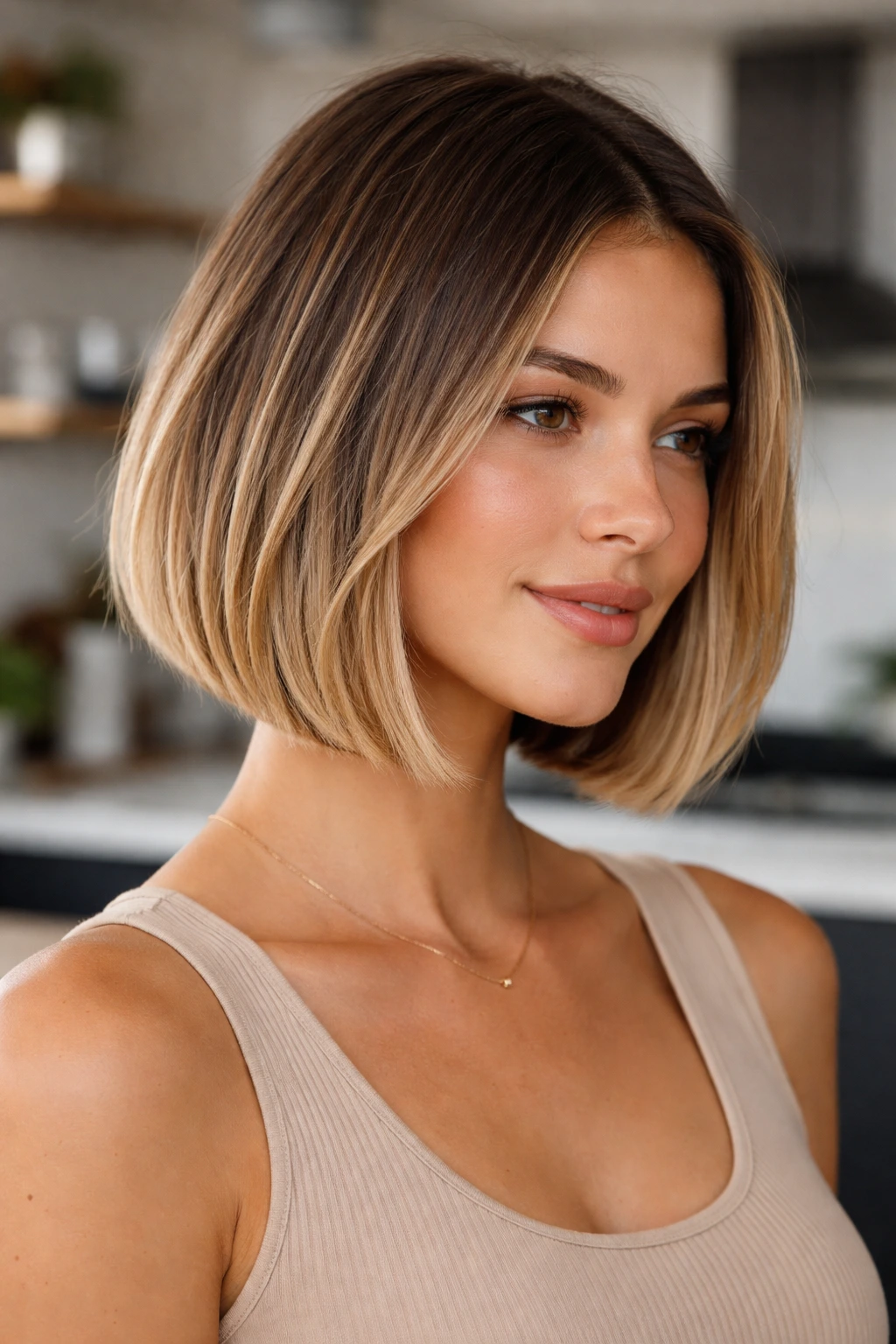
Color placement is a cut-enhancer. By using a technique like balayage or babylights specifically on the ends of your blunt bob, you create the appearance of more movement and texture.
The Science of Light
Solid-colored hair can look flat. By adding different tones—lighter towards the ends—you trick the eye into seeing more texture. It makes the blunt ends look less like a single line and more like a collection of light-catching, individual strands.
The Golden Rule
Do not over-lighten. Fine hair is fragile. If you bleach it to the point of breakage, your blunt ends will lose their integrity and begin to snap off, ruining the clean line of the bob.
18. The Stacked Back Bob
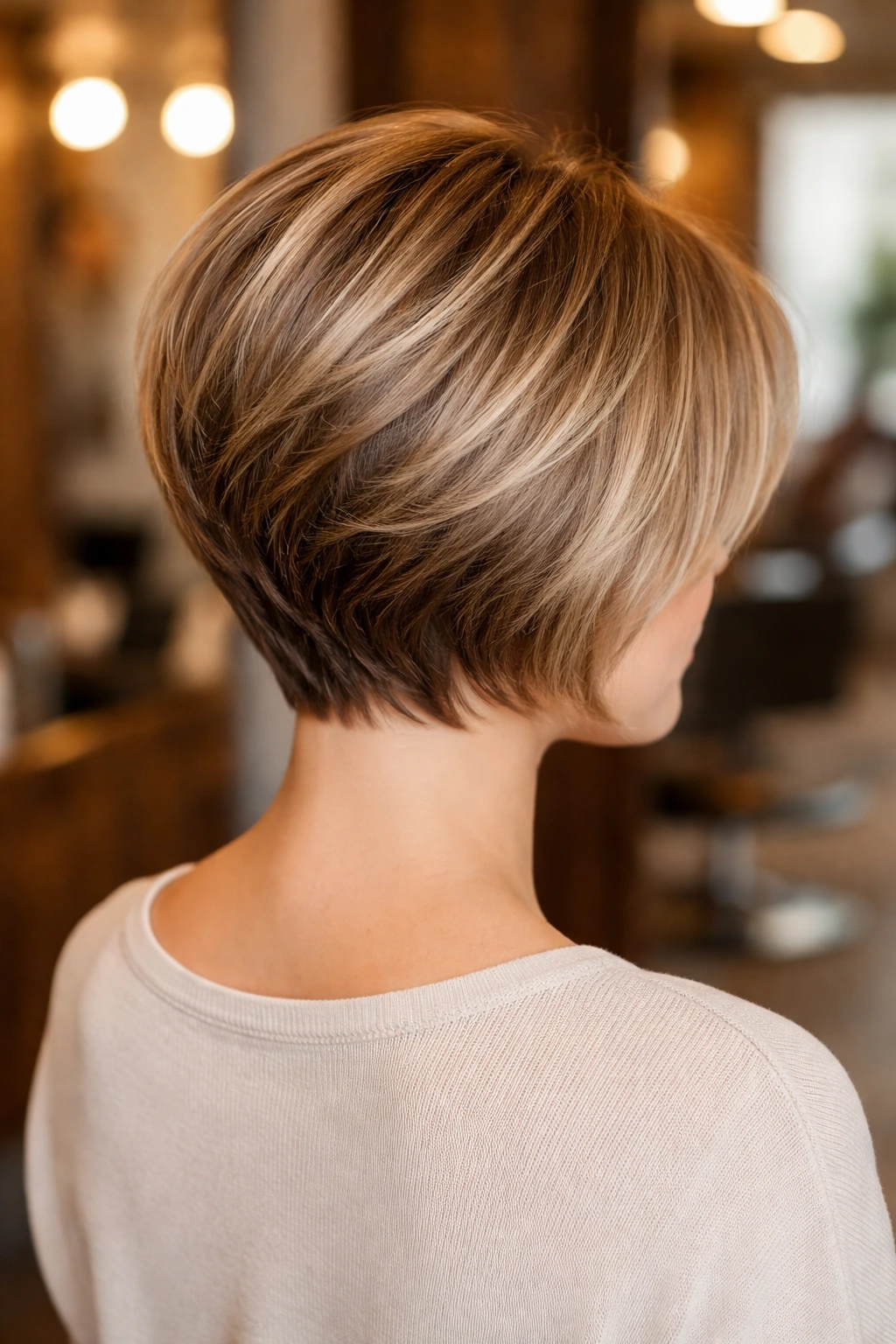
This is the volume-heavy choice. It involves cutting the back layers shorter and shorter, “stacking” them on top of each other to create a dense, rounded back profile.
The Volume Benefit
For those with fine hair that refuses to hold volume, the stacked cut does the heavy lifting for you. The geometry of the cut keeps the hair lifted at the crown, which stays in place even without product.
The Downside
You need a skilled stylist. If the stacking is done poorly, it can look like an outdated, “step” haircut. You want the stacking to be internal and invisible, not a clear set of steps like a ladder.
19. The Bottleneck Bangs Bob
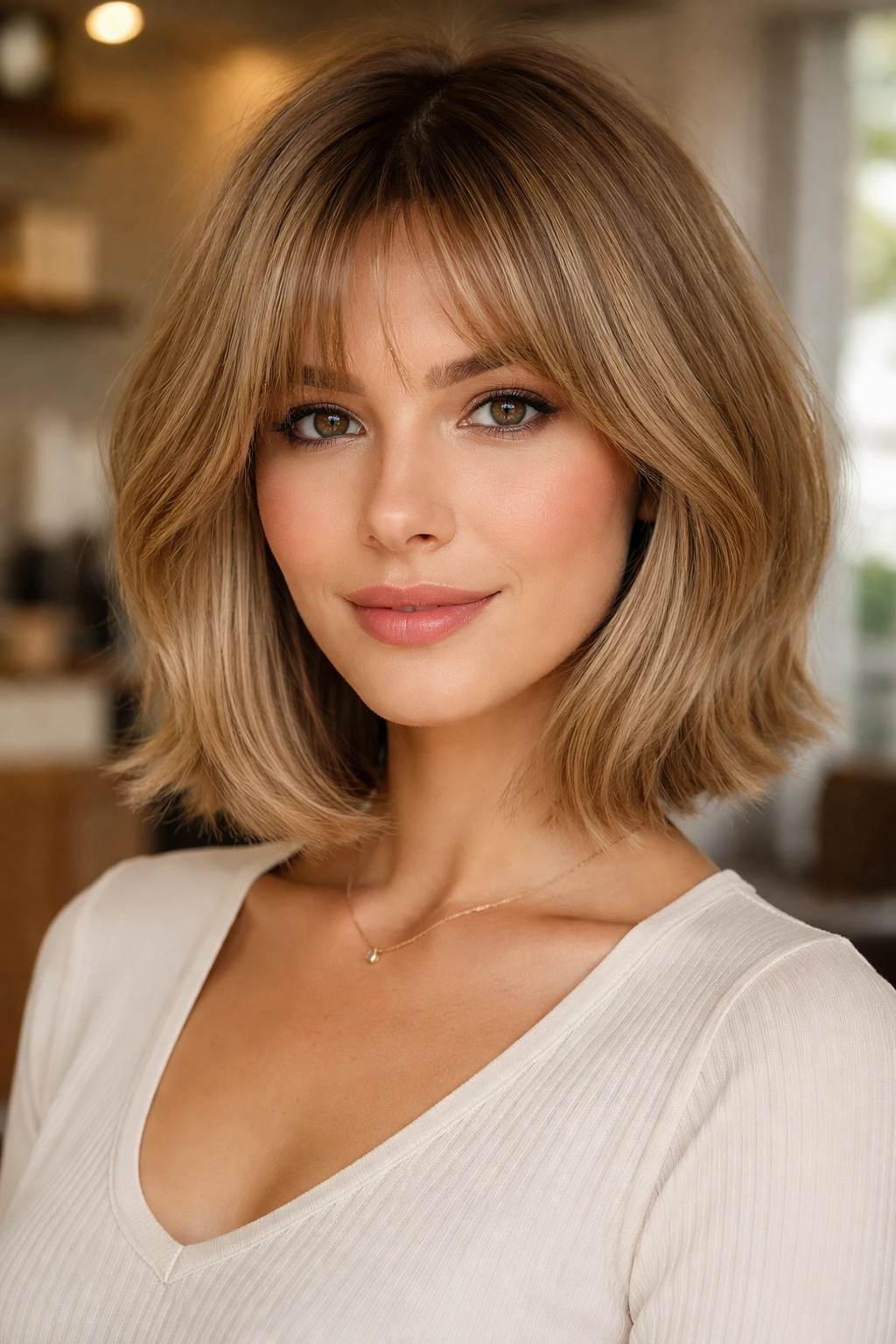
Bottleneck bangs are a mix between curtain bangs and a full fringe. They are shorter in the middle and get longer on the sides, mimicking the shape of a bottleneck.
The Framing Effect
They add softness to the face while still giving you the benefit of bangs, which create the illusion of more hair volume at the front of the head. It’s a great way to fill in the “triangle” area of the face.
Styling the Fringe
Use a round brush to pull the bangs forward, then flick them to the side at the last second. This ensures they don’t look like a solid block on your forehead, which can overwhelm fine features.
20. The Choppy Messy Bob
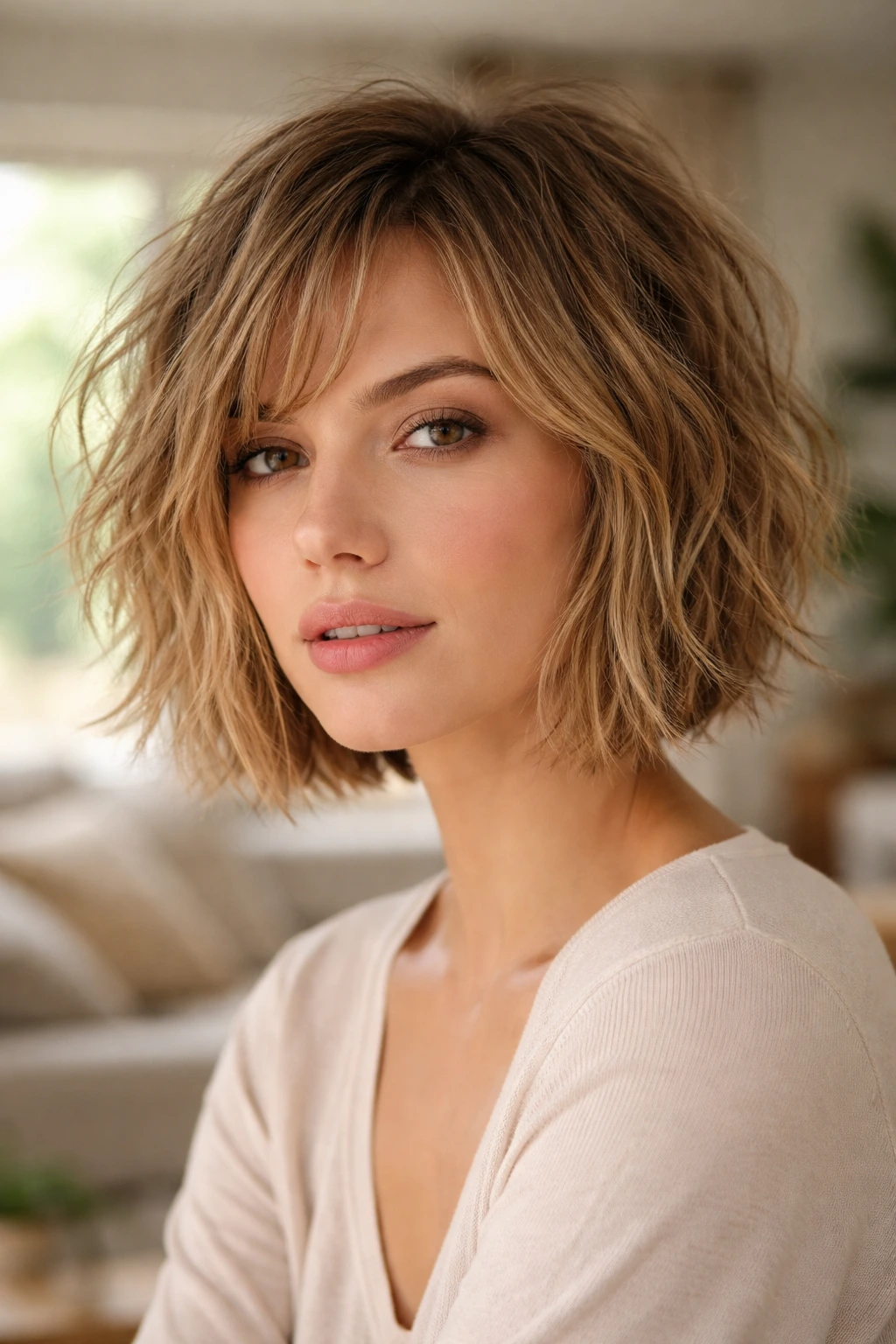
This is for the person who hates styling. It is a texturized bob where the ends are jagged and uneven on purpose. It looks great when it is slightly tousled and lived-in.
Why It Works
It embraces the texture of your hair rather than fighting it. If your hair has a slight natural bend, this cut will celebrate it. If it’s straight, a bit of sea salt spray will make it look like you have more hair than you do.
The Maintenance Factor
This is the ultimate low-maintenance cut. It looks better as it grows out, and you don’t need to worry about being perfectly precise with your styling. Just run some texturizer through your fingers and go.
21. The Side-Swept Asymmetrical Bob
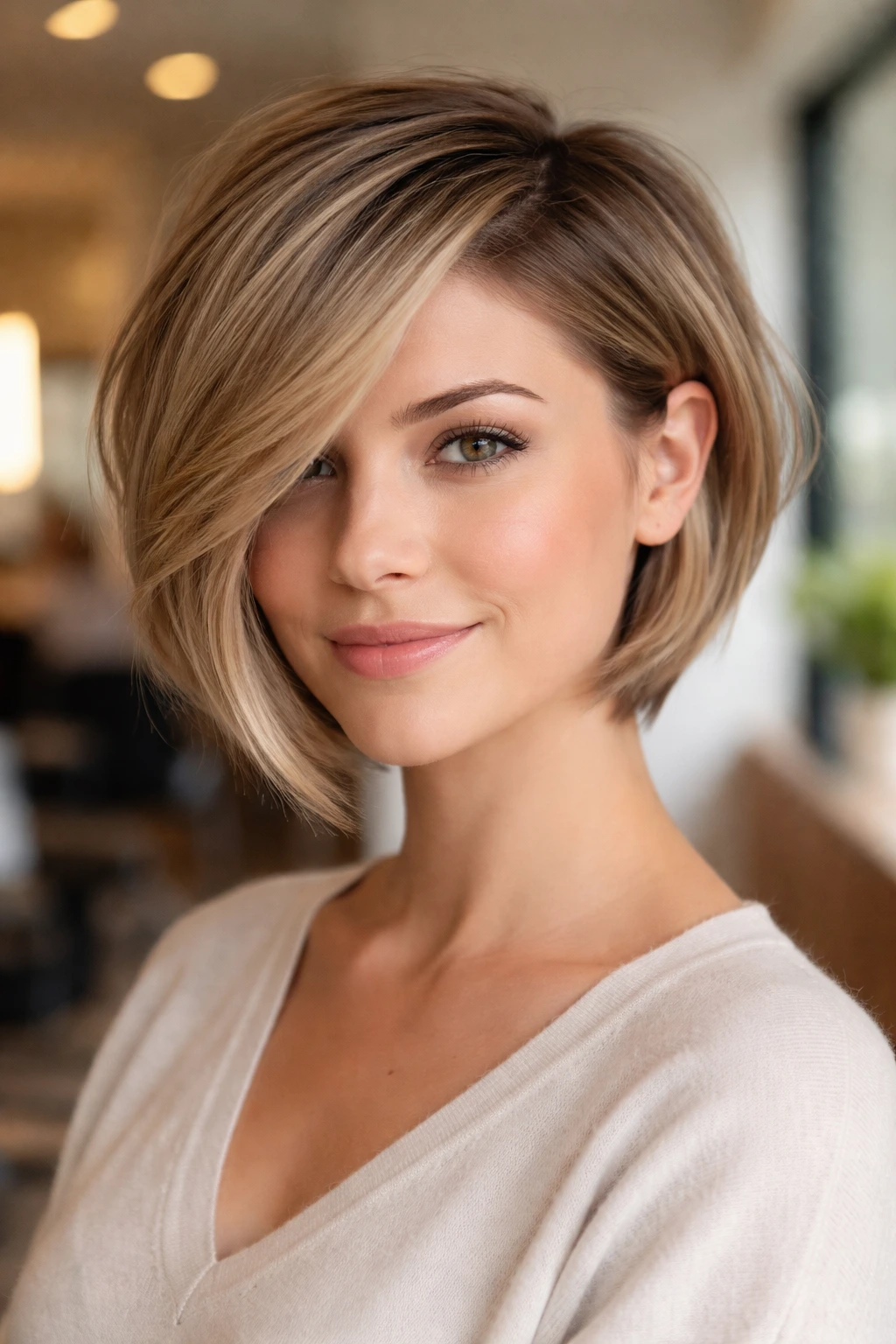
A side-swept bob relies on a deep side part to create a sweeping motion across the forehead. It’s elegant and very flattering for rounder face shapes.
The Visual Illusion
The sweep adds height. Height is the biggest weapon in your arsenal when you are dealing with fine hair. Even a half-inch of lift at the root makes the whole style look more substantial.
Fixing the Sweep
If your hair keeps falling into your eyes, use a tiny amount of pomade on the ends of the swept section to help it hold its shape. Do not overload the root, or it will sag immediately.
22. The Sleek Center-Parted Bob
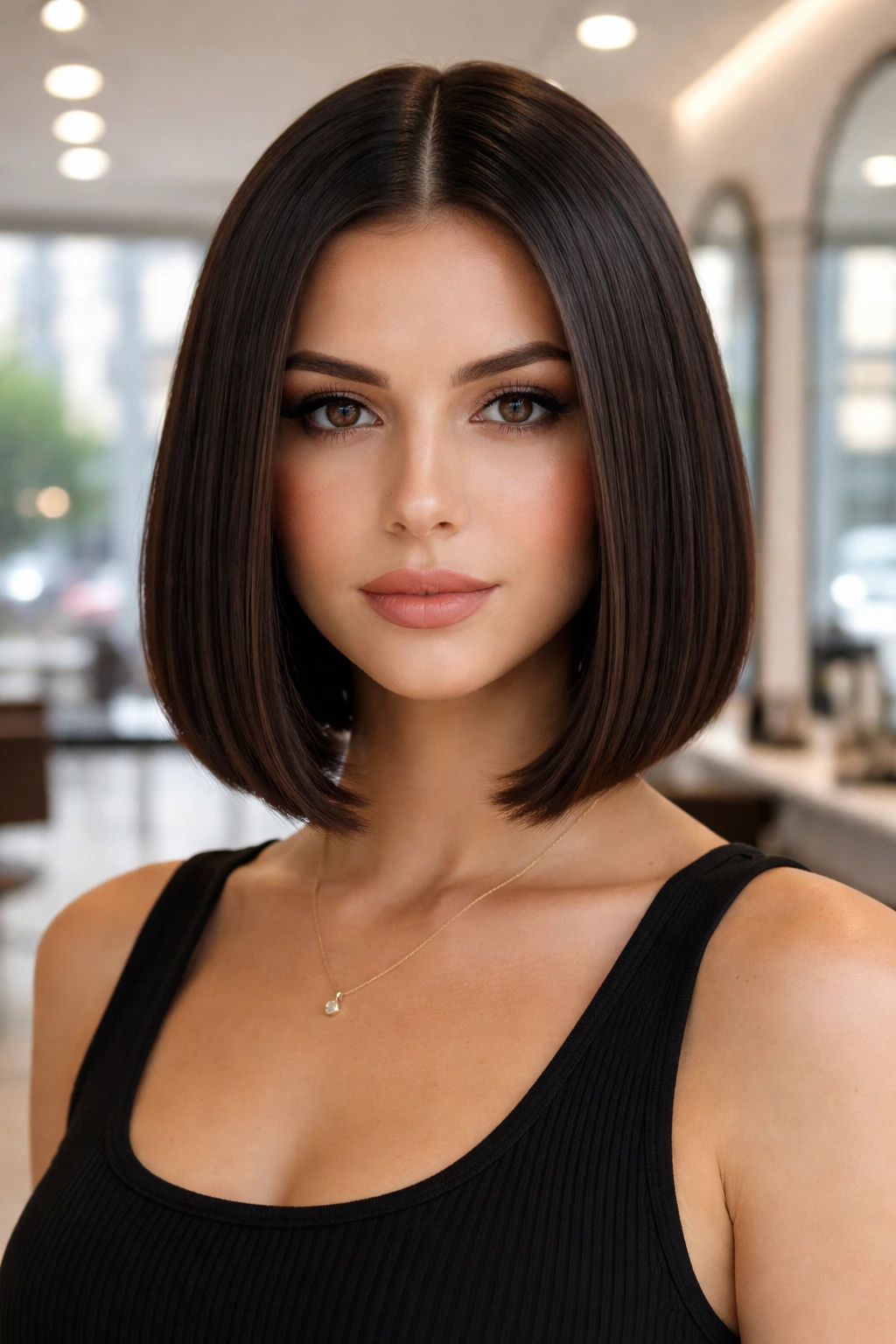
This is the minimalist’s choice. It is clean, sharp, and very modern. It requires a high level of precision because there is nowhere for the hair to hide.
The Challenge
A center part can sometimes emphasize a lack of volume. To counter this, ensure the hair is cut with a very slight graduation toward the front. This prevents the hair from hanging like curtains directly against the cheeks.
Grooming Requirements
This style demands shine. Use a smoothing serum or a light glossing spray to keep the hair looking expensive and healthy. Dull, fine hair looks thin; shiny, fine hair looks healthy and strong.
23. The Curled-Under “Clueless” Bob
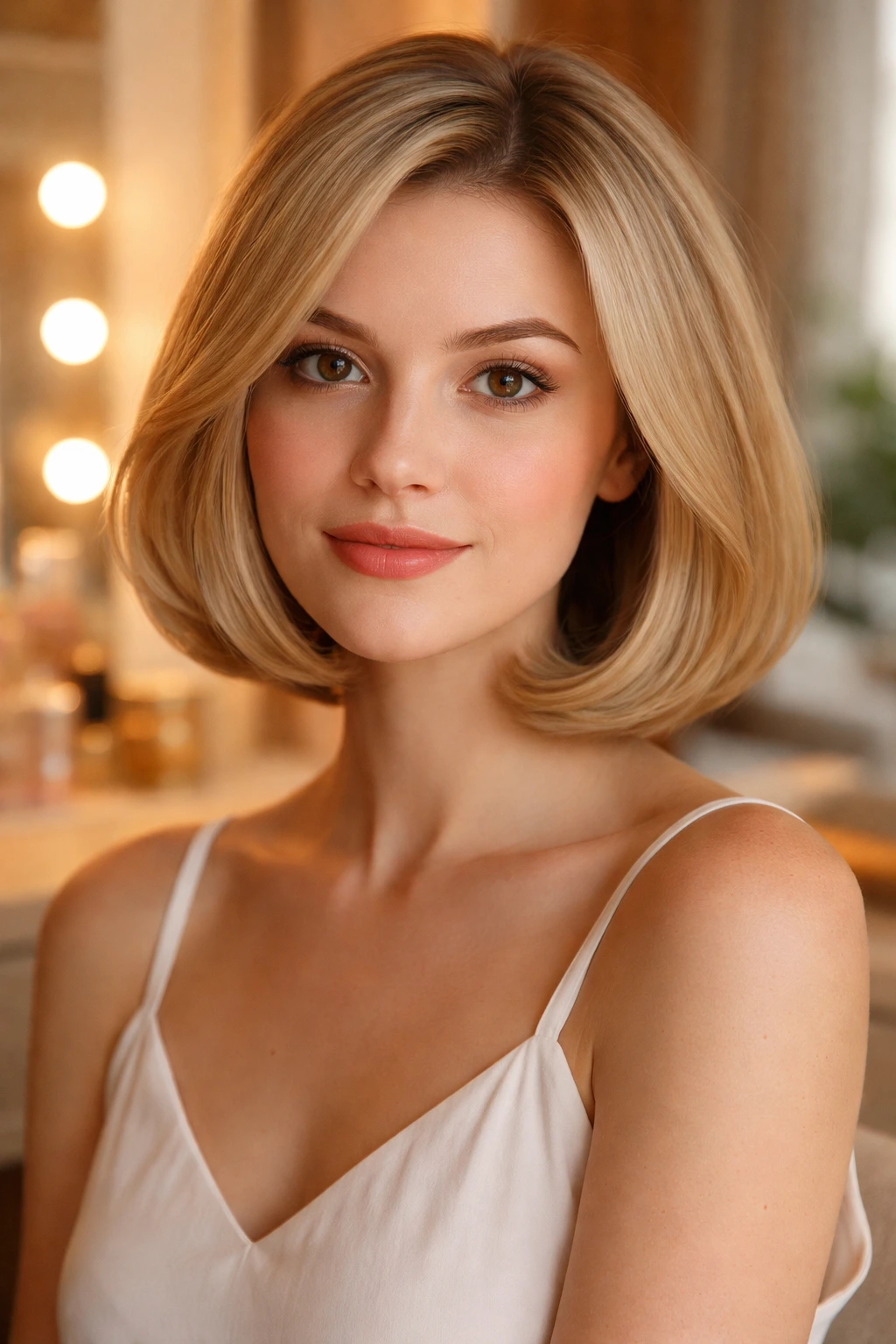
This style is a throwback to the 90s, where the ends are rounded under toward the face with a round brush. It creates a very soft, sweet, and polished look.
Why It Adds Volume
The inward curl creates a curve. That curve pushes the hair out, which creates space and the illusion of fullness. It is a technique that mimics the look of a larger head of hair.
The Tool
You need a medium-sized round brush. Do not use a large brush, or the hair will just straighten out. The smaller barrel helps you capture the fine strands and really curl them under.
24. The Airy Layered Bob
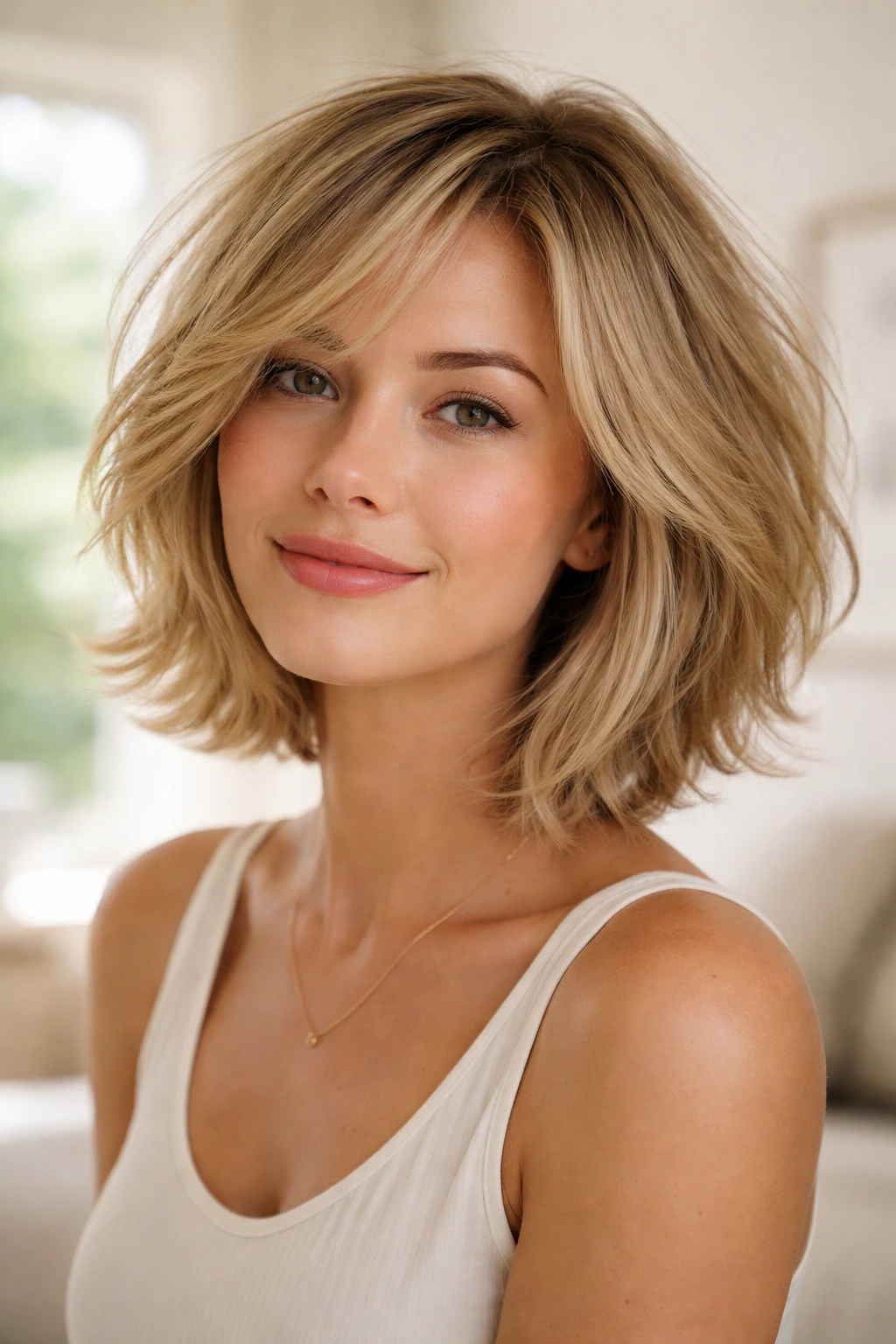
“Airy” is the keyword. This isn’t about heavy, chunky layers. It is about removing weight so the hair can float. The ends are texturized to prevent them from looking heavy.
The Cut Technique
The stylist will use thinning shears or a razor (depending on your hair health) to remove bulk from the ends. This makes the hair swing when you move. It is very feminine and light.
Who Should Avoid This
If your hair is extremely damaged, stay away from the razor. It can fray the ends of damaged hair and lead to more split ends. Use scissors for a cleaner, healthier cut if your hair is compromised.
25. The Blunt Cut with Invisible Layers
This is the best of both worlds. You get the solid, thick look of a blunt bob at the perimeter, but internal layers are hidden underneath to give you volume.
How It Works
The top layer remains long and blunt, covering the layers cut into the interior. This is a classic stylist trick. It makes the hair look thick on the surface but gives it a “scaffold” underneath to keep it from flattening out.
Daily Styling
Since the top layer is blunt, it is very easy to smooth with a flat iron. The interior layers provide the “puff” so you don’t have to tease your hair at the roots.
26. The Textured Beach-Wave Bob
If you have a natural bend, this cut is for you. It is a chin-length or jaw-length bob cut specifically to encourage your natural texture to pop.
The Texture Strategy
The ends are cut to be slightly uneven, which prevents them from weighing down your natural waves. The more weight you take out, the higher your hair will naturally bounce.
Enhancing the Wave
Use a diffuser on your hair dryer. Dry it upside down for 80% of the way, then flip back up and scrunch in a bit of mousse. This maximizes the volume and gives you that “just came from the beach” look without the salt water damage.
27. The Rounded Bob with Tapered Ends
This is a classic “mom bob,” but modern. The back is rounded and tapers into the neck, creating a soft, feminine shape. It is incredibly easy to manage.
The Shape
The roundness in the back provides natural volume. Because the ends are tapered, they don’t look heavy. It is a very balanced cut that works well on almost any age and face shape.
Keeping It Neat
This cut can lose its shape quickly because it relies on the roundness. You will need a trim every 6-8 weeks to keep the back looking perfectly rounded and the taper clean against your neck.
28. The Jaw-Grazing Razor-Cut Bob
A razor cut is not for everyone, but for fine hair that is healthy, it is fantastic for creating soft, feathery ends. It removes the “stiffness” that some blunt bobs can have.
The Softness
The razor creates an angled cut on every single strand. This makes the ends look feathery and soft rather than blunt and solid. It is perfect if you want a look that feels more “undone” and less structured.
Important Warning
As mentioned before, only do this if your hair is not overly damaged. A razor on damaged hair is a recipe for frizz. If your hair is virgin or very healthy, the razor provides a beautiful, soft edge that is very easy to style.
Final Thoughts
Choosing a bob for fine hair is not just about the length; it is about the geometry. You are playing with light, space, and volume. The most important thing you can do is find a stylist who understands “weight removal.”
When you sit in that chair, avoid the request for “lots of layers.” That is the quickest way to end up with hair that feels thinner than when you walked in. Instead, ask for “internal texture” or a “blunt perimeter.”
Fine hair has a beauty all its own—it is often incredibly soft and shiny. By choosing a cut that respects its physics rather than fighting them, you turn a perceived struggle into your best feature. Start with a style that makes you feel confident, keep up with your trims, and remember that with fine hair, less really is often more.
