



Platinum on fine hair is ruthless. It shows everything.
That can be a blessing. The best platinum bob haircuts for fine hair do one thing better than almost any other cut: they make the ends look fuller than the strand count deserves. A sharp perimeter, clean toner, and the right length can turn hair that usually hangs flat into something that reads crisp, expensive, and deliberate.
The catch is that bleach does not play nice with weak shape. Fine hair can look wispy fast once the cut gets too layered or the blonde gets too porous. I’ve seen plenty of bobs lose their punch because the stylist thinned them out to “create movement.” Movement is fine. See-through ends are not.
A good platinum bob starts with the line. After that, you can decide how much softness, bend, or fringe you want around the face. Some versions are sharp and boxy. Some are curved under. Some look best with a side part and a little root lift. The trick is matching the haircut to the way your hair falls when it’s clean, dry, and left alone for ten minutes — because that’s the version of your hair most people actually live with.
1. Chin-Length Blunt Platinum Bob
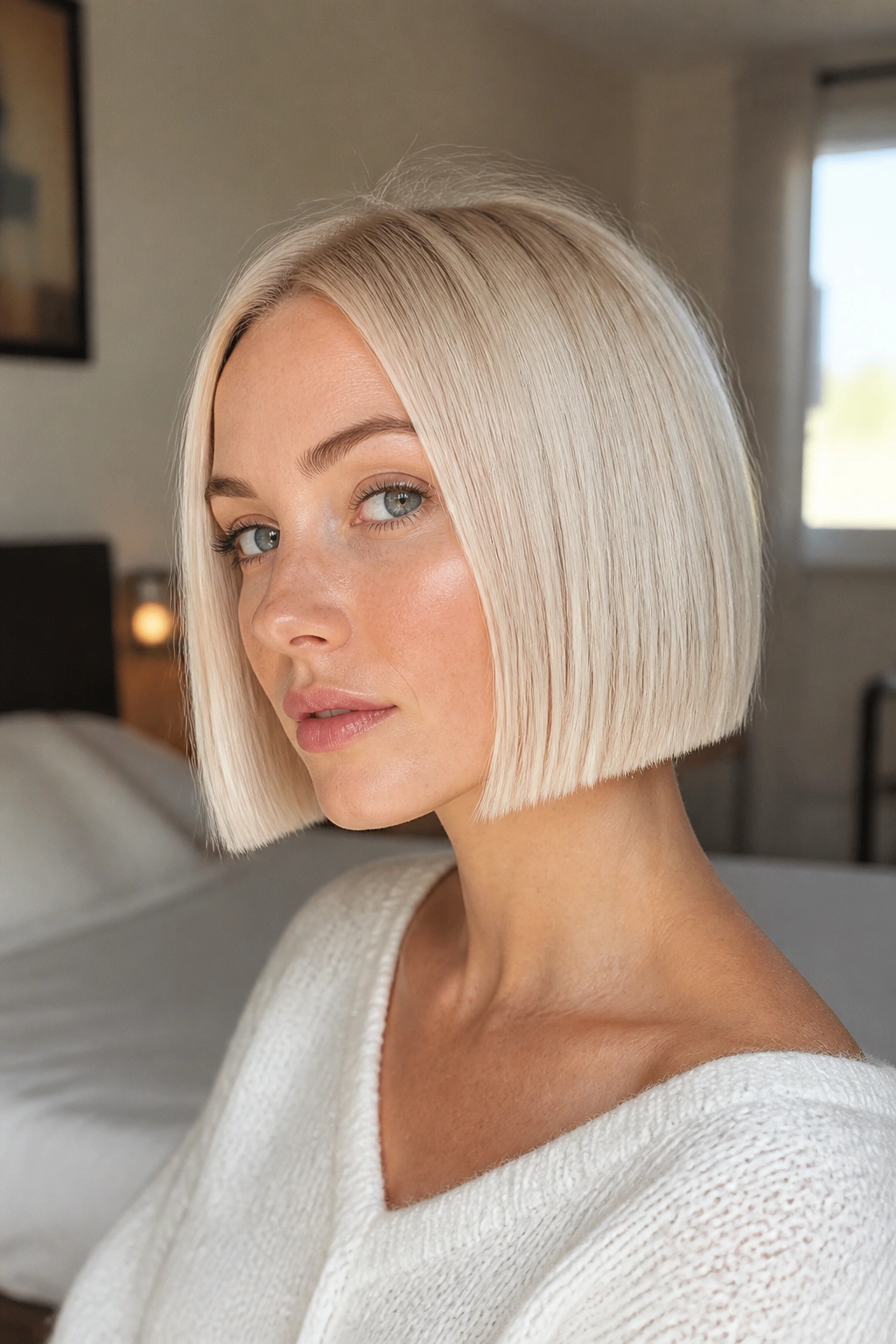
A chin-length blunt bob is the most reliable choice if your hair is fine and you want it to look denser right away. The perimeter sits in one clean line, which creates the illusion of weight even when the individual strands are light. Platinum makes that line read even sharper.
Why it works
The cut lands at a sweet spot: short enough to avoid stringy ends, long enough to tuck behind the ears or bend under with a brush. If your hair tends to separate at the ends, this shape pulls everything back together. It also behaves well with straight, slightly wavy, or softly bent textures.
What to ask for
- A one-length bob that hits the chin or just below it
- Minimal internal layering
- A soft bevel at the ends, not a choppy finish
- A clean center or slight off-center part
Best for: hair that looks limp when it gets too long.
Watch out for: over-thinning. A blunt bob only works if the edge stays thick.
2. French Bob with a Soft Micro Fringe

This is the bob that makes fine hair look witty. Shorter through the length, a little cheeky around the eyes, and tidy enough to hold its shape, the French bob works well when you want platinum to feel airy rather than severe. The micro fringe gives the front some personality without demanding too much density.
Fine hair loves this cut when the fringe is soft, not heavy. A hard, thick bang can split awkwardly if the hairline is sparse. A feathered micro fringe, on the other hand, creates movement around the face and draws the eye upward.
You will need to style it. No way around that. A tiny round brush, a quick blast of heat, and a trim every few weeks keep the fringe from becoming a little curtain of regret.
3. Side-Part Sleek Bob with Tucked Ends
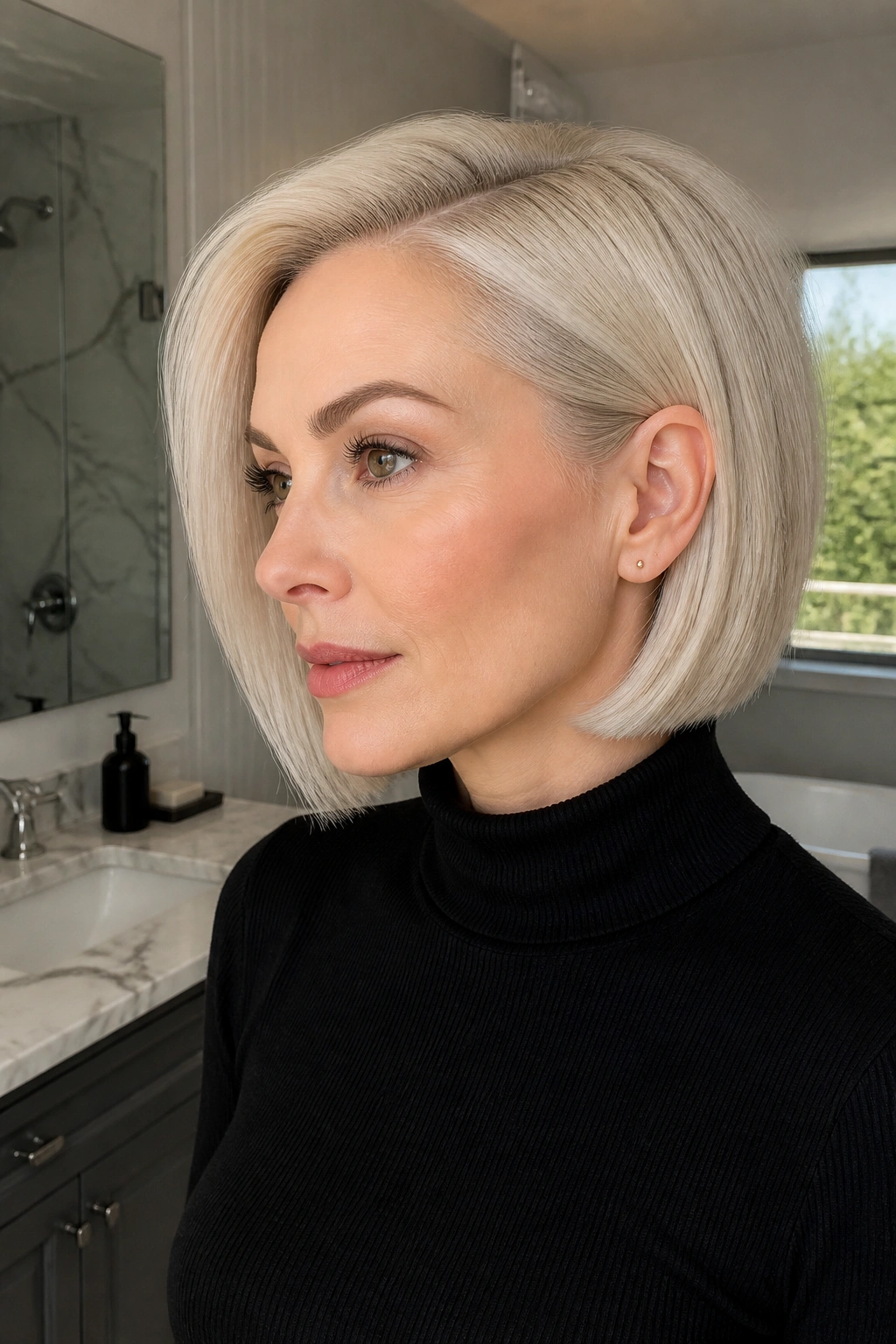
Why does a side part help so much? Because fine hair usually wants to collapse at the crown, and a side part gives it a little lift before the rest of the cut even starts working. The longer top section creates a natural sweep, while the tucked ends keep the shape neat.
This one looks especially good when the platinum is bright but not chalky. A cool pearl tone with a soft shine serum on the surface makes the whole cut look smoother. The styling is mercifully simple: blow-dry the roots away from the part, bend the ends inward, then tuck one side behind the ear.
Styling note
Use a lightweight root spray on damp hair, then dry with a flat brush or small round brush. A single pass of a flat iron can sharpen the finish, but don’t press the ends flat. You want a clean edge, not a helmet.
4. Jaw-Grazing A-Line Bob
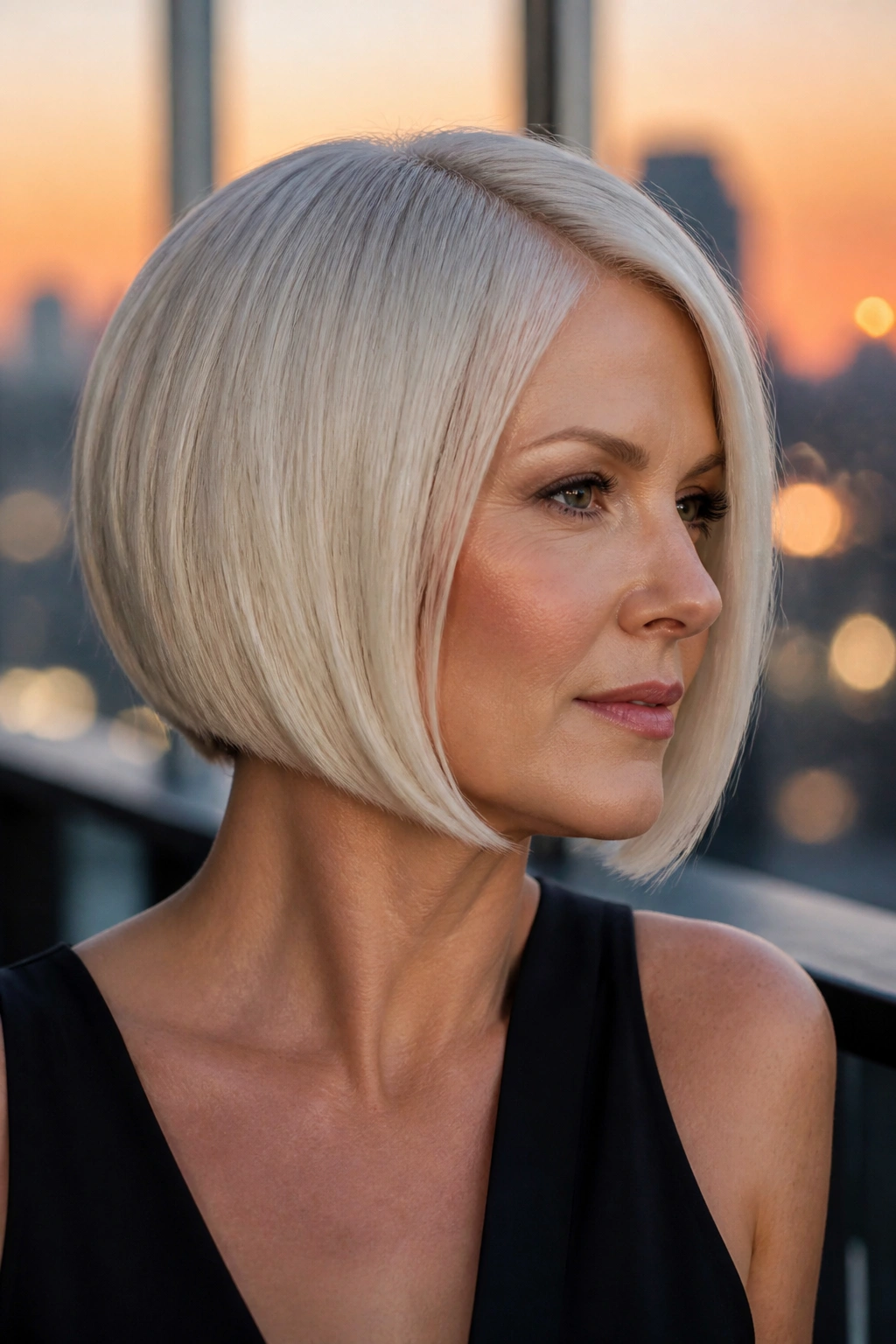
I like this cut on fine hair because it quietly cheats. The back sits a little shorter, the front drifts forward by an inch or so, and the eye reads the whole shape as fuller and more intentional. It is one of the best platinum bob haircuts for fine hair if you want movement without obvious layering.
There’s a narrow line between elegant and stringy here. Keep the angle subtle. If the front hangs much longer than the back, the whole cut starts to look tired, especially once the platinum lightens the visual weight even more. A slight A-line gives the hair somewhere to fall without exposing the ends too much.
This is the bob for someone who wants polish with a little edge. It looks good with a deep side part, a tucked ear, or a soft bend at the front.
5. Box Bob With a Hard Edge
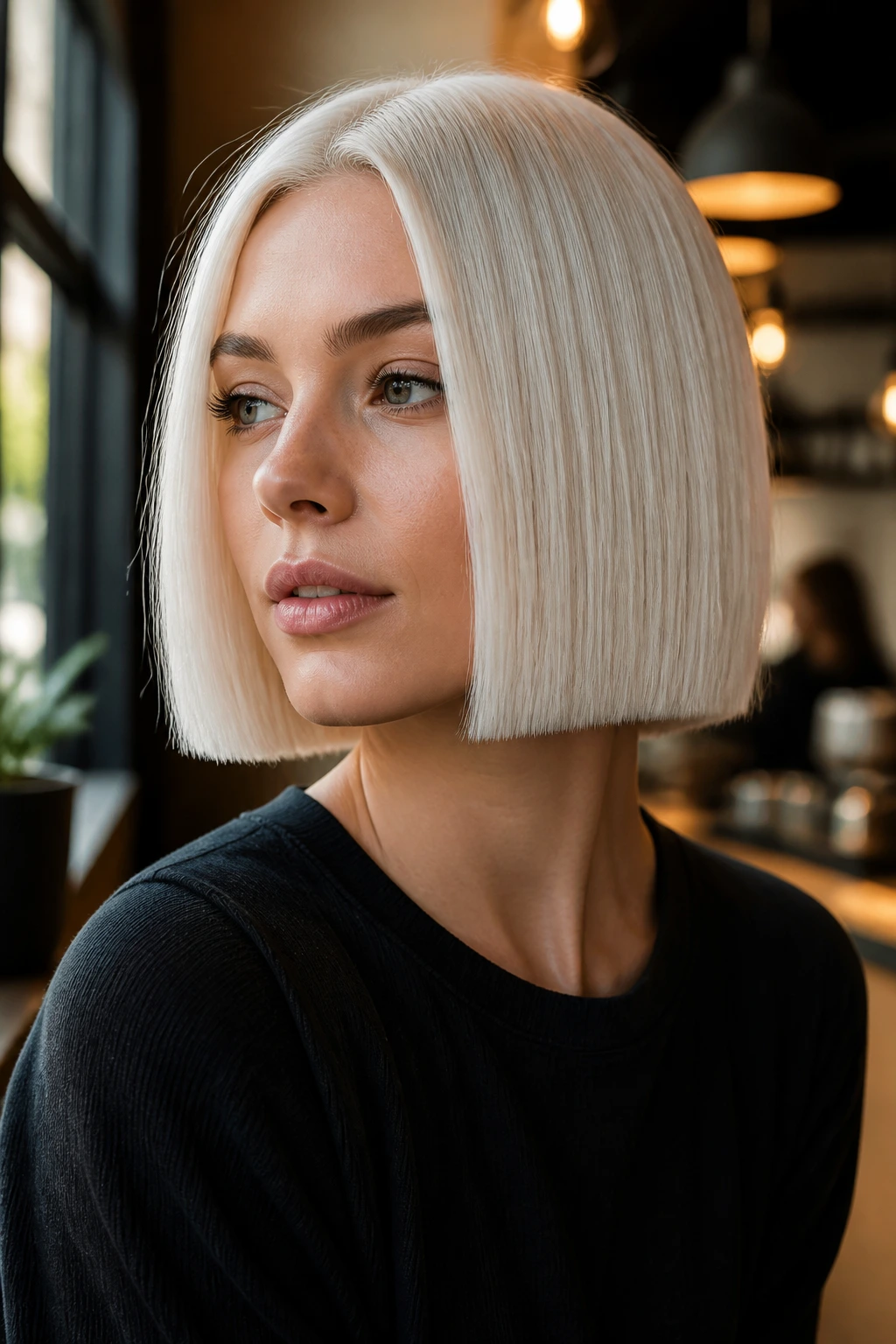
A box bob is blunt, square, and a little stubborn. That is exactly why it works. Fine hair often benefits from a shape that refuses to disappear, and the box bob keeps the perimeter wide and firm.
The magic is in the silhouette. You get a broader-looking outline through the sides, which makes the hair feel more substantial from every angle. Platinum amplifies that geometry, especially if the color is even from roots to ends.
This cut is not for someone who likes lots of movement. It’s for someone who wants the hair to sit still and look good doing it. Ask your stylist to keep the outline solid and avoid internal texturizing unless your hair has a lot of density hidden inside.
One clean shape. That’s the whole point.
6. Airy Textured Bob With Barely-There Layers
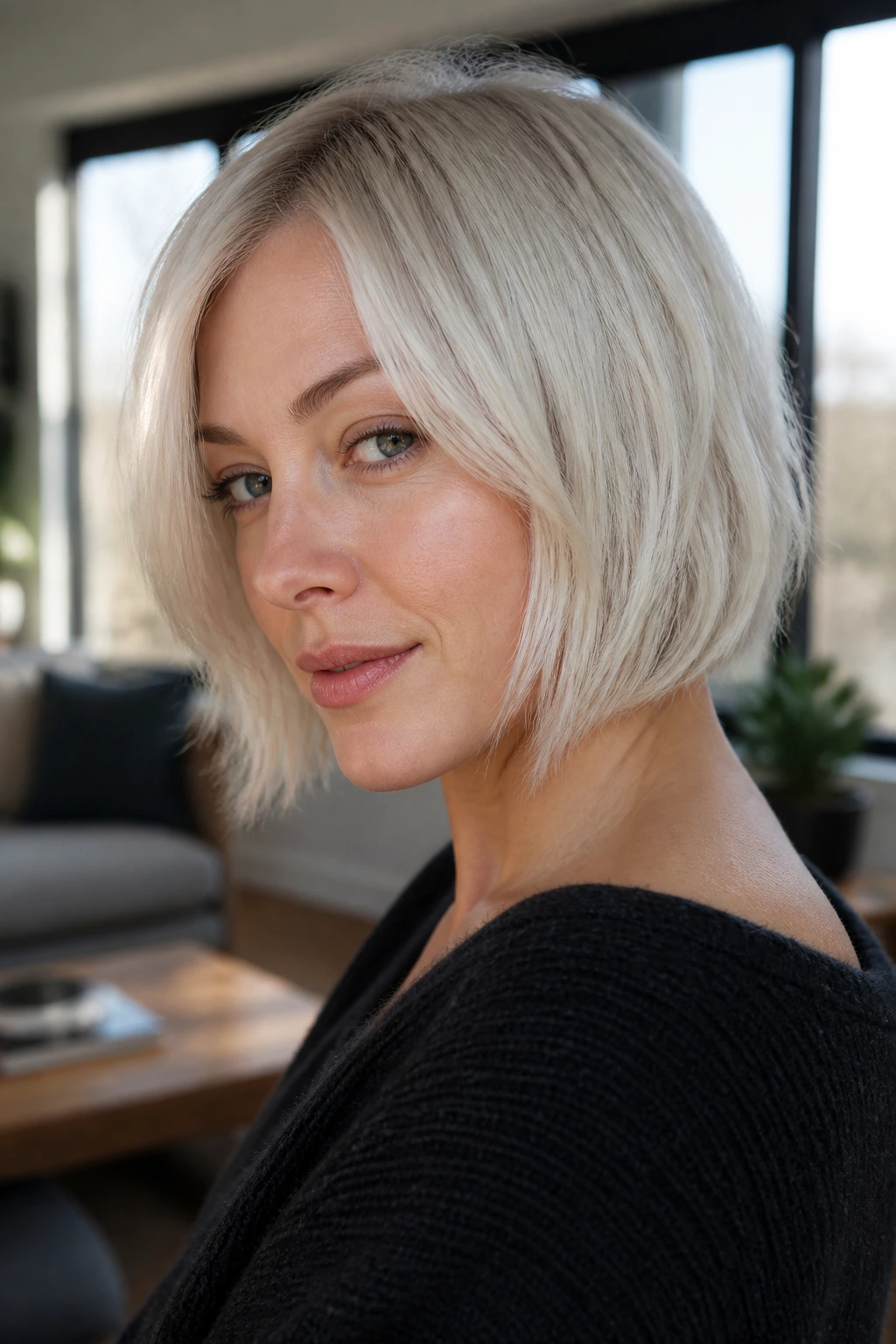
Not every fine head of hair wants a blunt edge. Some want a touch of texture so the cut doesn’t sit like a sheet. The trick is restraint. Barely-there layers at the ends, a little pieceing around the face, and a perimeter that still feels full from a few feet away.
The right kind of texture
This is not the place for razor-heavy chopping. Too much slicing can leave platinum hair looking frayed, and fine strands show every bad decision. Ask for soft point cutting only at the ends, plus a little lift through the crown if your hair sticks to the scalp.
Who should choose it
- Fine hair with a slight wave
- Hair that flattens by noon
- Anyone who likes a more relaxed finish
Keep the products light. A mousse at the roots and a mist of flexible spray on the mids is enough. Heavy creams will flatten the shape before lunch.
7. Long Platinum Bob With Blunt Ends
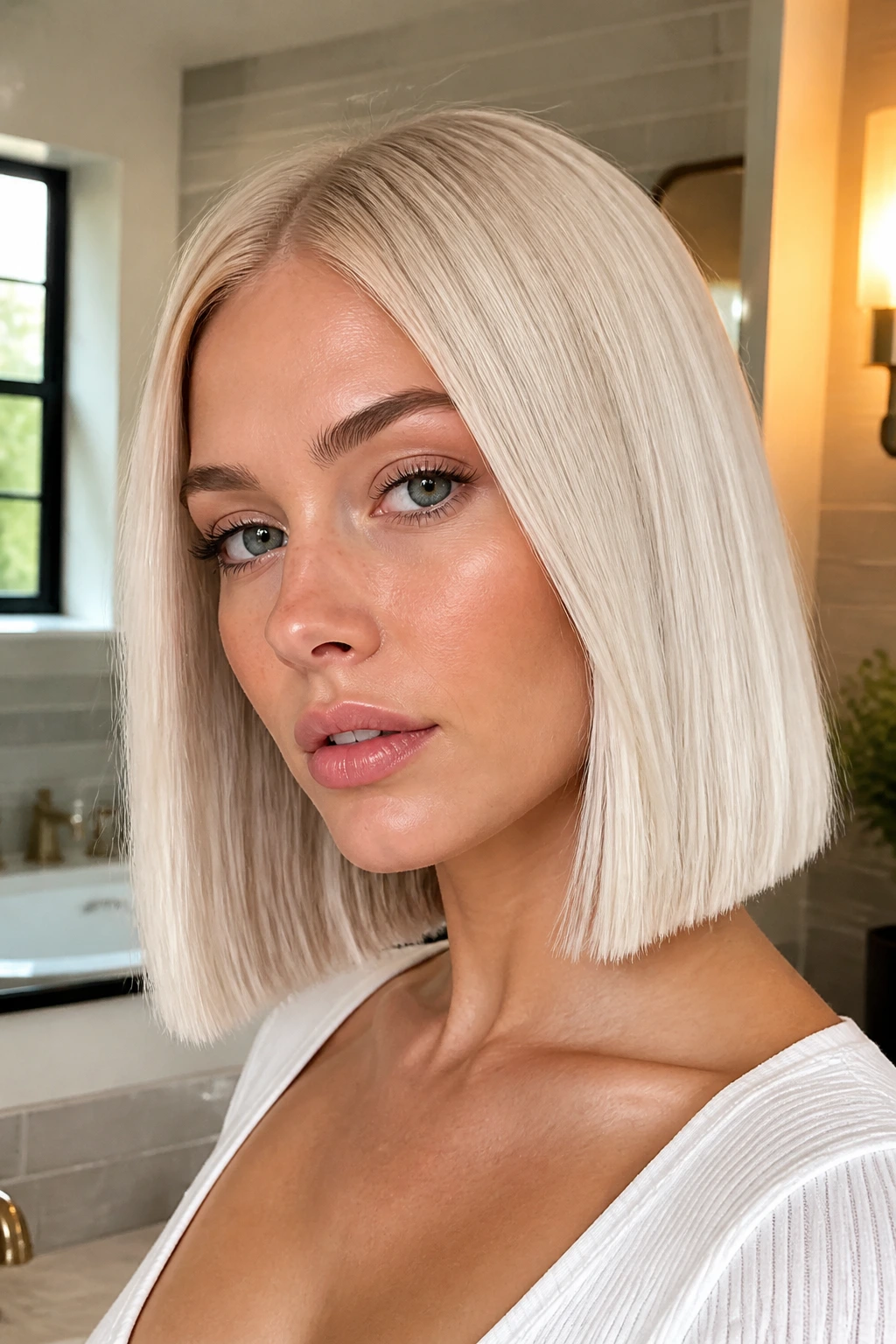
If you are nervous about going short, this is the one that usually feels safest. The length sits around the collarbone, which gives fine hair a little more swing, but the ends stay blunt so the hair still reads as full. It’s a bob with room to breathe.
The big mistake here is letting it drift too long. Once a fine bob pushes far past the collarbone, the bottom can start to look sparse, especially if the hair is lightened to platinum. A tidy blunt edge keeps the line honest. That’s what makes this cut work.
It also buys you time between trims. If you grow out bleach damage or you dislike constant salon visits, this shape is practical without looking lazy. Wear it straight, bent, or tucked behind one ear. It behaves.
8. Rounded Brush-Set Bob
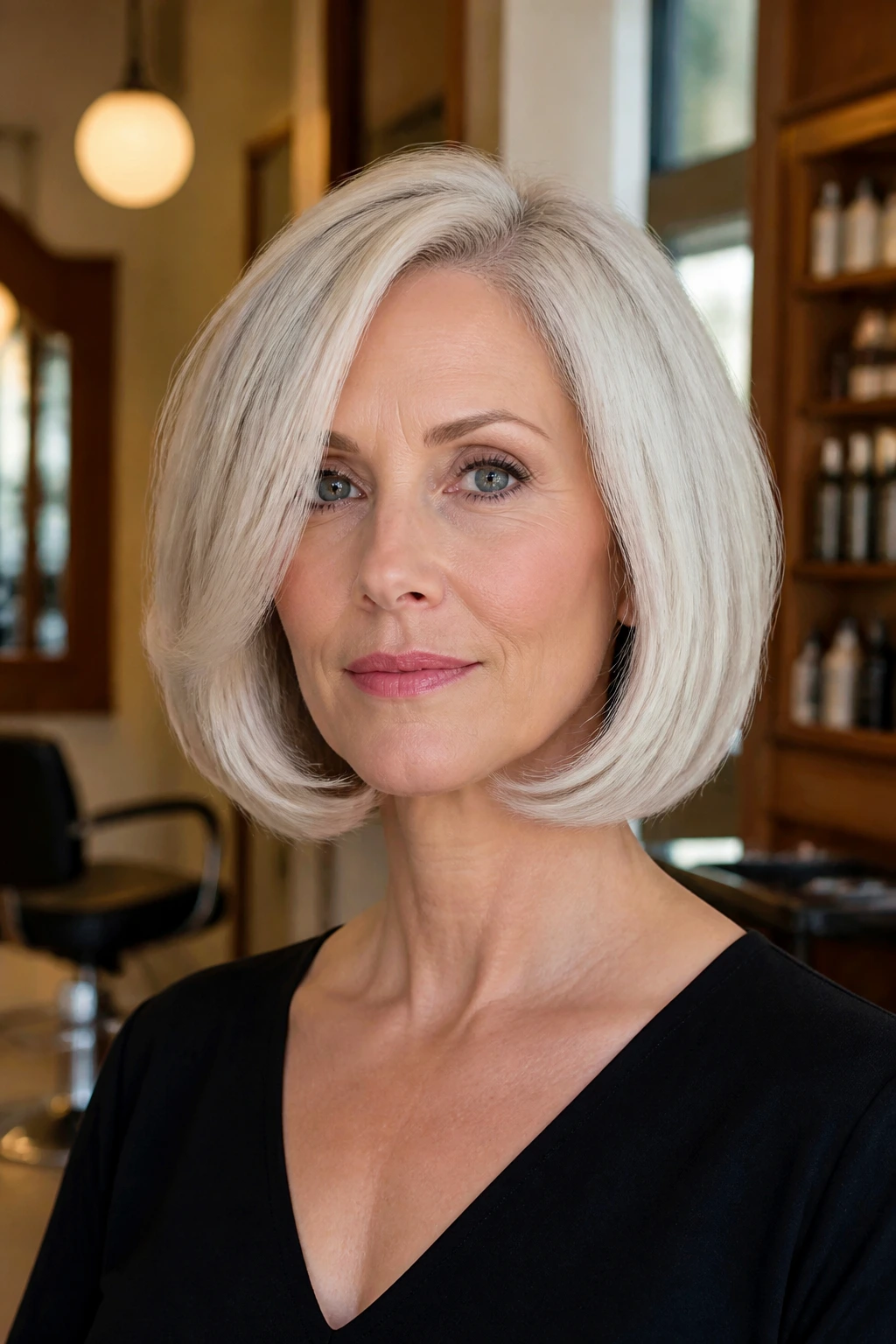
The rounded bob is old-school in the best way. The hair curves under at the ends, the crown gets a gentle lift, and the whole style looks fuller because the silhouette contains more visual width. Fine hair tends to look more plentiful in a rounded shape than in a loose, air-dried one.
That said, this cut needs a little effort. A round brush, a dryer with a nozzle, and ten minutes of careful work change everything. The ends should curl in just enough to frame the jaw. If they flip too much, the shape starts to feel dated; if they stay too flat, you lose the body.
This is the sort of bob I recommend when someone says their hair “does nothing.” It does something with this cut. It just needs a nudge.
9. Curtain Bang Bob
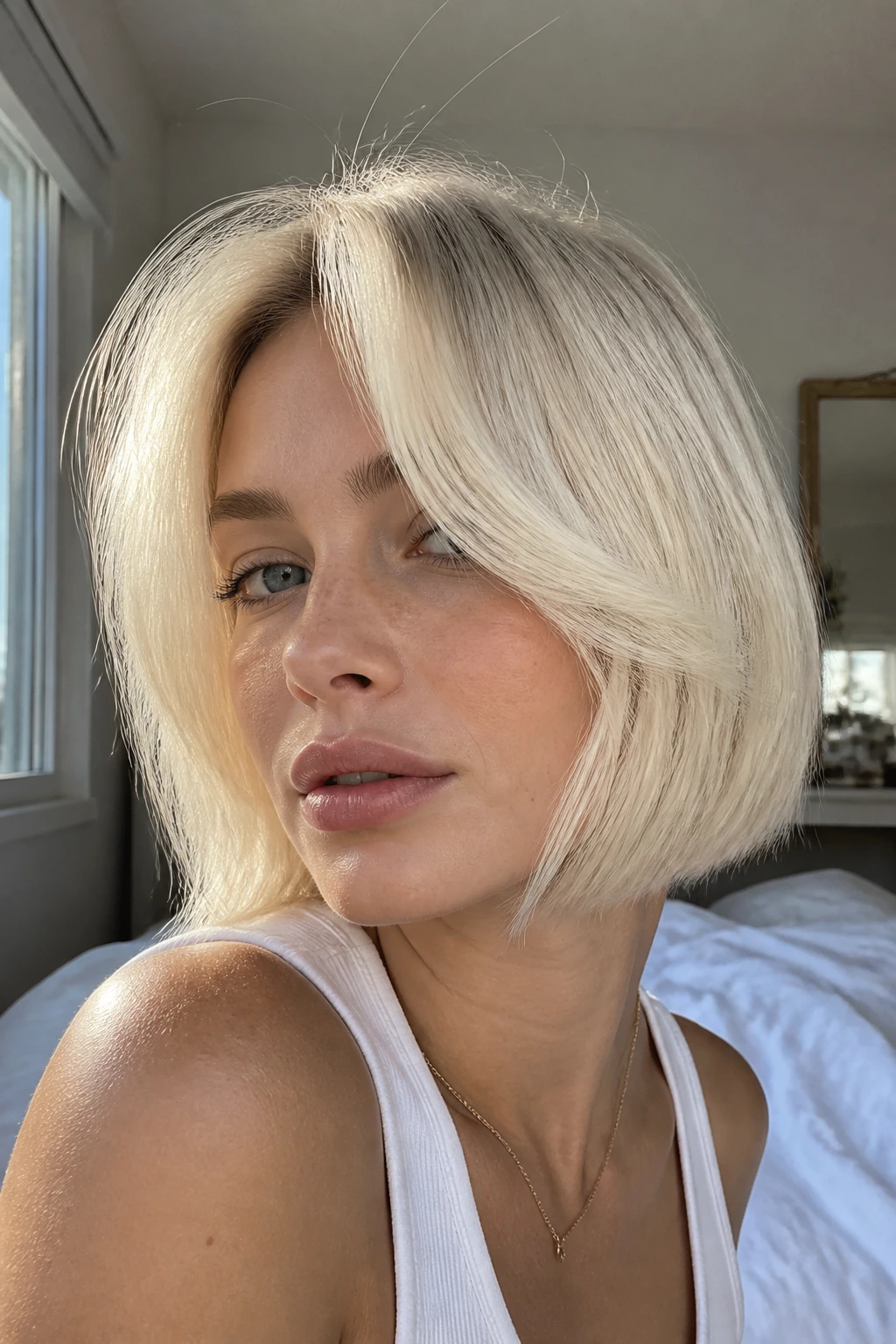
Can curtain bangs work on fine hair? Yes, if they are cut with enough thought. Wispy, split bangs can look sad on a weak density line. A soft curtain fringe, though, adds width at the front and gives the bob a little more presence around the eyes and cheekbones.
The best version keeps the fringe long enough to blend into the sides. That way, the bangs do not feel separate from the haircut. They become part of the shape. Platinum helps because it softens the transition between the bang and the rest of the bob.
A useful detail
Curtain bangs need root lift or they will collapse into the face. Blow-dry them forward first, then sweep them open with a round brush or your fingers. A tiny clip at the crown while they cool can help more than people expect.
10. Graduated Nape Bob
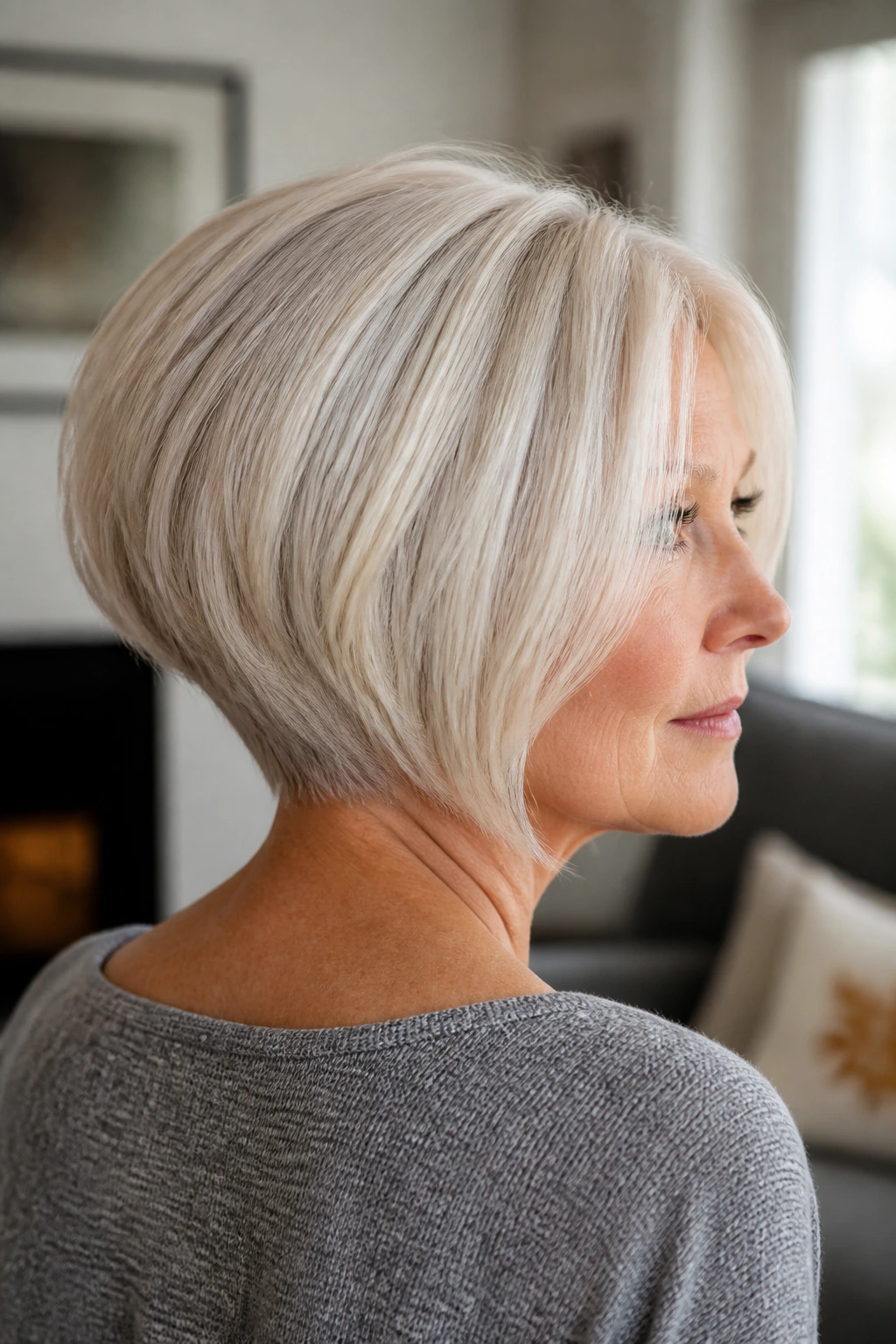
A graduated bob gives the back a little structure and the nape a clean finish. On fine hair, that can be a blessing. The stacked shape creates lift where the hair tends to lie flat, and the sharp neckline makes the cut look intentional even on a lazy morning.
The key is moderation. Too much graduation exposes the scalp and makes the crown look thin. Too little, and you lose the lift that makes the cut useful in the first place. The sweet spot is a soft stack at the back with enough length in the top layers to cover the transition.
If your neck is longer, this shape is especially flattering. It opens the profile and keeps the hair from swallowing your features. Add a cool platinum toner and the whole thing looks neat, crisp, and surprisingly modern.
11. Piecey Bob With Root Lift
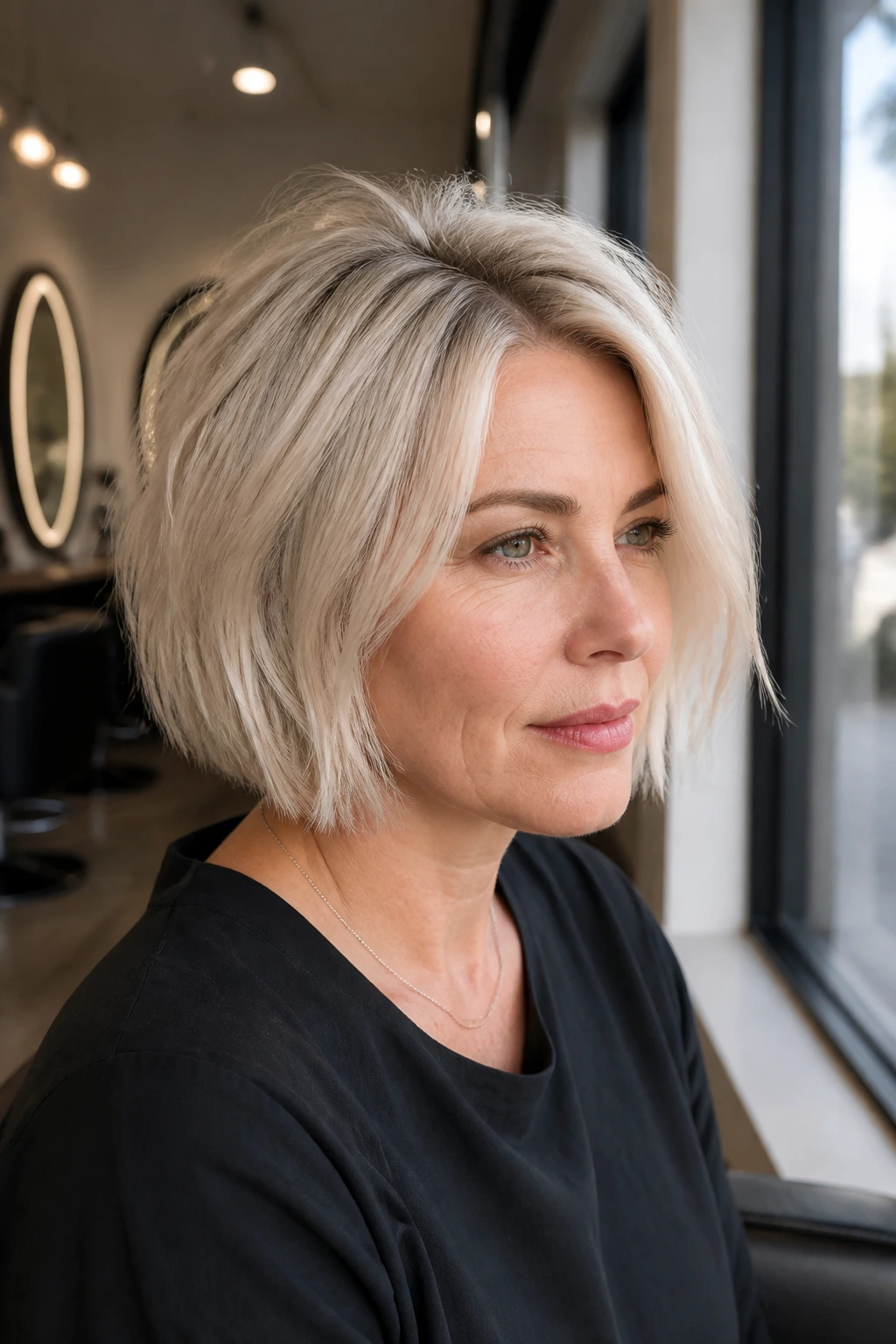
This is the bob for fine hair that needs help standing up. Not dramatic help. Just enough. The cut keeps the perimeter tidy, while the interior gets a little lift through careful layering near the crown and crown-to-temple area.
What makes it different
The pieces are meant to move separately, but not in a choppy way. You want separation, not shredded ends. Ask for soft internal support, then style with mousse at the roots and a round brush or Velcro rollers. That combination gives the hair a bit of memory.
Best use case
- Hair that falls flat within an hour
- Platinum shades that need a softer, more lived-in finish
- Bobs worn with side parts or loose bends
This cut can look a little plain when freshly dried, then better after an hour of wear. Fine hair often settles into it instead of fighting it. That is a good sign.
12. Asymmetrical Platinum Bob
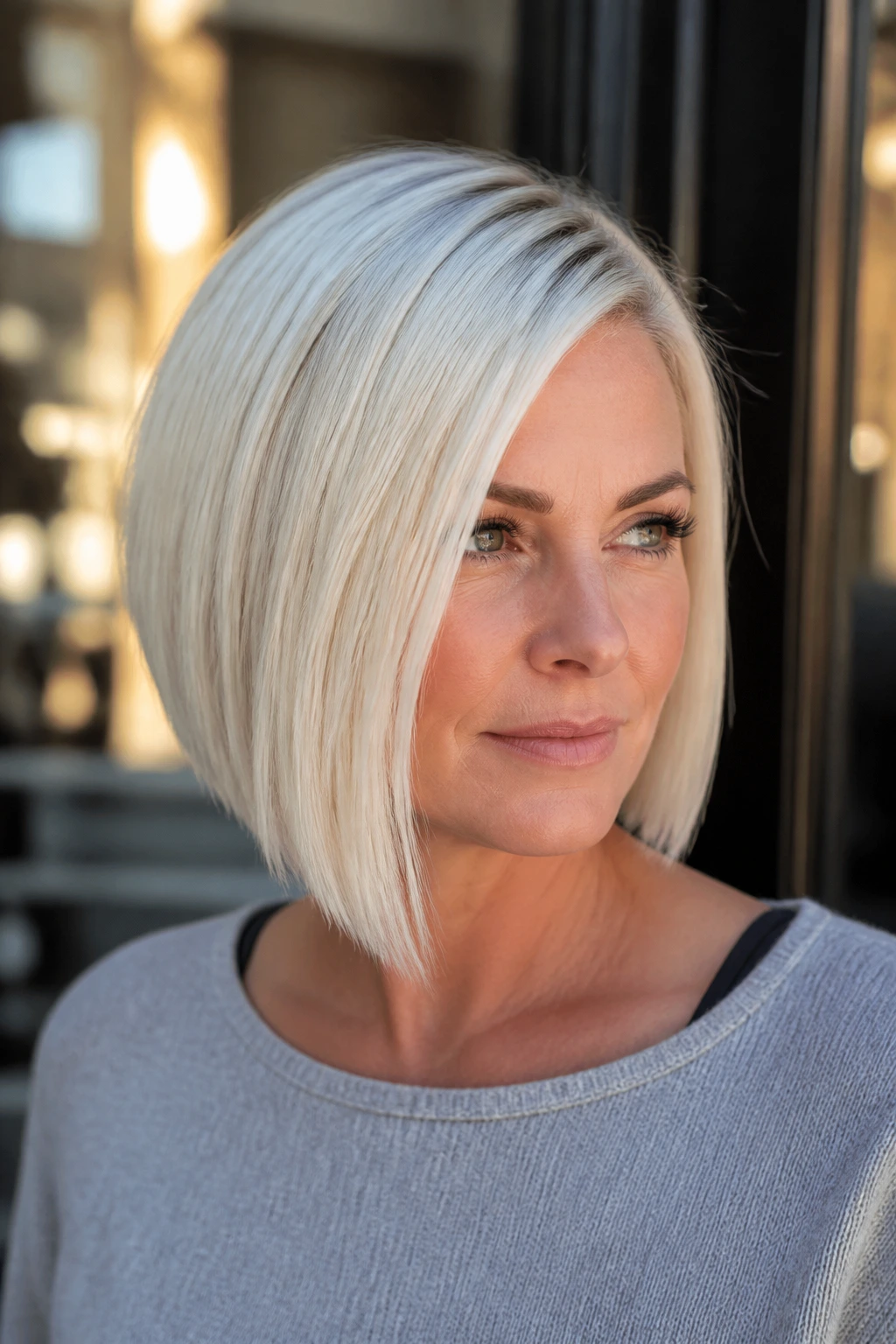
An asymmetrical bob works because the eye follows the line. One side is slightly longer, usually by half an inch to an inch, and that tiny difference makes the whole haircut feel sharper and more deliberate. On fine hair, it can also hide a weak side better than a perfectly even cut.
The asymmetry should stay subtle. If the difference gets too dramatic, the thinner side can look ragged, especially if the hair has been bleached and the ends are delicate. A quiet angle reads more expensive than a loud one anyway.
Wear it with a side part if you want extra drama, or keep the texture smooth and straight for a cleaner result. This is a good cut if you like a bob that does not feel too polite.
13. Shag-Bob Hybrid
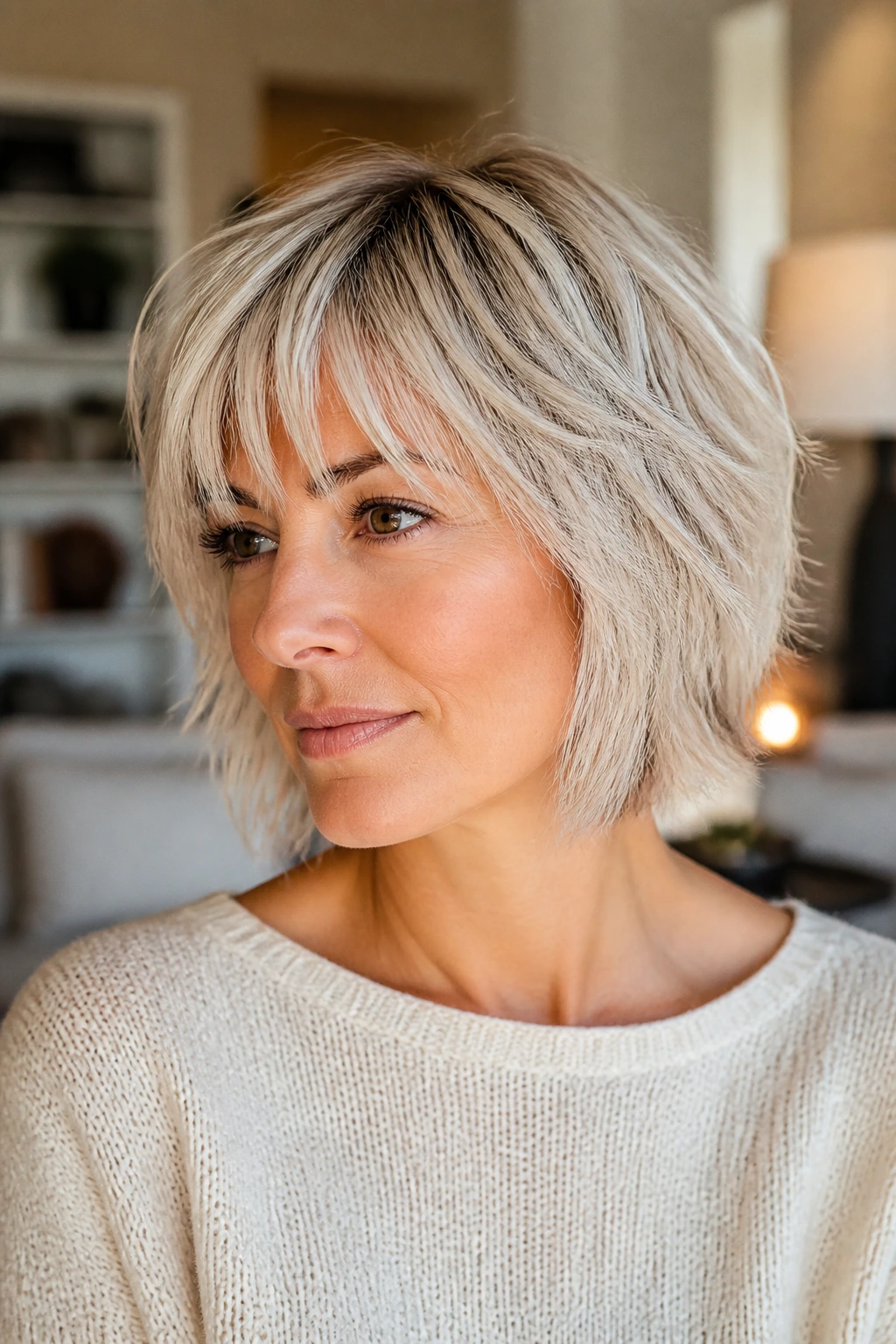
Some fine hair needs edge more than it needs purity. A shag-bob hybrid takes the bluntness of a bob and mixes in a few softer layers around the crown and cheekbones. The result is movement without the total collapse that can happen when a stylist over-thins the ends.
This cut is especially kind to hair with a slight bend or loose wave. Straight hair can still wear it, but the styling has to be a touch more intentional. A rough-dry with mousse, a small round brush at the front pieces, and a light mist of spray usually does the job.
The biggest mistake is asking for “lots of texture.” That phrase causes trouble. What you want is controlled texture, the kind that adds air without removing the outline. Fine hair needs shape first. Texture comes second.
14. Center-Part Glass Bob
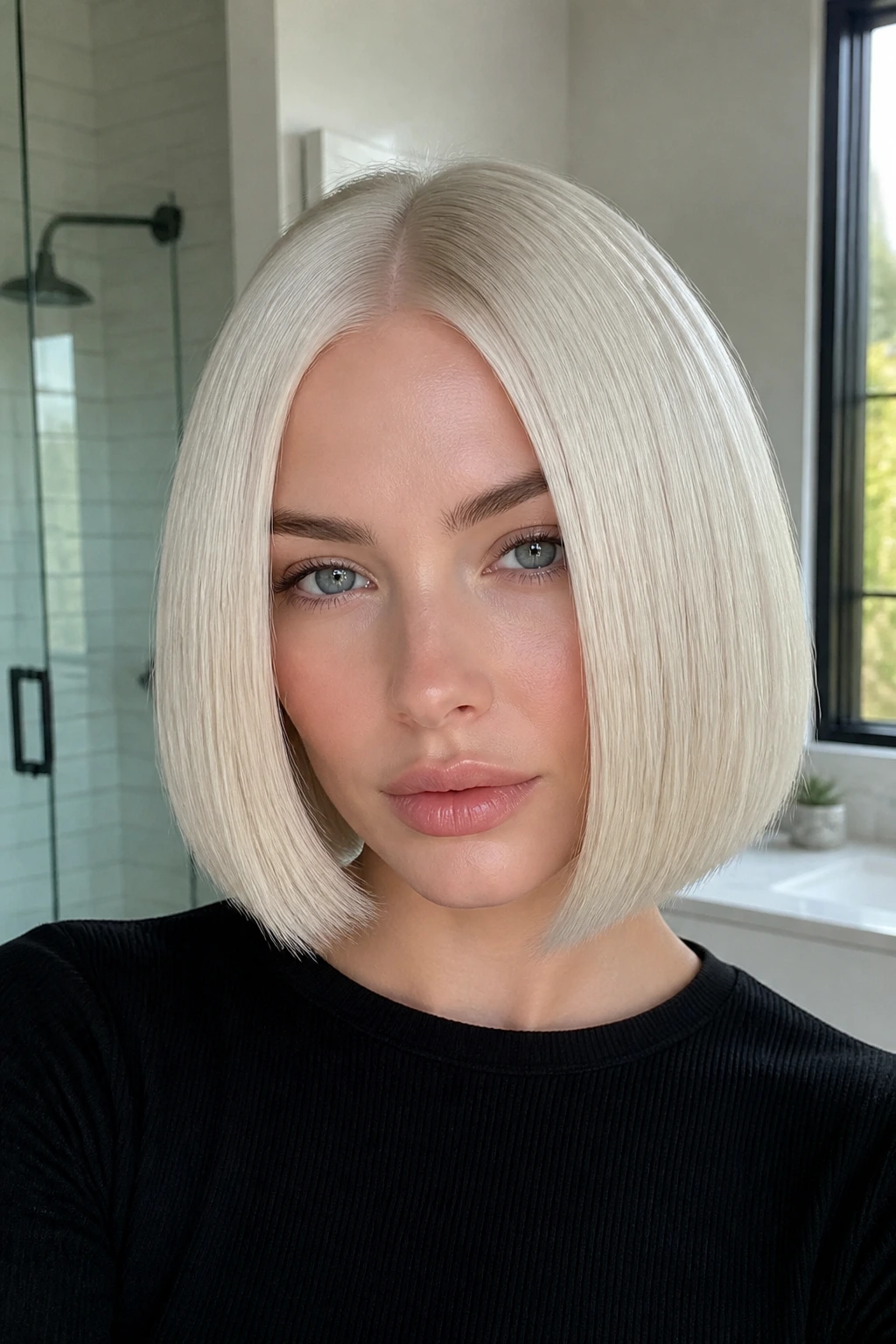
A center-part glass bob is all about surface and line. The hair is cut cleanly, styled straight, and finished with a shine that makes the platinum look sleek rather than dry. Fine hair can actually benefit from this because smoothness makes the cut line appear thicker.
The center part works best if your face is fairly balanced or if you like a calm, symmetrical look. It also helps disguise uneven volume on one side, since both halves are being asked to behave. That sounds simple, because it is.
What helps this style hold
- A heat protectant before drying
- A paddle brush for tension
- A tiny amount of serum on the mid-lengths and ends
- A final pass with a flat iron only if needed
Skip heavy oils. They separate fine hair fast. You want sheen, not slip.
15. Bubble Bob
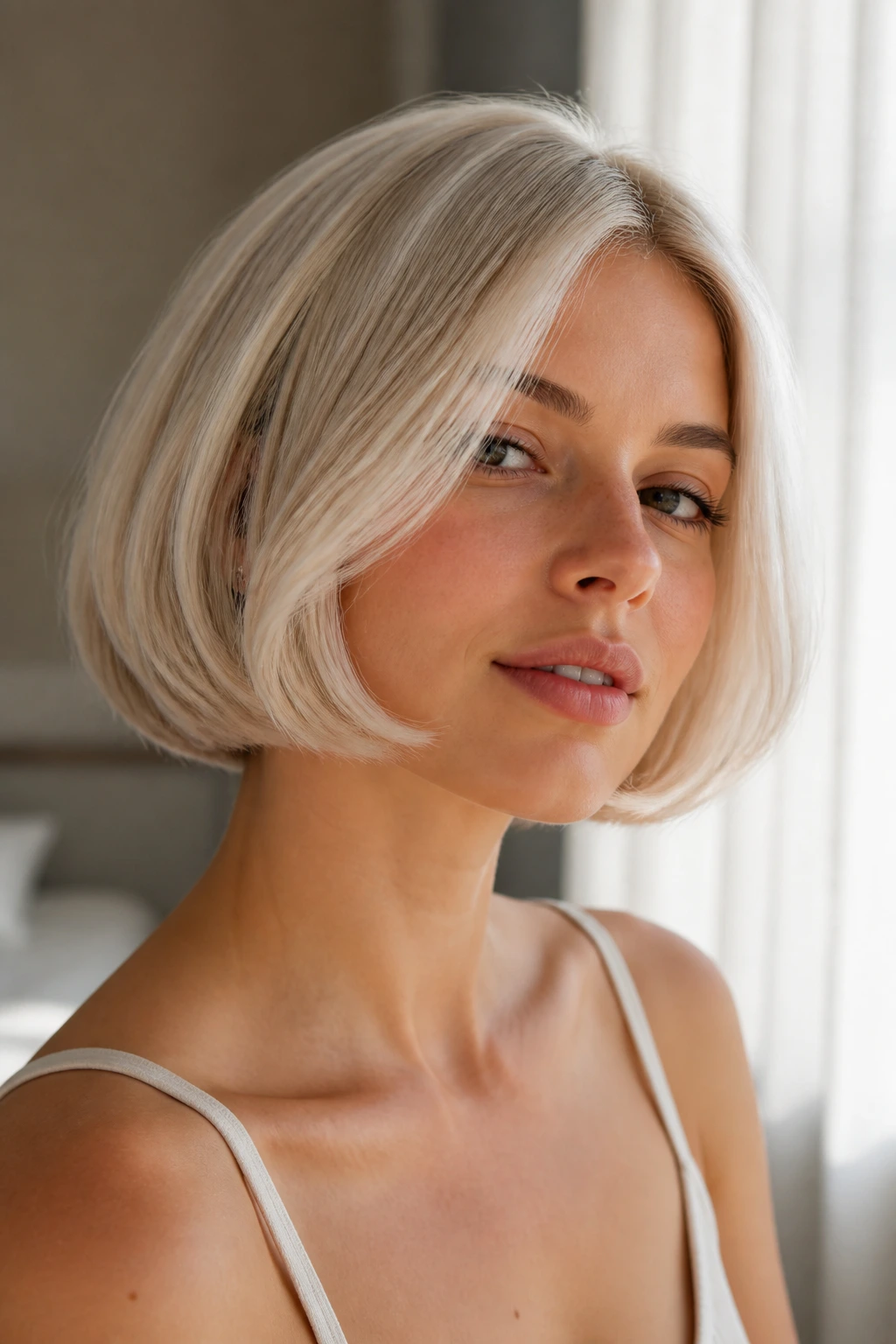
A bubble bob curves inward around the face and through the ends, creating a rounded shape that feels soft but still structured. Fine hair can look fuller in this silhouette because the width is concentrated around the cheeks and jaw instead of disappearing downward.
It is a little fussy to style, though. If you air-dry it without help, the shape can collapse into something vague and unhelpful. A large round brush or a big brush blowout makes the difference between rounded and puffy. The ends should hug in, not float away.
This cut suits people who want some femininity in the shape without a lot of layers. It also works well with pearl or icy platinum because the color catches the curves of the haircut instead of fighting them.
16. Side-Swept Fringe Bob

A side-swept fringe is one of the easiest ways to add volume where fine hair usually needs it most: at the front. The diagonal line lifts the eye, softens the forehead, and makes the bob feel fuller without asking the rest of the hair to do extra work.
The fringe should be thick enough to hold its shape, but not so heavy that it splits into a stubborn chunk. A good side-swept bang melts into the bob and gives you options. Wear it pinned back, brushed across, or tucked behind one ear when you want the face open.
It’s also friendly to growth. If you tire of bangs, the side sweep grows out faster and less awkwardly than a blunt fringe. That alone makes it a smart choice for platinum hair, which already asks for enough maintenance.
17. Feathered Jawline Bob
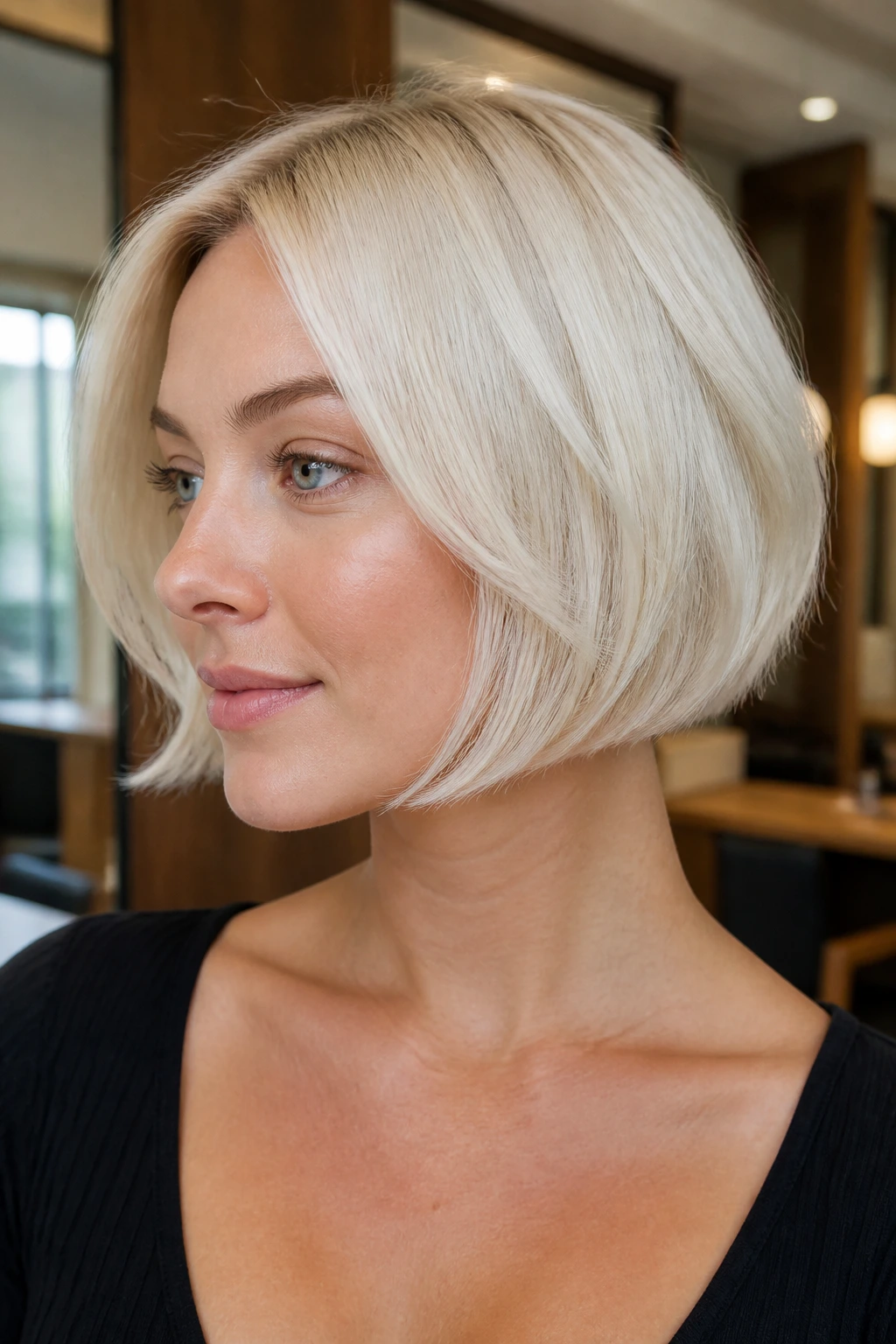
A feathered bob can be gorgeous on fine hair when the feathering stays at the edges and does not eat the shape. The effect is softer than a blunt cut, but still defined enough to keep the ends from looking heavy.
What makes it work
The feathering should happen in the last inch or so of the hair, especially around the jawline. That keeps the perimeter from feeling blocky while preserving enough density to make the bob look full. Platinum highlights the movement in the ends, so every snip matters.
Good candidates
- Hair with a slight wave
- Jawlines you want to soften
- People who like a lighter finish around the face
If the hair is very sparse, skip aggressive feathering. A few wisps at the edge are enough. More than that and the cut starts whispering when it should be speaking.
18. Hidden Layer Bob
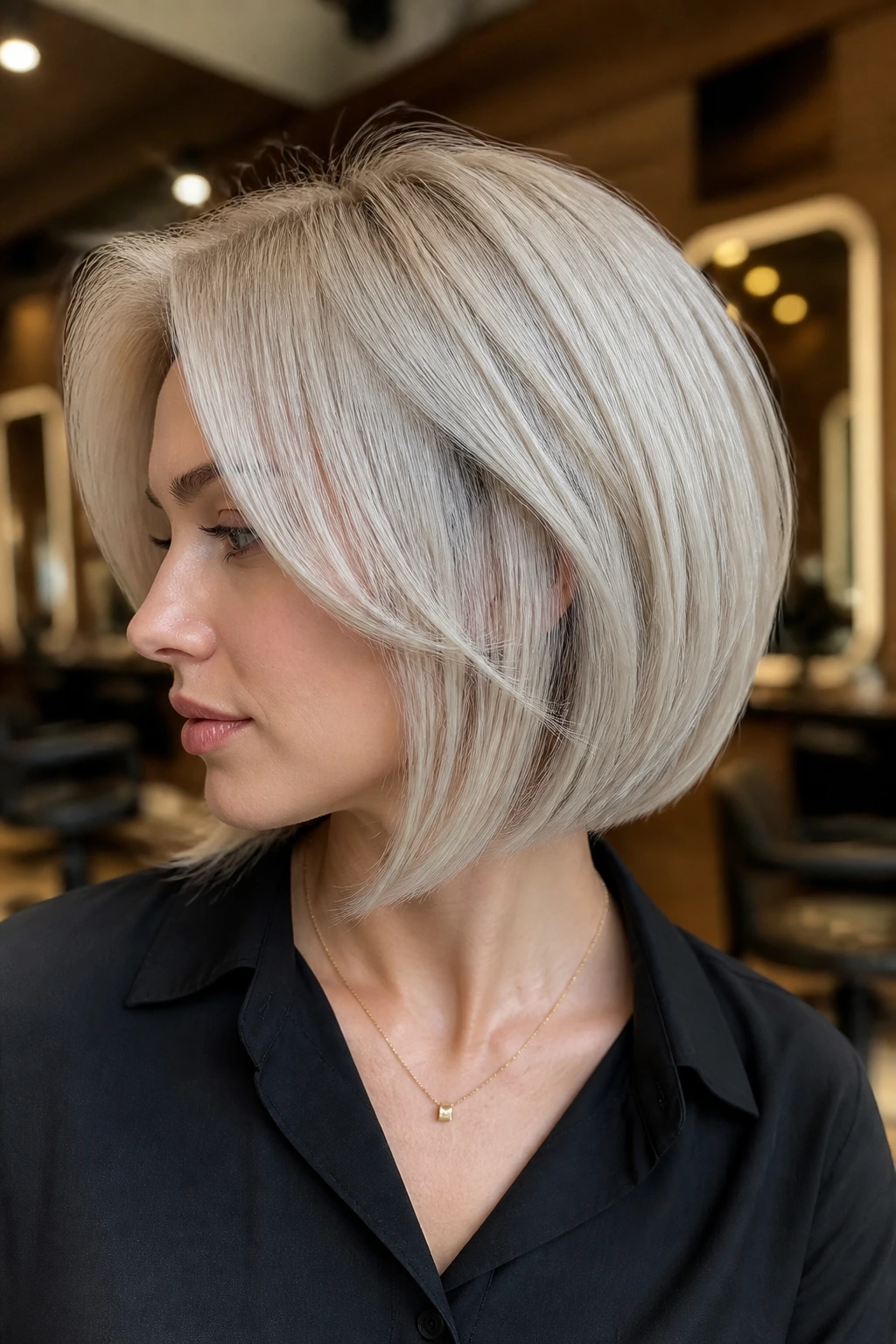
Hidden layers are the sneaky solution many fine-haired people need. The top and outer edge keep their clean line, while the interior gets subtle removal only where the hair piles up or folds awkwardly. The result is movement without obvious slicing.
This is a smart cut if your fine hair is also dense, heavy, or prone to puffing out at the sides. It lets the hair sit closer to the head without turning the outline thin. Platinum shades benefit too, because the polished surface hides the internal structure a little better than darker hair does.
You need a careful stylist for this one. Bad internal layering can leave holes that show in daylight. Good internal layering disappears into the haircut and only reveals itself when the hair moves.
19. Wet-Look Bob
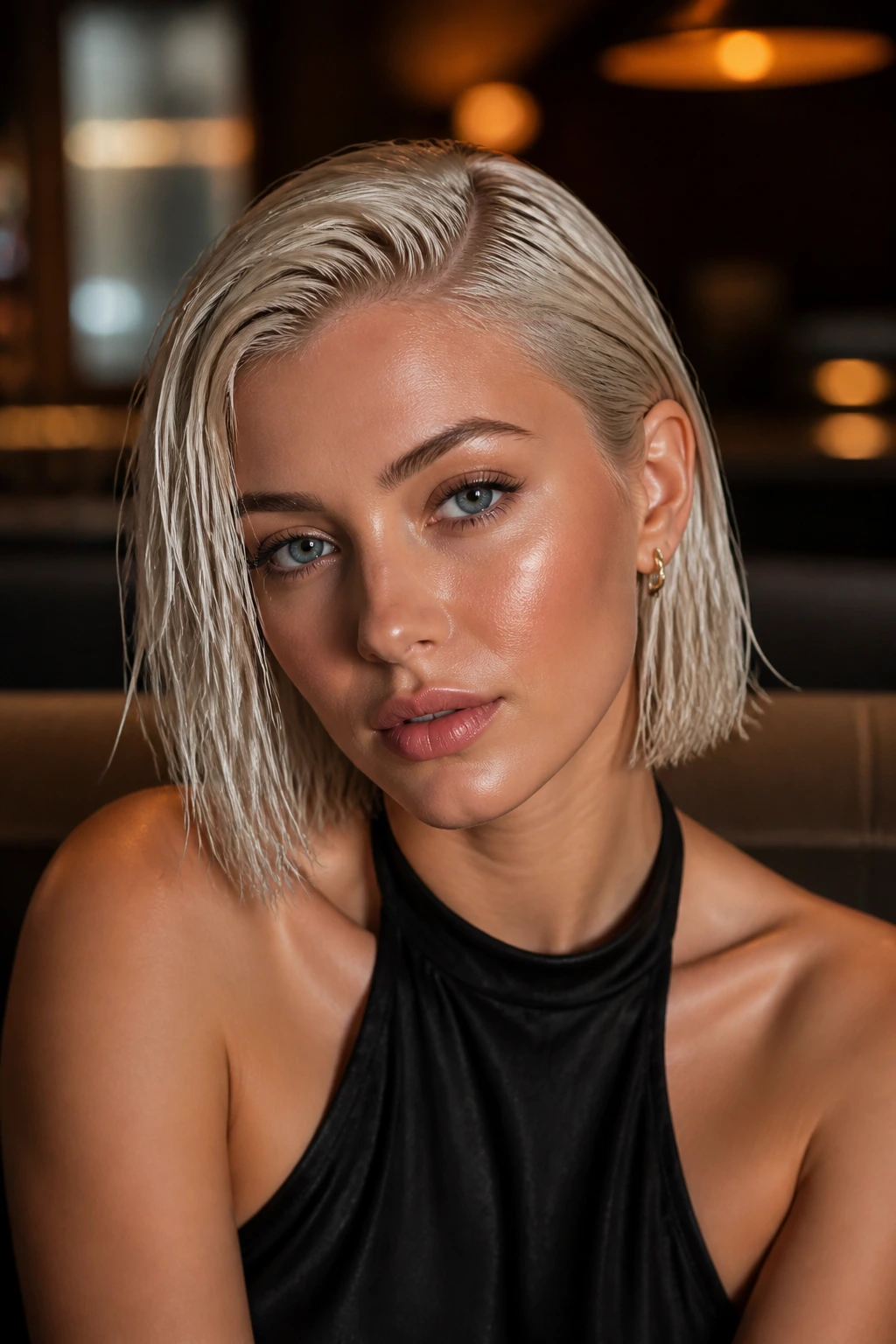
The wet-look bob is a little dramatic, and I mean that in a good way. Slicked down with gel or a light cream-gel mix, it makes fine platinum hair look dense, glossy, and deliberate. The short, blunt shape underneath does most of the work; the styling adds the attitude.
It is not an everyday style for most people. The finish can feel too polished for errands or office days, and once it dries down, it needs a bit of touch-up. Still, for evenings or events, it does something few other looks can do: it turns fine hair into a strong shape with almost no visible fluff.
Keep the cut compact. A jaw-length or slightly shorter bob works best here because long wet-looking hair can slide flat and lose the point.
20. Mini Bob With Root Shadow
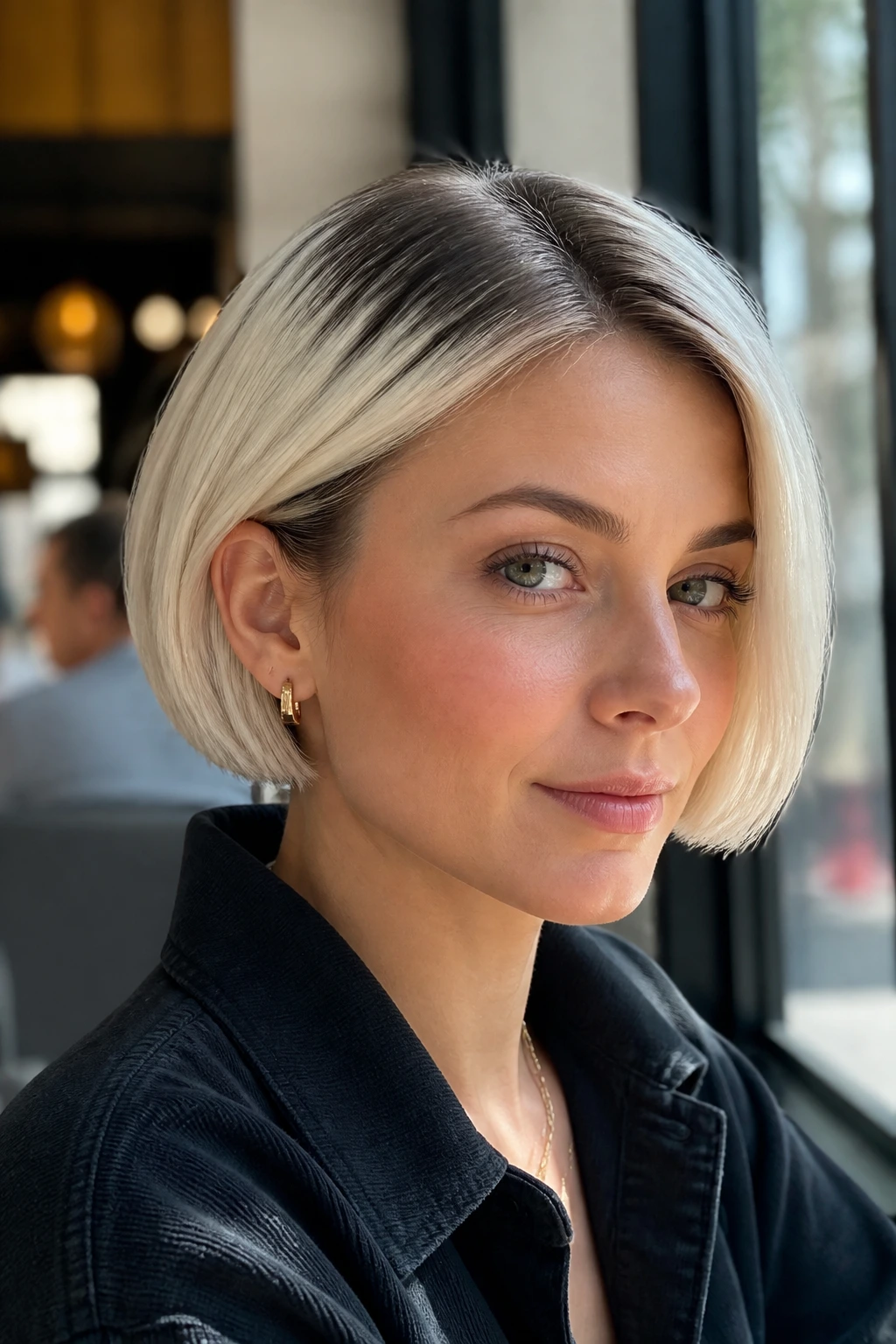
A mini bob is the most daring version in the bunch, and it can be a smart move if your fine hair struggles at every length past the jaw. Cut just under the ears or around the top of the jaw, it removes the weak ends that often make lightened hair look scraggly.
The root shadow matters. A soft smudge at the base gives the platinum some depth and keeps the regrowth line from looking harsh. On fine hair, that little bit of contrast can make the shape look fuller and more dimensional without muddying the blonde.
This cut suits someone who likes a clean neck, frequent trims, and a bit of edge. It is not fussy, but it does ask for honesty from the stylist. The line has to be even. The tone has to be clean. The length has to stop before the ends start arguing with gravity.
A short platinum bob can be severe in the wrong hands. In the right ones, it looks sharp, modern, and far thicker than it has any right to.
Final Thoughts
Fine hair and platinum are a tricky pair, but they are not a bad pair. They just need a haircut that respects the strand and the lightness of the color. A blunt line, a smart part, or a controlled bit of internal texture usually does more than heavy layering ever will.
If you want the safest bet, start with a chin-length blunt bob or a collarbone bob with crisp ends. If you want more personality, move toward curtain bangs, a subtle A-line, or a soft shag-bob hybrid. The best choice is the one that matches how much daily styling you will actually do, not the one that looks most impressive on a salon wall.
