



Short bob haircuts for men sit in a sweet spot that a lot of guys overlook. They’re long enough to show shape, texture, and personality, but short enough to stay clean around the ears, the neck, and the collar. That matters more than people think. A good bob doesn’t just “grow out nicely”; it gives the hair a real line to live on.
The cut can read polished, soft, sharp, artsy, or a little rebellious depending on where it lands on the jaw and how much weight is left in the ends. Straight hair shows every edge. Wavy hair gives the style motion. Thick hair needs discipline or it balloons out. Fine hair needs structure or it disappears.
And that’s the part most men miss. The bob itself is not the whole story. A short bob on a barber’s chair is really a shape decision: blunt or layered, centered or side-parted, tucked or falling forward, smooth or broken up with texture. Get that part right and the haircut does the heavy lifting for you.
1. Classic Chin-Length Bob
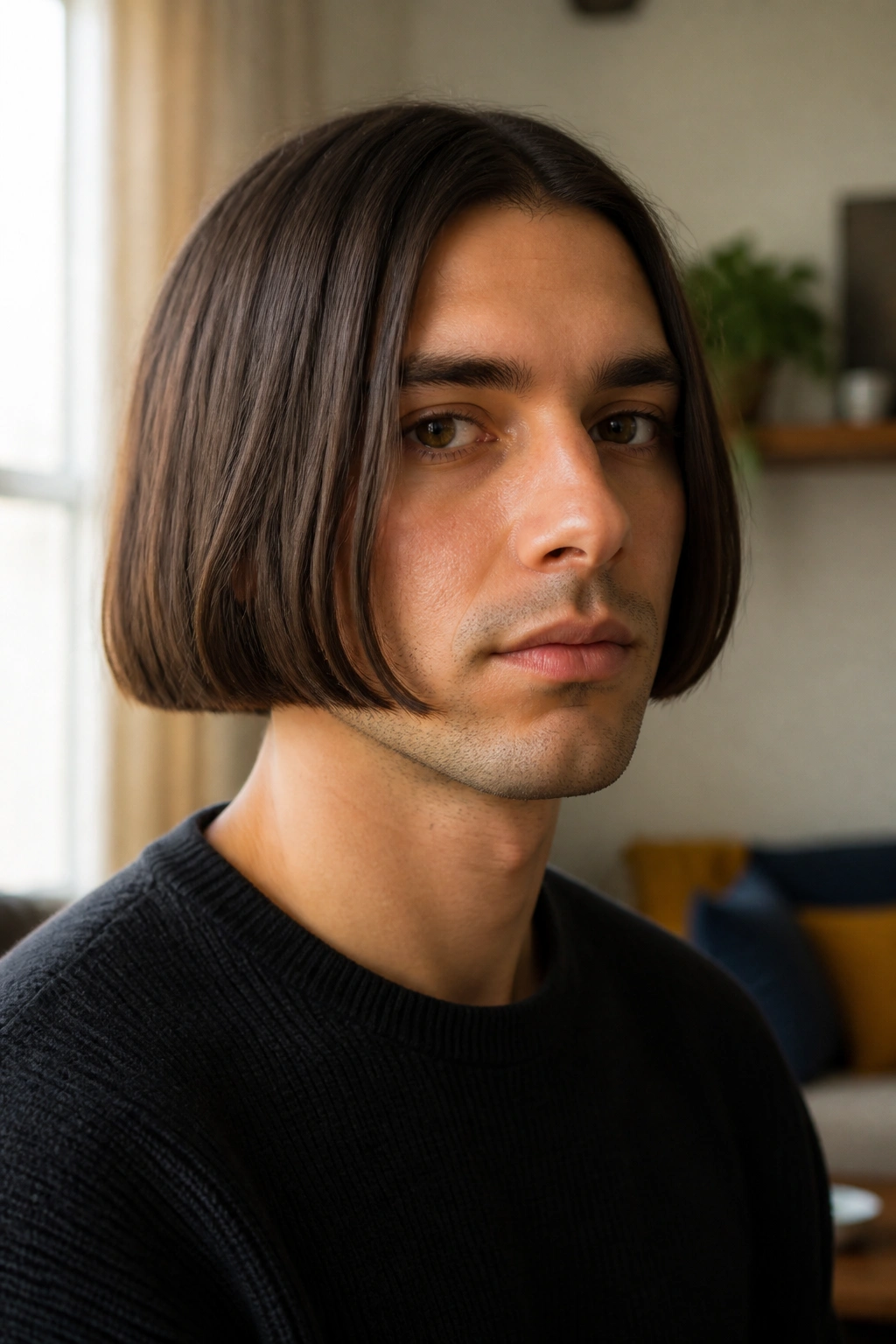
This is the cleanest version of a men’s bob, and I’ll happily defend it. The length hits around the chin, the outline stays even, and the whole cut looks calm rather than fussy. On straight or slightly wavy hair, it gives you a neat frame around the face without the extra bulk that longer bob cuts can bring.
What Makes It Work
The magic is the one-length perimeter. That blunt edge makes the haircut look deliberate, even when you do very little with it in the morning. A middle part gives it a softer feel; a shallow side part adds a touch more structure.
Ask for the ends to be cut cleanly, not thinned to death. Too much texturizing turns a chin-length bob into a wispy mess, and the shape loses its point fast.
- Best for straight, medium-density hair
- Works well with a center part or off-center part
- Needs a trim about every 6 to 8 weeks
- Styling takes little more than a comb and a light cream
Quick tip: blow-dry the front down and slightly inward if you want the cut to sit closer to the face.
2. Center-Parted Curtain Bob
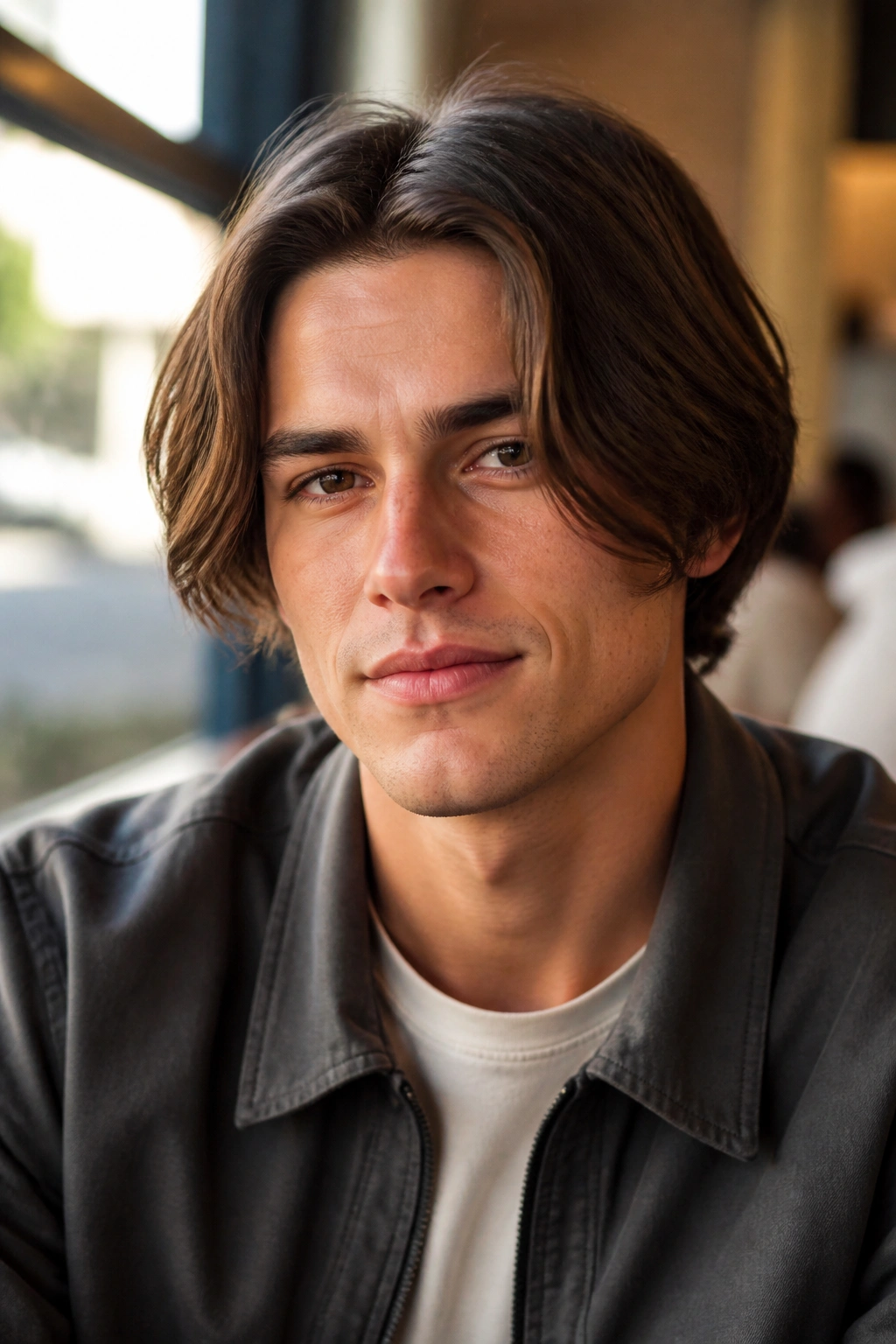
Do you want something that frames the face without looking too strict? This is the move. The curtain bob splits cleanly down the middle and lets each side fall away from the forehead, which softens strong features and gives the haircut a relaxed, easy shape.
It works especially well when the front is just a little longer than the back. That tiny shift keeps the haircut from feeling flat. The middle part also creates two clean panels of hair, which can make a wide forehead look more balanced and a narrow face look a bit broader.
Best Hair for It
Wavy hair loves this cut because it already wants to separate and move. Straight hair can wear it too, but the ends should be beveled slightly so they do not hang like a curtain rod. That small detail changes the whole mood.
If you wear glasses, this one can be a nice fit. The hair falls around the frames instead of fighting them.
3. Textured Wavy Bob
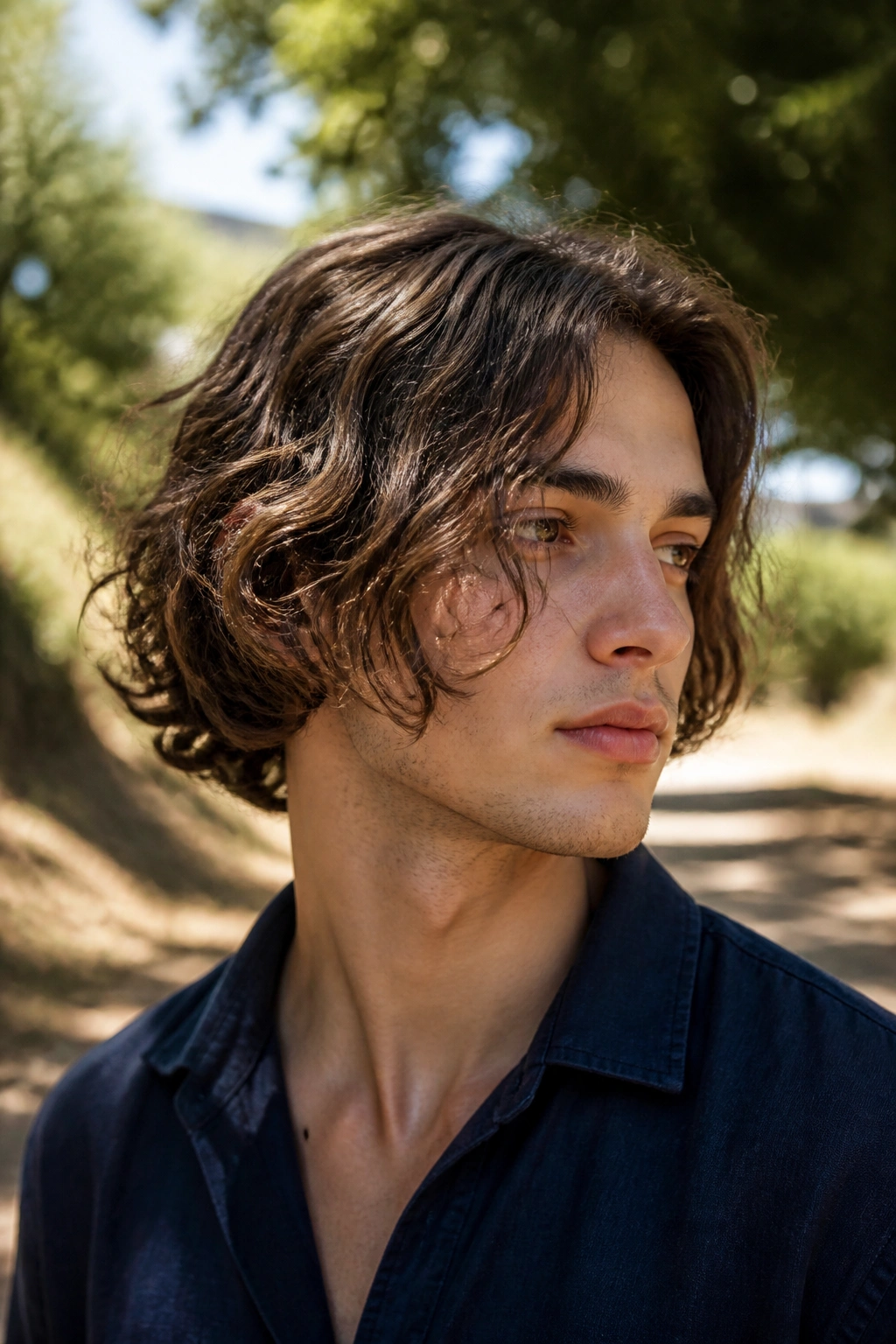
A textured wavy bob looks better when it is slightly imperfect. That’s the point. The hair should bend, break up, and land with a bit of uneven movement, especially through the middle and the ends. When the shape is done right, it feels effortless without looking lazy.
The cut itself usually sits between the ears and the jaw, with soft interior layers to stop the bulk from stacking up. A barber or stylist can point-cut the ends to keep the line from looking too hard. That matters if your hair has real wave, because one blunt line can make the shape feel boxy.
How to Style It
Use a small amount of curl cream or lightweight mousse on damp hair. Scrunch it once or twice, then leave it alone. If you keep touching it while it dries, you’ll kill the movement and make the waves frizzy.
- Good for loose to medium waves
- Better air-dried than overblown
- Looks best with a matte finish
- Needs a trim before the bottom starts to puff out
Watch this: if your hair swells when it dries, ask for weight removal only through the interior, not the perimeter.
4. Sleek Straight Bob
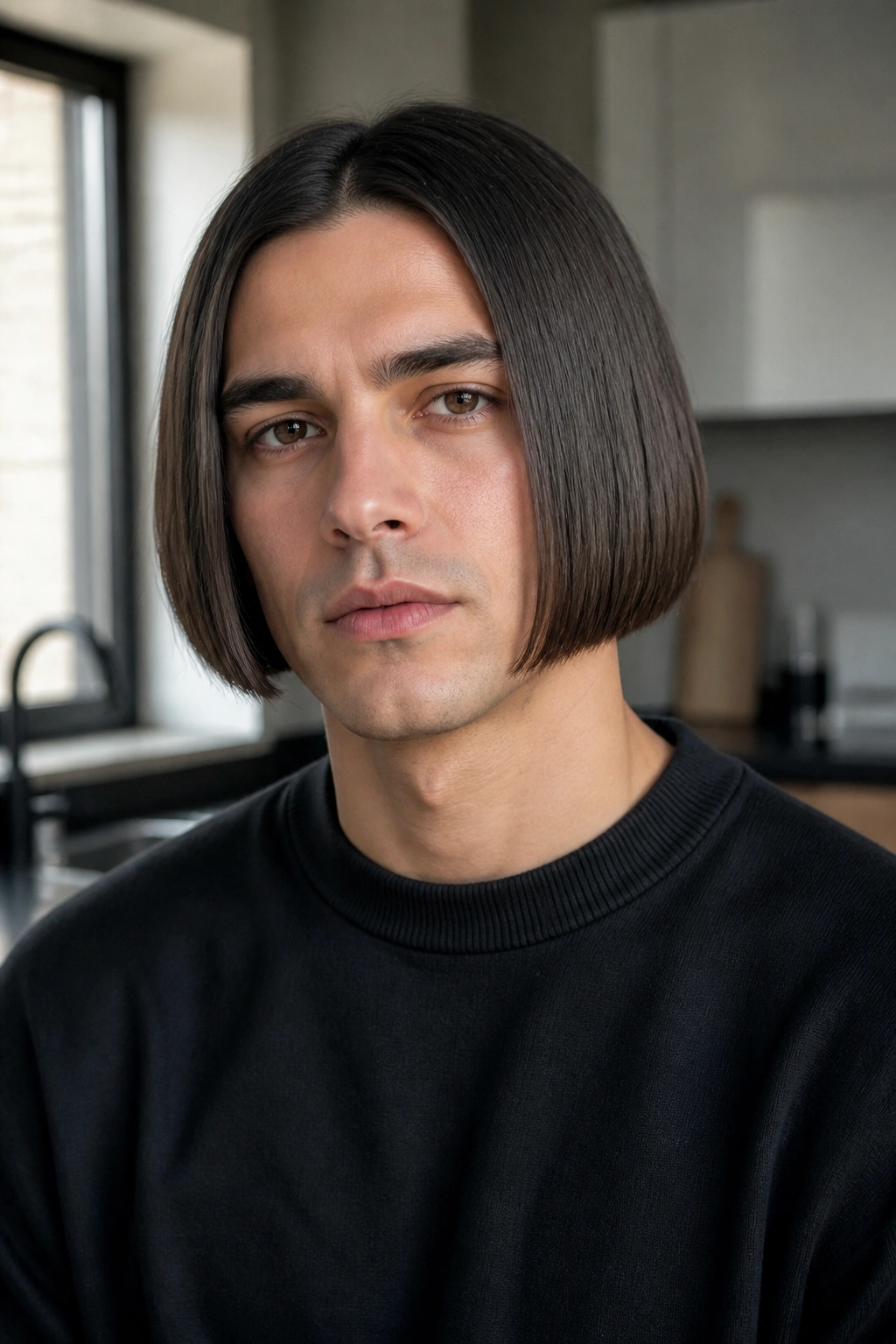
If your hair is naturally straight, this one can look razor-clean. The sleek straight bob relies on precision, not volume. The ends sit in a crisp line, usually around the jaw or just under it, and the whole cut reads sharp even before styling.
The key is control. Straight hair shows every error, so the cut has to be accurate from the start. The neckline should be tidy, the side lengths should match, and the ends should be blunt enough to hold their shape. A flat iron helps, but the real work happens in the scissors.
Use a light smoothing cream or a tiny amount of serum. Too much product makes the hair look greasy and collapses the shape.
What to Ask For
- A blunt perimeter
- Minimal layering
- Clean symmetry through the front
- Slight bevel at the ends if you want movement
This cut is good when you want a bob that looks tailored, not shaggy. It has a quiet confidence to it, and yes, that sounds like a cliché. Still true.
5. Blunt Bob with Heavy Ends
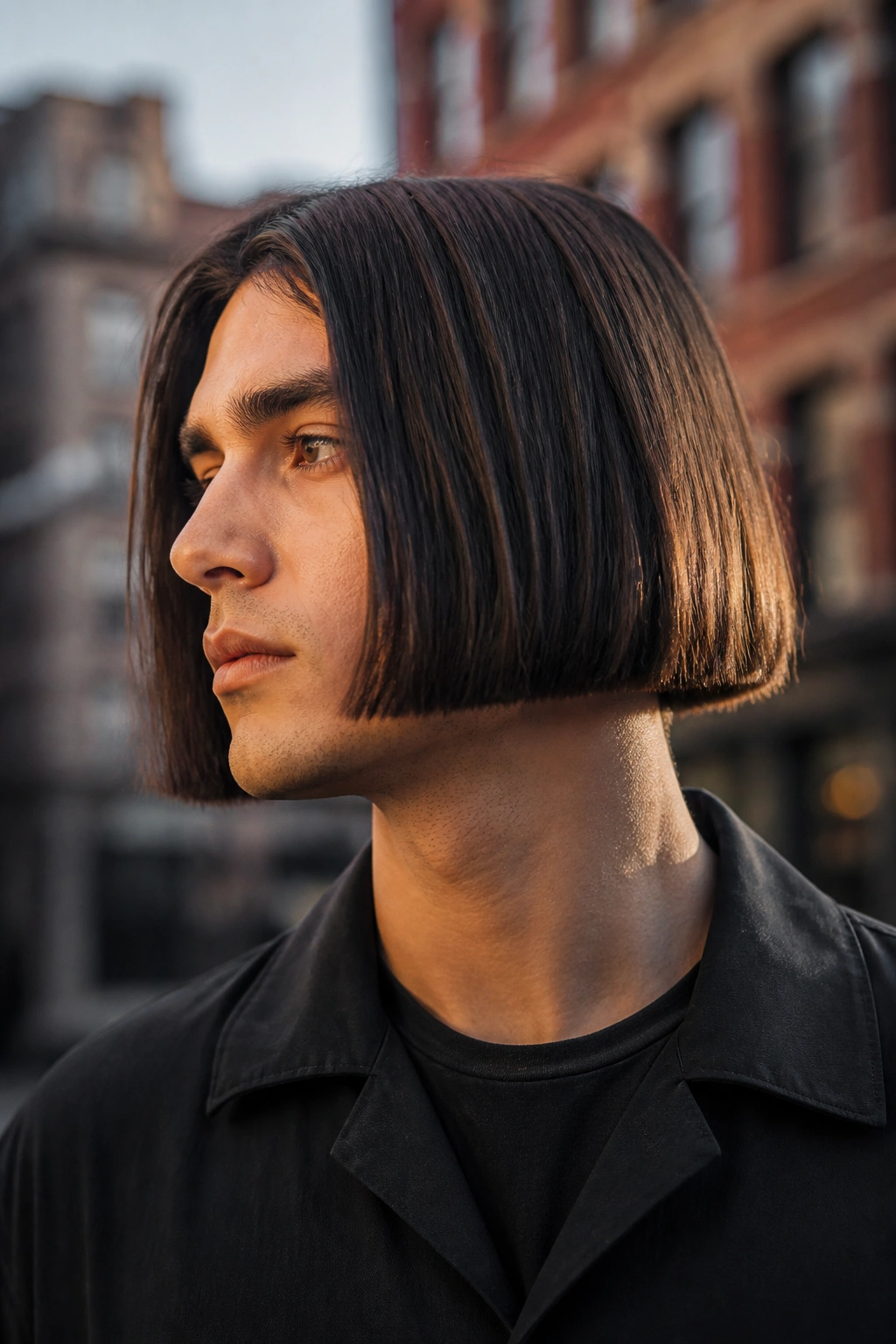
This one has presence. A blunt bob with heavy ends keeps the weight down low, so the haircut feels solid and deliberate instead of airy or broken up. On thick hair, that weight can be your best friend because it keeps the sides from exploding outward.
The shape is simple: one clean line, very little layering, and a strong edge around the jaw or just below it. The important part is restraint. Too many scissor passes at the ends can make the bob look soft in all the wrong places. You want a solid outline that holds up even after a few days of wear.
Who It Suits
This cut works well on rounder faces because the blunt edge creates a little structure below the cheekbones. It also suits dense hair that needs a firm shape more than it needs feathering. If your hair has natural body, this style can look almost architectural.
A little shine cream helps here, but keep it light. Heavy products will make the ends cling together and flatten the shape.
6. Layered Bob with Movement
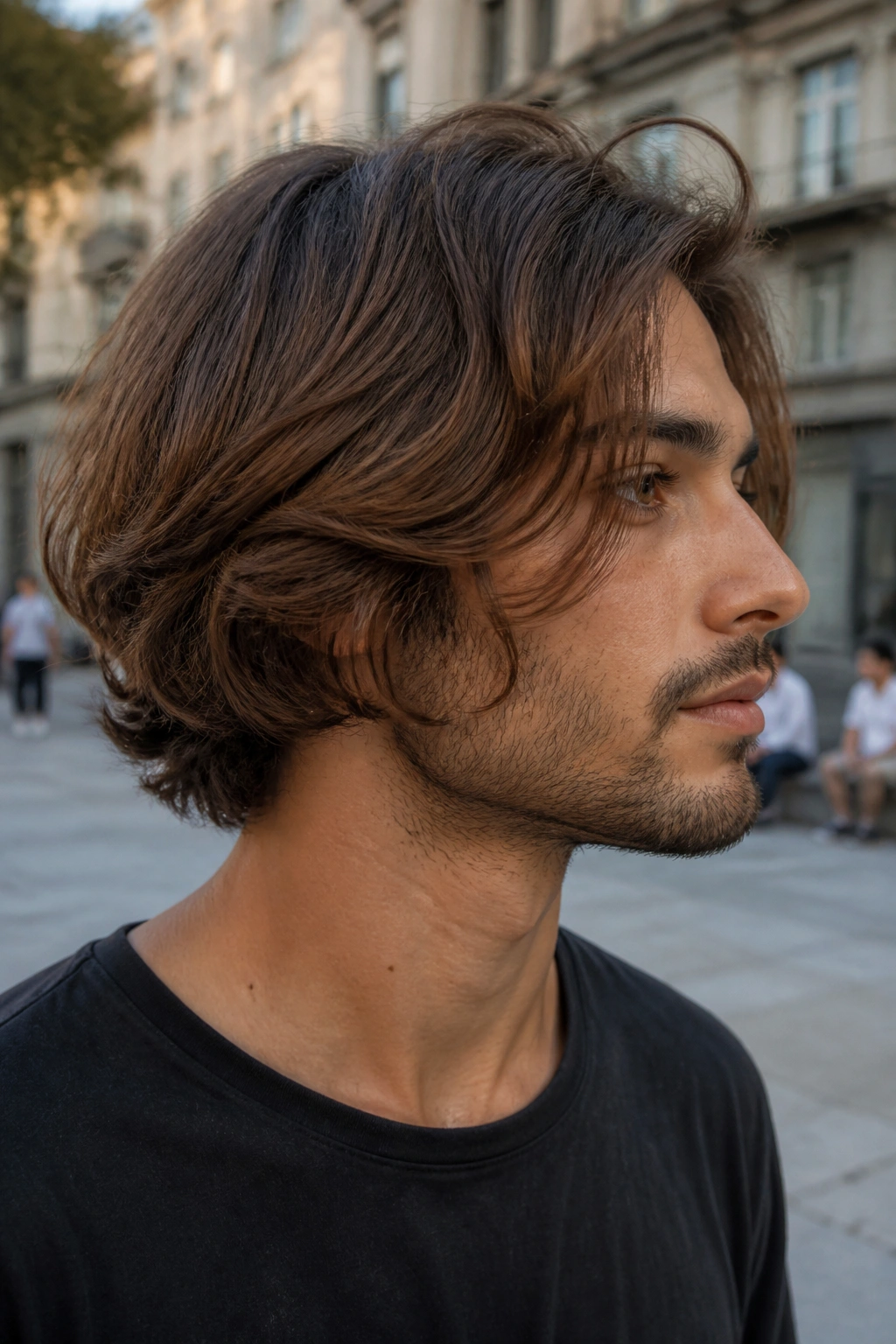
Want the bob shape without the helmet effect? Add layers, but keep them controlled. A layered bob with movement removes bulk from the inside and lets the outer line stay visible. That means you get swing and shape, not a puffed-out triangle.
The best version of this cut keeps the top slightly shorter than the bottom, with soft internal layers that you can barely spot unless the hair moves. That subtle lift matters on thick or medium-thick hair, where a one-length bob can get too wide at the cheeks. The layers should support the perimeter, not chop it apart.
How It Feels in Real Life
This is one of those cuts that changes how hair behaves in a breeze. It shifts. It bends. It does not sit like a block. That makes it a good pick if you like a bob but hate the feeling of too much mass around the ears.
Use a blow-dryer with a medium brush if you want extra bend through the ends. Or skip the dryer and let the layers do the talking.
7. Undercut Bob
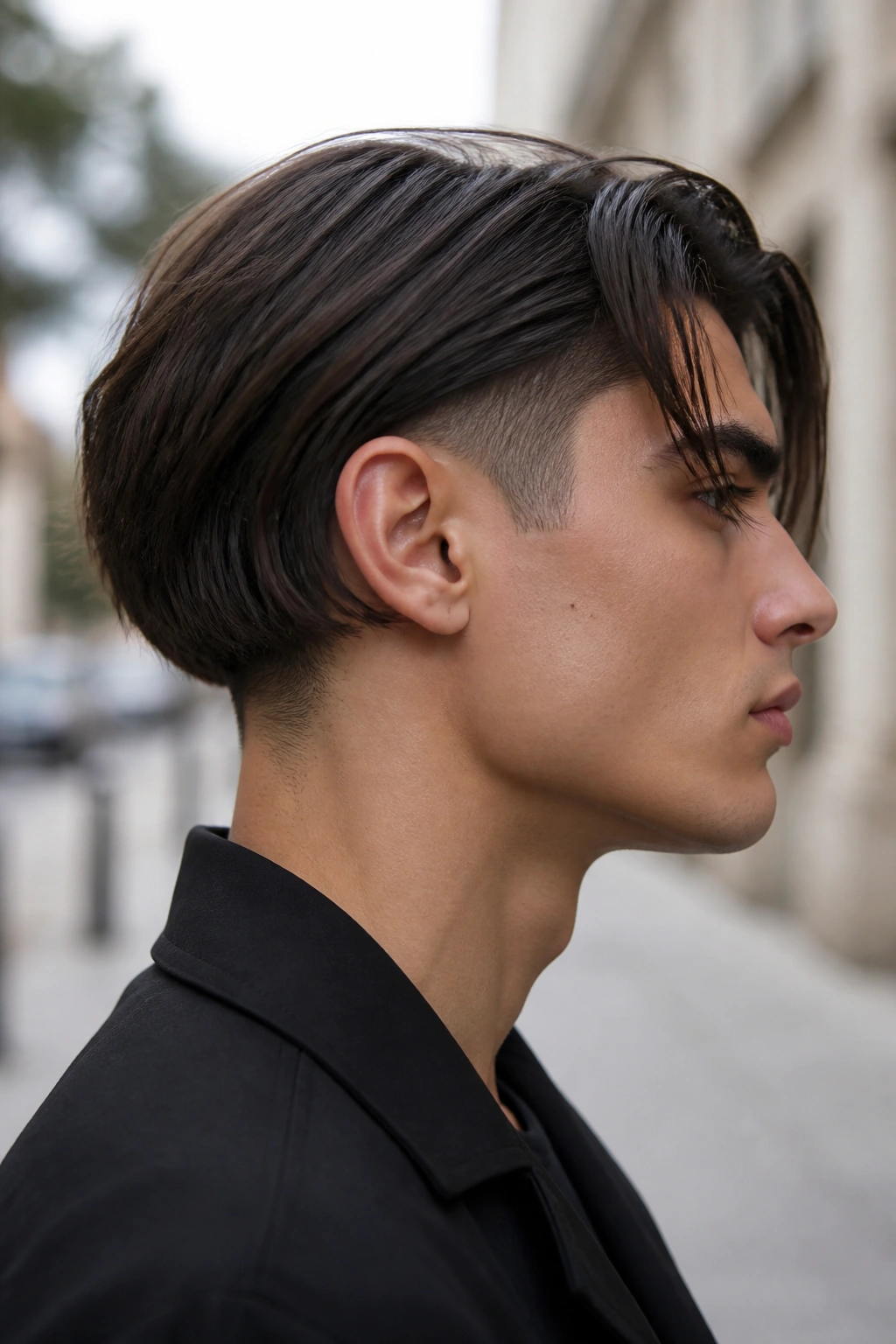
An undercut bob gives you contrast, plain and simple. The top stays long enough to read as a bob, while the sides and nape are clipped much shorter underneath. That contrast makes the shape lighter and cleaner, especially if your hair is thick or stubborn.
It’s a good option when you like the look of longer hair but don’t want all of it. The undercut removes the weight that usually makes a bob hot and bulky around the neck. What you get instead is a cut that feels sharper, easier to maintain, and a little more modern without screaming for attention.
Best Way to Wear It
- Wear it tucked back for a clean profile
- Let the top fall forward for a more casual line
- Ask for a low undercut if you want the shape to stay subtle
- Ask for a high undercut if you want more contrast
One warning: if the disconnection is too extreme, it can start to look like two different haircuts stacked together. Keep the transition intentional.
8. Tucked-Behind-Ears Bob

Some haircuts look better when they get out of their own way. The tucked-behind-ears bob is one of them. The cut itself isn’t flashy, but the styling makes it practical and neat, especially for men who wear glasses or like their hair off the face during the day.
The length usually sits between the jaw and the earlobe, which gives you enough hair to tuck without fighting the shape. What makes it work is the way the sides are cut: not too puffy, not too blunt, just balanced enough to settle behind the ear and stay there.
This is a nice choice if you want a bob that can shift between relaxed and polished without changing the cut. Tuck it for work. Let it fall loose on the weekend. Simple.
9. Side-Part Bob
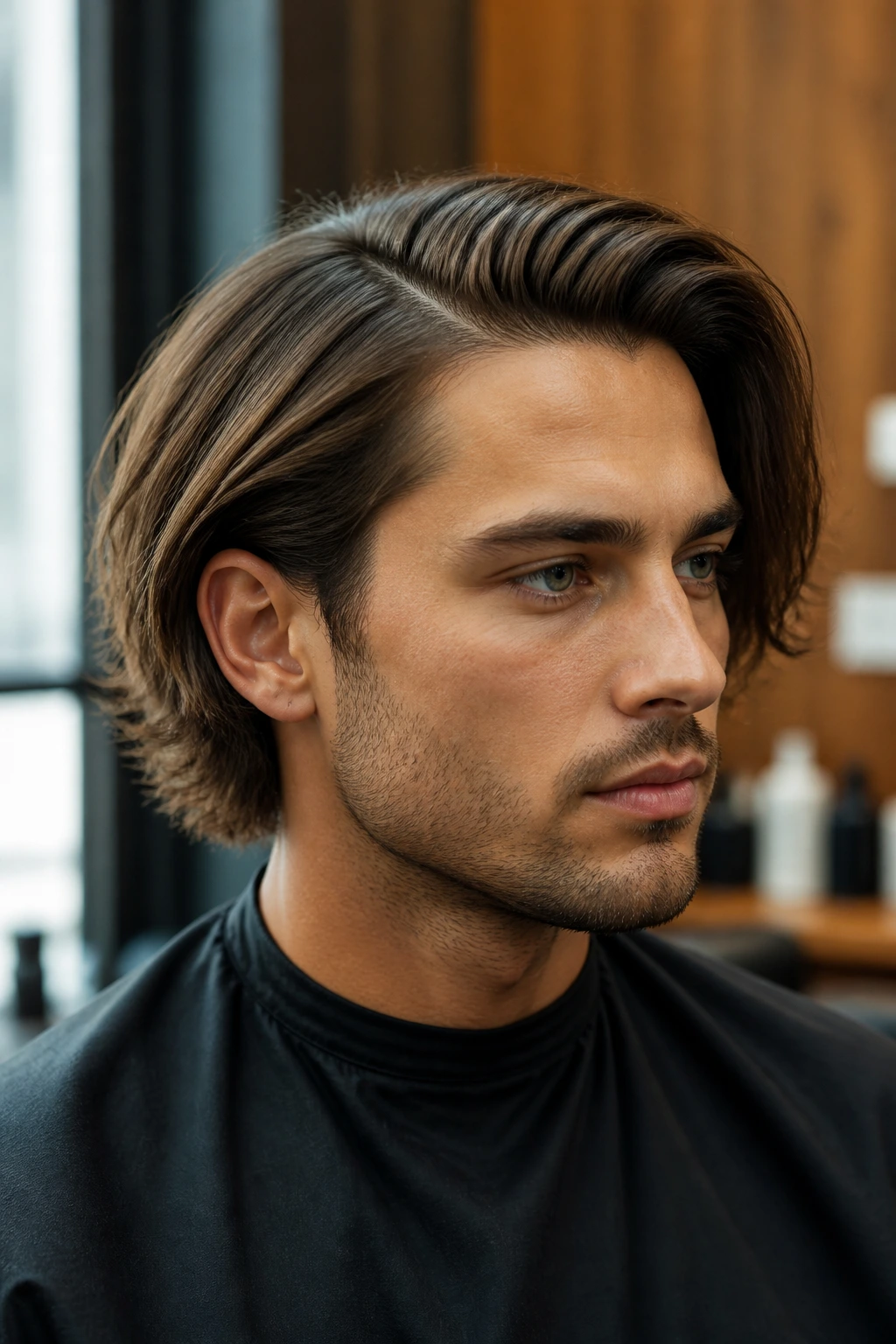
A side part can save a bob from feeling too centered or too neat. It breaks the symmetry and lets the haircut lean a little, which often looks better on square or round faces. The side part also gives the front some direction, so the hair doesn’t just hang straight down.
The cut can still be one length, but the part changes the whole mood. A deep side part creates more lift on top and can make the face look longer. A shallow side part feels calmer and less dramatic. Either way, the line of the haircut becomes easier to see.
If your hair lies flat at the crown, this is a smart pick. The part gives you a natural lift where you need it, and the bob stops looking too evenly distributed.
Styling Note
Use a comb while the hair is damp, not after it dries. That makes the part set more cleanly and keeps the front from splitting in weird places.
10. Shaggy Bob

The shaggy bob is what happens when the haircut stops pretending to be neat and starts having fun. It uses choppy layers, broken ends, and a loose outline that feels casual in a way a blunt bob never will. The shape still matters, but the edges are softer and the texture carries the look.
This version suits hair that already has some movement, though straight hair can wear it too if the cut is strong enough. The key is not to overstyle it. A shaggy bob looks best when the ends are a little uneven and the top has just enough separation to avoid looking polished.
What to Expect
- More texture around the ears and crown
- Less weight through the bottom
- A matte or dry finish rather than shine
- Easier growth-out than a hard-edged bob
A light styling paste can help define the broken pieces. Use less than you think. Too much product turns shaggy into greasy, and that is a bad trade.
11. French Bob with Fringe
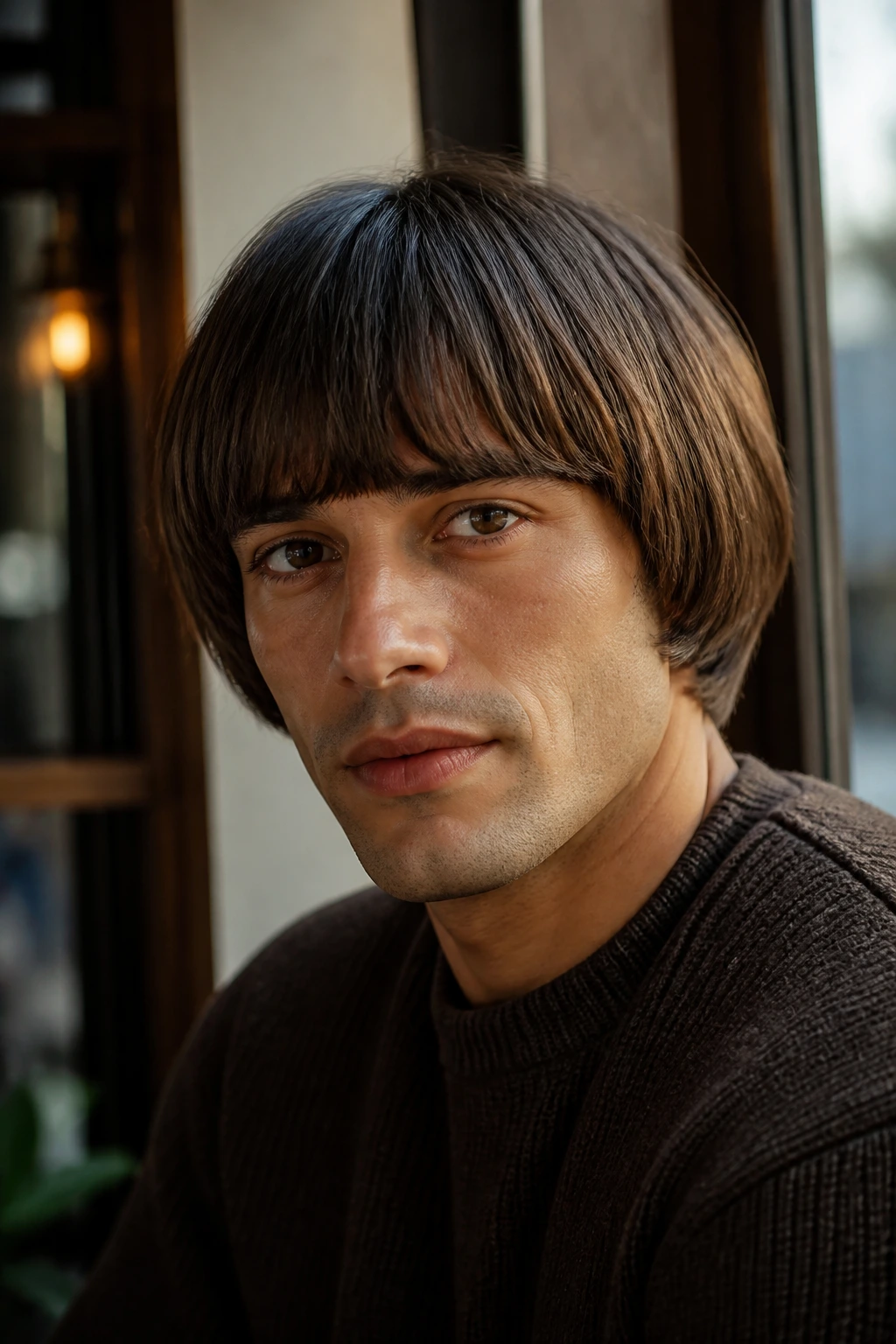
A French bob with fringe brings the hair closer to the face and puts the focus on the eyes and brow. The length usually sits above the jaw or right at it, and the fringe adds a straight or slightly piecey line across the forehead. It’s compact, a little artsy, and much more versatile than people assume.
Why It Stands Out
The fringe changes the whole geometry. Without it, the bob can look plain. With it, the cut has a built-in focal point. A soft fringe works best if your forehead is longer or if you want to break up a strong hairline. A heavier fringe looks bolder and needs a barber who knows how to keep the weight from getting clumsy.
This cut is a strong match for straight or lightly wavy hair. On curls, it can work too, but the fringe needs more thought than most people give it.
A tiny bit of cream at the front keeps the fringe from puffing out. That’s often enough.
12. Asymmetrical Bob
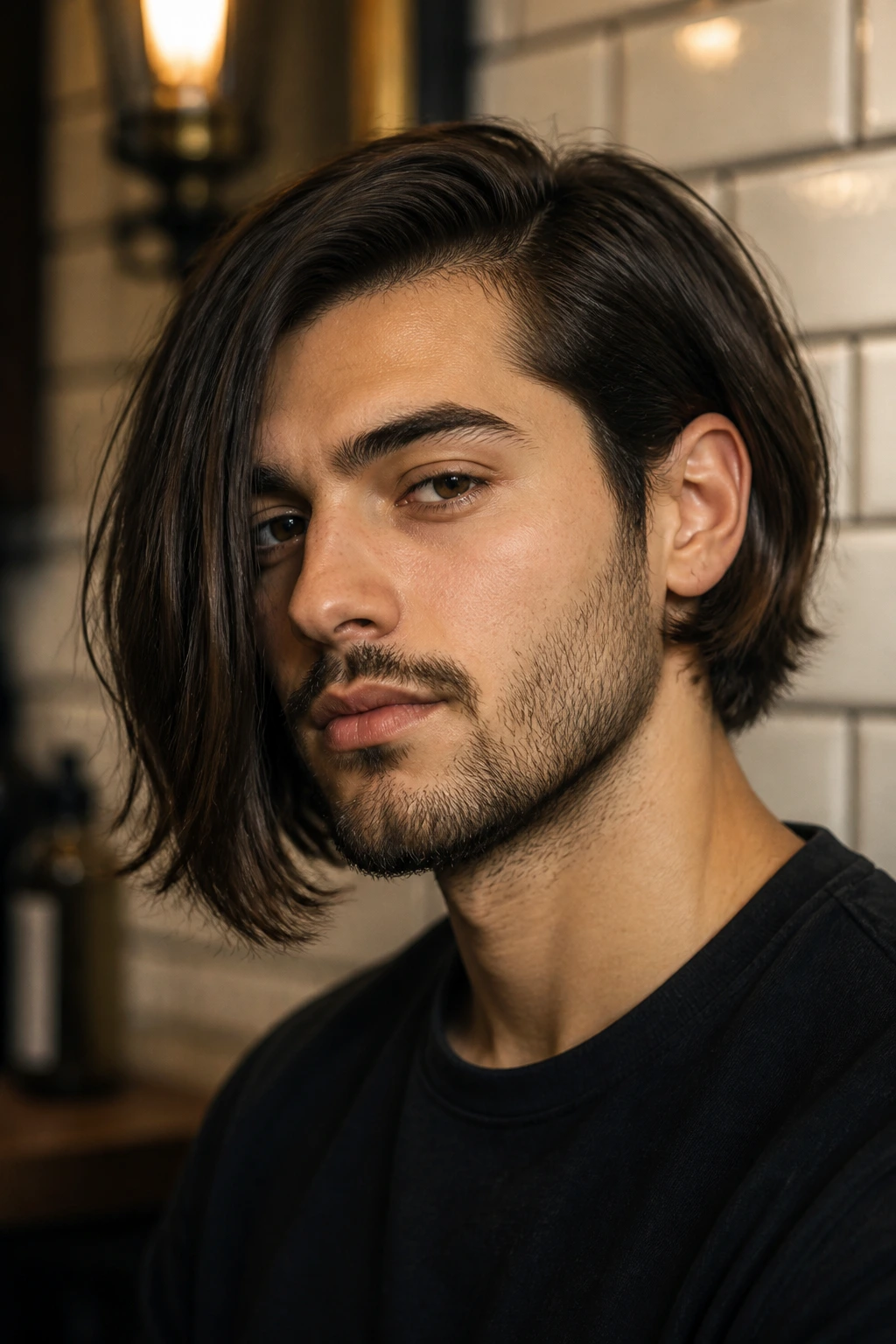
Ever want a bob that looks a little off-center in a good way? The asymmetrical bob does exactly that. One side is left slightly longer than the other, and the difference can be subtle or obvious depending on how much edge you want.
The haircut still needs balance, even though it looks unbalanced. That’s the trick. The shorter side should not feel chopped, and the longer side should not drag. A difference of half an inch can be enough if you want a quiet shift; a full inch gives the cut more attitude.
This works well for men who like a bob but want it to feel less expected. It also suits faces that benefit from a little visual movement near the jawline. The asymmetry draws the eye across the face instead of straight down it.
13. Curly Bob
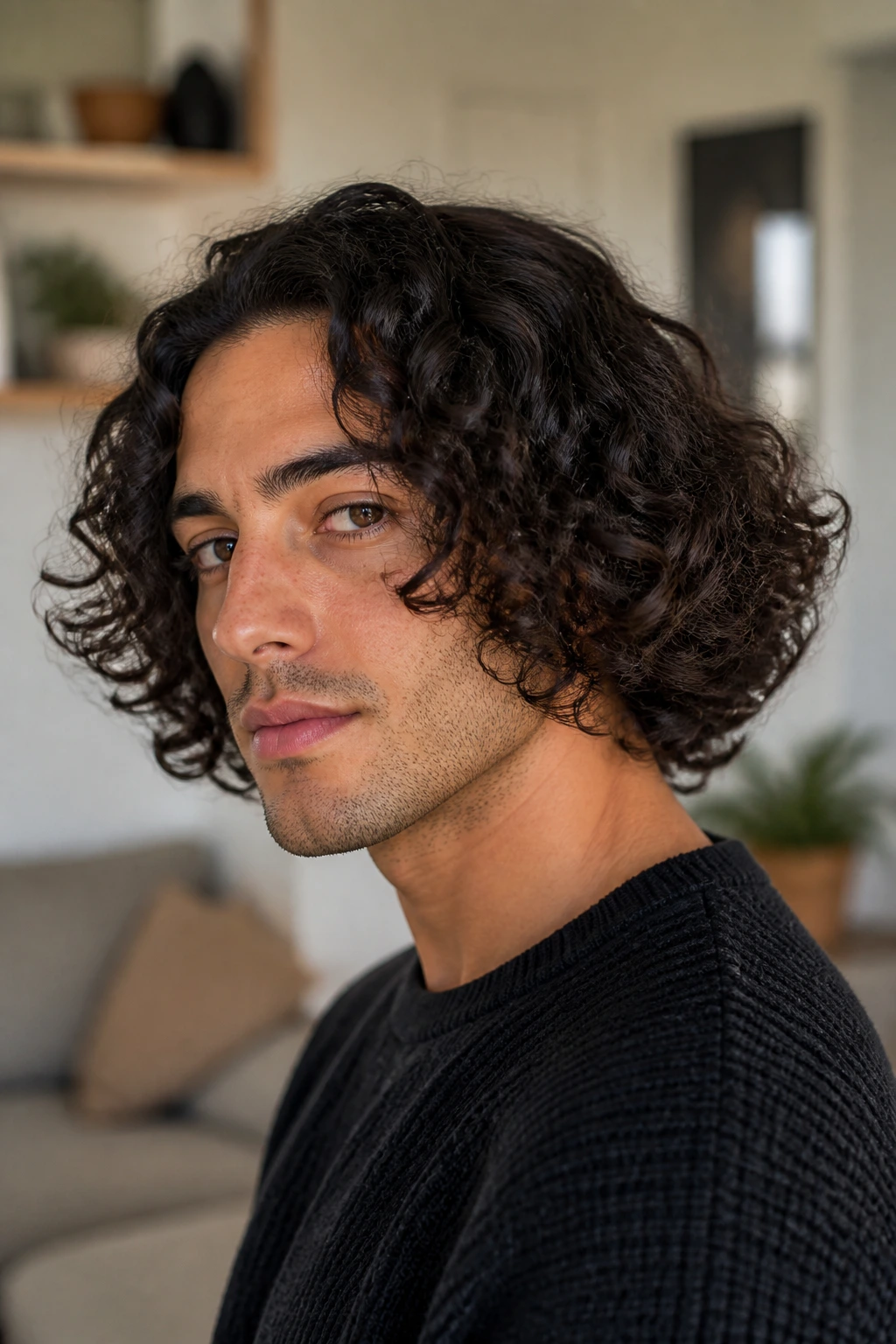
Curly hair and bob cuts can be a very good pairing when the shape is cut for the curl pattern instead of against it. A curly bob usually sits just at or above the jaw so the curls have room to spring without swallowing the face.
The barber or stylist should cut it dry or near-dry if possible. That way the natural shrinkage is visible. Curly hair often looks much shorter once it dries, and ignoring that is how people end up with a bob that turns into a triangle or a puffball.
Practical Details
- Keep the outline rounded but not wide
- Cut for the curl pattern you actually have
- Use a diffuser on low heat
- Pick a cream that defines, not stiffens
The best curly bob feels alive. Not messy. Alive. There’s a difference, and you can see it right away when the curls separate cleanly instead of clumping into a heavy mass.
14. Bowl-Bob Hybrid
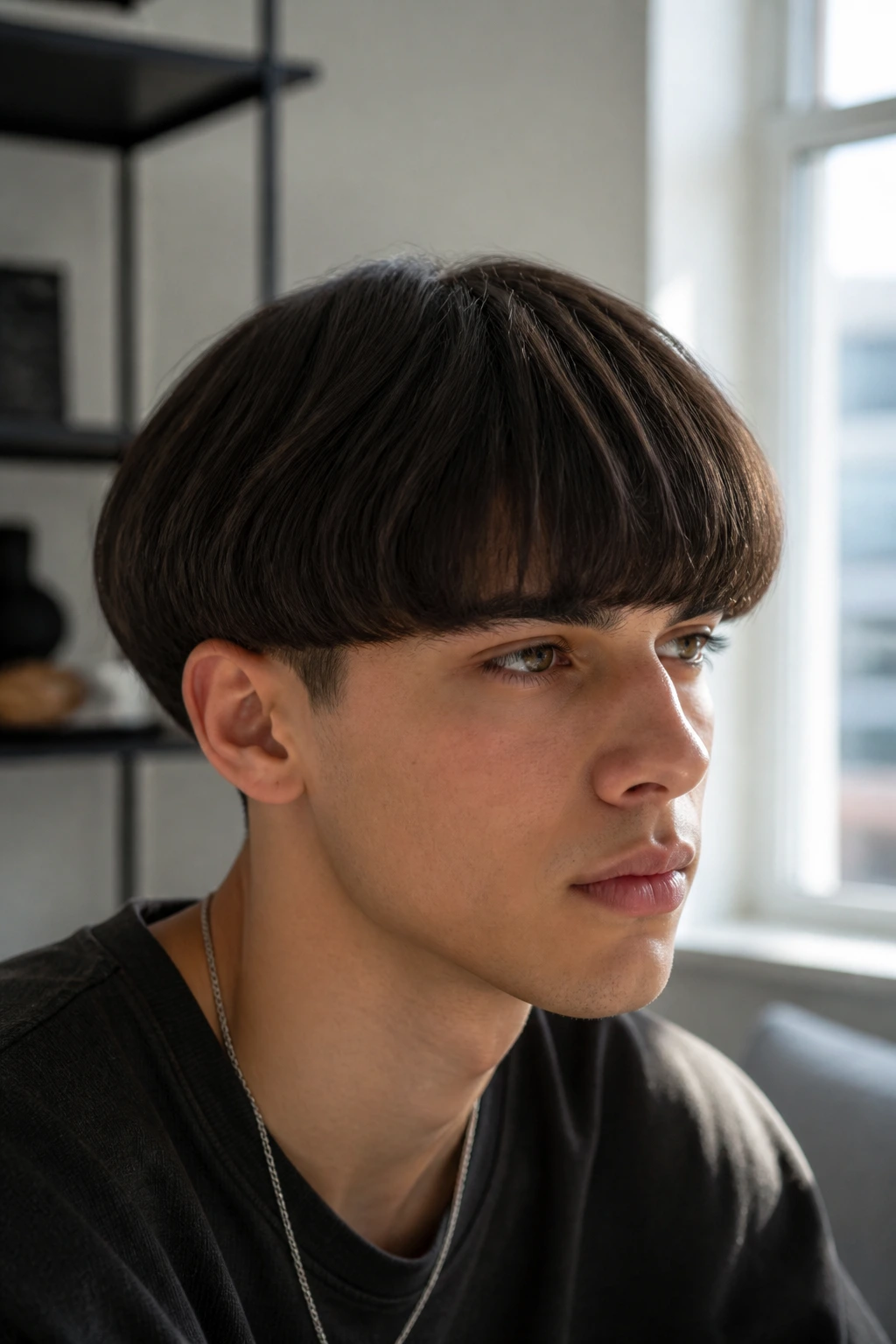
This cut sits in a strange but appealing spot between a classic bob and a softened bowl shape. The perimeter stays rounded, but the line isn’t as strict as an old-school bowl cut. It’s a little more wearable, a little less severe, and much more interesting if you like strong geometry.
The bowl-bob hybrid works best when the top and sides are balanced carefully. Too much roundness can make the head look blocky. Too little and you lose the whole point. The aim is a clean silhouette that follows the shape of the skull without feeling childish.
This is one of those haircuts that looks especially sharp with straight hair. The smooth surface shows off the shape. A matte styling cream can keep it from looking wet or overly stiff.
15. Bro Flow Bob
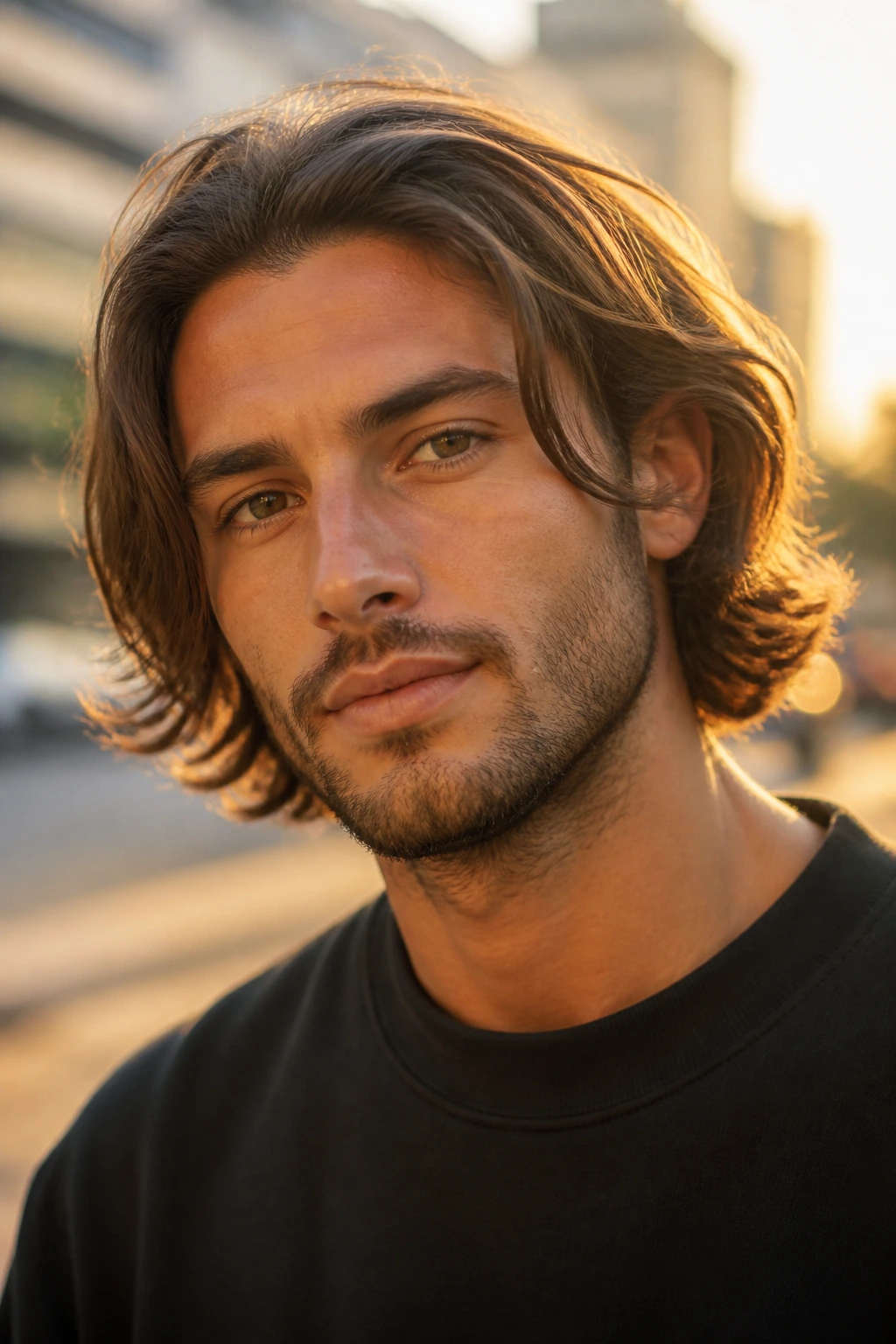
The bro flow bob is for men who want some length, but not a full shoulder-length grow-out. It usually lands around the jaw or a little past it, with enough movement to brush back from the face and enough weight to keep it from flying everywhere.
What makes it different from a standard bob is the way it wears. It’s looser, less controlled, and usually styled away from the face rather than hanging straight down. Think of it as the friendlier, less rigid version of a short bob.
Good Fit For
- Medium to thick hair
- Wavy textures
- Guys who hate frequent trims
- Hair that naturally falls back instead of forward
A sea-salt spray or light cream is usually enough. Heavy waxes make this cut clump, and then it stops looking relaxed.
16. Messy Air-Dried Bob

This is the cut for men who want low effort without looking unkempt. The messy air-dried bob depends on texture, not polish, so the shape should still be considered. Choppy ends, soft layers, and a length that lands near the jaw help the hair dry into something with life.
The styling routine is short. Wash, towel-dry, add a small amount of mousse or cream, then leave the hair alone. That’s it. If you keep running your hands through it while it dries, you’ll break up the pieces too much and end up with frizz instead of texture.
Why It Works
The bob length gives the hair enough weight to fall into place, but the layers keep it from looking flat. That balance is the whole cut. It’s a nice option for men who like the feel of longer hair but want the maintenance to stay light.
Best move: use a microfiber towel or an old T-shirt to remove water. Rough towels make the ends fray.
17. Tapered Neckline Bob
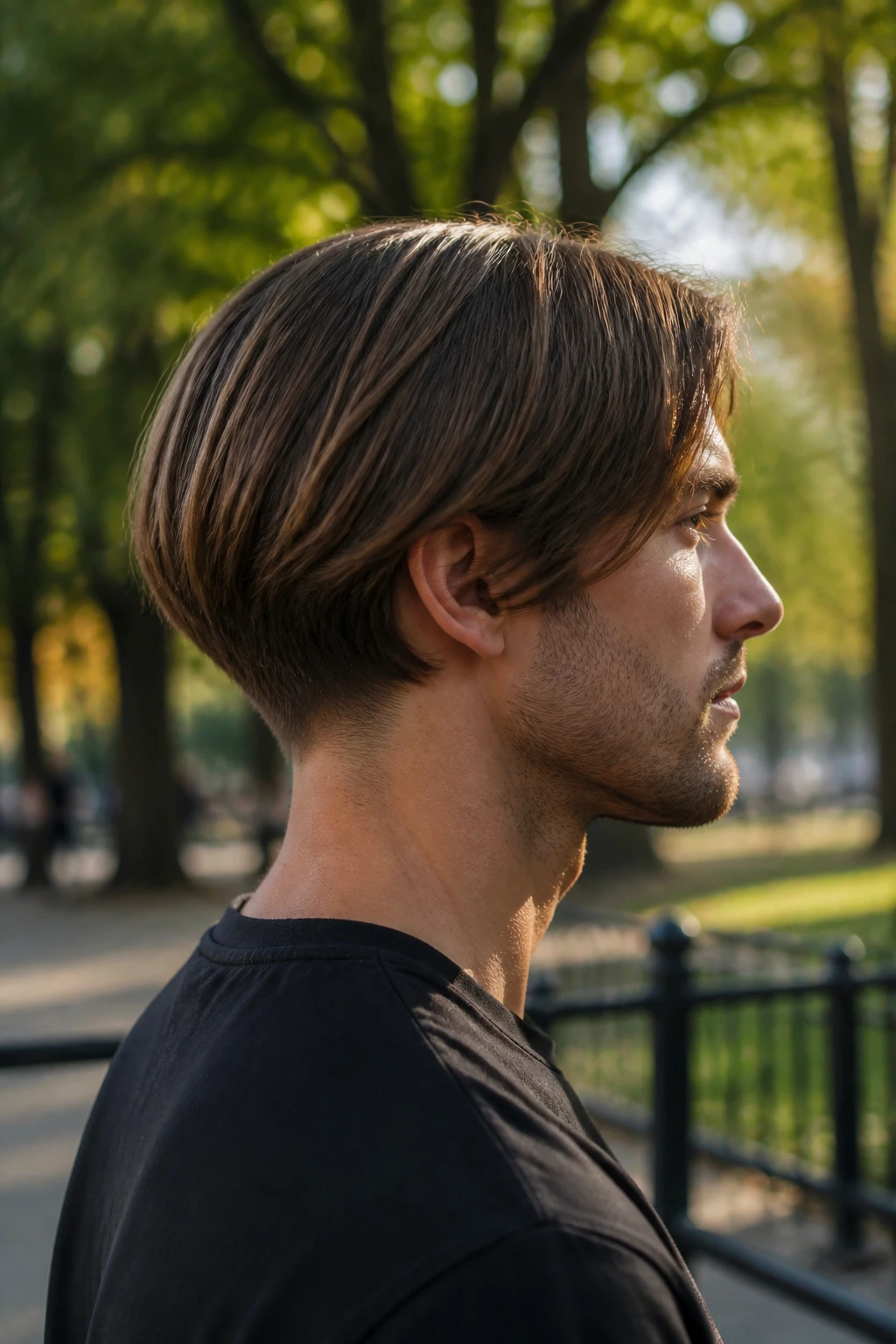
A tapered neckline can make a bob look cleaner than a blunt nape ever will. The hair at the back is gradually shortened near the neckline while the length around the sides stays intact, which makes the cut sit better against the shirt collar and keeps the neck from looking heavy.
This detail is small, but it changes how the whole haircut wears. Without a taper, some bobs feel boxy in the back. With one, the shape settles more naturally. It’s especially useful for men who keep a bob through warmer months and don’t want the hair sticking to the neck.
The top can still stay soft or layered. The taper just gives the underside a better finish.
Ask For
- Gradual shortening at the nape
- Clean outline around the ears
- Enough length preserved through the sides
- No harsh fade unless you want visible contrast
18. Jaw-Length Minimal Bob
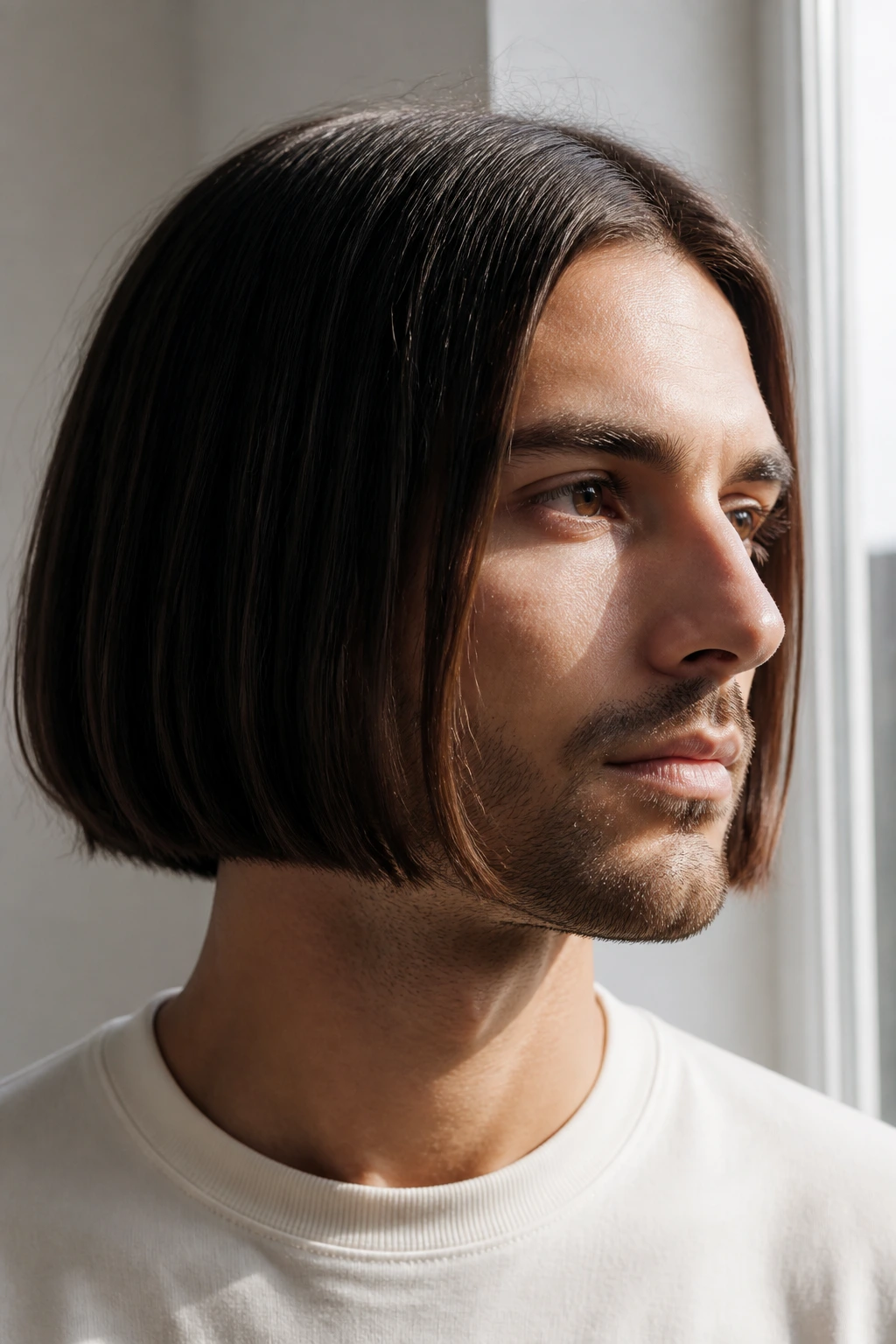
A jaw-length minimal bob strips the haircut down to its cleanest form. No obvious layers. No heavy fringe. No fancy disconnection. Just a compact shape that ends right where the jaw starts to matter. It looks spare, modern, and a little severe in the best way.
This cut depends on accuracy. The line has to sit right, because there isn’t much decoration to hide behind. Straight hair makes it easiest to read, though a gentle wave can give it a softer edge. Either way, the haircut should feel pared back, not unfinished.
The real appeal here is restraint. If you like clothes with clean lines, this haircut often feels like the hair version of that. It does not need much styling, and that’s part of its charm.
19. Wolfy Bob
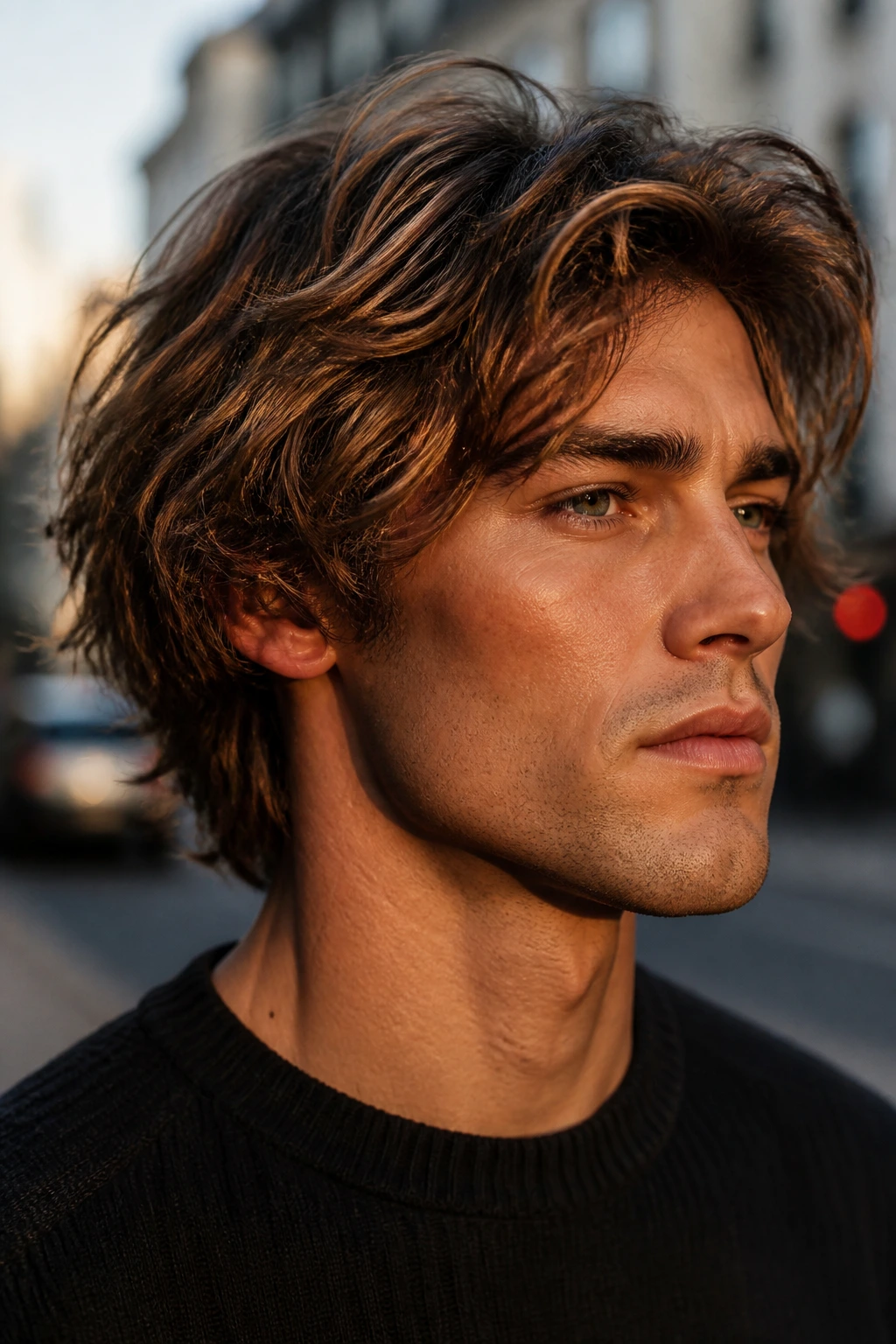
The wolfy bob blends the bob’s shape with the looseness of a wolf cut. You get more lift around the crown, more movement through the top, and a broken-up finish that keeps the style from feeling too neat. It’s a good choice if you like edge but still want the overall length to stay short.
The layers are the point. They should create a little separation near the crown and let the ends move in different directions. A barber who only knows how to cut one-length bobs may not get this right, so be specific. You want texture with shape, not random choppiness.
This cut works especially well on hair that has some natural bend or fullness. It can handle a little mess and still look like a haircut, not a mistake.
Style It With
A matte paste, a pinch of mousse, or a quick blast-dry with your fingers. Don’t overthink it. The cut wants air.
20. Slick-Back Bob
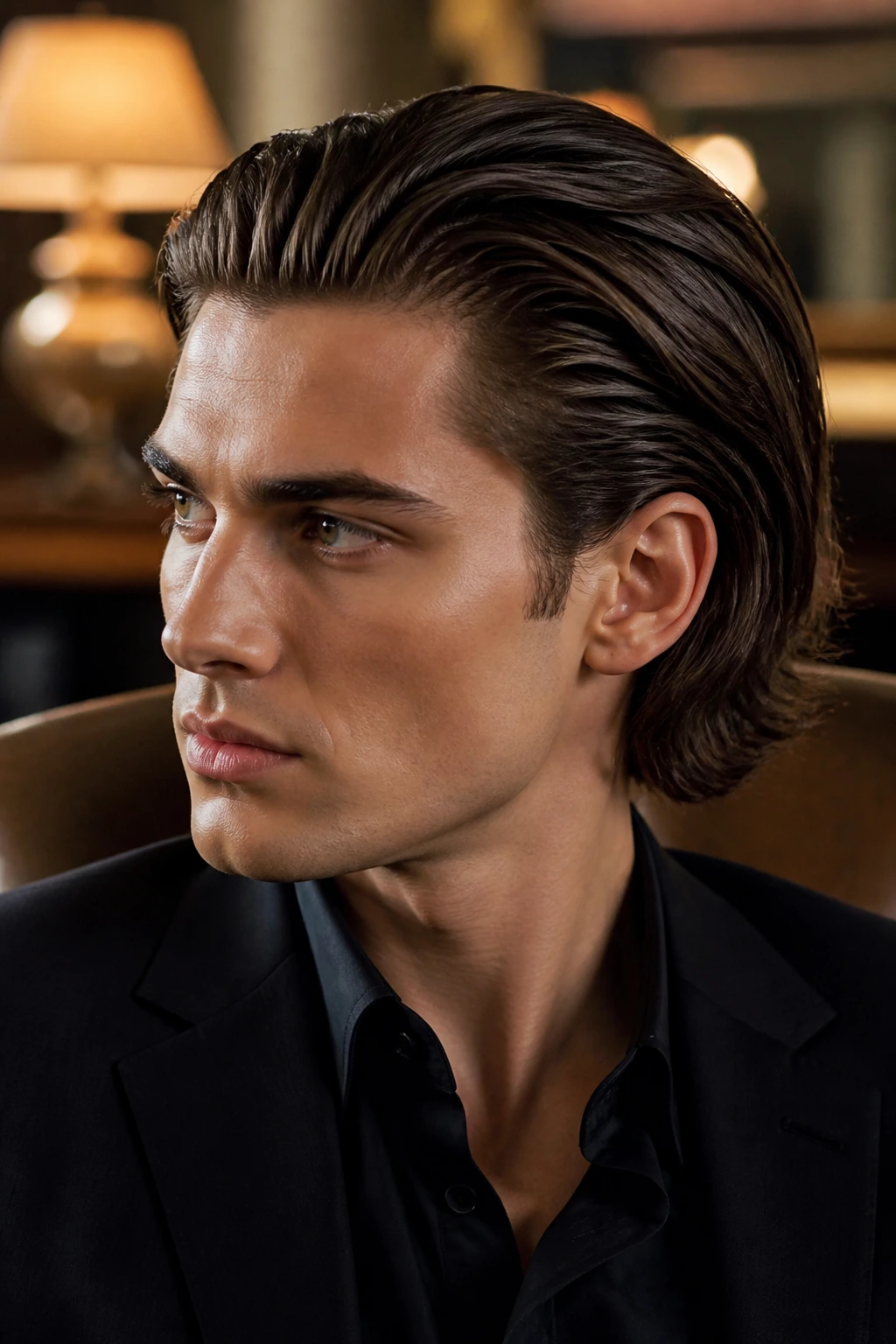
A slick-back bob is the cleanest way to make a bob look dressed up. The hair is kept long enough to brush back from the forehead, and the front sits smooth instead of falling forward. It’s a strong option for evenings, events, or any setting where you want the haircut to look deliberate and sharp.
The shape depends on decent density. If the hair is too fine, slicking it back can expose too much scalp and make the style look thin. Medium or thick hair does better here, especially when the cut keeps enough weight through the sides to support the brushed-back shape.
Use a light pomade or styling cream with a comb. Start at the front, work backward, and leave the finish touchable rather than stiff. Crunchy hair ruins this look fast.
21. Chin-Grazing Bob with Low Fade
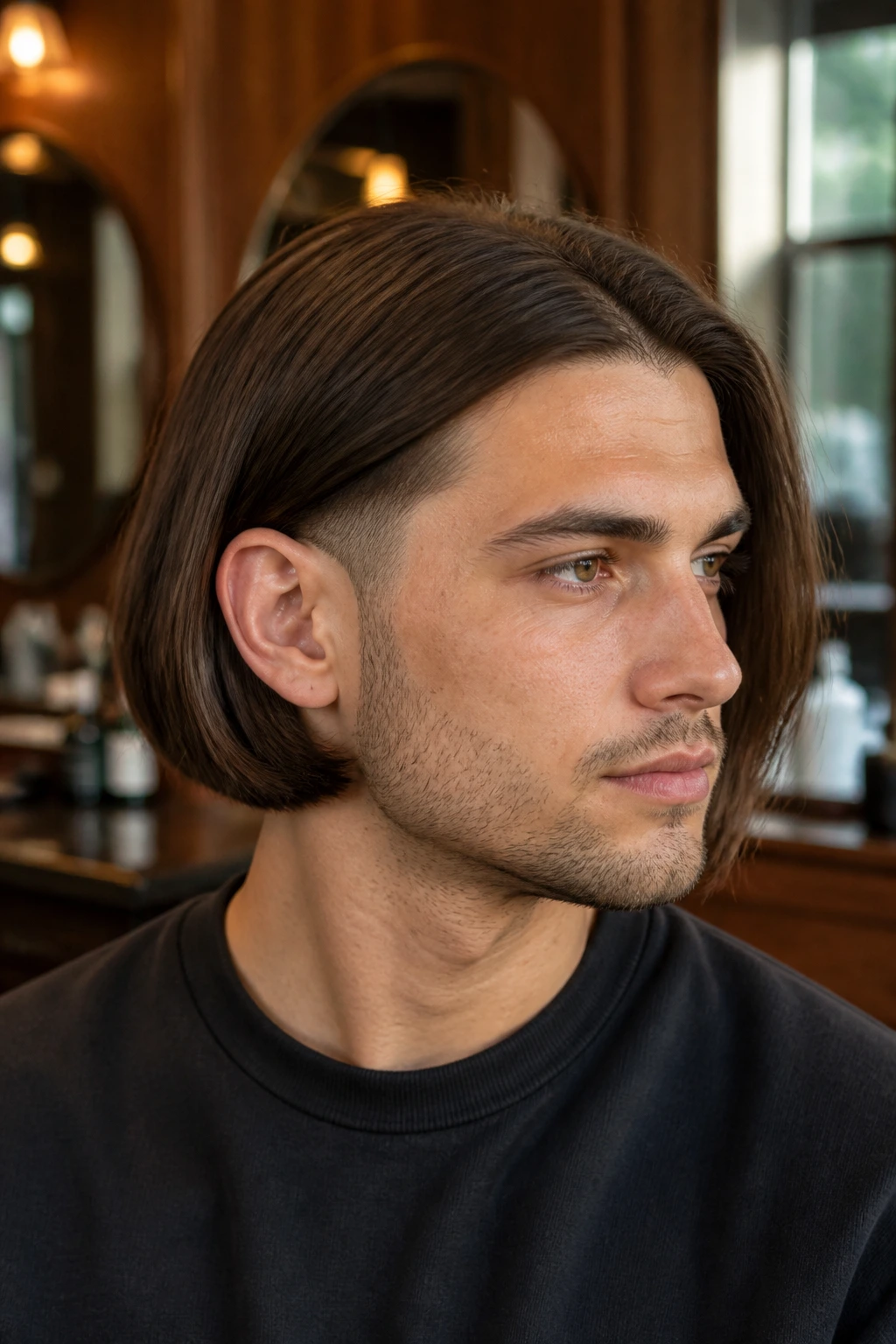
This cut mixes softness and structure in a way that works better than it sounds. The bob itself sits around the chin, while the sides and lower edges transition into a low fade near the ears and neckline. That contrast gives the haircut a cleaner profile without losing the bob shape on top.
It’s a smart choice for men who want something current-looking but still wearable in normal life. The fade trims away bulk where it tends to collect, especially around the back and sideburn area. The result is less puff, less collar friction, and a haircut that grows out with some control.
Why It’s Different
The fade keeps the lower half disciplined. The bob keeps the top recognizable. Together, they create a cut that feels more tailored than a standard bob, but not as severe as an undercut. If you want a sharp outline without committing to a very high-contrast haircut, this one hits the mark.
22. Vintage Mod Bob
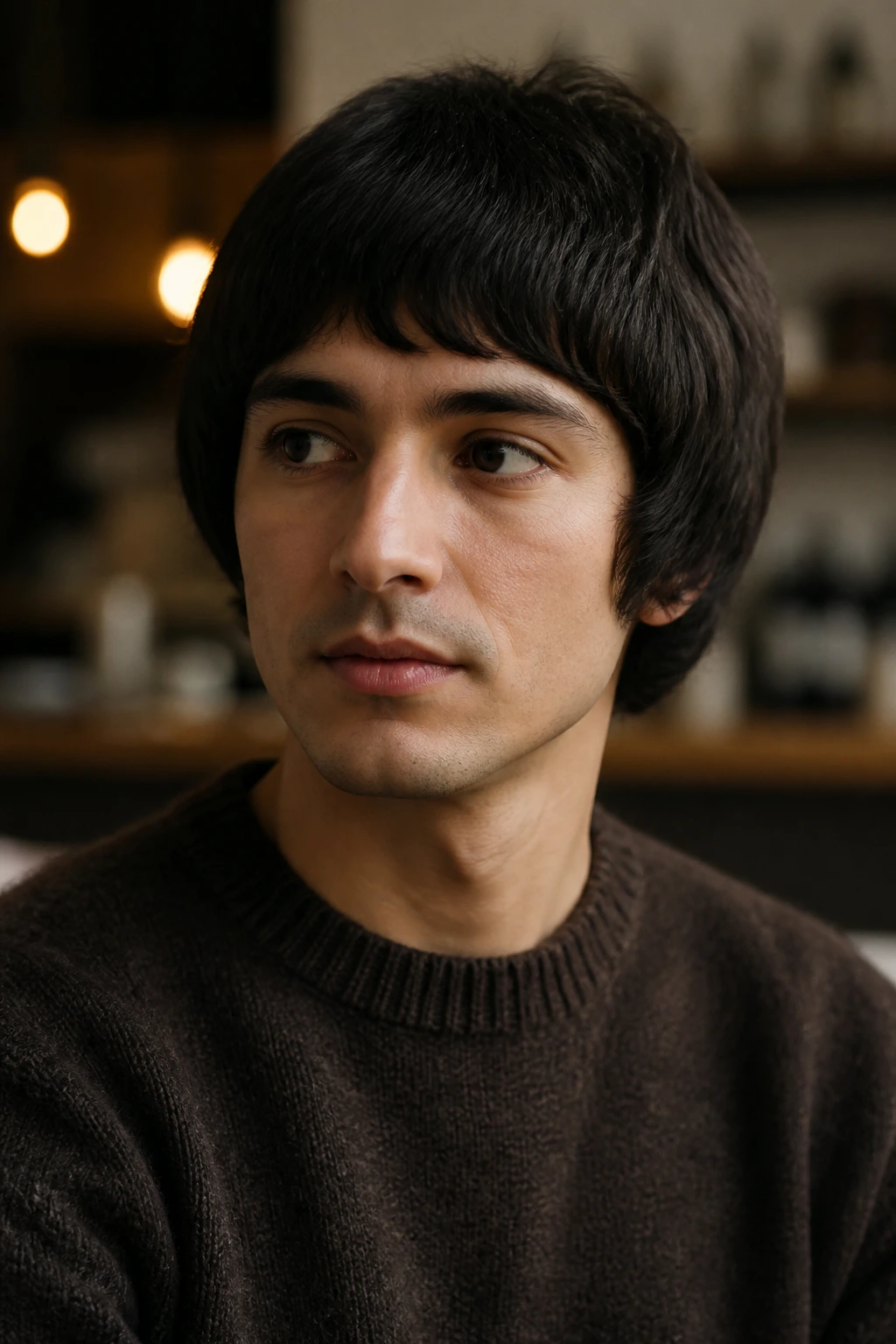
The vintage mod bob borrows from older, sharper shapes but keeps the finish modern enough to wear now. Think rounded edges, a tidy fringe or front, and a smooth silhouette that feels a little retro without turning costume-like. It suits men who like the line of the haircut to feel styled even when the outfit is simple.
This cut likes straight hair and a confident contour. The front can be cut with a mild curve so it follows the forehead, while the sides sit close enough to show the outline of the head. It’s not a loud haircut, but it has character. That matters.
You can style it with a light cream and a comb, or wear it a bit softer for a more relaxed shape. Either way, the finish should stay neat.
23. Layered Lob for Thick Hair
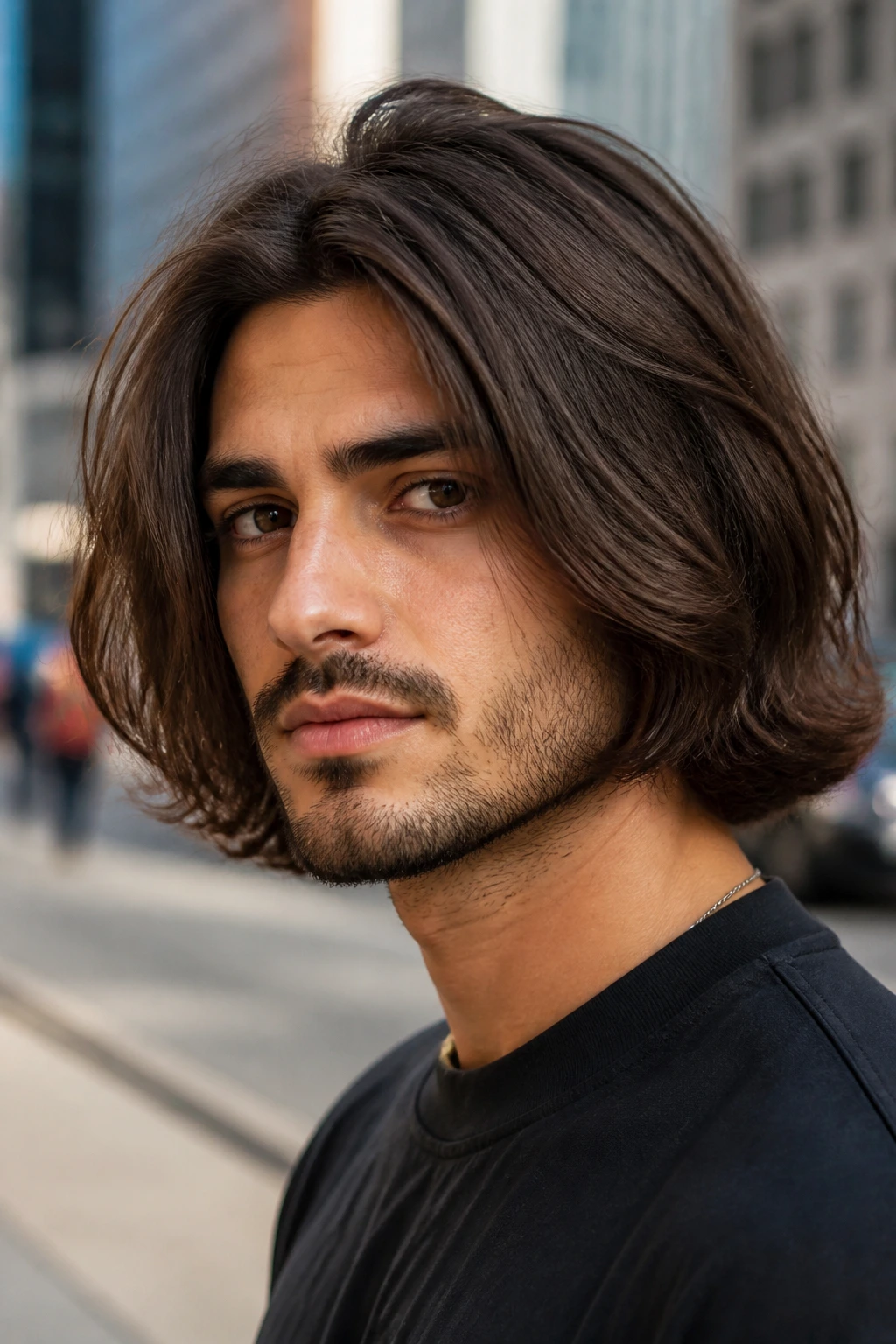
Thick hair often behaves better when the cut is allowed to breathe. A layered lob, sitting just past the jaw, gives the hair room to move while removing enough weight to stop the sides from swelling. It’s longer than a short bob, but still squarely in bob territory.
The layers should be strategic. You do not want a stack of chopped pieces that make the cut feel thin at the ends. You want enough internal removal so the bulk drops away, while the outline stays strong. That is the part that makes thick hair look controlled instead of overworked.
This cut is one of the best choices for men who have dense hair and hate daily wrestling matches with a brush. It can be blow-dried smooth or worn with a natural bend. Either way, it has room to move.
24. Fine-Hair Volume Bob

Fine hair needs help looking full, and the right bob can do that without piling on product. A fine-hair volume bob keeps the outline compact, often around the chin or slightly above, and uses careful layering to create lift instead of weight. The goal is body at the crown and a shape that does not collapse by noon.
The trick is to avoid over-thinning the ends. Fine hair already lacks density, so aggressive texturizing can make the haircut look see-through. A clean perimeter with a little internal support usually works better. Root lift spray or a light mousse can help, but the cut has to do the real work.
What Helps Most
- Blow-dry with the head slightly forward
- Use a round brush at the roots
- Keep the sides from getting too long
- Trim before the ends start to look sparse
This is a practical bob, not a dramatic one. That’s a good thing.
25. Sharp Editorial Bob
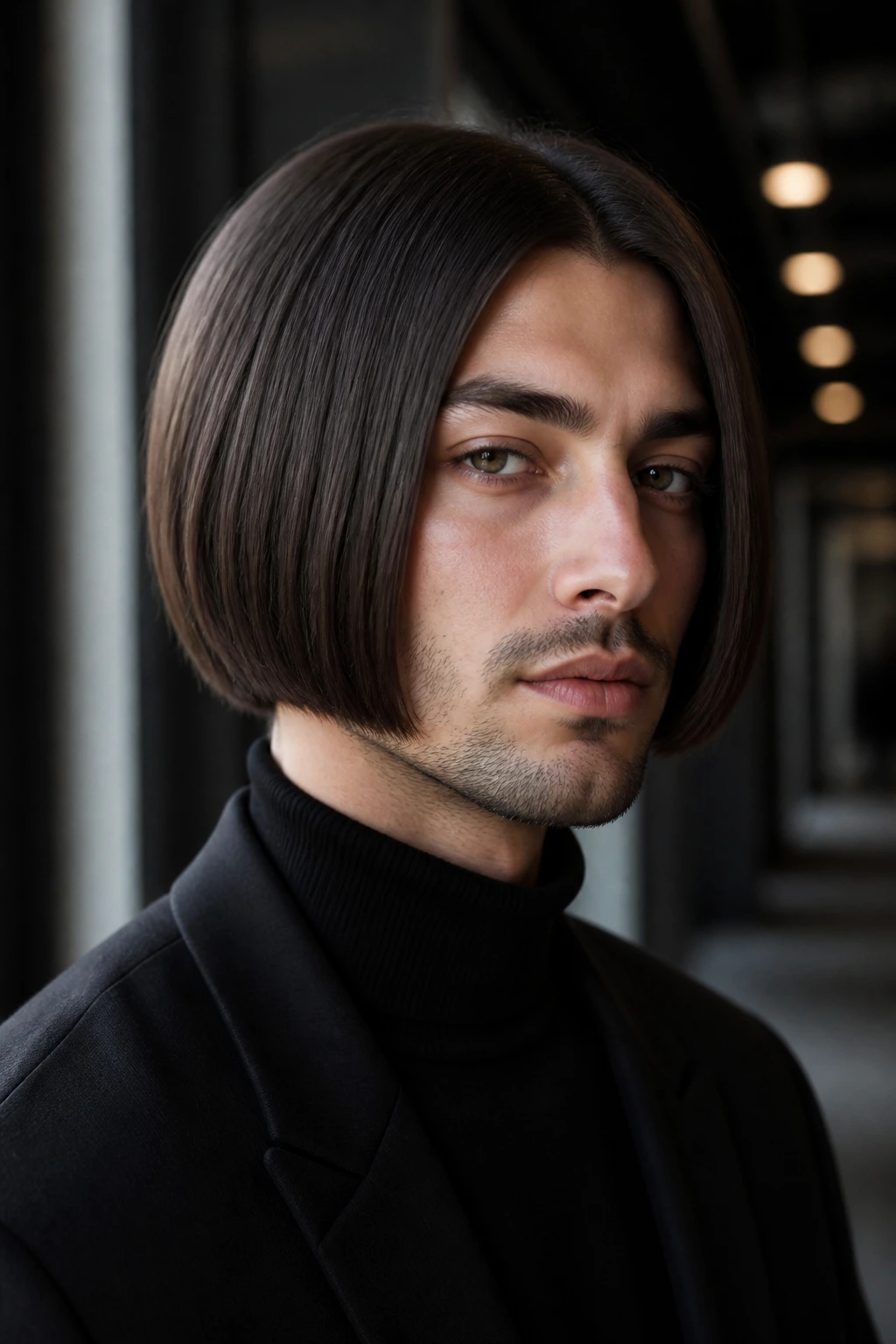
A sharp editorial bob is the boldest version in the group, and it shows. The edges are crisp, the shape is exact, and the overall look feels built rather than tossed together. It usually sits somewhere between the jaw and the chin, with a perimeter that makes the haircut read from across a room.
This cut rewards strong features and good bone structure, but it can work on many faces if the proportions are handled well. The styling should stay clean, with little frizz and little fluff. Straight hair makes it easiest to see the shape, though a controlled wave can add a little softness if you do not want the cut to feel severe.
What to Watch For
- The neckline should be tidy and even
- The ends should not fray
- The part should support the face shape
- The finish should stay sleek, not greasy
If you like haircuts that look precise in photos and in person, this is the one that makes the strongest statement.
A good short bob on men is never only about length. It’s about where the line lands, how the weight sits, and whether the haircut works with the hair you already have instead of fighting it. That’s why some bobs feel casual and others feel almost architectural. Same family. Very different results.
If you’re taking one idea from this list, make it this: choose the bob based on your hair texture first, then on your face shape, and only then on style preference. That order saves a lot of bad haircuts.
