



French bob haircuts for fine hair live or die on the edge line.
That sounds a little dramatic, maybe, but it’s true. A French bob is not magic by itself; it only looks good when the cut gives fine strands enough shape to stand up, turn in, or fall with a little intention instead of collapsing into a sad little curtain by noon.
The mistake I see most often is people asking for softness when what they actually need is structure. Fine hair needs a perimeter that holds the eye — a blunt edge, a smart length, a fringe that doesn’t swallow the face, and just enough movement to keep the shape from looking stiff. Too many tiny layers and the ends go wispy fast. Too much length and the whole thing loses that crisp, cheekbone-skimming French feel.
And yes, the details matter. A half-inch can change how dense the hair reads. So can a part, a bang, or the way the back is slightly stacked. I keep coming back to the same rule because it saves people from bad cuts: let the outline do most of the work, then use texture as the garnish, not the main course.
1. Chin-Length French Bob for Fine Hair
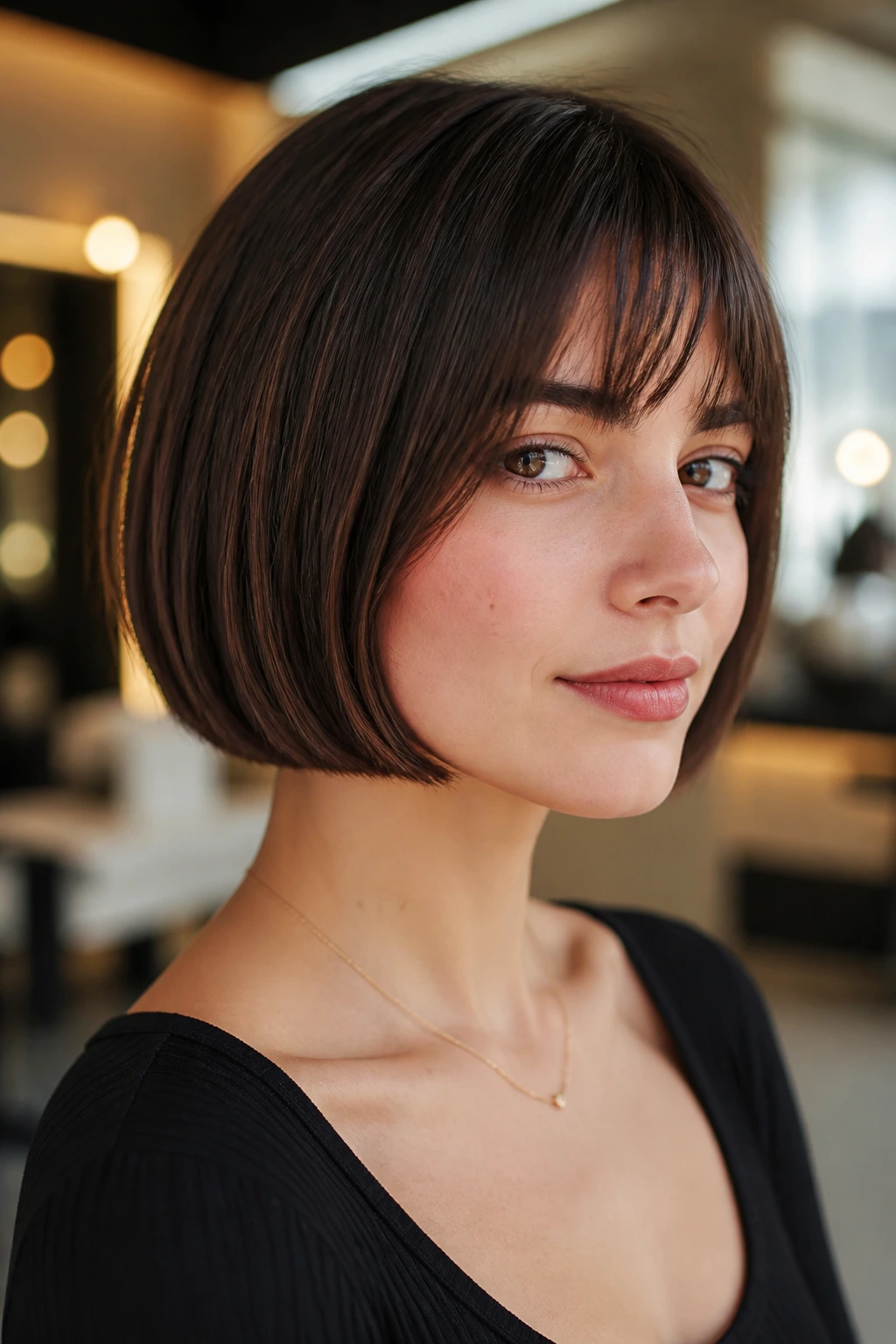
A chin-length French bob is the easiest place to start if your hair is fine and you want more body without a lot of styling drama. The line sits right where the jaw starts to matter, so the eye sees a stronger shape even when the strands themselves are light.
Why the Length Works
This cut works because chest-length hair can expose thinness, while chin length keeps the weight in one place. Ask for the perimeter to land at or just below the chin, then keep the ends blunt enough to hold a clean edge.
- Ask for minimal internal layering so the outline stays dense.
- Keep the front no lower than the jaw if your hair tends to collapse.
- A tiny bend under the ends makes the bob look fuller.
- Use a light mousse at the roots, not a heavy cream.
My favorite move: blow-dry with a medium round brush, then let the last inch flip in by itself. That small finish does more than a whole pile of layers ever will.
2. Jaw-Grazing French Bob With Curtain Bangs

Curtain bangs can make a French bob feel soft without making fine hair look sparse. That’s the trick. The fringe opens the face, and the rest of the cut stays dense enough to keep the shape from going limp.
Fine hair usually looks best here when the bangs start a little back from the hairline and graze the cheekbones instead of getting chopped too short. A bang that splits around the eyes gives lift without stealing too much hair from the front panel, which is where fine hair can least afford to lose it.
I like this version on people who want movement around the face but don’t want a blunt fringe sitting heavy on the forehead. It’s also forgiving if your hair has a slight bend. Style the bangs with a 1-inch brush or a small round brush, then let them cool before you touch them. That cooling step matters more than most people think.
3. Blunt French Bob for Fine Hair
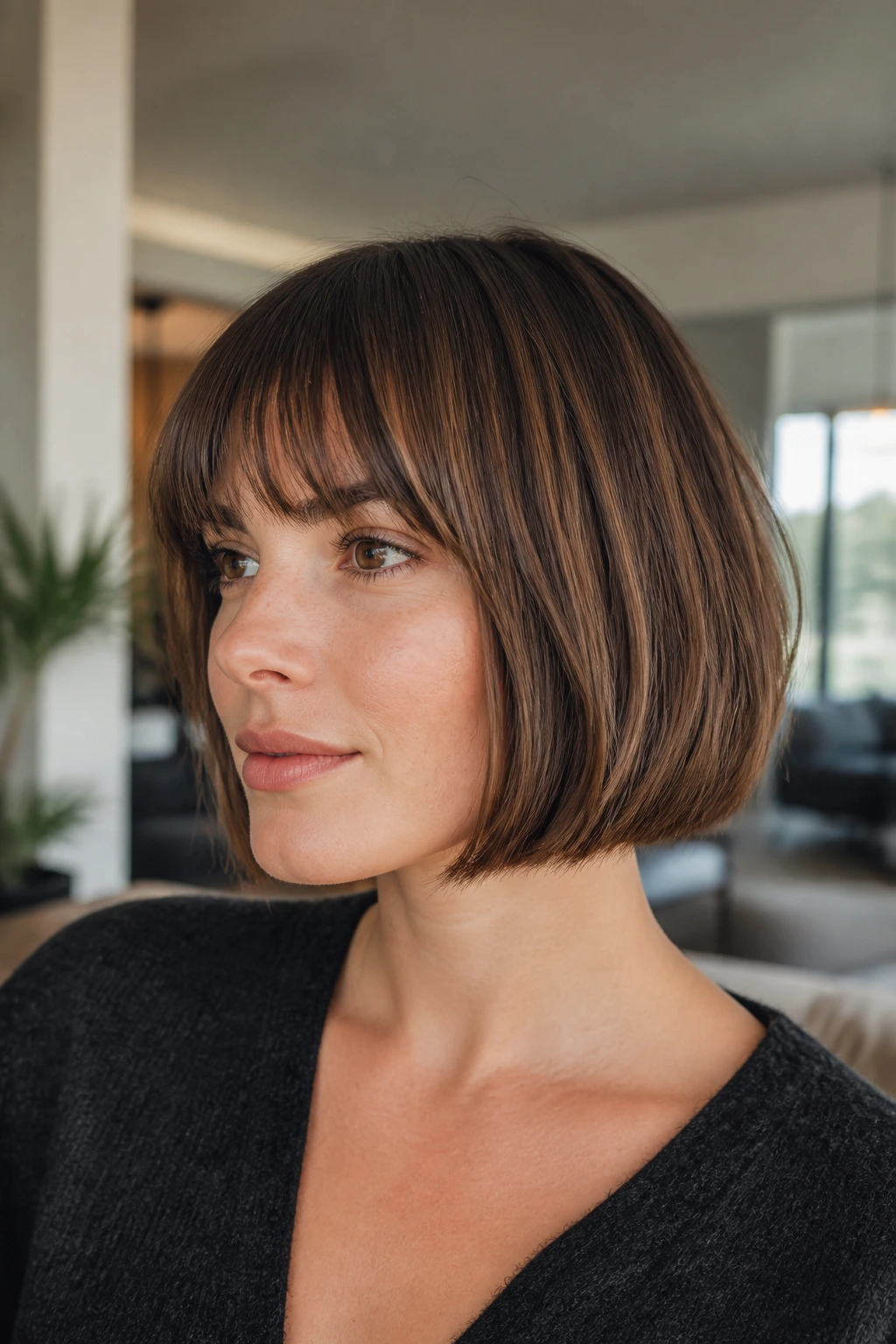
Why does a blunt line make fine hair look thicker? Because the eye stops reading through the ends.
That’s the whole game. On soft, thin strands, a sharp perimeter creates the illusion of density, and the French bob shape keeps that bluntness from feeling too severe. The cut should feel clean at the bottom, with maybe a whisper of point-cutting through the front if the hair needs a little swing.
What to Ask For at the Salon
Tell your stylist you want the ends to look full and even, not shredded. Ask them to leave the bulk in place instead of carving it away with thinning shears.
- Keep the length around the chin or a touch above it.
- Avoid heavy razor work on the ends.
- Ask for a soft curve only if your hair needs a little inward movement.
- Style with a flat brush or paddle brush for a smooth finish.
This is the version I reach for when someone says, “My hair looks too see-through once it gets past my ears.” Usually, the answer is not more layers. It’s less.
4. Rounded French Bob With a Soft C-Curve

A rounded French bob gives fine hair a shape that feels intentional from every angle. Instead of hanging straight down, the cut curves in at the jaw and back out just slightly near the cheekbones, which makes the hair look like it has more body than it really does.
That curve matters. It keeps the sides from collapsing flat against the face, and it makes the silhouette read as fuller in photos and in real life. If your hair tends to puff at the wrong places and go flat everywhere else, a rounded outline can be a relief.
I like this one on people with narrow faces or hair that grows very flat at the nape. It creates a little cushion around the head without turning into a helmet. The key is keeping the curve soft. Too much roundness, and the cut starts looking old-fashioned in a bad way. A subtle C-shape is enough.
5. Tousled French Bob With Broken Texture
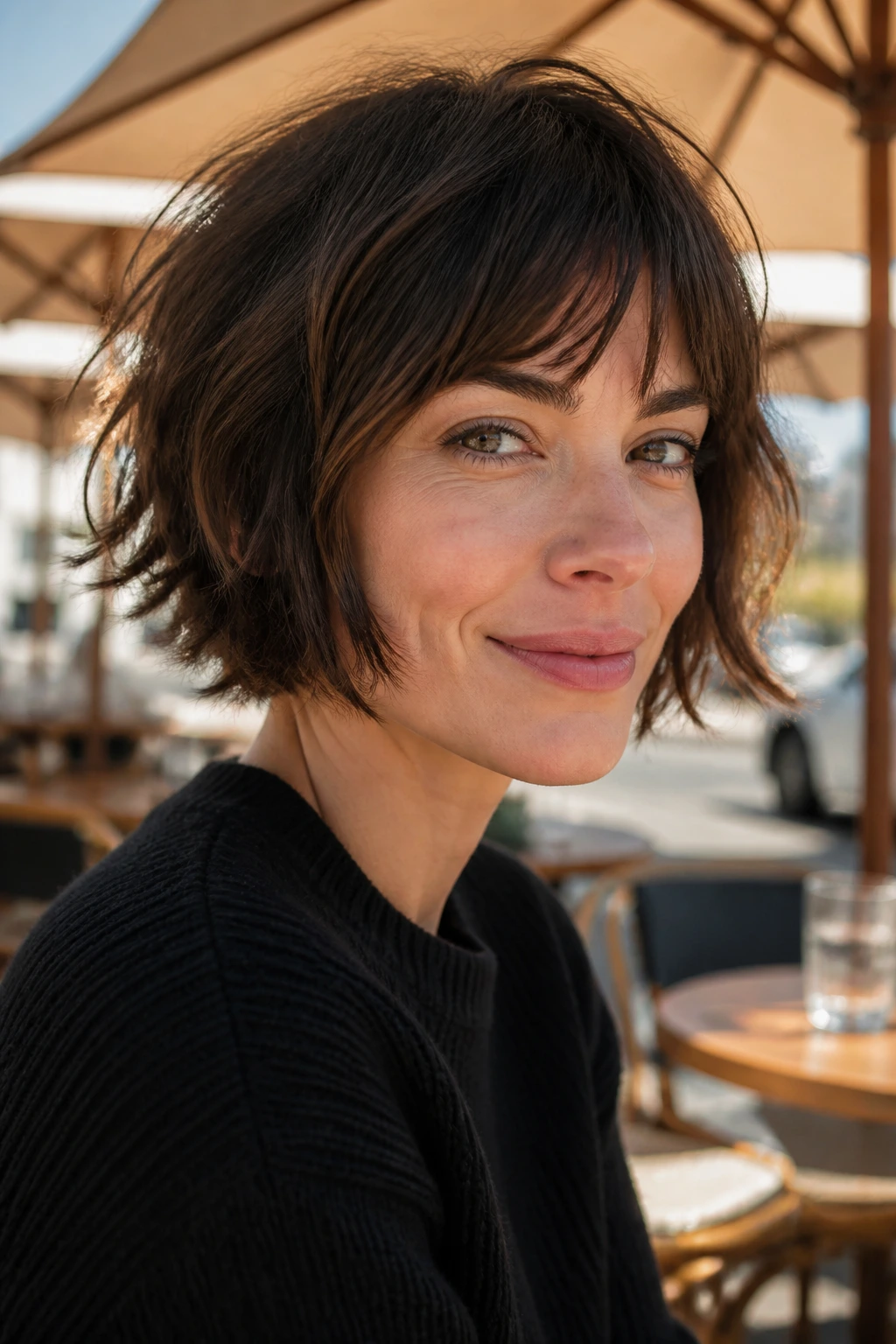
The tousled French bob is for people who want the cut to look lived-in, not polished to death. On fine hair, that loose texture can work beautifully as long as the ends still have some weight. If the haircut is too thin, tousling only exposes the weak spots.
I’m picky about this one. A lot of stylists overdo texture on fine hair and end up with see-through ends that look airy for about ten minutes and then fray. The better version keeps the base fairly solid and adds movement in a few selected spots, usually around the front and crown.
A salt spray or light texture mist is enough. Work it into damp hair, scrunch once or twice, then stop. Don’t keep crushing the hair in your hands until it dries; that’s how you get frizz instead of shape. The goal is broken texture, not broken ends.
6. Side-Part French Bob With Lift at the Crown
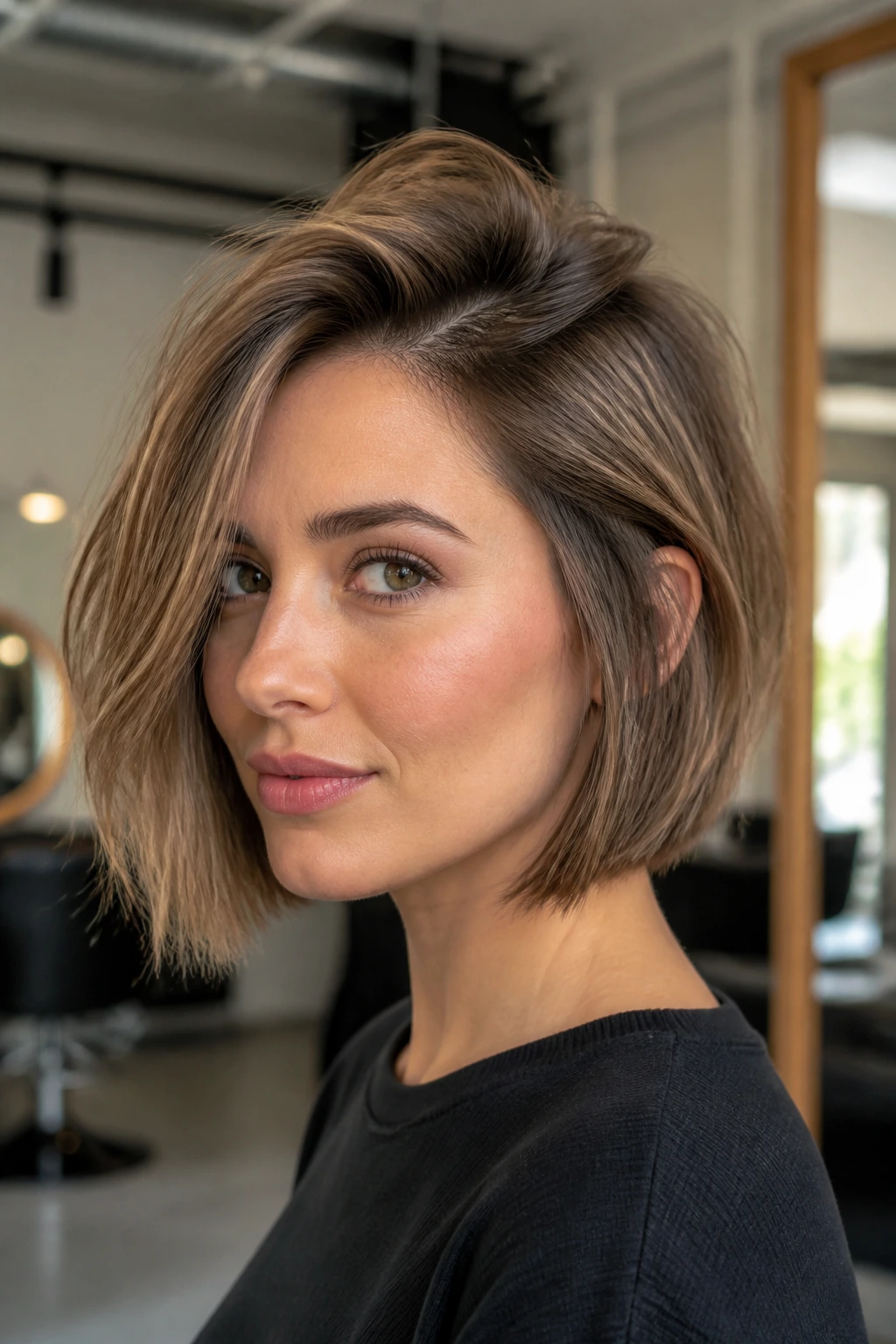
A side part gives fine hair something center parts often steal: height. Even a small shift of 1 to 2 inches can change how much lift you see at the root, especially if your crown tends to lie flat.
This version is underrated. People act like the cut has to do everything, but the part line changes the whole mood. A deep side part pushes more hair to one side, creates instant lift where the hair lifts off the scalp, and helps the bob feel less symmetrical and more airy.
Who It Suits Best
- Hair that flattens at the crown.
- Faces that look better with a little asymmetry.
- Anyone who wears glasses and wants the frame line to feel lighter.
- Fine straight hair that needs root height without teasing.
Use a root spray at the part, then blow-dry that side up and away from the scalp with a nozzle attachment. Small move. Big payoff.
7. French Bob With Baby Bangs

Baby bangs are not the same thing as regular bangs made shorter. They sit well above the brows, which means they expose more forehead and let the rest of the bob keep its density. That can be a smart trade on fine hair if you want a sharper look without stealing too much hair from the main body of the cut.
The thing to watch is balance. Too-thin baby bangs can look patchy fast, and too-short ones can feel harsh if the rest of the bob is soft. I like them best when they’re cut with enough fullness to read on purpose, not like a bang that got trimmed one inch too far.
Tell your stylist to keep the fringe dense and neat, then pair it with a chin-length outline. The contrast is the point. If the bob is too long, the bangs can look disconnected. If the bob is too short, the whole thing starts veering toward pixie territory.
8. Deep Off-Center Part French Bob
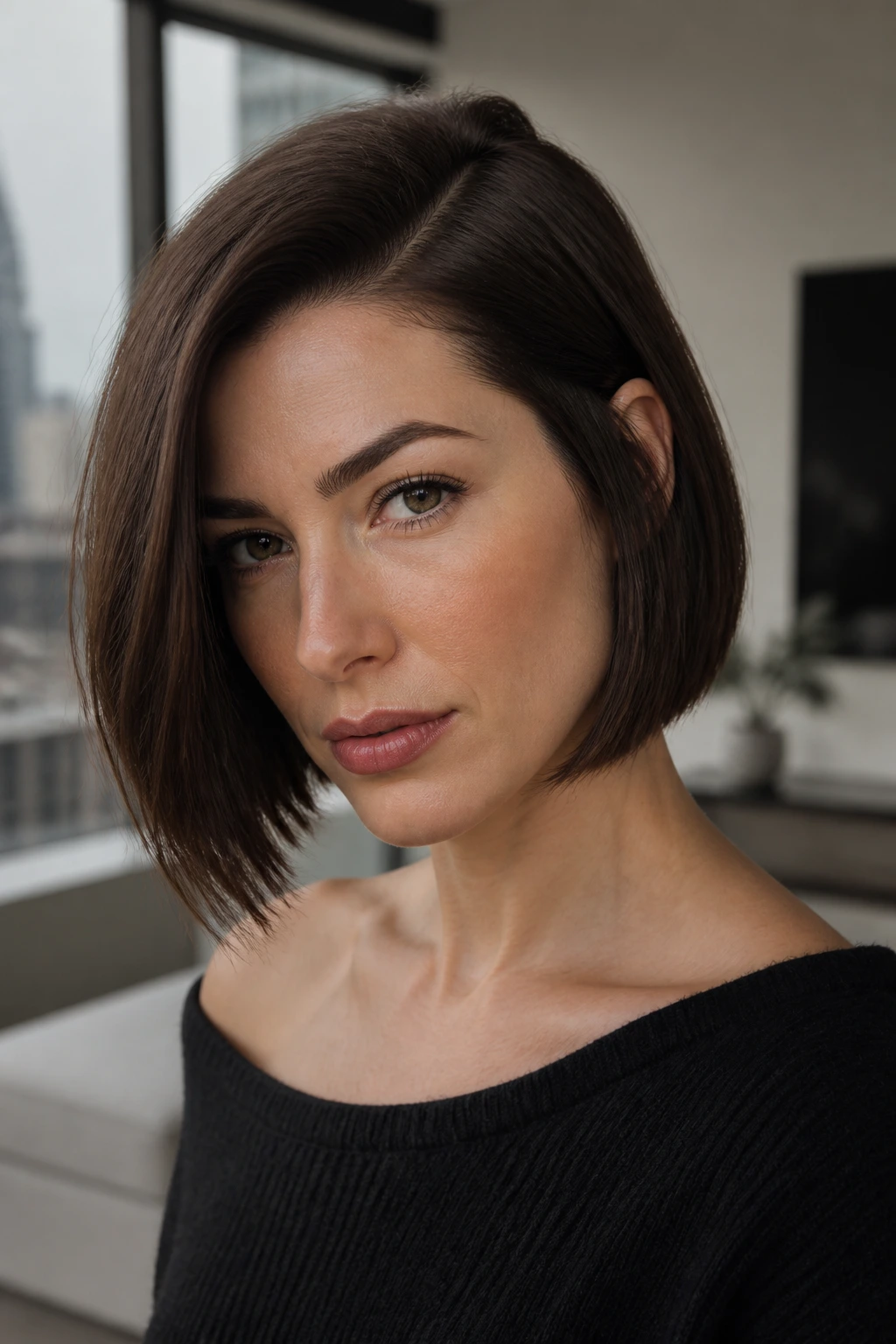
What if you hate center parts because they make your hair separate into two flat panels? Go deeper off-center. That small shift can save the whole haircut.
The French bob loves a little imbalance. A deep off-center part gives one side more lift and lets the other side skim the cheek, which creates movement without requiring heavy layers. On fine hair, that asymmetry can be the difference between “flat” and “interesting.”
How to Wear the Part
Start with damp hair and place the part before you dry it. That matters. Once the hair is fully dry, the root pattern gets stubborn.
A tiny root clip at the heavier side helps. So does drying the roots upward for the first minute, then smoothing the rest down. I’d keep the ends blunt and the fringe soft here. Too much texture on top makes the cut feel choppy instead of chic.
9. Collarbone French Bob Lob Hybrid

Sometimes the smartest French bob for fine hair is the one that cheats a little. A collarbone-length bob hybrid gives you the French shape and the swing of a longer cut, which can help if you’re nervous about losing too much length all at once.
This version works well when the hair is fine but not super sparse. The extra inch or two below the jaw gives the ends enough room to move, yet the length still stays short enough to avoid dragging the shape down. It’s a good middle road.
I usually recommend keeping the front slightly longer than the back, but not by much. Maybe an inch. Any more and the cut starts reading like a standard lob, which is fine, just not very French. The beauty here is the tension between softness and structure.
10. Piecey Face-Framing French Bob
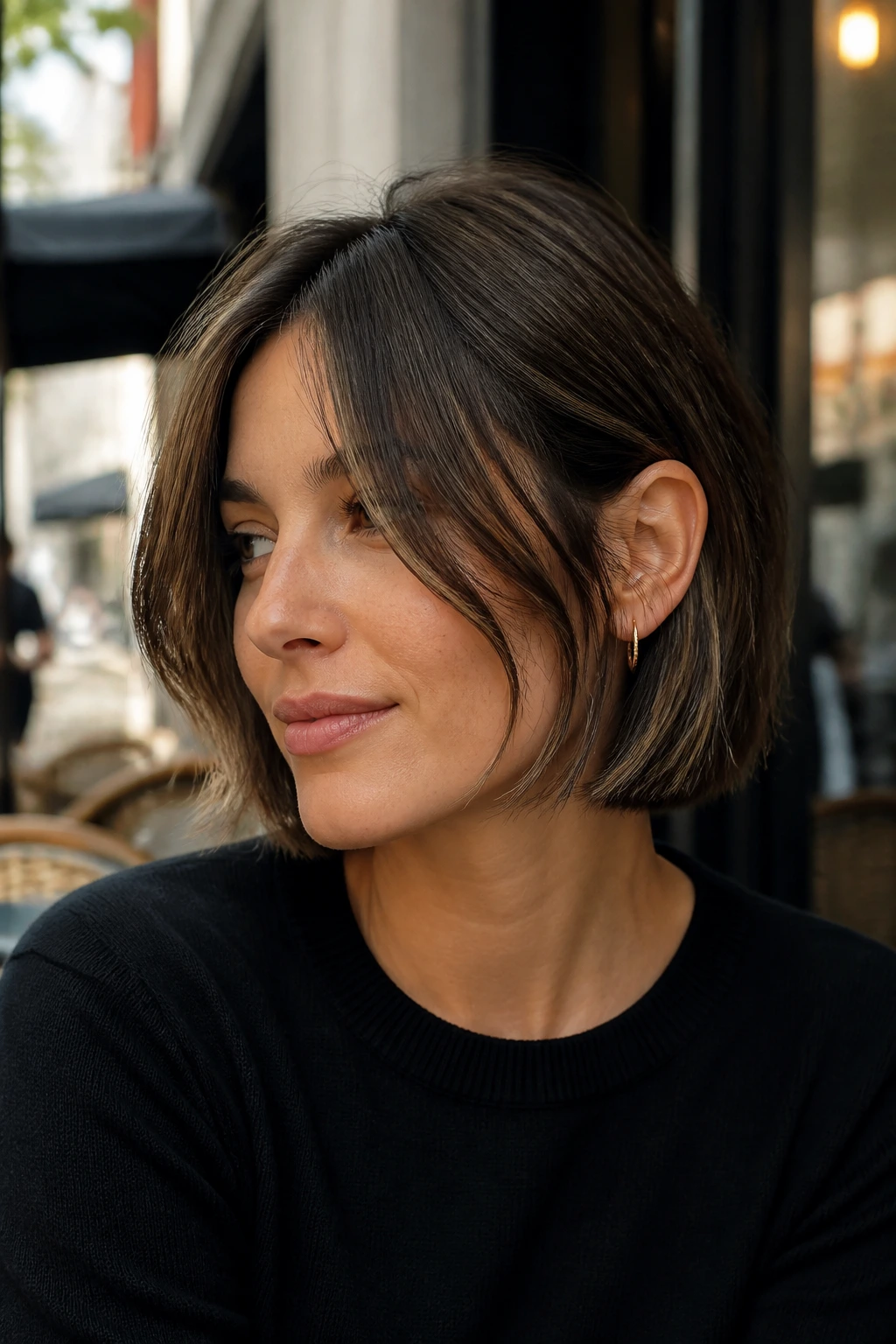
Piecey face-framing layers can be useful on fine hair when they’re handled with restraint. The mistake is letting every section get thinned out. The better approach is to carve just a few delicate pieces around the cheekbones and keep the rest of the bob solid.
That gives the face some movement without hollowing out the perimeter. I like this cut when the hair has a slight bend or the wearer likes to tuck one side behind the ear. The front pieces should fall in a way that looks deliberate even when the rest of the hair is imperfect.
A small round brush and a light bend away from the face are enough to shape it. Keep the back neat. If the back gets too airy, the whole haircut loses its backbone, and fine hair needs backbone more than it needs decoration.
11. Curly French Bob for Fine Waves
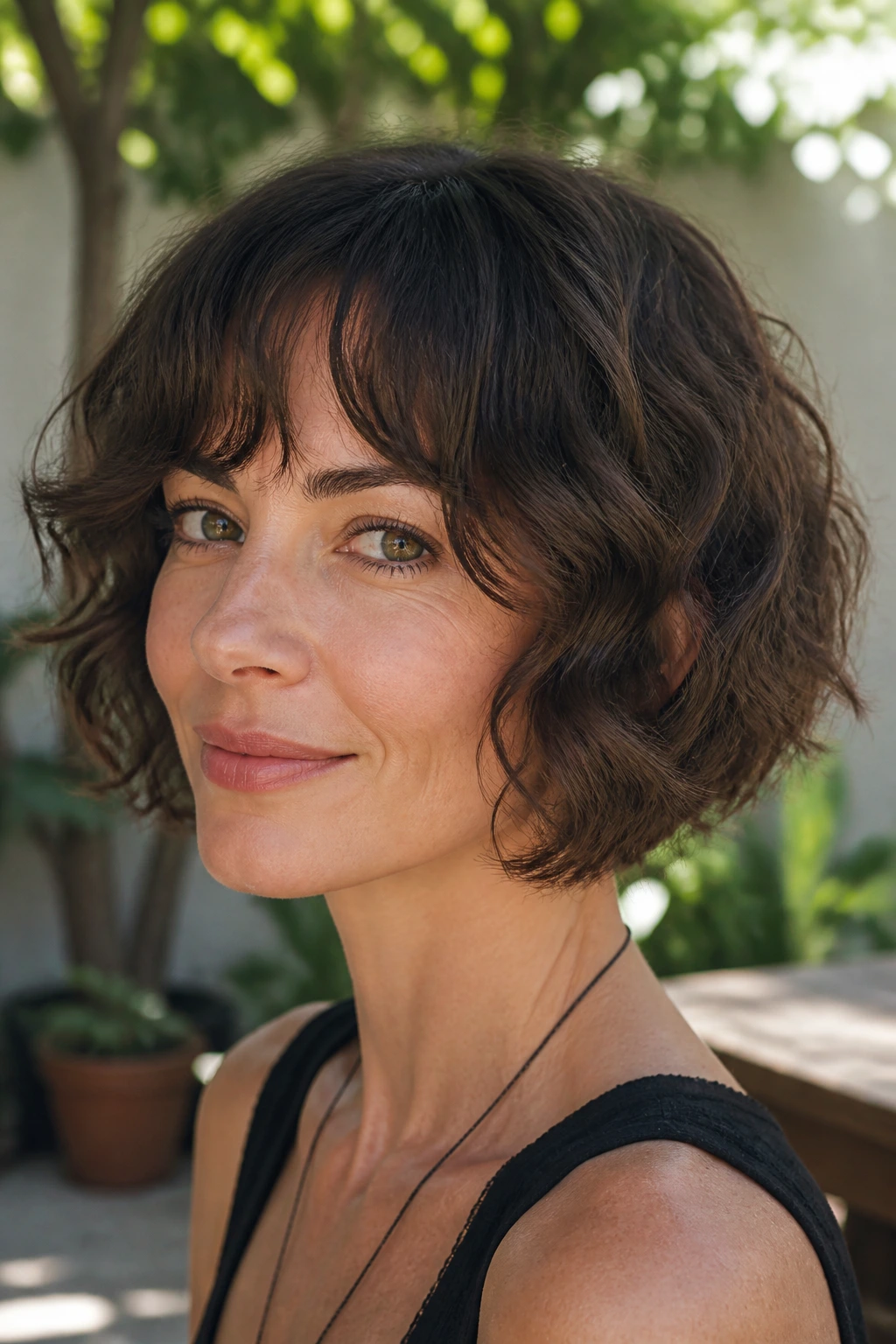
Fine hair with a wave pattern can wear a French bob beautifully, but only if the cut respects the wave instead of fighting it. Cut too blunt in the wrong place, and the wave kicks out unevenly. Cut too loose, and the shape falls apart.
Work With the Wave Pattern
Ask for the hair to be cut in a way that lets the wave sit naturally at chin or jaw length. A dry cut or a dry refinement pass can help, because wet fine waves often lie and then spring up in odd places later.
- Keep the top layers light, not chopped.
- Use a diffuser on low heat.
- Scrunch in a foam or curl cream with a soft hold.
- Stop touching it once it starts to dry.
The best fine-wave French bob has movement at the ends and control at the roots. That balance keeps it from turning into fluff. And yes, this cut can be gorgeous on slightly uneven wave patterns. It does not need to be uniform to work.
12. Sleek French Bob With Tucked Ends
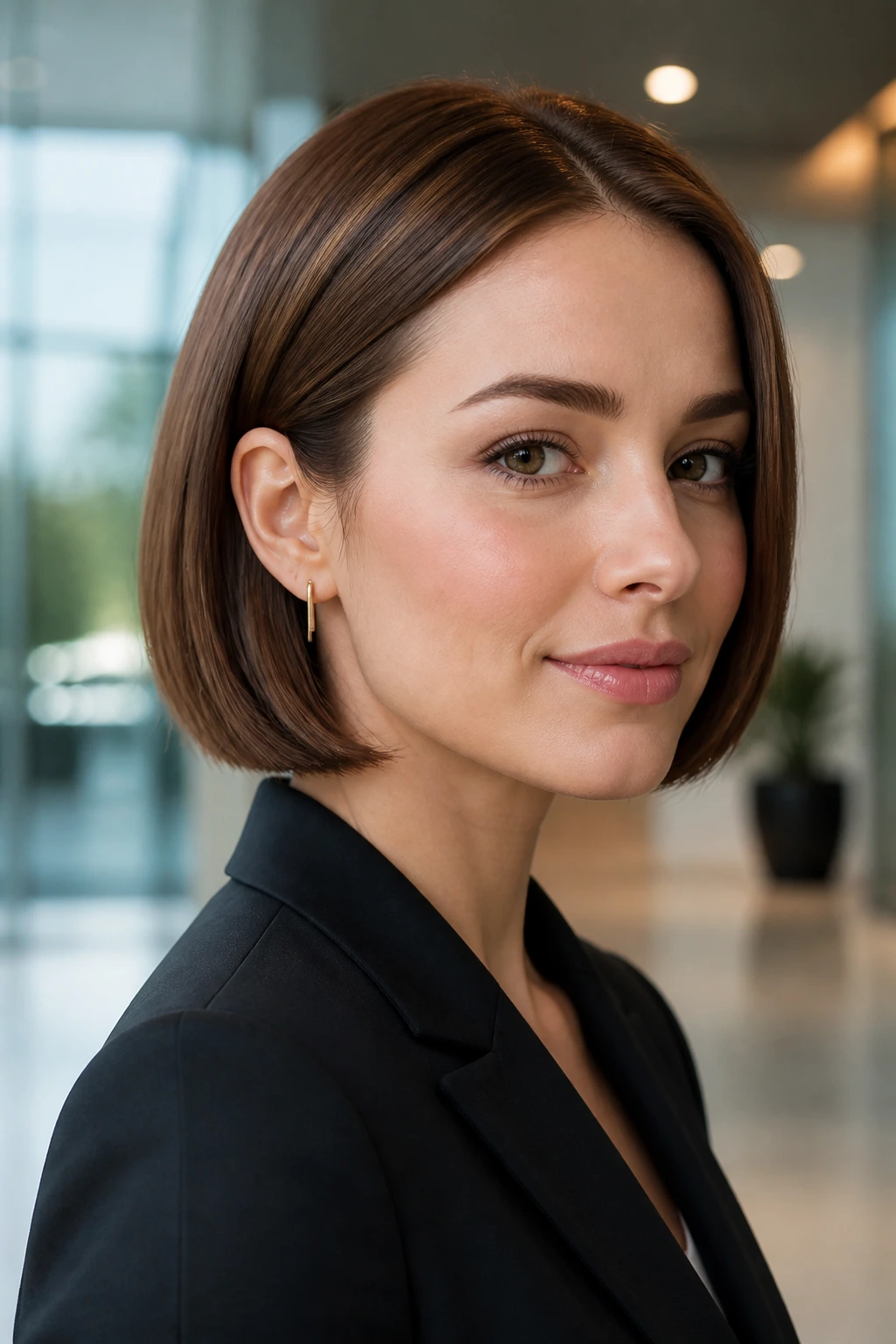
Sleek does not mean flat. A well-done sleek French bob can make fine hair look cleaner and denser than a teased-up, over-textured version that never quite settles.
The tucked-ends shape is part of the charm. The ends bend inward just enough to frame the jaw, and the smooth surface makes the hair look like it has a single strong outline. That reads as fuller because the eye isn’t getting distracted by frayed pieces everywhere.
I like this on people who wear sharp collars, simple earrings, or glasses. It looks tidy in a way that still feels French, not stiff. Use a smoothing cream sparingly, then blow-dry with tension from root to end. Once it’s dry, tuck one side behind the ear. Done.
13. French Bob With a Micro-Undercut
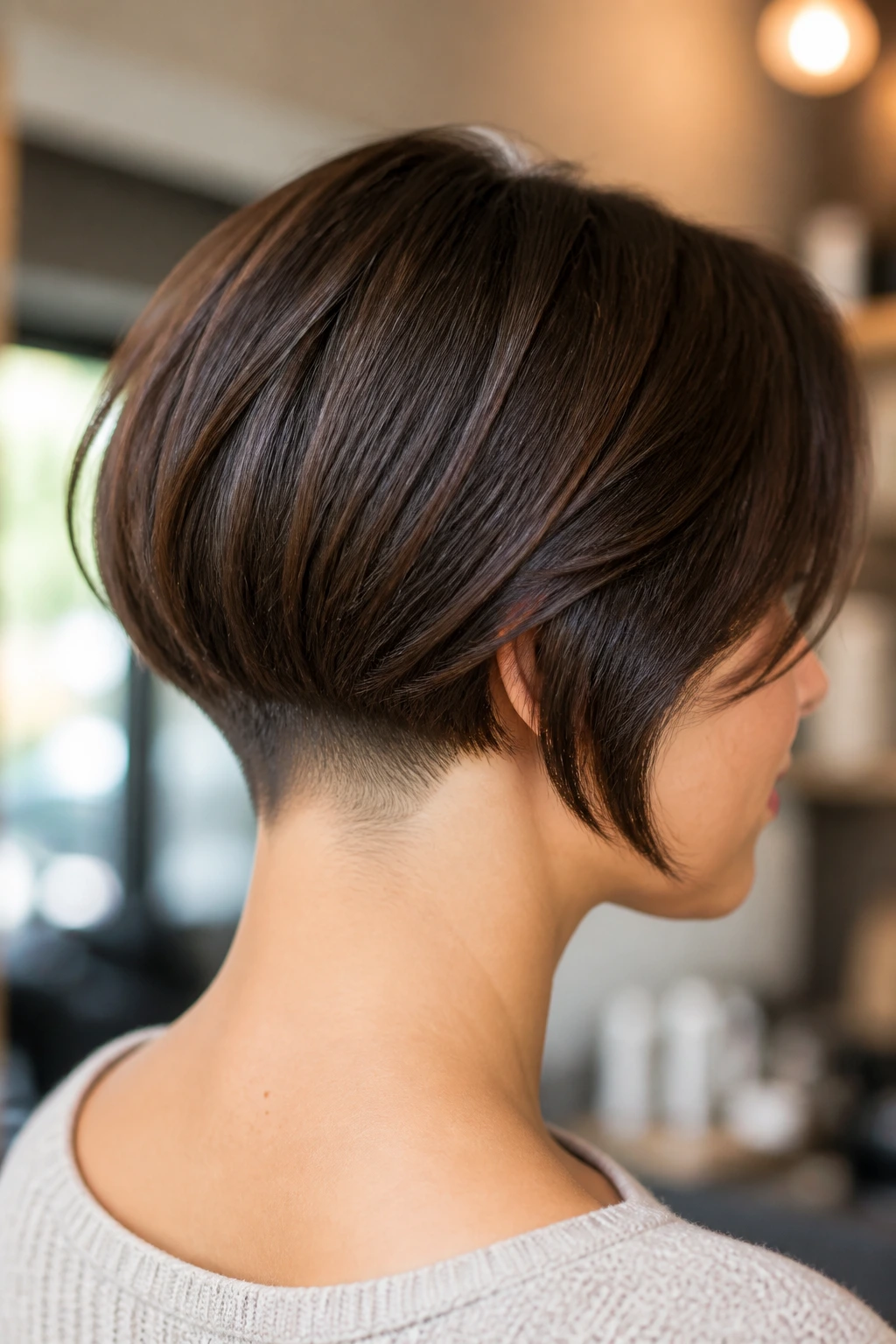
A micro-undercut sounds bold, but on fine hair it can be a sneaky fix for a problem that annoys a lot of people: bulky nape, puffy underlayers, and a bob that sticks out in the wrong place.
The undercut removes a tiny hidden section underneath, usually at the nape or just behind the ear, so the top layer can sit closer to the head. That can make the surface hair look smoother and the cut look sharper.
What to Tell Your Stylist
- Keep the undercut small and hidden.
- Don’t take too much from the lower section.
- Leave enough top length so the haircut still feels like a bob.
- Ask them to check how it falls when the hair moves, not just when it’s still.
This is not the version I’d choose for everyone. If your hair is already very sparse, an undercut can over-expose the scalp. But if the lower section is heavy and the top feels limp, it can work wonders.
14. Air-Dried French Bob With Natural Bend
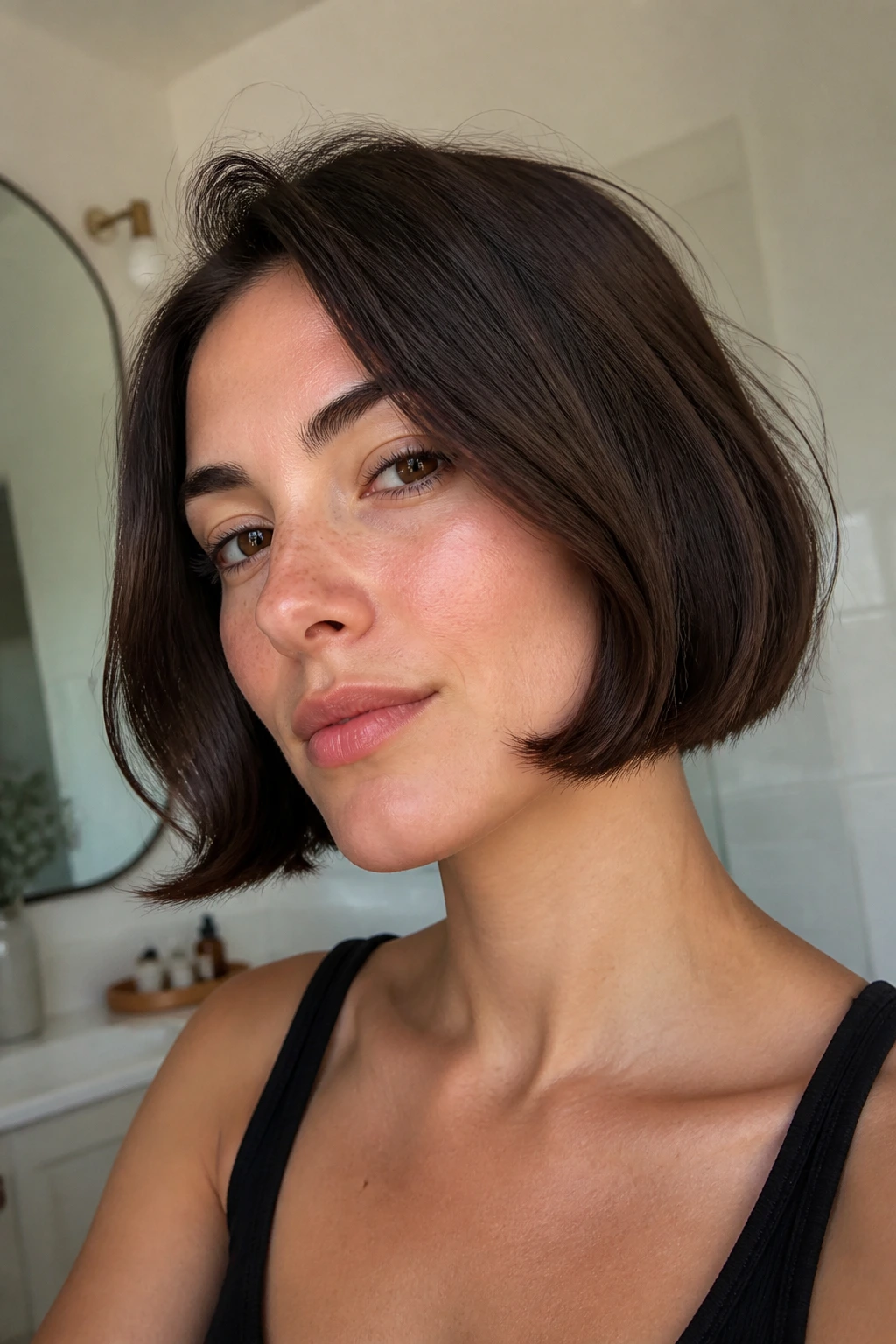
An air-dried French bob only works when the cut has been built for real life, not just for a salon blowout. Fine hair that air-dries well usually needs a clean line, a little internal support, and a length that doesn’t drag the wave pattern downward.
The best version keeps the bob somewhere around the jaw, with enough room for a natural bend to form at the ends. A leave-in spray and a small amount of mousse are usually enough. I’d avoid heavy oils here; they can make fine hair look wet in the wrong way and collapse the root faster than you expect.
Leave the hair alone while it dries. That’s the hard part. Touching it over and over breaks up the pattern and makes frizz out of whatever nice bend was trying to happen. Let it dry, then shake it loose with your fingers.
15. French Bob With Full Fringe and Soft Corners

A full fringe can be a smart move on fine hair if the fringe itself is dense enough to hold shape. The danger is a wispy bang that separates into three sad strands by lunchtime. Nobody wants that.
Soft corners keep the bob from feeling boxy. Instead of a hard square outline, the edges at the jaw are slightly rounded, which makes the style feel more wearable and less severe. That softness also keeps the fringe from looking like it belongs to a different haircut.
How to Keep the Fringe From Splitting
Dry the fringe first, side to side, with a small round brush or flat brush. Don’t let it air-dry and hope for the best.
A little dry shampoo at the roots helps if the hair gets oily fast. And if your bangs want to split in the middle, ask for a slightly longer center section so they can settle around the face instead of fighting it. That small adjustment changes everything.
16. Graduated French Bob That Stacks in Back
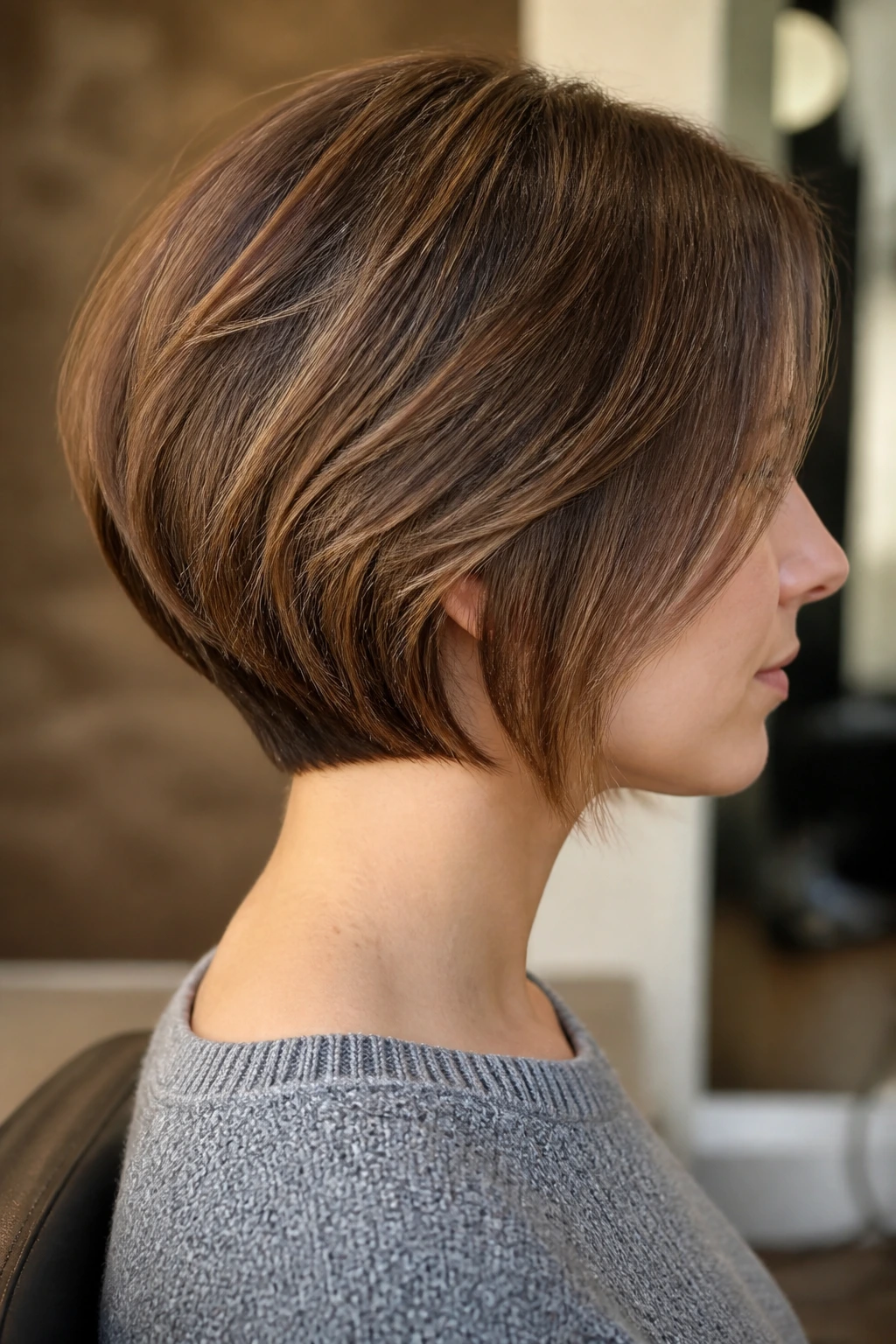
A little graduation in the back can make fine hair look stronger from the side, which is where most people notice flatness first. The stacked shape gives the nape some lift and lets the front stay a touch longer, so the bob has a proper profile.
I’m talking subtle graduation, not a dramatic wedge. Keep the stacked section soft enough that it supports the head shape without becoming dated or rigid. Fine hair usually needs the illusion of fullness more than a harsh architectural angle.
If your hair lies flat at the back of the head, this cut can feel like a quiet fix. It makes the nape sit closer to the neck and keeps the crown from looking like one long sheet. That’s useful, and not flashy at all. Which is probably why it works.
17. Messy French Bob With Choppy Ends
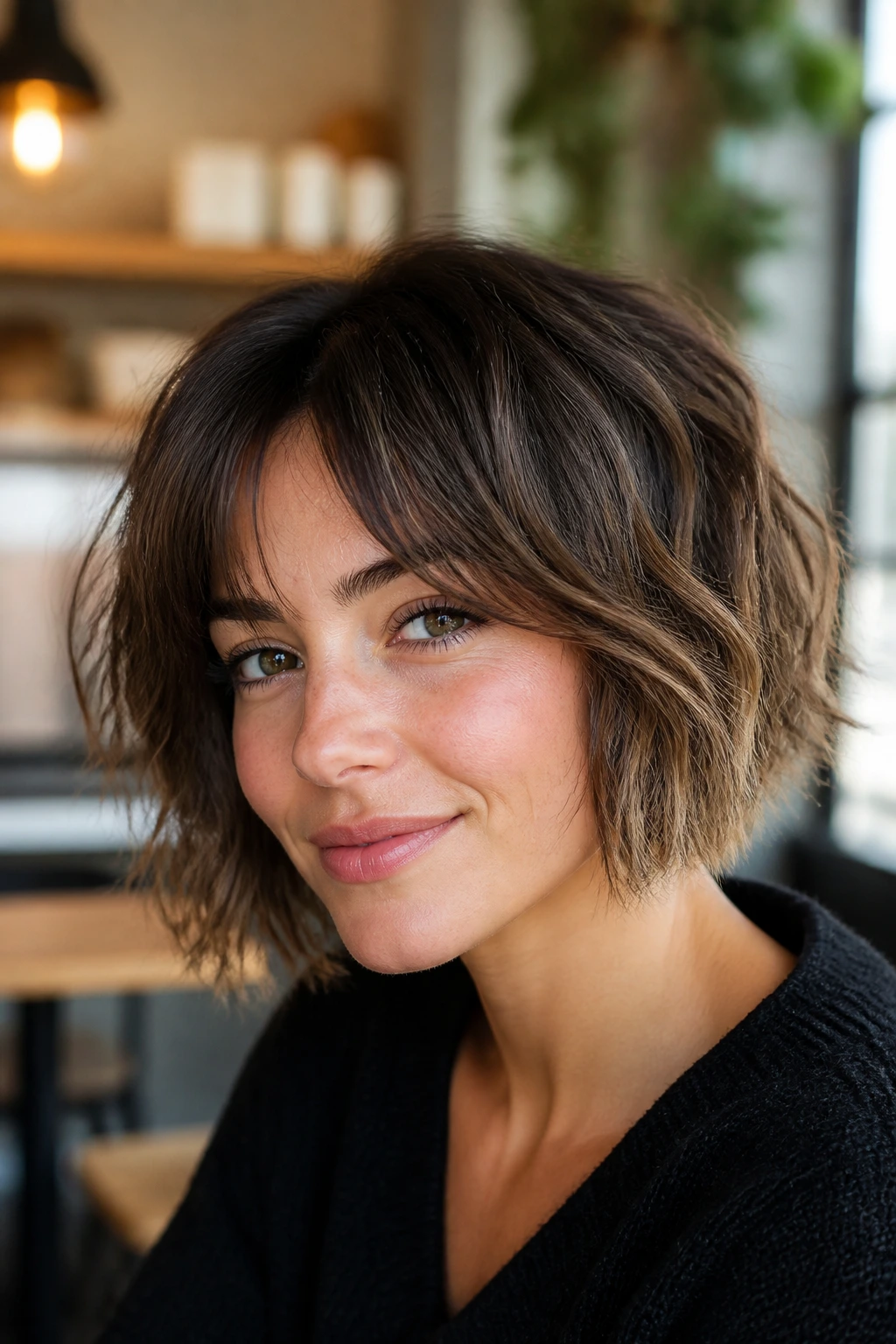
This is the cut people want when they say they like an undone look, but it needs a steady hand. Choppy ends on fine hair should look light, not shredded. There’s a difference, and it’s a big one.
The best messy French bob keeps the inside fairly clean and lets the surface pieces break up just a little. That gives the hair some swing without exposing every thin spot. I like this on second-day hair, or on people who can live with a little texture cream and a quick finger-style in the morning.
A few things matter here:
- Keep the length above or right at the jaw.
- Don’t overuse thinning shears.
- Add movement mostly around the front.
- Use a pea-sized amount of texture paste, not a fistful.
Messy works when the shape is still there underneath.
18. Razor-Finished French Bob
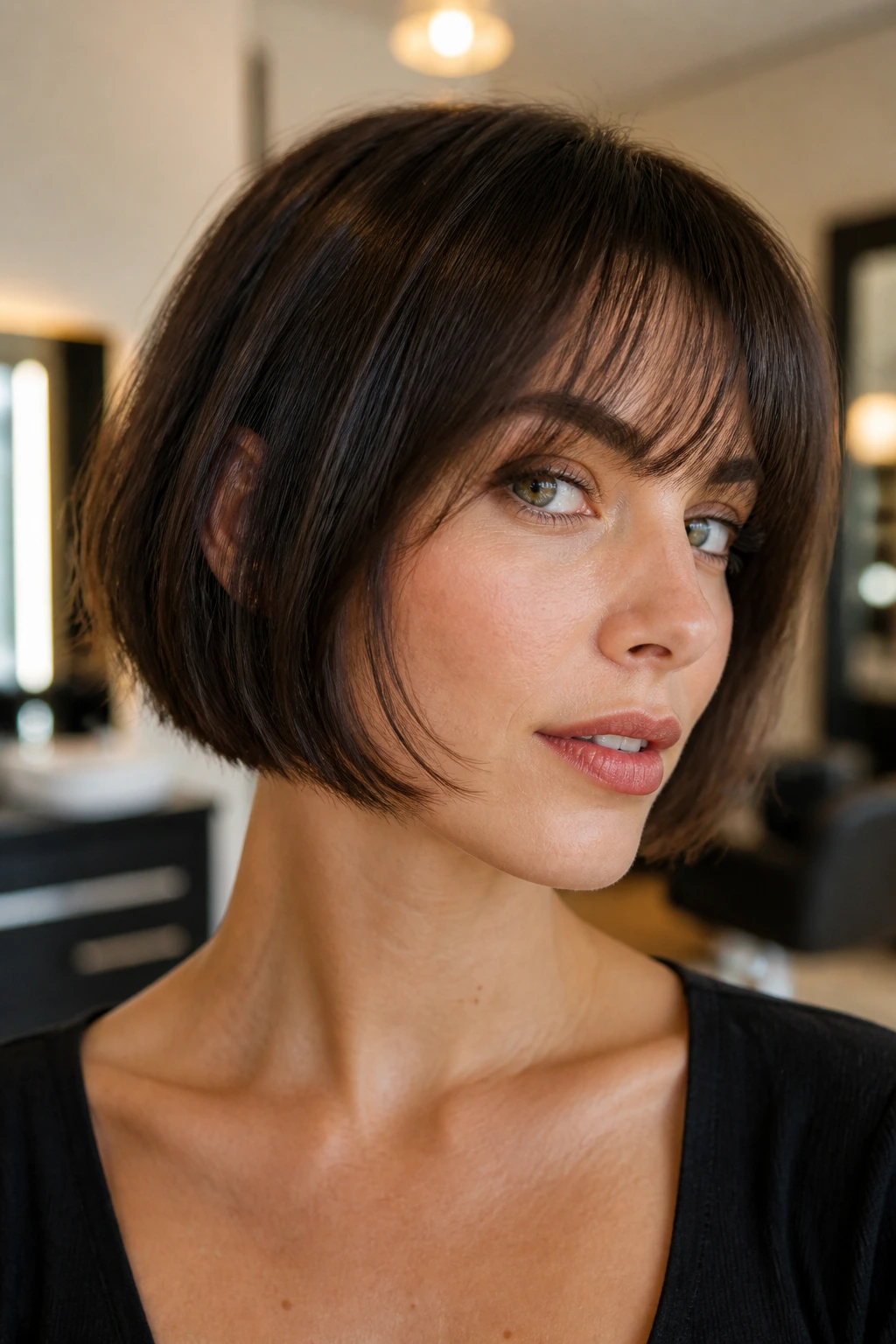
Unlike a blunt bob, a razor-finished French bob trades a little edge for softness. That can be lovely on some fine hair types, but I’m not handing out a blanket yes. Razor cutting is only helpful when the hair has enough density and health to handle it.
If the ends are already fragile, a razor can make them look feathered in a bad way. If the hair is fine but solid, though, a controlled razor finish can create a softer line that moves without sticking out. The key is restraint and skill. This is not the place for aggressive texturizing.
I’d ask for the razor to be used lightly through the very ends, not all through the head. And if you’ve had breakage or lots of color work, point cutting may be the safer choice. I know that sounds less exciting. It also tends to look better.
19. French Bob With Cheekbone Bangs

Cheekbone bangs are one of my favorite tricks for fine hair because they put the emphasis right where the French bob already wants to live: around the cheek and jaw. The fringe sweeps forward just enough to frame the face, then lands where the bone structure can carry it.
This version is especially good if you like glasses or want the haircut to feel a little more deliberate. The bangs need enough length to move, but not so much that they fall into the eyes all day. Aim for a soft arc that starts near the cheekbone and curves toward the brow.
A small round brush is enough to style them. Pull the fringe down, then away from the face, and let it cool in that shape for a few seconds. That little cooling pause keeps the bend from disappearing the minute you leave the bathroom.
20. Inverted French Bob With a Longer Front
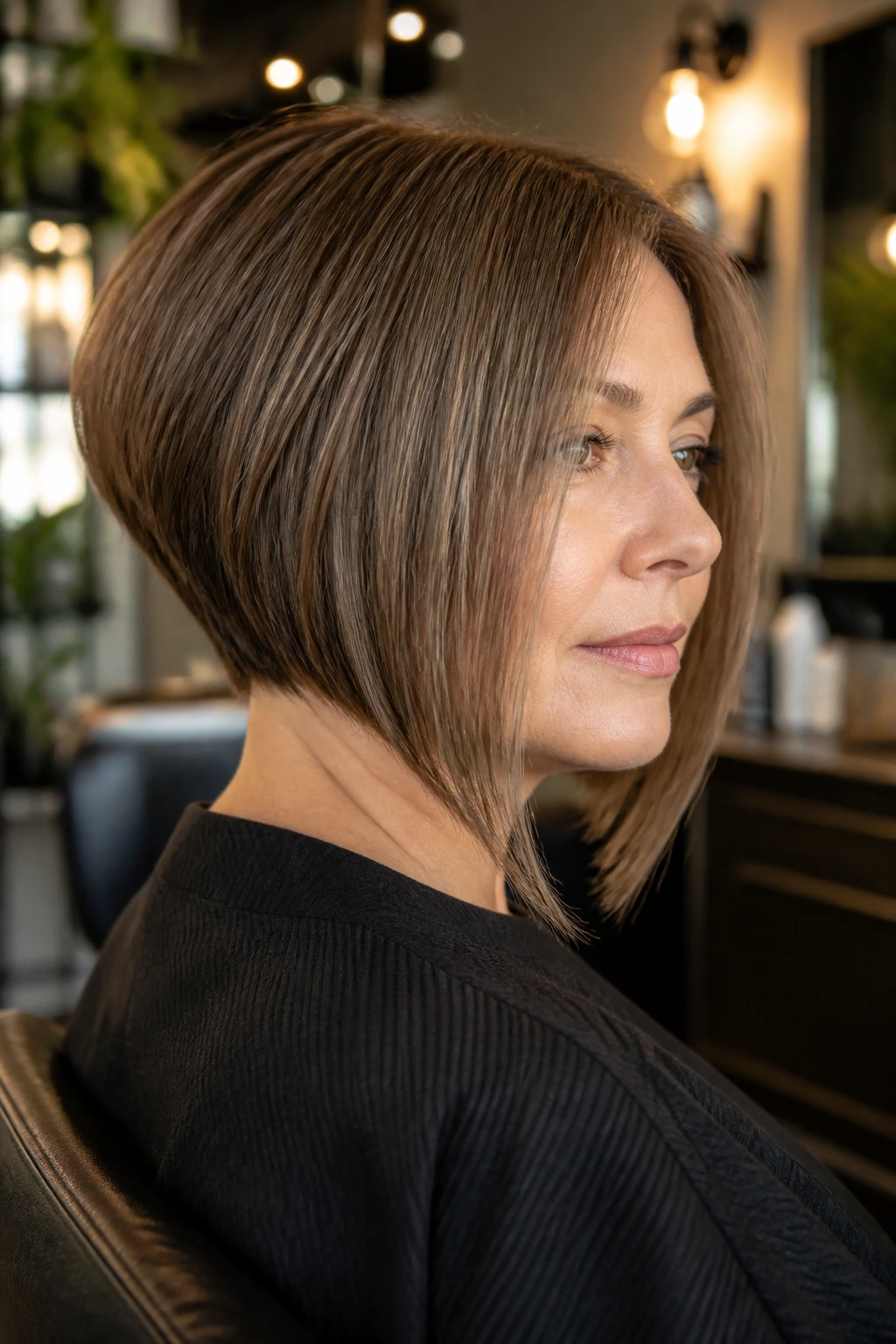
Why does an inverted shape help fine hair? Because the shorter back creates support, and the longer front gives the eye something sleek to follow.
That balance can make the haircut look more structured without adding weight where you don’t want it. I like this when the nape is flat and the jawline can handle a little length in front. The contrast should be subtle. If the front is much longer than the back, the cut starts drifting away from French bob territory and into something more angular.
Best Way to Ask for It
Tell your stylist you want the back short enough to lift, but the front only slightly longer — maybe an inch to an inch and a half of difference. That’s usually enough. Anything more can look severe unless the hair is very thick.
This cut thrives when the sides are smooth and the ends tuck in softly. No need to overstyle it.
21. Soft Mushroom French Bob
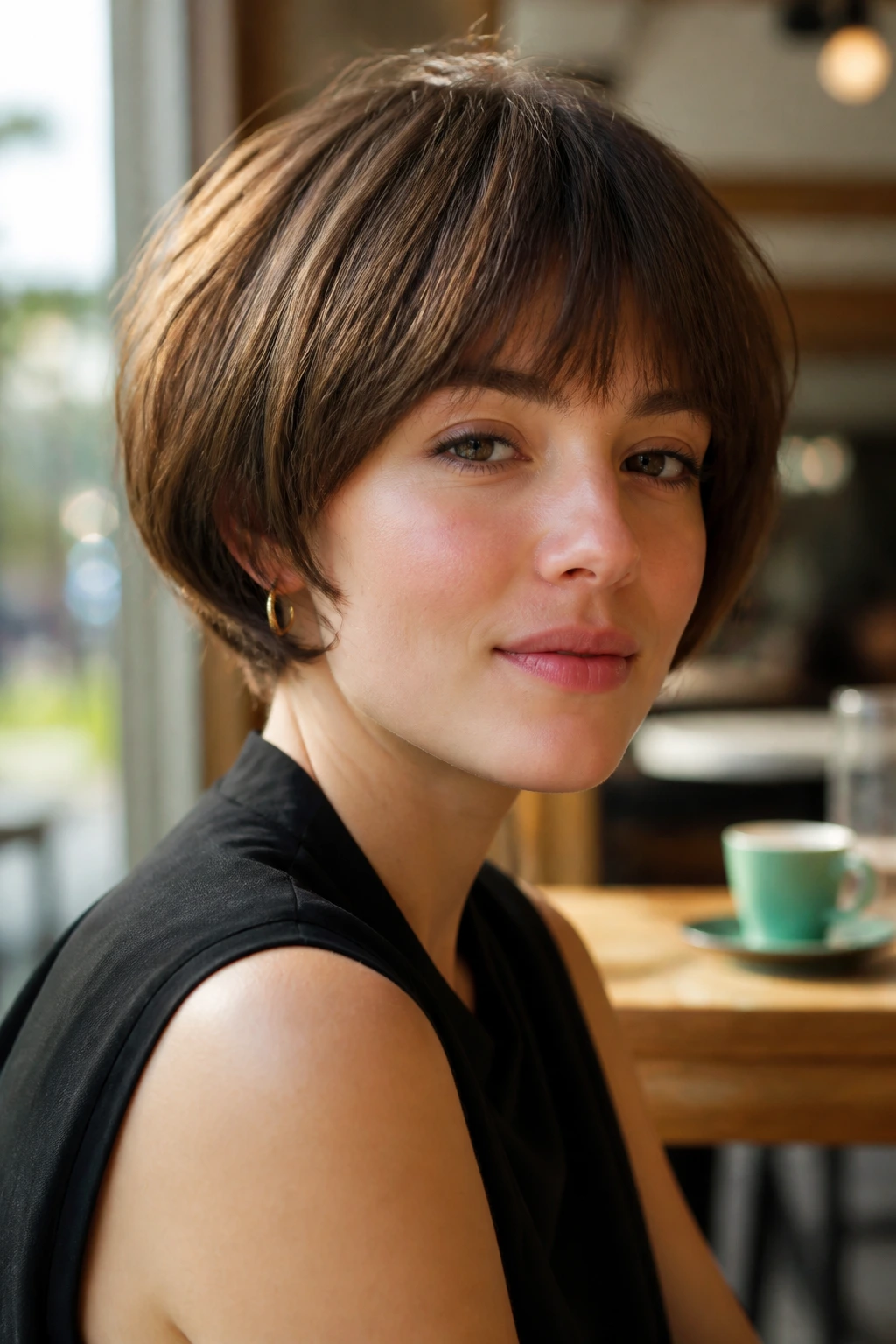
The mushroom shape gets a bad rap because people picture something too round or too helmet-like. The soft version is much better, especially for fine hair that needs a bit of width through the sides and crown.
This bob sits with a gentle dome shape, which can make the hair appear fuller from every angle. The corners around the ears and jaw should stay soft so the silhouette doesn’t turn stiff. If the haircut is too even, it starts looking costume-y. A little asymmetry saves it.
I like this cut on people who want their hair to look fuller without teasing or heavy products. It has a strong outline, which is what fine hair often needs most. Just don’t overdo the roundness. The moment it stops moving, it loses its charm.
22. French Bob With Subtle Face-Framing Layers
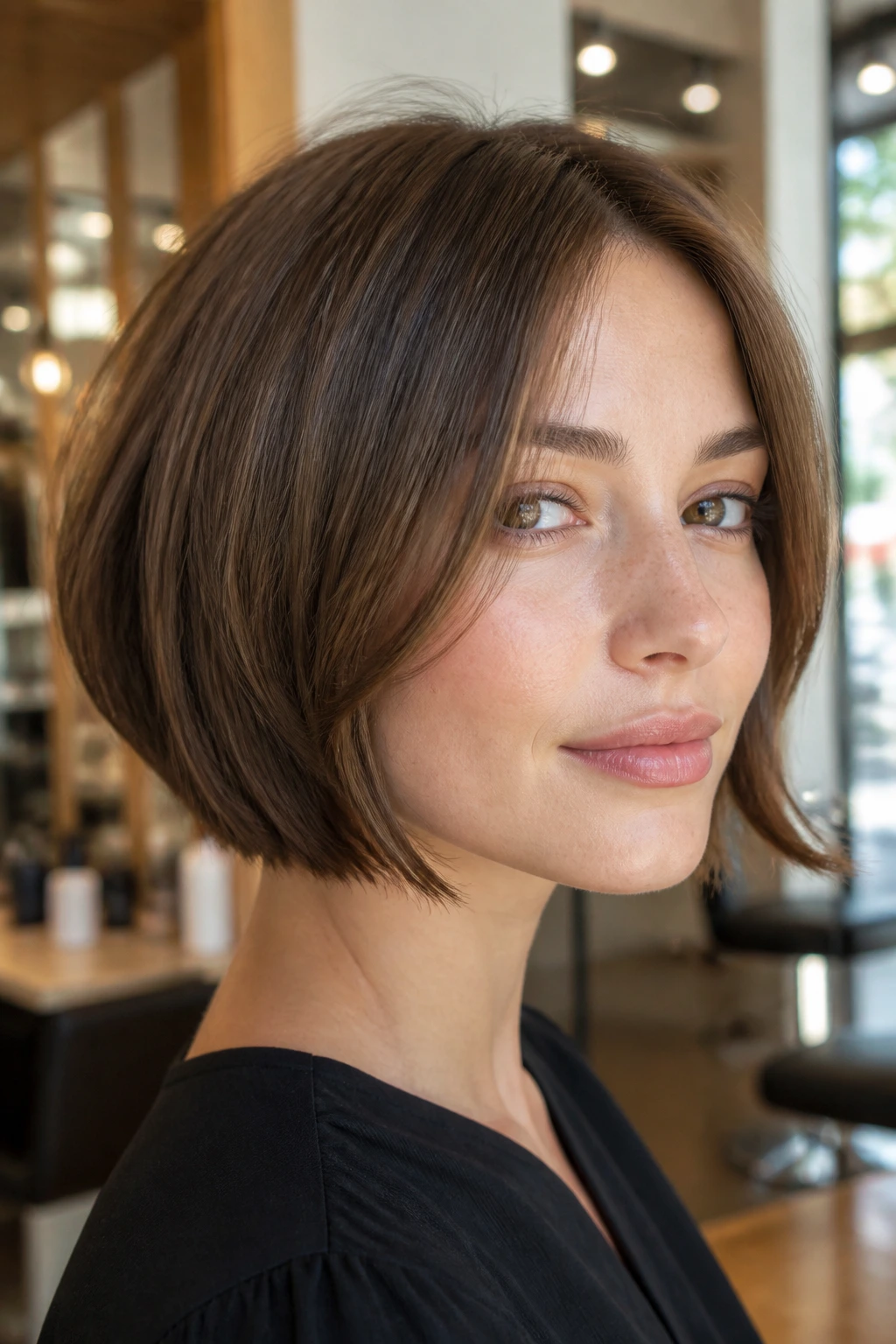
Less layering can look richer on fine hair, and this cut proves it. Instead of slicing the whole head into pieces, keep the bob mostly one length and add only a few narrow face-framing layers where they can do some good.
That means the front moves a bit around the cheek and jaw, while the back keeps its density. It’s a much safer choice than heavy layering, which can make the hair look scattered and thin. You want shape, not holes.
This version is especially handy if your hair is straight and low-density. The face-framing pieces create motion without exposing the scalp or making the outline ragged. If you’ve ever left a salon with “movement” and then spent three weeks wishing you had more hair, this is the smarter request.
23. French Bob With Side-Swept Bangs
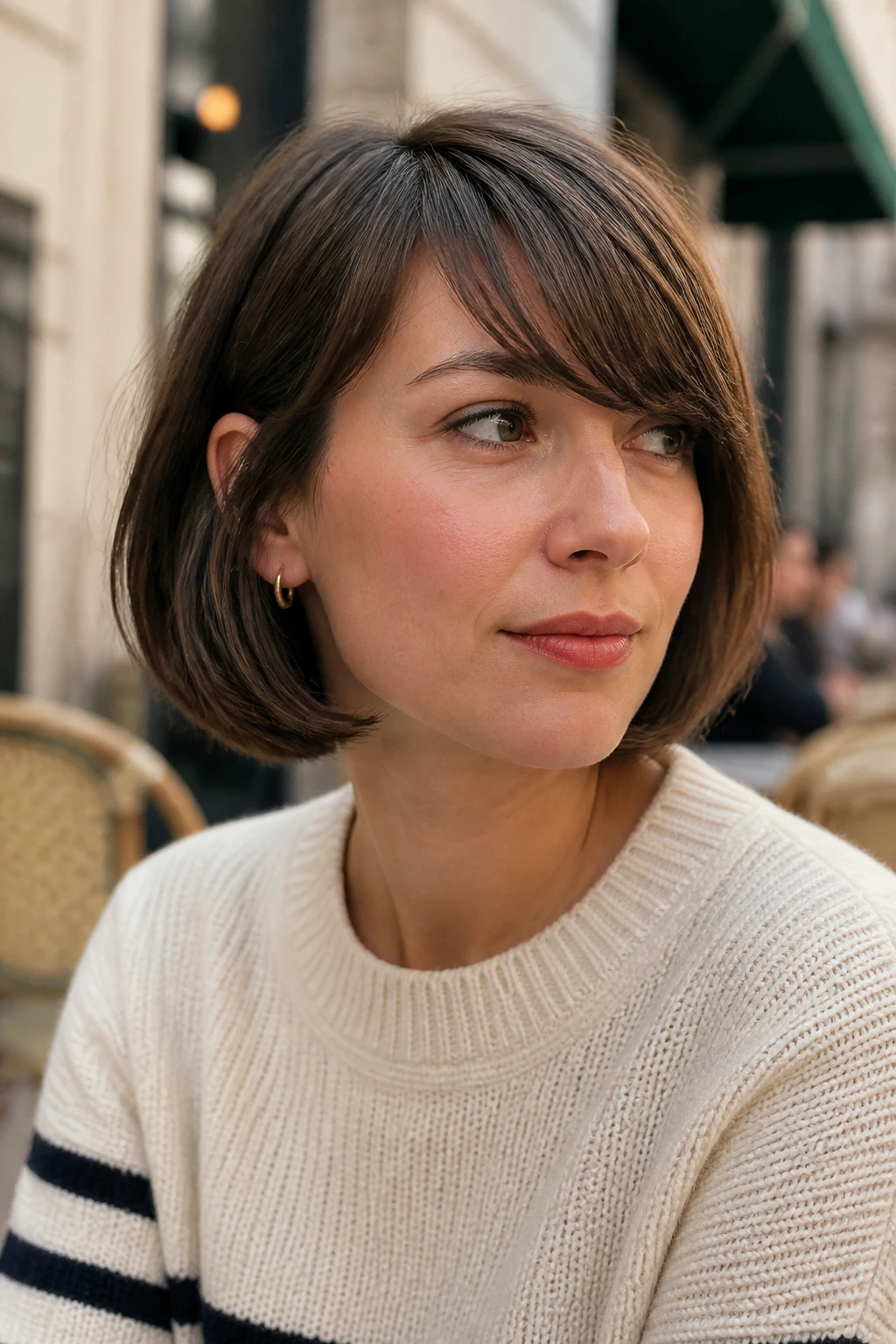
If center parts make your hair split into two flat halves, side-swept bangs are the cleaner answer. They push the eye diagonally across the face, which gives the illusion of lift and keeps the bob from feeling too symmetrical.
Side-swept bangs also play nicely with fine hair because they don’t demand a huge amount of fringe density. You can keep the bang section a bit lighter, brush it over once, and let it fall into place with a soft curve. That makes the front look intentional without requiring a lot of product.
I’d keep the rest of the bob fairly blunt here. The bangs already bring enough movement. If both the fringe and the perimeter are heavily layered, the haircut starts to lose its shape. One feature should lead. Not three.
24. Flipped-Out French Bob With Swingy Ends

A tiny outward flip at the ends can make a bob look fuller than you expect. That little kick changes the silhouette, especially on fine hair that tends to hang straight and limp.
The flip works best when it’s subtle. You’re not trying to recreate a big retro blowout. You’re just turning the last inch of hair outward so the ends catch a bit more visual space. That makes the haircut feel lively and keeps the jawline from looking too narrow.
Use a 1-inch iron or a round brush, then bend only the last section of hair away from the face. Leave the top smooth. If you flip every layer, the cut gets busy fast. If you only give the bottom edge a slight turn, it looks deliberate and easy.
25. Micro French Bob for Ultra-Fine Hair
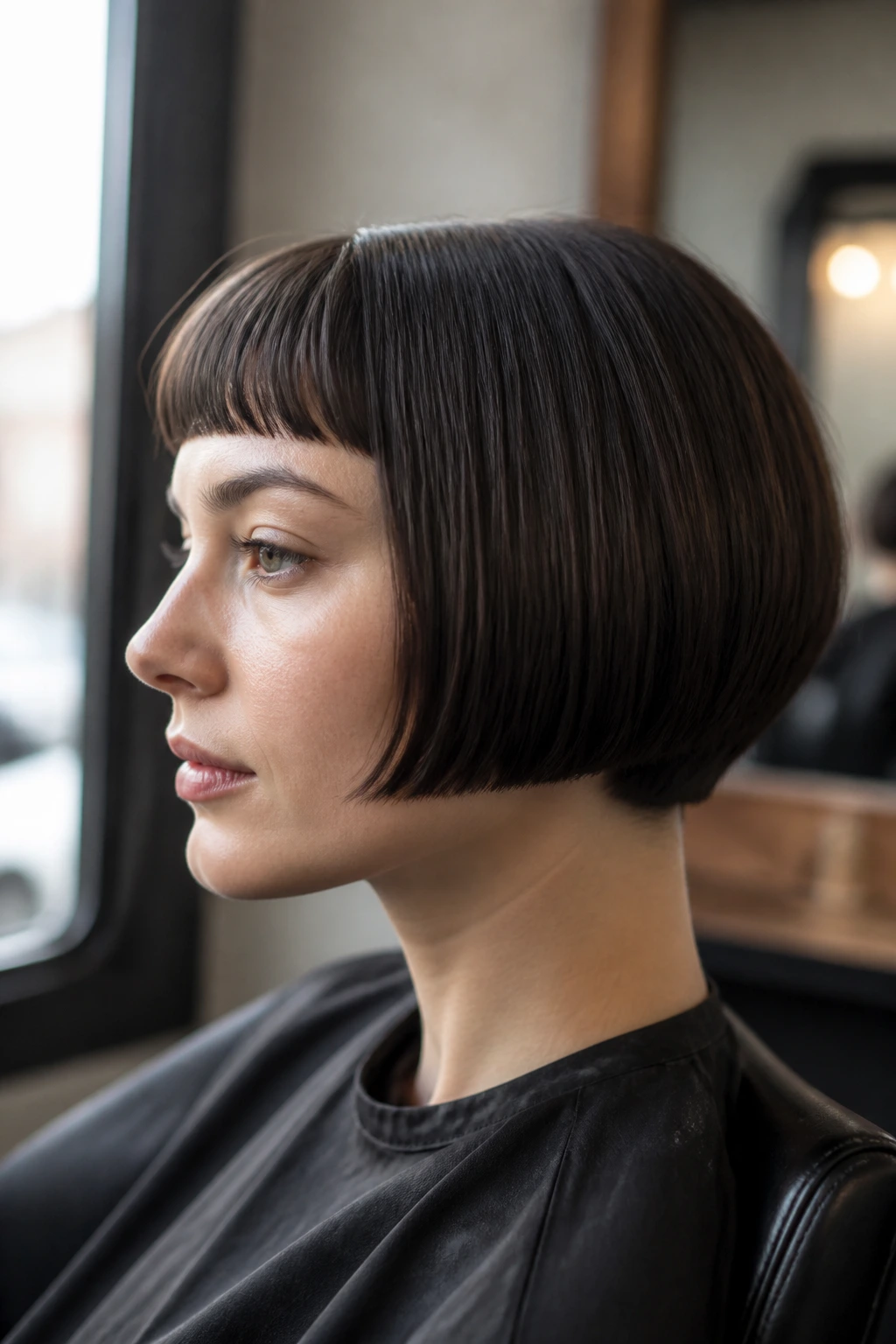
A micro French bob can be a gift for ultra-fine hair because shorter hair often looks denser. Once the length drops above the jaw or right at the jaw, the ends stop fighting gravity so hard, and the shape can hold on its own.
This is the cut for someone who wants less fuss and more line. It’s sharp, a little bold, and far easier to keep neat than a longer bob that keeps slipping flat. The neckline should stay clean, the outline should stay crisp, and the top should not be over-layered. That’s the whole recipe.
I’d choose this for hair that gets stringy the second it grows past the chin. I’d skip it if you like a lot of swing or if your hair needs extra length to feel balanced. Short does not mean less feminine here. It means the cut has to earn its shape, and honestly, that’s part of the appeal.
The Bottom Line
The best French bob for fine hair is the one that keeps its outline. That sounds simple, but it rules out a lot of bad haircut ideas right away. If the perimeter is weak, the whole style gets flimsy.
For most fine textures, the smartest choices are the ones that protect density at the bottom while adding lift in one or two places only. A blunt edge, a thoughtful part, or a soft fringe can do more than a pile of layers ever will. I’d choose structure first, movement second.
If you’re bringing photos to a stylist, bring two: one for the length and one for the fringe. That makes the conversation much cleaner. And if you remember only one thing, make it this — fine hair looks fuller when the cut has a clear line to stand on.
