



A short wavy bob can be the smartest haircut in the room for a round face, if the shape is cut with a little intent. The best versions do one simple thing: they pull the eye downward or diagonally instead of letting the hair bloom out at the cheeks.
That matters because round faces already have softness through the cheeks and jaw. A bob that ends exactly where the face is widest can make everything look broader, especially if the waves are fluffy or the part sits dead center with no lift at the crown.
The wave pattern matters as much as the length. Loose bends, soft S-waves, and piecey ends can slim the face in a way stiff curls or a hard blunt edge usually do not. A little asymmetry helps too. So does a side part that breaks up the circle without trying too hard.
The 18 looks below all work with that idea in different ways—some through angles, some through layers, some through bangs that cross the forehead and change the shape of the whole cut. The trick is choosing the one that suits your hair texture, your styling patience, and how much neck you actually want to show.
1. Chin-Skimming Wavy Bob With a Deep Side Part
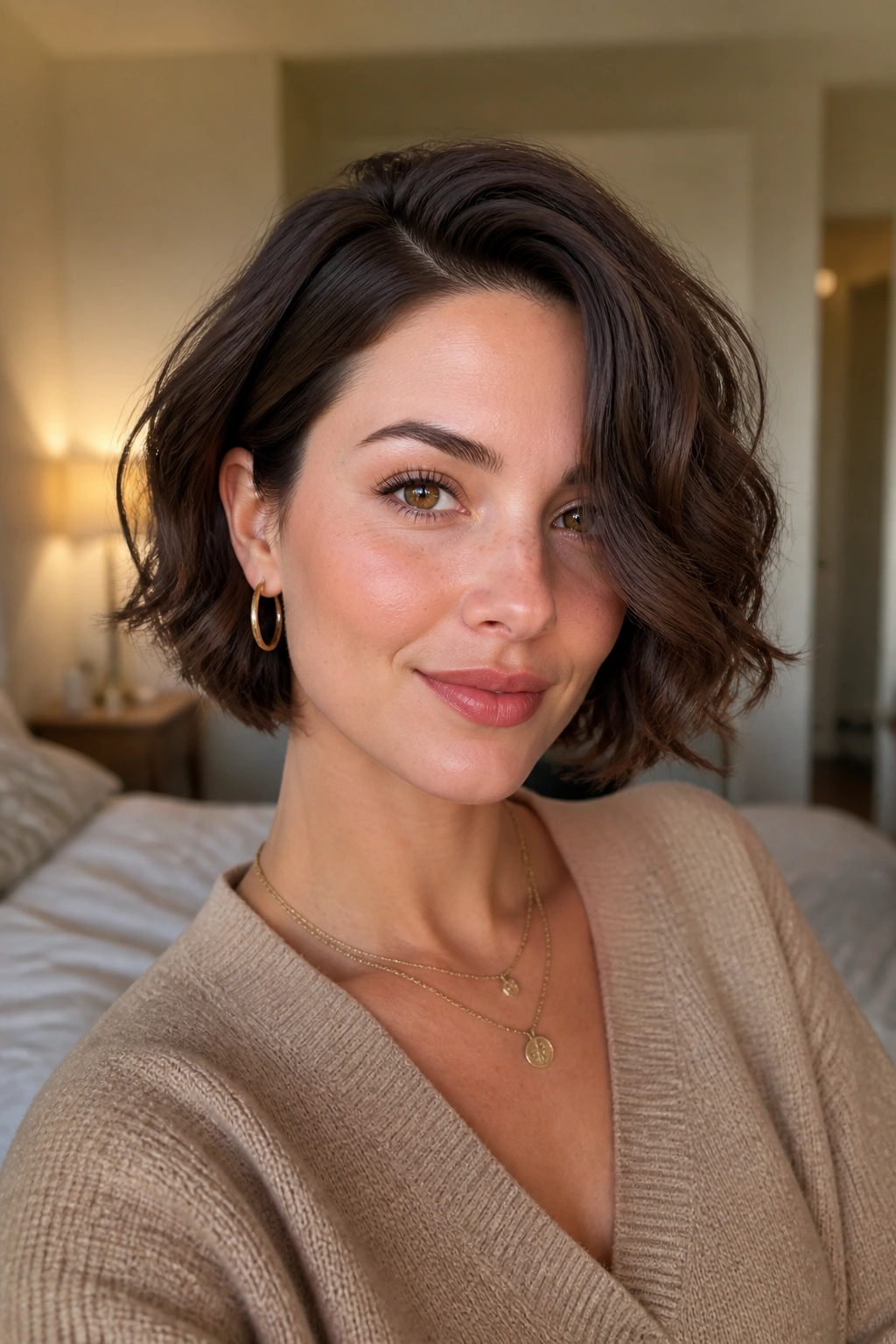
This is the easiest short wavy bob to make a round face look longer. A chin-skimming length keeps the line close to the jaw without sitting right on the widest part of the cheeks, and a deep side part pulls the eye diagonally instead of straight across.
That diagonal is doing a lot of work. It breaks up the symmetry that can make a round face feel even rounder, and it gives the waves a more slanted, flattering fall. I like this cut most on hair that has a little natural bend already, because the shape looks soft rather than stiff.
Why It Works
- The length lands near the chin, so the eye travels past the cheeks.
- A deep side part adds height on one side and makes the face feel slightly longer.
- Loose waves keep the finish light instead of boxy.
- The cut still feels short, which is nice if you do not want a lot of hair on your neck.
Ask for the front pieces to stay a touch longer than the back. That tiny difference keeps the bob from puffing outward at the cheek line.
2. Angled Wavy Bob With Longer Front Pieces
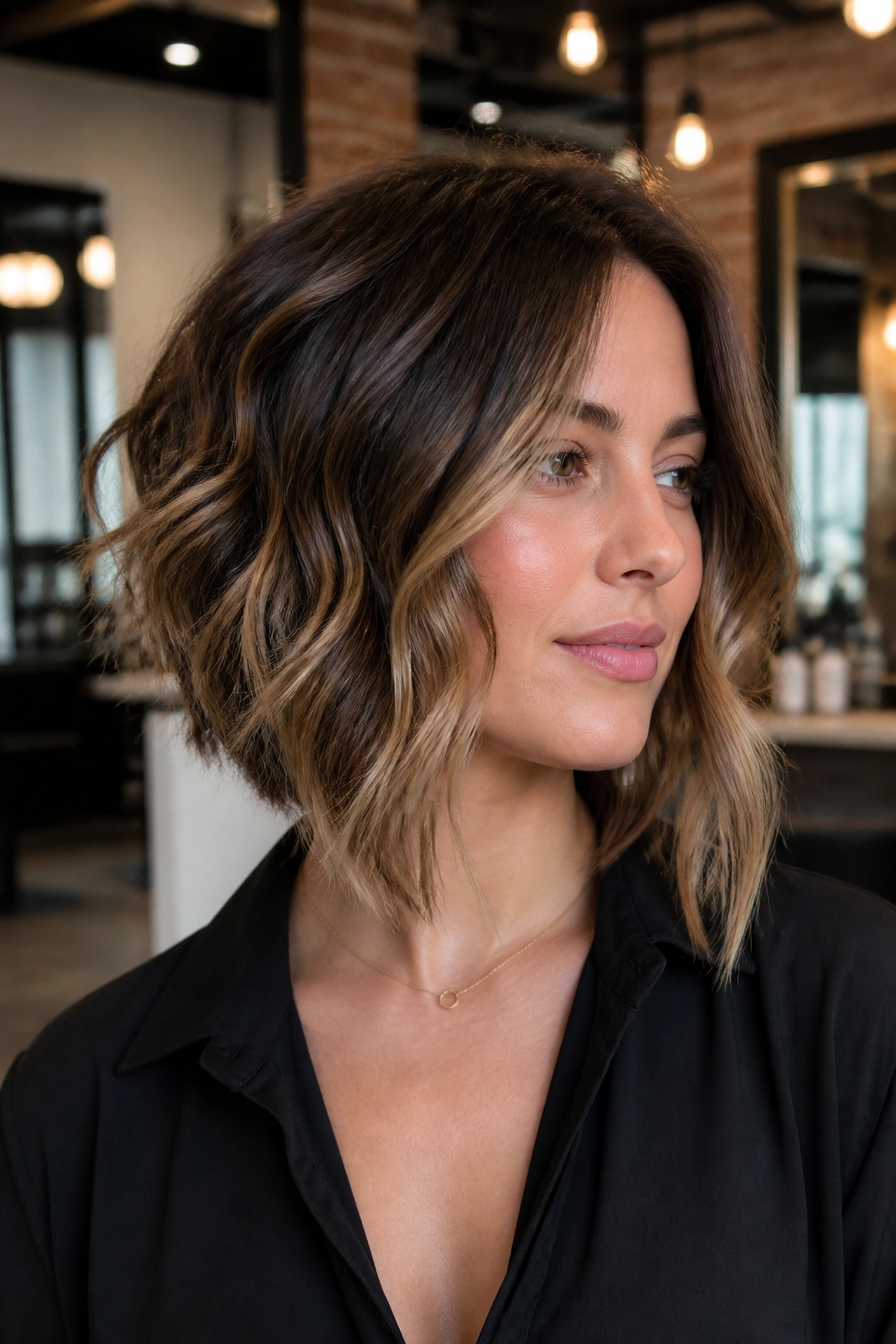
Why does an angled bob work so well on a round face? Because the front pieces do the visual stretching for you. When the hair is shorter at the back and gradually longer toward the front, the eye follows that line downward, and the face looks less wide.
This version has a little more shape than the chin-skimming cut, and that’s the point. It gives you structure without making the haircut feel sharp or severe. The waves soften the angle, so you get movement in the front instead of a harsh edge.
How to Style It
Keep the back compact
Dry the back first with a round brush or diffuser so it stays close to the head. Too much volume in the back can make the angle disappear.
Bend the front away from the face
Wrap the front sections loosely around a 1-inch iron, leaving the last inch out. That keeps the ends piecey and stops the front from turning into a perfect curl.
Finish with light separation
A dab of styling cream on the ends is enough. Heavy product makes the longer front pieces stick together, and that kills the clean line.
This is a strong pick if you like a bob that looks a little tailored without looking polished to death.
3. French Bob With Soft, Uneven Waves

A French bob can work on a round face, but only if it stays soft. The version that lands somewhere between cheekbone and jaw and has uneven, loose waves feels chic. The version with a blunt bottom edge and too much width at the sides? Not nearly as kind.
The charm here is in the looseness. A little irregularity at the ends keeps the haircut from drawing a perfect circle around the face, which is exactly what you do not want. I also like this cut with a slightly off-center part, because it gives the fringe area a more casual fall.
The shortest French bobs suit hair that bends easily and dries with some shape on its own. If your hair is very fluffy or very dense, ask for softer internal texture so the sides do not mushroom out.
A small warning. This cut looks effortless, but it is not the best choice if you want to throw your hair in a ponytail every day. It’s a little more of a statement, and that’s part of the appeal.
4. Layered Bob With Crown Lift
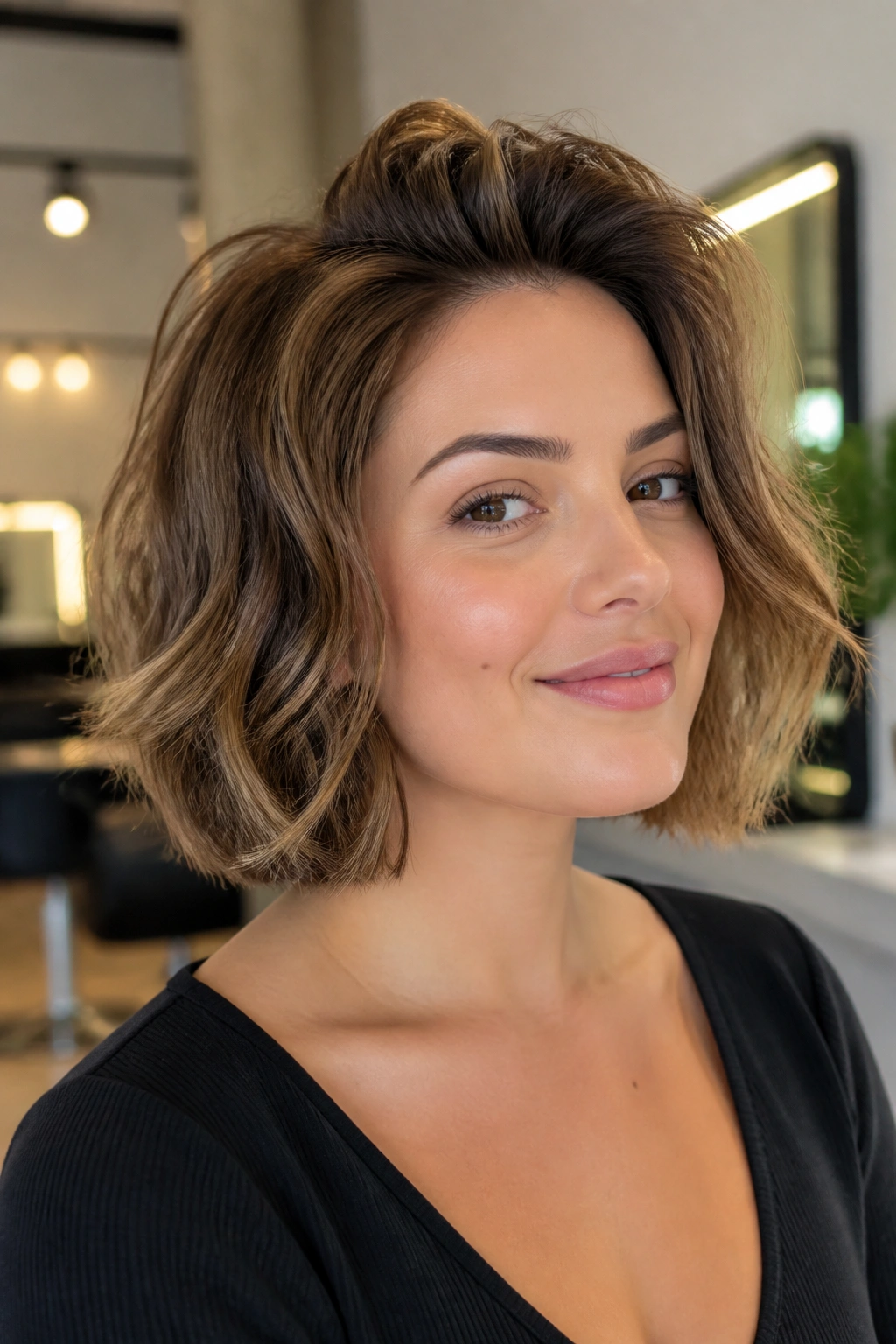
Crown lift is the quiet hero here. A layered bob that keeps fullness near the top of the head can change the way a round face reads instantly, because the added height draws the eye upward before it ever notices the width of the cheeks.
The layers should be hidden enough that the haircut still feels smooth. You do not want choppy steps that spray out in every direction. You want internal movement, especially if your hair is medium to thick, so the waves can sit on top of a lighter shape.
This is the kind of bob that looks best when the roots are lifted a little and the ends stay soft. A root-lifting spray at the crown, a quick blow-dry with a round brush, or a diffuser held at the top of the head can make a real difference. It does not need to be glamorous. It needs to stand up.
If you have flat hair, this cut is one of the most useful options on the list. It gives you a bit of head shape, which sounds boring until you see how much it changes the whole face.
5. Wavy Bob With Curtain Bangs
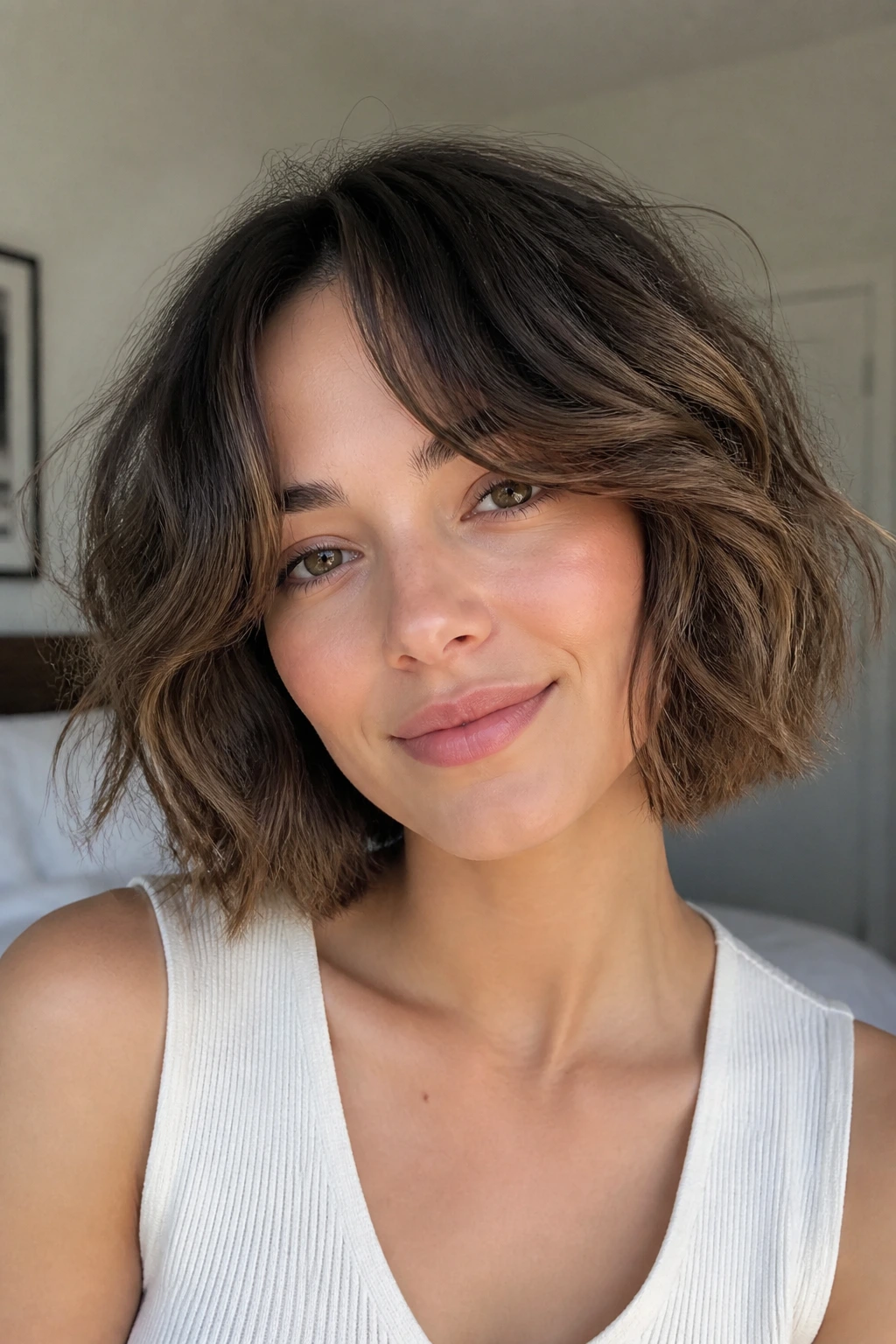
Curtain bangs do more than hide a forehead. On a round face, they split the front of the haircut into two soft diagonal lines, and that changes the whole balance of the cut.
The trick is keeping the bangs long enough to sweep into the cheek area instead of stopping high above the brows. If they are too short, they can make the face feel wider. If they skim the cheekbones and blend into the bob, the result is softer and longer-looking.
Where the Bangs Should Start
- They should begin a little farther back than straight bangs usually do.
- The shortest pieces can sit around brow level.
- The sides need to drop toward the cheekbones, not stop at the temples.
- Ask for them to be movable, not heavy.
Pair the bangs with loose, not-too-perfect waves. I would skip tight barrel curls here. They compete with the fringe and make the front too busy.
This cut is one of the best if you like a little face-framing without committing to full bangs every morning. You can part the fringe wider, tuck it back, or let it fall open.
6. Jawline Bob With Piecey Ends

Unlike a blunt jawline bob, this version uses broken-up ends to keep the face from looking boxed in. The haircut still has a clear line, but the line is softened by tiny gaps and uneven movement through the finish.
That matters on a round face because a hard, clean edge at the jaw can look wider than intended. Piecey ends interrupt that edge just enough to keep the whole shape light. The result feels modern without getting fussy.
This cut is especially good if your hair is dense. Density can make a bob look heavy fast, and piecey ends give the silhouette some air. Ask for point cutting at the bottom so the perimeter does not sit like a shelf.
It also styles quickly. A little sea-salt spray, a rough dry, and a few bends with a curling iron are usually enough. No need to make every wave look identical. In fact, it looks better when they do not.
7. Inverted Bob With a Tapered Back
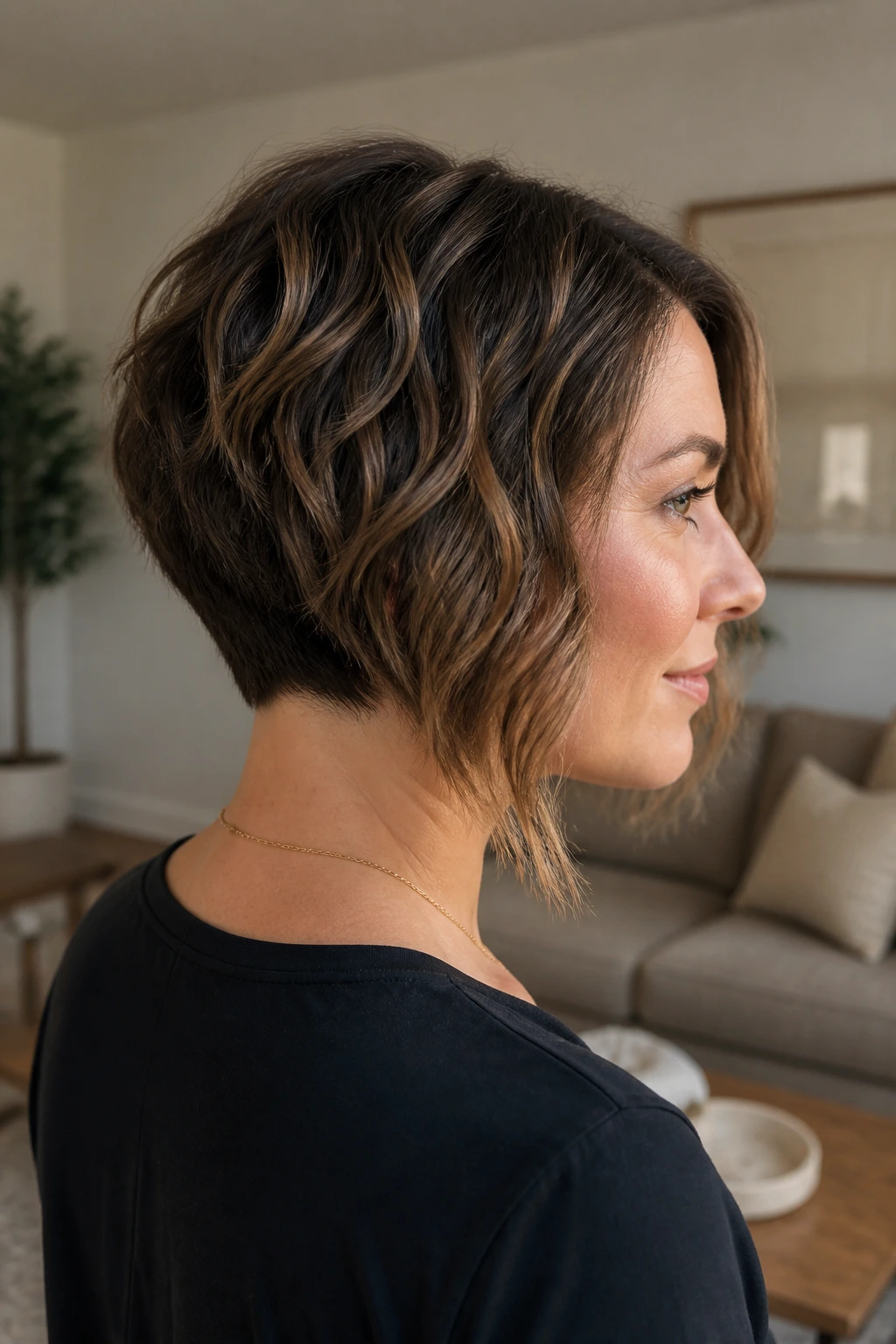
The inverted bob is a neat trick for round faces because the short back creates lift where you need it, while the longer front pieces stretch the line of the face. It has a built-in shape that does not rely on heavy styling every day.
A tapered back keeps the nape snug and clean, which is useful if your hair tends to puff at the collar. The front then drops forward in a way that frames the jaw without crowding it. That front-back contrast is doing the flattering work.
A few details matter here.
- The back should be stacked, but not bulky.
- The front pieces should graze the jaw or fall just below it.
- Waves should stay looser around the ends, not puffed through the middle.
- The transition from back to front needs to be smooth.
If the stack gets too high, the cut can turn into a helmet. Nobody wants that. Keep the stacking subtle and the wave pattern soft, and this becomes one of the sharpest-looking short bob options on a round face.
8. Shaggy Bob With an Airy Fringe

Can a shaggy bob work on a round face? Yes, if the fringe stays light and the layers are scattered rather than chopped into heavy blocks.
The shag gives you movement, which helps break up the width of the face, but the fringe is the part that can go wrong fastest. An airy fringe should look feathered and movable, almost like it was lifted by hand after drying. A thick, blunt fringe can flatten the face and make the whole cut feel boxy.
How to Keep It from Looking Too Messy
Use a small amount of mousse through damp hair, then scrunch the waves with your fingers. A diffuser on low heat helps the fringe keep its texture without separating into frizz.
If your hair is thick, ask for lighter layers through the crown and sides. Too much shagging around the cheeks can make the face look wider, which defeats the purpose.
This cut suits someone who likes a bit of grit in the finish. It does not need to be perfect. In fact, it looks better when the fringe falls a little unevenly and the waves have a lived-in shape.
9. Blunt Wavy Bob With Soft, Battered Ends
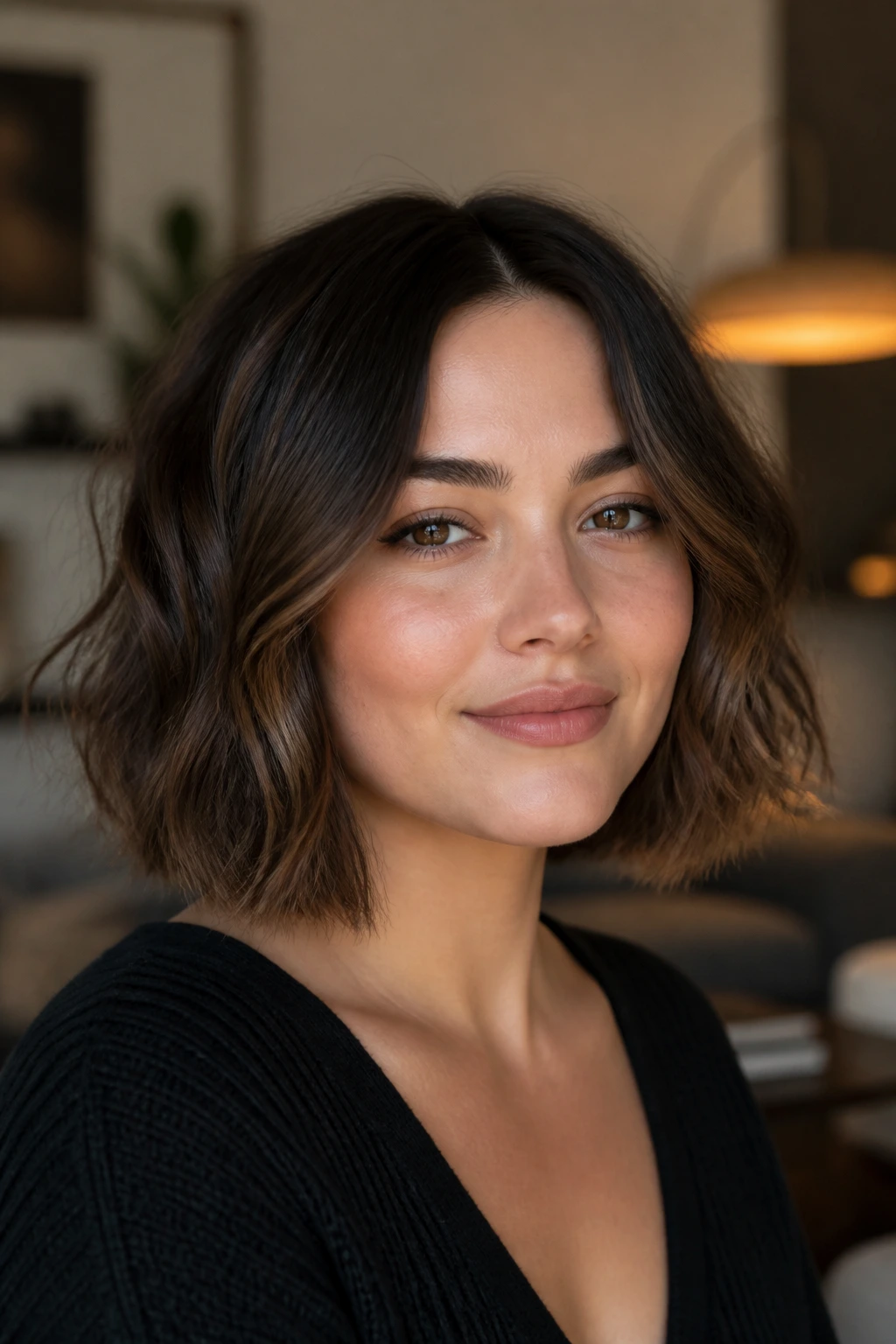
A blunt bob on a round face sounds risky, and sometimes it is. But if the ends are softened and the waves are loose rather than fluffy, the clean line at the bottom can actually make the face look more oval.
The reason is simple: a strong perimeter creates structure, and the softness inside the wave keeps it from feeling heavy. You get the neatness of a blunt cut without the hard look that can sit badly on fuller cheeks.
I prefer this on hair that is naturally medium-thick and bends easily. Very fine hair can go flat, and very thick hair can turn into a triangle if the ends are not carefully softened. A stylist who knows how to chip into the bottom line can make all the difference.
This is also one of the best choices if you like a polished look but do not want layers everywhere. The cut is straightforward. The wave pattern does the rest.
10. Neck-Length Bob With a Deep Side Part
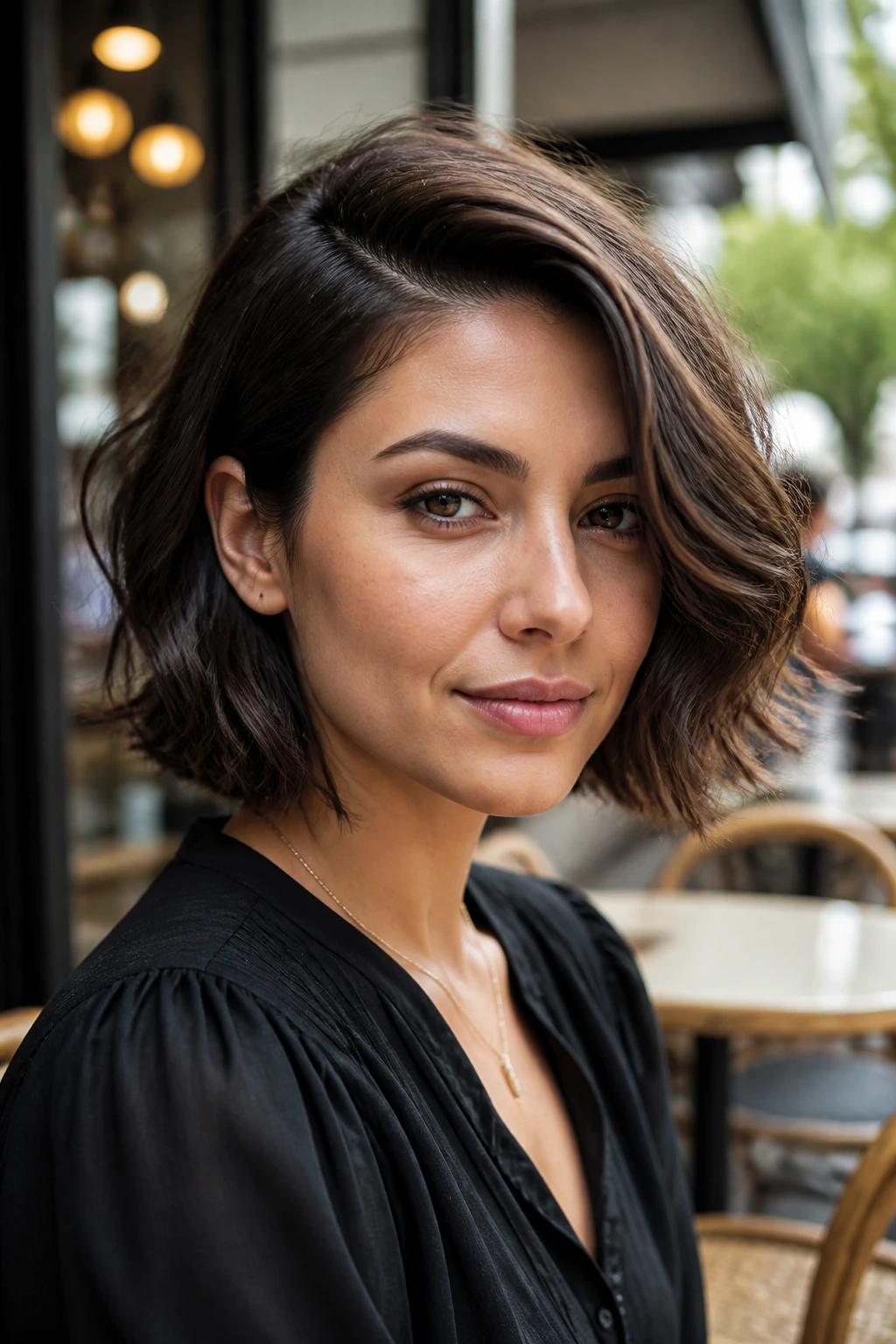
If you want short hair without feeling boxed in, this length is a safe bet. A neck-length bob gives you enough room for waves to move, but it still sits short enough to feel fresh and easy.
The deep side part is the part that makes it flattering on a round face. It shifts the volume off-center and builds a stronger vertical line through the forehead and cheek area. A center part can work too, but the side part usually does more of the slimming work with less effort.
Ask for These Details
- Keep the length just below the jaw, not right on it.
- Leave the front pieces slightly longer than the back.
- Keep the nape trimmed close so the shape stays clean.
- Add soft texture through the mid-lengths, not the ends only.
This cut is especially nice if your hair is fine to medium. It keeps enough movement for the waves to show without becoming too wide. And it grows out cleanly, which is a real bonus if you dislike frequent salon visits.
11. Asymmetrical Bob With One Longer Side
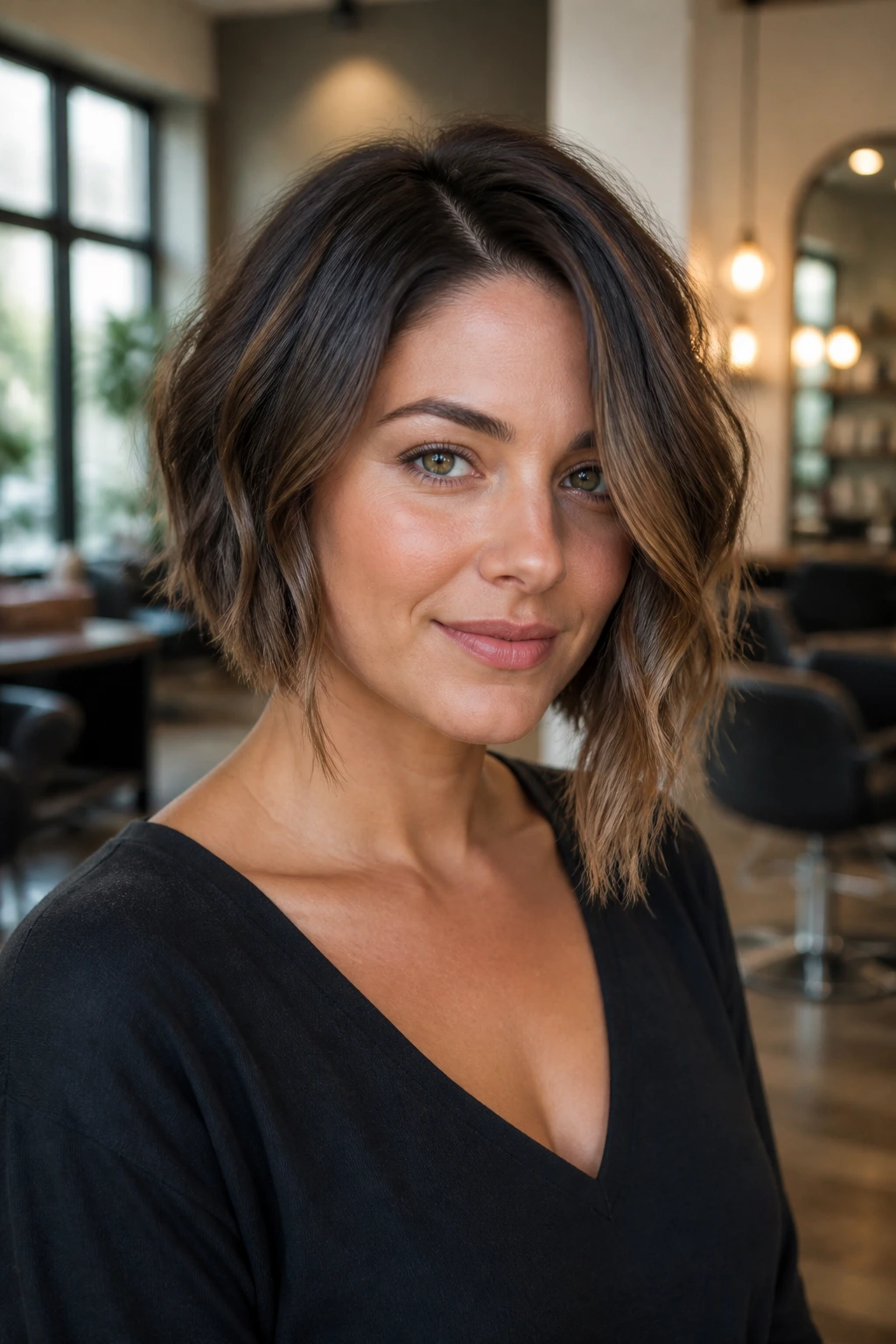
An asymmetrical bob gives a round face a built-in diagonal line, which is why it works so well. One side is kept longer, often by an inch or two, and that subtle difference changes the whole visual shape.
Compared with a symmetrical bob, this version feels more directional. The longer side pulls the eye downward, while the shorter side creates a bit of lift and edge. Put the two together and the face looks less circular without any harsh contouring effect from the haircut itself.
This is a nice choice if you want something with personality. It is not loud, but it does feel intentional. The waves should stay loose so the asymmetry remains visible; if the curls are too full, the difference gets lost.
If you are asking your stylist for this, keep the length difference modest. A dramatic gap can feel trendy for five minutes and annoying for months. One to two inches is usually enough to change the line without making the haircut difficult to live with.
12. Stacked Bob With Hidden Layers
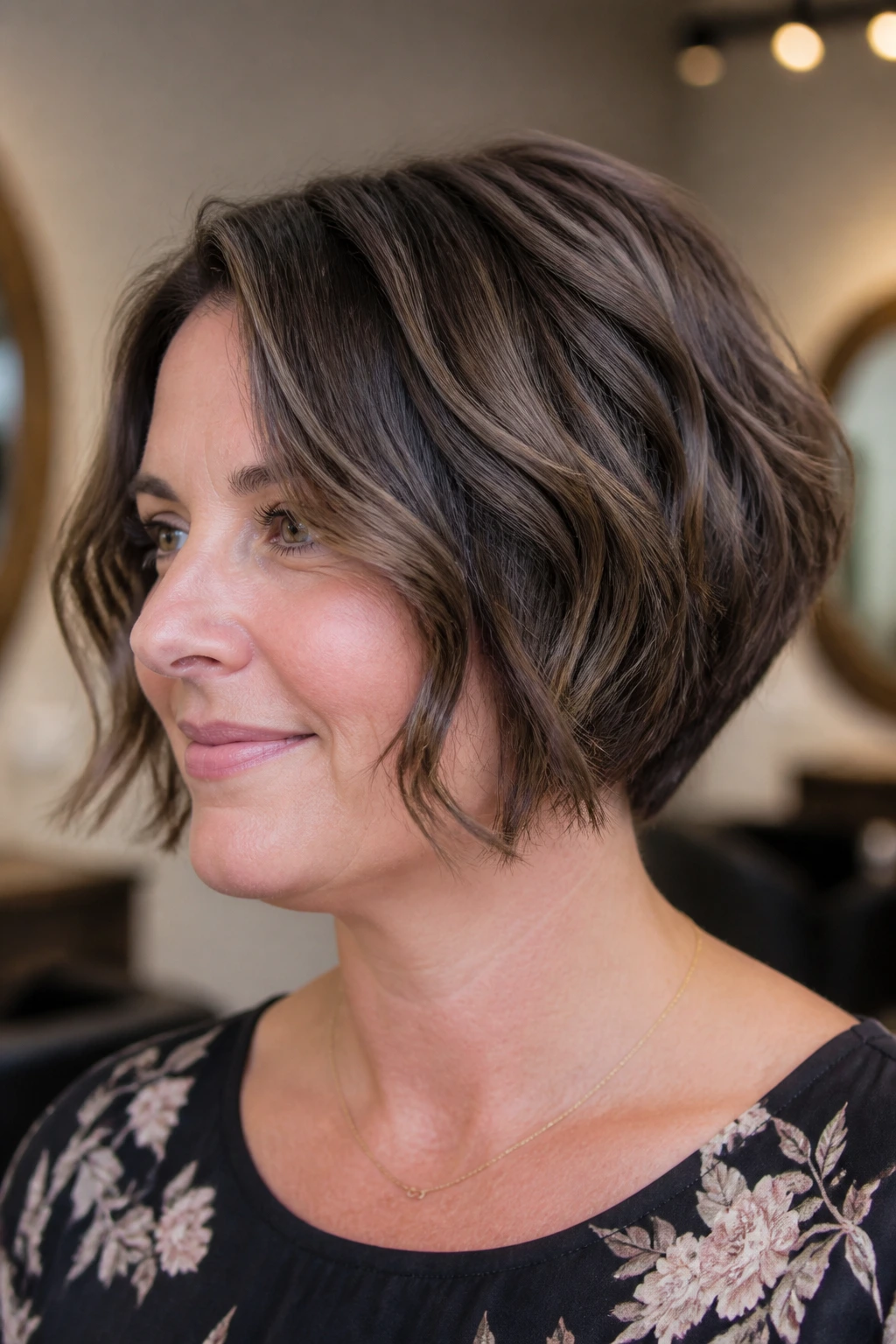
Stacked bobs can be tricky on round faces, but hidden layers keep them useful instead of bulky. The stacking creates lift at the back of the head, which helps lengthen the profile, while the hidden layers stop the side view from turning puffy.
This cut is a good fix for hair that collapses fast. If your bob goes limp by lunch, a little internal stacking can keep the shape from falling flat against the neck. It also gives a nice curve at the back, which makes the front pieces feel cleaner and more controlled.
A few things matter here:
- Keep the stack subtle, not architectural.
- Ask for internal layers rather than obvious choppy steps.
- Leave enough length in front to soften the cheeks.
- Style with root lift at the crown, not heavy cream at the roots.
The danger with this cut is overbuilding the back. Too much stacking can make the head look narrow from behind and bulky from the side. A light touch works better, especially when the hair has waves.
13. Beachy Razored Bob

What makes razored ends different? They have a feathered, broken finish that lets the waves spread out instead of sitting in one dense block.
That matters for round faces because a bob with too much weight at the bottom can add width. Razor cutting removes some of that bulk and makes the ends move. The effect is airy, but not wispy in a flimsy way. More like hair that knows how to fall.
Best Styling Move
Use a small amount of texturizing spray on dry hair, then twist random sections around your fingers. You are not trying to create neat curl patterns here. You want uneven bends, a little separation, and a finish that looks touched rather than set.
This cut suits hair that can handle texture without frizzing apart. If your hair is very coarse, the razor may make the ends feel too rough unless the stylist keeps the hand light. On the right hair, though, it’s one of the easiest ways to make a short bob look relaxed and face-flattering at the same time.
14. Wavy Bob With Long Side-Swept Bangs
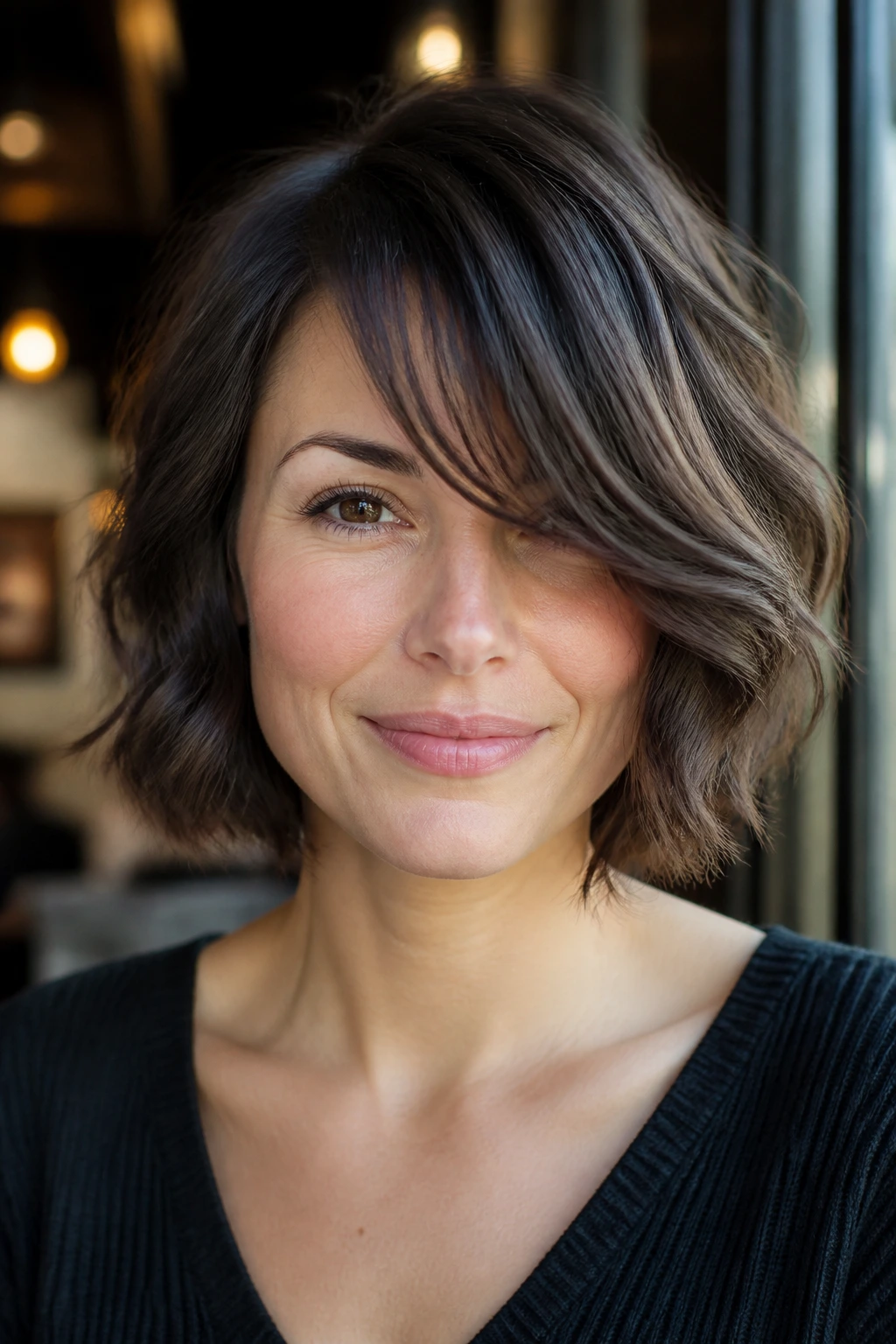
Long side-swept bangs are sneaky. They cover part of the forehead, create a diagonal across the face, and blend into the side of the bob so the whole haircut feels longer.
They’re especially useful if you like a little softness around the eyes and cheeks. A round face can sometimes look widest at the center, and a long bang cuts right through that area without taking over the whole front. The bangs should move, though. Hard, heavy side bangs get stuck in one place and can feel old fast.
The best version lands around cheekbone level and can be tucked back on tired days. That flexibility matters. You do not want a fringe that behaves like a helmet every time the wind picks up.
This cut also plays well with loose waves because the bang and the wave echo each other. One sweeps across, the other bends down. The whole shape feels more vertical, which is exactly what you want.
15. Tucked Bob With Face-Framing Pieces
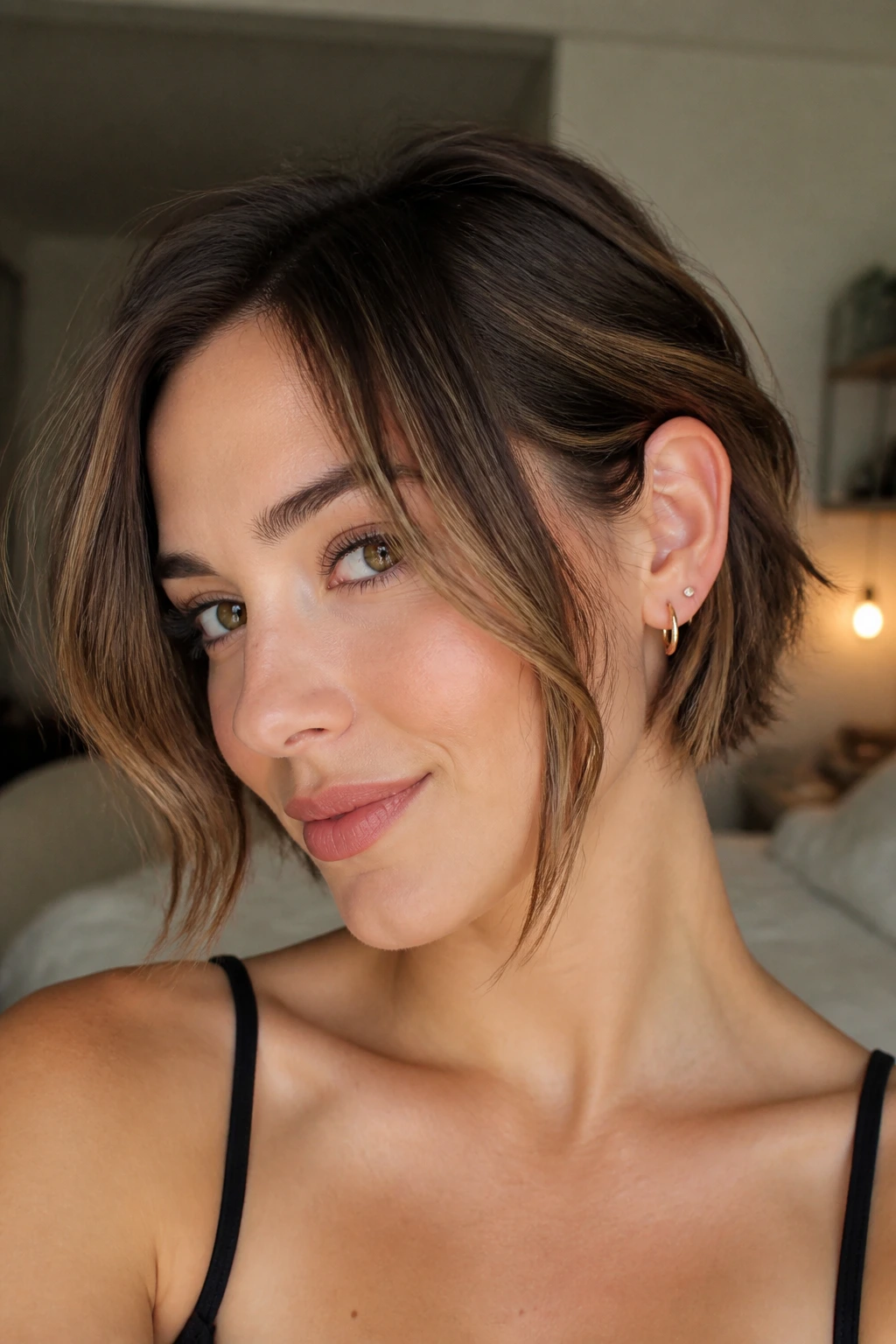
This is the bob I like for people who want polish without looking overdone. The face-framing pieces are left a little longer than the rest, then styled so one side can be tucked behind the ear.
That tuck changes the silhouette in a nice way. It opens up one cheekbone, makes the jaw look slimmer, and gives the haircut a natural asymmetry that flatters a round face. The longer front pieces should start near the cheekbone and fall to the jaw or a touch below it.
How to Wear It Well
- Keep the tucked side smooth, not stuck flat.
- Let the opposite side keep its wave and movement.
- Use a light cream or serum on the ends only.
- Leave enough length in front to avoid a puffed-out cheek line.
This haircut works well for interviews, dinners, and all the other times you want to look like you thought about your hair for three minutes more than usual. It is tidy, but not stiff. That’s the difference.
16. Textured Bob for Fine Hair

Fine hair needs a different kind of help. Too many layers can make it look thin, but a little texture in the right places can give a round face shape and lift without stripping away density.
This bob keeps the perimeter fairly solid while adding tiny bits of texture through the mid-lengths. That keeps the hair from falling like a flat curtain against the cheeks. If your hair is fine, you want movement, not a lot of broken-up ends that make the outline disappear.
Compare it with a heavily layered shag, and you can see the point. The shag can be too airy. The textured bob still has a clean line, which helps the face look more structured. A root spray, a quick bend with a curling wand, and a light shake at the roots are usually enough.
It is the safest choice in this group if your hair loses shape fast. It gives you softness around the face without asking the hair to do too much.
17. Flipped-End Bob With a Light Underbend
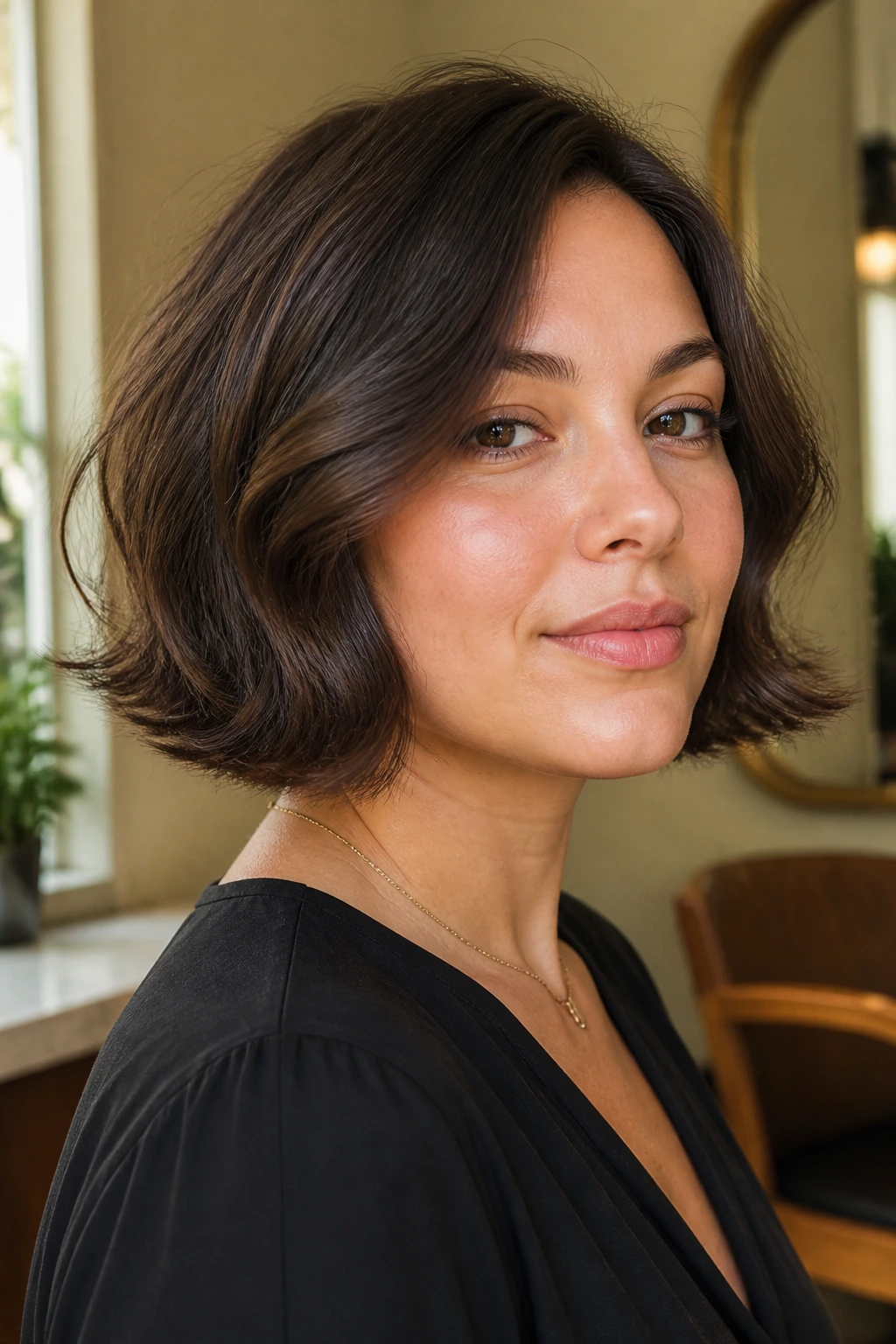
A flipped-end bob has a little swing at the bottom, and that swing is useful on a round face because it points the hair outward just enough to keep the shape from sitting too flat against the jaw.
The key is the underbend. You want the ends to curve softly under, then maybe flick out at the very tips. That tiny movement stops the cut from clinging to the cheeks. It also gives the bob a bit of bounce, which can make finer waves look fuller without making the whole head look broad.
What to Ask For
- A length that sits at or just below the jaw.
- Light layering only through the bottom half.
- Ends that are shaped to move, not carved into a hard line.
- Waves that stay loose near the face.
This is a good option if you like a bob with a little retro flavor. It has personality. It also works surprisingly well on hair that wants to turn inward by itself, because you can shape that bend instead of fighting it every morning.
18. Razor-Cut Bob With Loose S-Waves

The razor-cut bob is the one I reach for when hair needs movement but not fluff. Loose S-waves give a round face soft vertical lines, and the razor keeps the ends from looking thick and heavy.
That combination matters. A round face does not need hair that spreads outward in a neat dome. It needs breaks in the line, a bit of lift, and a shape that falls close to the head at the sides. Razor cutting helps with that because it removes weight without making the perimeter look blunt.
This cut is especially flattering when the wave starts lower down, around the mid-lengths, instead of right at the roots. Root-heavy waves can widen the top of the face. S-waves that begin lower feel softer and longer, which is the whole point here.
If you want a short wavy bob that can look polished one day and messy the next, this is a strong finish to the list. It has enough structure to hold shape, enough movement to stay interesting, and just enough edge to keep it from feeling fussy. That’s the kind of cut that keeps earning repeat visits to the salon.
