



Round faces and bob haircuts have a strange reputation. People talk as if the cut itself is the problem, when the real issue is usually where the length lands, how much width it adds at the cheeks, and whether the shape gives the face any vertical line at all.
A good bob for a round face does not try to hide the face. That’s the lazy advice, and it usually leads to hair that hangs awkwardly or gets puffier right where you do not want it. The better move is to create angles, lift at the crown, clean edges at the jaw, or a soft diagonal that pulls the eye downward.
That sounds technical, but in practice it’s simple. A bob that sits at the chin can sharpen features if the ends are crisp. A bob that dips longer in front can slim the profile without looking severe. A bob with side-swept movement can break up the fullness of the cheeks in a way that feels natural, not forced.
The tricky part is that round faces are often sold the same tired haircut over and over: long layers, center parts, curtain bangs, repeat. Sometimes that works. Sometimes it falls flat by lunch. The cuts below are the ones that actually give shape, and the difference usually comes down to a few inches, a part shift, or where the weight line sits.
1. Jaw-Grazing Classic Bob
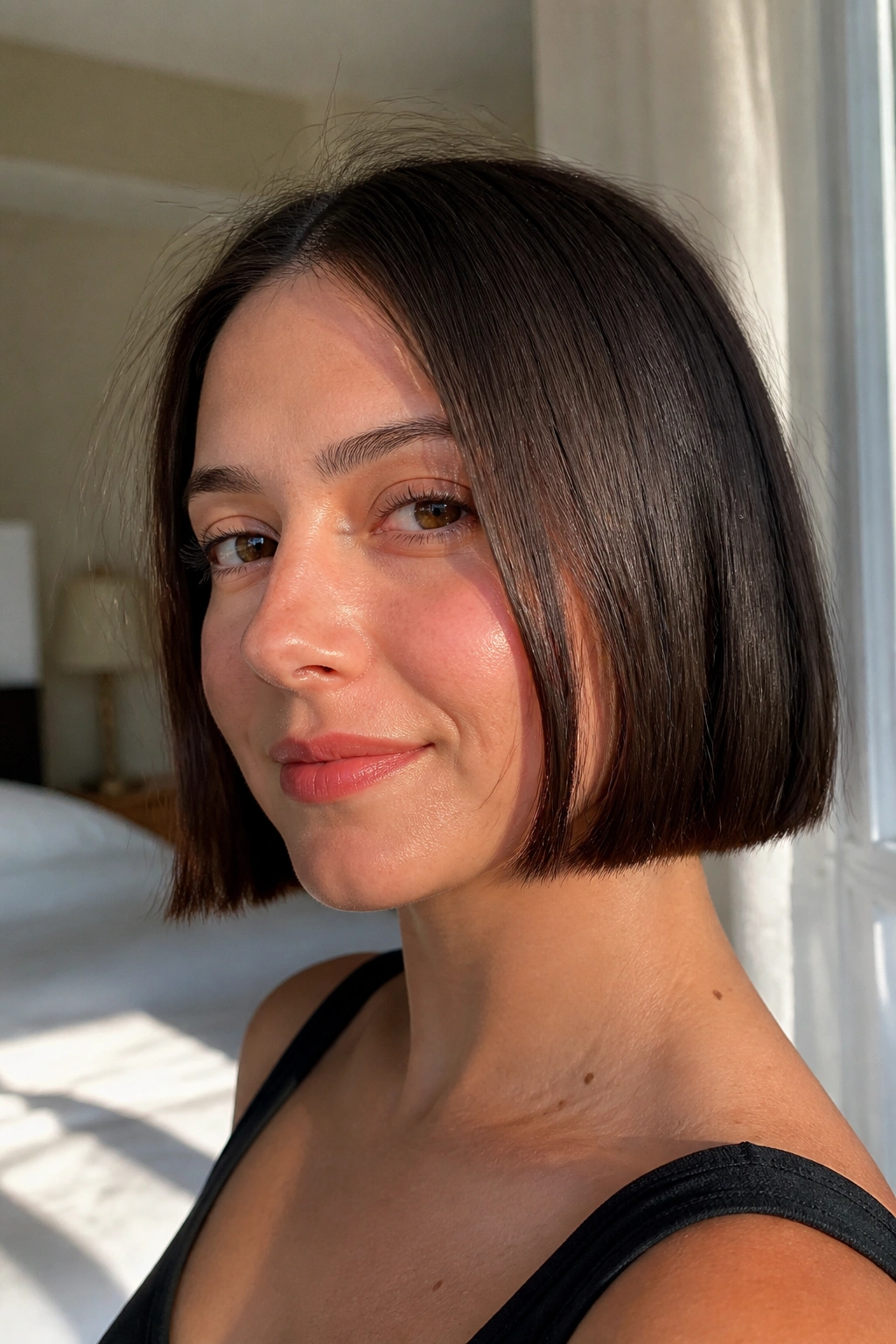
A clean jaw-grazing bob is one of the sharpest ways to work with a round face, if the cut is deliberate and not puffy at the sides.
Why It Works
The magic is in the line. When the ends land right at the jaw or a touch below it, the eye gets a clear stopping point instead of a soft, round halo around the face. That little bit of structure matters.
Keep the shape blunt through the perimeter, especially if your hair is fine or medium. A few wispy internal layers are fine, but too much slicing will make the ends kick out and widen the face.
- Ask for the length to sit at the jaw or 0.5 to 1 inch below it
- Wear it with a slight off-center part instead of a dead-center part
- Blow-dry with a small round brush so the ends curve inward a bit
- Use a light serum only on the last 2 inches if your hair frizzes
Best tip: this cut looks strongest when the line is clean. If the ends fray, the whole shape loses its punch.
2. A-Line Bob with a Longer Front
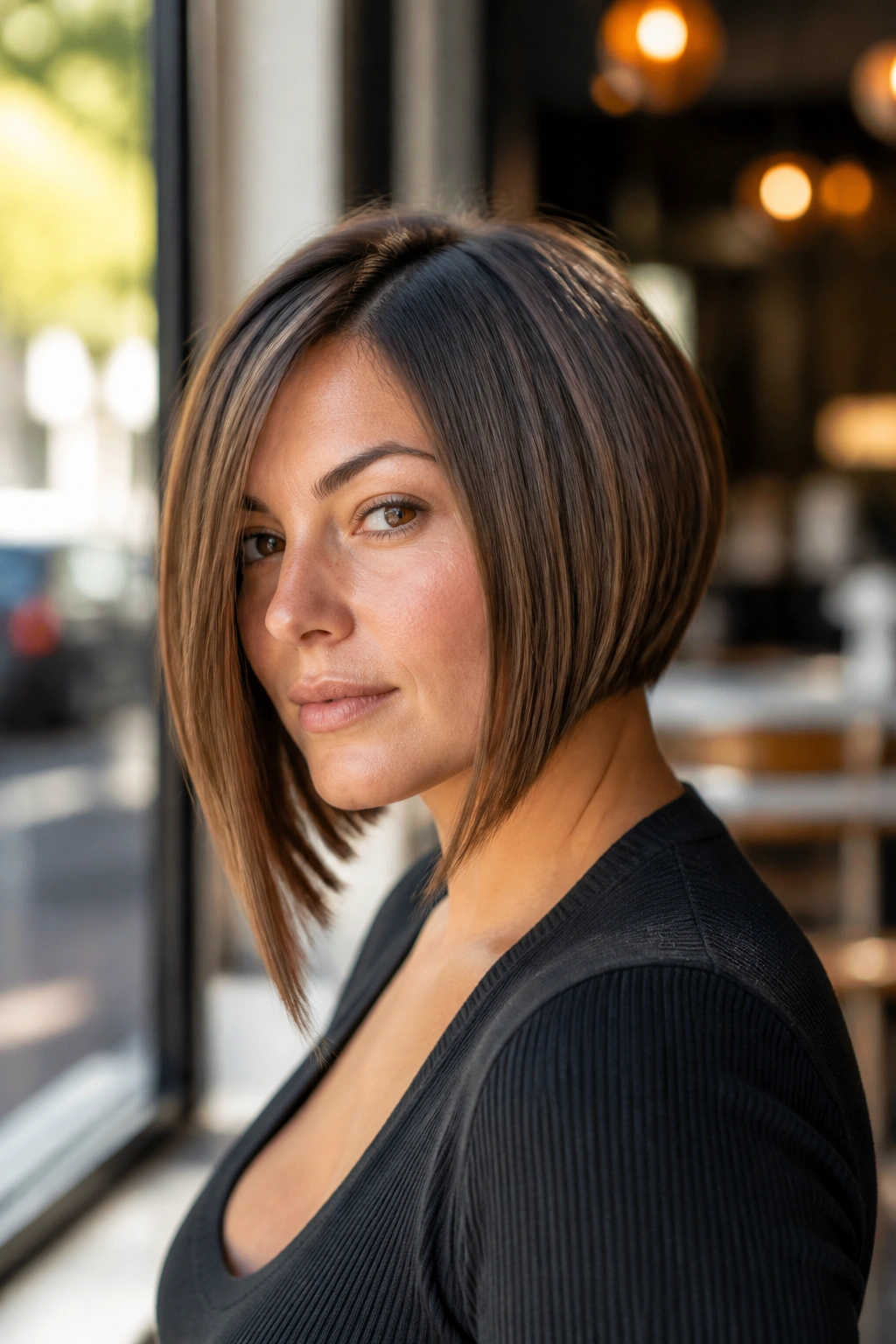
A slight angle does more work than most people expect.
The back sits a little shorter, the front drifts forward by 1 to 2 inches, and suddenly the haircut stops boxing the face in. That diagonal line is the whole point. It pulls the eye down and forward, which gives a round face a bit more length without making the cut feel dramatic.
This is one of my favorite bob haircuts for round faces because it has range. It can look polished with a flat brush, or softer with a bend at the ends. It also grows out well, which matters more than people admit. A lot of “perfect” haircuts fall apart after three weeks. This one usually keeps its shape.
If your hair is thick, ask for a gentle angle rather than a steep one. Too much slope can turn into a wedge, and that starts to feel dated fast. The best version is tidy at the nape and still soft near the chin.
And yes, it works even better when the front pieces skim the lip or chin instead of stopping exactly at the cheek.
3. Side-Part Sleek Bob
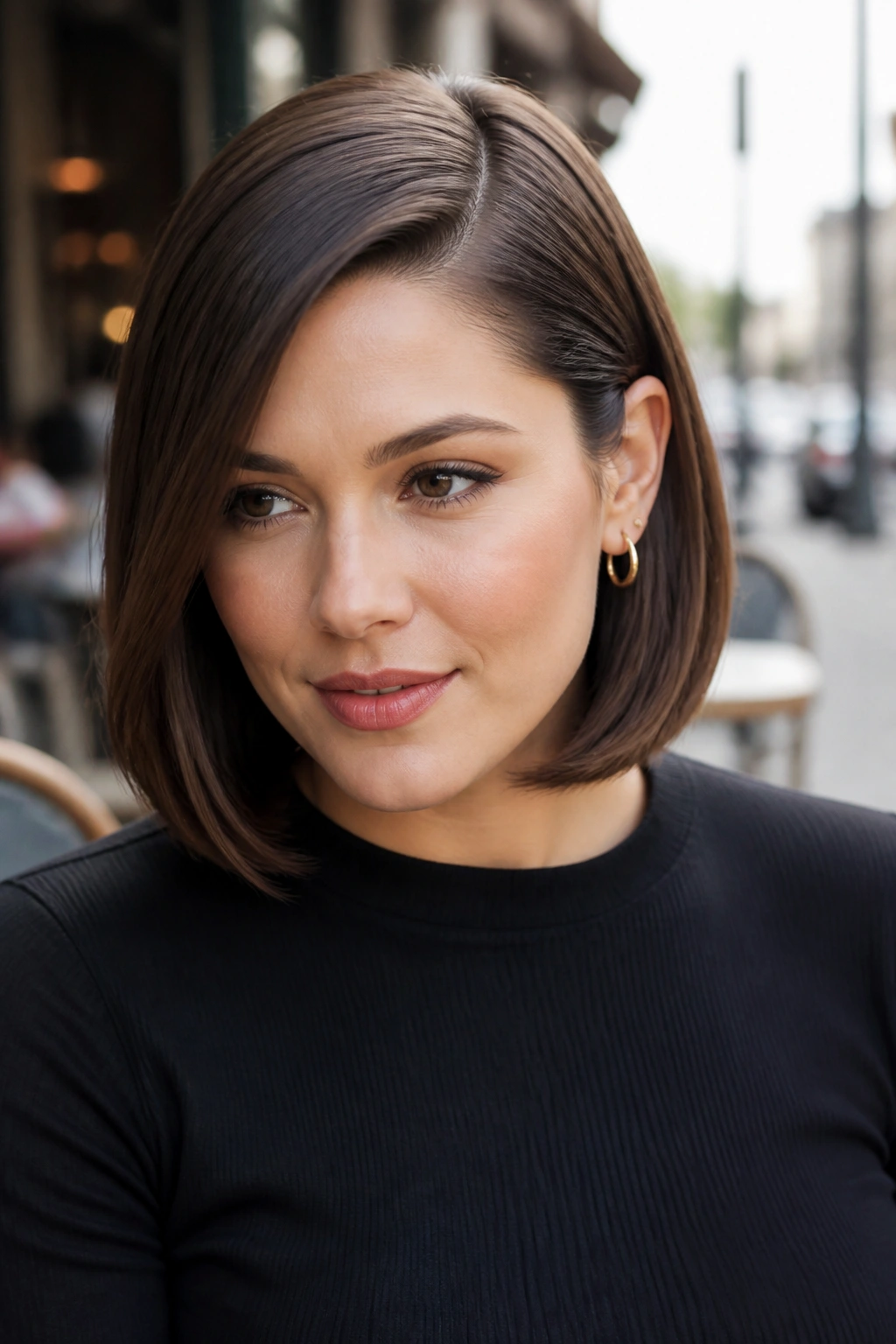
Why does a side part change the whole haircut? Because it moves the weight off the center of the face.
When you wear a bob with a deep side part, you get a diagonal line across the forehead and a little extra lift at the roots on one side. That shift creates asymmetry, and asymmetry is your friend on a round face. It keeps the shape from feeling too circular.
How to Style It
Start with damp hair and a root-lifting spray at the crown. Blow-dry the part side first, directing the roots up and back with a paddle brush or flat brush. That extra lift keeps the style from collapsing into the cheeks.
A flat iron helps, but use it sparingly. You want smoothness, not a helmet. Leave the very ends soft so the hair falls like fabric rather than a board.
- Part the hair about 1.5 to 2 inches off center
- Keep the bob just below the chin
- Tuck the smaller side behind one ear for a sharper line
- Finish with a pea-sized amount of styling cream on the ends
One caution: if your face is very full at the cheeks, avoid a super blunt side part with no volume on top. It can sit heavy.
4. Textured French Bob with Soft Fringe

If a classic blunt bob feels too tidy, this is the one that loosens things up without losing shape.
Picture a cut that lands around the lip or chin, with soft, piece-y texture through the ends and a fringe that sits lightly on the forehead. That French-bob feel works because it breaks up the roundness of the face instead of tracing it. The hair moves. It does not sit there and mirror every curve.
This style is especially good if your hair has a natural wave or a bend that comes out after drying. You do not need perfect uniformity here. In fact, a little unevenness helps. The fringe should not be heavy or thick enough to flatten the face; it should skim, separate, and leave some skin visible at the brows.
A lot of people ask for “messy,” which is too vague. What you want is soft texture at the ends, not bulk at the cheeks. That is the difference between charming and puffy.
If your stylist knows dry cutting, even better. A French bob tends to look best when it is shaped in movement, not hacked into a shape and hoped for later.
5. Collarbone Lob with Face-Framing Pieces
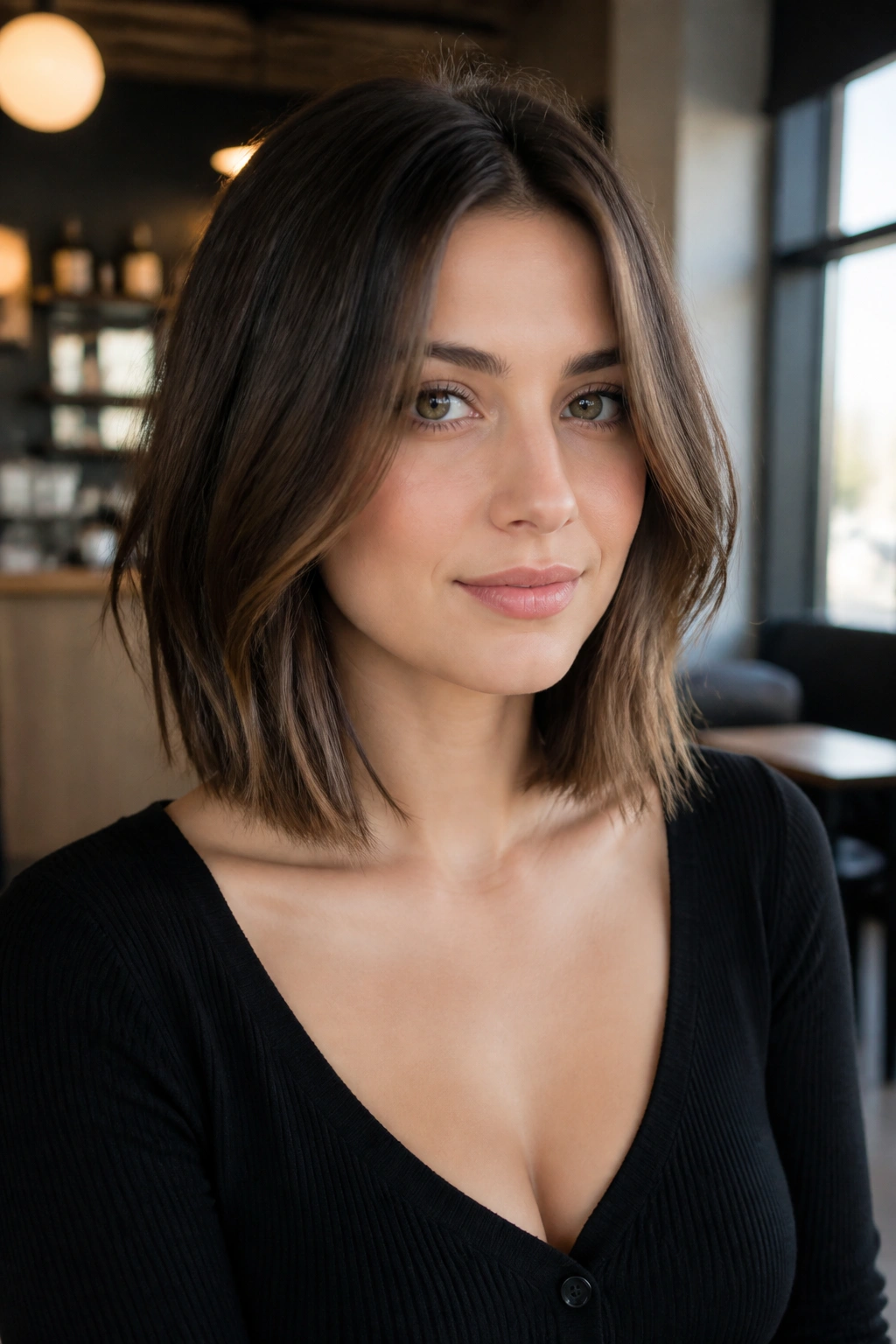
Longer is not cheating.
A collarbone lob gives a round face breathing room, especially when the front pieces start around the cheekbone and drift down toward the lips. The length sits below the widest part of the face, which helps the whole shape look a little slimmer without making the haircut feel heavy.
This is one of those cuts that looks calm in the best way. It does not shout. It just works. If you wear your hair tucked, curled, or blown smooth, the collarbone length gives you enough room to shift the silhouette without re-cutting everything every month.
The face-framing pieces matter more than people think. Ask for soft, tapered pieces that begin near the cheekbone, not a hard stair-step layer that cuts straight across the face. That softer line keeps the eyes moving downward.
It also plays nicely with glasses, earrings, and anything else near the face. Shorter bobs can fight those details. A lob makes room for them.
6. Stacked Bob with Built-In Lift
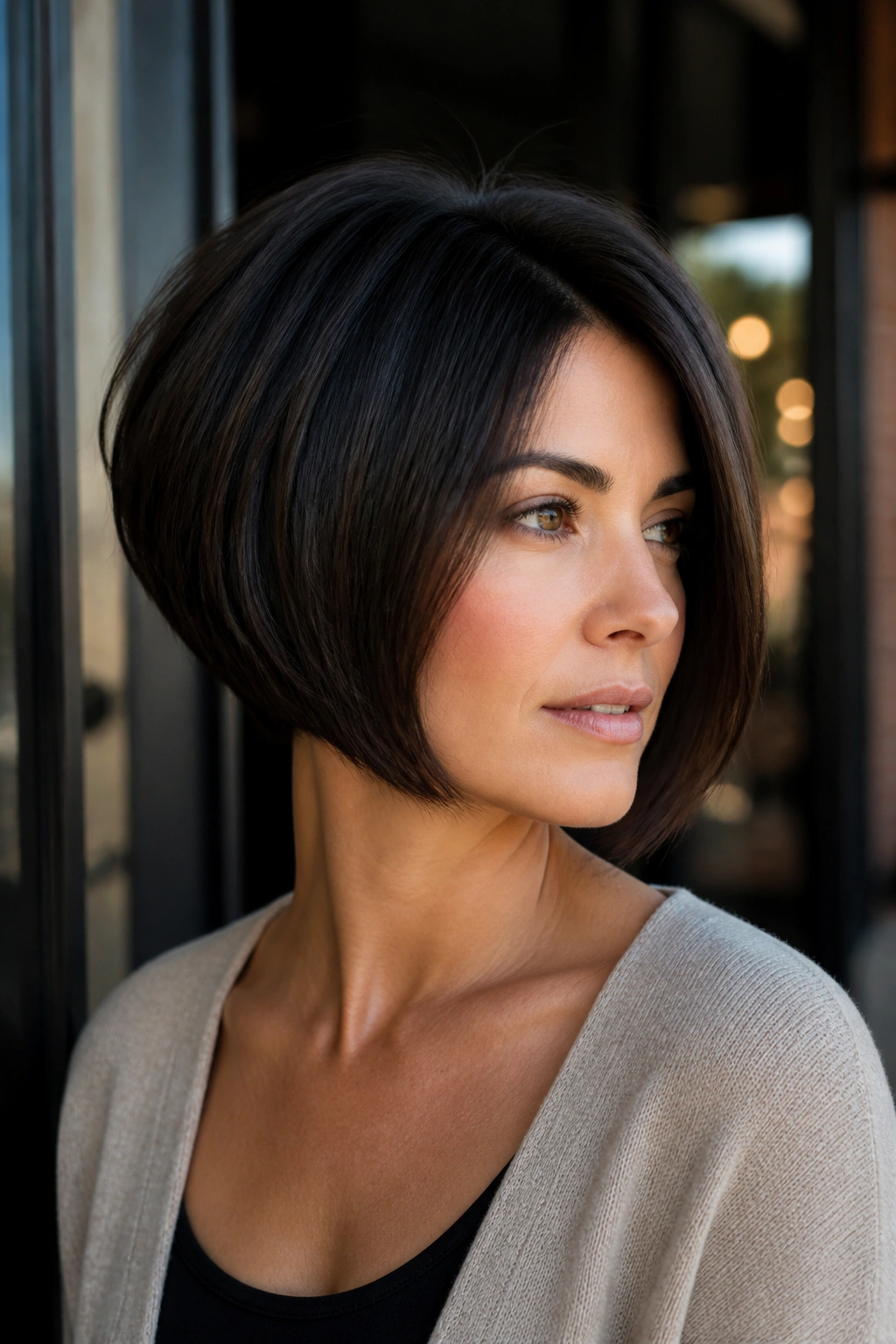
A stacked bob changes the shape from the back first, and that is exactly why it helps a round face.
Unlike a one-length bob, the stacked version is shorter in the nape and gradually fuller through the back crown. That lift creates height where you want it, while the front stays clean and controlled. The result is a stronger silhouette, not a wider one.
What Makes It Different
The stacking should be subtle. A hard, old-school stack can look bulky, especially on thick hair. You want graduation that starts low at the back and softens as it moves forward. Think polished, not puffy.
This cut is a good fit if your hair falls flat at the roots or if you like the back of a haircut to look neat from every angle. It also gives you a bit of shape without needing a lot of curling or teasing.
- Best on straight to slightly wavy hair
- Ask for graduation starting at the nape
- Keep the front at chin length or slightly longer
- Avoid over-thinning the sides, which can make the head look rounder
My take: if your hair is dense and you hate daily styling, this shape earns its keep.
7. Asymmetrical Bob with One-Side Sweep
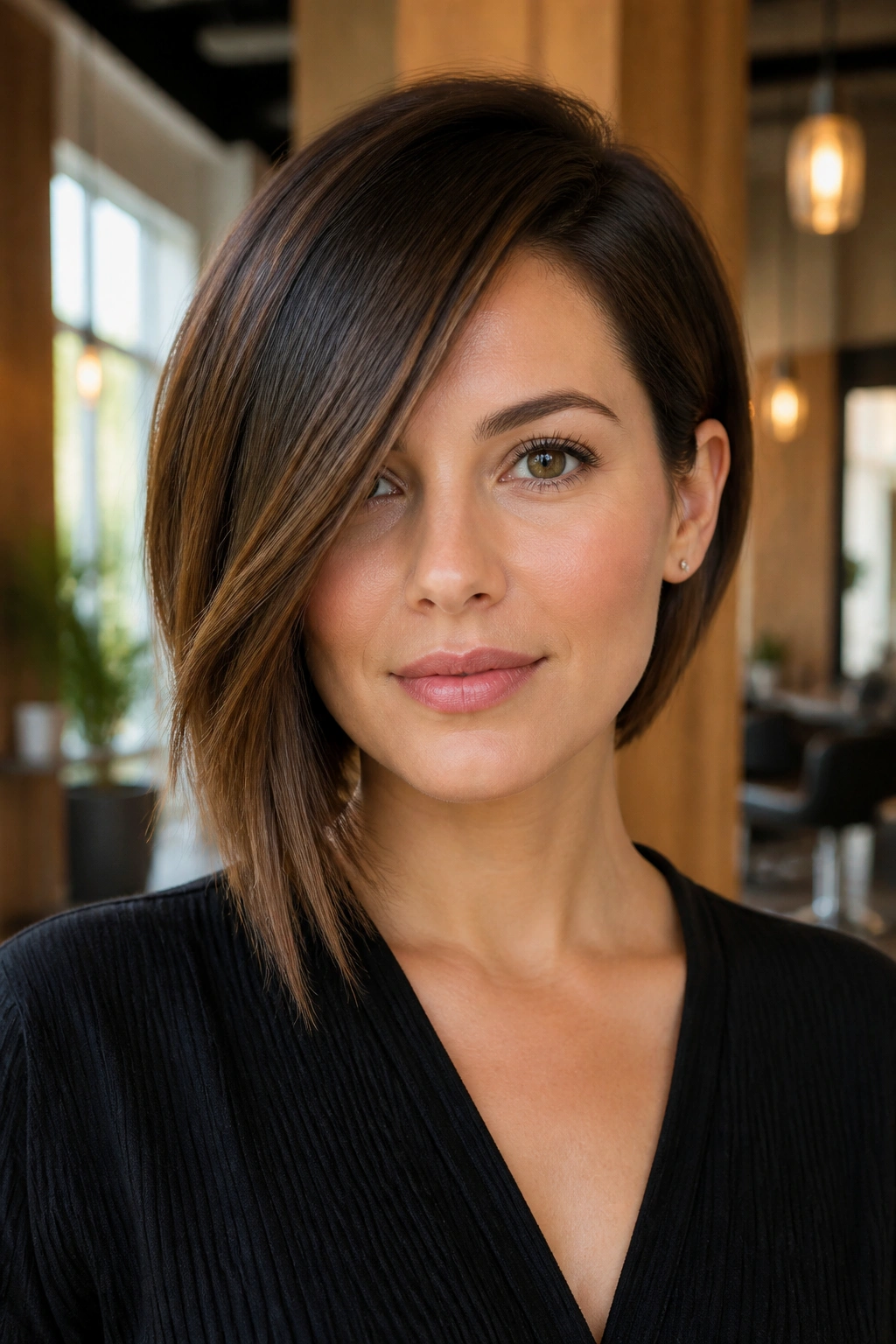
One longer side changes the whole mood.
An asymmetrical bob gives a round face a diagonal line to follow, and that line matters more than any fluffy styling trick. One side can drop 1 to 3 inches longer than the other, or just lean slightly longer at the front. Either way, the haircut stops feeling symmetrical, and that breaks the circle.
Why It Works
The eye reads contrast fast. When one side is longer, the face feels less evenly framed, which helps soften the width through the cheeks. It is a strong choice if you like a cut that feels a little artistic without going full edge.
This style looks especially good with a deep side part and smooth roots. If the top gets too flat, the whole thing can lose its shape, so a little lift at the crown is worth the effort.
For styling, keep the shorter side close to the ear and let the longer side skim the jaw or upper neck. That keeps the difference visible. If the lengths are too close, the asymmetry disappears and you are left with a regular bob wearing a costume.
A good asymmetrical bob never looks accidental. That’s the point.
8. Wavy Bob with Soft Bends

A wavy bob can be incredibly flattering on a round face, but only when the bends are loose and placed with some care.
The reason is simple. Roundness is about repetition of shape. Soft S-waves break that repetition. They add movement through the mid-lengths and ends, which keeps the face from feeling boxed in by one smooth circle of hair.
If you use a curling wand, a 1 to 1.25-inch barrel usually works better than a tiny one. Wrap sections away from the face, leave the last inch out, and brush the waves through after they cool. That makes the finish look relaxed instead of styled to death.
This cut is especially kind to hair that sits between straight and wavy. It does not demand perfect definition. A little frizz can even help, as long as it does not balloon at the sides.
The trick is keeping volume lower on the cheeks and higher through the crown and ends. That balance gives the face room.
9. Blunt Bob with Tucked Ends
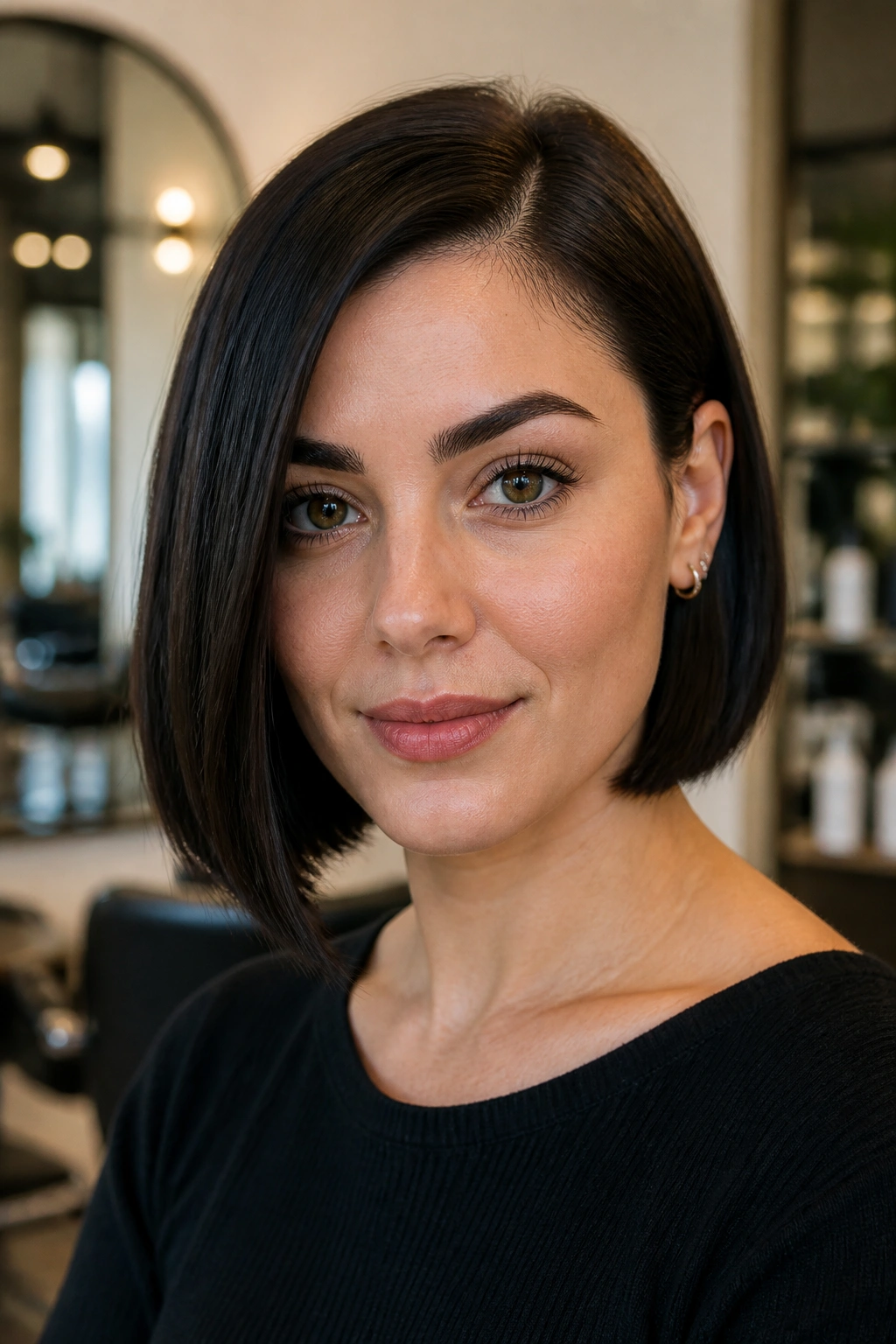
Can a blunt bob work on a round face? Absolutely, if the line is precise and the styling is controlled.
The blunt edge gives the haircut weight, which can be a good thing when hair is fine or medium and tends to collapse. The danger is width. Too much bulk at cheek level makes the face look fuller, so the cut needs to sit a touch below the jaw and be worn with a little space around the cheeks.
How to Wear It
Blow-dry the hair smooth, then tuck one side behind the ear. That tiny asymmetry opens the face and stops the bob from sitting like a single round shape around your features. A center part can work here, but a soft off-center part usually feels easier.
A blunt bob also looks best when the ends are polished. If the perimeter gets frayed or broken up too much, you lose the clean line that makes this style strong in the first place.
- Keep the length just past the jaw
- Ask for a solid perimeter with minimal layering
- Use a heat protectant and flat iron for a sleek finish
- Finish with a light-hold spray so the shape stays crisp
The blunt bob has a reputation for being severe. On the right face, it reads as sharp, tidy, and oddly fresh.
10. Curly Bob Shaped at the Cheekbone

Curly hair changes the math. A round face with curls does not need less shape; it needs the shape in the right place.
A curly bob should be cut dry or with a strong sense of how the curls fall naturally. If the volume lands right at the cheeks, the face gets wider. If the shape is lifted at the crown and allowed to narrow slightly toward the jaw, the whole cut feels more balanced.
What to Ask For
Ask your stylist to shape the bob so the longest pieces land around the chin or upper neck, with the shortest support layers higher up. The goal is to avoid a mushroom shape. Nobody needs that.
- Keep the cut longer at the front than the sides
- Let the curls rest at or below cheekbone level
- Avoid heavy thinning near the temples
- Use a diffuser on low heat to keep the curl pattern intact
A good curly bob should spring, not puff. That difference shows up right away when the curls dry.
If your curls are loose, you can go a little shorter. Tight curls usually need more length to keep from shrinking too much and sitting wide. That’s the part people forget.
11. Layered Bob with Crown Volume
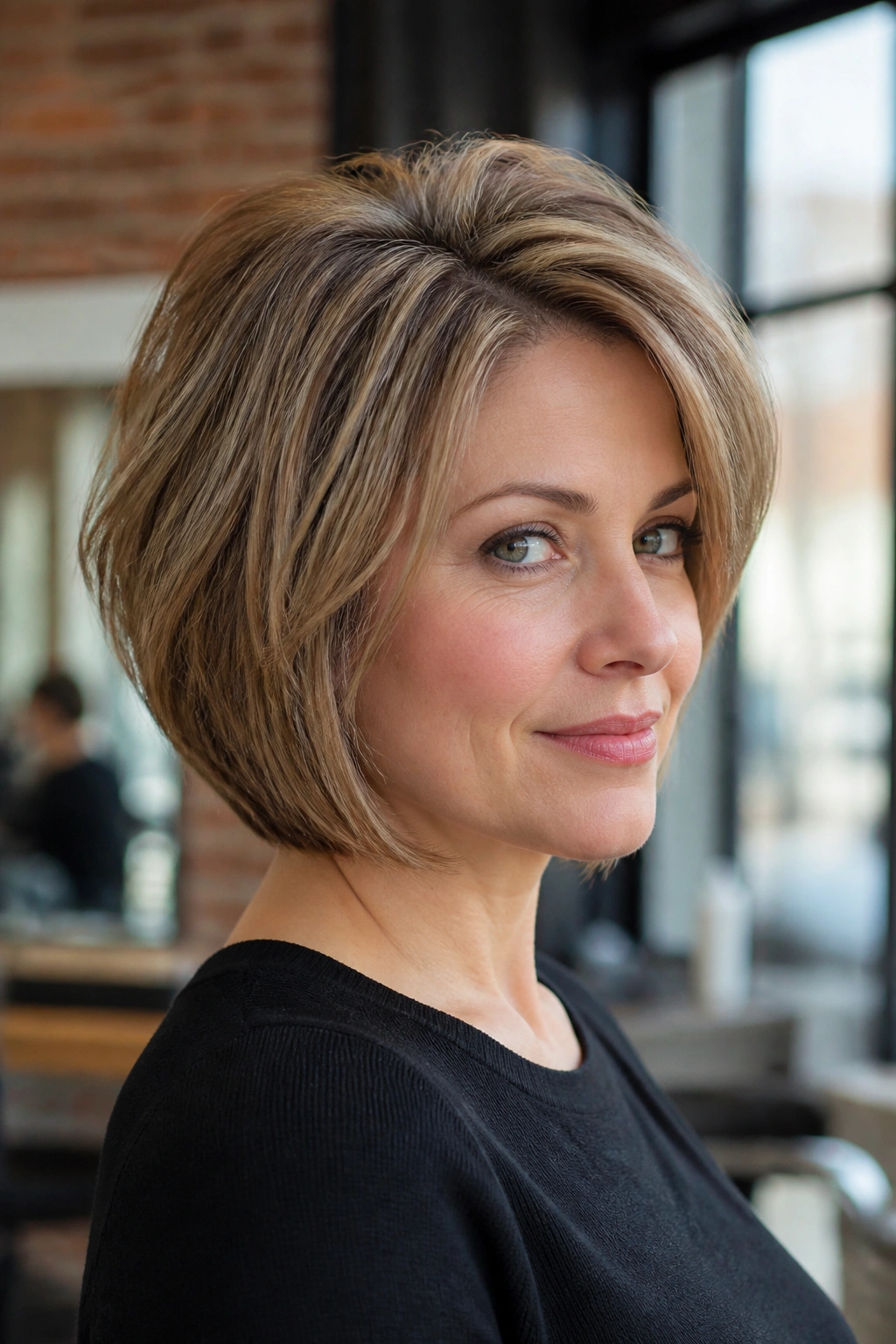
A little lift at the crown can do more for a round face than a dozen face-framing pieces.
This cut keeps the sides controlled and puts the airy part of the shape up top. That matters because round faces benefit from height. Not fake height, not teased helmet height. Just enough root lift to stretch the silhouette a bit.
The layers should begin above the ears or near the upper back of the head, never right at the cheekbones. That placement prevents the haircut from adding width where the face is already fullest. The ends can stay soft and fairly blunt so the bob does not turn wispy.
Blow-drying is the real work here. Use a round brush at the roots, lift the hair up and back, and let the crown cool before touching it. If you rush that part, the whole style falls flat and the face regains all its width.
This one is practical. It is not flashy. But on a round face, it gives shape in exactly the right spot.
12. Choppy Bob with Razor Ends

A choppy bob is not the same thing as a messy bob, and the difference matters.
Unlike a blunt bob, this cut uses broken-up ends and light internal texture to keep thick hair from ballooning. That makes it a smart pick if your hair has a lot of body and tends to sit wide near the jaw. The razor work or point cutting should be controlled, though. Too much of it and the ends lose shape fast.
What Makes It Different
The choppy bob is best when the perimeter still reads as a bob. You want movement, not a shag pretending to be a bob. If the stylist takes too much from the interior, the hair can flare at the sides and do the exact opposite of what you want.
This cut tends to look best on straight or slightly wavy hair with medium-to-thick density. Fine hair can wear it too, but only if the texture is minimal. Thin hair and heavy razoring are not always friends.
Who gets the most out of it?
- People with dense hair that puffs at the sides
- Anyone who likes a piece-y finish
- Hair that air-dries with a slight bend
- Cuts that need a little edge without looking harsh
If you have been fighting a boxy bob, a choppy one often fixes the problem without adding length.
13. Bob with Curtain Bangs

Curtain bangs can be a smart move on a round face, but they need to start in the right place.
The best version begins around the cheekbone and opens toward the temples. That shape draws attention to the eyes and adds vertical movement through the center of the face. A heavy bang that sits low on the forehead does the opposite. It shortens the face and can make the cheeks look fuller.
Why It Works
The bang acts like a frame inside the haircut. It gives the face another line to follow, which helps break up roundness. When the bob itself stays around the jaw or a little below, the bangs and length work together instead of fighting each other.
Keep the bangs soft, not thick. They should part easily and blend into the front pieces. If they are cut too short, the look can turn boxy fast. If they are too long, they disappear.
- Ask for bangs that start near the cheekbone
- Keep the bob chin length to collarbone length
- Style with a small round brush or a large Velcro roller
- Finish by separating the bangs with a dab of cream on your fingertips
Best part: this cut can look relaxed even when it is carefully shaped, which is harder to pull off than people think.
14. Inverted Bob with a Clean Nape
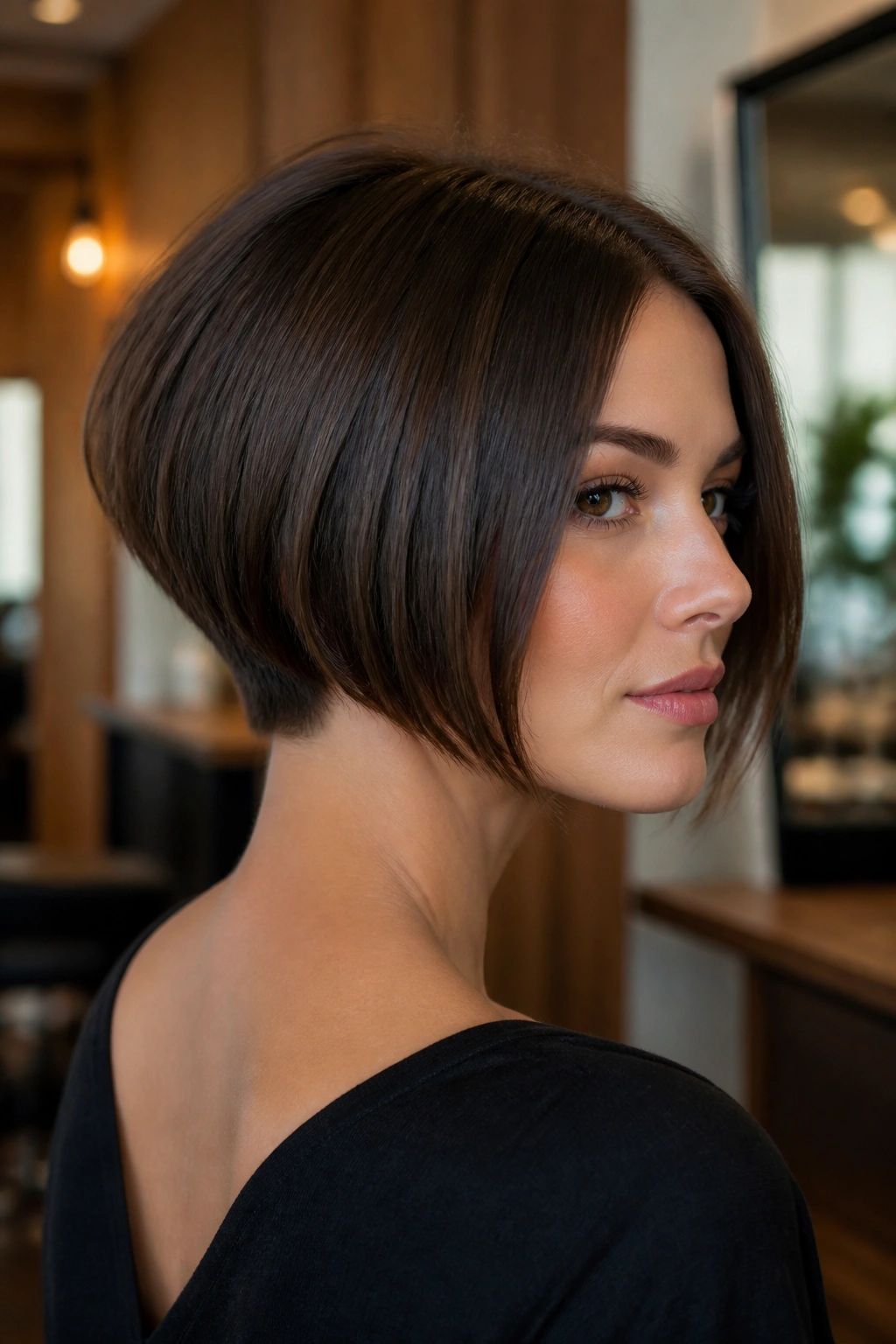
The nape matters more than the front in an inverted bob.
That sounds backwards, but it’s true. A clean, tight back gives the haircut lift, and lift is what keeps a round face from feeling weighed down. The front can then angle forward and skim the jaw or upper neck without piling all the volume in one place.
This cut is sharper than an A-line bob because the back is more obviously shorter. It creates a tucked-in feel at the base of the head, which gives the whole shape a bit of lightness. The front pieces should still be long enough to soften the cheeks. If they stop too high, the look gets severe.
This style works well if you like a haircut that looks tailored from every angle. It also holds up nicely in wind, humidity, and all the annoyances that flatten softer bobs. The back stays neat. The front keeps its line.
If your stylist leaves too much weight below the occipital bone, the angle disappears. That’s the mistake to avoid.
15. Box Bob with Sharp Lines

Can a box bob flatter a round face? Yes, if the edges are sharp and the length is placed with care.
A box bob sits a bit straighter and more geometric than a soft round bob. On a round face, that clean edge can be a good thing because it creates contrast. The face is soft; the haircut is structured. That contrast helps the features look more defined.
How to Keep It from Puffing Out
The cut needs to skim the jaw without sitting right on the fullest part of the cheek. If it does, the boxy sides can make the face look wider. The sweet spot is usually just below the jawline or just above the collarbone, depending on your hair density.
This is one of those styles that looks best when it is almost too neat. Once it gets frizzy or over-layered, the shape loses its edge. A smoothing cream, a flat brush, and a clean center or side part keep it honest.
It suits people who like a polished outline and do not mind a haircut that asks for regular trims. Every 6 to 8 weeks is about right if you want the corners to stay crisp.
A box bob is not soft. That’s why it works.
16. Shaggy Bob with Airy Movement

A shaggy bob is what you reach for when your hair has too much weight and not enough motion.
Round faces often look best with hair that moves a little. The shag does that by building texture through the interior and keeping the ends irregular. Instead of sitting in one smooth circle, the hair breaks up and falls in lighter pieces around the face.
This cut is useful for hair that puffs out at the sides but collapses at the roots. That combination is common, and a shaggy bob handles it better than a strict blunt shape. Ask for layers that start below the cheekbone and soften toward the ends. If the layers begin too high, the haircut can widen the face instead of slimming it.
Key Details
- Works well with mousse scrunched into damp hair
- Looks best when the ends are soft and feathered, not shredded
- Can be air-dried or diffused
- Needs a light trim every 8 to 10 weeks to keep the shape from spreading
The shaggy bob is not for someone who wants precision. It is for someone who wants hair that looks like it has a pulse.
17. Deep Side-Part Lob

A deep side-part lob is one of the safest choices if you want length, movement, and a shape that does not fight your face.
Because the lob sits below the chin, it already avoids the widest part of a round face. Add a deep side part and you get another line that breaks up the symmetry. The result is long enough to feel easy, but structured enough to matter.
This cut is especially good if you are growing out a shorter bob. It keeps the feeling of a bob without forcing you into a blunt chin line before you are ready. The front pieces can graze the collarbone, while the side part adds lift near the temple and crown. That lift helps a lot.
The styling can go smooth, wavy, or slightly undone. I like that it does not demand one look. Wear it sleek for work, bend it with a wand for the weekend, or tuck one side behind the ear when you want more openness around the face. The cut still behaves.
If you want one bob-adjacent option that rarely feels fussy, this is it.
18. Ear-Tucked Bob with Clean Sides
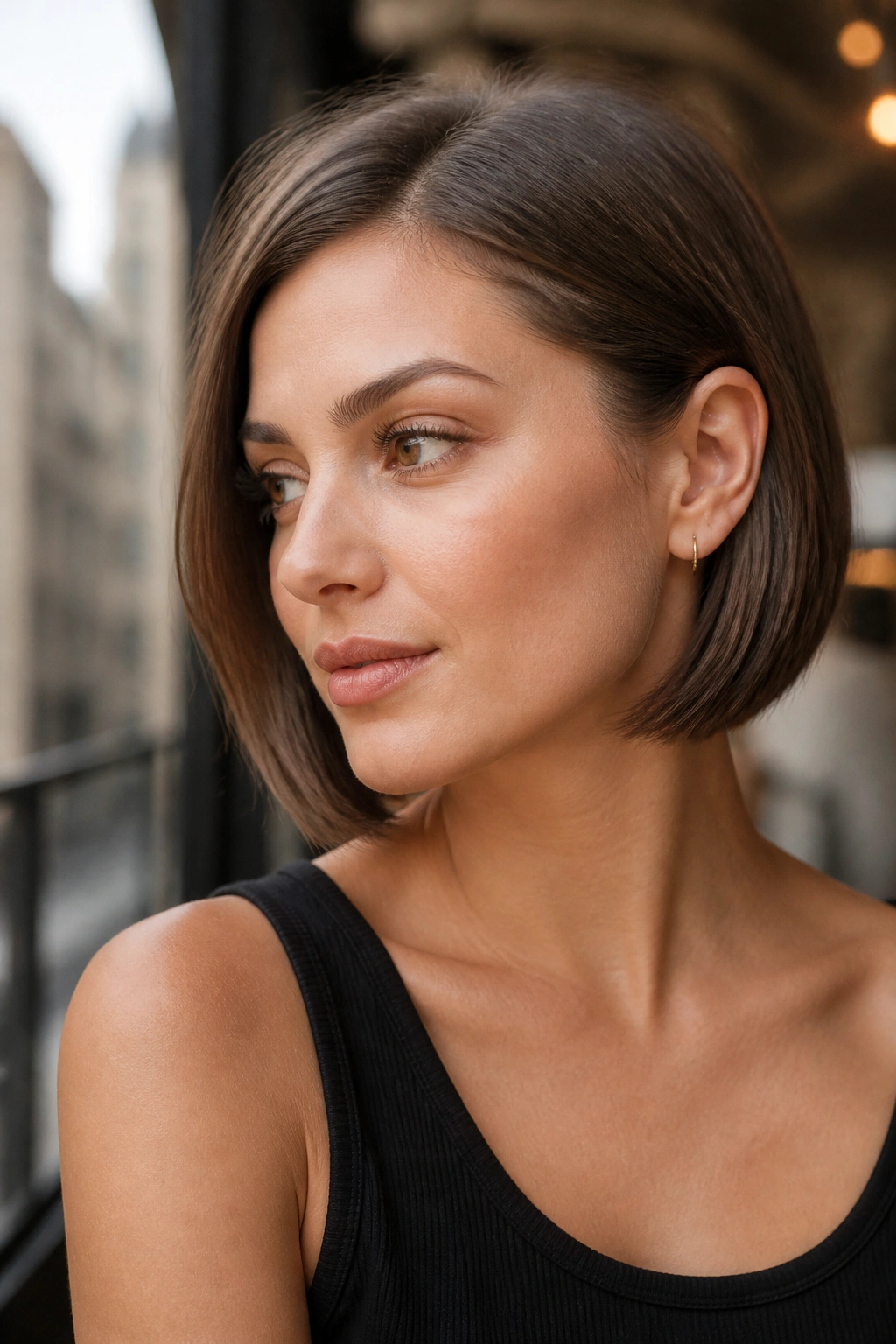
A bob that tucks neatly behind the ear changes the whole face frame.
Unlike a loose bob that hangs evenly on both sides, this cut is designed to show a little cheekbone and jawline on purpose. That small opening near the face creates space, and space matters on a round face. It stops the haircut from sitting like a solid curtain.
The shape should stay clean through the sides and slightly longer in front, so the tucked side looks intentional rather than random. You do not need a dramatic undercut. Just enough lightness around the ear to let the hair sweep back easily.
This style works well on straight or lightly wavy hair. Very coarse hair can still do it, but it may need smoothing cream or a quick pass with a flat iron to stay tucked. If the hair springs out from behind the ear, the whole effect disappears.
It is also good for earrings. Not a small thing. A tucked bob leaves room for them and keeps the face from feeling crowded.
19. Micro Bob with Height at the Crown
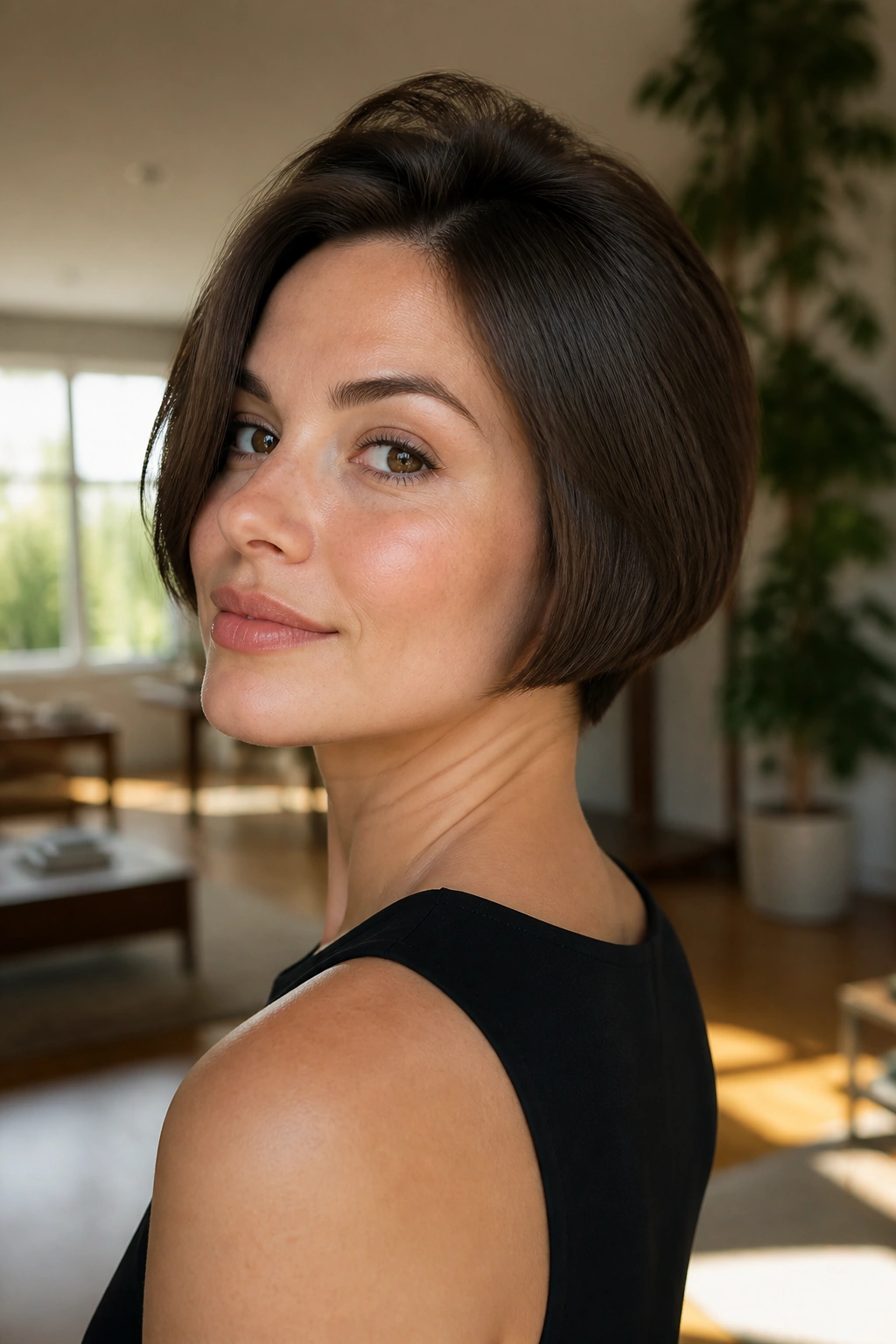
A micro bob can work on a round face, but only if the crown gets some lift and the nape stays exposed.
This is a braver cut. The length sits near the jaw or slightly above it, which means the styling has to earn its keep. If the hair lies flat, the face will look fuller. If the roots lift and the back is neat, the cut feels sharp and fresh.
What to Ask For
Ask for a compact shape with a little height at the top and a gentle taper at the nape. The sides should not flare outward. That is the trap. A tiny bob with width near the cheeks is not flattering on most round faces, no matter how fashionable it looks in a photo.
- Keep the perimeter tight and controlled
- Use root spray or mousse at the crown
- Blow-dry upward, not sideways
- Trim it often so the shape does not lose definition
This style suits people who like short hair and do not mind styling it every morning. If you want wash-and-go ease, this is not the easiest bob on the list.
But when it is cut well, the micro bob looks crisp in a way longer shapes cannot.
20. Swoopy Bob with Long Side Fringe

A long side fringe is one of the easiest ways to soften a bob without turning it into a heavy curtain.
The fringe sweeps across the face and lands somewhere between the eyebrow and cheekbone, which gives the cut a diagonal line right where a round face needs it. That line matters. It redirects attention away from the width of the cheeks and toward the eyes, which is a better trade than hiding the face under more hair.
This bob works especially well with hair that has a little bend. Blow-dry the fringe over a round brush, then let it cool across the forehead before pushing it to the side. That cooling step keeps the sweep in place. Skip it, and the fringe will separate in about ten minutes.
The rest of the bob can be chin length or a little longer. I prefer a length that skims the jaw or upper neck, because it keeps the whole cut light. Too much weight at the bottom and the fringe loses its effect.
If you want one style to take to a stylist first, this is the one I would hand over most often. It balances softness, shape, and everyday wear better than almost anything else on this list.
