



Thick hair can make a bob look expensive in seconds. It can also puff out like a helmet by lunch. The difference is where the weight sits, and bob haircuts for thick hair live or die on that detail.
A good bob does not fight density head-on. It trims the bulk where the shape needs release, keeps a clean line where the eye wants structure, and leaves enough mass at the perimeter so the ends don’t go wispy. That balance matters even more if your hair bends, frizzes, or swells the second air touches it.
I pay close attention to the nape and the front corners. Those two spots tell you almost everything: whether the cut will tuck neatly, whether it will flip out, whether you’ll need a round brush every morning or only on wash day.
The styles below solve different problems. Some sharpen heavy hair. Some soften it. Some make it look shorter without giving up the fullness you paid for. Start with the one that matches how much time you actually want to spend styling.
1. The Blunt Bob for Thick Hair
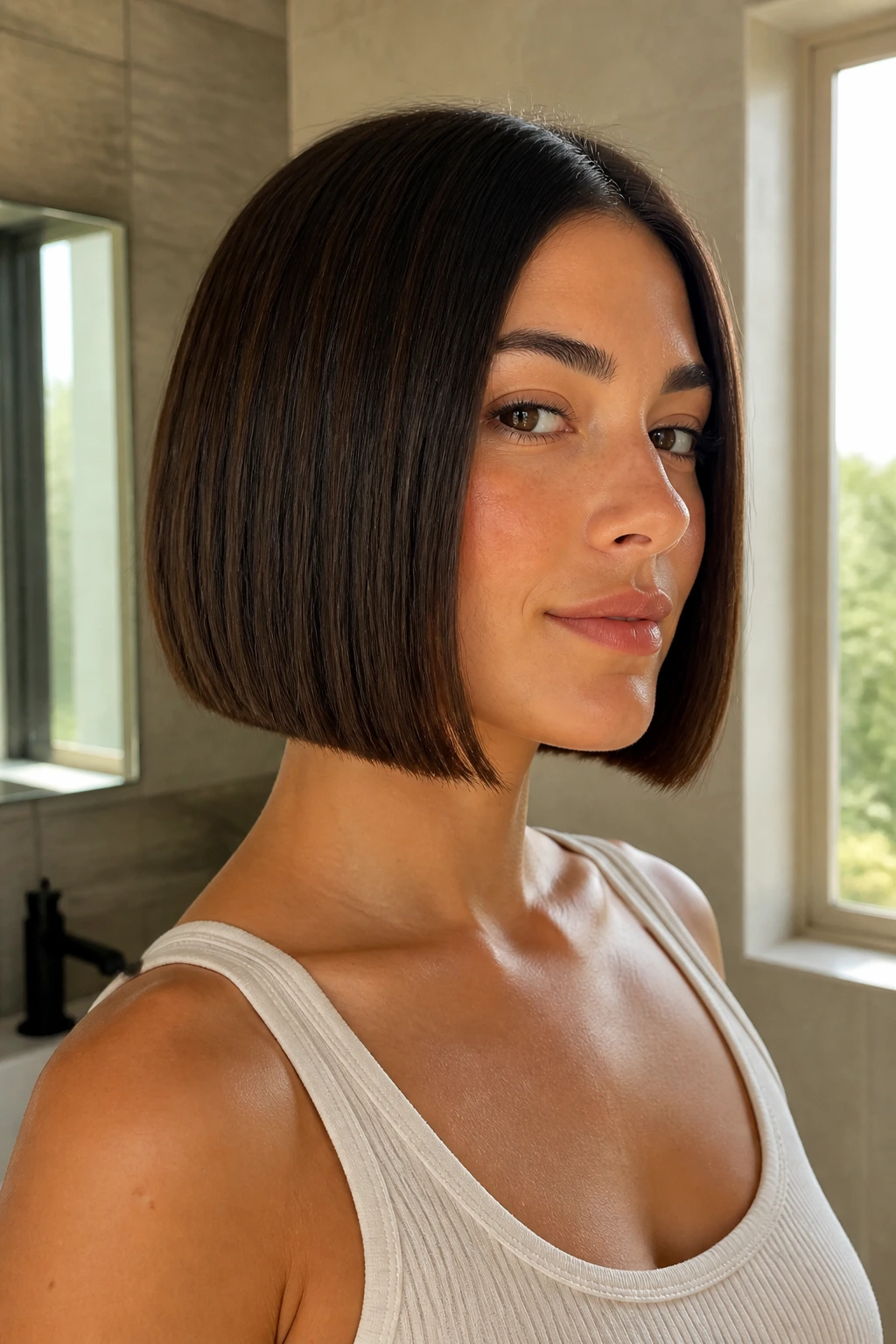
A blunt bob is the easiest way to make thick hair look polished with very little fuss. The solid edge keeps the shape from flaring out, which is the main battle with dense hair. If your strands are straight or only lightly wavy, this cut can look clean and rich at the same time.
Why It Works
The blunt line gives heavy hair a place to sit. Instead of breaking the ends into lots of short pieces, the cut keeps the perimeter intact, so the whole shape feels denser in a controlled way. That sounds simple. It is simple. And that is why it works.
Ask for the line to hit the chin or just below it if you want the style to feel soft rather than severe. A tiny bit of internal weight removal can help if your hair is extra thick, but do not let anyone shred the ends too much. The point is structure, not fluff.
- Best for straight, coarse, or slightly wavy hair
- Looks sharp at chin length or jaw length
- Usually styles fast with a paddle brush and a blow-dryer
- Avoid heavy razoring at the perimeter
Pro tip: Have the stylist check the finished shape dry. Thick hair shrinks and expands in odd ways, and a line that looks perfect wet can sit differently once it settles.
2. The Layered Bob That Lifts Heavy Ends
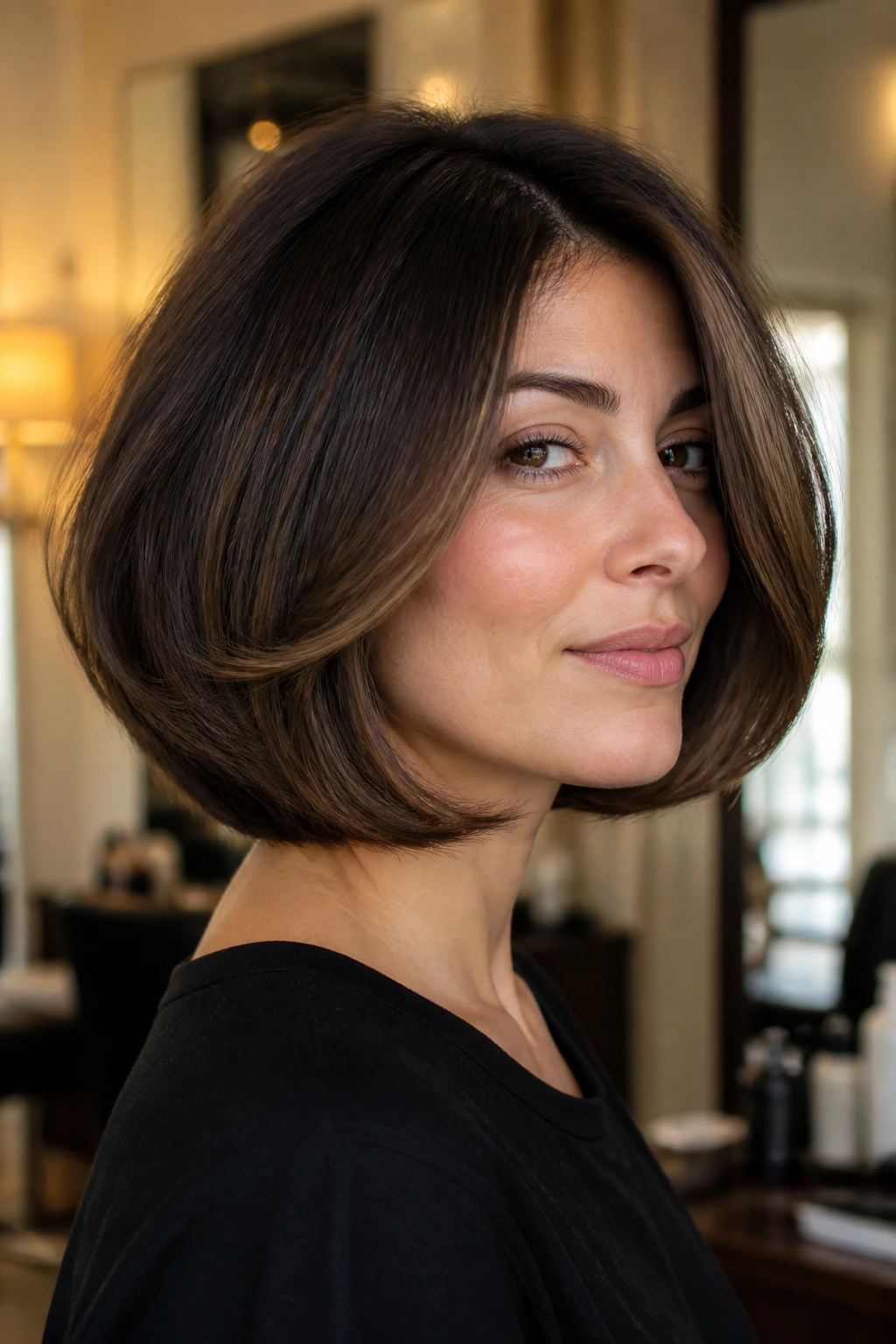
Why does a layered bob fix the triangle problem so fast? Because thick hair tends to pile at the bottom, and layers take pressure off the right spots without stealing the whole shape. The result is less shelf, more swing.
This cut works best when the layers are hidden inside the haircut, not hacked across the surface. You want enough release to stop the ends from kicking outward, but not so much that the bob turns soft and shapeless. That’s the line most stylists have to walk.
How to Wear It
Blow-dry the roots first, then bend the ends inward with a round brush or a flat brush and a quick wrist turn. A pea-sized amount of smoothing cream on damp hair helps keep the layers together instead of letting them fray apart. If your hair is thick and a little coarse, that tiny bit of control matters more than people think.
The best version of this bob still feels full. It just doesn’t feel heavy.
3. The A-Line Bob That Stays Longer in Front
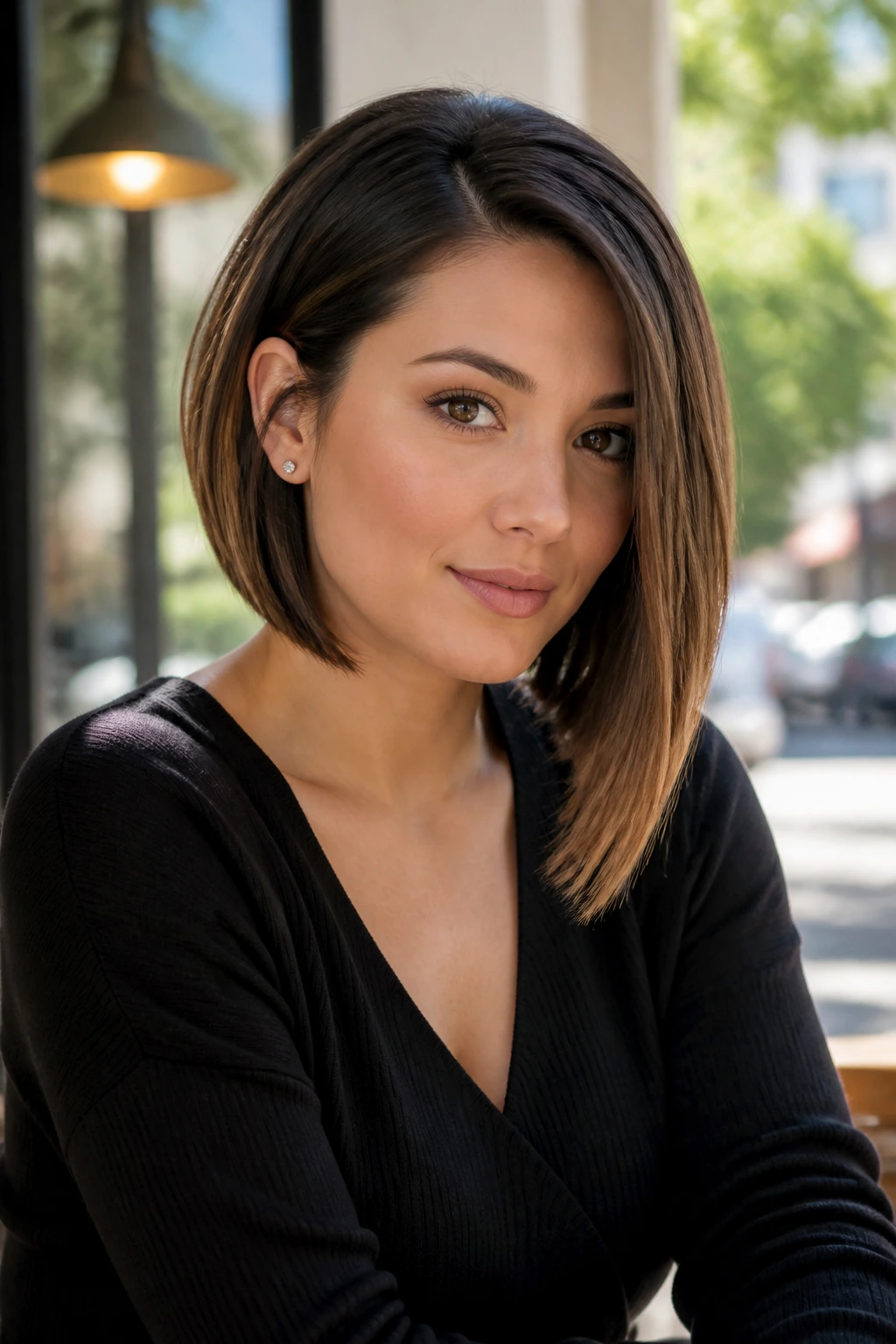
Picture this: you tuck one side behind your ear, and the front still falls nicely instead of puffing out. That’s the job of the A-line bob. The back sits shorter, the front stays longer, and thick hair gets a shape that feels deliberate instead of bulky.
The angle does a lot of visual work. It draws the eye forward, slims the profile a touch, and gives dense hair a built-in slope so the ends don’t all land at the same place. That matters when your hair has enough body to stand on its own.
- Strongest when the angle is subtle, not extreme
- Good for round, square, or fuller face shapes
- Works with straight hair or loose waves
- Needs a clean neckline so the back does not look boxy
A-line bobs can go bad fast if the front is too long and the back is too short. That creates a hard shelf. Keep the angle smooth, not dramatic, and the cut stays elegant without trying too hard.
4. The Inverted Bob with a Tight Back
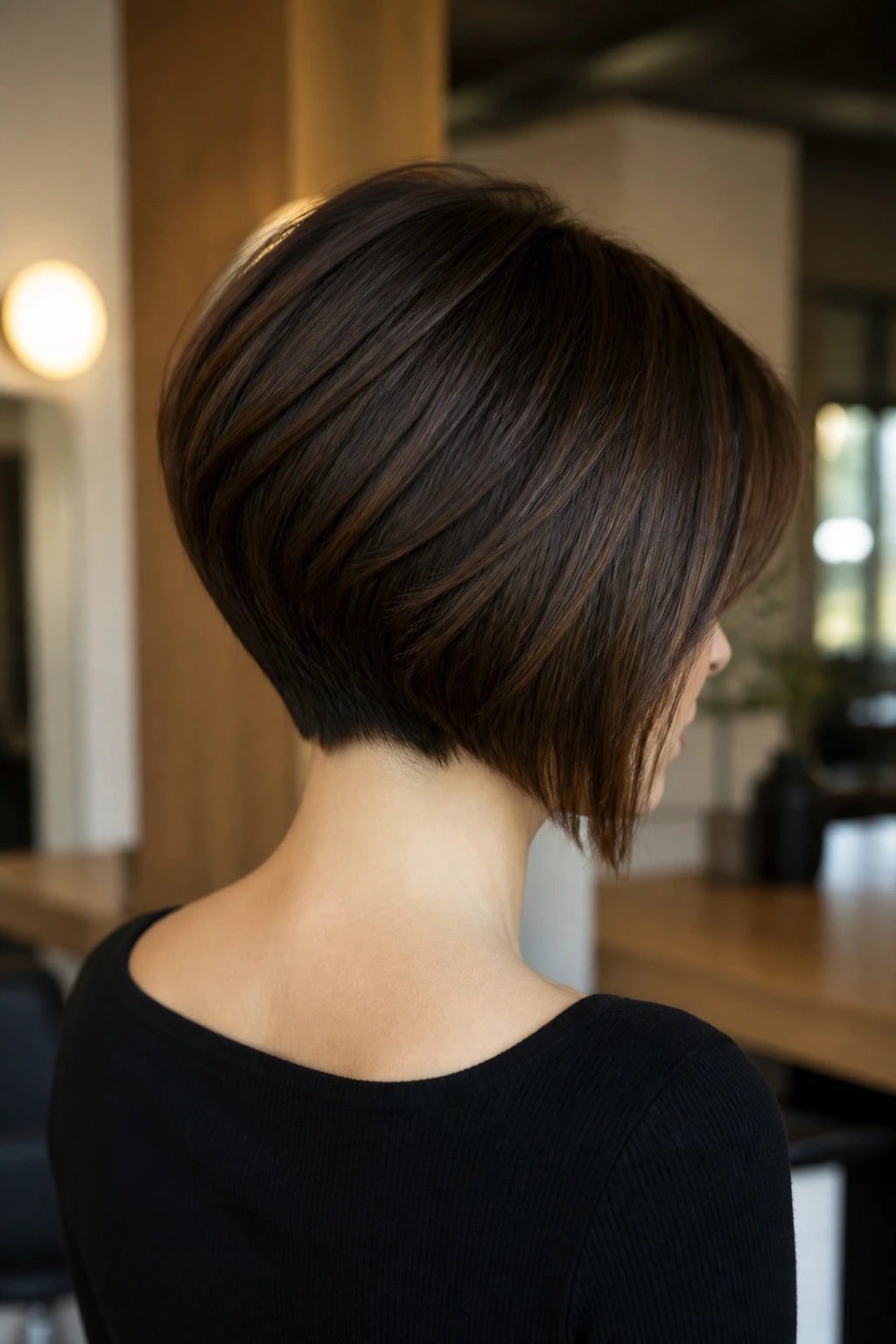
Unlike the A-line, the inverted bob leans harder into the back and gives thick hair a more lifted shape at the crown. It is a sharper cut. Cleaner. A little bolder. If your hair tends to feel heavy at the nape, this is one of the best ways to open things up.
The magic is in the graduation. Shorter layers at the back create a stacked effect, while the front pieces stay longer and skim the jaw. That balance keeps the bob from feeling helmet-like, which is the main danger with dense hair and short cuts.
It suits people who like a neat outline and do not mind a shape that asks for a bit of styling. A round brush or a blow-dry brush makes the back sit properly. If you air-dry without helping the roots along, the stacked area can collapse and the cut loses its edge.
This is a strong choice. Not subtle.
5. The French Bob with a Soft Fringe

A French bob has a little attitude, and thick hair gives it real presence. Cut it around the cheekbone to jaw area, add a soft fringe, and the whole style starts to feel airy instead of weighed down. It is short, but not severe.
The fringe matters here. A blunt bang can be too heavy on dense hair, so a slightly broken, eyebrow-grazing fringe keeps the face open. That tiny bit of movement changes everything. It stops the bob from looking like a block.
I like this cut for hair that bends naturally and does not mind drying with its own texture. A touch of mousse at the roots, then a rough-dry with fingers, often gives enough shape. If you want a neat finish, use a small round brush just on the fringe and front corners.
This one looks best when it is not too perfect. That is the whole point.
6. The Italian Bob That Keeps Movement Low-Key

The Italian bob is the lazy-girl glamour cut I keep coming back to. It sits a little longer, usually around the chin to collarbone, and thick hair gives it a plush, expensive-feeling line without forcing it into a stiff shape.
What makes it different is the softness at the ends. The perimeter still has weight, but the interior is just loose enough that the cut bends instead of bulking up. It suits hair that has a little wave or a bit of natural bend, because the style looks better when it moves.
A large-barrel brush, a quick blow-dry, and a few bends through the mid-lengths are often enough. No need to iron every strand flat. That would flatten the life out of it.
If you want a bob that looks styled without looking overworked, this is a strong pick.
7. The Chin-Length Bob That Draws a Hard Line

A chin-length bob can be fantastic on thick hair, but only if the outline is handled with care. Too blunt, and it turns square. Too airy, and it loses the whole point. The sweet spot sits right at the jaw, where the cut frames the face and still feels dense.
What Makes It Different
The shorter length gives thick hair a chance to show off its body without dragging the style down. It also keeps the ends from swinging past the shoulders and building more width than you want. That is why chin-length bobs often feel lighter even when the hair itself is not.
Ask for a little softness around the ends, maybe with point cutting, so the line does not look carved from cardboard. A deep side part can also help break up width if your hair is naturally broad through the sides.
- Strongest on hair with natural bend
- Needs careful neckline shaping
- Can be worn sleek or slightly tousled
- Works well if you like bold earrings or a clean collar
Watch this: if your jaw is very angular and your hair is very dense, the cut can feel boxy unless the stylist softens the corners.
8. The Collarbone Lob That Lightens Thick Hair

Can thick hair feel lighter without losing that rich, full look? Absolutely. The collarbone lob does that job better than most short bobs because it keeps enough length to control bulk while still lifting the shape away from the shoulders.
This cut is a good middle ground if you are nervous about going too short. The front pieces brush the collarbone, the back stays a touch shorter, and internal layers remove some of the weight that would otherwise sit like a brick at the bottom. It is a practical cut, which sounds dull until you wear it. Then it makes sense.
How to Ask for It
Tell the stylist you want movement without visible choppiness. That phrase matters. Thick hair often needs hidden support, not obvious layers. A soft face frame can keep the front from feeling heavy, and it helps the cut sit neatly when worn either straight or wavy.
This is one of those styles that grows out well. That alone makes it worth a look.
9. The Stacked Bob That Lifts the Nape
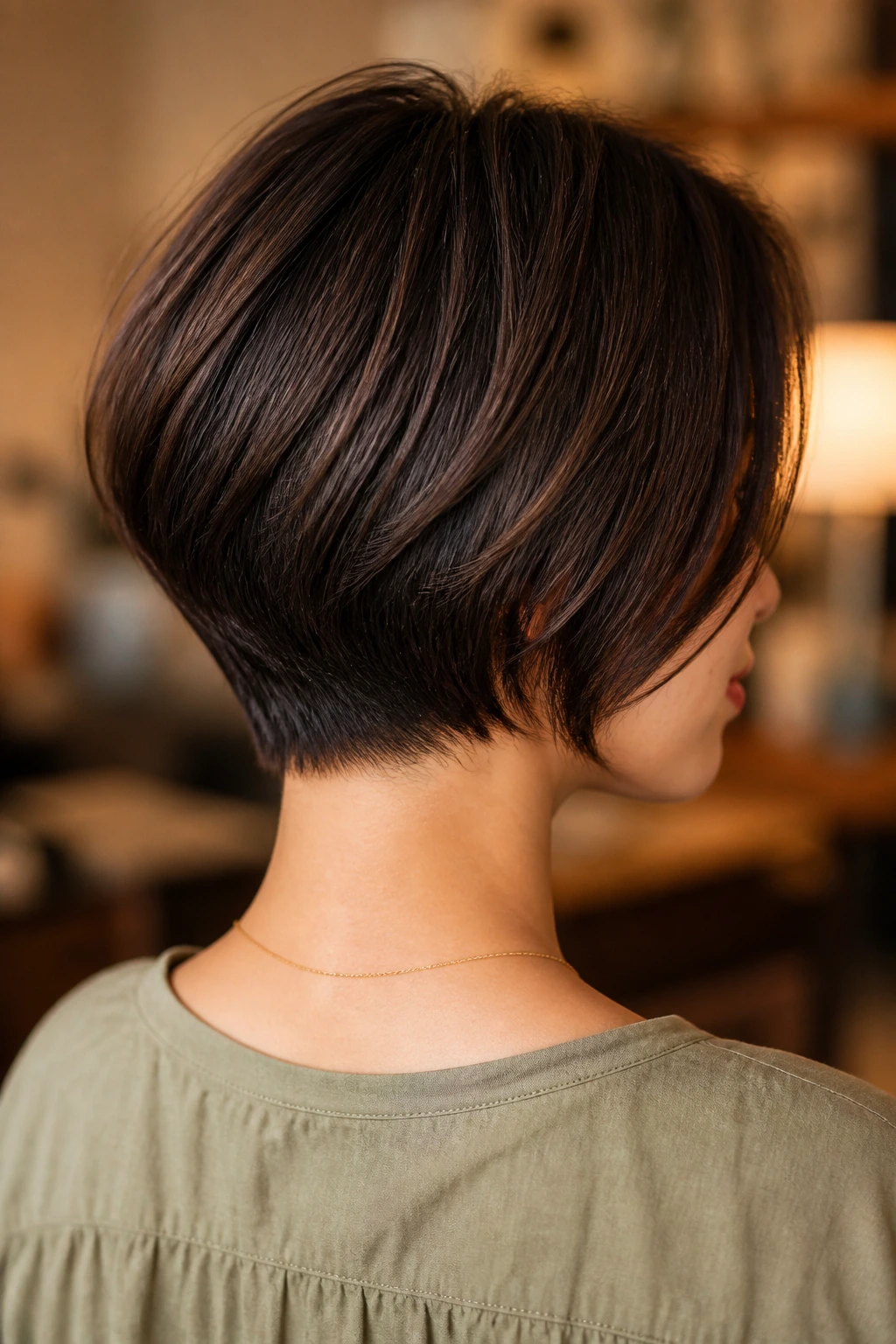
Walk out with a stacked bob and the back practically folds under itself. That little curve at the nape is the whole attraction. On thick hair, it removes bulk where the head meets the neck and gives the outline a neat, rounded finish.
The cut uses short layers at the back to build lift and a strong, tidy silhouette. The front stays longer so the style doesn’t feel too old-fashioned or too helmet-like. Done well, it has shape without fuss.
- Best if you want visible lift at the crown
- Needs regular trimming to keep the stack clean
- Works well on straight to slightly wavy hair
- Can feel too round if over-layered
I like this bob most on hair that grows thick right through the nape. That’s where most styles get bulky. The stacked version clears that area out and makes the neck look longer.
10. The Shaggy Bob with Choppy Ends
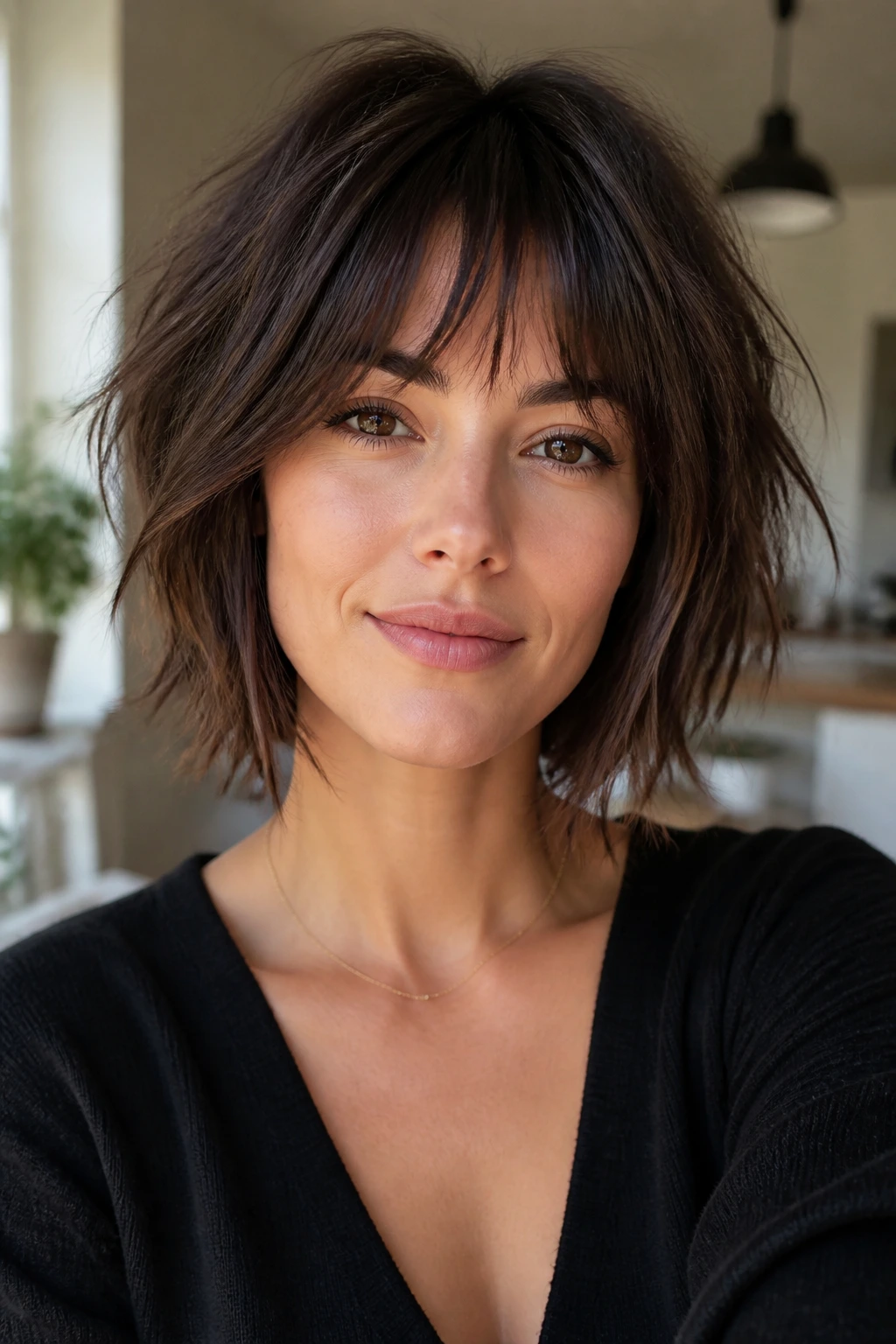
Unlike a blunt bob, the shaggy bob is built to look piecey. It takes thick hair and turns all that density into texture, which is a nice trade if you like a little messiness and not too much polish.
The cut depends on movement. Shorter internal layers and choppy ends break up the weight line, so the hair doesn’t sit as one heavy sheet. That makes it a good fit for people whose hair already has wave or for anyone who likes a lived-in finish with dry texture spray and finger styling.
It is not the best choice if you want a crisp, glassy outline. That would fight the cut. But if you want your thick hair to feel lighter and a little cooler, this one earns its keep.
I’d call it the least fussy bob in this whole group, which is saying something.
11. The Curtain Bang Bob That Opens the Face
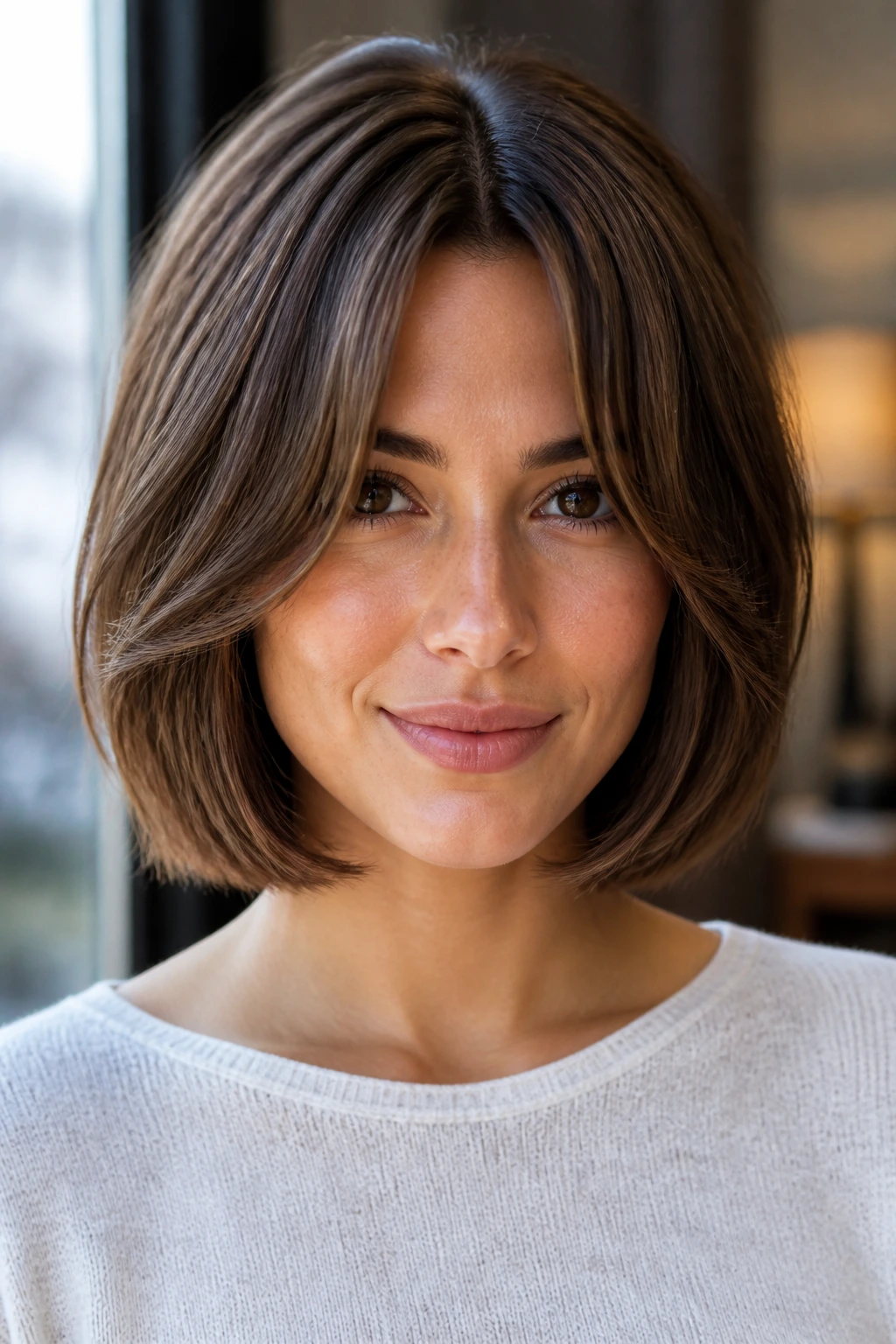
Curtain bangs can save a thick bob from feeling too blunt around the front. They split the weight at the forehead, soften the cheek line, and make the haircut feel a touch more relaxed. It is a small change with a big visual payoff.
The bangs should not be dense and heavy unless your hair is very straight and you actually want that strong fringe look. Most of the time, a softer curtain shape works better because it blends into the bob instead of sitting on top of it. The cut looks more balanced that way.
A round brush or hot brush through the fringe is usually enough. Keep the sides of the bob smooth, and let the bangs fall a little apart rather than forcing them into a perfect middle split. Perfection is not the goal here.
This cut is especially good if you want to keep the body of thick hair while taking some pressure off the face.
12. The Deep Side-Part Bob with Instant Lift
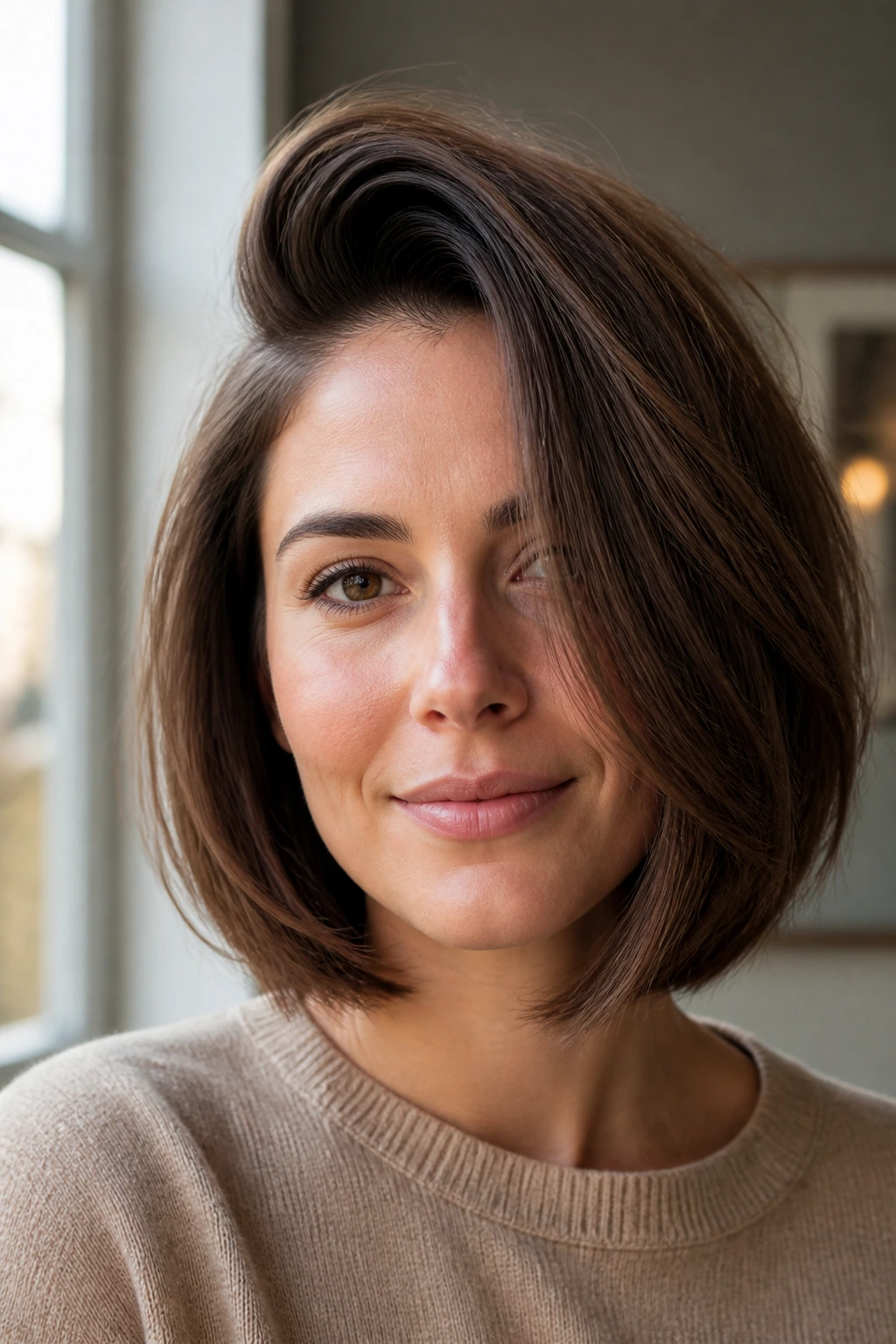
A deep side part can change a bob faster than scissors can. It shifts weight, creates height at the root, and gives thick hair a more dramatic line without cutting a single extra strand. That sounds almost too easy, but it works.
What I like about this shape is the asymmetry. Thick hair often falls too evenly across the head, which can make it feel flat in the wrong way or wide in all the wrong places. A side part breaks that up and lets one side sweep cleanly across the forehead.
You can wear this with a blunt bob, a layered bob, or even a lob. The part does the heavy lifting. Use a little volumizing mousse at the roots if your hair tends to collapse on itself, then push the front over while it is still warm from the dryer.
Simple change. Big payoff.
13. The Box Bob with a Sharp Outline
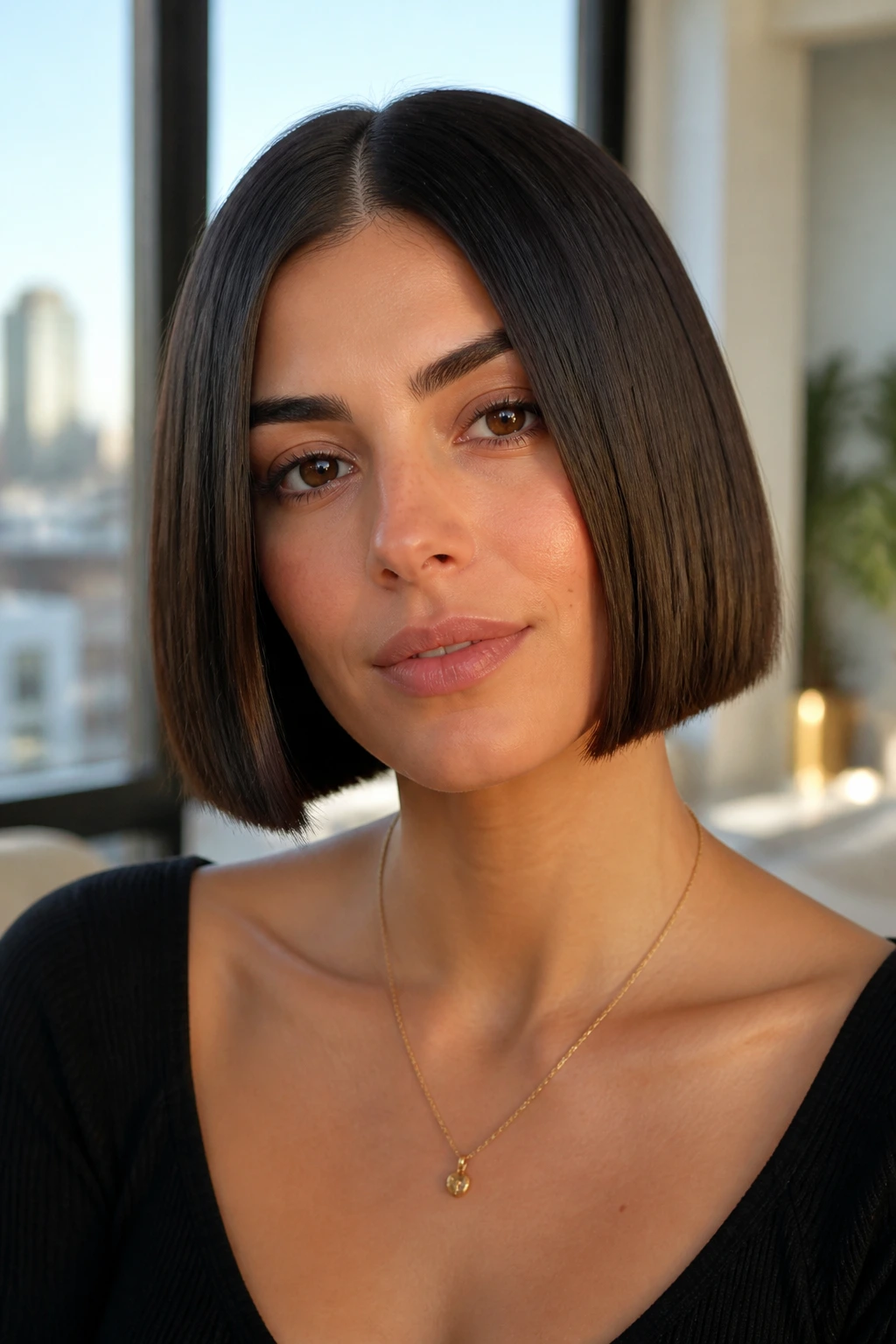
A box bob is the graphic, straight-edged cousin in this group. It keeps the bottom line square and the sides even, which thick hair can wear beautifully when the cut is precise. There is nothing soft and accidental about it.
What Makes It Different
The shape sits almost like a little frame around the head. That makes dense hair feel intentional, not bulky. The key is keeping the line disciplined while removing just enough interior weight so it doesn’t balloon out at the sides.
Quick Details
- Best on straight or lightly wavy hair
- Needs regular trims to keep the edge clean
- Looks strongest at jaw to chin length
- Works well with a middle part or a sharp side part
My take: this is not a shy haircut. It suits people who like a clear outline and are happy to see the shape every time they look in the mirror.
14. The Razor-Cut Bob with Soft Ends
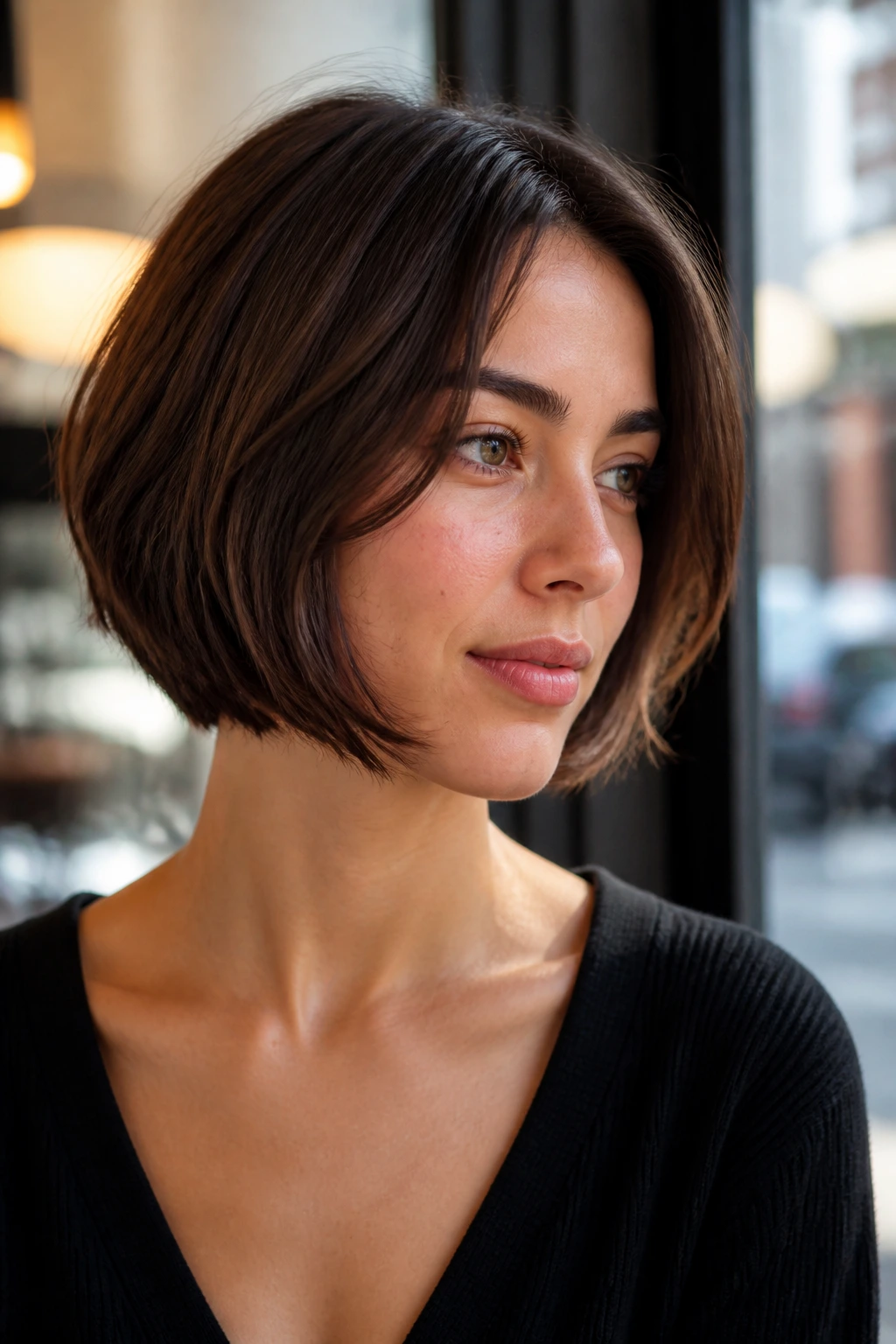
Can thick hair handle a razor? Yes, but only when the texture can take it. A razor-cut bob softens the perimeter, which helps heavy ends stop acting like a solid block. The result feels lighter and a little more feathered.
This cut is best on hair that is not too coarse and not too prone to frizz. If the hair is already rough or very dry, a razor can make the ends look frayed. That is the catch. Used well, though, it gives the bob a lovely broken edge.
Ask for the ends to stay controlled rather than shredded. That distinction matters. You want softness, not damage-looking wisps. A smoothing serum or cream on damp hair helps the finish stay neat, especially if you air-dry.
It’s a good choice when you want movement without obvious layers.
15. The Wavy Bob That Lets Texture Lead

A wavy bob makes thick hair feel playful instead of heavy. If your hair already bends or curls a little, this cut lets the texture do some of the work, which is always a nice trade. The shape usually lands around the chin or just above the shoulders.
The styling is half the appeal. Scrunch in a light mousse, diffuse until the roots are dry, and leave the ends a little undone. That imperfect finish stops thick hair from looking too controlled. If you prefer more definition, a few bends with a curling wand around 1-inch wide can help.
- Best for natural wave or loose curl
- Works well with sea salt spray or mousse
- Looks good when air-dried with a little product
- Needs face-framing pieces to keep the front from feeling heavy
I like this cut because it doesn’t ask thick hair to become something else. It just shapes what is already there.
16. The Asymmetrical Bob That Breaks the Bulk

An asymmetrical bob gives thick hair a cleaner line by refusing to be perfectly even. One side sits a little longer, the other a little shorter, and that slight imbalance keeps the style from reading as wide or heavy.
The cut works because the eye follows the longer side downward. That visually narrows the shape, which is useful if your hair tends to spread outward at the jaw. It also makes the whole bob feel a bit more modern without going extreme.
This is a nice pick if you like a haircut with a little edge but do not want to commit to a dramatic undercut or a heavily stacked back. Keep the difference subtle and the result stays wearable. Push it too far and the shape starts to feel gimmicky.
Not every bob needs symmetry. This is proof.
17. The Curly Bob Shaped on Dry Hair
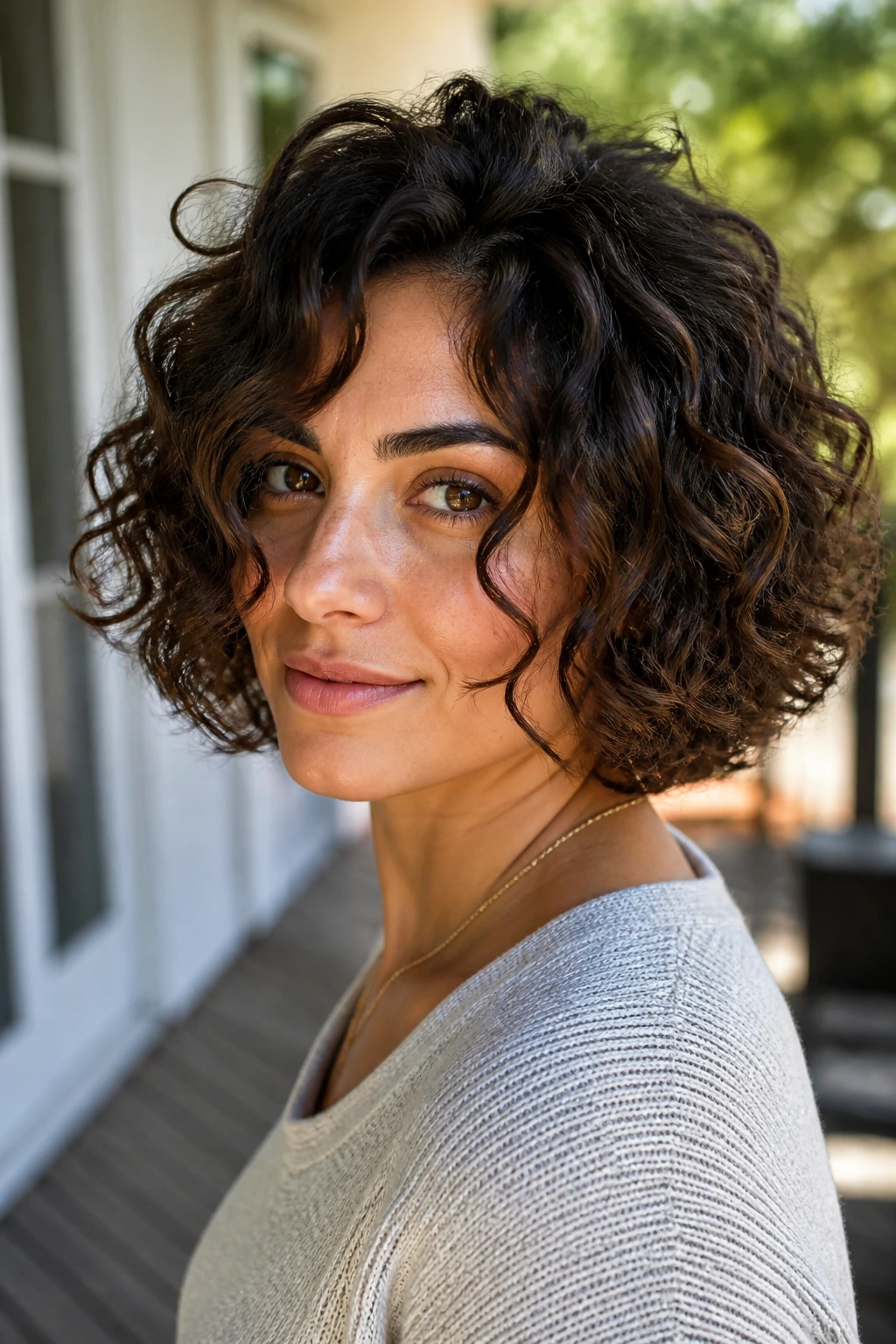
Curly thick hair needs a different kind of bob altogether. If you cut it wet and hope for the best, the shrinkage will surprise you. A dry cut, or at least a curl-aware cut, gives the shape a chance to land where it should.
The trick is to respect the spring in the curls. Shorter pieces around the crown can help stop the shape from turning wide, while longer front pieces keep the bob from jumping up too high. A good curly bob usually sits a little longer than you expect once the curls bounce up.
Keep the styling light. Curl cream, a little gel, and a diffuser are often enough. Heavy brushing can wreck the shape fast and turn all that lovely density into frizz. Don’t do that to yourself.
This is one of the most flattering bob haircuts for thick hair when the curl pattern is strong and the cut is done by someone who knows curls.
18. The Rounded Bob with a Soft Curve

If you hate a boxy silhouette, a rounded bob gives thick hair the softest outline in the whole group. The ends curve inward, the crown stays gently lifted, and the overall shape feels polished without looking hard.
The roundness is what makes it work. Thick hair naturally wants to sit broad, so shaping it into a curve keeps the volume intentional. It also flatters people who want a little softness around the jaw and cheek area.
A blowout brush or a round brush with medium tension helps set the curve. You do not need to force every section perfectly inward. A little bend at the ends is enough. Too much can make the hair look set and old-fashioned, which is a shame because this cut can be very modern when handled lightly.
It’s a quiet shape, but not a boring one.
19. The Undercut Bob That Removes Hidden Weight
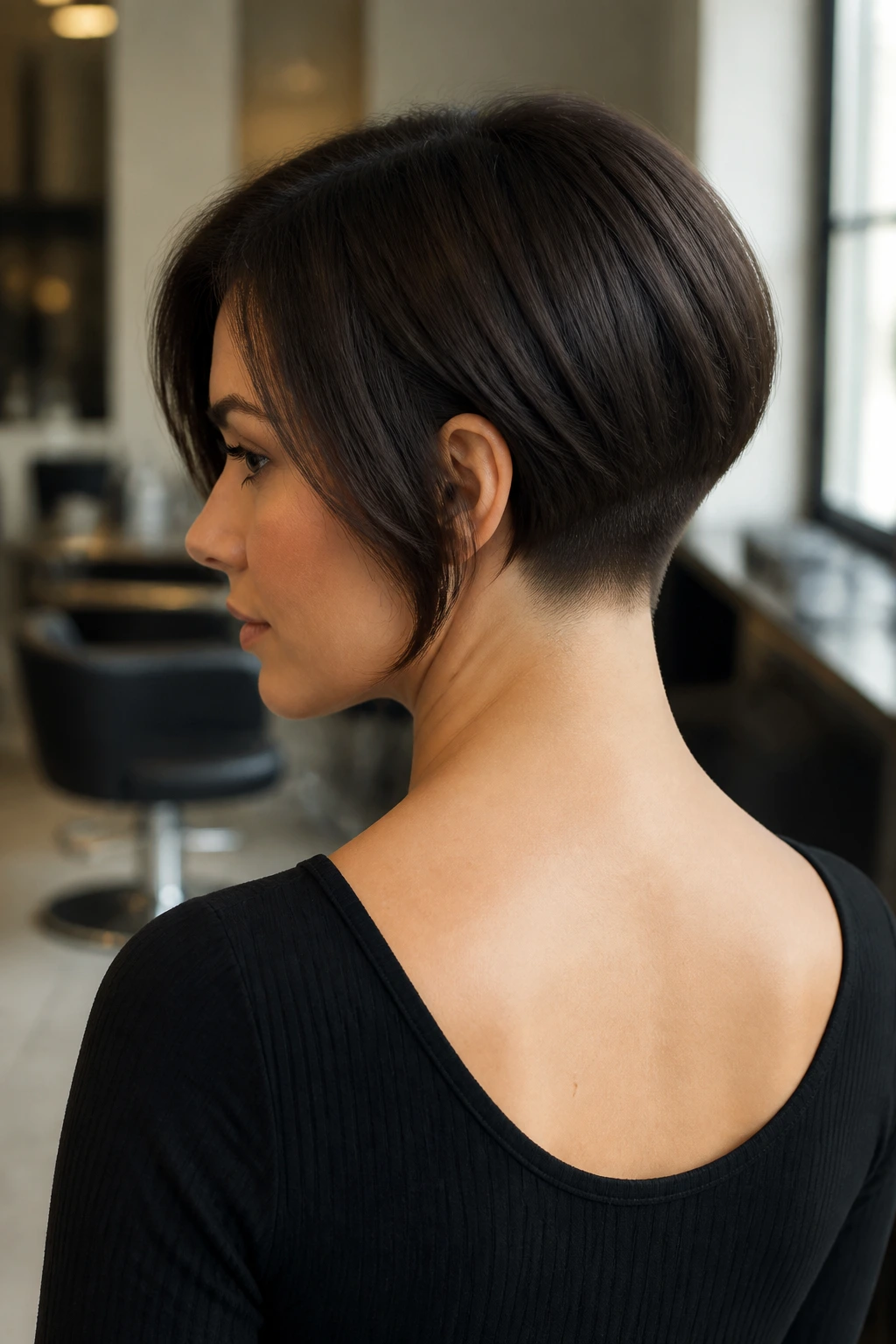
An undercut bob is the sneaky one. From the outside, it can look like a normal bob. Underneath, though, a section of hair has been removed to take out serious bulk. On very thick hair, that can be a relief.
The Part Nobody Sees
The undercut usually lives near the nape or underneath the back section, where it cuts down on puff and makes the rest of the haircut sit closer to the head. That helps the top layer fall more neatly and can make drying time shorter too. It’s one of the best answers for hair that feels too dense to live in a standard bob.
What To Keep In Mind
- Best for very thick or coarse hair
- Needs honest upkeep every few weeks
- Can feel cooler and lighter around the neck
- Works well if you wear your hair down most of the time
My opinion: this is one of the smartest cuts in the bunch, but only if you like regular maintenance. If you want a set-it-and-forget-it shape, skip it.
20. The Neck-Length Bob That Stays Easy

A neck-length bob is the sleeper cut for thick hair that does not want daily drama. It keeps enough length to avoid the mushroom effect, but it sits short enough to feel fresh, neat, and easy to move around in. That balance is hard to beat.
The best version has a little face-framing around the front and a clean line at the back. Nothing too stacked, nothing too shaggy, nothing that asks for twenty minutes of hot tools before breakfast. Thick hair can carry the shape on its own if the ends are trimmed well and the bulk is handled where it matters.
I like this one for people who want a bob that behaves in real life, not just in salon lighting. It works tucked behind the ears, air-dried with a little cream, or smoothed out with a quick pass of a brush. That kind of flexibility matters.
And honestly, that’s the point. A good bob should make thick hair feel like an asset, not a project.
