



Medium blonde bob haircuts for round faces can be the cleanest way to make soft features look sharper without losing the softness people actually like. The trick is not one single cut. It is the mix of length, parting, edge shape, and where the blonde is brightest.
Round faces tend to have a similar width at the forehead, cheeks, and jaw, so a bob that ends right at the cheek can work against you. Push the line a little lower. Add a side part, a curtain fringe, or a front piece that drops past the chin, and the shape starts reading longer instead of wider.
Color placement matters too. A pale money piece at the cheekbone can help, but a full bright halo around the face can bring the width back. Beige, honey, vanilla, and champagne blonde each change how heavy the cut feels, even when the length is the same.
Some of these cuts lean sleek. Others are loose and airy. A few are shorter-looking on paper but still flattering because the angle is doing the work. The best part is that you do not need one “correct” bob; you only need the version that gives your face more vertical line and less side-to-side bulk. First up: the cuts that do that best.
1. Collarbone-Length Beige Blonde Lob with Curtain Bangs
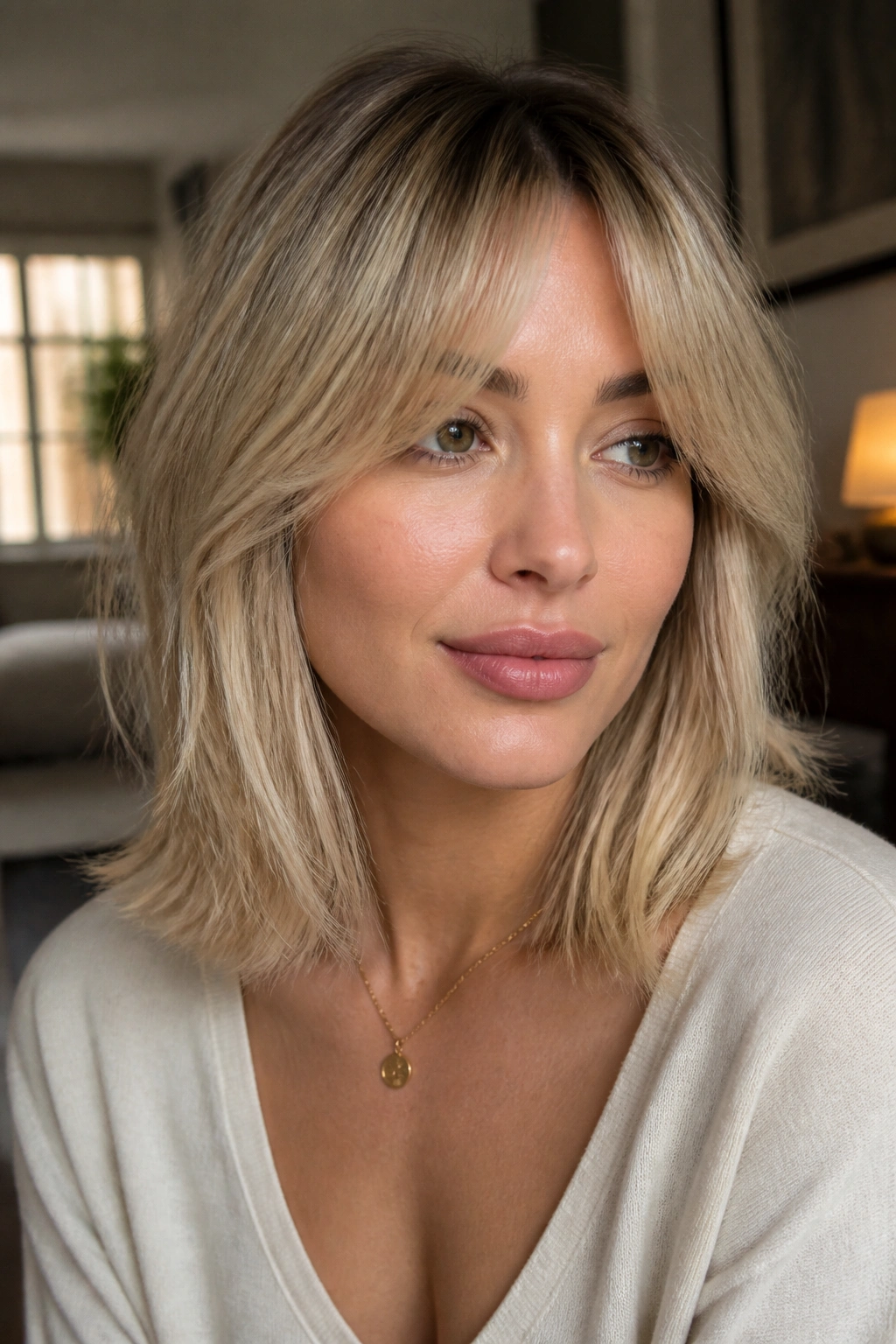
This is the one I keep coming back to for round faces, because it does three jobs at once. The collarbone length stretches the face, the curtain bangs split the forehead softly, and the beige blonde keeps the whole shape from looking heavy or stark. It is polished, but not stiff.
Why It Works
Curtain bangs are useful here because they open in the middle and skim down toward the cheekbones. That creates two narrow lines on either side of the face, which is a small thing with a big effect. The bob itself should sit just below the collarbone so the widest part of the face never meets the blunt edge of the cut.
A little bend at the ends matters. Too straight and the shape can read square. Too rounded and you get more width than you want.
Ask for:
- A length that grazes the collarbone or lands 1 inch below it
- Curtain bangs that start around the cheekbone, not the eyebrow
- Soft internal layers, not heavy slices through the top
- A slight bevel at the ends so the bob does not puff out
Best styling move: blow-dry the bangs away from the face with a medium round brush, then turn the ends under just half an inch. That tiny curve is enough.
2. Angled Honey Blonde Bob with a Deep Side Part
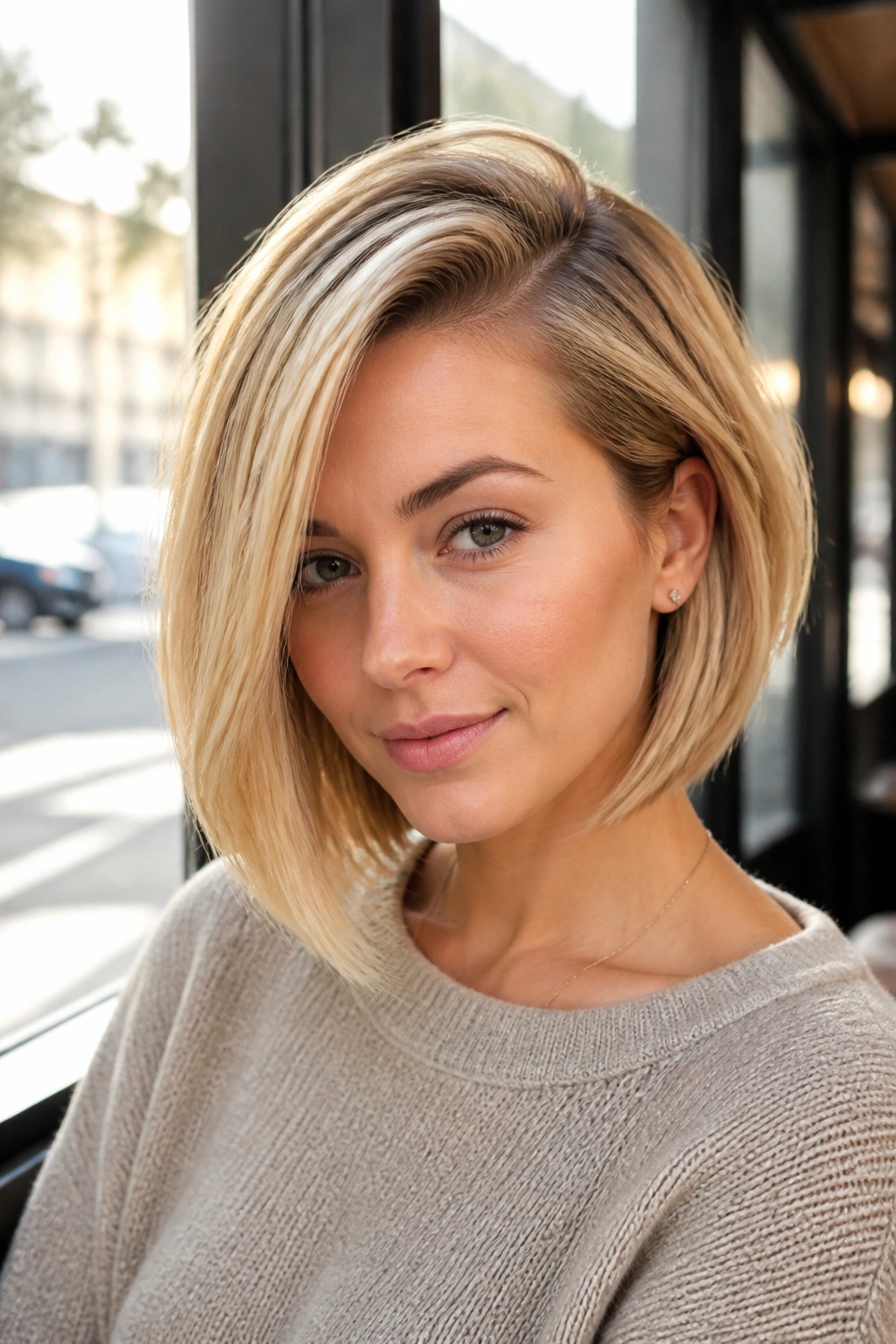
A deep side part does more for a round face than a lot of people realize. It breaks the symmetry, pulls the eye diagonally, and gives the whole cut a longer line from temple to chin. Add a honey blonde shade and the result feels warm, not harsh.
The angle should be subtle, not dramatic. Think shorter in the back and longer in the front, with the front pieces dropping toward the collarbone. If the front lands at cheek level, it can add width right where you do not want it. If it falls lower, the face looks leaner.
I like this cut for medium-density hair because it holds shape without feeling bulky. Fine hair can wear it too, but the front needs a little root lift or it can fall flat and lose the angle.
The styling part is simple. Use a light smoothing cream, sweep the part over 2 to 3 inches off center, and direct the front section down and forward when you blow-dry. That forward direction is the whole point. It keeps the face from looking open on both sides at once.
3. Soft Blunt Bob with Tucked Ends
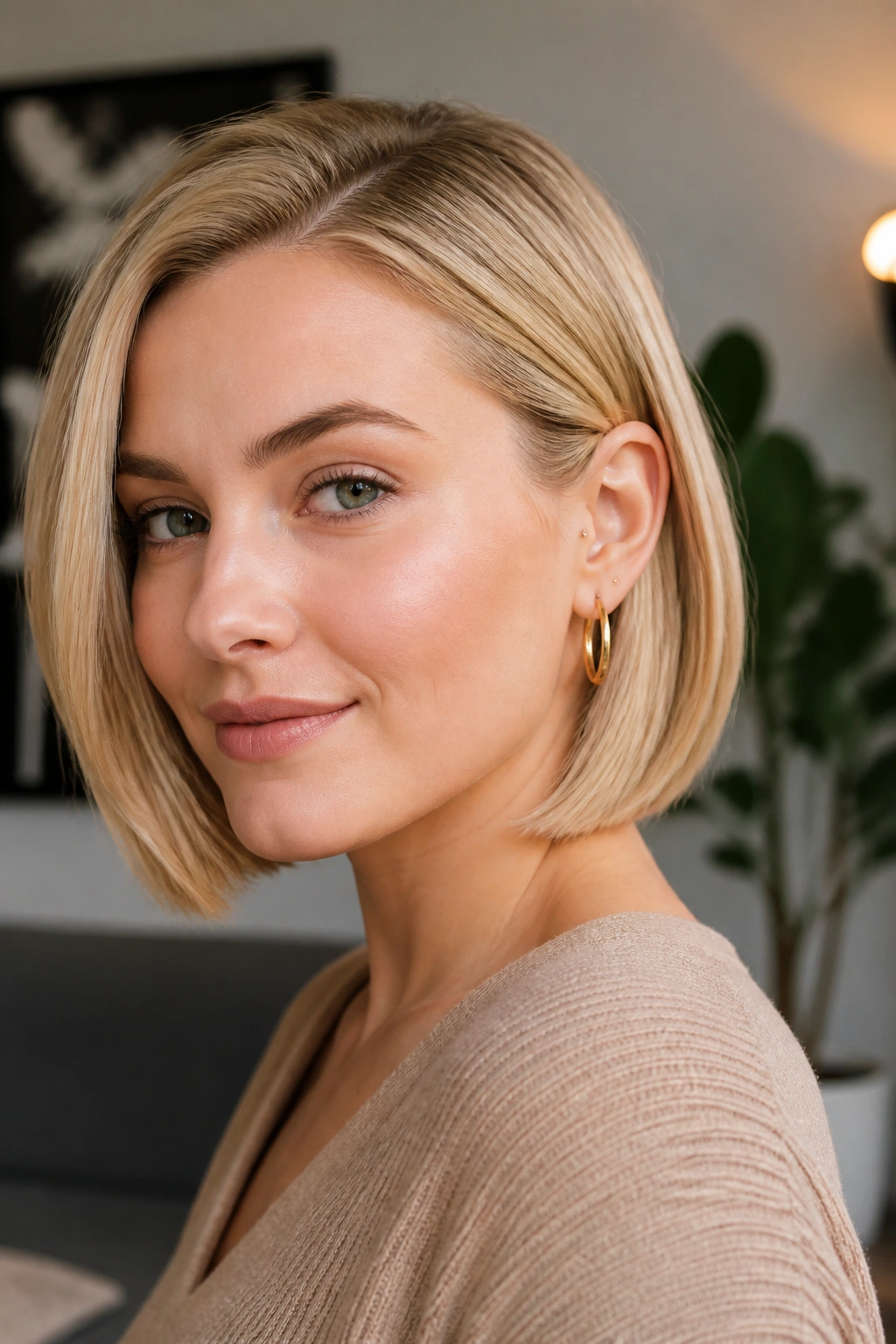
Can a blunt bob work on a round face? Yes — if the length sits low enough and the edges are handled with restraint. A blunt line at chin level is usually too short for this face shape, but a medium version that lands below the jaw can look clean and modern.
How to Wear It
The key is to keep the ends soft enough to move. You do not want a box. You want a controlled line that falls straight, then bends under just a little when you tuck one side behind the ear. That one little tuck changes the whole balance of the cut.
This is a good choice if you like easy styling. Straight hair makes the shape look crisp. Slightly wavy hair gives it a softer edge. Either way, the bluntness adds structure, while the length keeps the face from feeling wider.
What to avoid: a super rounded blowout at the cheeks. That can make the bob bloom outward and shorten the face visually.
4. Textured Champagne Blonde Lob
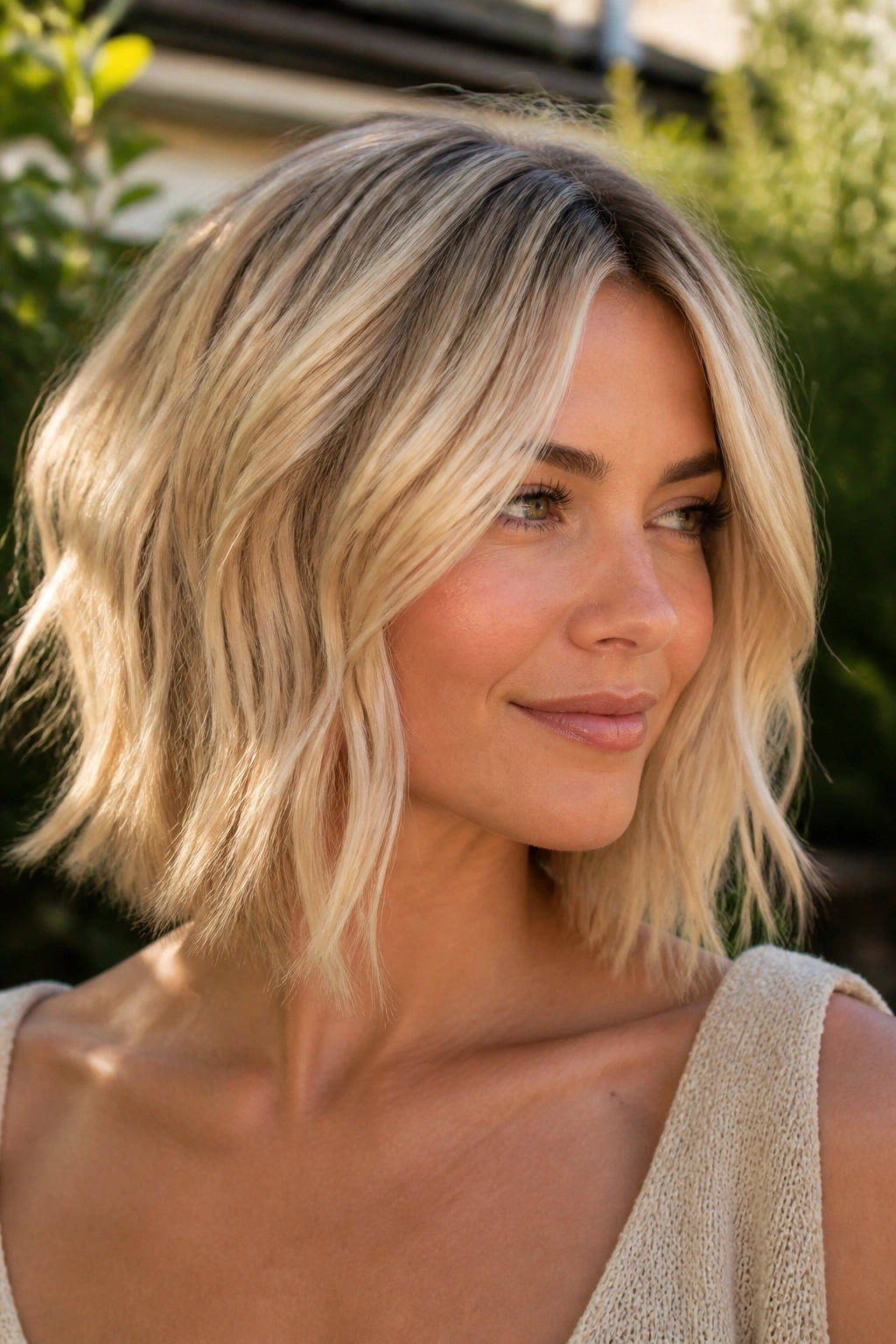
The nicest thing about a textured lob is that it does not fight natural movement. It lets the hair fall in loose pieces, and those pieces interrupt the roundness of the face in a good way. Champagne blonde keeps the look light and bright without screaming for attention.
Picture this on a person who air-dries half the week and uses a curling wand the other half. The cut still works. The point-cut ends keep the line from getting too blunt, and a little extra length in front pulls the eye down toward the collarbone.
Good Details to Ask For
- Collarbone length at the front
- Soft, piecey ends instead of one hard edge
- Light internal layers through the mid-lengths
- Face-framing pieces that begin below the cheekbone
- A lived-in wave, not a ringlet pattern
A texture spray or a pea-sized dab of cream is usually enough. The goal is separation, not volume everywhere. When the texture stays loose and irregular, the cut stops feeling circular.
One practical note: if your hair is very thick, ask for the texture to be concentrated through the ends, not the top. That keeps the crown from ballooning.
5. French Bob with Brow-Skimming Fringe
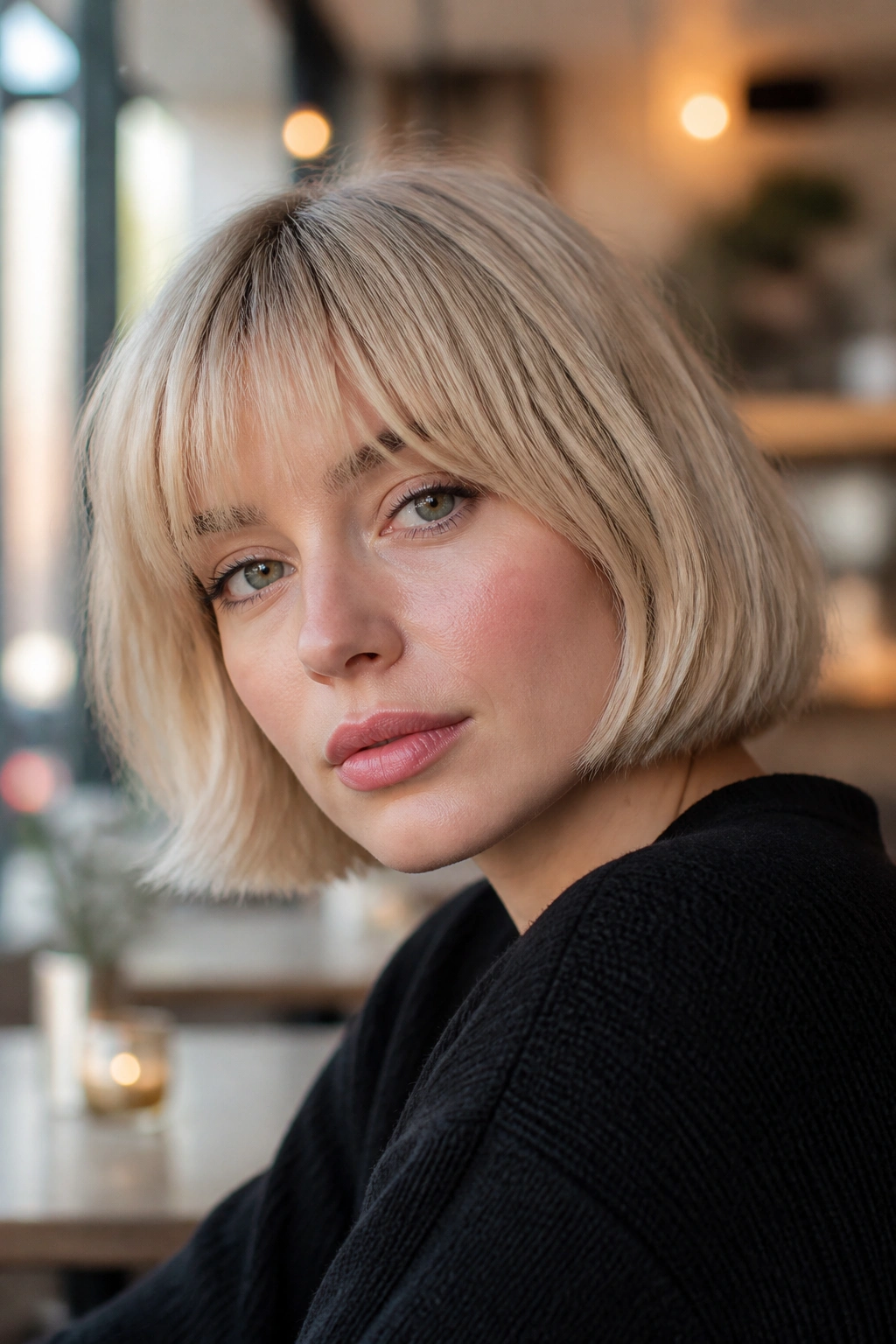
The French bob gets a lot of attention because it looks effortless, but on a round face it needs a little tailoring. Keep the length closer to the jaw than the cheek, let the fringe graze the brows, and make sure the whole shape stays airy. Heavy bangs are the enemy here.
What works so well is the contrast. The fringe adds a horizontal line up top, while the bob itself falls in a tidy frame around the lower half of the face. If the bangs are too thick, the face can feel boxed in. If they are soft and slightly separated, the cut feels chic without being severe.
I like this one best with a soft beige or vanilla blonde, because the lighter tone keeps the shape from looking dense. That matters more than people think. Darker roots are fine, but the finish should not feel flat.
The best versions have a little bend at the ends and a touch of movement near the temples. Not too much. Just enough to stop the line from sitting like a helmet.
6. Feathered Blonde Bob with Cheekbone Layers
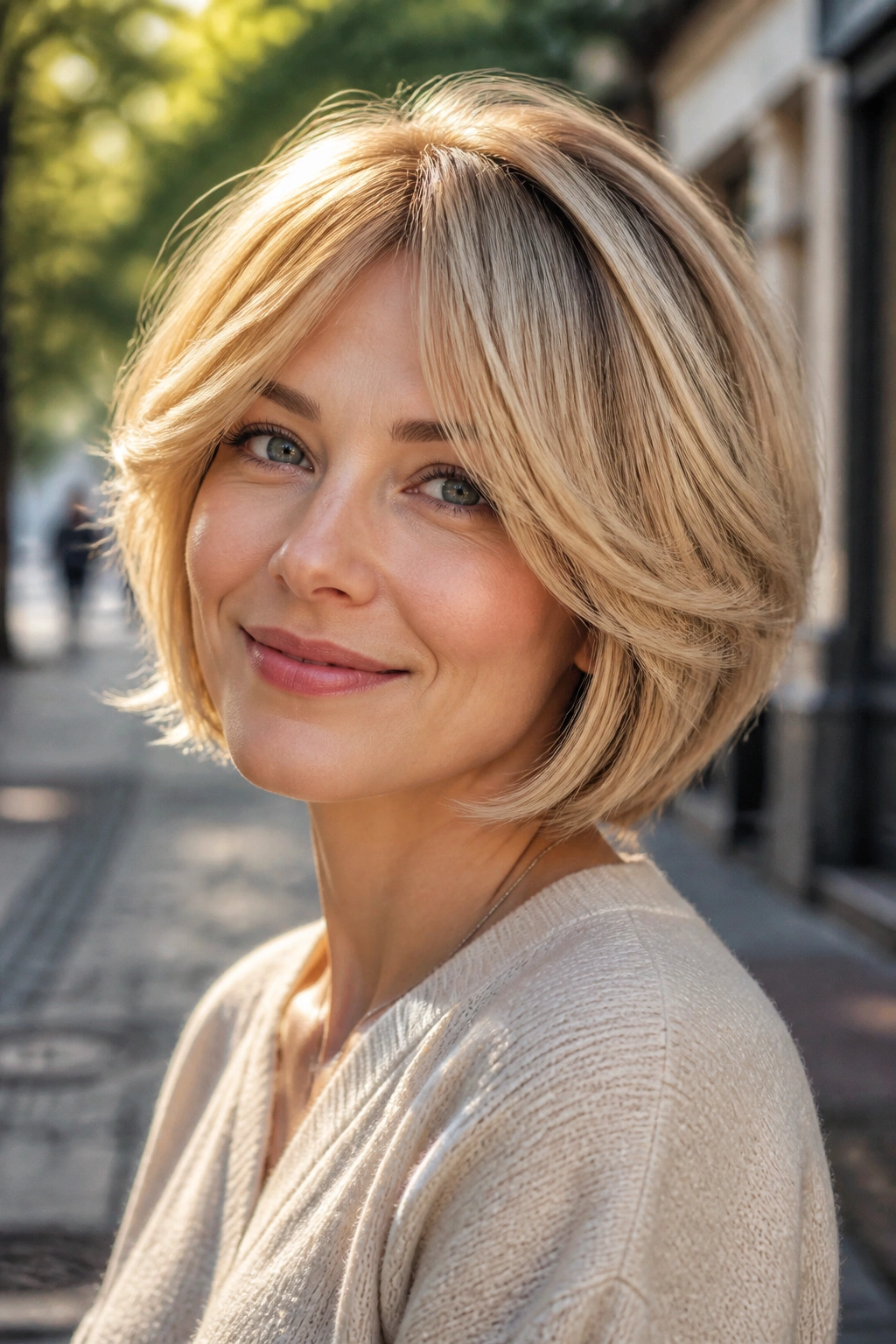
Unlike a blunt bob, this cut breaks up width before it has a chance to settle around the face. The feathering begins around the cheekbone and falls through the mid-lengths, so the shape stays light without looking thin. That is a useful distinction. Light is not the same as sparse.
This style is especially good for thicker hair. Feathering removes some of the bulk that can make a bob feel wide at the sides, and the layers let the hair curve inward instead of sitting straight out. On fine hair, I would keep the feathering softer and less aggressive, or the ends can look wispy.
The blonde here should have a little dimension. A single flat shade can make every layer blend into one block. A slightly deeper root and brighter ends help the movement show up.
Best for: people who want body without puffiness.
Best pairings: a side part, a round brush blowout, and a light shine spray at the end. That last step sounds optional. It is not.
7. Stacked Blonde Bob for Round Faces
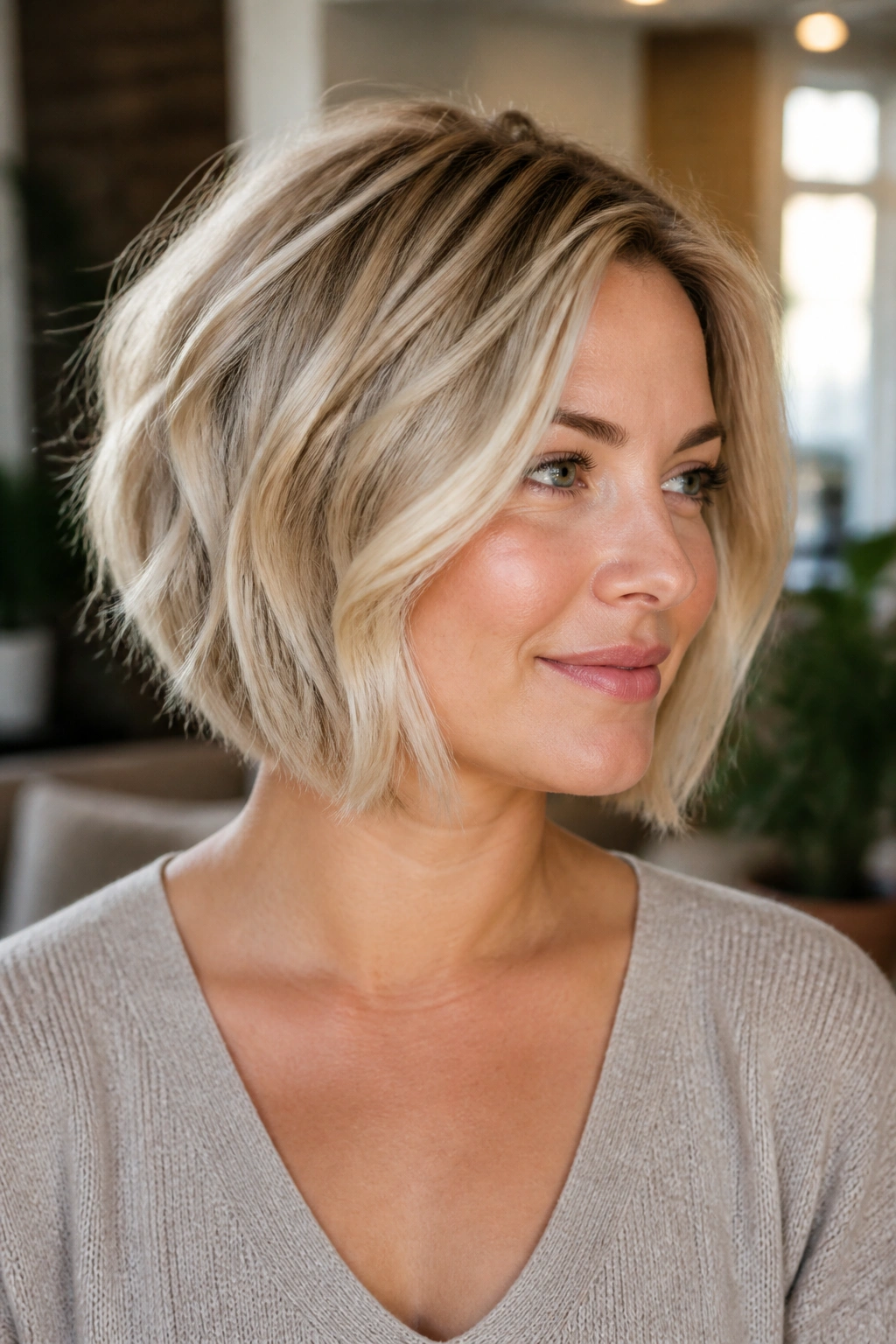
If your hair collapses at the crown, a stacked bob can be a lifesaver. The shorter layers in the back create lift, and lift is useful on round faces because it draws the eye upward instead of outward. The trick is to keep the stack at the back of the head, not around the ears.
Where the Volume Should Sit
The volume belongs high and slightly back. Not at the cheeks. When too much fullness happens at the side of the head, the face looks broader. When the lift stays at the crown, the face looks longer and the jaw line feels cleaner.
A stacked bob works best when the front stays longer and softer than the back. The front pieces should skim the jaw or pass it by an inch or two. That length keeps the cut from feeling too short or too boxy.
- Ask for shorter graduation at the occipital bone
- Keep the front pieces longer than the cheek line
- Add a side part if the face needs more angle
- Blow-dry the roots upward with a small round brush
My opinion: this is one of the best medium blonde bob haircuts for round faces when the hair is fine and a little limp. The shape does the work fast.
8. Asymmetrical Medium Bob with Longer Front Pieces
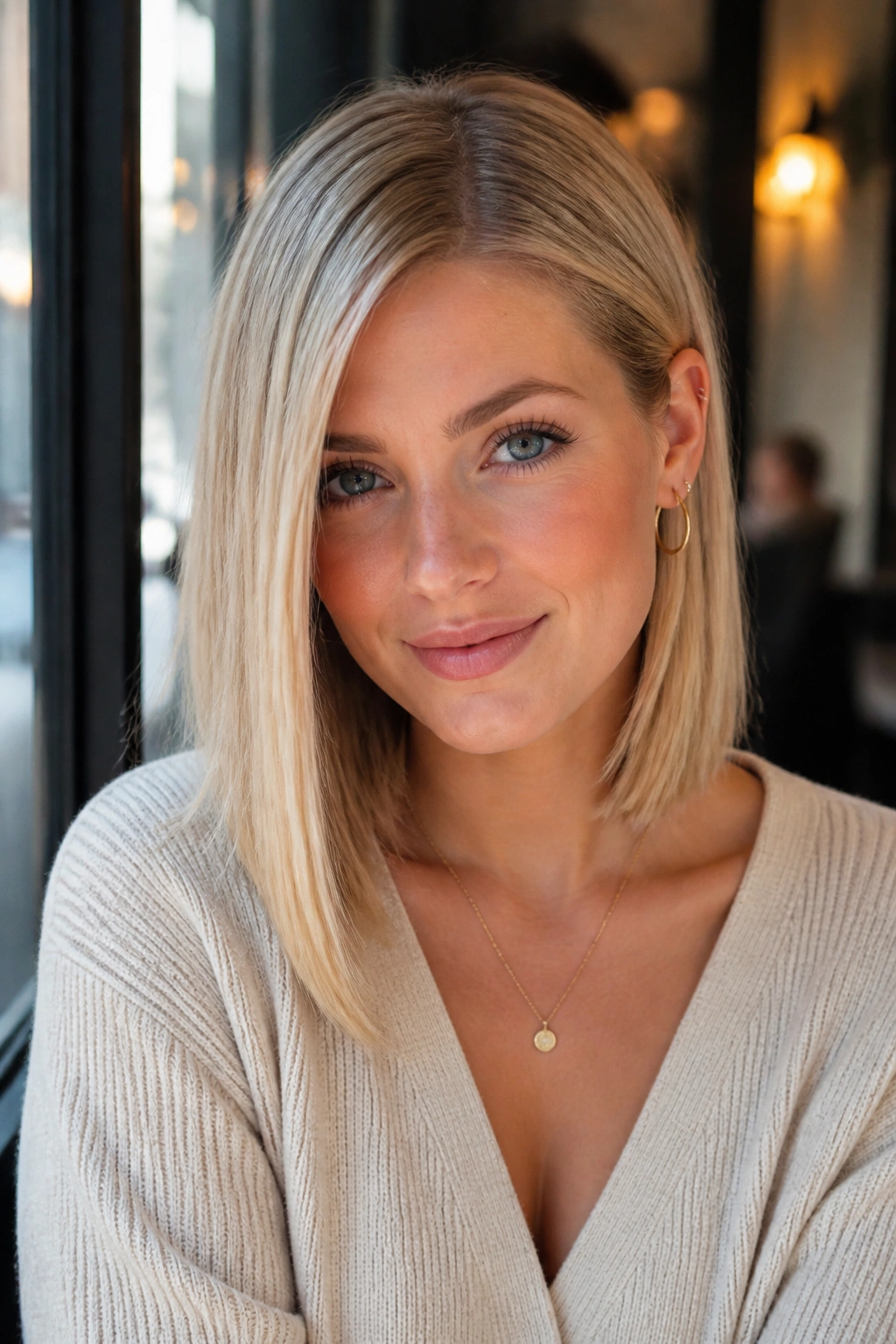
A slight asymmetry can make a round face look leaner almost immediately. One side drops lower, the other sits a touch higher, and the uneven line pulls the eye across the face instead of letting it stay in one soft circle. The best versions are subtle. One or two inches is enough.
The long front piece is the important part. It should pass the chin and, ideally, get close to the collarbone. If the longer side stops right at cheek level, it can make the roundness feel more obvious. Keep the difference low and the result feels sharper.
This cut looks especially good with a smooth finish. Too much curl can hide the asymmetry, and then you lose the reason for having it. A flat iron bend at the ends is enough.
It is also a nice choice if you like to tuck one side behind the ear. That habit suddenly looks intentional instead of accidental, which is a small vanity win, but still a win.
9. Rooty Butter Blonde Bob with Shadowed Depth
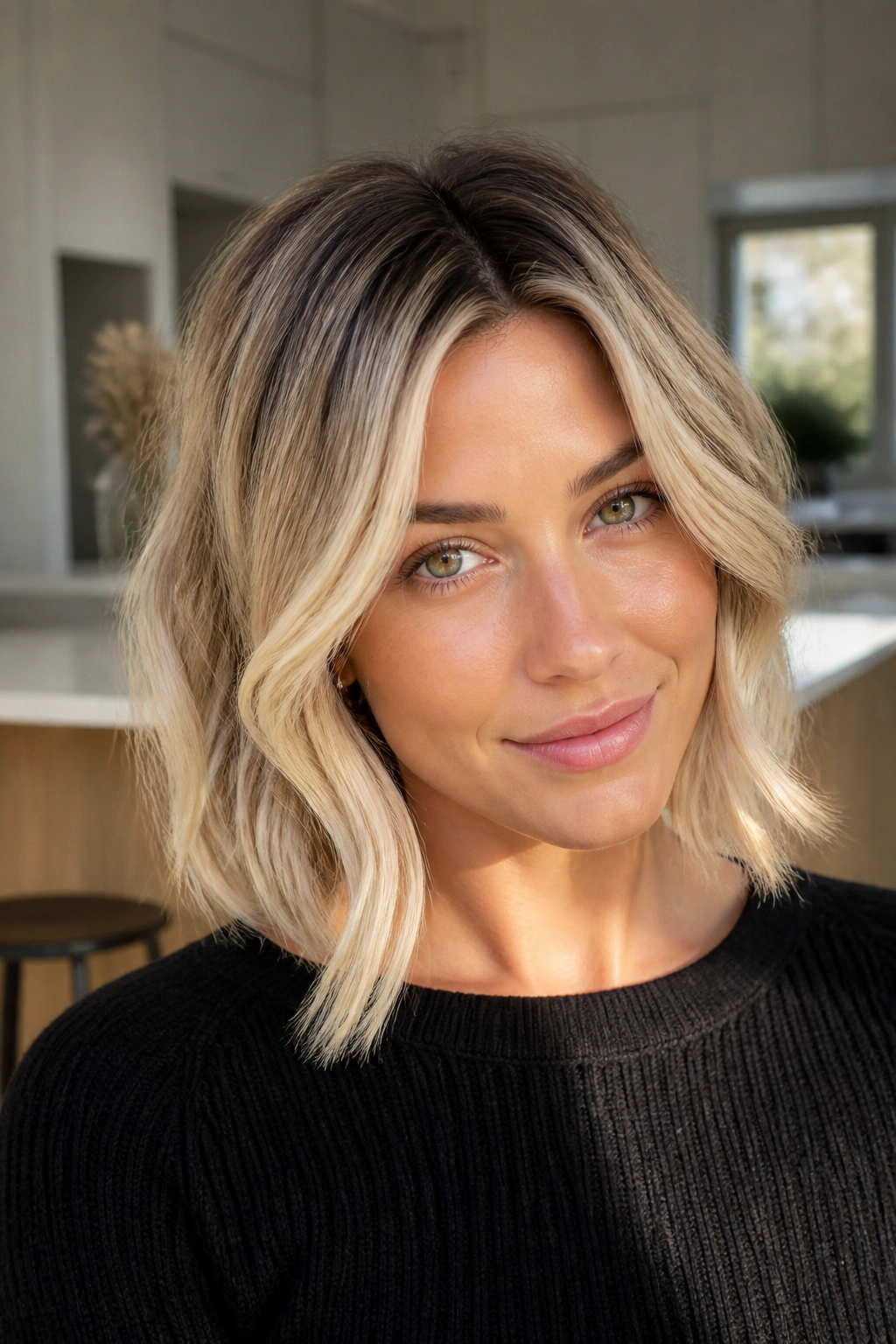
Why does shadowed depth help here? Because a flat, all-over blonde can spread across the face like a sheet of light. A deeper root and slightly softer mid-lengths break that up. The eye sees vertical change instead of one wide bright block.
This cut is especially good if you do not want to visit the salon constantly. A root shadow grows out in a softer way, and that matters when the bob is medium length. The cut keeps its shape longer because the color does not expose every grow-out line.
What to Ask For
- A root shade 1 to 2 levels deeper than the mids
- Brighter blonde concentrated below the cheekbone
- Soft, blended transitions instead of a hard line
- Face-framing pieces that are lighter at the ends
The style pairs well with loose bends, not tight curls. Loose bends show the tonal change, which is half the point. If the wave is too uniform, the depth disappears.
Best on: medium-thick hair, shoulder-length growth, and anyone who likes blonde but hates the upkeep of a full bright root.
10. Choppy Shag Bob with Piecey Ends
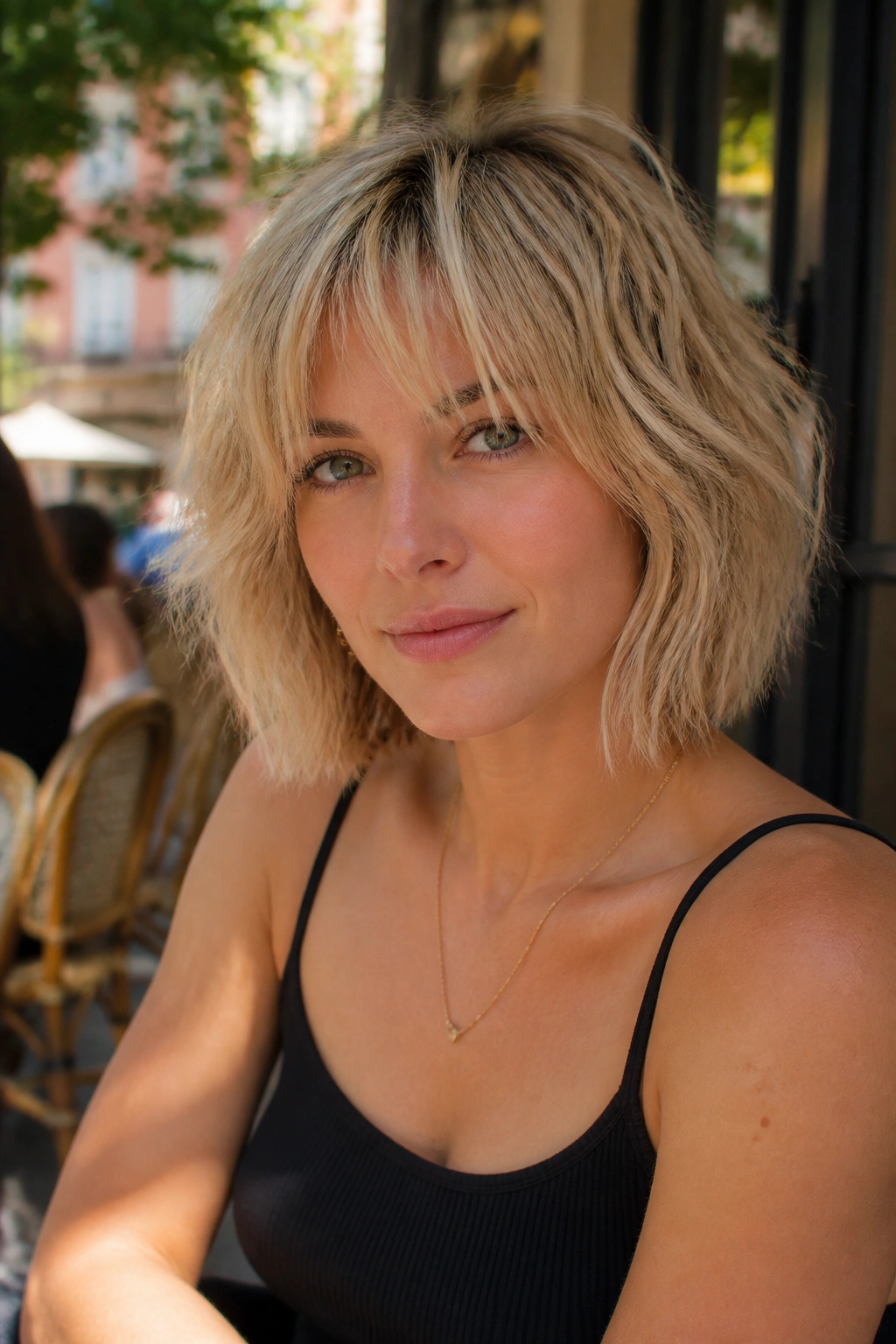
A choppy shag bob is not about neatness. It is about breaking up the outline. Round faces often benefit from irregular edges because those little gaps and layers stop the silhouette from reading too wide and smooth.
Think of this cut as the relaxed cousin of the bob. The ends are broken, the layers are uneven in a good way, and the fringe — if you wear one — should stay soft and a little wispy. The overall effect is lived-in, not messy. There is a difference.
For blonde hair, the texture shows even better. Light and shadow land on the layers, so the cut has movement even when it is not freshly styled. That makes it a smart option for people who do not want to spend 20 minutes with a brush every morning.
Watch for this: too much shag can widen the cheeks if the shortest layers sit right there. Keep the layers lower, around the lips and jaw, and the shape stays flattering.
11. Center-Part Bob with Curved Ends
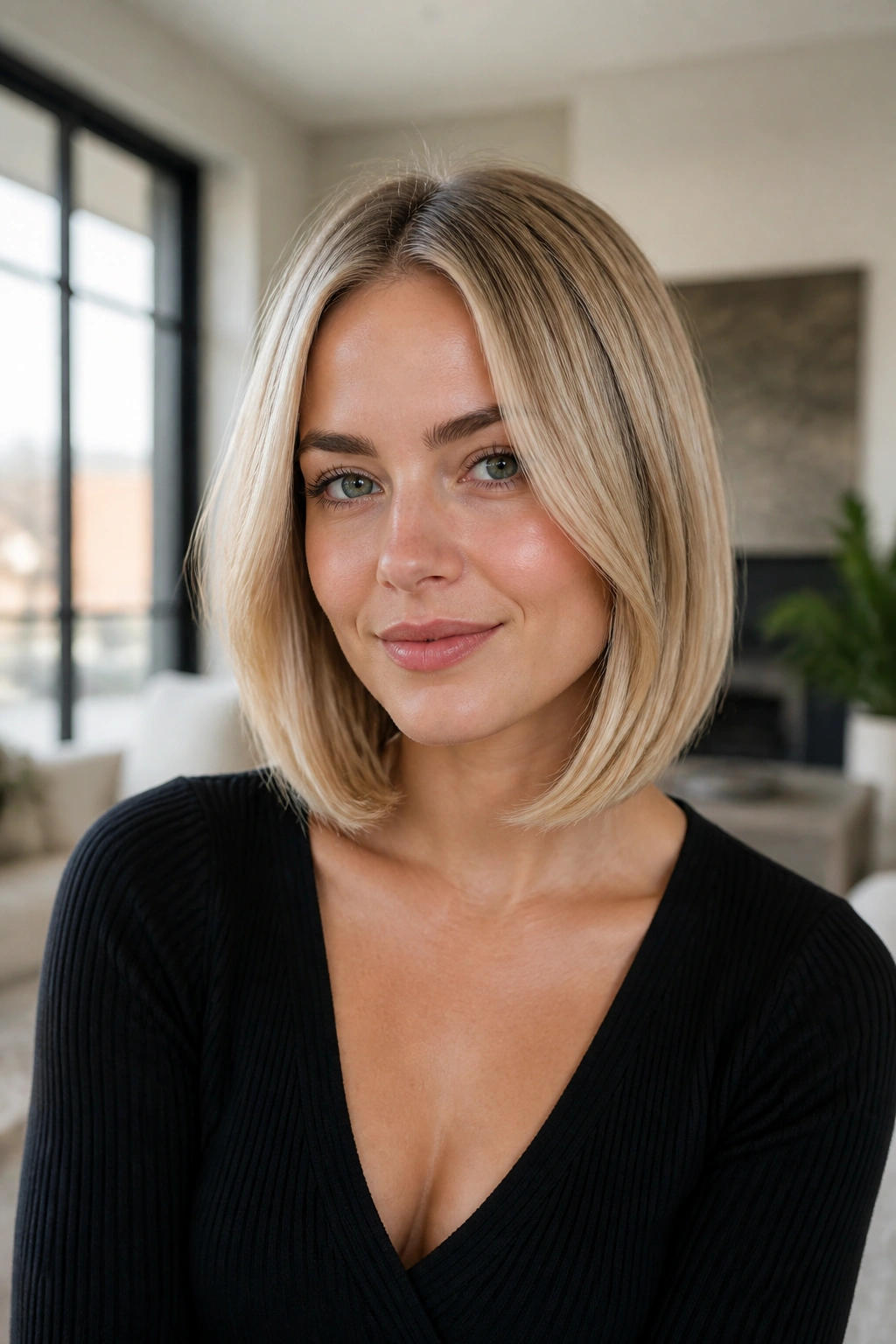
A center part can work on a round face when the cut underneath does its job. The middle line itself is symmetrical, so the rest of the haircut has to create length. Curved ends are what make this version work. They soften the line and keep it from turning into a blunt box.
The bob should sit around the collarbone or just above it. Anything shorter and the middle part can feel too direct. The front pieces need enough length to drop past the cheek line, because that is what stops the widest part of the face from being framed too tightly.
Sleek versions of this cut are especially good with medium blonde shades that have a little depth at the root. The color keeps the hair from looking like one heavy sheet. A soft vanilla or beige blonde helps the line feel lighter.
This is a clean, modern option. Not fussy. Not overworked. If your hair is naturally straight or only slightly wavy, it can be one of the easiest bobs to live with.
12. Swoopy Side-Bang Bob
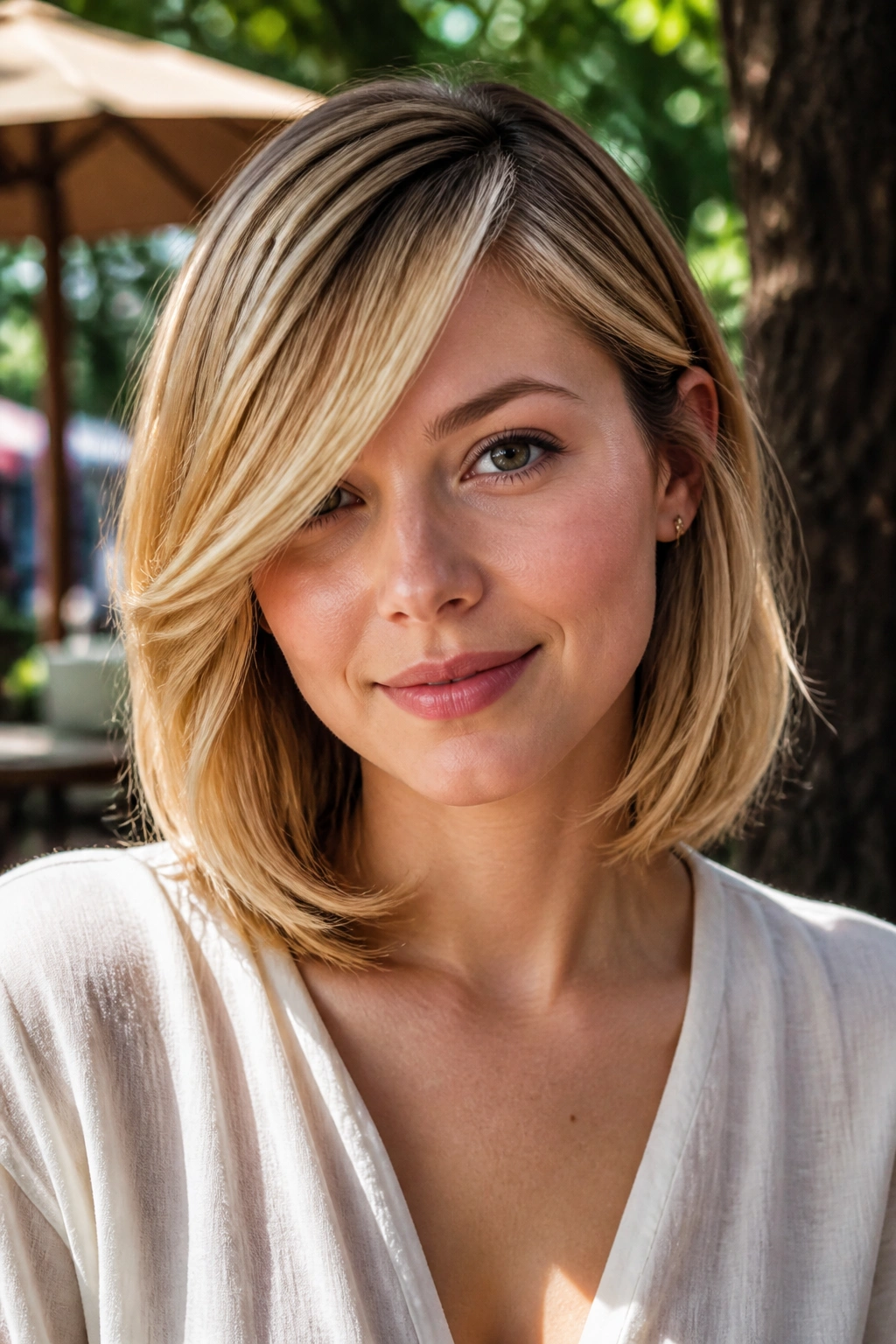
Side bangs are underrated for round faces. They create a diagonal line, and diagonal lines are useful because they interrupt the width of the face. A swoopy side bang is softer than a blunt fringe and easier to grow out, which makes it a practical choice too.
The bang should begin at the temple and sweep across to the opposite cheekbone, not sit in the middle of the forehead. Keep it long enough to blend into the front layers. If it gets too short, it can puff outward and lose the shape.
The bob underneath can be medium and simple. You do not need a lot of extra layers when the bang is already doing the visual work. A honey or champagne blonde keeps the swoop visible, especially if the ends are lightly curled under.
How to Wear It
Blow-dry the bang in the direction you want it to fall, then let it cool before touching it. That cooling step matters more than people expect. It helps the sweep hold without needing a ton of spray.
13. Inverted Bob with Long Front Pieces
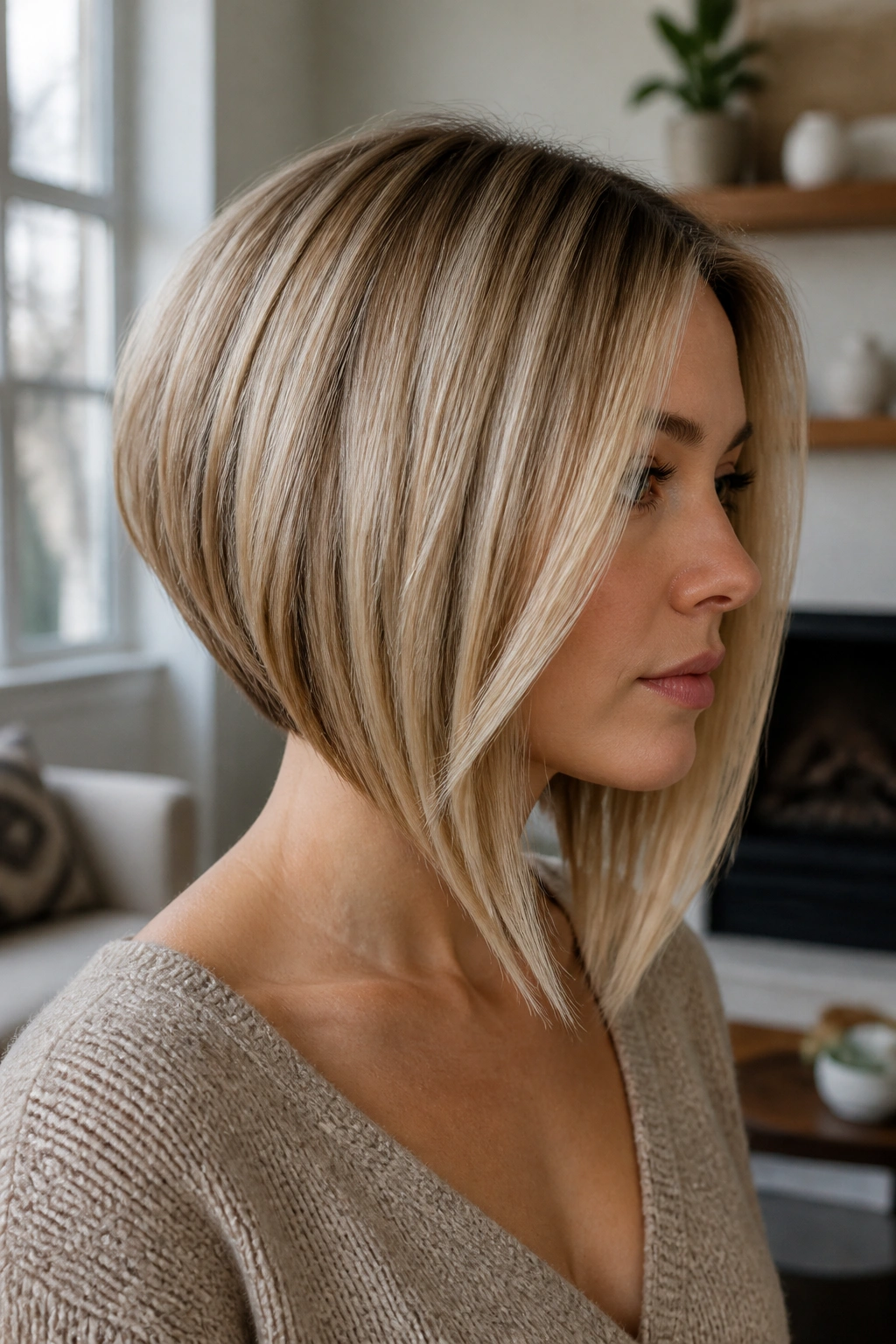
The inverted bob is a classic for a reason: the shorter back builds shape, and the longer front gives the face room. On a round face, the front length is what saves it. Those front pieces should pass the chin and head toward the collarbone so the eye gets a downward line.
This cut is especially good when the hair is straight or only lightly wavy. The angle shows up clearly, which is the whole point. If the hair is very curly, the shape can blur and the front may spring back too much.
A subtle inversion looks more modern than a dramatic one. You want a visible difference between back and front, but not a hard wedge. That shape can feel dated fast and can put too much fullness near the jaw.
- Keep the back snug and clean
- Leave the front pieces long enough to skim the neck
- Use a soft bend, not a full curl
- Ask for the angle to be visible only when the hair moves
A blonde tone with a little root shadow works well here because the change in tone helps the change in length stand out.
14. Airy Feathered Bob with Razor Ends
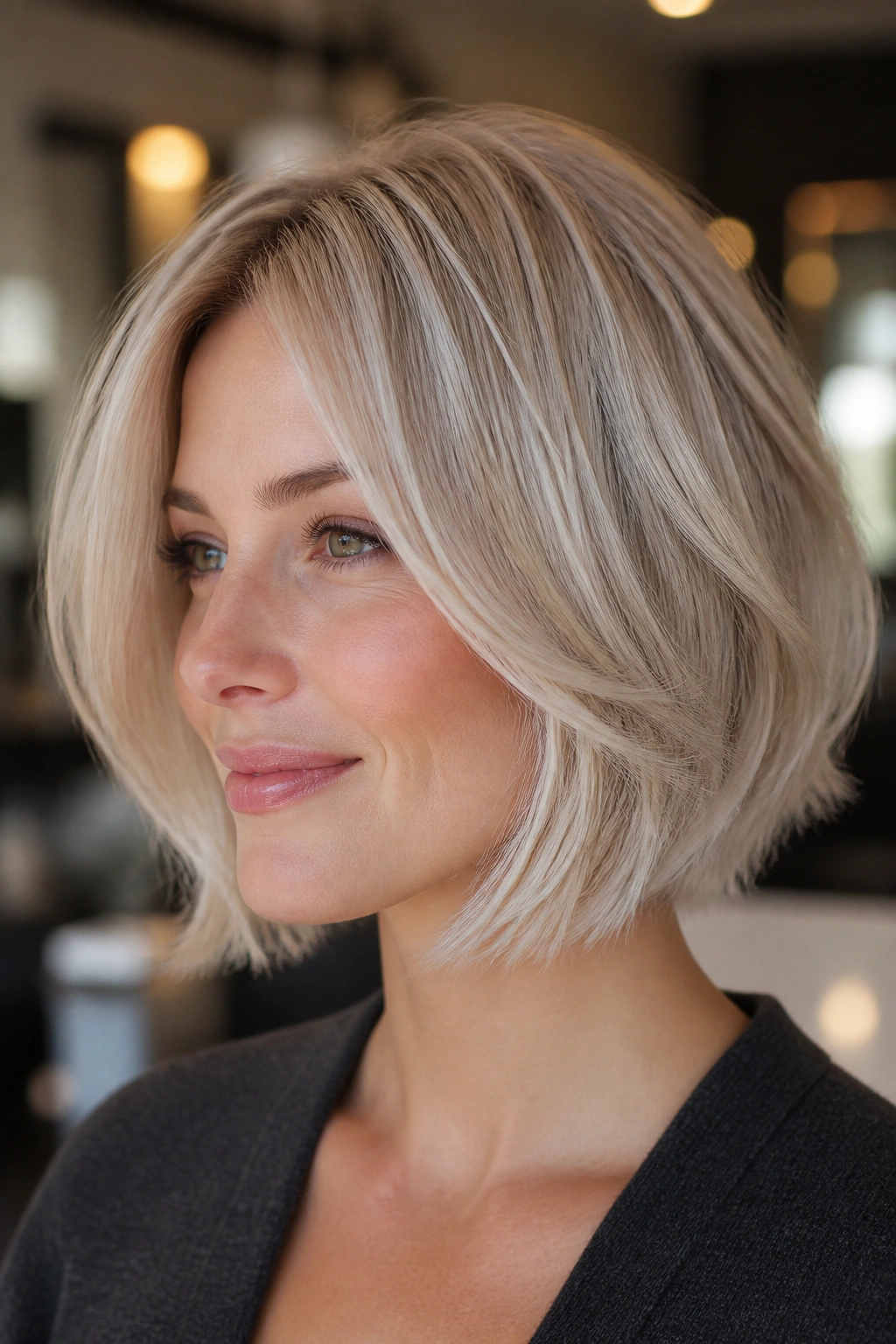
This is the cut for thick hair that wants to take over the room. Razor ends and airy feathering remove some of that weight, so the bob falls instead of puffing out. On a round face, that lighter outline matters a lot.
The important part is restraint. A razor can create nice movement, but too much thinning can leave the ends frayed. So the goal is not to shred the hair. It is to soften the perimeter and give the lower half of the cut a little space to breathe.
A cool blonde shade works well here because the airy texture picks up light at the ends. If the blonde is too flat, the cut can look heavy again. A touch of beige or pearl tone keeps it from feeling brassy.
What to Keep in Mind
- Best for thick, dense, or puffy hair
- Ask for feathering below the cheekbone
- Keep root fullness under control
- Use a light cream, not a heavy butter or oil
This one takes well to a loose blowout. It does not need perfection. A little mess is part of the charm.
15. Tousled Beach Bob with Money Pieces
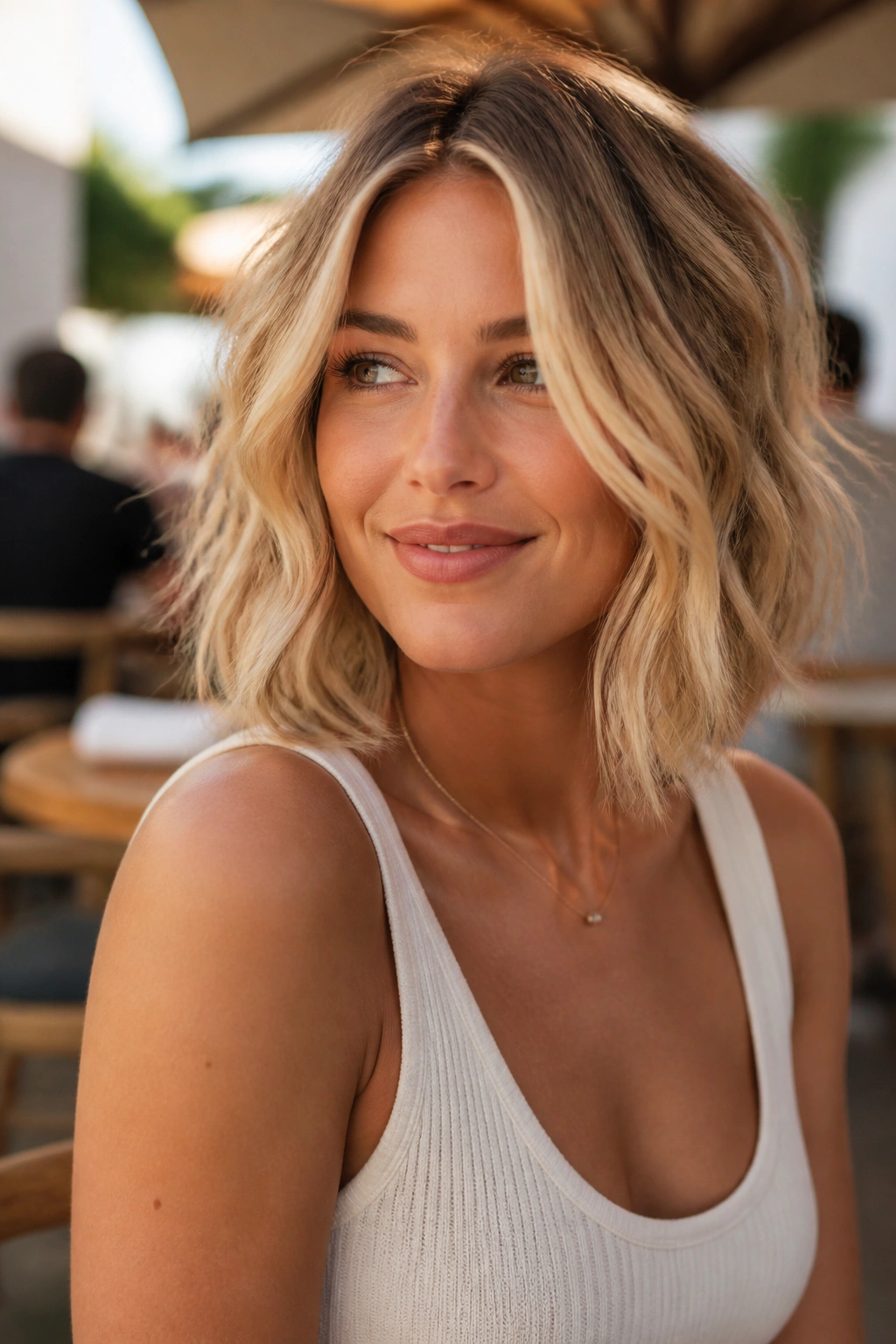
Bright face-framing pieces can do as much work as the cut itself. When the lighter strands sit near the temples and cheekbones, they guide the eye downward and inward, which helps the face look less broad. That is why money pieces make sense on round faces when they are narrow and placed carefully.
The wave pattern should stay loose. A flat 1-inch iron bend or a rough blow-dry with a diffuser works better than uniform curls. Uniform curls can build width at the sides. Loose bends keep the cut moving.
I like this style most when the blonde is a little warmer at the ends and slightly deeper underneath. That contrast keeps the light pieces from floating like two bright stripes across the face. Nobody needs that.
This is a friendly, low-pressure option if you want something pretty without a lot of styling rules. It works for weekends, dinners, and all the regular stuff in between.
16. Collarbone Bob with Glossy Straight Finish
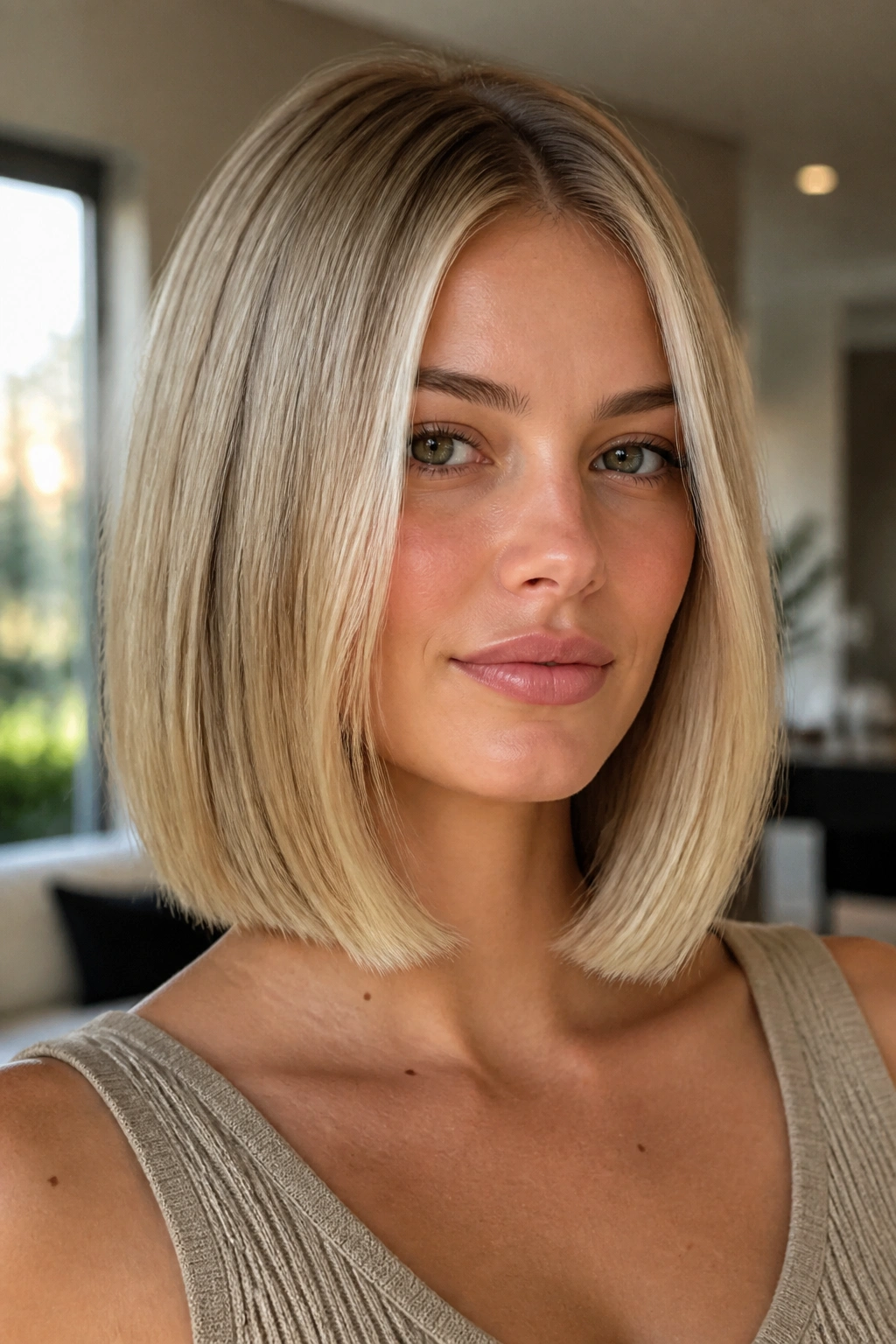
A sleek bob can be the best thing in the room when it is cut with enough length. The collarbone bob gives the face room to breathe, and the glossy finish keeps the line crisp. On a round face, that long, straight edge reads cleaner than a short curve sitting near the cheeks.
The success of this look depends on the ends. They should be blunt enough to look intentional, but not so heavy that they flip outward. A tiny bevel at the tips is usually enough. That little turn keeps the shape from looking blocky.
Heat protection matters here. Straight styles show damage fast, especially on blonde hair. Use a protectant before blow-drying or flat ironing, then finish with one pass of a smoothing tool if needed. Too many passes make the hair look dry.
How to Keep It From Puffing Out
Dry the hair with the nozzle pointing down the shaft. That keeps the cuticle flatter and the finish shinier. A center part can work, but a slight off-center part often gives the face a little more length.
17. Soft A-Line Bob with Hidden Layers
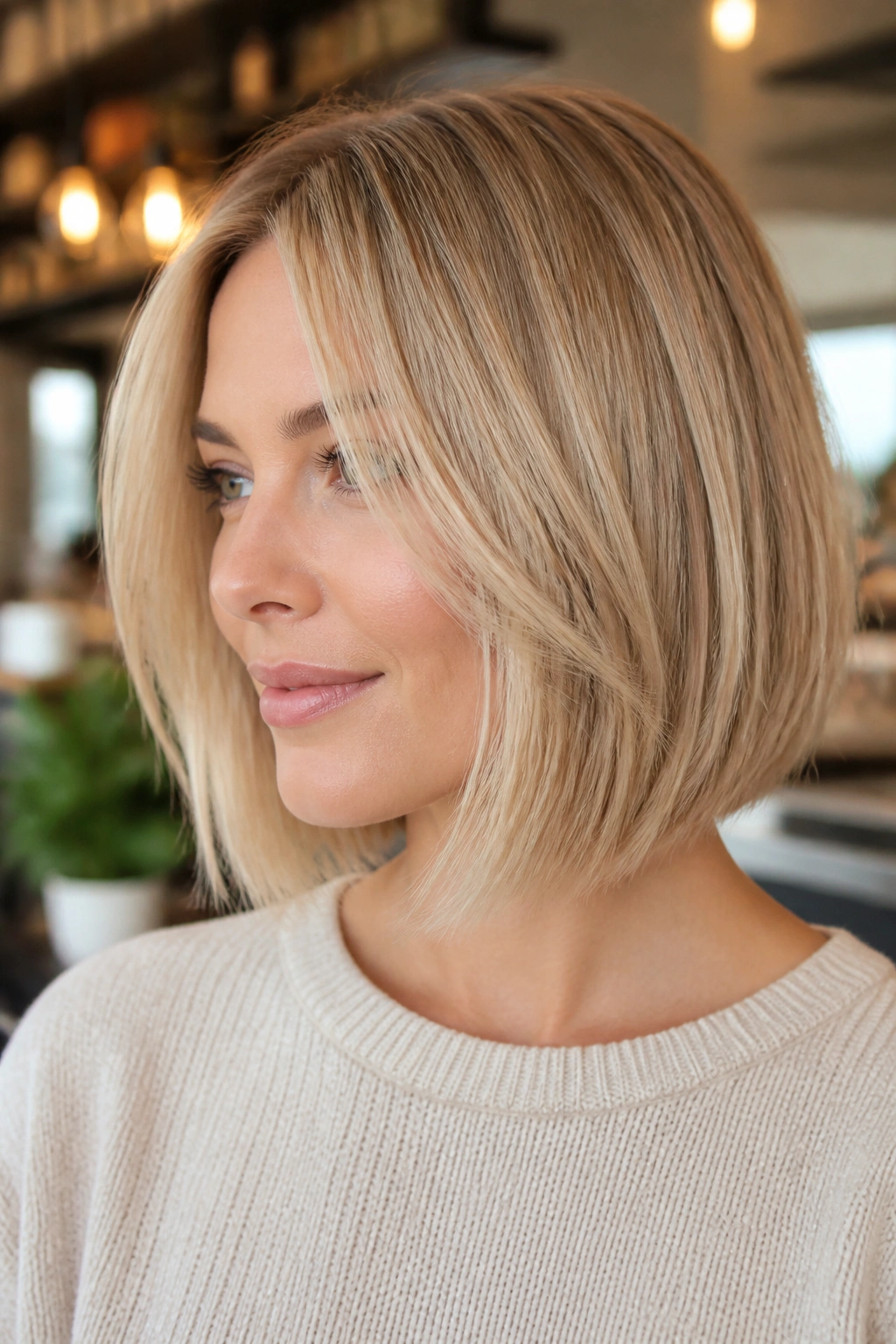
This cut gives you shape without shouting about it. The front is longer than the back, but the angle is gentler than a full inverted bob. Hidden layers keep the inside from getting too bulky, so the outside line falls smoothly around the face.
That smoothness is the useful part. Round faces do well with lines that move down and forward instead of out to the sides. An A-line bob does exactly that when it is kept soft. It is one of those haircuts that looks simple until you realize it is doing a lot behind the scenes.
Thicker hair benefits the most because the hidden layers remove weight where it tends to puff out. Fine hair can wear it too, but the layers need to stay subtle so the bottom line does not get wispy.
Ask for:
- A slight forward angle, not a dramatic wedge
- Hidden internal layers only
- Front pieces below the chin
- A soft beige or vanilla blonde finish for lightness
This is a good salon choice if you want polish without a lot of daily styling.
18. Dimensional Vanilla Blonde Bob with Soft Waves
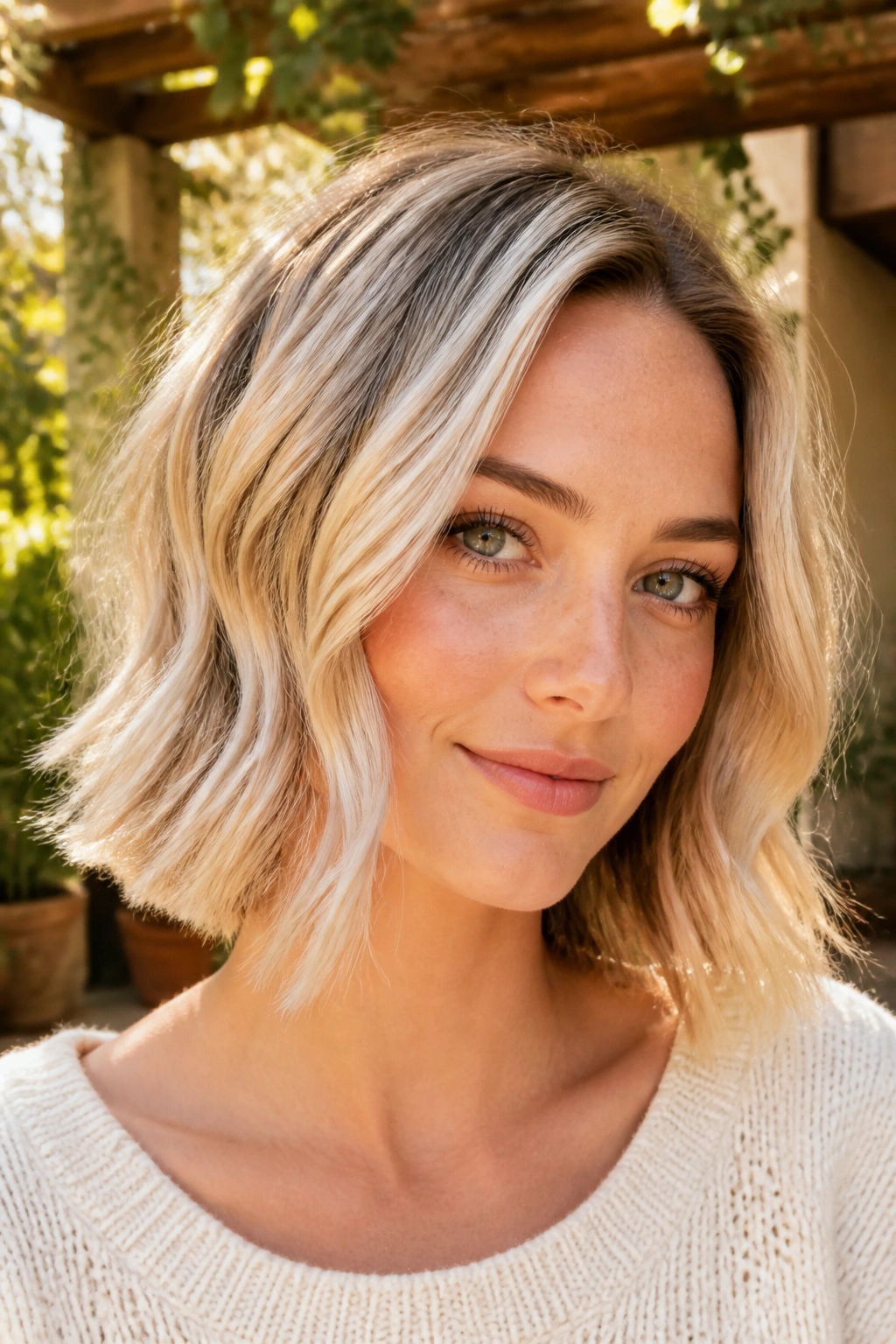
The color on this one matters almost as much as the cut. Vanilla blonde with a few deeper lowlights gives the bob depth, so the face does not get surrounded by one flat bright shape. On a round face, that dimensional finish can make a big difference.
Soft waves keep the look from turning stiff. The wave should start below the cheekbone, not right at it. That keeps the widest part of the face from being wrapped in curl. The movement belongs lower, toward the jaw and collarbone, where it can lengthen the outline instead of widening it.
The Best Version Has These Details
- Medium length that lands at or below the collarbone
- Vanilla blonde through the surface
- Slightly deeper lowlights underneath
- Waves that bend away from the face at the front
- A side part if you want extra lift
This is one of those cuts that reads expensive without needing a lot of fuss. Bright, yes. Soft, yes. But the real reason it works is the balance between light and shadow.
Final Thoughts
The medium blonde bob that flatters a round face is usually doing one of three things: adding length below the cheekbone, breaking up width with angle or movement, or using color to keep the cut from feeling too broad. When those pieces line up, the result feels balanced instead of forced.
My honest pick? Start with the shape your hair already wants to hold. If it bends easily, go for curtain bangs, loose waves, or a soft A-line. If it is straight and dense, a sleek collarbone bob or a subtle inverted shape may be easier to live with.
Bring a photo, yes. But also point to the exact length you want — chin, jaw, collarbone — because that one detail changes everything. A good bob is not magic. It is geometry, plus a little color sense, done in the right place.
