



Fine hair and a bob can be a sharp match. The trick is keeping enough weight at the ends so the cut reads as full instead of wispy, which is exactly why wavy bob haircuts for fine hair can look so good when the shape is handled with care.
Fine hair is not the same thing as thin hair. You can have a lot of strands and still have fine hair, which means each strand is small and can go limp faster than people expect. That’s why a bob needs a good outline. The perimeter matters. A clean edge, a smart part, and the right amount of wave do more for fullness than piling on heavy product ever will.
Too many layers. That’s where things go sideways. Fine hair needs movement, yes, but it also needs something solid to hang on to, or the whole cut starts to look frayed by lunchtime.
The best bob for this hair type usually lands somewhere between cheekbone and collarbone, with texture placed where it helps and not where it steals density. Some styles lean blunt. Some lean soft and airy. A few work because they create a strong illusion at the crown. The useful ones all share the same idea: give the eye a fuller shape, not just more pieces.
1. Chin-Length Blunt Wavy Bob
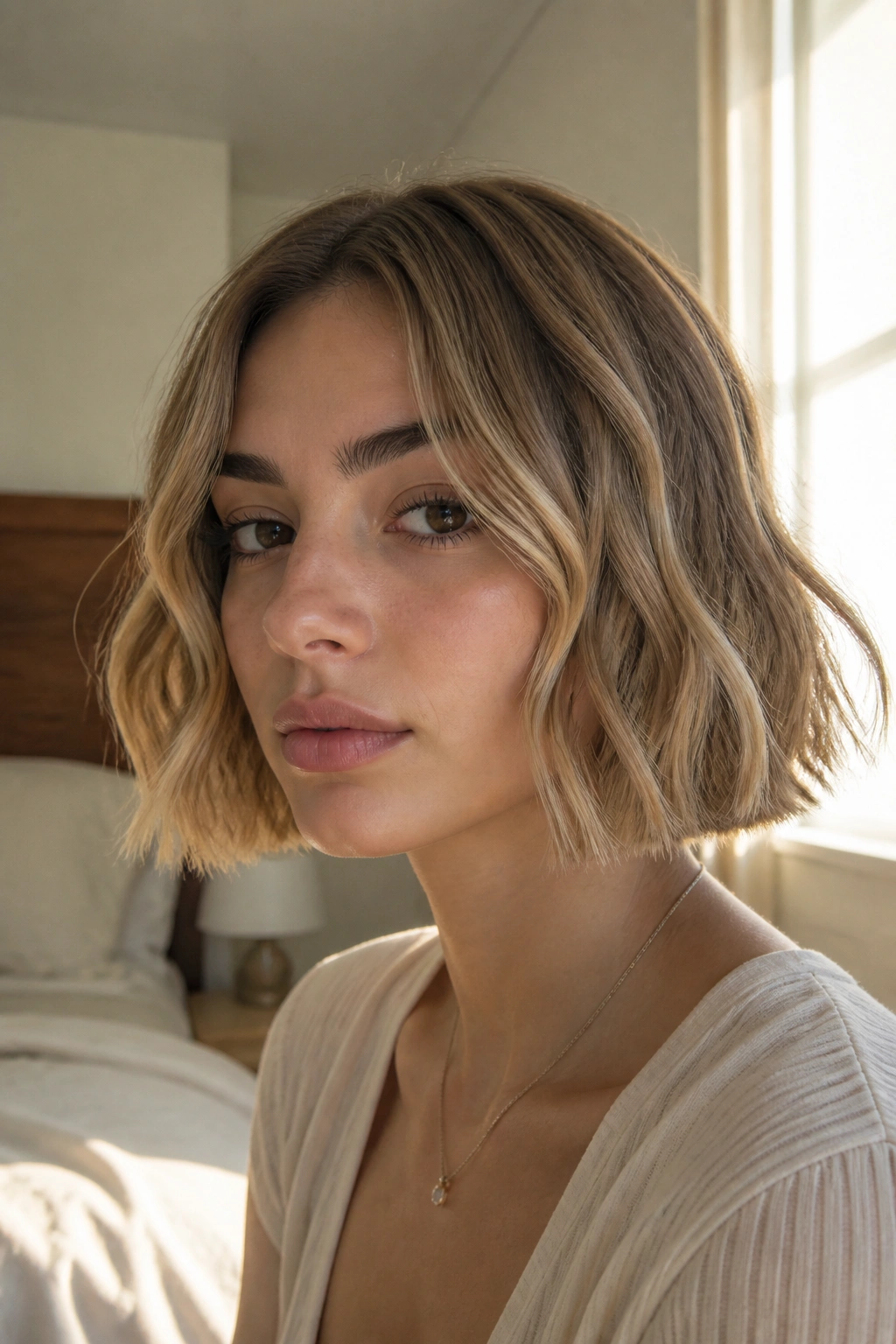
A chin-length blunt bob does one job better than almost any other cut: it makes fine hair read thicker at the outline.
Why It Works
The blunt edge gives the hair a firm bottom line, which is gold when your strands are small and a little see-through. Add a loose wave through the middle, and the style stops looking stiff. You get movement and a denser-looking frame around the face.
Keep the layers minimal. Really minimal. If the inside gets over-thinned, the ends start to look ragged, and no amount of curling will fix that.
Quick Styling Notes
- Ask for the perimeter to sit right at the chin or a hair below it.
- Use a light mousse at the roots before drying, not a heavy cream.
- Wrap sections around a 1-inch curling iron, leaving the last inch straighter so the bob keeps its shape.
- Finish with a mist of flexible hairspray, then rake through with your fingers.
Best for: people who want the shortest version of a wavy bob without losing the feeling of hair on the head.
2. Soft Layered Collarbone Bob

Want movement without giving up length? A collarbone bob is the quiet answer, and it’s one of the safest wavy bob haircuts for fine hair when you’re nervous about going short.
The longer shape keeps more weight in the hair, which helps it look thicker at the ends. Soft layers around the face prevent the cut from dropping into one flat curtain. When the wave bends just below the cheekbones, the whole thing feels fuller, even if the actual amount of hair hasn’t changed.
This cut also grows out well. That matters. Fine hair can go from neat to shapeless fast once it loses its line, and the collarbone length buys you a little breathing room between trims.
A good version should move when you walk, not flap around. That’s the difference. If the layers are too short, the ends separate too much and the bob starts to look airy in a bad way. If they’re too long, you lose the lift.
3. French Bob With Airy Waves

If your hair collapses at the crown and you’re tired of fighting it, a French bob can feel like cheating.
The cut sits short — usually around the jaw — and the shape is compact enough to keep fine strands from spreading out too much. Add a soft bend and a fringe that’s light instead of dense, and the whole haircut picks up attitude without needing much styling time. It looks especially good when the waves are loose and a little imperfect.
What to Ask For
- A jaw-skimming length, not a chin-hugging bowl shape.
- A fringe that sits soft and narrow across the forehead.
- Very light interior texturing, only where the hair needs movement.
- No aggressive thinning at the ends.
This is the cut for someone who likes hair that looks deliberate but not fussy. It’s also useful if your hair gets oily at the roots fast, because a shorter shape tends to hold its lift better than a longer one. A lot of stylists prefer cutting this style dry, or at least checking it dry before finishing, since fine waves can bounce up more than expected.
4. A-Line Bob With Loose Bend
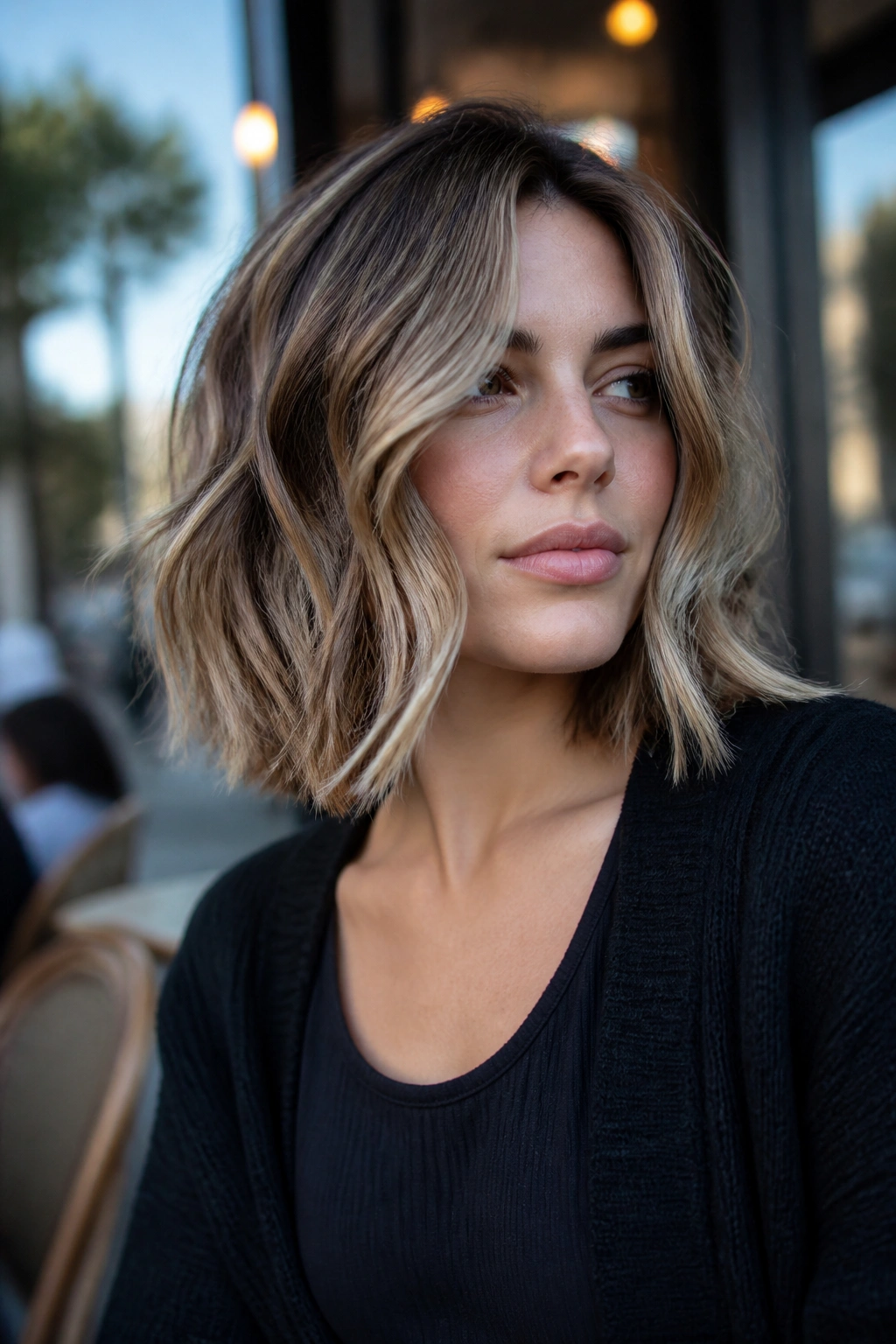
An A-line bob isn’t stiff when it’s cut for fine hair. In fact, the slight angle can make the whole style look more controlled and denser.
The back stays a little shorter, while the front drapes closer to the jaw or collarbone. That longer front piece gives the eye something to follow, which is useful when hair tends to lie flat. The loose bend softens the line, so it doesn’t feel severe. A straight A-line can look sharp in photos and awkward in real life if the hair is too fine. A wavy version fixes that.
The best part is the shape works with the natural fall of the hair instead of fighting it. If your strands naturally tuck under at the ends, this cut usually behaves. If they flip out, the longer front pieces can still carry the shape.
Ask for a strong perimeter and only a little graduation in the back. Too much stack makes fine hair look hollow from the side, and that’s a look worth avoiding.
5. Side-Parted Wavy Bob

A deep side part is one of the cheapest ways to fake volume. No salon magic required.
Shifting the part changes where the hair lifts, and that extra height at the roots can make a plain bob look much fuller. On fine hair, that matters a lot. The wave doesn’t even need to be big. A soft bend near the face and a flatter section on the other side often does the trick. The asymmetry gives the style life.
The Root Trick
Start by drying the hair in the opposite direction from where you want the part to land. That little detour gives the roots a bend and stops them from sticking flat to the scalp. Once the hair cools, flip it back into the deep side part and mist a little texture spray into the crown.
A side-parted bob suits people who want more lift on one side and a softer fall on the other. It also works if your face feels a little too round in the middle part. That tiny shift can make a big difference. Tiny, but real.
6. Bob With Curtain Bangs
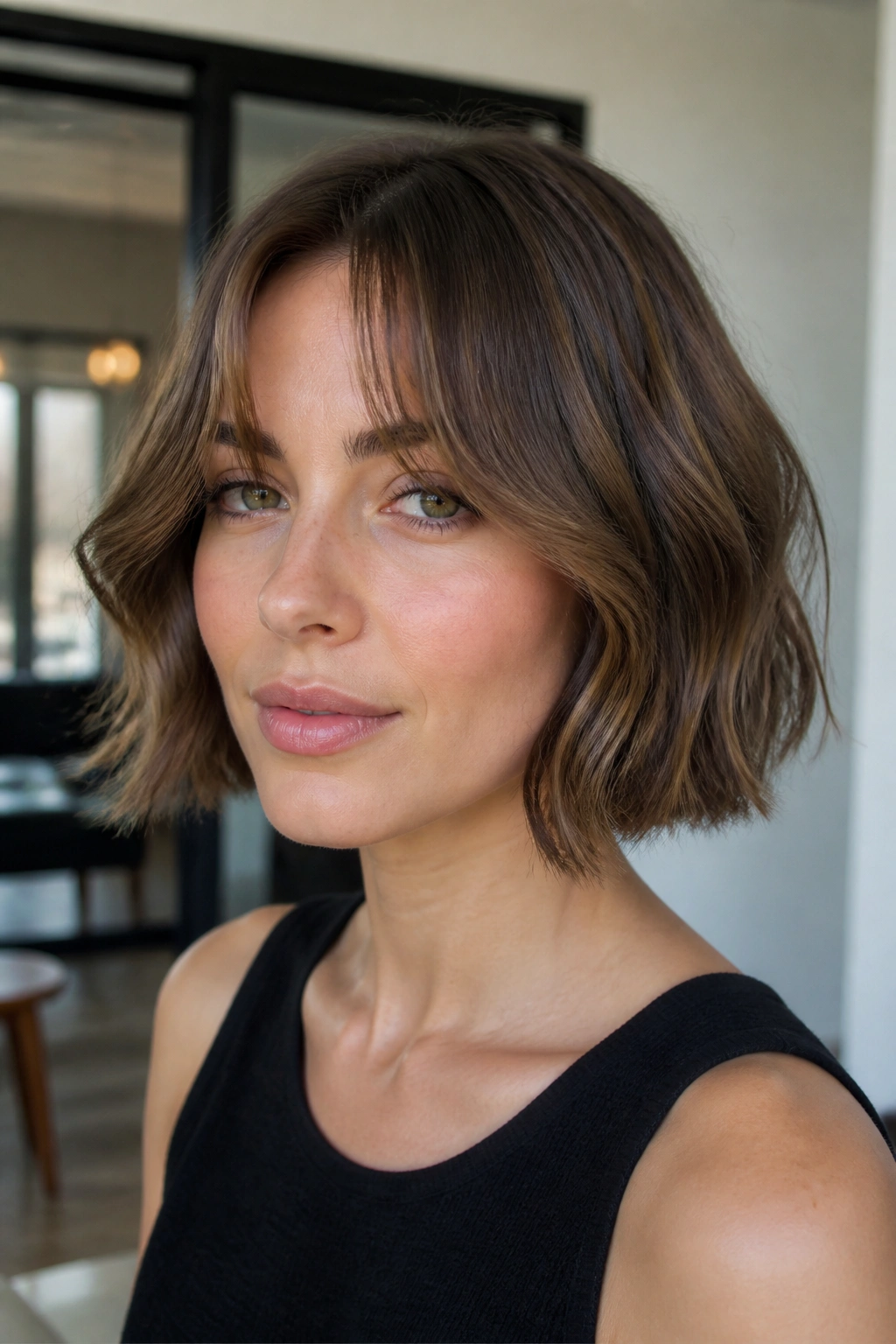
Some people want cheekbones, not forehead, and curtain bangs are a good way to get there without taking too much density away from the rest of the bob.
The key is keeping the fringe light. On fine hair, heavy bangs can swallow the front of the cut and make the rest look sparse by comparison. Curtain bangs should open away from the face, with the shortest piece starting around the cheekbone or just above the mouth, then blending into the bob. That soft line keeps the haircut moving.
What Makes It Work
- The bangs should be airy, not thick.
- The center part should split naturally.
- The sides of the bob need enough length to connect the fringe.
- Blow-dry the fringe with a small round brush so it doesn’t stick flat to the forehead.
This style is useful if you like a little softness around the eyes. It also helps if your hairline is fine and you want some framing without committing to a full fringe. One caution: if the bangs are cut too short, they can bounce up in odd ways. Leave a little length. It matters more than people think.
7. Razor-Textured Bob
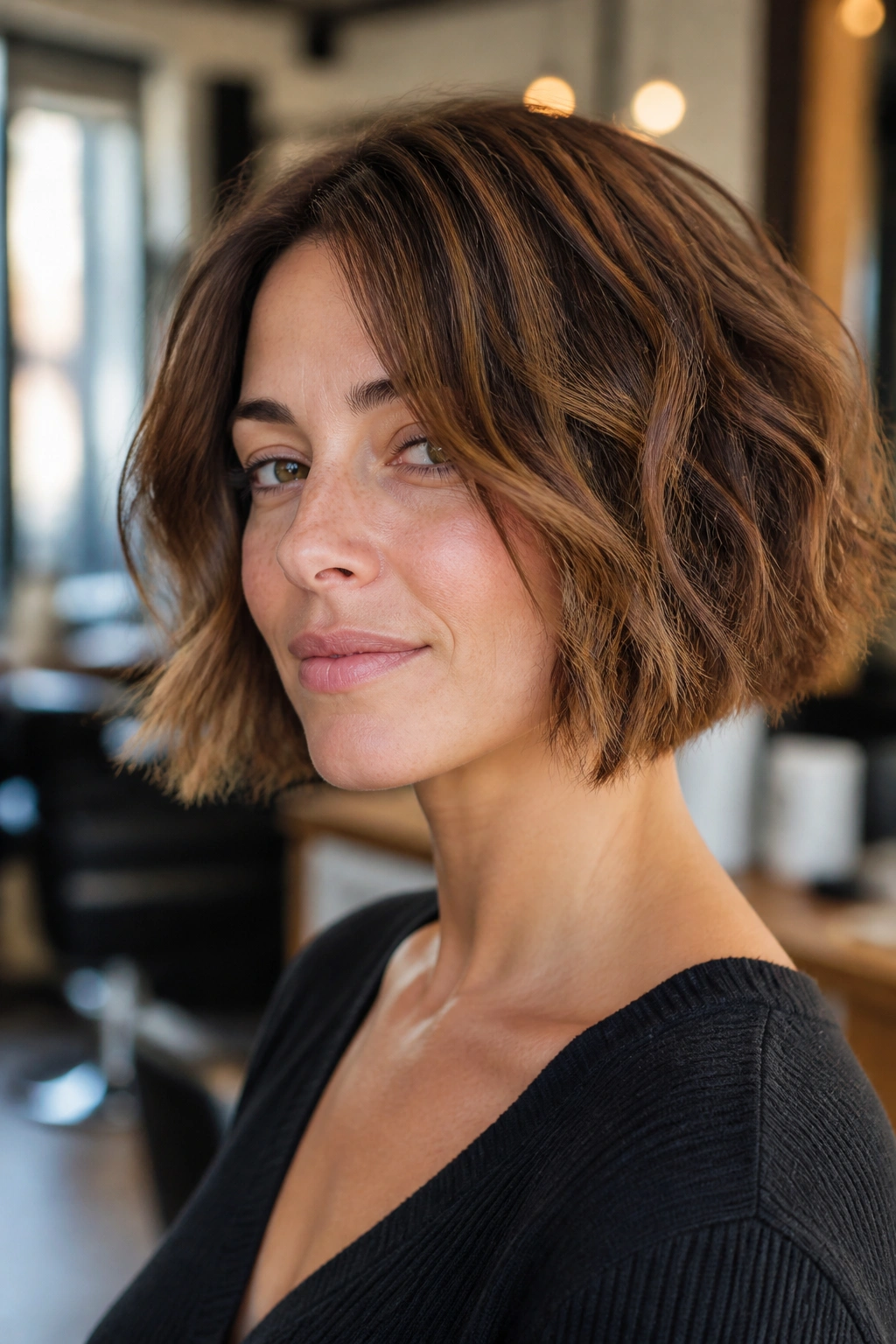
Razor cutting can save a flat bob or wreck it. There’s not much middle ground, which is why I’m picky about this one.
On fine hair, a razor should be used with a light hand, mostly to soften the ends and add movement through the interior. If the stylist carves too much out of the perimeter, the bob loses the heavy edge that makes fine hair look fuller. Then the cut starts to fray. Fast.
This style works best when the hair already has some bend or wave. If your ends are dry, split, or prone to snapping, a razor can make the surface look rougher than you want. A sharp pair of shears and point cutting may be a better call in that case.
Use this cut if you like a piecey finish and don’t mind a little texture around the face. Skip it if your hair is fragile and you hate seeing skinny ends. That part is not subtle. You can tell.
8. Rounded Wavy Bob
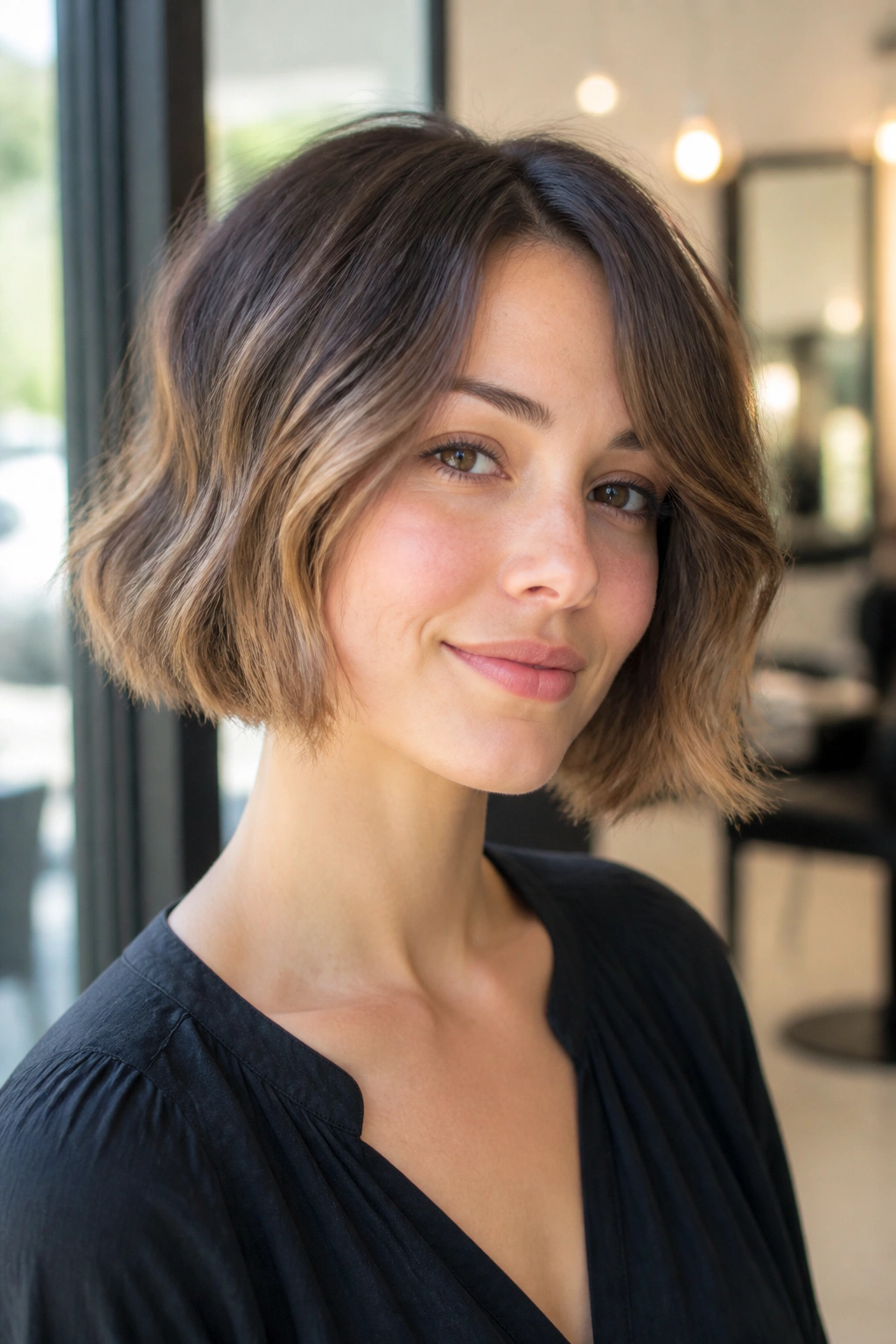
A rounded bob makes fine hair look more plush because the outline curves in toward the jaw instead of hanging straight down.
That curved silhouette changes the whole read of the haircut. Straight lines can expose thinness at the sides, especially when the hair is freshly washed and a bit too obedient. A rounded shape makes the hair appear fuller through the middle and softer around the face. It feels gentle, but it is doing a lot of visual work.
This cut suits oval and heart-shaped faces especially well, though I’ve seen it flatter square faces too when the waves stay soft. The important thing is the balance. You want the bob to hug the face a little, not swell outward like a triangle.
The easiest way to style it is with a medium barrel iron and a brush-out after the curls cool. Don’t chase tight curls here. You want bends, not ringlets. The shape should hold its curve even after the waves loosen.
9. Piecey Bob With Micro Layers
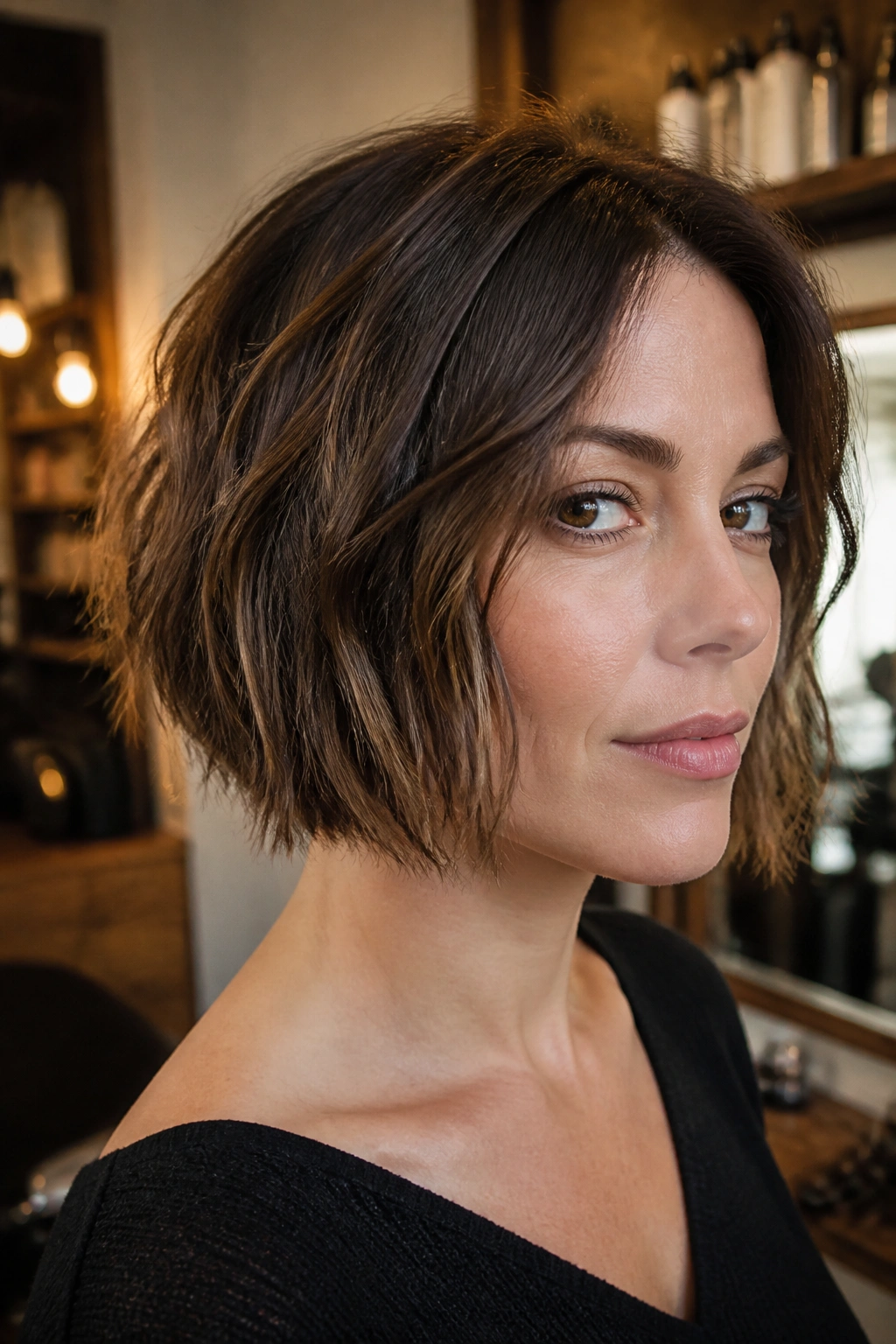
If your bob feels like one smooth sheet, micro layers can break it up without stealing too much thickness.
That’s the whole point. Fine hair often needs separation, but not the kind that leaves the ends looking hollow. Micro layers sit inside the cut, usually around the mid-lengths, and create tiny shifts in the shape. The result is a bob that looks lived-in and a little undone, with enough structure left at the bottom to keep it from disappearing.
How to Wear It
- Use a pea-sized amount of mousse before blow-drying.
- Add a small amount of texturizing cream only to the ends.
- Twist a few front pieces around your fingers while they cool.
- Keep the back cleaner than the front so the silhouette stays solid.
This one is good if your hair gets boring fast. Not every bob needs to be polished. Some look better when they’re a little separated and irregular, especially if your wave pattern is inconsistent from one side to the other. The trick is restraint. Too many layers and you lose the shape. Too few and you lose the movement. There’s a narrow path here, and it’s worth staying on it.
10. Old-Hollywood Side-Swept Bob
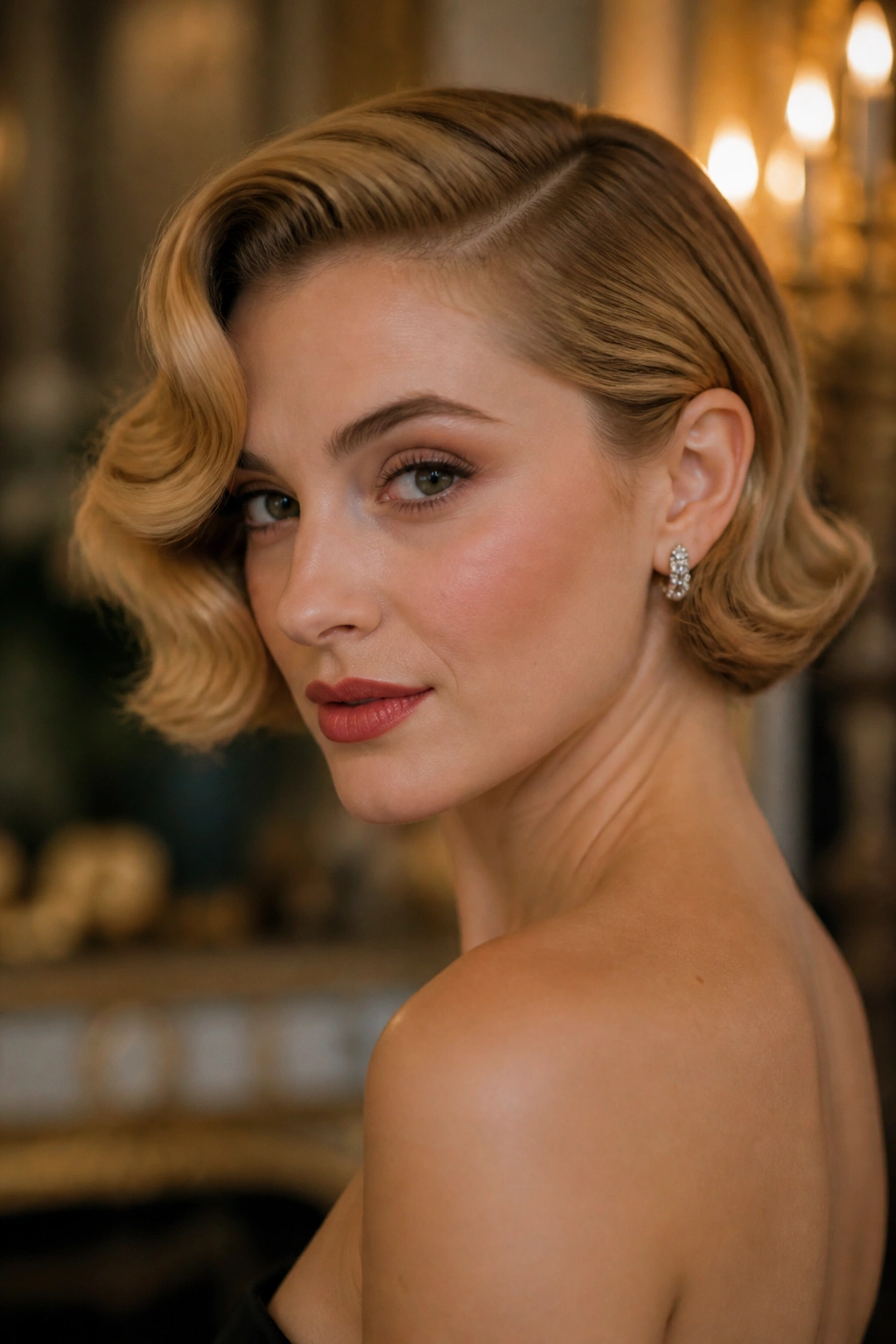
This cut is for people who like a little polish.
A side-swept bob with soft, brushed-out waves creates width through the movement of the hair, not through bulk. That’s useful for fine hair, because you can build shape without making the ends look heavy or overworked. The front sweeps gently across the forehead, and one side usually tucks behind the ear. It has a neat line, but it still feels easy.
The style looks especially good when the wave pattern is broad rather than tight. Think smooth bends, not spiral curl. Hot rollers can help if your hair holds heat well, but a large curling iron and a firm brush-out do the job too. The key is letting the hair cool before you touch it. Warm waves collapse fast.
This is one of those cuts that can feel dressy without being dramatic. It works for dinners, events, or just a day when you want your hair to behave a little better than usual. I like it because it doesn’t pretend fine hair is thick. It just arranges it more cleverly.
11. Choppy Jaw-Length Bob

Jaw length sounds short, and it is — that is the point.
A choppy bob at the jaw creates a crisp frame around the face, and the little broken edges keep it from looking too heavy or blocky. On fine hair, choppiness can add the sense of movement people want, but the word needs some caution attached to it. You want controlled choppiness, not shredded ends. There’s a difference, and it’s a big one.
What to Avoid
- Don’t over-thin the bottom.
- Don’t ask for a lot of sliced layers near the ends.
- Don’t pile on stiff product that makes the texture clump.
- Don’t cut it so short that the wave has nowhere to fall.
The best version feels sharp but soft enough to move when you turn your head. That’s why this cut often looks better with a side part or a slightly messy finish. A bit of bend around the face prevents the haircut from feeling boxy. If your hair has a nice natural wave, this is one of the most flattering lengths you can try.
12. Tucked-Behind-Ear Wavy Bob

A bob that looks a little different on each side is useful when your hair is fine, because asymmetry gives the eye somewhere to go.
Tucking one side behind the ear creates instant lift at the crown and shows off the shape of the cheek and jaw. On a wavy bob, it also changes the weight of the cut in a way that feels casual rather than overly styled. The shorter side looks neat. The looser side keeps the movement. That contrast is doing more work than it gets credit for.
This style likes a clean side part and a front section that isn’t too short. If the front pieces fall around the cheekbone, they slip behind the ear without puffing out. If they’re too short, they pop out and the whole thing starts to look awkward. Annoying, yes. Fixable, also yes.
A single bobby pin hidden under the hair can help if one side refuses to stay put. Use it. Nobody needs to see the hardware.
13. Inverted Bob With Soft Volume
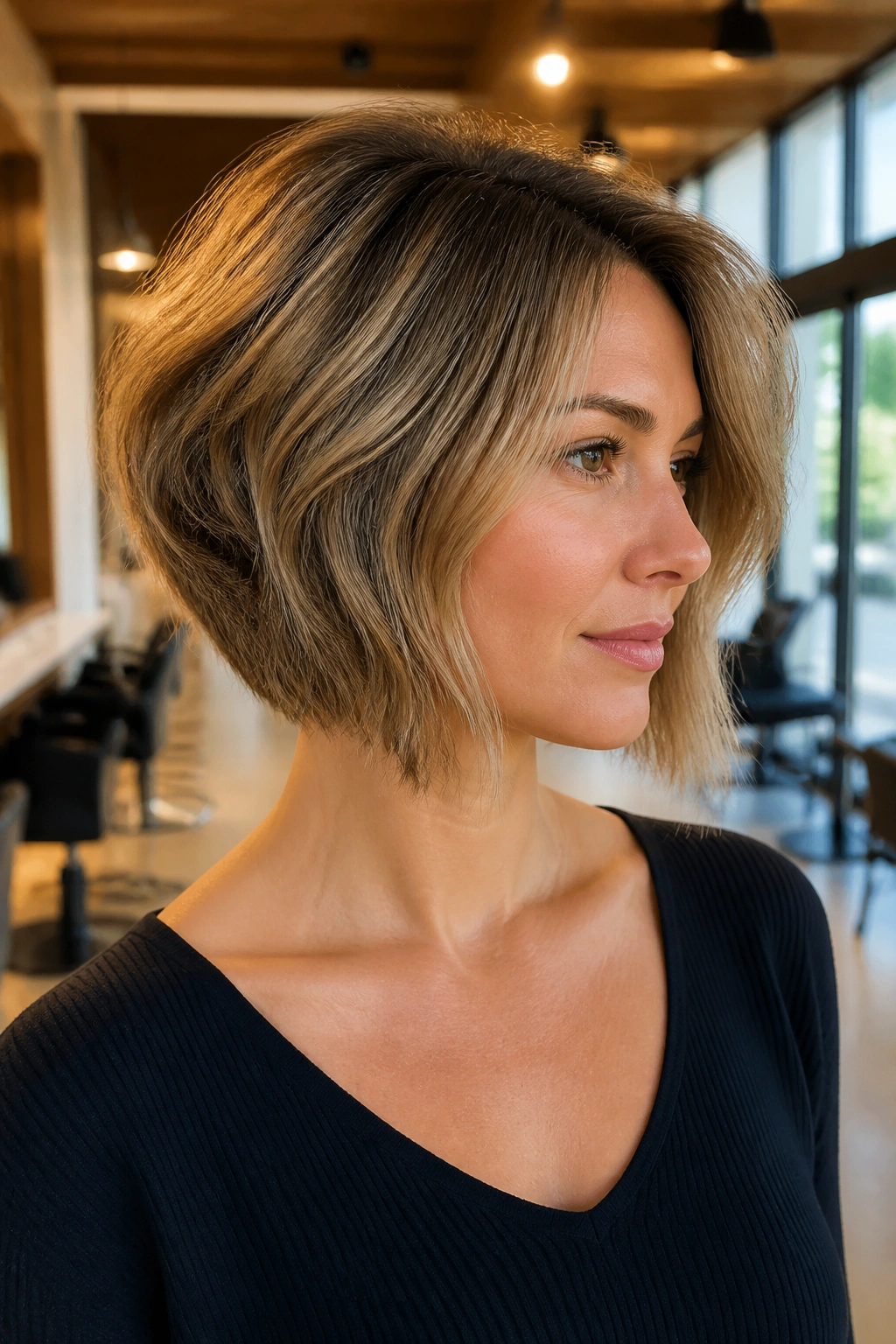
The inverted bob can work on fine hair if the back is only softly stacked.
That’s the piece people get wrong. Heavy graduation in the back can make fine hair look narrow and thin through the crown, which is the opposite of what you want. A gentle inversion — shorter in the nape, longer in front — gives lift without making the top look carved out. The angle matters more than the stack.
This shape is useful if you like a bit of neck exposure and a clean line around the face. It also gives the illusion of density because the front pieces fall with more weight. The ends land in a place that feels deliberate. Not too severe. Not too loose.
Ask for subtle graduation, not a wedge. That’s the phrase worth remembering. A good stylist will know the difference, but saying it out loud helps. You want a bob that curves forward, not one that pushes the hair up so much that the back feels overbuilt.
14. Wavy Lob for Fine Hair
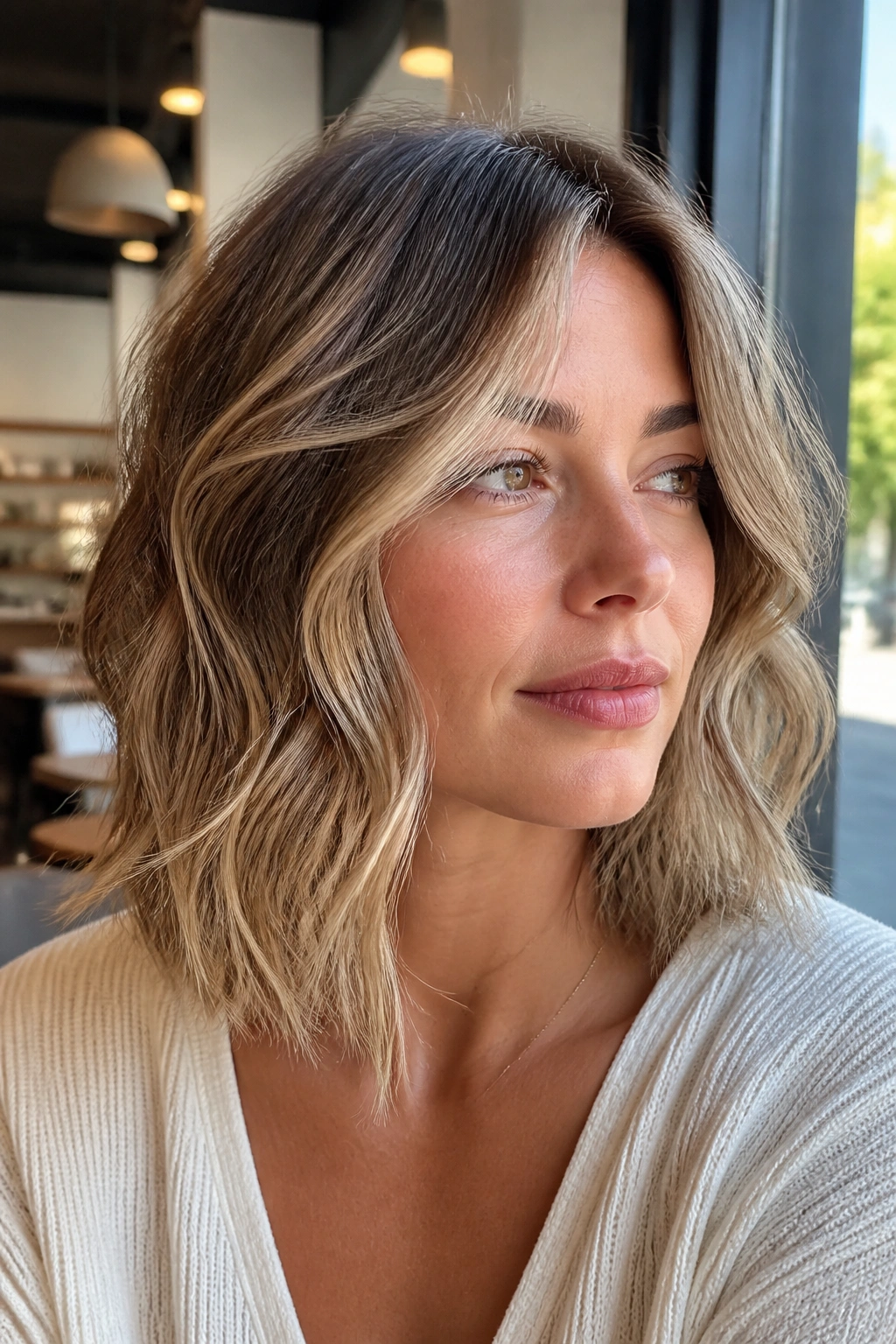
Want the safest version of a wavy bob haircut for fine hair? The lob is usually it.
A lob — long bob — gives you collarbone length, which means the hair keeps more of its own weight. That weight helps fine strands sit in a fuller line instead of scattering out around the shoulders. Add soft waves, and the style looks relaxed without falling flat. It’s the haircut I’d point to first if someone wants to test the bob waters without going short-short.
Why It Helps Fine Hair
- The longer length holds shape better between washes.
- The cut can be worn straight, waved, or tucked back.
- It leaves room for face-framing pieces without making the ends sparse.
- Grow-out is easier, which matters if you change your mind halfway through.
A lob also gives you more room to play with styling products. A little mousse at the roots, a touch of dry texture spray at the mids, and a loose bend through the ends is often enough. You do not need a pile of products. In fact, that usually makes fine hair collapse sooner.
If you’re not ready to lose much length, start here. It’s the calmest option in the group, but not the dullest.
15. Shaggy Bob With Fringe
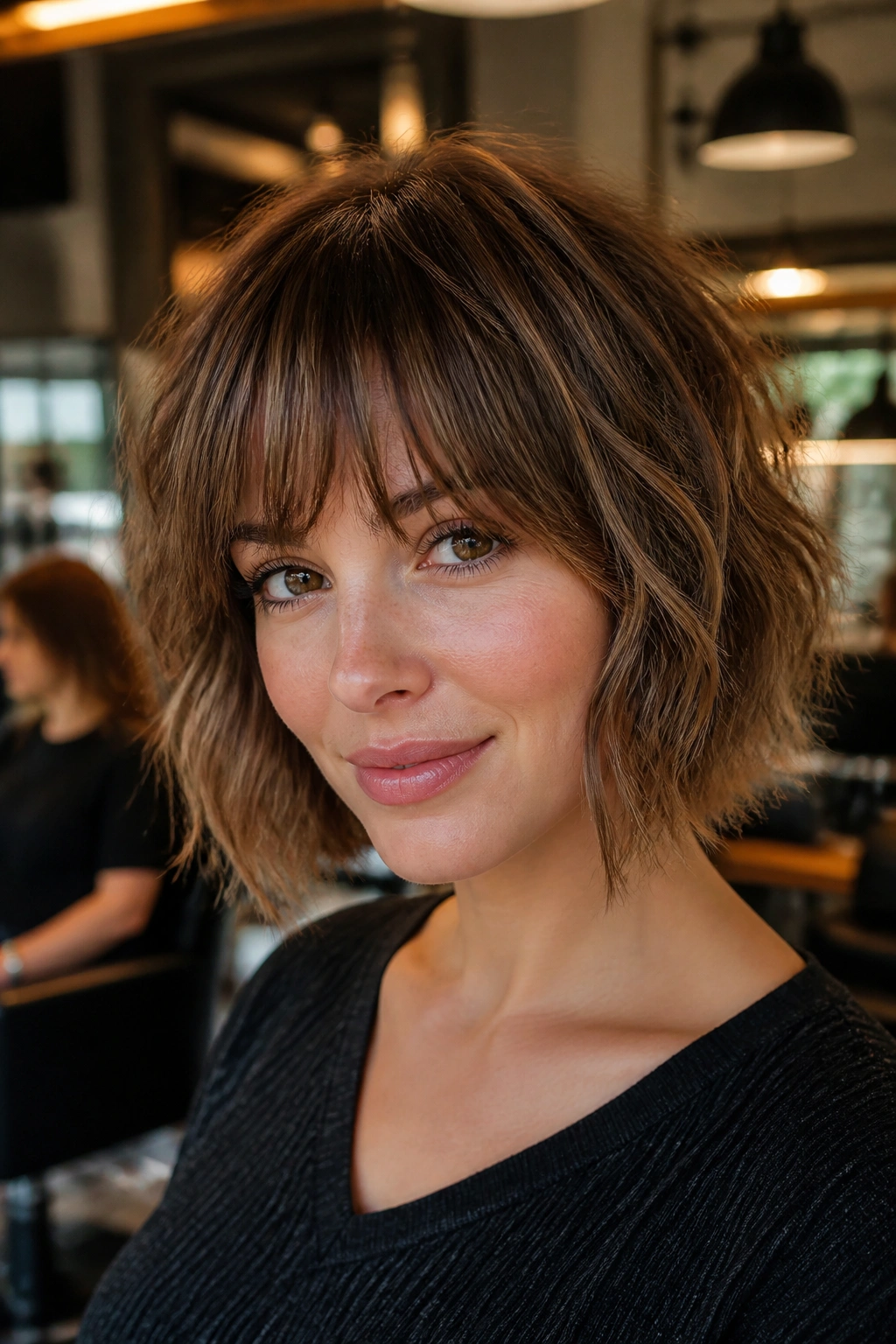
A shag on fine hair needs discipline.
That may sound odd, because shaggy cuts are supposed to feel relaxed, but if the layers get too aggressive on fine strands, the whole shape disappears. What you want is a bob with some rough edges, a little fringe, and enough perimeter left to keep the outline visible. The fringe can be wispy and broken up. The rest of the cut should still have weight.
This style suits natural wave well, since the hair already wants to split into pieces. A little air-drying cream and a quick scrunch can be enough. Straight fine hair can wear this too, but only if the layers are kept long and soft. Short, choppy layers on very fine hair tend to show too much scalp and too little shape.
It helps to think of this as a controlled shag. Not wild. Not overdone. Just enough looseness to keep the bob from looking too neat.
16. Center-Part Bob With Face-Framing Pieces
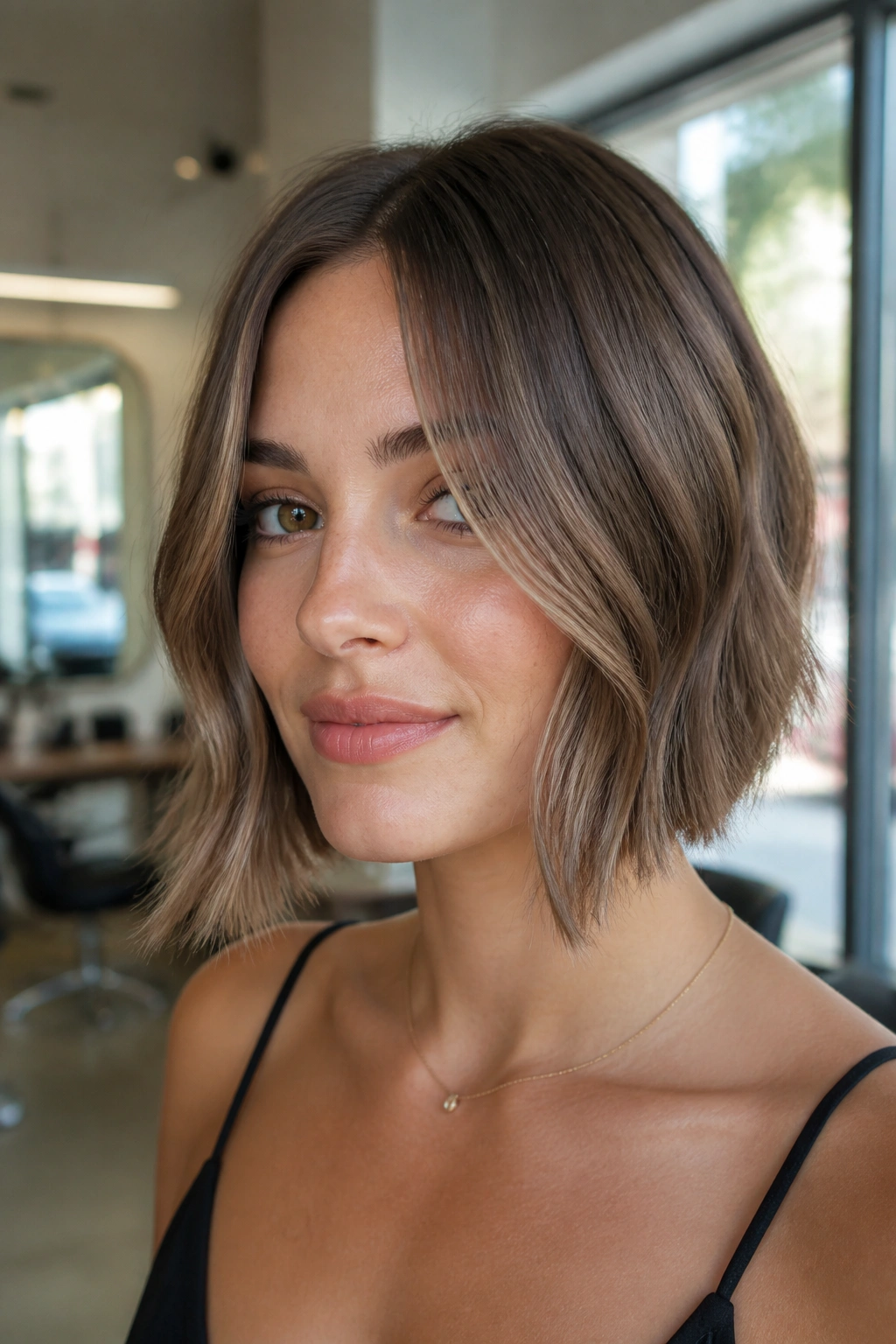
A center part is not off-limits just because your hair is fine.
In fact, a clean center part can make a bob look sleek and modern, especially when the front pieces are cut to frame the face. The balance on both sides helps the hair sit evenly, which matters when one side tends to go flat faster than the other. The face-framing pieces should begin around the mouth or chin so they don’t vanish into the rest of the cut.
Where the Front Pieces Should Fall
- Around the cheekbone if you want lift near the eyes.
- At the mouth if you want a softer, longer frame.
- At the chin if you want more shape around the jaw.
This style works well for oval faces and anyone who likes a neater finish. It can also make fine hair look glossy because the symmetry shows the line of the cut so clearly. The danger is cutting the front too short. Then the ends float away from the face and the whole thing feels disconnected. Keep the frame long enough to connect with the body of the bob.
17. Sleek Ends, Soft Waves Bob

The ends stay tidy while the middle bends. That’s the whole charm of this bob.
For fine hair, a clean bottom line with soft movement above it is a smart trade. The perimeter looks full because it isn’t broken up, while the gentle waves in the mids keep the style from feeling flat or severe. It’s a nice middle ground for someone who wants polish during the day and a little softness at night.
This cut looks best when the wave starts a few inches above the ends. Leave the bottom straight. If you curl every inch of hair, the ends can become too fluffy and the bob loses its density. A single bend through the middle sections, brushed out once it cools, usually gives the right finish.
It’s a good office haircut, and it behaves in humidity better than a more heavily layered bob. The line stays visible even when the wave loosens. That’s what makes it useful.
18. Jaw-Grazing Bob With See-Through Bangs

The forehead area can make a bob feel heavy or airy, and see-through bangs keep that balance in the airy camp.
These bangs are thin on purpose. They don’t take much density away from the rest of the haircut, which is the whole point on fine hair. A jaw-grazing bob underneath gives the face a clean frame, while the sheer fringe adds softness without shutting down the front of the cut. It feels light, but not flimsy.
The Bang Formula
- Keep the fringe narrow, not dense.
- Let it sit at or just below the brows.
- Blend the sides so they disappear into the front sections.
- Use a small round brush or a quick bend with a flat iron to stop them from separating badly.
This works especially well if you like a youthful shape without much styling fuss. The bangs can still be tucked, parted, or brushed aside when you want a change. One caution: if the bangs are too sparse, they can look accidental. There’s a difference between airy and undercut. Ask for airy.
19. Wavy Italian Bob
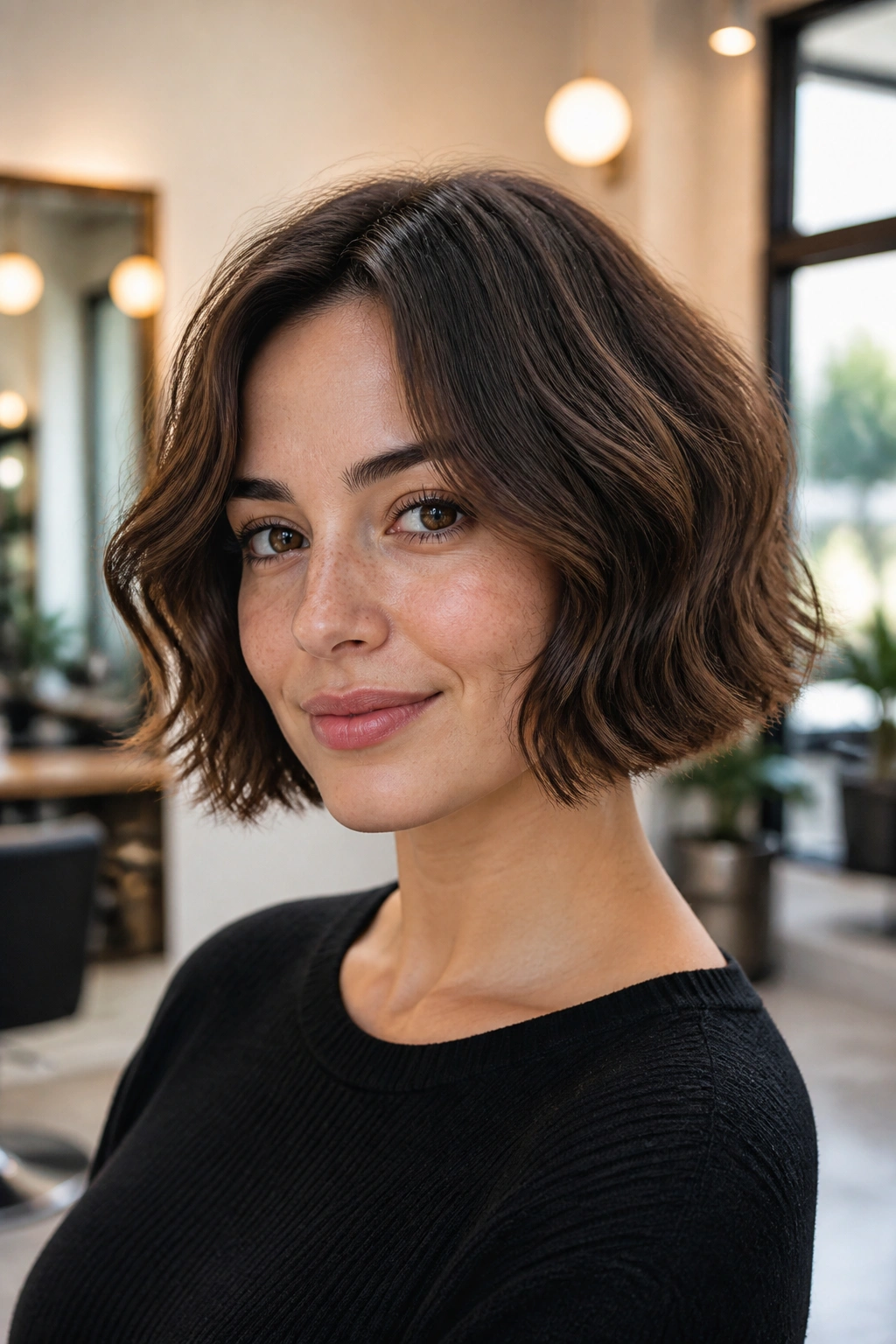
This is the bob for someone who wants weight, not fluff.
The Italian bob usually sits around the jaw or just below it, with a fuller outline and fewer layers than a shaggy or heavily textured cut. On fine hair, that heavier shape is a gift. The bob looks denser because the ends stay together, and the wave sits on top of a solid base instead of floating over a lot of empty space.
The styling should be soft and broad. Loose waves, brushed out, with a little bend near the face. Nothing tight. Nothing crispy. The goal is to make the cut feel rich and full through the lower half, almost like the hair has more body than it actually does.
I like this version for people who want a low-drama haircut that still feels styled. It’s polished, but not stiff. And because the shape is compact, it usually survives a day of wear better than something more layered and airy.
20. Soft Curved Bob With Minimal Layers
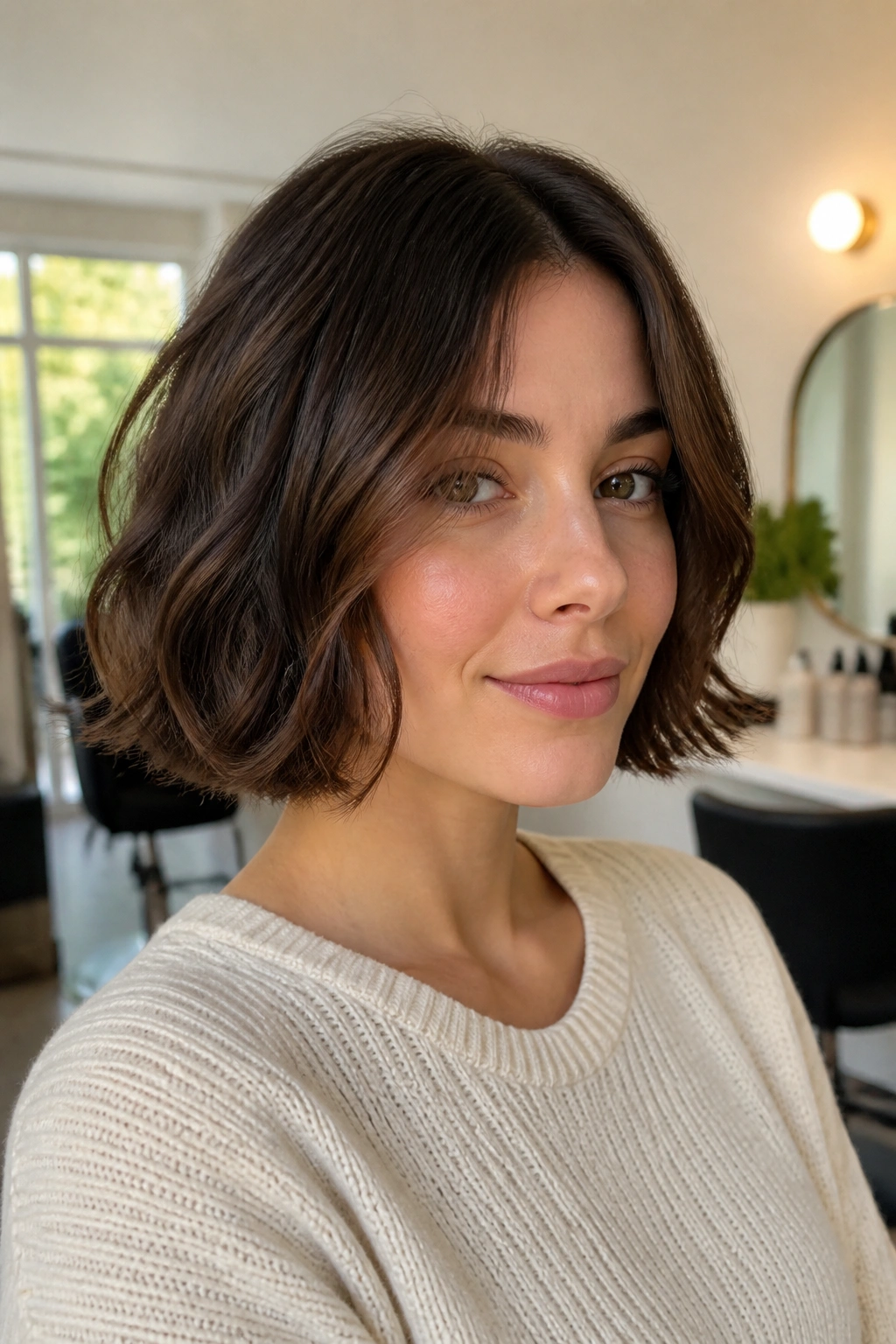
If you only take one rule from all of this, take this one: keep the outline solid.
A soft curved bob with minimal layers is the version I’d hand to someone with fine hair who wants the safest mix of movement and thickness. The curve helps the cut hug the face and jaw, while the limited layering keeps the ends from looking shredded. Add waves, and the shape gets softer without losing its bottom line. That bottom line is what saves the haircut.
What To Say in the Chair
- Ask for a full perimeter.
- Keep interior layers light and spaced out.
- Let the front pieces connect to the jaw or collarbone.
- Mention if your hair shrinks up when it dries, because that changes where the length should land.
- Bring photos of hair with the same density, not just the same haircut.
This is also the style to choose if you want a bob that can move between polished and casual without a big restyle. Smooth it one day, wave it the next, tuck one side behind the ear, leave it center-parted the day after that. A good cut should give you options. Not chaos. Options.
And that’s really the point with fine hair: the bob should make the hair look like it has a plan. A strong edge, a little movement, and the right length do more than any fancy product ever will.
