



Fine hair can be a little misleading. It looks soft, sometimes delicate, and then one bad haircut turns it flat, wispy, and strangely tired by noon. A stacked blonde bob fixes that problem in a way that still feels clean: the back gets controlled graduation, the outline stays crisp, and the blonde tone throws light around so the shape reads fuller than it is.
That combination matters more than people think. A bob on fine hair is not only about length; it’s about where the weight sits, how the nape is cut, and whether the front pieces support the face or drag everything down. Too many layers can chew through density. Too much texturing can make the ends look thin. A good stacked bob does the opposite. It keeps the base firm and lets the crown rise a little.
Color helps, too. Blonde is not just blonde here. A pale champagne tone, a beige ribbon, or a soft root shadow changes the way the cut looks from a distance. Depth at the back, brightness near the face, and a little shadow underneath can make fine hair look like it has a better texture than it really does.
The styles below range from sharp and polished to soft and lived-in. Some are short. Some skim the collarbone. Some lean modern, while others have that old-school salon shape that always seems to make the jawline look cleaner. Different faces, different growth patterns, different patience levels. That’s the point.
1. The Classic Stacked Blonde Bob for Fine Hair
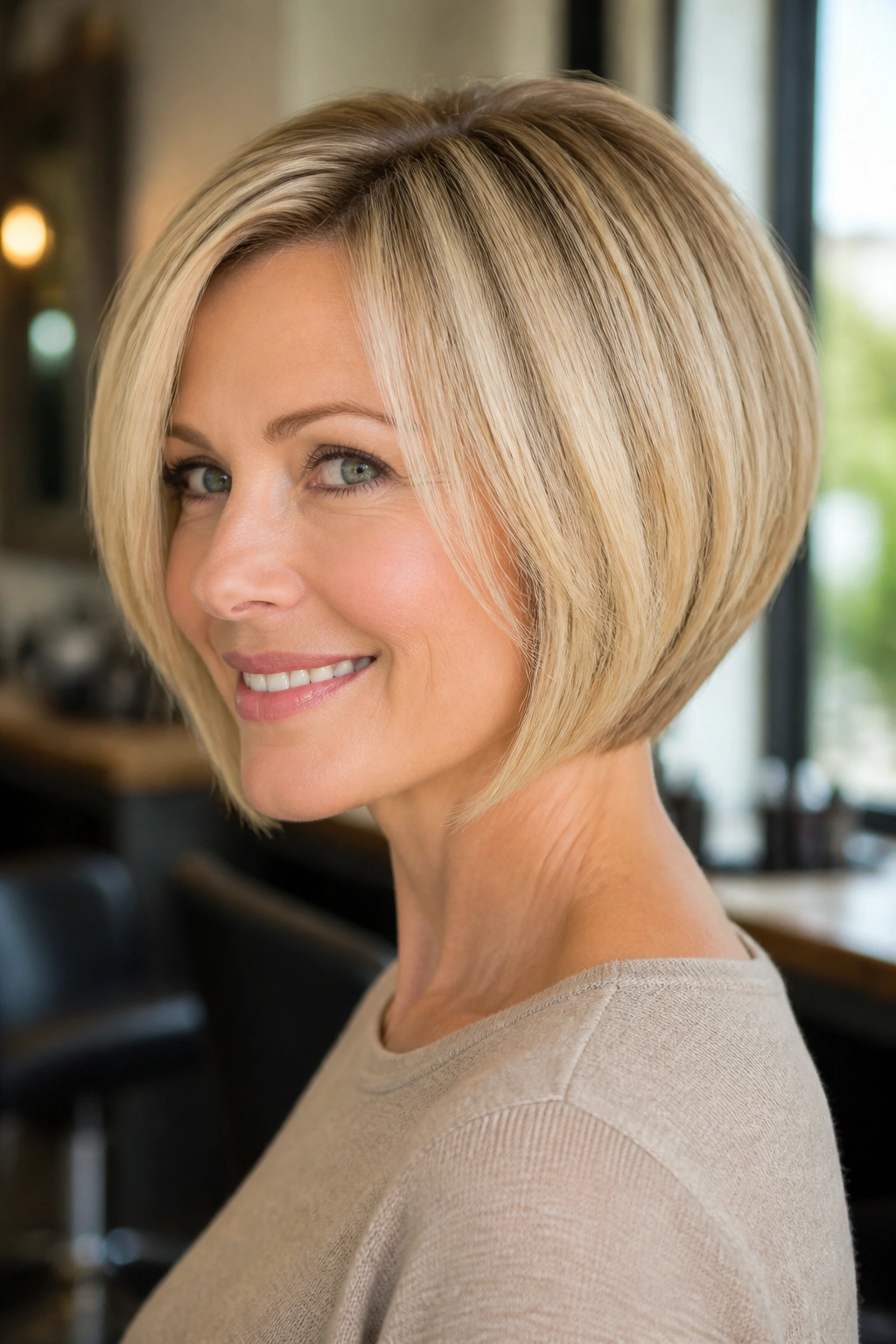
This is the haircut people mean when they say they want more shape without losing softness. The back is stacked enough to lift the nape, but not so aggressively that it turns into a wedge. The front usually lands around the chin, which gives fine hair a clean frame and keeps the ends from looking see-through.
Why It Flatters Fine Hair
A classic stack works because it keeps the bulk where fine hair needs it most: low in the back and around the perimeter. The blonde shade helps, but the cut is doing the real work. When the nape sits snug and the crown rises gently, the whole head looks more balanced.
Ask for:
- A short, graduated back with visible lift at the nape
- A blunt or slightly beveled perimeter so the ends stay thick
- Blonde highlights that stay brighter around the face
- Very light texturing, not heavy thinning
One-sentence truth: If your fine hair needs more body, this is the safest place to start.
2. The Soft Angled Stacked Bob
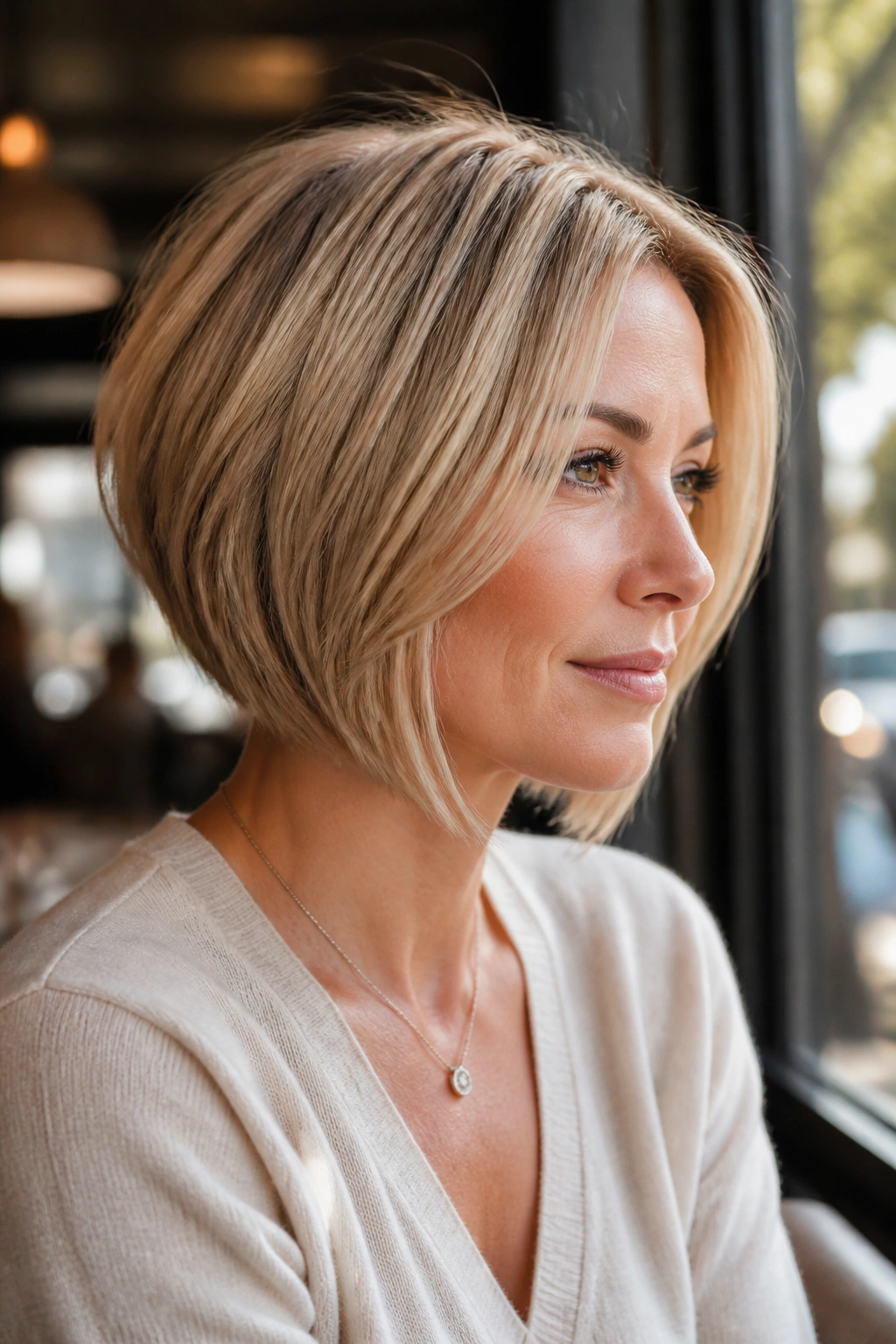
A soft angle changes everything. The back still stacks up neatly, but the front stretches a little longer toward the jaw or even the upper neck, which gives the cut a gentle slope instead of a blocky edge. That slope matters on fine hair because it creates motion without stealing density from the ends.
The best versions are subtle. You should be able to see the angle when the hair is tucked behind the ear, not scream at it from across the room. On straight fine hair, that quiet angle makes the profile look cleaner. On hair with a slight bend, it keeps the shape from puffing out at the sides.
I like this version for anyone who wants structure but hates the feeling of a severe bob. It’s polished, but not stiff. And when the blonde is kept creamy or beige rather than icy, the whole cut feels softer on the skin.
3. The Platinum Stacked Bob with a Root Shadow
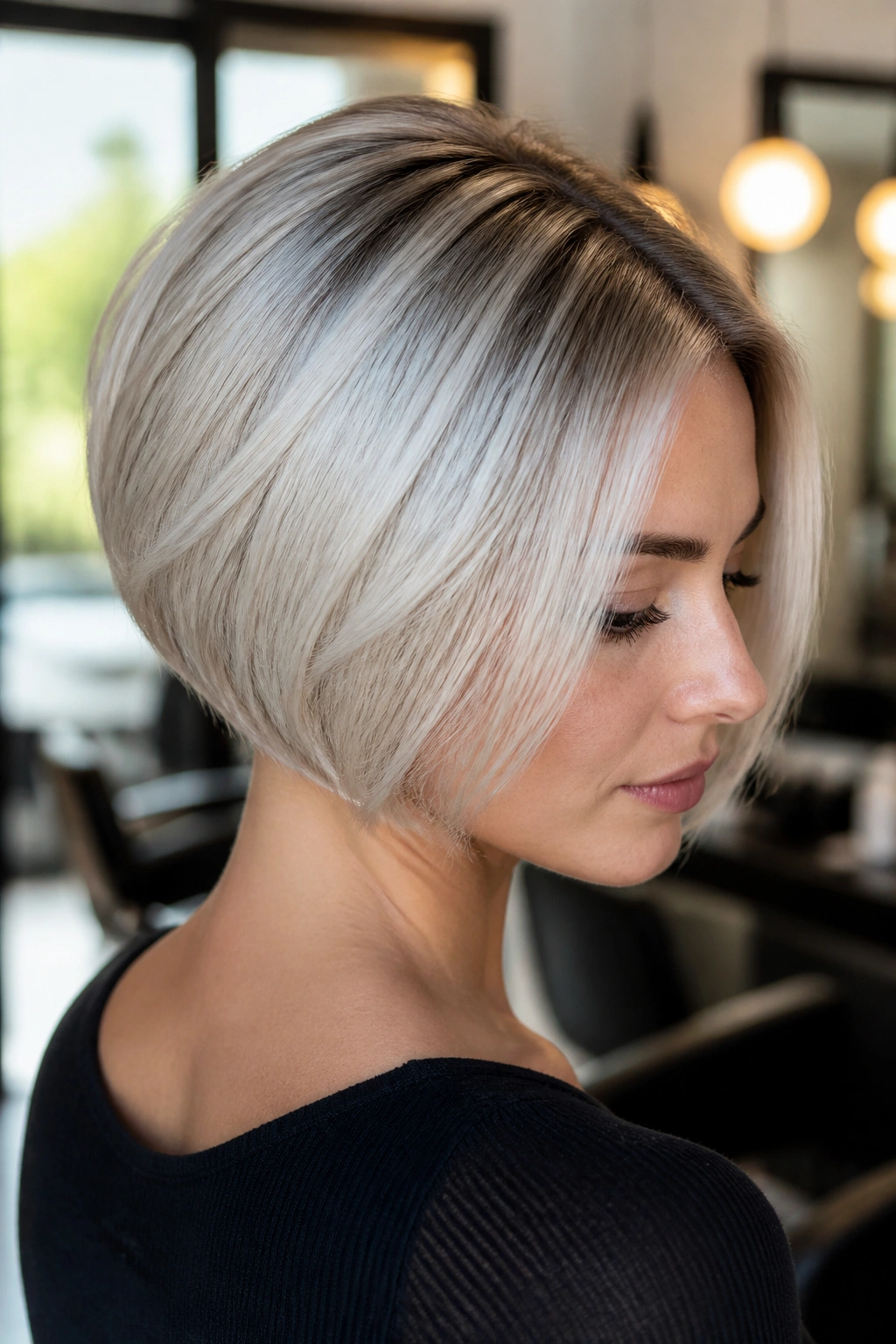
Want a bob that makes fine hair look denser at the crown? Use contrast on purpose. Platinum ends with a soft root shadow give the illusion of depth where the hair is usually flattest, and that little darkness near the scalp is doing more work than most people realize.
The trick is not to make the roots too heavy. You want a smoky base, not an obvious grow-out line. Fine hair tends to look wispy when it is all one bright shade from root to tip. A root shadow breaks that up, and the stacked back gets a little extra visual weight because the eye sees shade first, then shine.
How to Ask for It
Tell your stylist you want fine, controlled graduation in the back, a soft root melt at the part and crown, and a bright platinum finish through the mids and ends. If your hair is fragile, skip aggressive bleaching at the very tips. They can look dry fast.
The result is sharp. A little icy. Very clean.
4. The French Fringe Stacked Bob
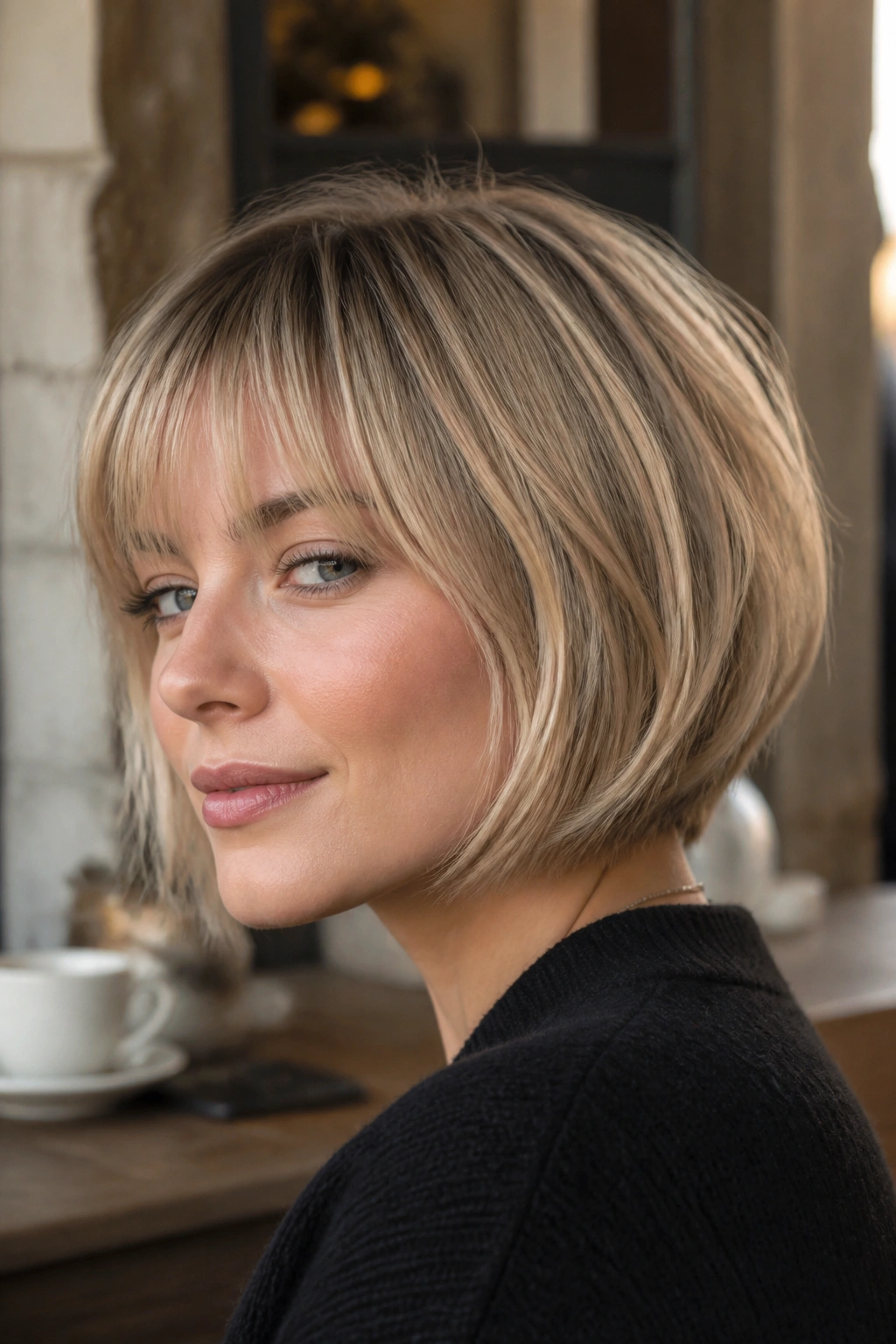
Picture a chin-length stacked bob with a soft fringe grazing the brows, maybe a little piecey at the center. It sounds simple. It isn’t. The fringe changes the whole mood, because it pulls attention upward while the stack keeps the back from going limp.
For fine hair, that matters. A fringe can hide a narrow hairline, soften a high forehead, or make the face feel shorter if the bob itself sits close to the jaw. The key is keeping the fringe light enough that it moves. Heavy bangs on fine hair can separate in odd ways by midday. Nobody wants that.
The Details That Make It Work
- Keep the fringe thin and softly broken up
- Leave the stack compact so the nape still has lift
- Choose a buttery or wheat blonde if you want warmth near the skin
- Style with a small round brush and a quick bend, not a hard curve
This is one of those cuts that looks relaxed even when it’s carefully built.
5. The Razor-Free Feathered Stacked Bob
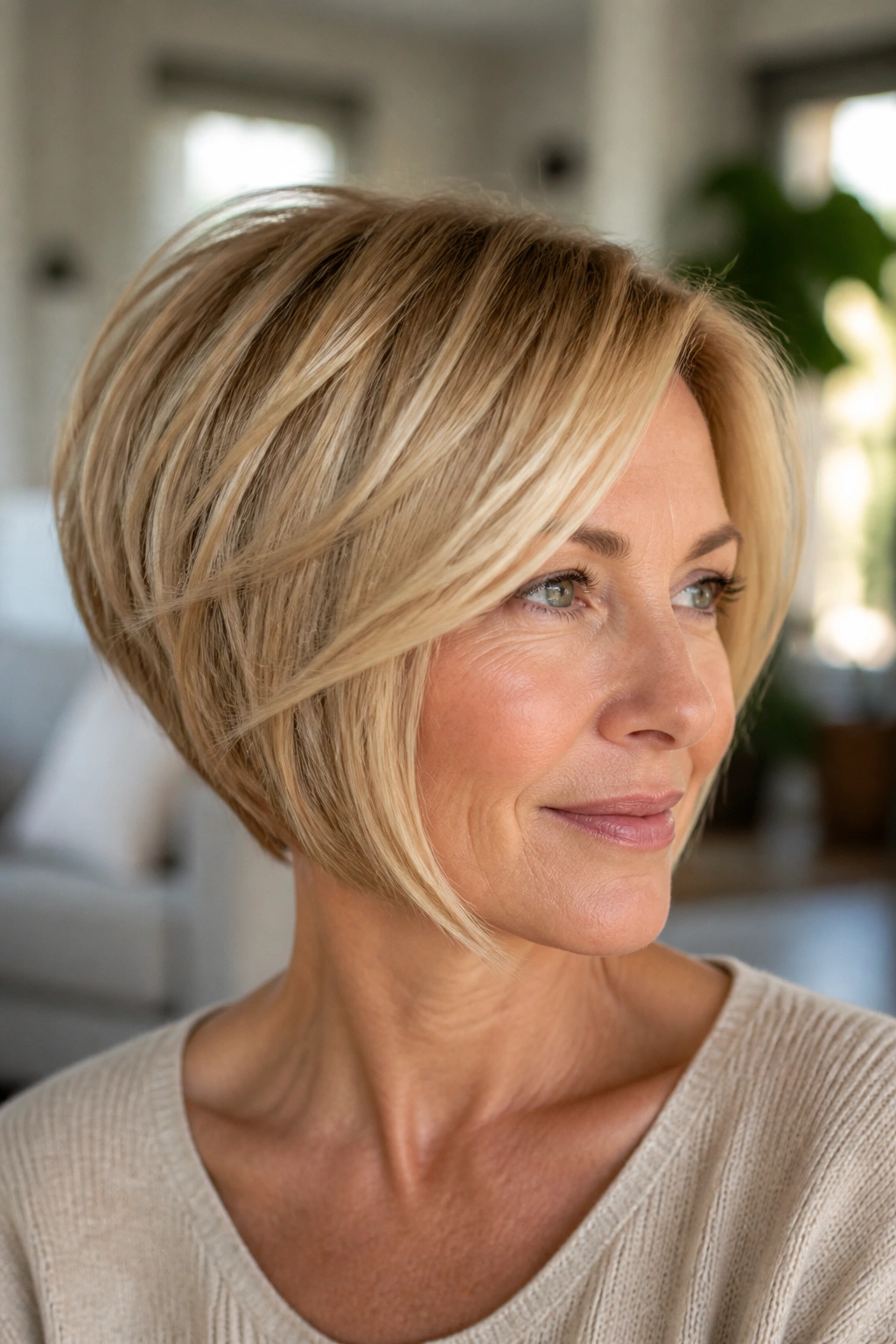
I have a soft spot for this one because too many stylists reach for a razor when hair feels fine. That’s not always smart. A razor can make the ends too translucent, and once the density is gone, it does not come back with a cute blowout.
A razor-free feathered stack uses point-cutting and controlled layering instead. The result is movement without that shredded finish. You still get lift at the back, but the perimeter keeps enough weight to look healthy. Blonde hair shows every mistake, so this matters more than people admit.
This version suits hair that’s already soft and silky. It doesn’t need extra aggression. It needs shape, a little direction, and a stylist who understands that fine hair usually looks better when the ends stay a touch blunt. Feathers are fine. Frayed is not.
6. The Collarbone-Length Stacked Lob
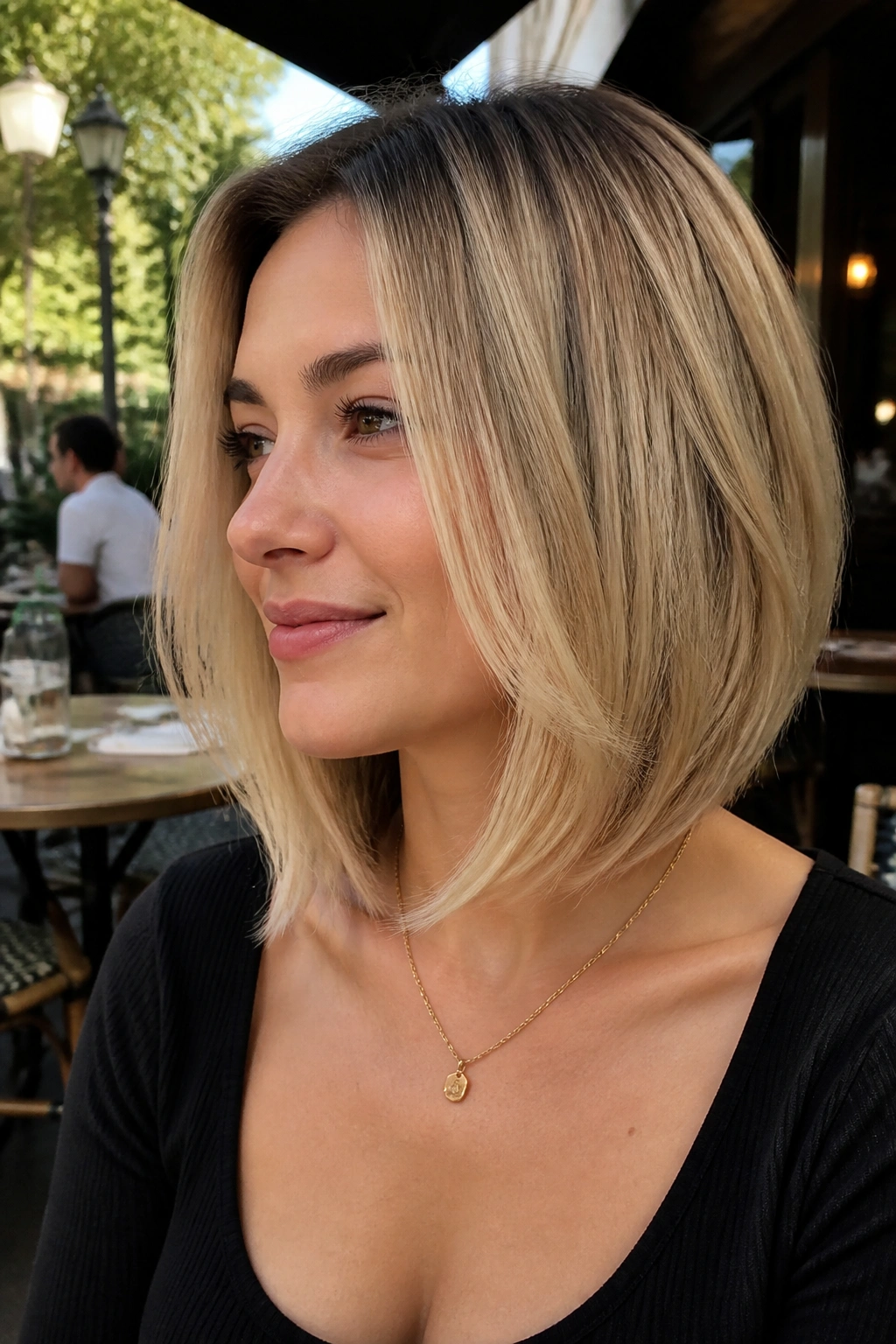
If you want some length left to tuck behind the ears, this is the answer. The collarbone-length stacked lob gives fine hair a longer line, which can be kinder than a tight bob if your hair breaks easily or your neck is not a fan of super-short cuts.
The stack is there, but it’s hidden a little more under the surface. That keeps the silhouette from collapsing while the front pieces skim the collarbone and frame the shoulders. This shape works especially well with blonde highlights that blend from beige at the roots into lighter ends, because the contrast helps the lob read as fuller.
It’s also easier to live with than a very short bob. You can curl it, wave it, clip it back, or let it fall straight and still keep the outline. For people growing out a shorter cut, this is often the most graceful next step.
7. The Deep Side-Part Volume Stacked Bob
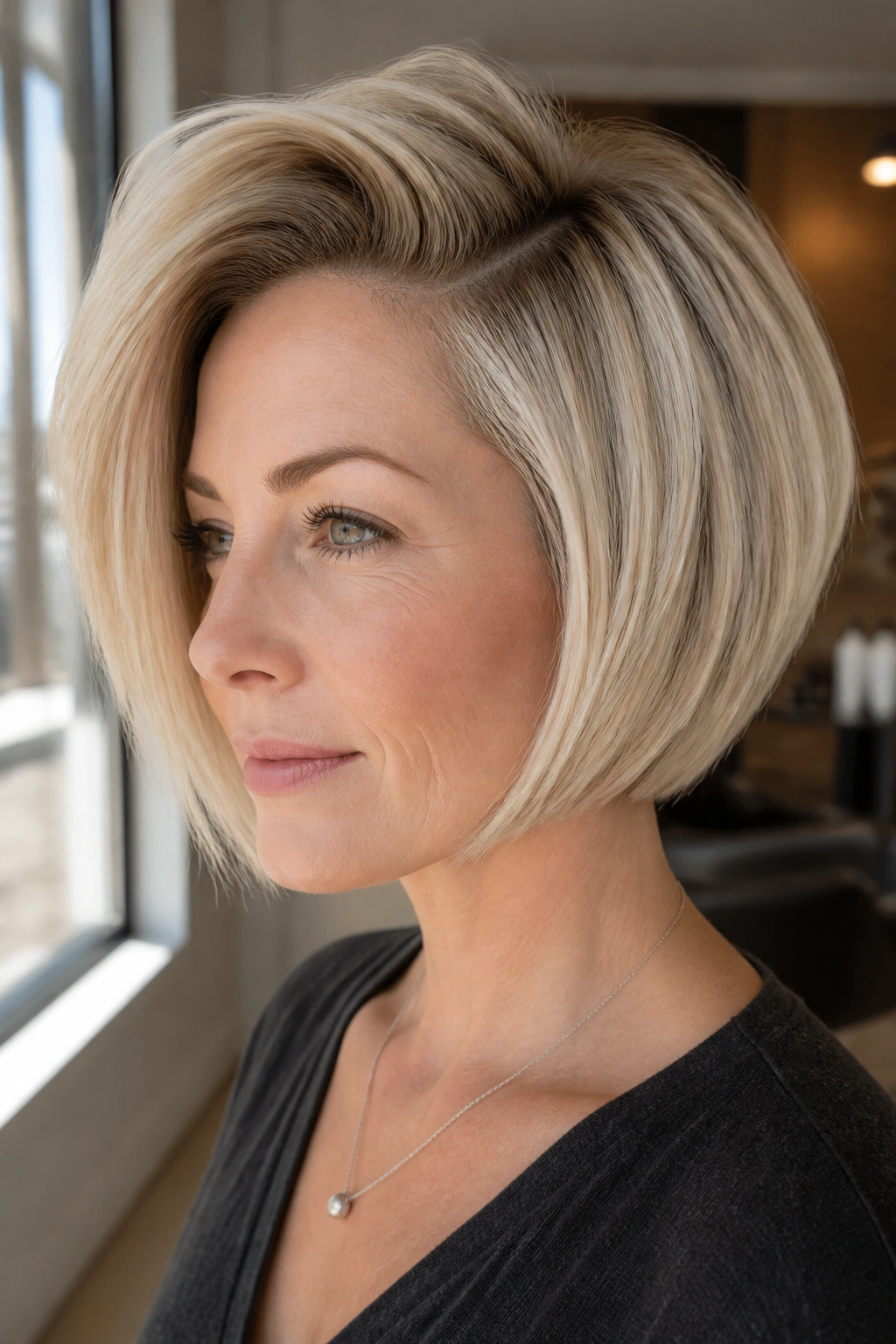
A deep side part can save a flat haircut. Seriously. When fine hair sits in the same part every day, it tends to lie down in the same tired way every day, too. Shifting the part over by an inch or two gives the roots a lift they would never get on their own.
Why the Part Matters
The side with more hair creates a visible sweep, while the stacked back keeps the neck from looking heavy. That asymmetry is useful on fine hair because it gives the eye something to follow. The cut looks fuller even before you touch a curling iron.
What to Watch For
- Keep the heavier side long enough to fall cleanly
- Ask for soft graduation, not a choppy crown
- Use a light root spray at the side with less hair
- Avoid overcurled ends; they can look puffy fast
This one feels a little glamorous without trying too hard. Good for dinner. Good for the office. Good when you need your hair to pretend it had a better night’s sleep than you did.
8. The Icy Jaw-Length Stacked Bob
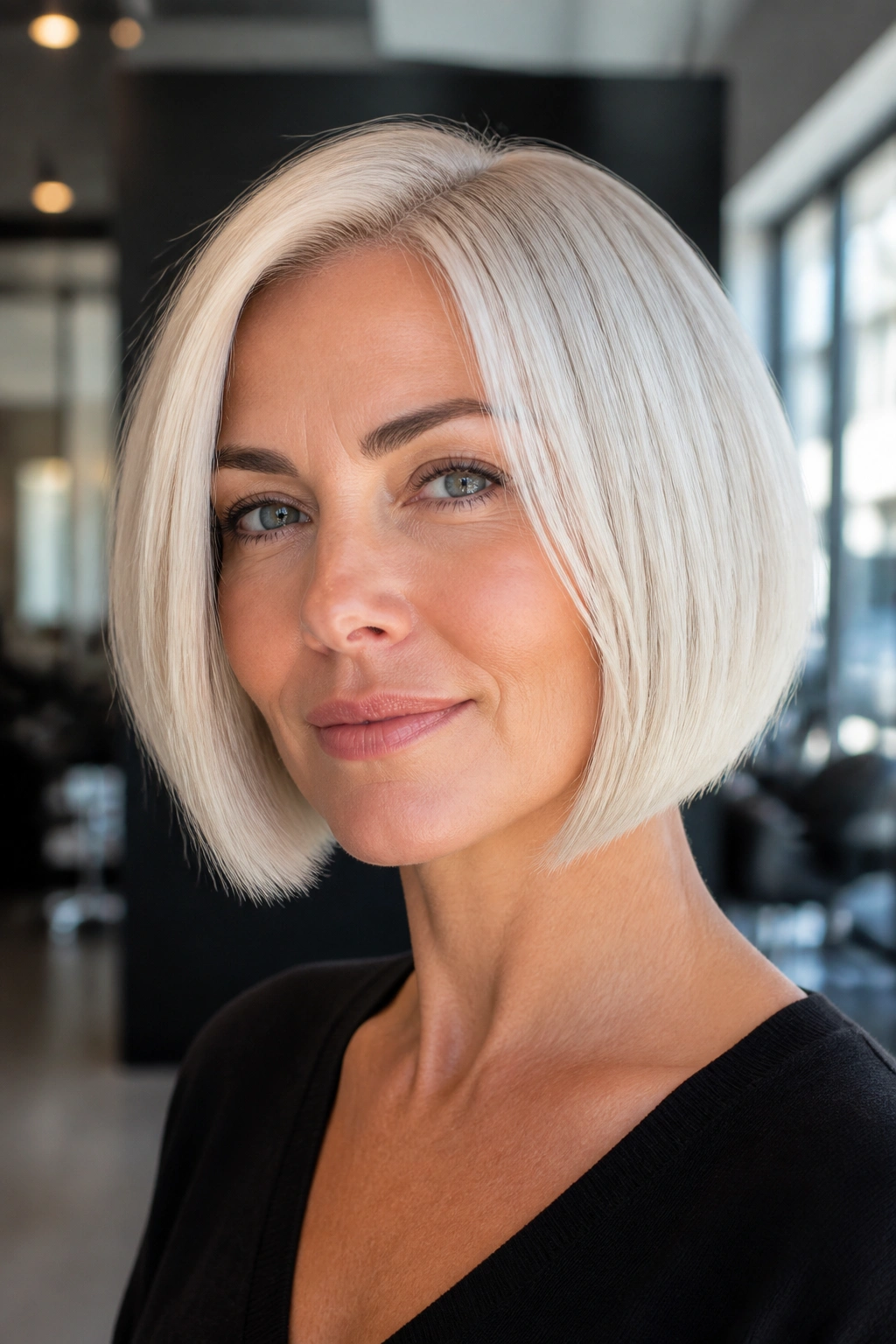
This is the sharp one. The jaw-length stacked bob has edges that sit close to the face, and the icy blonde tone makes every line feel crisp. On straight fine hair, that can look gorgeous because there’s no fuzzy layer to interrupt the shape.
The style is not shy. It works best when the nape is tucked neatly and the front lands right at the jaw or just below it. If you like hair that feels architectural, this is your lane. If you prefer softness, skip ahead.
What makes it useful for fine hair is the control. The cut is so defined that the viewer sees the outline first, not the lack of density. That means the hair can be lighter in feel without looking weak. A small round brush, a smooth serum, and a clean center or side part keep it sleek.
9. The Beige Blonde Stacked Bob with Airy Layers
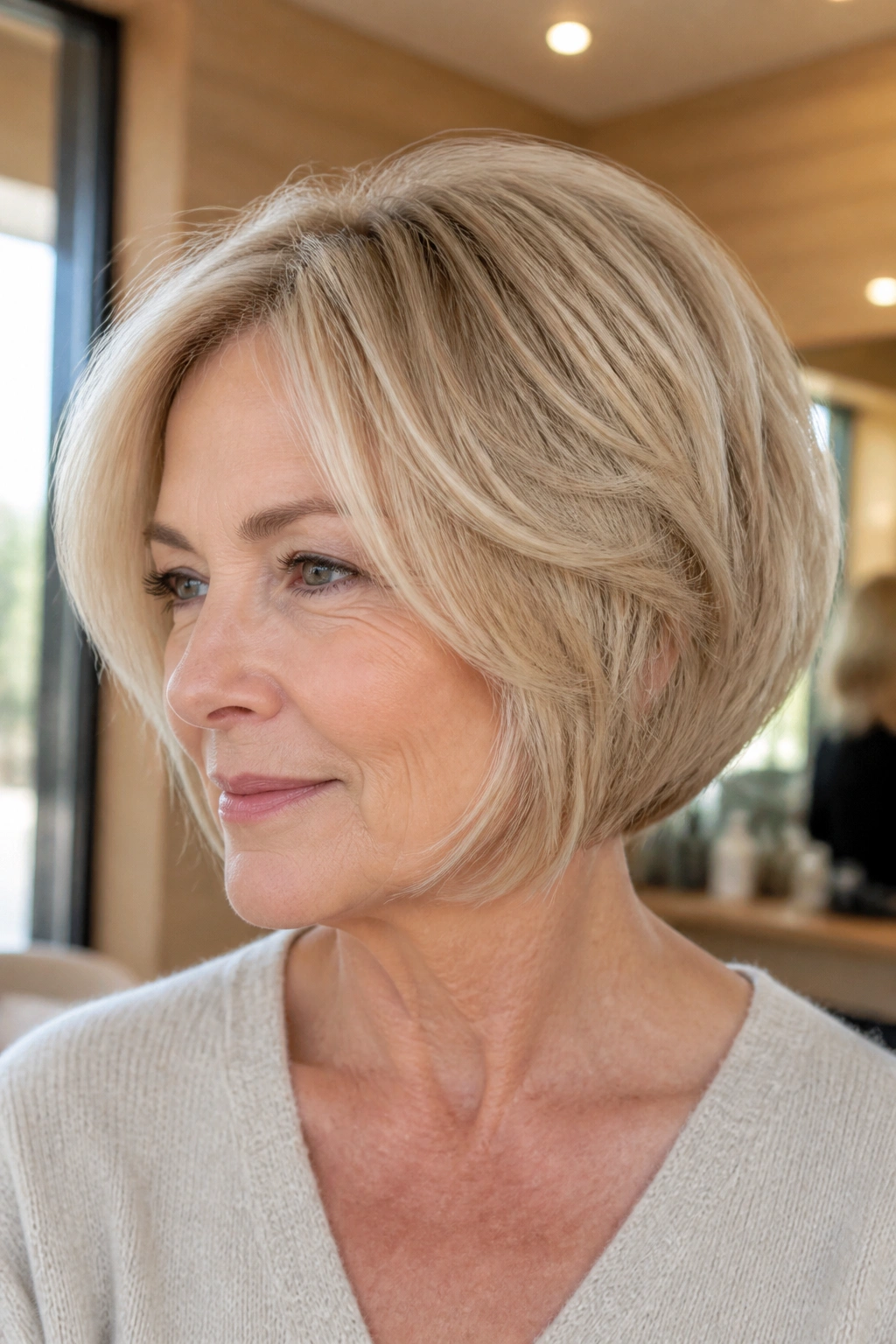
Beige blonde is the color I reach for when I want a stacked bob to feel expensive but not harsh. It softens the edges, which helps if your fine hair tends to show every line too strongly. The stack still gives the back its lift, but the color keeps the style from looking too severe.
The layering here should stay light. Think airy, not shredded. A few internal layers around the crown are enough to give the roots some air without exposing the scalp. That balance is delicate. Too many layers and the cut starts to separate. Too few and the stack loses its point.
This is a good choice if your hair is fine but not fragile. It gives movement and some bounce, and the beige tones hide minor regrowth better than brighter blondes. Less drama at the salon chair. More wear between appointments.
10. The Curled-Under Rounded Stacked Bob
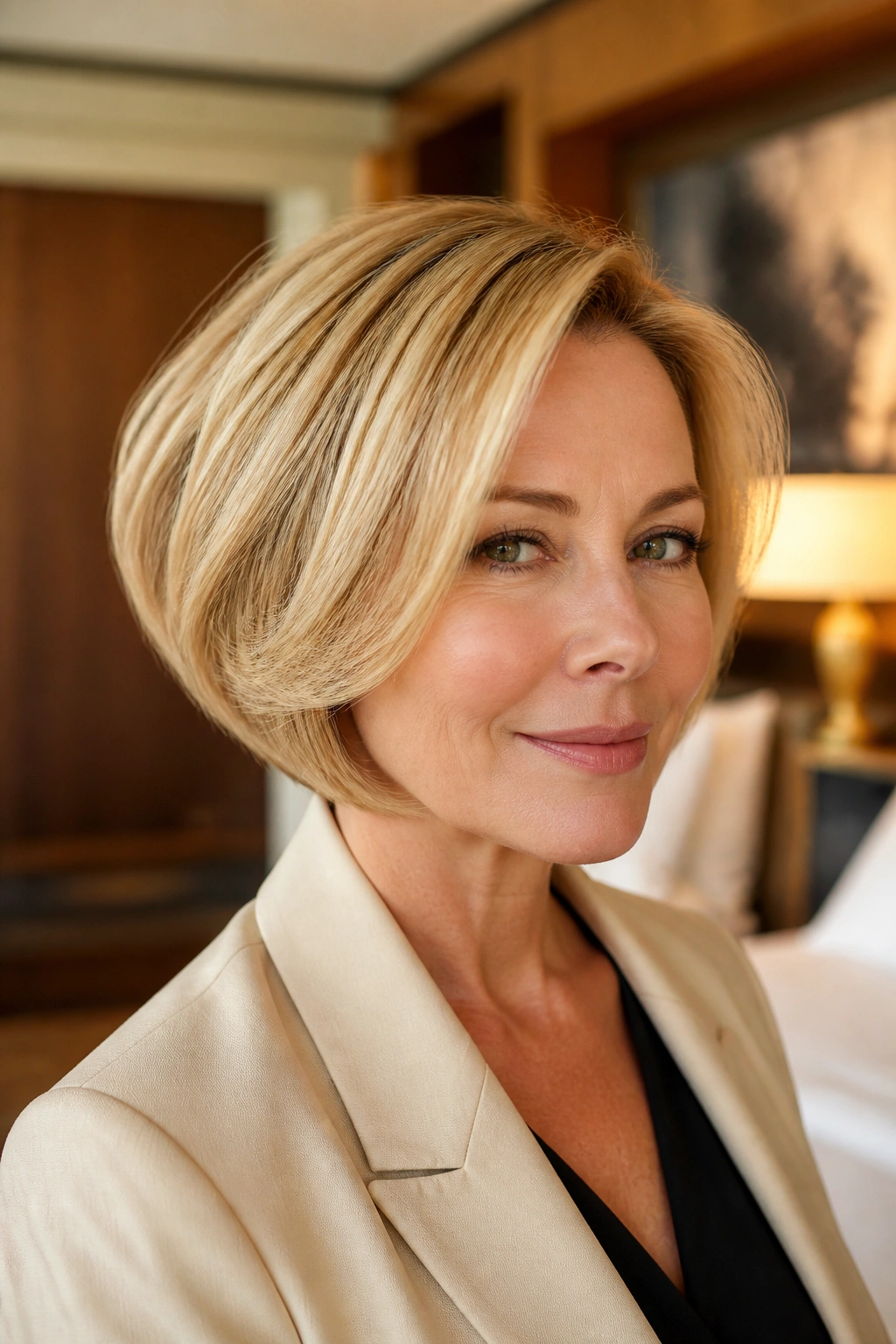
There’s something satisfying about a bob that curves under cleanly at the ends. It feels old-fashioned in the best way. Think round brush, warm blow-dryer, and that soft inward bend that sits right against the jaw.
For fine hair, this shape is sneaky in a good way. The rounded finish makes the ends appear thicker because they are gathered inward instead of hanging loose. The stack underneath gives the back lift, while the blonde tone reflects light off the curve. It’s a small trick, but it works.
Styling Notes
- Blow-dry with a small to medium round brush
- Direct the ends under, not outward
- Use a light mousse at the roots before drying
- Finish with a pea-sized smoothing cream so the shape stays clean
This cut looks polished without needing a shellacked finish. You can wear it to a wedding or to the grocery store, and it still reads as intentional.
11. The Messy Textured Stacked Bob
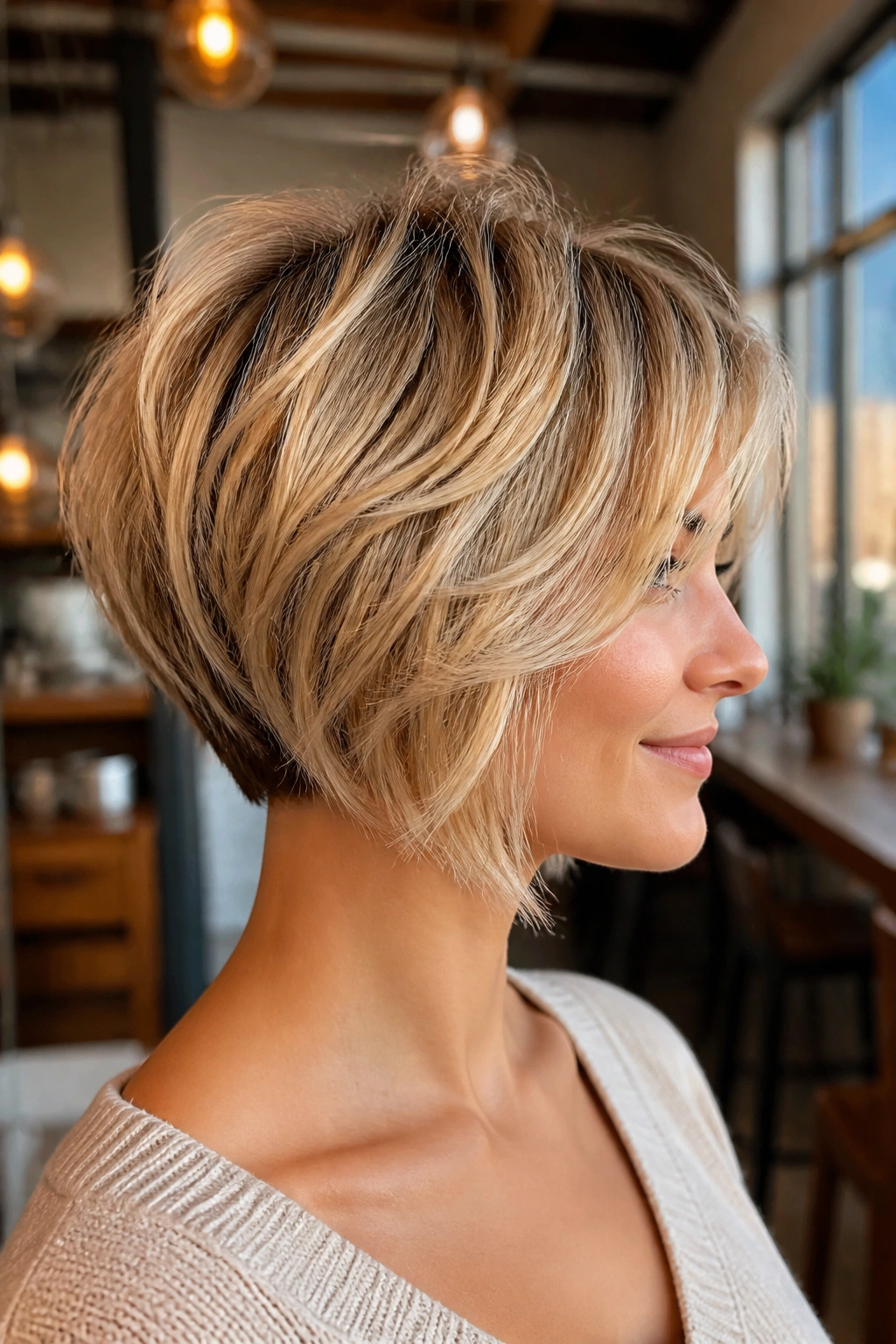
Not every stacked bob needs to look crisp. Some of the best ones look like they were tossed around a little and came out better for it. The messy textured stack is built for that attitude: short enough at the back to keep lift, broken up enough on top to avoid helmet hair.
Fine hair benefits from this style when the texture is added in the right place. You want movement through the mids, not shredded ends. A little texture spray at the crown, a bend in the front, and a soft blonde highlight pattern can make the whole cut feel fuller and looser at the same time.
There’s a catch. If the texture is too aggressive, fine hair starts to look sparse. That is why the best messy stacked bobs still have a visible outline. The mess lives inside the shape, not instead of it.
12. The Sleek Blowout Stacked Bob
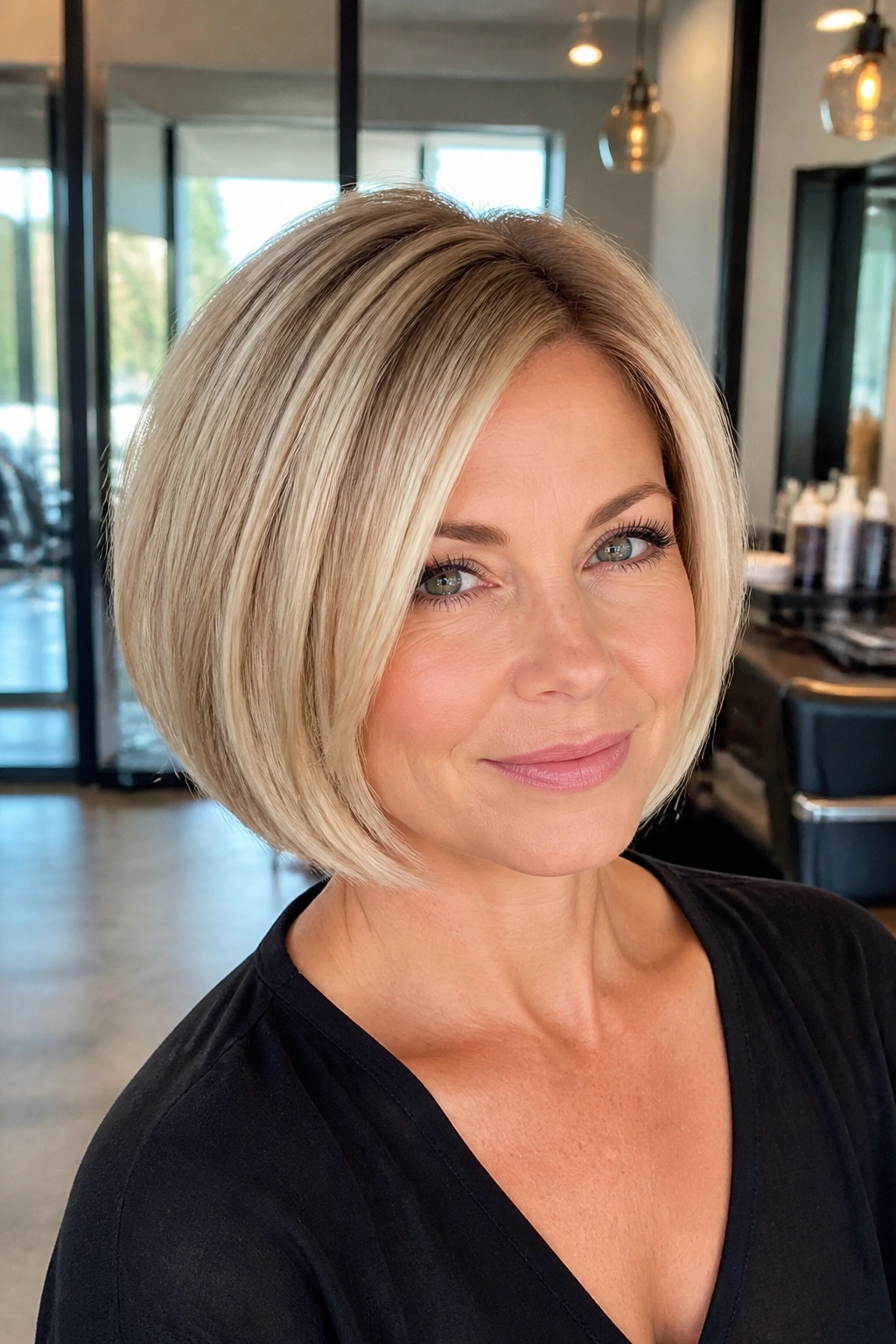
Some people want volume. Some want shine. If you’re the second type, this cut is worth a look. The sleek blowout stacked bob depends on clean lines, smooth tension, and a bit of root lift from a round brush or velcro rollers.
Compared with messier versions, this one uses polish as the illusion. Fine hair reflects light quickly, so when the cut is smooth and the blonde tone has dimension, the whole style appears denser. A blunt or lightly beveled front helps the ends look solid, while the stacked back keeps the profile from falling flat.
It’s best for hair that straightens easily and for anyone who likes a tidy finish. If your hair frizzes fast or your arms hate blow-drying, this may not be your favorite. But when it works, it really works. Clean. Sharp. Easy on the eyes.
13. The Micro-Balayage Stacked Bob
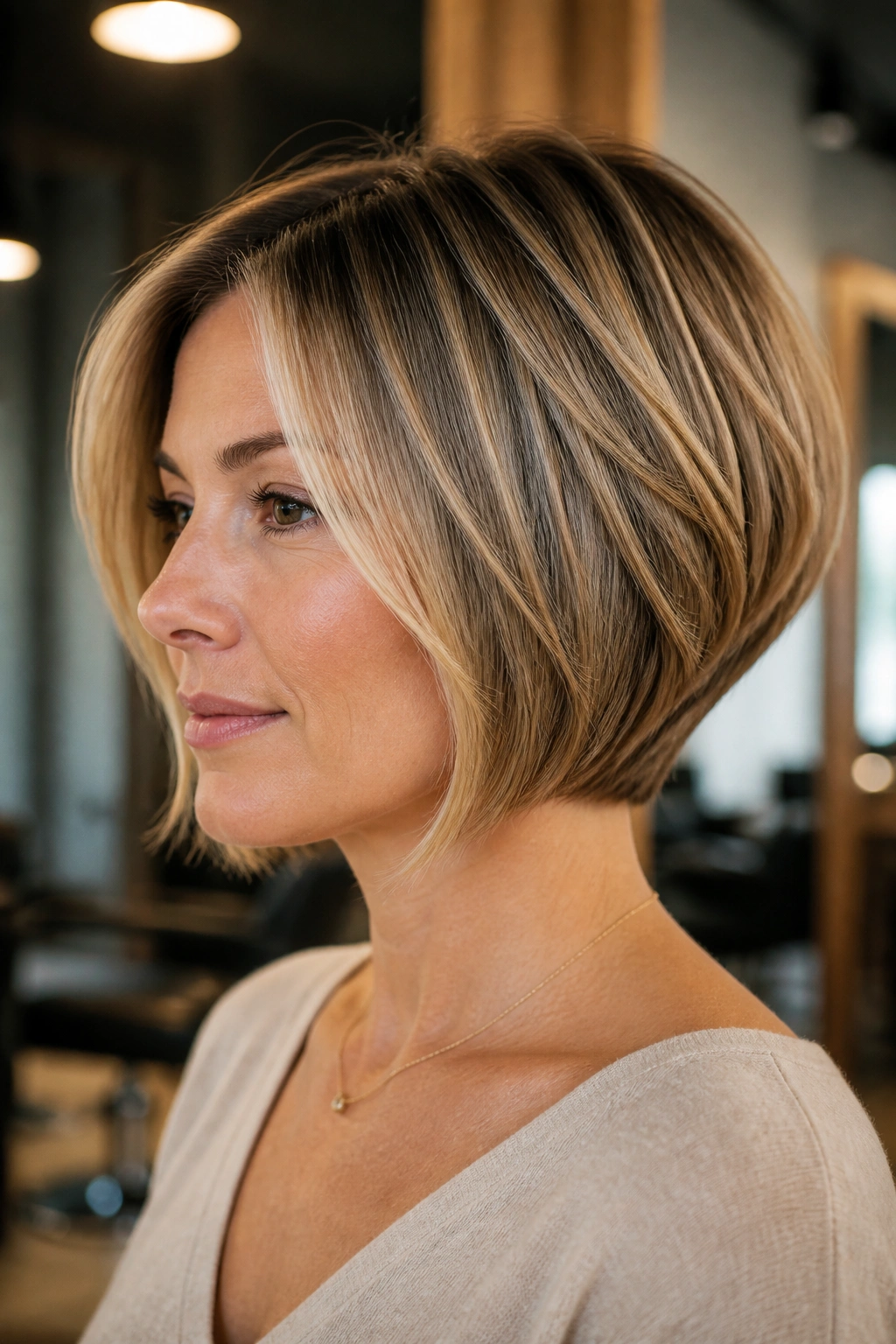
Big streaks can be too much for fine hair. Micro-balayage is gentler. It uses tiny ribbons of light and shadow, placed close enough together to make the hair look deeper and more layered without breaking up the shape.
Why Small Ribbons Matter
A stacked bob already has structure at the back. Micro-balayage supports that structure by making the graduation look richer from a distance. The eye sees movement in the color before it notices any thinness in the hair itself.
Good Placement Choices
- Keep the brightest pieces around the cheekbones
- Let the darker depth sit underneath the stack
- Avoid chunky highlights near the crown
- Ask for a soft beige or honey blonde base if you want warmth
This is a quiet haircut. It doesn’t shout. That’s why it’s so good.
14. The Curtain Bang Stacked Bob
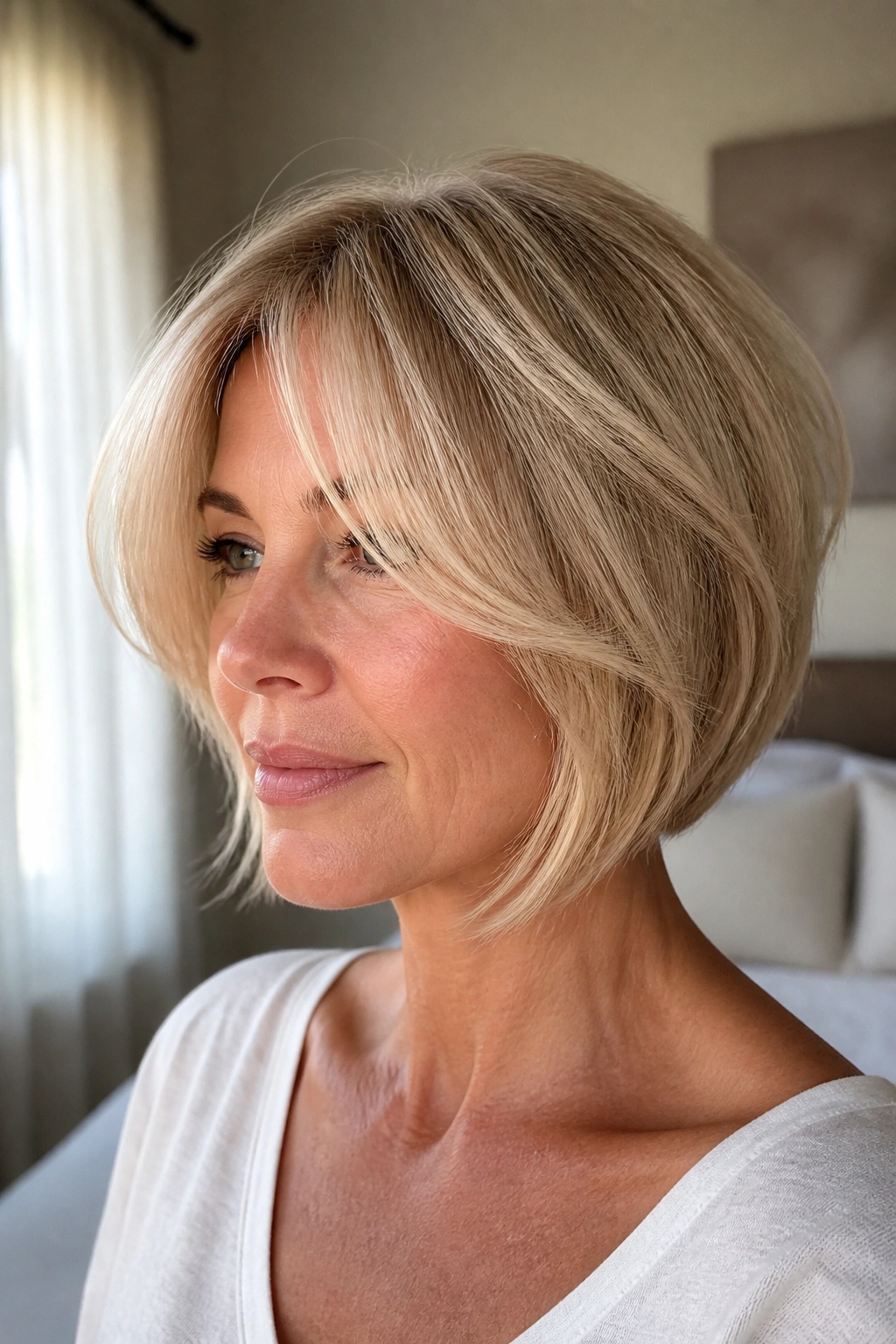
Curtain bangs and stacked bobs make a strong pair when fine hair needs a little front-end softness. The bangs break up the forehead, the side pieces move into the cheekbones, and the back keeps the whole cut from turning into a flat sheet.
You see this style work best when the bangs are long enough to split easily. Too short, and they can look separate from the rest of the haircut. Too dense, and they overwhelm fine hair fast. The sweet spot is somewhere between brows and cheekbone, with enough length to tuck or sweep.
Best Features to Request
- A light curtain fringe that blends into the sides
- A compact stack at the nape for lift
- Blonde dimension that brightens the bangs but leaves depth below
- Minimal thinning around the temples
This cut has a soft, friendly face shape to it. That matters more than people think.
15. The Wedge-Inspired Stacked Bob
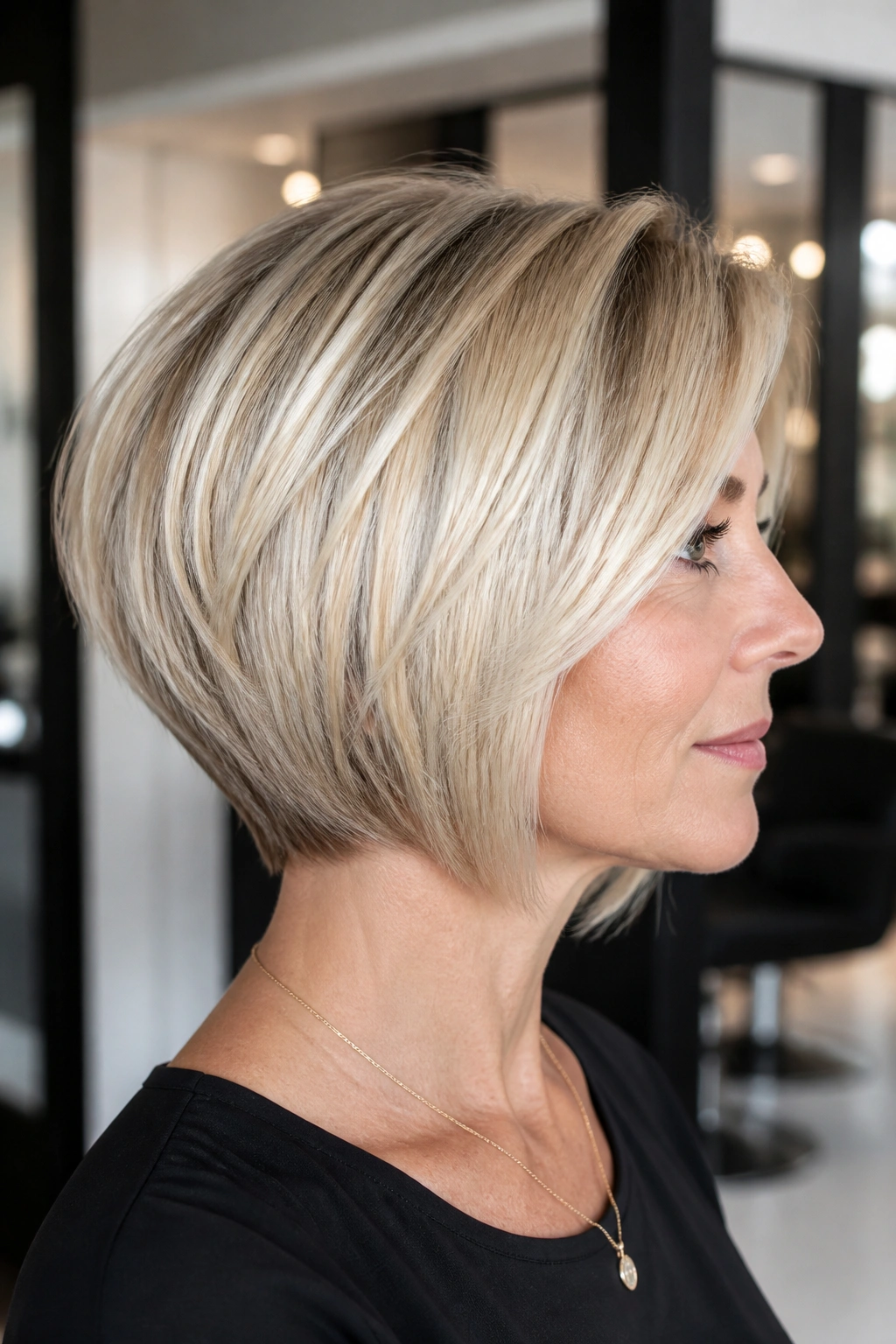
A wedge-inspired bob is bolder than the classic stack. The graduation at the back is more obvious, the angle is sharper, and the silhouette has that strong, almost graphic curve from the nape up to the crown.
Fine hair can wear this shape well if the stylist keeps the layers clean and avoids making the top too wispy. The blonde color should support the structure, not fight it. A cool pearl blonde or a brighter champagne shade can make the outline look even more precise.
This is not a shy haircut. It gives a little attitude. That said, it can be surprisingly flattering because the shorter back builds lift where fine hair usually collapses, and the longer front pieces keep the face from looking too boxy. If you like a defined shape that needs little convincing, this is it.
16. The Asymmetrical Stacked Blonde Bob
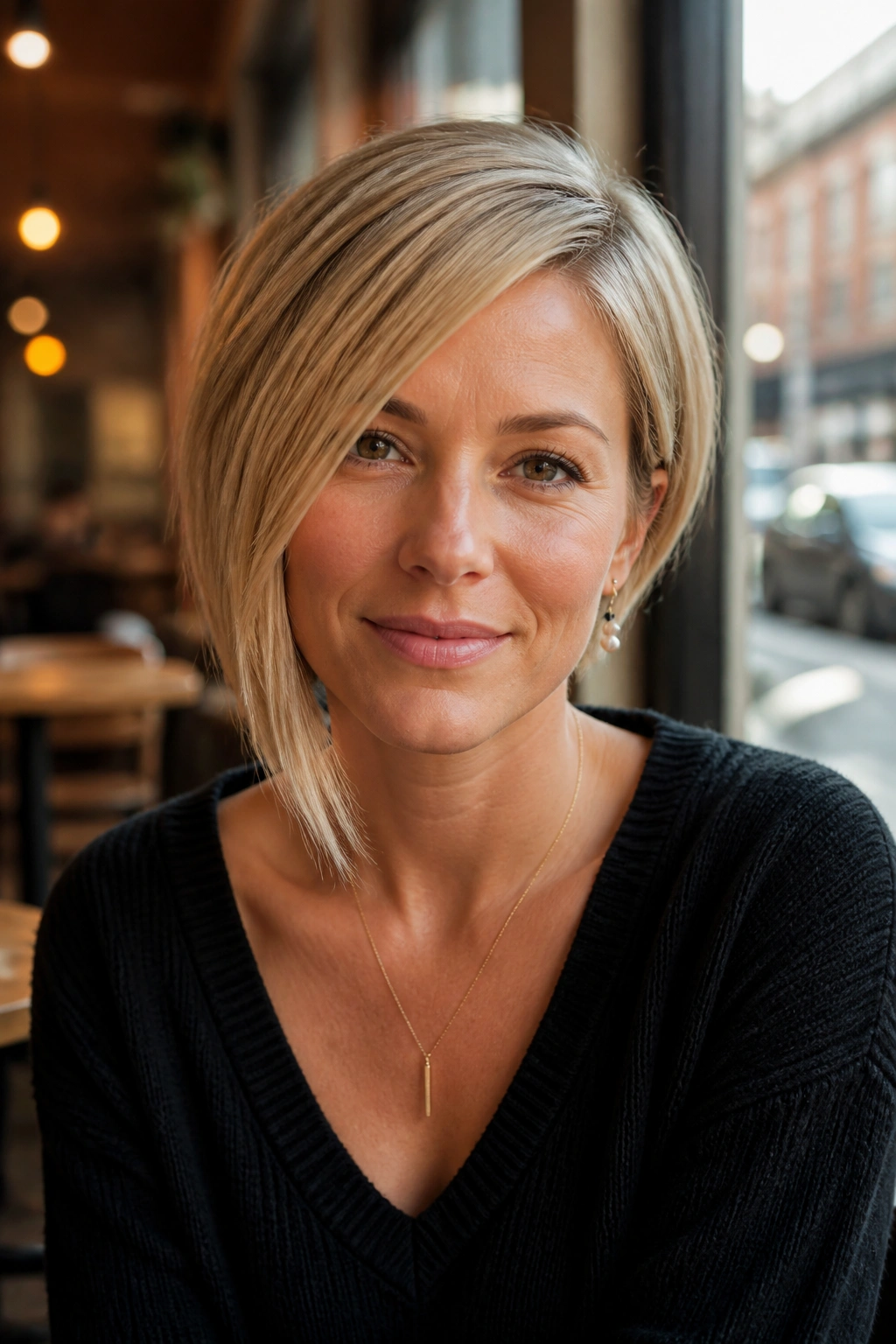
One side slightly longer. That’s the whole idea, and it’s enough. An asymmetrical stacked bob gives fine hair a point of interest without demanding extra density, which is useful when the ends need every strand they can get.
The shorter side helps the back feel lifted, while the longer side creates a clean line that can slim the face or soften a stronger jaw. On fine hair, asymmetry works best when it’s modest. You want a half-inch to an inch of difference, not a dramatic cut that starts looking uneven in real life.
It’s also a good choice if your part naturally favors one side. Instead of fighting the way the hair falls, you build the haircut around it. That’s always smarter than forcing symmetry that won’t stay put.
17. The Rounded Crown Stacked Bob
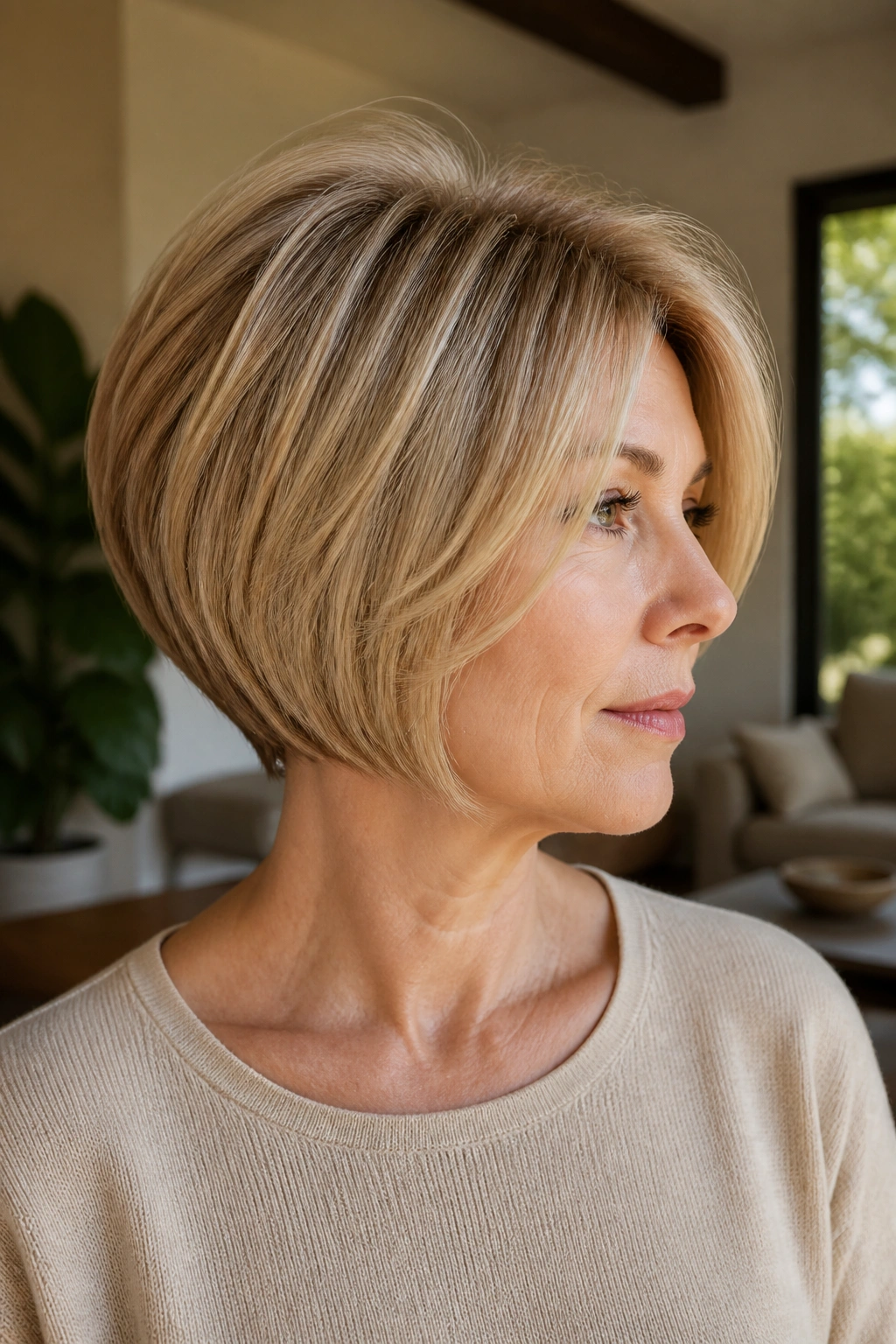
Some stacked bobs aim for edge. This one aims for fullness. The rounded crown stacked bob keeps lift through the top and curves the silhouette so the head looks a little fuller from every angle.
That rounded shape can be especially helpful on fine hair that lies very close to the scalp. A clean stack at the back gives support, and the rounded crown keeps the style from collapsing into a flat cap. I like this shape with warm blonde tones because the light bounces off the curve and makes the haircut feel softer.
It does need a bit of styling. A mousse at the roots, some lifting with a round brush, and a gentle bend through the ends go a long way. If you want a bob that feels friendly rather than severe, this is a good place to live.
18. The Pixie-Bob Hybrid Stack
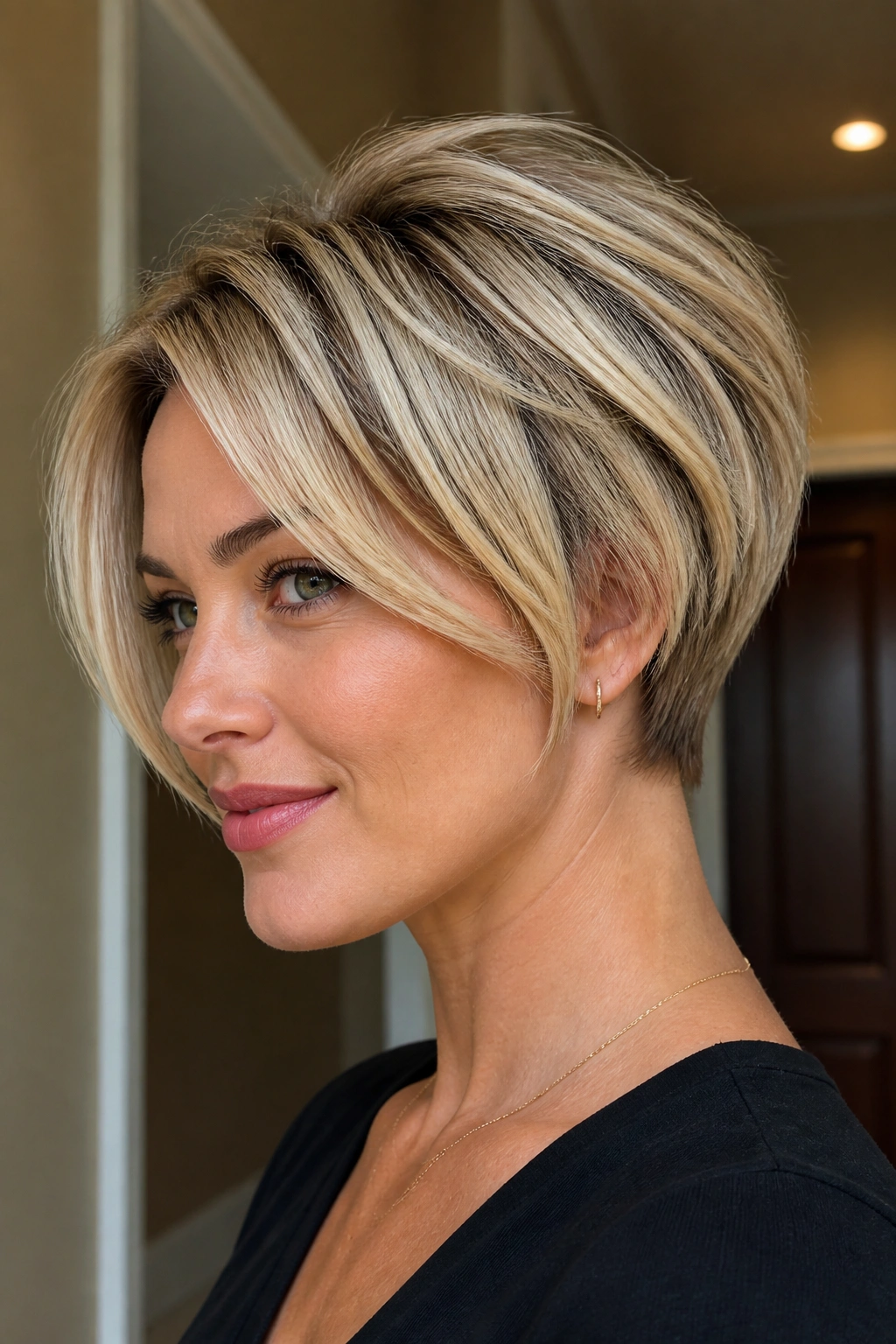
This one sits in the border zone between a bob and a crop. The back is short enough to show off the neck, while the top has enough length to sweep, fluff, or tuck behind one ear. On fine hair, that mix can be a gift because it puts the hair where it has the most presence.
The hybrid shape works especially well when the blonde is multi-tonal. A little brightness on top, a deeper tone under the crown, and a soft stack at the nape create the sense of density without needing a lot of length. It can feel modern, but not harsh.
It’s not for everyone. If you hate regular salon visits, this length may test your patience because it grows out fast. But if you like a cut with a little lift and a little edge, it has real charm. Short, spare, and surprisingly easy to wear.
19. The Grown-Out Stacked Bob
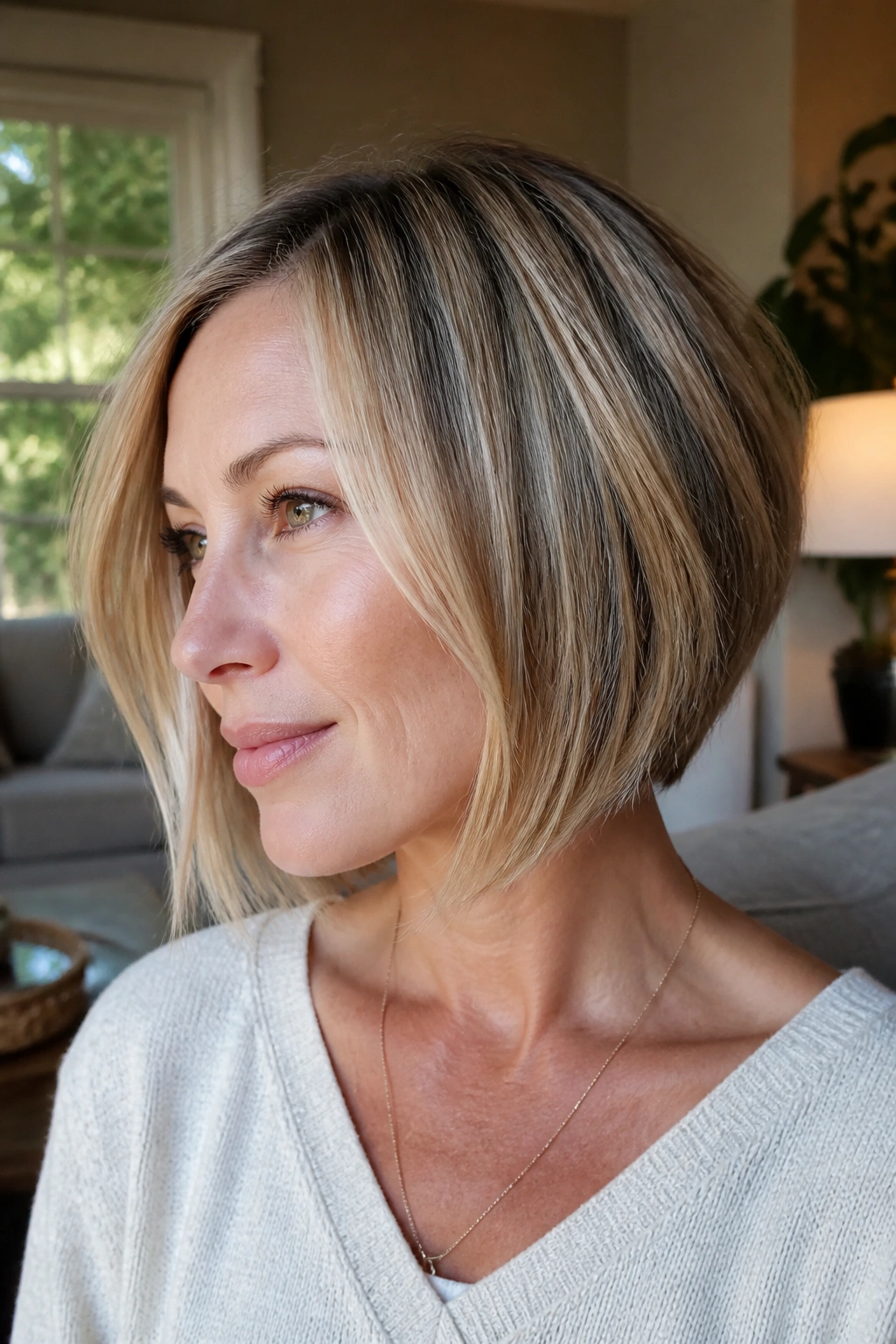
The best stacked bobs do not fall apart when they grow. That’s why the grown-out version deserves a spot here. It keeps the back lifted enough to show shape, but the front stretches a little longer so the haircut still feels intentional after a few weeks.
Fine hair often looks better with a soft grow-out than with a harsh line that needs constant fixing. A grown-out stack can sit at the jaw or collarbone and still hold its outline, especially if the blonde color has some lowlight depth underneath. The darker base prevents the cut from looking hollow as it lengthens.
This is the version for people who want structure but not strict maintenance. It works with air-drying, loose waves, and second-day hair. Not every bob needs to look freshly trimmed to look good.
20. The Hidden-Stack Blonde Bob
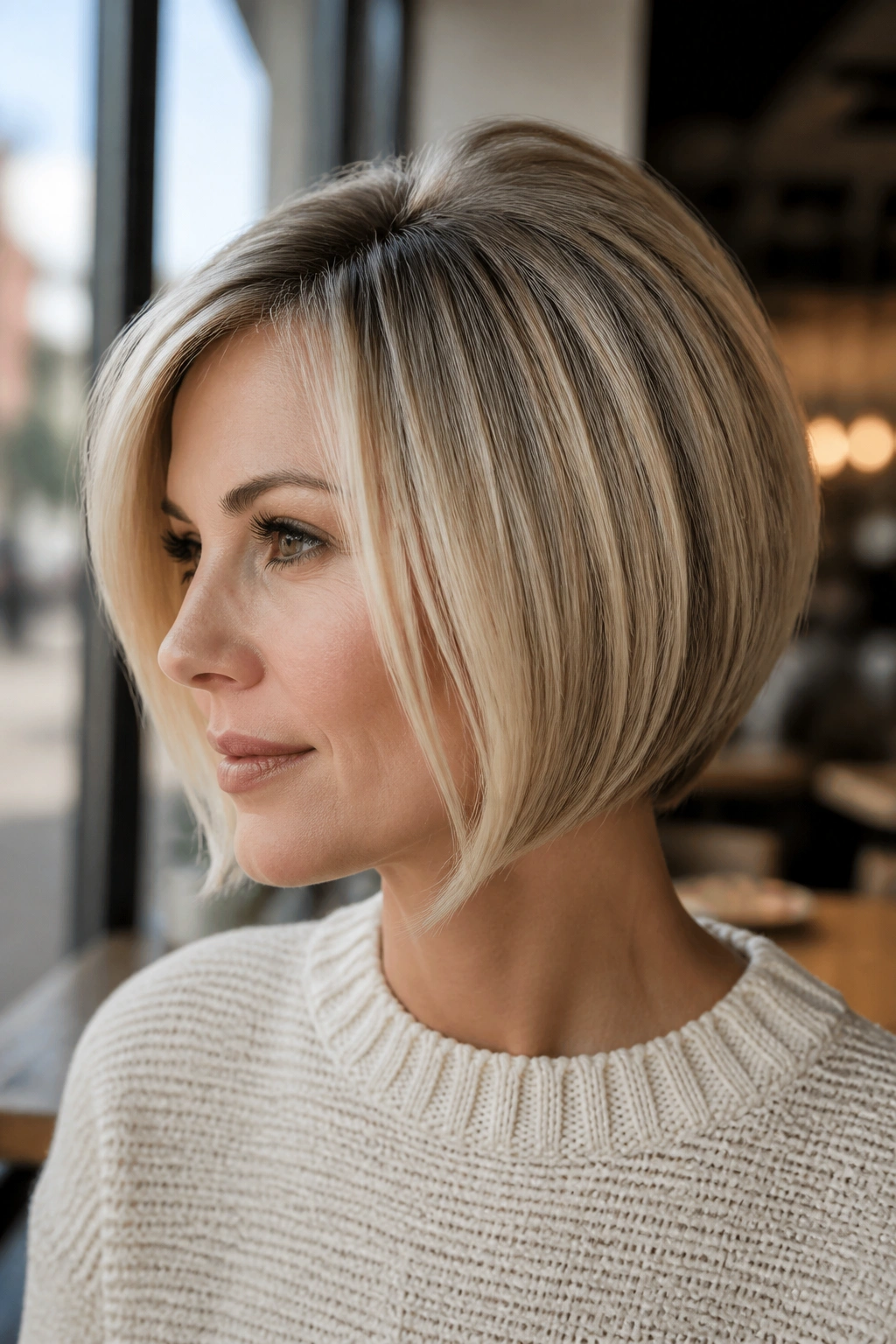
A hidden stack is one of my favorite tricks for fine hair because it gives you lift without advertising every layer. From the outside, the cut looks smooth and simple. Underneath, the graduation is doing the work, building volume at the nape and supporting the crown.
That makes it a smart choice if you want a cleaner finish than a classic stacked bob. The silhouette stays neat, but the hair still has body when it moves. A soft blonde palette helps here, especially if the roots are kept a shade deeper than the mids. The contrast adds depth in a way that feels quiet, not loud.
Who It Suits Best
- Fine hair that needs shape more than texture
- Faces that look better with a clean outline
- Anyone who wants a bob that grows out gracefully
- People who dislike obvious layering around the top
It’s the kind of cut that looks simple in the mirror and a little smarter once you step outside. That’s usually a good sign.
