



Fine hair can be maddening with the wrong bob. One day it looks airy and crisp; the next, it sits flat against the head and the ends start to look see-through. A good graduated bob haircut for fine hair solves that by building shape where the head naturally needs it most: at the crown, through the back, and along the nape.
The trick is not to pile on layers and hope for the best. That usually backfires. Fine strands need a clean perimeter, a controlled stack, and just enough graduation to make the cut look dense instead of wispy. A difference of even an inch or two in the back can change the whole silhouette.
I’ve always thought the best bob for fine hair is the one that looks calm from every angle. Not fussy. Not chopped to bits. The shape should hold its own even when you skip a full styling session, because that’s what makes a haircut feel worth the upkeep.
What follows is a set of 25 graduated bob ideas that work with fine hair instead of fighting it. Some are sharp and polished. Some are soft and bendy. A few are short enough to feel daring, and a few keep more length because that’s the easier way to get fullness without sacrificing options.
1. Soft Graduated Bob Haircuts for Fine Hair With a Short Nape
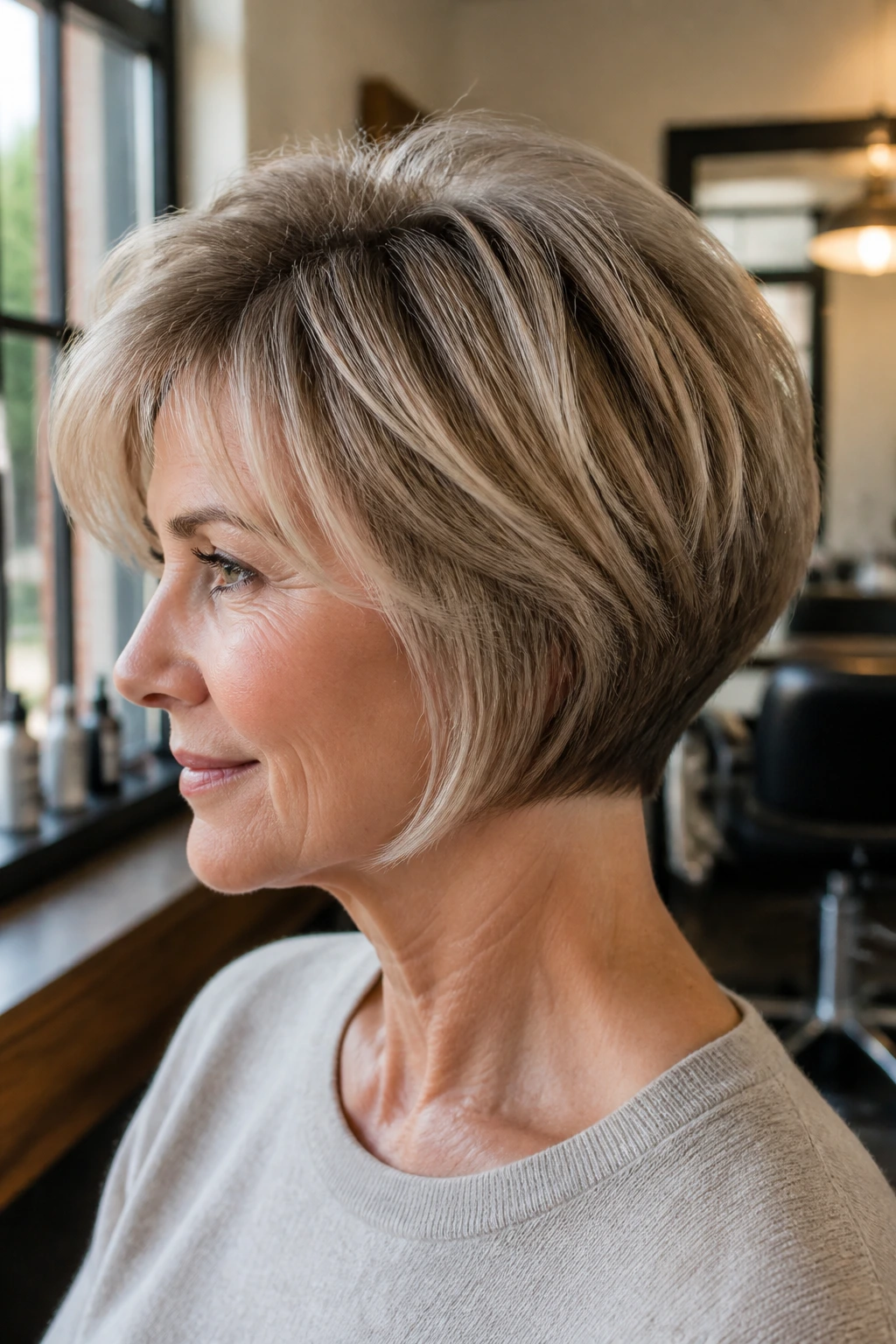
This is the bob I’d point to first if your hair goes limp at the back by lunchtime. The shorter nape creates a little lift right where fine hair tends to collapse, while the front stays gentle enough that the cut doesn’t feel severe.
Why It Works
The shape gives you built-in height at the crown without needing heavy teasing or a mountain of mousse. That matters with fine hair, because too much product can make it look sticky fast. A clean, soft stack also makes the lower half of the hair appear thicker since the ends are not dragged down by extra length.
- Ask for slightly shorter layers at the nape, not a choppy back.
- Keep the front pieces just below the jaw if you want softness.
- Blow-dry with a small round brush, lifting the roots away from the scalp.
- Finish with a light spray, not a paste or wax.
A short nape can look almost tucked in, which is exactly the point. It keeps the outline neat and makes the whole haircut feel fuller from the side.
2. The Gentle A-Line Graduated Bob
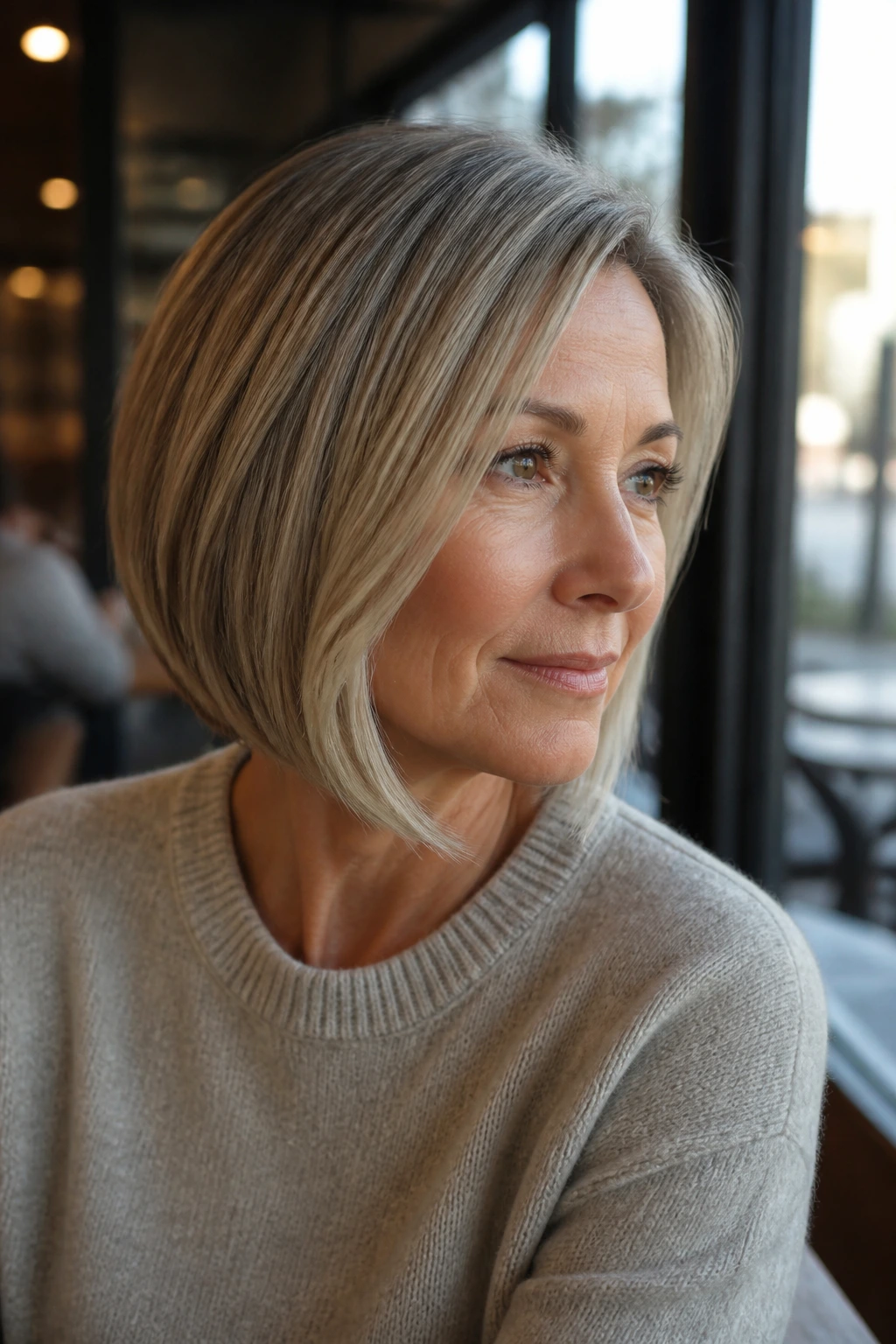
A soft A-line is one of those cuts that looks quietly expensive without trying too hard. The back sits a bit shorter, the front angles down a touch, and the whole thing keeps moving instead of hanging like a curtain.
Fine hair likes this shape because it avoids a blunt shelf at the bottom. That shelf can look thin at the edges if the hair is sparse. A mild angle gives the eye more to follow, so the hair reads as denser, especially when the ends are kept clean and not over-thinned.
I like this version for people who want a bob that grows out without a fight. The cut still feels neat after several weeks, which saves you from that awkward stage where the back looks too short and the front looks too long. If your hair is straight or only lightly wavy, this one behaves nicely with a simple blow-dry and a flat brush.
3. Chin-Length Inverted Bob With a Lifted Back
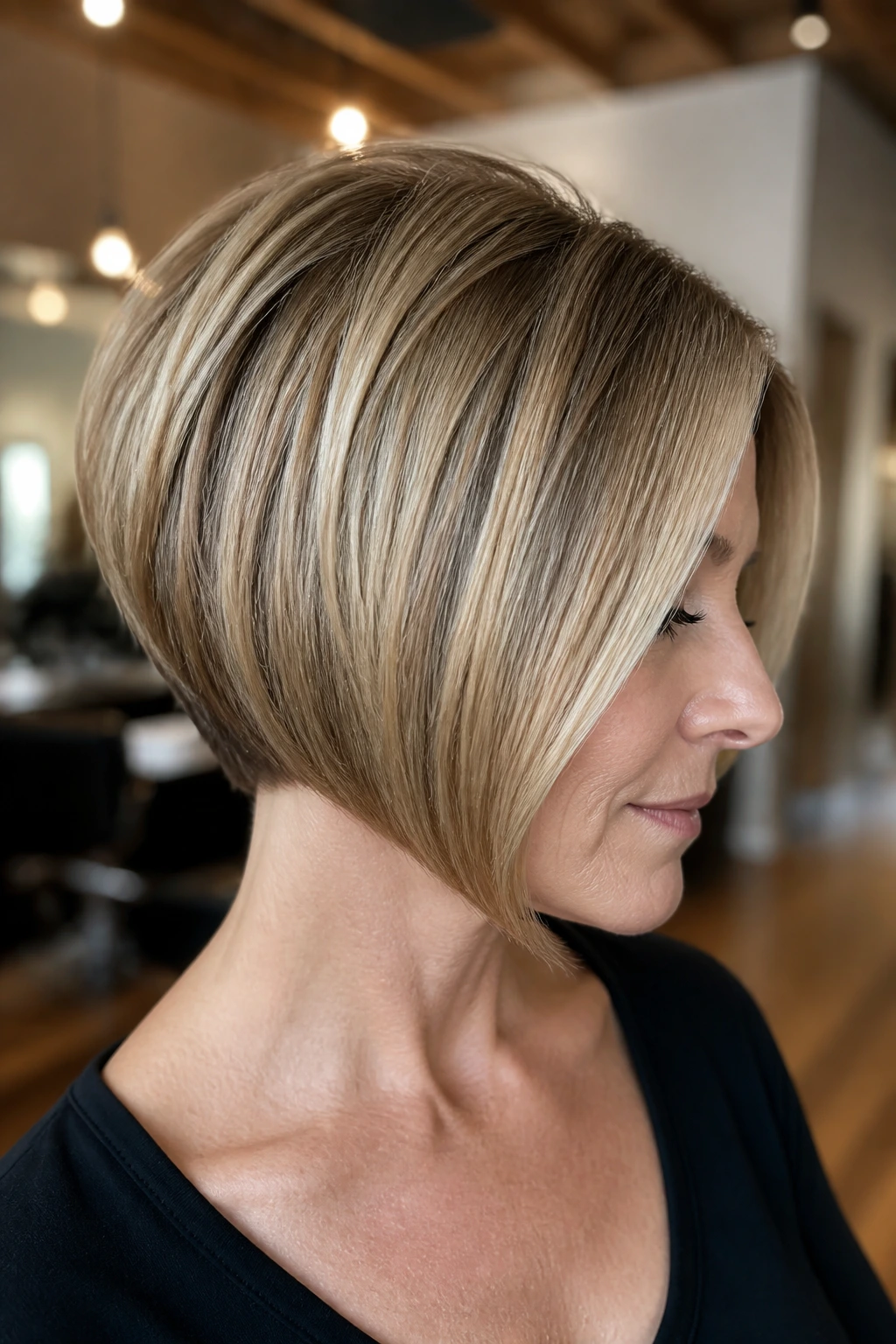
Why does a chin-length inverted bob work so well on fine hair? Because it cheats the eye in the best possible way. The back rises a little higher, the front falls forward, and the line of the cut makes the hair look like it has more body than it does.
That lifted back is the whole story here. Fine hair often loses shape where it touches the neck, so moving the weight line upward gives you a better silhouette. The cut stays polished without needing a lot of layers, which is helpful if your ends are fragile.
How to Style It
Use a medium round brush and direct the back up and under while drying. Keep the front smooth, then bend the ends inward with a flat iron if the hair resists the brush. A tiny amount of root spray at the crown helps, but keep it close to the roots. Too much product near the ends makes the shape feel heavy, and that defeats the point.
4. Collarbone Lob With Hidden Graduation
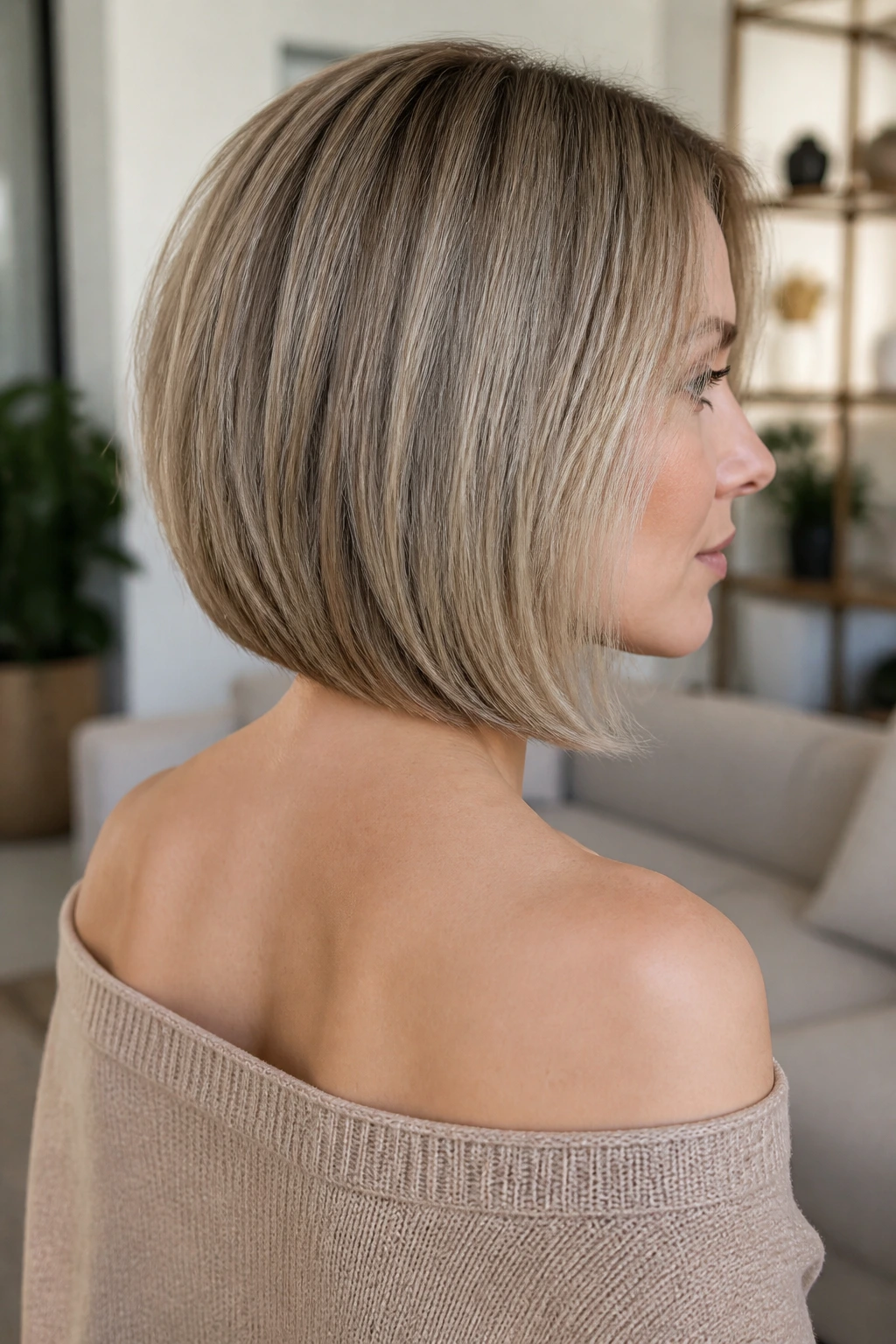
The quietest cut often does the most work. A collarbone lob with hidden graduation keeps some length around the shoulders, but the back is trimmed in a way that lets the crown sit higher and the ends fall more neatly.
This is a smart choice if you want fullness without committing to a short bob. Fine hair usually looks best when the perimeter stays clean, and hidden graduation does that without making the style obvious from across the room. The cut reads as smooth and thick, not layered and airy.
It also gives you more room to play with styling. Wear it straight, tuck one side behind the ear, or add a soft bend through the mid-lengths. The haircut holds its own even on lower-effort days, which is one reason I keep recommending it to people who say they want “just a little lift” but don’t want to look overstyled.
5. Rounded Graduated Bob With a Side Part
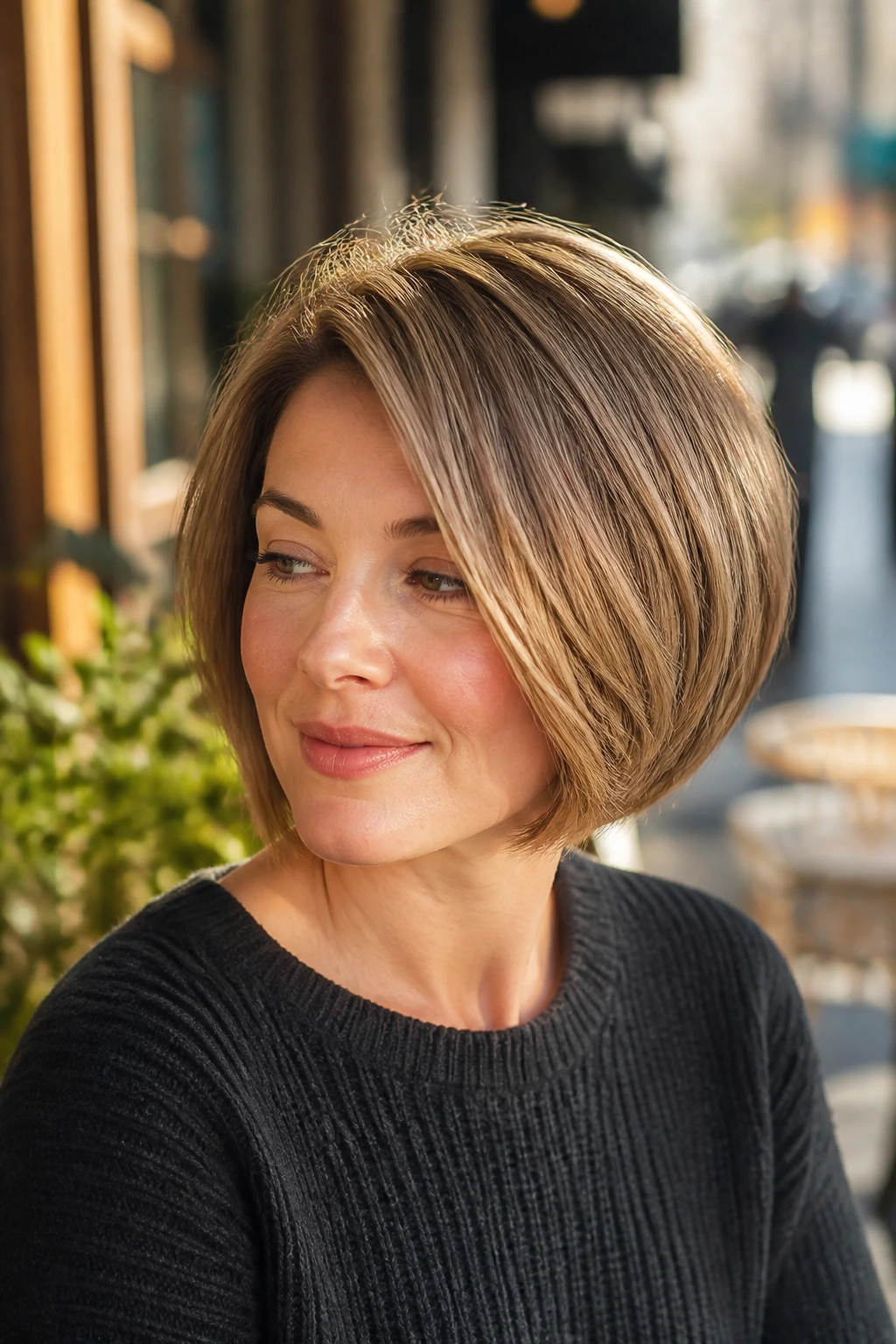
A rounded shape is a gift to fine hair. It builds a soft dome of volume around the head, which is exactly what many flatter bobs lack. Add a side part, and the whole cut gets a little extra height at the roots.
What to Ask For
- A rounded outline instead of a boxy one.
- Shorter graduation through the back, not through the sides.
- A side part that falls about 1 to 2 inches off center.
- Light point-cutting on the very ends, just enough to soften the line.
The side part helps because it shifts weight away from the center, where fine hair often collapses first. It also gives you a little natural lift without having to stack the crown too hard. I like this shape most on hair that lies straight but has a tiny bit of bend; it feels elegant, but not stiff.
6. Feathered Graduated Bob With Airy Ends
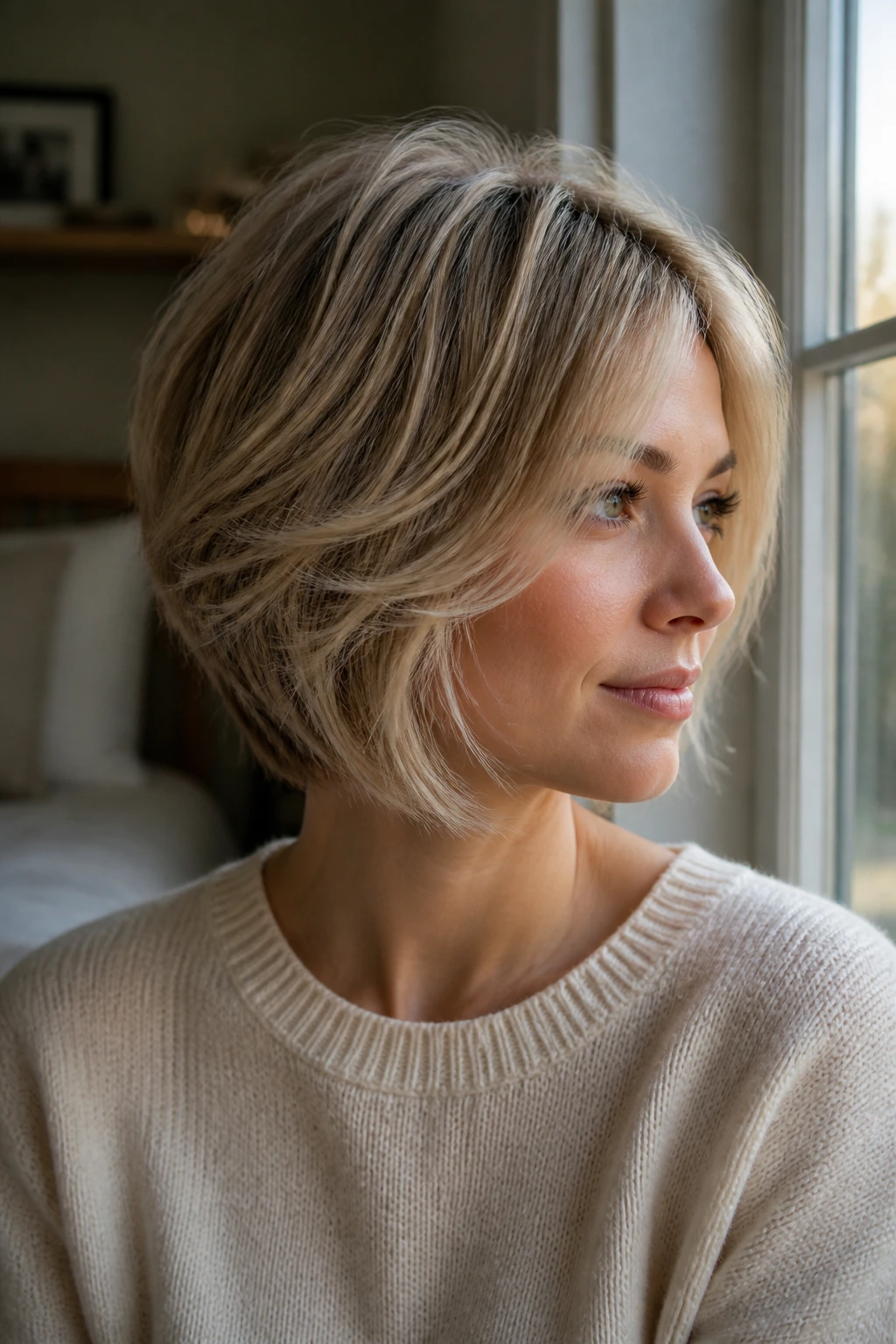
Unlike a blunt bob, a feathered graduated bob gives you motion without turning the bottom into a wispy mess. That distinction matters. Fine hair can lose density fast if the ends are over-cut, so feathering should stay light and controlled.
This version works best when the stylist uses small, careful snips to soften the outer edge, then leaves the interior shape intact. You get movement at the ends, but the haircut still has a real body line. That’s the sweet spot.
It’s also a forgiving cut for people who use a blow dryer most days. A quick bend with a round brush or a large curling iron makes the layers separate in a nice way. If the hair is especially delicate, I’d avoid heavy texturizing. That can make the ends fray sooner than you’d like.
7. Blunt Bob With Internal Stacking
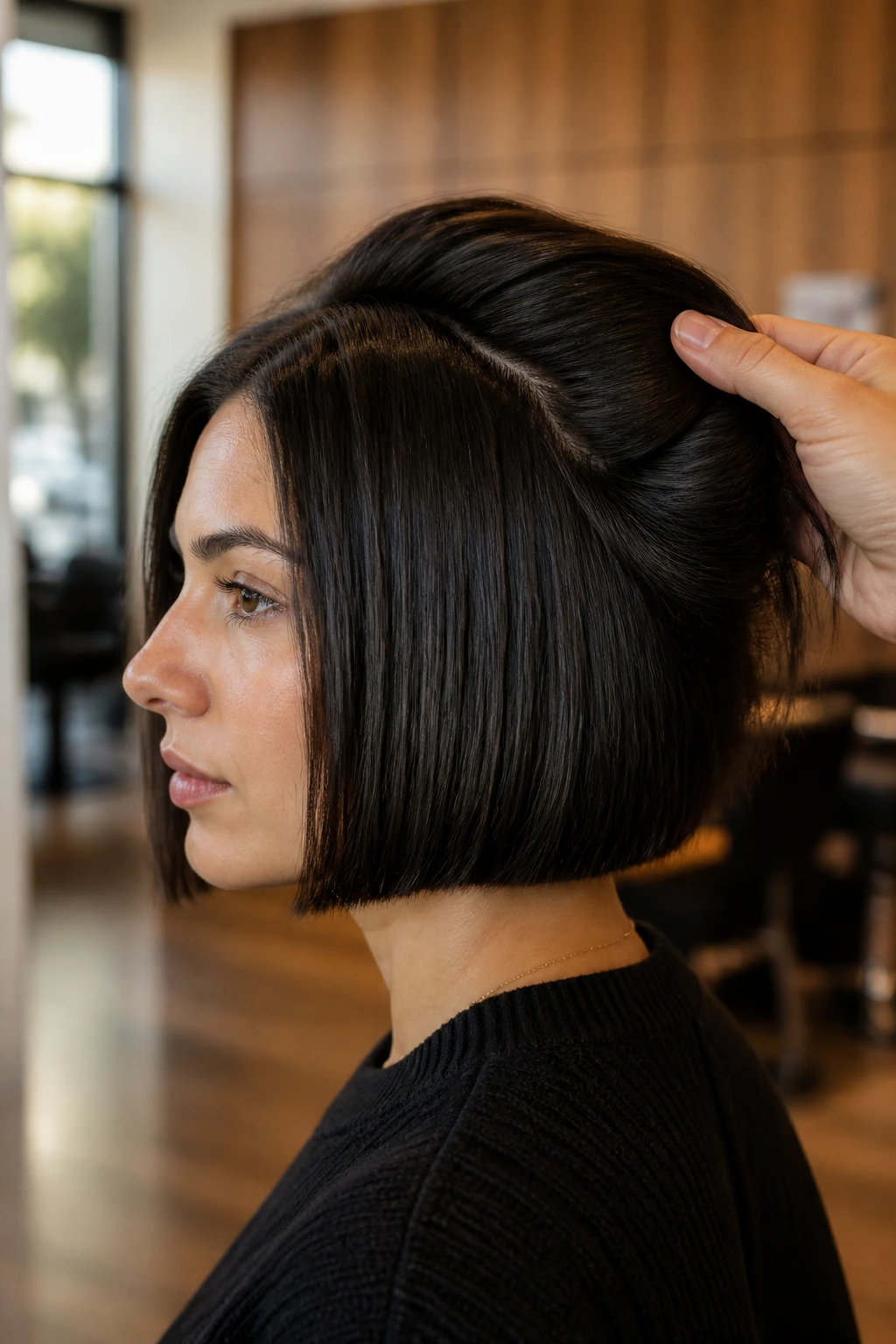
A blunt bob can work on fine hair when the inside of the haircut carries the weight. That’s the part people miss. The outline stays straight and full, while hidden stacking in the back gives the crown a bit of support.
The result is a bob that looks thick around the perimeter but still has lift at the nape. It’s a cleaner choice than a heavily layered bob if your hair is fine and straight. Too many sliced-up layers can make the hair look light in a bad way, especially once it settles.
The edge matters. Keep the line crisp.
I like this cut for people who want a modern look without a lot of styling fuss. A smooth blow-dry with a paddle brush usually brings it to life. Add a touch of shine cream on the mids and ends, and stop there. Heavy products will drag the whole shape down.
8. Wavy Graduated Bob With Curtain Bangs
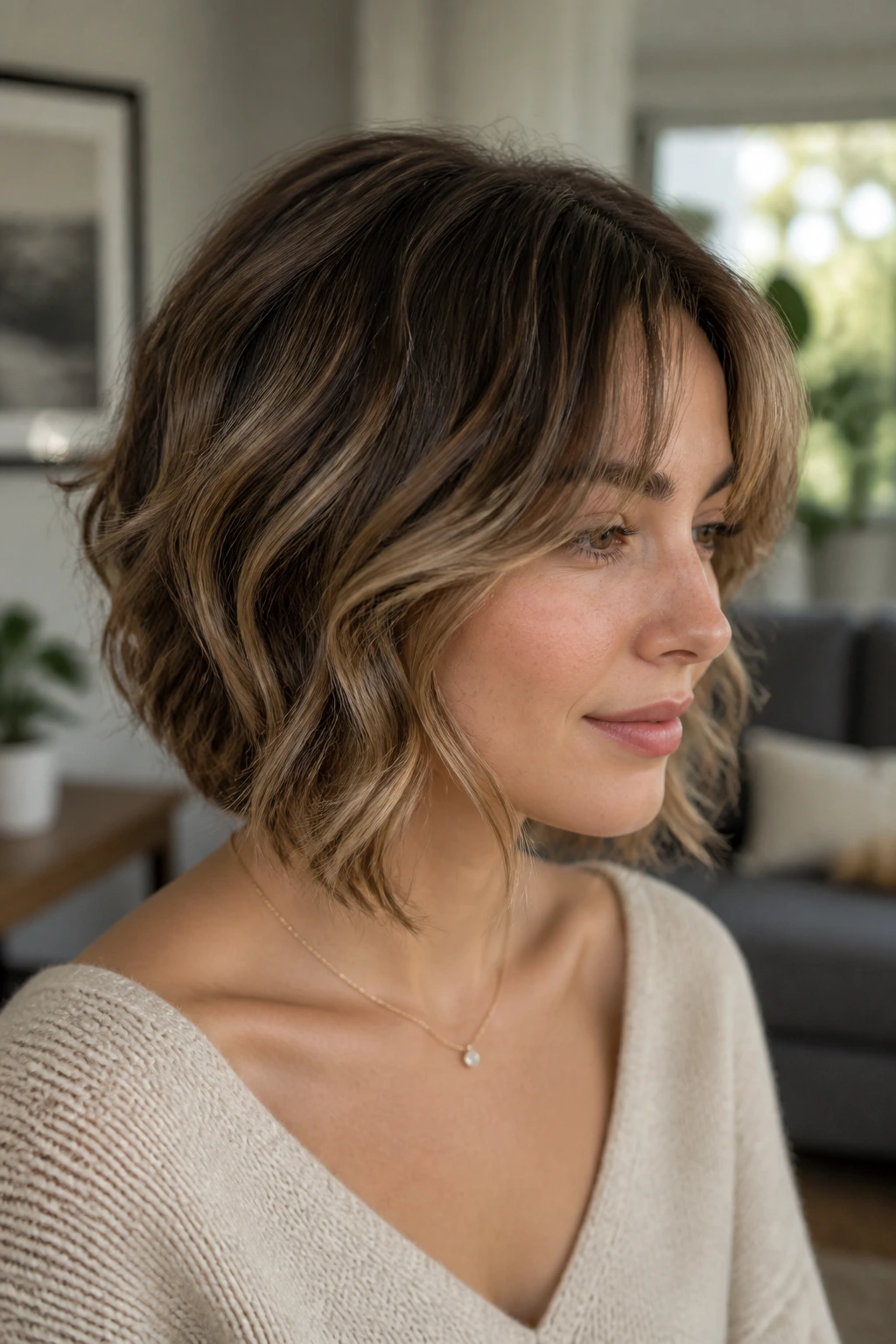
Can curtain bangs work on fine hair? Absolutely, if they’re cut with restraint. The bangs should start a little farther back and stay airy enough that they don’t steal density from the front.
This cut looks good when the bob itself has a gentle graduation and the waves are loose, not tight. The bangs blend into the front pieces, which makes the haircut feel soft around the face. That matters when fine hair tends to expose every line in a harsh way.
Styling Note
Use a 1-inch curling iron or a blow-dry brush to bend the front away from the face. Keep the roots lifted at the part, then let the ends fall softly. A mist of lightweight spray is enough. If you pile on dry texture products, the fringe can look dry before the rest of the hair does, and that imbalance is obvious.
9. Graduated Bob Haircuts for Fine Hair With a Deep Side Part
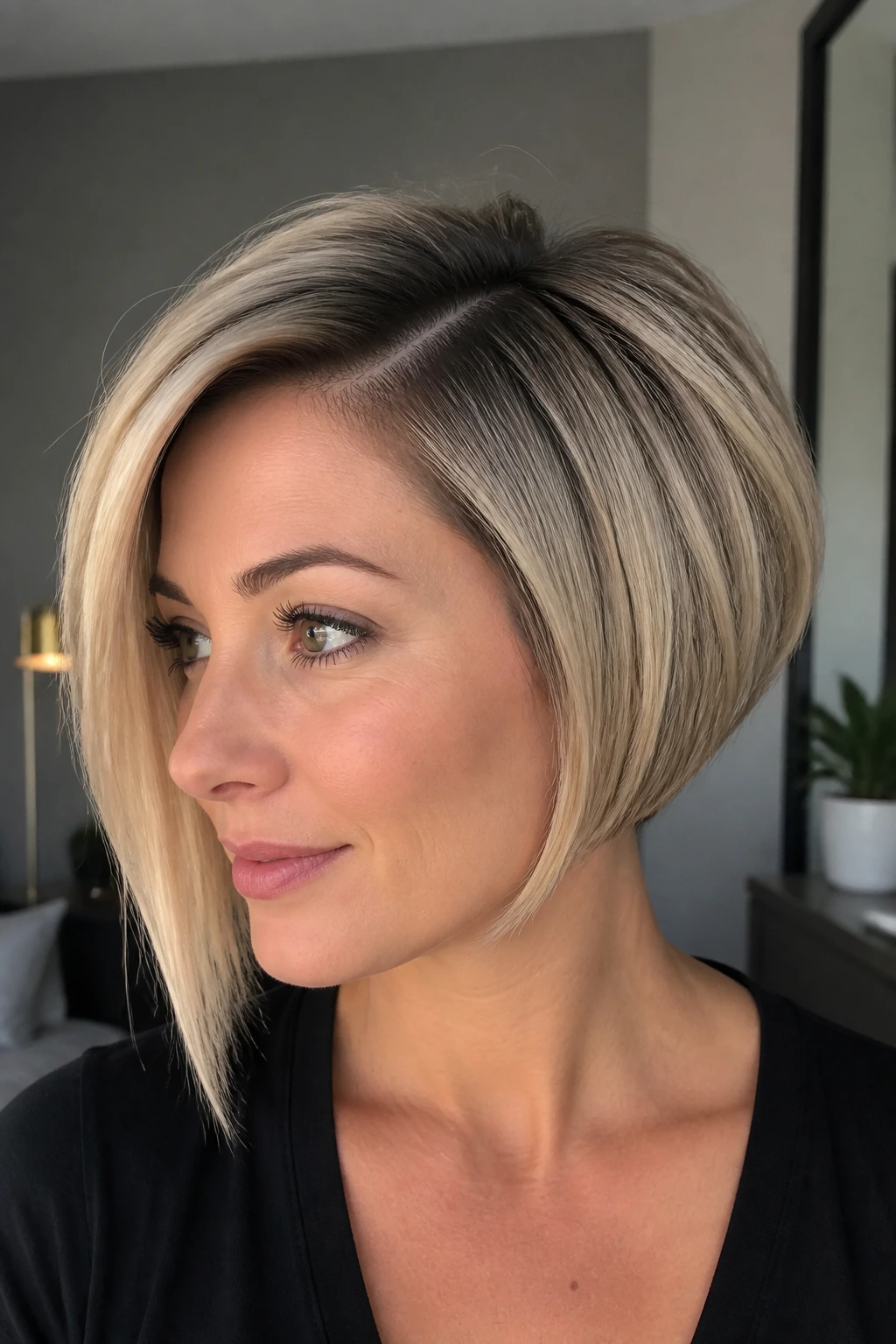
A deep side part can do more for fine hair than another half inch of layers. Seriously. It shifts the bulk of the hair to one side, creates instant lift at the root, and changes the whole silhouette without altering the length.
This is one of my favorite tricks for people whose hair tends to split in the middle and lie there. The graduated back gives the bob shape, while the side part makes the top look fuller. Put the two together and you get a cut that feels thicker from the front and stronger from the back.
What Makes It Different
- The part creates a visible rise at the crown.
- The front side can be kept a little longer for balance.
- The back still needs a clean stack so the haircut does not collapse.
- A quick blow-dry in the opposite direction of the part helps the roots stand up.
If you want a bob that looks good even when you do very little to it, this is a strong bet. The side part does a lot of the heavy lifting.
10. Jawline Bob With Beveled Ends
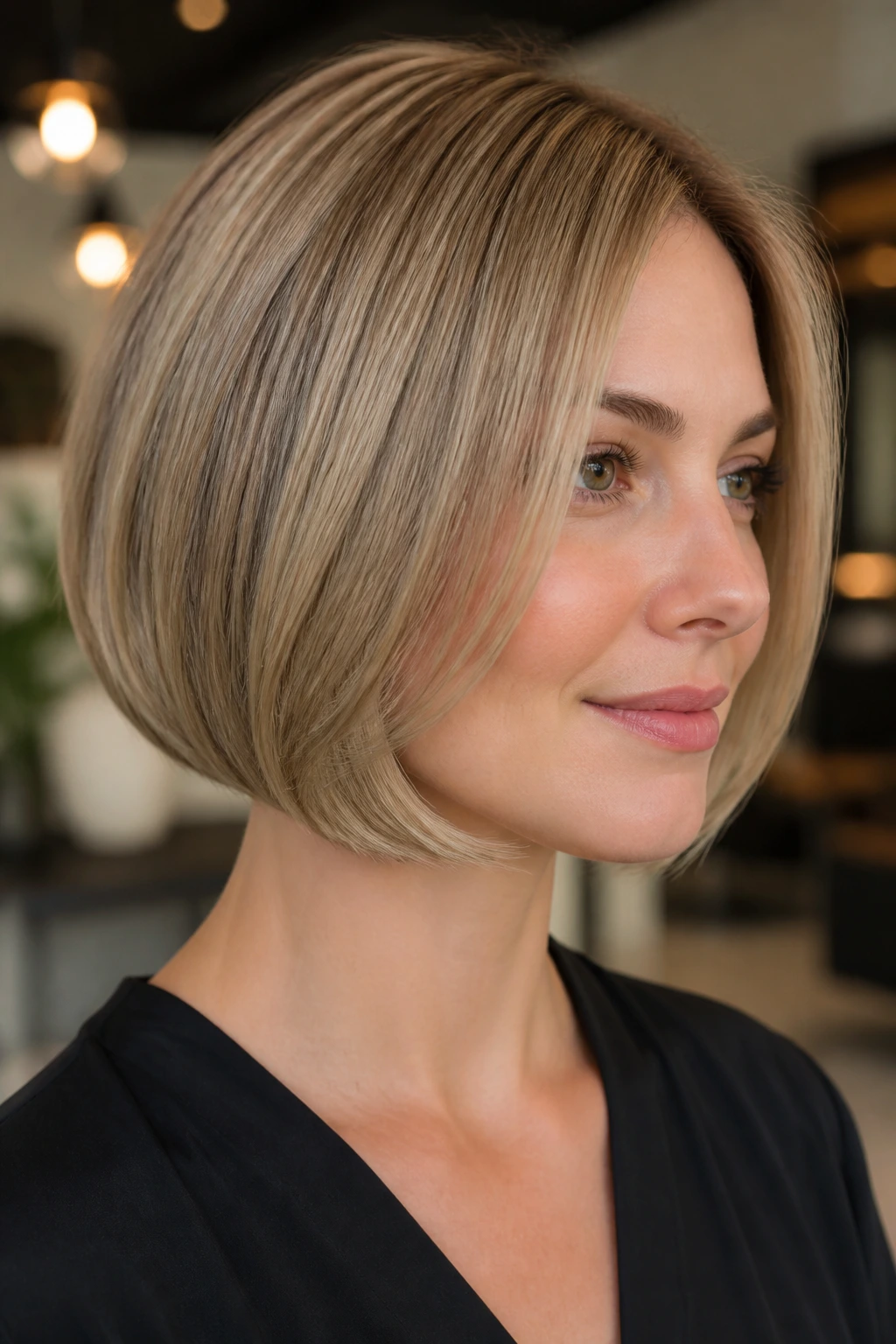
A jawline bob with beveled ends gives fine hair a tidy, compact shape that doesn’t feel too severe. The bevel helps the ends turn under slightly, which makes the haircut look fuller at the bottom edge.
That detail matters more than people think. Fine hair often looks best when the ends are guided, not left to hang loose. A soft bevel keeps the outline neat and gives the bob a little bounce when you move.
This cut is especially good if you like a polished finish. A paddle brush, a blow dryer with a narrow nozzle, and a light heat protectant are enough. You do not need a long styling routine. In fact, I’d avoid it. The haircut already has a clean shape; too much fuss just takes the edge off.
11. Asymmetrical Graduated Bob With a Soft Angle
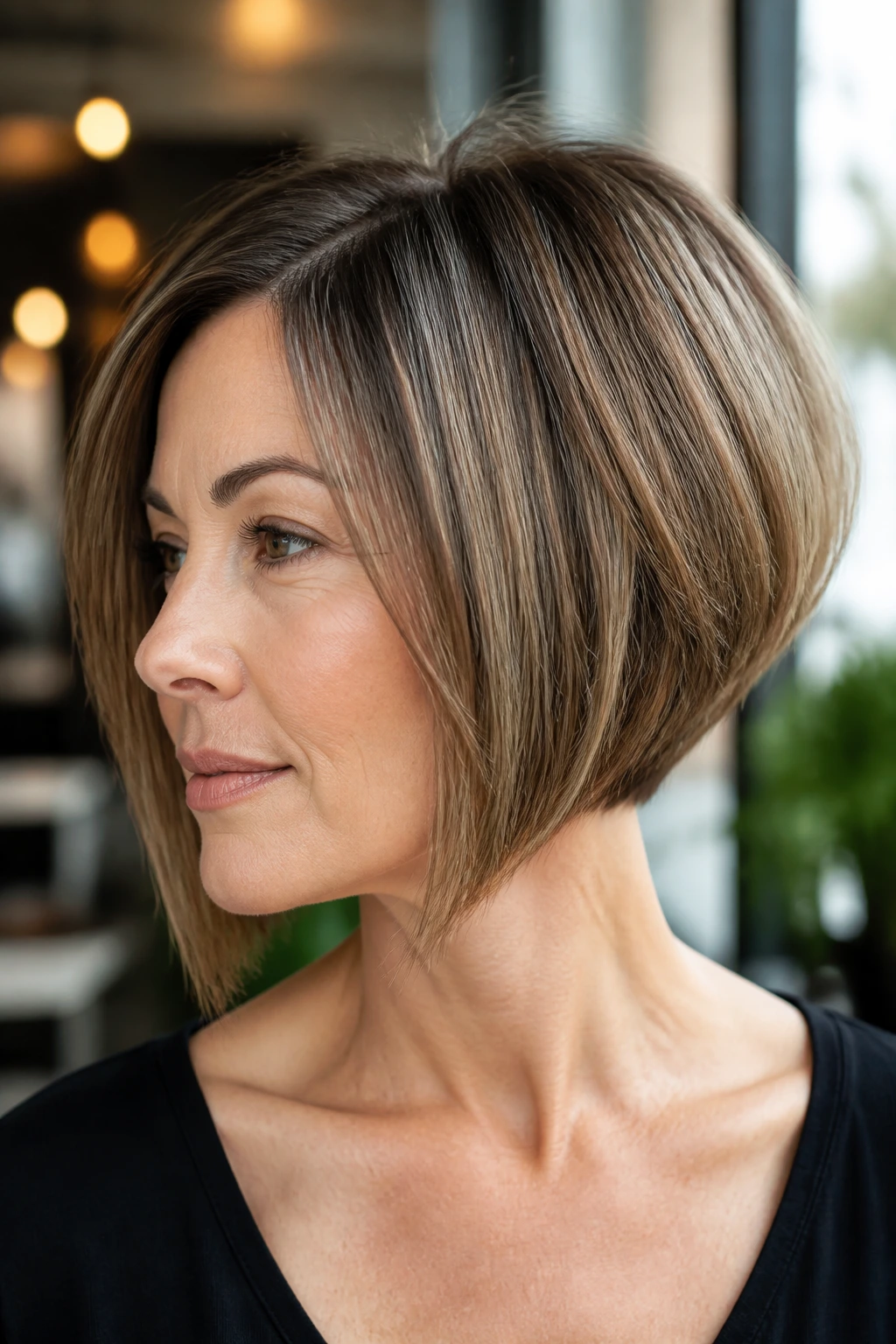
An asymmetrical bob does not have to scream for attention. A slight difference of about half an inch to 1 inch between sides can be enough to make fine hair look more dynamic. Anything more dramatic starts to change the whole mood of the cut.
What I like about this version is the movement. One side falls a little longer, so the eye keeps traveling across the shape. That movement helps disguise thin spots because the cut never sits in a perfectly still line.
It also gives you a bit of personality without making the haircut hard to style. Keep the back graduated, keep the line smooth, and let the asymmetry do the talking. If your hair is extra fine, ask the stylist to keep the weight near the perimeter. Too much internal removal can make one side look stringy faster than the other.
12. Micro Bob With a Lifted Nape
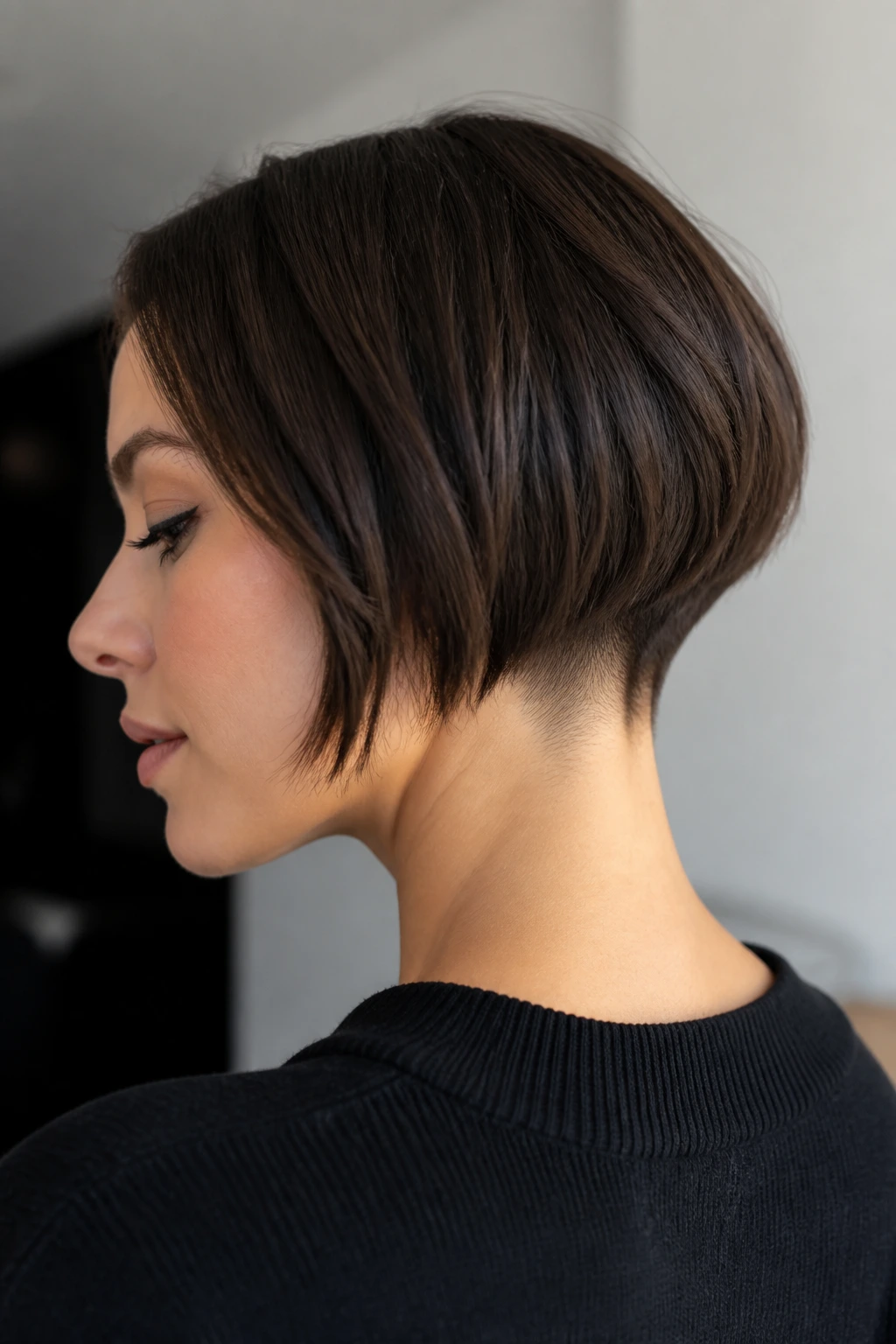
A micro bob is not for everyone. But if you like a sharp shape and you’re comfortable showing the neck, it can make fine hair look denser than a longer cut ever will. The reason is simple: less length means less drag.
Unlike a lob, this style puts the focus on the line of the cut and the lift at the back. The shape is short enough to keep the roots from flattening out under their own weight. That gives the hair a crisp, deliberate look even when it’s naturally soft.
It’s a better pick for straight hair or hair that bends easily with heat. And it needs regular shaping, no way around that. If you wait too long between trims, the clean outline disappears and the whole point is lost. For the right person, though, it looks neat, modern, and much thicker than it should.
13. French Bob With Soft Weight Removal

The French bob works on fine hair when it stays soft around the edges and a little shorter through the back. If the cut is too blunt or too heavy, it can sit like a helmet. Nobody wants that.
I prefer this shape with a gentle graduation at the nape and a little softness around the cheekbones. It keeps the bob from feeling boxed in, and it gives the hair a slight lift instead of a hard shelf. A small bend at the ends helps, but the cut itself should already feel balanced.
Why the Shape Matters
A French bob is about proportion. The length is short enough to build the illusion of density, but not so short that the hair sticks out everywhere. Fine hair behaves well when the weight is controlled in a narrow band, especially if you keep the fringe light. Heavy bangs can take too much from the top, and then the whole style falls flat.
14. Textured Graduated Bob With Piecey Ends
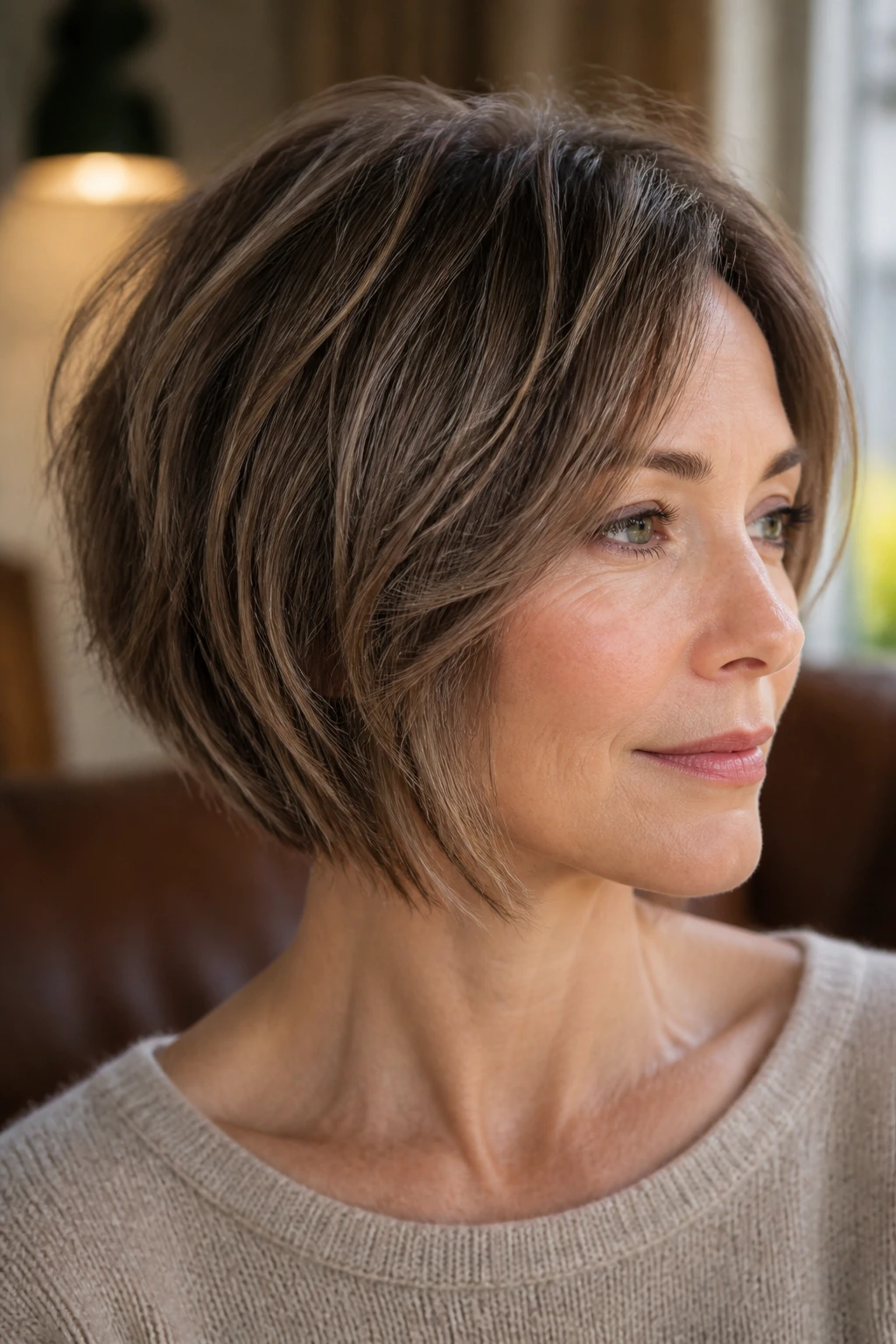
A textured graduated bob can be brilliant on fine hair if the texturing stays inside the shape. That part matters. If a stylist shreds the ends too much, the haircut will look airy for one day and ragged the next.
What you want is a little separation, not a pile of broken-looking strands. Point-cutting the ends and adding a few interior bits of movement can keep the bob from reading as heavy. The graduation in the back still gives the haircut structure, so the texture has something to sit on.
I’m picky about this cut because it can go wrong fast. Fine hair does not forgive over-texturizing. If you like that lived-in, slightly undone look, ask for soft movement around the face and keep the perimeter strong. That balance is what keeps the cut from drifting into stringy territory.
15. Face-Framing Graduated Bob With Long Front Angles
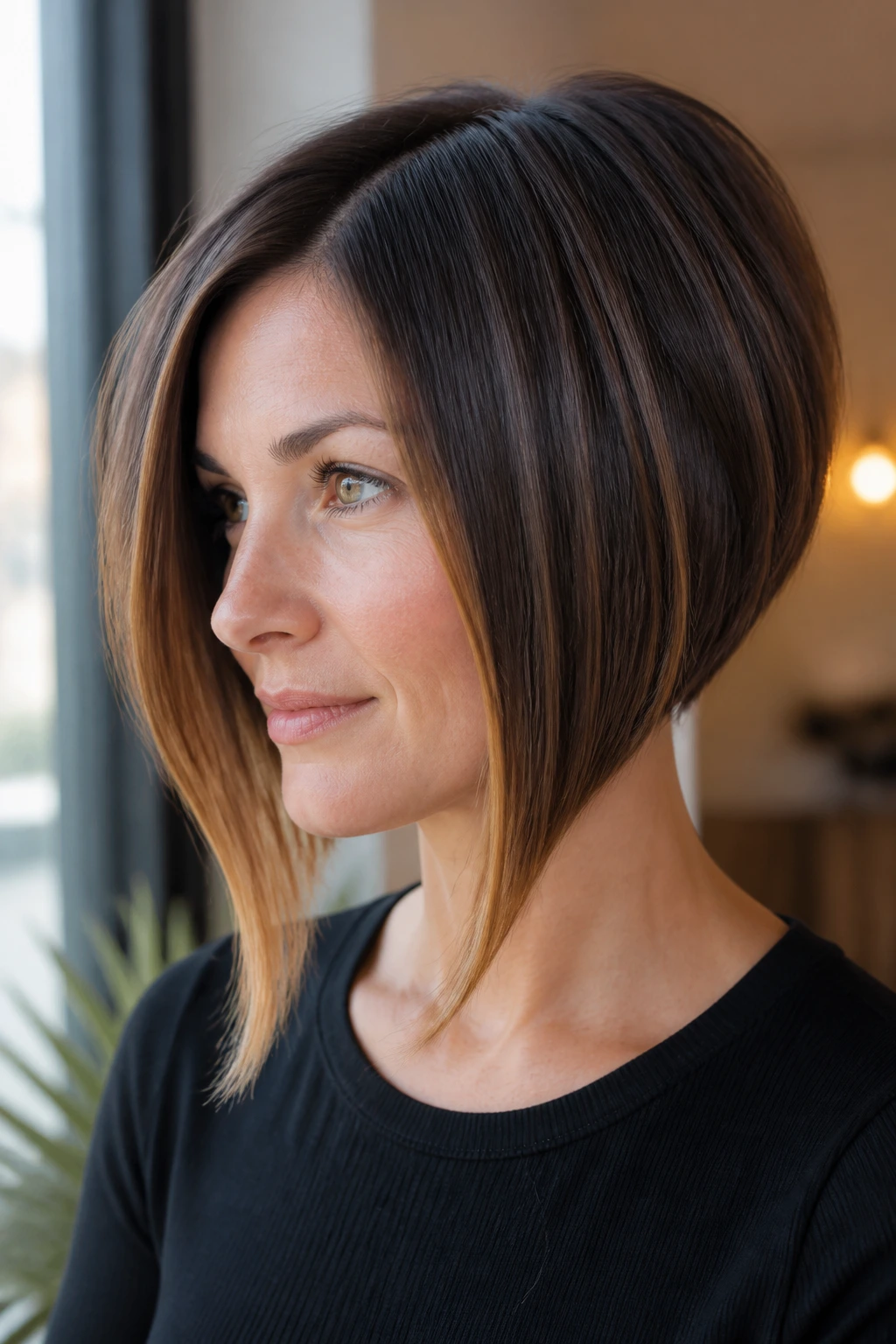
Why do face-framing angles help fine hair so much? They pull attention forward. Instead of letting the eye stop at a weak-looking bottom line, the haircut gives you two longer pieces that guide the shape around the face.
Where to Keep the Length
- Leave the front at or just below the chin.
- Keep the back shorter by a modest amount so the bob still graduates.
- Ask for internal support near the crown, not heavy slicing through the sides.
- Use a round brush to bend the front away from the face, not inward.
This cut is a smart choice if you want the front to feel soft but not flat. The longer angles also help if your hair is naturally finer around the temples, which is a common annoyance. I like this look because it flatters without asking for a lot of product or tools. It does its job with the cut itself, and that’s always a better deal.
16. Sleek Straight Graduated Bob
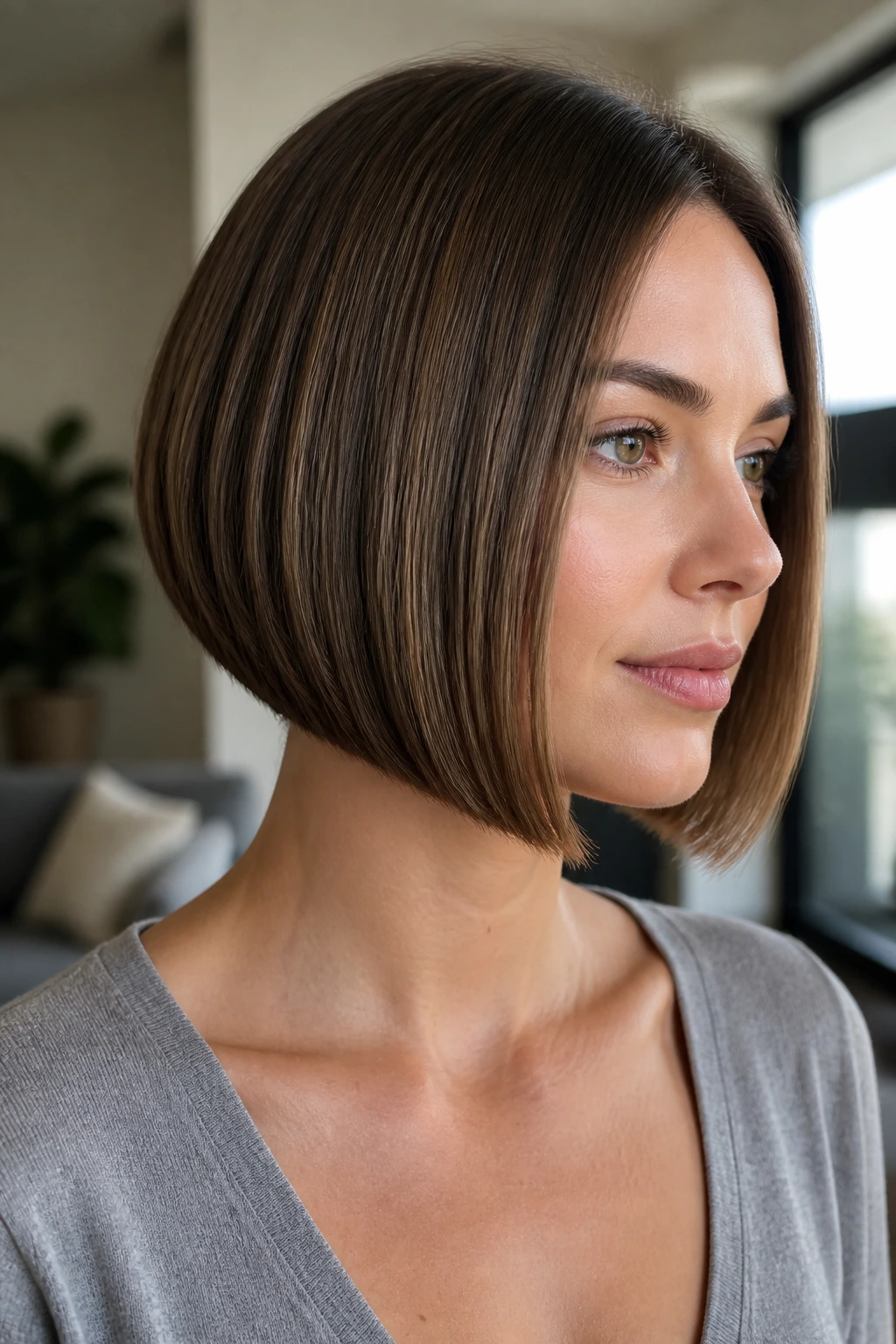
A sleek straight bob can make fine hair look denser than a messy, over-layered cut. That’s not a contradiction. When the hair is straightened cleanly, the perimeter reads as one solid shape, and that visual fullness matters.
The graduation in the back keeps the crown from falling too flat, while the front stays smooth and precise. This is one of the few bob styles where minimalism actually helps fine hair. The fewer broken lines you have, the more solid the haircut looks.
Use a heat protectant before any iron work, and keep the flat iron moving in slow, even passes. If you pause too long, the ends get too sharp and lose that plush feel. I like a slight tuck under at the very bottom, just enough to keep the shape from looking harsh. A light serum on the mids only is enough.
17. Flipped-Under Graduated Bob
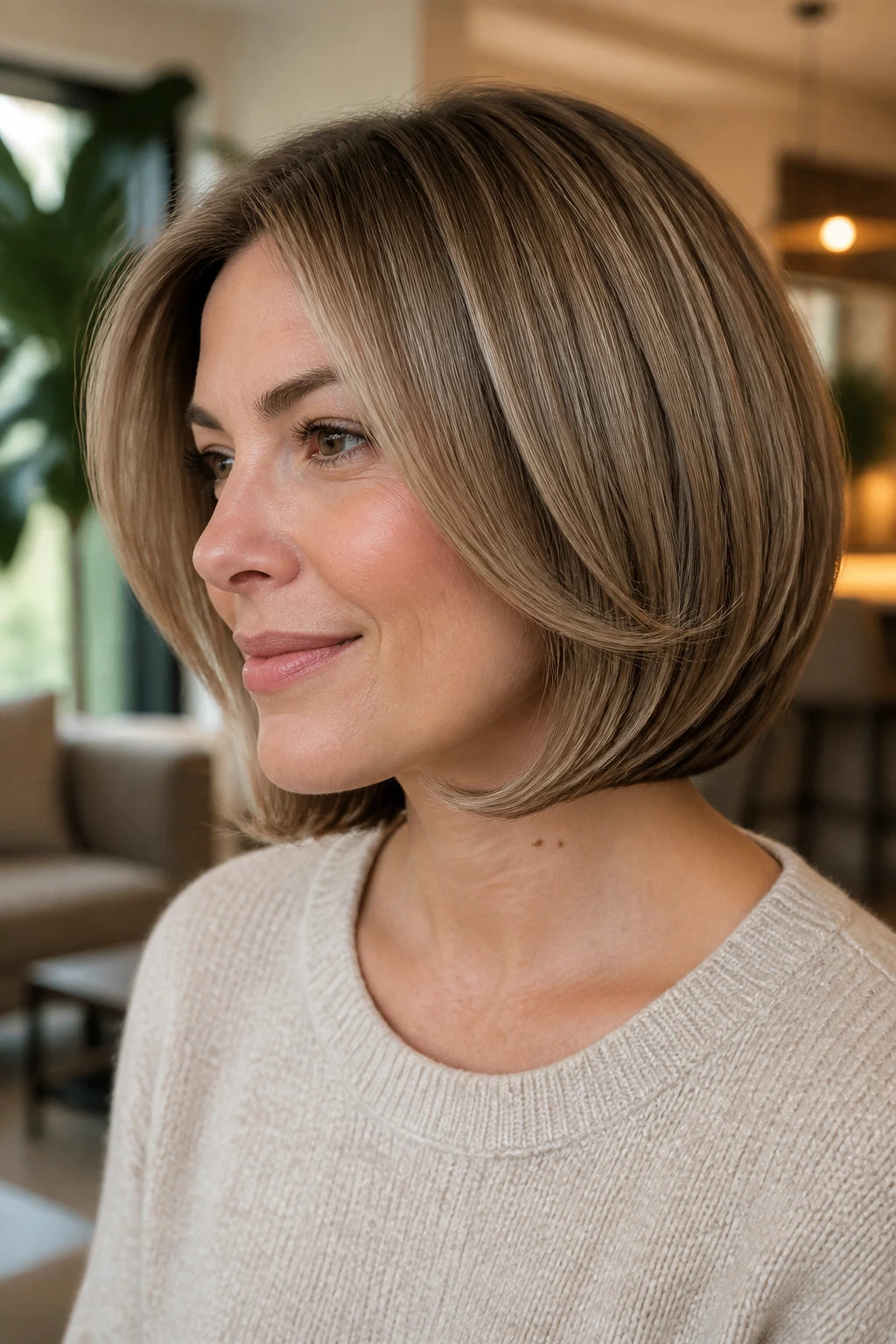
Old-school? Yes. Still useful? Also yes. A flipped-under bob gives fine hair a rounded finish that makes the bottom edge look thicker, and that can be a lifesaver when the ends are naturally delicate.
The trick is to let the haircut do most of the shaping, then reinforce the bend with a round brush or a 1.25-inch iron. You do not need a hard curl. Just a smooth flip that closes the line of the cut and adds a little body around the jaw.
What helps most: a root lift spray, a medium round brush, and a cool shot at the end of drying. That last part matters. Letting the hair cool in place helps the bend hold. If the flip looks too stiff, brush through it once with your fingers and a tiny bit of cream. That usually softens the line without killing the shape.
18. Razor-Cut Graduated Bob
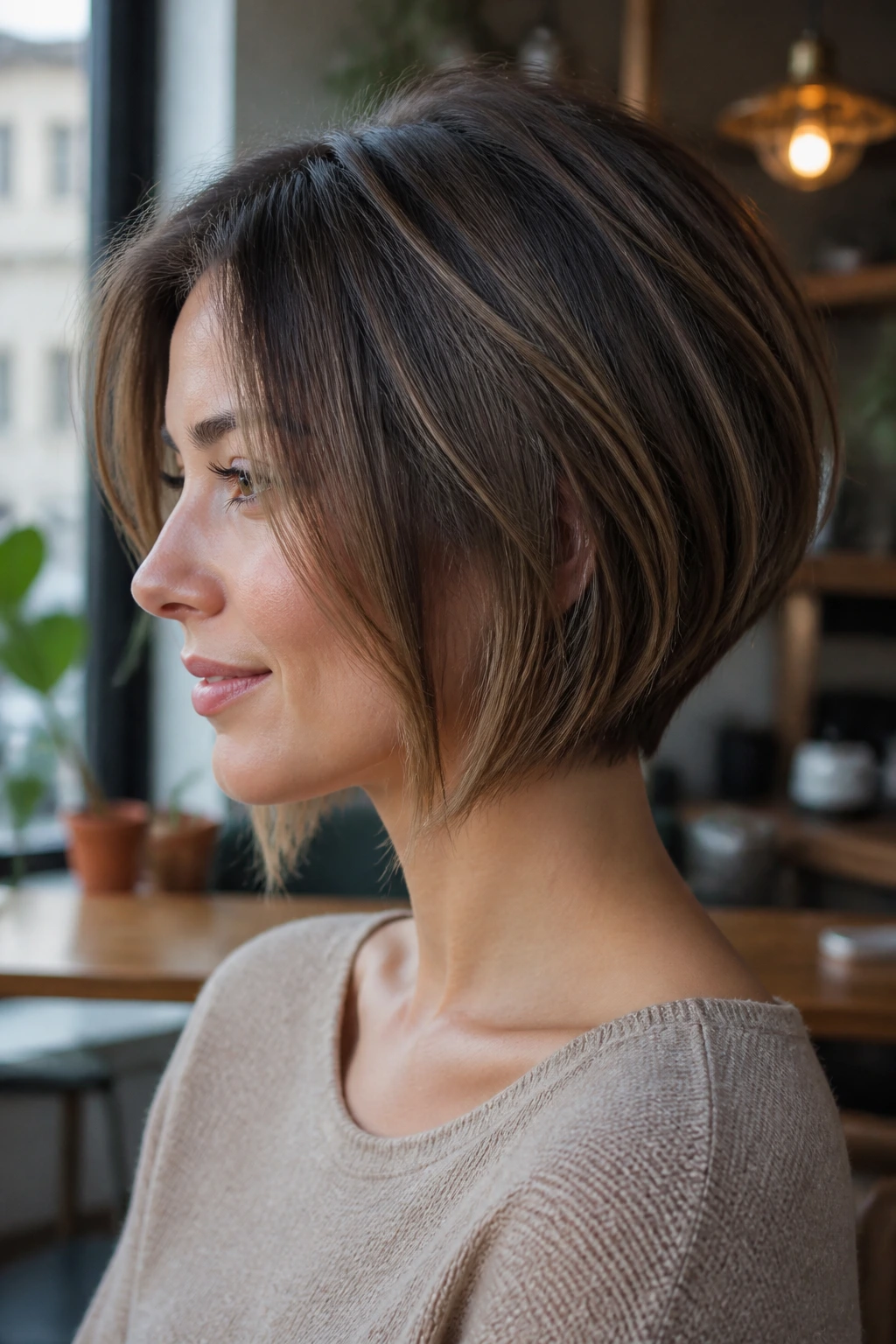
A razor-cut bob can look airy and modern on fine hair, but I’d only use it if the hair is healthy and straight enough to take the cut well. Razor work softens the line fast. On fragile ends, that softness can turn into fraying.
Compared with a scissor-cut bob, a razor-cut version feels looser around the perimeter and more broken up through the ends. That can be nice if your hair is flat and stubborn. It gives the shape some edge. But the danger is obvious: too much shaving makes the hair look thinner, not fuller.
My take? Use this one lightly. Ask for just enough texture to keep the bob from feeling too stiff, and keep the graduation controlled. If your hair already has split ends or a rough surface, skip the razor and let the scissors keep the shape cleaner. Fine hair usually appreciates the mercy.
19. Graduated Bob Haircuts for Fine Hair With Bottleneck Bangs
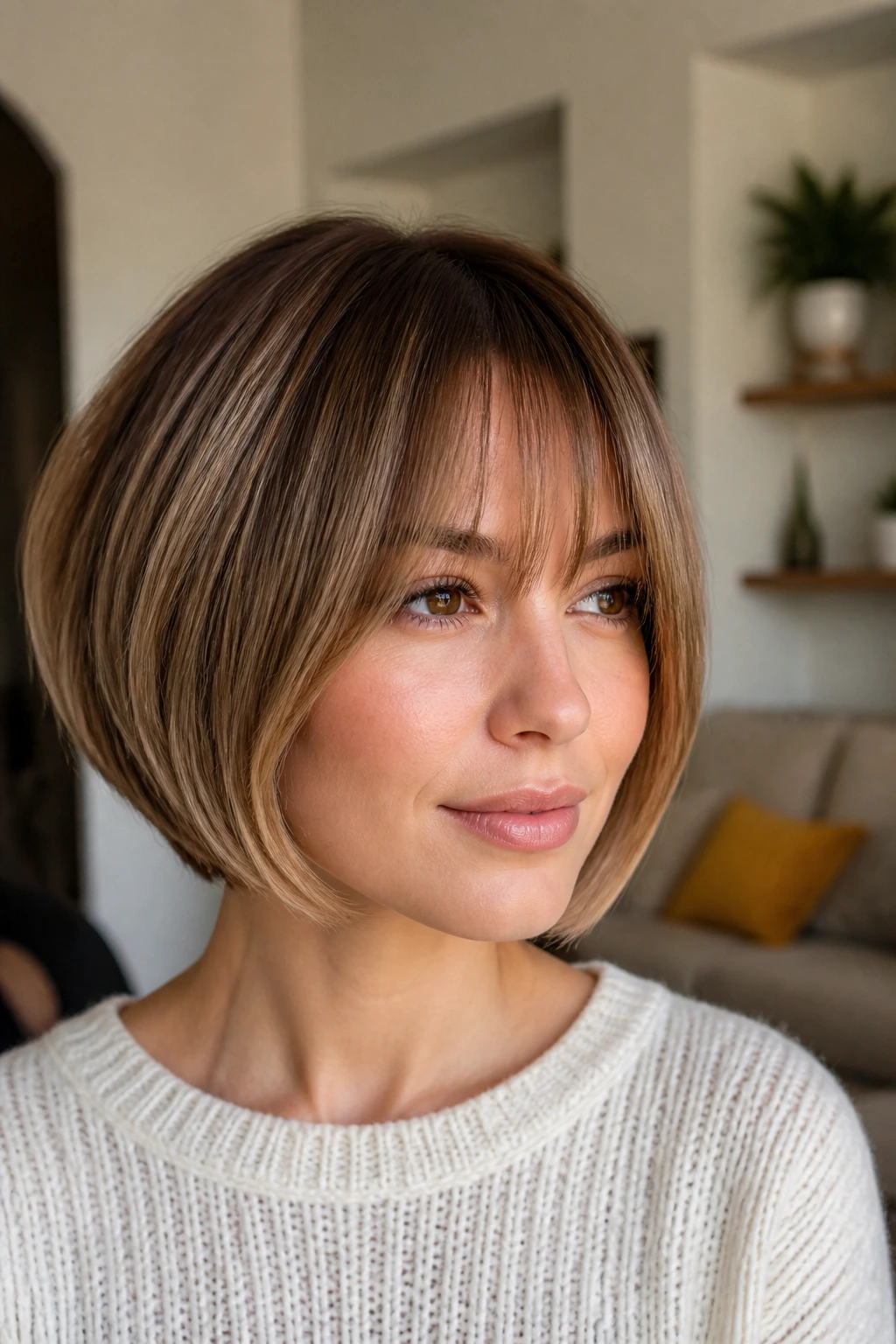
Bottleneck bangs can be a smart move when fine hair needs softness around the face. The fringe starts narrow at the top, opens slightly near the middle, and lands with a gentle taper that blends into the bob.
Why the Fringe Matters
The bangs help build the illusion of density without eating up too much hair from the front section. That’s the balance you want. Heavy bangs can make fine hair feel sparse in the back, but bottleneck shaping keeps the weight spread more evenly.
- Keep the center of the fringe a little shorter than the sides.
- Ask for a soft connection into the front pieces.
- Let the back keep its graduation so the haircut still has lift.
- Style with a small brush and a light touch of airflow, not a hard round-brush curl.
This is a pretty cut when it’s done well. It reads soft and full, not overworked. And if you like to tuck your hair behind one ear, the fringe still falls in a flattering way.
20. Curly Graduated Bob for Fine Waves
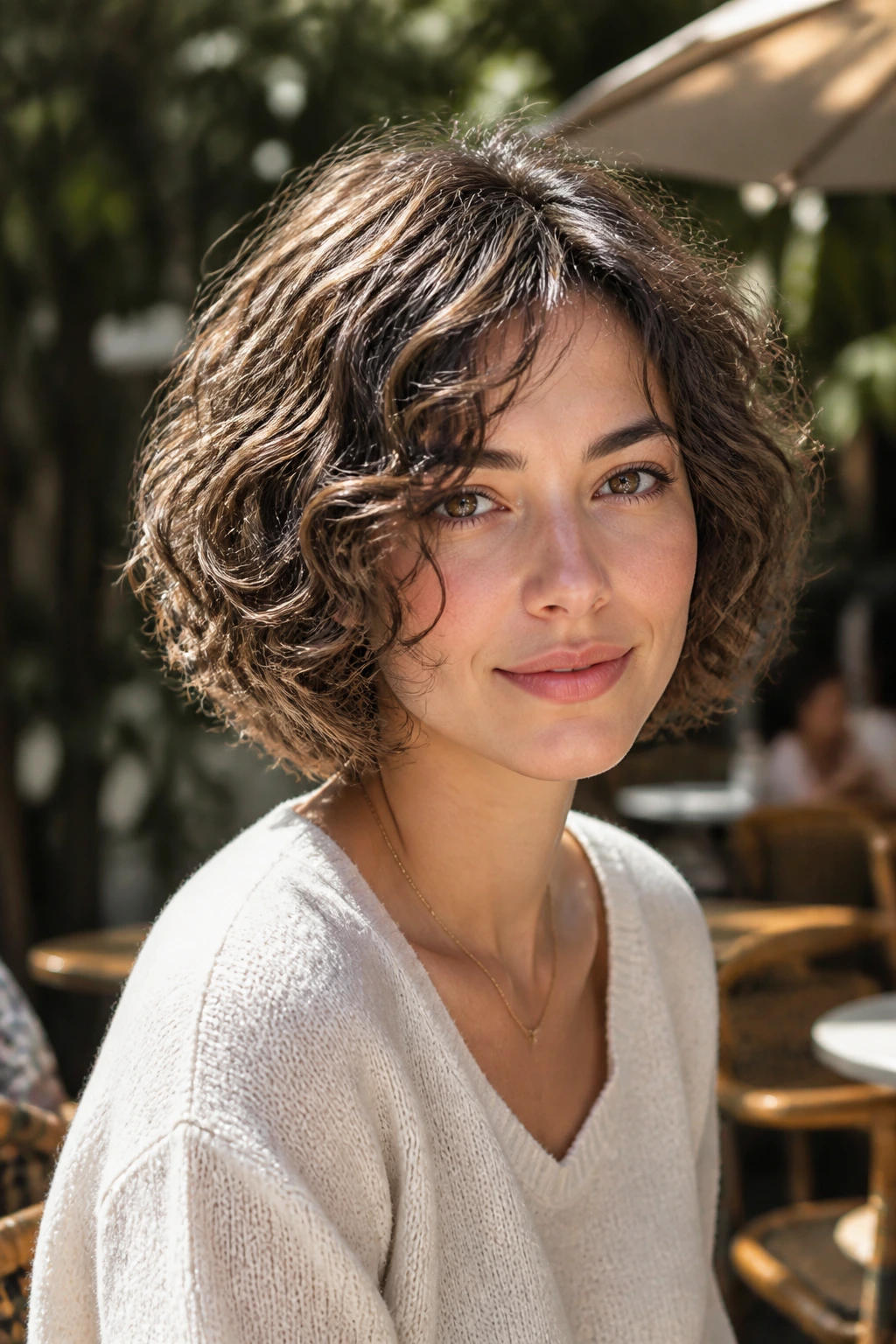
Fine hair with a wave or loose curl pattern can look especially good in a graduated bob, because the bend in the hair adds natural body. The problem is too much length. Once the hair gets heavy, the curl loosens and the whole shape goes soft in a bad way.
A graduated bob keeps the back lighter and lets the waves stack over each other instead of stretching down. That makes the curl pattern look fuller. The top should not be chopped too short, though. Fine waves need enough length to curl without puffing up.
Dry cutting is often helpful here, because it shows how the wave actually sits. Then you can decide where the back needs support and where the front needs room. If you diffuse, keep the heat low and stop before the hair is bone dry. A little moisture left in the ends helps the wave settle into a softer shape.
21. Chin-Grazing Bob With Invisible Layers
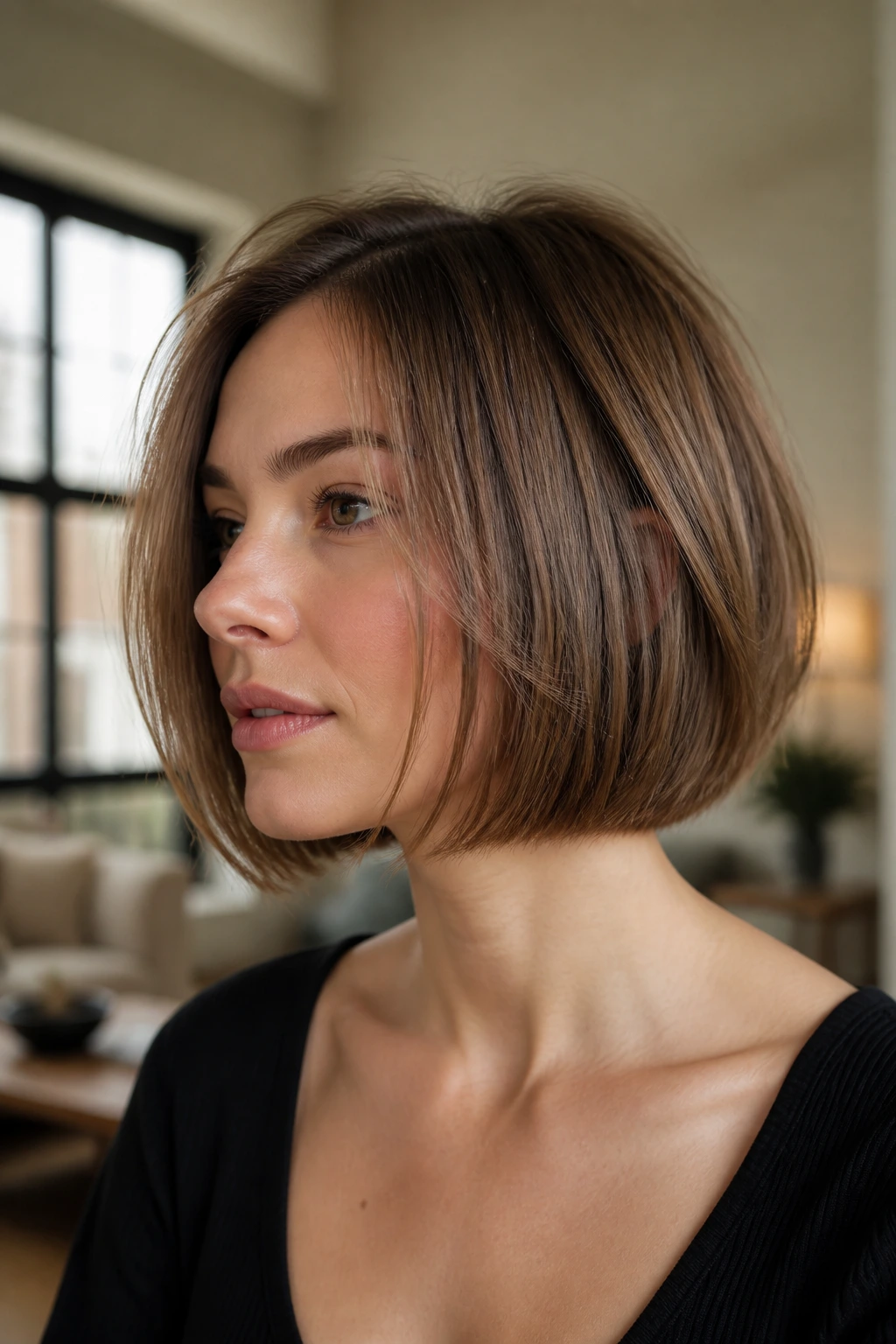
What if you want movement without obvious layers? That’s where invisible layers come in. They sit inside the haircut, not on the outside, so the bob keeps its clean edge while still getting a bit of lift.
This style is excellent for fine hair because it avoids that chopped-up look that can happen when layers are too visible. The chin-grazing length gives the hair enough presence to look full, and the hidden structure keeps it from collapsing flat around the jaw.
The best part is how easy it is to style. A quick bend through the front and a rough dry at the roots can be enough. You won’t see the layers, but you’ll feel the difference when the hair moves. That’s the sort of detail I like in a bob. Quiet. Useful. Not showy for the sake of it.
22. Neck-Hugging Bob With a Low Stack
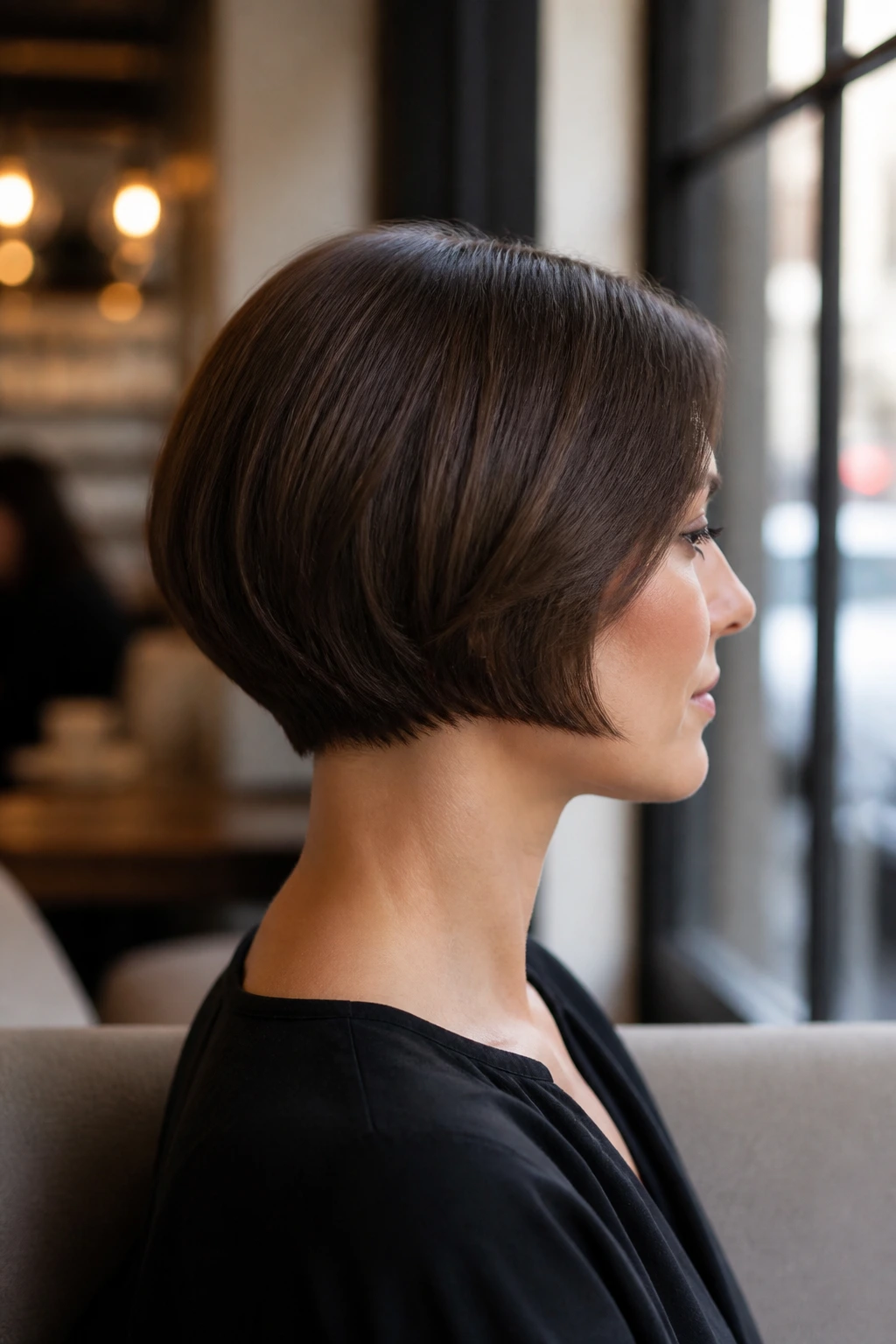
A neck-hugging bob is one of the easiest graduated shapes to live with if you want a neat outline and minimal styling. The low stack at the back gives a little lift, but the cut still curves softly along the neck instead of kicking out.
This is a strong pick for fine hair because it keeps the weight close to the head. That makes the hair look denser from the side and gives the crown a tidier finish. It also grows out in a polite way, which is more than I can say for some sharper bobs.
If you like shorter hair but hate spending ages on it, this cut earns its keep. A quick blow-dry with a flat brush usually does the job. The nape should sit close enough to the neck that the line feels intentional, not bulky. If it flares out, the stack is too heavy.
23. Tousled Graduated Bob With Beachy Movement
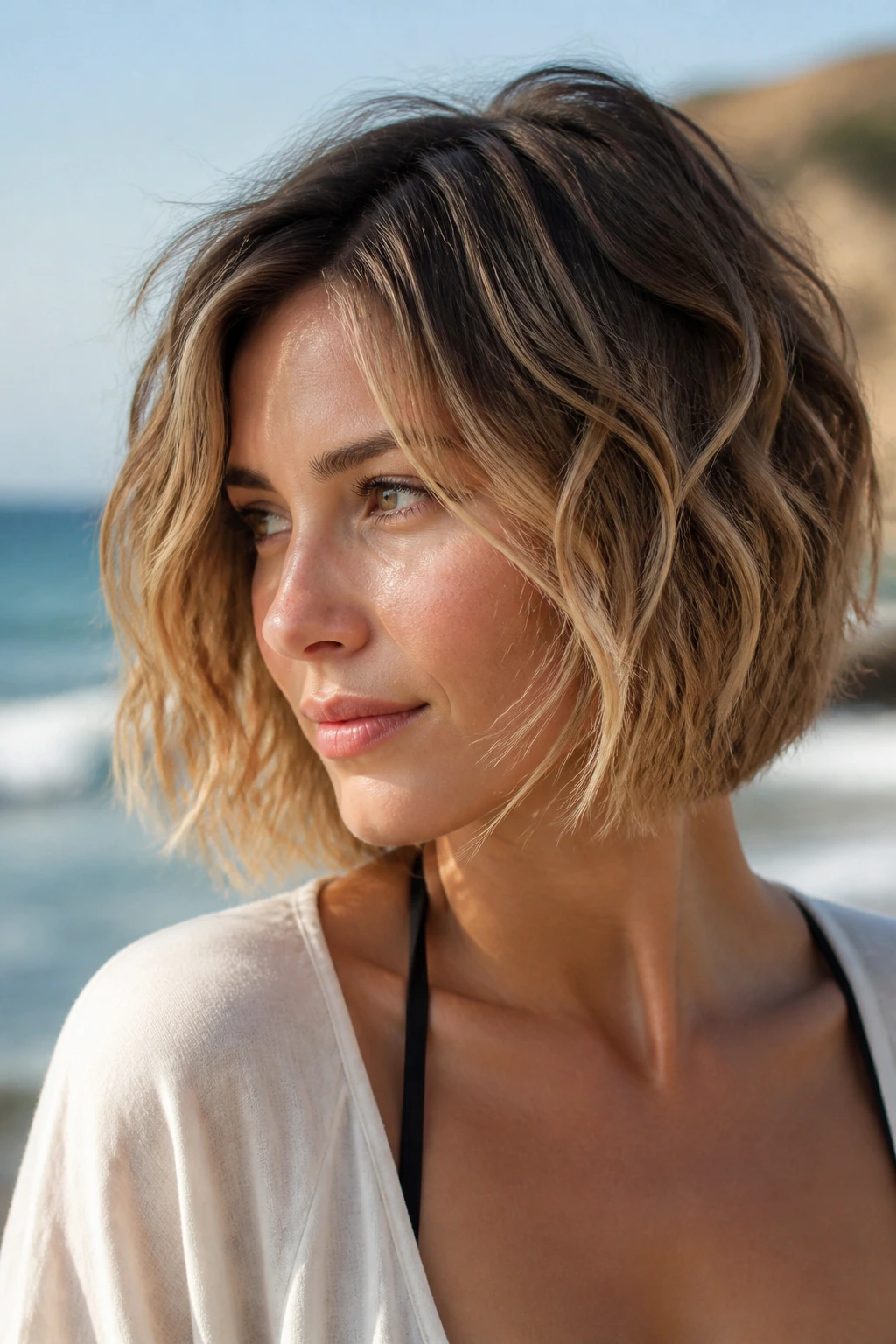
A tousled bob can work on fine hair, but the product choice has to be restrained. Too much salt spray and the hair goes dry, sticky, and smaller-looking. That’s the opposite of what you want.
I prefer a soft wave created with a medium iron or a flat iron bend, then broken up with fingers. The graduation in the back gives the style structure, while the tousle keeps it from feeling too neat. The trick is keeping the ends separate enough to move, but not so separated that they look stringy.
Product Restraint
- Use 2 to 4 light sprays of texturizing mist, not a soaking layer.
- Scrunch only the mid-lengths if your hair is naturally soft.
- Finish with a pea-sized amount of cream on the very ends.
- Skip heavy waxes; they flatten fine hair fast.
This look suits people who like a bit of edge but still want the cut to feel airy. It should look touched, not styled into submission.
24. Graduated Bob With a Long Side Fringe
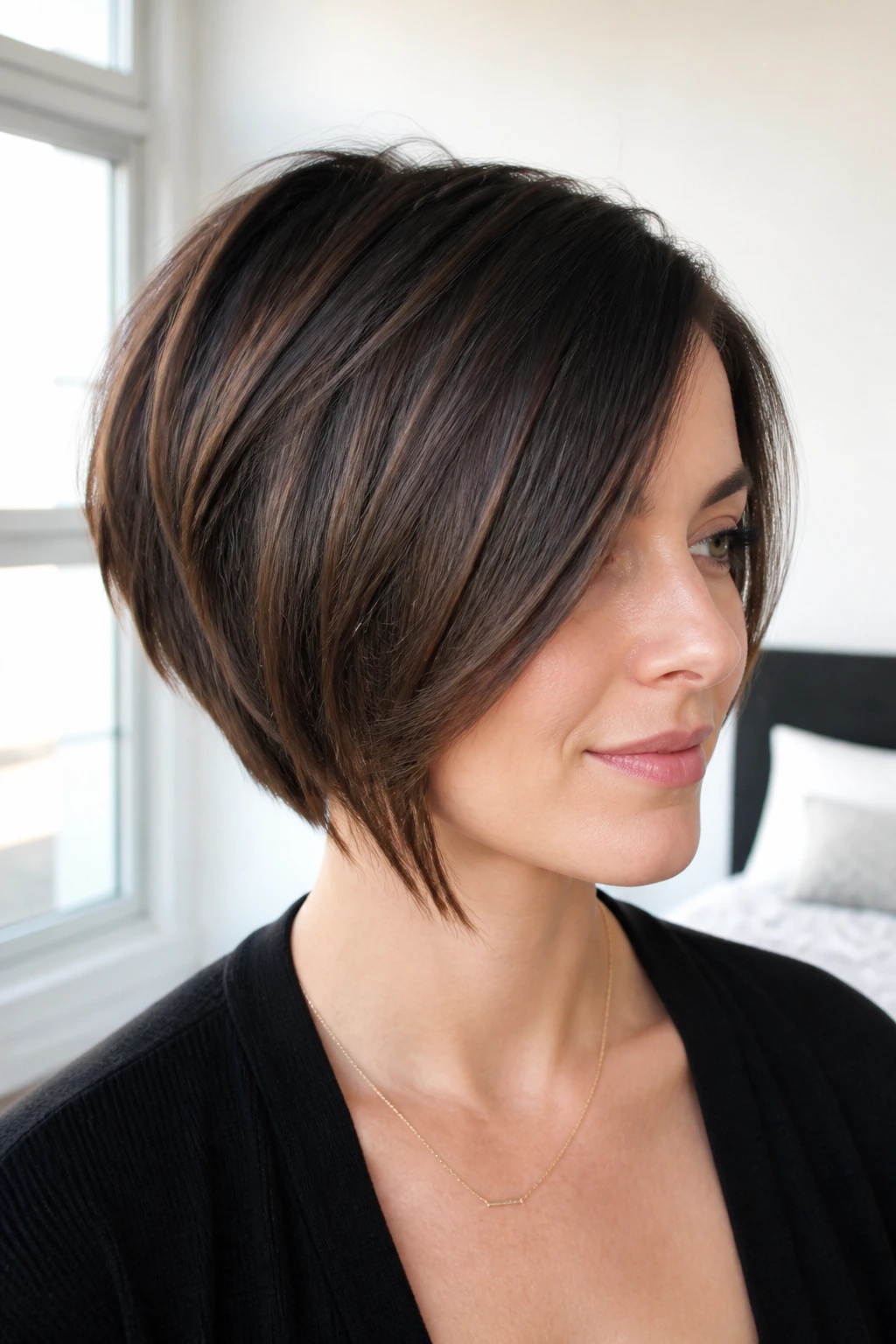
A long side fringe does one simple thing very well: it breaks up the front line. That helps fine hair look fuller because the eye doesn’t stop at a short, blunt edge. It keeps moving.
Compared with straight-across bangs, a side fringe gives you softness and flexibility. You can wear it tucked, swept, or blended into the front of the bob. The graduated back keeps the shape lifted, while the fringe helps the haircut feel lighter around the face.
Keep the fringe long enough to hit around the cheekbone or just below it. If it falls too low, it can drag the whole style down. If it’s too short, it loses the gentle diagonal that makes it useful. I like this look on people who want a little face framing without committing to a full fringe.
25. Soft Mushroom Bob With a Modern Bend
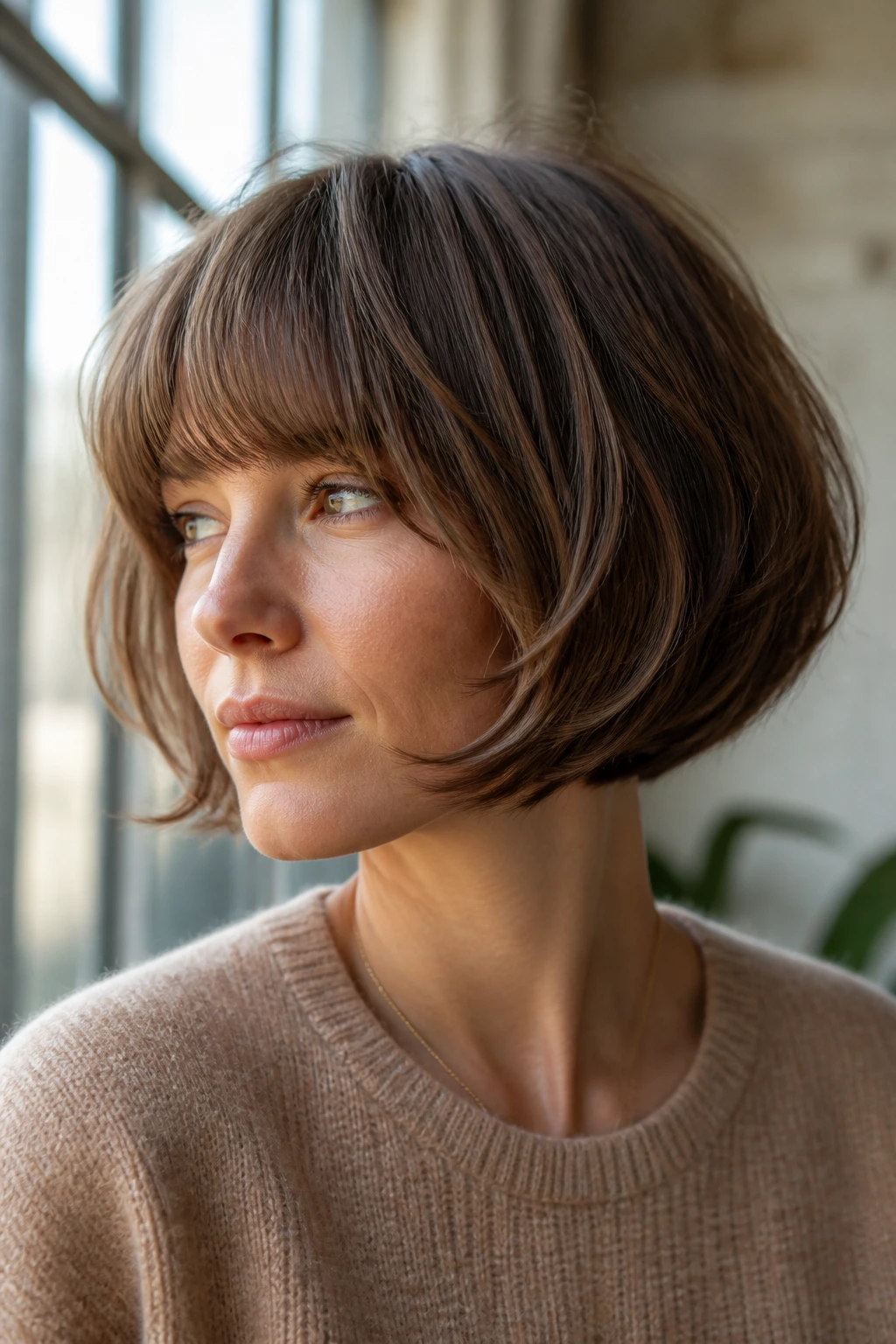
A mushroom bob sounds retro for a reason, but the modern version is far more wearable. The top stays rounded, the sides stay soft, and the back carries just enough graduation to keep fine hair from falling flat.
The shape works because it creates the idea of fullness all around the head. Fine hair likes that. The silhouette feels balanced, and the roundness at the crown gives the haircut a little lift even when you air-dry it. Keep the sides from getting too bulky, though. That can make the head shape look wider than needed.
This cut suits straight or lightly wavy hair best, especially if you like a clean outline with a bit of movement at the ends. A small round brush and a light bend under are enough. If you want a shape that feels neat, a little graphic, and not too trendy in a flimsy way, this one has staying power.
Final Notes
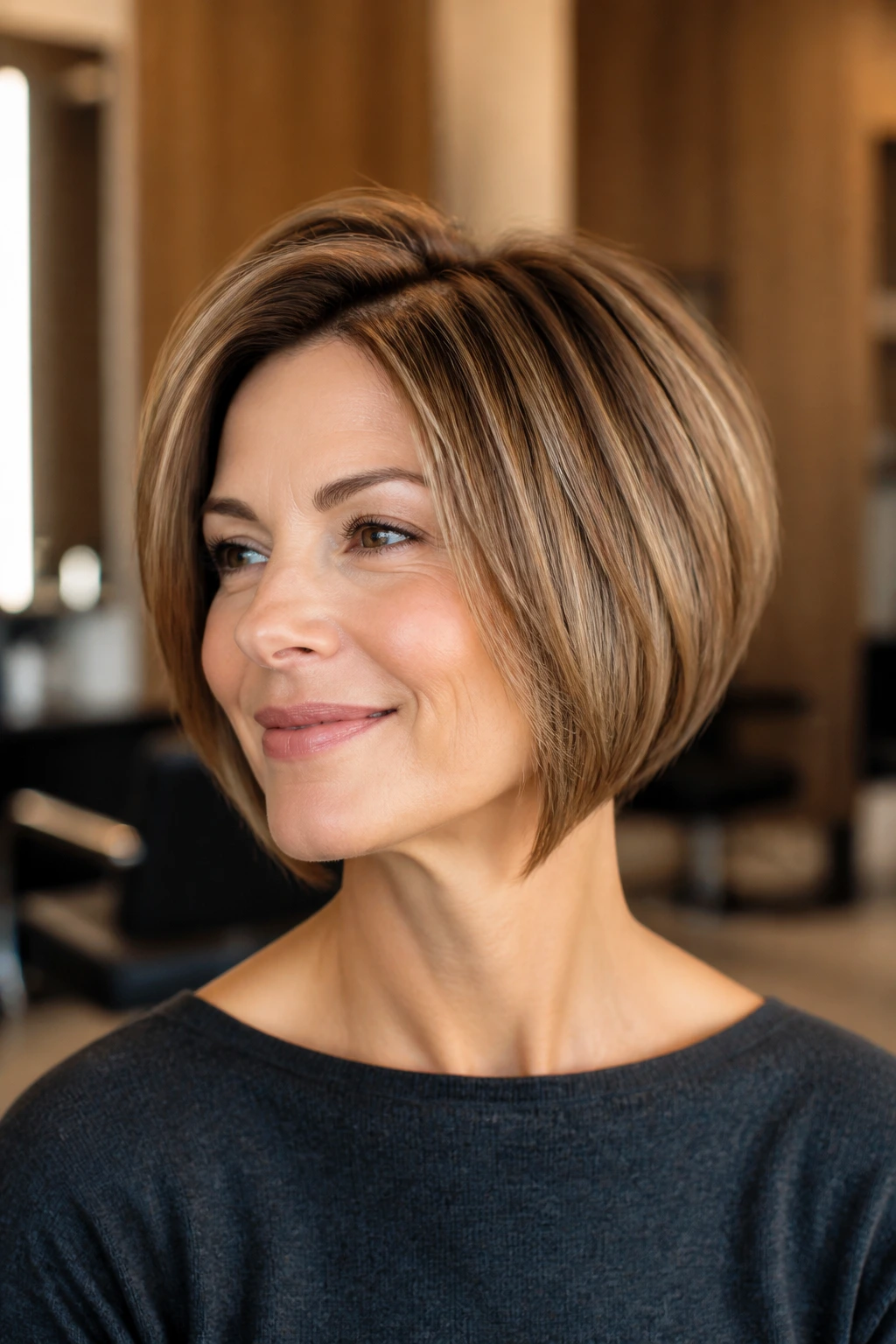
The best graduated bob for fine hair is the one that respects the hair you actually have. Not the hair you wish you had. That means a clear outline, a back that supports the crown, and enough control at the ends that the style still looks full a few weeks after the cut.
I’m wary of any bob that relies on too much thinning or too much texture. Fine hair usually needs structure first, movement second. Get those two things in the right order and the cut starts doing the heavy lifting for you.
Bring photos, yes. But also bring a plain description of what your hair does on a normal day. That part matters more than the inspiration shot. A good stylist can shape a graduated bob around your part, your density, and how much effort you’re willing to put into it each morning.
