



Fine hair can look flat in a bob if the cut is too blunt and the layers are too heavy. Feathered bob haircuts for fine hair solve that problem by keeping the outline clean while easing weight out of the right places, so the shape moves instead of collapsing.
There’s a useful distinction that gets missed all the time: fine hair is about strand thickness, not necessarily how much hair you have. You can have a lot of fine strands, or a smaller amount, or both. The haircut should respond to that reality, which is why some feathered bobs need a little more internal lift and others need a firmer edge.
A good feathered bob should look airy, not stringy. That’s the line to watch. If the layers are carved too aggressively, the ends start to look see-through and the whole thing gets fussy. If the cut keeps enough weight at the perimeter and uses softer feathering inside the shape, fine hair suddenly has room to breathe.
Bring photos, yes, but also bring a point of view. Ask about the length at the chin, jaw, or collarbone; ask how much internal layering is being cut; ask whether the ends will be point-cut, slide-cut, or gently softened with a razor. Those details matter more than the name on the mood board, and they change the way the haircut behaves the minute you take a brush to it.
1. Chin-Length Feathered Bob with Soft Ends
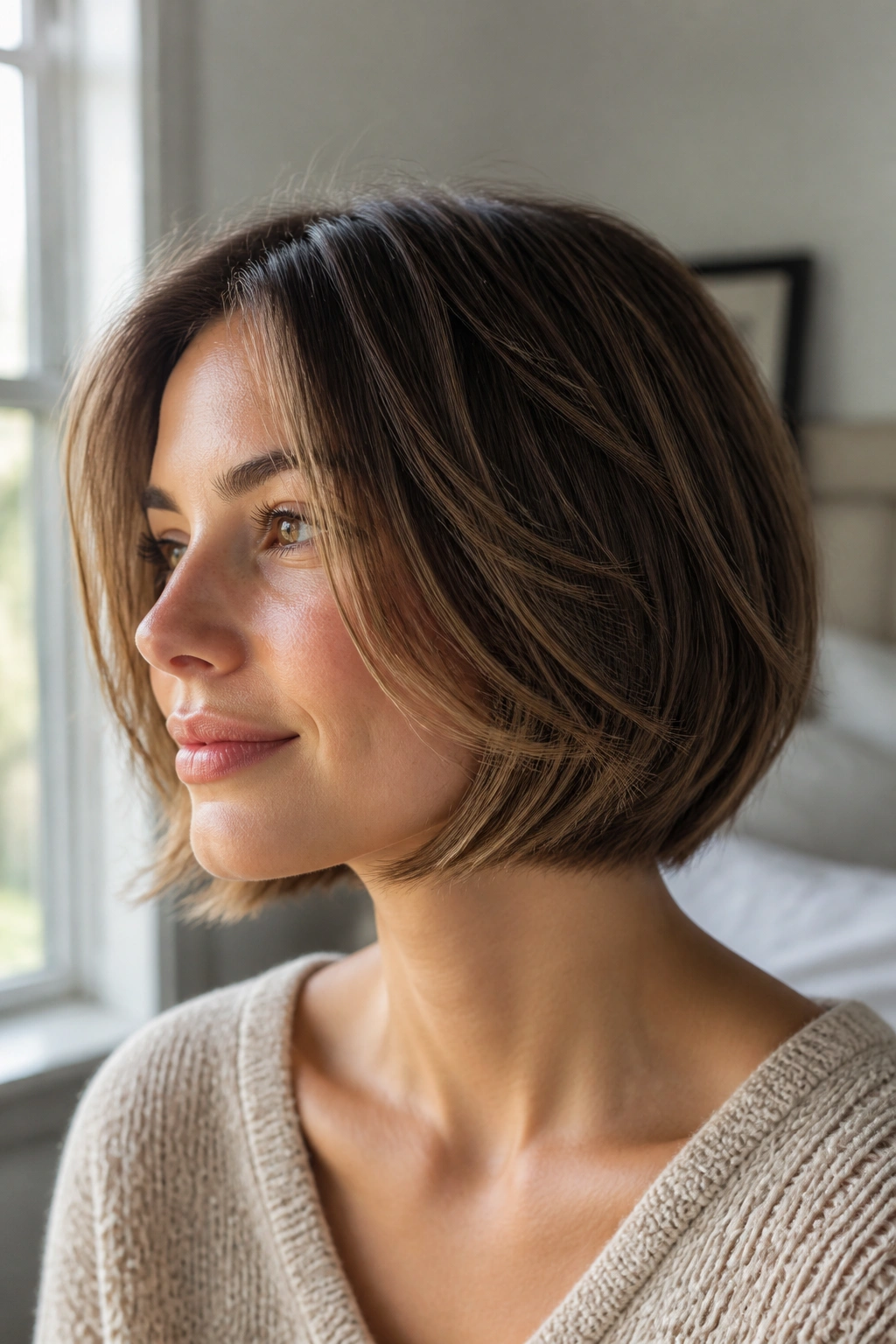
A chin-length bob is one of the cleanest places to start with fine hair. The length sits where the face naturally carries shape, and the feathered ends stop the cut from turning into a hard block. That matters more than people think.
Why It Works on Fine Hair
Chin length keeps enough mass in the outline to make hair look fuller. Then the feathering takes the edge off the ends so the whole cut moves a little when you turn your head. Not too much. Just enough.
Quick fit notes:
- Best for fine hair that falls flat at the shoulders
- Easy to style with a 1-inch round brush
- Needs trims every 6 to 8 weeks to keep the line crisp
- Looks better with soft point-cut ends than heavy razoring
Pro tip: ask for the perimeter to stay blunt-ish, with feathering tucked inside the shape. That combination gives you lift and density at the same time.
2. Side-Part Feathered Bob with Root Lift
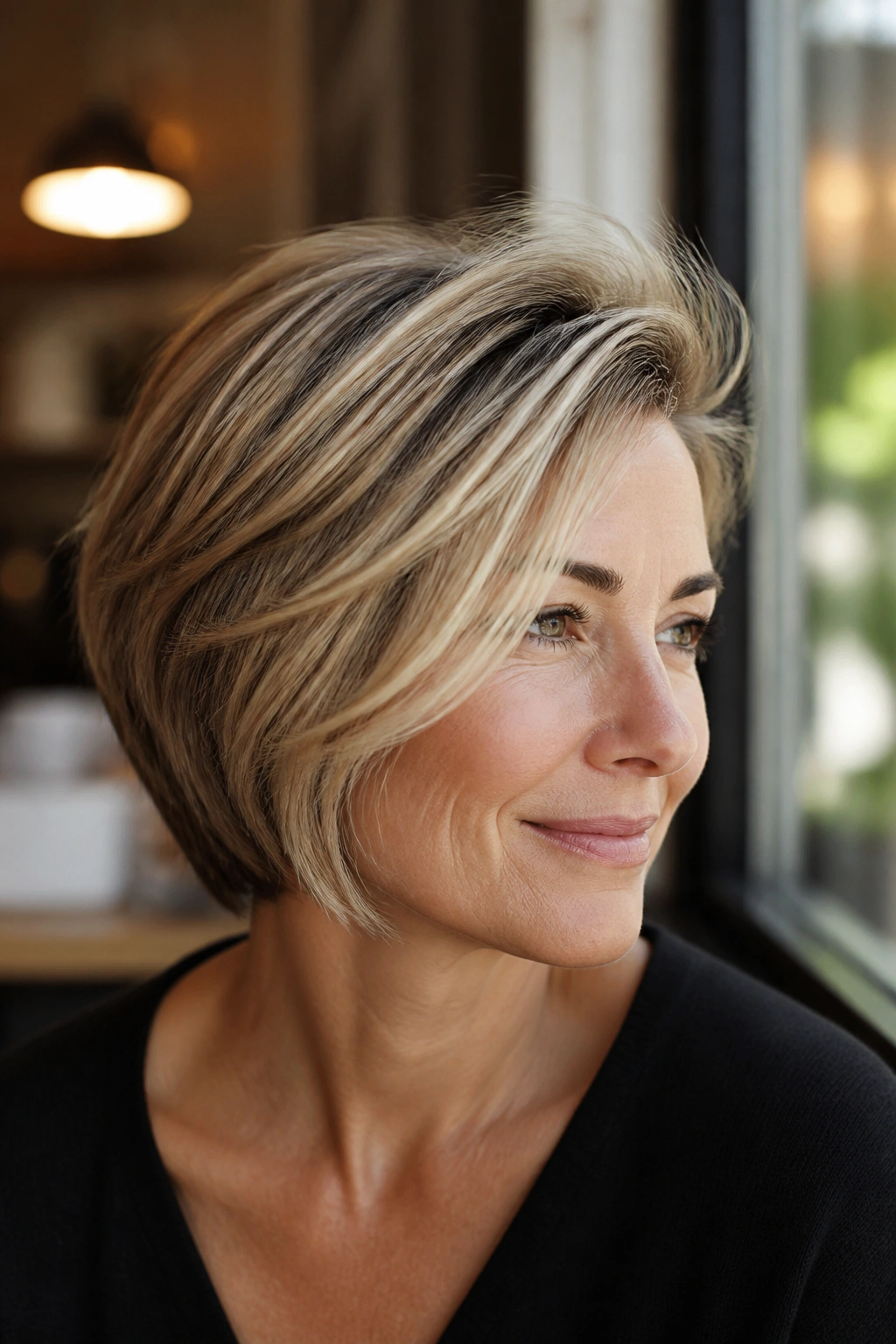
A side part can wake up fine hair fast. It creates a little height right where the hair wants to lie down, and that shift makes the bob look less symmetrical in the best way. One side gets lift; the other side falls softly across the cheek.
The cut itself should not be overcomplicated. What makes this version work is the balance between a slightly deeper side part and a bob that has just enough feathering around the crown and temples. If the crown is too short, it sticks up. If it’s too long, the part goes limp again.
I like this shape for people who want movement but do not want layers everywhere. Spray a light root lift product at the part line, blow-dry the roots in the opposite direction for 20 seconds, then flip the hair back and finish with a soft brush. That tiny bend at the root changes the whole silhouette.
3. Jaw-Length Bob with Face-Framing Feathers
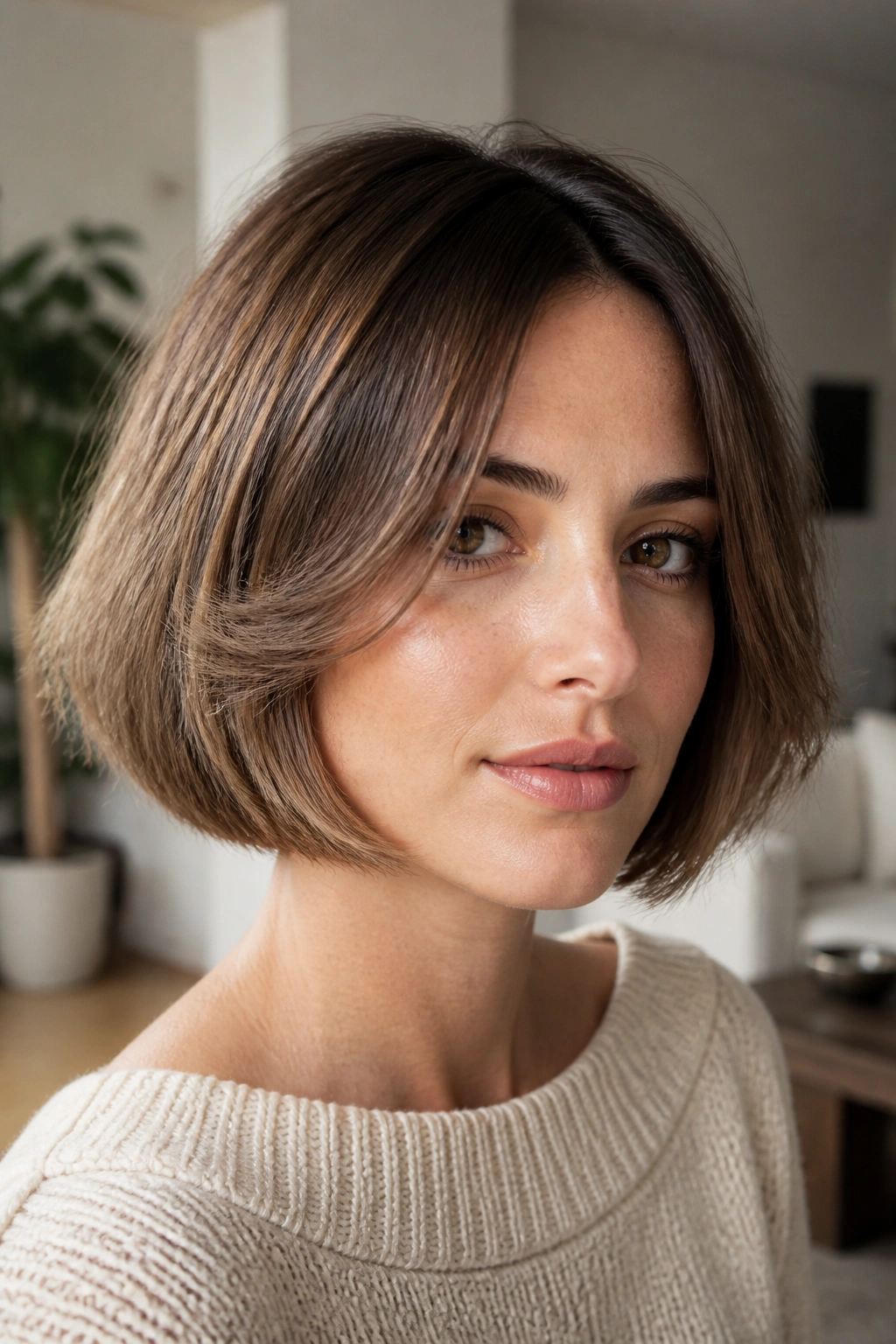
Why does jaw length work so well on fine hair? Because it gives the face a neat edge while leaving enough length for the feathered pieces to fall in a flattering way. The result looks polished, but not stiff.
The face-framing pieces should start around the cheekbone or just below it, not way up near the temple. If they begin too high, you lose density around the front. If they start too low, the whole style feels heavy near the chin. Jaw length keeps the line lively, especially when the ends are softened instead of chopped.
How to Style It
- Blow-dry the front pieces forward first, then sweep them back with the brush
- Keep a lightweight mousse at the roots, not through the ends
- Use a flat brush if you want more polish, or a round brush for a softer bend
- Finish with a small amount of texturizing spray at the mid-lengths only
The nice part here is that the cut does a lot of the work. You do not need heavy styling to make it look finished.
4. Feathered Bob with Curtain Bangs
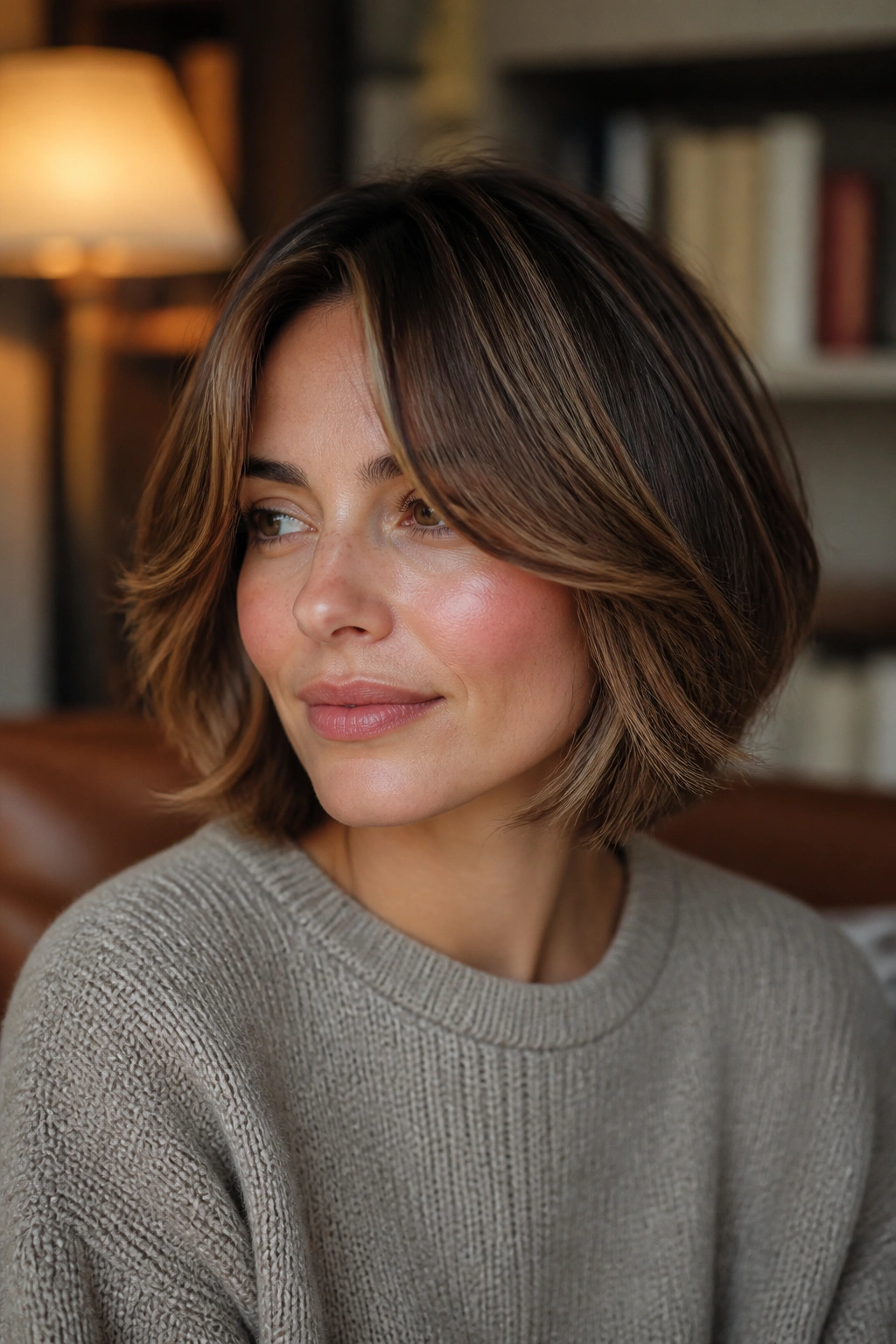
Curtain bangs can be a smart move on fine hair when the rest of the bob stays controlled. They bring shape to the front without forcing the hair into a heavy fringe that sits like a curtain rod. That’s the mistake I see most often.
This version works best when the bangs are cut long enough to blend into the cheekbone pieces. If they’re too short, fine hair can look sparse right across the forehead. If they’re too thick, the bob loses the lightness that makes feathering useful in the first place.
A soft blowout helps here. Direct the bangs away from the face with a small round brush, then let them drop back into a center split. The middle should sit a little shorter than the sides, and the side pieces should skim the cheek. That shape gives the bob some softness without stealing volume from the crown.
- Good for longer foreheads
- Good with glasses
- Better on hair that has a slight natural bend
- Needs a trim on the bangs more often than the bob itself
5. Rounded Bob with Airy Layers
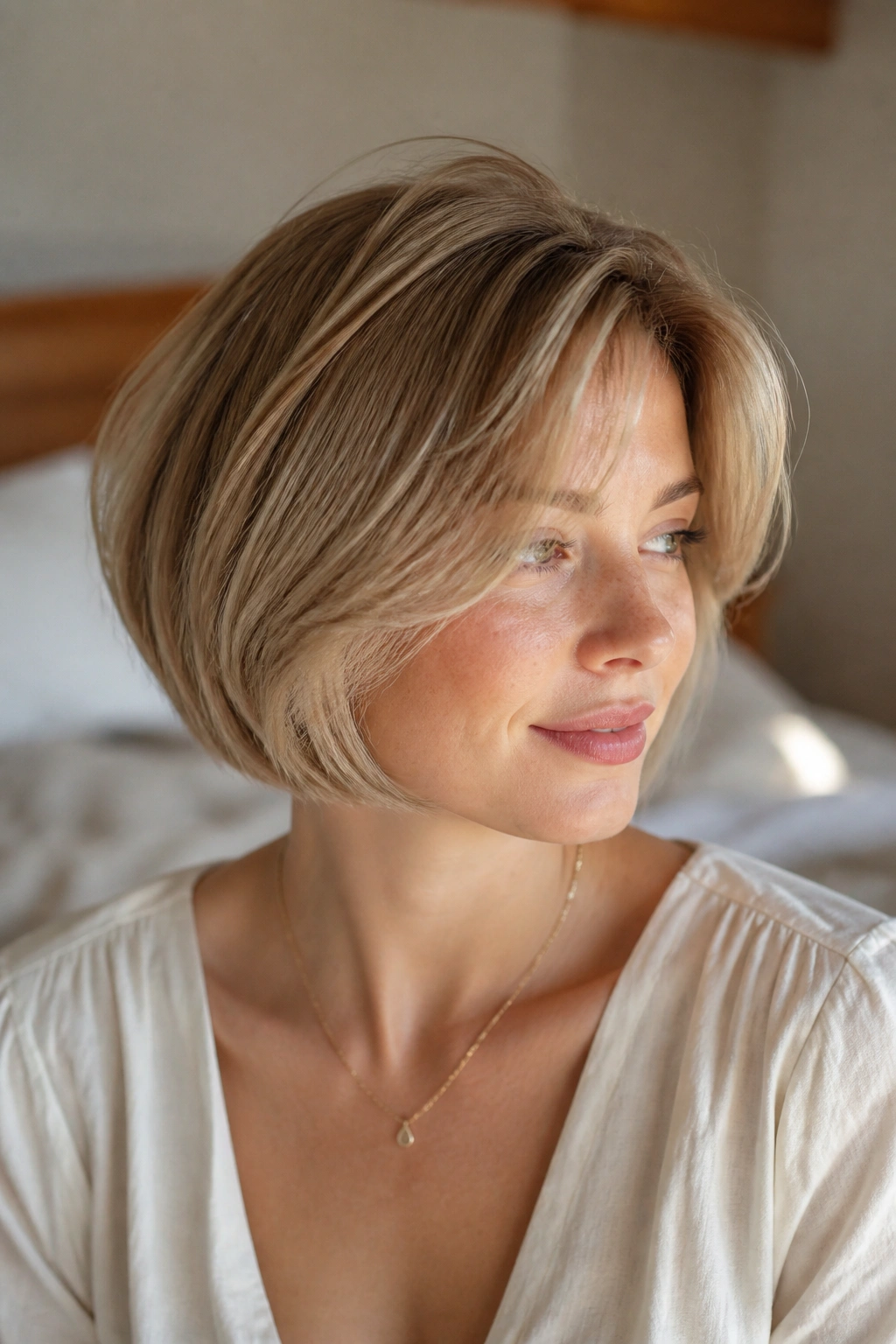
A rounded bob sounds old-fashioned until you see it on fine hair. Then it starts making sense. The curve of the shape adds the visual bulk that fine strands usually lack, and the airy layers stop it from looking like a helmet.
The key is restraint. A rounded bob should feel soft around the back of the head, with the front angles eased enough to keep the face open. If the top is carved too much, the crown flattens and you lose the whole point. If the layers are too long, the roundness disappears.
I like this cut for people whose hair gets bigger at the ends and flatter at the roots. The curved shape gives the illusion of fullness all the way through, even when the actual density is modest. A round brush, a quick lift at the roots, and a cool shot at the end are usually enough. Simple. Clean. Reliable.
6. Collarbone Feathered Lob
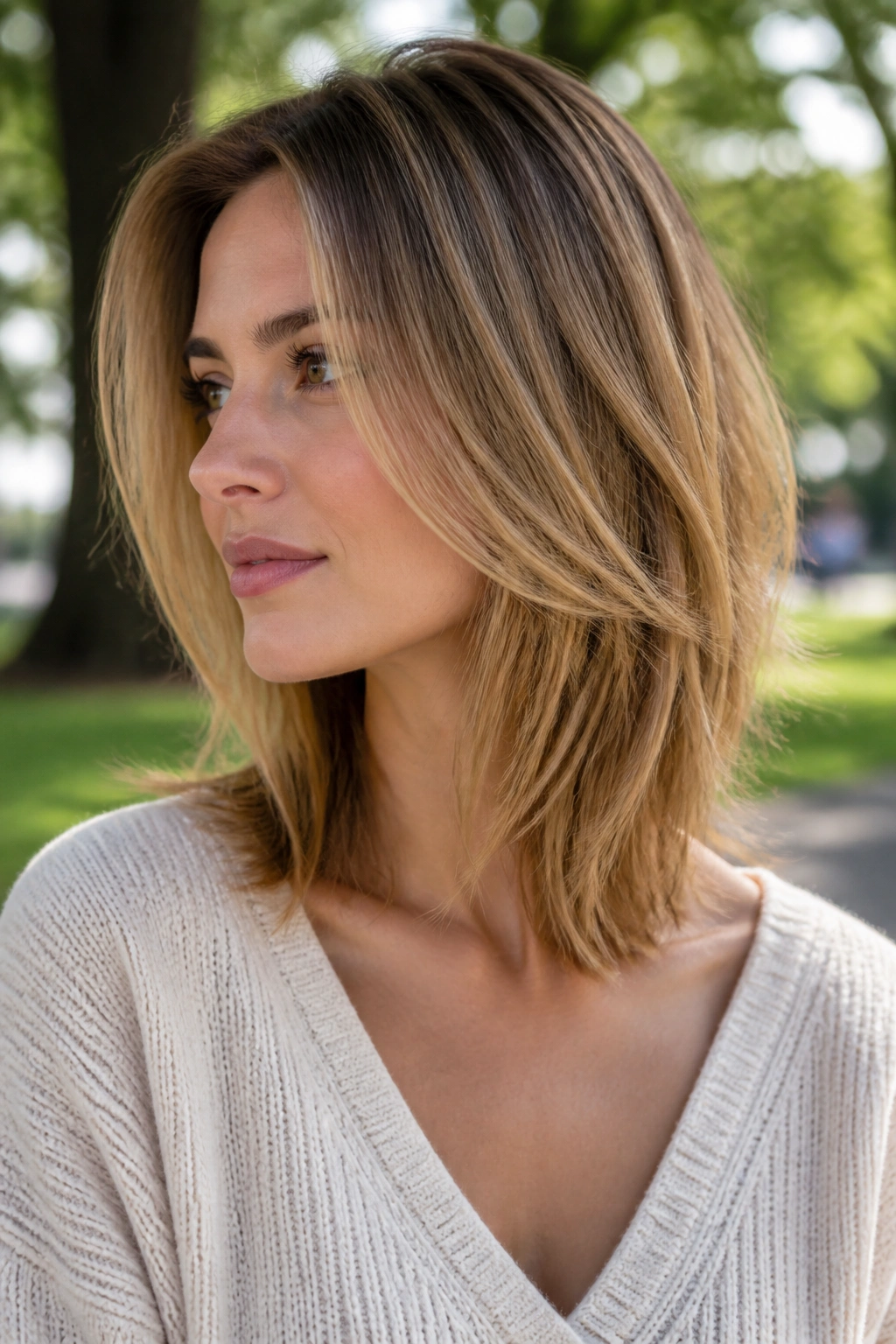
Not everyone wants a shorter bob, and that’s fair. A collarbone-length lob keeps a little more weight, which fine hair often needs, especially if it likes to split at the ends. Feathering at this length keeps the cut from hanging like one long curtain.
The sweet spot is right around the collarbone, where hair can skim the shoulders instead of sitting on them. That small detail matters. Hair that lands right on the shoulder tends to flip awkwardly or collapse in the middle of the day. Drop it a little lower or keep it a little higher, and the shape behaves better.
This is the version I’d suggest for someone who wants low-fuss styling. You can wear it straight, bend the ends slightly with a flat iron, or rough-dry it with mousse and go. The feathering should be subtle, not obvious. Think movement, not layers for the sake of layers.
7. Razor-Soft Shag Bob
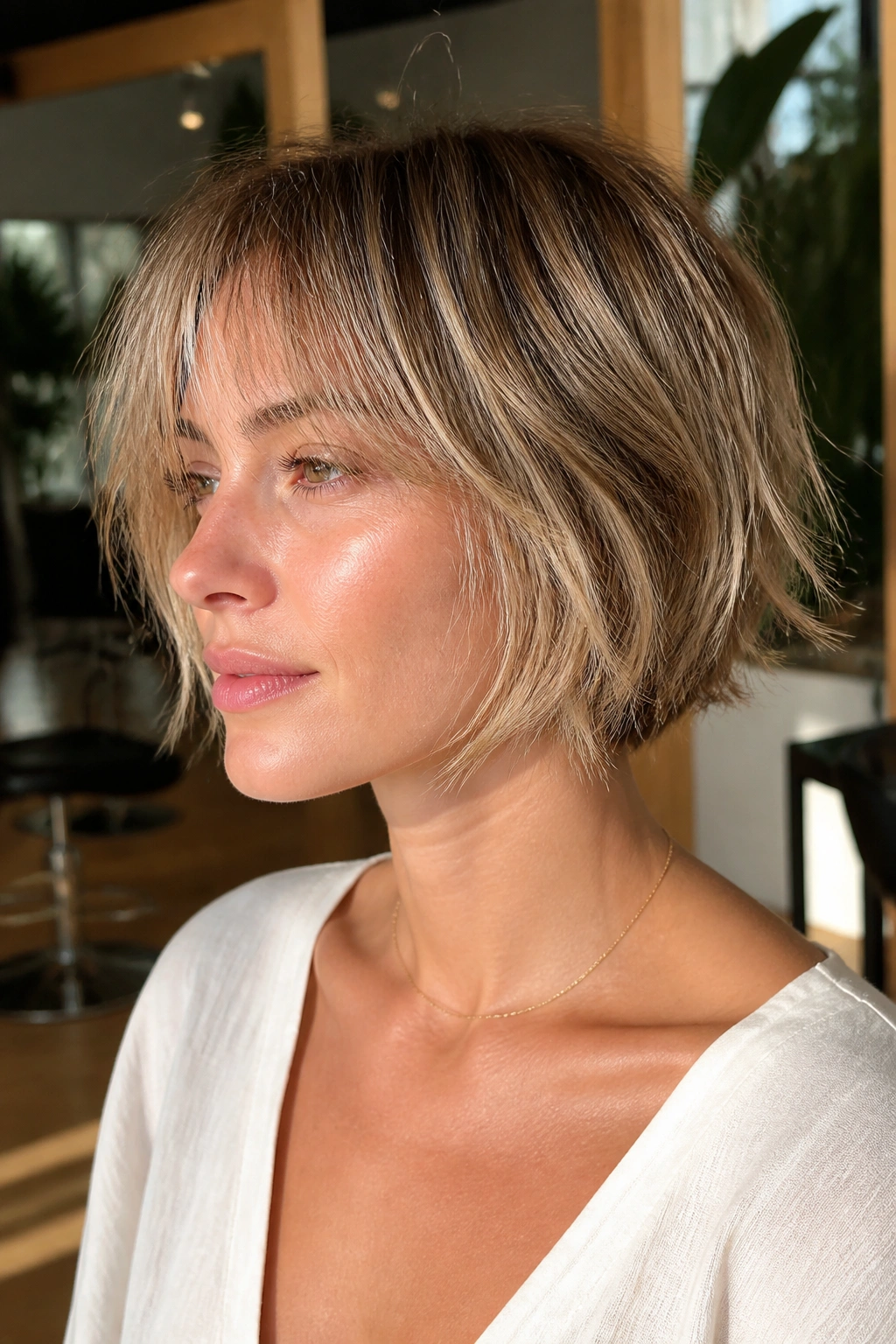
I’m careful with razor work on fine hair. Sometimes it’s great. Sometimes it makes the ends fray faster than you’d like. A razor-soft shag bob only works when the hair has enough body to hold the shape and enough density to survive the extra texture.
The upside is obvious once the cut settles in: the hair gets a looser, more undone feel, and the bob stops looking too neat. That can be a lifesaver if your hair has a slight wave or if it gets puffed up by humidity. The shaggy pieces keep it from turning bulky.
Still, I would not push this on very fragile fine hair. If the strands already look wispy at the ends, a heavy shag can make that worse. Ask for soft, controlled feathering around the mid-lengths instead of a full razor carve. Much safer. Much easier to grow out.
8. Inverted Feathered Bob
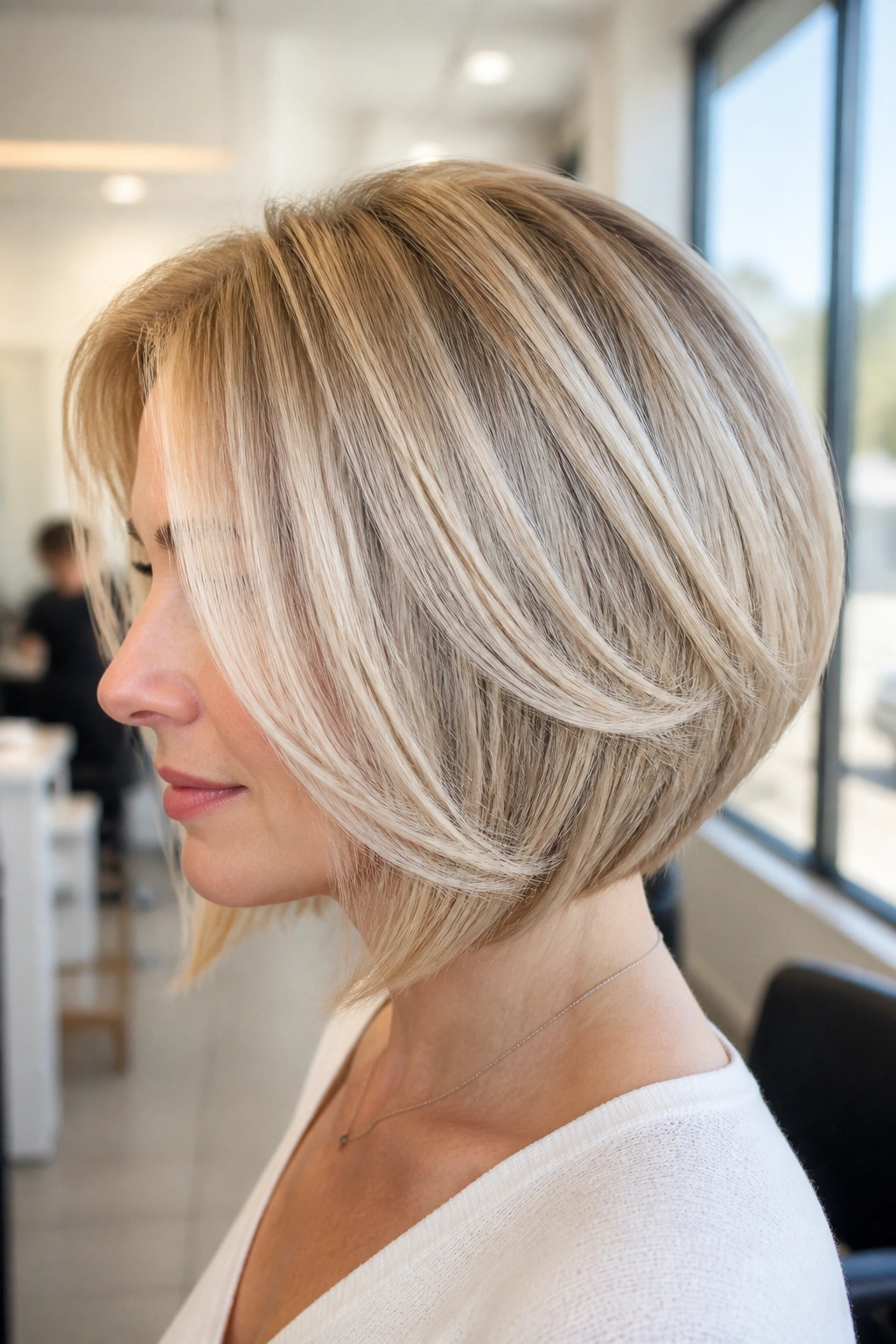
An inverted bob gives you lift at the back and length toward the front, which is a useful trick for fine hair that tends to lie flat at the crown. The stacked back creates a little architecture, while the longer front pieces keep the shape from looking severe.
This cut needs a careful hand. Too much stacking, and the nape starts to look hollow. Too little, and the bob loses the lift that makes the whole thing work. The feathering should happen in the transition zone, where the back meets the sides, so the shape curves instead of stepping sharply.
If you want your hair to look fuller from the side profile, this is one of the stronger choices. Blow-dry the crown first, then round the brush under at the back in small sections. The back should sit snugly against the head, not puff out. That difference is the whole haircut.
Good for: straight or slightly wavy fine hair, especially if the crown always falls flat.
9. Hidden-Layer Blunt Bob
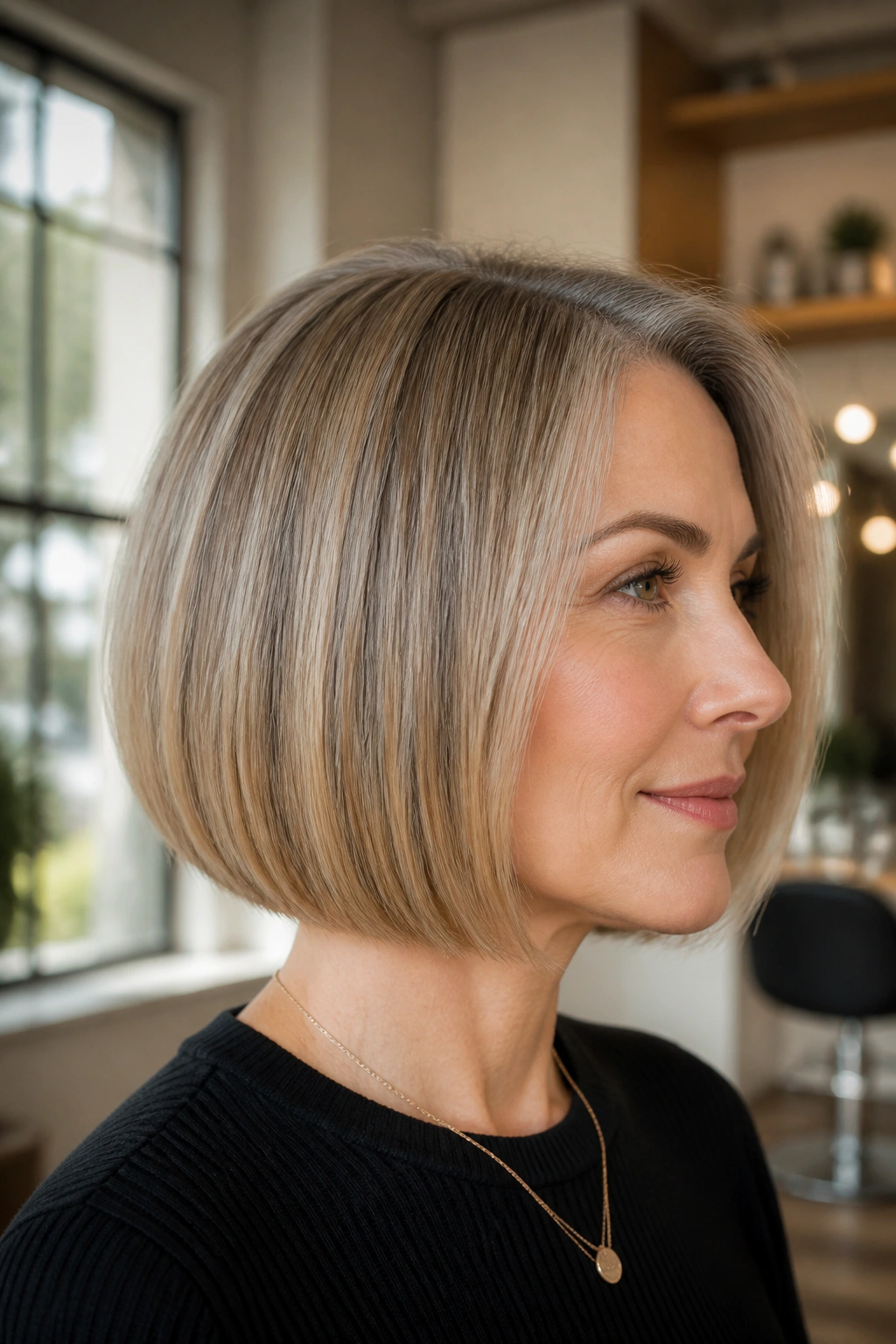
This is the bob for people who like a clean line but still want movement. The outside looks blunt and dense, while the feathering sits underneath, where it can create lift without showing off every layer. Smart cut. Honestly, one of my favorites for fine hair.
A lot of people think fine hair needs visible layers. Not always. Visible layers can leave the ends looking ragged if the strand diameter is too small. Hidden layers solve that by supporting the shape from below while the outer shell keeps the visual weight.
The style works best when the cut is checked dry, not only wet. Fine hair can spring up or shrink a little as it dries, and that changes where the hidden layers land. Ask for the perimeter to stay solid and the interior to be softly debulked. The result feels fuller, not thinner.
10. Wavy Feathered Bob
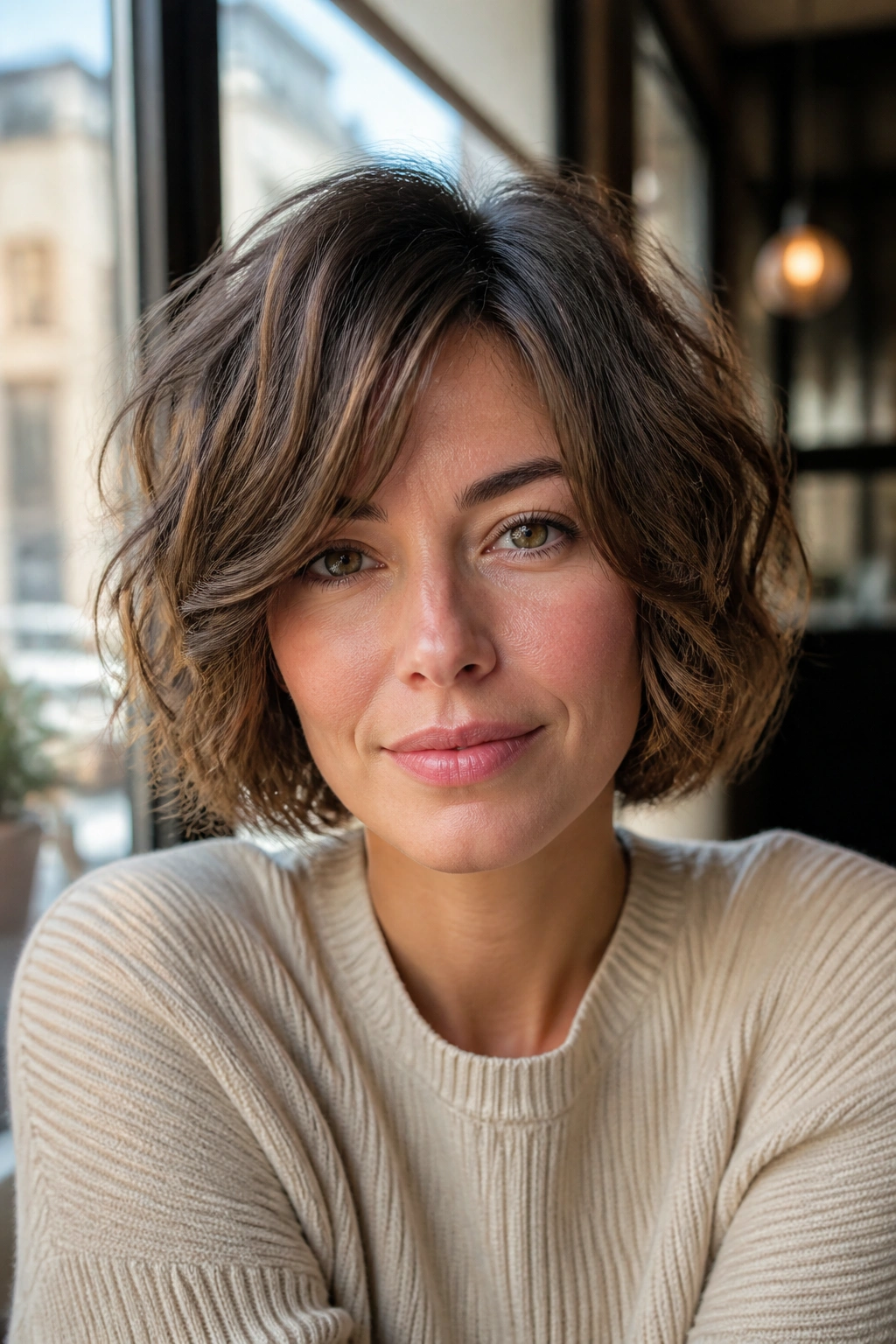
Natural wave and feathering get along well when nobody overworks them. The wave brings body, and the feathered bob gives that body a shape instead of letting it spread out in every direction. That’s the real win.
The cut should leave enough length for the wave to form, usually somewhere between the cheek and the jaw, depending on how your hair behaves. If the layers are too short, the wave can kick up at odd angles. If they’re too long, the shape goes heavy. The middle ground is usually the best ground.
How to Bring Out the Texture
- Apply mousse to damp hair, from roots to mid-lengths
- Scrunch the ends lightly with a towel, not a rough rub
- Diffuse on low heat until the hair is about 80% dry
- Break up the wave with your fingers, not a brush
A small amount of cream through the ends can tame frizz, but keep it light. Fine hair does not need much.
11. Deep Side-Swept Bob
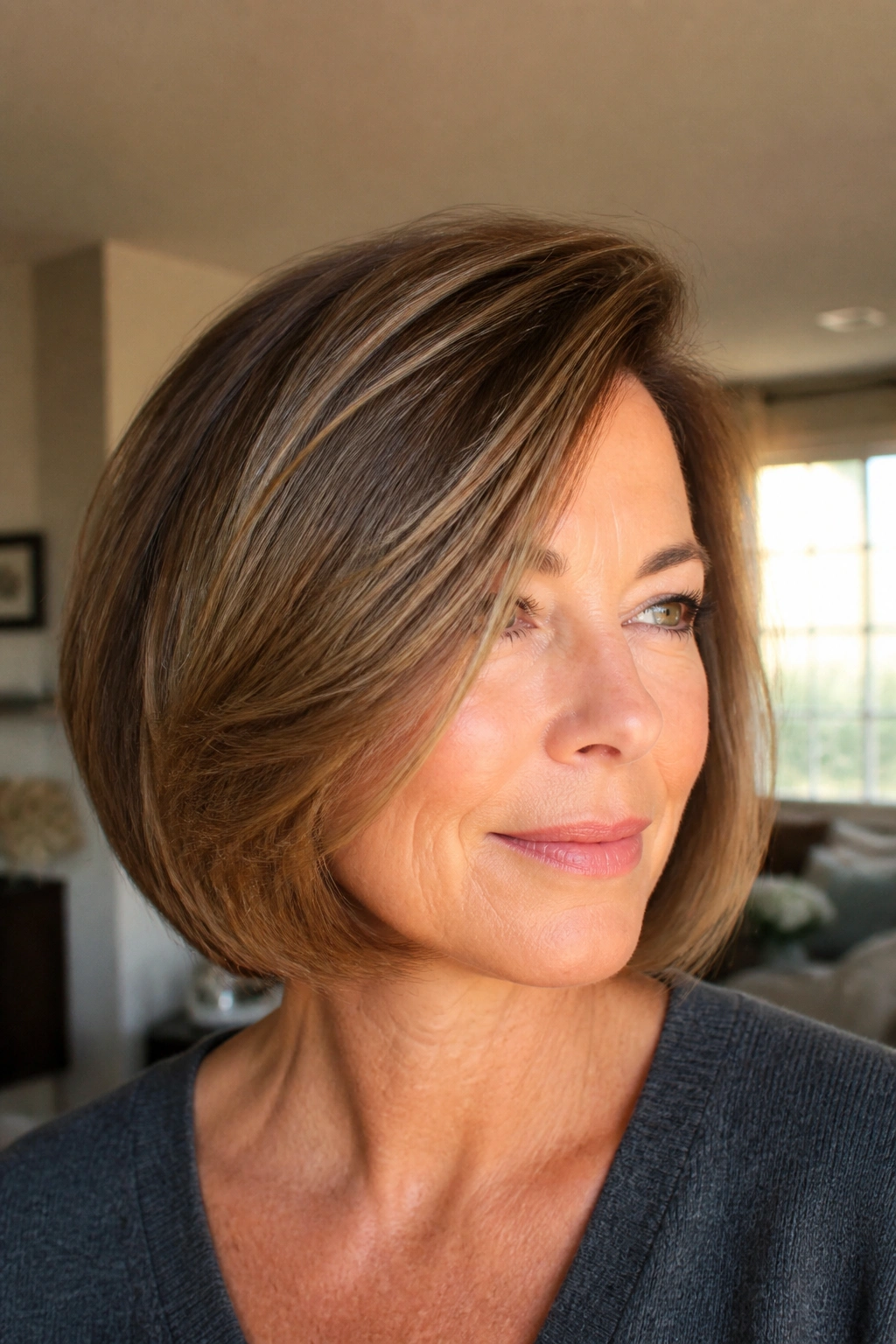
A deep side sweep changes the face shape faster than almost any other tweak. It gives one side more visual weight and lets the bob fall in a soft diagonal, which is flattering on fine hair because diagonal lines feel fuller than flat, straight ones.
This style is especially useful if your hair likes to split at the center and reveal too much scalp. The heavy side brings cover where you want it, while the rest of the bob stays light and movable. It’s a clean fix, not a dramatic one.
The cut should support the sweep by keeping the front slightly longer on the heavier side. If the front is too short, the hair pops up instead of gliding across the forehead. Use a medium round brush and direct the front section away from the part, then back toward the cheek. That little bend helps the sweep stay in place longer.
12. Feathered Bob with Bottleneck Bangs
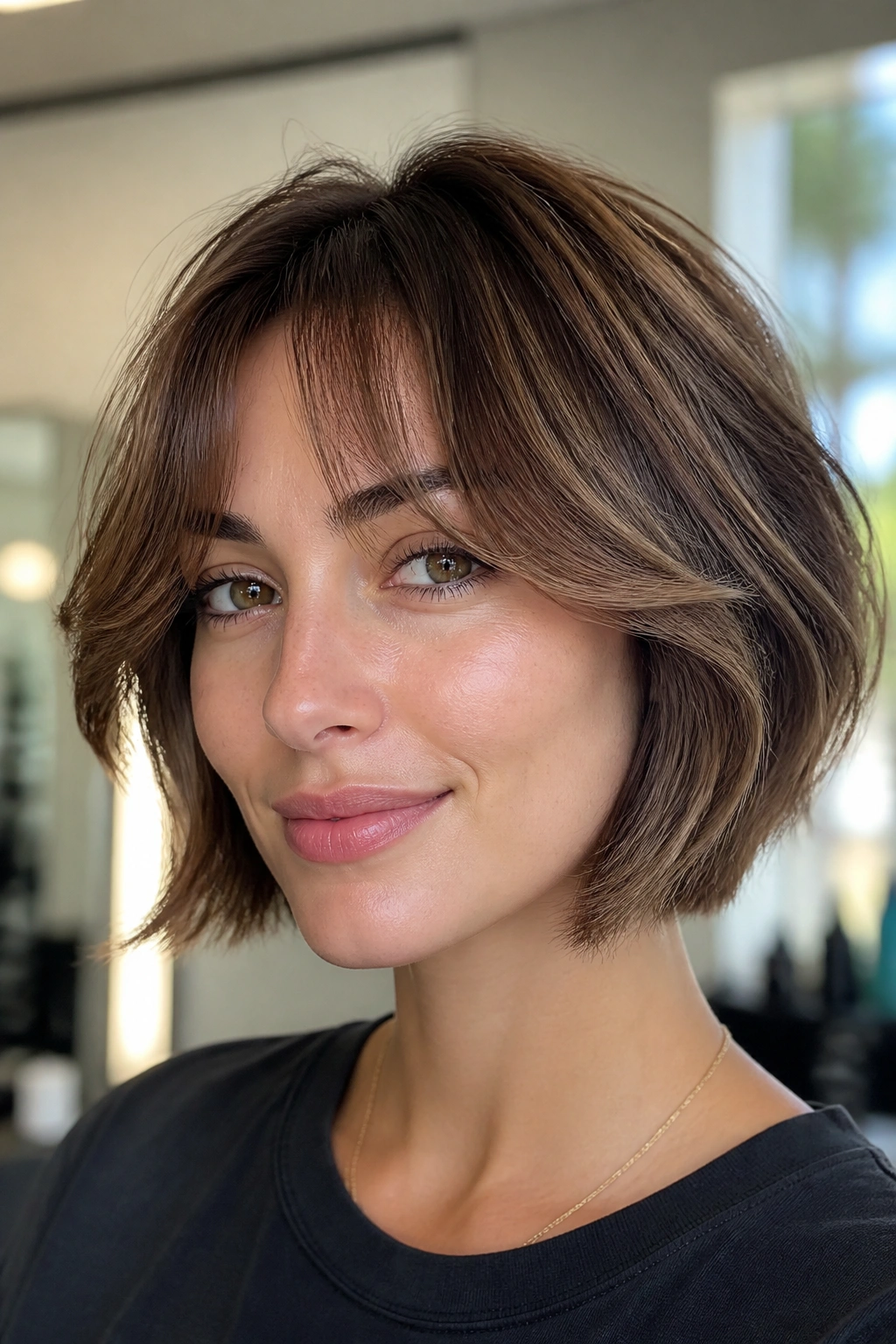
Bottleneck bangs are softer than straight fringe and more shaped than curtain bangs. They start narrow in the center and open out toward the temples, which makes them a nice companion to a feathered bob for fine hair. The front gets interest without turning heavy.
The reason I like them here is simple: they blend. Fine hair can look chopped up when bangs are too blunt, but bottleneck bangs slide into the sides in a more natural way. The whole cut feels connected. That matters when the hair itself is delicate.
How to Style It
Use a small round brush only on the center section, then use your fingers at the sides. Don’t curl the bangs under too tightly. They should move, not sit like a stiff arch.
A light mist of heat protectant and a quick pass with a blow-dryer is usually enough. If you need hold, use a tiny bit of flexible hairspray at the roots. Tiny. Too much and the bangs will separate in odd little clumps.
13. Micro Bob with Wispy Internal Layers
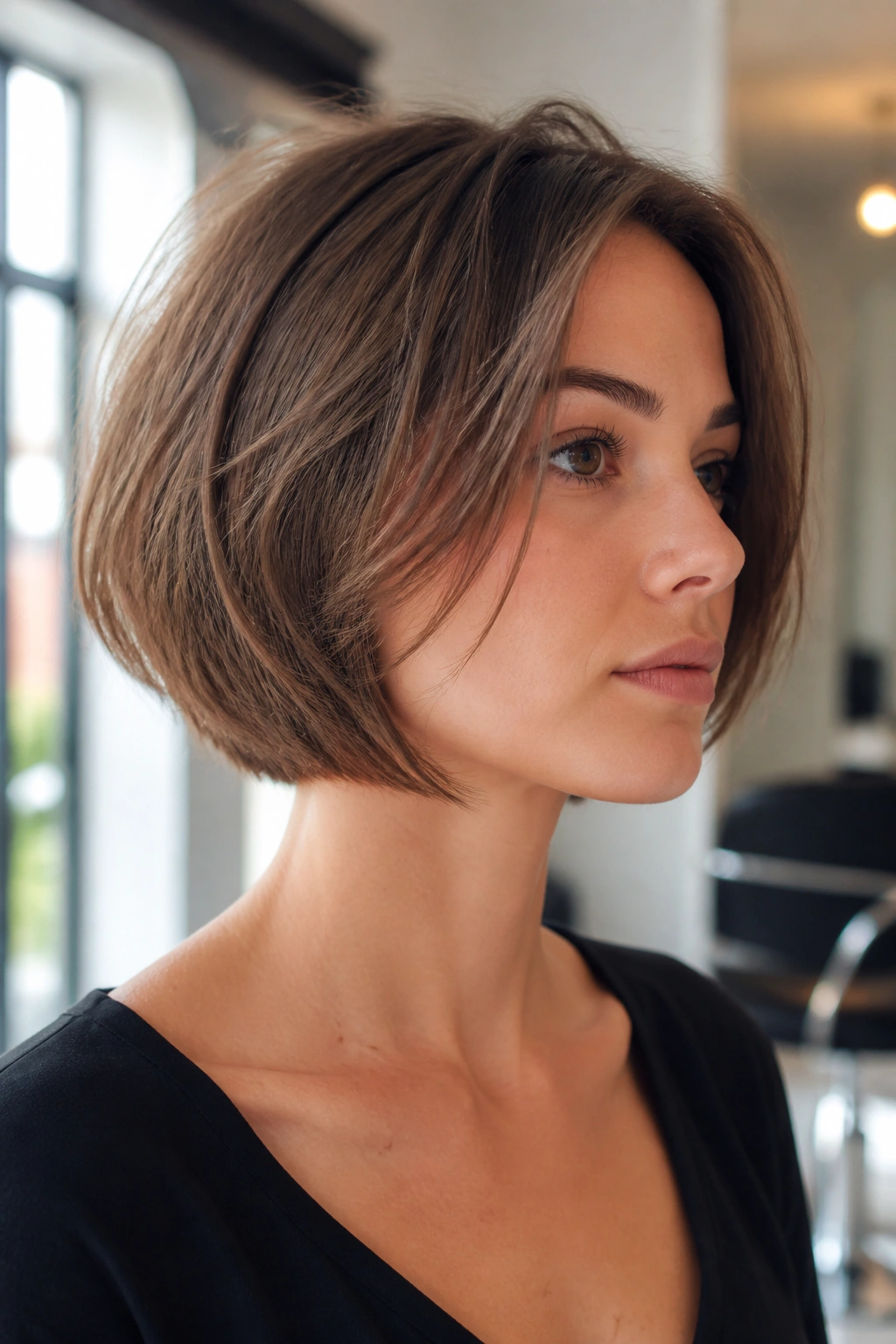
A micro bob can look sharp on fine hair, especially when the internal layers are kept wispy and controlled. Short length brings instant density at the ends, and the soft internal feathering keeps the shape from feeling boxy. That mix is the whole trick.
This cut sits higher than a classic bob, usually around the jaw or a little above it. Because the length is shorter, the hair has less room to sag. That alone can make fine strands appear thicker. You still need the right layering, though. Too much thinning and the outline starts to break apart.
I like this version on people with smaller features or a strong jawline. It frames the face neatly and does not ask for a lot of styling time. A quick blow-dry, a bend at the ends, done. The only caution: if your hair is very sparse at the temples, keep the side pieces a touch longer so the cut stays balanced.
14. Soft A-Line Feathered Bob
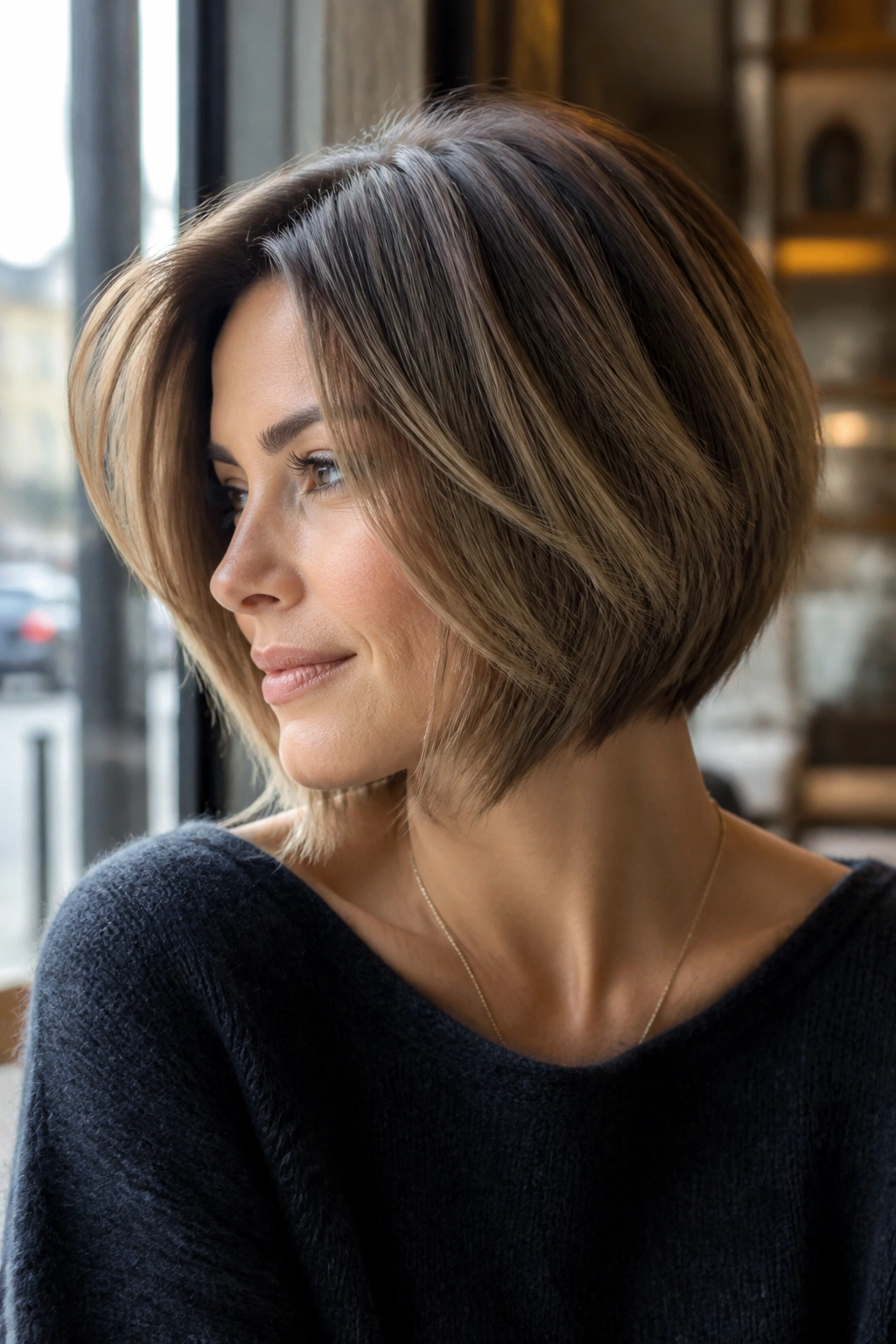
The A-line bob — shorter in back, longer in front — can be a good match for fine hair when the angle stays soft. Harsh A-lines often look sharp and a little severe. A feathered A-line feels gentler and more wearable.
What makes this version work is the gradual slope from nape to chin. The front pieces extend just enough to frame the jaw, while the back stays neat and close. That shape creates movement along the side profile, which fine hair can use. A lot.
The feathering should sit through the lower sides and around the back curve, not chopped through the top layer. Keep the top smooth so the cut has a clear shape. If you want styling to be easy, this is a strong choice. Blow-dry under at the back, then flip the front under just a little. Clean, easy, done.
15. Flipped-End Bob
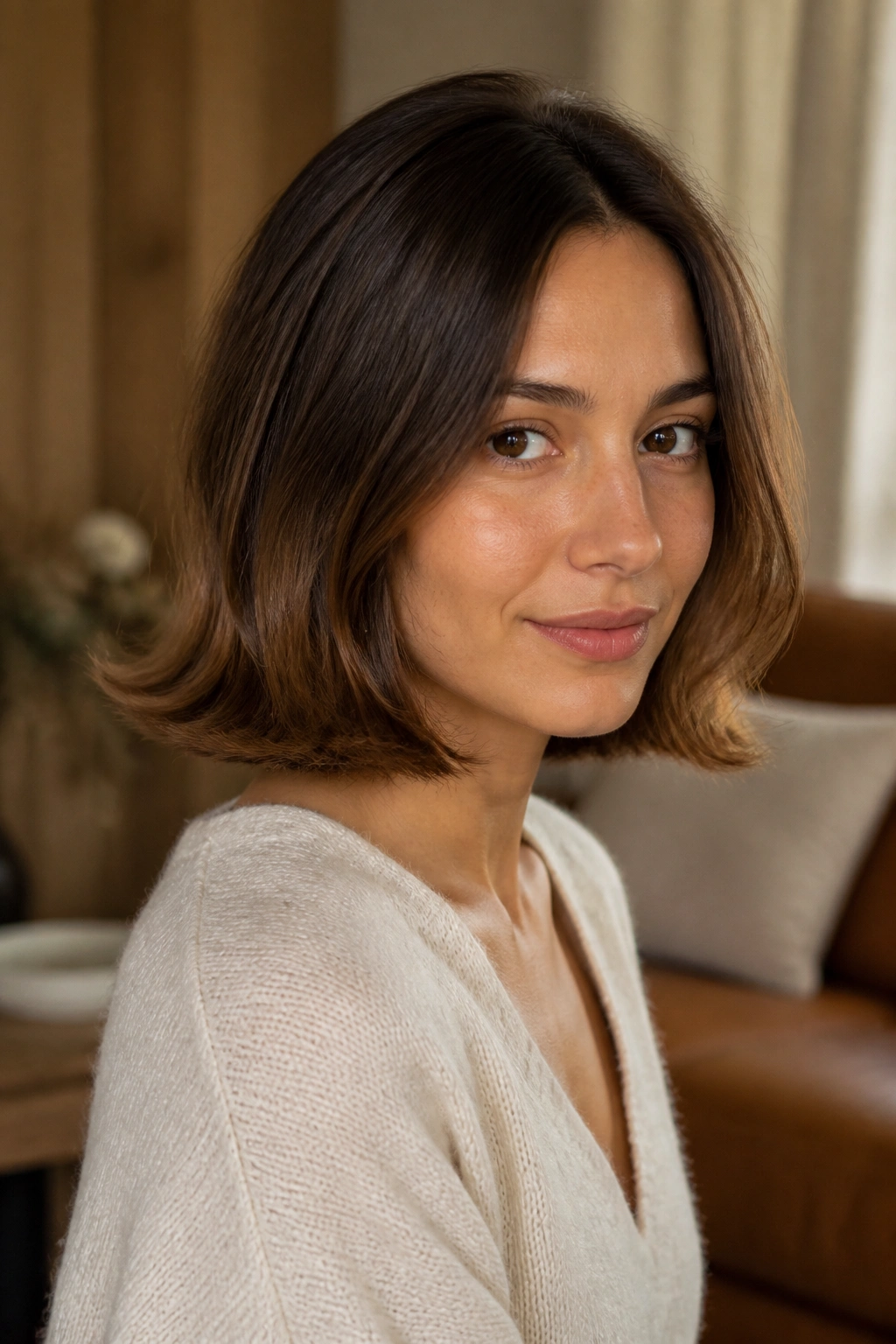
Flipped ends bring life to fine hair because they interrupt the straight line that can make a bob feel flat. The little outward turn at the bottom gives the illusion of body, especially when the ends are lightly feathered instead of blunt.
This shape works well if your hair naturally wants to turn out or if you like a playful finish. It is not a severe look. It feels a little lighter, almost bouncy, and that can be useful when your hair lies close to the head and needs a visual lift.
Use a round brush or a flat iron with a slight wrist turn at the last inch of hair. Do not curl the ends all the way around. That can look dated fast. You want a bend, not a ringlet. If the haircut has subtle internal layers, the flipped finish looks even better because each section moves on its own.
16. Tousled Bob with Long Layers
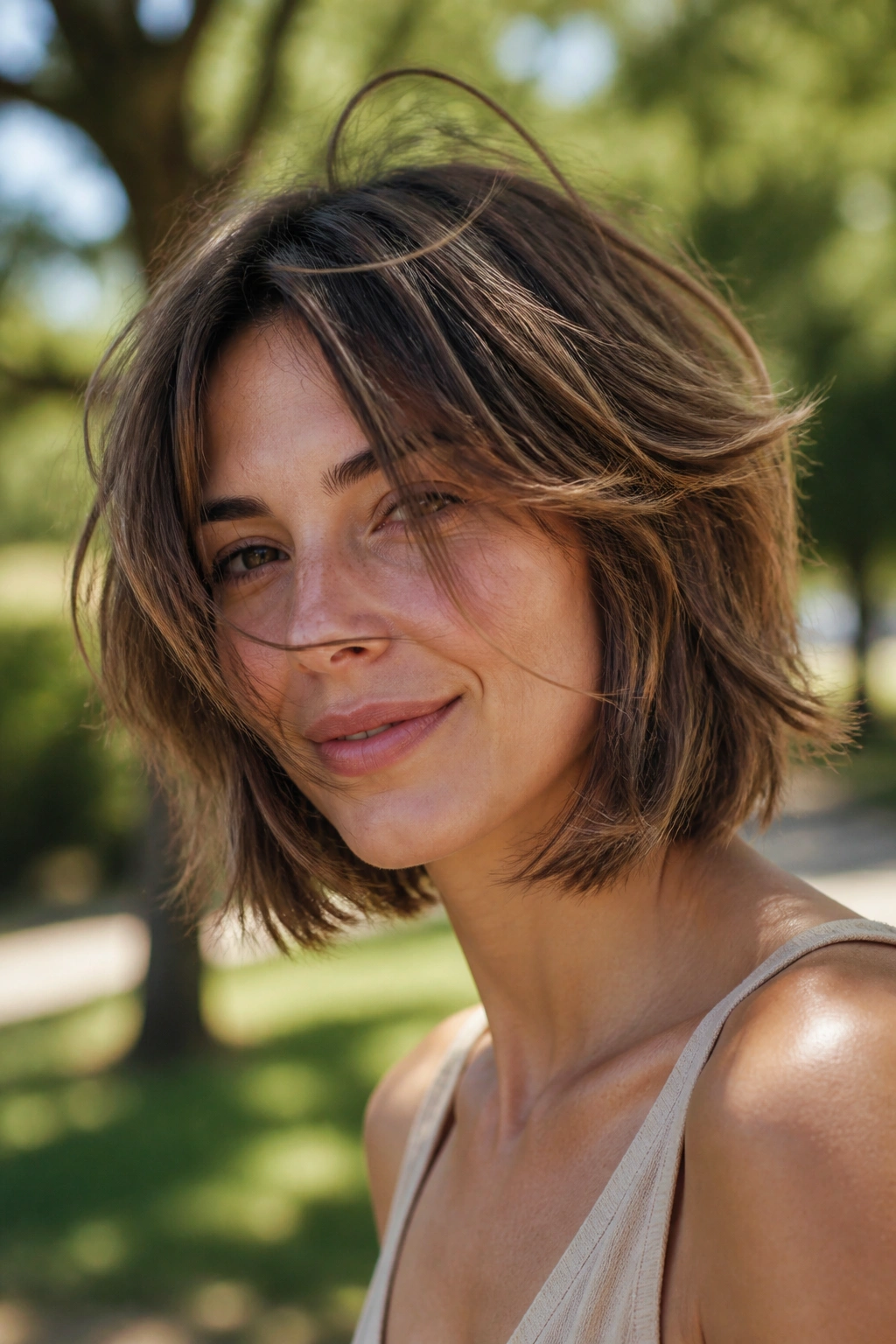
A tousled bob with long layers is for the person whose fine hair goes limp by lunchtime and refuses to hold a neat blowout all day. The softer, longer layers create room for movement, and the messy finish keeps the style from looking overworked.
The cut should still keep a readable outline. That part matters. If the layers are too short or too many, the hair can separate into wisps and lose shape. Long layers give texture while preserving some density, which is what you want on finer strands.
Air-dry cream, a touch of mousse, and a quick scrunch at the ends can do more here than a lot of hot-tool styling. You can rough-dry the roots for lift, then leave the mid-lengths a little imperfect. Honestly, that small amount of looseness is what makes the cut feel modern, even though the word “modern” is getting overused everywhere.
17. Bob with Side Bangs
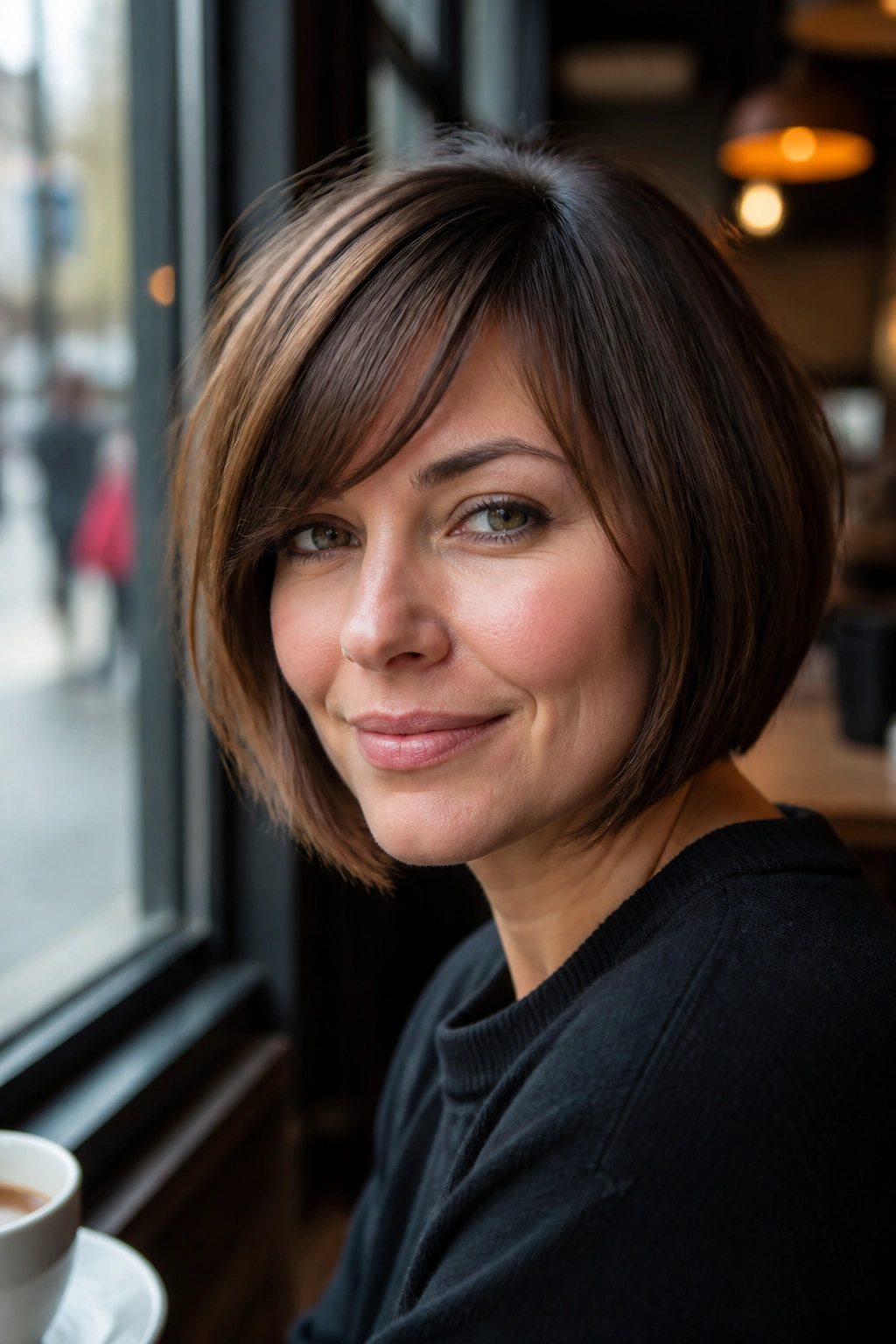
Side bangs are useful when you want the front to feel softer but you do not want the commitment of full fringe. On fine hair, that’s a smart compromise. You get some face framing, a little extra width at the cheekbones, and less risk of the hair looking sparse across the brow.
The bangs should be cut to sweep easily into the bob, not sit like a separate section. If they’re disconnected, fine hair tends to show the gap. A soft diagonal line from temple to cheek works better. The rest of the bob can stay fairly simple and still look finished.
- Good for longer faces
- Helpful if your forehead feels too open with no fringe
- Easiest to style with a side-directed blow-dry
- Needs trimming before the ends grow into the eyes
This version also plays nicely with eyeglasses. The sweep sits above or around the frame instead of fighting it.
18. Asymmetrical Feathered Bob
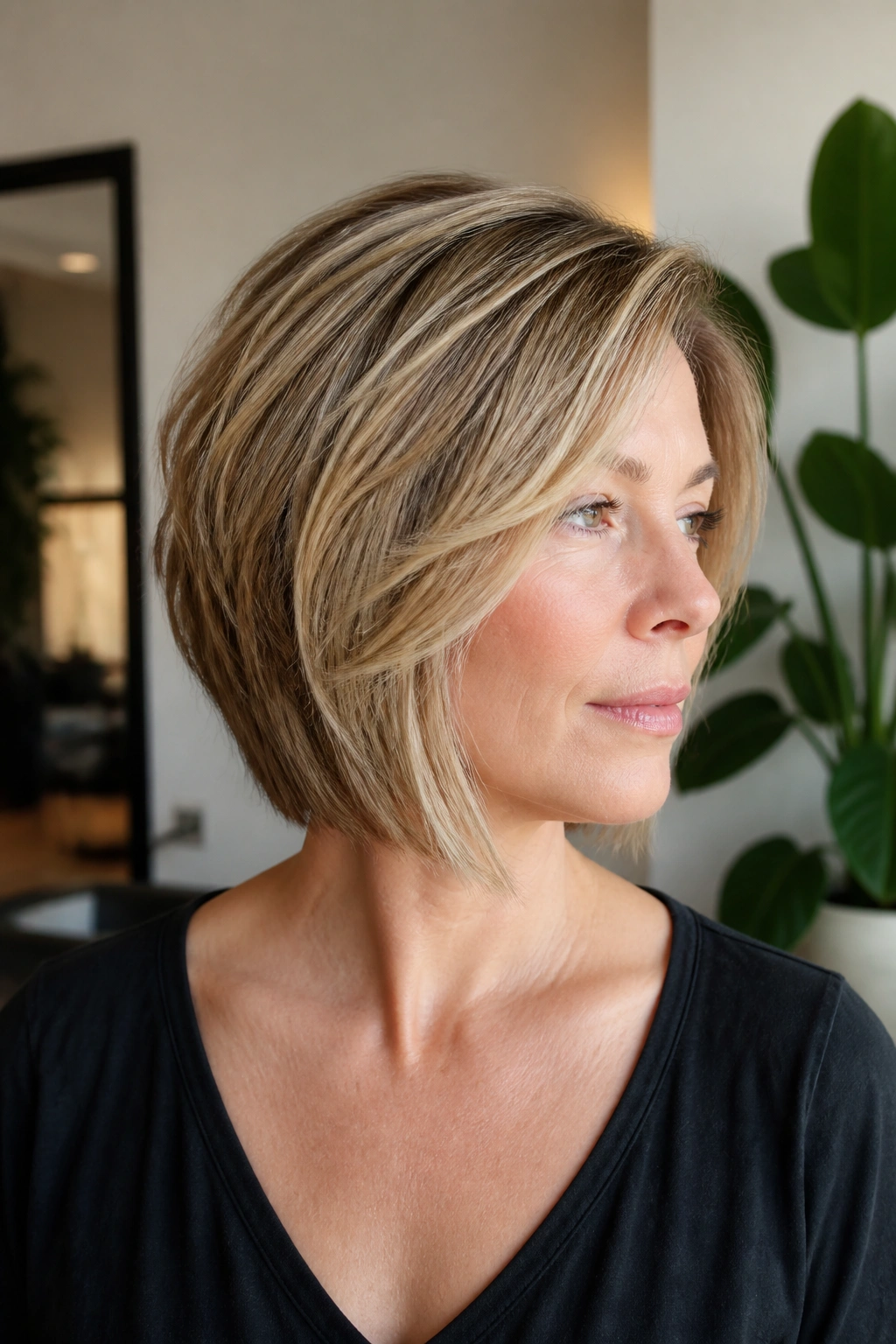
A slight asymmetry can wake up fine hair fast. I’m talking about a subtle difference in length — maybe half an inch to an inch — not a dramatic one-sided chop. That little shift gives the bob motion and makes the line feel less expected.
The feathering helps soften the transition so the cut does not look sharp or accidental. One side should feel a touch longer and more fluid, while the shorter side lifts the face. The result is cleaner than it sounds. More polished, too.
This cut is a good fit if you like some edge but do not want a high-maintenance shape. It photographs from the side nicely, but more importantly, it stays interesting when you tuck one side behind the ear. A blunt asymmetrical cut can feel harsh on fine hair. A feathered one feels deliberate.
19. Curved-Under Bob
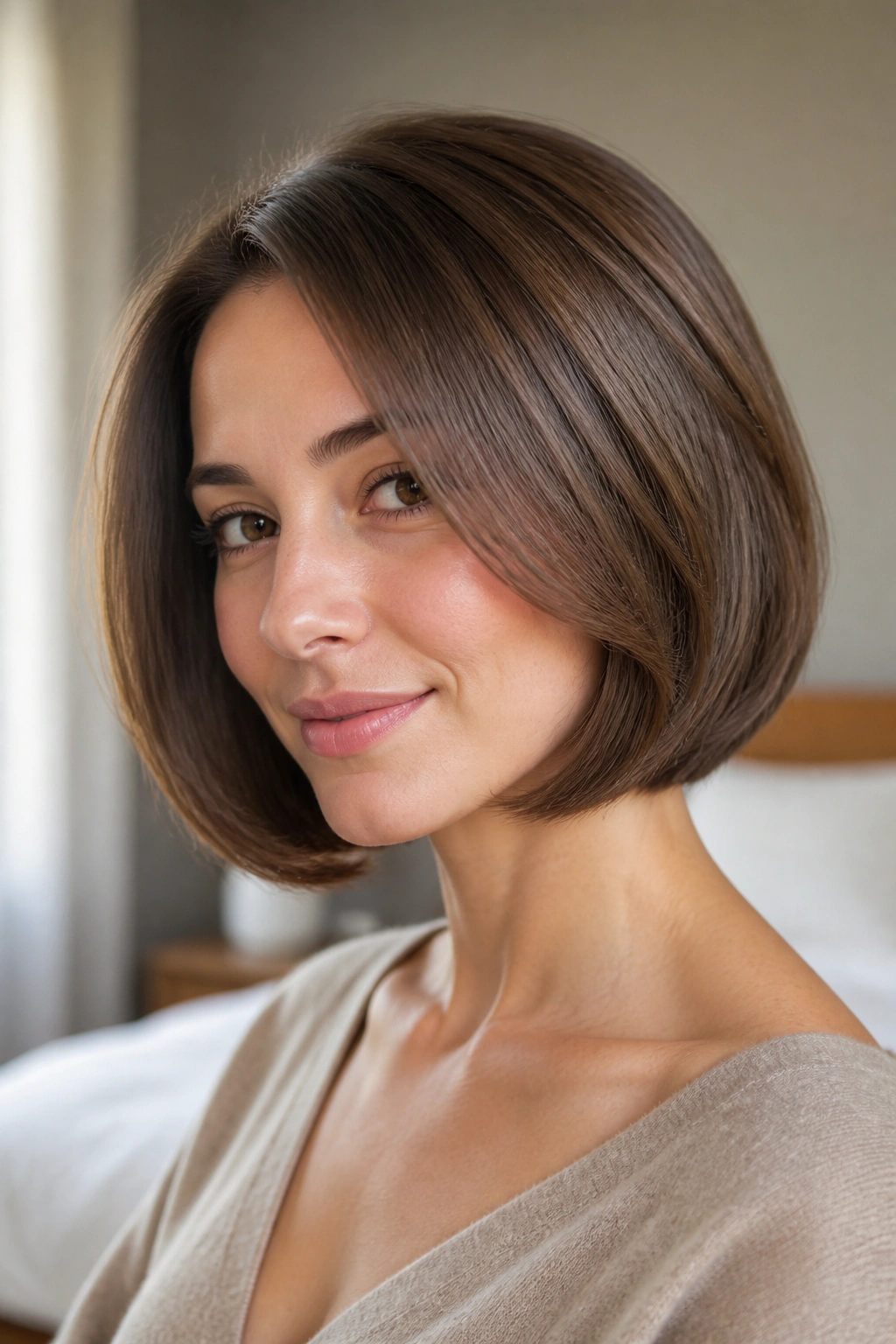
A curved-under bob creates a neat, tucked silhouette that fine hair often wears well. The ends bend inward toward the jaw or neck, which makes the outline look fuller and more controlled. That inward curve is especially helpful if your hair flips out at the shoulders and refuses to settle.
The feathering should stay subtle here. Too much texture at the ends works against the clean curve. Think of the cut as a smooth shell with soft support underneath. You want the hair to hug the face a little, not stick away from it.
I’d call this one a strong choice for straight hair that feels too sleek and flat in a plain bob. The curve gives it shape. The internal feathering keeps it from looking heavy. A medium round brush and a slow blow-dry are usually enough to get the bend to hold.
20. Piecey Bob for Sparse Density
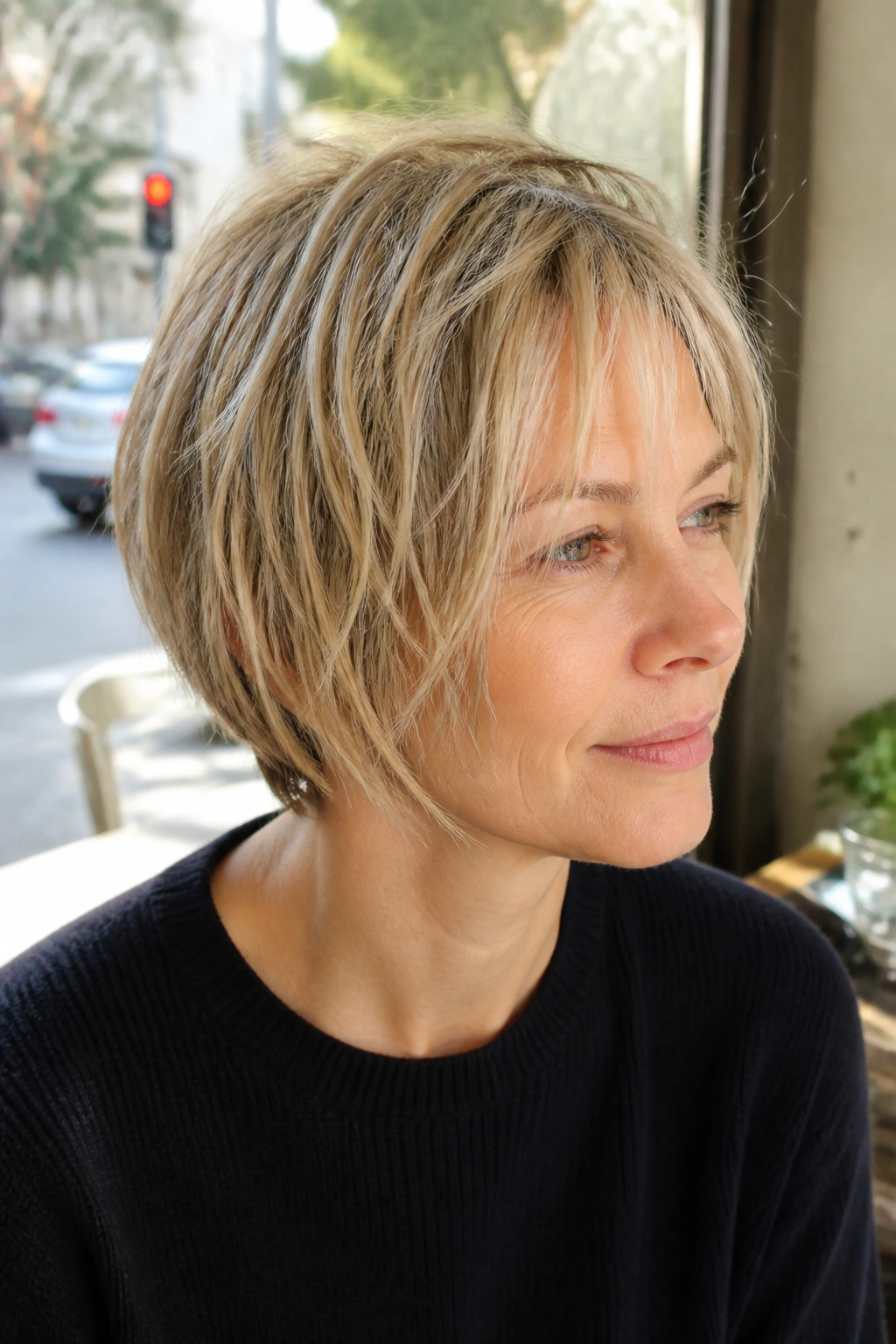
If your fine hair is also sparse in density, piecey texture can help. Not by making the hair look bigger than it is — that never works for long — but by breaking the shape into small, intentional sections that move separately. That gives the eye more to look at.
The trick is to keep the perimeter solid while adding tiny, separated bits through the top and around the face. A little point-cutting helps. So does a light texturizing spray, used sparingly. Heavy product will clump the strands together and show too much scalp.
This is one of those cuts that needs a light touch in the chair and at home. If you over-style it, the pieces go crunchy. If you under-style it, the cut can fall flat. The middle is where it lives. Finger-comb, shake the roots loose, and leave a little imperfection in place. That’s the point.
21. Center-Part Feathered Bob
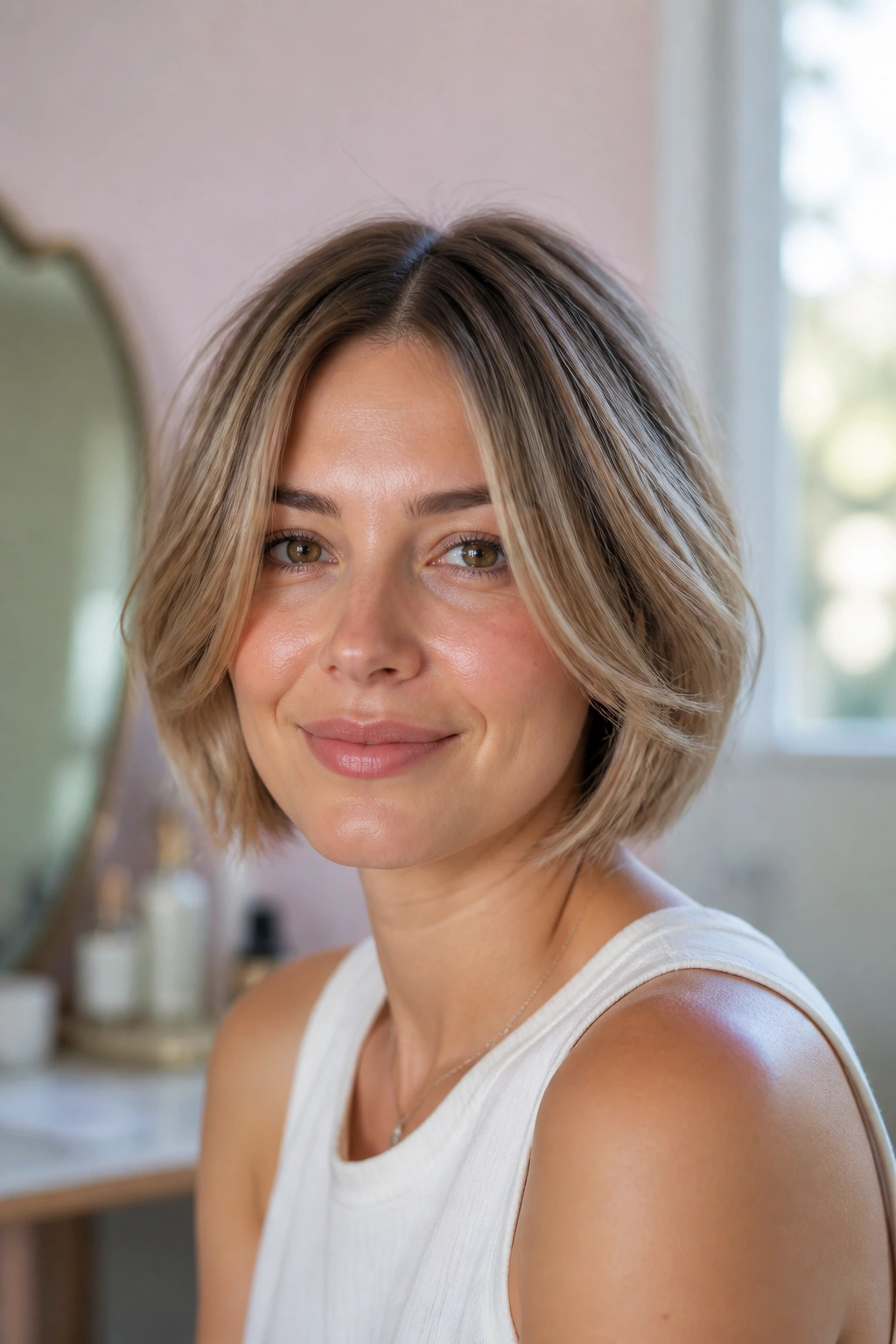
A center part can look very clean on fine hair when the bob has enough internal feathering to prevent it from hanging like one flat sheet. The symmetry can be flattering, especially if your face is naturally even or slightly oval. It gives the cut a calm, direct line.
The important part is the front. You need enough length around the cheeks and chin so the center part has somewhere to fall. If the front is too short, the hair can stick out awkwardly from the temples. If it’s too long, the center loses lift. The feathering helps the sides collapse softly into place.
This one is easy to live with if you like a low-drama style. Dry the roots with a lift at the crown, then smooth the top layer with a brush. Keep the ends soft and slightly piecey. A center part on fine hair can look elegant, but only if the haircut has enough shape to support it.
22. Root-Lift Bob
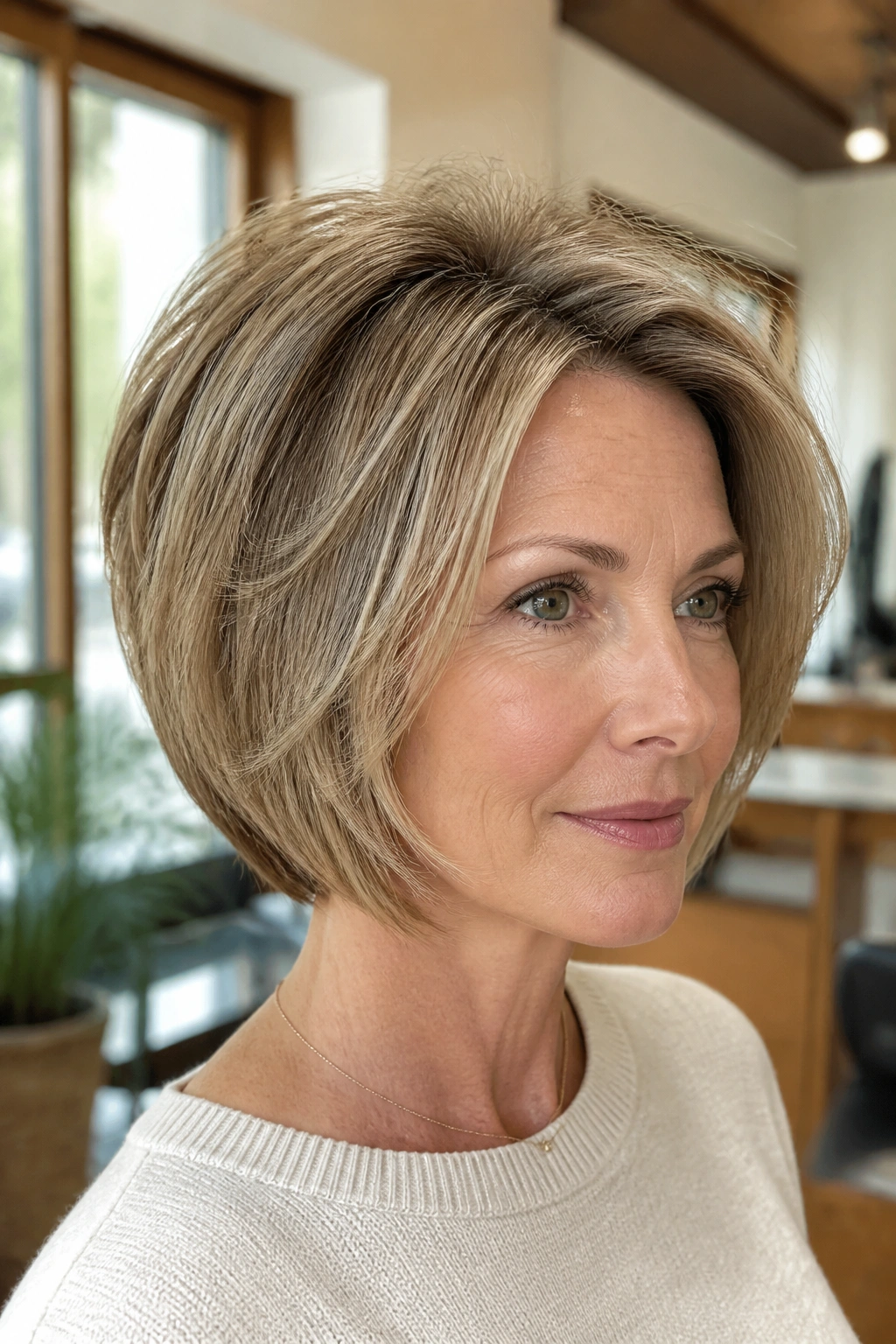
Some bobs are about the ends. This one is about the crown. A root-lift bob is cut and styled to make the top of the head look taller, which helps fine hair that lies too close to the scalp. That extra height changes the whole proportion of the face.
The cut usually keeps shorter support pieces around the crown and top sides, but nothing so short that it sticks up. Then the rest of the bob falls into a gentle feathered shape. The styling is just as important: mousse at the roots, blow-dry with tension, and lift the hair up and away from the scalp as it dries.
If your hair sinks as soon as you walk outside, this is the cut to study. It does take a little more effort than an air-dried bob, but not much. A couple of clips at the crown while the hair cools can help the lift stay put longer. Small trick. Big payoff.
23. Feathered Lob with Barely-There Layers
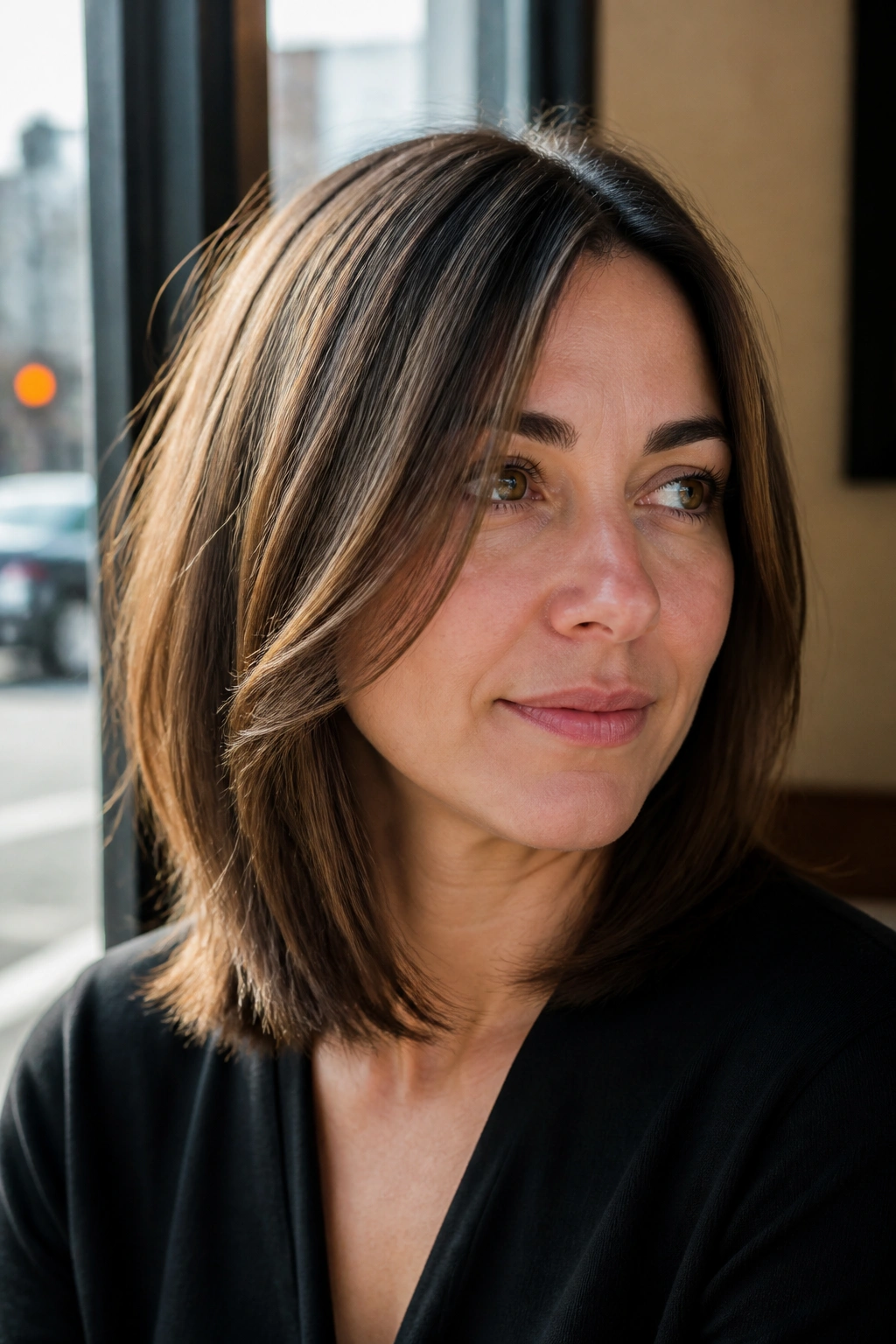
Sometimes the smartest move is to keep the layers almost invisible. A feathered lob with barely-there layers gives fine hair room to move while preserving the thickness at the bottom. That bottom line matters. A lot.
This version is good if you like hair that can go into a clip, a low pony, or a soft bend at the ends without looking chopped up. The feathering should be so subtle that it only shows when the hair moves. If you can see the layers from across the room, they may be too strong.
The lob length also gives the hair a bit of swing, which can help if your strands stick to the head in shorter cuts. Use a little smoothing cream and a round brush only at the front and ends. The rest can stay plain. That restraint is what keeps the hair looking full.
24. Textured Fringe Bob
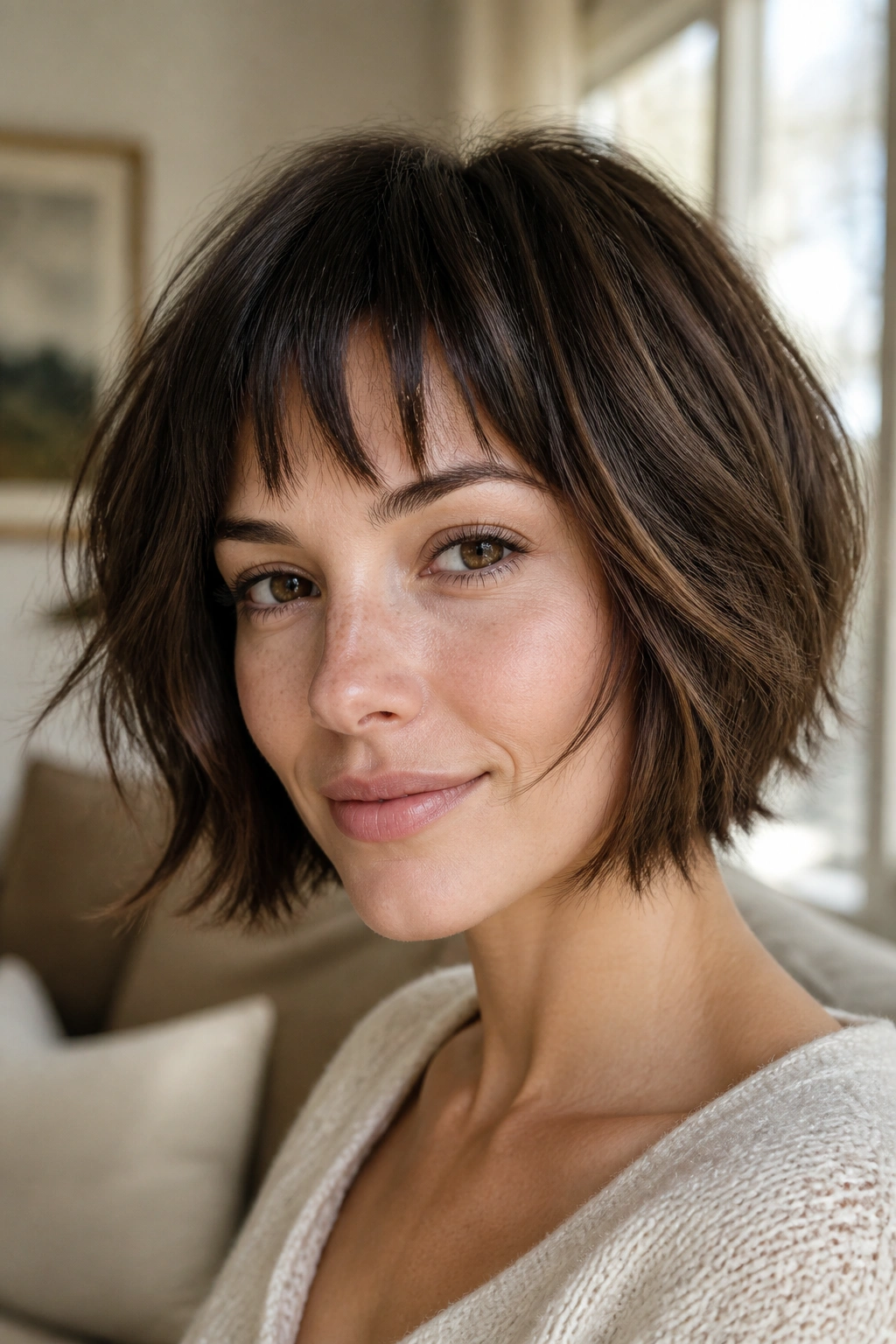
A textured fringe changes the whole mood of a feathered bob. It gives the front a little lift and a little edge, and it can hide a forehead cowlick better than straight fringe in many cases. Fine hair usually behaves better when the fringe is soft and broken up, not blunt and heavy.
The fringe should be cut with small variations in length so it sits in pieces rather than one solid strip. That keeps it from stealing density from the rest of the bob. The side sections can blend into the temples, which helps the haircut feel connected instead of choppy.
What to Ask For
- A light, piecey fringe rather than a dense one
- Soft blending at the temples
- Enough length to tuck or sweep if needed
- A perimeter that stays fuller than the fringe
A quick pass with a small round brush is usually enough to shape it. No need to force it into a perfect curve.
25. Sleek Bob for Straight Fine Hair

Straight fine hair can be frustrating because it shows every shape decision. A sleek bob handles that problem by embracing the smoothness instead of fighting it. The feathering stays hidden inside the cut, which gives the outline some give without wrecking the clean surface.
This is the version for someone who likes hair that looks polished with minimal fuss. A smooth bob can look thin if the line is too sharp and the ends are too light, so the cutting has to preserve enough weight at the bottom. The layers should be internal, not obvious. That’s the difference between sleek and stringy.
I’d recommend this shape if your hair already dries straight and you’d rather spend five minutes polishing it than twenty minutes adding texture. A heat protectant, a paddle brush, and a drop of serum on the ends is usually all it takes. Keep the serum off the roots. Always.
26. Softly Stacked Bob
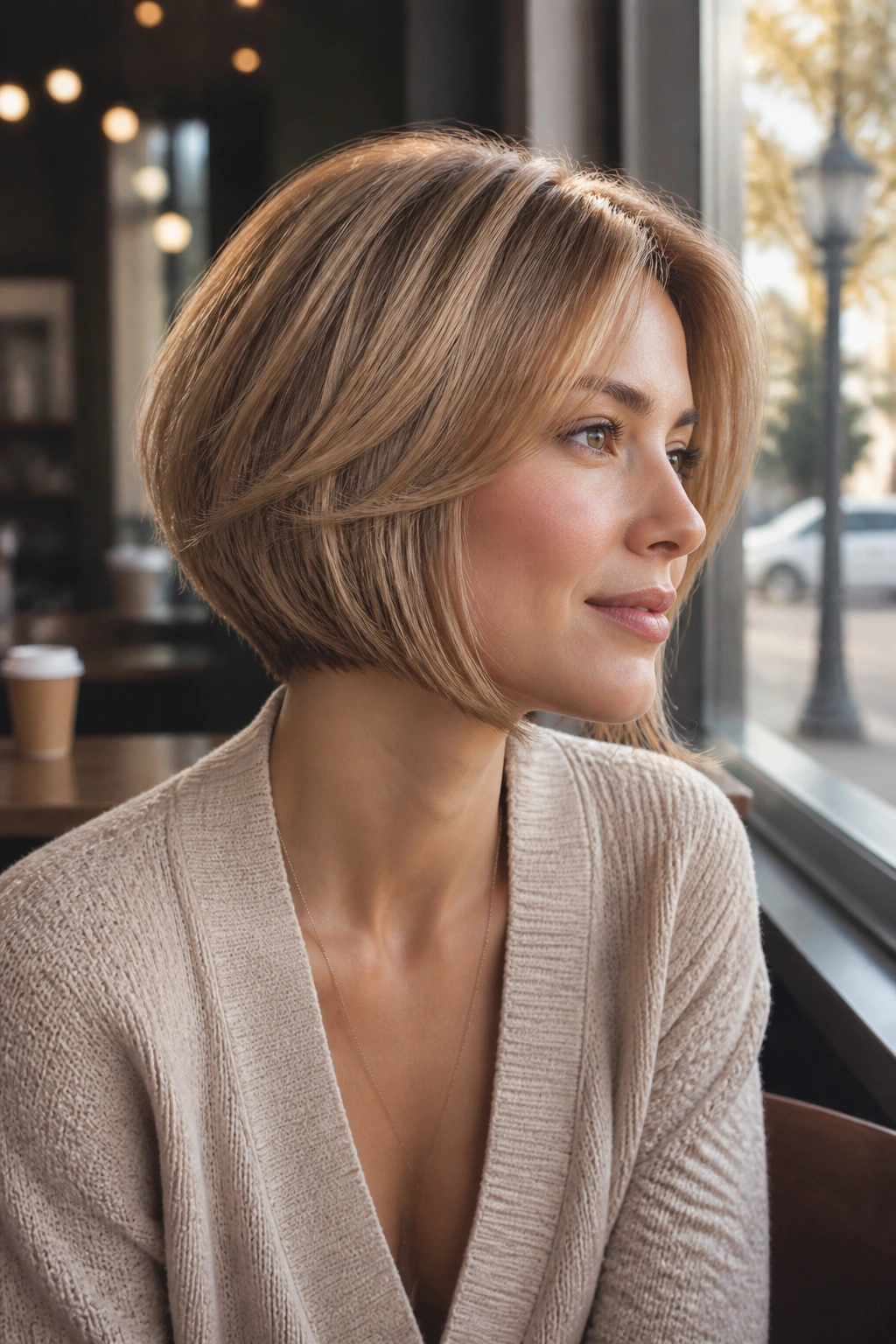
A softly stacked bob gives the back a little lift without going full retro. That matters for fine hair, because a tiny bit of stacking can make the nape look fuller and cleaner at the same time. Too much stacking, though, and the haircut turns sharp.
The stack should be gentle enough that the transition from the nape into the side lengths feels smooth. The feathering softens the shift and keeps the silhouette from looking heavy in the front. This is a neat little cut for hair that tends to puff at the back or sit flat against the neck.
If you wear jackets, scarves, or high collars a lot, this shape can be practical. The hair sits up off the neck a bit and keeps its line. A round brush at the back and a cool shot at the end help the stacked area hold. Not fancy. Just effective.
27. Feathered Bob for Gray Hair
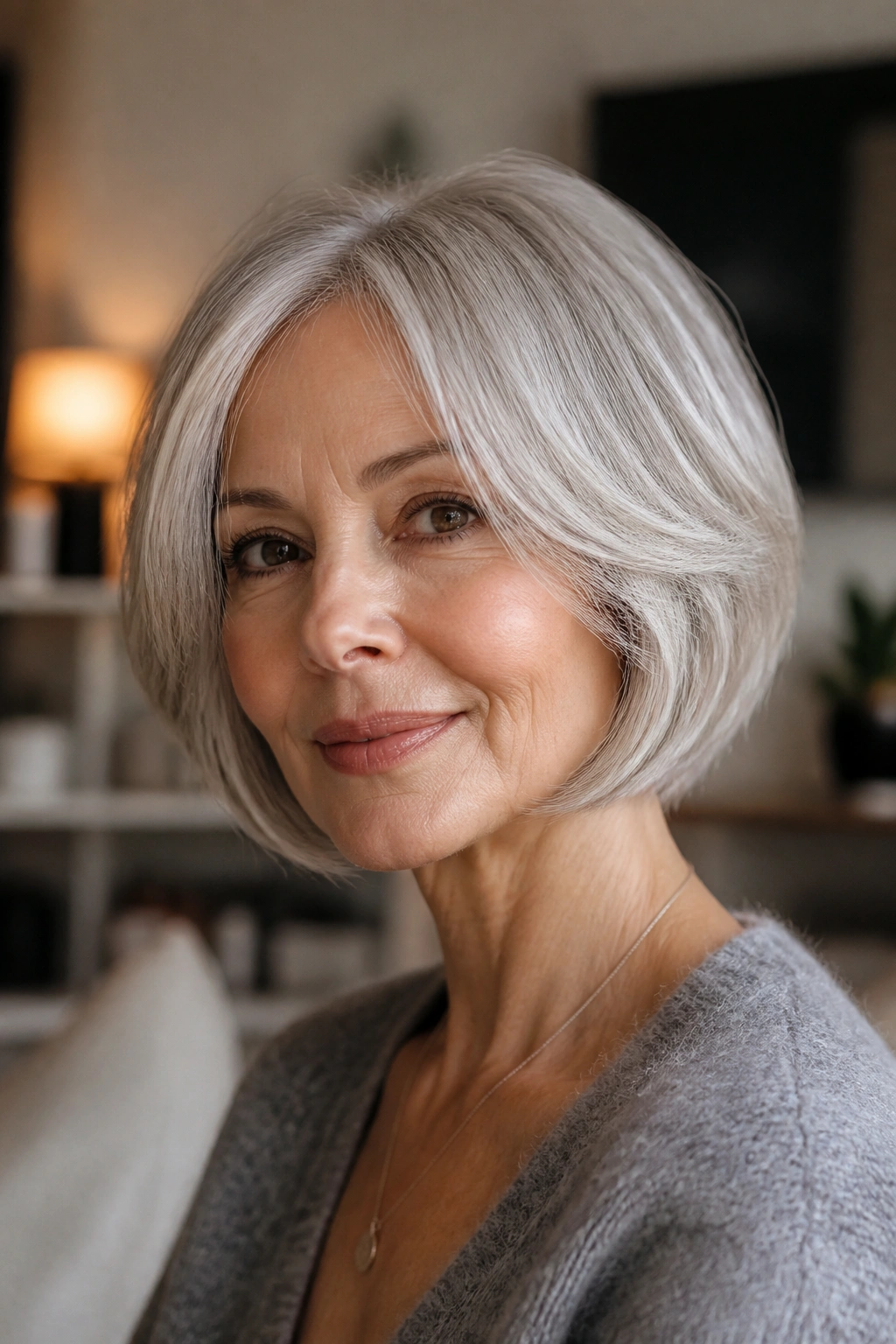
Gray hair often comes in a little wirier or more resistant than people expect. That’s one reason a feathered bob can work so well on it. The feathering lightens the shape, while the bob keeps enough edge to make the hair look intentional rather than fluffy.
A gray feathered bob benefits from a crisp perimeter and soft internal motion. If the layers are too fragmented, the hair can go airy in a way that looks thin, not chic. Keep the outline readable. Let the movement happen inside the cut.
This style also makes silver and white tones look vivid because the hair has room to reflect light from different angles. A smoothing cream or lightweight oil can help tame static, especially in drier weather. I’d keep the product amount tiny, though. Gray fine hair can get weighed down faster than most people expect.
28. Bob with Subtle Underlayer
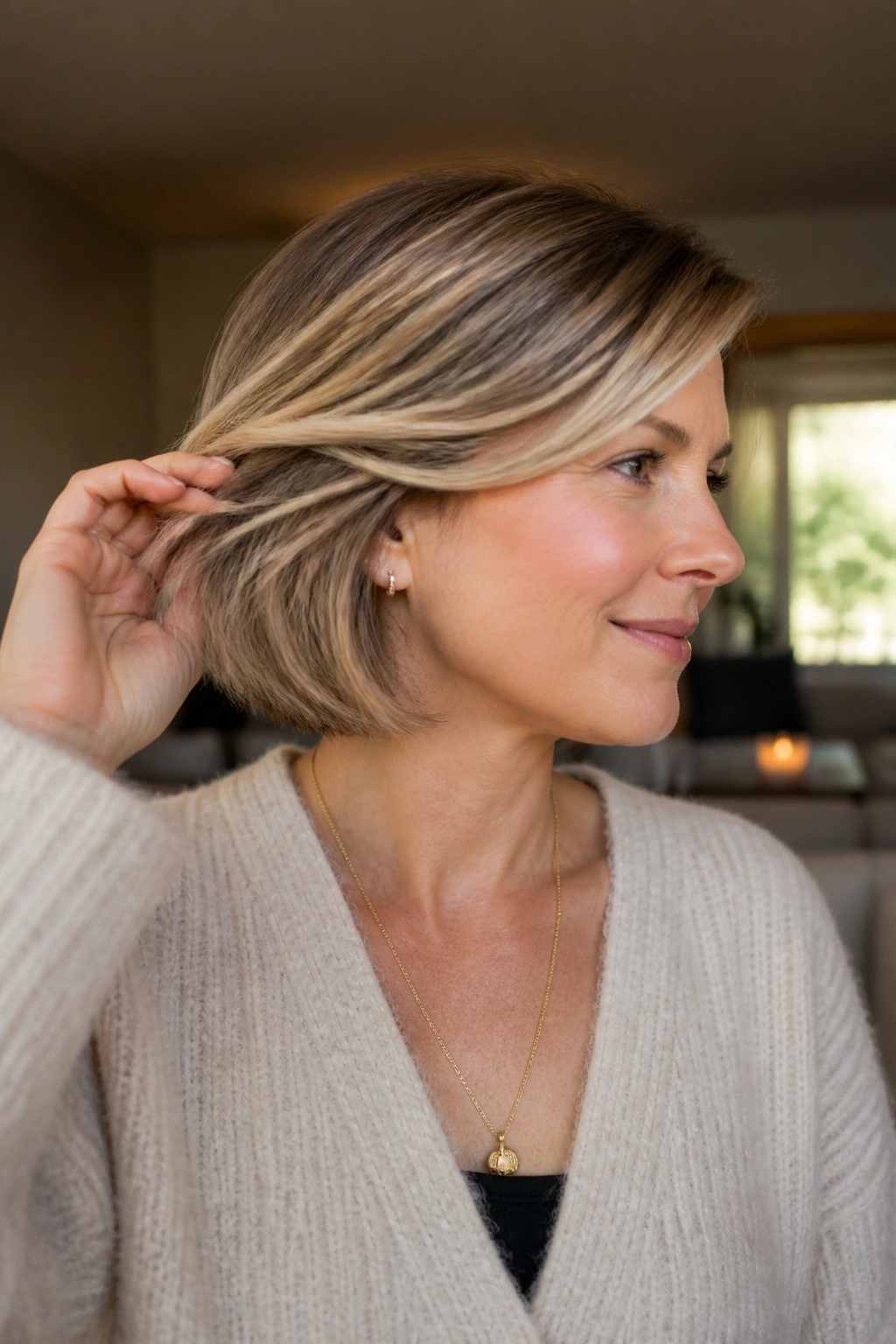
A subtle underlayer is one of the most useful tools for fine hair, and it’s often the most overlooked. The top surface stays smooth and fairly full, while the underneath gets a small amount of internal lift. That hidden support makes the bob move without exposing too much scalp.
The underlayer should not be obvious when the hair is still. It should show up when the hair swings, bends, or gets tucked behind the ear. That quiet movement is what makes the cut feel alive. If the underlayer is too deep, the top looks thin. If it’s too shallow, nothing changes.
I like this finish for people who want a bob that can survive real life: heat, humidity, sleeping on it, putting it back up, taking it back down. It’s not flashy. It’s useful. And useful haircuts age better than loud ones.
Final Thoughts
The best feathered bob for fine hair is the one that keeps enough weight to look full and enough softness to move. That sounds simple, but the difference between a flattering cut and a wispy one often comes down to a half-inch at the ends and a few careful layers hidden inside the shape.
If your hair is very fine, start with the cleaner options: chin-length, jaw-length, subtle stacking, or a lob with barely-there layers. If you have a bit more density or natural bend, you can go bolder with curtain bangs, a soft shag, or an inverted shape. The wrong move is usually too much thinning. People reach for it because they want movement, then wonder why the ends look tired.
Bring a photo, sure. Bring a brush too, if you want to show your stylist how much effort you’re actually willing to put in. That little detail saves everyone time, and it usually leads to a better cut.
